The Significant Rock Art of Clonfinlough

Whenever we stray from our home territory of West Cork, we are always on the lookout for archaeological wonders. When we set our course for Clonmacnoise, in County Offaly, last week (I like the possible translation of the Irish Cluain Muccu Nóis: Meadow of the Pigs of Nós, but there is an alternative Cluain Mhic Nóis: Meadow of the Sons of Nós), we were looking for Ireland’s most important medieval monastic site, but we were diverted only a stone’s throw from our destination by a sign that we couldn’t ignore…

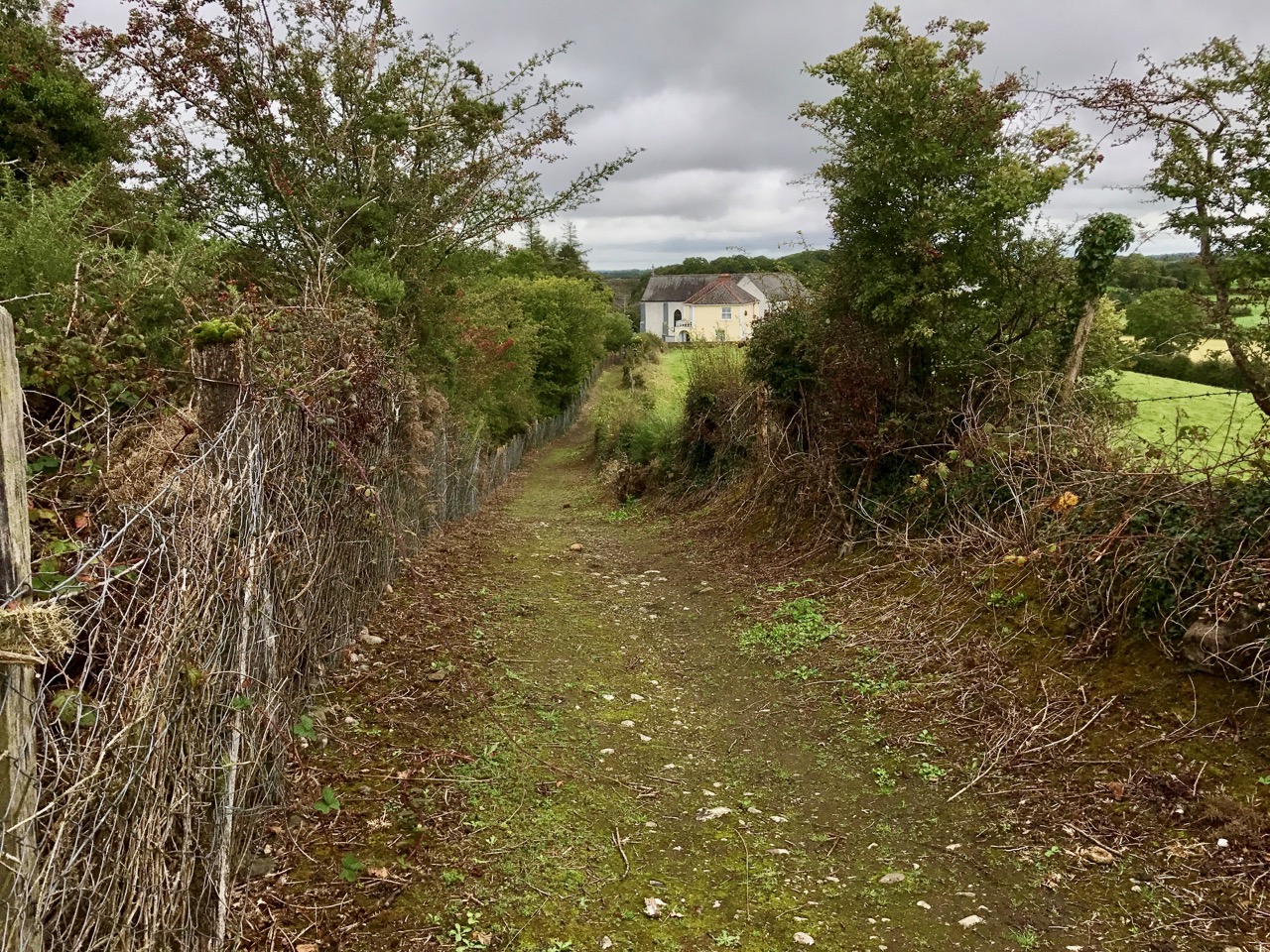
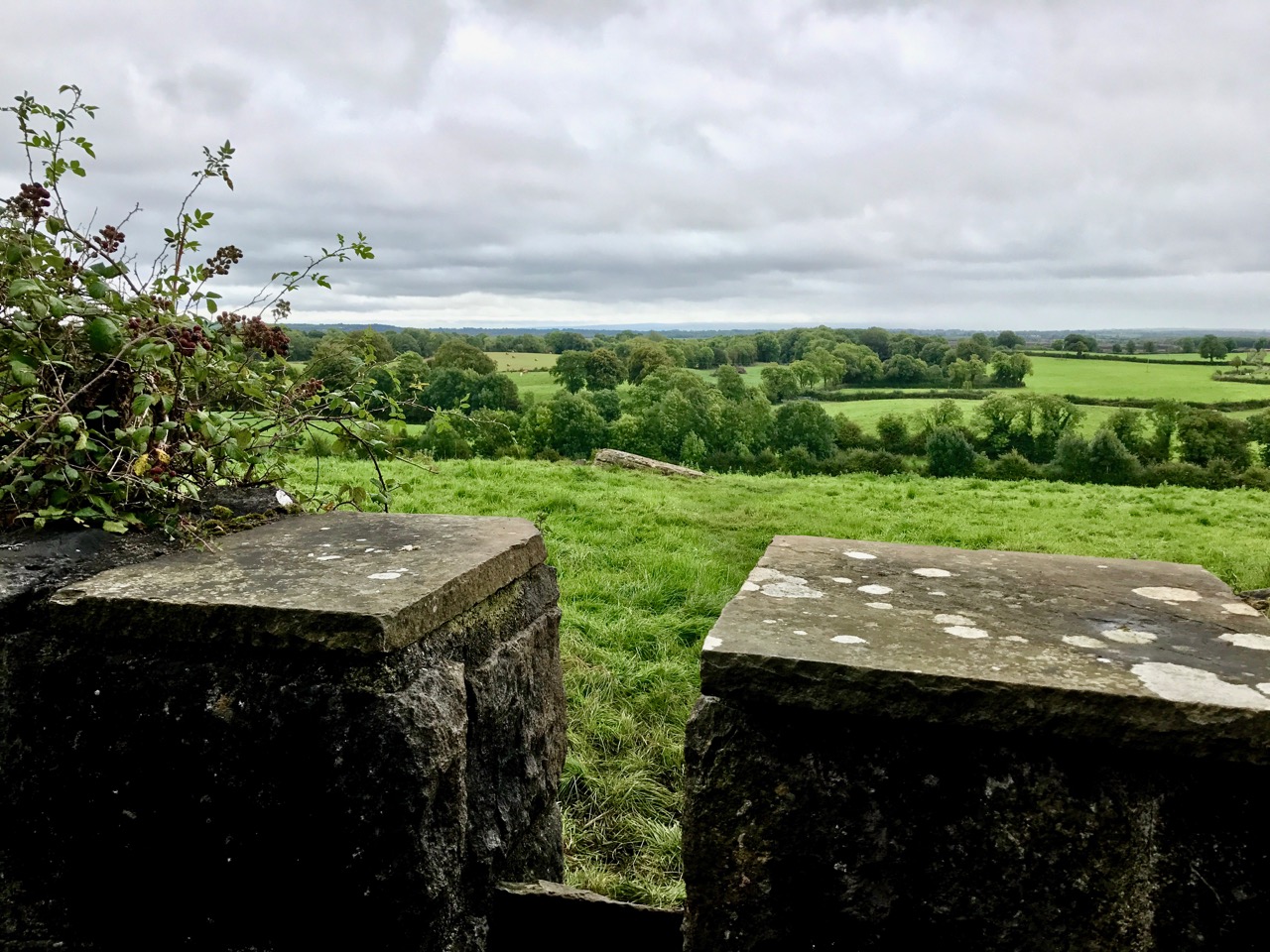
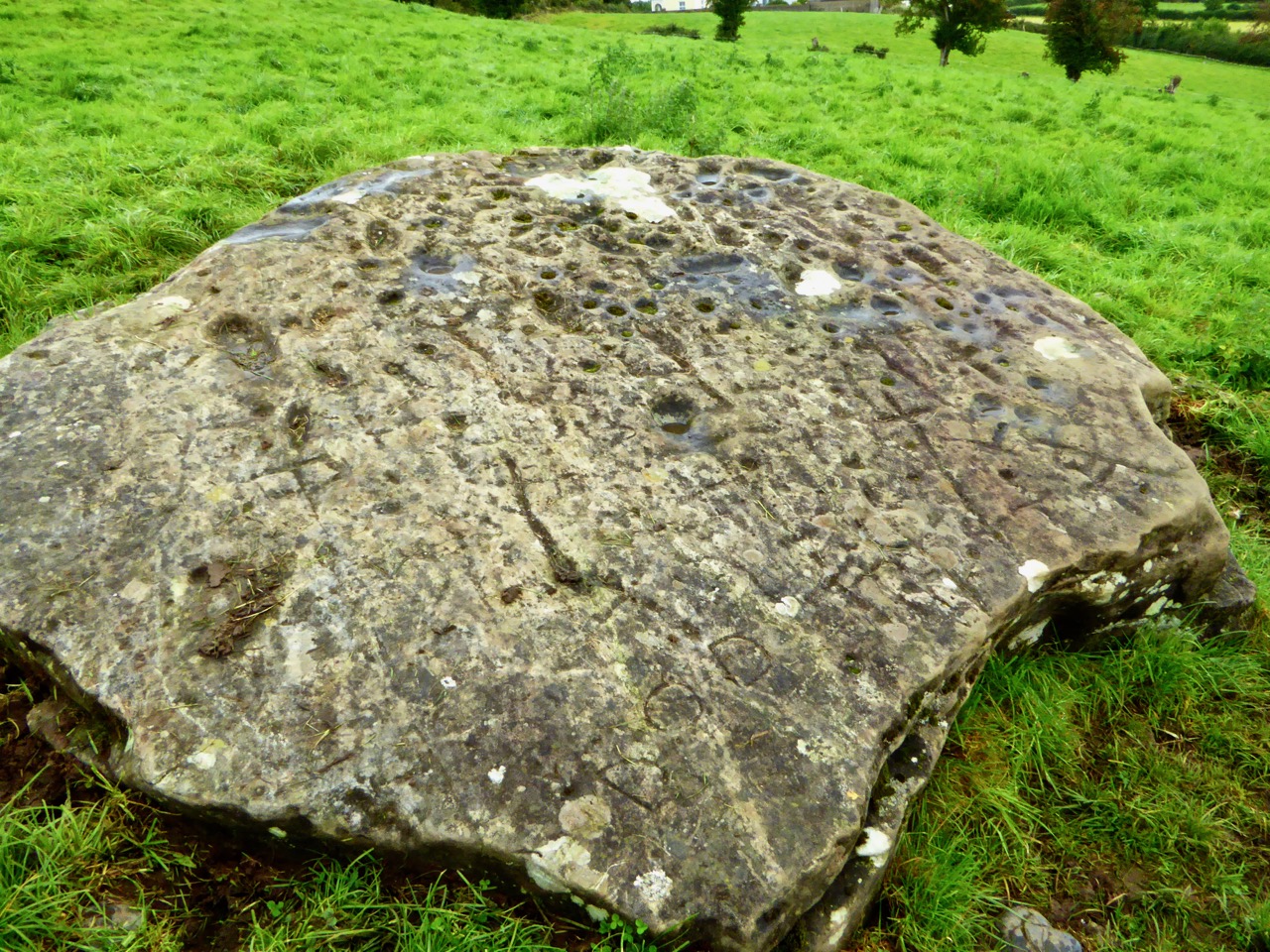
Tucked away to the south east of Clonmacnoise, on a by-road, sits an isolated church in front of which is a well defined and fenced pathway leading past the Priest’s house, through fields, over a stile and into a pasture where cows grazed and barely gave us a glance. There – open to the ravages of weather and cattle – is a large, earthfast slab of limestone bearing a remarkable array of markings.

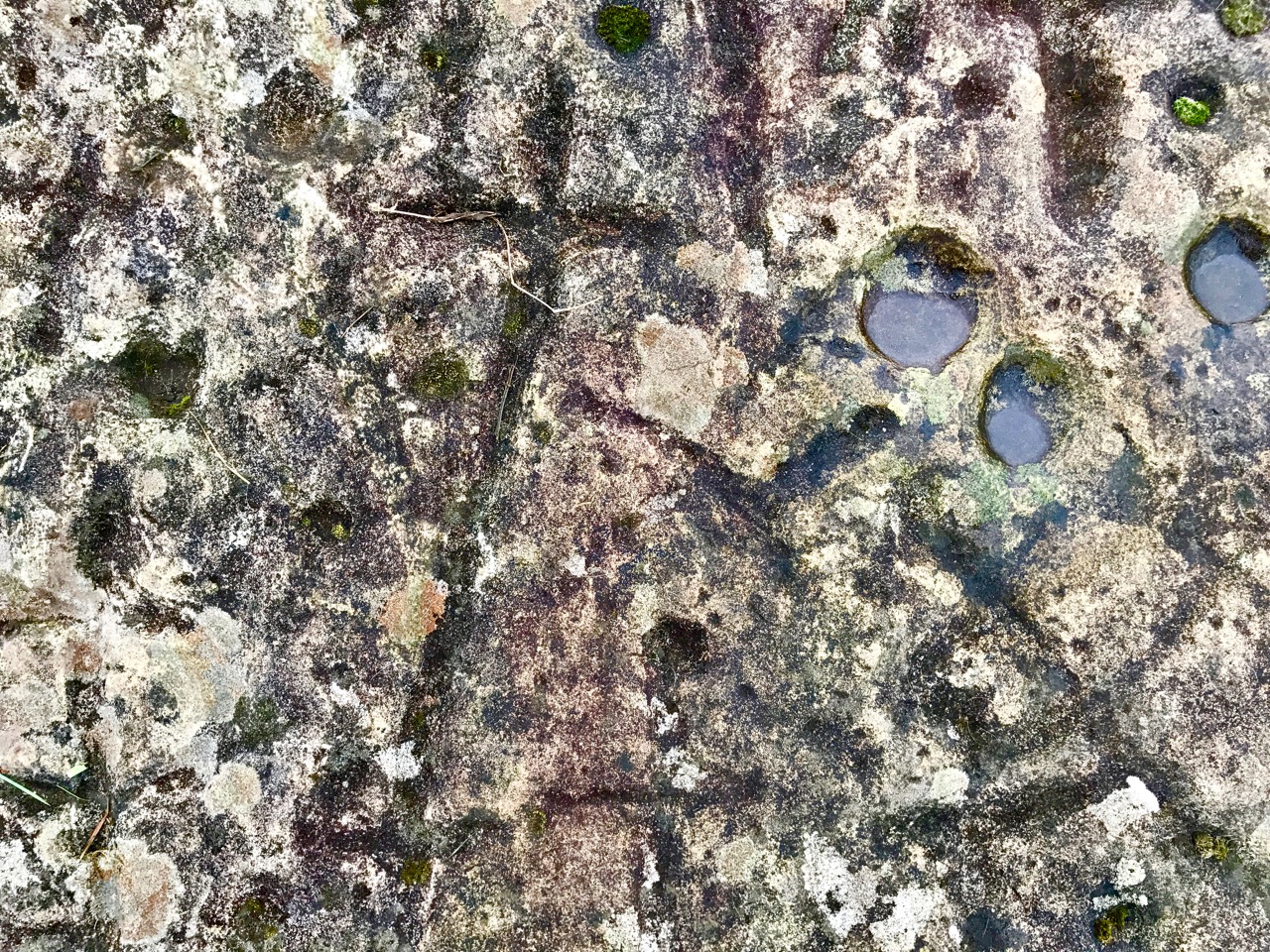
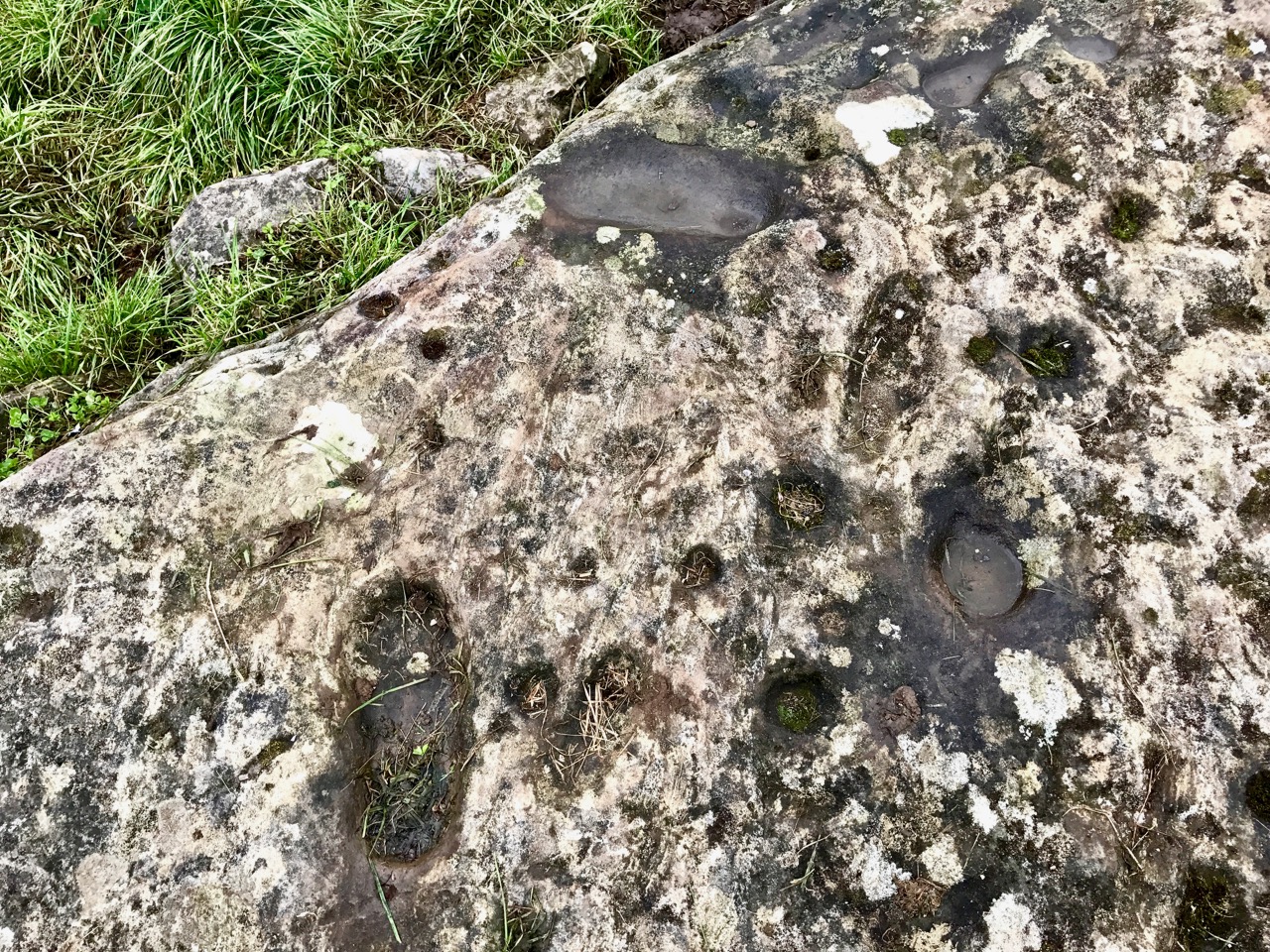
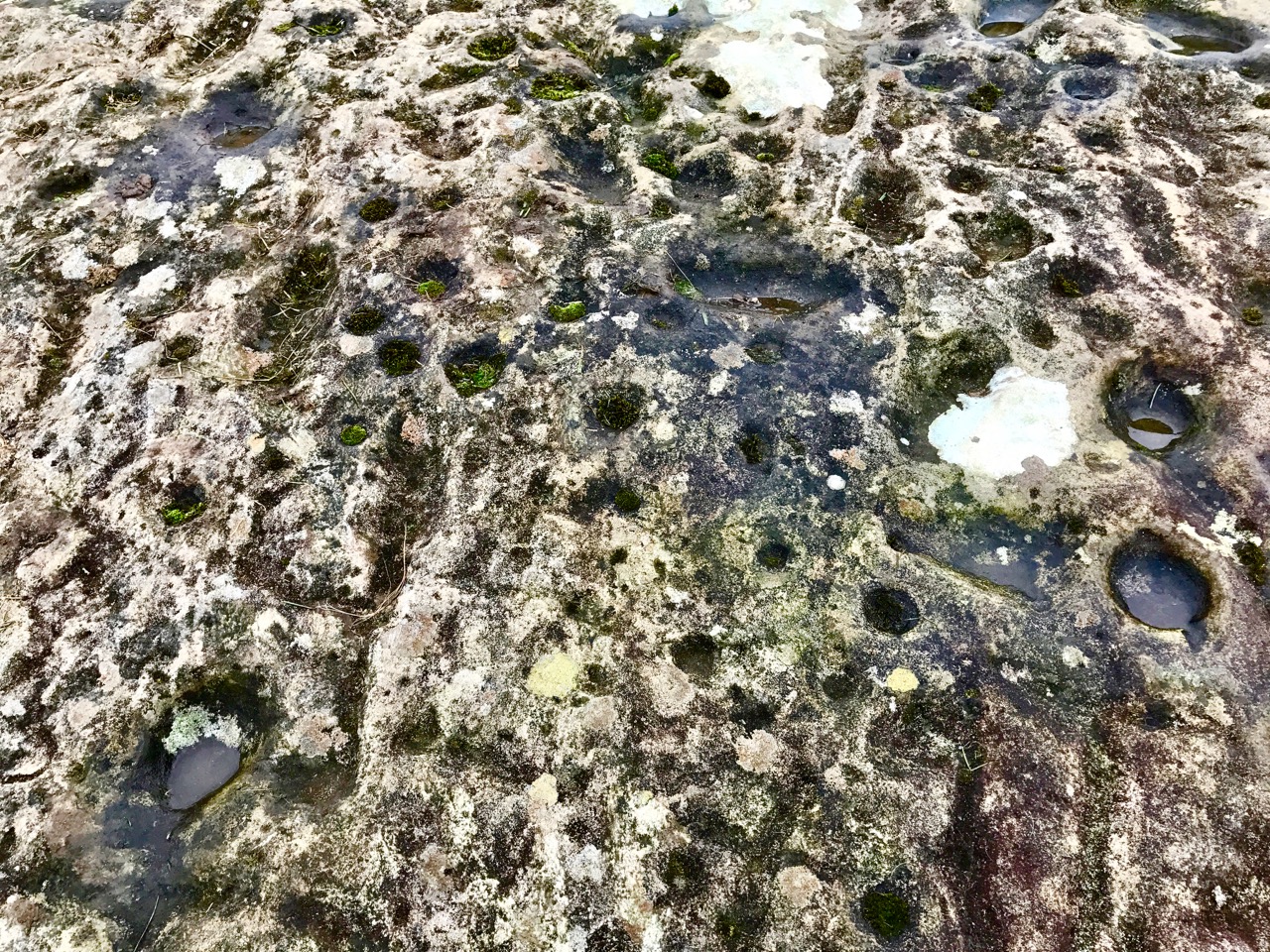
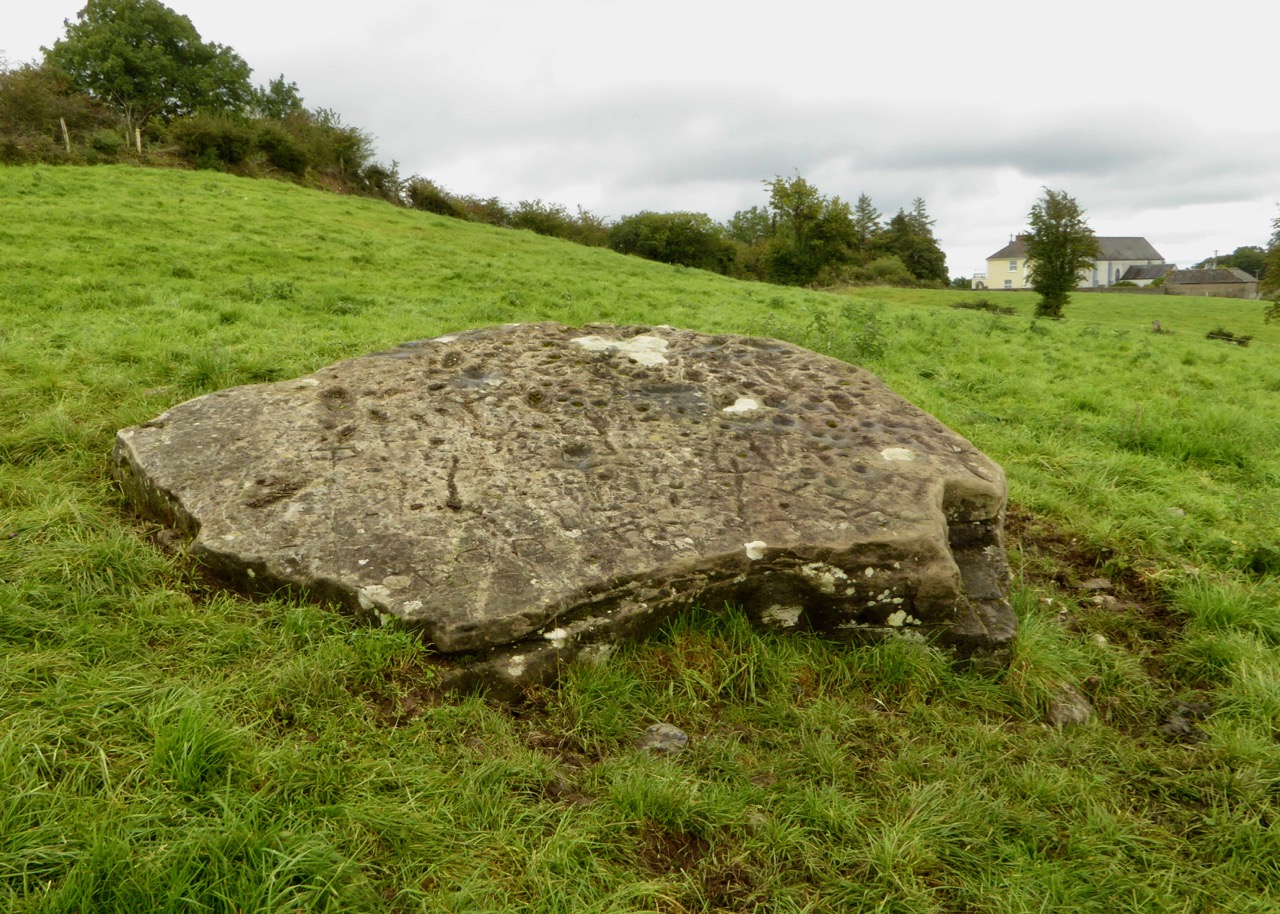
Header – a detail from the stone’s crowded surface. Upper – the well-defined path leading from St Kieran’s Church to the stone (don’t confuse this St Kieran with the one from Cape Clear). Lower – the limestone slab situated beyond the stile

For Rock Art enthusiasts like us the stone was a wonderful find. The surface is teeming with rings, lines, shapes – and even lettering. In spite of the weathering, everything was deeply defined and easy to see. And the more we looked, the more we did see, and the more perplexed we became. I even noted footprints! Remember my search last week for the footprint left by Archangel Gabriel on his visit to his eponymous mountain in West Cork? Here I counted six, and my size nine feet fitted perfectly in them all.
Upper – two of the ‘footprints’ scattered on the stone’s marked surface. Lower – the stone in its landscape context: ‘footprints’ are also visible

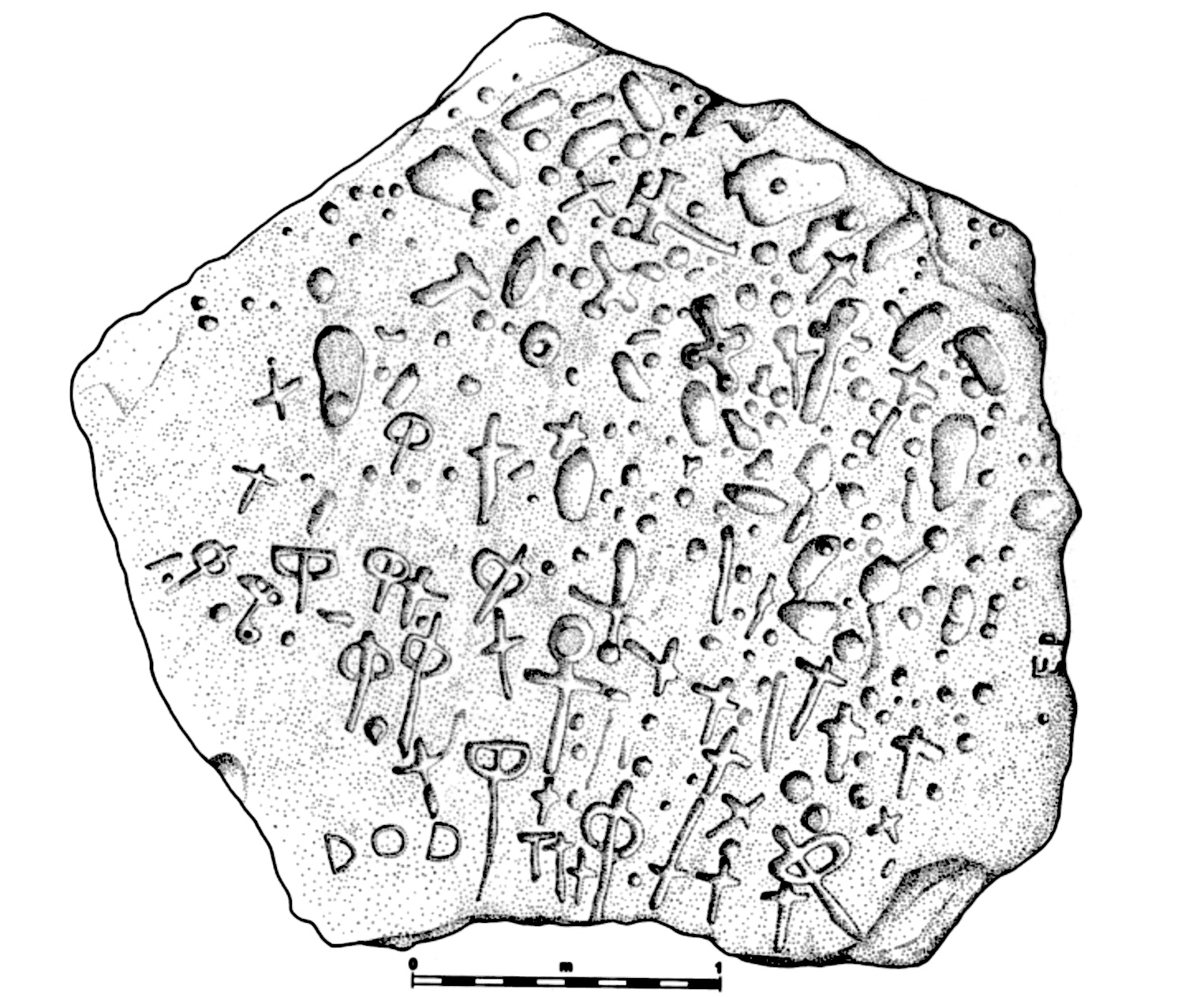
When we returned from our visit to Offaly I was able to research the available information on the Clonfinlough Stone and was delighted to find a very comprehensive study of it written by Finola’s old friend and Rock Art expert from UCC, Elizabeth Shee Twohig. The piece – Context and Chronology of the Carved Stone at Clonfinlough, County Offaly – was published in 2002 in The Journal of The Royal Society of Antiquaries of Ireland, Volume 132 pp 99-113. It makes the most enlightening read, outlining the ways in which the stone was regarded and drawn by early antiquarians and then opening up discussion on how much of the stone’s markings might in fact be natural formations, or natural forms which have influenced and been enhanced by ‘artists’ working with motifs which have become familiar to Rock Art researchers today, including cupmarks.

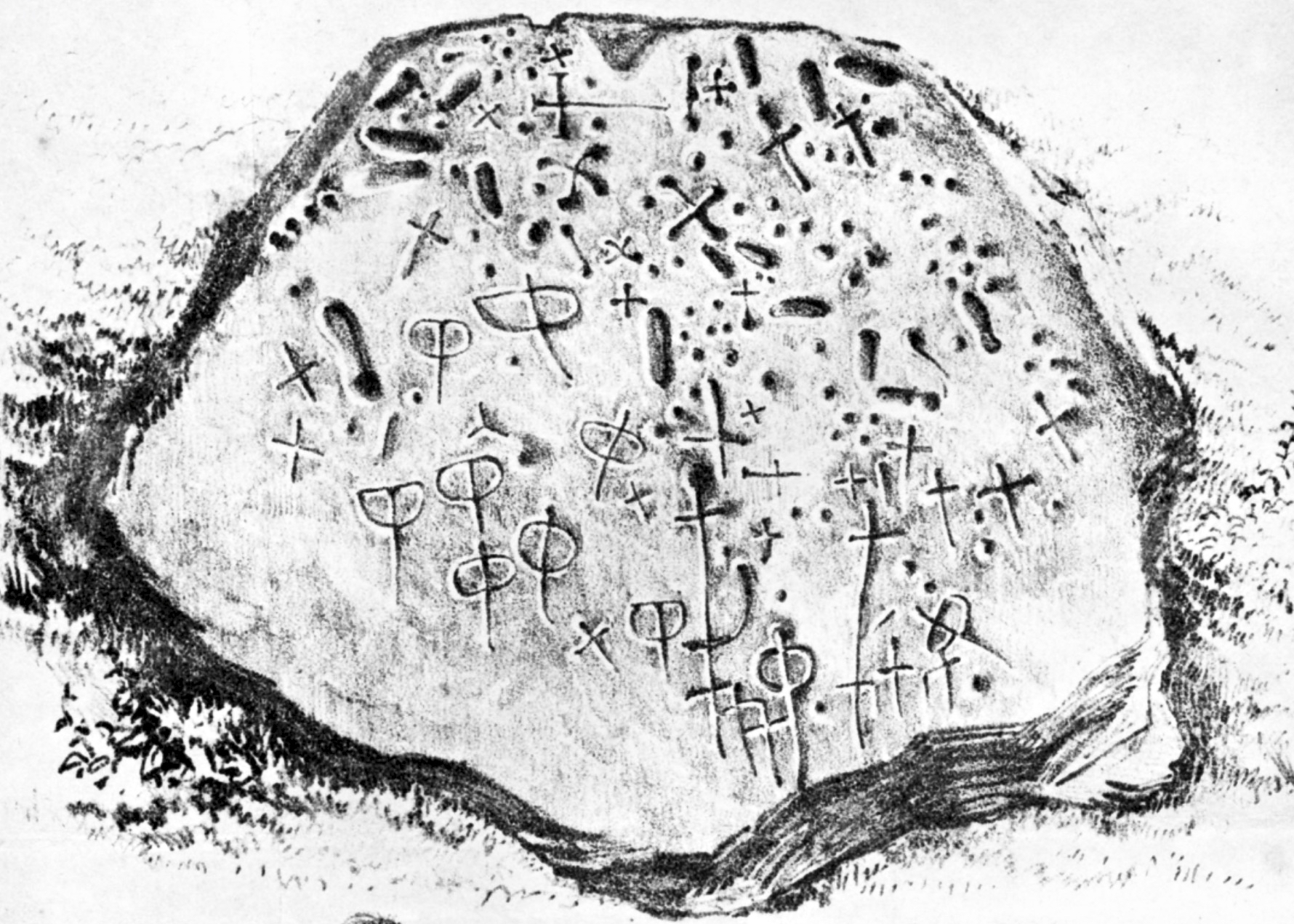
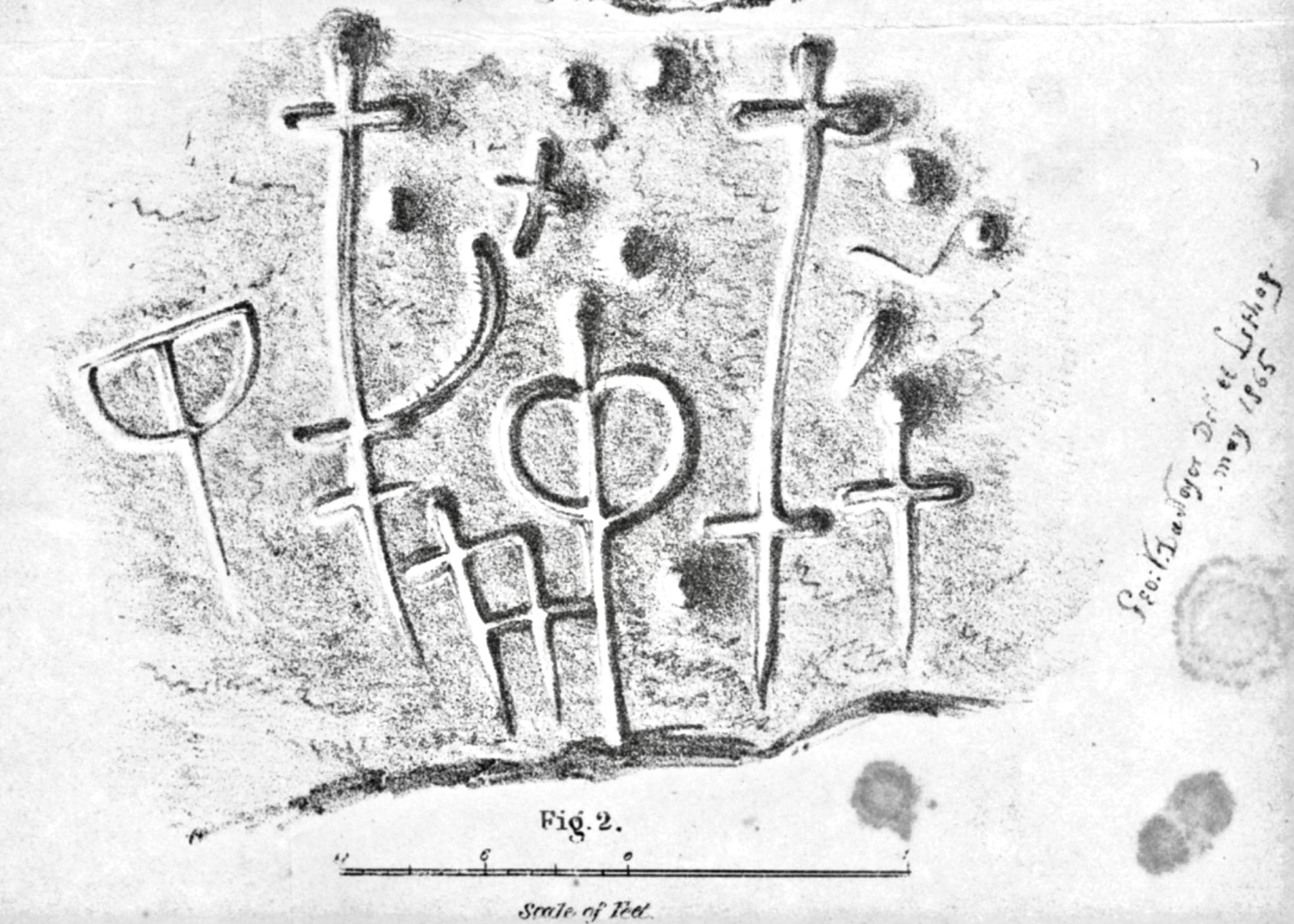
Engravings by George Victor du Noyer illustrating a paper published by James Grave in 1865. Note the emphasis that du Noyer has placed on recognisable ‘Greek’ style lettering (termed phi by Shee Twohig)

Elizabeth Shee Twohig quotes theories by RAS Macalister which evolved between 1921 and 1949, and which include the idea that the phi markings represent ‘…a possible depiction of a battle between the ‘loop men’ and the ‘cross men’ and suggested that the cupmarks …may even indicate the number of severed heads!…’ In his 1928 book The Archaeology of Ireland Macalister (quoted by Shee Twohig) suggests ‘…the carvings as showing a battle or pre-battle scene, the medicine men having prepared for their occult purposes a picture of the consummation desired…’ while in 1949 he saw it as a sign-manual of a hostile expedition from Spain which sailed up the Shannon: ‘…the battlefield, printed with the footmarks of the flying foe, strewn with weapons cast away in their flight and with missile stones…’

These are but brief extracts from the Shee Twohig account and discussions, which are essential reading – not just for possible enlightenment on the markings on this stone, but also for a well defined background on how ideas about Rock Art generally have developed since the time of the earliest antiquarians.

Elizabeth Shee Twohig has amplified her study of the Clonfinlough Stone with the first truly accurate drawing of the markings on it (above). It is certainly interesting to compare this with the 1865 engravings by du Noyer

Elizabeth Shee Twohig brings in to her study the possible significance of the stone’s positioning close to the great monastic centre of Clonmacnoise, which in medieval times was the prime pilgrimage destination in Ireland. There is evidence that one of the paved pilgrim routes passed close by the Clonfinlough Stone. It is plausible, therefore, that at least some of the markings on this limestone slab could have dated from those times: Clonmacnoise was active between the 6th and 12th centuries.

Upper – the many enigmatic markings on the stone: natural limestone solution pits, Bronze Age Rock Art, crosses carved by or for medieval pilgrims? Lower – the stone is within sight of the present day church

A trawl through the folklore records proves fertile. One legend says that at certain times of the year a horseman manifests and gallops around the stone. Another has it that a local boy named Michael used to play at the rock and there met another boy who gave him a silver knife. His mother made him take the knife back and leave it on the stone, for she said the boy was a fairy trying to entice him away. It is also said that another Michael will find the knife, and when he does he will find two big pots of gold under the rocks. Whatever the truth is about the rock and its meaning, I am struck by the path we found coming from the little church which is in sight of the Clonfinlough Stone: could there be something pagan in that stone which required the church to be built there – or is it a mutual guardianship?

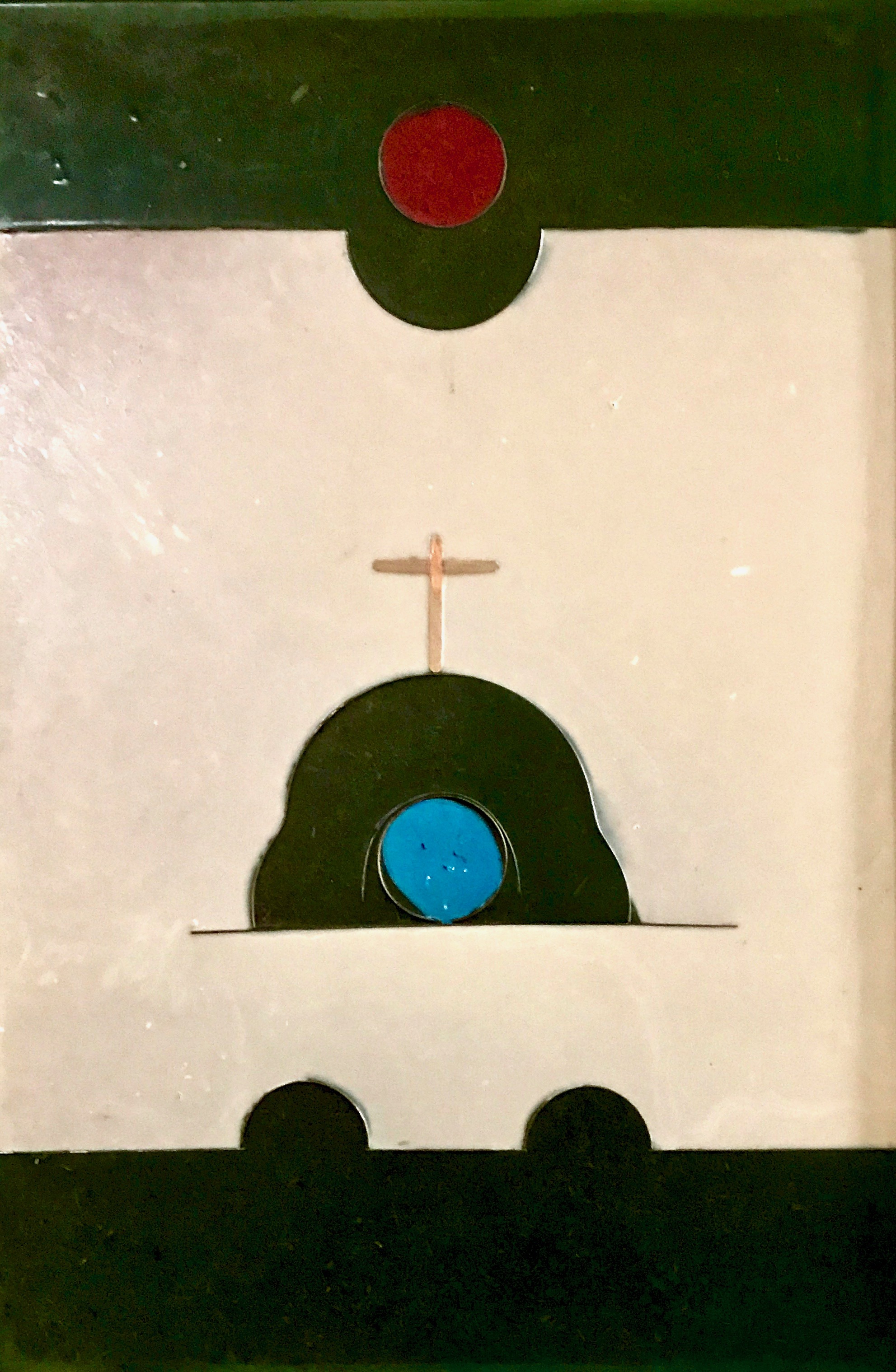
In the church at Clonfinlough is a curious series of Stations: this one showing the ’empty tomb’ can be seen as a rock supplanted by a cross…

Anam Cheoil – The Music’s Soul

The Friday evening concert at this year’s Masters of Tradition Festival in Bantry House was a tour de force: in all, probably the best concert I have heard at this festival in recent times. We went because on the programme were two of our favourite musicians who have come from the Irish tradition: Iarla Ó Lionáird and Mícheál Ó Súilleabháin. They were both on top form last night, and certainly didn’t disappoint.

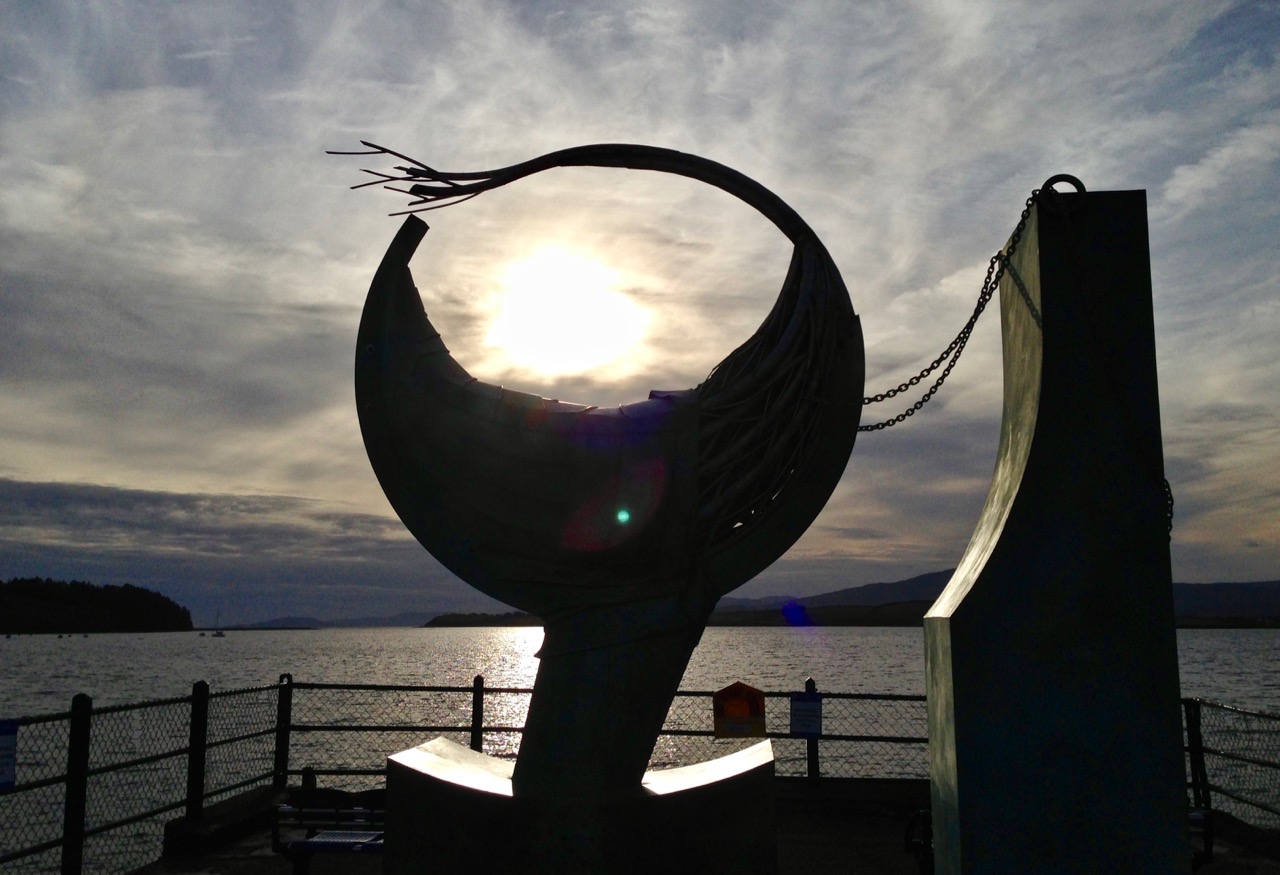
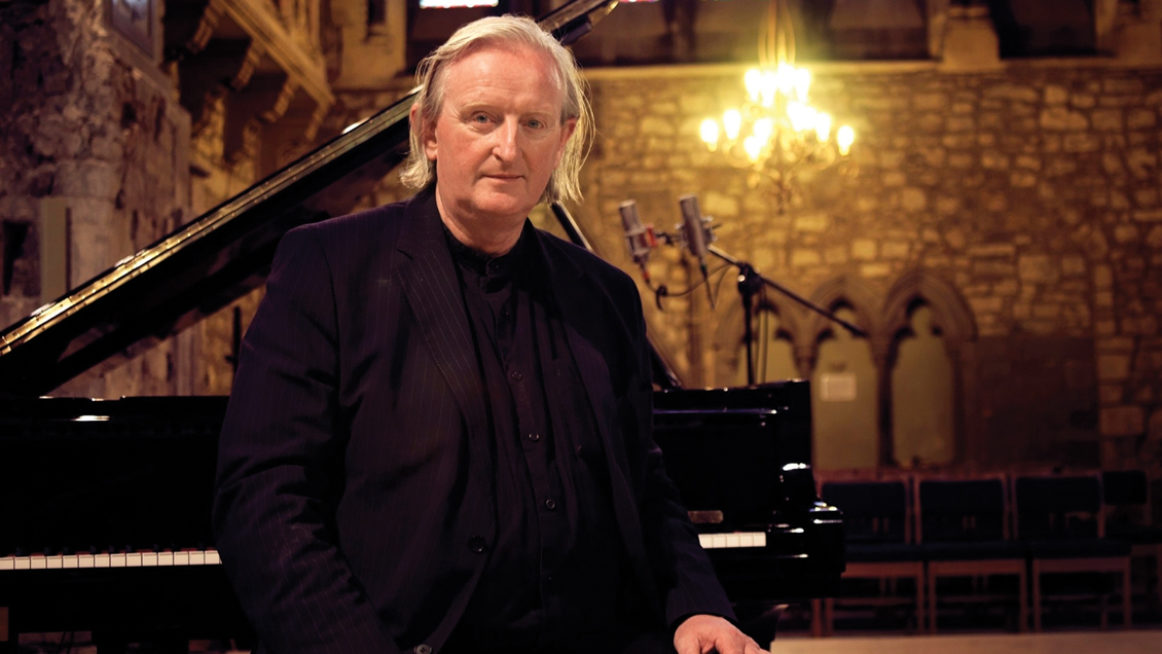
Header: ‘Odyssey’ by Barry Linnane  frames beautiful Bantry Bay – host to the Masters of Tradition Festival. Upper – Mícheál Ó Súilleabháin (RTE Orchestras) and Lower – Iarla Ó Lionáird (Fractured Air)

Using poetry, music and song, the two performers transfixed us. Both are imbued in the musical and poetic tradition of their country, which comes from deep, deep down. In my explorations of Ireland I am finding how much history is alive and embraced: this applies as much to the history of the culture here as it does to the physical relics of the ancestors in the landscape, whether it’s prehistoric rock art or medieval architecture.

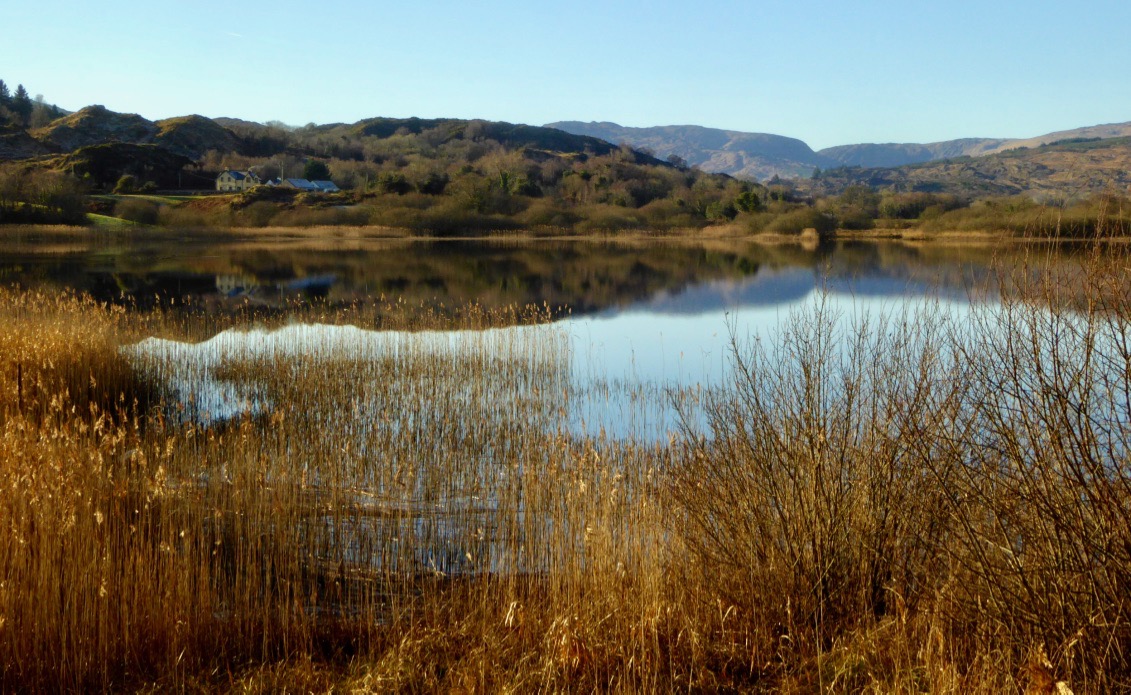
The rushy glens of the Sliabh Luachra country in the Muscraí Gaeltacht, where the Irish language is still very much alive

Iarla Ó Lionáird was born and raised in the Muscraí Gaeltacht, and imbued in the Irish language from birth. A near neighbour in his younger years was Seán Ó Riada, who lived in Ballvourney, and had established Cór Chúil Aodha, a male voice choir singing mainly in Irish, and which exists today under the leadership of Seán’s son Peadar. Iarla joined the choir as a child and sang with it until his early twenties. He now makes his living through his voice and is still very much involved in the Irish tradition while also exploring new grounds. Listen to this very beautiful rendition by Iarla of Caoineadh na dTrí Muire (the keening of the Three Marys):

Mícheál Ó Súilleabháin is best known for his unique expression of traditional Irish music on the piano. He claims that he was an introverted child, and that music was his saving grace. He went to UCC where he was also influenced – and taught – by Seán Ó Riada. Eventually he took over Seán’s job at Cork before founding and heading the Irish World Academy of Music and Dance at Limerick University. He wasn’t born into the Irish speaking tradition but came to it later in life. In a recent newspaper interview he gave this memorable quote: ‘…I wouldn’t like to be reborn as someone else, not even for a day, I’m so worn out trying to be myself…’ Here’s an example of Mícheál’s playing:

In the course of the Bantry concert the two musicians spoke of a little-known collector of Irish folk-songs – someone of whom I had not heard. Alexander Martin Freeman was …a retiring English scholar of private means… who travelled in the Muscraí Gaeltacht in 1913 and 1914. He wrote down no less than 84 Irish language songs, and his work has been described as ‘…incomparably the finest collection published in our time of Irish songs noted from oral tradition…’ This is all the more remarkable as Freeman spoke no Irish. He painstakingly wrote the words, exactly as he heard them, in phonetic spelling, based on his own native English. For this reason, the texts were apparently ignored initially by Irish folklorists. But now they are viewed with interest by scholars as they give a great insight into the word-sounds of Irish speakers from those years – apparently the West Cork dialect has been changing with time! Over the years both Seán Ó Riada and Iarla Ó Lionáird have brought the songs back into circulation, and we were treated to some examples. Freeman’s field notebooks from Ballyvourney are held in the National Folklore Collection, University College Dublin.

Winter scene in the Muscraí Gaeltacht

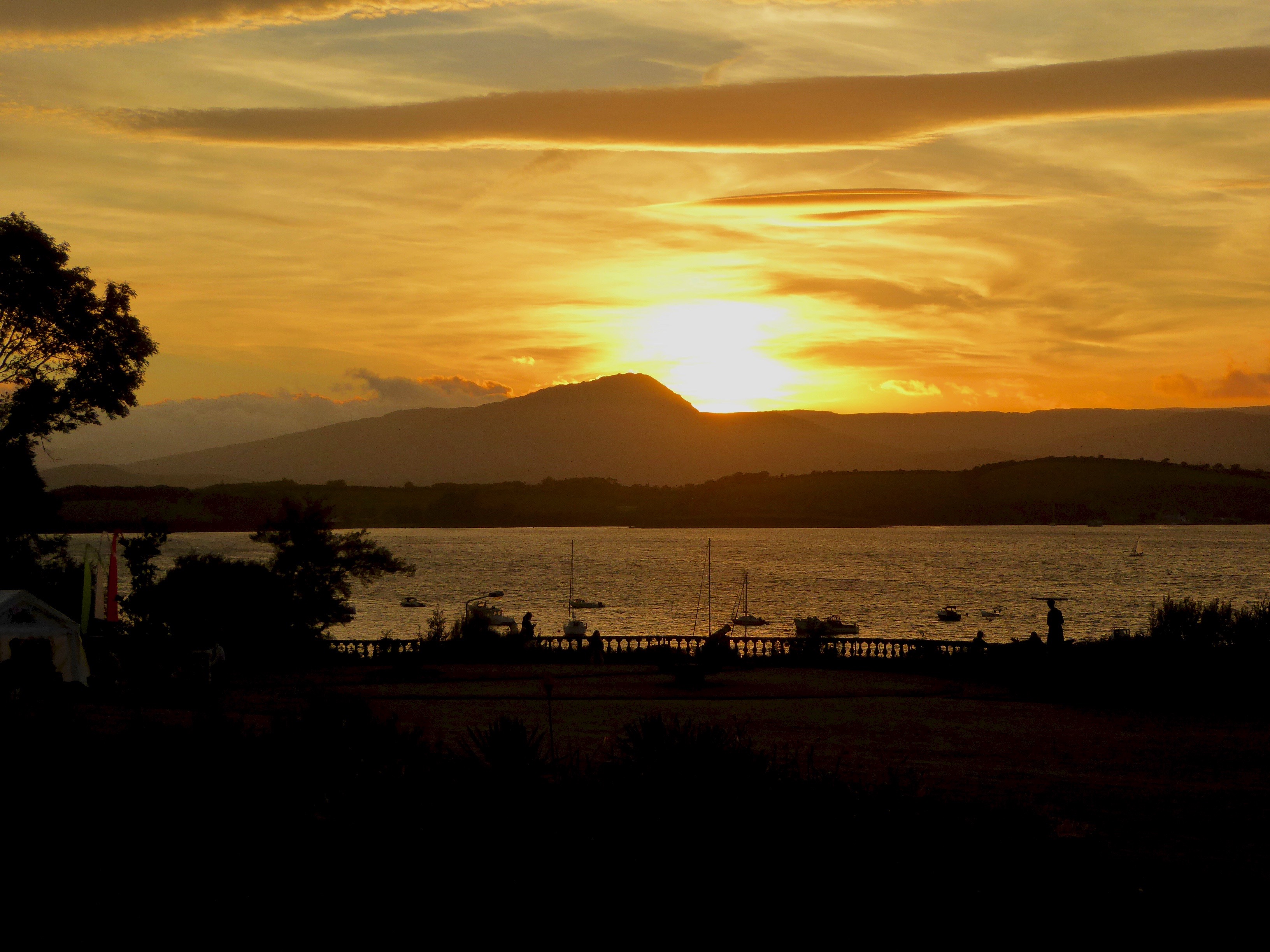
In the Library of Bantry House these two performers gave us a very special experience through music, song and poetry. Although I don’t speak or understand Irish, I appreciated the beauty of the sounds of the words – a music itself. We and the audience were transfixed by the whole experience. Walking out on the terrace of Bantry House afterwards, I looked to the west where the sun was dropping behind the mountains over the calm waters of the bay. I felt that we had, through the music, been given a privileged glimpse into the soul of Ireland.

Irish Romanesque 2 – Doorways

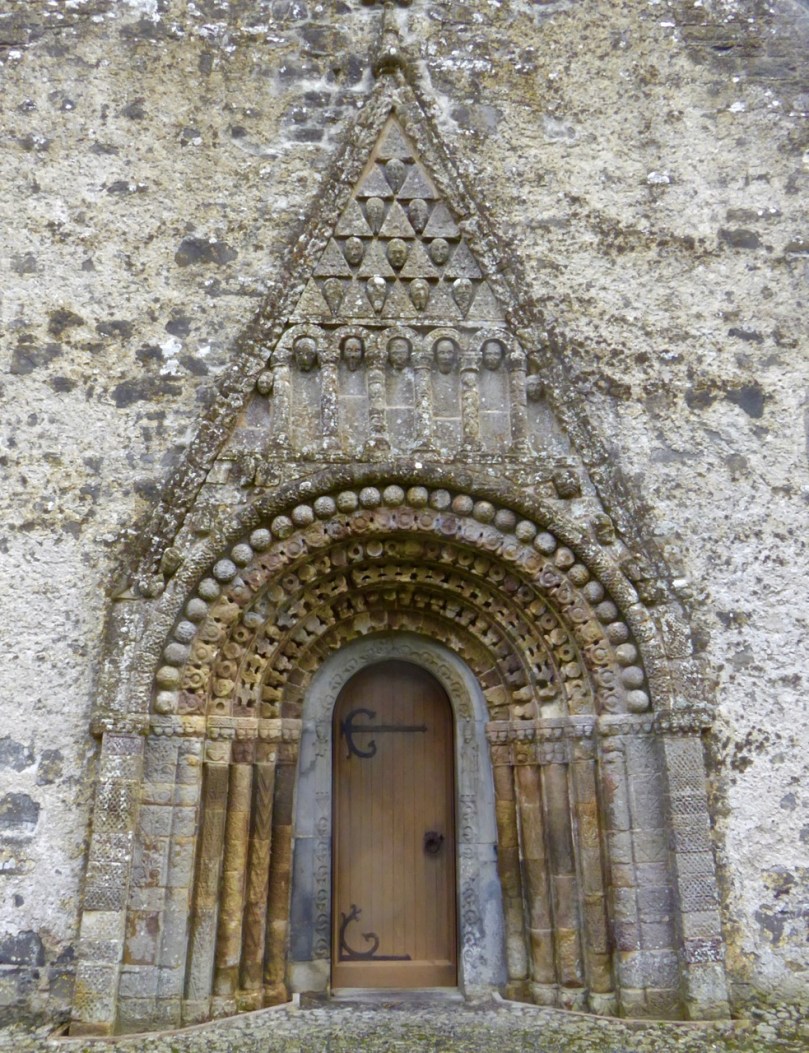
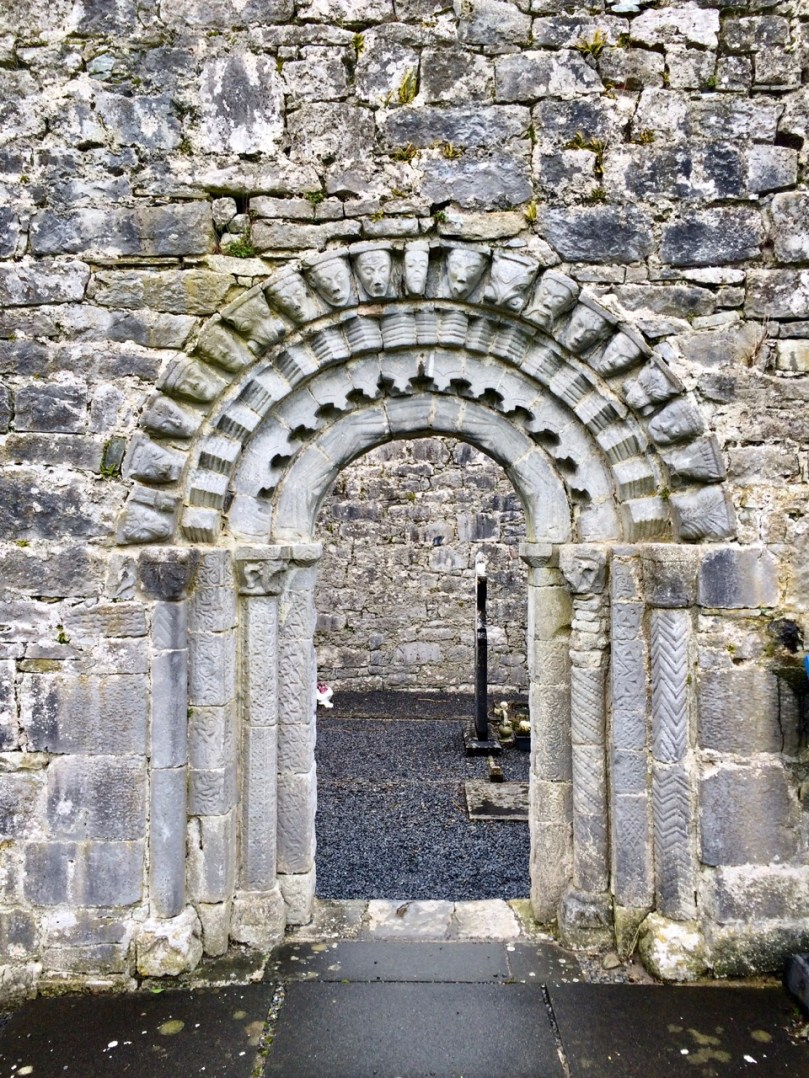
In April I introduced you to the form of architecture known as Irish Romanesque – the dominant form of church architecture in Ireland in the 12th century. If you haven’t read that post already a quick glance over it will get you ready for this one. To continue the series, I’m going to look at one of the glories of the form – the elaborate doorways, often highly decorated, such as the one at Clonfert, above.

Our friends Brendan and Kathie are visiting at the moment and I pressed Brendan, an artist, into service, drawing the Killeshin doorway for me, so I could use his drawing to illustrate the main features of these doorways, and cover some basic vocabulary. (Thank you, Brendan!) Take a look at our joint effort – it will help as I talk about the doorways.*

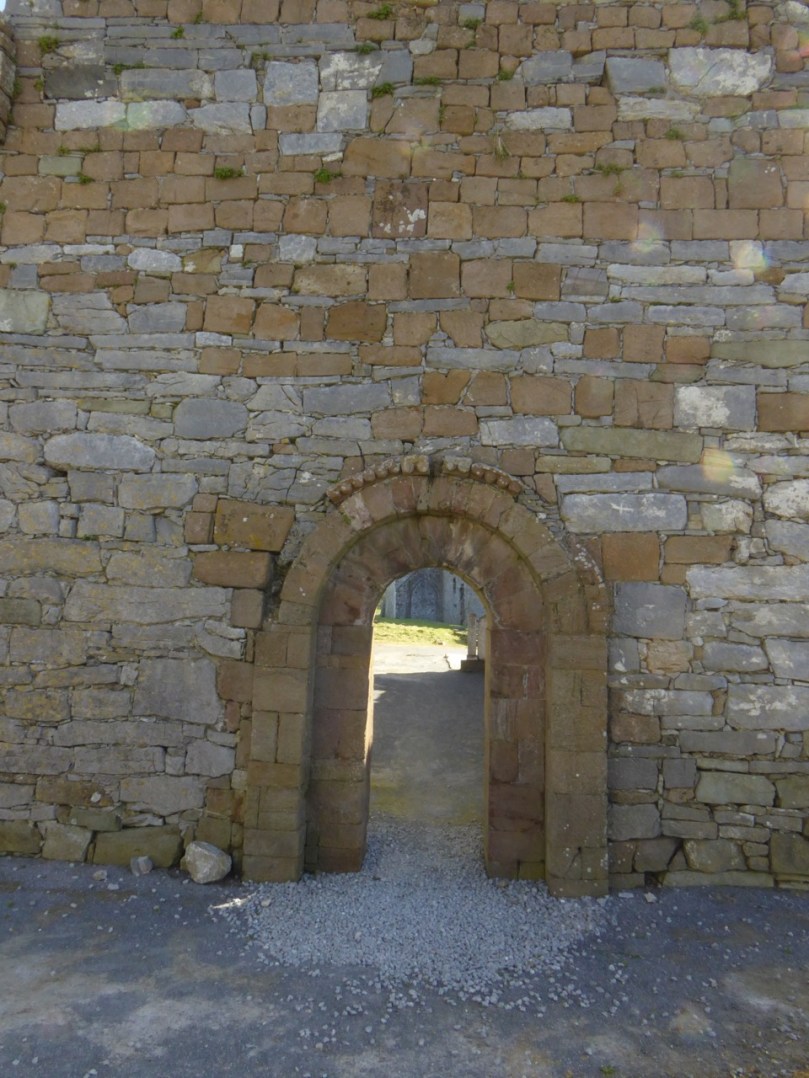
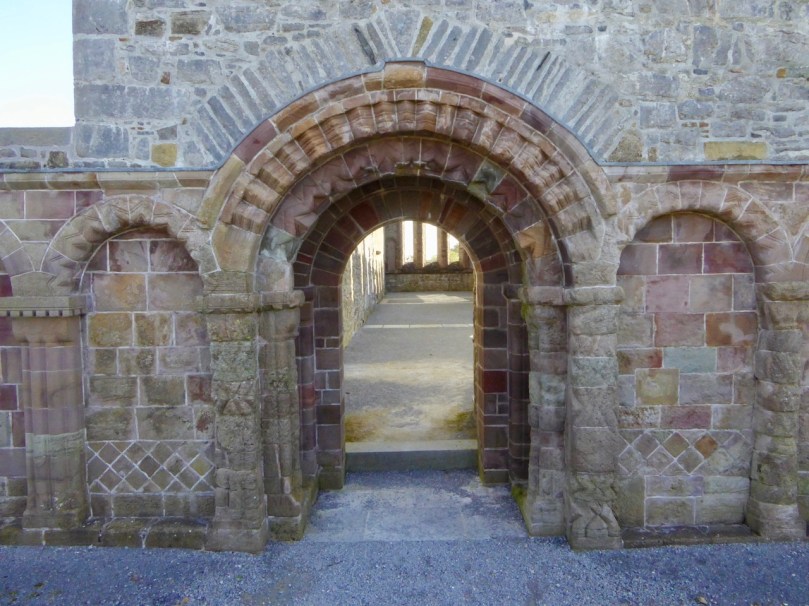
This simple door is at Ardfert in Co Kerry. It only has one order and no decoration apart from a string of bosses above the arch. The romanesque elements at Ardfert are mixed with later gothic elements – fragments only of the 12th century buildings that once occupied the site. The doorway below is yet another example, built into the wall of the later cathedral building. The stone is soft and much weathered but the columns were once carved, and the door is flanked by blind arcading.

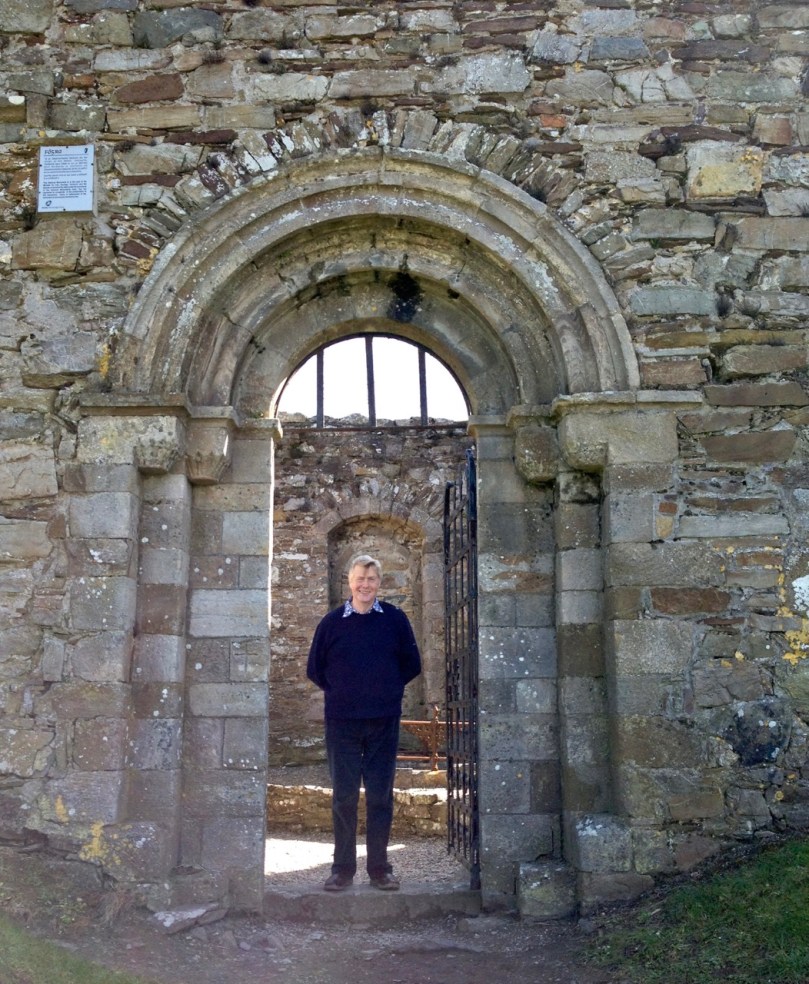
This doorway (below) at Ardmore in Waterford is no longer complete – while the jambs are there, the columns have disappeared, leaving only their capitals behind.

Killeshin in Co Laois, our model for the drawing, is a beautiful site. The early church retains antae on one side, and there are windows and vestiges of a stone roof reminiscent of the early medieval site we described at Kilmalkedar in Kerry.

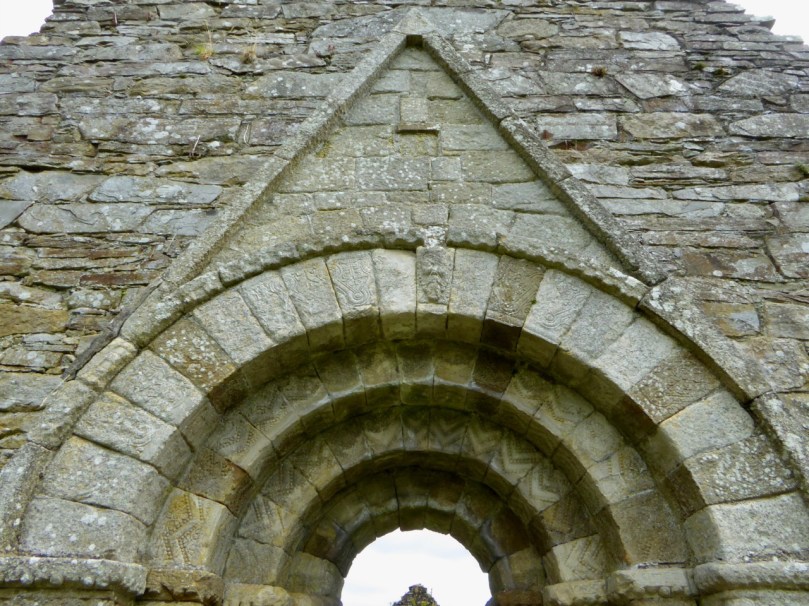
The doorways has three orders and a pediment above. Many of the voussoirs are carved with intricate designs and the keystone features a carved head.

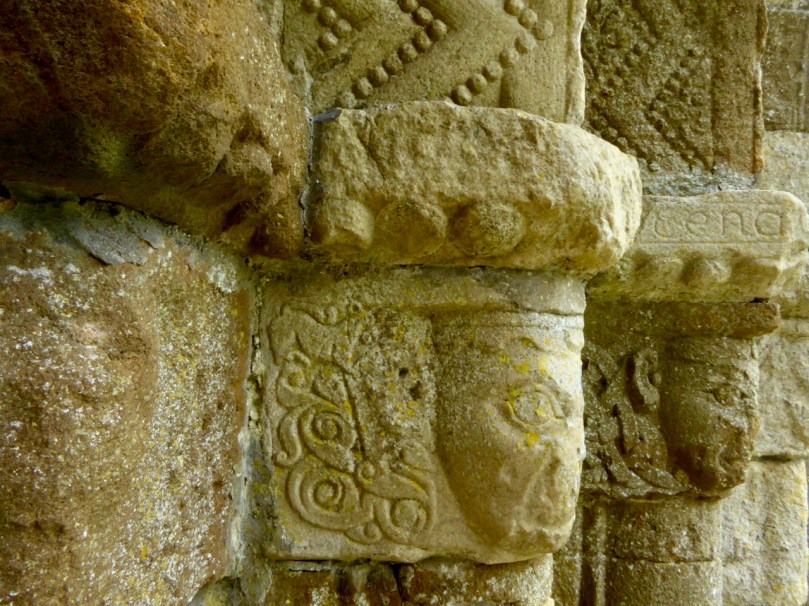
Not only do the Killeshin carvings include intricate geometric patterns and heads on the capitals, but there is writing memorialising the builder and the donor.

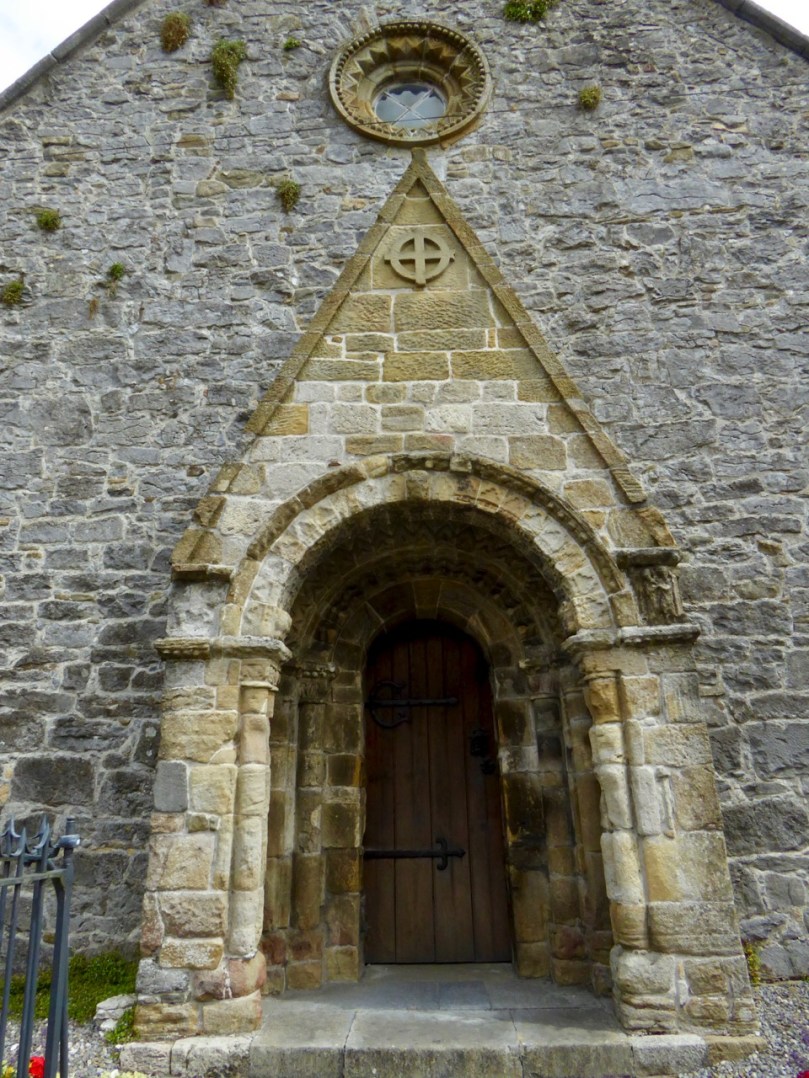
Not far from Killeshin is Freshford (Co Kilkenny) where a church still in use has incorporated a romanesque doorway from a 12th century church into a later building. Much modification has taken place – the round widow in the neo-romanesque style is an 18th century addition and the cross at the top of the pediment is also recent.

Note the inclined jambs – meaning the doorway tapers towards the top. The stone is soft and badly weathered, but some carvings are still discernible on the capitals. Interestingly, the jambs originally had niches for statuary, one example of which, two figures, remains,

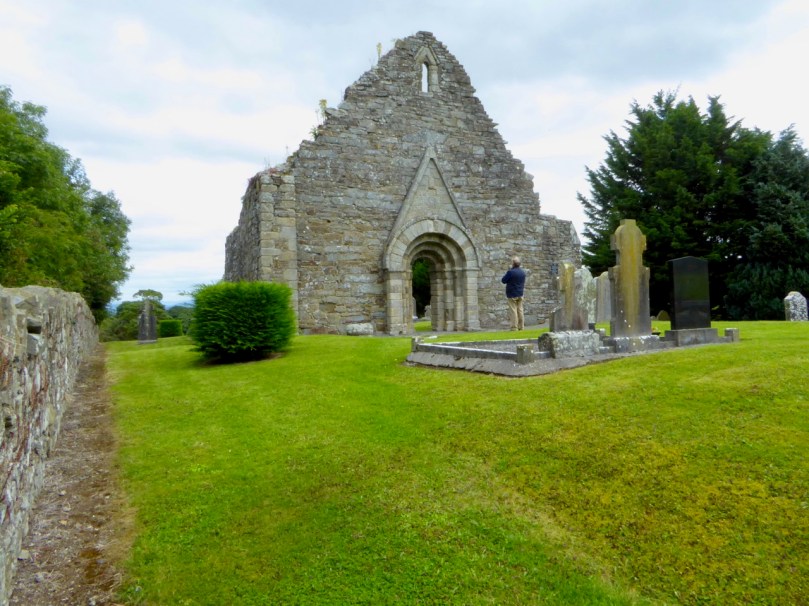
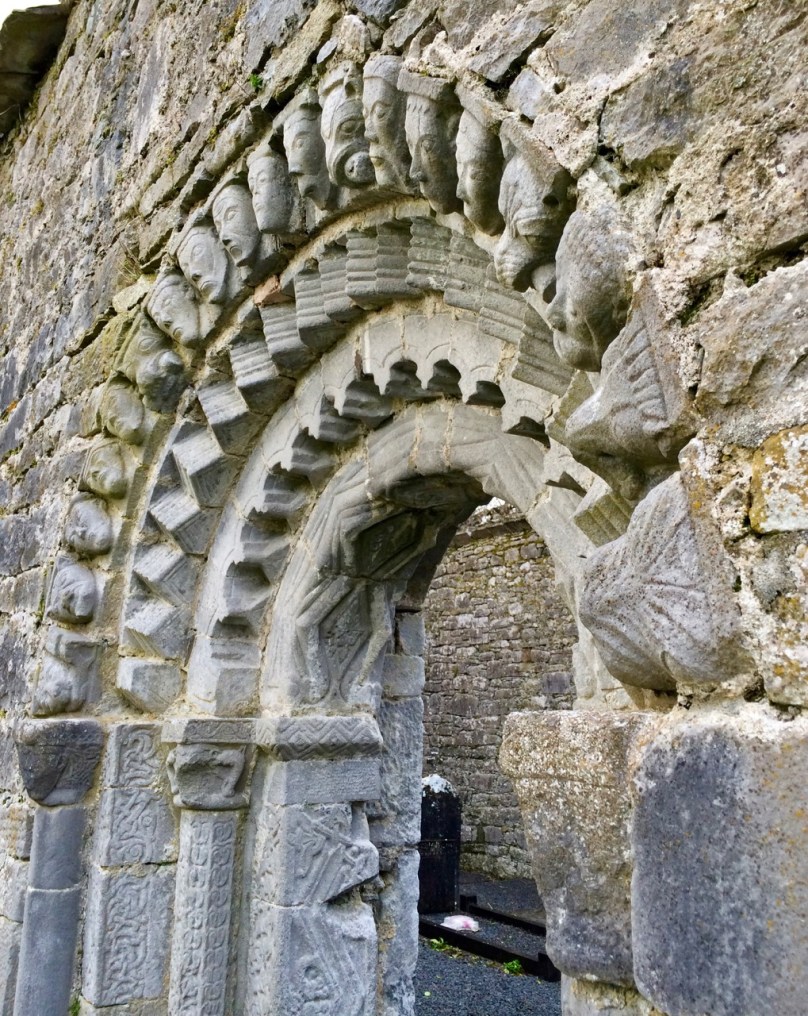
Two of my personal favourites come now. The first in in Clare, at Dysert O’Dea, a fascinating multi-period site. The romanesque doorway is distinguished by its multiple carved heads on the voussoirs of the outermost archivolt of the arch.

The columns, capitals and inner archivolts are also highly decorated, but it’s those carved heads that never fail to capture the imagination. Not all are human, but of the ones that are I can’t help wondering who the models were – bishops? warriors? saints? kings? Or perhaps the carvers themselves?

Finally, the greatest doorway of all, widely considerered to be the masterpiece of romanesque architecture on Ireland – the great door of Clonfert cathedral in Co Galway. It’s the photograph I led off with, showing the whole doorway. Let’s take a look at some of the details.

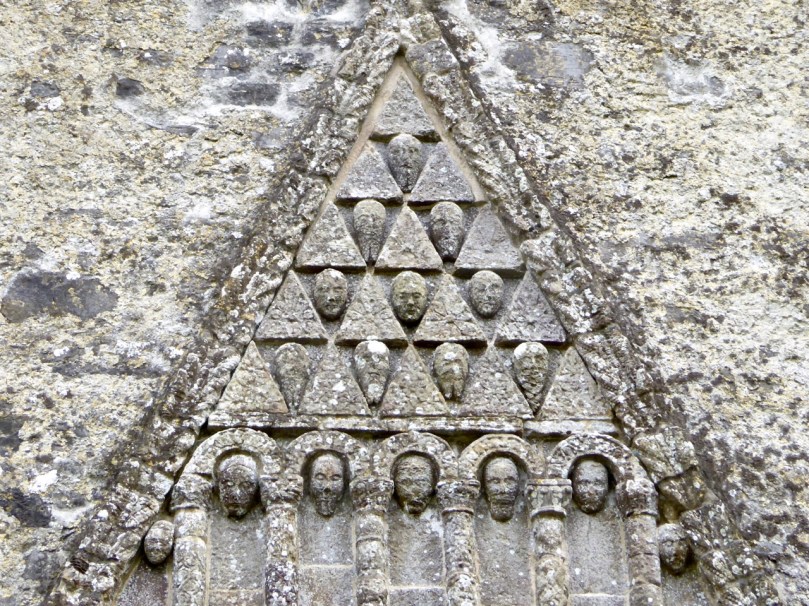
The pediment is unusual in that it is filled with triangular reliefs, each having a carved head. Below that are blind arcades with yet more heads. Although weathered, each head has its own distinct character.

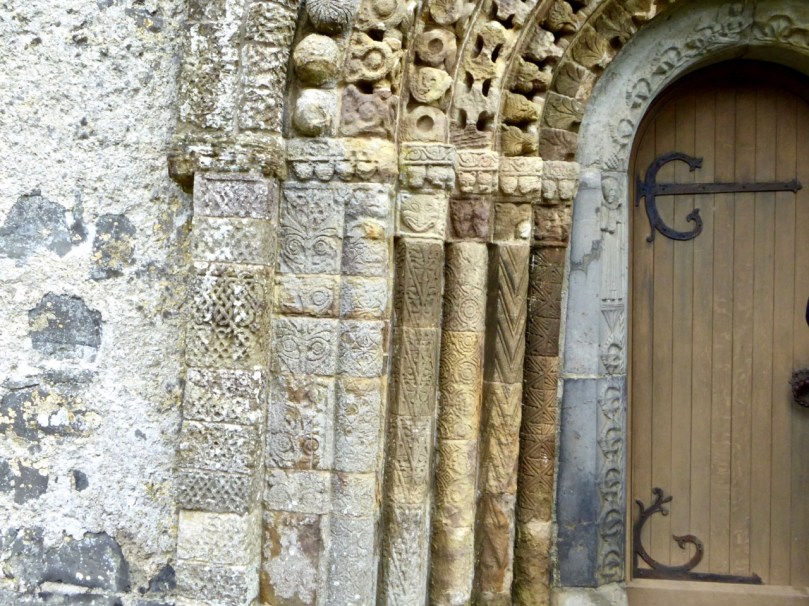
All seven orders of columns and capitals are decorated, as are the archivolts. In fact, it’s hard to find an inch on this doorway that isn’t intricately carved. There are fantastical creatures, animals, geometric and interlaced designs, and on the innermost jamb, two carved figures that are mostly likely 15th century additions, but no less compelling for that.

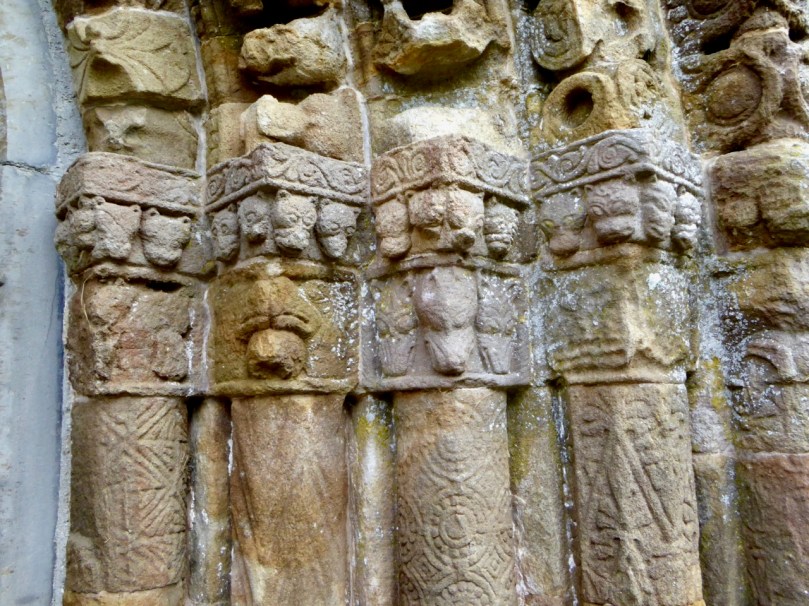
Romanesque carvings deserve a post to themselves one of these days, as does the iconic building of the period – and this time not just doorways but a complete building – Cormac’s Chapel at the Rock of Cashel. Look out for those posts in the future. Meanwhile, one last glimpse of some of columns and capitals from Clonfert…

*For a truly erudite treatment of Irish Romanesque, see the Corpus of Romanesque Sculpture in Britain and Ireland – its the Romanesque Encyclopaedia!

The Treasures of Castledermot

Last week we explored the medieval wonders at Moone, in County Kildare. We couldn’t leave the area without going on to Castledermot to visit the monastic site of Díseart Diarmada, (the hermitage of Dermot) – a few minutes’ drive down the road. Stone carving artists were active here, too, as we can see from the many artefacts mainly centred today around St James’ Church, built on the site of the former monastery. These include a decorated Romanesque doorway: Finola is writing about Romanesque architecture today.

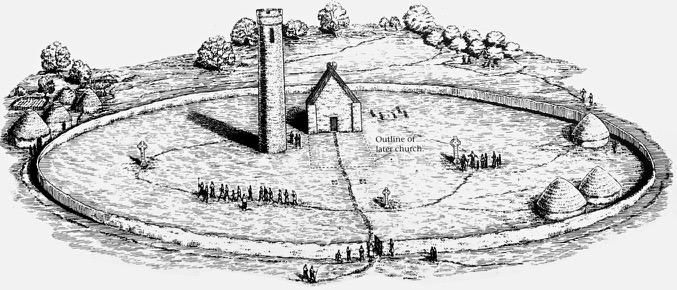
Díseart Diarmada as it might have appeared in the 800s. This reconstructed view is taken from the excellent Dúchas interpretation panels on the site, and shows the earliest church, the 20m high round tower (which still stands today) and the two ornate high crosses, which also remain intact

The settlement itself was highly important. There were Viking raids during the 9th century, probably indicating that there was wealth to be plundered there. A royal grant was given for a fair in 1199, and the very first Irish parliament was convened in the town on 18th June 1264. In 1393 Castledermot was granted permission to mint its own coins.

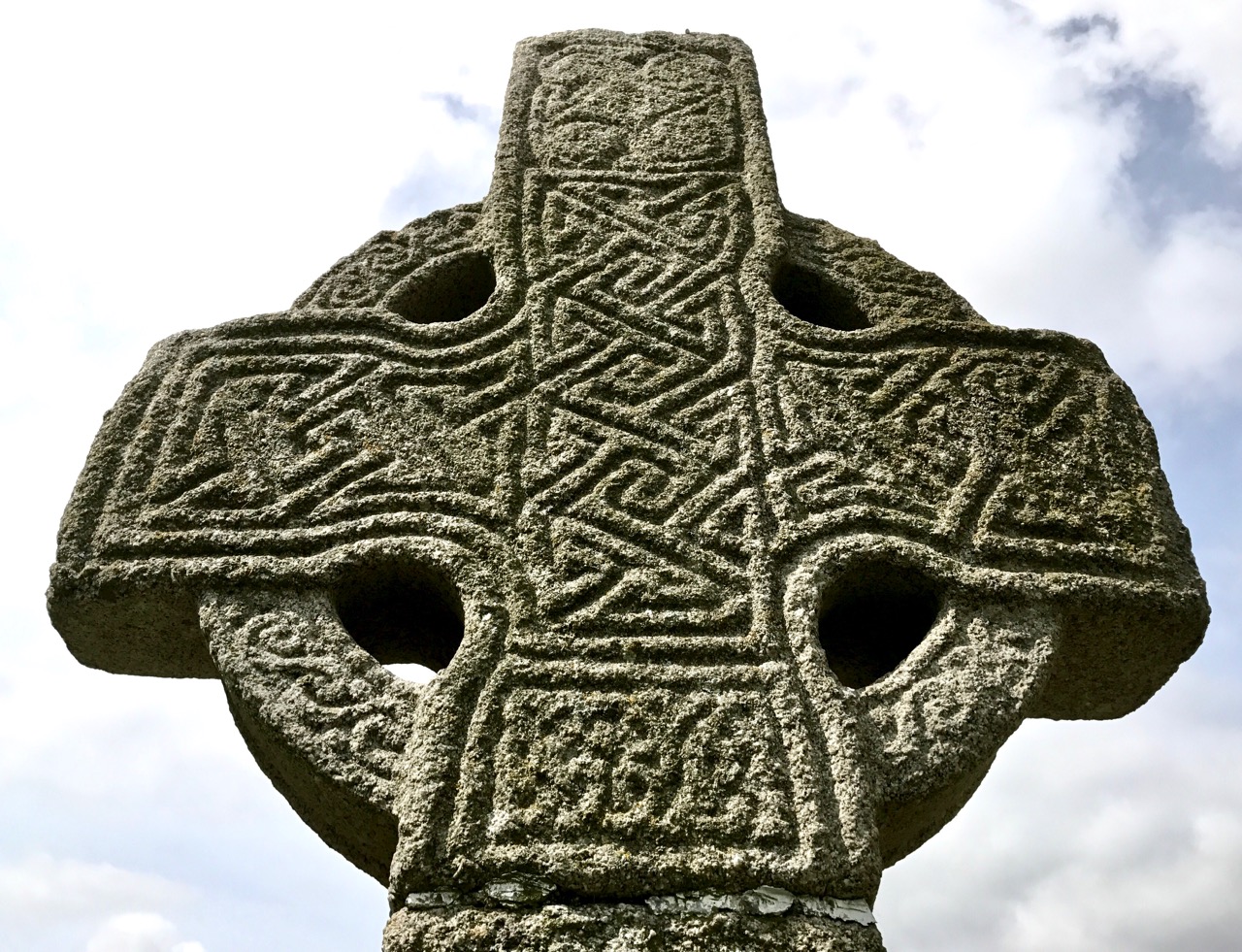
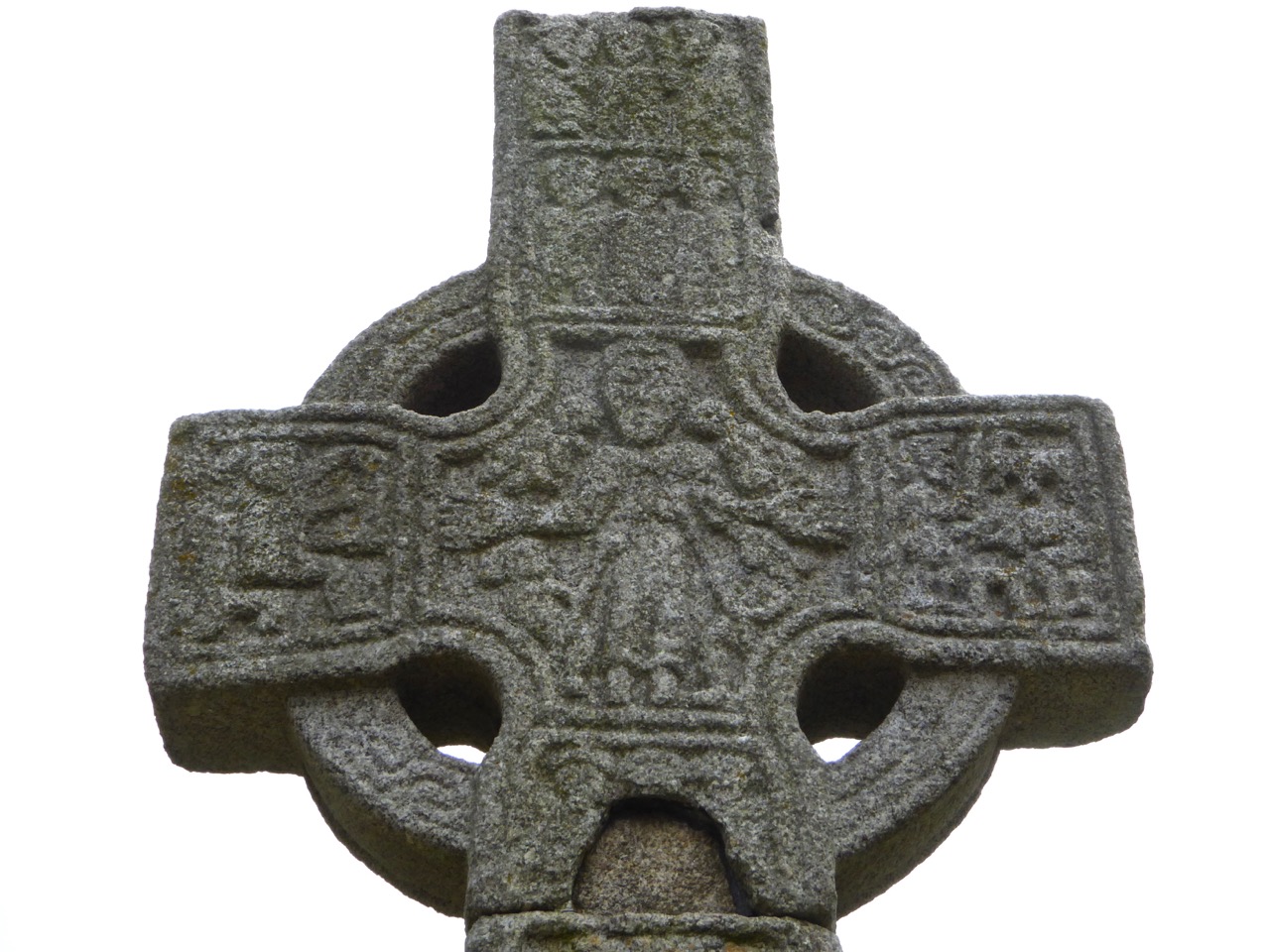
The two high crosses at Castledermot: south cross (left) and north cross (right – round tower beyond). The header picture shows the geometric work on the east face of the south cross

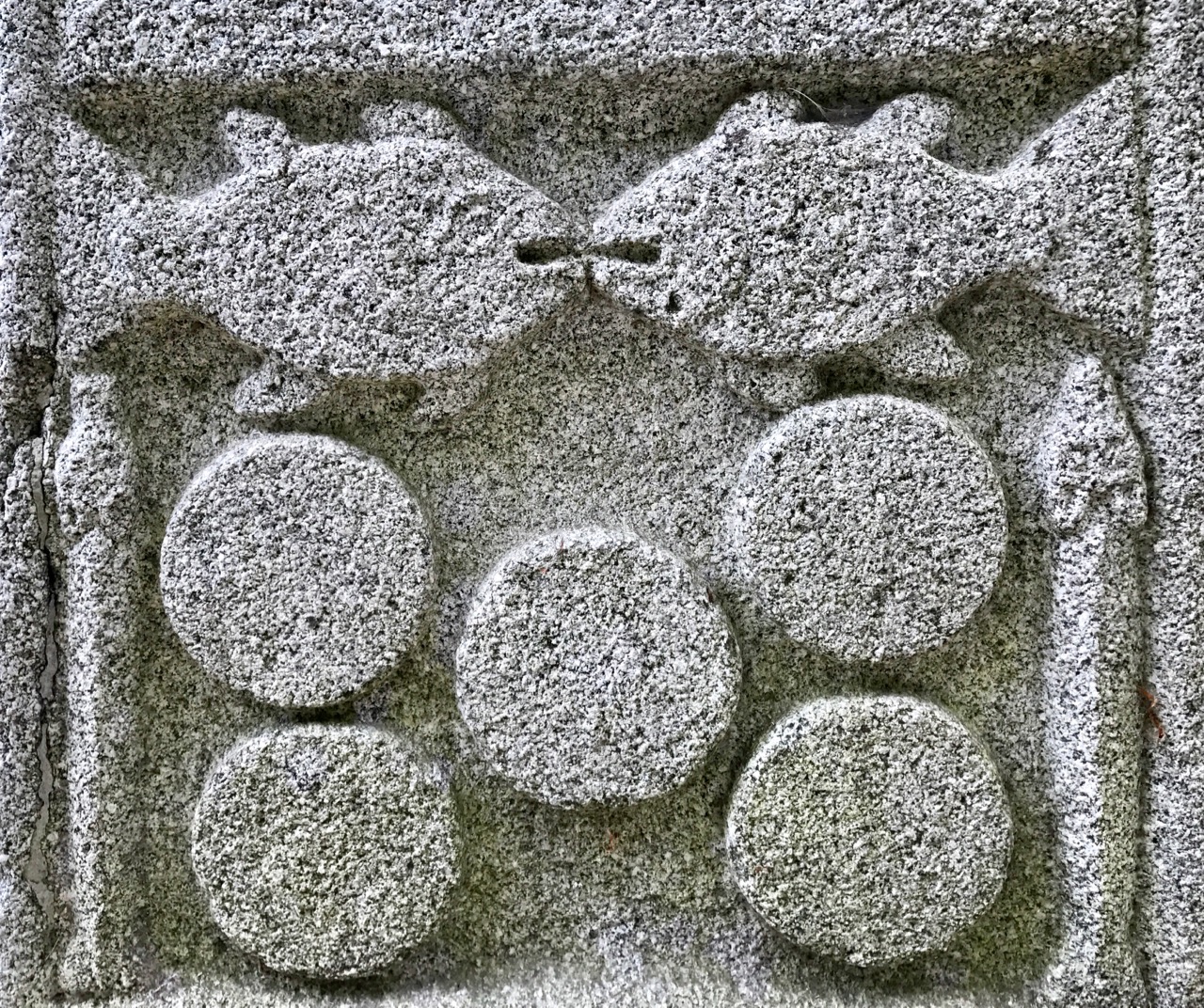
There are certainly figurative carvings on the two crosses to almost rival those found at Moone. I was particularly interested to see other versions of the stories of the loaves and fishes and Daniel in the lions’ den. But the real glory of Castledermot lies in the panels of knotwork. If these were coloured (as suggested at Moone) they must have been spectacular.

Note the loaves and fishes, bottom left

It’s interesting to speculate who might have been responsible for this ancient carving. Could it have been the monks themselves, who considered that part of their dedicated life was to build and decorate the great monastic buildings? Or were they constructed by travelling masons, much as the later cathedrals were? And who directed and designed the work? These are such important monuments – a legacy which we must be sure to look after: they have been here for more than a thousand years and – in spite of being in the open and subject to constant weathering – are still clear to see. At Moone the great cross there has been placed under a modern protective canopy, which is not intrusive. Perhaps such actions should be considered for all these Irish medieval works of art.

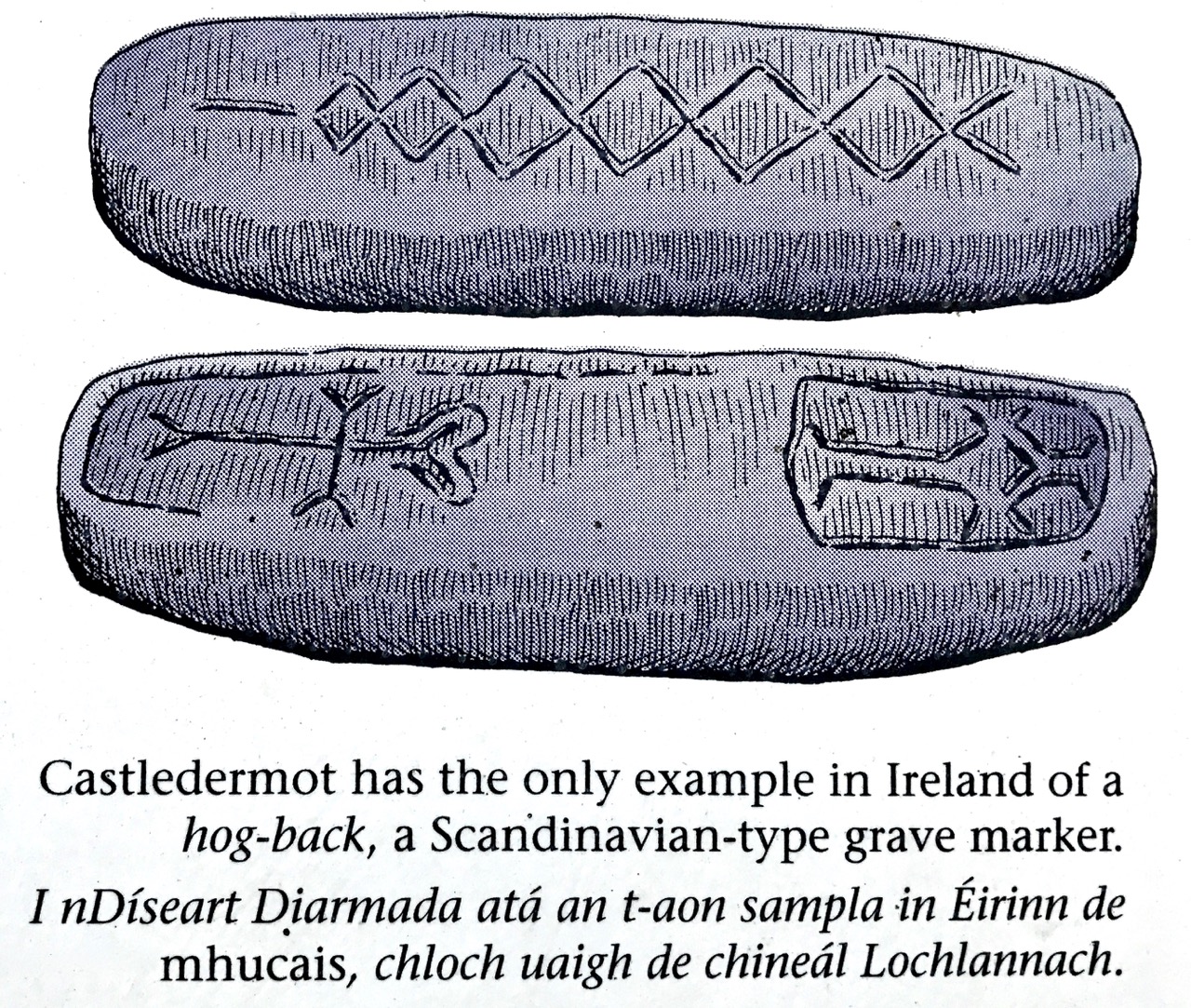
The site at Castledermot reveals many other remains which appear to be weathering quite badly. These include the Hogback Stone, which has been linked to Viking activity in the area: it was discovered just below the ground in its present location in 1967. It is said to represent a House for the Dead, and other examples have been found in Scotland and England: this is the only one found so far in Ireland.

The Hogback Stone (top – Dúchas – and bottom left) and an unusual type of cross-slab close by (right). This is known as the Swearing Stone, and it is said that it may have been used during wedding ceremonies or for swearing oaths or allegiances in early times

Although residents in Castledermot are keen that their historic artefacts are well looked after and are seen by an interested public, the site remains rather obscure and perhaps deserves to be better known. There is a wealth of heritage in Ireland – do we take it too much for granted? The Office of Public Works (formally Dúchas) do their best to maintain and advertise the monuments under their care but it’s an uphill job with a budget which is far too small.

We have by no means exhausted the treasures of this remarkable Irish town. There are other intriguing carved stones and crosses on the monastic site, and, at the southern end of the town are impressive remains of a Franciscan Friary, founded around 1247. This site has a guardian and a key holder, but we didn’t have time to visit. Inside it is a rare cadaver grave stone dating to about 1520. In 1275, the town was given a royal murage grant. This allowed the collection of tolls from people entering Castledermot to pay for the construction and maintenance of town walls. The wall, with three gates, was completed around 1300.

Ancient Irish Art – Moone High Cross

Wherever we travel in Ireland, we look for the routes which will take us past sites rich in history and archaeology. Finola wrote a while ago about places to visit close to the M8, which links Cork to Dublin. Last week we discovered a real gem, in County Kildare, about 40 kilometres east of the motorway – well worth the diversion.

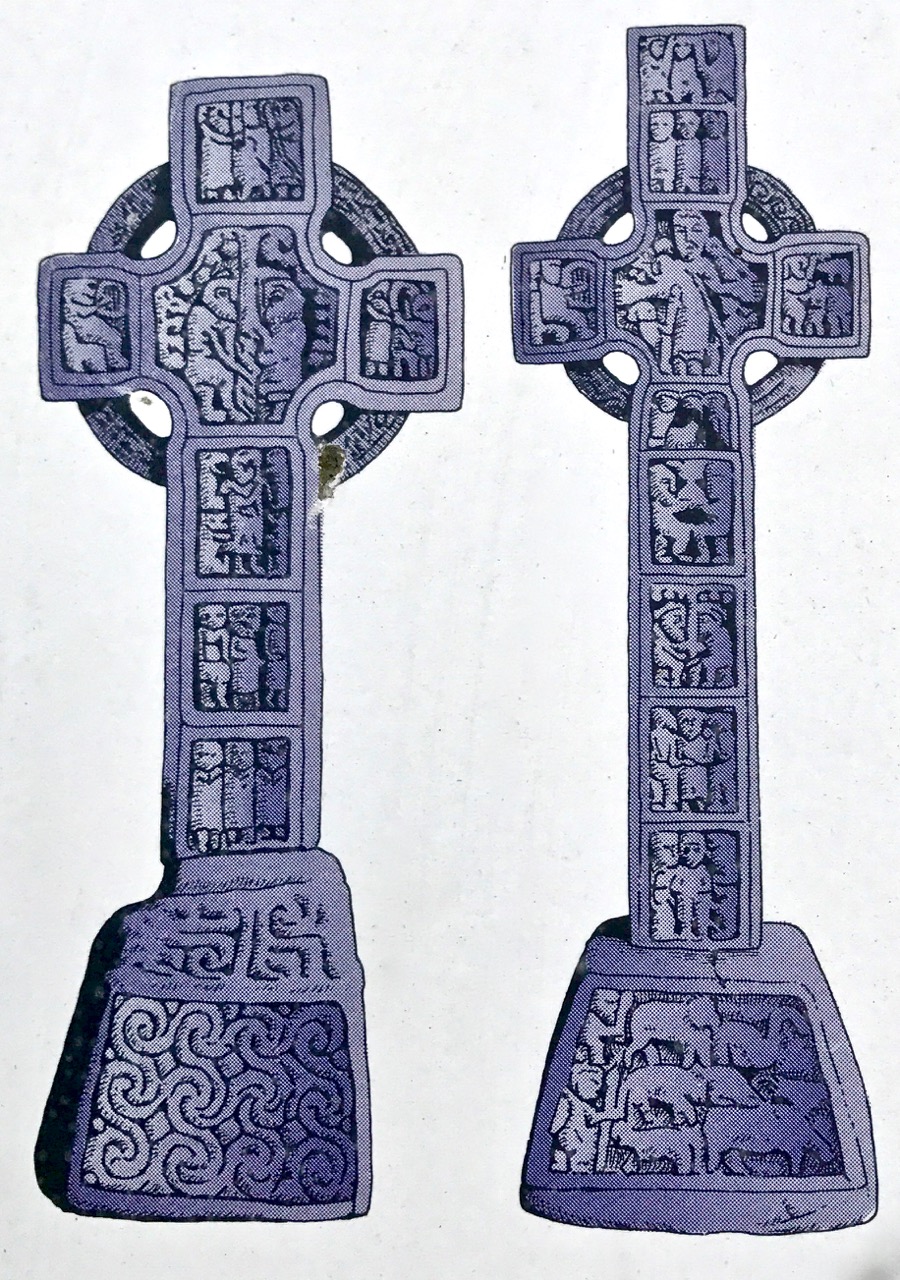
Just outside the village of Moone is the finest medieval high cross that we have seen in Ireland. It is on the site of Moone Abbey (above right – a sketch from 1784 by antiquarian Austin Cooper), where a church is believed to have been founded by St Palladius, who came to Ireland in 431. It was later dedicated to St Columcille. The abbey ruins date from the 13th century, but the site must have been an important religious foundation long before this as the high crosses (there were once four here) are very much older. Historical sources differ on their age – I have found them variously attributed to the 7th, 8th, 9th and 10th centuries! It’s safe to say they are at least 1100 years old.

Early views of the High Cross at Moone: left – an engraving from 1857 and right – a photograph from the Lawrence Collection dating from the 1890s. Both images show the earlier reconstruction, before the centre pillar was discovered and added

The Abbey was ransacked and burned along with the nearby Castle by Cromwellian forces in the 17th century and the high crosses were probably buried at that time. Two sections of the one we can see today were rediscovered in the Abbey grounds in 1835 and re-erected in the Abbey by the Duke Of Leinster. In 1893 a further section was uncovered and added to bring the full height of this cross to 5.3 metres. This is not quite the highest high cross in Ireland – Muiredach’s Cross at Monasterboice is 5.5 metres – but Moone is visually more impressive because it is so slender, and beautifully decorated.

The west face of the Moone High Cross seen in its present context in the ruined Abbey. The site has been well laid out and presented with the fragments of other carved stones discovered during excavations. A protective roof has also been constructed in a non-intrusive simple style

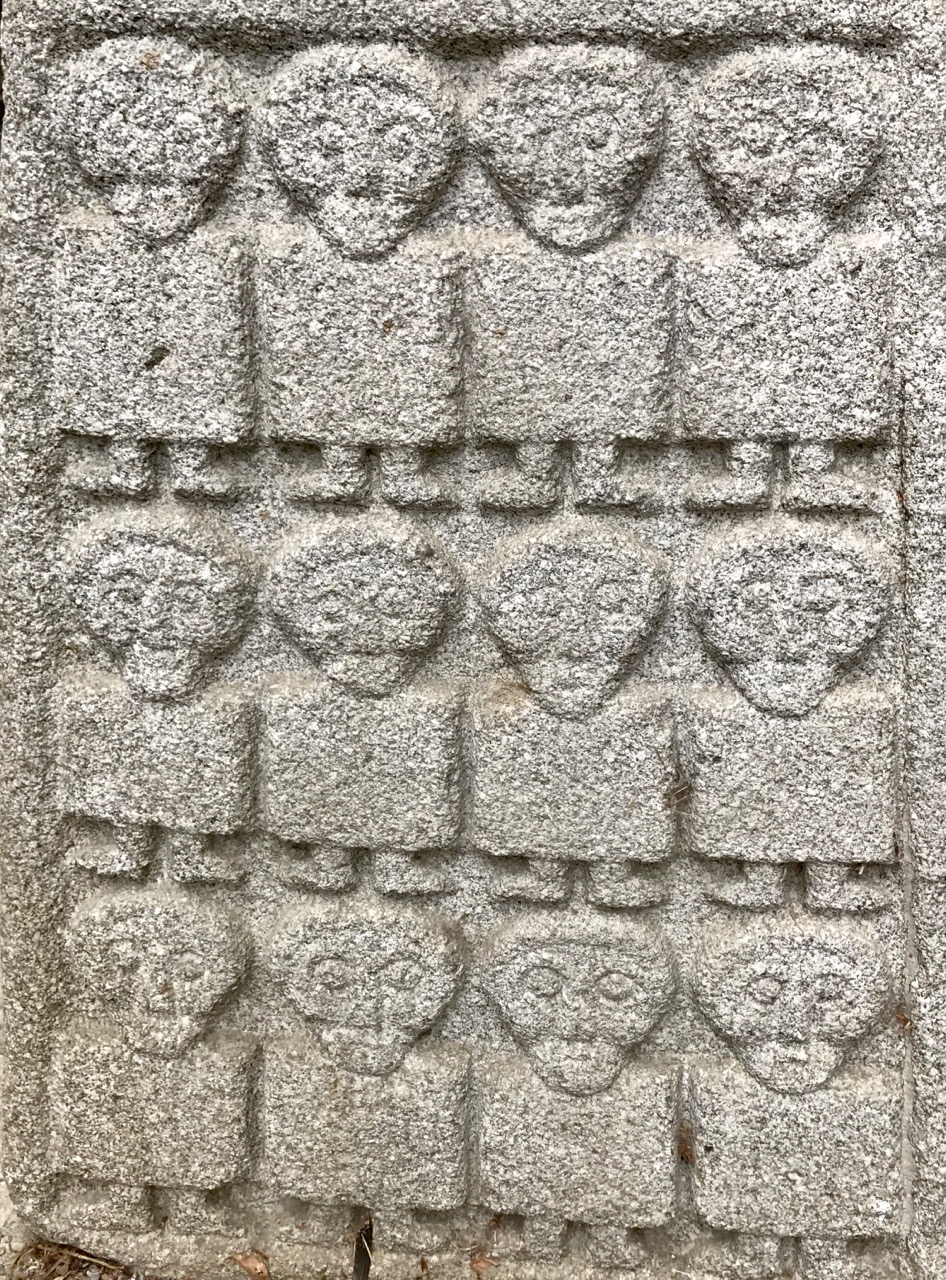
The carvings on the granite Moone cross are in relatively good condition and all the panels can be clearly seen. They are fine examples of medieval Irish art: stories from the Bible  are mingled with Celtic knotwork and some enigmatic bestiary. The figurative work is simple and stylised – yet somehow very modern in its execution.

Stories told in stone: Adam and Eve, Daniel in the Lion’s Den and the Flight into Egypt. The header image is a wonderful representation of the Loaves and Fishes
The Crucifixion, SS Paul and Anthony breaking bread in the desert and The Fiery Furnace
Abraham about to sacrifice Isaac and the Temptation of St Anthony the Hermit

A six-headed monster? Probably not a Bible story…

The site is very well interpreted by the Heritage Service: there are comprehensive information boards describing every carved panel.

Interpretation boards include full annotation for the panels on the High Cross, together with projected reconstructions of the other findings on the site

Top picture – looking towards the east face of the High Cross; below – the east and west faces of the cross wheel
Left – an interesting conjecture showing that the panels may have been coloured in; right – the friendly Keeper of the Cross!

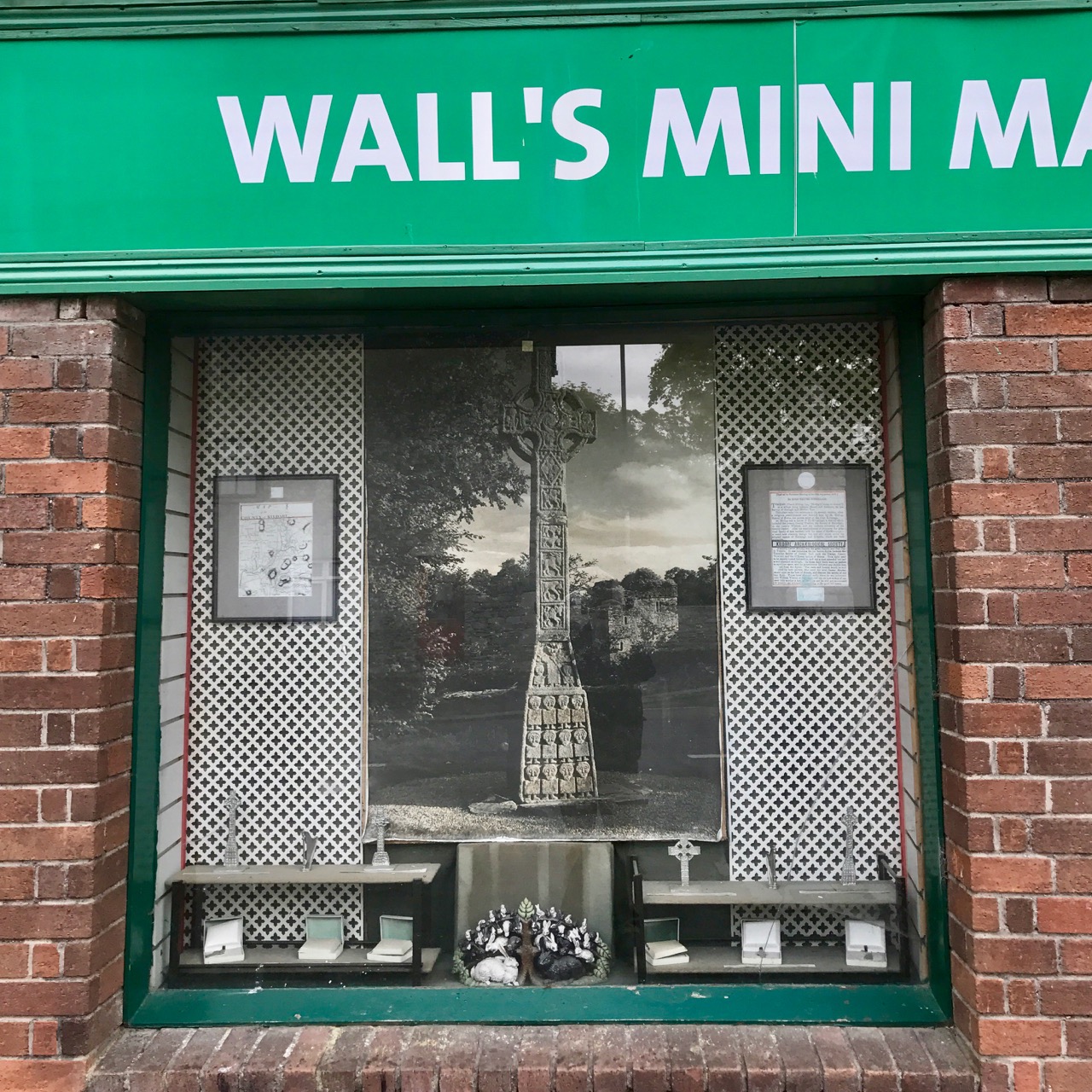
Be sure to visit this site – and don’t forget to purchase your guide book at Wall’s Mini Mart in the village!

Where Art and History Meet

Perhaps I should say where they collide! West Cork has both, in abundance, and we’ve just lived through one of those once-in-a-lifetime conjunctions of  the artistic and the historical that leave you stimulated, thoughtful and reeling all at once.

Clockwise from top left: Coverage of the Festival in the Southern Star – the headline says it all; Roy Foster delivered an acclaimed opening address; Finola introduces Kevin Vickers, Canada’s Ambassador to Ireland; Canon Salter and his daughter Brigid at the screening of An Tost Fada, perhaps the most controversial (and certainly one of the most interesting) moments of the Festival

First of all, as our readers must be tired of hearing by now, we participated in the brand new West Cork History Festival. It was a great success, with well over 400 people enjoying a huge variety of talks, films, and panels, augmented with lashings of food and drink. It was so well planned, in fact, that the rain showers obliged by only appearing during the talks, and clearing off when it was time to be outside mixing and mingling and moving between marquees. The Festival wasn’t short on controversy. Sparks flew at several sessions, mainly between speakers and audience members, proving, if we didn’t already know it, that history is very much alive in West Cork. Depressingly, it also signals that, 100 years on, some people are still fighting the old battles. However, to judge from the general climate, those folks are in the minority.

John Kelly the Irish/British/Australian artist, and West Cork resident

Two days after the Festival, we moved on to art. Or so we thought. We had signed up for a guided tour of Reen Farm, the Sculpture Garden that is the home, studio and inspiration for the artist John Kelly. This event was part of the marvellous Skibbereen Arts Festival that has been running all week.

Two upside-down kangaroos in the tennis court – don’t ask me to explain this one, my head was spinning at that point

We’ve met John a couple of times and had seen an exhibition of his at Uillinn that focused on his experiences in the Antarctic. We were aware that, as a sculptor, a painter, and a writer John is internationally esteemed and has exhibited world-wide.

The Turrell-inspired crater with passages leading through it to the sea. (We have our reason to relate to John’s version of the famous Sky Garden at Liss Ard Estate in Skibbereen)

You’ve probably all visited a sculpture garden at some point – but I guarantee you, you’ve never had an experience like this. Being led around by John himself was a privilege, but it’s also a must in order to understand his inspirations, because it’s all about history, and eclectic history at that. 

His Tate Modern piece (above) was a response to the famine in his townland, Reen, as reported in 1846 by a local resident, N M Cummins. Now, looking at it, you would never arrive at that conclusion by yourself, but once you stand there and listen to John recounting the grim happenings that took place there 170 years ago and how that led him to contemplating the food abundance that made Henry Tate a millionaire around the same time, it all starts to come together.

Robert and the Cow up a Tree – just to give you a sense of the scale of the sculpture

I won’t recount the story of the Cow up a Tree, because you have to go yourself and hear it from John in all its convoluted glory. (If you really need to know you can read about it on John’s website.) It’s the highlight of the tour, but definitely only one part of a whole fascinating set of experiences that goes on and on. 

Besides the art (some of which will make you laugh out loud), stunning views greet you as you follow the trail, and finally Christina’s garden and John’s studio round out the day. The Garden is now part of the West Cork Garden Trail and is open from August 7th (tomorrow) until the 13th.