Sheep’s Head: Searching for Cornish Miners

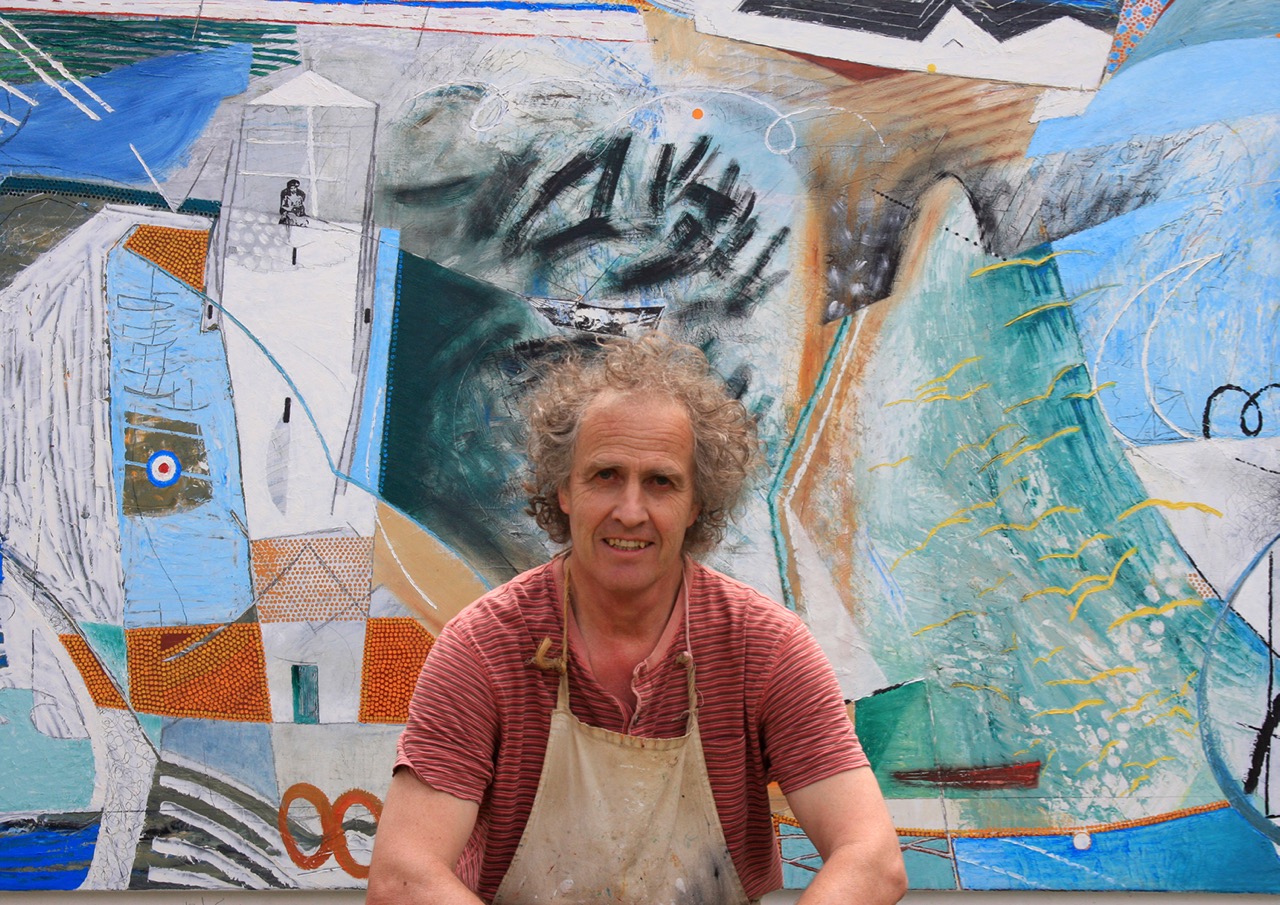
 Yesterday we did our favourite walk, along the Cahergal section of the Sheep’s Head Way. We had a goal – the remnants of the Gortavallig Mining Company which operated here briefly in the 1840s. Robert was researching this as part of all the West Cork/Cornwall connections related to the West Meets West Art Exhibition, which opens at Uillinn in Skibbereen next Friday (June 2).

Walking the Sheep’s Head Way, by Amanda Clarke, is our go-to book for everything on the Sheep’s Head. It’s an excellent resource and most of the information in this post comes from it. The stretch of the walk we did is described in two sections (as it’s part of the Way and also part of a loop walk), on pages 27 to 31, and pages 98-99 (Second Edition).

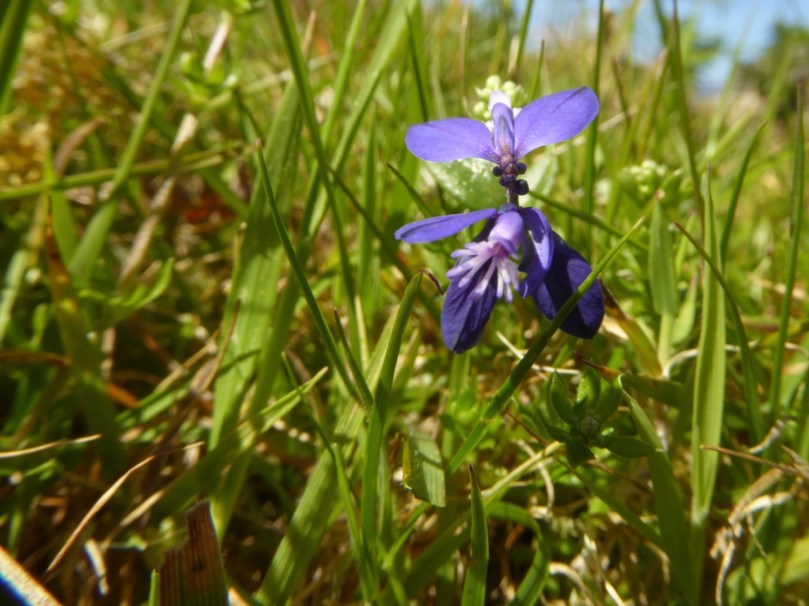
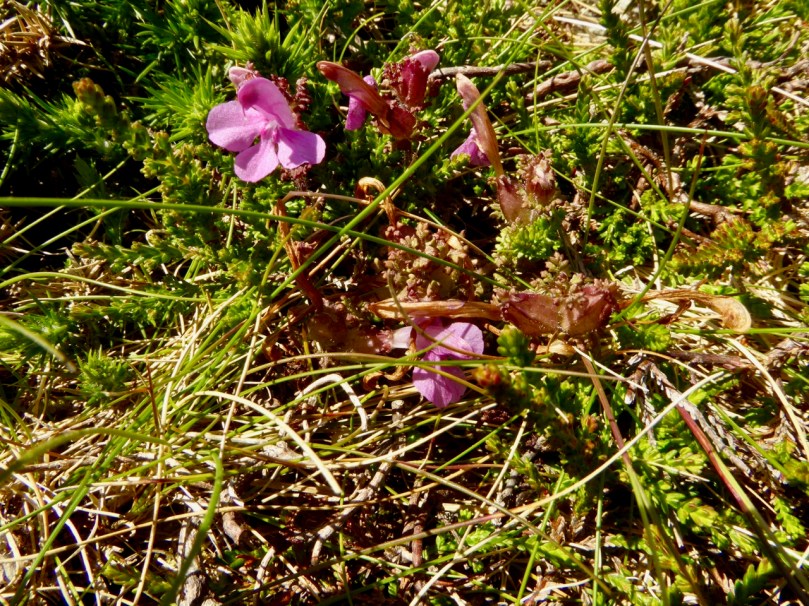
It was a fabulous day, sunny but not too hot – perfect for walking. The wildflowers were out in abundance – a serious hindrance to brisk walking as I cannot resist the temptation to photograph. At one point Robert thought he had lost me, but found me stretched out on the ground trying to get a close up of the tiny, exquisite, Heath Milkwort.
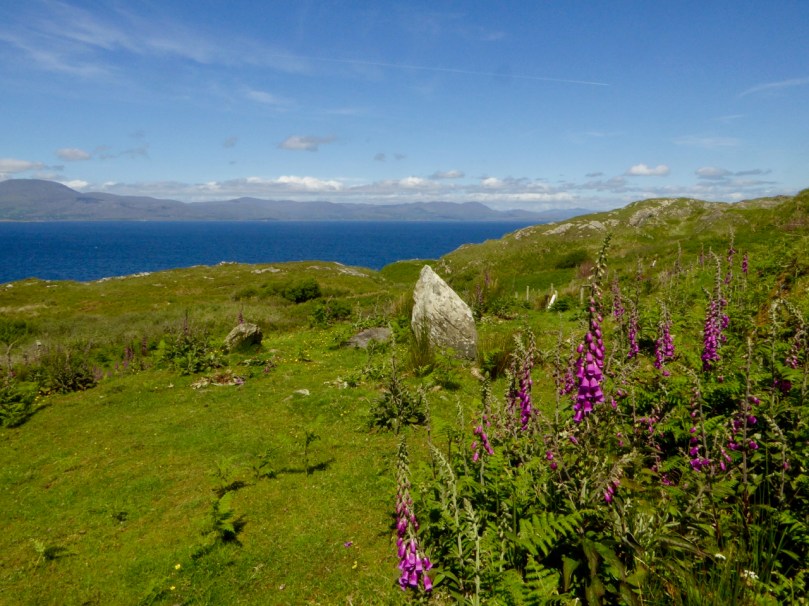
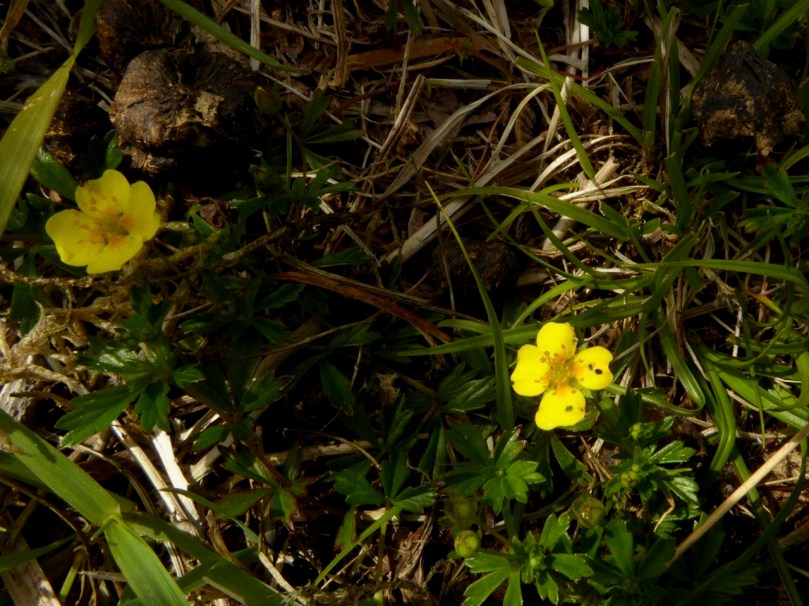
Later on, this hillside with be awash with pink Heather, but now the Foxgloves are everywhere, in all their purple glory, while Tormentil and Lousewort peep out from the among the grasses and heather.
Tormentil, above and Lousewort, below

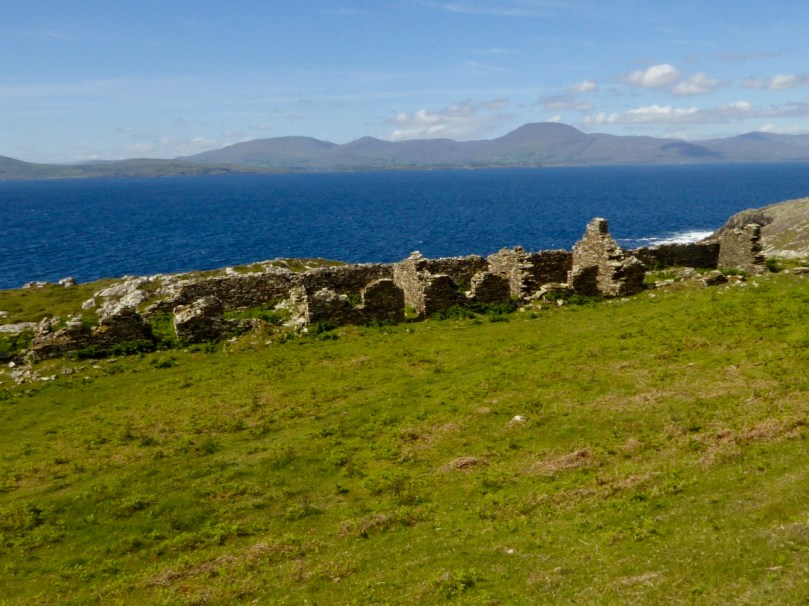
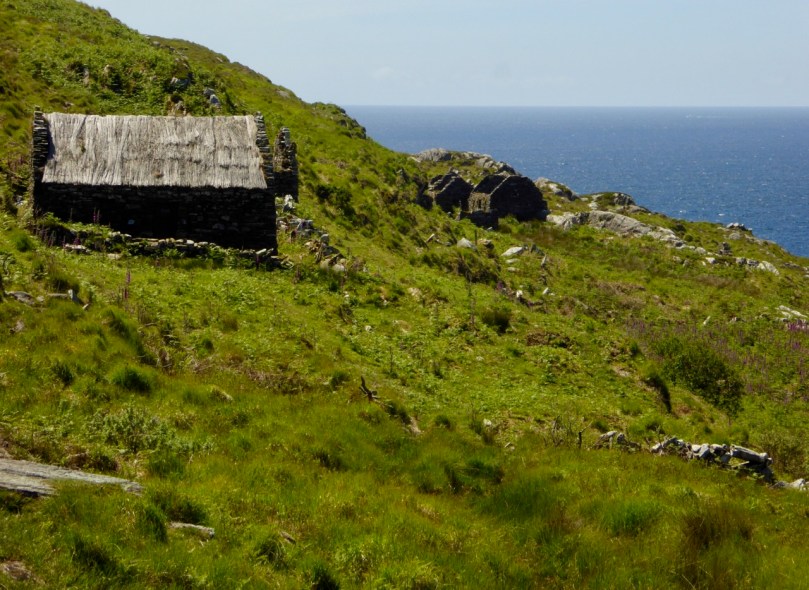
This was once a populated part of the world and there’s a tiny abandoned settlement known as Crimea. This may be a reference to an ongoing feud between families, or a corruption of an Irish place name. There’s no denying the dramatic scenery, but life must have been very hard indeed. A cluster of houses like this was known as a clachán (kla-hawn) – the land was held in common by the inhabitants, with each family having a potato patch and the rest being for grazing and whatever crops would grow.

The Crimea: Tade Carthy’s cottage in the foreground

One of the houses has been recently partially restored. According to Amanda:

It was done partly to show people what living conditions were like not so long ago, and in part to honour the last surviving occupant of the Crimea, who recently celebrated his 100th birthday. Jerh (Jack Owen) Daly grew up in one of these cabins which were family homes until the late 1940s.

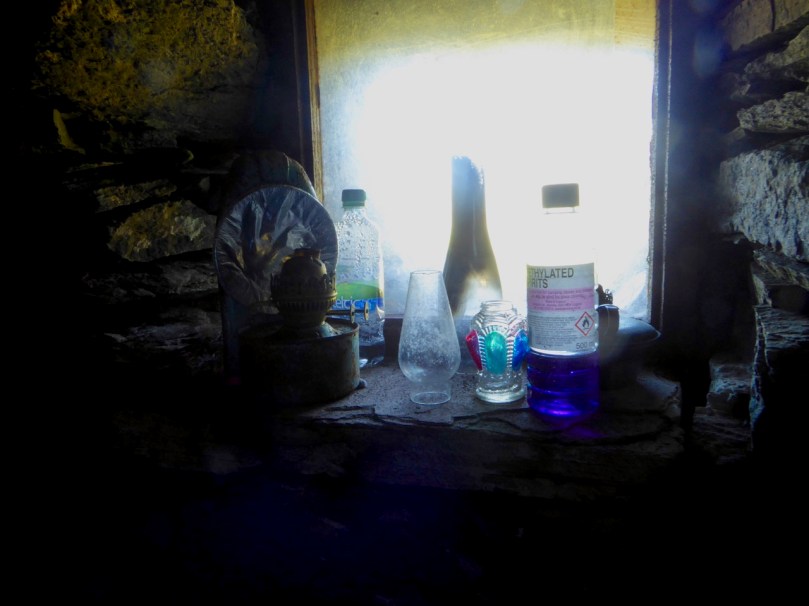
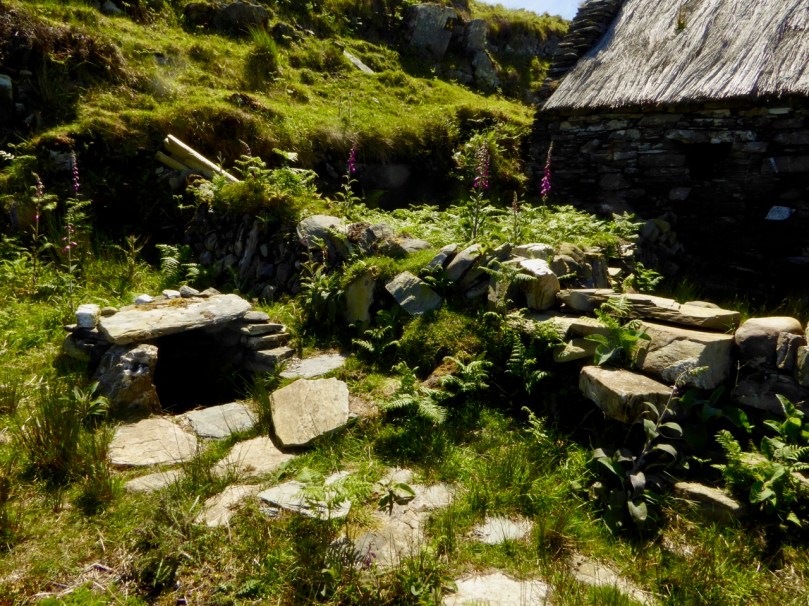
This old house belonged to Tade Carthy’s family and has been sensitively restored, the original flagstones and well discovered whilst working on it, Inside there is no fireplace but an open hearth built against the wall with a hole in the roof to let out the smoke. Doors positioned east and west allowed a through draught to also deal with the smoke. Little oil lamps fitted into niches provided additional lighting and a bed platform gave extra space for sleeping.

The recently re-discovered well

It was from this clachán, and from all over the Sheep’s Head, that local people trekked, during the height of the famine, to the mine. They also built the road, for which they were paid in food, rather than money.

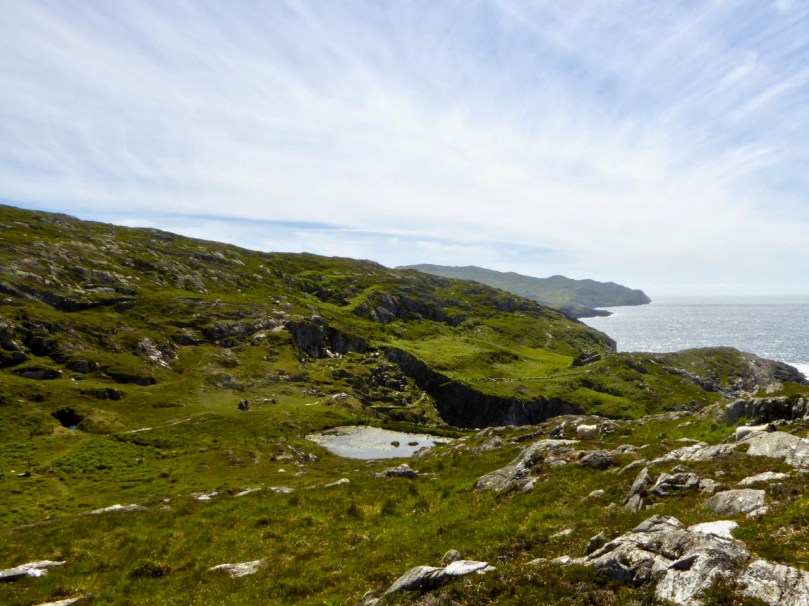
Approaching the 1840s mine – the reservoir is in the foreground and the Cornish Miners cottages on the far side of the cliff

Amanda quotes from the Report of the Gurtvallig Mine, by William Thomas, June 1847:

A complete wilderness and barren cliff, which for the past age has been the undisturbed resort of the Eagle, the Hawk and the Wild Sea Birds, has by our labours for the past 16 months been changed into a valley of native industry, giving reproductive employment, food and a comfort, to numbers of the hitherto starving, but peaceable inhabitants of one of the wildest districts in the United Kingdom. For you can hear now, on our well secured dressing floor (mingled with the roar of the Atlantic) the busy voices of men, women, boys and girls, all engaged in breaking, dressing and preparing the ore for market.

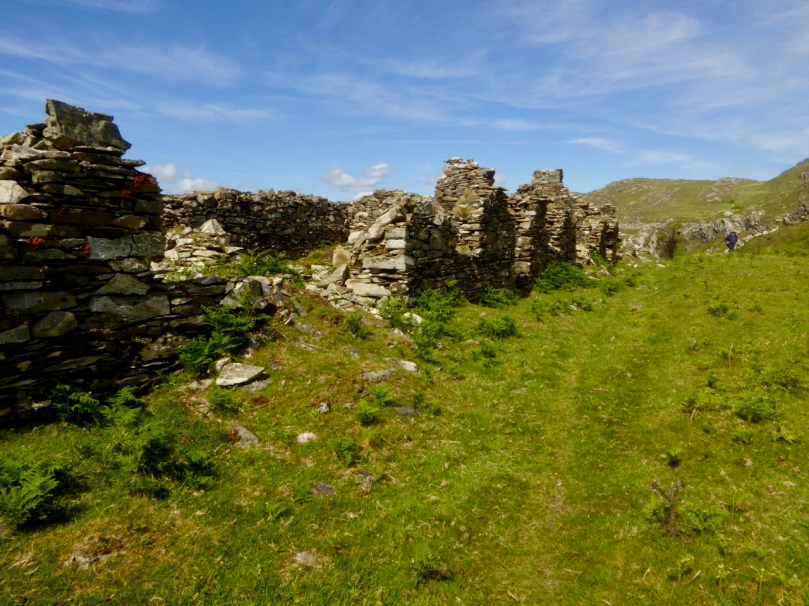
Ten or eleven small houses stood here to house the specialist miners recruited from Cornwall

The mine was an actually an outpost of Cornwall in Ireland. The two Mine Captains, William Thomas and James Bennett, were Cornish, and the miners – 24 of them – had been recruited in Cornwall. A row of houses was built to house them, while the Captains had more comfortable quarters in nearby Cove (a story for another day).

A retaining wall was build to hold the reservoir

It was a busy place during its short life (it close in 1848 after only a year of full operation), with a forge, a carpenters shop, a reservoir, and below, a dressing floor and a quay to transport the ore.

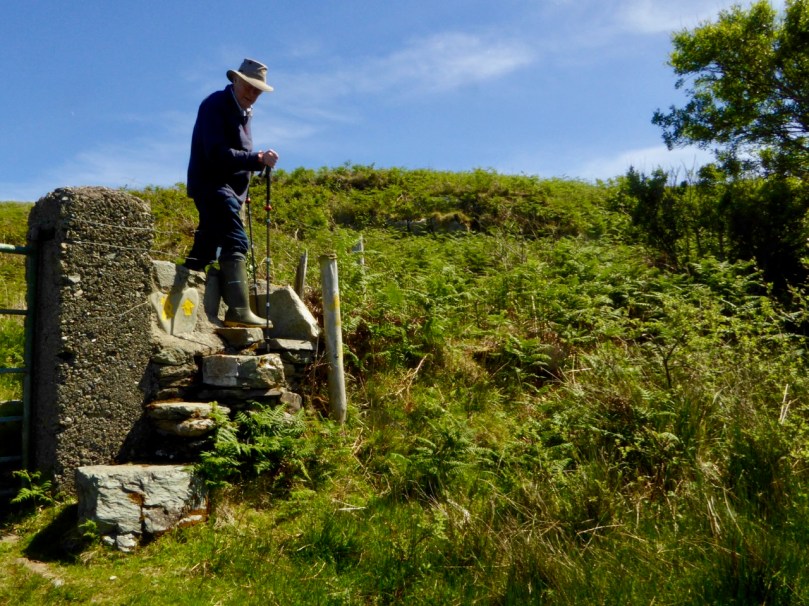
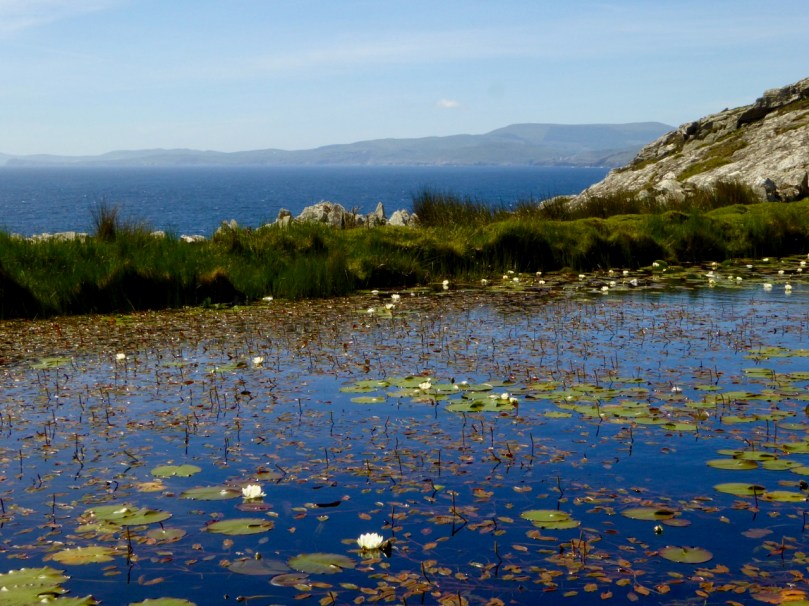
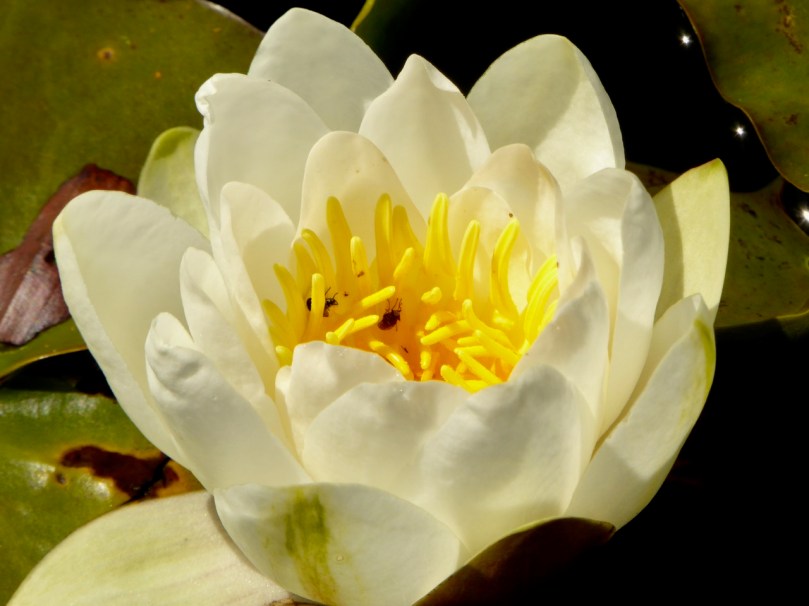
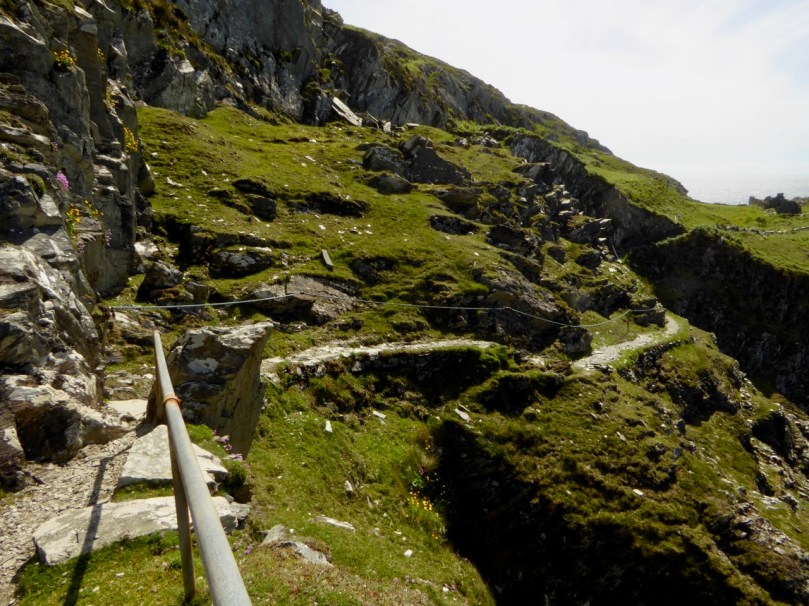
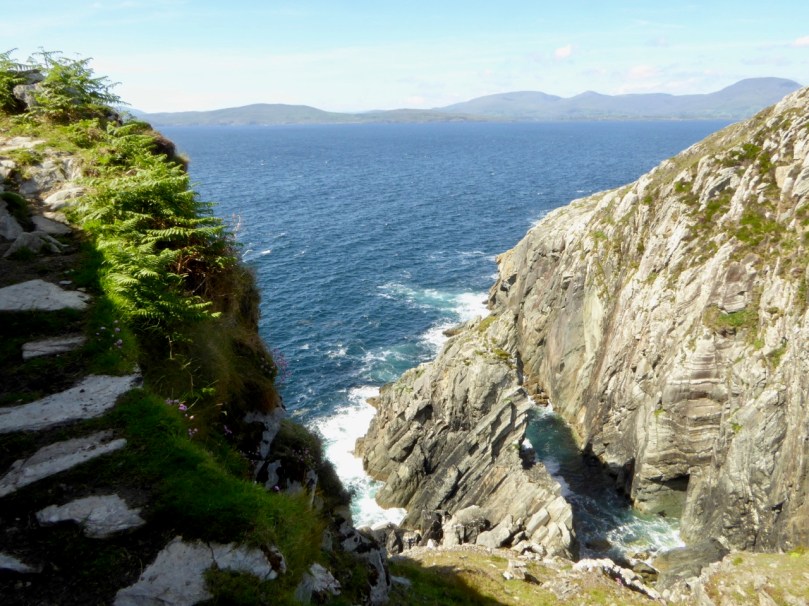
Now the reservoir is home to floating water-lilies, a native plant that was in full bloom yesterday and looking indescribably exotic. The tiny quay has disappeared, but its location can be glimpsed from the rope walk. This part of the hike is not for the faint of heart or vertigo-sufferers: the path is narrow, there’s a rope to hang on to one one side and on the other a yawning cliff falls dramatically away to the wild and roaring Atlantic described by William Thomas.

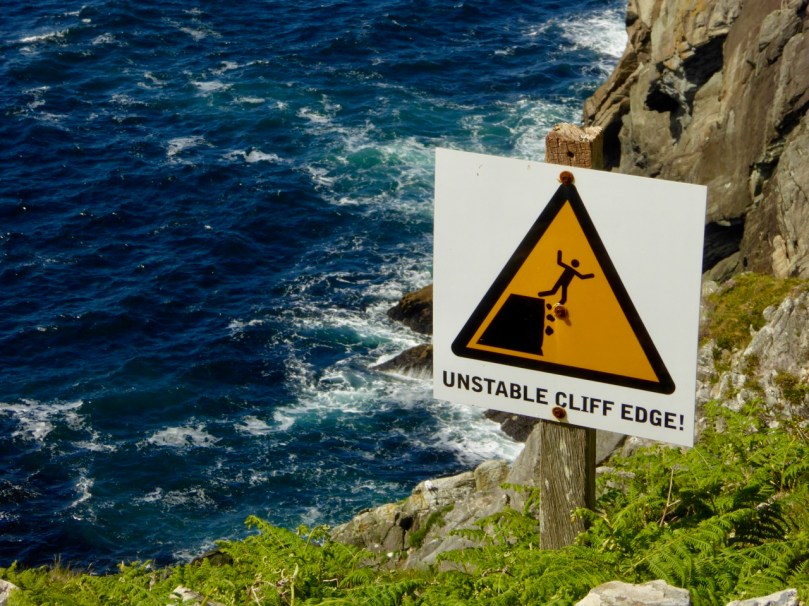
The rope walk and signage. The lowest photograph shows the location of the quay, reached by means of a steep path but no longer accessible

Our walk back, with the sun behind us, was splendid. To the north was Bantry Bay and beyond it is the remote and beautiful Beara Peninsula. I think I can safely say that this will remain our favourite walk – at least until we discover one even more remote, scenic, historic and thrilling. But then, that’s not difficult in West Cork.

A Watery Tale

Last year I got myself into trouble by saying how much I admired the new corten steel signs marking significant spots on the Wild Atlantic Way. My post – Showing the Way – produced howls of protest from many readers who had taken a dislike to them. I may well ruffle the same feathers again when I say that I’m impressed with the information boards which have now appeared to supplement those markers.

Wild Atlantic Way signage at Colla Pier, opposite Long Island

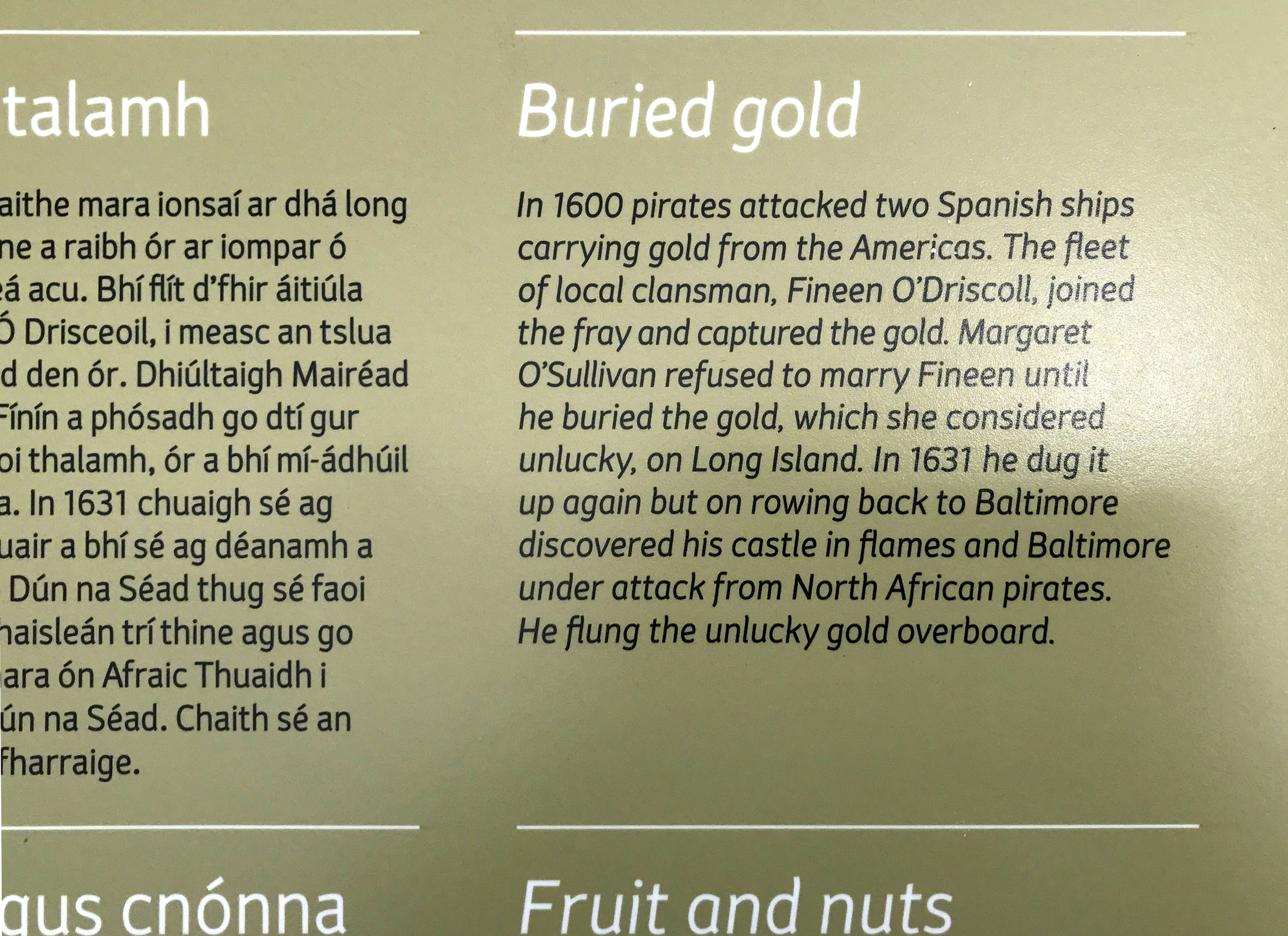
The example above, which we saw today, has appeared at Colla Pier, on the coast road running from Schull round to Crough Bay. The ferry serving Long Island sails from this pier. The board is mounted on a sturdy corten steel frame which should withstand all the elements. The illustration used on the new board (seen in our header picture) is by Sam Hunter and (to my eye, at least) is colourful and attractive. Overall, the panel manages to convey a significant amount of information in a compact design. There is a little Irish lesson (top picture, right-hand corner) and a local ‘story’ pared to the minimum. I was delighted, because I hadn’t come across this tale before. Here it is…

A more detailed version of this story can be read here

So in this short paragraph we find an unusual angle on a very well-known piece of local history: the sacking of Baltimore by Barbary Pirates, which took place 386 years ago, on June 20. Here in West Cork everyone talks about that incident as if it had happened yesterday: it resulted in the decimation of the population of the little fishing village overnight. A hundred and seven people were carried off to slavery in Algeria, and every house was burned.

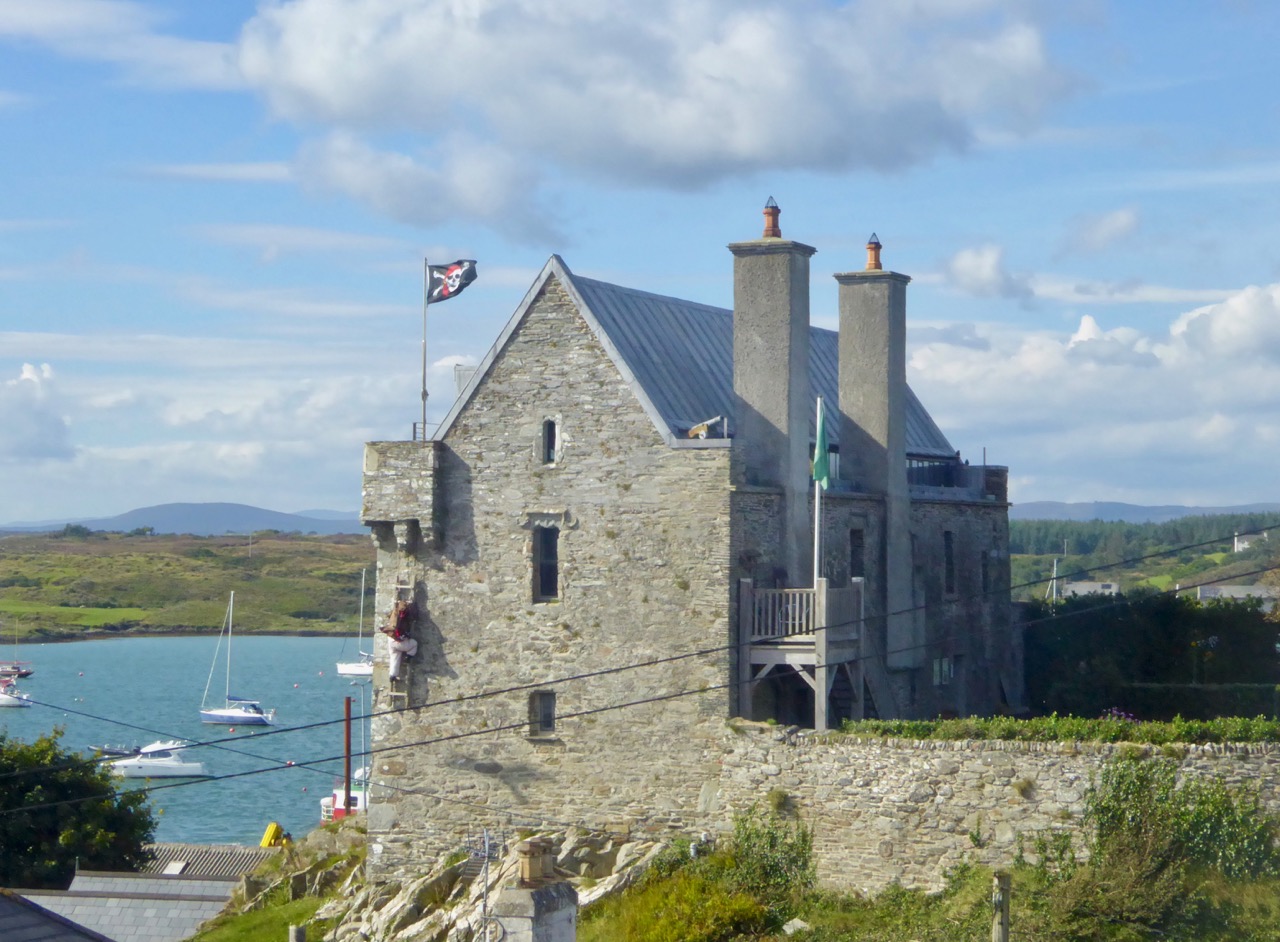
Upper picture: Long Island Sound, with the white houses of Long Island itself in the middle distance; Cape Clear is beyond. Lower picture: Fineen O’Driscoll’s castle at Baltimore – Dún na Séad (Fort of the Jewels). The clan chieftain was not at home to give help to the beleagured village when the Barbary pirates arrived because he was rowing across from Long Island with the ill-fated treasure stowed on board!

In one version of the story about Fineen O’Driscoll and his pirate treasure, the horde of gold is buried under a house on Long Island – a house where strange lights are seen at night! Presumably it’s still there – or under the sea out in Roaringwater Bay. It’s probably best left wherever it is!

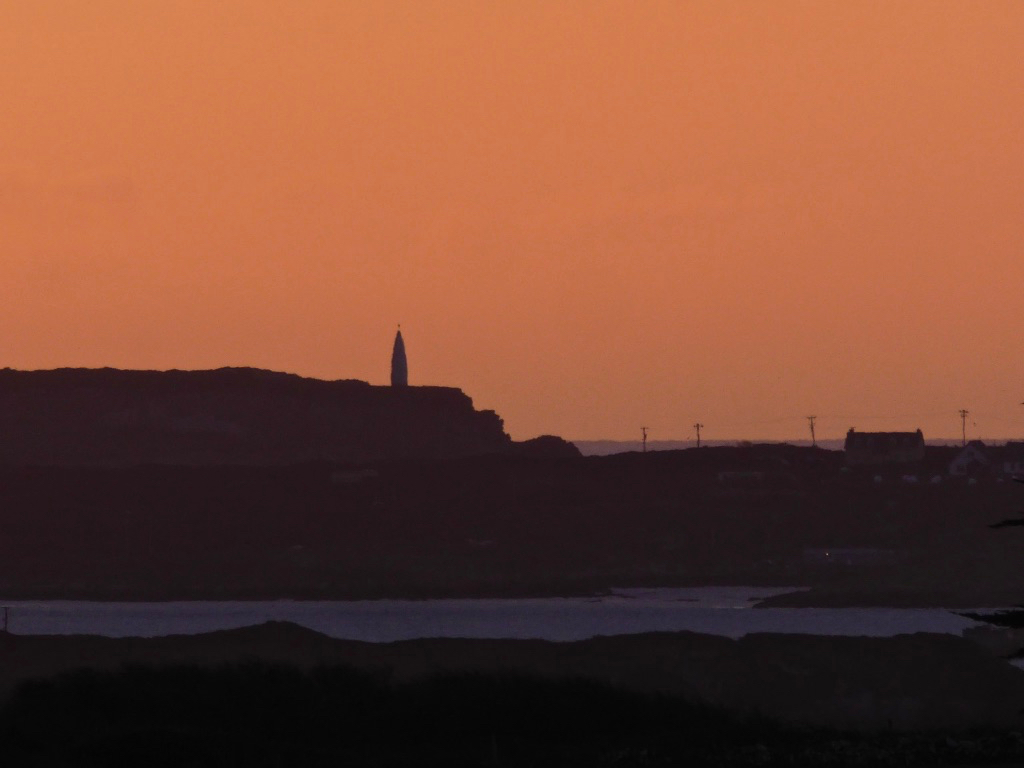
Baltimore at dawn, seen in Finola’s beautiful picture above, reminds me that I have to tell you about another Irish – Cornish link. The village grew around a small settlement of religious dissenters from the west of England established around 1600 and led by Sir Thomas Crooke, a man with Calvanist and Puritan connections. Most of the settlers came from Cornwall and were seeking a haven where they could practice their religion unhindered. It was these people who were stolen away nearly 400 years ago, and ended their days in North Africa. Are you interested in the many historic links between the two westernmost counties of Britain and Ireland – Cornwall and Cork? You can find out much more at the exhibition coming up shortly: West meets West – the work of contemporary Cornish artists, at Uillinn, Skibbereen, from 3 June to 8 July

West Cork Finally Gets a History Festival!

For a place that’s dripping in history and archaeology, and with several active historical societies, it’s a wonder this hasn’t happened before.

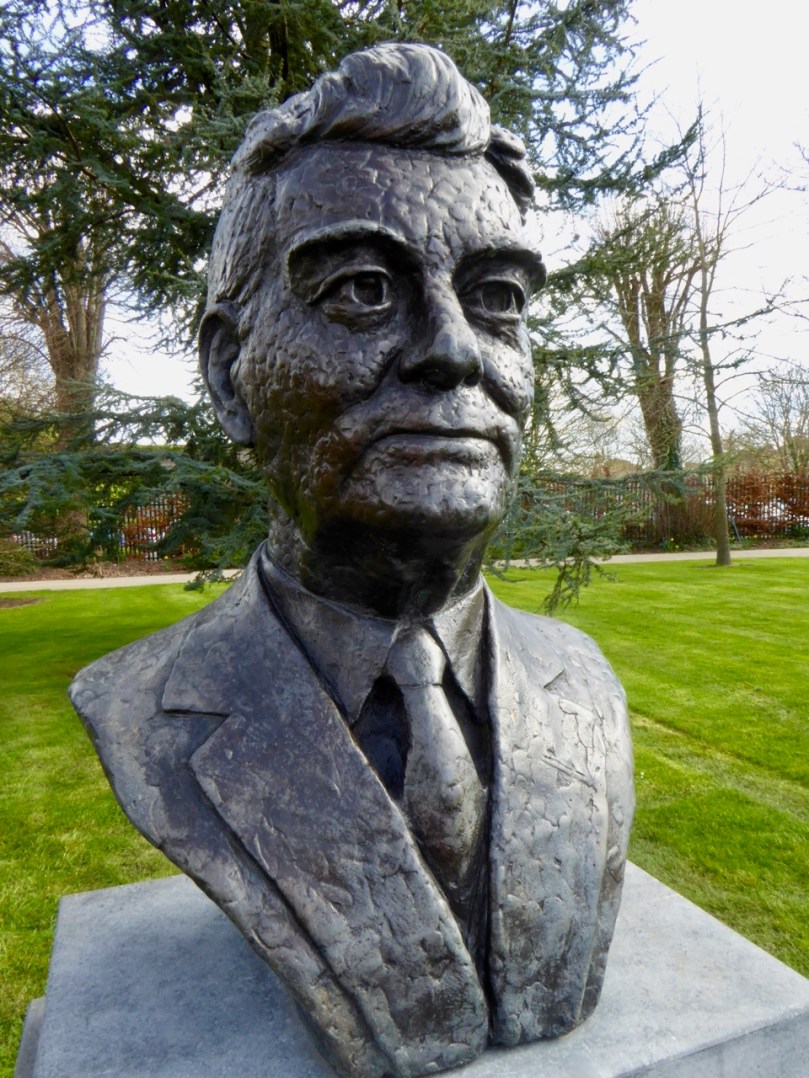
Tom Barry, bust by Seamus Murphy

The inaugural festival of the West Cork History Festival will take place just outside Skibbereen on the last weekend of July this year. Take a look at their website – it’s a great program, offering sessions from medieval to modern, from pirates and adventurers to soldiers, revolutionaries and poets.

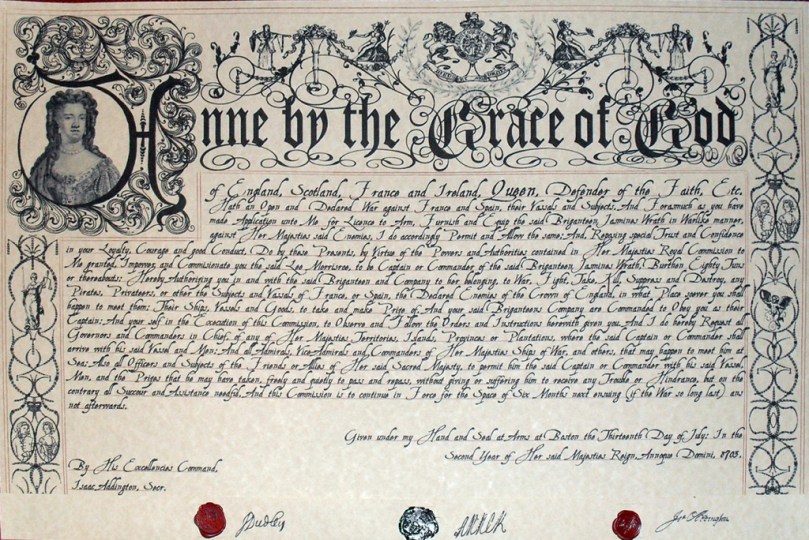
A Letter of Marque gave an individual permission to be a privateer – a form of legalised piracy

Although it’s got West Cork in the title, this is not only West Cork History. The organisers emphasise its eclectic nature and call it a festival of intellectual delights. National dimensions are obvious in discussions on the War of Independence and international ones in sessions on the First World War. West Cork gets a good look-in, though, with a thorough re-examination of Hart’s work on the Bandon Valley Killings (see here for a good summary of the events and the controversies surrounding the scholarship), in the light of the most recent research. Several active and respected local historians will contribute in their area of expertise.

War graves such as this one have been springing up all over Cork in the last few years. For most of the 20th century we maintained a form of collective amnesia about the Irish fighting in the First World War – see my piece Outposts of Empire

National and local topics are happily juxtaposed – tower houses, for example, will be the subject of two sessions, one of which places them in an all-Ireland context and the other in a West Cork context. (For more on tower houses, follow this link.)

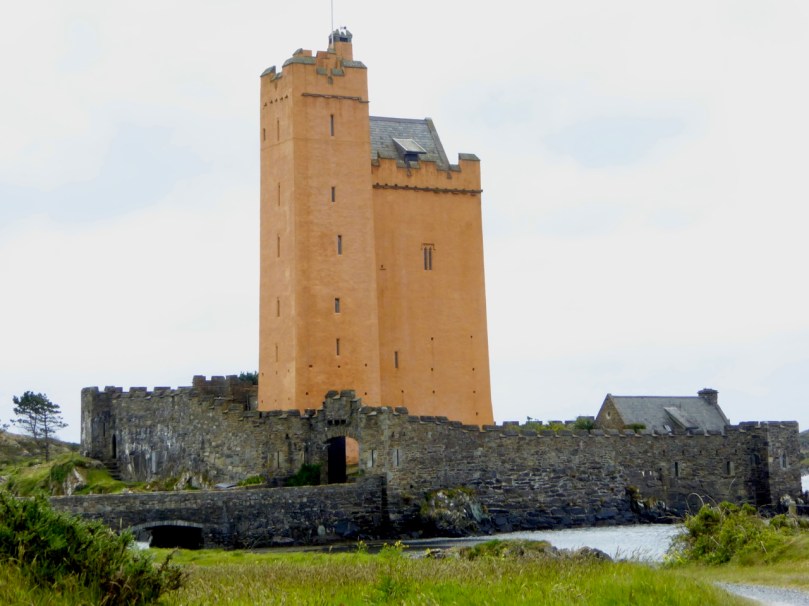
Kilcoe Castle – an impressive example of the Irish Tower House, now magnificently restored by Jeremy Irons

I’m very much looking forward to learning more about Richard Boyle, the Great Earl of Cork – a tremendous figure in the history of this area. But the Festival takes it one step further with a talk on the vital roles in Irish history played by the children of the Great Earl. I’m also going to make sure I take in a presentation on the Knights Templar by Dominic Selwood, yet another of the multi-talented speakers on the schedule.

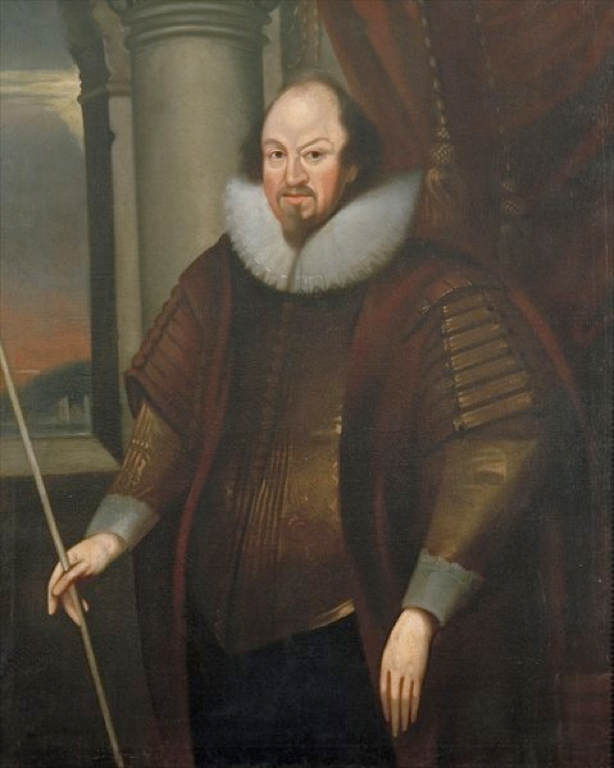
Richard Boyle, Great Earl of Cork (1566-1643)

The opening and closing sessions will be major highlights. Prof Roy Foster will deliver the introductory lecture. How fitting – Roy Foster is surely among the most respected historians of his generation. Author of numerous books and influential articles, including Modern Ireland (1600-19720) and a justly famed two volume Life of W B Yeats. His topic, ”A Fair People”: antagonism and conflict in Irish history, will set the tone for a weekend that will not shy away from controversial and thought-provoking sessions.

Prof Roy Foster, considered by many to be one of Ireland’s greatest contemporary historians

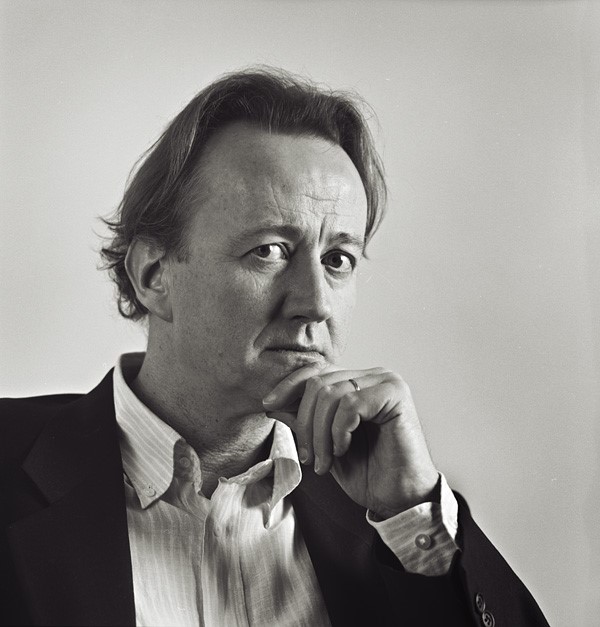
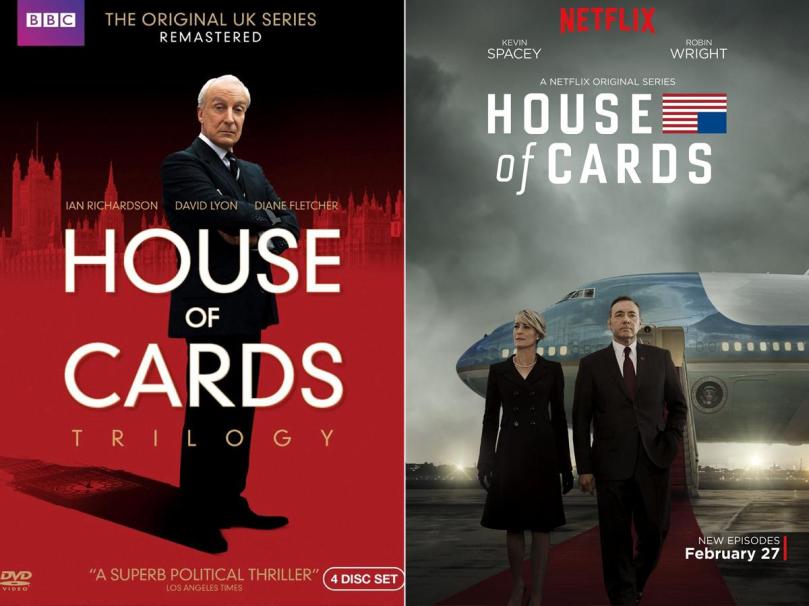
The closing session features the writer (and highly entertaining speaker) Michael Dobbs, creator and author of the House of Cards series of books and TV shows. Titled Life, Lust and Liquor: how House of Cards wrote itself, this should bring things to a close with a bang.

And in between, there’s a host of academics, researchers, film-makers, journalists, writers and editors – and even a couple of ambassadors! It’s an eclectic mix and sure to be provocative and engaging.

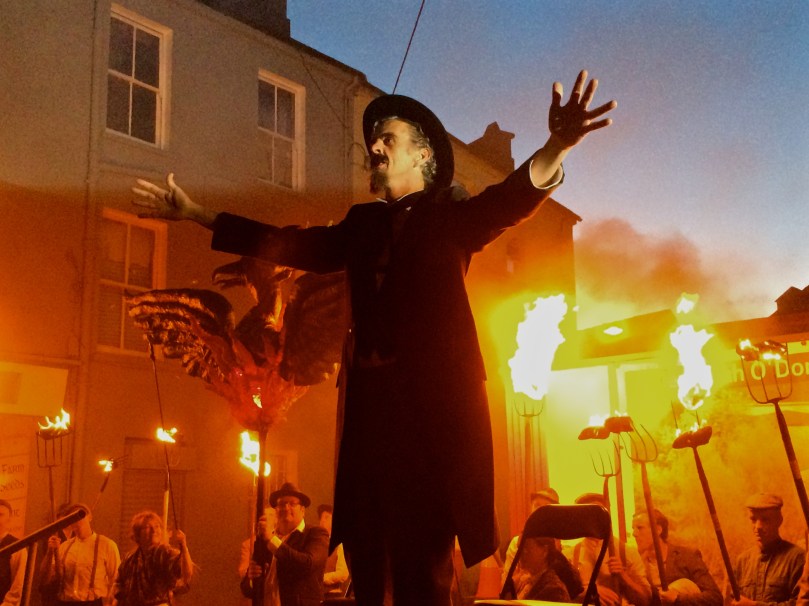
The Festival features a screening of the Film Rebel Rossa, made by the great-grandsons of Jeremiah O’Donovan Rossa. A West Cork man, Rossa became famous and infamous for his Fenian activities. See my three-part account of him here.

The Festival is the brainchild of Simon Kingston, who, with his wife Victoria (a professional historian) has a long association with West Cork, which culminated in their settling at Rosebank, the dower house of Liss Ard Estate, just outside Skibbereen. Simon is a graduate of Trinity and of Oxford and describes himself as an historian at heart, although he makes a living in the world of executive recruitment. He’s put together an amazing program, sure to become an ongoing feature of the West Cork heritage landscape for years to come.

I’ve only managed to give you a tiny taste of what’s in store at this Festival – you will have to come and experience the terrific range on offer for yourself. Meanwhile, they’ve set up a Facebook page so you can keep up to date on all the latest news and announcements. Head on over and give it a Like and a Share. And are you a member of the Twitterati? There’s a Twitter feed just for you!

 Right so – on July 28 – see you there?

Connecting with St Ives

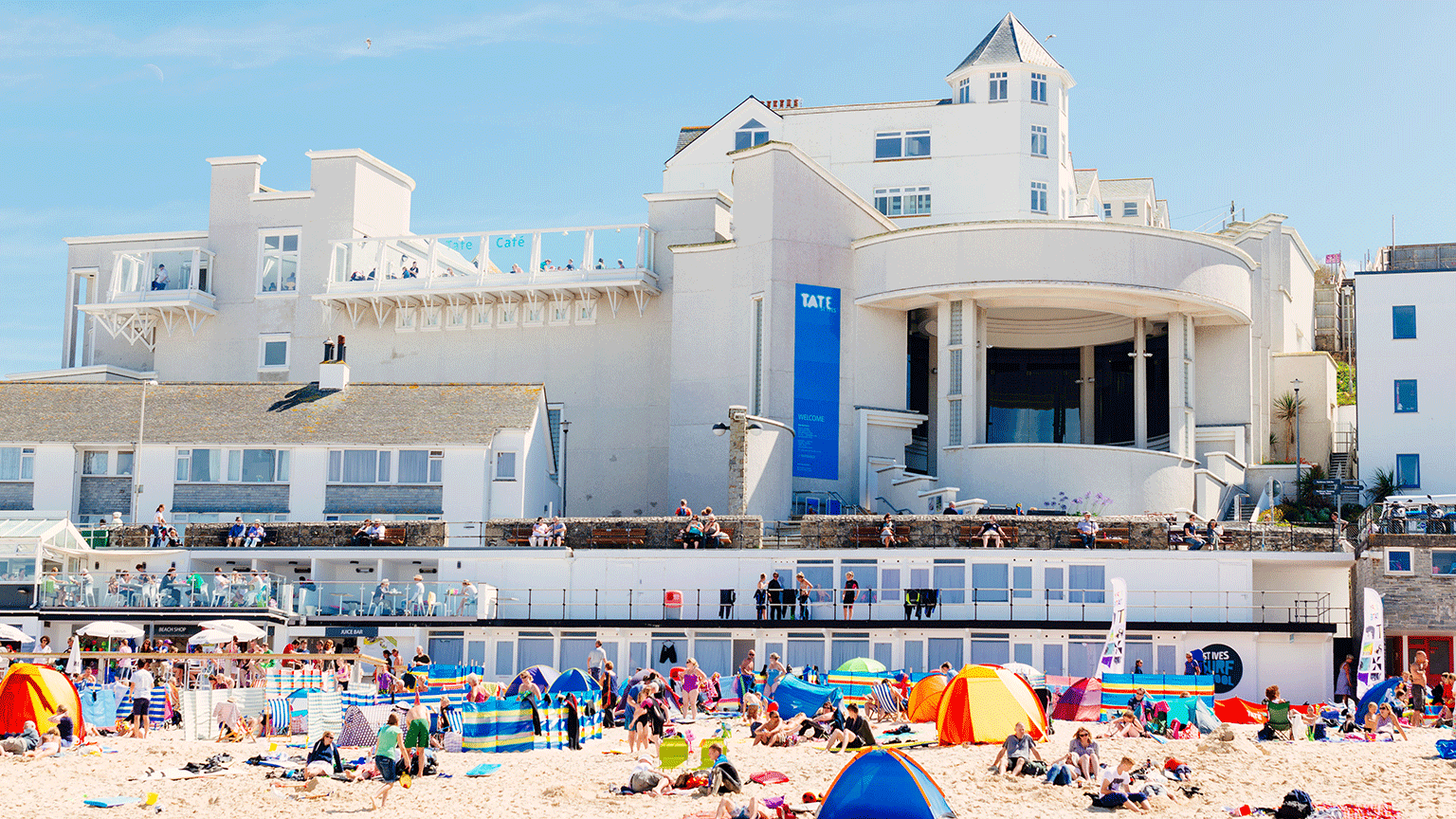
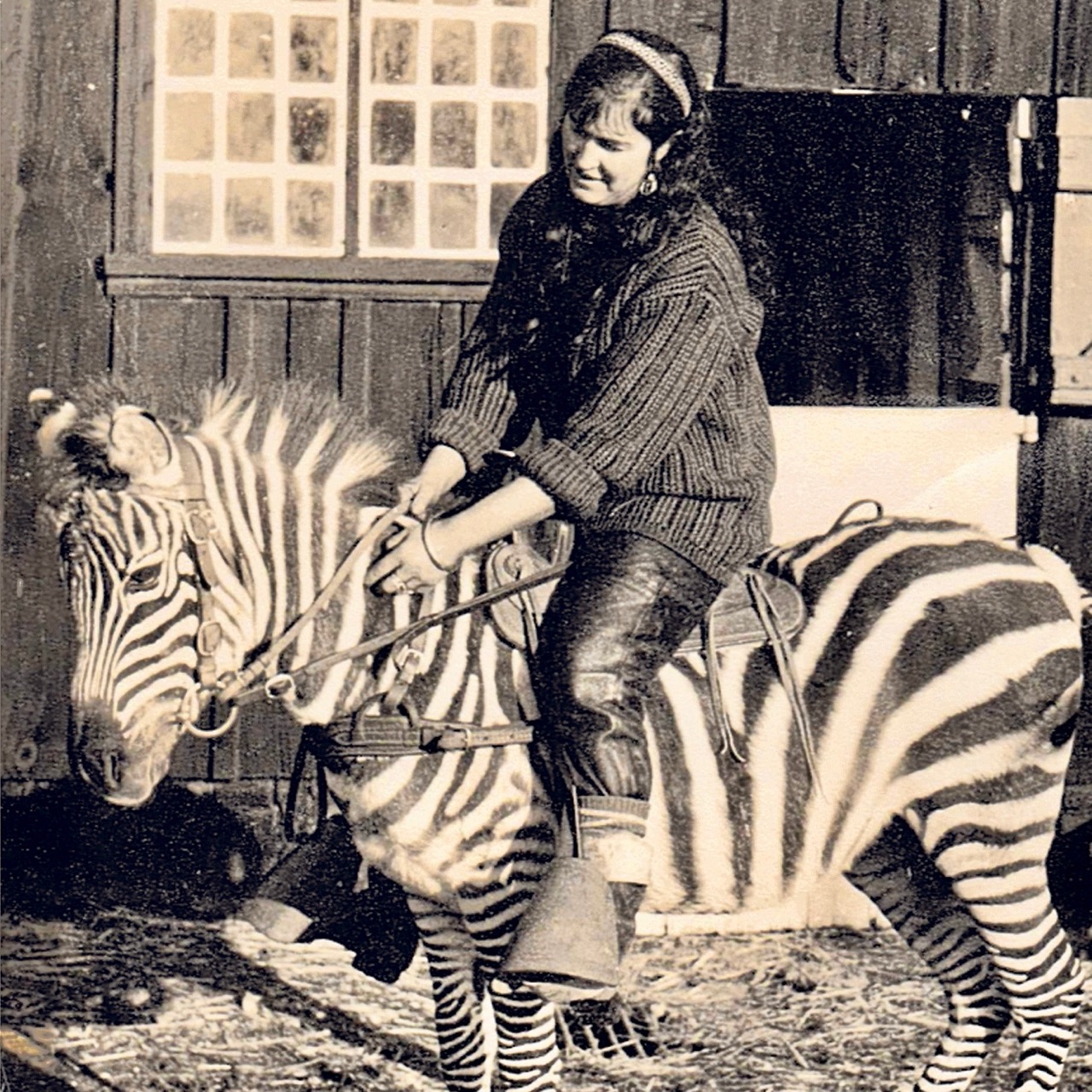
Have you ever met a Zorse? That’s a cross between a zebra and a horse. Probably not… But I have met the lady who invented them (above)! And, by quirky chance, she’s one link between Ireland and the group of artists who formed the ‘St Ives School of Painting’, Cornwall, in the twentieth century. You already know from last week’s post that the forthcoming exhibition in Uillinn, Skibbereen – West meets West, opening on 3 June, celebrates the historic connections and similarities between these two western outposts of Britain and Ireland, explored through the medium of art.

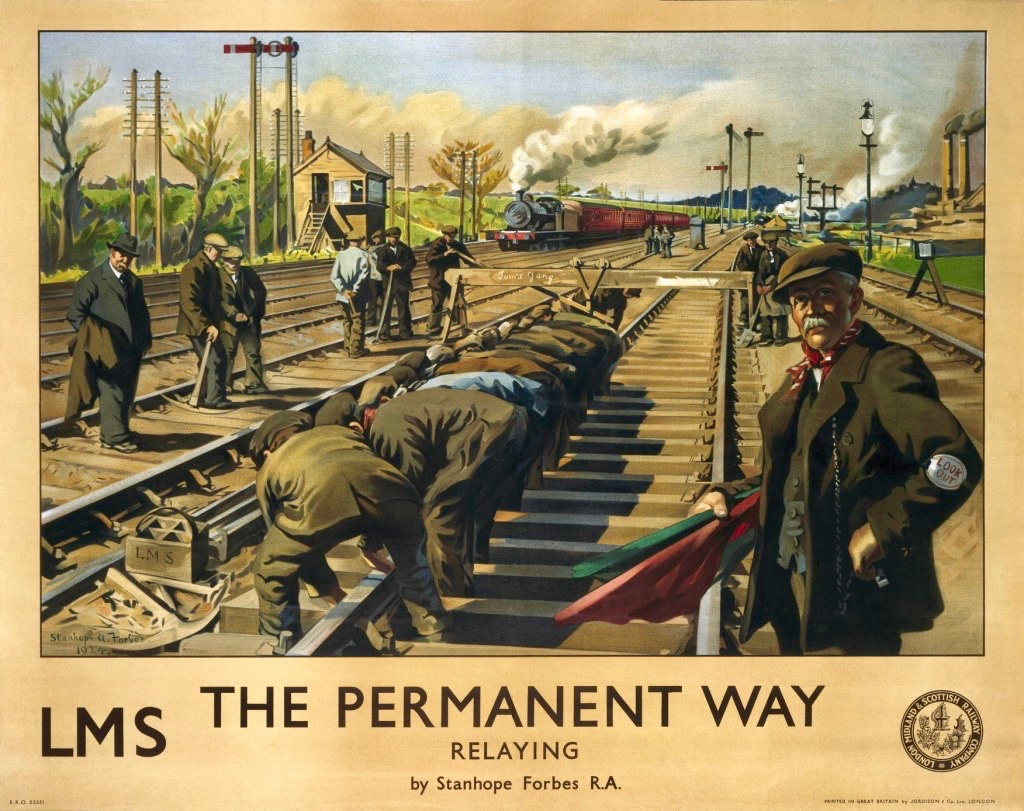
I was pleased to find this poster (produced for the London, Scottish and Midland Railway Company) by Stanhope Alexander Forbes, an artist who was born in Ireland but spent most of his long working life in Newlyn, Cornwall

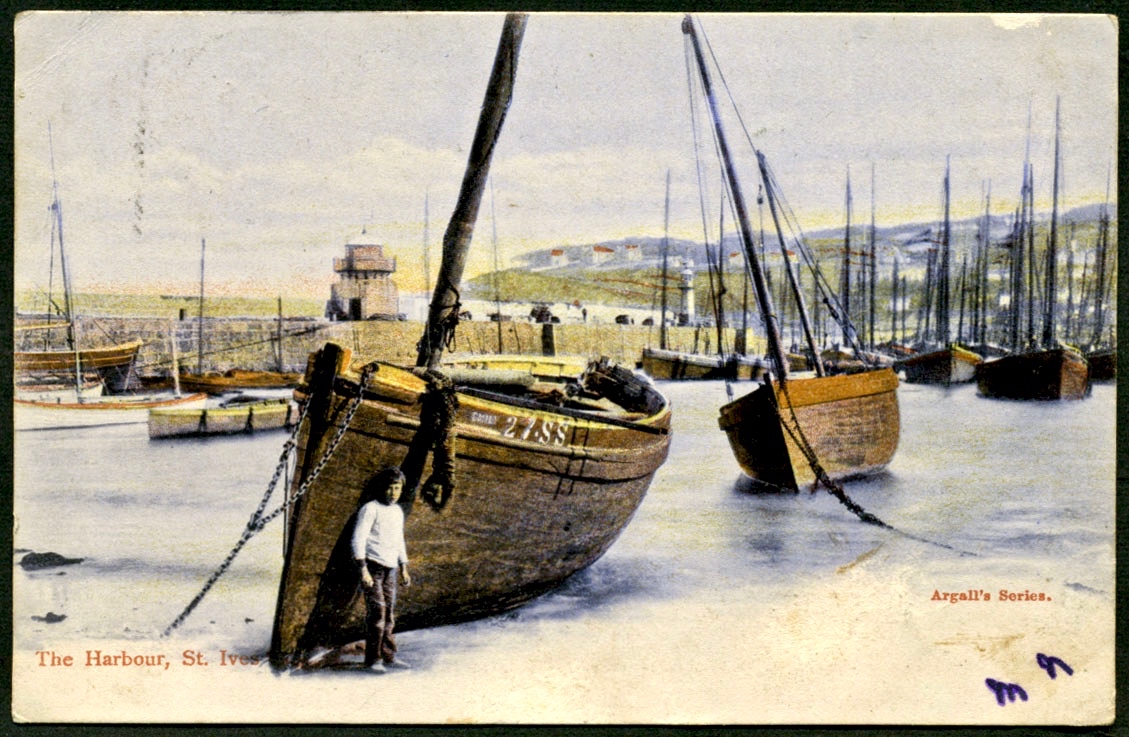
It was the coming of railways from the capital to Cornwall (arriving to Penzance in 1860, and to St Ives in 1877) that opened up the far south-west of Britain to tourists – and to the artists who were drawn to this hitherto remote and unspoiled ‘rural idyll’. They were particularly attracted to the picturesque fishing villages, and rather overlooked the equally interesting and visually dramatic mining communities which were the centre of the county’s economy in the latter years of the nineteenth century.

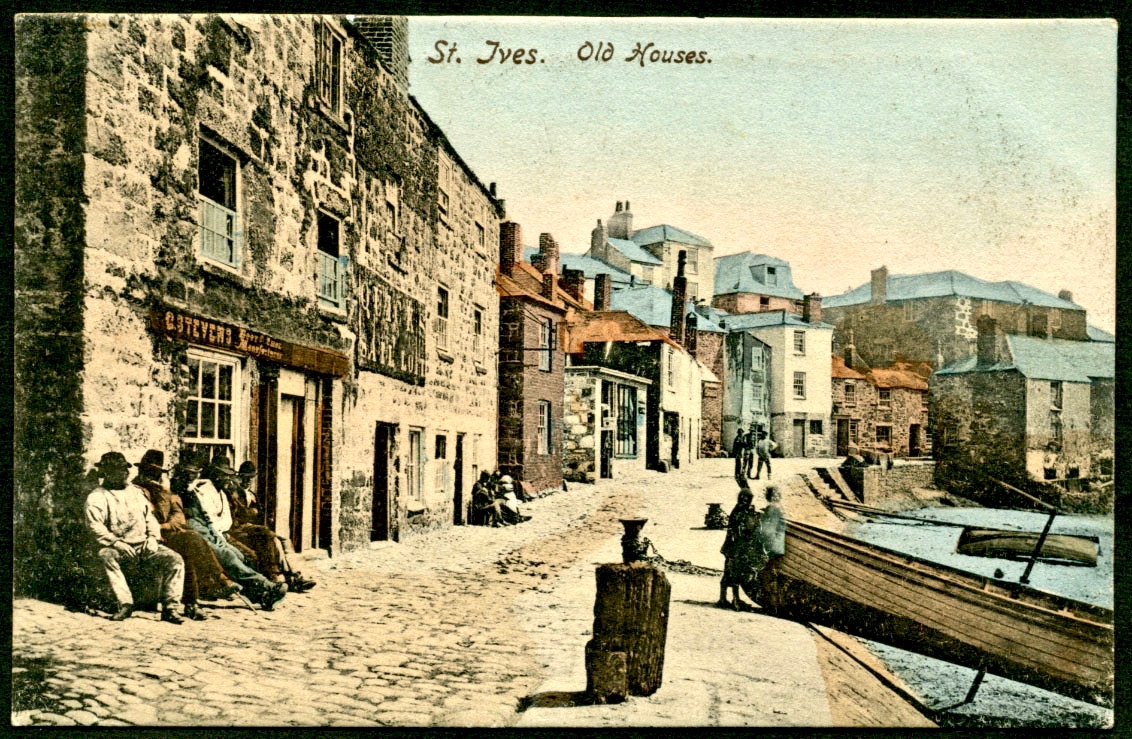
The picturesque St Ives fishing community as seen in these postcards which served the burgeoning tourist industry in the early 1900s

The first art gallery in St Ives opened in 1887, and an art school was opened the following year. By the time the photographs on the postcards above were taken, there were ten private schools of painting in the town. The development of St Ives as a national (perhaps even international) centre for ‘modern art’ began after the Great War when Ben Nicholson and Christopher (Kit) Wood visited and ‘discovered’ the seafarer and naïve artist Alfred Wallis, who spent his retirement years painting nautical scenes on old fish boxes, driftwood and even scraps of cardboard.  They found his small cottage (now marked by a plaque) filled with these images, many of them (to the artists’ horror) attached to the walls by nails driven through their centres.

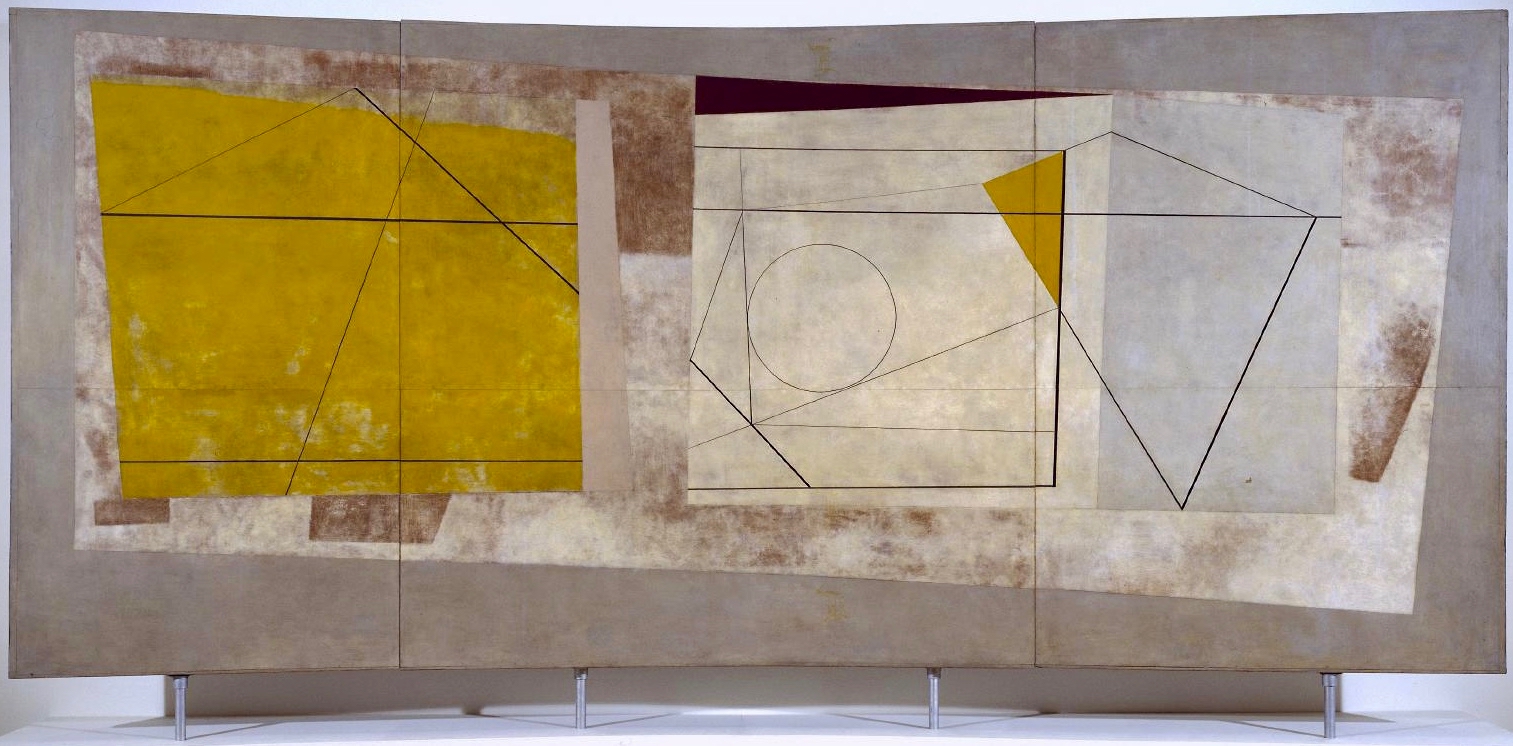
Art in St Ives, Cornwall: upper left – Christopher Wood self portrait; upper right – Alfred Wallis The Blue Ship; lower – Ben Nicholson Mural for the Festival of Britain

As the century progressed and another European war loomed, remote St Ives became home to many artists – some conscientious objectors, others just escapists. It made for a cosmopolitan mix. Ceramicists Bernard Leach and Hamada Shoji arrived from Japan in the 1920s. Many potters from all over the world were apprenticed at the Leach Pottery (which exists today in St Ives and is also now a museum), and spread Leach’s style and beliefs. At the outbreak of war in 1939 Nicholson (then the centre of the London based British avant-garde movement) returned with his wife, sculptor Barbara Hepworth, followed by their friend Russian Constructivist pioneer Naum Gabo and his wife Miriam. To quote the history pages of the St Ives Society of Artists:

…Soon Cubism, Futurism, Constructivism, eastern philosophy, true naïveté and the English marine tradition were being discussed behind the blackout curtains of the town. The place was a hotbed of creativity and its importance grew…

Post-war, the artists’ community expanded, and changed. The names we now remember from the mid-century years include Sven Berlin, Peter Lanyon, Roger Hilton, John Wells, Patrick Heron, Terry Frost and many others. A good insight of what life was like there is given in the entertaining autobiographical notes of Irish artist Breon O’Casey, son of playwright Sean O’Casey:

…One day, watching television, sometime in the late fifties, I saw a film about Alfred Wallis, a primitive painter who had lived at St Ives in Cornwall. The film showed St Ives and the studios of some of the artists living there. I realised it was the place for me… Ah St Ives! In those days still a working fishing port, with tourism and art only tolerated, but kindly tolerated. The relief of mingling with other crazy artists was enormous. It was literally as if a great weight was lifted from my shoulders. This is exactly how it felt. One must remember the strong antagonism to modern art then, and the nervous energy used up resisting it… One was with a group of people who were hoping to make a living from their art and indeed some were professional artists. That times were hard mattered little. If no one has much money it doesn’t matter. And I certainly never experienced the depths of poverty and the necessary determination to survive it, that my father had experienced. Nor indeed did I face the privations that, as one reads, Matisse faced, never mind those suffered by the true early warriors, Van Gogh and Gauguin… My studio was in a ramshackle, wooden structure tucked in behind other similar studios facing out over Porthmeor beach to the wide Atlantic. I slept in a curtained off alcove at one end – illegally – and in the winter the thud of the great waves would shake the whole crazy structure like a dog shaking a rat. It was kept standing by the law of inertia which says: if an object has been in one place for a number of years, it will resist, of itself, natural physical forces trying to move it…

Breon O’Casey in 2009: he died in Cornwall in 2011. Right – O’Casey’s Trio

Peter Lanyon was one of the most influential artists in the St Ives School during his working life. He was a native of the town – born in The Red House, Bellyars, St Ives in 1918. Both his parents came from families who were connected with mining. Lanyon was a teacher and an artist. Irish artist Tony O’Malley (1913 – 2003) received his only formal art education from Peter Lanyon and, after Lanyon’s death in 1964, O’Malley dedicated all his work to his friend and mentor. Irish sculptor Conor Fallon (1939 – 2007), a friend of O’Malley and O’Casey, was also inspired by Peter Lanyon’s work and spent some years in St Ives before moving back to Kinsale. Lanyon claimed that he sought in his work to ‘get under the skin’ of his native county and explored it by going underground in the mines and flying over it in a glider. Lanyon died as a result of a gliding accident; the work of one of his sons – the late Matthew Lanyon – will feature in the West meets West exhibition in June this year.

Top: Bojewyan Farms by Peter Lanyon (courtesy Sheila Lanyon). Lower: Lanyon, left, in 1961 – photo by Ida Kar; Irish artists Tony O’Malley (centre) and Conor Fallon (right)

This post is a necessarily brief historical summary of the St Ives artists and their influences on the annals of art in the islands of Britain and Ireland. Many important names have been omitted. But we cannot leave the subject without mentioning Sven Berlin – and coming back to the Zorse!

‘The Dark Monarch’ – a fictionalised novel by Sven Berlin that characterised and defamed many of his fellow artists in the St Ives colony – they drummed him out of town! Right – Juanita Casey, Berlin’s second wife (photo Dolmen Press)

Sven Berlin (1911 – 1999) was a colourful and controversial addition to the St Ives group. Born in London, he came to Cornwall in 1938, meeting with Nicholson and Hepworth and writing the first book on the life of naïve artist Alfred Wallis. While there he met Juanita (1925 – 2012), who was named by her uncle after his favourite circus lion. Her mother, an Irish Traveller, had died in childbirth and her father, an English Romany, had given her up for adoption. She joined a circus at the age of 13, beginning a lifelong obsession with horses. She was a writer, artist and poet and – later – a horse breeder and circus trainer. She spent some years working on boats in Penzance and exhibiting paintings in the Newlyn Gallery, and there she became involved with Sven Berlin; they married in 1953. Soon after, Sven was ostracised from St Ives and they travelled in their Romany caravan to the New Forest and lived for a while in the Shave Green Gypsy community.

Sven Berlin in St Ives, left, and with Juanita and their family in their Gypsy wagon

The marriage broke up when Juanita met and eloped with a groom, Fergus Casey. While with him she trained and rode zebras and embarked on her project to produce the Zorse – apparently unsuccessful.  Her lifestyle was forever Bohemian. Her obituary in the Independent newspaper observes:

…Casey wrote that her children looked upon her “the way steam enthusiasts admire a hissing antique boiler.” Often, she would be the first to admit, her creativity and spontaneity took over from her domestic duties and responsibilities…

Fergus, a journalist, was drowned in Galway and Juanita, with her daughter, Sheba, continued to travel – firstly to Sneem in Co Kerry, and then to Okehampton in Devon, England where she once again joined the circus, as a horsemaster. I met her in Okehampton when she was in her eighties, and was fascinated to listen to many of her incredible stories – although while telling them she was always keeping half an eye on her television set in the corner, which was always on and always tuned in to the horse racing channels!

Below, Juanita Casey, living in Okehampton, Devon, in her eighties and an illustration from her novel  The Selene Horse

Don’t forget! West meets West – the work of contemporary Cornish artists, at Uillinn, Skibbereen, from 3 June to 8 July

Irish Romanesque – an Introduction

This post will introduce you to one of the most exciting aspects of our architectural heritage – the building style known as Romanesque, which in Ireland became the dominant form in the 12th Century. Characterised by flamboyant doorways and elaborate carvings, it replaced an earlier and much plainer indigenous Irish church-building form of which few unmodified traces remain.

An early church at Liathmore, Co Tipperary. Note the square doorway with a simple linteled top. The projections of the sidewalls beyond the gables, known as antae, are a feature common to many early churches

Most churches in the Early Christian (or Early Medieval) era in Ireland were probably built of wood, although some early stone examples survive, such as the one Robert wrote about in his post Molaga of the Bees. Defining characteristics of these churches were their relative plainness – one rectangular space, often quite small, with a linteled portal, one or two small windows, projecting antae, and finials atop the gables.

Leaba Molaga, or Molaga’s Bed – note the antae and small linteled doorway. The reconstruction drawing in the leading photograph above is based on this building

Besides Molaga’s Bed, we have seen several of these early churches on our travels – last year at Oughtmama when we spent a day with Susan Byron (see Susan’s Burren) in Clare, and earlier this year when we stopped off the M8 to visit the churches at Liathmore. This week we saw two more, one at Ardfert and another at Kilmalkedar, both in Kerry. (Robert also writes about Kilmalkedar this week, although concentrating on other aspects). However, in each case, the native form has been modified by the influence of the Romanesque style.

Both photographs were taken at Oughtmama in Co Clare. In the first, a simple linteled doorway leads into a large nave, which was later modified with the addition of a chancel, accessed through a Romanesque arch. In the second, the small doorway, although no bigger than the first example, is in the Romanesque, arched, style

Romanesque was the pan-European architectural style of the 11th century. More than just a construction method, it was an ideological movement. After a period known generally as the Dark Ages in Europe, the renaissance of scholarship and art in the 11th century harkened back to the idea of the antique Christian culture, with all the construction and engineering skills of the Romans. As in every era, the elite wished to associate themselves with this and Romanesque architecture gained popularity for great buildings such as cathedrals and castles.

A great Romanesque Church, Sant’ Ambrogio, in Milan. The Romanesque period of its construction dates to the 12th century – about the same time as Cormac’s Chapel in Cashel, generally reckoned to be the high point of Irish Romanesque architecture, was being built. More on Cormac’s Chapel in the next post

This was a period when people, especially clergy, from all over Europe travelled to great pilgrimage sites such as Compostela or Rome and this helped to spread ideas within the Christian world. In Europe the Romanesque style was well established by the mid 1000s and flourished until it was gradually replace by Gothic beginning in the mid-12th century. It took longer to reach Ireland, and didn’t really become the dominant church-building style until the 12th century.

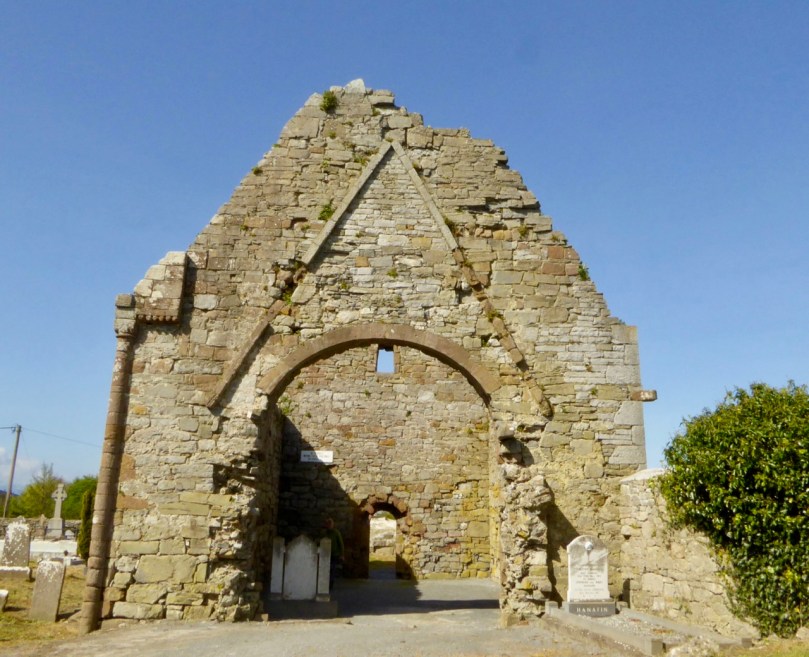
This is one of two Romanesque sites at Ardfert. We are looking through the chancel arch into the nave. Note the roll-mouldings where antae would once have been, and also the small arched west doorway

In Ireland the simple rectangular stone-built early medieval churches with their antae, linteled entrances and finialed gables were gradually replaced or modified starting in the mid 1000’s. Romanesque churches become nave-and-chancel buildings rather than one rectangular room. The chancel is separated from the nave by a rounded arch, and windows have similar arched tops and are deeply splayed on the inside, often asymmetrically.

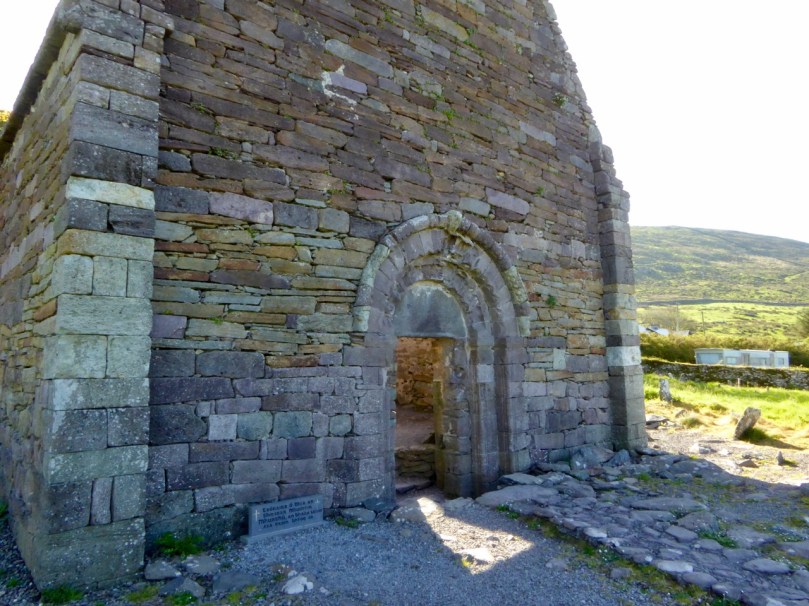
Kilmalkedar church in Kerry. While antae remain, the portal is now in the full Romanesque style  with an arch, a couple of receding ‘orders’, chevron carvings and a carved head

The doorway is in the west wall (on the opposite side to the chancel and the altar) and is now arched rather than linteled. The walls of the nave may have blind arcading. There is clear evidence that they were painted – a few vestigial examples survive in Ireland.

At Kilmalkedar, the finials still top the gables. The stone roof can be clearly seen, or at least what remains of it

The roof are sometimes stone, and may contain attic-type spaces.

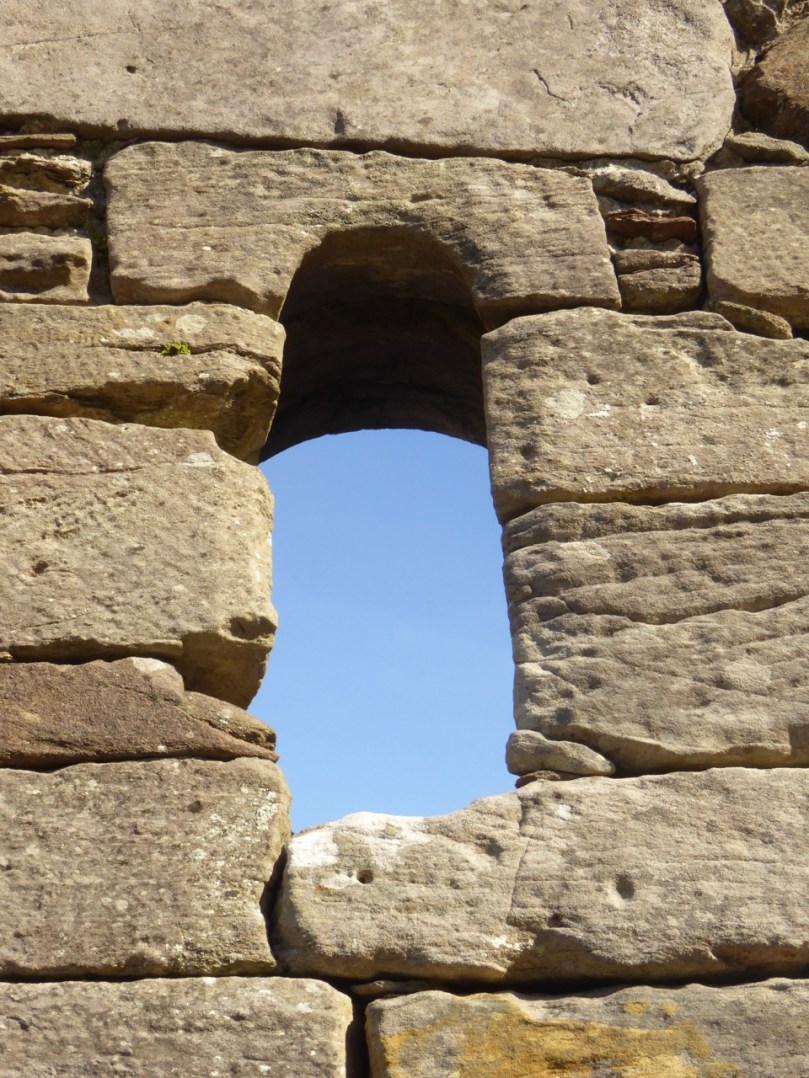
Two examples of Romanesque arched windows. The first (from Kilmalkedar) is topped by a simple arch hewn from one stone. In the second example the arch is more sophisticated. It is constructed using voussoirs – precisely cut wedge-shaped stones – which are beautifully carved with geometric and foliate shapes

But the real glory of the Romanesque building style, and what makes it so attractive for visitors are the carvings – a feature that is curiously absent from the Early Medieval church forms that preceded the Romanesque. (I say ‘curiously’ because other forms of stone carving, such as our wonderful high crosses, are well known from pre-Romanesque contexts in Ireland, as well as decorative metalwork and manuscripts.) Doorways, chancel arches and window surrounds are often carved with a variety of floral and geometric motifs (especially chevrons), while heads of humans and animals are found around doorways and arches, and occasionally outside. 

The chancel arch and blind arcading at Kilmalkedar

This post is just an introduction to Irish Romanesque, intended to cover the basics of the form and get you comfortable with the terminology. I have deliberately avoided talking about the carvings and the more spectacular of the sites. But in my next post on this topic I will concentrate on the doorways. There are many fine examples, from the simple to the elaborate – they are truly one of the wonders of our Irish architectural heritage. Here’s a sneak peek…

And by the way – this post is a celebration of sorts: it’s the 400th post in Roaringwater Journal! Our first post ever was in October 2012. With a five month hiatus (in order to move countries) we’ve been blogging faithfully week after week ever since. Our practice is that we, Robert and Finola, publish one post each every Sunday (and update the Table of Contents on the Navigation Page as we go along). We love the way this lends a shape to our week; we love the research and the photography; we love your feedback, both here and on our Facebook Page. Thank you, our wonderful readers, for sticking with us. Long may it continue!

Dividing the Day

We were on the trail of Saint Brendan, and the road took us deep into County Kerry. The spring days were blue, and the unparalleled scenery at its best for us. As we made our ways through the high hills and mountain passes we could see across to the coast:

20,000 years ago, ice shaped the Kerry landscape: a huge glacier flowed from here towards the sea. Looking down from An Chonair, the highest mountain pass on the Wild Atlantic Way; the peak in the centre is Mount Brandon, named for Saint Brendan. The header picture shows the burial ground and, beyond, the medieval “Brendan’s House’ at Kilmalkedar, seen through the burgeoning spring growth

Our first call was to the Cathedral in Ardfert, which was built in medieval times over a Christian monastic site founded by the Saint in the sixth century. There’s nothing left of that, but the later buildings, while ruined, are well looked after by the Office of Public Works, and an information centre is open through the summer months – certainly worth a visit.

Seen in Ardfert Cathedral, an image of a woodcut dating from 1479: it shows St Brendan and his monks on their epic voyage in search of Paradise. On the way, they discovered the American continent!

We could not miss a visit to the place of the Saint’s birth in 484 – Fenit, near Tralee – where a monumental bronze sculpture was installed in 2004. It was made by Tighe O Donoghue/Ross of Glenflesk.

It’s hard to do photographic justice to Tighe O Donoghue/Ross of Glenflesk’s sculpture of Saint Brendan in Fenit: he’s depicted as a ‘warrior saint’ (in the same vein as St Fanahan – or St Fionnchú – of Mitchelstown, Co Cork). Certainly he has a heroic character, necessary for someone who embarked on (and returned from) so many adventures

The culmination of our Brendan travels for this trip (there’s so much more yet to be explored) was the medieval site at Kilmalkedar, on the Dingle Peninsula. This monastic settlement is rich in history, and includes St Brendan’s House, and St Brendan’s Oratory. These alone are spectacular monuments, but there are further riches to delight the eye of Irish history enthusiasts. Finola’s post this week concentrates on the wonders of Irish Romanesque architecture, and the ancient stone-roofed church at Kilmalkedar is a prime example.

The wonderful Romanesque early Christian church at Kilmalkedar – right – with ‘Brendan’s House’ in the distance. The site is overflowing with medieval history. Below. the setting for the monastic site is stunningly beautiful. Note the large, very ancient cross and the holed ogham stone

A good while ago – in 1845, in fact – our excursion was foreshadowed by Mary Jane Fisher Leadbeater, who writes in her Letters from the Kingdom of Kerry:

…Our object to-day was not entirely to pay homage to Nature, though in the heart of her lovely works, but to visit the ruins of the wonderful church of Kilmelkedar, which we were solemnly assured “was built in one night by holy angels.” One evening, ever so many many ages ago, the sun, when he set in those wilds, saw no place dedicated to the worship of the Creator: he rose the following morning, and smiled upon a perfect chapel, with pillared niche and carved saint, and a holy fount, and massy cross! all ready for the purposes of prayer and sacrifice! A matin-call rang loud and clear over lofty mountain and lonely glen, to summon the devout and arouse the unthinking, where no vesper strain could sound the evening before; all gleamed proud and fair in the glad light, and the heart of man became purified, as the sacred bell called him to prayer! And this was the reward of the unceasing prayers of the holy Saint Brandon! Such is the legend…

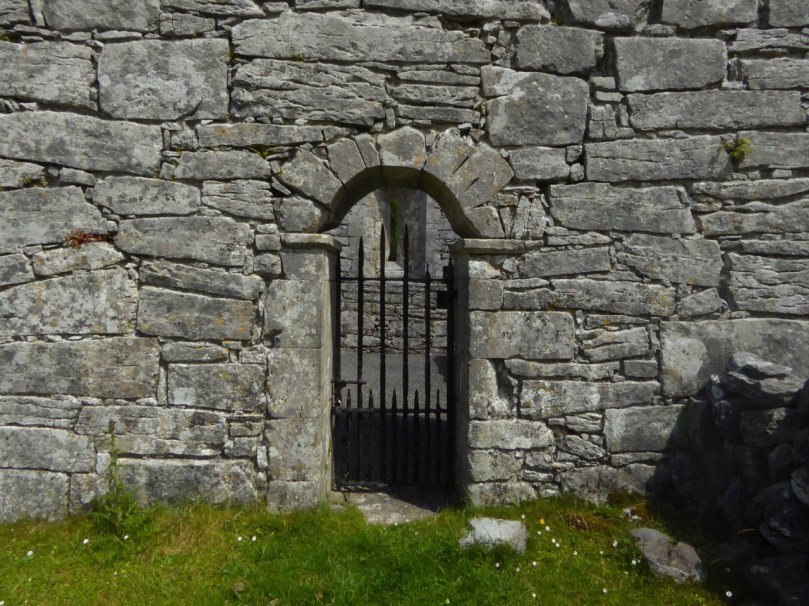
St Brendan’s House – behind a locked and barbed gate!

We spent hours at the Kilmalkedar site and didn’t take everything in. We consider ourselves so privileged: we had it completely to ourselves, and the day was perfect. Saint Brendan treated us very kindly – except that his ‘House’ and an associated holy well were not accessible: although an OPW project which has recently undergone significant restoration, the enclosure around it is impenetrable with barbed wire and a firmly locked gate. However, in an adjacent field, a gate and path gave us free access to a large, flat stone which seemed to be covered in giant cup-marks. The National Monuments register describes it as a ‘Ballaun Stone’: it’s very fine, and I was delighted to find that Mary Jane Fisher Leadbeater had unearthed some folklore about it:

…This place contained a colony of monks; and well they knew what they were about when they fixed on this retirement; for, besides its real advantages, it commands a most lovely view of Smerwick Harbour, The Sisters, and Sybil Head. They need not want for fish in the refectory in the days of abstinence. It is situated in a sheltered recess of the mountains, fine springs around, and, another popular legend bearing witness, in the centre of what was once good grazing and tillage ground. A cow is the subject of this legend—a cow of size and breed suited to provide milk for the giant race of those days. We saw the milk vessels, and if she filled them morning and evening, she was indeed a marvellous cow. In a huge flat rock were these milk pans; six large round holes, regular in their distances from each other, and nearly of equal size; they could each contain some gallons of liquid. This said cow gave sufficient milk for one whole parish; and was the property of a widow—her only wealth. Another parish and another clan desired to be possessed of this prize; so a marauder, endued with superior strength and courage, drove her off one moonlight night. The widow followed wailing, and he jeered her and cursed her as he proceeded. The cow suddenly stopped; in vain the thief strove to drive her on; she could neither go on, nor yet return; she stuck fast. At length, aroused by the widow’s cries, her neighbours arrived, and the delinquent endeavoured to escape. In vain—for he too stuck fast in the opposite rock; he was taken and killed. The cow then returned to her own home, and continued to contribute her share towards making the parish like Canaan, “a land flowing with milk and honey.” The prints of her hoofs, where the bees made their nests, are still to be seen in one rock ; and those of the marauder’s foot and hand in another, where he was held fast by a stronger bond than that of conscience…

Kilmalkedar’s giant ballaun – the cups were filled every day by the widow’s marvellous cow, providing milk for St Brendan’s community of monks back in the day

One of the special features of the Kilmalkedar site harks back to its medieval monastic associations – a sundial. The ordered lives of the monks were regulated by divisions of the day (and night) – the Canonical Hours, also known as the Divine Office or Liturgy of the Hours. These were the regular periods of prayer: seven daytime Offices of Lauds (at daybreak), Prime, Terce, Sext, None, Vespers, Compline (at sunset) and a night Office of Vigils. This was the important work of the monastery, of course: constant and regular prayers. In between it the monks had to fit in all the requirements of daily life: sustenance, growing crops, brewing, beekeeping. And, on top of all that, Brendan and his companions undertook their peregrinatio all around the known world. No wonder a timepiece was necessary!

The Kilmalkedar sundial is a particularly elegant example – it’s probably my favourite item on this site: functional and beautiful, as all things wrought by the human hand should be. In such an evocative environment it certainly helps us to cast our minds back to the life and times of the travelling Saint. The antiquarian George Du Noyer visited the place back in the 1860s, and was also drawn to this particular artefact, accurately recording it for us in one of his exquisite watercolour sketches.