When in Youghal…

boyle header

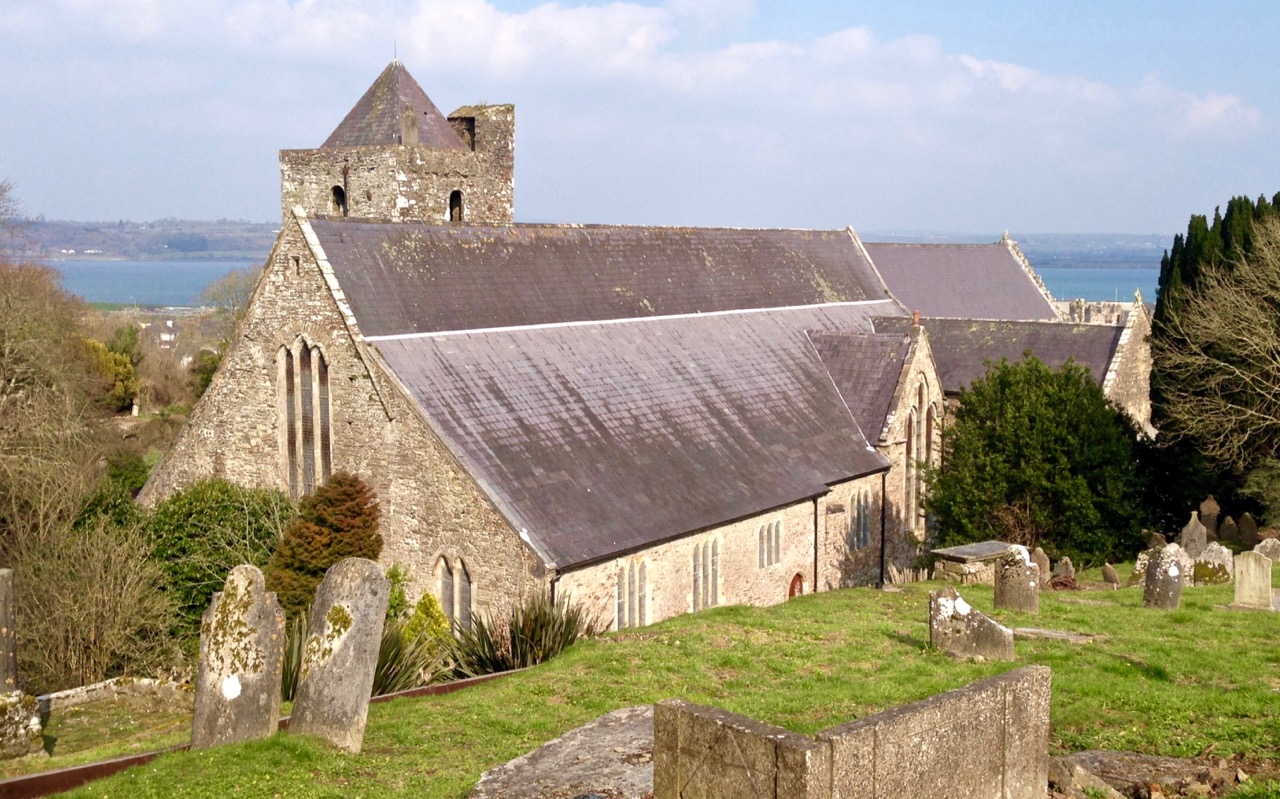
We spent St Patrick’s Day in Youghal – within County Cork but a long way from our own part of that territory. The place is falling down with history, and warrants an extended visit. Finola has written about the walled town and some of its architecture: I will be concentrating on the Collegiate Church of St Mary, a building that goes back a long way and is said to be on the site of the monastic foundation of Saint Declan, a fifth century contemporary – or even a predecessor of – St Patrick.

Saints by Harry Clarke: St Patrick, Ballinasloe (left) and St Declan, Honan Chapel (right)

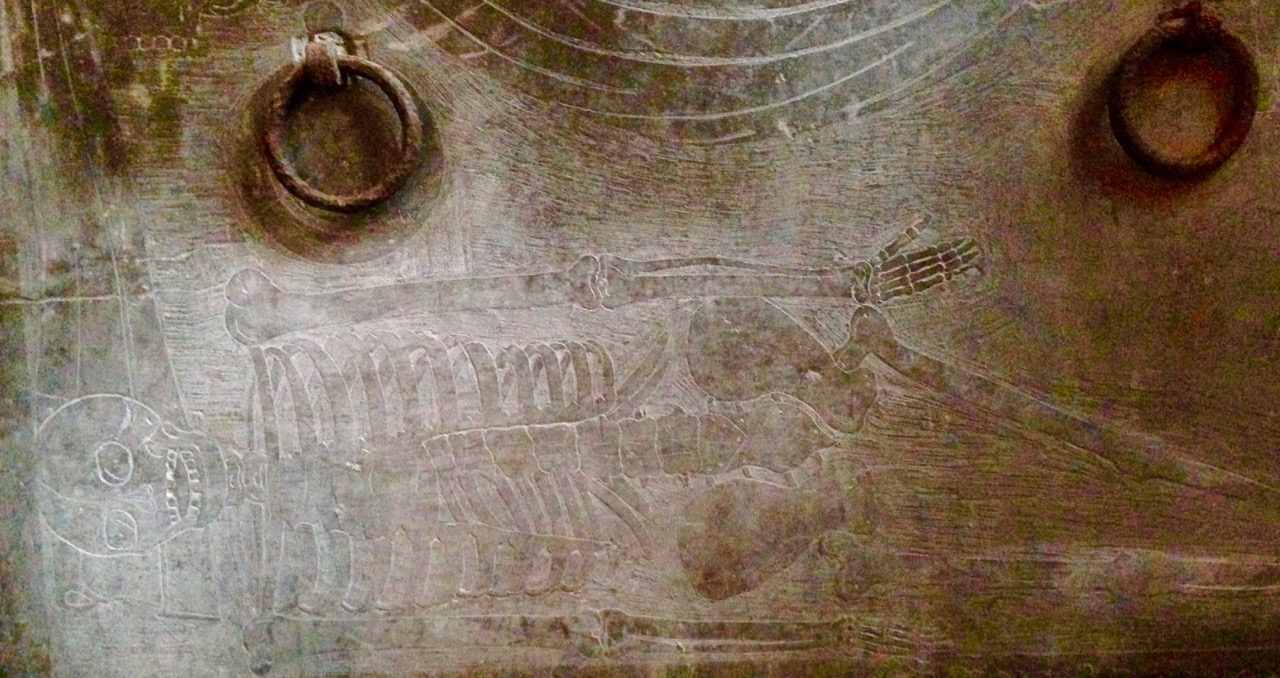
The Vikings came to Youghal, and one stone slab in the church depicts a vessel from those days. There are so many other memorial stones, carvings and inscriptions that we spent hours in the building just trying to take them all in. I can only show you a taster and recommend you to go and see for yourselves.

longboat

Carving of a Viking longboat – can you see it?

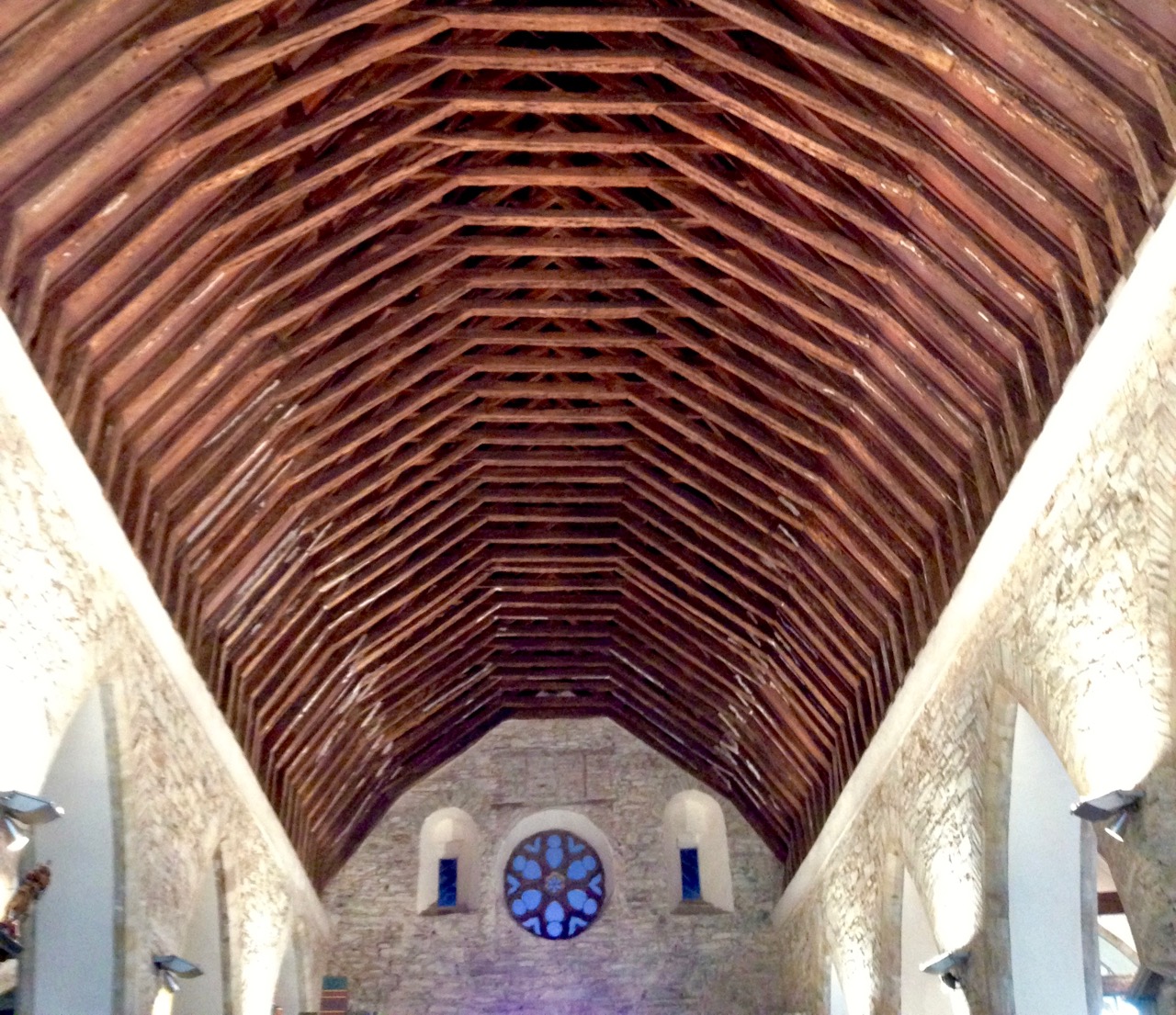
The structure of the present church deserves close study. It claims to be the oldest church in Ireland that has had continuous worship taking place – since the 13th century. Look firstly at the roof over the Great Nave: the timbers have been carbon dated to around 1170, although an intriguing hand-printed notice about this feature states …The roof of this church was put up there in 1220 by French labour, there are two german cathedrals roofed with Irish Oak and their walls bear the same masons marks as this church. They were all built by the same hands. Ireland was covered with oak woods in 1220, but saw mills were not invented until 1328. They had to pick each oak tree the same size, and with an axe skin and square it up. So each piece is a small oak tree – or Saplyn…
oak roof

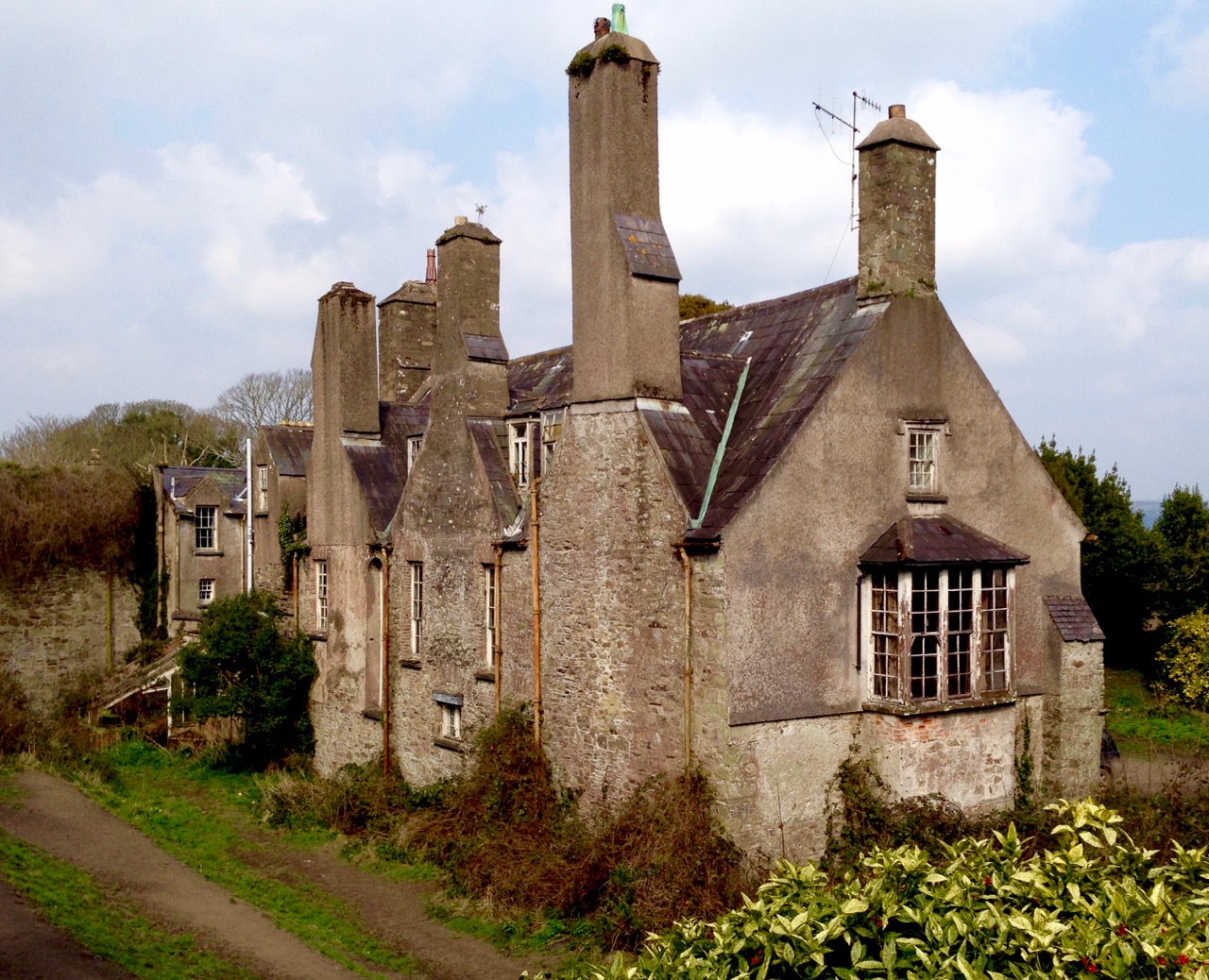
In 1464 St Mary’s was made a Collegiate Church, with the foundation of Our Lady’s College of Yoghill by the Earl of Desmond. It was served by a ‘ Warden’ of eight ‘fellowes’ and eight ‘singing clerks’. In the precincts of the church is the Warden’s House, known as Myrtle Grove. This also has a long and complex history: this article about Henry and Edith Blake – two of its colourful inhabitants (who are buried in its garden) is worth a read. Another former inhabitant of the house – and one of Youghal’s celebrities – is (or was) Sir Walter Raleigh.

myrtle grove 2016

Sir Walter Raleigh, once the owner of many thousand acres in Cork, including the whole settlement of Youghal – and his home, Myrtle Grove, in 1833 (top right) and seen today (above)

Myrtle Grove is said to be one of the oldest houses in Ireland: it remains in private ownership. St Mary’s Church itself is unusual in that it is in the guardianship of the state while also continuing as a place of worship.
st mary's church

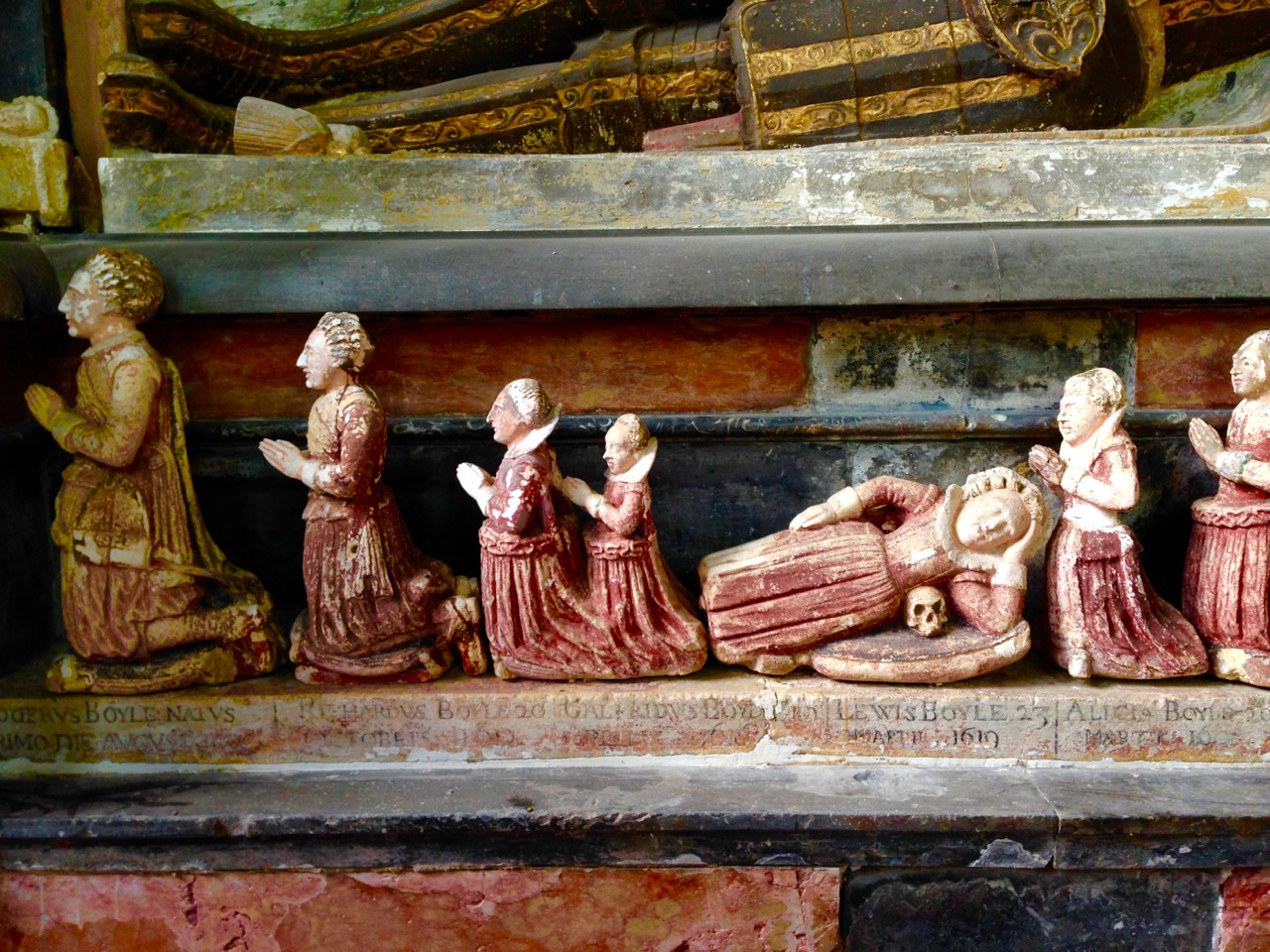
Another Youghal celebrity was Richard Boyle – the Great Earl of Cork (1566 – 1643). While Raleigh had acquired his estates during the English ‘plantations’ following the Desmond rebellion, Boyle, also an English incomer, was an entrepreneur and an opportunist. He invested in many ventures – mining, fishing, iron smelting and linen weaving – as well as studying law and pursuing his political career. He was appointed Clerk of the Council of Munster in 1600, became a privy councillor for the whole of Ireland in 1612, and, having found favour with Queen Elizabeth, was knighted and made Earl of Cork and Viscount Dungarvan in 1620. Eventually he was created Lord Treasurer of Ireland. He owned Bandon and designed and built Clonakilty, while also relieving Raleigh of all his estates – 42,000 acres – for the rather small sum of £1500. Boyle died in 1643 and is interred in a tomb he built for himself and his family in St Mary’s Church, Youghal. He is said to have been the richest man in the known world at the time of his death. Go and see his tomb – it is spectacular! Boyle had two wives and fifteen children by one of them: all – and Boyle’s mother – are included in the monument.

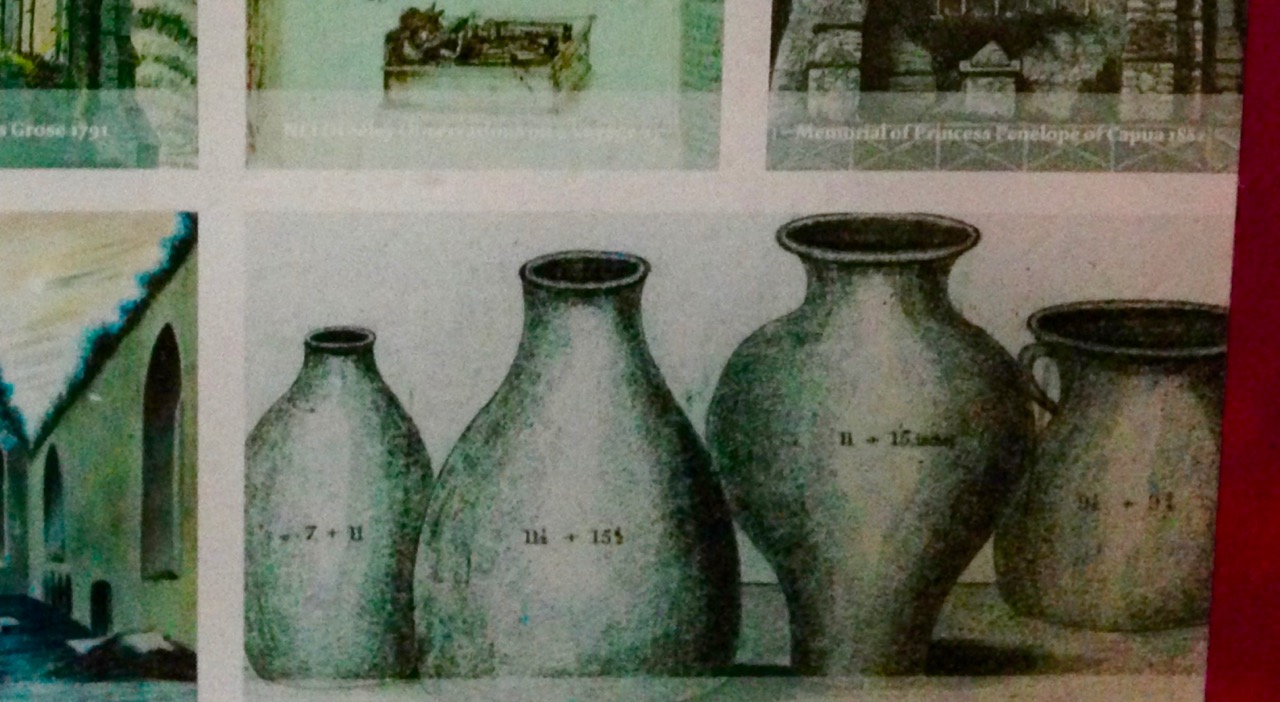
The Collegiate Church is one of the places where – in the middle ages – ‘acoustic jars’ were used to enhance acoustics. These ceramic vessels were placed in niches above the choir area: the niches are still there but, unfortunately, the vases are not.
acoustic jars

There’s a lot more to the fascinating story of this church. I’ll leave you with a visual round-up of some of the details that we found, all of which add to the interest and the richness of the place. You could call it a ‘medieval miscellany’ – I call it my Youghal Menagerie.

miscellany 17

Rossa: The Skibbereen Years

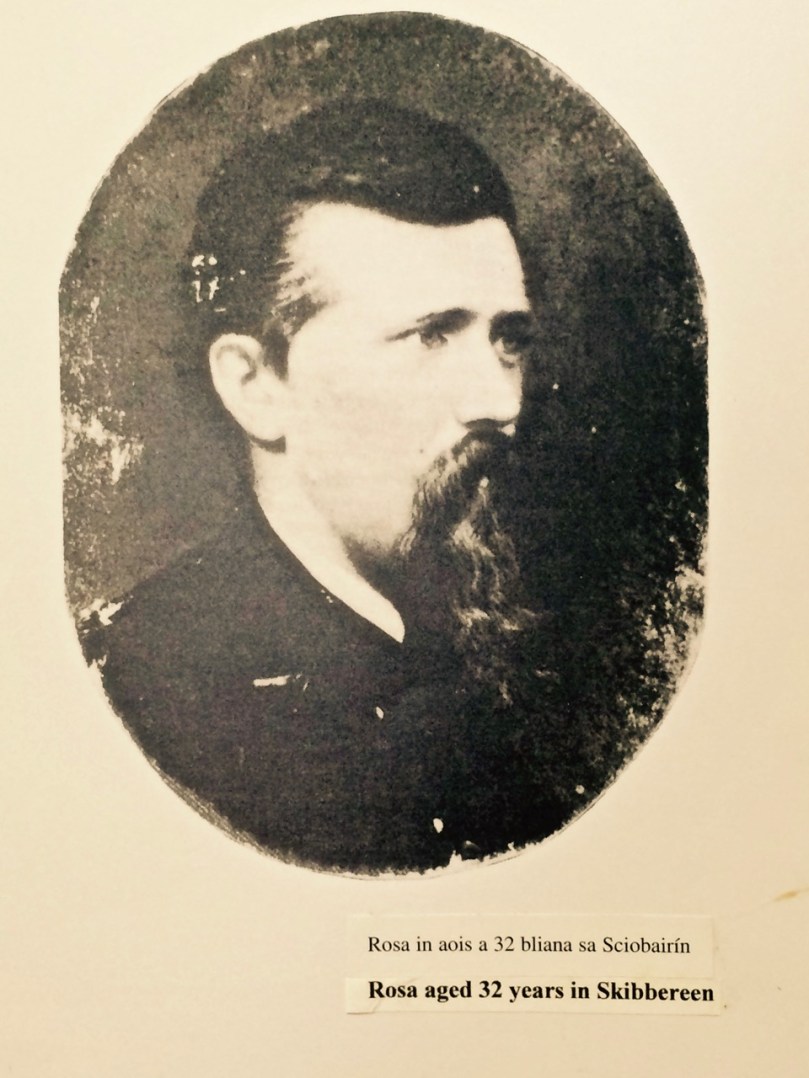
Rossa aged 32

This is the third post in a series about Jeremiah O’Donovan Rossa. In the first, March Back in Time, I introduced the man and described the thrilling re-enactment of the famous 1863 demonstration in Skibbereen. In the second, O’Donovan Rossa – the First Terrorist? I looked at his activities in America and the British bombing campaign he coordinated, as well as the influence of the Fenians in general on American and Canadian history. For more on the question of whether he can be considered a terrorist or a freedom-fighter, or both, I refer readers to the excellent research of Shane Kenna, author of Jeremiah O’Donovan Rossa, Unrepentant Fenian. In particular, Kenna’s  thoroughly researched article available on The Irish Story website, ‘One skilled scientist is worth an army’ – The Fenian Dynamite Campaign 1881-85 is a useful summary of the arguments.

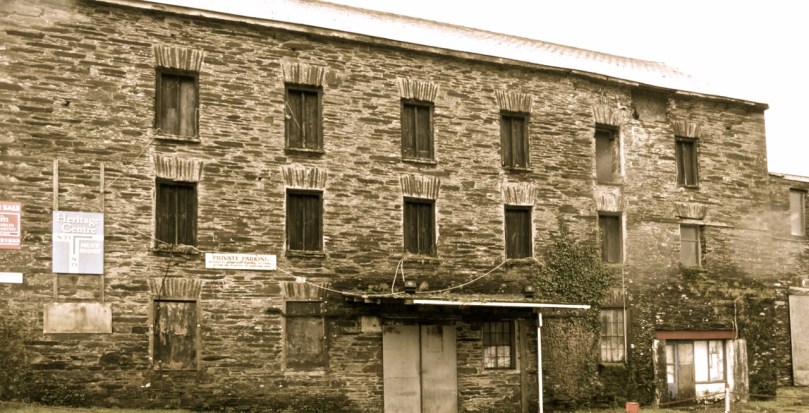
The Skibbereen Heritage Centre is an incredible resource for local history and specialises in the Great Famine. Their Walking Trail and its associated app and book have been immensely helpful in preparing this post (and many others).

My aim on this post is to outline the events in Rossa’s young life that led to his radicalisation and, since much of that time was spent in Skibbereen, to see what traces remain in this West Cork town that can help us to understand the man.

2012-05-19 16.04.23

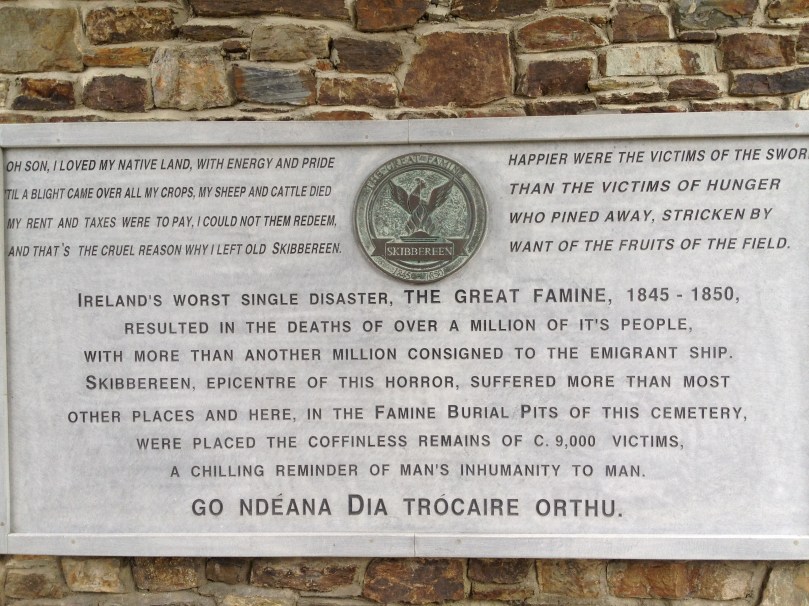
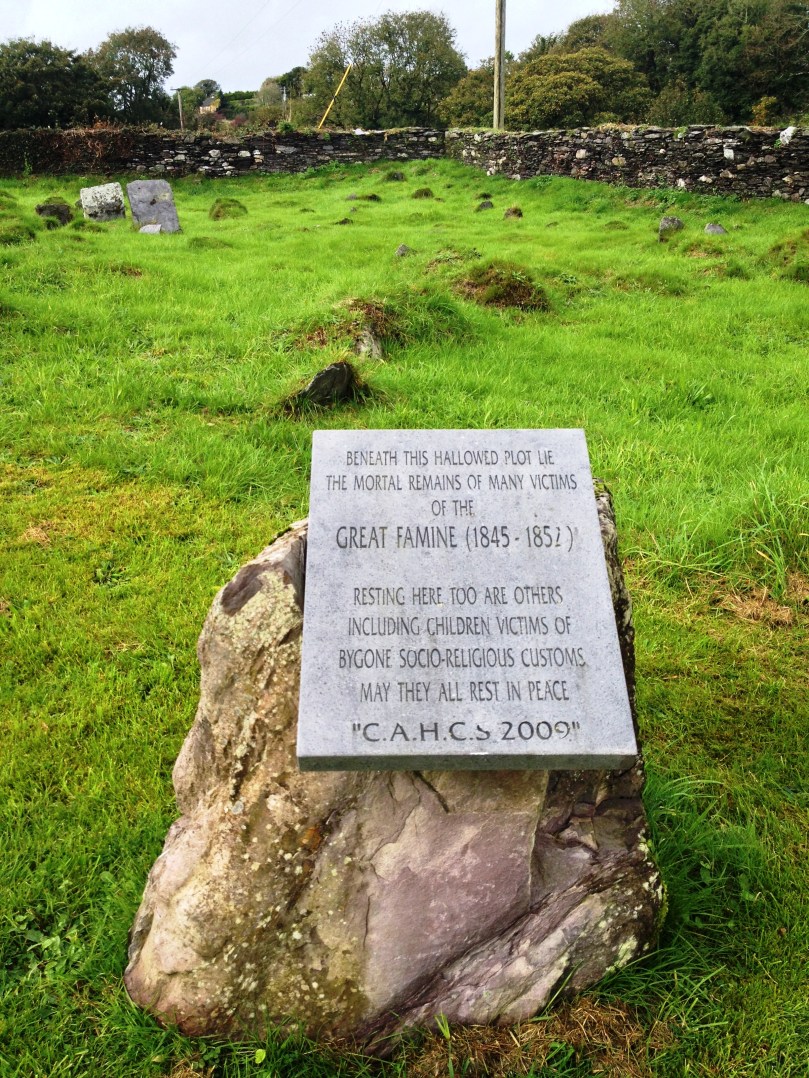
We have to start with the Great Famine of 1845 to 1850, although that’s a hard place to begin. It’s hard because it’s almost impossible to read about it without welling up with emotion and rage. The details are harrowing in the extreme and Skibbereen was the epicentre of the disaster. When Rossa arrived here, aged 16, to live with an aunt, he had witnessed his father die of famine fever after being forced to labour on one of the infamous Board of Works schemes. As was happening all around him, his widowed mother and his siblings were evicted from their home for non-payment of rent, and made the wrenching decision to emigrate. He had had a normal happy childhood and now everything was torn from him under the most appalling conditions.
Cillín near Durrus

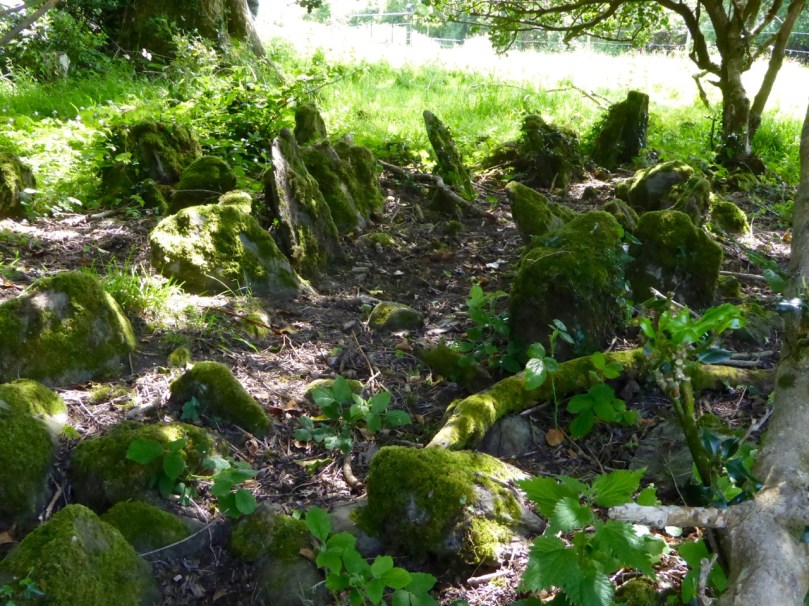
Famine graveyards full of mass burials and unmarked graves are scattered throughout West Cork, like this one near Durrus

In Skibbereen, in Black ’47, the 16 year old saw the worst of the Famine – the carts piled with bodies taking them every day to mass graves, the soup kitchens, the sickness and despair.

Famine soup Kitchen

This building in Skibbereen was used as a soup kitchen during the famine. Thousands of people were fed a watery soup that had little nutritional value but had the advantage of being cheap to make

Meanwhile he saw that tons of food was being exported from the surrounding countryside. He helped an old friend to bury his mother, Jillen Andy. Later, in prison, he would hold that memory and write a moving poem about the experience. It’s a long poem and it begins this way:

 ‘Come to the graveyard if you’re not afraid,
I’m going to dig my mother’s grave. She’s dead,
And I want someone that will bring the spade
For Andy’s out of home, and Charlie’s sick in bed.’

2013-10-20 13.44.38 HDR

Rossa became a shopkeeper in Skibbereen while at the same time founding and organising the Phoenix National and Literary Society which, although supposedly a educational group, had the aim of liberating Ireland by force of arms. It eventually merged with the Irish Republican Brotherhood after Rossa formed an alliance with James Stephens. ‘Fenians’ was the general term applied to the IRB and other such nationalist organizations.

Phoenix Soc meeting place

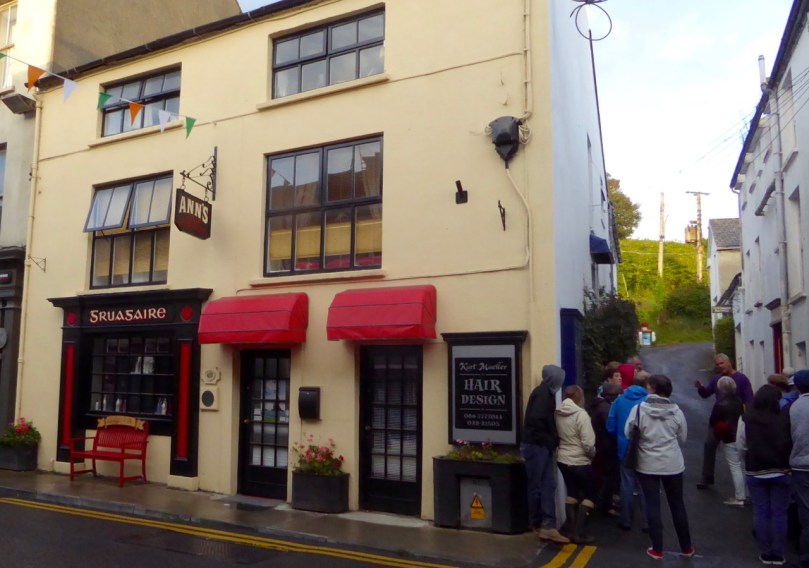
Philip O’Regan of the Skibbereen Heritage Centre leads us on a walking tour. One of the places he points out is the meeting rooms above what is now a hairdressers, where Rossa and his fellow members of the Phoenix Society used to gather

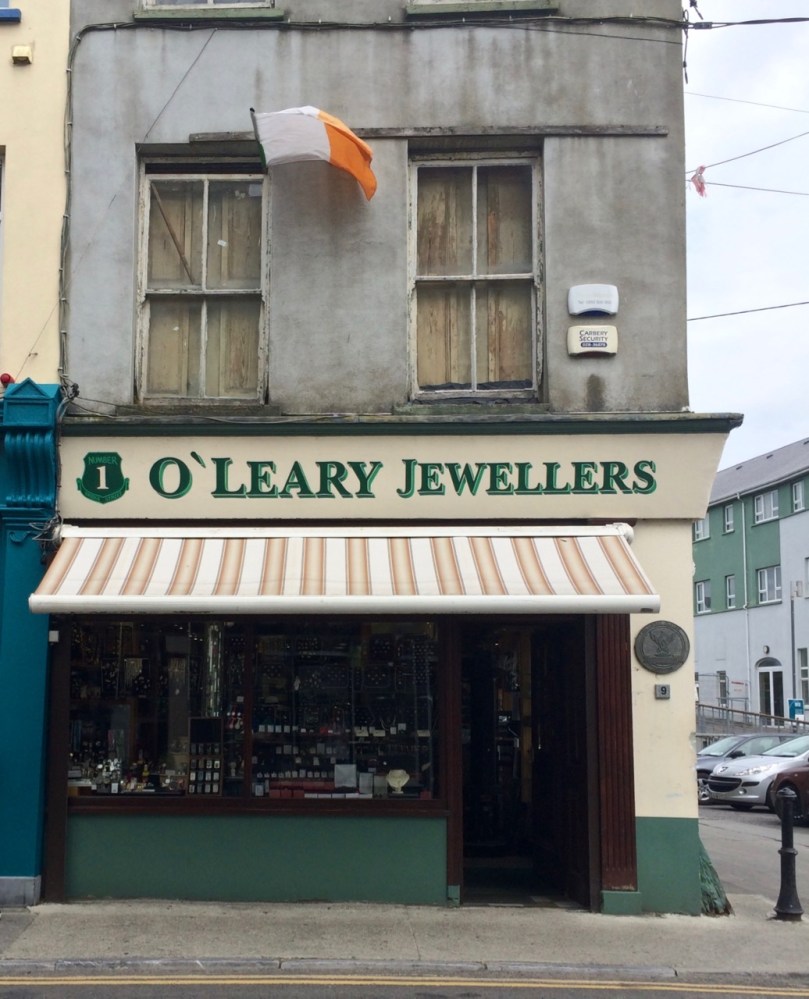
Business and politics didn’t mix well and life was a constant economic struggle. His store is still there, now a jewellers run by the genial Mr O’Leary.

Rossa shop

Rossa married a local woman, Honora Eager, and they had four sons, before her untimely death. I can find no image of Honora, known as Nanno, and can only imagine the devastation to the little family caused by her demise.

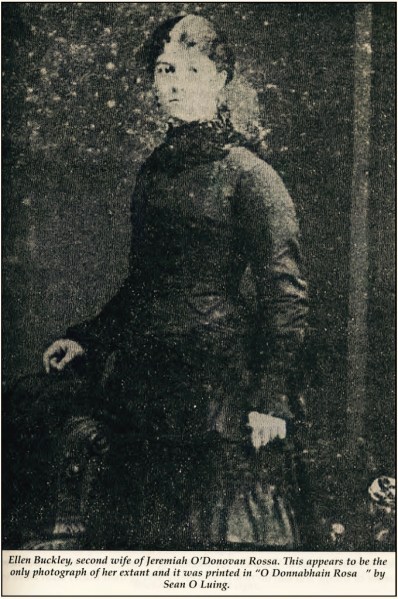
Ellen BuckleyThe following year he met another local woman, Ellen Buckley, who was only 18 at the time and who married him despite the fierce opposition of her parents. She was beautiful and well-educated – and strong willed, obviously. She took on the task of being a mother to his four sons and she bore another son, known as Flor Rossa. But then she also died, leaving Rossa devastated once more. He was in America when it happened and she was buried in Castlehaven graveyard. Her grave is marked with a large headstone – which bears no reference to Rossa, only to her parents. Flor was eventually buried there too, having died as a young man.

The remote and beautiful Castlehaven graveyard, final resting place of Rossa’s second wife, Ellen Buckley. Note that her gravestone makes no reference to Rossa.

annie-mays-bar-skibbereen-920x450

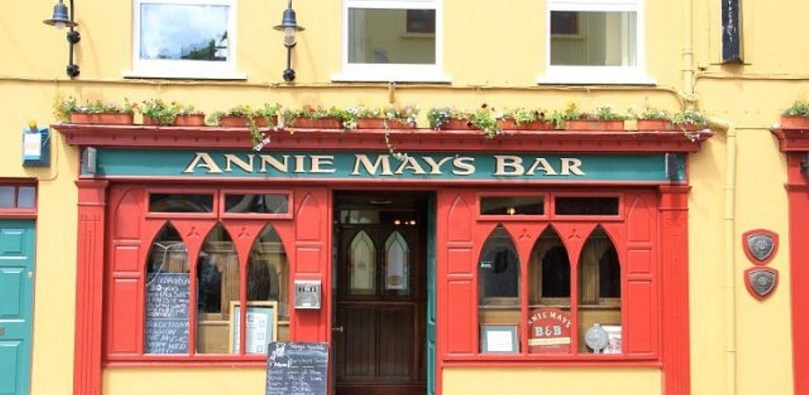
Members of the Buckley family still farm near Skibbereen and run Annie May’s bar and restaurant, a favourite with locals. Photo courtesy of Skibbereen.ie

Rossa’s third wife was Mary Jane Irwin from Clonakilty. Once again, she was young, well-educated, and married him despite the opposition of her parents.

The young Mary Jane Irwin, and Mary Jane in her mourning dress at Rossa’s funeral. Still beautiful. She supported the family with her poetry readings and recitals while Rossa was in prison

She would go on to have thirteen children with Rossa and they would be married for over 50 years – by all accounts a successful and happy union. Their happiness was short-lived at first. Rossa spent several years under atrocious conditions in English prisons, while Mary Jane wrote poetry and speeches and travelled across America and Ireland raising money for the cause and supporting the family.

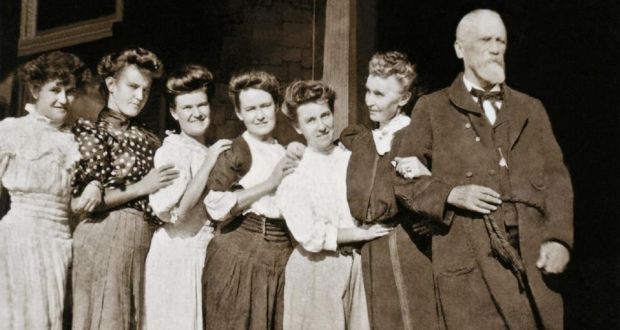
Rossa and daughters

Rossa, Mary Jane and their daughters.

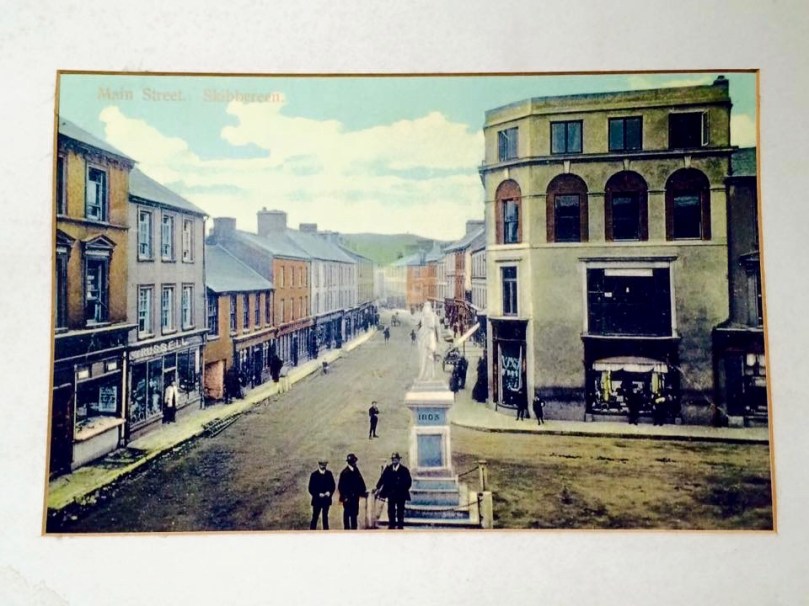
Shortly after his third marriage Rossa moved from Skibbereen and only returned once, in 1904. This was the occasion of the unveiling of the Maid of Erin statue: a fascinating monument that commemorated two failed uprisings against British rule, while Britain still ruled!

North St and Maid

The Maid of Erin statue was originally in the middle of the intersection but was disruptive of traffic so was moved closer to the town hall

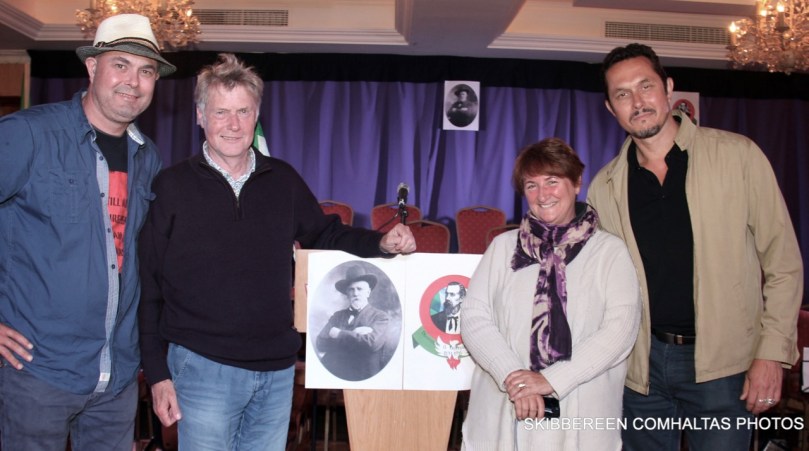
But the Rossa family connection to Skibbereen remains strong, and this summer we were delighted to meet two of his great-grandsons, Williams Rossa Cole and Ross Williams Cole, in town to record footage on the Rossa commemorations for a documentary they are making on the life of their great-grandfather. You can read more about them in this Examiner article. And take a look at the trailer for the documentary!

Rossa boys in Skibbereen

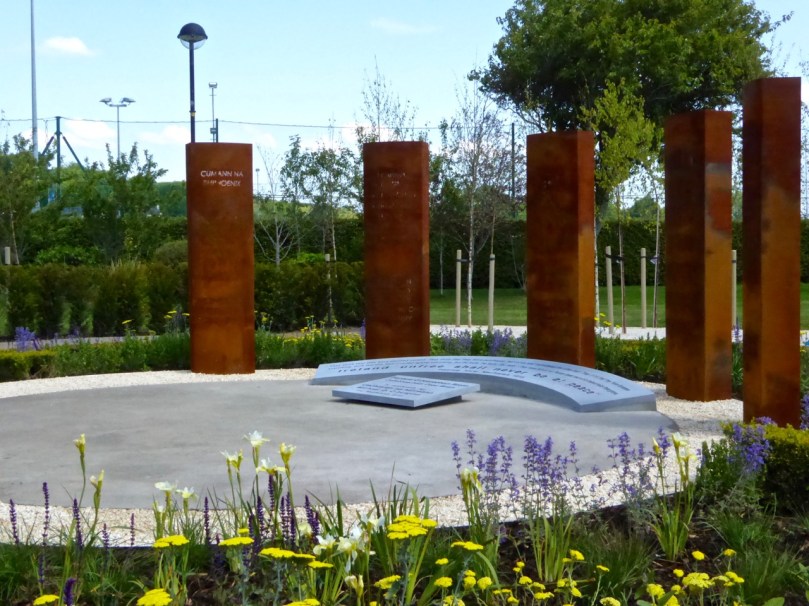
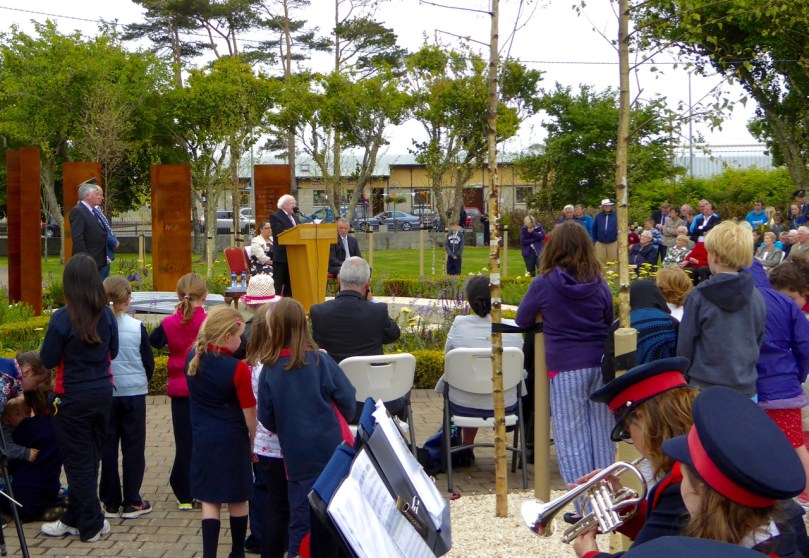
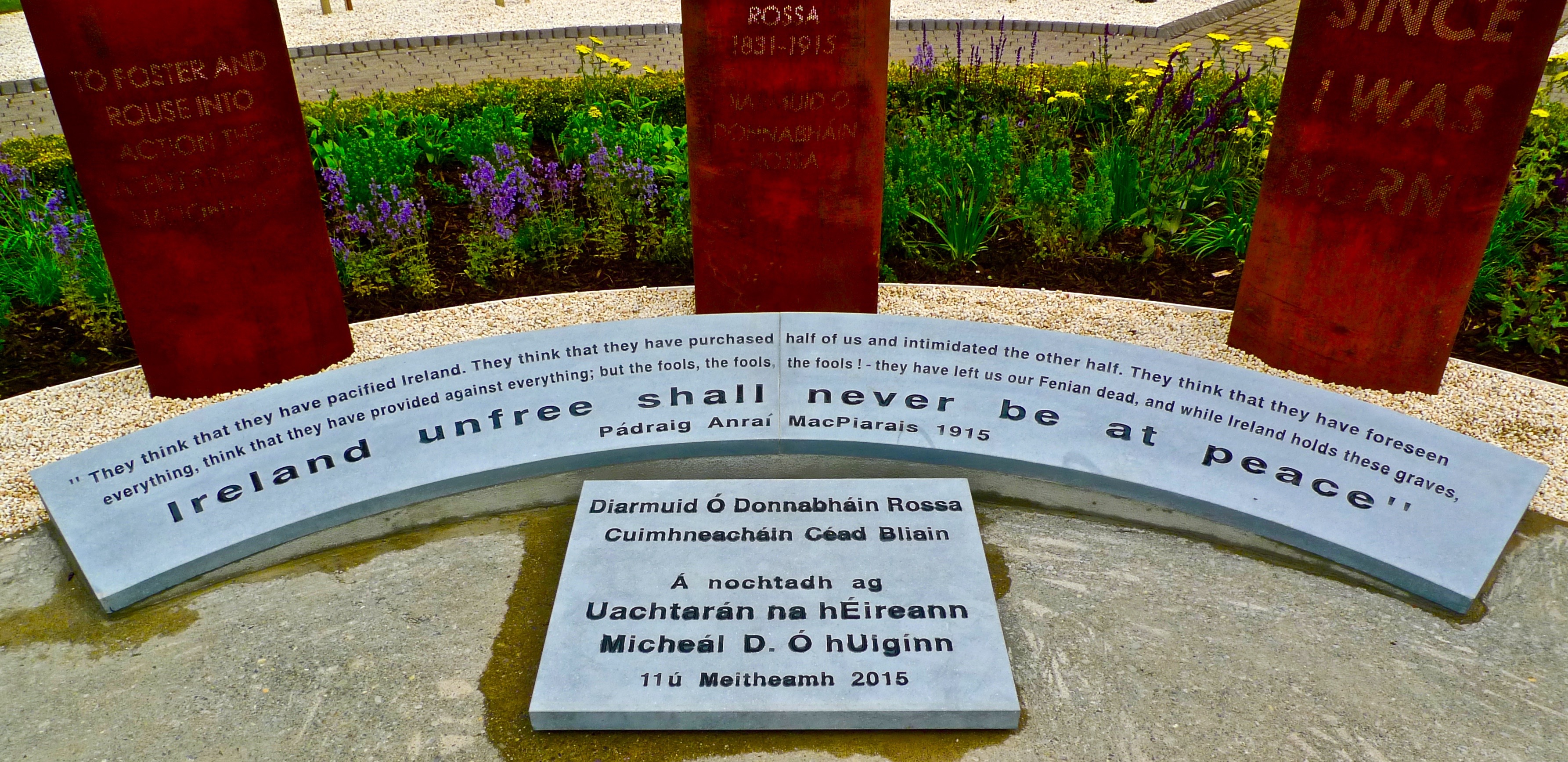
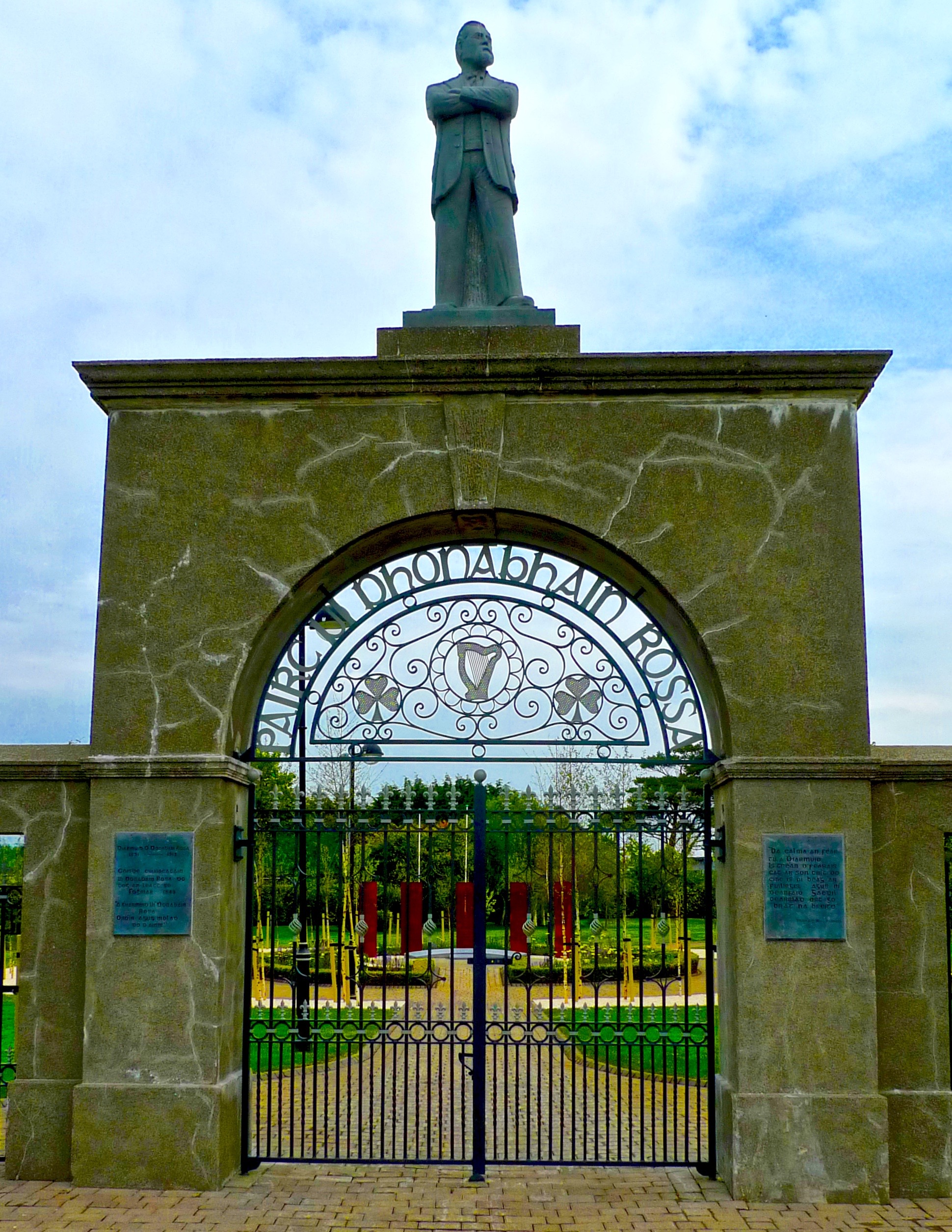
The final stop on any Rossa trail in Skibbereen has to be the park that is dedicated to him. Robert recorded the grand opening by Michael D Higgins, the President of Ireland. It’s a striking monument in stone and steel reflecting the unbending and steadfast commitment of Rossa to his own brand of patriotism, forged in tragedy and hardened in the crucible of prison.

Rossa Memorial

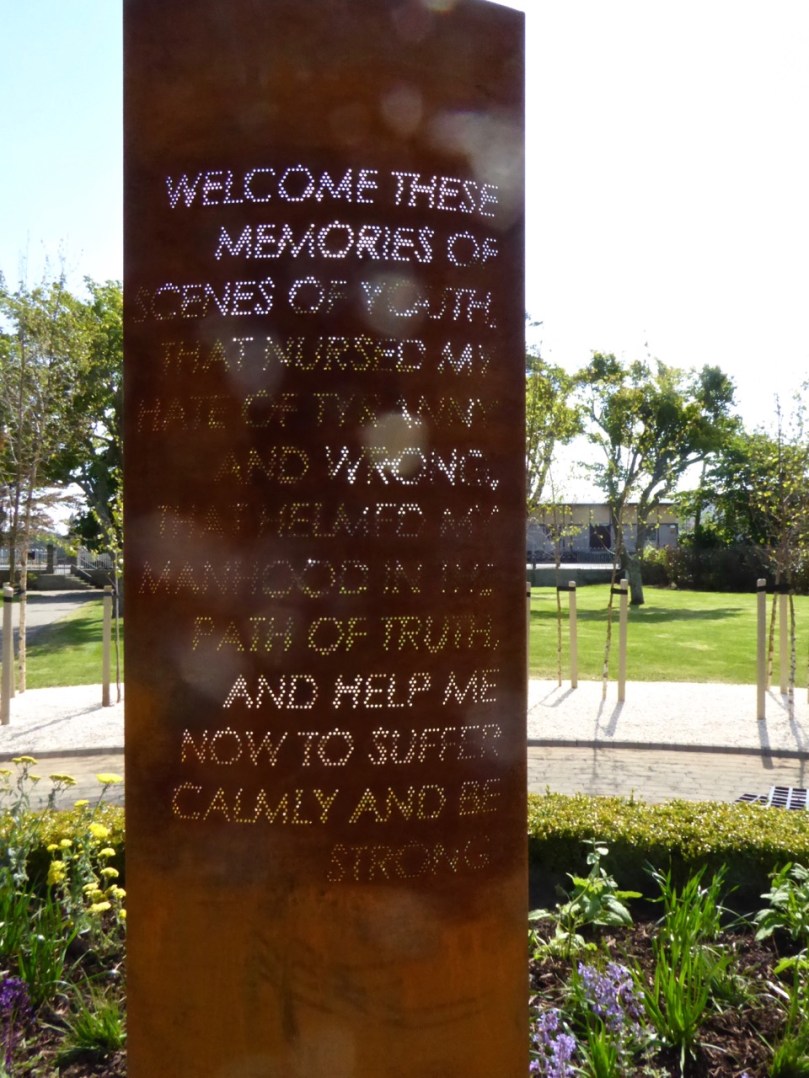
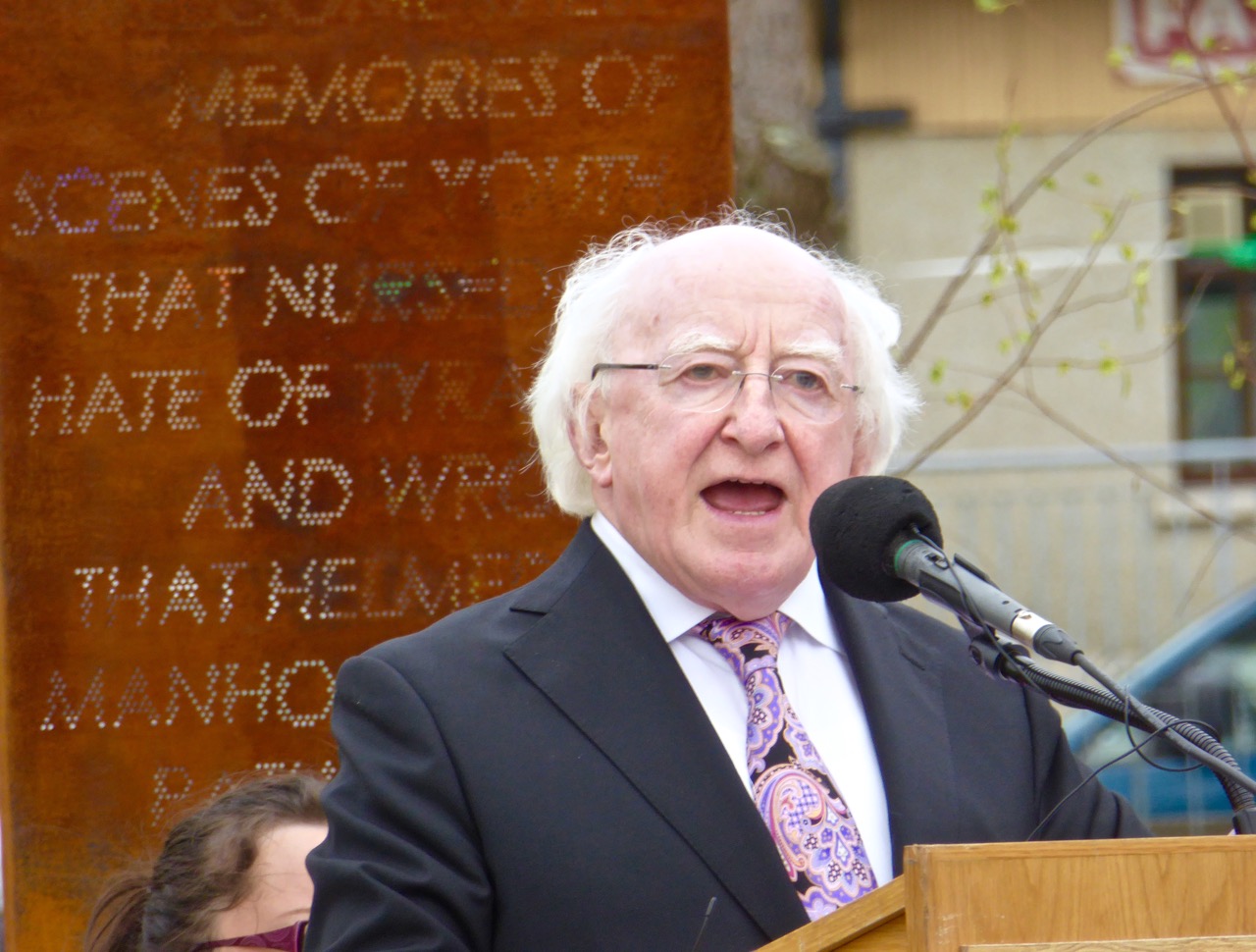
The steel columns have cut-outs of quotes and images silhouetted against the sky. Among these quotes are the poignant final words of Jillen Andy. The poem was composed in prison, not written but memorised because he had no paper. It was a talisman he held close to his heart for when his courage faltered: he conjured up again the image of the wasted body of Jillen, dead of famine sickness as a result of the egregious lack of compassion and mismanagement of resources by the British Parliament and it cemented his resolve once more.

How oft in dreams that burial scene appears,
Through death, eviction, prison, exile, home,
Through all the suns and moons of twenty years,
And oh! How short these years compared with years to come.
Some thing are strongly on the mind impressed
And other faintly imaged there, it seems;
And this is why, when reason sinks to rest.
Phases of life do show and shadow forth in dreams.
And this is why in dreams I see the face
Of Jillen Andy looking in my own,
The poet-hearted man, the pillow case,
The spotted handkerchief that softened the hard stone.
Welcome these memories of scenes of youth
That nursed my hate of tyranny and wrong,
That helmed my manhood in the path of truth,
And help me now to suffer and be strong.

The complete text of Jillen Andy is here.

Welcome these memories

Perhaps we can leave Rossa now to the judgement of history. And perhaps with one last image of him and Mary Jane in happier times. Rest in Peace, you Unrepentant Fenian.

Rossa MJ ans 2 daughters

O’Donovan Rossa – the First Terrorist?

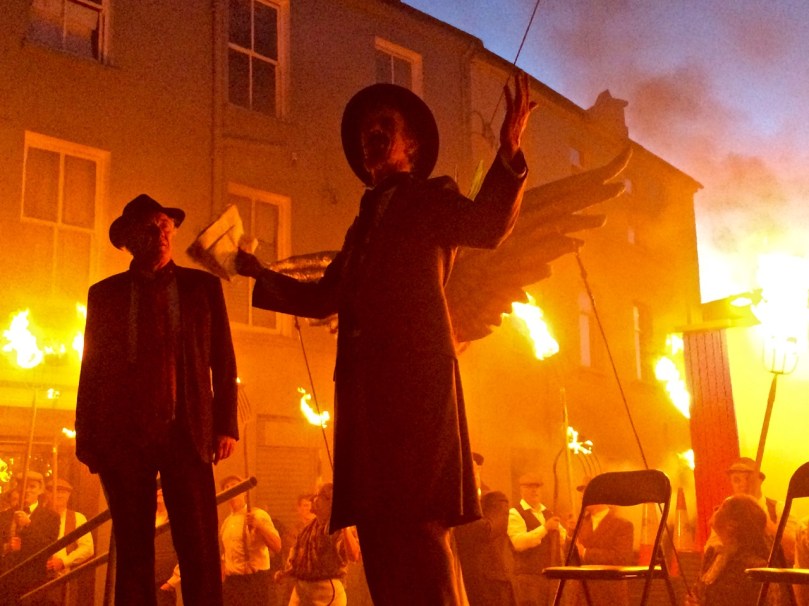
Fiery Rossa

The world was shocked this week by appalling acts of terror. Terrorism is rightly and universally condemned in modern Ireland – and yet this year we celebrated the centenary of the death of a man whom many, including his fellow patriots, denounced as a terrorist in his lifetime while others hailed as a hero.

Our American and Canadian readers might be surprised at how relevant his story is to their own countries.

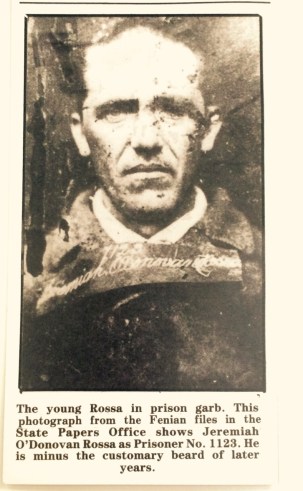
Rossa Prisoner

I write of course of Jeremiah O’Donovan Rossa of Skibbereen, the ‘Unrepentant Fenian’, whose state burial in 1915 was the occasion of a fiery speech by Patrick Pearse that is commonly seen as a catalyst to the 1916 Rising. In March Back in Time I introduced him and wrote about the awful background that turned him into a revolutionary – the death of his father from famine fever and his family’s eviction and departure from Ireland. To the end he refused to call the cataclysmic events of 1845 to 1850 a famine: there was no shortage of food, he pointed out, just a shortage of humanity. It fired in him a lifelong hatred of British rule which hardened through terrible treatment in prison and which he brought with him to exile in America, where he and his fellow Fenians were accorded a hero’s welcome.

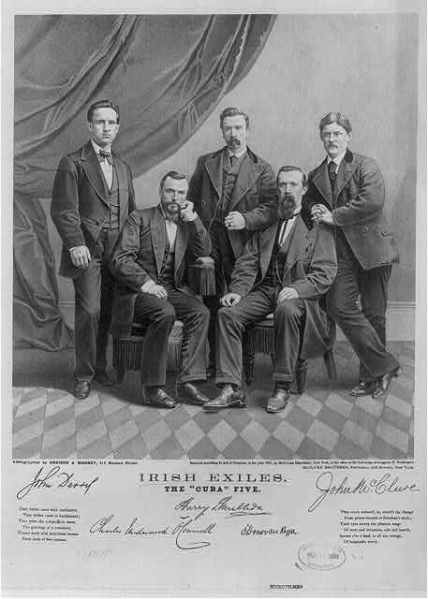
The Cuba Five were so named for the ship that brought them to America. Courtsey Library of Congress

The Cuba Five were so named for the ship that brought them to America. Courtsey Library of Congress

The Fenian brotherhood Rossa joined in America in 1870 had organised several raids on Canadian communities during the 1860s and early 70s. All were unsuccessful, but resulted in loss of life and a worsening of relationships between Canada and America, seen as harbouring and tolerating Fenian activity. The raids involved hundreds of Fenians, many of them battle-hardened veterans of the American Civil War. (For more on the Irish in the American Civil War – the numbers and the stories will amaze you – see Damian Shiels’ meticulously researched blog and website.)

According to this article on the Fenian Raids:

Ironically, though they did nothing to advance the cause of Irish independence, the 1866 Fenian raids and the inept efforts of the Canadian militia to repulse them helped to galvanize support for the Confederation of Canada in 1867. Some historians have argued that the affair tipped the final votes of reluctant Maritime provinces in favour of the collective security of nationhood, making Ridgeway the “battle that made Canada.”

Fenian Raid on Canada

The Battle of Ridgeway, courtesy Library of Congess

Embracing this militaristic approach, Rossa became as notorious an extremist in America as in Ireland. He founded a newspaper, The United Irishman, to propagate his views and raise funds for his infamous skirmishing fund. This fund, in fact, was to pay for a bombing campaign carried out in Britain from 1881 to 1885, causing injuries and deaths (to civilians, including children) – and real terror.

One of the exhibits in Skibbereen this summer consisted of newpaper clippings from American newspapers about Rossa, amply testifying to his notoriety. The top right clipping consists of snippets about Well Known People – Rossa is listed alongside William Morris, Geronimo and the Csar Of Russia

In many ways O’Donovan Rossa encapsulates a central dissonance at the heart of Irish History: he was a passionate patriot who believed in armed struggle, while many of his contemporaries espoused a pacifist (see Michael Davitt as a prime example – he referred to Rossa as O’Donovan Assa) or parliamentary approach and saw Rossa’s campaign of violence as undermining their objectives. Now, in 21st Century Ireland, we are faced with the dilemma of how to deal with historical figures who are both important markers in the struggle for independence and echoes of a violent past many no longer wish to glorify.

The President of Ireland, Michael D Higgins opened O'Donovan Rossa Park in Skibbereen

The President of Ireland, Michael D Higgins opened O’Donovan Rossa Park in Skibbereen

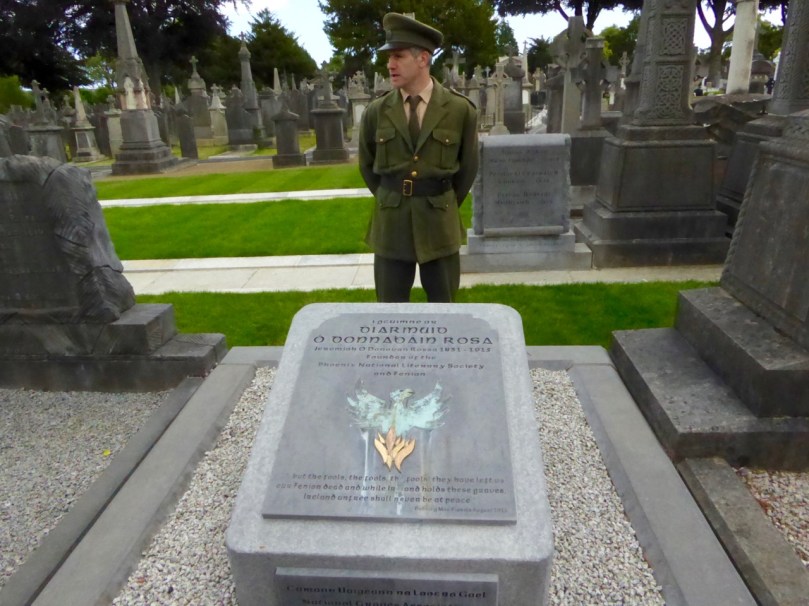
In Skibbereen this summer Rossa was celebrated in several ways. We attended not just the March, but a play, two exhibitions, a lecture, and the grand opening of a refurbished park in Rossa’s honour by Michael D Higgins, the President of Ireland. In Dublin his 1915 state funeral and graveside oration were given a full scale re-enactment, attended by the President, the Prime Minister (Taoiseach) and many dignitaries.

We toured Glasnevin Cemetary on Dublin this summer. The tour included a re-enactment of Patric Pearse's oration at the grave of O'Donovan Rossa

We toured Glasnevin Cemetary on Dublin this summer. The tour included a recital of Patrick Pearse’s oration at the grave of O’Donovan Rossa

To give you a flavour for how Rossa is revered as a hero watch this YouTube clip – the ultra-nationalist ballad features Pathé News footage of the actual funeral.

But not everyone felt that it was appropriate for the Irish government to underwrite such commemorations. This was expressed well by the historian, Carla King writing to the Irish Times. She summed up thus:

…while O’Donovan Rossa is a figure for whom we can feel some pity, his philosophy, with its commitment to mindless and counter-productive violence, launched a tradition of which we should be ashamed.

Another historian, Marie Coleman wrote:

It was unclear whether the focus of the event was Rossa himself or the significance of the funeral as signifying the rejuvenation of republicanism as a precursor to the Easter Rising. If the former, the State’s endorsement of an archaic form of irredentist Irish nationalism will sit uncomfortably with many in 21st-century Ireland and with unionist opinion in Northern Ireland.

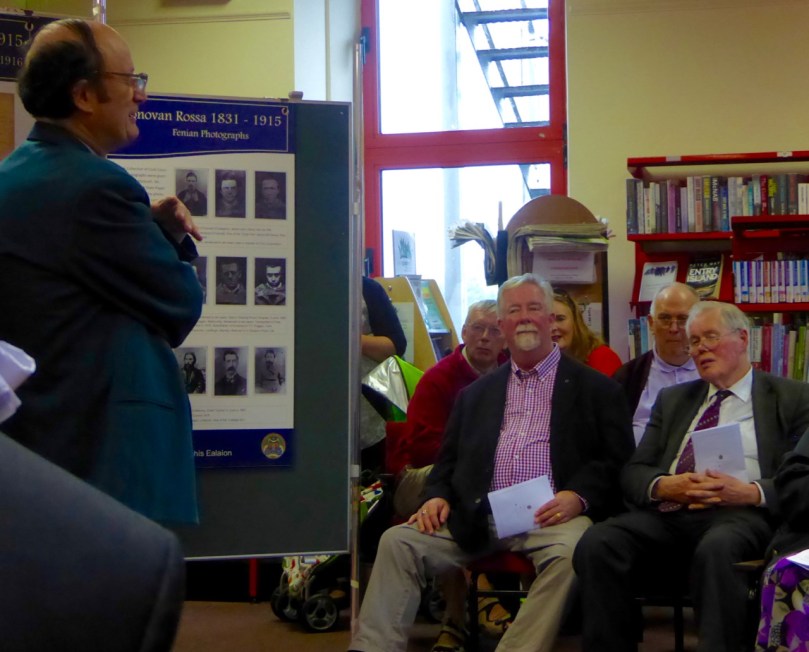
Another exhibition opening - this one at the Skibbereen Library

Another exhibition opening – this one at the Skibbereen Library

Like many Irish people growing up in the 50s and 60s I was brought up on stories of the epic Fight for Irish Freedom, although in my family’s case it was also complicated by ancestry on both sides of the divide. In that narrative, Rossa was one in a long line of heroic freedom fighters. To dig a little deeper still into the story of O’Donovan Rossa, I went looking for signs of the man himself around Skibbereen and found them in some surprising places.  My next post will relate to Rossa’s time in Skibbereen and the legacy he left in this West Cork town.

Wayside Miracles

Ballinspittle Grotto

Ballinspittle, Co Cork: the Marian Grotto became a world news sensation

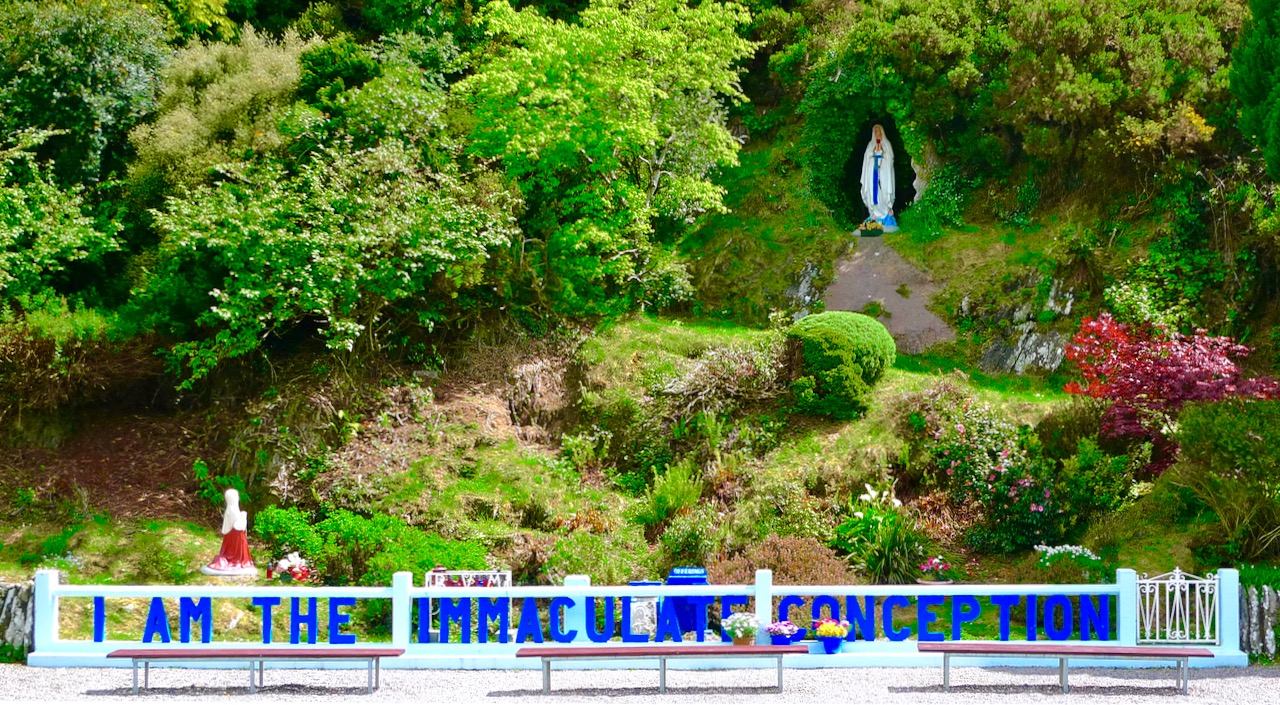
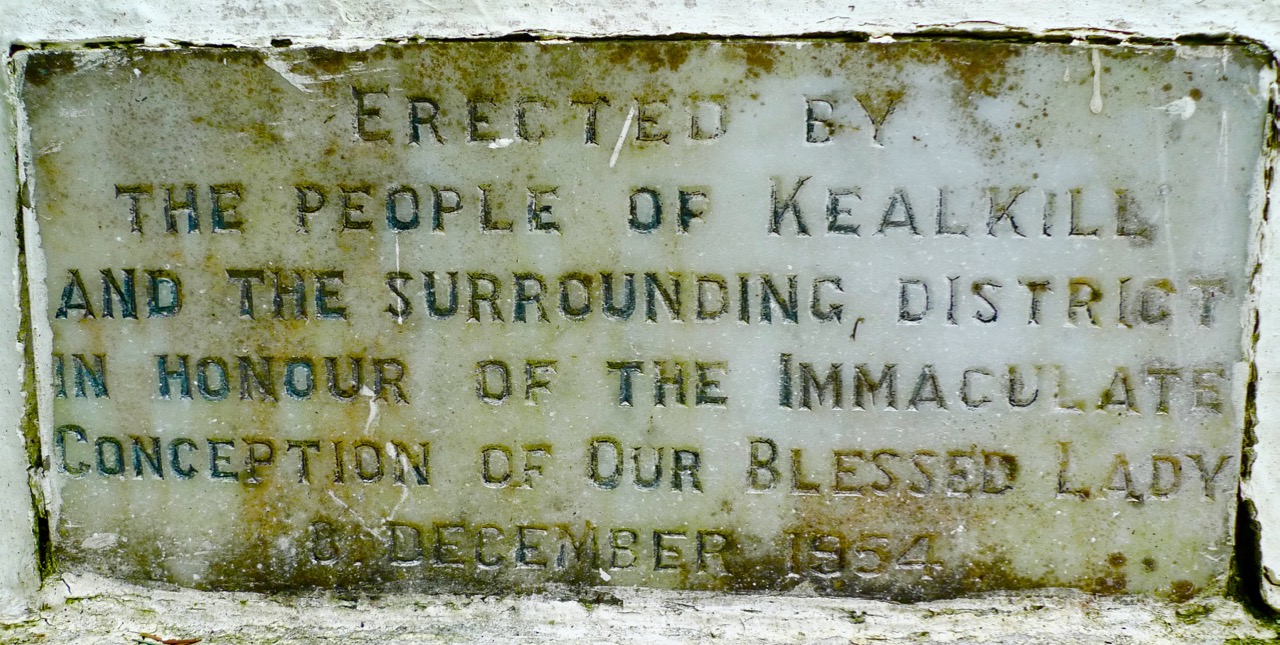
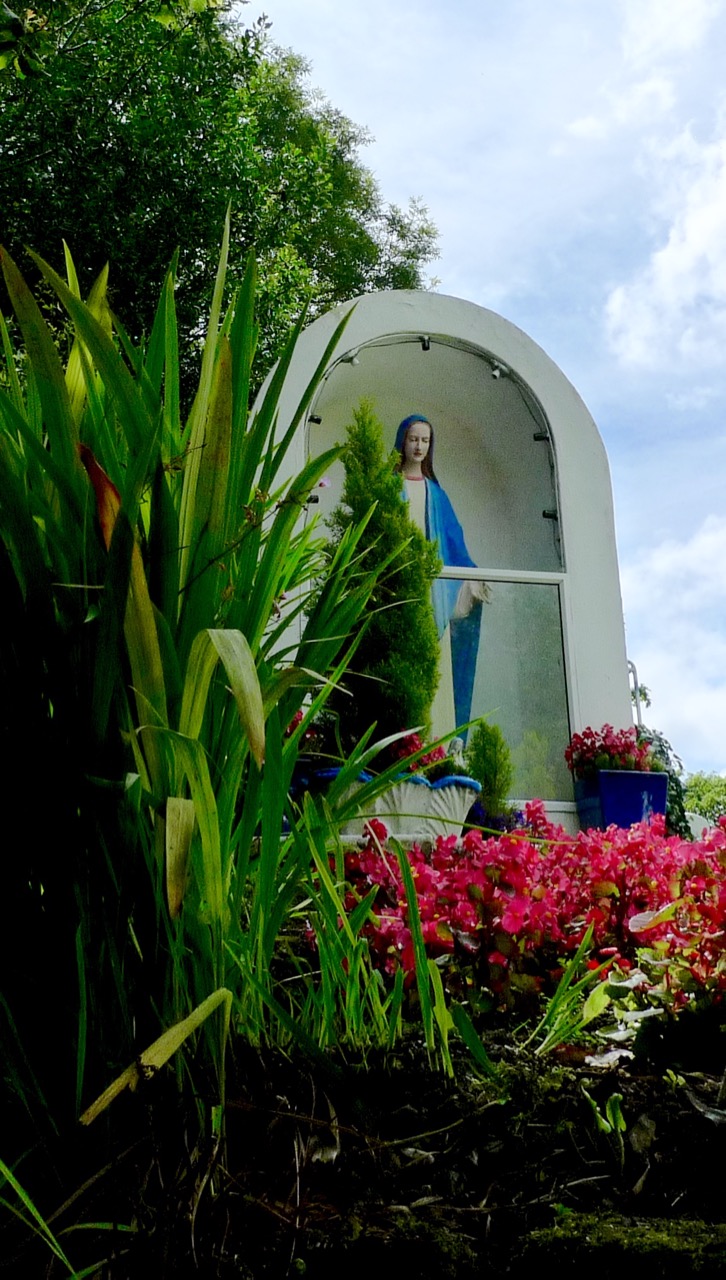
1954 was a great year for the construction of outdoor shrines and grottoes in Ireland. Pope Pius XII had designated it a special Marian Year to mark the centenary of the ‘dogma of the Immaculate Conception and Assumption’. The Marian Year was an international event, but apparently no other country embraced the idea with greater fervour than Ireland. The notion seemed to capture the imagination of a young republic suffering from serious recession, high unemployment and loss of population through emigration. Hundreds of projects were put in hand and today, on almost every road in the country – and in every community – you will see statues of the Blessed Virgin Mary, usually in well tended settings. They add to the colour and character of this green land: like the ancient holy wells, they are venerated and not forgotten.

1954 tablet

Statue maker Maurice O’Donnell recalled that 1954 was a bonanza year for him: “…I was making so many at that time there was no time to dry them out before painting, so lots of statues in the shrines around the country are still unpainted. But that was in the Marian Year. The bottom has dropped out of the statues market since the Vatican Council…” Although many statues of the Virgin were painted later on, you will still see many unpainted (white) examples.

Marian Year shrine added on to the Holy Well at Keallkill, Co Cork

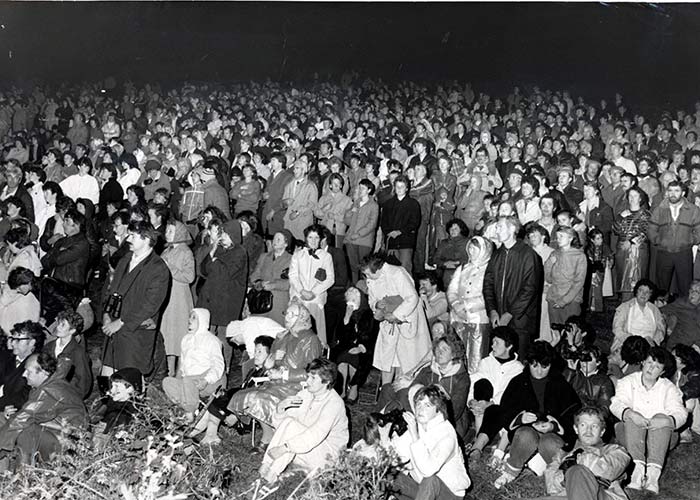
Exactly thirty years ago – on 26 July 1985 – the grotto at Ballinspittle jumped into the news headlines of the world because two local women witnessed the statue there moving while they were praying. The little Cork village suddenly found itself the centre of media attention and – during that summer – thousands of people came in bus loads from all over Ireland, either out of curiosity or anxiety to become part of a phenomenon. Many saw the statue move: a police sergeant (presumably a reliable observer) saw it rise into the air – while cures were claimed by sick people who visited the site.

Ballinspittle 1985

Crowds at Ballinspittle 1985  – Evoke.ie

Strange events were not limited to Ballinspittle. Reports had already appeared elsewhere. Kerry got in first: in February of the same year 30 schoolchildren saw two statues moving in the church at Asdee, while in nearby Ballydesmond something similar happened soon after. Here’s a contemporary extract from RTE News – worth watching for the concise view of rural Ireland in the 1980s.

magill asdee

Over 10,000 people visited the Ballinspittle grotto every night throughout the summer. The Irish Times (6 August 1985) reported: ’…Ballinspittle’s claim to a moving statue was matched in no time at all by reports of similar occurrences in Dunmanway and Courtmacsherry. But too many people, including senior gardai, well-tried sceptics and some who registered what appeared to be genuine shock said they saw the statue move, so Ballinspittle has remained the premier place of pilgrimage…’

white marys

The Catholic Church distanced itself from these happenings. Bishop Michael Murphy of Cork warned that “…common sense would demand that we approach the claims made concerning the grotto in Ballinspittle with prudence and caution…” but he also relished the fact that “…crowds are gathering there in a great spirit of prayer…” A difficult stance, perhaps, as similar occurences from Lourdes and Knock in the 19th century led to the creation of huge religious centres and pilgrimage destinations.

WWL

The visions at Knock, witnessed in 1879

The moving statues was a story big enough to inspire Peter Mulholland of the National University of Ireland, Maynooth, to pen a lengthy monograph in 2009, Moving Statues and Concrete Thinking, available in full on line – and a fascinating read. Mulholland makes the point that from the 1950s to the 1980s the western world, including Ireland, was perceived to be under threat from the Cold War, ‘Nuclear Nightmare’ (from weapons and waste), Communism, the ‘permissive society’ – and, more locally, ‘The Troubles’ and increasing unemployment and emigrations; while in 1970 the Bishop of Galway said he thought ‘organized atheism’ was the source of the ‘most serious injury’ being done to the young people of Ireland. All this, says Mullholland, contributed to an underlying feeling of insecurity which created an atmosphere ripe for ‘cults’ (such as observers of moving statues) because of a high level of anxiety in the community. The monograph goes pretty deeply into the realms of psychology, quoting one researcher who “…argued that a certain kind of family structure ‘intensifies Oedipal desires in both sons and daughters, and so promotes Marian devotion’. He held that Marian ‘hallucinations’ are shaped not simply by Oedipal desires but also by other infantile and adult desires…”

Mulholland concludes: “…The moving statues were a modern manifestation of the kind of ‘magical devotionalism’ that sections of the Irish Catholic population have long been prone to resort to during periods of personal or collective distress… They were products of the kind of literalistic, magical-devotionalism that Irish clerics condemned in the 1950s and ‘60s as being ‘anti-intellectual’ and a ‘peasant religion’…”

Knock Shrine

Knock Shrine, early 20th century

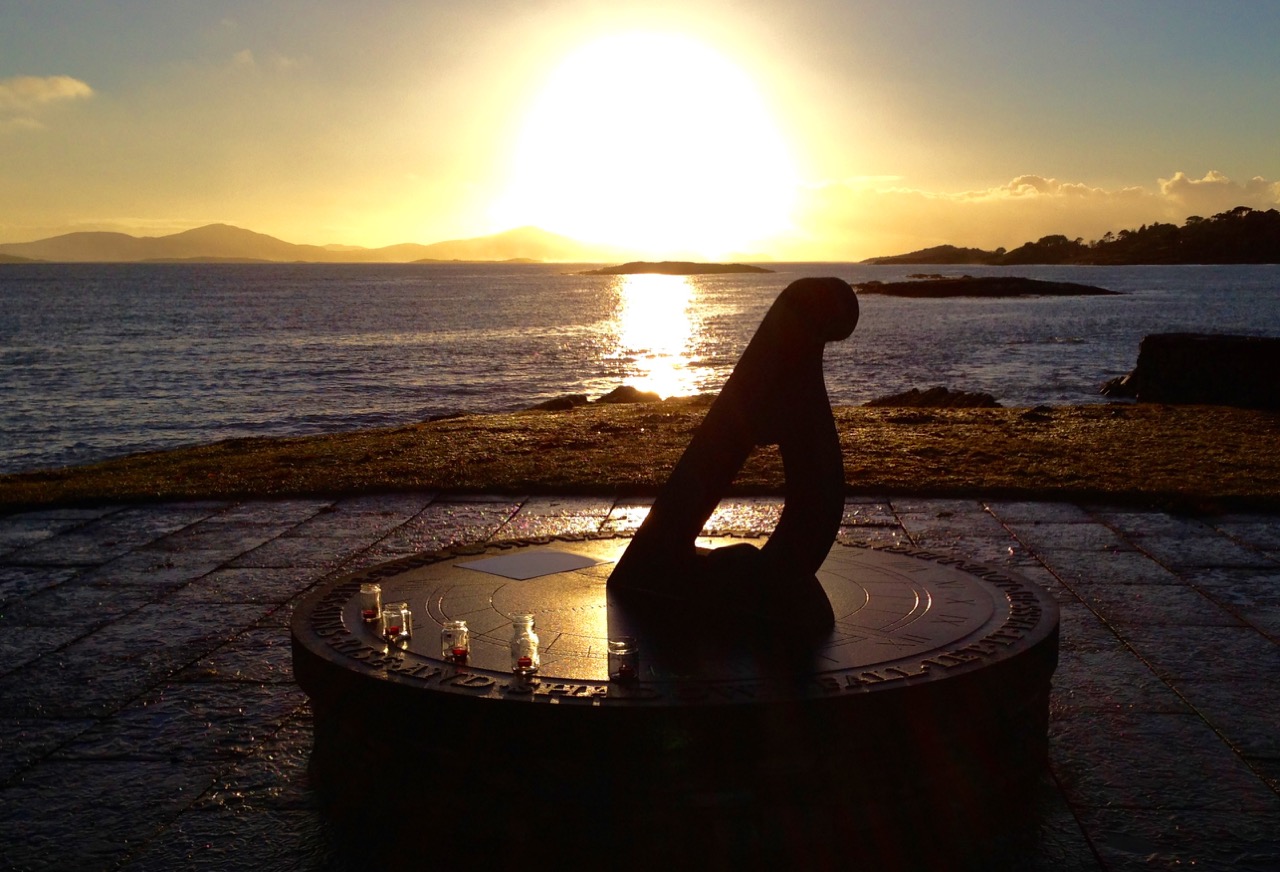
Perhaps it’s just coincidence (and I haven’t seen anyone else mention this), but it is worth noting that the Air India Disaster occurred at Ahakista, on the coast of West Cork, less than a month before the first apparitions were seen at Ballinspittle. This terrorist event which killed over 300 innocent souls must have had some effect on the local – if not the national – psyche, and could certainly have enhanced feelings of anxiety and insecurity in a rapidly changing world.

Ahakista

1985 Air Disaster Memorial, Ahakista

Looking back from the 21st century to these events I feel a sense of – well, disappointment – that what comes across now in reports on the phenomenon is mainly disparagement. This is a country which, quite rightly, hangs on to its history and mythologies: as with the wandering bards of older times stories are kept alive at the fireside, in the pubs – wherever people gather. Stories of The Other Crowd, of old battles, of heroes – and of neighbours – are listened to eagerly, and will be repeated just as eagerly. I don’t hear people dismissing them or expressing cynicism about them, as they seem ready to do about moving statues. Such scepticism is understandable in modern Ireland but I will continue to listen with an open mind to all the stories of miraculous happenings that are cherished and passed on, and which underscore the ancient faith of the countryside.

First day of issue

It would be wrong not to finish the story of Ballinspittle. On 31st October (Samhain) 1985, when a group was gathered in prayer at the grotto a car pulled up and three men got out carrying hammers and axes. In front of the dismayed onlookers they smashed the statue of the Virgin and shouted abuse at the worshippers for “…adoring false Gods…” The men, who claimed to belong to an extremist fundamental Christian sect based in California, were later arrested and charged with ‘causing malicious damage in a place of divine worship’. Amazingly, at the trial the Judge stated that he had to be “…particularly zealous in guarding the rights of the three defendants…” and dismissed the case on the grounds that the Ballinspittle grotto is not, in fact, a place of divine worship. In March 1986 the perpetrators appeared on the popular Late Late Show, hosted by Gay Byrne on RTE Television. They cited the fourth and fifth commandments of the Old Testament as giving them divine sanction to smash all religious statues in Ireland, regardless of the rights and views of other people. Reporter Eoghan Corry stated in an article in the Sunday Press, “…there isn’t a safe statue in the country.” Fortunately, following further acts of vandalism they were duly convicted.

Links worth following for more on the Moving Statues:

Finola’s blog post Mary Mary

Radio Documentary from RTE in 1992

RTE TV documentary on Ballinspittle

marian shrine

A Grand Job!

uillinn name

Here’s a riddle: what’s the connection between rusty steel and the President of Ireland? The answer – Skibbereen! Skibbereen on a summer afternoon in June, in fact…

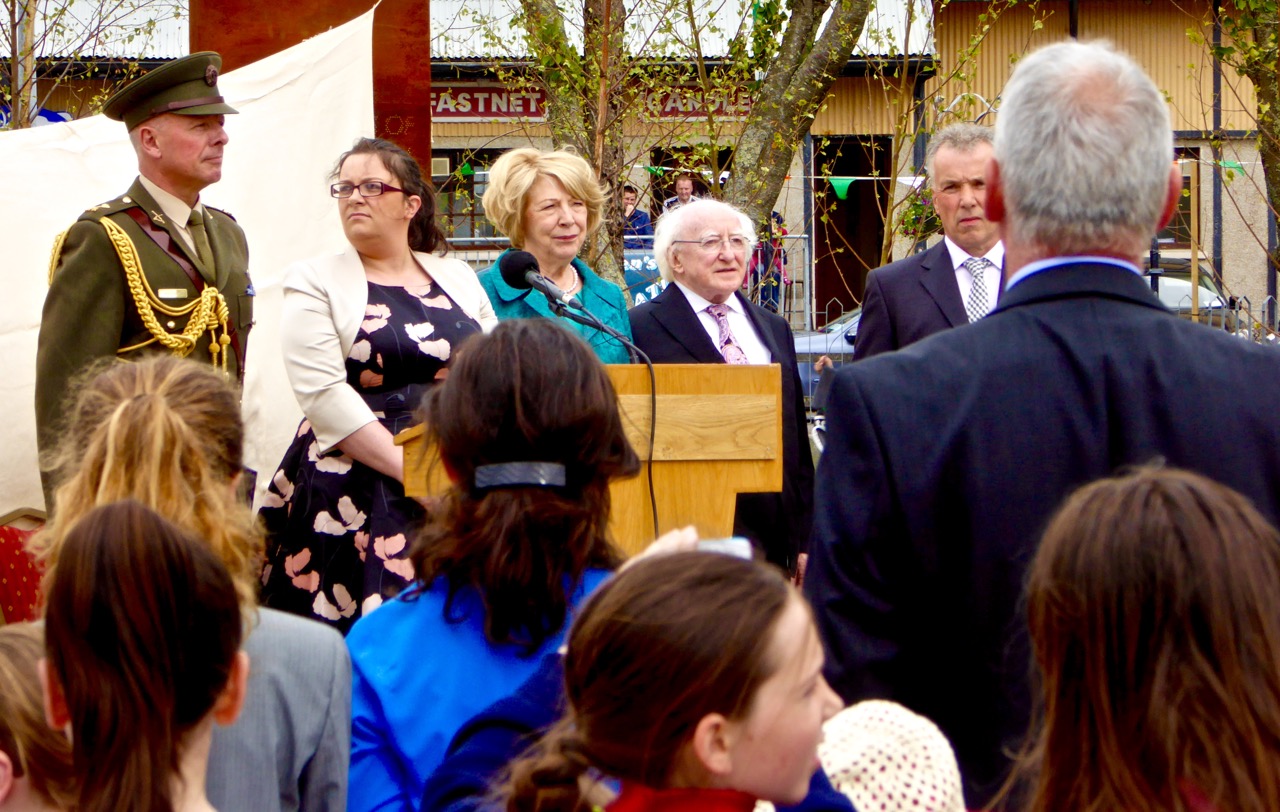
Welcome, President!

Welcome, President!

This week the President was in West Cork and on Thursday he came to Skibbereen. Before I lived in Ireland I was pretty ignorant as to the role the President plays in the life of the Republic. It’s not a political position – nothing like the American President, for example: although officially ‘head of state’ the Irish President has no powers – the executive running of the country is entirely in the hands of the government. Instead, the President of Ireland – Uachtarán na hÉireann – acts mainly in a ceremonial capacity and is very visible in civic life. There are always buildings to be opened, institutions to be founded, statues to be unveiled, speeches to be made, important visitors to be hosted… 

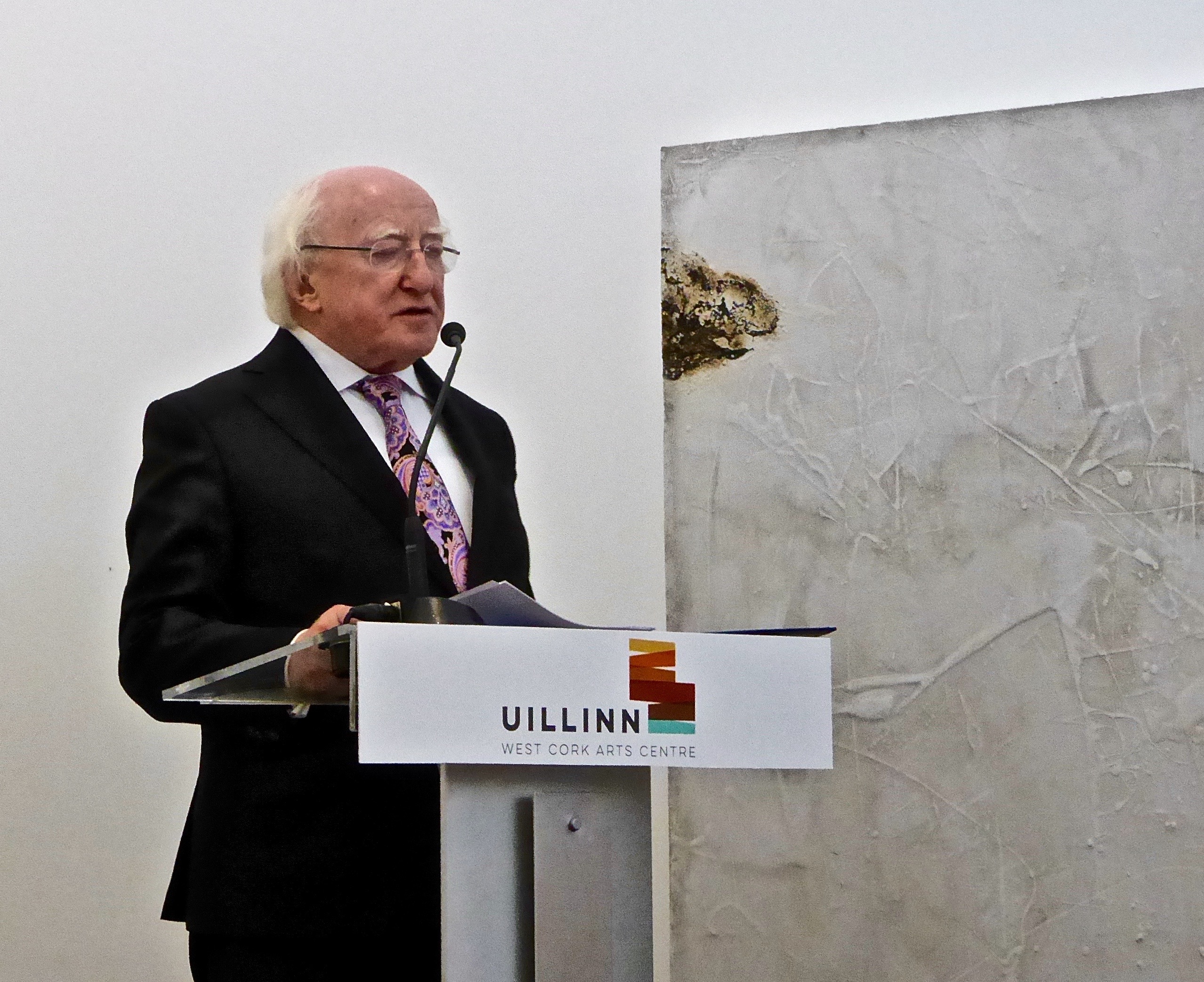
President Michael D Higgins formally opening Skibbereen's new Arts Centre

President Michael D Higgins formally opening Skibbereen’s new Arts Centre

Presidents can either be chosen by popular consensus or elected by a vote of all Irish citizens. Michael D Higgins was elected in October 2011 and his tenancy will run for seven years. Following this he can serve a further term if he and the people so wish. A Limerick man, Michael D (as he is usually known) is well liked: he’s had an impressive career in public life – academic, lecturer, professor, politician, poet, sociologist, author and broadcaster. He served as Minister for Arts, Culture and the Gaeltacht and was President of the Labour Party for many years. He is the first Irish President to have made a state visit to the UK.

His first appointment in Skibbereen was to open Uillinn – West Cork’s new Arts Centre: that’s where the rusty steel comes in – partly… Regular readers of this blog will know all about this building. It was controversial while under construction, mainly because of the Cor-Ten steel cladding to its prominent five storey tower. Cor-Ten or ‘weathering steel’ is a material consisting of alloys which encourage a rust-like patination on exposure to weather, forming a fully protective coating over a number of years. In fact, the weathering process takes about as long as one term of office of an Irish President! I know many people disagree (although I think some are coming round…), but I find the ‘rusty’ finish very attractive, and I like the fact that the appearance keeps on changing in an organic way.

I was impressed with Michael D’s speech: he’s an enthusiast for all the arts and emphasised how important this modern building is – not just for Skibbereen but for the whole of West Cork. The site – right in the centre of town – had been a bakery for generations, and the President pointed out the analogy between the essentials of bread, fundamental food for the body, and the arts – food for the soul.

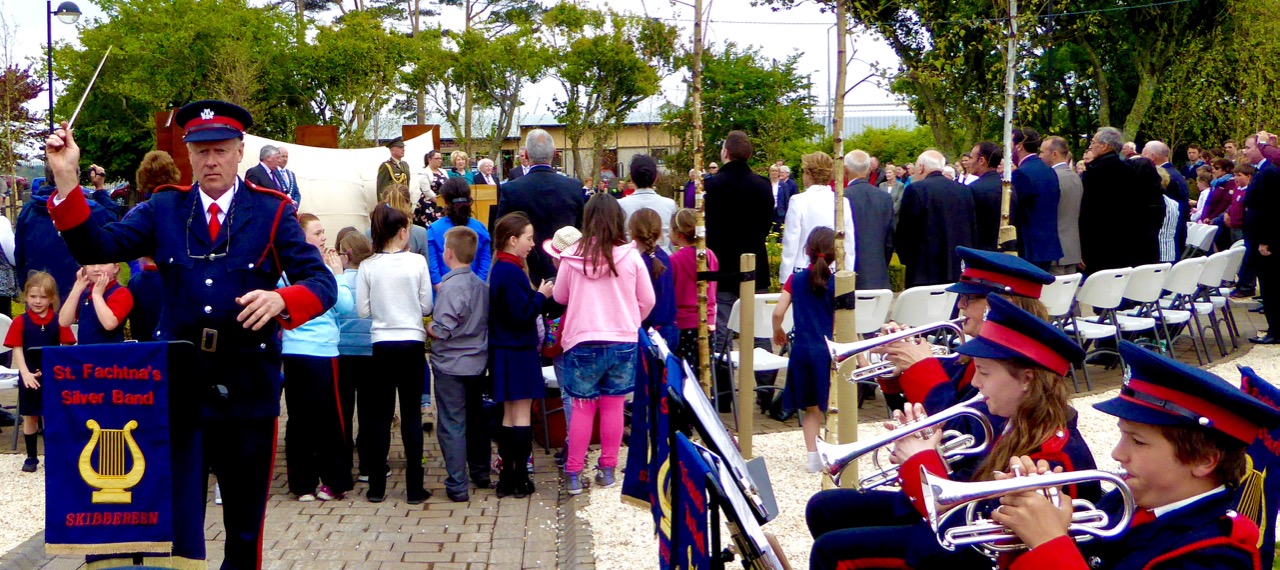
'Presidential Salute' in the O'Donovan Rossa Memorial Park

‘Presidential Salute’ in the O’Donovan Rossa Memorial Park

Next item on the afternoon’s agenda was a visit to the park: the President was to unveil a new memorial to Jeremiah O’Donovan Rossa – a local hero who had links with Skibbereen. Finola has mentioned him previously and is currently working on a post about him: July this year marks the centenary of his death. O’Donovan Rossa fought for Ireland’s freedom, just as Michael Davitt did (I wrote about him last week). The President gave a passionate speech emphasising the debt that the Ireland of today owes to those campaigners of yesterday, and I was pleased to hear him mention Davitt specifically.

Ready for the unveiling...

Ready for the unveiling…

New commemorative sculpture in Skibbereen's O'Donovan Rossa Memorial Park

New commemorative sculpture in Skibbereen’s O’Donovan Rossa Memorial Park

I think the new memorial is a great piece of modern commemorative art: it’s rusty steel again! Five columns are placed in the centre of a garden, each telling something of the hero’s story. You have to work to see all the images: they are made by perforating the ‘weathering steel’ sheets. It’s very effective because it can’t be ignored – you just have to stop and work it all out. I commend the artist – but nowhere can I find any mention of who that is! I’m still searching…**

President Higgins speaks out with passion about freedom fighter Jeremiah O'Donovan Rossa

President Higgins speaks out with passion about Ireland’s freedom fighter Jeremiah O’Donovan Rossa

Michael D is a fluent speaker in Irish. He slipped easily between English and Irish while giving his orations – and made it sound so simple! The sun almost shone, the crowds were in good spirits, and the Band played. The rusty steel was looking good. All in all, the visit of Ireland’s President to Skibbereen was a grand job

gate

We have now heard from Graepels Perforators in Kinsale letting us know more about the monument. Here is their message: We worked with Giulia Vallone (now Senior Architect at Capital Projects Implementation Unit CPIU) and Orla Higgins (Cork County Council Architect) to create the memorial. We teamed up with Cork County council to create it.

Forgotten Hero – Michael Davitt

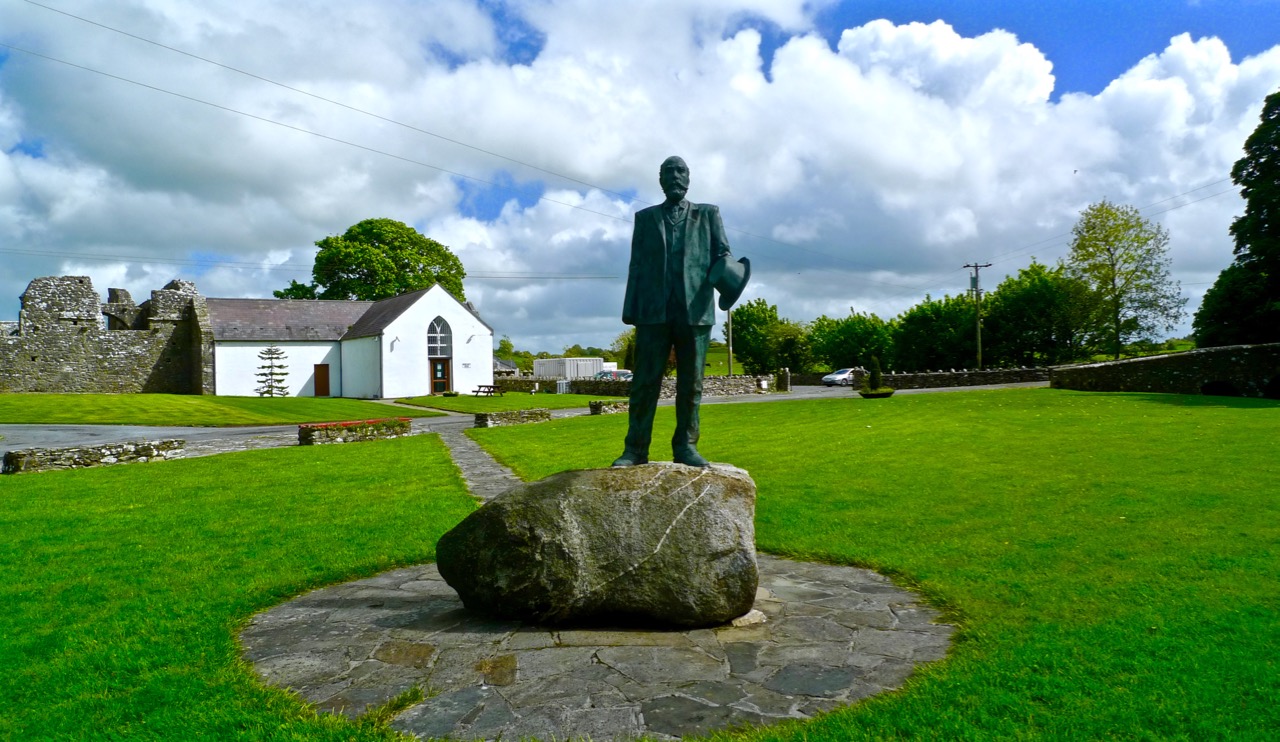
Straide, Co Mayo - Michael Davitt's statue outside the museum dedicated to him
Straide, Co Mayo – Michael Davitt’s statue outside the museum dedicated to him

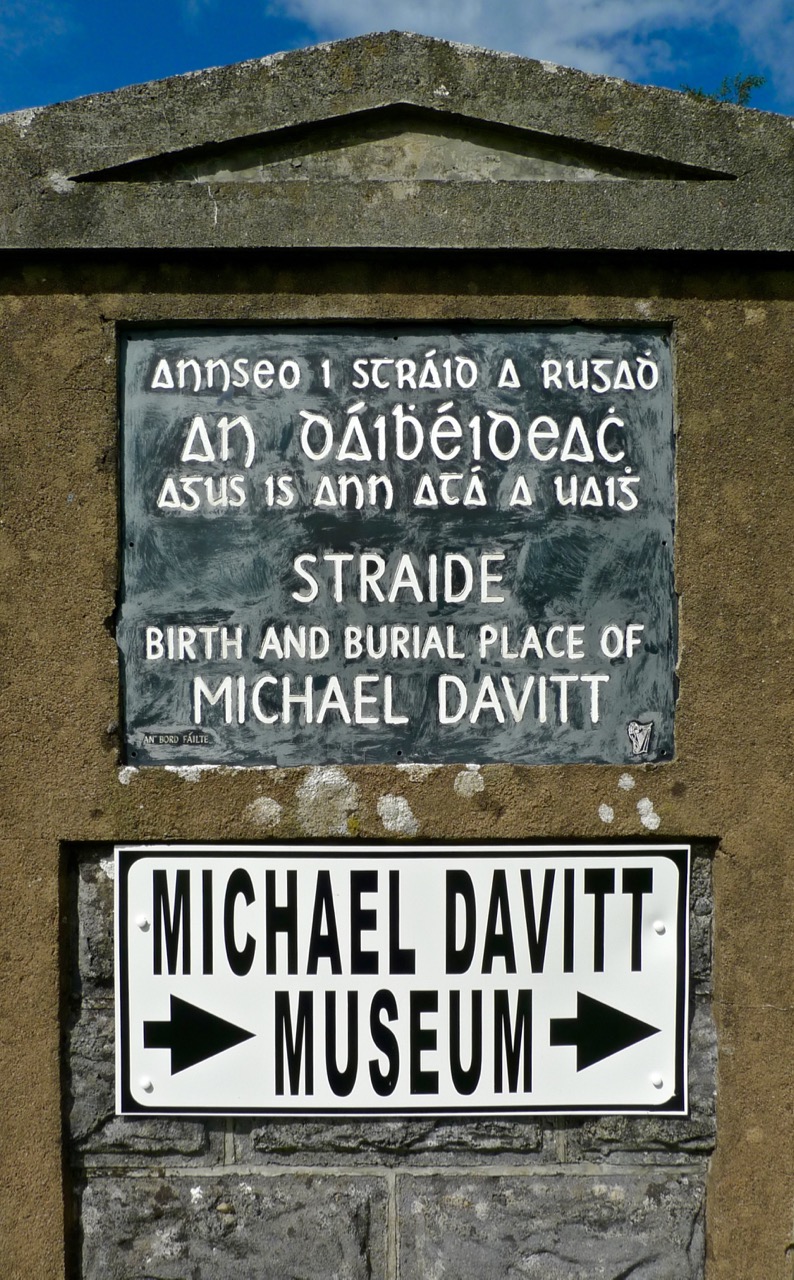
On our recent travels in Mayo we chanced upon a little museum in a rural situation. I was fascinated by the setting: housed in an old church adjoining the ruins of a 13th century abbey (which itself has some fine medieval carvings). The church has been restored specifically to accommodate the museum, which tells the story of Michael Davitt – who was born close to the site of the museum in 1846, and was buried right behind it in 1906.

Sixty years: a relatively short life – but years filled with remarkable achievement pursuing the causes of basic human rights and of freedom for Ireland. Years filled, also, with considerable hardships.

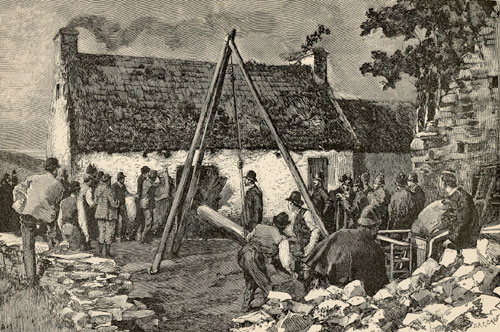
eviction
Eviction

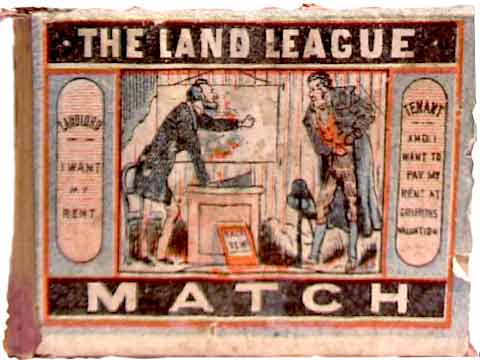
The village of Straide, in County Mayo, was hard hit by the famine – The Great Hunger – when Michael was born: a disaster that led to starvation and forced emigration for millions of Irish people. The Davitts were no exception to this. When he was only four years old Michael witnessed his own family being evicted from their cottage because they were unable to pay the rent to the landlord. He watched while their few possessions were piled on to the lane and their home was flattened.

Evicted families had little choice: starvation, the workhouse or emigration. The Davitts took the latter course, arriving in Liverpool in November 1850. From there they travelled on foot to Haslingden in Lancashire and settled in the closed world of a poor, Irish immigrant community with strong nationalist feelings and a deep hatred of ‘landlordism’.

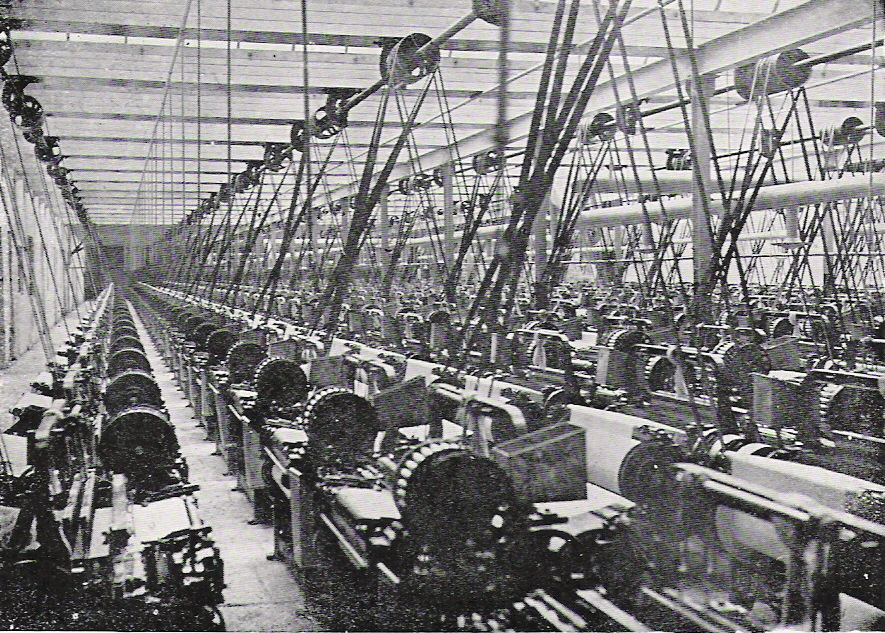
At the age of ten, Michael was sent to work in a local cotton mill. At the age of eleven his right arm was entangled in the machinery of a spinning machine and had to be amputated. There was no compensation for accidents suffered by child labourers in the Victorian world, nor – indeed – very much concern or compassion for the conditions suffered by the working classes generally in the British Empire at that time.

Lancashire cotton mill c1900

Michael was fortunate as his plight was noticed by a local benefactor, John Dean, who helped him to gain an education in a Wesleyan school. When he left the school at fifteen, Michael Davitt secured a job in a post office and learned to become a typesetter. He also started night classes at the local Mechanics Institute and used its library, where he read extensively about Irish history, contemporary Irish life and radicalist views on land nationalisation and Irish independence.

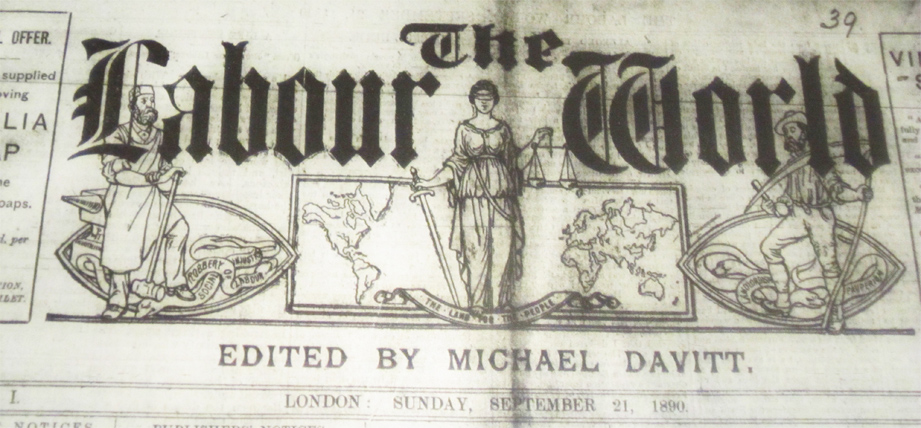
One of Michael Davitt's campaigning newspapers
One of Michael Davitt’s campaigning newspapers

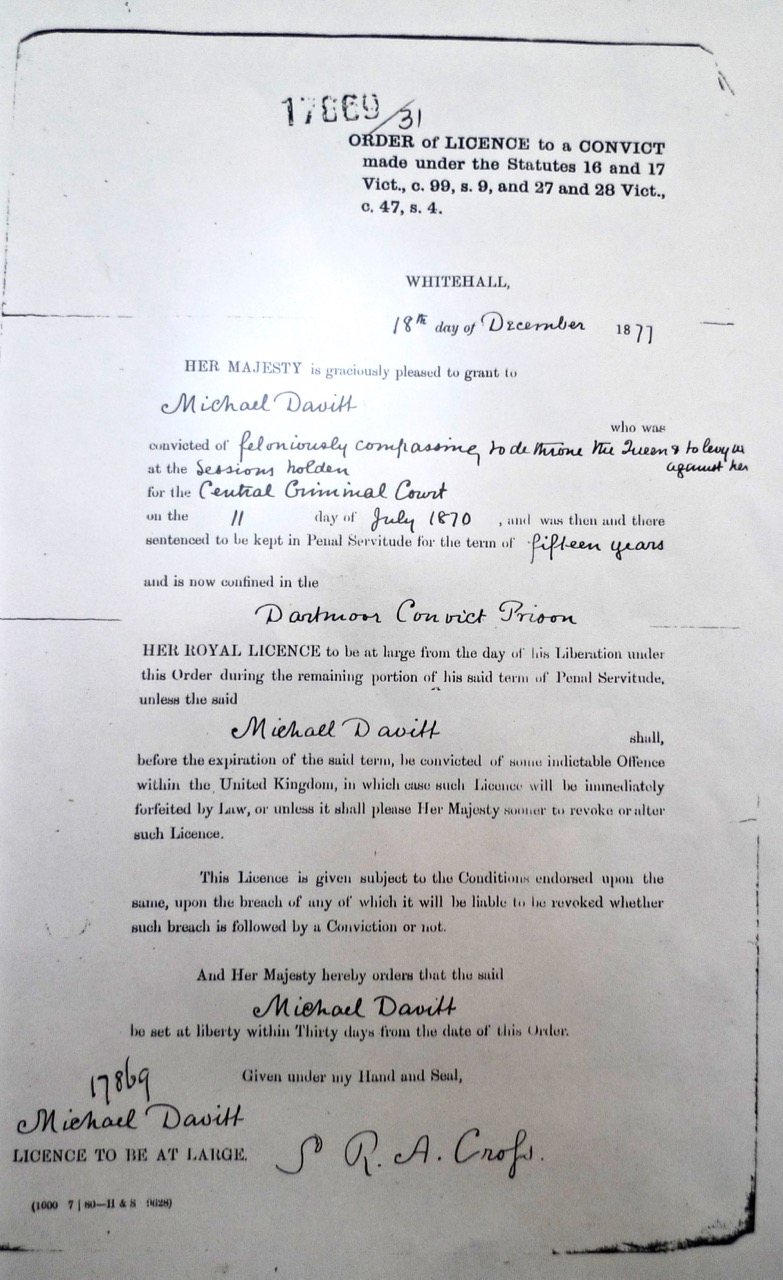
In 1865 Michael joined the Irish Republican Brotherhood. Two years later he left his job to devote himself full-time to the IRB, as secretary for Northern England and Scotland, organising covert arms smuggling to Ireland. He was arrested in London in 1870, convicted of treason and sentenced to 15 years of penal servitude in Dartmoor Prison.

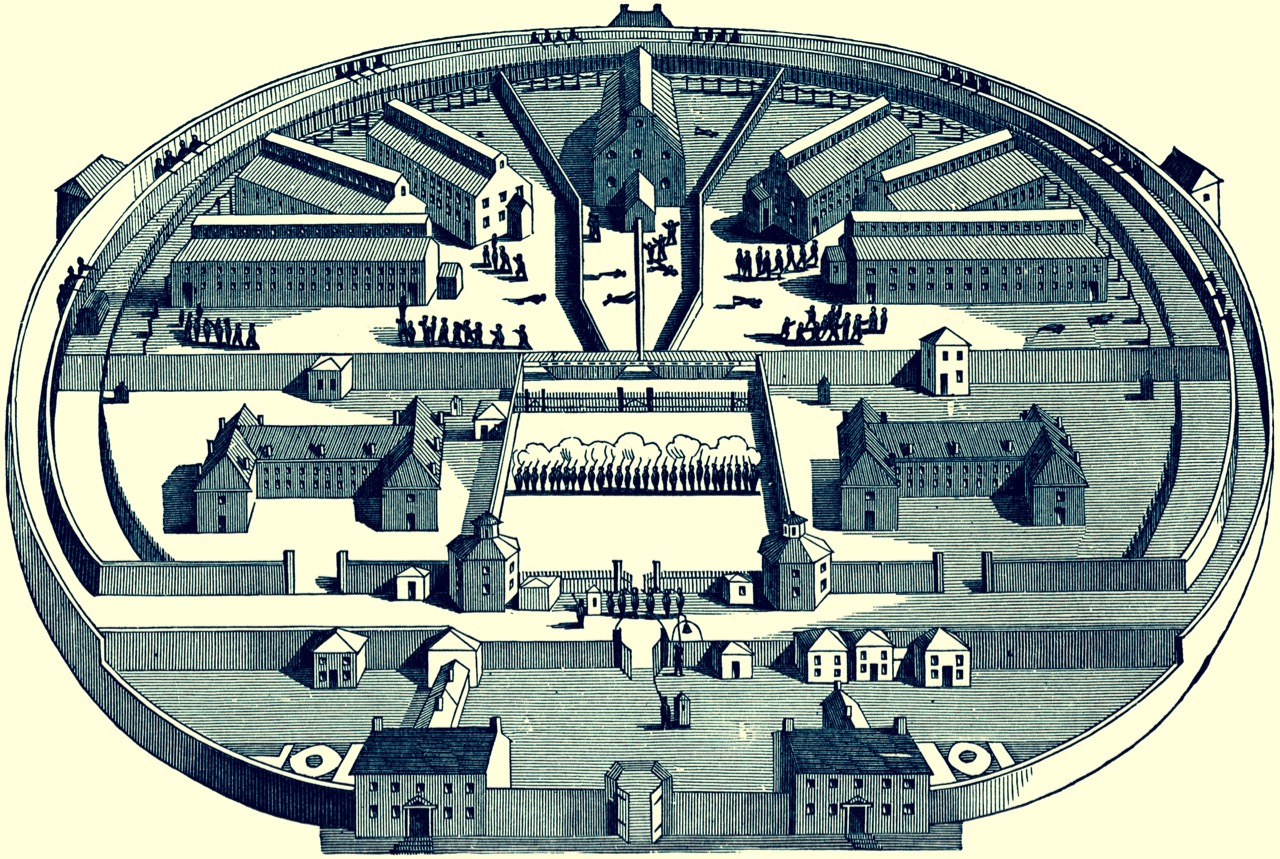
Dartmoor Prison - hard labour
Dartmoor Prison – hard labour! (Harper’s Encyclopaedia)

While imprisoned he came to the conclusion, recorded in his Leaves from a Prison Diary, that violence was self defeating and he became an advocate of agitation through non-violence: years later  Mahatma Gandhi cited Davitt as a major influence in the creation of his own peaceful resistance movement.

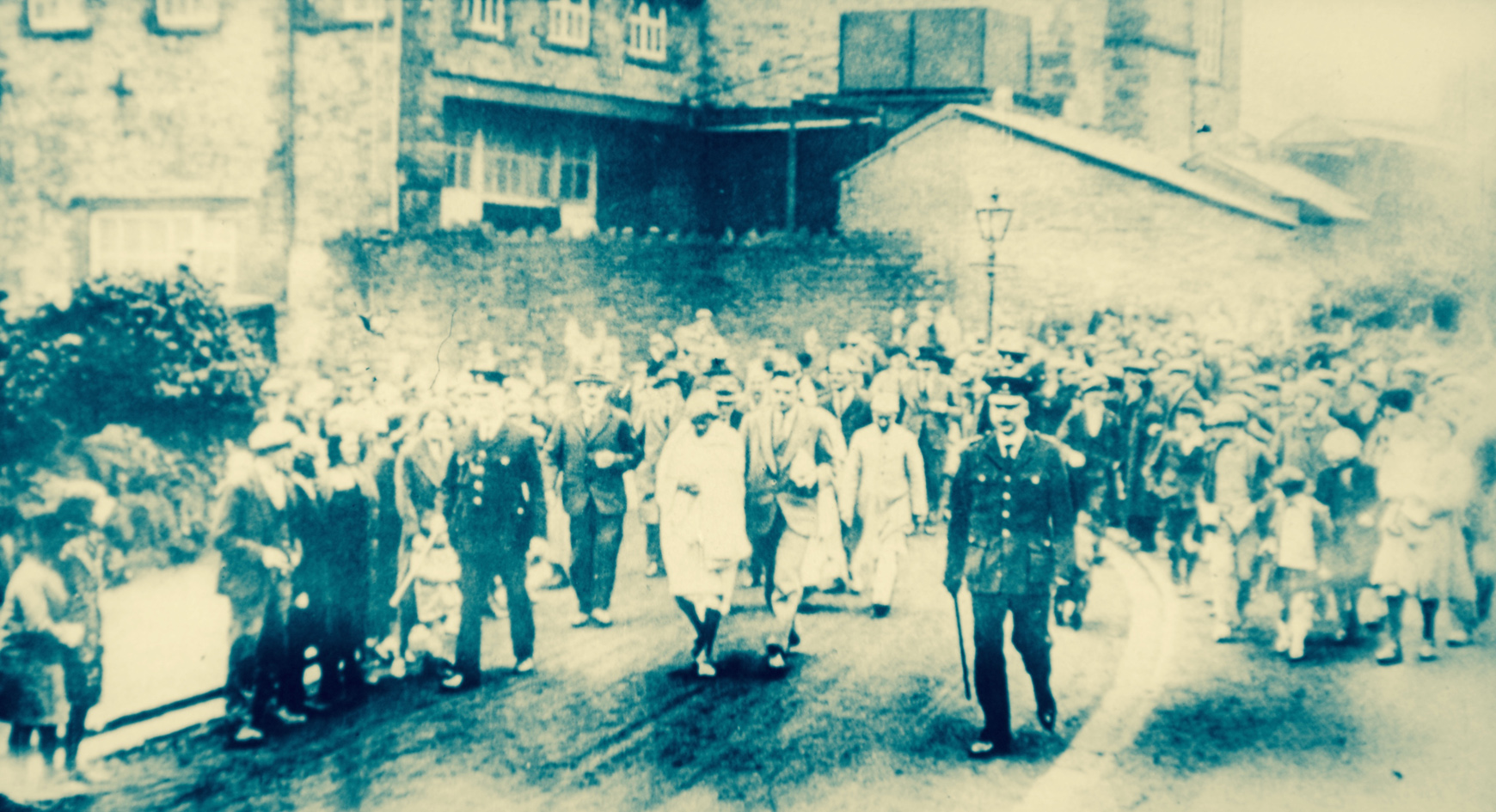
Ghandi visiting a cotton mill in Lancashire, 1931
Gandhi visiting a cotton mill in Lancashire, 1931

Eventually in Westminster the Irish Parliamentary Party began to campaign against cruelty inflicted on political prisoners and pressed for an amnesty for detained Irish nationalists. Partially due to public furore over their treatment, Davitt and other prisoners were released in 1877 on a ticket of leave: Michael had served seven and a half years. He and the other prisoners were given a hero’s welcome when they returned to Ireland.

'Licence to be at large'
‘Licence to be at large’

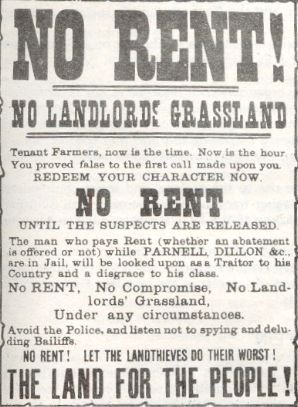
For the rest of his life Michael Davitt was devoted to the causes he believed in. In Ireland the Land League became a reality and eventually Irish tenant farmers were enabled to buy their freeholds with UK government loans through the Land Commission. County Councils in Ireland were also able to build over 40,000 new rural cottages, each on an acre of land. By 1914, 75% of occupiers were buying out their landlords. In all, over 316,000 tenants purchased their holdings, amounting to 15 million acres out of a total of 20 million acres in the country. This set the pattern of small owner-occupied farms that we see all around us today in rural Ireland – a system that has long struggled to be economically efficient, but which allows independence and self-pride, which the landlord system certainly did not.

Independent Ireland
Independent Ireland

Michael Davitt was not able to see the realisation of his vision for Ireland, but he played an important part in the movements that enabled it: many historians say that his role was central to it. Such were his energies and beliefs that he involved himself in universal human rights movements, and advocated for more than just the oppressed Irish. He said women should have the right to vote; he spoke out for labour unions and helped found the British Labour Party. He served in Parliament, wrote numerous books, founded newspapers and travelled the world speaking for the underprivileged everywhere. He spoke out against anti-Semitism and supported the Boer fight for freedom in Africa.

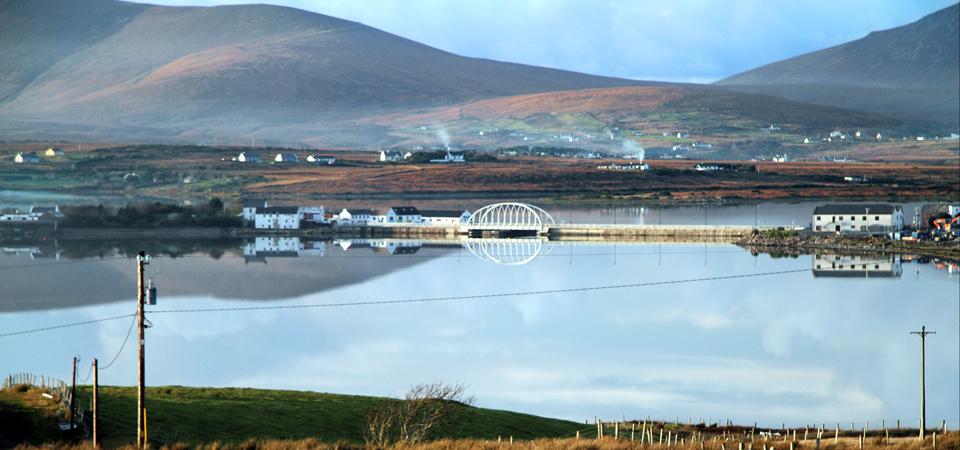
I had never heard of Michael Davitt (Finola had): it seems his name was erased from Irish history for a while because of disagreements with other campaigners. Fortunately, that wrong has now been righted, and we have this museum in his memory – celebrating his life and work and open seven days a week all through the year. There is a life-sized bronze statue outside it. Recently a new bridge in Mayo has been named after him. As a man he didn’t seek personal acclaim: he wanted his funeral to be unassuming, yet over 20,000 people filed past his coffin. At Davitt’s grave a Celtic Cross in his memory bears the words Blessed is he that hungers and thirsts after justice, for he shall receive it.

The new Michael Davitt Bridge, connecting Achill Island with the mainland - courtesy Polranny Pirates
The new Michael Davitt Bridge, connecting Achill Island with the mainland – courtesy Polranny Pirates

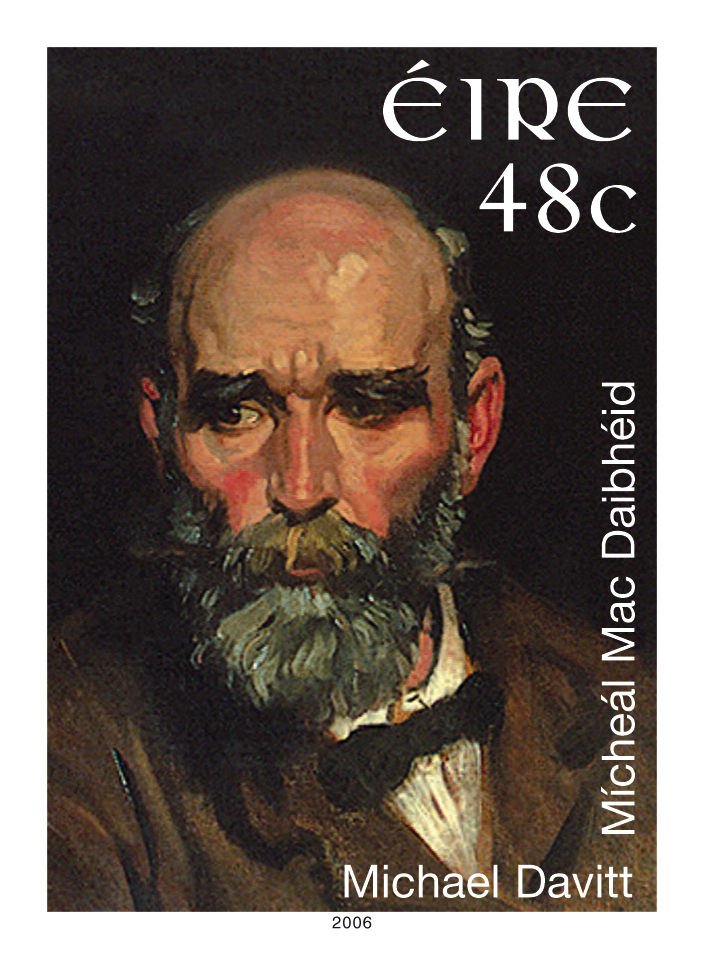
Davit wrote in his will: To all my friends I leave kind thoughts, to my enemies the fullest possible forgiveness and to Ireland an undying prayer for the absolute freedom and independence which it was my life’s ambition to try and obtain for her…

MichaelDavittStampHR

For his group, Patrick Street, musician Andy Irvine penned a song about Michael Davitt: his memory lives on…

O Forgotten Hero in peace may you rest

Your heart was always with the poor and the oppressed

A prison cell could never quell the courage you possessed