Michael Healy by David Caron: Review

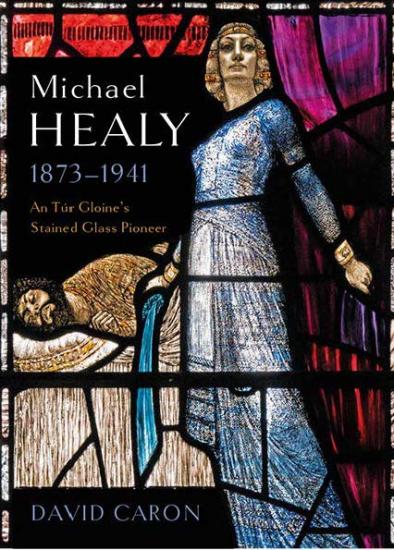
This book – MIchael Healy: An Túr Gloine’s Stained Glass Pioneer – is nothing short of a miracle. It’s beautifully written by David Caron, with superb photography mainly by Jozef Vrtiel, and outstanding production values by Four Courts Press. But a miracle? Yes – because David Caron uses his scholarship and knowledge of stained glass as well as the history and art movements of the period to produce an immensely readable book about an intensely private man who left behind practically nothing about his life except his magnificent work.

I will declare an interest right away – David Caron is a friend and mentor, editor and principal writer of the Gazetteer of Irish Stained Glass, to which I am one of the contributors. I have been looking forward to this book for a long time, as have all his friends, colleagues and collaborators. It was launched to great acclaim in Dublin on November 1 – all the available copies were snapped up at the launch, including mine (stowed behind the desk), so I had to wait until December to get my hands on it. 

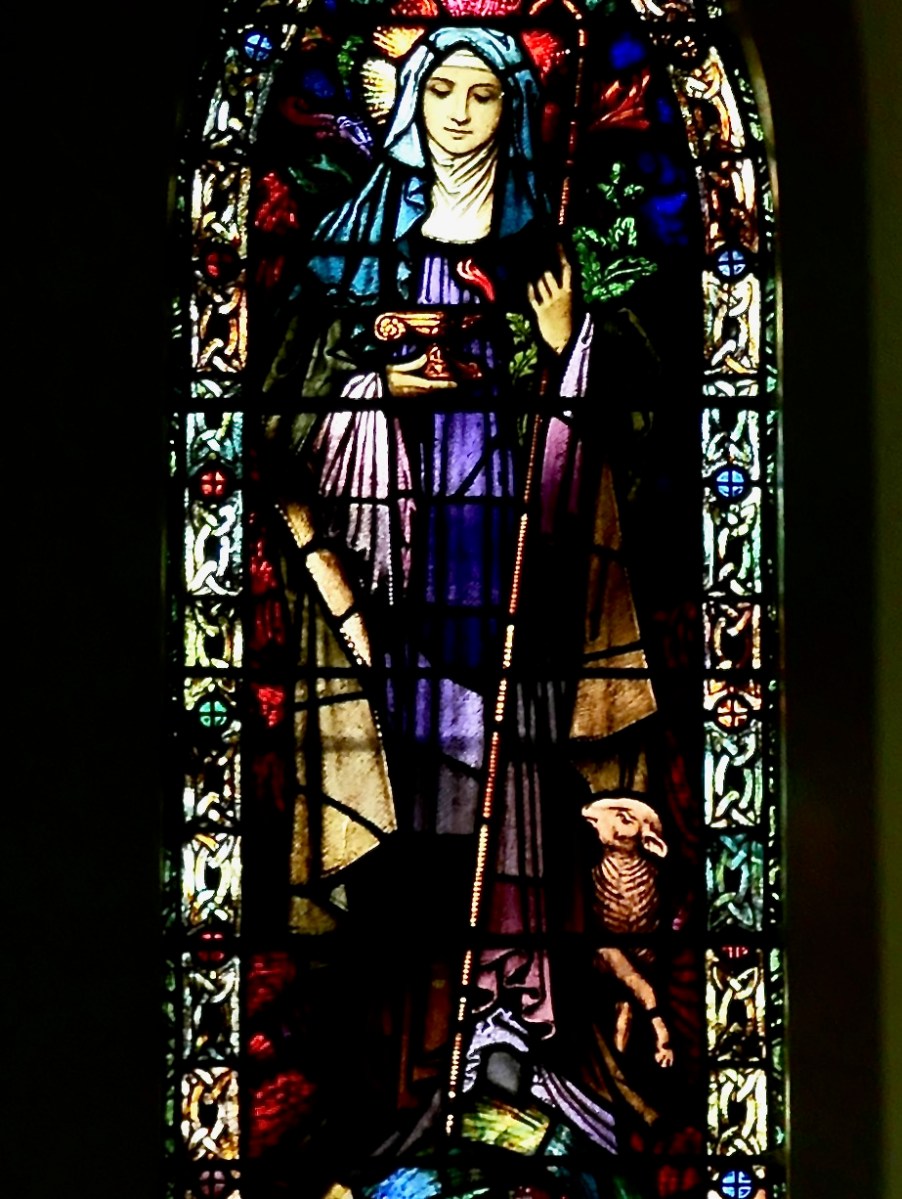
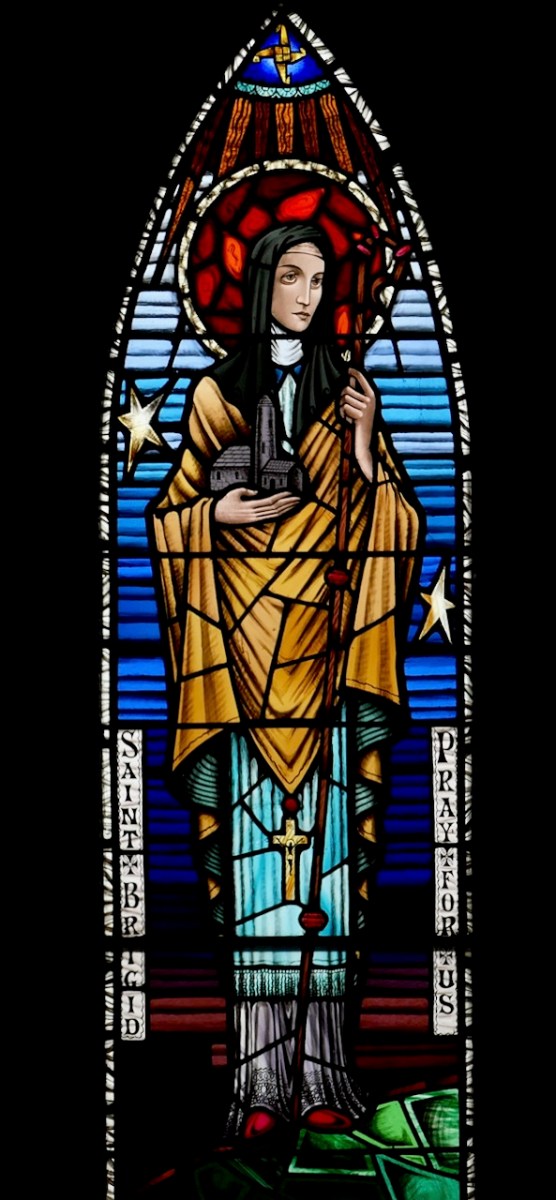
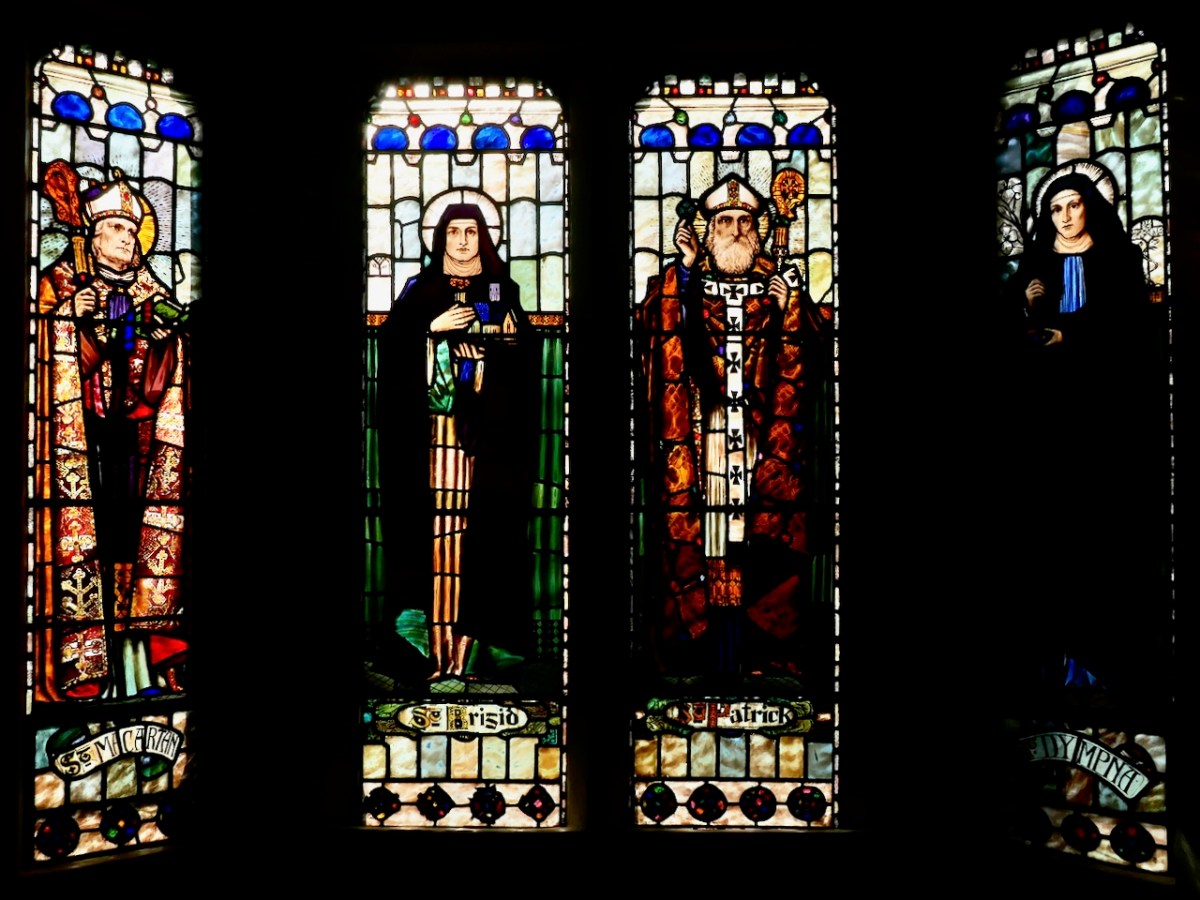
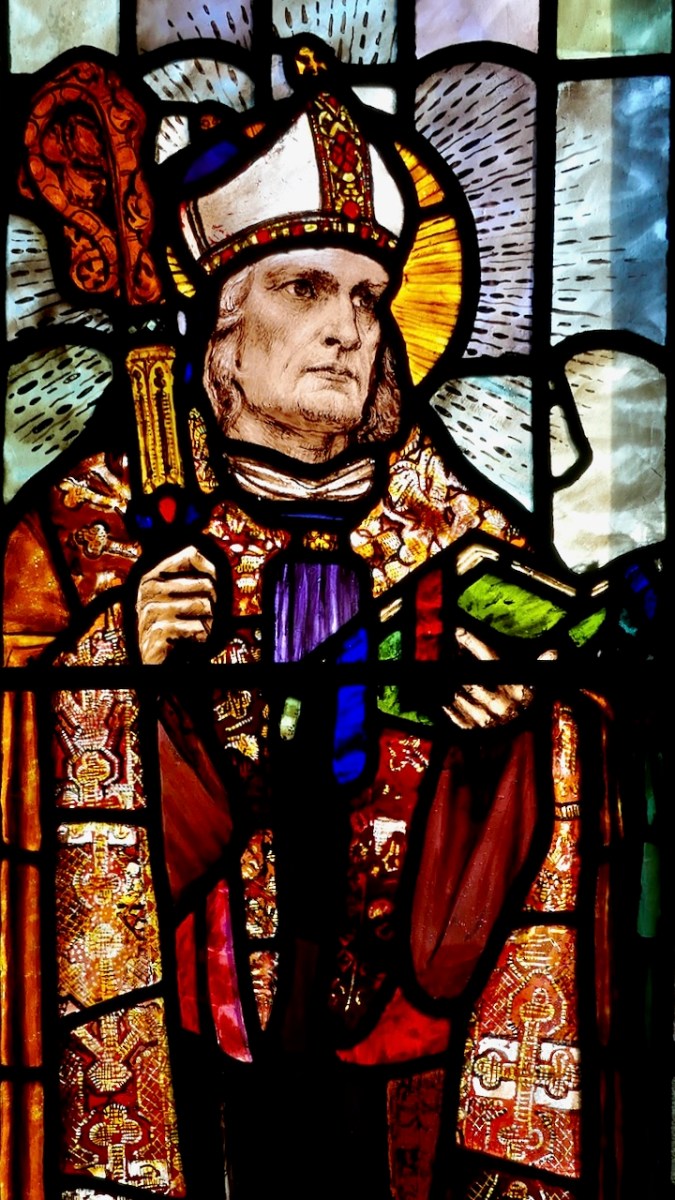
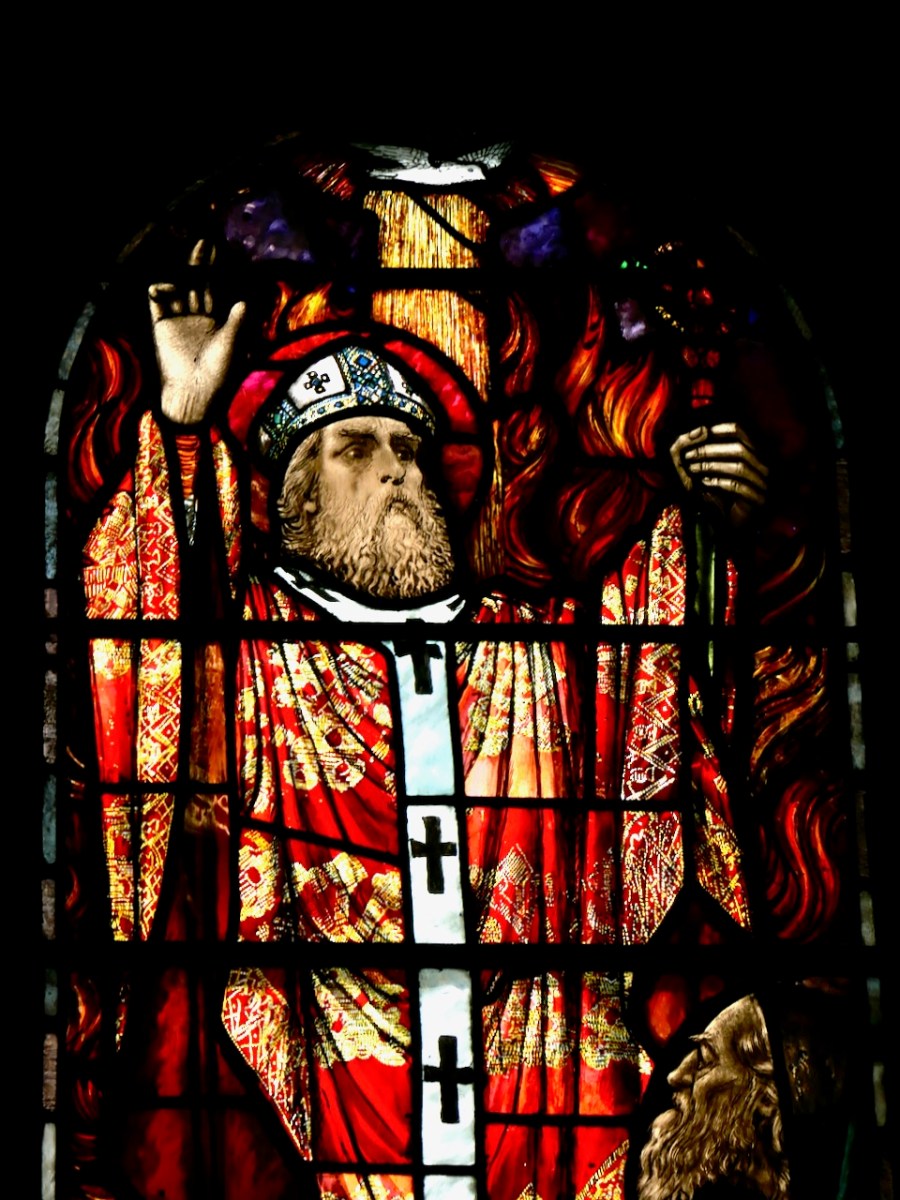
From a private bishop’s oratory, Sts Macartan, Brigid, Patrick and Dympna. Detail of Macartan, below. The rich reds and yellow shading of Macartan’s robes are the result of aciding and silver stain, described further down

All the photographs in this post are my own – but I haven’t seen that many Healy windows, and my photography does not bear comparison with Jozef’s magnificent images. The book is profusely illustrated – it’s one of its many strengths – with many photographs of the tiny details in which Healy delighted and which distinguish his windows from those of other artists. Healy spent all his working life at An Túr Gloine (The Tower of Glass) the Studio founded by Sarah Purser. If you are unfamiliar with this period in Irish stained glass, you might like to read my post Loughrea Cathedral and the Irish Arts and Crafts Movement before continuing.

Born in 1873 into grinding poverty in a Dublin tenement, through a combination of great good luck and his own prodigious talent and hard work, Michael Healy turned himself into one of the foremost stained glass artists of his time. Reading David’s account, it is difficult not to be overwhelmed at times by the hardship endured by Healy and his family in turn-of-the-20th-century Dublin. Packed into one room with miserably inadequate sanitation, whole families succumbed to disease and early death. Consumption was rampant and the only recourse for anything approaching treatment was the dreaded workhouse. Infant mortality rates were high and so we read about several Healy babies who failed to survive into adulthood, as well as adults carried to early graves, leaving widows and widowers to try to cope. 

Christ with Doubting Thomas, St Joseph’s, Mayfield, Cork

In the midst of all this was the First World War, the Easter Rising, the War of Independence and the Civil War, followed by the emergence of the new Irish State. David chronicles all of this, and the effect it was having on citizens, like Healy, who were trying to go about their business, but who also had deep convictions about politics and religion.

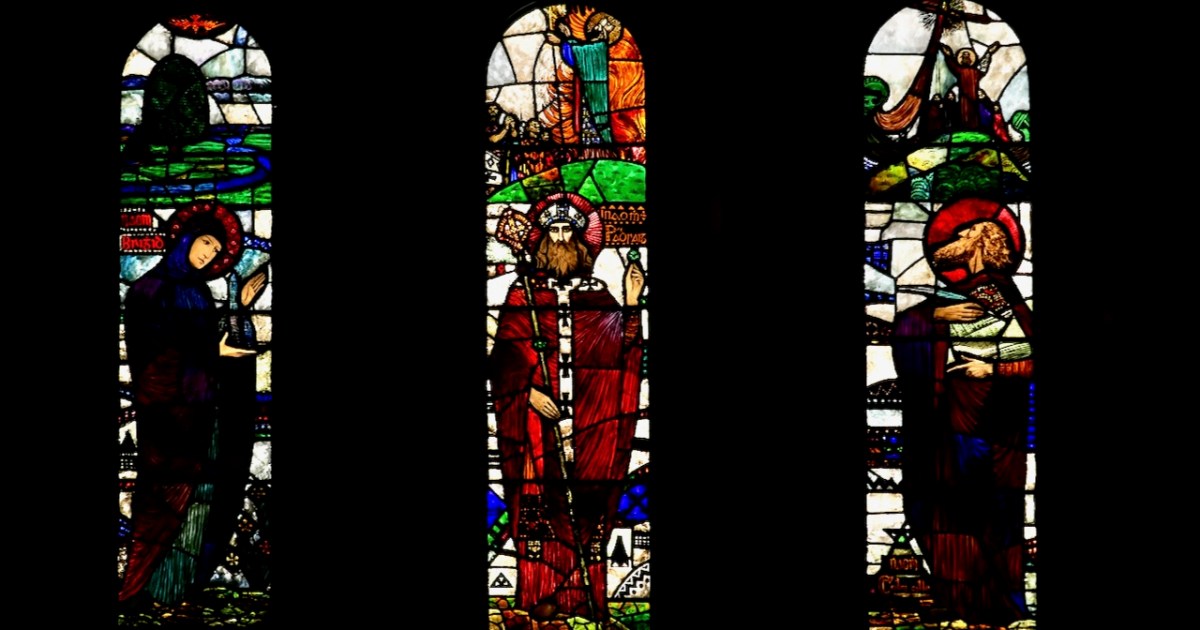
These windows, Sts Brigid, Patrick and Columcille, are in the National Gallery

In some ways, Healy was a typical young man of his time. Deeply religious, he spent some time in a seminary before deciding he was unsuited to the vocation. He belonged to a Catholic men’s lay organisation. David provides many instances where his working class Dublin accent, his republicanism, and his Catholicism must have put him at odds with his fellow artists at An Túr Gloine, mostly female, Protestant and from well-to-do backgrounds. They found him brooding and introverted, although they acknowledged his exceptional talent, and until Evie Hone arrived he did not make true friends with any of them.

The Annunciation, Loughrea Cathedral. This window was closely based on a design by the great arts and crafts stained glass master, Christopher Whall. Whall came over from England to supervise the execution of it by the Túr Gloine artists, including Healy. Celtic revival interlacing was very popular at the time, and a way of putting a nationalistic stamp on a window – note the subtle inclusions of interlacing here and there

I mentioned that he had strokes of good luck in his life, two in particular. One was the patronage of a perceptive priest, Fr Glendon, who enabled him to study in Florence for a period of time and who procured illustration work for him in Dublin. David points out here and there in the text the influence of Italian painters discernible in Healy’s windows, gained from his sojourn in Italy.

Detail of a Patrick window in Donnybrook

The other was that he found lodgings with a landlady, Elizabeth Kelly, and over time they grew close. Eventually, they become lovers and had a son, Diarmuid, together. Although the relationship was never publicly acknowledged (she was married, although her husband left her) it provided both of them with stability and comfort, and Healy was close to his son. In the 30s Diarmuid O’Kelly (although his mother went by Kelly) bought a Ford Model T and he and Michael would go on sketching expeditions up into the Dublin Mountains and out along the canals. 

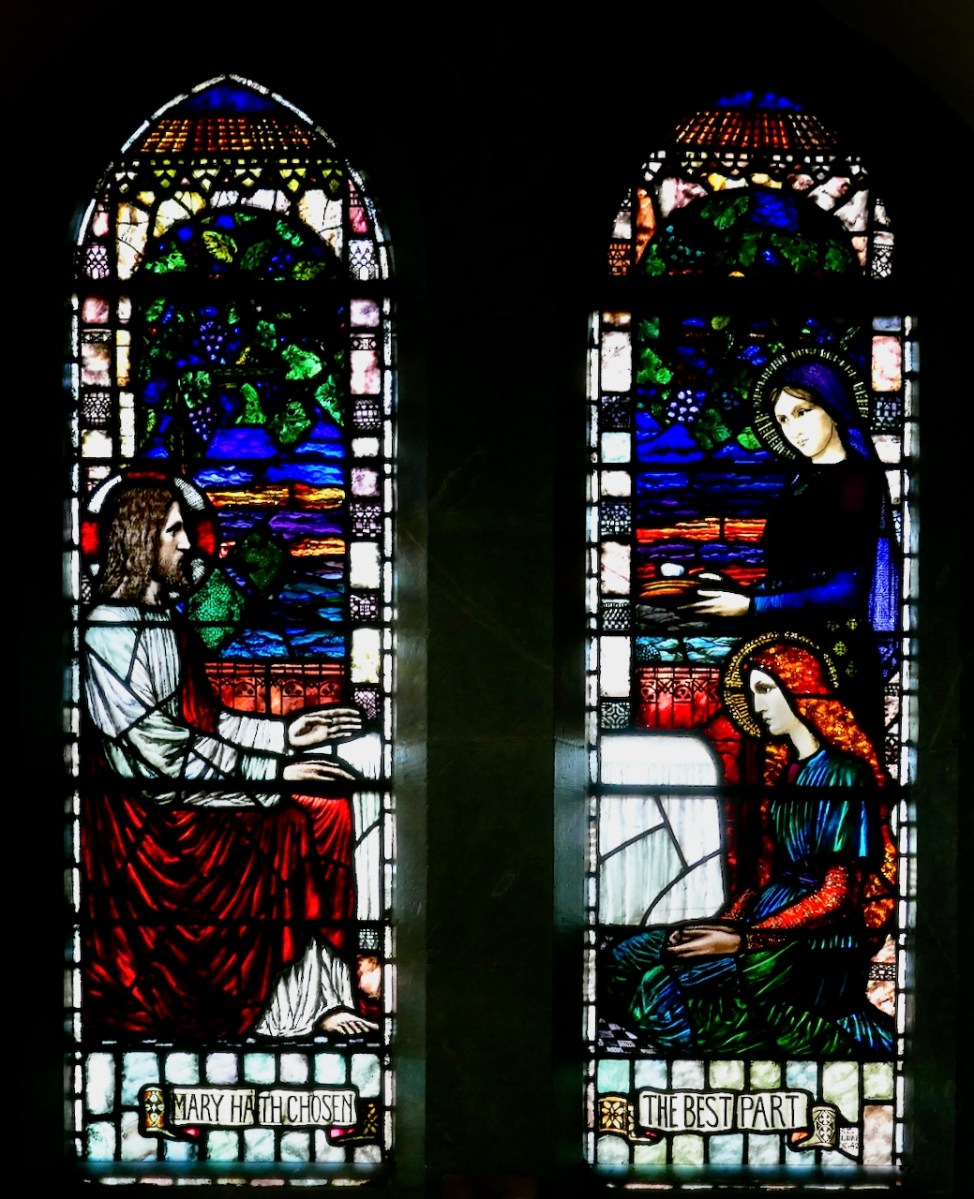
Christ with Mary and Martha, Mayfield, Cork

Because of the opprobrium that such a scandal would have visited upon both Elizabeth Kelly and Michael Healy, Diarmuid was never told that Healy was his father, but he must have suspected, and in more recent times DNA testing confirmed the relationship. Reading about the frequent tragedies that befell the Healy family and the privations under which he grew up, I find it very comforting to know that Michael enjoyed the security and love of his adopted family as he got older.

St Simeon, one of Healy’s early windows for Loughrea Cathedral

David leads us on a measured journey through Healy’s life and work. He was the first recruit to An Túr Gloine, Sarah Purser’s stained glass studio, and later co-op. There, he worked alongside AE Child (also his instructor at the Dublin Metropolitan School of Art), Catherine O’Brien, Beatrice Elvery, Ethel Rhind and Hubert McGoldrick. All of them looked up to him as the finest painter at the Studio. He, in turn, admired the work of Wilhelmina Geddes, and when her health caused problems he finished some of her windows, trying to respect her style and designs. But it wasn’t until Evie Hone arrived that he found a true colleague – Nikki Gordon Bowe described Hone as “his devoted disciple and admirer” and she finished some of his windows after he died.

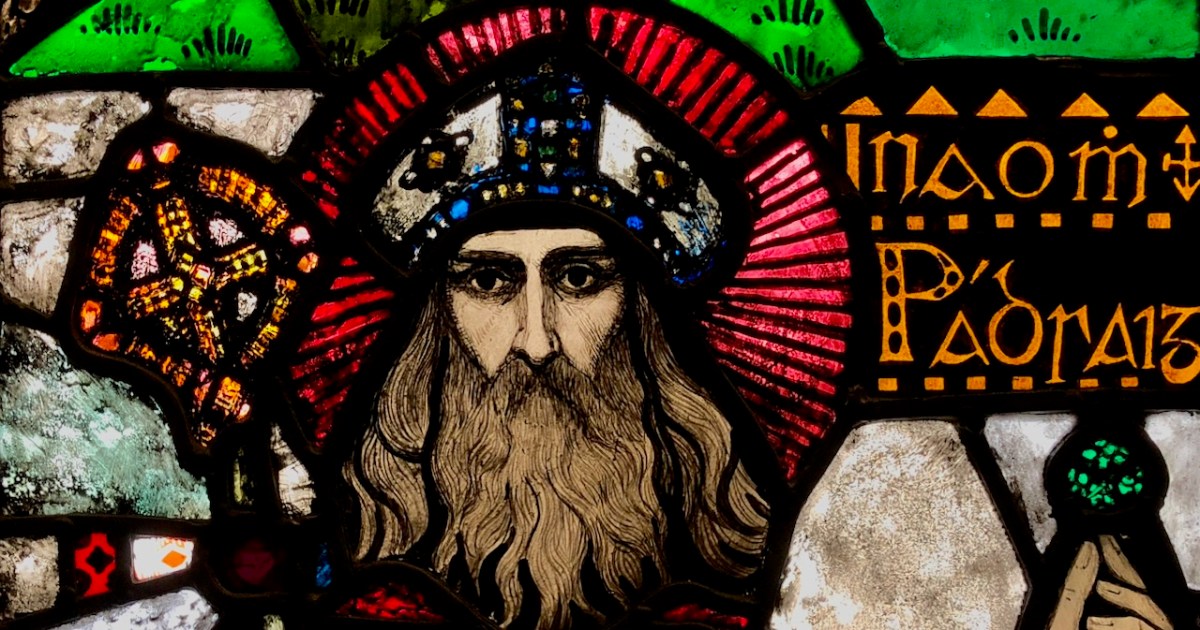
Healy designed many Patrick windows – this one is in Glenariff Co Antrim

Each commission is described and through David’s detailed accounts we come to understand Healy’s style – what iconography he was attracted to, how he decided on the myriad details with which he embellished his windows, and most of all, his decorative methods. 

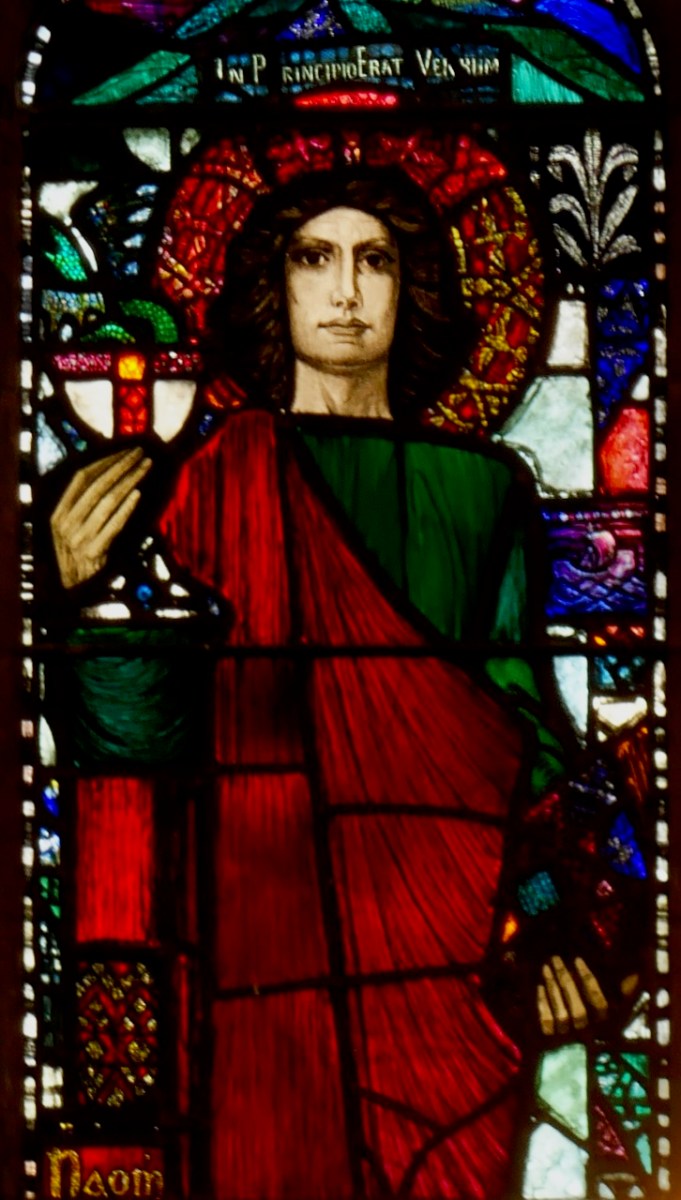
John the Evangelist, Loughrea Cathedral

Long before Harry Clarke made it is his signature, Healy was a master of aciding, a difficult (and dangerous) process used to remove colour from the surface of flashed glass. Flashed glass is clear glass which has a skim of coloured glass fired onto its surface. This top layer could be removed by scratching or etching it away, or by immersing the glass in a bath of hydrofluoric acid, having first applied beeswax to any surface where the colour should remain intact. By waxing and immersing, often several times, colour could be altered from, for example, a rich ruby red to the merest hint of pink, and all shades in between.

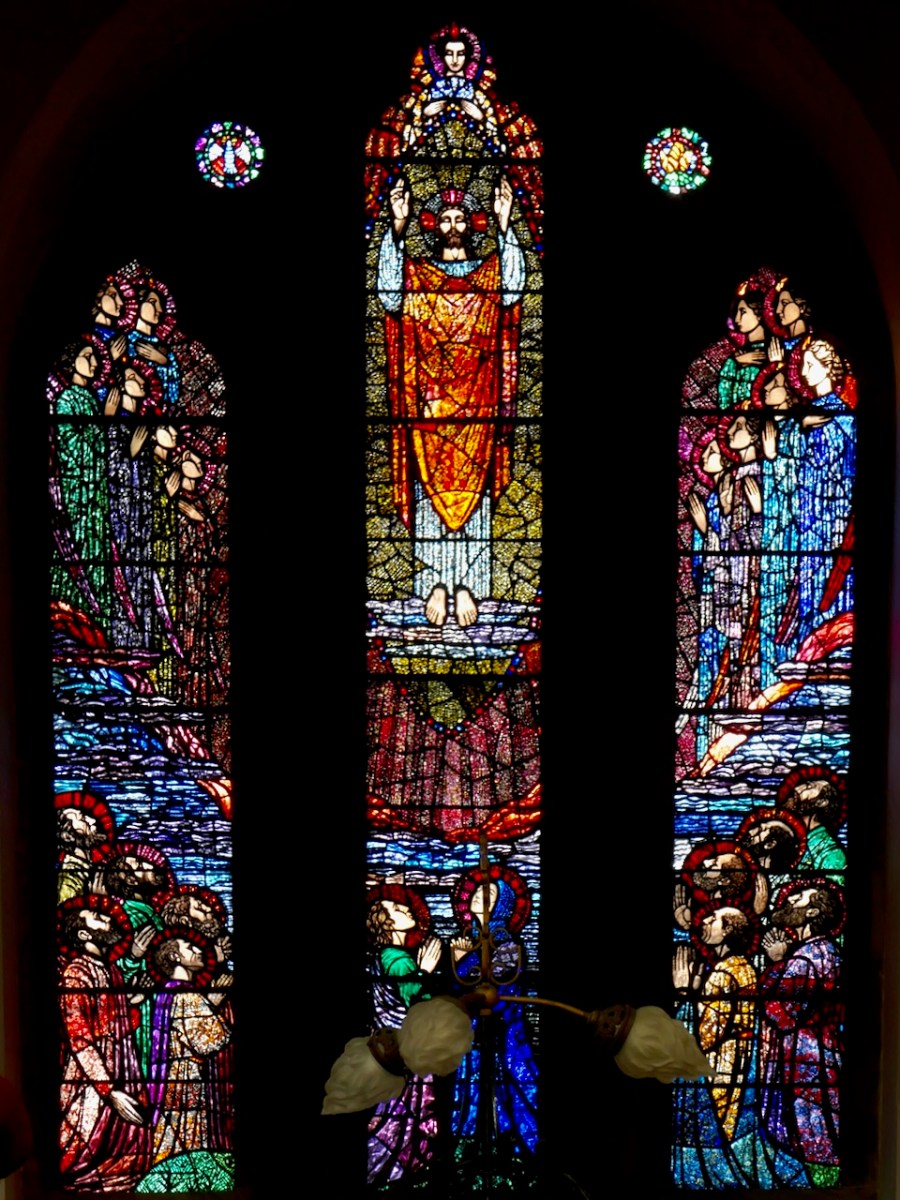
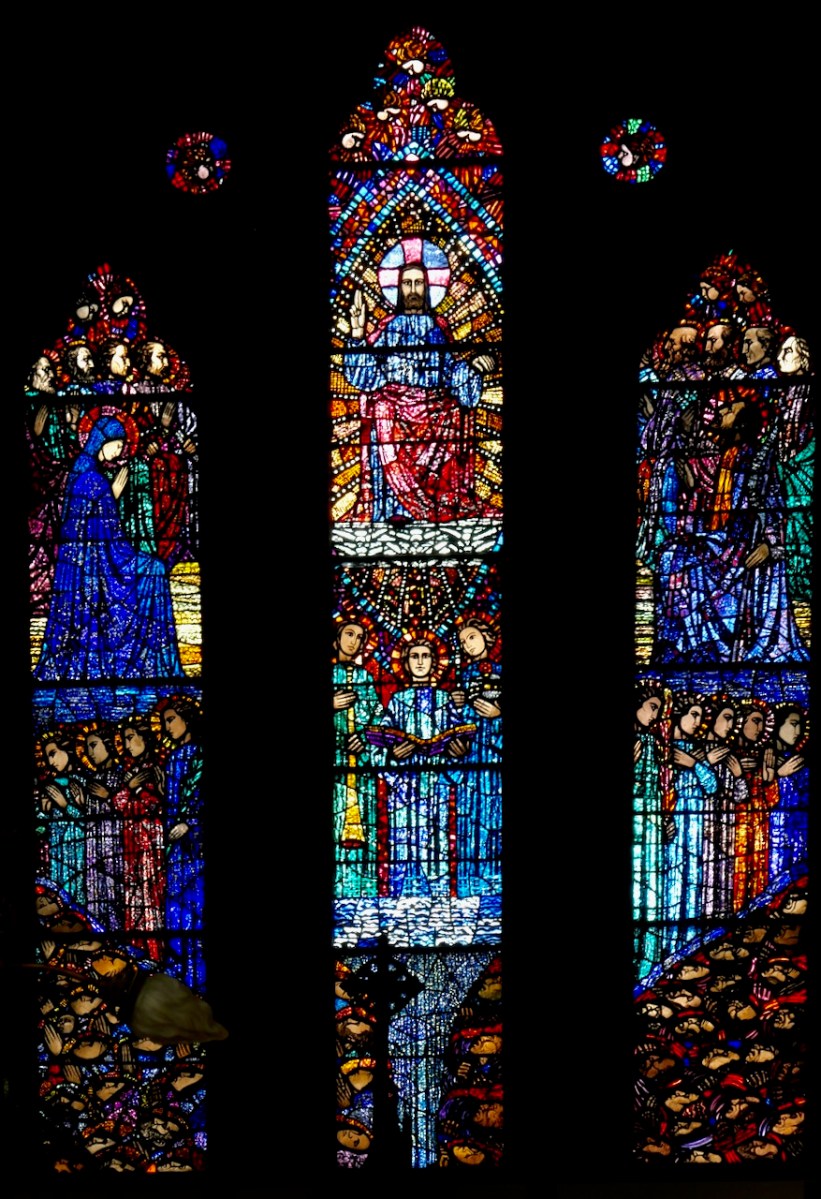
Healy’s Ascension, in Loughrea Cathedral

Healy would often plate two sheets of glass together – for example, one red and the other blue – each one carefully acided, and could by this means achieve an astonishing array of colours from the red-blue side of the spectrum. Added to this, he would often use silver stain on the back of the glass. Once heated in the kiln, the silver stain would permeate the glass, turning it yellow (repeated firings could deepen this from bright yellow to a rich amber colour). Finally, all the figuration would be painted and stippled on to the surface of the glass and the individual pieces of glass would be assembled and leaded together to produce the finished window. Healy was a perfectionist and Purser would despair of ever making enough money to keep the studio going since he spent so long on each commission.

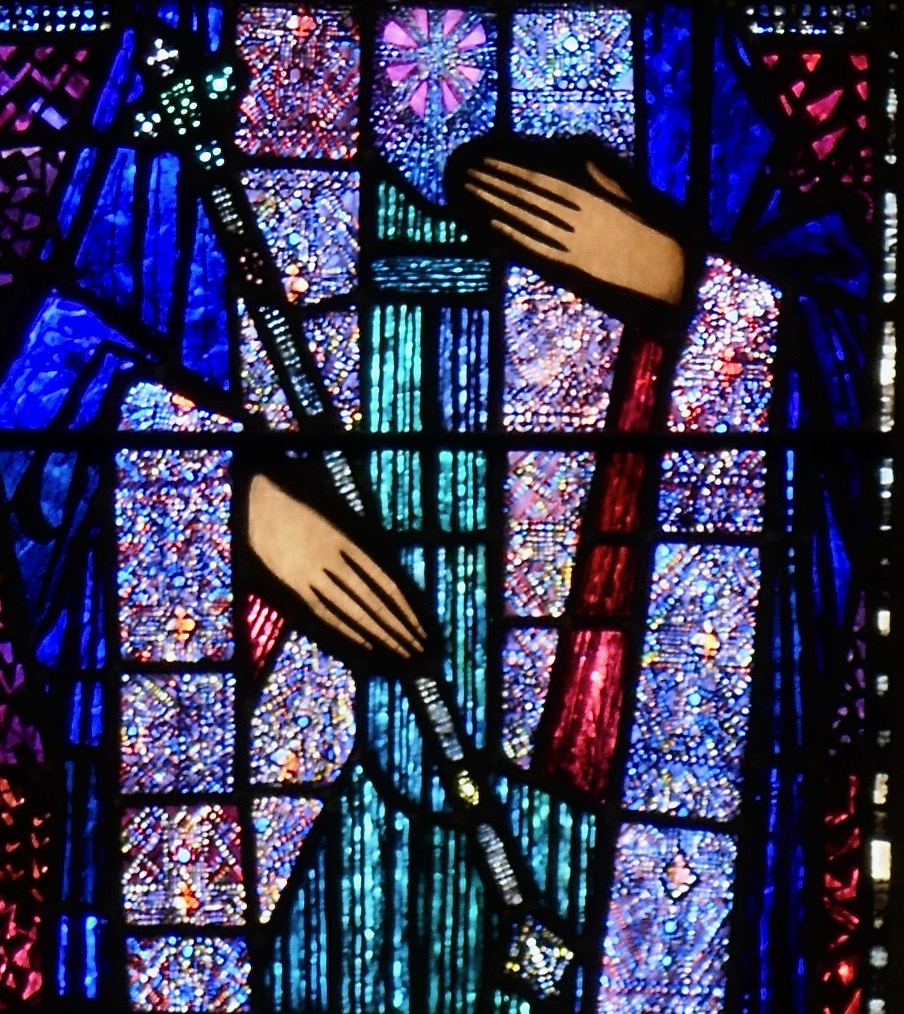
This detail from Healy’s Virgin Mary window in Loughrea illustrates well his aciding technique using red and blue flashed glass plated together to produce not only infinite shades of colour but a sparkling jewel-like effect

It is through David’s lively analysis of each window that we truly come to appreciate Healy’s genius and his evolution as an artist, his style developing according to his exposure to more modern influences.

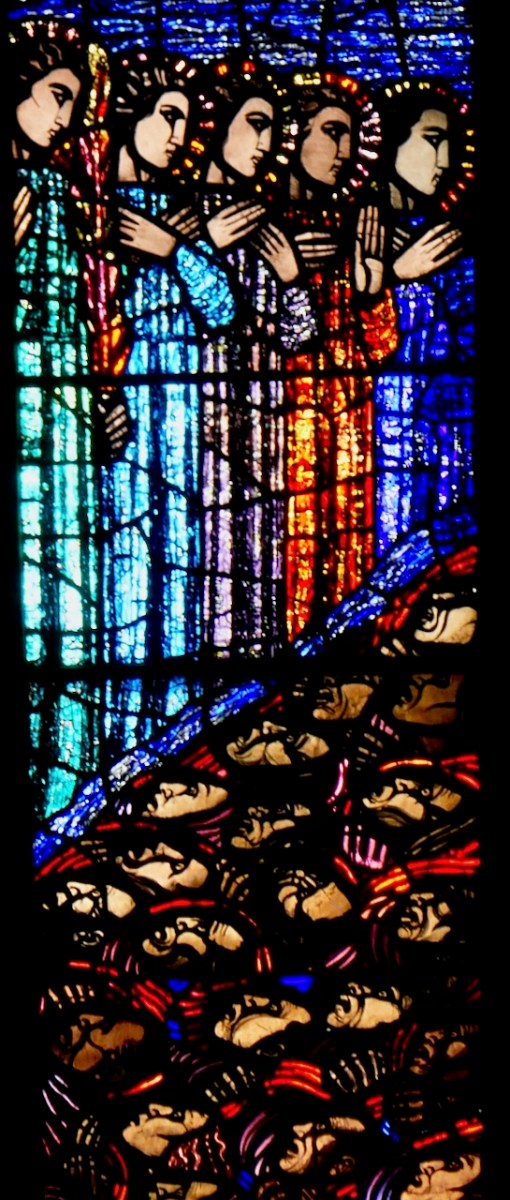
Considered one of his masterpieces, this is the Last Judgement Window in Loughrea, completed towards the end of his life. A detail from The Damned(right -hand light) is below

David wears his erudition lightly and when he dissects a window, pointing out elements that are easy to miss, and explaining what they mean and why Healy used them, I found myself pouring over Jozef’s wonderful photographs, picking out each separate item of iconography, and marvelling anew at the depths of learning that Healy brought to his designs. For example, David devotes five pages to the St Augustine and St Monica window in John’s Lane Church in Dublin and not a word is wasted.

Along the way we meet a host of characters – the redoubtable Sarah Purser and his colleagues at An Túr Gloine, enterprising priests and bishops, citizens memorialising their dead family members (CS Lewis!), art critics such as C P Curran, American heiresses, patrons of the arts, Celtic Revival influencers (OK, modern word, but you know who I mean). We get insights into the inner workings of the studio, wherein frequent bouts of unprofessional behaviour created tensions, and where Sarah Purser often had to crack the whip when productivity lagged. We come to understand the difficulties of soliciting business, agreeing on final designs and delivering orders, especially to overseas clients, in days when postal service to American and New Zealand took weeks.

A detail from the Patrick window in the National Gallery

We also come to see Healy as a rounded artist who did more than stained glass. His quick sketches of Dublin characters, drawn from life have all the attraction of immediacy and familiarity, while his watercolour landscapes are charming.  

An early Loughrea window, Virgin and Child with Irish Saints

Healy died in 1941. By the time you finish the book, you feel you have lost a friend – a difficult and complicated one to be sure, but one whom you admire and will never forget. While obviously a gruff character on the outside, David allows us access to his humanity, and points out the obvious sympathy with which he portrays some of his subjects. His Loughrea St Joseph (below), for example, shows, in the words of the art critic Thomas McGreevy, a “Joseph who knows the tragedy of the world and who has some special understanding of the destiny. . . of the child”. We are, of course tempted to see in the tenderness with which Joseph gazes down at Jesus a revelation of Healy’s suppressed feelings for his own son.

This book is not just for stained glass enthusiasts, though they will delight in it, but for anyone interested in life in Ireland at the end of the 19th and beginning of the 20th century, and indeed for anyone who enjoys good writing and a story that propels you through almost 70 years of the life of a significant artist. Available from the publisher or in all good bookstores.

Rock Art and Winter Light at Derrynablaha

Rock art can be astounding or underwhelming. What makes it one or the other is light.

This is the rock I labelled Derrynablaha 3. My 1973 drawing of it is below. From it, there’s a clear view across to Lough Brin to the east, and all the way down the Kealduff River.

Irish prehistoric rock art likely dates from the Neolithic, about 5,000 years ago. We’ve written extensively about rock art (and indeed about Derrynablaha) – see all our posts on this special menu page. There are significant concentrations in Kerry, including 49 pieces identified so far in the adjoining townlands of Derrynablaha and Derreeny, in the middle of the Iveragh Peninsula. To get there, turn north from the Blackwater Bridge and head for the Ballaghbeama Gap.

If you go on a grey day with no shadows (all too common in our part of the world), or even when the sun is high in the heavens, you might see nothing at all. You might walk right by a piece of rock art without realising it was there. We visited Derrynablaha this week and were very lucky to hit it just right.

By ‘just right’ I mean that we had a sunny day, not a cloud to be seen, and because it’s winter and we got there earlyish in the morning the sun was low in the sky. That kind of low, raking light creates the best possible natural conditions for viewing rock art, as demonstrated in this post – Aoibheann Lambe’s excellent capture shows how to do it. There are other ways to do it, of course – you can use strategically placed coordinated flashes – something Ken Williams is rightly famous for. You can go at night with strong lights, or you can use photogrammetry to produce a 3D image. But for a truly immersive experience, seeing it on a day like we had is an experience that is hard to beat.

I spent time recording all the known Derrynablaha rock art when I was doing my thesis in archaeology at UCC in 1972. The carvings had been discovered by the landowner, Daniel O’Sullivan, who wrote to the Department of Archaeology in 1962. His brother, John, still lived on the farm when I was doing my fieldwork, in the farmhouse that is now a ruin (above) but which still holds happy memories for me. The remains of a more ancient settlement are also clearly visible (below).

They were visited by the Italian archaeologist Emmanuel Anati the following year, 1963, at Prof O’Kelly’s suggestion and it was Anati who first wrote about this site. Anati, by the way, went on to found a centre for rock art research at Val Camonica in Italy, and as far as I can tell is still alive and active, in his 90s. He recorded 15 panels.

This is my Derrynablaha 4

Subsequent expeditions from UCC, and my own explorations, resulted in a grand total of 23 examples being included in my thesis. By the time of the Kerry Archaeological survey in the 1980s there were 26 pieces identified, and more have been found since then – there are now 29 known panels of rock art in Derrynablaha and a further 20 in Derreeny.

A detail from Derrynablaha 4 clearly showing individual pick marks. The decoration was picked on using stone-on-stone percussion. You can also see how ice can settle on the surface and over time cause cracking damage. My drawing of this stone is below

They are very hard to find unless you know exactly where to go, and I was very lucky indeed to have the expert guidance of Google. Yes – there is a Google Map devoted to Irish rock art! It’s the brainchild of Caimin O’Brien of the National Monuments Service and with it on your phone it’s possible to tramp over the hillsides and locate each piece. We are supremely grateful to Caimin for the work he has done on this, and we only wish all National Monuments could get the same treatment!

Even with this amazing resource, this is not an easy field trip. The ground is steep, rough and wet, and there are barbed wire fences to find a way around. It’s an active sheep pasture, so it’s important to be mindful that you are on private property and be respectful of all farm boundaries. 

This is a good example of rock art that could be easily overlooked. A very faint cup-and-ring can be seen in good light conditions. The obvious hole, however, is not a cupmark but a naturally occurring solution pit

Because we only had half a day, we confined our walk to the area around the old farmhouse and the hillside to the west of it, and managed to visit 8 panels. Even in the perfect lighting conditions we had, not all are easy to see, as they have been exposed for thousands of years and have worn away. But, for the most part, once we had found the rock, we could see the carvings clearly. 

All the panels we viewed had cupmarks and cup-and-ring marks, as well as some pecked lines meandering across the surface. We don’t know what the significance of these motifs are, although theories abound. There are other motifs at Derrynablaha too, all falling within the repertoire of classic rock art. 

Our companions on this day, as on so many of our adventures, were Amanda and Peter of Holy Wells of Cork and Kerry. And of course several holy wells were on the agenda too, including this one near Kenmare. Take a look at Amanda’s brief write up on her Facebook page, or keep an eye on her excellent blog for more about our finds on this trip.

We’ve written about Derrynablaha so many times now – why do I know this won’t be the last time?

Back to Borlin Valley

We have certainly travelled this route many times – it’s our favourite way of getting from Kenmare home to West Cork. Assuredly not a direct road, but spectacular – and you’ll hardly see a soul. Here’s a map – the road is in red:

And here (below) – a sculptural abstract – is the nature of the terrain which the satellites spy on – looking straight down!

We passed over this high road that skirts the valley on an idyllic January day early in the new year (2024). For the first time, we also traversed the full length of the lane that goes into the heart of the vale, only serving scattered houses and farms. This goes by a complex stone circle and Mass Rock in the townland of Derrynafinchin – or Doire na Fuinseann. The group – also featured on the header – has been fully described by Amanda’s post Derrynafinchin: a bullaun, Mass rock & stone circle from a couple of years ago. Well worth a read!

The little lane also passes into the townland of Derreencollig. We were intrigued by some kinetic sculptures we found beside the way: we did not come across the artist, nor anyone else on this part of the journey.

The views into this remote townland and its few habitations is seen from the minor road that follows the contour at high level, heading for Bantry.

If you find our minor roads tricky, then stick to the main ones. But, if you are not in a hurry, you couldn’t do better on a day of winter sunshine than to traverse the gentler, secret ways.

Description is hardly needed in this little topographical diversion. I’m not sure where else in the world you could find your senses as satiated as here in West Cork (and Kerry!). Travel on!

To my mind there’s no more satisfying way of journeying: keep to the crags and cornices of the high tracks.

The Wran

The Wran, the Wran, the king of all birds
On St Stephen’s day was caught in the furze
His body is little but his family is great
So rise up landlady and give us a trate
And if your trate be of the best
Your soul in heaven can find its rest
And if your trate be of the small
It won’t plaze the boys at all
A glass of whiskey and a bottle of beer
Merry Christmas and a glad New Year
So up with the kettle and down with the pan
And give us a penny to bury the Wran

Ballydehob – here in West Cork – has an active Wran tradition on the day after Christmas: 26 December, St Stephen’s. In some parts of Ireland they call it The Wren, but with us there is no doubt – it’s The Wran.

The day was cold and wet: harsh winter ended our year. Nevertheless, the group perambulated the village, visiting each one of the hostelries, where they were well received.

The Irish Whip was lively. The Wran Song was duly sung, and music ensued.

Over the last few years, Ballydehob has lost two of its establishments: Coughlan’s and Daly’s. It now has to make do with five: Levis’, Irish Whip, O’Brien’s, Sandboat (below) and Rosie’s. All were accommodating – no doubt to ensure good luck and fertility throughout the coming year.

This is a record of the Straw Boys and the Wran celebration in Ballydehob on St Stephen’s Day, 2023. I have written about the whole tradition in some previous posts – here’s a selection. I will continue to follow Ballydehob’s custom – and record it – as the years go by . . .

West Cork Winter Walk

Christmas, New Year and Nollaig na mBan have come and gone – and so has the endless rain! Like hibernating bears in spring, we long to get out and stretch our limbs with a good walk. This little slideshow captures a sense of the sights and colours encountered in the last couple of days at Turk Head and on the Fastnet Trails Rossbrin Loop, Part 1

I hope this gentle stroll eases your way into the New Year. The Music is As Baile (meaning Away from Home) by Enya, from her Shepherd’s Moon album, used with permission.

The bright pink and orange fruits, by the way, are Spindle berries. Spindle is a native Irish tree.

Looking Back on 2023: Finola

Roaringwater Journal had our best year ever, thanks to all our readers – we are truly privileged that you invite us on to your phones and desktops year after year. You are what keeps us going – you, and our own abiding fascination with the world around us, in West Cork and further afield. And what’s with the cheesy image above? Well, I’ve been playing around with AI-generated images and it turns out that this is what you get when you ask DALL-E for a picture that looks like an Irish landscape with a thatched cottage, in the style of stained glass. I don’t think we’ll be substituting AI for our own photographs any time soon.

We had over 333,000 views this year – that’s an average of over 900 a day. Many people read more than one post when they drop by, so those views were generated by over 200,000 visitors. We’ve had visitors from 180 countries, although the vast majority come from the English-speaking world of Ireland, the UK, the USA, Canada and Australia, followed by several European countries.

How do you find us? That’s changed over the years. We have about 6500 followers between WordPress and Facebook, so those folks see our posts aa soon as they’ve been published, or put up on Facebook. But after that most people seem to come to us from a search engine query. 

Robert is doing his own post about his personal picks for 2023, so here goes with mine. There are all kinds of reasons for my choices – the ones I have had most fun researching, the ones that resonated most with our readers, the ones that scored highest on views, or just ones that I loved for undefinable reasons. And my top pick is…..!

When Harry Met Edith. This was a three part post involving a deep dive into one window – the Nativity window in Castletownshend, designed and executed entirely by Harry Clarke, and managed for the family by Edith Somerville. Two of the giants of early 20th century Irish culture, and things did not always go smoothly, which makes for a better story. 

I had two other stained glass posts this year that I loved – the one about the Kilbride window, the most mis-described and least known of Harry’s Irish windows (above), and a quest to track down a window from a grainy black and white photo in an ad for Watsons of Youghal in a 1907 catalogue. I got lots of help from my stained glass colleagues on that one. The image below is by photographer John Glynn

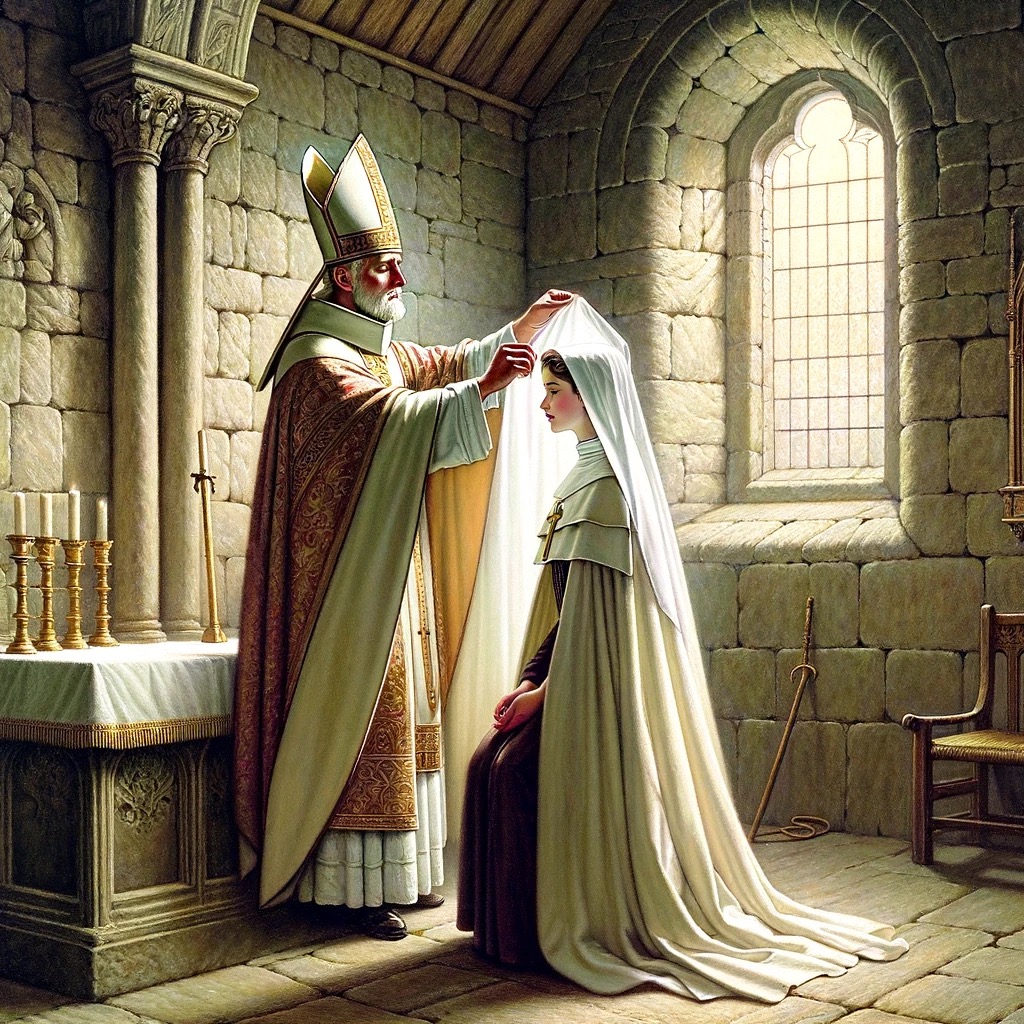
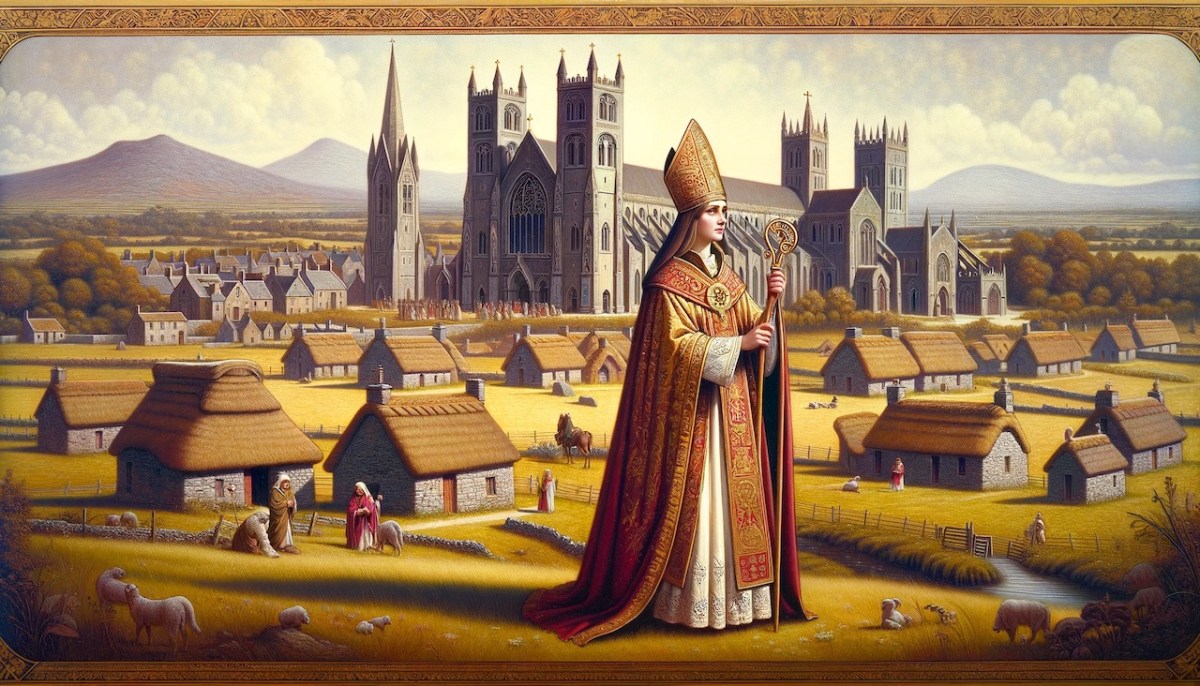
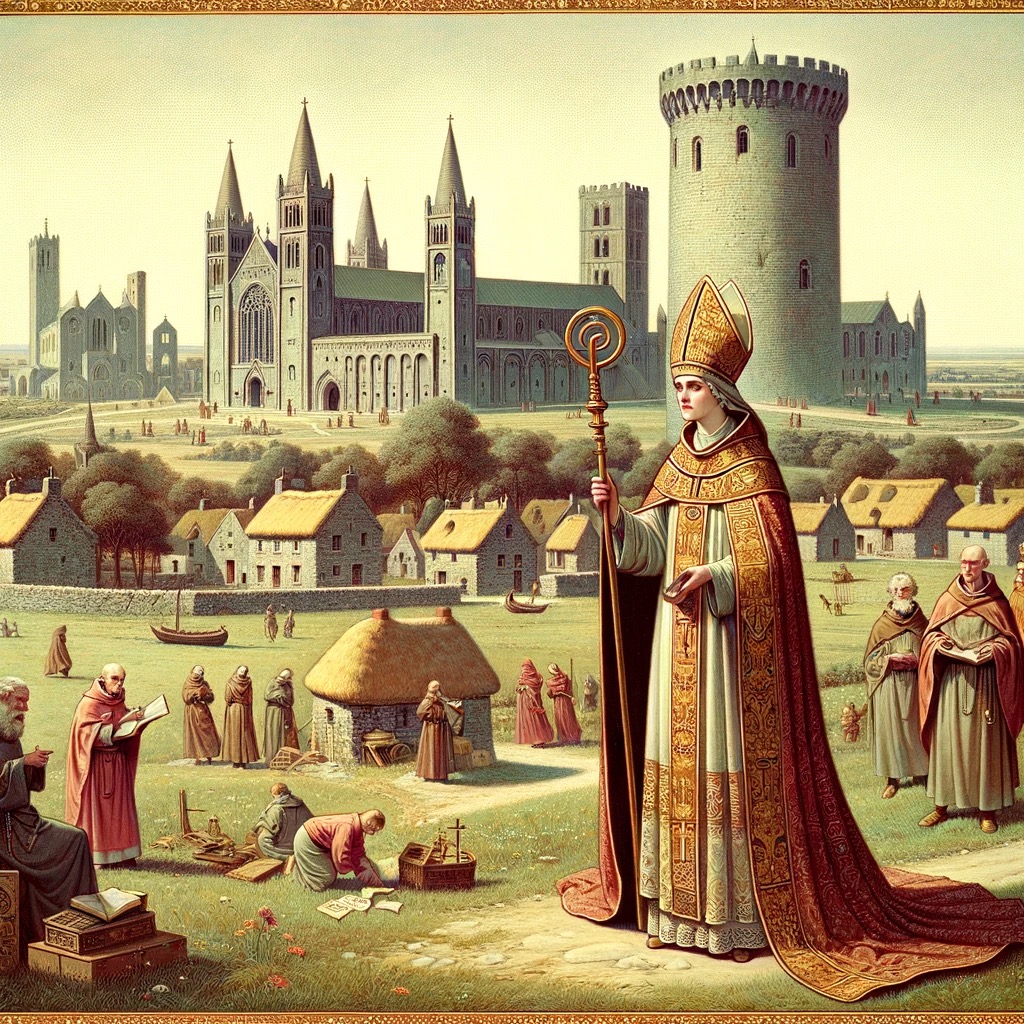
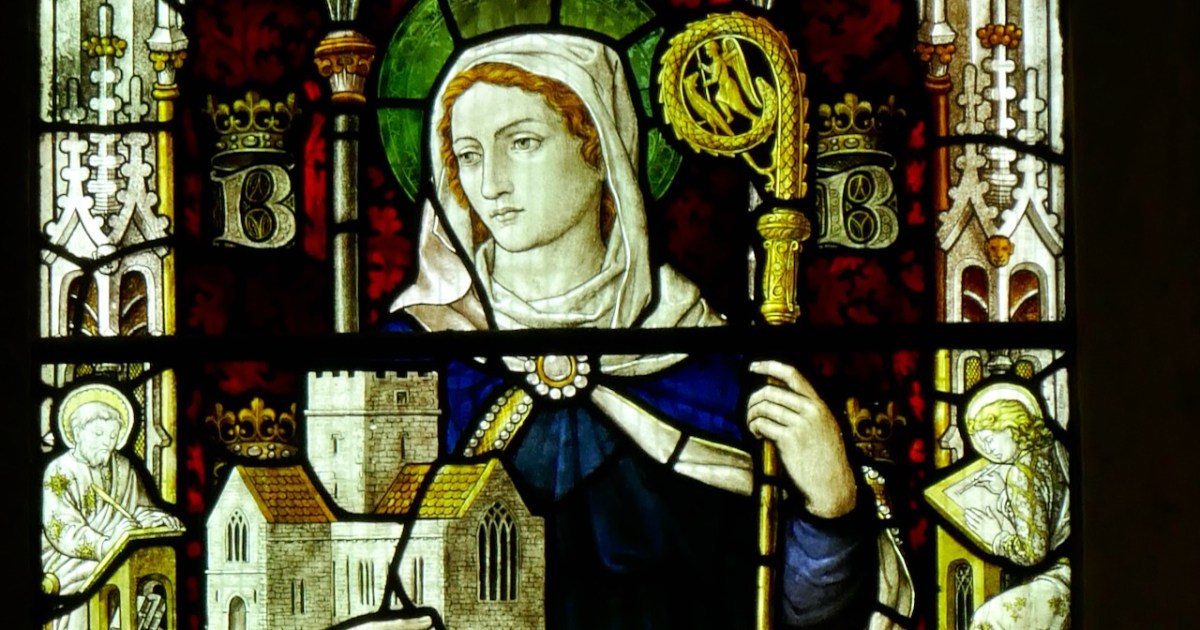
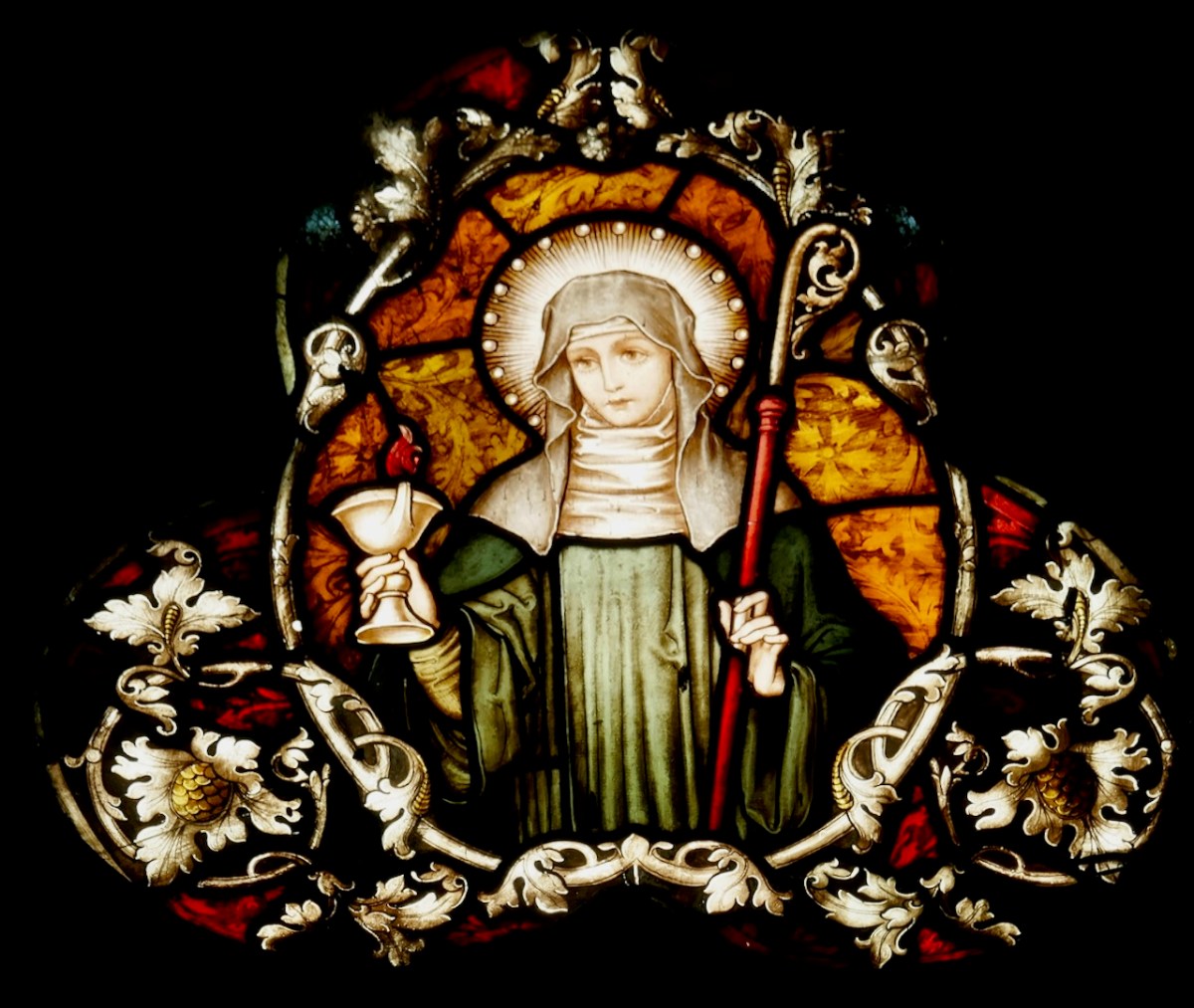
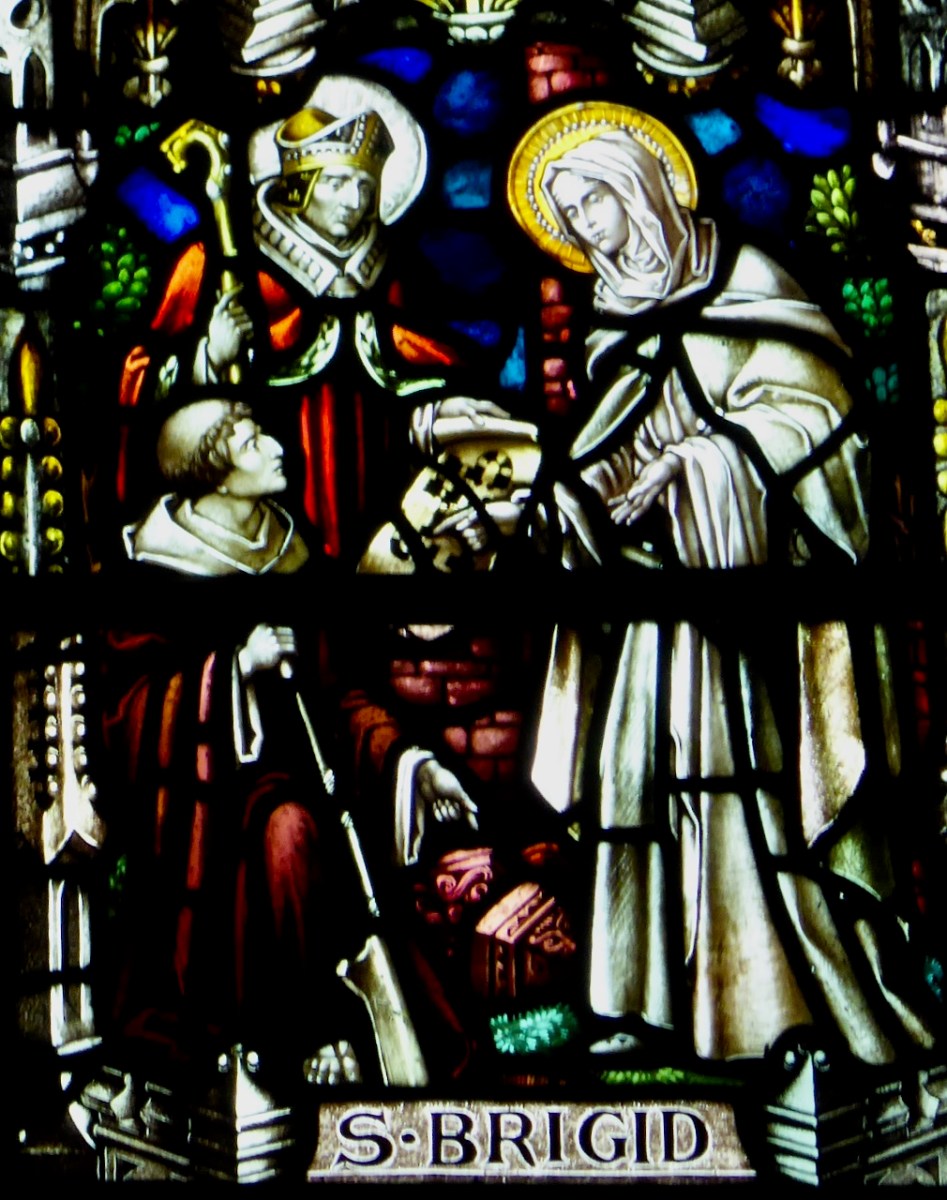
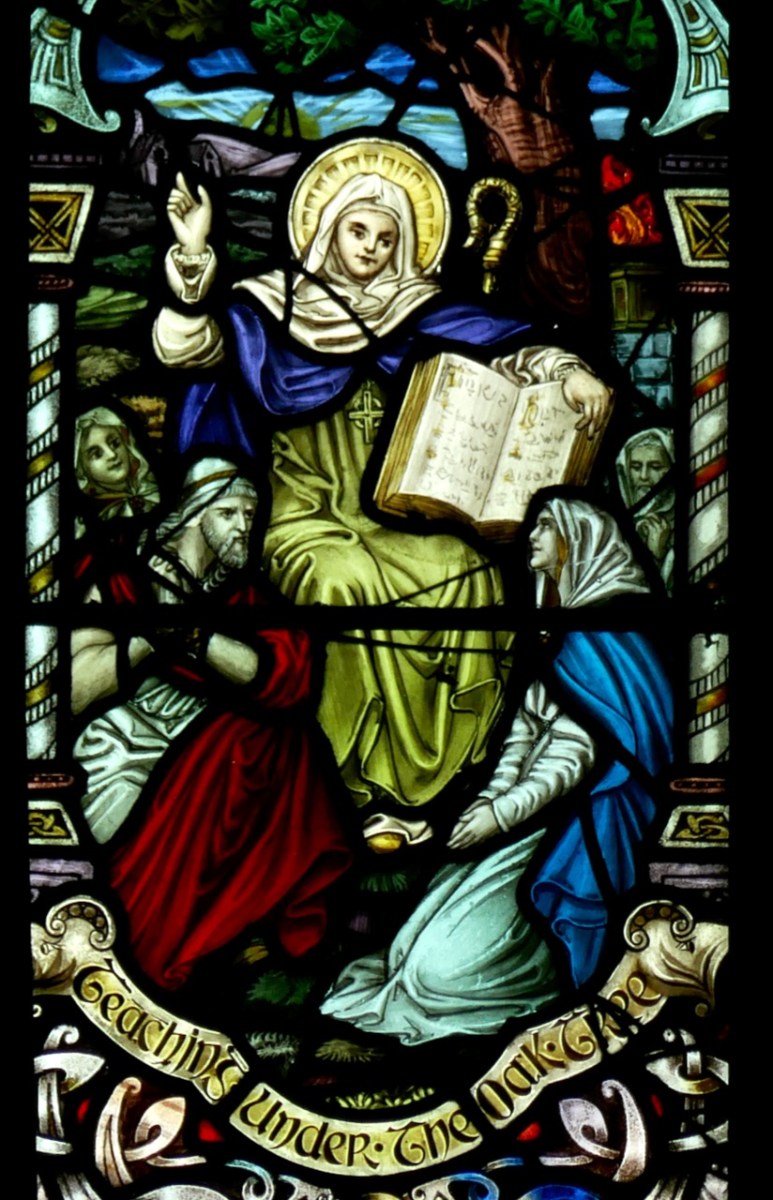
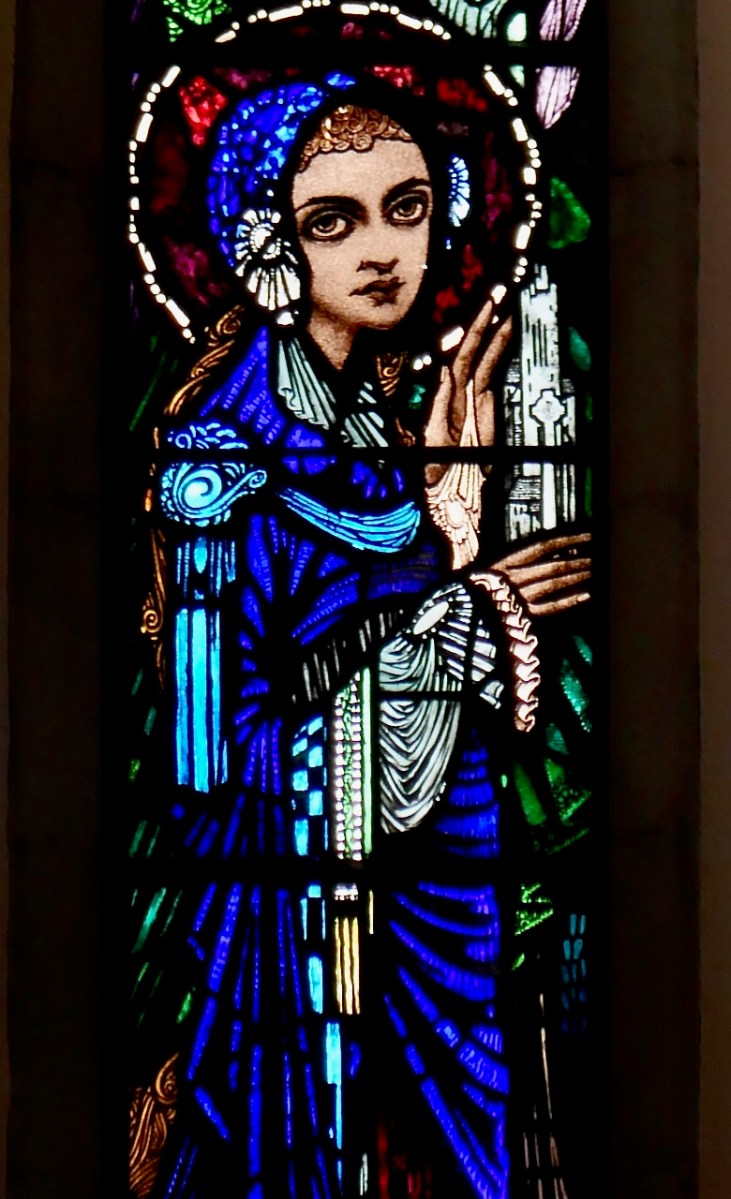
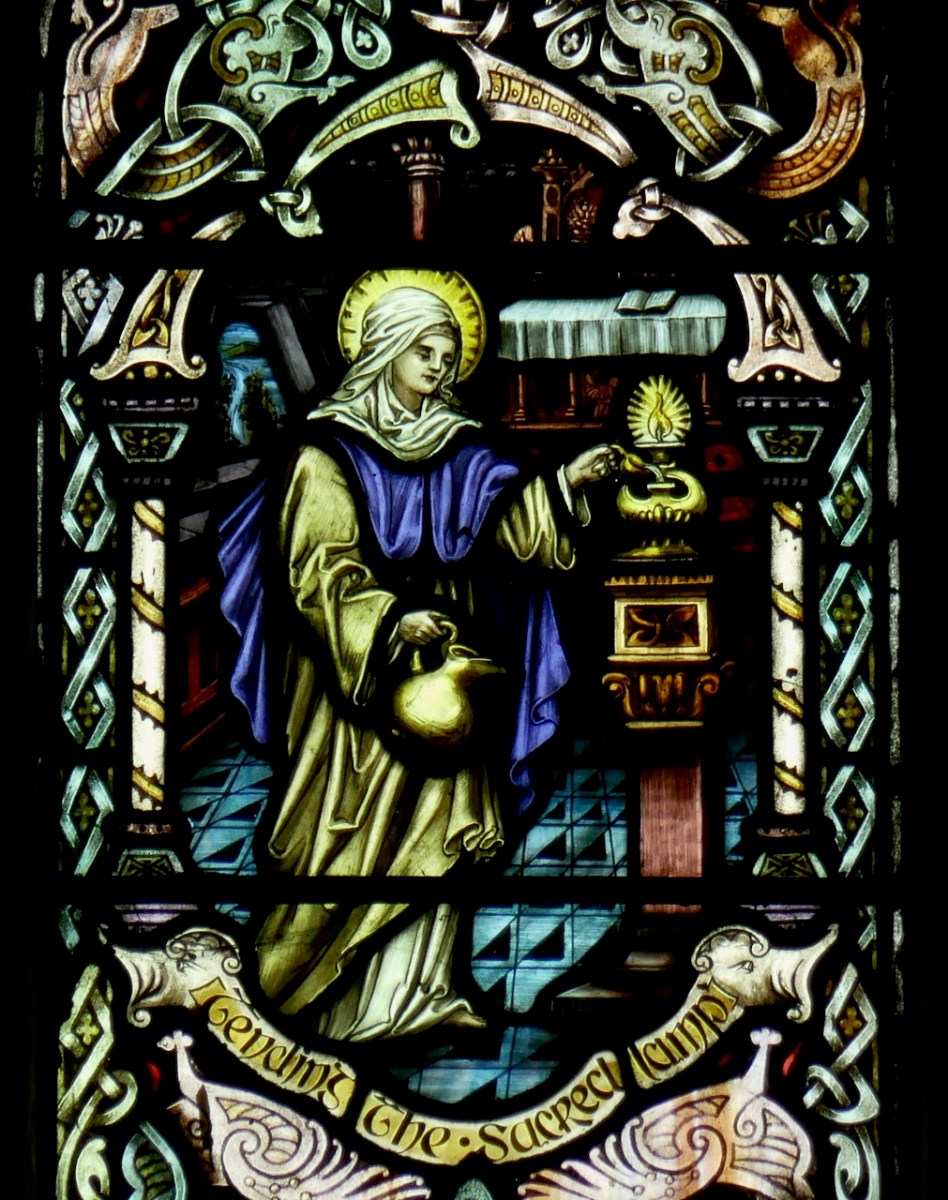
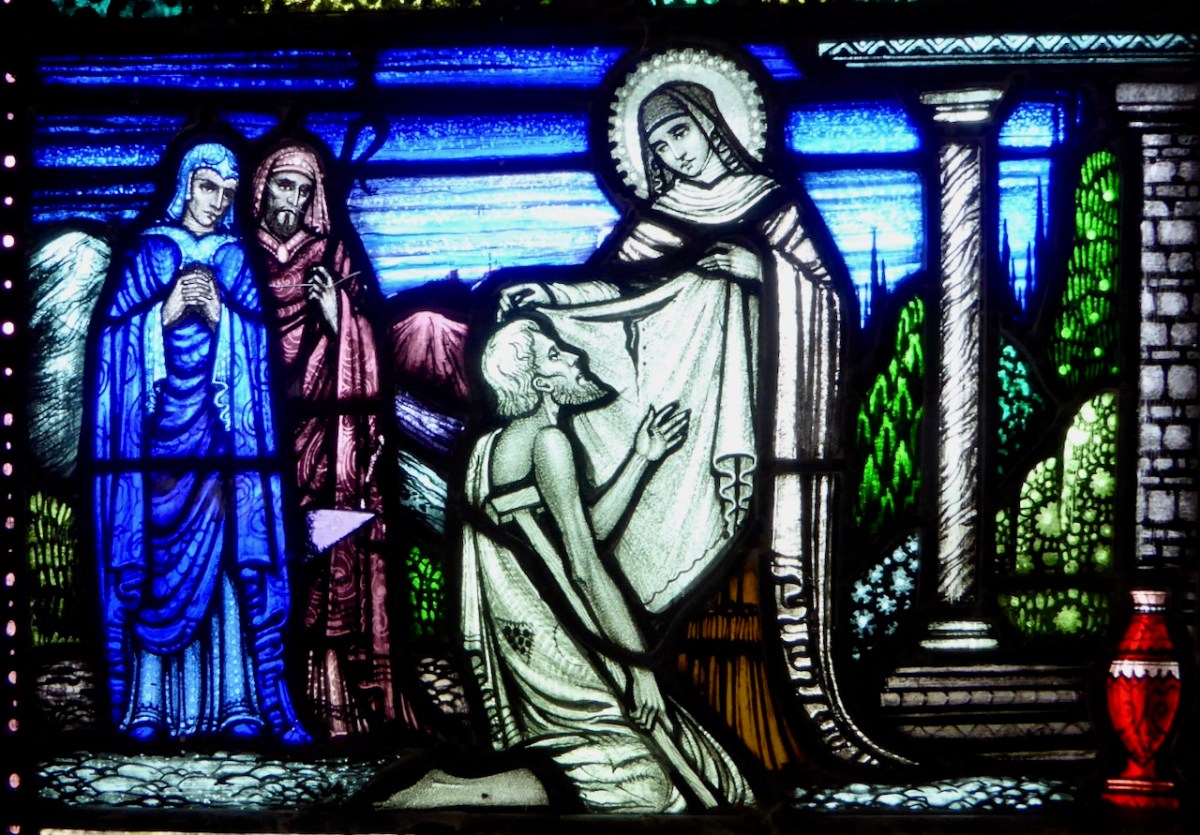
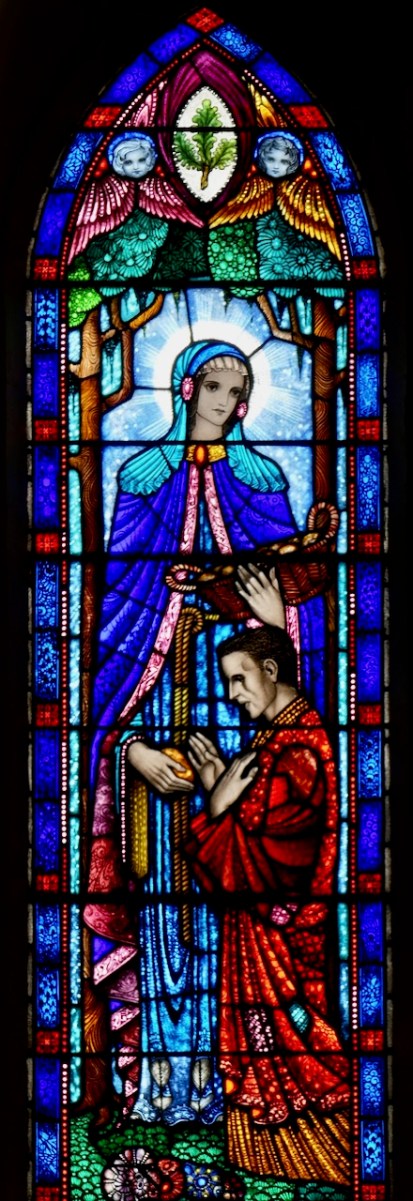
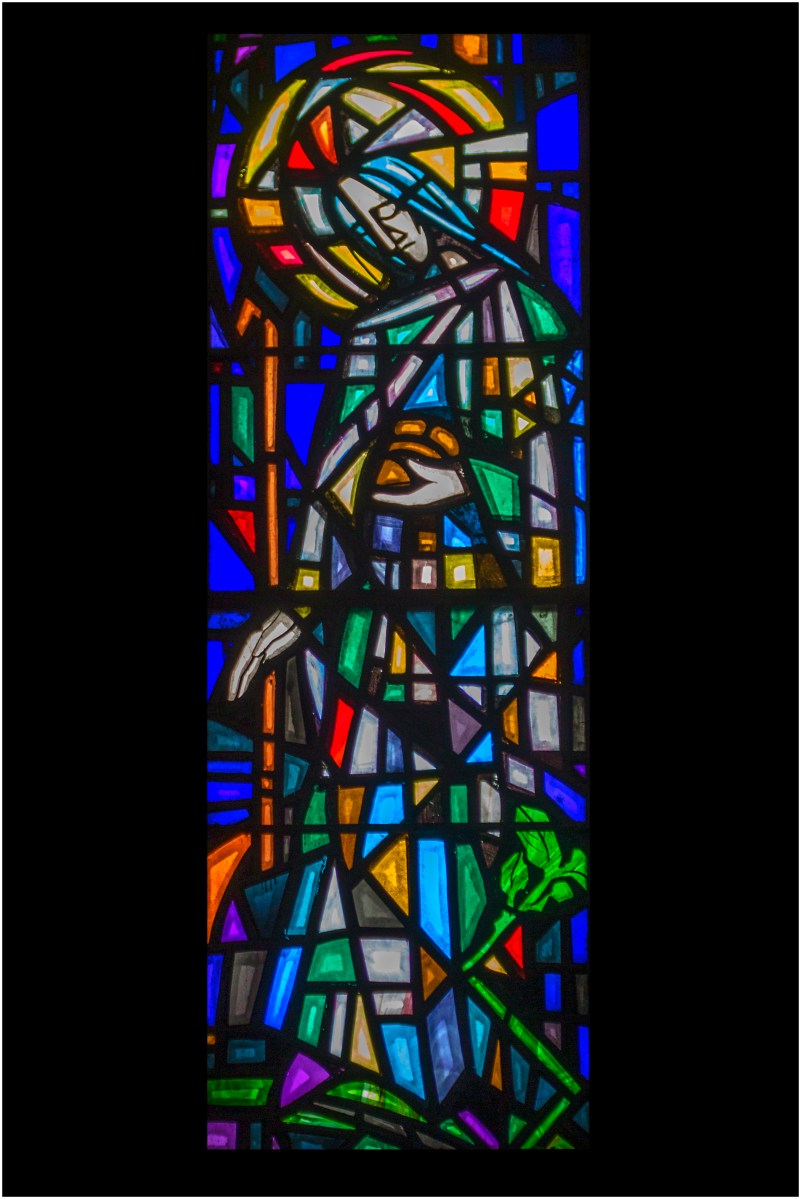
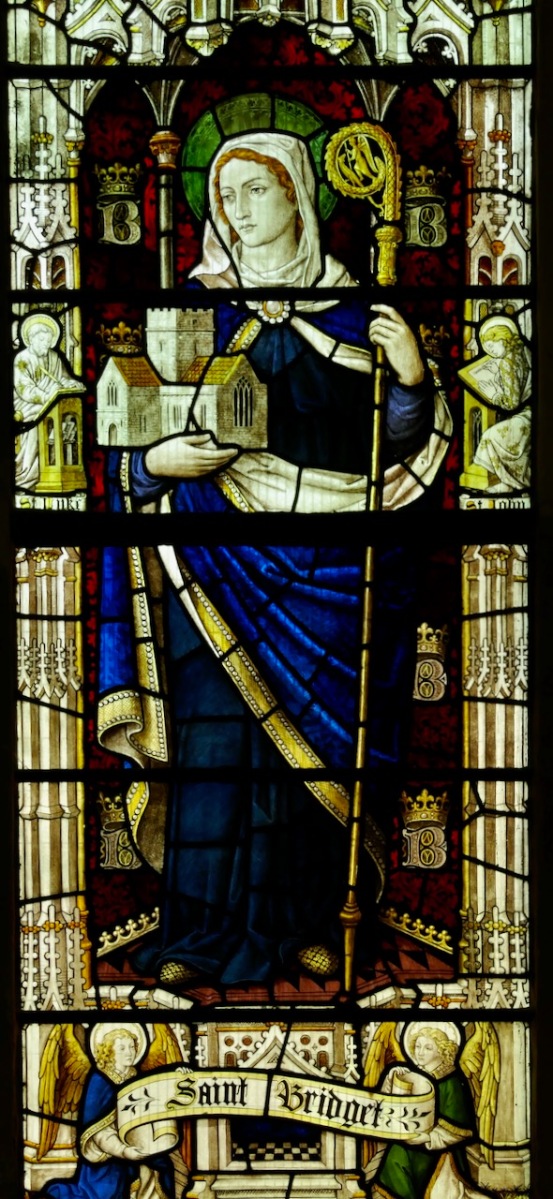
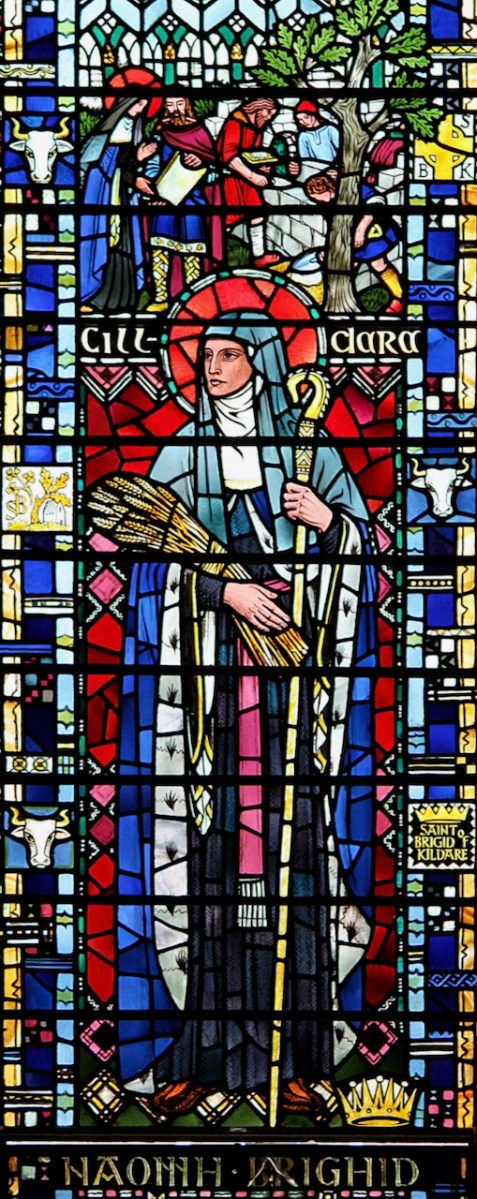
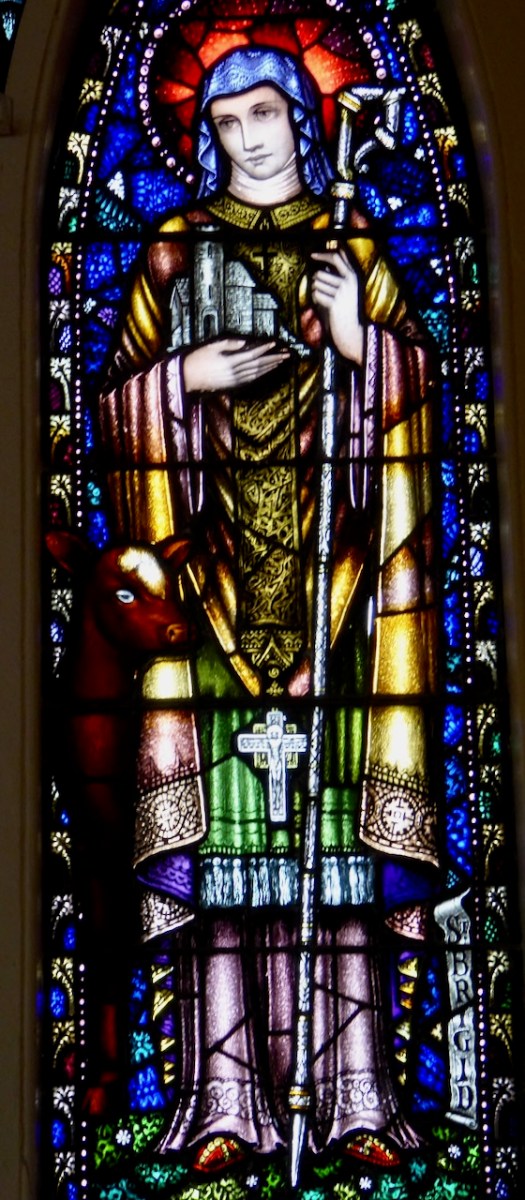
Although it wasn’t technically a stained glass post, I illustrated my Brigid: A Bishop in All But Name with stained glass images, some kindly supplied by John Glynn. There are ancient sources for Brigid’s life and conclusive evidence that she was a real, powerful and revered woman, deserving of her place alongside Patrick and Columcille as one of our three patron saints.

Archaeology is one of our passions and anything to do with Castles always draws a big audience. So it’s no surprise that a post about our new Menu Page on castles was popular, but also a two-parter on Dún an Óir, a castle built on an earlier promontory fort. Since it’s hard to get to, I was grateful for a cache of photos, including the one below, from Tash, one of our readers.

I also continued my Mizen Megaliths series, with three wedge tombs and a tribute to Stevie Lynch, one of our Heritage Heroes. Our other hero this year was Leita Camier, who spent so many years delighting us all with her Gortnagrough Folk Museum, now sadly closed.

I love maps – and apparently so do you! A three-part post, A Map of the County of Cork, explored what we could recognise still in a map that was drawn over 400 years ago. In fact, I established to my own satisfaction that the map was the work of Francis Jobson, and probably dates to around 1589.

Two new books were launched this year to great acclaim. Our friends Amanda Clarke, the writer, and Peter Clarke, designer and publisher, brought out the marvellous Holy Wells of Cork in July. Comprehensive, beautifully illustrated, thoroughly researched and engagingly written (there’s a whole section on Saints Behaving Badly!), it’s already into the second printing. 

Then, just in time for Christmas, David Myler published his Walking with Stones. An outgrowth of his popular facebook page of the same name, it’s the first non-academic book on West Cork archaeology since Jack Robert’s classics of the 1980s. 

My discovery of albums of photos by one of Ireland’s earliest photographers, Sir John Joscelyn Coghill, was a big thrill, especially since many of his photos were of West Cork subjects.

And finally, although they aren’t in Cork, I really enjoyed writing the four-part series on Cashels in Kerry. In essence they are an examination of what we can know, and not know, about life in early medieval Ireland.

On this last day of 2023, we wish you all a Happy New Year and thank you for joining us on our ongoing journey.

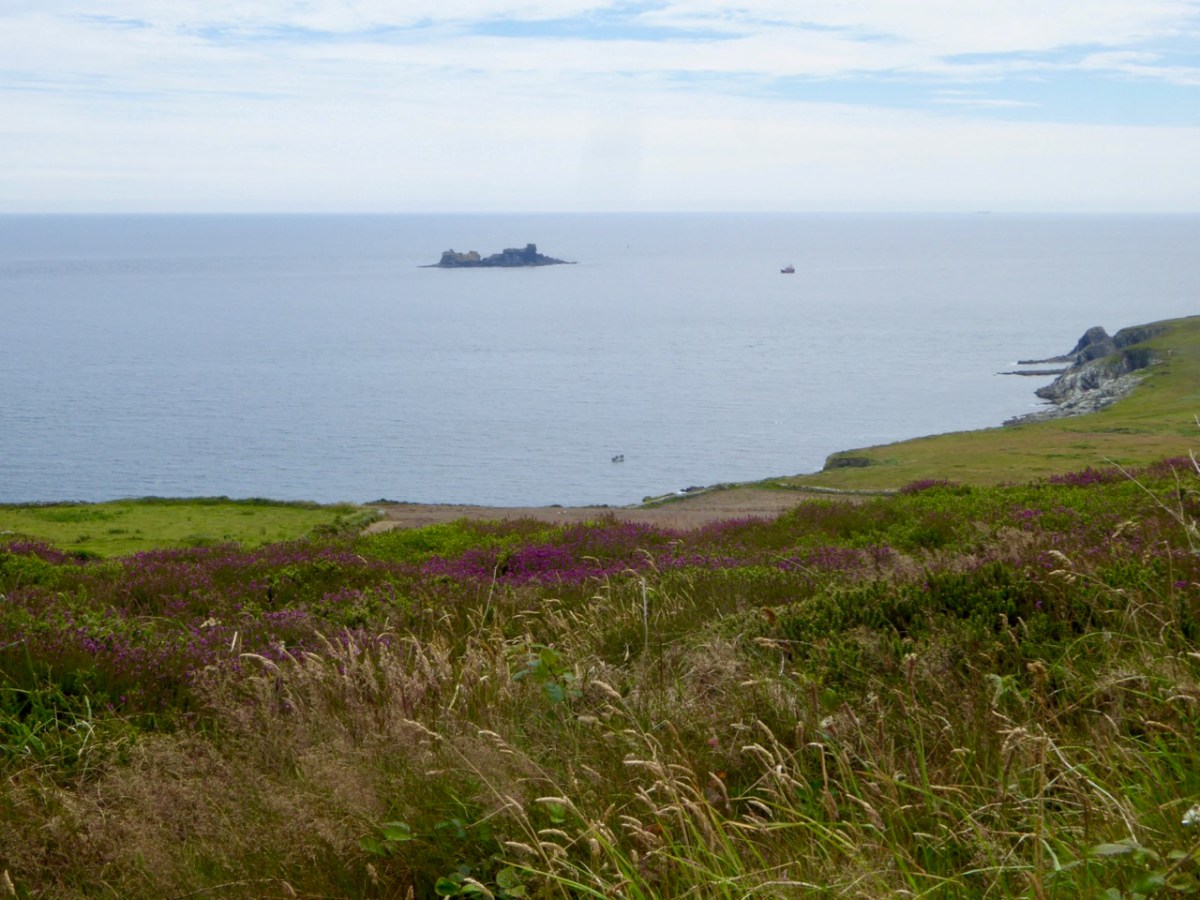
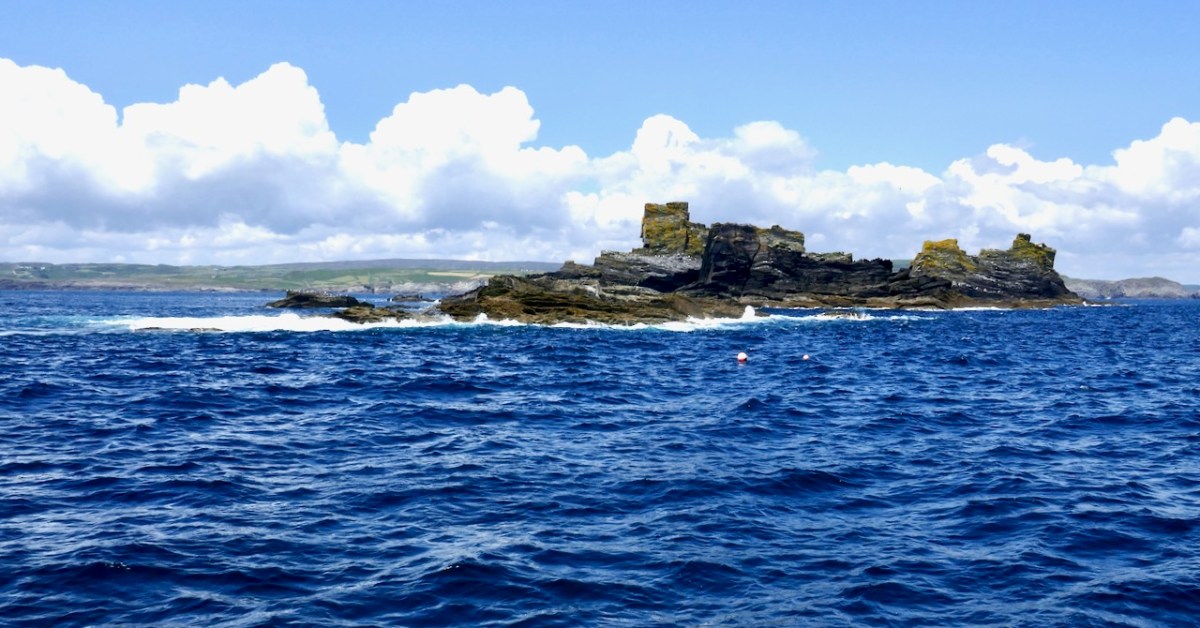
(We’re heading out to Toe Head, above, in the company of Gormú – if you haven’t already experienced one of his walks, sign up now!)