The Mizen is slightly over 35 kms long, and the last five km or so contain a wealth of sites and places that beg to be explored and experienced. These include our signature tourist attraction, Mizen Head Signal Station, our spectacular white sand beach, Barley Cove, and picturesque Crookhaven, but also some lesser known spots that are equally worthy of inclusion in our Mizen Magic list.
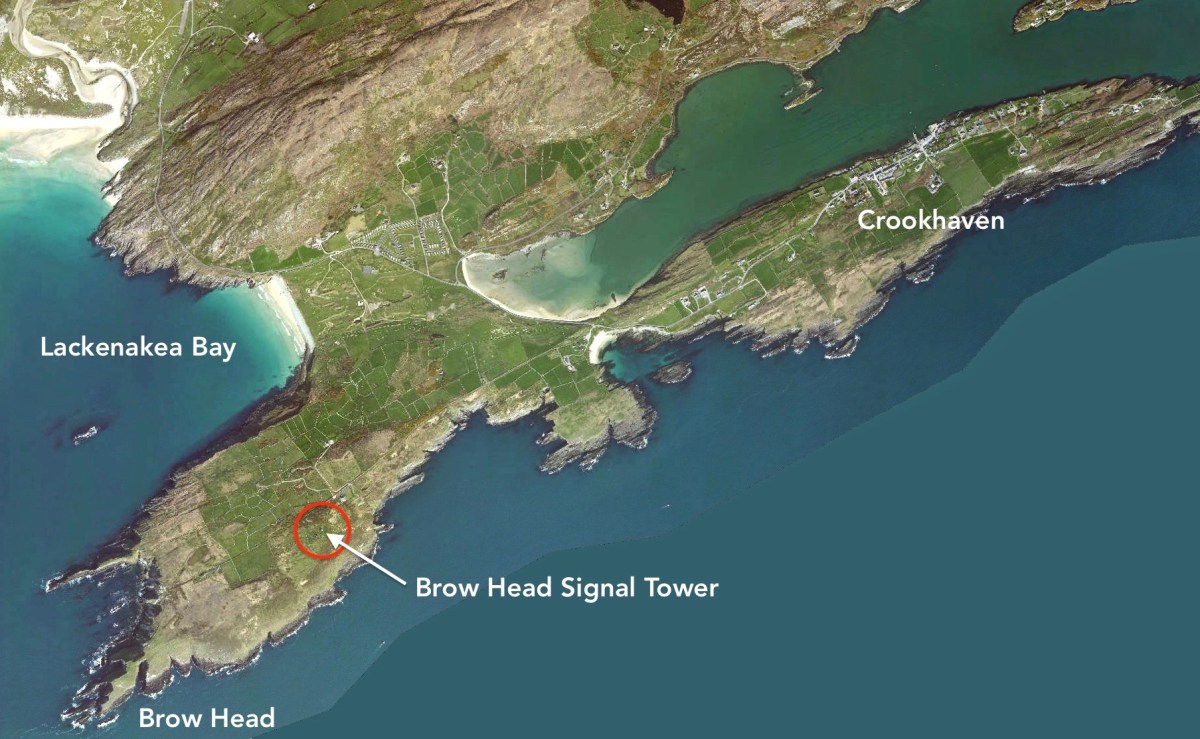
Despite the hype about Mizen Head, the actual southernmost tip of Ireland is Brow Head. In our post about it we said: Brow Head doesn’t have the same profile as Mizen Head: many people have never heard of it. But it’s magnificent, steeped in history, wonderfully scenic and best of all, totally walkable.
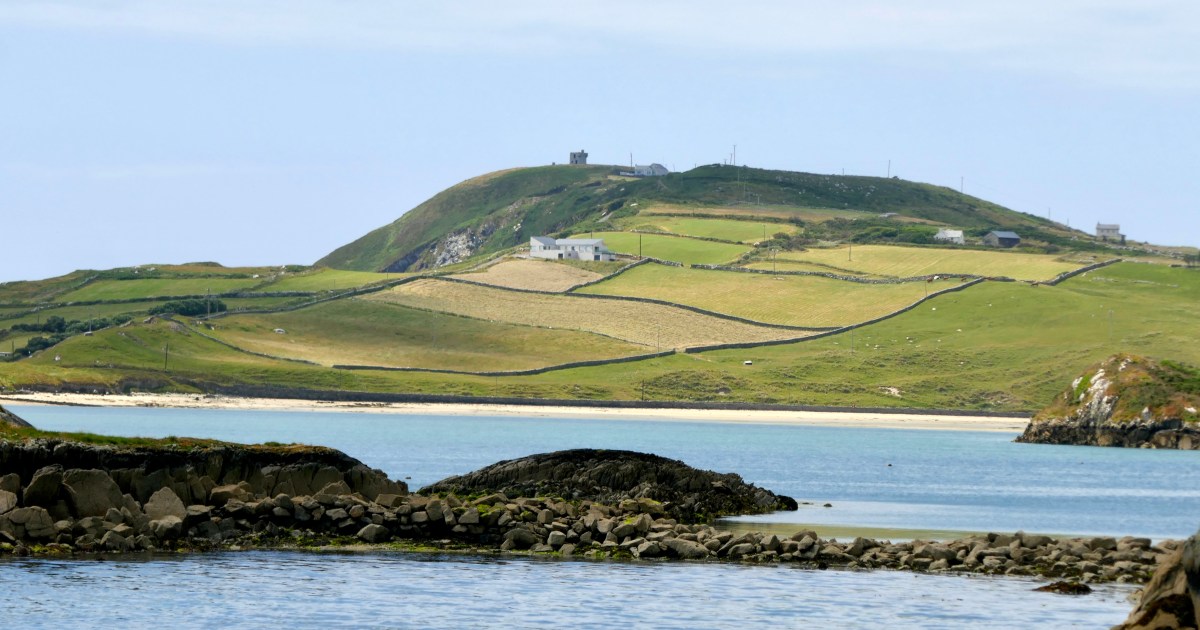
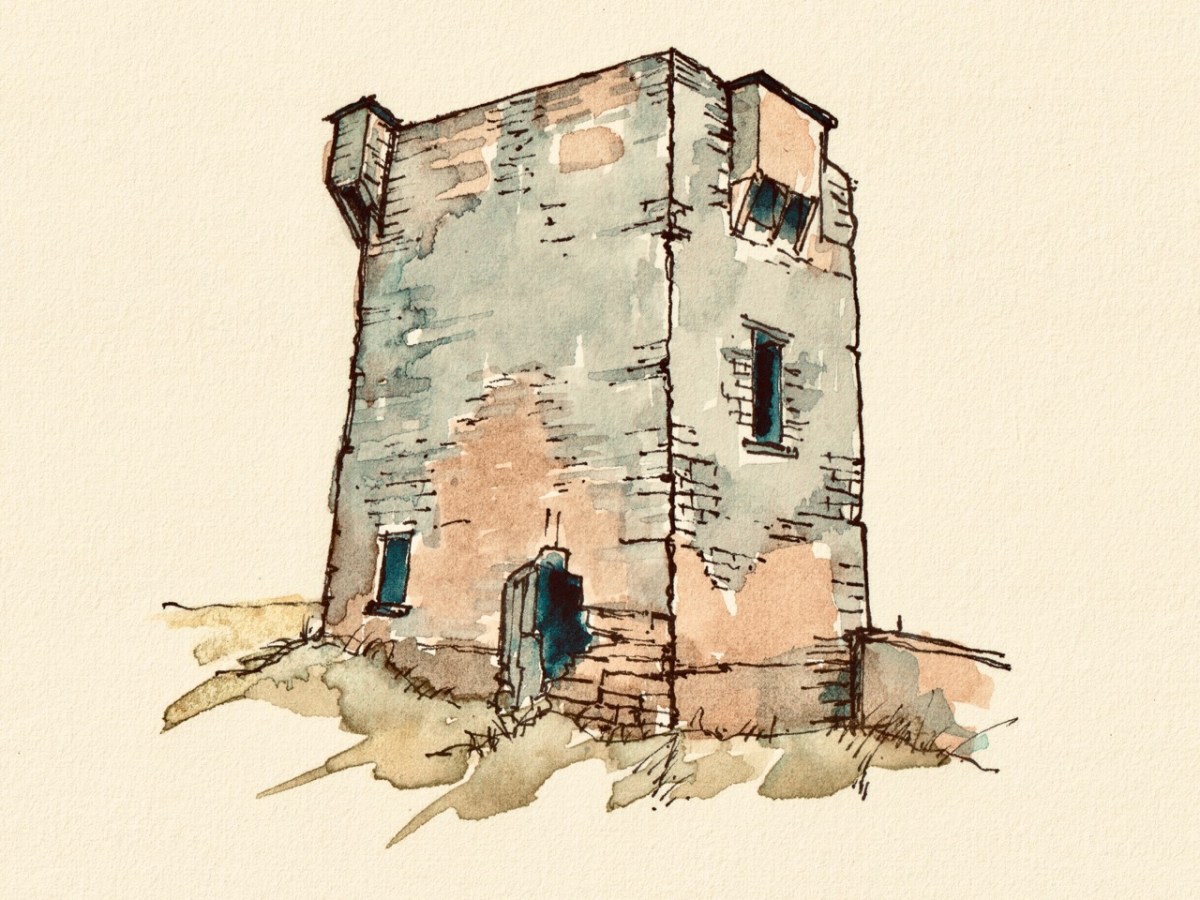
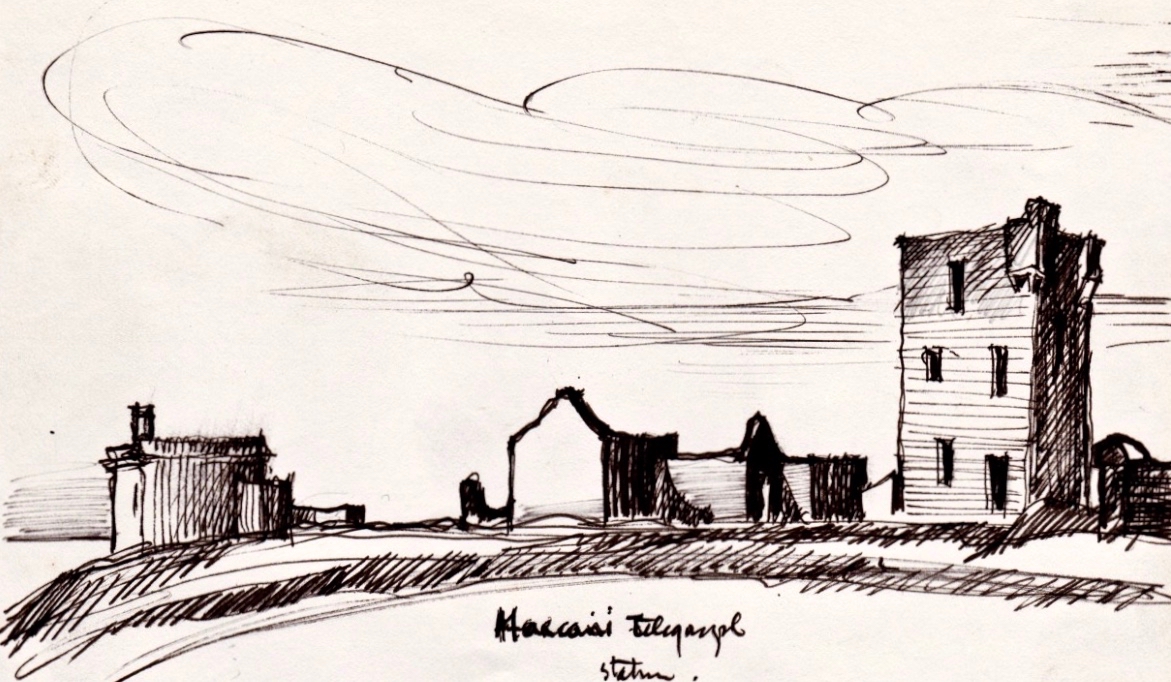
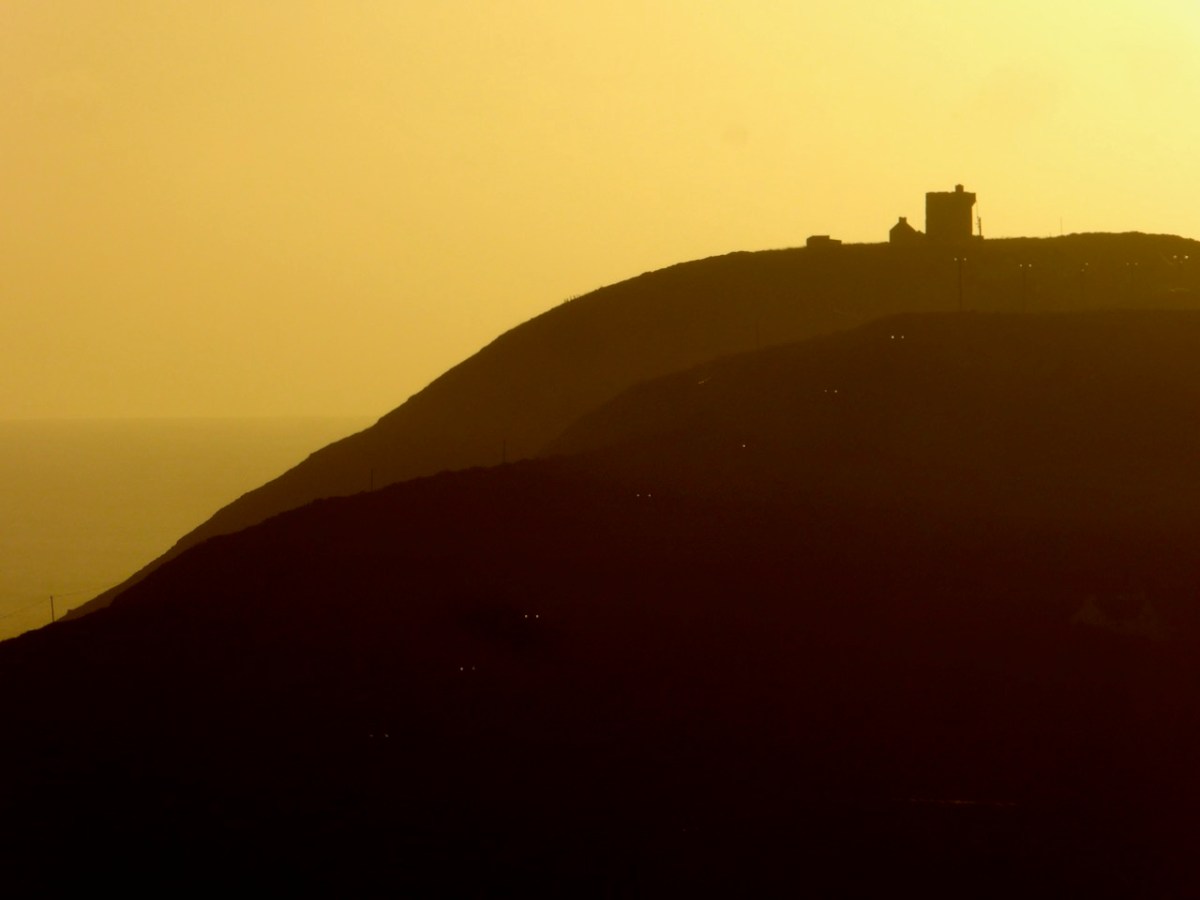
Brow head boasts not only a Marconi Telegraph Station, but also a Napoleonic-era Signal Tower. For a good overview read Mizen Magic 3: Brow Head, but we know you will want to know a lot more about Marconi, the telegraph pioneer, so take a look at In Search of Ghosts for more abut him and his operations on Brow Head. And for two takes on Marconi’s station, there is Peter Clarke’s drawing above and Brian Lalor’s below.
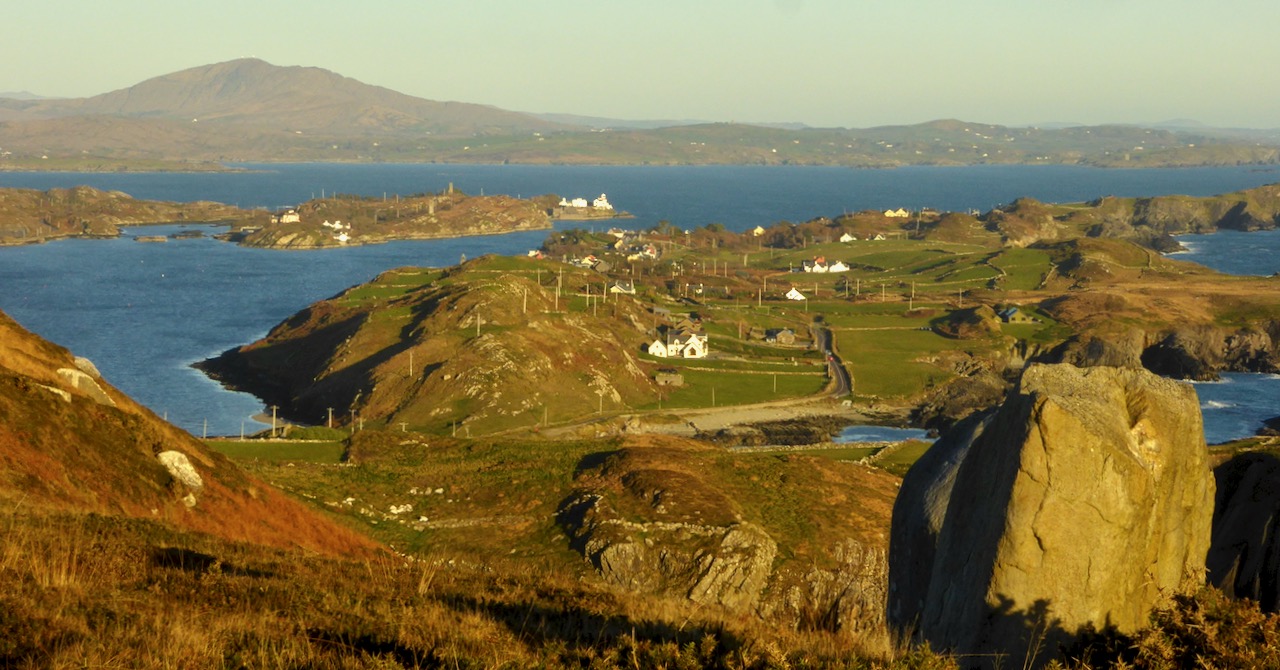
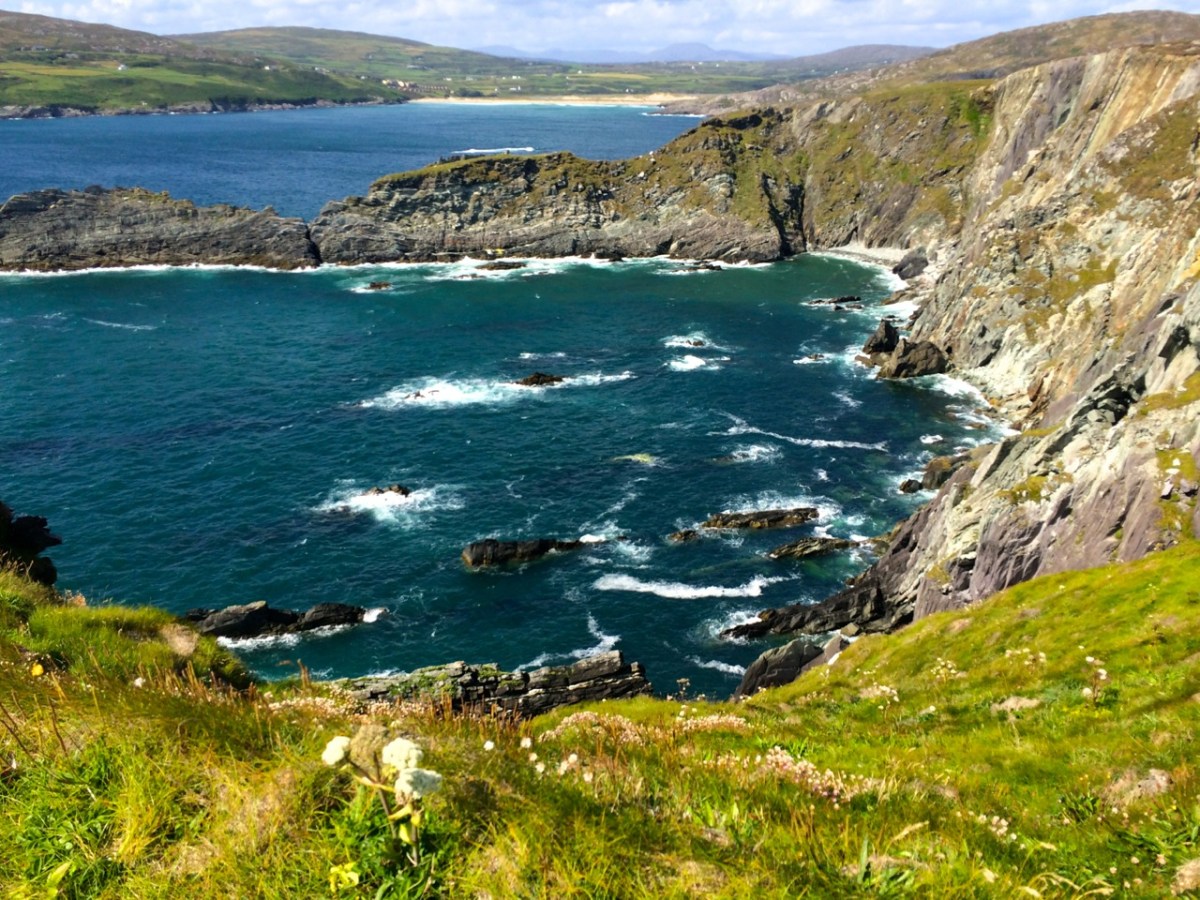
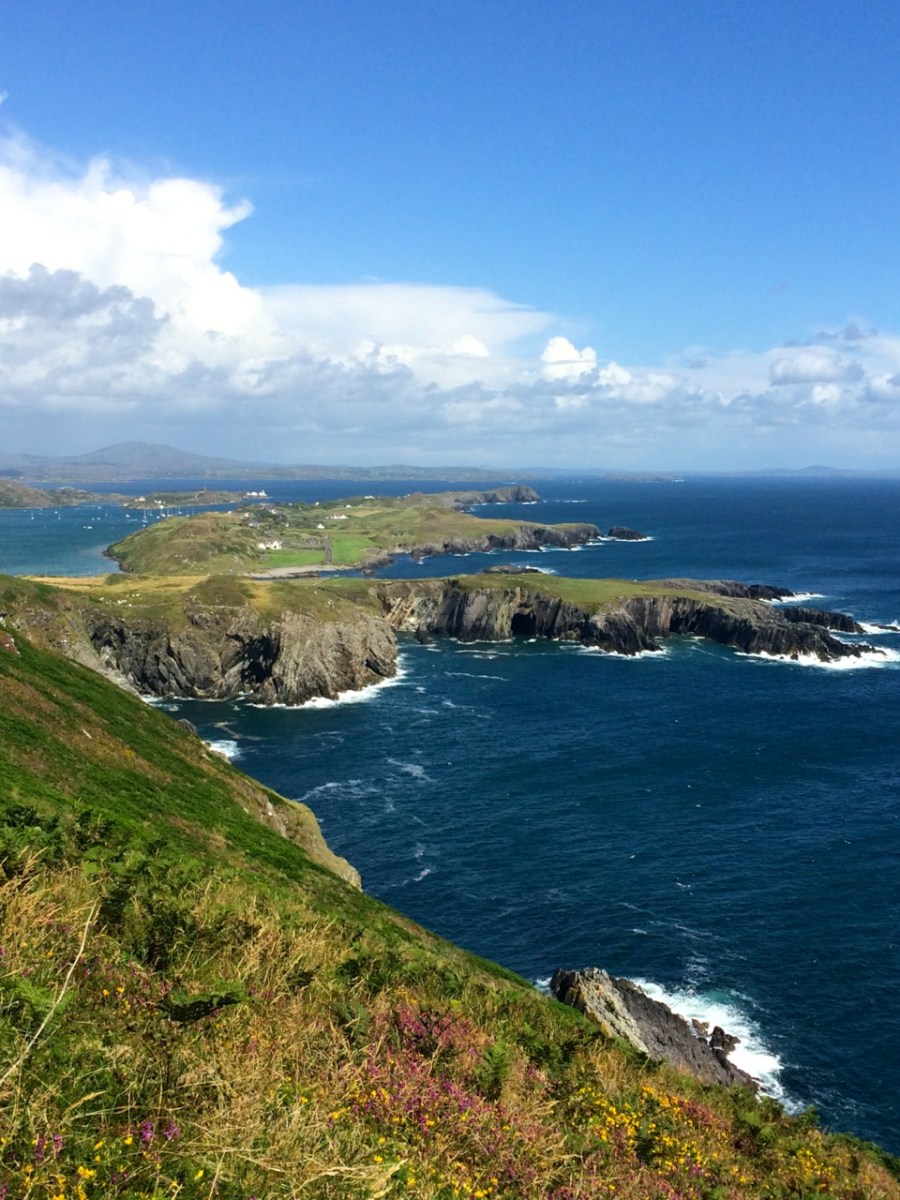
Brow Head looks back to Barley Cove (above) and Crookhaven (below) – some of the most spectacular views on the Mizen are seen descending from the head.
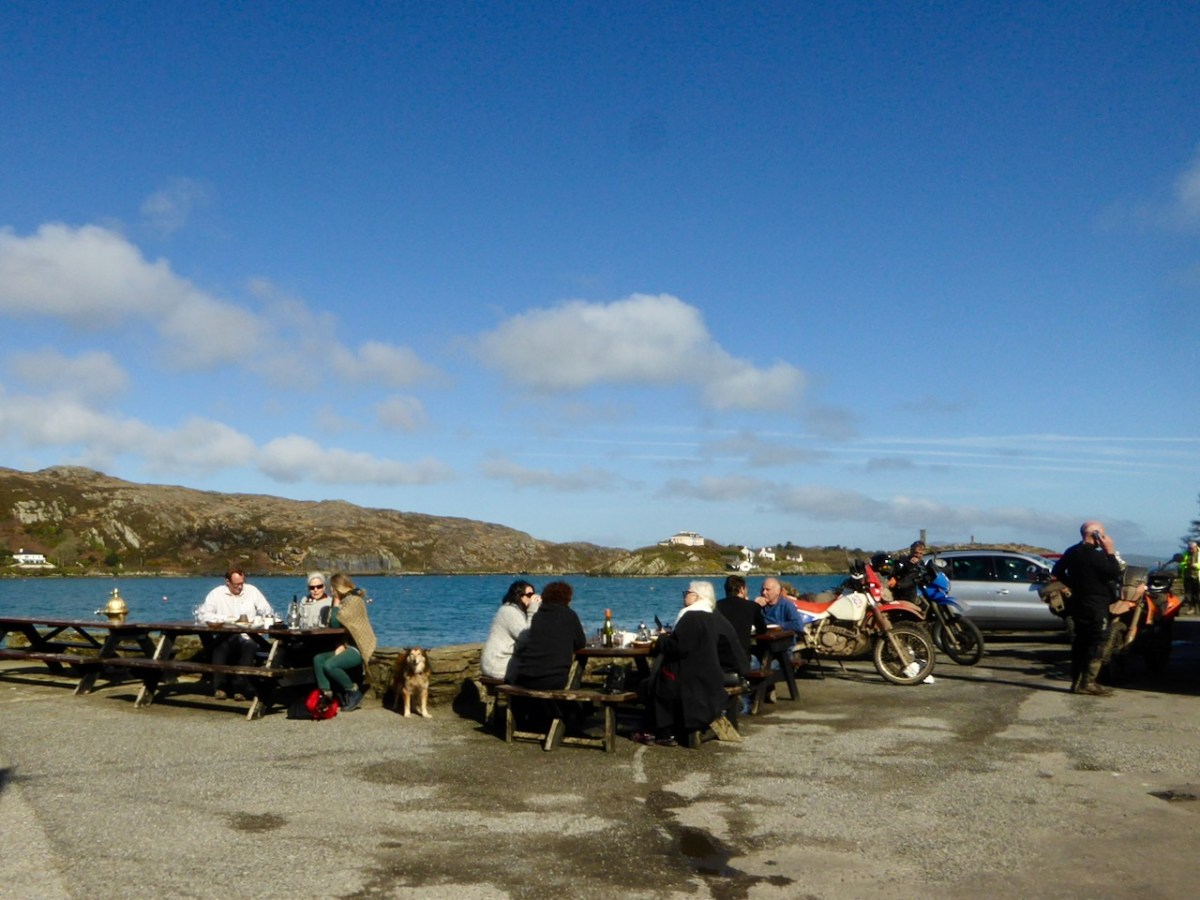
We took a dander around the Harbour and wrote about it in Mizen Magic 22: Crookhaven Harbour. Do the same, and don’t forget to stop at O’Sullivan’s for their excellent chowder and famous crab sandwich.
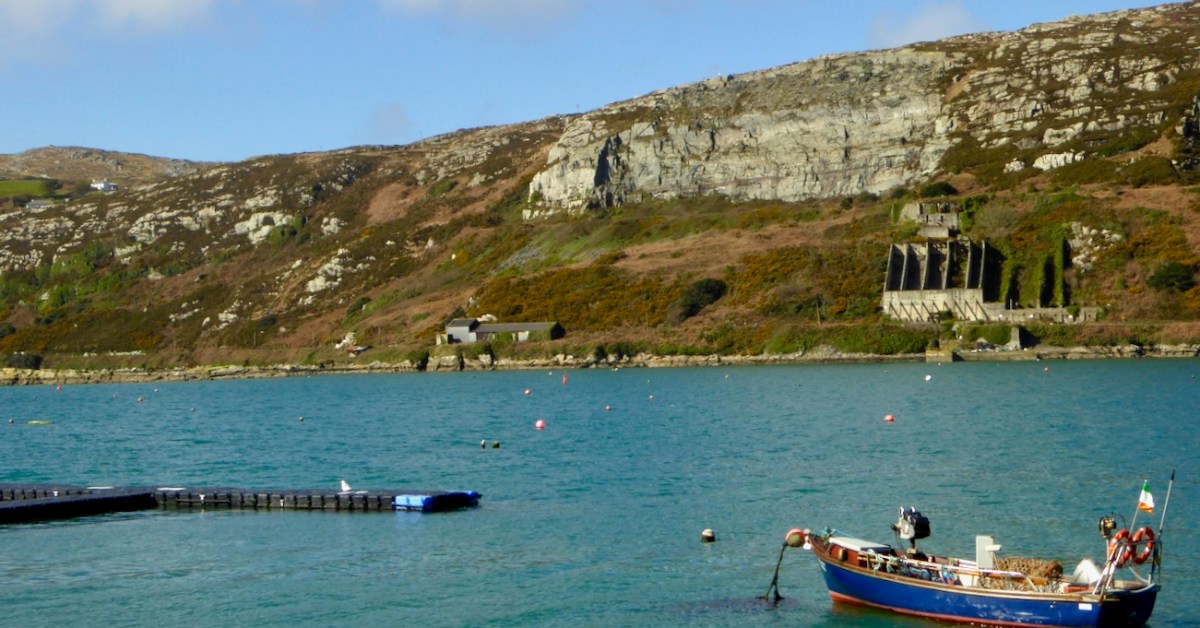
And while you’re sitting outside, savouring your chowder, look across at some Industrial Archaeology in Crookhaven. These imposing remains are all that’s left of a once-thriving stone quarry supplying road material until the late 1930s.
Of course there is much more to the Far End of the Mizen – I’ll continue this in the next post.
Friends, take note – this is an ideal Christmas present! If it has never occurred to you to take a drive, a walk or a cycle through any part of Dublin, dropping into churches along the way, this book will convince you that it’s the ideal way to spend a day, surrounded by history and beauty.
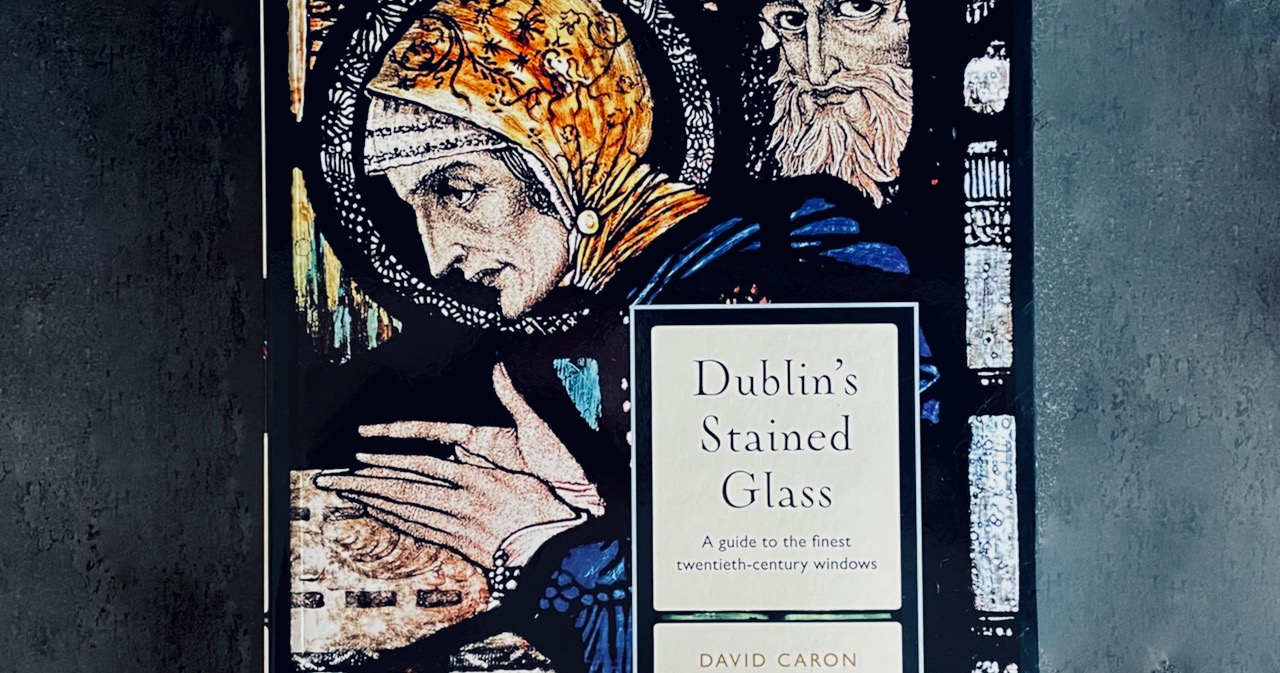
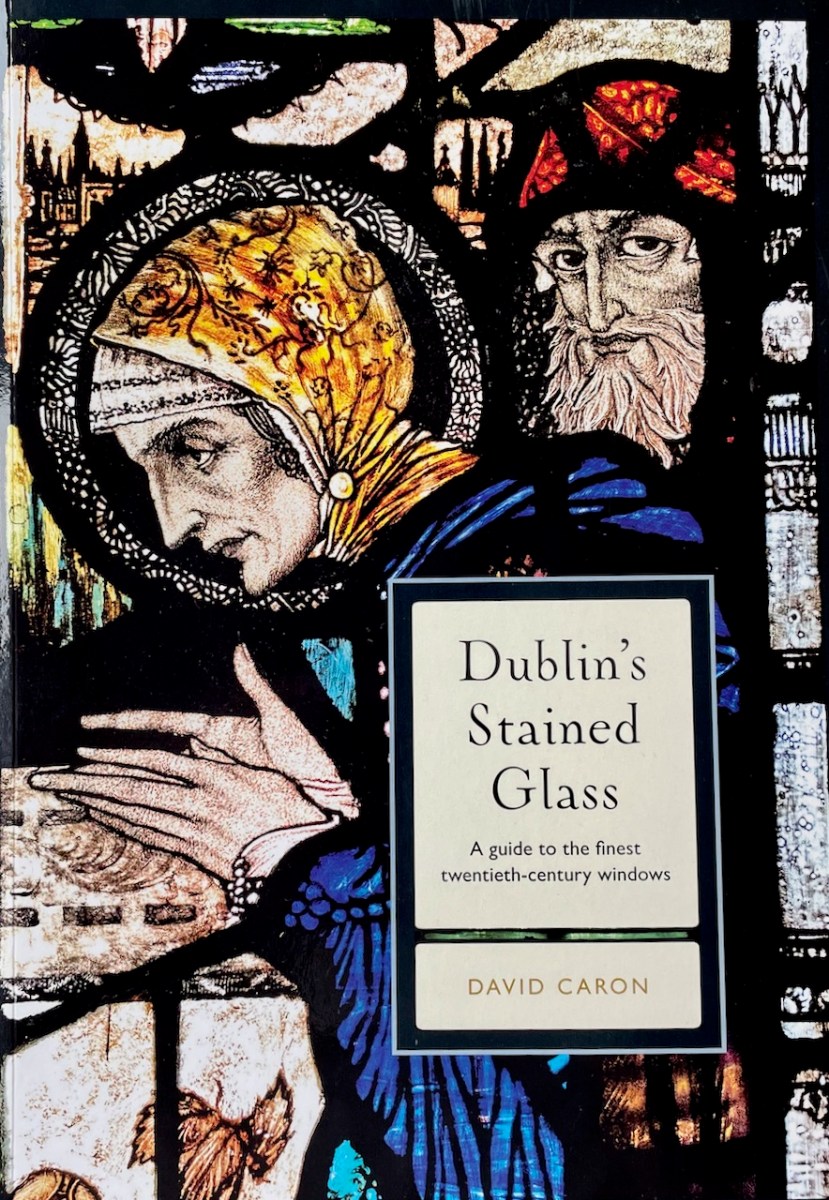
As my regular readers know, I write frequently about stained glass, and I was a contributor to The Gazetteer of Irish Stained Glass. The editor and main writer of that volume was David Caron, and I previously reviewed his marvellous book (I called it a ‘miracle’) on the life and work of Michael Healy. Now comes his latest work, Dublin’s Stained Glass, a book about the best 20th century glass in Dublin Churches, stunningly produced by Four Courts Press. This book needs to be in your library!
The John’s Lane church features in David’s Book, with a detail from the St Rita window. Here’s all of the narrative part of the window.
Here’s a statement you might not hear every day – the Catholic Church was the greatest patron of Irish artists in the 20th century. This is particularly true after Vatican II, 1962-65, the decrees of which included encouragement to use modern forms of architecture and art. But it is also true that the Church had the means to commandeer resources that were available to few private individuals in 20th century Ireland. The result of this is that the work of some of our best artists is public and easily accessible. While this book focusses on stained glass, David also points out where appropriate other example of fine art in churches (e.g. stations, altar furniture) as well as identifying the architects working to modernise or re-order our churches.
I have used my own photographs throughout this post, but they cannot compare with the magnificent photography by Jozef Vrtiel, David’s long-term collaborator and the single most talented photographer of stained glass in Ireland. This is truly a combined effort – David’s text and Jozef’s images complement each other superbly.
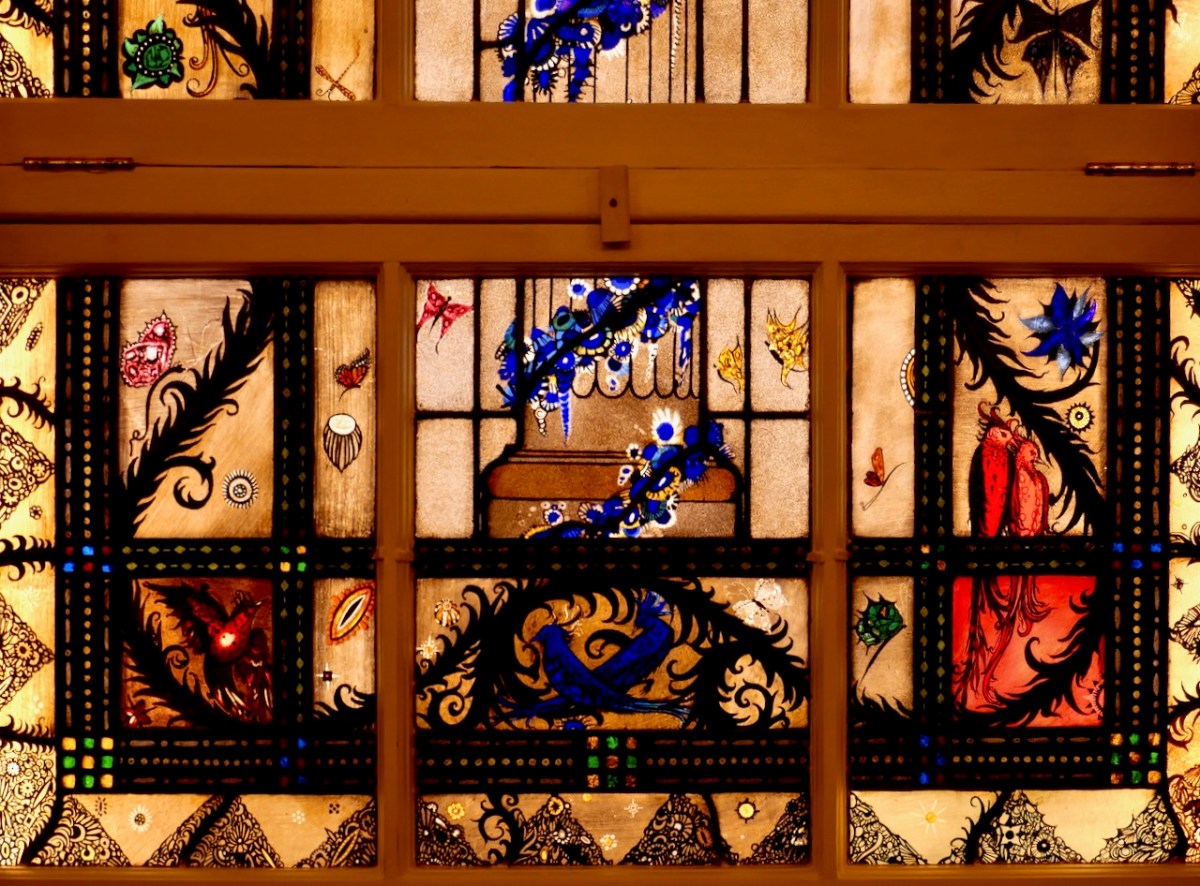
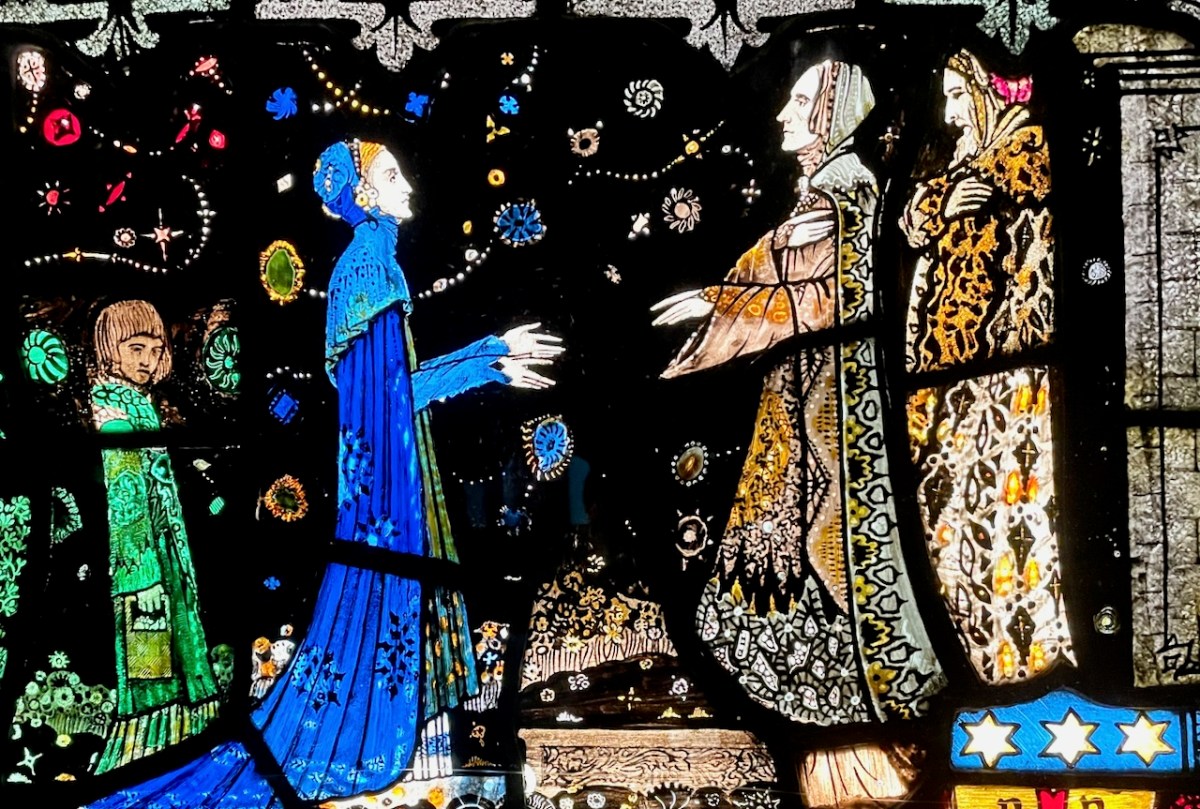
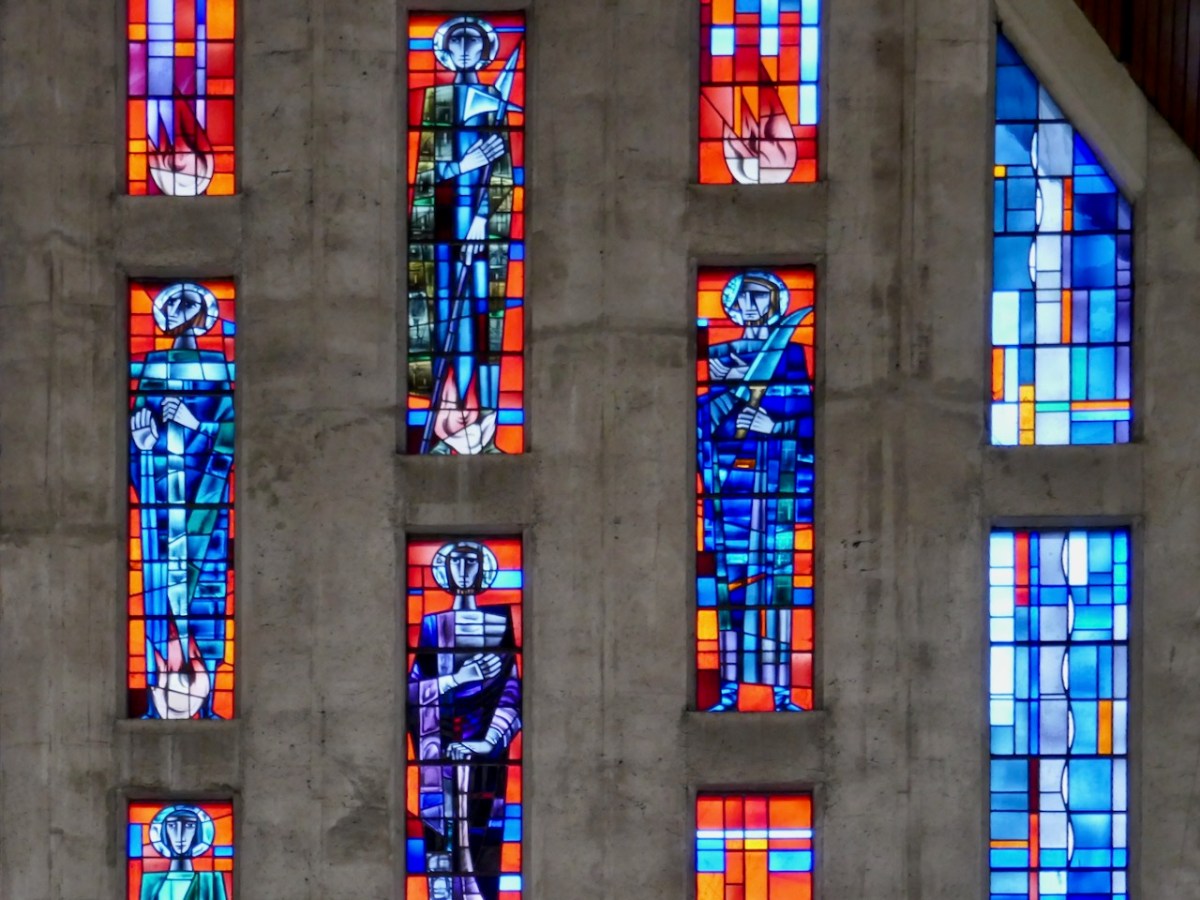
The book is laid out in sections: City, Dublin North and Dublin South (suburbs and county), encompassing thirty-nine locations. They are not all churches – Bewley’s on Grafton Street is included for its Harry Clarke windows (above, and above that), as well as the National Gallery with its excellent stained glass room, the Hugh Lane Gallery, home of Clarke’s Eve of St Agnes, and St Patrick’s Campus of Dublin City University, with its floor to ceiling expanse of dalle de verre by Gabriel Loire. This is a good example of a non-Irish artist included in the book. Gabriel Loire was French, and the internationally acknowledged master of the dalle de verre technique, in which slabs of glass, chipped round the edges to increase refraction, was embedded in concrete or resin, allowing for soaring walls of colour to be incorporated into the architectural scheme.
This little predella panel is at the base of The Blessed Julie window in Staunton’s Hotel on Stephen’s Green
But of course, mostly the stained glass is in churches. Catholic churches tend to be open much of the time, making them the easier option to visit. A little careful planning may be needed to visit non-Catholic churches. David gives the postal code for each location – very helpful as it works well with Google maps. Of necessity, schools, hospitals and other institutions had to be excluded since they are not publicly accessible most of the time.
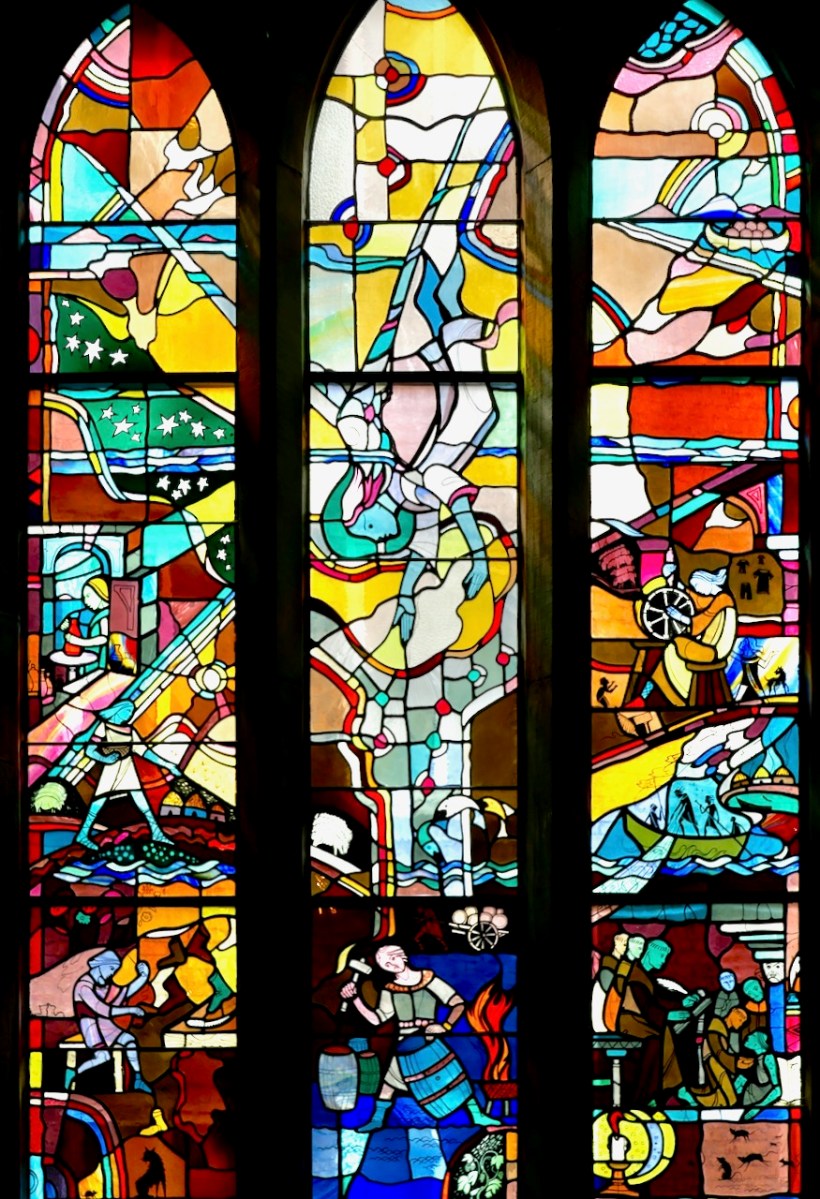
In the Dublinia exhibition this is George Walsh’s Trades window
In his introduction, David tells us:
During the 20th century Dublin’s reputation as a centre for stained glass excellence, both in terms of artistry and craftsmanship, was internationally lauded and is evidenced by the many orders placed by overseas patrons. Stained glass was the one area of the visual arts in 20th century Ireland that had an established school of the highest calibre, as distinct from singular talents such as Jack B Yeats and Eileen Gray. The highpoint for Irish 20th century stained-glass was the period from 1915 to 1980 and the leading figures were Harry Clarke, Wilhelmina Geddes, Michael Healy, Evie Hone and Richard King all of whom trained in Dublin, worked out of Dublin studios and so it is not surprising that the city has a concentration of first rate stained glass by them and many others.
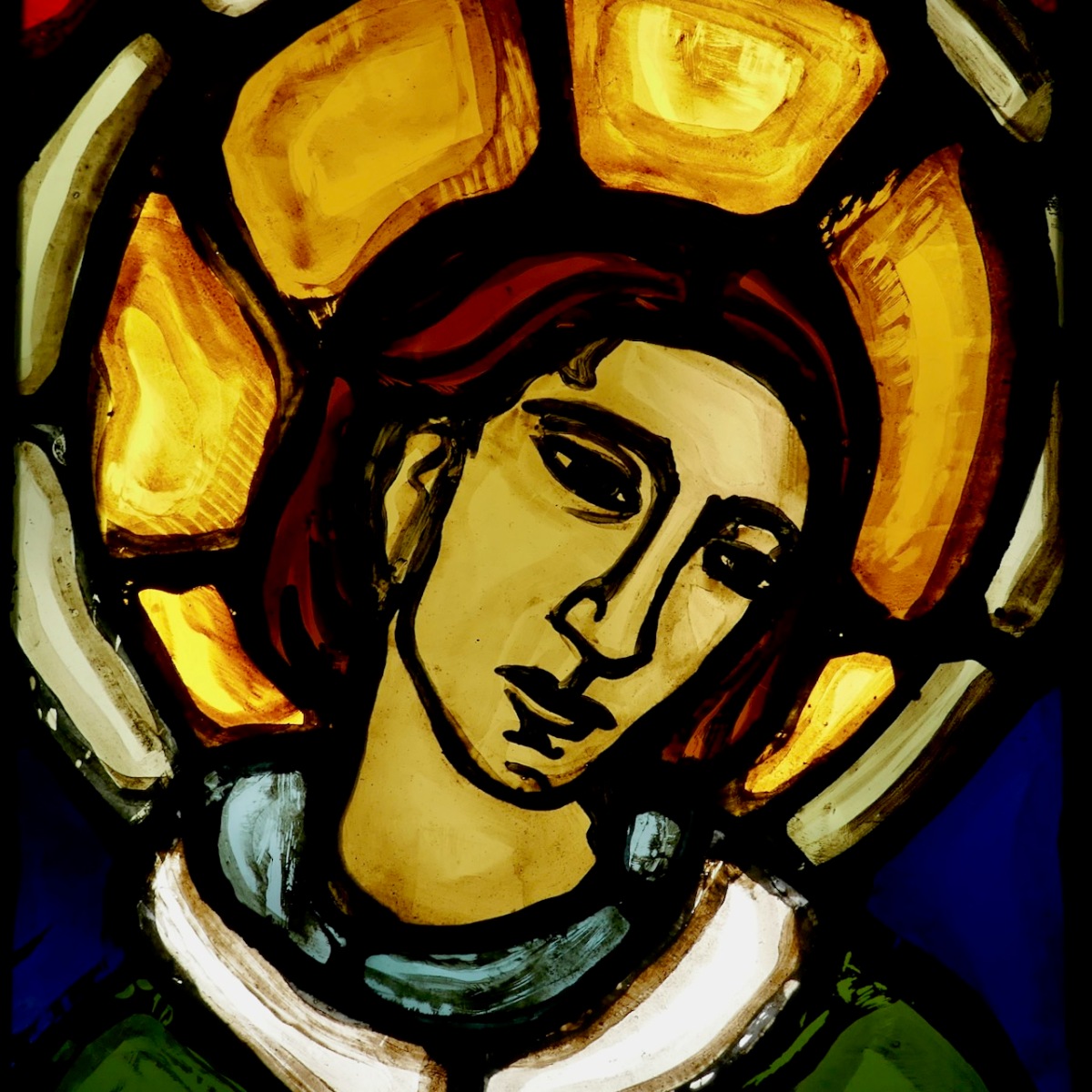
Evie Hone’s Head of St John at the National Gallery
I would add that stained glass was an area where both Irish men and Irish women could excel. Many of our finest stained glass artists were women and there has never been any tendency, as with other areas of artistic endeavour, to privilege the reputation of men over women.
Ballyroan Church of the Holy Spirit, with Murphy-Devitt’s stations laid out in narrative progression. This church also has paintings by Sean Keating
David starts with the architecture of each church, identifying the architect or firm, and describing its main features and influences as well as dates of construction and/or modification. As he says, if one were to visit all or many of the locations in the book, one would get a comprehensive overview of the story of twentieth-century Irish stained glass.
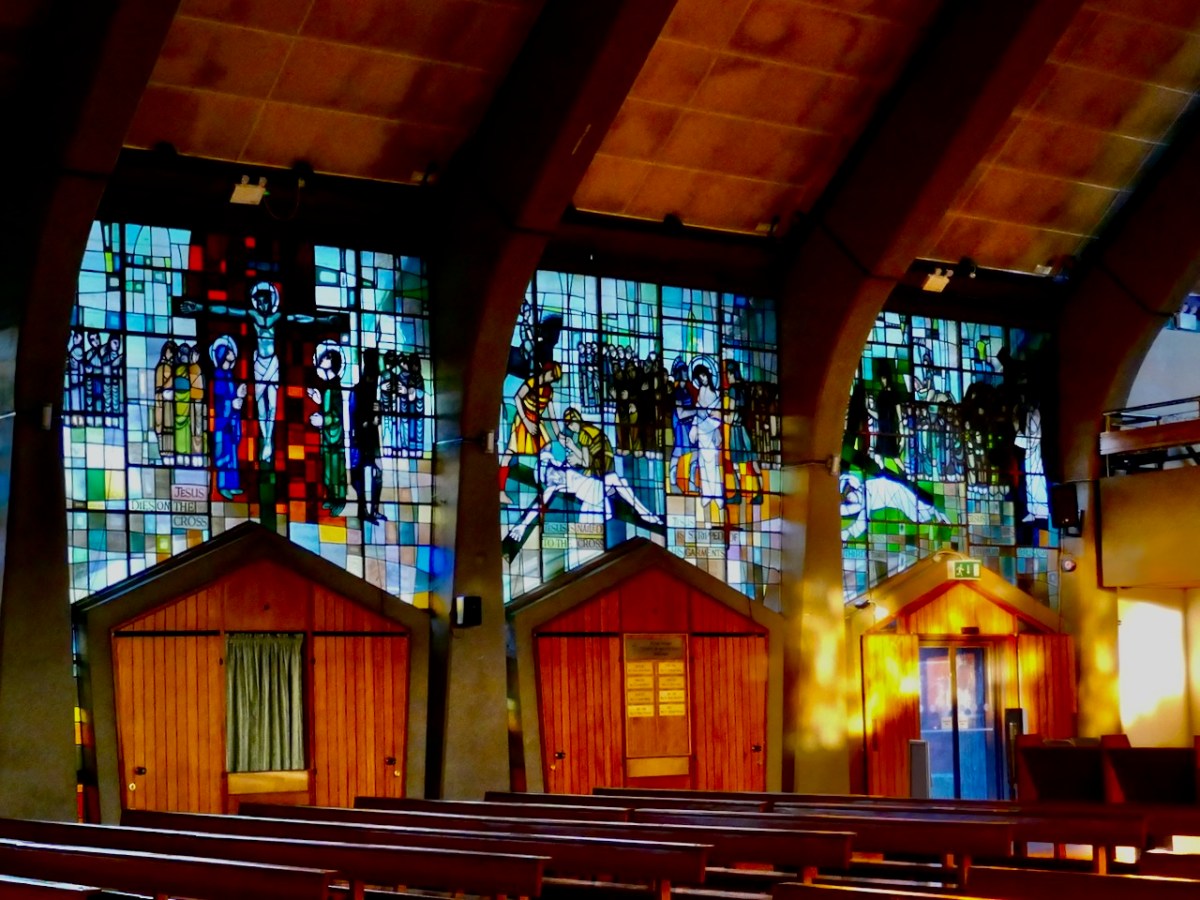
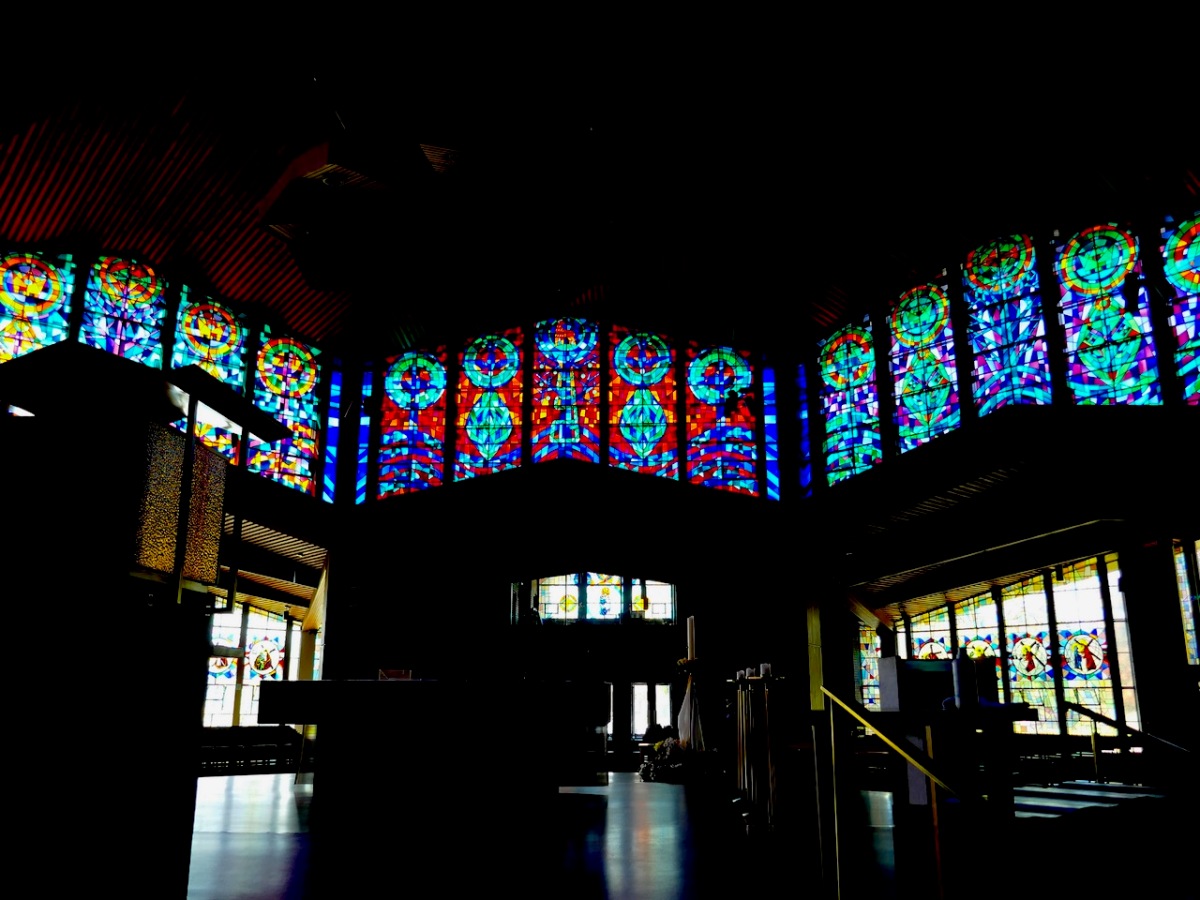
Let’s take one example – the church in Ballymun, Our Lady of Victories, one of the first batch of six churches in the Dublin Diocese that were built in the five years immediately after Vatican II, and which take into account the Guidelines of the council. Stepping into this church, as I did for the first time in May this year, is an immersive experience. First of all, it’s enormous – a reminder that in the 60s we were building Catholic churches which could accommodate thousands of congregants over the course of several masses every Sunday.
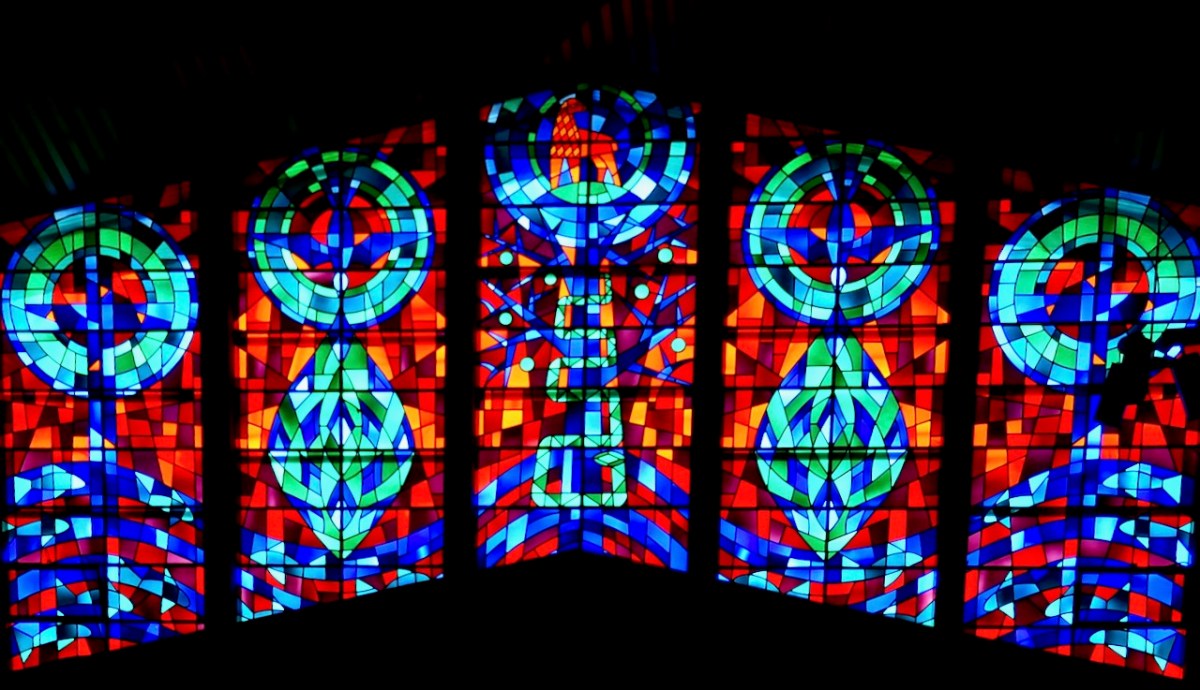
Secondly, you are immediately aware of being bathed in light and colour. There is a ‘lantern’ surrounding the central altar and this is the work of Helen Moloney. Here is David’s description:
Although it comprises eight sides or ‘windows’ (each composed of five panels), Helen Moloney created just two different designs for the windows; from these she made four different colour versions and these were duplicated to create the eight different windows. Despite the fact that there are essentially just two designs and she chose a deliberately restricted colour palette, this repetition is hardly apparent and instead one experiences an almost overwhelming sense of intensely zinging complimentary colours enlivened by punchy graphic symbols. Moloney used only the best of mouth blown glass in a selection of rich colours including red, blue, yellow, purple, violet, orange, green, and aquamarine, and although she has included different shades of these, mostly they are full strength from maximum visual impact.
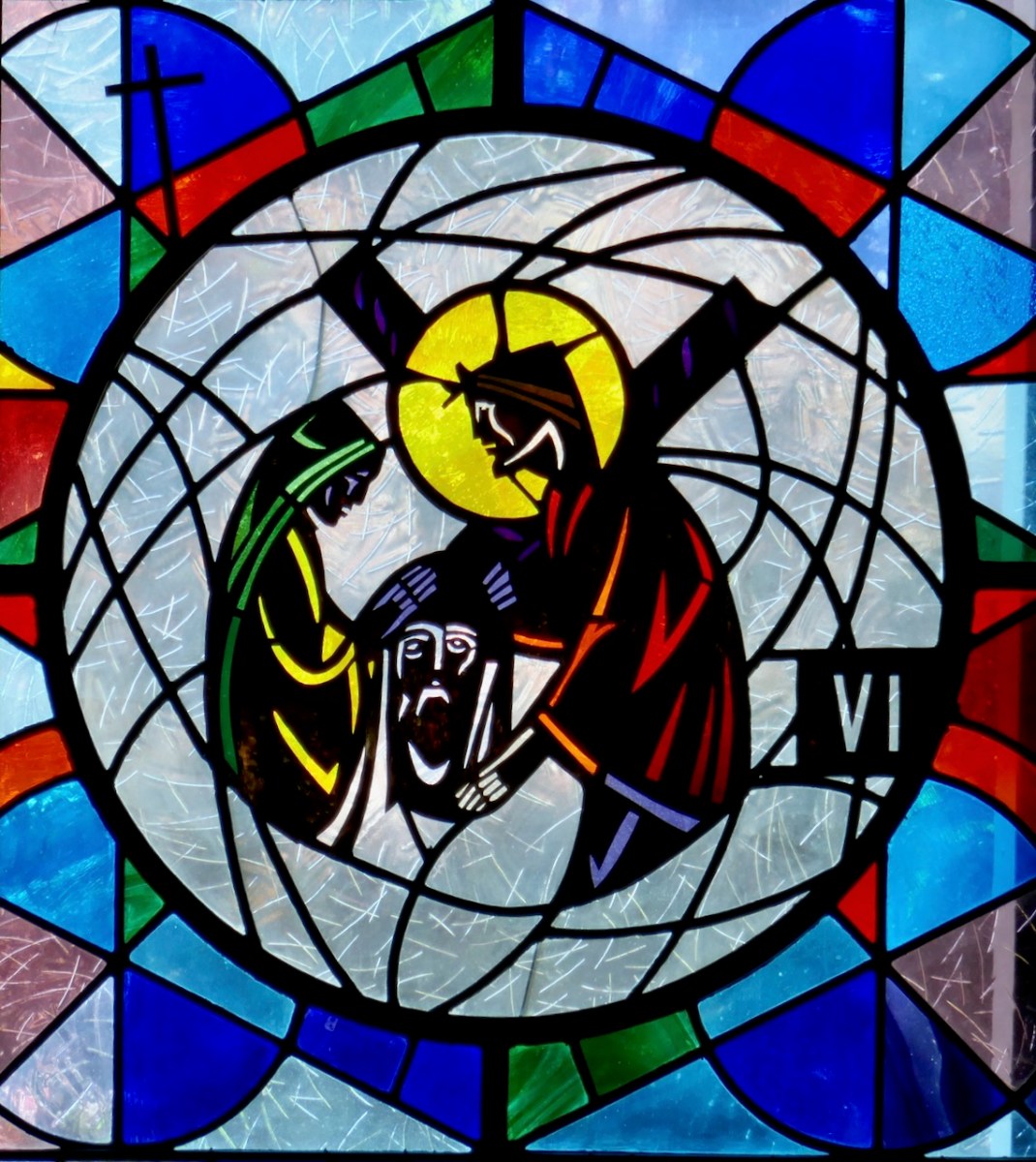
The second artist with work in Our Lady of Victories is my own favourite, George Walsh, at this time still working at Abbey Studios. The stations are by him, in an innovative technique using copper sheets, with details cut into them in the manner of a stencil (above). David comments, The effect is graphic and reduces the Stations to their essence. David points out that a rare feature of these Stations is the inclusion of a fifteenth station, the Resurrection. Walsh also has a St Joseph, a St Patrick and a Madonna and Child in the church.
Finally, Sheila Corcoran created a series of symbolic windows at ground level (above), representing the Evangelists and other sacred subjects. Neither Moloney nor Corcoran included any painting, relying solely on glass of different colours and shapes to create their images – an unusual choice for the time and very effective in this context.
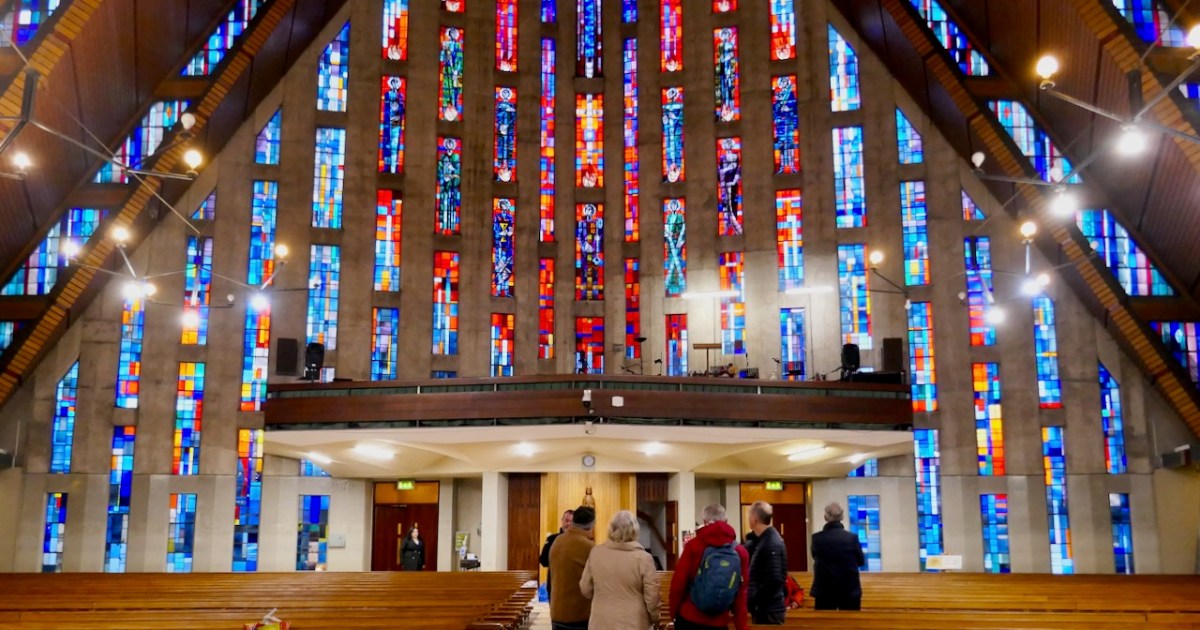
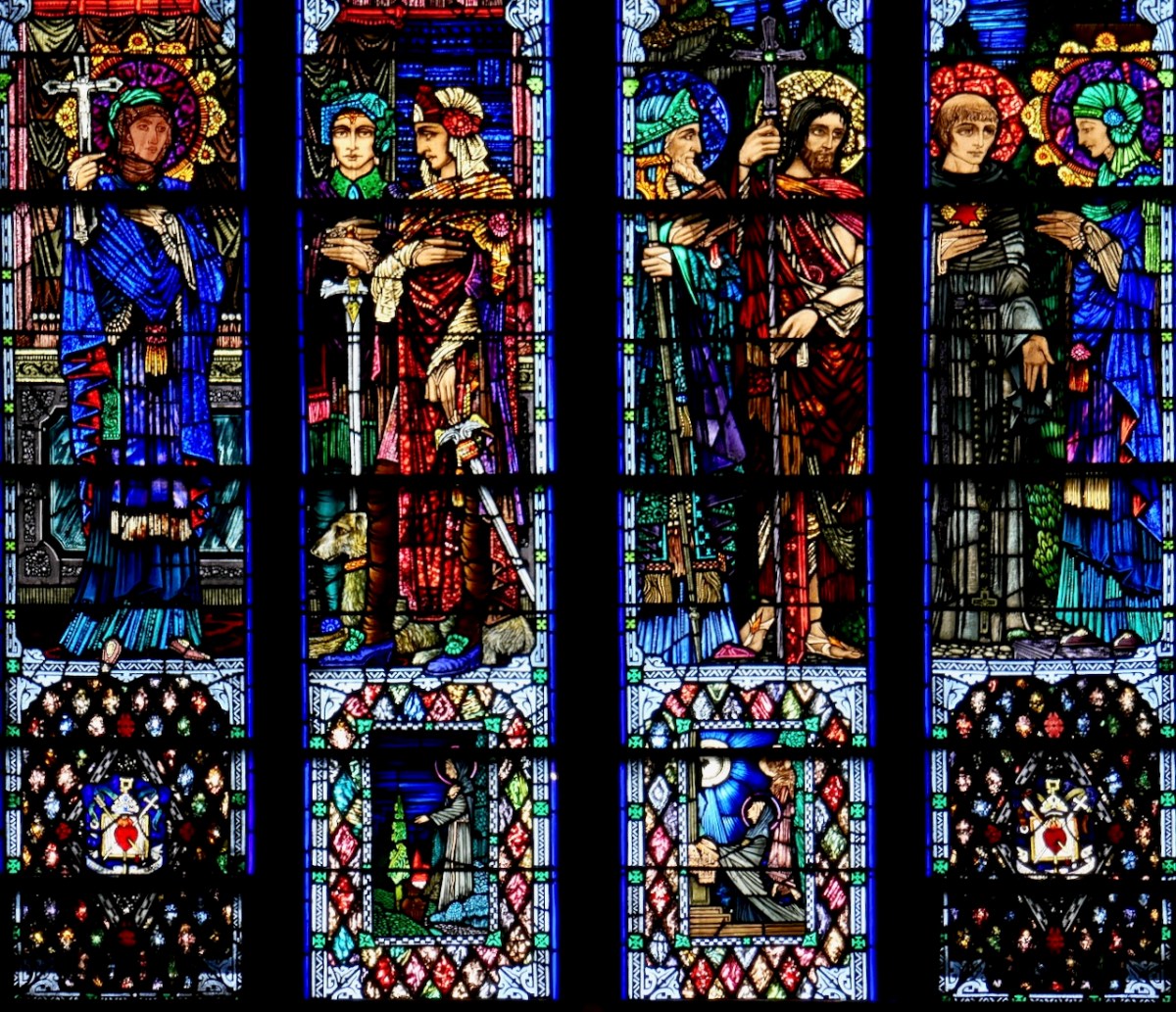
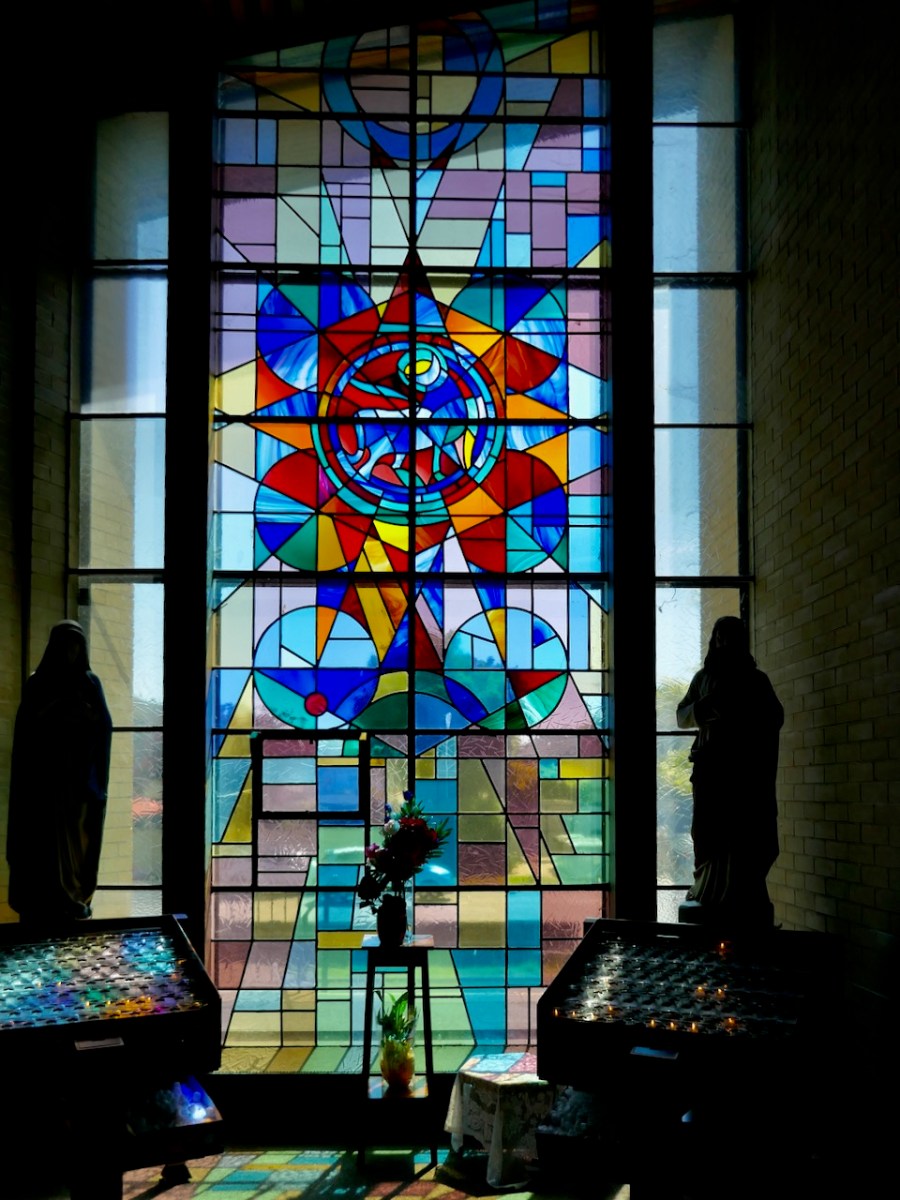
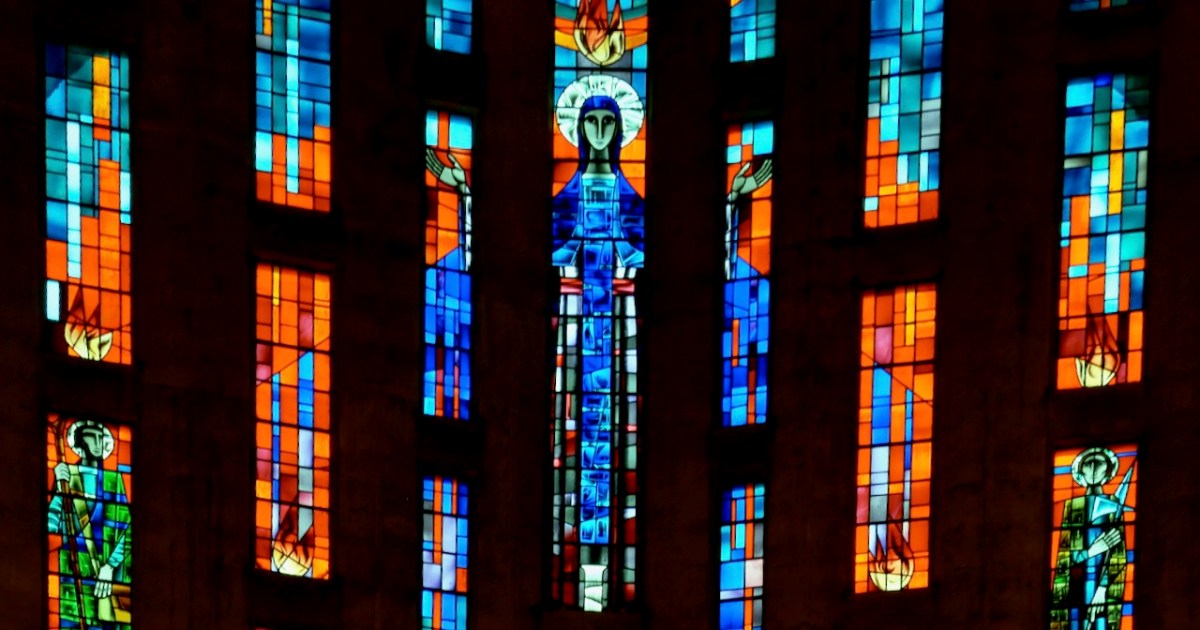
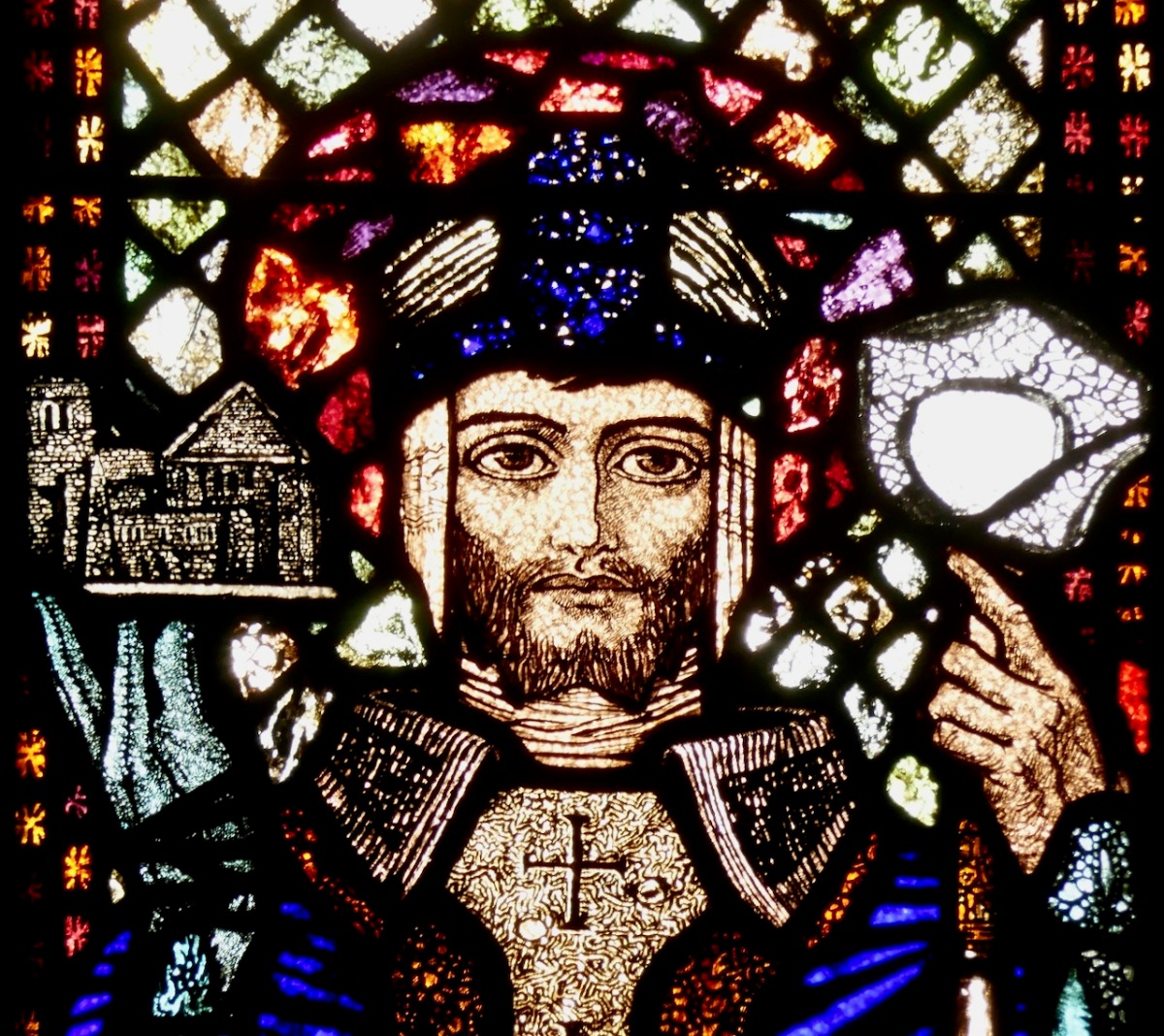
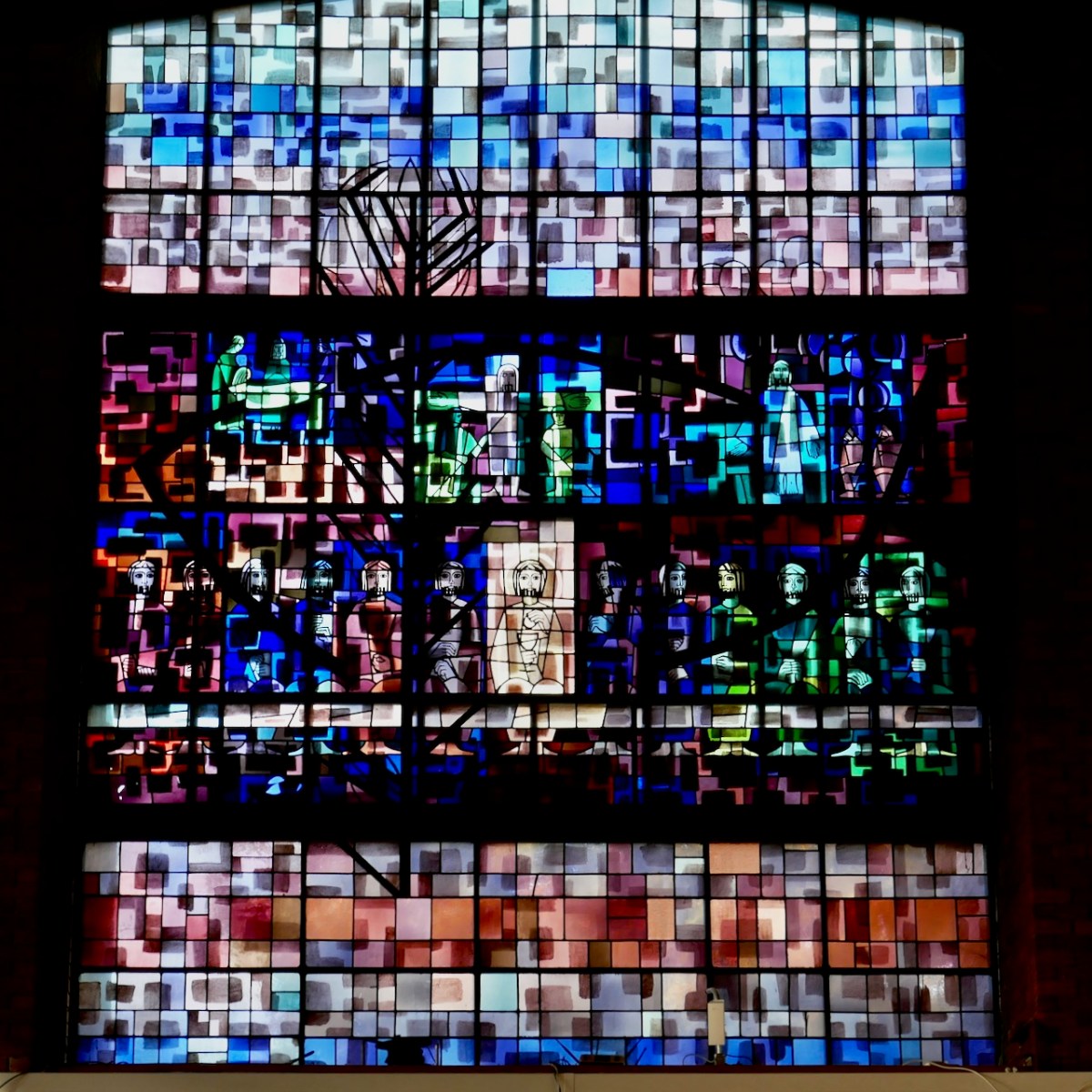
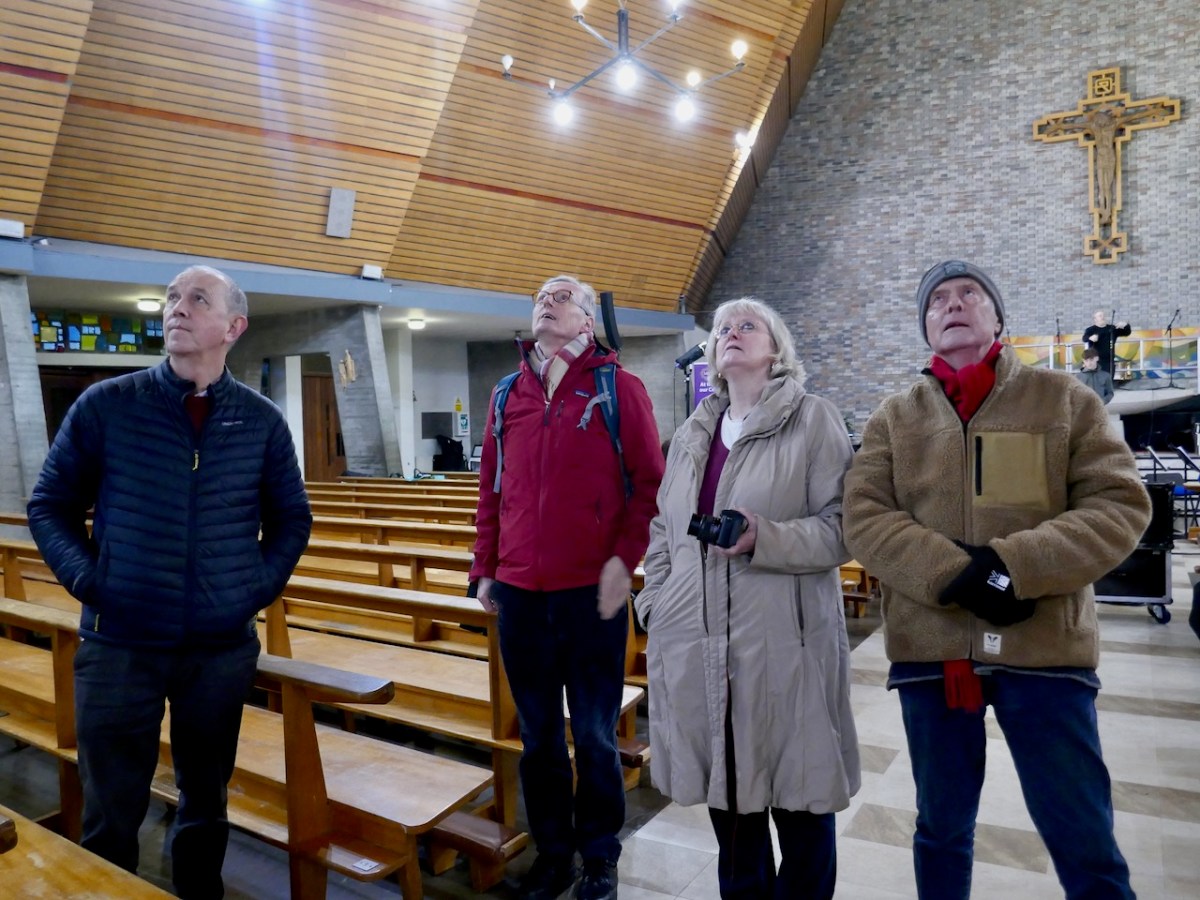
Moving to South Dublin, I cannot resist a visit to Greenhills, to the Holy Spirit Church on Limekiln Lane (above). I visited this church two years ago in the company of Robert, David Caron, Paul Donnelly (the Harry Clarke Studios expert) and Ruth Sheehy. We were thrilled that Ruth – whose work on Richard King has pride of place in my library and whose expertise I documented once before in my post Stained Glass Detectives – and a Find!– was able to talk us through the window, illuminating each part of it, and expanding on Kings’ style and colour choices. My topmost photograph in this post was taken as she led us through an erudite tour of each element.
King was aided and abetted by the Murphy Devitt Studios. Johnny Murphy worked with King to provide all the surrounding glass, in harmonious shades and using the same mouth-blown glass. He also designed the dalle de verre windows at ground level, while Peter Dowd, Roisín Dowd Murphy’s brother, was responsible for the wonderful bronze doors. The day we were there a choir was practising for an upcoming concert. The sensory effect stays with me still.
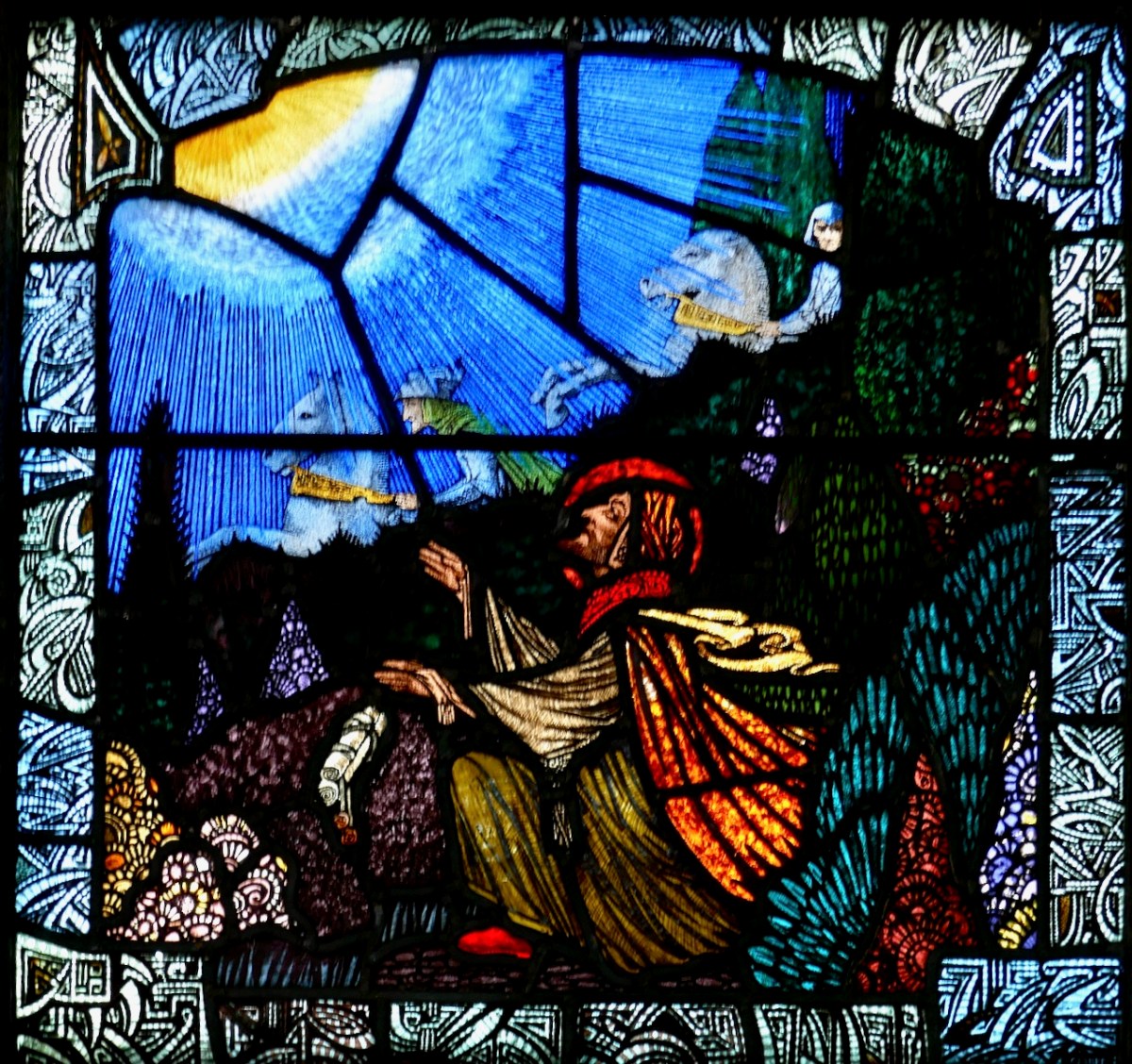
A Harry Clarke panel of St Paul on the road to Damascus, from the Sandford Road Church. This is not one of the churches included in the book, which just shows what difficult choices had to be made to stay within the page-count.
I have only highlighted two churches, both dating to the 60s – and neither of them contains a Harry Clarke! Rest assured that this book contains lots of Clarkes – at least 6 of the locations contain Clarke windows, as well as those and others containing the work of his Studios artists after his death. You will also be happy to see Evie Hone, Michael Healy, Wilhelmina Geddes, Hubert McGoldrick, Catherine O’Brien, Patrick Pollen and several others.
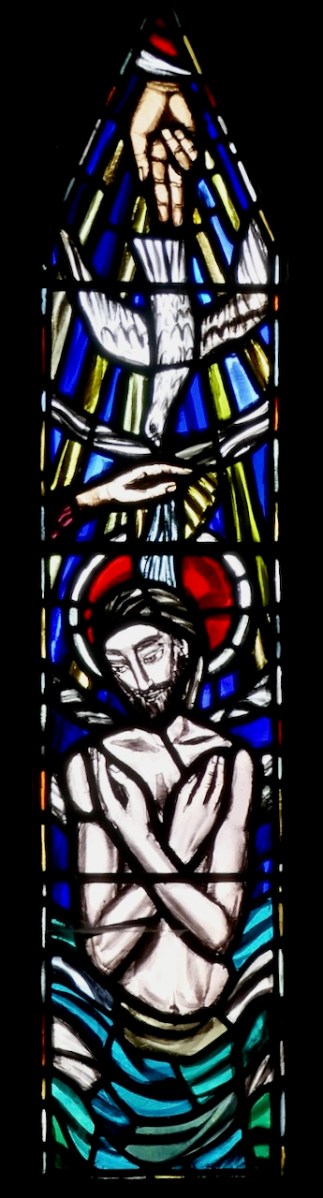
Patrick Pollen’s Baptism of Christ from Lusk
What is does not contain (with a few key exceptions) are productions by unnamed artists working in the large studios (Earley, Watsons, etc), nor windows from the mass-production houses such as Mayer of Munich.
Harry Clarke’s St MacCullin, also from Lusk
There are, as I have said, 39 locations in the book, but David would be the first to admit that if he were not constrained by page- and word-count he would have included several more. So let me add a couple that are so well worth visiting, even though they had to be left out of this volume. While at Lusk, for example, David suggests a visit to nearby St Maur’s in Rush and I concur – George Walsh’s series for this church typical of his mature style (below). Another place to see Walsh’s work is the Church of the Guardian Angels on Newtownpark Avenue in Blackrock.
St Mary’s Church in Sandyford has early Netherlandish glass – and yes, that is NOT 20th century, but it’s one of the few places to see it up close in Ireland. St Laurence O’Toole Church in Kilmacud has a huge and very stylised panel by Phyllis Burke (below). Sandford Road Church of Ireland has a Harry Clarke St Peter and Paul (see the illustration fourth up).
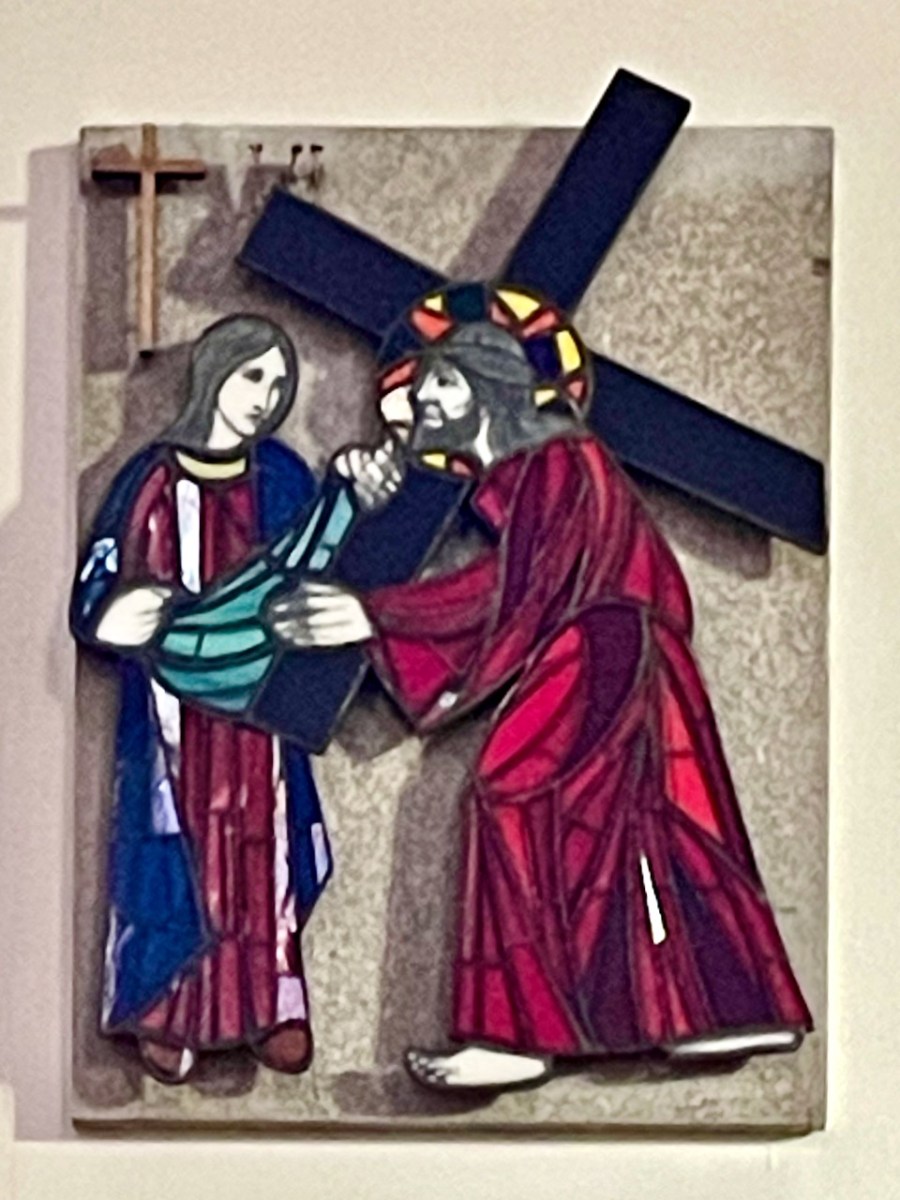
This is one of a set of stations made from antique glass and polished granite, done by George Walsh and Willy Earley for the Clarendon St church
Grand so, you have all you need now for some ecstatic wanderings around Dublin Churches. I leave you with our own ecstatic wanderings – as a bookend to this post, here we are in Greenhills, quite in awe of Richard King’s and Johnny Murphy’s enormous window. Left to right is Paul Donnelly, David Caron, Ruth Sheehy and Robert.
I spent Saturday in Baltimore celebrating, with dozens of Crowleys, a signal occasion. This celebration involved the iconic boat The Saoirse, exhaustive genealogical research, long lost cousins meeting for the first time in over 300 years, and a remembrance of a devastating episode in Irish History – the Flight of the Earls.
Let’s start with the Flight of the Earls. The Battle of Kinsale in 1601, was the moment that marked the end of the power of the great Irish families and the end of the Gaelic way of life. Many heads of those families who had fought at the battle fled Ireland from Rathmullen in Donegal, heading for the continent, in 1607. Their names can be found in the lists of those who fought in the armies of Spain, France and the Austrian Empire, as well as, sometimes lightly disguised, as landowners, wine-growers and grandees in those countries.
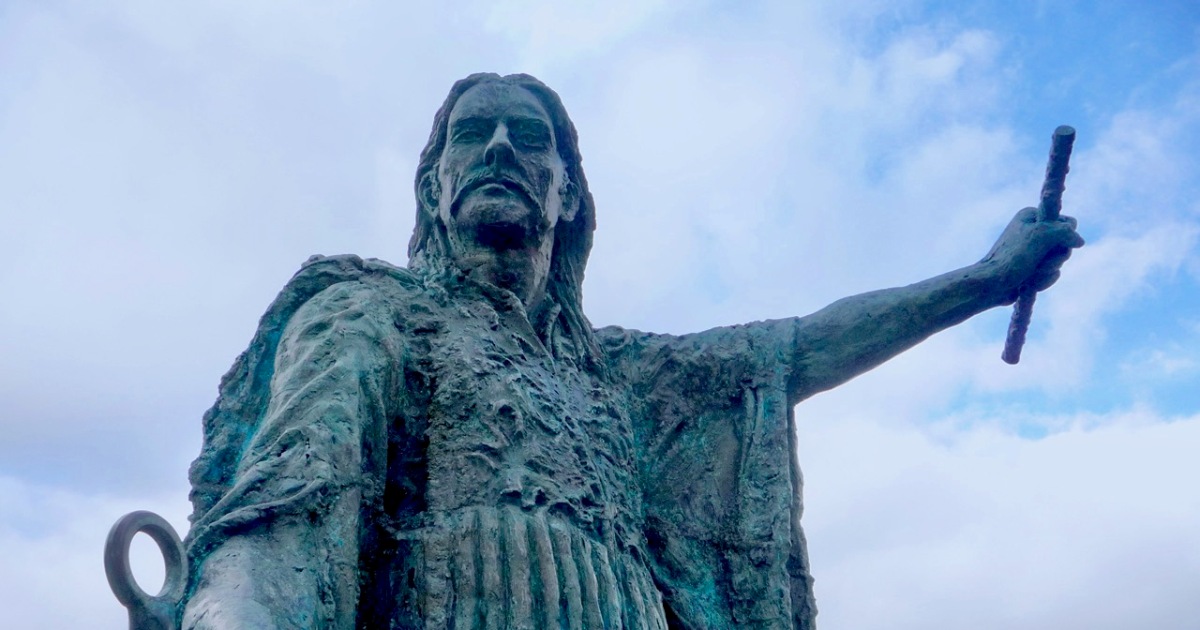
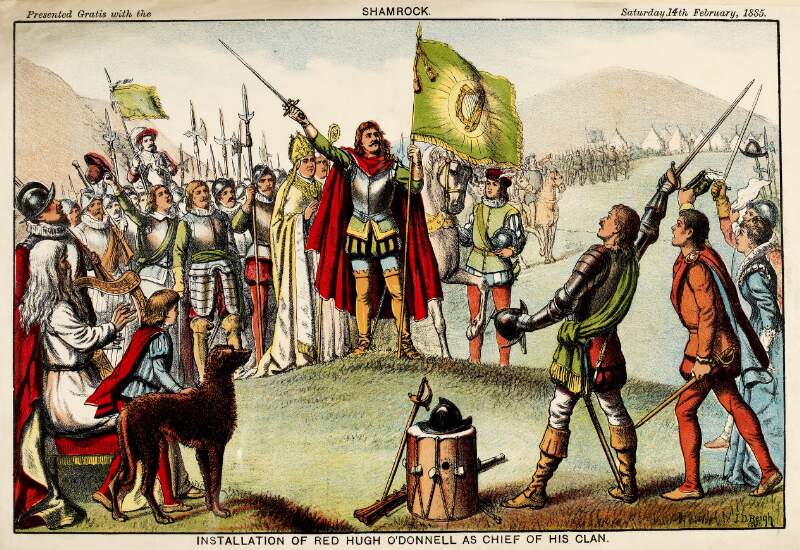
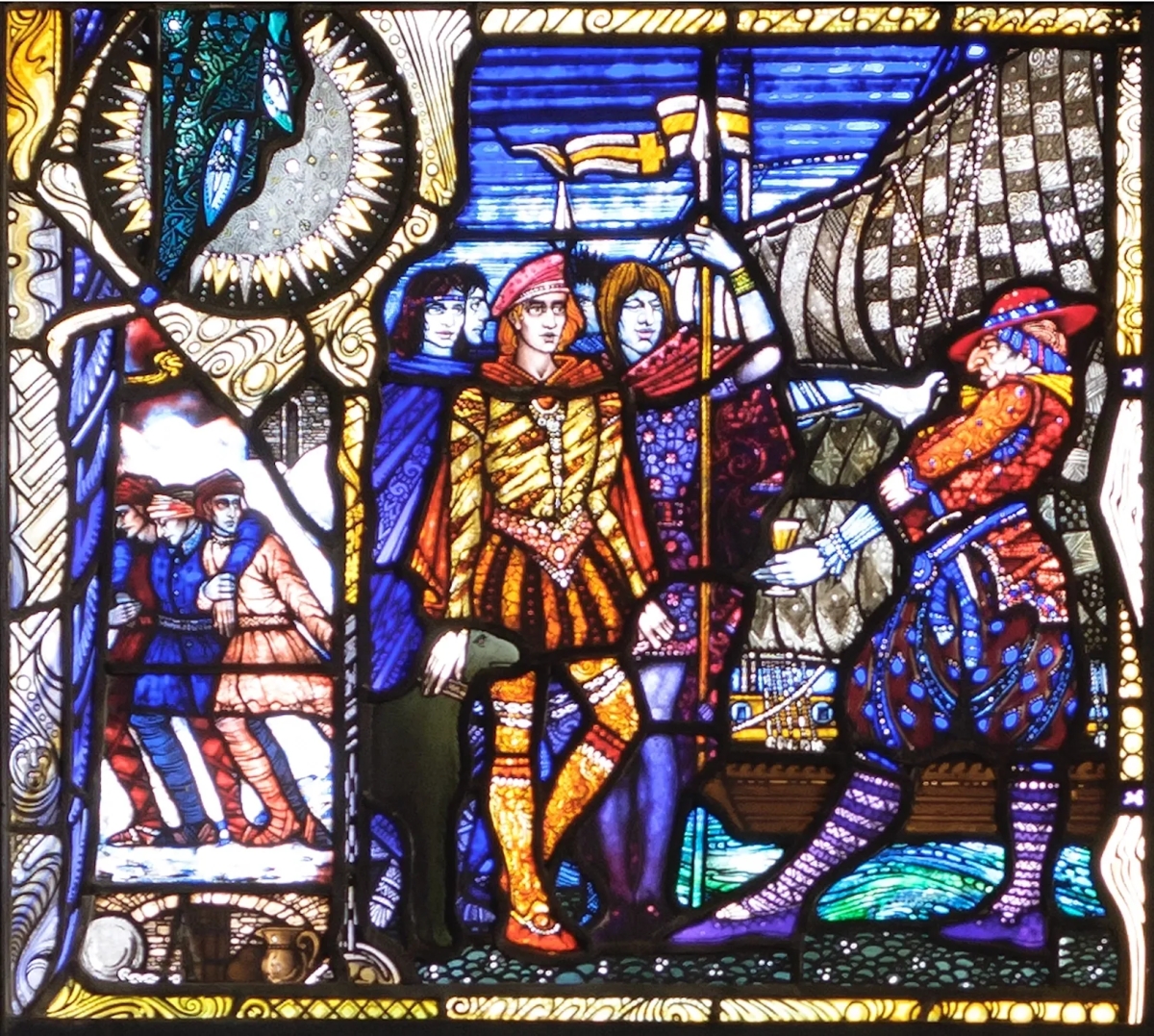
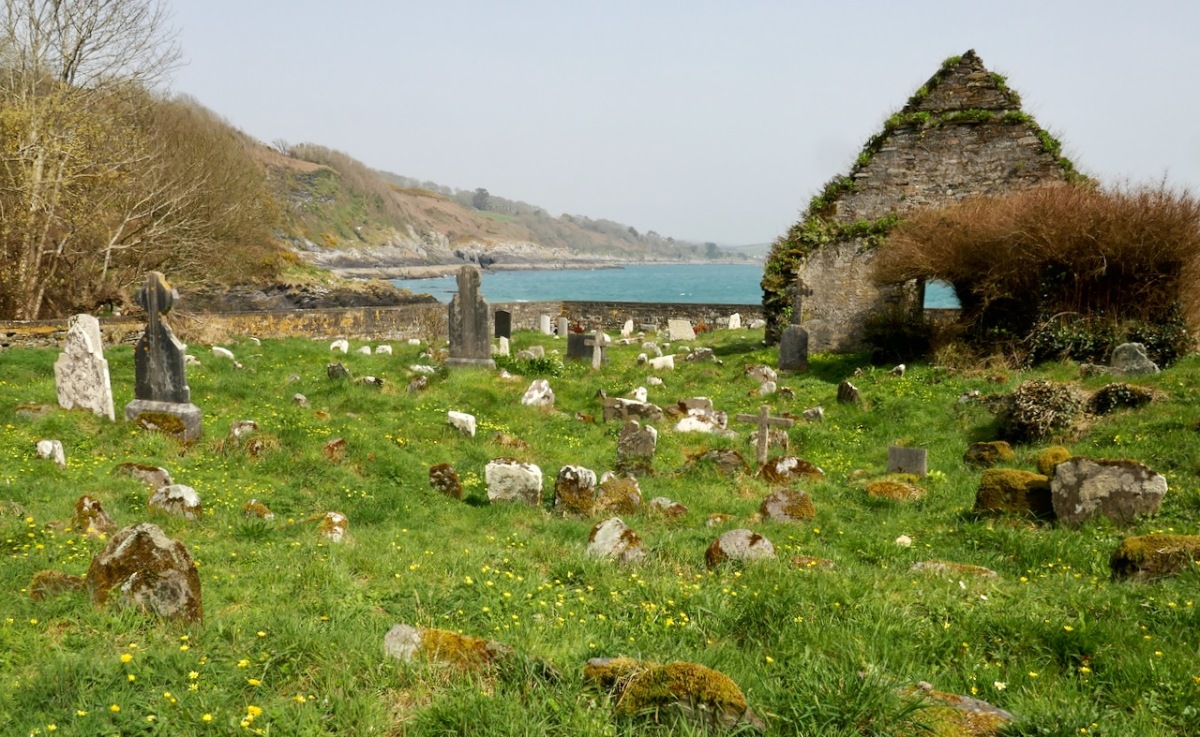
However, one of the leaders, Red Hugh O’Donnell of Donegal, set out earlier, on January 6th, 1602, and he sailed from nearby Castlehaven (below). You can find the whole story, told in a highly entertaining way, on the website of our old friend Gormú. That’s Richard King‘s rendition of Red Hugh, above, being offered a poison cup by a traitor, causing him to die in Spain (where his grave has recently been identified). My lead photograph is his statue, by Maurice Harron, in Donegal town and the cartoon is by John Dooley Reigh, from The Nation (I think). We in West Cork have never forgotten that this is a West Cork story and we feel we can claim Red Hugh as one of our own. This connects us in a special way to the whole saga of the Flight of the Earls.
That flight did not stop in 1607 – Irish men and women, clan chieftains, soldiers and peasants alike, continued to leave for the continent over the next centuries.
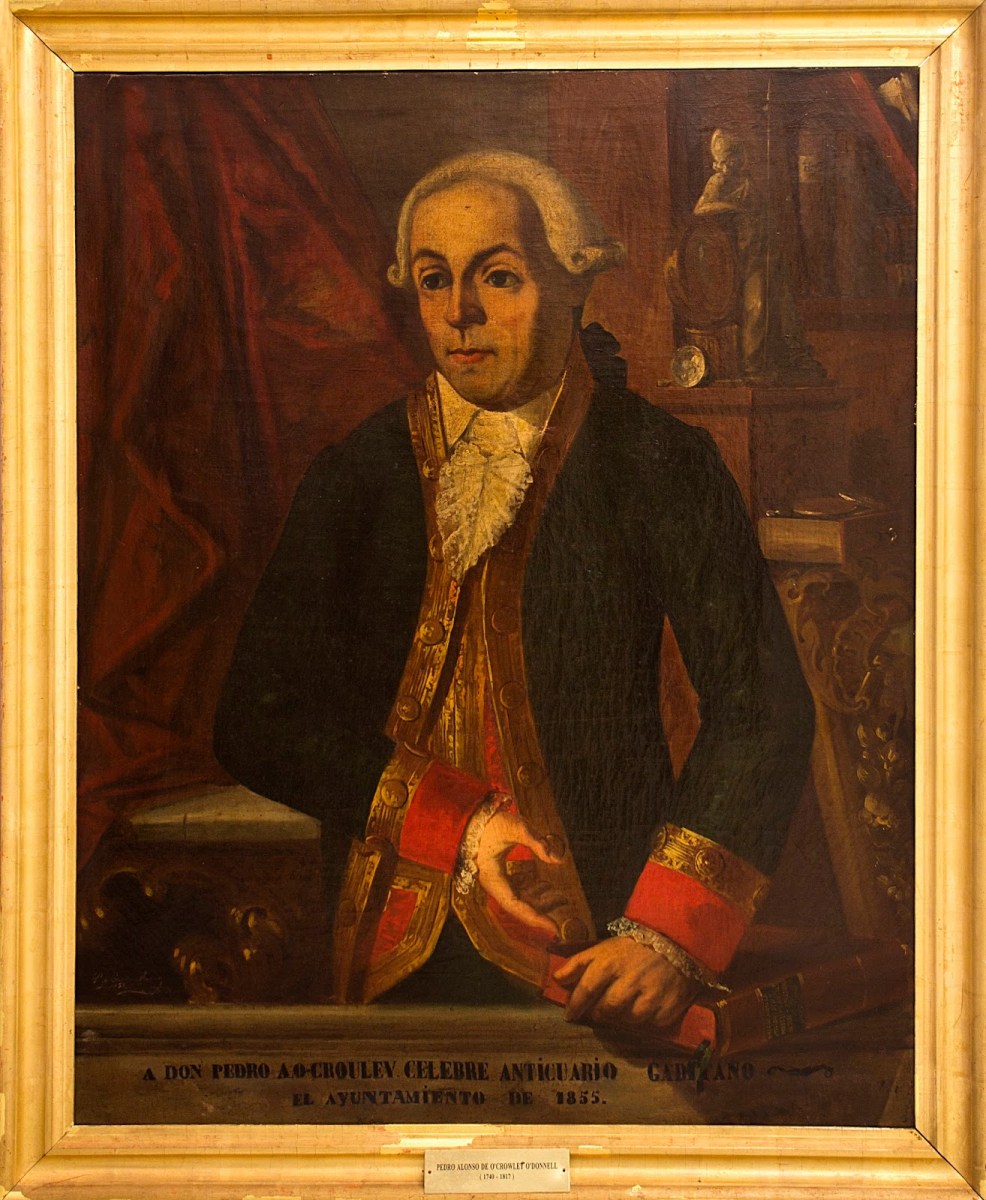
Among those who left were the parents of Don Pedro Alonso O’Crouley. Here are the details from the Crowley Clan website:
Pedro Alonso O’Crouley was born in Cadiz in 1740. Both his parents had emigrated from Ireland. His father Dermetrio (Diarmuid or Jeremiah) was from Limerick claiming descent from Cormac O’Crowley born in Carbery, Co. Cork in 1550. His mother was an O’Donnell from Bally Murphy in Co. Clare.
At nine years old he was sent to France where he got a classical education from the Augustinians at Senlis. He chose to follow a career as a merchant and got a licence for Veracruz and made his first journey to Mexico at the age of 24. Over the next ten years he repeated the journey several times and built up a large fortune from his trading business.
While in Mexico, or “New Spain” as it was called, he gathered every bit of information he could about the country and its history, geology, vegetation, animals, etc. and wrote up his findings in the “Idea compendiosa” – A description of the Kingdom of New Spain” in 1774.
After returning from Mexico O’Crowley stayed on in Cadiz pursuing his interests in antiquities and history. In 1794 he published a catalogue of his private collections called “Musaei o’croulanei”. It lists over 5,000 Greek and Roman coins and 200 paintings including works by Van Dyck, Rubens, Murillo, Velaquez, Zurbaran and Ribera. He also had many geological specimens he had gathered in New Spain.
Pedro remains very famous in Cadiz, where his house functions as a museum. And – there are descendants! In 2014 the Crowley website received a letter:
My name is José María Millán Fuentes, and I am a descendant of O’Crowley. I live in Cádiz, Spain, and I am doing work for the University of Málaga on my ancestors. I speak very badly English, but I have a lot of interest in the topic. I would like to help you, and that you also should help me. I have read in your web Antonio Castro, and also I descend from Pedro Alonso O’Crowley O’Donell and Adelaida Riquelme O’Crowley. I have a lot information about the family up to Pedro Alonso, but then everything fades away.
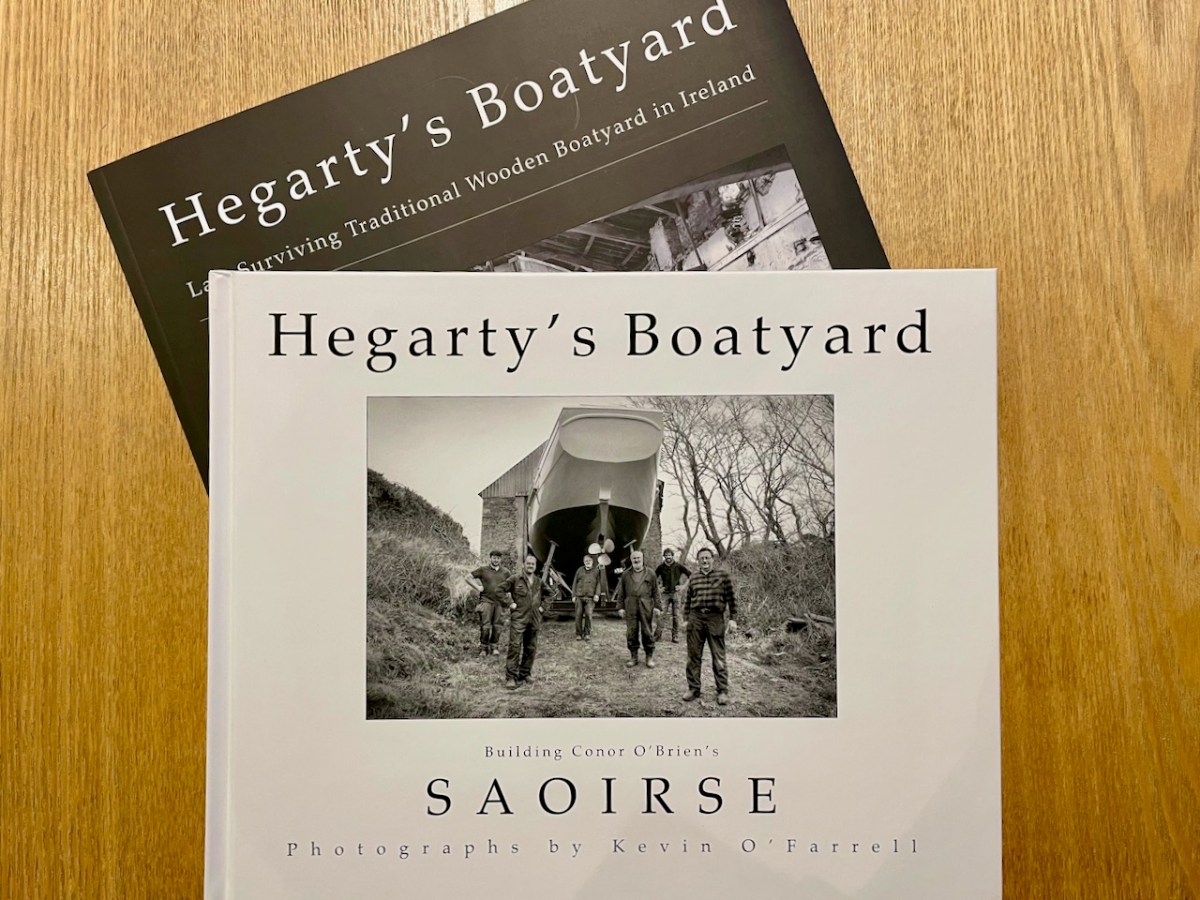
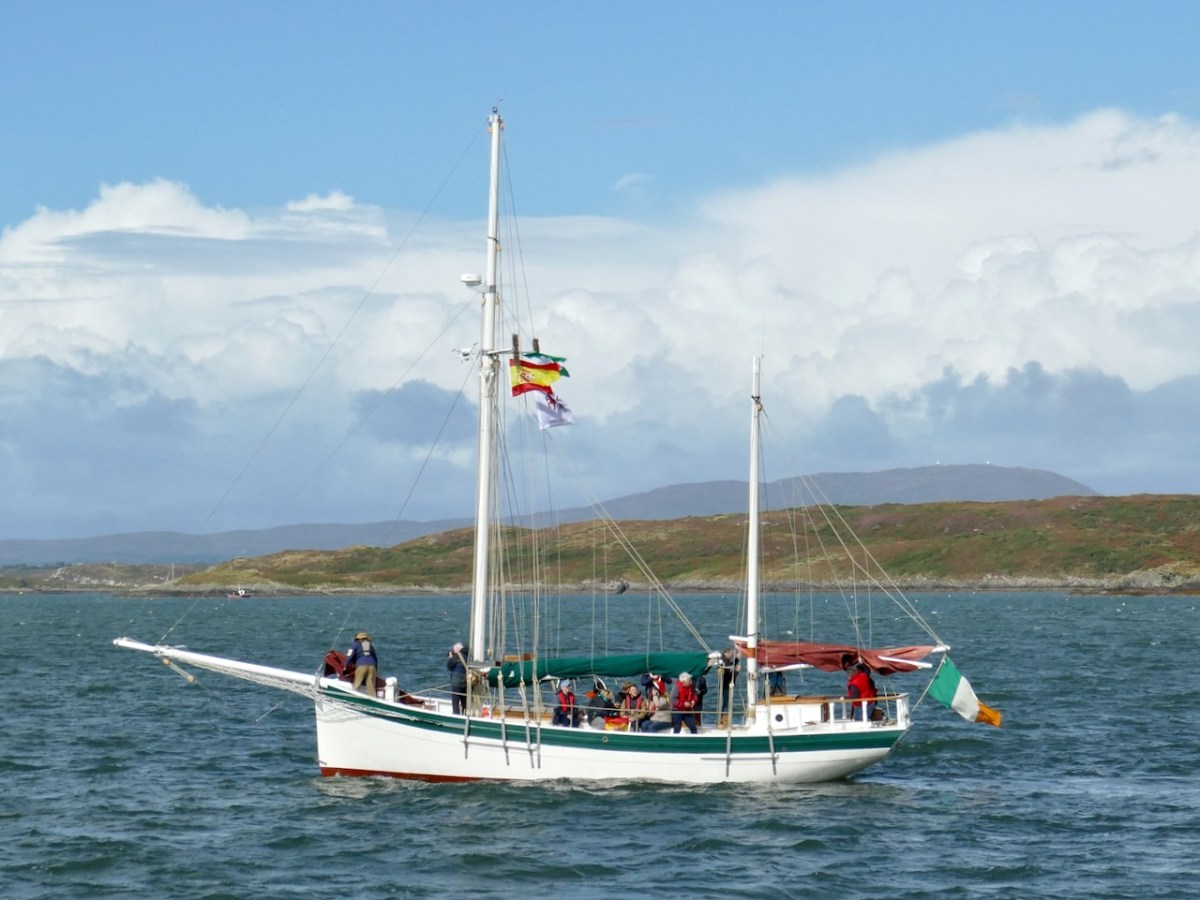
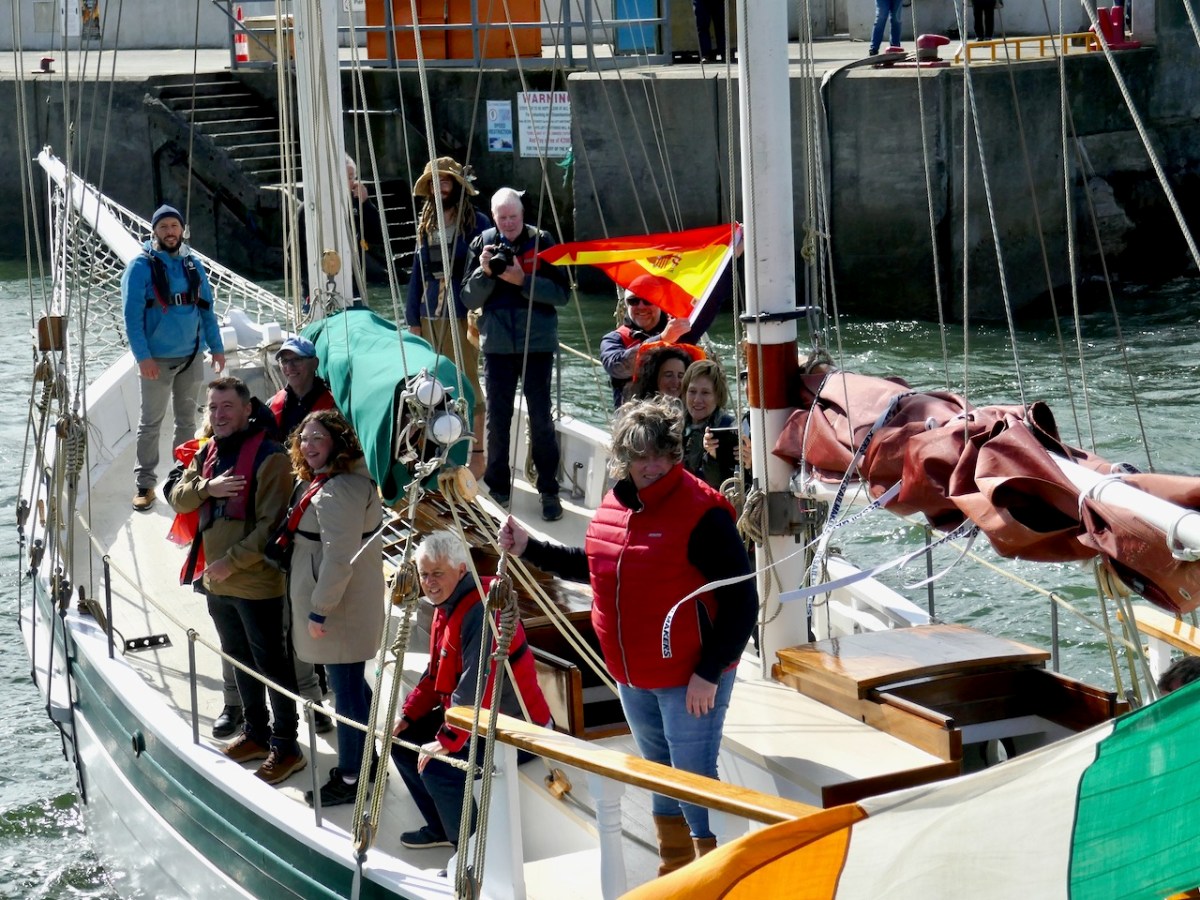
Eleven years later, José Maria is to be the guest of honour at the Crowley clan gathering. The committee discusses how best to make the most of this moment and comes up with a genius idea. He should arrive by sea, born into Baltimore on the iconic boat, the Saoirse. Read about the Saoirse here, and for true traditional wooden boat enthusiasts, you can buy Kevin O”Farrell’s brilliantly photographed book on its reconstruction in Hegarty’s boatyard.
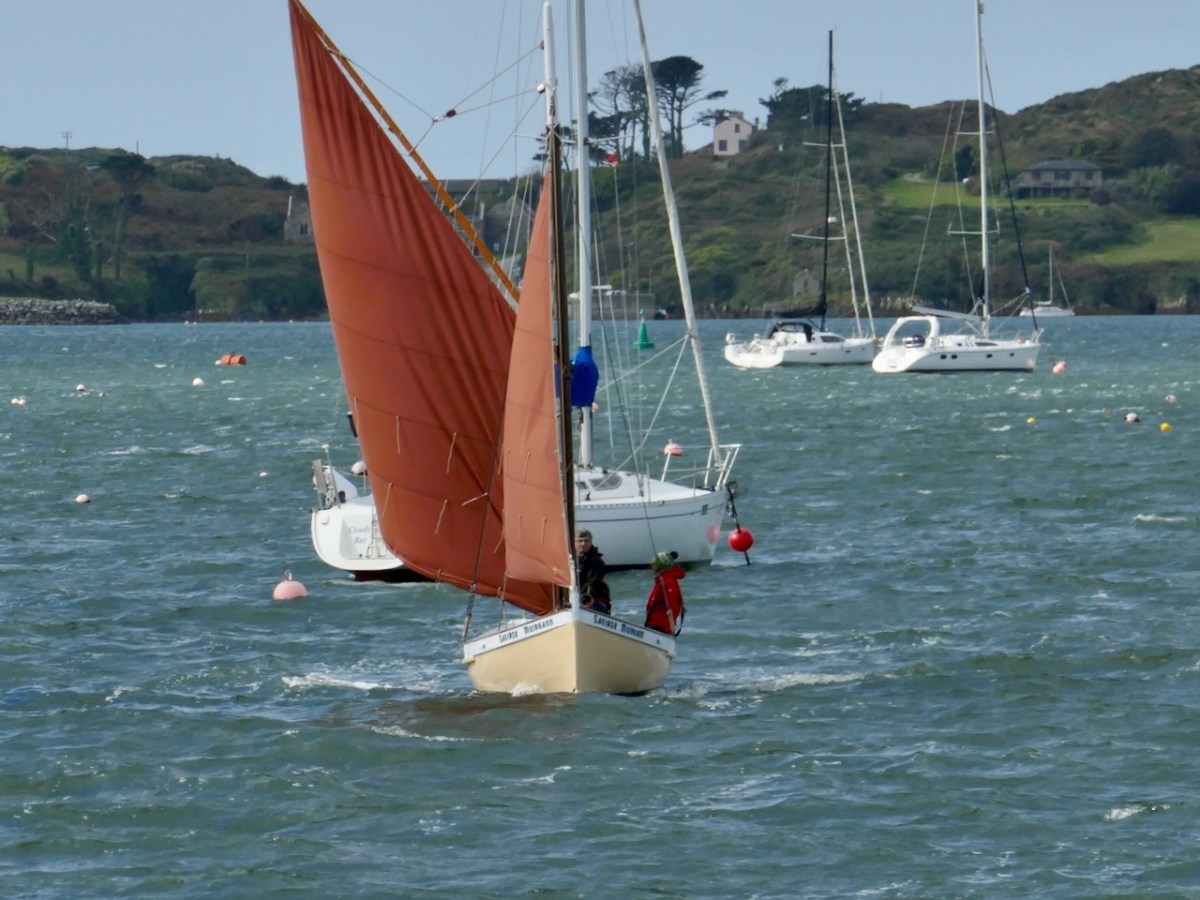
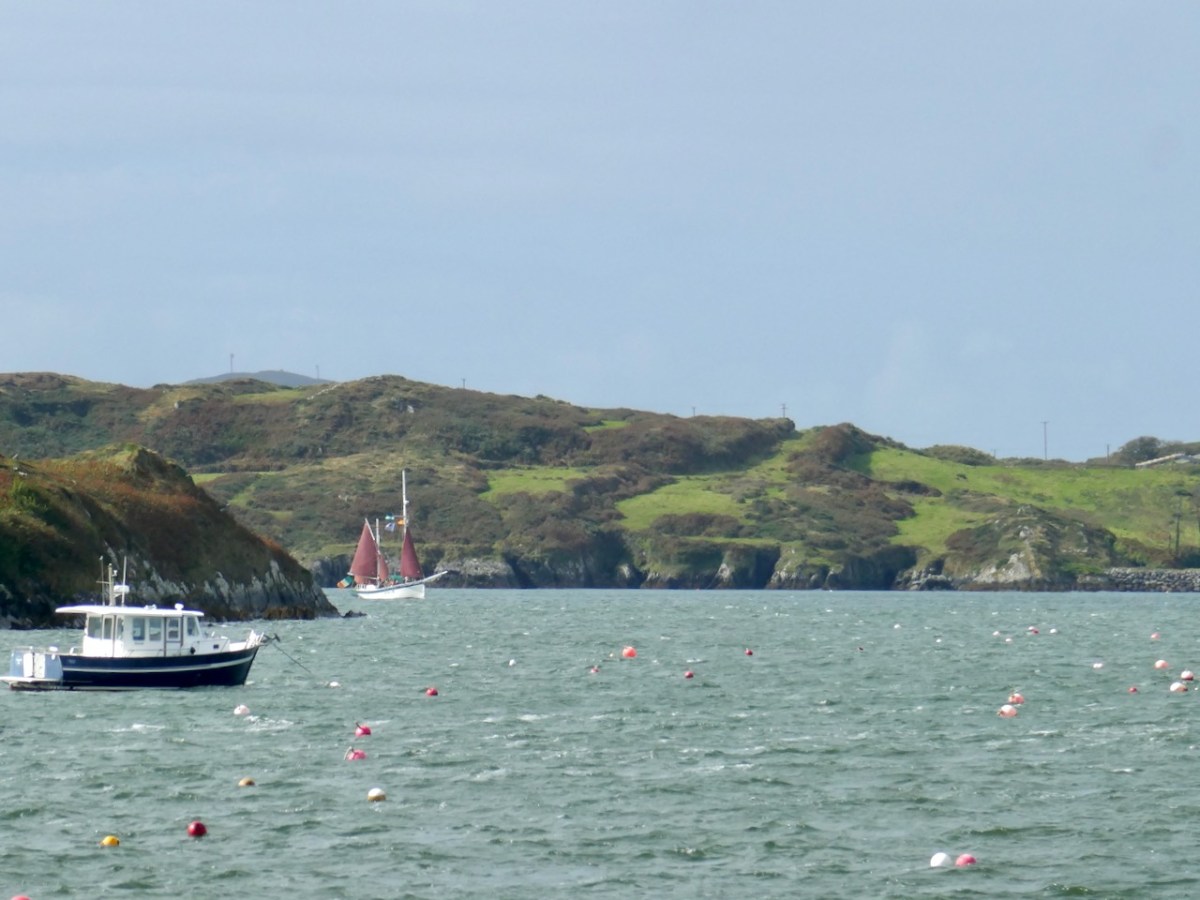
The Saoirse is a big, gaff-rigged yacht, the original version of which was built to sail around the world. It requires a great deal of skill to sail, and thus the task was entrusted to Liam Hegarty.
A flotilla of traditional wooden boats was to accompany her into the harbour but high winds scuppered that plan so in the end only two boats made up the guard of honour – Cormac Levis’s Saoirse Muireann (above) and Nigel Towse’s Honorah.
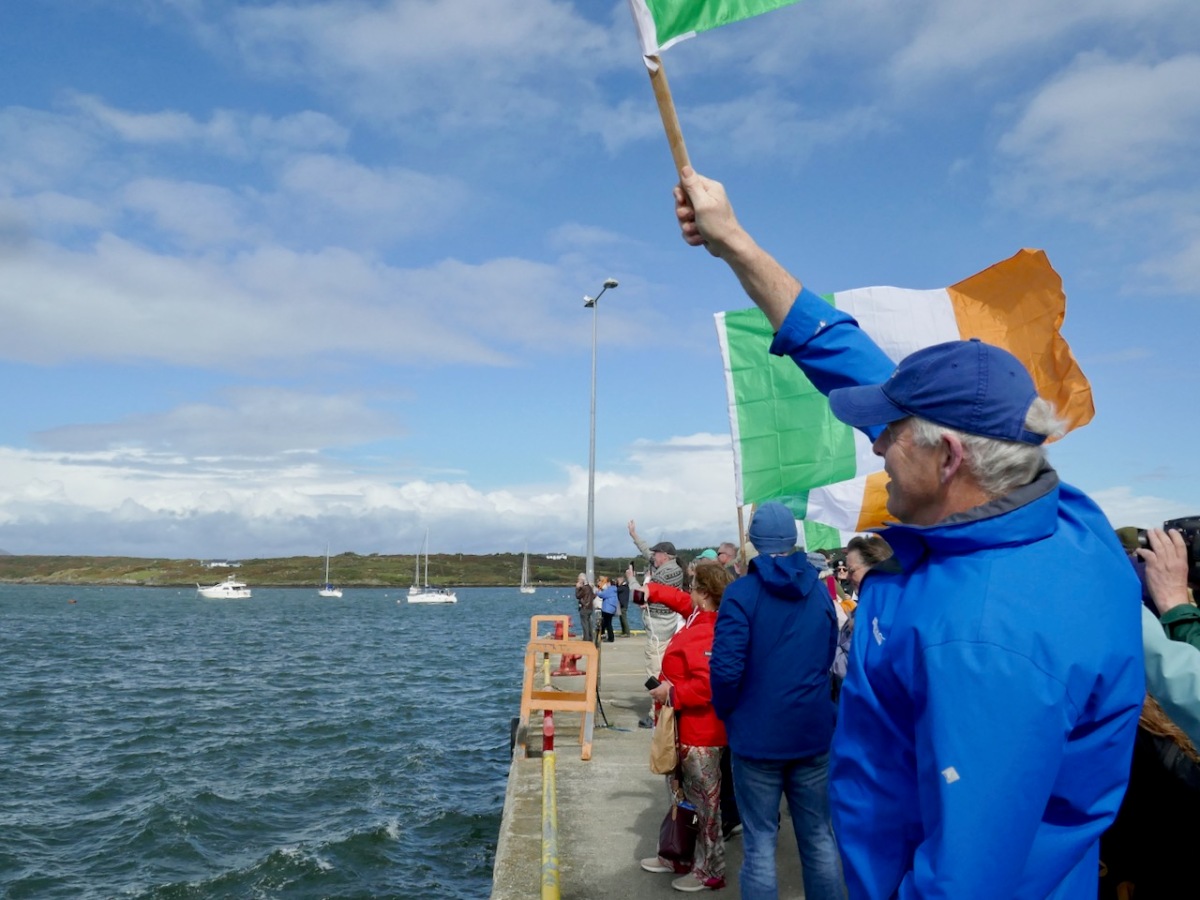
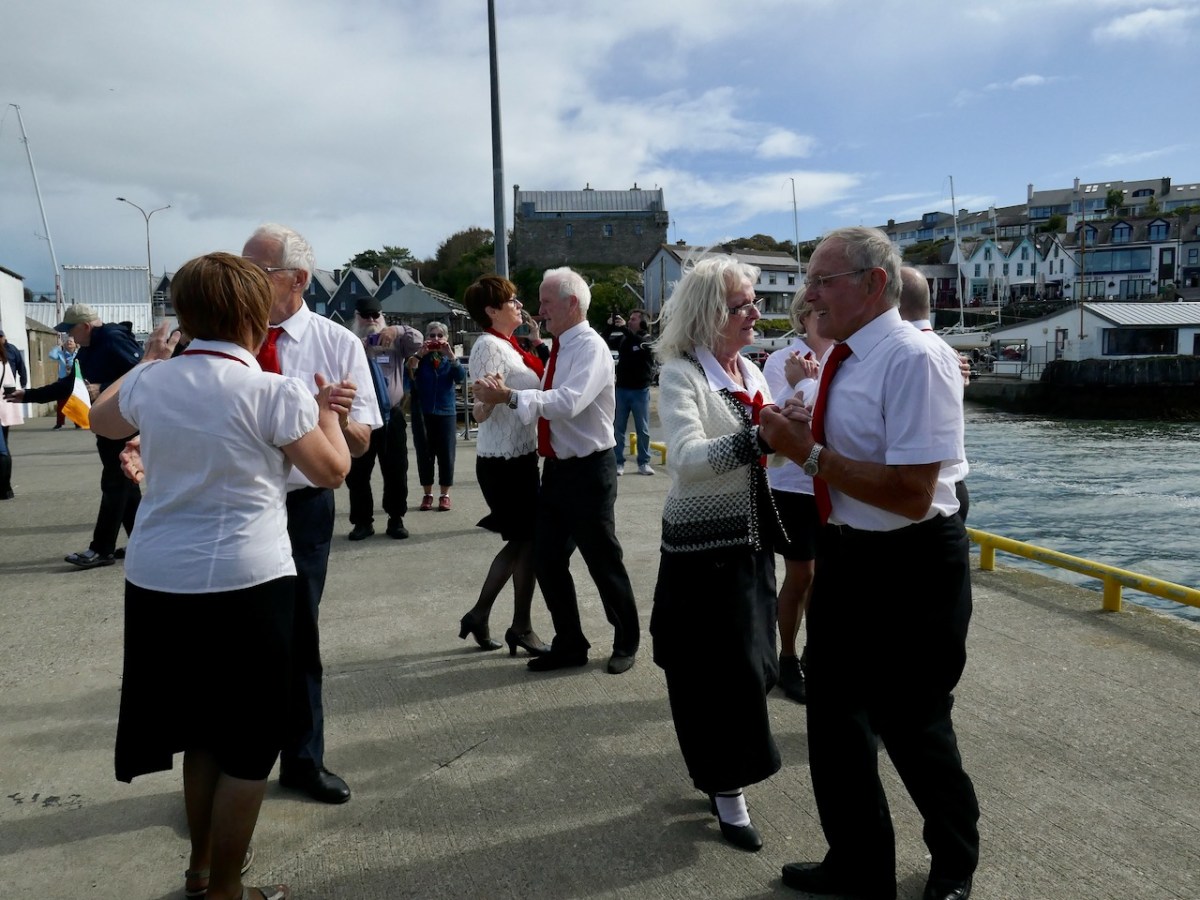
It was thrilling to see the Saoirse round the Beacon point and tack into Baltimore. I stood with a large contingent of Crowleys, waving flags and cheering, while a group of lively dancers set all our toes tapping.
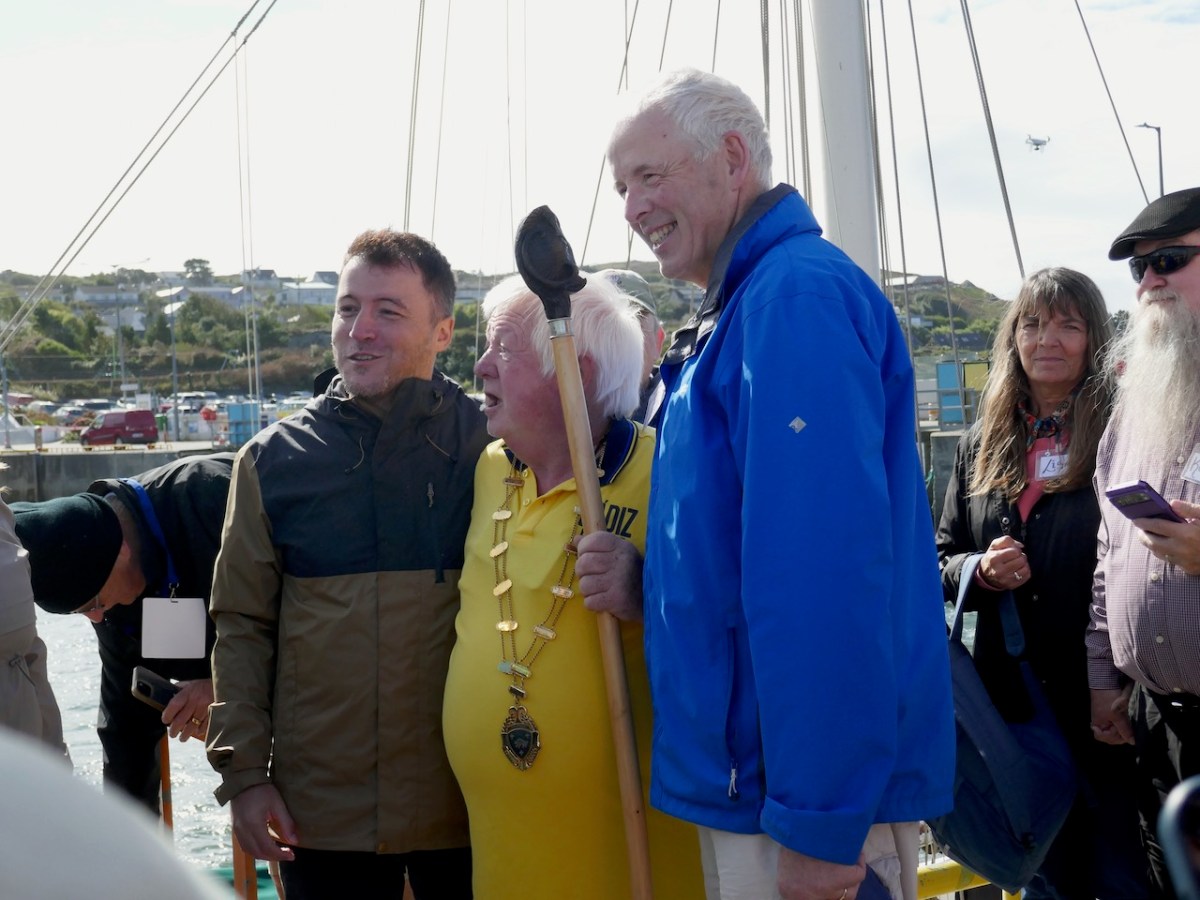
The most moving moment was when José María climbed up the ladder to the pier, to be met with his 7th cousin, Kevin Crowley from Martinstown, Co Limerick, and enfolded in a welcoming embrace. The Clan Taoiseach, Larry Crowley gave a short, perfect speech. He said, and I paraphrase – José María, your ancestors fled Ireland 300 years ago. They were escaping from oppression, from poverty, from dispossession and from the consequences of resistance. But here we are now, all of us proud Europeans, standing shoulder to shoulder.
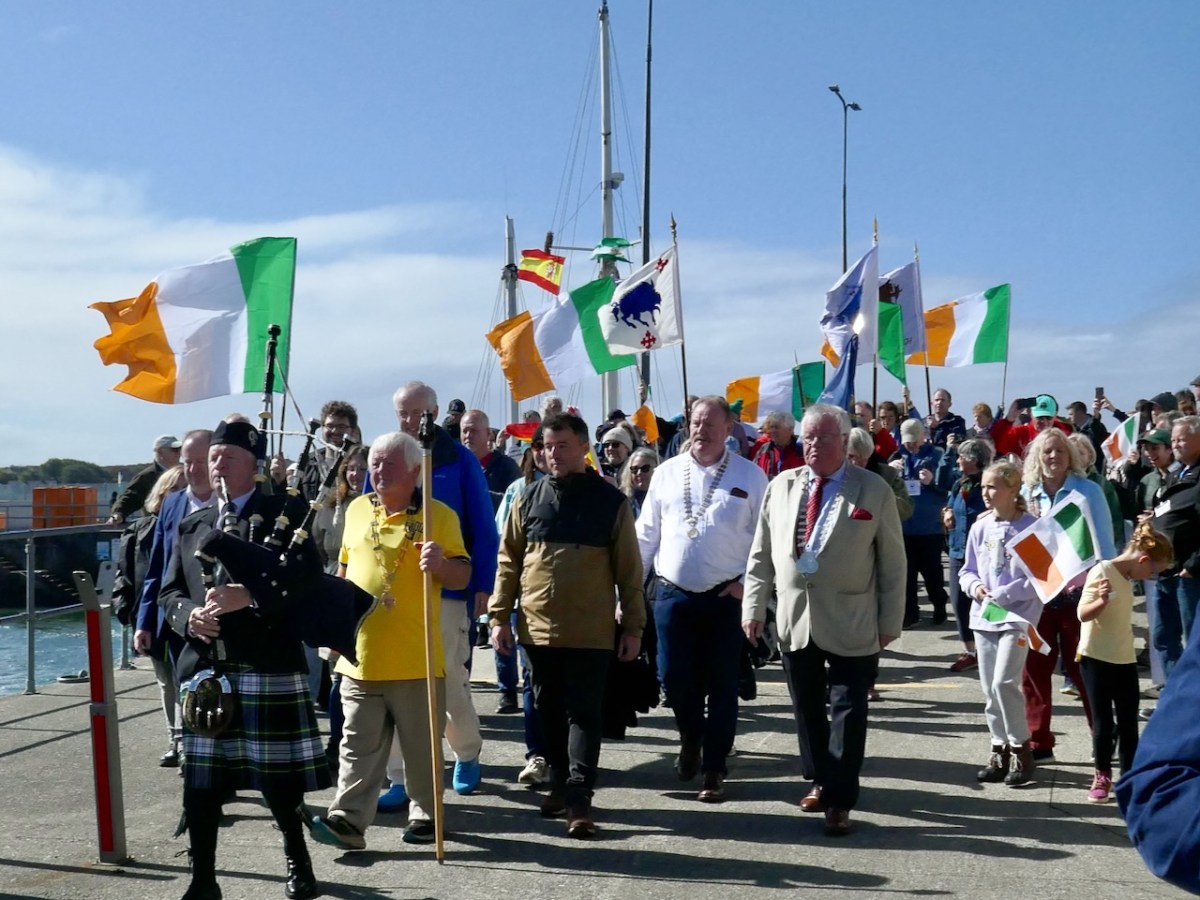
Led by a piper, we marched up to the village square.
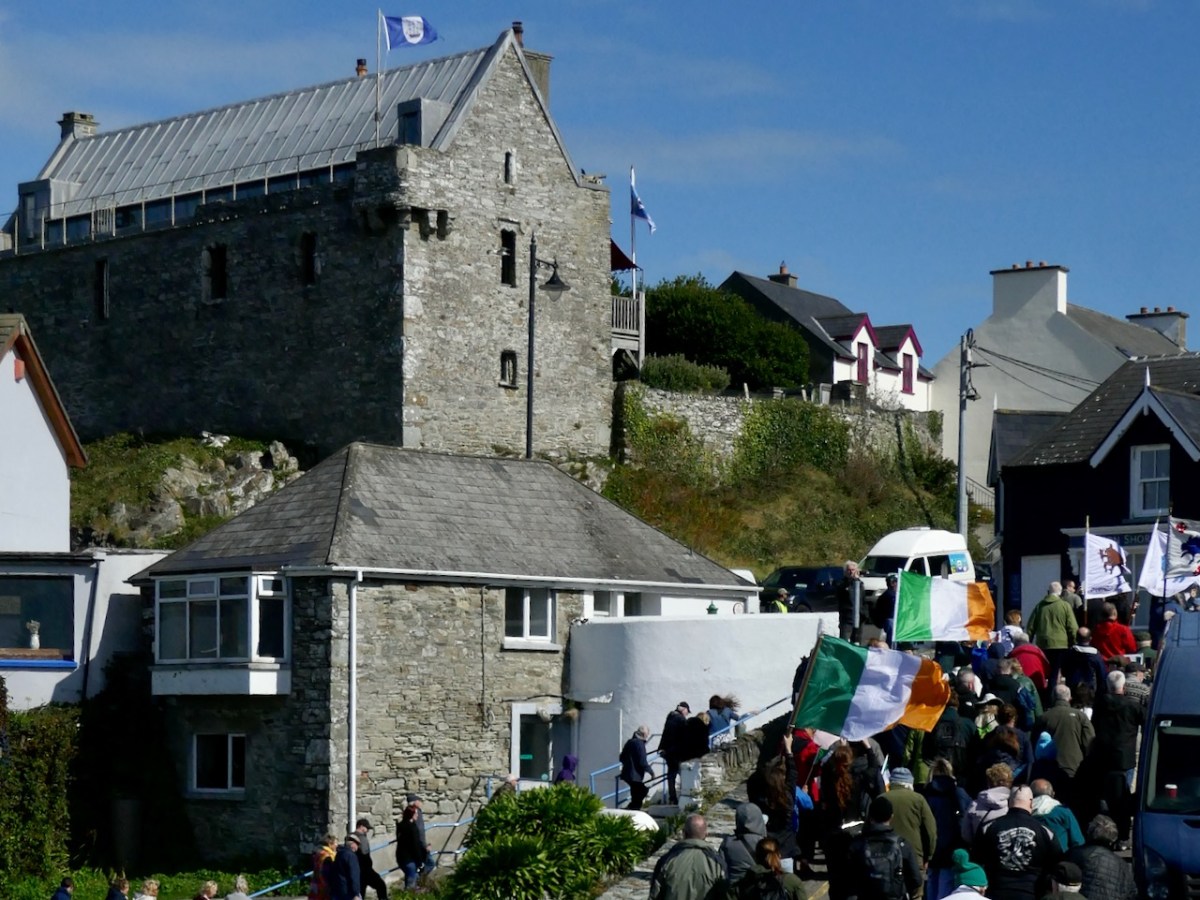
I was struck by the aptness of the Spanish flags passing under the walls of Baltimore Castle – a castle that, in its day serviced the vast Spanish fishing fleets that came for the pilchards and herring. The O’Driscolls became fabulously wealthy through that commerce, and forged alliances with the Spanish that came back to bite them in later years.
There were more speeches, including a masterful summing up of Baltimore’s history by William Casey, and then a squall had us running for cover. The Algiers Inn and other eateries in Baltimore served up a smashing array of sandwiches and soup. I chatted with New Zealand Crowleys and American Crowleys and Irish Crowleys – we all agreed that it had been a perfect Welcome Home.
I may not have all the details exactly right – corrections welcome from knowledgeable Crowleys. My special thanks to Charlie Crowley for inviting me along.
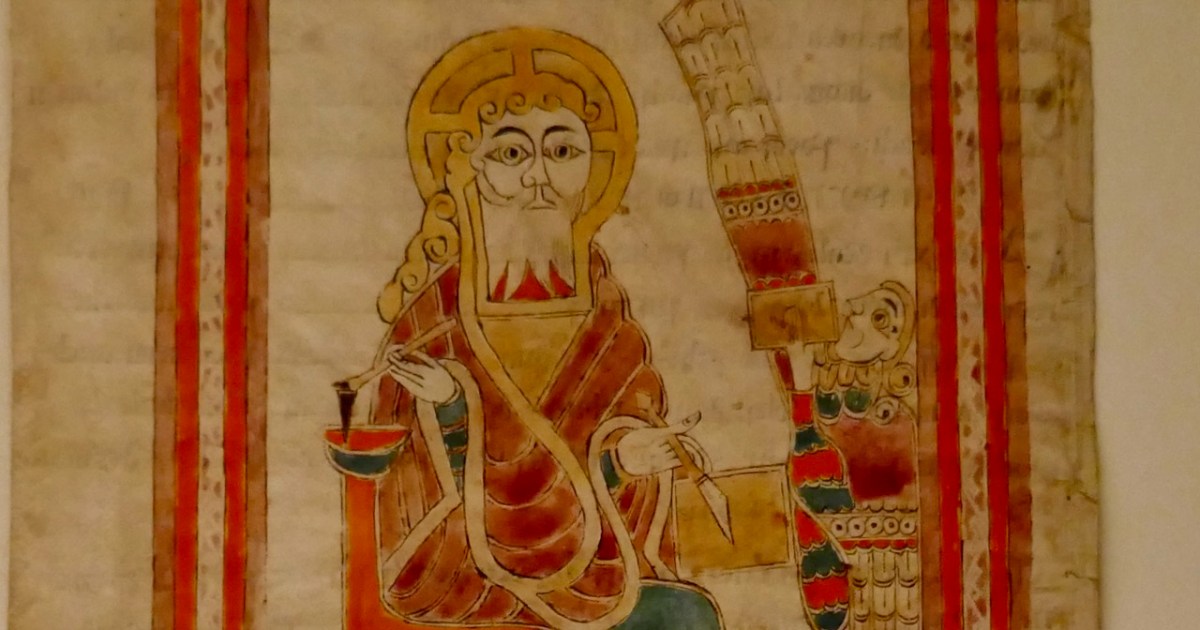
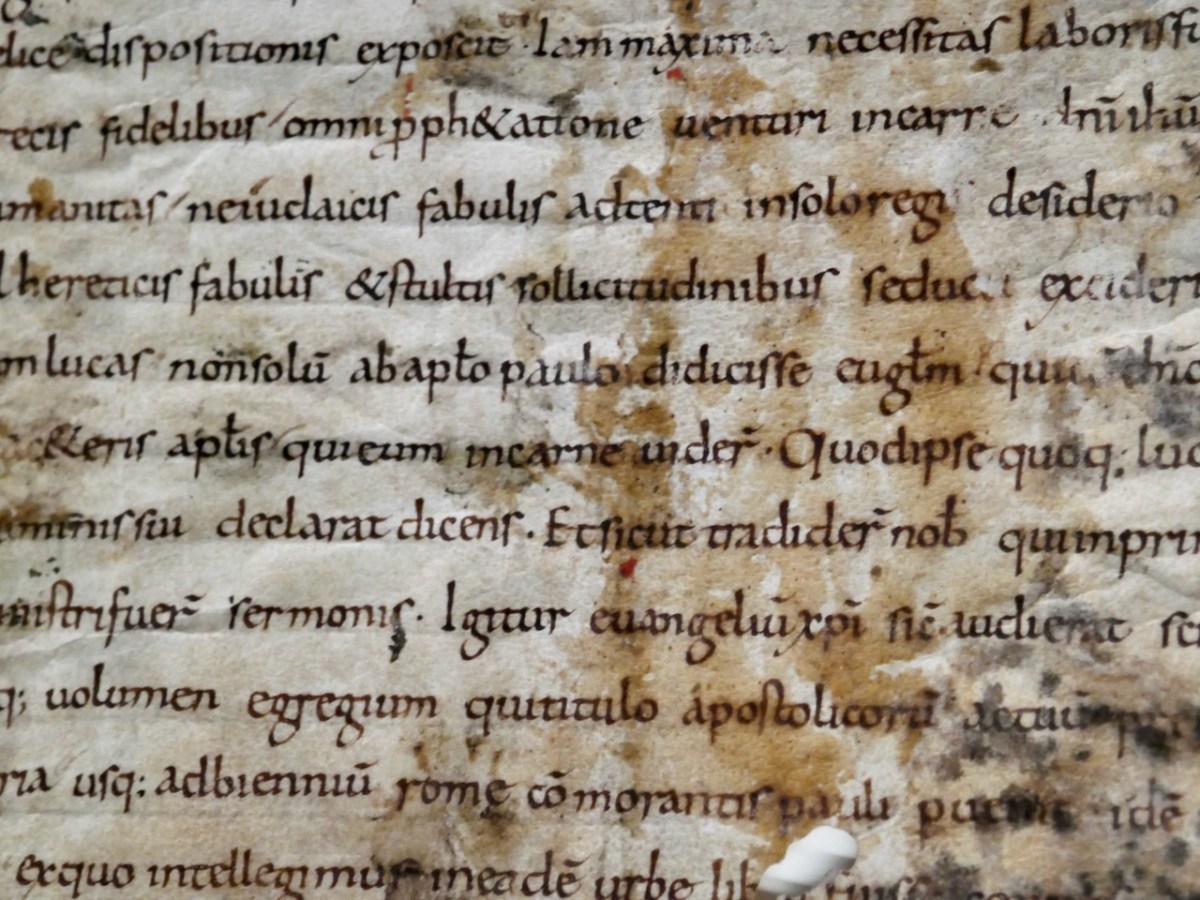
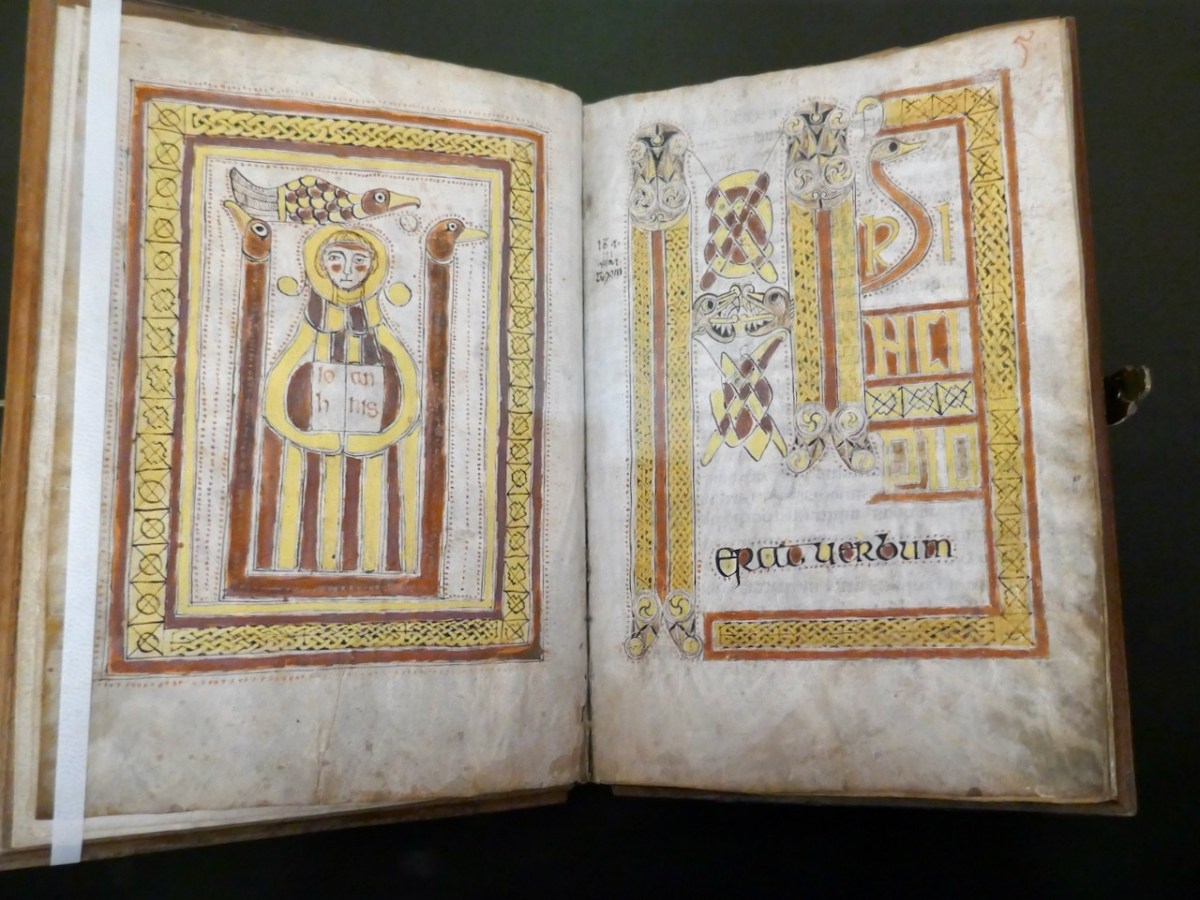
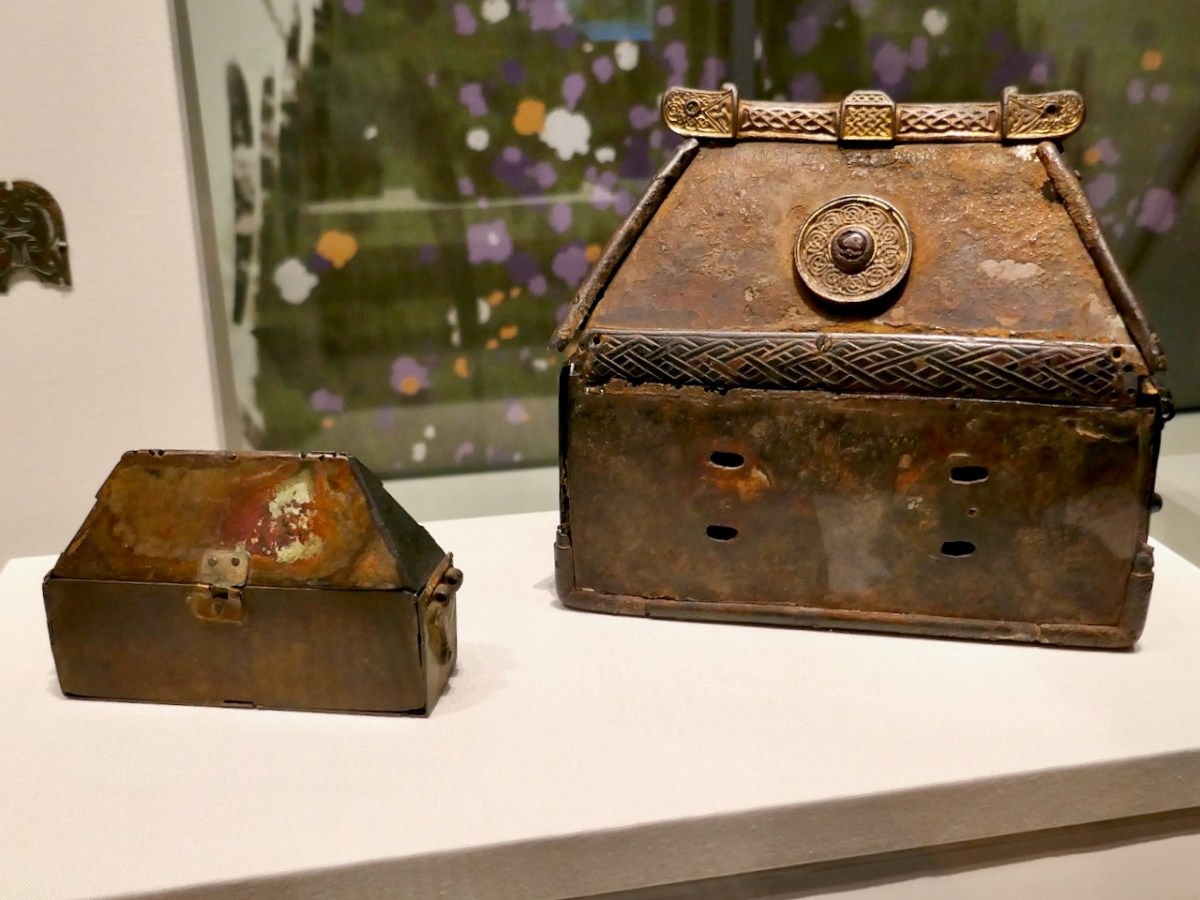
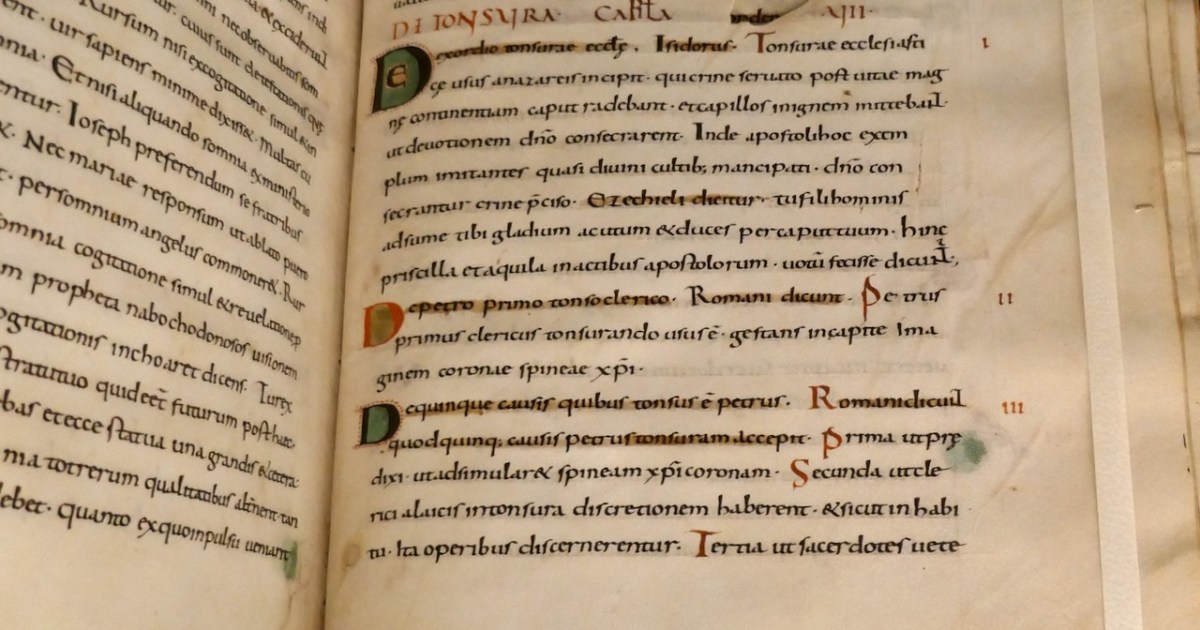
A few weeks ago I visited the National Museum in Dublin especially to see their Words on the Waves exhibition. This is the story of how Irish monks lived and worked on the continent during the 8th and 9th centuries, producing marvellous illuminated manuscripts of the gospels and other books.
The exhibition continues until the 24th of October so if you haven’t seen it yet, there’s still lots of time. And it is SO worth it. The exhibits are a mixture of Irish and continental. St Gallen, in modern-day Switzerland, was one of the destinations to which Irish scribes travelled and they have retained an incredible collection of manuscripts. Below is the start of the Gospel of St John – In the Beginning Was the Word.
There are book shrines and gospel fragments from Ireland, explanations of how books were made and bound, early examples of ogham writing, designs on wood and metalwork of what we often call “Celtic interlacing” but which is properly referred to as ultimate La-Tene.
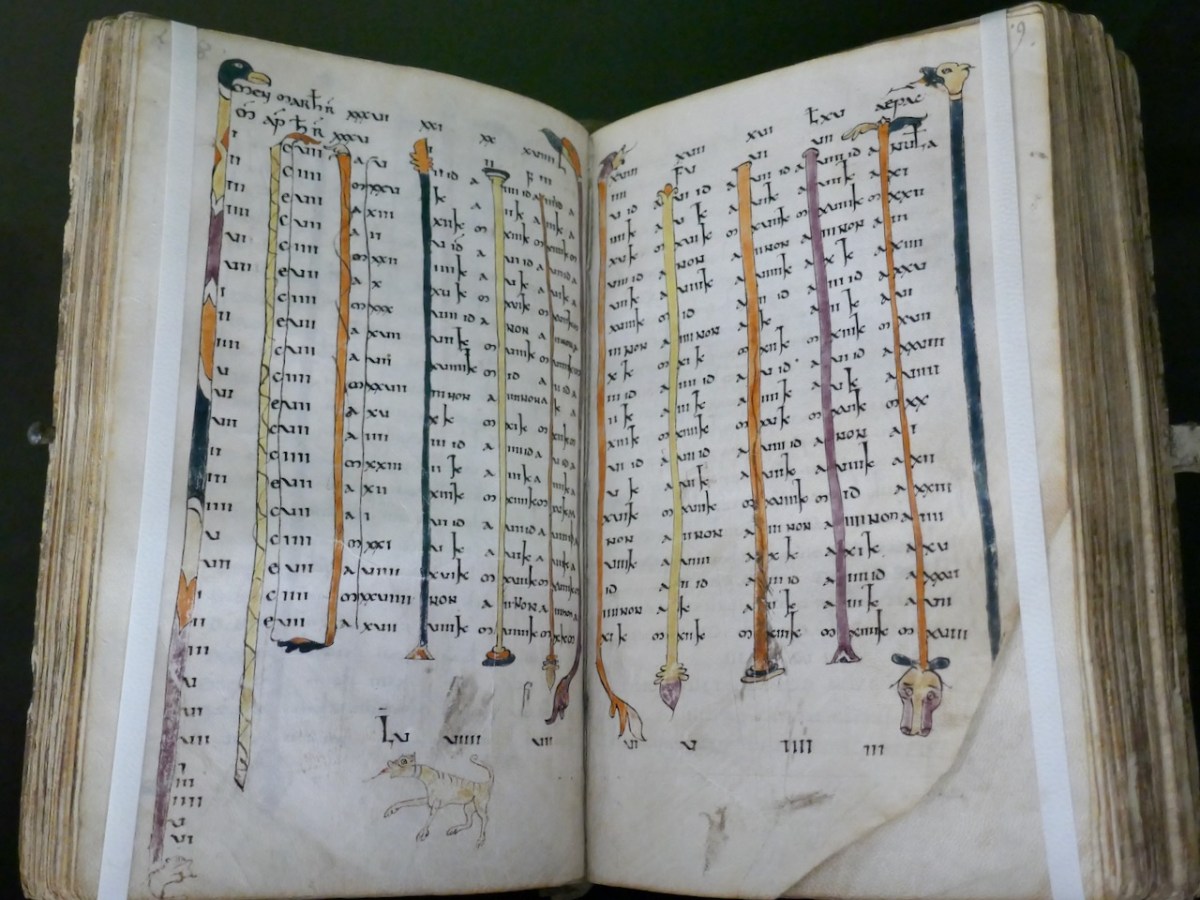
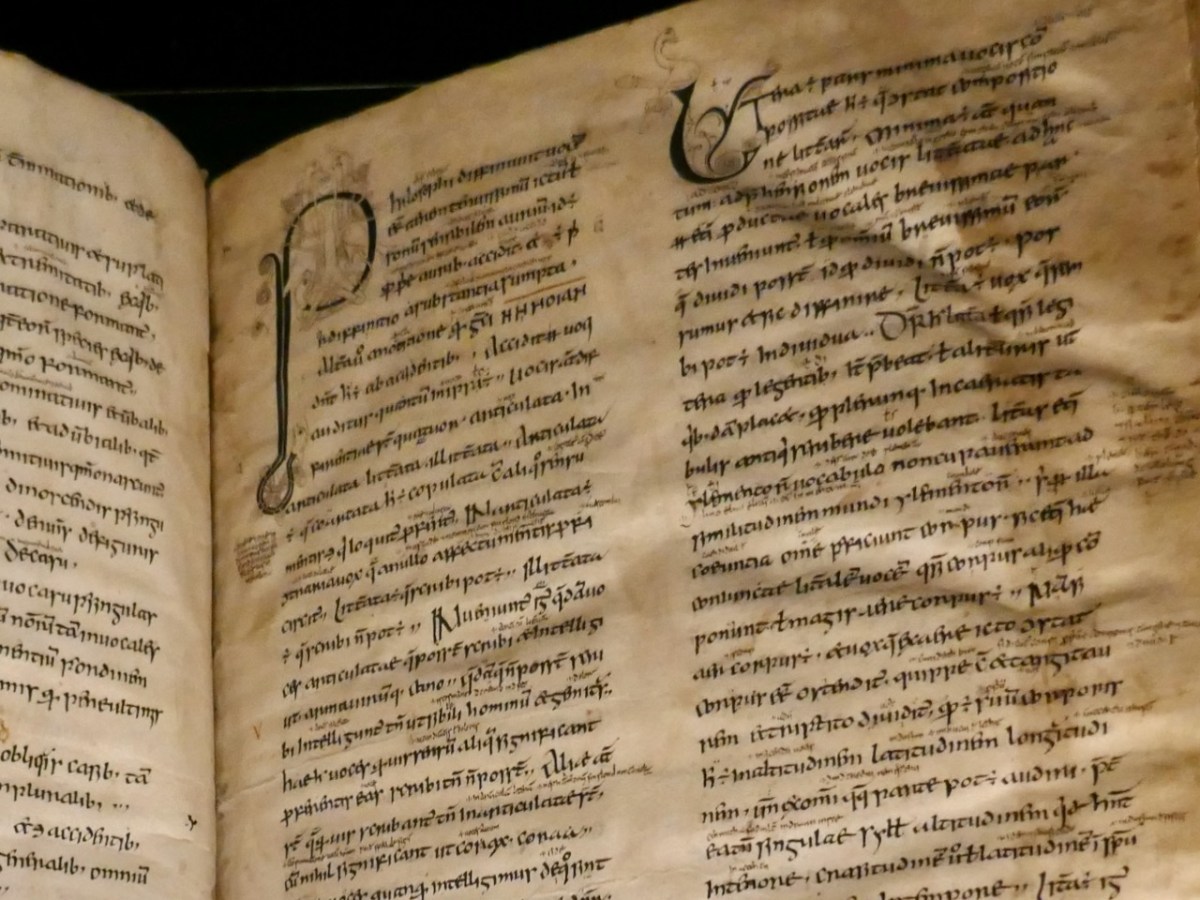
From St Gallen come the manuscripts – gospels, law texts, a mathematical calculation for Easter (below), a Greek dictionary and a Latin Grammar (second down).
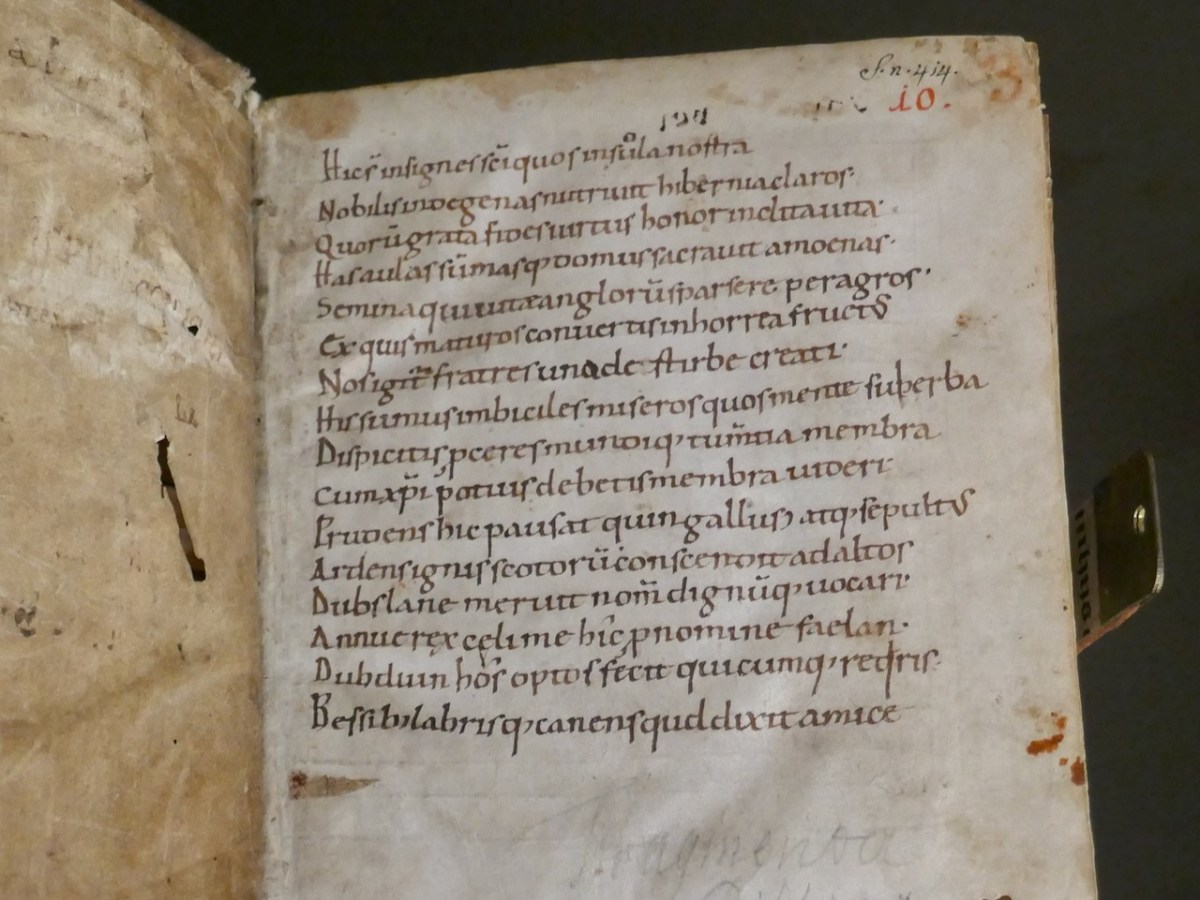
There’s even a poem of complaint by an Irish monk about how badly he is being treated at St Gallen (below).
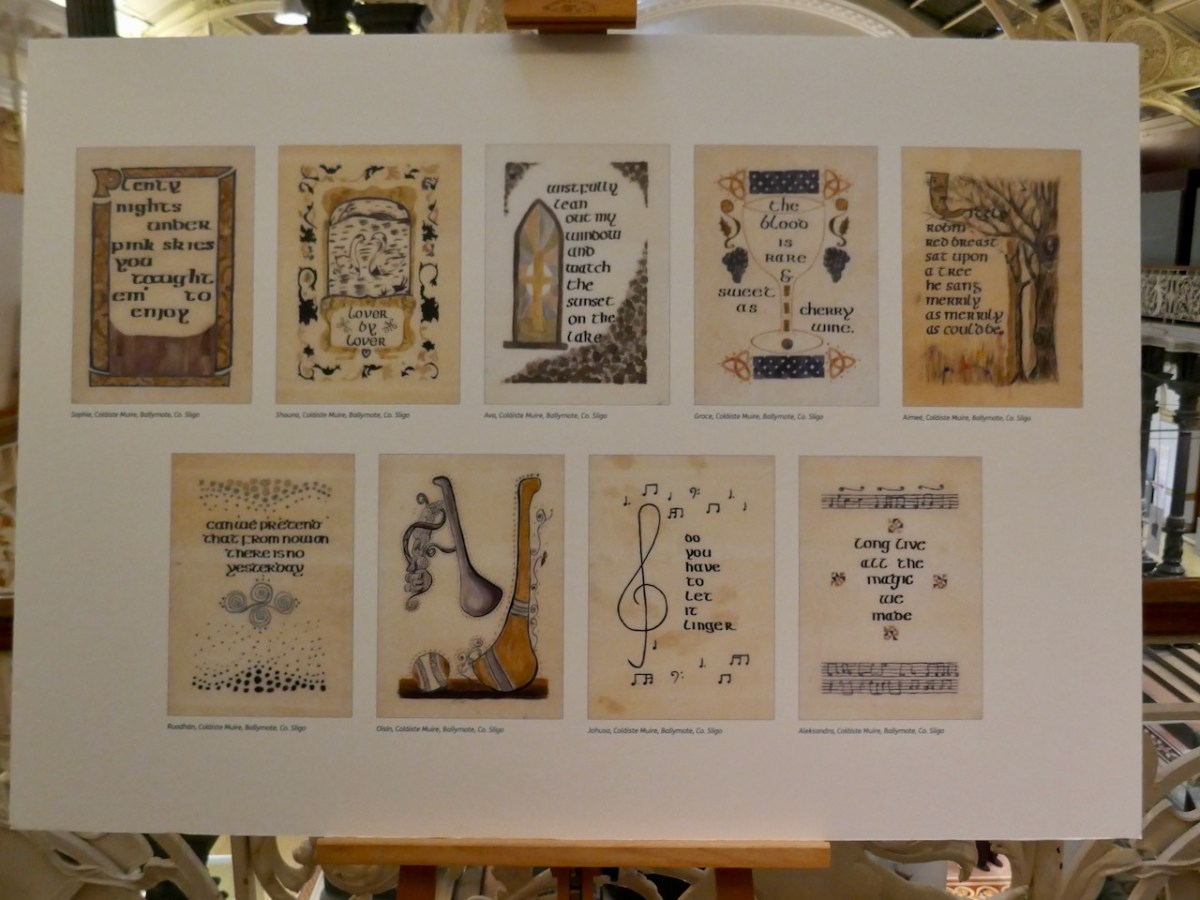
A lovely addition was an exhibition of student work, based on workshops they had taken on the art of calligraphy and medieval manuscripts.
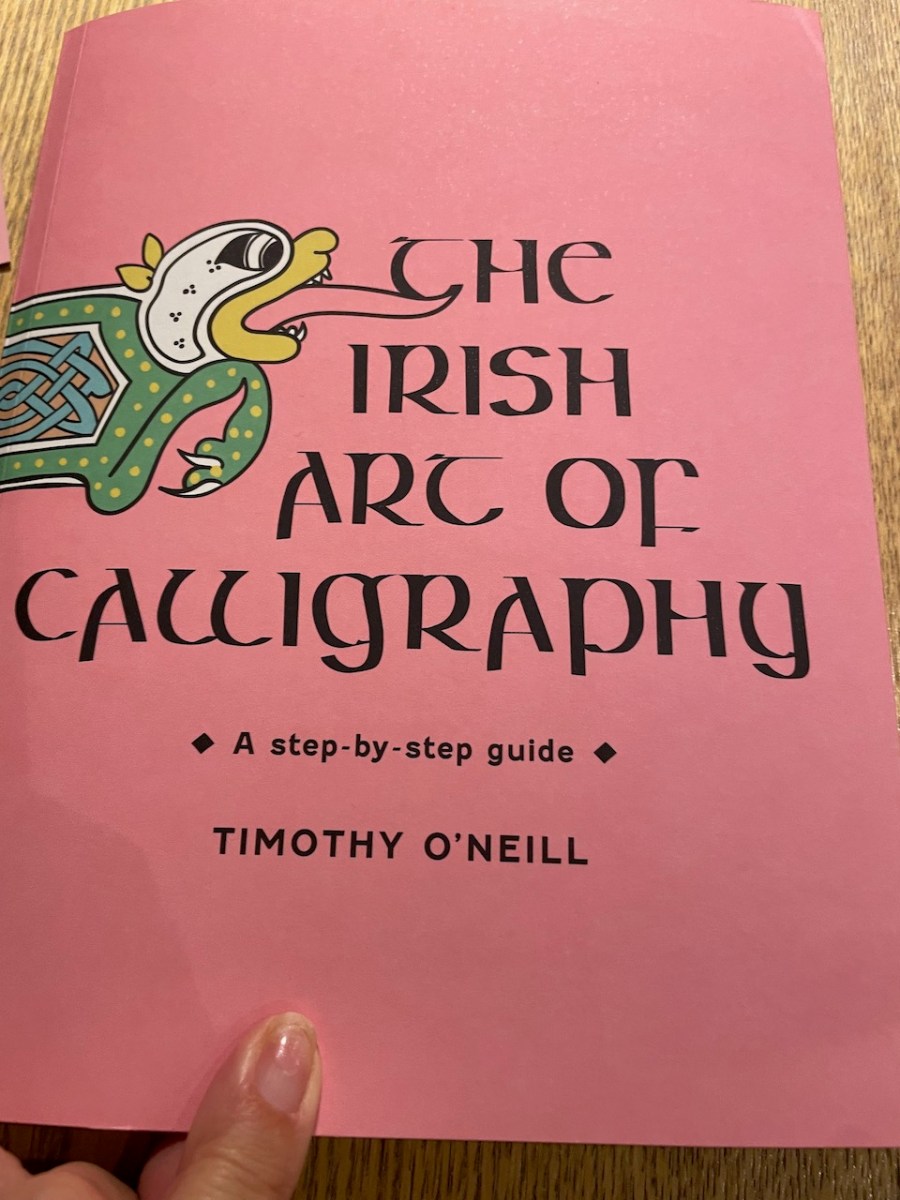
I was completely bowled over by the manuscripts. Carried away by enthusiasm, I ordered a copy of the Royal Irish Academy’s The Irish Art of Calligraphy, by Timothy O’Neill, the renowned expert on this field.
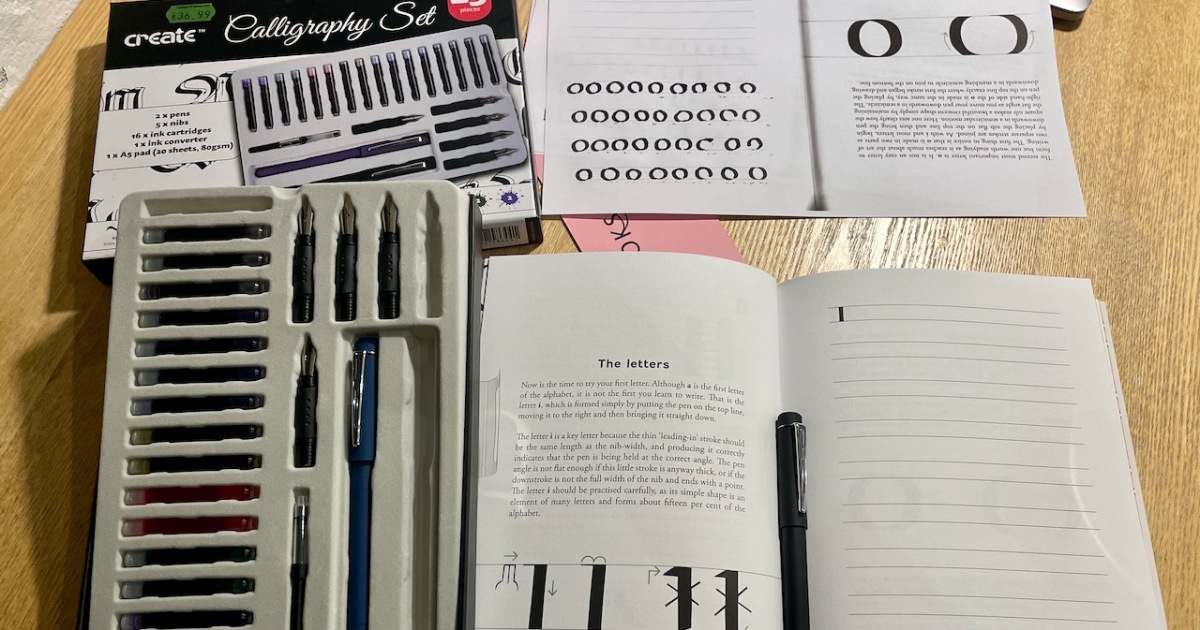
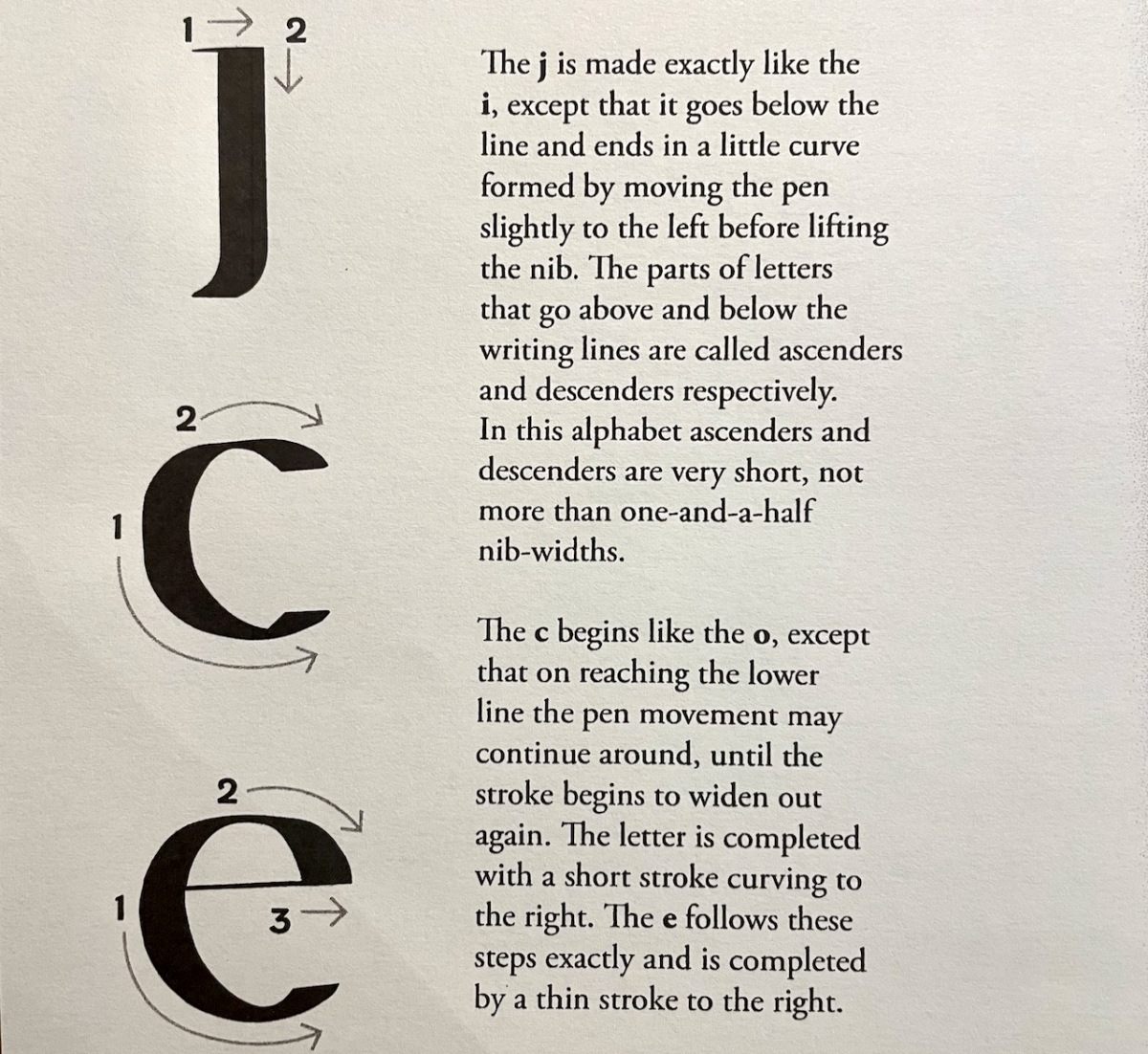
I don’t have an artistic bone in my body, but hey, I reasoned, this is not art, it’s just writing, right? The instructions were crystal clear and organised in a lovely straightforward step-by-step manner. Having figured out how to assemble the pen (no instructions included, but thank you, YouTube) I set about copying the letter i, then the o then j, c, and e.
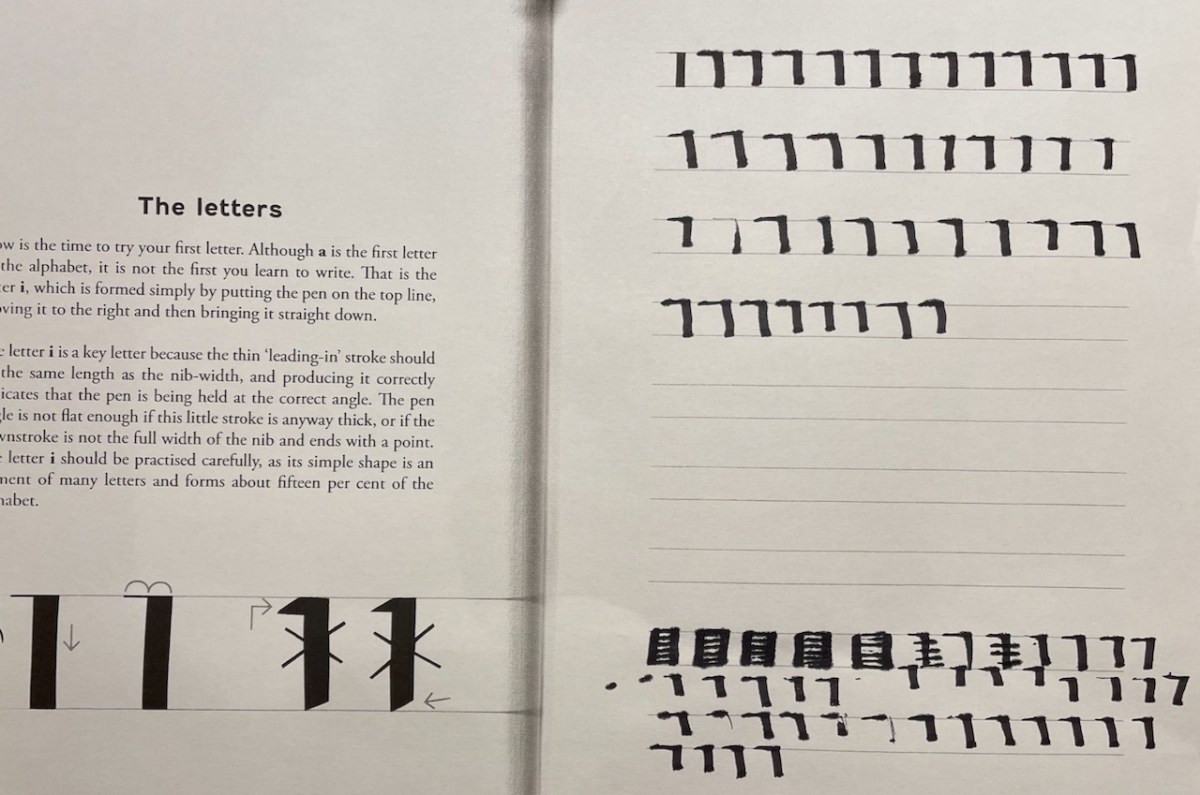
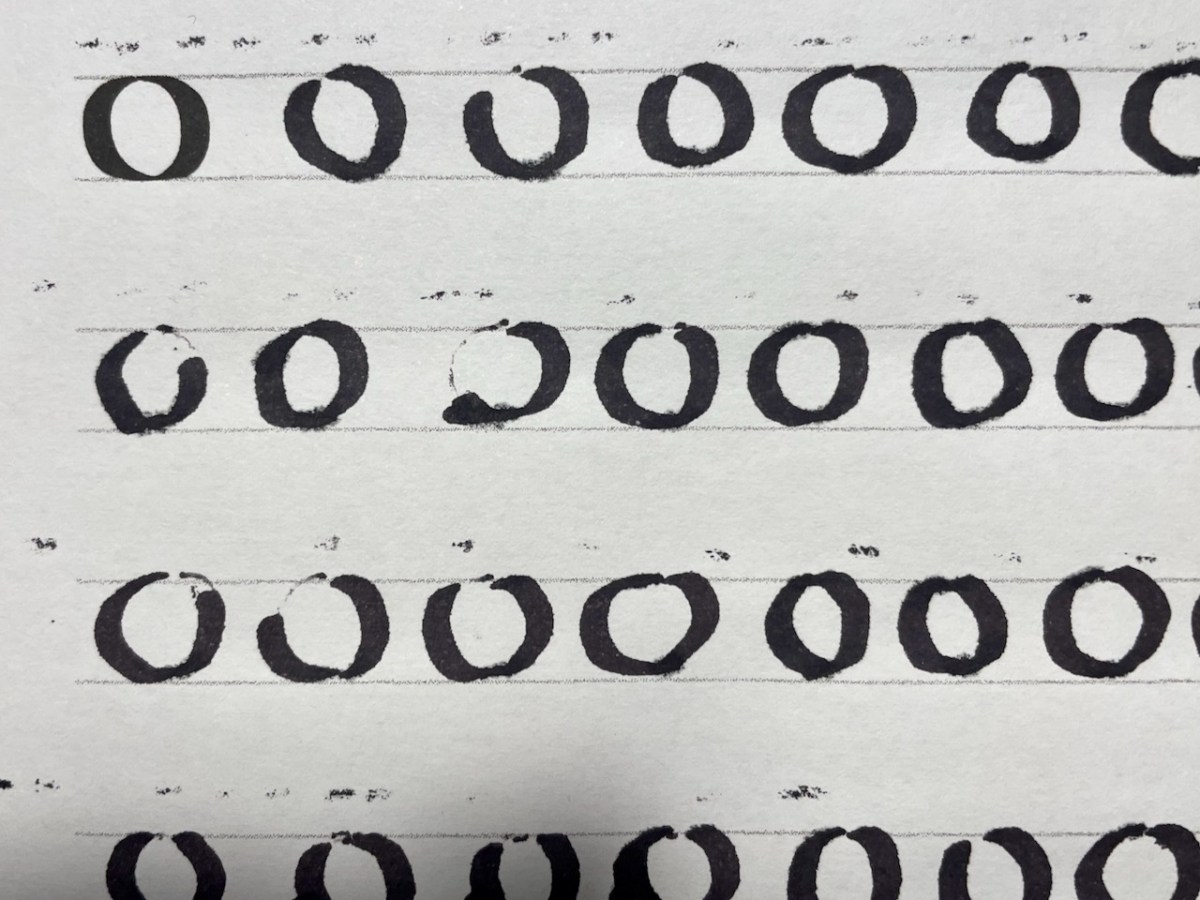
Yes, you guessed it – this is a lot harder than it looks, especially for someone not naturally gifted in this way! I may have used too thick a nib to begin with. I may be holding the pen wrong. The paper I copied to practise on (I didn’t want to use the book!) may be too blotty.
I will try again. Any readers who can see what I am doing wrong, please weigh on with words of advice. Encouragement to persist also welcome. This my letter o attempt – the first o is the model, the rest are mine.
After all, I tell myself, those monks didn’t produce those wonderful scripts overnight – I wouldn’t be surprised if it wasn’t a seven year apprenticeship. Perhaps I’ll do an update in seven years and show you my progress. What are the chances it will look like this?
I was dubious, but I have decided to go for it. Following on from the excellent advice you, our readers, sent me, I have embarked on the new adventure of creating a Substack newsletter. Essentially, every time I post on the blog, I will send the same post to Substack, so if you already subscribe to the blog, there’s no need to subscribe at Substack too. If you don’t already subscribe to the blog, you can do so now either by clicking on the cog icon at the top of this page and entering your email address, or by subscribing at Substack. Don’t do both or you’ll be driven demented by getting the same post twice.
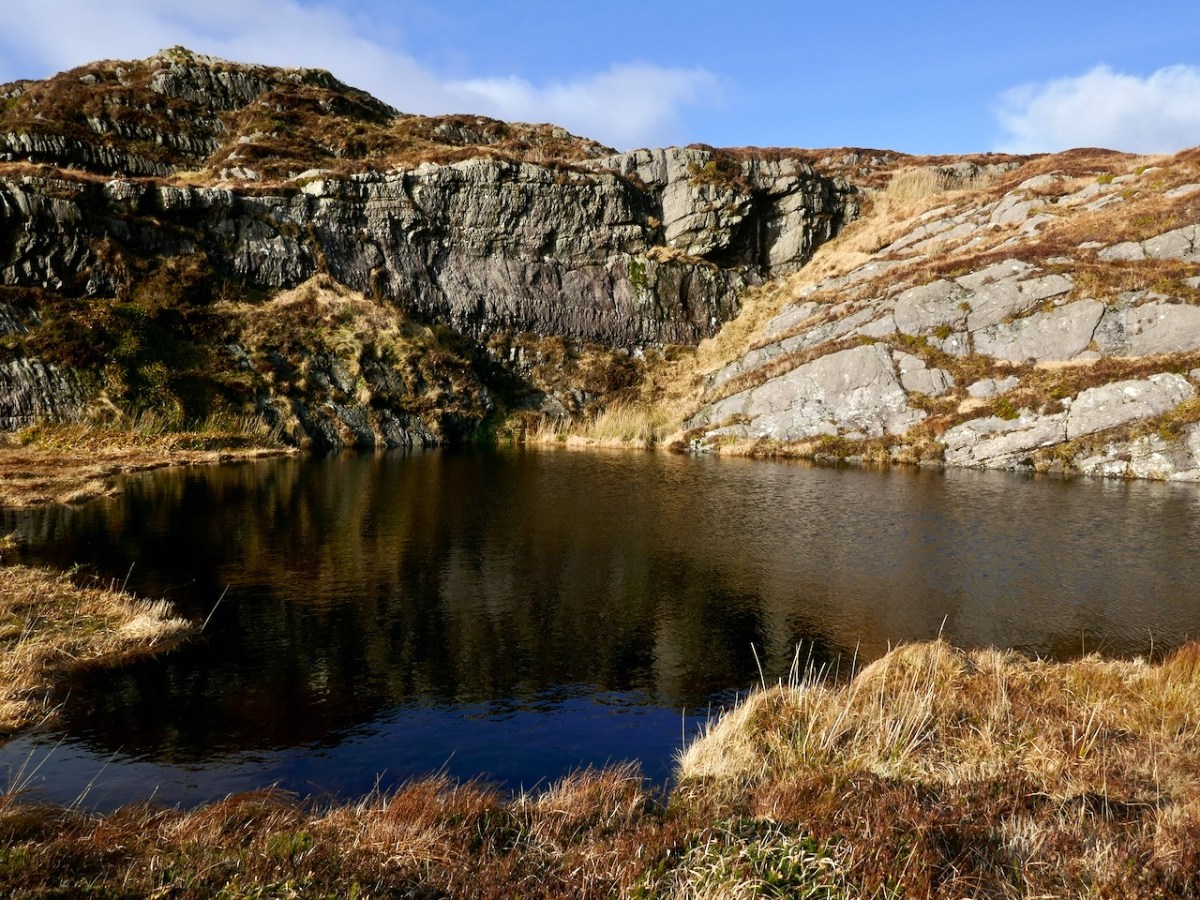
For my first Substack post I have selected one of our classic posts – and one of our most popular – about the time we almost got lost on Mount Gabriel looking for Poul an Oigheannn, the Cauldron Pool, and all the floklore that goes with that enchanting little glacial lake.
It’s taken me so long to learn how to do this, there’s no time for a new post today. To check out our new presence on Substack, go here:
Finally getting back to good old St Brendan and his voyage. (You can catch up on Part 1 and Part 2 if you haven’t read them already.) While writing this post I have been listening to one of my all time favourite pieces of music – The Brendan Voyage by Sean Davey, with the great Liam O’Flynn on the uillinn pipes. Robert wrote about the thrilling experience we had at the National Concert Hall where we attended a memorial concert for Liam O’Flynn which featured the whole Brendan Voyage, with Mark Redmond on the pipes. That post, Piper to the End, has several links to extracts from the Brendan voyage, but I will just post one movement here, and because I am half Canadian it has to be the Newfoundland Suite. Turn the volume up.
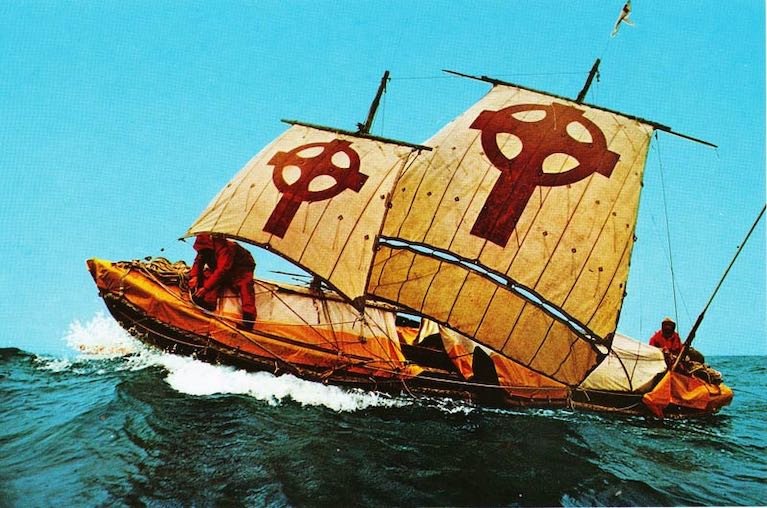
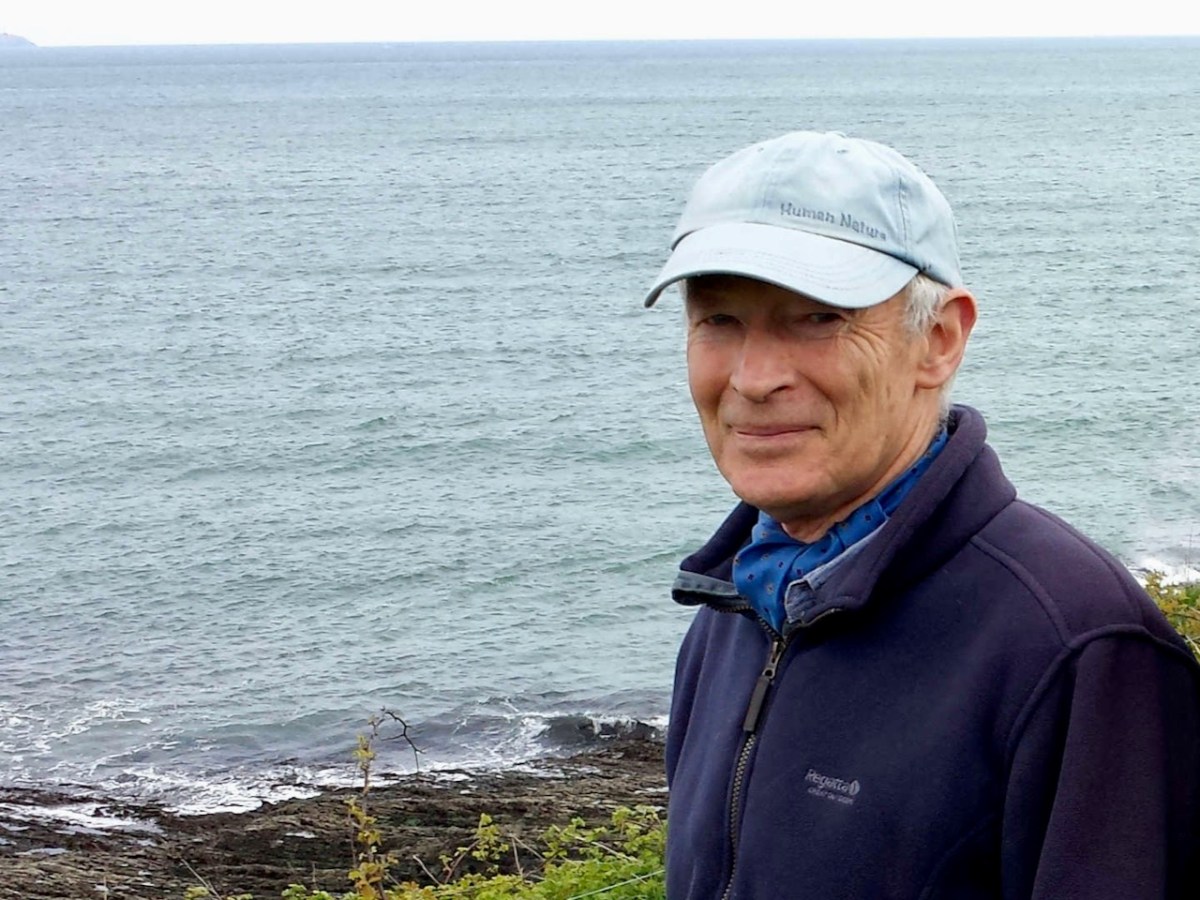
This music was written to celebrate the extraordinary journey taken by the late Tim Severin, tracing St Brendan’s voyage across the Atlantic. You can read the book (it’s a great read) or watch the documentary – I found part 1 and Part 2 online. Tim was an incredible explorer – the Brendan Voyage was one of many epic adventures he undertook to trace the footsteps of early voyageurs and travellers – you can read much more about him at his website, from which this photo, and the lead photo above, was taken, with thanks.
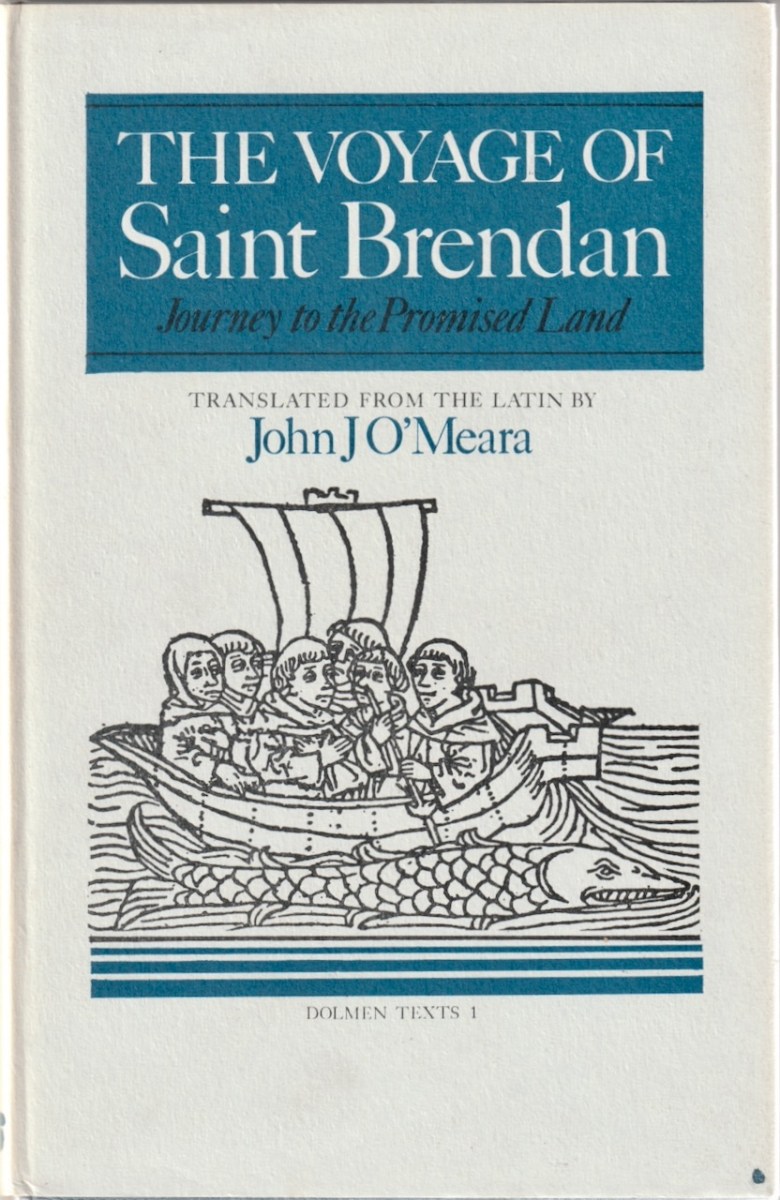
OK – back to S Brandanus and the 1360 graphic novel that illustrated his adventures for a medieval audience. For my final series of images from the book, I am using the translation this time of the great Irish scholar, John J O’Meara. In 1976 he translated the Navigatio into English, published by the Dolmen Press. He explains in his Introduction:
. . .within a hundred years of his death there already existed a primitive account in Latin of Brendan’s quest for that happy land [the Land of Promise]. This account was ecclesiastical in general character, but influenced the creation of the secular, heroic Voyage of Bran, written in Irish, which goes back to the late 600’s or early 700’s.The Latin Voyage of St Brendan, which is here translated, was written in Ireland perhaps as early as 800.
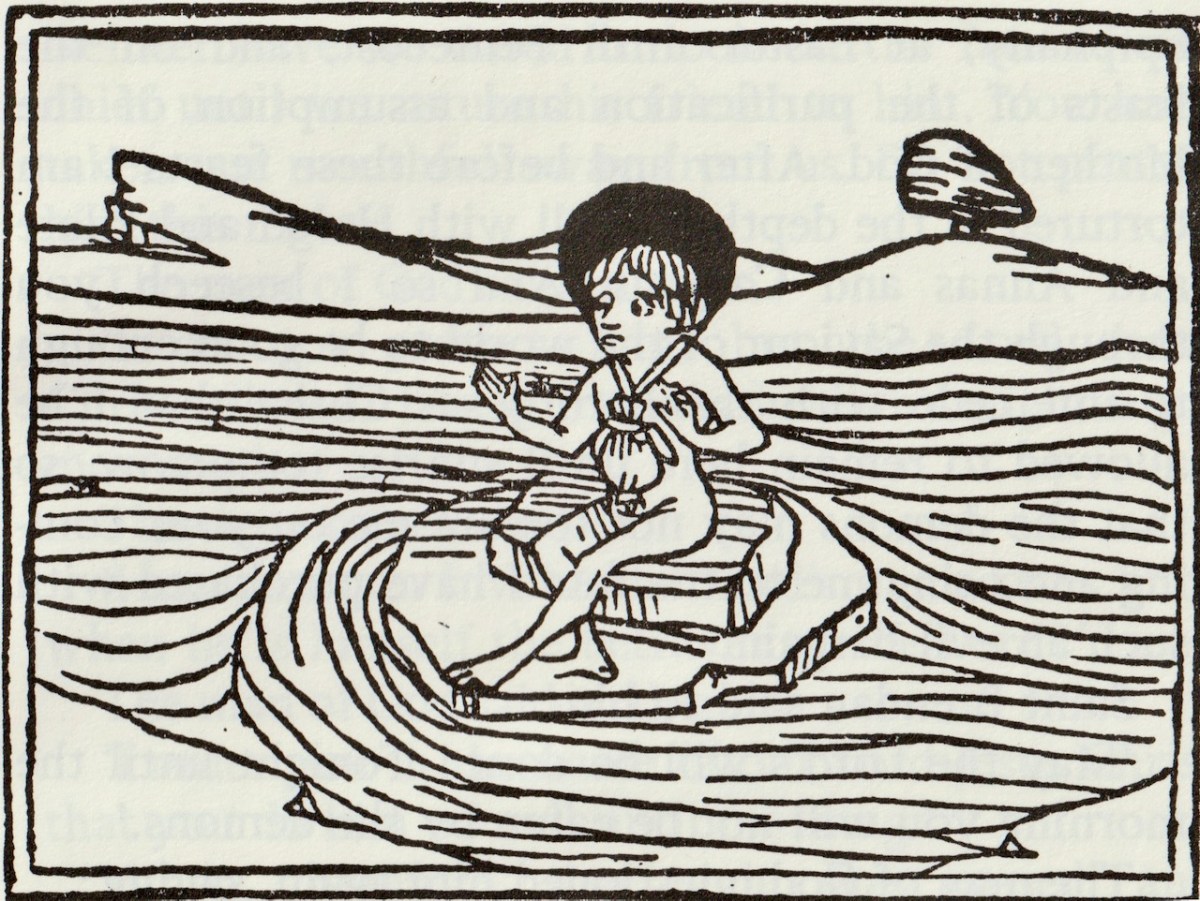
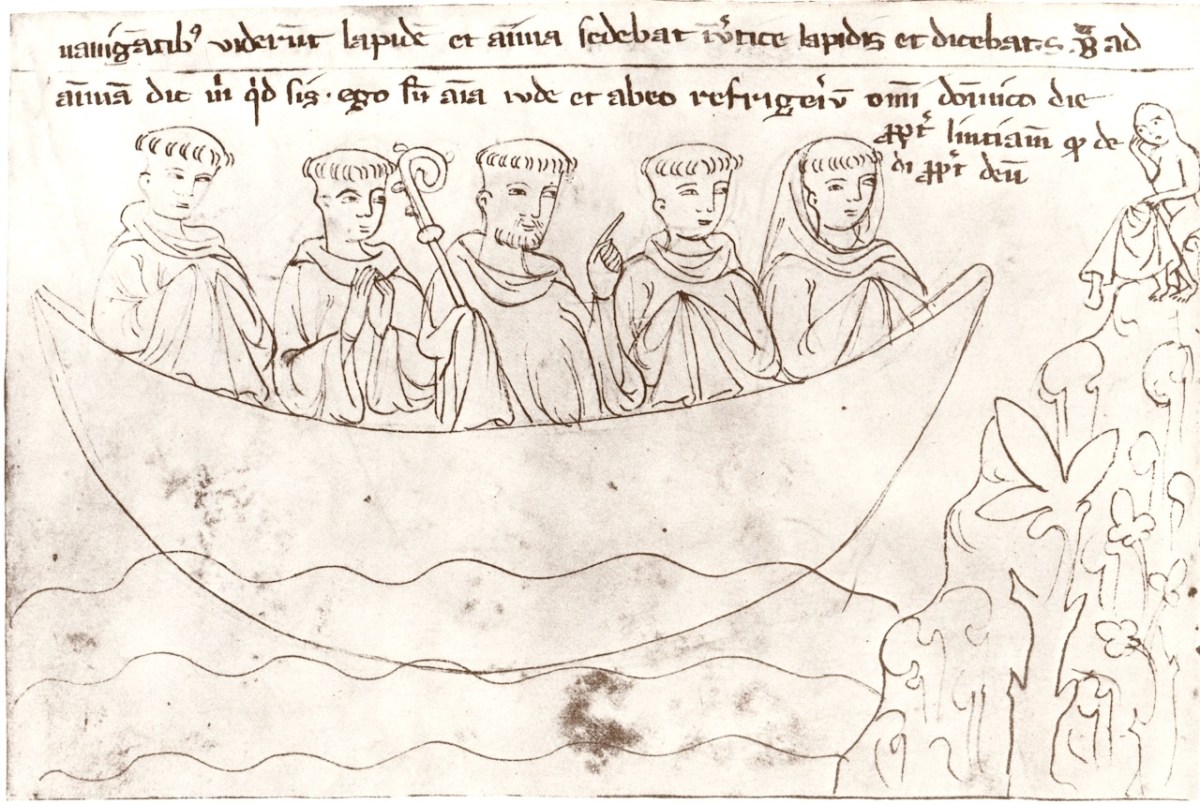
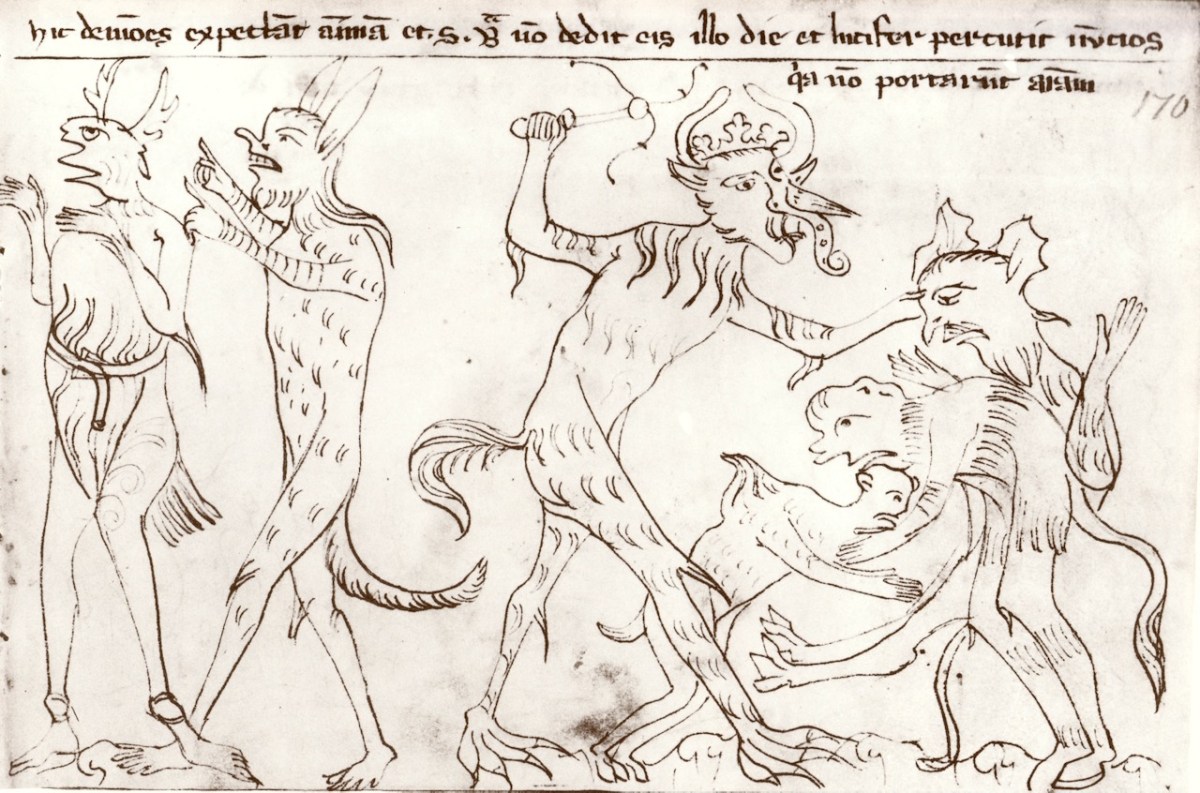
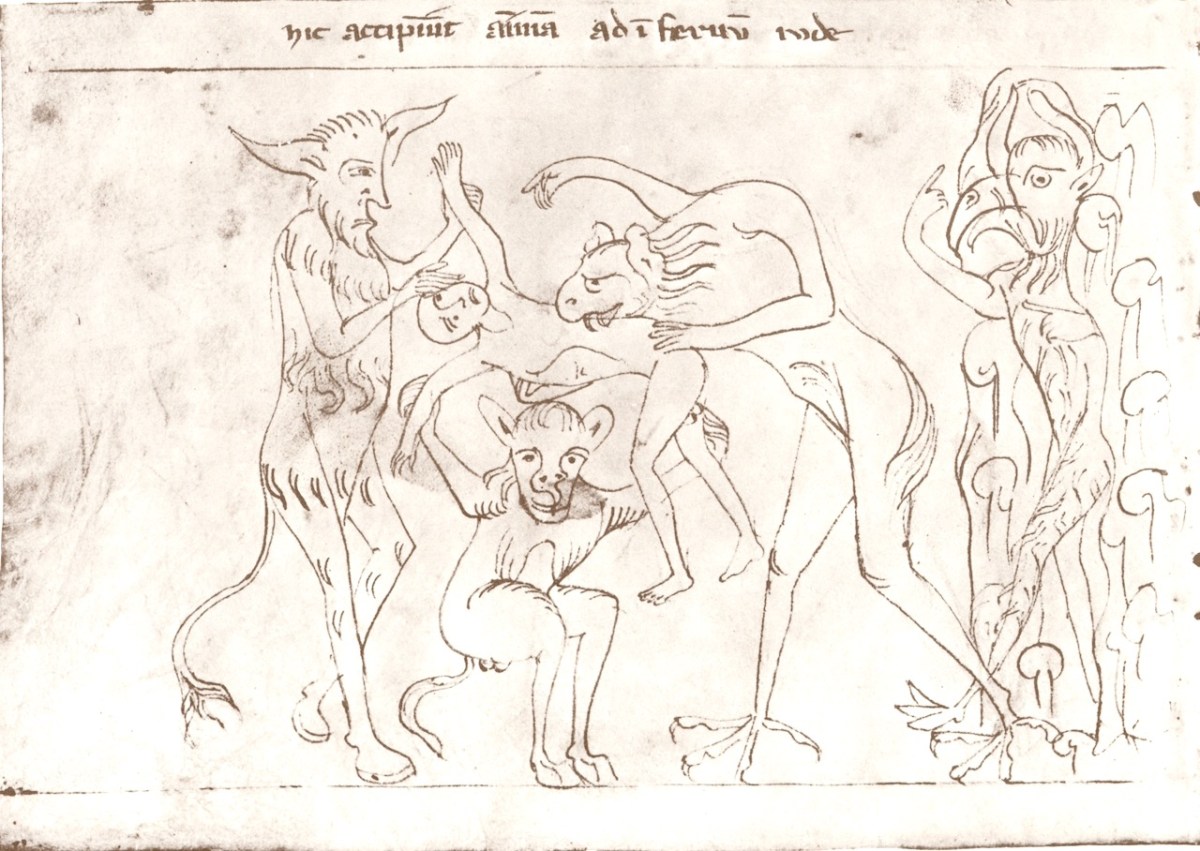
O’Meara illustrated his book with woodcuts from Sankt Brandans Seefahrt, printed by Anton Sorg at Augsburg in 1476. As you can see, they are different in character from our manuscript, being woodcuts for one thing, rather than pen and ink drawings. For example, the illustration on the cover is of the famous incident with the whale, covered in Part 2 of this series, while the illustration below is of the Unhappy Judas on a rock in the sea. Contrast it with the same scene from S Brandanus, below the first quote.
Nevertheless, O’Meara’s translation and the S Brandanus illustrations correspond perfectly, indicating that both were based on the same text. I am using the story of Brendan’s meeting with the Unhappy Judas. Regular readers will remember that I wrote about this once before, in my post Harry Clarke, Brendan, Judas – and Matthew Arnold. While the stories are the same, Arnold’s poem ends with Judas disappearing, while the story from the Voyage carries on. Here goes.
When Saint Brendan had sailed towards the south for seven days, there appeared to them in the sea the outline as it were of a man sitting on a rock with a cloth suspended between two small fork-shaped supports about a cloak’s lengths in front of him. The object was being tossed about by the waves just like a little boat in a whirlwind. Some of the brothers said it was a bird, others a boat. . .
Blessed Brendan questioned him as to who he was, or for what fault he was sent here, or what he deserved to justify the imposition of such penance?
The man replied: “I am unhappy Judas, the most evil trader ever. I am not here in accordance with my desert but because of the ineffable mercy of Jesus Christ. This place is not reckoned as punishment but as an indulgence of the Saviour in honour of the Lord’s resurrection.. . .
When I am sitting here I feel as if I were in a paradise of delights in contrast with my fear of the torments that lie before me this evening. For I burn, like a lump of molten lead in a pot, day and night, in the centre of the mountain that you have seen. . . .
But here I have a place of refreshment every Sunday from evening to evening, after Christmas until the epiphany, at Easter until Pentecost, and on the feast of the purification and assumption of the Mother of God. After and before these feasts I am tortured in the depths of hell with Herod and Pilate and Annas and Caiphas. And so I beseech you through the Saviour of the world to be good enough to intercede with the Lord Jesus Christ that I be allowed to remain here until sunrise tomorrow, so that the demons may not torture me on your coming and bring me to the fate I have purchased with such an evil bargain.
Saint Brendan said to him, May the Lord’s will be done! Tonight until the morning you will not be eaten by the Demons.
The man of God questioned him again saying what is the meaning of this cloth?
The other replied I gave this cloth to a leper when I was procurator for the Lord. But it was not mine to give. It belonged to the Lord and the Brothers. And so it gives me no relief but rather it does me hurt. Likewise the iron forks on which it hangs I gave to the priests of the temple to hold up cooking pots. With the rock on which I sit I filled a trench in the public road to support the feet of those passing by, before I was a disciple of the Lord.
The story continues, with the demons coming to take Judas back to hell, upon which Brendan forbids them to do so. The following morning, when they come to fetch Judas,
. . . an infinite number of Demons was seen to cover the face of the ocean emitting dire sounds and saying ‘Man of God, we curse your coming as well as your going, since our chief whipped us last night with terrible scourges because we did not bring to him that accursed prisoner.
They tell him that Judas will suffer double punishment for the next six days because of this, but this also Brendan forbids, in the name of God, saying:
I am his servant and whatever I order, I order in his name. My service lies in those matters which he has assigned to me.
The Demons followed him until Judas could no longer be seen. They then returned and lifted up the unhappy soul among them with great force and howling.
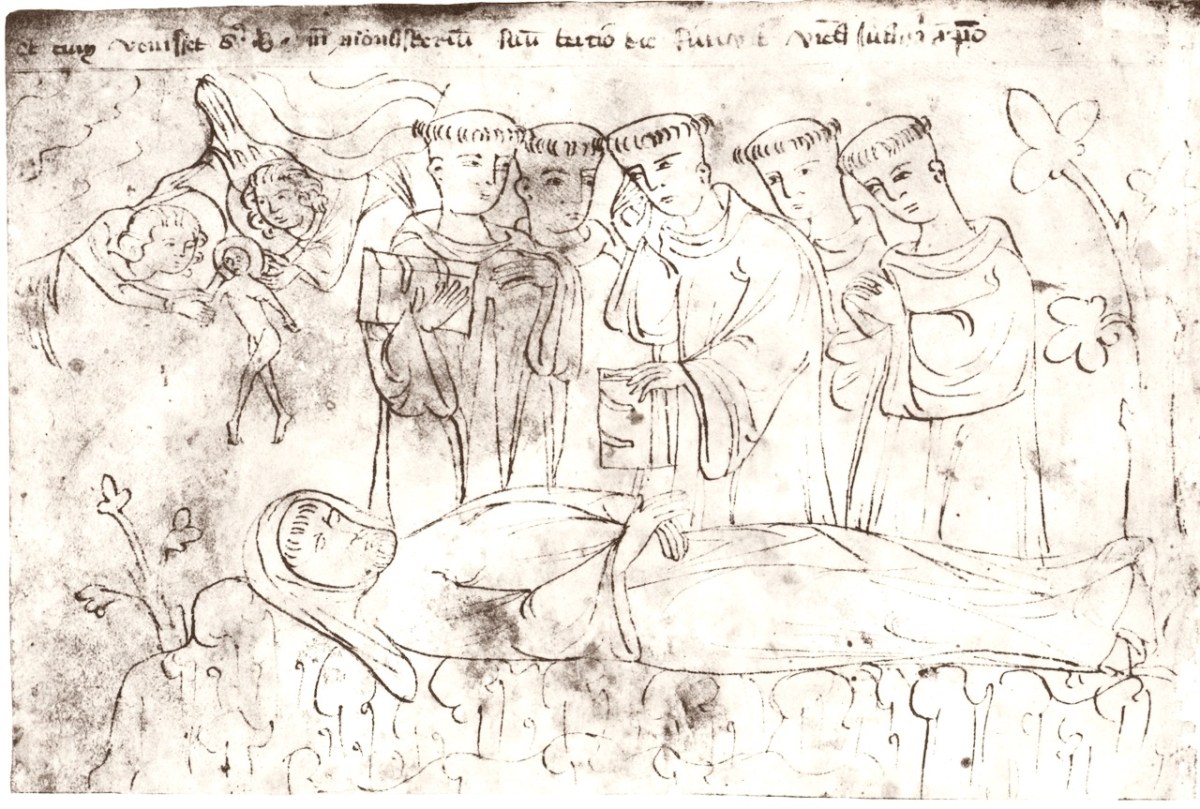
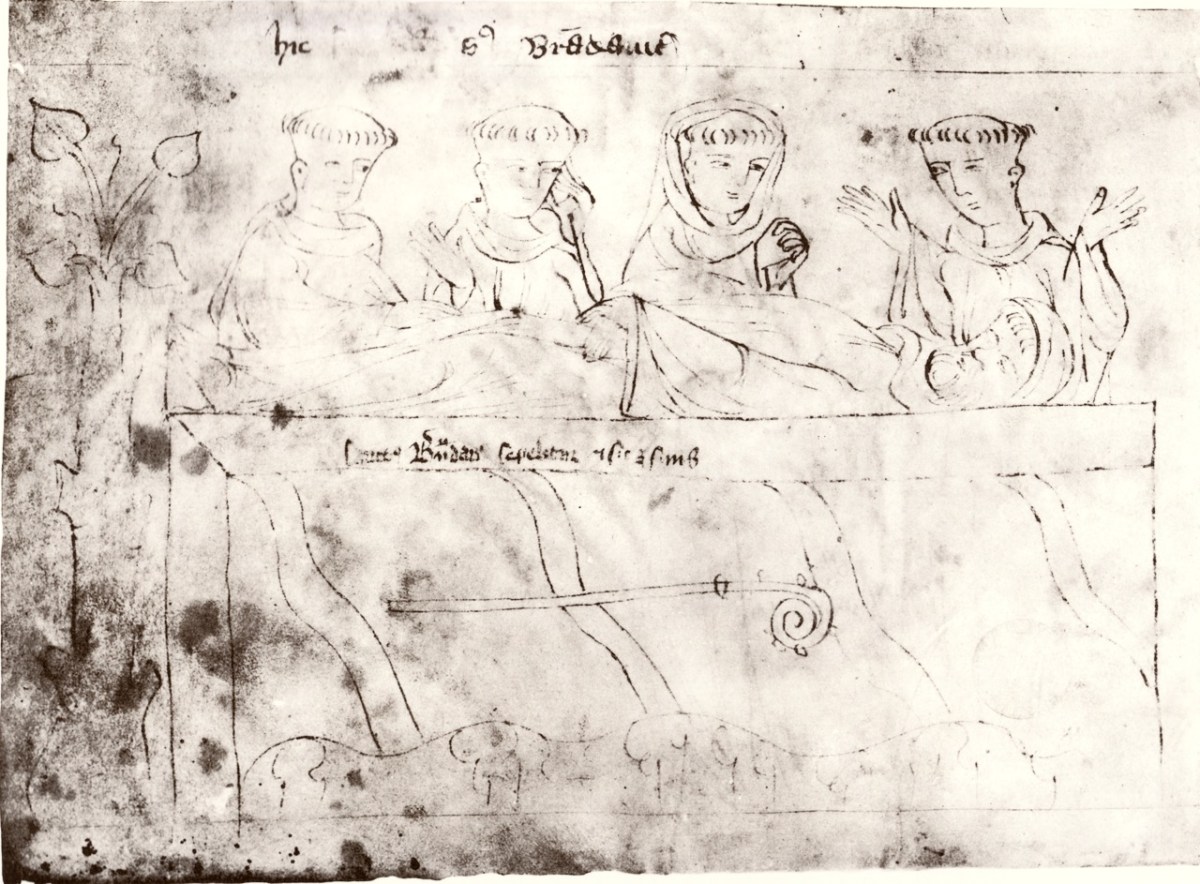
Eventually the voyage ends and Brendan returned home, relating everything that had happened on the voyage and saying that his own time had now come to an end. His dying and death are given less than half a page – an unseemly short few words to bring the voyage to a close.
For when he had made all arrangements for after his death, and a short time had intervened, fortified by the divine sacraments, he migrated from among the hands of his disciples in glory to the Lord, to whom is honour and glory from generation to generation. Amen. End.
Welcome to the UCD Library Cultural Heritage Collections blog. Discover and explore the historical treasures housed within our Archives, Special Collections, National Folklore Collection and Digital Library
 Roaringwater Journal