The Black Eagle of the North (Saints and Soupers 9)

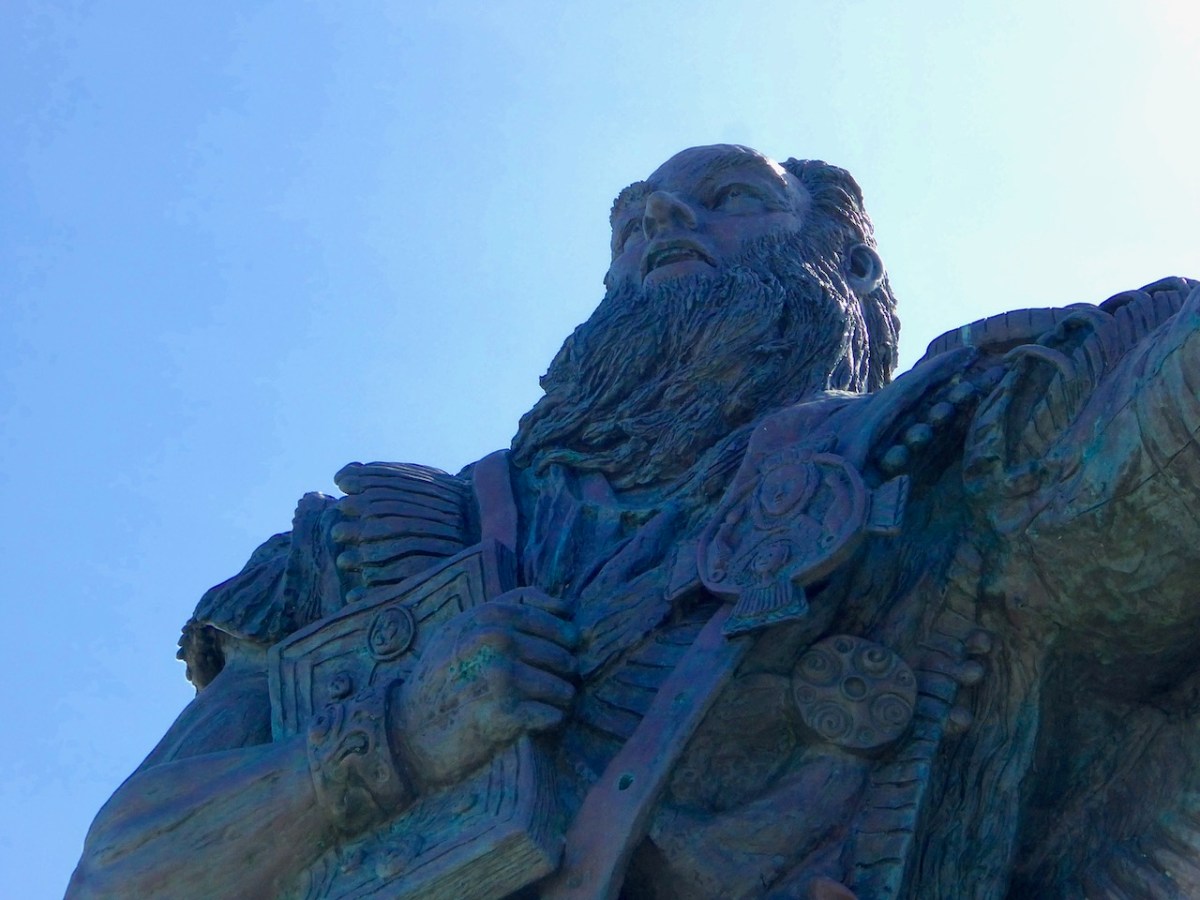
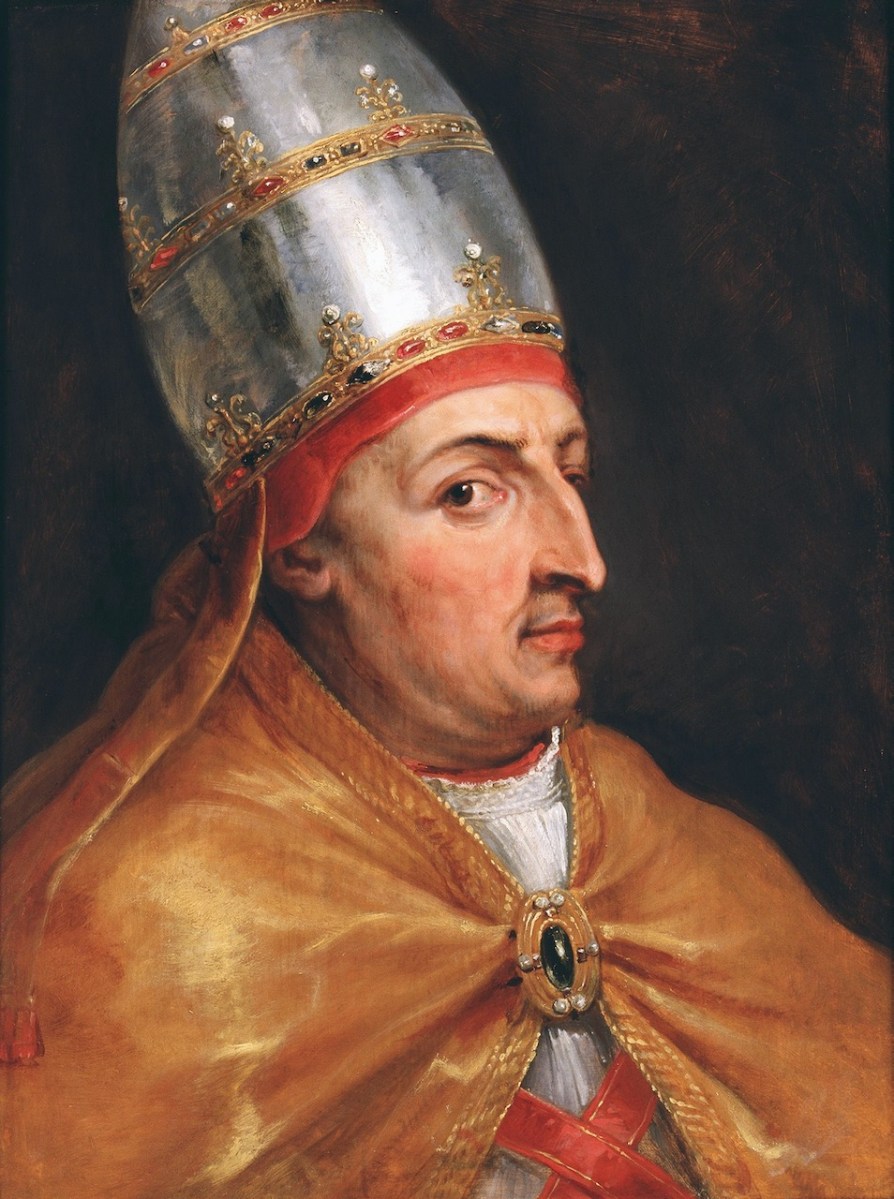
If you’ve read my series Saints and Soupers, you might remember the character who appears in Part 6, Father John James Murphy – The Black Eagle of the North. That’s him, below. It’s always been my intention to revisit him at some point, specifically to try to investigate that amazing nickname. It’s only taken me 6 years. 

First of all, let me tell you why now, and then the deeply personal reason why I want to write more about Fr Murphy. Why now? I have just been loaned a copy of Father John Murphy: Famine Priest by AJ Reilly, published in 1963 by Clonmore and Reynolds – my sincere thanks to Jennifer Pyburn of Schull for the loan, and Dan Allen of Goleen for conveying it to me. An aside – the Clonmore in the publisher’s title is from Lord Clonmore, later 8th Earl of Wicklow, who together with his partner Reynolds (about whom I can discover nothing) founded the only serious Catholic publishing company in Ireland in the first part of the 20th century. Apparently, when Clonmore was a boy, he used to attend the servants’ mass on Sunday morning and later converted to Catholicism, which horrified his Church of Ireland Anglo-Irish family. His father disinherited him, but he nevertheless succeed to the title in 1946. His father, by the way, was the Earl of Wicklow I wrote about in my post Ecce Homo: Harry Clarke’s Kilbride Window

And the personal reason? Reading about Fr Murphy transported me back to my own fur trade days! From 1974 to 1978 I was enrolled in a doctoral program in Archaeology at Simon Fraser University in Vancouver. My research and projects were centred on the excavation of fur trade forts along the Peace River (above), in northern British Columbia, built and occupied between 1793 and 1823, when they were shut down as a result of a massacre. For several summers I camped on the fort sites and dug what was left after 150 years of abandonment. I also spent time in the Hudson’s Bay Co Archives in Winnipeg, piecing together from the original manuscript journals what had happened in those forts. So when I read about Fr Murphy and his time in the Hudson Bay company, some of it is so familiar. Some of it, of course, is pure speculation – something that is readily admitted by Reilly.

One of our resources for what life was like in early British Columbia was a book, The Wild North Land, by an Irish man – William Francis Butler (below). That’s my copy, above, but it is available on good old archive.org. What a man – adventurer, soldier, writer – he became one of my heroes. He undertook a journey across the wilds of Canada, in the footsteps of the fur traders, in the 1870s, living as they would have lived. So I am illustrating this post with pictures from that book. HIs map is part of his epic journey – the part that contains the Peace River. Try to find Fort St John on it – that’s where I was digging.

Reilly has done a masterful job of piecing together what can be gleaned from sparse documentation. He has tried to be as accurate as possible, but his pen runs away with admiration for his subject and with his enthusiasm for his deeds. What is clear is that Murphy joined the Hudson’s Bay Company as a clerk in 1816.

He was a tall young man with naval experience in the East India Company already, and his physique, courage and talent shone through in his various assignments. Here’s a mention in a dispatch:

I send you a young clerk by the name of Murphy who has been engaged for the service by Auldjo of Montréal. He is totally without experience in the fur trade, but I think you will find him active, zealous and intrepid. He is rather inclined to be wild and will be the better of being under strict discipline. But I have observed many marks of good principles and I am confident he is disposed to act right if the line of his duty is distinctly pointed out to him.

and another`;

A very steady, spirited and enterprising young man; who bears privations and hardships with cheerfulness and has conducted himself in every undertaking he had to perform with credit and satisfaction.

From a different source, by B G Mac Carthy, comes what is likely an accurate description:

To hold one’s own under such grim conditions one needed to have great courage and tremendous physical endurance. Murphy was now a man of well over six feet in height, of mighty frame and muscle. His strength, daring, honesty and unusual intelligence made him an invaluable servant of the Company. From the beginning he had to prove his mettle, since he seems always to have been chosen for the most hazardous tasks. Immediately on his first arrival at New Brunswick House he was sent to capture two men of the North West Trading Company who were wanted for robbery. It was then late autumn. None but an experienced woodsman, hunter and fighter could hope to survive in that wild and frozen land. 

Several tales are told of his popularity with the Indians*, and through their liking for him many new faces were seen coming to trade at New Brunswick House, the post he was put in charge of. There is also a six year hiatus in the records in which it is unclear where he was and what he was doing, but he may have been living in Canada and pursuing life as an independent trader. It is during this period he is thought to have been adopted by a Indian community and given the name Black Eagle of the North.

This account is from his nephew, Colonel Hickie.

Soon he became restless; and one day, with a party of trappers, he left the settlement and struck into the heart of the forest. While on the March he encountered a tribe of Indians, with whom he threw in his lot and wondered through the wilds of Canada for 12 years. Crowned with feathers, dressed in skins, and with a painted face, the Indians loved him. He was elected their chief and was known as the black eagle of the North.

The whole idea of becoming a Blood Brother and living as a chief among the Indian community is very Boys Own – the stuff of many a romantic wild west melodrama. However true all this was, the soubriquet followed him when he left Canada and eventually, via Rome, ordination, Liverpool and Cork, arrived in Goleen at the height of the Famine, riding his black ‘charger’ and tasked with winning back the souls of the Soupers of Toormore. It is mentioned in his obituaries, so it was obviously part of his mystique and reputation for the rest of his life.

He didn’t stay long in Goleen, possibly less than a year and the rest of his days were spent in Cork, where he built the magnificent Church of Peter and Paul in Paul Street. He died an archdeacon, with a reputation for charity and kindness to the poor and a saintly disregard for his own comfort.

His life has inspired Reilly’s book, but also two essays, both of which seem equally full of fanciful accounts, some of which are based on reminiscences from family members. The lengthy quote in Part 6 of Saints and Soupers that starts The scene changes to a clearing in the virgin forests of Canada is from White Horsemen by M P Linehan, and the quote from Col Hickie is from this piece.

*I use the term here as it is used in the original documents, but the accepted term now for indigenous Canadians is First Nations people

Here is the page with links to the complete Saints and Soupers series.

The Hare Headstone

A very quick post today. I wanted to share with all our readers the newly-erected headstone for Robert. We gathered last Saturday to honour Robert, a year after his passing, and to celebrate the installation of the headstone. It is the work of Victor Daly, friend and stone carver from the Sheeps Head. As our friends and readers know, Robert was obsessed with hares. This is the exact memorial he would have wanted.

Thank you to Oliver Nares for the photographs.

Punishment and Pilgrimage in 16th Century Ireland

In 1539 a certain Heneas MacNichaill (Henry McNicol) of Armagh confessed to a particularly heinous crime, that of strangling his son. We know nothing about the reason, nothing about the son – an indication that it was more important to record the punishment than the details of the crime. 

We know what the punishment was because it is recorded in the Register of Bishop George Dowdall. Dowdall was a fascinating character, living in a time when it was prudent to be Catholic, then Protestant, then Catholic again and finally back to Protestant. Dowdall was not for turning – he resigned his seat as Primate of Ireland rather than approve of the Book of Common Prayer. He was later restored to the See by Bloody Mary (below), dying conveniently just before she did. While in office he kept what is known as ‘Dowdall’s Register’, the last in the series of volumes of medieval records which survive for Armagh.

One of Dowdall’s Deans, Edmund, meted out the punishment to Heneas MacNichaill. He was ordered to do a round of pilgrimages to all of the great Irish Medieval Pilgrim sites – 18 of them. We don’t know how common such a sentence was, but Salvador Ryan tells us that such punishments

. . . often took the form of a long, arduous pilgrimage, a substantial deed of almsgiving or some kind of penitential abstinence or fasting.

The annalists frequently record instances of pilgrimages undertaken as penance. The Annals of Ulster, for instance, relate that in 1491 ‘Henry, son of Hubert, son of James Dillon slew his own father, namely Hubert, with thrust of knife and he himself set out for Rome after that. The sinner might also found a monastery, as expiation for sin, or at least offer to sponsor an existing foundation’s restoration. Some accounts of the Mag Uidhir clan illustrate how individuals belonging to an important Gaelic family, in this case rulers of Fermanagh, made reparation to their God. In 1428, ‘Aedh, son of Philip Mag Uidhir went on his pilgrimage to the city of St James…and died…after cleansing of his sins in the city of St James.’

From: Popular Religion In Gaelic Ireland

St James, above, with his pilgrim’s attributes of the scallop shell and the staff and pouch.

Heneas returned two years later, in 1541. The Register records it thus:

71. Certificate of fulfilment of penance. Memorandum that, on the 4th April, 1541, Heneas McNichaill, a layman of Armagh, appeared before the Primate to declare that he had fulfilled the penance imposed on him by Edmund, Dean of Armagh and custos of the spiritualities of the vacant see, for having strangled his son. 

He had visited : 

1. Struhmolyn in Reghterlaegen in Patria Kewan (or Rewan ?). 

2. Lectum Cayn in Glendalough (i.e., St. Kevin’s Bed). 

3. Rosse Hyllery 0 Garbre in patria McCarbre Rewa, principale purgatorium hic ut dicit (Ros-ailithreach, Co. Cork). 

4. S heilig Meghyll in patria McCathiremore (i.e., The Skelligs, off the coast of Kerry). 

5. Arayn Nenaw (i.e., Ara na Naomh). 

6. Cruake Brenan in patria militis Kerray (Crock Brendain, in Kerry). 

7. Sanctorum Flanani et McEdeaga in Momonia (i.e., Killaloe). 

8. Comllum. Sti. Patricii in Conacia in patria Y maille (i.e., Croagh Patrick).

9. Purgatorium Sti. Patricii apud Loughdirge in patria Ydonyll (i.e., St. Patrick’s Purgatory in Lough Derg). 

10. Enysskworym Sti. Gworain Anmerrys Downy 

11 in Conacia (Gort, Co. Galway). 11. Cornancreigh in patria McSwyne. 

12. Tyrebane in patria Ydonyll. 

13. Sanctum Cntcem apud Woghterlawan in patria Comit?s Ormond (i.e., Holy cross). 

14. Can eh C ai s sill (i.e., The Rock of Cashel). 

15. Dwyne, et Sawyll, et Craen Yssa (or Craev Yssa) et Strwyll (i.e., Down, Saul . . . and Struell). 

The Primate re-affirmed the absolution. (Primas continuavit causam absolu tio

Laurence P Murray*

So Heneas had done his time and was forgiven his great sin. But where had he gone on this trip around Ireland? The sites have all been identified by scholars. Some are obvious (Cashel, Lough Derg, Croagh Patrick, Glendalough) and remain important sites of pilgrimage to this day.

Pattern at Glendalough by Peacock, courtesey of the National Gallery of Ireland

But some are obscure – and it’s one of those I want to talk about today.  Number 7 on the list is recorded as Sanctorum Flanani et McEdeaga in Momonia. Sanctorum Flanani is straightforward – it’s St Flannan’s Shrine in Killaloe (below).

It’s the one next to it that had scholars chewing their pencils – McEdeaga in Momonia. But it has now been identified as St Erc’s Holy Well in Glenderry, near Ballyheigue, on Kerry Head in the extreme northwest corner of Kerry. Amanda had tried to find it twice before but last week she hit it lucky and I was along for the ride. 

This map is from the wonderful Journeys of Faith: Stories of Pilgrimages from Medieval Ireland by Louise Nugent. One of our reasons for being in Kerry was to hear Louise’s talk to the Kerry Archaeological and Historical Society and she showed us this illustration of Heneas’s journey – I was immediately captivated by the fact that the well Amanda was seeking was on the map!

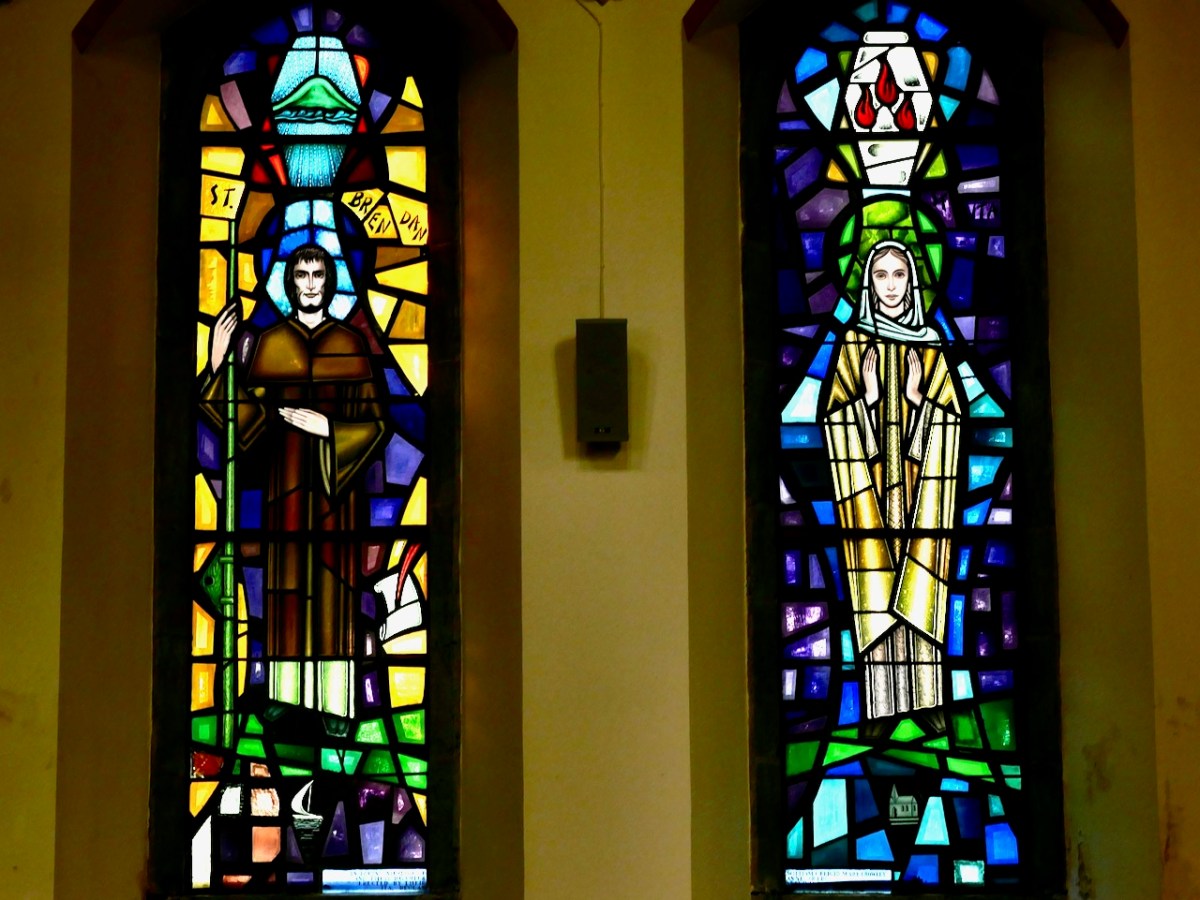
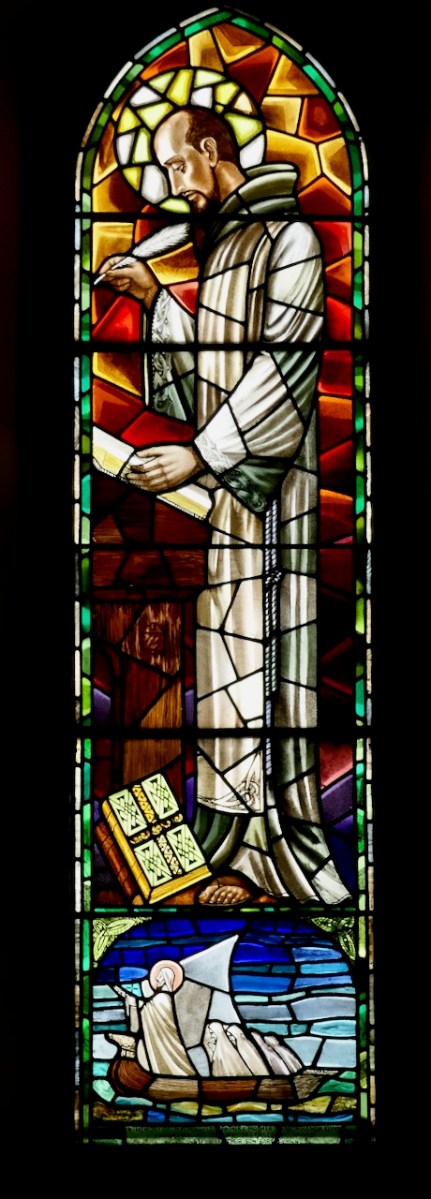
I can’t emphasise enough how obscure this well is now. Although the Corridons, the traditional well-keepers have kept the knowledge alive, it has faded from the memory of everyone else and is no longer a site of pilgrimage at all. And who was St Erc? His little church, above, is still a sacred spot on Kerry head. He is associated with St Brendan – he baptised Brendan and blessed his voyage.

I will treasure forever Amanda’s excitement at Michael Corridon’s offer to take her to the well, and the enormous beam on her face upon her return. But there was one more thrill in store – so what I want you to do now is go to Amanda’s blog and she will take up the story. This is a co-op blog!

I will leave you with Michael Corridon and Amanda setting off for the well. Now go to A Mysterious Well at the End of the World – St Erc, Kerry Head

*The Register of Bishop George Dowdall can be found in a series of articles for the Journal of the County Louth Archaeological and History Society: from their issues of 1926 to 1930.
A Calendar of the Register of Primate George Dowdall, Commonly Called the “Liber Niger” or “Black Book.” (Continued) Author(s): Laurence P. Murray Source: Journal of the County Louth Archaeological Society , Dec., 1927, Vol. 6, No. 3 (Dec., 1927), pp. 147-158 Available on Jstor

Dignity and Simplicity: Scott/Tallon in Knockanure

This week I fulfilled a long-held ambition – to visit Corpus Christi Church in Knockanure, Co Kerry.

This was one of Ireland first modern churches, built in 1964, and designed, depending on which authority you read, by Michael Scott or by his partner, Ronnie Tallon. At any rate, it was certainly the work of what is now, since 1975, the architectural practice of Scott Tallon Walker, still going strong. Michael Scott, according to Richard Hurley in his outstanding book Irish Church Architecture, was “the leading architect of his generation.” The black and white photos of Knockanure in this post are from that book. Meanwhile Ronnie Tallon was “one of the most influential Irish architects of the last century”. 

Hurley assigns the design to Michael Scott, while this piece from RTE (source of the second quote above) declares it to be the work of Ronnie Tallon. I am convinced by the latter, having read Stony Road Press’s artist description and statement by Ronnie Tallon, in which he talks about his obsession with the simplicity of the square and with the work of Mies van der Rohe.

But Scott (above), as the head of the practice was undoubtedly involved. Hurley tells the story of how the commission was won:

The whole project was a bold intervention by Michael Scott who, when he was asked to design the church, was required to seek approval from the people of the parish. This he succeeded in doing at a meeting which was held in the local school attended by the head of each family. Nobody before or since had dared to construct a church of such rigid discipline which, in spite of its small scale, raises itself above the surrounding countryside.

This is a profoundly rural area in North Kerry, and yet it is home to a number of modern, innovative churches. Knockanure was the first, indeed one of the first in Ireland. Is there something in the water, that produces such forward-thinking parishioners who can see beyond the confines of gothic arches and rose windows? I don’t know, but I made sure to drink lots of water during my visit to North Kerry.

Photo above by Amanda Clarke

Hurley describes Corpus Christi as a building of absolute dignity and simplicity, but one which at the same time had little or no sympathy with the Kerry landscape. I’m not sure I quite agree with the second part, since the area around Knockanure is flat and low-lying. The church appears to be built on a platform, with steps leading up to the front, so that it is clearly visible on the landscape. 

The church is indeed rigidly disciplined – a rectangle that gives the appearance of a light and airy open box. Two panels, one at the front and one at the back, delineate the worship space, while clerestory windows created by the roof beams allow light to pour down the side walls. The back panel conceals and makes space for the sacristy.

The church furniture, all part of the original 1960s design, enhance the simplicity and the unity of the design, from the black marble altar and fonts to the low, beautiful benches. 

In keeping with the directives of Vatican II, the church incorporated work by some of the finest artists of the time. The front panel is in fact a large-scale sculpture, in wood, of the Last Supper, by Oisín Kelly. It is the first thing you see when you enter, immediately heralding a devotional space. The back of the panel holds two confessionals. 

The cross is by Imogen Stuart, as is the carved wooden Madonna and child statue. Imogen died last year, aged 96.

The stations are unique – large tapestries designed by Leslie MacWeeney, an artist who has slipped from our consciousness in Ireland as she moved to the United states while still quite young. There’s a chapter about her in Brian Lalor’s Ink-Stained Hands – she was one of the original founders of the Graphics Studios – and a more recent interview with her here. 

This is a nationally important building and an early and striking example of the influence of modern architectural movements on Irish architects. The RTE piece was part of the 100 Buildings of Ireland series. (We visited another one, just up the road – but that’s a post for another day).

In the 100 Buildings piece, Tallon is quoted as taking inspiration from Irish Romanesque architecture. 

Irish Romanesque churches… were remarkable for their small size, extremely simple plan, rich and delicate decoration, giving a shrine effect which, at that time, had almost disappeared elsewhere. They were of single-chamber construction, with massive side walls projecting beyond the front and back façades the cross-walls including the façades were left as open as possible and were developed as a series of arched screens.

I am puzzled by this quote and I wonder if Tallon was even referring to this church, which owes nothing to Romanesque architecture. The projections he refers to (known as antae) actually predate the Romanesque style. Take a look at my two-part post on Cormac’s chapel to see if you can figure out why Romanesque architecture has been dragged into the story of this church, as if to somehow Hibernicise a building which belongs, triumphantly, to the International Modern style.

Vatican II and a new generation of Irish architects taking their cues from Europe dragged the Catholic Church I grew up in, into the 20th century. Corpus Christi in Knockanure is at the forefront of that breakthrough design revolution.

Equinox!

Ken Williams - capturing the moment

We’ve just passed the Equinox – one of the two moments in the year when day and night are of equal length. This happens once in the spring and once in the autumn. This year that moment was March 20th at 9:01AM, but it can fall between the 19th and the 21st, depending on the year. The autumn equinox this year falls on Sept 22, but it can range from the 21st to the 24th.

Prehistoric monuments in West Cork often have an orientation – the most famous of course is Drombeg stone circle (above in 2020). It’s a multiple stone, ‘axial’ circle, with two portal stone opposite a recumbent stone. On the winter solstice (this year on Dec 21st) the sun sets behind the recumbent, diametrically across from the portal stones (this is the ‘axis’). Attending this event is always great fun as well as an opportunity to join in a celebration that is thousands of years old.

There is a rhythm to the year provided by these four solar events – the longest day (summer solstice), the shortest day (winter solstice) and the equal-length days (equinoxes). Add to that the cross-quarter days – the points half way between the solstices and equinoxes, and we have a natural calendar of eight divisions.

The cross-quarter days, by the way, are the ones that track most closely to the great ancient Festivals in Ireland of Imbolc, Bealtaine, Luanasa and Samhain. Although nowadays these tend to be celebrated on the 1st day of February, May, August and November, in fact the dates would have varied and in 2025, the accurate dates for the cross quarter days are Feb 3, May 5, Aug 7 and Nov 7. This is important to know as various solar events happen on cross-quarter days, and if you want to see them, you have to turn up on the right day! See this post on Boyle’s Bealtaine for a good example of this – the photo above was taken on May 5, 2018.

Ken and Robert: getting ready for sunset at Bohonagh

A few years ago, we met up with Ken Williams of Shadows and Stone, to photograph the equinoctial sunset at Bohonagh Stone Circle, near Rosscarbery. Ken is the undisputed master of prehistoric photography in Ireland. His website contains high-quality images of many different kinds of monuments, he supplies photographs for all the best publications, and he was our partner in the Rock Art Exhibitions we mounted in the Cork Public Museum and in Schull.

flashes strategically deployed

Ken’s work on rock art is astounding. We know first hand how difficult it is to get good photographs of the carvings. Many of them are covered in lichen, obscuring all the detail, and can really only be discerned in long slanting light, such as at sunrise or sunset. Ken uses both natural and artificial lighting to capture his excellent images and when we first met first we asked him how he packed all those lights up to the remote locations in which a lot of rock art is found. He grinned and opened his backpack. “This is my equipment,” he said, “It’s all I use.” Essentially his gear consists of a camera, flashes, and tripods – strategically deployed in the photograph above. If you want to see the difference between what Ken captures and what us ordinary mortals manage to do, take a look at the first two images in the post Revealing Rock Art.

it was a beautiful evening – perfect conditions to see the sun sink behind the recumbent stone. Bohonagh (above) is a complex site. Not only do we have a stone circle, there is also a boulder burial, featuring a rather spectacular quartz supporting stone and cupmarks on the upper surface of the boulder, as well as a cupmarked stone hidden in the undergrowth between the boulder burial and the stone circle. It’s been excavated.*
Looking over the recumbent

It was a treat to see a master photographer at work and to have Ken explain how he gets those amazing shots. From previous attempts, I knew how difficult it was to portray a scene when you’re aiming directly into the glare of the setting sun. This time I concentrated on capturing the photographer at work. Ken, meanwhile, worked his usual magic – and here’s the result, included with his permission. Not only can you see everything, including the still blue sky, but his picture captures the mysterious ambiance of the setting and the occasion.
BohonaghEquinox15-12

Our thanks to Ken for an inspirational photo shoot.

Thanks, Ken!

* A stone circle, hut and dolmen at Bohonagh, Co. Cork, by EM Fahy, 1961

Ogham Stone or . . . ?

It’s been an eclectic week – Amanda, Peter and I had a skite out to Inchydoney, and I finished off the week with a trip to Barley Cove.

Inchydoney Island is a beautiful, unique and historical part of West Cork. Just south of Clonakilty, it was indeed once an island but now is connected to the mainland with causeways. The reason for our trip was to check out an intriguing stone, spotted by Willie O’Regan, along the shore. Willie’s thought was that it might be an Ogham stone and he wanted to check that out. It had fallen forward out of the bank in recent high tides, revealing parallel grooves along its length – just the sort of thing you might expect from an Ogham stone.

We rendezvoused with Willie on the north side of Inchydoney, across from Clonakilty (above) and walked along the shore, while he told us about the history of the area. We could see across the pond known locally as the Beamish Lake to the Hungerford House, originally called Inchydoney House. It has been purchased and magnificently restored in recent years, the owners pouring resources and loving attention into their project, including restoring the walled garden.

The shoreline had been – er – shored up by rocks and rubble all along its length. It may originally have been walled – designed landscapes were very popular in the 18th century – take a look at New Court, for example. There may also have been small inlets and launching places along the edge. At one such possible spot Willie showed us what he had found. 

We examined it thoroughly and took lots of photos. It wasn’t an Ogham stone – although anyone could be forgiven for mistaking it for one! The grooves are actually plough marks. 

As the plough passes over and through the soil, it runs across stones that are just at the right depth below the surface, gouging out these grooves. Over the years, many grooves appear. Sometime the stones, if they are small enough, roll over and the grooves appear on other surfaces, as seems to be the case with this stone.

Plough-marked stones like this could be any age – this one could be medieval or more recent. It was probably finally unearthed and tossed to the edge of the field to join the other rocks keeping the water from eroding the shorelines, eventually falling forward and revealing itself to Willie’s keenly observing eyes. It tells a story – a story of cultivation and hard work and a story of never throwing anything away, and a story of a man who walks these shores for pure pleasure and never misses a trick. Thanks, Willie – we had such a good time on this walk!

And – to learn all you ever wanted to know about Inchydoney Island, read Robert’s epic post from 2021, Inchydoney – and Virgin Mary’s Bank

And Barley Cove? As last year, I went out to see what I could see of the Early Sand-grass. A remarkably homely little tuft of grass that is nevertheless precious because it is extremely rare. I found lots and it felt so good to be out in the fresh air, lying in the dunes, and taking an unconscionable number of photographs of this humble little representative of our incredible West Cork biodiversity.

And then home through some of the most scenic coastline in Ireland. Not that I’m biased.