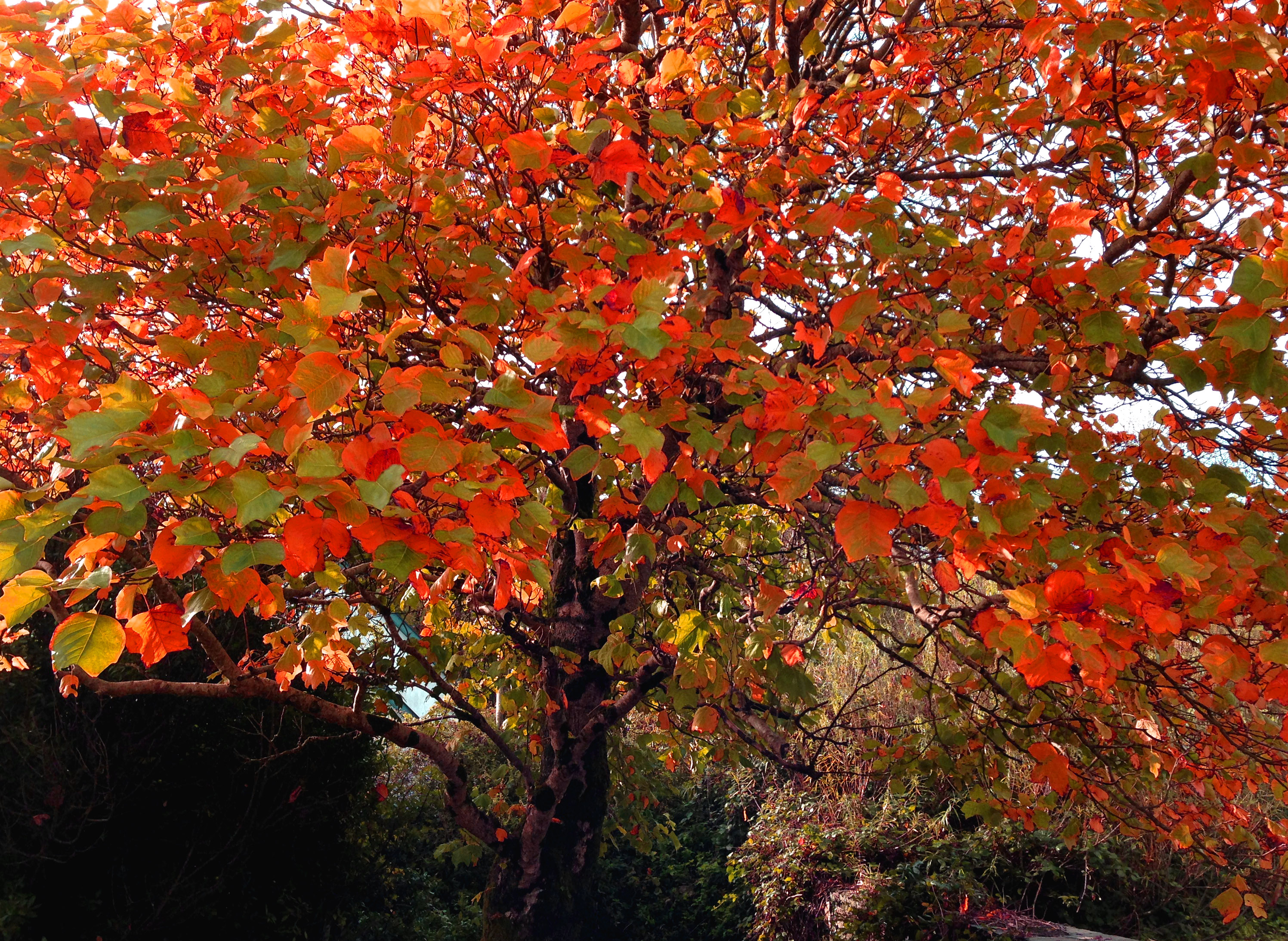
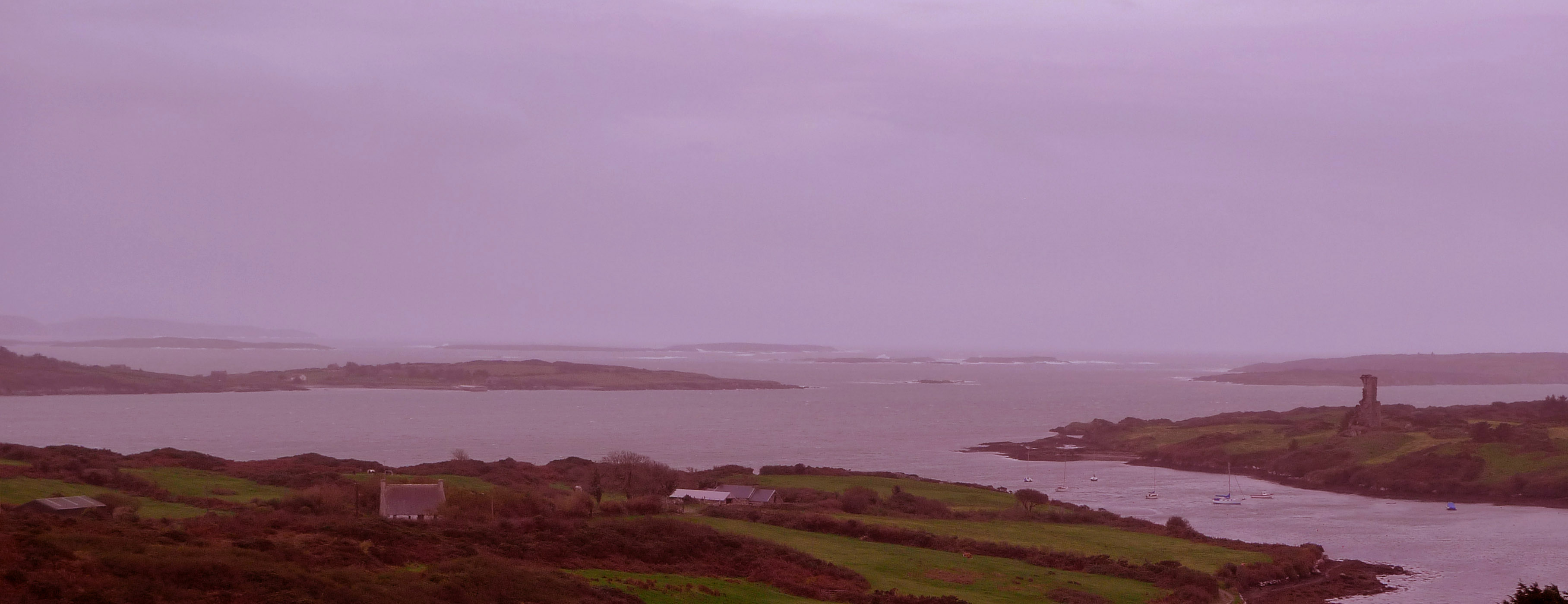
Just as the leaves begin to turn, the gales have come to tear them away and send them flying all over the Bay. Autumn is bringing angry seas with wild white horses, while the trees on our exposed acre are bending sideways. I admire the small birds who manage to find their way to our bird-table in the face of it all: we have just been visited by a whole flock of ravenous Goldfinches who hang on to the wildly swaying feeders in a determined frenzy to fatten themselves up for the coming winter and squabble noisily with any Great-tits, Chaffinches or Robins who try to get in on the act.
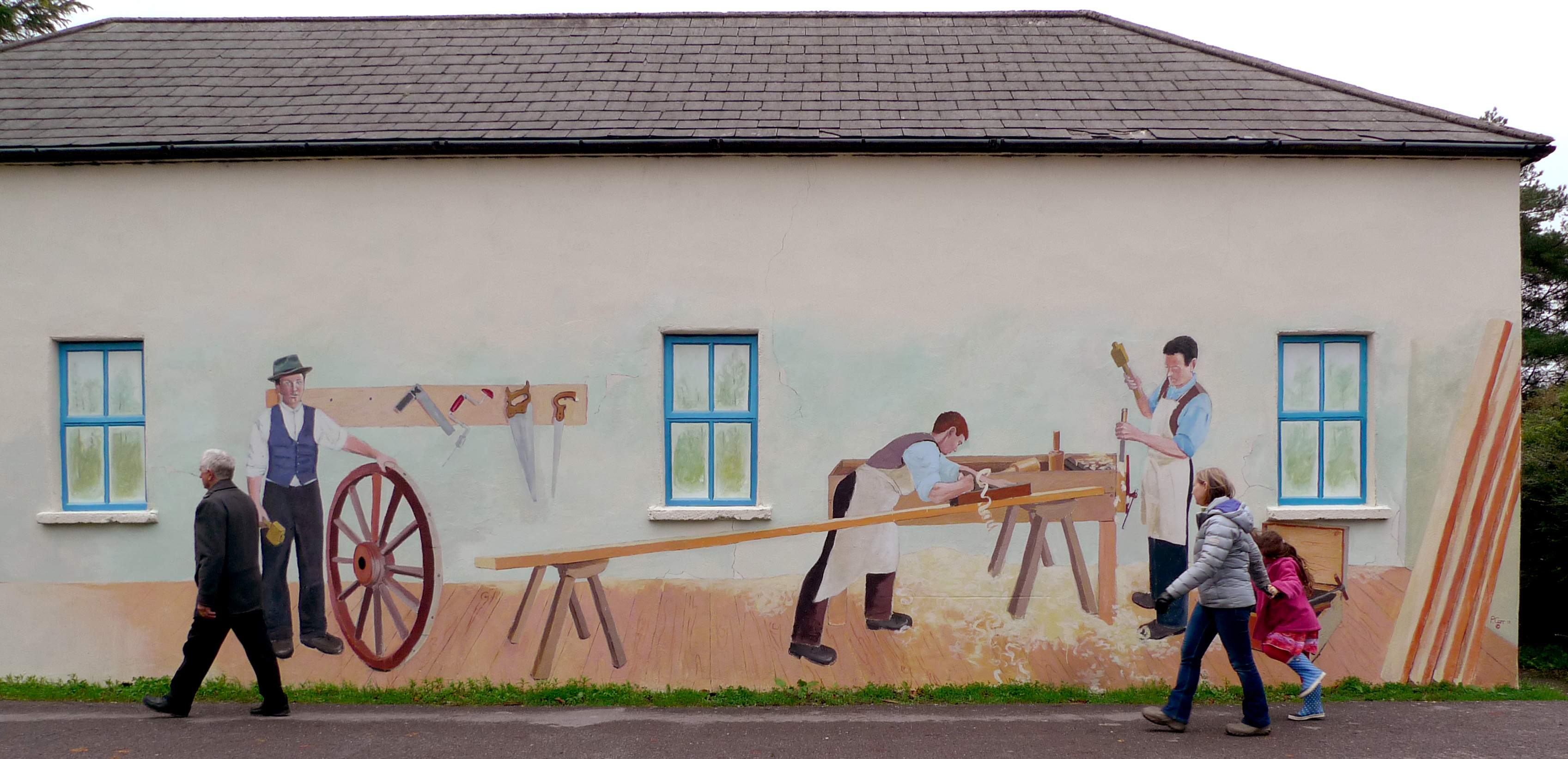
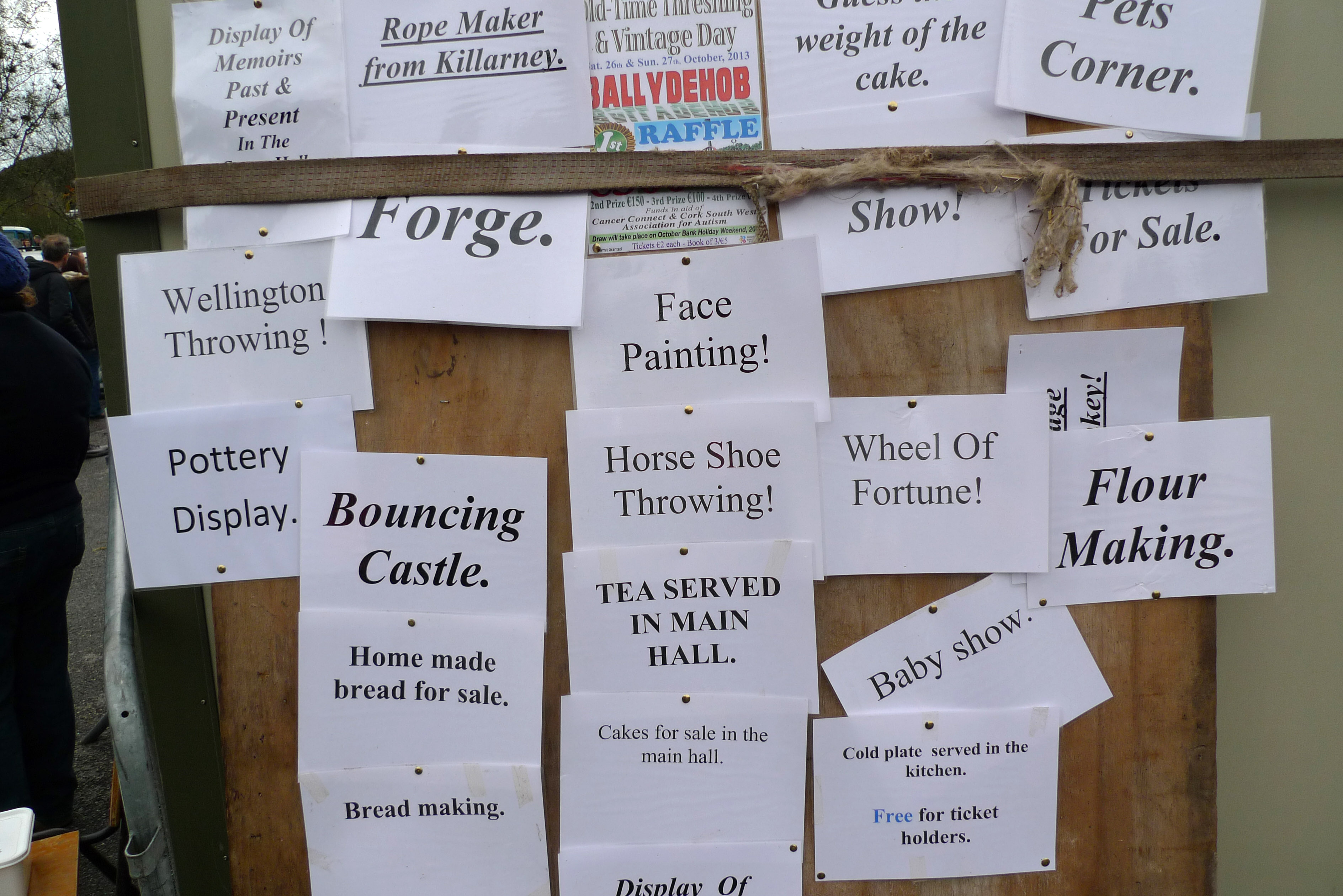
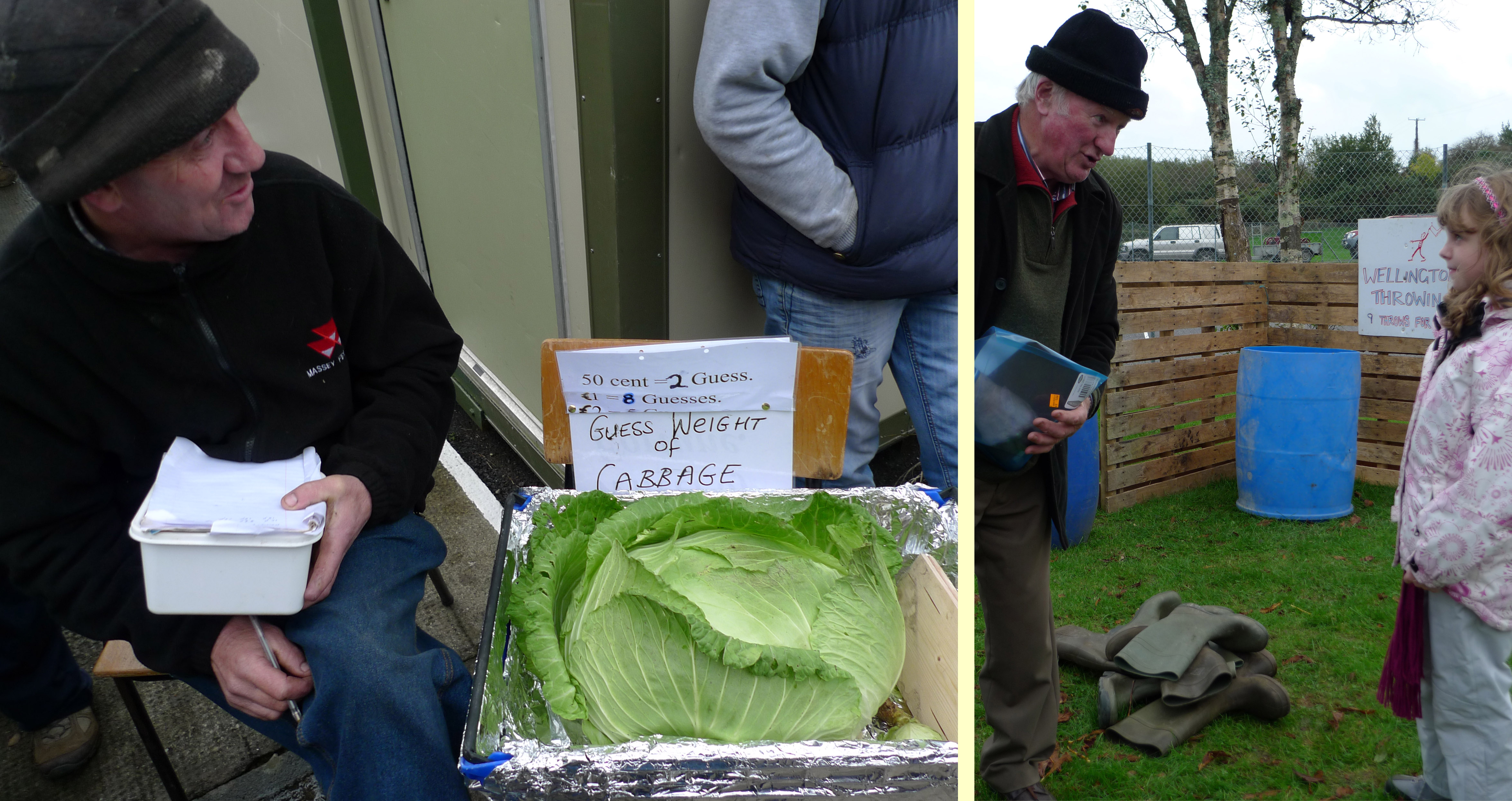
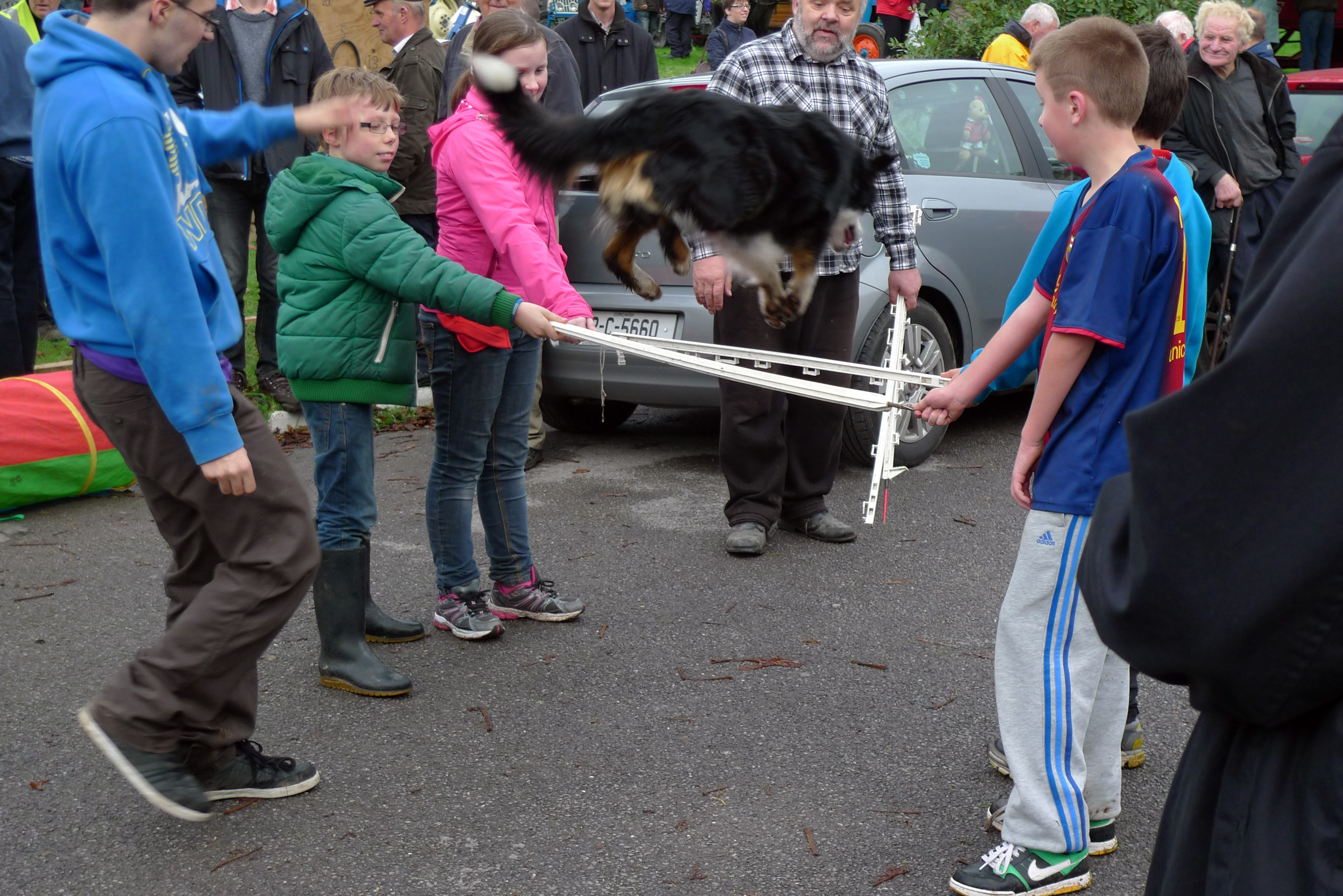
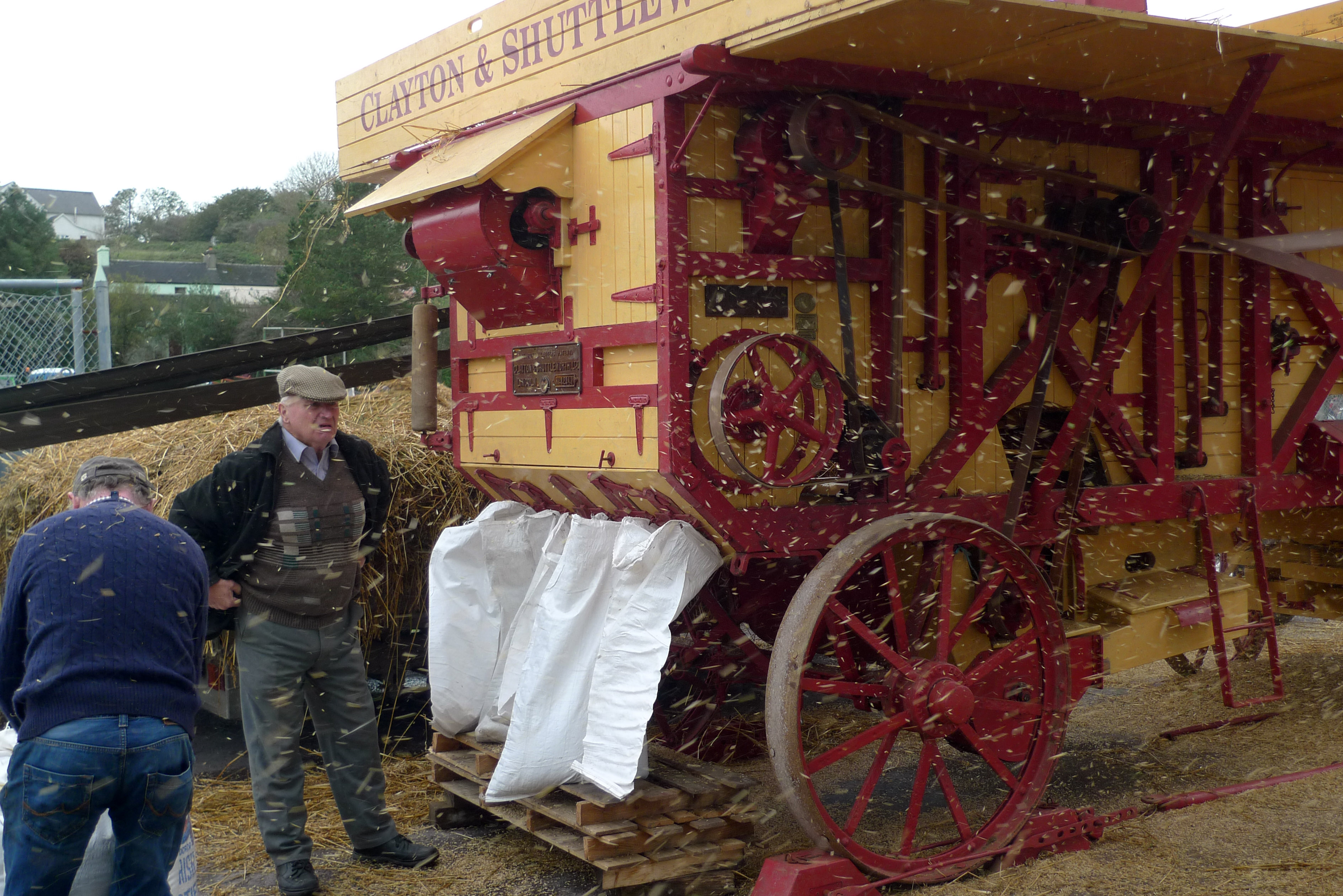
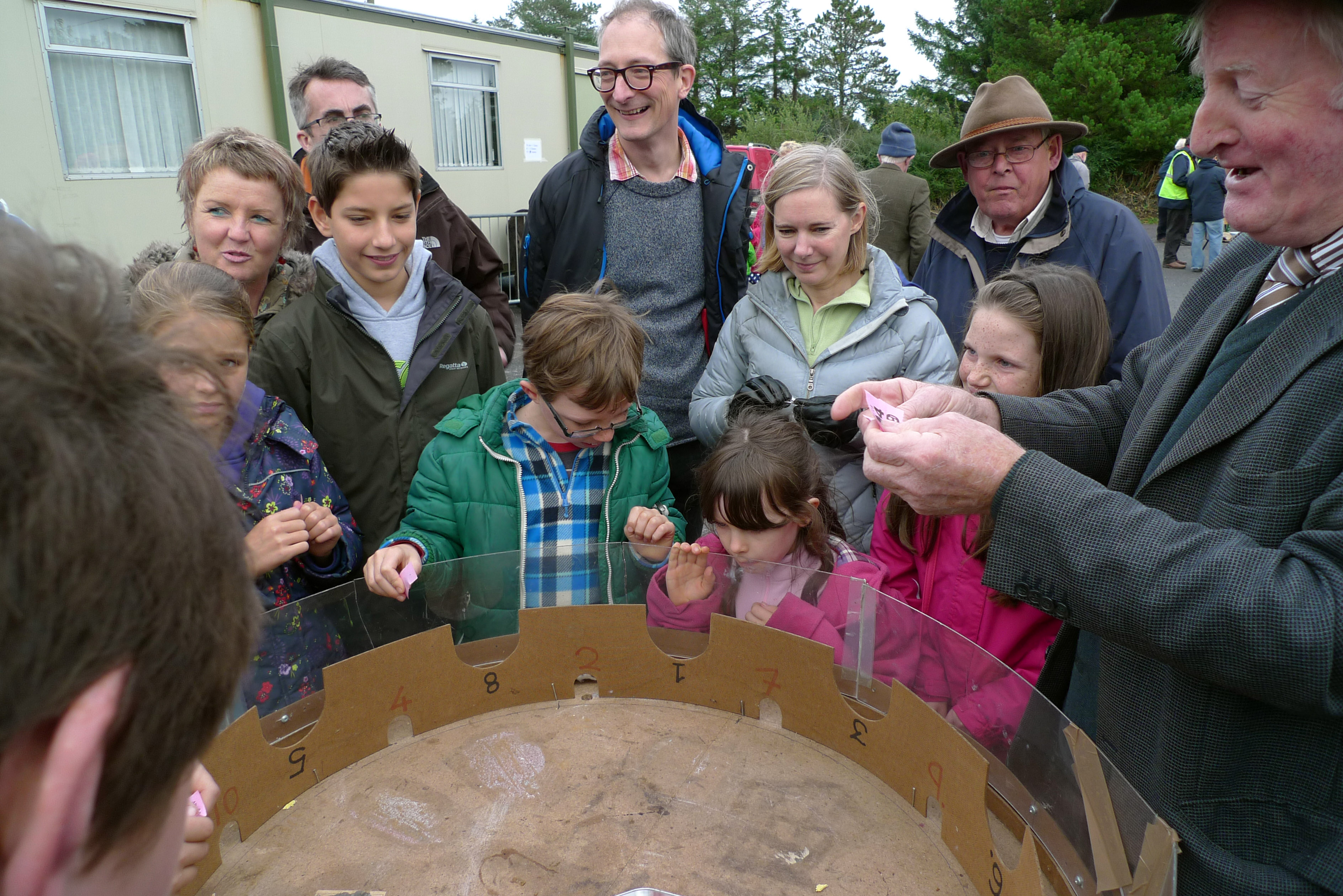
In Ballydehob (our local community) it’s time for the annual Thrashing. This event always takes place just before Hallowe’en, a festival which nowadays overlays the old Celtic Samhain (1 November) – when the souls of the departed are remembered. Here it’s a good time to bring in the threshing machine and lay up sacks of grain in the barn. It’s also a reason to hold a fair and show off vintage cars and tractors, to make butter, to watch performing dogs, to gamble on mouse racing – or just to chat over a cup of tea.
Byway in Ballydehob
Don’t miss it!
The Thrashing
Mouse Bookie
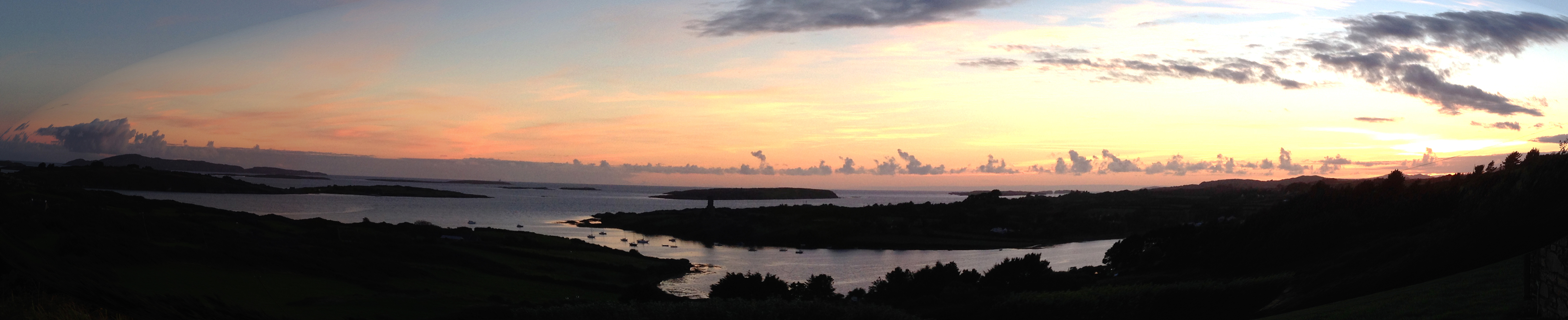
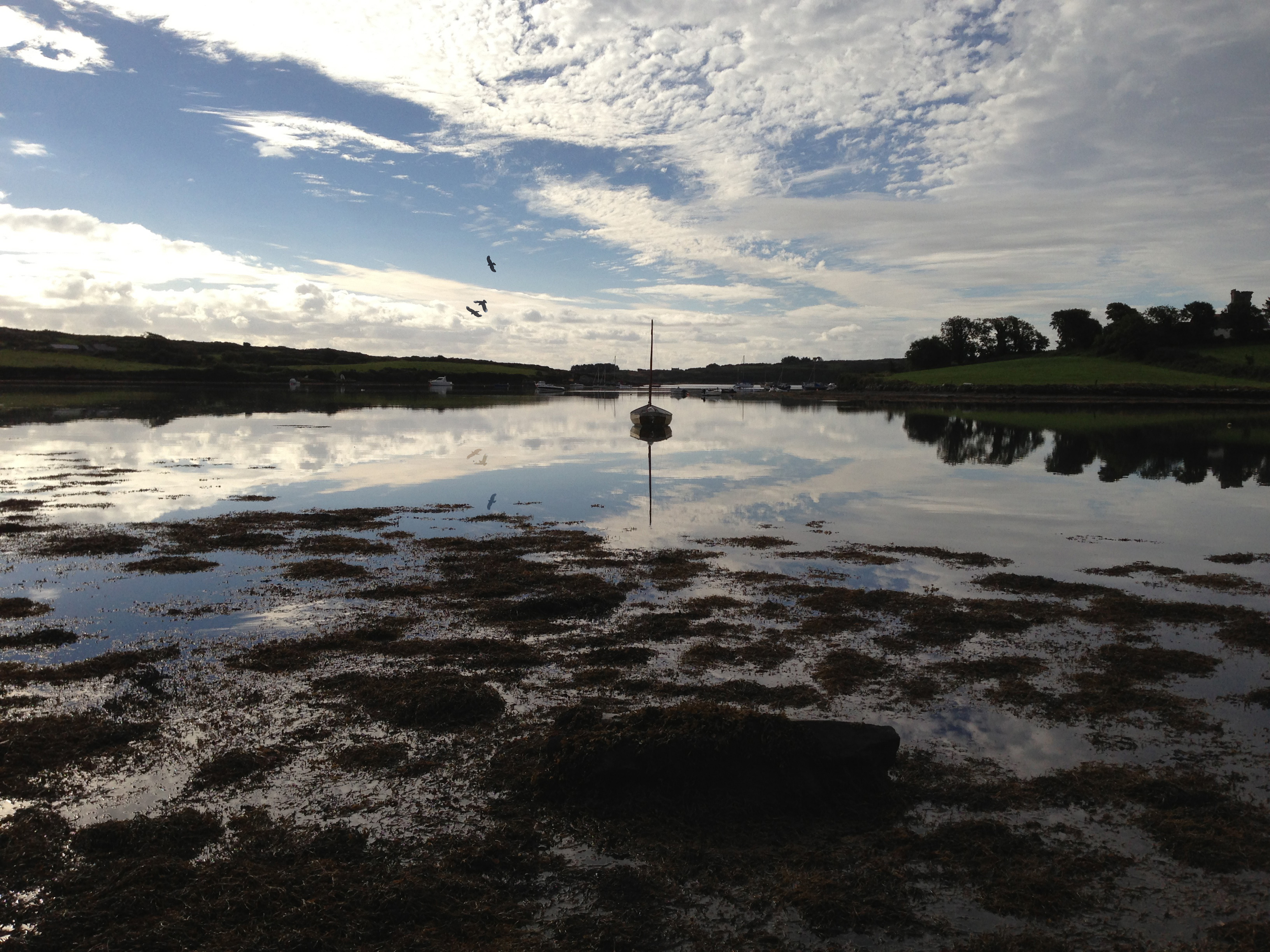
We look forward to the turning seasons: what we see from Nead an Iolair changes constantly, is never dull, and can’t be taken for granted. Skies can be steel grey – or still as gloriously blue as they were in the summer; and our sunsets can be even more beautiful.
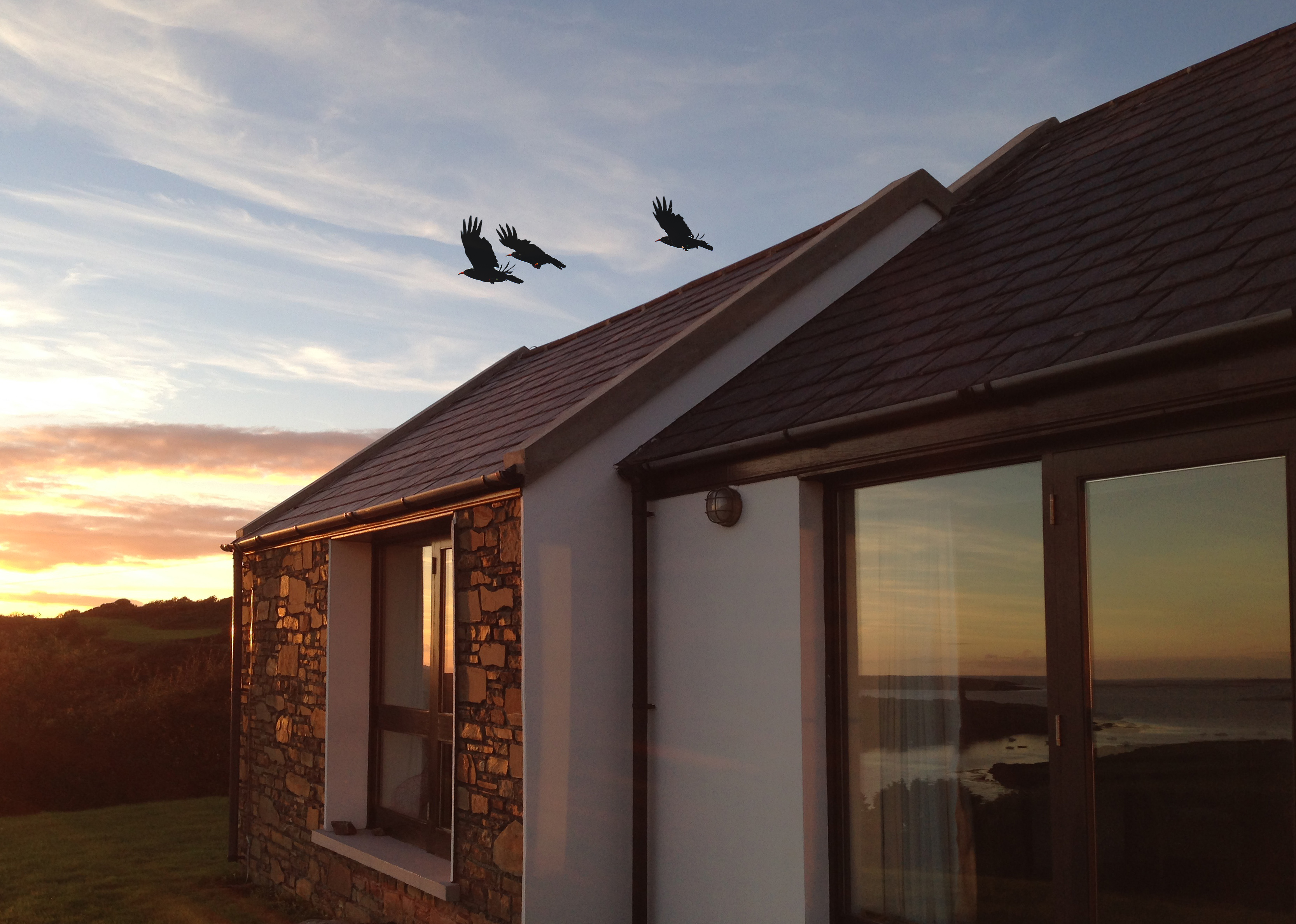
One of the many treats of living up here in Nead an Iolair is the frequent appearance of a group of Choughs. Towards the evening we hear them on our roof, chattering to each other. Chatter of Choughs, by the way, is the correct collective noun: all the Corvid family seem to have interesting ones – Murder of Crows, Parliament of Rooks, Conspiracy of Ravens, Tiding of Magpies… These are just some of a very long list: do you of know any to add to it?
Autumn evening at Nead an Iolair
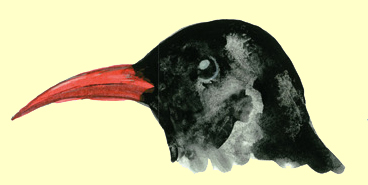
Choughs are distinctive birds, but easy to mistake for other Corvids when in the sky. Look out for curved red bills, and red legs and claws. Also listen for the chatter, in which the bird tells you its name:
It won’t tell you its latin species name, however: Pyrrhocorax-pyrrhocorax!
Birds on line!
As an erstwhile resident of Cornwall I have a particular interest in the Chough. This bird appeared on the old Cornish coat-of-arms, together with a tin miner and a fisherman (the two latter have vanished on the new one – perhaps a poignant comment on changing times), and was once a familiar sight on the coast. Changing habitat and trophy hunting led to a decline in the British Chough populations recorded by naturalists as early as the eighteenth century. The last breeding pair was seen in Cornwall in 1947, and not long afterwards the Cornish Chough was pronounced extinct. Amazingly, the new Millennium saw the Chough returning naturally to Cornwall, with three birds taking up residence on the Lizard peninsula and breeding successfully. It’s reckoned that there are now between forty and fifty living on that far western coastline. On my last days in Cornwall before coming here to Ireland I was walking at Nanquidno, near Lands End and – as if to wish me ‘goodbye’ – there was a pair of Choughs foraging happily on the path in front of me! Where did the new generations of Cornish Choughs come from? DNA tests have given us the answer: Ireland…
Cornwall’s old and new logos: and the ‘Raven King’ – in folklore, Choughs and Ravens are interchangeable
Cornish nationalists, who are campaigning for a devolved parliament, are delighted by the come-back. “This will be seen as a symbol of hope,” said Dr Loveday Jenkin of the nationalist party Mebyon Kernow. “The re-emergence of the Chough is a symbol of the re-emergence of the Cornish nation.”
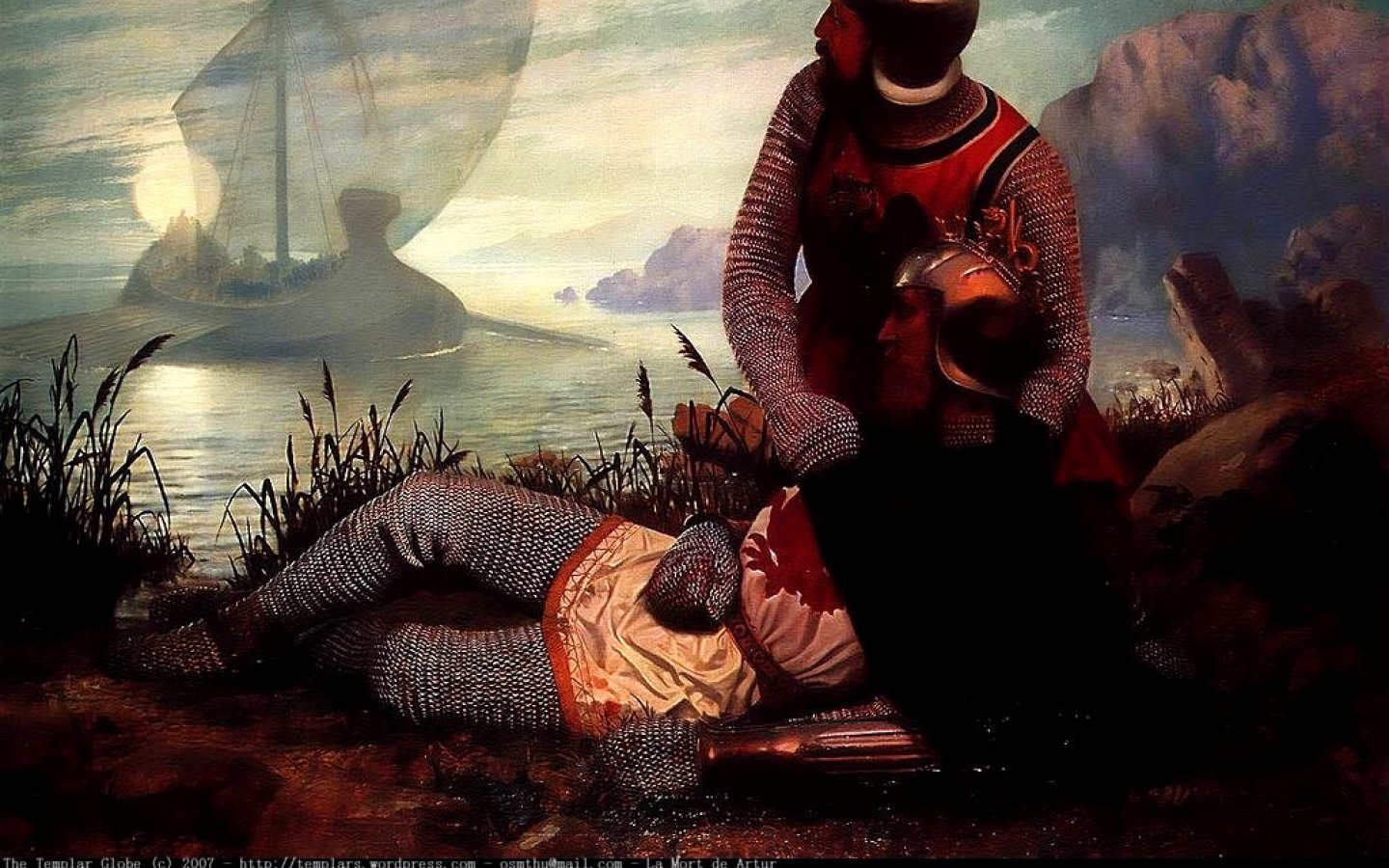
King Arthur’s last battle
Cág Cosdearg is the name of the Chough in Irish – this is a literal translation of ‘red-legged Jackdaw’. There are a number of legends attached to this bird: King Arthur turned into one, and the red beak and legs are symbolic of the blood shed at his last battle (presumably this is another link with Cornwall). The Chough was known to Daniel Defoe as a ‘fire raising bird’ in his …tour thro’ the whole island of Great Britain…
“…It is very mischievous; it will steal and carry away any thing it finds about the house, that is not too heavy, tho’ not fit for its food; as knives, forks, spoons and linnen cloths, or whatever it can fly away with, sometimes they say it has stolen bits of firebrands, or lighted candles, and lodged them in the stacks of corn, and the thatch of barns and houses, and set them on fire; but this I only had by oral tradition…”
I like the Irish expression, “You’ll follow the Crows for it” meaning that a person would only appreciate something after it had gone.
Watching our Choughs perform their aerobatics up here is a delight – I’ve seen them turning cartwheels in the air, and they even appear to fly upside down at times. Sylvia Plath puts it wonderfully in Blackberrying:
–
“…Overhead go the choughs in black, cacophonous flocks—
Bits of burnt paper wheeling in a blown sky.
Theirs is the only voice, protesting, protesting…”
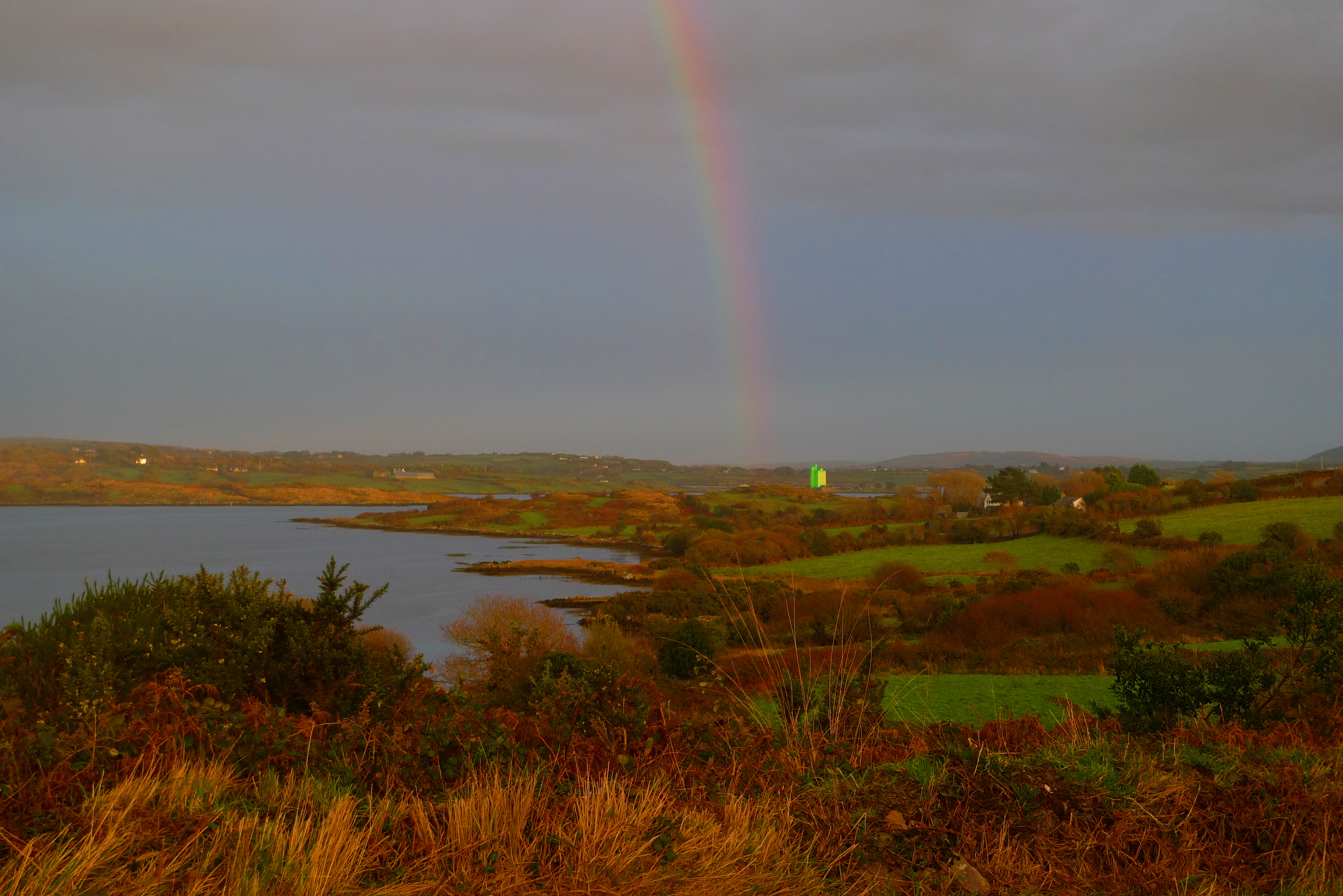
I welcome the excuse to put a picture of a green pyramid at the top of my post – with justification: it’s Saint Patrick’s Day, and all over the world things are turning green! It’s a campaign by Tourism Ireland to encourage people to visit the country, as tourism is now probably the largest industry here. As well as the Pyramids and the Sphinx, the Sydney Opera House, the London Eye, the Leaning Tower of Pisa and even the Angel of the North are getting the green treatment, along with many other well known landmarks. I’ve added a couple of my own – why not?
Kilcoe Castle – 17 March
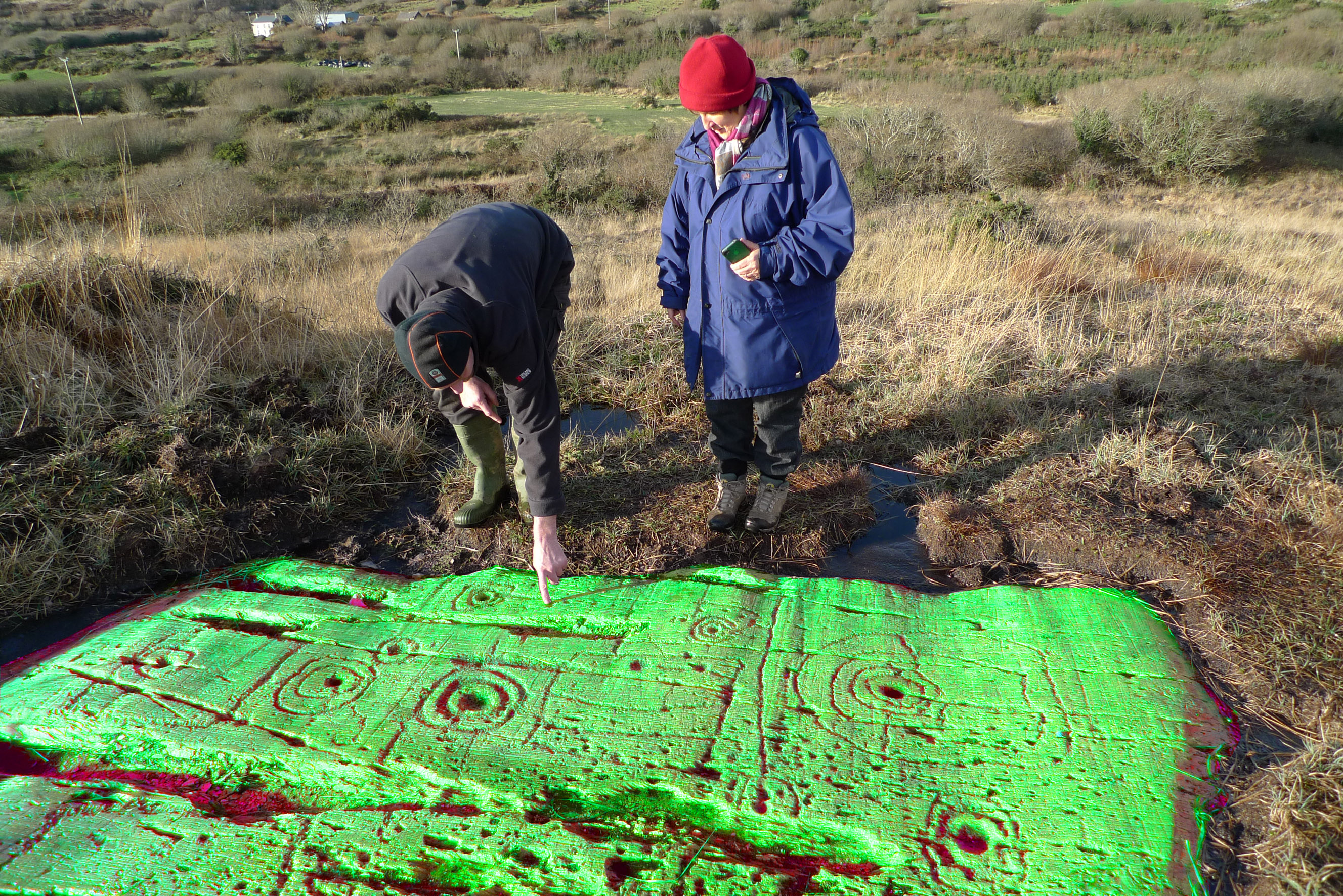
Gary and Finola puzzle over this St Patrick’s Day phenomenon at Derreenaclough
We were staying near Dublin at the weekend to attend a wedding and, as there were three Irish people and me around the breakfast table, I asked the others to tell the story of St Patrick. They did a good and convincing job: I now know that Patrick was descended from a Roman family living in the north of England. He was captured by Irish raiders when a young man and kept as a slave for six years, before escaping home to Britain. After a while he had a vision in which he was being called back to Ireland to become a Christian missionary. He trained as a priest and crossed the Irish sea again. He was one of several early saints in Ireland. He has also become a hero figure in Irish folklore, and appears in many pre-Christian legends, including stories of Finn McCool and the Children of Lir.
My breakfast companions assured me that St Patrick cast all the Snakes out of Ireland (but I was interested to learn today that there are also no Snakes in New Zealand, Iceland, Greenland and Antarctica) – although someone cheekily introduced Slow-worms into Clare in the 1960s, and they are now breeding happily in the Burren (ok – Slow-worms are in fact legless Lizards – but they do look a bit like Snakes). The story I like best about St Patrick involves his ash wood staff which he always carried with him. Whenever he was evangelising he would stick it into the ground: on one occasion it took so long to get his point across to his listeners that his staff had taken root and become a fully grown tree before he was finished!
St Patrick died on 17th March – probably in the year 493 AD. It’s fitting that we should end our blog (for the moment) on St Patrick’s Day: we leave Ireland this week having spent a wonderful winter getting to know and falling in love with this little bit of land sticking out into the wild Atlantic. We will be back – and, hopefully, we will continue our posts then. Meanwhile, Finola has written our goodbyes so well above that I don’t need to say any more…
Imagine a place where Hares can live without any fear of human interference and hardly any natural predators – that’s the Calf Islands in Roaringwater Bay: Middle Calf, East Calf and West Calf. I gleaned that exciting and wonderful piece of information on a visit this week to the Sherkin Island Marine Station exhibition, in the Islander’s Rest Hotel on Sherkin. A friend of Finola had given us an introduction to the founder and manager of the Marine Station – Matt Murphy – and the very first conversation I had with him on that day was about Hares and Rabbits! Great quantities of the latter thrive on Cape Clear – the largest and most distant of these West Cork islands – but not on the others, while Hares have the privilege of the Calves all to themselves: no-one has lived there since the 1940s.
Dawn over Sherkin, seen from Ard Glas: Cape Clear is in the far distance
Their are 14 islands (or island groups) in the Bay [here is a good summary], and all have been inhabited at some time in history, but now only the larger ones – Clear, Sherkin, Castle, Horse, Hare and Long Island are occupied. The most populous is Cape Clear, around 120 people at the moment: it is part of the Gaeltacht – the areas in the Republic where spoken Irish predominates. We haven’t yet visited Clear but we intend to as it is a centre for the study of the Irish language and traditional culture. There is an internationally renowned storytelling festival on the island in September of every year.
Roaringwater Bay
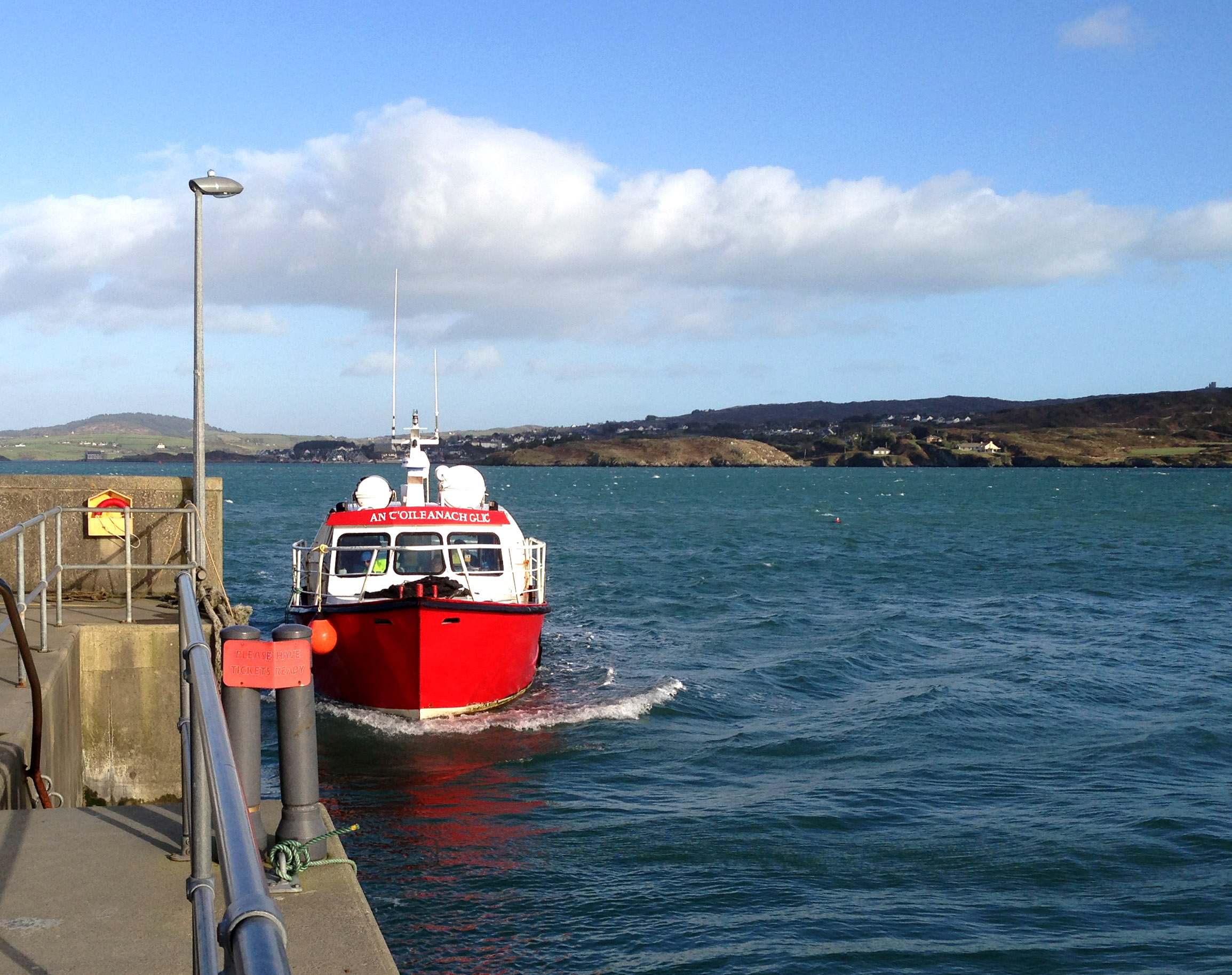
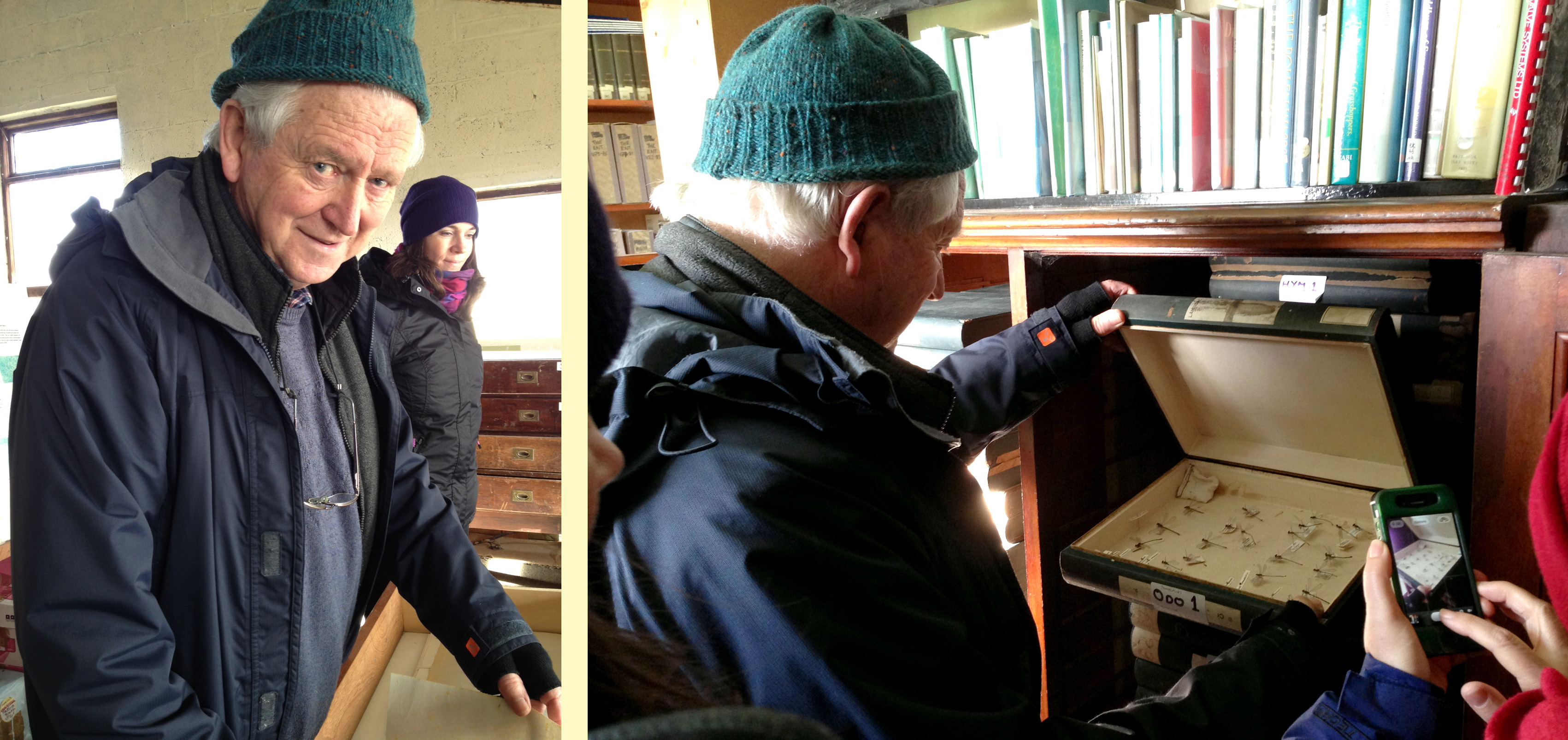
Our trip to Sherkin started on the ten o’clock ferry from Baltimore, a short drive from Ard Glas. My daughter Phoebe has been visiting from Norway this week and we took her along for the ride. Matt brought us to his home for a wonderful lunch prepared with his daughter Susan (five of his seven children still live and work on the island), and he told us about the Marine Station, which is an internationally renowned centre for the study of the marine environment. Matt and his wife Eileen (who, sadly, passed away in 1979 at the age of 37) started the project in 1975 and it is now a unique education and research facility. Every year volunteer students come to the station from all over the world to take part in the continuous monitoring of marine life, weather, biology and environment in the Bay and to carry out specific surveys (examples: Rocky Shore Survey, Phytoplankton Survey, Zooplankton, Otters, Birds, Insects, Butterflies and Moths, Terrestial Flora and Seaweed). The Station houses a huge library of documents and samples – probably the largest such collection outside of any university in Europe. It publishes an environmental newspaper – the Sherkin Comment – and books, while also organising exhibitions, conferences and workshops.
Matt, Phoebe and some of the archives
At the age of 77 Matt remains fully active in running the Station, which has never received any state funding. We were impressed with his total commitment – and with his faith. In September 2000, on the occasion of the Station’s Silver Jubilee, a bronze plaque was unveiled:
God, the Creator of all life, has given us those most precious gifts – the sea and the land. Ponder a moment on those wonders, remembering you are their caretaker. Now ask yourself what you are doing to ensure their beauty remains for future generations to enjoy…
In return for our fascinating day spent in Matt’s company, we have agreed to contribute an article to his newspaper on Rock Art – there is none that we know of on the islands, but there is prehistory, history, nature and culture a-plenty!
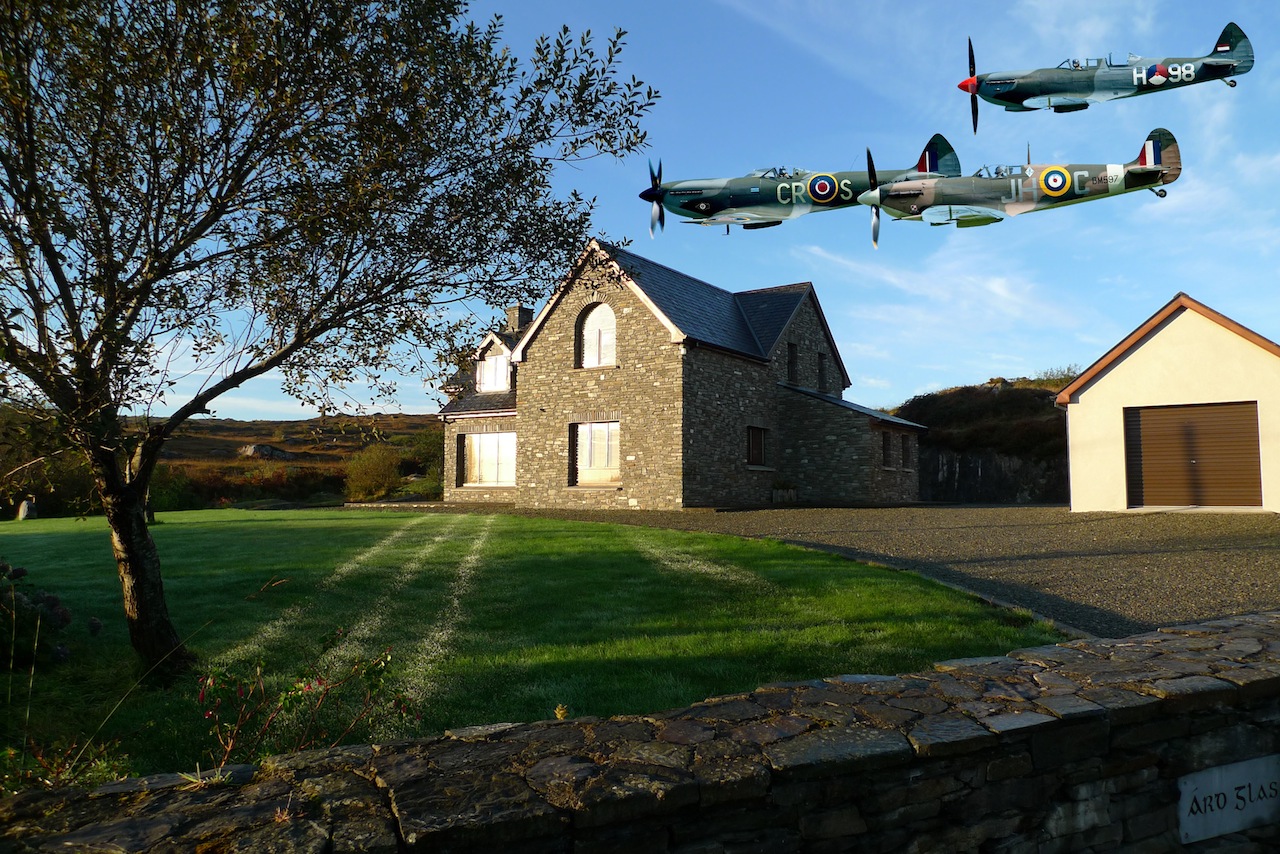
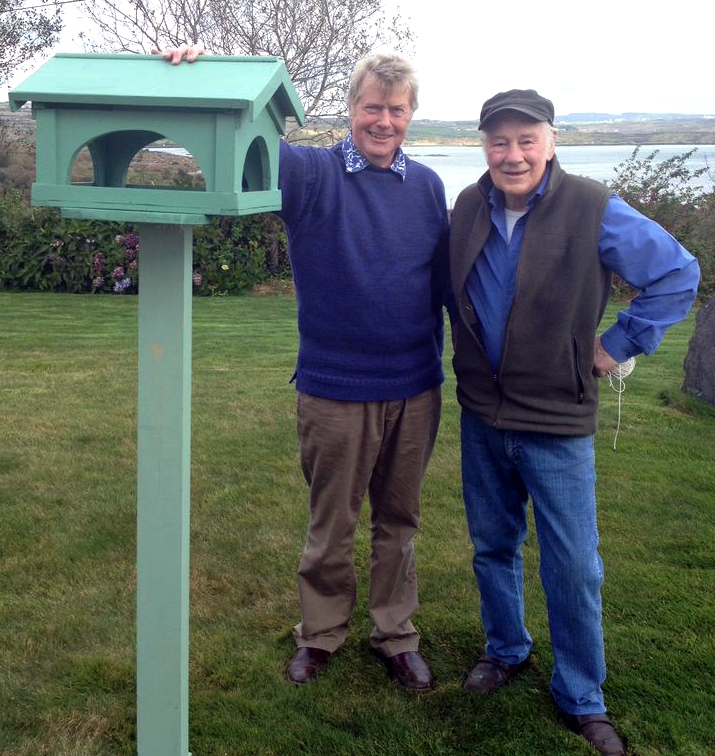
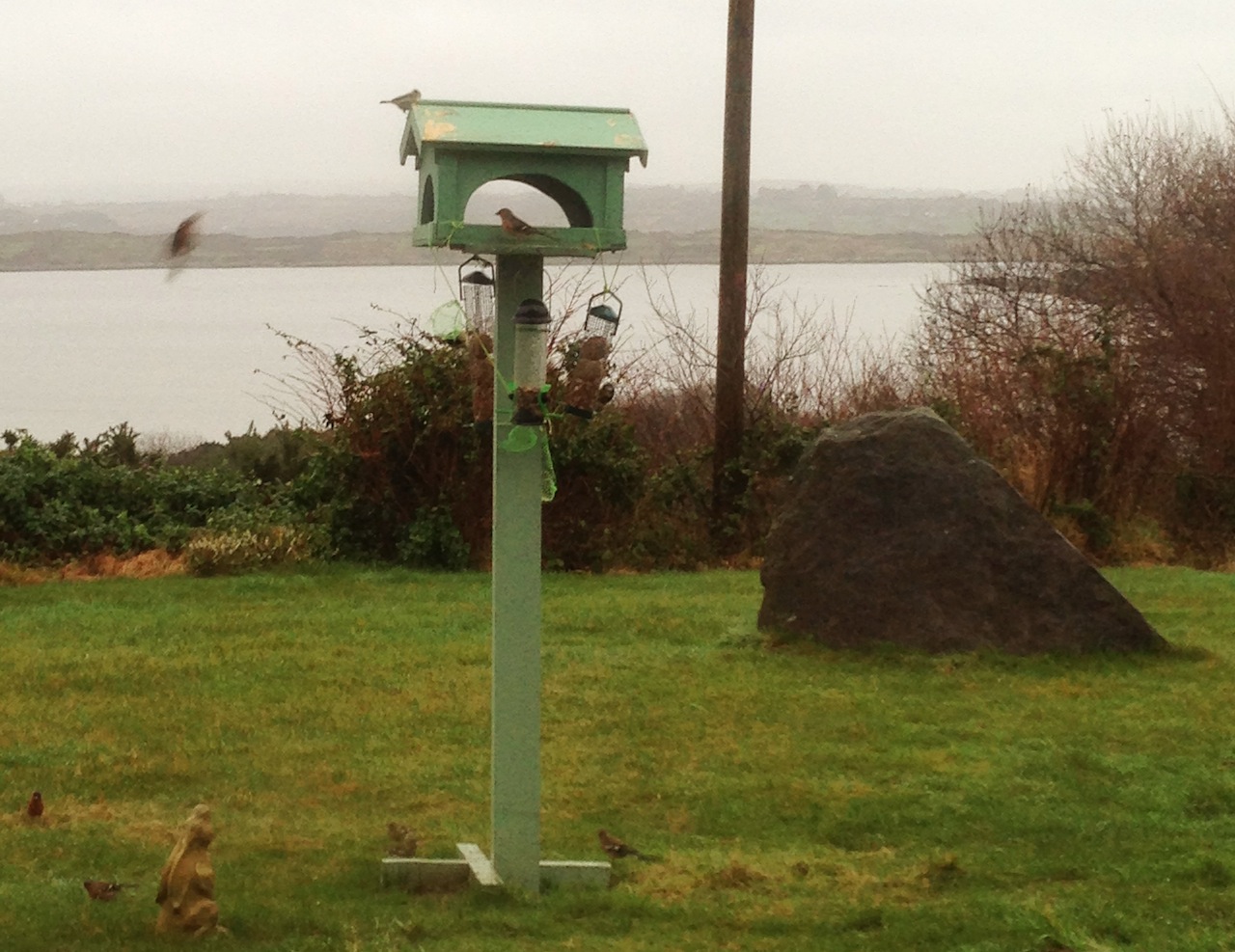
Perhaps you didn’t know that we have our own mini airport here – right outside Ard Glas! It all started when we asked our friend Danny – who constructs wonderful furniture and accoutrements in the Irish vernacular, and paints them green – to make us a birdtable. He duly did so, and painted it green. It now sits outside our windows and provides us with hours of entertainment.
Firstly, we have a squadron of Spitfires. These are our Chaffinches – to date the record is 24 of them on or around the table at any one time: handsome birds, male and female almost alike, but the males have perky crests which they raise when they want to assert themselves. They whizz in, a whole bunch at a time in close formation, and settle on the grass landing strip where they methodically hoover up the seeds and crumbs. They don’t seem to take much notice of us or the bigger birds – they just get on with the job in hand. Quite suddenly they must get a call to action, for they all take off at once and fly across to the fields down below us, returning en masse after a short interval. They are quite quarrelsome, and often engage in dogfights with each other, diving, spinning and turning in the air.
Then there are the helicopters: these are Tits, of several varieties – Great, Coal and Blue. They hover around the seed holders and suet balls, then make a vertical landing on an impossible perch. They will hang upside down and spin around, quite unperturbed. But they don’t stay long: one seed, it seems is enough – then they are off to a tree or bush to enjoy it at leisure, before returning on their distinctive undulating flight paths.
We no longer see the Goldfinches: they have gone south for the winter. Also vanished is the Jay, whom we saw only once, taking a break from its journey to the oak woods inland.
Airport in action…
Daily regulars are our three Magpies: maybe they are one male and two wives, or perhaps parents and a child – they always come down together. One has to admire their magnificence: sleek and shiny. For me they are the flight officers and crew. You know when you see them passing through the concourse at the airport carrying those intriguing flight bags? Crisply uniformed, black and white – and strutting importantly through the crowds…. That’s Magpies: they strut. And they do think of themselves as important. They’ll dismissively push away the smaller birds and take large beakfuls of whatever is available. If I see only one I have to remember to say the mantra – “Good morning Mister Magpie – hope your wife and children are well” else some bad luck might befall me. Then, of course, there is the other mantra – “One for sorrow, two for mirth, three for a marriage, four for a birth…” As it’s invariably three of them they must be trying to send us a message.
It’s odd that the biggest birds of all are the most nervous: these are the Hooded Crows. We have two regulars and they are undoubtedly the Jumbo Jets around here. It’s great to watch them coming in – a slow descent, hovering with their wings up, then a solid bump onto the ground. But they are always on the lookout: they take ages to pick up a crust or a nut. They stand a little way from it, eyeing it up, but will then look all around to make sure no-one is watching before jumping and snatching it, quickly flying off to hide it in a safe place. Well, they don’t take off quickly – it seems to be quite an effort for them to get airborne: they need the longest runway.
I haven’t mentioned the resident Robin, and the Wren has disappeared since Christmas. I’ve got a feeling the Wren Boys were out on St Stephen’s Day, and succeeded in catching it for their supper! The Wagtail is a constant: as it is always walking around on the ground with its perky manner I feel it is that man with the two bats who very cleverly makes all the planes manouevre in impossibly tight circles, just for the fun of it…
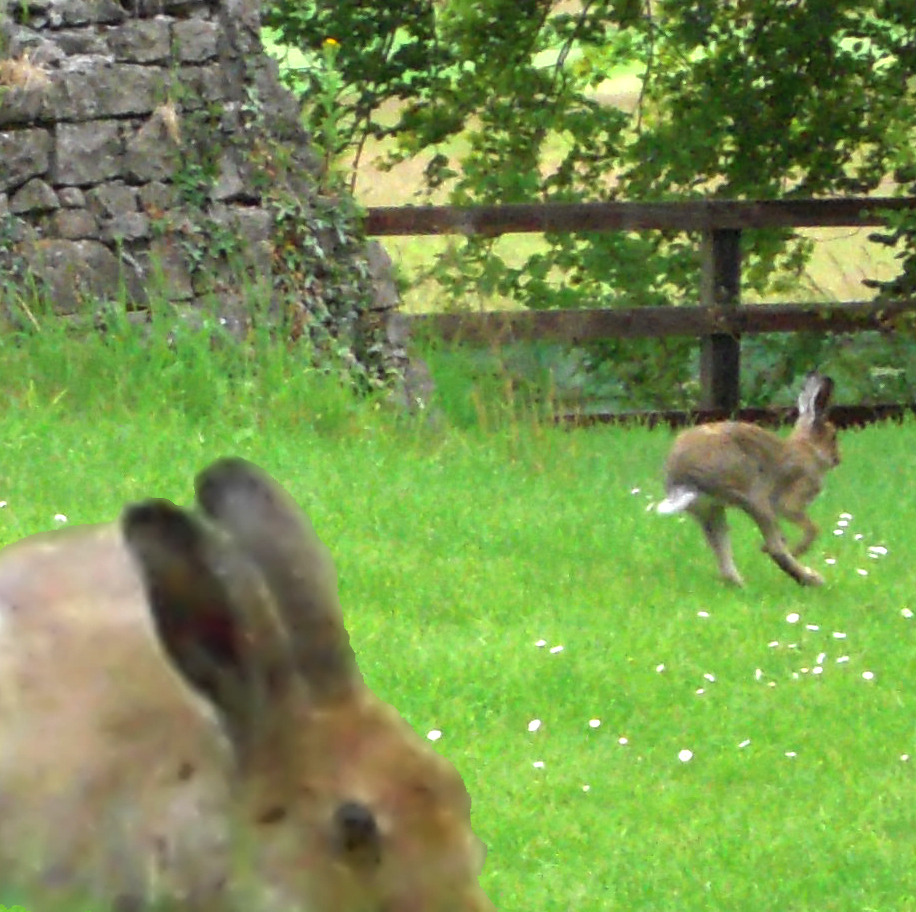
Two Hares ambling together in Ballybane West: grazing, ‘sharing the watch’…
The Irish Hare – Lepus timidus Hibernicus – sometimes confused with the Mountain Hare – Lepus timidus Scoticus – which is smaller, Scottish, and has a lighter, winter coat, is not an unusual sight for the careful watcher in West Cork. Sightings of groups of two or more are frequent enough, in fact, to cause us to question the old folklore that says that Hares are always solitary: I once saw eight Hares running in a cluster across the field next to Danny’s house. But the story goes that the female Hare escaped from the Ark and was drowned, so God gave the male Hare the power to bear children: country people recounted that the Hare is androgynous – even as recently as the twentieth century – and lives in complete isolation, without the need for a mate.
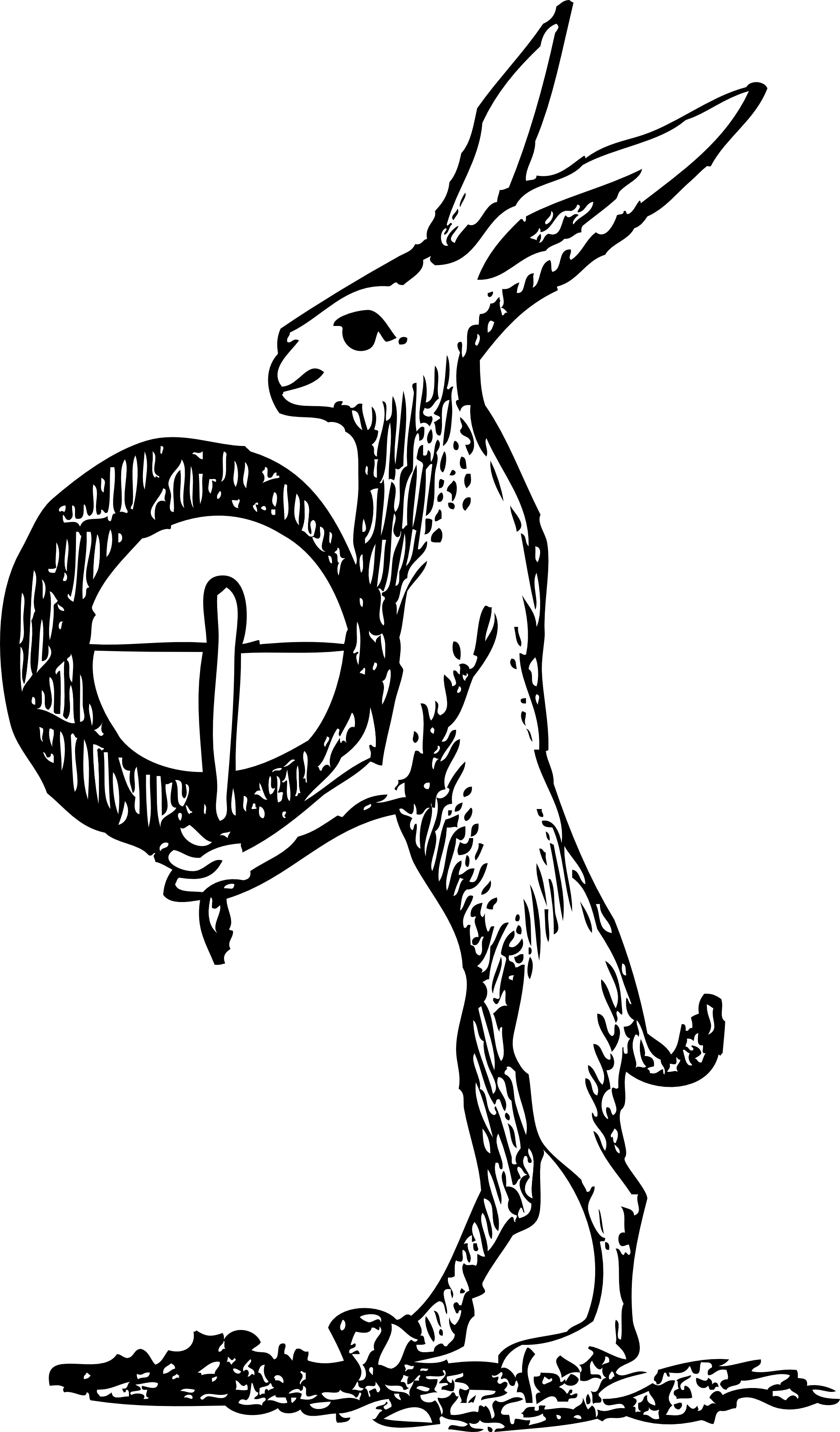
Hares walked our Earth a million years before humans did – and have changed very little in that time: a true archetype. This could explain why the Hare is such a central figure in so many mythologies: trickster, moongazer, mischief-maker… In one pan–African story, the Moon sends Hare, her divine messenger, down to earth to give mankind the gift of immortality. “Tell them,” she says, “that just as the Moon dies and rises again, so shall you.” But Hare, in the role of trickster buffoon, manages to get the message wrong, bestowing mortality instead and bringing death to the human world. The Moon is so angry, she beats Hare with a stick, splitting his lip – as it remains today.
I watch the pair: they are aware of me – but I’m no threat. Two West Cork fields lie between them and me… small fields, perhaps, but they know very well that they could vanish before I even made the gate.
When I first saw the movement I thought it was partridge: I made it out to be two female heads in the long grass. Then I realised – ears laid low, then up and turning. They are all to do with the head: those so defining ears; the nose; the liquid, fathomless eyes – never closed, even in sleep. All the senses, and always at the ready… And – if they had to take off – that confounding sense of dizziness that sends them in impossible zigzags – even doubling back – to confuse their far less intelligent pursuers. They will also leap – up to twelve feet in one bound – to avoid laying a scent.
But – if you can – look further into those eyes: the depth, the perfect attuning, the knowledge… These are not animals for the jug – these are creatures we are privileged to share the Earth’s gifts with: these are the Old Gods.
Welcome to the UCD Library Cultural Heritage Collections blog. Discover and explore the historical treasures housed within our Archives, Special Collections, National Folklore Collection and Digital Library







 Roaringwater Journal