A GUEST POST BY JEFF DUGGAN
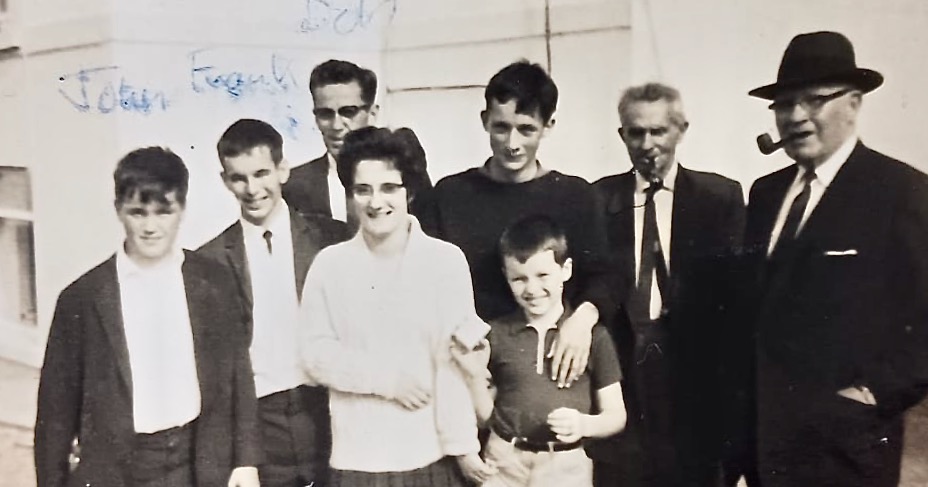
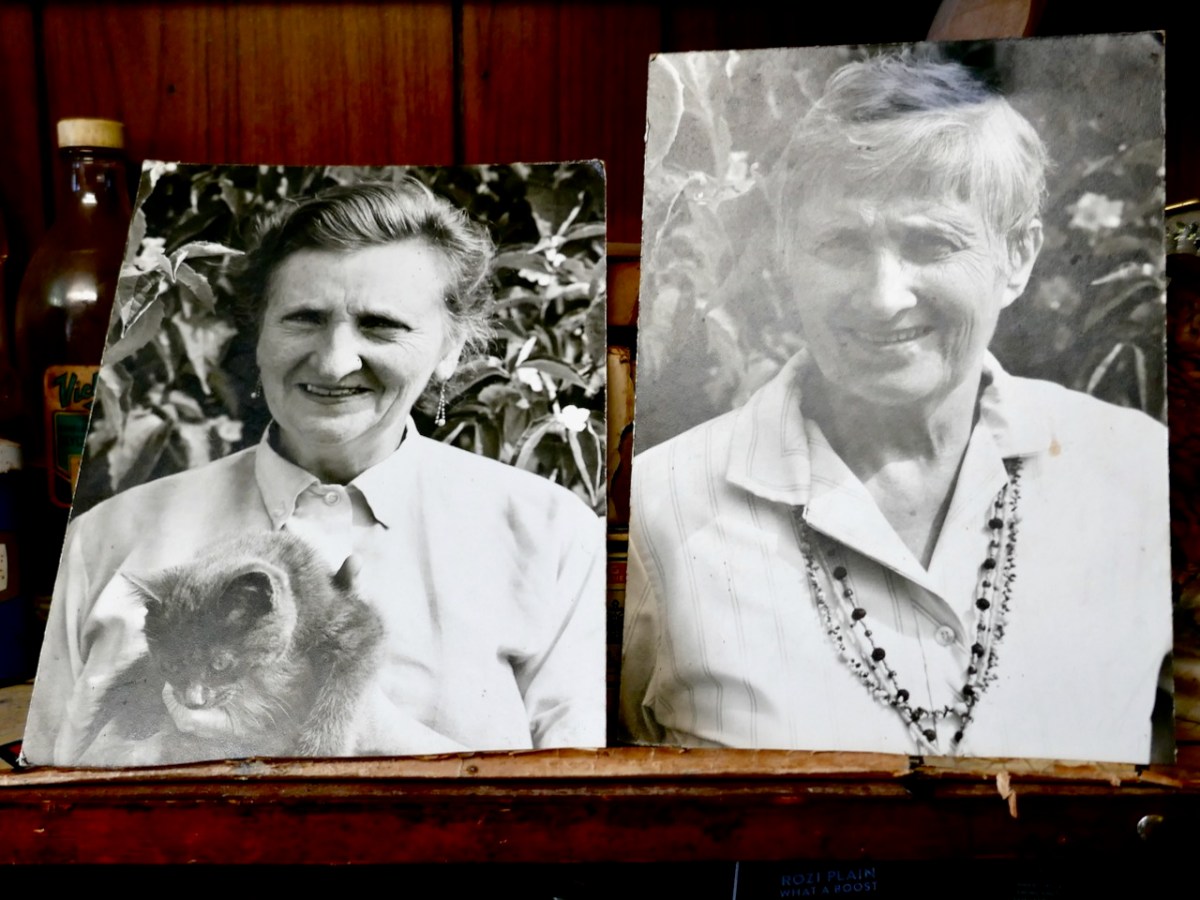
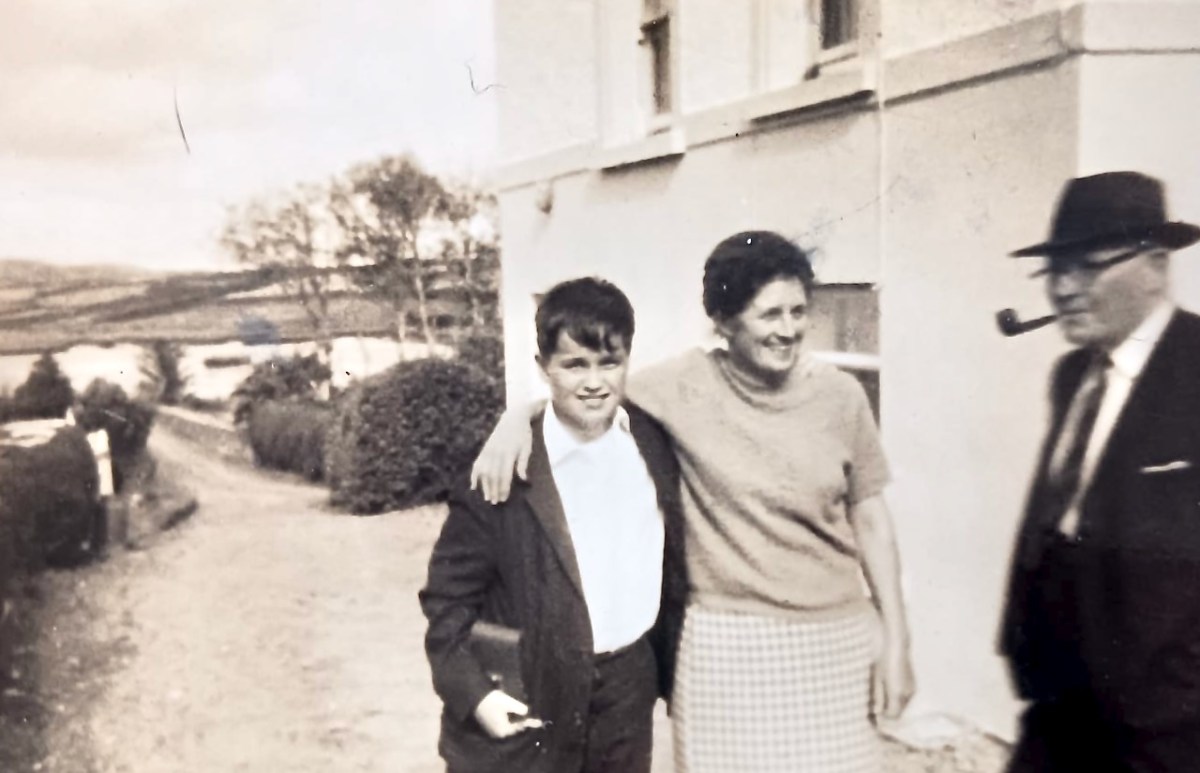
Jeff Duggan now lives in the US, but his family all hailed from the Ballydehob area, and specifically from Foilnamuck, very near my old home in Cappaghglass. He seems to be related to half of Ballydehob, including the famous Nell and Julia of Levis’s Pub (below – from this post). He has followed the Journal for years. He sent me this charming story – a memory of fishing with his Grandpa (above, far right) on Roaringwater Bay, and his cousin, Joan (Nell and Julia’s niece) supplied the family photographs. So what follows is Jeff’s story, as he sent it to me – warm and specific and starring his beloved Grandfather. The colour photos (except the map) are mine, inserted as illustrations here and there.
Grampa and his 11—yes, 11—siblings were born in a place on the West Cork Coast called Foilnamuck. The family homestead was literally on Roaringwater Bay, a breathtakingly beautiful inlet from the Atlantic Ocean close to the Southern tip of the island. The homestead was perched on a hill overlooking the water, with a spectacular view that seemed almost hand painted. The mouth of the bay was in full view from the house.
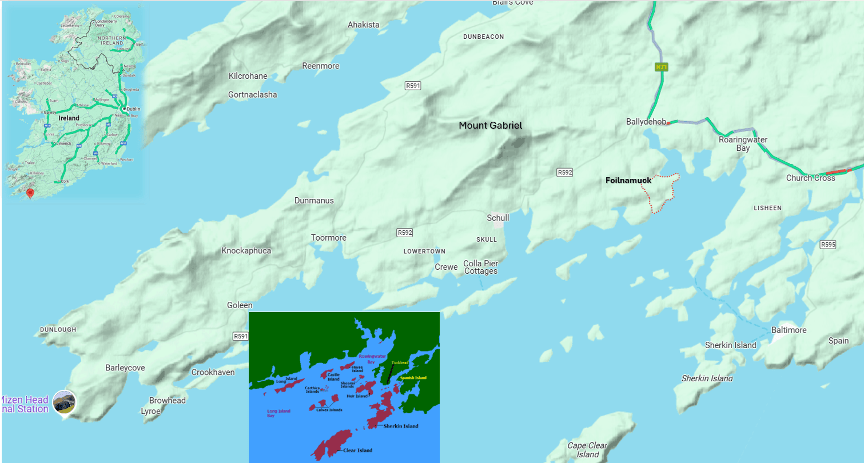
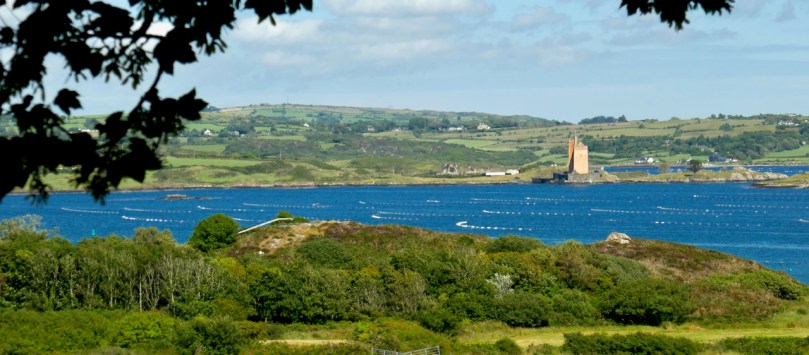
Looking across a patchwork of fields with every shade of green imaginable to view the deep blue of Roaringwater Bay dotted with whitecaps, you can see Kilcoe Castle and Lisheen across the water. Following the water out to the Atlantic, the many islands of the bay catch your eye, Horse Island, the Calves, the Skeams, Clear Island and Heir Island in closer.
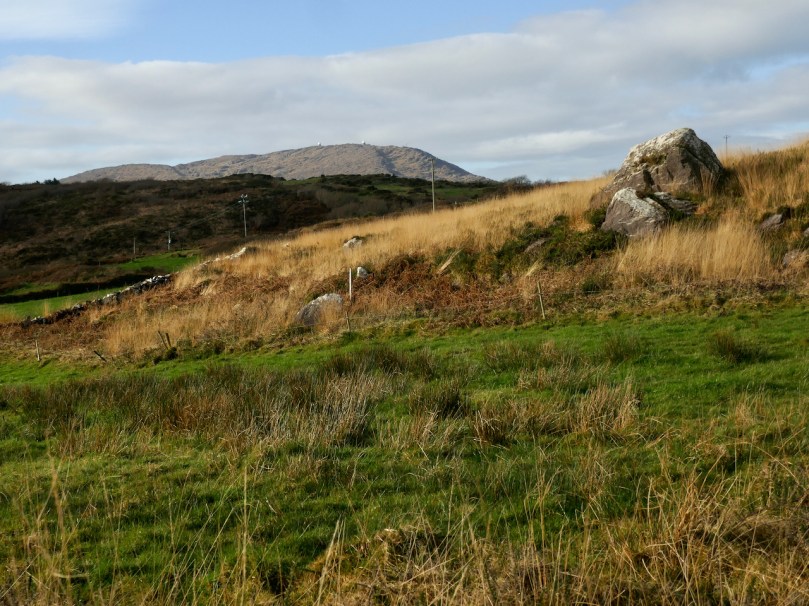
If you turn around, the majestic 407 meters high Mount Gabriel grabs your attention with its white geodesic radar stations on top.
Many people who lived around the bay loved to fish its waters. There were several species that could be taken, but the two most abundant were mackerel and pollock. Some folks ate the mackerel, but their meat was dark and oily. We sometimes caught mackerel for bait just offshore by dropping a line with 5 or 6 feathered hooks on it. The mackerel were so voracious (throw in a bit of stupidity) that we would often pull up the line with a fish on every hook. We could watch them in the bottom of the boat, a rare sight of sudden fish death. They stopped flopping around quickly, then rigor mortis was almost immediate. They grew so stiff that you could use them as Billy clubs, and all of this happened within a couple of minutes, amazing! The really sought after species was the pollock, a cod relative that was plentiful in Roaring Water Bay.
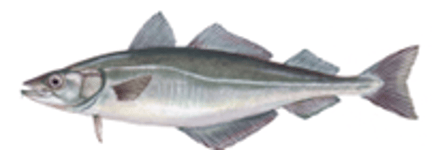
They were a delicious fish with tender white meat. In some countries, including the US, its meat is used to substitute for crab meat. They like to feed in the shallower areas around the various islands of the bay, so that a fisherman with a small boat and the right gear could go out and haul in pollock by the dozen.
The boats, motors and gear were basic back in the 50s and 60s. While fiberglass boats were available, the ones I saw, built by locals, were wooden, 18-22 feet in length, with an inner framework of crossmembers that supported parallel overlapping planks forming the outside of the hull. The motor I remember was a 5 hp Johnson Sea Horse, woefully weak for a heavy wooden boat; but the 3–4 knots that this motor gave us were OK to push the boat out to the islands, and it provided ideal trolling speeds.
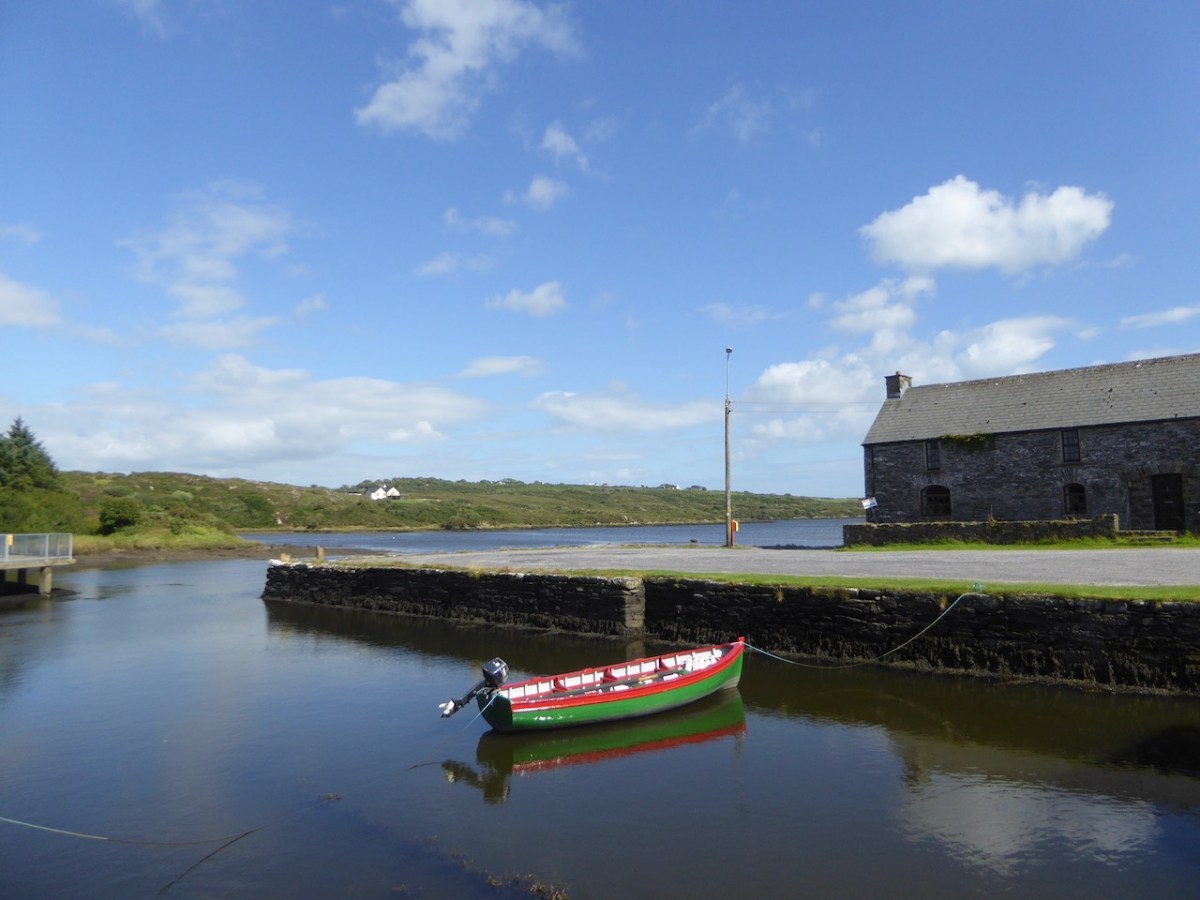
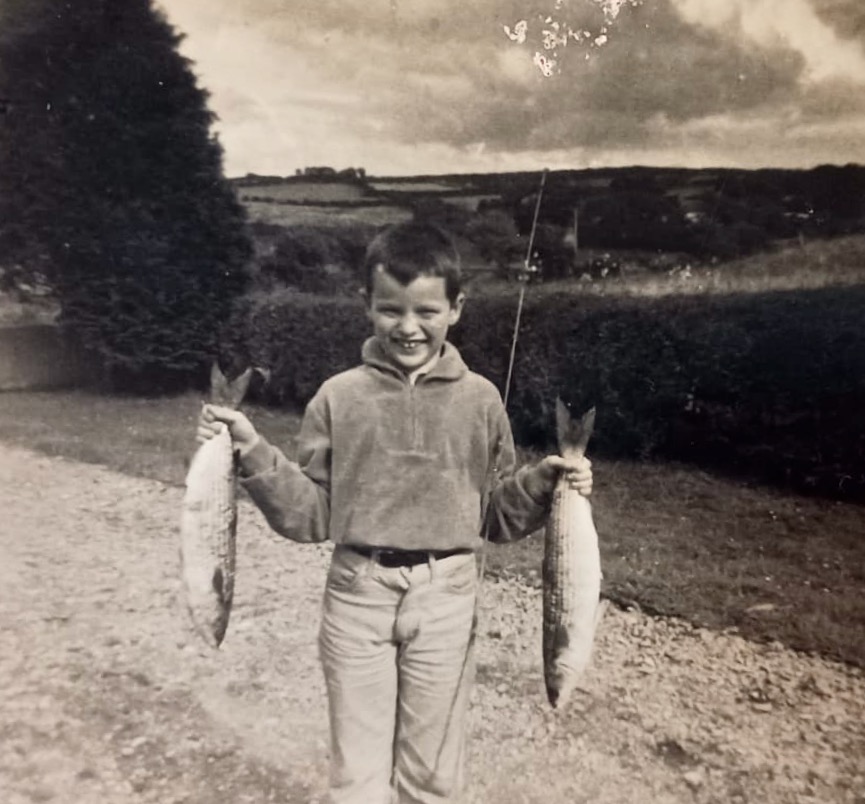
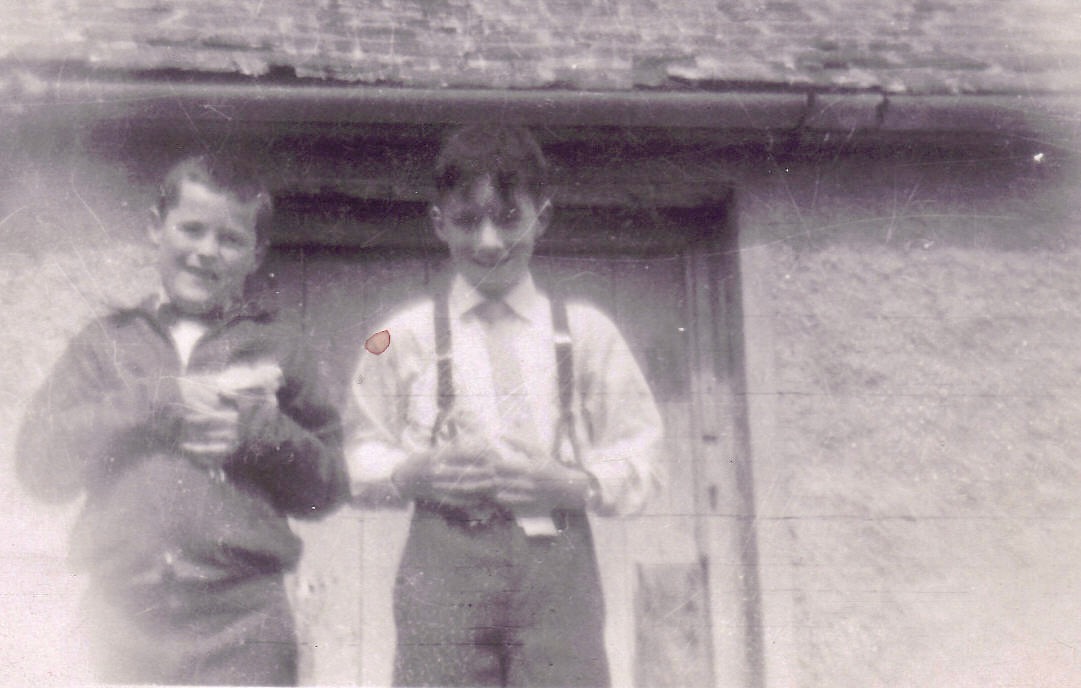
The first time I was out fishing in the Atlantic was with Neely Minihan from Lisheen, across the bay from Foilnamuck. His craft was much like what was just described. The actual fishing gear was very crude, probably unchanged over the last 75 years. There were no rods, no reels, no fancy gear at all. The “bait” consisted of a 6–8 inch piece of amber or red rubber tubing, attached to a stout hook with the distal end tube sliced at an angle. This crude lure was attached to the line with a swivel, and when trolled through the water it twisted in a spiral fashion; this convinced the pollock (only slightly smarter than the mackerel) that it was a small eel, hence the name “rubber eel”. How was the rubber eel fished, you might ask? Each rig had a rectangular H-frame wrapped with about 100 yards of heavy cord. There was no real braided line then, but the cord used for fishing was very strong stuff. At the end of the cord there was a heavy weight, a thick piece of steel pipe about a foot long, followed by a six-foot leader of 30 lb. gut to which the rubber eel was tied. You could literally make this rig up from junk lying around in your garage. Out in the bay, the driver would cruise around the selected island at trolling speed, and the handlines were thrown out so that the weights bounced off the rocky bottom. When a fish hit, the speed of the boat set the hook immediately, and the fish was pulled into the boat hand over hand. A five-pounder gave some powerful yanks that gave this 9-year-old all he could handle, but it was all very exciting for me as a young kid. [That’s Jeff on the left, below. The boy holding two fish in the lead photograph is his younger brother, Bob.]
After that fishing experience, my grandfather, Peter, commissioned and built his own 20-foot wooden boat that was kept below Foilnamuck in Audley Cove. Aside from paying for boat construction, Grampa was the “financier” of my 3 “younger” summerlong trips to Ireland. I remember every one of these trips like it was yesterday, and they were all thanks to Grampa. His “new” boat was of the same construction just described with a similar sluggish 1-cylinder Sea Horse motor. We were sticking to tradition!
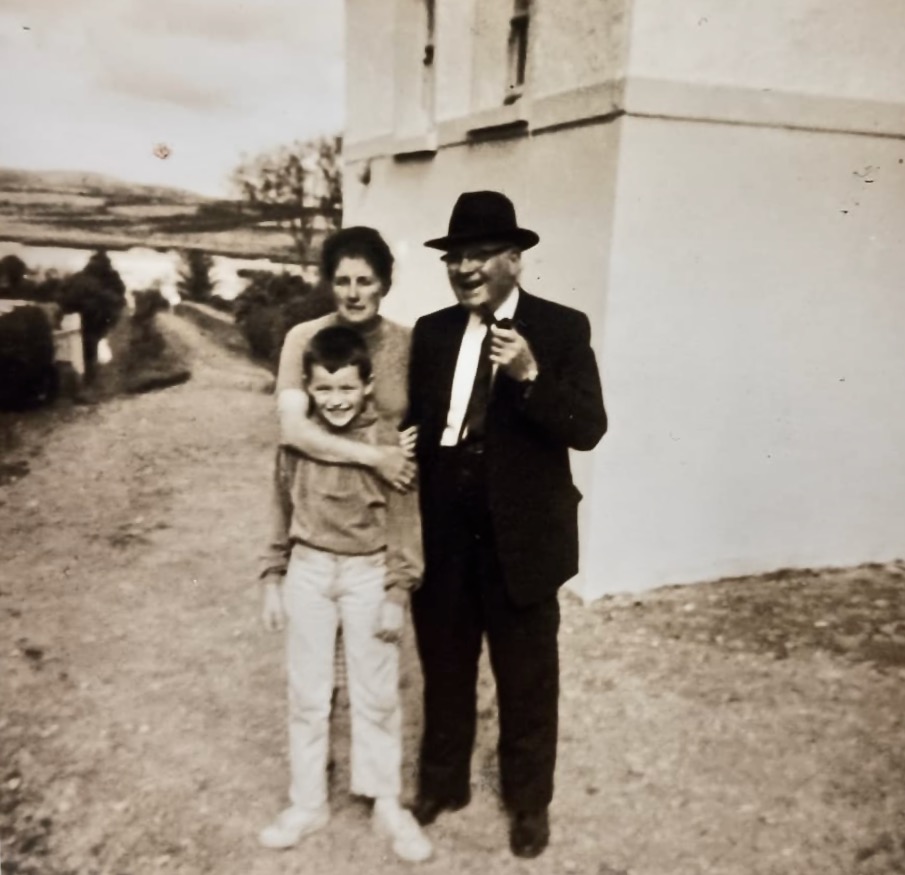
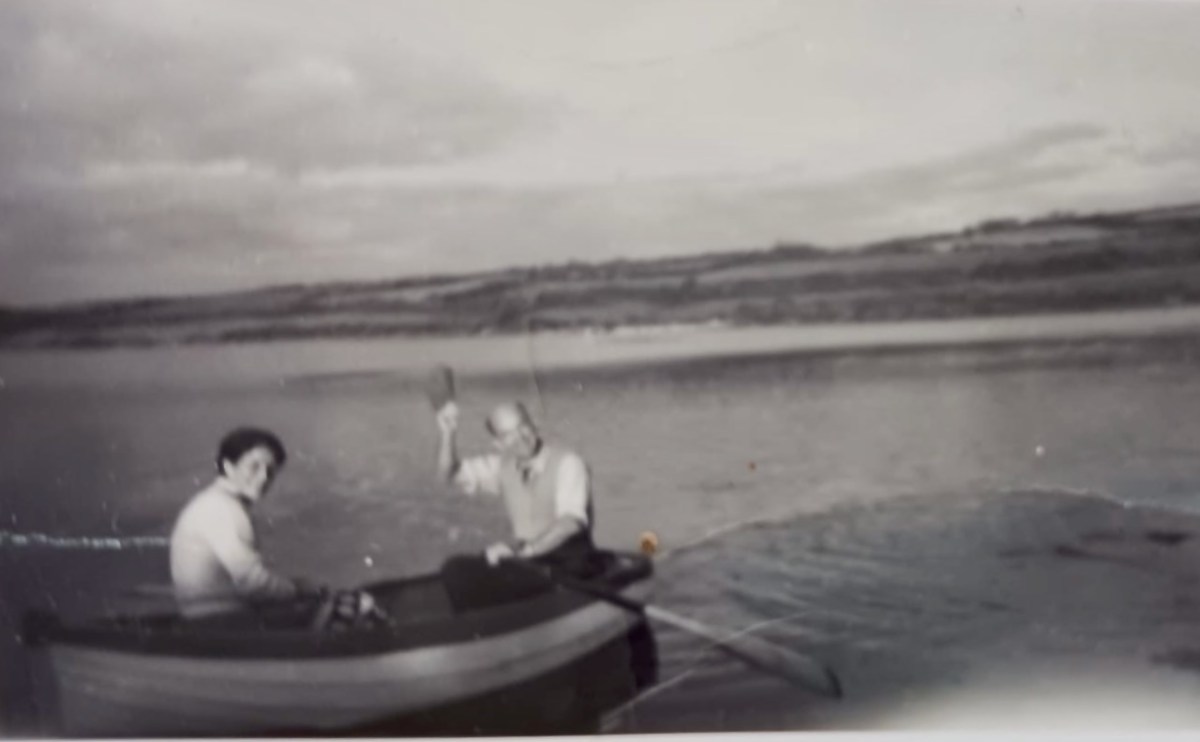
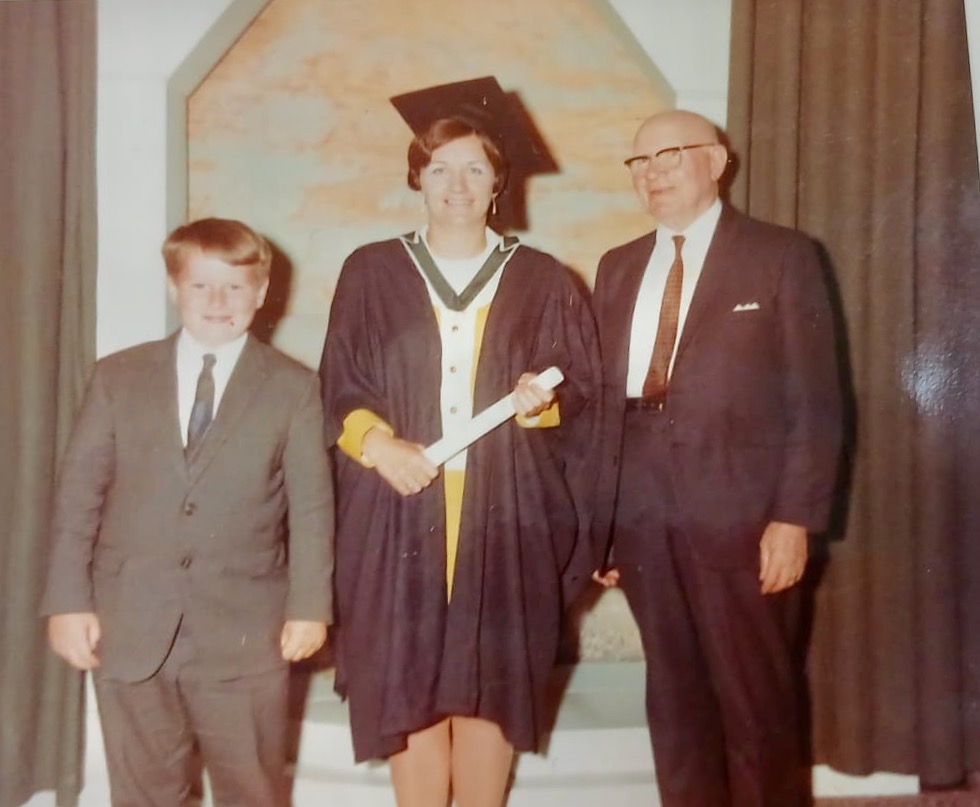
Our pilot on this day was “young Peter”, Grampa Pete’s nephew. He was a very nice and friendly guy. On this trip, Grampa Pete came with us. When he was in Ireland, he always wore a suit with tie and a straw hat. Much to our surprise, the dress code was no different on this fishing trip. When he boarded the vessel, Gramps was wearing a brown wool suit, a white dress shirt with gold cuff links, a brown silk tie with yellow stripes, brown wingtip shoes, and a white straw hat completed the ensemble. He was a fishing dandy, indeed! [Picture him below, with the addition of a white straw hat.]
We were out fishing around Middle Calf Island and having some very good luck. Everyone was yanking in fish; even young Peter caught a few while manning the tiller. Then Grampa hooked a nice one and was pulling him in easily. I should mention that Gramps was a barrel-chested guy of great strength, much stronger than my 6-foot father when it came to lifting and moving. The fish he pulled over the side was at least a six-pounder. It flopped and flipped wildly on the boat floor, and all of us wondered if and how Gramps would try to disgorge the hook. Would he be able to keep the fish slime off his nice wool suit, his cuffs, his shoes?
Grampa handled this task in an unexpected way. Did he ask one of us to dehook the fish? Did he have a special hook-removing tool? No, none of these things. What he did was shocking but effective … he put his right foot firmly on top of the fish’s head, immobilizing it; then he grabbed the line, wrapped it around his hand and ripped the hook right out of the fish’s mouth. A clean hook extraction and not a single drop of slime or fish blood on any of his clothes! Not only did Grampa know how to fish. He fished with style and class!

