Exploring Sherkin

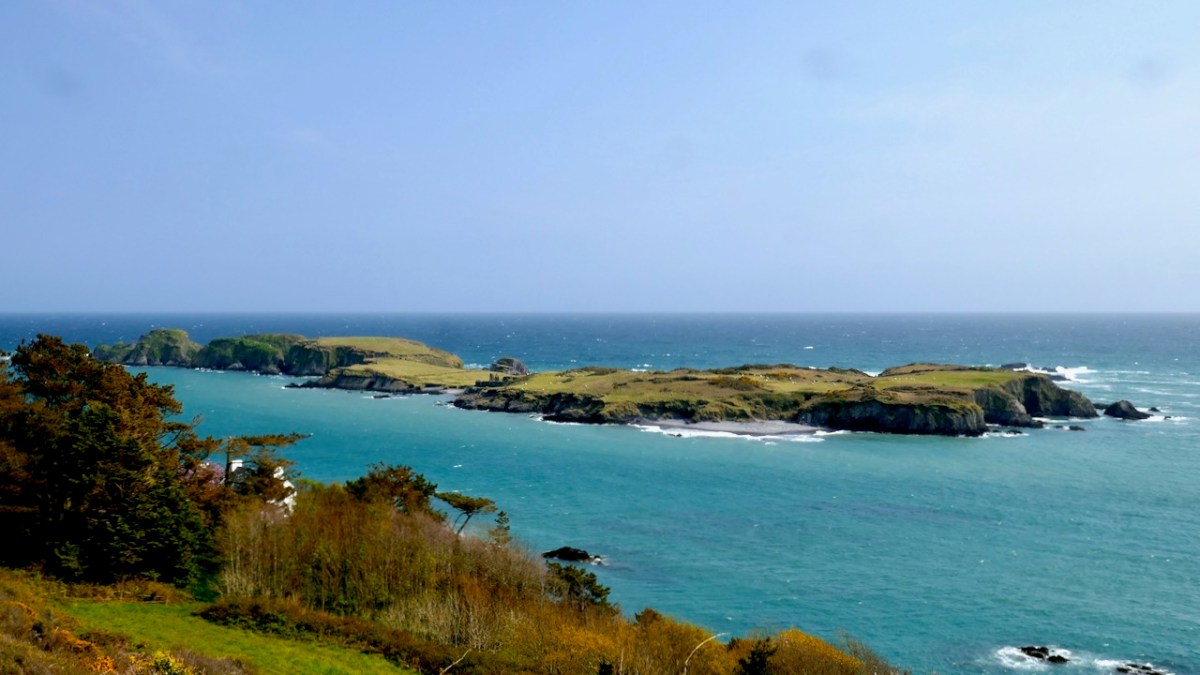
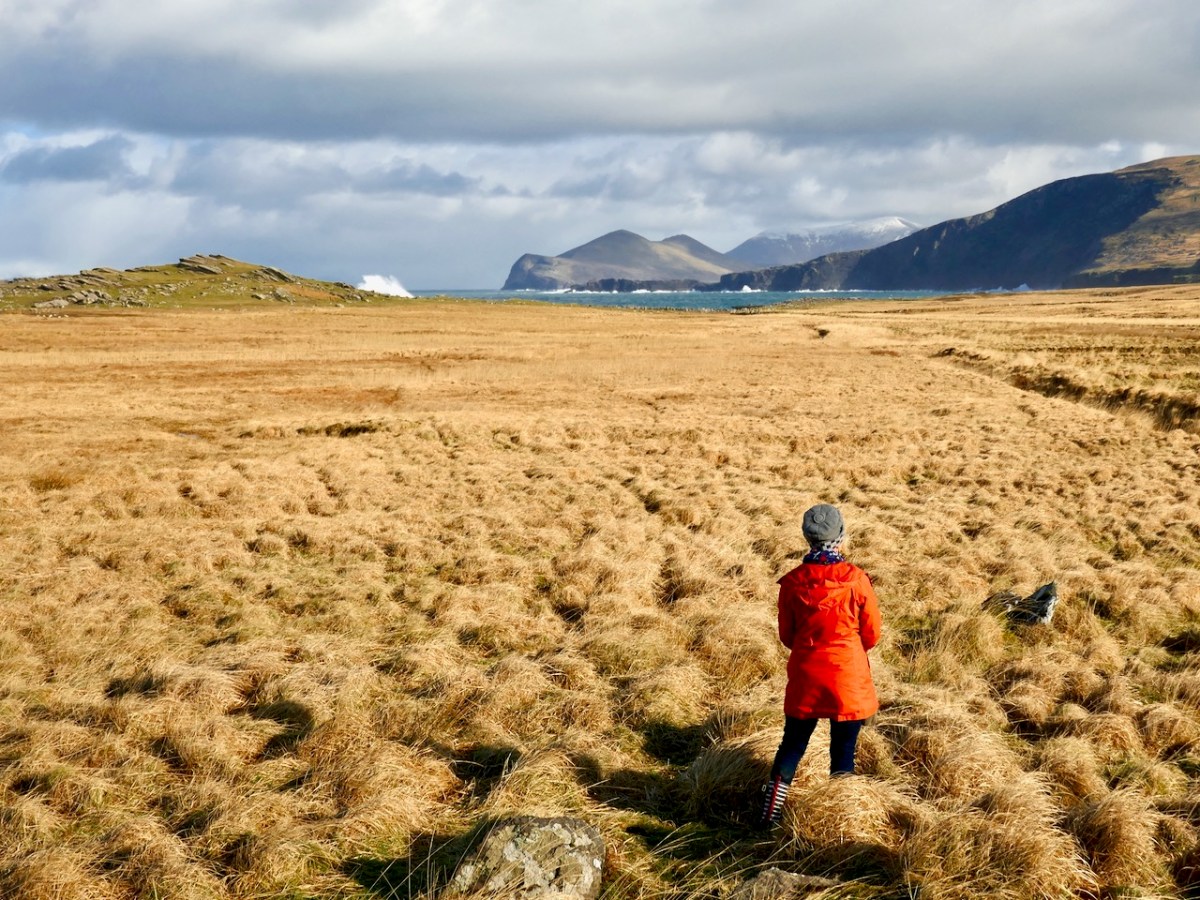
On  a gorgeous day in May, Amanda and I set off to have a day for ourselves on Sherkin Island. No reason, just because it’s there and it’s wild and beautiful and historic.

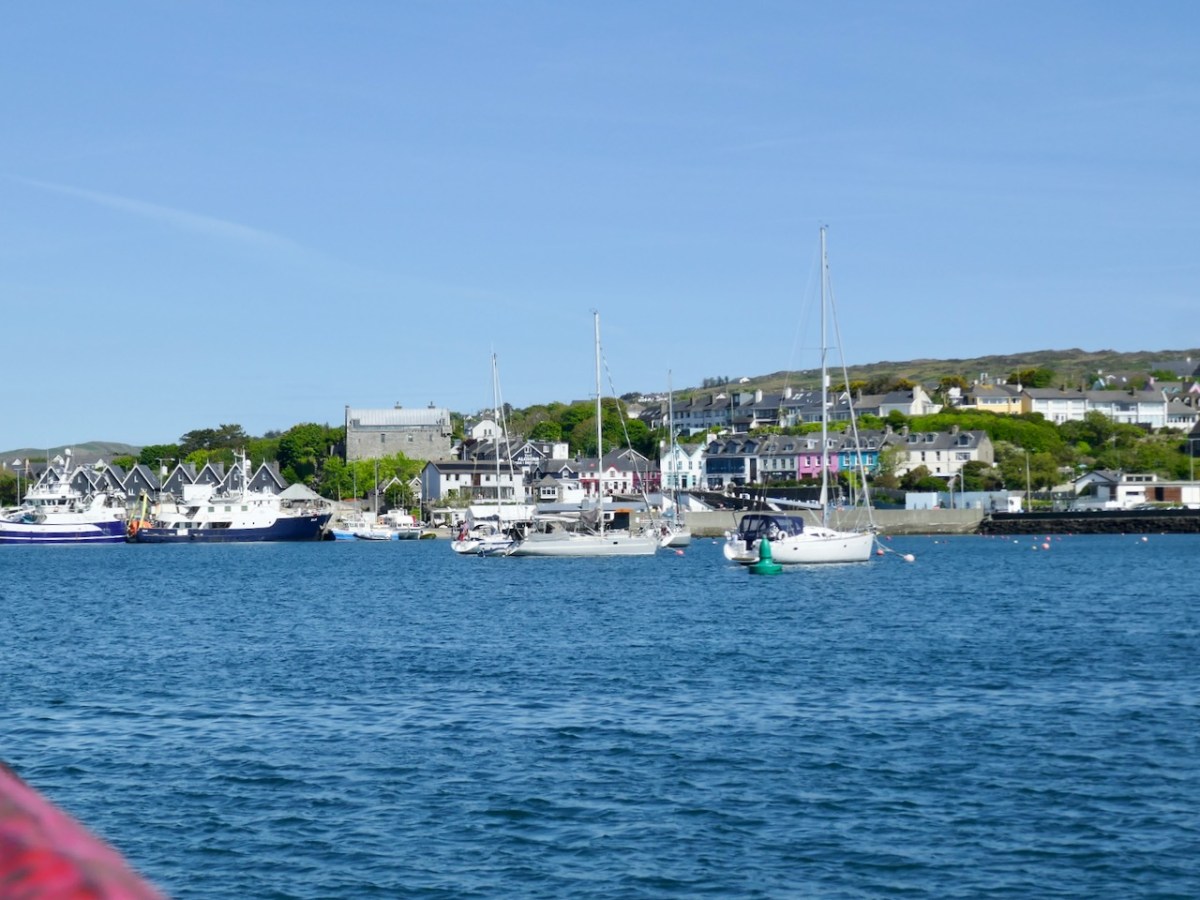
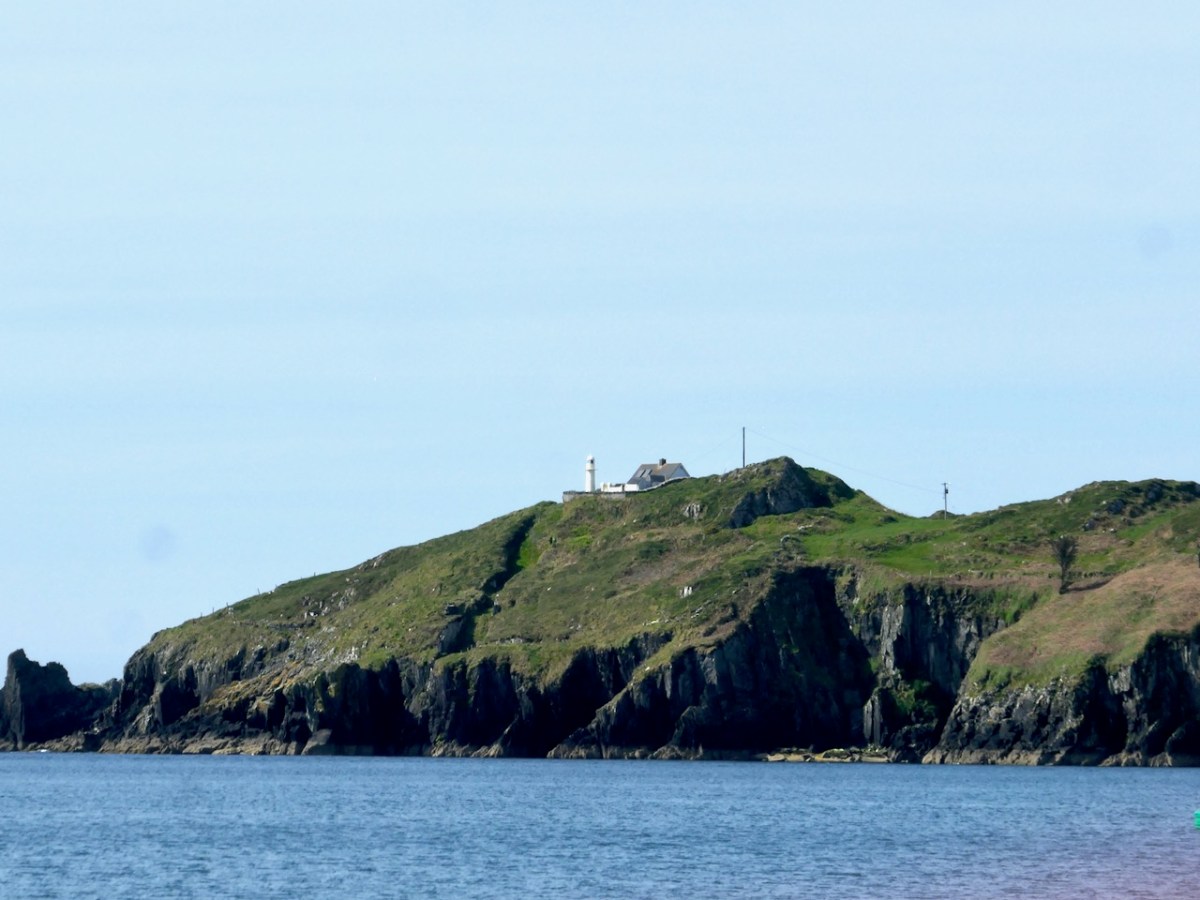
We caught the 10:30 ferry from Baltimore. It’s a short ride, but along the way you pass the Beacon and get a great view of the Sherkin lighthouse.

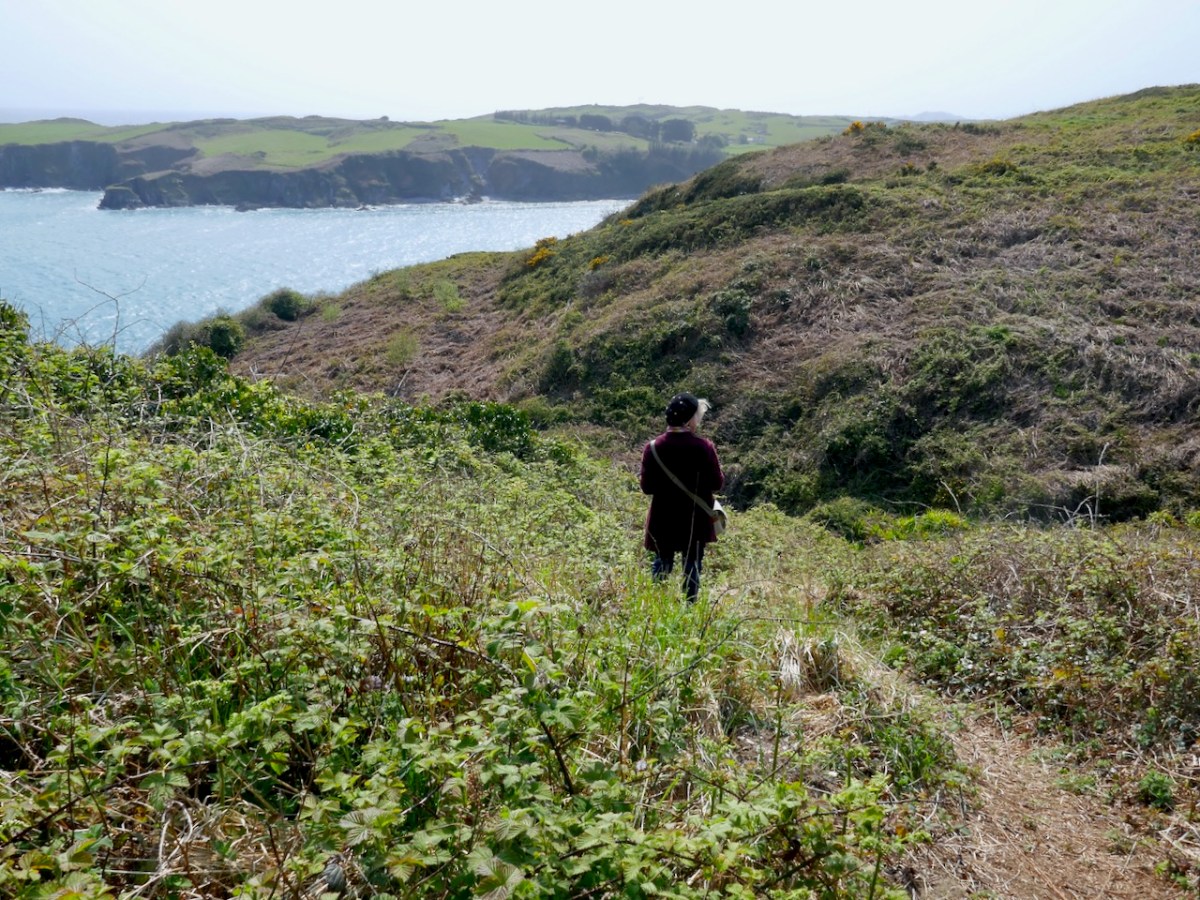
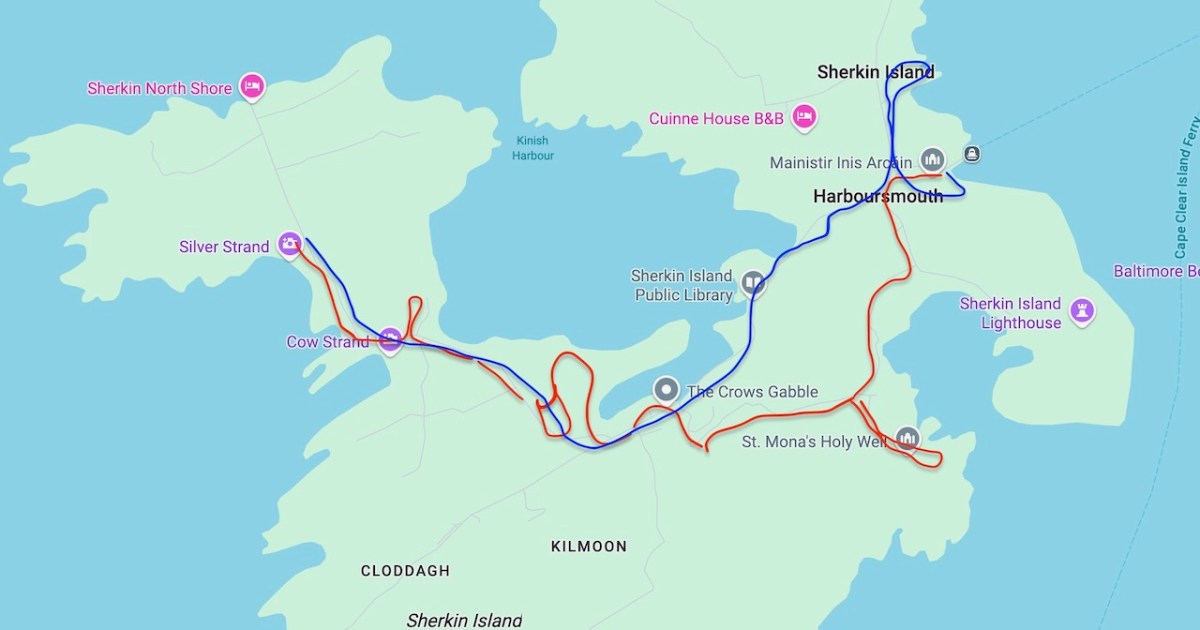
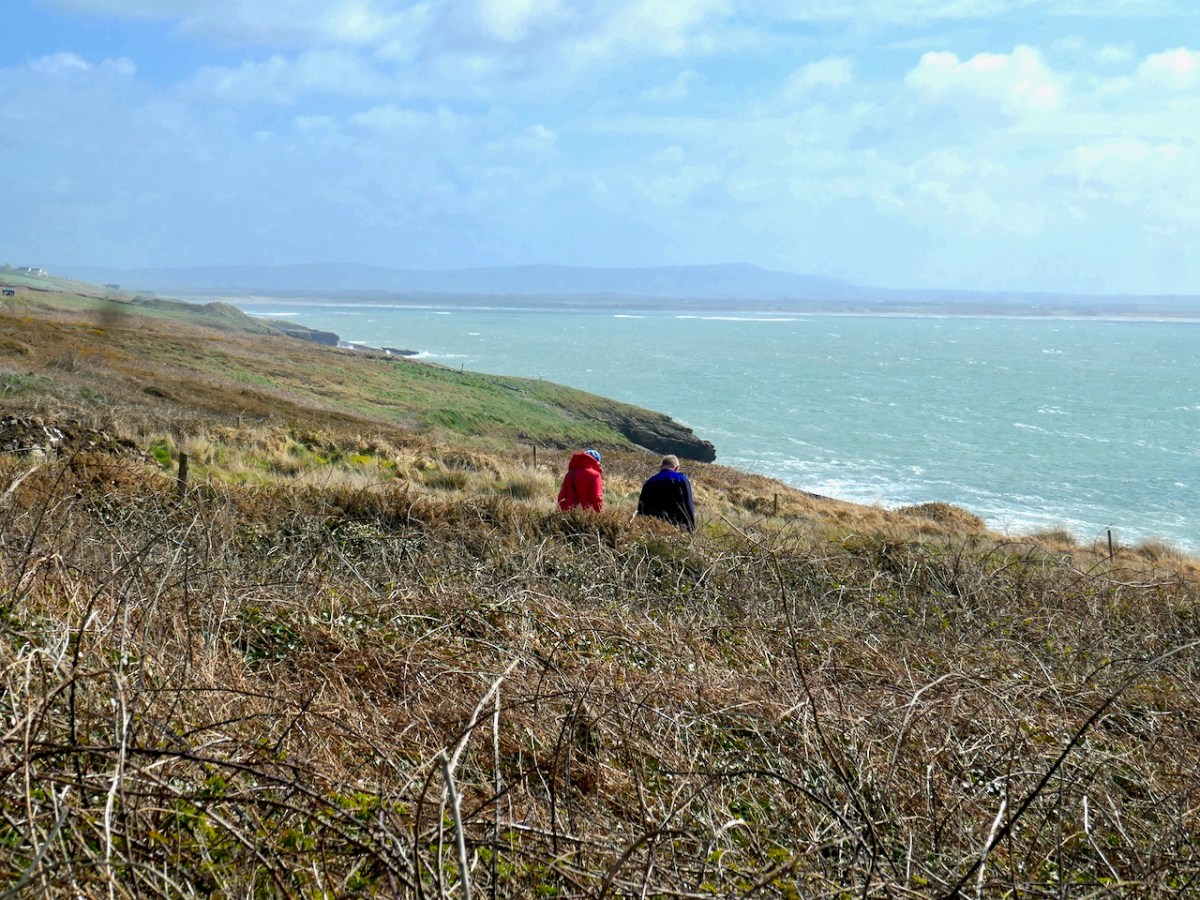
We decided to take a Horseshoe Trail – I have provided a map showing our outbound walk in red and our return walk in Blue. It was all easy walking, no steep hills, and since the weather had been so clement in May we didn’t need boots (although Amanda is seldom parted from her wellies).

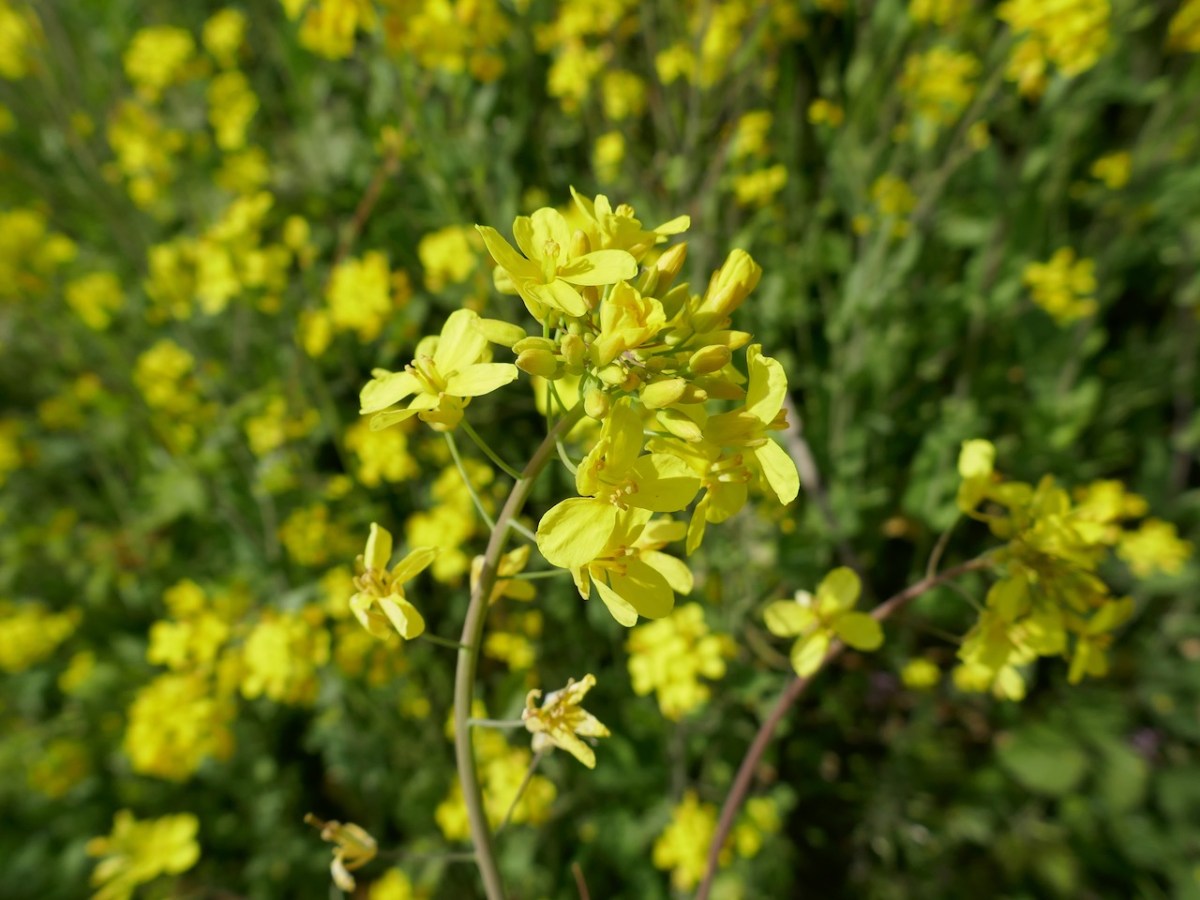
The Horseshoe Trail is well marked, but narrow, and fringed by wildflowers. I had trouble identifying this one – is it Charlock? Or some kind of Mustard? 

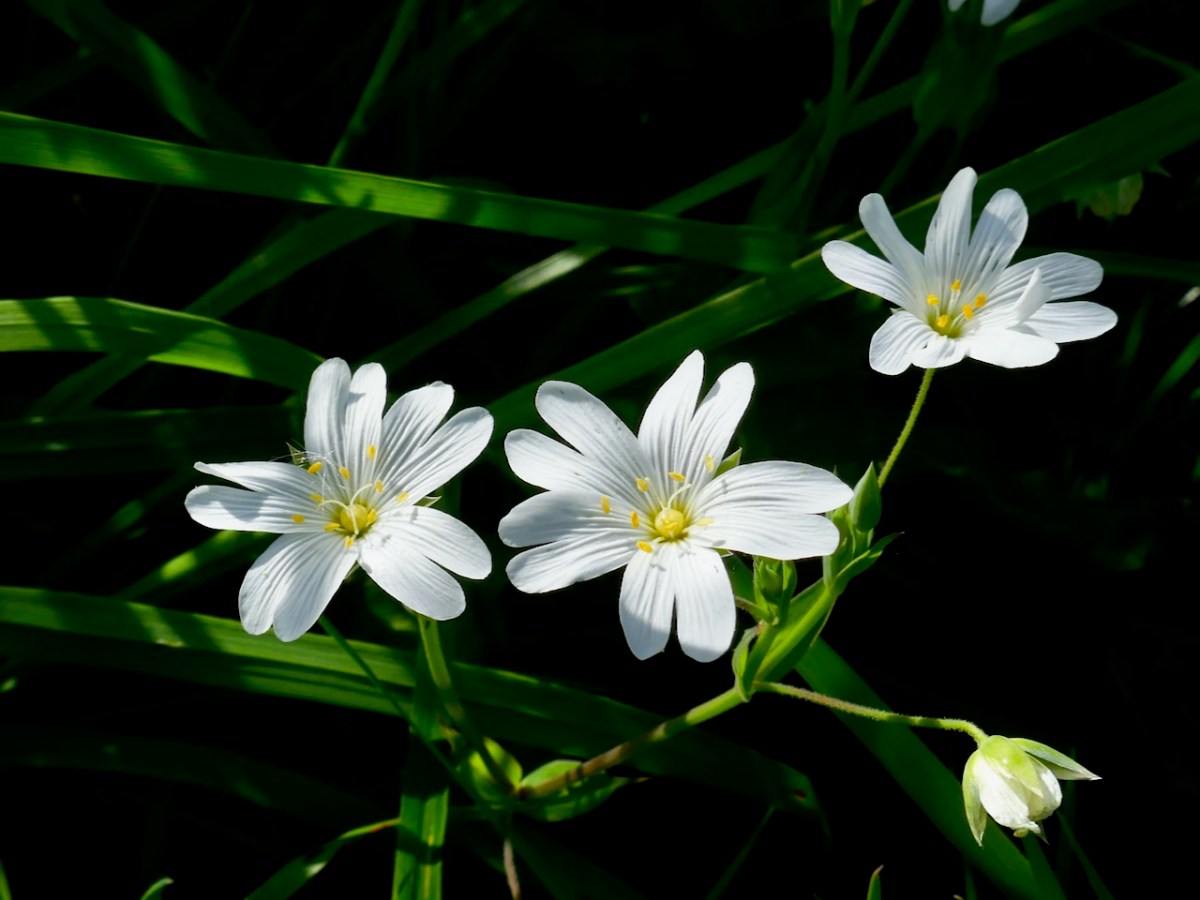
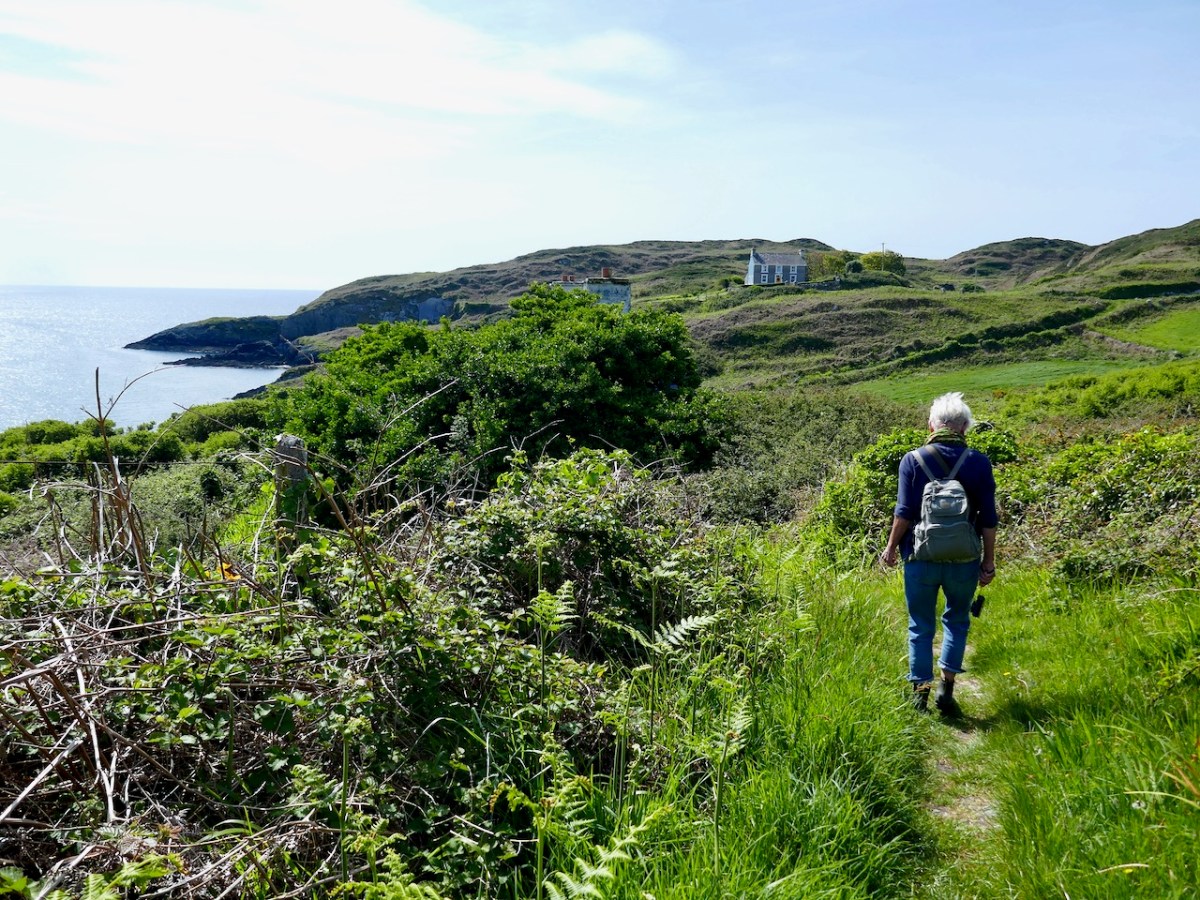
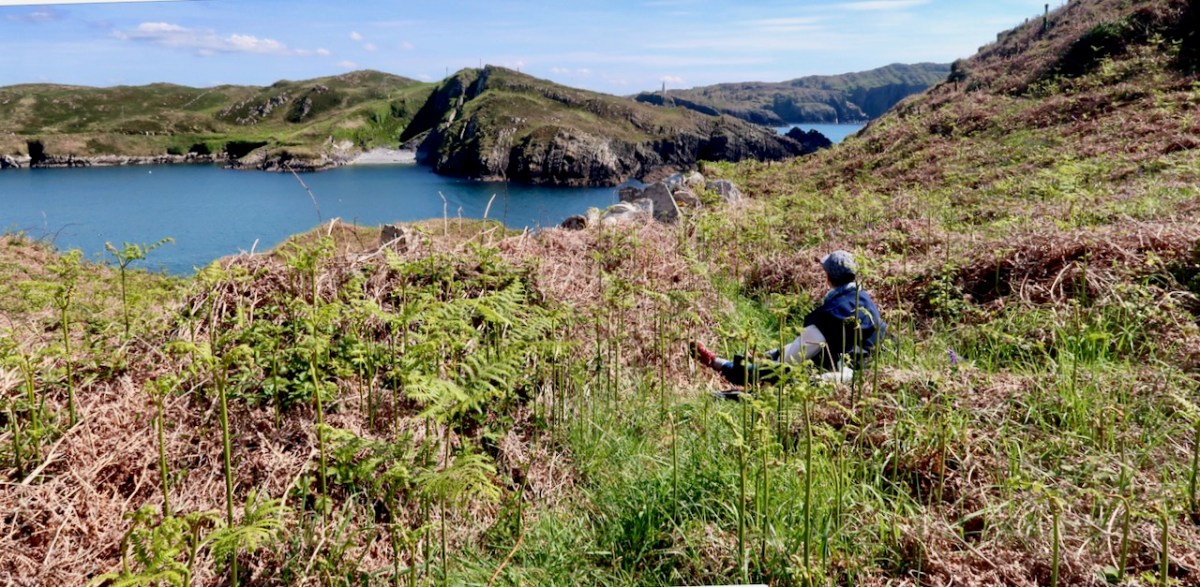
The trail leads down to vistas over Horseshoe Harbour on the south side of the island – a secluded and beautiful cove with Thrift covering the foreshore and Bluebells and Stitchwort in abundance everywhere.

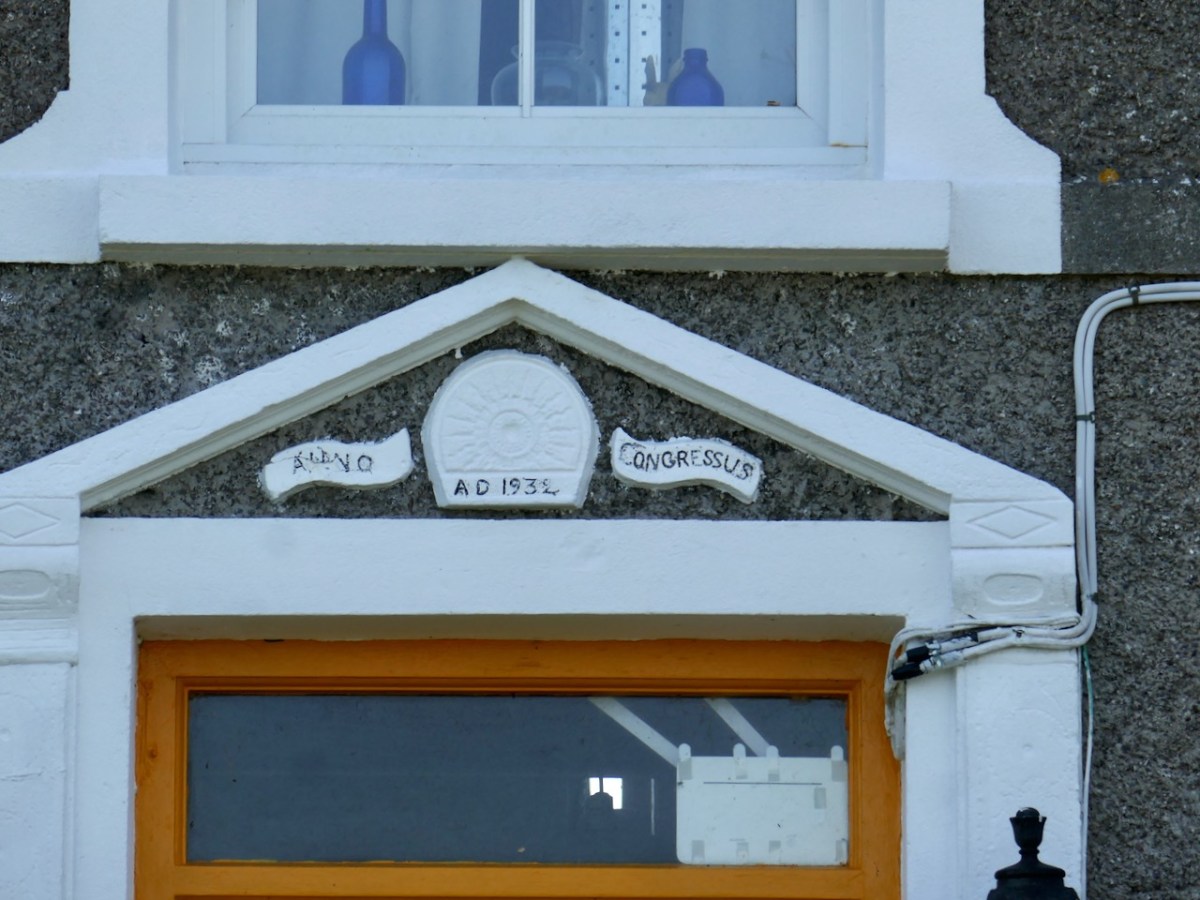
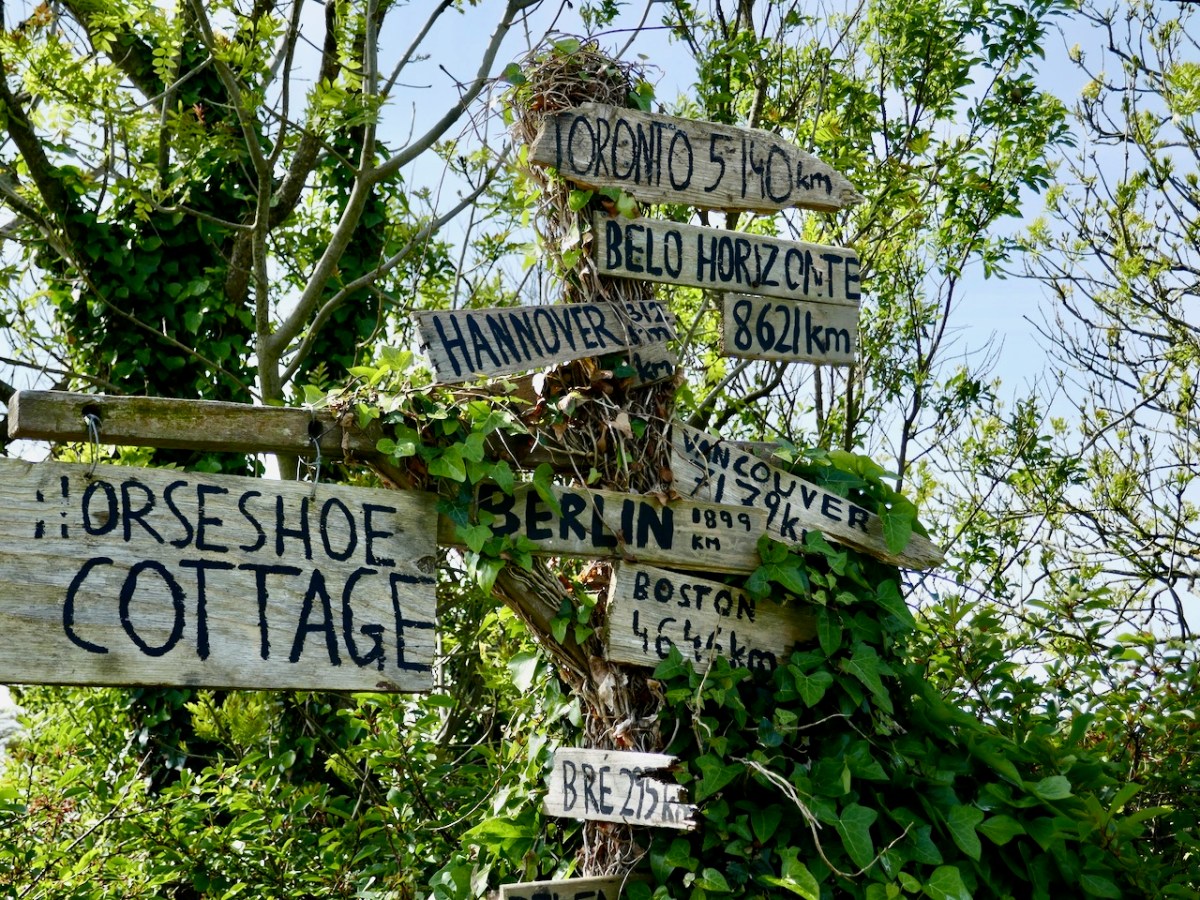
I was fascinated by this little house, standing sentinel over the harbour. What a situation – and it obviously has a history. Above the door is the Papal insignia along with Anno 1932 Congressus

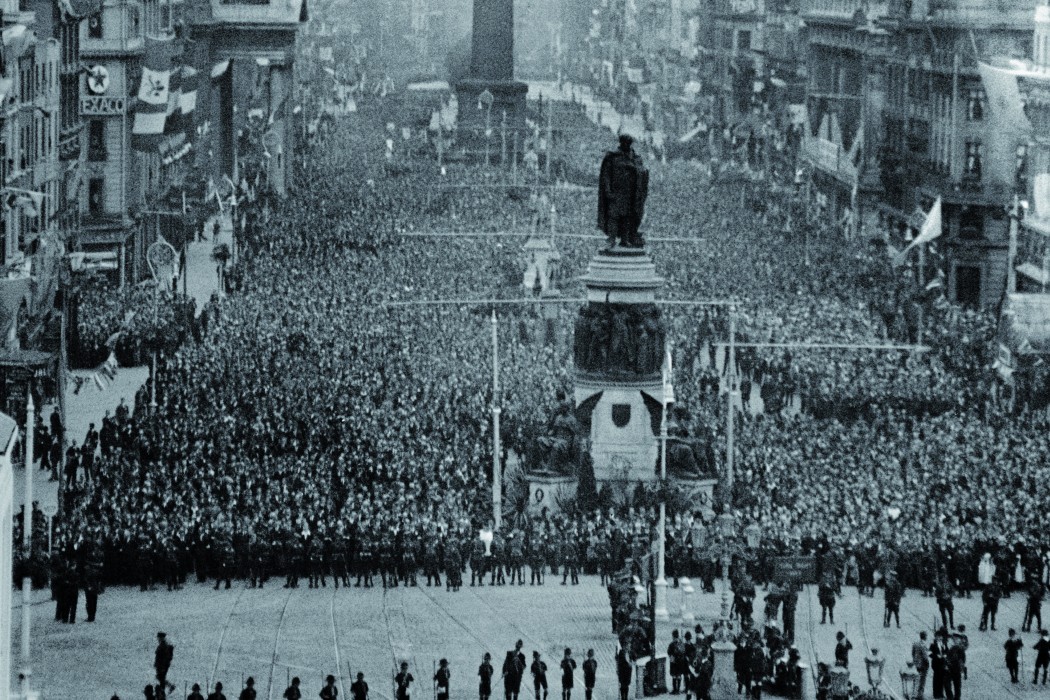
This, of course, is a reference to the Eucharistic Congress, held in Dublin in 1932. Here’s a wonderful account of that time by West Cork Historian, Kieran Doyle

It was the biggest thing to happen in the new state. My parents used to talk about it. Dad was in the Phoenix Park (along with a quarter of Ireland’s population) to hear John McCormack singing Panis Angelicus. Perhaps it was that experience that persuaded him to study for the priesthood. Fortunately for this blog, he discovered his error after a year, and my mother a few years later. But take a listen to what my father heard in 1932.

My mother, by the way, was found of quoting Brendan Behan who said that during the Eucharistic Congress, “Grafton Street was lousy with Bishops”.

But I digress! Let’s get back to Sherkin – although if anyone knows more about why this attractive cottage sports a 1932 Eucharistic Congress sign, do leave a comment.

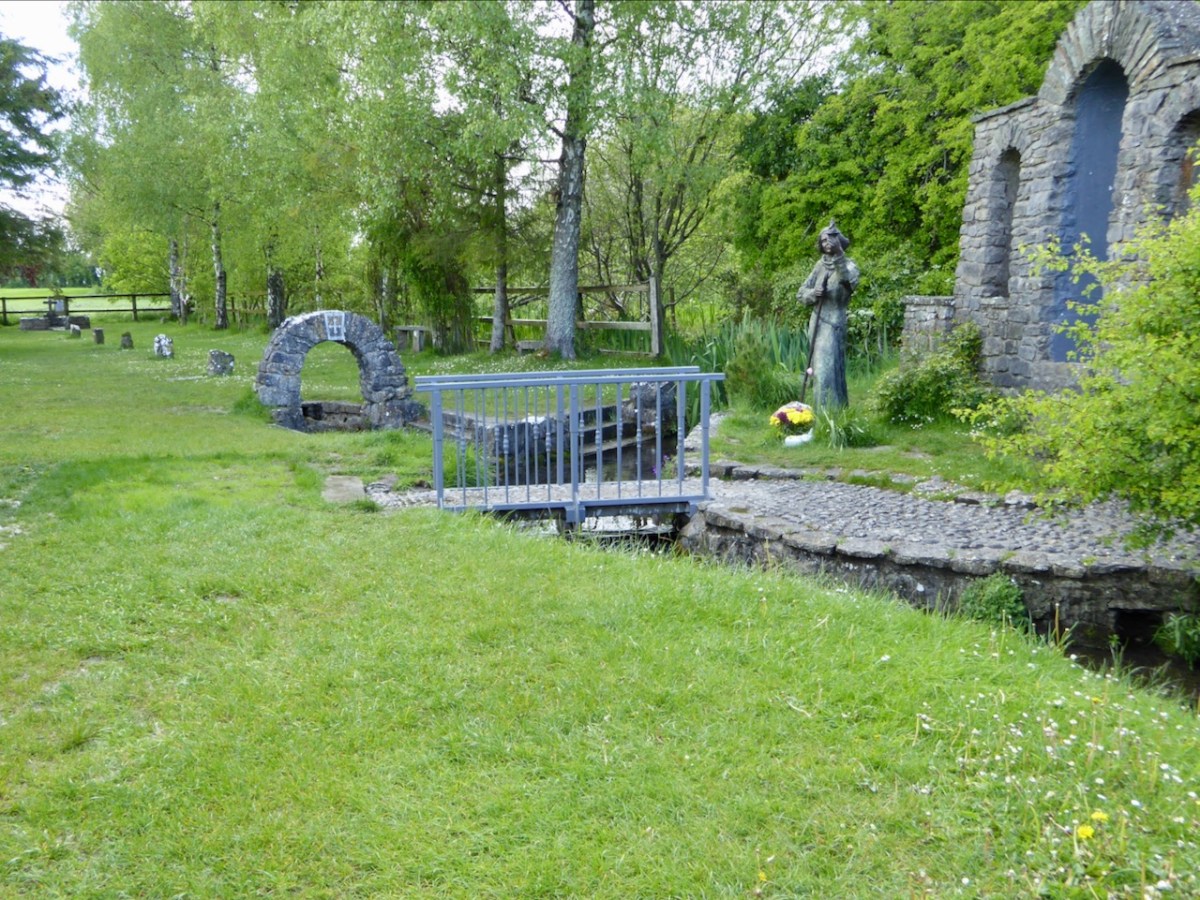
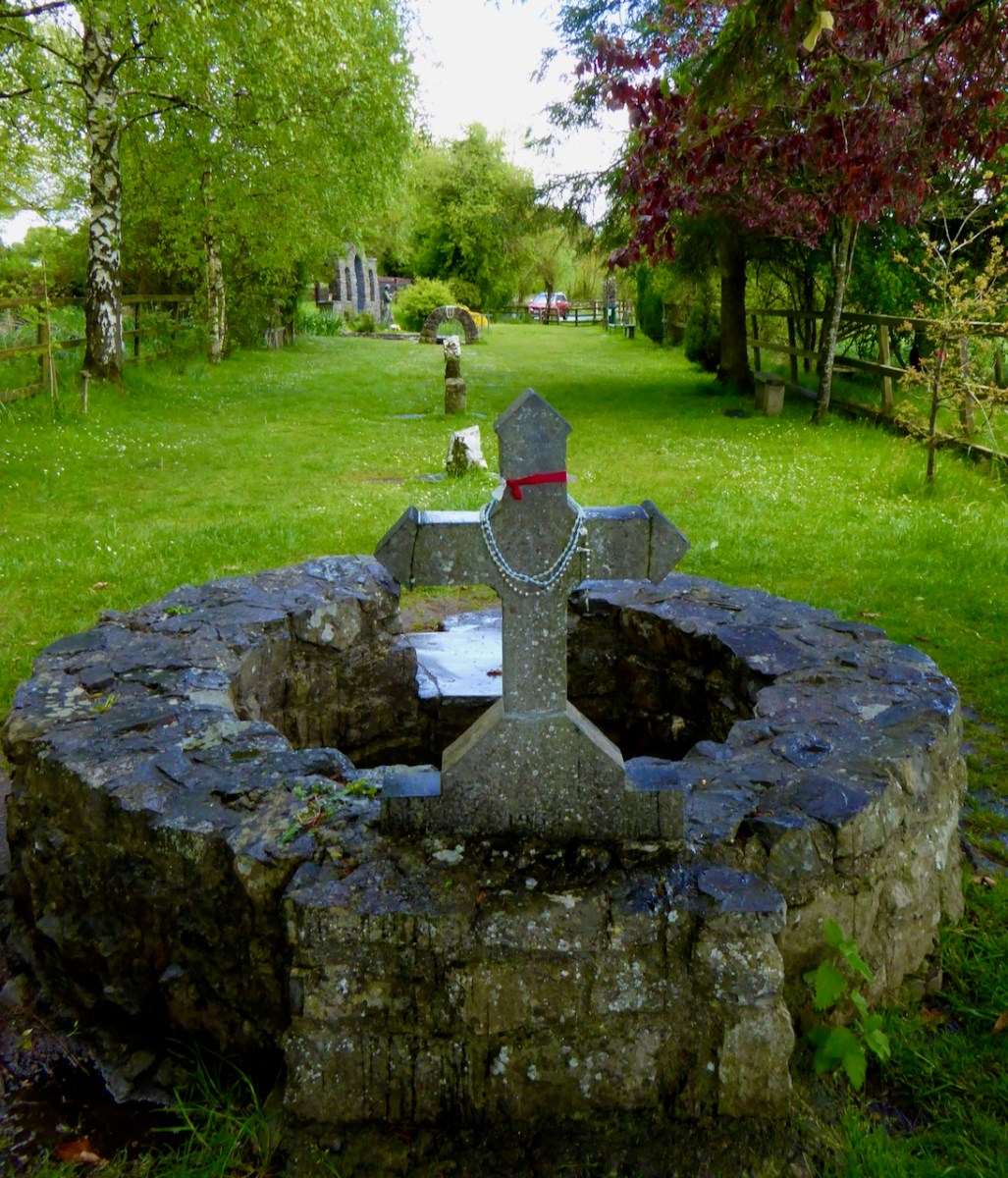
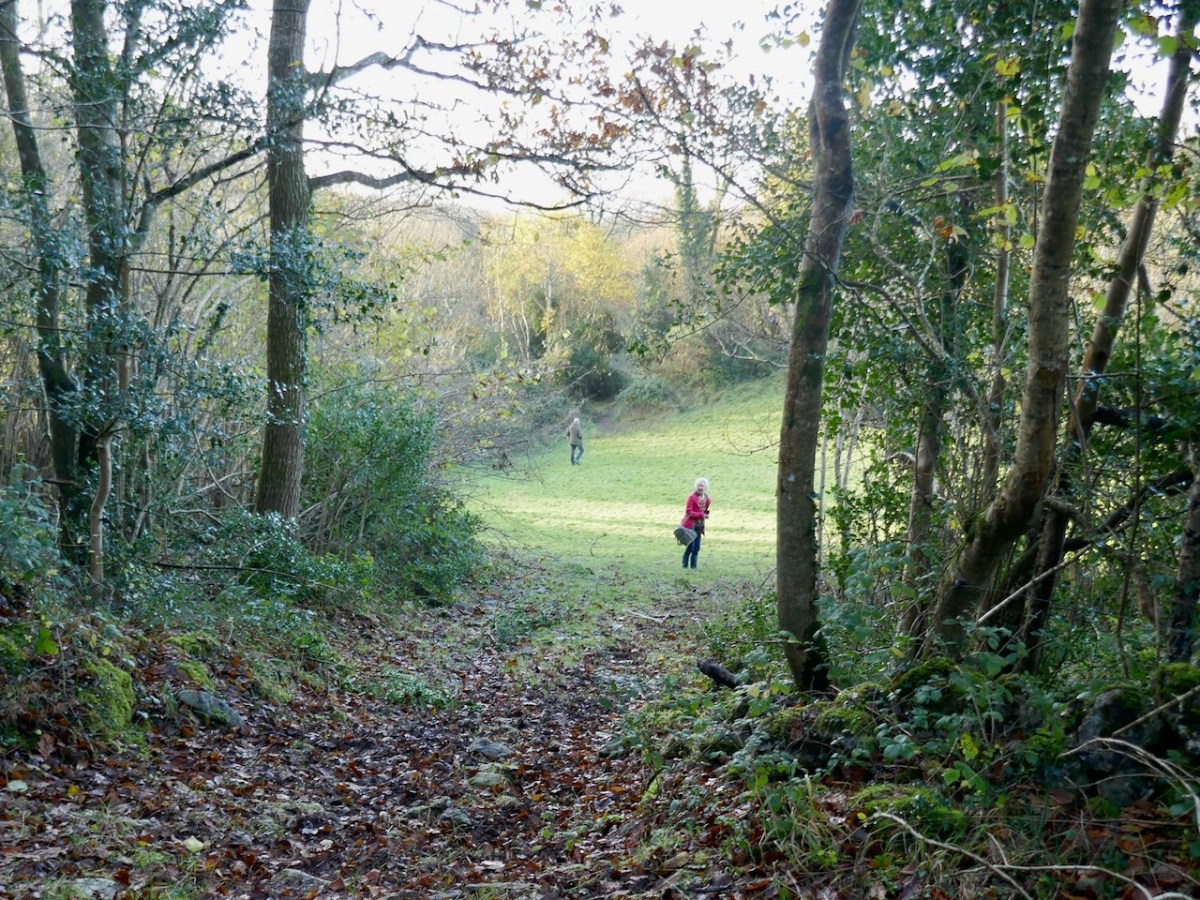
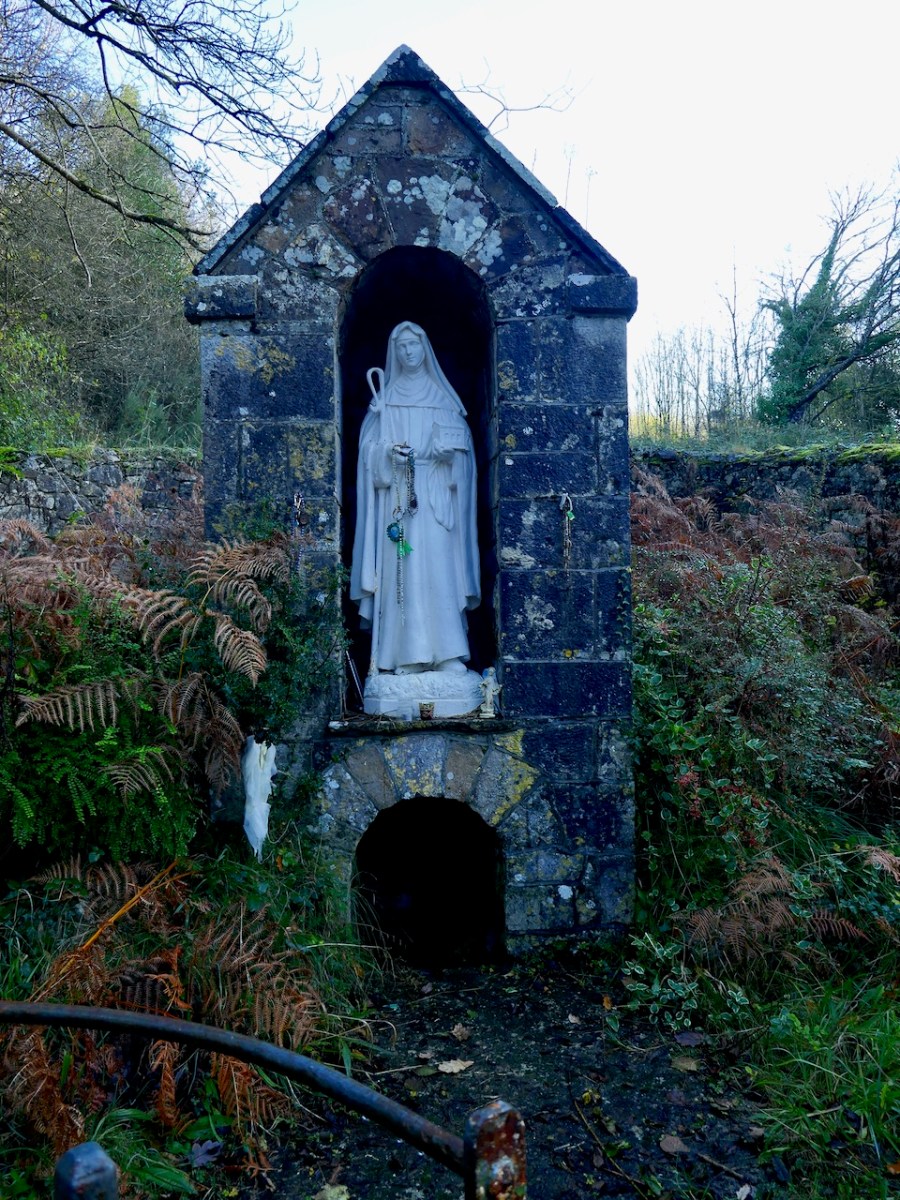
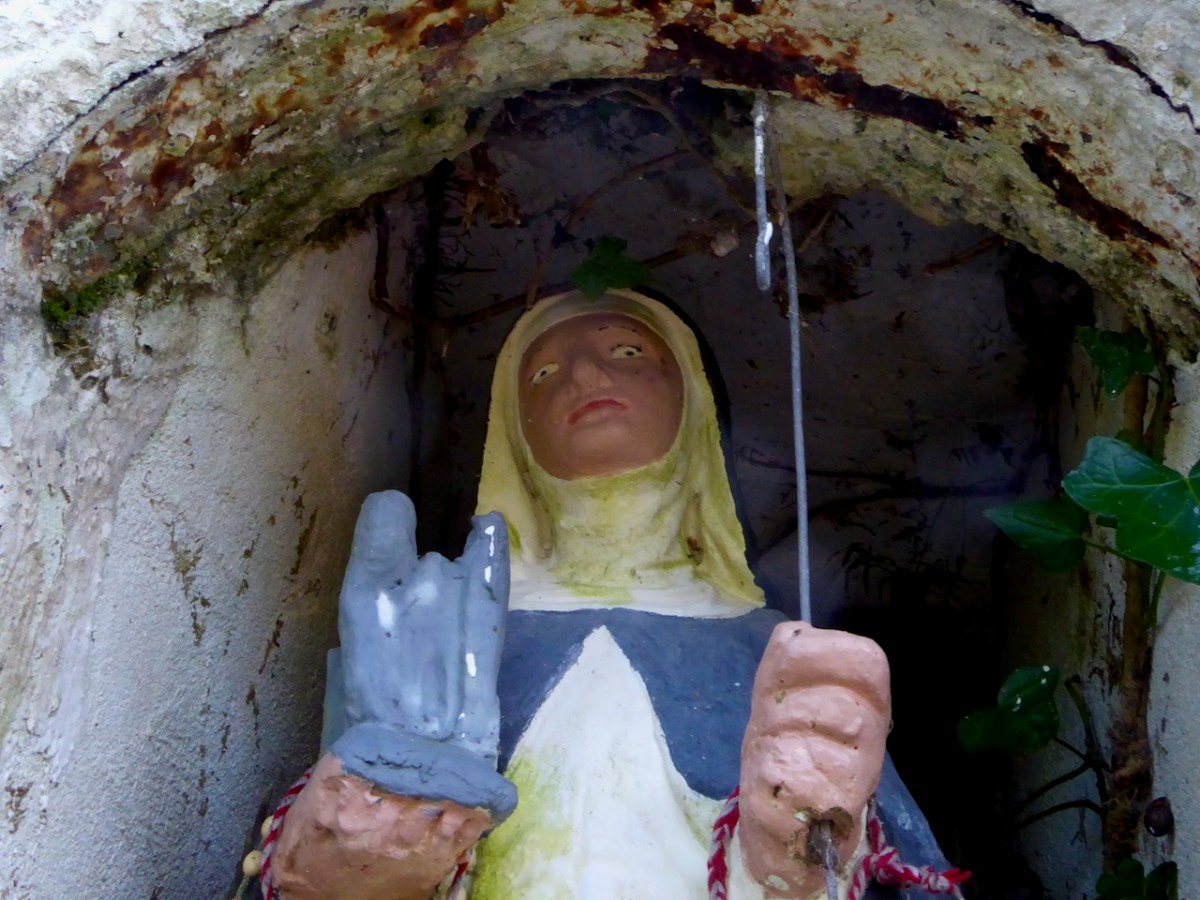
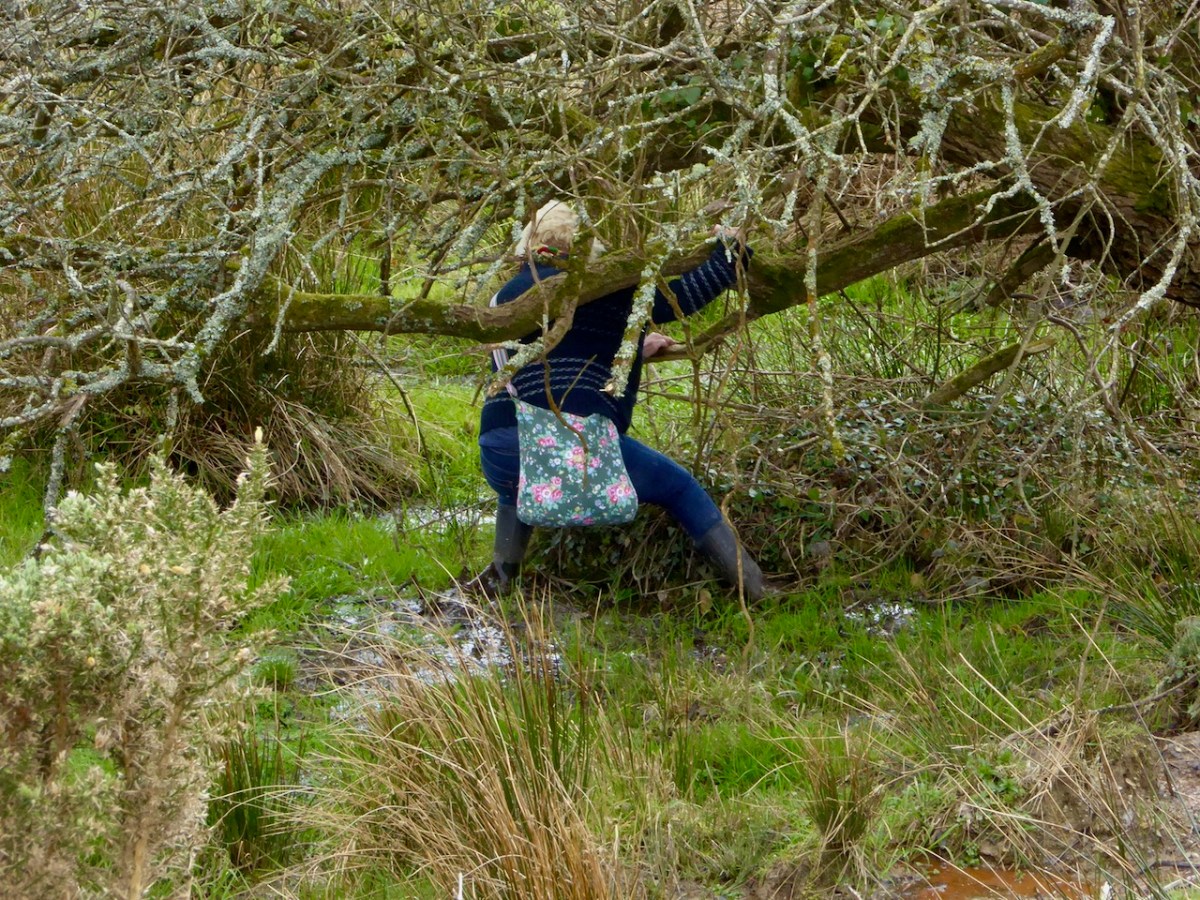
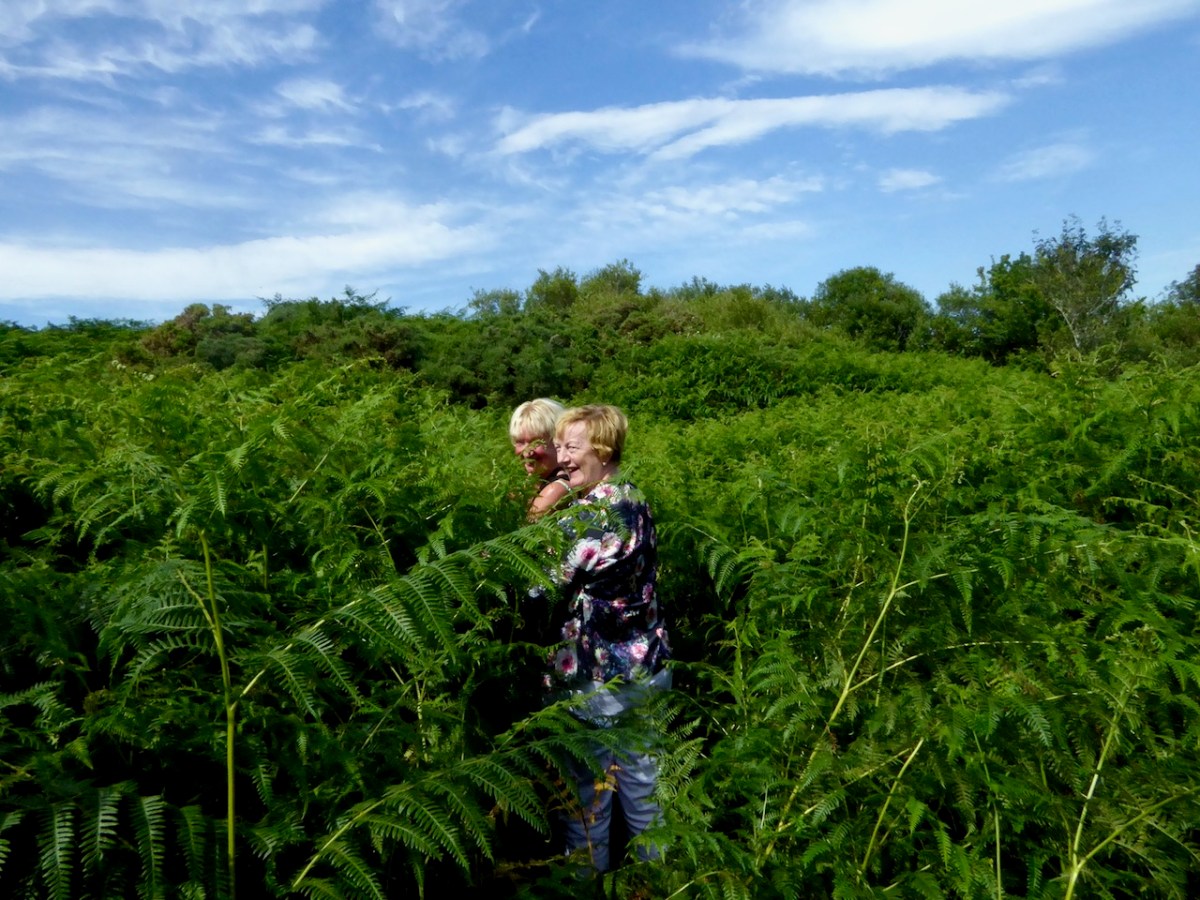
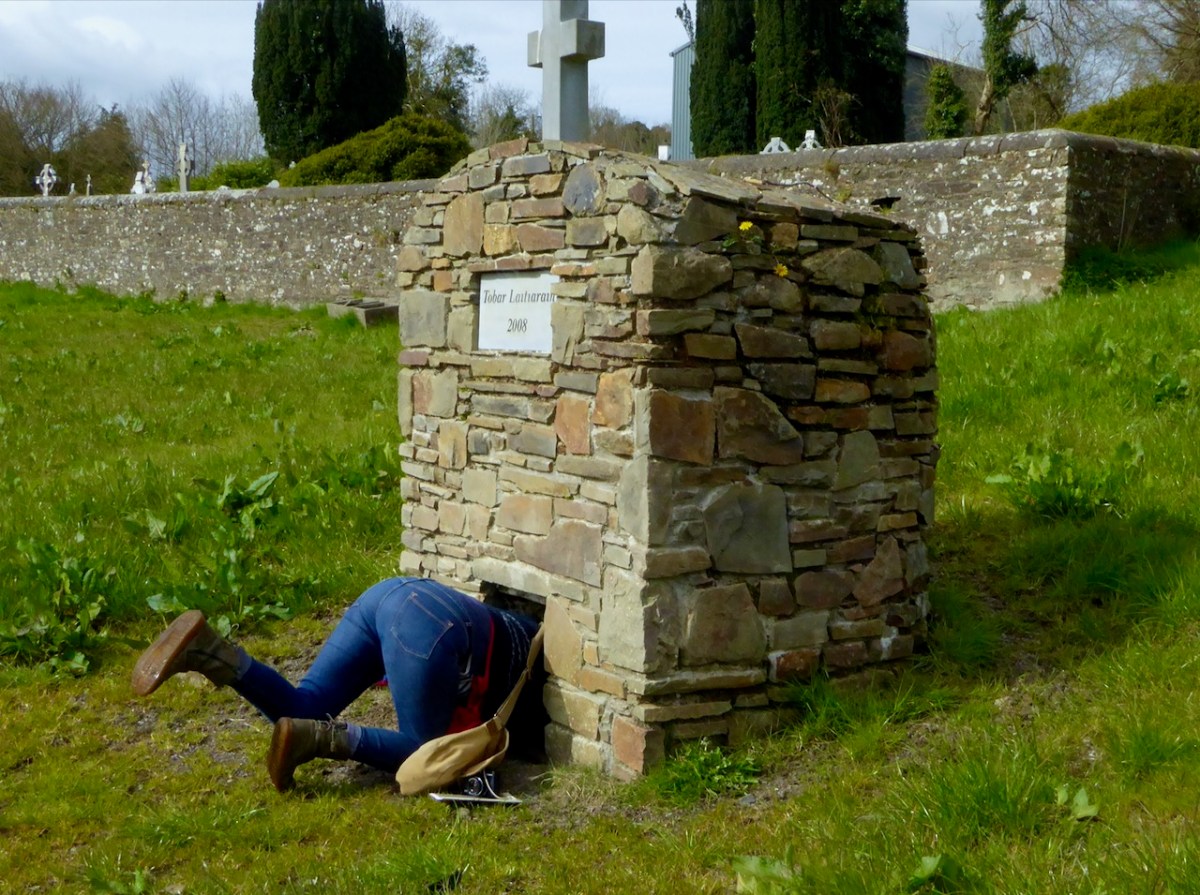
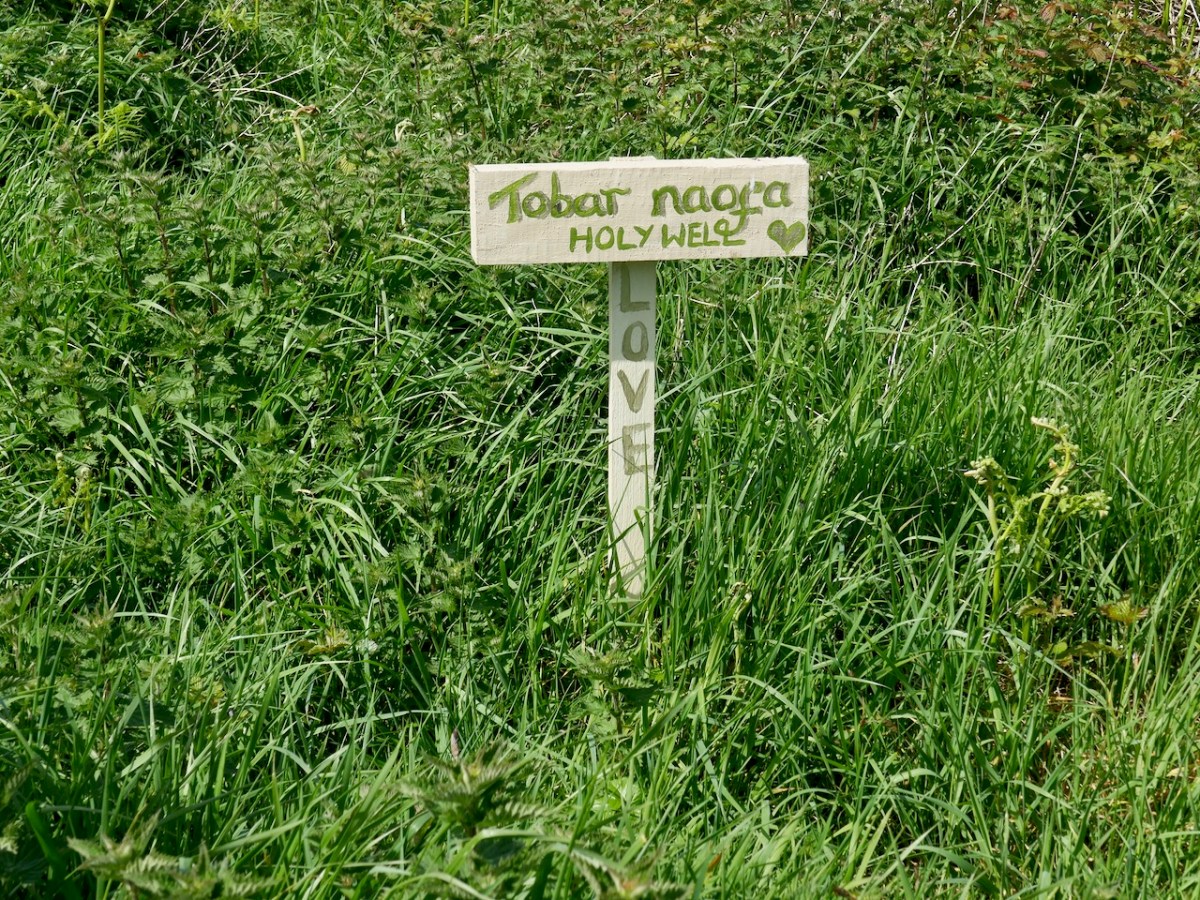
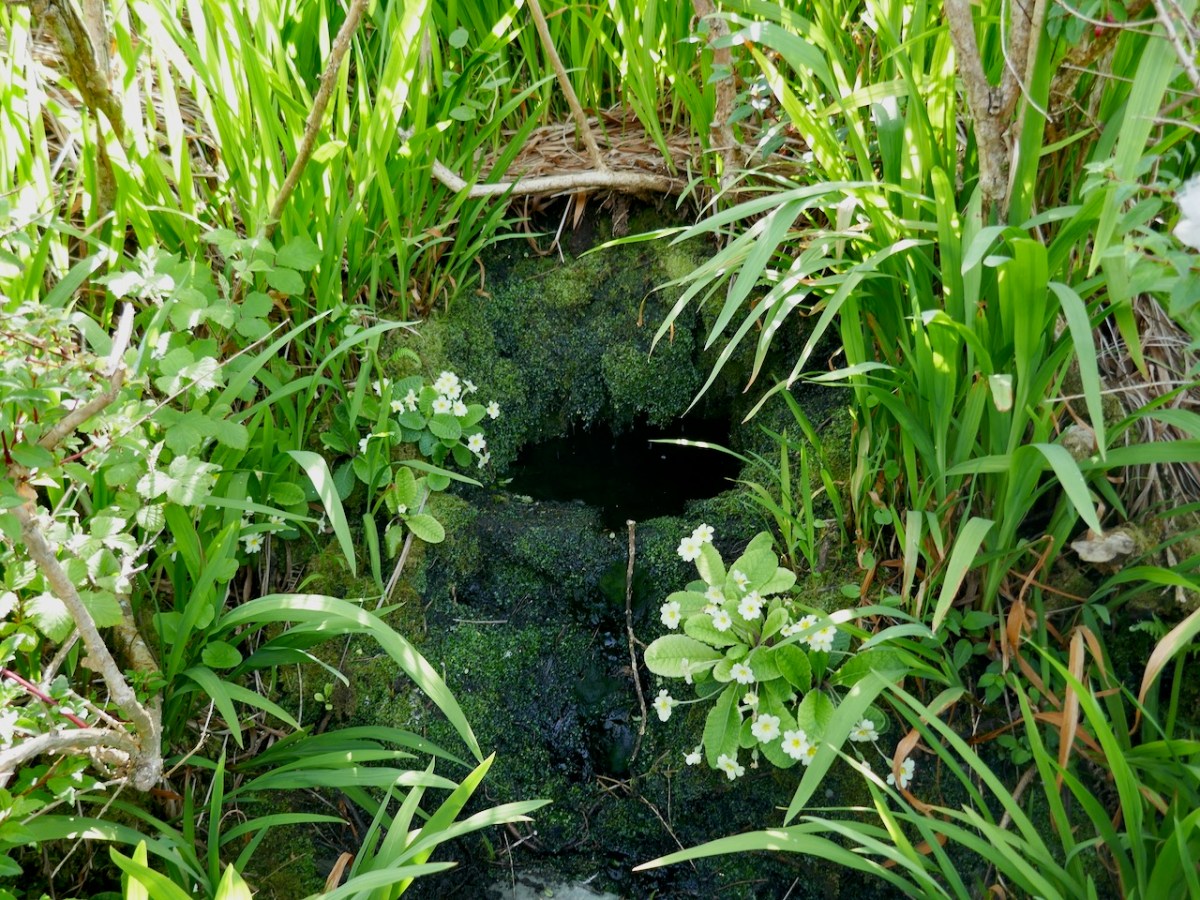
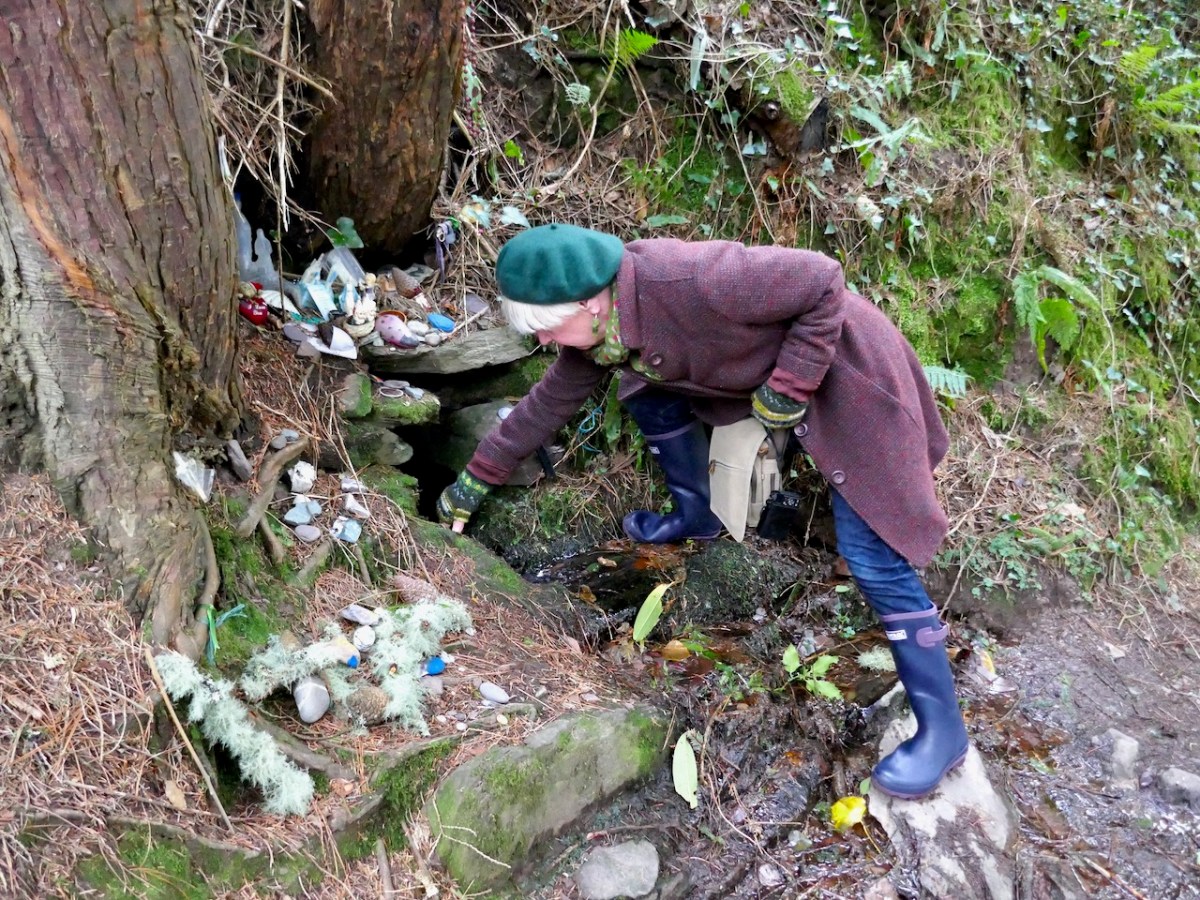
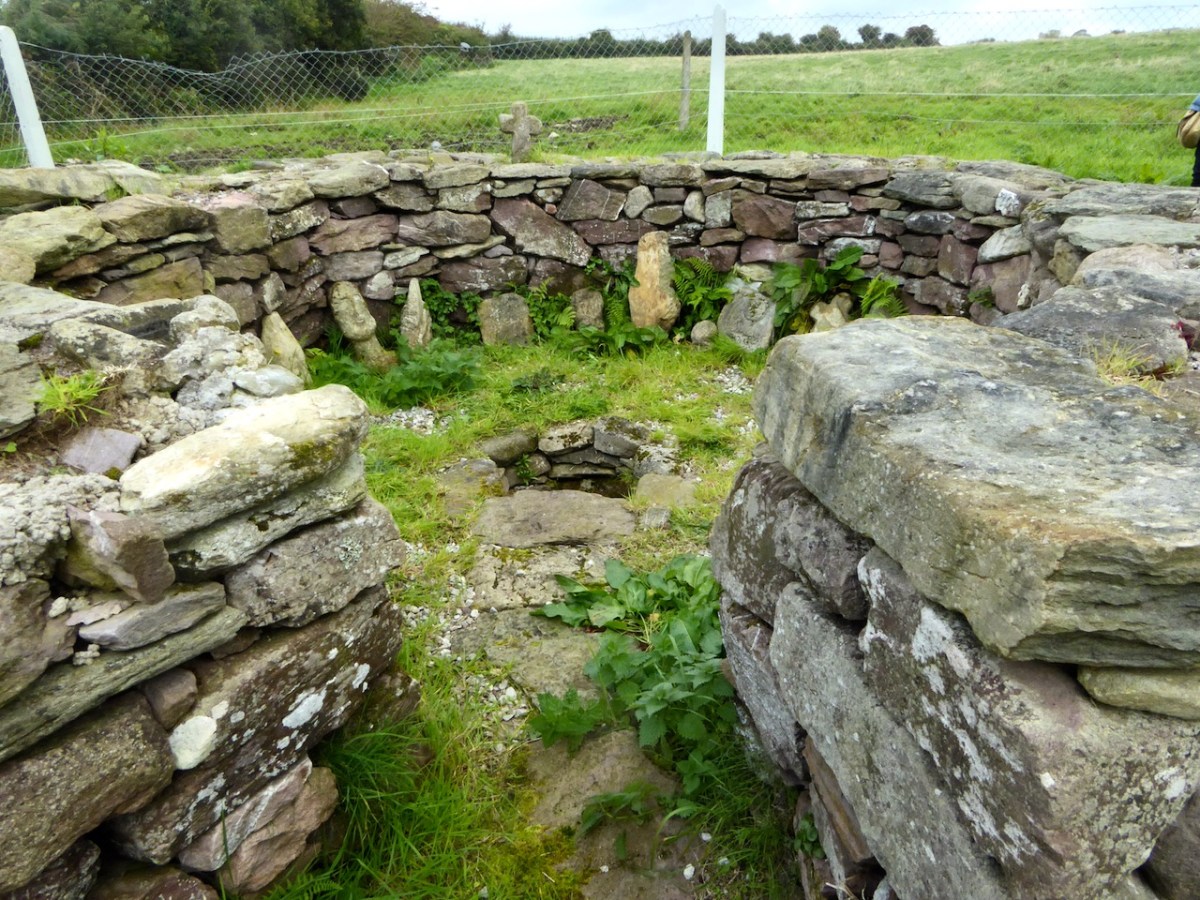
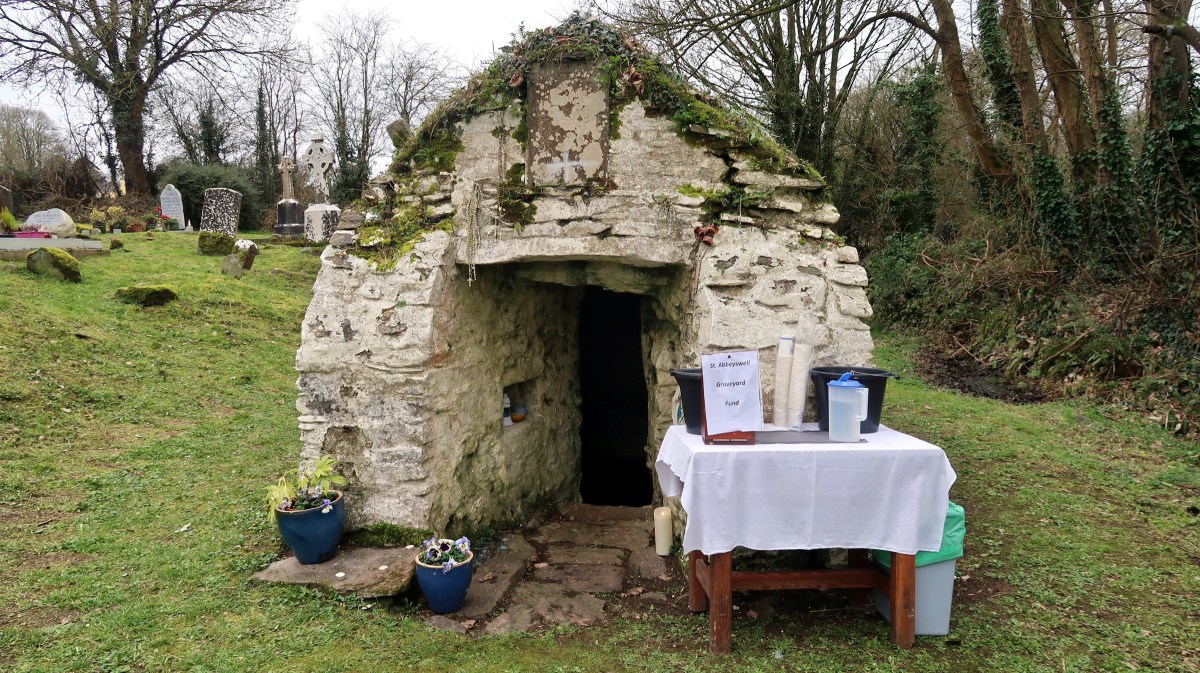
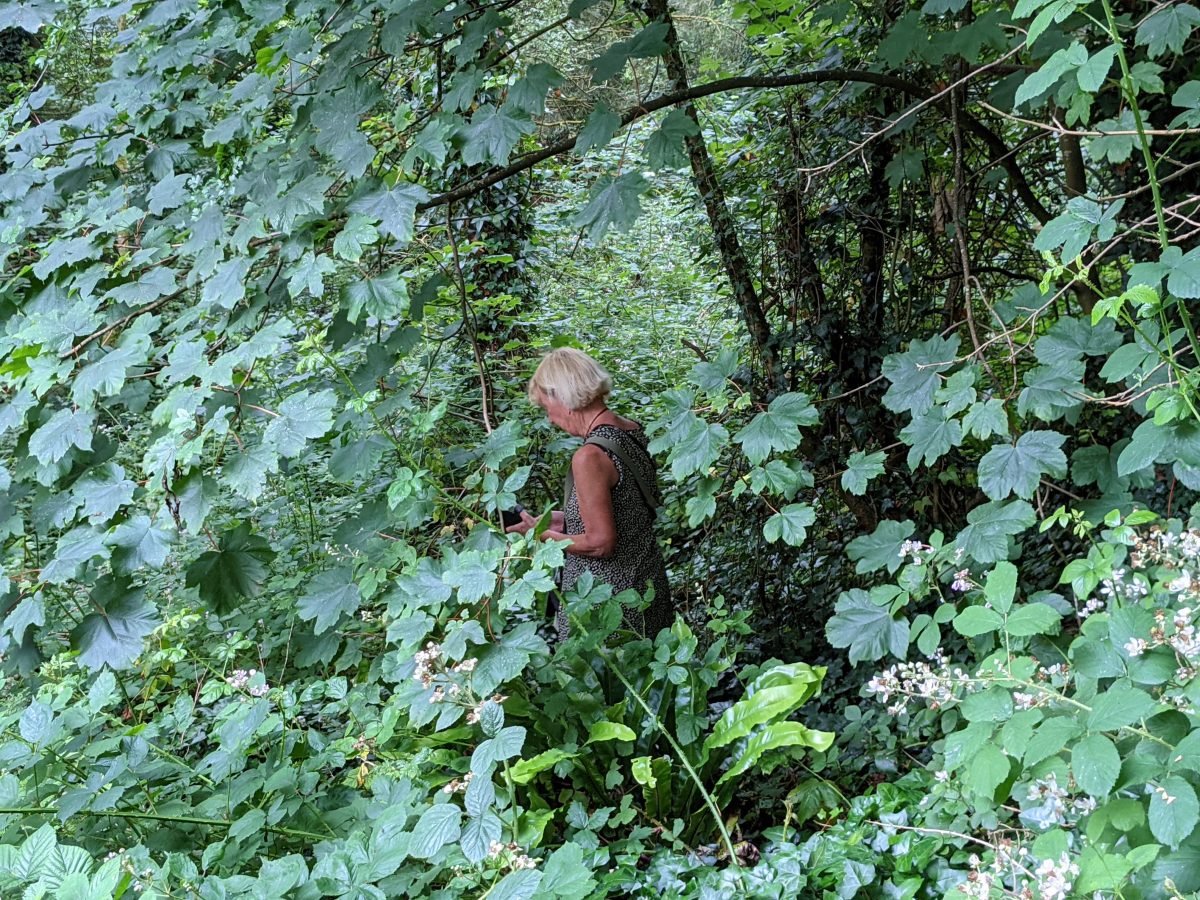
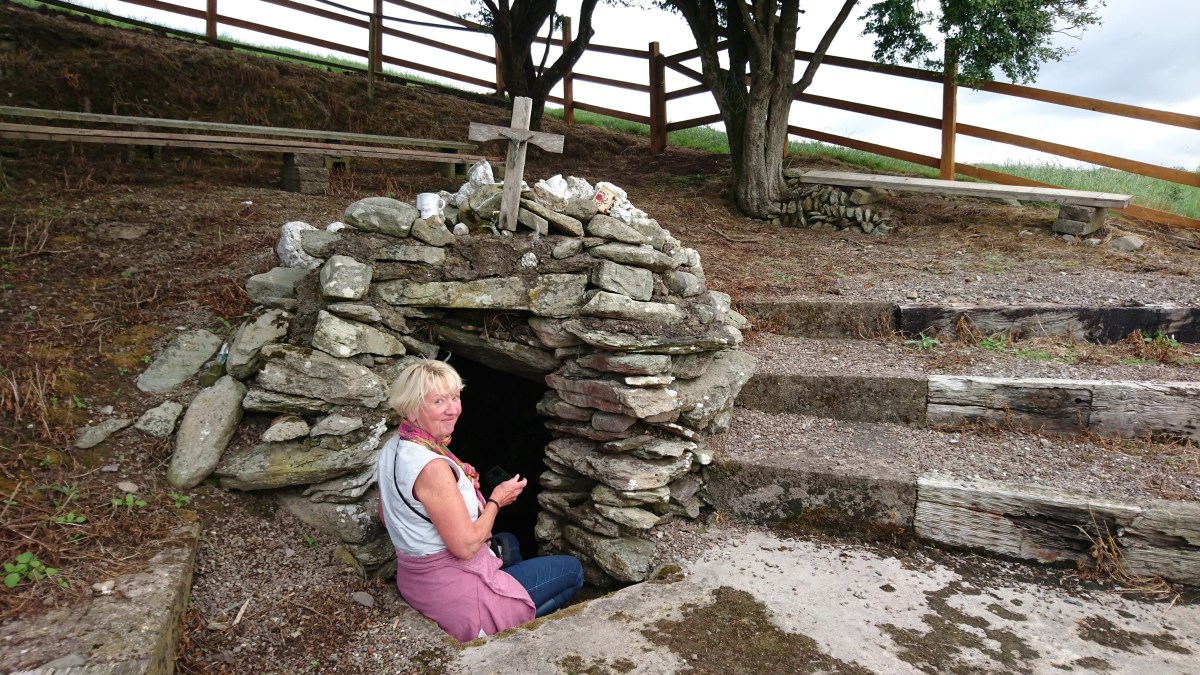
Our next stop was St Mona’s Holy Well. This is a discrete little well tucked into the hillside of a fern-covered valley. Although Amanda had to battle her way to this well when she first visited, this time we discovered that a recent pilgrim had cleaned up the well and provided very welcome signage. Amanda’s blog provides lots of detail and a link to more information about St Mona, patron saint of the island, who has given her name to the townland of Kilmoon. 

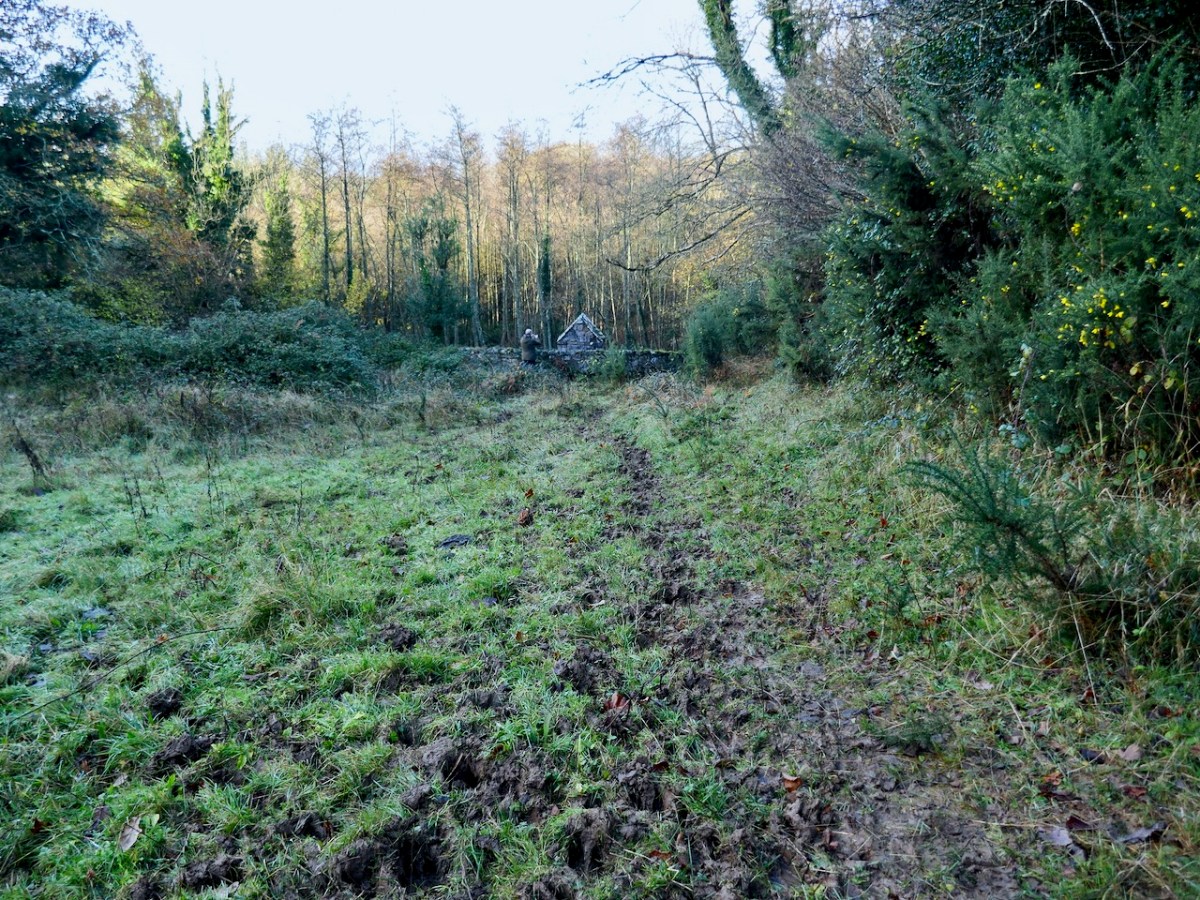
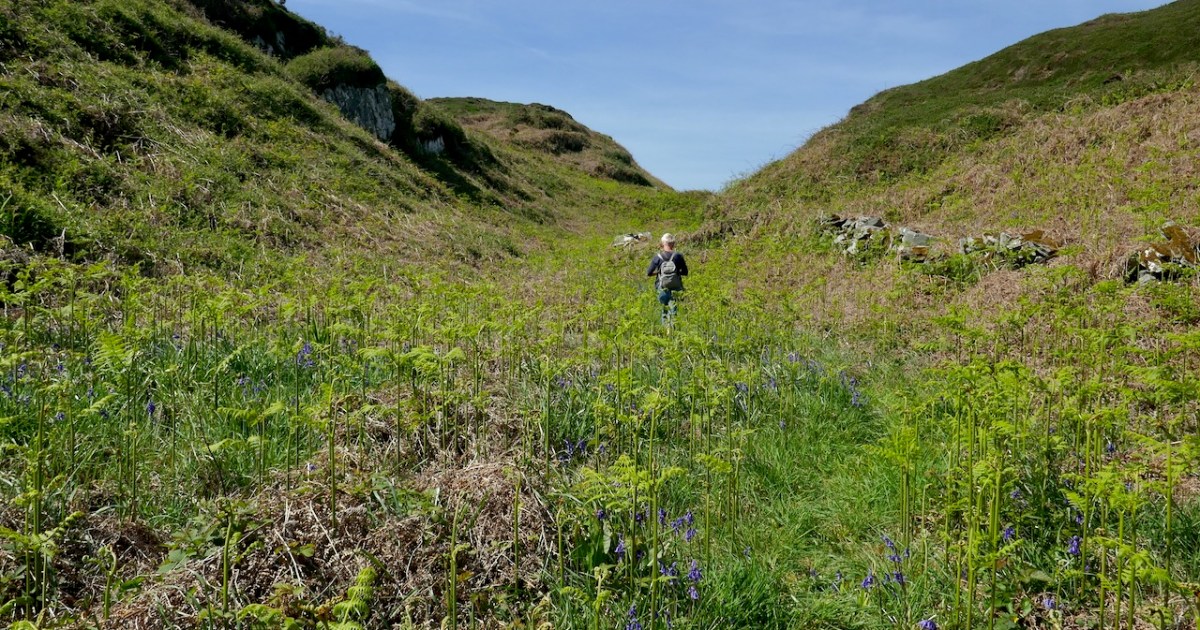
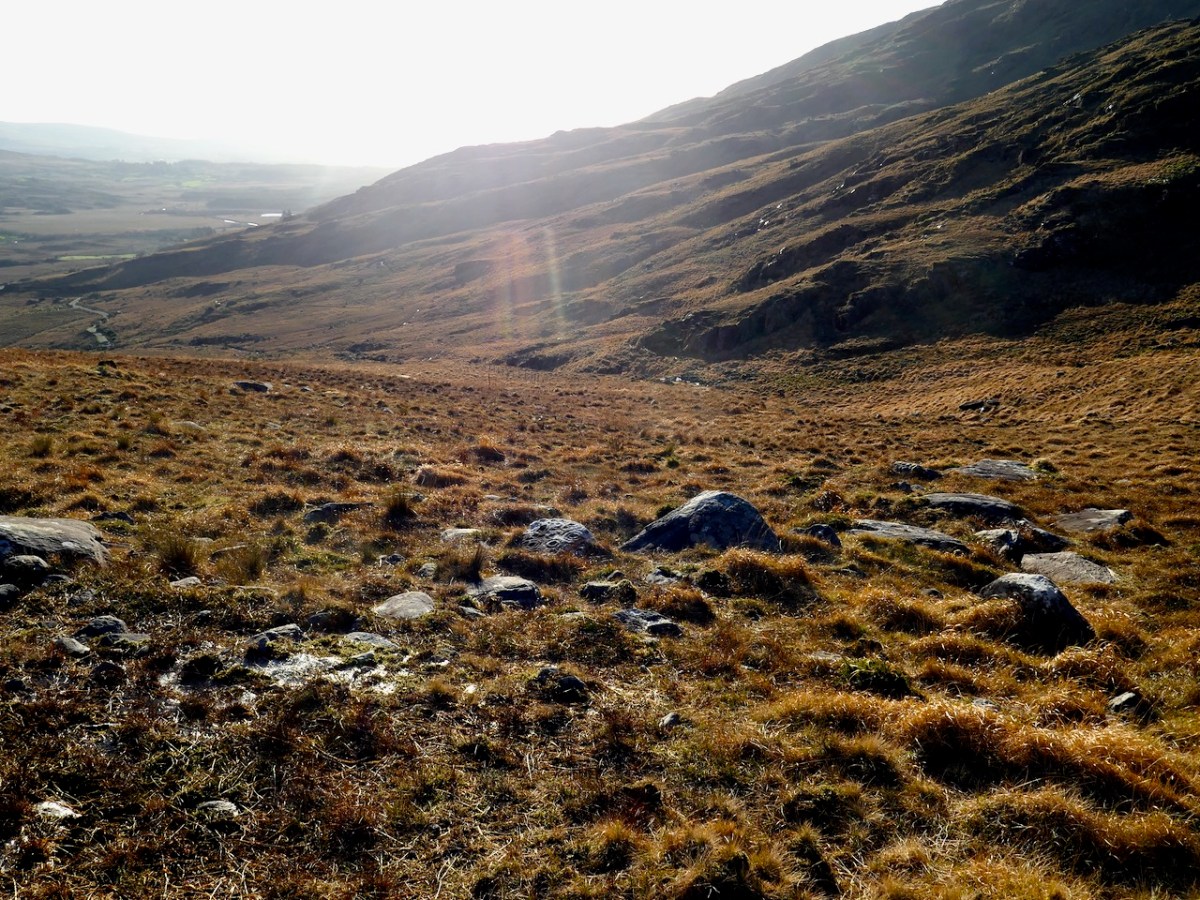
We enjoyed a coffee (I had packed a flask, fearful of a caffeine withdrawal) overlooking Horseshoe Harbour (photo by Amanda) before setting off back to join the main road through the island. My top photo shows the terrain leading to and from the well – we had the real sense of being in a hidden valley.
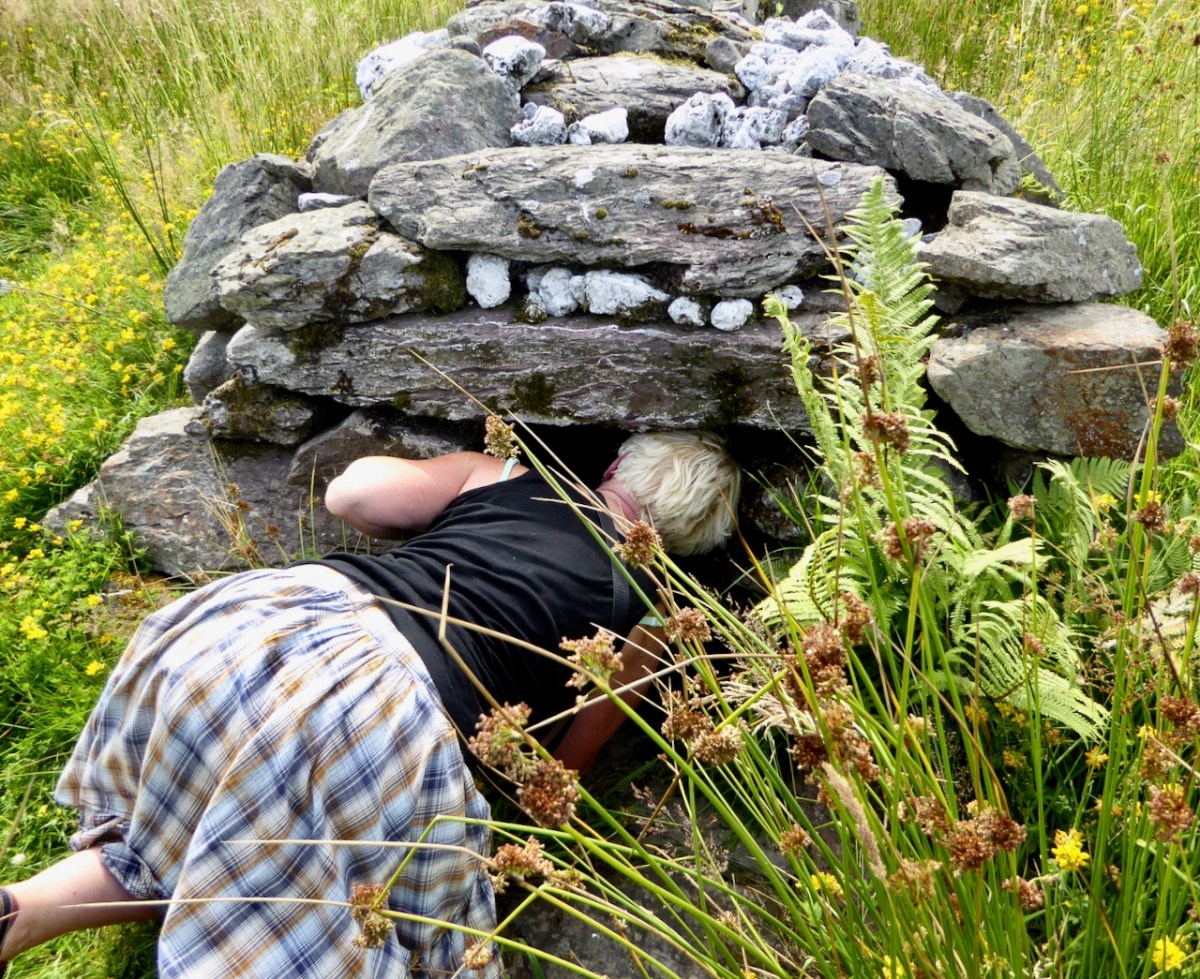
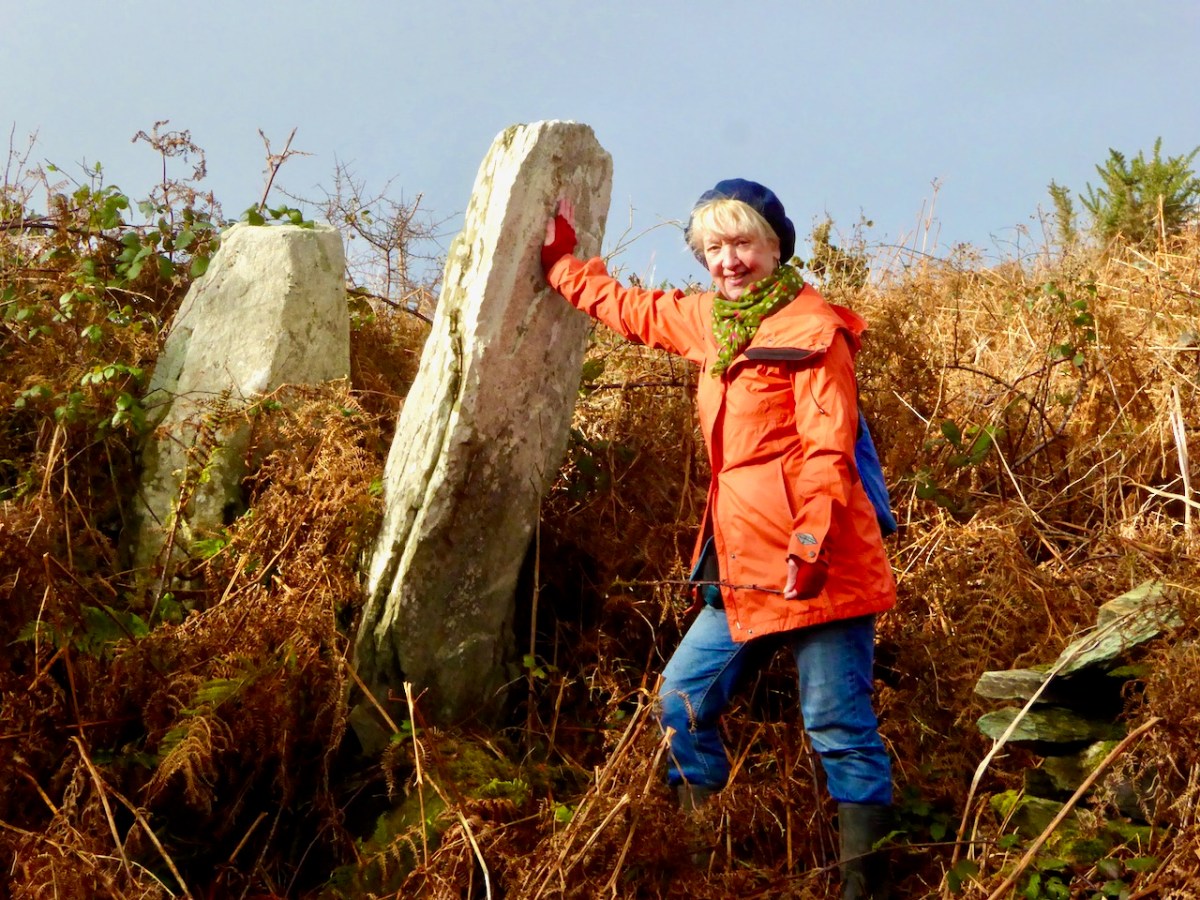
A detour brought us to a piece of archaeology – a cupmarked stone. Robert and I visited this several years ago and he wrote about it here, so you can take a look at the stone with its 14 cupmarks. I am not giving the location of this as it is on private land

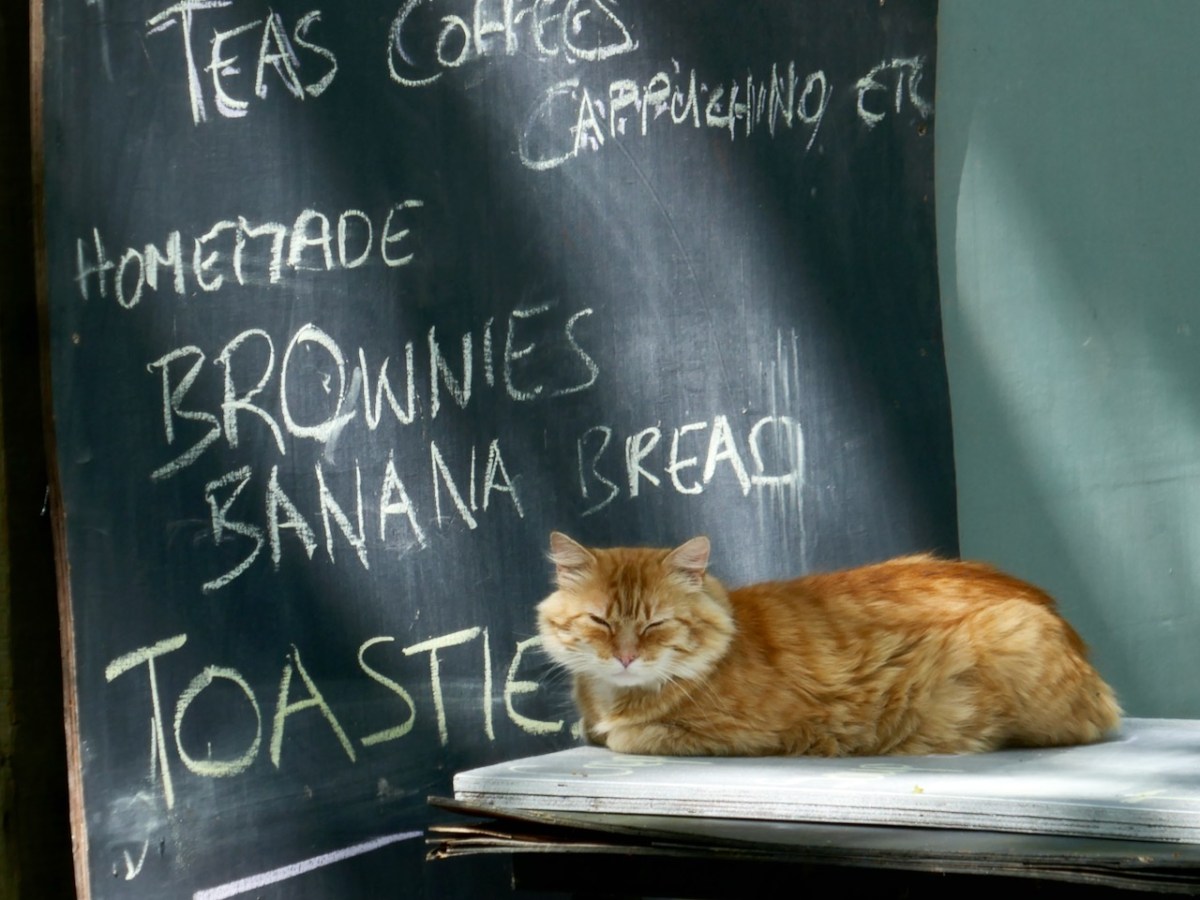
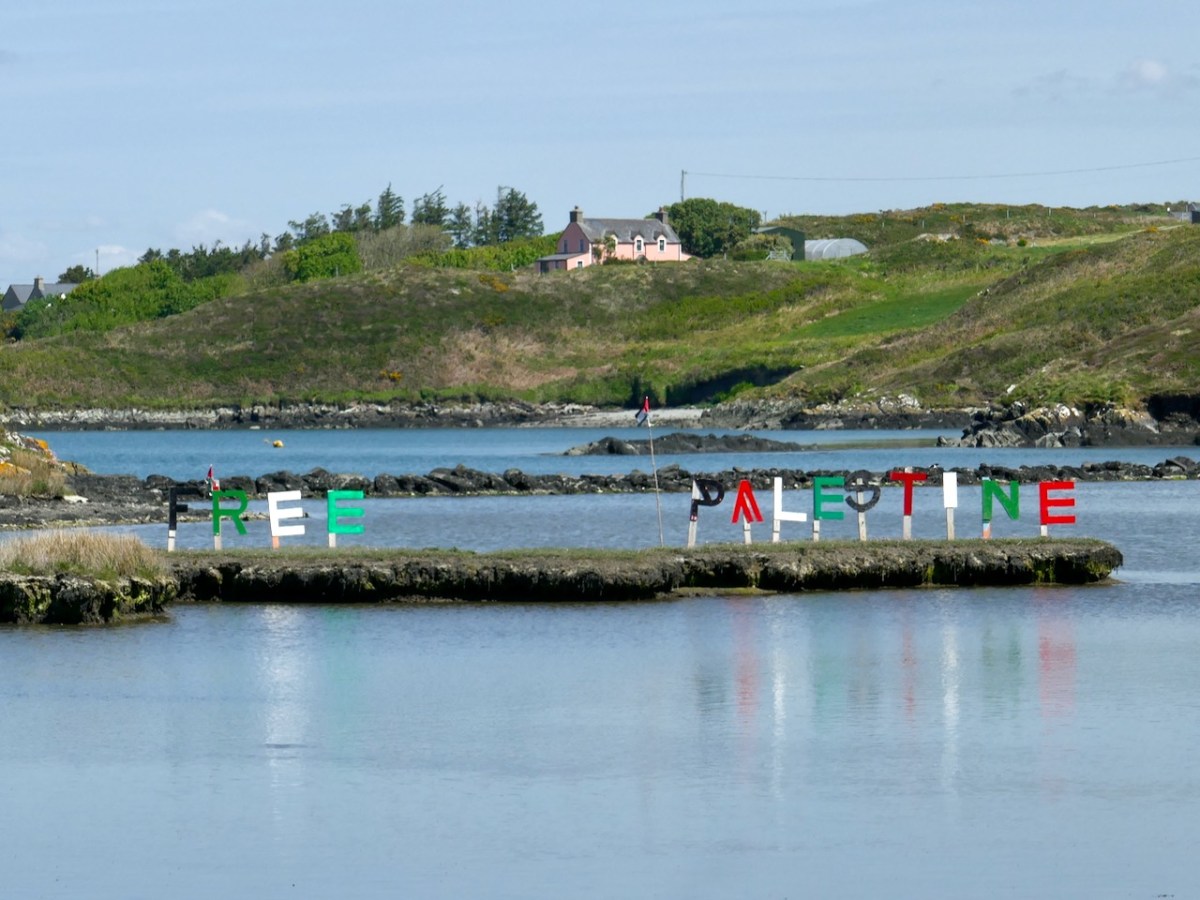
We stopped for a sit-down along the way – the little cafe wasn’t open, but a sleepy cat presided over our rest stop and the Free Palestine sign provided the backdrop.  

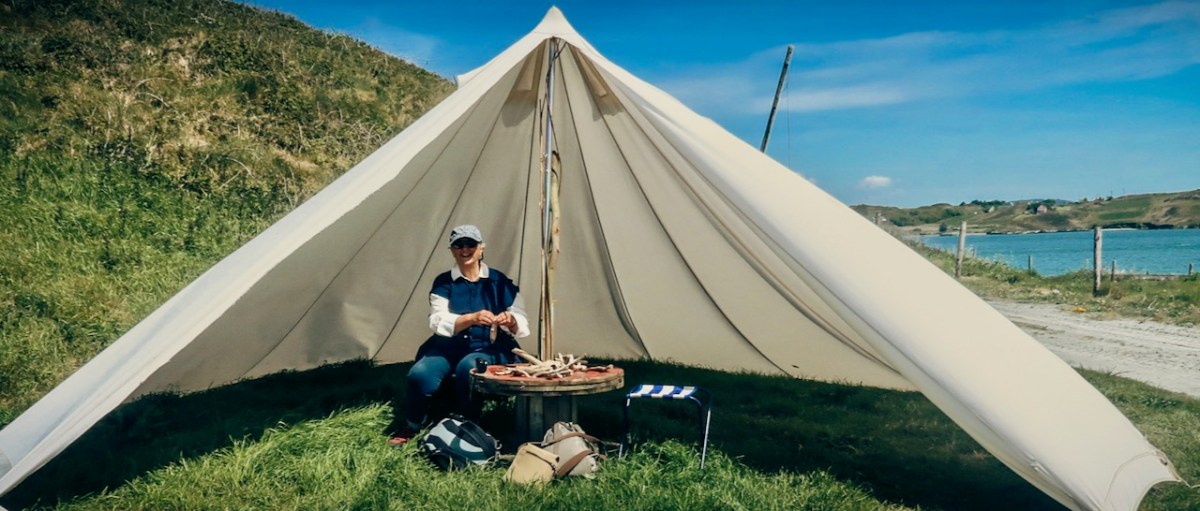
On we went then, to Cow Strand where a lovely surprise awaited – good coffee and snacks and a teepee to sit under – it was pretty hot by now (photo by Amanda).

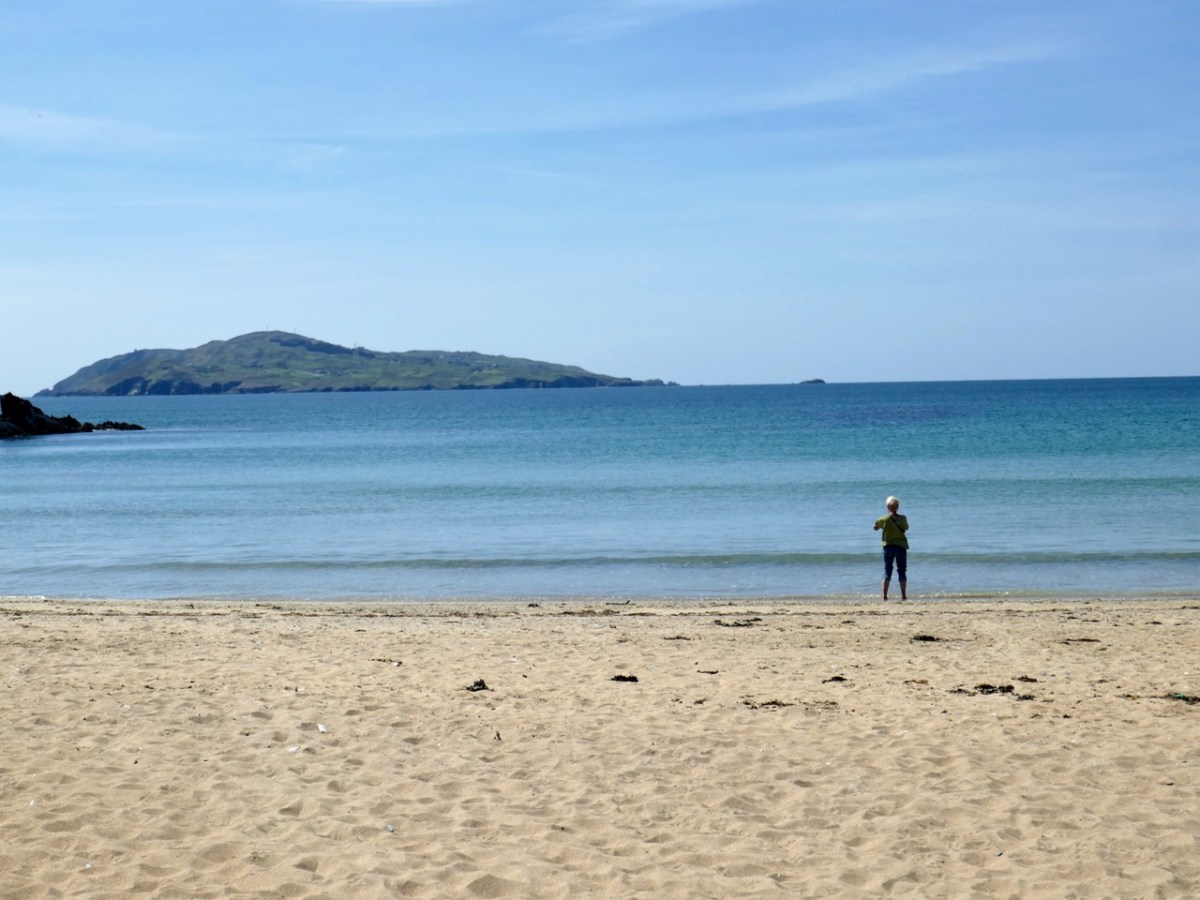
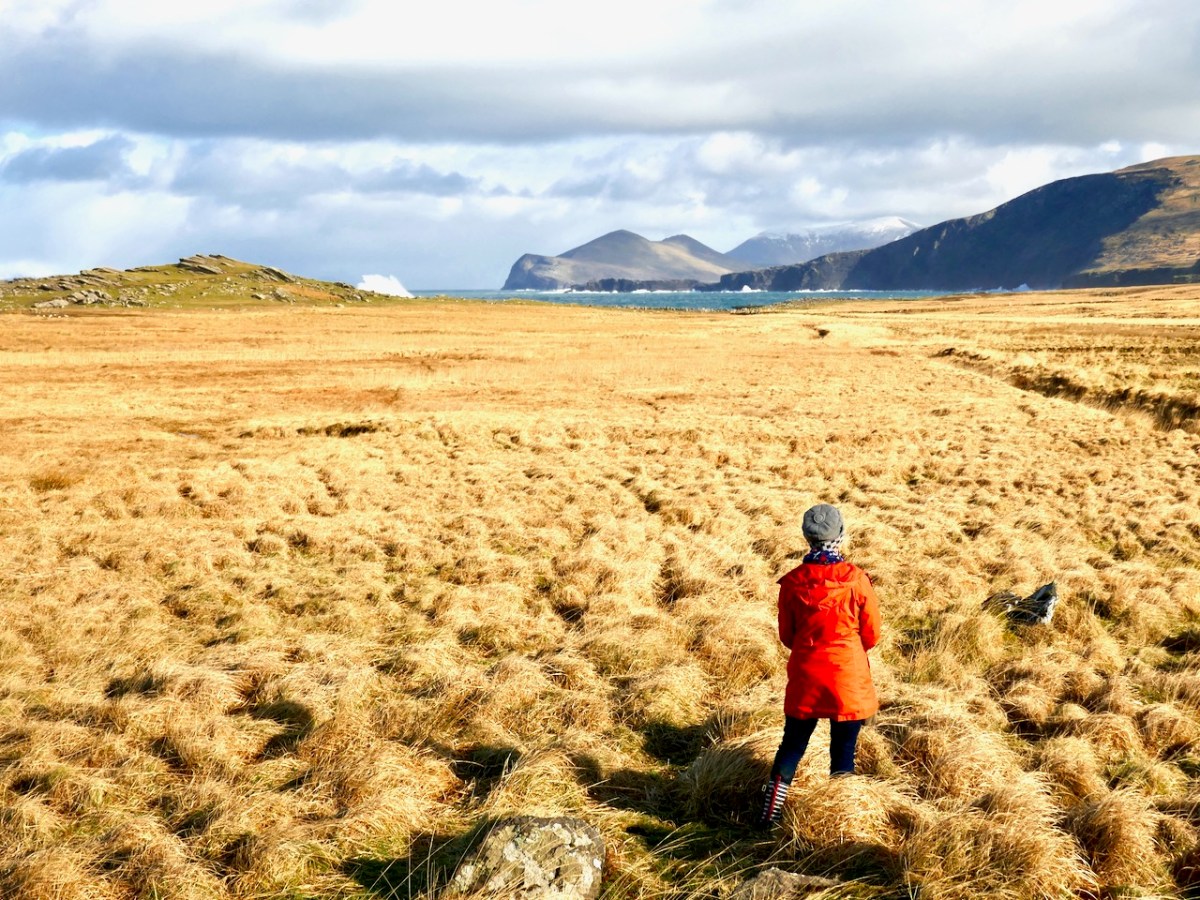
From there we walked to the magnificent Silver Strand, with a view to Cape Clear. 

Sherkin Island is home to the medieval castle, Dún na Long (Fort of the Ships) and a magnificent ruined Friary. A wander around these two monuments was our final destination and to my enormous surprise, as it had never happened before, we were able to go inside the friary. The next blog will take up the story from there. 

Punishment and Pilgrimage in 16th Century Ireland

In 1539 a certain Heneas MacNichaill (Henry McNicol) of Armagh confessed to a particularly heinous crime, that of strangling his son. We know nothing about the reason, nothing about the son – an indication that it was more important to record the punishment than the details of the crime. 

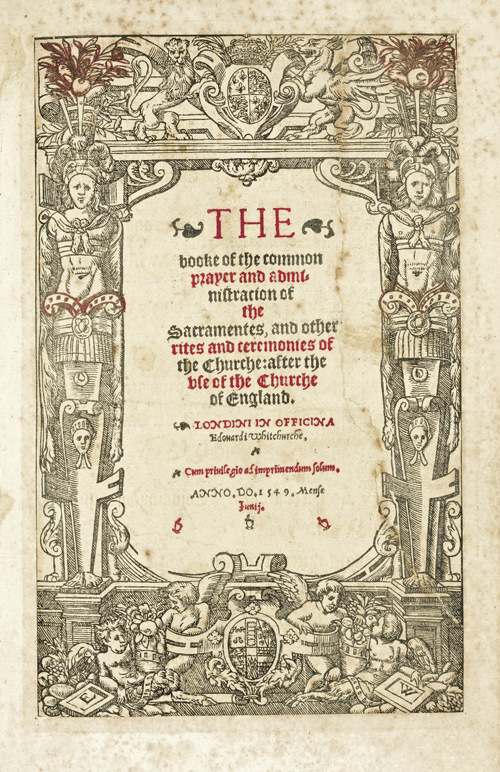
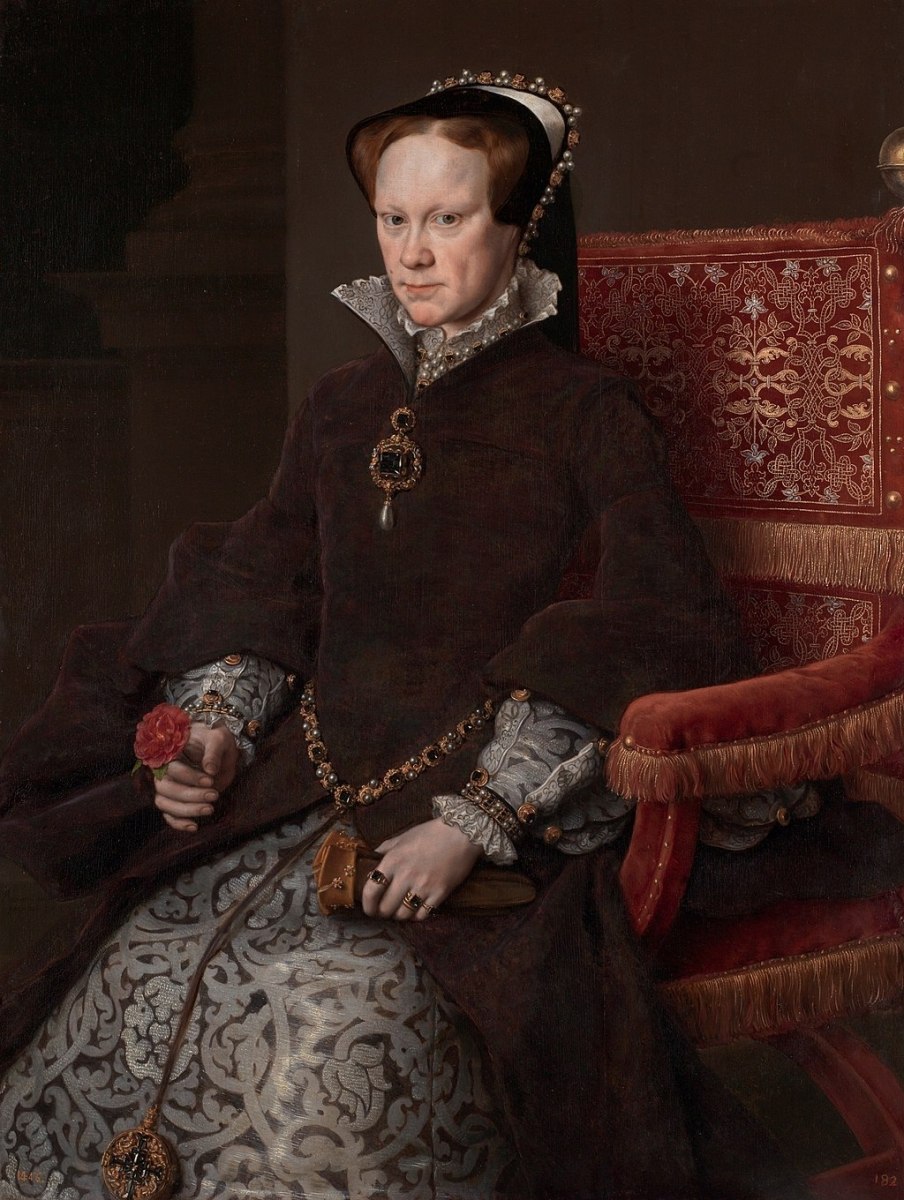
We know what the punishment was because it is recorded in the Register of Bishop George Dowdall. Dowdall was a fascinating character, living in a time when it was prudent to be Catholic, then Protestant, then Catholic again and finally back to Protestant. Dowdall was not for turning – he resigned his seat as Primate of Ireland rather than approve of the Book of Common Prayer. He was later restored to the See by Bloody Mary (below), dying conveniently just before she did. While in office he kept what is known as ‘Dowdall’s Register’, the last in the series of volumes of medieval records which survive for Armagh.

One of Dowdall’s Deans, Edmund, meted out the punishment to Heneas MacNichaill. He was ordered to do a round of pilgrimages to all of the great Irish Medieval Pilgrim sites – 18 of them. We don’t know how common such a sentence was, but Salvador Ryan tells us that such punishments

. . . often took the form of a long, arduous pilgrimage, a substantial deed of almsgiving or some kind of penitential abstinence or fasting.

The annalists frequently record instances of pilgrimages undertaken as penance. The Annals of Ulster, for instance, relate that in 1491 ‘Henry, son of Hubert, son of James Dillon slew his own father, namely Hubert, with thrust of knife and he himself set out for Rome after that. The sinner might also found a monastery, as expiation for sin, or at least offer to sponsor an existing foundation’s restoration. Some accounts of the Mag Uidhir clan illustrate how individuals belonging to an important Gaelic family, in this case rulers of Fermanagh, made reparation to their God. In 1428, ‘Aedh, son of Philip Mag Uidhir went on his pilgrimage to the city of St James…and died…after cleansing of his sins in the city of St James.’

From: Popular Religion In Gaelic Ireland

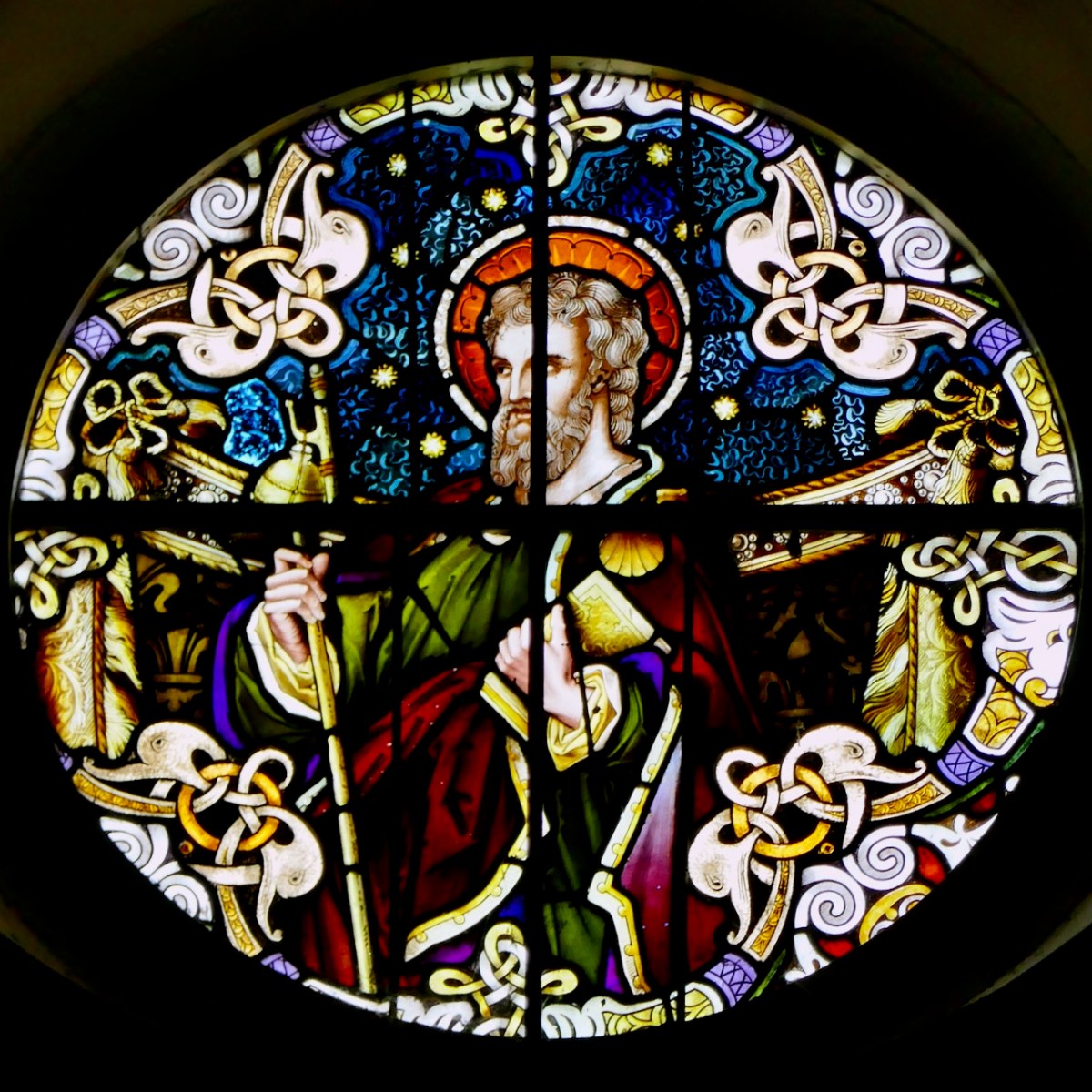
St James, above, with his pilgrim’s attributes of the scallop shell and the staff and pouch.

Heneas returned two years later, in 1541. The Register records it thus:

71. Certificate of fulfilment of penance. Memorandum that, on the 4th April, 1541, Heneas McNichaill, a layman of Armagh, appeared before the Primate to declare that he had fulfilled the penance imposed on him by Edmund, Dean of Armagh and custos of the spiritualities of the vacant see, for having strangled his son. 

He had visited : 

1. Struhmolyn in Reghterlaegen in Patria Kewan (or Rewan ?). 

2. Lectum Cayn in Glendalough (i.e., St. Kevin’s Bed). 

3. Rosse Hyllery 0 Garbre in patria McCarbre Rewa, principale purgatorium hic ut dicit (Ros-ailithreach, Co. Cork). 

4. S heilig Meghyll in patria McCathiremore (i.e., The Skelligs, off the coast of Kerry). 

5. Arayn Nenaw (i.e., Ara na Naomh). 

6. Cruake Brenan in patria militis Kerray (Crock Brendain, in Kerry). 

7. Sanctorum Flanani et McEdeaga in Momonia (i.e., Killaloe). 

8. Comllum. Sti. Patricii in Conacia in patria Y maille (i.e., Croagh Patrick).

9. Purgatorium Sti. Patricii apud Loughdirge in patria Ydonyll (i.e., St. Patrick’s Purgatory in Lough Derg). 

10. Enysskworym Sti. Gworain Anmerrys Downy 

11 in Conacia (Gort, Co. Galway). 11. Cornancreigh in patria McSwyne. 

12. Tyrebane in patria Ydonyll. 

13. Sanctum Cntcem apud Woghterlawan in patria Comit?s Ormond (i.e., Holy cross). 

14. Can eh C ai s sill (i.e., The Rock of Cashel). 

15. Dwyne, et Sawyll, et Craen Yssa (or Craev Yssa) et Strwyll (i.e., Down, Saul . . . and Struell). 

The Primate re-affirmed the absolution. (Primas continuavit causam absolu tio

Laurence P Murray*

So Heneas had done his time and was forgiven his great sin. But where had he gone on this trip around Ireland? The sites have all been identified by scholars. Some are obvious (Cashel, Lough Derg, Croagh Patrick, Glendalough) and remain important sites of pilgrimage to this day.

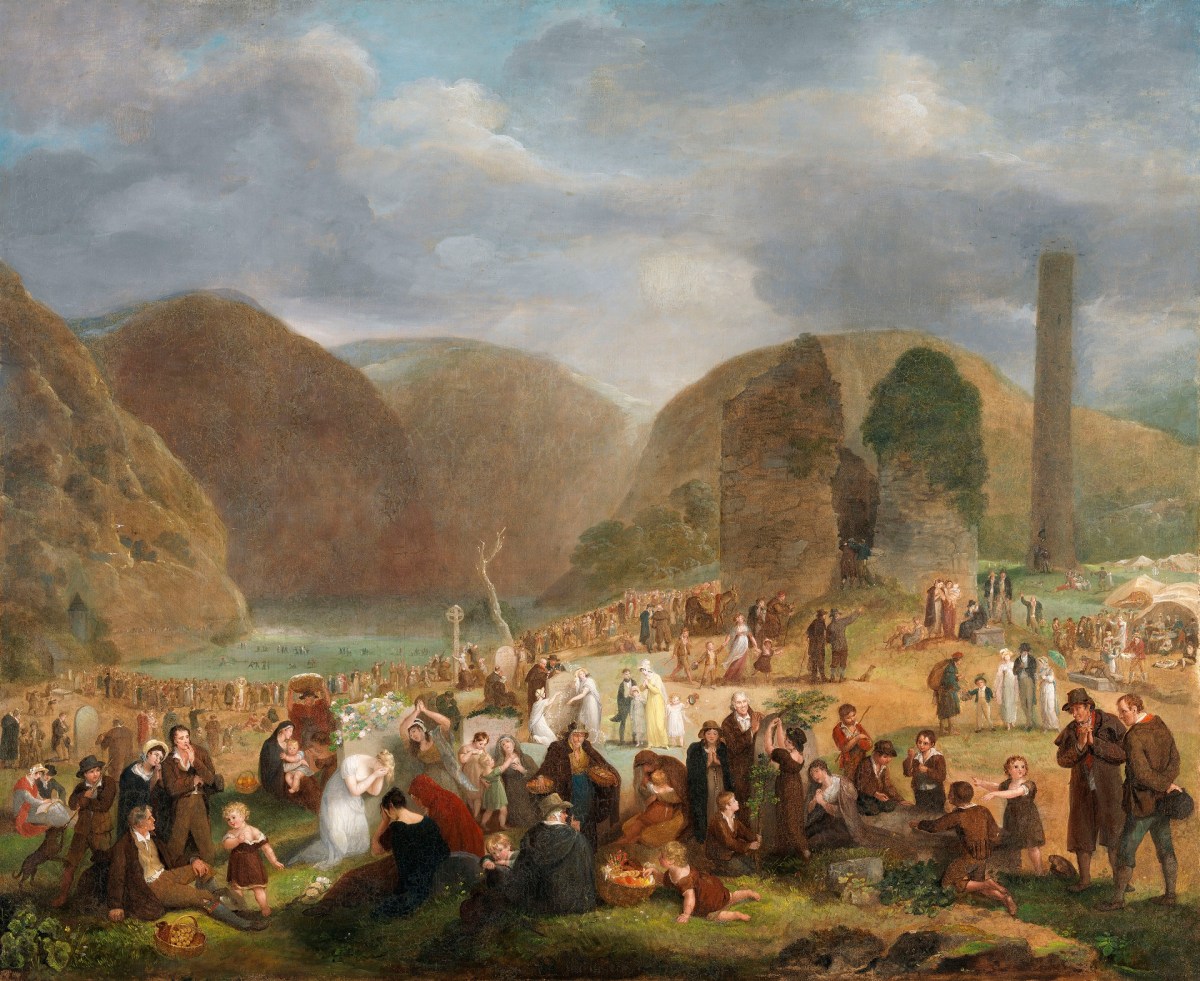
Pattern at Glendalough by Peacock, courtesey of the National Gallery of Ireland

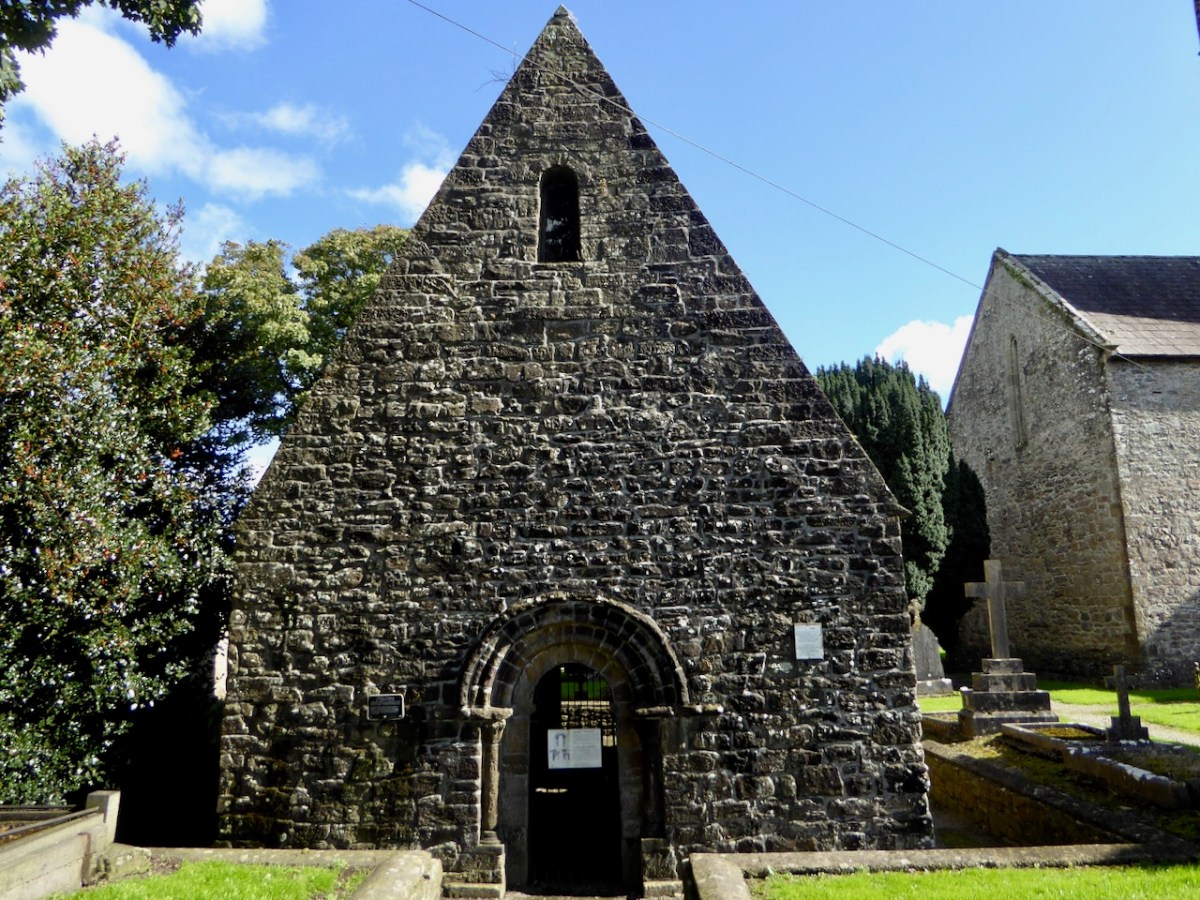
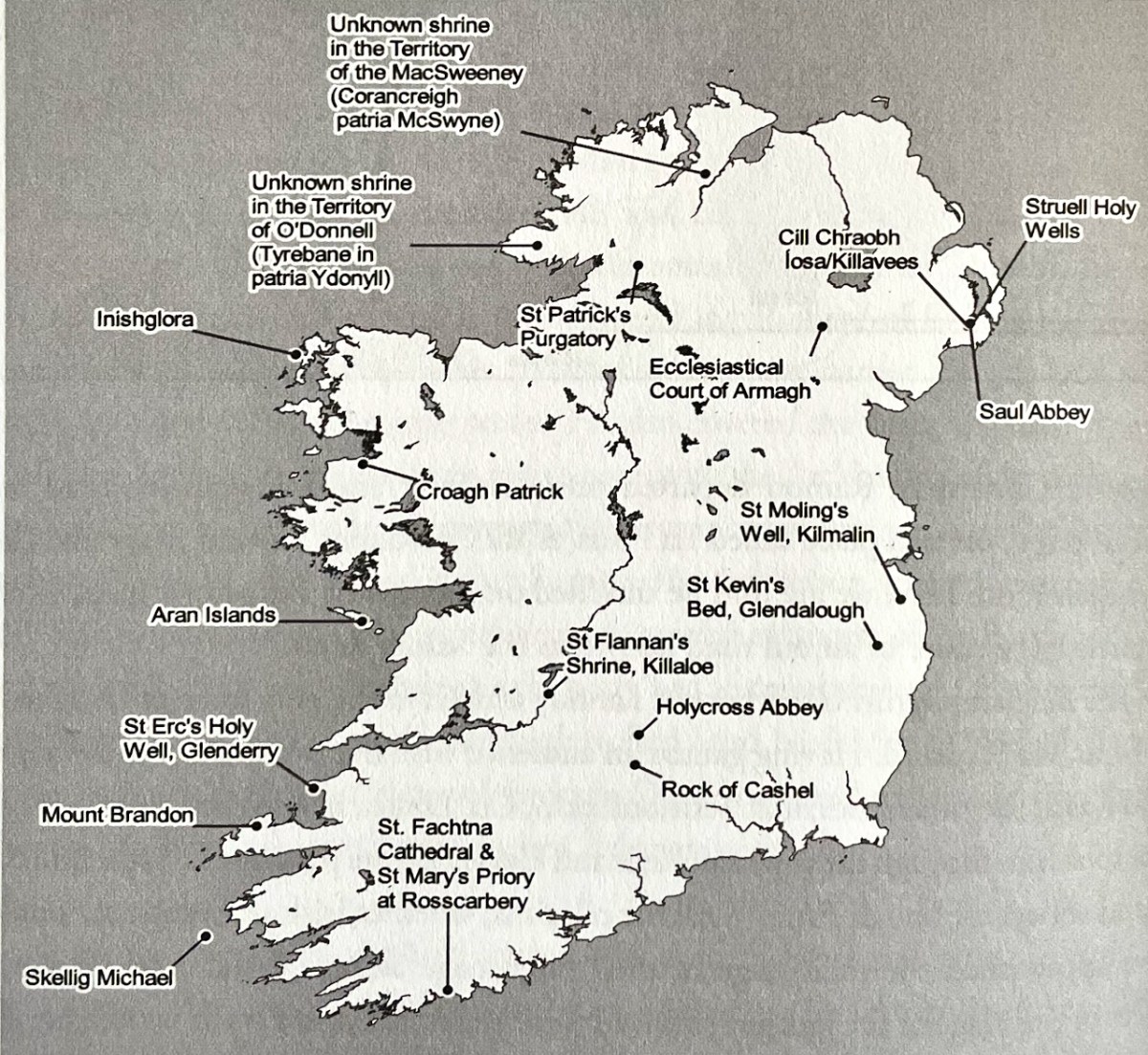
But some are obscure – and it’s one of those I want to talk about today.  Number 7 on the list is recorded as Sanctorum Flanani et McEdeaga in Momonia. Sanctorum Flanani is straightforward – it’s St Flannan’s Shrine in Killaloe (below).

It’s the one next to it that had scholars chewing their pencils – McEdeaga in Momonia. But it has now been identified as St Erc’s Holy Well in Glenderry, near Ballyheigue, on Kerry Head in the extreme northwest corner of Kerry. Amanda had tried to find it twice before but last week she hit it lucky and I was along for the ride. 

This map is from the wonderful Journeys of Faith: Stories of Pilgrimages from Medieval Ireland by Louise Nugent. One of our reasons for being in Kerry was to hear Louise’s talk to the Kerry Archaeological and Historical Society and she showed us this illustration of Heneas’s journey – I was immediately captivated by the fact that the well Amanda was seeking was on the map!

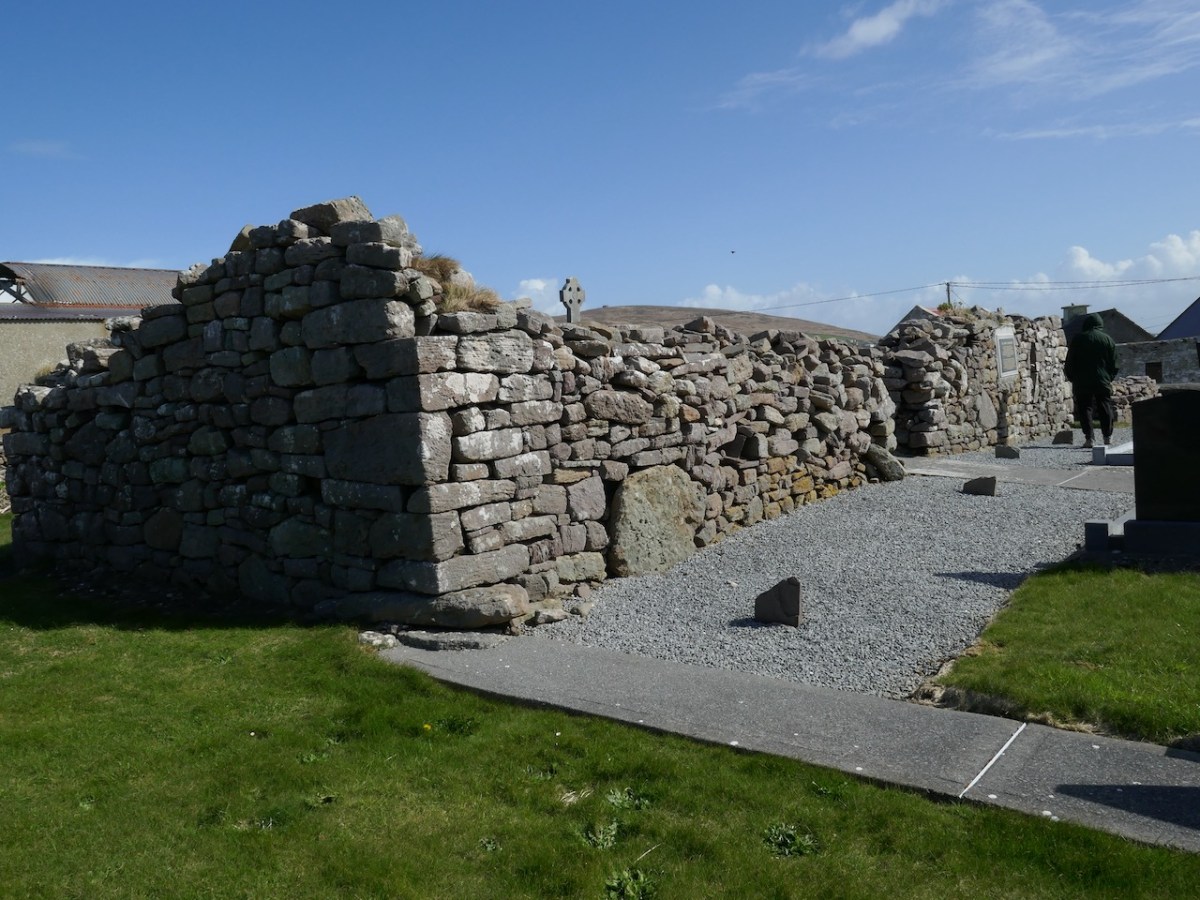
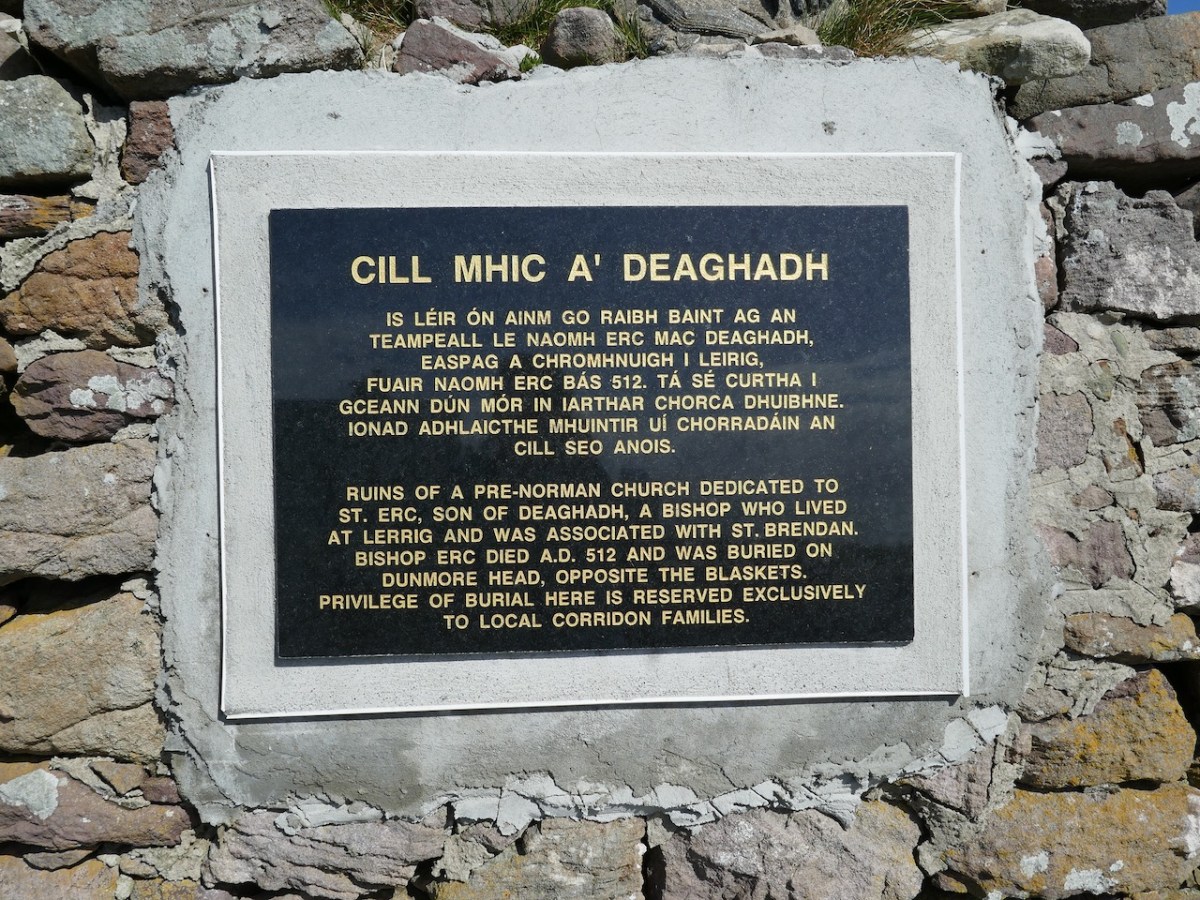
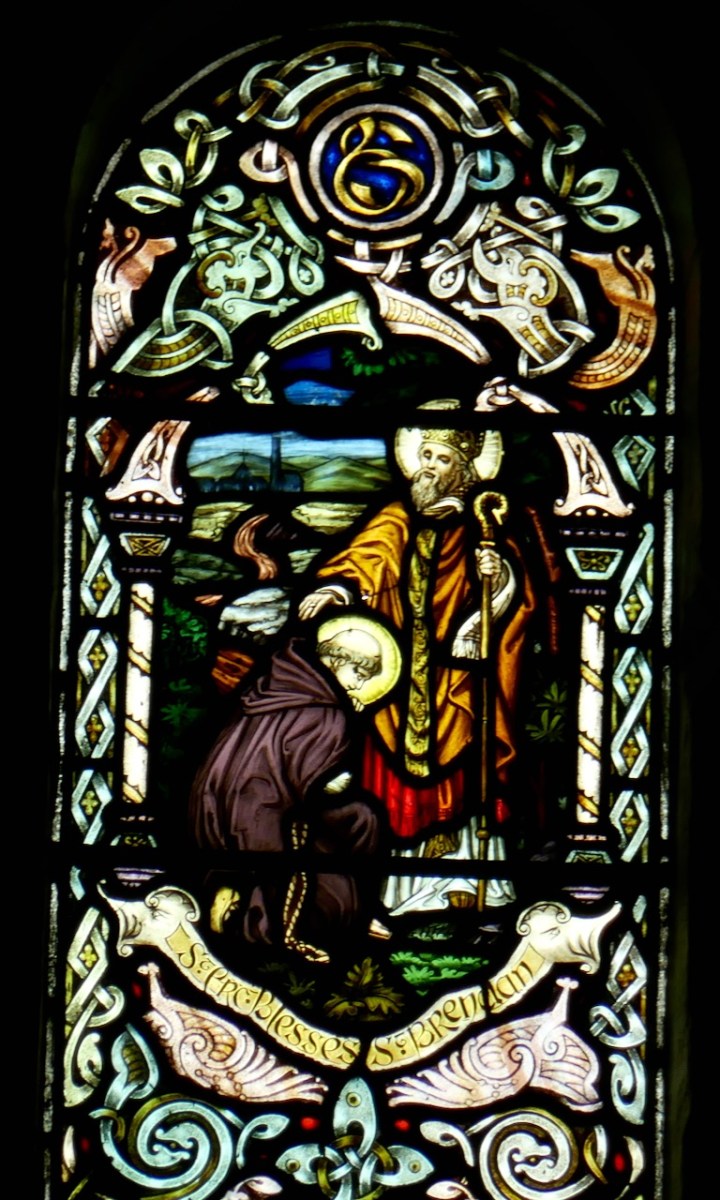
I can’t emphasise enough how obscure this well is now. Although the Corridons, the traditional well-keepers have kept the knowledge alive, it has faded from the memory of everyone else and is no longer a site of pilgrimage at all. And who was St Erc? His little church, above, is still a sacred spot on Kerry head. He is associated with St Brendan – he baptised Brendan and blessed his voyage.

I will treasure forever Amanda’s excitement at Michael Corridon’s offer to take her to the well, and the enormous beam on her face upon her return. But there was one more thrill in store – so what I want you to do now is go to Amanda’s blog and she will take up the story. This is a co-op blog!

I will leave you with Michael Corridon and Amanda setting off for the well. Now go to A Mysterious Well at the End of the World – St Erc, Kerry Head

*The Register of Bishop George Dowdall can be found in a series of articles for the Journal of the County Louth Archaeological and History Society: from their issues of 1926 to 1930.
A Calendar of the Register of Primate George Dowdall, Commonly Called the “Liber Niger” or “Black Book.” (Continued) Author(s): Laurence P. Murray Source: Journal of the County Louth Archaeological Society , Dec., 1927, Vol. 6, No. 3 (Dec., 1927), pp. 147-158 Available on Jstor

Rock Art and Winter Light at Derrynablaha

Rock art can be astounding or underwhelming. What makes it one or the other is light.

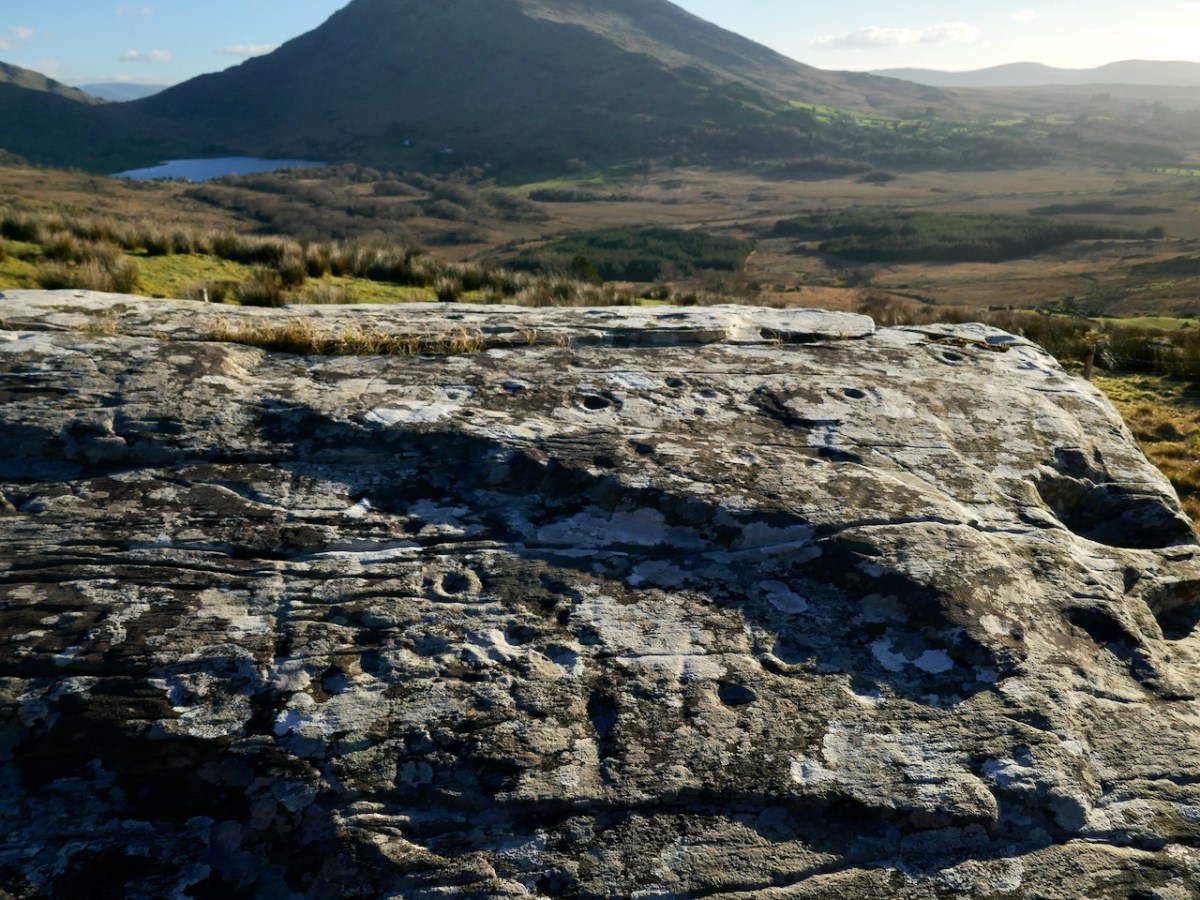
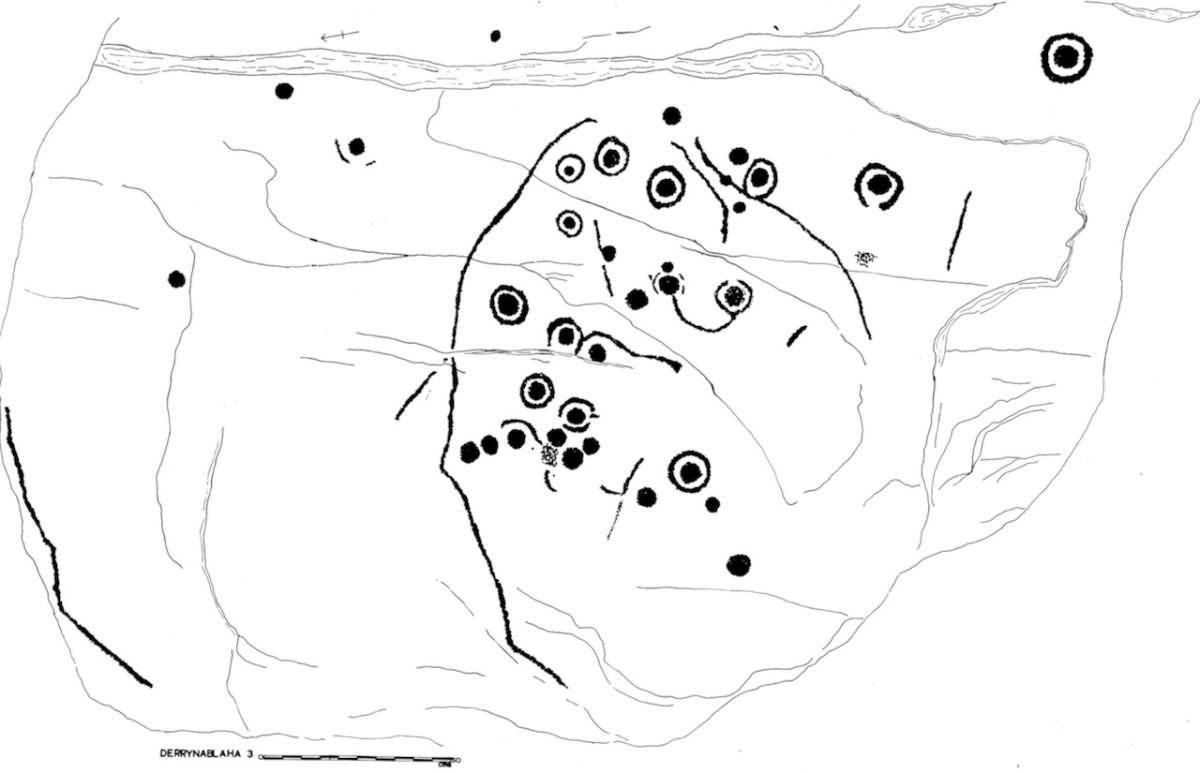
This is the rock I labelled Derrynablaha 3. My 1973 drawing of it is below. From it, there’s a clear view across to Lough Brin to the east, and all the way down the Kealduff River.

Irish prehistoric rock art likely dates from the Neolithic, about 5,000 years ago. We’ve written extensively about rock art (and indeed about Derrynablaha) – see all our posts on this special menu page. There are significant concentrations in Kerry, including 49 pieces identified so far in the adjoining townlands of Derrynablaha and Derreeny, in the middle of the Iveragh Peninsula. To get there, turn north from the Blackwater Bridge and head for the Ballaghbeama Gap.

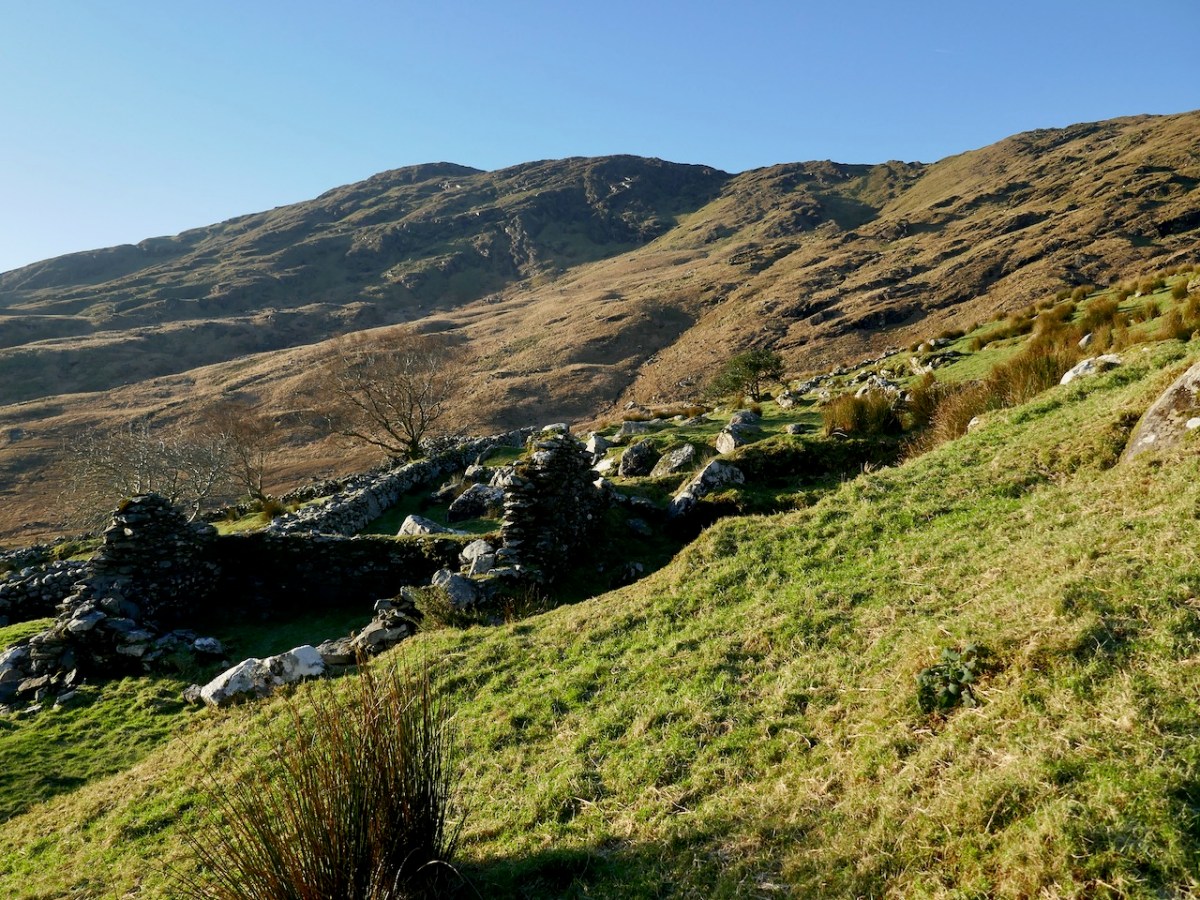
If you go on a grey day with no shadows (all too common in our part of the world), or even when the sun is high in the heavens, you might see nothing at all. You might walk right by a piece of rock art without realising it was there. We visited Derrynablaha this week and were very lucky to hit it just right.

By ‘just right’ I mean that we had a sunny day, not a cloud to be seen, and because it’s winter and we got there earlyish in the morning the sun was low in the sky. That kind of low, raking light creates the best possible natural conditions for viewing rock art, as demonstrated in this post – Aoibheann Lambe’s excellent capture shows how to do it. There are other ways to do it, of course – you can use strategically placed coordinated flashes – something Ken Williams is rightly famous for. You can go at night with strong lights, or you can use photogrammetry to produce a 3D image. But for a truly immersive experience, seeing it on a day like we had is an experience that is hard to beat.

I spent time recording all the known Derrynablaha rock art when I was doing my thesis in archaeology at UCC in 1972. The carvings had been discovered by the landowner, Daniel O’Sullivan, who wrote to the Department of Archaeology in 1962. His brother, John, still lived on the farm when I was doing my fieldwork, in the farmhouse that is now a ruin (above) but which still holds happy memories for me. The remains of a more ancient settlement are also clearly visible (below).

They were visited by the Italian archaeologist Emmanuel Anati the following year, 1963, at Prof O’Kelly’s suggestion and it was Anati who first wrote about this site. Anati, by the way, went on to found a centre for rock art research at Val Camonica in Italy, and as far as I can tell is still alive and active, in his 90s. He recorded 15 panels.

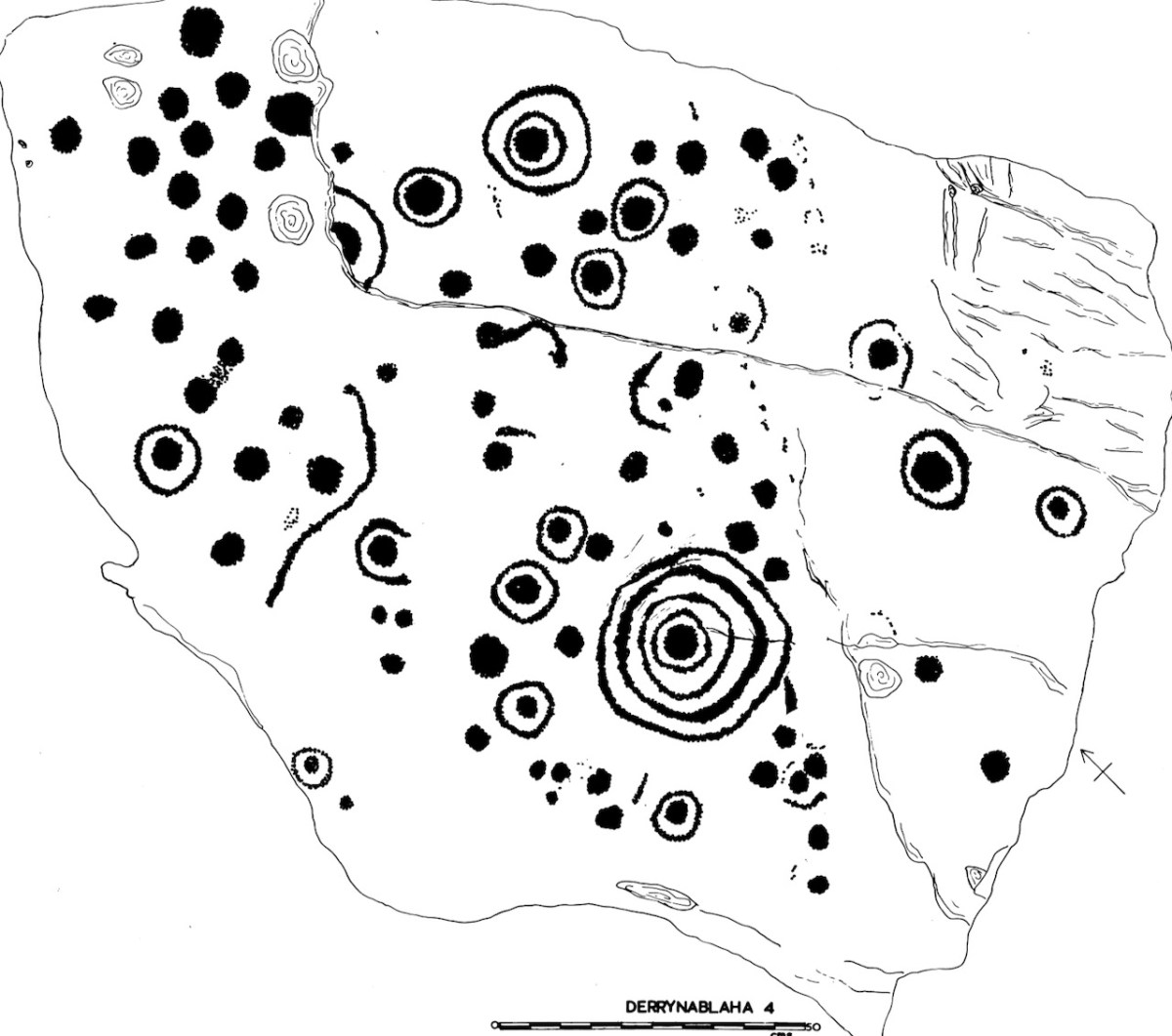
This is my Derrynablaha 4

Subsequent expeditions from UCC, and my own explorations, resulted in a grand total of 23 examples being included in my thesis. By the time of the Kerry Archaeological survey in the 1980s there were 26 pieces identified, and more have been found since then – there are now 29 known panels of rock art in Derrynablaha and a further 20 in Derreeny.

A detail from Derrynablaha 4 clearly showing individual pick marks. The decoration was picked on using stone-on-stone percussion. You can also see how ice can settle on the surface and over time cause cracking damage. My drawing of this stone is below

They are very hard to find unless you know exactly where to go, and I was very lucky indeed to have the expert guidance of Google. Yes – there is a Google Map devoted to Irish rock art! It’s the brainchild of Caimin O’Brien of the National Monuments Service and with it on your phone it’s possible to tramp over the hillsides and locate each piece. We are supremely grateful to Caimin for the work he has done on this, and we only wish all National Monuments could get the same treatment!

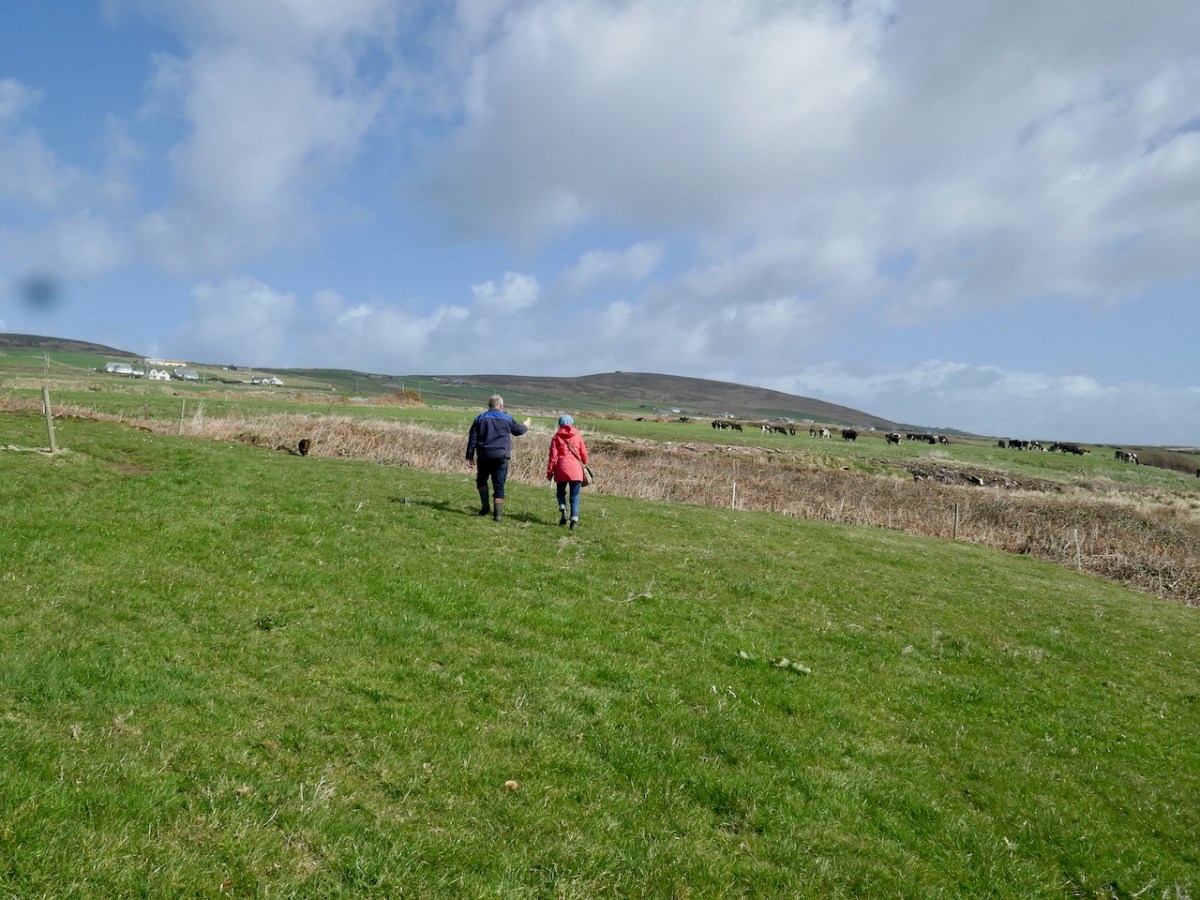
Even with this amazing resource, this is not an easy field trip. The ground is steep, rough and wet, and there are barbed wire fences to find a way around. It’s an active sheep pasture, so it’s important to be mindful that you are on private property and be respectful of all farm boundaries. 
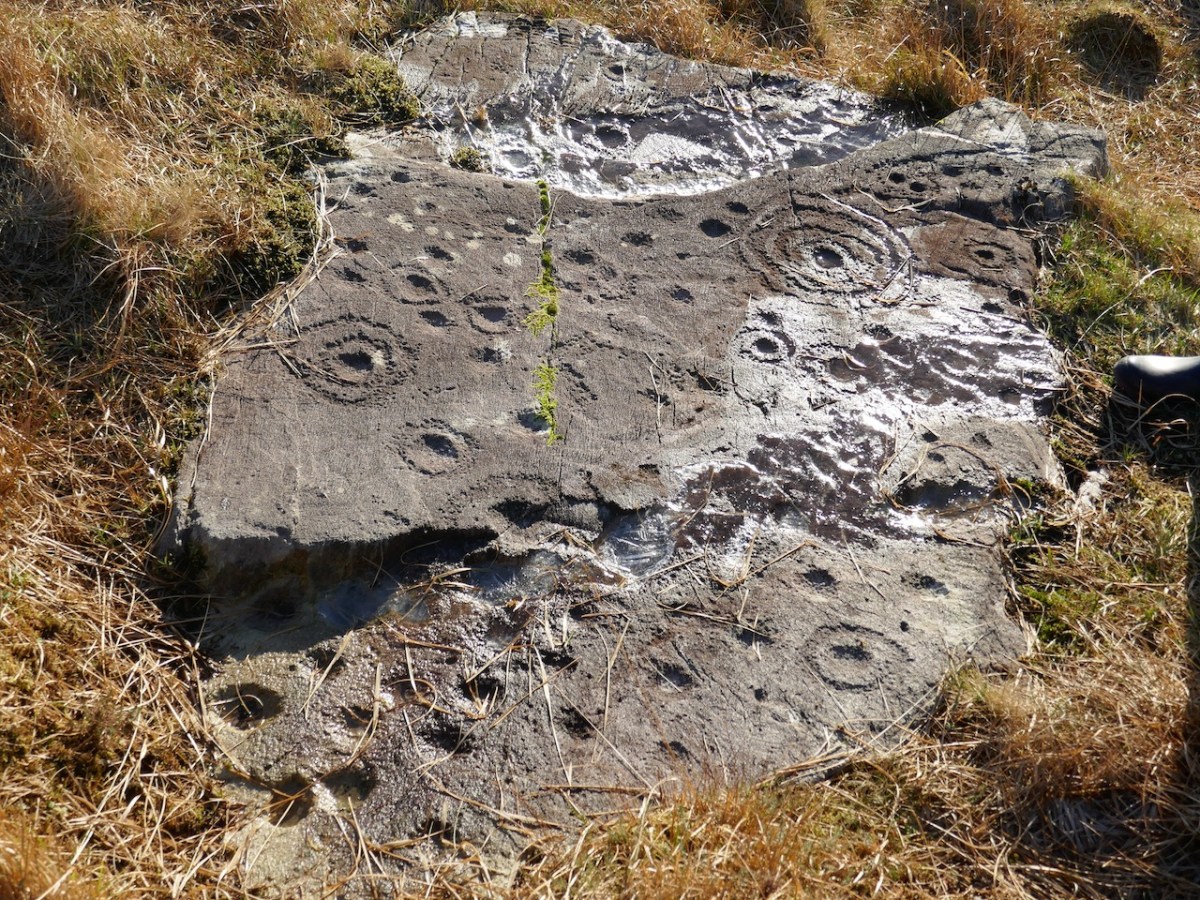
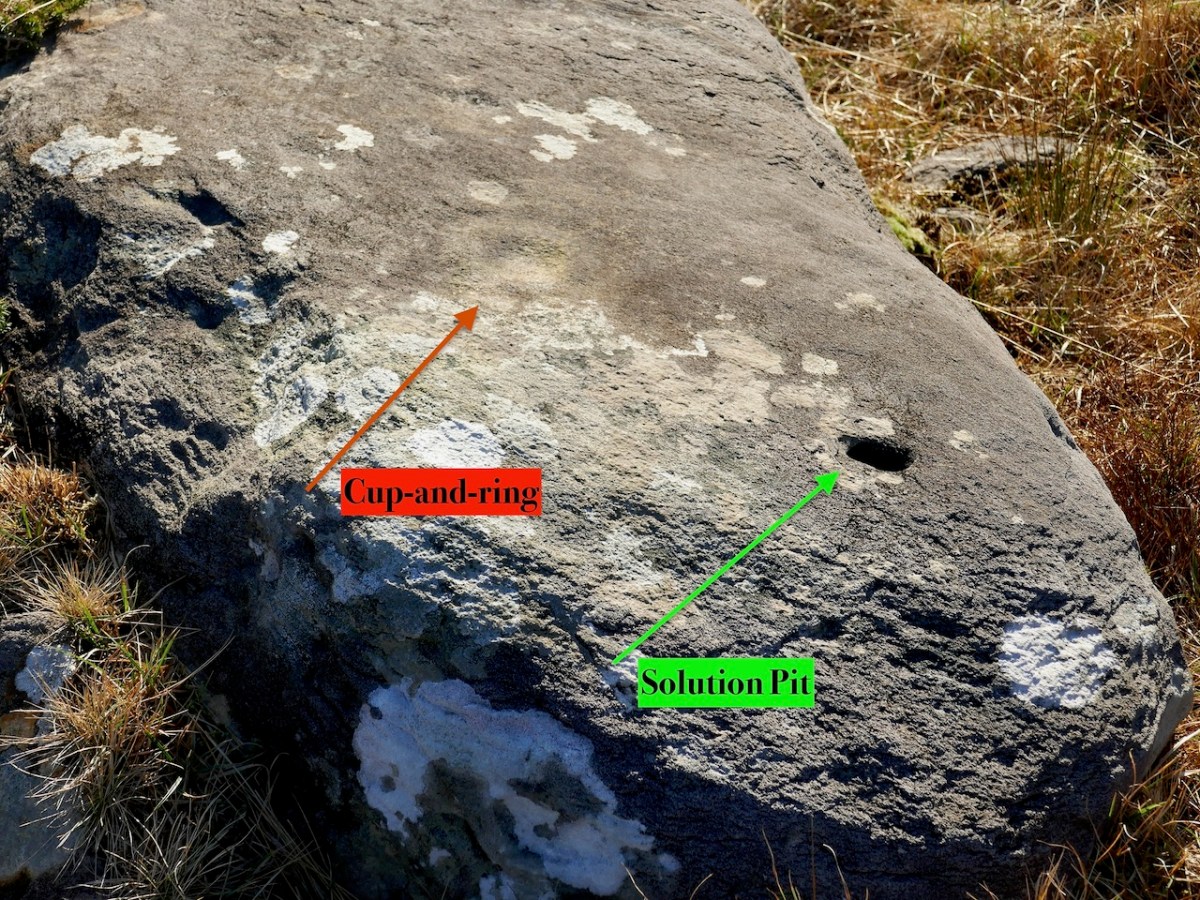
This is a good example of rock art that could be easily overlooked. A very faint cup-and-ring can be seen in good light conditions. The obvious hole, however, is not a cupmark but a naturally occurring solution pit
Because we only had half a day, we confined our walk to the area around the old farmhouse and the hillside to the west of it, and managed to visit 8 panels. Even in the perfect lighting conditions we had, not all are easy to see, as they have been exposed for thousands of years and have worn away. But, for the most part, once we had found the rock, we could see the carvings clearly. 

All the panels we viewed had cupmarks and cup-and-ring marks, as well as some pecked lines meandering across the surface. We don’t know what the significance of these motifs are, although theories abound. There are other motifs at Derrynablaha too, all falling within the repertoire of classic rock art. 

Our companions on this day, as on so many of our adventures, were Amanda and Peter of Holy Wells of Cork and Kerry. And of course several holy wells were on the agenda too, including this one near Kenmare. Take a look at Amanda’s brief write up on her Facebook page, or keep an eye on her excellent blog for more about our finds on this trip.

We’ve written about Derrynablaha so many times now – why do I know this won’t be the last time?

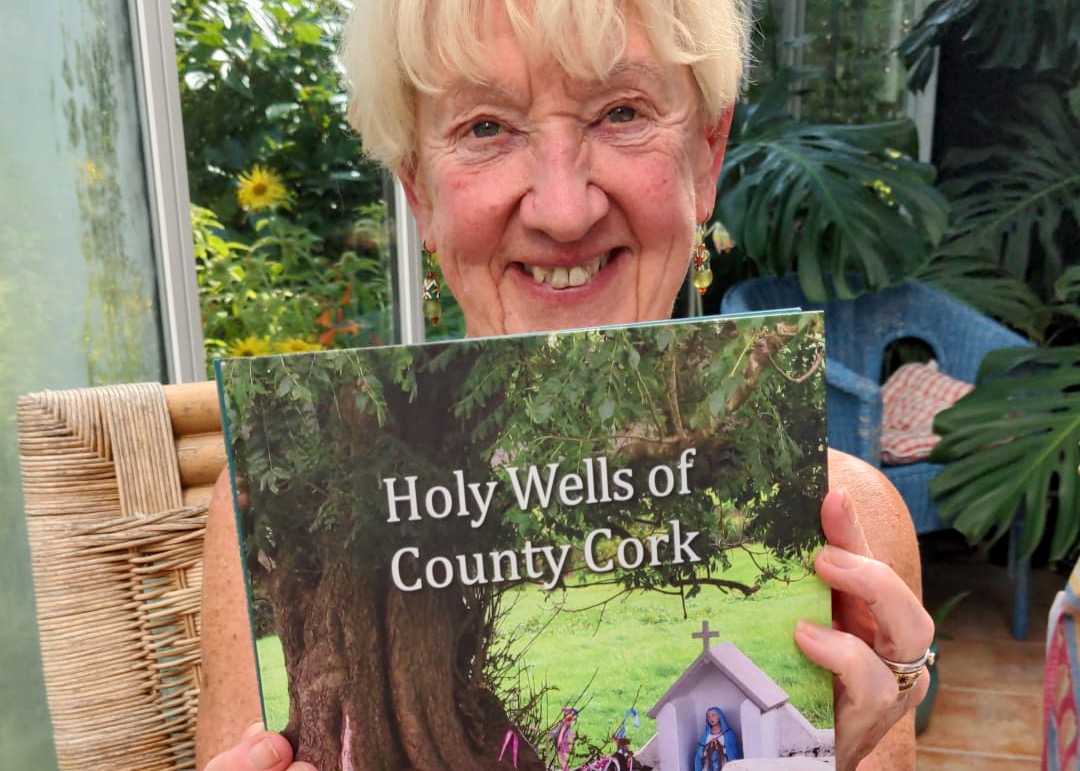
Holy Wells of Cork: The Book!

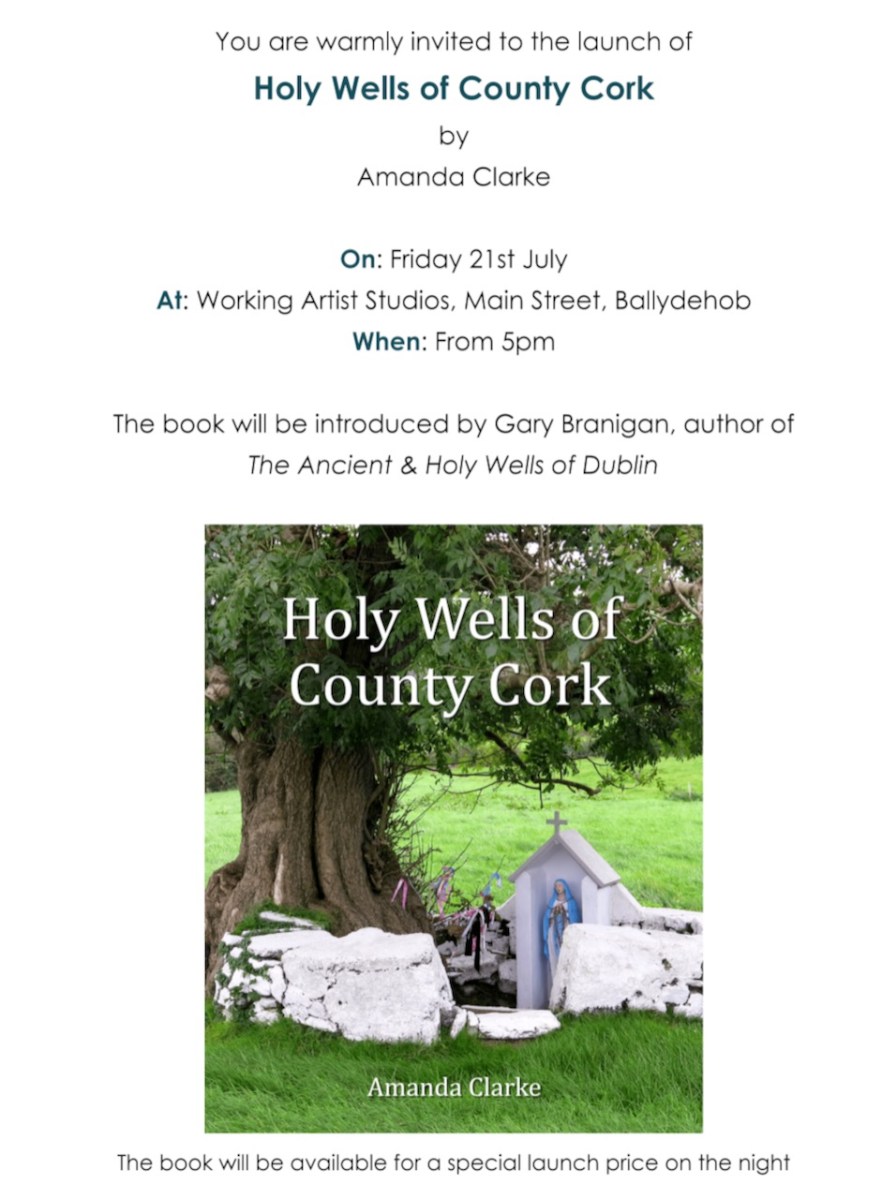
Woohoo! The book is published, and will be launched in Ballydehob on the 21st – see the end for details. All welcome.

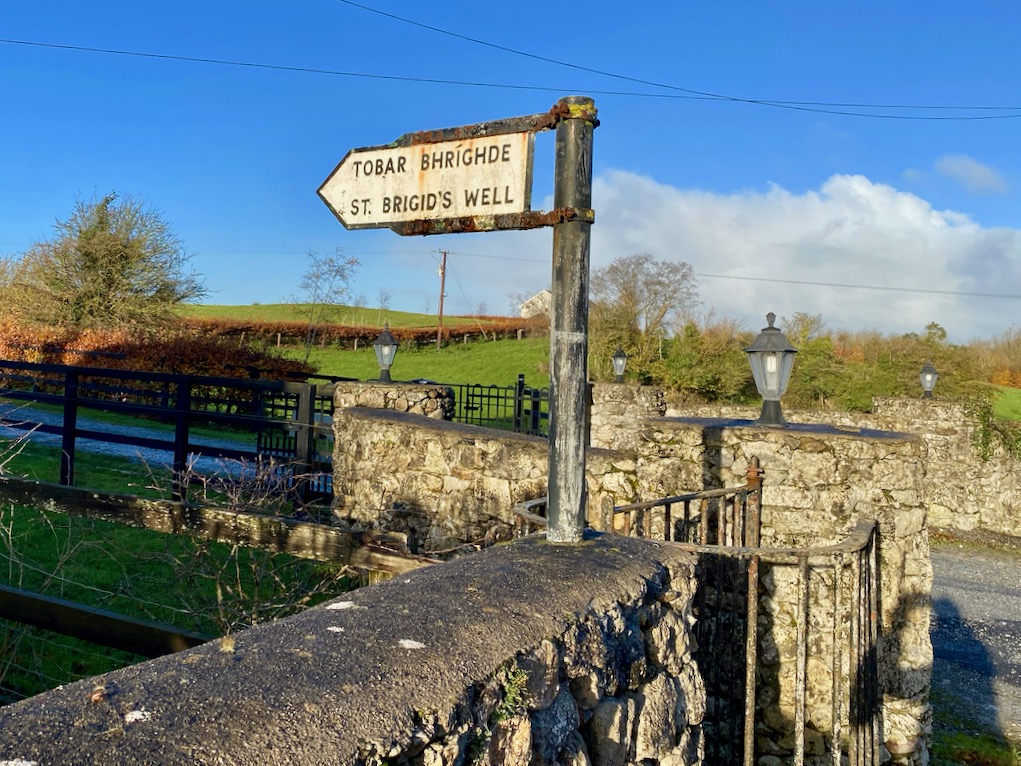
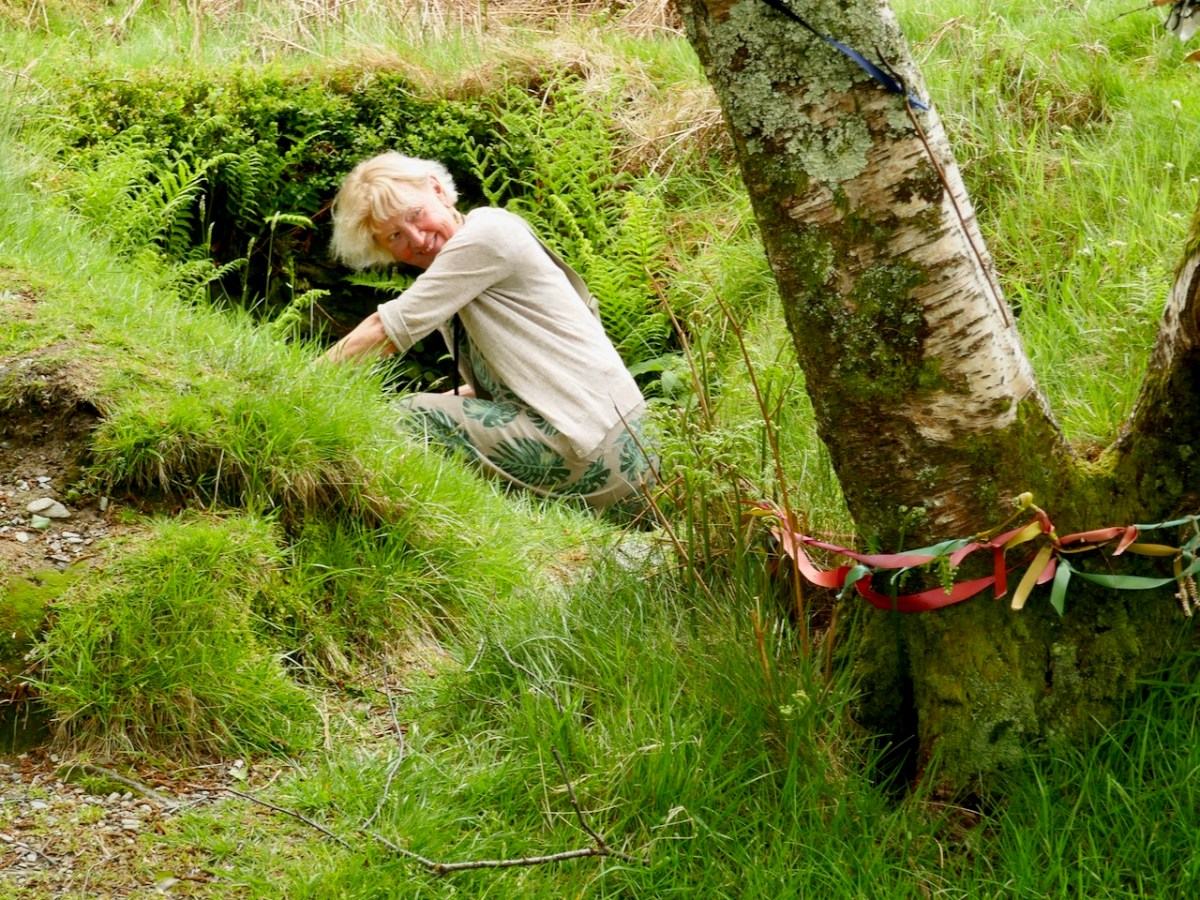
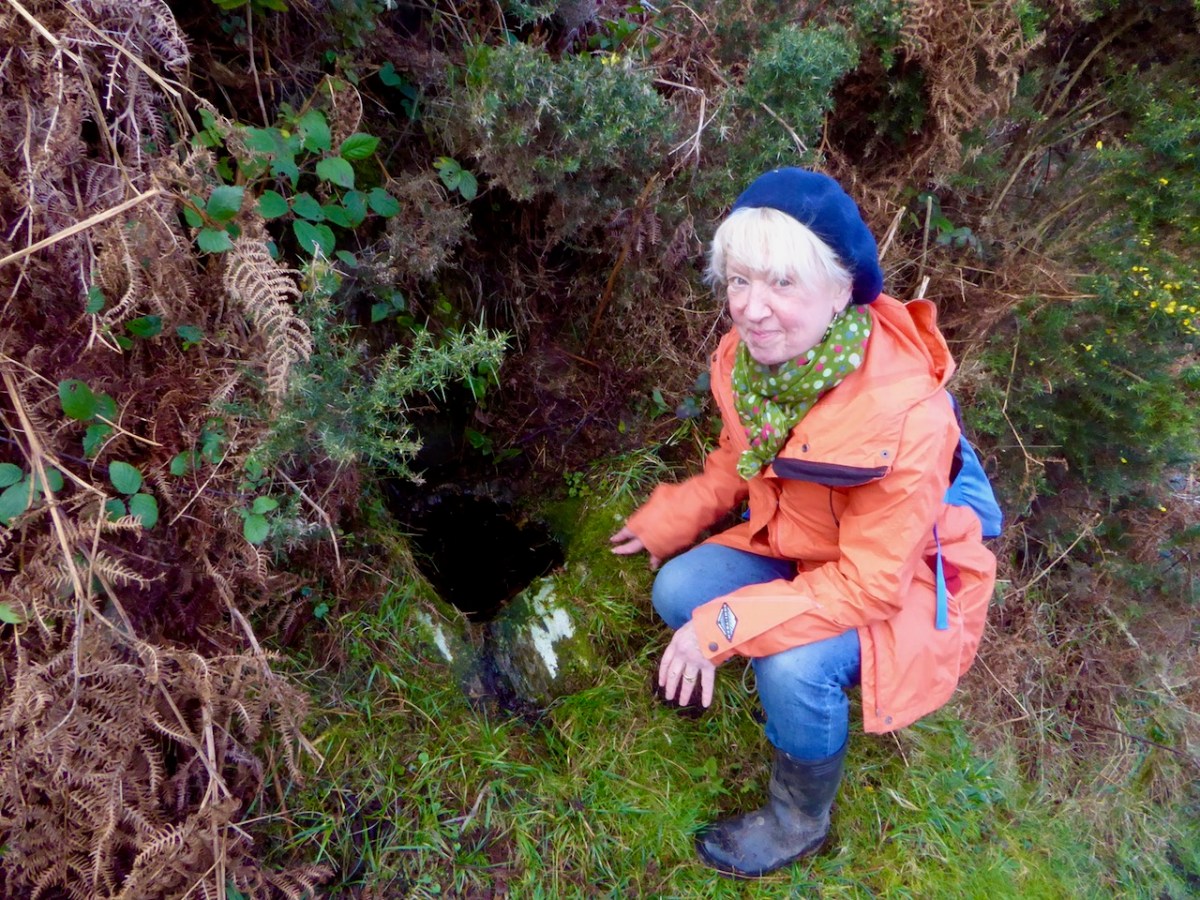
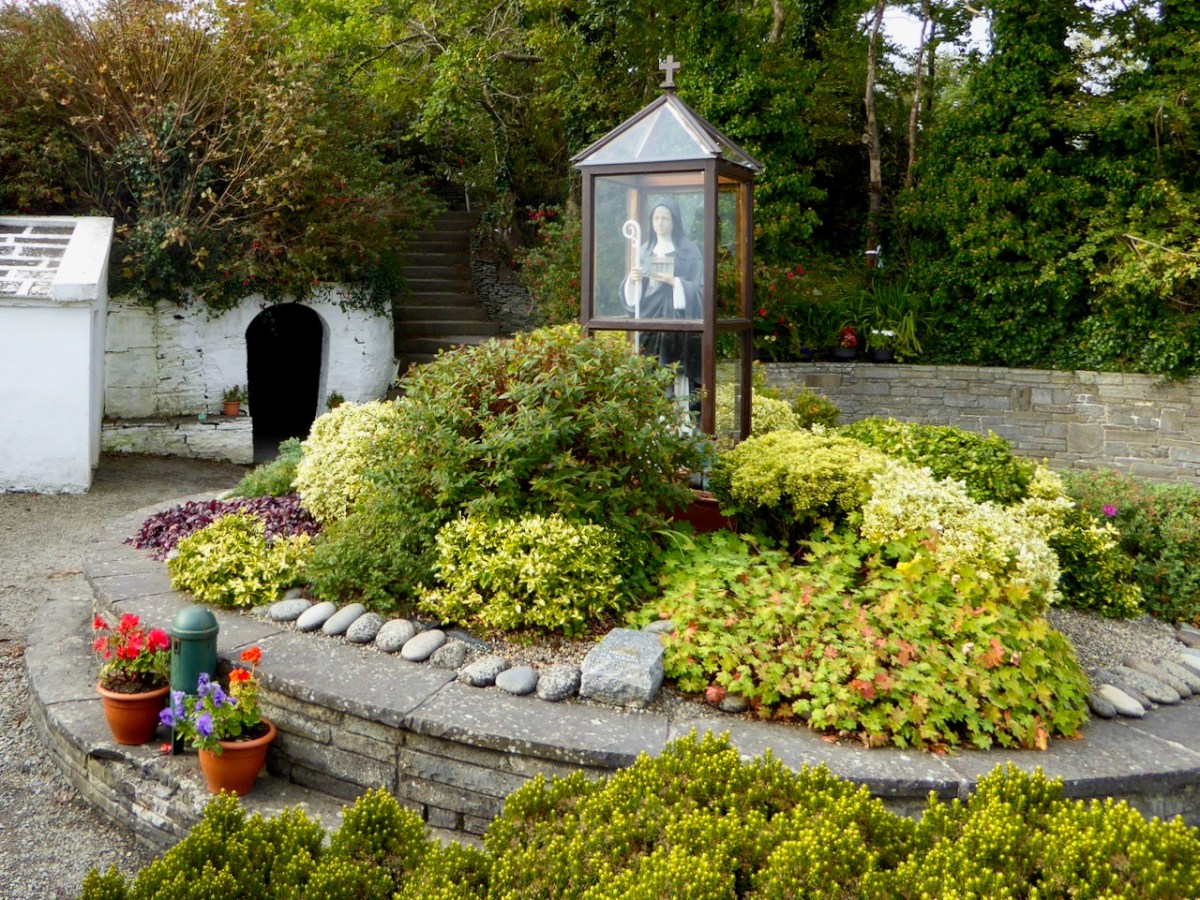
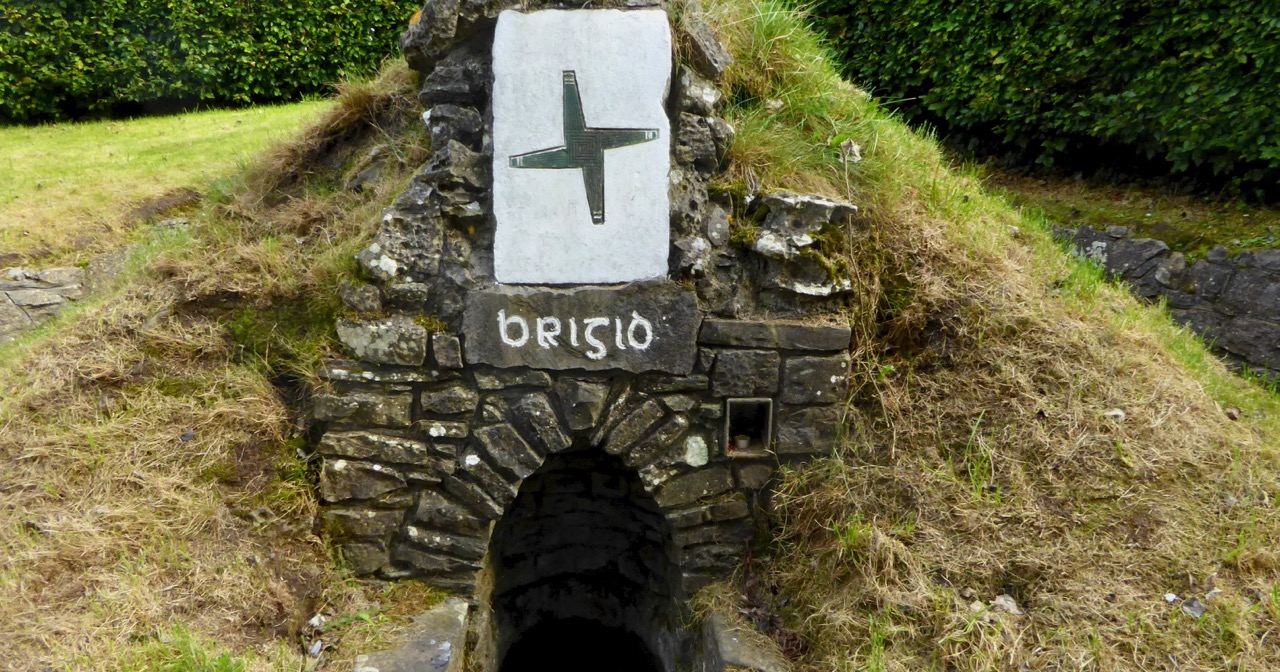
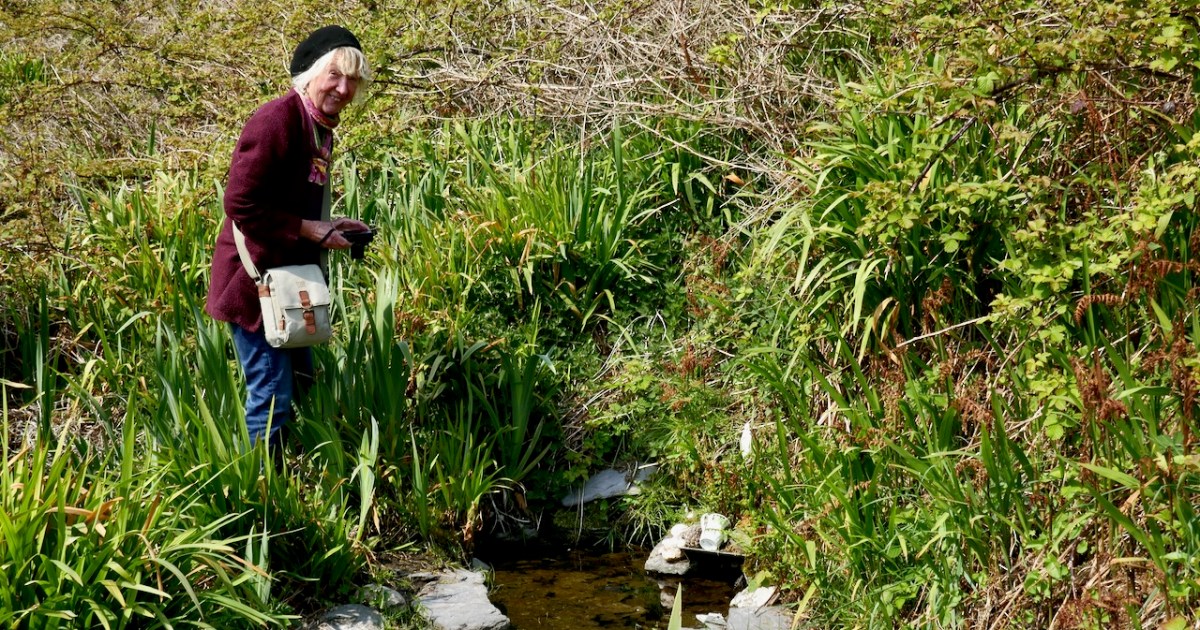
This project started on St Brigid’s Day in 2016 – Amanda Clarke set out to record every holy well in the County of Cork – all 358 of the currently known ones. I happened to be with her (above) on the very first venture – a Brigid’s Well, chosen because it was St Brigid’s Day, Feb 1 (now a national holiday). 

That was seven years ago, and Robert and I continued to accompany Amanda and Peter on many of their holy well expeditions, along the way covering almost every inch of Cork and then progressing into Kerry and Limerick, because after all you can’t have too many wonderful adventures in the great outdoors with good friends.

We have fallen in mud and slipped in cow pats, tramped over bogs and halfway up mountains, coped with frisky bullocks and over-friendly dogs, got soaked to the skin and baked under hot skies, and wandered and wondered and laughed and photographed to our heart’s content. I recommend it to everyone – pick a focus, find out what you can and go find it.

Half the work, maybe more than half, is the research and Amanda is brilliant at that, mining every resource she can find for information about each well – its history, folklore, cures, saintly associations, rounds and pattern days.

The result of her investigations is sobering, though – only a third of our holy wells remain active. Another third can still be found, even if they have not been visited in a long time, and the final third have disappeared. Even wells that were once the focus of huge local celebrations can slip into the mists as if they had never existed. 

In this light, Amanda’s records are incredibly important and this book is an immeasurable contribution to Cork history. I will end by quoting from Amanda’s Press release:

. . . this book is a celebration of the many holy wells that have quietly prevailed through the millennia, providing powerful connections to the past. It is widely accepted that many holy wells date from the pre Christian era and are an important part of our cultural heritage. They are not dead monuments – many remain potent, active and meaningful, a source of quiet and solace in a chaotic world.

Amanda’s book is available now for pre-order at a special pre-launch price. Just go to https://wildwayspress.com/ Orders will be processed after the launch on 21 July 2023. There is also an option at checkout to pre-order for collection at the launch. 

Come and get a signed copy of what is sure to become the book that every Cork household needs on its shelf.

In Search of Wells and Railway Lines

We are often invited to join our friends Amanda and Peter Clarke on their journeys of exploration into the wild places of West Cork and Kerry. We even stray over into Limerick on occasion! And it’s usually all to do with Holy Wells. Amanda has been writing about them for years, and you can find her accounts of them in Holy Wells of Cork & Kerry, here.

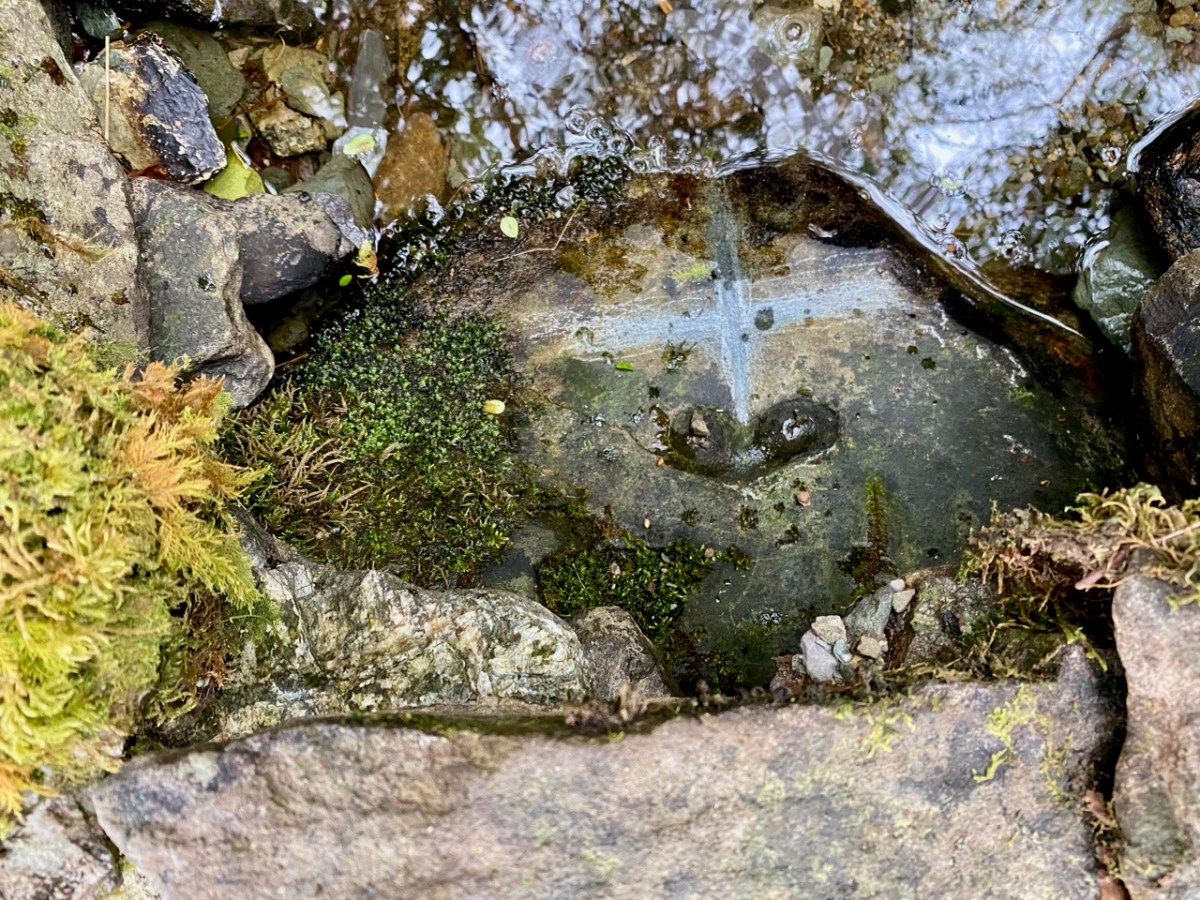
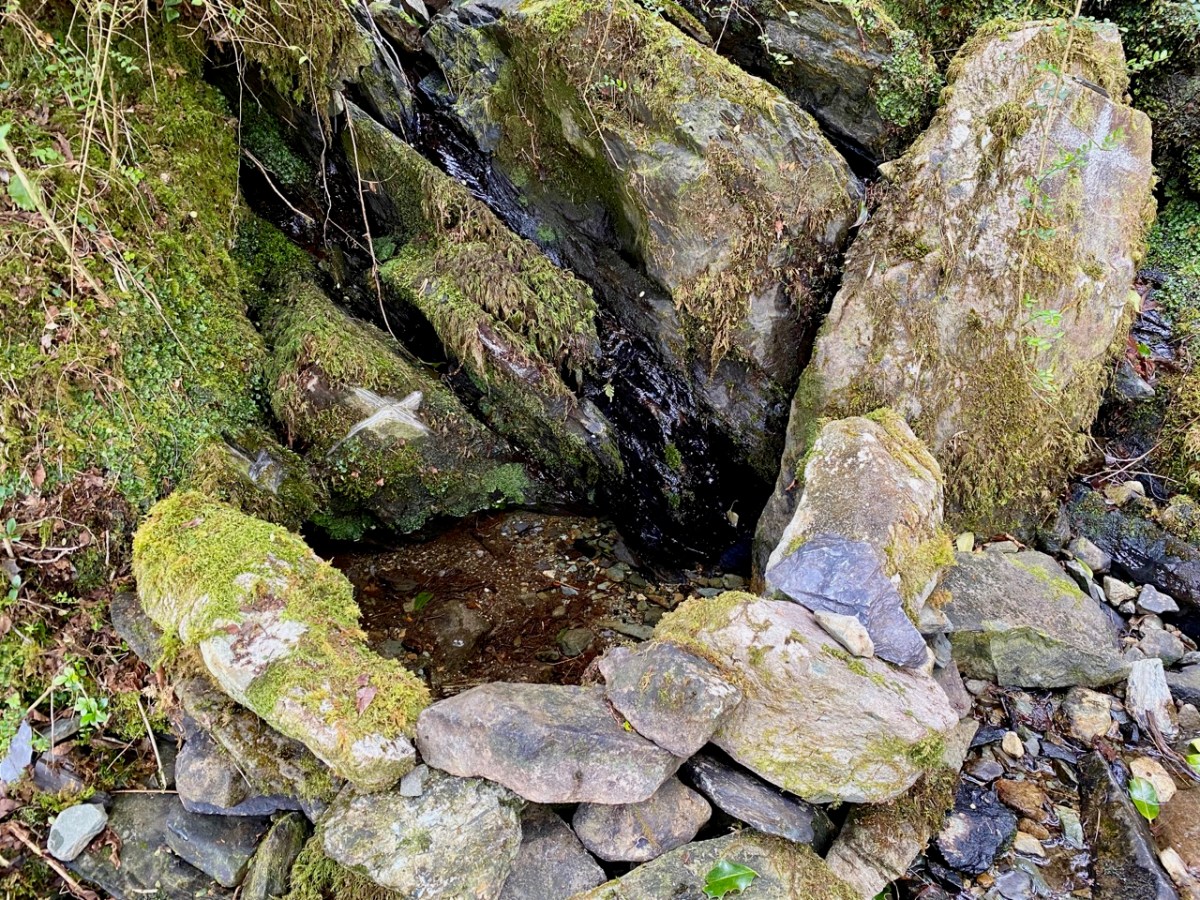
Recently we were at Loo Bridge, near Kilgarvan, Co Kerry. There’s a well there – Tobar na Naomh – All Saint’s Well, and there’s a lively account of it in the Dúchas Schools Folklore Collection. Evidently a ‘band of Saints’ travelling over the mountain to Gougane Barra stopped at this well for refreshment. One of them (St Finnbarr) left his spectacles behind and didn’t realise it until he was a long way up the steep path. Fortunately, there were so many of his companions that he was able to pass a message back down to those who were still starting off from the well and the spectacles were retrieved! But – because they were holy spectacles, they left their imprint on the rock at the well – forever. There it is in the picture above.

There are several crosses etched into the stones around this well by visitors. It’s wonderful to think of the continuity of those pilgrims seeking out the well and keeping its veneration alive – probably through countless generations.

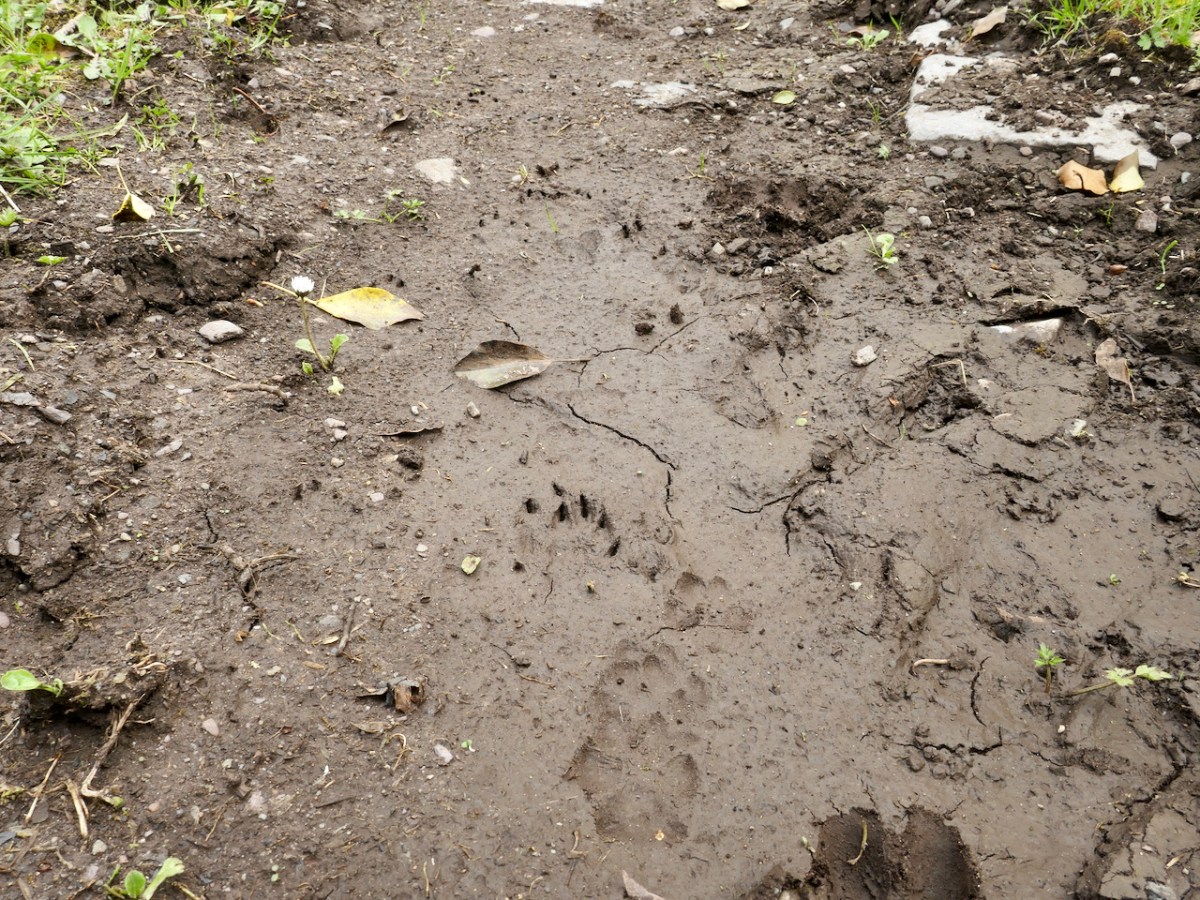
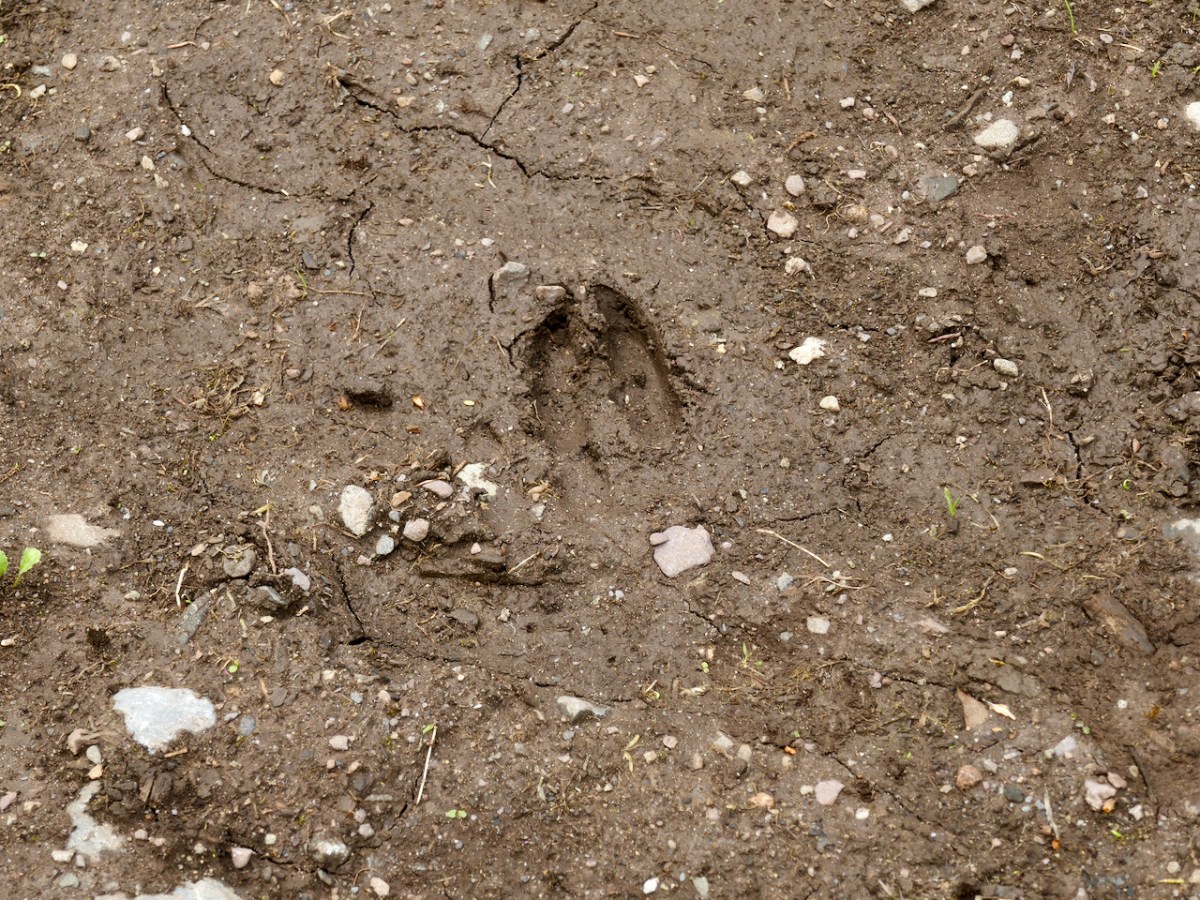
Another well on our agenda involved us walking over a long, muddy trackway. We could see the prints of the feet of other travellers: the top pic looks like bear paws (although perhaps more likely to be badgers), whereas the cloven hoof above is either Satan or a deer. We met none of these on the path that led, eventually, towards the Wells of St Peter and St Paul.

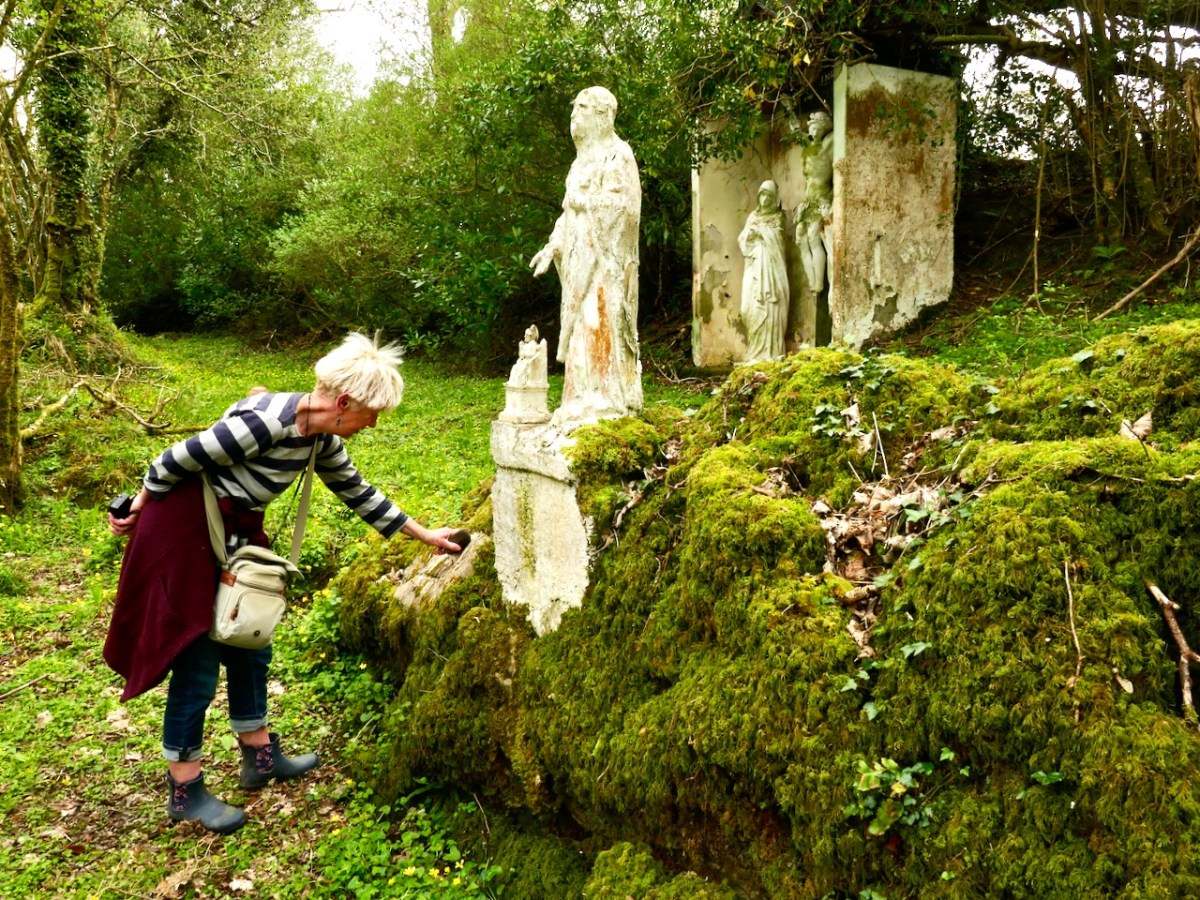
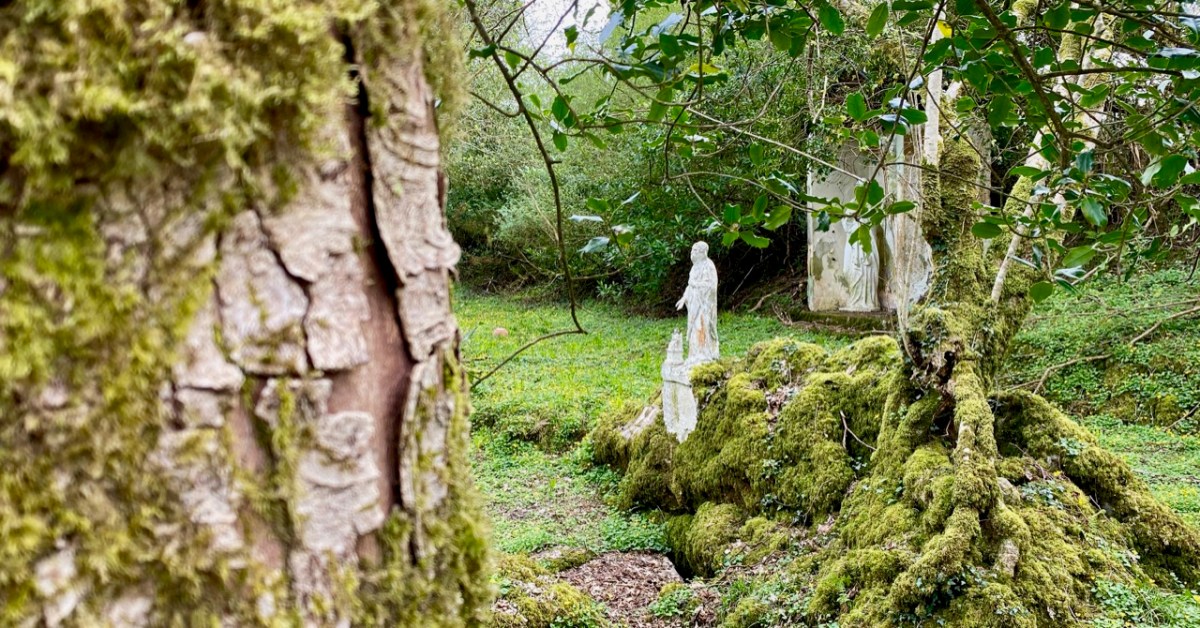
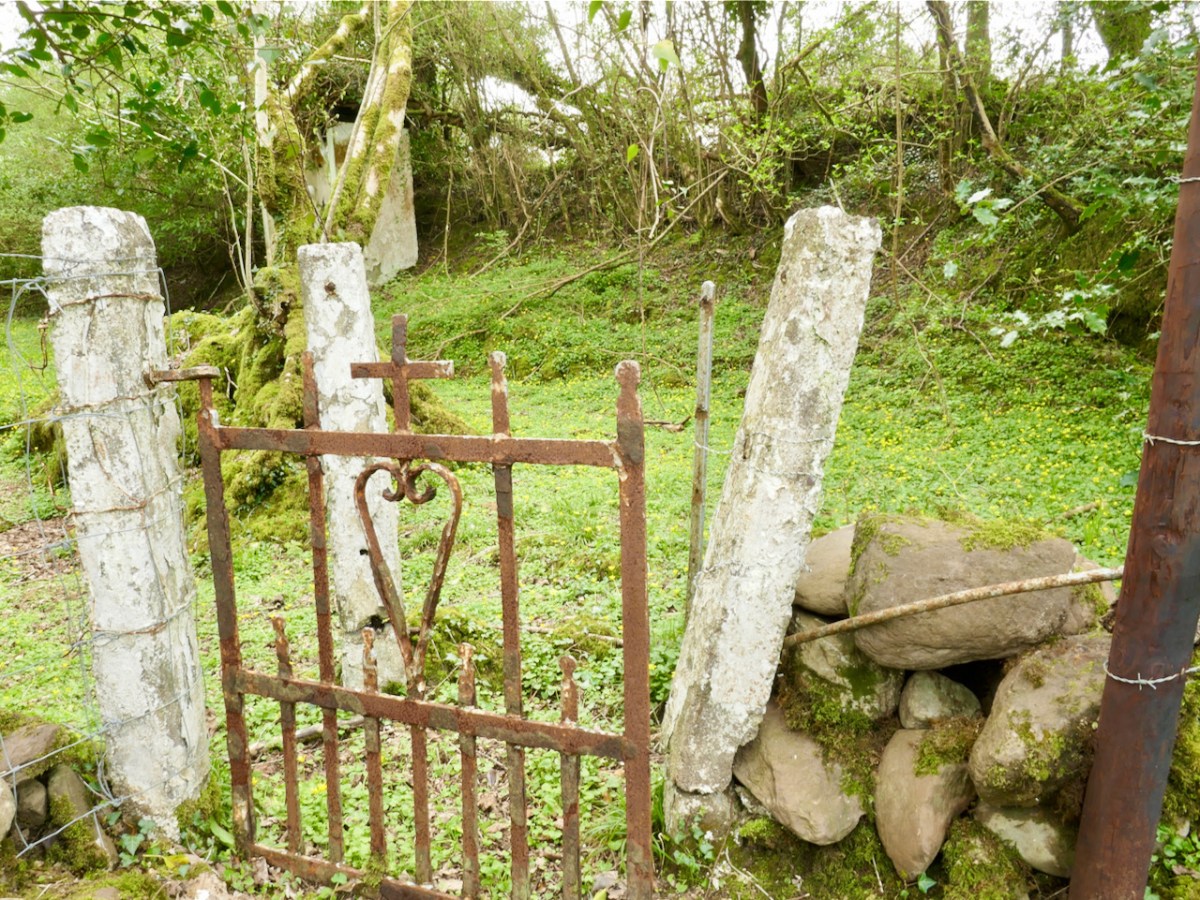
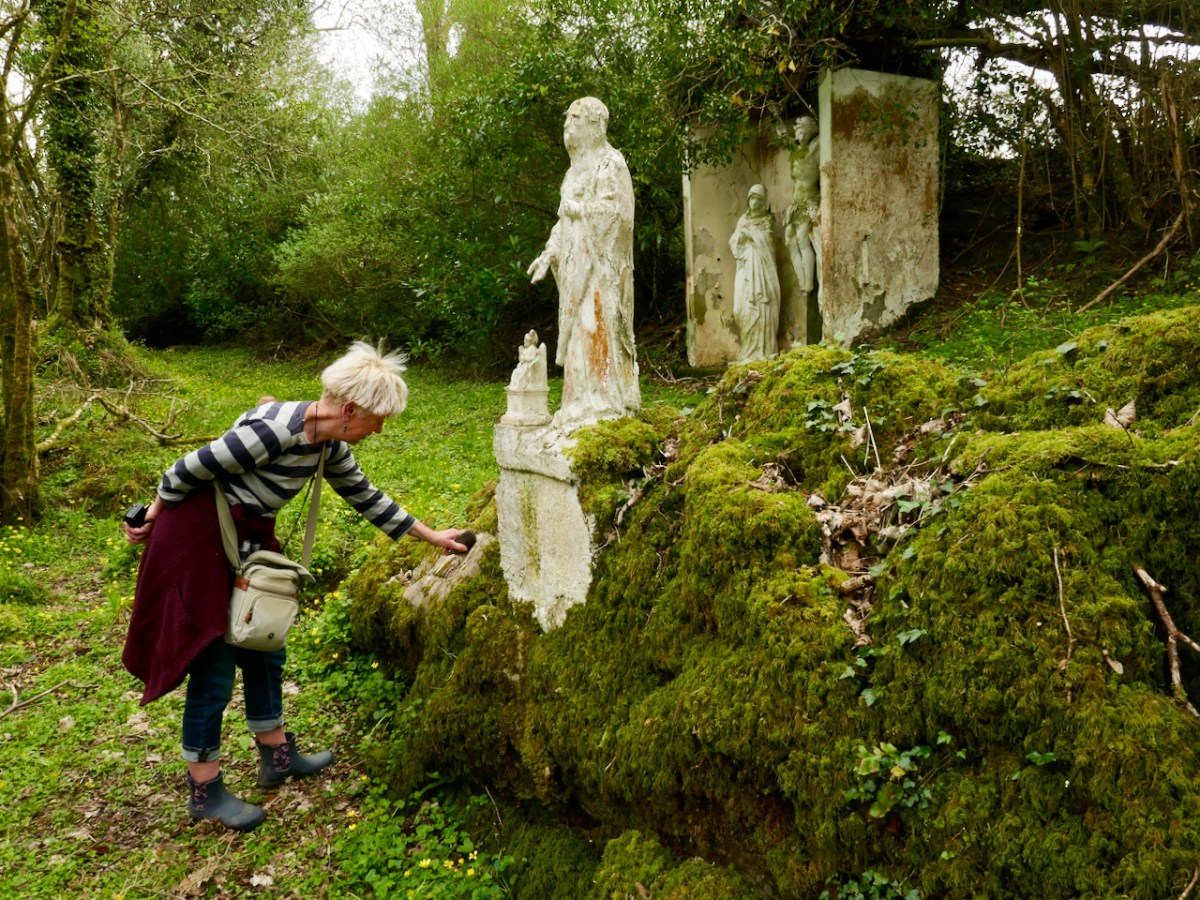
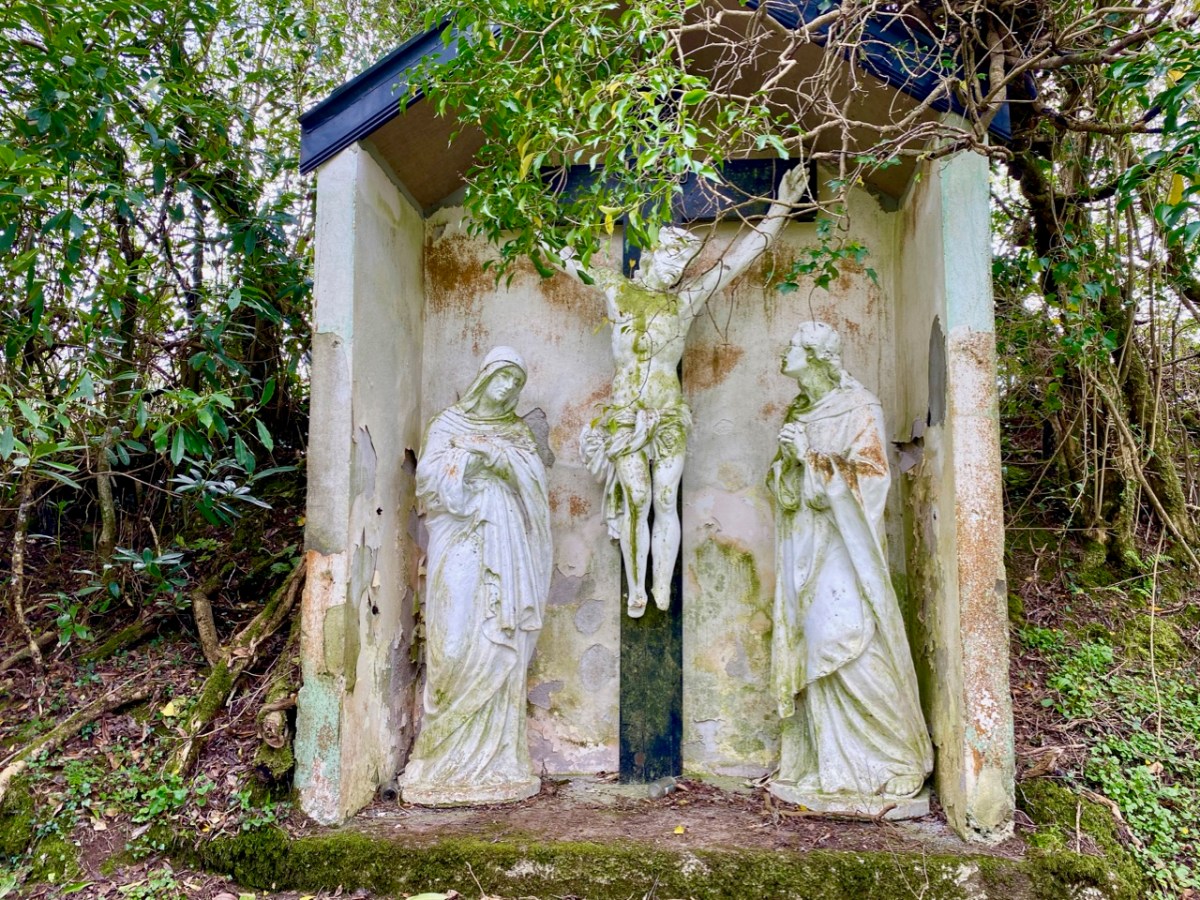
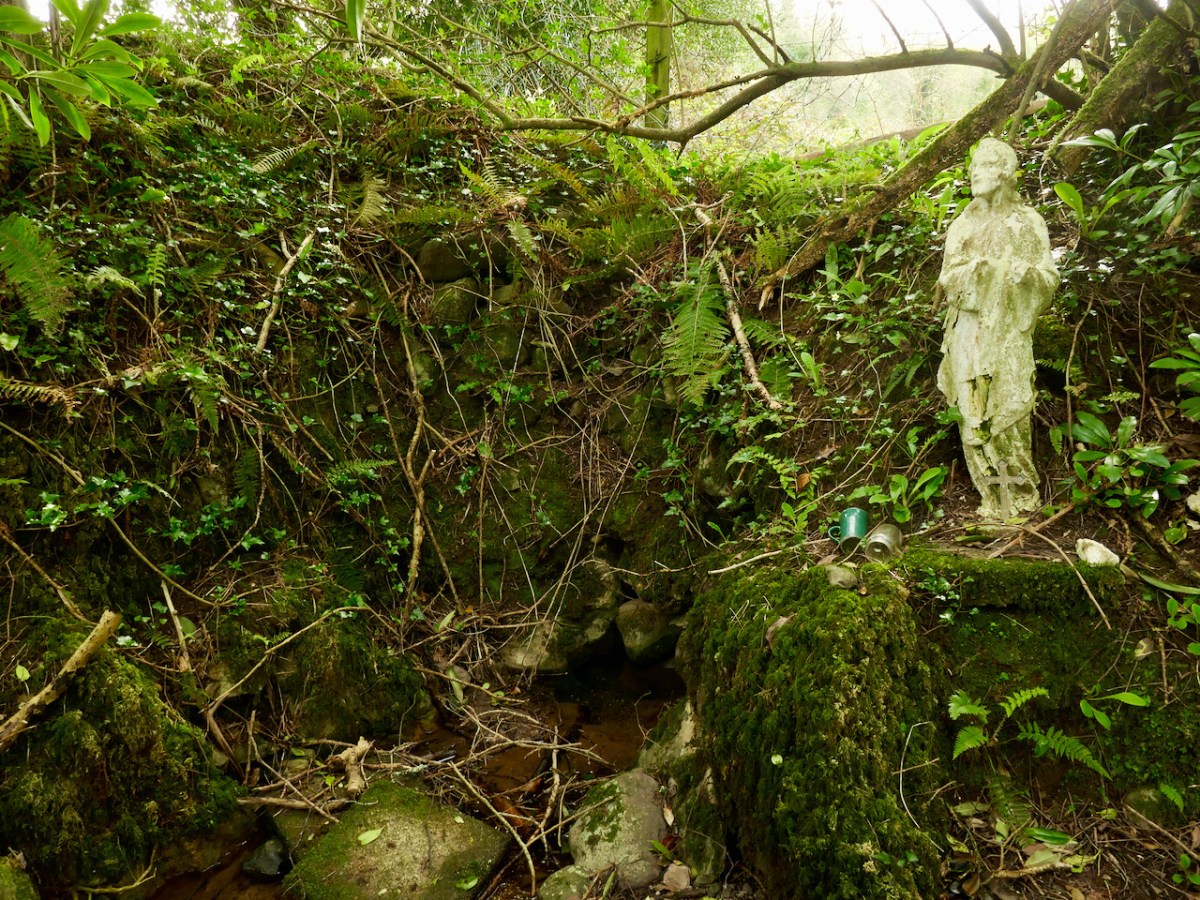
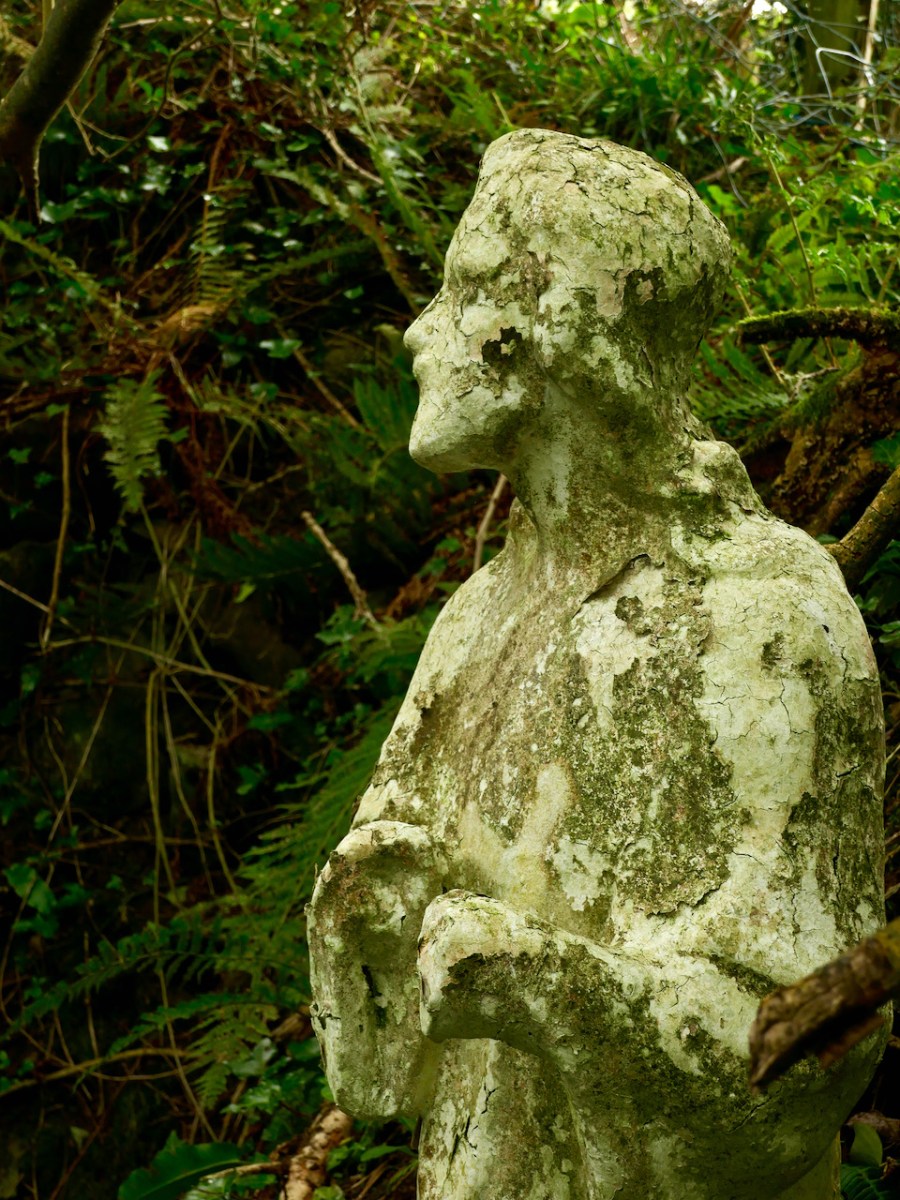
St Peter’s well is clearly defined (above, with Amanda looking on). Beyond it is a weather-worn shrine with a Calvary depiction. It’s quite a surprise to find such a substantial life-sized scene in a remote wood.

A little way to the east of St Peter is St Paul (above). He looks down on his own well. Note the modern mugs, implying that the well is still in use.

Both St Peter and St Paul share their feast day on 29th June. This is the day when these wells should be visited.

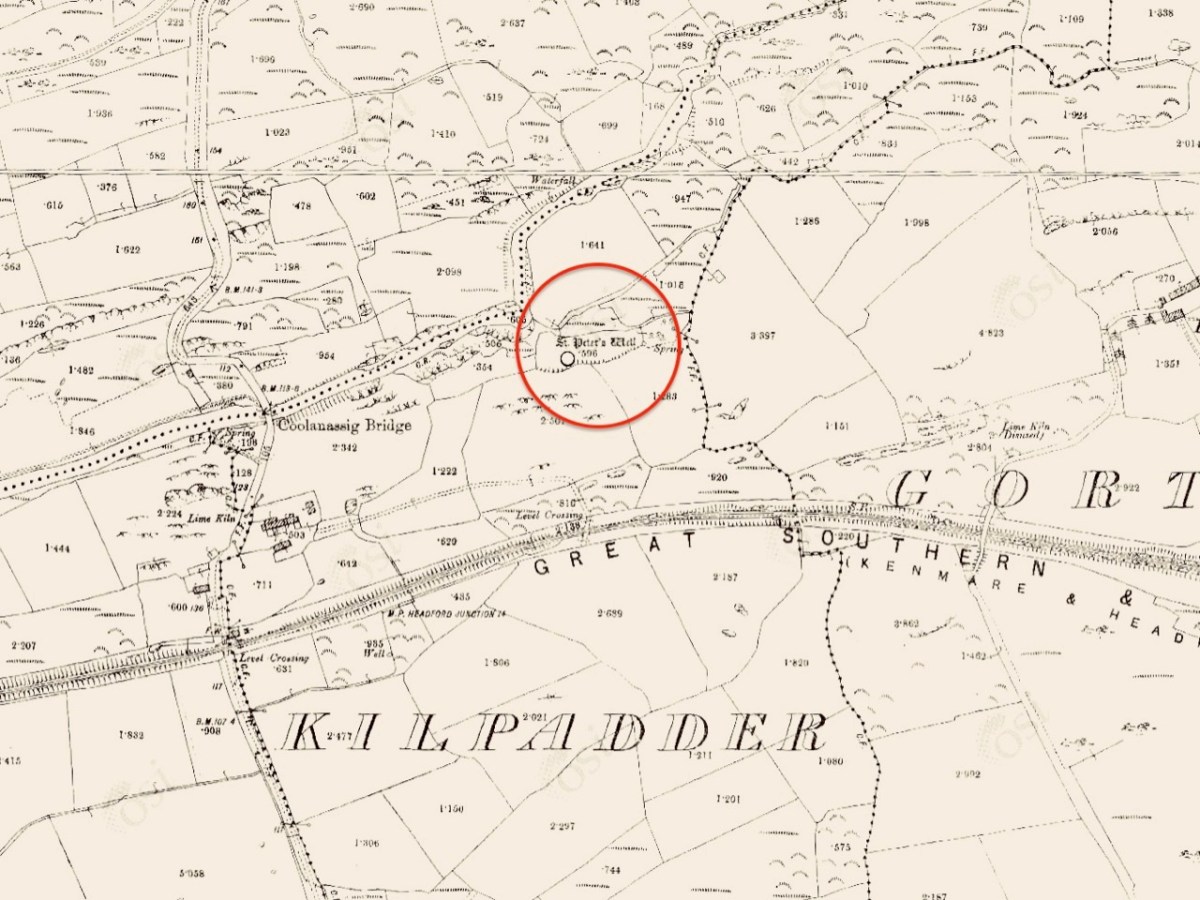
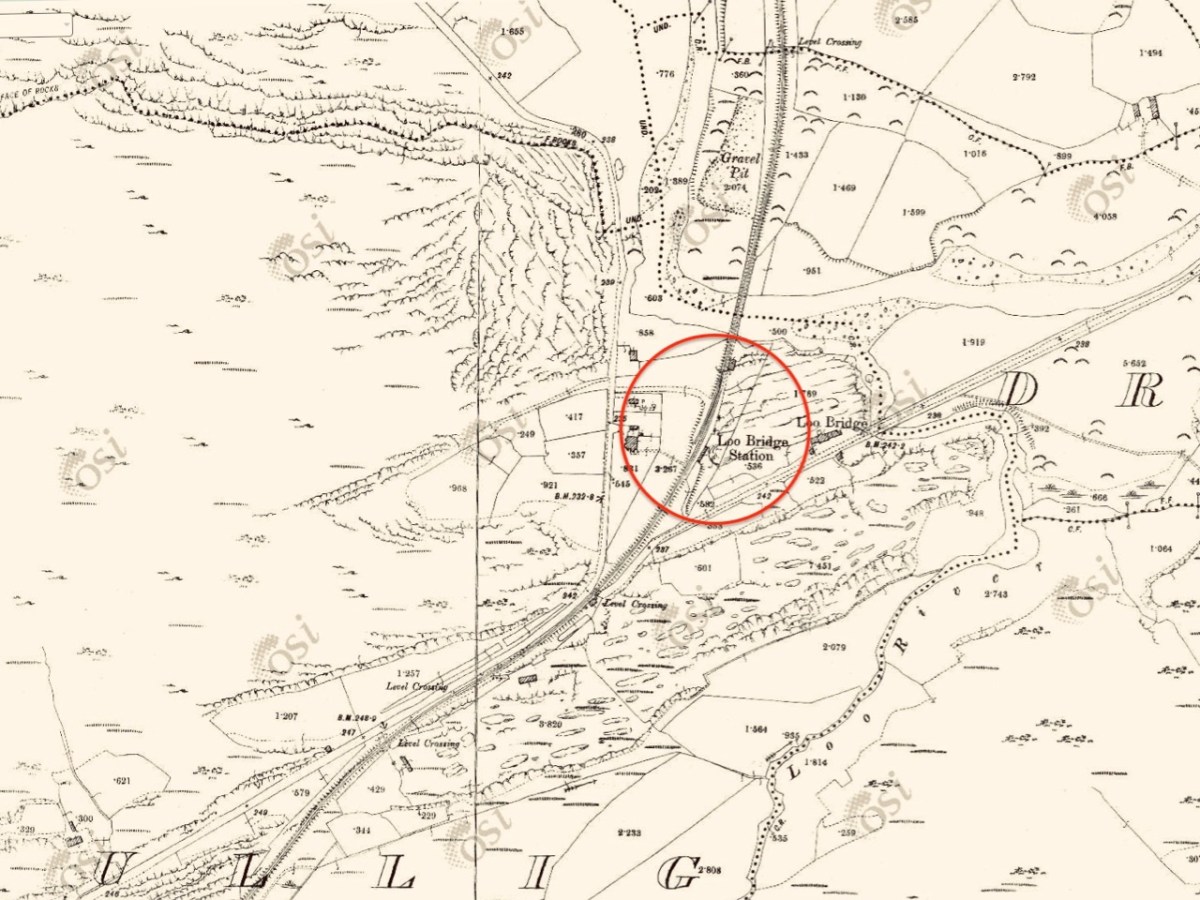
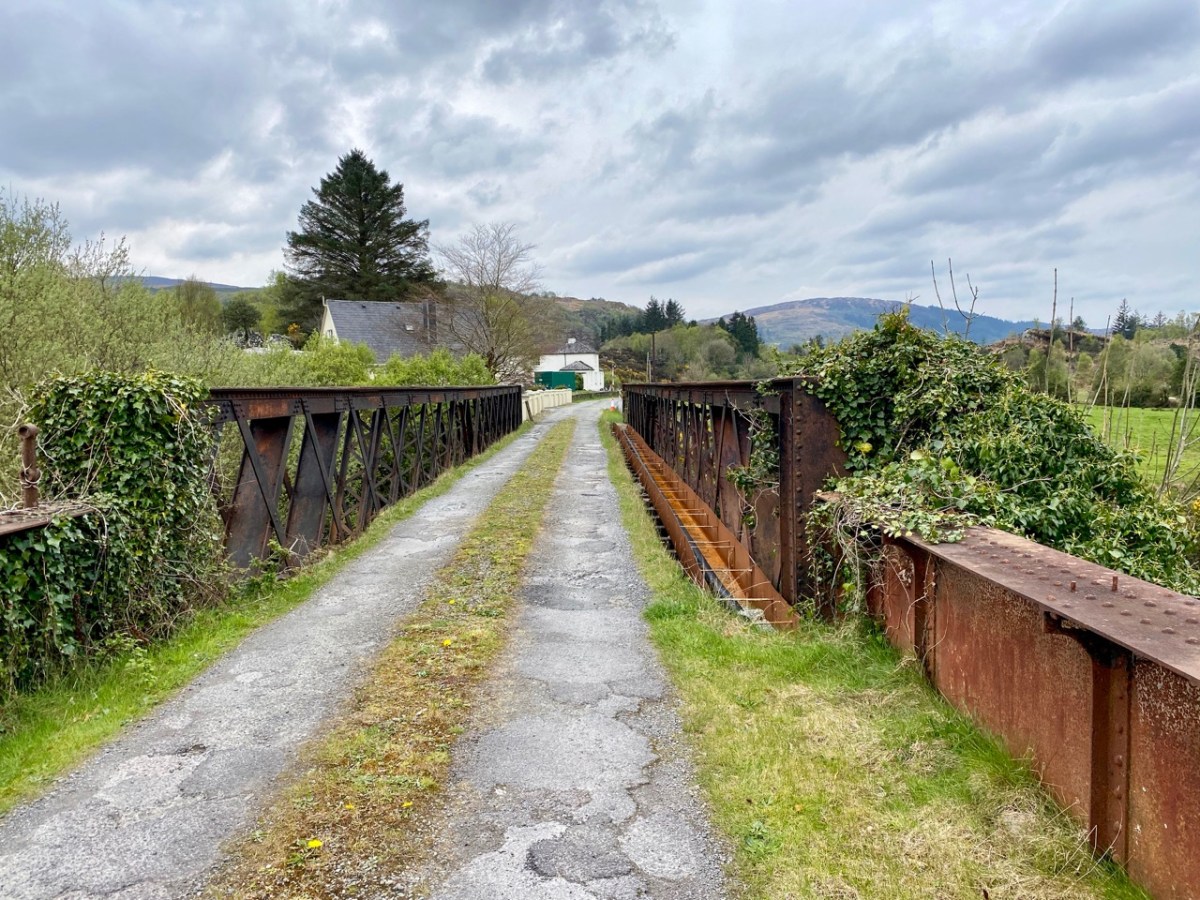
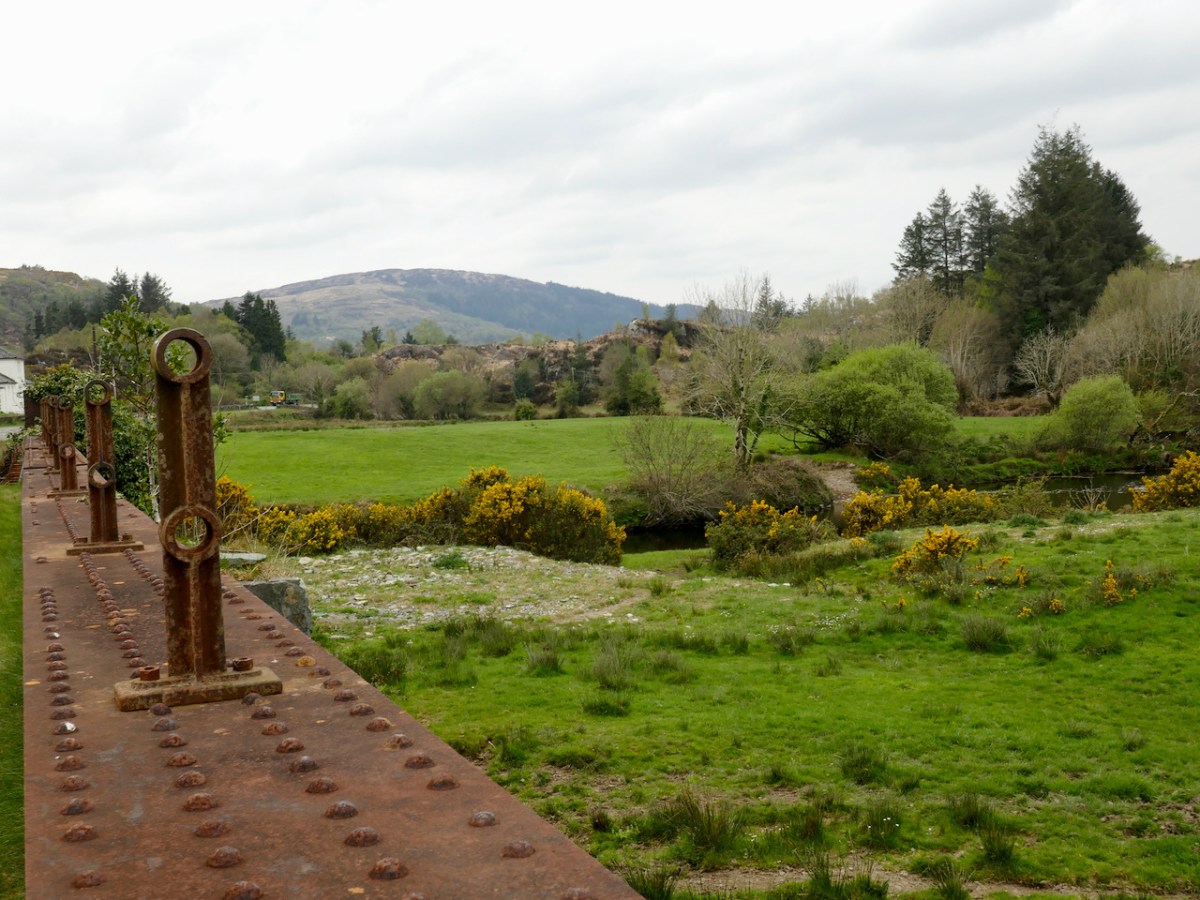
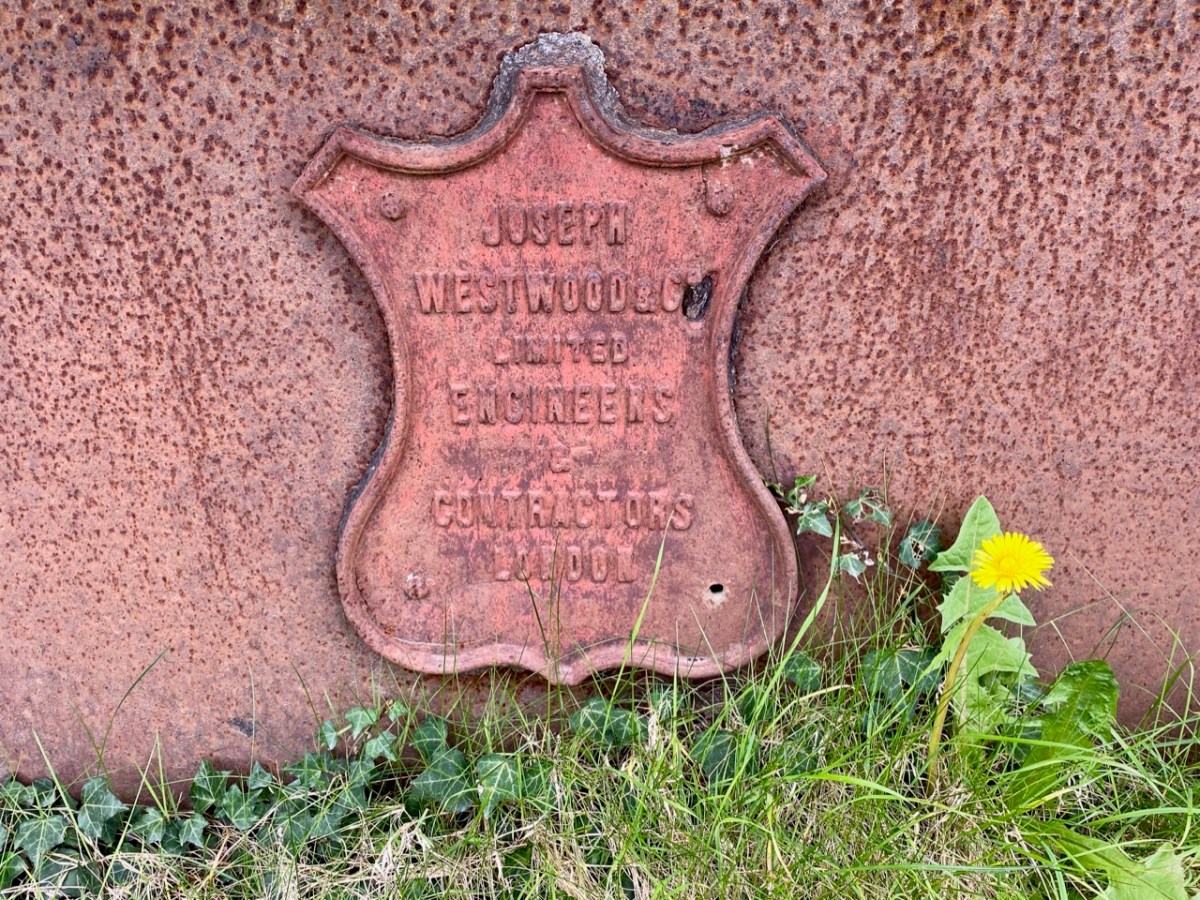
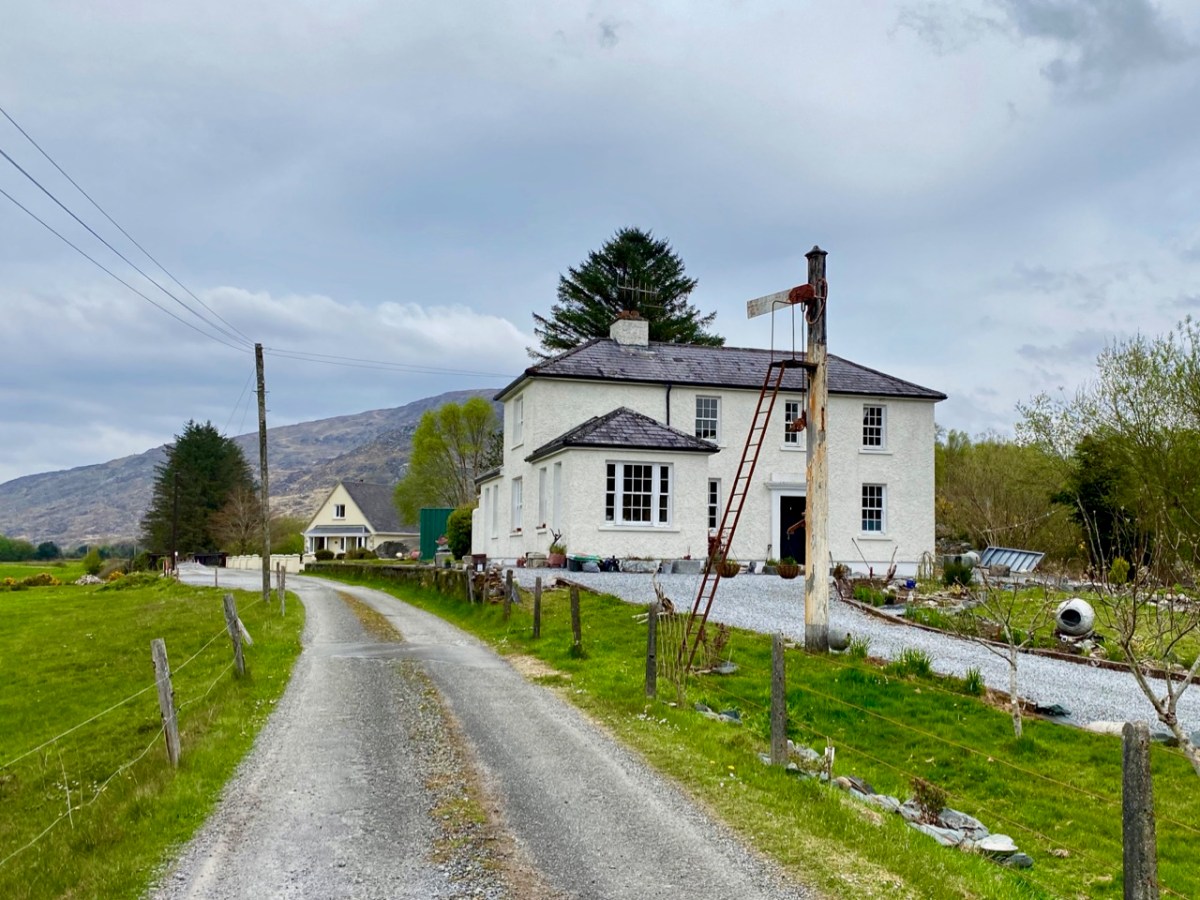
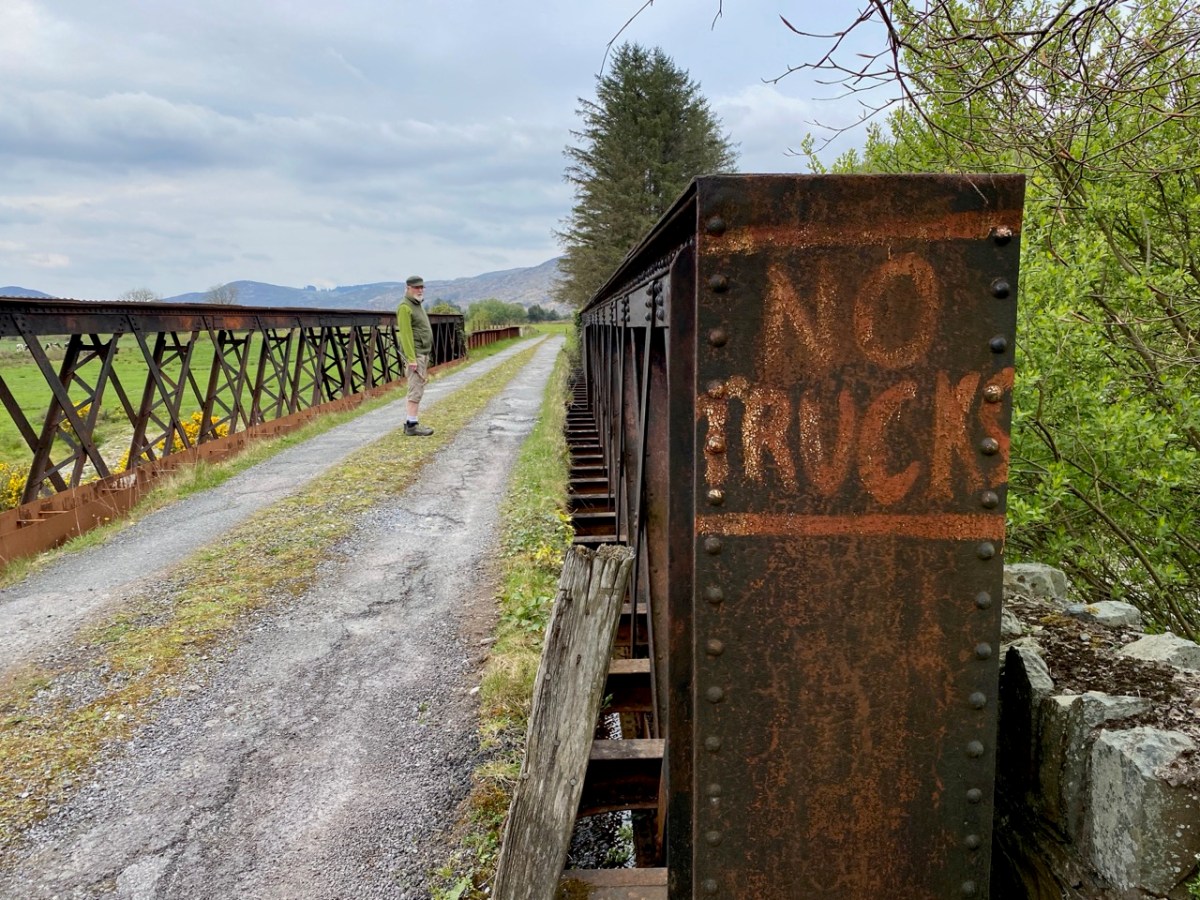
The 6″ OS map, above, dates from the late 19th century. St Peter’s well is marked on it, while St Paul’s only gets mentioned as a spring. Not far to the south is a railway line: The Great Southern Railway: Headford Junction to Kenmare. This was opened in 1890 and closed in 1959. While the track itself is long gone, many features can be traced. We stopped at Loo Bridge where the old station remains, as does an adjacent steel river crossing.

I am always saddened to see abandoned railway lines: they could so easily have had a new lease of life in our present environmentally conscious world. Regardless of their potential functionality, ‘heritage railways’ are also highly popular tourist destinations. I’m afraid, however, that the work and costs now required to recover them is unlikely to be invested any time soon, unless there is a big change in attitude and priority.

Lost railways and fading wells: unlikely bedfellows for a day out in Kerry. But our travels are always fulfilling, and diversity is the essence. In Ireland we can never run out of places to visit, or matters to be researched and recorded. Join us again, on our next expedition!

Ardpatrick

We’re back from a few days in Limerick with Amanda – she of Holy Wells of Cork and Kerry – and Peter. It felt like we were sneaking over the border into unknown territory! What – do Cork and Kerry not have enough holy wells for you, Amanda? It turns out that the answer to that question is no – Limerick beckons and we obey the call.

We managed fifteen wells in an afternoon, a morning and a whole day – along with some stained glass, some random archaeological sites – and a steeplechase! See Robert’s post for more on that story. I’ll probably write more about the wells in future, but for now take a look at Amanda’s latest post to get a sense of one of her objectives for the trip. The bit I am writing about is our walk up to the top of Ardpatrick and what we saw there (above, above and below).

At the end of the full day, having slogged across (I’m sure) half of muddy Limerick, Amanda airily announced that our last location of the day might be up a slight rise. Knowing Amanda, a vision of Jacob’s ladder arose in front of me – and I was not wrong! But what a site – Ardpatrick is one of those places that you can’t believe you never knew about before and are SO glad you do now!

At the top of a steep hill, it’s an early medieval monastic site, with the ruins of a church, the stump of a round tower, an erstwhile holy well, and a large graveyard. The road up has been recently concreted, probably to make it easier to access the graveyard. 

Limerick seems to specialise in ancient graveyards marooned in the middle of fields, with little visible sign of roads leading to them. We saw several like that over the course of three days and this one had the added feature of being on the top of a mountain. The original road to it was known as the Rian Bó Phádraig, or the Path of Patrick’s Cow. Like many another saint (St Manchan, for example), Patrick had a cow to supply his milk and this cow had mighty horns which she used to plough a path up the hill so he could build his monastery at the top.

The actual shape of the site isn’t as obvious on the ground, but it appeared to have been a typical early-medieval ecclesiastical site comprising of a group of buildings within one or more circular enclosures. The monks lived in small huts, there was a central church (often containing relics of the founding saint) and in this case there was also a round tower. This illustration is at the beginning of the walk to the site.

There would have been a complex of fields and dwellings around the site and these are most clearly visible now from the air. Also from the air can be seen the original Rian Bó Phádraig and the approaches from either side.

The round tower is just a vestige now, but Brian Lalor in his book The Irish Round Tower (more recently re-published as Ireland’s Round Towers) says, When fully standing, the tower would have dominated the landscape, even from a great distance, and is among the finest sited of all towers. He suggests a date of 11th to 12th century and states, The paucity of the tower remains are more than compensated for by the interest and drama of the site.

The church is a confusion of walls and one archway, much broken down and ivy-covered. Although some authorities suggest that the church had antae (see this post for an explanation of antae), typically found on churches of this era, those antae are not obvious now and the church was probably re-built on several occasions over the centuries. Indeed there is one account that it was burned down in 1114.

That same source, The Annals of the Four Masters, tells of the death of the abbot in 1129. 

In this year ‘Ceallach [Celsus], successor of Patrick, a son of purity, and Archbishop of the west of Europe, the only head whom the foreigners and Irish of Ireland, both laity and clergy, obeyed; after having ordained bishops, priests, and persons of every degree; after having consecrated many churches and cemeteries; after having bestowed jewels and wealth; after having established rules and good morals among all, both laity and clergy; after having spent a life of fasting, prayer, and mass-celebration; after unction and good penance, resigned his spirit to heaven, at Ard-Padraig, in Munster, on the first day of April, on Monday precisely, in the fiftieth year of his age. His body was conveyed for interment, on the Wednesday following, to Lis-mor-Mochuda, in accordance with his own will; it was waked with psalms, hymns, and canticles, and interred with honour in the tomb of the bishops, on the Thursday following. Muircheartach, son of Domhnall, was appointed to the successorship of Patrick afterwards 

O’Donovan’s translation, available here

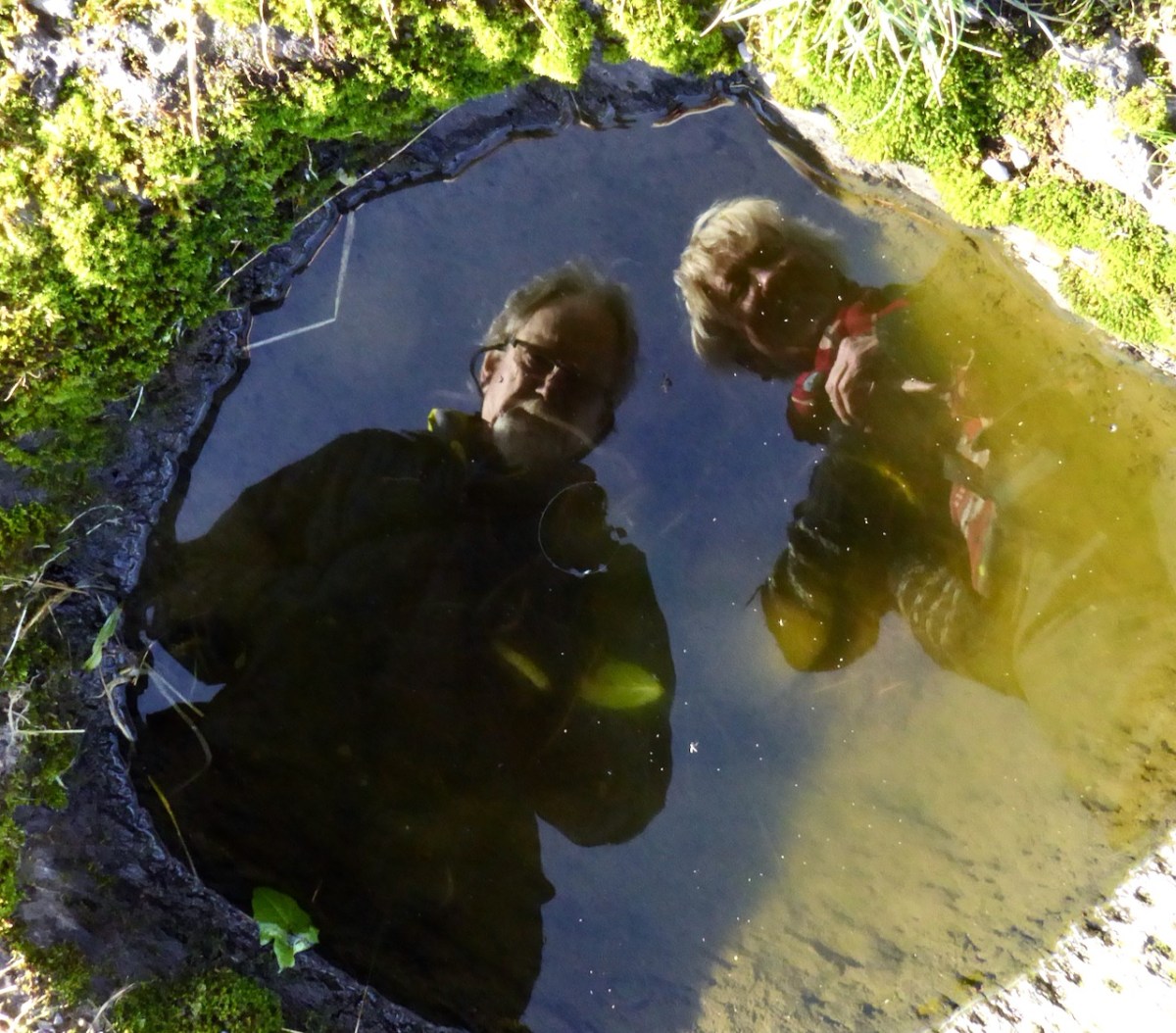
The holy well (above) has been covered in ‘for safety reasons’. It held a cure for rickets, lameness and rheumatism, and according to the folklore if you saw your reflection in the water, you’d be grand. But if you didn’t, you’d be dead within the year. Perhaps it’s just as well it’s filled in.

The graveyard is still in active use. One of the features of all the Limerick graveyards we saw on our trip is a curious double-gapped ‘stile’. I wondered if it also functions as a coffin rest, with those carrying the coffin able to pass into the graveyard through the gaps, while resting the coffin on the middle stand. More than one observer has commented that the top piece of masonry on this middle stand probably came from the early church.

It had been a magnificent day – very cold but sunny and bright – and it was getting dusky as we headed back down the hill. It was at this point that I discovered that my cute but ill-fitting wellies were not designed for downhill travel, as my toes slid forward and were soon very painful. This was when I needed the intervention of St Patrick to perform some kind of toe miracle, but alas he turned a deaf ear and in the end I had to come down mostly backwards. The only compensation for descending facing backwards was seeing the silhouette of the mountain in the fading light – the cemetery crosses standing starkly against the skyline.

Amanda has now written up her own version of our day and for even more about this wonderful site, have a look at this entry by our friend, the marvellous Pilgrimage in Medieval Ireland.