Prince of Peace: A Modern Irish Church

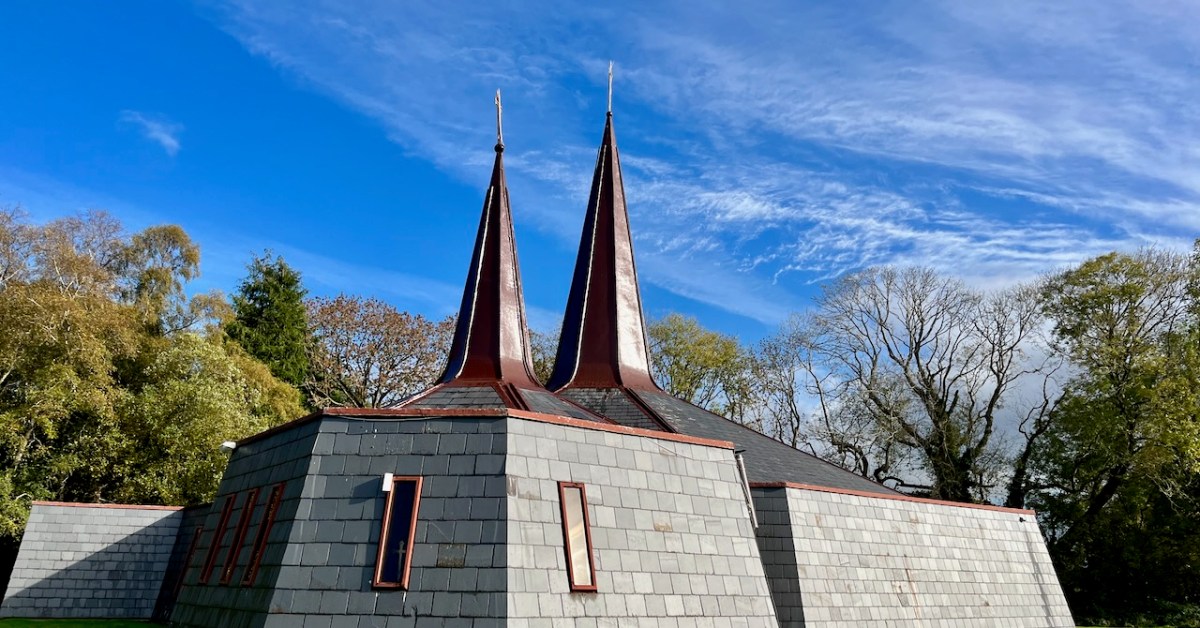
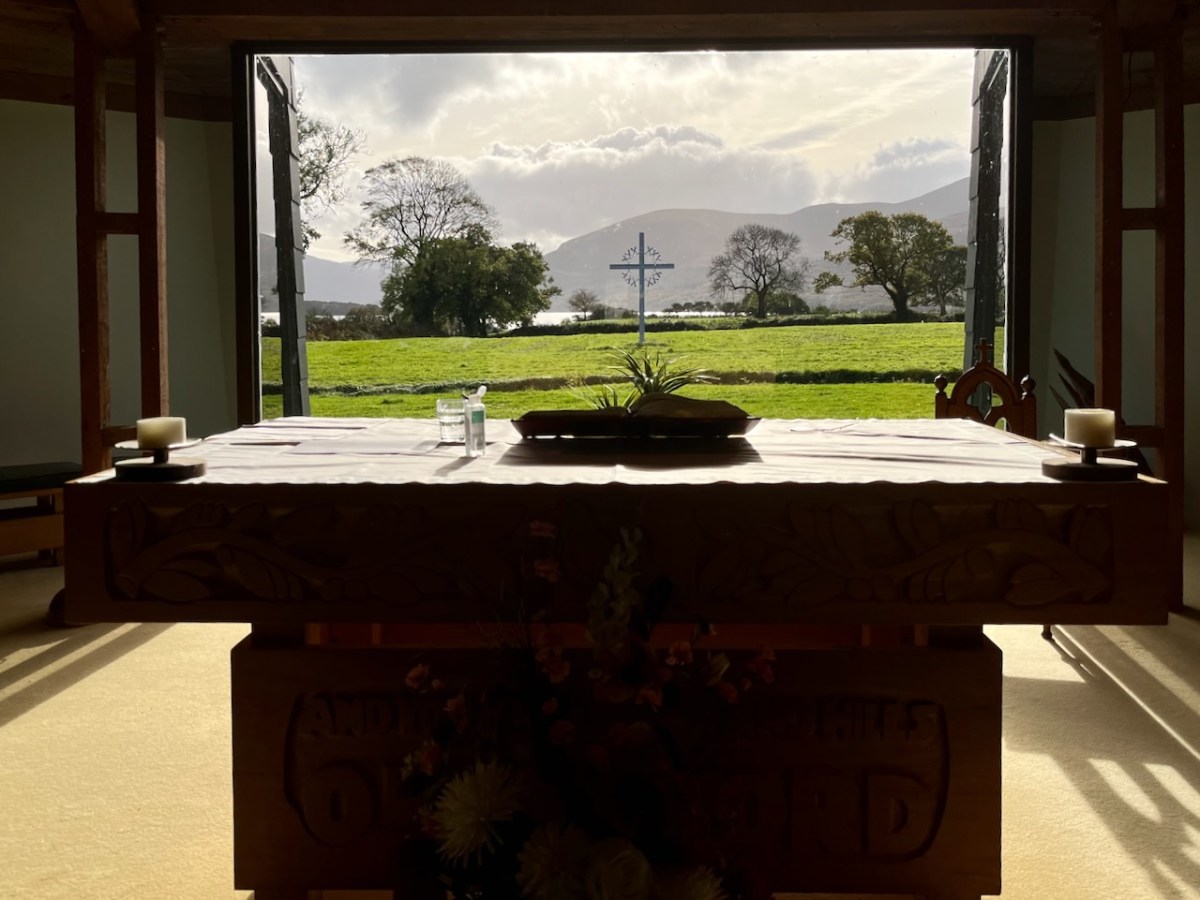
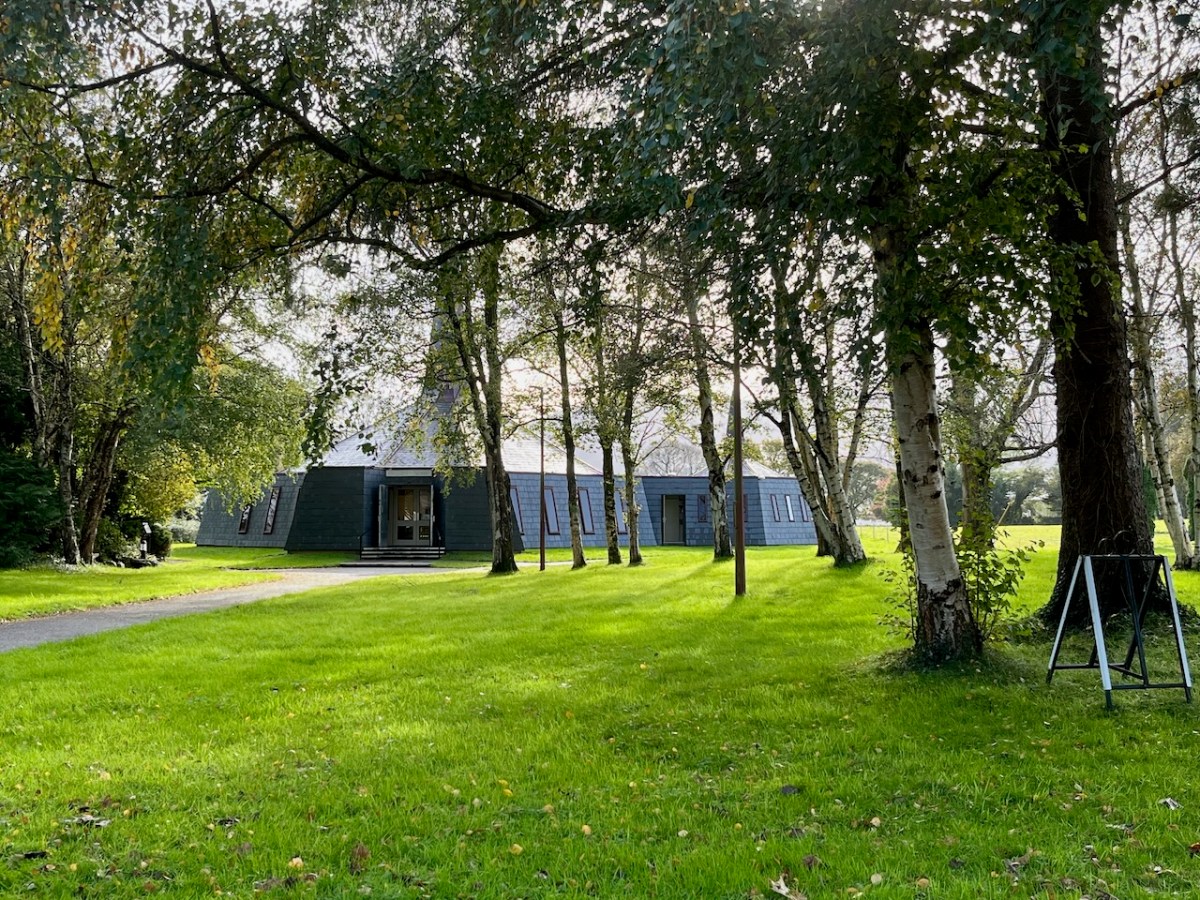
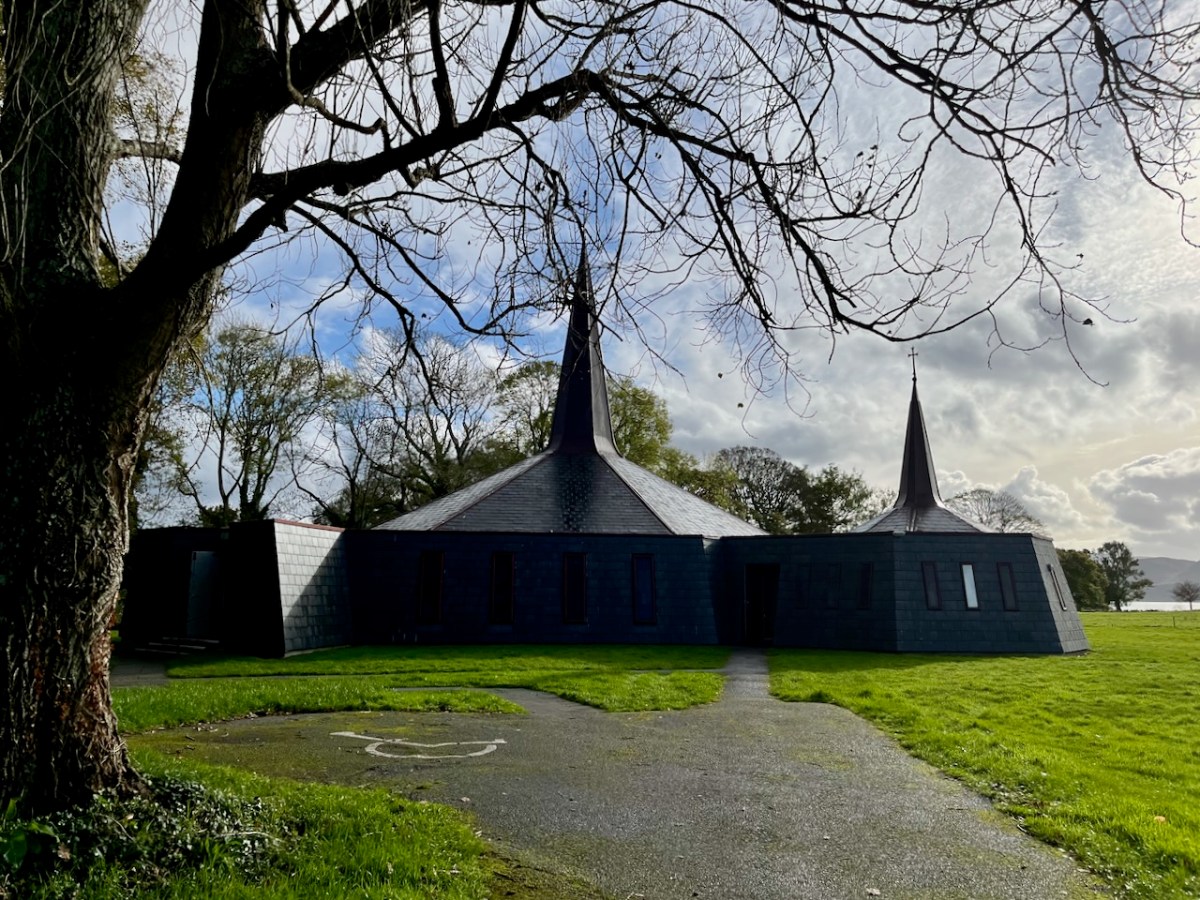
On our travels in Kerry recently, we happened across a striking church building. It’s situated west of Killarney and overlooks Lough Leane: in fact the view of that stretch of water is a principal feature from the interior of the church. An enormous picture window is situated beyond the altar.
I have titled this piece: A Modern Irish Church. Everything is relative, of course: this Fossa Church was completed in 1977, getting on for half a century ago, but one could only fairly describe the style as ‘modern’. It is one of twenty seven ecclesiastical buildings designed by the architectural practices of Liam McCormick (1916-1996). While based in Derry the architects carried out commissions throughout Ireland: the practice of Mullarkey Pedersen Architects, Derry and Dublin, continues their work to this day. My own life experience as an architect – (I carried out a number of church projects) – tempts me to embark on a tour of McCormick’s buildings, many of which are visually dramatic..
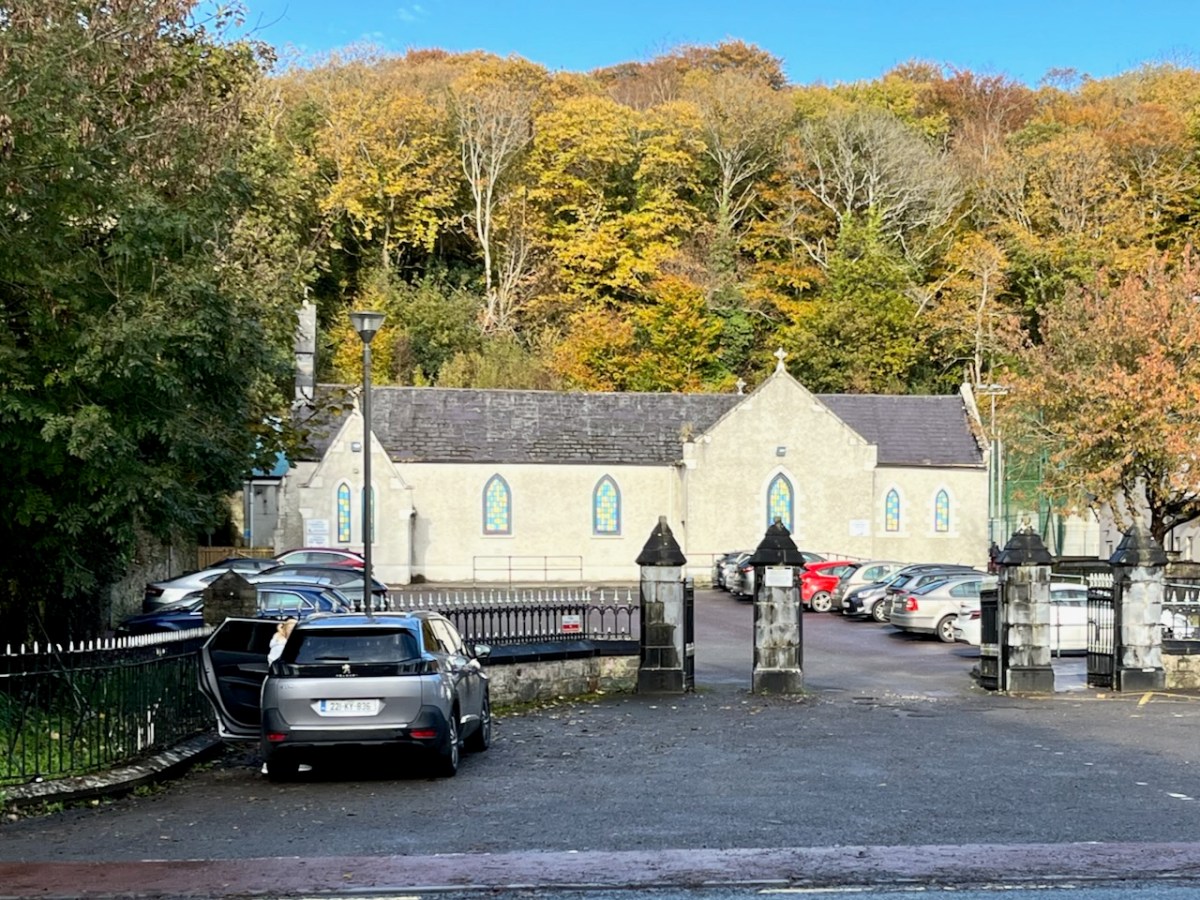
The lakeside church was designed to supersede an earlier building – St Lelia’s – which dated from the 1840s. That building remains and is in communal use (above): it is set back from the present site.
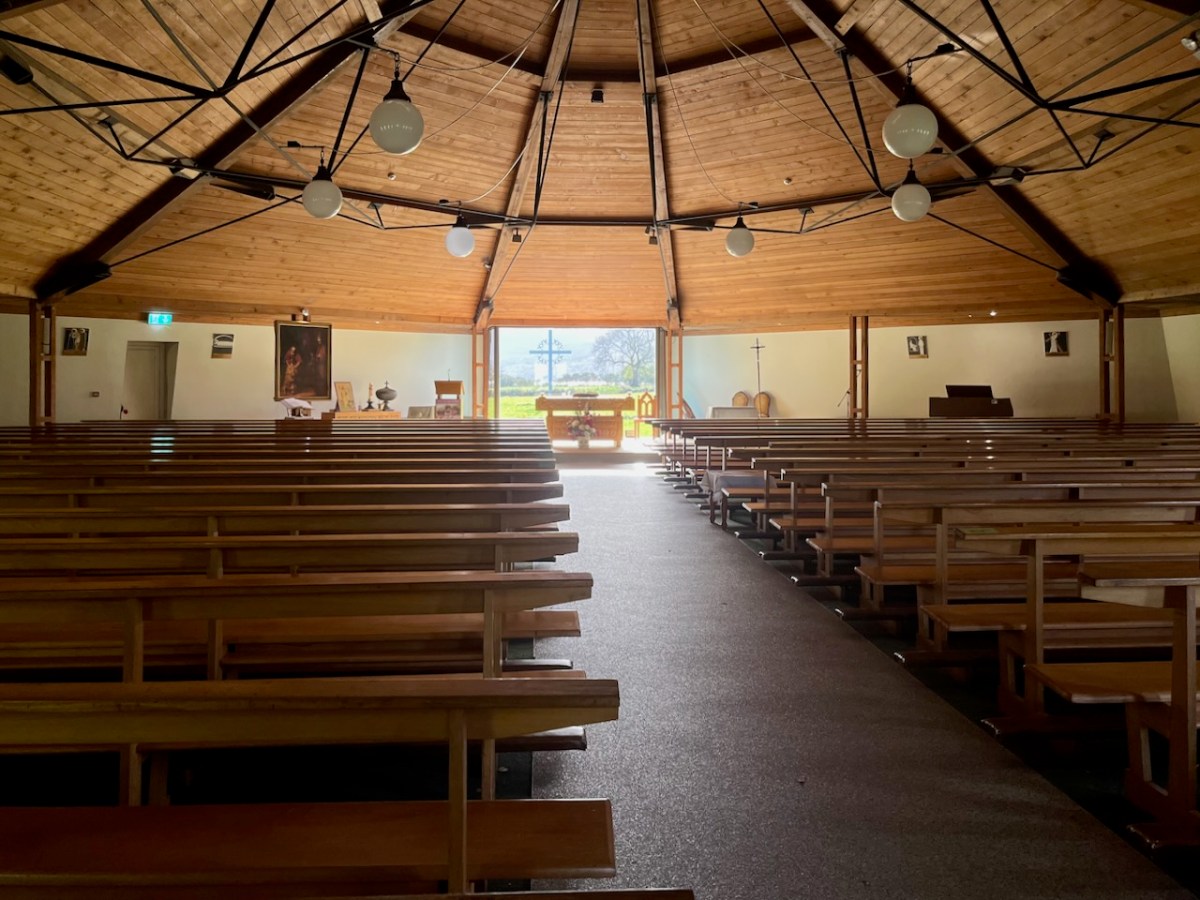
Unusually, there is no contemporary stained glass in this building. Instead, the focal point is the central view. I wonder whether this might be a distraction while the priest is in action? It may be that he would always be in silhouette in daylight: there is no means of subduing the window. The church does contain some distinctive artwork, however.
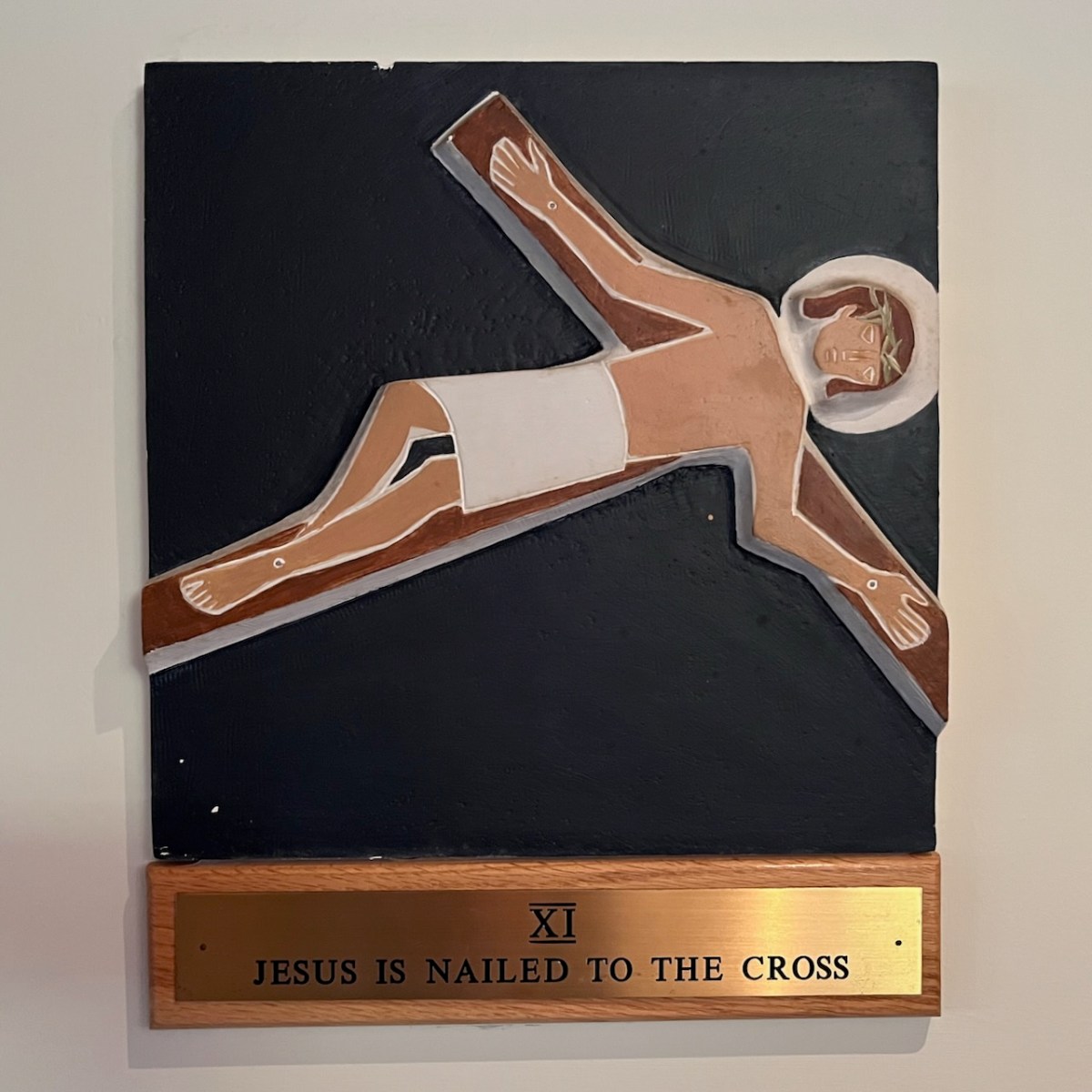
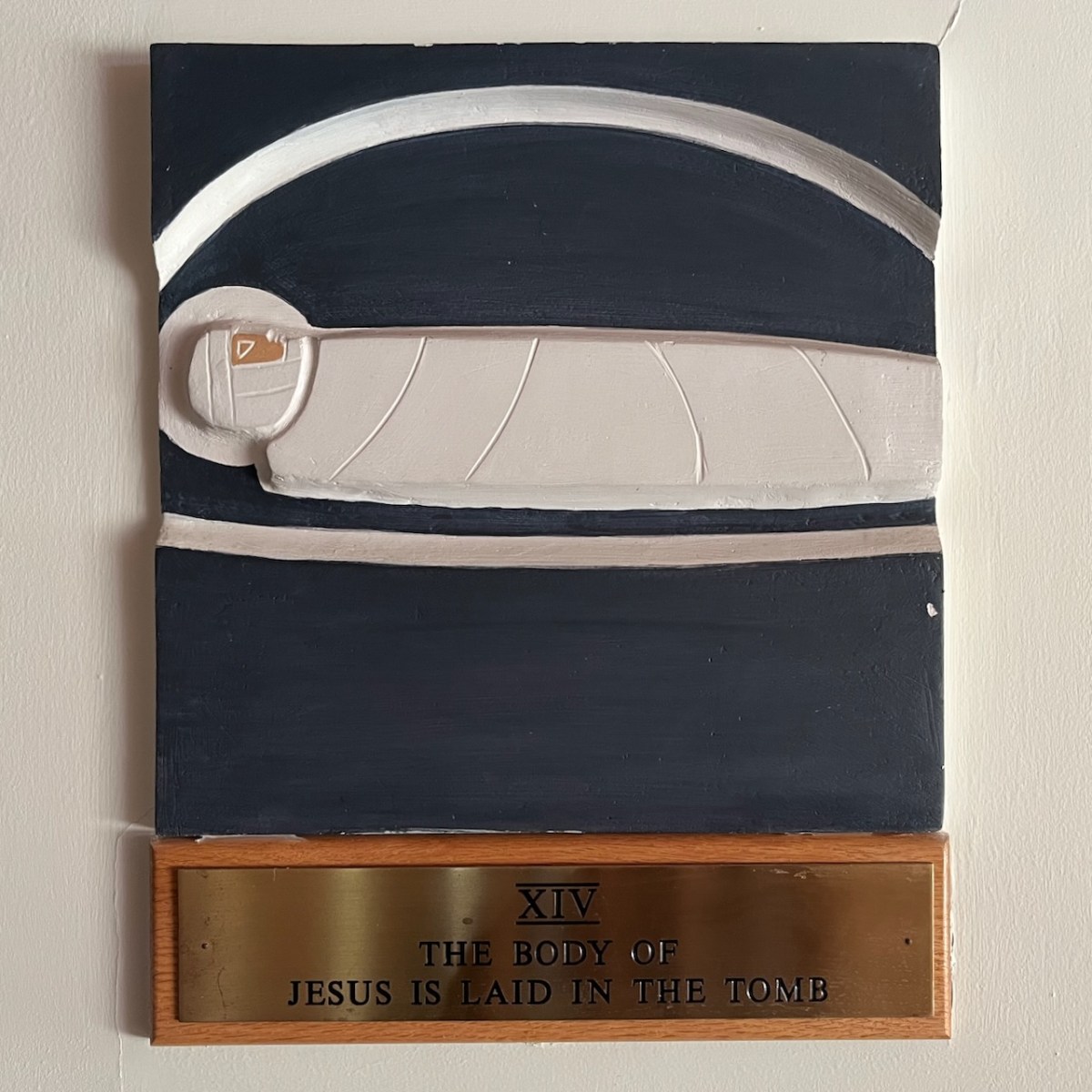
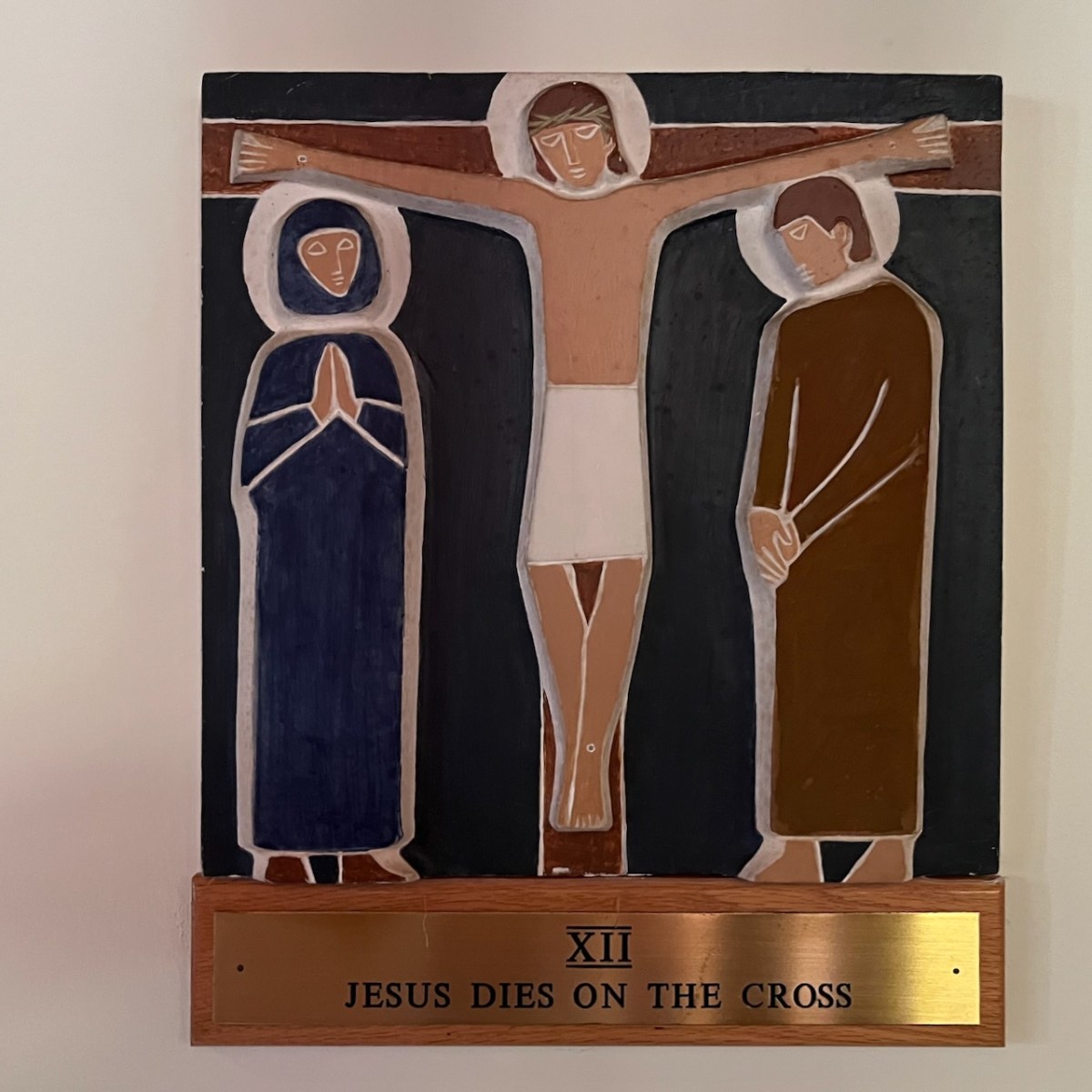
The Stations of the Cross are notable. They are the work of Nell Murphy Pollen (1927-2011). A ceramicist, woodcarver and sculptor, she was a native of New Ross and studied at the Crawford.
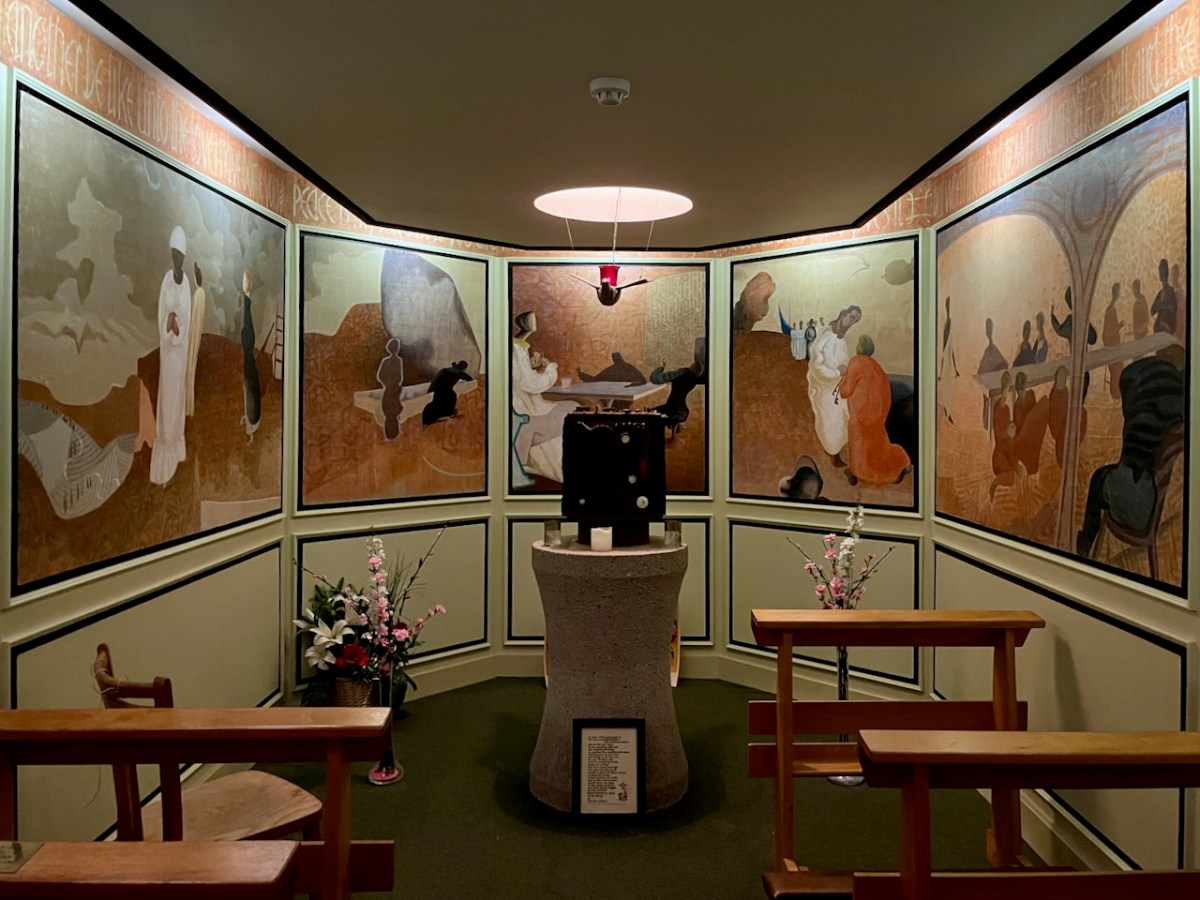
Perhaps one of the most striking aspects of the church at Fossa is the little Blessed Sacrament Chapel: “. . . a chapel of reconciliation dedicated to the Prince of Peace . . .” This (above) is decorated with murals by Patrick Pye (1929-2018). They are produced in a traditional medium which dates from the time of the early Renaissance, tempera on a gesso ground.
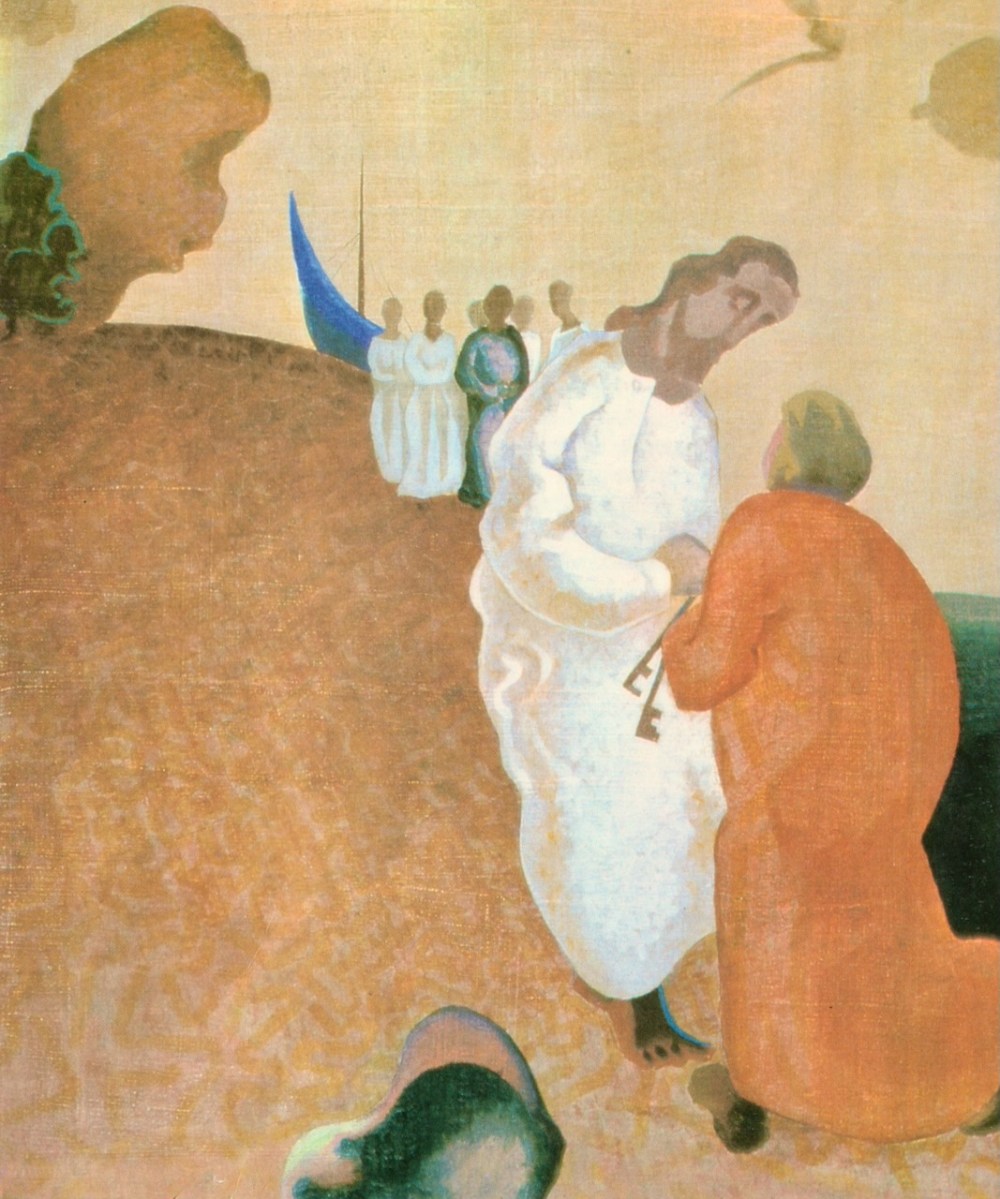
Pye’s tempera/gesso painting Peter receiving The Keys from The Christ – The Blessed Sacrament Chapel, Fossa. Patrick Pye is an artist whose work we have followed, and he will have a post to himself before too long. He was born in Winchester, in Hampshire – a city in which I lived for a while in my younger days, but it is more famous for having been the home and burial place of Saint Swithun, a ninth century Anglo-Saxon Bishop who died in 862 AD – he whose feast day (15 July) traditionally marks either 40 days of fair weather or (more usually) constant rain.
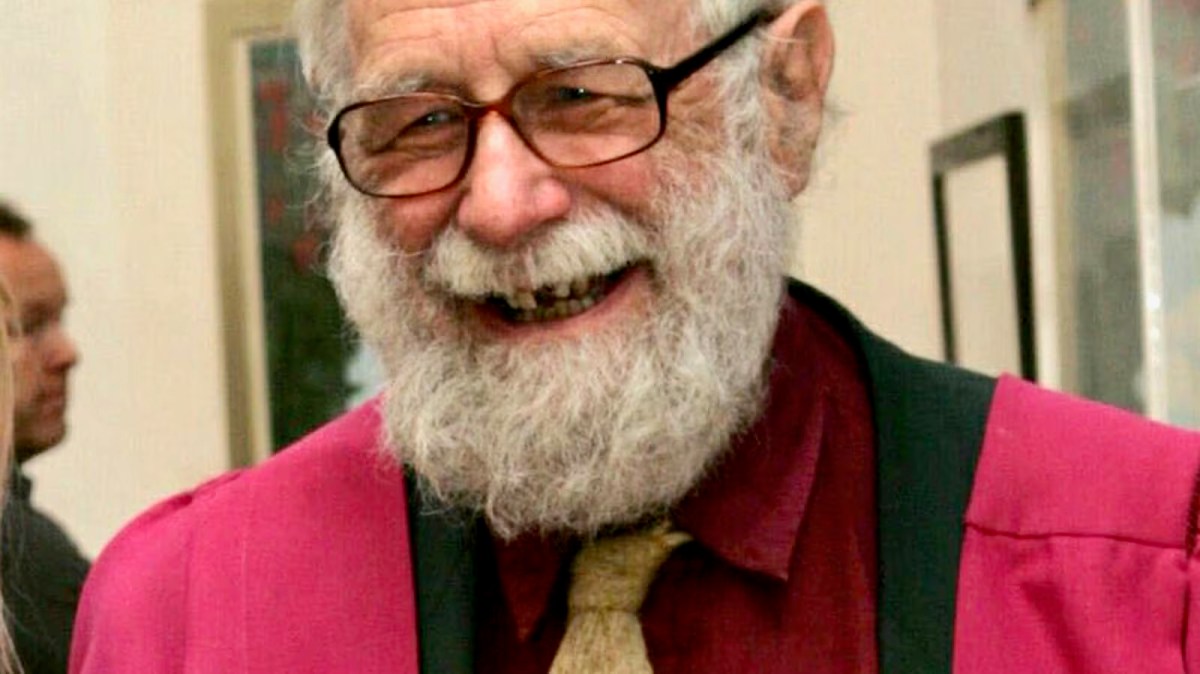
Patrick Pye at the RHA annual exhibition in 2007. Photograph with many thanks to Cyril Byrne.
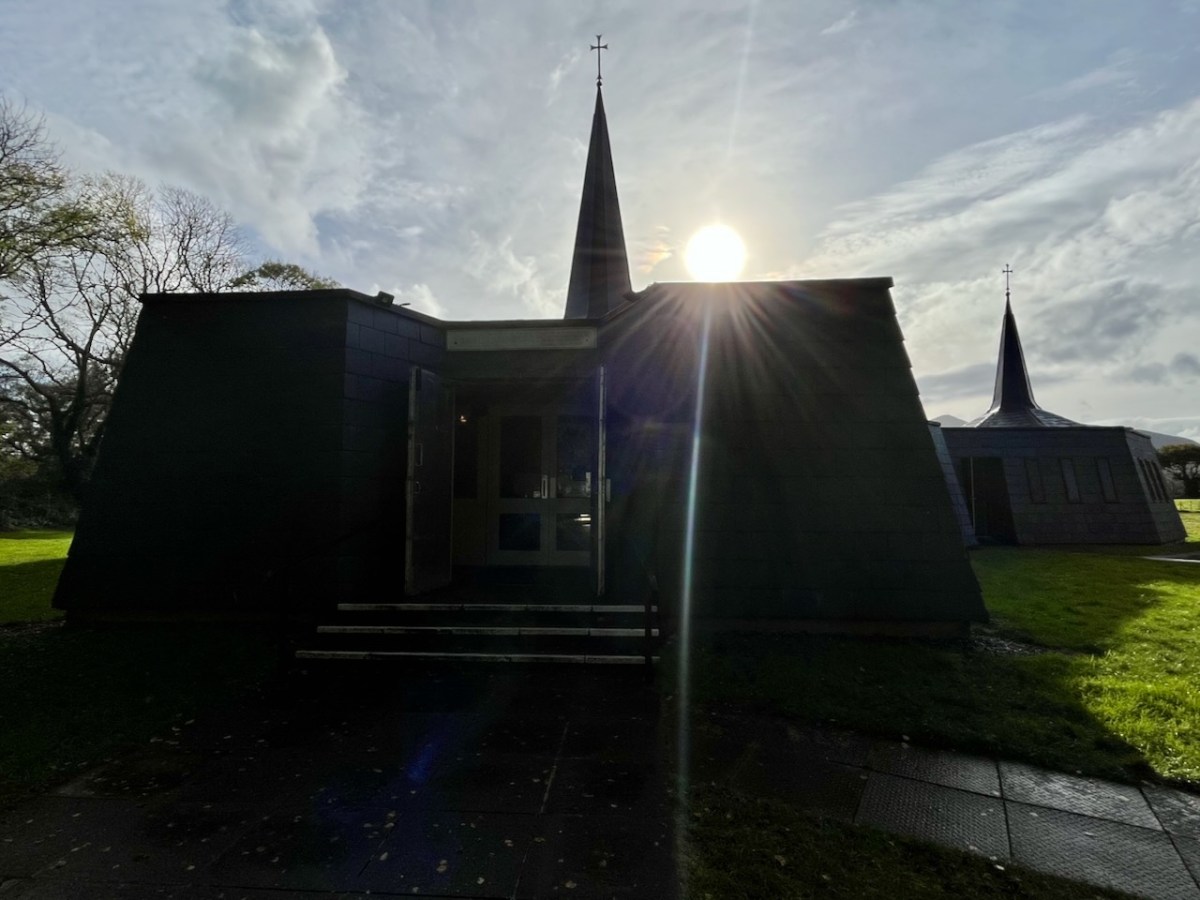
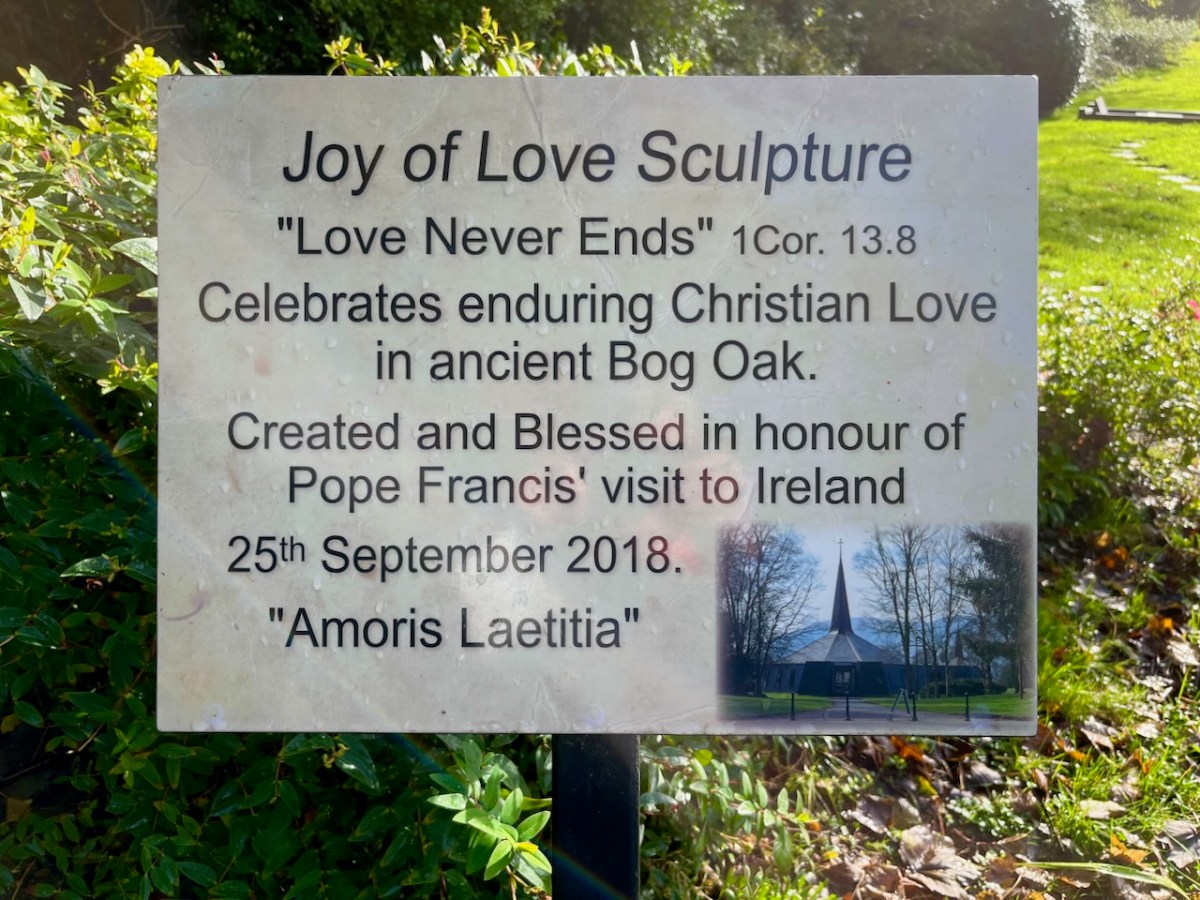
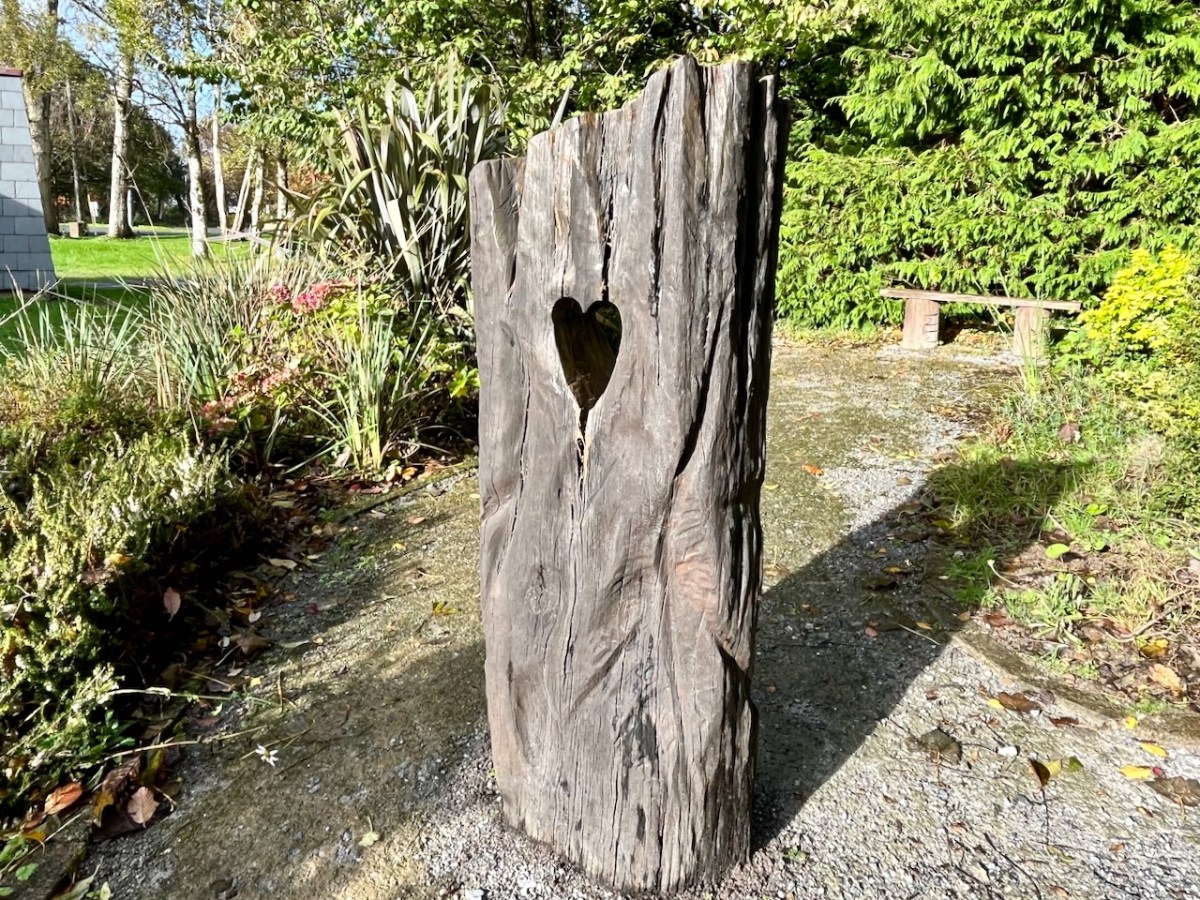
Above: you will find outside the church a bog-oak sculpture, specially commissioned to commemorate the visit of Pope Francis to Ireland. The carved heart at its centre is designed to offer all married couples and sweethearts the traditional Celtic opportunity to touch hands through the opening to commit to each other.
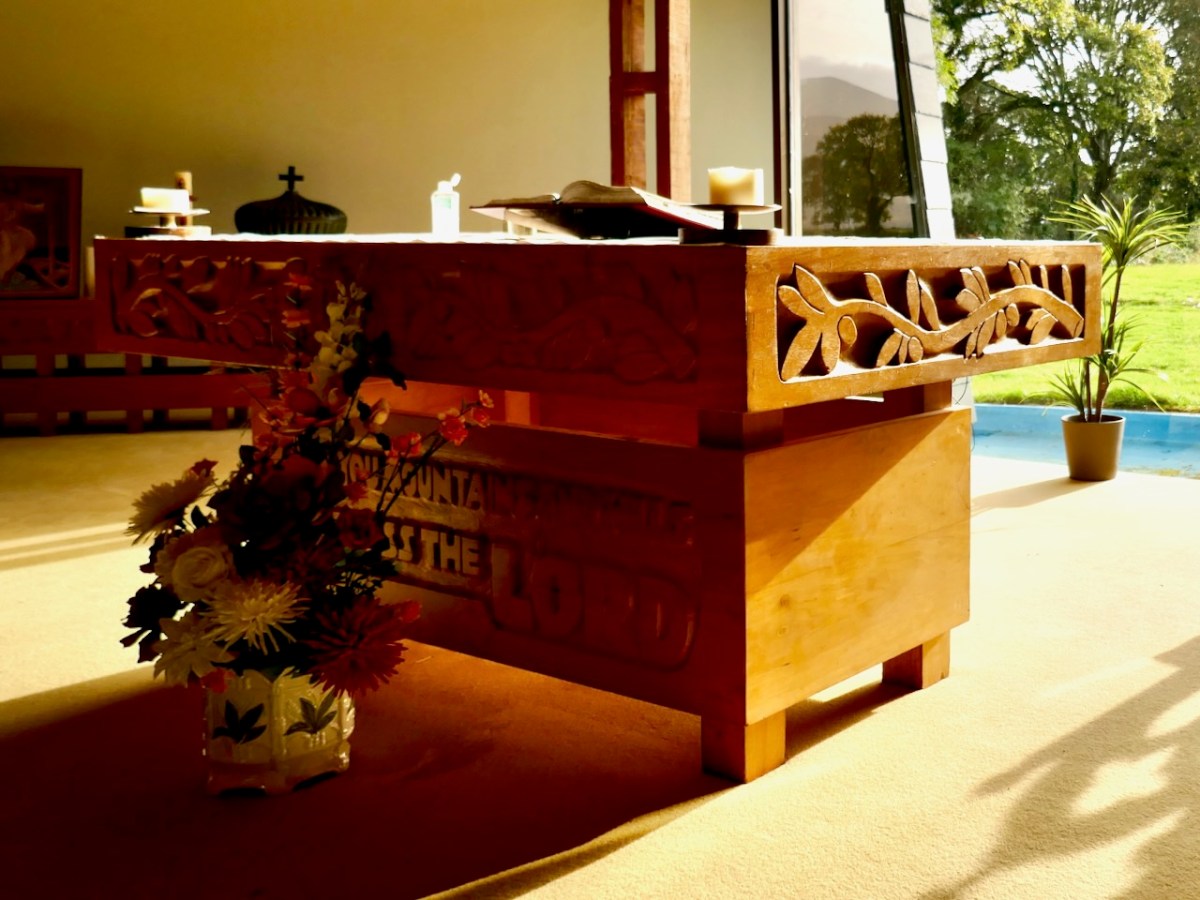
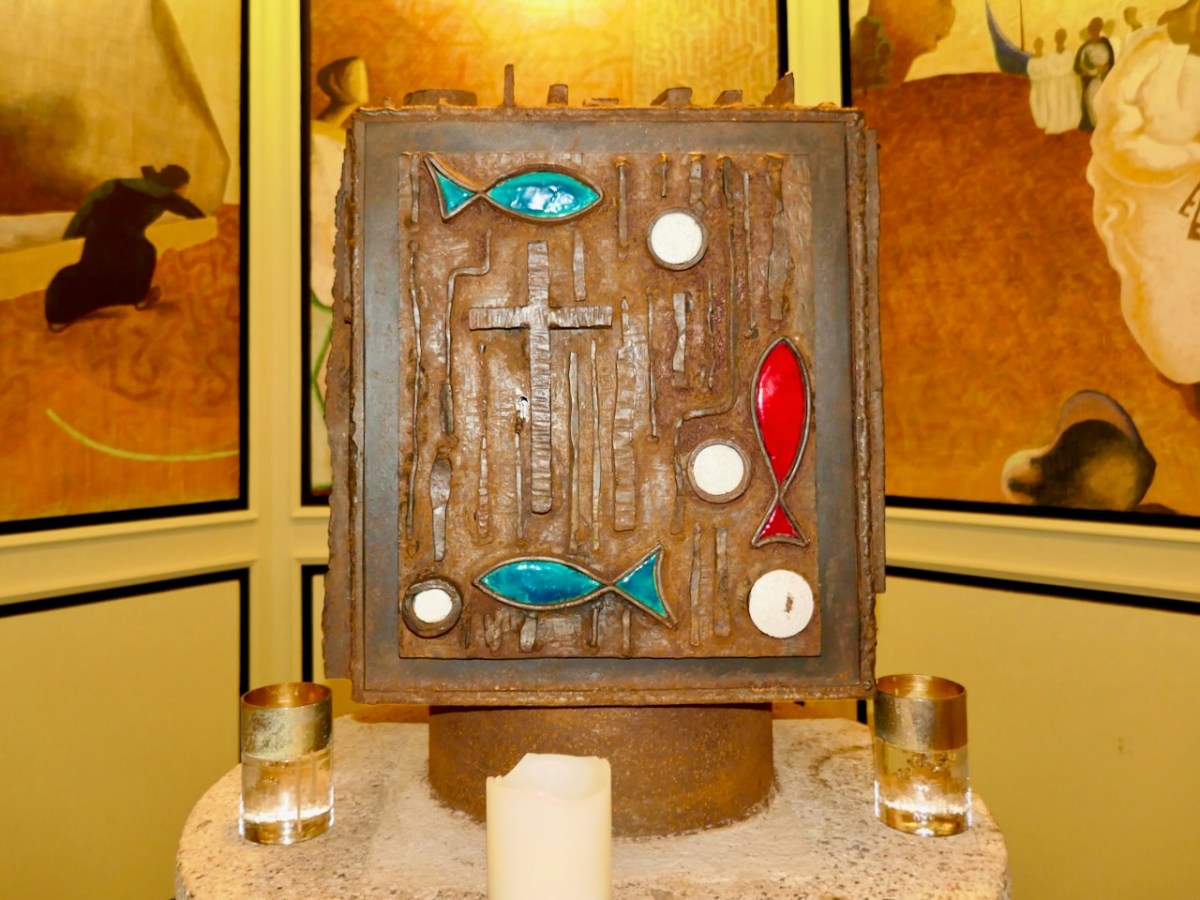
This little Kerry church is very well endowed with high quality artworks, both inside and outside. The carved altar (and a bench, not shown) is by Imogen Stuart (b1927), while (lower and below) is the tabernacle which we believe is by John Behan (b1938) who is also responsible for the cross outside the window. The tabernacle rests on a carved granite plinth by Michael Biggs. All these artists were longtime collaborators of McCormick’s. A brochure has been produced on the church which would give further information on the furnishings, but we have not yet located a copy.
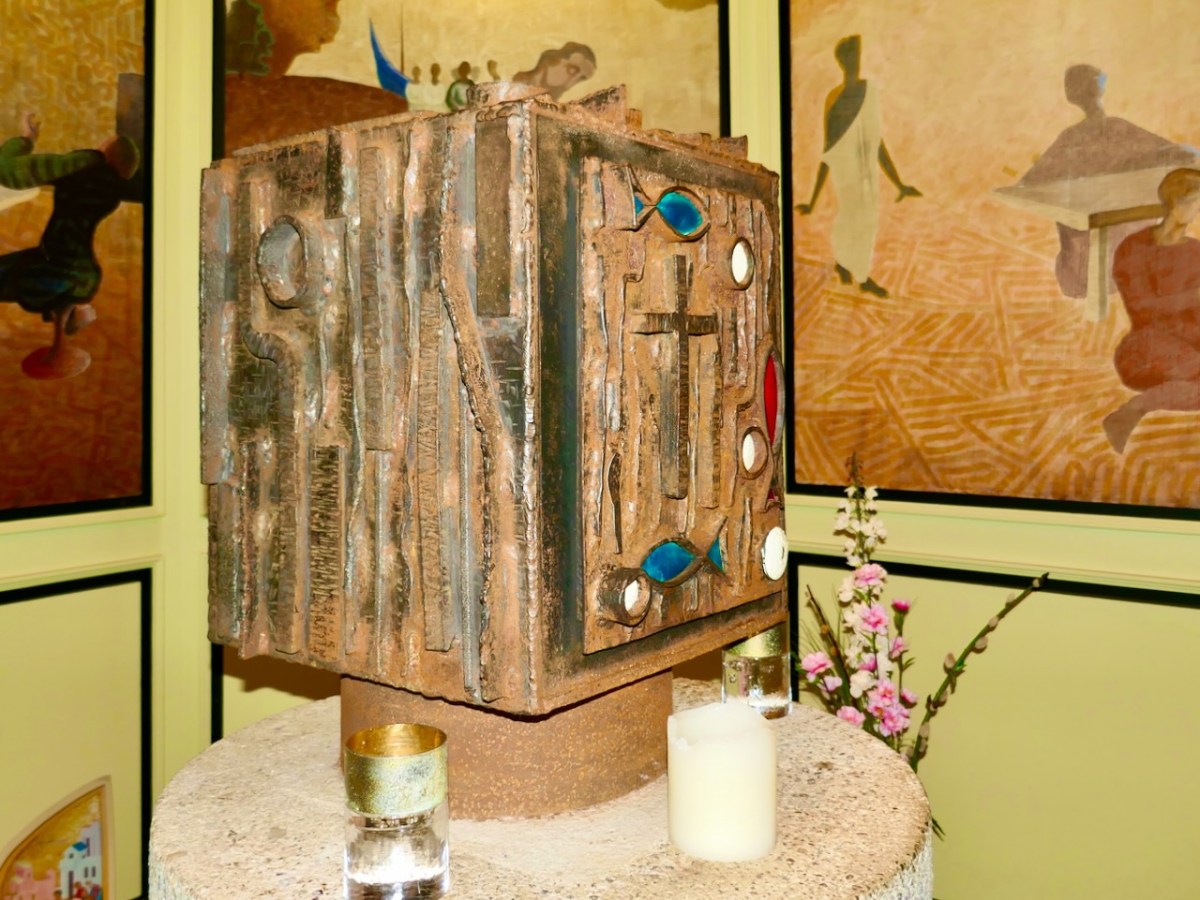
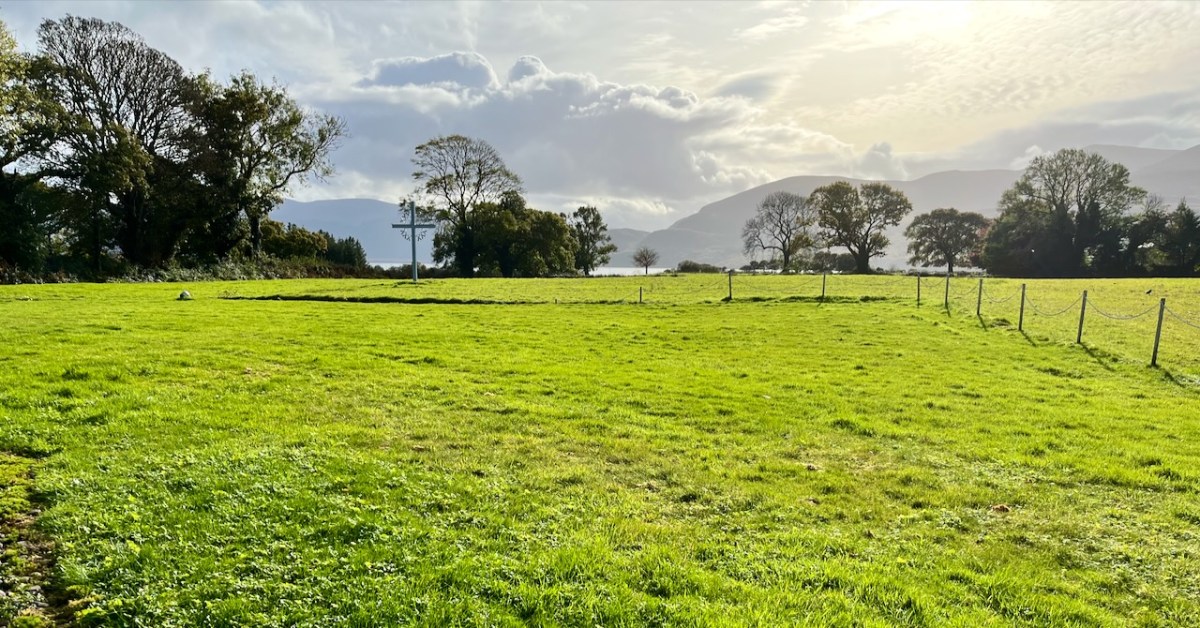
This special church enjoys such a stunning setting with lough and mountains beyond, and is endowed with very fine artworks: it is well worth turning aside for.
Ireland-Canada: Famine, Fenians, Friends!

I’m Irish but spent forty years in Canada and I am still learning about the many deep, and too often tragic, links between my two countries. Canada’s Ambassador to Ireland, Kevin Vickers, (above) is coming to the West Cork History Festival in Skibbereen this week to talk about Irish-born Canadian Soldiers in the First World War. So in honour of that occasion I’ve been reviewing some of the connections between our nations.

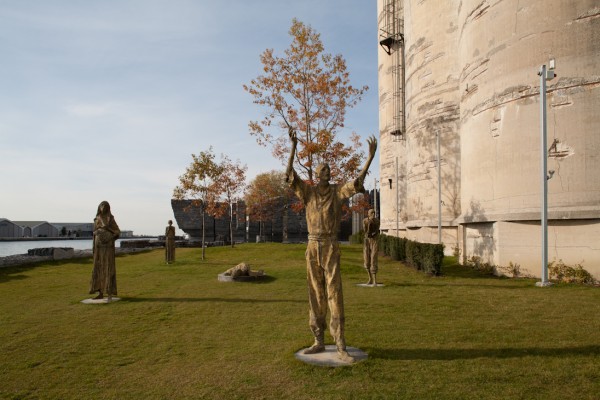
‘Departure’ – the harrowing sculpture by Rowan Gillespie on the Dublin quays

Although my own experience as a Canadian immigrant was a happy one, not all emigration stories are founded in choice and success. There’s a park in Toronto called Ireland Park. Lovely, you say – how nice that we have a memorial in this wonderful city. But Ireland Park commemorates a dark past – the year of 1847 when almost 40,000 immigrants fleeing the Irish Famine arrived in the coffin ships, overwhelming the city.

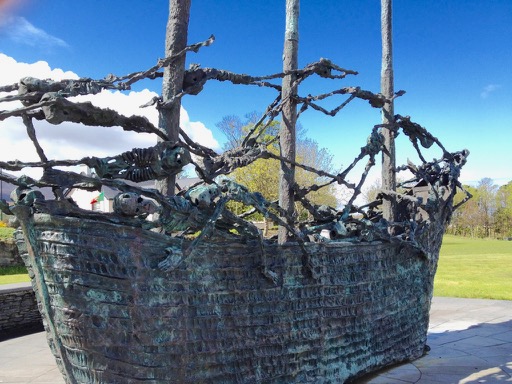
John Behan’s Coffin Ship Famine memorial in Murrisk, Co Mayo

They brought typhus, chaos, starvation and death and were soon filling the fever sheds built by the heroic citizens of the fledgling city. Catholic and Protestant arrived, and Catholic and Protestant co-operated to help them survive. It’s a tale of heroism and suffering and it echoes strongly  to this day, when we think about the refugees pouring into Greece and Calais – those people were once us.

Take a look at snippets from the haunting documentary film ‘Death or Canada’ (one here and another here) – it will give you a sense of what was involved for the incoming famine victims and for those on the ground.

Rowan Gillespie’s ‘Arrival’ in Ireland Park, Toronto

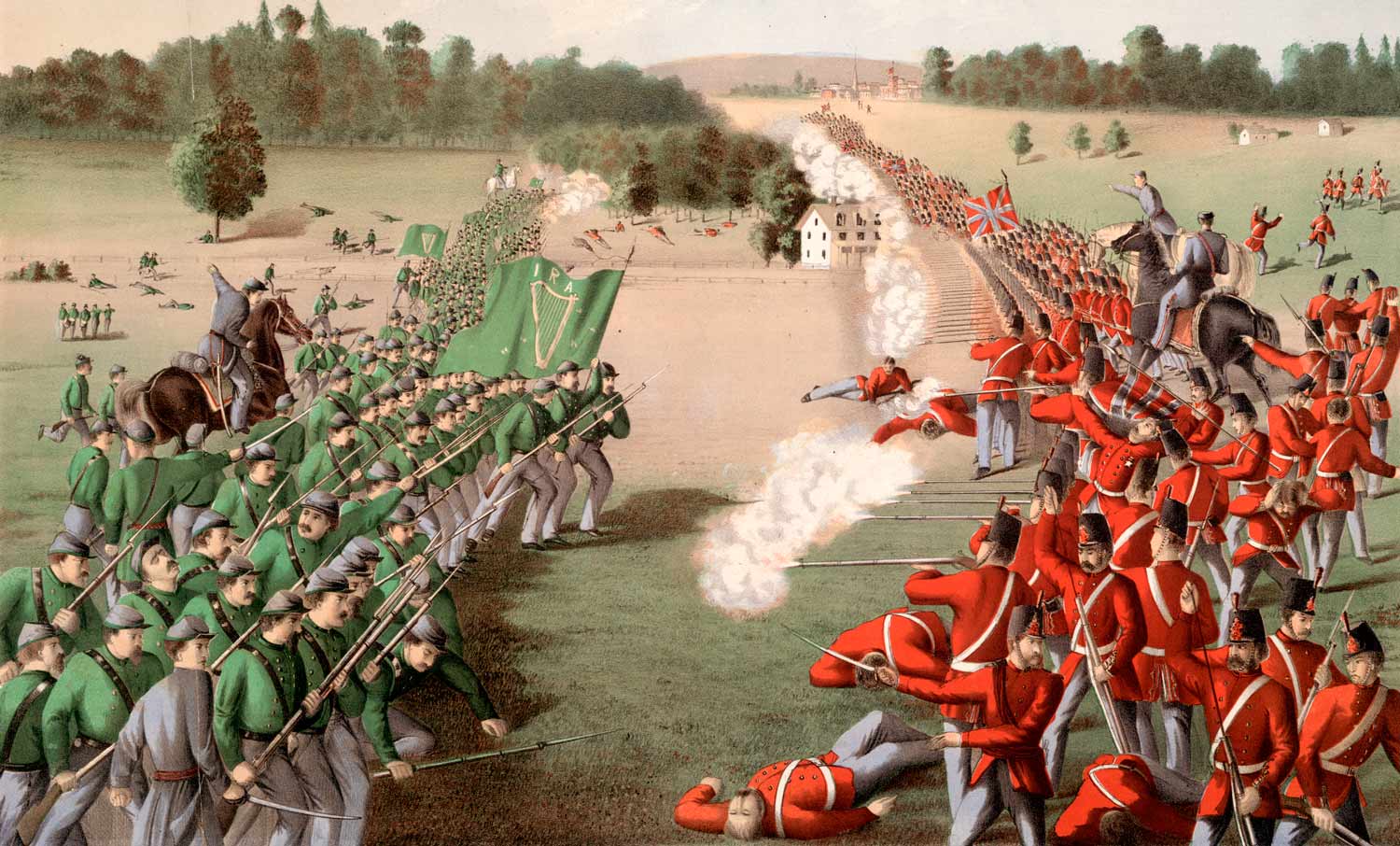
On a more muscular note, I have written elsewhere about the Fenians in Canada. Taking the fight for Irish freedom to ‘British soil’ in North America, there were many raids and one pitched battle organised by the Fenians in Canada. Ironically, the Battle of Ridgeway helped pave the way for Canadian Confederation.

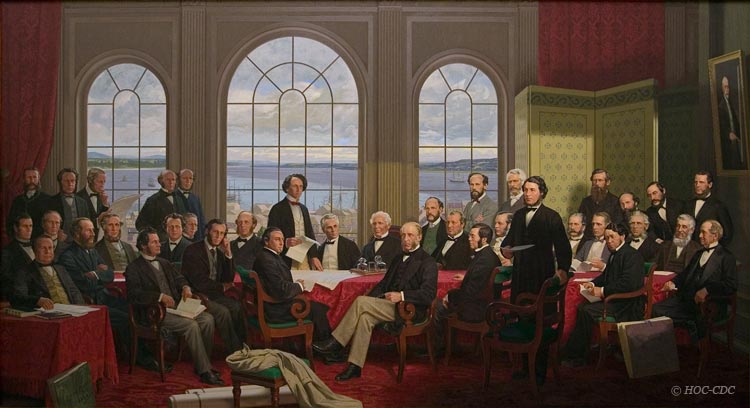
One of the Fathers of that Confederation was Thomas D’Arcy McGee, a complex character who started off in the Young Ireland Movement. In his early days he was a firebrand revolutionary and that’s how he is chiefly remembered here – as one of a group of poets and writers committed to the liberation of Ireland from British rule. In this he would have seen common cause with that old Unrepentant Fenian, O’Donovan Rossa.

Thomas D’Arcy McGee: the young revolutionary and the elder statesman

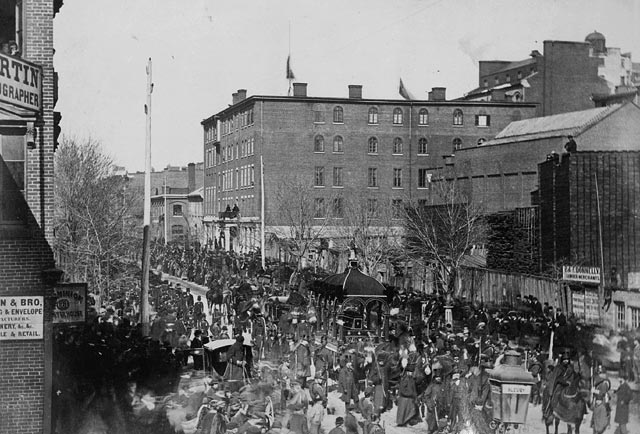
However, life in the United States, to which he was eventually forced to flee, while it radicalised Rossa even further, made a conservative out of McGee. He settled in Canada and became an ardent advocate for Canadian nationhood; however, he turned against violent rebellion and espoused a form of Home Rule, thereby earning the enmity of the Fenians who eventually ordered him assassinated. His funeral, held on what would have been his 43rd birthday, saw 80,000 people line the streets of Montreal to mourn a man that had given so much to his adopted country.

Image © Library and Archives Canada

I have written extensively about the Air India Disaster of June 1985. The beautiful memorial in Ahakista has become a place of focus for the families of the victims, who still come every year to remember those who died so tragically on that day. As a Canadian and an Irish person it has become a special place for me – at once a reminder of the terrorist threats that touch on all our lives and the warm and human response that we in West Cork delivered when it all came close to home.

And now we discover that Justin Trudeau, through his mother, is descended from the Bernards of Bandon. This is quite a pedigree – according to The Irish Times In 1661, Francis Bernard married Mary Freake and had six daughters and two sons, the research shows. Mr Trudeau is descended from their younger son, Arthur Bernard, who was High Sheriff of Cork in 1697 and MP for Bandon from 1713-14. My own wanderings around churches have paid off here – take a look at this memorial in St Peter’s Church of Ireland in Bandon – it’s for Francis Bernard – Arthur’s older brother!

So there you are, Ambassador Vickers – one Canadian-Irish woman’s take on some of what binds us as nations. Oh – and for those of you who don’t know who Kevin Vickers is, this is no regular ambassador, no career diplomat. This is a genuine Canadian hero! We look forward to welcoming him back to West Cork and to hearing him speak on Irish-born Canadian Soldiers in the First World War. I wonder if he’ll arrive on his Harley?A famous Canadian painting depicts the Fathers of confederation – and there’s D’Arcy McGee in the front row, second from the right. Image © Canadian House of Commons.