
A classic piece of Rock Art – on display in Dublin’s National Museum
As we enter October, we begin to look towards the dark part of our year – and to think of the Cailleach who, in these western parts of Munster, is known as The Hag of Beara: in early tales she is pictured as a prolific figure responsible for shaping the landscape by carrying huge stones in her apron and dropping them to form hills and outcrops, as well as ancient standing stones, circles and alignments. She is also seen wielding a great hammer with which she sculpts and refines her geological creations. She has had seven periods of youth, one after another, so that every man who lived with her came to die of old age. Her grandsons and great grandsons are so many that they make up entire tribes and races. She falls asleep on Bealtaine (May 1st) and wakes again on Samhain (November 1st) – we will be looking forward to the storms which will herald her coming. Until then she rests on a hillside overlooking Coulagh Bay, beyond Allihies on the remote Beara Peninsula, where her rocky incarnation depicts her as both a young maiden and an old crone.
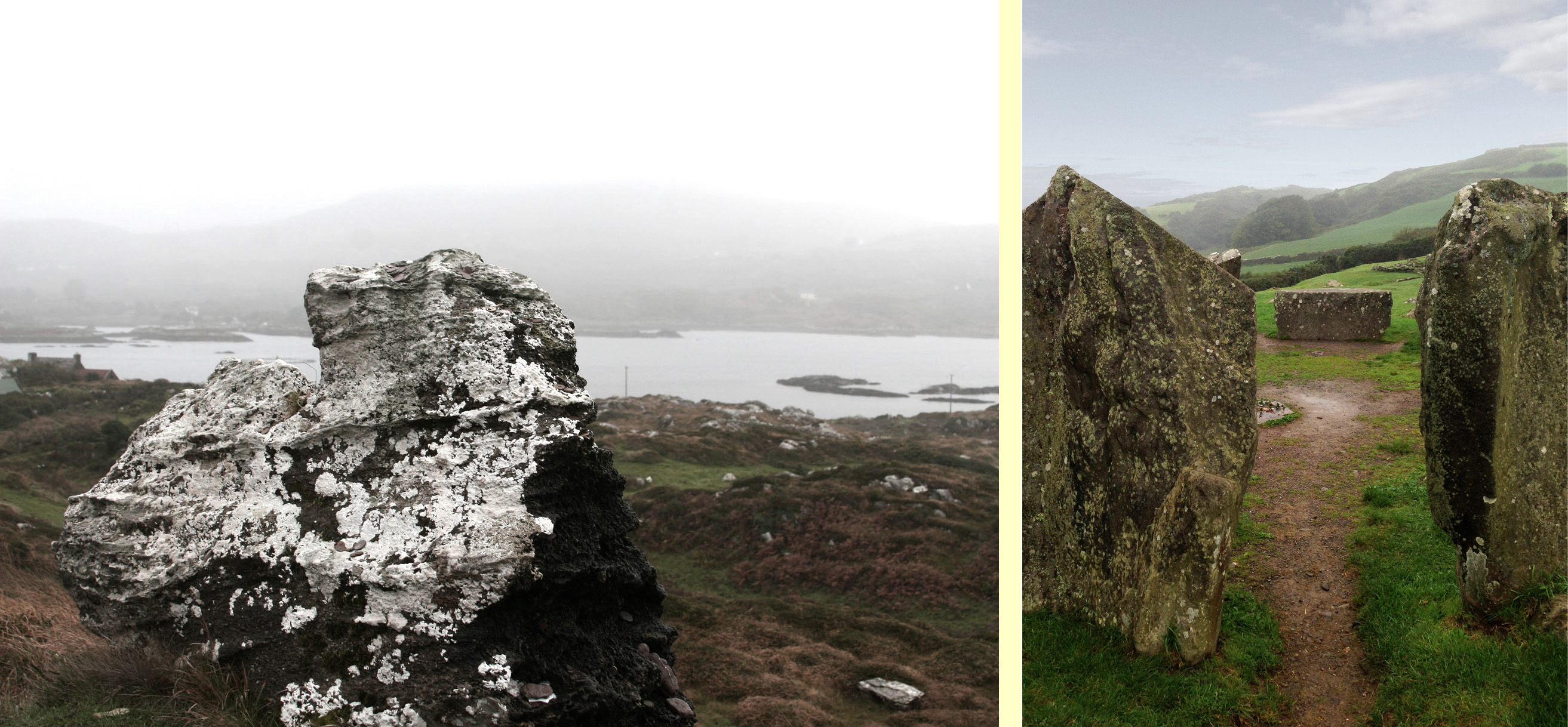
Monuments in the mist: The Hag of Beara and Drombeg Circle
Ireland is stuck in a stream of warm air coming up from the tropics at the moment: this makes temperatures two or three degrees higher than the norm for early autumn, but also causes a damp landscape shrouded in fog: we have missed our view of the Fastnet for several days.
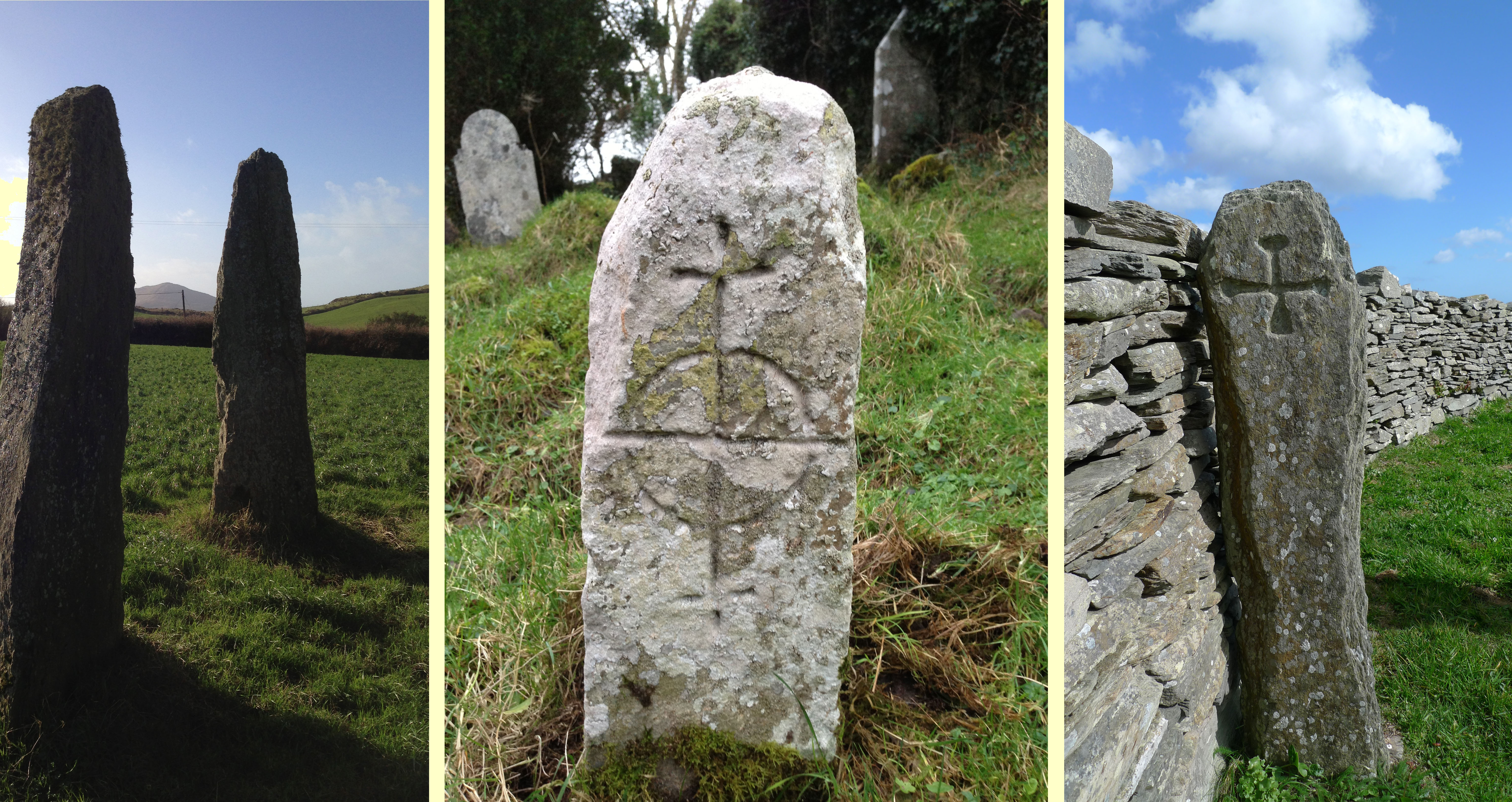
Some West Cork standing stones
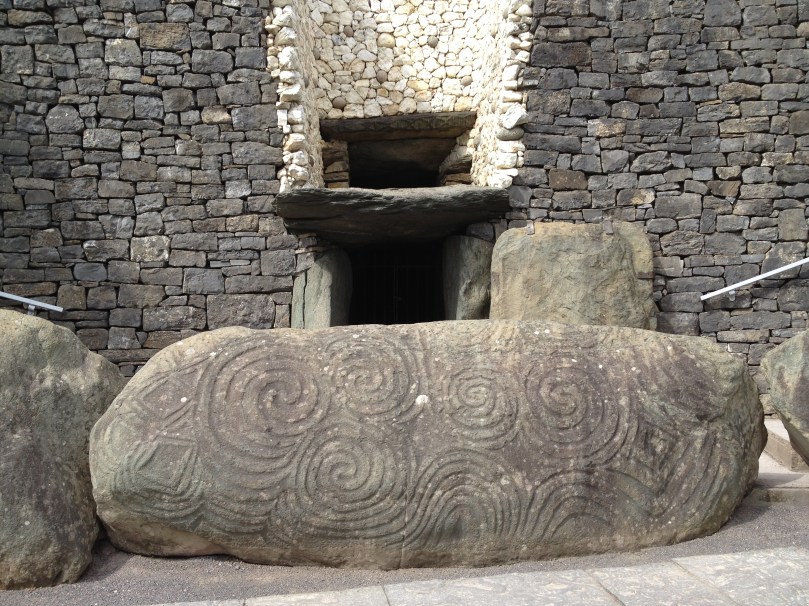
The weather hasn’t hindered our exploration of Ireland’s old stones – the terrain created by the Hag. Yesterday we went to Drombeg Circle: a popular site for tourists. Many visitors will fail to notice the rock art carved on the recumbent stone that points out this megalithic monument’s alignment with the winter solstice. At the foot of another stone we found some enigmatic markings which I readily interpreted as a dancing Hare.
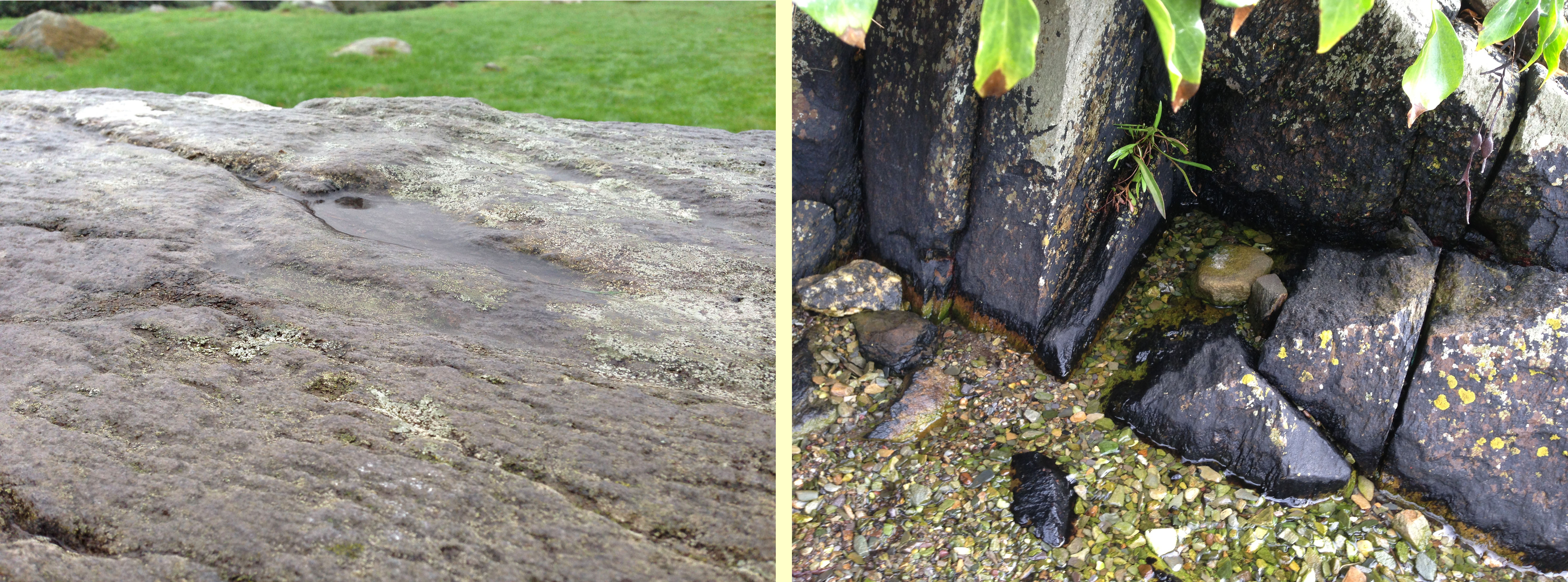
Drombeg rock art – and a mysterious holy well in Rossbrin Cove

Bishop’s Luck – a megalith close by Nead an Iolair: according to local legend, a bishop is buried under this!
Ireland’s history is written in stone: the natural landscape; megalithic monuments; buildings – cottages, castles, farms, churches, lighthouses; every townland is rich in examples. Building material, track surfacing, grave marker and artists’ canvas (perhaps): stone has been a resource to aid human occupation for thousands of years.
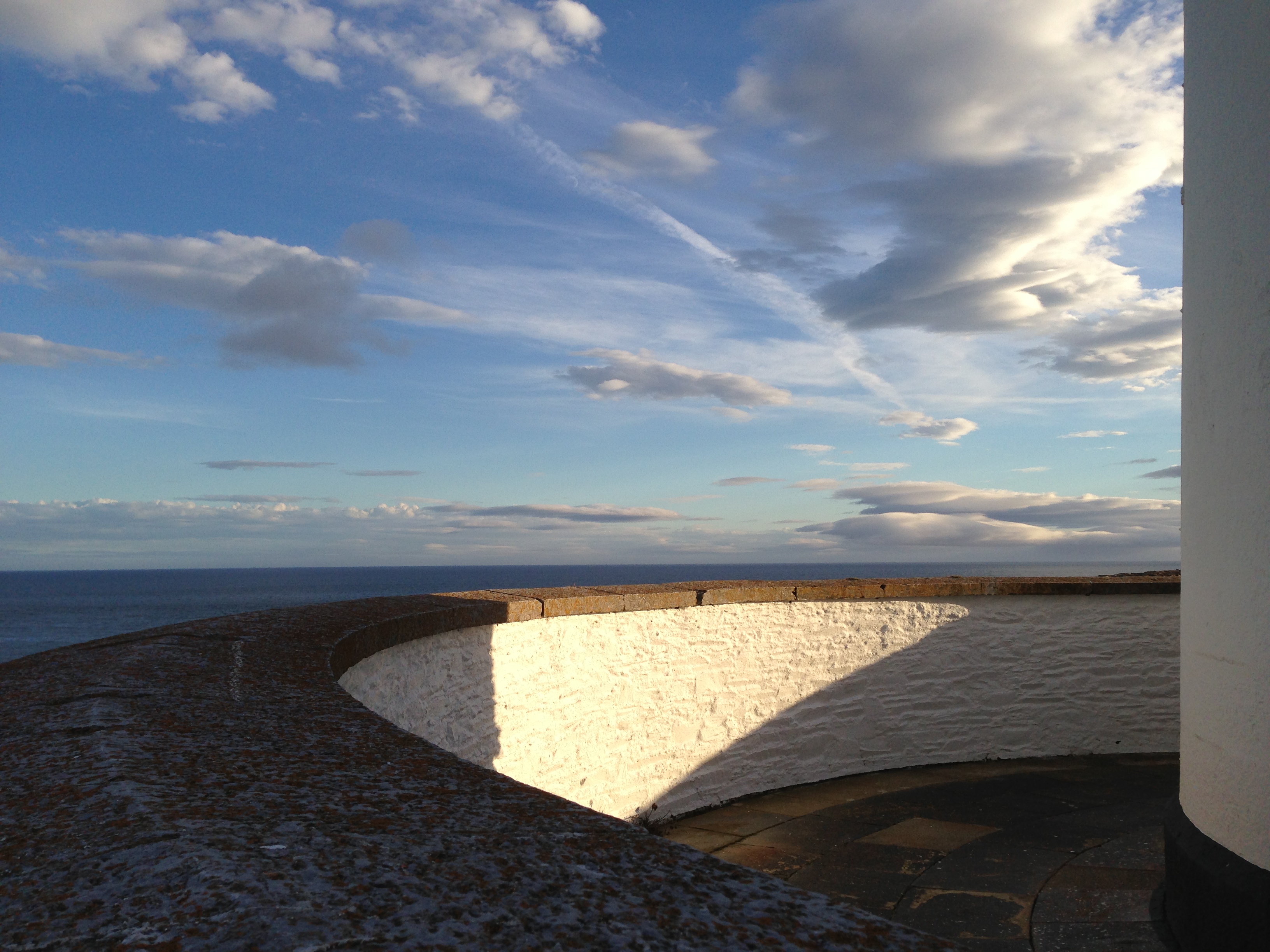
Stone in context: Galley Head Lighthouse
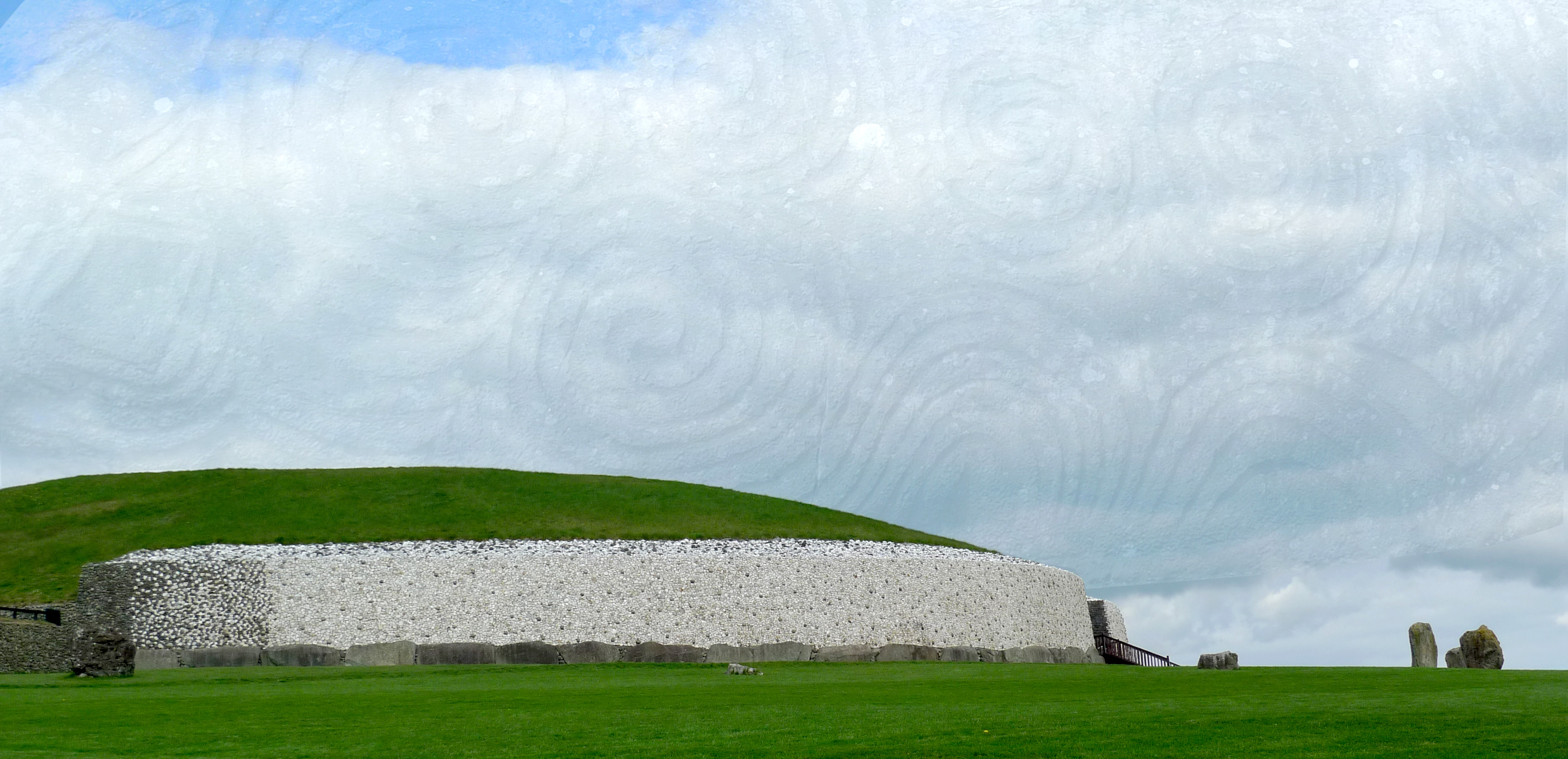
The ultimate Neolithic stone monument – Newgrange Passage Grave, County Meath – the spectacular quartz facing is a conjectural reconstruction

 Roaringwater Journal