Rock Art 3D

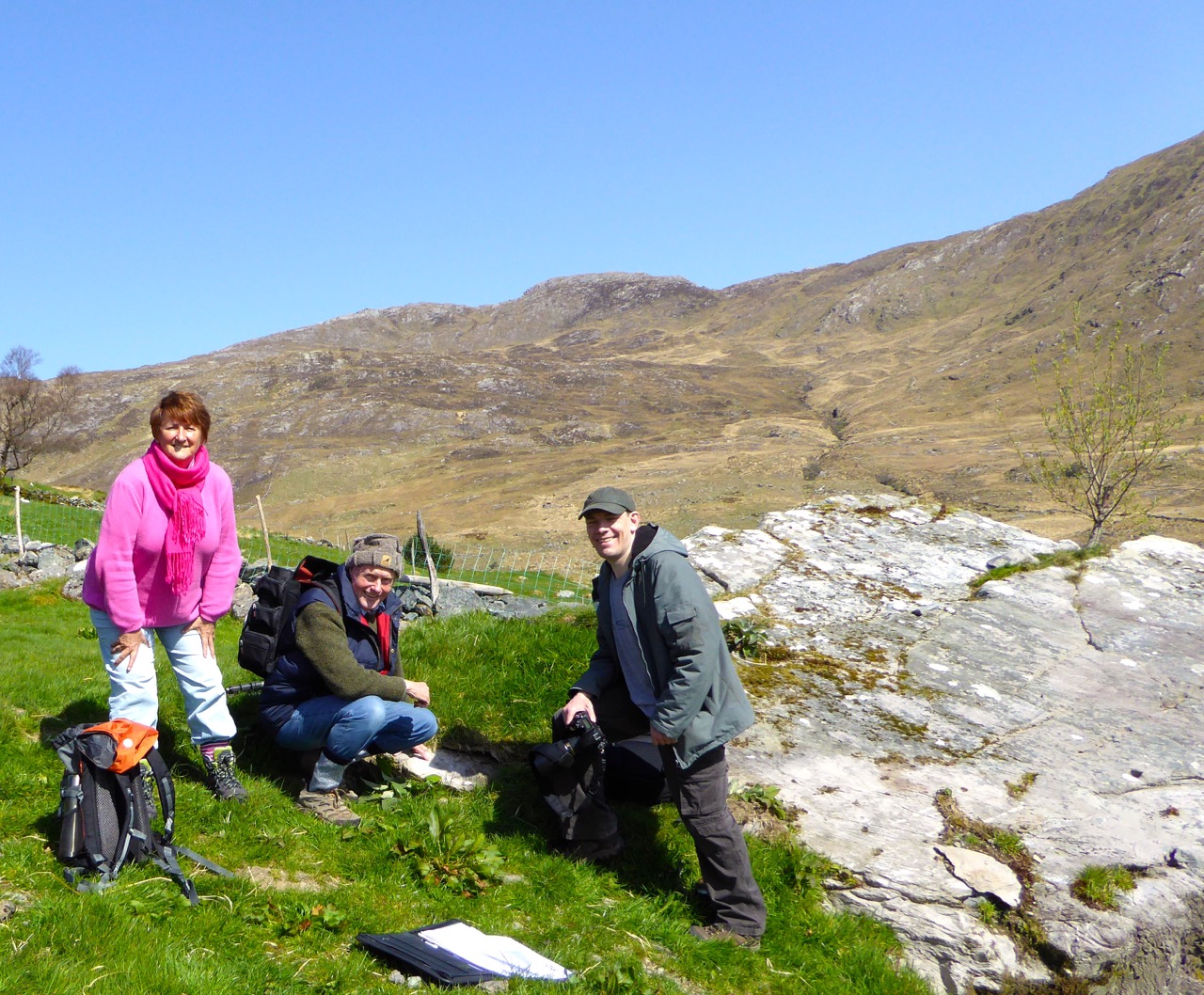
There’s a concentration of prehistoric rock art around Castletownshend and I am currently writing a paper about that for the next issue of the Journal of the Skibbereen and District Historical Society. There are seven individual pieces of rock art: as part of the research I recently visited the one stone I hadn’t seen yet. Fortunately, we had the company and assistance of Conor Buckley of Gormú Adventures (been on one of his marvellous walks yet? If not, try this one, or this one or this one.) who, as a native of the area, knows everyone and introduced us to the landowner, the genial Bill O’Driscoll.

The townland is Farrandeligeen – isn’t that a wonderful name? A dealg is a spine or thorn or prickle, and therefore a deilgín is a small one of those. So it can be translated as the Land of the Thorns, which can be blackberries or blackthorns – and this being West Cork, probably both. An old saying is Is beag an dealga dhéanfadh braon – the tiniest thorn can cause big problems. Thorn in a hiking boot, anyone?

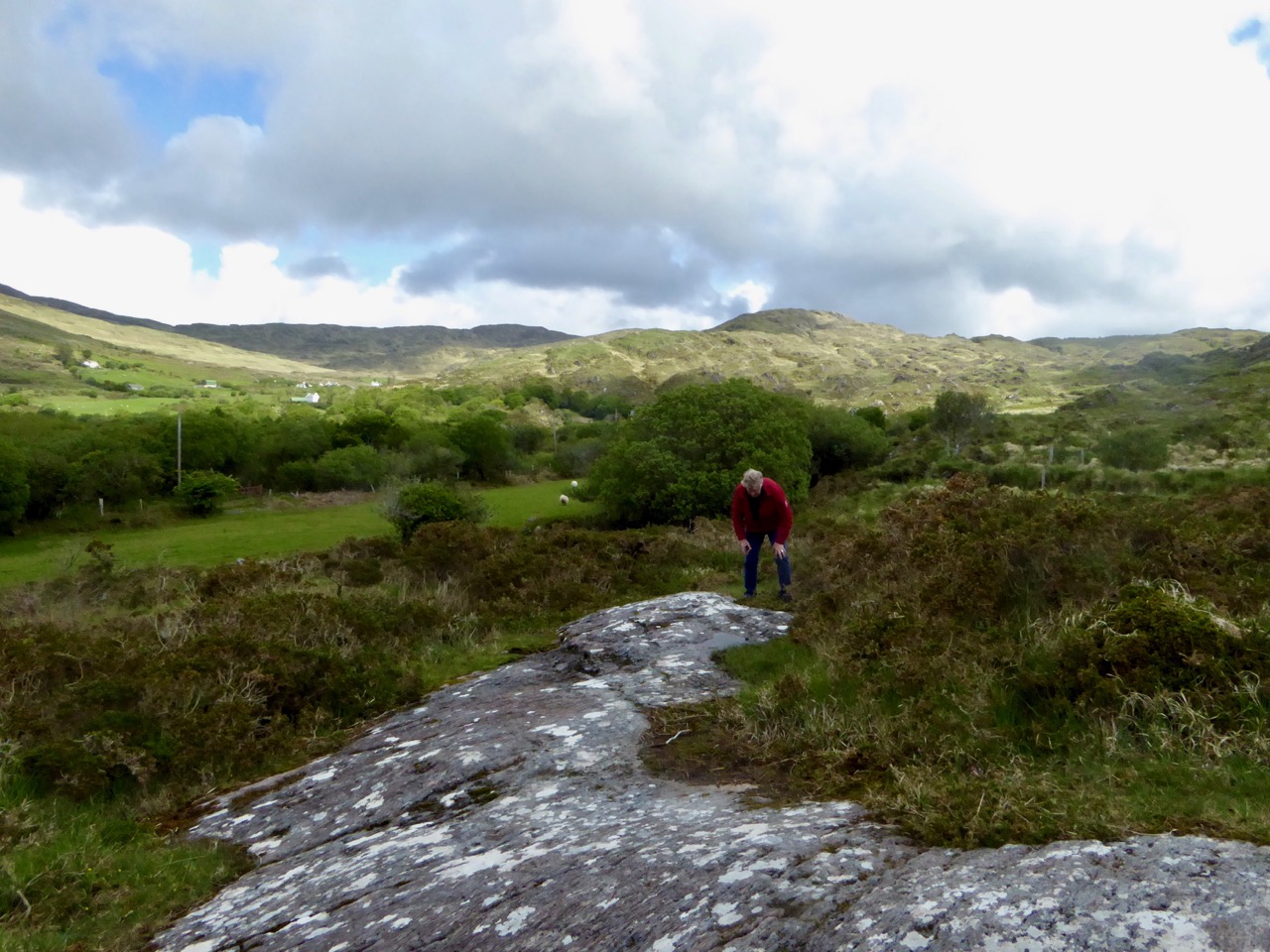
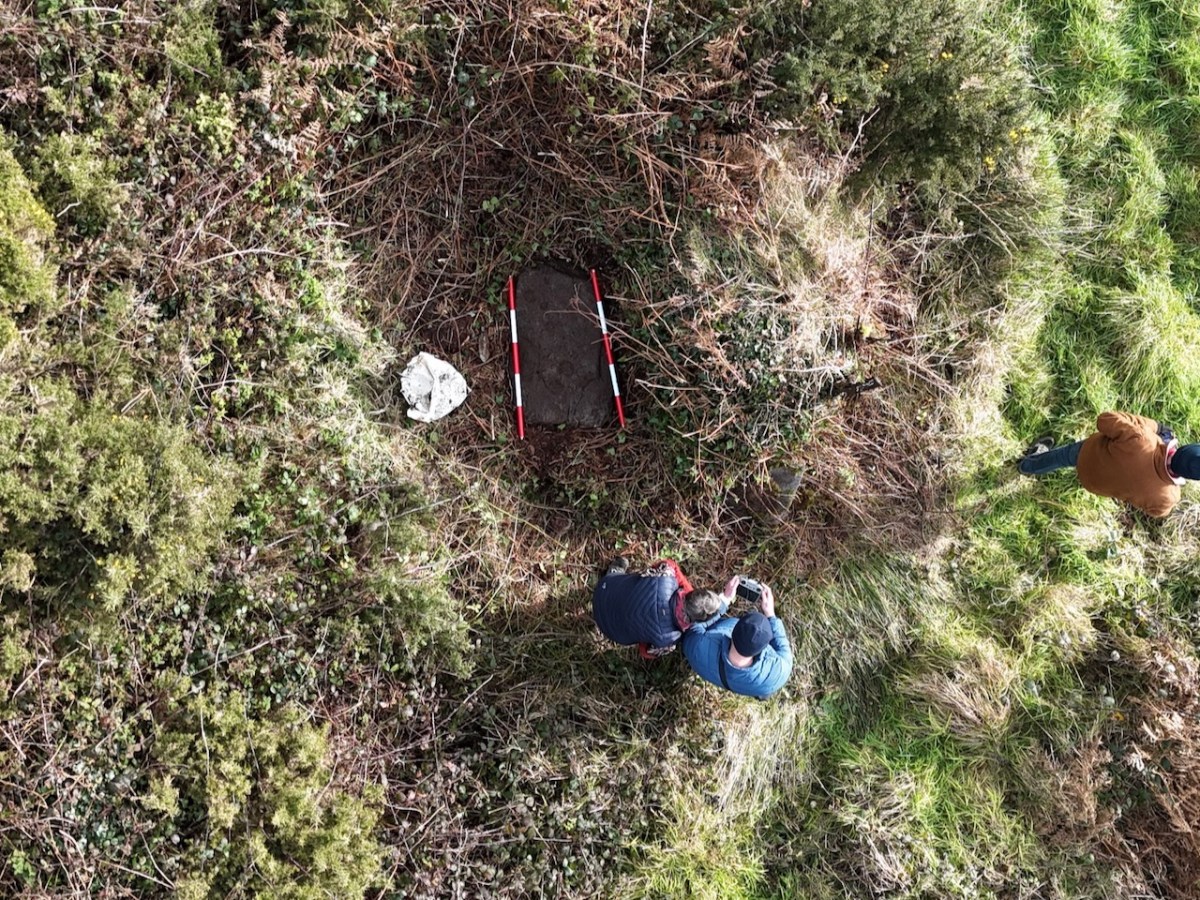
The land lived up to its name. Bill took us to where he knew the rock art was, and that’s when we encountered the deligeen bit. Fortunately he had a stout fork with him, and took to hacking and bashing his way through the thorns, while we stood back and offered encouragement. The first place proved unfruitful and he moved a few metres away and soon struck gold. Among the brambles, earth, gorse and general undergrowth there was a hint of something white. This turned out to be a bag filled with stones – the very bag he had put there to remind him that this is where the rock art was – but so many years ago that it had slipped his mind until now.
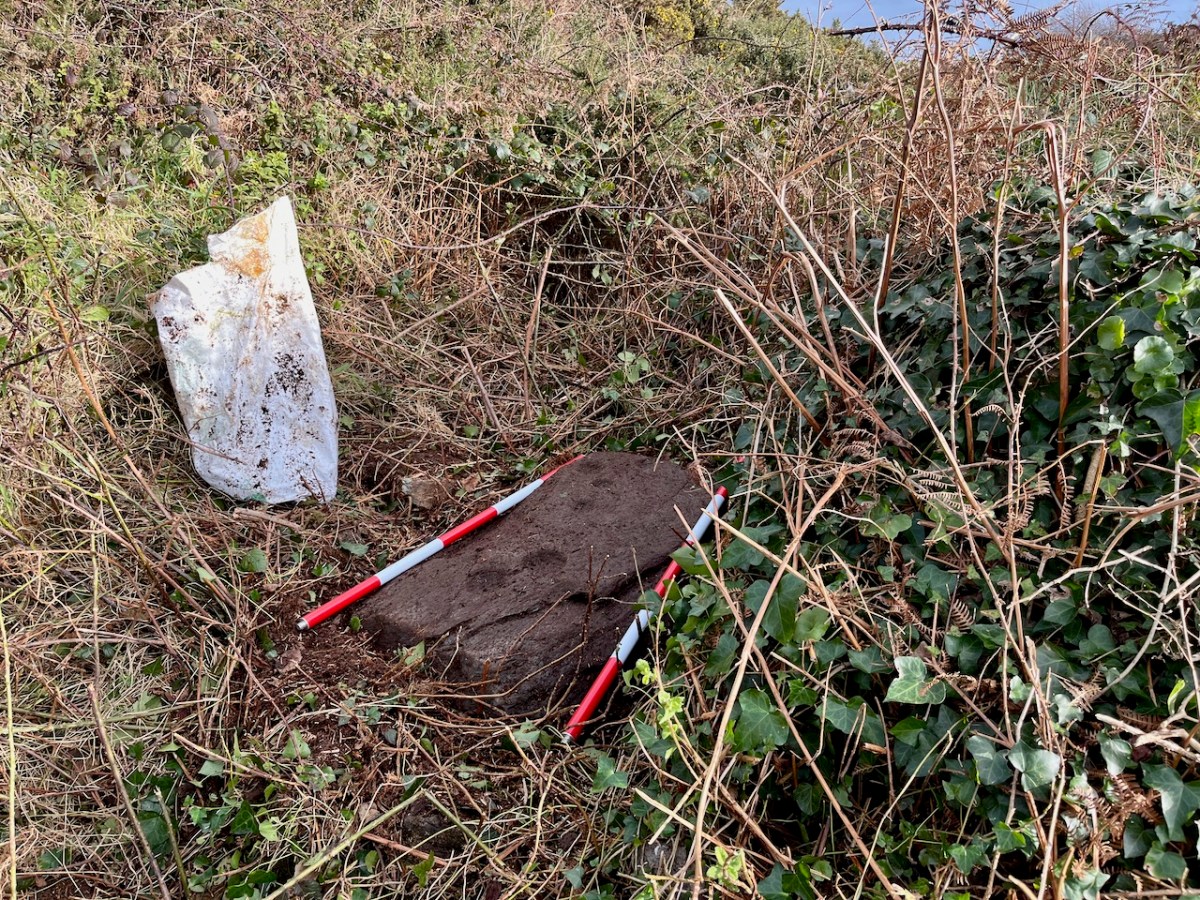
And so the stone gradually came into view until I could finally get down to clearing it off with my gloves. (I was sorry I hadn’t brought the red socks.) This stone is already in the National Monuments Records as a ‘Cupmarked Stone’ (CO151-013) and is described as having ‘at least ten cupmarks’. Bill told us that his father had said he remembered the stone standing upright – it had fallen to its present position flat on the ground since his father’s time.
For more on what a cupmarked stone is, and how it fits in to the general category of ‘Rock Art’, see my post The Complex Cupmark. For now, quoting from that post:

The cupmark is the most basic and numerous element or motif of rock art in Ireland and elsewhere. In the examples labelled rock art in County Cork, they occur with other motifs, principally concentric rings, sometimes with radial grooves, and a variety of curved or straight lines. They can be incorporated within a motif (as in cup-and-ring marks, rosettes, or where enclosed by lines) or they may be scattered, seemingly randomly, over the surface of the rock, between and among the other motifs. 

. . . patterns of straight lines, or of rough circles or semi-circles, can be made out in several of the stones we have recorded to date.

Rock art is widespread across the Atlantic coast of Europe and is believed to date from the Neolithic, about 5,000 years ago. The cupmark as a motif, however, continued well into the Bronze Age, since we find it on wedge tombs and boulder burials. We do not know what the significance of the cupmark is, but it must have held a special meaning to the carvers since it persisted over time and space.
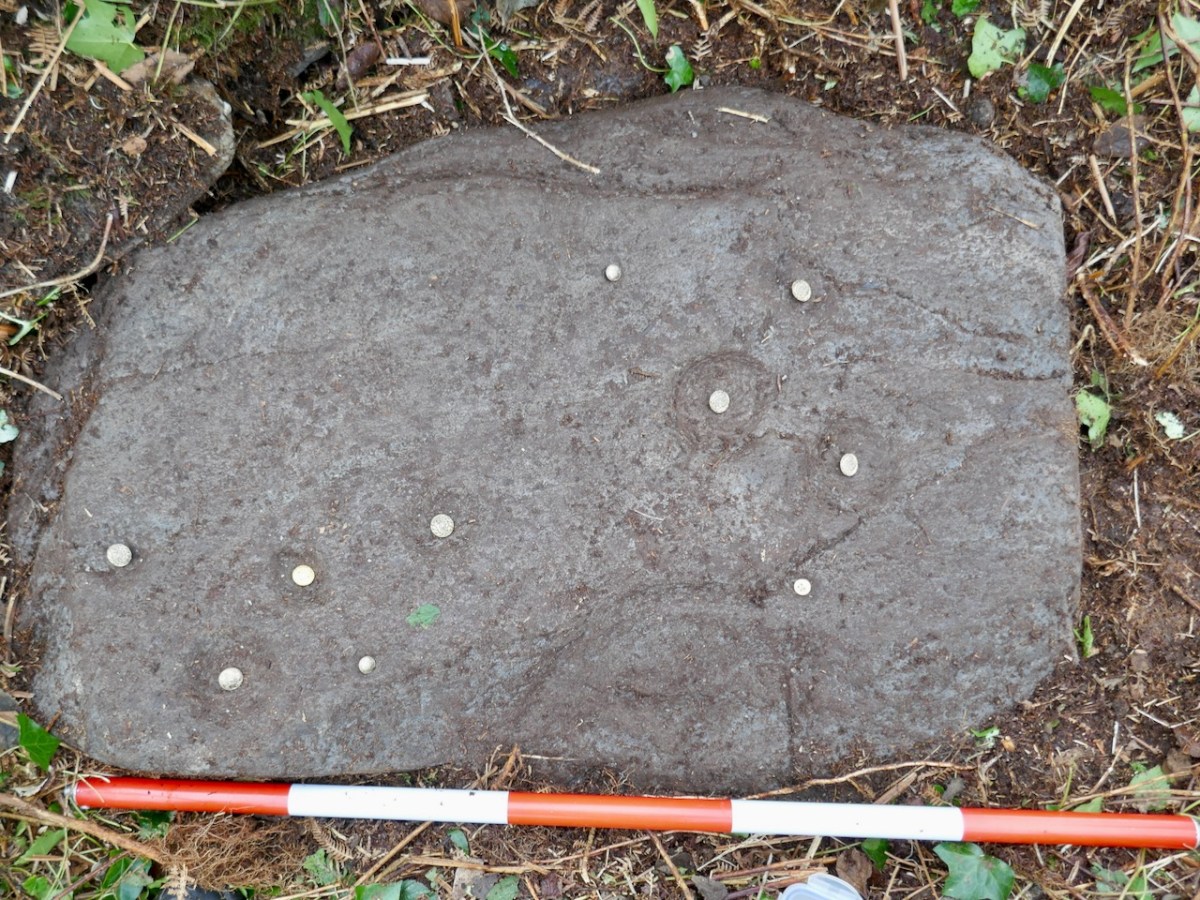
We got the rock cleared enough to identify the cupmarks and I put a button in each one to make sure it showed up – sorry, those are not gold coins. Some of the cupmarks are tiny. You can look at the cupmarks as a random scatter, or as in the quote above, you can see two groups, in which a cupmark is surrounded by a semicircle of four others. 
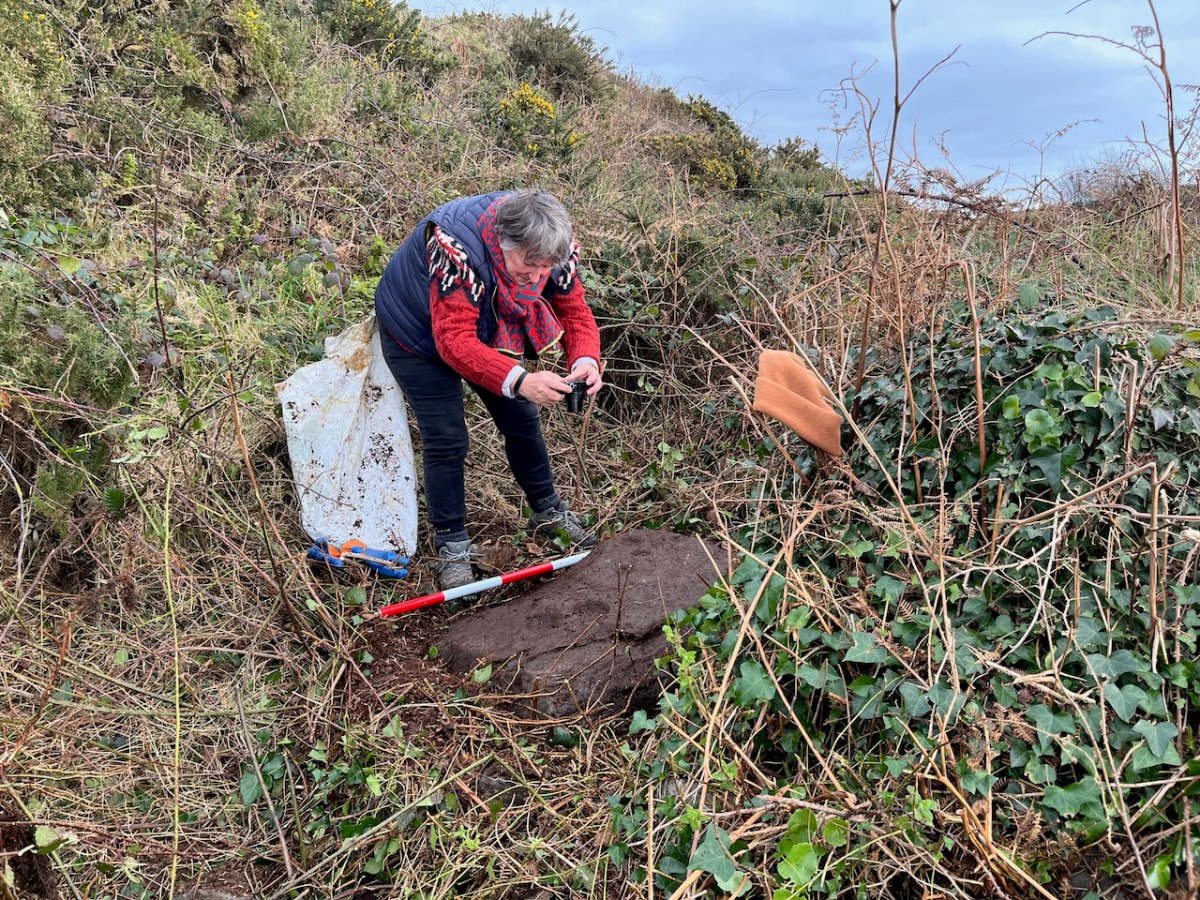
It was hard to get the rock clean enough to see detail so I decided to carry out a photogrammetric survey, the object of which is to end up with a 3D image from 2D photographs. That involves taking LOTS of photos (in this case, 100) of the stone, working my way systematically across the surface of the stone at three different levels, keeping the camera settings consistent.
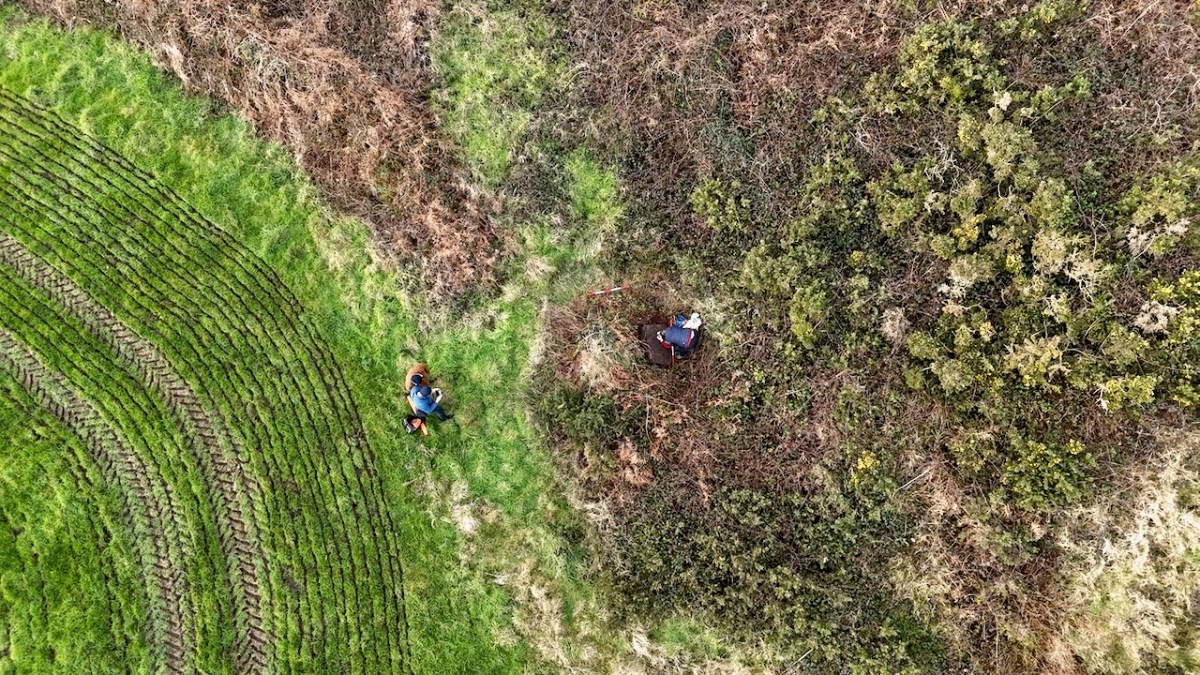
Conor had his drone with him – a new experience for us! He took photos and videos of the stone in its general location, capturing me doing the photogrammetry and also a good indication of the amount of undergrowth that had to be cleared out of the way before the rock came into view. (Thank you, Bill!)

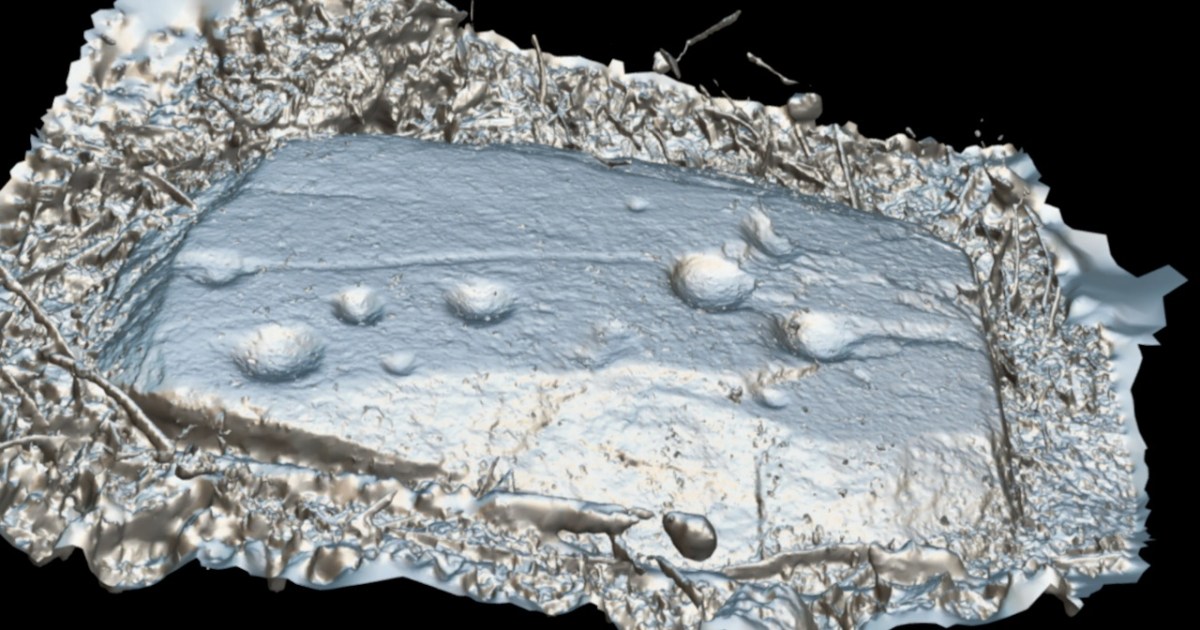
I sent the photographs off to UCC, to the Department of Archaeology, where Nick Hogan generously processed them for me, using the Department’s specialised software. The results are fascinating!

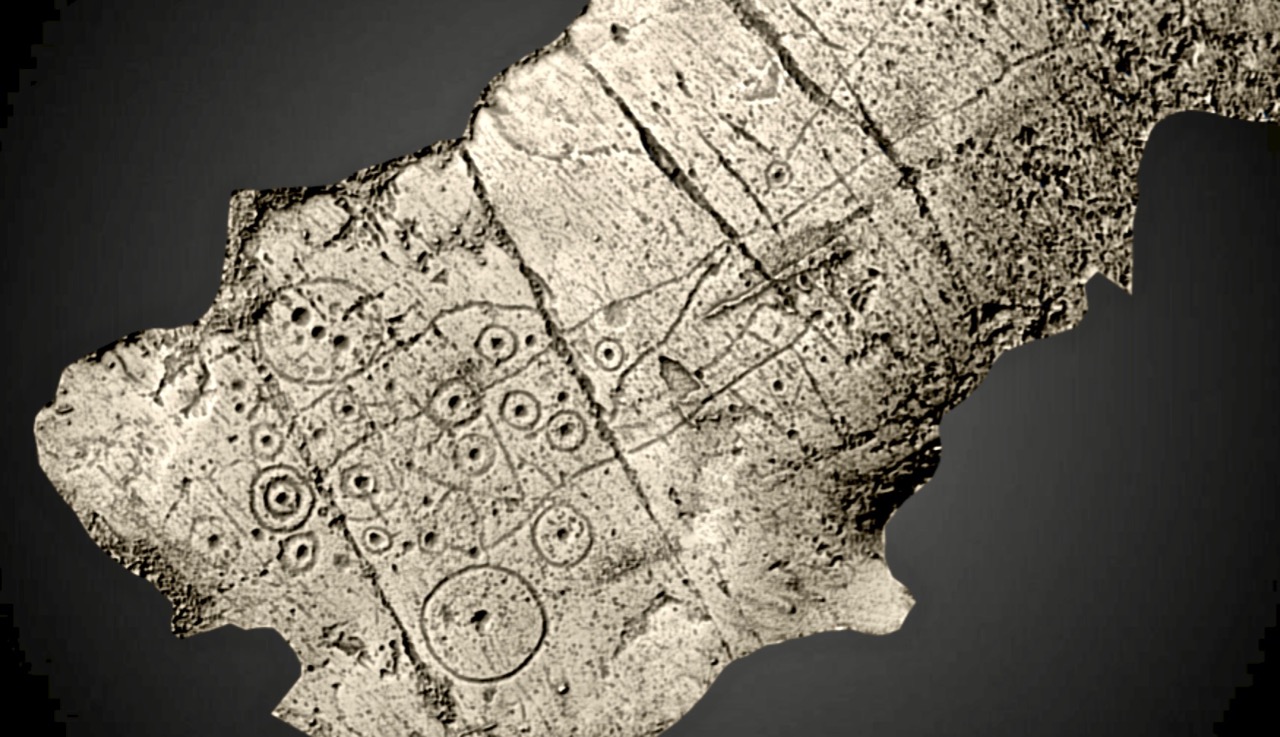
First of all, it looks like there are more than just cupmarks on this rock. A long line stretches from the far left (in this image) cupmark to the right hand grouping. There is a hint of a circle around the bottom left cupmark. The three large cupmarks in the right grouping appear to be conjoined, and there is a line from from the far right cupmark to the end of the stone.

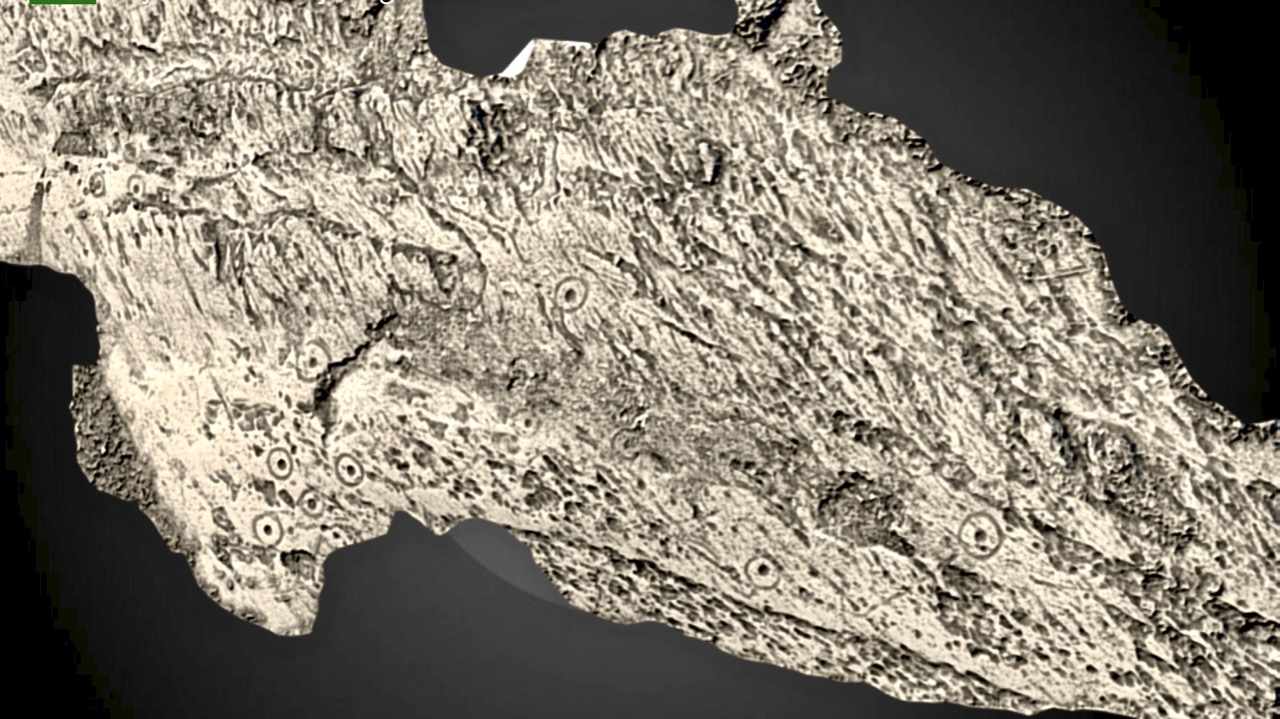
You can view the render in what is called Matcap, which creates it in a metallic view (above and below). On a grey day with no shadows, and still lots of mud on the stone, none of this was obvious to the naked eye. There is a possibility that these new elements, rather than being carved, are natural contours in the rock itself. We haven’t had time yet to go back and check this out more carefully, but we will have to do so – and update this post! If indeed the lines turn out to be carved, that fact will elevate the rock from a Cupmarked Stone to Rock Art. Watch this space.
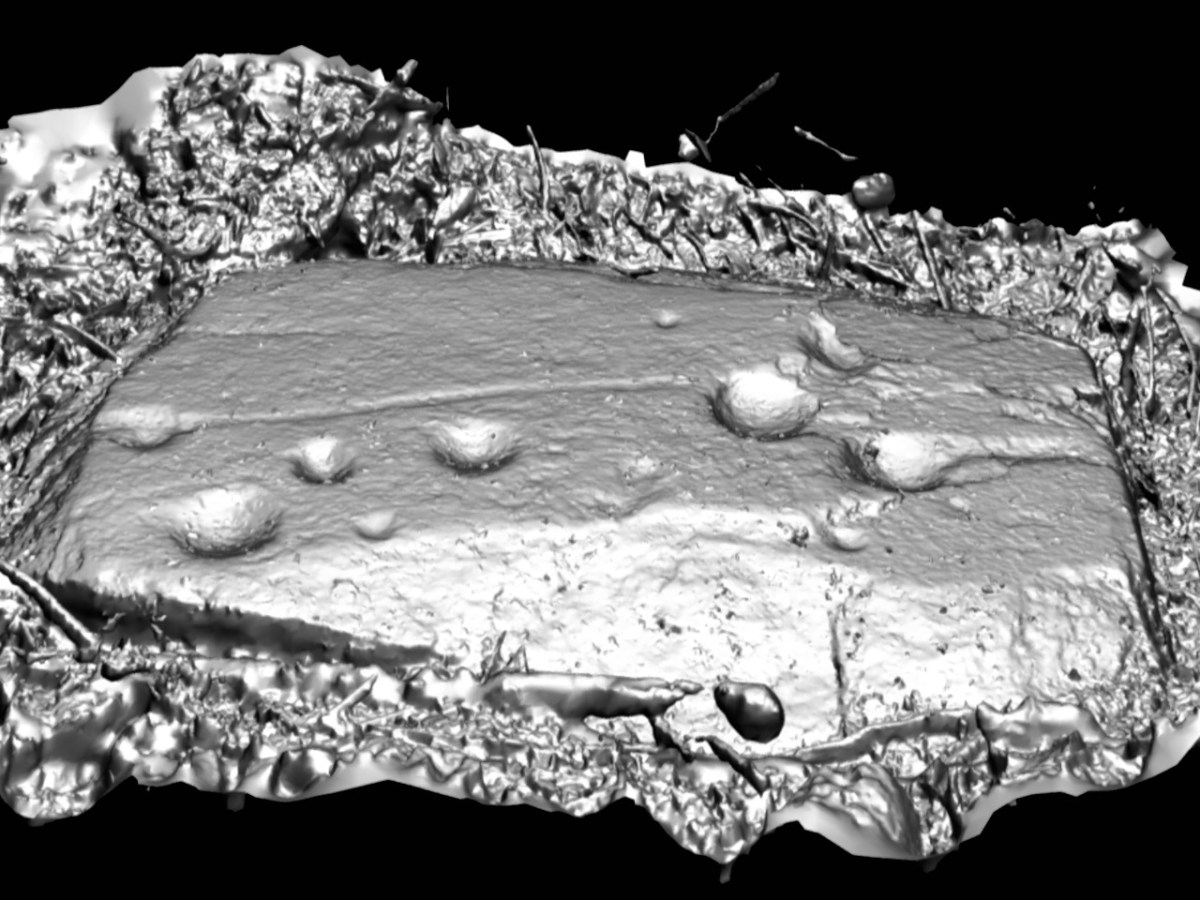
If you’d like to see the 3D render for yourself and have fun turning it this way and that, you can click here. Let me know if you spot anything else! It was good to be out in the field again after a long winter of cold wet weather. It was great to have Conor and his drone along and to meet Bill, who is committed to keeping safe this precious part of our heritage.
Revealing Rock Art: 150 Years of Images

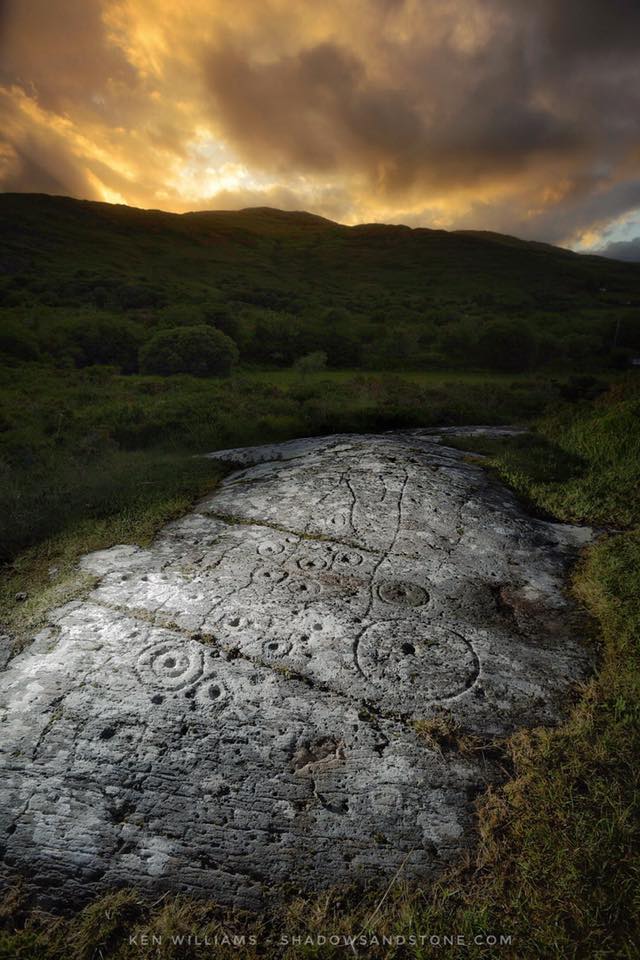
This week a powerful image from Ken Williams of Shadows and Stone (copyrighted, used with permission) lit up the Irish Rock Art Facebook Page (180,000 people had seen it at last count, and it’s been shared more than 1500 times). The photograph, taken with Ken’s signature blend of natural and artificial light, was of a stone in Kerry often known as the Staigue Bridge Rock Art, although technically it’s in the townland of Liss.

As it turns out, this is one of the best-documented rock art panels in Ireland, with images dating from the middle of the nineteenth century to the present day.

Taken on a recent visit to Liss/Staigue Bridge Rock Art site. This is probably what a casual visitor will see. Can you make out any carvings?

The response to this photograph highlights several important features of Irish rock art. First of all, it seems people are hungry to know more about these enigmatic carvings, and yet rock art is one of the least known aspects of Irish archaeology. Time after time, as Robert and I present exhibitions or give talks, we meet up with a near-universal response of “How come we’ve never heard about this before?”

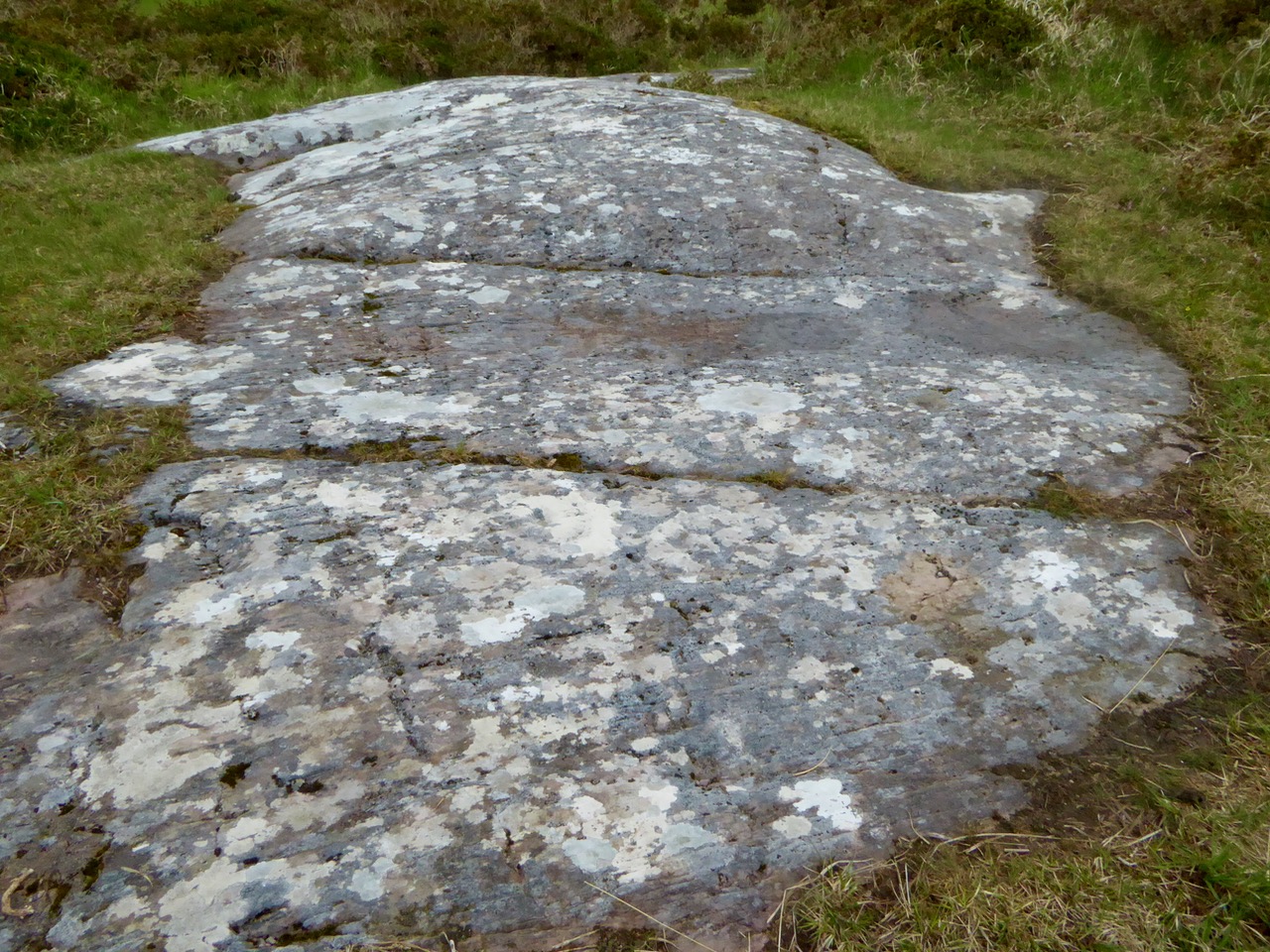
Another view of the top section of the panel

Secondly, a photograph like this is not normally what you observe in the field. Commonly, rock art (and this one is no exception) is actually difficult to see under most lighting conditions. This rock is just off a popular hiking trail and the vast majority of walkers are unaware of what is a few meters from their path. Even if the route went right alongside it, most walkers would pass by without noticing anything unusual.

This will give you an idea of the extent of the panel

Thirdly, it is no longer possible to record rock art by any of the traditional methods that were in common use up to the 1990s. Nowadays, recording techniques that do not impact in any way with the rock surface are preferred, and that limits us to what can be imaged through photographic and scanning technology.

Aoibheann Lambe’s virtuoso photograph – this is the panel in the second photograph, taken from almost the same angle but under perfect natural lighting conditions. © Aoibheann Lambe

There are currently three ways in common use to photograph rock art so that the carvings will show up. The first is to use the natural low, slanting, shadow-casting, light at sunrise or sunset. Rock Art Kerry, the work of archaeologist Aoibheann Lambe, has an outstanding photograph of the rock surface using only natural light. Given our climate, it is likely that many visits to the rock in all kinds of temperatures, early in the morning or late in the evening, were necessary before the perfect shot was possible. Aoibheann’s Facebook page is the place to be these days for new finds – she is making discoveries at a breathtaking pace!

Another of Aoibheann’s photographs – this one shows the extent of lichen growth on the rock surface, which often functions to obscure carvings. © Aoibheann Lambe

The second is to use flash photography – a technique that Ken Williams has perfected and uses to great effect to show up even faint carvings. We’ve seen Ken working – this isn’t a mater of a simple flash on a camera – multiple flashes are deployed with a skill that comes from long experience, and respond to an electronic trigger on his camera.  If you haven’t already done so, a visit to his site is an absolute must for anyone interested in rock art – or indeed in Irish archaeology.

Finola and Robert from Roaringwater Journal and Ken Williams of Shadows and Stone at Derrynablaha in Kerry

The third technique is that of photogrammetry. In essence, this is the combination of multiple high resolution photographs to construct a 3D image of a rock surface. The Discovery Programme has been sponsoring 3D imaging of various national monuments, including Ogham Stones and Sheela-Na-Gigs, for some time. Under this program, The Dingle Museum (Músaem Chorca Dhuibhne) has produced a series of 3D images, including an excellent one of the Liss/Staigue Bridge rock art panel.

The top panel rendered in 3D – this is a screen capture. © Corca Dhuibhne 3D 2017

It is particularly exciting because it’s unusually clear (rock art 3D images can suffer from lack of clarity for a variety of reason) and also because this technique allows an image of the whole panel, whereas photography can only capture pieces at a time.

These stills have been captured from the 3D images on the Museum site but they do NOT compare with the experience of viewing and manipulating the 3D images on screen. It’s brilliant work, so please go to their page for the real thing. © Corca Dhuibhne 3D 2017

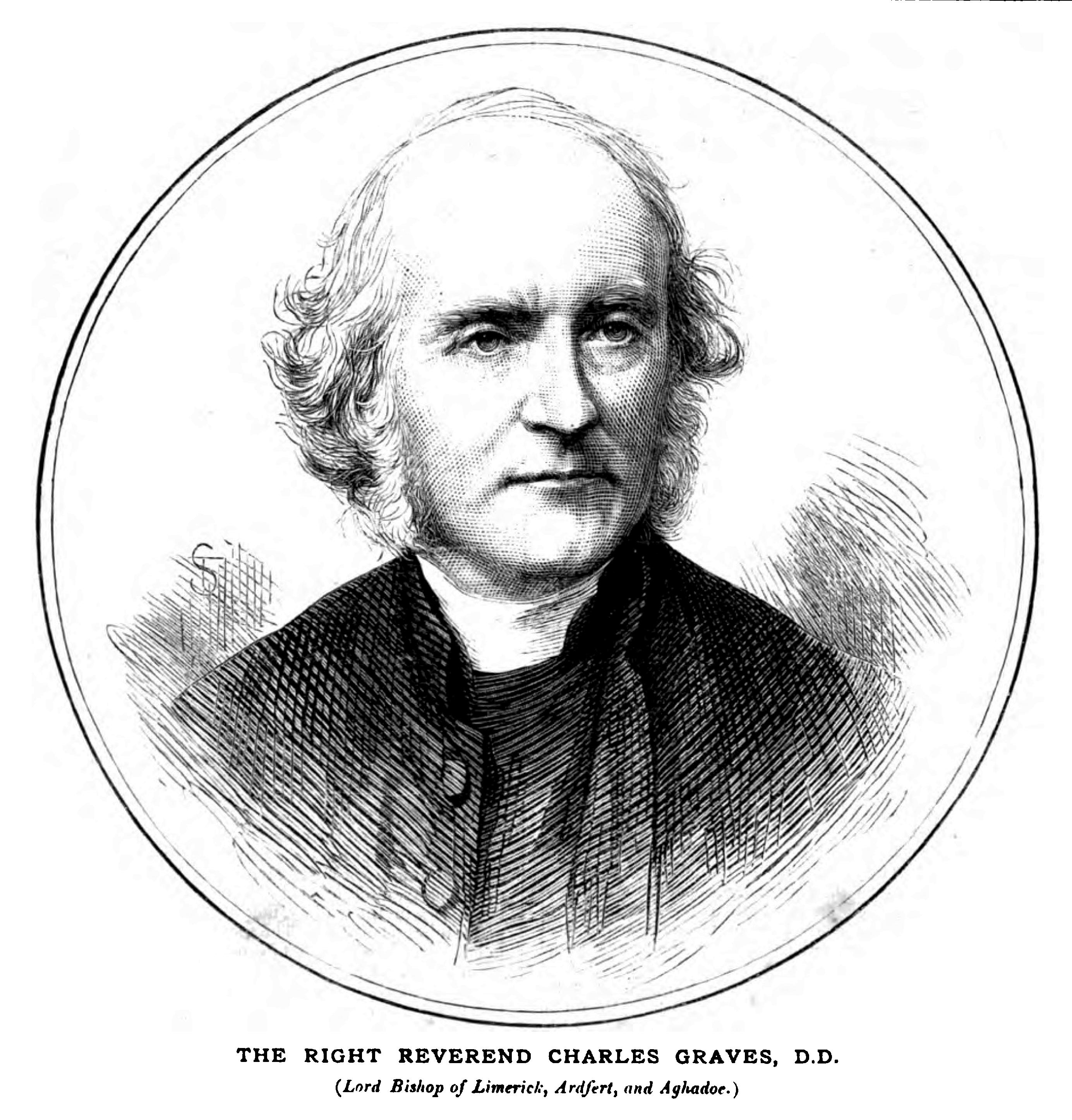
But back to the past, when it was still possible to produce drawings of the carvings. Back, in fact, to the 1850s! There were two Irish antiquarians called the Rev Graves. The better-known one was the Rev James Graves of Kilkenny, but the one we are concerned with here was the Rev Charles Graves, Bishop of Limerick and a noted mathematician, scholar, antiquarian, and President of the Royal Irish Academy. He was fascinated by Ogham and on a trip to view Ogham stones in Kerry he came across other ‘inscribed rocks’ of a type he was unfamiliar with. He wrote up his findings and presented them to the Academy in 1860.

Taken from the Wikipedia article on Charles Graves. Image above by Anonymous – Church Bells (1874–1875)) W. Wells Gardner, Publisher, London, Public Domain

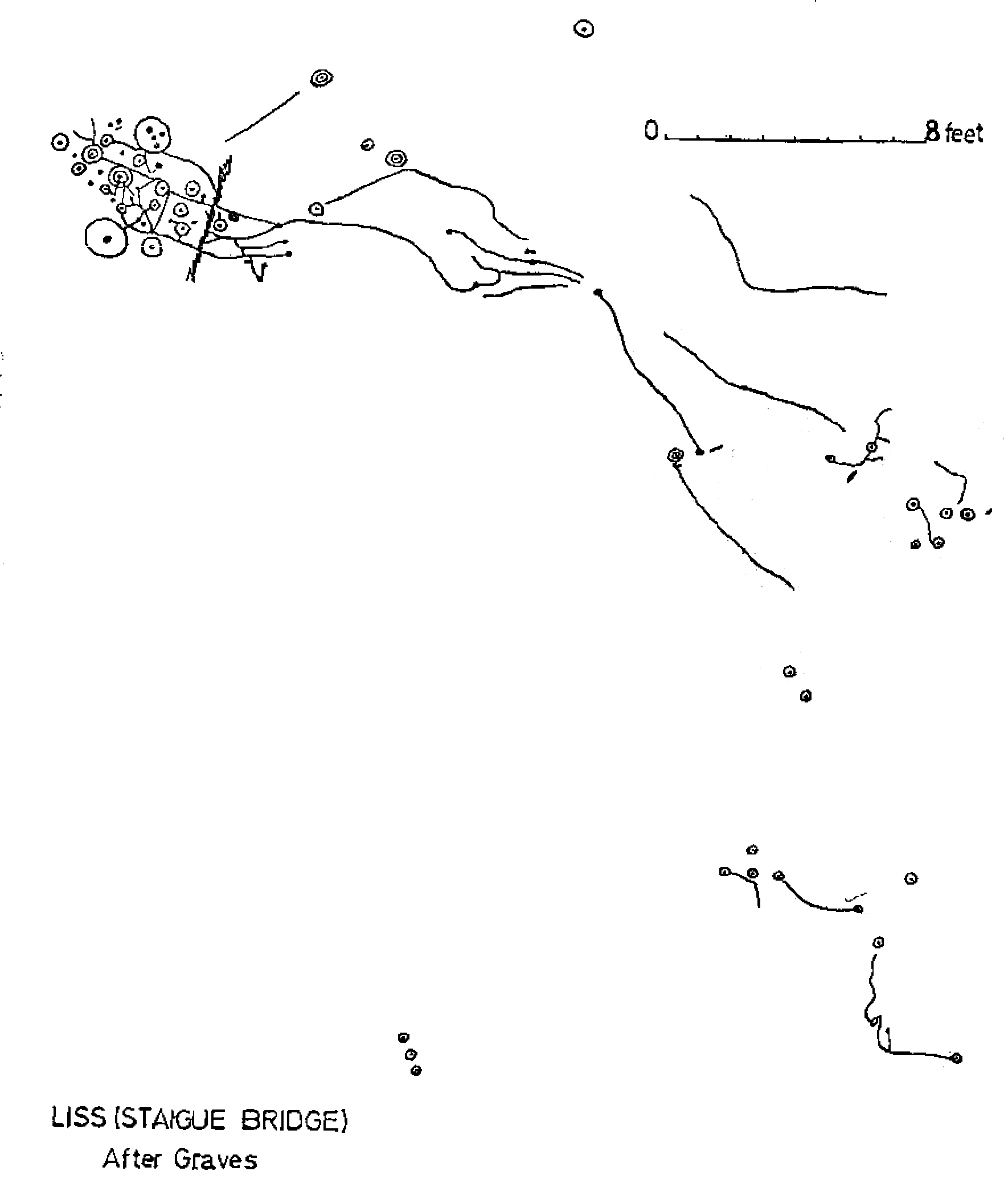
The good Bishop had none of our modern scruples about interfering with the rock surface, or removing the turf to see what else he could fine. He did both: three feet of turf was stripped back to reveal the extent of the carvings and a rubbing was made from the whole surface, which was later converted to a survey-drawing. This, to this day, is the only drawing we have of the complete carving.

When I wrote my thesis on The Rock Art of Cork and Kerry in 1973 I said this about Charles Graves:

The first paper devoted to rock art in Ireland was by Rev. Charles Graves. In 1860 he read a paper to the Royal Irish Academy entitled “On a previously undescribed Class of Monuments”. His paper, mainly concerned with Co. Kerry, is still very valuable and his drawings and observations are often more accurate and more reliable than many later accounts.

My own drawing was done in 1972. The technique I used then was to chalk in the carvings and trace them onto clear plastic film. That tracing was then re-traced on to good quality paper using indian ink and a stipple technique and then photographically reduced by a professional printing firm. It is naturally an imperfect and subjective method, but long practice enabled me to produce surprisingly accurate renditions which stand up well to modern recording techniques.

I confined my drawing to the main area of carving and used Graves’ drawing as an additional illustration

There are few examples of Irish rock art with the pedigree of Staigue Bridge. It is classic cup-and-ring art in its execution but also contains the unusual elements of very large circles surrounding small cupmarks. It is enormous – a fact that would never have been appreciated if Graves had not determined to find the true extent of the carved surface (although of course we do NOT condone this practice now). It has a literature that goes back a century and a half, and was one of the first pieces of Irish rock art to be described and illustrated. It’s a national treasure.