St. Brandanus: A 14th Century Graphic Novel. Part 2

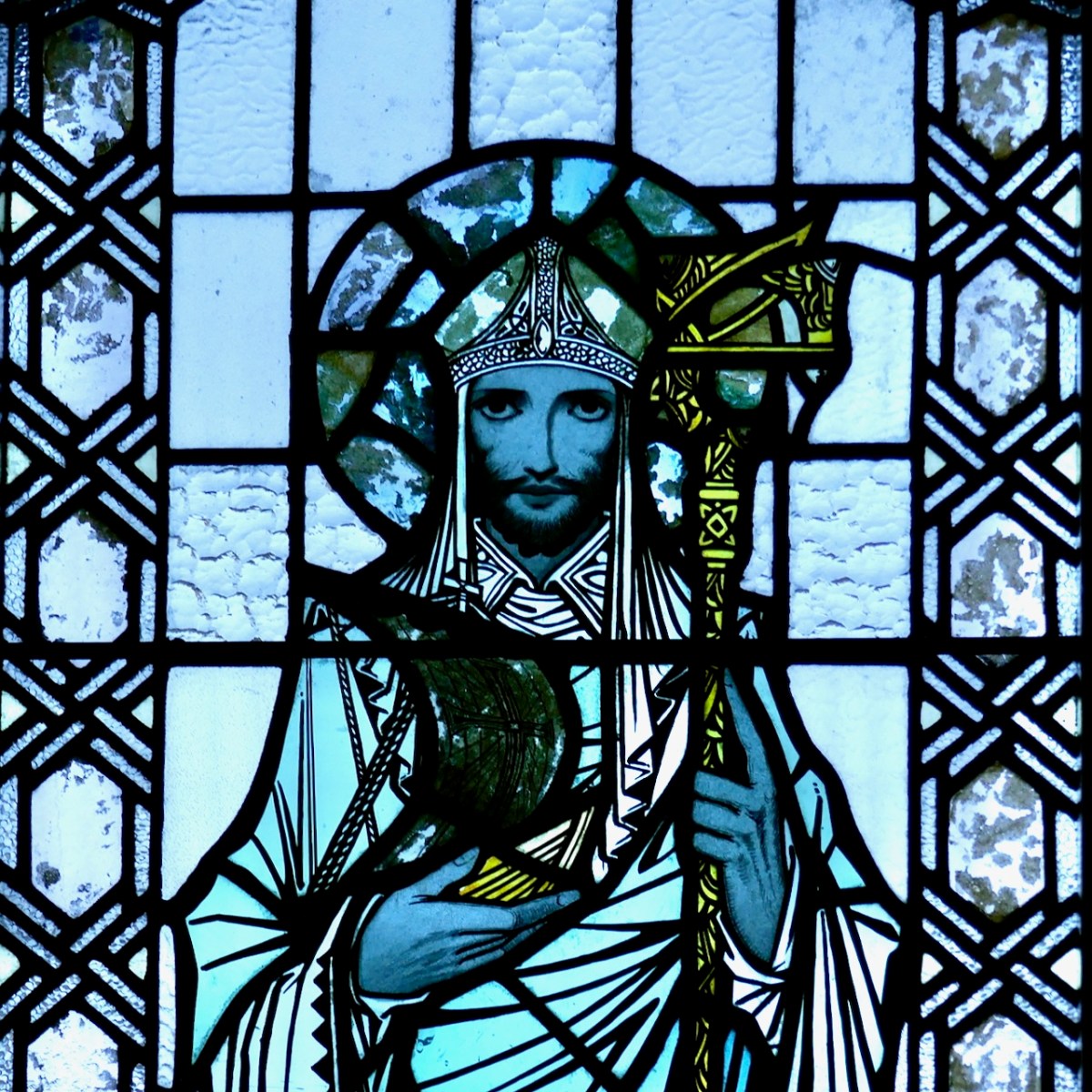
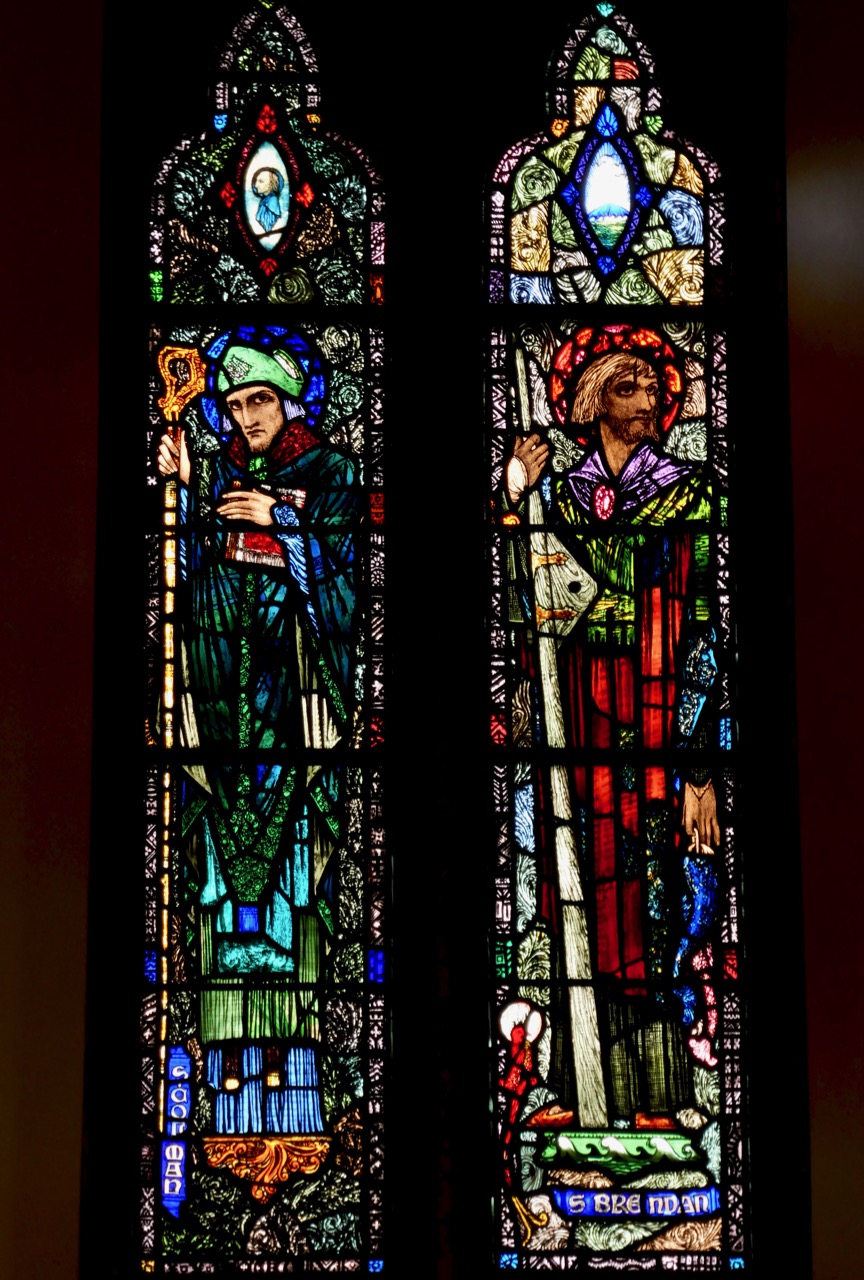
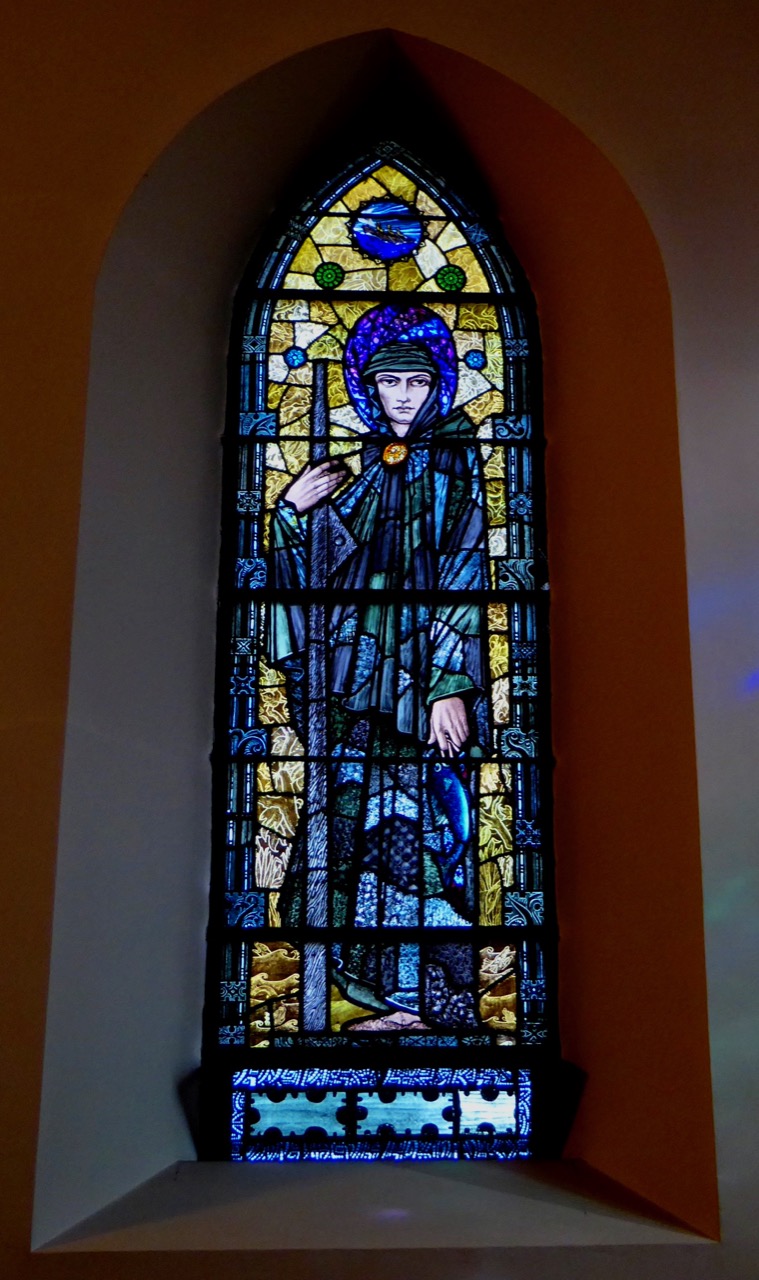
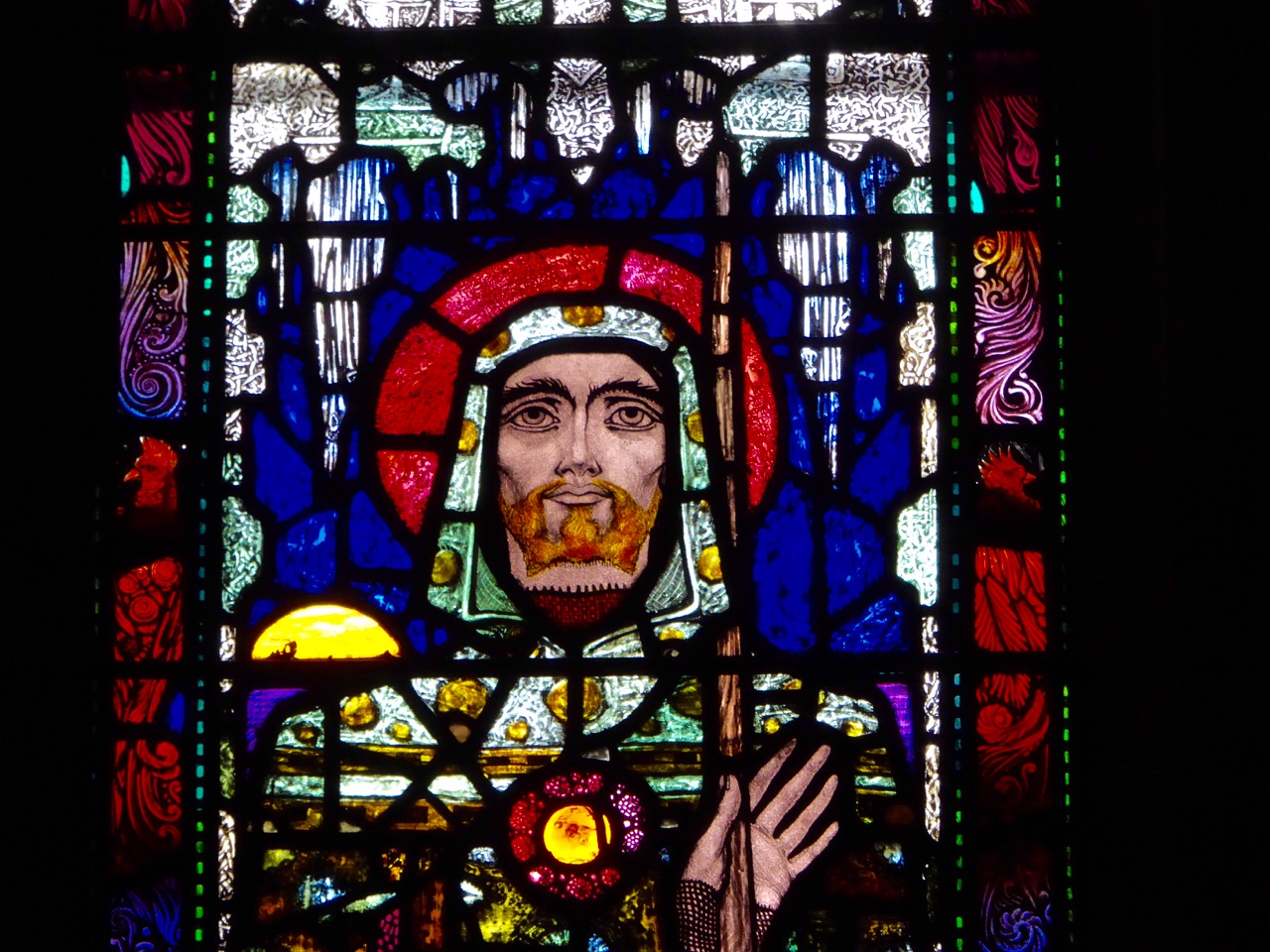
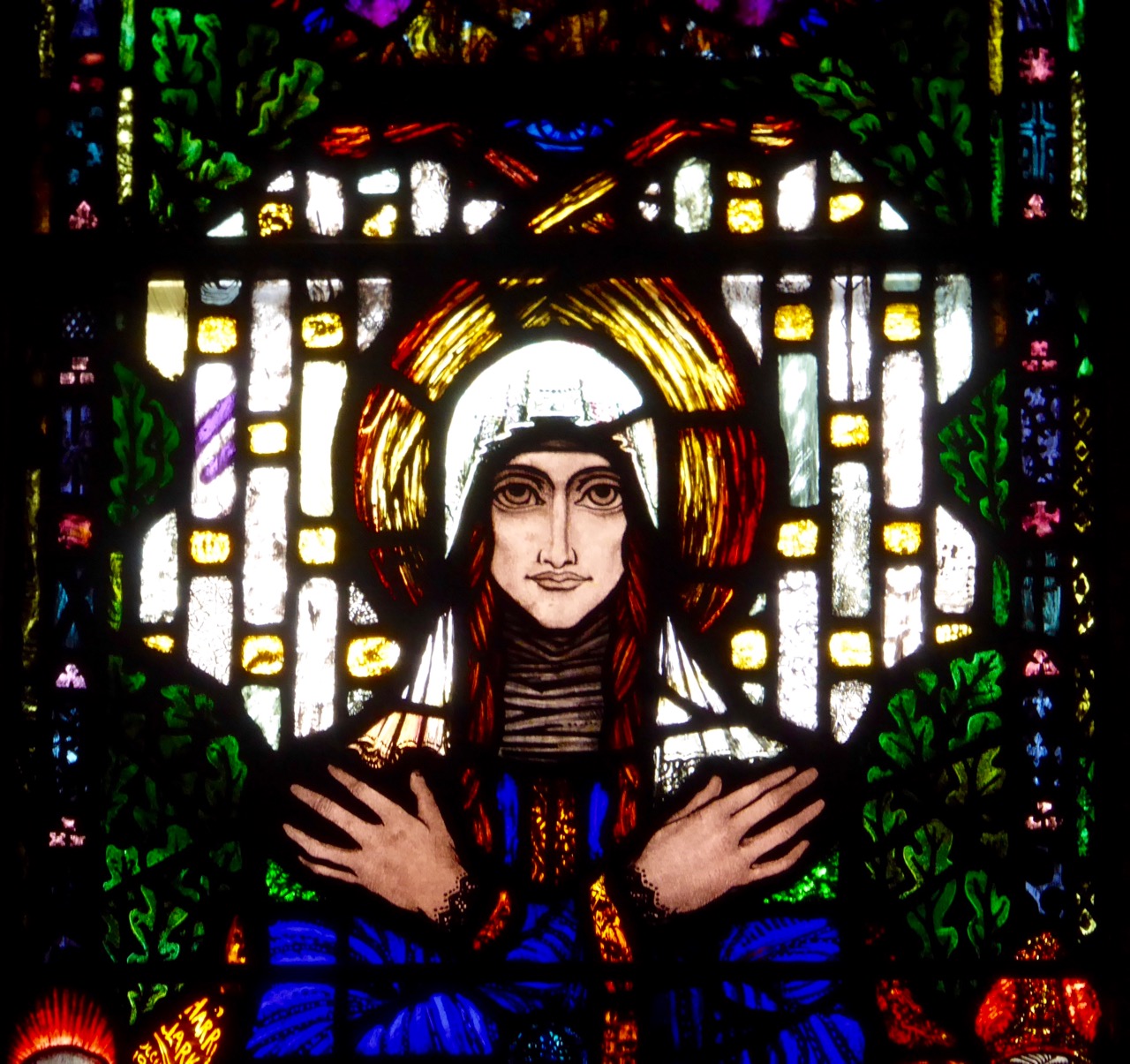
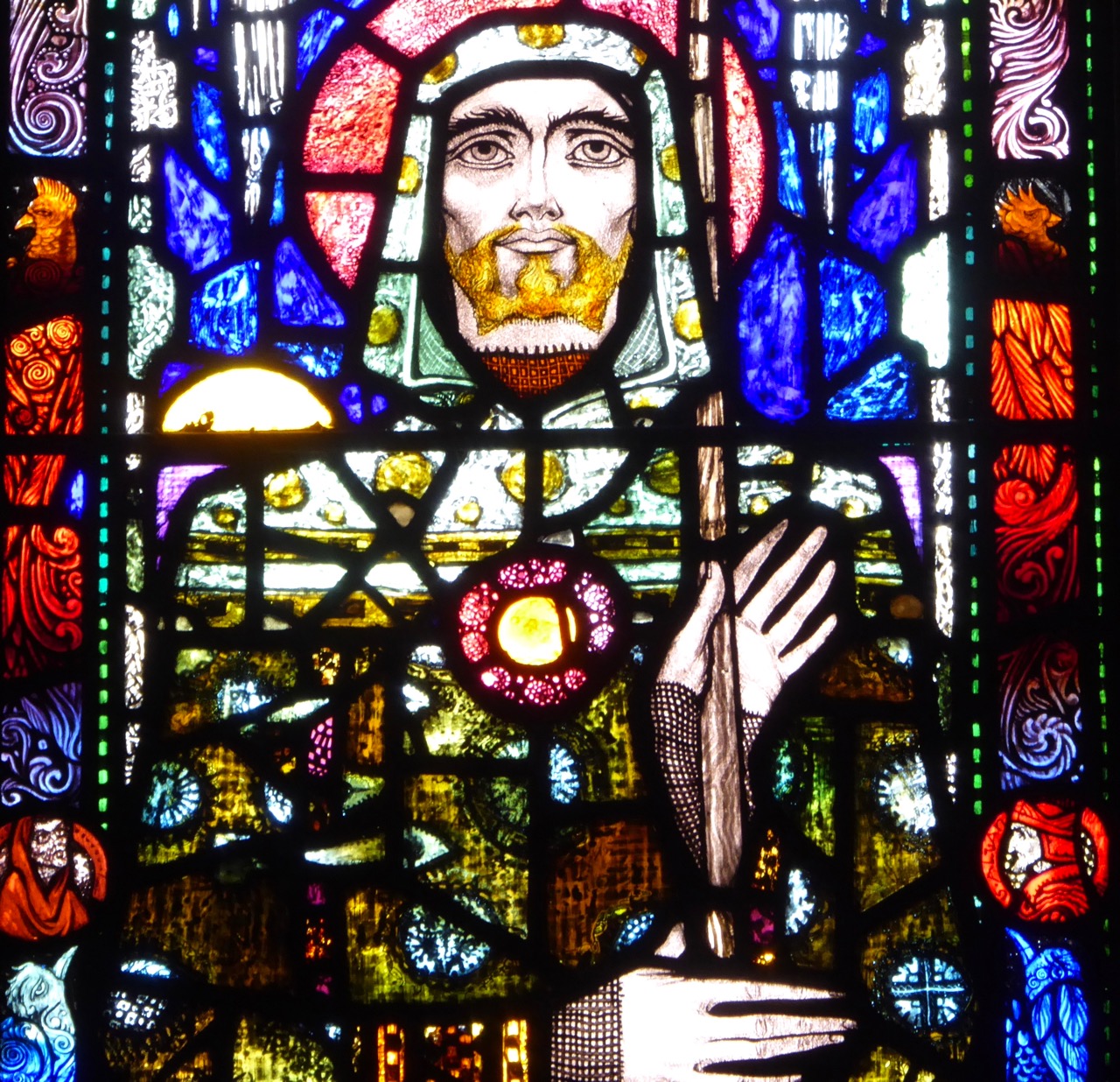
There are several versions of the Brendan story (that’s a Harry Clarke Brendan, above, from Tullamore), and some of the stories in one version might not be present in another. This particular version is told in a series of illustrations, each one captioned in what Biedermann calls “faulty monastic Latin.” It is contained in a much larger work, the Krumauer Bilder-Codex (or Illustrated Codex), and occurs at the end after many other stories of saints. A Codex, by the way, is a book, rather than a scroll. In the 14th century, vellum was used as the main writing material. The drawings are line drawings in pen and ink. They are simple, but in Biedermann’s opinion ‘joyful.’ I agree. Here’s one of the stories.

While they were walking on the island with Saint Brendan, a certain young man met them, filled with the radiance of the sun.
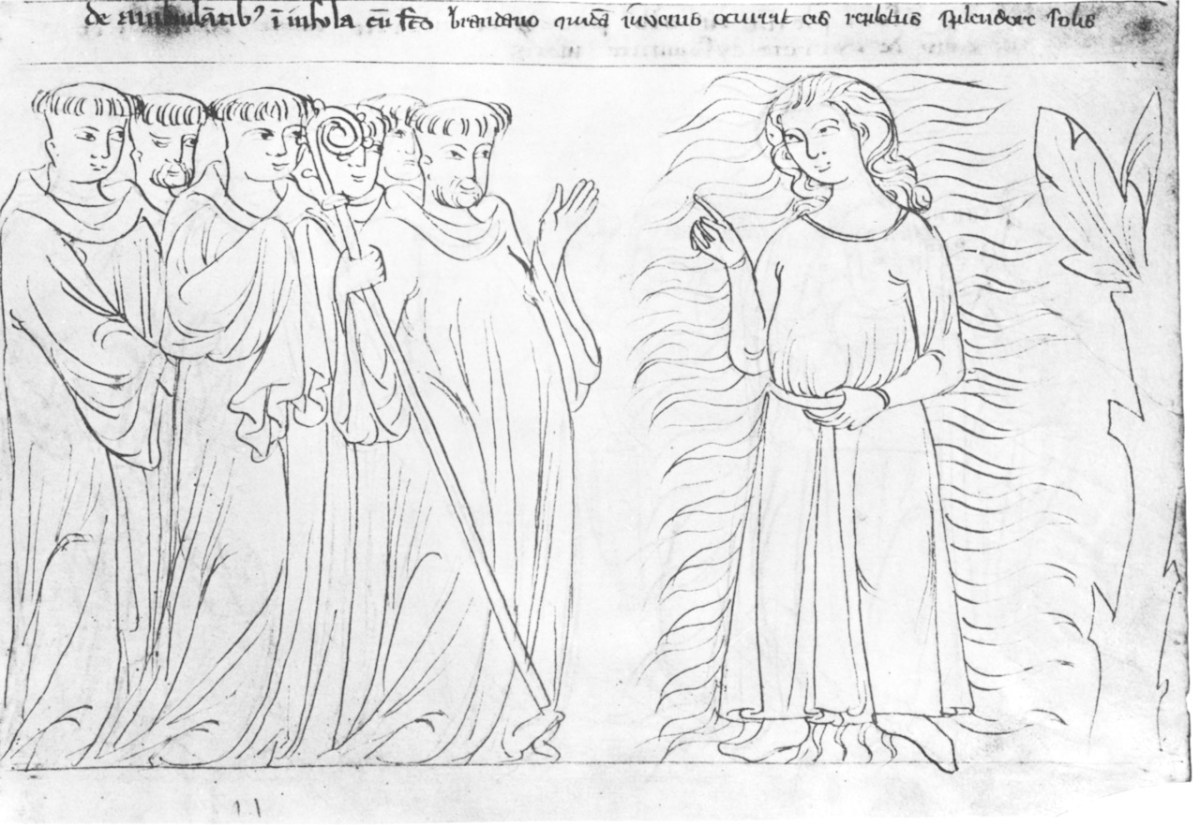
And that young man boarded the little ship with them and vanished from their sight.
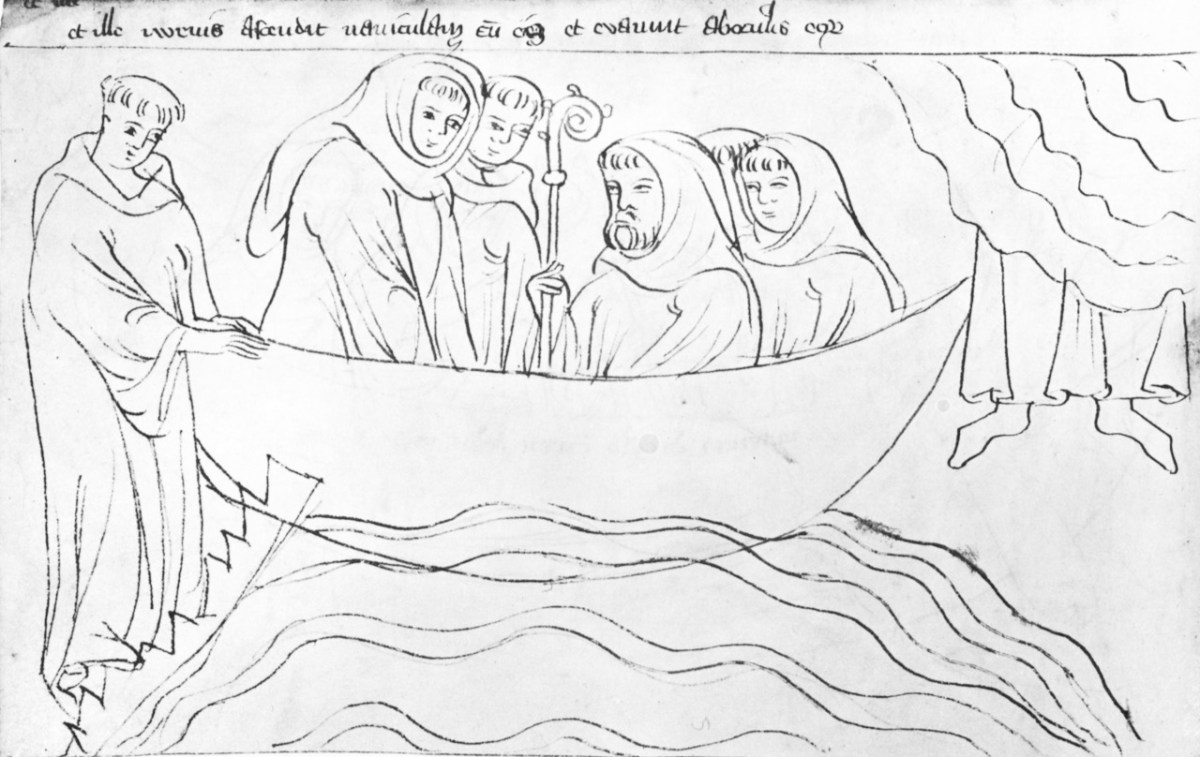
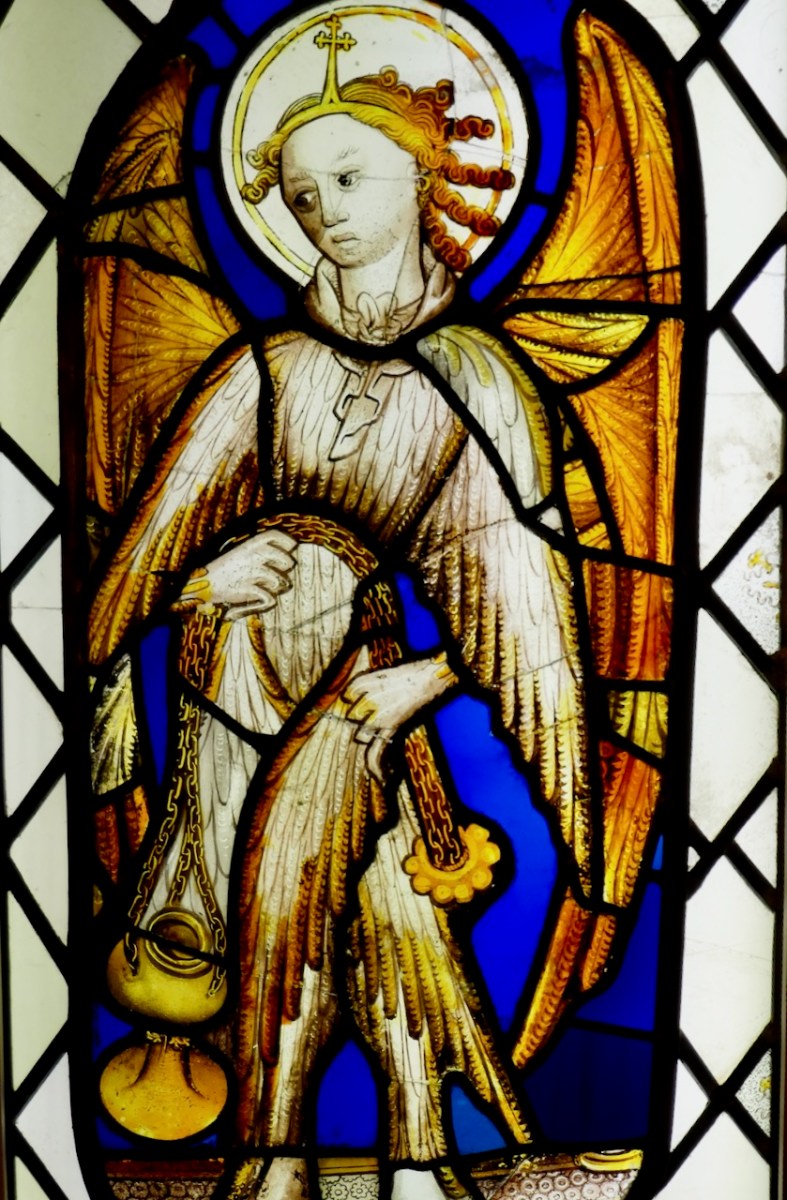
I love the way you see only his legs disappearing up into the clouds.  St Brendan, although happy to see the radiant youth in the first illustration, is looking a little grumpy in this one. “What did we do wrong, that he left us”, I can hear him say. You may note, by the way, that in some illustrations the monks are depicted in a curved shape, like Brendan in the first line drawing above. This convention, known as the S-curve, is also seen in medieval stained glass windows, such as this one from the Exeter Museum.
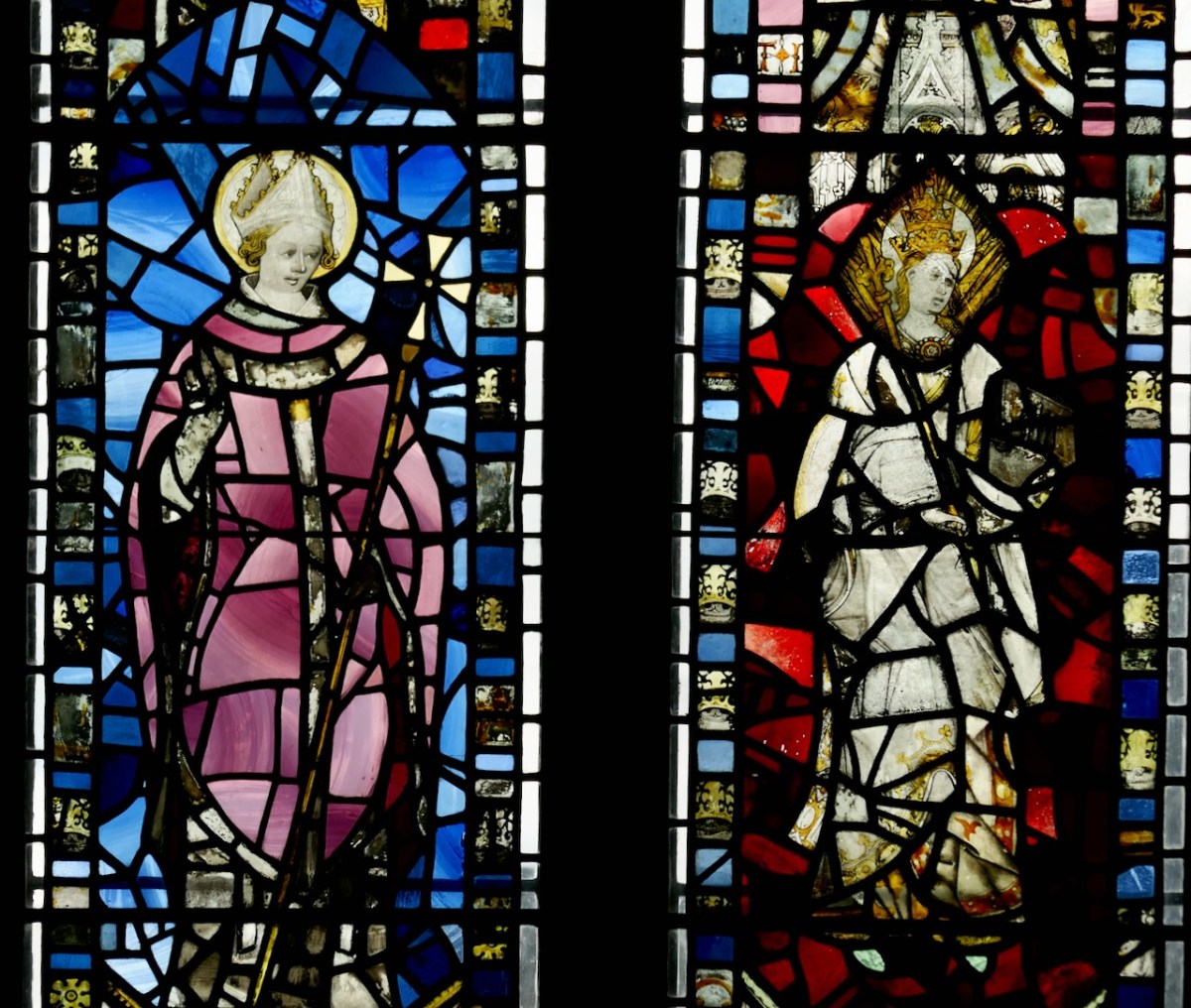
Here’s another one, from St Helen’s Church in York. This S-curve was a way of introducing some sense of movement into a figure of a saint or monk, and was a typically gothic element, perhaps an attempt to make the figure less rigid.
The illustrations are laid out on facing pages, so you read top left, top right, bottom left, bottom right. Although the Brendan story has four illustrations per two-page spread, most of the stories in the Krumauer Bildercodex have six, or occupy three horizontal spaces instead of two. Here’s an image of a typical lay-out, although I don’t know what story is being told in it.
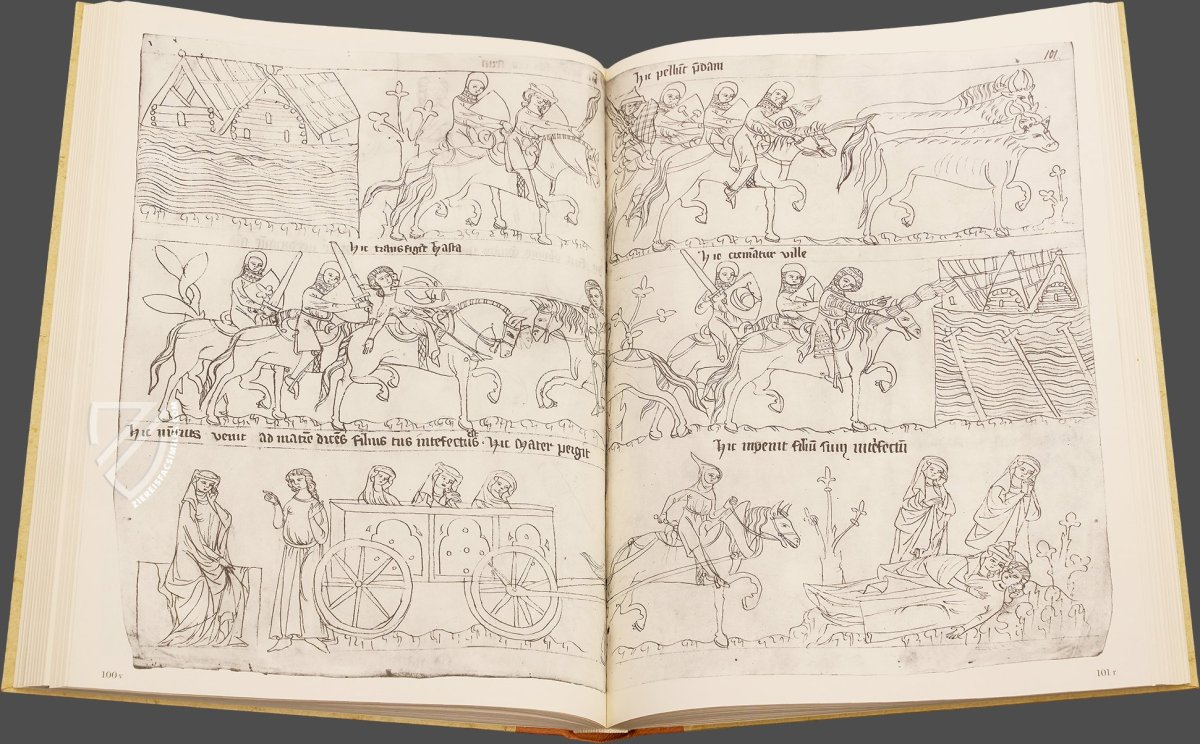
At some point there is a need for a new boat. No problem – Brendan sticks his staff in the ground and immediately a tree springs up. The monks set to work on it and in no time have carved out a boat.
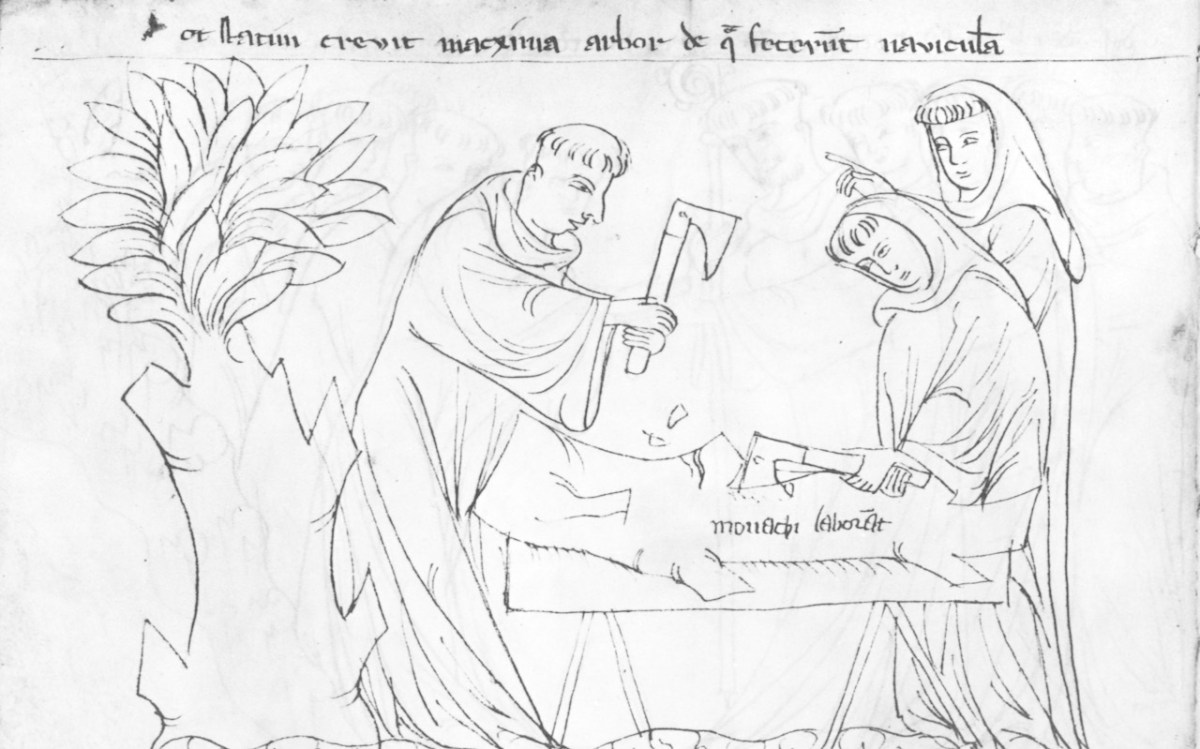
In the next illustration they are at sea and raising a sail. Aha – I hear you cry, but now there are only three of them. And what kind of sail is that? And also – surely they were in an Irish curragh – what about all the hides? Alas – the Codex provides no answers to our urgent questions, although the story-teller who used the illustrations as he narrated to an eager audience may have done all that. We don’t know who commissioned the Krumauer Bildercodex, although since a production like this was time-consuming and expensive, it may have been a noble patron or a monastery. 
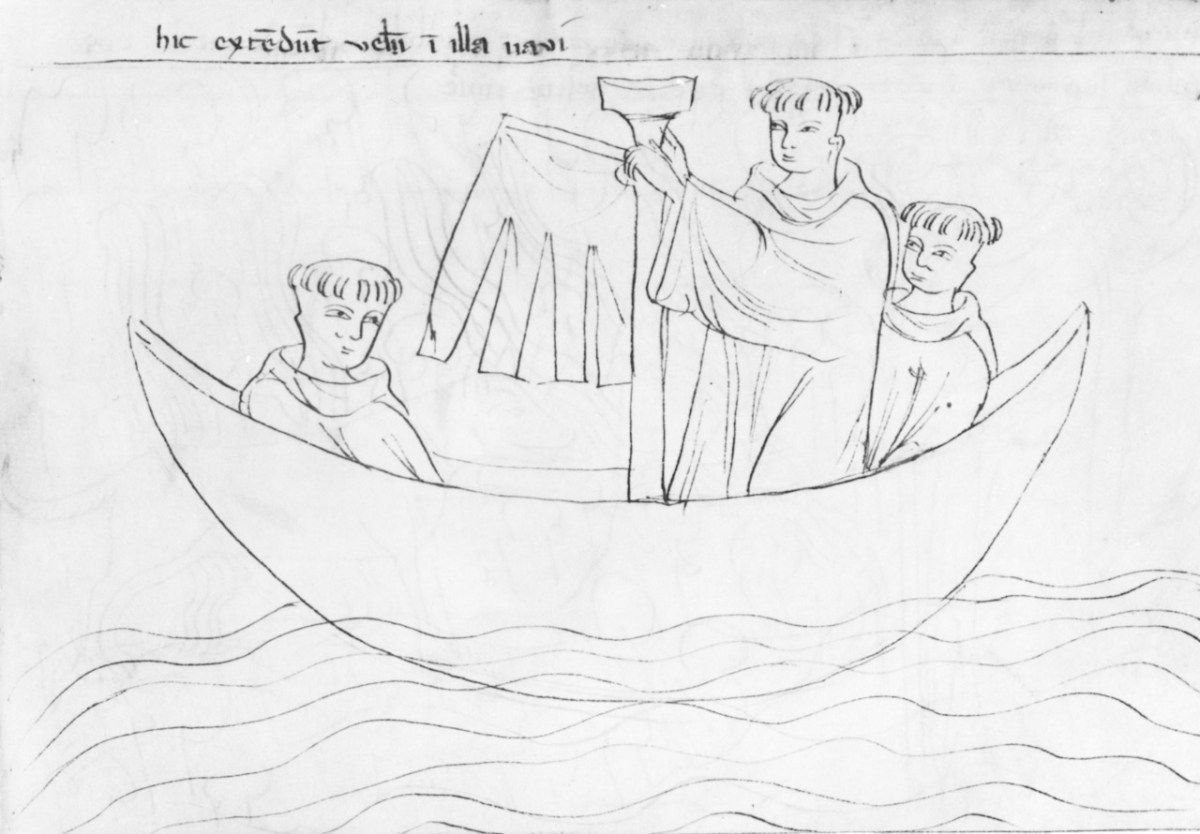
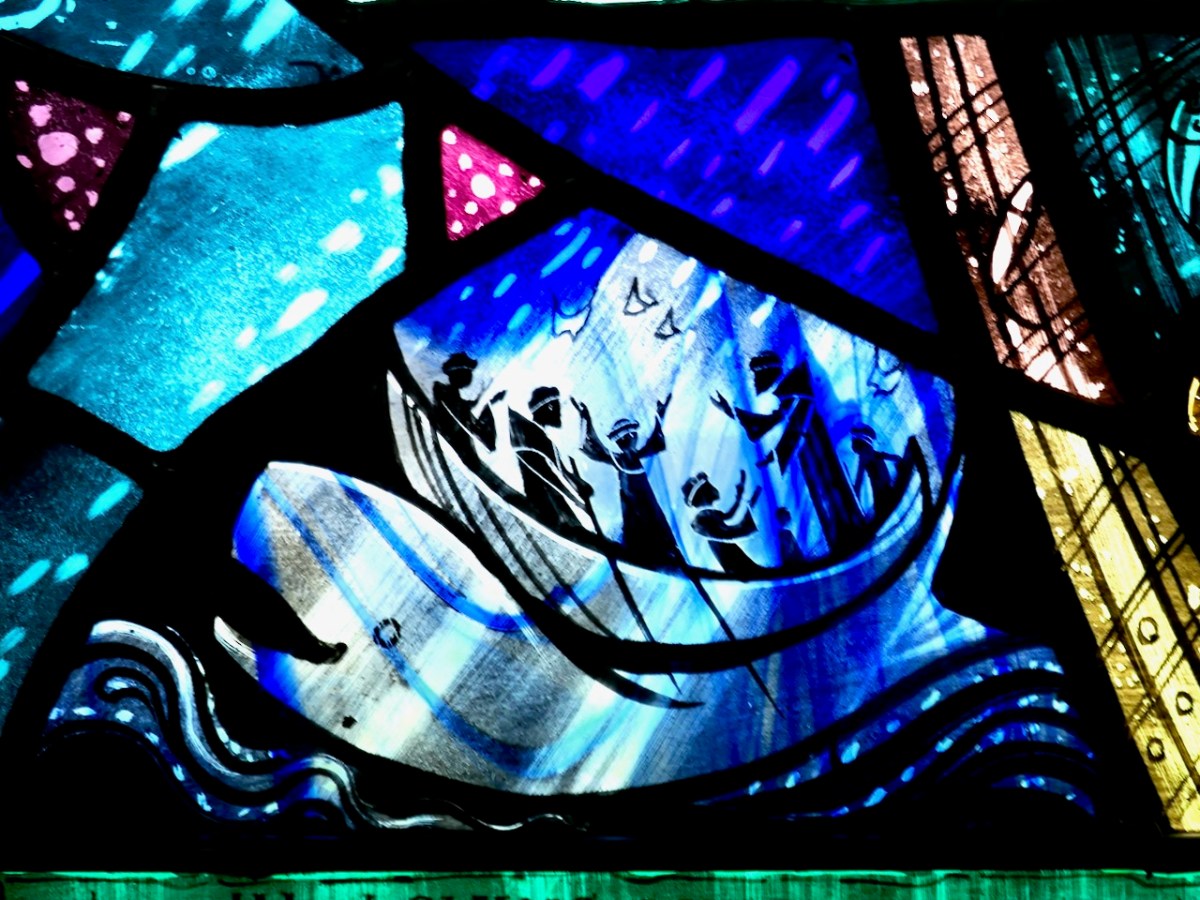
One of the most famous of the Brendan stories is that of the giant fish, sometimes called Jasconius, and often referred to as a whale. 
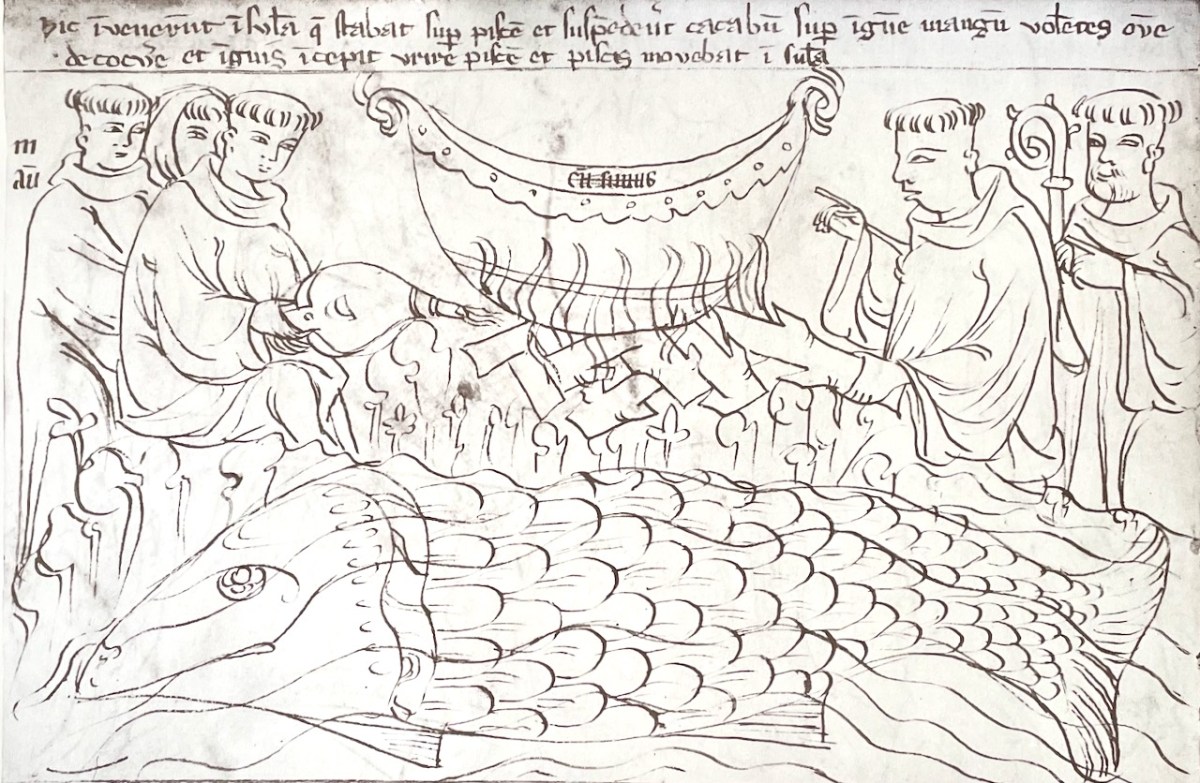
The caption reads: Here they found an island which stood upon a fish, and they hung a pot over a great fire, wanting to boil a sheep, and the fire began to burn the fish, and the fish moved the island. 

Here is Whitley Stokes’ translation of the story from the Book of Lismore

Now after the Easter had come the great sea-beast raised his shoulder on high over the storm and over the wave-voice of the sea, so that it was level, firm land, like a field equally smooth, equally high. And they go forth upon that land and there they celebrate the Easter, even one day and two nights.

After they had gone on board their vessels, the whale straightway plunged under the sea. And it was in that wise they used to celebrate the Easter, to the end of seven years, on the back of the whale, as Cundedan said :

Brenainn loved lasting devotion

According to synod and company :

Seven years on the back of the whale :

Hard was the rule of devotion.

For when the Easter of every year was at hand the whale would heave up his back, so that it was dry and solid land.
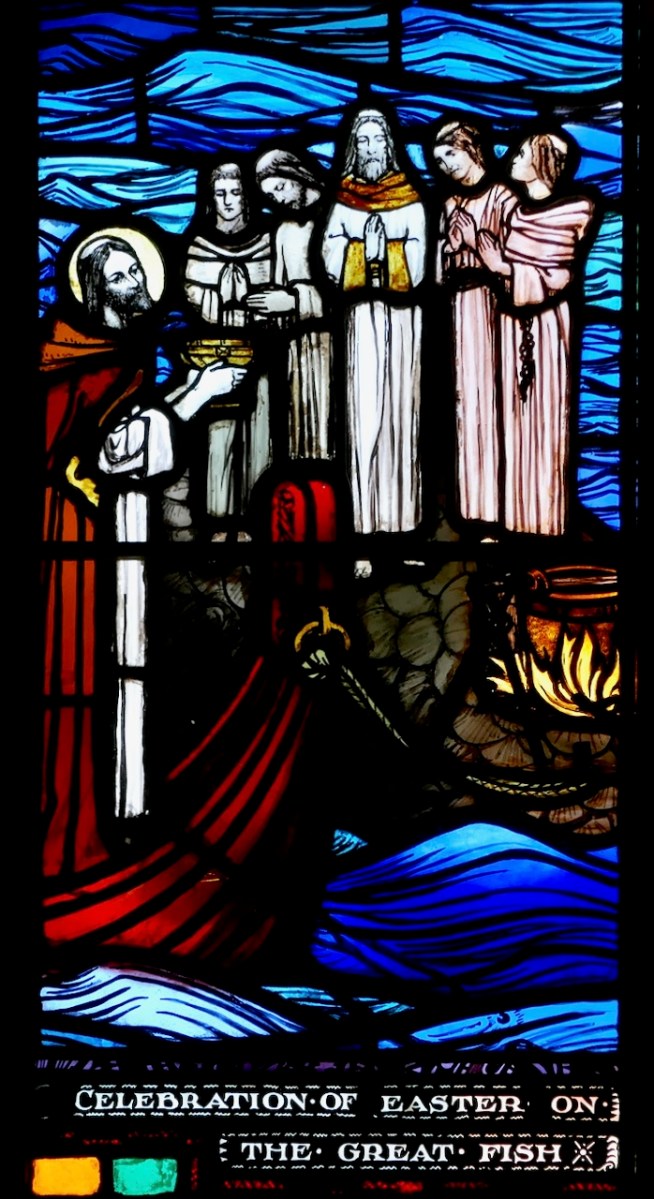
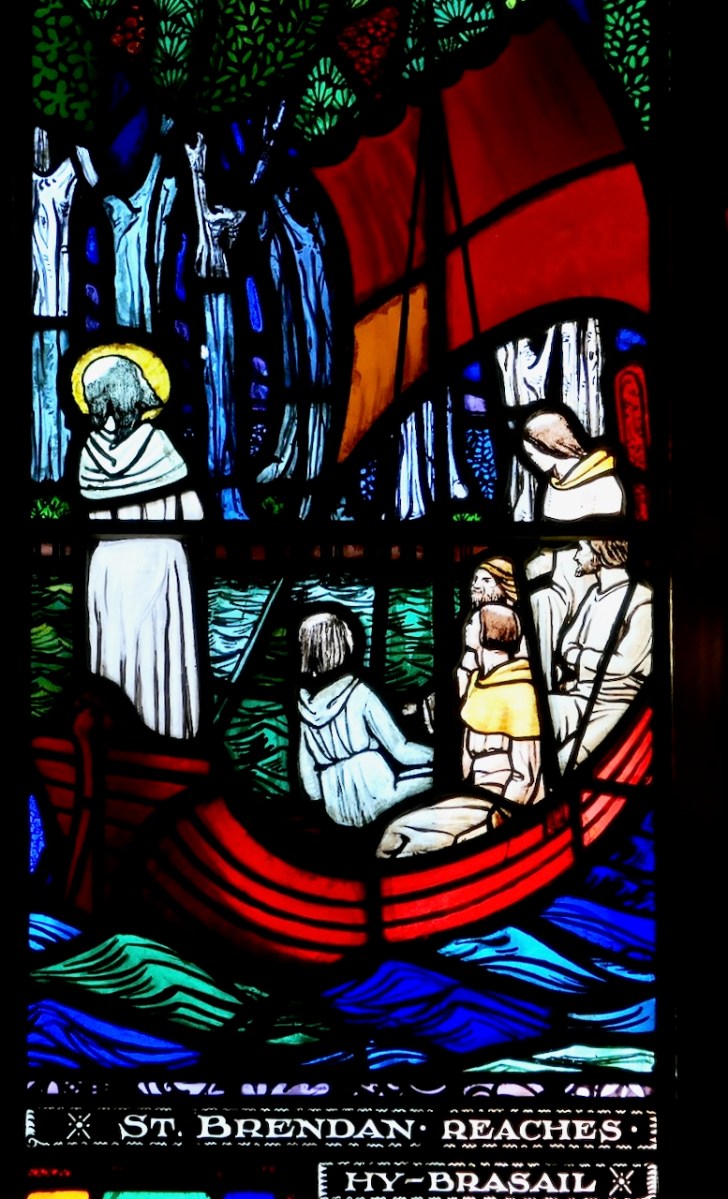
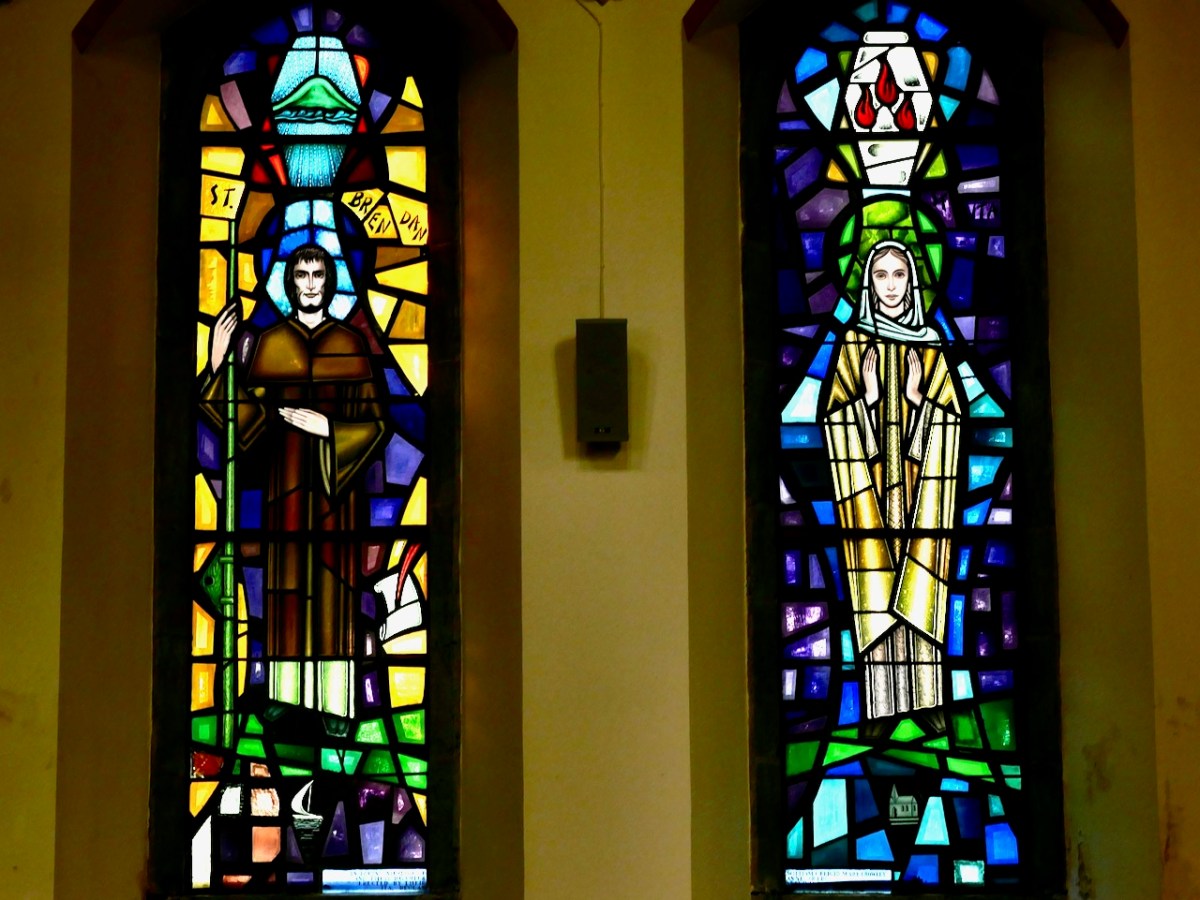
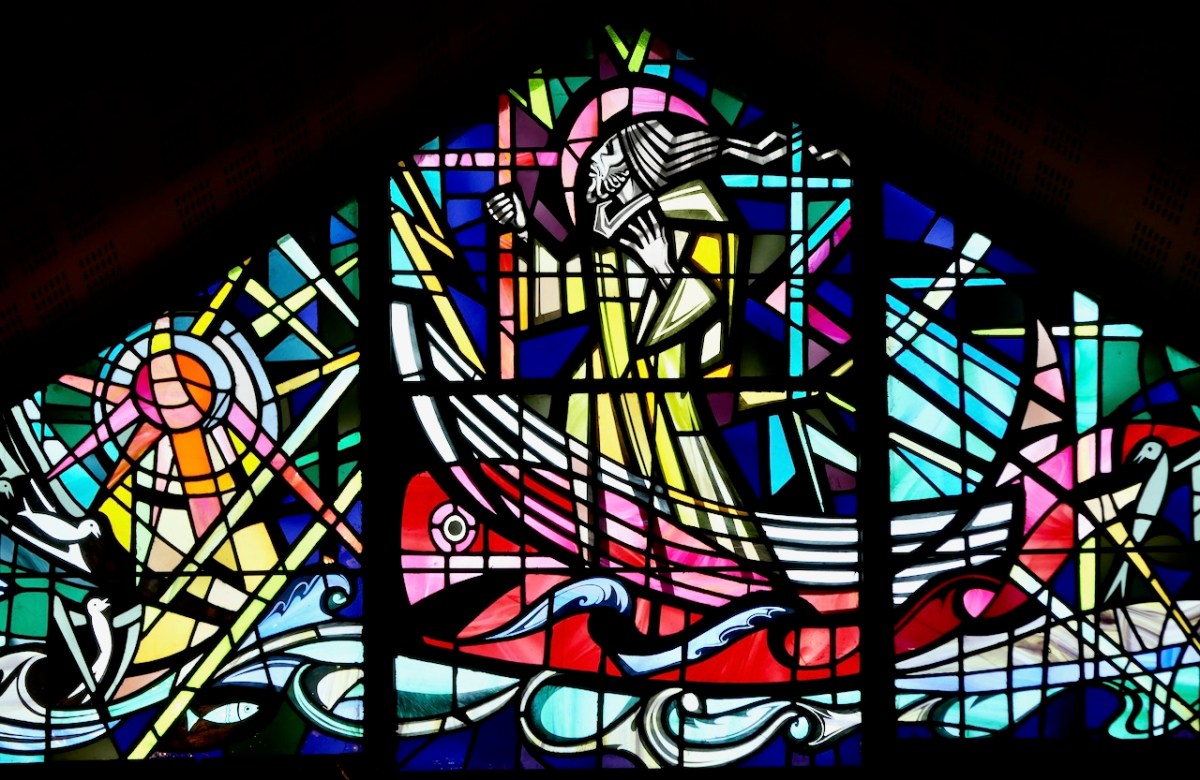
Since this is one of the most celebrated of the Brendan legends, it is not surprising that it is the story we see most often depicted in stained glass windows. Above is a beauty by Ethel Rhind of An Túr Gloine, in St Brendan’s College in Killarney. And of course, below, one by George Walsh, this one from St Brendan’s Church, the Glen, in Cork.
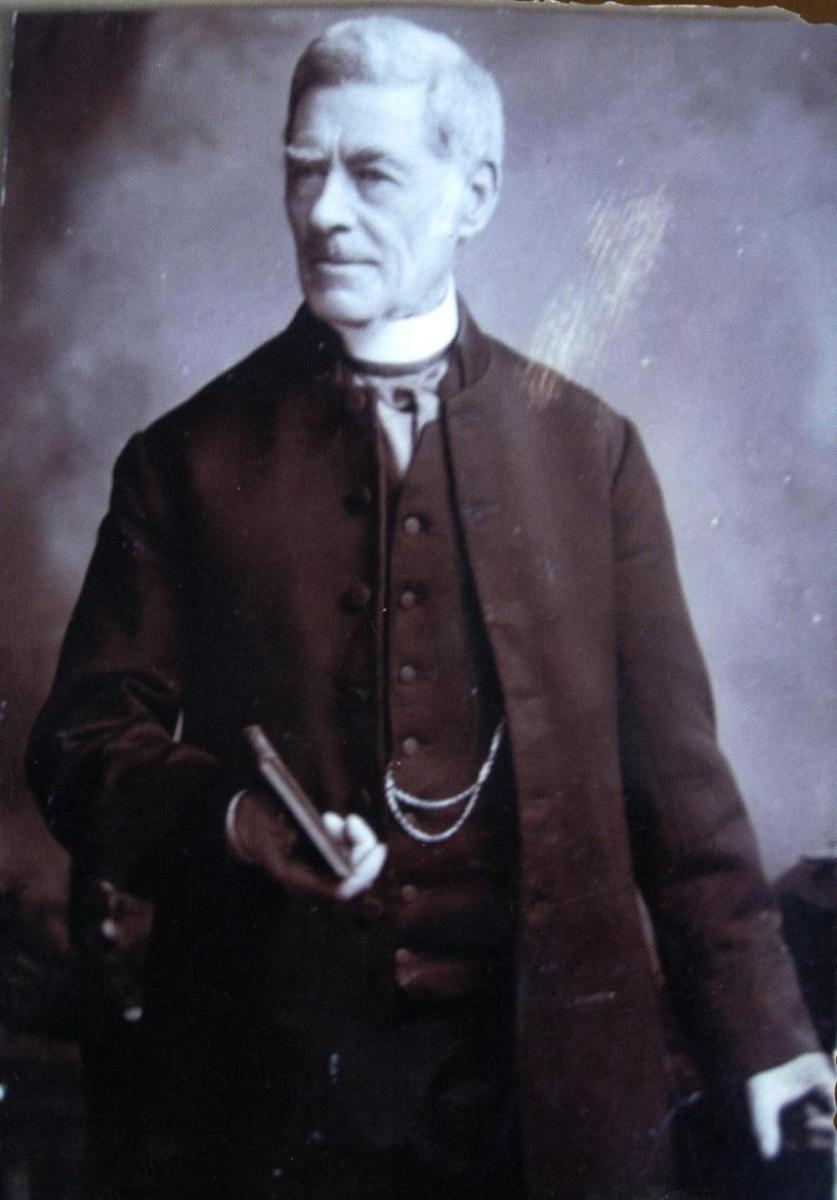
I will conclude this post with five illustrations for the story of the Golden Bridle, called the Silver Bit in the account I am using. This version is from the esteemed Canon O’Hanlon, (below) from his Life of St Brendan, in Volume 5 of his Lives of the Irish Saints (available online at https://archive.org/).
It is obvious, since the illustrations track so closely, that O’Hanlon was using the same translation as the Bilder-Codex. But I should warn you that in his translation the demon is cast in the form of a black child, an ‘Ethiop,’ as it is in other versions too. In the Codex it is simply referred to as a demon and depicted as a horned beast with a tail.
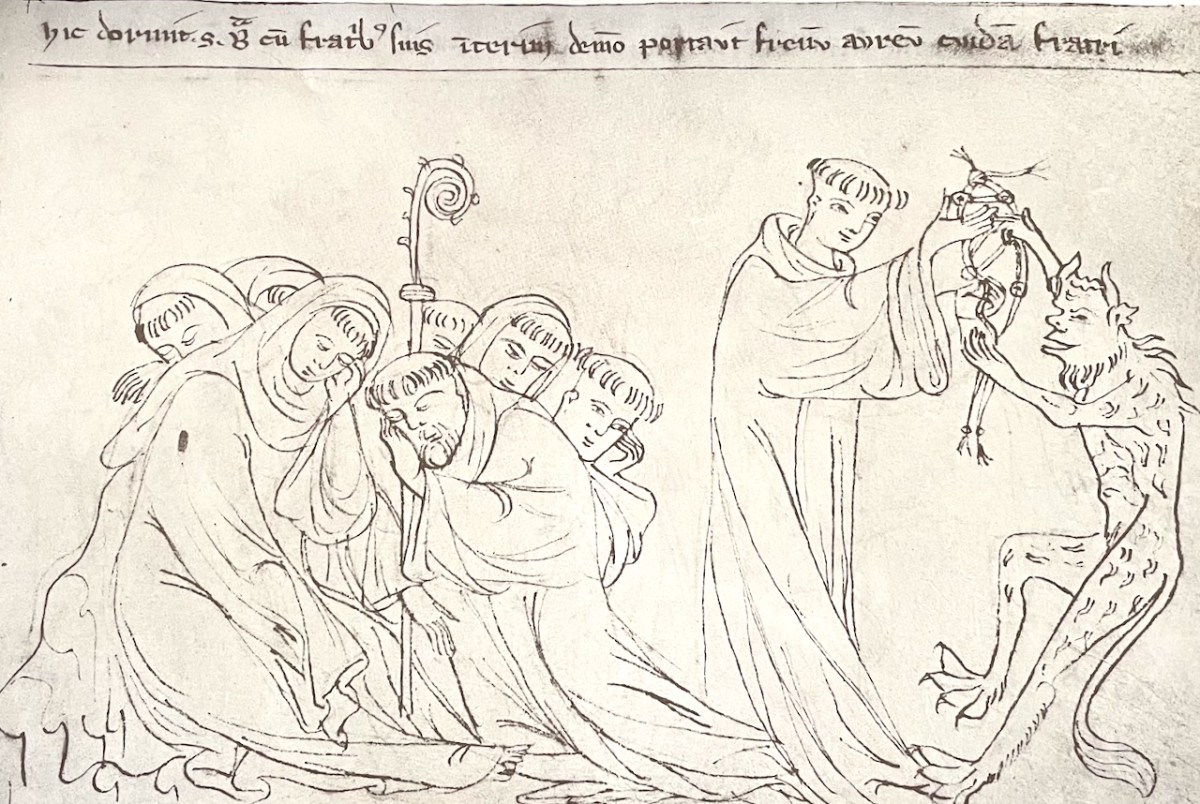
But, while they slept, Brendan saw a child, black as an Ethiop, holding a bit, and playing before the unfortunate brother, in whose eyes he made it glitter. The saint arose, and he passed that night in prayer till day. When morning dawned, the monks rose as usual, to give praise to the Almighty, and afterwards to regain their ship. Once more, the table was found furnished, as on the day preceding; and thus, for three days and for three nights, the Lord prepared food for his servants. There, too, for three whole days, by the Divine will, they rested on that isle. 
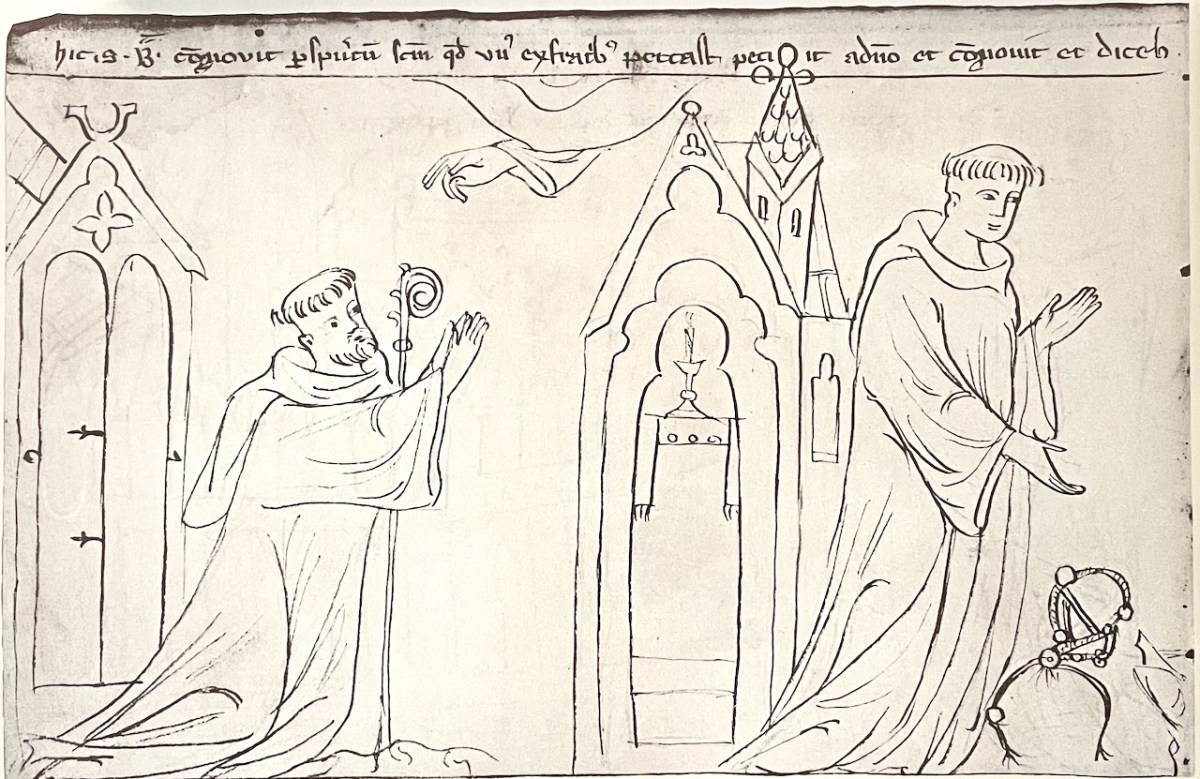
Then they returned to their ship, when Brendan said: ” See, brethren, doth not one of you carry off something from here?” “God forbid,” they replied, “that a robbery should dishonour our voyage.” “Then,” said St. Brendan, “behold, our brother, whom I warned yestereve, has now in his robe a silver bit, that the devil gave him this night.” The brother instantly flung that bit en the ground. . .
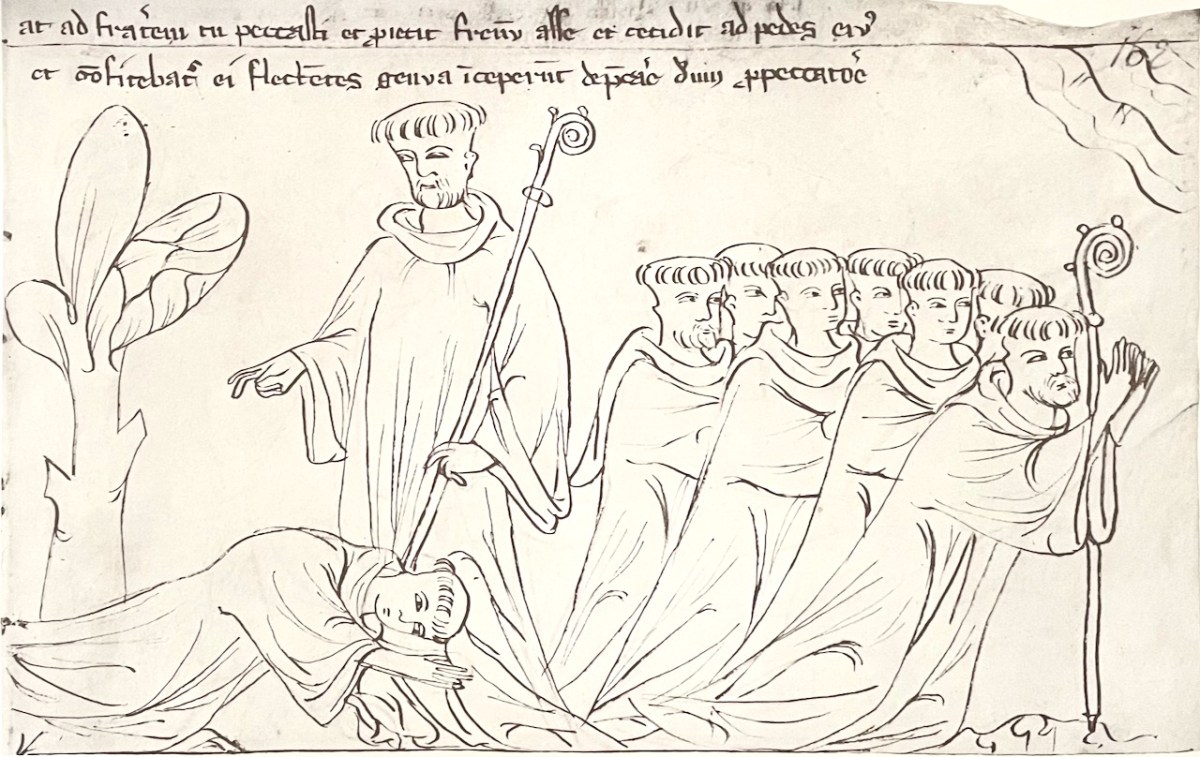

. . . and fell at the feet of the man of God, crying: “Father, I have sinned: pardon! pray for the salvation of my soul.” And, at the same moment, all fell down to pray for their brother’s salvation. 
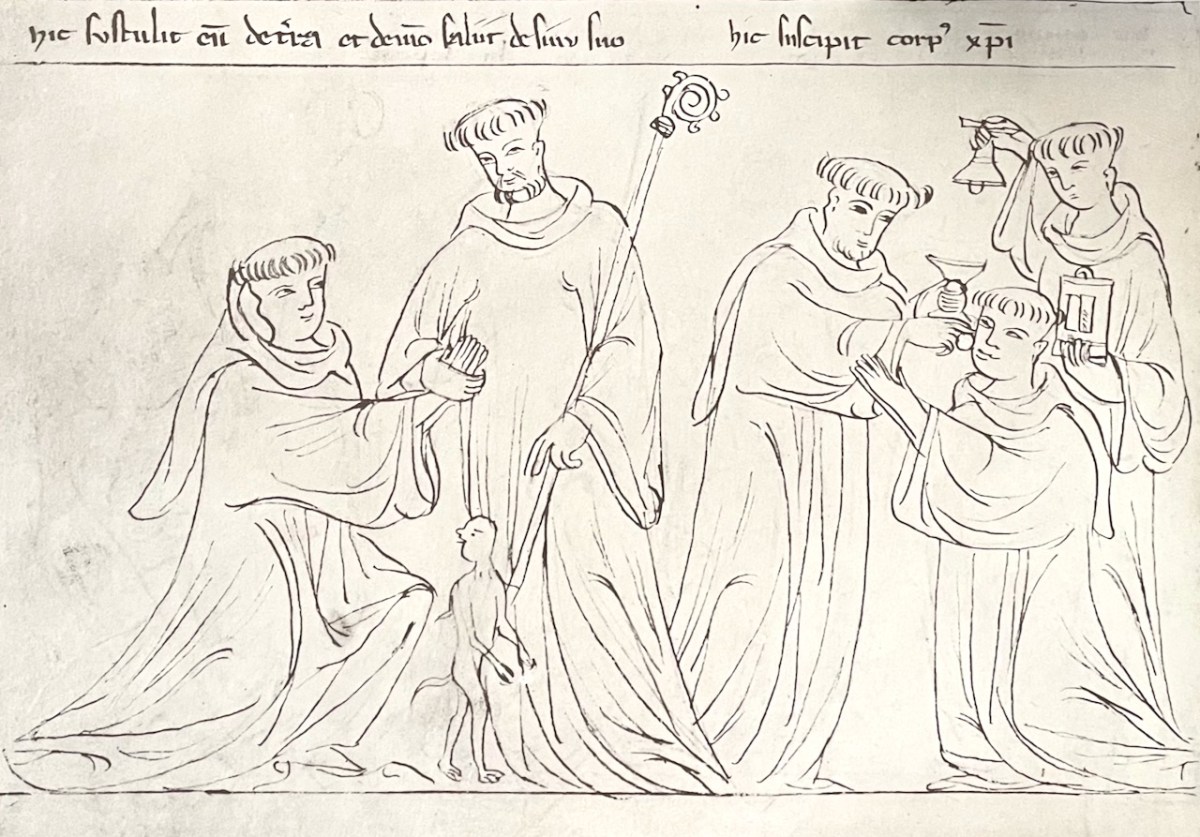
Rising up, they saw the wretched Ethiop escape from the guilty man’s bosom, howling and crying : “Why drive me, O man of God, from my abode, where for seven years I have dwelt, and thus expel me from my inheritance. Brendan immediately turned to the brother, and said: “Receive promptly the Body and Blood of Christ, for thy soul is about t leave thy body, and this is the place of thy burial. But, thy brother, who came with you from the monastery, shall find his place of sepulture in hell.” Whereupon, that penitent monk received Holy Eucharist . . .
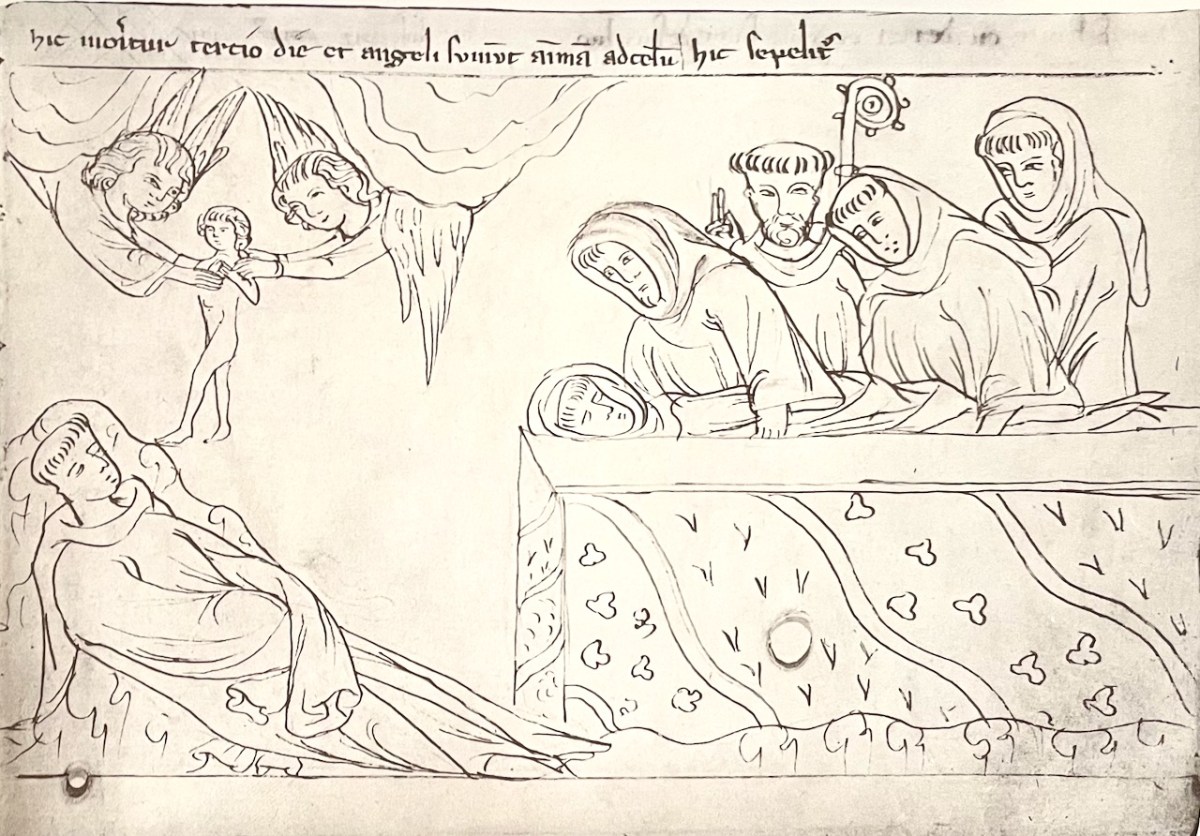
. . . and his soul departed; but, it was received by Angels, in the sight of the other monks. His body was then buried. Also, St. Brendan had ordered the expulsed demon, in God’s name, to hurt no person, until the Day of General Judgment.

There’s more of course, and I am undecided whether to continue next time or come back to it later. I’ll sleep on it, and dream of the Land of Promise and of picnicking on the back of a whale.
Part 1 is here.

St. Brandanus: A 14th Century Graphic Novel. Part 1

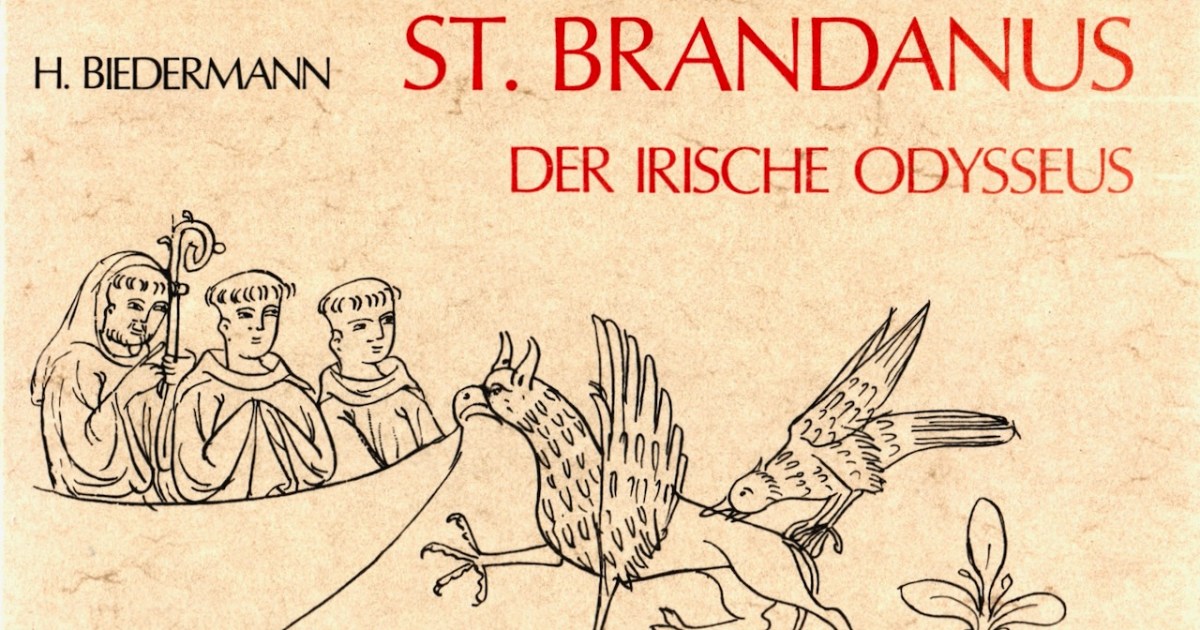
I am fond of telling people (because I read it somewhere) that the Voyage of St Brendan the Navigator was a “medieval best seller.” But I have just acquired a book (above) that made me look more closely at that claim. And yes, it’s a true statement, and my book is part of a sprawling tradition of stories about our own beloved St Brendan, that were written across medieval Europe in many languages over several centuries.

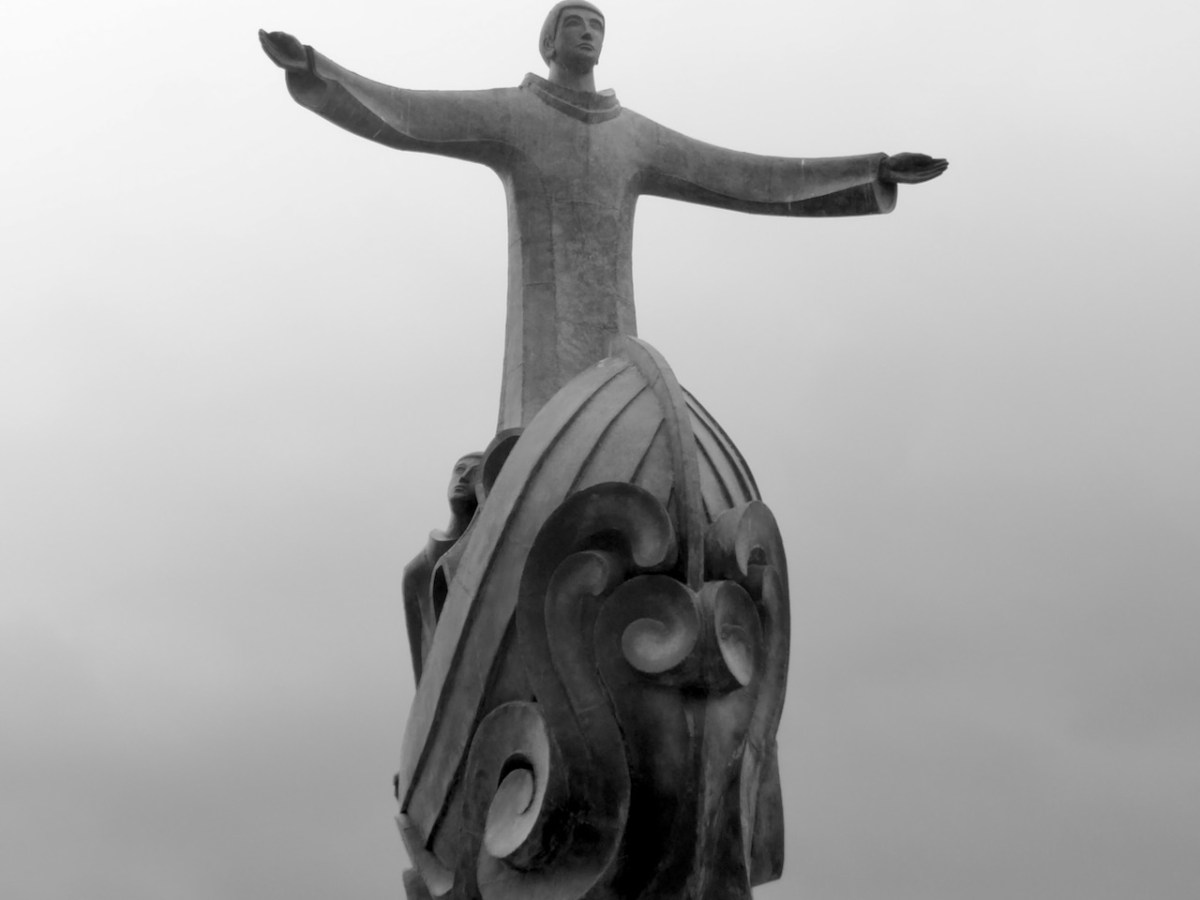
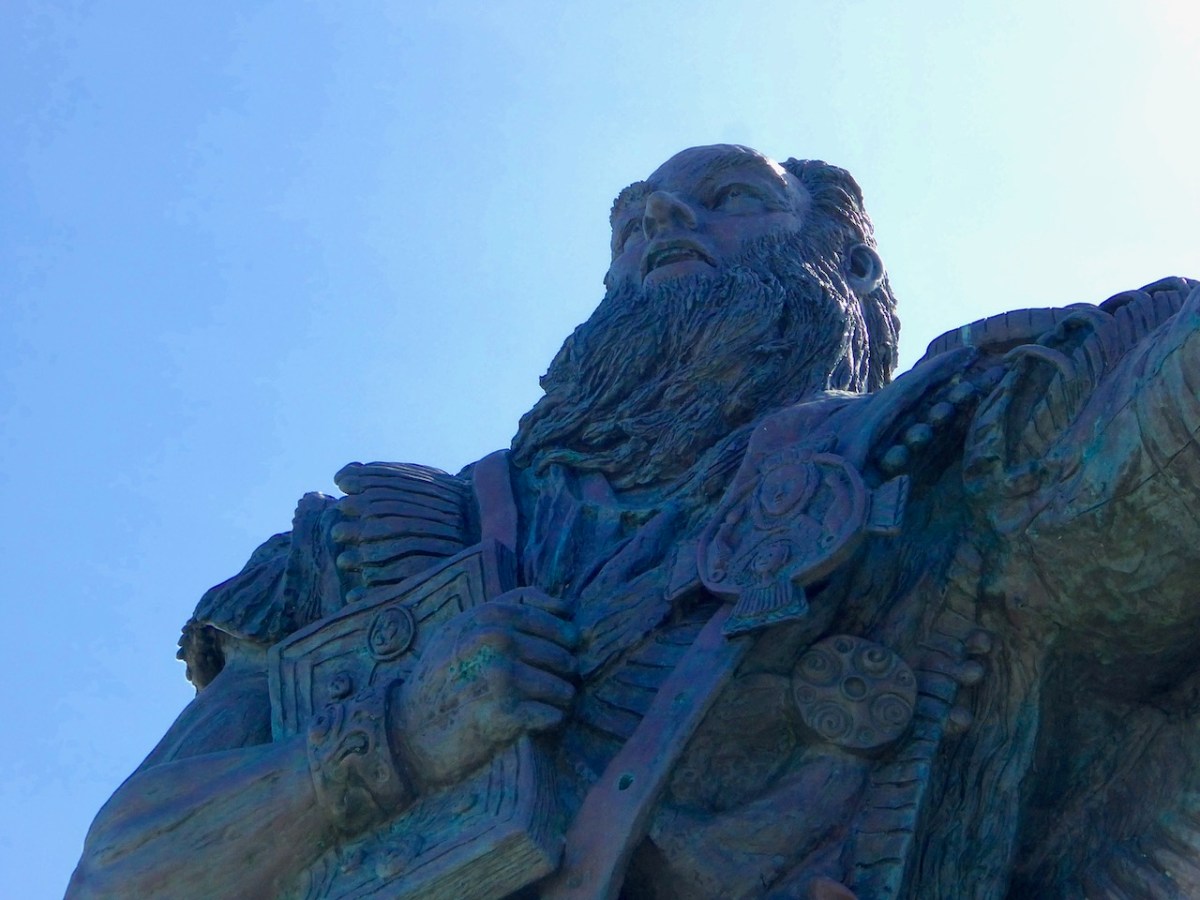
This statue of Brendan dominates the town of Bantry. It’s by Ian and Imogen Stuart

I’m mainly illustrating this post with images of St Brendan in stained glass or other art forms. Since he’s one of our favourite Irish saints here, this isn’t hard. But the next post will be illustrated by images from the book, St Brandanus: Der Irische Odysseus. This post is mainly background about St Brendan and his legendary journey.

Willy Earley’s Brendan, St Brendan’s College, Killarney

Brendan’s Navigatio is perhaps best understood as one manifestation of the deep well of mythology that many of our stories have come from. St Brendan sets out from Ireland with several companions (the number changes from version to version) and journeys over the sea for several years. Along the way he encounters wonderful islands, strange creatures, demons and whales, colonies of feathered men and beautiful women. Many miracles keep him and his companions alive and moving onwards towards the Land of Promise.

This window by Ethel Rhind of An Túr Gloine is also in St Brendan’s College in Killarney

This great Irish tradition of seafaring pilgrimage is called Immram and is part of a wider-world mythological treasury that includes Sinbad the Sailor and Odysseus, as well as some other Irish saints. Brendan’s tale is based on a pre-Christian legend called Immram Brain (the full text of which can be read here). Here’s a good summary, courtesy of (unlikely as it seems) the University of Texas in Austin.

The text relates how a mysterious woman appearing in the fort of the protagonist, Bran son of Febal, tells him about a magic apple-tree on the island of Emain Ablach, a terrestrial paradise far away to the west of Ireland and abode of the sea-god Manannán mac Lir, which she describes as a place Without sorrow, without grief, without death, without any sickness, without debility from wounds.

Subsequently, Bran sets out to find this island with three times nine companions: on their way they encounter the sea-god, who directs them to an island inhabited by laughing people, after which they reach a different island inhabited exclusively by women. There, Bran and his retinue spend many blissful years, not noticing the passing of time. When finally Nechtan, one of Bran’s companions, is overcome by homesickness, they decide to return to Ireland but are warned by the queen of the island not to set foot on Irish soil. Upon their arrival, Nechtan disregards the warning and immediately crumbles to dust, as they had spent so many years on the magic island that they were well past their dying age; Bran on the contrary remains on the boat and, after telling their adventures to some onlookers on the shore, sets out again for new adventures.

Readers who are familiar with Irish mythology will immediately recognise the similarity of Nechtan’s story to that of the famed warrior Oisín, who goes to live with the beautiful Niamh of the Golden Hair in TIr na nÓg (the Land of Youth), and to whom the same fate befalls when he returns to Ireland. 

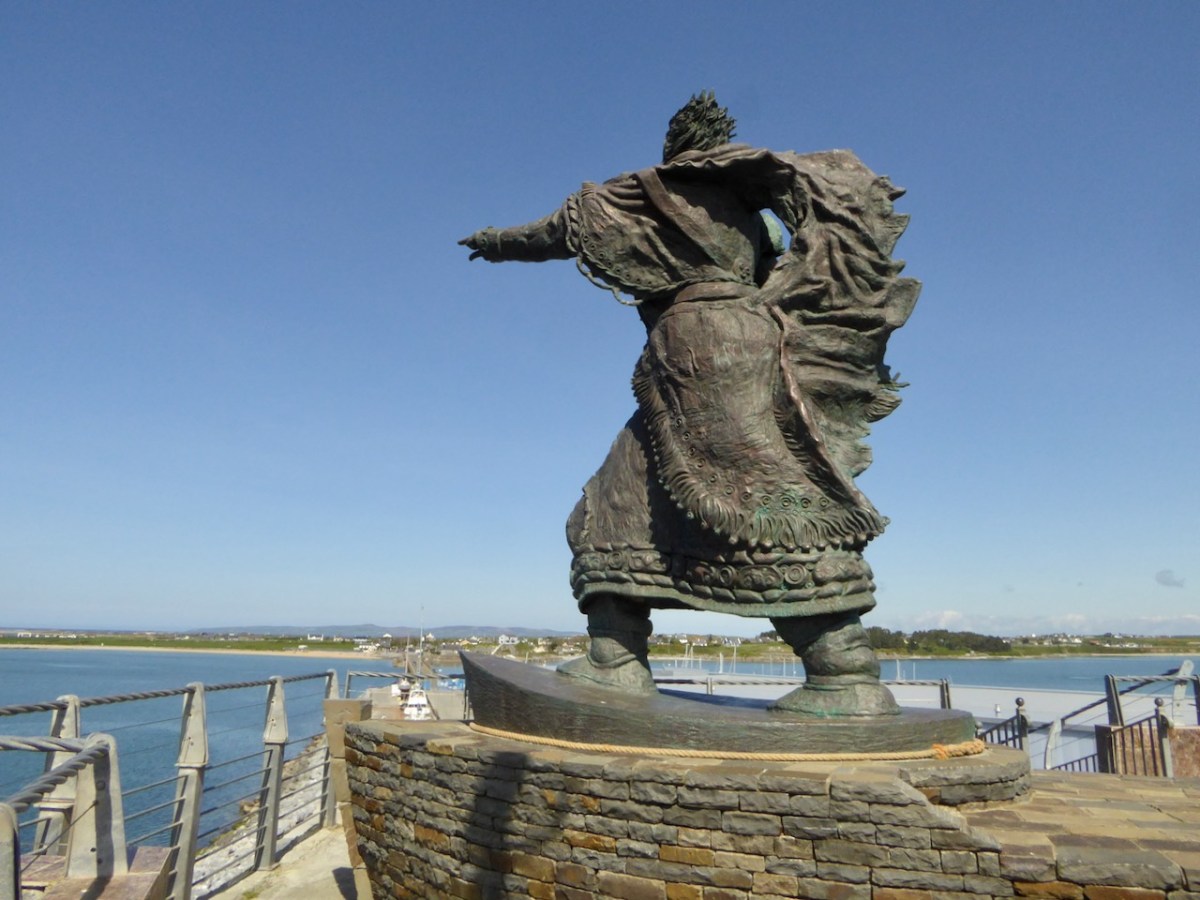
The muscular statue of a mature Brendan in Fenit, Co Kerry, which is the work of Tadgh O’Donoghue. Below is another image of this wonderful work

But to get back to Brendan – the story of his voyage became the principle Immram of the Middle Ages. Originally written in Latin as early as the 9th century, by the 12th century, it was one of the most popular medieval legends, with versions in many languages: French, Italian, English, Dutch, German, Irish, Welsh, and more. In fact, more than a hundred manuscript versions survive. That does not include the Life of Brendan from the Book of Lismore, compiled in the 1480s, and wonderfully translated by Whitley Stokes, even though that Life contains the voyage within it.

Just to give you a flavour of Stokes’ language, here a little extract from the Life:

So Brenainn, son of Finnlug, sailed then over the wave-voice of the strong-maned sea, and over the storm of the green-sided waves, and over the mouths of the marvellous, awful, bitter ocean, where they saw the multitude of the furious red-mouthed monsters, with abundance of the great sea-whales. And they found beautiful marvellous islands, and yet they tarried not therein.

Brendan and his foster-mother, St Ita. In Killorglin, by George Stephen Walsh

The thing about all these manuscript versions of Brendan’s Navigatio is that none except a couple is illustrated. My recent acquisition (thank you, Innana Rare Books!) is a book about one of only two fully illustrated versions, although isolated illustrations crop up here and there. The book was published in 1980 and is a work of scholarship by Hans Biedermann. Biedermann was a highly respected Austrian academic and an expert on symbolism and mythology. A professor at the University of Graz, he died in 1990, aged only 60. This is the only photograph of him I have been able to find.

This means, of course, that the book is in German, and no English translation exists. I turned to my favourite AI tool, Perplexity, to help me with the translations and it provided me with a page-by-page summary. 

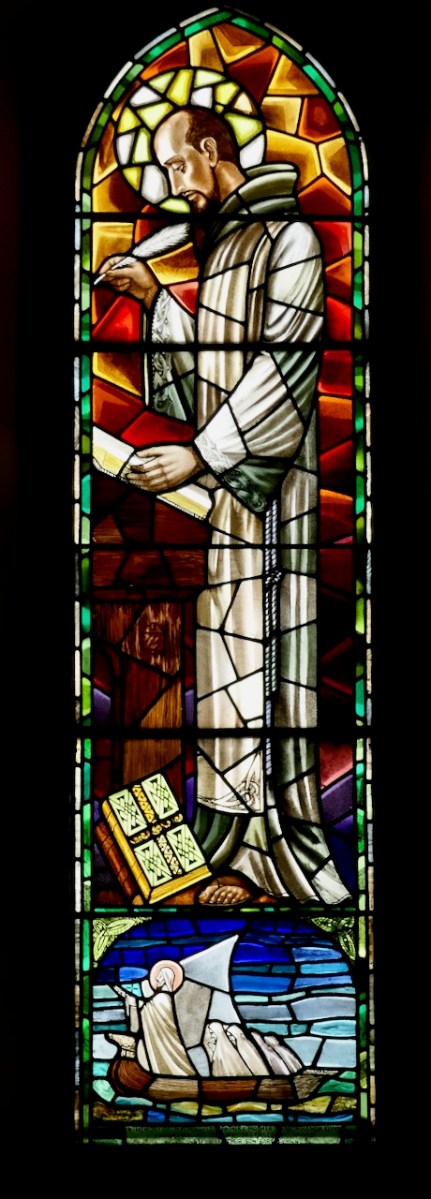
This window is in KIllorglin and is by James Cox. It emphasises the scholarly monk in the main panel, leaving the seafarer to the predella

A digression – I am as concerned as you all are about the use and mis-use of AI. For the purpose of this project I used Perplexity as an AI-powered search engine, translator and research assistant, asking it to fact-check items for me, and to dig deeper into sources and references. Because the book is in German, and some of the sources I consulted are in European libraries, I couldn’t have done it without this kind of help. Perplexity also ‘fixed up’ the photograph of Hans Biedermann above, from the tiny fuzzy image which was all I could find online. The writing, however, is all my own – don’t worry, none of this was written by a chatbot.

A detail from a George Walsh window

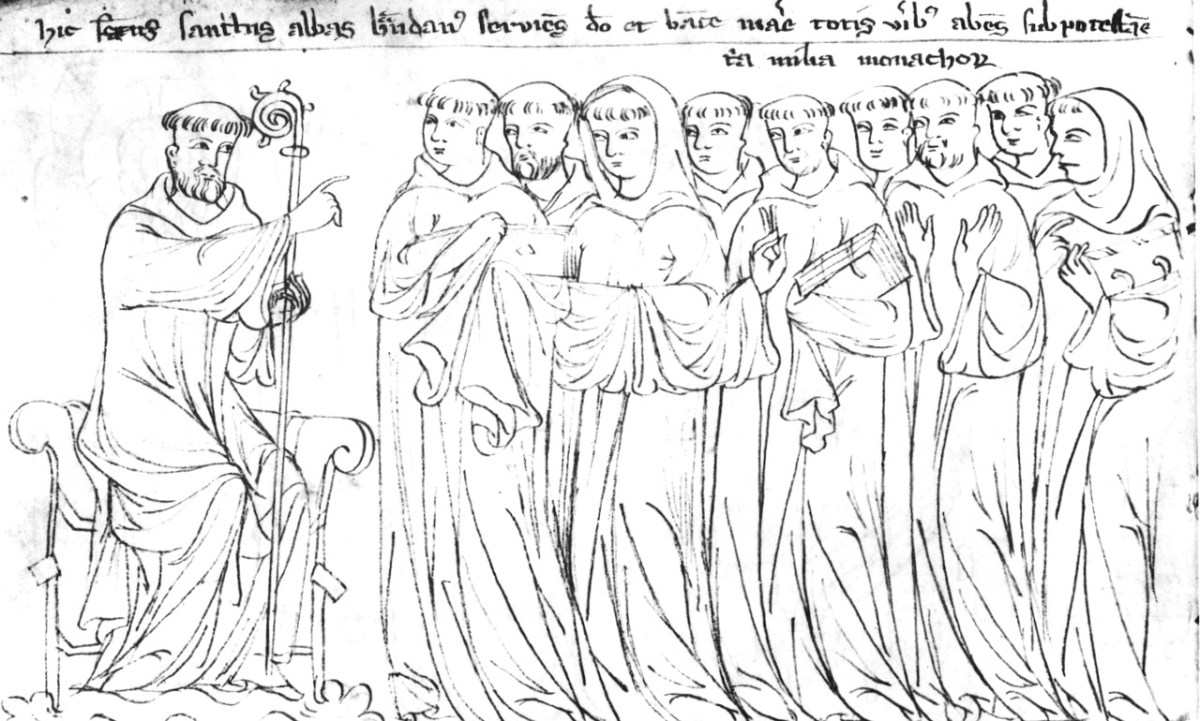
I am also painfully aware that I am many words in and I haven’t actually shown you what the book is all about. It contains facsimile reproductions of 62 plates from the Krumauer Bildercodex, Codex 370, which is a manuscript kept at the Austrian National Library. The plates illustrate the voyage of St Brendan. There is a minimum of text, in the form of captions in Latin in Gothic script. It is, in essence a graphic novel – and it dates to 1360!

Caption reads: Here the holy abbot Brendan, serving God and the blessed Mary with all his strength, had under him nearly three thousand monks

Next week we will get into the illustrations and look at what may have been the origins and the purpose of the manuscript. They are all pen and ink line drawings – above and below is a foretaste.

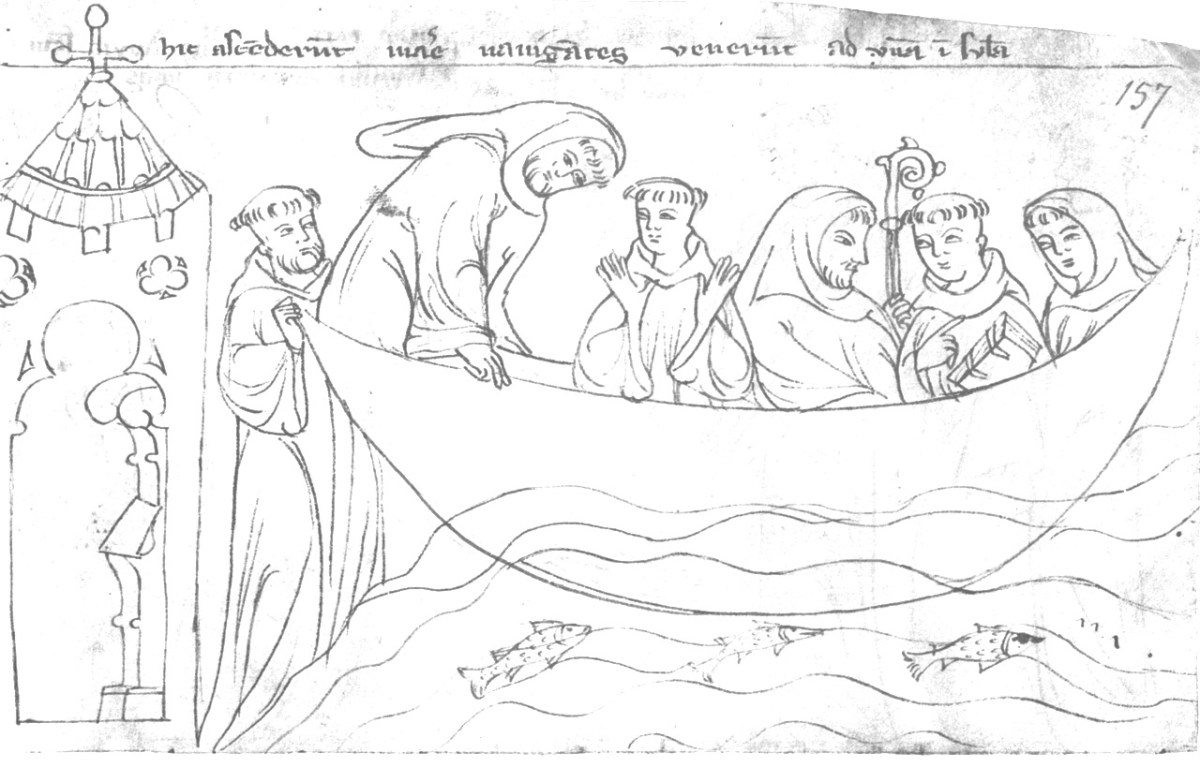
Caption reads: Here they set out upon the sea, sailing, and came to an island.

Part 2 is here

Harry Clarke, Brendan, Judas – and Matthew Arnold

St Brendan was a favourite subject for Harry Clarke.

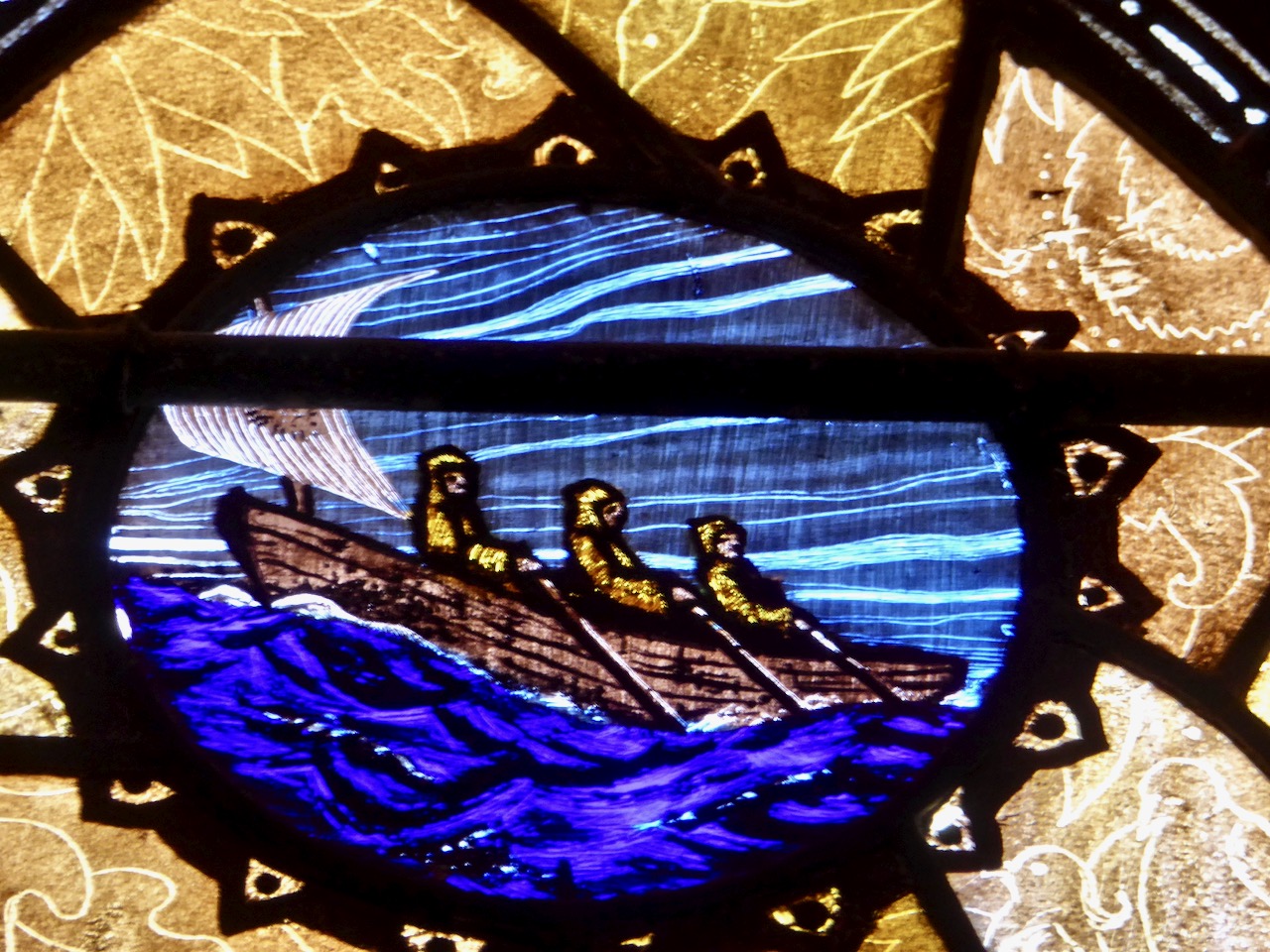
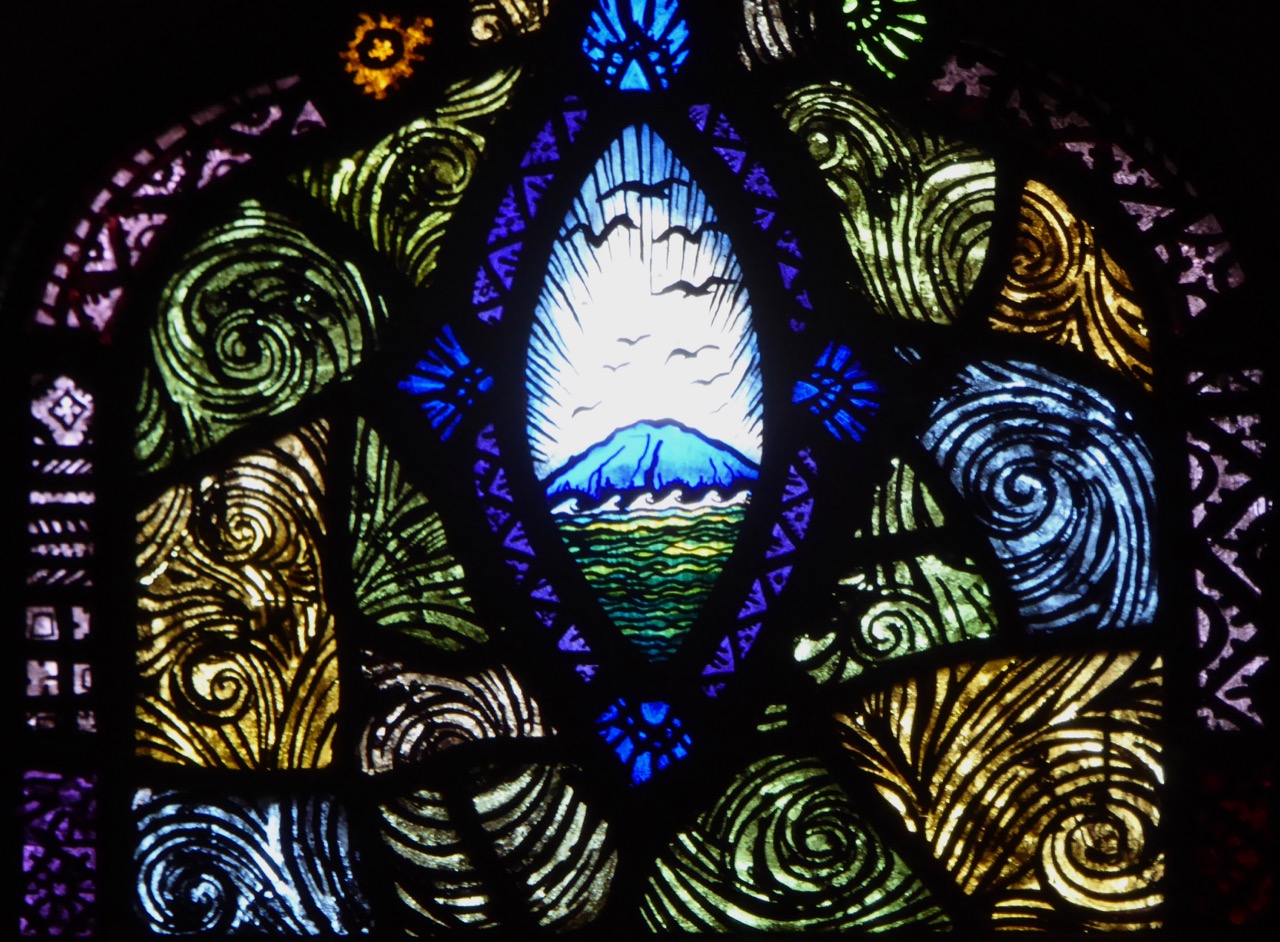
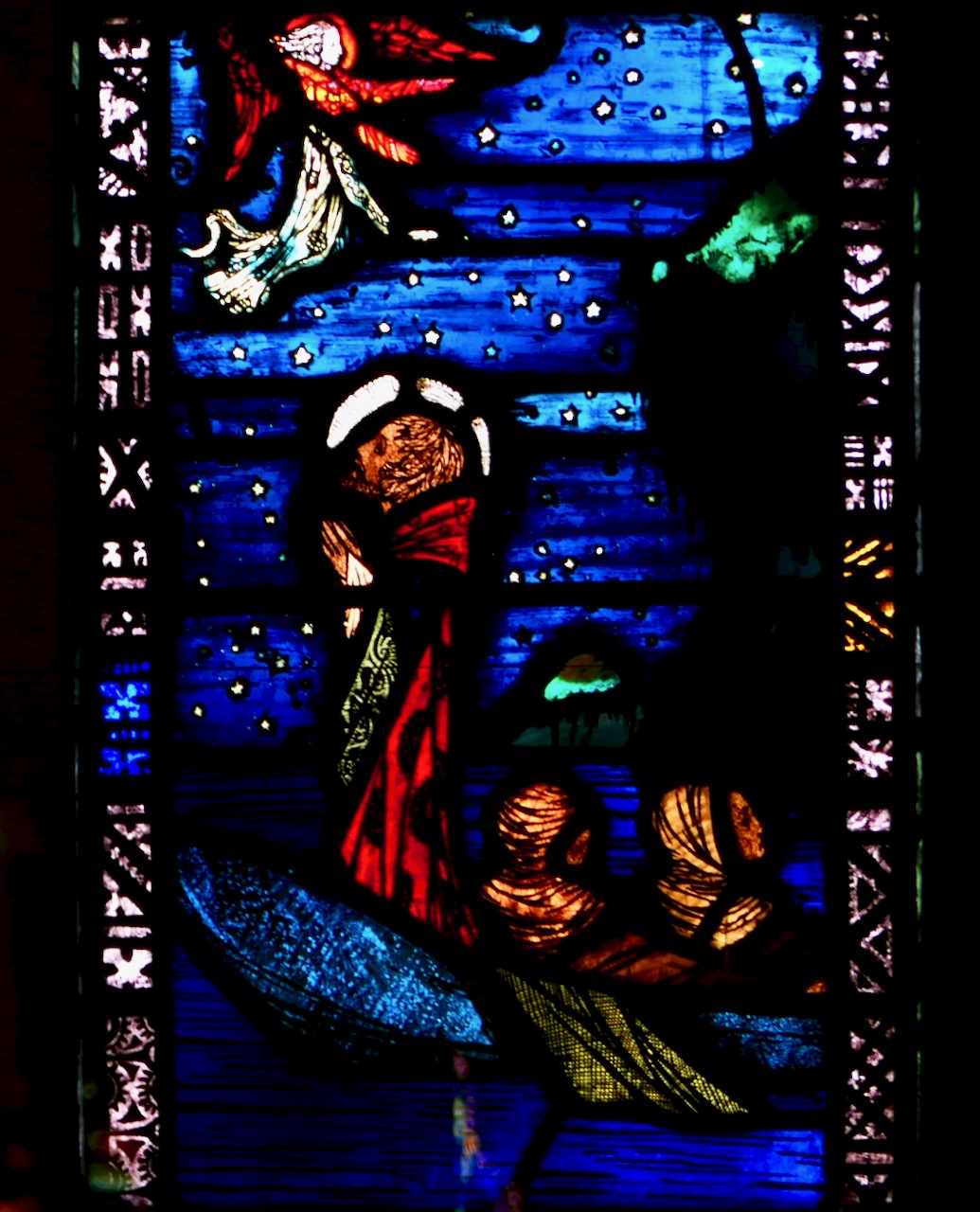
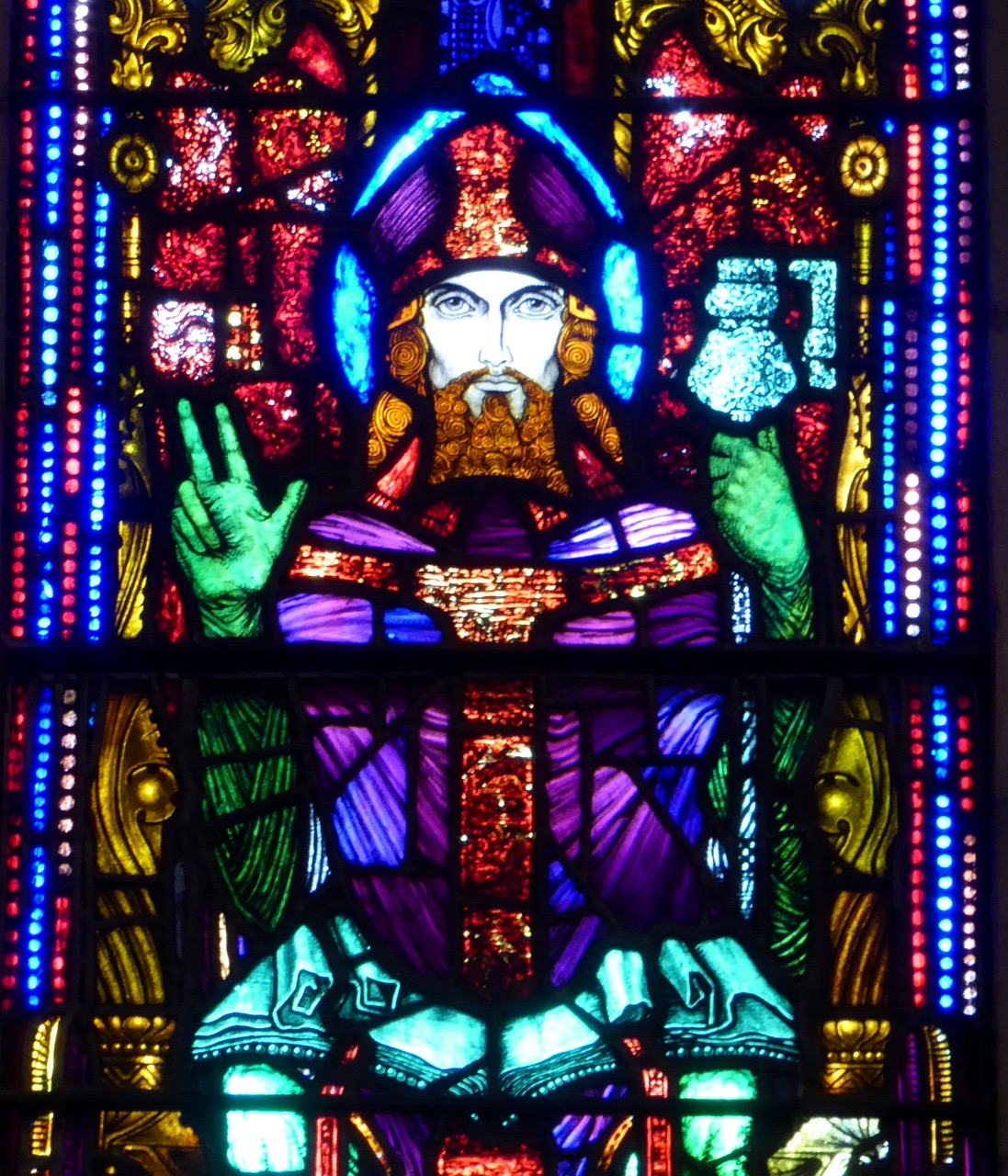
Four of his windows depict the saint: a prizewinning student piece from 1911; his Honan Chapel commission of 1916; the Ballinrobe windows from 1924-25 (pictured above); and the windows designed for the Rathfarnham Jesuit Retreat in 1928 and subsequently relocated to Tullamore (pictured below).

The Tullamore Brendan (above) is recognisably based on that from Ballinrobe, but in this window a youthful Brendan, as described by Paul Donnelly, ‘engages the viewer directly with a penetrating look’  

Harry researched his subjects extensively and ensured that anyone working on his windows did too. Paul Donnelly, in his fascinating essay Legacy and Identity: Harry Clarke, William Dowling and the Harry Clarke Studios (in Harry Clarke and Artistic Visions of the New Irish State) tells how he sent his apprentice, William Dowling, off to the National Library to read all that was available on his subject when he was working on the Rathfarnham window (above and below).

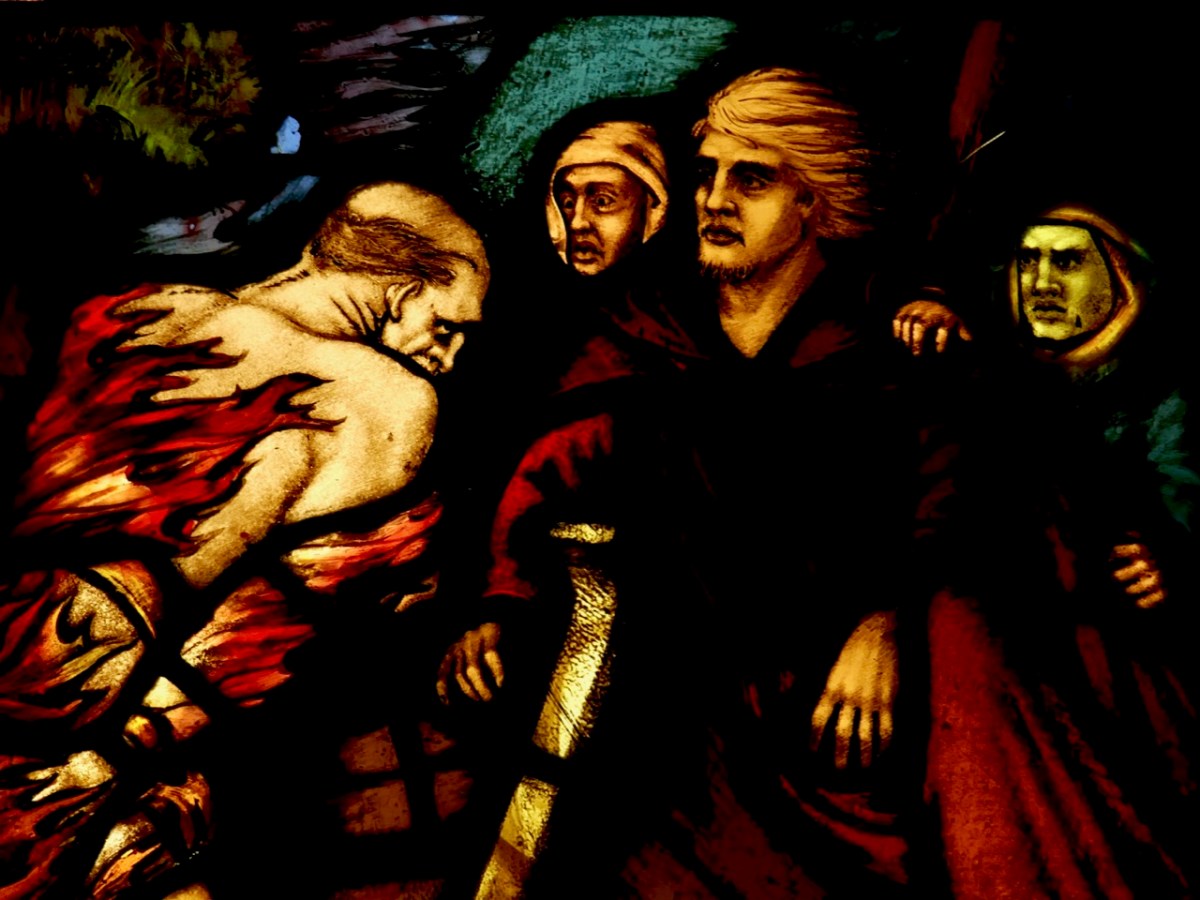
Nicola Gordon Bowe, in the Life and Work of Harry Clarke, felt that Harry was influenced by Matthew Arnold’s poem, St Brandon, when he set about designing his student piece, now in the Crawford Art Gallery. Based on the Medieval best-seller (there are over 100 versions still extant and many translations) Navigatio Sancti Brendani Abbatis, Arnold’s poem tells of an incident on the voyage in which the Saint meets with Judas, tied to an iceberg in the ocean. There are several slightly different accounts of this part of the voyage, but Arnold’s poem is compelling, and beautifully told.

From the Ballinrobe window, a detail showing what Brendan was seeking – the Land of Promise

Both in his poetry and criticism, Arnold explored issues of morality versus religion, and themes of alienation and redemption. Clarke was constrained to work on religious subjects since most of his stained glass commissions came from churches, but revelled in the chance to introduce details from mythology and ancient hagiographies (such as O’Hanlons Lives of the Irish Saints which he consulted exhaustively) and to use those details as a springboard for his own imagination.

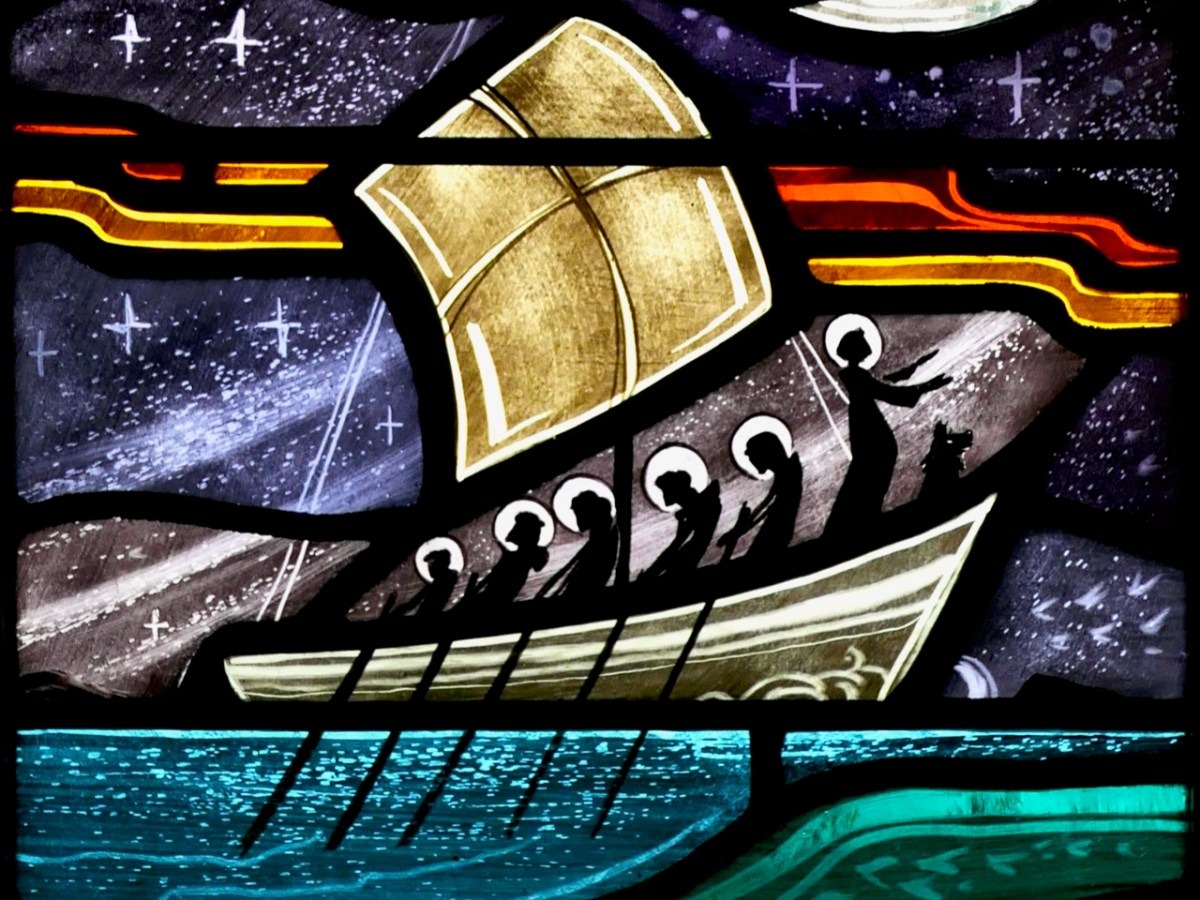
Also from the Ballinrobe window, the bottom panel shows Brendan praying  at the bow of the boat and an angel appearing

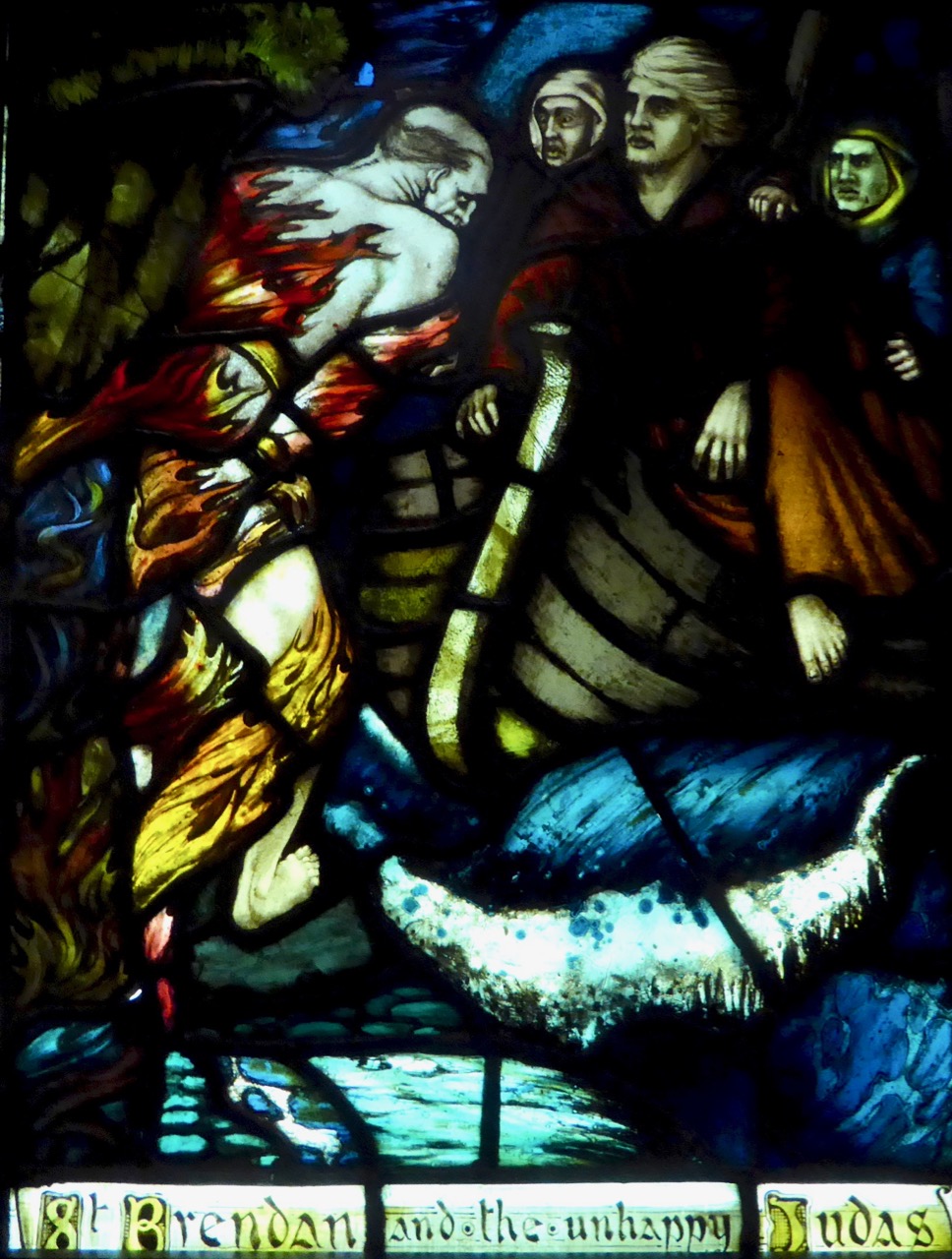
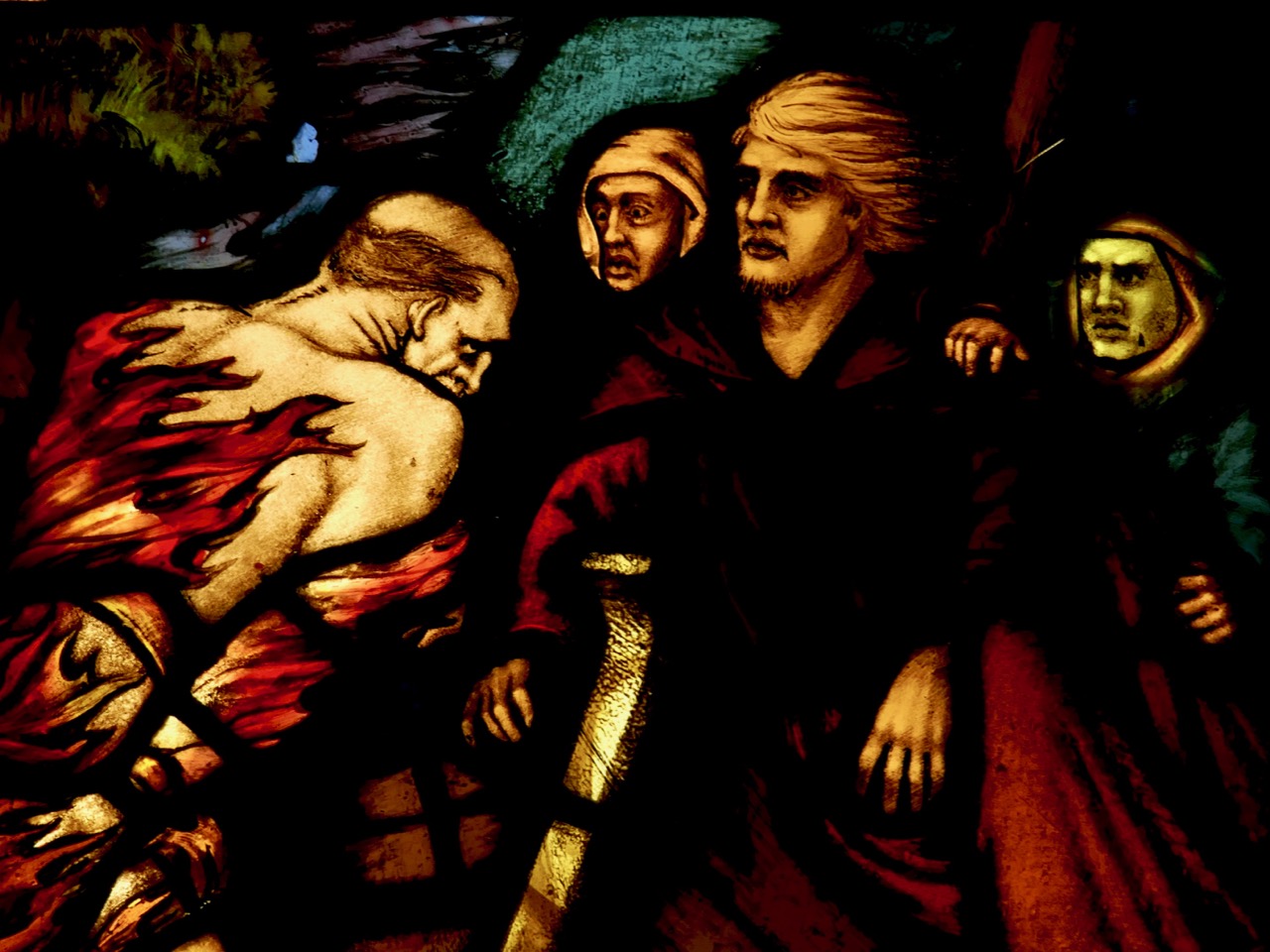
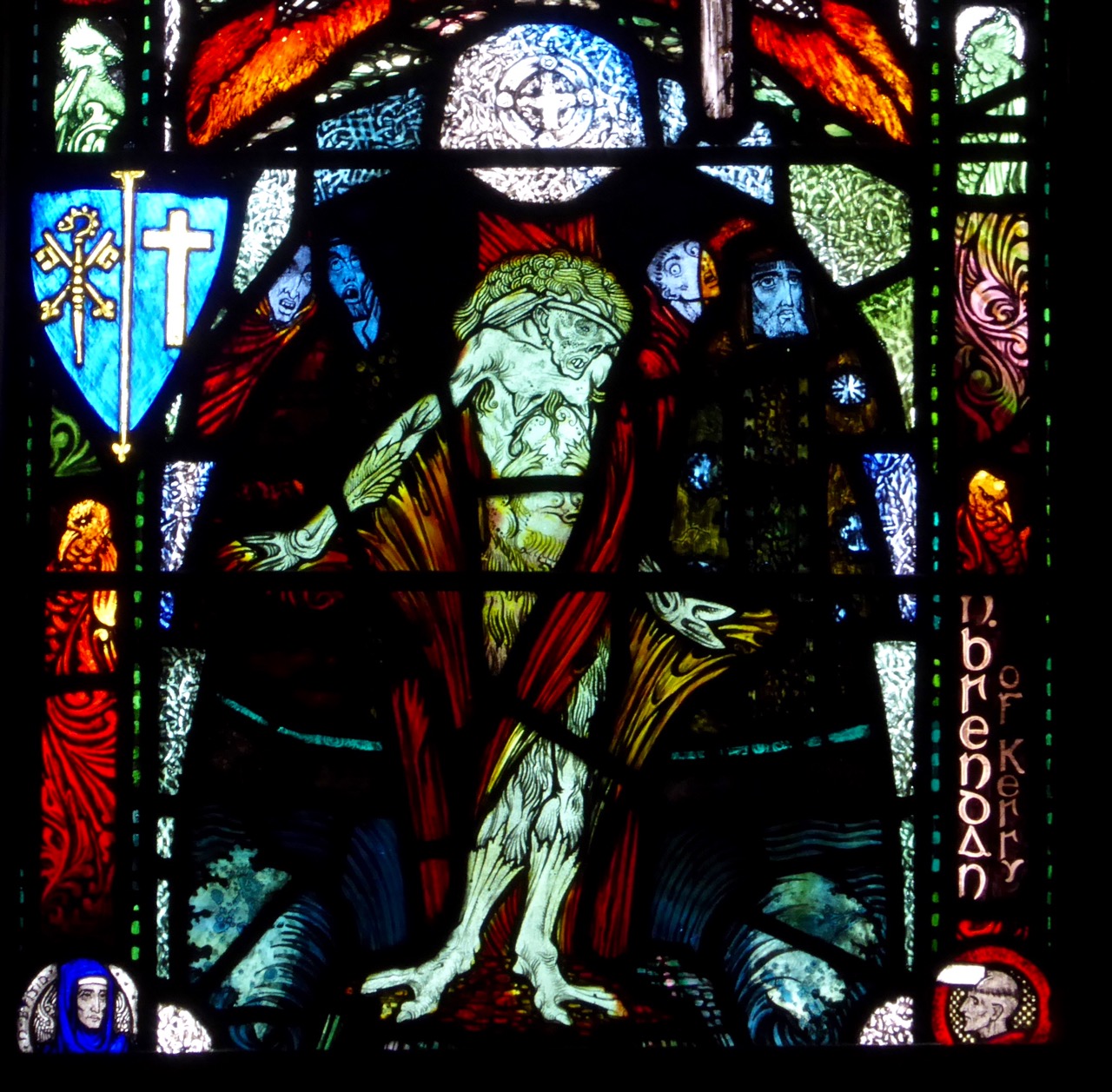
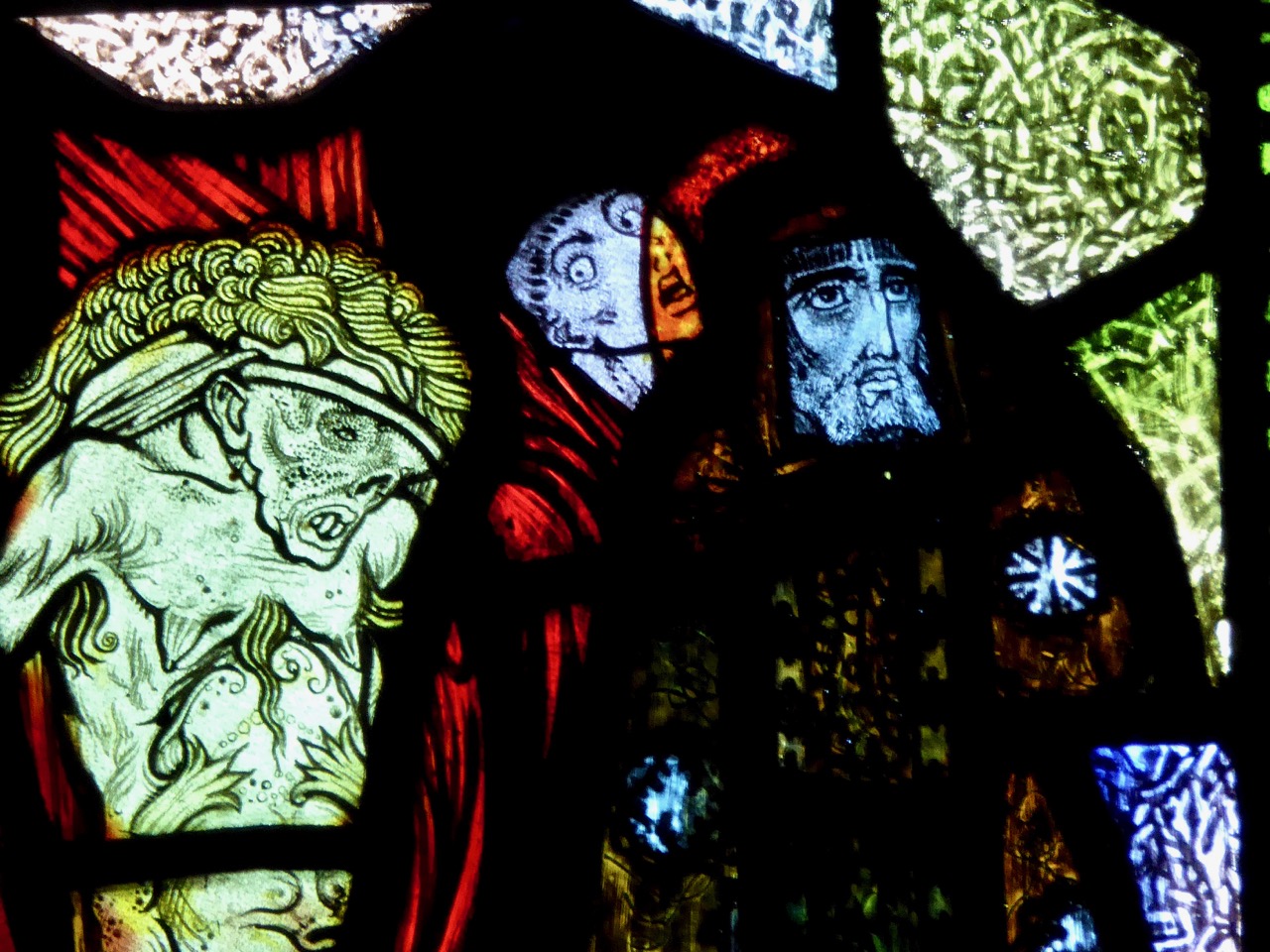
We can see the progression of his art, and his growing interest in the macabre, in the two depictions of Judas. Both are emotive and powerful, but in the first, from 1911, Judas is shown as a fully human, tortured man. In the Honan window, from 1916, he has turned into a monster with scales, feathers, fur and claws. One constant is that Brendan’s companions look on in shock and horror in both pieces, while the saint remains unmoved, gazing thoughtfully and perhaps compassionately on the scene.

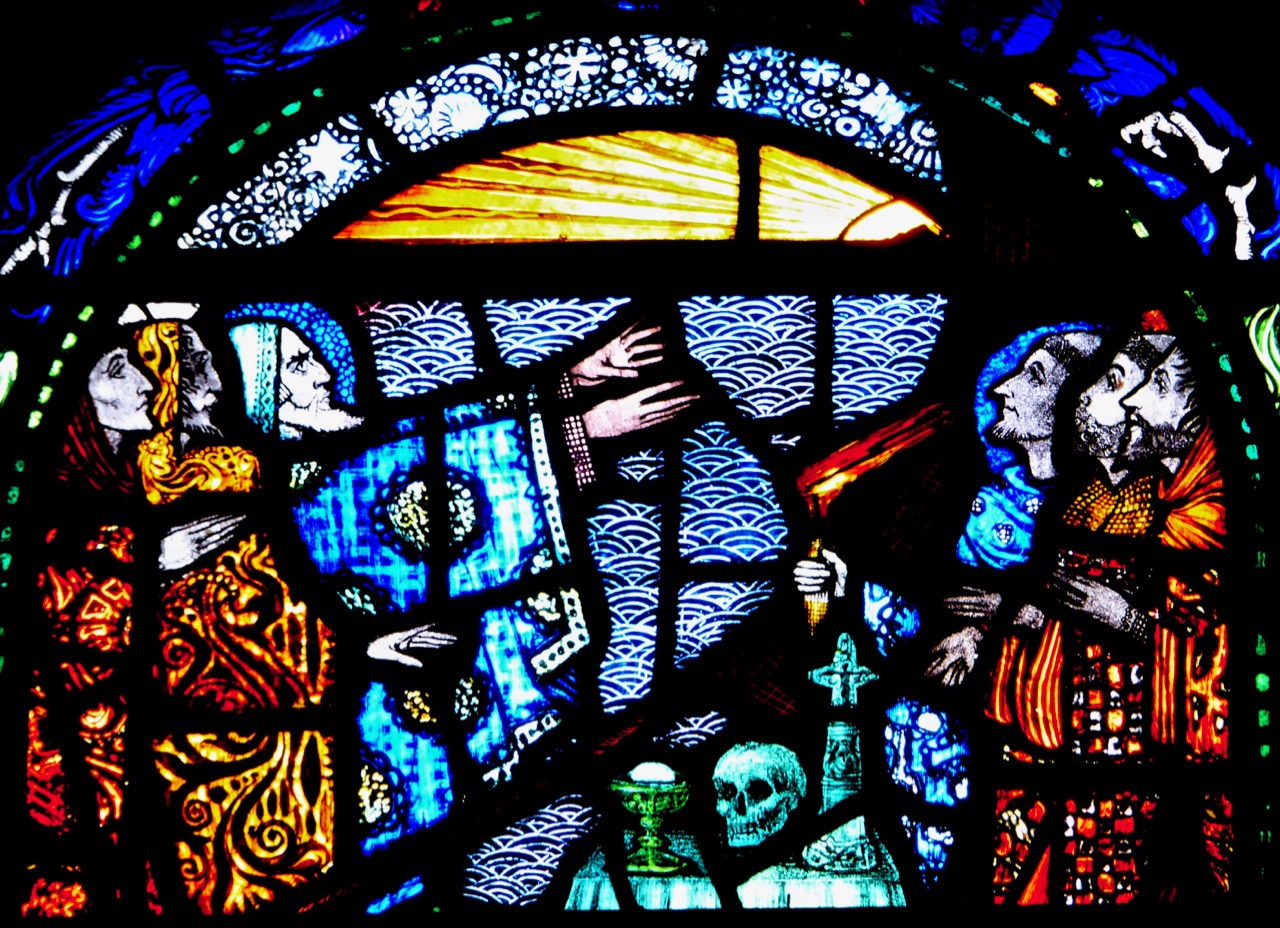
From the Honan window, according to Gordon Bowe: ‘The upper panel which perhaps represents Brendan’s vision of Paradise, is spanned by a golden hemisphere and depicts the saint at sea in his coracle, preaching to his companions as they approach the skull-ridden coastline of America in their search for the Islands of the Blessed’

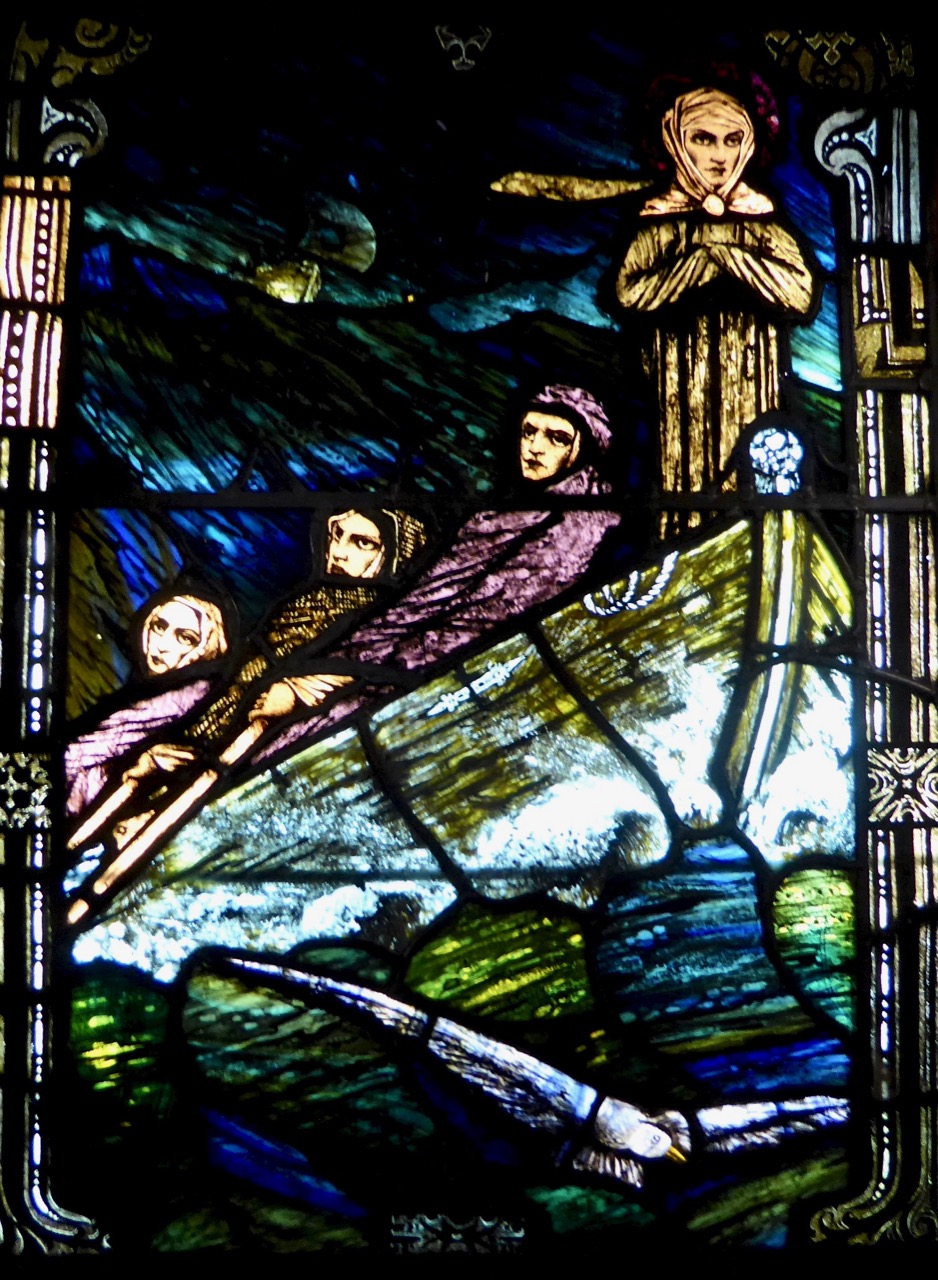
Harry went on to design two more Brendan windows, but chose different details for them. In fact, he wrote to Monsignor D’Alton at Ballinrobe, ‘The meeting with Judas I have done too often to do again with enthusiasm.’  Arnold’s poem was first published in 1860. He died in 1888 and Harry was born in 1889, so their lives did not overlap. But Harry was very well read and Arnold, at the turn of the century, was still considered one of the major poets of the Victorian era. I think you will find that the poem and the windows are a successful collaboration between two iconic figures of art and literature. I give the poem now in its entirety, illustrated by Harry Clarke. [The first image is from a panel in Tullamore, originally part of the St Brendan window but separated from it when the windows were relocated. The second and third image are from the 1911 student piece; the next three from the Honan Chapel 1916 window.]

Saint Brandan sails the northern main;

The brotherhood of saints are glad.

He greets them once, he sails again;

So late!—such storms!—The Saint is mad!

He heard, across the howling seas,

Chime convent-bells on wintry nights;

He saw, on spray-swept Hebrides,

Twinkle the monastery-lights;

But north, still north, Saint Brandan steer’d—

And now no bells, no convents more!

The hurtling Polar lights are near’d,

The sea without a human shore.

At last—(it was the Christmas night;

Stars shone after a day of storm)—

He sees float past an iceberg white,

And on it—Christ!—a living form.

That furtive mien, that scowling eye,

Of hair that red and tufted fell—

It is—Oh, where shall Brandan fly?—

The traitor Judas, out of hell!

Palsied with terror, Brandan sate;

The moon was bright, the iceberg near.

He hears a voice sigh humbly: ‘Wait!

By high permission I am here.

‘One moment wait, thou holy man

On earth my crime, my death, they knew;

My name is under all men’s ban—

Ah, tell them of my respite too!

‘Tell them, one blessed Christmas-night—

(It was the first after I came,

Breathing self-murder, frenzy, spite,

To rue my guilt in endless flame)—

‘I felt, as I in torment lay

‘Mid the souls plagued by heavenly power,

An angel touch my arm, and say:

Go hence, and cool thyself an hour!

”Ah, whence this mercy, Lord?’ I said.

The Leper recollect, said he,

Who ask’d the passers-by for aid,

In Joppa, and thy charity.

‘Then I remember’d how I went,

In Joppa, through the public street,

One morn when the sirocco spent

Its storms of dust with burning heat;

‘And in the street a leper sate,

Shivering with fever, naked, old;

Sand raked his sores from heel to pate,

The hot wind fever’d him five-fold.

‘He gazed upon me as I pass’d

And murmur’d: Help me, or I die!—

To the poor wretch my cloak I cast,

Saw him look eased, and hurried by.

‘Oh, Brandan, think what grace divine,

What blessing must full goodness shower,

When fragment of it small, like mine,

Hath such inestimable power!

‘Well-fed, well-clothed, well-friended, I

Did that chance act of good, that one!

Then went my way to kill and lie—

Forgot my good as soon as done.

‘That germ of kindness, in the womb

Of mercy caught, did not expire;

Outlives my guilt, outlives my doom,

And friends me in the pit of fire.

‘Once every year, when carols wake,

On earth, the Christmas-night’s repose,

Arising from the sinner’s lake,

I journey to these healing snows.

‘I stanch with ice my burning breast,

With silence balm my whirling brain.

Oh, Brandan! to this hour of rest

That Joppan leper’s ease was pain.’—

Tears started to Saint Brandan’s eyes;

He bow’d his head, he breathed a prayer—

Then look’d, and lo, the frosty skies!

The iceberg, and no Judas there! 


Harry Clarke’s Supporting Cast

Honan St Ita

For any student of Harry Clarke stained glass there are delights to be discovered far beyond the main depiction. A host of subordinate or secondary figures reveal themselves to close examination, sometimes only after repeated viewings.

Brendan the Navigator

Brendan of Kerry – AKA Brendan the Navigator. Note the borders with their exotic birds

The tall windows I describe in this post  typically have three parts – the main section containing a large image of the saint, and an upper and lower section (sometimes called a predella) each of which may contain a separate image/story. In addition, the border around the outside of a Clarke window is always highly decorated in endless imaginative patterns.

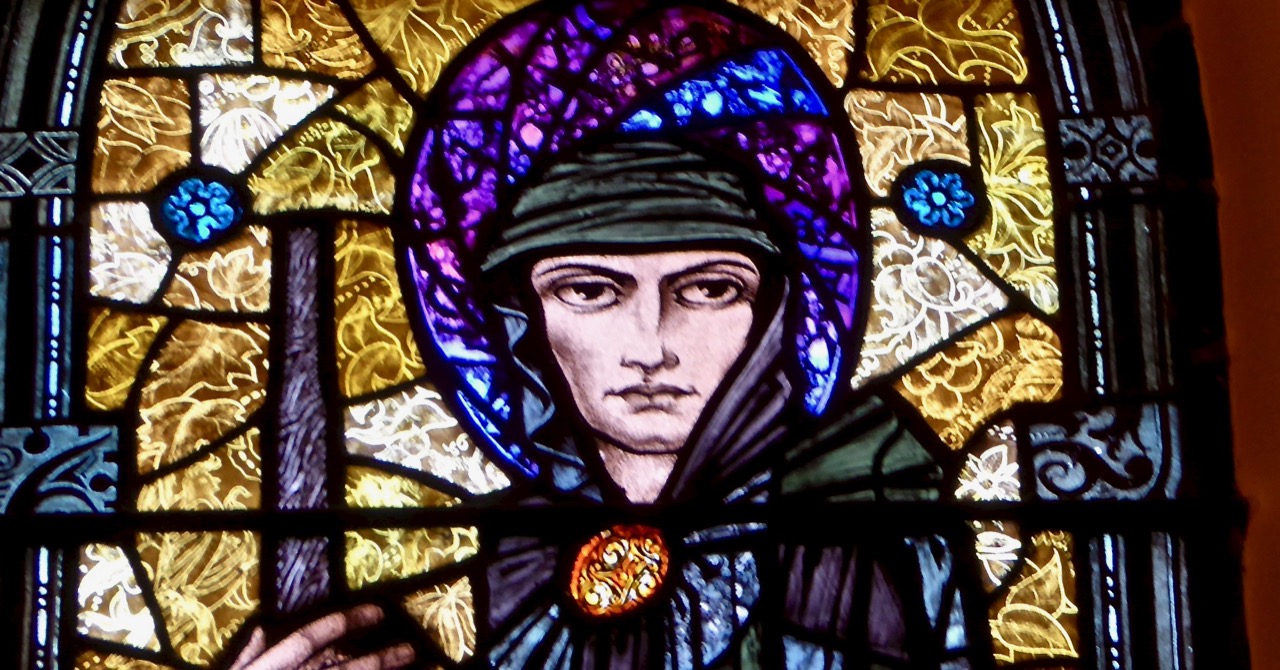
Honan Mary Mother of Sorrow
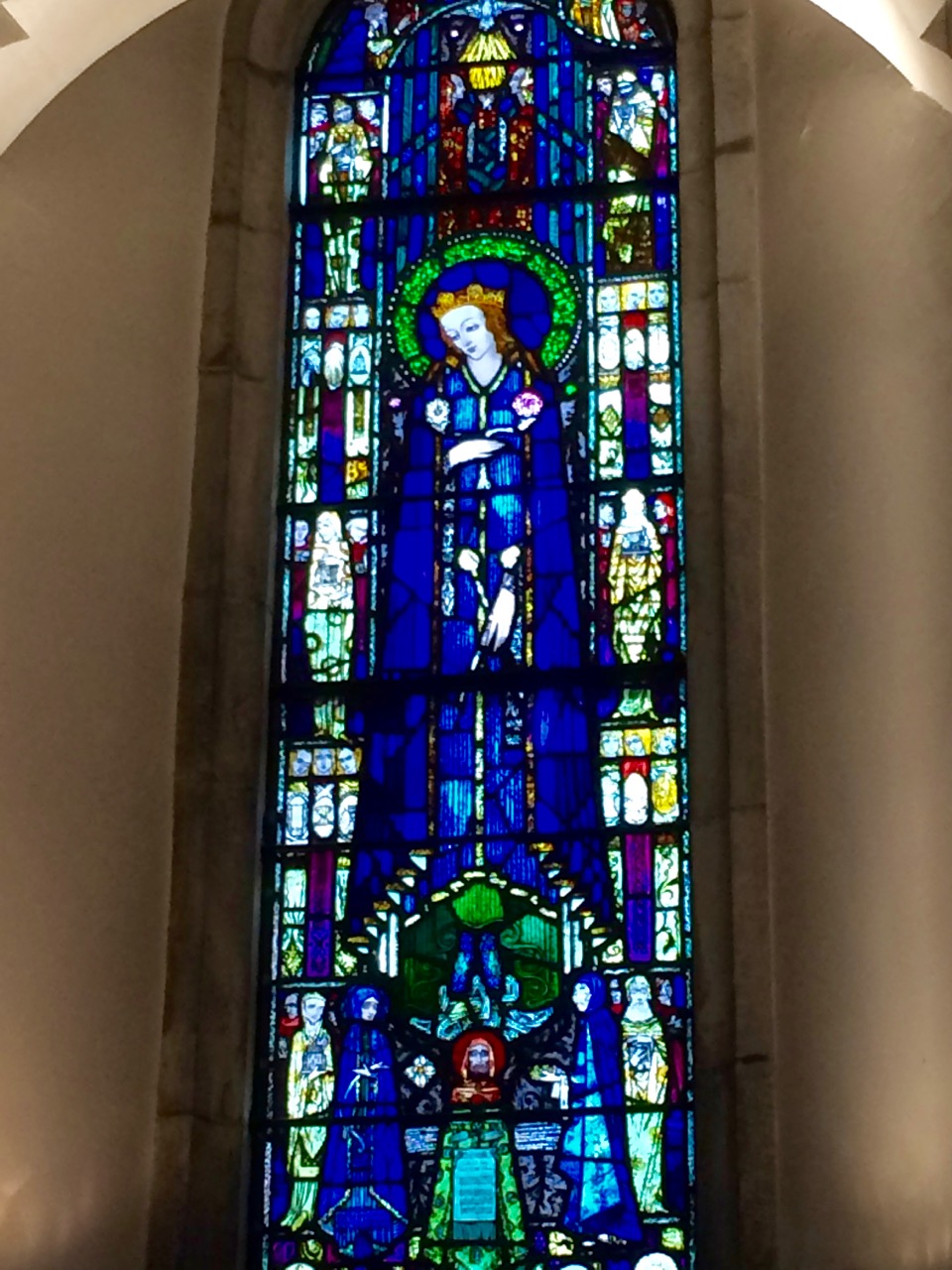
The Mary Mother of Sorrows window was executed slightly later than the other windows and shows some stylistic changes. But it illustrates well the three parts to the window and the use of all available space for supporting and secondary characters to tell the story

Clarke was obsessed with detail: there are few white spaces or plain glass in his work. Every inch is filled with richly figured and never-repeated decoration or with additional figures that fill out the story and the symbolism of the central character. These figures tend to fall into a group we can call saintly and a group we can call macabre. Whichever they are, they reflect his vivid imagination and his gift for portraiture.

Honan Chapel

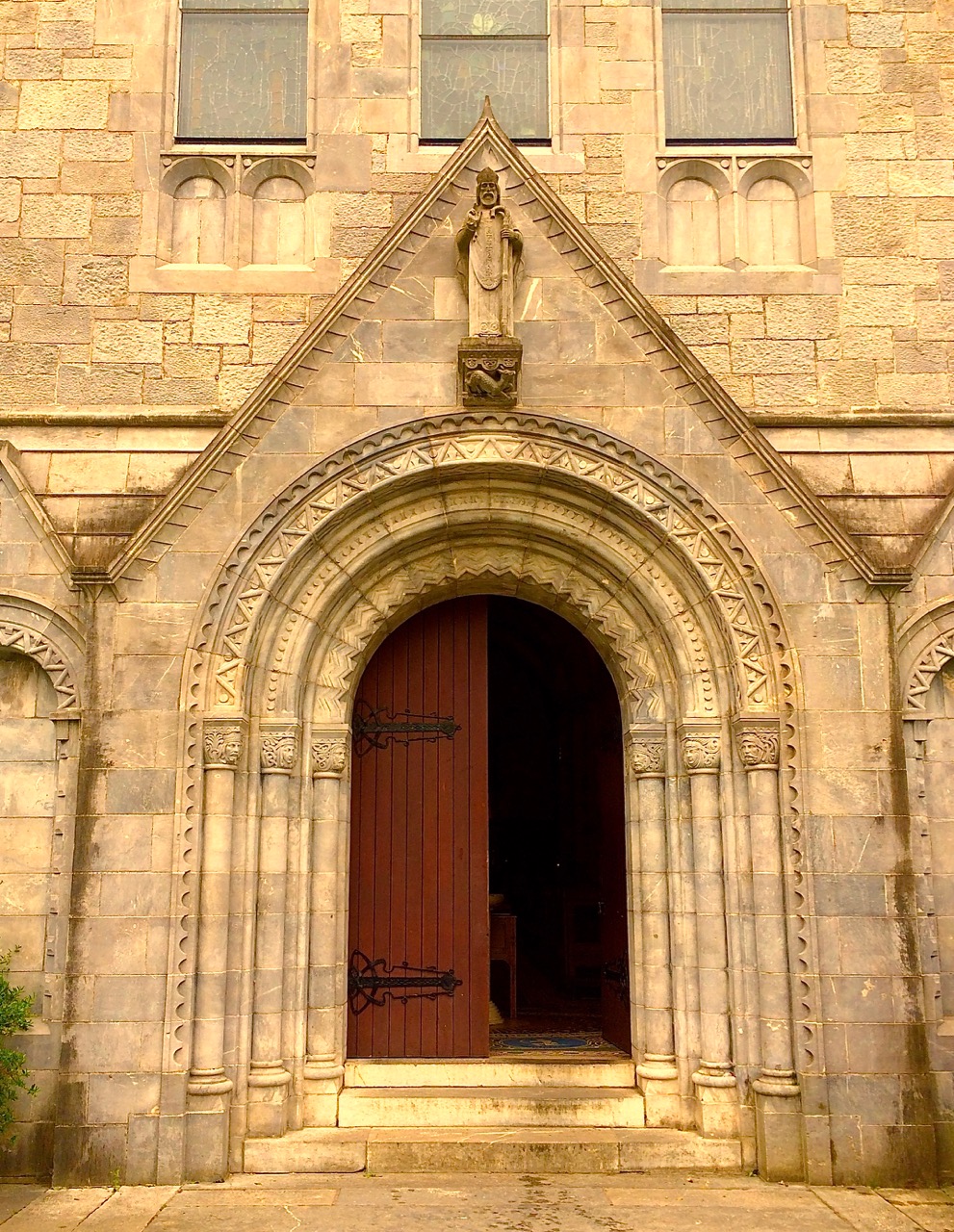
The Honan Chapel is the Catholic church at University College, Cork. It is a masterpiece of Celtic-Revival Hiberno-Romanesque design and a wonderful place to visit

Designing windows for the Honan Chapel at University College, Cork, was Harry Clarke’s first major commission and launched his career. The windows, finished and installed between 1916 and 1917 contain all the hallmarks of the intricate style he made uniquely his own. I will use four of his Honan windows to look at the cast of supporting characters he employed in his quest to incorporate as much as possible of the saint’s story.

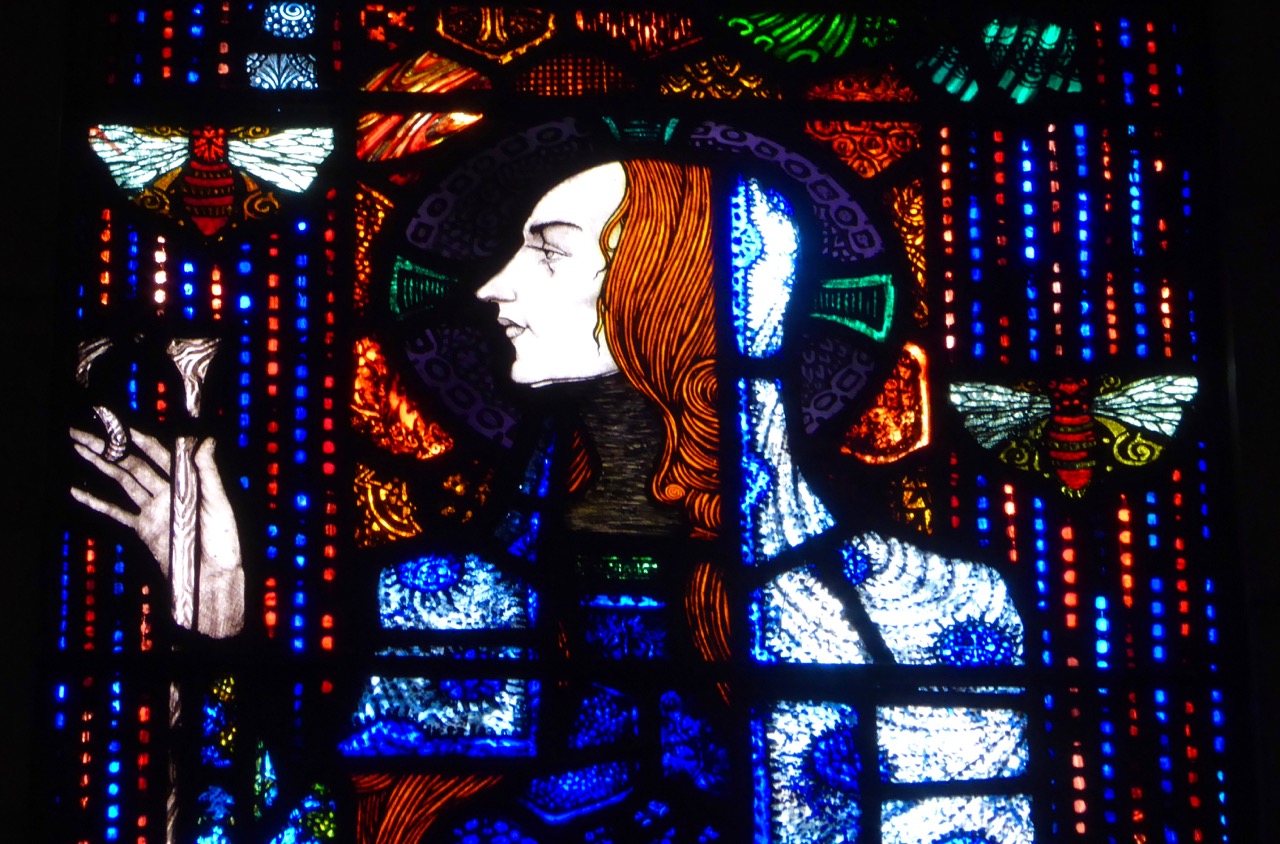
Gobnait

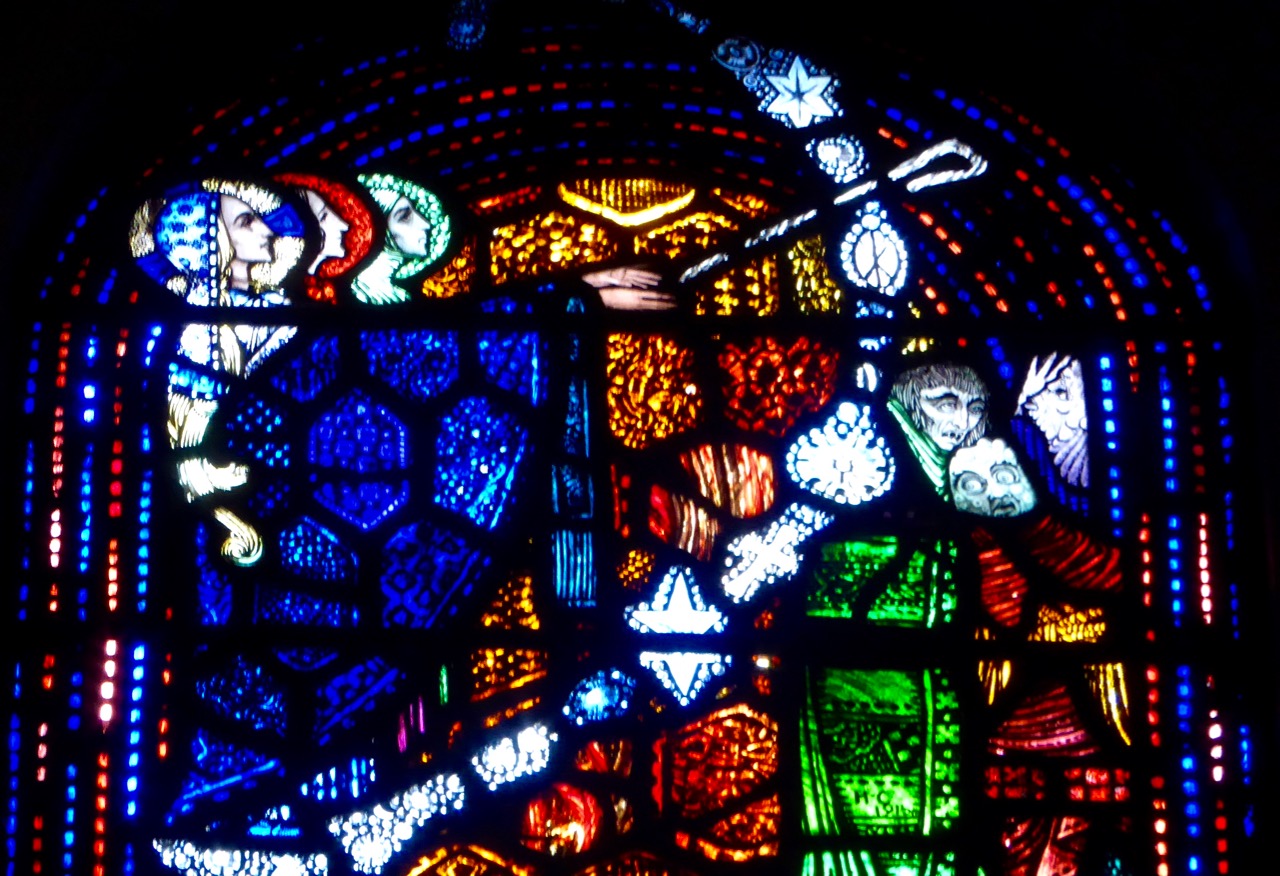
St Gobnait is, famously, depicted in profile, allowing her red hair to take centre stage. She is the patron saint of beekeepers and her bees surround her. Above the main image she is shown spreading her arm (note the honeycomb design of her robe) and extending her staff to prevent a plague descending on her people. She is attended by two maidens and to the right you can see the faces of three men who have not been spared the plague. (There’s another little detail you might spot in this picture!)
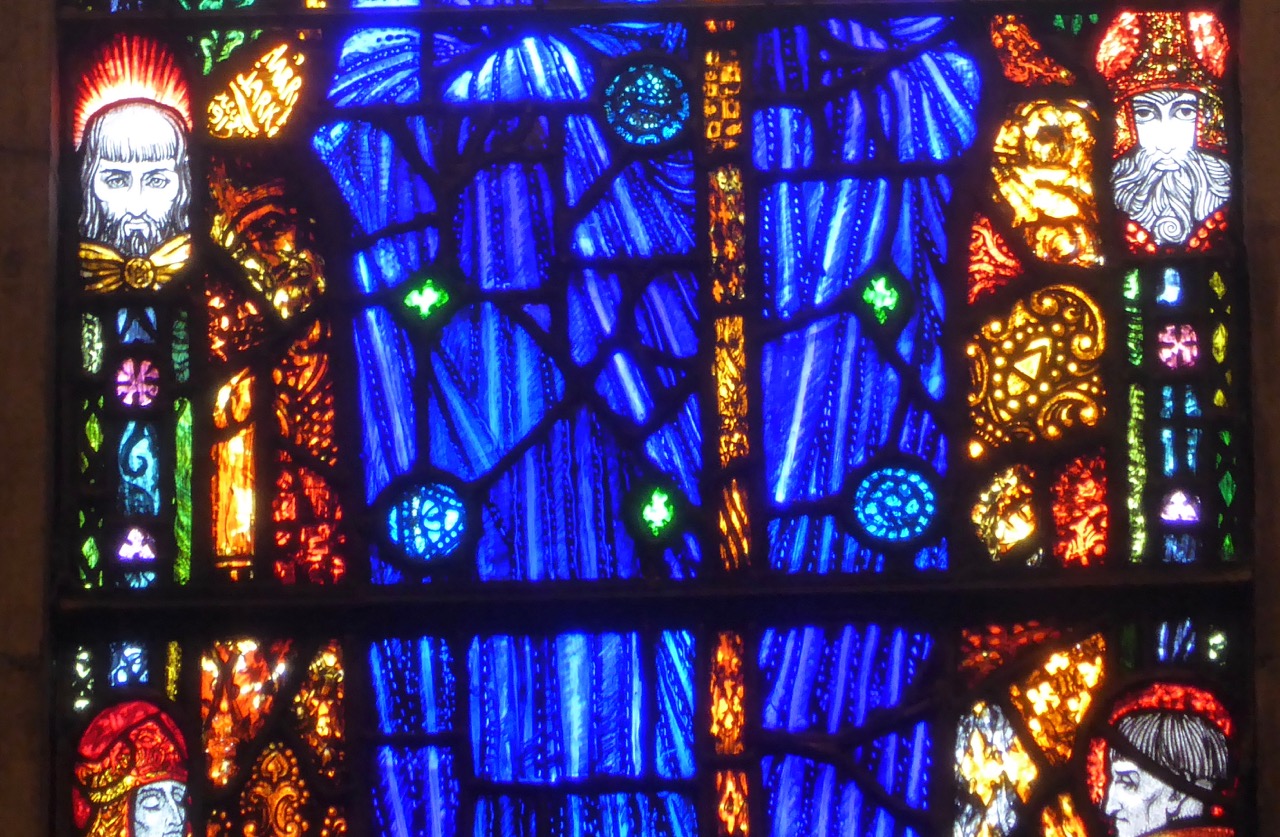
Gobnait Plague Victims

To quote Nicola Gordon Bowe, in her magisterial The Life and Work of Harry Clarke:

Harry here shows the delight he took in depicting deformity, disease and the macabre. This fascination with the poles of the beautiful and of the ugly and grotesque is a propensity he shared with many medieval artists.

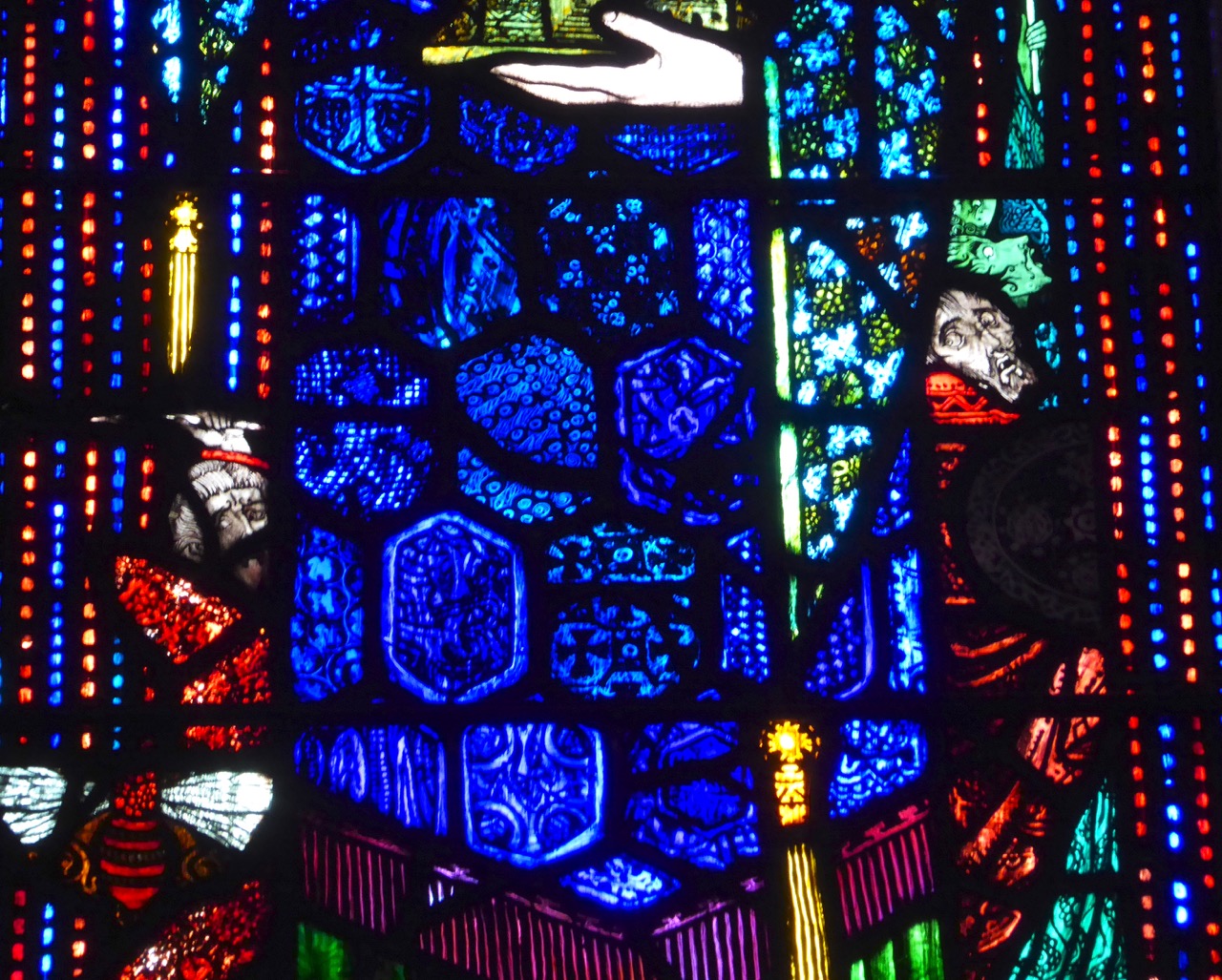
Gobnait Robbers

On either side of St Gobnait another fearful scene unfolds. According to legend, robbers attempted to break into St Gobnait’s abbey but she set her bees upon them and here they are fleeing in terror.

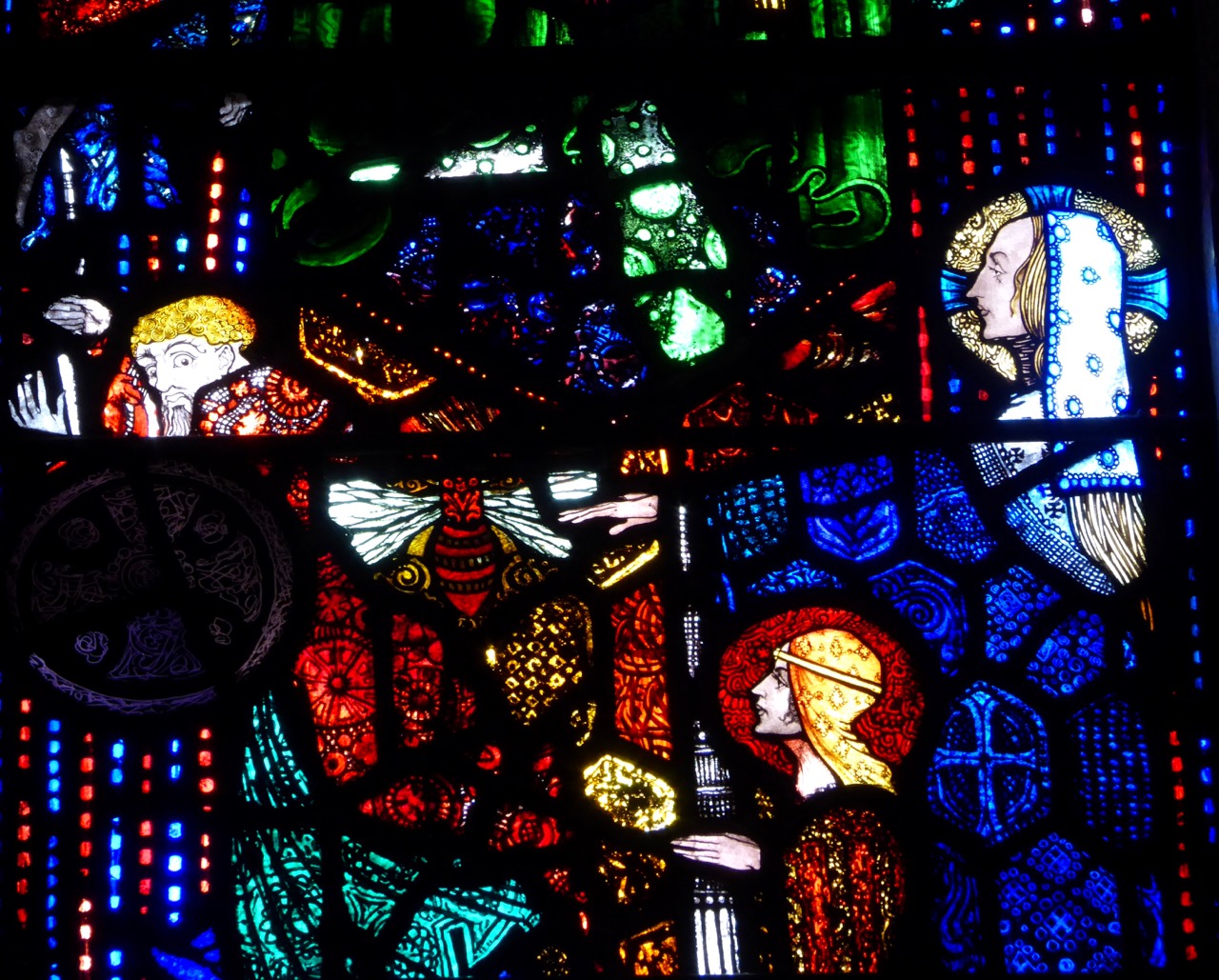
Gobnait and handmaiden

At the very bottom of the panel she is depicted directing the bees and attended by a novice, while on the left a fourth robber runs in panic.

Honan Brendan border detail

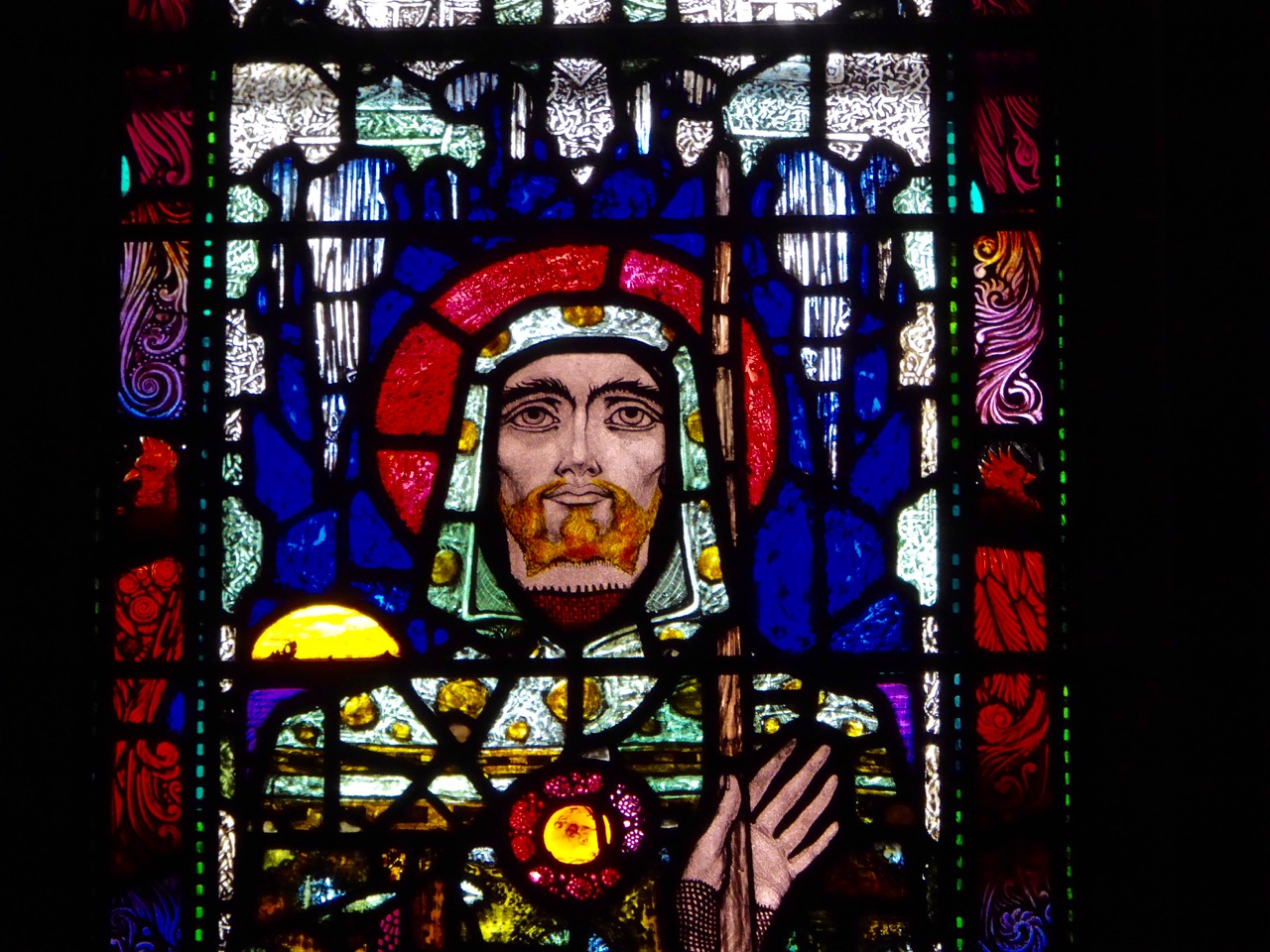
St Brendan the Navigator, with his red beard, gazes serenely out, holding an oar. By his shoulder, his tiny curragh sails westward into the setting sun. In this window pay special attention to the border. Because he was a voyager, discovering the Americas, Clarke decorate it with exotic birds. He intersperses these with tiny roundels of other Irish saints.

Honan Brendan and Judas

Judas suffering on his rock – a medieval vision of misery. Note also the roundels: on the left is St Brigid and on the right is “the poor monk with the iron in his head.” Amazing that Clarke managed to get all that information on to the border of the roundel

In one episode on his seven year journey, Brendan encountered Judas, suffering eternal torture because of his betrayal of Jesus. The bottom panel depicts the scene of the wasted and agonised Judas, while the monks look on in horror. Only Brendan is able to look stoically forward.

Honan St Ita Detail

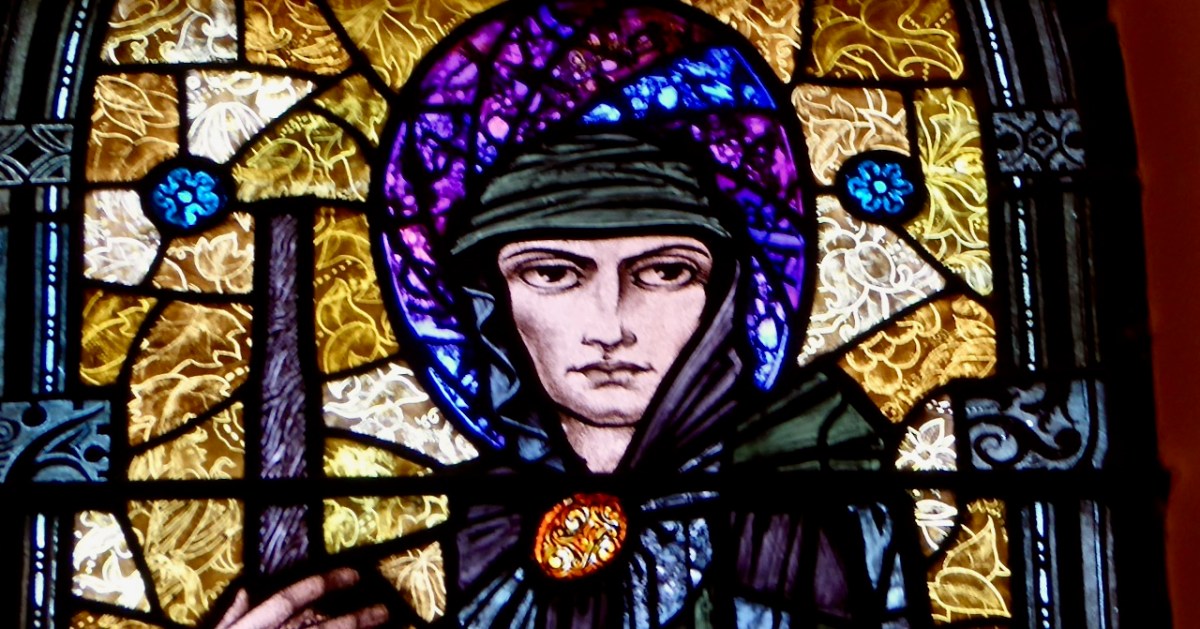
Detail from the St Ita window

St Ita (the first photograph in this post) was the daughter of a chieftain but renounced all worldly things to live a life of poverty and to teach. Once again, Clarke uses tiny roundels to depict other saints associated with Ita: Brendan, Colman, Finbar and Carthage.

St Ita predella

Below her feet is another tableau, depicting a prayerful scene in which she is attended by two holy women and St Colman and St Brendan. The portraiture of the the two saints is exquisite.

Honan Albert of Cashel

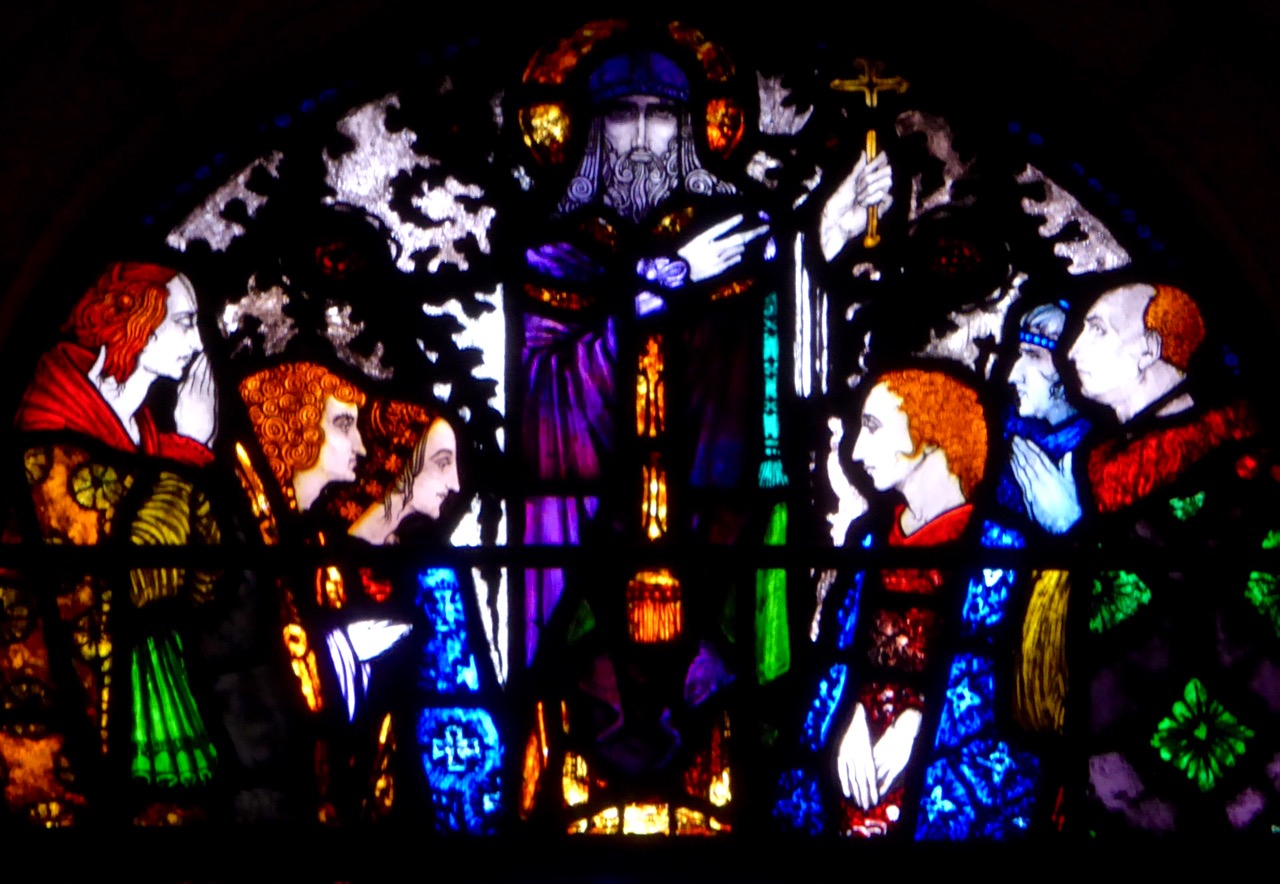
St Albert of Cashel – a little known saint who journeyed to Ratisbon in Germany on a conversion mission

A last window from the Honan Chapel – this time St Albert of Cashel, depicted as a seated bishop. In the top portion he is depicted converting the people of Ratisbon in Germany. Once again the individuals are beautifully drawn and sumptuously dressed. I particularly love the red hair – always a feature of a Harry Clarke window.

Citizens of Ratisbon listening to St Albert preaching

I highly recommend a visit to the Honan Chapel if you’re in Cork. See Robert’s post, Cork Menagerie, for an in-depth look at the mosaics. And take your time – the windows (there are several more than the ones I’ve used in this post) reward patient and detailed study. For more on Harry Clarke’s stained glass, see my post The Gift of Harry Clarke, which will walk you through an analysis of his style and his influences.

Honan St Albert converting Germans