Vallancey: The Collectanea 4 and 5 and Conclusion

As promised this will be a skip and a hop over Vols 4 and 5, as this is my last post and I want to leave time for a final evaluation of Vallancey and his work. I’m just going to pick out items that caught my attention or appealed to me for my own quirky reasons. For everything I write about, there will be a dozen that might appeal to you more. But then, as a friend of mine said recently about an interminable novel – we’ll be reading it at your funeral.

After his usual lengthy preface (this one is only 60 pages and yet another opportunity to talk about Phoenicians) we come to a series of short articles about archaeological objects.  Below is what archaeologists call a gorget – its a gold collar, beautifully worked. There are fewer than a dozen of them known from Irish contexts and they have some parallels with others found on the continent. 
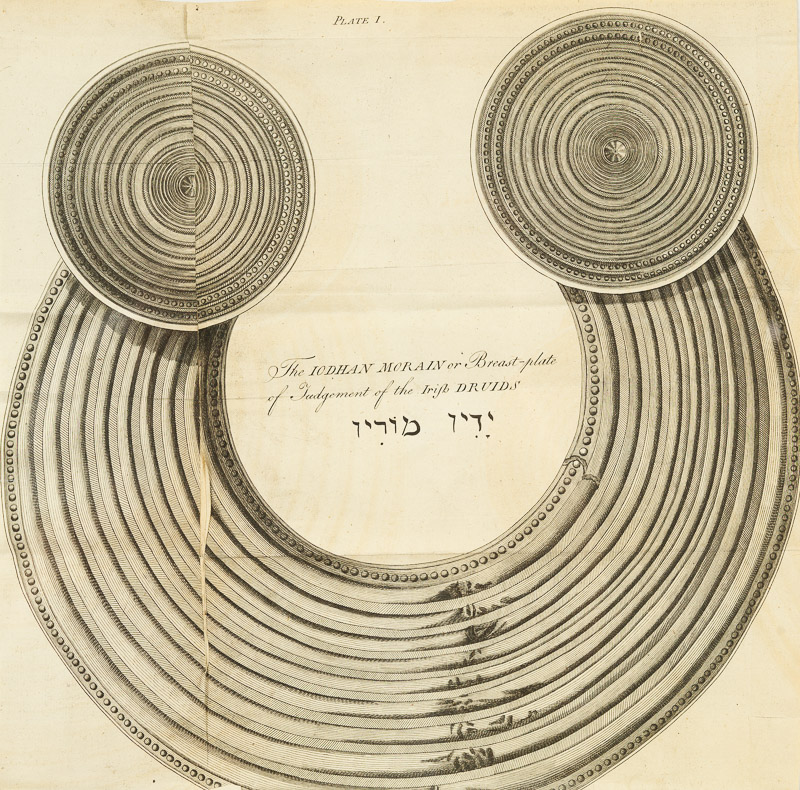
Of solid gold, they were heavy and obviously made to be worn by a high-status individual, perhaps a king. Vallancey concludes it is a Druid’s (what else?) breast plate and christens it the Iodhan Morain. He comes to this conclusion by examining the Bible and accounts from ‘the Chaldees’. It is to be worn, he asserts, as the Druids are making their most solemn pronouncements. And while he’s on the subject of druids, here’s another one of his evidence-free assignment of purpose. This is what he calls the Liath Meisicith.

It is a box, the size of the drawing, and two inches deep, it is made of brass cased with silver : it contains a number of loose sheets of vellum, on which are written extracts of the gospel and prayers for the sick, in the Latin language, and in the Irish character. There are also, some drawings in water colours of the apostles, not ill executed : these are supposed to be the work of Saint Moling, the patron of that part of the country.
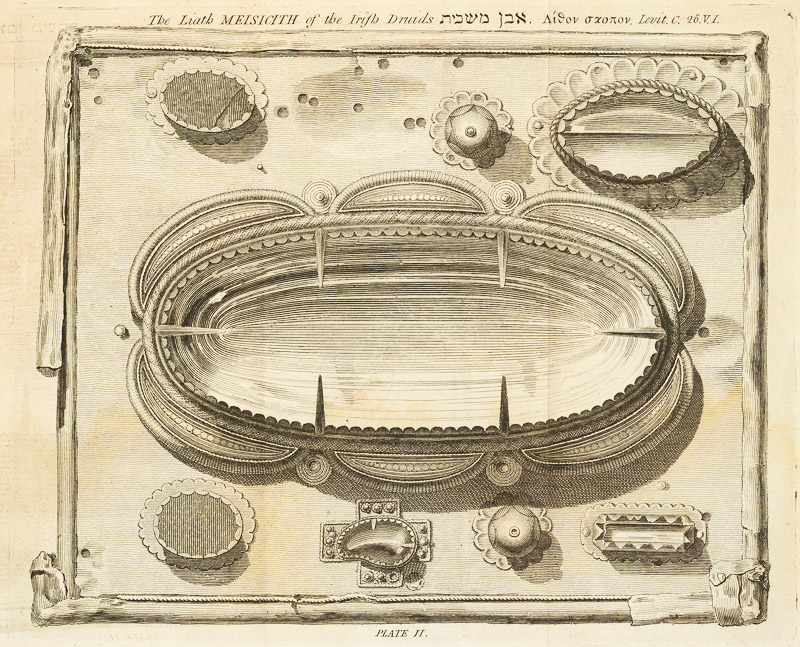
So – a fairly straightforward conclusion might be reached that this box dates from the medieval period and was some kind of Christian votive object, right? Alas no – for Vallancey sees only the absence of a cross or any other Christian symbol, and concludes that this is for containing incense or oil to be used as part of a druidic fire ceremony.

How this fire was communicated, I cannot pretend to say, but, as it is well known, that Cobalt ground up with oil, will lye an hour or more in that unctious state and then burst into an amazing blaze :  it is probable that the Druids, who were skilled chimysts, (for their days) could not be ignorant of so simple an experiment. A fire lying so long concealed, would afford them ample time for prayers and incantations.

I think this one example gives you, as a microcosm of the whole Collectanea,  how eagerness to embrace an exotic and far-fetched explanation, and shoehorn it into your overall theory, can get the better of a man. And it was this exact kind of thing that led to him being derided by his contemporaries and those who followed.

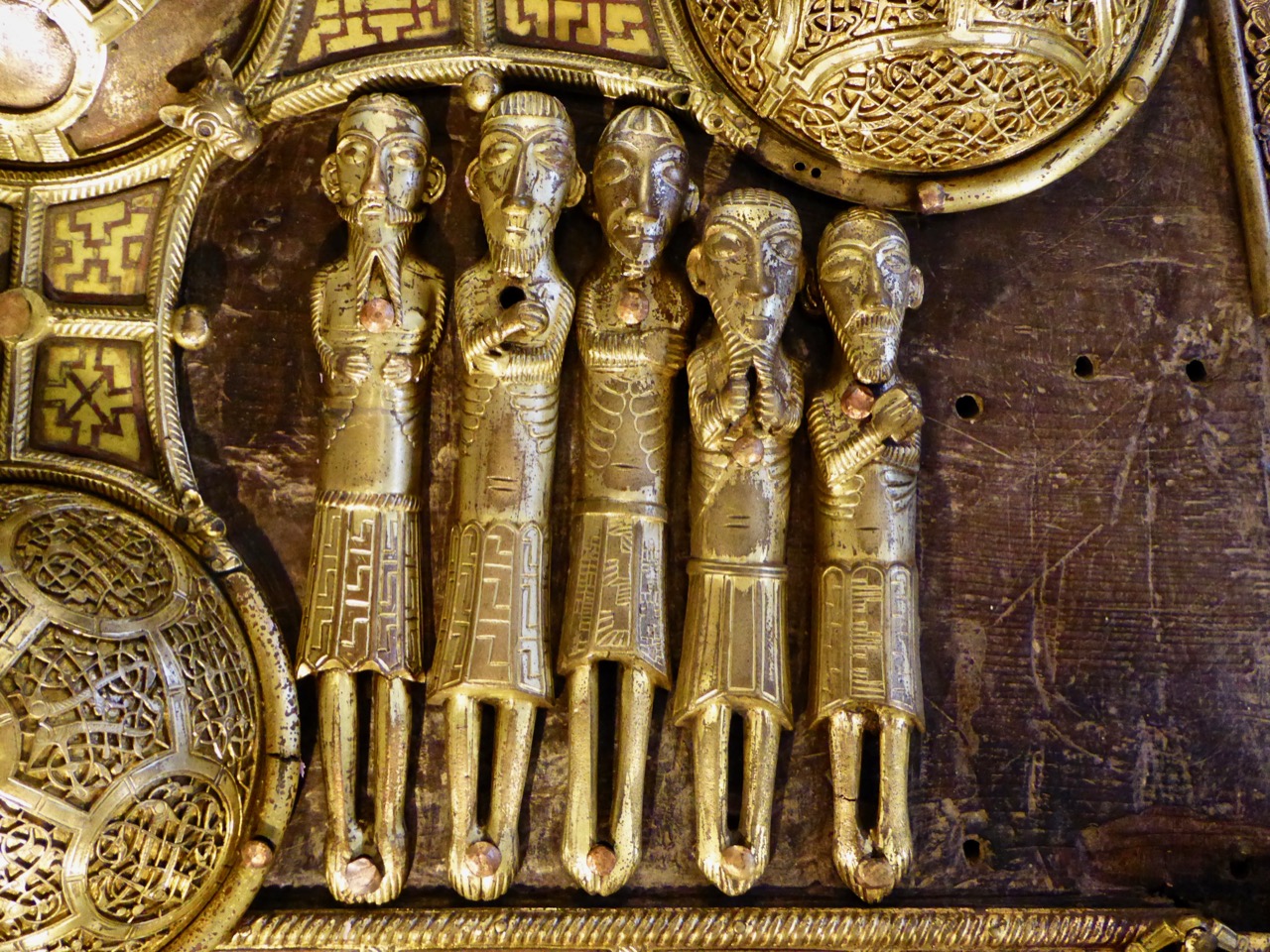
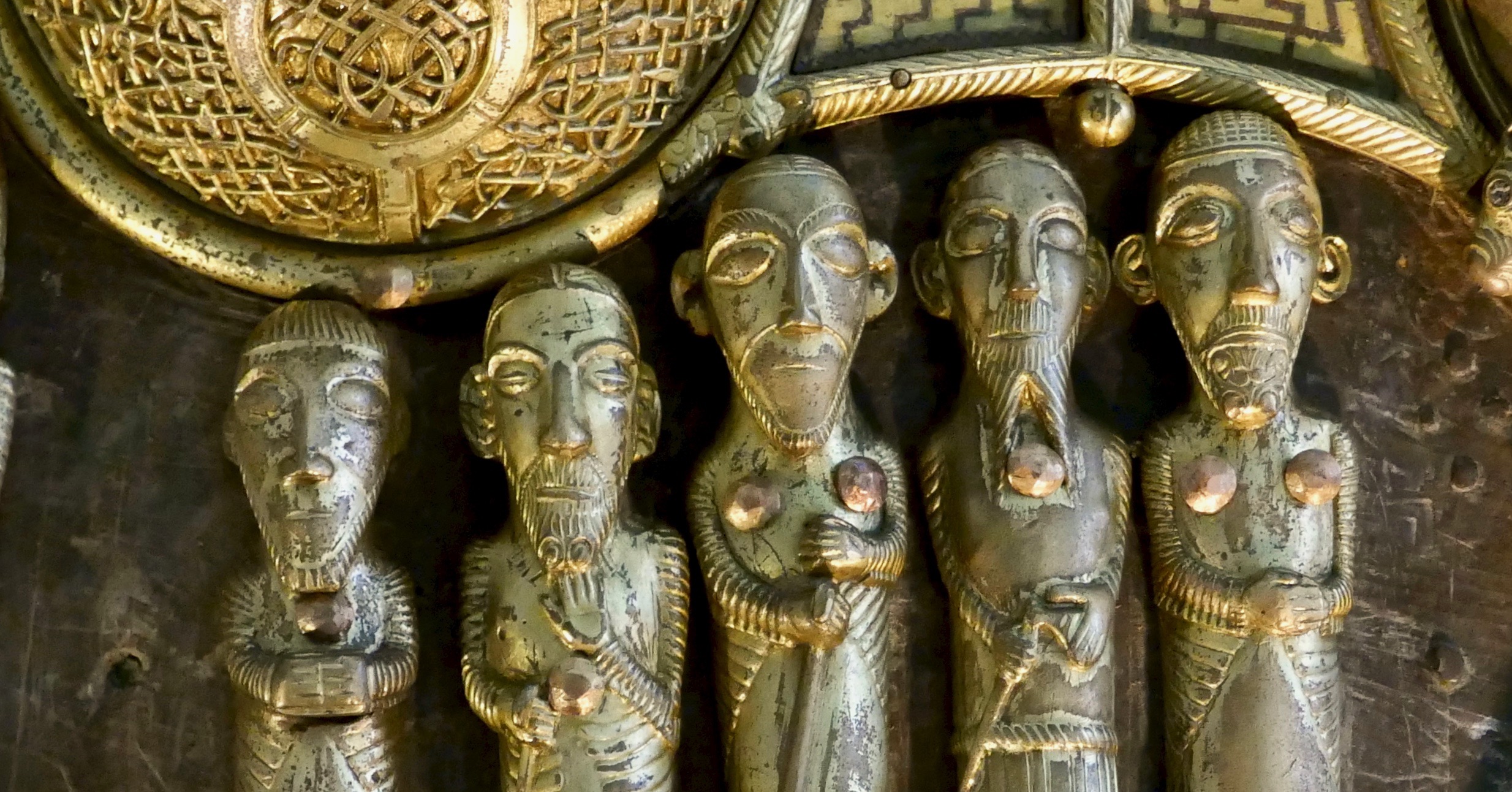
A final example, as it is meaningful to me – a little reliquary figure comes next. This figure bears a striking resemblance to one of the figures on St Manchan’s Shrine. One of the missing figures was located and returned to it – it’s known as the 11th figure and it’s on the far left, below.
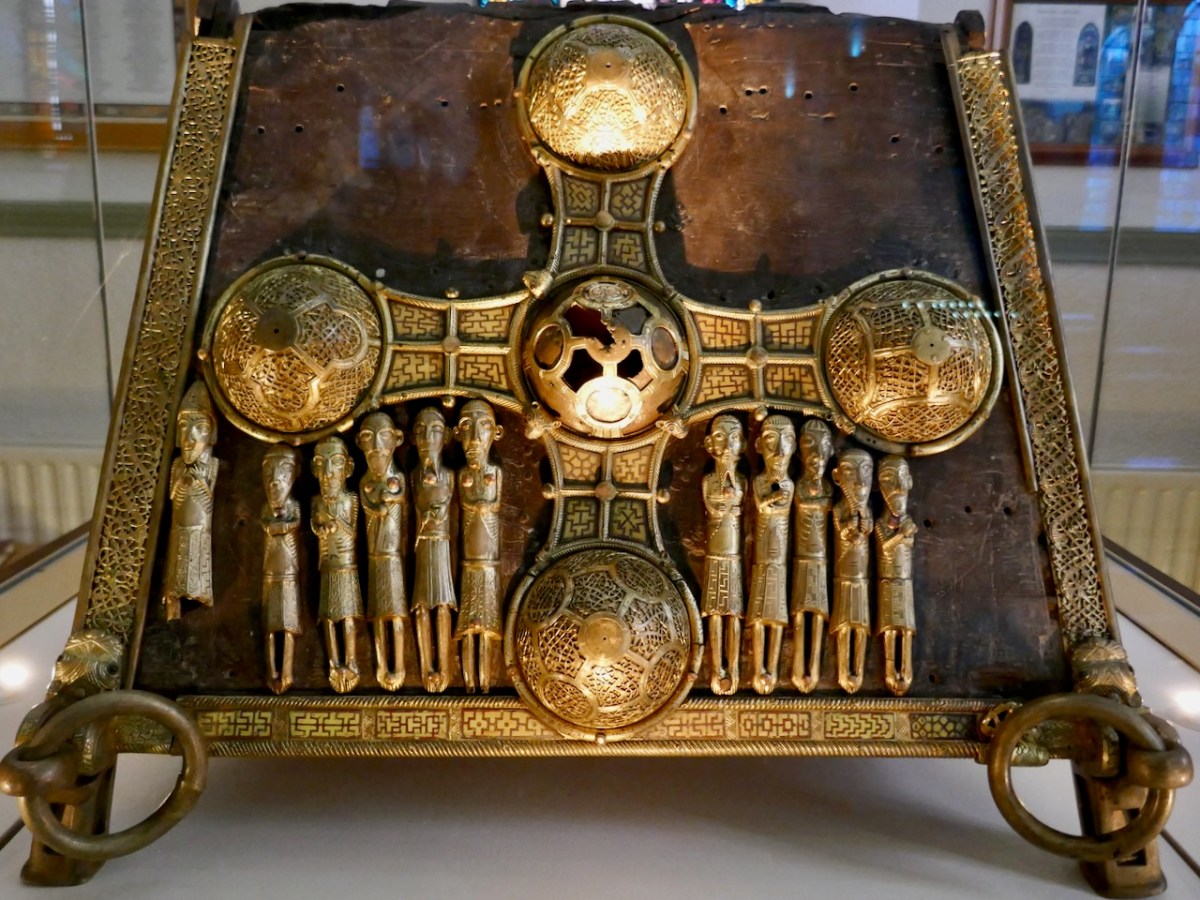
Could this be a 12th – and what has happened to it? We know it was still extant when our old friend George Victor du Noyer was recording archaeological items – here is his sketch of the same one as in Vallancey’s volume, done in 1837.
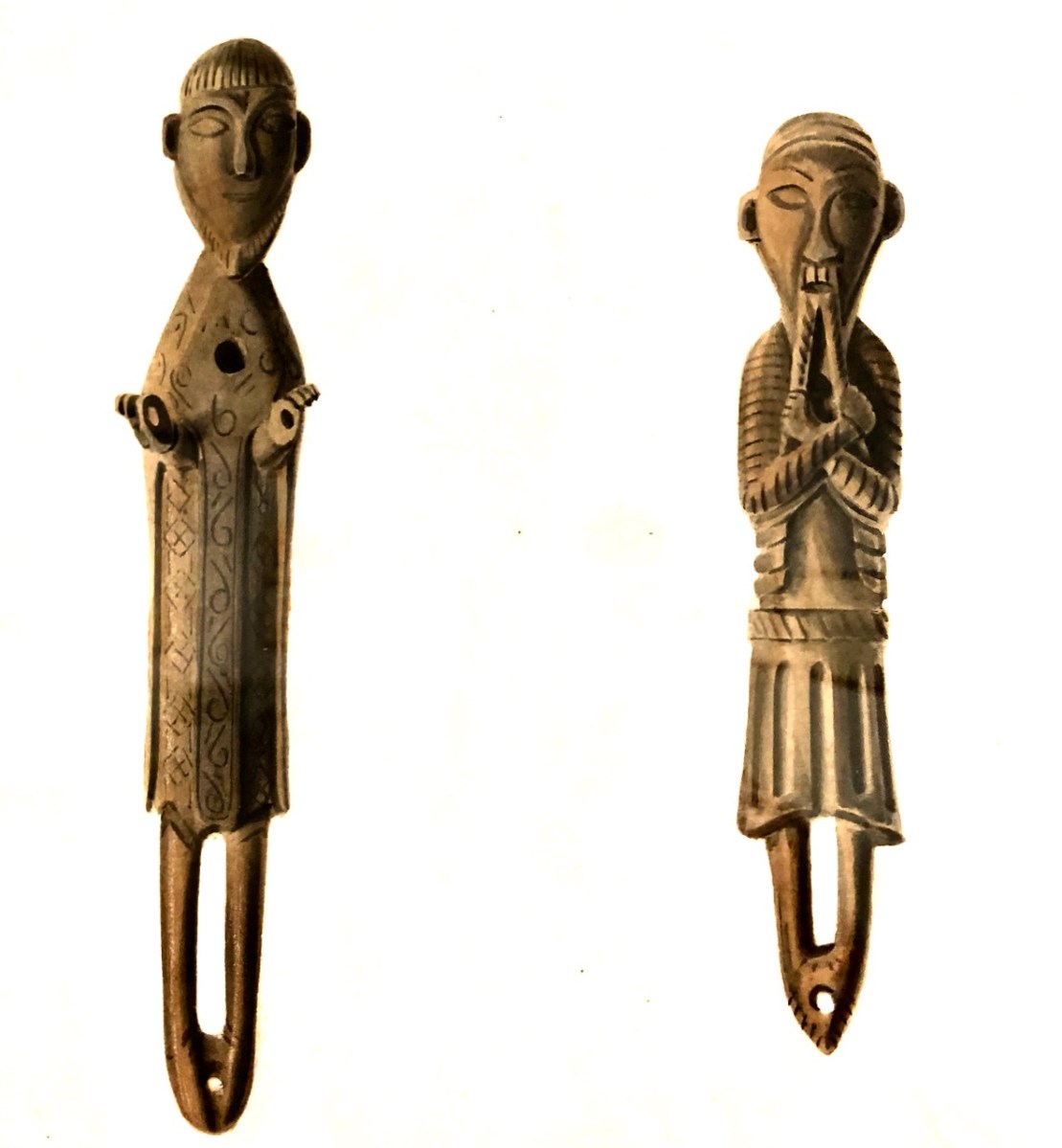
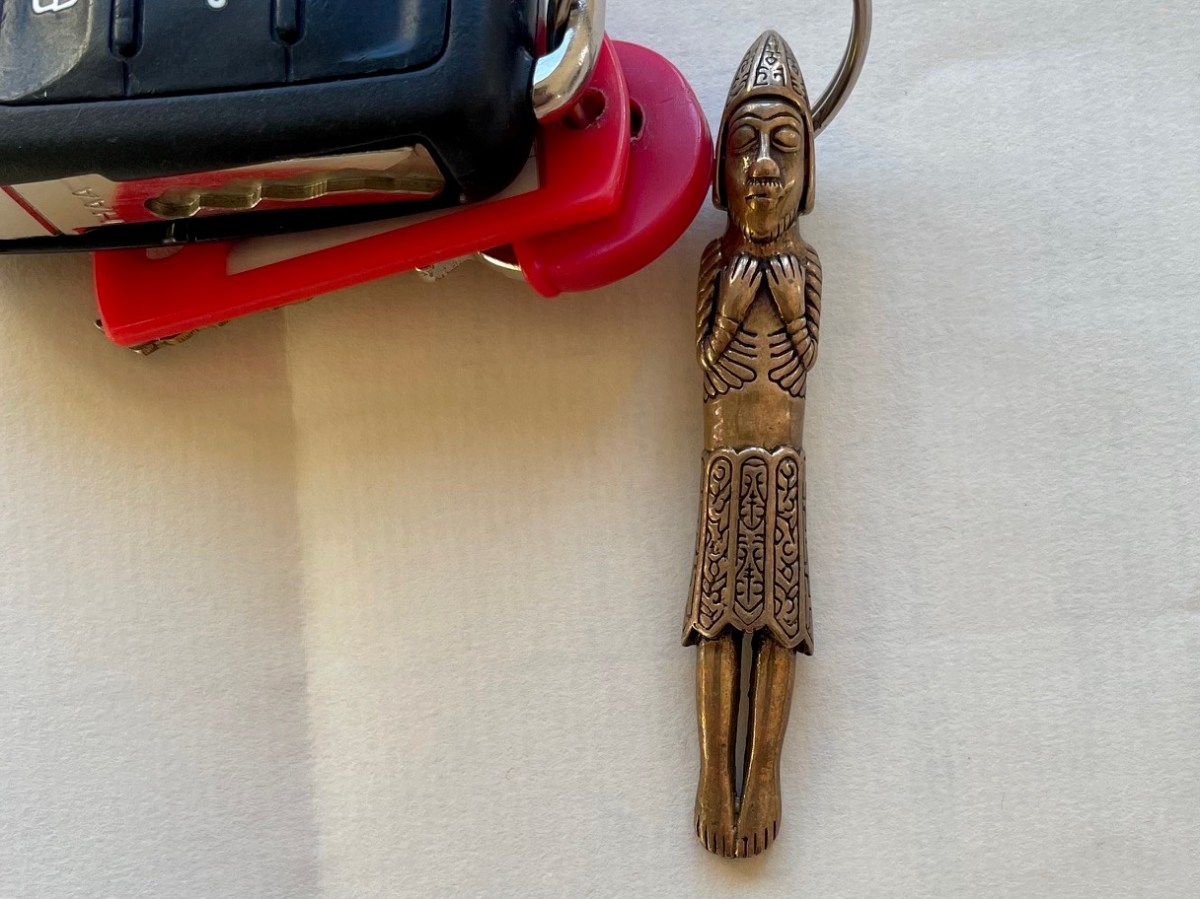
I put the question to Dr Griffin Murray, author of the superb book on St Manchan’s Shrine and he told me that this one was known as the Beard Puller, that is was from Co Roscommon and was in the Trinity College Museum, but is now lost. It could definitely be from St Manchan’s the shrine, he says, although equally it could be from another one. Why is this little guy meaningful to me? Well, I subscribed to the publication of the book, and a reproduction of the 11th figure was my reward!
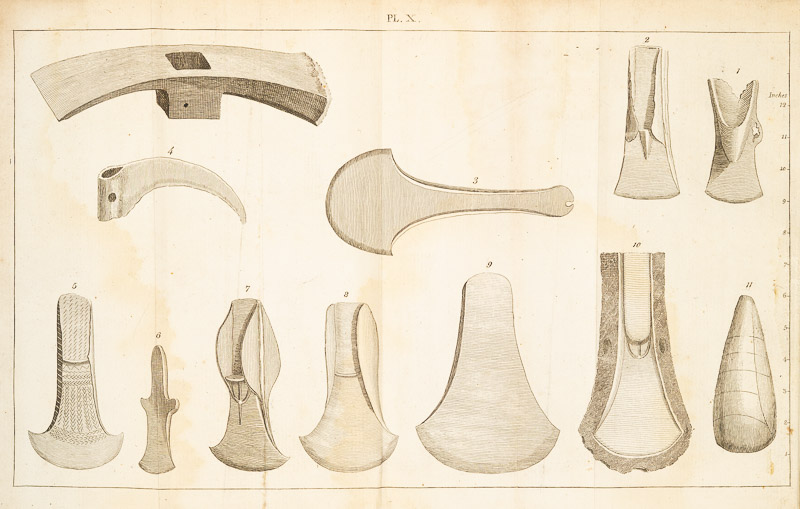
This section contains important illustrations of prehistoric objects – important because this was the first publication to bring them to the notice of the general public. I will use some of these to illustrate the rest of this post, so look out – they will not all relate to the text around them..
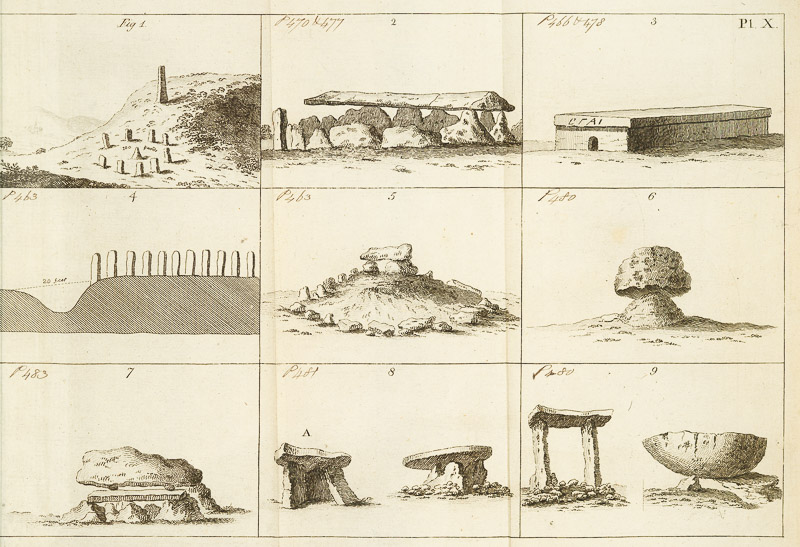
However, I am going to skip down now to a section called Proposals for collecting materials for publishing the ancient and present state of the several counties of Ireland. This is an significant section in that it lays out the need for actual knowledge of the country of Ireland, including its natural assets – air, water, geology, animals – and man-made such as buildings, charities, manufactures, and antiquities.
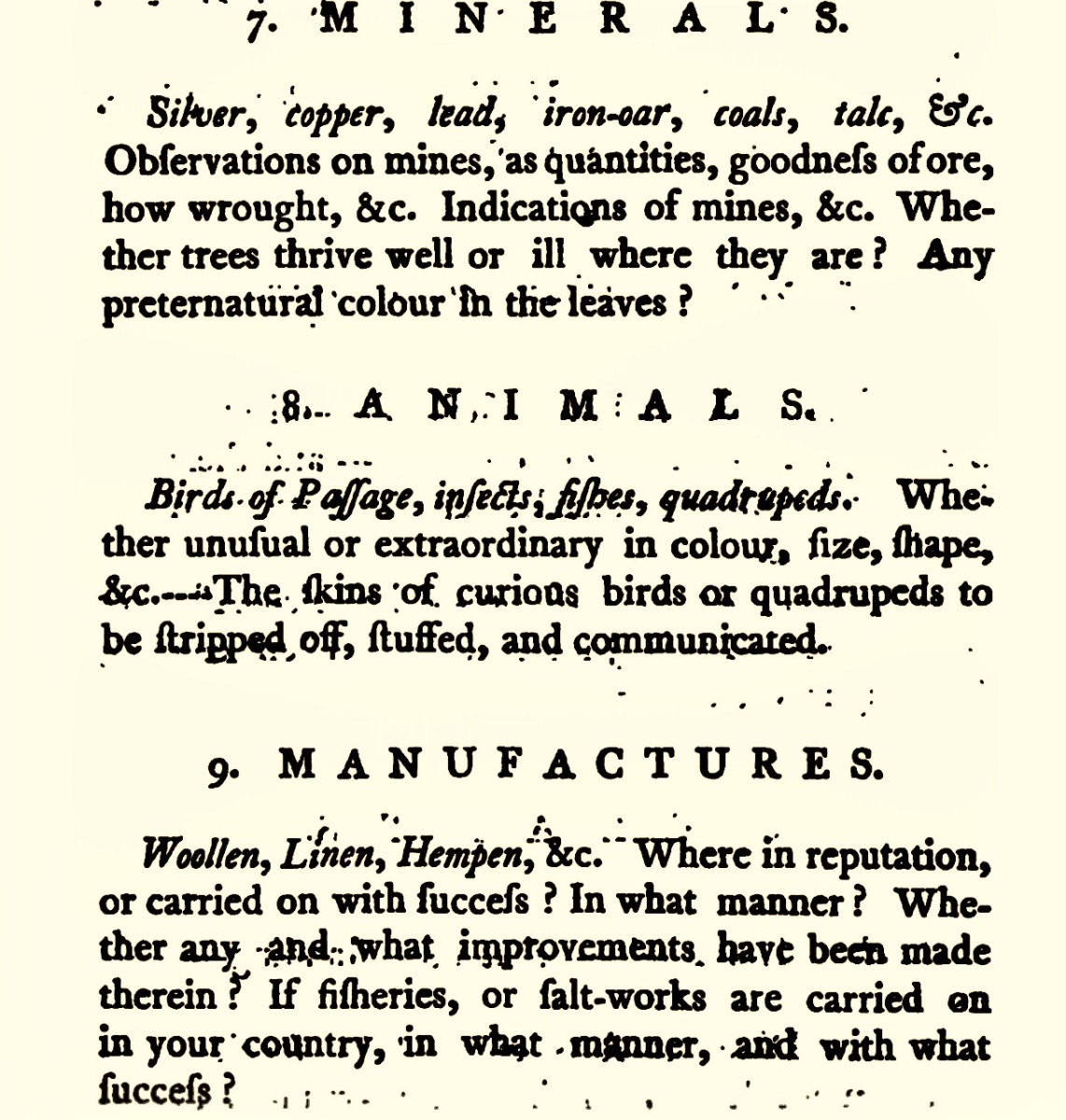
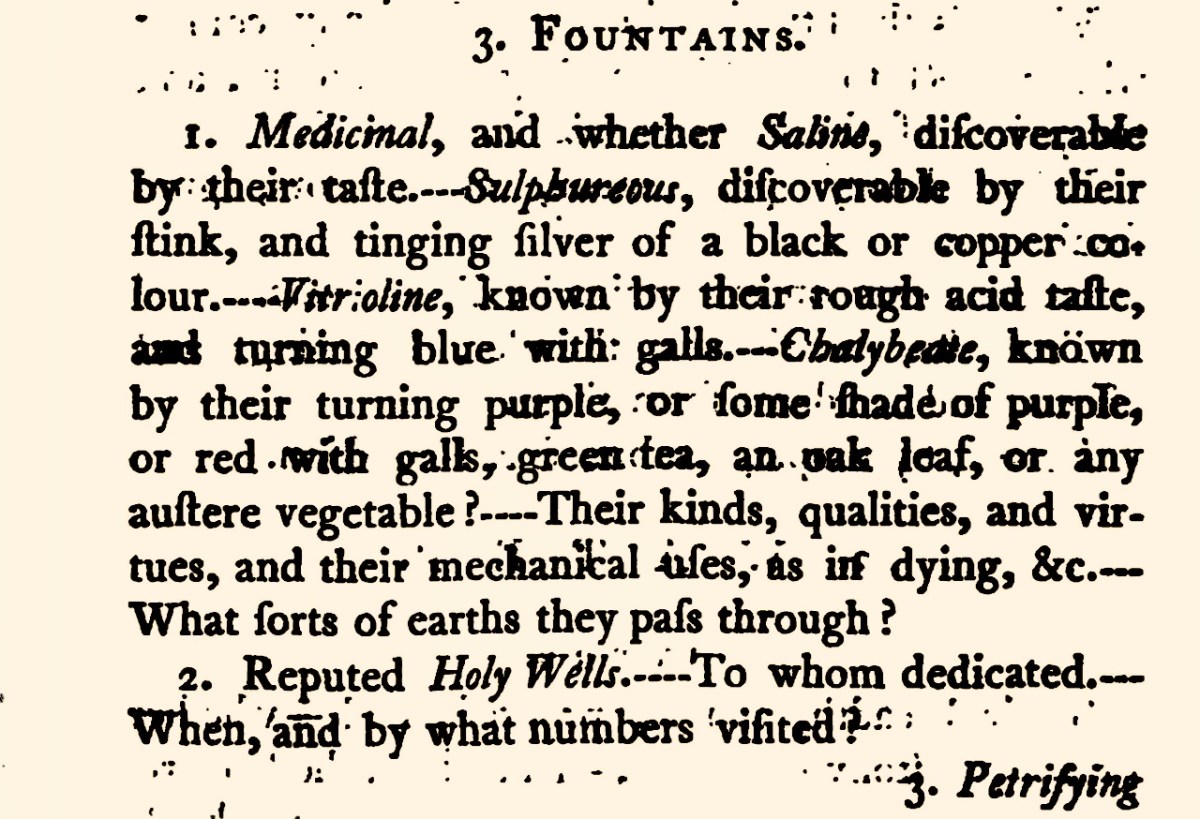
Vallancey lays out the questions to be answered. It all seems so elementary, doesn’t it – and that’s what is so staggering, that there could have been so little in-depth knowledge of the actual country at that time.  You might remember that we read about one of these county surveys for Westmeath in Vol 1. What a wealth of detail we might now have of life in 18th century Ireland if only this had been accomplished as Vallancey described it. My friend Amanda, of Holy Wells fame, would be particularly grateful!
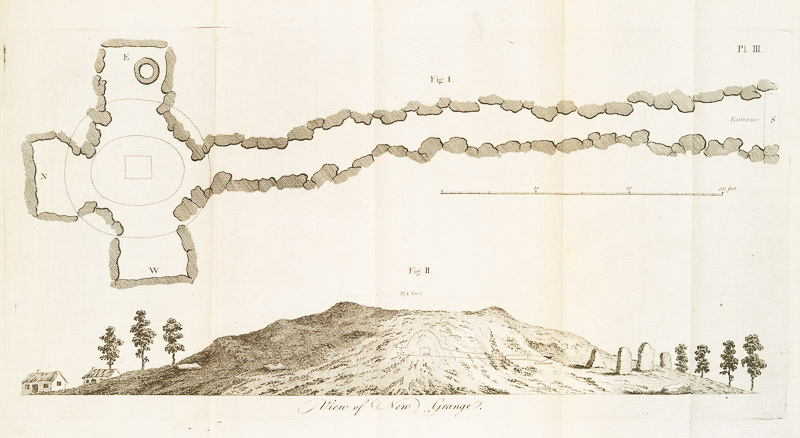
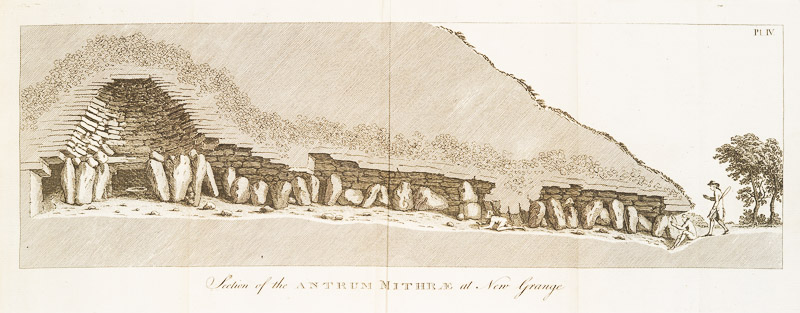
The rest of this volume is taken up with A Vindication of the Antient History of Ireland, with lots of Vallancey’s pet theories on display. It contains a really excellent plan and section of Newgrange – a truly outstanding piece of mapping, given the fanciful nature of most drawing of prehistoric monuments of the time. His conclusion about Newgrange, that it was a Mithratic Fire Cave, turned out be in fact not so far-fetched as some of his other notions, given what we now know about the winter solstice at Newgrange. 
There is also some fascinating stuff about Irish paganism and Irish saints. The sequence is based on the mythological original story for Irish history called the Leabhar Gabhala. It’s a pity to give it such short shrift, but I am determined to press on and so I now pass to Volume 5, which is the last volume in the set. There is a Volume 6, and I can access that online only, so have decided to finish with the last volume I have been able to examine in person.
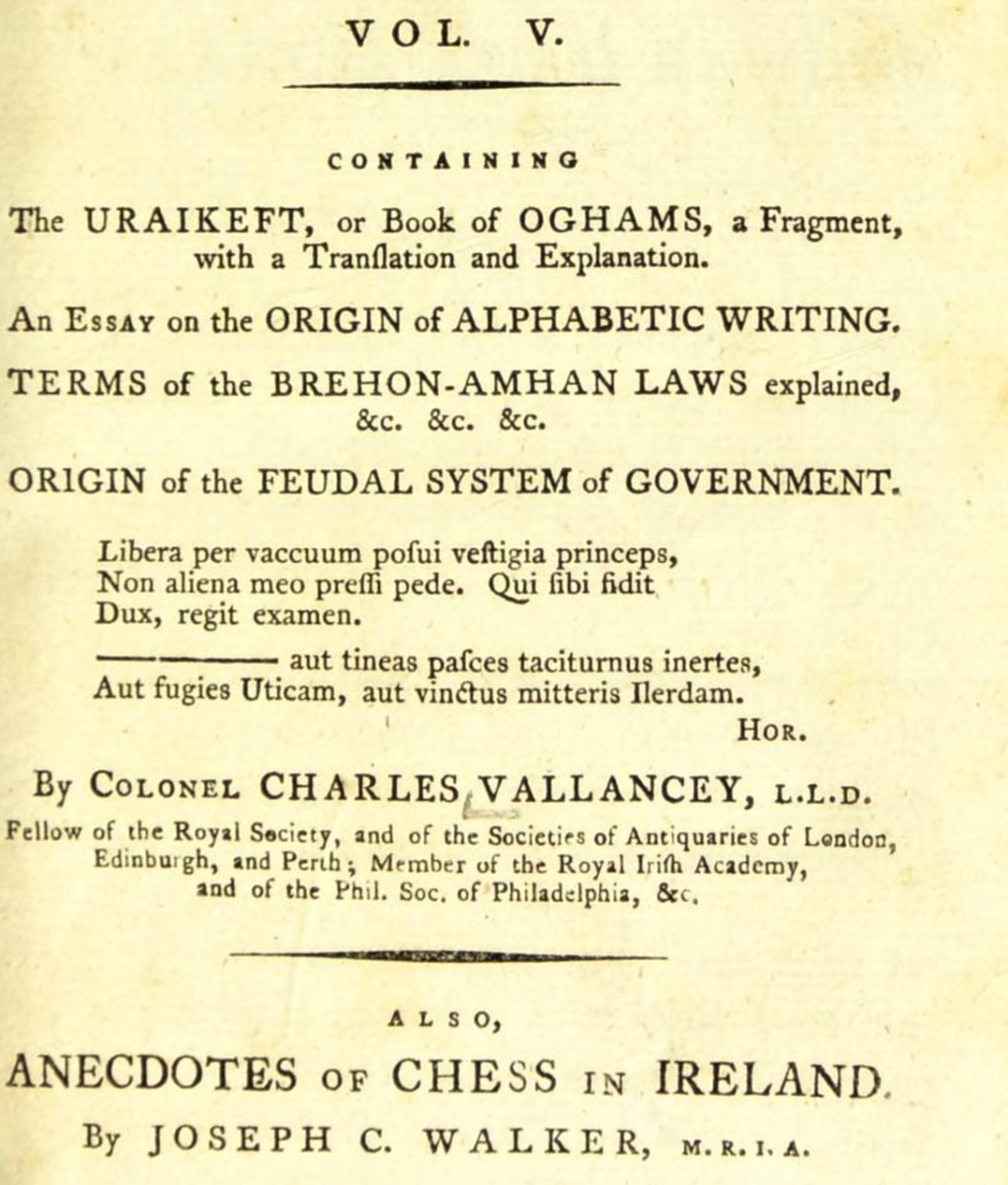
As you can see from the Table of Contents (which, by the way, never seems to be quite the same as the frontispiece that lays out What This Volume Contains), there is a certain amount of repetition here from previous sections on The Scythians, Ogham, the Chaldeans, and the Brehon Laws. So, I am going to confine myself to the part about the Irish Feudal System of Government, as it so well represents what it’s like to read Vallancey. 
After a preamble of many, many pages in which are mentioned the Phoenicians, the Egyptians, Aristotle, the Belgae, gold from Wicklow, Alexander the Great, Mr Wilkins (I’m not making this up), Aboul-Hassan-Aly, Armenians, the Empress of Russia (honestly), Father Georgius (who resided long with the Tibetans but who wrote in Latin, quoted at length here), the Huns (we might actually be Indo-Scythian-Huns, apparently), the Japanese, the Peruvians, the Great Mogul, Vallancey, perhaps not surprisingly informs us that the feudal system in Ireland was based on all of the above, except for two things.

The Tuarasdal, wages or subsidies paid annually by the sovereign to his feudatory chiefs, for which he received from them a certain supply of military forces, or some other state contributions tending to the common interest.

The Tribute for Protection. It is called in the Irish laws. . .  eneclann, (i. e. protection of the clann). . . It does not appear that these vassals were originally obliged to furnish troops for their chiefs, but to pay a certain impost or tax for their protection.

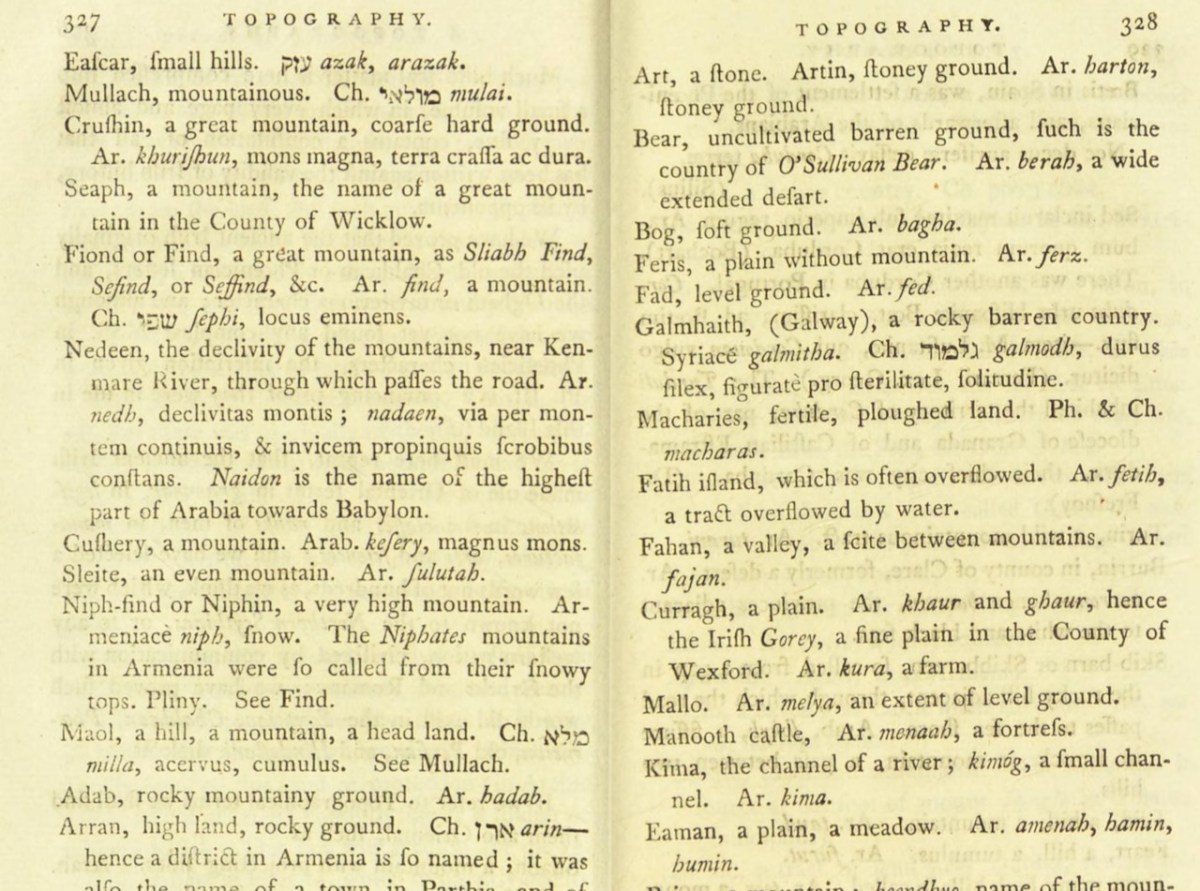
He’s particularly fond of the oriental influences here and to hammer home his point he provided a dictionary of topographical terms all of which he assures us come from Oriental Languages. Some examples, including their Arabian, Hebrew, Chinese, origins, etc:
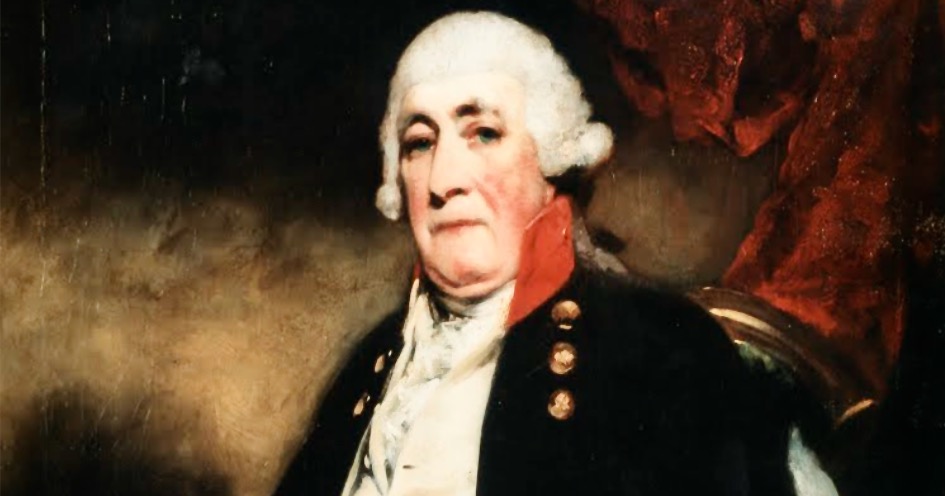
My head hurts, so this is a good place to stop. How do I sum up this amazing man and his colossal and controversial achievements? The marvellous site Ricorso has a whole section on him which brilliantly sums up the person (although by one authority in here he has acquired 27 children!) and is worth reading in its entirety. The following quotes all come from there. It gives me the new information that Vallancey, despite all claims to the contrary, never actually learned Irish, although he owned a grammatical dictionary compiled by a school-teacher named Crab. One commentator, James Hardiman, confirms this, stating

 
It is well known, that the late General Vallancey obtained much literary celebrity, both at home and abroad, and, in fact, first acquired the reputation of an Irish scholar, by the collation of Hanno, the Carthaginian’s speech in Plautus. . . but it is not so well known that that speech had been collated many years before, by Teige O’Neachtain, an excellent Irish poet, and author of the extempore epigram, Vol. ii. p. 120, of this collection. Vallancey had this collation in O’Neachtan’s hand-writing, in his possession; and I am obliged (with regret) to add, that he never acknowledged the fact, but assumed the entire credit of the discovery to himself.

Thomas Davis says:

His “Collectanea”, and his discourses in the Royal Irish Academy, of which he was an original member, spread far and wide his oriental theories. He was an amiable and plausible man, but of little learning, little industry [not fair, I think], great boldness, and no scruples [nor this]; and while he certainly stimulated men’s feelings towards Irish antiquities, he has left us a reproducing swarm of falsehood, of which Mr. Petrie has happily begun the destruction. Perhaps nothing gave Vallancey’s follies more popularity than the opposition of the Rev. Edward Ledwich, whose Antiquities of Ireland is a mass of falsehoods, disparaging to the people and the country.

Here’s a good summation, from Joseph Leerssen


The successor of the Select Committee was the Hibernian Antiquarian Society, 1779-83, which in turn set in motion the creation of RIA in 1782, with Vallancey as one of its founding members. Vallancey was the son of a Huguenot émigré, Army officer; derided by many as a charlatan or at best a naive nitwit, Vallancey contributed few ideas of any value to the study of Gaelic antiquity, but much badly-needed enthusiasm, energy and social/religious respectability. He had founded his periodical Collectanea de rebus Hibernicis as a forum for antiquarianism. Further, it was the additional merit of Vallancey to open this world [of Ascendancy] enthusiasm for Irish antiquity] to his friend and mentor Charles O’Conor, in whose wake younger Gaelic, Catholic scholars like O’Halloran and Theophilus Flanagan could begin to function in close collaboration with Ascendancy Protestants.


So what have I concluded after lo these many weeks of sitting with Vallancey? The first is that it was a wonderful experience to be able to read the five volumes ‘in the flesh.’ The second was the whole things gave me a unique insight into the origins of my own discipline of Irish archaeology – how it was born out of a cauldron of claim and counter-claim, hubris and argument, ideology and fieldwork, nationalism and orientalism. None of that can be understood and appreciated without the towering, if ultimately misguided, figure of Charles Vallancey. Thank you, Holger of Inanna Rare Books, for this opportunity. 
Watsons of Youghal – Revivalist Masters Part 1

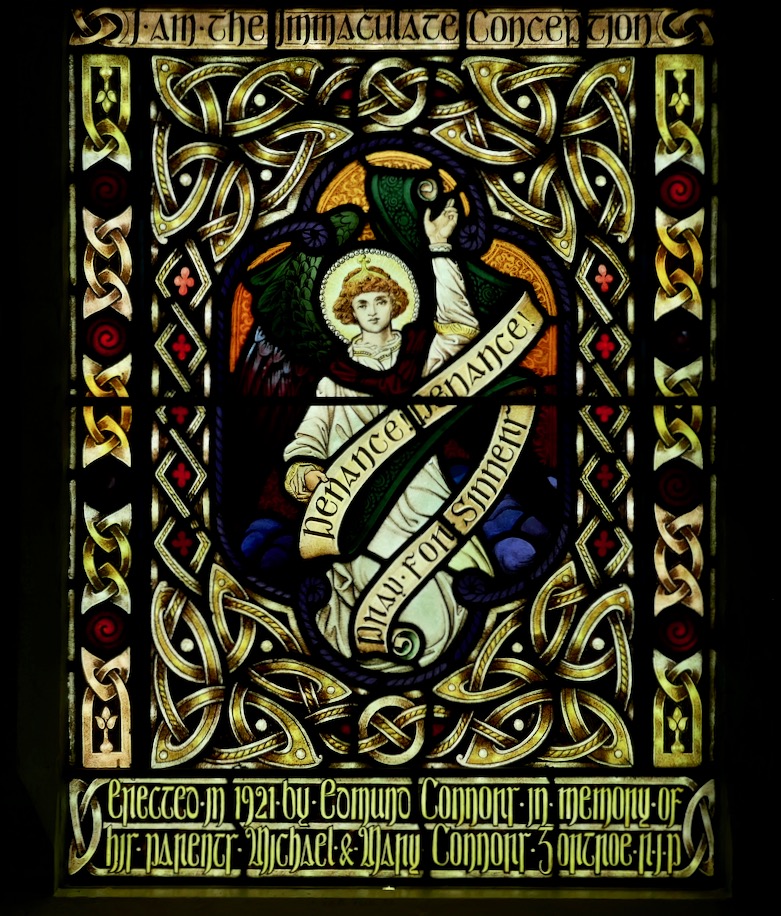
The stained glass firm of J Watson & Co of Youghal not only represented a new type of Irish-based business when it started to operate in the 1880s but developed a uniquely Irish style of stained glass (see above). I introduced this topic in my post Symbols and Stories: Looking at Stained Glass, but I want to develop it properly in this post and provide further illustrations in the next. Watsons was first opened by Michael Buckley, who had Irish connections, as a branch of Cox, Sons, Buckley and Co of London but was eventually bought out by James Watson, a Yorkshire stained glass artisan who had come to work there a decade earlier. Members of the Watson family continued to make windows right up to 2012.*

This St Eltin window in Gougane Barra has been attributed to Michael Buckley. Note the Revivalist elements
Based in Youghal, the firm supplied stained glass all over Ireland, but especially in Munster. They competed with other new firms which had set up church supply and decorating businesses, mostly in Dublin. These included Joshua Clarke (father of Harry), James Pearse (father of Patrick and Willy) and the Earley Brothers, Thomas and John. All of them had learned the trade in Britain and some started as agents for such companies as Mayer of Munich and London or Hardman of Birmingham, but eventually employed their own artists and glaziers.
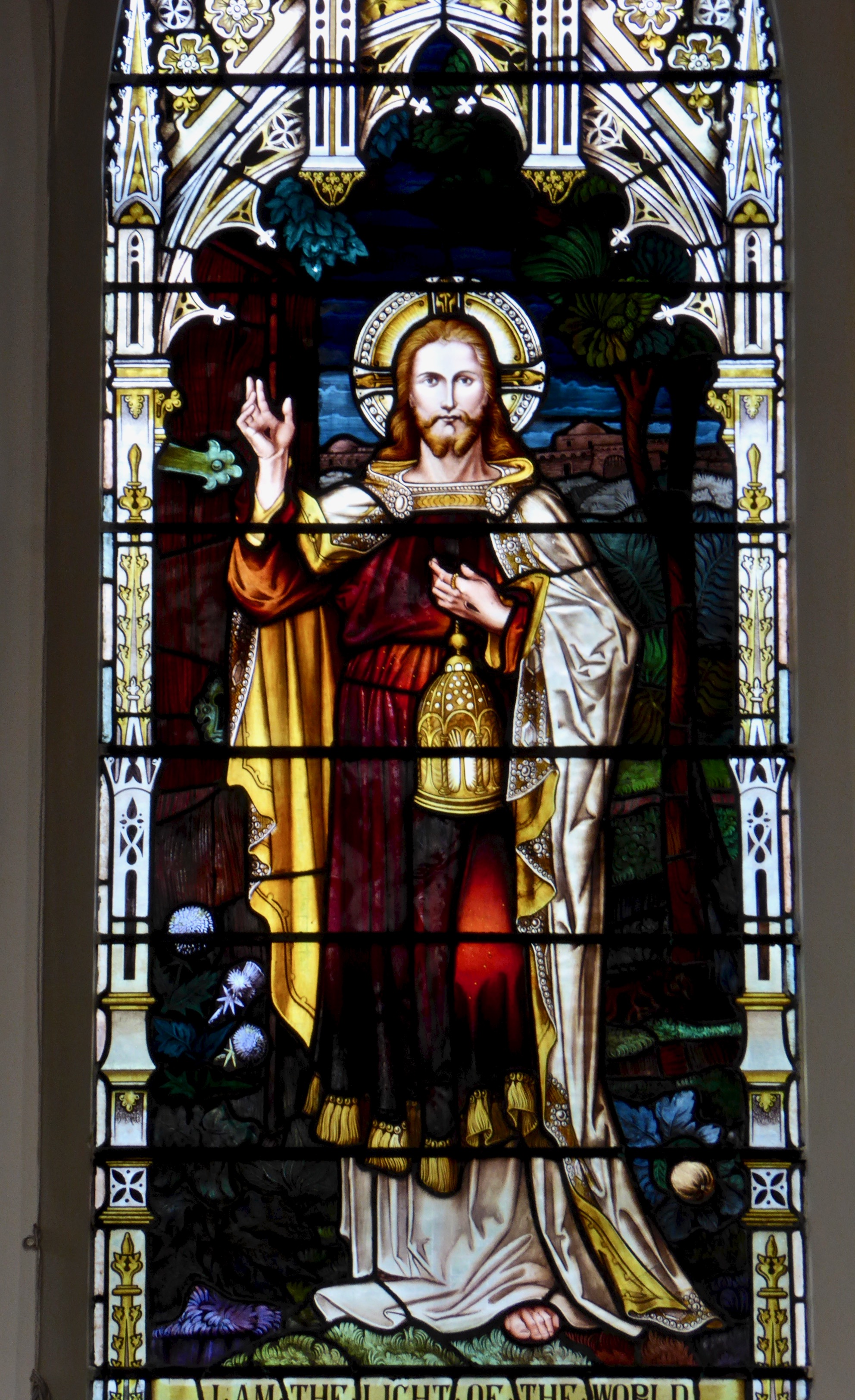
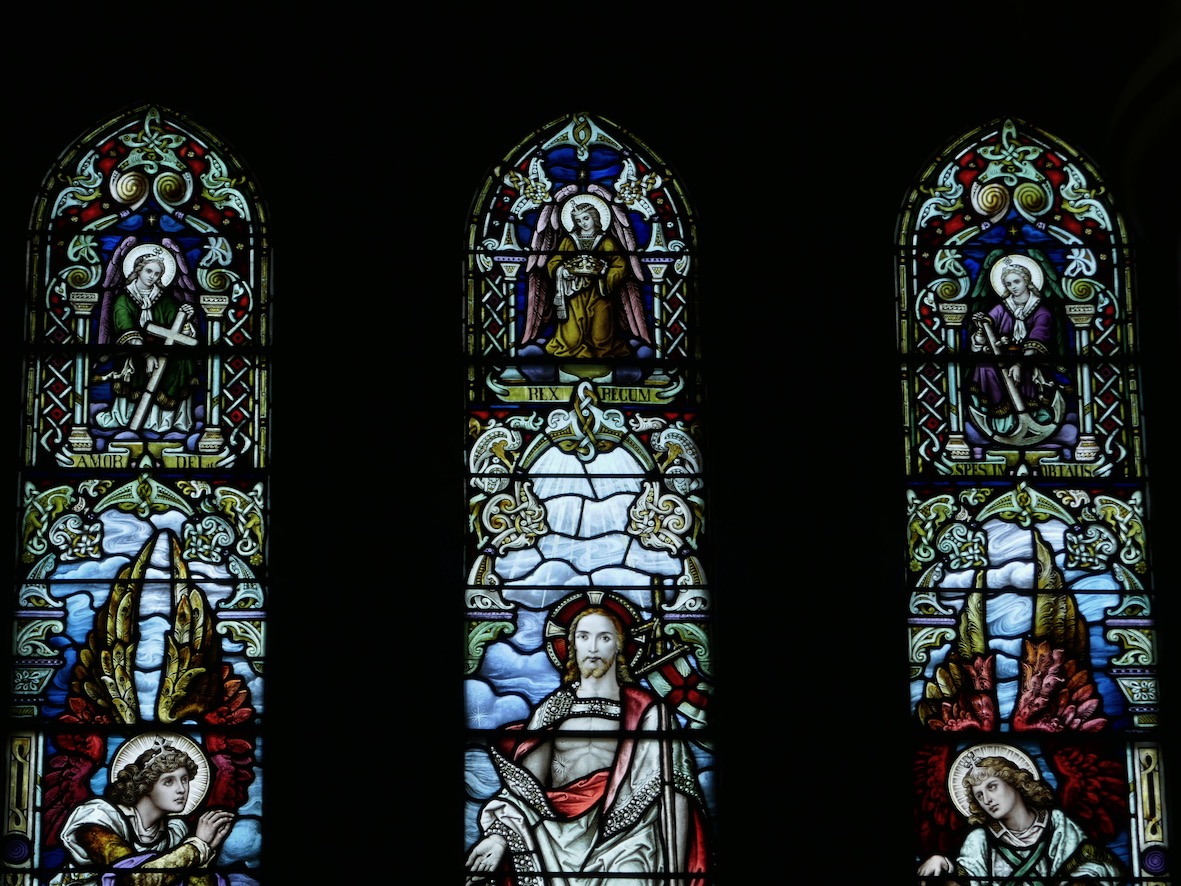
This is one of many Light of the World windows that Watsons produced, in St Brendan’s of Bantry Church of Ireland. Note the conventional Gothic canopies . This was a universal favourite, especially in Protestant churches and all the stained glass manufacturers had a version

This was a boom period for Irish church building and stained glass windows were, of course, one of the expressions of faith that could enliven and decorate the interiors. They also offered an opportunity for both clerical and lay people to contribute to the church and to commemorate deceased family members (and occasionally to commission an ego-stroking window for themselves).

Catherine O’Brien of An Túr Gloine painted this window for Kilcoe Church of the Most Holy Rosary in West Cork. Note the introduction of some interlacing as a minor element in the design. Patrick and Brigid, as the male and female patron saints of Ireland were always in demand for church windows

The choice of iconography for the window was dictated either by didactic imperatives (e.g. the Holy Family as a model to be emulated by the faithful) or by devotion to a particular saint, international, Biblical or local, or by church politics (e.g. Papal authority).  This was also the period when the Celtic Revival was in full swing and artists of all kinds were busy crowding graveyards with Celtic crosses, stitching Book of Kells symbols onto vestments, and painting illuminated addresses with complicated knotwork. Buying from Irish firms, once they were able to supply the orders, quickly became preferred.

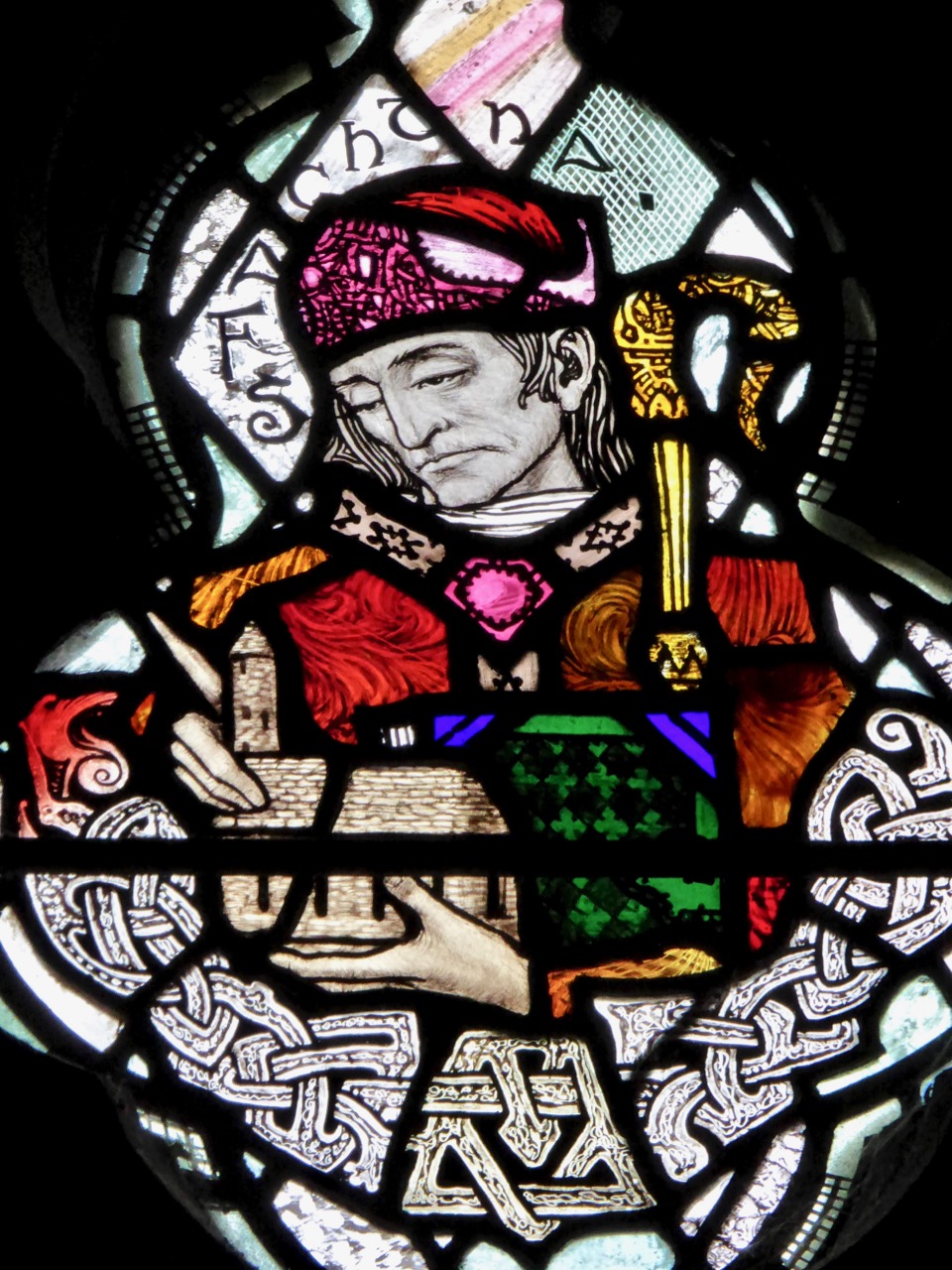
Harry Clarke did not incorporate much interlacing into his windows, but this one, of St Fachtna, in Castletownshend Church of Ireland, shows that he knew well how to do it

Nowadays the term Celtic is suspect: we no longer believe that the evidence exists for an Iron-Age invasion of a tall blonde race from the continent. Archaeologists and Art Historians often now use the term Medieval Insular Art, however Celtic Revival, as shorthand for the domination of a certain decorative style (as well as the re-discovery of a great literary tradition and the craze for antiquarianism) at the end of the nineteenth century and into the Irish Arts and Crafts period, is so well understood that I use the term, and ‘Revivalist’,  here in that spirit.

Contrast the canopies in this window, with its intricate interlacing, with the conventional Gothic canopies of the Light of the World window above. Watson’s executed this one for Charleville Catholic Church

In her in-depth analysis of the Watson Archives, art historian Vera Ryan has demonstrated that orders for stained glass often stipulated that instead of the gothic canopies favoured by the English and German manufactures, windows should contain Celtic (or even ‘Keltic’) artwork. While other firms included some minor elements of interlacing in a design (see the Brigid and Fachtna windows above), no Irish stained glass firm delivered on this request better than Watsons of Youghal – it became one of their hallmarks and a real selling point for Irish clergy of both Catholic and Church of Ireland persuasions.

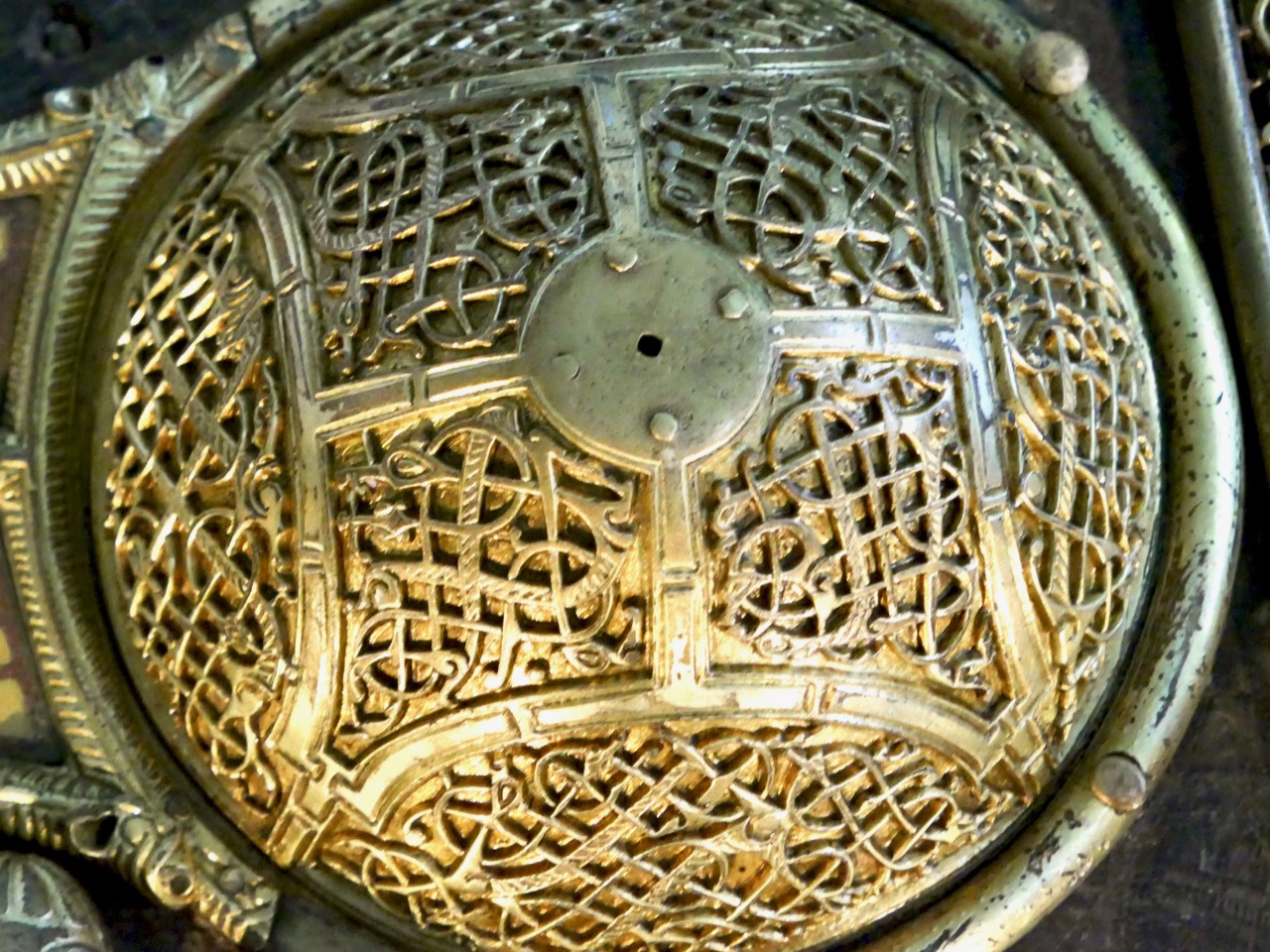
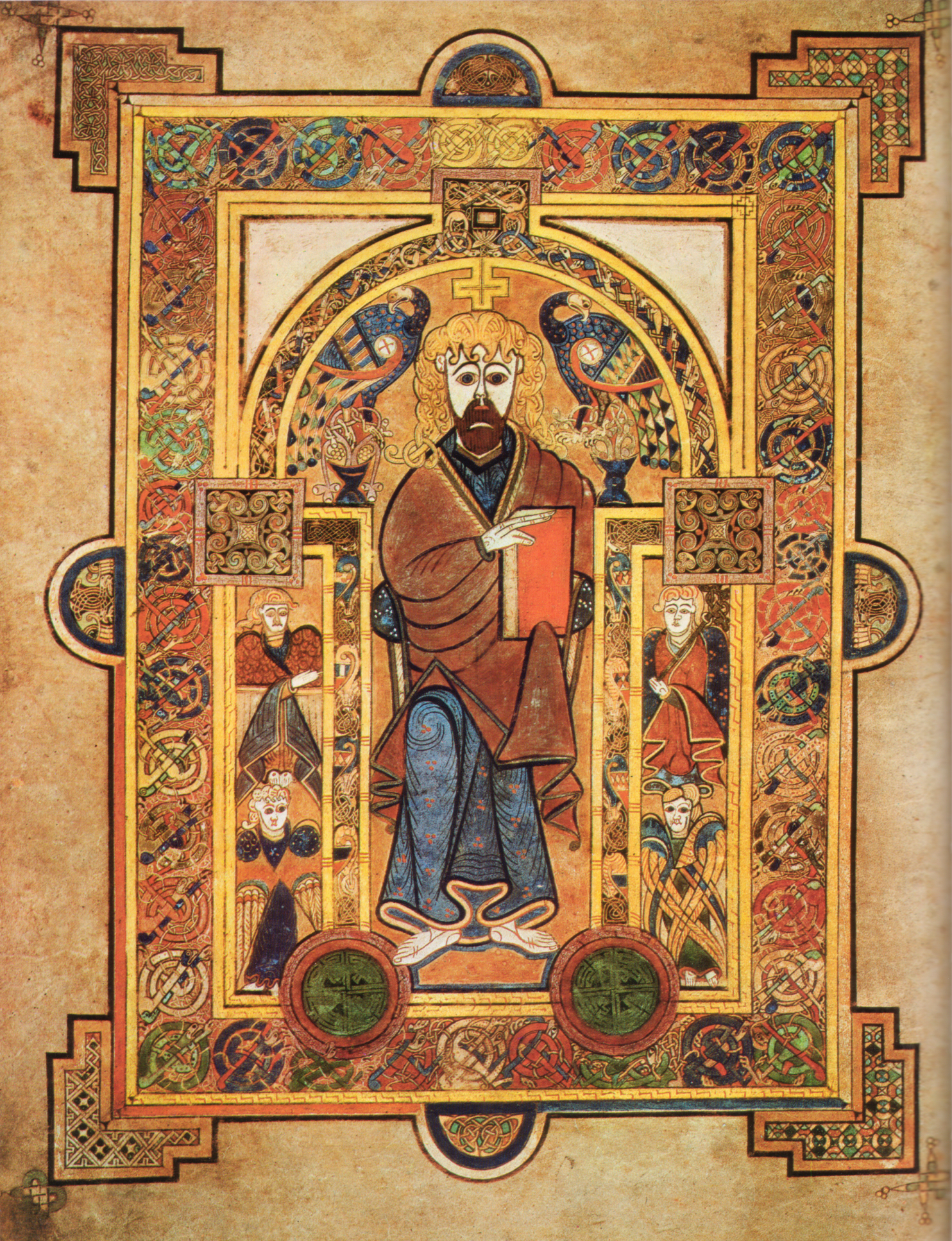
Models artists could learn from: Upper – a detail from St Manchan’s shrine, a replica of which was housed in the National Museum. Lower – The Christ Enthroned Page from the Book of Kells

This was the most popular style of art at the time for all kinds of objects and it’s not hard to understand why. First of all, the interlacing itself is delightful, quirky and complex and full of tiny surprises. Secondly, the Revivalist motifs were taken from a rich treasury of sacred and secular Medieval objects that formed the nucleus of the displays in the National Museum, which opened its doors in 1877. The Tara Brooch (below), for example, created a sensation when it was found it 1850 and became instantly iconic, with thousands of copies being made.

Thirdly, and perhaps most importantly, here was now a truly indigenous art of which we could be justly proud. In an era of evolving nationalism, images conjuring up a glorious Christian past, replete with our own saints, literature and high art, was a reminder of what we had once been and what we had lost as a nation.

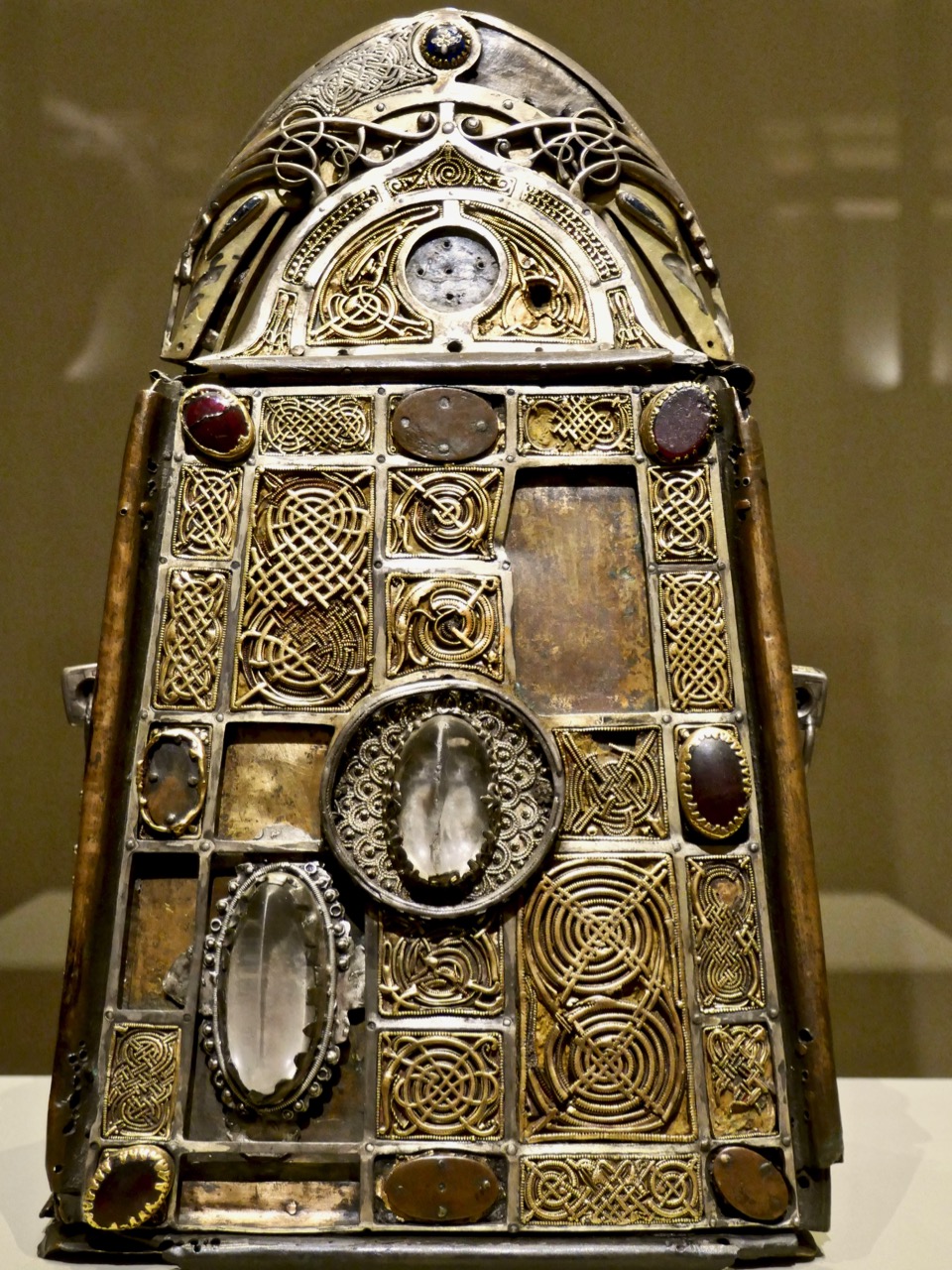
The Shrine of St Patrick’s Bell – not only a beautiful object but a potent symbol of what was seen as a Golden Age in Ireland of learning and piety

While their figurative designs remained conventional – think bearded men in long robes or saintly women in nuns’ habits, all in the style of renaissance paintings – the artists at Watsons had fun developing increasingly elaborate frames and canopies to surround their figures. Added to this was a mastery of Irish lettering styles, deployed to great effect whether the text was in Irish, English or Latin.

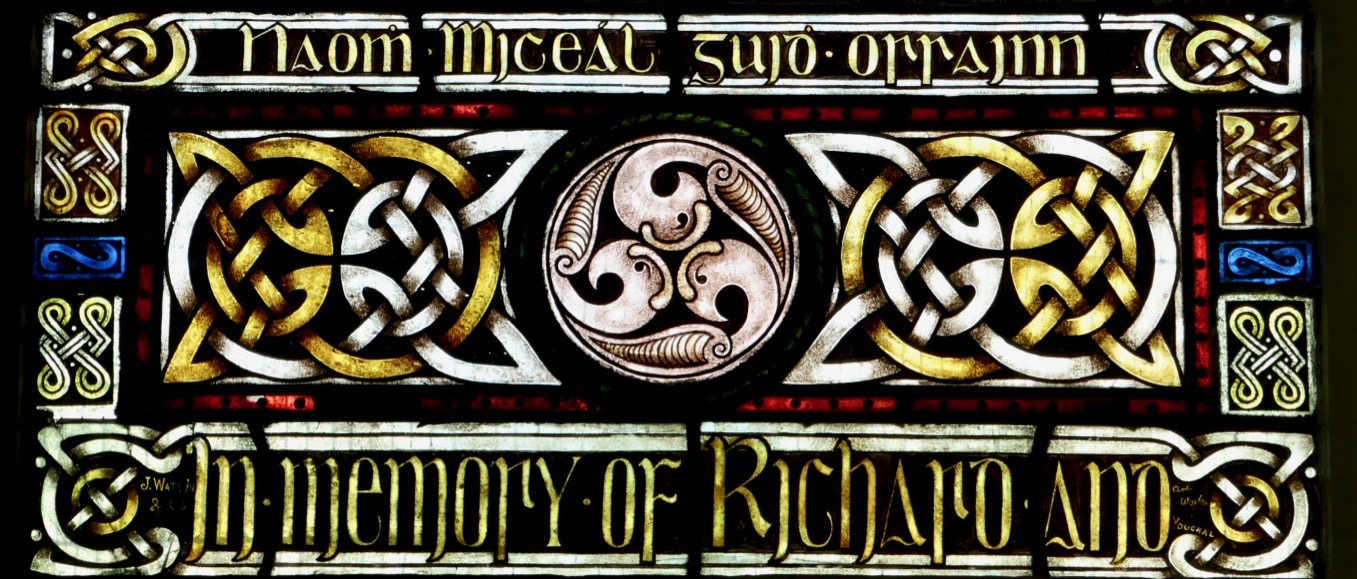
The use of interlacing and an Irish lettering style. Two continuous ribbons link the upper and lower surrounds, with the corner interlacing twisting around them. The Irish script was still being taught to us in school in the 1950s and 60s 

The net result was the development, in the hands of the expert and talented designers and painters at the Watson studio, of a hybrid style of stained glass window unique to Ireland – the overlayering of conventional objects of worship with the originally pre-Christian and later Early Christian/Early Medieval decorative style that came to be labelled ‘Celtic Revival’ at the end of the nineteenth century.

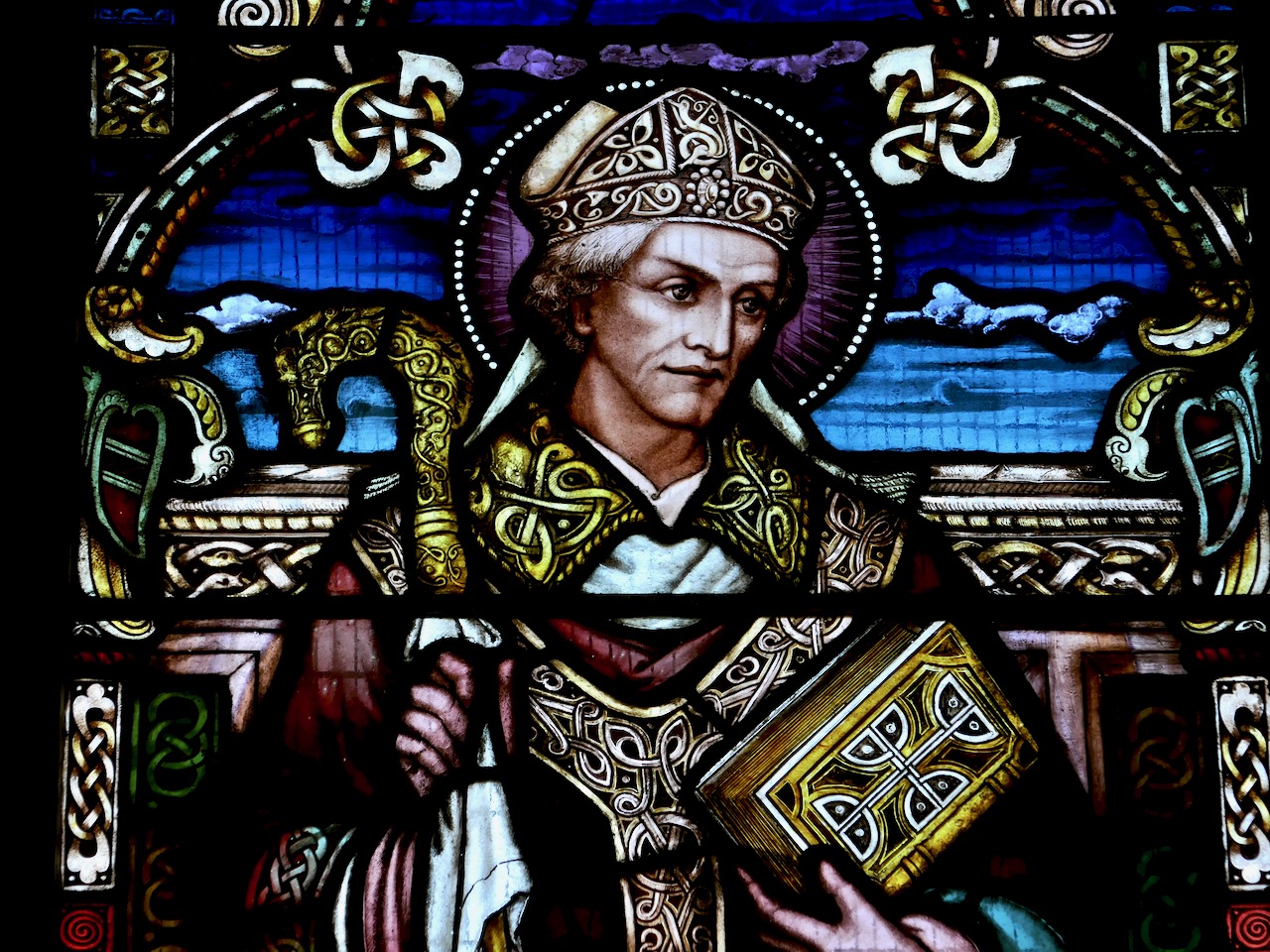
St Carthage, from his eponymous Catholic church in Lismore, Co Waterford. Details include the Book of Lismore, the Lismore Crozier (on display at the National Museum) and a whole galaxy of interlace motifs for the clothing and decorative surround

Next week – examples of Watsons’ use of Revivalist motifs and where to go to see them, as well as some original cartoons, now housed in the Crawford Gallery in Cork. I leave you with a detail from one of the windows employing interlace and lettering – but can you spot the signature?

*Much gratitude to Vera Ryan who has generously shared her Watson expertise with me, and to the Crawford Art Gallery for allowing access to the Watson Archive. I recommend Vera Ryan’s article Divine Light: A Century of Stained Glass in the Summer 2015 edition of the Irish Arts Review for those who would like to learn more about Watsons of Youghal.

Part 2 is here.

Saint Manchan, his Miraculous Cow, and his Shrine

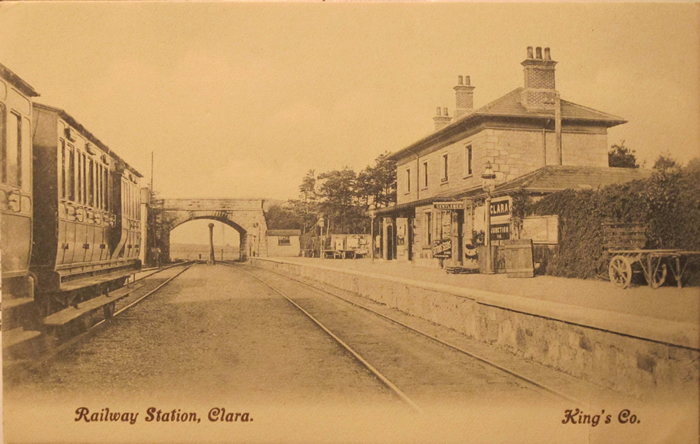
I was in the little two-horse train which labours west from Clara to Banagher and the outlook was desolate. There was another chap in the carriage. He sat hunched up in the corner with his nose to the window. One glance convinced me that it was useless to say anything and there the two of us kept on staring rather lovingly at a wilderness of bog stretching away to the Slieve Bloom Mountains. It seemed to me that there was a kind of promised land on the other side. On past a few scattered farm houses some grey boulders and the ruins of a church. I found myself thinking dismally enough of the tourists. After all what do they get? Just ruins, ruins and more ruins – the saddest ruins in Europe. Then suddenly I heard my friend of the opposite corner speak in a mournful kind of way with his nose still glued to the window – “That’s Leamanaghan, a quare kind of place, decent people, too, the best in the world, people who’d give you all the milk you could drink but wouldn’t sell a drop of it for all the gold in Ireland and it’s all by raison of a cow, Saint Manchan’s cow.”


(St Manchan By Tomas O’Cleirigh, Midland Tribune 27th April 1935)

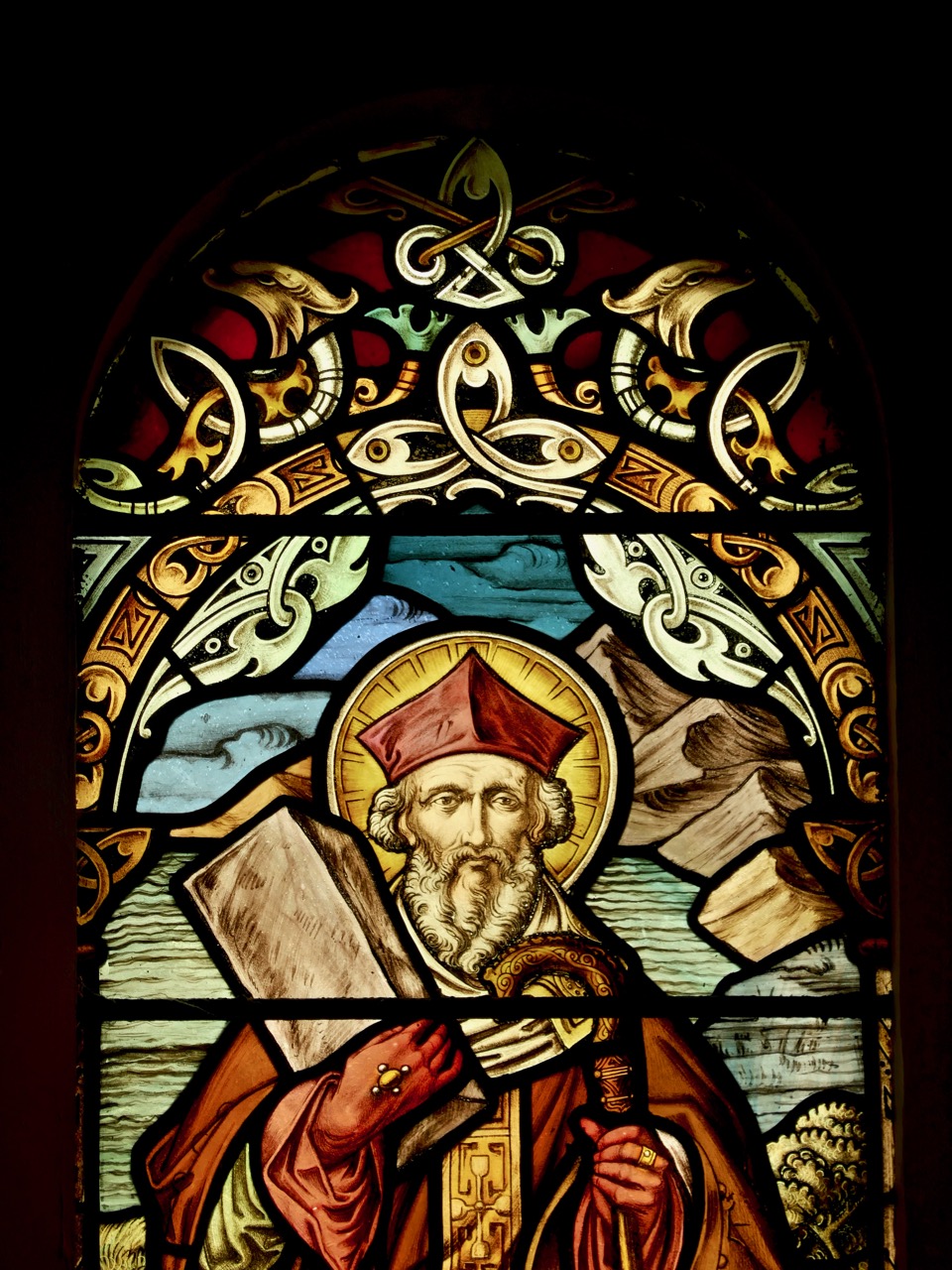
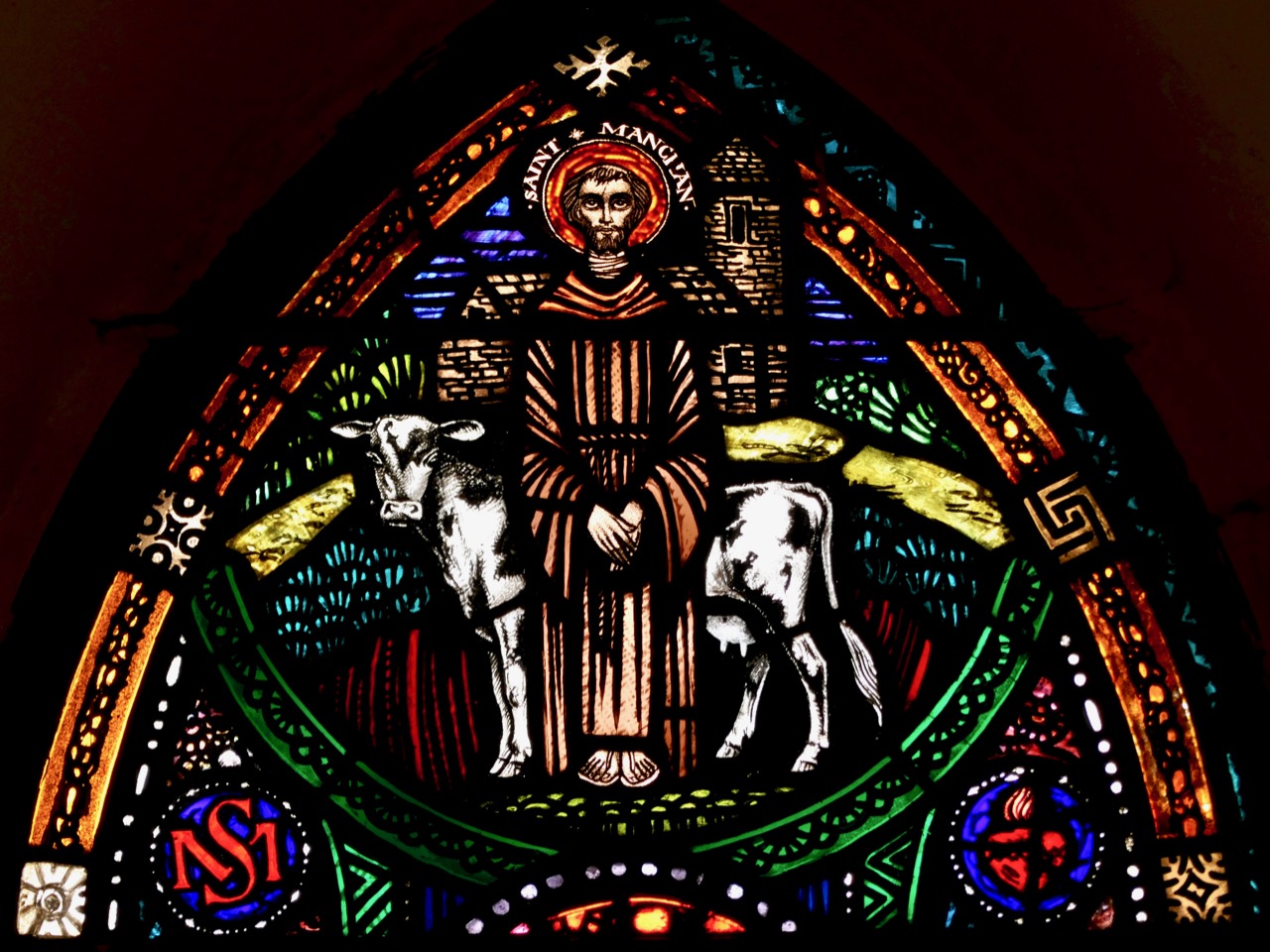
Upper – Finola is featuring the work of stained glass artist George Walsh this week. We were fortunate to find his portrait of Saint Manchan and his cow in the  little church at Baher , Co Offaly, on our travels. Centre – The Church of Saint Manchan

(From Robert’s diary, 2012) – St Manchan had a Cow, a miraculous animal that was always in milk, and the people of Leamonaghan had the milk for free (and, to this day, will not charge anyone for a pint straight from the herd). We tramped through a field of cows as we searched for St Manchan’s holy well: they gazed at us with some disdain. The well is a curious affair – old stones, concrete and rather ugly. The water is alive with tadpoles. We were tentative as we sampled the rank, slow moving stream – but it gave us the gift of credulity!

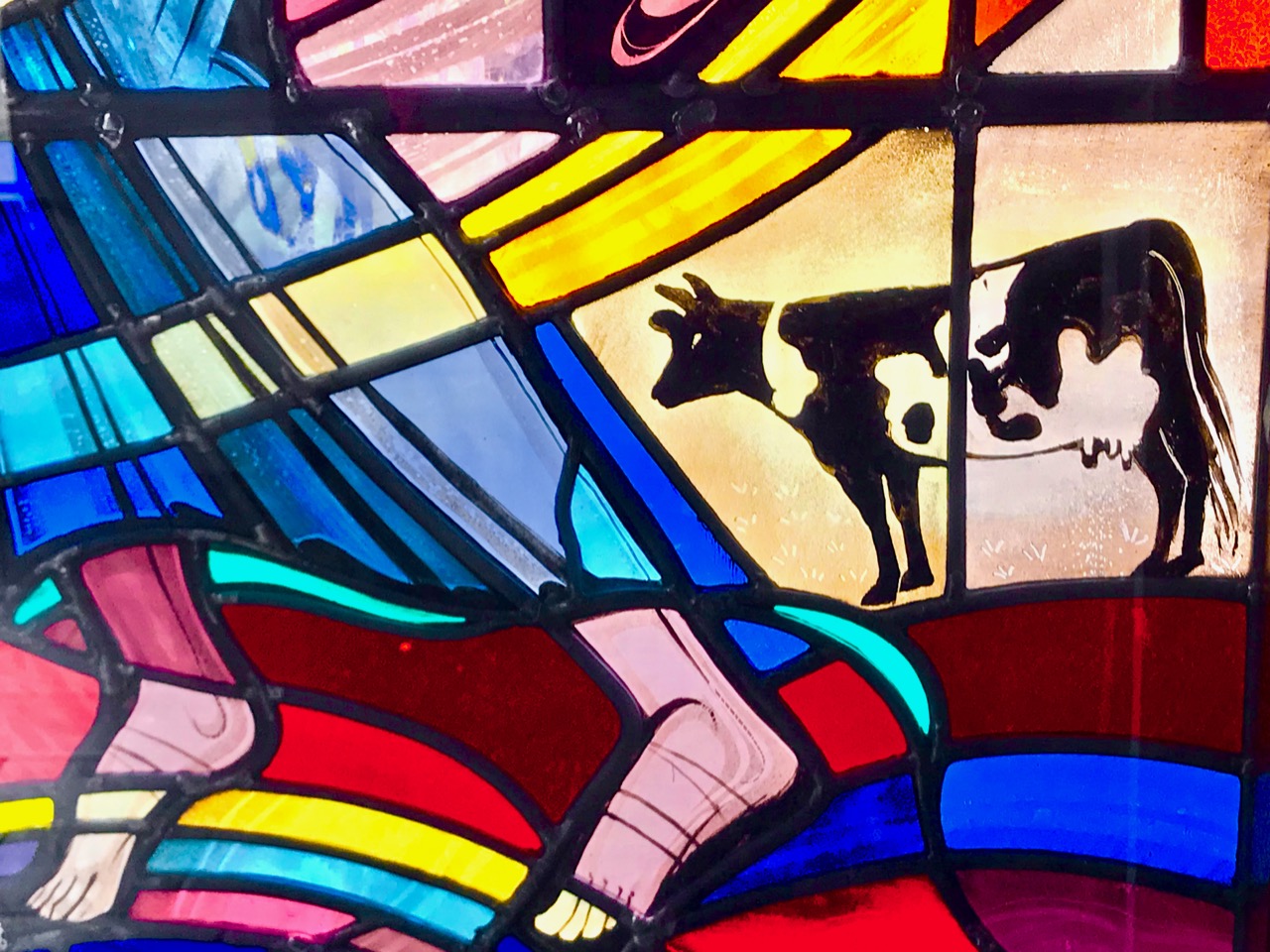
This detail from the Harry Clarke Studio window at St Manchan’s Church (dating from 1931) shows the miraculous cow

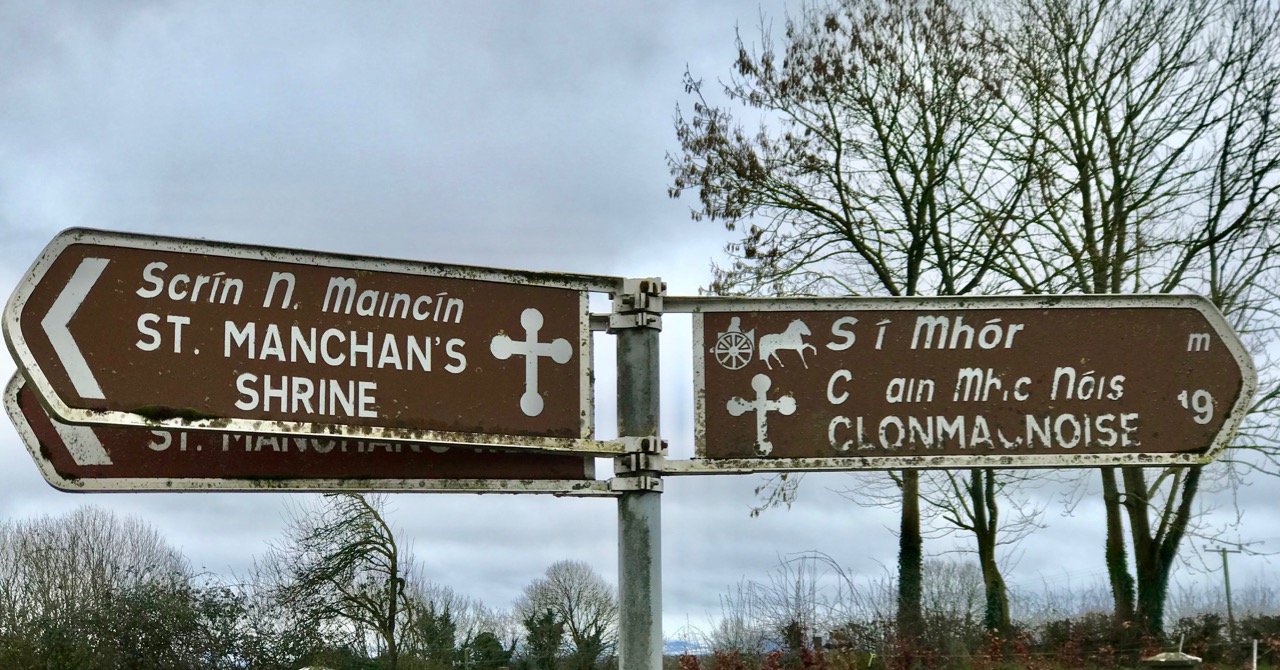
I went through a storm of real Irish rain to see Leamanaghan that very evening. It is four miles from Ferbane in County Offaly and hidden away in a vast bog region which is dotted with scattered boulders of magnesian limestone. The general depression is summed up in the name – Liath Manchan – the grey land of Manchan. Aye! The grey, lonely, chill land of Manchan. Saint Manchan lived here and died in AD 664. That might have been only yesterday, however as far as the good neighbours are concerned because he is the one subject over which every man, woman and child can get really voluble. I was taken to see the ruins of his church and then down to his well and heard how when you are sick you should pray here, walk three times round it and then go back and leave a little present for the saint himself in the window of the church . . . I was told that on the 24th January when all the rest of the world works, the people of Leamanaghan just take a holiday and make merry because it would be the unpardonable sin to think of work on their Saint’s day.


(Tomas O’Cleirigh, 1935)

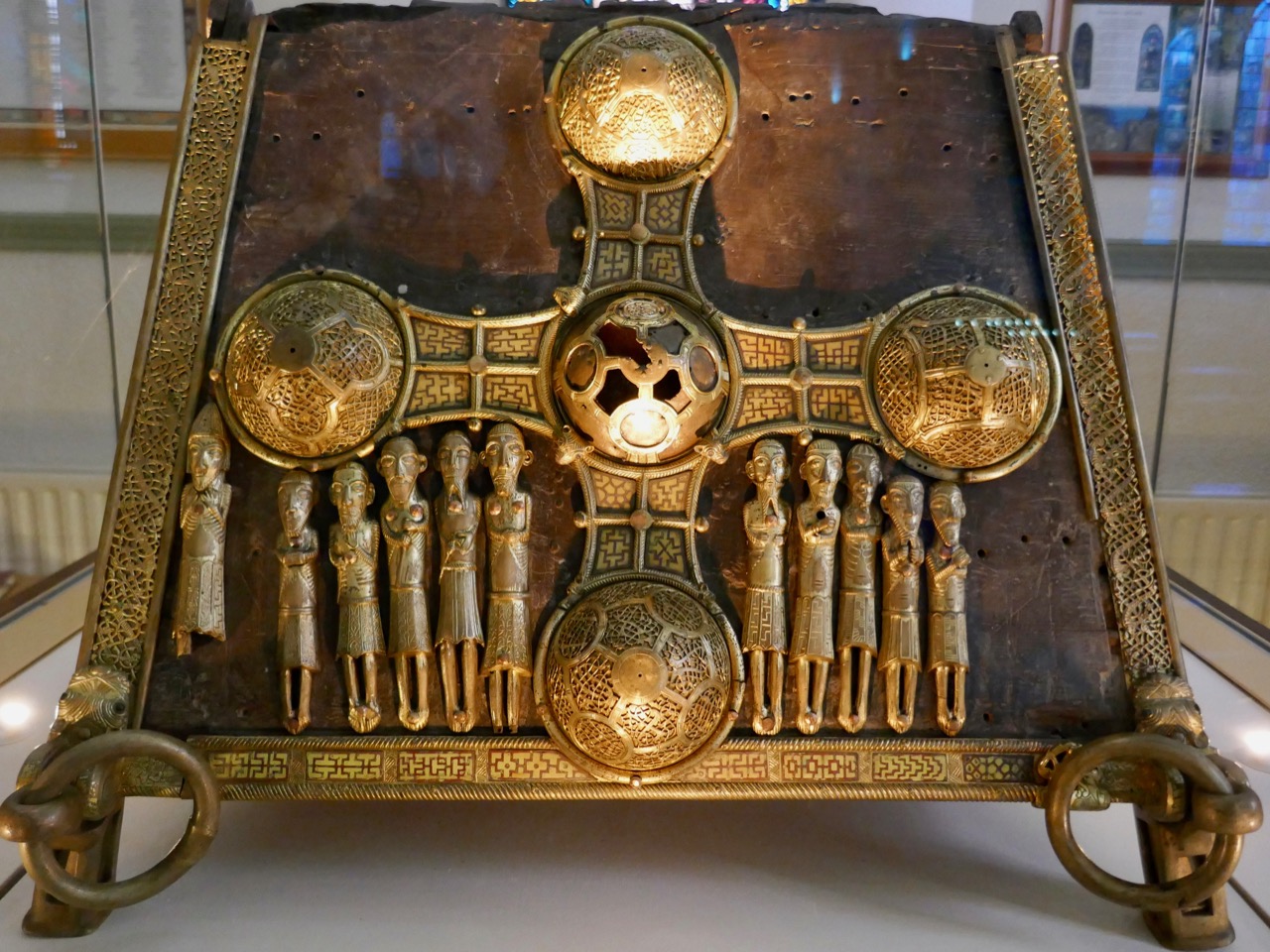
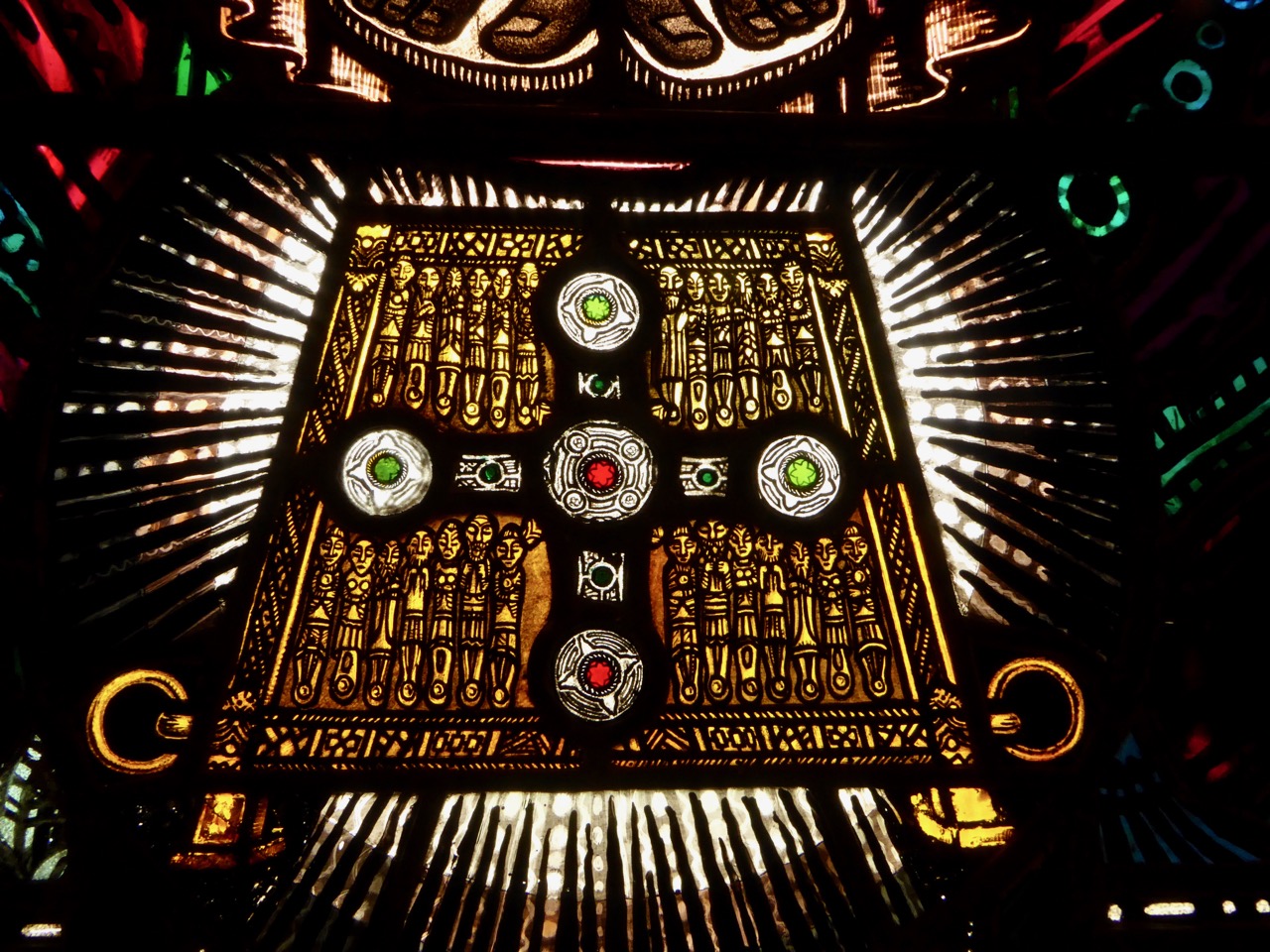
The twelfth century shrine of St Manchan securely displayed in the church today, with the Harry Clarke Studio window behind it

St Manchan died in a plague which he had asked God to bring on his sinning people. After his death, his herdsmen – Bohooly (from which the name Ua Buachalla – or Buckley – is derived) found it necessary to call upon the Saint to help recover the Community’s cattle, which had been stolen by raiders. Manchan duly appeared, but one of his faithful herdsmen was so overjoyed to see his old master again that he threw his arms around him. This he should not have done, as he was a mortal sinner: the Saint fell into a heap of dry bones, but the cattle were recovered. We learn that Manchan’s bones were gathered up and taken to Clonmacnoise, where a fine casket was made to house them, out of yew wood, bronze and gold. Nearly a thousand years later we stumbled on this same shrine in the little church at Boher which carries the Saint’s name, with a glorious representation of itself shining out from a Harry Clarke Studio window set behind it. It resided in a case of armoured glass, alarmed and watched by cameras  – incongruous…. and ineffective: the day after we saw it there the shrine was stolen in broad daylight, evidently after only a few minutes’ work. (Robert’s diary, 2012)

It’s wonderful that we can see the actual reliquary containing St Manchan’s bones returned to the church at Boher, Co Offaly, close to the ruins of the monastery at Leamonaghan which the Saint founded in the seventh century. Although it has suffered some damage over the centuries, the detailing is exquisite: it is one of Ireland’s finest medieval treasures 

They have all kinds of stories about the good saint but the best one of them all explains why Leamanaghan people don’t sell milk. Here it is: Saint Manchan had a cow – a wonderful cow that used to give milk to the whole countryside – good, rich milk for which no charge was ever made by the saint. Then, the people of the neighbouring Kil Managhan got jealous and watched for their chance. One fine day when Manchan was absent they came and stole the cow and started to drive her along the togher through the bog back home to Kil Managhan. The good cow, suspecting something was wrong, went backwards and most unwillingly, fighting, struggling and disputing every inch of the way. Now she’d slip designedly on the stones: again she’d lie down but every where she went, she managed to leave some trace of her rough passage on the stones of the togher. The marks are there to this day, – hoof marks, tail marks – every kind of marks and the chef-d’oeuvre of them all has a place of honour at the entrance to the little school. Alas! In spite of that very gallant resistance, the cow was finally driven to Kil Managhan. There, horrible to say, she was slain and skinned.


(Tomas O’Cleirigh, 1935)

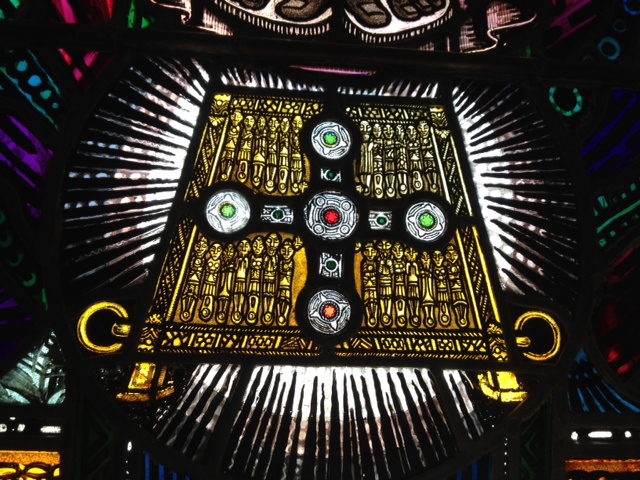
The shrine wonderfully depicted in the Harry Clarke Studio window at St Manchan’s Church, Boher

Prior to being housed in the church the shrine had rested in an ancient chapel. This burned down, but the shrine was rescued and then was kept in a thatched cottage nearby: legend has it that the ruin of this cottage became the unprepossessing holy well that we had found . . . Miraculous cows; plagues; holy wells; a modern theft – St Manchan’s bones do not rest lightly in his casket. The stories tell that Manchan was a tall man with a limp. When the shrine was sent to the British Museum some years ago for refurbishment, the experts examined the bones and proclaimed that they belonged to a tall male who had suffered from arthritis. (Robert’s diary, 2012)

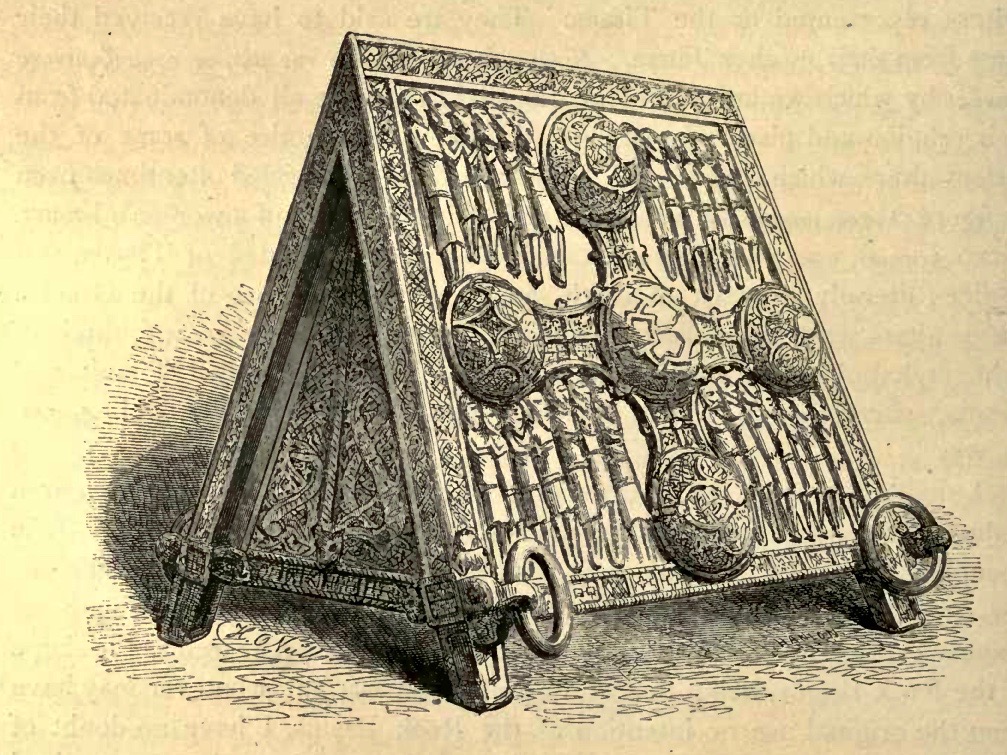
Remarkably, St Manchan’s Shrine has been exactly replicated. This full-sized copy of the reliquary is in the National Museum of Ireland: all the ‘missing’ figures and details have been restored. The drawing dates from 1867, and is a plate in a book titled The Towers and Temples of Ancient Ireland by Marcus Keane MRIA. In that book it is said that the copy belonged to Sir William Wilde, and it may well have been commissioned by him. It is likely that the Harry Clarke Studio modelled their version of the shrine on the replica, rather than on the original

In the meantime, the saint returned, missed his cow, and straightaway started in pursuit. He succeeded in tracing the thieves by the marks on the stones and arrived just at the moment when she was about to be boiled. He carefully picked the portions out of the cauldron, pieced them together, struck at them with his stick and immediately the cow became alive again. She was every bit as good as ever, too, except that she was a wee bit lame on account of one small portion of a foot which was lost. She continued to supply the milk as before, and, of course, no charge was made by the saint. Ever since the famous custom still lives on, and good milk is given away but never gold by the loyal people of Leamanaghan. Now, can any lover of the grand faith of Medievaldom beat that?


(Tomas O’Cleirigh, 1935)

A detail of the original Shrine in St Manchan’s Church

There’s one more piece to this Saint’s story: the fame of his miraculous cow grew and the people of neighbouring Kilmonaghan were jealous, and sent out some rustlers to drive the cow over into their own parish. The cow proved reluctant and stalled and slipped all the way, leaving hoof marks on the many stones that lay on the road. Those marks are still on the stones to this day (they say) and the Saint was able to follow her tracks and recover her. (Robert’s diary, 2012)

Saint Manchan, depicted in stained glass: Harry Clarke Studio (left) and George Walsh (right). Both can be seen in the church at Boher, Co Offaly

The very old vellum books state that Manchan of Liath was like unto Hieronomus in habits and learning. I can well believe it. Some distance away from the church is the little rectangle cell which he built for his mother – Saint Mella. Cold, austere and with no window, you get the shivers by even looking at it. There is also a large flag-stone on the togher leading from the well, and they say the saint and his mother used to meet here every day and sit down back to back without speaking a word because the saint had vowed never to speak to a woman!


(Tomas O’Cleirigh, 1935)

Footsteps

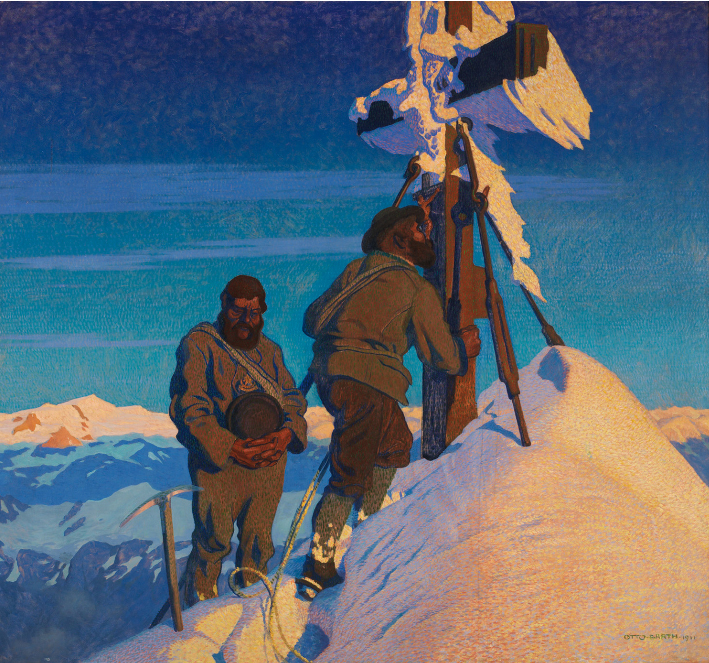
Morning prayers on the Großglockner, Otto Barth 1911

Morning prayers on the Großglockner, Otto Barth 1911

Is it us? We seem to be following in the footsteps of thieves and wreckers… Back in June 2012 we visited St Manchan’s Church, in Boher, Offaly and saw the splendid shrine of that Saint securely locked in an armoured glass case and mounted in front of the equally magnificent Harry Clarke window depicting him. That was at about 1 o’clock in the afternoon. We were shocked to hear on the news that evening that the shrine had been stolen at 1.30! Two men had taken just a few minutes to break open the case – in spite of alarms and cctv – and make off with the Saint’s remains…

We were relieved to hear the following day that the robbery had been bungled: the shrine was thrown out of the getaway car and landed in a bog: both it and the perpetrators were picked up by the Gardi. I wonder if perhaps the thought of what divine justice might be wrought from on high (from St Manchan himself, even) had put doubts into the minds of the thieves and diverted them from their intentions – whatever they might have been.

Harry Clarke's depiction of the Saint's shrine

Harry Clarke’s depiction of the Saint’s shrine

Nevertheless, the incident led to some considerable debate on whether the reliquary should be returned to the church – where the security was evidently lacking – or whether the original 1,000 year old artefact should be put into Ireland’s National Museum and the replica which happens to be there should be sent back to St Manchan’s. The Boher people campaigned vigorously against this – quite rightly in my opinion – and eventually, after some improvements to the arrangements in the church, the shrine has been restored to where it belongs.

winter

Carrauntoohil Summit – photo by Noel Mulcair: thejournal.ie

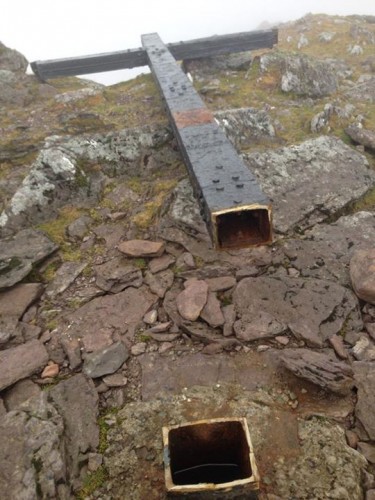
So there we were just a week or two ago, honeymooning in the shadow of Ireland’s highest mountain (although warmly ensconsed in a comfortable Kerry hotel) when we heard the news that, not far away, someone had climbed the mountain at night and felled the iron cross that had stood up there for many years, with an angle-grinder! Obviously some point was being made, although nobody was quite sure what that was at the time…

The Mountains of Kerry

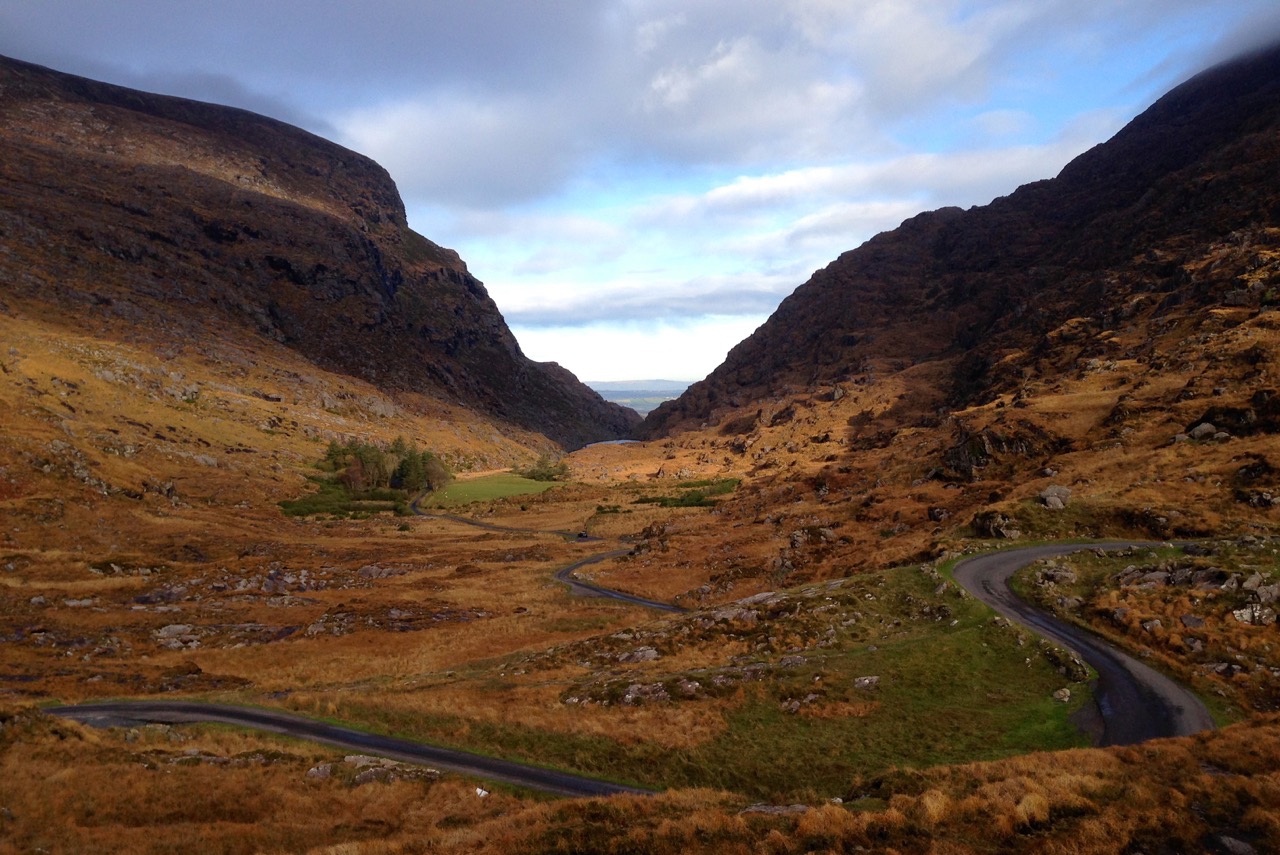
Gap of Dunloe, in the shadow of Carrauntoohil


The cross is felled...

The cross is felled…

The Carrauntoohil incident sparked off a lively correspondence in The Irish Times. Many were indignant at the act of vandalism, while others took the view that there is no reason why wild places should be ‘sullied’ with religious symbols. Hmmmm… that’s a bit harsh, perhaps: crosses on mountain tops have a been around for a long time all over the world and, ever since prehistory, humans have marked their presence on the landscape with monuments of one sort or another. As you all know, the two of us are fascinated (obsessed might be a more appropriate word) by megaliths, tombs, circles and inscribed rocks – and these are preserved archaeological artefacts – it would be unthinkable for someone to get it into their head that a standing stone should be destroyed because it might have represented someone’s god. At the very least, surely, the subject should be aired and a democratic decision made by a public majority before any such action is taken. Indeed, the subject did get aired after the event and I gleaned that the majority of respondents felt that the iconic cross should not have come down.

Well, this story – like the St Manchan one, has had a happy ending. A group of volunteers has been up to the summit with block, tackle and welding equipment and the cross is back again.

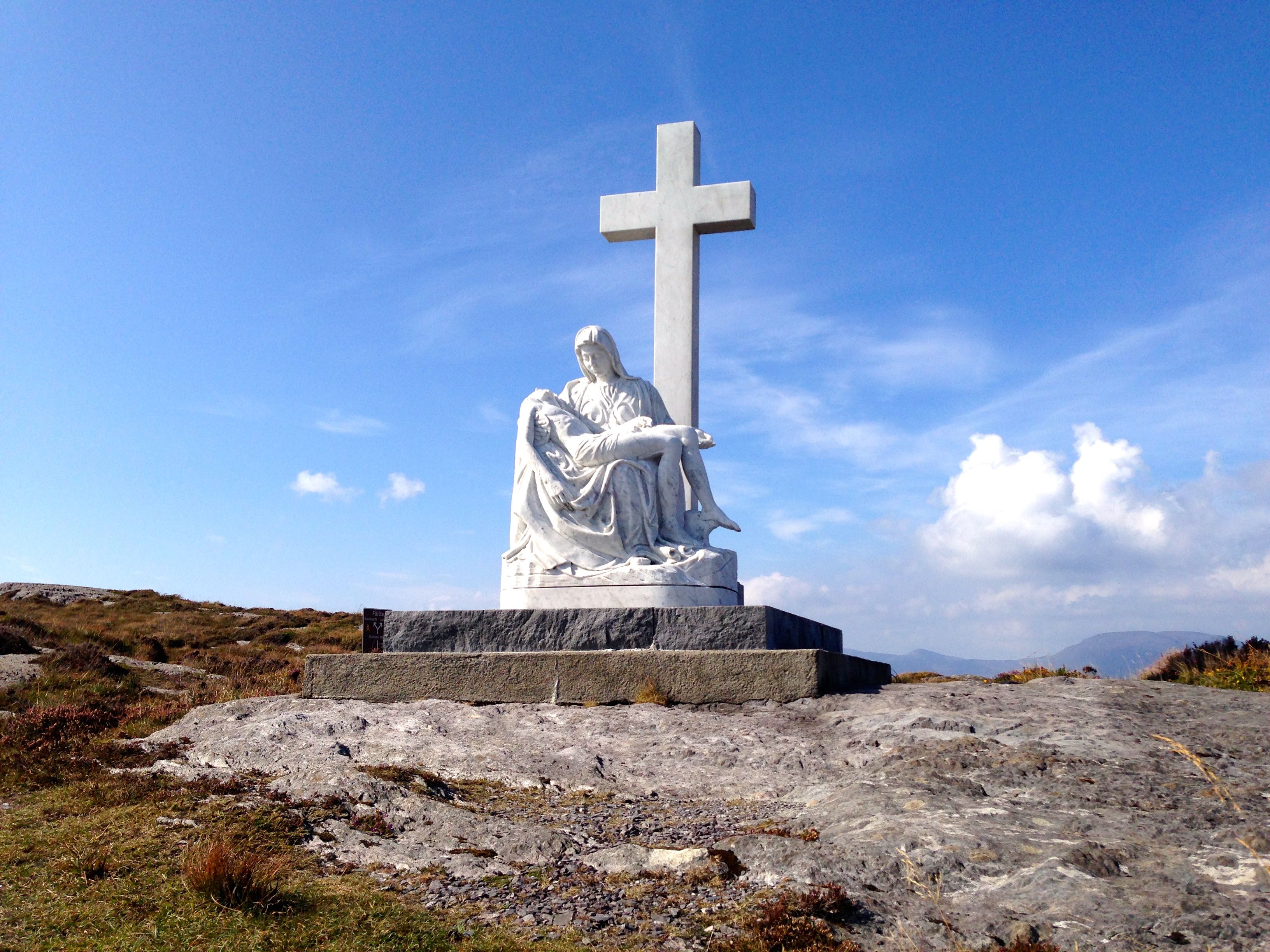
Ireland has many summits adorned with constructed pieces – ancient cairns and tombs, and more modern statues and symbols, not forgetting the wind farms which are another source of controversy. We are all part of human history and one of Ireland’s big attractions for me is that the history is so visible and accessible. In 1968 a white marble Pieta was placed high up on the Goat’s Path in Glanalin townland. It’s someone’s personal monument to a much loved father. In my opinion the melancholy statue enhances the wild place: I make a bee-line for it whenever I’m in the area – partly to enjoy the magnificent view but also, I have to say, because I am fascinated to see how many coins and offerings are put into the outstretched palm of Mary. Look here for a fuller description on the excellent website Sheep’s Head Places.

Hilltop Pieta

Hilltop Pieta

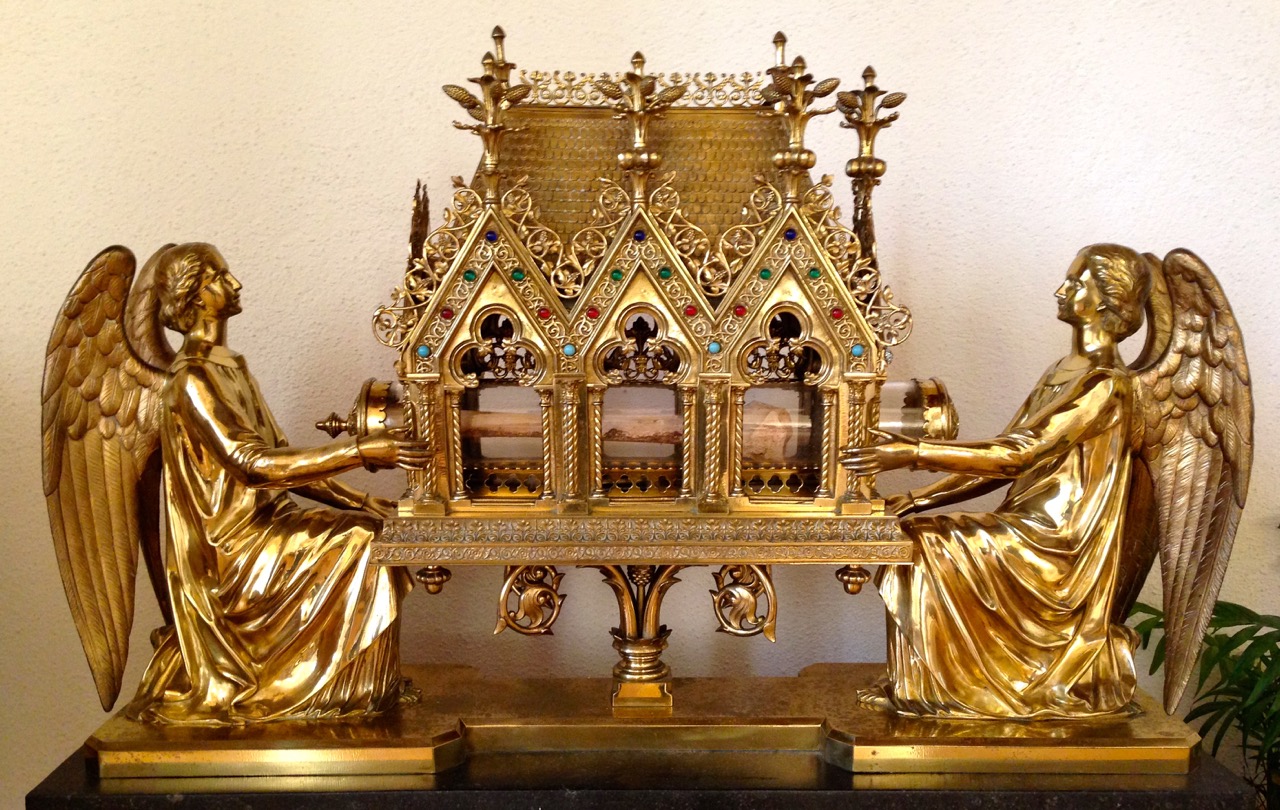
Given our experiences to date I worried a bit about our visits to Holy Cross Abbey and the Cathedral of St Mary and St Anne in Cork, where we came across the shin bone of Blessed Thaddeus McCarthy. But it seems to be ok: fair enough, the fragment of the True Cross was stolen from Holy Cross (it’s now been replaced with another), but long before our visit, while the saintly shin bone seems to have survived unscathed so far. I can’t help looking over my shoulder, though, when we visit such places. Ireland is full of enigmas…

thaddeus

Sacred shin bone – with Angelic guardians

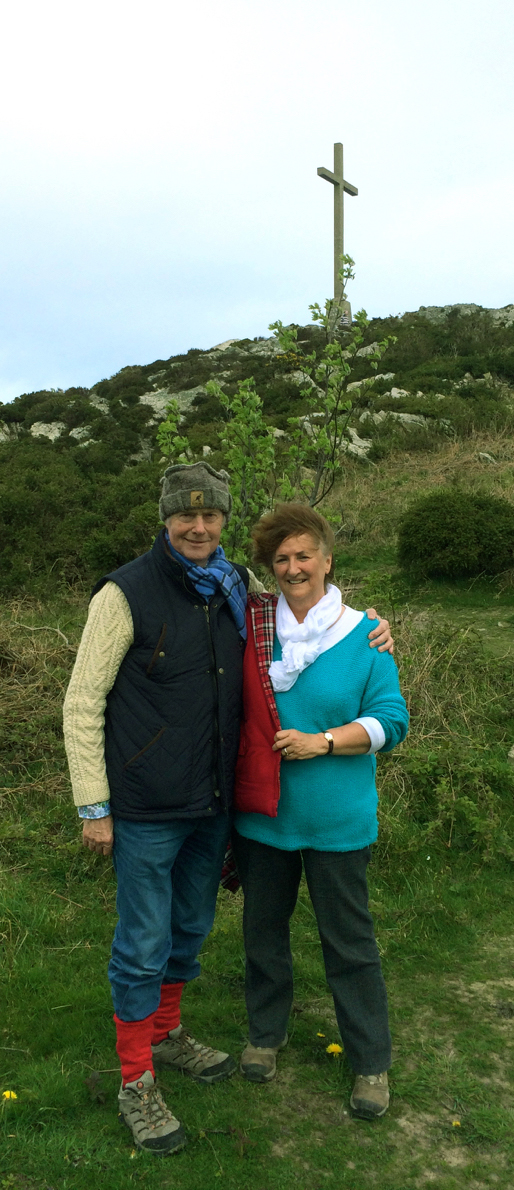
Finola's childhood haunts: the cross on Bray Head, Wicklow

Finola’s childhood haunts: the cross on Bray Head, Wicklow