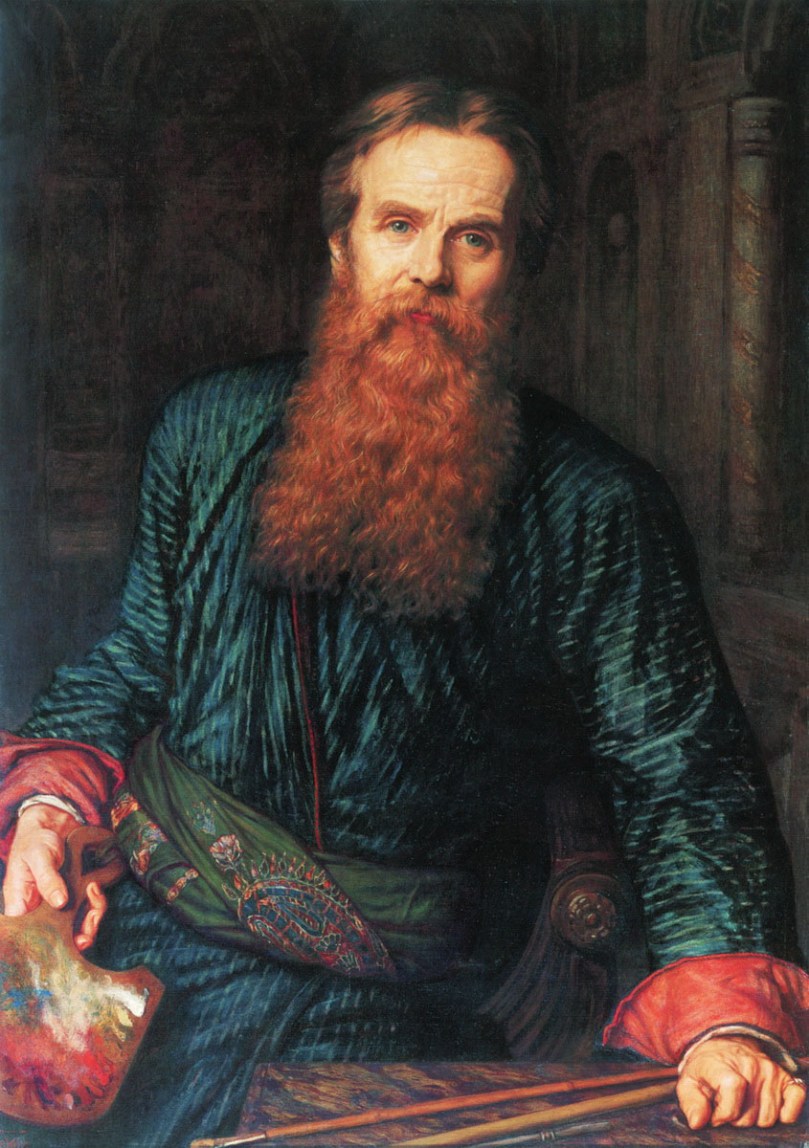
Holman Hunt, one of the three founders of the Pre-Raphaelite Brotherhood
In preparing for an upcoming talk of stained glass in West Cork, I was struck by a single image that seemed to crop up again and again. The image was described as The Light of the World, or occasionally as Christ Knocking at the Door.
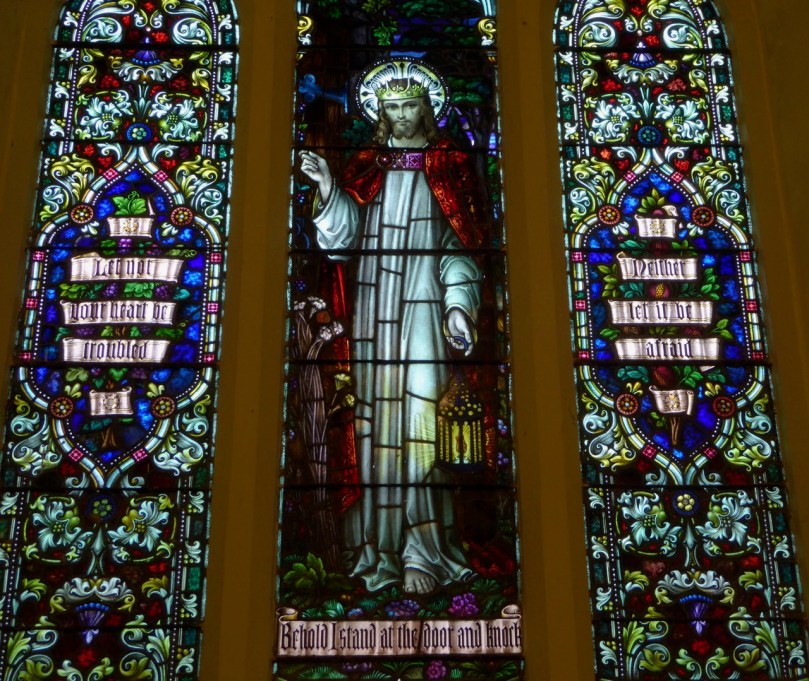
Christ as the Light of the World. This window, by Clokey of Belfast is in St Matthias Church of Ireland in Ballydehob
Curious, I searched online to find out more about the window and discovered to my astonishment that the painting upon which the window was based was The Light of the World by the Pre-Raphaelite painter Holman Hunt and, in the words of Robert Fulford, although…Hardly anyone today admires The Light of the World as art…it remains a historic moment in mass culture, the beginning of the great age of reproduction, the first image that millions of people knew intimately, and often loved.
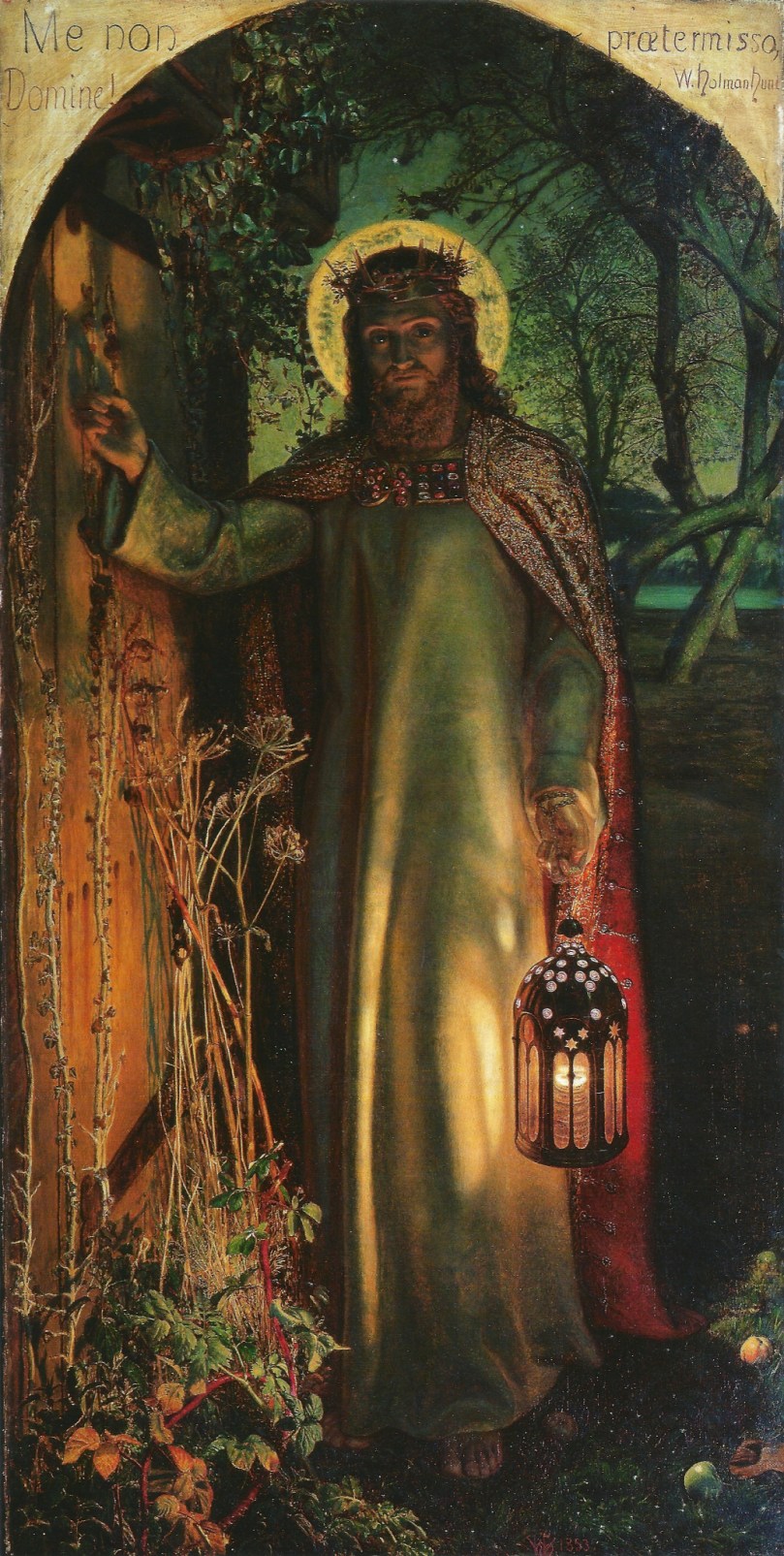
Holman Hunt’s Light of the World. It was based on Revelation 3:20 Behold, I stand at the door, and knock: if any man hear my voice, and open the door, I will come in to him, and will sup with him, and he with me.
Hunt’s first version 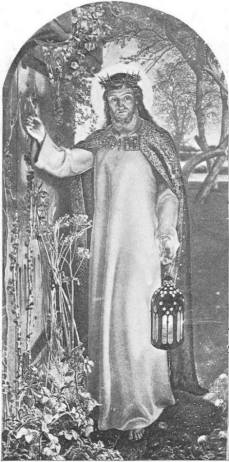 (he eventually painted three) was begun in 1851 and was widely admired. But it was two other media that carried it to the status of international icon. The first was engraving (left) – the photography of its age in its ability to convey images to a mass audience – and the second was stained glass, just coming into its heyday as a result of recent innovations in church architecture and decoration.
The painting toured the world and attracted enormous crowds wherever it went. It is estimated that four fifths of the population of Australia viewed it, for example. Fulford describes it thus: In Melbourne in 1906 visitors stampeded, anxious to see it the moment it was open to the public. But if the crowd was rowdy at first, Maas writes, soon “an air of reverential awe descended on the gathering.” Men removed their hats, voices fell to a whisper. Some people stood or sat gazing at it for hours. A few visitors fainted. Later it toured South Africa and in 1907 returned in triumph to Britain and its final destination, St. Paul’s.
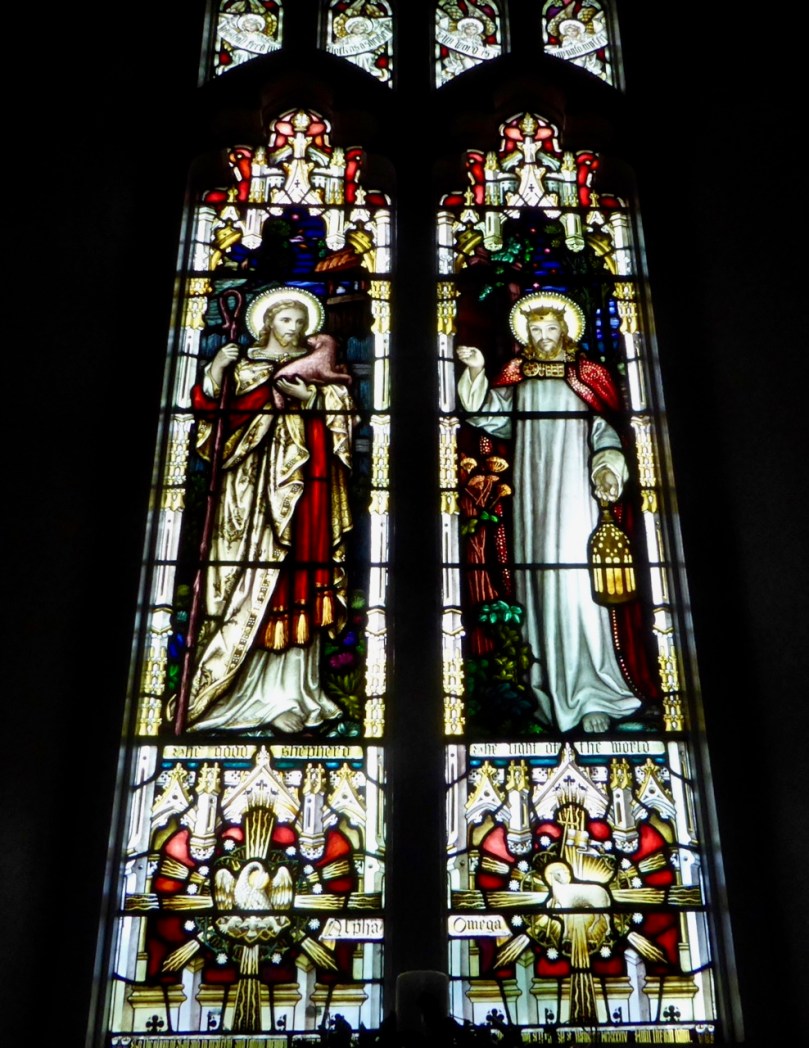
This window in Rosscarbery Cathedral is by Mayer of Munich. Christ as The Light of the World was often paired in a two-light window with Christ as the Good Shepherd
How to explain the appeal of this image? Holman Hunt himself gives us a clue. Writing in The Victorian Web, George Landow states that Hunt …believed that The Light of the World created its symbolic language in precisely the same way that men had formed language to express abstract and spiritual ideas. The important point is that, since the symbolism derives from what he takes to be essential habits of mind, it would be immediately comprehensible to any audience, because such “natural” symbolism does not require any knowledge of iconographic traditions. It appears he was correct, since the symbolism employed in the painting spoke directly to masses of people who took its message to heart and hung engravings and reproductions in their homes.
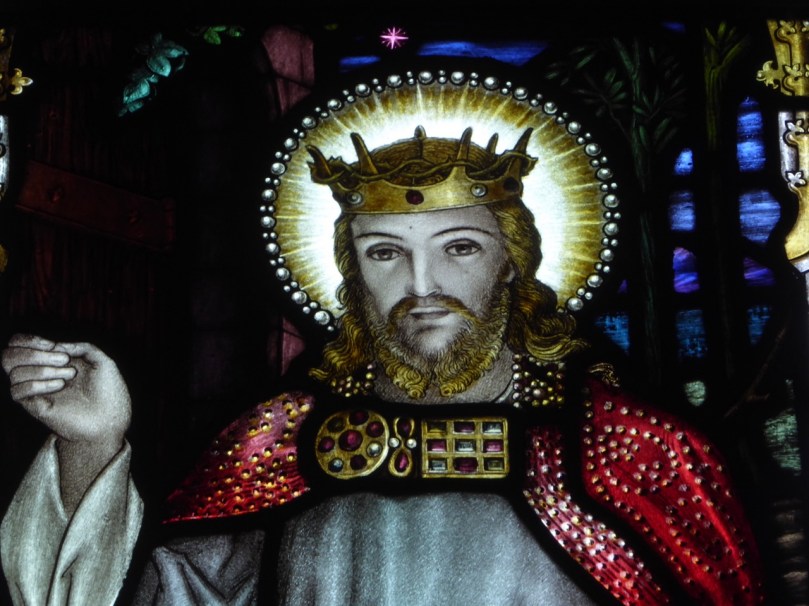
Detail from the Mayer window
And in their churches. In its listing of the glass in Church of Ireland churches, the website Gloine* lists 70 examples of Light of the World windows and a few others labelled Christ Knocking at the Door. Of these, about 65 are modelled directly on the Holman Hunt painting. Most of the stained glass studios are represented in the list – it was such a popular request that every studio had to have it in its catalogue. While there are more windows devoted to, for example, the Resurrection, or the Four Evangelists, they are all quite diverse representations, rather than being based upon a single original source. A similar list does not exist for Catholic churches, but it is unlikely that the Light of the World would be as prominent in them, mainly because most stained glass windows in Irish Catholic churches are later than the high point of popularity for Hunt’s painting.
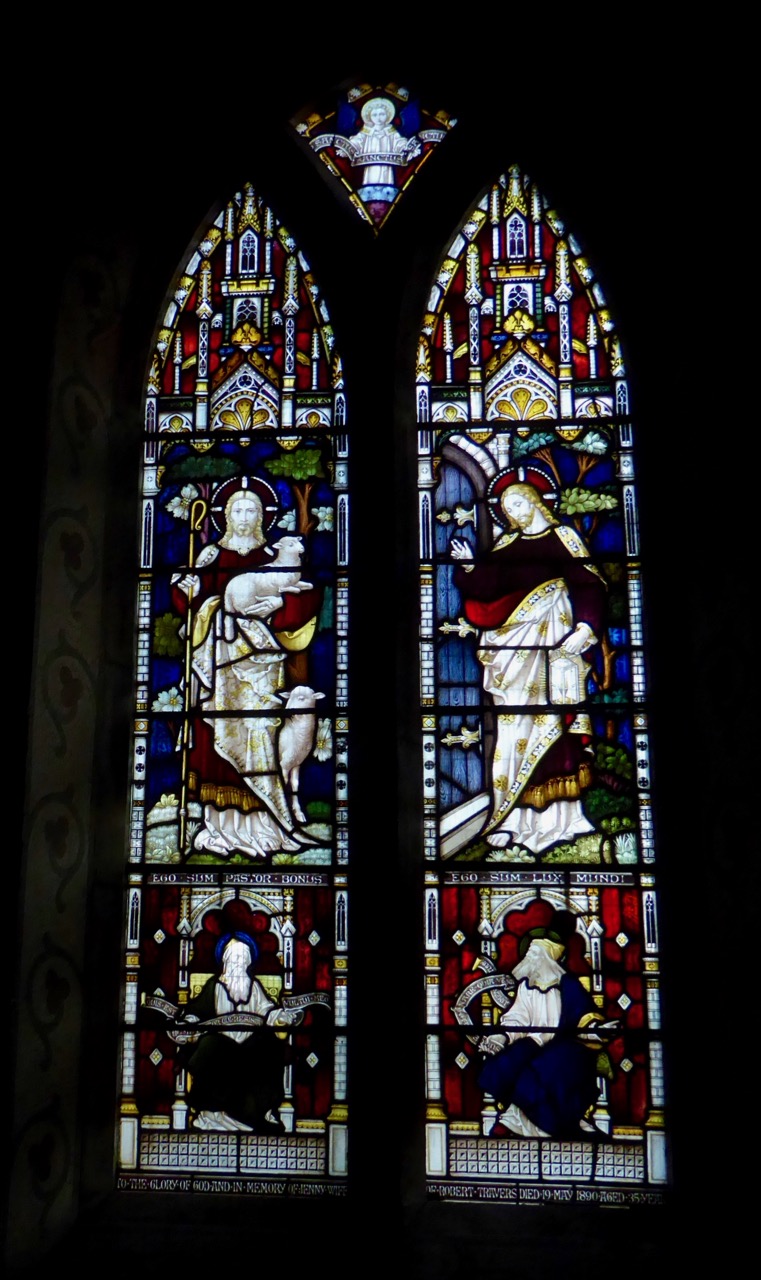
This window by Clayton and Bell dates from 1890 and is in the Church of the Ascension (C of I) in Timoleague
So here’s a challenge for you, Dear Reader. Have you seen this image in stained glass, or elsewhere? Were you familiar with the painting and aware of its impact? Do you have photos, stories or memories to share? Or is this an image that had its moment, particular to its day and time, and then disappeared from our consciousness like so many others have, before and since?
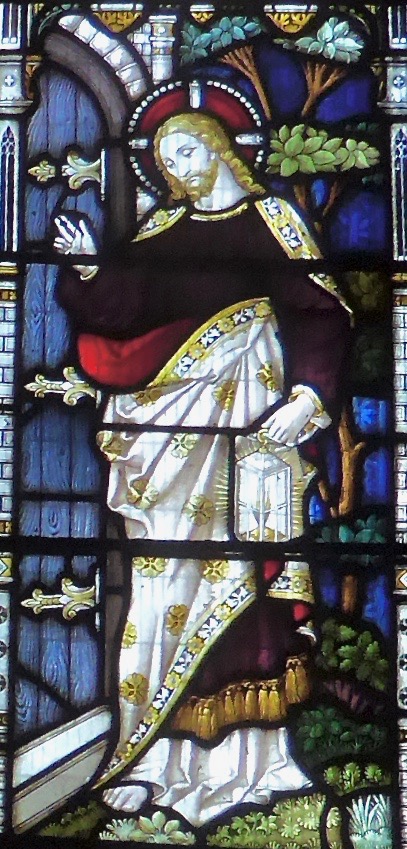
Detail from the Clayton and Bell window in Timoleague
*My grateful appreciation goes to Dr David Lawrence and the website Gloine – Stained glass in the Church of Ireland. This is a magnificent resource that contains information on almost every stained glass window in almost every Church of Ireland building in Ireland and Northern Ireland. It is awe-inspiring in its scope and erudition. The site lists two more examples from West Cork, Durrus and Caharagh.






 Roaringwater Journal