Forest Bathing

Excuse me – forest what? Don’t worry, it doesn’t involve any actual bathing (the clothes stay on) – perhaps immersion is a more apt word.

The whole idea is Japanese and comes from the concept of shinrin-yoku, which translates literally as ‘forest bathing’ but really conveys the idea of immersing yourself in a woodland environment for a while and reconnecting with that part of you that needs this experience.

And we do need it – it’s buried in our genes and our psyche that we are creatures who used to live close to nature and who feel good when we are back in that place. Forest bathing has been developed as a kind of therapeutic return to the natural world as well as an escape, for a while at least, from the civilised one.

Future forest – tree planting is ongoing at Caherbeg farm, native species only

The event itself was part of the Taste of West Cork Food Festival and it took place on Caherbeg Free Range Pork Farm, home of Avril Allshire-Howe and her family. I’ve written about Avril before, in my post on black pudding way back in 2015. A leader in the thriving West Cork food scene and a very busy woman, Avril discovered that her way of relaxing and centering was to take a walk down into the woods on the Allshire farm, and so the idea of introducing other people to the healing power of time with the trees was born.

As we walked, Avril explained she and William’s philosophy of farming and how they hoped to plant more trees over time. They are pioneers in the new discipline of agri-forestry – a true mixture of trees and agriculture, where the trees are planted far enough apart to allow for agricultural activities (such as hay-making) to take place among and between them.

Here is an example of agri-forestry, with trees widely-spaced. We were fascinated by the grass growing up the tree-tube along with the tree

One of the trees they have found thrives in our ever-damp West Cork environment is the water-thirsty eucalyptus. So our first stop (after saying hello to the piggies) was through the eucalyptus grove.

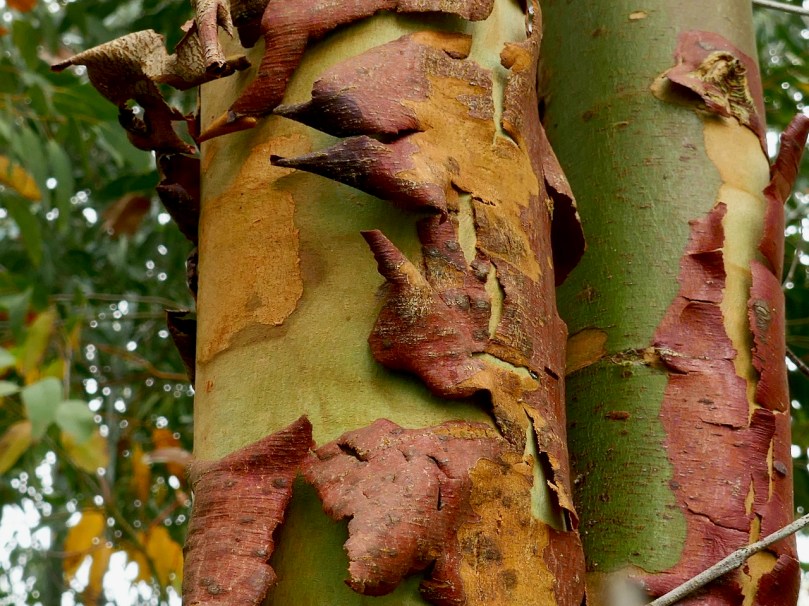
The aroma all around us was incredible and here we stopped and breathed deeply, rubbing the leaves and the bark with our hands and taking in the sinus-clearing benefits.

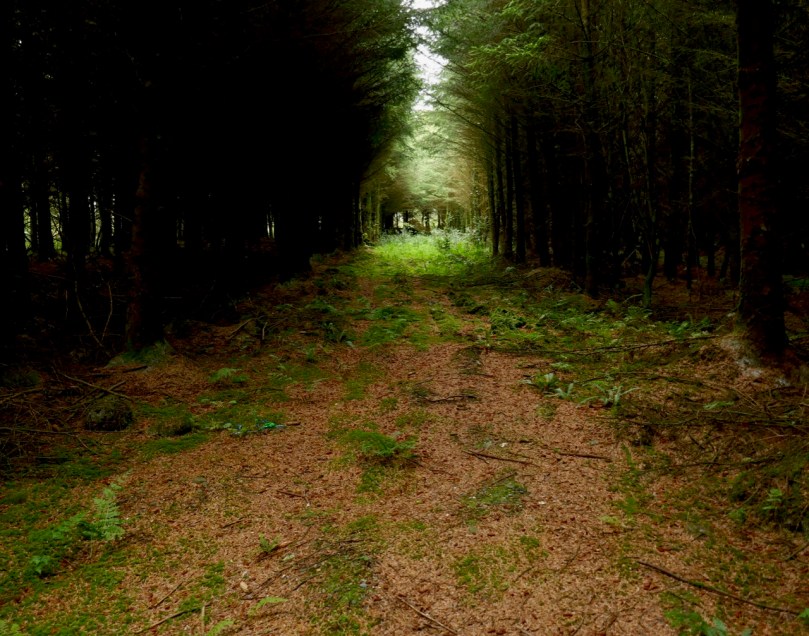
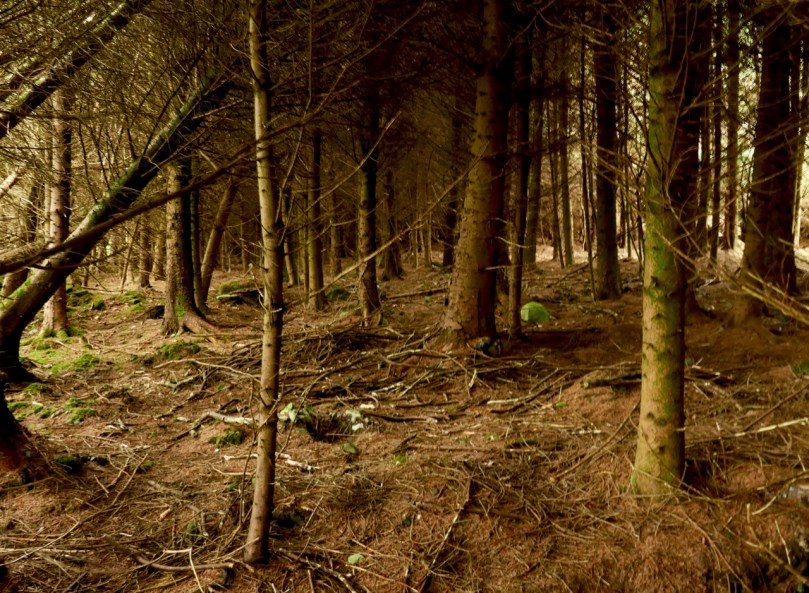
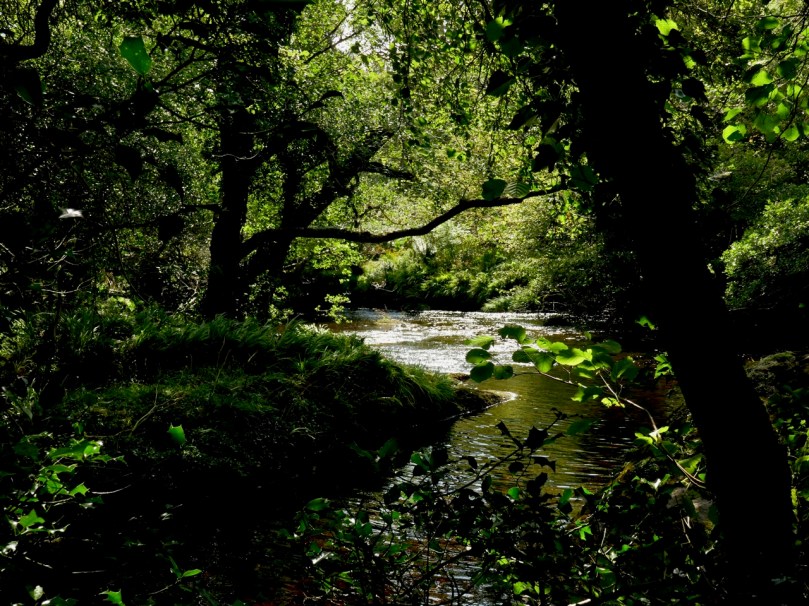
Then down beside a rippling brook – the air became still and the noises of the farm and pork plant disappeared. We came to a conifer plantation that was put in before the Allshires bought the land. It had not been properly managed so it is not commercially viable but it’s perfect for a dark forest immersion experience. Very little light penetrates the canopy and the air is perfectly still, almost spookily so. We wandered the path through it, saying very little and concentrating on the suddenly-cool air, the feel and texture of the tall straight trunks and the soft, sterile ground underfoot.

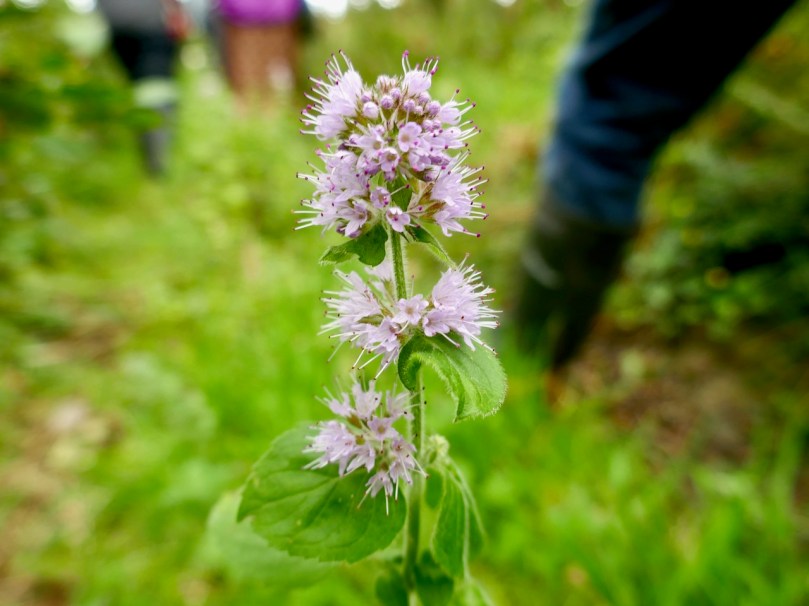
Where light could pierce the darkness ferns took hold and along the pathways as we emerged we found wildflowers taking advantage of every beam to put down their tenacious little roots. Although the Foxglove was finished we could still see their basal rosettes getting ready for next year, and along the little watercourses running through the trees Water-mint took hold wherever it could – more leaves to crush and savour.

Of course, no country walk in Ireland is complete without the obligatory ruin – this one a highly satisfactory house that must have been quite fine in its day.

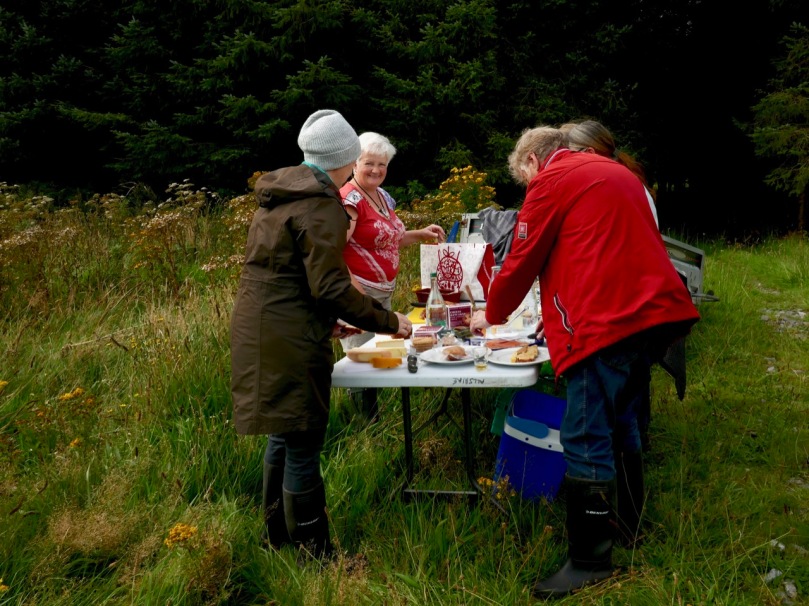
And then, what was this? At the bottom of a field was a table, laden with West Cork goodies, and Avril invited us to browse and make a sandwich using her own home-made challah bread. A picnic has never tasted so good!

I have my eucalyptus and mint leaves by me as I write this – aroma is a sure-fire memory stimulant and I am back in my head walking through the trees, time slowed down, breathing and listening, with the rough bark under my hands.

Keeping Time in Youghal

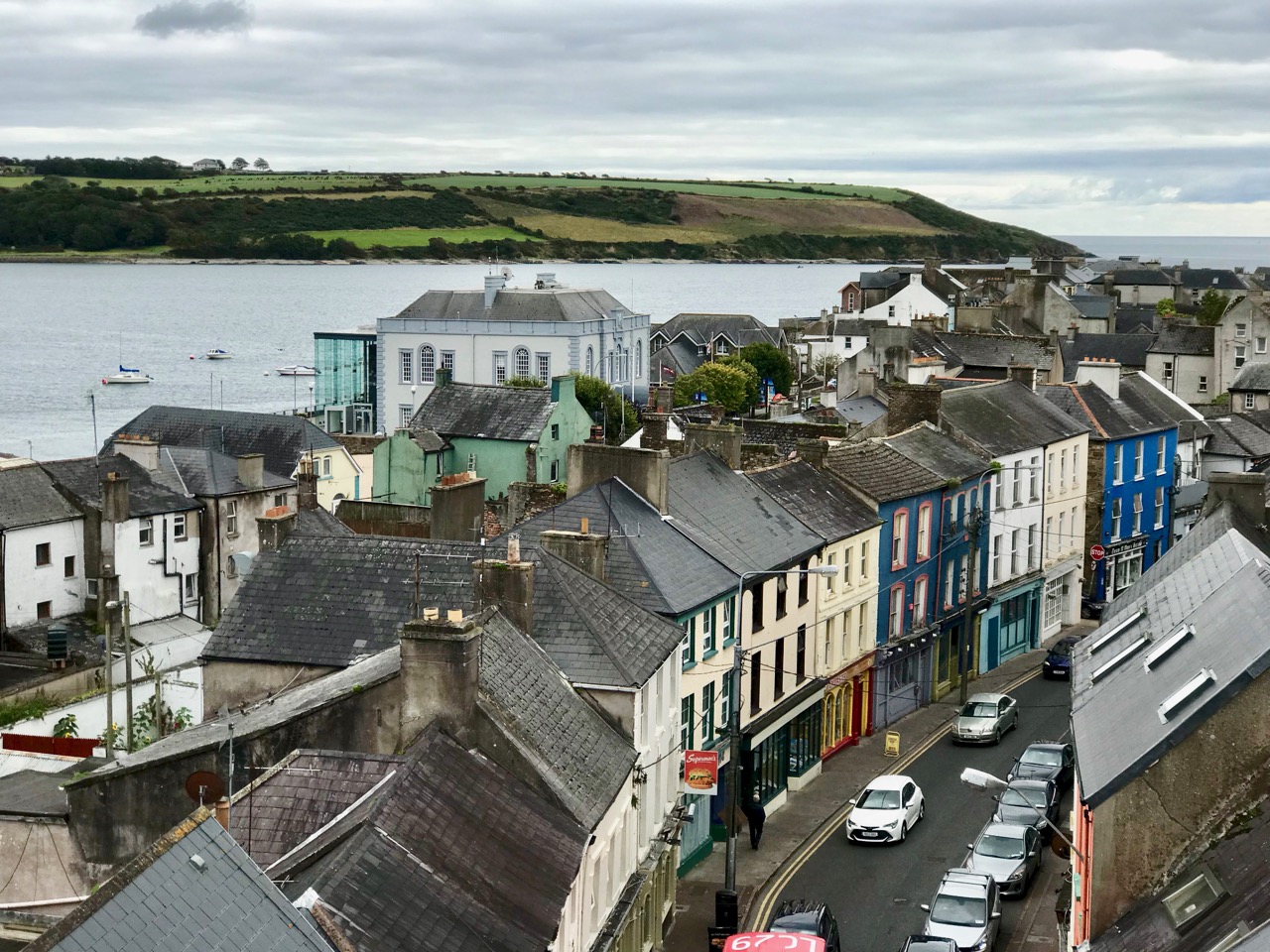
I had time to pass in East Cork on Saturday, so I went off to Youghal (pronounce it ‘yawl’), a substantial town with a great deal of history. I had a purpose in mind: to check out a recently opened museum, dedicated to the way that the time of day was chronicled here over a number of centuries.

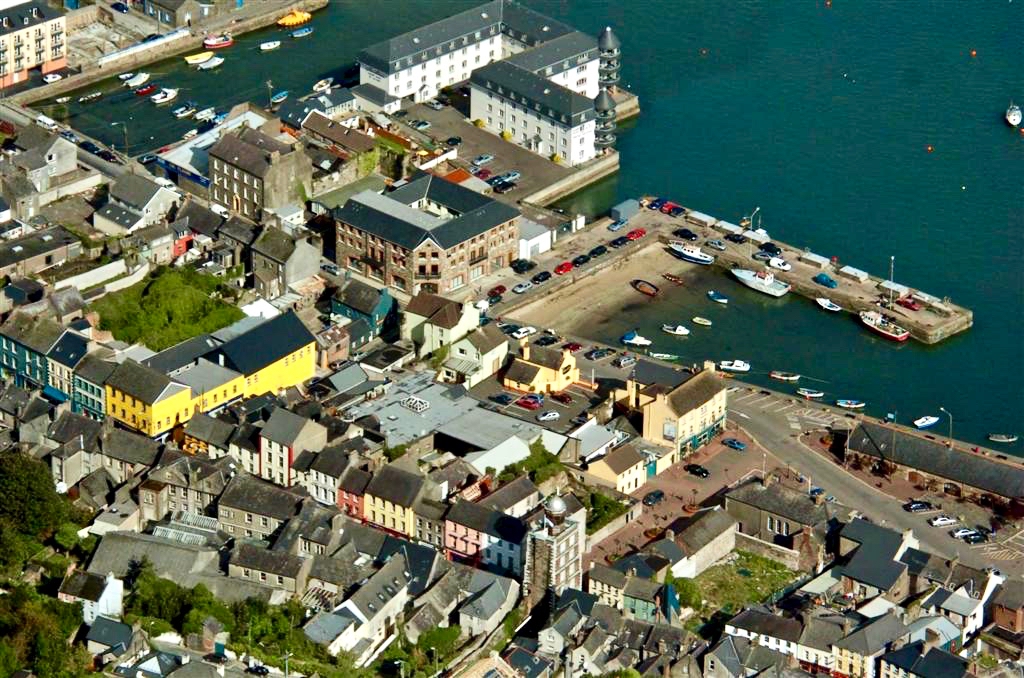
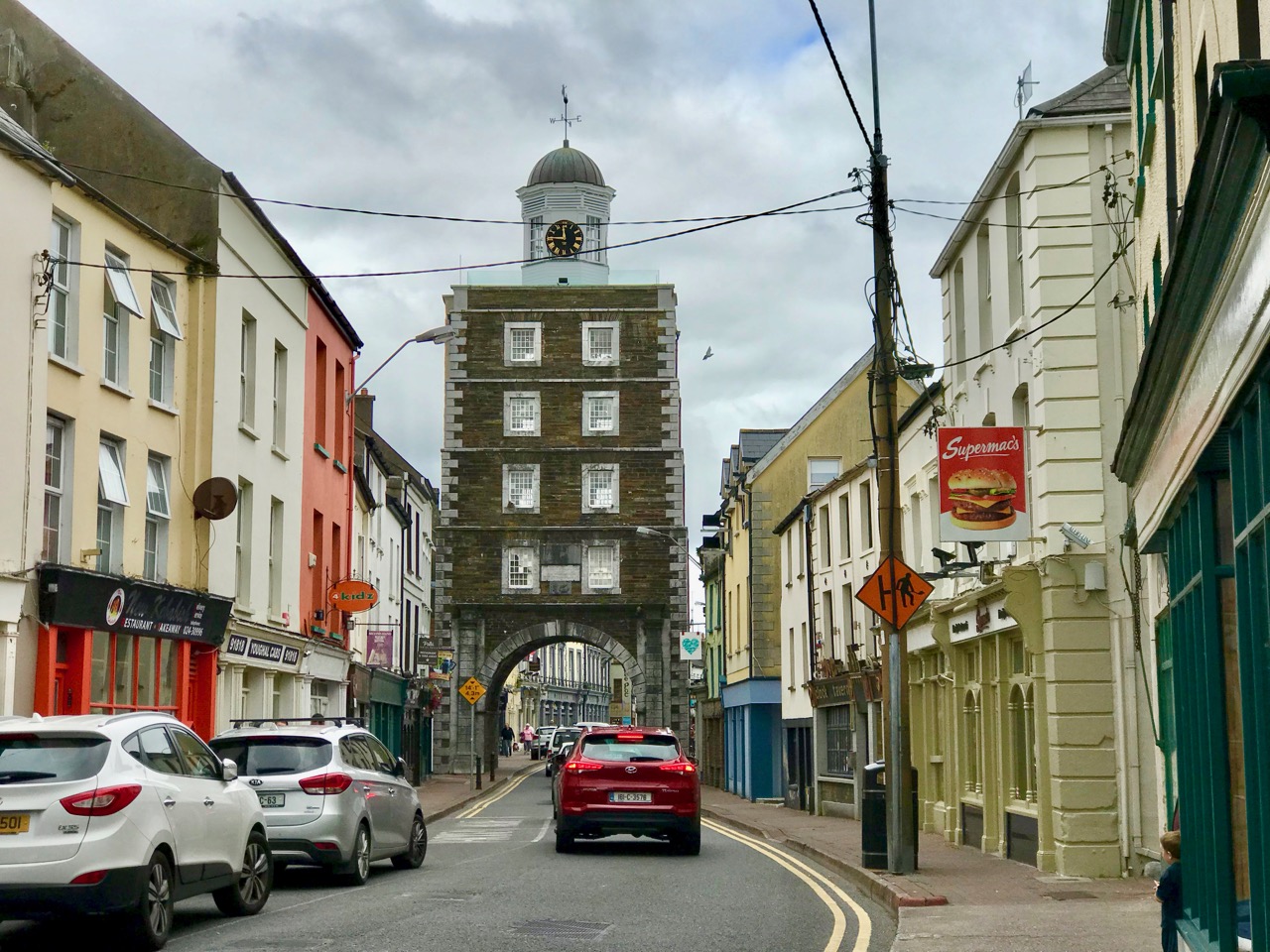
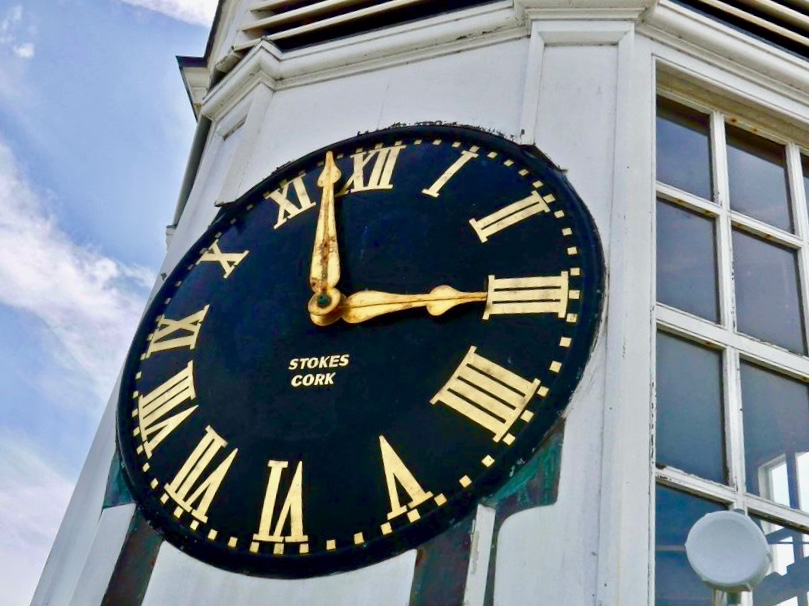
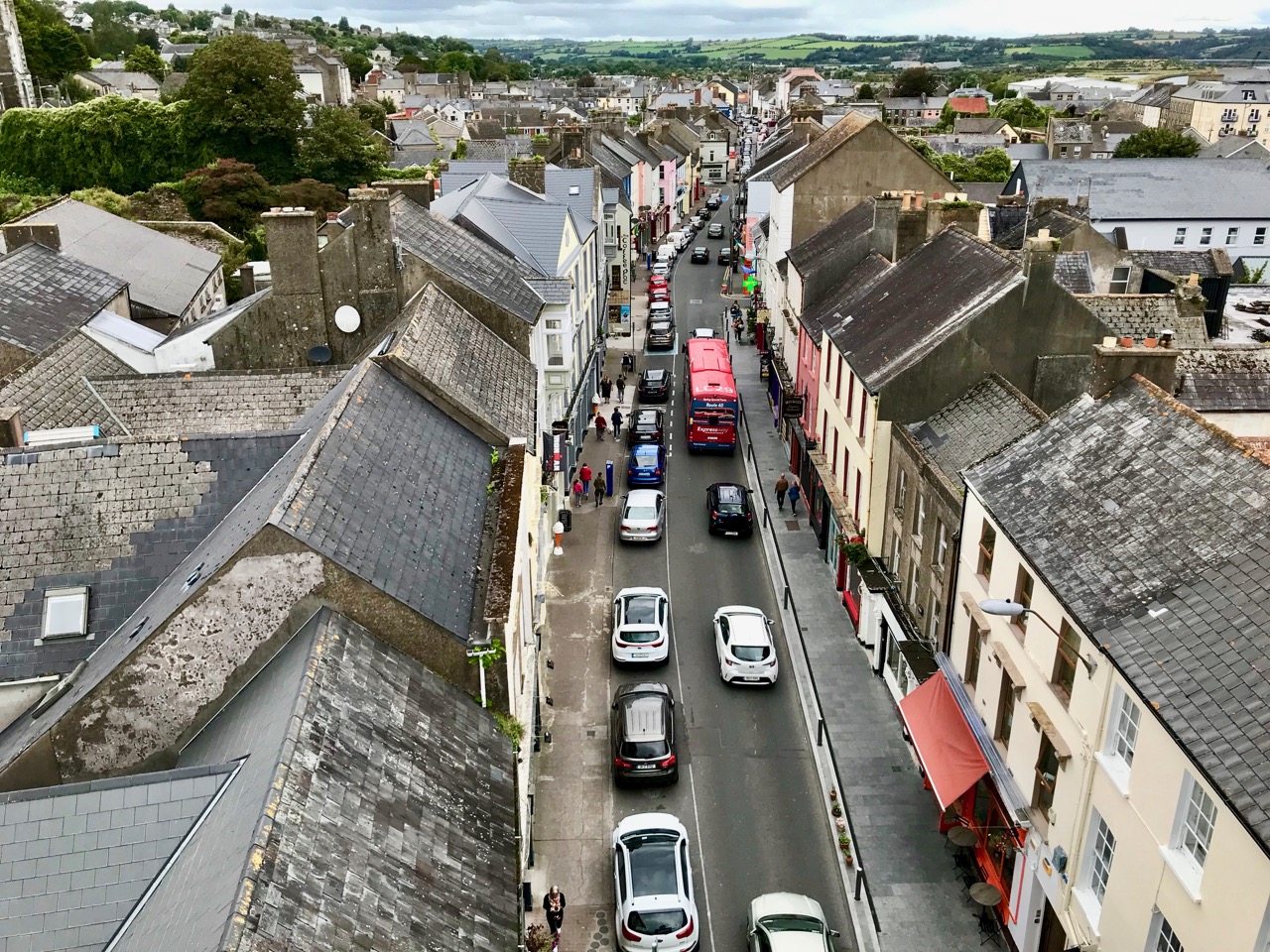
The museum is housed in an iconic building that has spanned the main street of the town for 250 years: the Clock Gate Tower. That’s it bottom centre in the aerial view below, and underneath that is the more usual view of it, from the road. It’s the most visible building in Youghal town, and you can see one of its three clock faces (which all show exactly the same time) in this photograph.

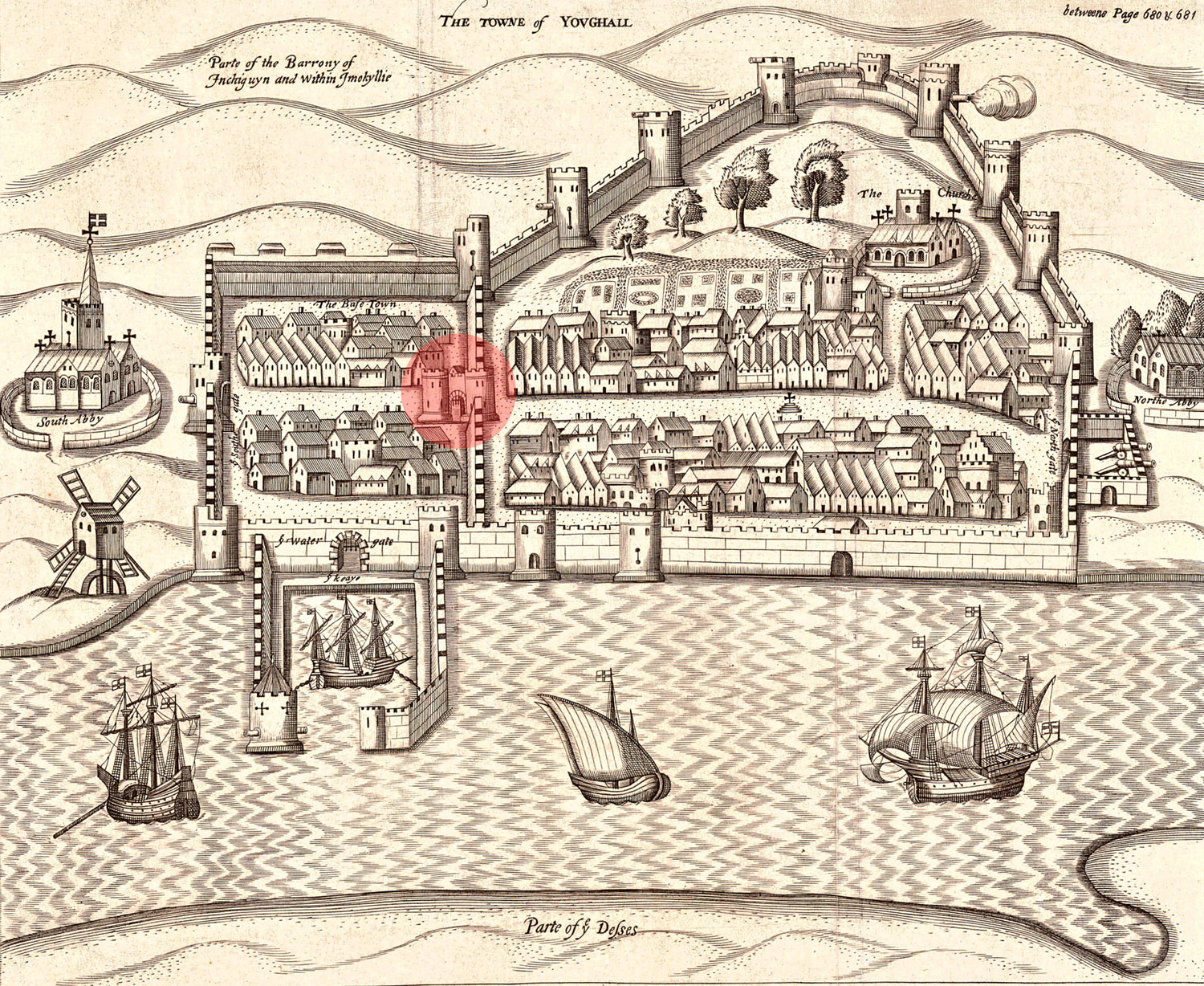
In medieval times Youghal was a walled town, and the site of the Clock Gate Tower was one of the defended entrance points at the south end of the enclosed settlement; Finola has written about the walls here. Masonry walls were fine in the days of bows and arrows but became obsolete when heavy artillery took over: by the late 1700s the town had expanded beyond the walls and the southern gate was redundant: before the Clock Gate Tower was completed in 1777 a medieval gateway known as the Iron Gate stood on the site.

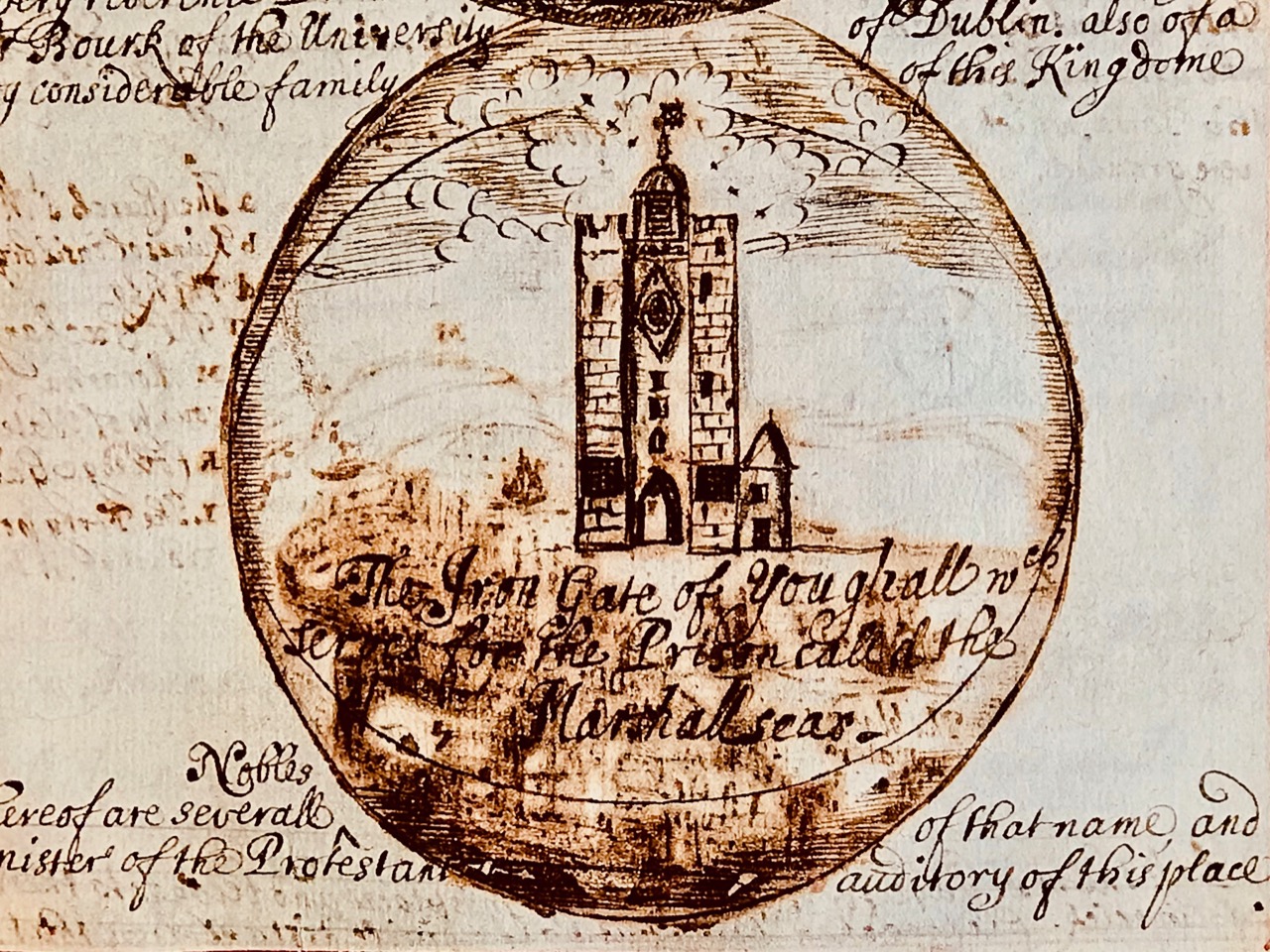
Upper – a map from the Pacata Hibernia showing Youghal – first published in 1633: we are looking at the town from the east. The Iron gate is highlighted: even then the town had expanded beyond the original walls. Lower – the Iron Gate in 1681: by that time the original defensive towers had been embellished with a clock and bell tower

It was perhaps whimsical – in the 18th century – to replace the earlier gate with a building which could be seen as a pastiche of what was there before, but it has certainly succeeded in creating a distinctive landmark which has lasted to the present day, and continues to fulfil the function of a clock and bell tower central to the town.

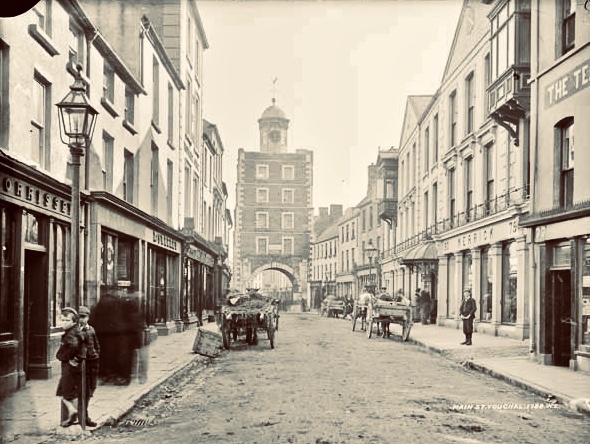
This early photograph of Youghal’s main street with the Clock Tower probably dates from around 1900

I took the Clock Gate Tower Tour and can assure you that a great time was had by all who were on it. Before you go, however, make sure you are able for climbing the six flights of steps from street level to the very top: there were no lifts in the 1770s, and no way that any mechanical assistance could now be fitted into the restricted spaces in the building. However, the staircases are safe and easy, and there is plenty of time to pause on each floor to see the fascinating displays that have been installed. I’m not going to reveal everything that the tour includes, or you might think you don’t need to take part! Just a few tasters will suffice.

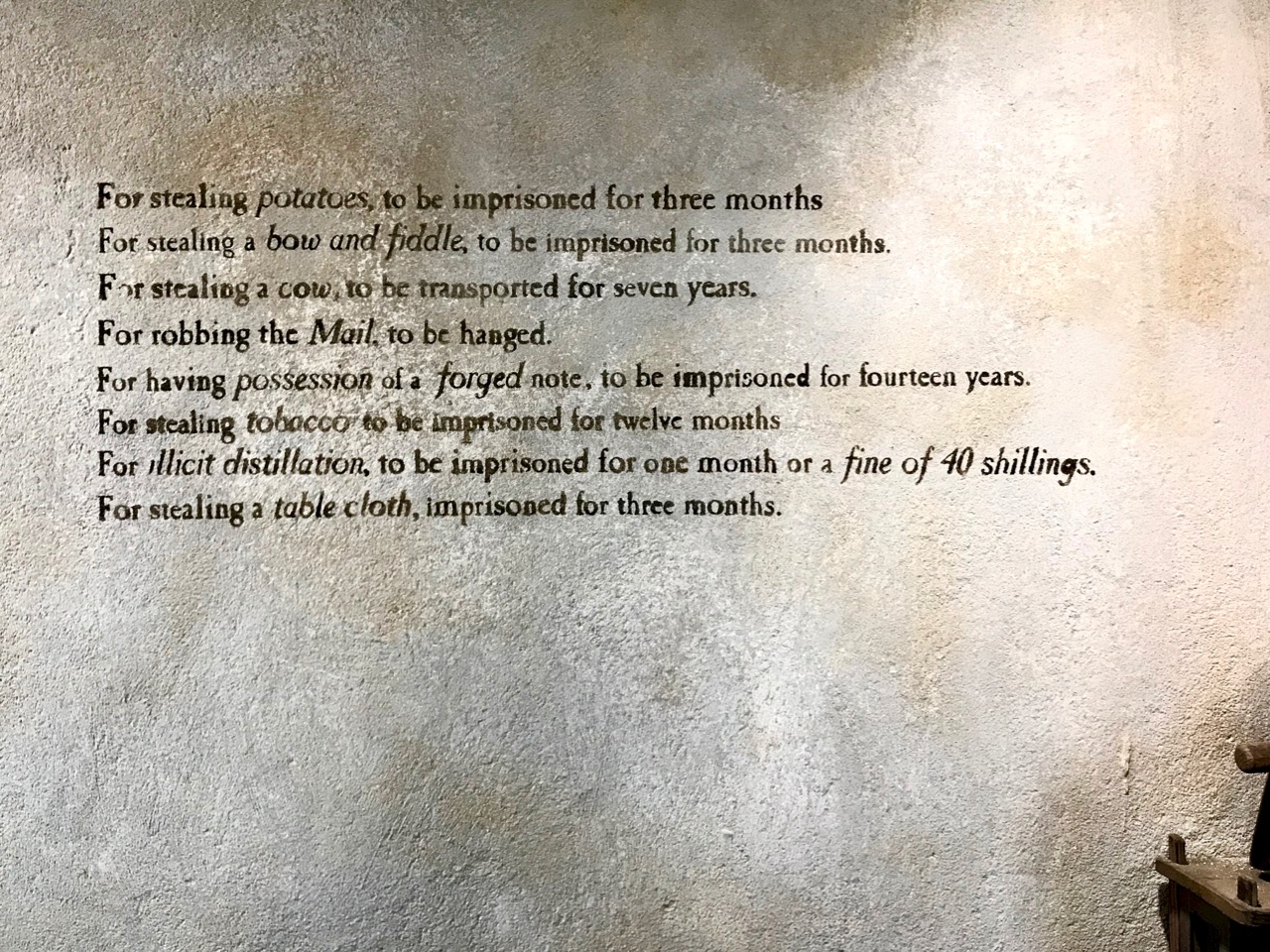
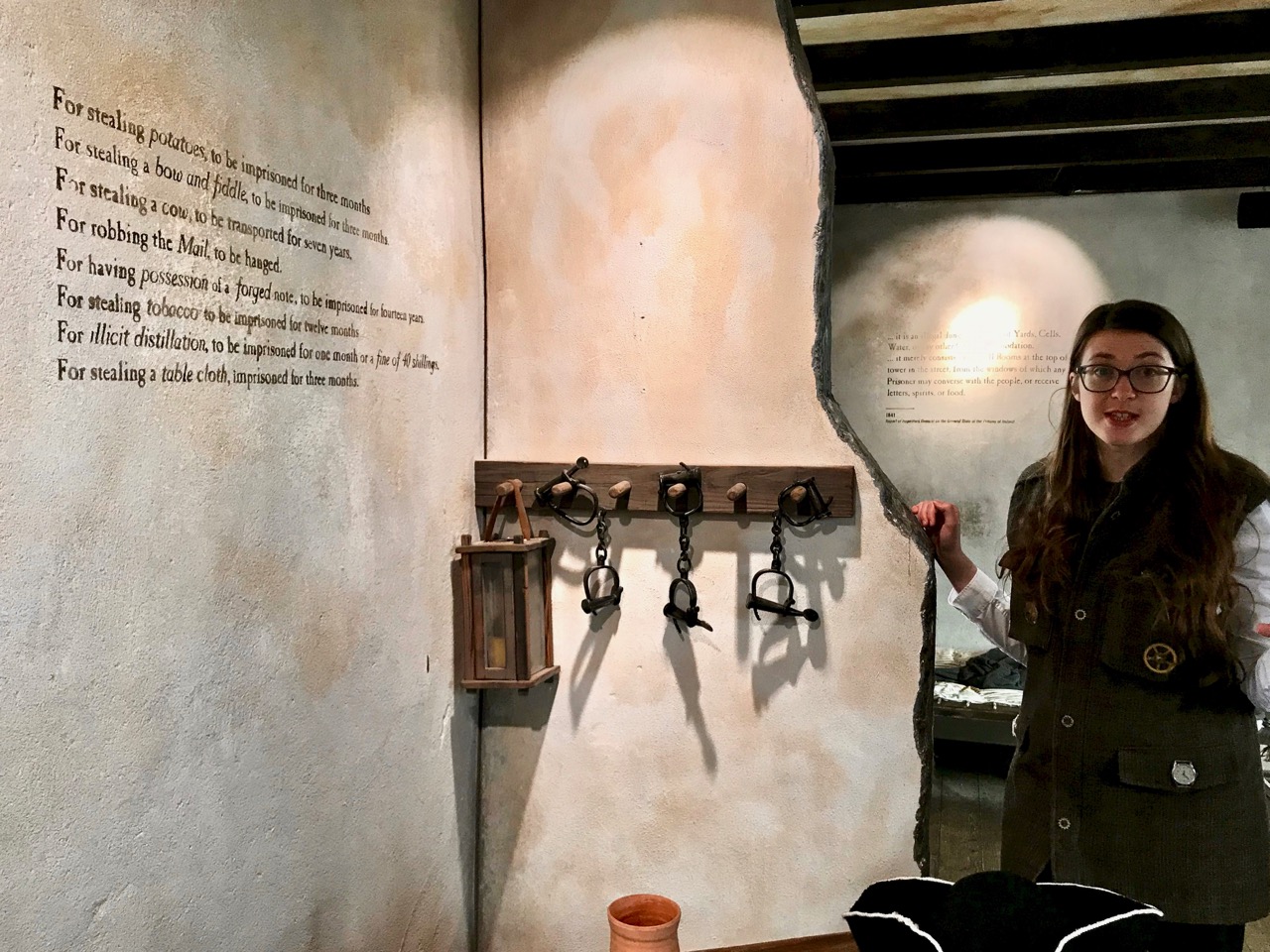
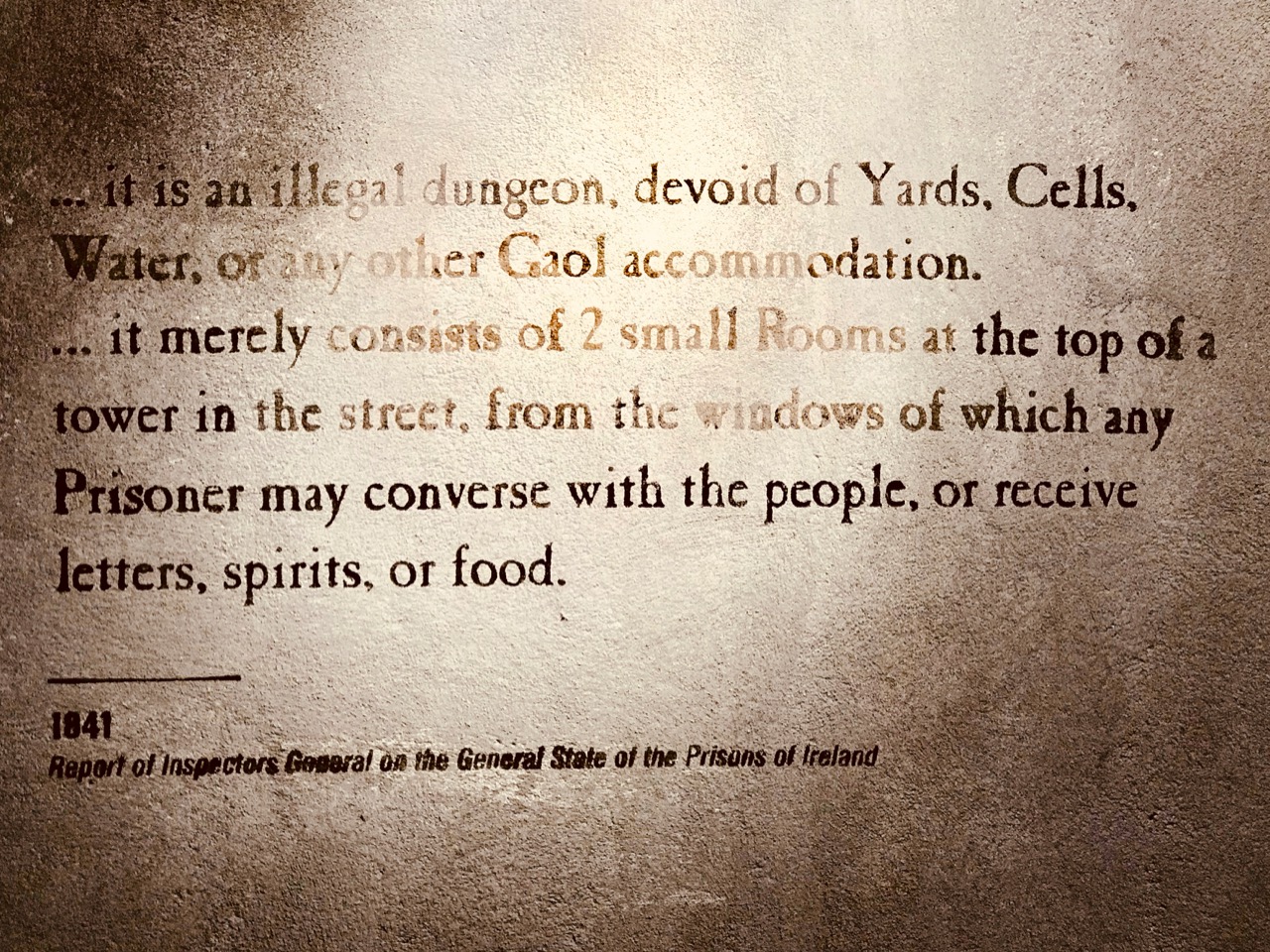
I will disclose that you will get a feeling for what prison life was like two or three hundred years ago, as this was then one of the main functions of the tower, and one of the floors has been set out as a cell. Our enthusiastic ‘storyteller’ guide, Katy (above) pointed out that the restricted space could have held a large number of inmates, unsegregated and crowded together with no sanitation (other than a window). Prisoners had to pay for their own food, which was hauled up through the same window from friends outside. Even in 1841 the conditions that prevailed here were considered appalling – and Youghal was specifically mentioned in the Report of Inspectors General on the General State of the Prisons of Ireland of that year:

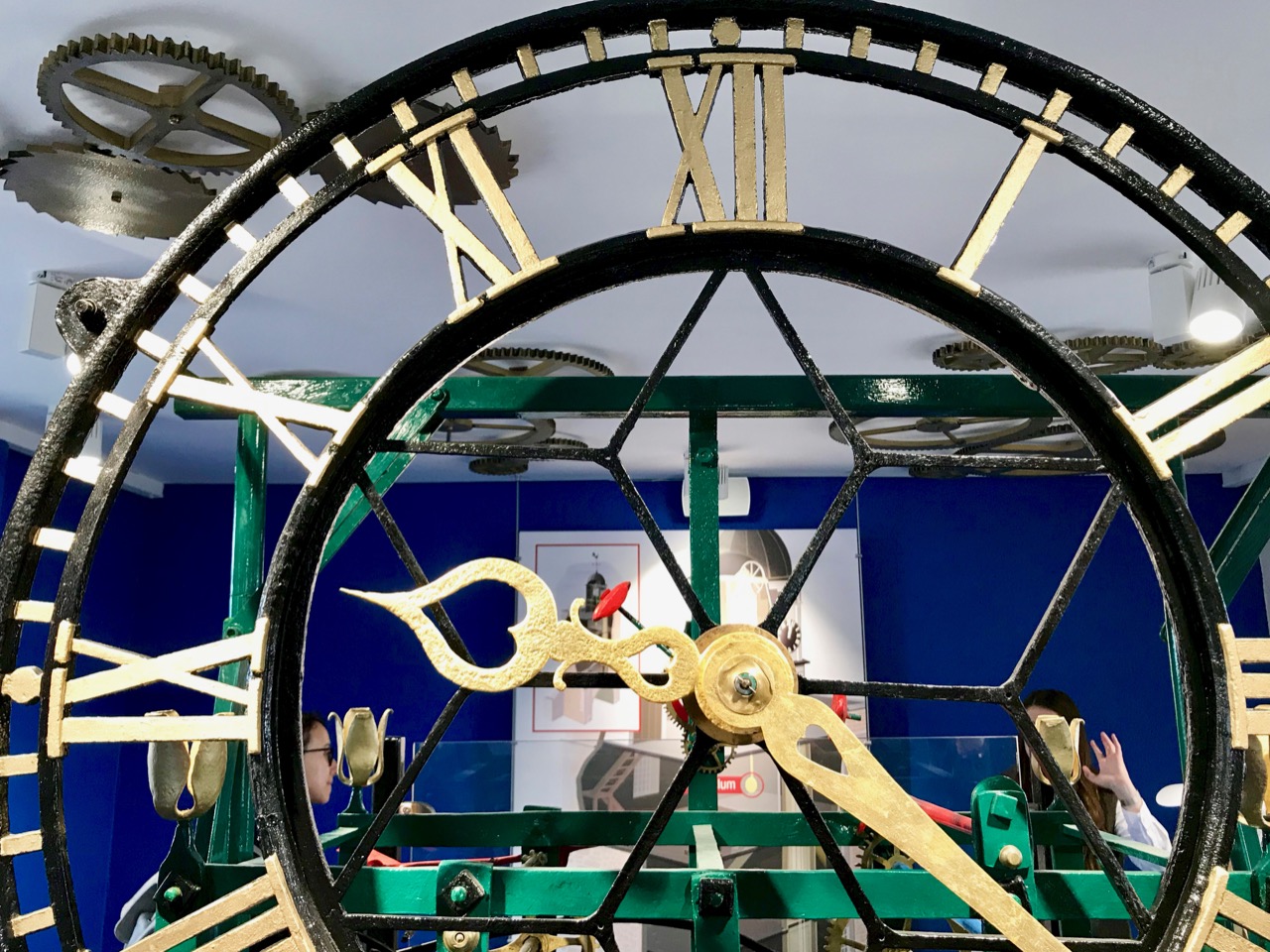
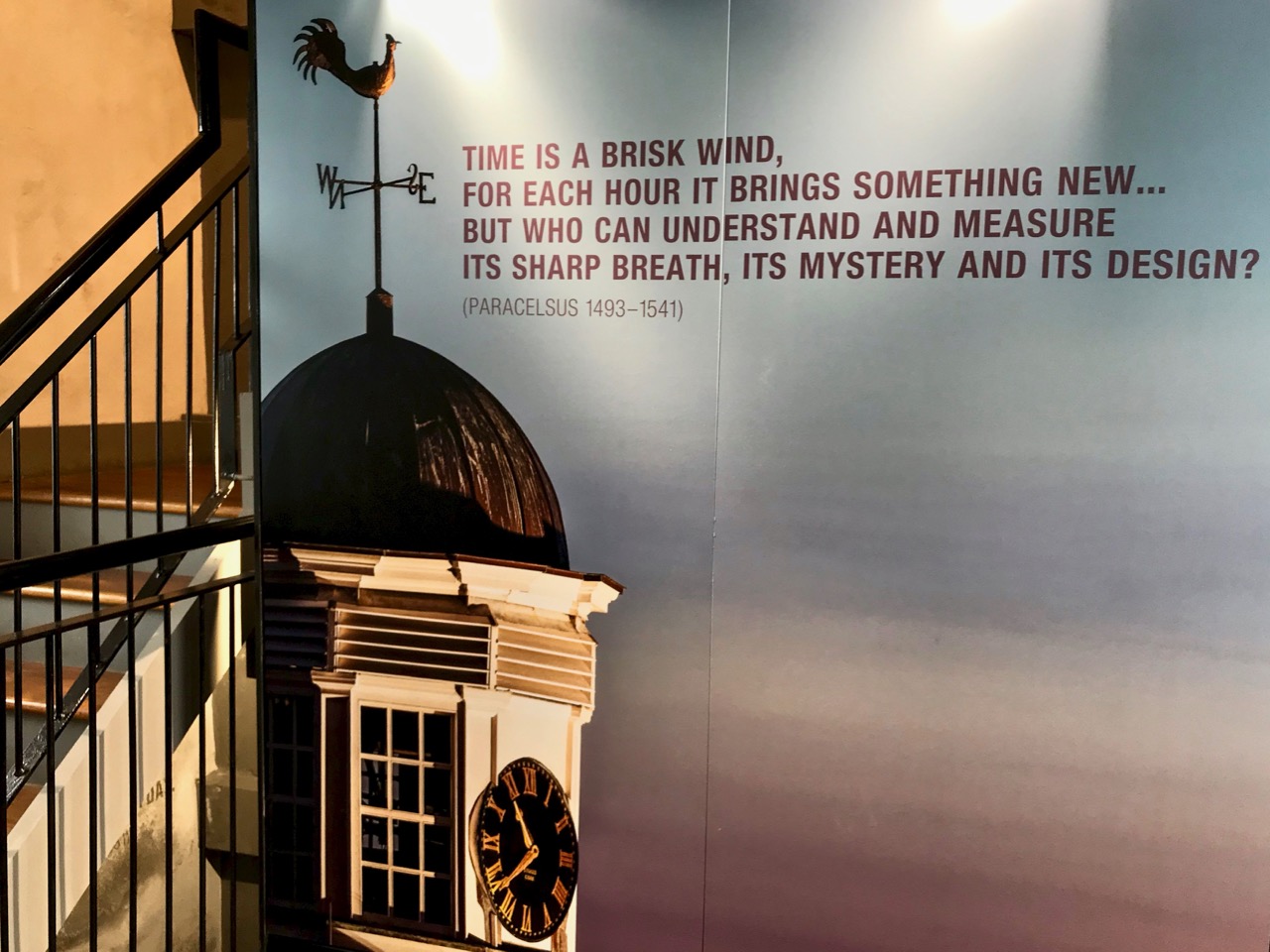
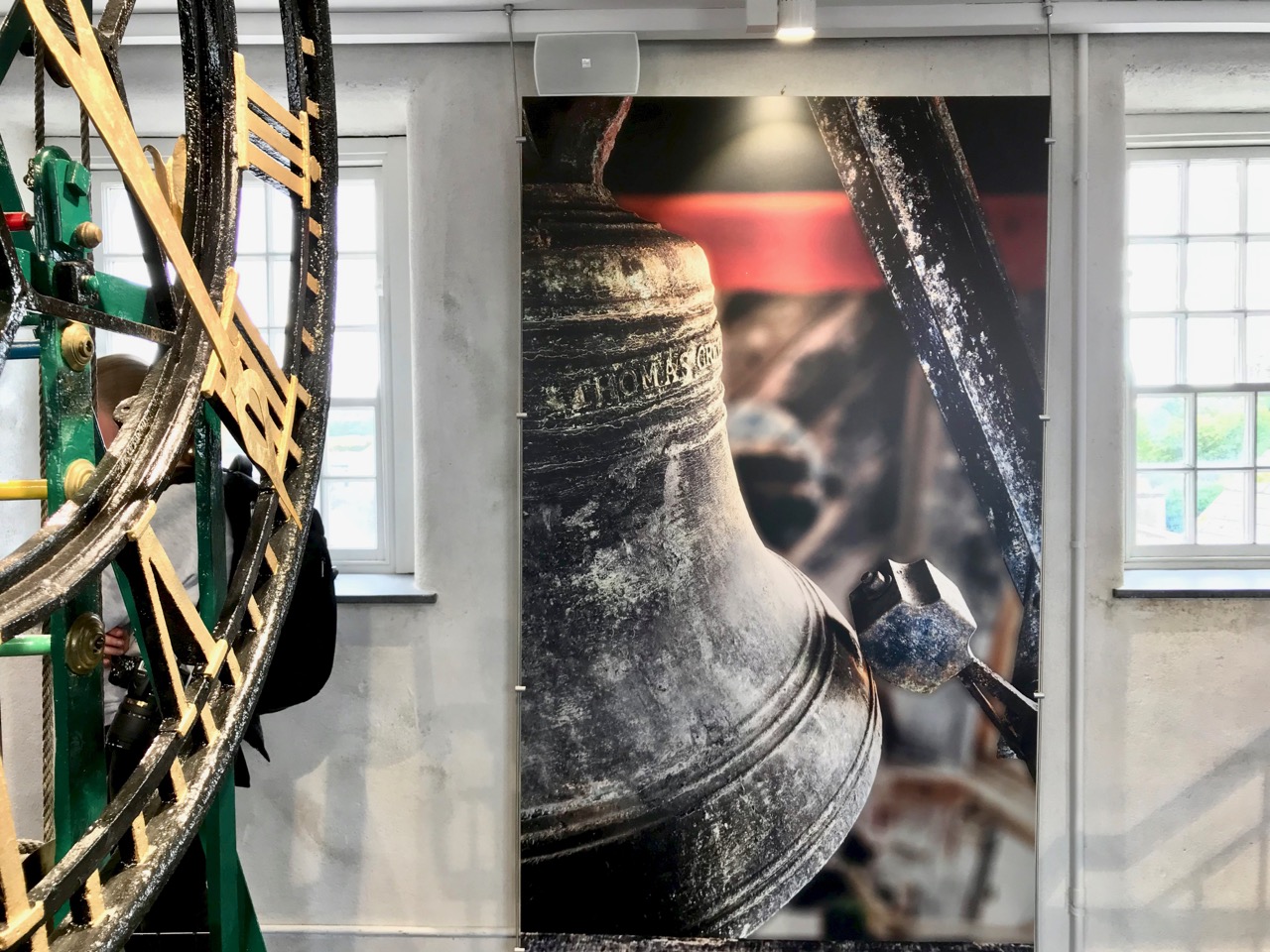
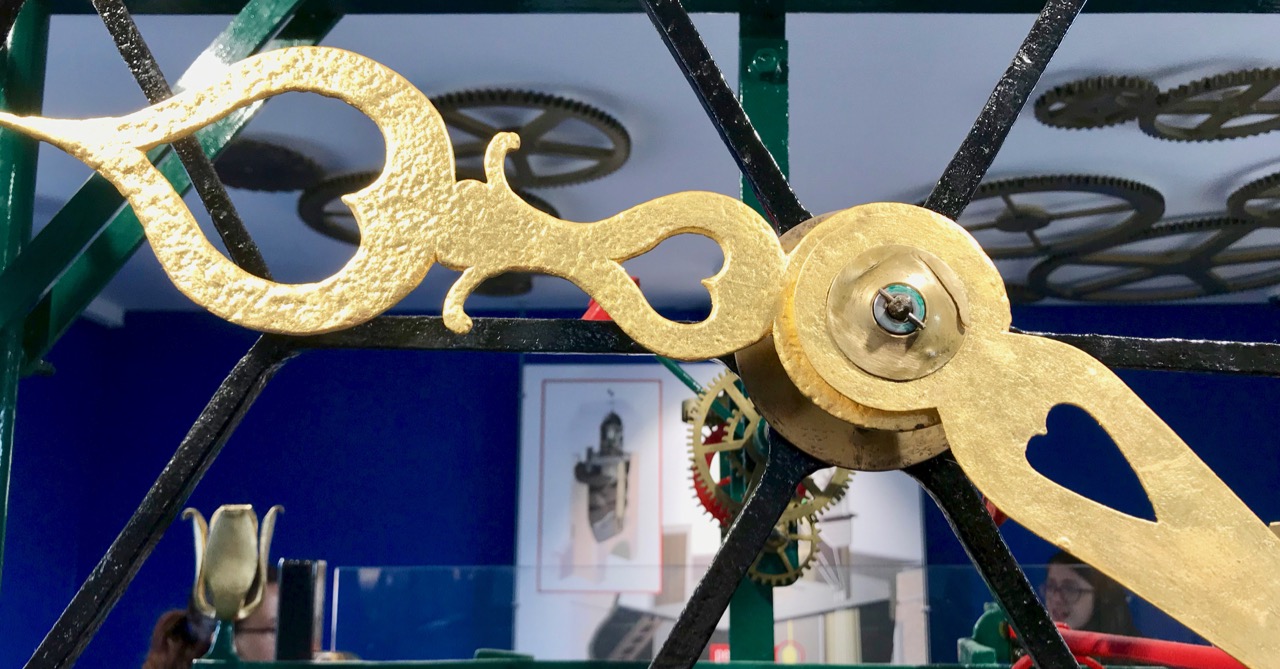
My favourite room was one dedicated to the workings of the clock (header picture and above). From the earliest days the Clock Keeper was also responsible for ringing the town bell:

. . . In 1622 Balltazar Portingale was appointed as clock-keeper and was given free quarters in return for ringing the clock at four in the morning from Easter to Michaelmas, and at five in the morning from Michaelmas to Easter, and at nine at night all the year. . .

In more modern times the bell was also employed to summon the fire brigade. Following complaints from some outlying residents of the town that it could not be heard, the original bell was replaced with a larger version, still in use today and connected to the clock mechanism for striking the hours.

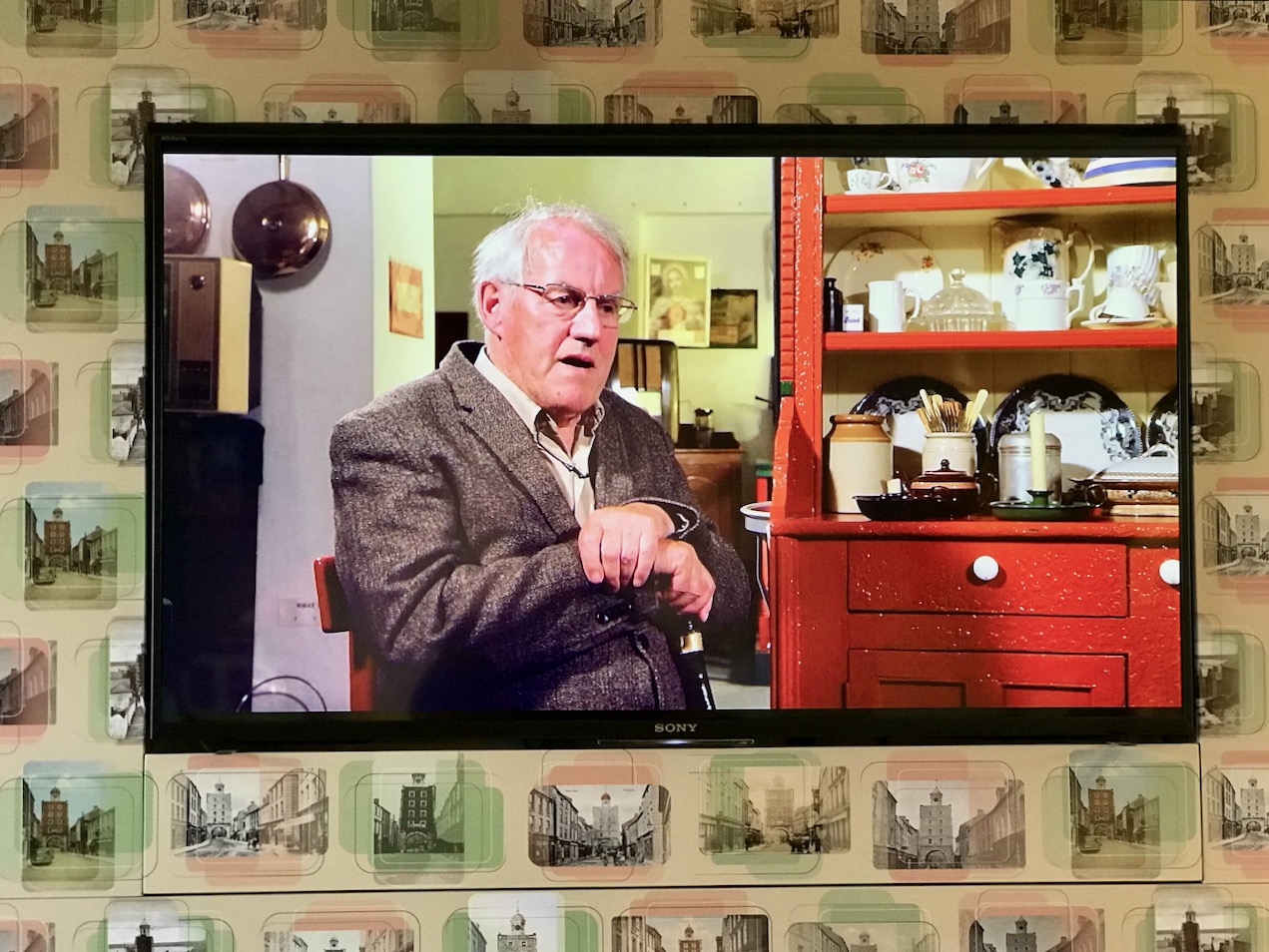
From 1915 to 1955 three generations of the McGrath family lived as tenants in the tower: they had responsibility for winding its clock and announcing a death by ringing the town bell. John McGrath, now 80, was born in the Clock Gate and has great memories of his childhood there: he provided a lot of the information to help fit out the fourth floor of the museum as a 1950s interior, and he can be heard talking about his youthful experiences on one of the audio-visual screens:

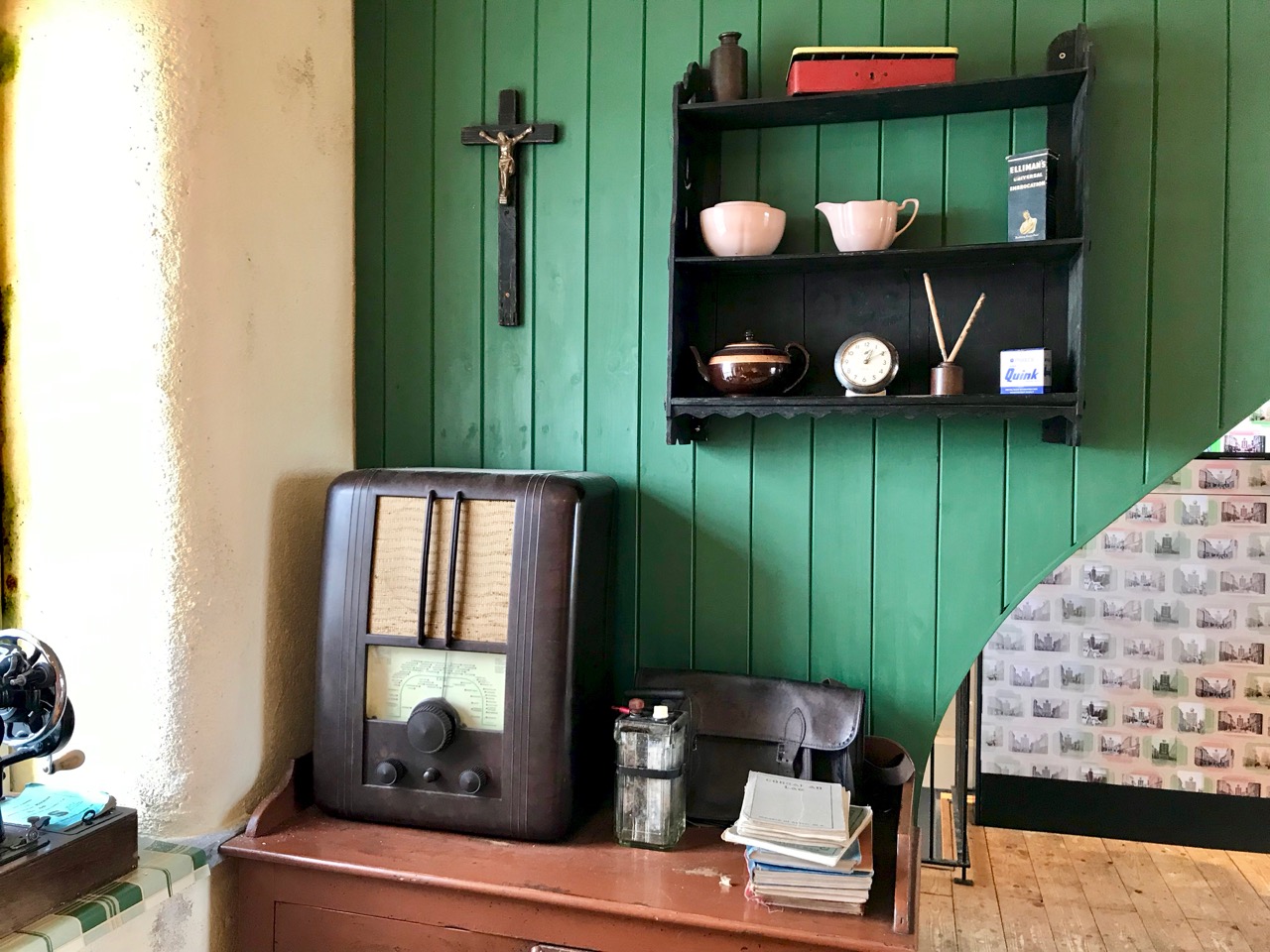
As someone who also grew up in the 1950s (but not in a clock tower!) I can confirm the authenticity of some of the exhibits in the highest room of the museum

Probably the most exciting part of Youghal’s Clock Gate Tower Tour is the culmination: being allowed to ascend to the viewing platform at the very top. It’s a small area, but safely enclosed with unobtrusive glass balustrades. From it you get a panoramic vista in all directions over the whole town and the sea beyond. And, knowing how much history you are standing above, it’s well worth the modest tour fee. It will be time well spent!

This museum experience is proving justly popular: if you plan a visit check in advance with the Clock Gate website. In the summer tours are run seven days a week – I believe winter opening hours are being assessed; there is a phone number on the website. Have a great time . . .

Ethel Mannin, W B Yeats – and Wild Flights

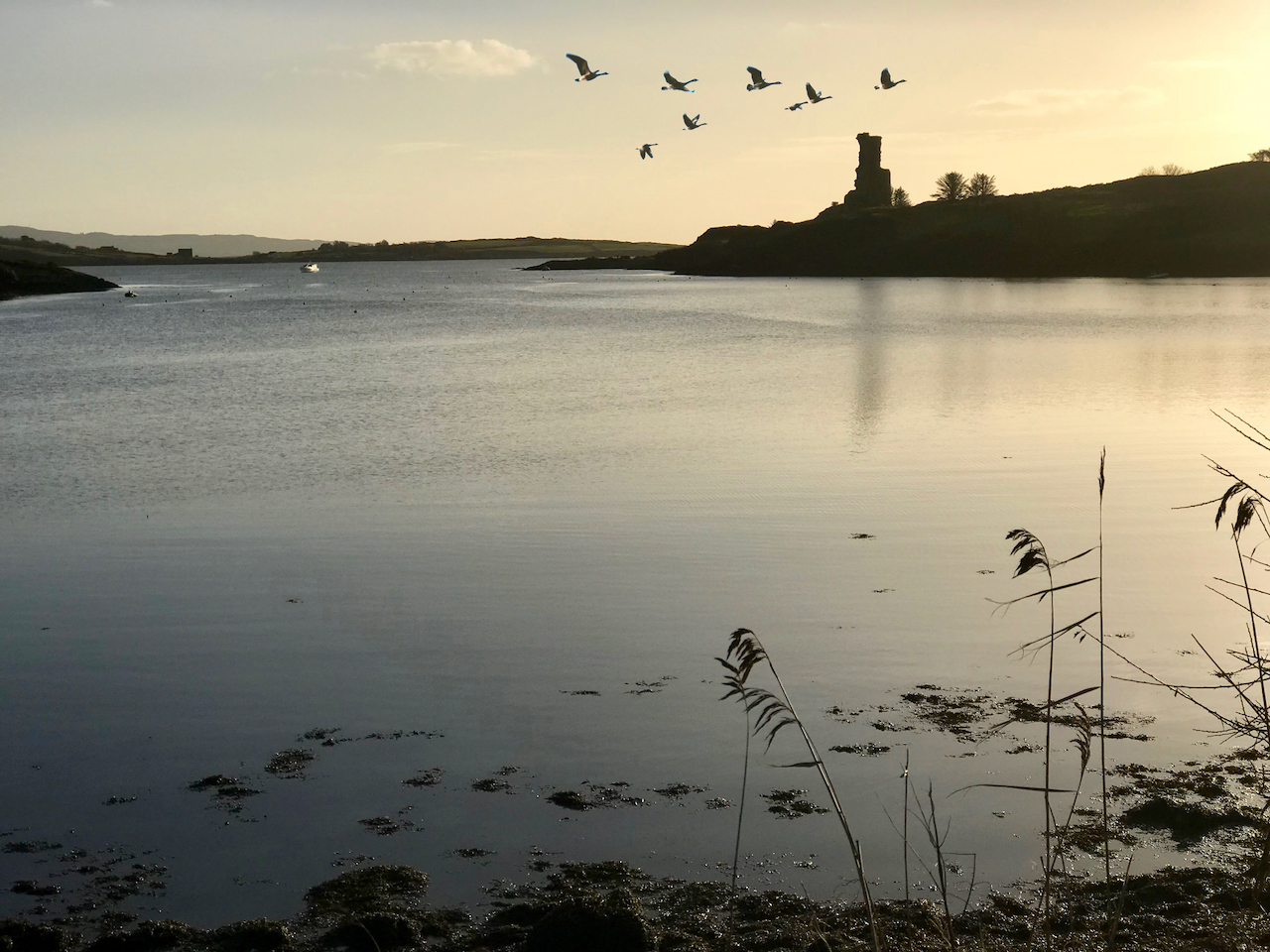
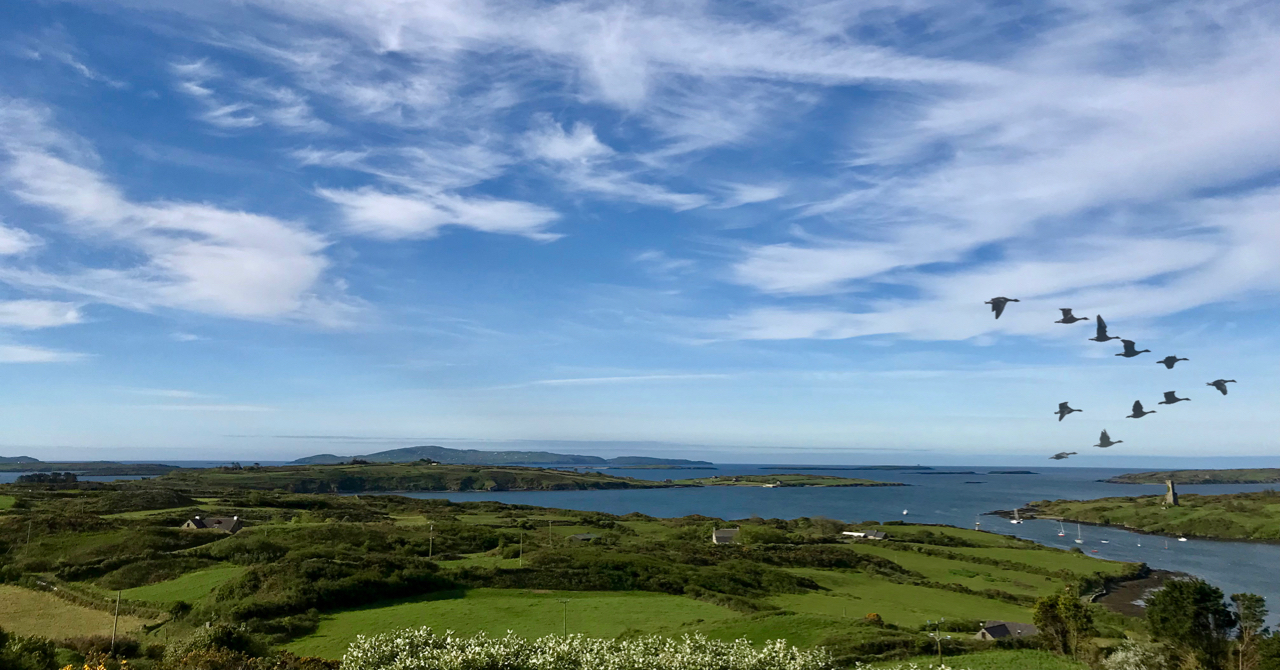
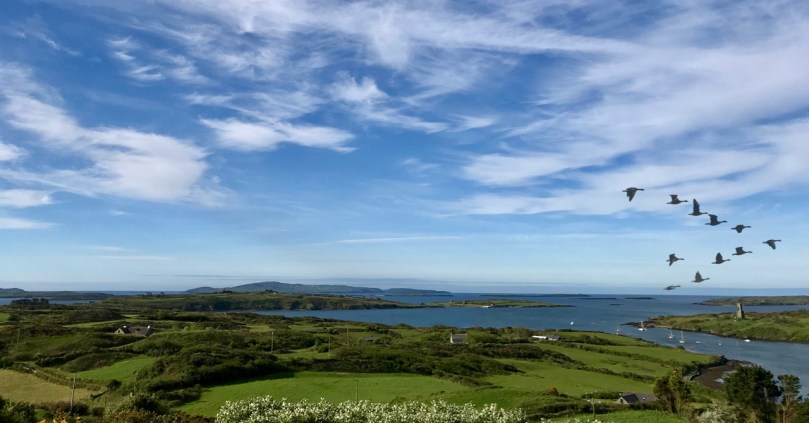
If you read my post last week you will recognise this autumnal view of Rossbrin Castle. I took the photo in November 2017 and looked it out after I watched the magic of a skein of wild geese flying over Nead an Iolair just a few days ago – at the end of August. There’s something wistful about that spectacle – birds coming to winter on our west coasts – and Irish weather lore has to be heeded about these early advents:

It was generally believed that the early arrival of wild geese meant that a prolonged and severe winter was in store. This is a very old belief, as the ninth-century Irish work ‘Cormac’s Glossary’ states that the brent goose usually arrived at the coasts of Erris and Umhall between 15 October and 15 November, and that when it appeared earlier, it brought storms and high winds. Similarly, in Counties Donegal and Galway, when the wild geese arrived, it was a sign that cold and frosty weather was on the way. In Donegal, a sign of an approaching wind was when a goose stuck its neck up into the air and beat its wings against its stomach. Fishermen would watch out for this and if they saw it would not go out, believing that a storm was on the way . . .

(Niall Mac Coitir – Ireland’s Birds: Myths, Legends and Folklore, Collins Press 2015)
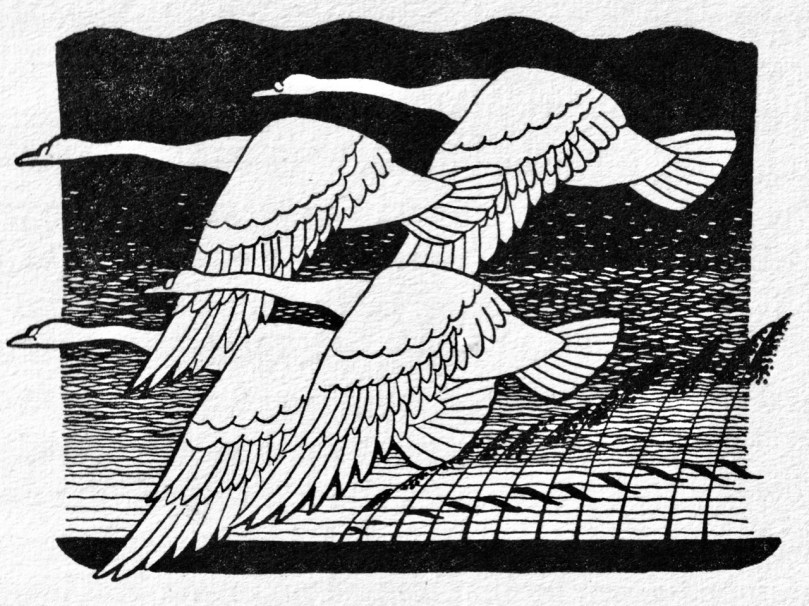
Today’s post – while inspired by my sighting of the wild geese – is more connected to swans: these large and graceful birds are a constant down on Rossbrin Cove, and plentiful along our West Cork coastlines. Niall Mac Coitir also has much to say about them:

In Ireland it was generally believed to be very unlucky to kill a swan, and many tales were told of the dire consequences for those who did so. For example, the mysterious death of one of their farm animals often occurred soon afterwards. In County Mayo the whooper swan was never interfered with, on account of a tradition that the souls of virgins, who whilst living had been remarkable for the purity of their lives, were after death enshrined in the form of these birds . . . In Donegal it was believed that swans were people under enchantment, so that bad luck would come to anyone who interfered with them . . .

(Ibid)

We know all about the tradition of people being turned into swans from the legendary Children of Lir – one of whom was Finola: you may remember the stained glass window we have in our house. A few years ago I found the above book in the wonderful Time Traveller’s Bookshop in Skibbereen (which has now transformed itself into the Antiquity Bookshop Café, the first all-vegan Cafe in West Cork: it’s well worth a visit – for books and food!). I was attracted initially by the cover and the illustrations, and then was delighted to find that the first story in the book was all about Finola and is a modern ‘take’ on the Irish legend. I had to buy the book, of course, for our Finola and I immediately thought of ‘The Wild Swans’ when I saw those wild geese. This post results from those wandering encounters.
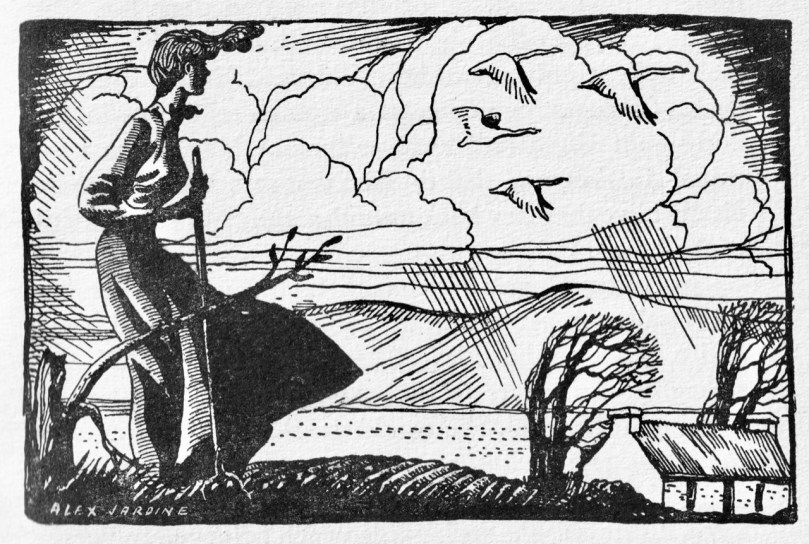
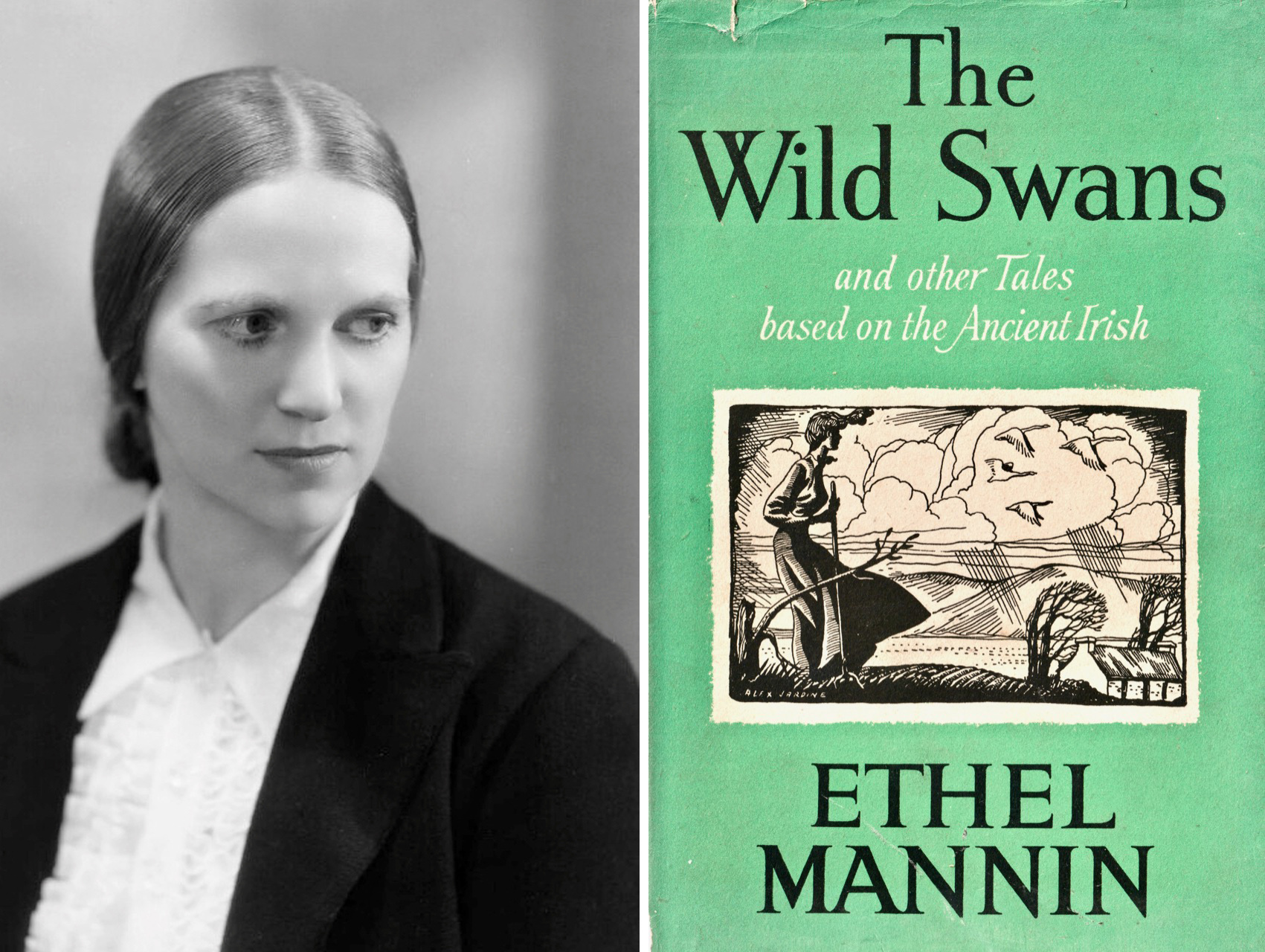
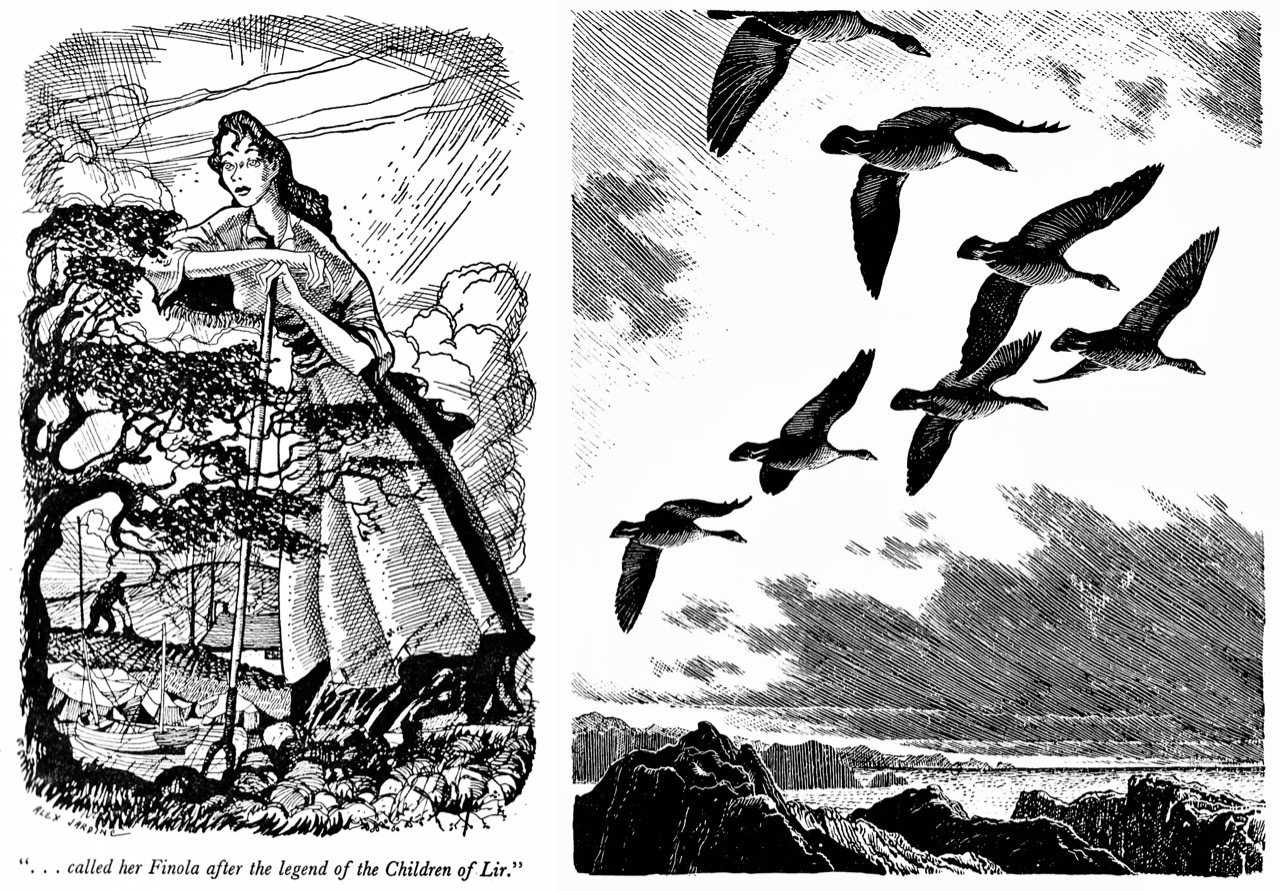
Another of the illustrations from The Wild Swans – used on the cover: do you see the swans? The second picture above – of the four swans – is also from the book. The illustrator is Alex Jardine, about whom I have been able to find very little, other than he was British, lived from 1913 to 1987, wrote and illustrated books on angling, and designed a number of postage stamps. I was also keen to find out more about the author of this book – Ethel Mannin (shown above next to the book cover) – and initially came across scant information, until I discovered a connection with W B Yeats. Then, by dipping and diving through letters and articles specifically by and about Yeats, I was able to put together some often surprising details on her life.
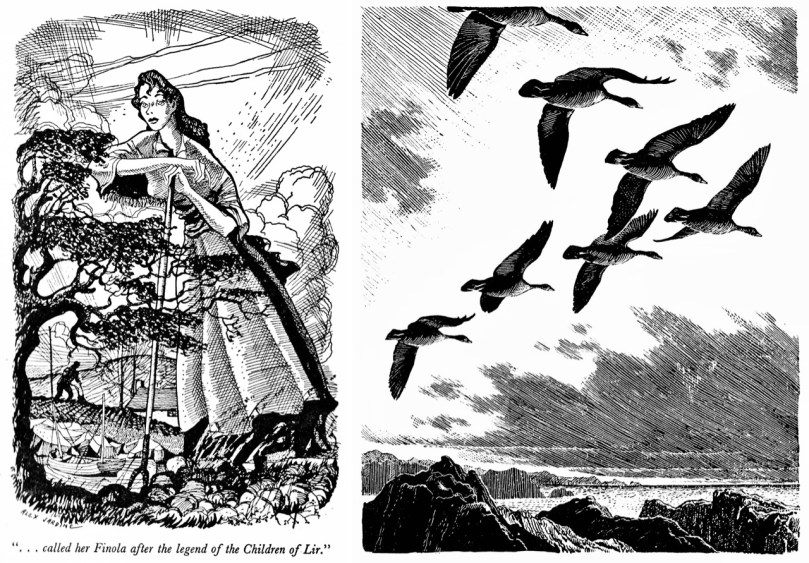
Above left – Alex Jardine’s illustration for The Wild Swans showing Finola – beautifully detailed and with intriguingly distorted perspective (suitable for a ‘modern’ legend?); above right – for comparison, an illustration from the same period (1950s) of wild geese by prolific British illustrator Charles Tunnicliffe: a scene which looks uncannily like a peninsula from the west coast of Ireland

Ethel Mannin was born in 1900 in London, and died in 1984. None of her writings is in print today and she is now little regarded, yet in her lifetime she wrote and had published well over a hundred volumes, half of which were novels and others which included short stories, children’s books, travel books, autobiographies and works on literature, politics and her contemporary world. On the fly-leaf to The Wild Swans – published in 1952 – is the statement:

Her reputation as a writer is founded on her honesty and unorthodoxy. For some years past she has done most of her writing in retreat in a cottage in the remotest west of Ireland, the country of her ancestors . . .

Mannin traced her family background to the O’Mainnin owners of Melough Castle, Co Galway. In 1940 she settled close to Mannin Bay in Connemara, renting a cottage which she eventually bought in 1945. She spoke at public meetings against the Partition of Ireland – ‘the imperialist problem nearest home’ – and was elected Chairman of the West London Anti-Partition Committee. Her travels included India (where she attended a World Pacifist Conference and tore up her diary en route, throwing it overboard in the Indian Ocean, and found Hinduism repellent ‘with its lingam cult’), Burma, Morocco, Sweden, the Soviet Union, Brittany, where she befriended Cartier-Bresson.
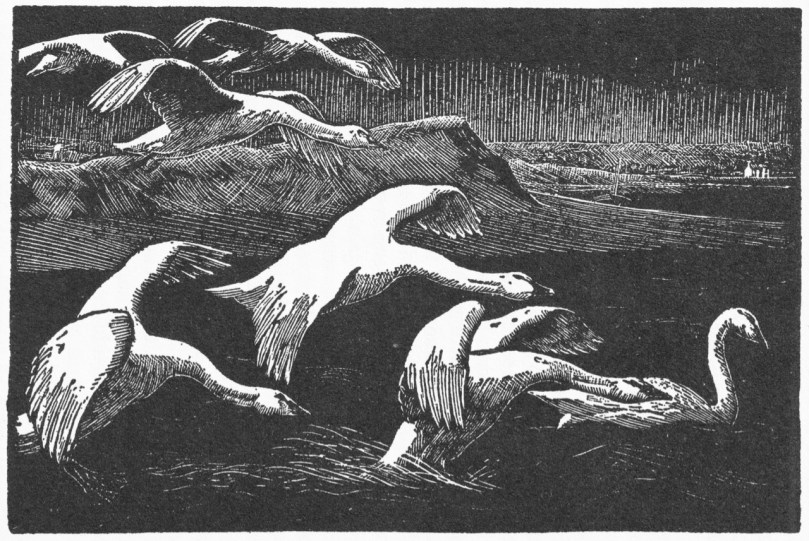
I found more wild swans in this illustration by Charles Tunnicliffe from the 1927 best-seller and Hawthornden Prize winner Tarka the Otter: His Joyful Water-Life and Death in the Country of the Two Rivers by nature writer Henry Williamson. Tarka captured the public imagination and has never been out of print, even though Williamson himself became unpopular following his support for Oswald Mosley and fascism

Ethel Mannin met W B Yeats in the 1930s and they became lovers. Their relationship was reported by Brenda Maddox in Yeats’s Ghosts: The Secret Life of W B Yeats, Harper Collins 1999:

Ethel Mannin was a rationalist and skeptical, he mystical and credulous. Politics divided them too. She was left-wing, just short of being a Marxist, and had recently returned starry-eyed from the Soviet Union; his leanings were firmly the other way. But that hardly mattered when, as a companion, she was brilliant, fun, and full of the salty talk that Yeats adored. She was not worried about his cultural baggage: “Yeats full of Burgundy and racy reminiscence was Yeats released from the Celtic Twilight and treading the antic hay with abundant zest.”

In 2014, to mark the 75th anniversary of Yeats’ death, Jonathan deBurca Butler wrote in the Irish Independent newspaper an article titled The Many Women of W B Yeats. This is an extract:

In 1934, Yeats, who had been suffering from both sexual and artistic impotence for three years, had a Steinach operation, a type of vasectomy, which was said by its supporters to increase energy and sexual vigour in men. According to Yeats, the procedure worked and he claimed to go through what he called “a second puberty”. Shortly after the operation, Ethel Mannin, a 34-year-old writer and member of the World League for Sexual Reform, was called on to “test the operation’s efficacy”. The test was by all accounts unsuccessful but it showed Yeats was still inclined towards trying his hand. If all else failed he could still arouse his mind . . .

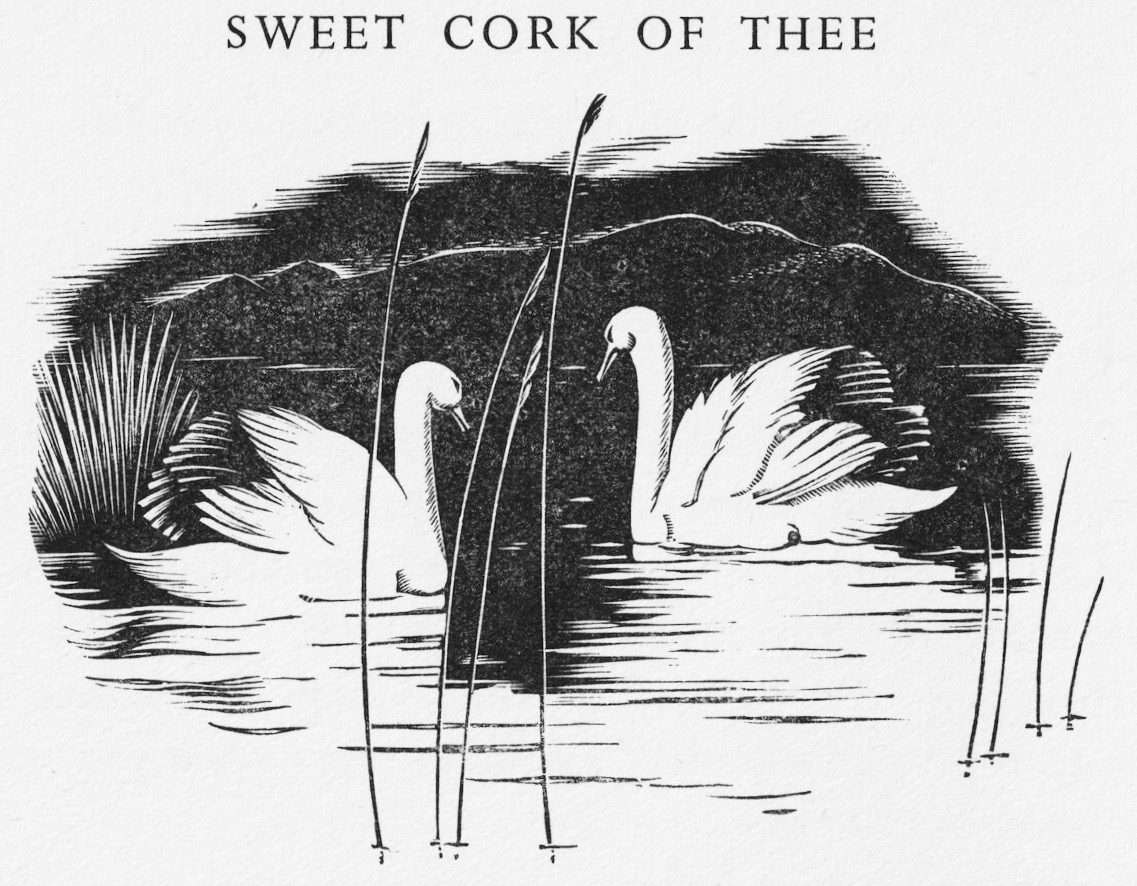
This ‘swans’ illustration is almost exactly contemporary with Ethel Mannin’s The Wild Swans. Robert Gibbings wrote and beautifully illustrated Sweet Cork Of Thee, which was published by J M Dent in 1951

Ethel Mannin married twice, and had one daughter, Jean, after which ‘ . . .she espoused the idea that a masculine mind better suited women writers than motherhood . . . ‘ Apart from W B Yeats she also had an affair with Bertrand Russell. In her later years, Ethel returned to England and lived out her life in Devon – also, incidentally, the home of Henry Williamson. I have been chasing the works of Ethel Mannin, and have succeeded in recently locating some very inexpensive used copies on the internet – including some of her biographical works. Once I have these I may have more to report on her connections with Ireland. Meanwhile, I can only recommend The Wild Swans for its romanticism and imagination – and its seductive illustrations. And, of course, for its connections with Finola!

Because of the Yeats connection, it seems appropriate to quote his poem The Wild Swans at Coole (1916):

The trees are in their autumn beauty,

The woodland paths are dry,

Under the October twilight the water

Mirrors a still sky;

Upon the brimming water among the stones

Are nine-and-fifty swans.


The nineteenth autumn has come upon me

Since I first made my count;

I saw, before I had well finished,

All suddenly mount

And scatter wheeling in great broken rings

Upon their clamorous wings.


I have looked upon those brilliant creatures,

And now my heart is sore.

All’s changed since I, hearing at twilight,

The first time on this shore,

The bell-beat of their wings above my head,

Trod with a lighter tread.


Unwearied still, lover by lover,

They paddle in the cold

Companionable streams or climb the air;

Their hearts have not grown old;

Passion or conquest, wander where they will,

Attend upon them still.


But now they drift on the still water,

Mysterious, beautiful;

Among what rushes will they build,

By what lake’s edge or pool

Delight men’s eyes when I awake some day

To find they have flown away?
Lichens and Little Things in the Woods

The wonderful Ellen Hutchins Festival for 2019 has just finished – now in its fifth year and going from strength to strength in celebrating all the aspects of botany that Ellen practised. You can read about Ellen in my post Ellen Hutchins: The Short and Remarkable Life of Ireland’s First Female Botanist. We participated again in 2016 and I wrote about our fascinating walk Into the Woods with Pádraig Whelan and Howard Fox.

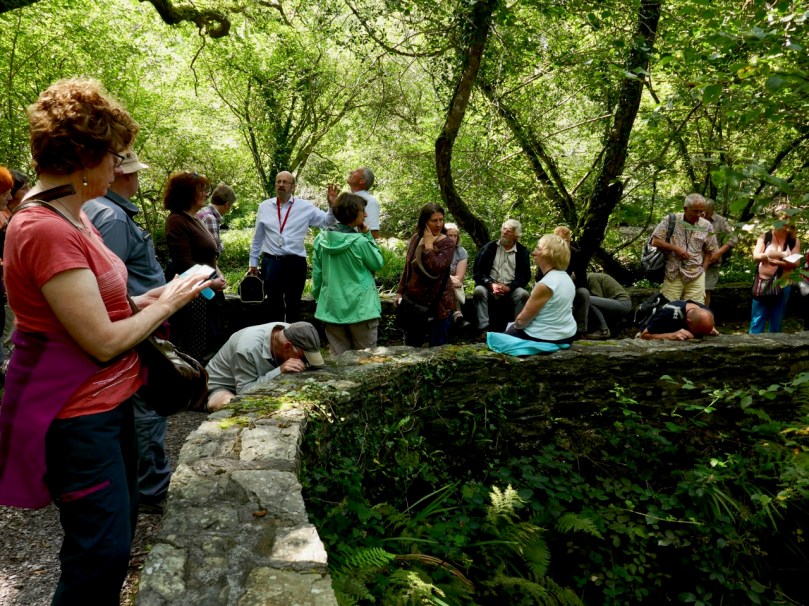
This year there was the same wide variety of botany-related activities, including an impressive array of events for children. We attended (above) a talk by Madeline Hutchins (Ellen’s GGG-Niece) about her life, with an emphasis on her letters and a talk on letter writing of the period by Carrie O’Flynn and then, last weekend, a Lichen Walk in beautiful Glengarriff Woods (first photograph, top).  Been there yet? If not, you’re missing a real treat.
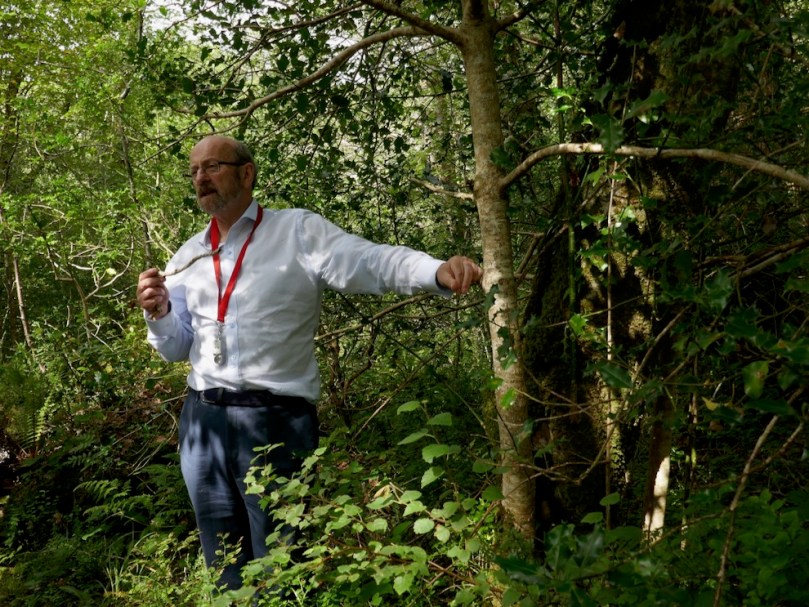
The focus of the walk was lichen of course (apparently it is acceptable to say lyken or litchen so take your pick) with Paul Whelan (above). Paul has a website at Lichens of Ireland which seems to be down for maintenance, but there’s another one, Irish Lichens, run by Jenny Seawright, which I’ve been using and finding easy to follow, especially for a neophyte like me. But even though the subject was lichens, once you enter the woods it’s easy to get distracted by other things, so for me the day was as much about the insects and flowers that we saw (sorry, Paul) on our short, but incredibly rich, walk.

What are these people doing? This is how close you have to get, with a hand lens, to see the tiny patches of lichen on the rocks of the bridge

So what is a lichen? It’s a fungus, but one that works with another organism (usually green algae but sometimes a cyanobacteria) to produce something neither can do on their own. Since lichens can’t photosynthesise, they depend on the other organism to do that. The fungus contributes by consuming dead matter and this mutually beneficial and necessary relationship is called symbiotic.

And this is what we were seeing

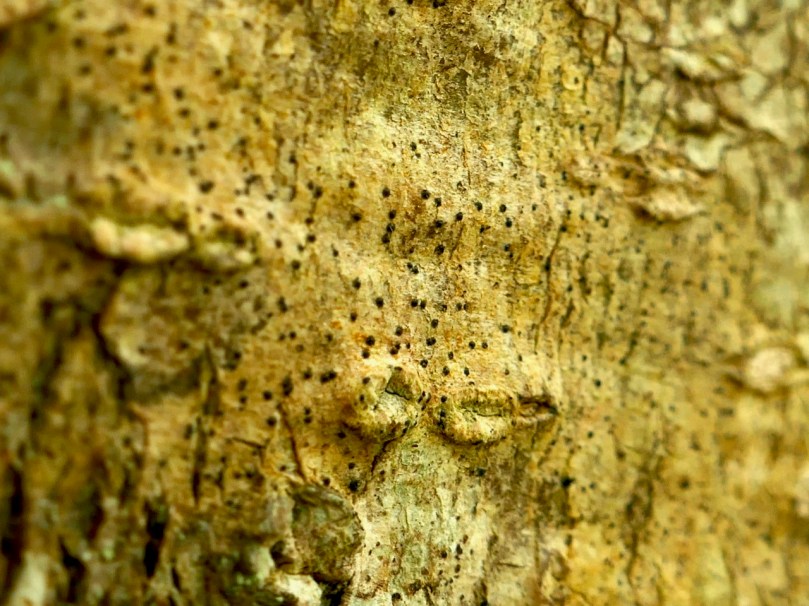
The lichen body is called a thallus, and it produces spores (which is how it reproduces) through an apothecium (which looks like a tiny cup) or a perithecium (which looks like a tiny volcano). We saw mostly lichen with perithecia on our walk, some of which were just tiny black dots.

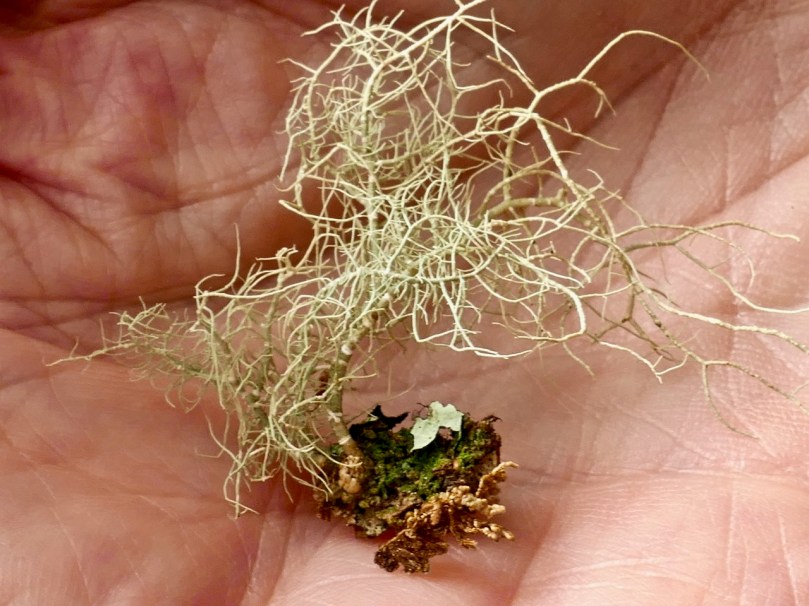
We also saw some foliose lichens – leaf like things such as the one immediately above, although you had to get very close with a hand lens to even see the leafy structures of some of them. Others were bigger and more obvious – these Usnea lichens (below) are like tiny bonsai leafless trees and attach to rocks and trees by a single contact point.

I had already written (in my post Miniature World) about the Cladonia Lichen such as the Devil’s Matchstick, and now that I know a bit more about lichens I’ve been browsing around our own garden and I found some on a rock wall (below) – not only Devil’s Matchsticks but the ones called Pixie Cups as well.

And the ‘other things’ on the walk? Clare Heardman from the National Parks and Wildlife Service, who seems to know about the whole gamut of wild organisms, was excited to see a fly land on Robert’s back. No ordinary fly, it turns out, but a Dark Giant Horse Fly (Tabanus sudeticus) – the largest and heaviest fly in Europe! We know it’s a female by the space between her eyes (males have no space) and it’s the female that bites and sucks your blood. One source I consulted says: Unlike insects which surreptitiously puncture the skin with needle-like organs, horse flies have mandibles like tiny serrated scimitars, which they use to rip and slice flesh apart. Charming, but fortunately she flew away before inflicting that on Robert.

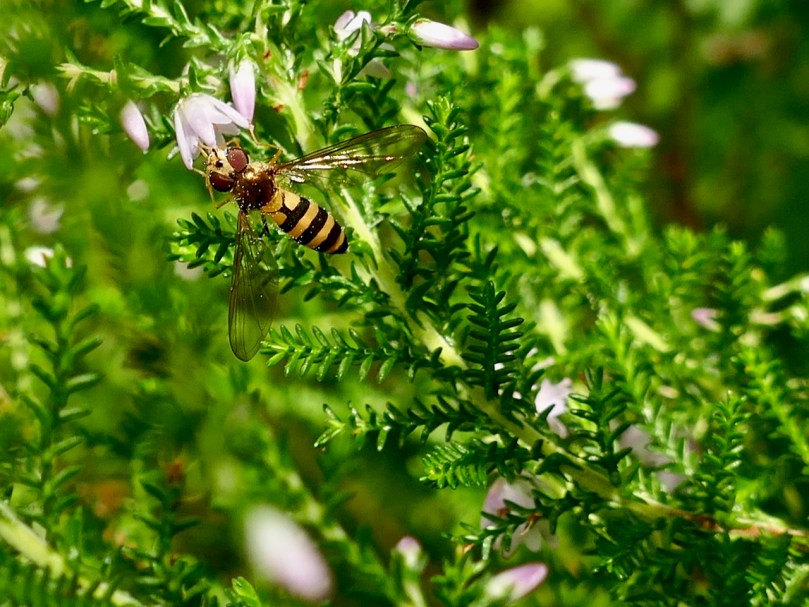
Nearby, another fly was feeding on some Ling Heather, this time a hoverfly. Trying to identify hoverflies is a head wreck, there are so many different types, but I think this one is called parasyrphus lineola, one of the little forest hoverflies that like a conifer environment. Hoverflies are next to bees in importance as pollinators – it’s not that they carry as much pollen, but they are so busy and make so many visits to flowers that they do a sterling job. They also keep aphid populations under control.

You can see the dusting of pollen on this hoverfly

When we arrived at the pond Paul showed us the Usnea lichens – one tree over the water was entirely decorated with them, although they also like to grow on rocks as well. They belong to the Fruticose Lichens and on his website he describes them thus: Fruticose lichen appear tufted and shrubby and are usually erect or pendant and attached to the substrate at a single point. Filamentous lichen are soft and hair-like and some form felt-like mats comprised of very fine filaments.

The pond itself was alive with water striders, amazing little creatures that walk on water. A little Googling led me to this short video about how exactly they accomplish this, and what they live on (don’t watch if you’re squeamish).

As I was watching them, my eye was caught by a flash of brilliant blue and down came a damselfly to rest on one of the long reeds overhanging the pond. It was the aptly named Beautiful Demoiselle and a male, which has the striking metallic blue colour. This reed was its perch, from which it guarded its territory and kept an eye on passing edible insects, leaving it to chase them and then return. (There’s a good Wikipedia page on them.)

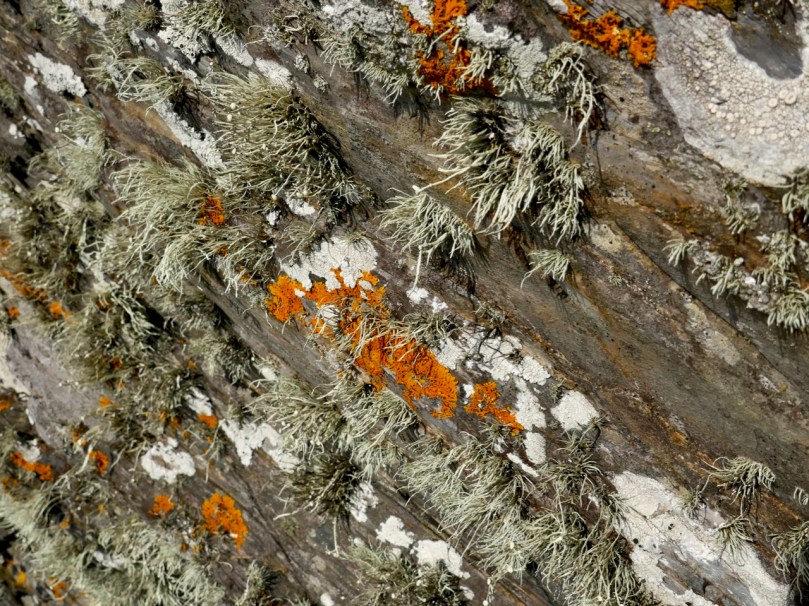
It was a great walk, all in all, and we can’t now go anywhere without checking out our surroundings for lichen. On a walk on Long Island yesterday I was attracted to the patches of bright orange and white lichen on the rocks. Here’s what I saw, at a distance and close up:

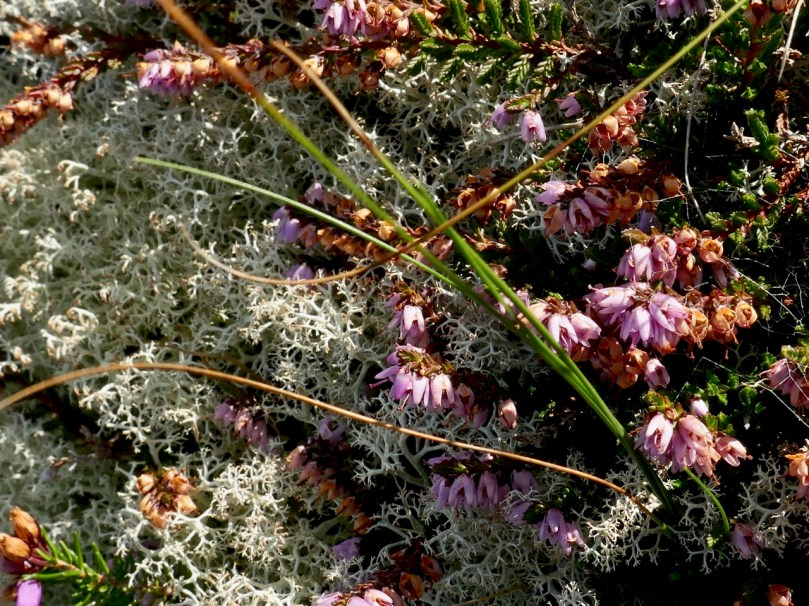
I was also delighted to see heather and lichen growing on one rock surface, and very attractive it looked together. The lichen might be one of the Cladonias, but please correct me if I’m wrong.

My previous feelings for lichen were all negative, since they obscure rock art and headstones, but now – have we caught the lichen bug? I hope not, since it already takes me an hour to walk around the block, stopping to look at flowers. What do you think, Dear Reader – is there any hope for us?