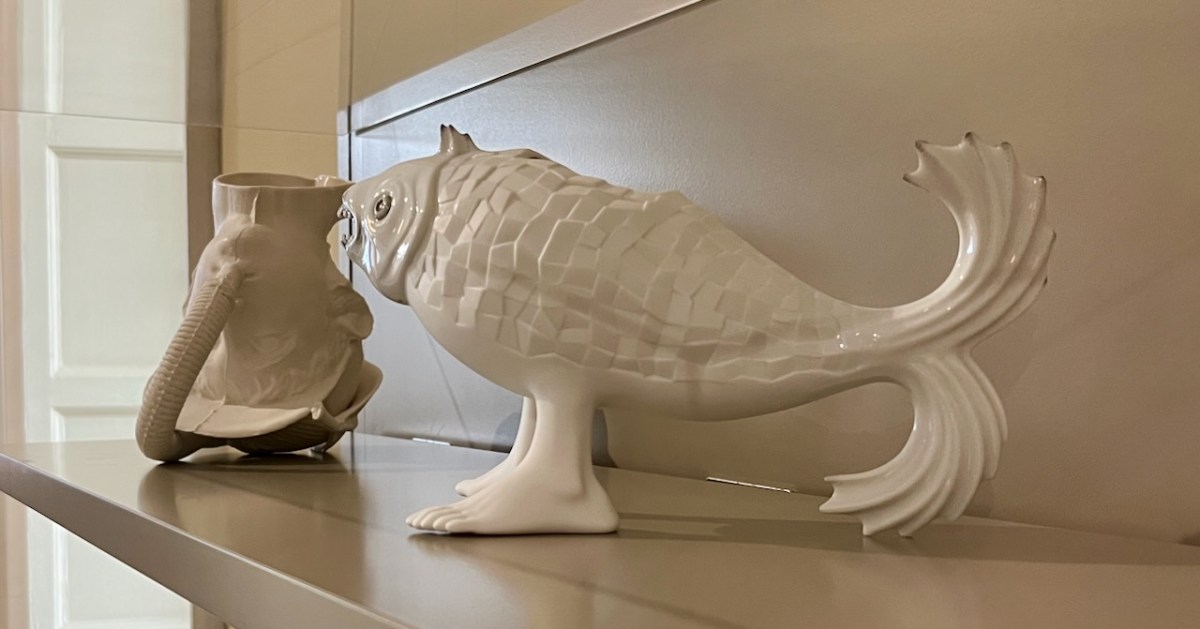
A Cabinet of Curiosities

The forerunners of the museums that we visit today were known as ‘Cabinets of Curiosities’. Starting – just about – at the very end of the sixteenth century – we find mentioned and illustrated collections of objects gathered from exotic places: things that a gentleman might be unfamiliar with; things that could expand our knowledge and cause wonder. Curiosities, undoubtedly. Here’s one collection illustrated in 1599:
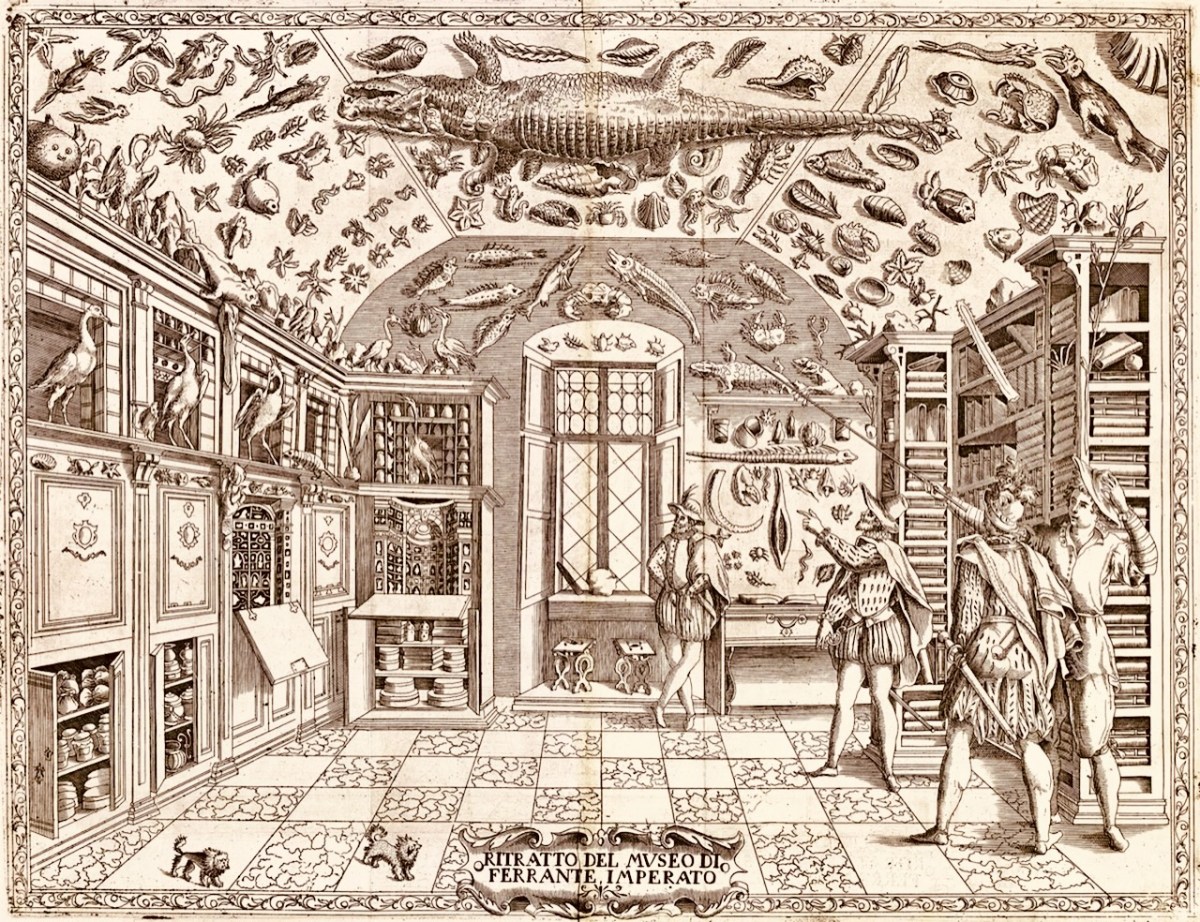
This is an engraving from Ferrante Imperato’s Dell’Historia Naturale (Naples 1599), the earliest illustration of a ‘natural history cabinet’ (courtesy Oxford University). It shows a room fitted out to display imported paraphernalia: (hopefully mounted) creatures, dried specimens, fossils – also books and illustrations. The collector here takes on the role of educator – perhaps showman. Here you might encounter unicorn horns, a dragon’s blood, mermaid scales as well as the full sized alligator hanging from the ceiling.
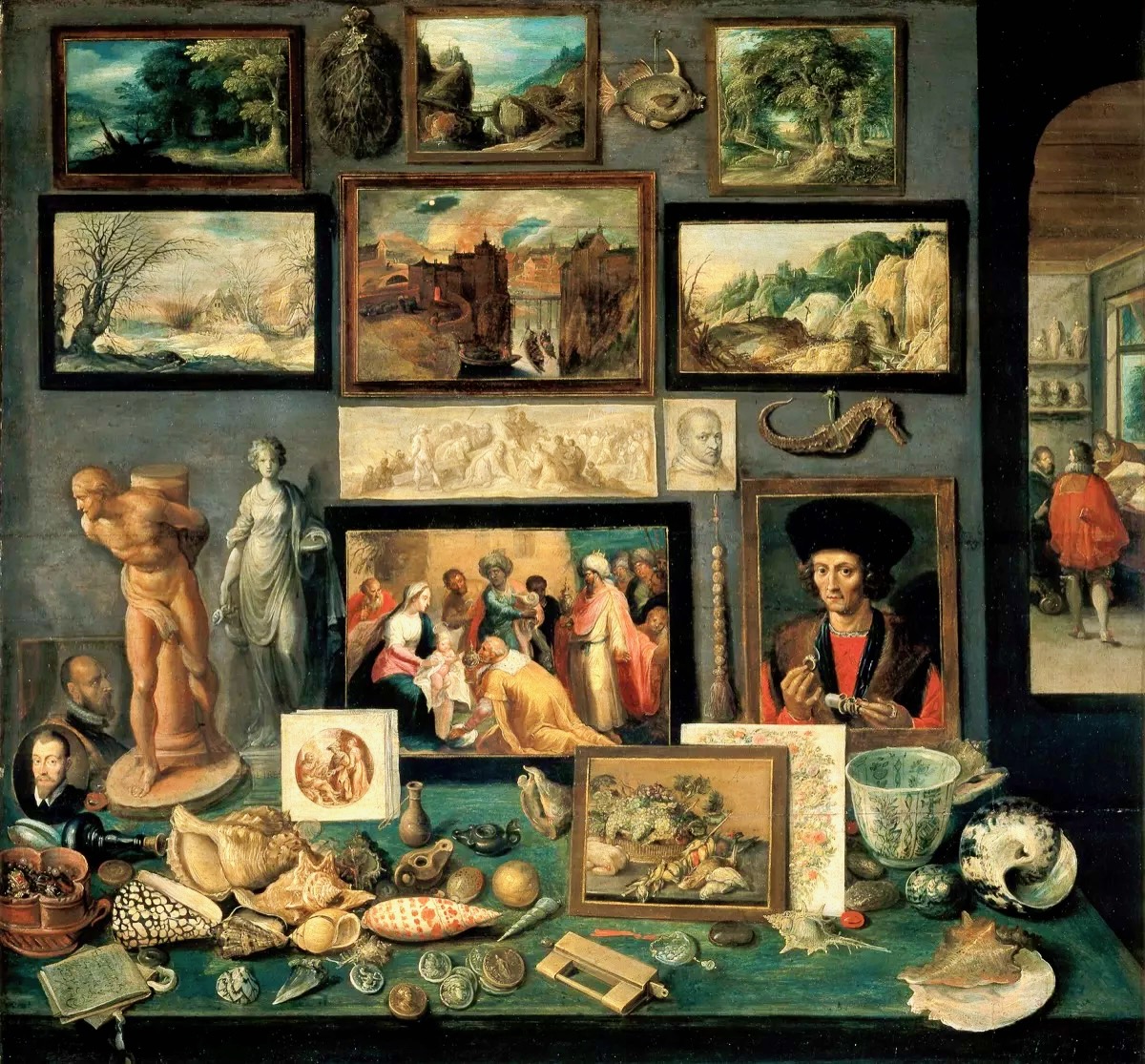
Frans Francken the Younger, Chamber of Art and Curiosities, 1636 above (Public Domain). Another selection of paintings intermixed with fish, carved beads, sculptures, with on the table exotic shells, gem-stones mounted with pearls, coins and medals.

Rathfarnham Castle (above) is a good example of an Irish Fortified Manor House. This mainly seventeenth century building type would have been the relatively comfortable home of an aspiring clan – perhaps a titled family with church or merchant connections: Finola has written about a West Cork example. Austin Cooper – a tax collector who indulged his hobbies of sketching and writing while travelling through Ireland in the performance of his duties – wrote of Rathfarnham:

. . . What renders this a Place of any Note is the Cas. belonging to the E. of Ely. This Cas. is square, with a large square Tower at each corner – on the S. side in the Center is a semicircular Tower . . . The hall is but low, at the same time exquisitely elegant . . . The gallery is a beautiful room, at the far end is a curious cabinet of Tortoise Shell & Brass containing some most extraordinary Work in Ivory . . .

Austin Cooper’s Notes, rathfarnham Castle

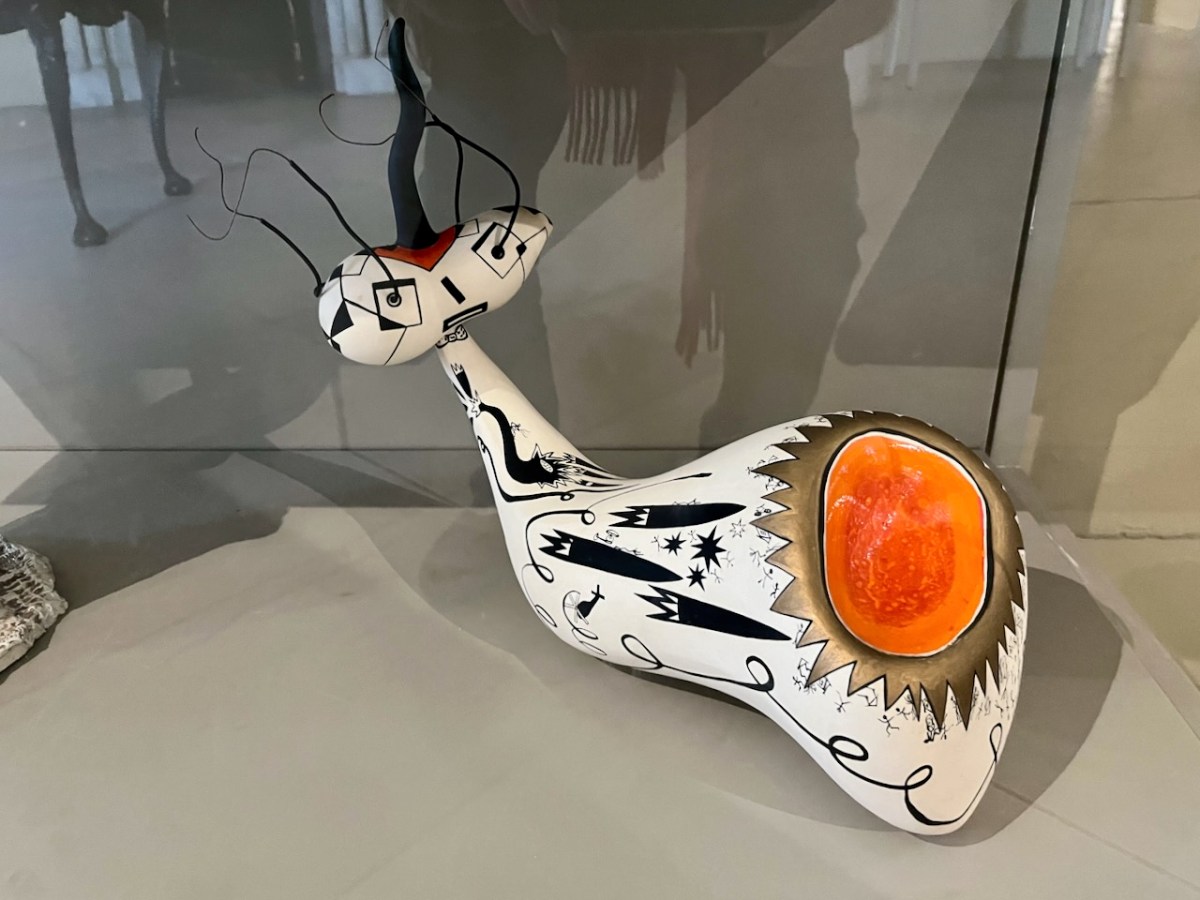
Rathfarnham Castle has, in modern times, a distinguished continuing association with contemporary ceramicists and in 2015 established a modern Cabinet of Curiosities which continues the tradition of displaying ‘extraordinary work’, and provides excellent material for a Sunday morning post!
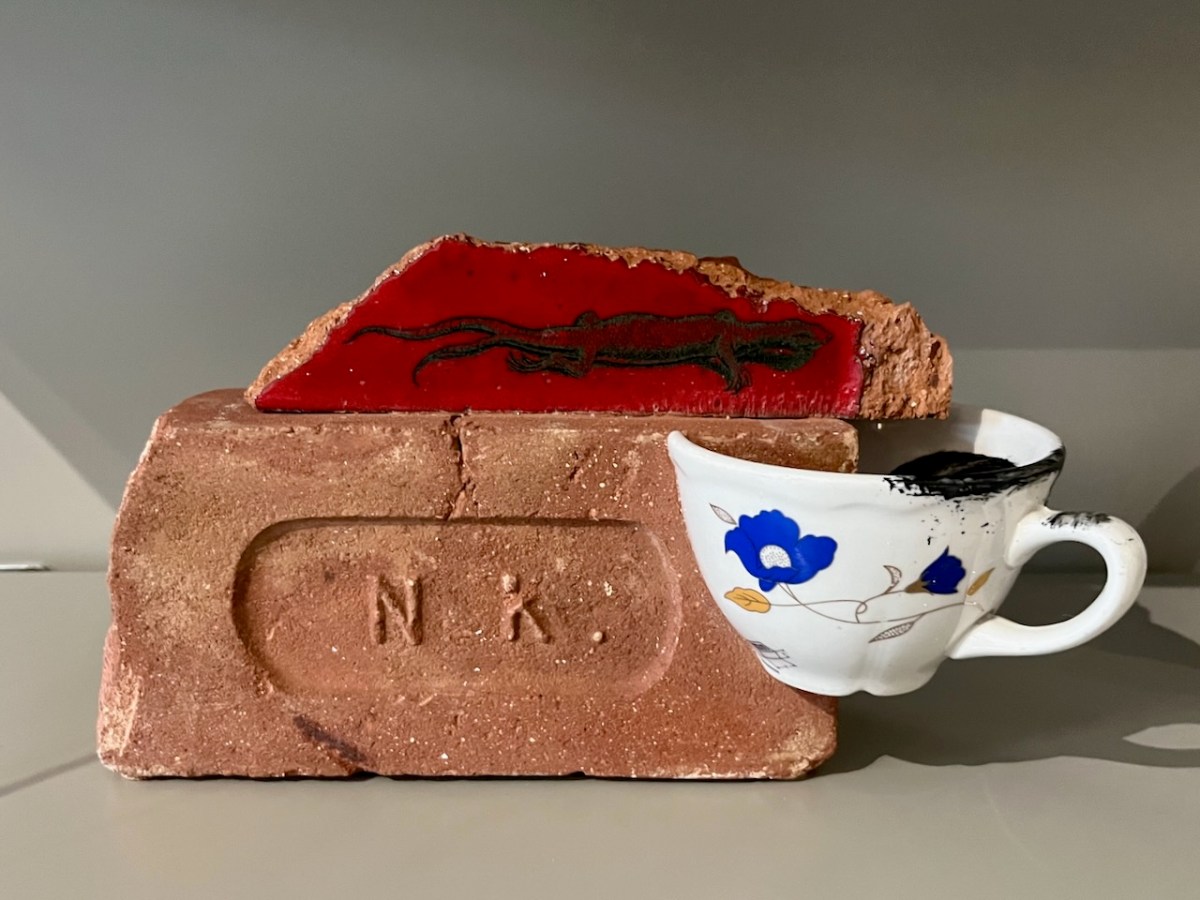
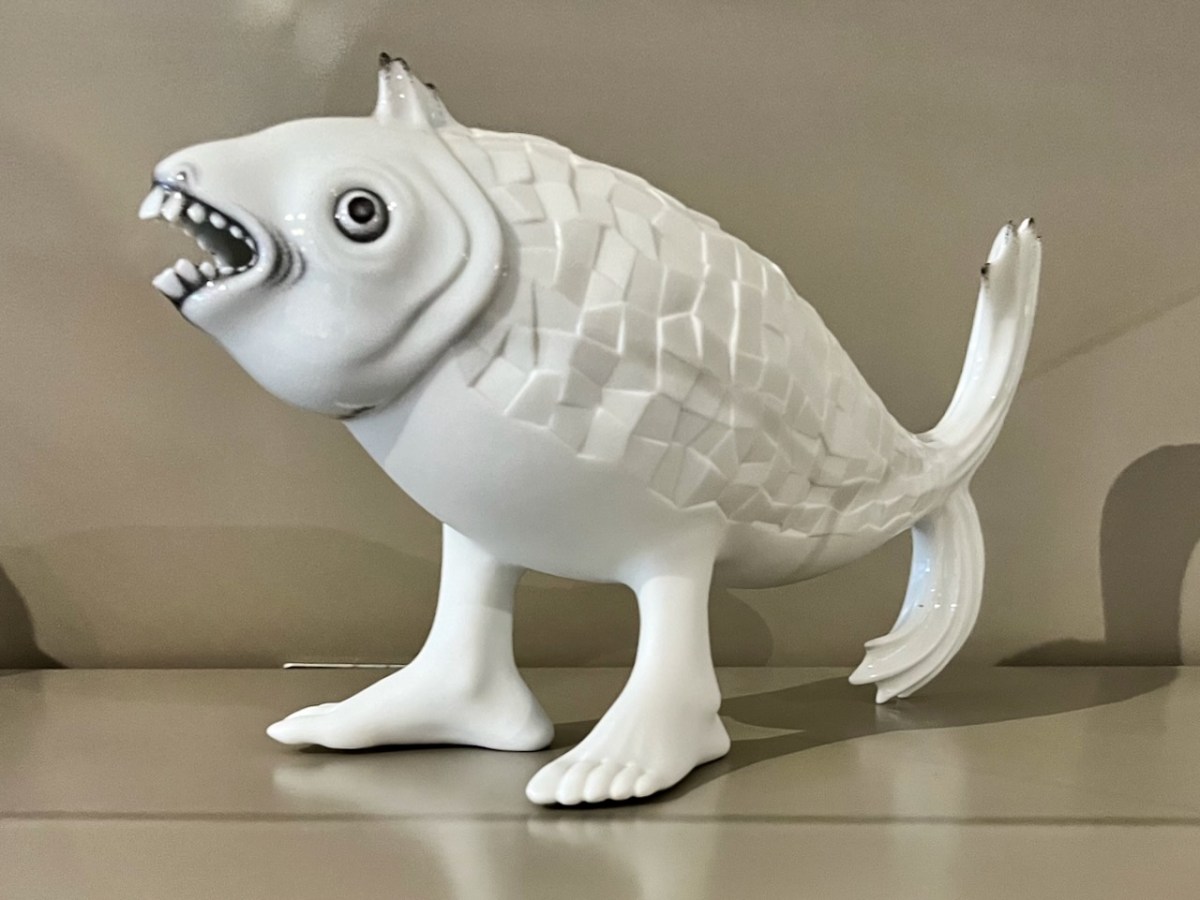
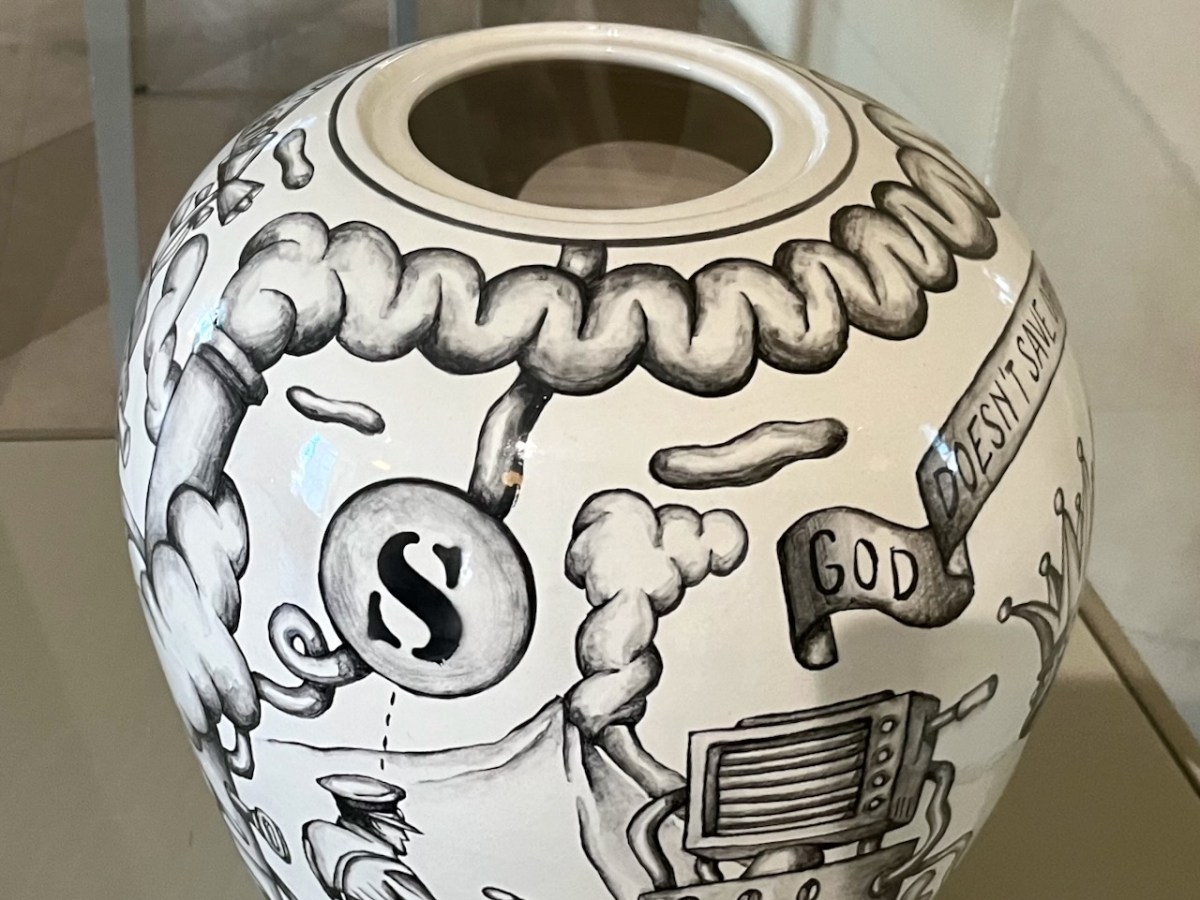
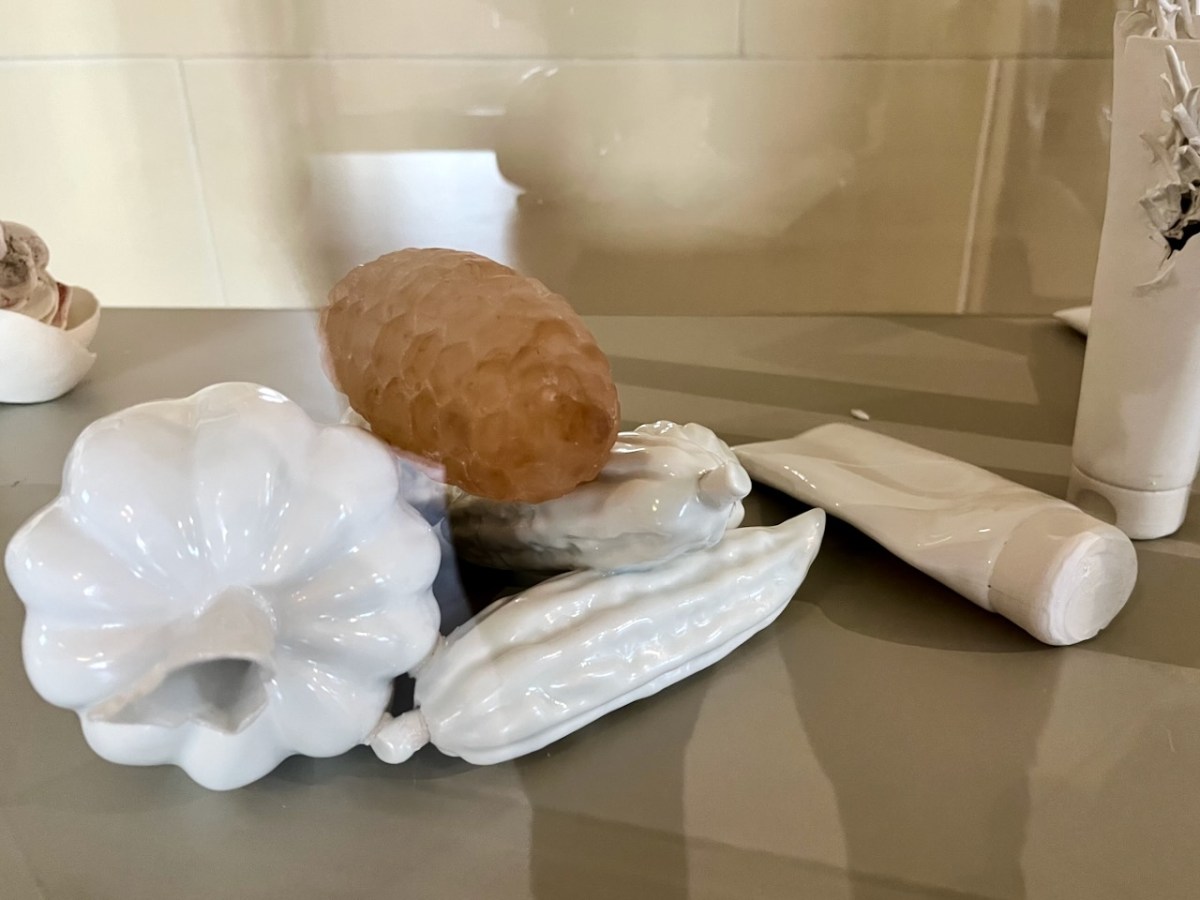
The curiosities are not labelled – and nor are their creators. Peter Bagshaw, OPW at Rathfarnham, has kindly provided me with a list – thank you, Peter – attached at the end of this piece. I cannot necessarily individually identify each item: I will leave you to work out which might be which . . .
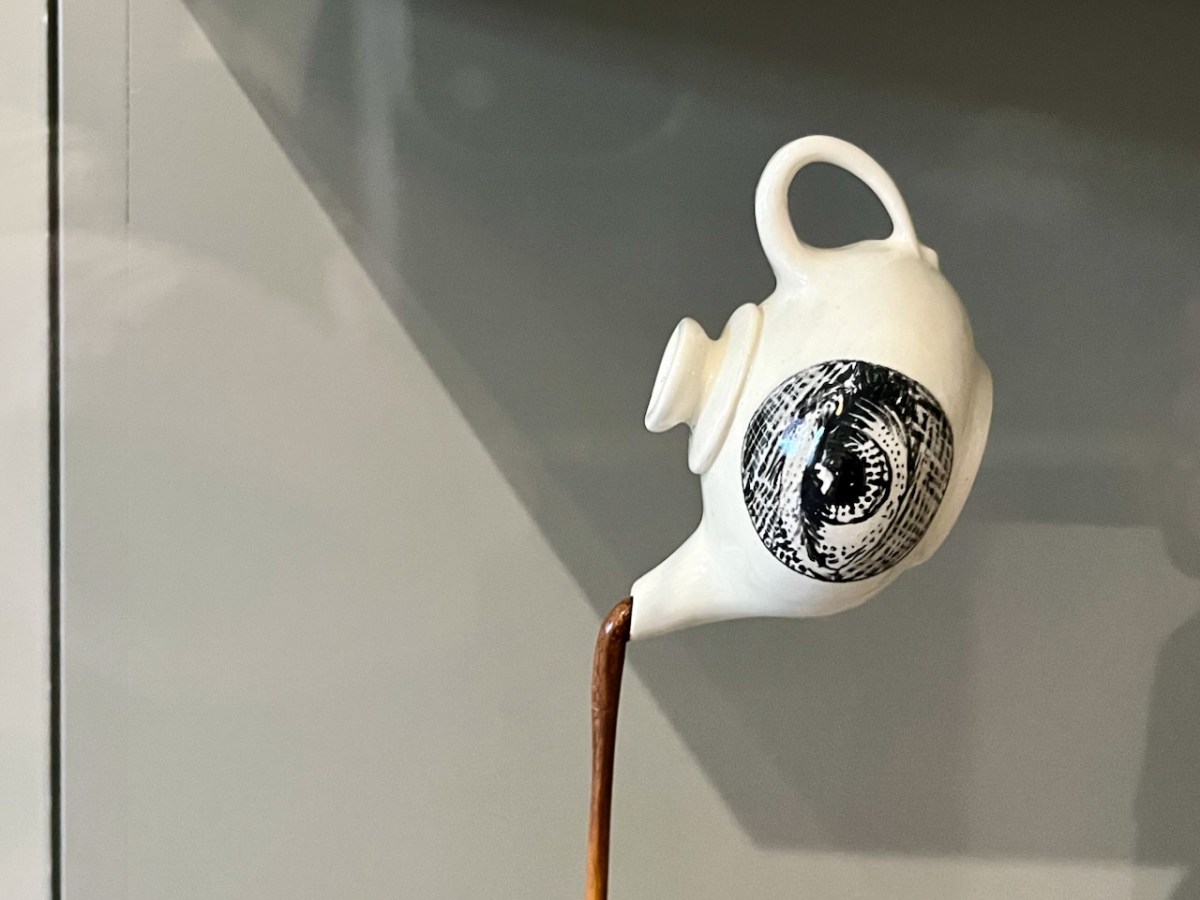
This eye-pot looks great when you pan out a bit . . .

This one certainly harks back to some of those manufactured creatures that turned up in cabinets of old.

Leather teapot – a fashion item, perhaps?
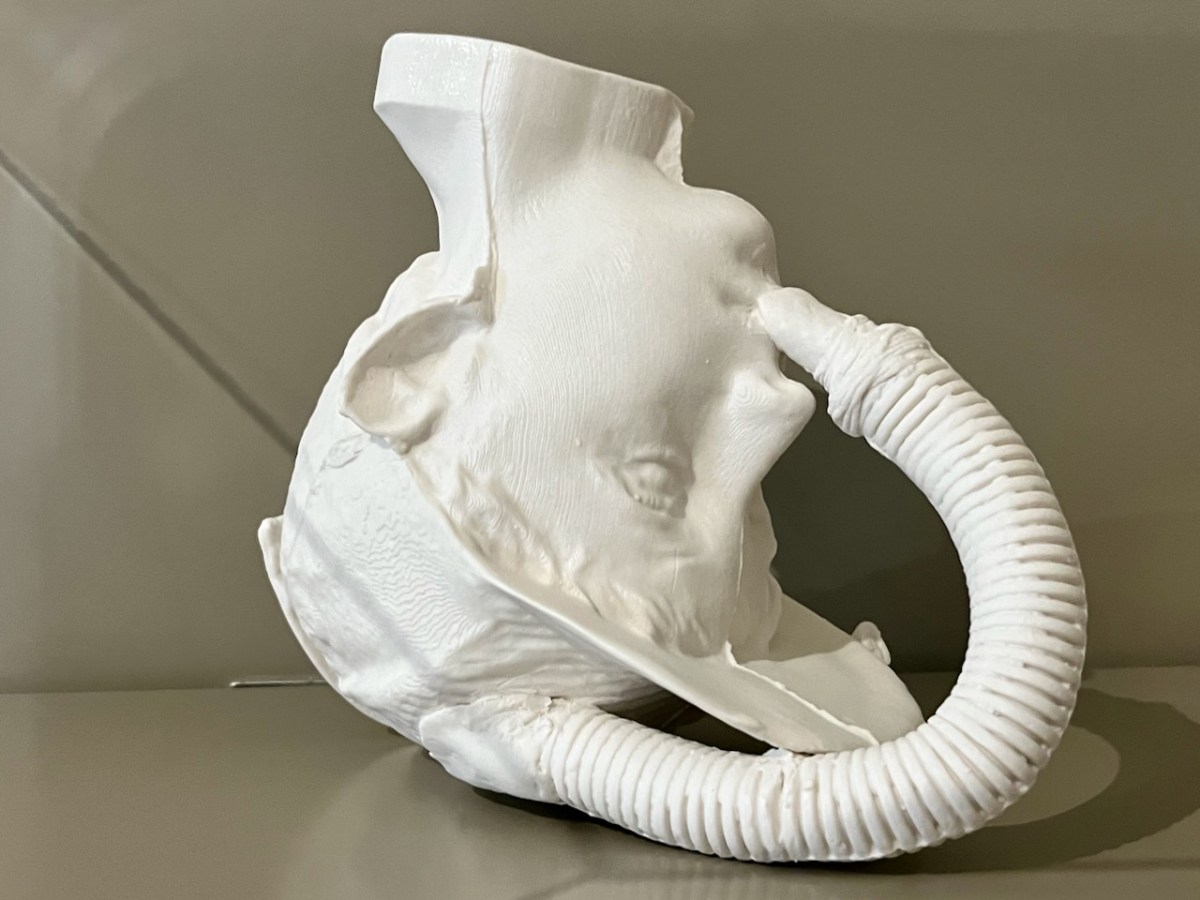
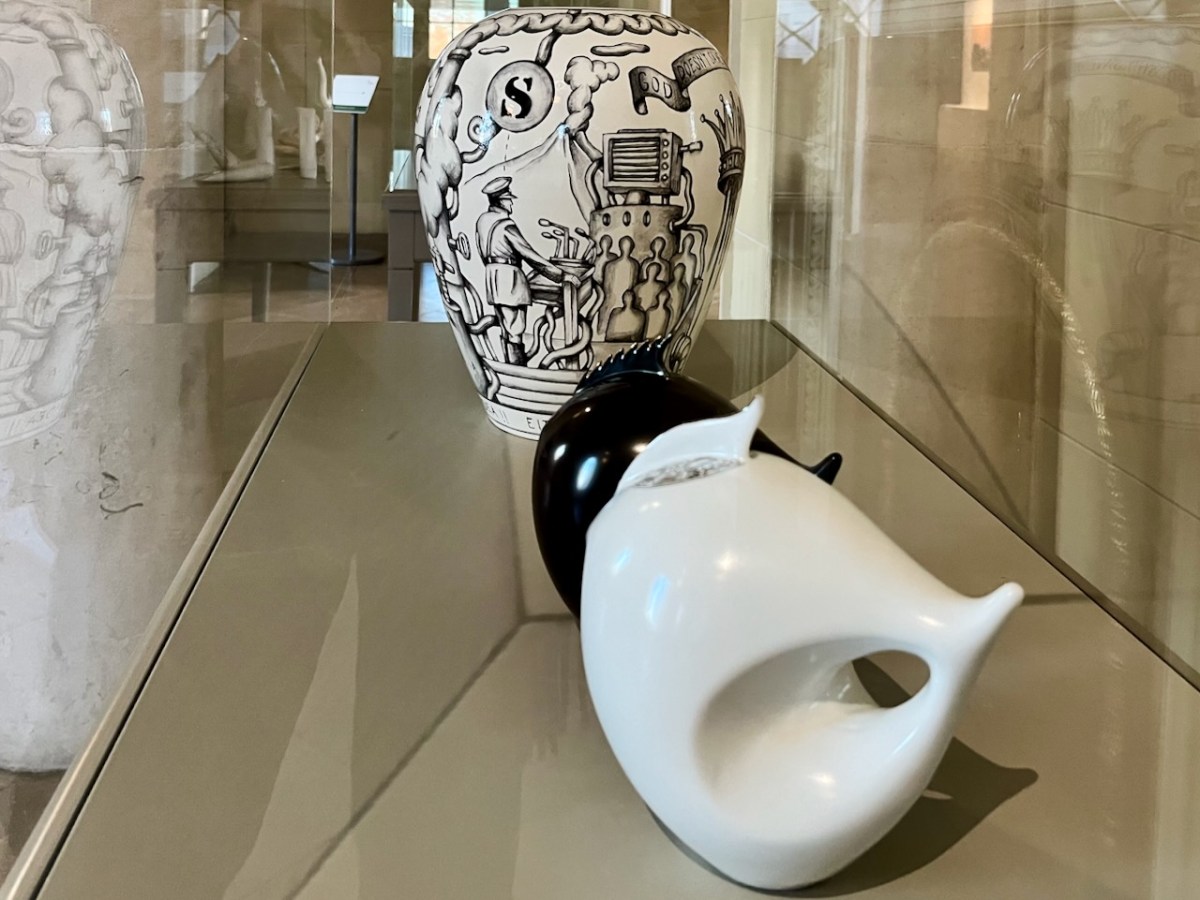
I think the final image might be my favourite: a young person clutching an angel’s wing? Could this be The Sequestrator?

List of pieces – not in any order:

The Sequestrator Roderick Bamford, Australia

Mosaic Parrot Fish Ilona Romule, Latvia

N.K. Red Lizard Cup Robert Harrison, USA

New Leather Teapot Xiaoming Shi, China

Eyes Tea Verne Funk, USA

Figure Leo Tavella, Argentina

All that promise Ting Ju Shao, Taiwan

Immigration Emilia Chirila, Romania

Black and White Rotation Sylvia Nagy, USA
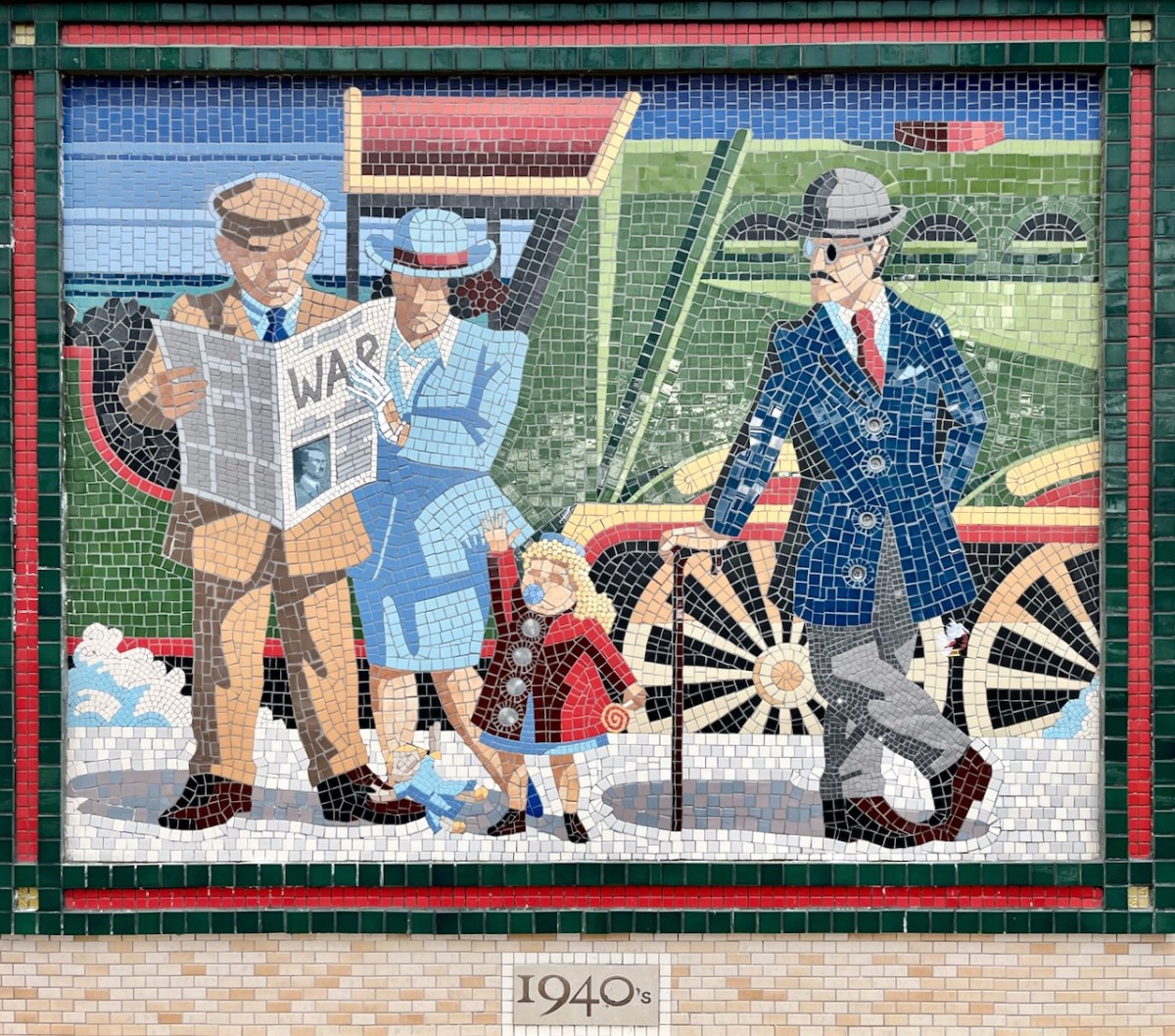
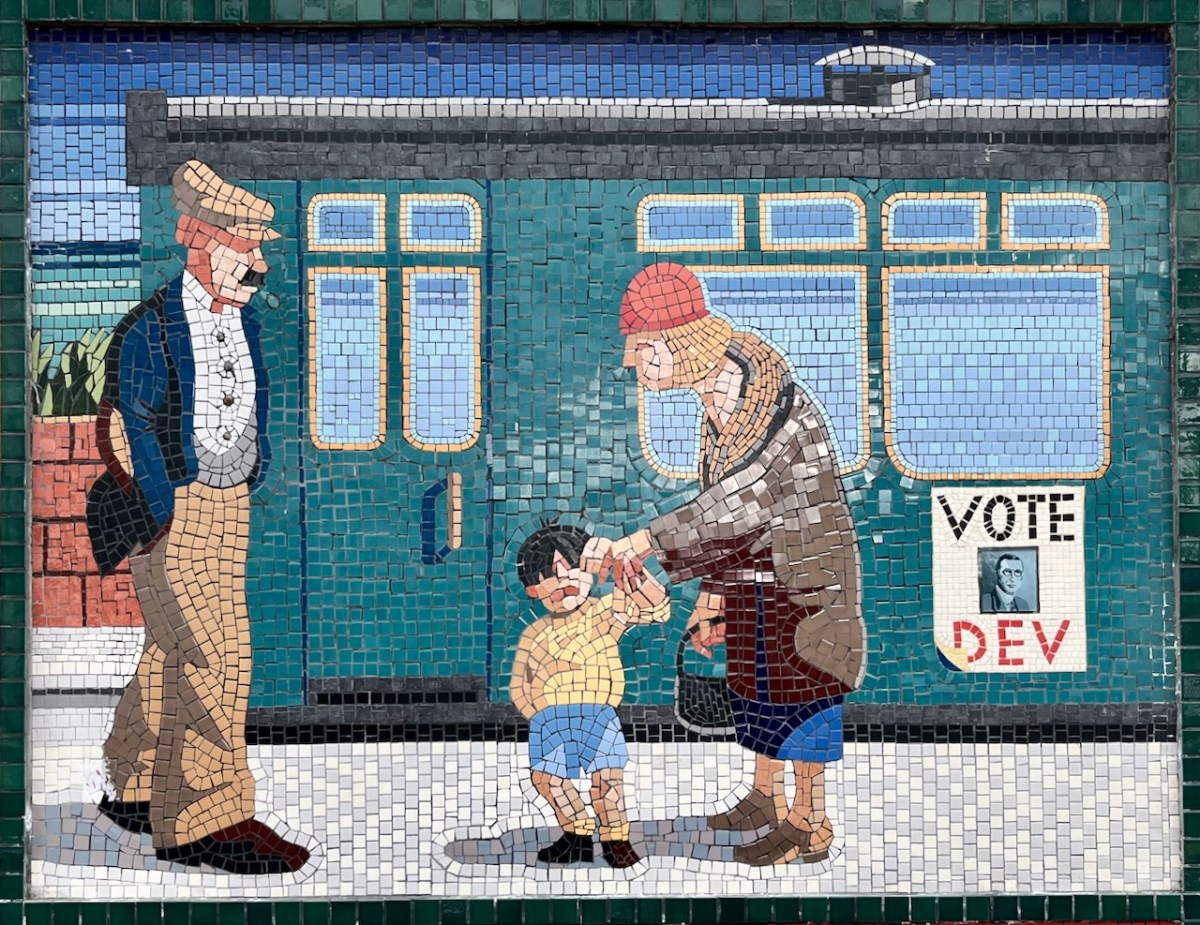
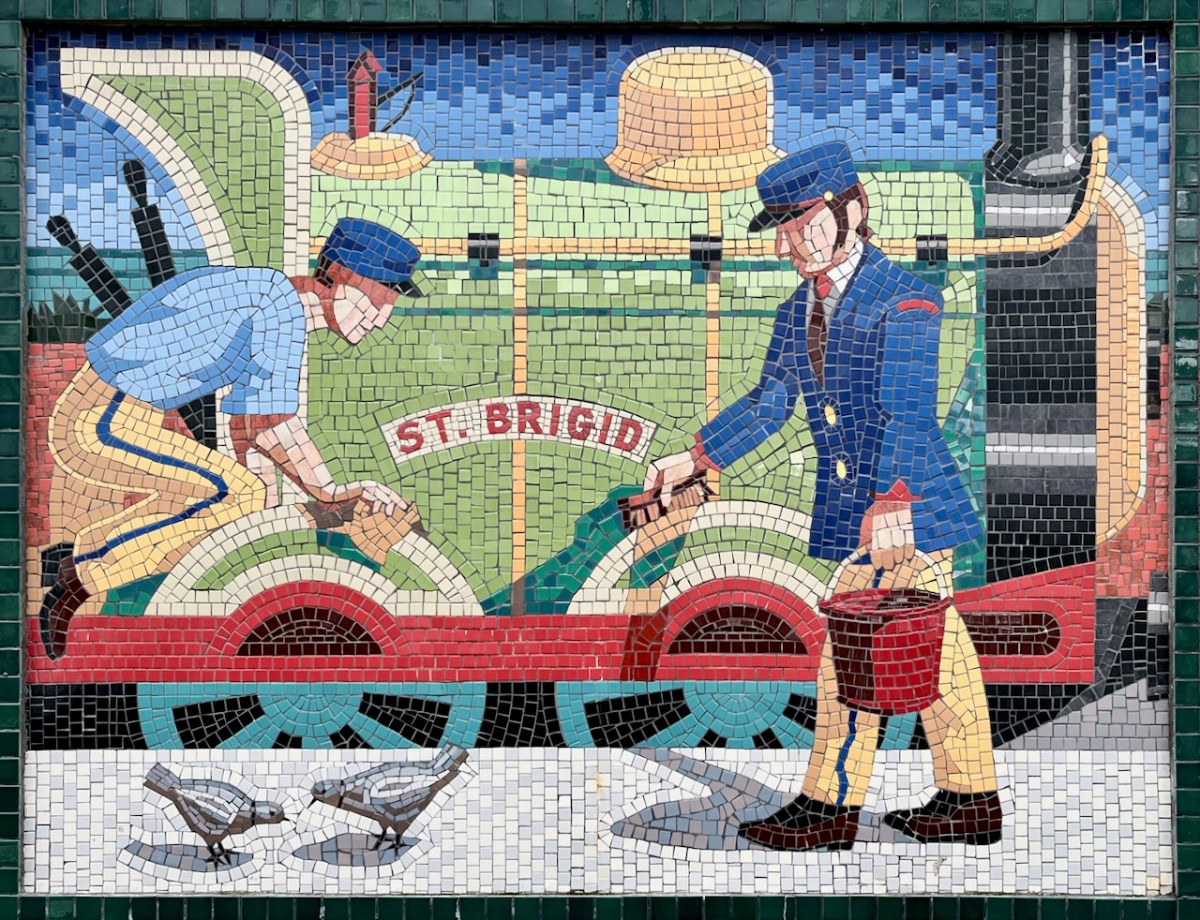
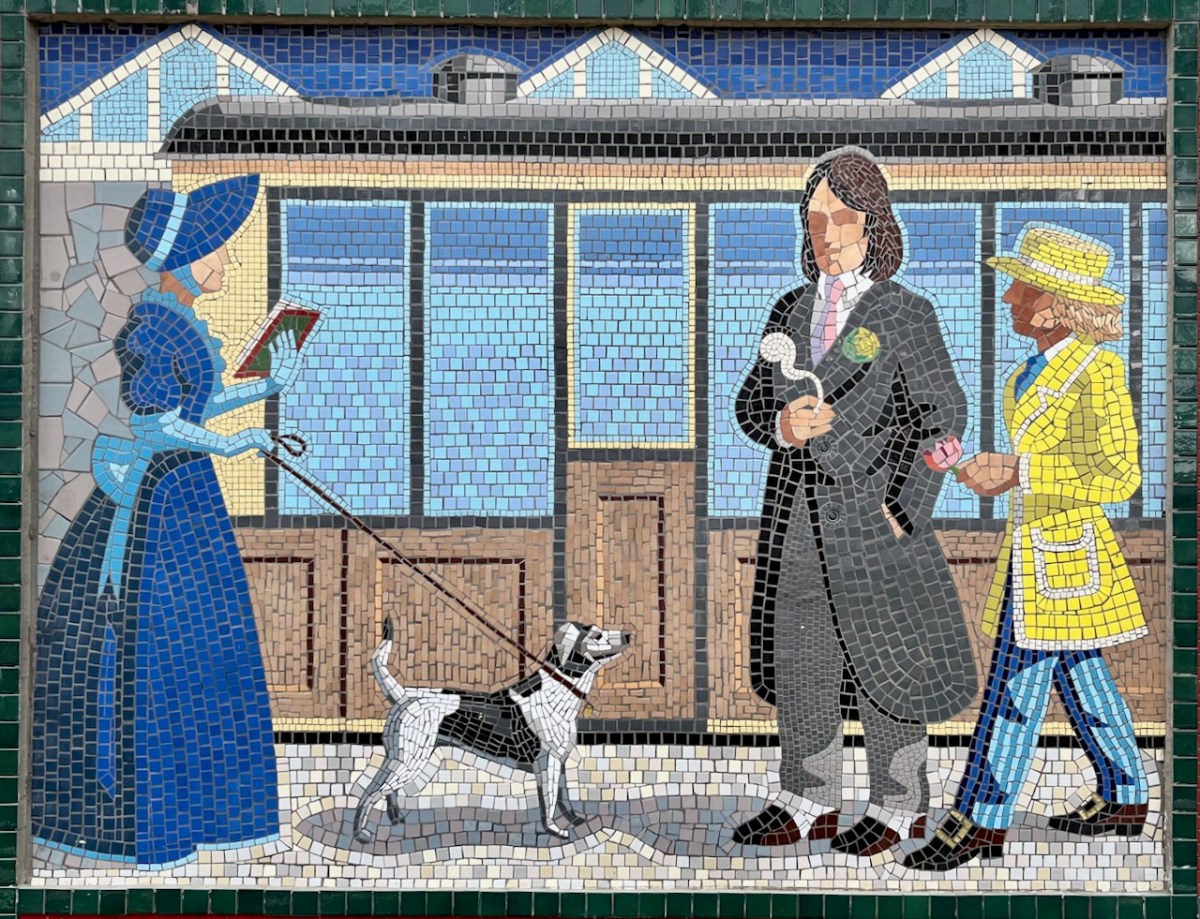
Bray Railway Station Murals

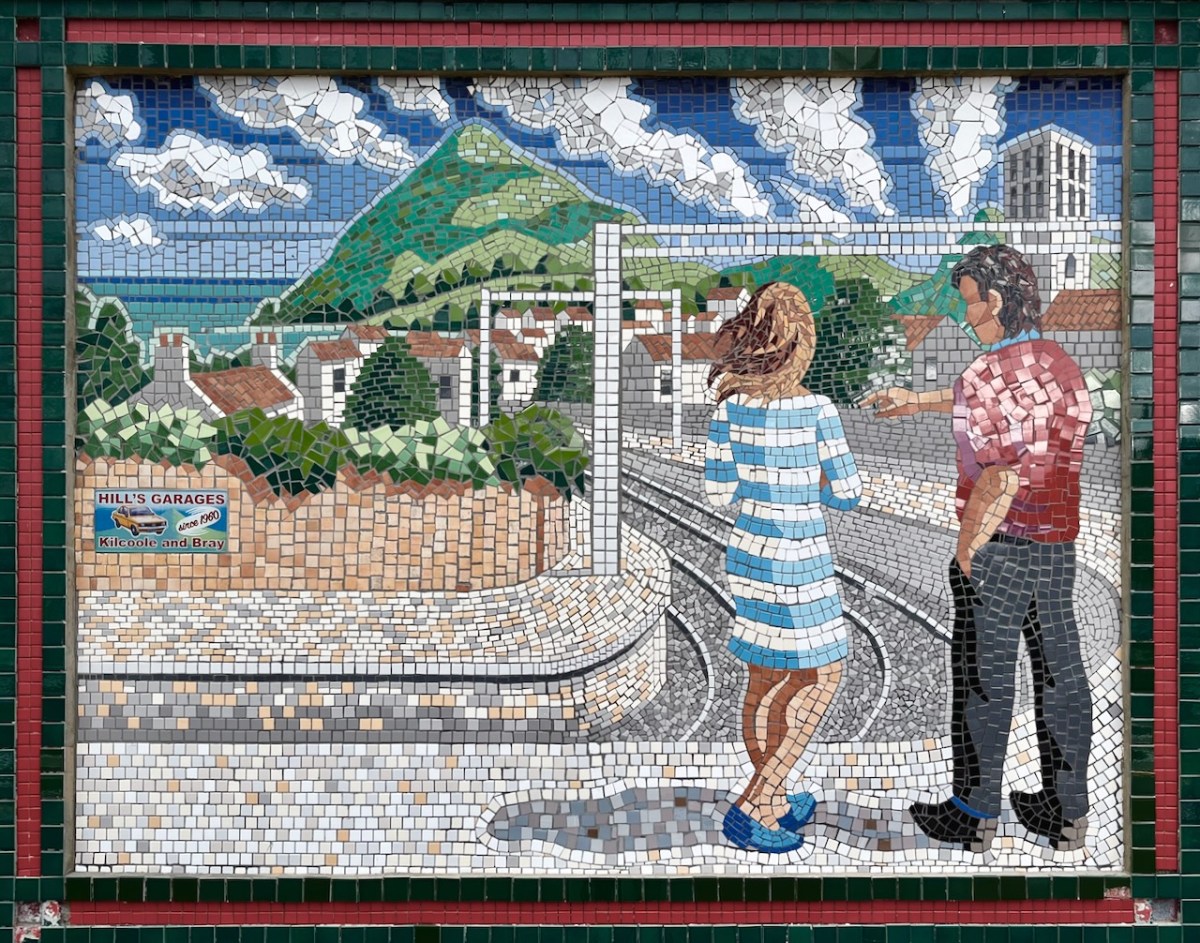
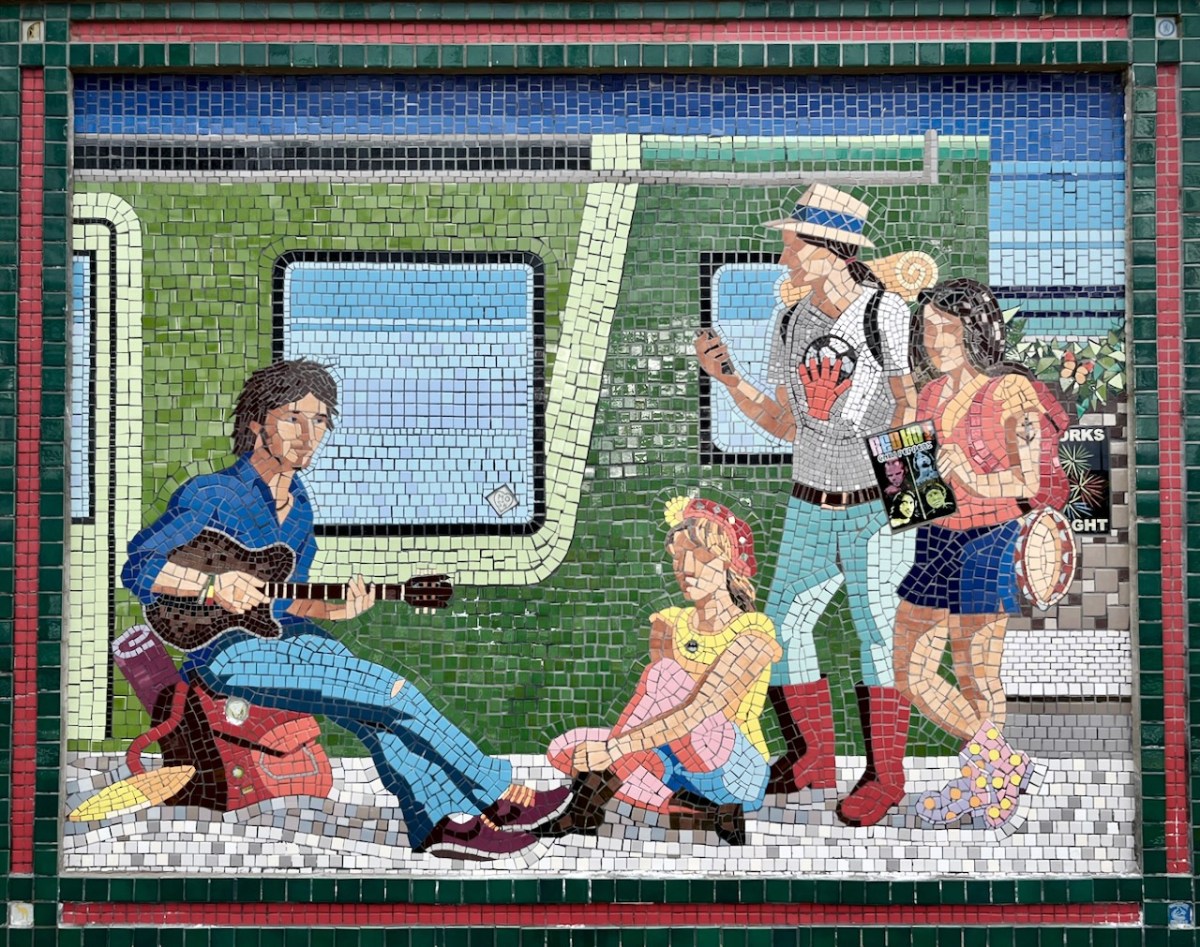
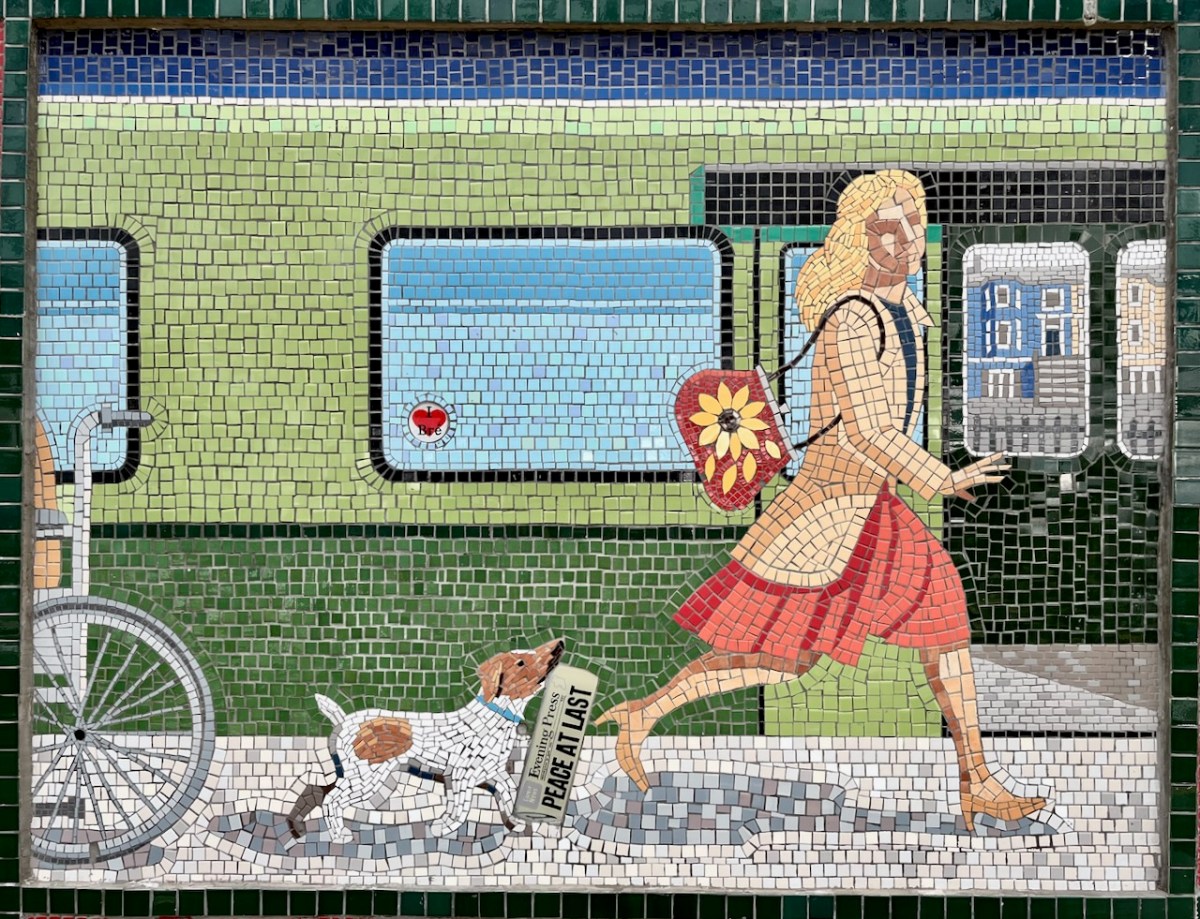
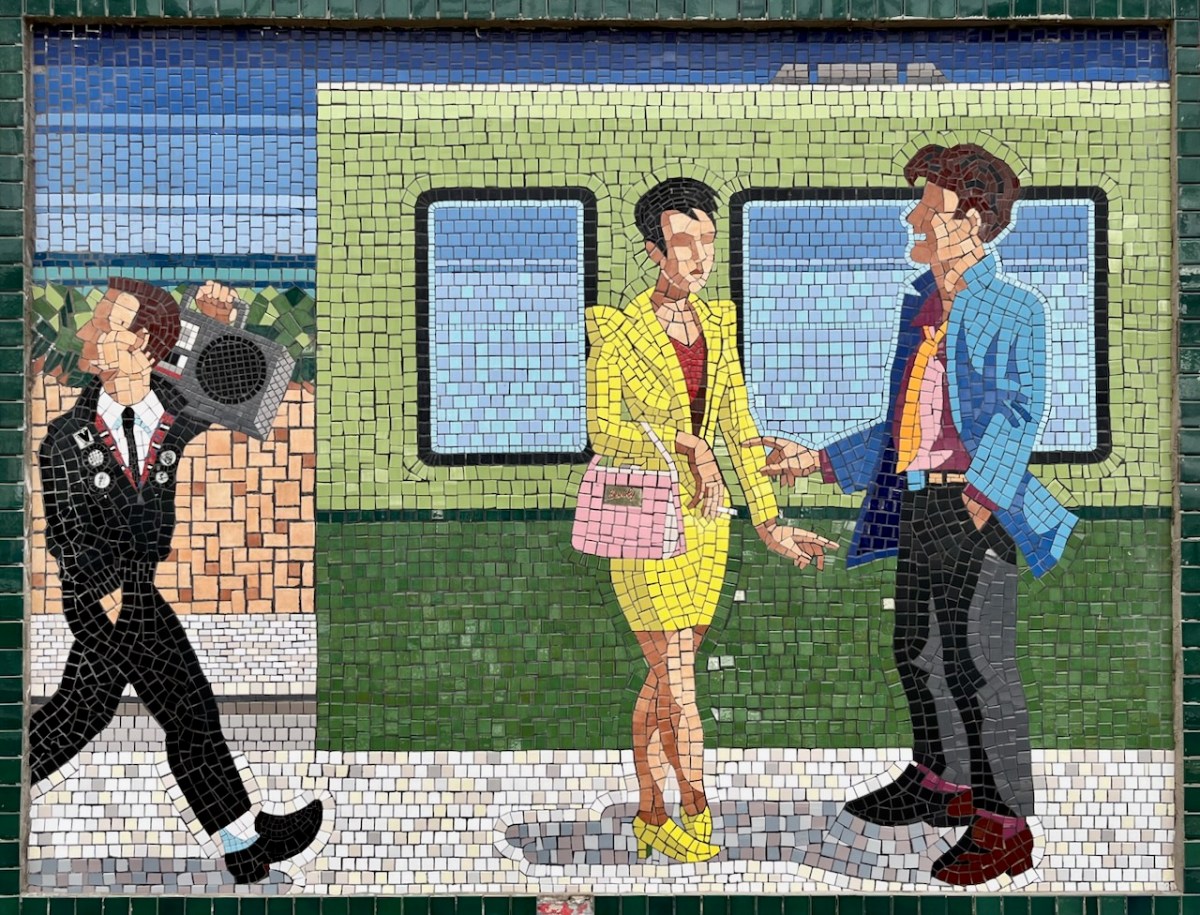
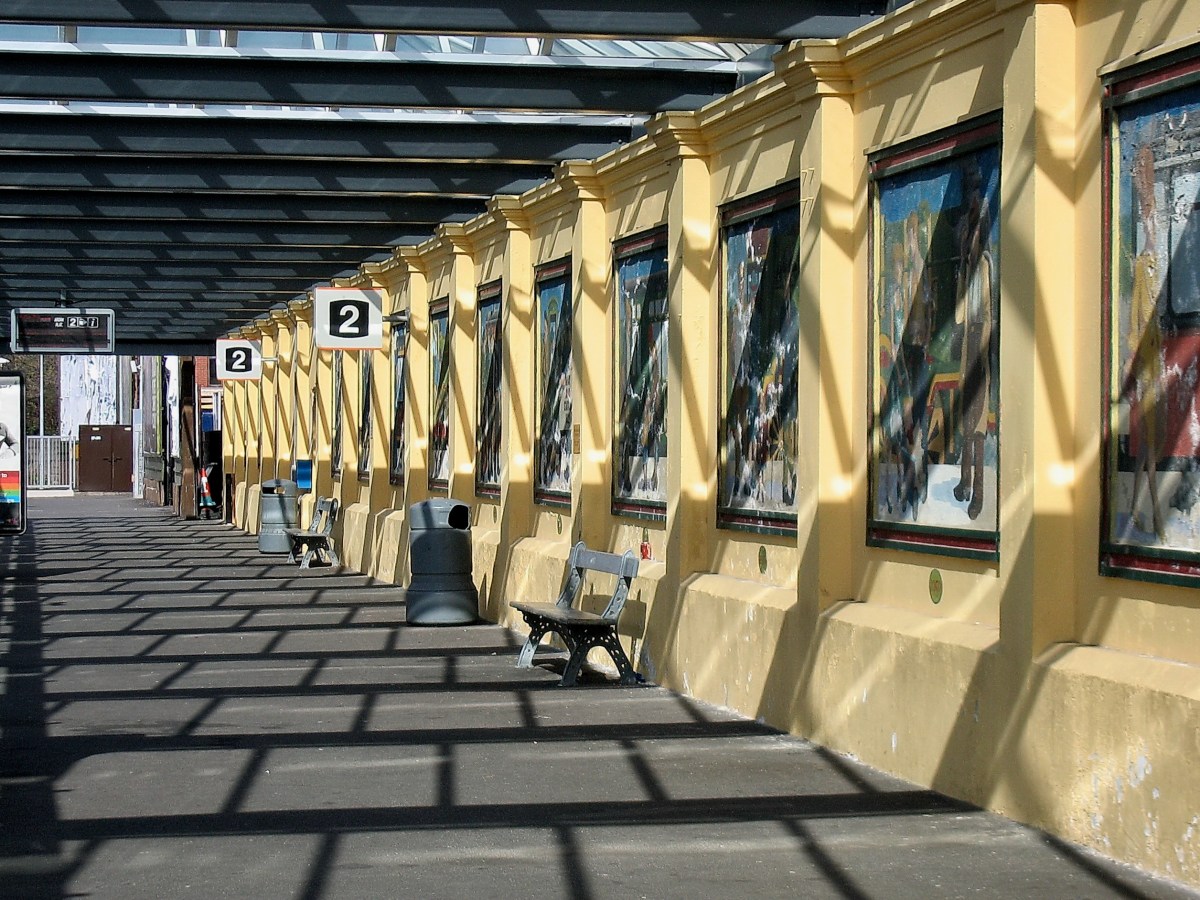
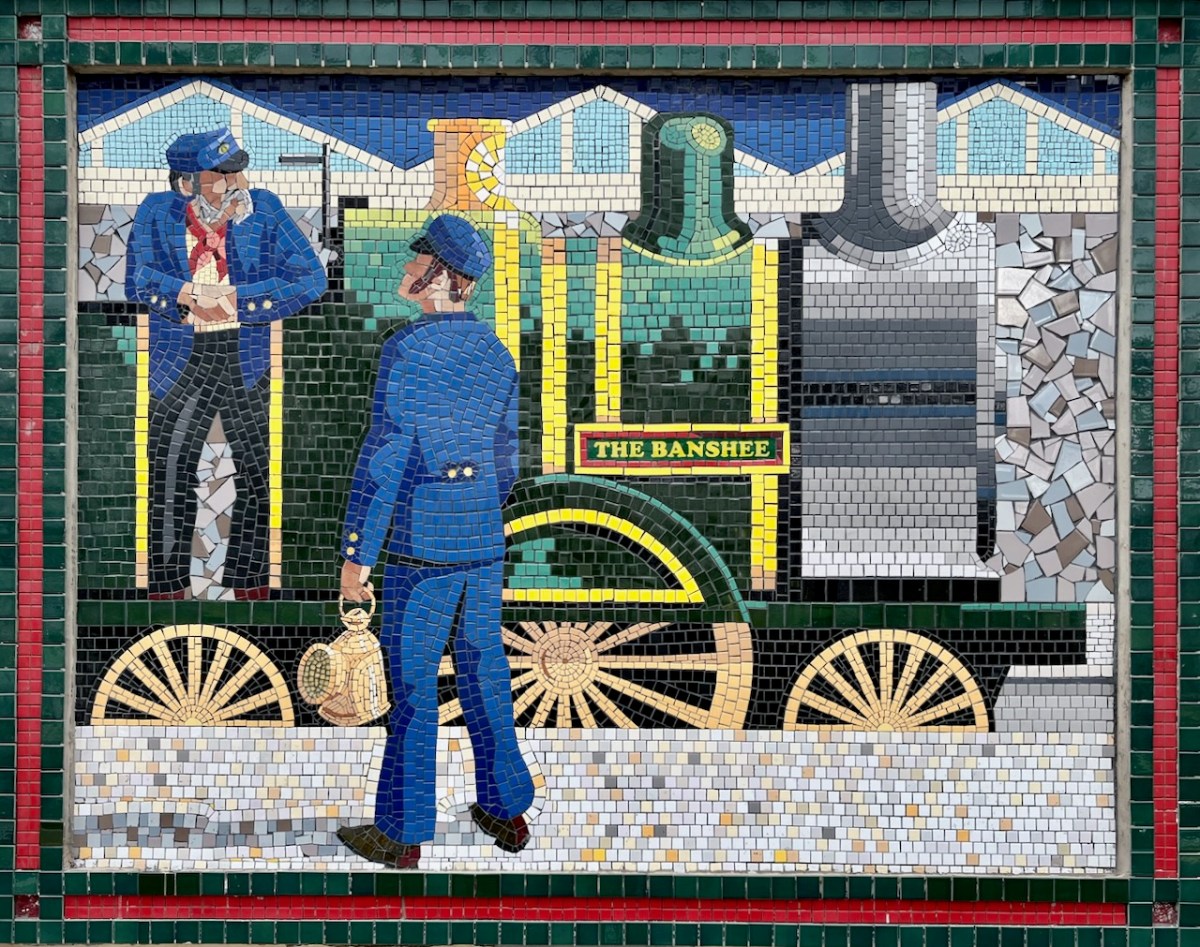
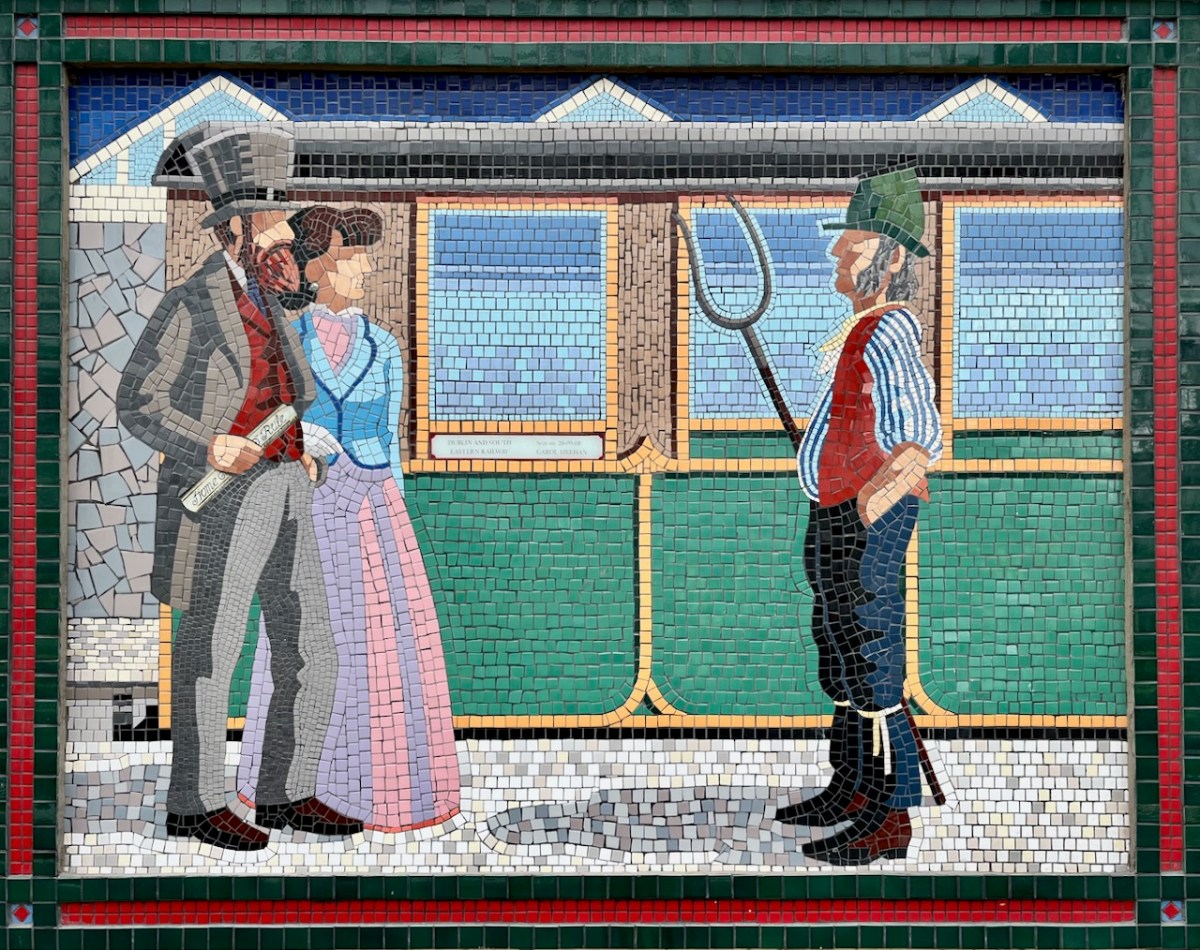
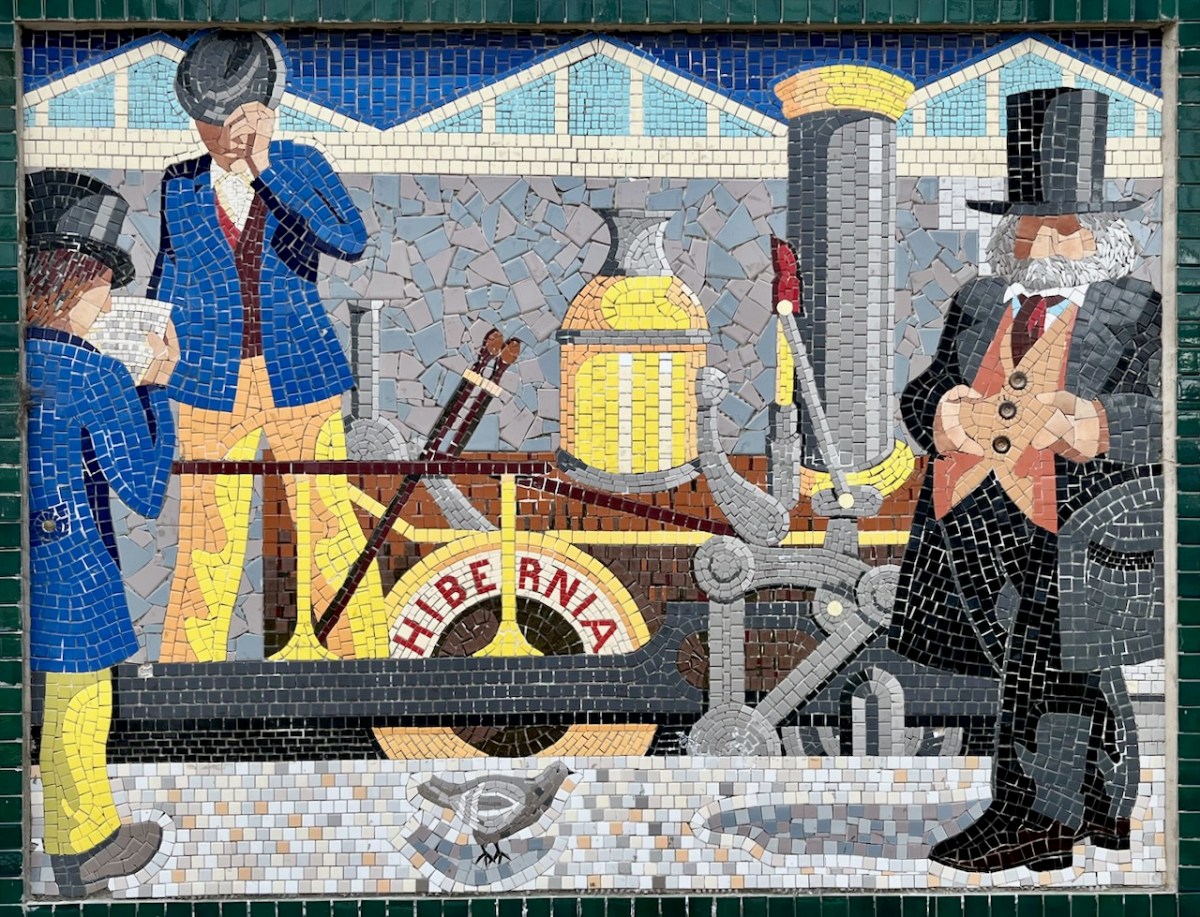
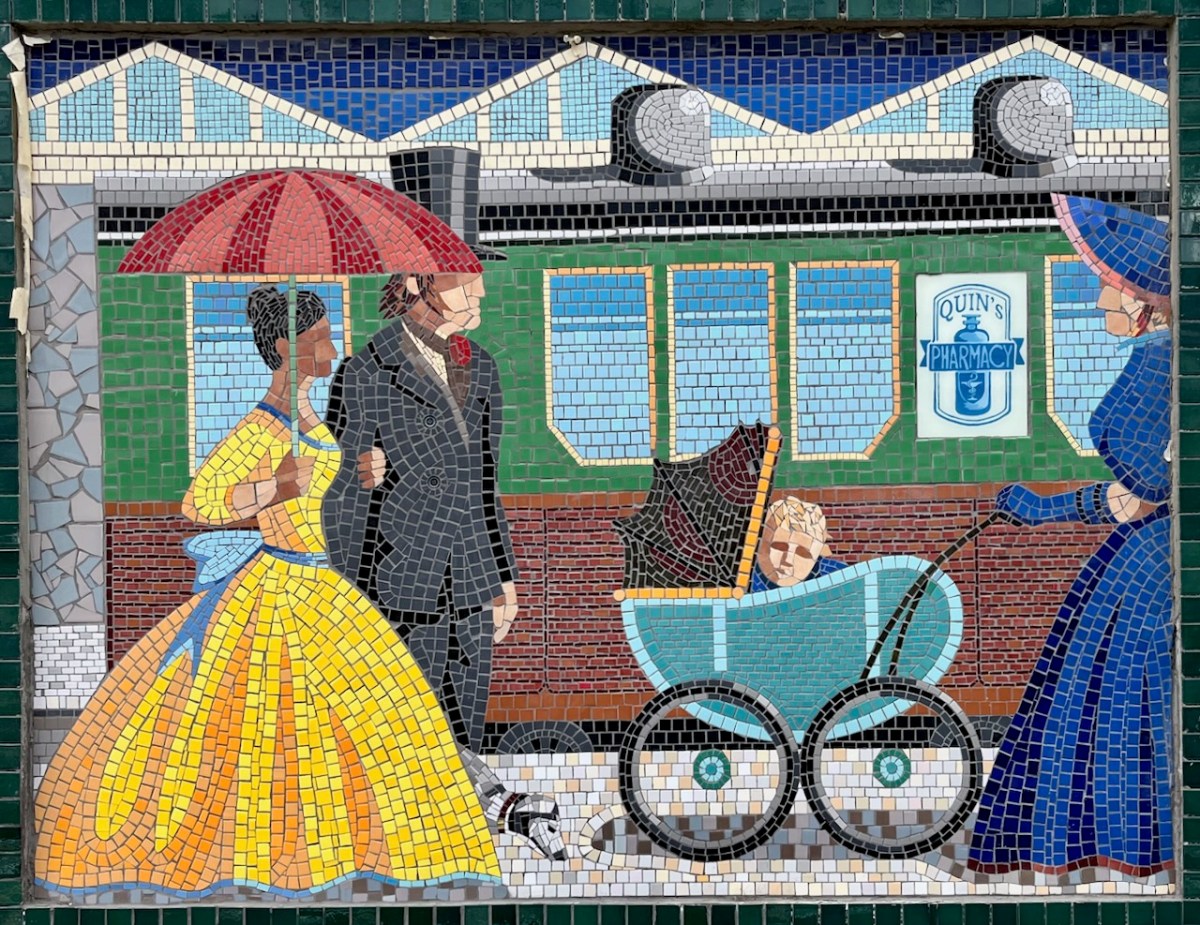
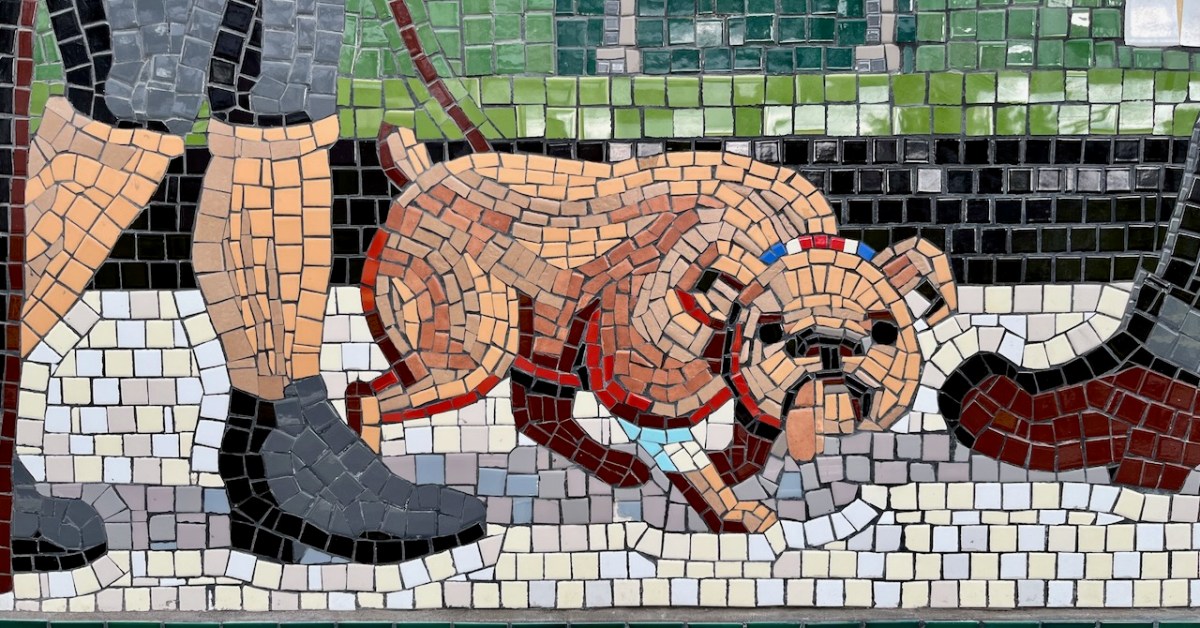
In a recent post I gave some examples of public art which can be seen on the railway station at Bray, Co Wicklow. I think this subject deserves a more comprehensive airing, so here we go! Just to recap, murals were originally painted here by Jay Roche and John Carter, who won a competition in 1987. Over the years the paintings deteriorated, and were replaced by the same team – assisted by Anthony Kelly and Eileen Maguire – with a very fine set of tiled murals. I’m recording the rest of these in this post, as I am so impressed by the overall work.

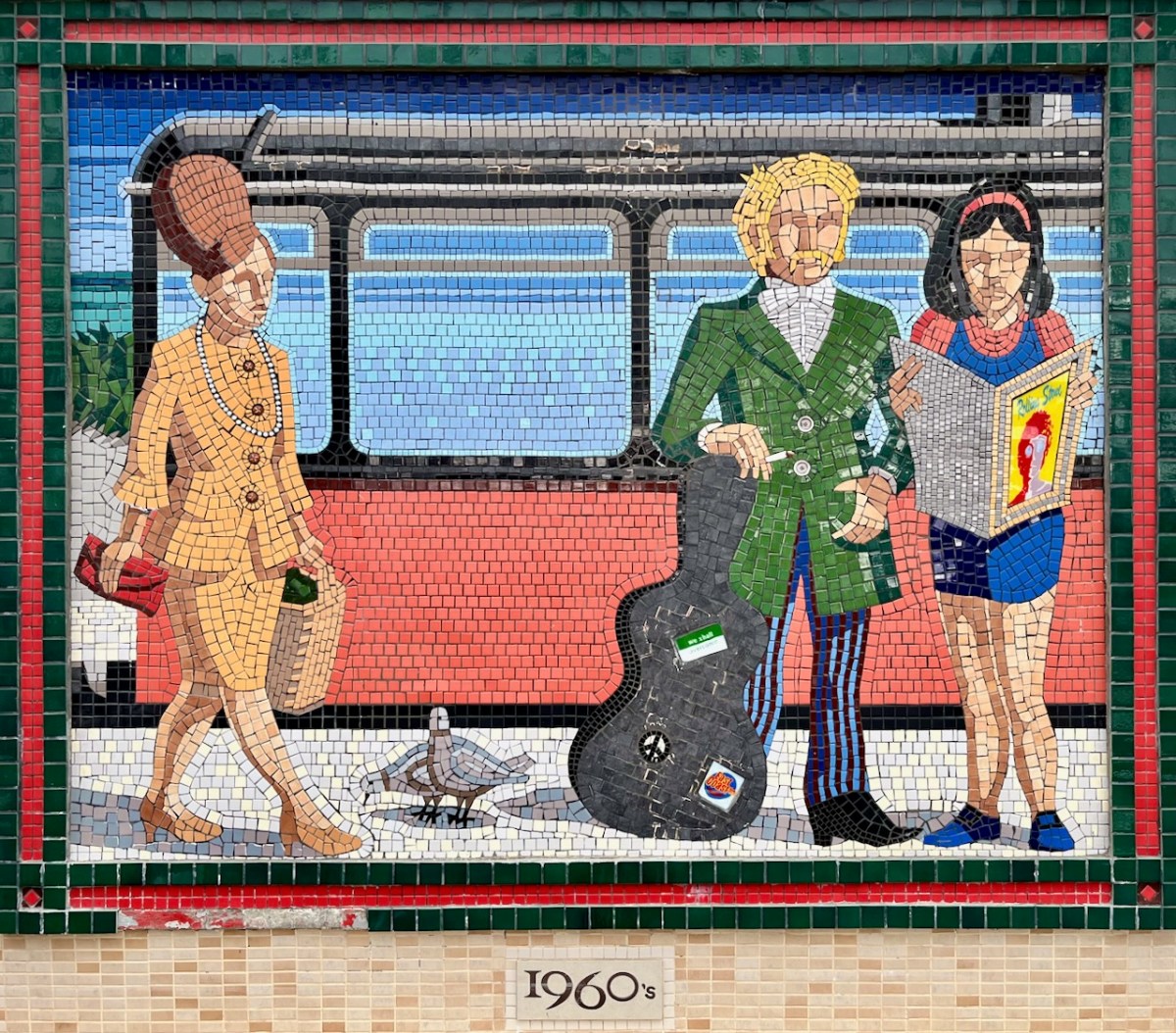
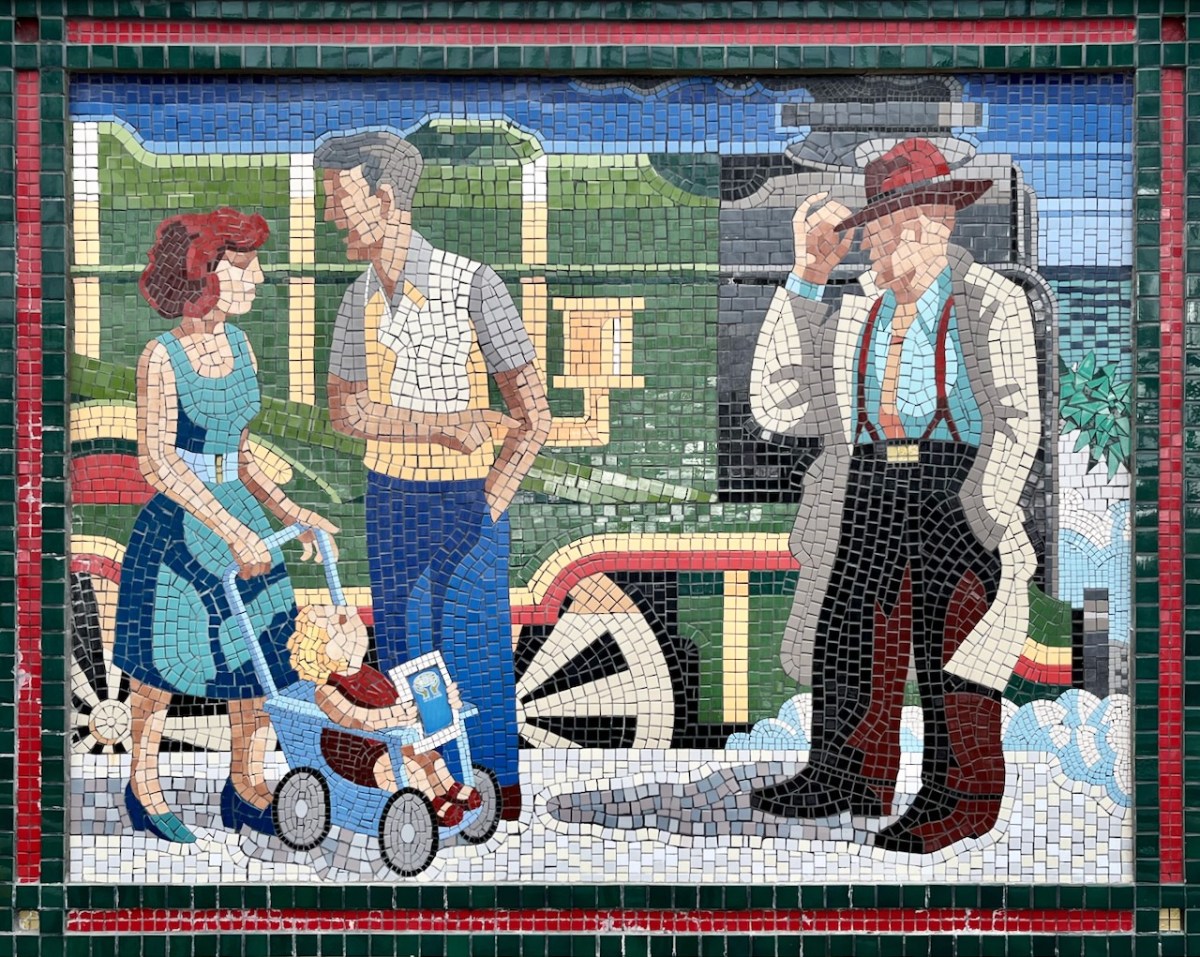
Each panel represents a decade in the line’s history. You’ll have to decide for yourselves which decade is which . . .

If only that newspaper headline was really true!

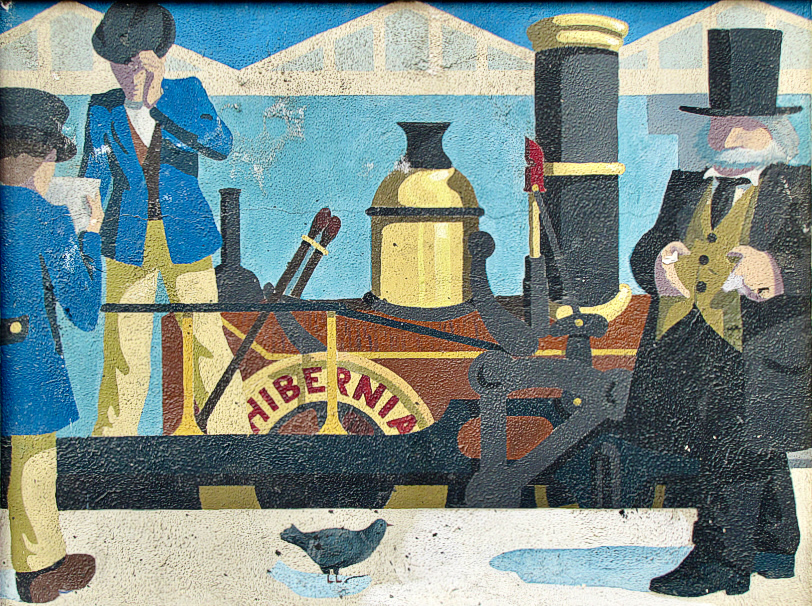
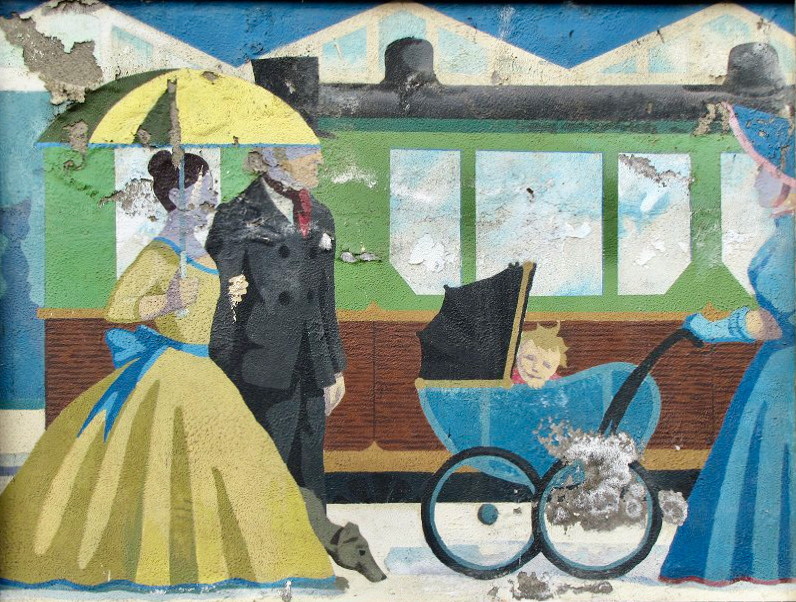
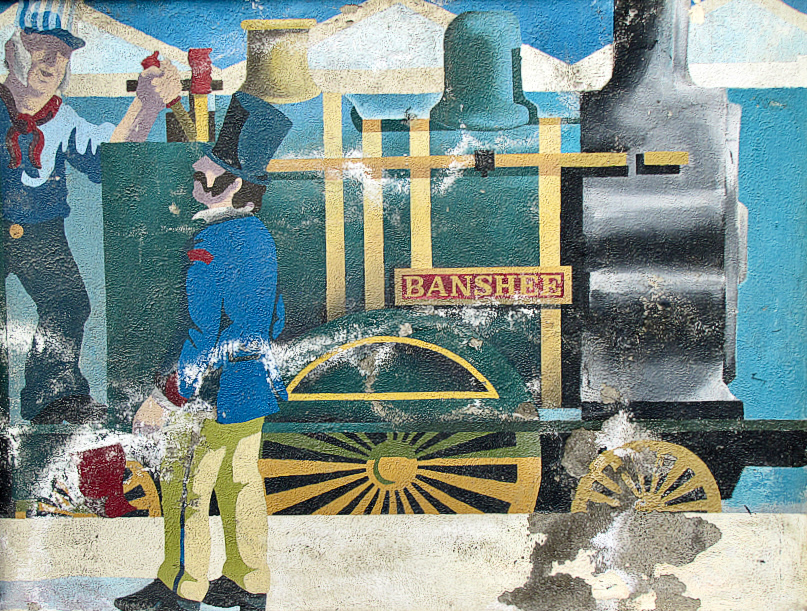
From Wiki Commons 2007: A Panel for Every Decade since 1850s in Bray Railway Station. These are the painted murals.
(Above) some of the painted murals in a fairly advanced state of decay: probably early 2000s. The tiled murals are loosely based on the subjects of the originals, but the artists have respected the variations that the change of medium calls out for:

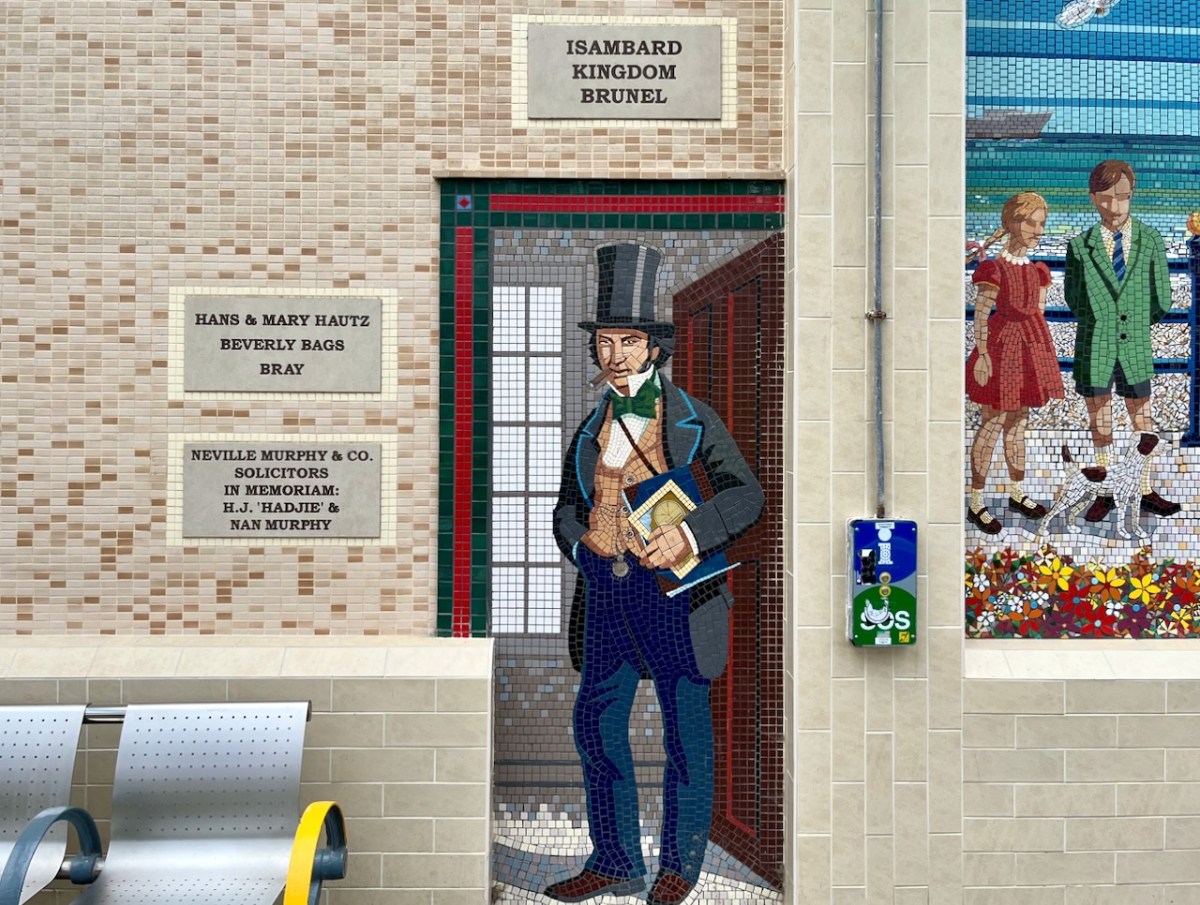
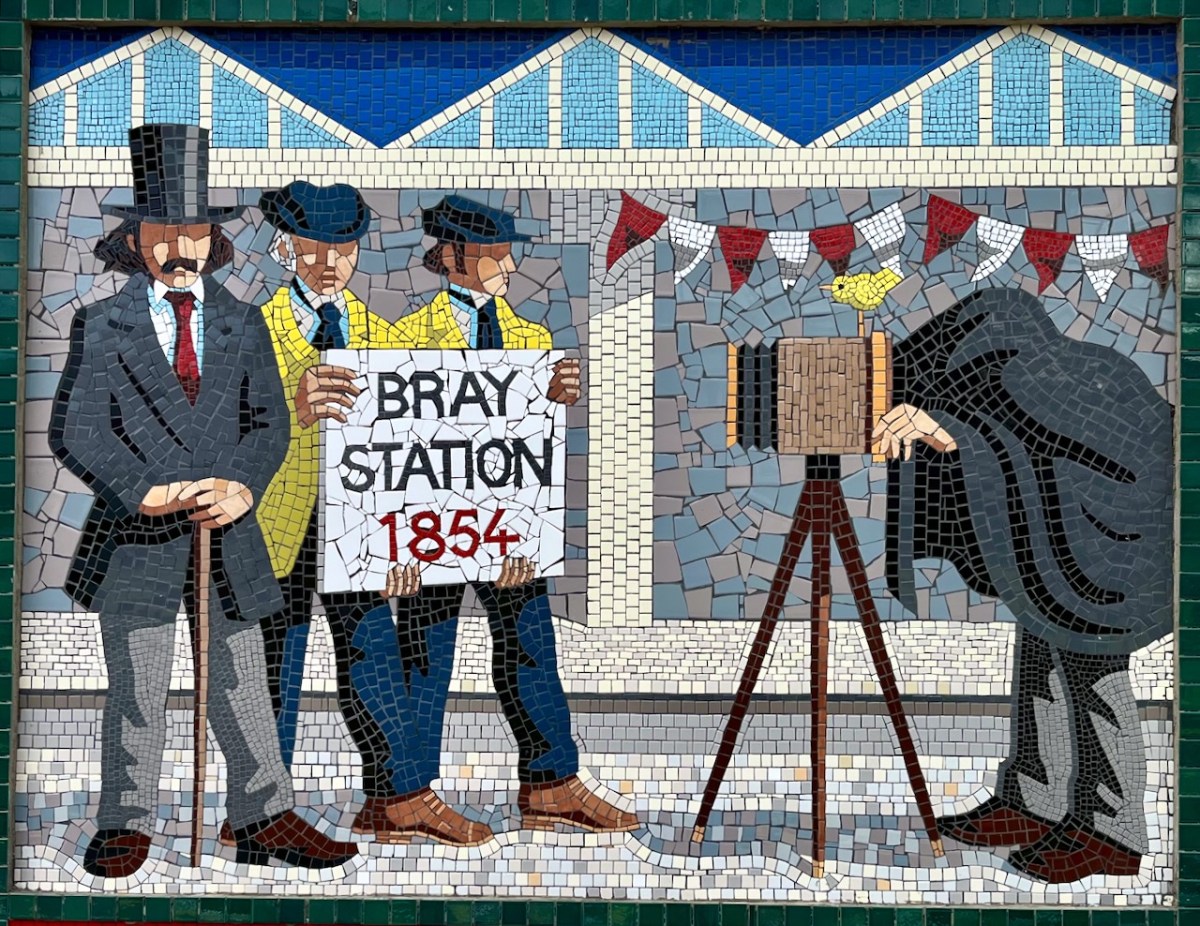
I mentioned – in Taking Notes – that Brunel was responsible for the line that runs through Bray. Here he is, standing on Bray Station:

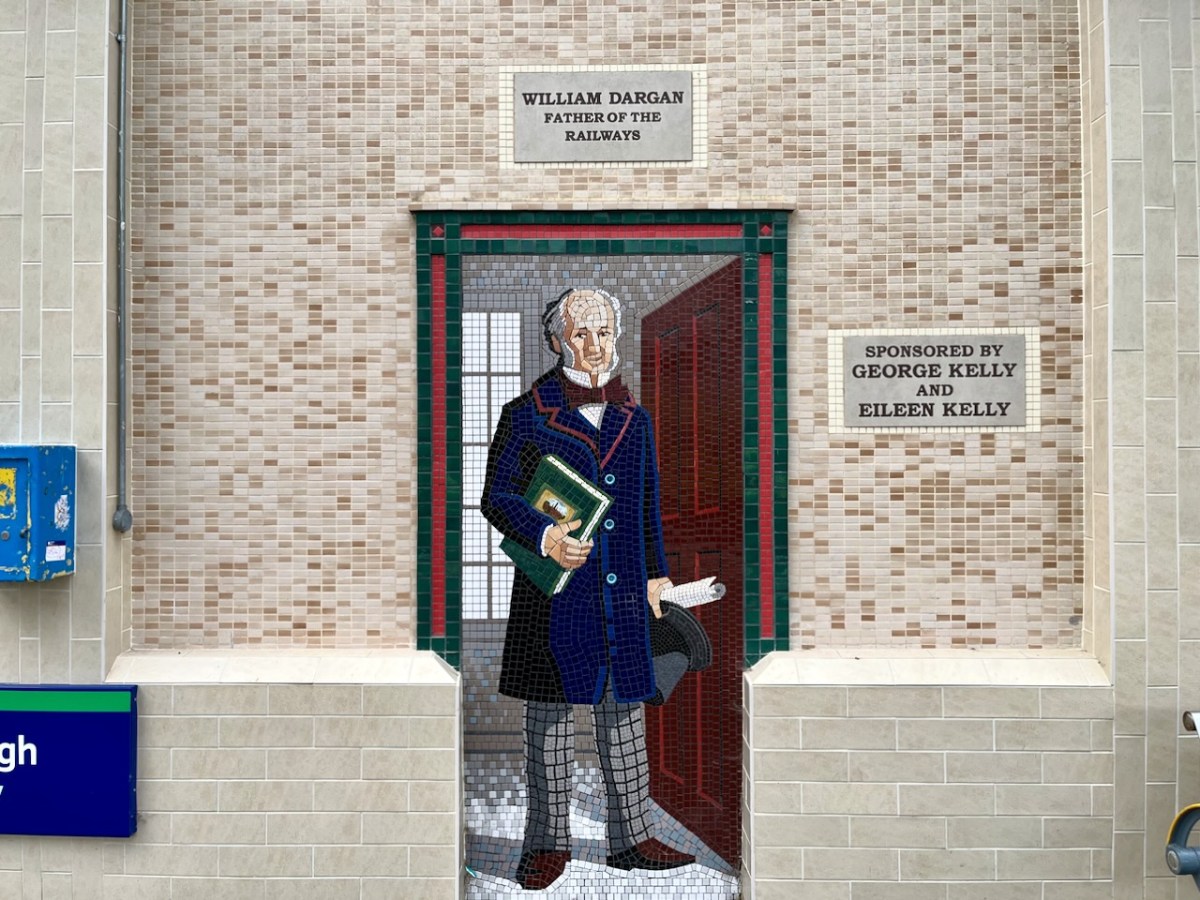
And here (above) – also one of the tiled murals on Bray Station – is a portrait of William Dargan. As you can see – considered ‘Father of the Irish Railways’ – Dargan lived from 1799 to 1867. He engineered over 1300 km of railways in Ireland. Working firstly in the UK he was an assistant to Thomas Telford, and oversaw the construction of roads and canals in the Midlands. He returned to Ireland in the 1820s and took an interest in promoting railways here. The first public commuter railway system in Ireland was designed and built by Dargan: it opened in 1834 and ran between Dublin and Kingstown, now Dún Laoghaire. The line as built was ‘standard gauge’ (ie 1,453mm between rails). This was converted to the ‘Irish standard’ of 1,600mm in 1857. The line extended south to Bray in 1854, and to Greystones the following year.

Isambard Kingdom Brunel, an engineer of Britain’s Great Western Railway, informed the Dublin and Kingstown Railway board that he was planning to build a line into South Wales and start a new sea route from Fishguard to Rosslare. He suggested a joint venture for a line from Wexford to Dublin. A coastal route from Bray (rather than inland) was chosen specifically because it would be scenically attractive for travellers. This led to engineering difficulties including tunnels and retaining structures which are still evolving to this day.

Brunel’s vision of a line going from the capital to Wexford and linking with a service of Irish Sea ferries has been fully realised, and is taken for granted. Let’s hope that this line is maintained and continues on far into the future.

I hope you have noticed how the design of the rolling stock has been changing as we go back through the decades. The representation on these murals is accurate, as far as I can see.

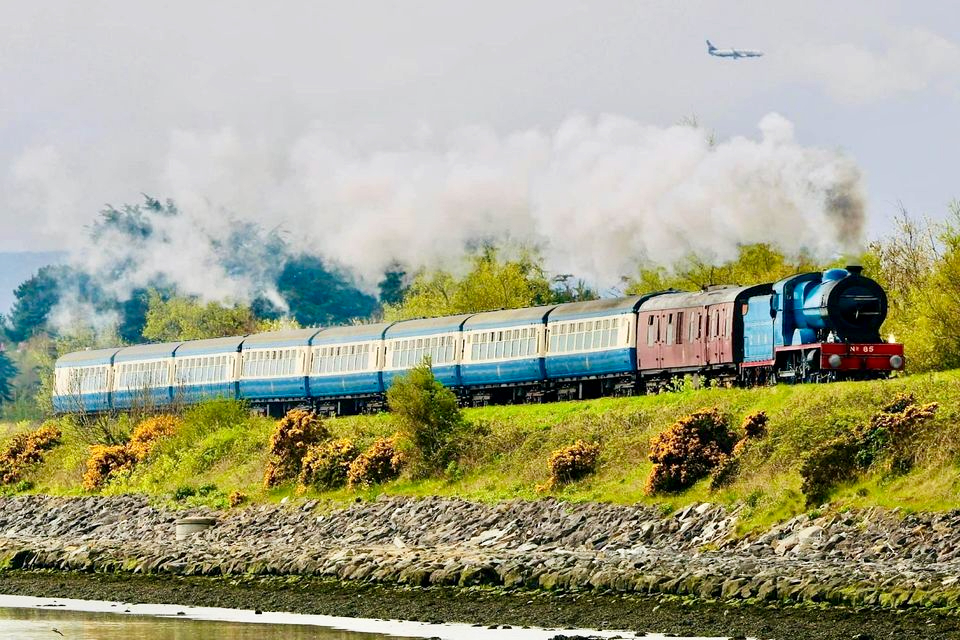
I was sorry to miss the sight of restored steam locomotives and carriages coming through Bray and Greystones on Sunday 24 September this year. Here’s a previous Steam Express visit to Wicklow in 2022 (courtesy Irish Independent):

Here in the West we did have some very singular railway lines – look at these posts: The Great Southern Railway: Headford Junction to Kenmare; Aspects of Baltimore; The Flying Snail and Tracking the Trains. Sadly, it’s no longer possible to travel by train in our region: all lines west of Cork City closed on 31 March 1961. Before that you could get to Skibbereen, Ballydehob, and Schull, Bantry and Baltimore and even, on a little branch line, to Timoleague and Courtmacsherry. Don’t we miss those opportunities?

The Fassaroe-Type Crosses of South County Dublin

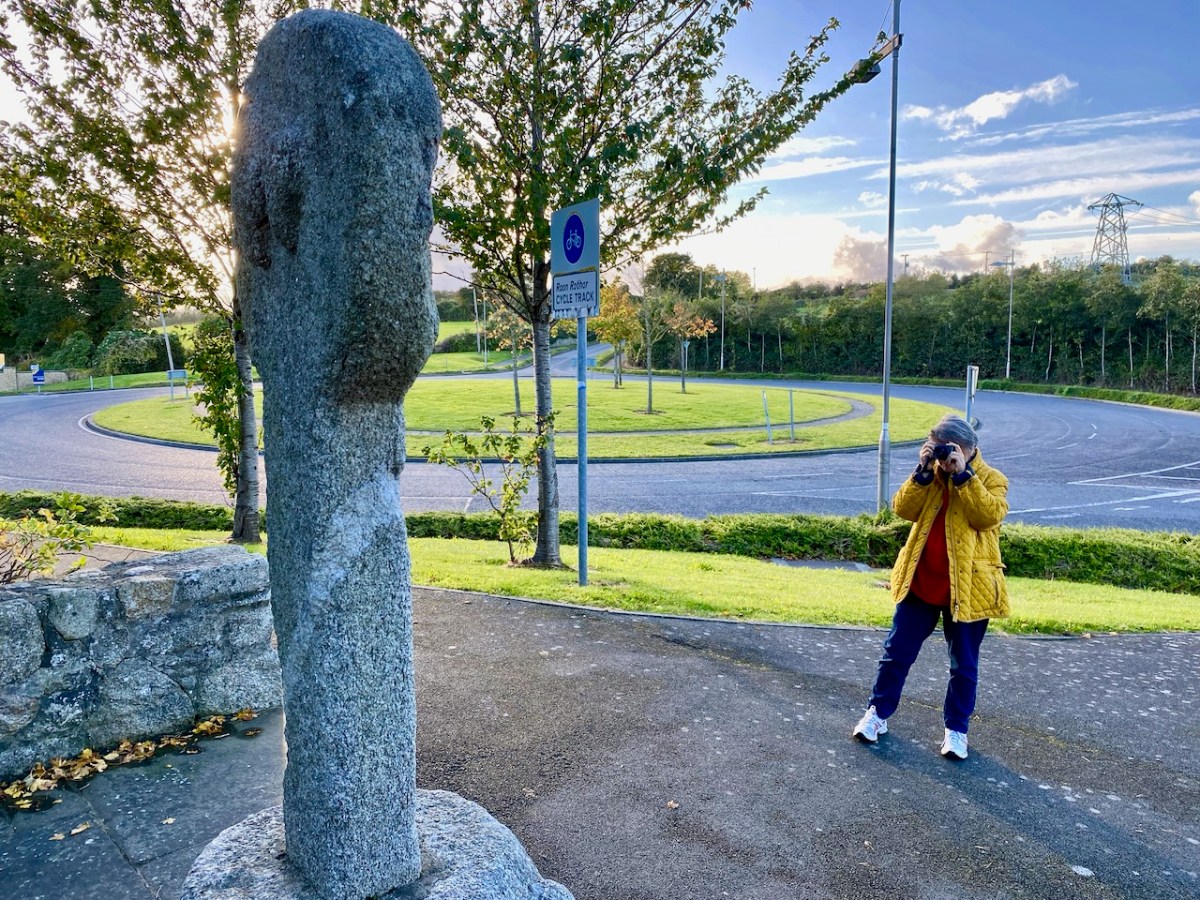
The Fassaroe Cross (also know as St Valery Cross, below) is familiar to me from childhood, but I hadn’t realised until recently that it is part of a concentration of four crosses in south County Dublin, all still extant*. We have visited them all now, and this first post will look at these remarkable examples of surviving Irish Early Medieval crosses. In the second post I will study their possible dates, established mainly through association with similar examples from elsewhere in Ireland.

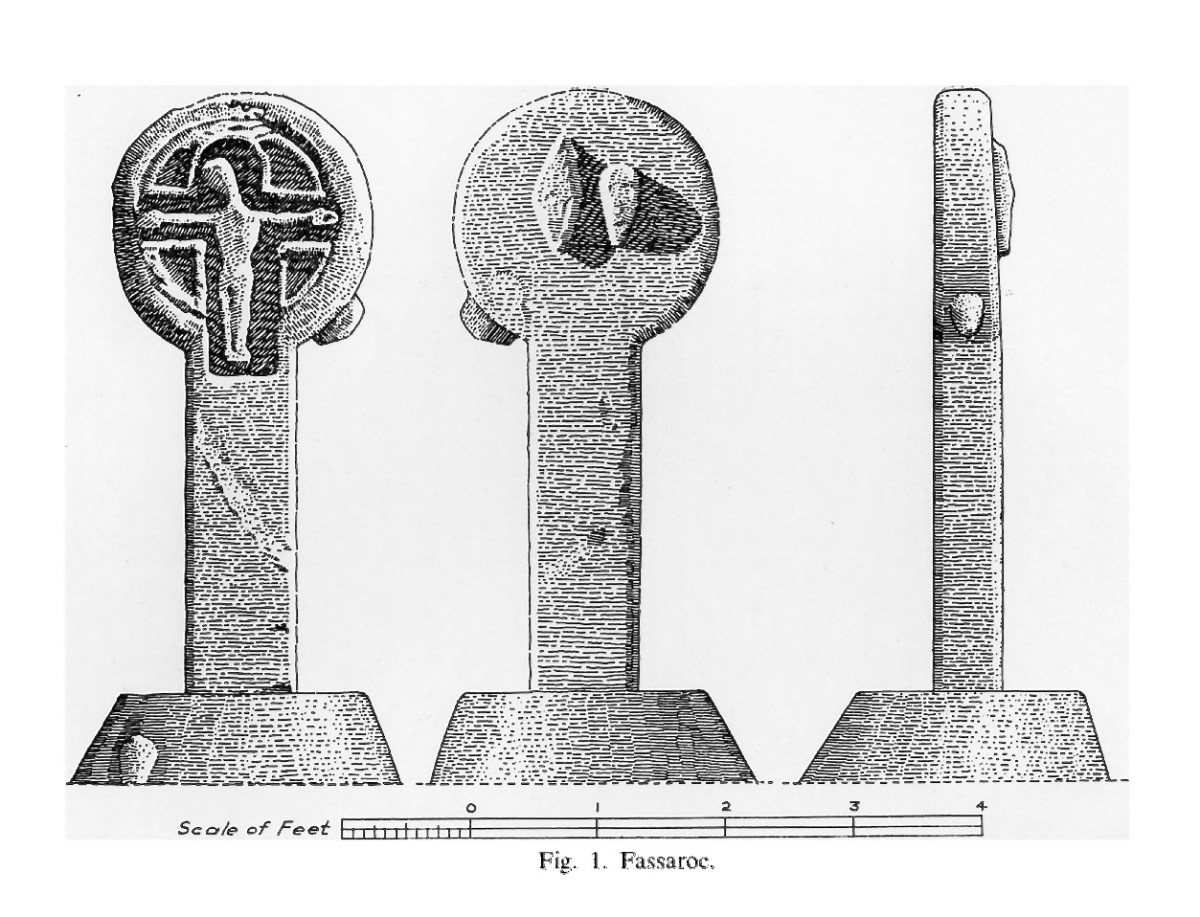
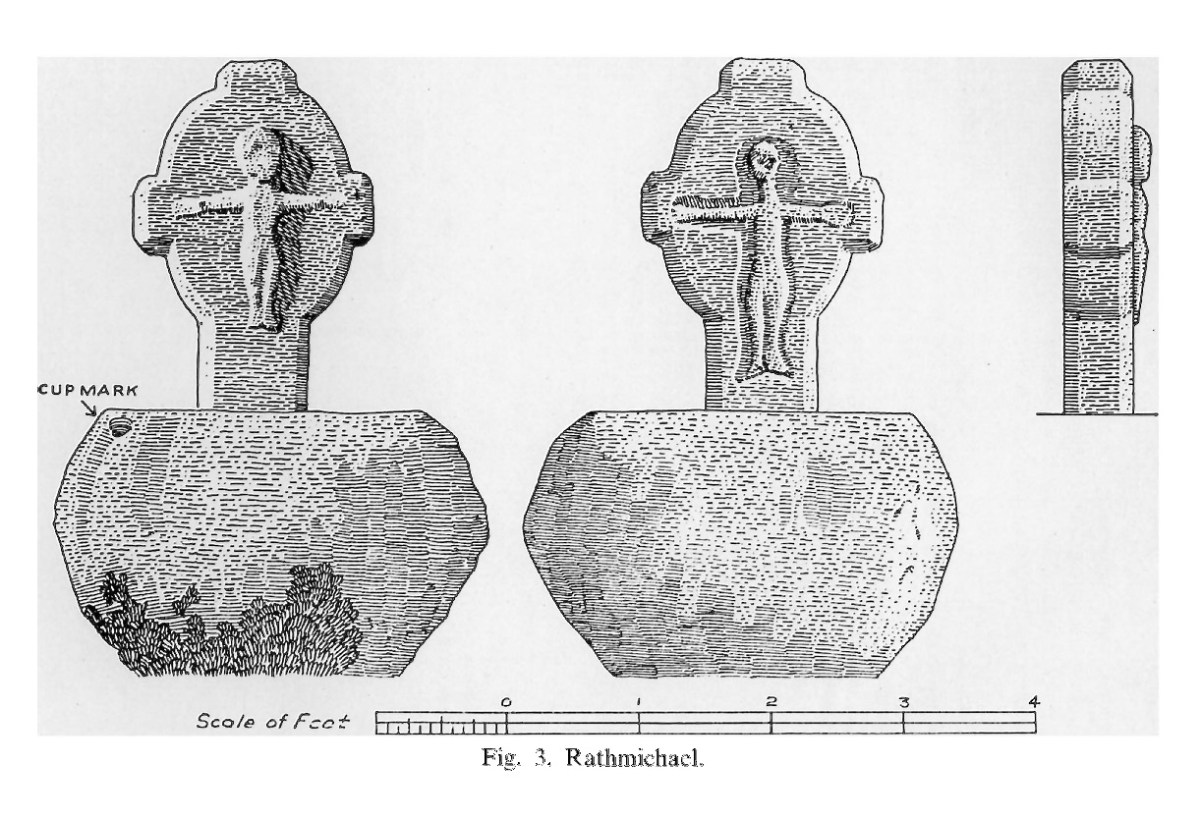
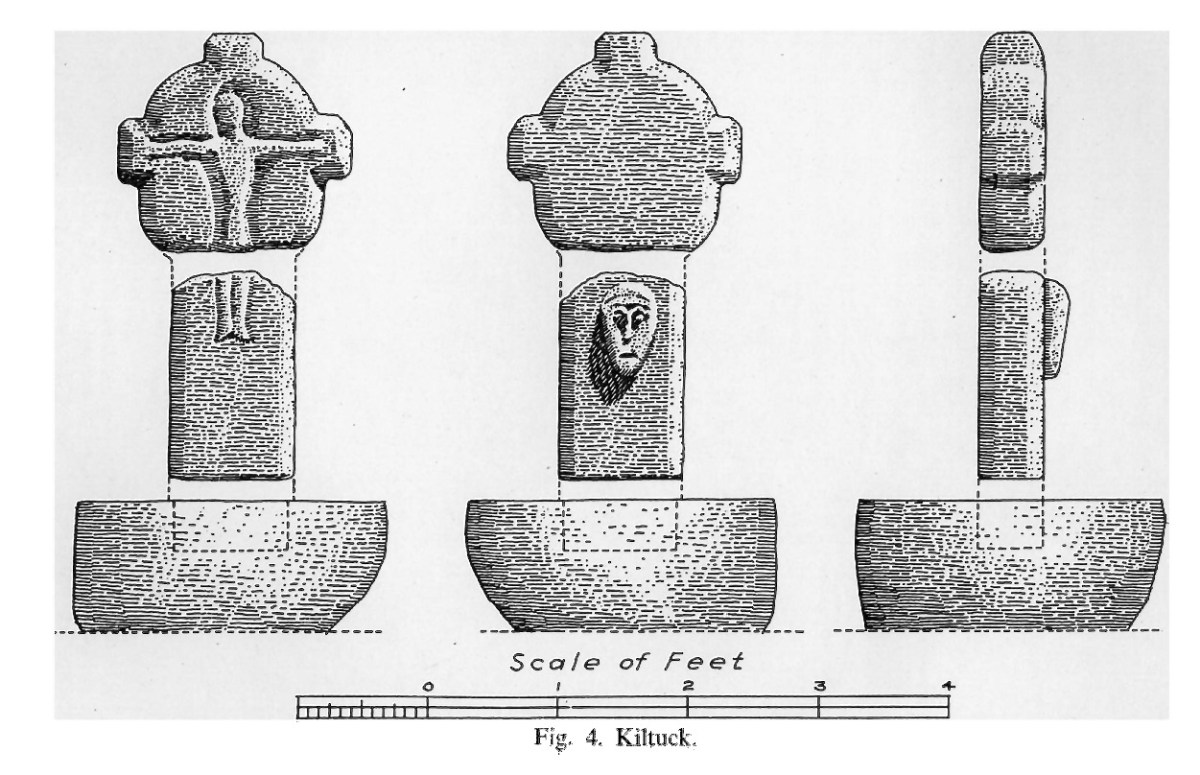
In using the term Fassaroe-type, I am following Padraig Ó hÉailidhe (better known as Paddy Healy) who, in 1958, published Fassaroe and Associated Crosses in the Journal of the Royal Society of Antiquaries of Ireland (available on JSTOR). Not only did he lay out what was known about these four crosses at the time, but he included his own wonderful and accurate pen and ink drawings.

Robert included the Fassaroe Cross in his post East Coast Archaeology, so I refer you to that for additional photographs of the cross in its context. It’s easy to see why this cross would have become the diagnostic ‘type’, since it is the most complete. 

Standing incongruously at the edge of a traffic roundabout, the cross is an arresting sight. According to Ó hÉailidhe, It was brought from ‘a glen’ some distance away. He also states:

When O’Curry visited the site in 1838,4 he saw, in addition to the cross, a font, pedestal, and quern, which are still extant, a cross shaft which is now missing and part of a baptismal font which had been removed along with another quern to the farmhouse beside Fassaroe Castle. He was furthermore informed that a circular crosshead had also been removed, and that human bones had been dug up on the south side.

The cross has a circular head on a straight shaft which is set into a semi-conical base. On its front face its a crucifixion image, head tilted to the right. The crucified Christ is surrounded by four wedge-shaped quadrants, as if to indicate the hole-and-circle we associate with high crosses. A carved head occupies a space on the outer circle on the lower right.

The back of the circle has two carved heads. Although very worn, Ó hÉailidhe felt their elongated shape pointed to long beards and a mitre. The base has yet one more head. You can view the cross in 3D here, a project of the Medieval Bray Group.

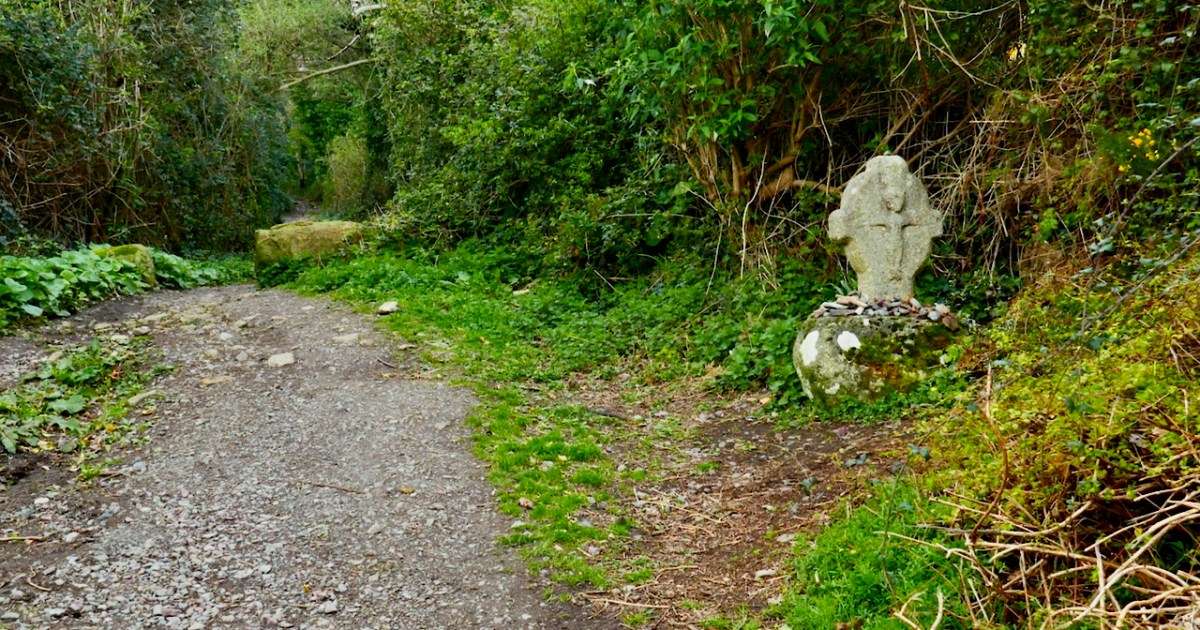
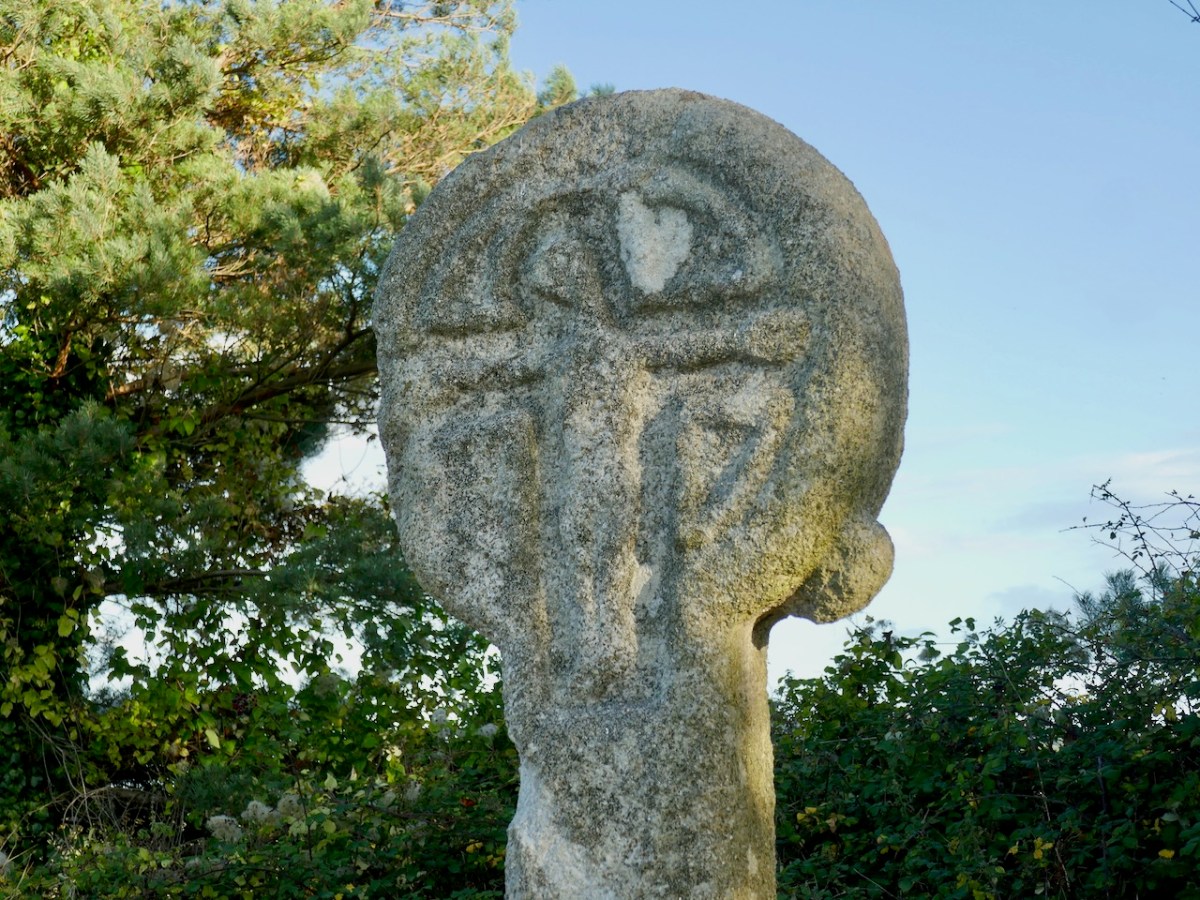
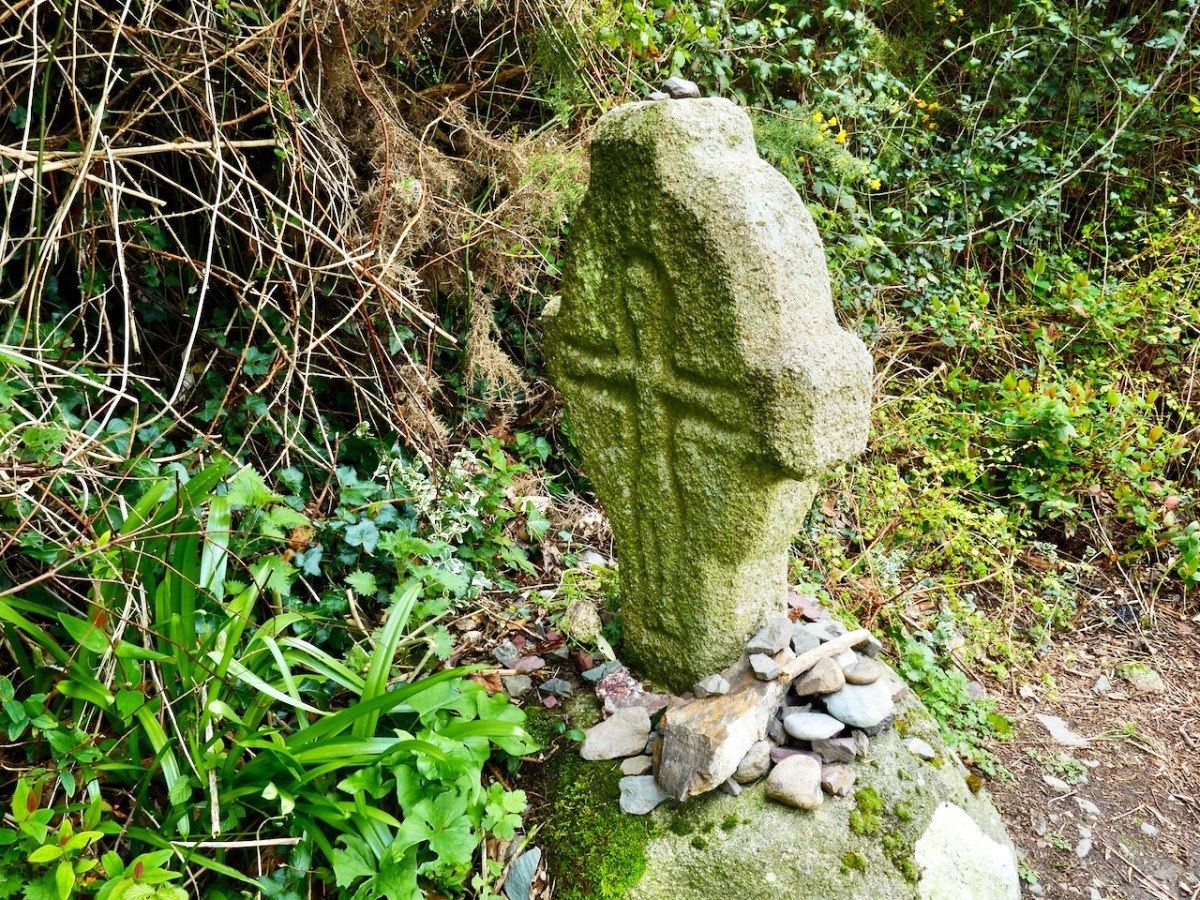
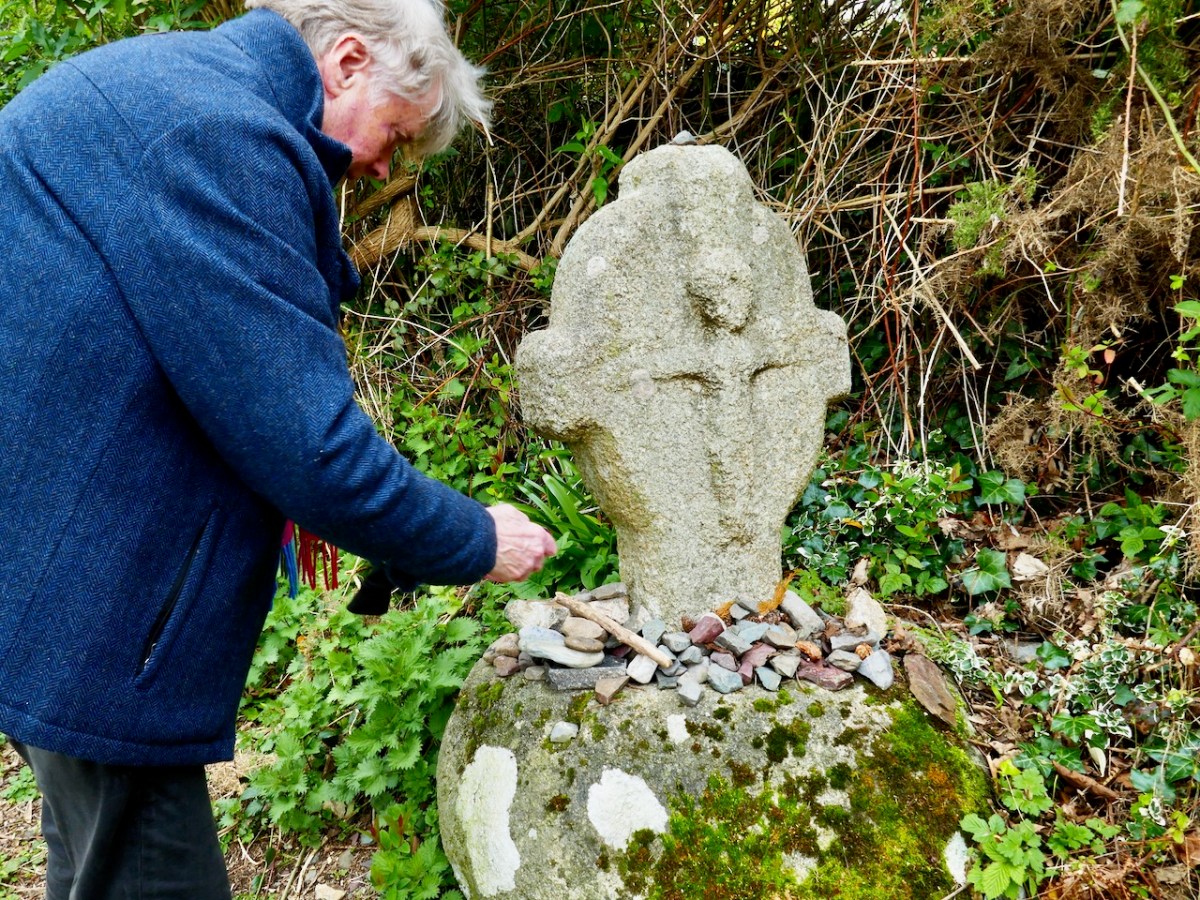
The second Cross is in Rathmichael, just outside Shankill, at the start of a woodland walk. It’s my lead photograph, which shows the context. It was moved here from the ruins of Kiltuck Church which once stood, with its associated graveyard, in what is now the housing estate of Castle Farm on the Bray to Shankill road. 

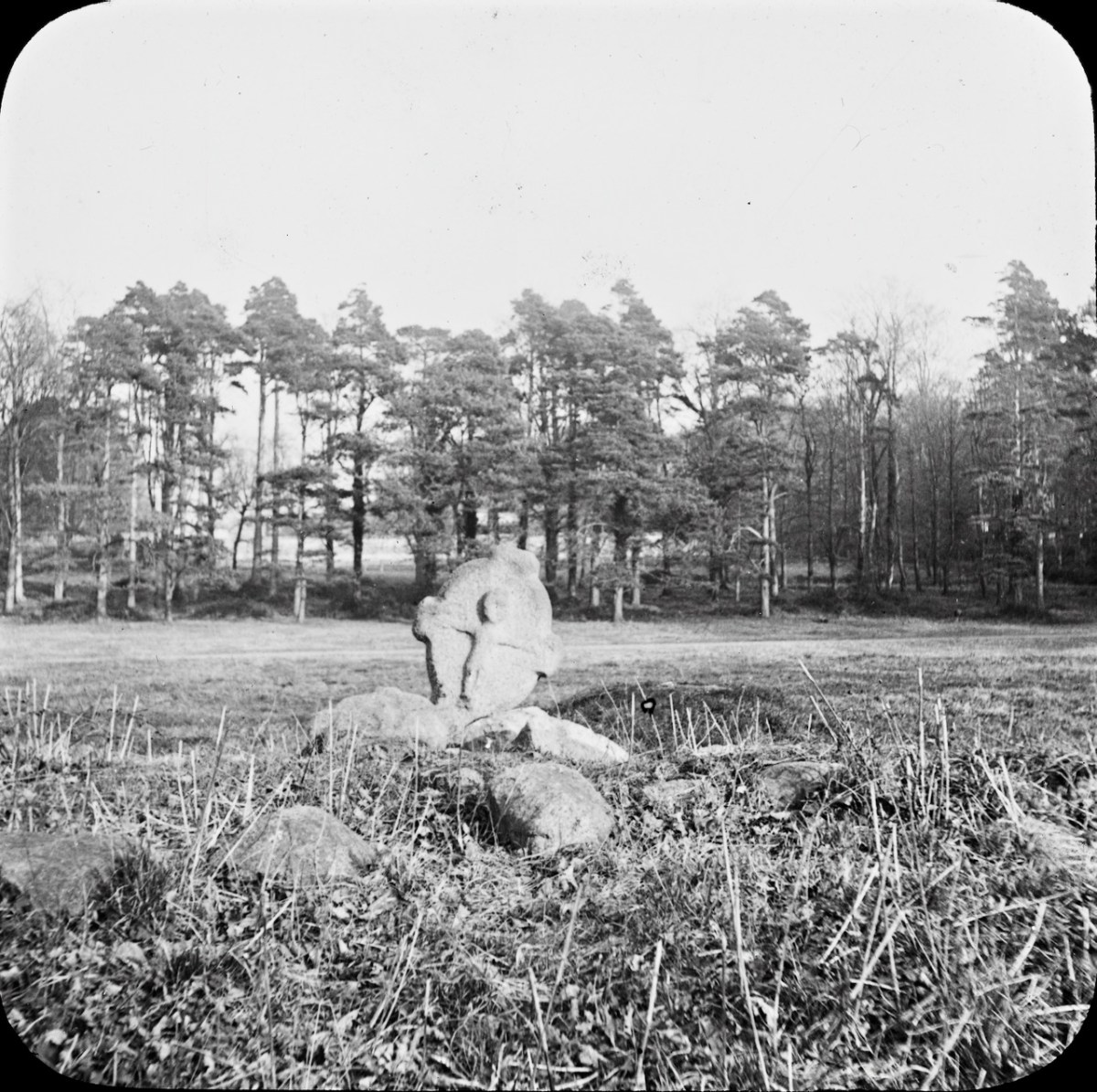
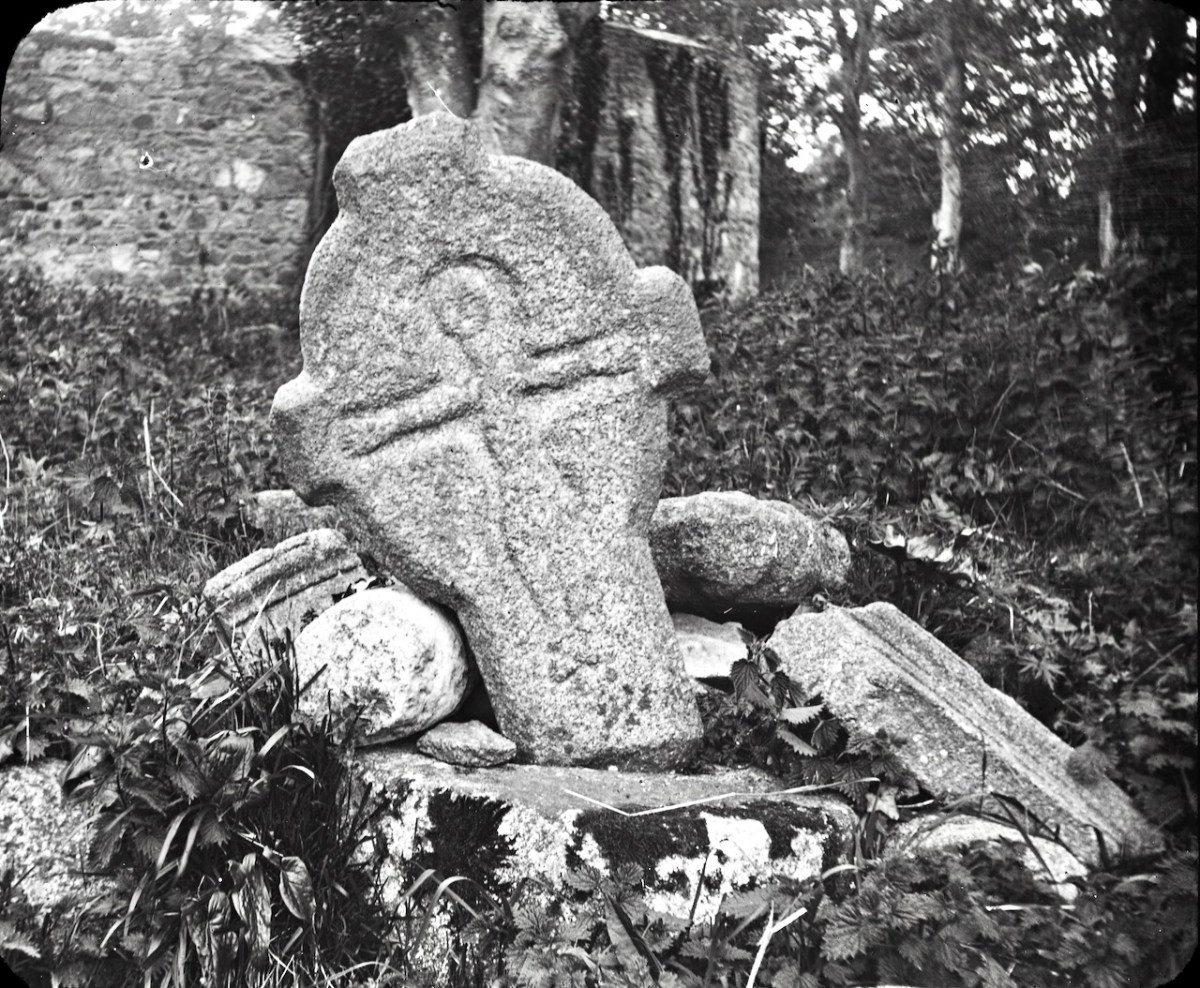
Old photographs taken by Thomas Mason (see Roberts post for more about this photographer) show it before it was moved, in a jumble of stones at Kiltuck.

The two Mason photographs above are from the Mason collection at the National Library of Ireland, and used under license from them.

Apparently the shaft was in the present location and when the cross was re-united with it – it fit! The front of the cross has the crucifixion image carved in relief, while on the back the image is recessed. Like Fassaroe, the recessed head  is slightly tilted to the right. Unlike Fassaroe, in which the top of the cross was circular, this one has very short arms. 

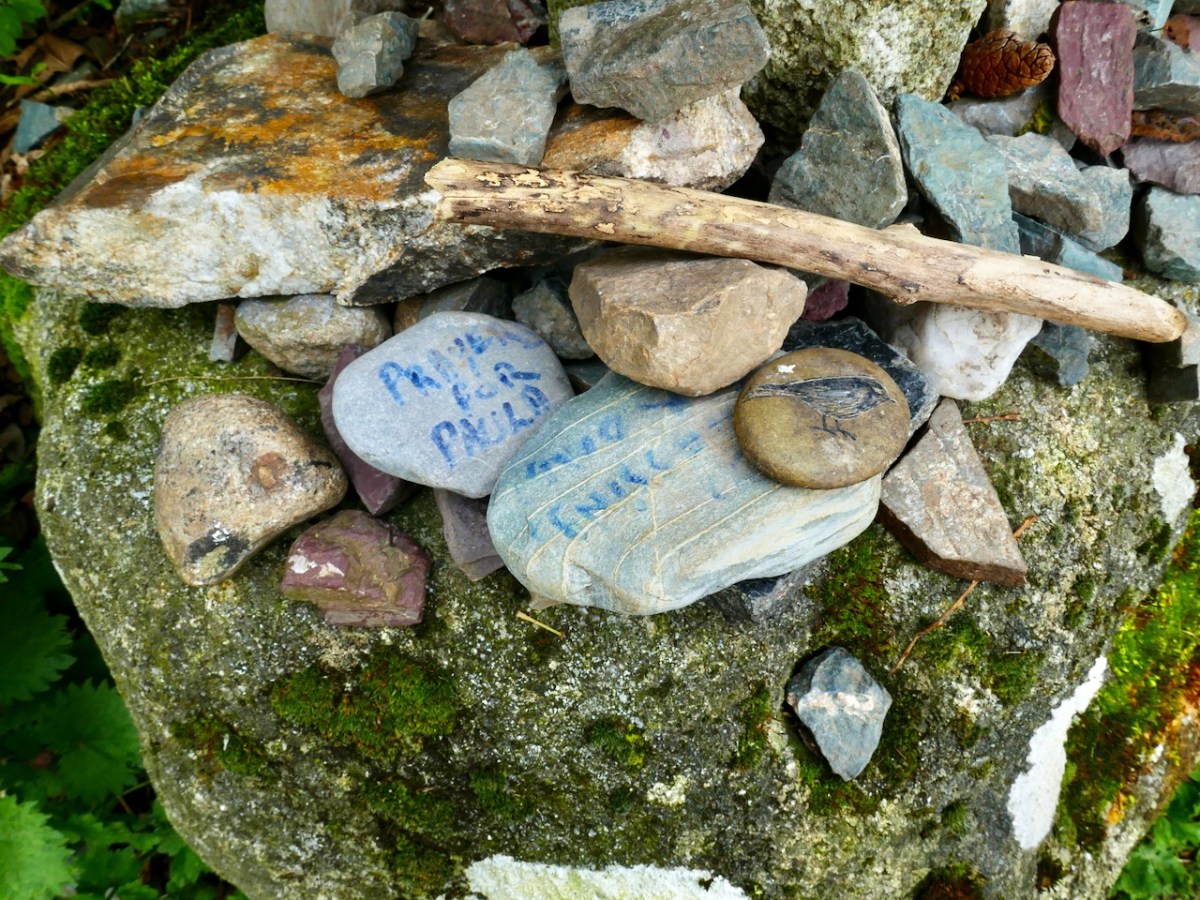
The base has a small cupmark. Since walkers regularly use this route, some have taken to leaving small offerings, and it’s good to see this cross as valued and respected.

There were two crosses at Kiltuck, and the second one was removed by the Parish Priest of the newly-built Church of St Anne in Shankill in the early 1930s. In recent time the Rathmichael Historical Society, an active local group, sponsored its erection in its current location in front of the church, on a stone plinth.

The front face has a recessed crucifixion image, head slightly tilted to the right. The photograph below was taken in the church yard and shows the urban environment of this cross.

The back of the cross has a head, with the pointed chin such as we saw at Fassaroe. The head of the cross has the same short arms as the Rathmichael cross. 

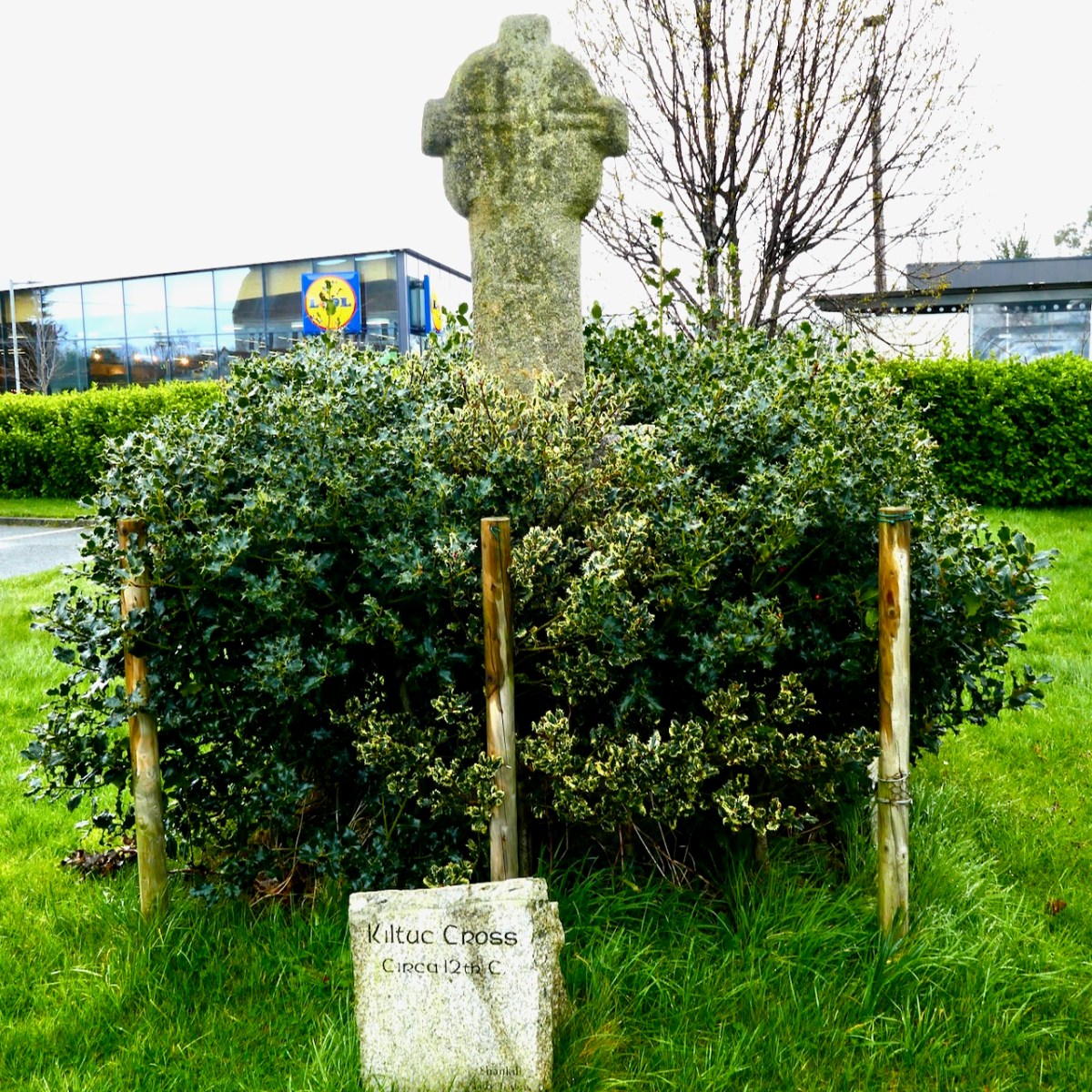
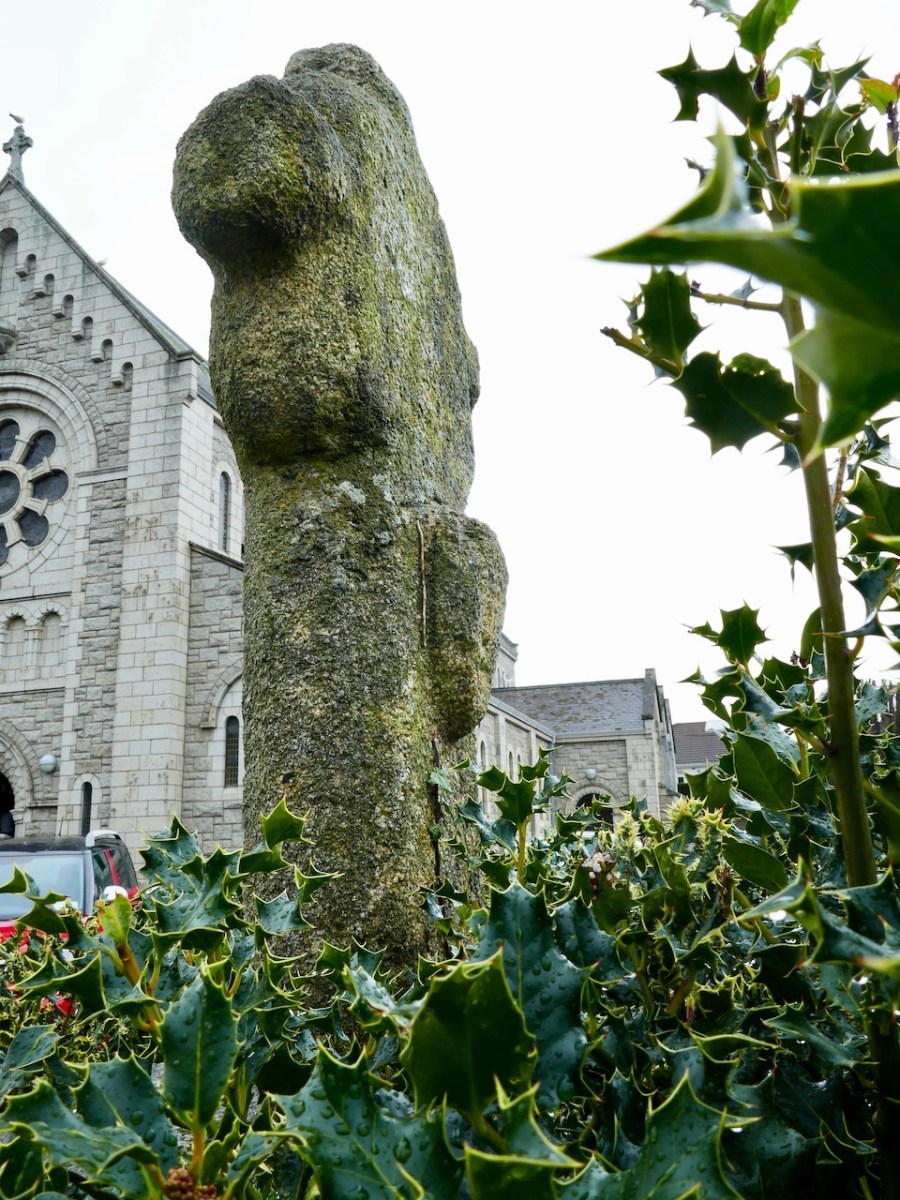
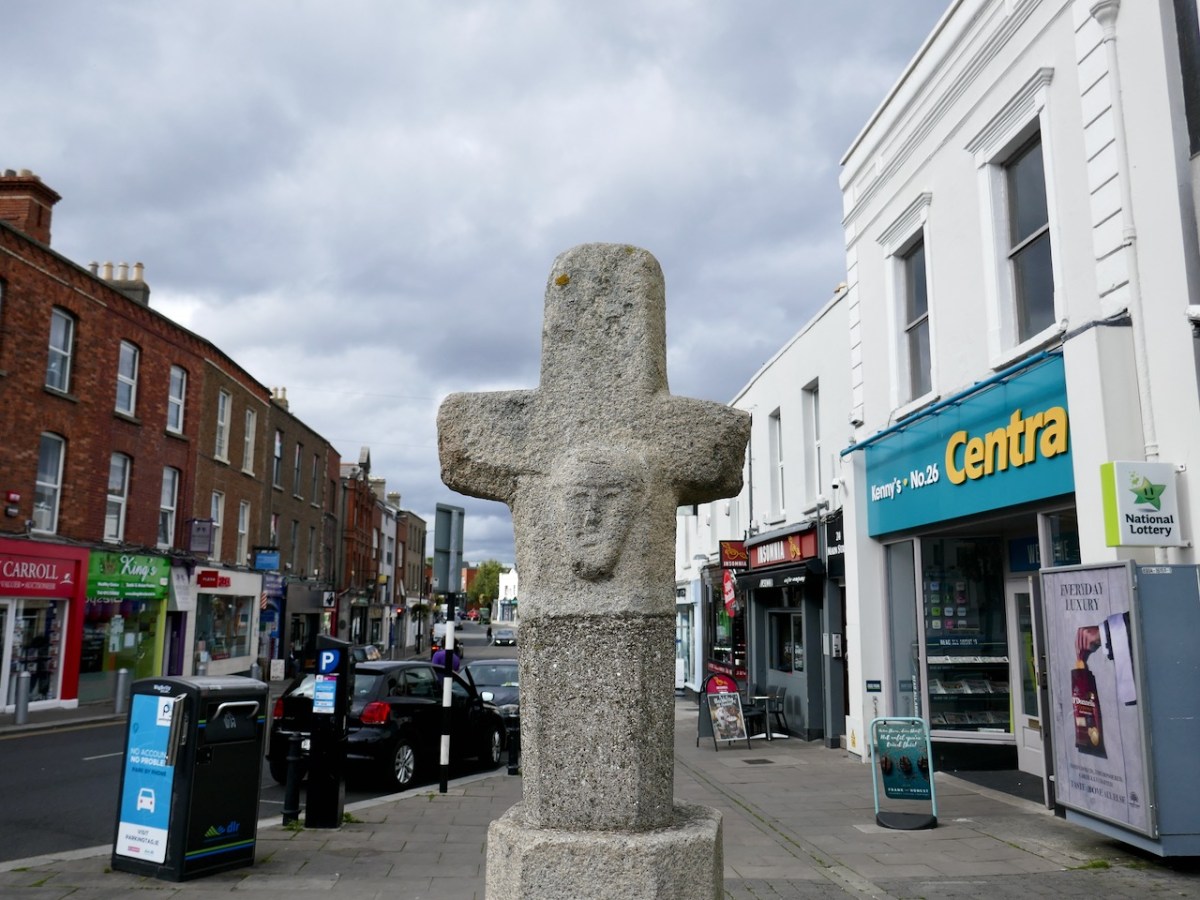
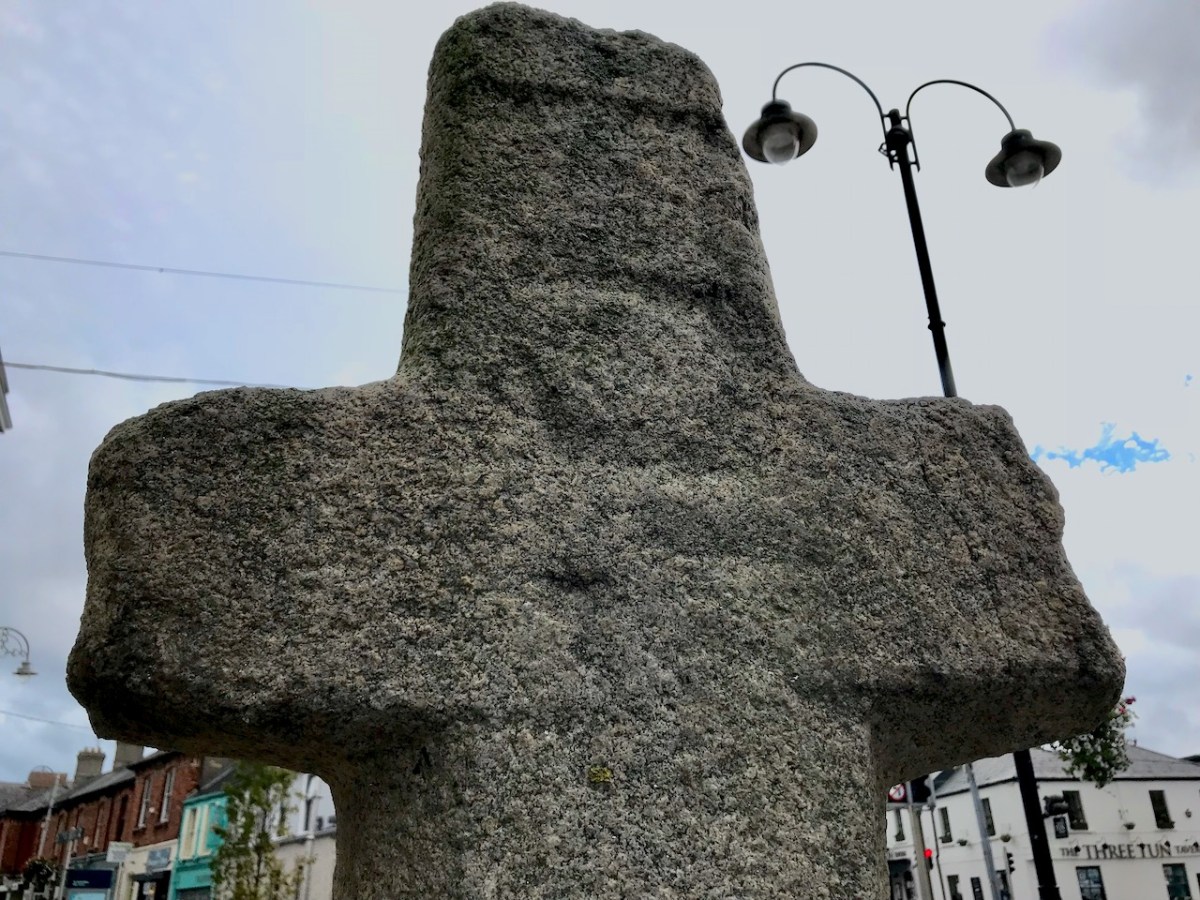
Our final cross is in a most unexpected location – right in the middle of Blackrock. It may have been used in the 15th century as a boundary marker to separate one medieval Dublin ‘franchise’ from another. Here’s what Ó hÉailidhe has to say on his decision to include it with the others: 

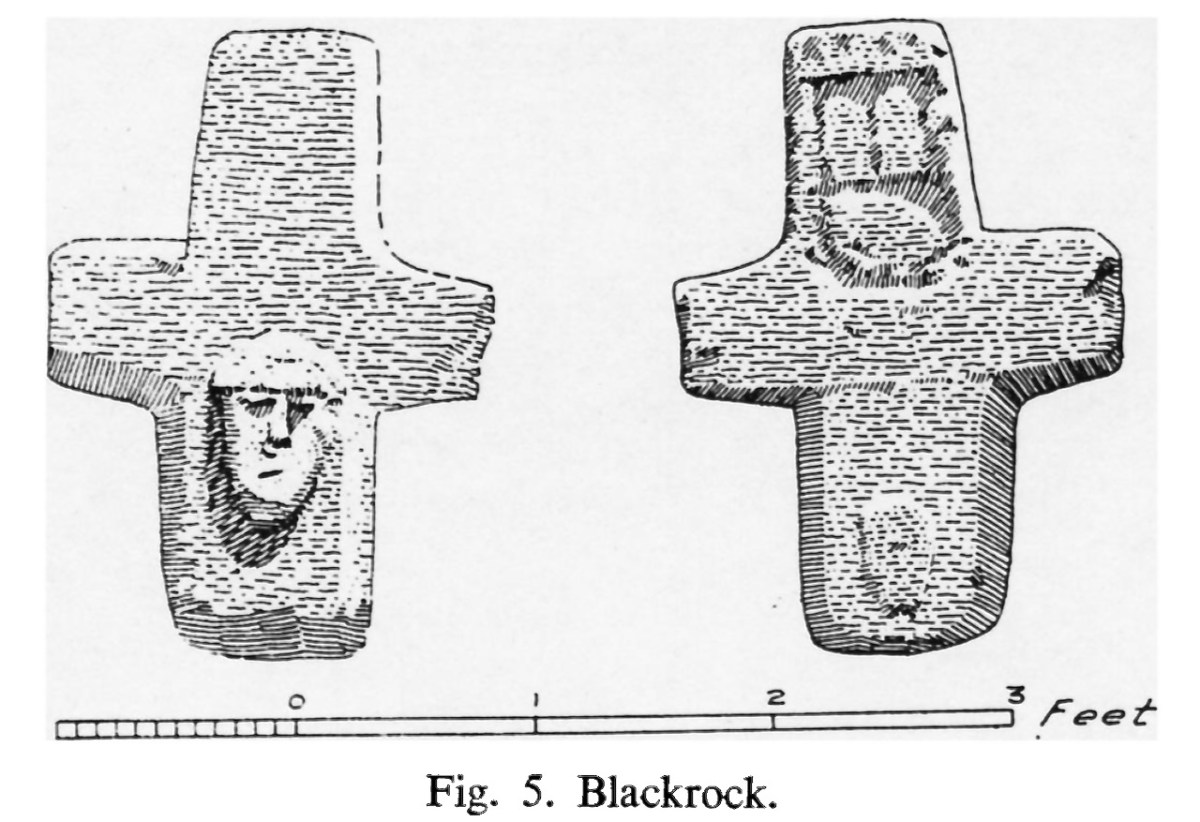
The newly erected cross at Blackrock (Fig. 5)26 has been included in this group, because it has several features in common with that of Kiltuck, i.e. a human head in exactly the same position on the shaft and some rather irregular chamfering. This cross does not possess any artistic or architectural merits.

The chamfering is most obvious on the Kilmichael cross, while the head is similar to that at Kiltuck. The shape of the cross, however, is entirely different: rather than the head of the cross being circular, this one is, well, cross-shaped.

It’s impossible to make out what’s on the back on the cross, although Ó hÉailidhe tries manfully to illustrate it. 

Ó hÉailidhe includes one more cross, from Killegar in Wicklow, now in the National Museum, but I will deal with that one in the next post, when I will review the literature about similar crosses and come to a conclusion about likely dates. Spoiler alert: although there have been claims that these crosses may be as late as 17th century, as you will see, I agree with most authorities that they are 12th century. As such, they represent a very important monument group.

* Thanks to Chris Corlett for pointing me in the direction of resources for this post

Urban Dolmen

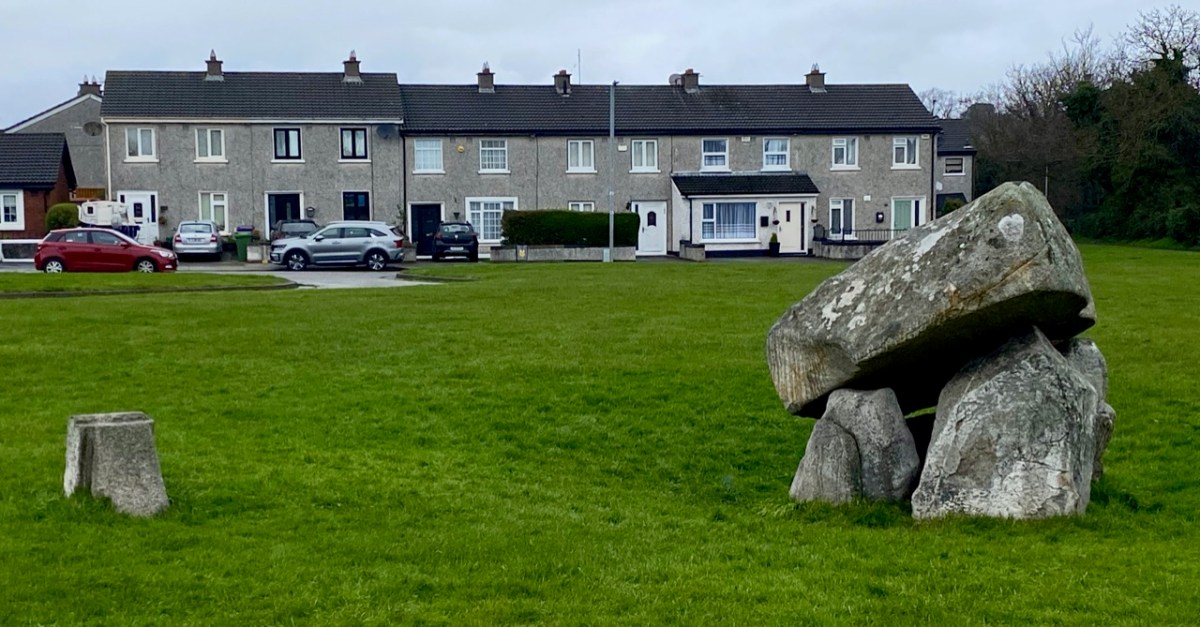
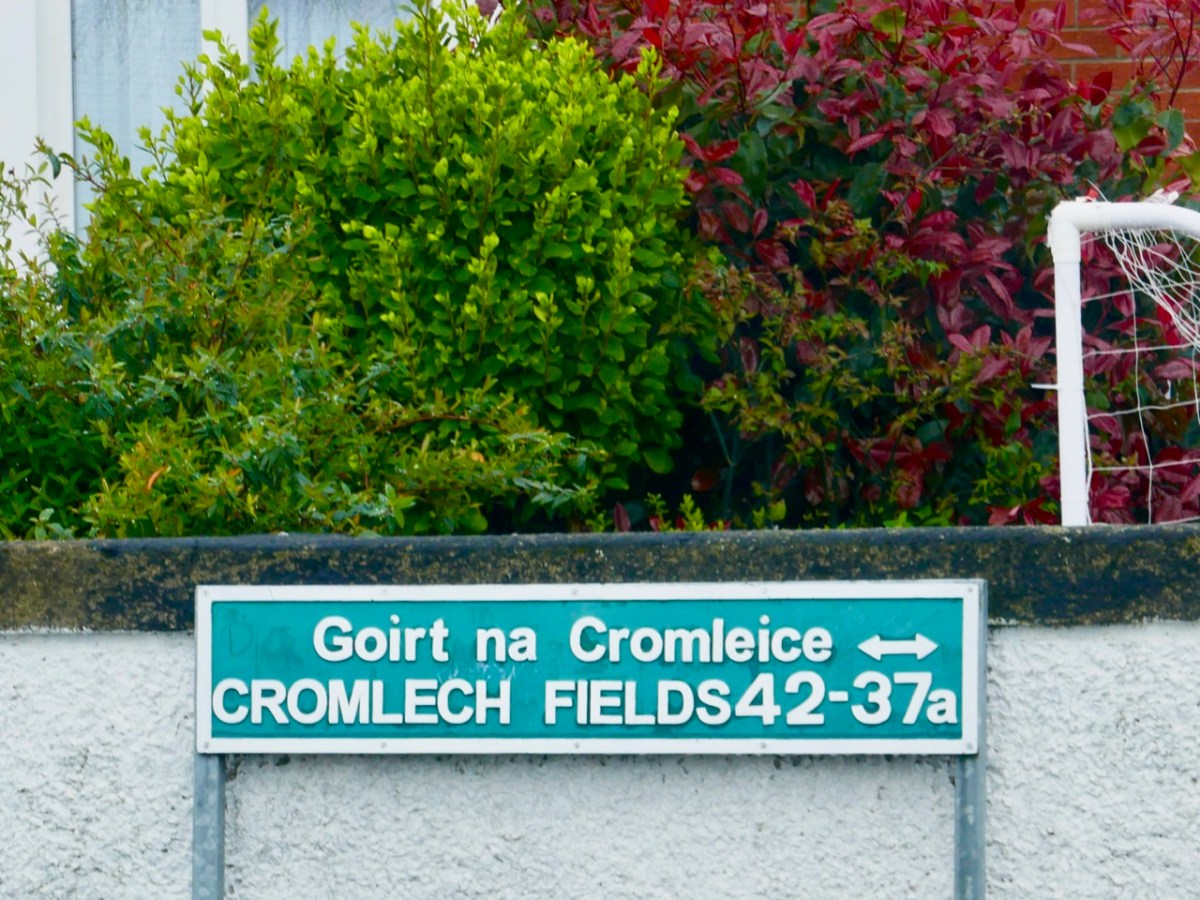
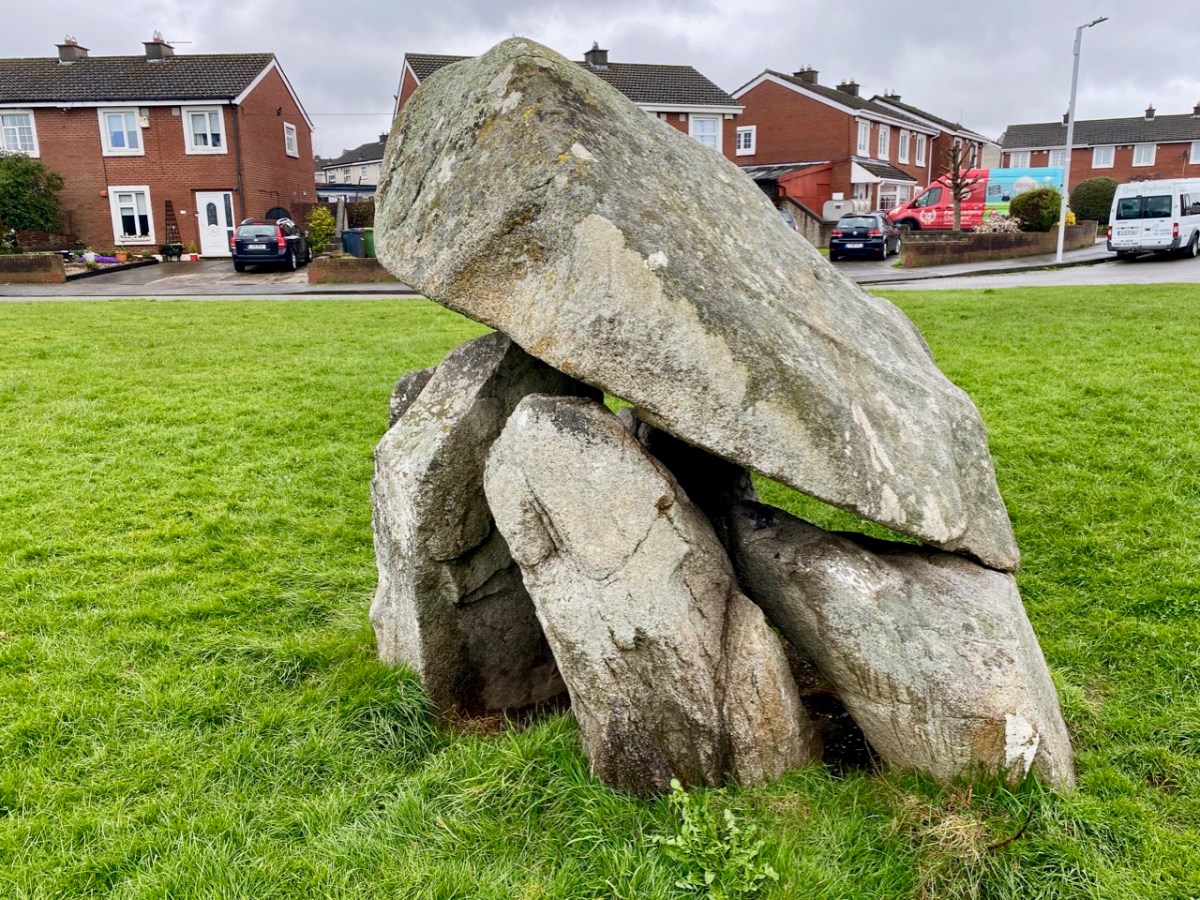
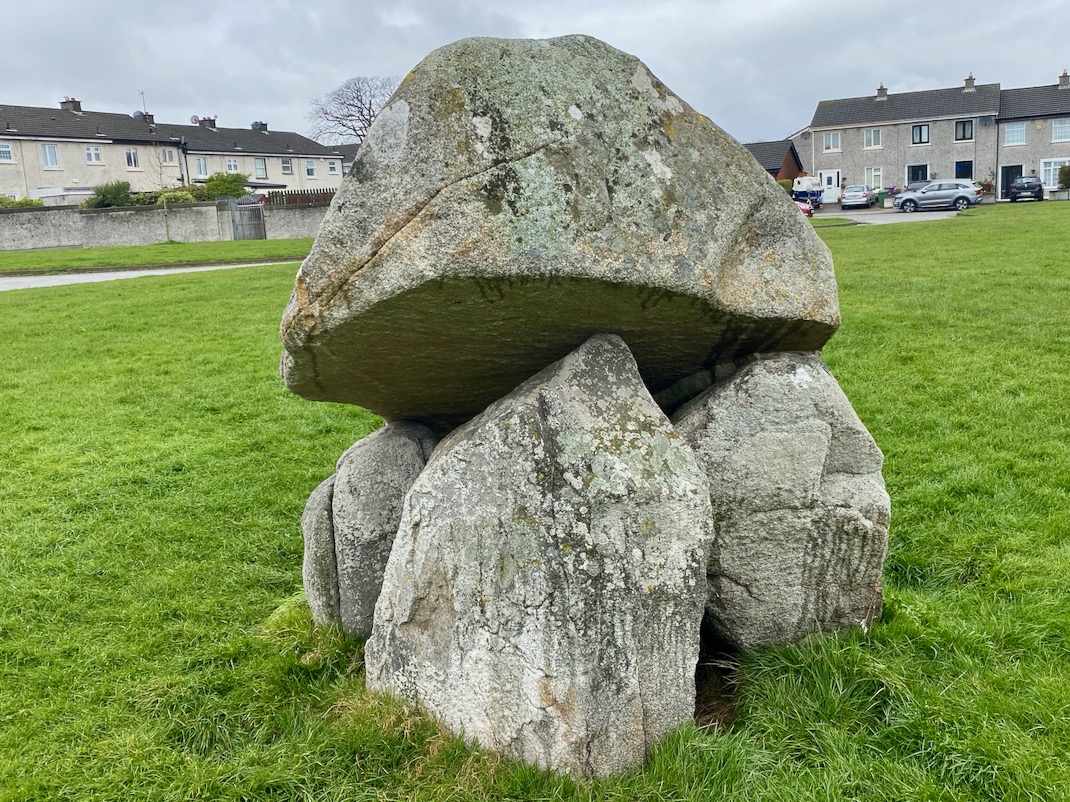
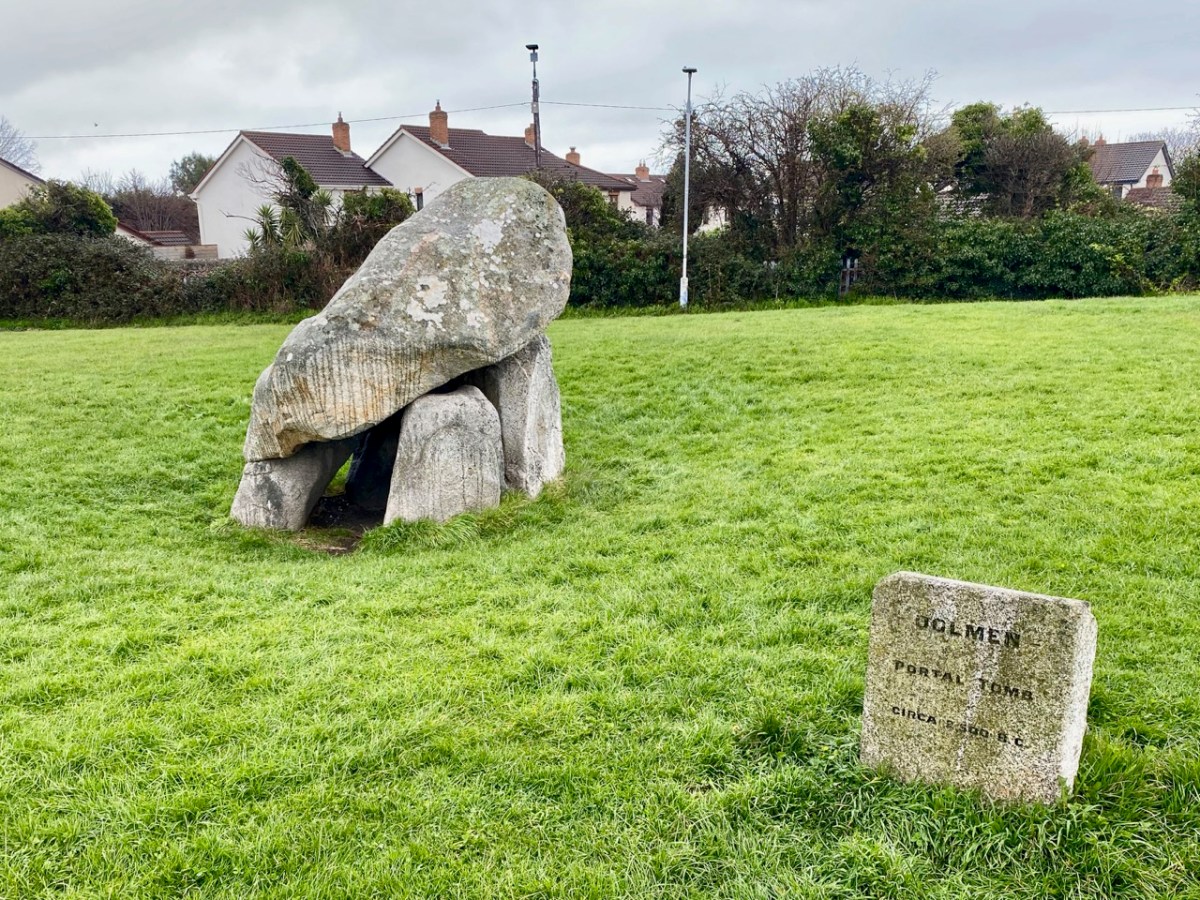
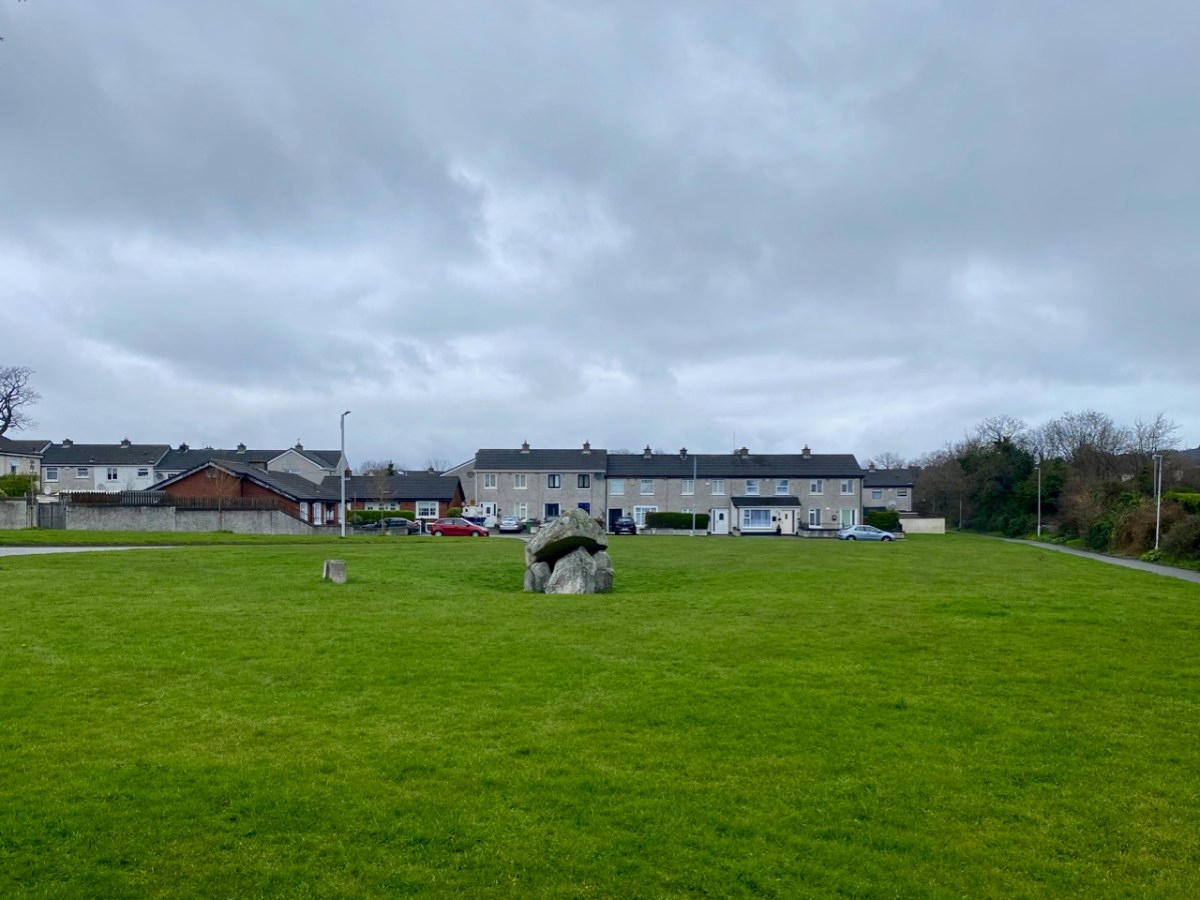
We are used to searching out archaeology in the Irish countryside. More unusual, perhaps, is finding examples in an urban setting. Here’s one – at Cromlech Fields, Hackettsland, Dublin.

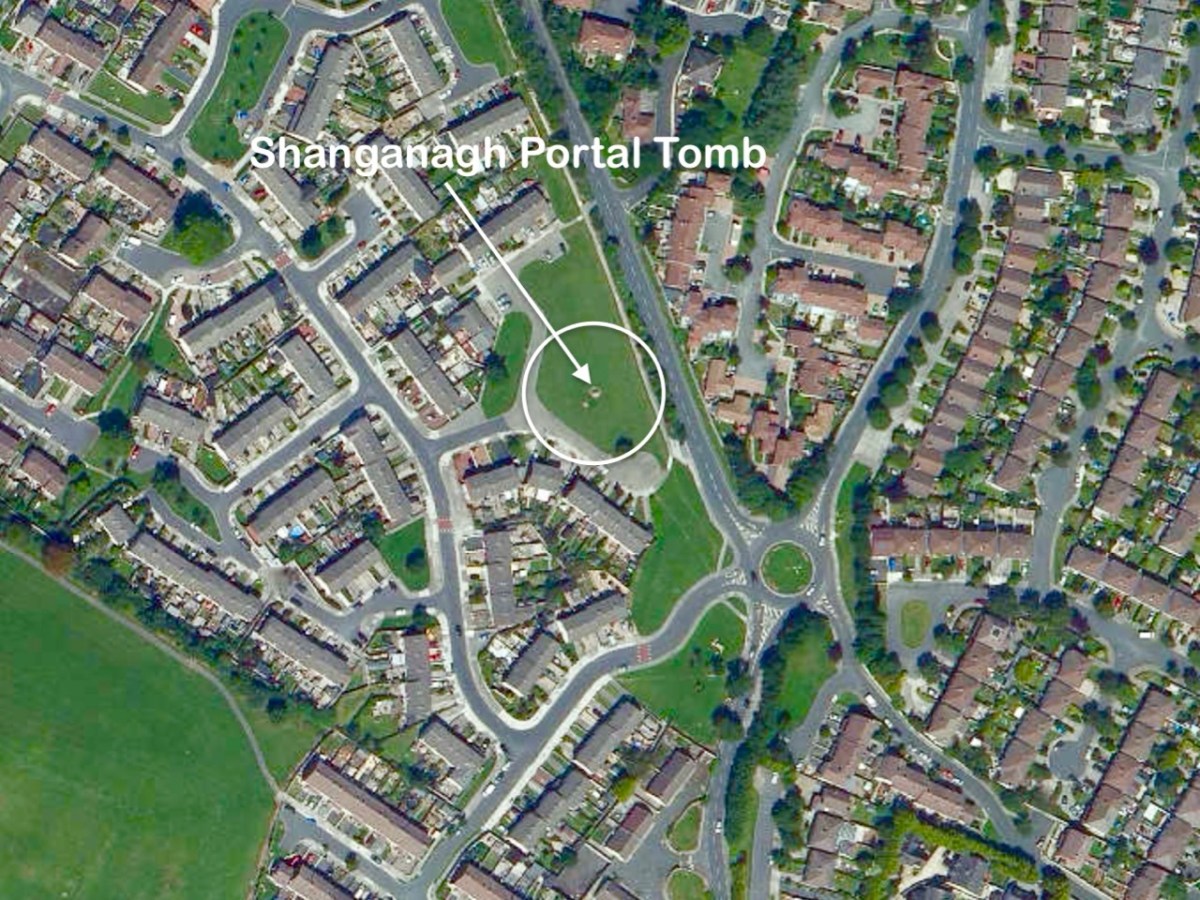
This particular example of a prehistoric structure has survived the encroachment of the city suburbs and is, in fact, in good condition and apparently accepted as part of the landscaping in a dense housing community. It is well-placed in a slightly sunken setting within a substantial green area. It is known variously as the Shanganagh Portal Tomb, Hackettsland Cromlech, or Ballybrack Dolmen. And it’s ancient: portal tombs can date back four or five thousand years – some even more. This arrangement of stones has seen civilisations evolve significantly, but it sits there unchanged.

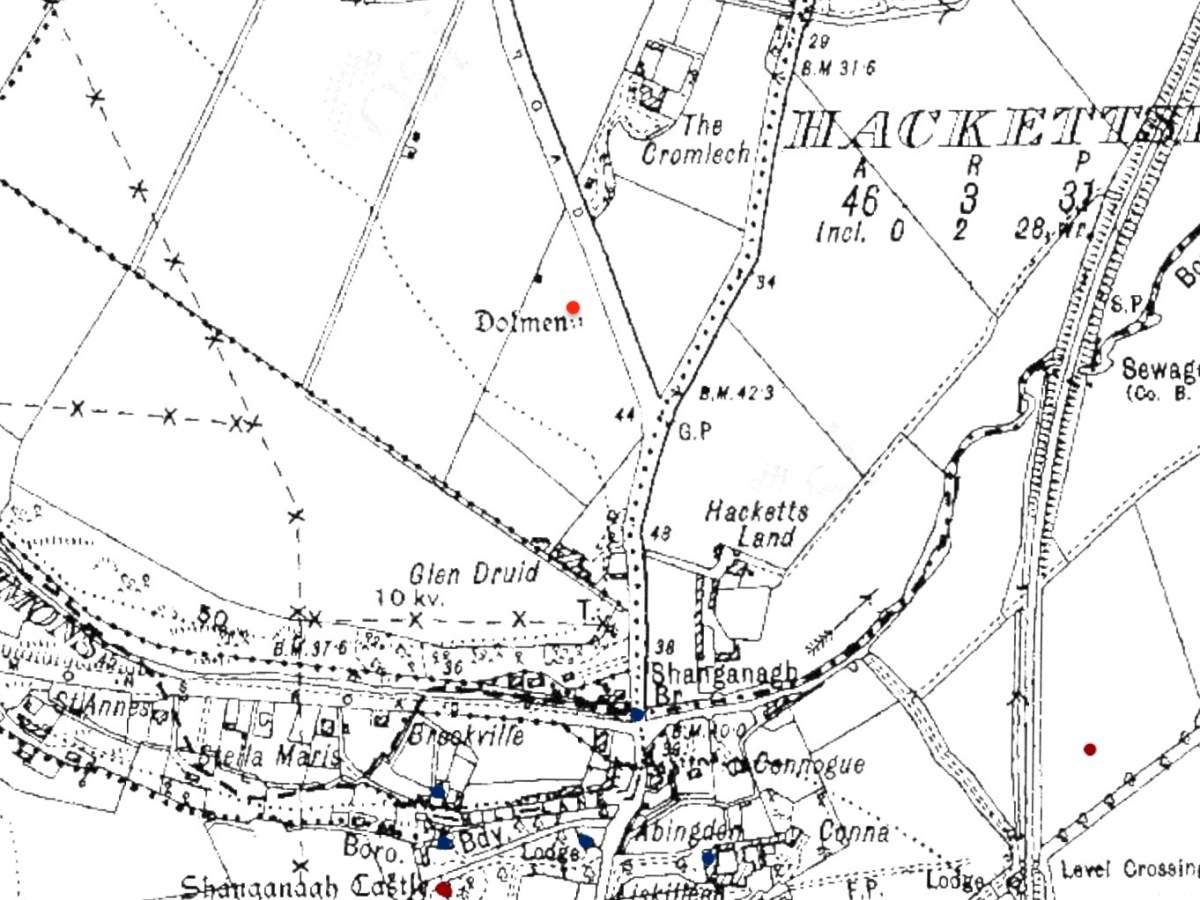
The historic 25″ OS map of Ireland – surveyed from the late 1890s and into the early 20th century. It is clear from this edition that the ‘dolmen’ was still sited in open country at that time.

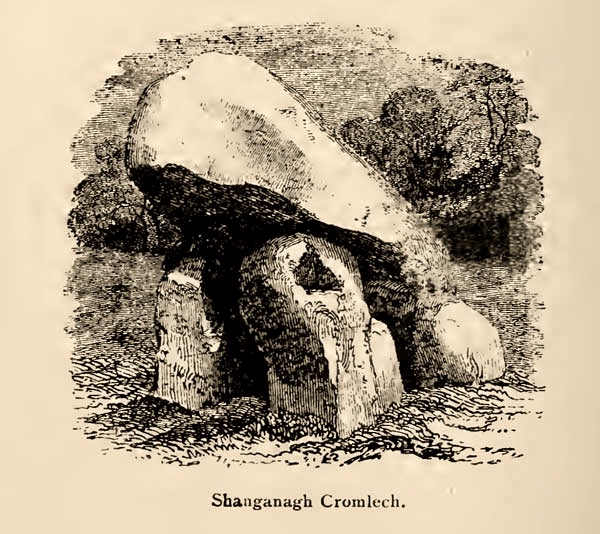
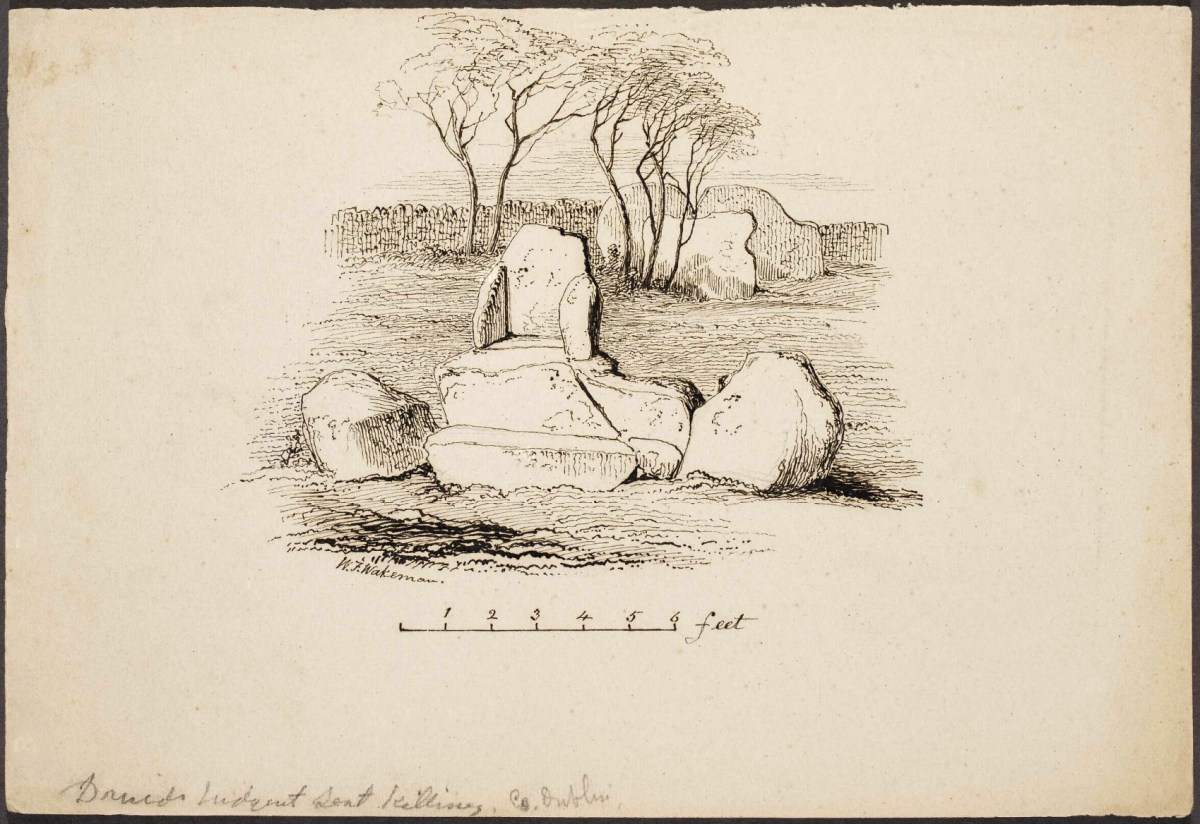
Illustration from: A Hand-book of Irish Antiquaries by William F Wakeman, 1903.

. . . We cannot conclude our notice of this class of monuments without making some mention of the very interesting example remaining at Shanganagh, near the village of Loughlinstown, and not far from the ancient church of Killiney. Though inferior in size to several which we have already described, its dimensions are considerable; and as it remains, to all appearance, in its original state, the student will find it an object well worthy of his attention. The covering stone measures in length nine, in breadth seven, and in thickness three and a half feet, and is supported upon four stones. The highest part of the pile is nine feet above the level of the adjoining field . . .

William F Wakeman

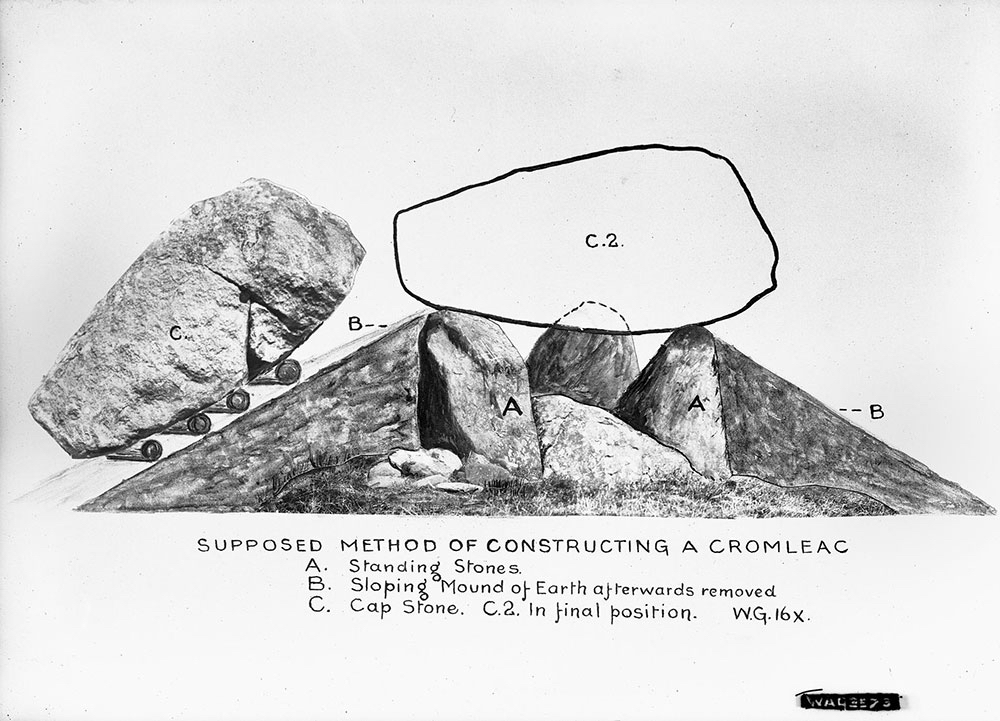
You may want to be aware of the full range of portal tombs in terms of relative scale. Have a look at my post here from a few years ago: it features the largest of the Dolmens in Ireland (and, perhaps, in the world). That one provides challenges in terms of how it was constructed: the capstone, which has been raised on to supporting rocks, is estimated to weigh over 160 tons. Also, this post from Finola offers detailed information on these structures generally. Here is a nineteenth century view of how such monuments were erected:

Megalith or Monstrosity?

Some intriguing arrangements of stones here – and some enigmatic reporting of their significance as history. We are a long way from West Cork – in fact, over on Ireland’s east coast, among the fine estates of Killiney. We can’t help but search out examples of archaeology wherever we go, and a red dot on the Historic Environment map is always a good starting point, as is anything with an enigmatic name.

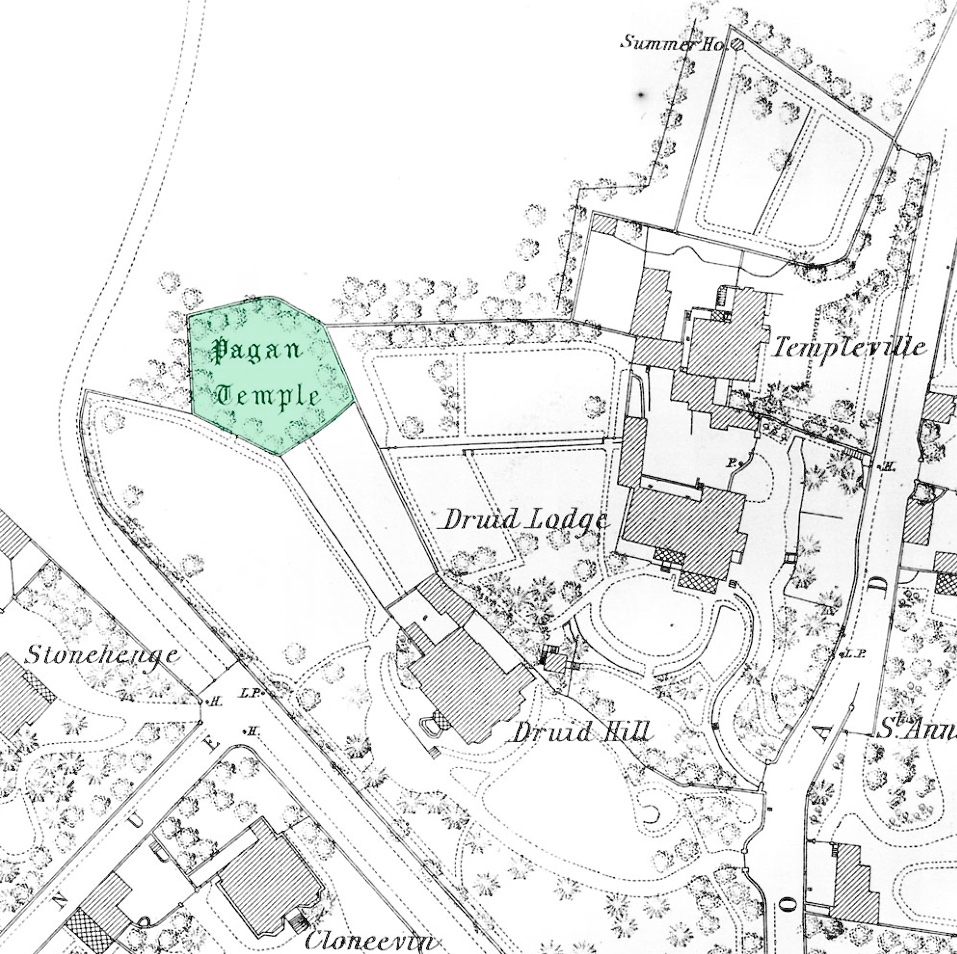
In this case, the red dot is just to the left of the ‘Pagan Temple’ at the top of the 25″ OS map – but look at all the other intriguing names in the locality!

Here’s a close up -extracted from the 1888 OS map, highlighting the site that we are looking at today. With Templeville, Druid Lodge, Druid Hill and Stonehenge as neighbours, the Pagan Temple demands a closer look!

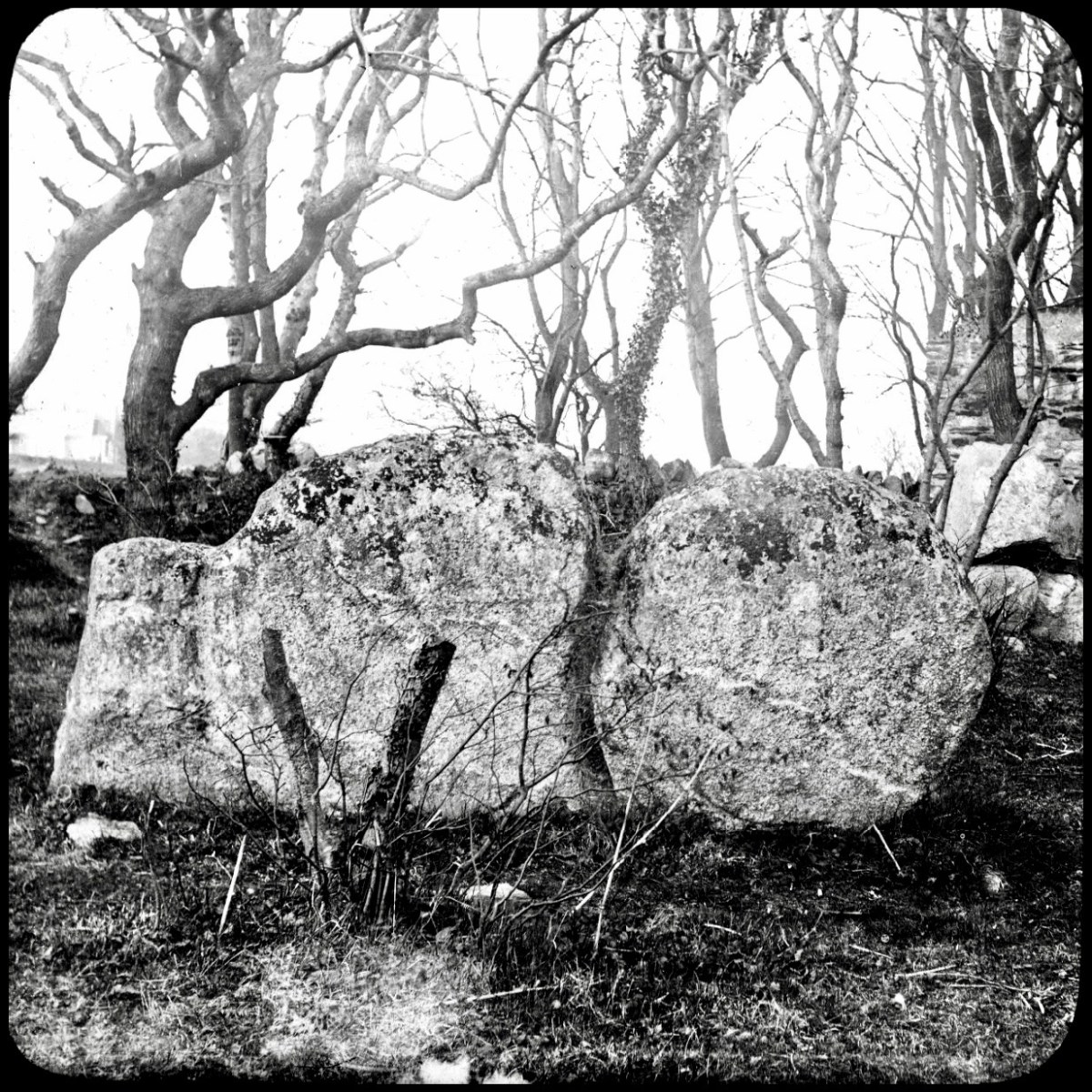
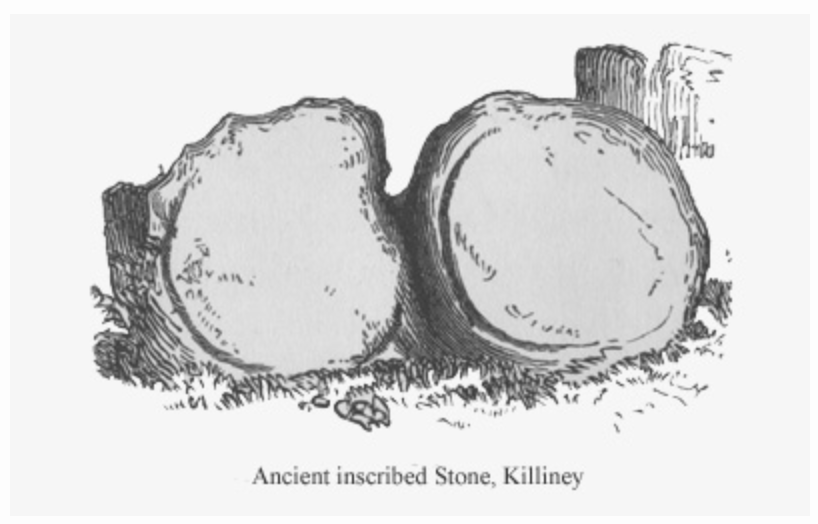
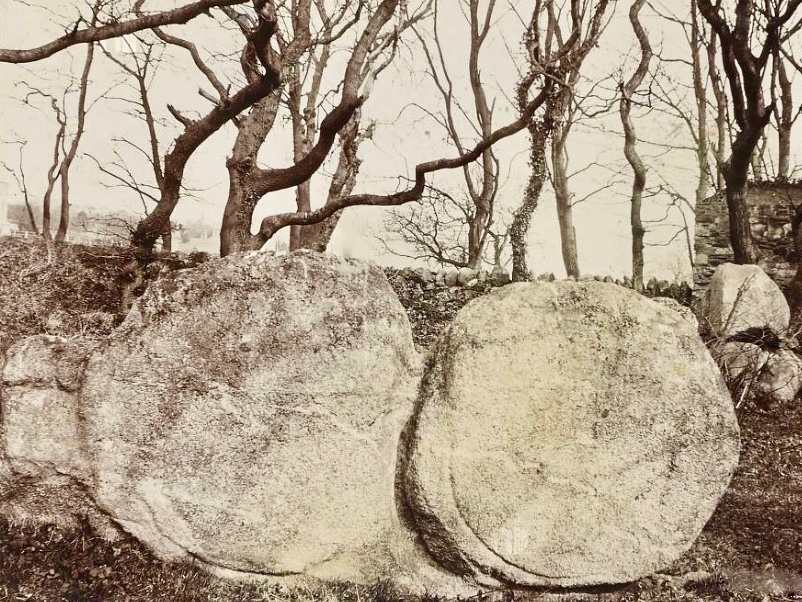
It was last week’s subject – the writer and photographer Thomas Holmes Mason – who directed us to this County Dublin location. As a significant producer of picture postcards, Mason has left a large body of work, even though many of his photographic plates were destroyed in a warehouse fire in 1963. The National Library of Ireland houses a comprehensive collection, and I am grateful to them for this image, above, which shows an intriguing stone formation on the Killiney ‘Pagan Temple’ site. It is referred to as The Sun and Moon stone by some antiquarians, and the following description appears on the current Historic Environment Viewer:

DU026-010—-

Scope note

Class: Megalithic structure

Townland: KILLINEY

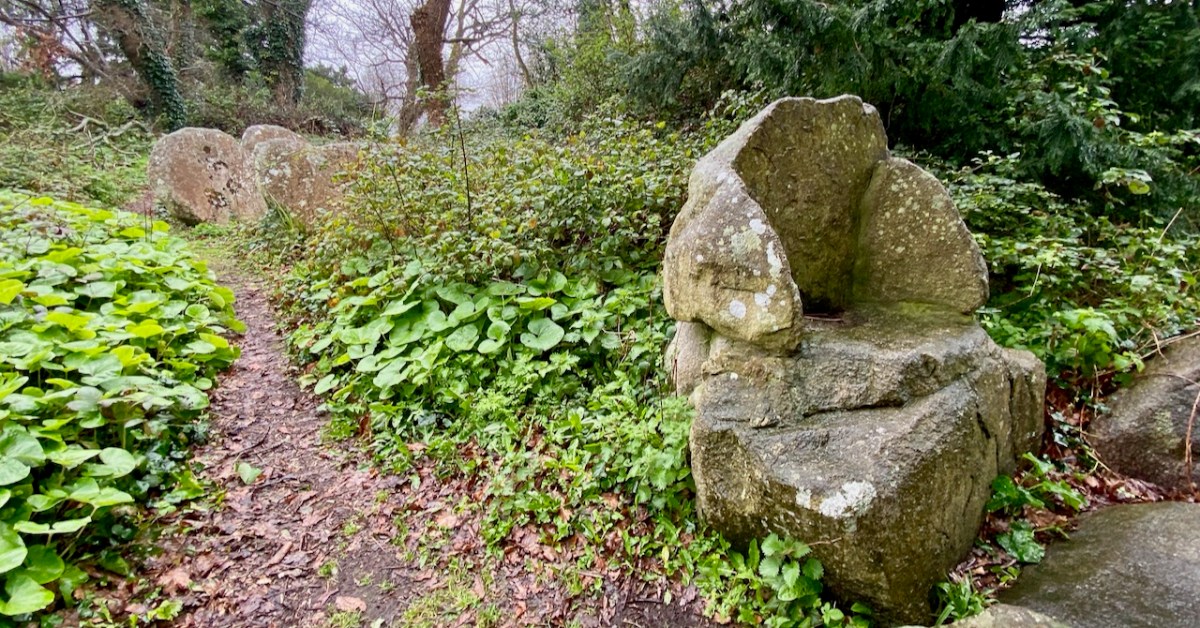
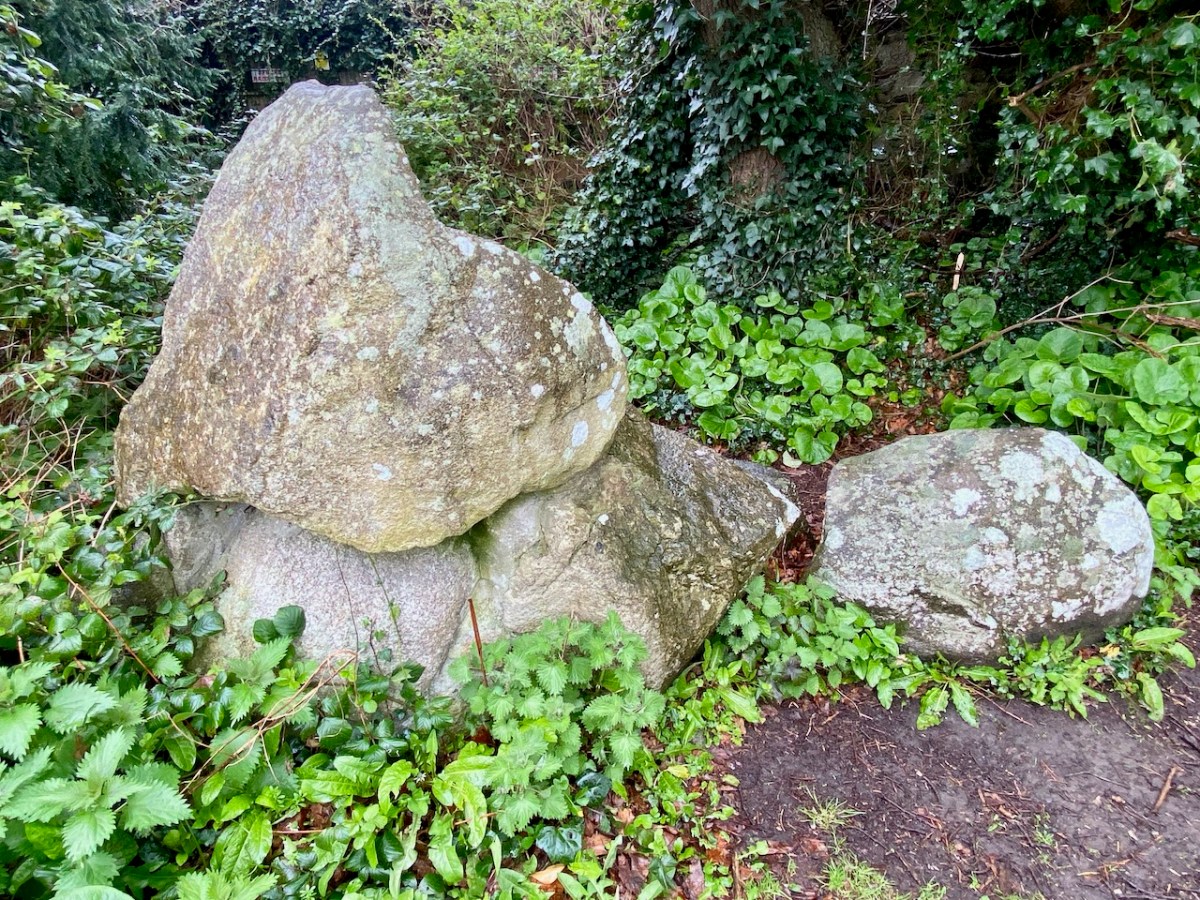
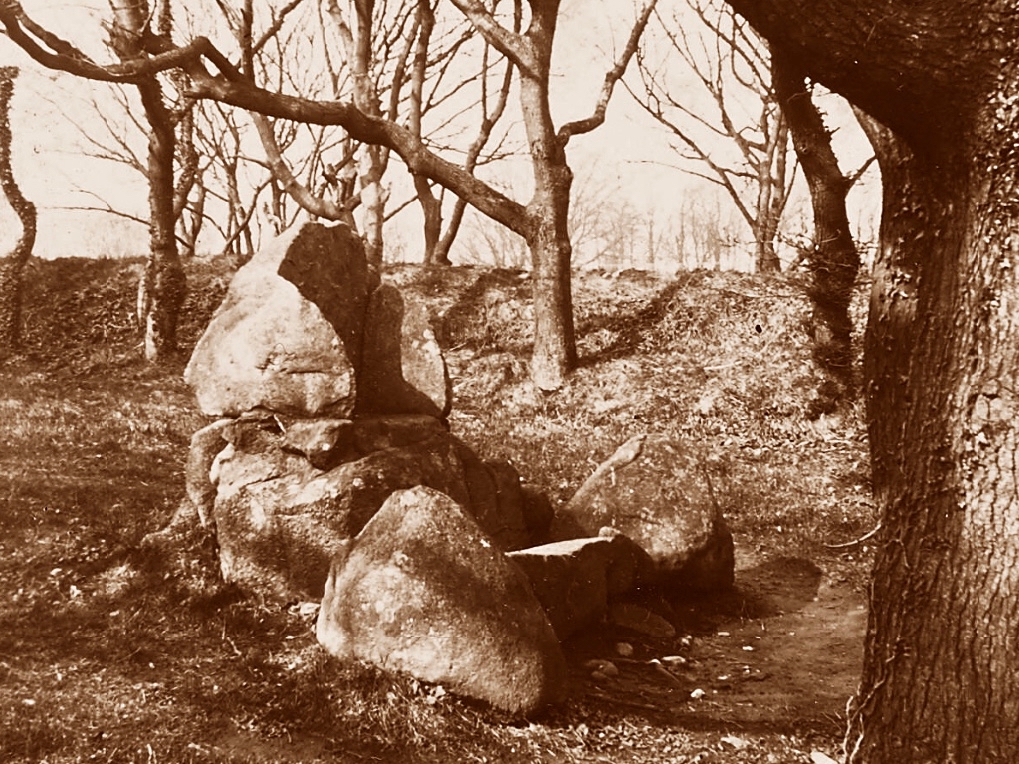
Description: “. . .This enigmatic structure is located within an area enclosed by a hedge on top of Druid Hill. In the E side of the enclosure are three irregular granite boulders that form a façade behind which is a larger boulder containing a setting of stones that form a seat. To the W of this are two large granite slabs set on their long axis. There are tool marks present. This structure appears to be a folly but it may incorporate the remnants of an earlier monument . . .”

Archaeology.ie Historic Environment Viewer

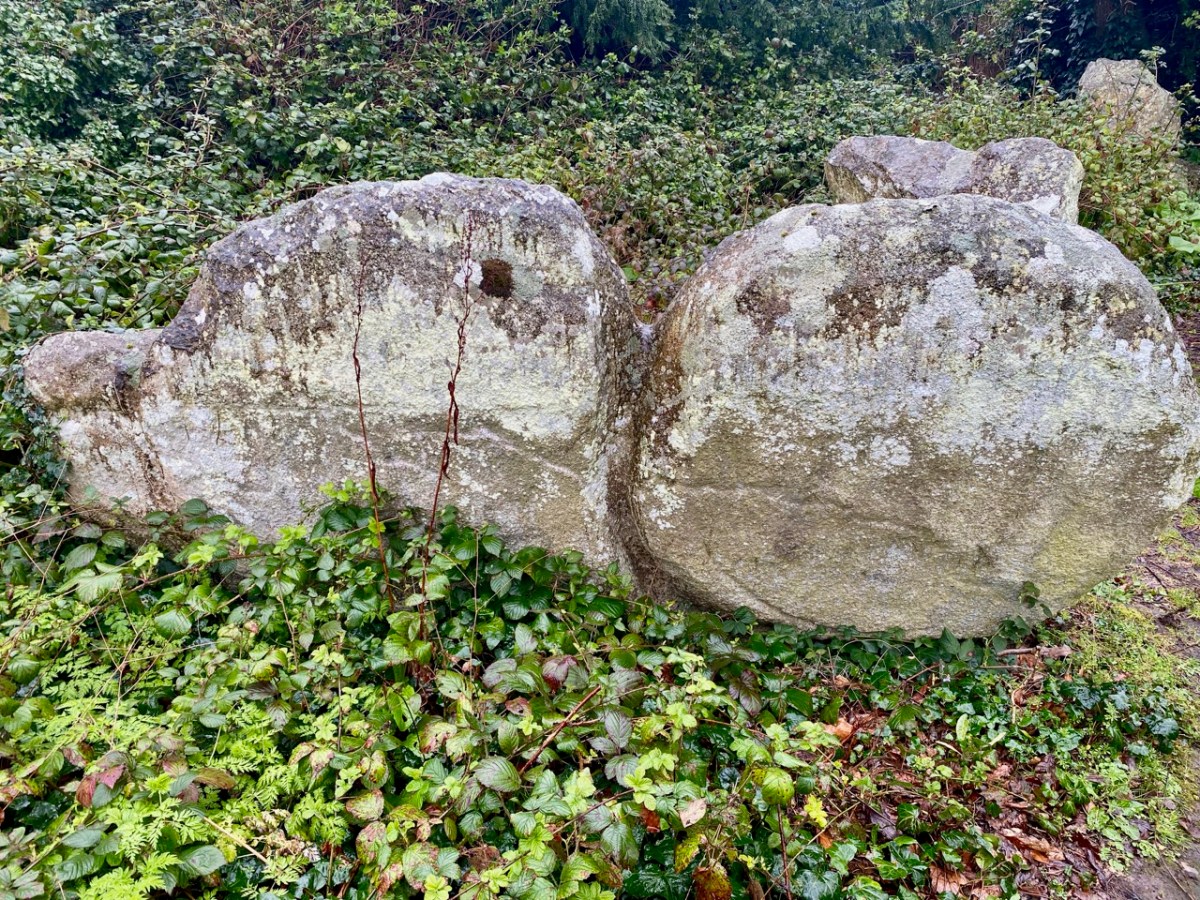
The Archaeology.ie write-up is accurate. In addition to the ‘chair’ (which Finola is elegantly modelling while trying not to sit in a puddle!) there are two further irregular granite boulders – but one of them (detailed in the T H Mason photograph) looks like two circles – hence ‘sun and moon’ – but is in fact a single boulder, here seen from the ‘front’ face:

The right-hand side of this stone has some marks carved on it (by human hand) – possibly part of a large circle that outlines this half, while the vertical ‘groove’, central to the boulder, also appears to have been chased out. It’s worth noting as well, perhaps, that there are two small holes drilled on the back face of this stone, one on each side but not aligned on any centre. Additionally, there is also a small hole drilled on the back face of the second stone:

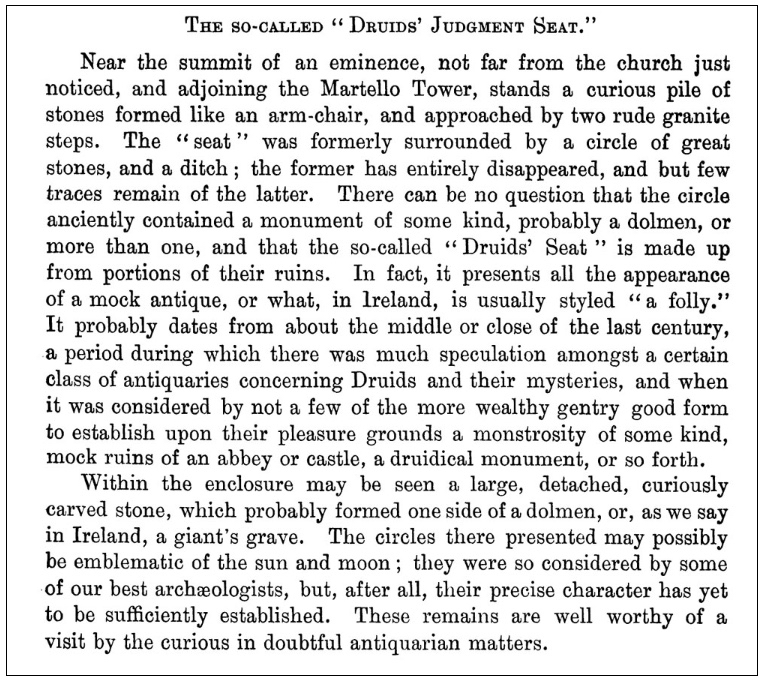
This article – by William Wakeman – appeared in The Journal of the Royal Society of Antiquaries of Ireland December, 1896. It introduces an element of scepticism, which we should perhaps explore. The excellent Killiney History website has collected together a number of writings and observations about this site.

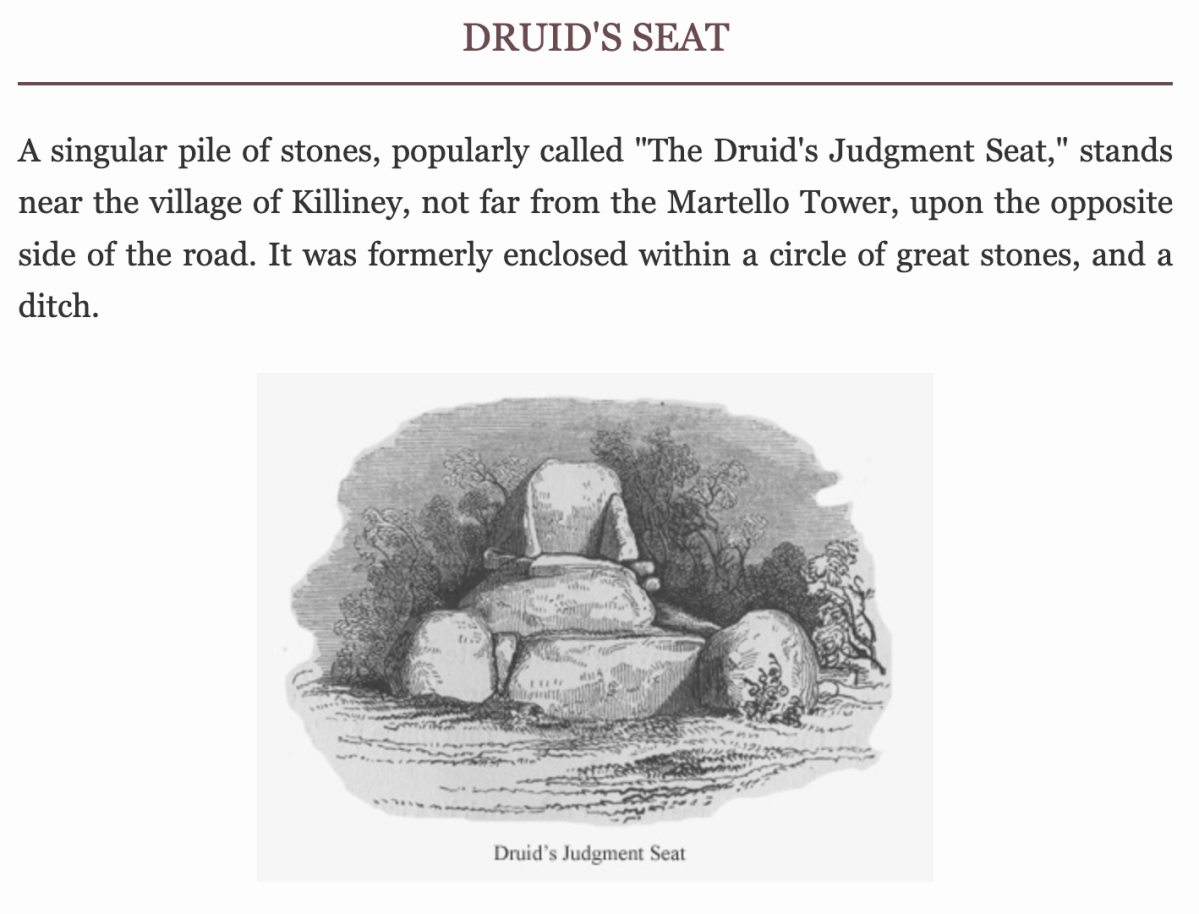
John Dalton writing in 1858 seems quite satisfied of the antiquity of the Judgment Seat. The Gazetteer of Ireland states “A well-preserved Druidical circle with its priests’ seat and its sacrificing stone, occur within a carefully kept enclosure, behind Mount Druid demesne, and near the Martello Tower, but is made accessible by the proprietor to respectable visitors.”

Killineyhistory.ie

William Wakeman, a well known antiquarian of the last century, appears to have been the first to condemn these remains as spurious. “Formerly it was enclosed within a circle of great stones and a ditch. The circle has been destroyed and the ditch so altered that little of its original character remains. The seat is composed of large rough granite blocks and, if really of the period to which tradition refers it, an unusual degree of care must have been exercised for its preservation. The stones bear many indications of their having been at least rearranged at no very distant time. Small wedges have been introduced as props between the greater stones. The right arm is detached from the other part, to which it fits but clumsily. The whole, indeed, bears the appearance of a modern antique, composed of stones which once formed a portion of some ancient monument.”

Killineyhistory.ie

These photographs were taken by William Frazer in 1898. The arrangements of stones at that time are very similar to what we see today – well over a century later – but with far less growth of ground cover.

Above: Druid’s judgement Seat, Killiney – from Library of Ireland archives.

Elrington Ball [1863–1928] confirms this view of the Druid’s Judgment Seat. The stones of which it is composed formed part of a Sepulchral memorial dating from very early times, consisting of three small cromlechs, surrounded by a circle of upright stones about 135 feet in diameter, and, at the time of its first attracting attention, in the 18th Century when everything prehistoric was attributed to the Druids or the Danes, it was assumed to be a Pagan Temple . . . Near the circle was discovered at the same time an ancient burying place, and some stones with curious markings, which are still to be seen. The burying place was of considerable extent, the bodies, which were enclosed in coffins made of flags, having been laid in a number of rows of ten each . . .

Killineyhistory.ie

Finally Woodmartin [Traces of the Elder Faiths of Ireland 1902 Vol 11] makes the sweeping statement: the entire structure leaves the unmistakeable impression of very modern fabrication, and it is a mere clumsy attempt to gull the public . . . As seen to-day these relics of antiquity present rather an unlovely picture, in an obscure and ill-kept corner, surrounded by an unsightly hedge, where weeds and brambles share their ancient sanctity; they seem to arouse but little interest . . .

Killineyhistory.ie

Today, the jury seems to be out on what we are looking at on this site. Time has undoubtedly changed the shape of things: wouldn’t we like to go back a while and see the burying place of considerable extent with all those . . . bodies, which were enclosed in coffins made of flags, having been laid in a number of rows of ten each . . . ? But we do appreciate that a former landowner must have donated the land to excite our interest!

A good tailpiece from William Wakeman

Get The Message!

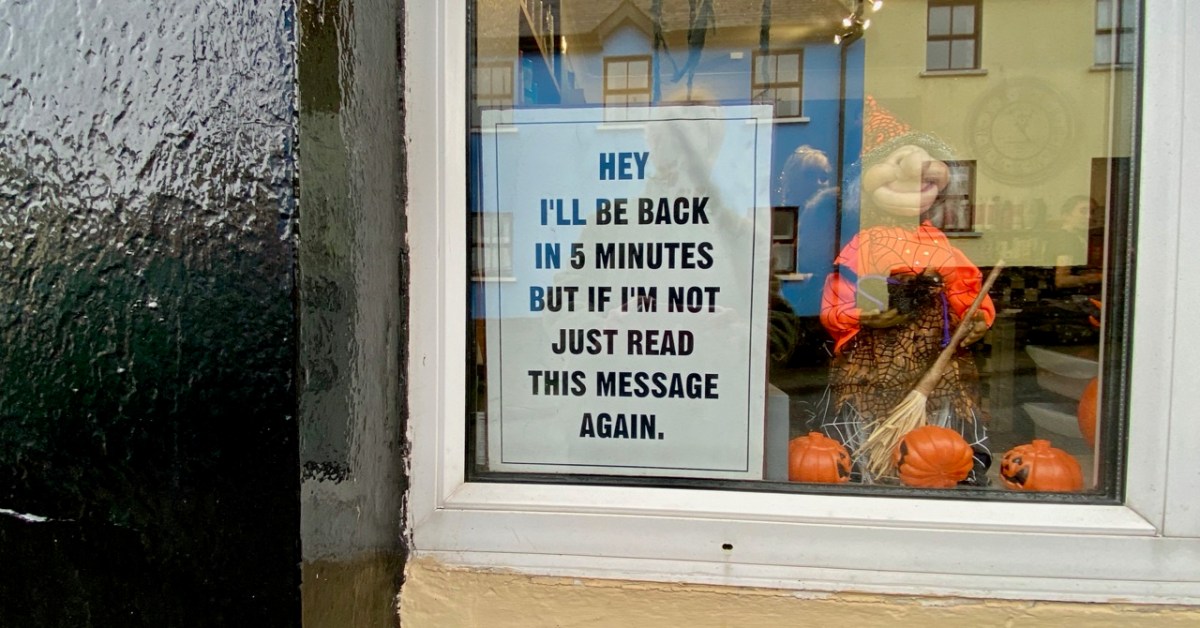
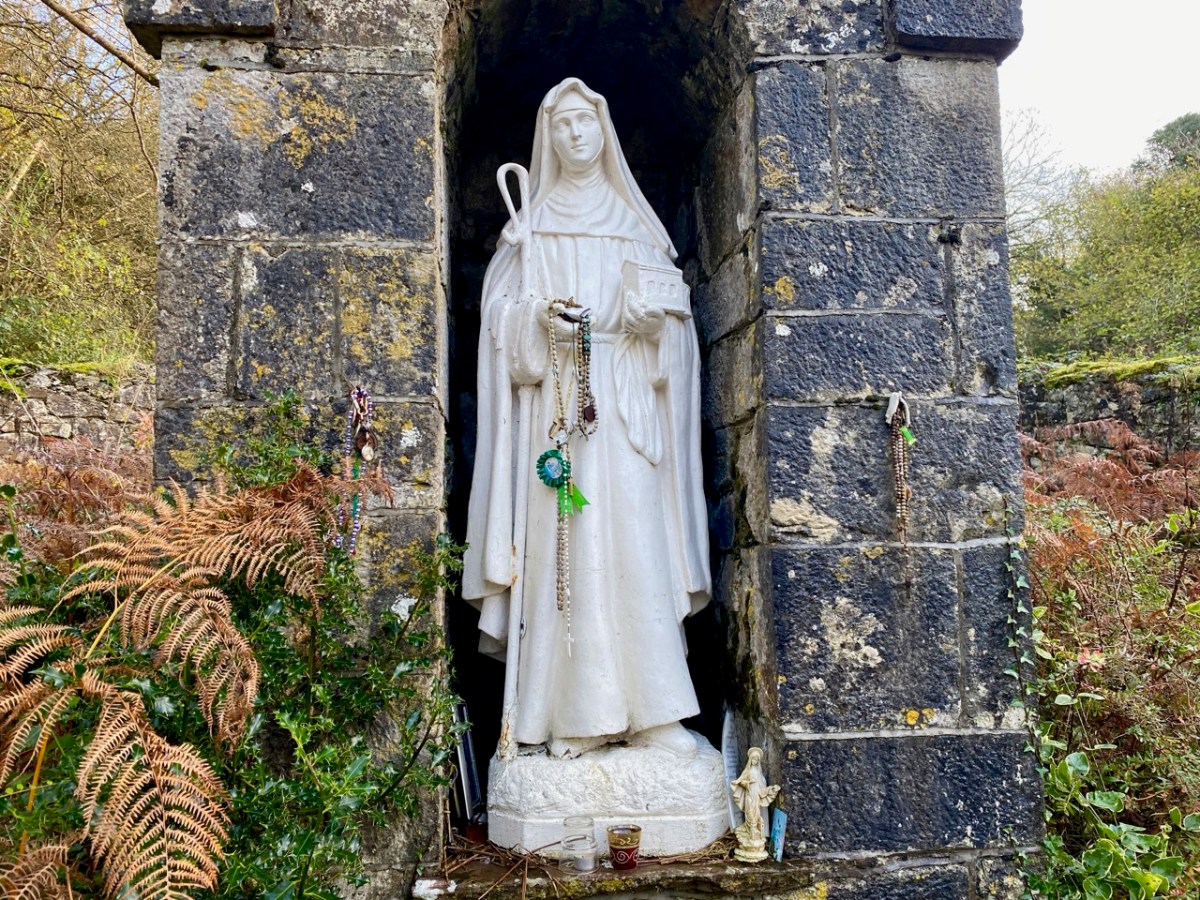
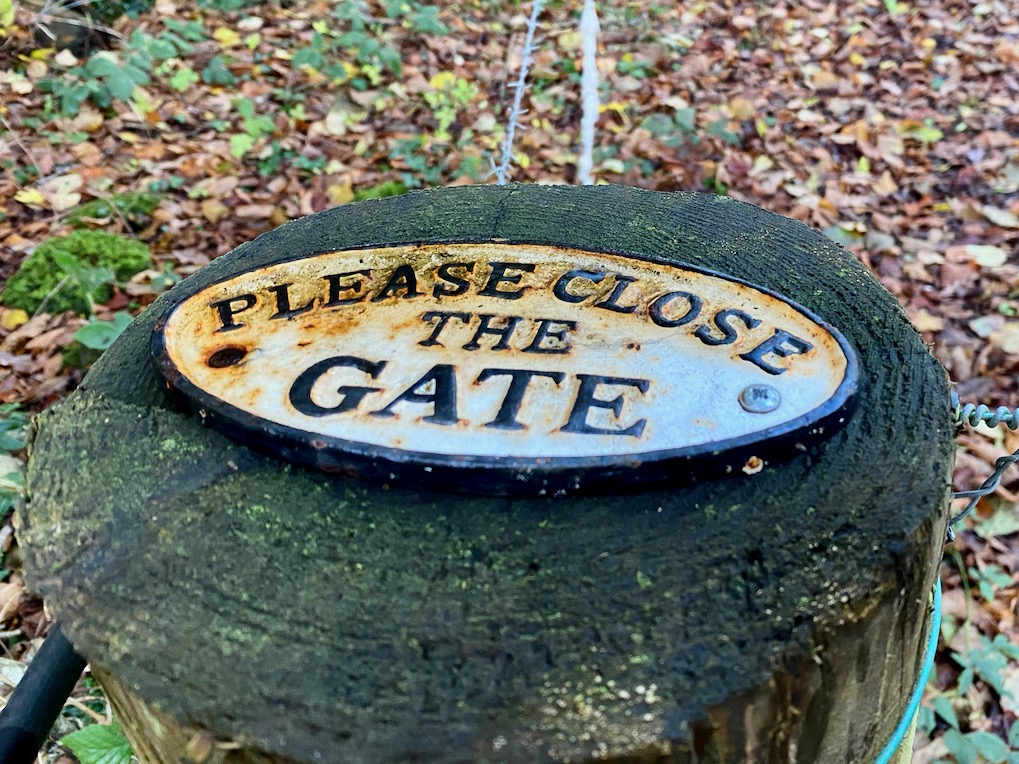
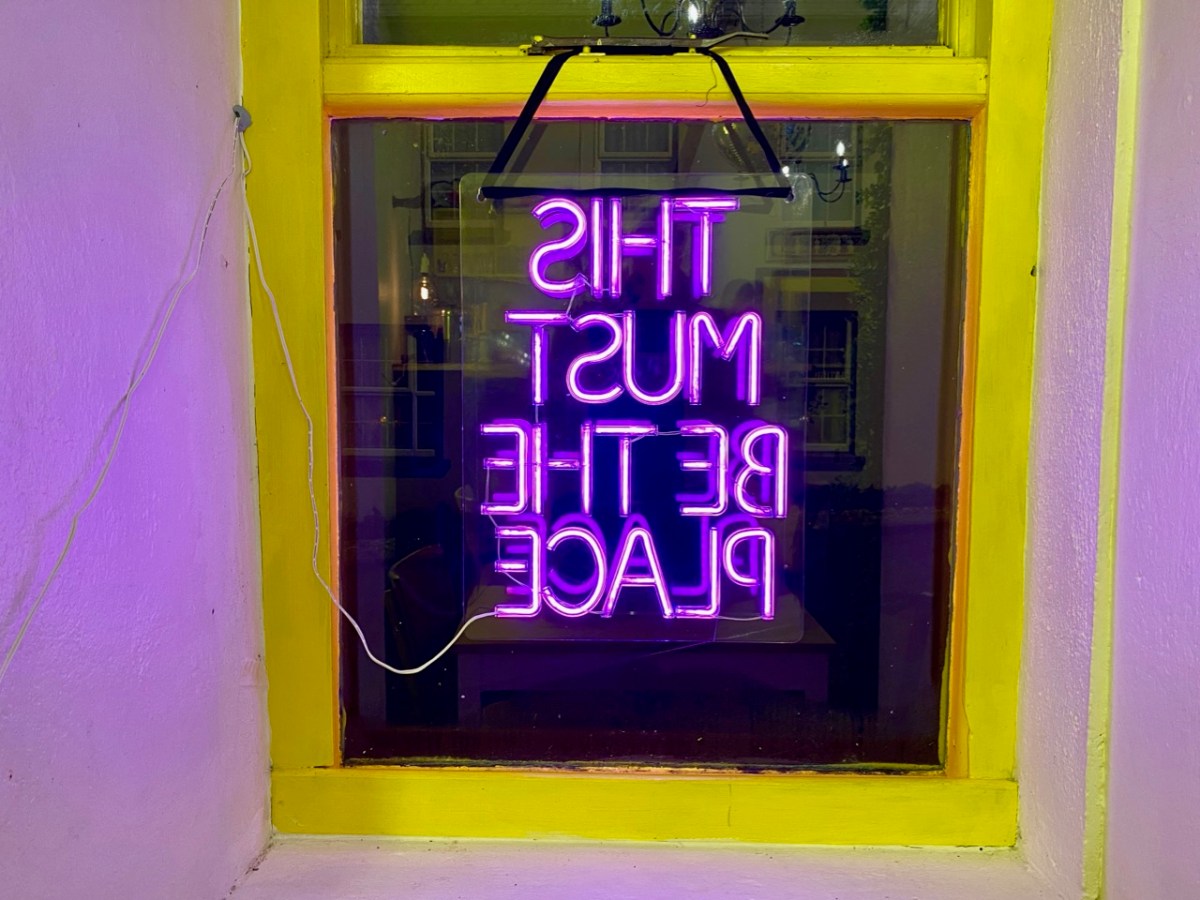
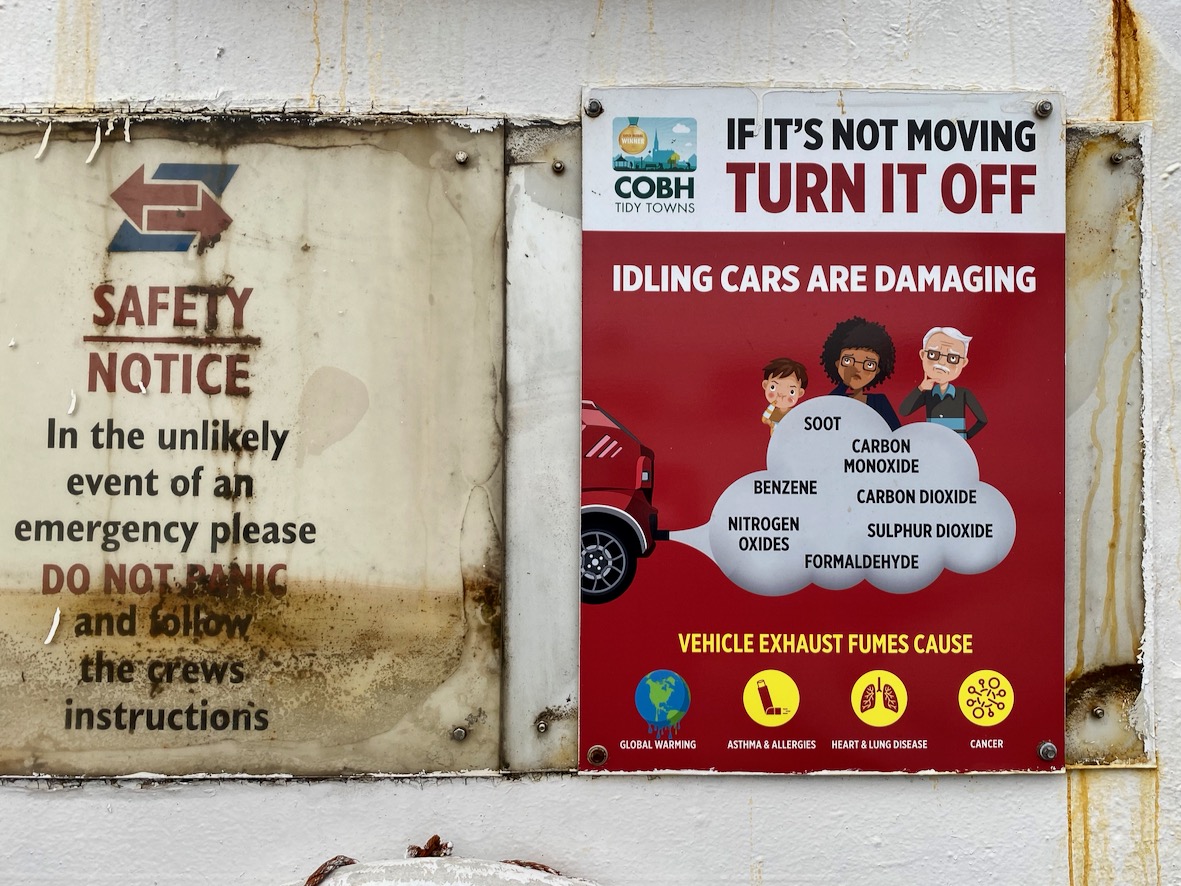
My collections of signs, posters and visual images expands all the time. If I see something quirky, I can’t resist a photo. I share these with you every so often. Today’s selection comes from far and wide: mainly here in Ireland (principally West Cork) with the odd stray from outside. I will only explain something if I feel an image demands it. The example above – from our own Ballydehob – certainly doesn’t, but the one below, which I also came across today in our little village, probably does.

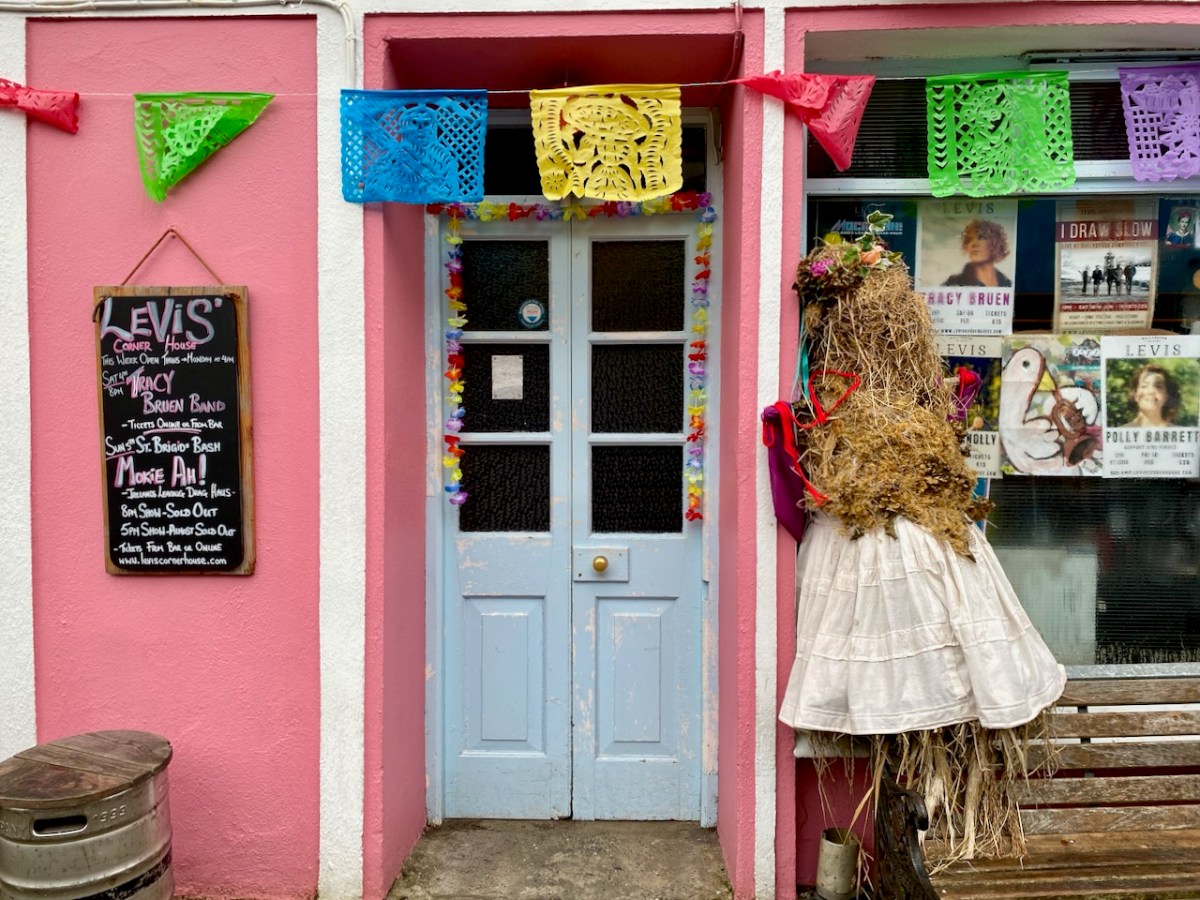
It’s a straw doll representing St Brigid. Often also known as Brídeóg, ‘Breedhoge‘ or ‘Biddy‘, it was once common to see these made to celebrate spring (which traditionally begins on her day, February 1st). This year Ireland has its first ever St Brigid’s bank holiday (tomorrow), to balance out St Patrick’s Day which we have always celebrated around his own feast, March 17th.

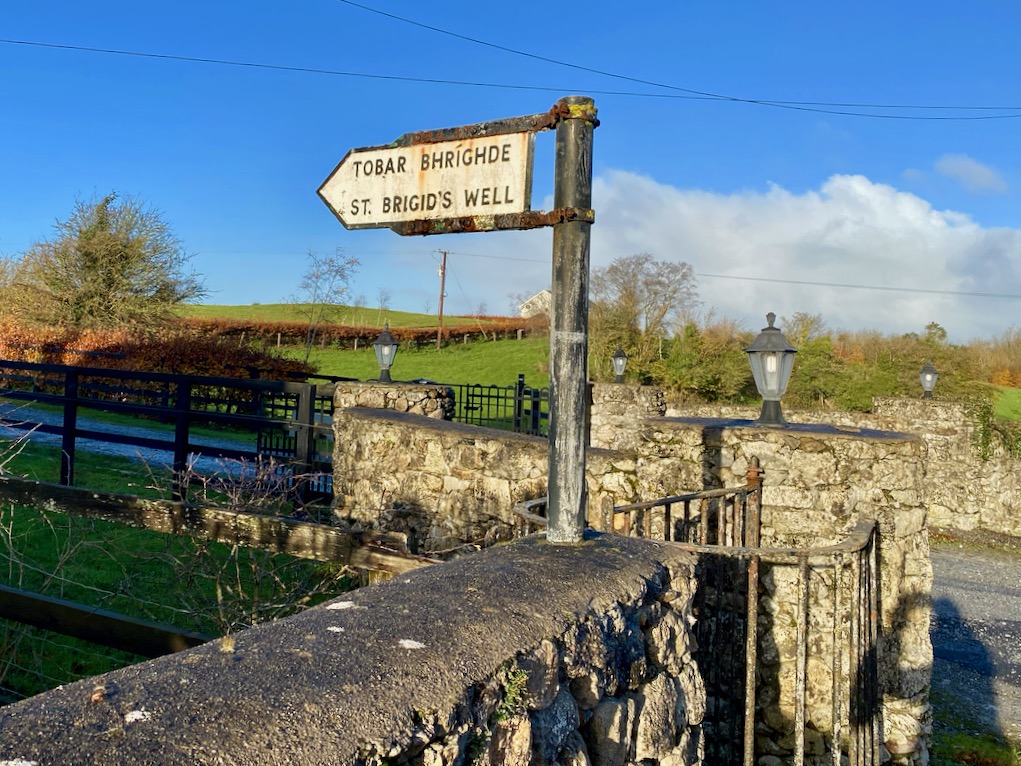
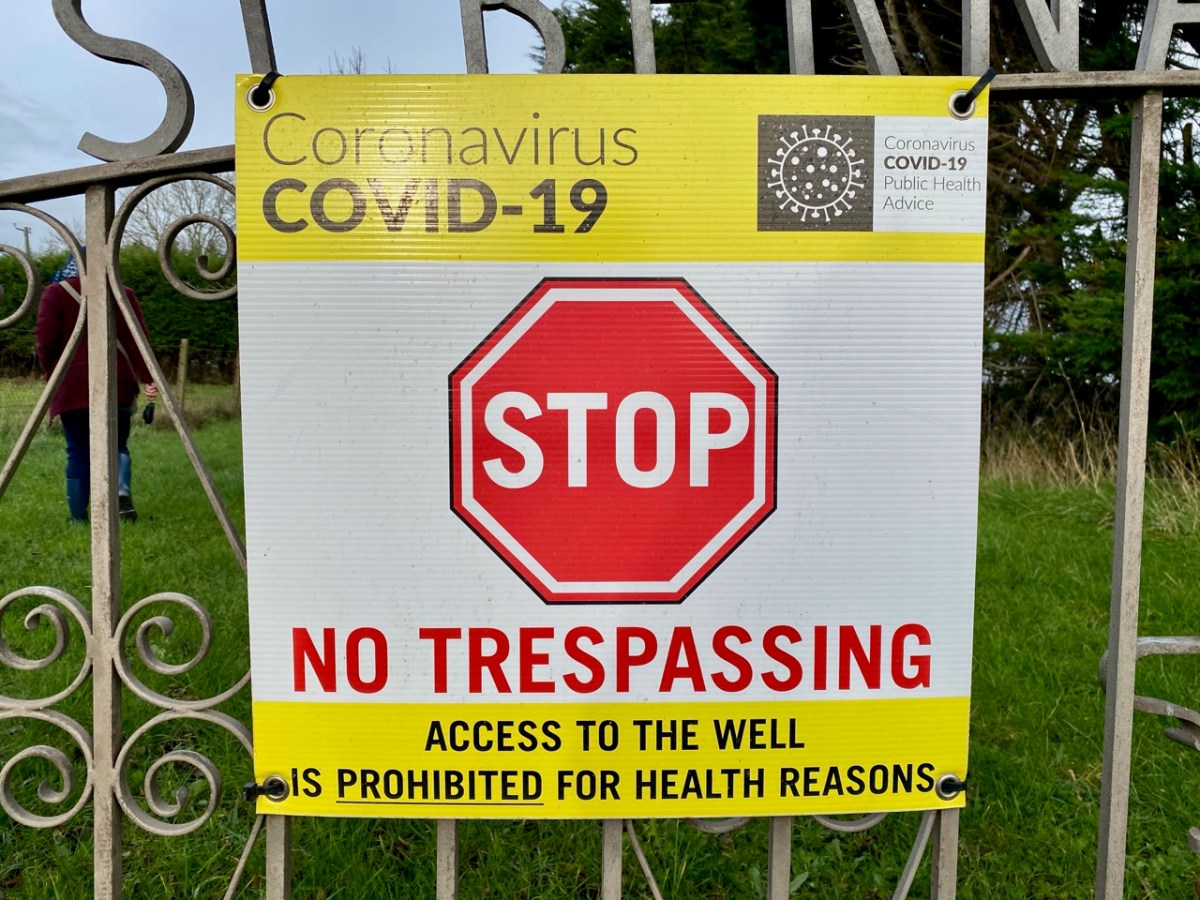
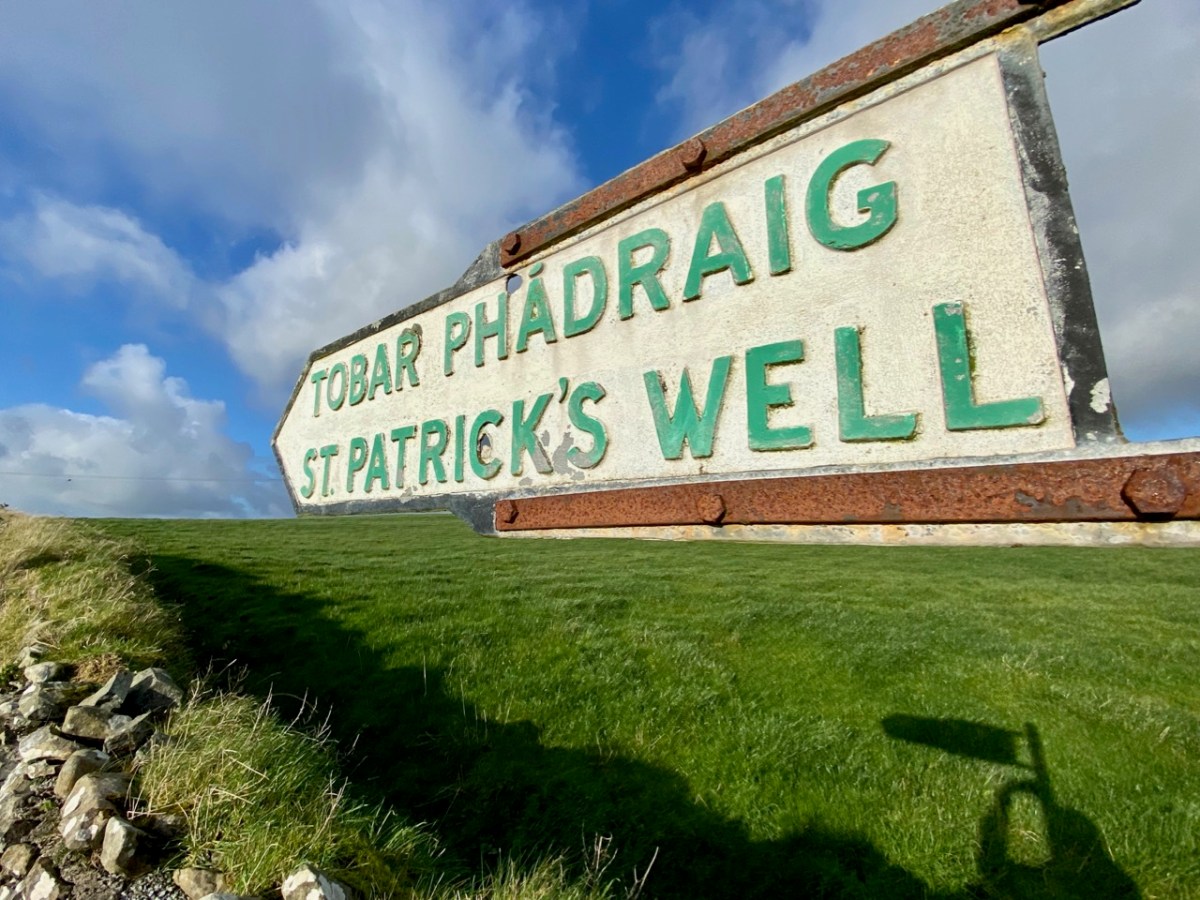
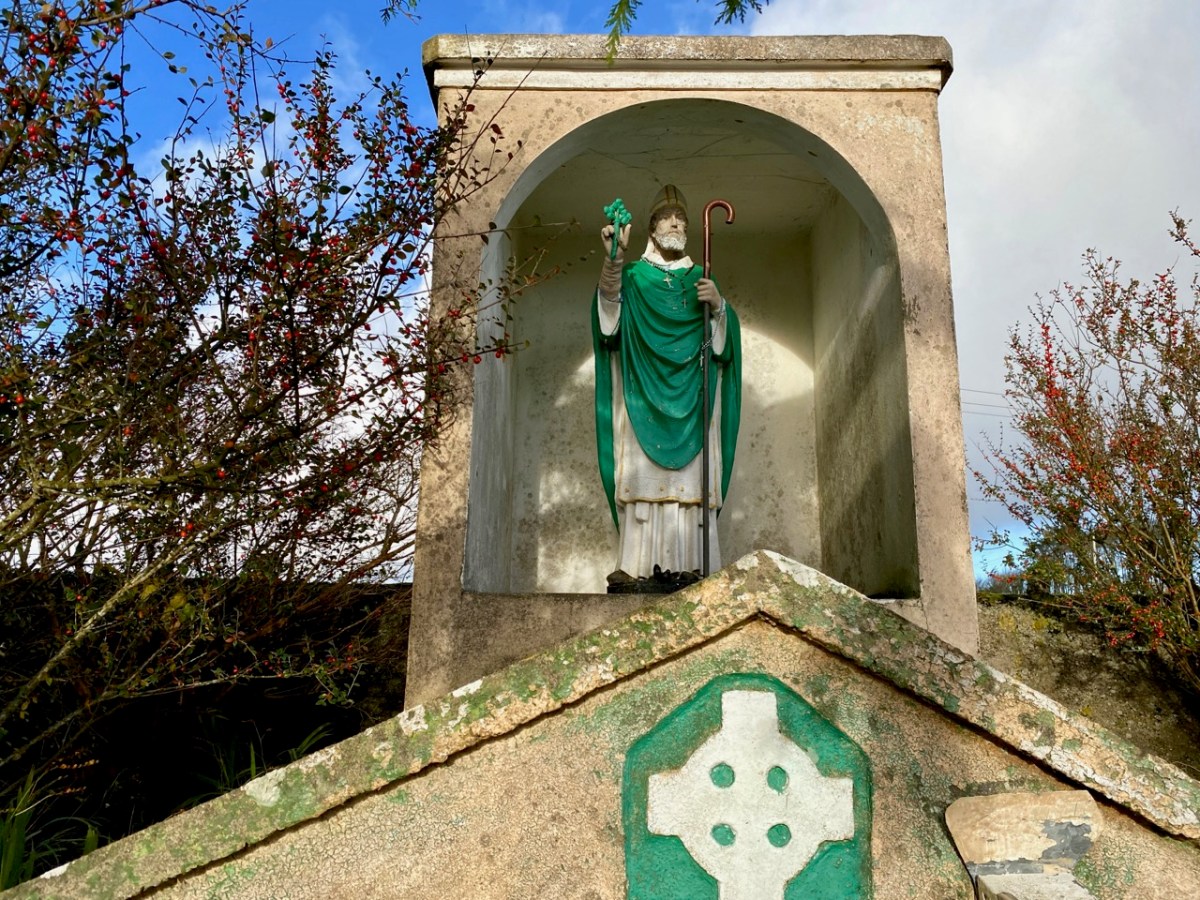
Let’s get back to signs. Wouldn’t you expect that one might visit a holy well for health reasons?

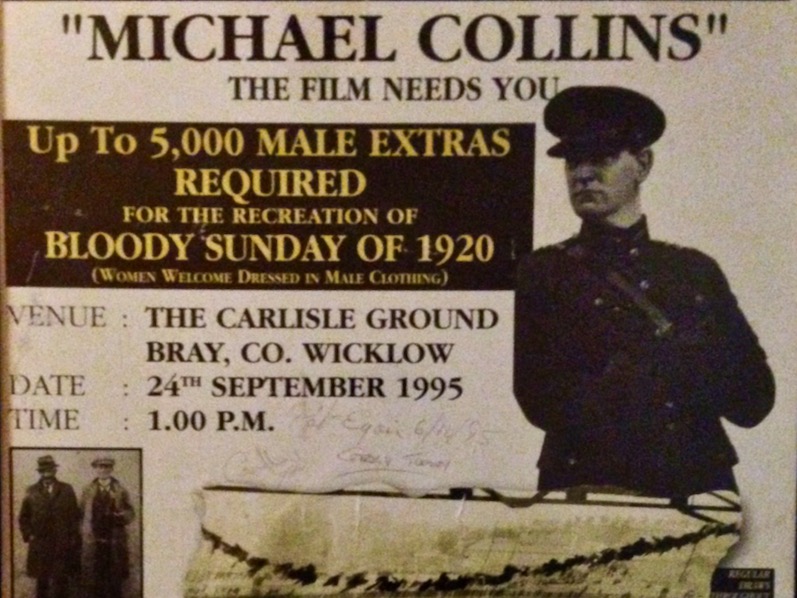
This surviving poster in Bray, Co Wicklow, somewhat irreverently makes light of the Bloody Sunday events of 1920. I can’t help being amused by the little insertion underneath Up To 5,000 Male Extras Required“Women Welcome Dressed in Male Clothing”.

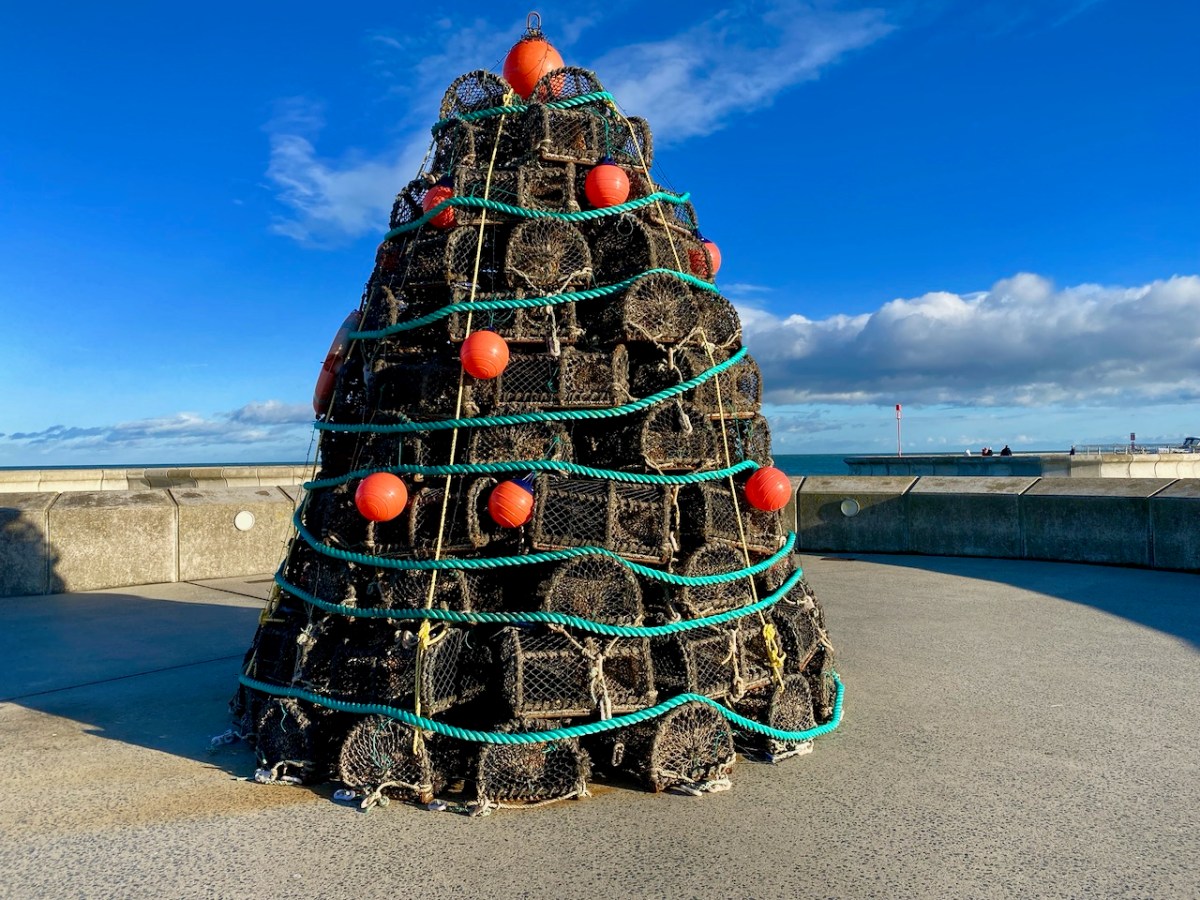
An impressive Christmas tree, built by the artistic fishermen of Greystones, Co Wicklow.

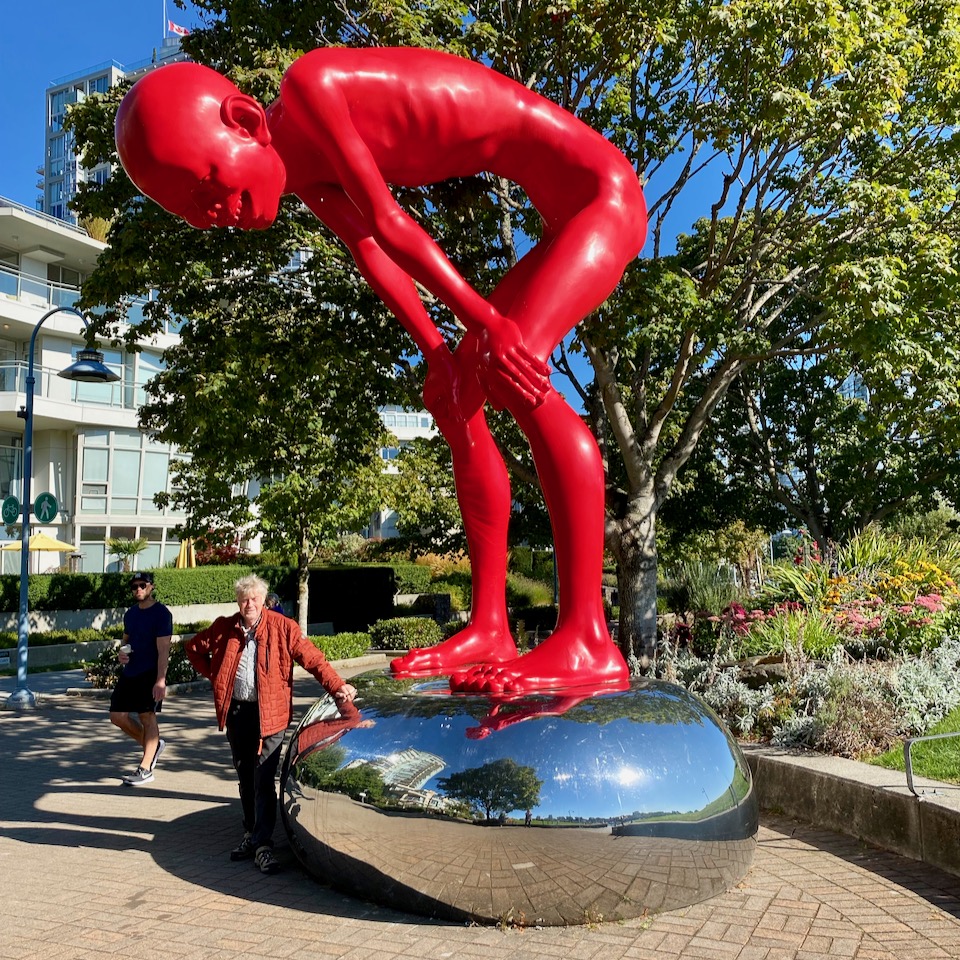
A long way from West Cork, we found this sculpture in False Creek, Vancouver last autumn. Titled “The Proud Youth,” the six metre high figure was created by Chinese sculptor Chen Wenling.

. . . Simple and truthful, this work creates a direct communication between man and nature, and initiates a sincere conversation between people and society. The cheeky expression and arresting pose are a celebratory call to the audiences, inviting them to embrace their inner child . . .

Vancouver Biennale

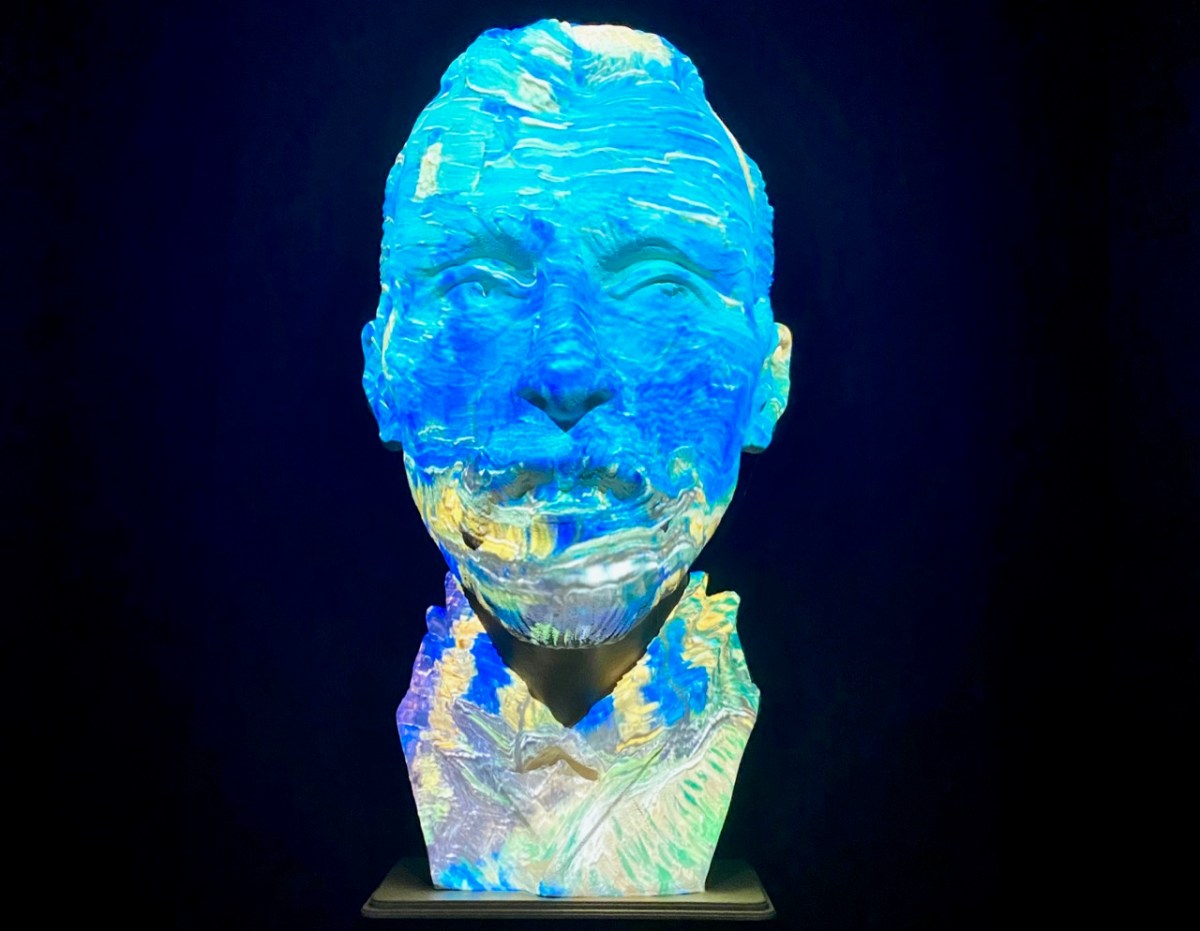
This may seem out of place, but we visited a Van Gogh exhibition while in Dublin recently. Described as an ‘Immersive Experience’ it is quite mind-blowing and we recommend the immersion if you are in the area.

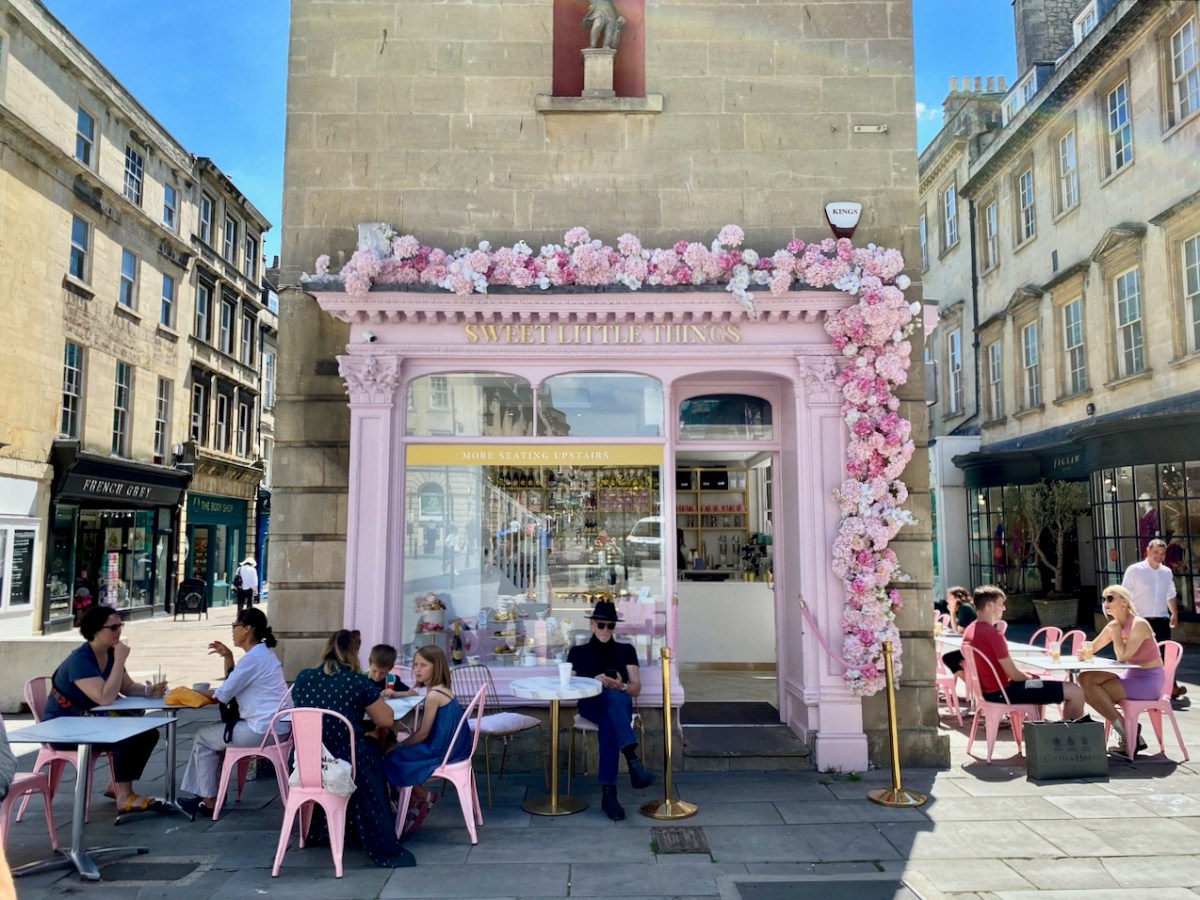
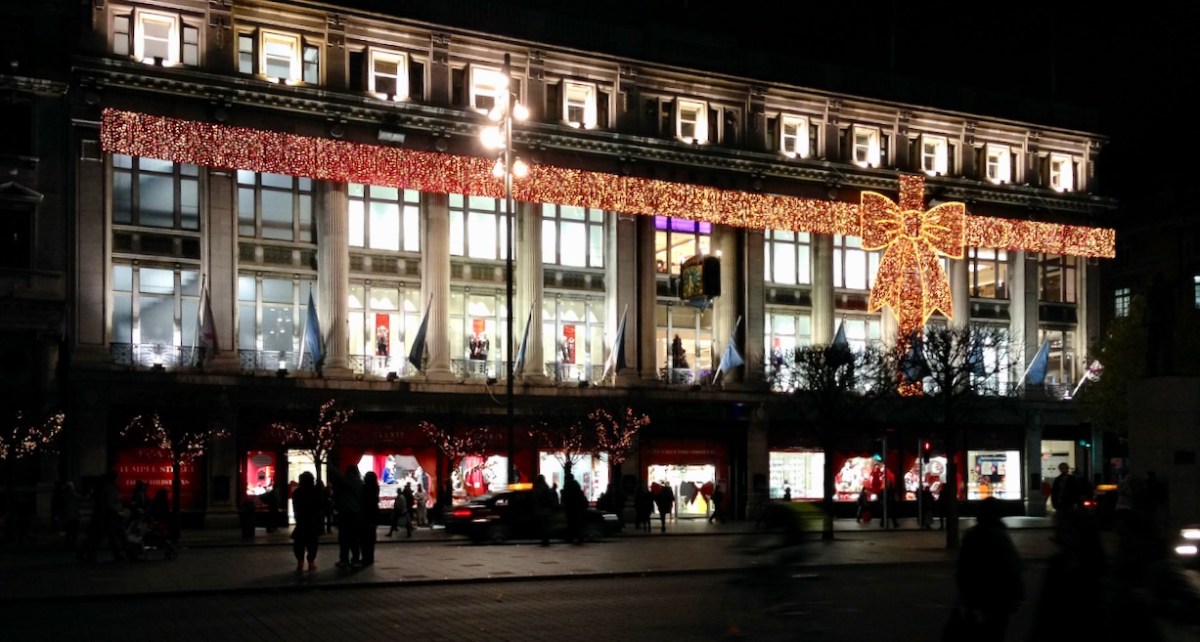
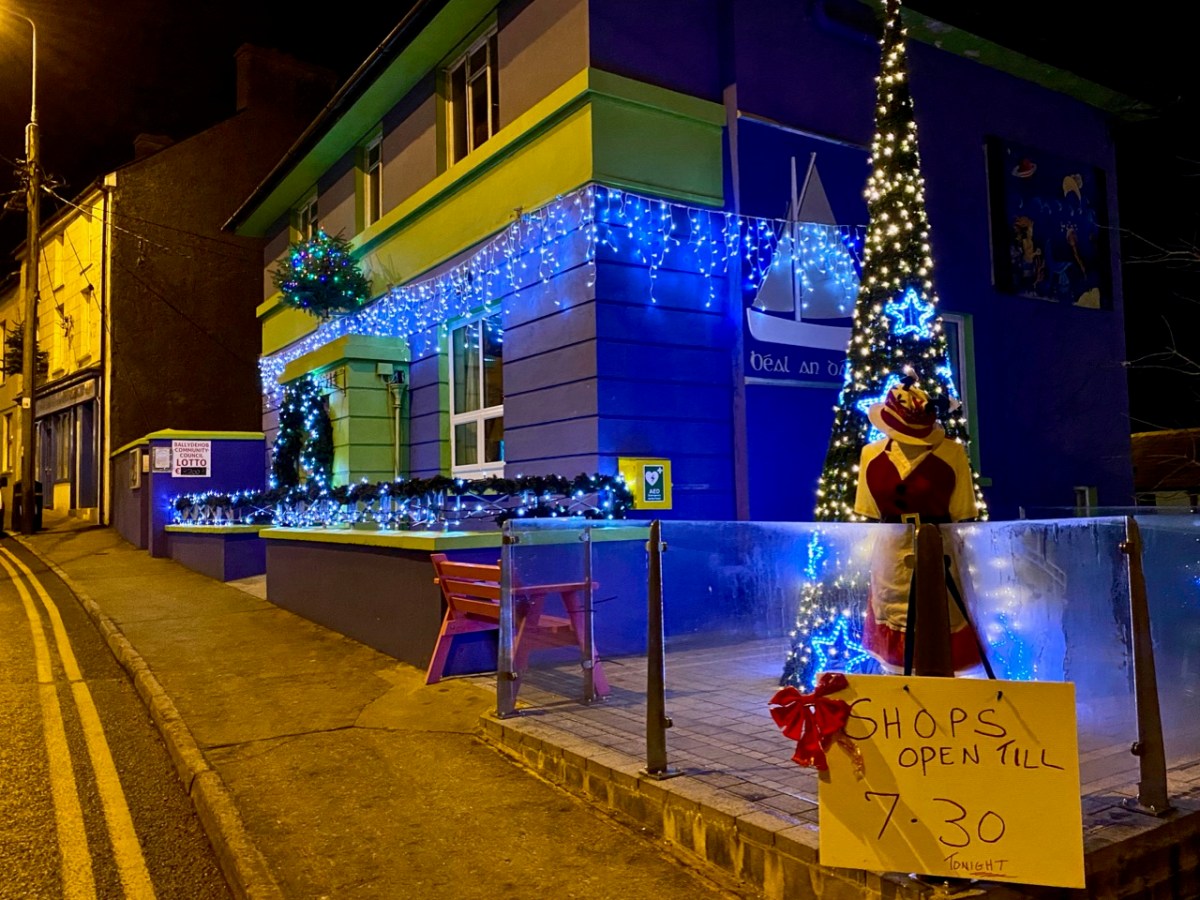
We’ll finish today with some shopfronts decorated for Christmas: in Dublin, and back in picturesque Ballydehob.