The Giant’s Ring

It’s not West Cork, but – if you are looking for an impressive archaeological site – take a little trip over the border into the North, as we did very recently. Just outside Belfast City we found The Giant’s Ring. The size of it is astonishing – 180 metres in internal diameter, and covering an area of 2.8 hectares. And what we see today is only part of a cluster of monuments here.

This marked up location plan, produced by archaeologist Barrie Hartwell in 1998, shows the Giant’s Ring, and other sites nearby which have been discovered by aerial survey and crop marks. We can’t really know what the focus of the whole complex is. Guesses are made as to what its function might have been, based on similarities to other finds, but the size of this ‘Ring’ sets it apart from most other equivalent discoveries. If you want West of Ireland comparisons, then Drombeg Circle has a diameter of 9.3 metres; The Giant’s Ring, at 180m, is twenty times greater! Also, the Grange Stone Circle in Co Limerick – which appears very large to us (it’s the Republic’s largest) – has a diameter of ‘only’ 60 metres.

It’s hard to judge the scale from a photograph, but looking at the figure just visible at the right-hand edge of this view, above, helps to set the scene. The ‘small’ pile of stone that you can also see within the enclosure is, in fact, a monument in its own right, generally thought today to be the remains of a passage grave. Here’s a nearer view, followed by close-ups. The structure – a type which used to be called a ‘dolmen’ (and still is in some of the accounts of The Giant’s Ring) is quite substantial.

This passage grave is far less impressive than – say – Newgrange, but why would it be sited in this enormous ring – which resembles a ‘henge’? It is dwarfed by the huge circular bank. It is likely that the grave or tomb structure was covered by a mound. Here is an artist’s impression of the enclosure being used for a ritual purpose:

In 1995 archaeologist Barrie Hartwell provided the following commentary to this sketch:

. . . This conjectural reconstruction of the Giant’s Ring brings together a number of ideas. Here the Giant’s Ring stands on the southern edge of a plateau overlooking the fertile land of the Lagan Valley. The internal slope of the bank is lined with stones and the bank has a flat top on which people crowd to view the spectacle unfolding within. The passage grave, embedded in an earthen mound provides the focus of activity. The quarry ditch can be seen between the two. In the right foreground is a circular bank, first seen as a crop mark in an aerial photograph. This was excavated in 1991, when the remains of a stoney bank were found on the eastern side. The central area had been removed by quarrying to a depth of 3m and backfilled within the last two hundred years . . .

Prehistory of The Giant’s Ring & Ballynahatty Townland
Barrie Hartwell LISBURN.COM

Above is an image from Google Earth showing the context of the circular monument in its immediate surroundings. There is no sign in this image of the many nearby sites which have been identified close to the Ring (look again at Barrie Hartwell’s location plan), but archaeologists have been busy at this location in comparatively modern times. Hartwell summarised some of the excavations in an article for Archaeology Ireland Volume 5, No 4, Winter 1991. He reports a description of a ‘chamber’ that was described in 1855 by Robert MacAdam, editor of the Ulster Journal of Archaeology:

. . . On November 21st 1855, Robert MacAdam picked up the Belfast Newsletter in his office in the Soho Foundry in Belfast . . . His attention was caught by a paragraph in the paper announcing the ‘discovery of an ancient tomb on the farm of Mr David Bodel of Ballynehatty’. He immediately visited the spot, just six miles south of Belfast, with his friend Mr Getty, and found that the tomb was still largely intact and that most of the contents had been rescued by the farmer. Equally interesting was its position close to the great enigmatic banked enclosure of the Giant’s Ring on an isolated, undulating, upland block of land overlooking the River Lagan. They were impressed enough to return at the weekend with other members of the Belfast Natural History and Philosophical Society to record it properly . . .

Archaeology Ireland Volume 5 No 4 – Winter 1991

The above illustration accompanies the article. Note that this find appears to have been sited outside of the Giant’s Ring itself. Hartwell’s account continues:

. . . Their plan and description shows that this curious structure had been built in a paved, 1.5m deep, flat-bottomed pit and with a corbelled roof supported by a stone perimeter wall, five internal stone dividers and a central prop. The top of the roof was 0.5m below the ground surface and may have been covered with small stones to form a cairn. In two of the radial compartments so formed were found the remains of four ‘…urns, about twelve inches high by ten broad…’ each containing burnt bones. One of the urns had disintegrated, and two of them were later described as being large and rudely formed. One of these survives today as a Bronze Age Collared Urn. The fourth was a typical globular-shaped Carrowkeel Ware pot usually found in Neolithic passage tombs . . .

Archaeology Ireland Volume 5 No 4 – Winter 1991

I found a further reference to the discovery of this ‘chamber’ in the archives of the Belfast News, 1855:

Hartwell’s fascinating account describes other finds in the area, and reports how Bodel – the farmer who owned the land – could remember stories of previous finds going back through generations of his family: a number of sites had been destroyed through agricultural clearance or ‘treasure hunting’. According to his memories these included a standing stone, another megalithic tomb, a multiple cist cairn, a number of single cist burials and two ‘cemeteries’ which produced many cart-loads of human bones. He also noted that similar sites had been found in his neighbours’ fields.

We can distil from these various stories that what we see today at this site was central to a very significant cultural hub, much of which is now lost. Hartwell suggests that some of the more recent excavations provide evidence that human activity here dates from 3039 to 2503 BC. His conclusion is significant:

. . . It is placed firmly in the late Neolithic rather than the Bronze Age. The closest parallel in Ireland is surely Newgrange. Indeed, the Bend in the Boyne and the ‘Loop in the Lagan’ invite close comparison. The scale of the monuments may vary but all the elements of a ceremonial landscape are there – passage tombs, henges, pit circles, flat cemeteries, and, of course, the river. Just as the river at its extremities defines a natural region, it mat also have defined a human territory with the ceremonial centre at its hub . . . Ancestral rights to territory were anchored by a thousand years of burial rites and the sanctity of the land shown by the continuum of ritual from the Neolithic to the Bronze Age . . .

Archaeology Ireland Volume 5 No 4 – Winter 1991
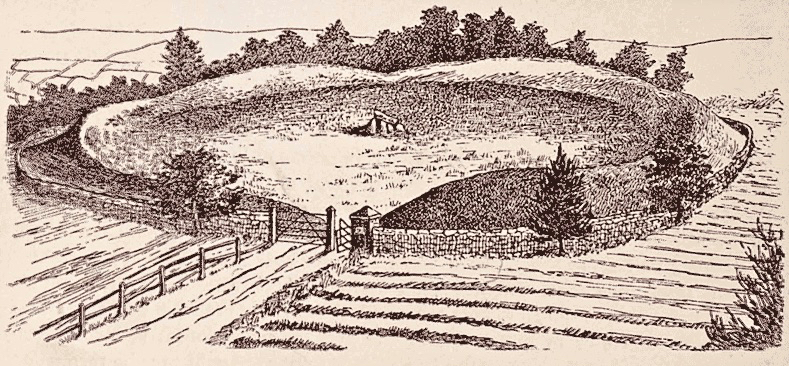
Former landowners of the estate on which this monument stands were the Dungannons of Belvoir House. In the mid nineteenth century Lord Dungannon built a protective wall around the Giant’s Ring (shown in the top sketch which reportedly dates from 1897). The plaque on the entrance gate (above) marks a visit to the site by Countess Dungannon, presumably to commemorate the completion of this wall.

The site has understandably attracted artists and photographers. The upper photo by R Welch dates from 1902 and the centre photo by S Kirker dates from 1905. The old postcard, above, is undated, but is remarkably similar in its viewpoint to the 1897 sketch – which one came first?

So there we have it: a very significant ceremonial site which has been compared in importance to Newgrange. What was it for? A burial place imbued with connections to an afterlife? We cannot know. But my own thoughts when looking at this vast circle is that in the present day we would call it an ‘arena’, and we might use it for sports, drama or processions. In fact I noted a report that stated it was used for horse-racing in the eighteenth century. A significant disappointment for me is that I have been unable to find any folklore or ‘stories’ about The Giant’s Ring. Northern Ireland does not share the equivalent of the Dúchas Folklore Collections which we have in Ireland, dating from the 1930s. There must have been tales told about it through the generations: I would be most interested to hear from anyone who can fill in this omission, please.

Looking Again at Simon Coleman

Back in May I put up a post celebrating our discovery of documentary artist Simon Coleman. There is plenty of material from Coleman that I didn’t use. Today, I’m showcasing more of his work: it’s invaluable to Irish folklore and folklife researchers. We have to be forever grateful to The Dúchas Collections, and their field-workers who spent so much time scouring the rural landscapes of Ireland and its inhabitants, and recording their findings in detail, preserving the rich memories of those times for our benefit.
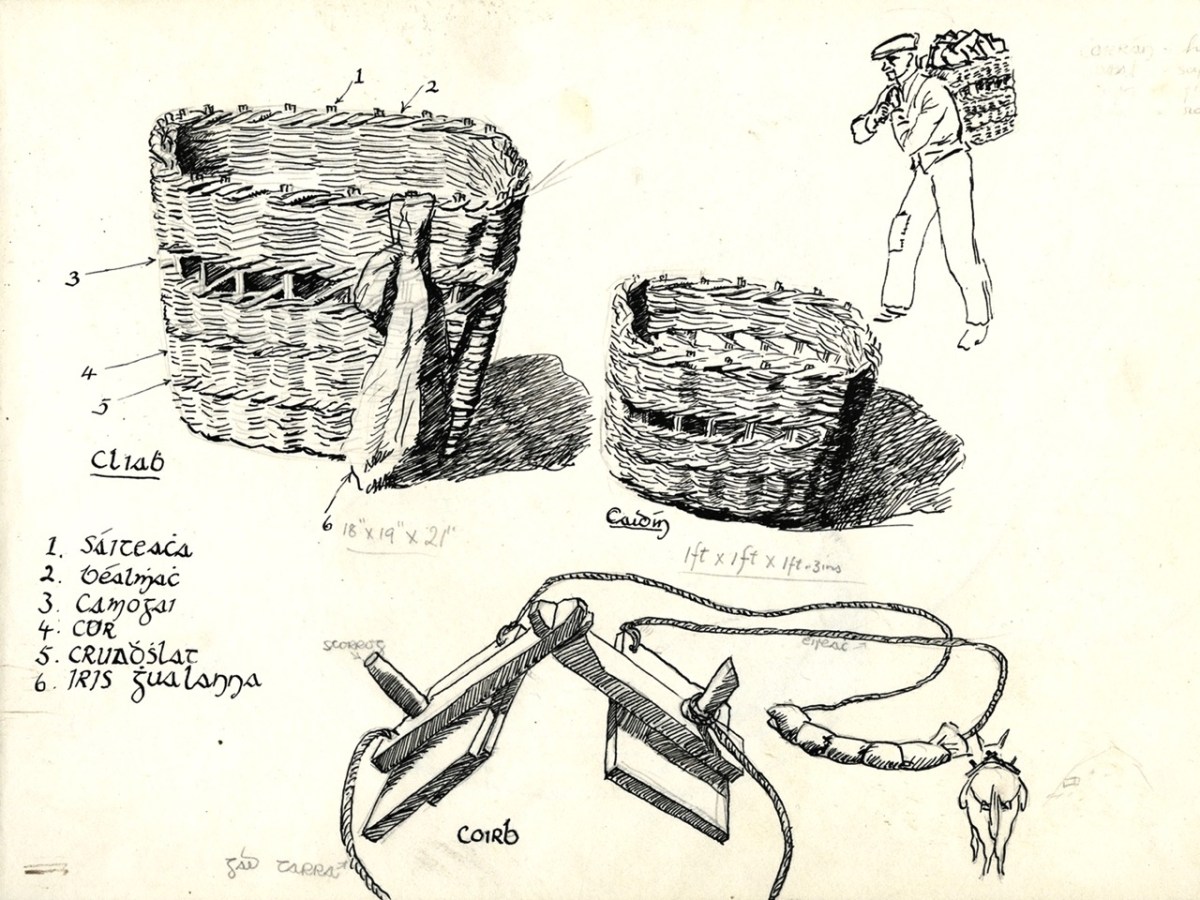
The header shows one of Coleman’s attractive watercolours which record the landscapes he traversed during his folklife researches. His sketch-pads, however, are filled with drawn details showing the basics of rural life, such as this one (above) recording baskets which were carried on the back or which were made as panniers for donkeys, mules and horses. Such methodical records are invaluable to our understanding of the paraphernalia of ordinary life, now virtually vanished. More technology for lifting and carrying loads is shown below.

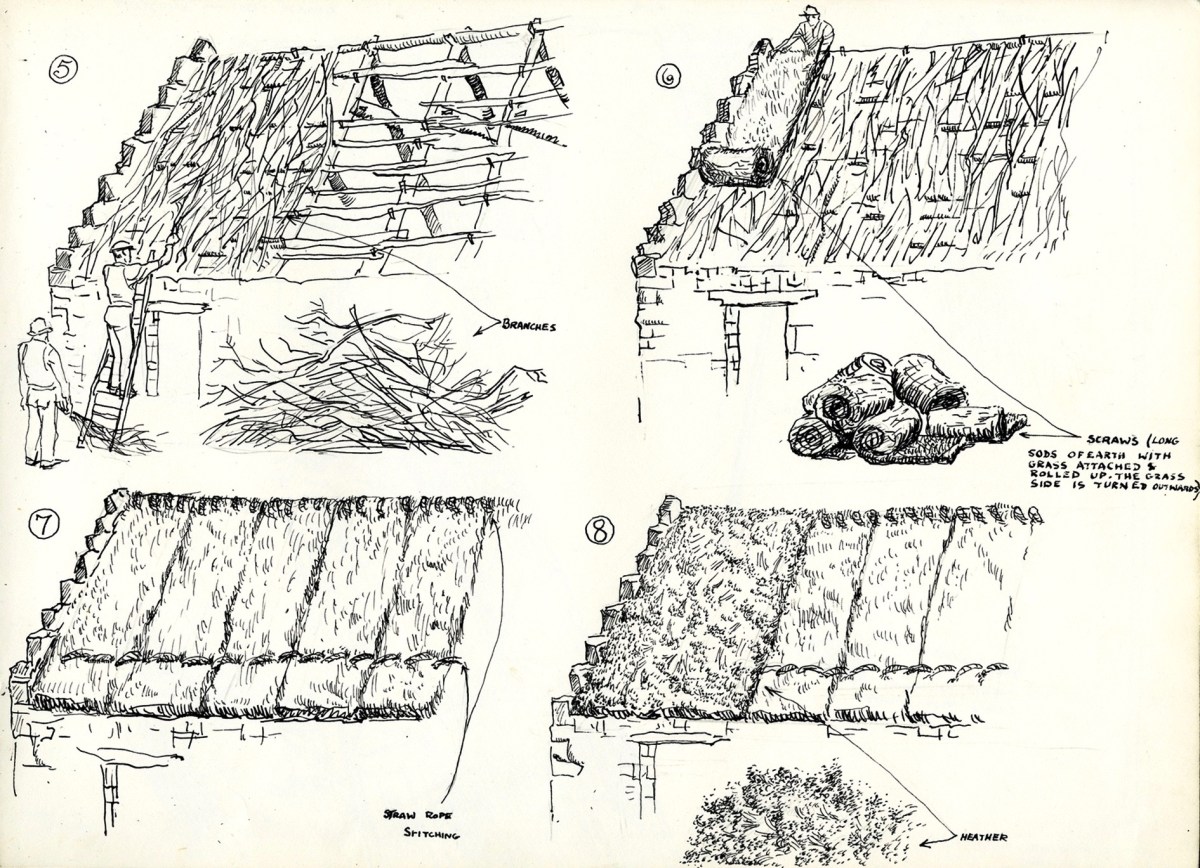
The drawing above shows in typically fine detail the process of ‘turfing’ a roof using clods of earth with grass attached. the grass is on the outer surface. Also shown is the use of ‘ling’ – or heather – as a roof covering.
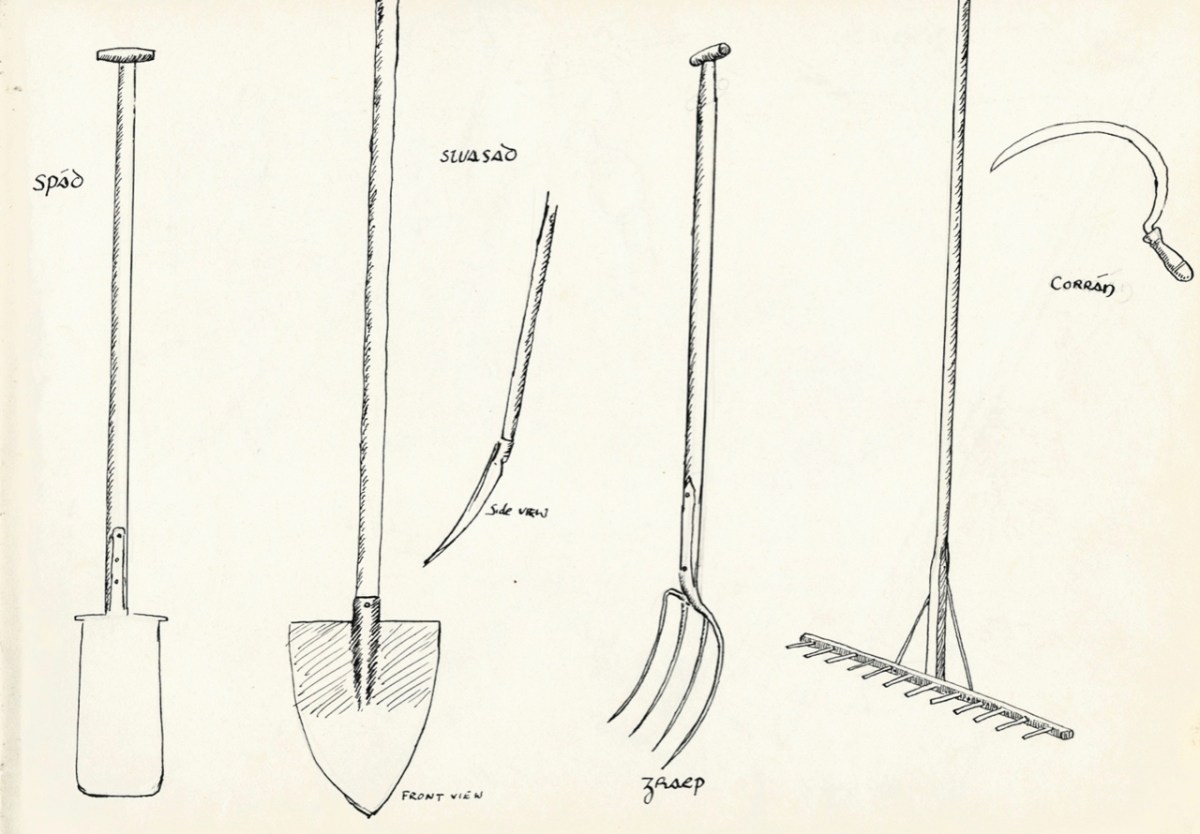
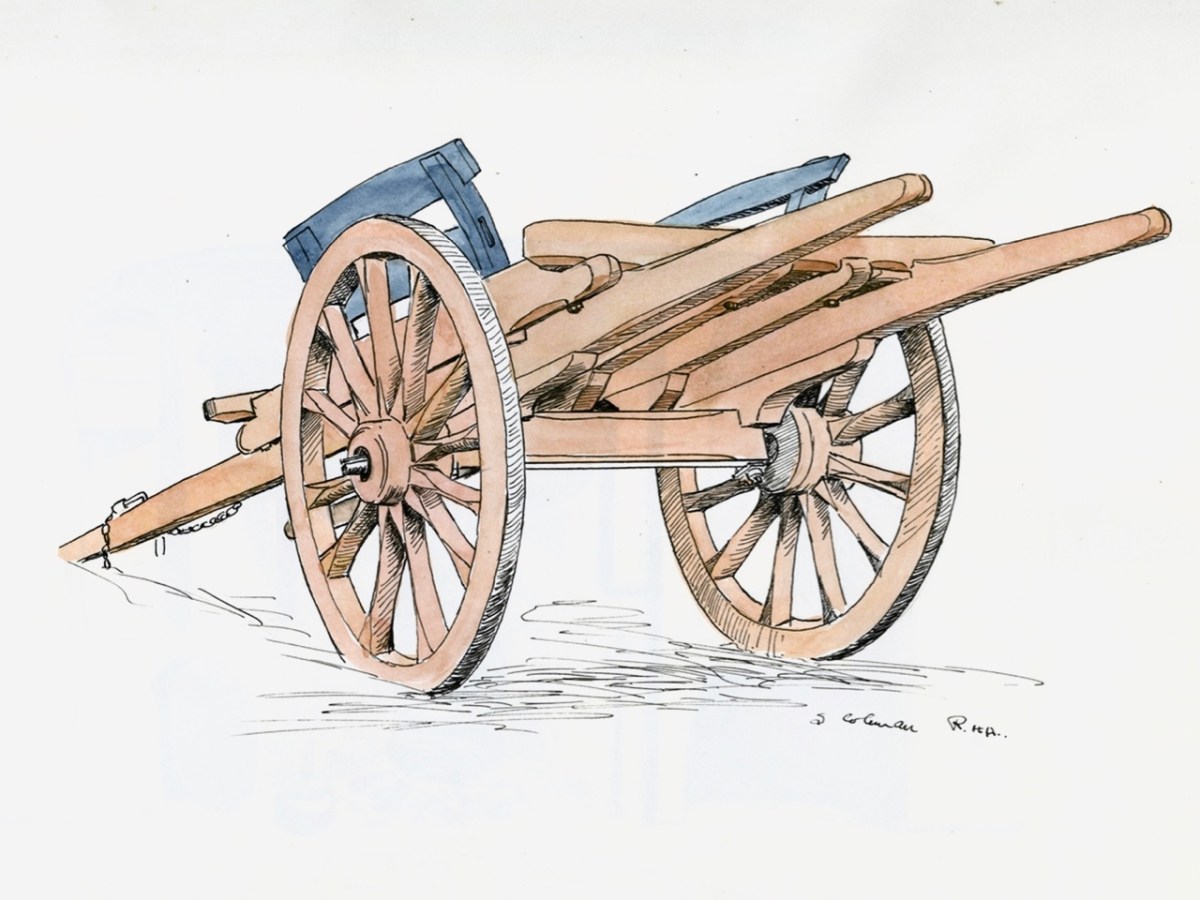
Straightforward hand implements used on farms (upper) are complemented by very fine watercolour sketches, such as the one above, recording the wagon – an essential element of life in the country.

Coleman was also an accomplished painter, as is evidenced by this portrait in oils of Anna Nic A’Luain, one of the most gifted storytellers encountered by the renowned Donegal folklore collector, Seán Ó Heochaidh. Anna was from Croaghubbrid, in the Blue Stack Mountains, Co Donegal, and lived from 1884 to 1953. The painting dates to 1949.

Cois Fharraige, above, another work in oils by Coleman.

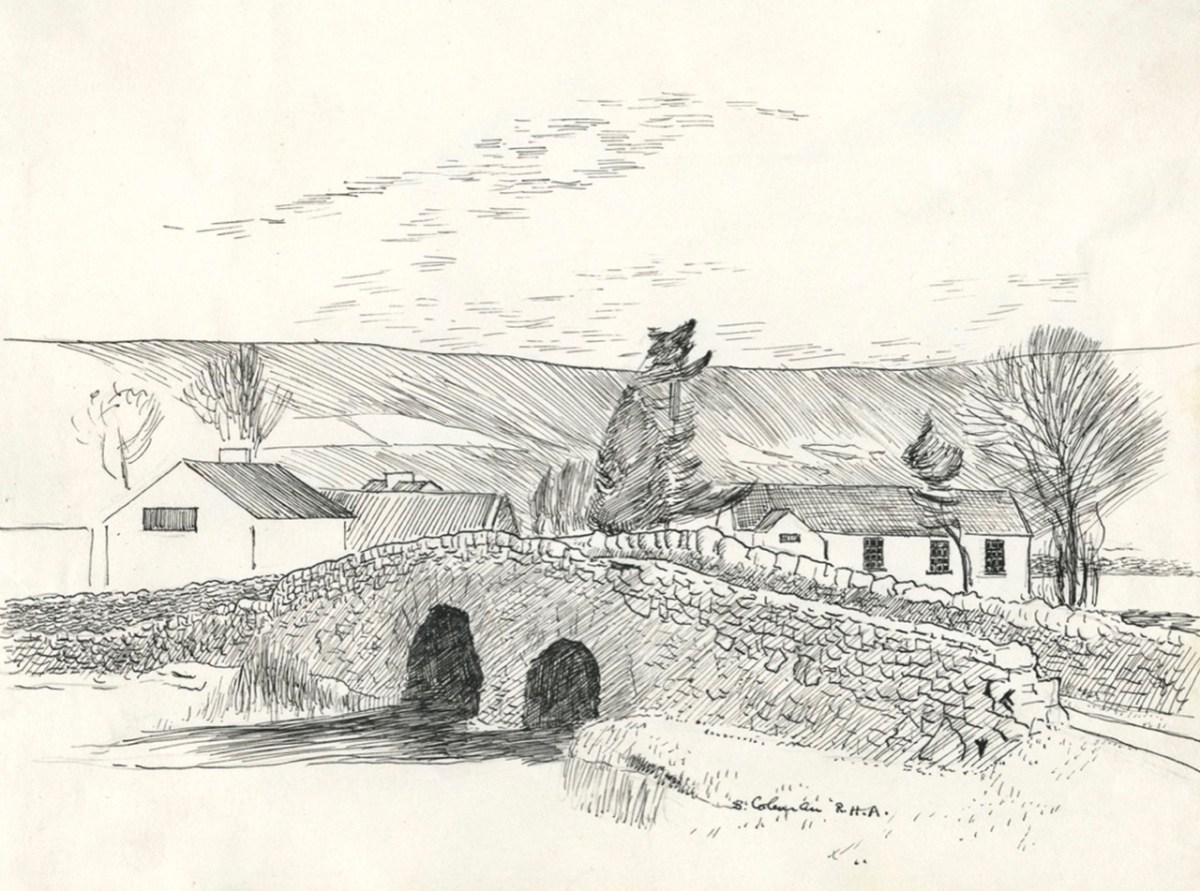
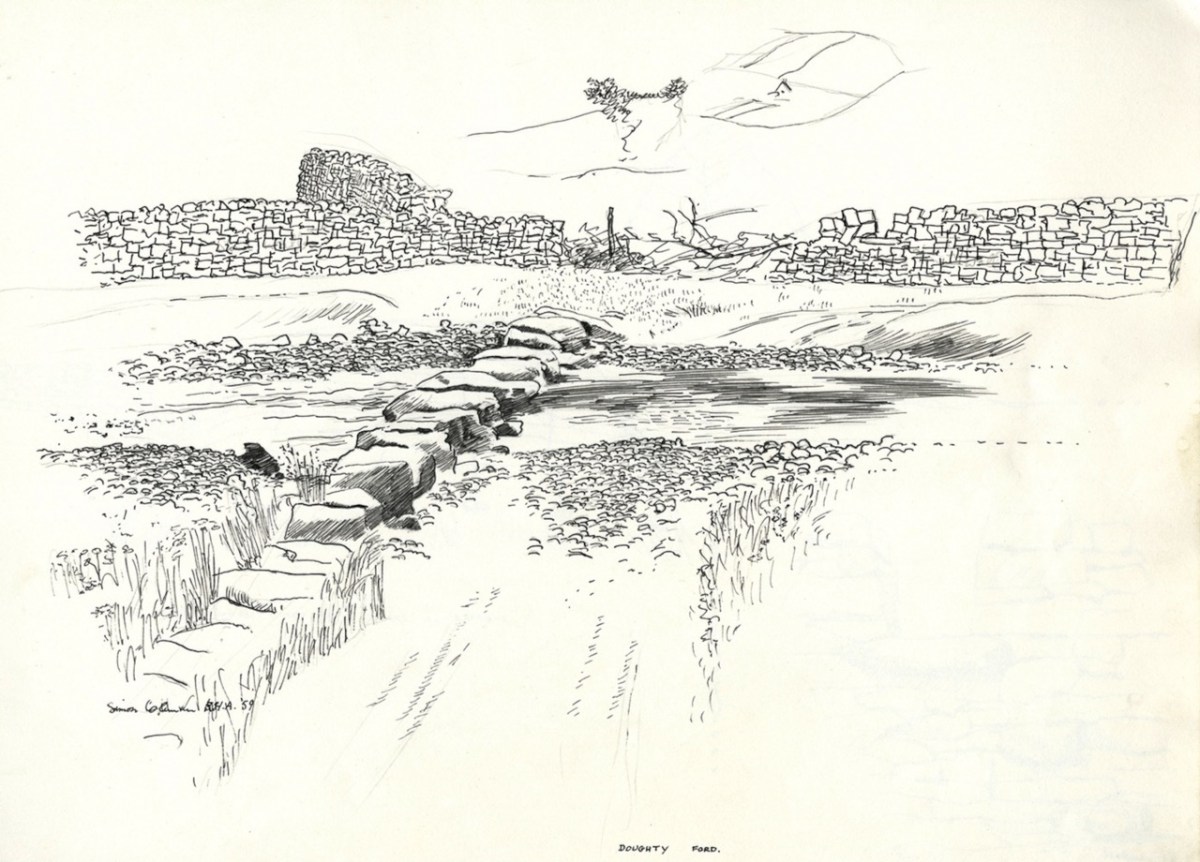
Doolin, Co Clare – Old stone bridge, Lough Agraffard, 1959 – Doughty Ford: all from Coleman’s sketch books. A valuable record stored in the Folklore Commission Archives. Slightly unusual, perhaps, is this house (below) which Coleman sketched in Galway city.

New Court Bridge – A Hidden Wonder: Update

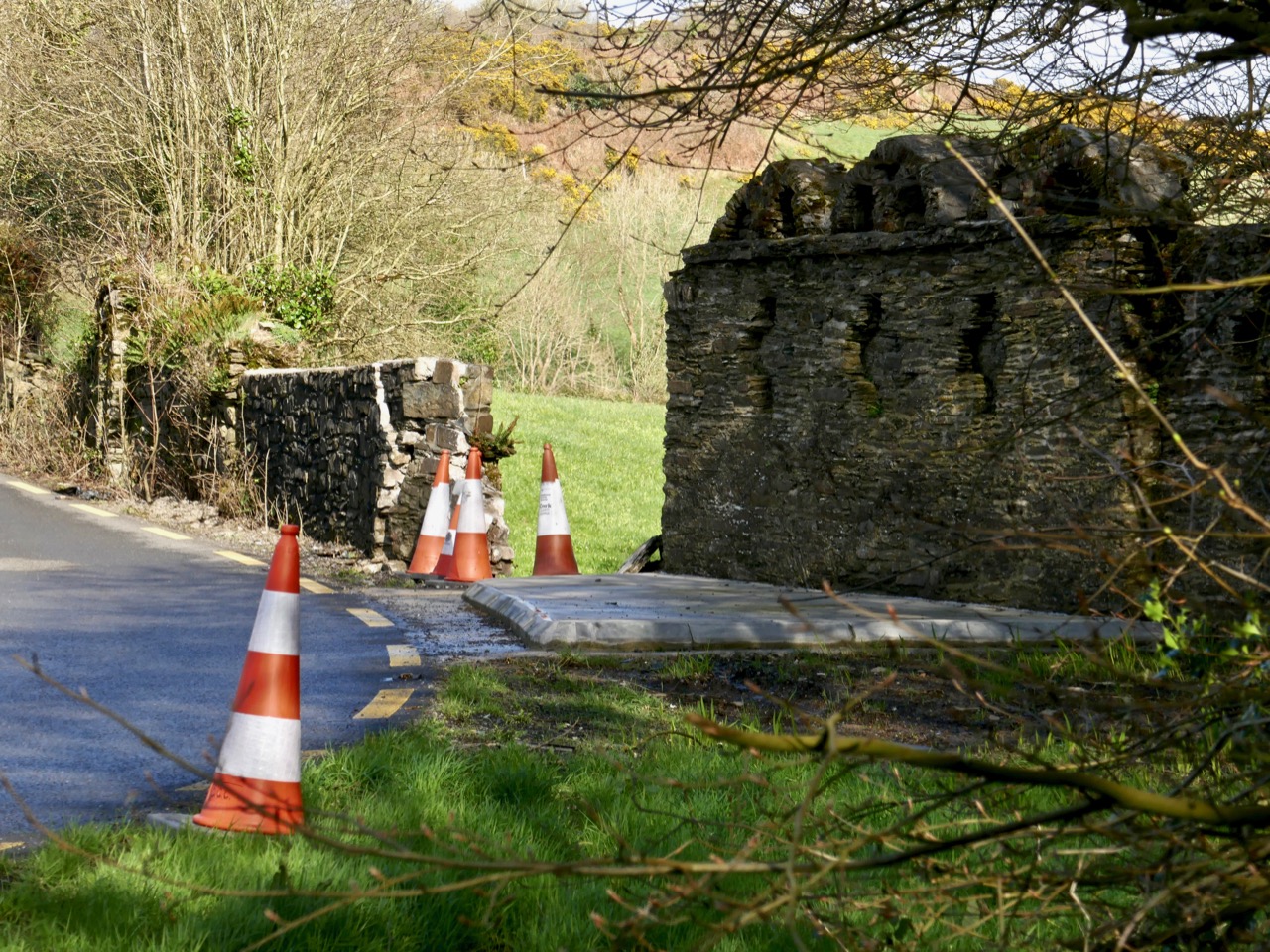
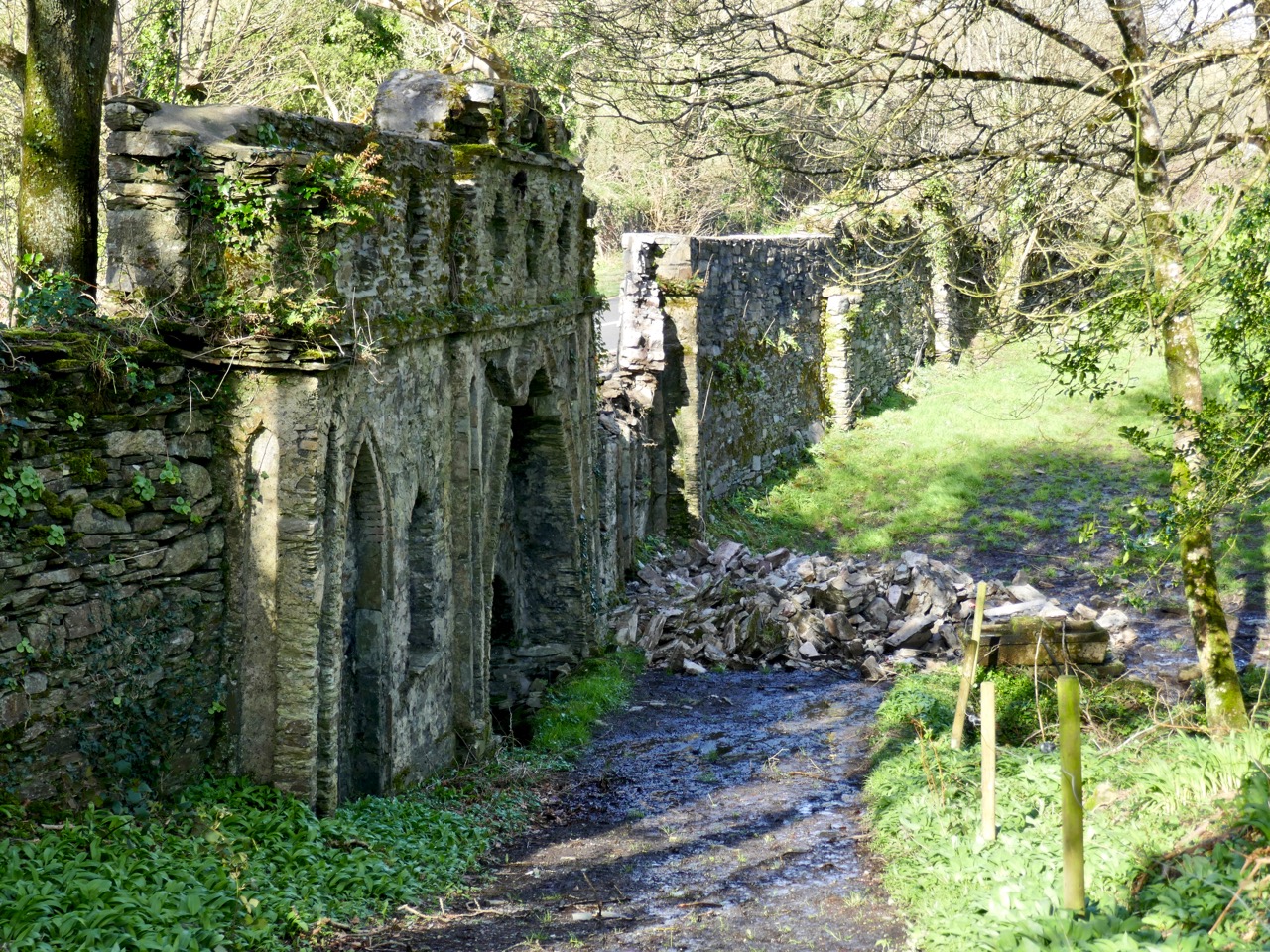
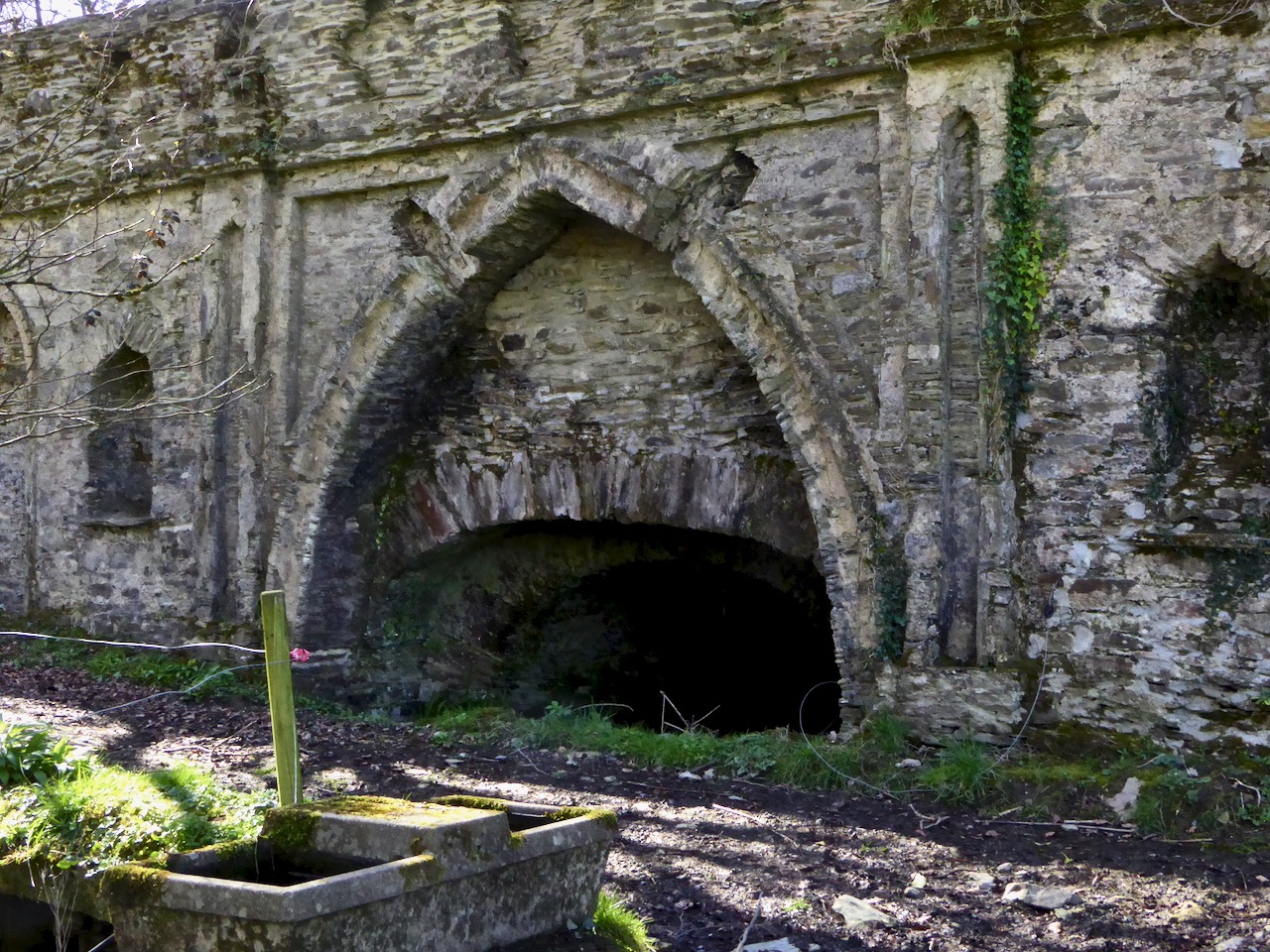
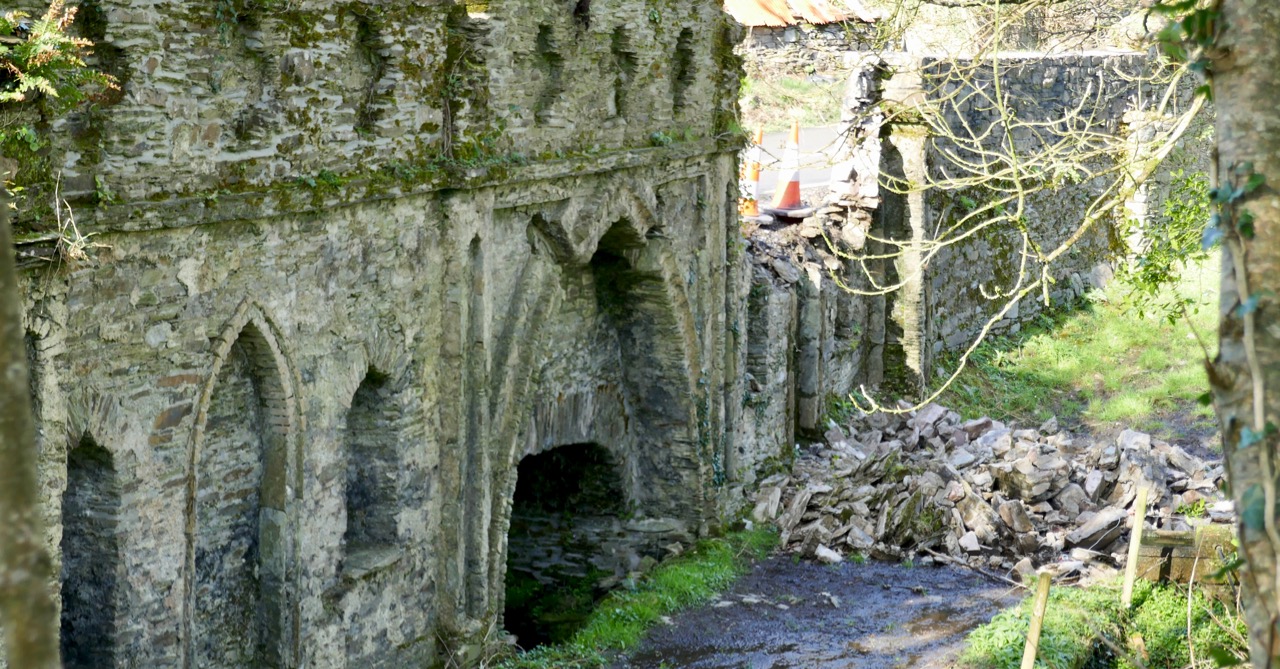
In 2019 I reported on the damage to the New Court Bridge and discussed why that was serious – the curious wall that we pass so often turned out to be a unique and important remnant of an eighteenth century designed landscape. The Good News is that the damage has been repaired, excellently, by Cork Co Council – this is what it looks like now (above).

This (below) is what it looked like in 2019. What follows is what I wrote then. T(he repair work was done in 2020 and I have been meaning to update the post since.)

New Court Bridge has been badly damaged recently. Why does that matter?

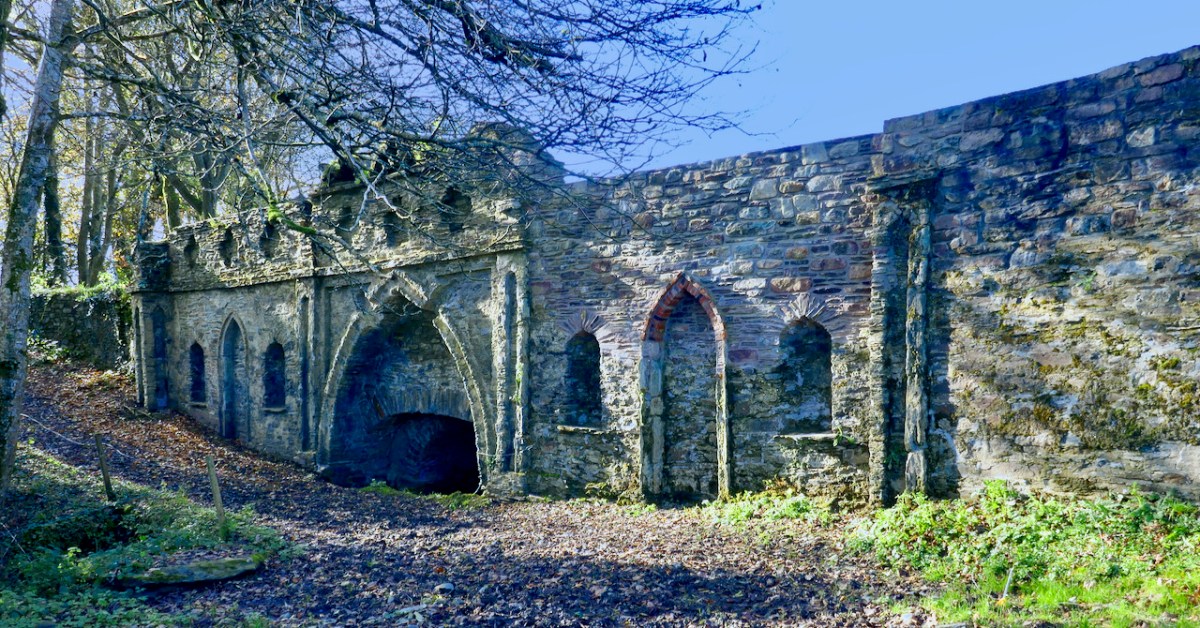
The damage from behind the wall. Now you can see that this is a bridge – but a most unusual one!

Most people driving by this dangerous bend, where the Ilen River meets the N71 just west of Skibbereen, notice the funny arches on top of the wall, but don’t think twice about them. It’s too risky to stop and take a close look, after all. Most people, in fact, probably don’t realise that they are driving over a bridge, although that’s a bit more obvious now as the County Council have put in one of those concrete pads that are going in front of all bridge walls at the moment (see lead photograph).

Water under the bridge

Does anyone know how the damage happened? Did a car take the bend too fast and hit the wall? Did the concrete work loosen the structure of the wall? Let us know if you have information. I hope nobody was hurt. All I know is that one morning I was driving into Skibbereen and there was a chunk of the wall – gone! [EDIT: Apparently a young and inexperienced driver took the bend too fast and hit the wall. He was not badly hurt, thank goodness.]

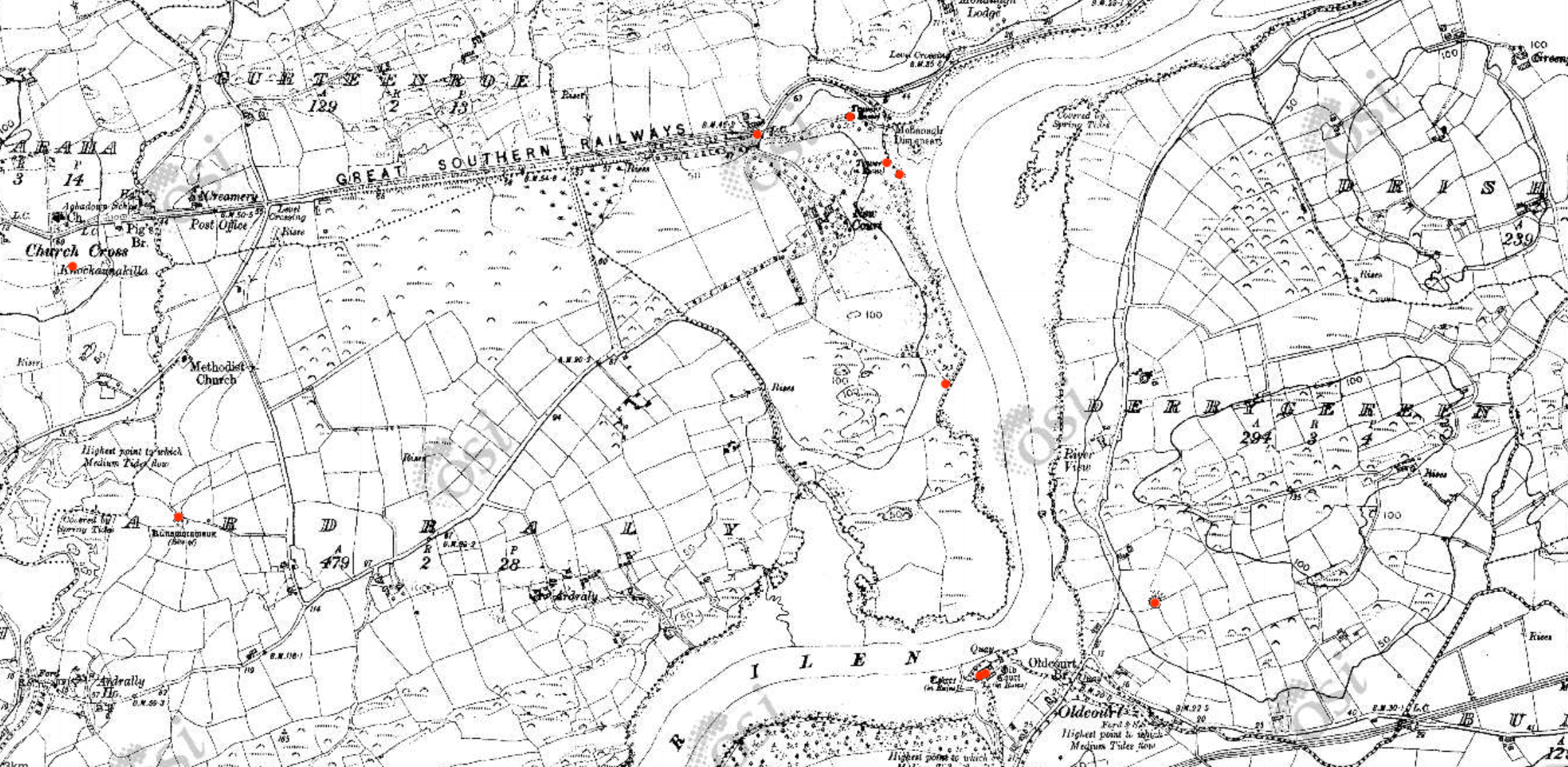
Early Ordnance Survey map of the New Court Estate, bounded by the Ilen River on the east and south. The red dots indicate the locations of the belvederes (marked as towers) and the bridge

We tend in Ireland to think of old estate walls like this one as ‘Famine Walls’, erected during the mid nineteenth century as work projects. But this wall was far older than that, and it hid a secret – an elaborate facade on the back with decorative arches and niches. It was part of the plan for a pleasure garden undertaken by Henry Tonson at his newly acquired ‘seat’ which he called New Court, to distinguish it from Old Court, across the river. Originally, there was a matching wall across the road, but it was demolished in a truck accident many years ago. EDIT: I misinterpreted this – rather than a matching wall across the road, in fact there were matching arches on either side of the road, west of the entry to New Court. Both are now gone, one at least due to the aforementioned truck accident. Thanks to Sean Norris for this information.

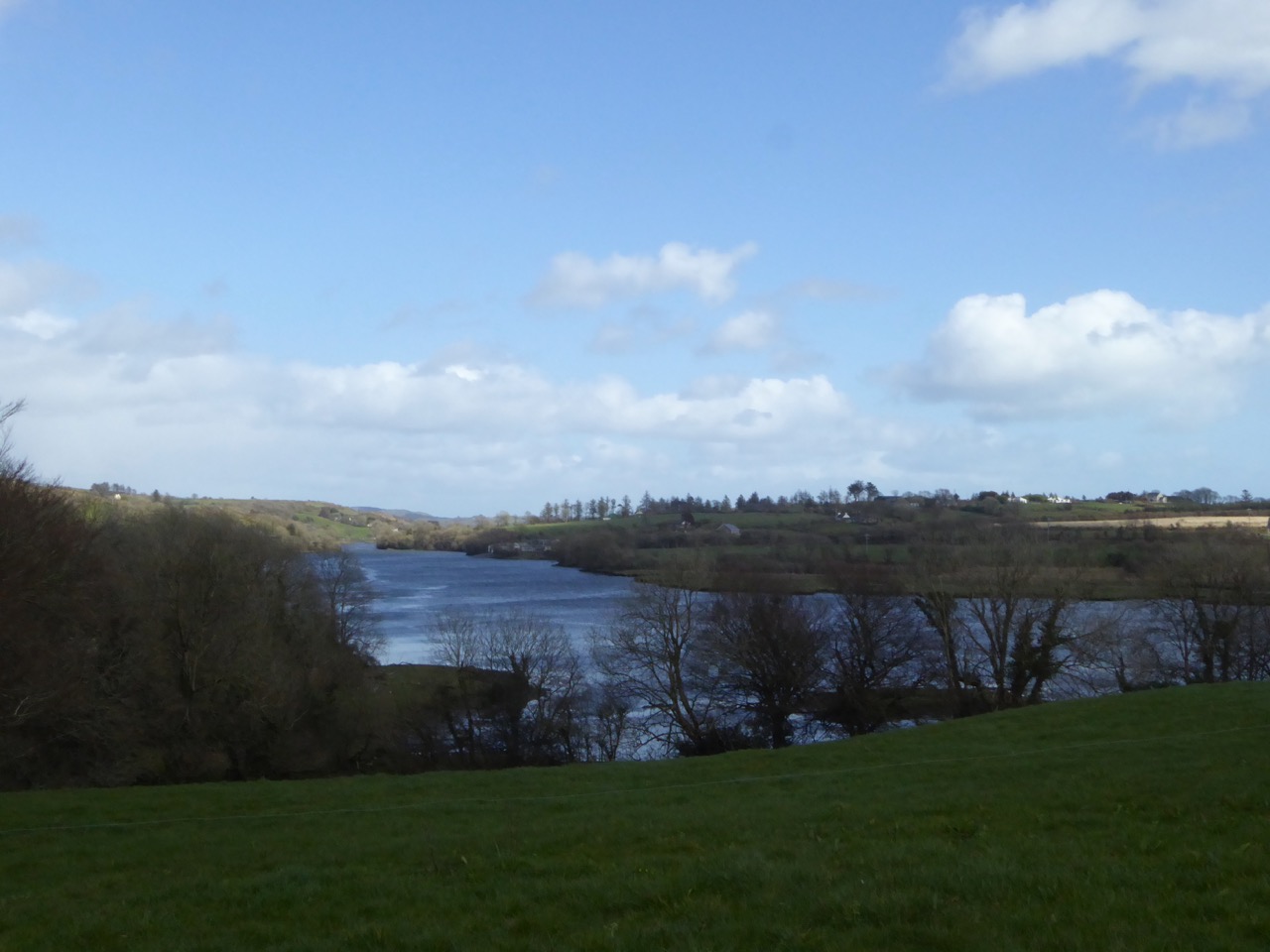
The Ilen floats by – a navigable river was a must for transporation to and from these early estates

The Tonsons had arrived in the 1660s. According to Burke’s Peerage, Major Richard Tonson received a grant of land in the county of Cork from Charles II for his distinguished exertions in favour of royalty during the Civil Wars and purchased the castle and lands of Spanish Island, in the same county. If he built anything on Spanish Island, just off Baltimore, no traces remain, and indeed, although strategic in marine terms at that time, it is hard to imagine how the island, mostly bare rock, would have made for comfortable accommodation.

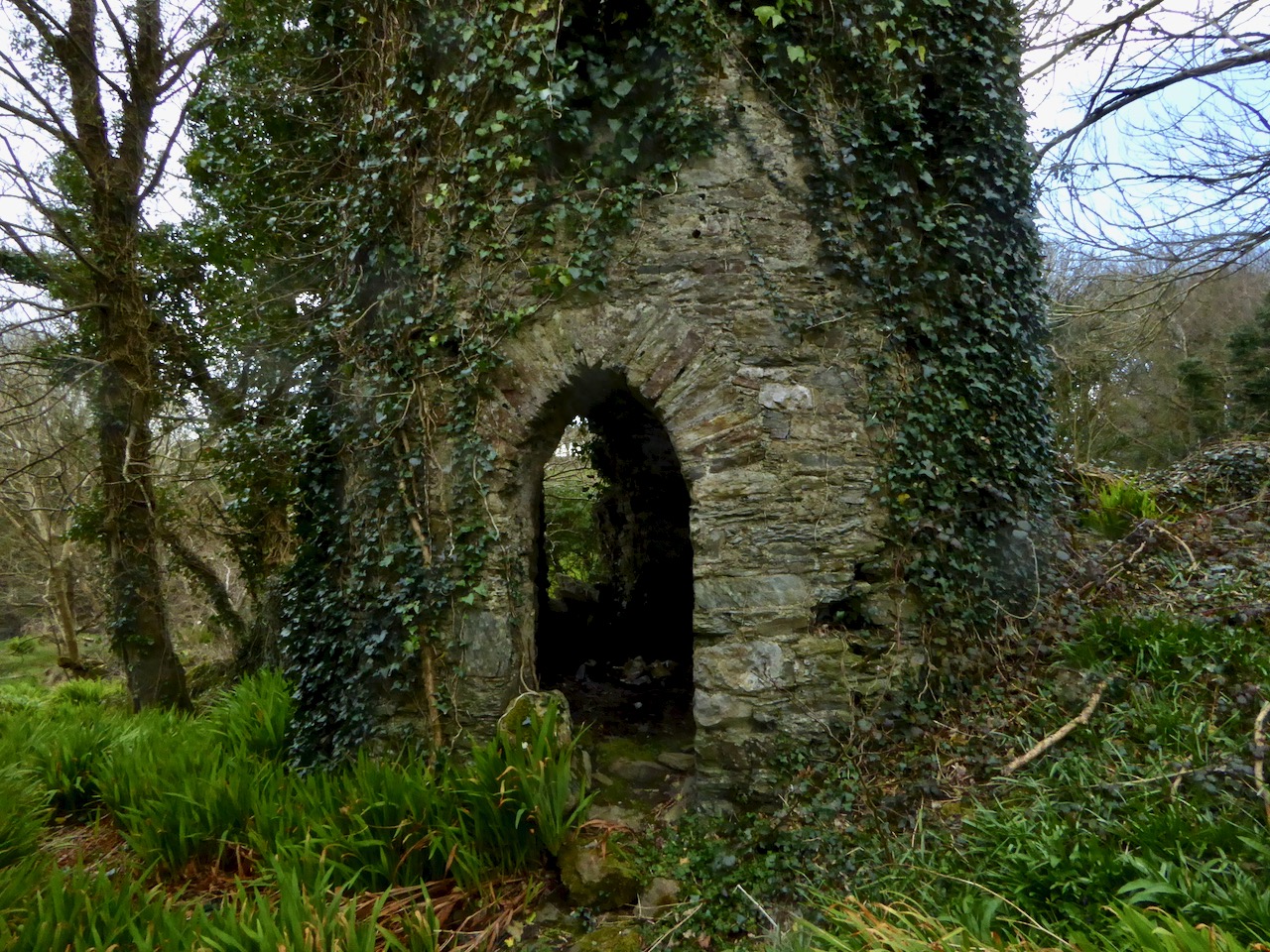
The stump of one of the belvederes, overlooking the river

It appears he, or his son, Henry, bought the land on the west bank of the Ilen and Henry set about establishing his dwelling there. This included building the wall around the estate. Eventually, and we are not sure when, one of the Tonsons (over time they acquired a title, Lord Riversdale) developed the area around the house as a vast pleasure garden.

The most complete belvedere. This one also functioned as a dovecote

The fashion for designed landscapes is an eighteenth century phenomenon. As I said in my post on belvederes, in that century

. . . a different style of landscaping. . . dominated garden design in Britain, pioneered by William Kent and Charles Bridgeman and reaching its peak in the work of Lancelot ‘Capability’ Brown. The effect they strove for was naturalistic (as opposed to natural) – a planned layout that mirrored but enhanced their idea of a ‘wild’ and romantic landscape. Large expanses of grass, strategically placed lakes and ponds, plantings of carefully chosen tree and shrub species, and clever little structures such as temples, summer houses and belvederes all combined to delight the eye, create a romantic mood and, of course, attest to the taste and wealth of the owner.

A closer look at the construction of the bridge. It would be fascinating to attempt a reconstruction drawing. The niches may well have held statuary or decorative urns

Although the grand houses at the centre of the estate have now gone (see this photograph in the National Library for a glimpse of the last one), there is lots of evidence still of such a designed landscape. Originally lawns sloped to the river – no need to build artificial ponds as the Ilen provided the perfect watery scene. Little round towers were built to be used as gazebos or belvederes (and in one case a dovecote): three in all, of which the stump of one and a fairly complete second are still to be seen. The bridge with its elaborate facing was the crowning glory of the estate wall.

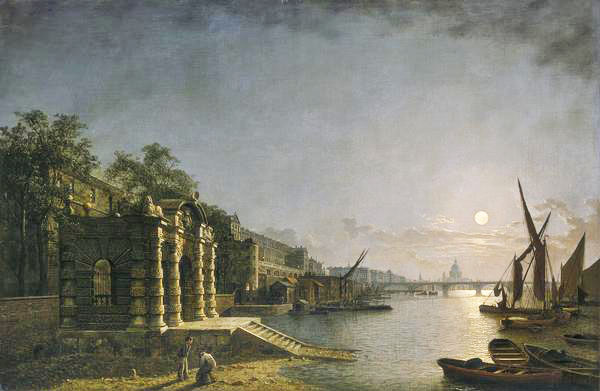
The York House Water Gate as it would have looked originally on  the Thames (Wiki Commons)

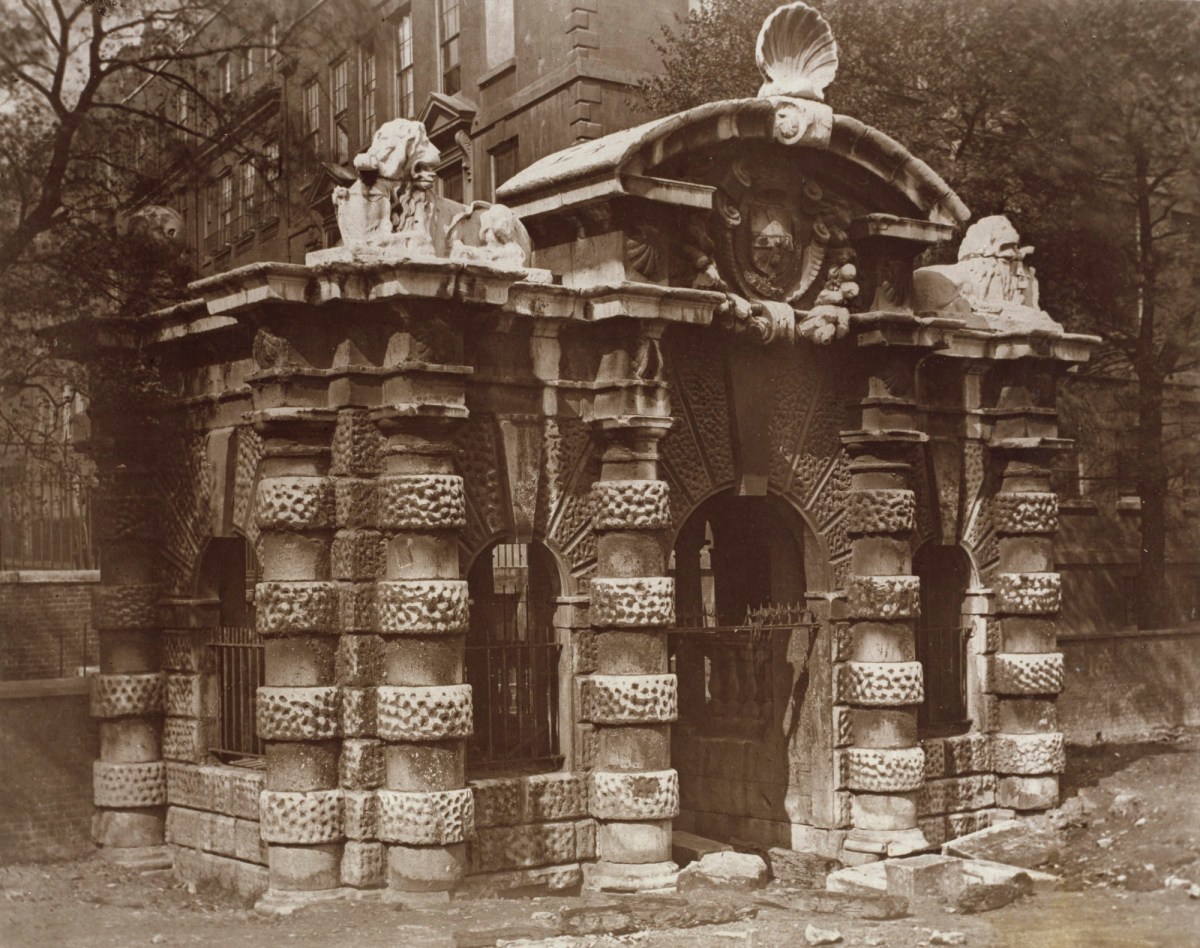
What did the bridge wall look like originally? We don’t know, but Peter Somerville-Large in his Coast of West Cork says it was modelled on the ‘water gates at Hampton Court’. I can’t find any images of this online, but I have found the water gate at York House, which is still there. It was built as a ceremonial landing place on the Thames (above) although it is now a long way from the river.

The York House Water Gate in an early photograph (www.royalacademy.org.uk/art-artists/work-of-art/O18442 Credit, Royal Academy of Arts / Photographer William Strudwick )

Of course, it is larger and more elaborate, but you can still see the basic shape, with its curved arch on top and the arched niches in the wall. The arches at New Court may have been plastered, perhaps, or faced with some material. The York House Water Gate dates to 1626 and it’s all that left of the York House estate – the Tonsons may well have been familiar with it or with similar water gates along the Thames. Building such an edifice would have been aspirational, indicating a desire to impress.

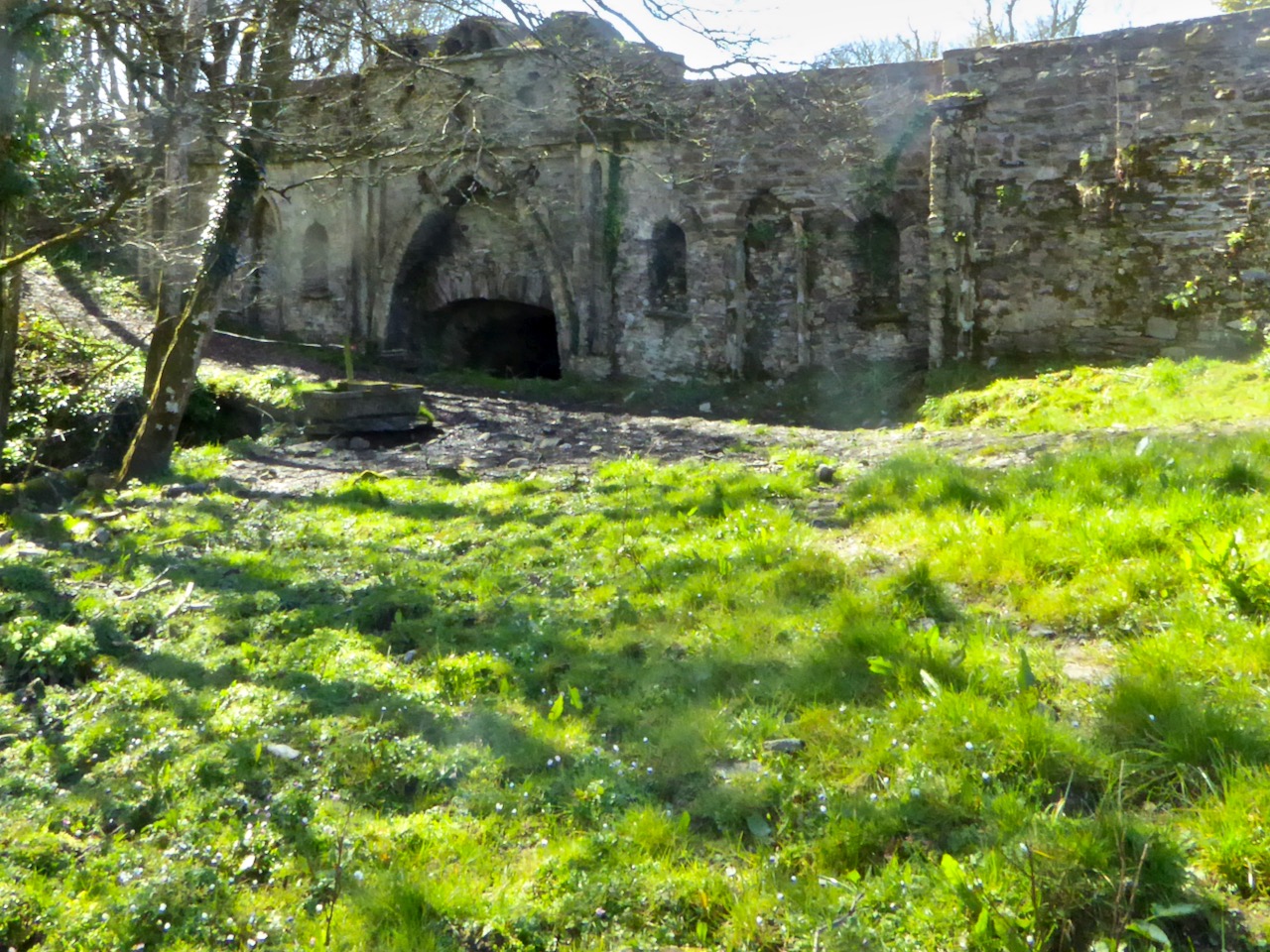
This was what it looked like in 2016 – taken by a camera with spots on the lens

The likelihood, therefore, is that the bridge at New Court is most probably eighteenth century, and early eighteenth century at that – about three hundred years old. We don’t have a lot of structures in West Cork dating to then. Surely it’s worth preserving those that still exist? I am hopeful that the National Monuments Service (they’ve been alerted and have notified their Monument Protection Unit) will come riding to the rescue. I’ll be keeping an eye on it all – you do too. But note that this is private property, so no walking or driving through the gates without permission.

UPDATE, MARCH 20, 2019. This notice was received from the National Monuments Protection Unit: “Cork County Council (Bridge Management) have indicated it is prepared to repair the wall as a Reactive Maintenance Incident and will ensure repairs meet any necessary heritage requirements.”

H V Morton’s Ireland – Part 2

Morton’s book – dating from December 1930 – deserves a further look as a view of Ireland from an English perspective back in the early part of the last century (here’s the first part of this review). What was going on, historically, in the young Free State at that time? Firstly, I was surprised to learn that there was a Governor-General (Seanascal Shaorstát Éireann) whose role was to be ‘the British monarch’s representative in Ireland’. While this was largely a ceremonial role (and was paralleled in Canada and Australia at the time), this continuing official link with a King was understandably unpopular. The first holder of the post was former Irish Parliamentary Party MP Timothy Healy, a Bantry man. Healy held the role between 1922 and 1928, and it was taken over by James McNeill, who retained it until 1932 – there’s a British Pathé newsreel on McNeill’s inauguration (below). The last holder of the office was Domhnall Ua Buachalla: In December 1936, when King Edward VIII abdicated, the Irish cabinet took the decision to abolish the governorship-general and emphasise the separation of the country from any sense of British heritage.

Through the 1930s, Ireland projected its image as a newly created modern state, but also consciously presented itself romantically as a pastorally idyllic country with a rich history and esoteric folk culture. This, of course, cast an eye on the potential for attracting tourism, and Morton’s book concentrates on this heritage, particularly in the choice of photographs. He writes on this relationship:

. . . It is one of Ireland’s many misfortunes that the common people of England have never been taught anything about her, have never shown any interest in her and, apart from a small section of well-to-do people, have never travelled in this beautiful island. I would like to hope that this book of mine may help, in no matter how small a way, to encourage English people to spend their holidays in Ireland and make friends with its irresistible inhabitants. Friendship and sympathy between two such warm-hearted and kindly people would be a fitting end to centuries of political misunderstanding . . .

H V Morton – In search of Ireland 1930

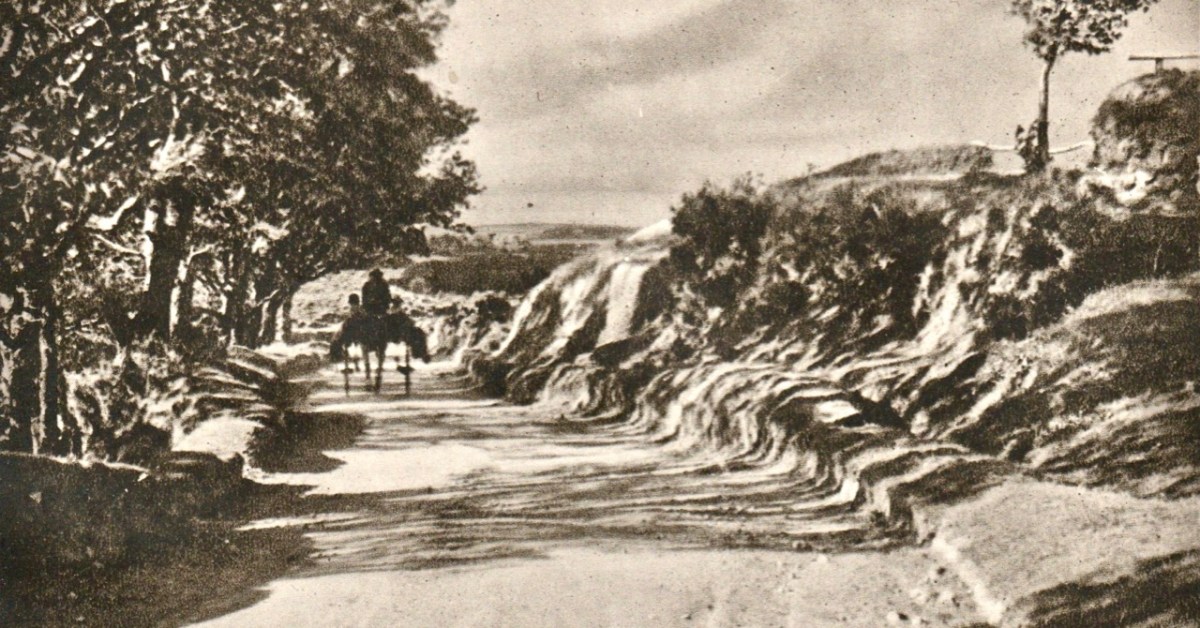
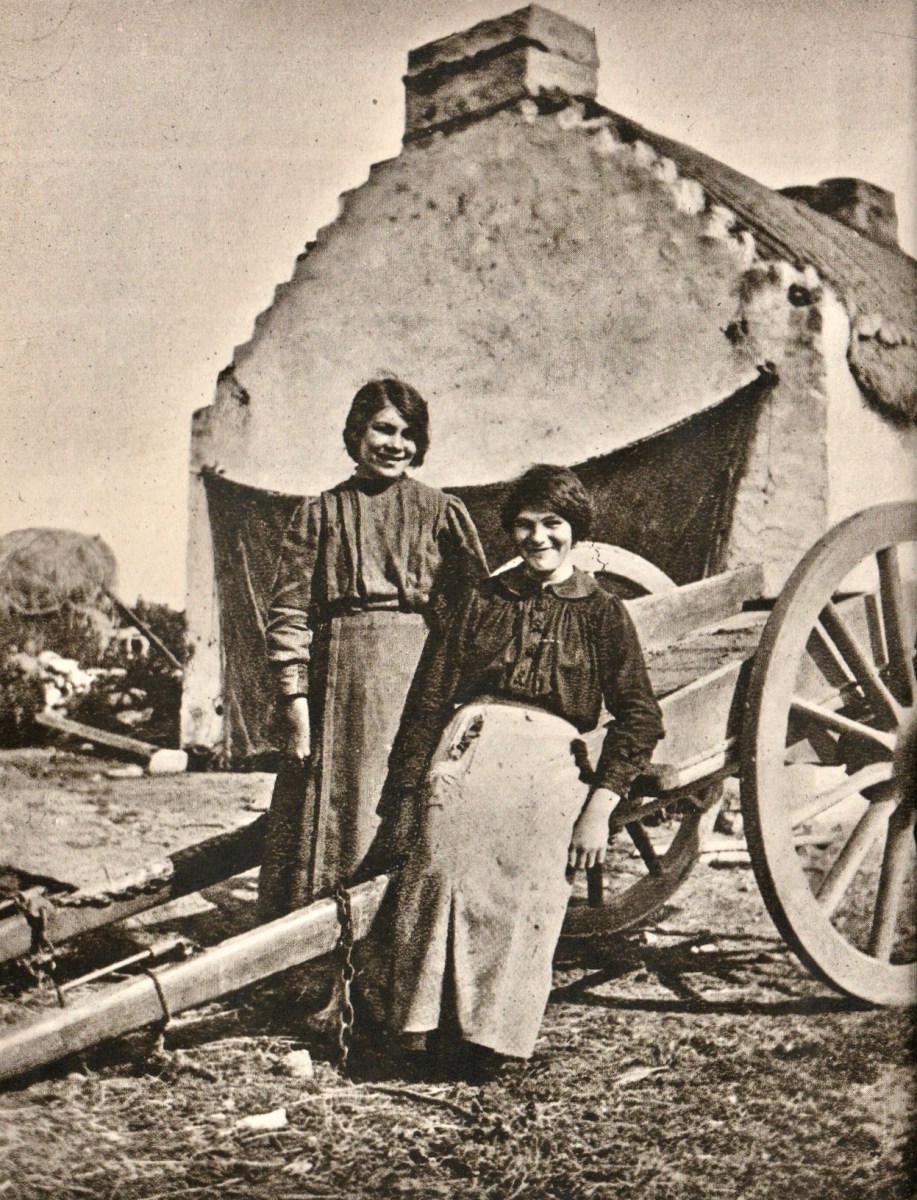
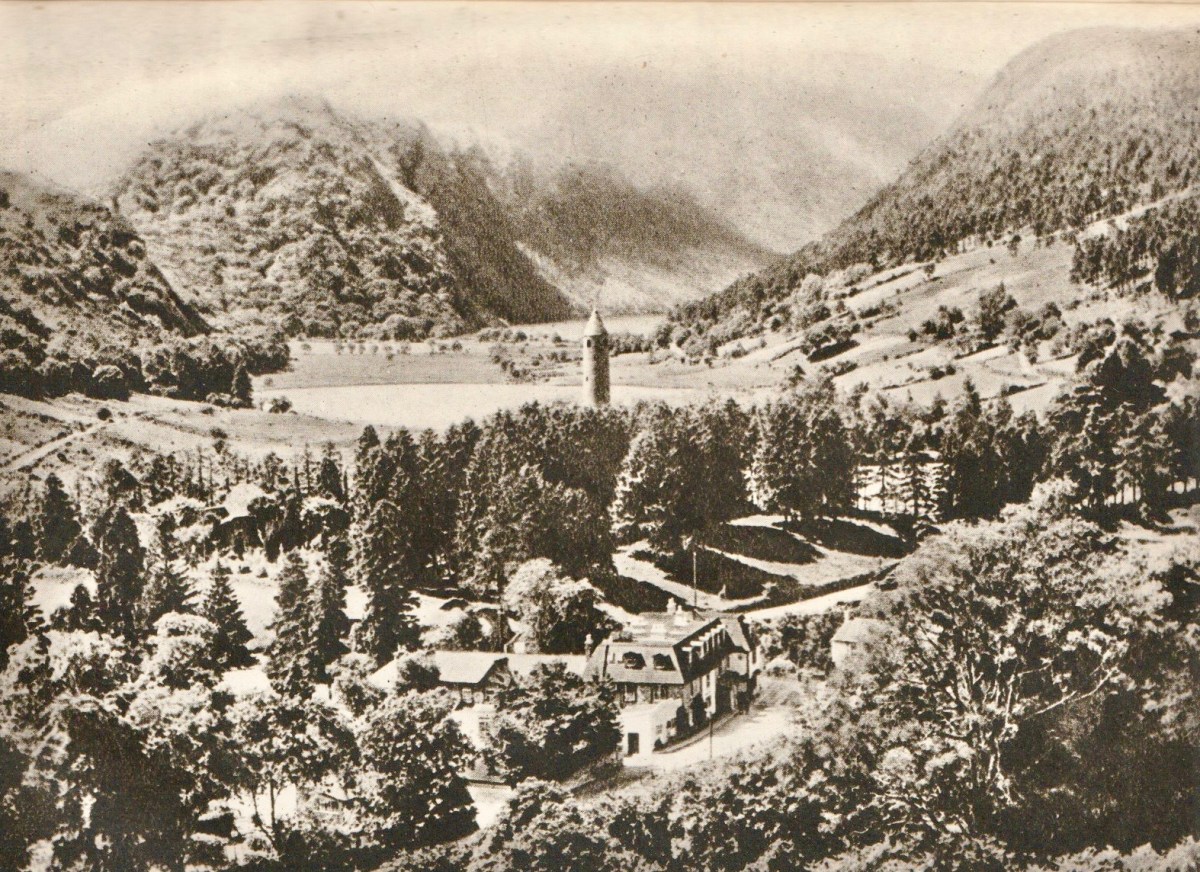
From ‘In Search of Ireland’ – above: Two Connemara Girls. Below: Glendalough.

Today, the British obsession with its nationalist roots – which we are calling ‘Brexit’ – threatens all the compromise and hard work which has been expended on positively and peacefully resolving the ‘Irish Question’ over the past few decades. Interestingly, in 1930, H V Morton had something to say about Northern Ireland, which has some uncanny resonances with today’s imminent problems:

. . . It happens that when you are in Donegal you can look south into Northern Ireland, and when you are in either Londonderry, Tyrone or Fermanagh you can look north into Southern Ireland! This is no doubt an excellent joke except to those who have to live in it! It must be exasperating to find yourself barred by a customs barrier from the country town in which you have always enjoyed free trading. But as long as it profits the Free State to build up her enterprise behind a tariff wall, or as long as Northern Ireland remains outside the Free State (which, I am told, will be for ever), this inconvenient and costly boundary with its double line of officials will remain, the only frontier in the British Isles . . .

H V Morton – In search of Ireland 1930

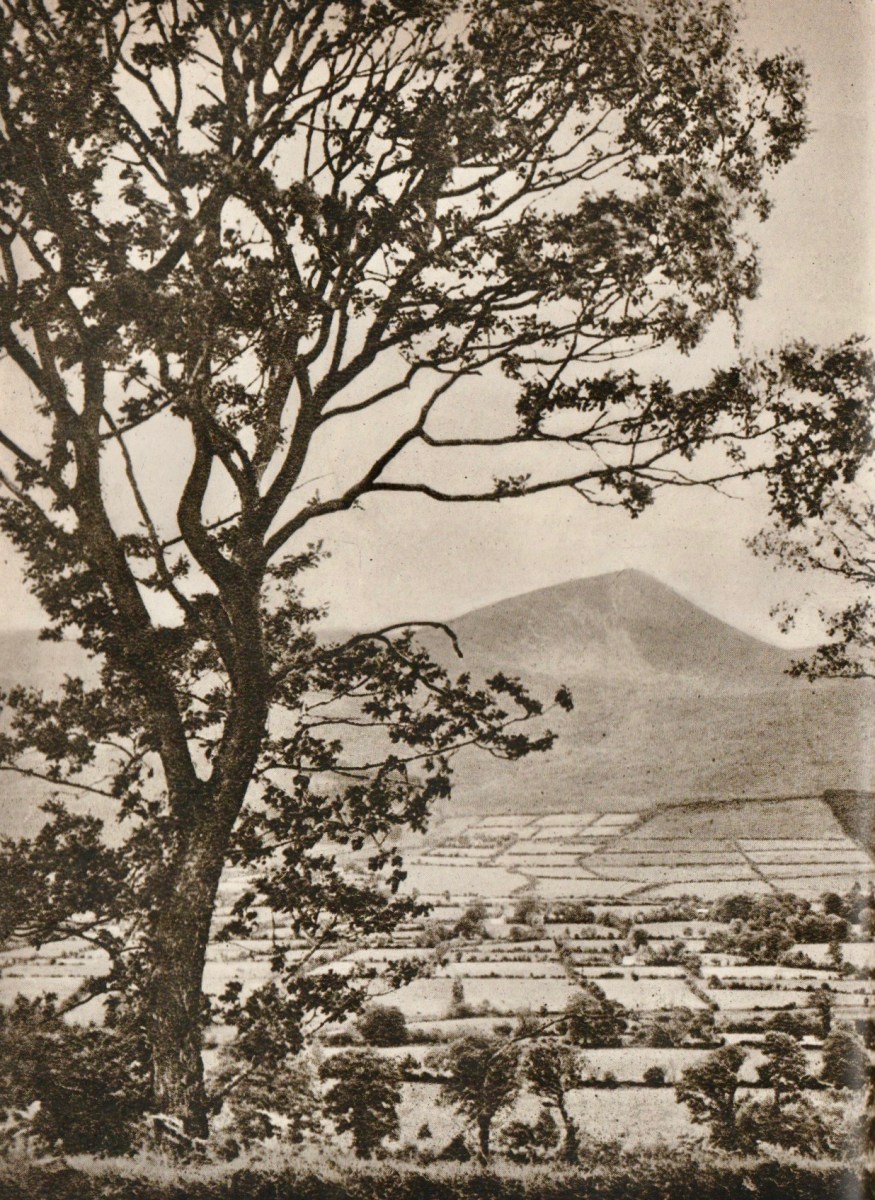
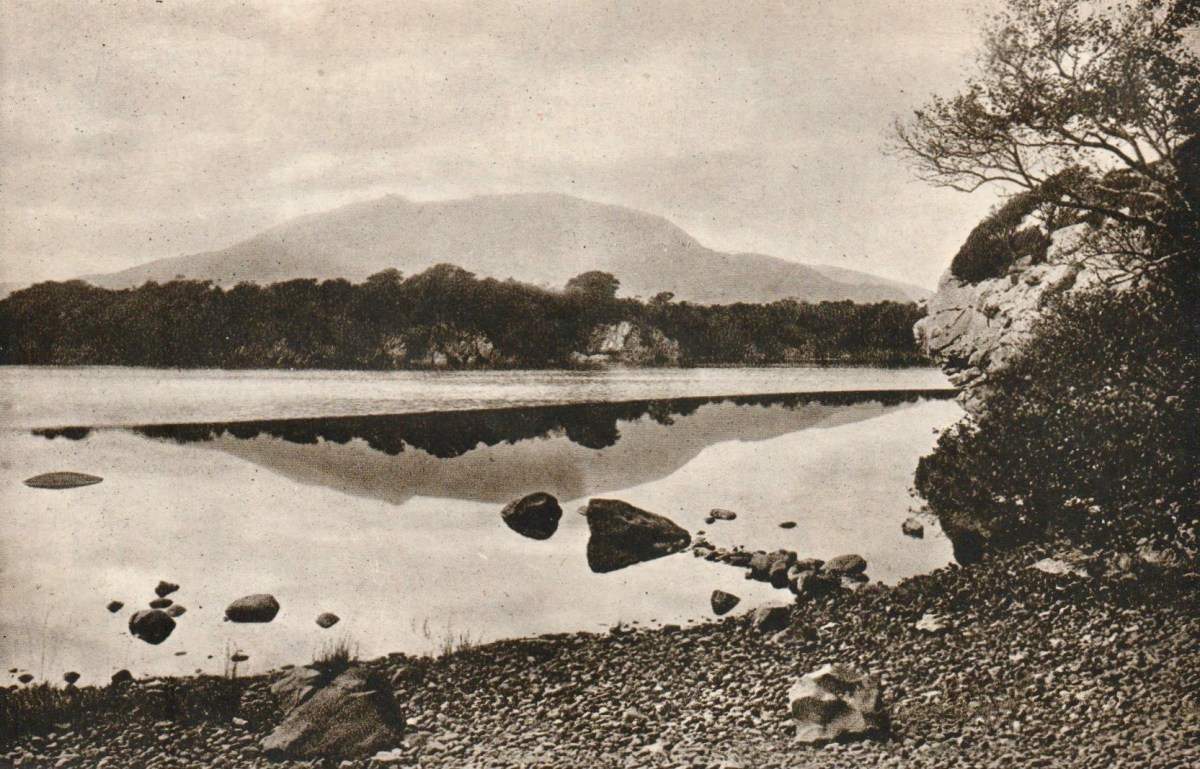
From ‘In Search of Ireland’ – above: Plain of Tipperary. Below: Middle Lake, Killarney.

Having read my way through Morton’s book on Ireland (which I picked up on a stall in Skibbereen market), I am left with very mixed feelings about its author. I am partly influenced, I think, by what I have noted elsewhere about the man and his life. In particular, picking up on his apparent sympathy with the Nazis during the Hitler years, but also becoming aware that he and his second wife, Violet Mary (they married in 1934) emigrated to South Africa after the Second World War, became citizens, and apparently endorsed Apartheid.

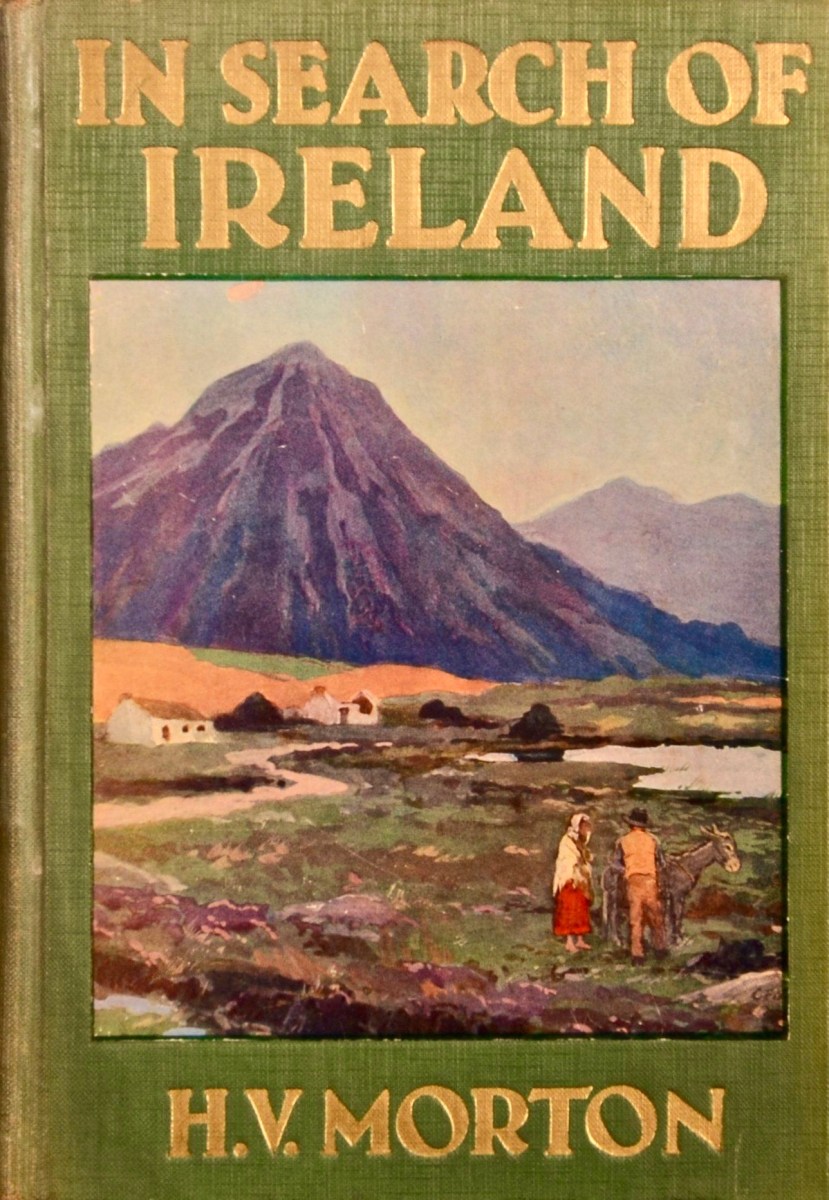
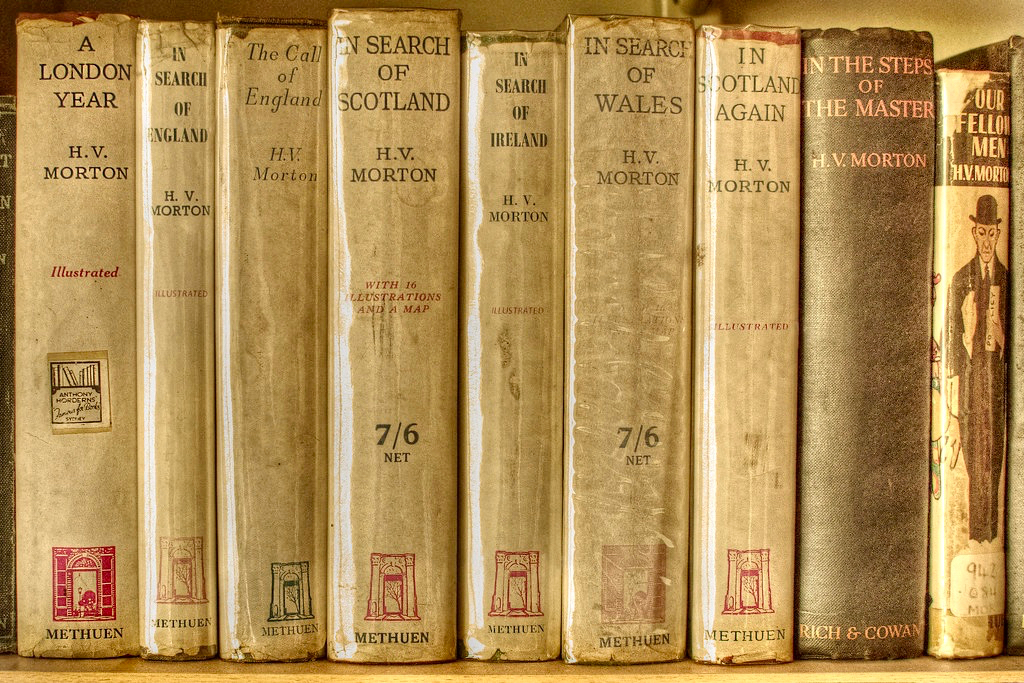
Above: the cloth cover of the sixth edition of Morton’s Ireland book, dating to 1934. Below: H V Morton is still a much collected writer.

Ultimately, I feel that Morton doesn’t have the depth I’m looking for in any respected scribe on Irish matters. He is, foremost, a journalist – and crafts his words for maximum effect. Perhaps this is unkind, but his views seem to me almost theatrical: taking a romantic stance that will appeal to tourists, he sets a tone that is slightly imbued with a sense of superiority, although he does not hesitate to be critical of the British position as he saw it at the time of writing. I am quoting his last paragraph – ‘saying good-bye to Ireland’ to try to defend my stance, which I fully accept is just a personal viewpoint.

. . . When my feet first trod Irish soil I felt that I had come to a magic country and now, as I said good-bye, I knew it truly as an enchanted island. That minor note which is like a vibration in the air, something that lives in the light and in the water and in the soil, runs through every Irish thing, but, like the cry of a bat, it is too high to be heard. But a man is conscious of it everywhere. Ireland of the Sorrows is no more. The sun sets, and the hill grows dark. I know that in the West at this moment men are raking the ashes of the turf fires. In thousands of little white cabins they are kneeling before the wide hearth, piling up the ashes around the red glow, and in the morning there will be new light. The shadows have fallen over the fields of Meath. The air is grey with night. St Patrick rises up over the mounds of Tara, his hands uplifted. And in the silence and the darkness I listen again for that hidden music. It is not for my ears. I hear nothing but the night wind in the grass; and I say good-bye to Ireland . . .

H V Morton – In search of Ireland 1930

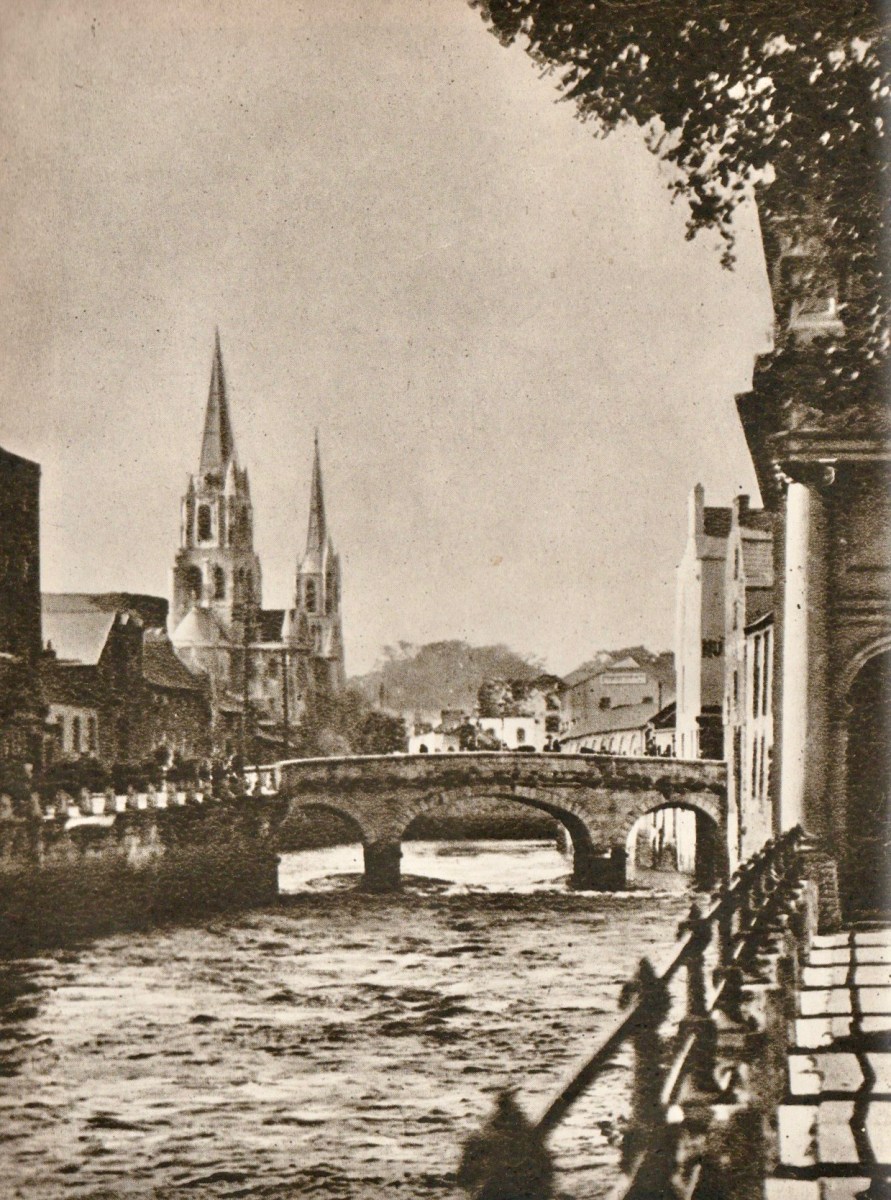
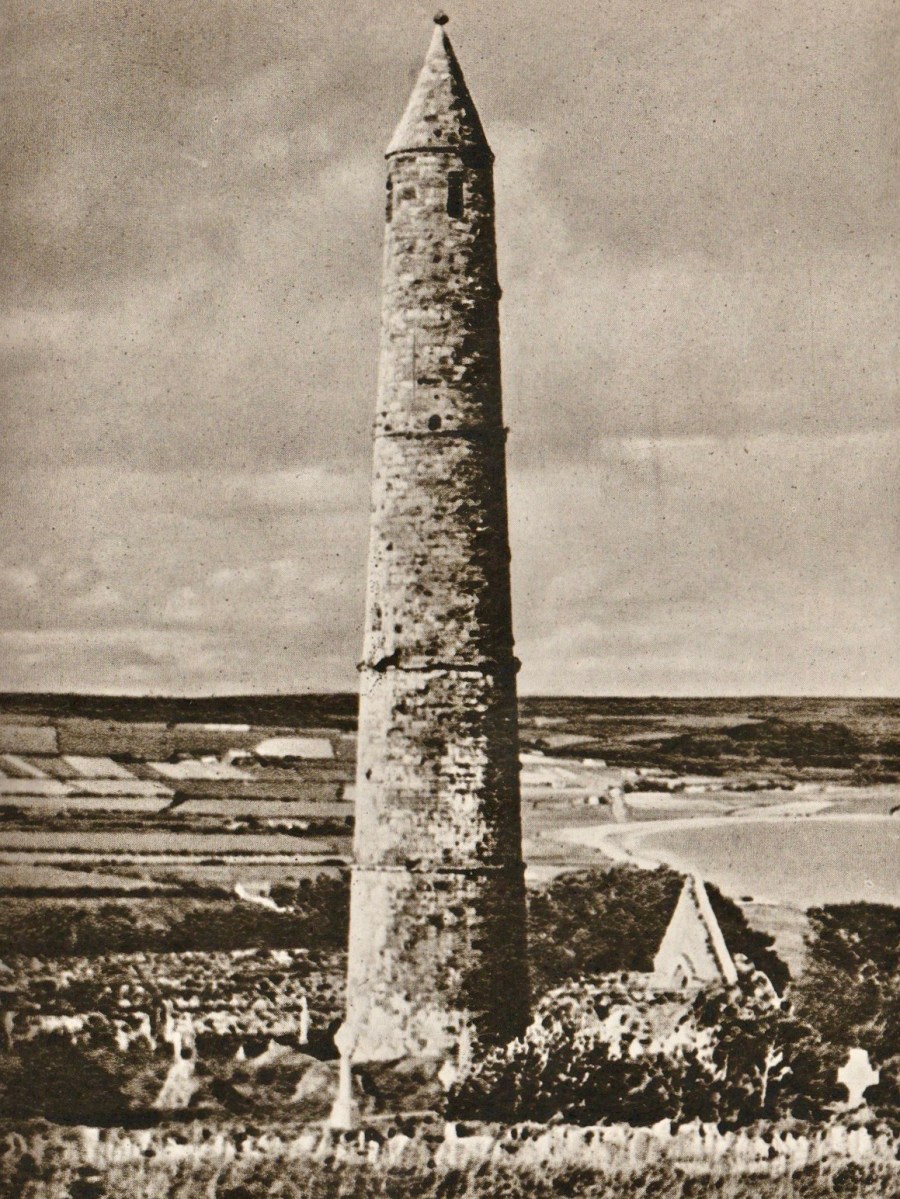
From ‘In Search of Ireland’ – above: Cork South Bridge. Endpiece: Ardmore Round Tower, County Waterford – 12th century.

Don’t be put off by my own standpoint. This book is an important Irish travelogue and sets a scene of a particular time in Irish history (ninety years ago) viewed from a close neighbour’s perspective.

H V Morton’s Ireland – Part 1

In Search of Ireland was first published in 1930. It’s always interesting to read the accounts of an English traveller in Ireland. I used to be one once, but I’m now – happily – permanently here. And a citizen! I really don’t want to be anywhere else in this turbulent world.

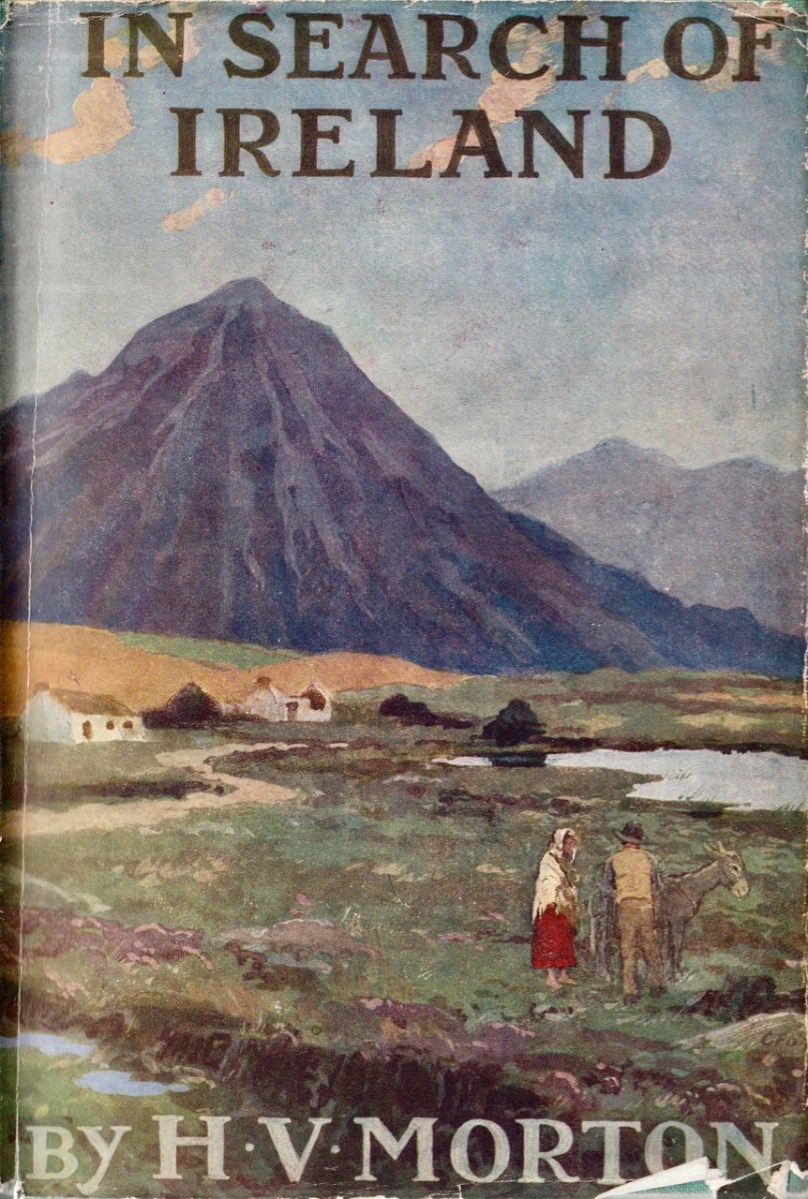
I recently happened upon this book – and was immediately attracted by the cover, and the many photographs it contains, which date mainly from the 1920s. But let’s start off finding out who the author is.

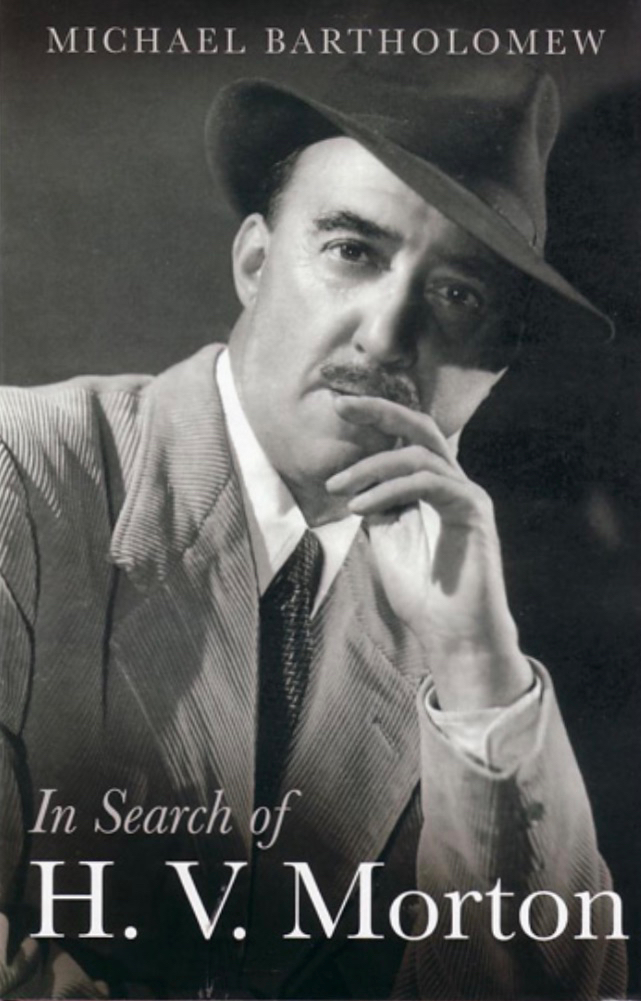
Henry Canova Vollam Morton was born in Lancashire, England, in 1892. He was the son of Joseph Morton, editor of the Birmingham Mail, and followed his father into journalism. Morton served in the First World War and then worked in London, for the Evening Standard and the Daily Express. While with the latter he ‘scooped’ the story of the discovery of Tutankhamen’s tomb at Luxor in 1923 and reaped celebrity from that event. After this he started writing books, mainly about travel. Between 1925 and his death in 1979 some 55 books were published. His work appealed to a popular audience. The book about him, above – written after his death – suggests another side to this man: he had secretly been a Nazi sympathiser and another writer, Max Hastings, gleaned this entry from Morton’s private diaries of 1941 – “I am appalled to discover how many of Hitler’s theories appeal to me”.

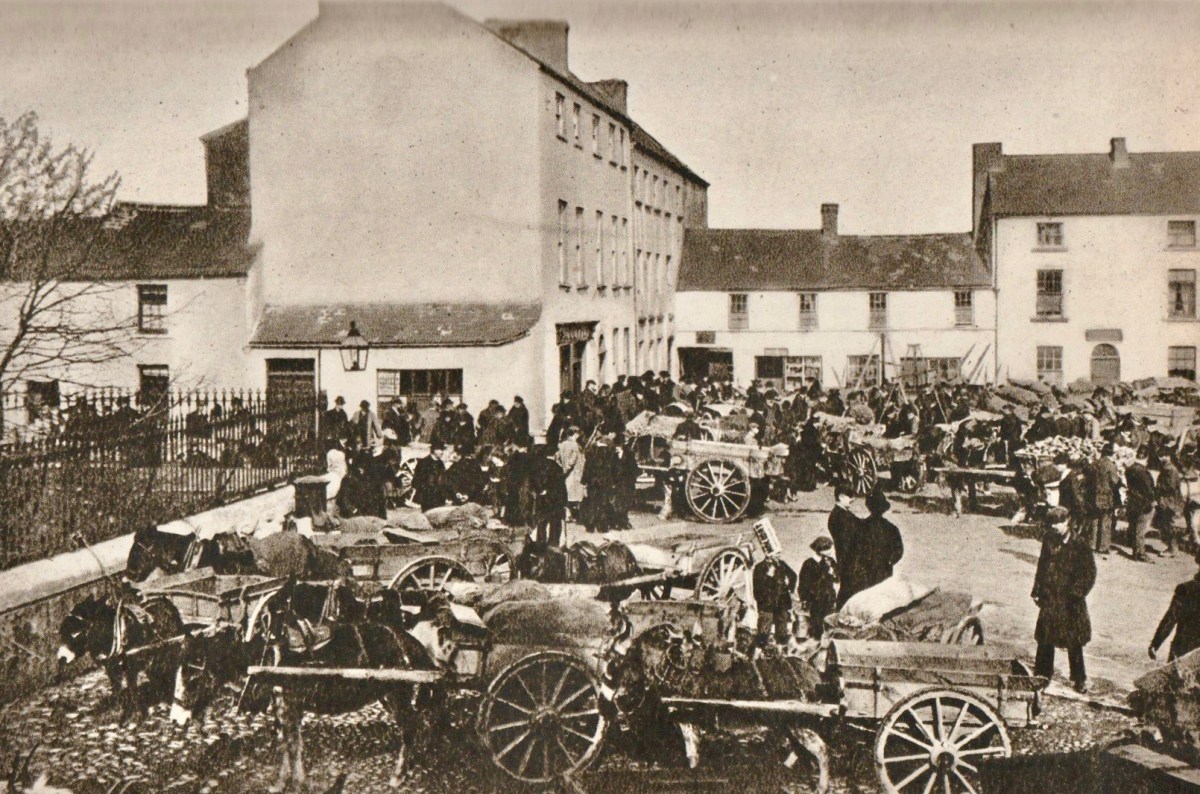
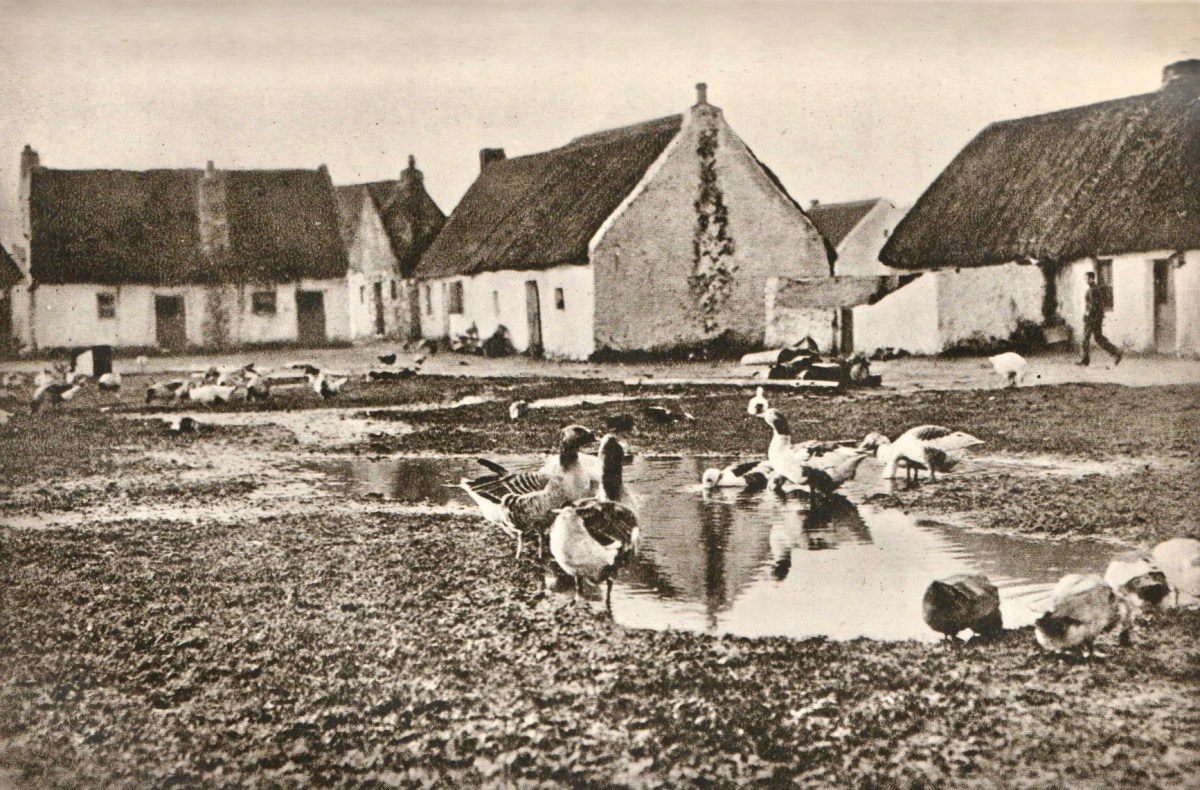
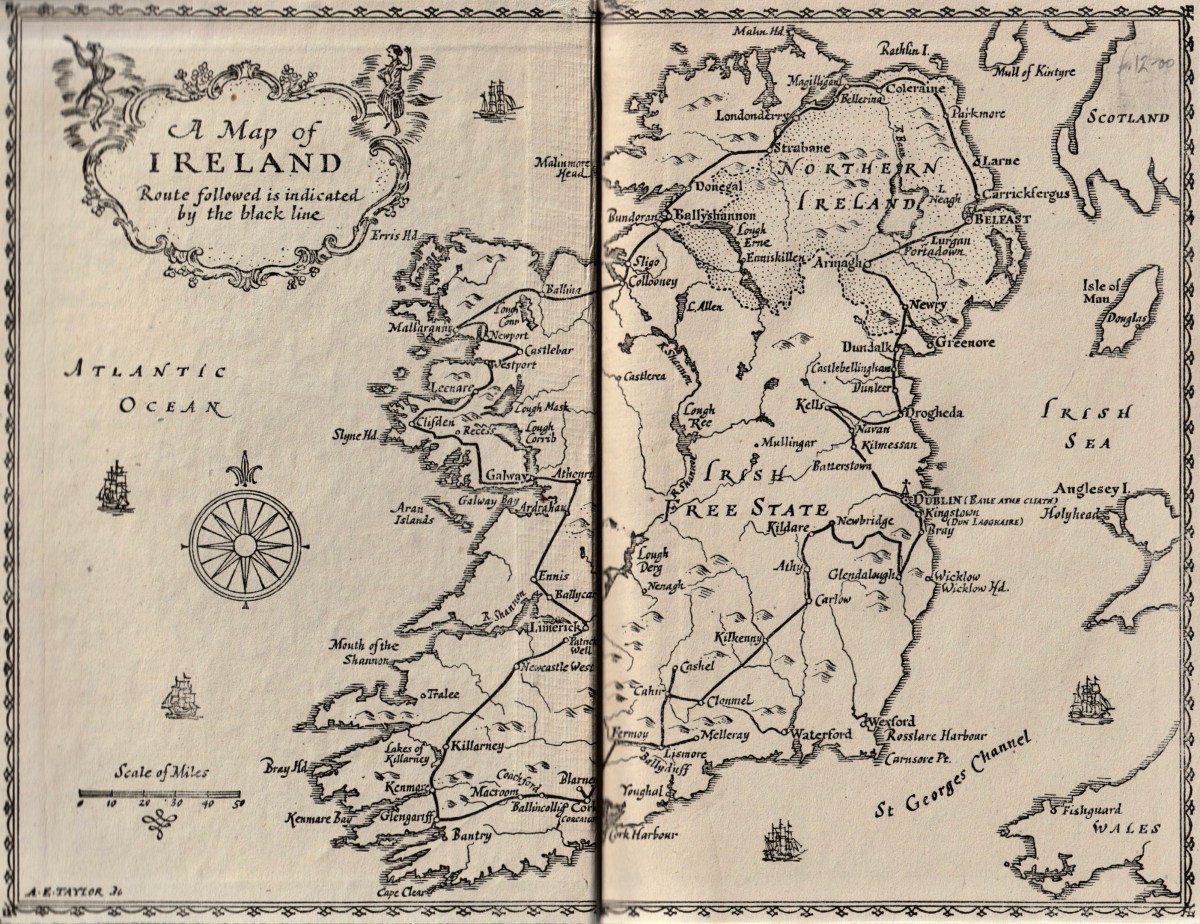
Morton travelled in Ireland during the 1920s and wrote many articles about his journeys, which became the substance of this book. The book’s endpapers (top) present a map showing the route he followed in his car: he appears to have foolishly omitted the best part of Ireland – our own West Cork! The lower photograph (above) is simply captioned ‘Fair Day’ and is credited to a Dublin photographer (Thomas Mason). I cannot identify the location, although it seems a little familiar. In the book it is juxtaposed close to an account of Kenmare.

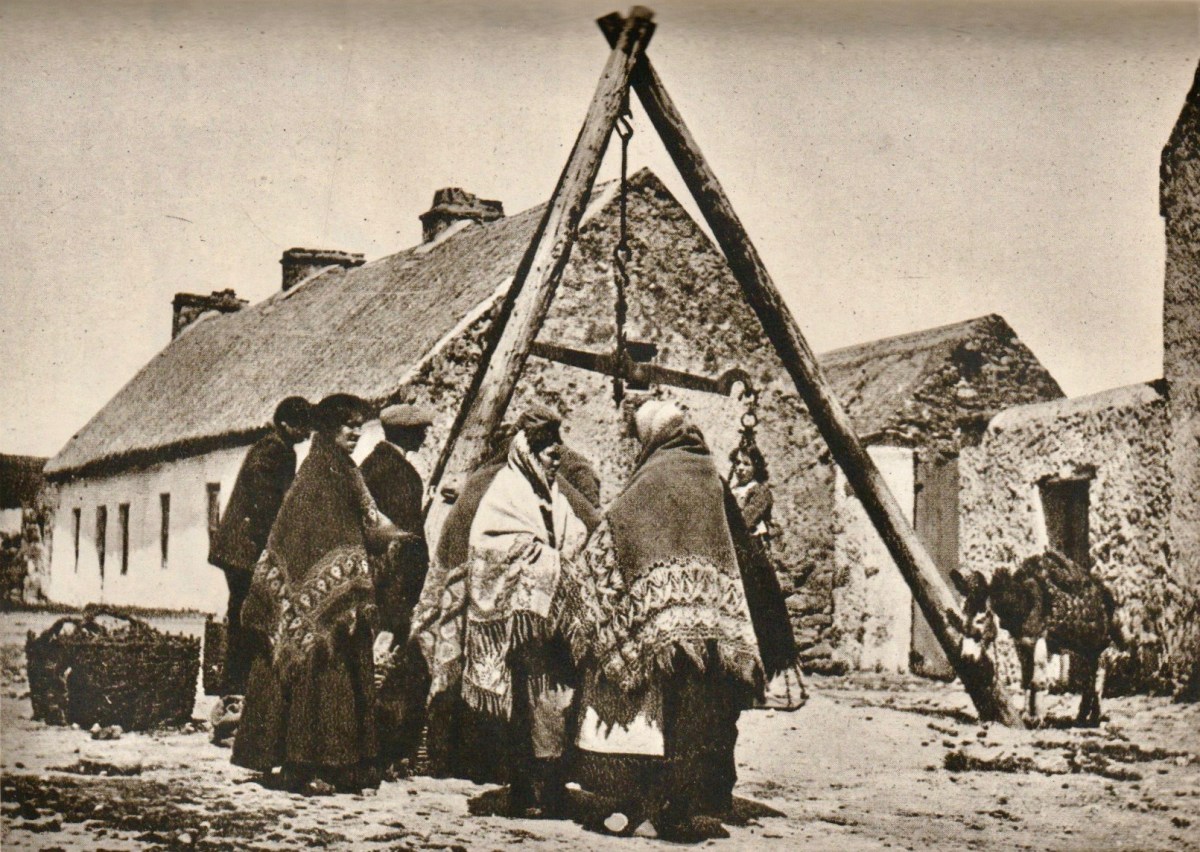
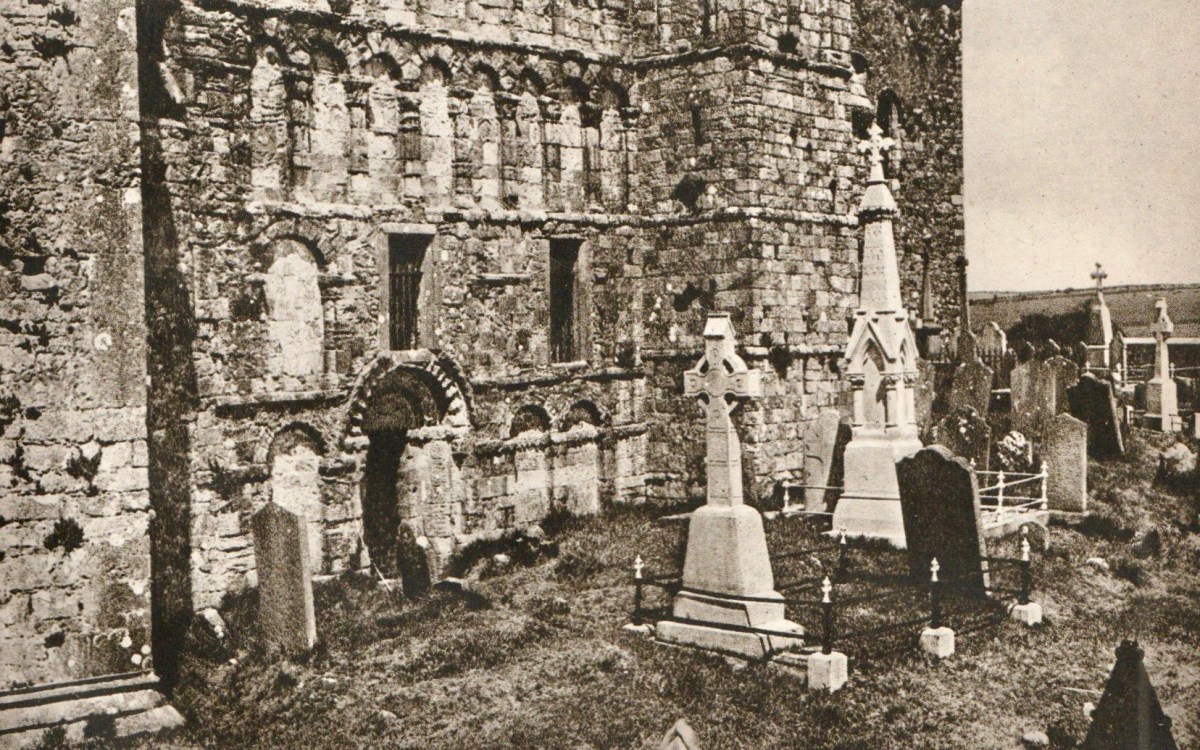
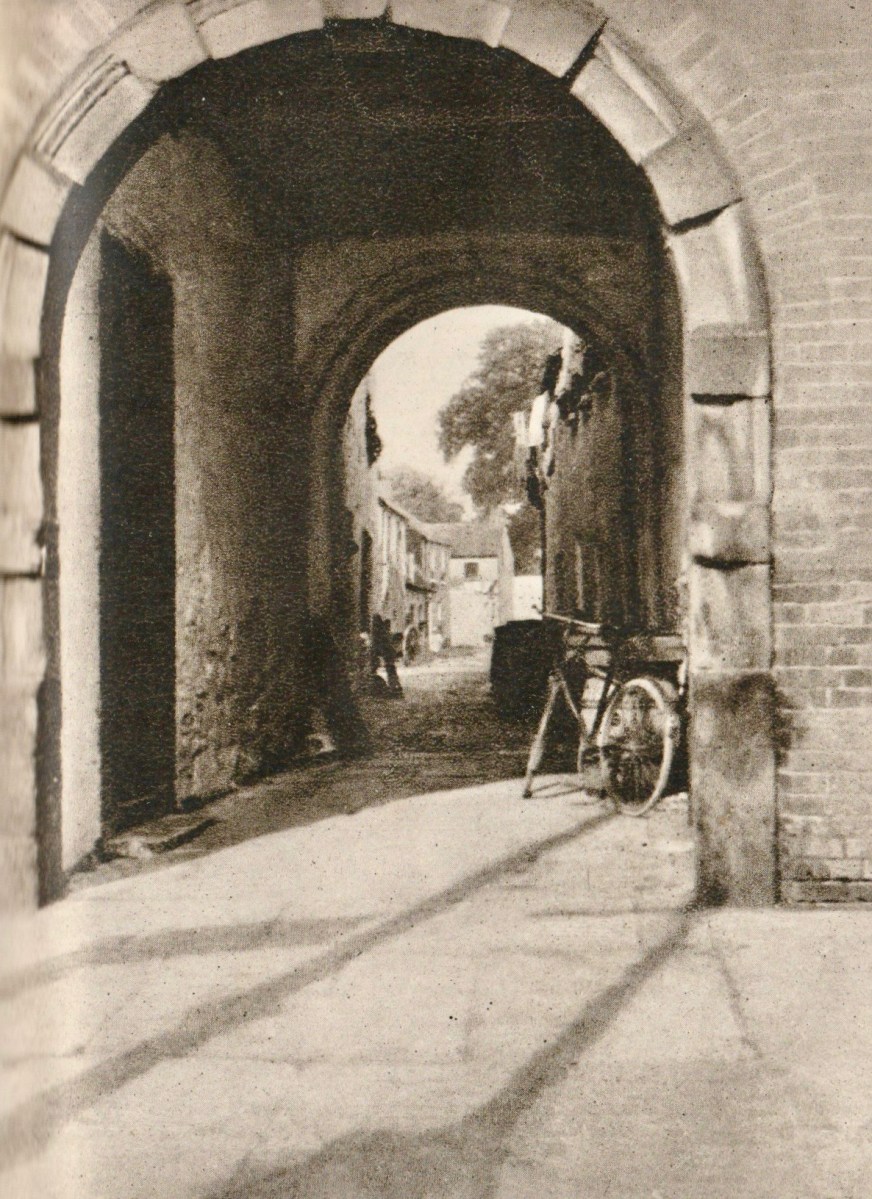
The upper photograph is titled ‘Market Day in Connemara’, and the lower one is ‘The Claddagh, Galway’. Most of the photographs are accredited to publishers or newspapers: H V Morton only provided a brace of pictures himself. They are below – ‘Cormac’s Chapel, Cashel’ and ‘An Archway in Killarney’:

From the dust-jacket of my nineteenth edition (which was published in 1945):

. . . In this book H V Morton describes a first visit to Ireland – not the tragi-comic Ireland of 19th century fiction, but the new Ireland. His charming book is the record of a motor-car tour right round the island, and in the course of his delightfully haphazard wanderings, he discourses on the Irish landscape, Irish people, Irish history, falls in love with Kerry and Connemara, attends a wake in Mayo, and crosses the hills of Donegal into Northern Ireland . . .

Frontispiece – In Search of Ireland by H V Morton

This is the first of two posts about H V Morton’s book. Next time around I will quote further from his text to try and give you an insight into this complex man, but also show you more of the illustrations from the book. None of us can resist looking so directly into the past!

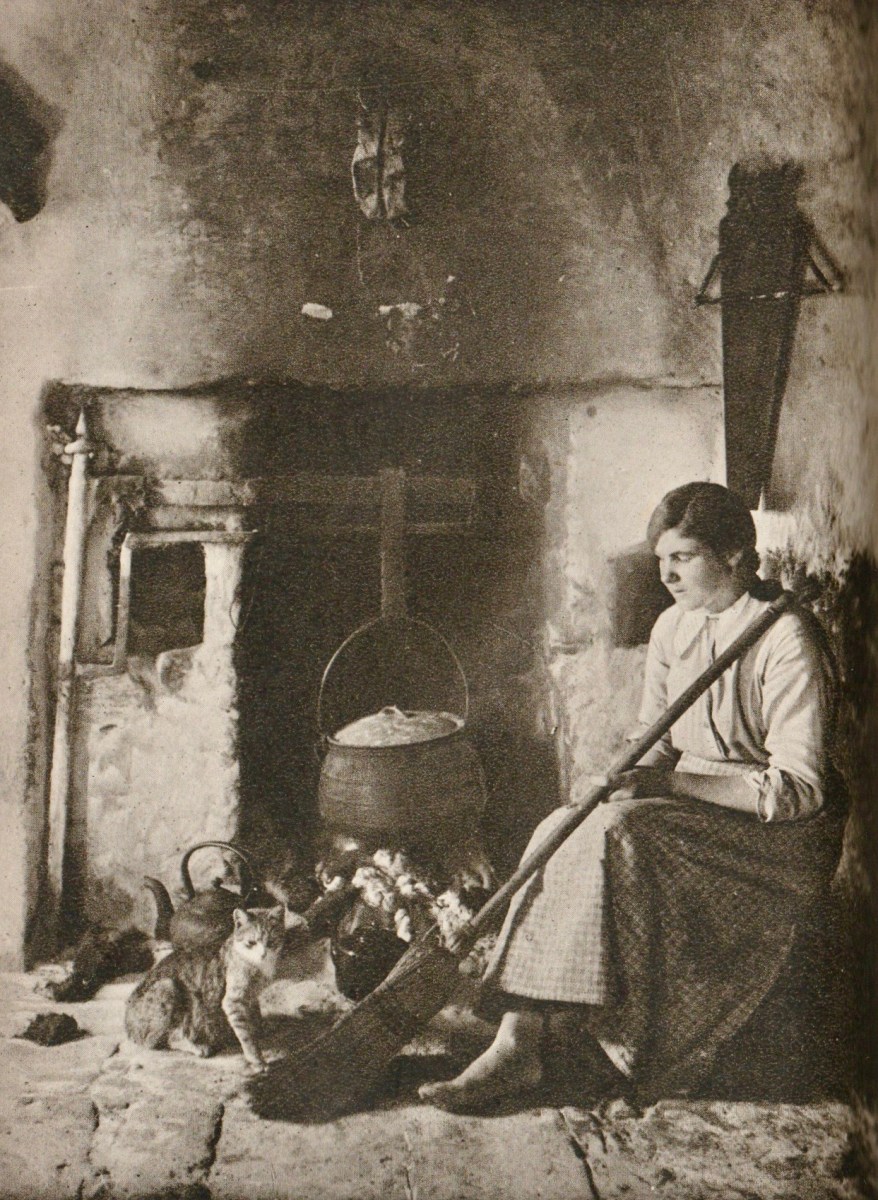
From ‘In Search of Ireland’ – above: Connemara Girl

Timoleague Tour

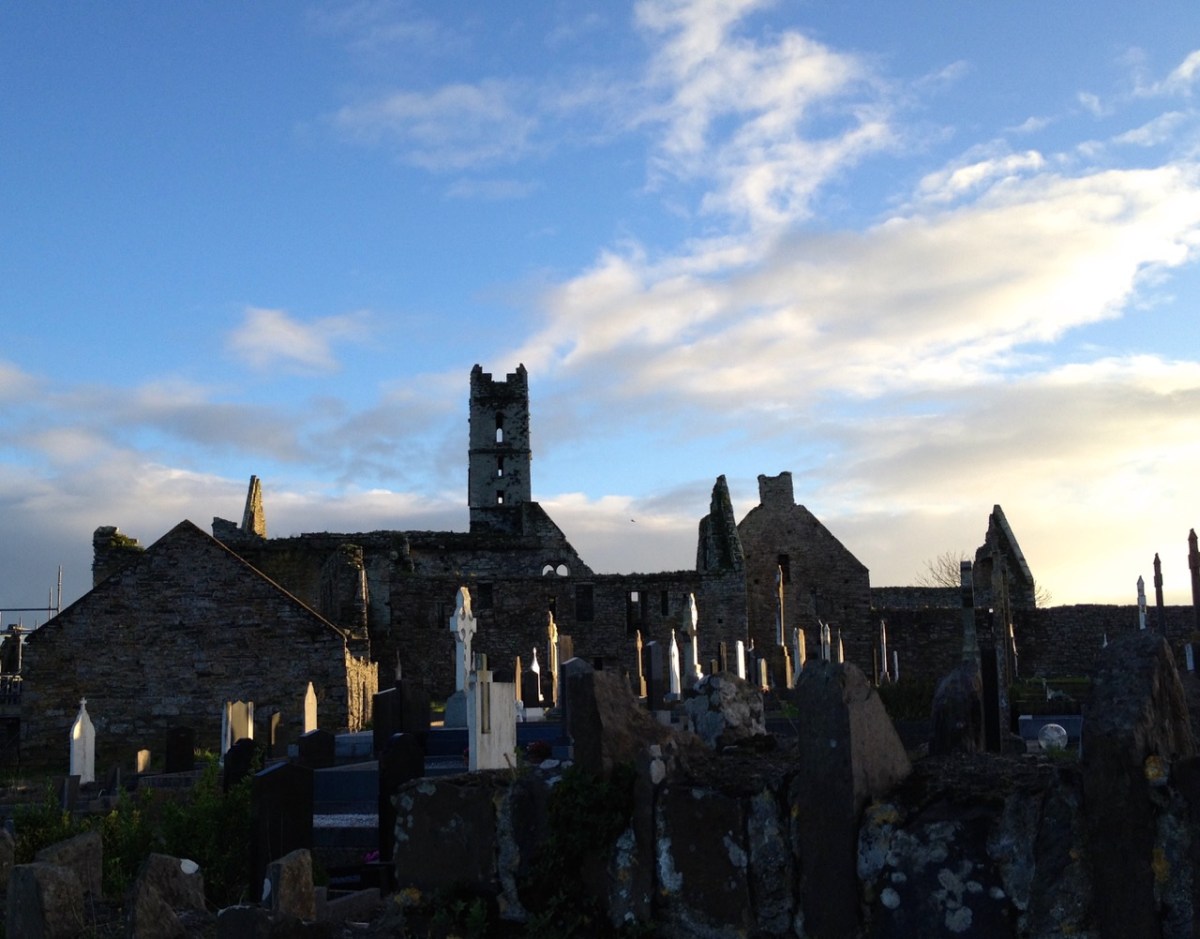
We had a great afternoon yesterday, exploring aspects of the history of Timoleague, in West Cork. Our Finola Finlay (above) was involved in an event organised by the Glass Society of Ireland . . . a professional all-island, non-profit association that opens a window onto the contemporary Irish Glass Community . . . The day’s proceedings were centred around the ecclesiastical buildings in the town, the earliest of which is the Franciscan Friary, now a substantial ruin beside the Argideen River.

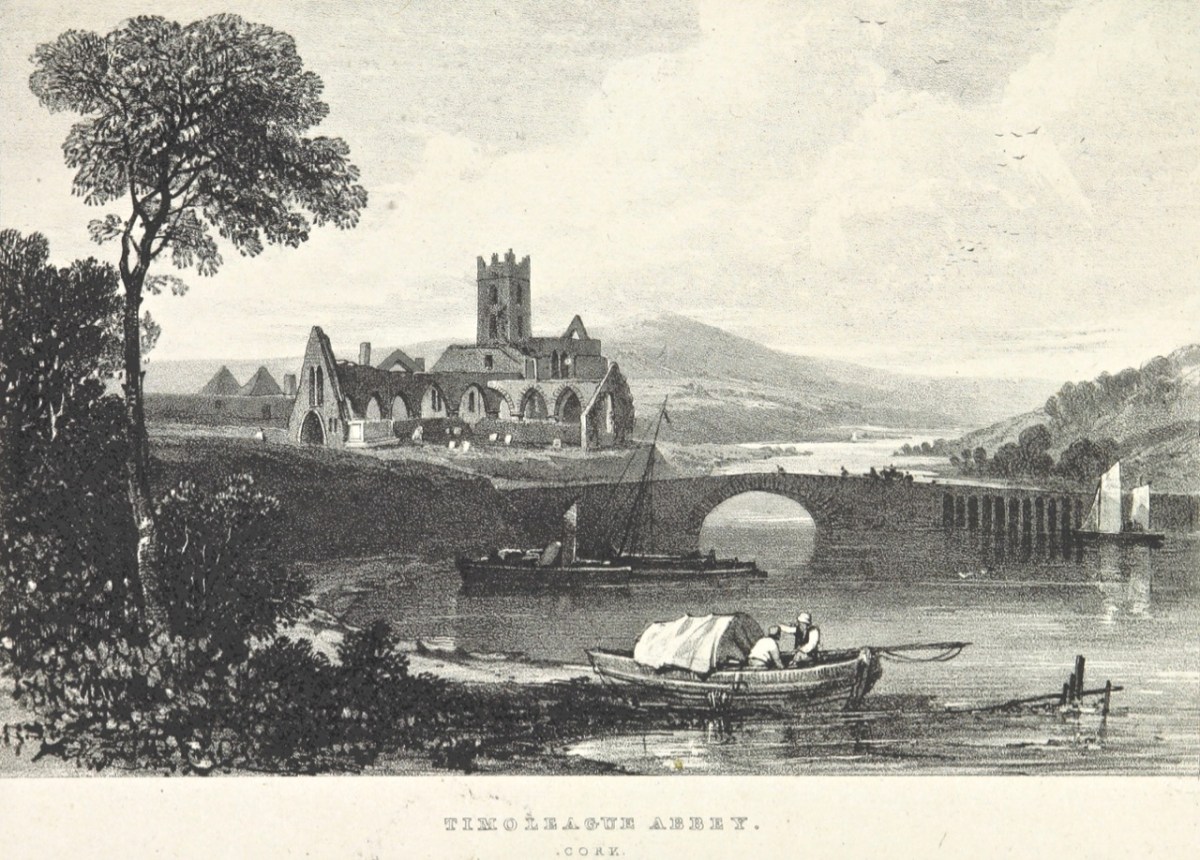
This view of the ruined ‘abbey’, above, dates from 1830. It is located on the site of an early Christian monastic settlement founded by Saint Molaga, from whom the town of Timoleague derives its name. A story that I heard for the first time yesterday was told by local historian Donal Whooley: the Saint was trying to found his community back in the sixth century, but everything that he and his followers built fell down the following day. According to legend, it was originally to be built a mile west of Timoleague, but all work done on that site by day would fall down by morning. Interpreting this as God’s wish that the church should be built elsewhere, Molaga fixed a blessed candle on a sheaf of corn, and floated it down the Argideen river, siting his settlement on the spot that it came ashore, on the big bend in the waterway where the Friary ruins can be found today. Here is a view from the great three-light window which looks out to the east over the river. Finola told us that, in its heyday, this window would have been filled with beautiful medieval glass, bringing light and colour into the substantial nave of the church.

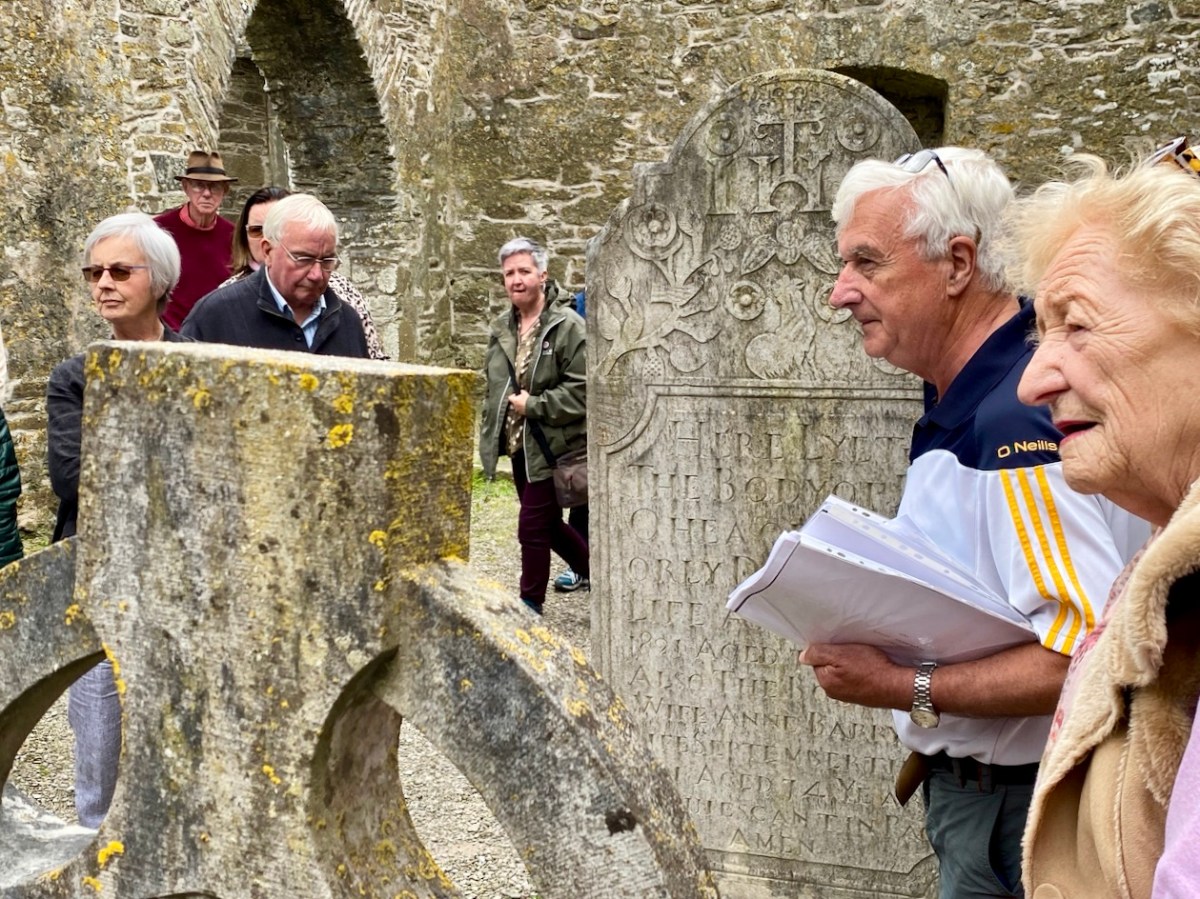
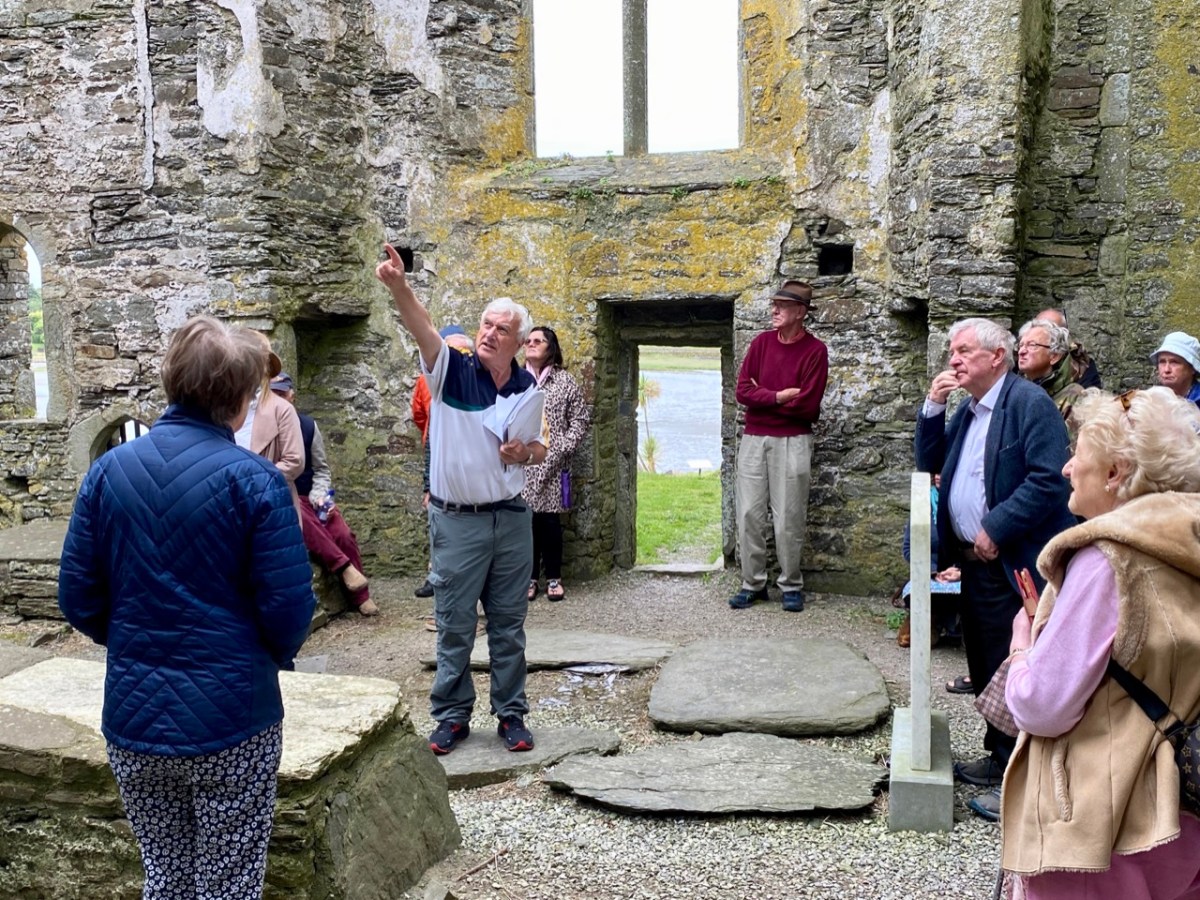
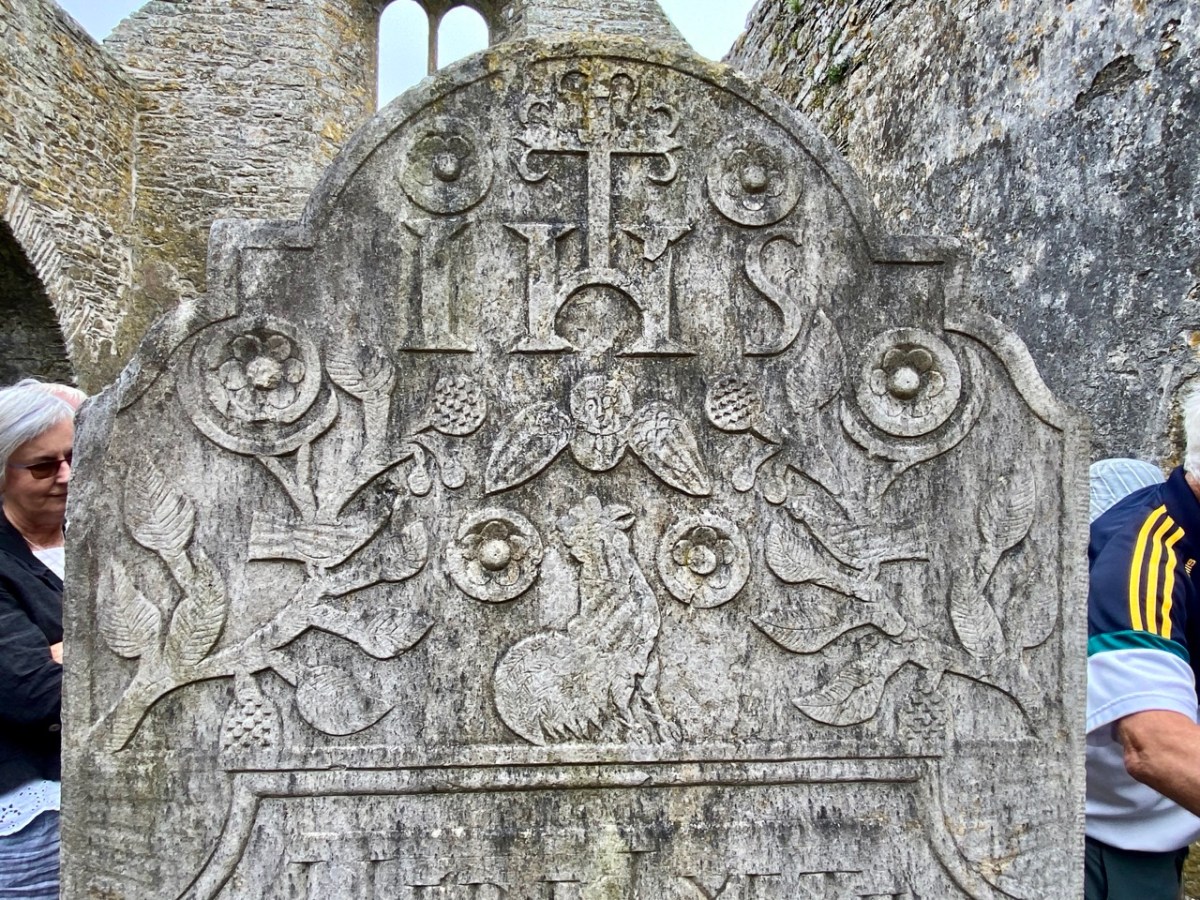
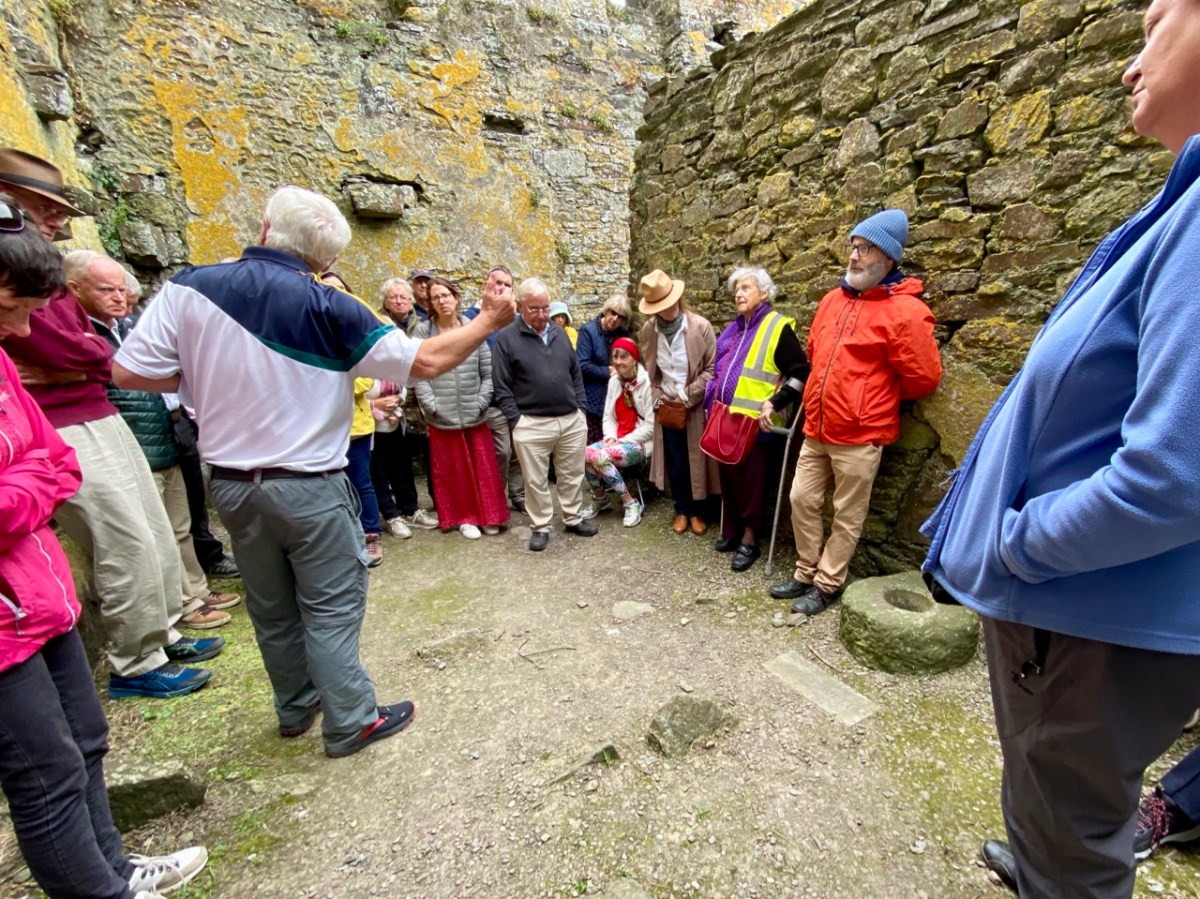
That’s Donal, above, leading our group of almost fifty keenly attentive people who shared an interest in the town and its history. To the right (in a blue jacket) is Father Patrick Hickey. He told us of the symbolism of the cockerel you can see on the large headstone in the nave (below), dating from 1821. Evidently some of the disciples were standing together while Christ was being crucified: nearby stood a pot in which a rooster was being boiled for supper. Judas reportedly said: do you think there’s any chance that our Lord will rise again? Mrs Judas retorted: there’s about as much chance of that as there is of that rooster jumping out of the pot and crowing! At which point – of course – the cockerel did just that!

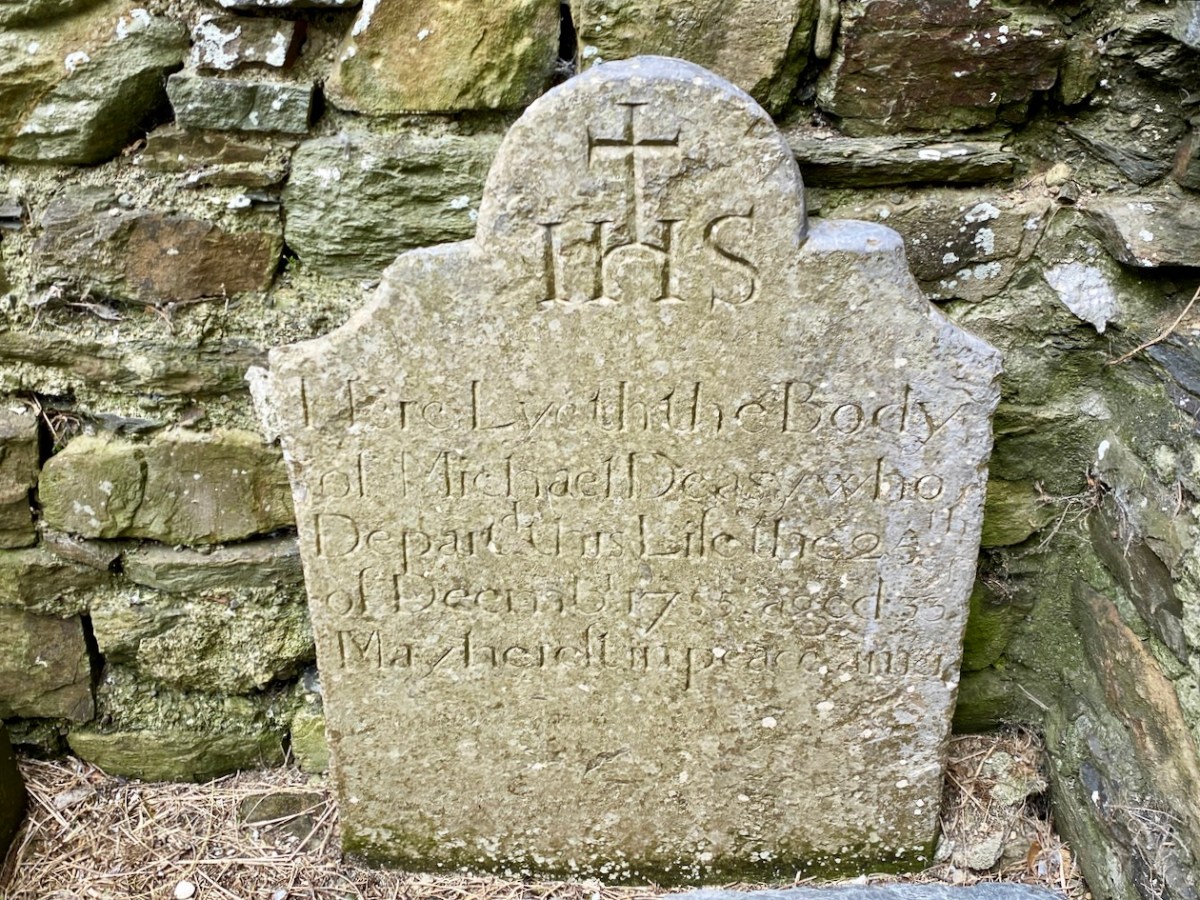
It was the custom to place burials in ruined church buildings. Here’s another fine headstone in Timoleague Abbey, to Michael Deasy, ” . . . who departed this life on the 23 December 1755, aged 33. May he rest in peace. Amen . . . “

Lively discussions ensued on the efficacy of wart wells, and Donal suggested that this repurposed bullaun stone, above could be the oldest human element on the whole site!

Here’s an aerial overview of the geography of Timoleague. The Friary ruin is only one of many historic sites of interest which caught our interest yesterday. It was Finola’s task to introduce us (or those of us who had never seen it) to the little Church of the Ascension.

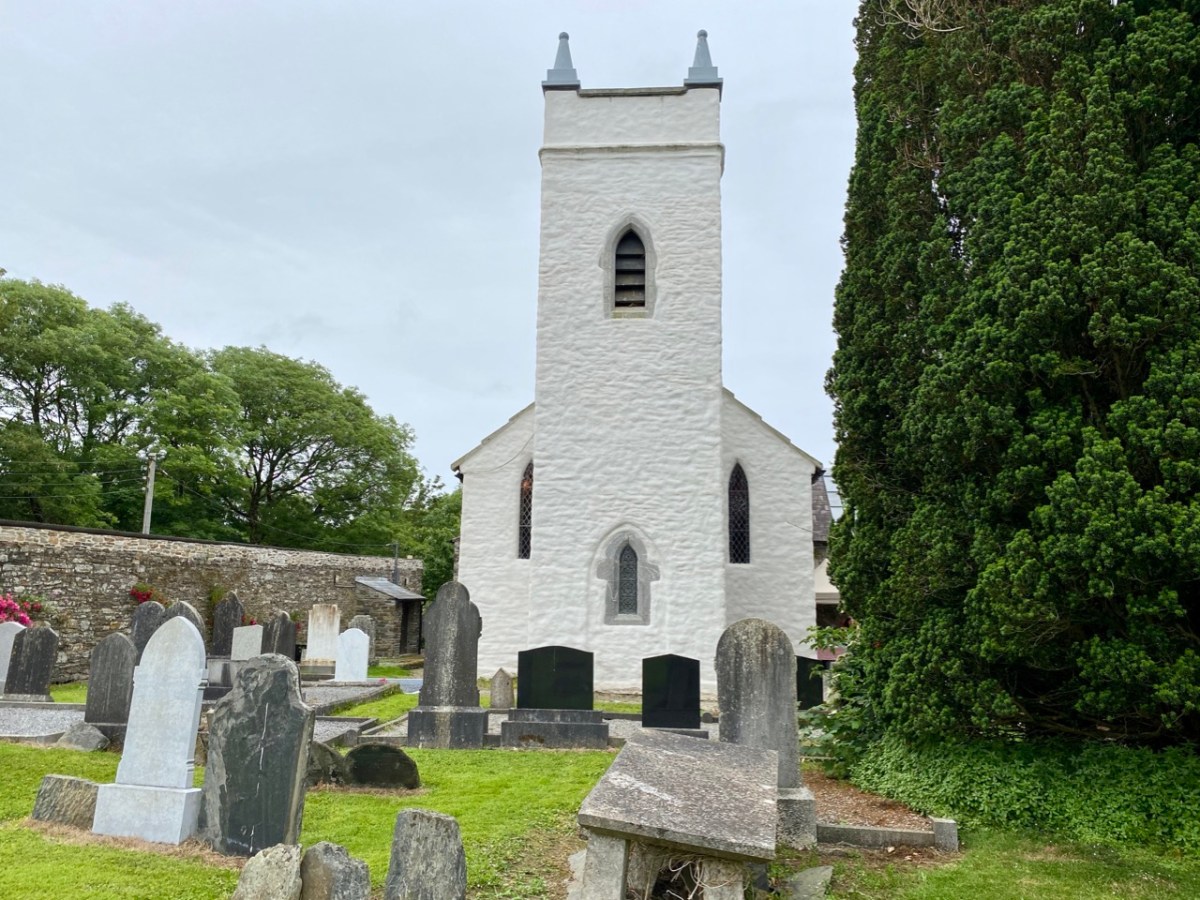
This building is currently undergoing major improvement works: the lime rendered tower has created a striking landmark in the town. This work has become necessary by water penetration through the stonework leading to deterioration of the fabric. The conservation project is led by a hard-working Parish committee who also served us delicious tea and cakes since the tour was a fund-raiser for their efforts.

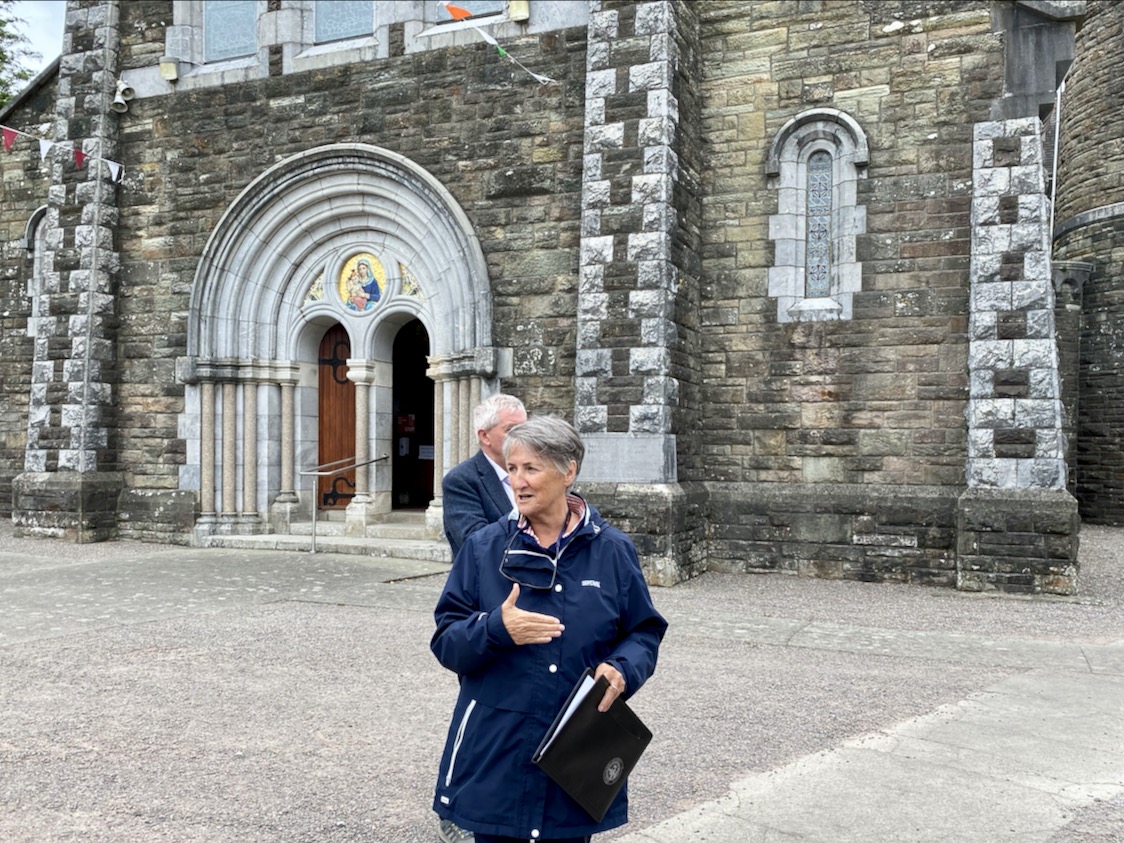
You can see Finola addressing us in this little Protestant church in the header picture. Above is one example of the fine early glass here, this one by Clayton and Bell. For a fuller description of this church and its many stories, read our post here.

The early OS map extracts, above, give further context to the town’s history. The top map dates from the 1830s and comparison of the plan forms of the Church and Chapel buildings with those in the lower map, which dates from c1900, and then the present day aerial view (higher up the page) shows the degree of change which has taken place. We finished our town tour in the Church of the Nativity of the Blessed Virgin Mary. Here’s Finola standing outside it, below, prior to giving us an introduction to the history of the building, and its windows.

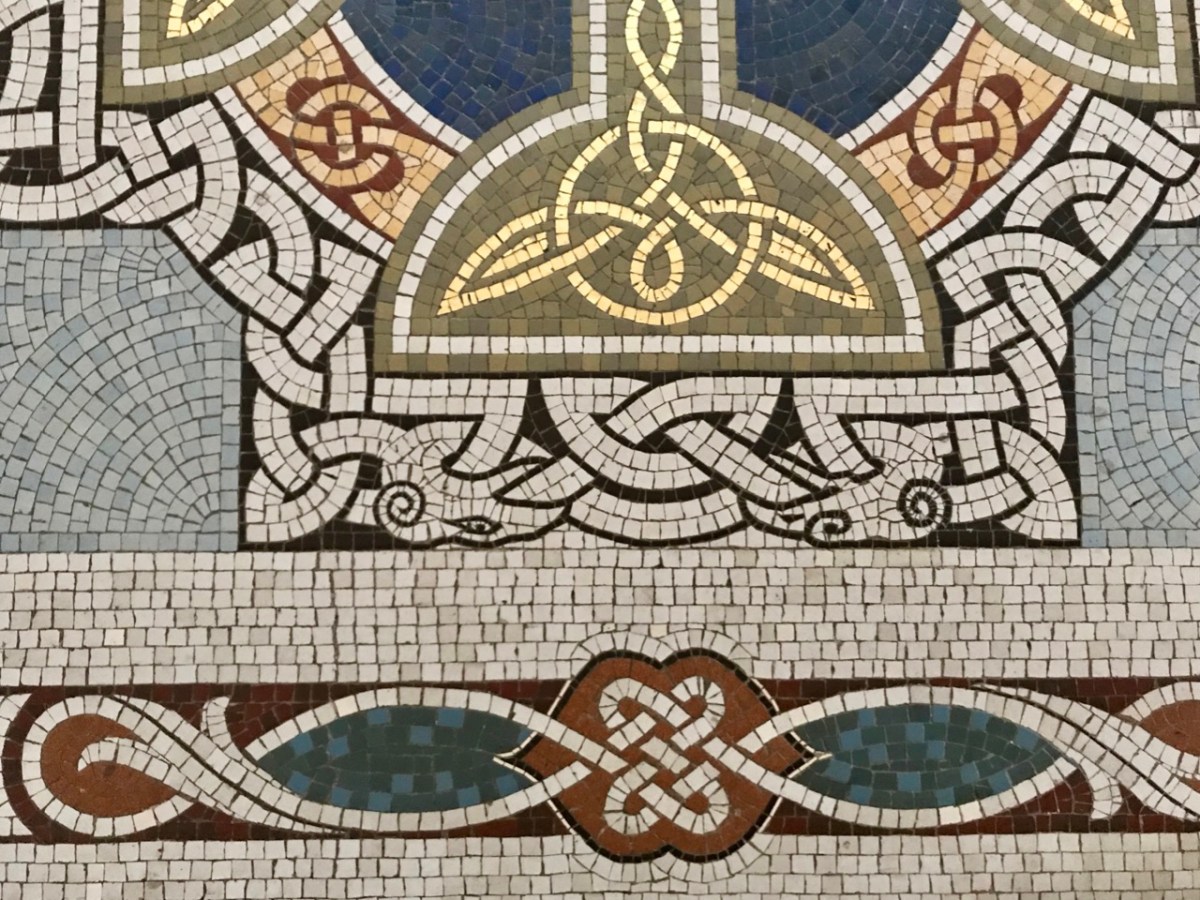
The fine Harry Clarke Studio window (one panel of which is shown in the upper picture) is a ‘must-see’, as is the mosaic work from the same church. The building work for this Catholic church, replacing an earlier chapel, dates from 1912.

Father Patrick Hickey nicely rounded off our day of Timoleague history by showing us the replica of the ‘Timoleague Chalice’ (above). The replica is kept in this Catholic church. According to Fr Hickey, ‘back in the penal days’ three monks were found floating in an open boat just off the island of Cape Clear. They had with them a box, or trunk. They were brought ashore but two of them died. The other asked that the box be kept on the island – but unopened – until he could return to retrieve it. He never returned, and in later years another visiting Priest said it could be opened. Inside was a gold chalice – blackened with age – and some liturgical vestments. The vestments fell to dust immediately, but the chalice was sent away for inspection, and was confirmed as coming from the Friary at Timoleague, where the replica is now kept.

Here is another ‘souvenir’ of Timoleague – it’s an extract from a poem written in Irish: The Mourner’s Soliloquy in the Ruined Abbey of Timoleague. The poet, Seághan Ó Coileáin, ” . . . was a Gaelic-language poet born in County Cork, in a time of faded Irish glory. He lived as a village schoolmaster, with a large family and no patron . . . “

Abroad one night in loneliness I stroll’d,
Along the wave-worn beach my footpath lay;
Struggling the while with sorrows yet untold,
Yielding to cares that wore my strength away:
On as I mov’d, my wayward musings ran
O’er the strange turns that mark the fleeting life of man.

The little stars shone sweetly in the sky;
Not one faint murmur rose from sea or shore;
The wind with silent wing went slowly by,
As tho’ some secret on its path it bore:
All, all was calm, — tree, flower, and shrub stood still,
And the soft moonlight slept on valley and on hill.