Uisce Beatha

fishy

Ireland is an island – a fairly small one. There’s a lot of water surrounding it (3,500 miles of coastline) and coming out of the sky. This abundance of water has shaped the natural landscape and coloured it emerald green. Not surprisingly, traditional life, history, culture and folklore in this country are imbued with watery references.
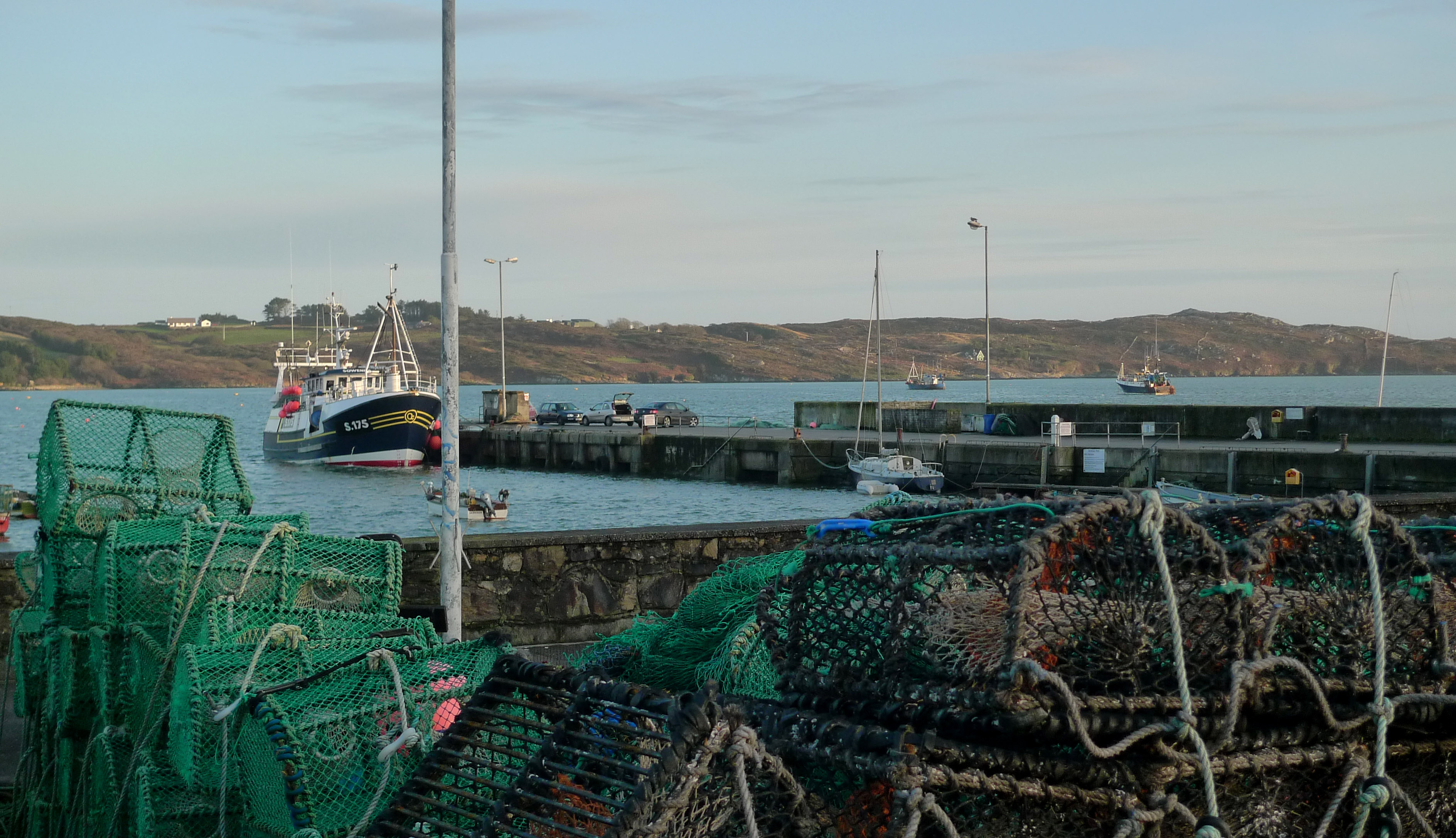
Schull Pier

Schull Pier

Down here in West Cork you are never more than a mile or two from the sea: it has historically provided defence, sustenance, isolation and wealth. When the O’Mahony and O’Driscoll clans ruled here in the fifteenth and sixteenth centuries it was recorded that more than 500 large fishing boats from France, Spain, and Portugal were constantly harvesting the fish shoals off the Mizen. Each chieftain’s income from the foreign ships surpassed £1,000 annually by way of fishing rights, harbour dues and protection money (that’s about 3,000 cows in trading terms in those days). Today you can still see evidence that the bays, inlets and islands have long provided income and a means of transport to the local communities: there are small piers everywhere. There’s an ancient one – ruined but still visible – just below us at Ard Glas, and an hour’s walk along the water would take in half a dozen others mostly still maintained in good order and regularly used.
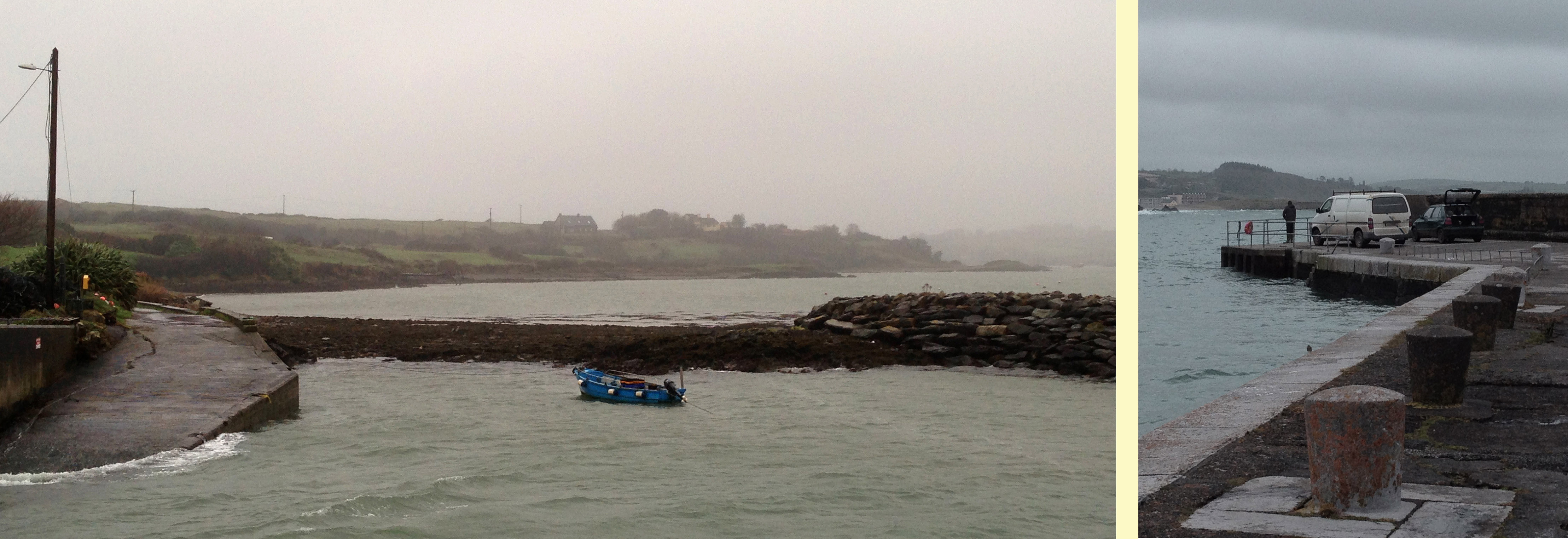
cunnamore-roscarberry

Piers at Cunnamore and Roscarberry

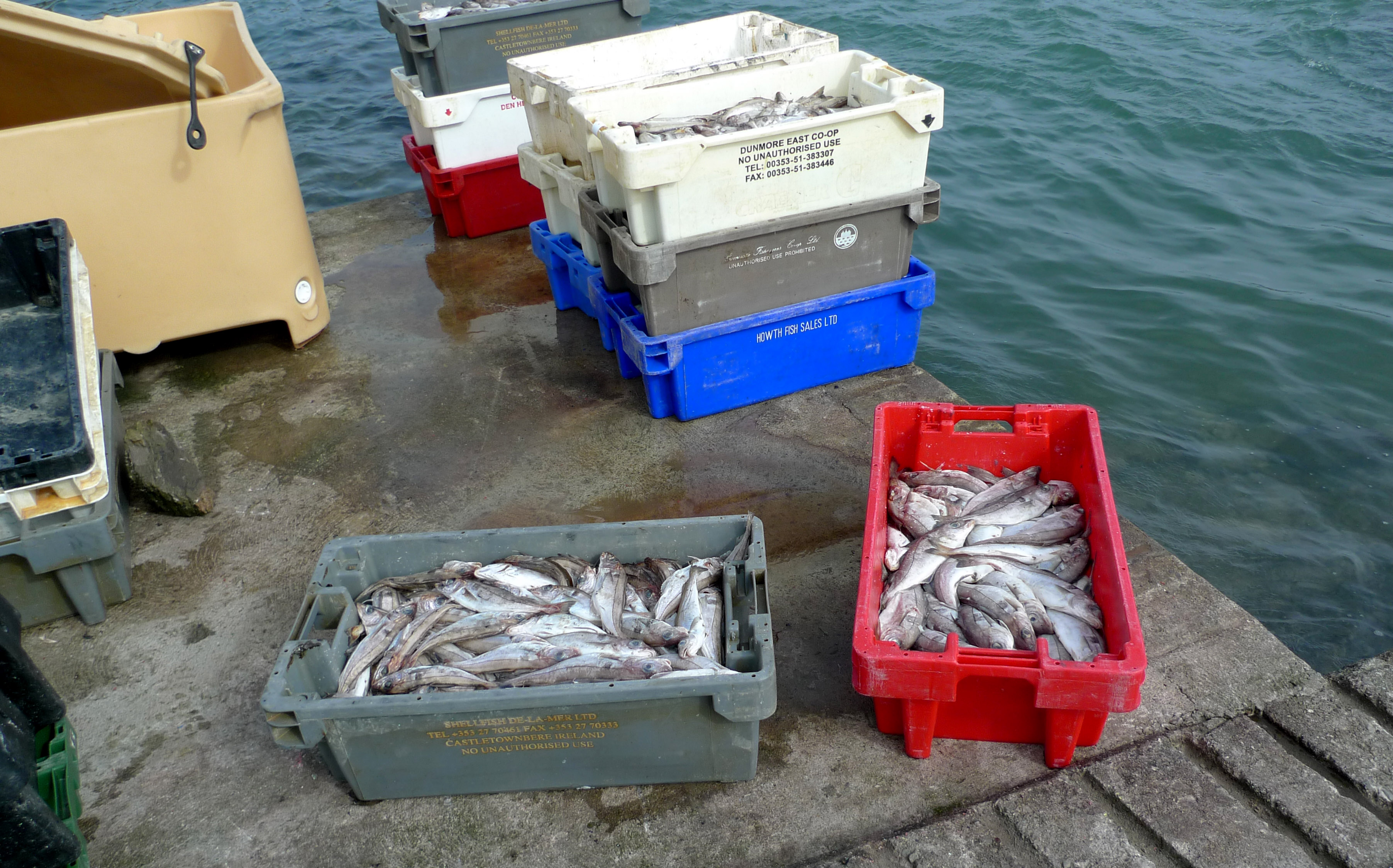
When we go up to the market in Bantry on a Friday morning to get our own fish fresh from the local quays we pass by the statue of St Brendan the Navigator. In the sixth century Brendan set out with forty other monks in a little boat to find the Island of Paradise; instead, they discovered America, returning after seven years to tell of their many adventures with sea monsters, miraculous islands and sirens. In the 1970s Tim Severin recreated Brendan’s twin masted boat using Irish ash and oak lashed together with two miles of leather thong and wrapped with 49 traditionally tanned ox hides sealed with wool grease. In this he sailed for a year via the Hebrides and Iceland to reach Newfoundland, thus proving that the legend could have been based on fact.
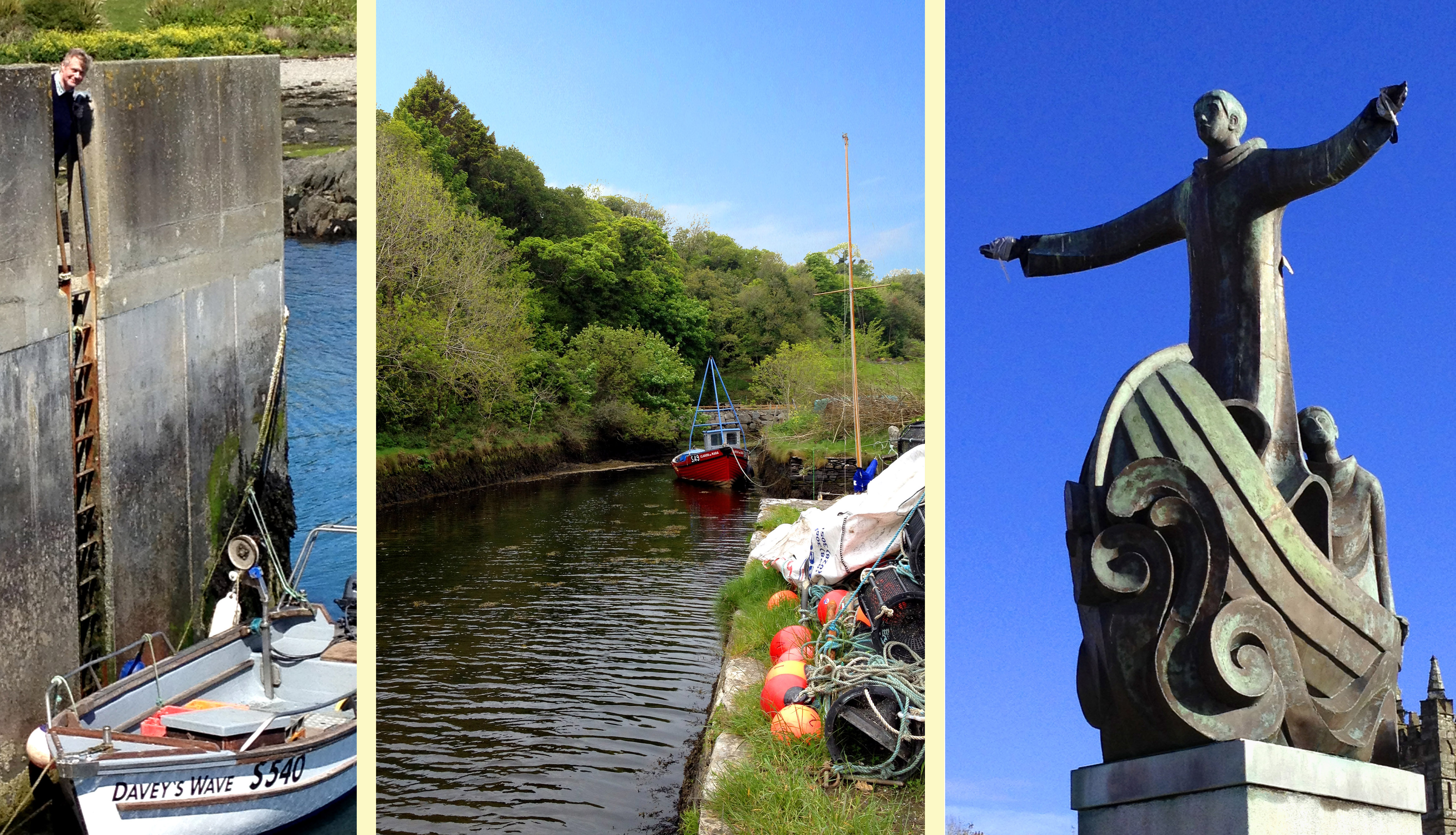
Colla Pier, Roaringwater Pier and St Brendan
Colla Pier, Roaringwater Pier and St Brendan

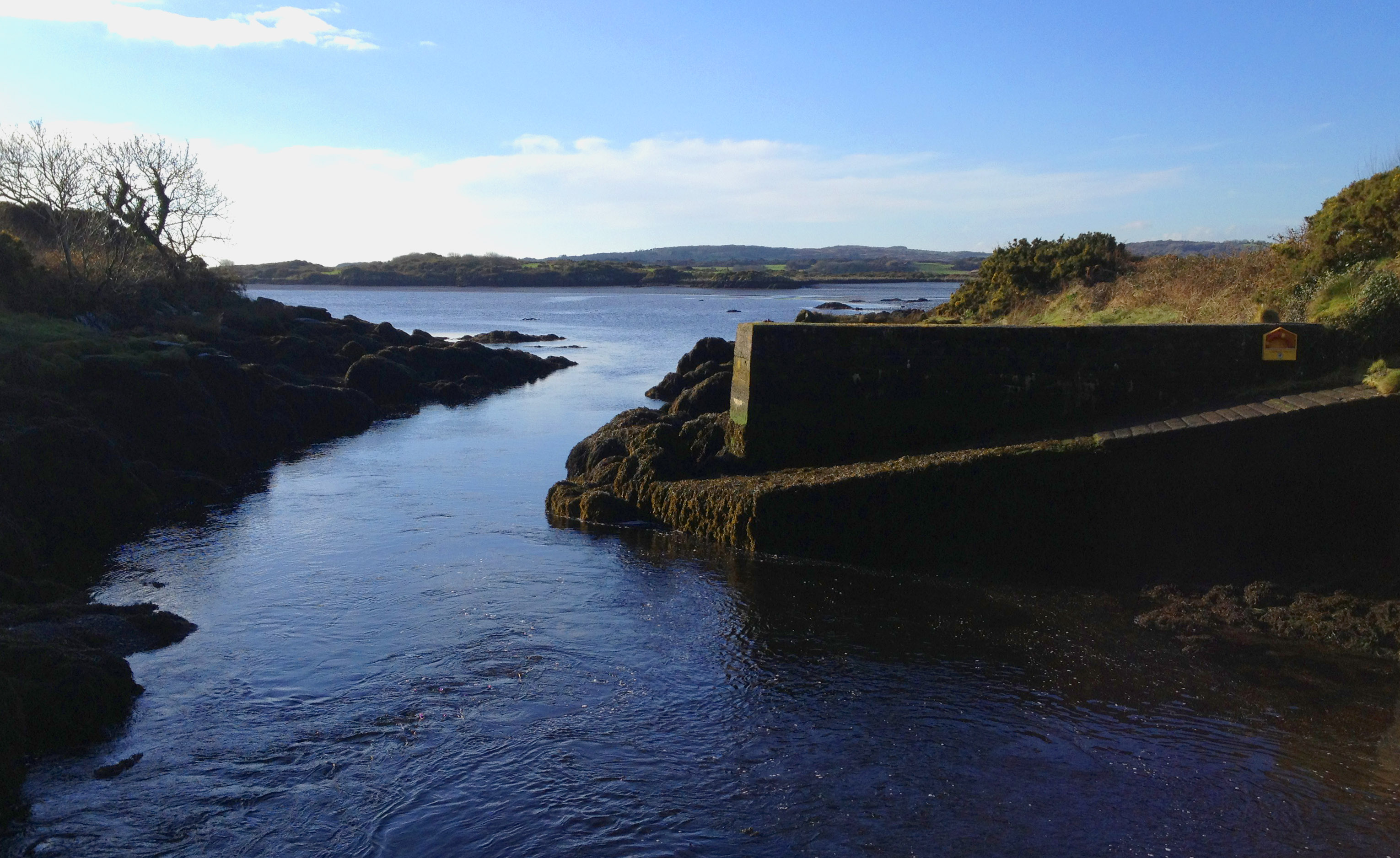
The 'lost' pier at Bealaclare

The ‘lost’ pier at Bealaclare

In 2010 two fishermen found a small canoe in the Boyne River. It’s reckoned to be 5,000 years old and may have carried stone for the building of the great passage tomb at Newgrange (that predates the Pyramids). That boat is only 3 metres long, but another canoe discovered in 1901 in Co Galway is even older and much bigger: 15 metres long, hollowed out from the trunk of a single oak tree that was over 2 metres in diameter: something that couldn’t be found in Ireland today. It probably had outriggers and could have been used to bring tin from Cornwall to mix with the locally mined copper, enabling the Bronze Age to take off. Fascinating.
Bronze Age Canoe

Bronze Age Canoe

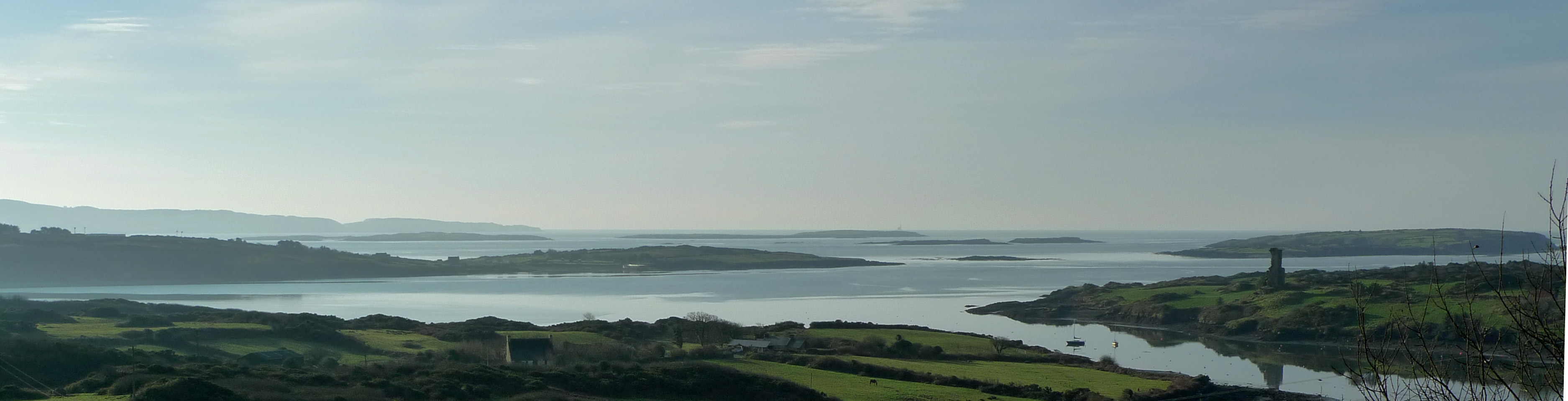
Every day we look out over the water, and on all our walks we have glorious views over the bays, the Celtic Sea and the Atlantic. That’s a constant in our lives that I don’t think we could ever do without.

Oh – by the way: Uisce Beatha (pronounced Ish-kah Baahaa) – that translates literally as Water of Life – and, in Ireland, also as ‘Whisky’.
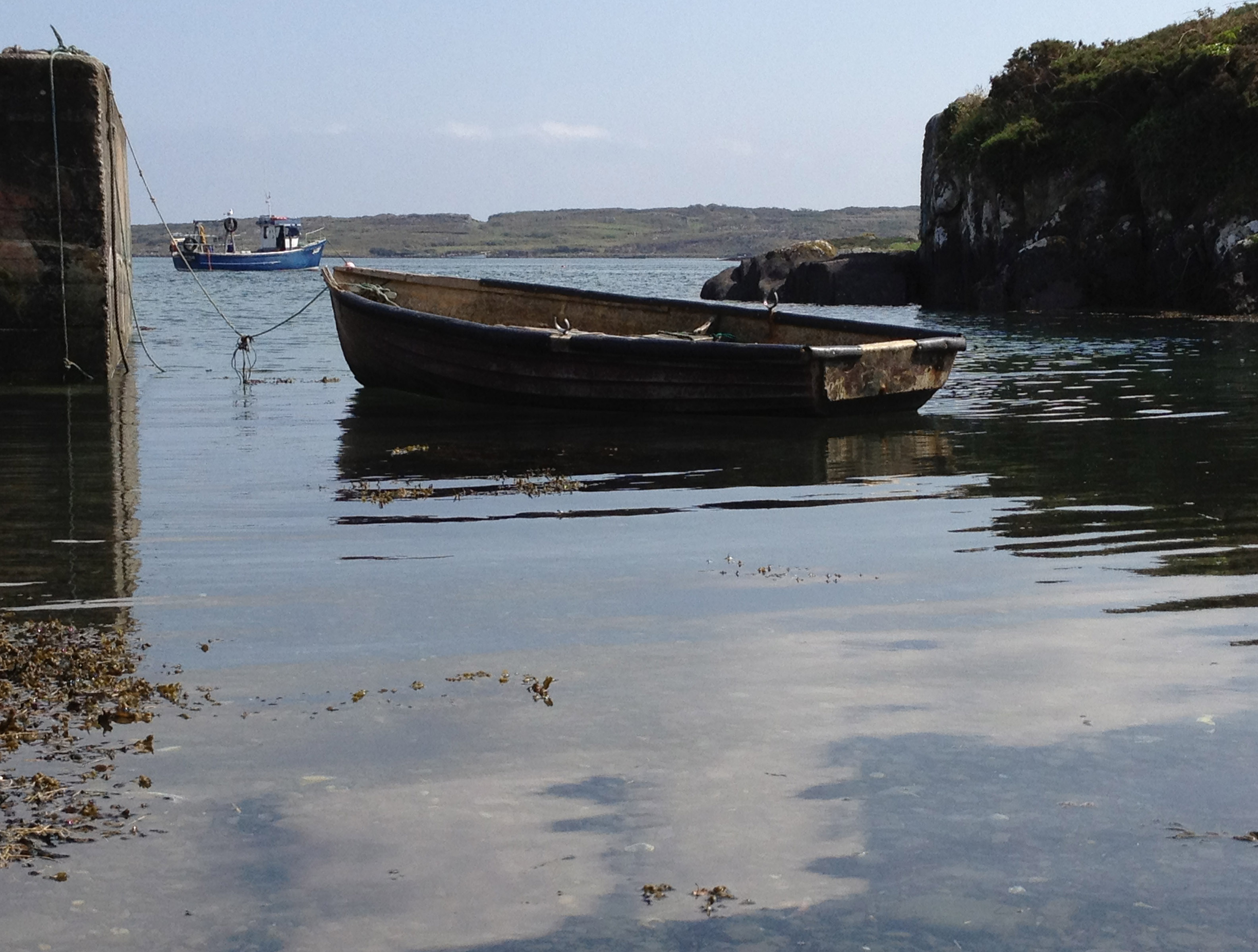
Turk Head Pier

Turk Head Pier

Ból an bhóthair

bowling

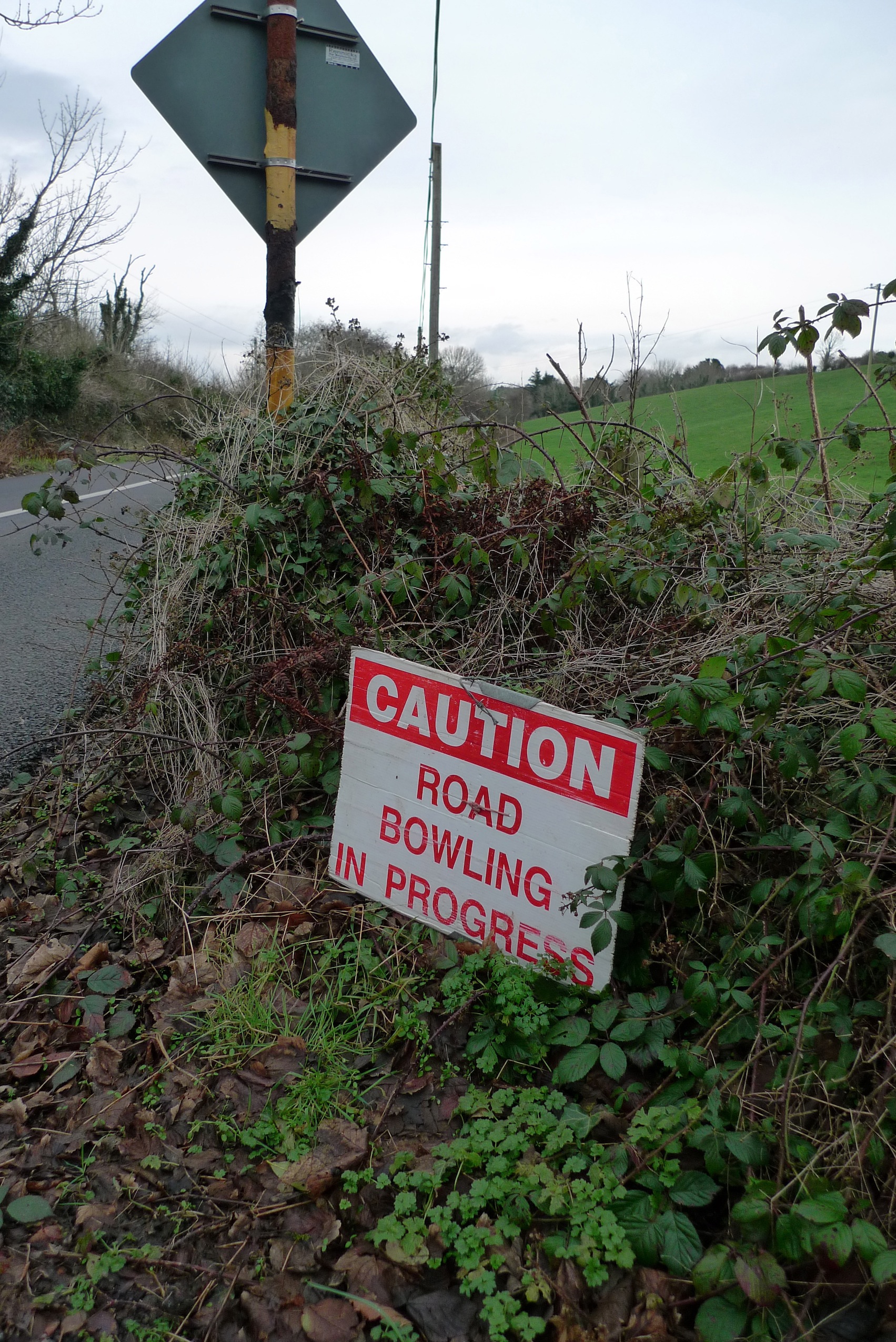
A damp, grey, Sunday afternoon seemed as good a time as any to find out about a strong West Cork tradition – Road Bowling – the title of this post is the Irish for that. I had come across this ancient sport on a previous visit to Ireland and was intrigued. Friends enlightened me that it was a traditional local pastime which has spread to Armagh and, through emigration, to London and the United States – while other versions of the game exist in Holland and Germany. But the county of Cork – and particularly our western part of the county – is its true home.

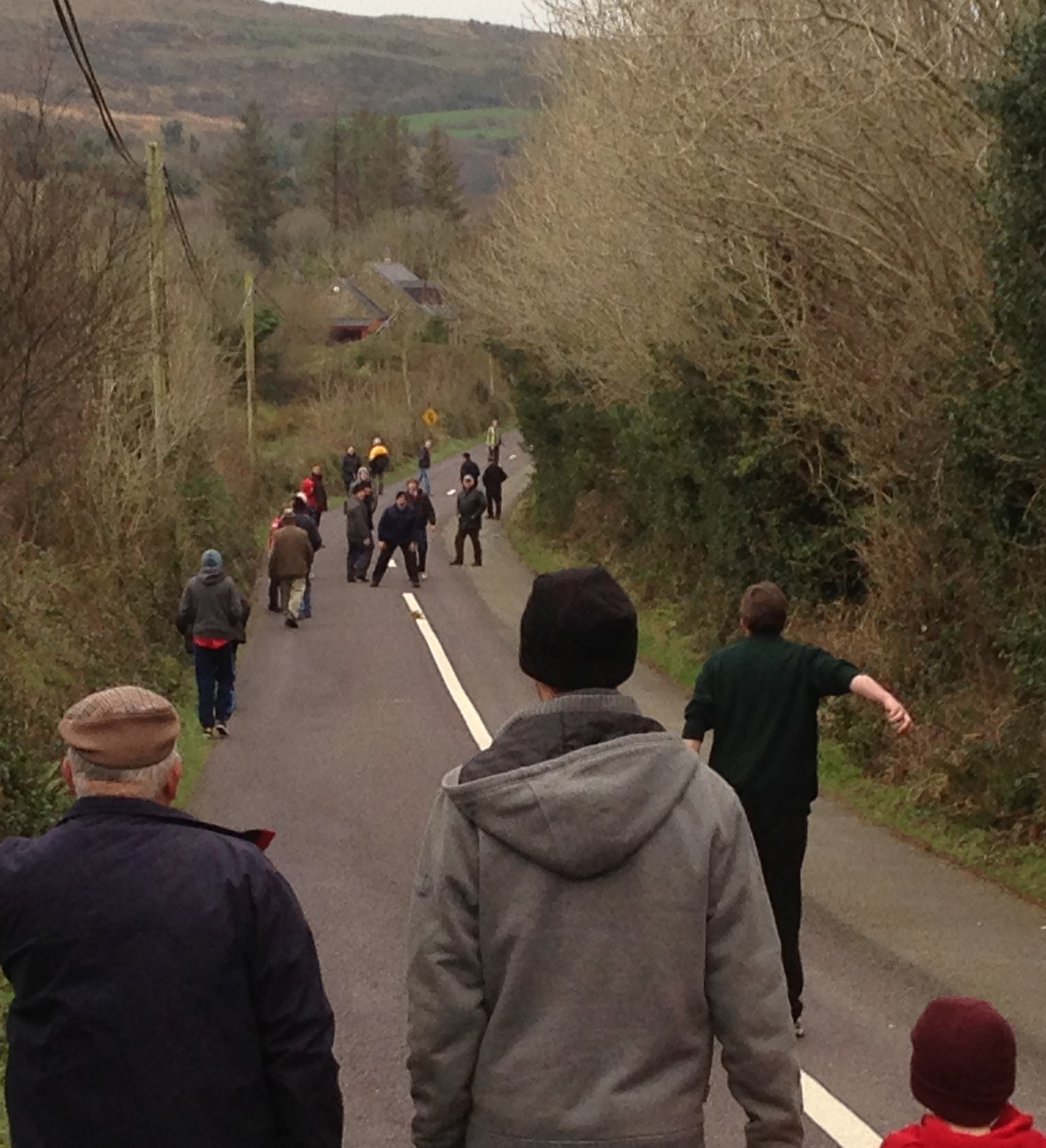
bowling2A notable merit of the sport is that it requires absolutely minimal equipment and facilities: an iron ball (or ‘bullet’) weighing 800 grams and 18cm in circumference (note: Ireland is fully up to date with its metrification – miles and ounces have vanished along with the old Irish punt or pound) and about 4 kilometeres of public road. That’s all, apart from a stick of chalk. The road can be anywhere: it’s good if there are some hills and bends. Today I watched a game on the Road out of Durrus going towards Schull. It’s fairly well used (although, as this is Ireland and a Sunday, there’s probably one car passing through every five minutes), but the traffic always gives way to the bowlers.

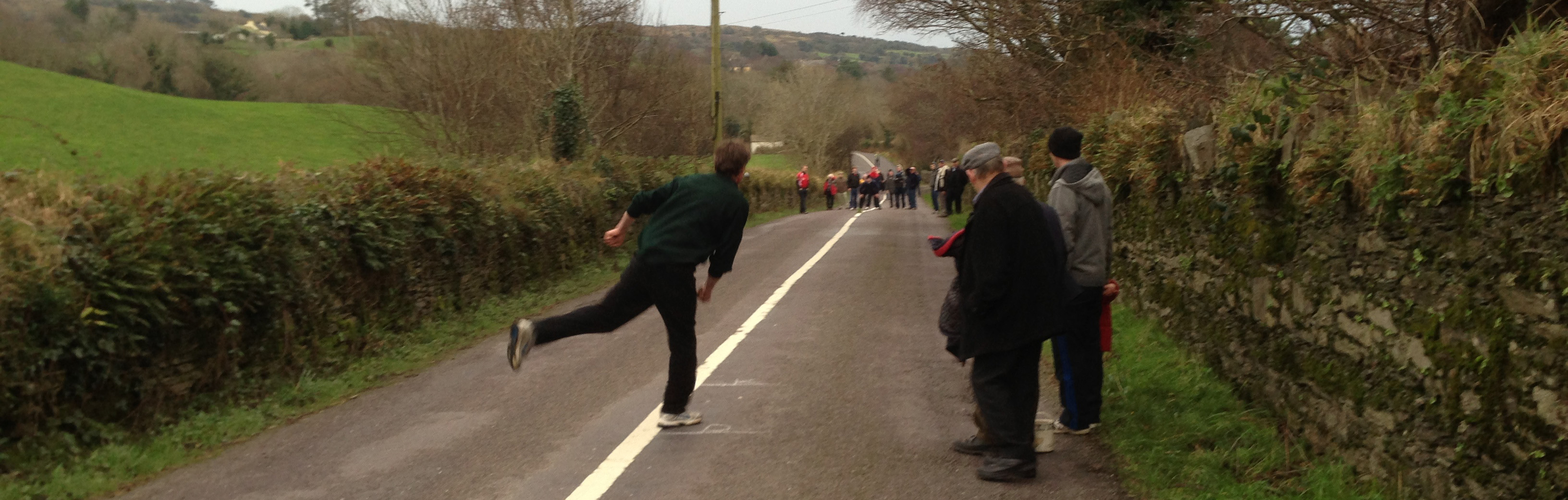
The object is to throw the iron ball along the road. There are two players – or two teams – in each match, and the match involves one journey along the road in one direction, each player having his own ball. There’s usually another match when the crowd returns along the same route. The winning player or team is the one that reaches the end of the course with the fewest ‘throws’. To throw a player runs up to a chalk mark and, using an underarm swing, propels the ball as far as possible. Regardless of whether or not the ball has hit a wall or drain or whatever, the next chalk mark is made at the point that the ball has stopped moving. There are all sorts of techniques, but nothing – it seems – breaks any rules, unless the player’s foot steps over the chalk mark before the ball has left his hand. And I’m not sure whether anyone is actually watching out for that, as the whole crowd, including the players, spend the entire time engaged in conversation; although this is interspersed at times with shouts of encouragement – or perhaps discouragement, and loud comments on how poor that particular throw was. I was guided through the process by friendly members of the gathering (many of whom suggested that I should have a go myself) and they also assured me that an essential part of the fun was ‘money changing hands’ – a gamble on the match, or on individual throws. Everything seemed so chaotic and informal that I couldn’t work out how this all went on.

bowling3

I was interested to see a tuft of grass (a ‘sot’) pulled out of the hedgerow and placed on the road at the point which the thrower should aim for in order to get the best ‘line’. And I was told that a helper known as a ‘road shower’ advises the thrower as to the best trajectory. ‘Shower’ here rhymes with ‘blower’. And – I should have said at the outset – ‘bowl’ actually rhymes with ‘howl’. But the West Cork accents I heard this afternoon were so strong that I only picked up every third or fourth word…

I returned a little wiser about another ingredient of life in West Cork.

bowling8

Beyond the Pale

rosbrin3

‘The Pale’ was an expression first noted down in the early 15th Century to describe the ‘safe’ area around Dublin which was kept fortified and garrisoned by the English monarchs of the time. When we last looked into Irish history [my post: here] Henry II had brought the Norman knights into Ireland and in due course they settled and assimilated with the local populations, in spite of The Statute of Kilkenny which, in 1366 decreed that inter-marriage between English settlers and Irish natives was forbidden. It also forbade the settlers using the Irish language and adopting Irish modes of dress or other customs. In reality such laws were impracticable, unworkable and largely ignored.

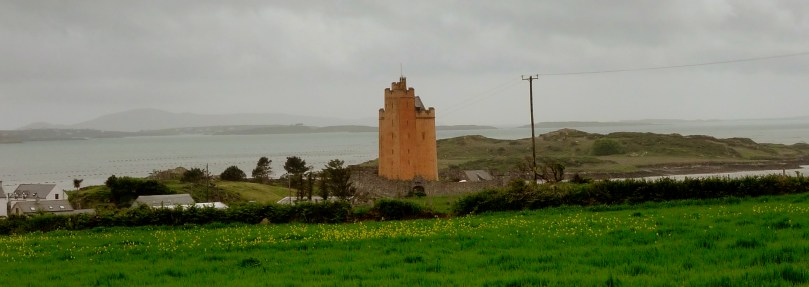
Ireland_1450To be ‘outside the Pale’ meant to be outside a safe zone. Down here in West Cork we are a very long way ‘outside the Pale’ – a map shows West Cork and Kerry in 1450 as an isolated area in the south west of the island surrounded by Hiberno-Norman Earls and Lords. In that time there were local factions protecting their interests by building castles and fortified tower houses all along the wild and rugged coastline.  I have referred to castles a few times in my previous posts: Rosbrin, just around the corner from Ard Glas – home of The Scholar Prince Finian O’Mahon and a great centre of learning in the Sixteenth Century; another O’Mahony castle at Drumnea – close to the Bardic School – and the place where the two sons of the King of Spain were drowned and turned into swans. Opposite us is Kilcoe Castle, superbly restored from a completely ruined condition by Jeremy Irons [have a look inside it here]: this was a castle of the McCarthy clan. Further to the east are the remains of a number of O’Driscoll castles.

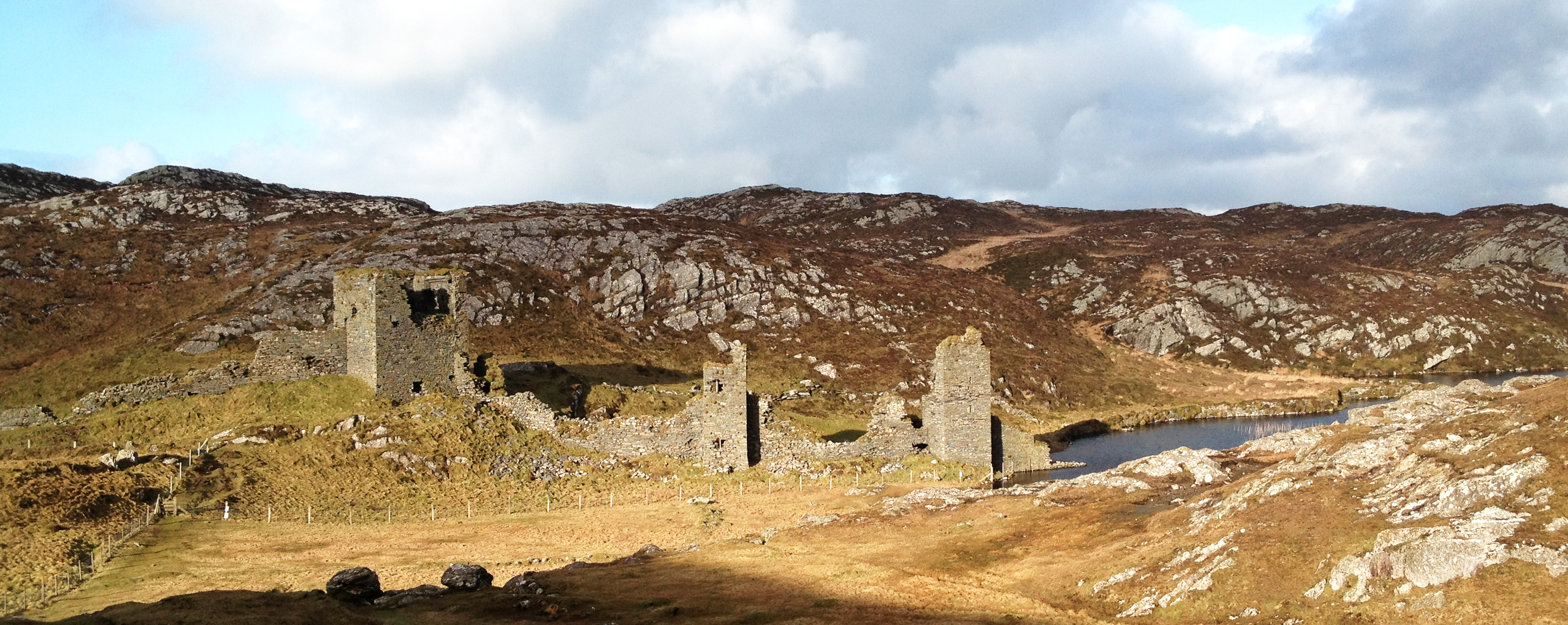
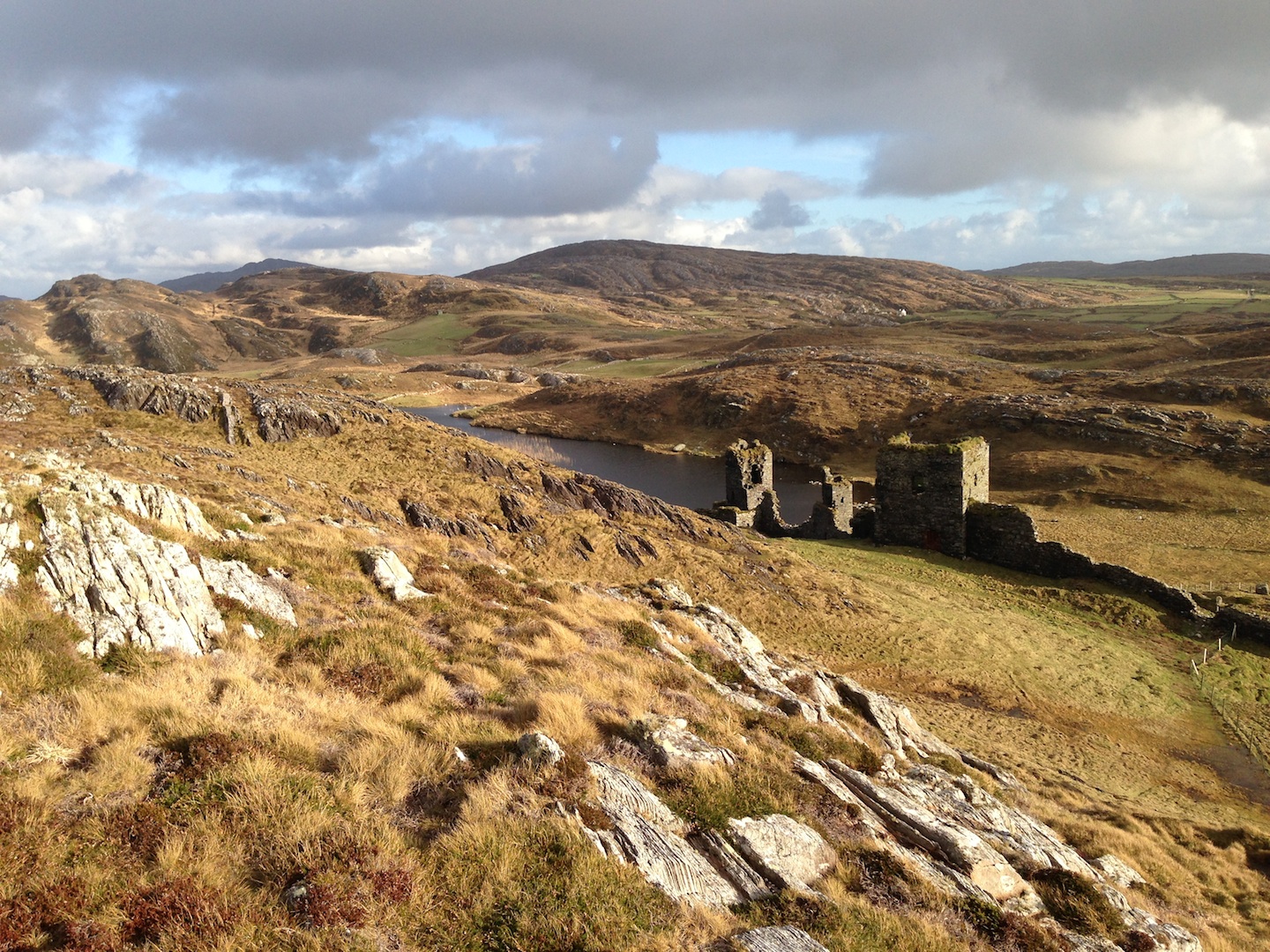
On a crystal clear day last week Finola and I went out to find the remotest of all the West Cork castles: Dunlough. This structure sits on a lonely promontory at the tip of the Mizen Peninsula – Ireland’s most south westerly point. We travelled as far as the snaking lane would take us, then headed on foot across the fields and past the farmhouses that were the end of the civilised world here. Eventually we were clambering over an isolated and untamed landscape of rock outcrops with the Atlantic roaring below us. Our first sighting of Dunlough as we pulled ourselves up to the top of a ridge and looked over was breathtakingly dramatic.

view

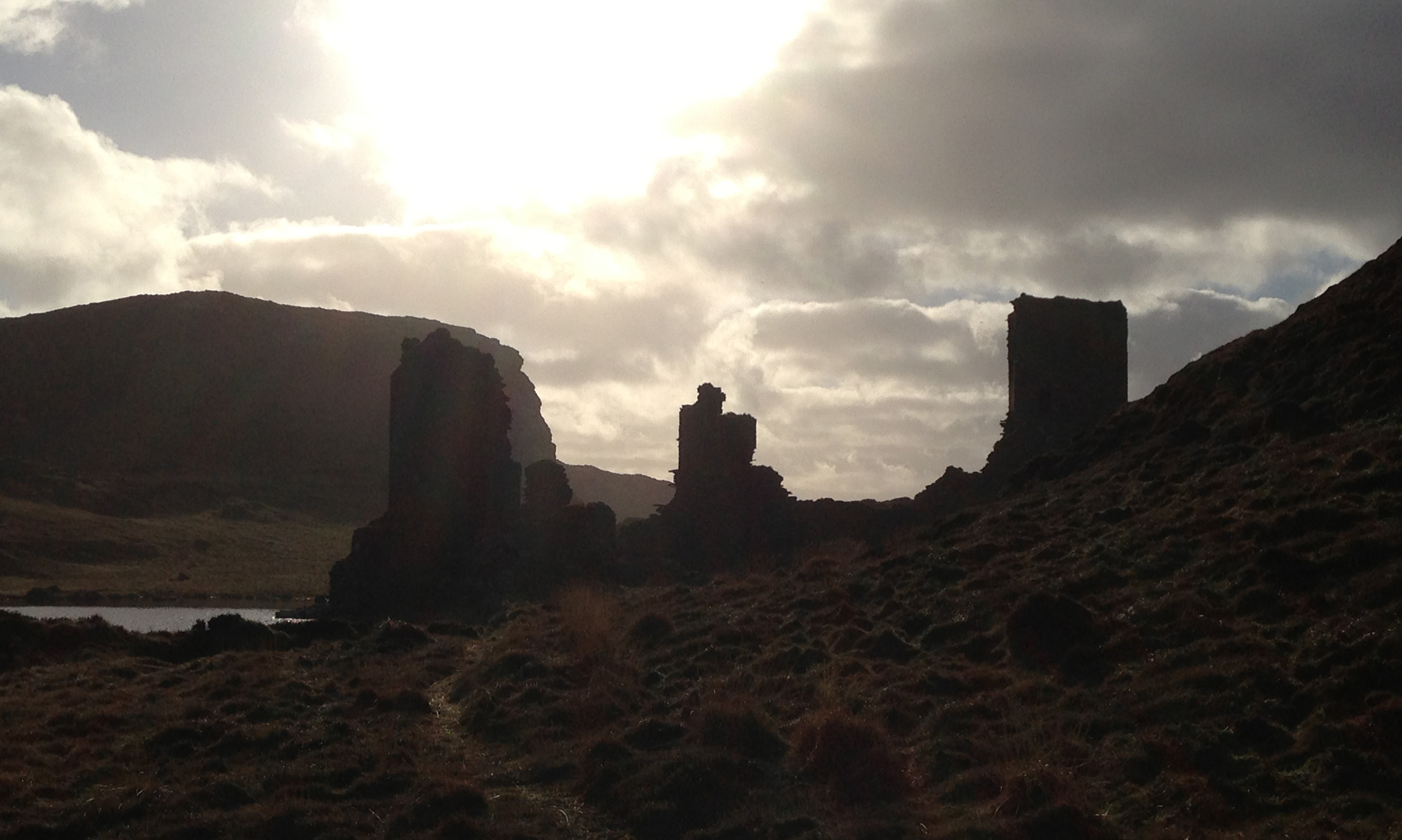
The promontory – in earlier times the site of an Iron Age fort – is known as ‘Three Castle Head’, because of the O’Mahony structure which was now presented to us: there are three square towers or keeps linked by enclosing walls. The castle was founded in 1207 and is  built entirely of dry stone masonry. It is remarkable how much of this still stands after 800 years of facing up to the prevailing weather. There is also an artificial freshwater lake beside the walls, probably established at the same time as the buildings, to provide drinking water for the inhabitants and their cattle and – perhaps – a stock of freshwater fish.

3cast

In its time the castle must have supported and sheltered a sizeable population. Today – and for us – it seems one of the most beautiful and lonely places on earth. We walked in awe around the ruins and watched a large flock of Black Backed Gulls foraging on the lake. Perhaps they are the spirits of those who lived their lives out in that extraordinary wilderness?

3castlehead

Irish History – an Englishman’s Perspective

ardmore

Why do I feel a little ‘guilty’ about being English while dwelling, for the moment, in Ireland?

This morning I shared a car ride with a friend – Irish – so I started off our conversation by voicing this feeling and pointing out my ignorance of Irish History, having learned nothing about it during my education years. The ensuing journey then consisted of me listening to an erudite and most entertaining blow-by-blow account… Remember Aenghus, the Red Bard? It was as though he was sitting in the car with me, recounting the history lessons of his seven year apprenticeship in the Bardic School at Dumnea.

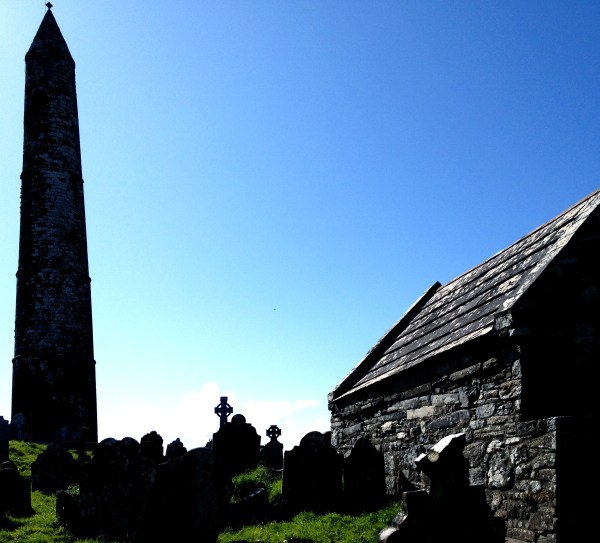
Round towers helped to defend against Danish raids

Round towers helped to defend against Danish raids

My personal induction began with the Danes. I hadn’t understood, before, that there had been a ‘special relationship’ between Ireland and Denmark, based on trade and education. This had started in the so called Dark Ages and flourished until the time of the High King Brian Boru (c941 – 1014). I already knew about him – in connection with a harp: the Brian Boru Harp sits in Trinity College, Dublin, along with the Book of Kells. Oh – and a traditional tune: Brian Boru’s March. The relationship became an invasion, and the Danes were despatched by a rare coming together – under Brian Boru – of tribal kingdoms, who afterwards reverted to their more usual squabbles.

Now we come to the time of the Normans – well established in England by the 12th Century – and the only English Pope: Adrian IV – who in 1155 issued a Papal Bull to Henry II of England giving him authority to invade Ireland in order to rein in the dissident church there, who were not toeing the line with Rome on a number of matters. This coincided with a feud between a petty King of Connacht – Tiernan O’Rourke – and Dermot MacMurrough, the King of Leinster. O’Rourke’s wife Derbforghaill was abducted by MacMurrough (but evidently at her own instigation, and during which, while being carried off, she provided realistic and convincing screams). MacMurrough had to flee to Wales from where he beseeched the English King to mobilise the Bull and invade Ireland. This actually suited Henry’s empire building ambitions quite well and he dispatched Strongbow (no – not the cider but the Earl of Pembroke, Richard de Clare) and the result of all this was that the Normans arrived in Ireland – where their descendants have caused disruption ever since. Of course – it’s by no means that simple, and this strand of the story will have to be amplified in a future post….

kilcoe2Confused? Well – I haven’t even mentioned Cromwell or William of Orange yet! But perhaps that’s better left until another time… And where does West Cork fit into this jigsaw puzzle? It seems that it was so far away from Dublin and Cork that it didn’t feel the ripples of what was going on for a long time, and local politics were largely sorted out between the O’Driscolls and the O’Mahonys (descended directly from Brian Boru) who built a line of castles along the coast and did very nicely out of charging dues from the Spanish and Portuguese fishermen who reaped an abundant harvest from the seas of those days. And – perhaps surprisingly – the clans built up a reputation for scholarship and knowledge of the arts and sciences. Just around the corner from Ard Glas is an actively disintegrating stone ruin, a single teetering wall: this was the home of the famous ‘Scholar Prince’ Finian O’Mahon, Chief of Rosbrin who lived in the late 15th Century and who was described then as one of the most learned men of his time – not just in Ireland but Europe and beyond. Across the water and central to our view is Kilcoe Castle – formerly an O’Driscoll stronghold: some years ago it was superbly restored and is now the home of actor Jeremy Irons. In order to prevent the ingress of damp (which seems to have been an essential feature of castle life in the Middle Ages), he has treated the walls with an external render which glows yellow, orange and gold as the sun moves round. It is visually prominent in the land and seascape, and this was no doubt an essential element of all the castles in those days when Kings and clansmen had to project their status in order to shore up their often precarious positions in society.