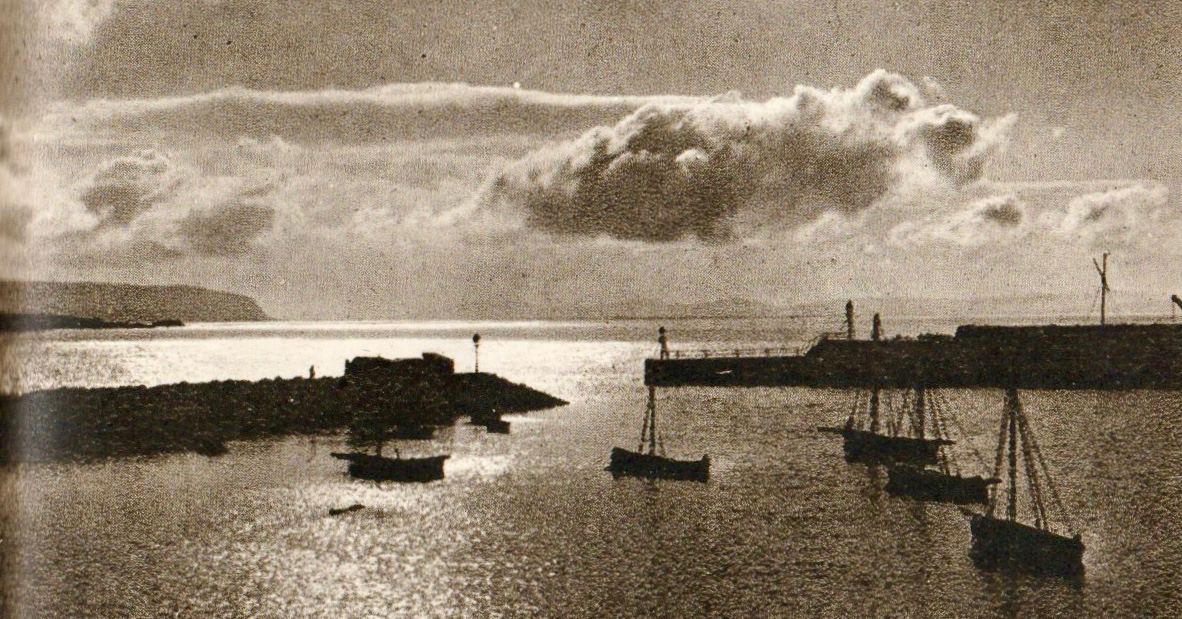
H V Morton’s Ireland – Part 1

In Search of Ireland was first published in 1930. It’s always interesting to read the accounts of an English traveller in Ireland. I used to be one once, but I’m now – happily – permanently here. And a citizen! I really don’t want to be anywhere else in this turbulent world.
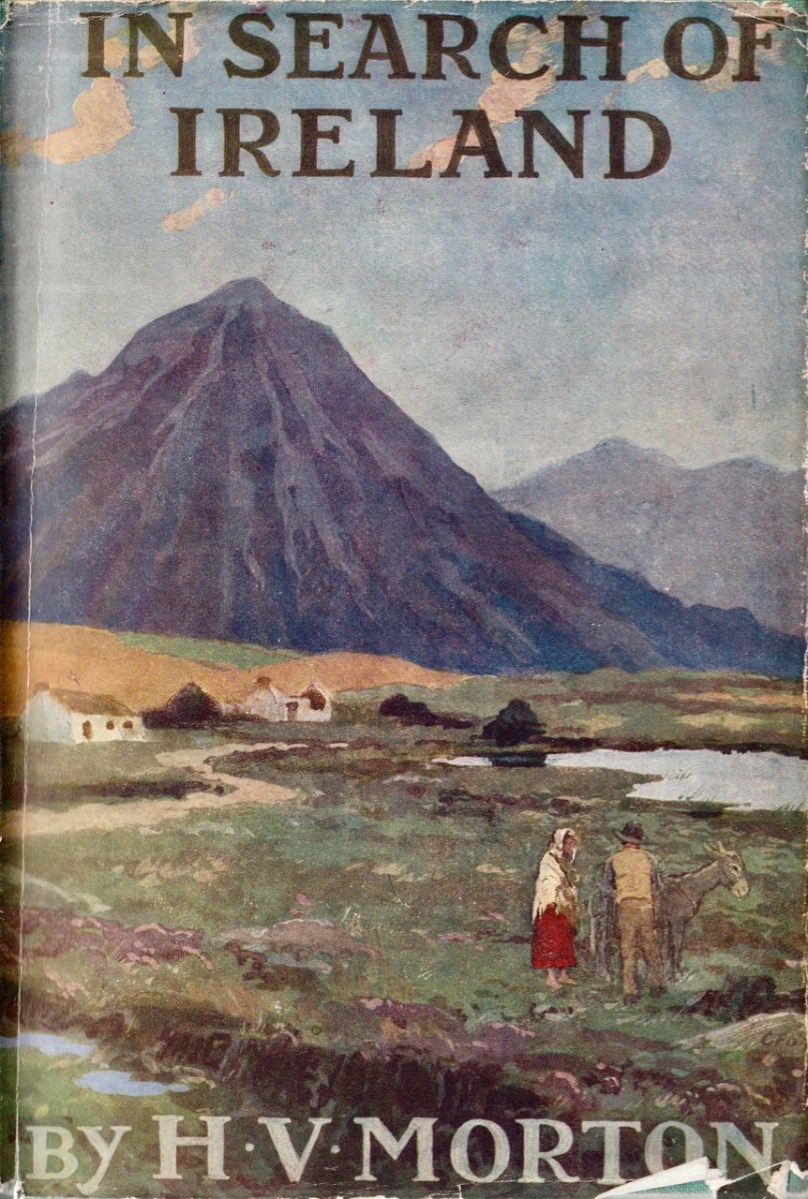
I recently happened upon this book – and was immediately attracted by the cover, and the many photographs it contains, which date mainly from the 1920s. But let’s start off finding out who the author is.
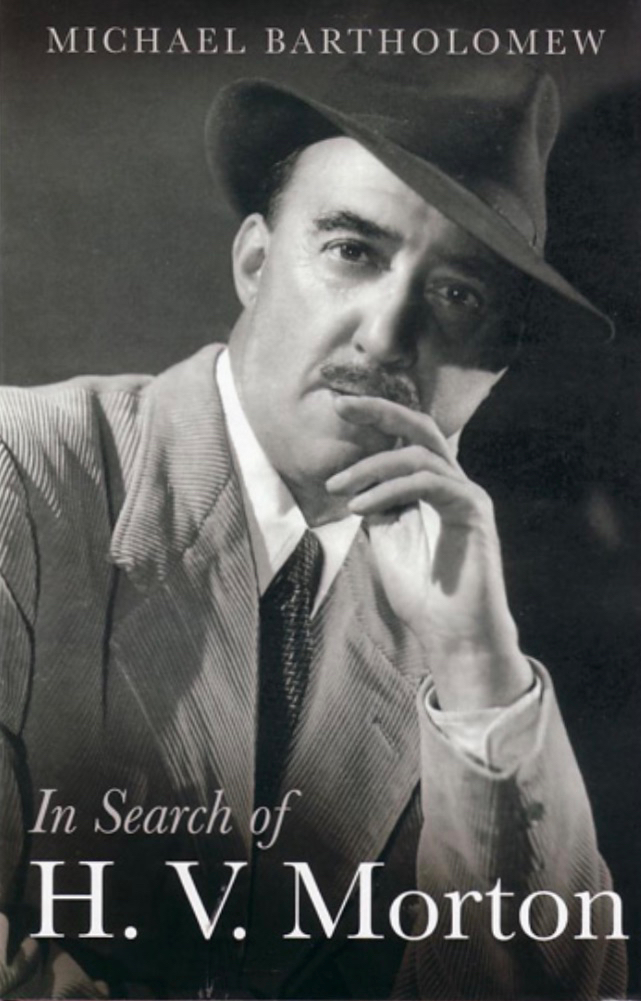
Henry Canova Vollam Morton was born in Lancashire, England, in 1892. He was the son of Joseph Morton, editor of the Birmingham Mail, and followed his father into journalism. Morton served in the First World War and then worked in London, for the Evening Standard and the Daily Express. While with the latter he ‘scooped’ the story of the discovery of Tutankhamen’s tomb at Luxor in 1923 and reaped celebrity from that event. After this he started writing books, mainly about travel. Between 1925 and his death in 1979 some 55 books were published. His work appealed to a popular audience. The book about him, above – written after his death – suggests another side to this man: he had secretly been a Nazi sympathiser and another writer, Max Hastings, gleaned this entry from Morton’s private diaries of 1941 – “I am appalled to discover how many of Hitler’s theories appeal to me”.
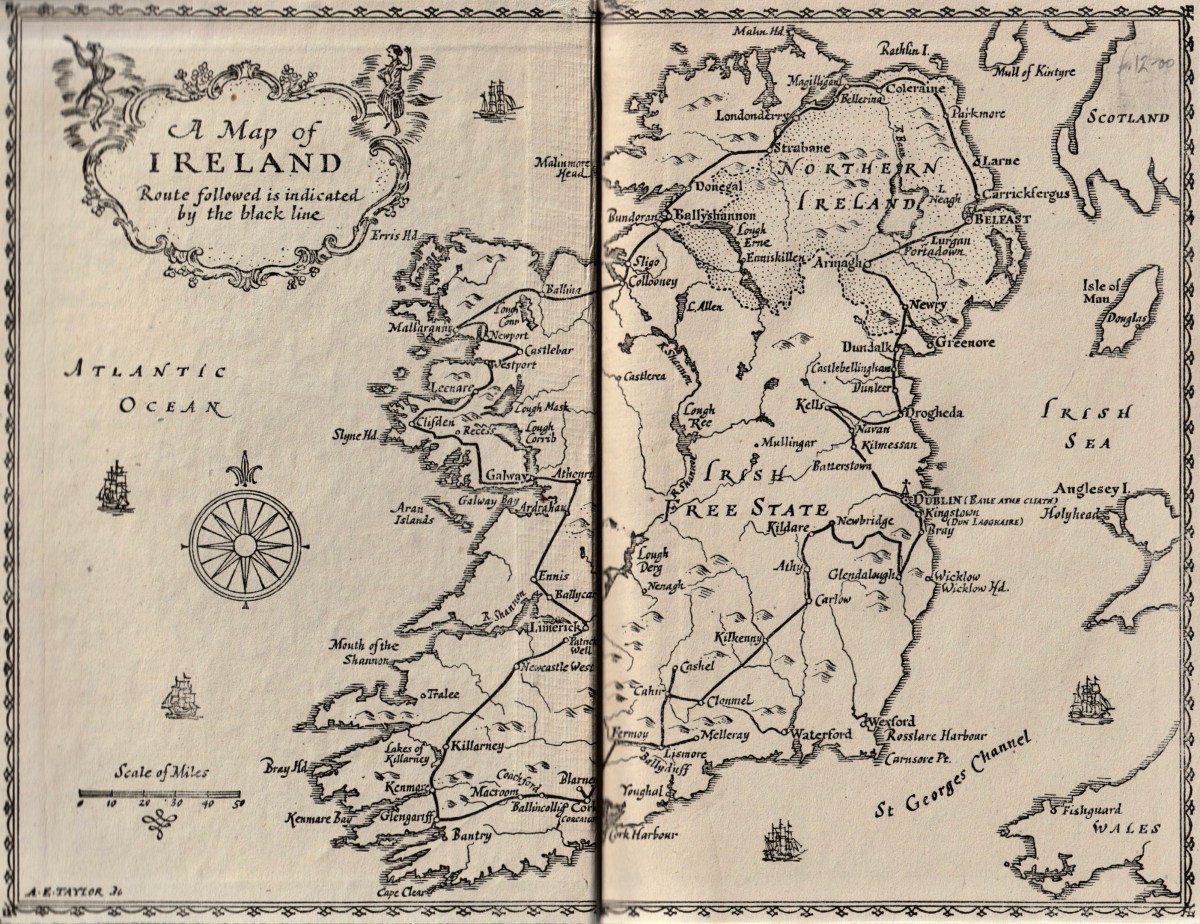
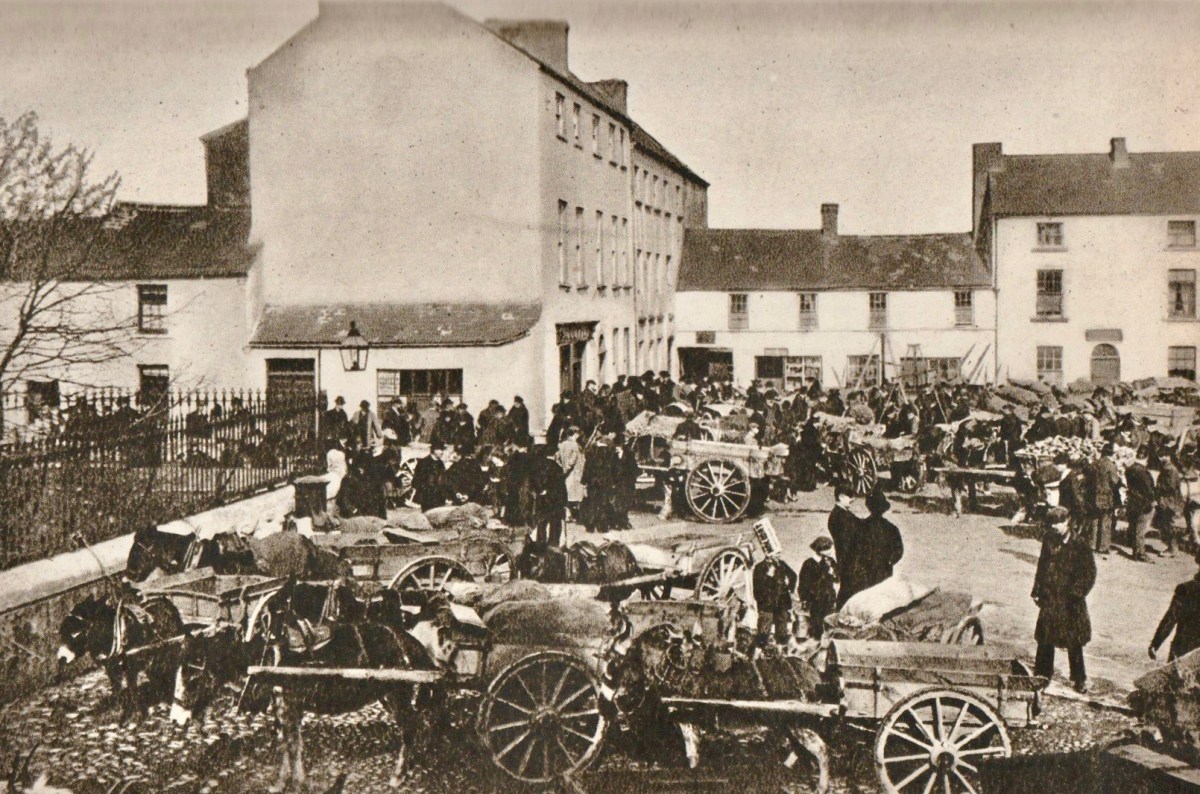
Morton travelled in Ireland during the 1920s and wrote many articles about his journeys, which became the substance of this book. The book’s endpapers (top) present a map showing the route he followed in his car: he appears to have foolishly omitted the best part of Ireland – our own West Cork! The lower photograph (above) is simply captioned ‘Fair Day’ and is credited to a Dublin photographer (Thomas Mason). I cannot identify the location, although it seems a little familiar. In the book it is juxtaposed close to an account of Kenmare.
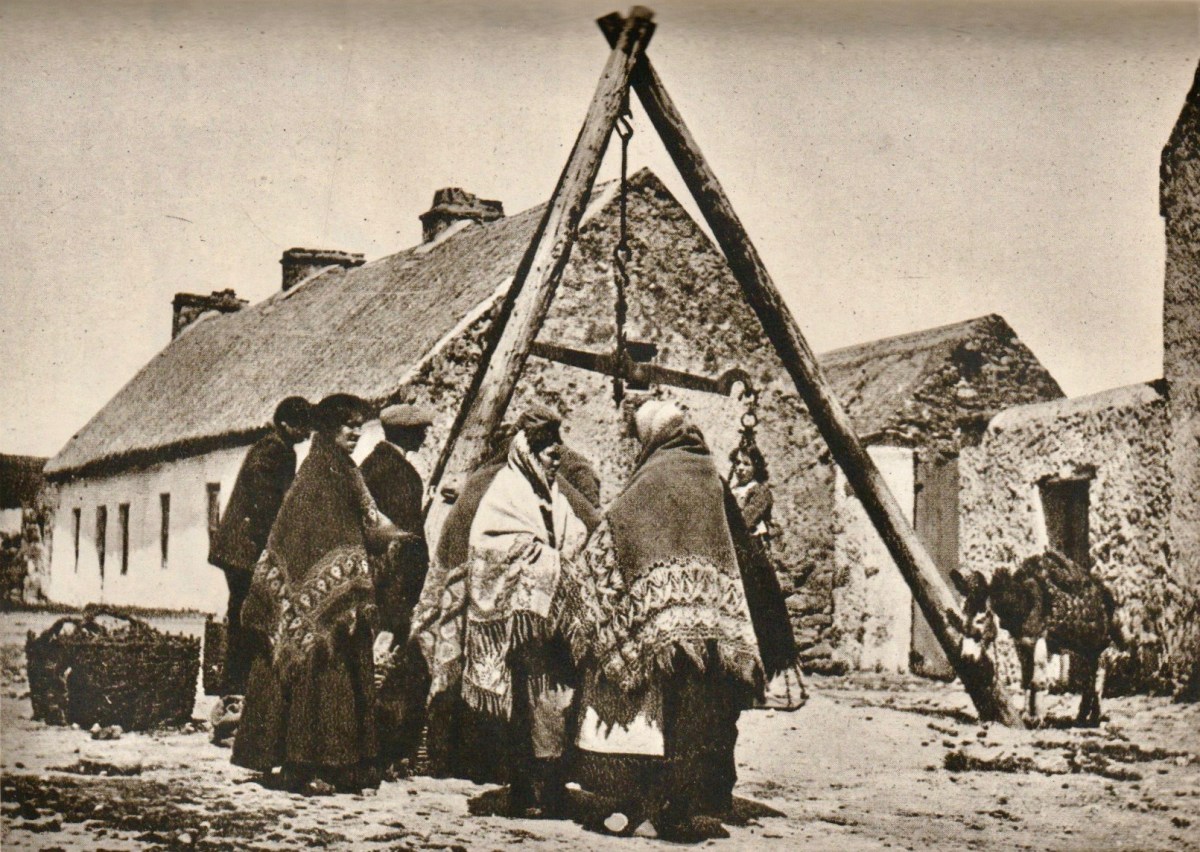
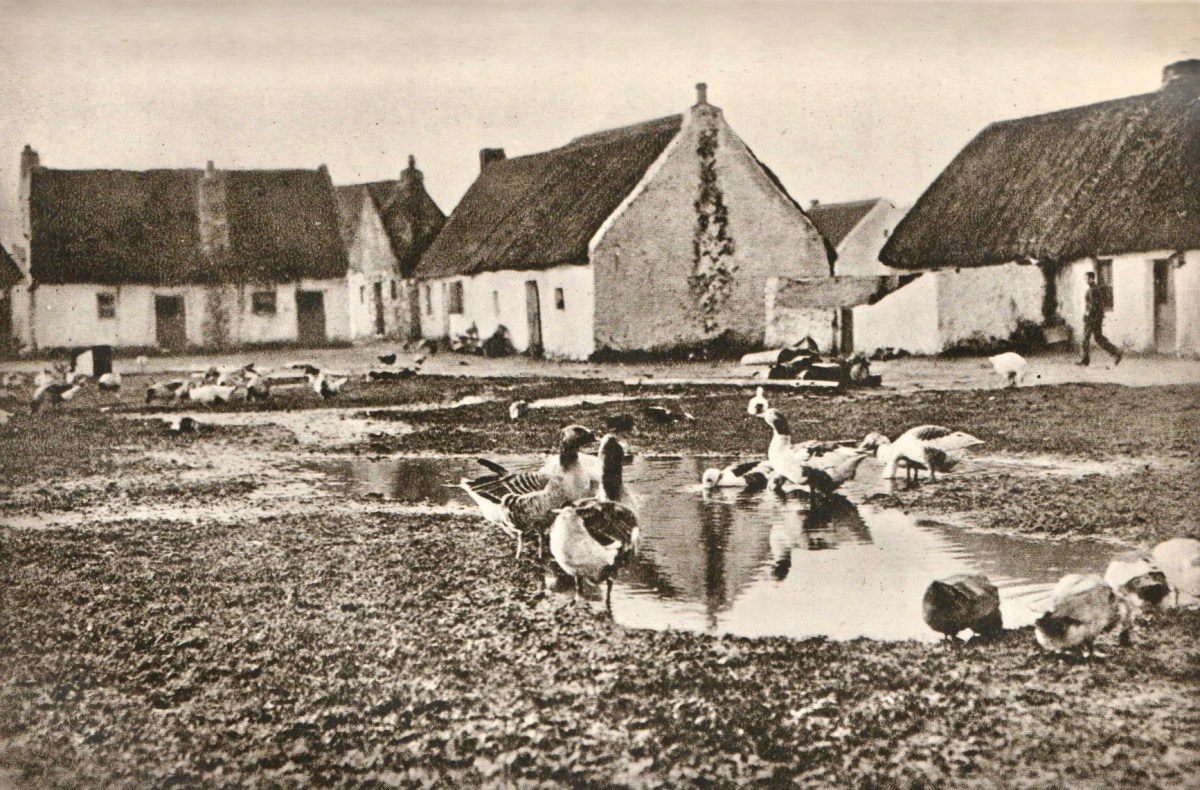
The upper photograph is titled ‘Market Day in Connemara’, and the lower one is ‘The Claddagh, Galway’. Most of the photographs are accredited to publishers or newspapers: H V Morton only provided a brace of pictures himself. They are below – ‘Cormac’s Chapel, Cashel’ and ‘An Archway in Killarney’:
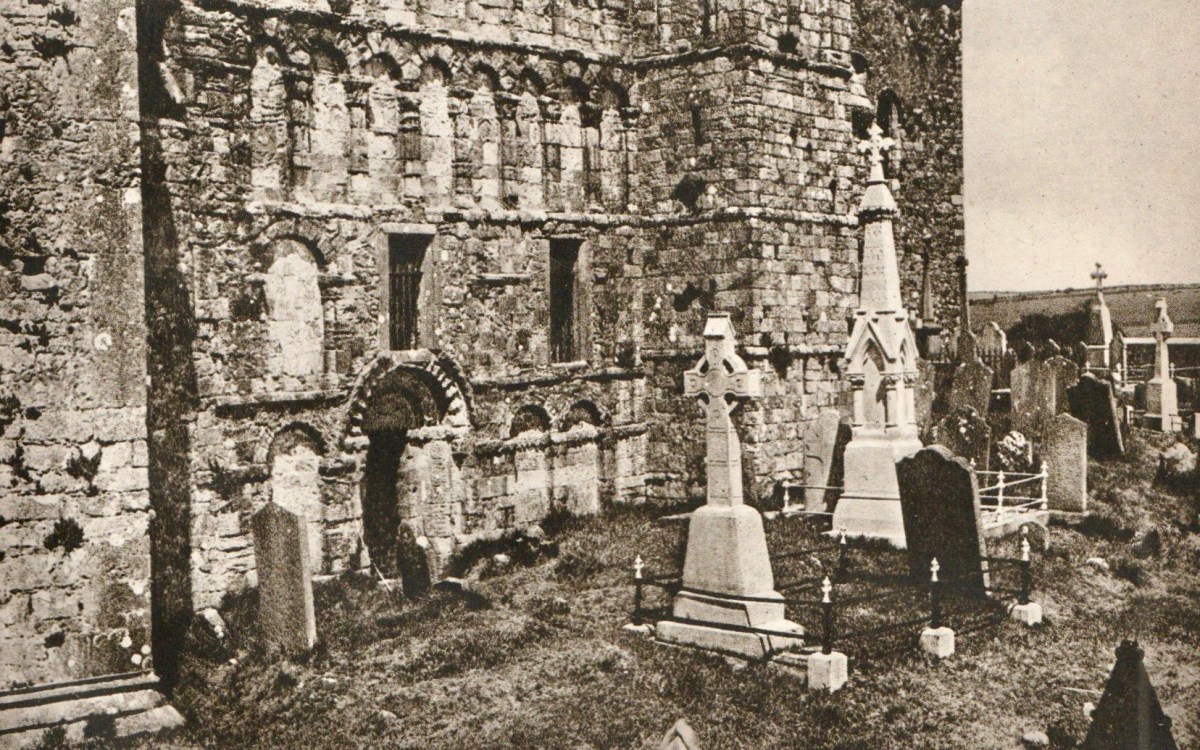
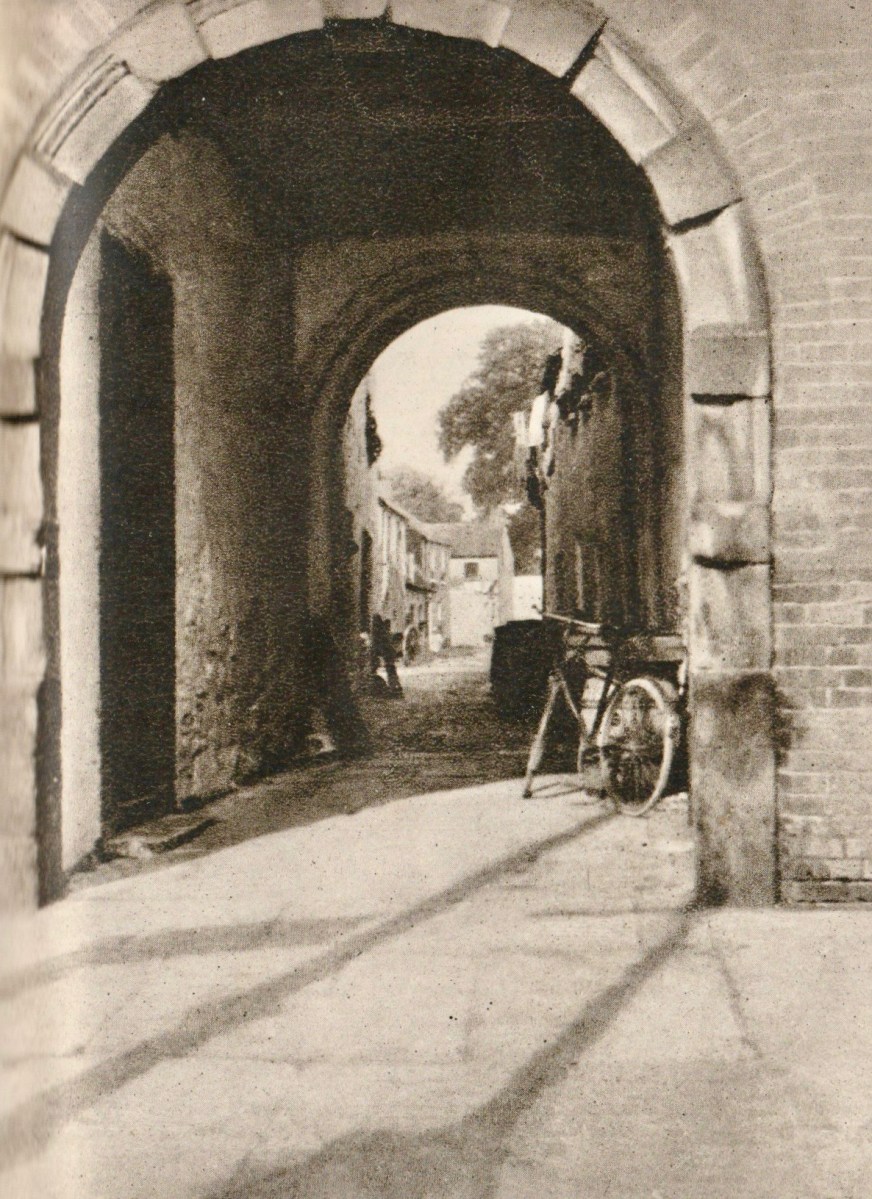
From the dust-jacket of my nineteenth edition (which was published in 1945):

. . . In this book H V Morton describes a first visit to Ireland – not the tragi-comic Ireland of 19th century fiction, but the new Ireland. His charming book is the record of a motor-car tour right round the island, and in the course of his delightfully haphazard wanderings, he discourses on the Irish landscape, Irish people, Irish history, falls in love with Kerry and Connemara, attends a wake in Mayo, and crosses the hills of Donegal into Northern Ireland . . .

Frontispiece – In Search of Ireland by H V Morton

This is the first of two posts about H V Morton’s book. Next time around I will quote further from his text to try and give you an insight into this complex man, but also show you more of the illustrations from the book. None of us can resist looking so directly into the past!
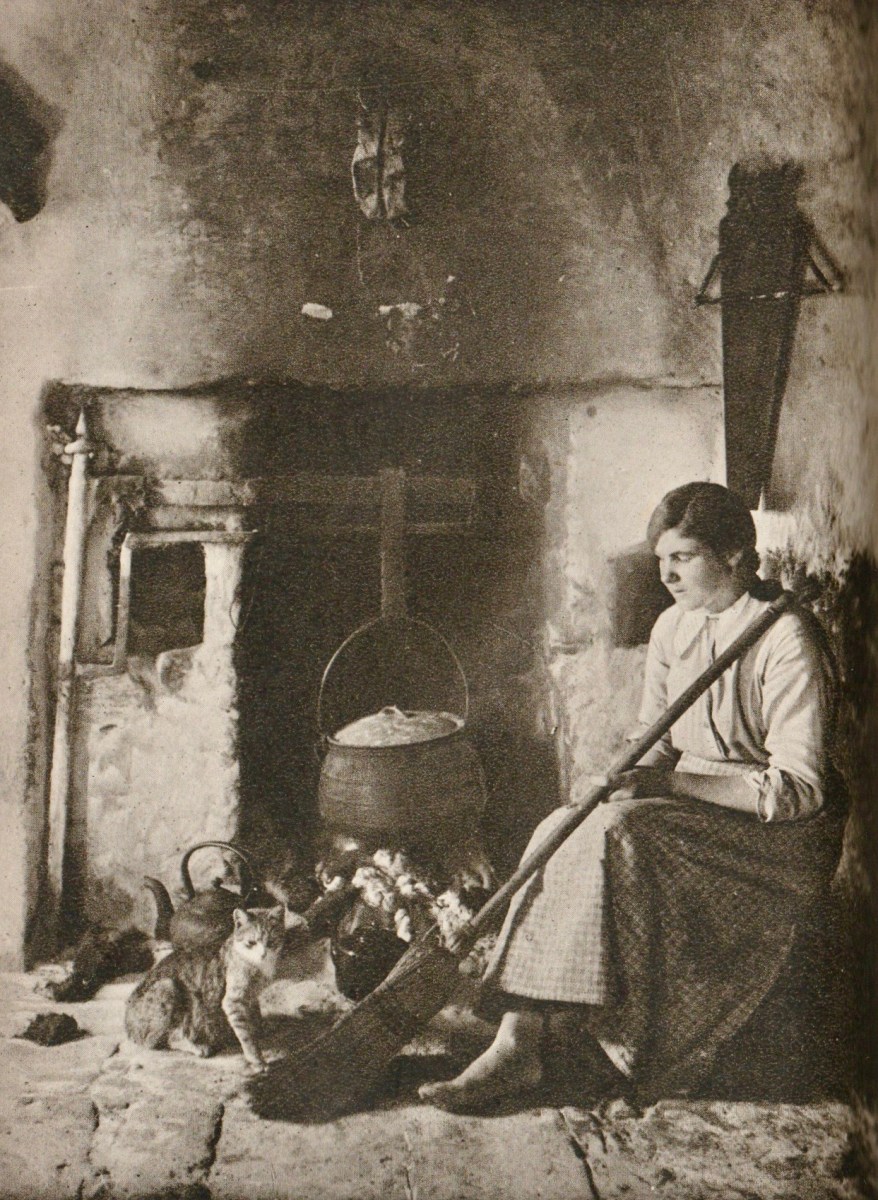
From ‘In Search of Ireland’ – above: Connemara Girl

Timoleague Tour

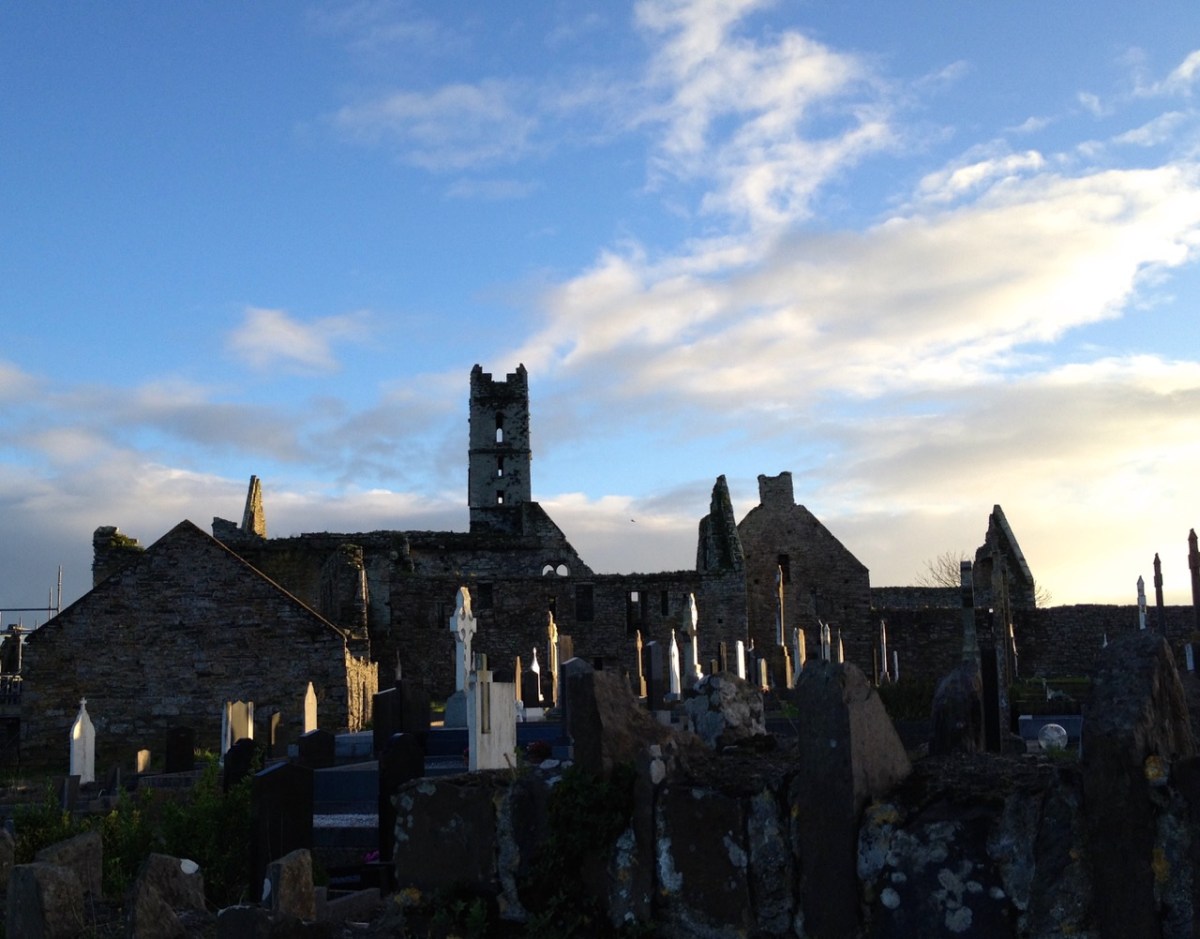
We had a great afternoon yesterday, exploring aspects of the history of Timoleague, in West Cork. Our Finola Finlay (above) was involved in an event organised by the Glass Society of Ireland . . . a professional all-island, non-profit association that opens a window onto the contemporary Irish Glass Community . . . The day’s proceedings were centred around the ecclesiastical buildings in the town, the earliest of which is the Franciscan Friary, now a substantial ruin beside the Argideen River.
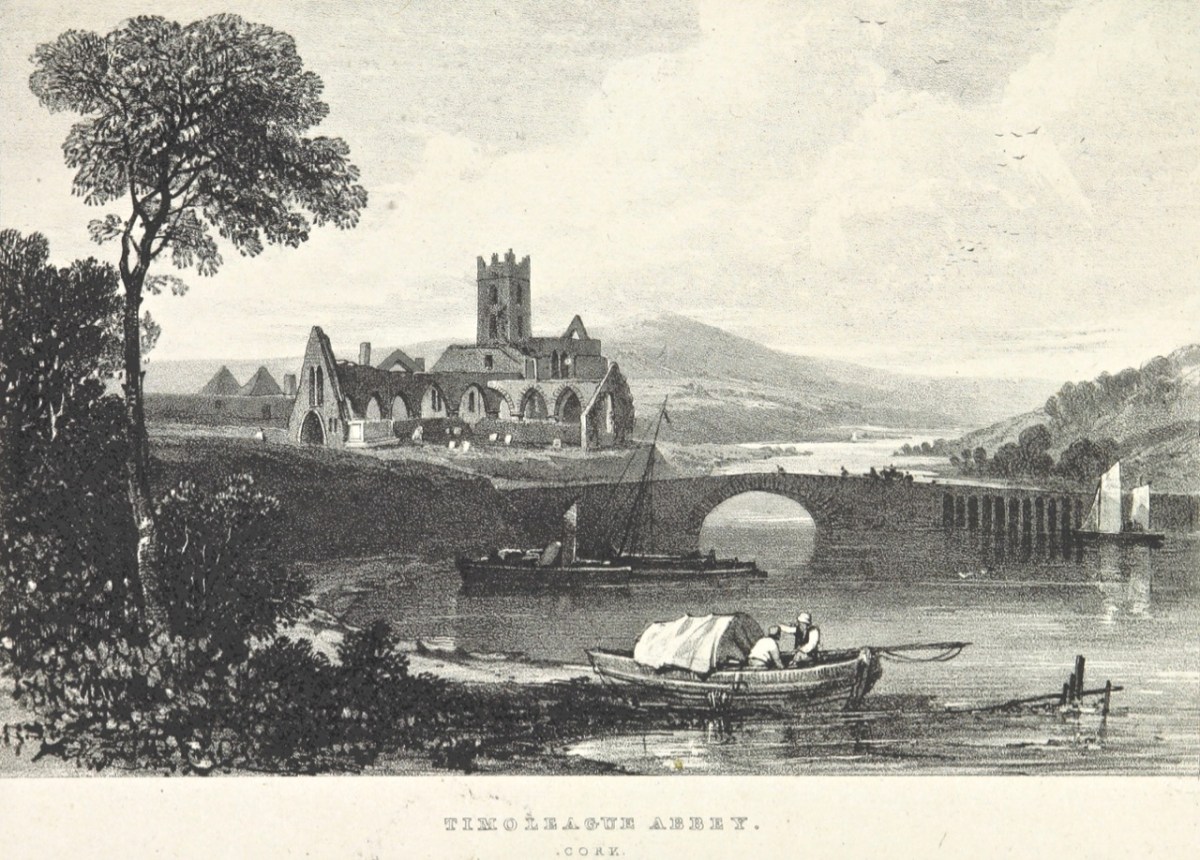
This view of the ruined ‘abbey’, above, dates from 1830. It is located on the site of an early Christian monastic settlement founded by Saint Molaga, from whom the town of Timoleague derives its name. A story that I heard for the first time yesterday was told by local historian Donal Whooley: the Saint was trying to found his community back in the sixth century, but everything that he and his followers built fell down the following day. According to legend, it was originally to be built a mile west of Timoleague, but all work done on that site by day would fall down by morning. Interpreting this as God’s wish that the church should be built elsewhere, Molaga fixed a blessed candle on a sheaf of corn, and floated it down the Argideen river, siting his settlement on the spot that it came ashore, on the big bend in the waterway where the Friary ruins can be found today. Here is a view from the great three-light window which looks out to the east over the river. Finola told us that, in its heyday, this window would have been filled with beautiful medieval glass, bringing light and colour into the substantial nave of the church.

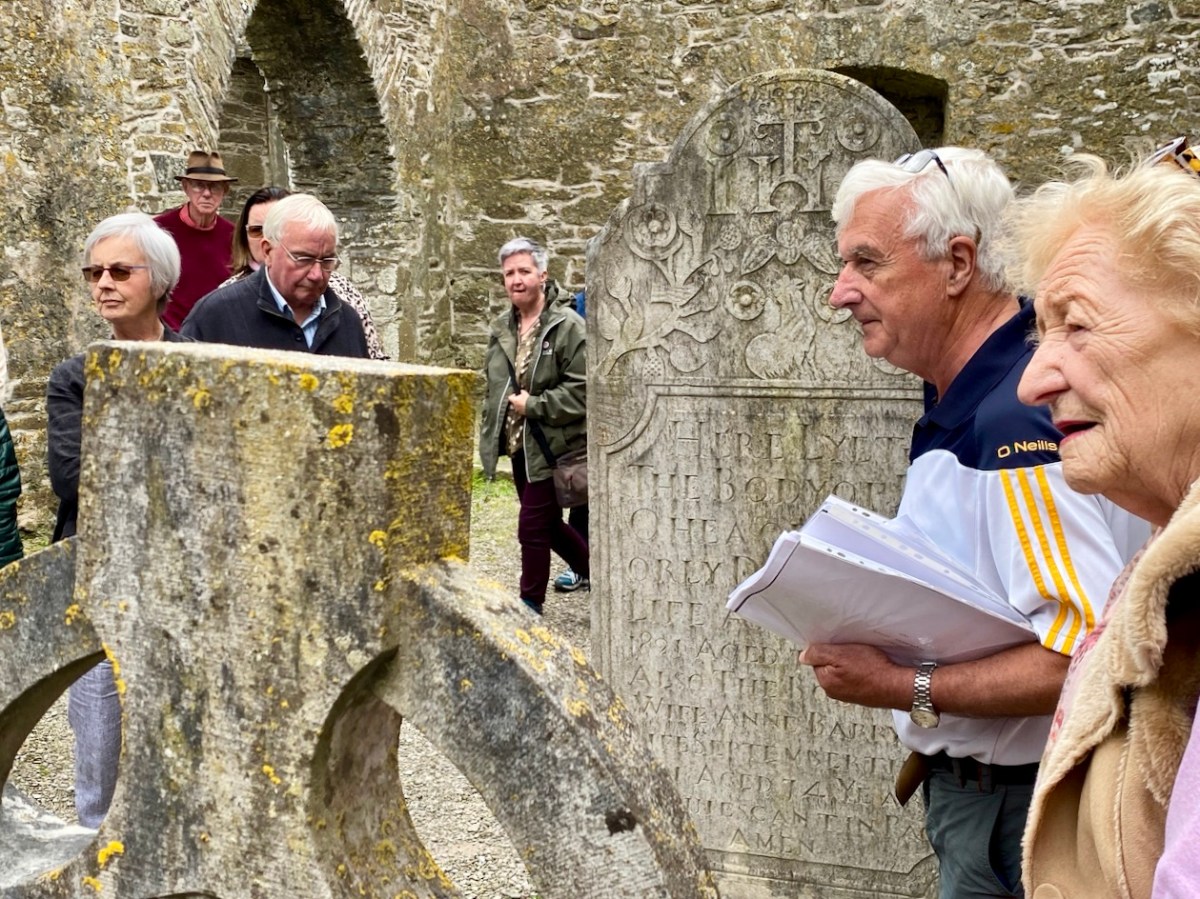
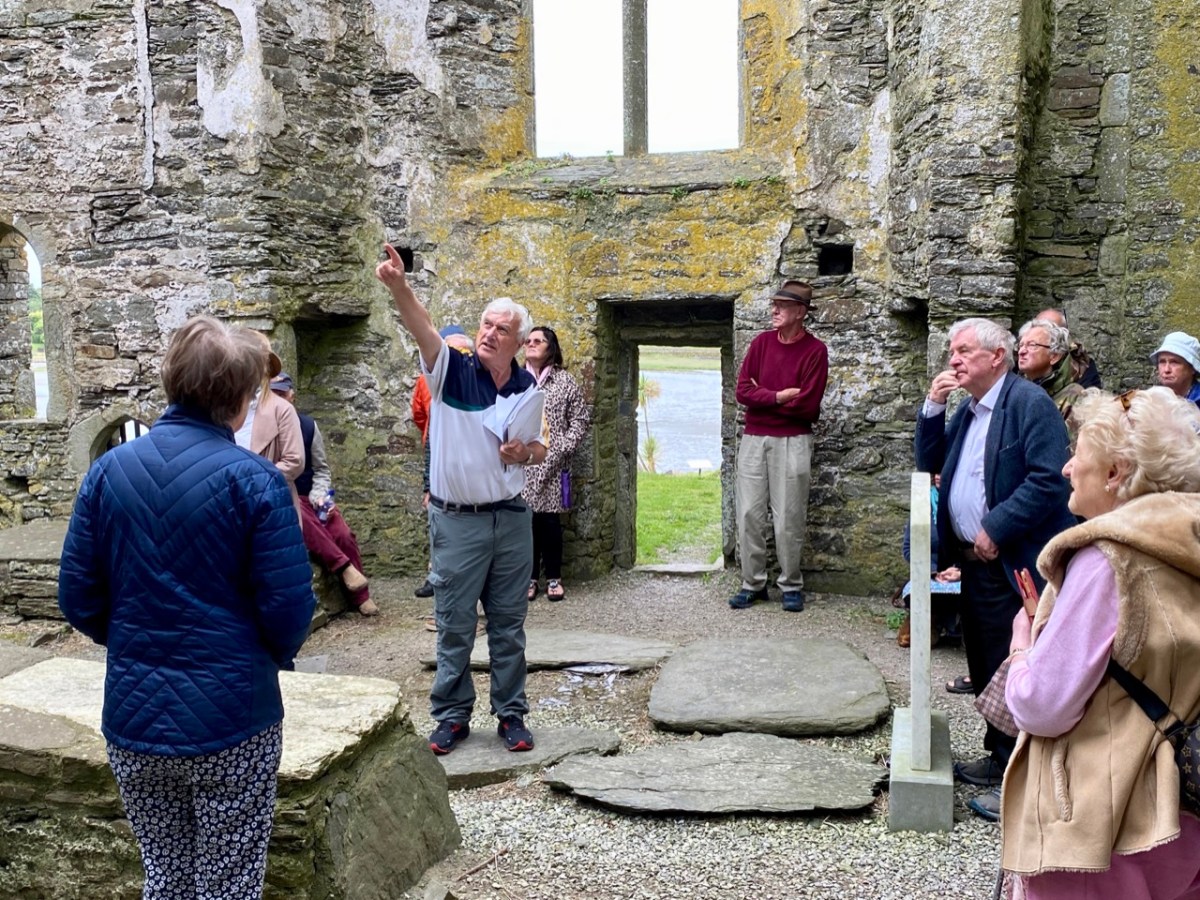
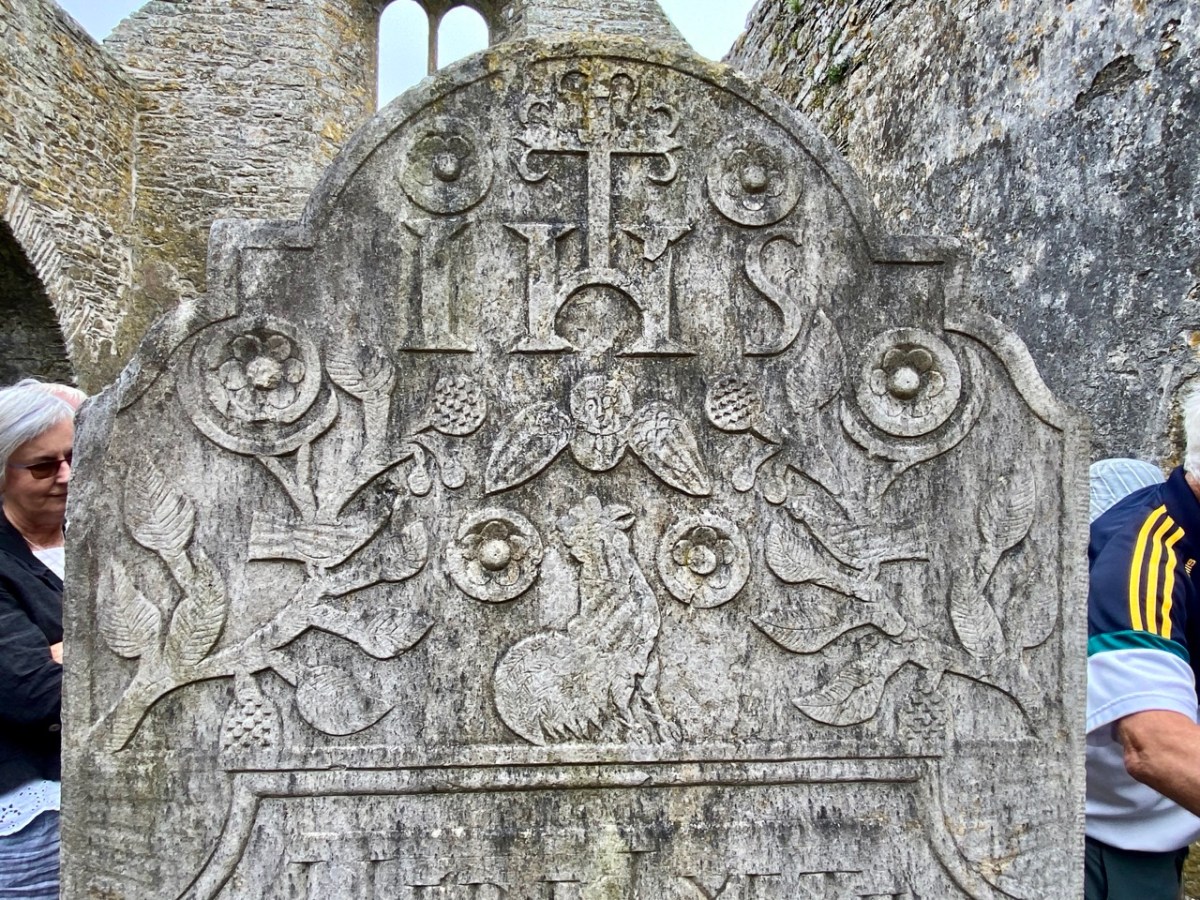
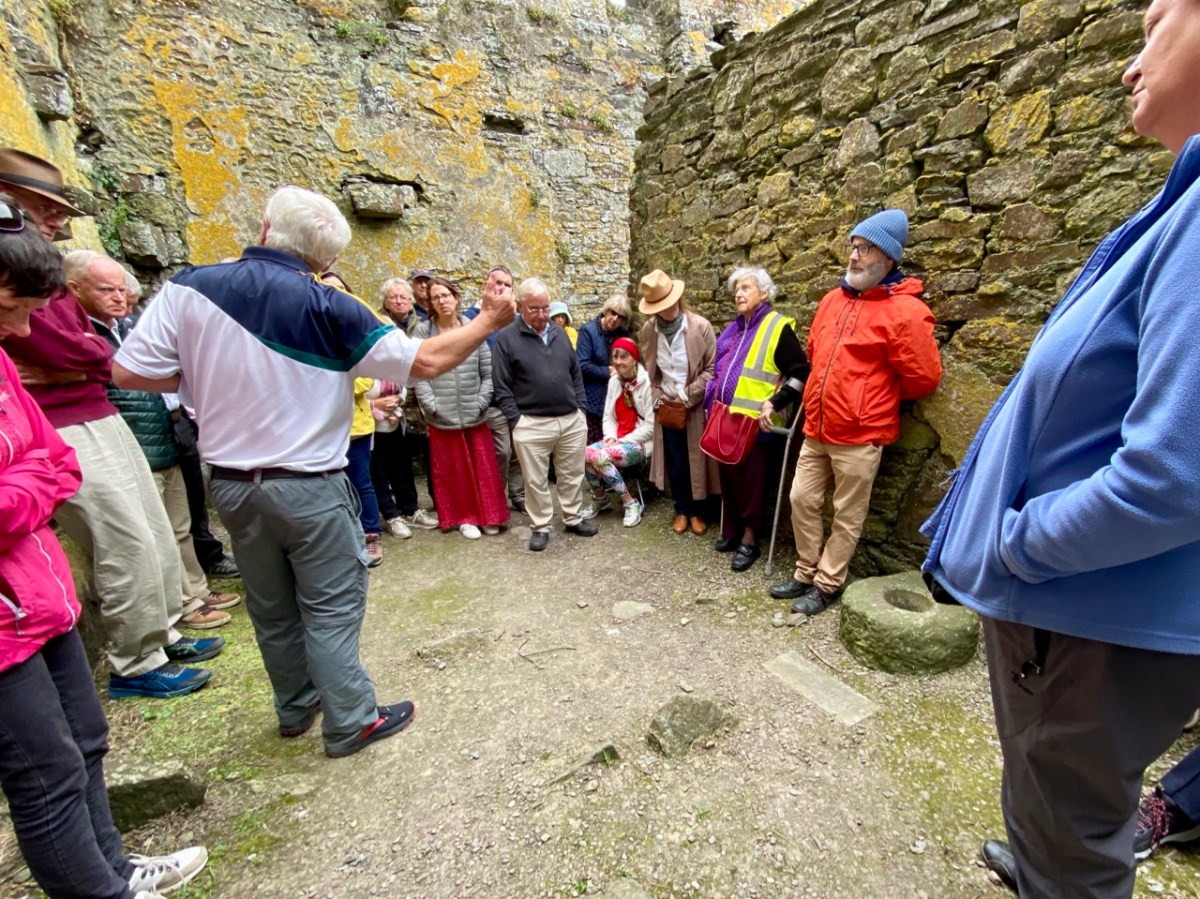
That’s Donal, above, leading our group of almost fifty keenly attentive people who shared an interest in the town and its history. To the right (in a blue jacket) is Father Patrick Hickey. He told us of the symbolism of the cockerel you can see on the large headstone in the nave (below), dating from 1821. Evidently some of the disciples were standing together while Christ was being crucified: nearby stood a pot in which a rooster was being boiled for supper. Judas reportedly said: do you think there’s any chance that our Lord will rise again? Mrs Judas retorted: there’s about as much chance of that as there is of that rooster jumping out of the pot and crowing! At which point – of course – the cockerel did just that!

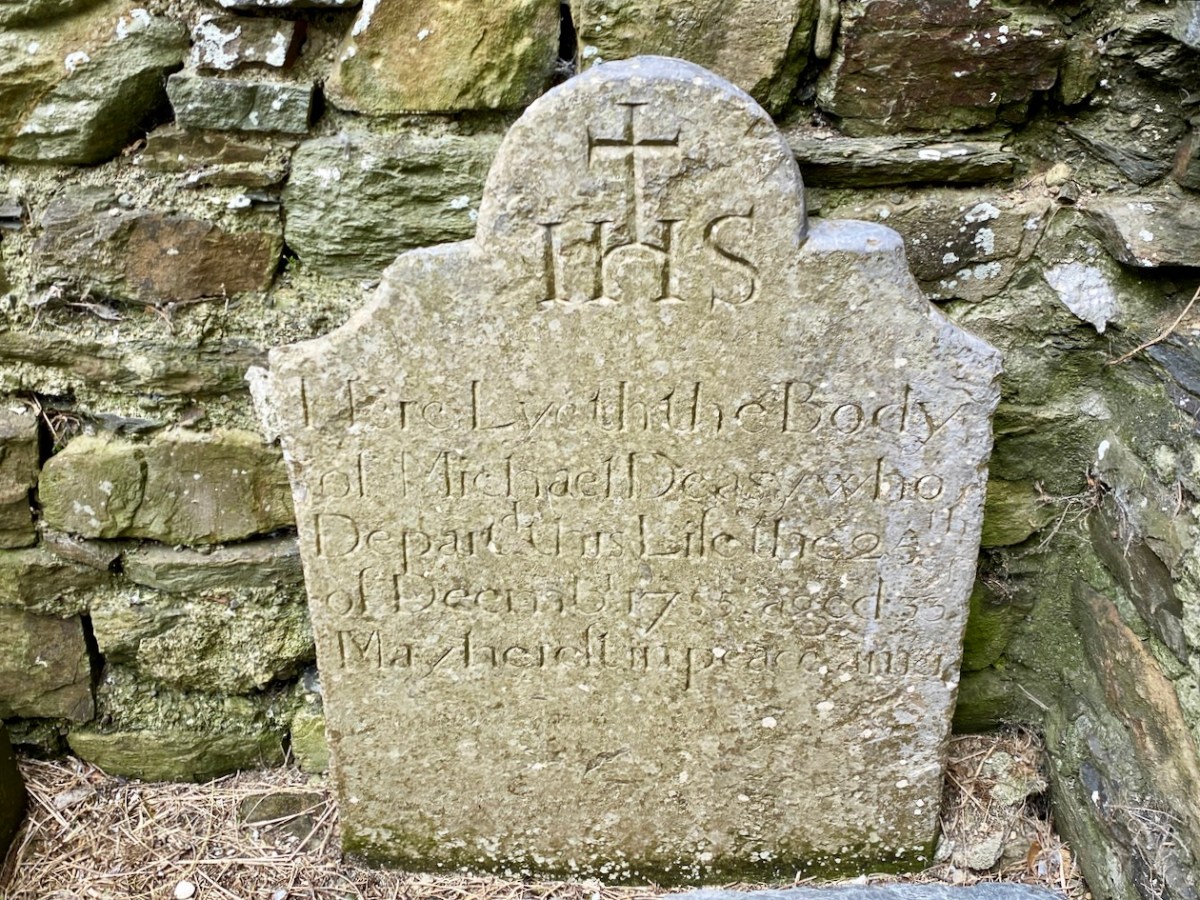
It was the custom to place burials in ruined church buildings. Here’s another fine headstone in Timoleague Abbey, to Michael Deasy, ” . . . who departed this life on the 23 December 1755, aged 33. May he rest in peace. Amen . . . “

Lively discussions ensued on the efficacy of wart wells, and Donal suggested that this repurposed bullaun stone, above could be the oldest human element on the whole site!

Here’s an aerial overview of the geography of Timoleague. The Friary ruin is only one of many historic sites of interest which caught our interest yesterday. It was Finola’s task to introduce us (or those of us who had never seen it) to the little Church of the Ascension.

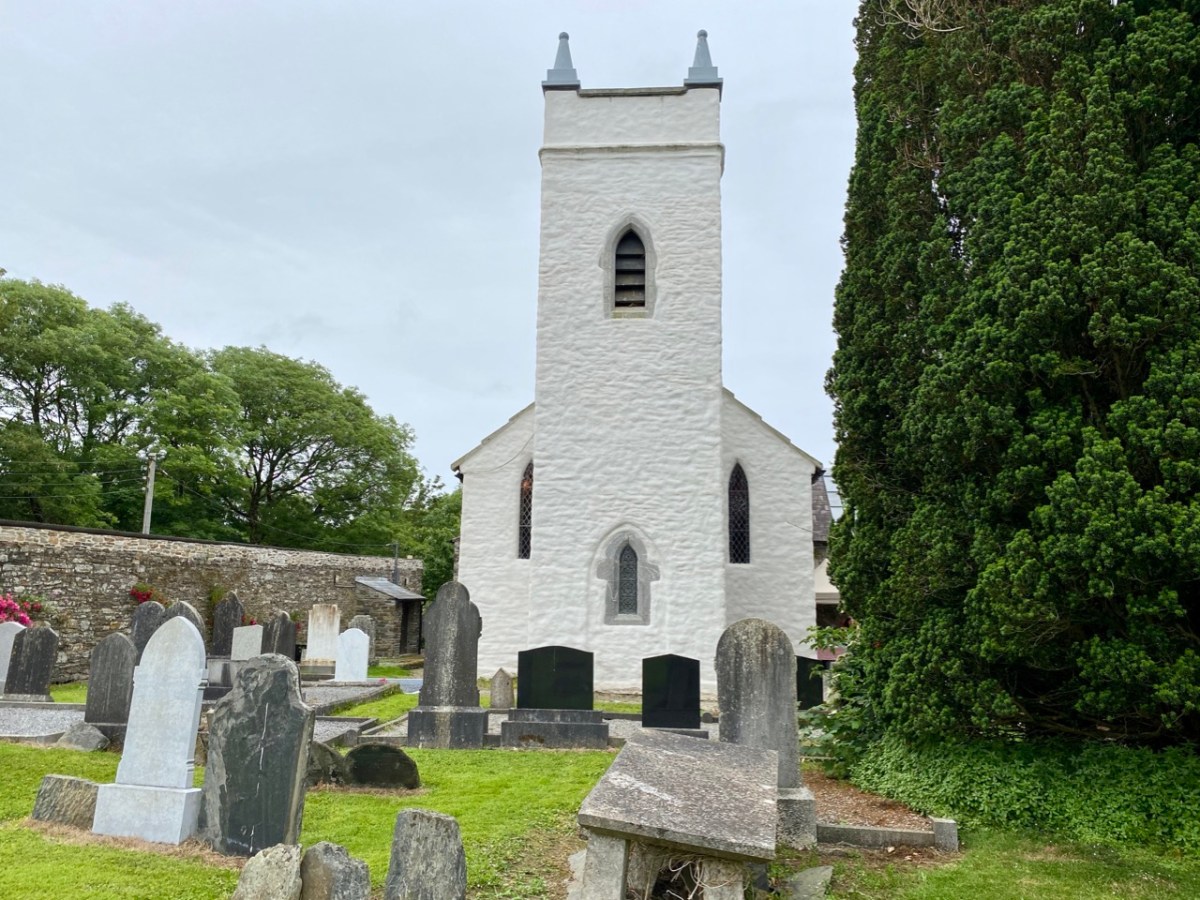
This building is currently undergoing major improvement works: the lime rendered tower has created a striking landmark in the town. This work has become necessary by water penetration through the stonework leading to deterioration of the fabric. The conservation project is led by a hard-working Parish committee who also served us delicious tea and cakes since the tour was a fund-raiser for their efforts.

You can see Finola addressing us in this little Protestant church in the header picture. Above is one example of the fine early glass here, this one by Clayton and Bell. For a fuller description of this church and its many stories, read our post here.

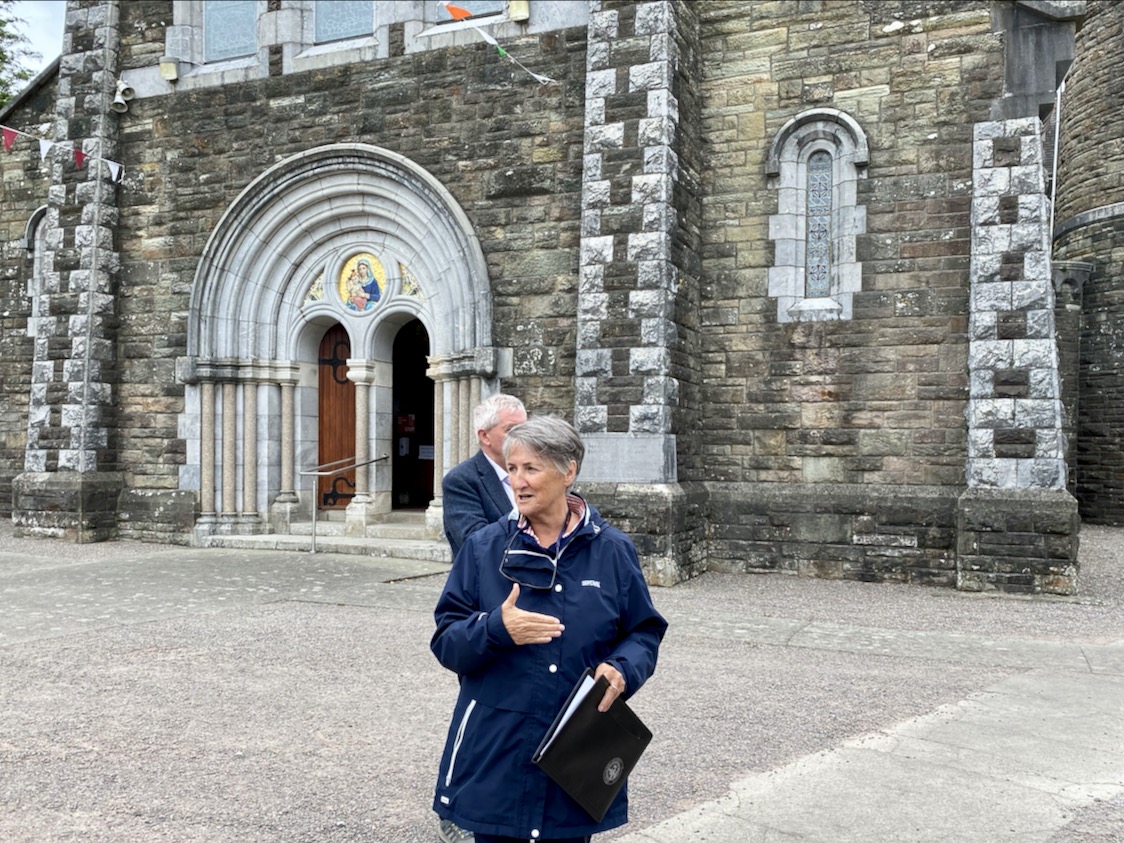
The early OS map extracts, above, give further context to the town’s history. The top map dates from the 1830s and comparison of the plan forms of the Church and Chapel buildings with those in the lower map, which dates from c1900, and then the present day aerial view (higher up the page) shows the degree of change which has taken place. We finished our town tour in the Church of the Nativity of the Blessed Virgin Mary. Here’s Finola standing outside it, below, prior to giving us an introduction to the history of the building, and its windows.

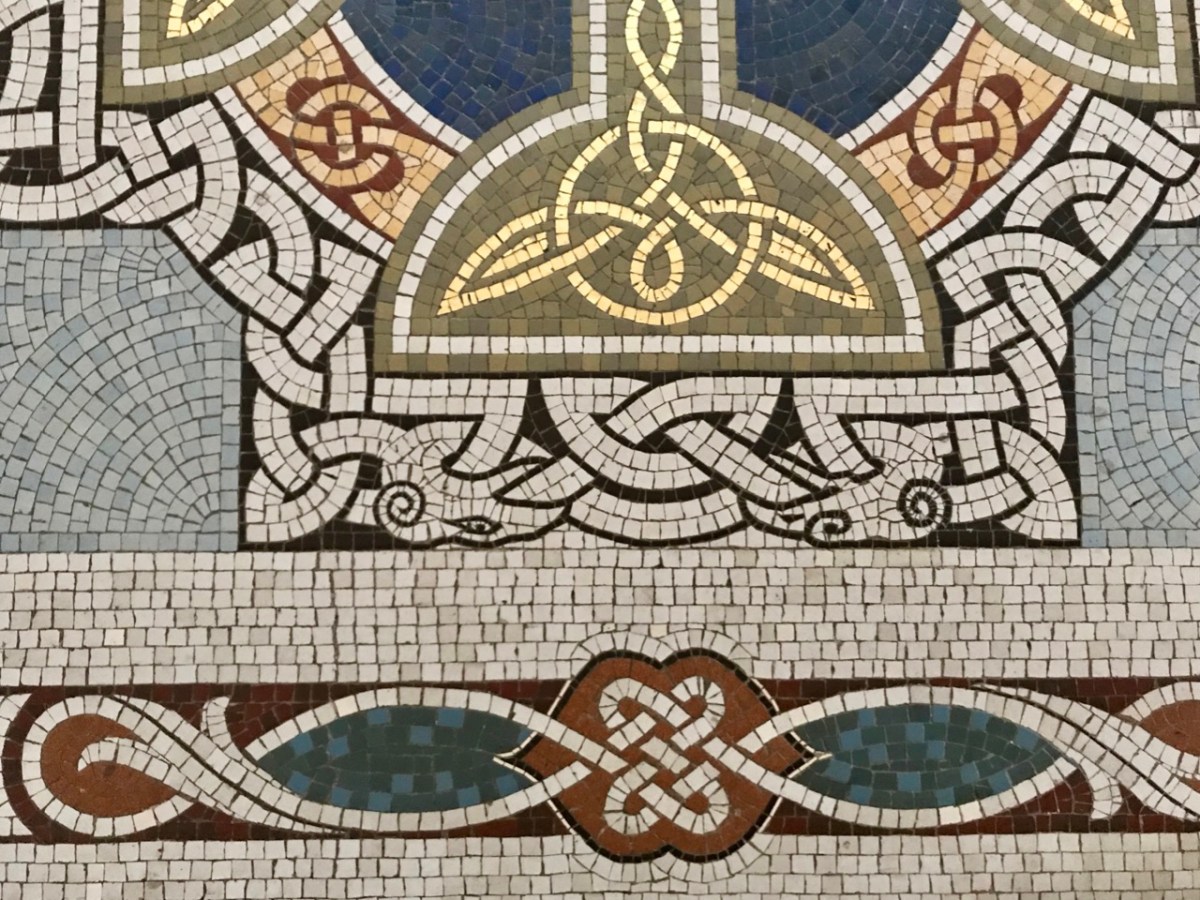
The fine Harry Clarke Studio window (one panel of which is shown in the upper picture) is a ‘must-see’, as is the mosaic work from the same church. The building work for this Catholic church, replacing an earlier chapel, dates from 1912.

Father Patrick Hickey nicely rounded off our day of Timoleague history by showing us the replica of the ‘Timoleague Chalice’ (above). The replica is kept in this Catholic church. According to Fr Hickey, ‘back in the penal days’ three monks were found floating in an open boat just off the island of Cape Clear. They had with them a box, or trunk. They were brought ashore but two of them died. The other asked that the box be kept on the island – but unopened – until he could return to retrieve it. He never returned, and in later years another visiting Priest said it could be opened. Inside was a gold chalice – blackened with age – and some liturgical vestments. The vestments fell to dust immediately, but the chalice was sent away for inspection, and was confirmed as coming from the Friary at Timoleague, where the replica is now kept.

Here is another ‘souvenir’ of Timoleague – it’s an extract from a poem written in Irish: The Mourner’s Soliloquy in the Ruined Abbey of Timoleague. The poet, Seághan Ó Coileáin, ” . . . was a Gaelic-language poet born in County Cork, in a time of faded Irish glory. He lived as a village schoolmaster, with a large family and no patron . . . “

Abroad one night in loneliness I stroll’d,
Along the wave-worn beach my footpath lay;
Struggling the while with sorrows yet untold,
Yielding to cares that wore my strength away:
On as I mov’d, my wayward musings ran
O’er the strange turns that mark the fleeting life of man.

The little stars shone sweetly in the sky;
Not one faint murmur rose from sea or shore;
The wind with silent wing went slowly by,
As tho’ some secret on its path it bore:
All, all was calm, — tree, flower, and shrub stood still,
And the soft moonlight slept on valley and on hill.

In Search of Wells and Railway Lines

We are often invited to join our friends Amanda and Peter Clarke on their journeys of exploration into the wild places of West Cork and Kerry. We even stray over into Limerick on occasion! And it’s usually all to do with Holy Wells. Amanda has been writing about them for years, and you can find her accounts of them in Holy Wells of Cork & Kerry, here.

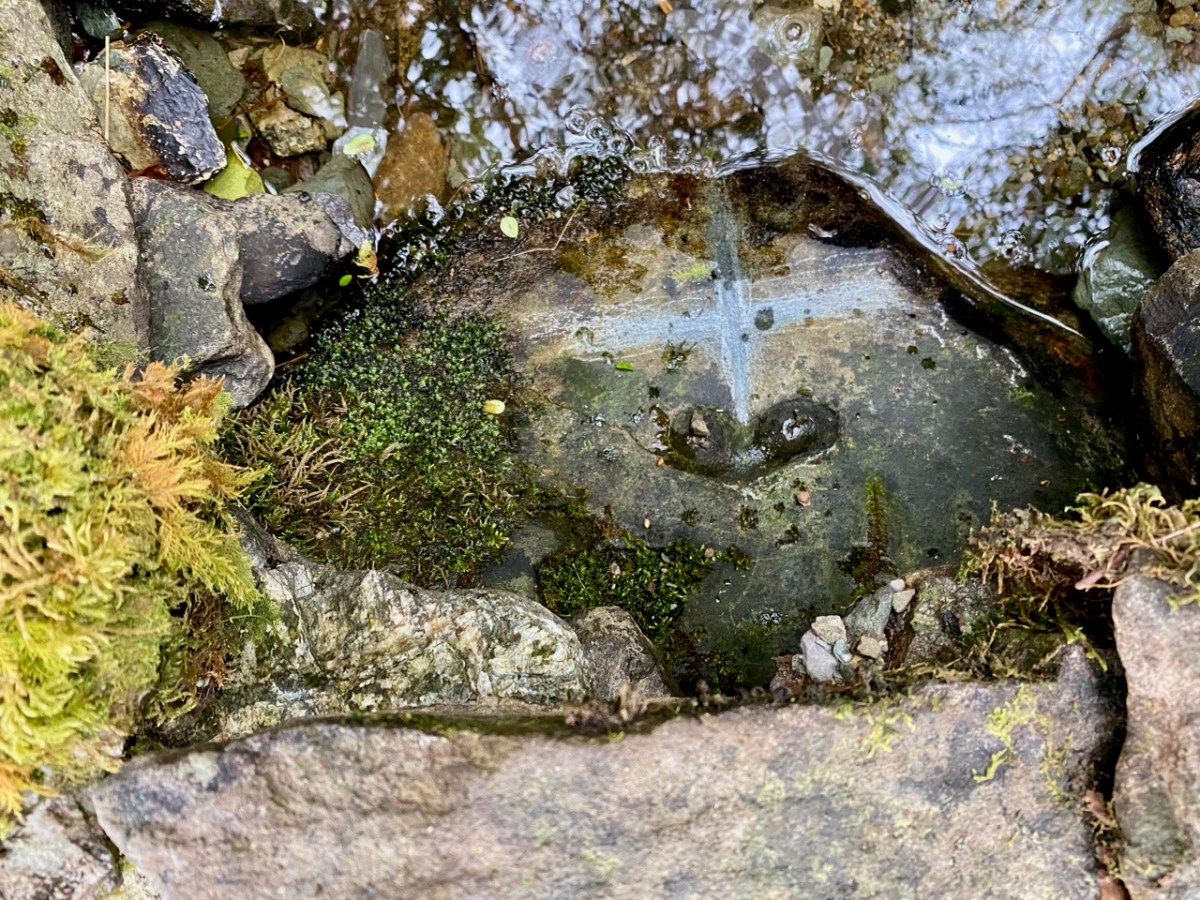
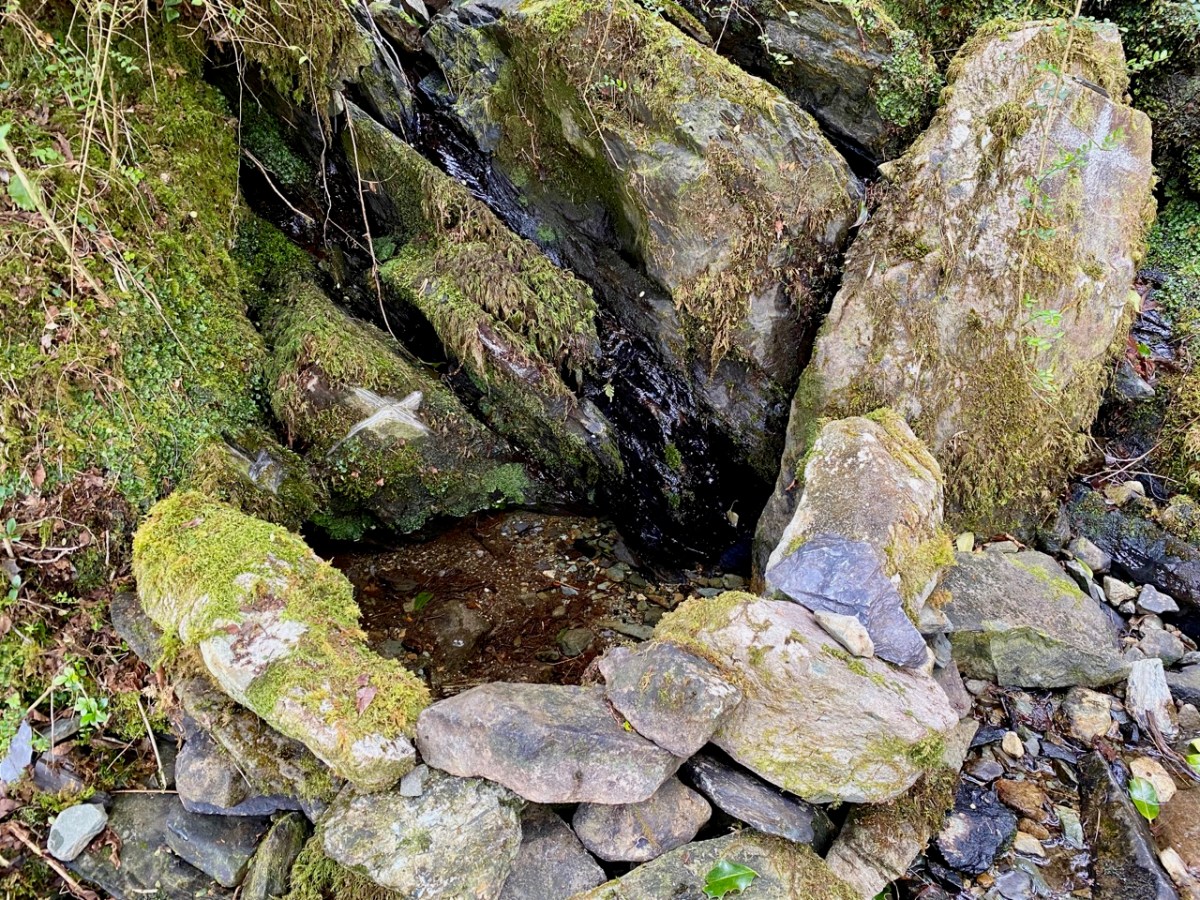
Recently we were at Loo Bridge, near Kilgarvan, Co Kerry. There’s a well there – Tobar na Naomh – All Saint’s Well, and there’s a lively account of it in the Dúchas Schools Folklore Collection. Evidently a ‘band of Saints’ travelling over the mountain to Gougane Barra stopped at this well for refreshment. One of them (St Finnbarr) left his spectacles behind and didn’t realise it until he was a long way up the steep path. Fortunately, there were so many of his companions that he was able to pass a message back down to those who were still starting off from the well and the spectacles were retrieved! But – because they were holy spectacles, they left their imprint on the rock at the well – forever. There it is in the picture above.

There are several crosses etched into the stones around this well by visitors. It’s wonderful to think of the continuity of those pilgrims seeking out the well and keeping its veneration alive – probably through countless generations.

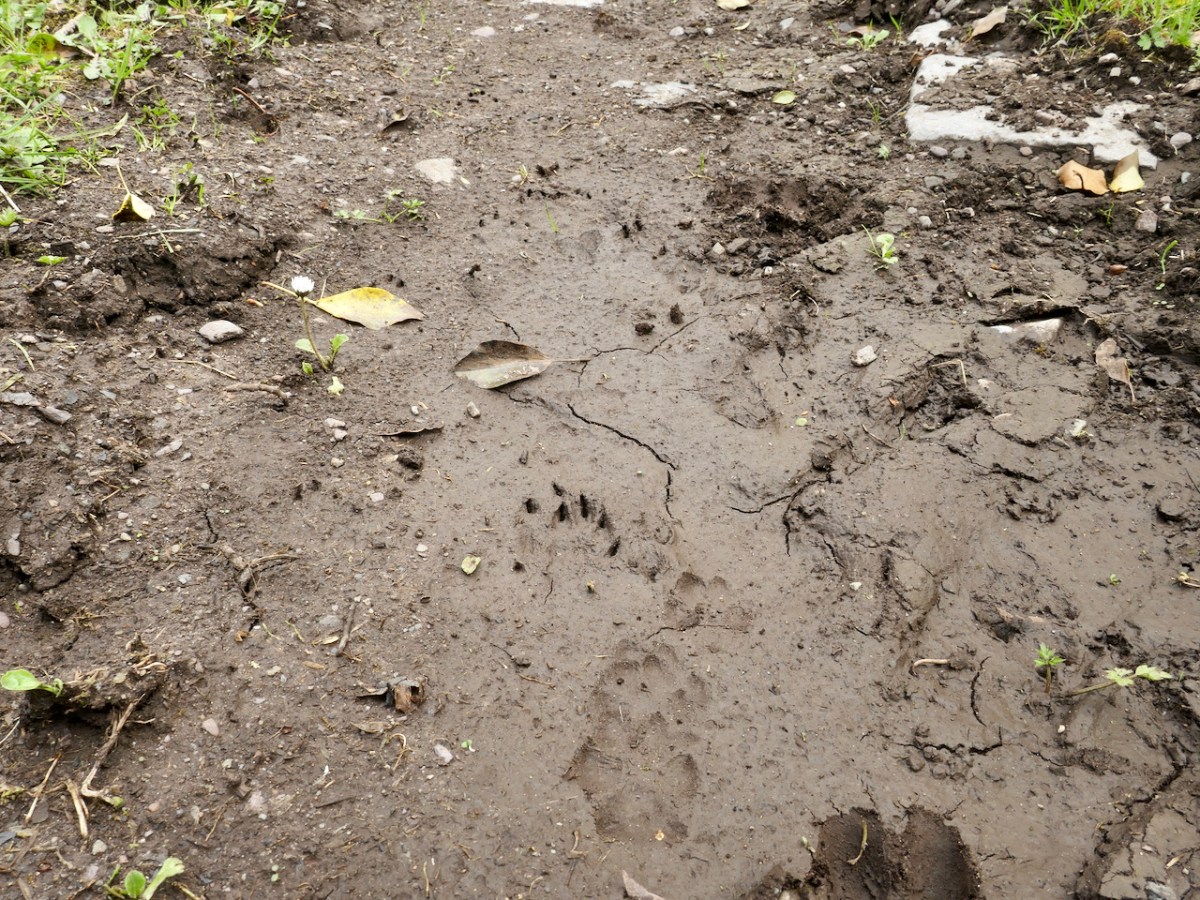
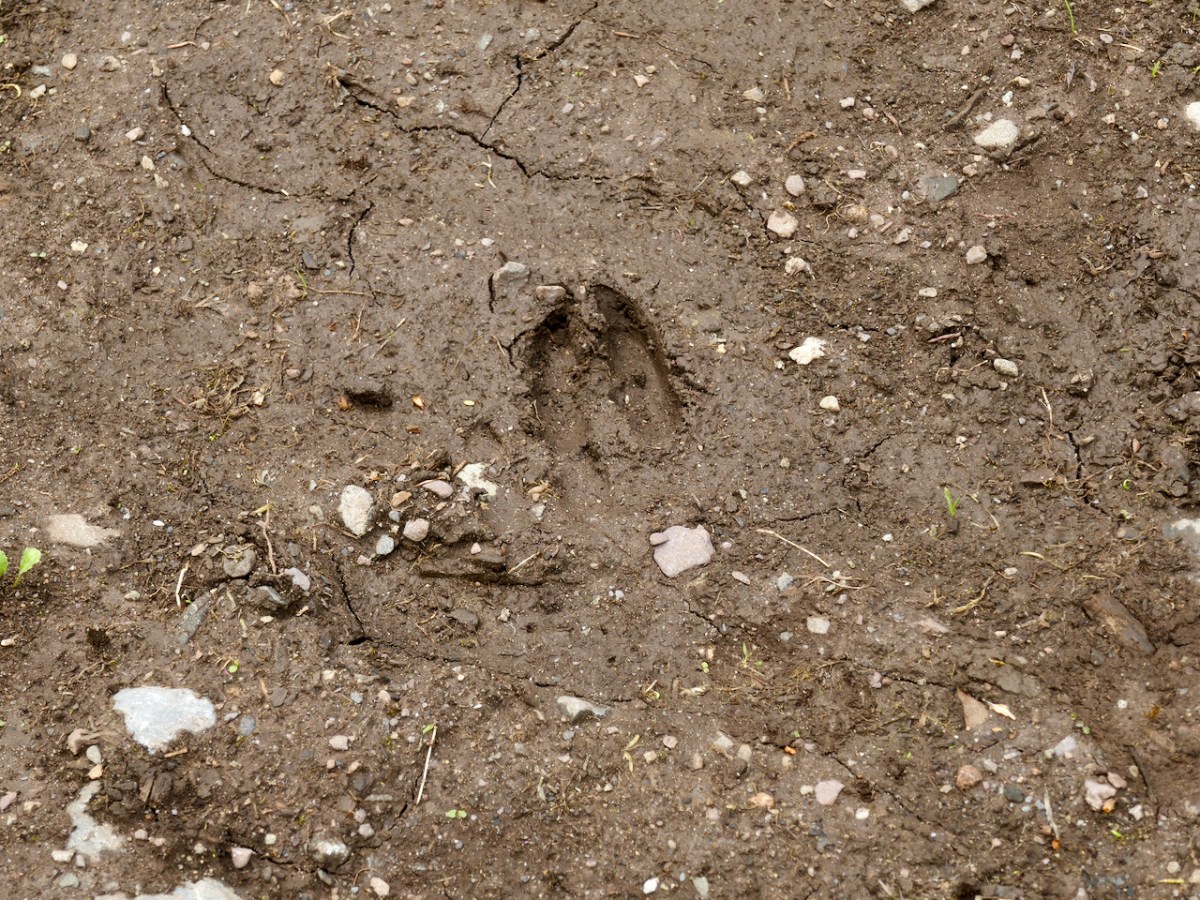
Another well on our agenda involved us walking over a long, muddy trackway. We could see the prints of the feet of other travellers: the top pic looks like bear paws (although perhaps more likely to be badgers), whereas the cloven hoof above is either Satan or a deer. We met none of these on the path that led, eventually, towards the Wells of St Peter and St Paul.

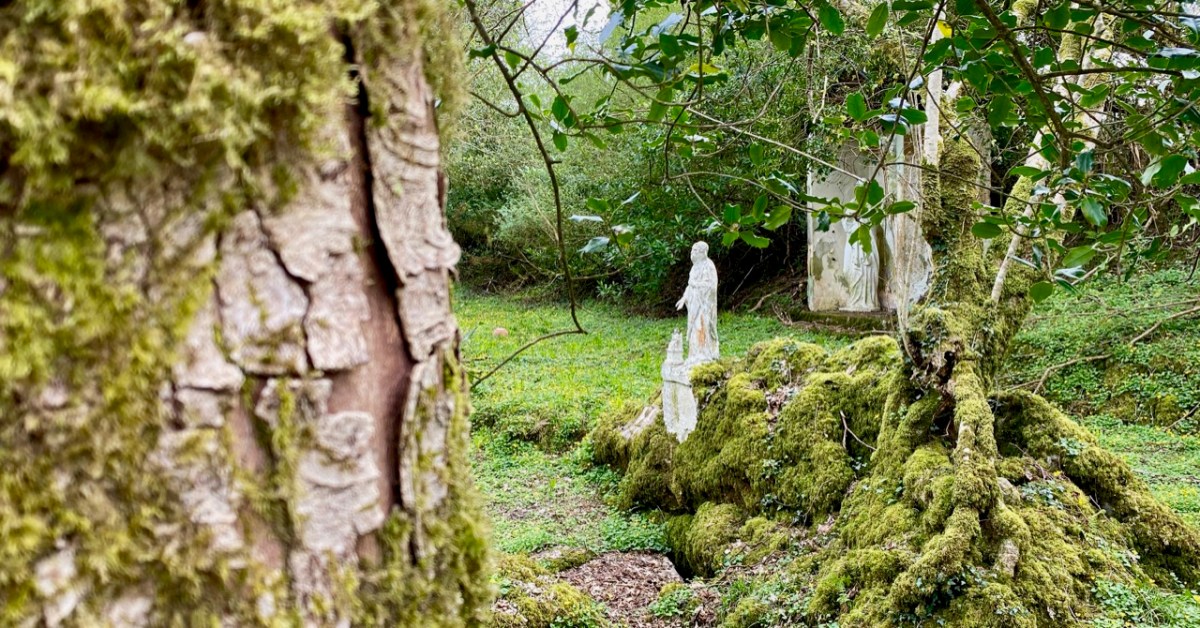
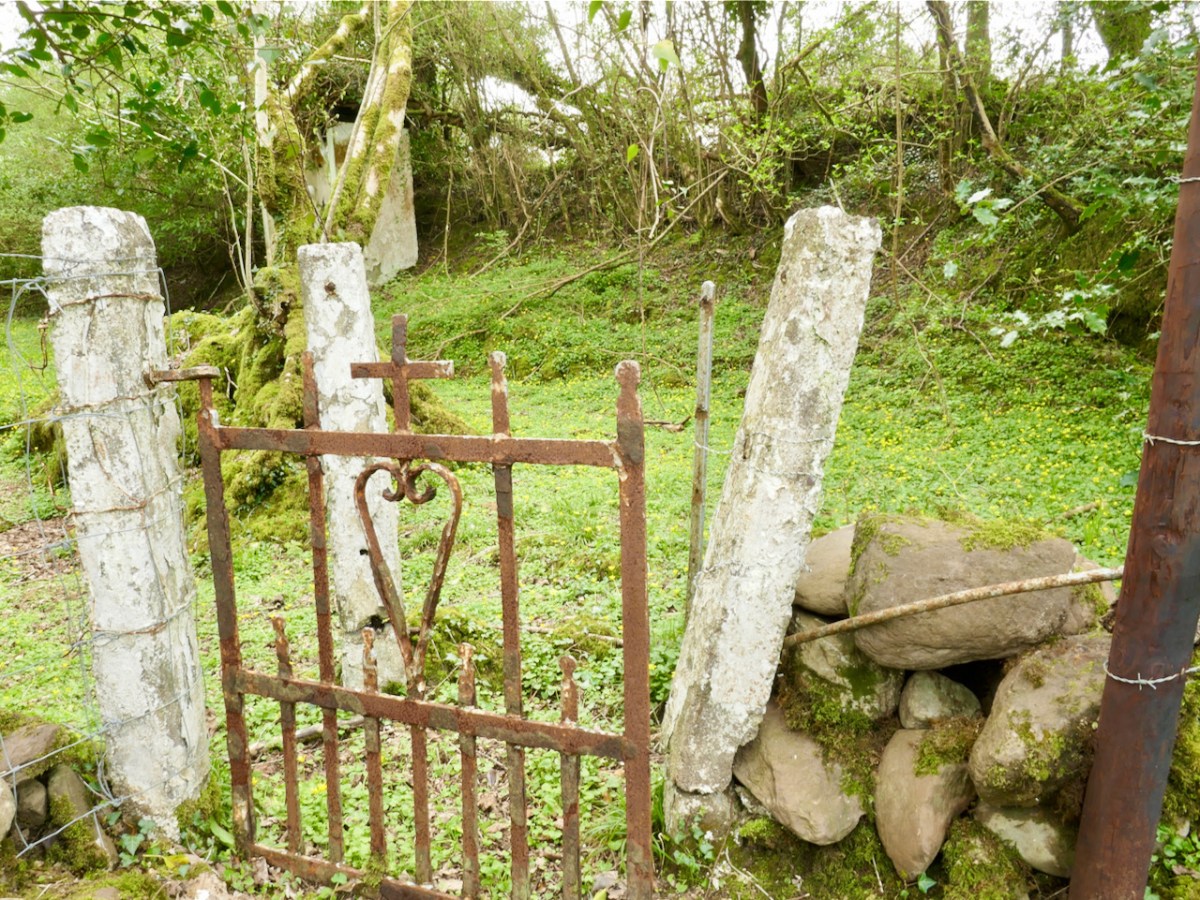
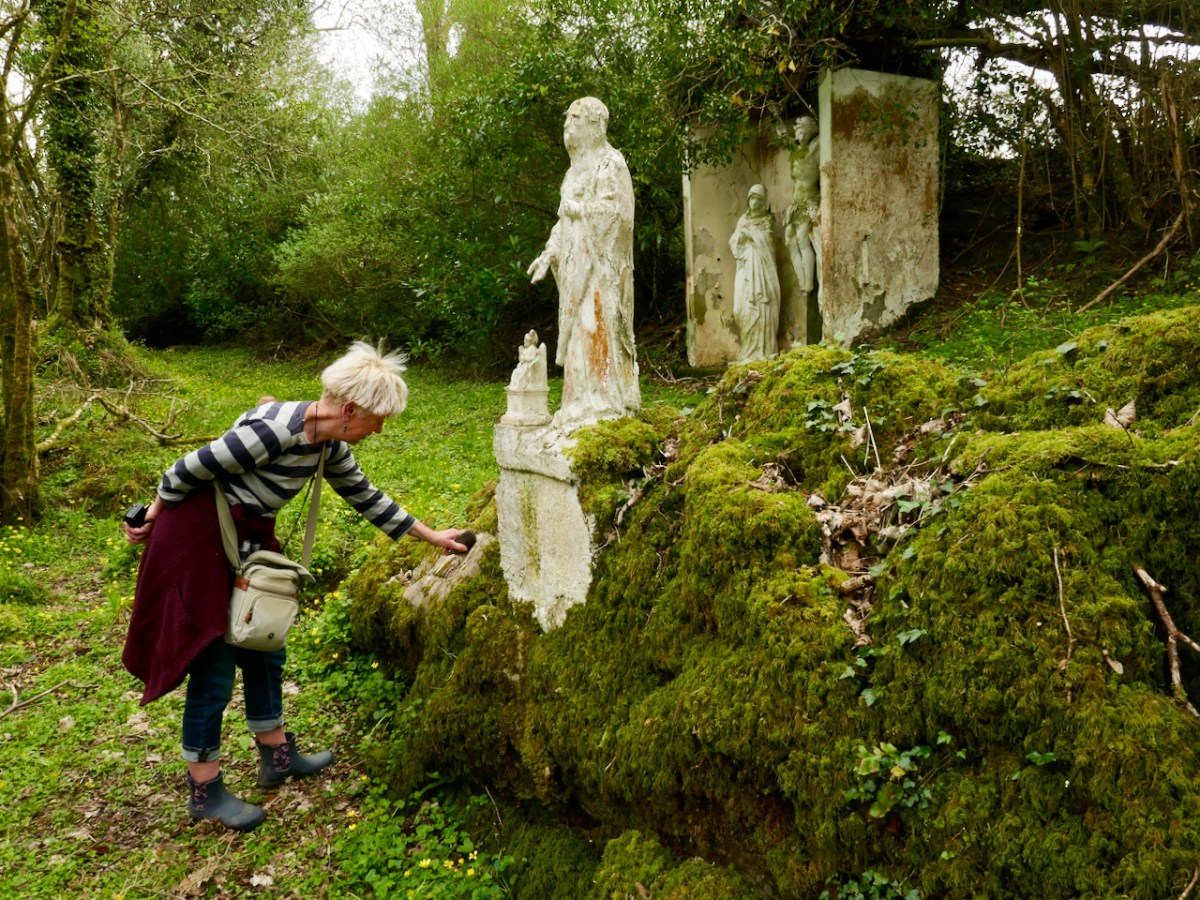
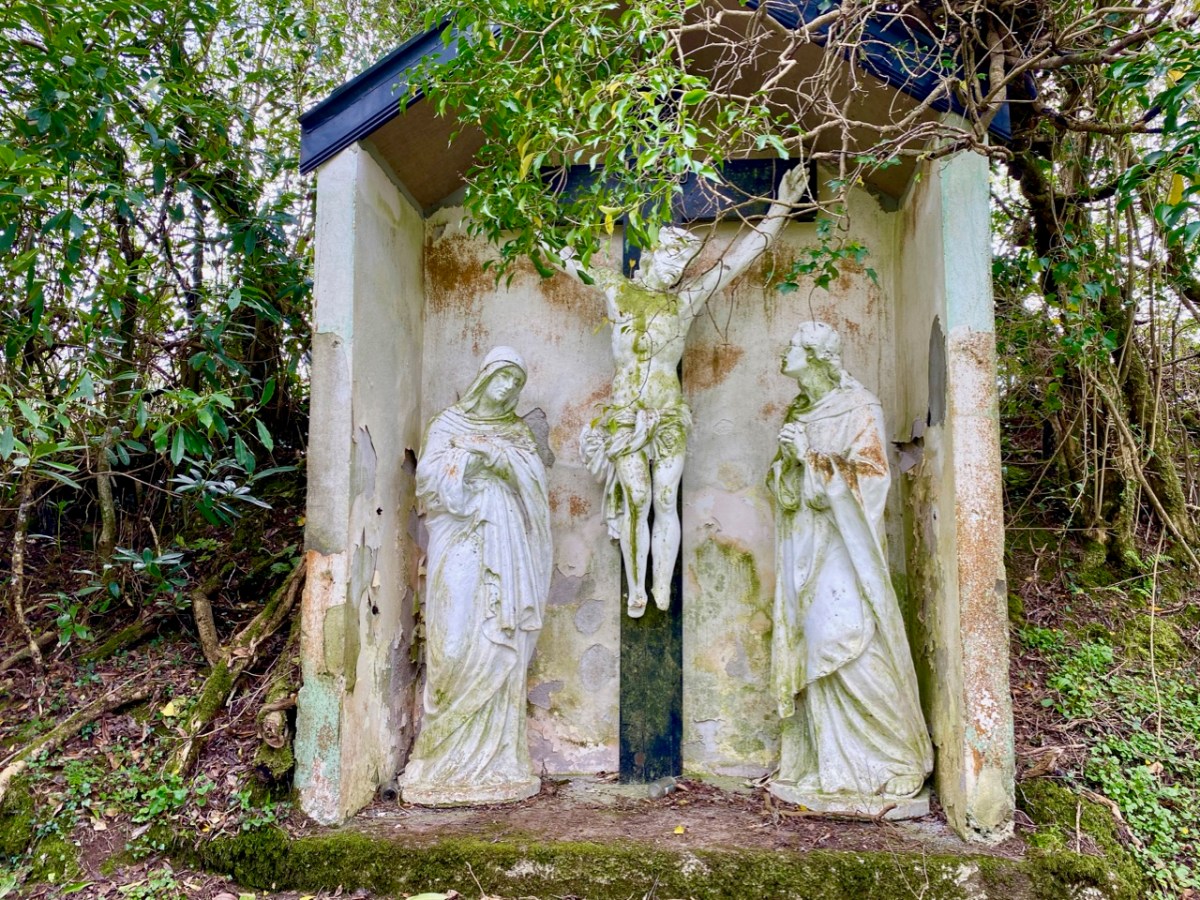
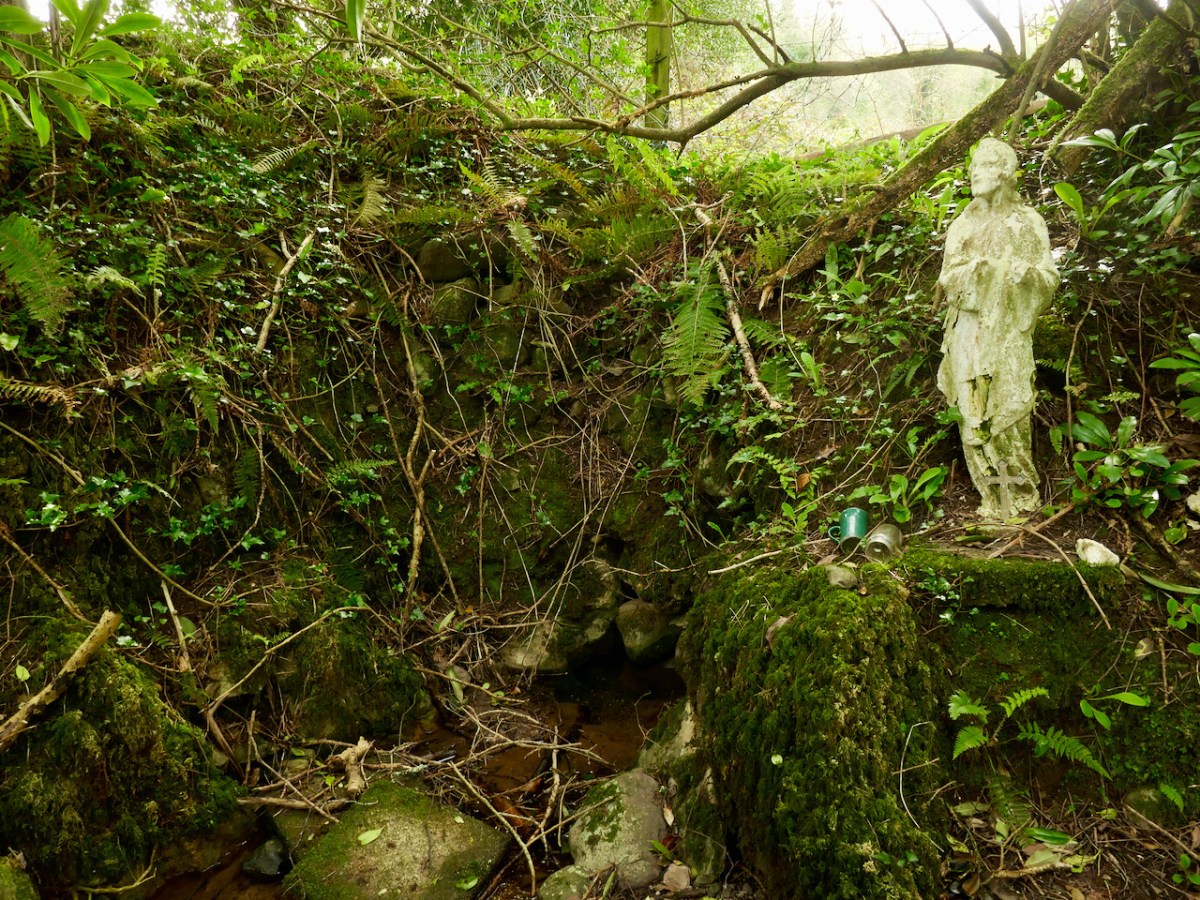
St Peter’s well is clearly defined (above, with Amanda looking on). Beyond it is a weather-worn shrine with a Calvary depiction. It’s quite a surprise to find such a substantial life-sized scene in a remote wood.

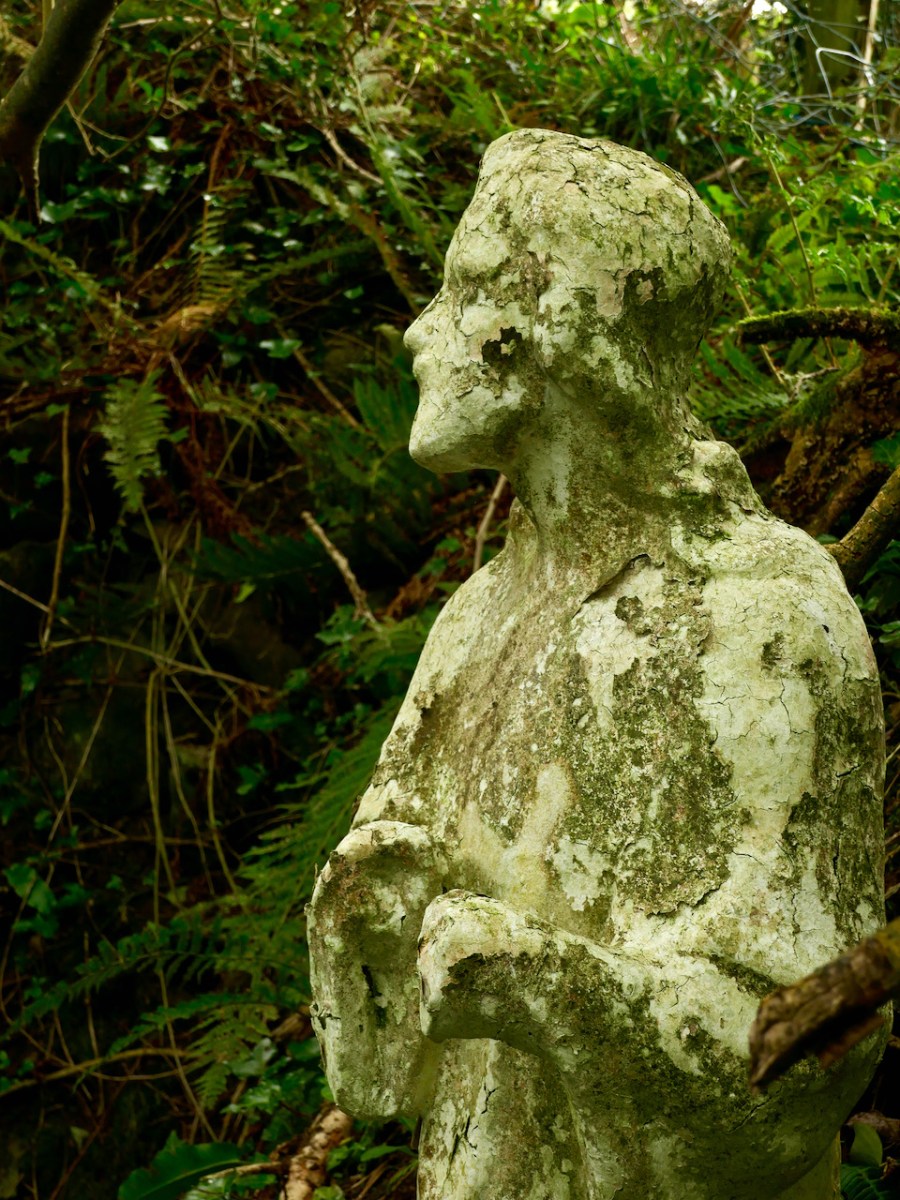
A little way to the east of St Peter is St Paul (above). He looks down on his own well. Note the modern mugs, implying that the well is still in use.

Both St Peter and St Paul share their feast day on 29th June. This is the day when these wells should be visited.

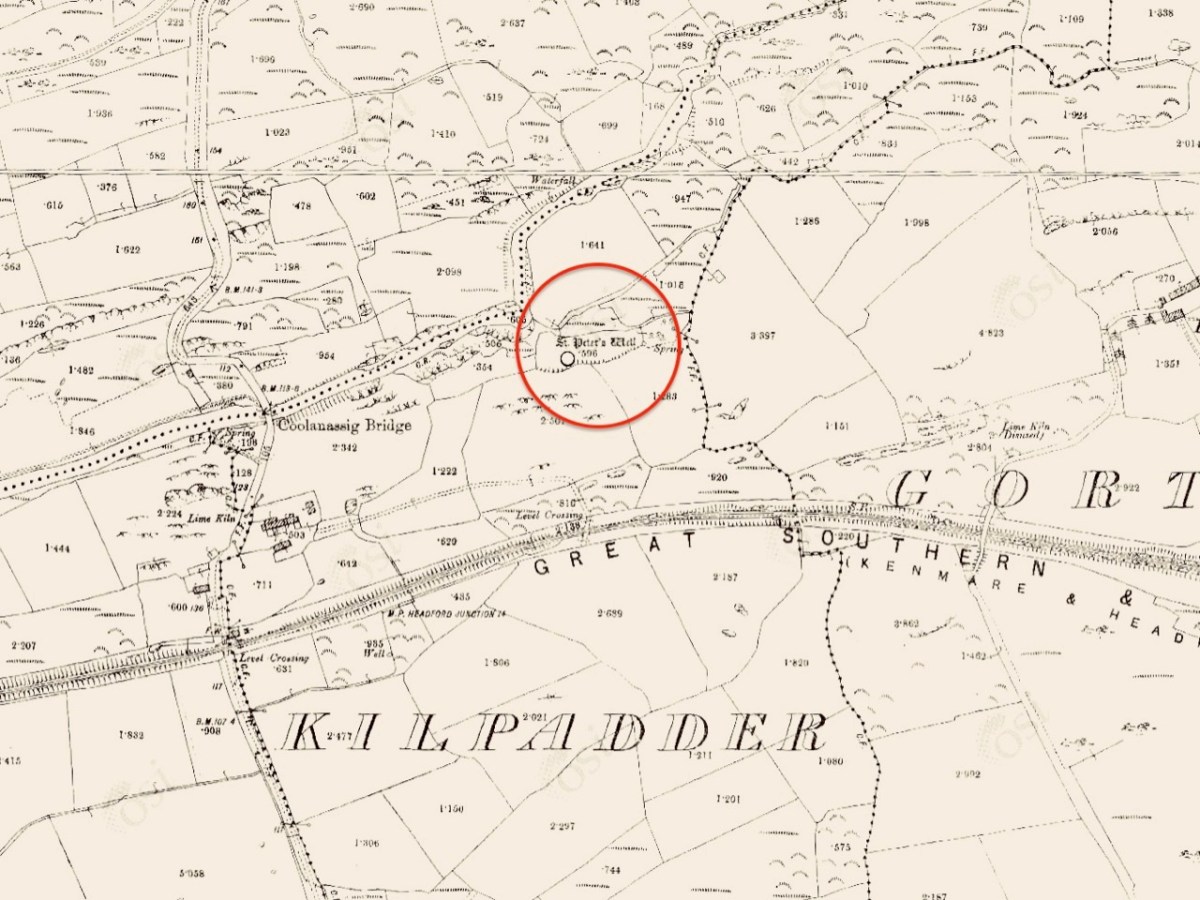
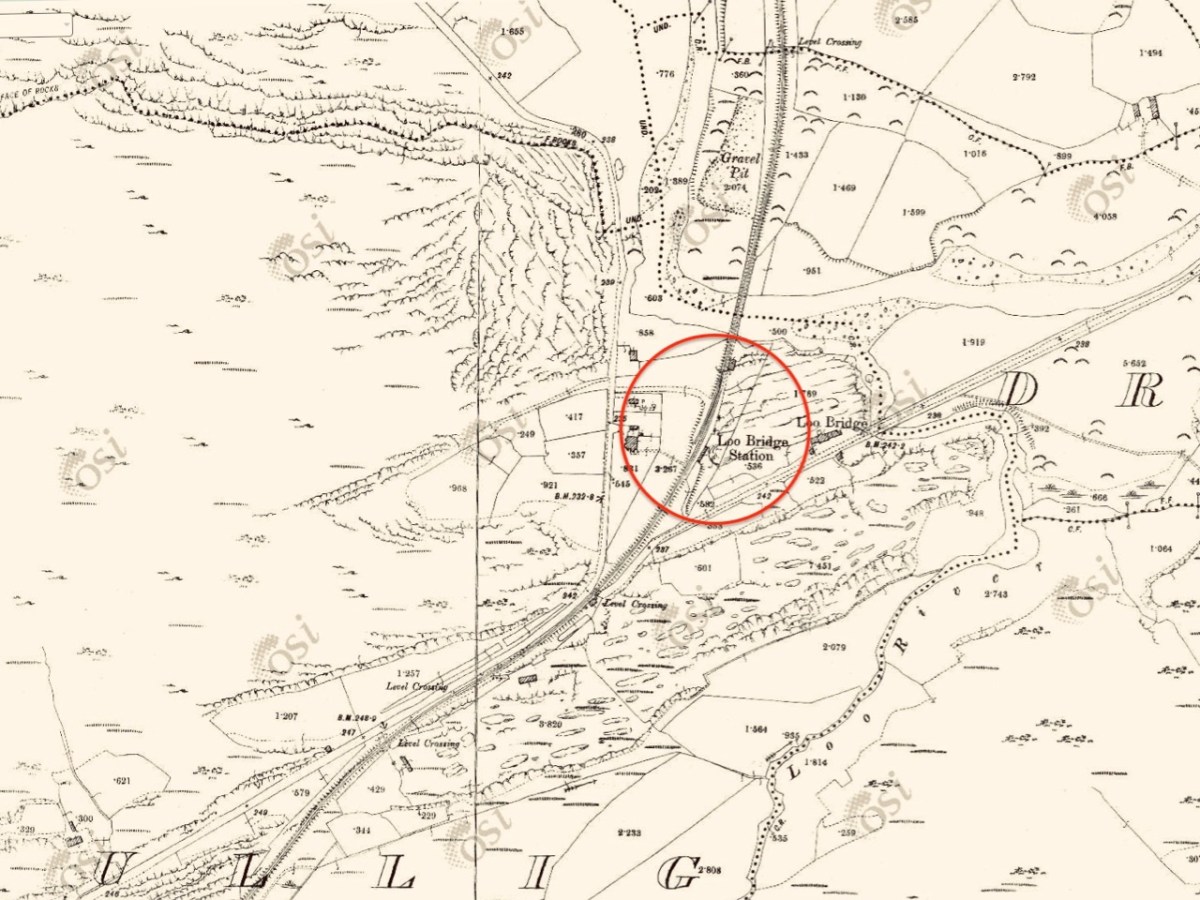
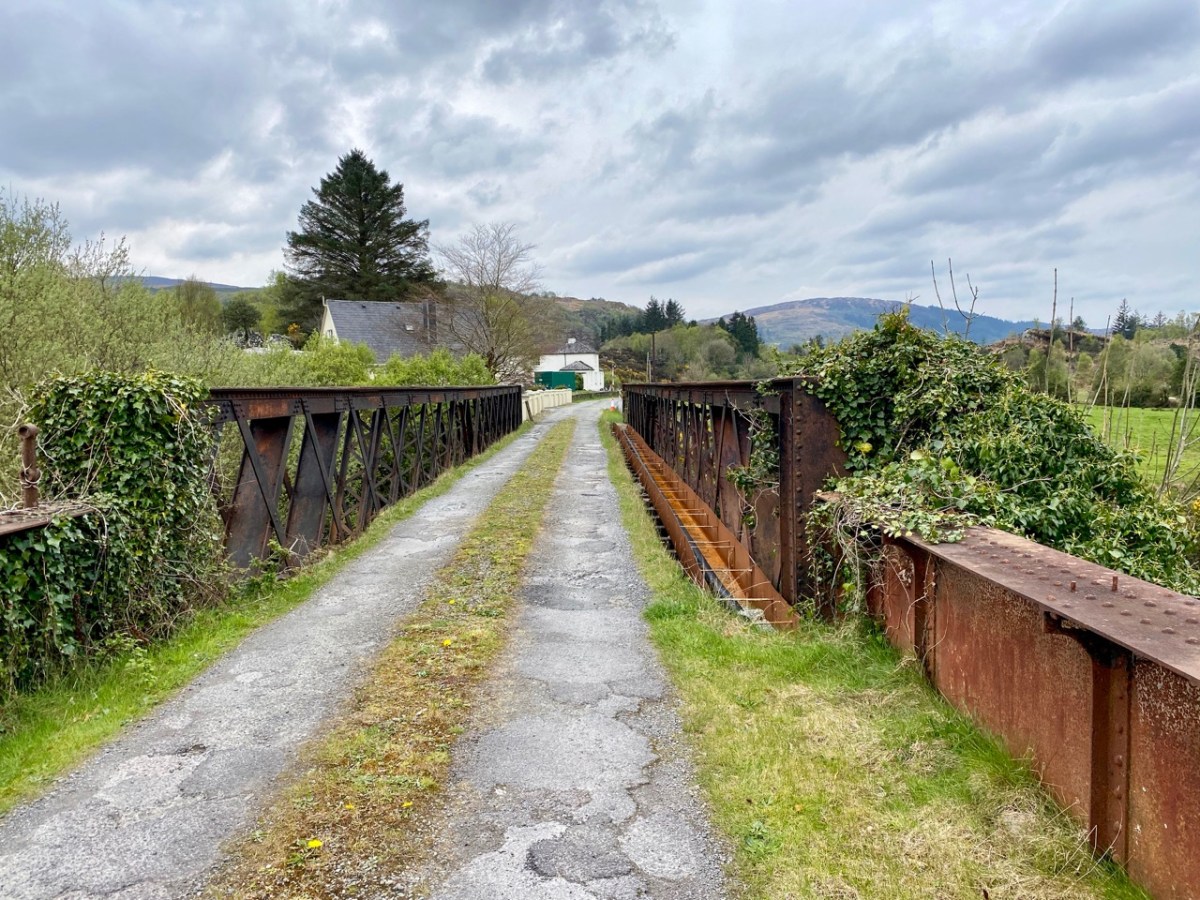
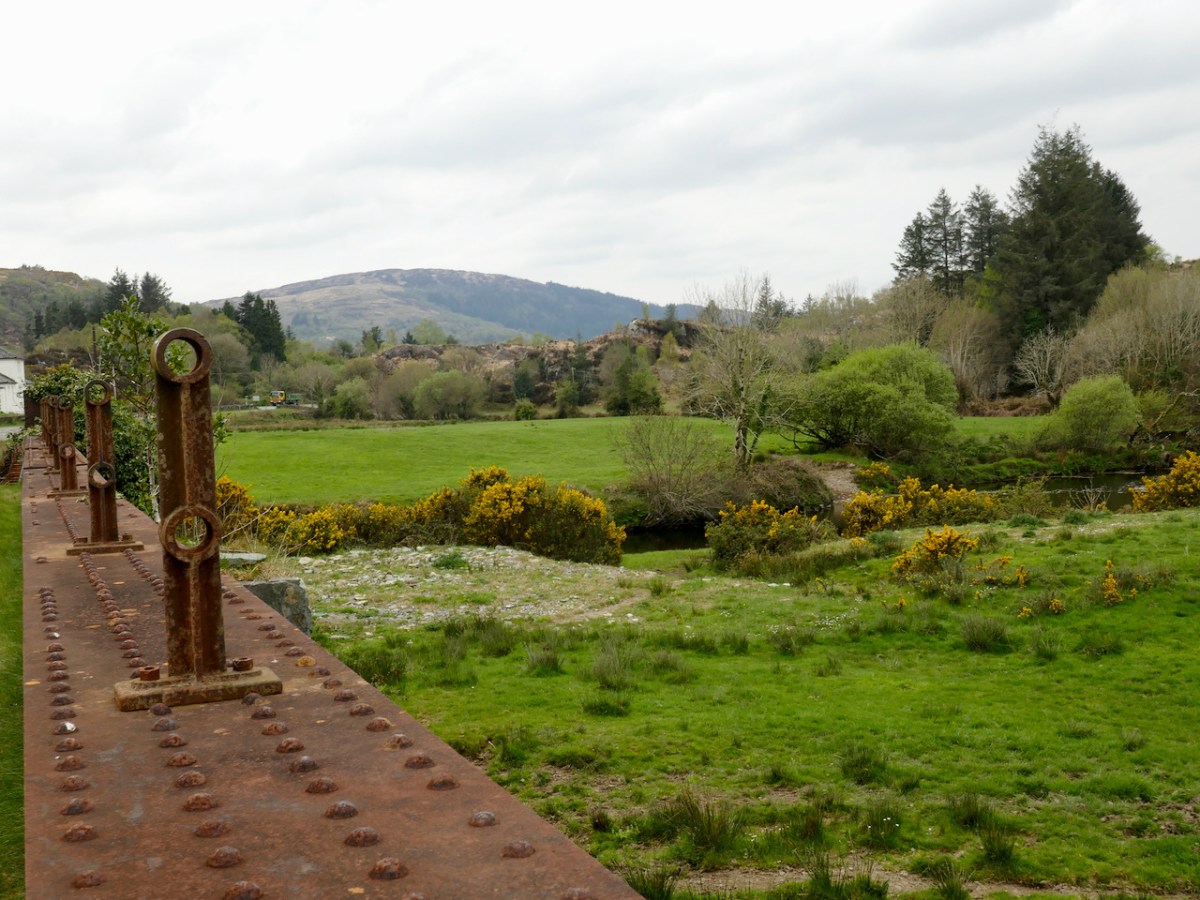
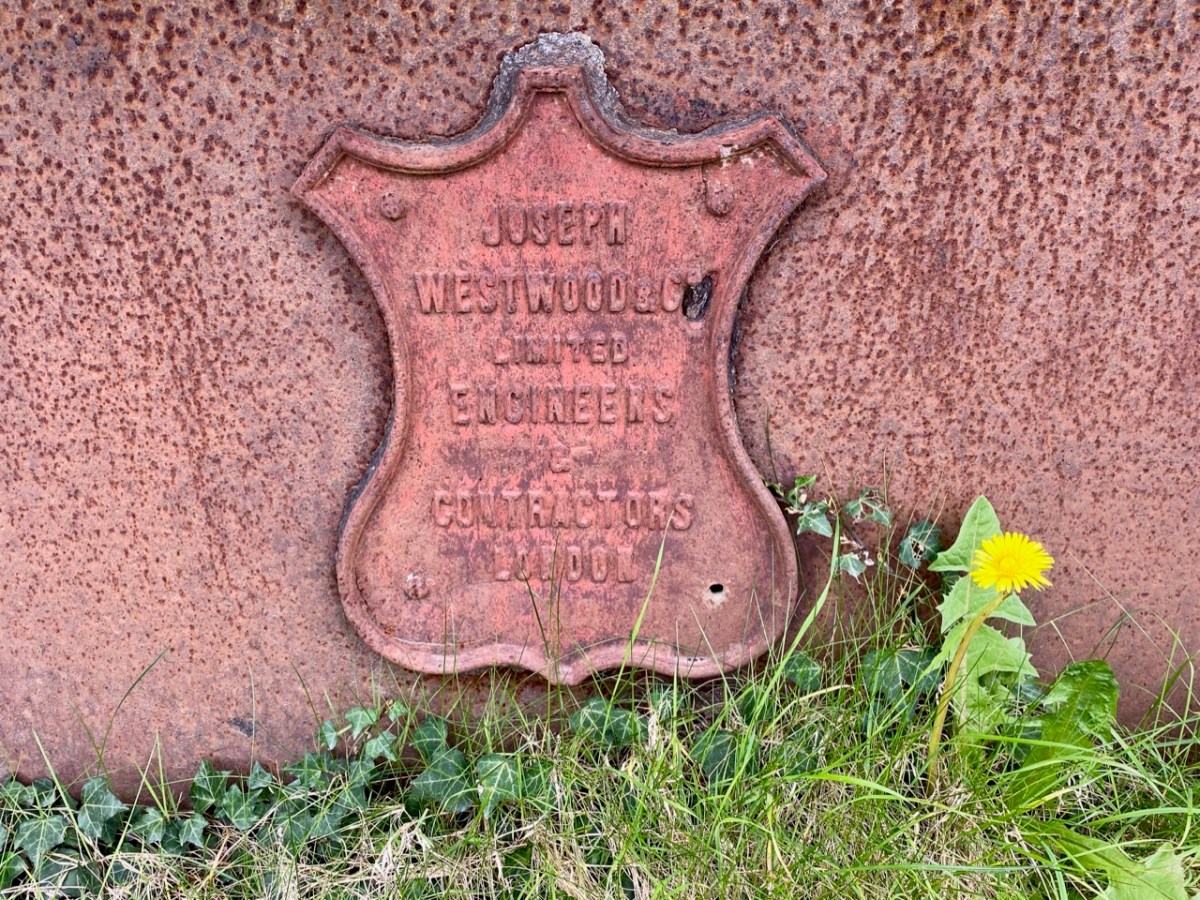
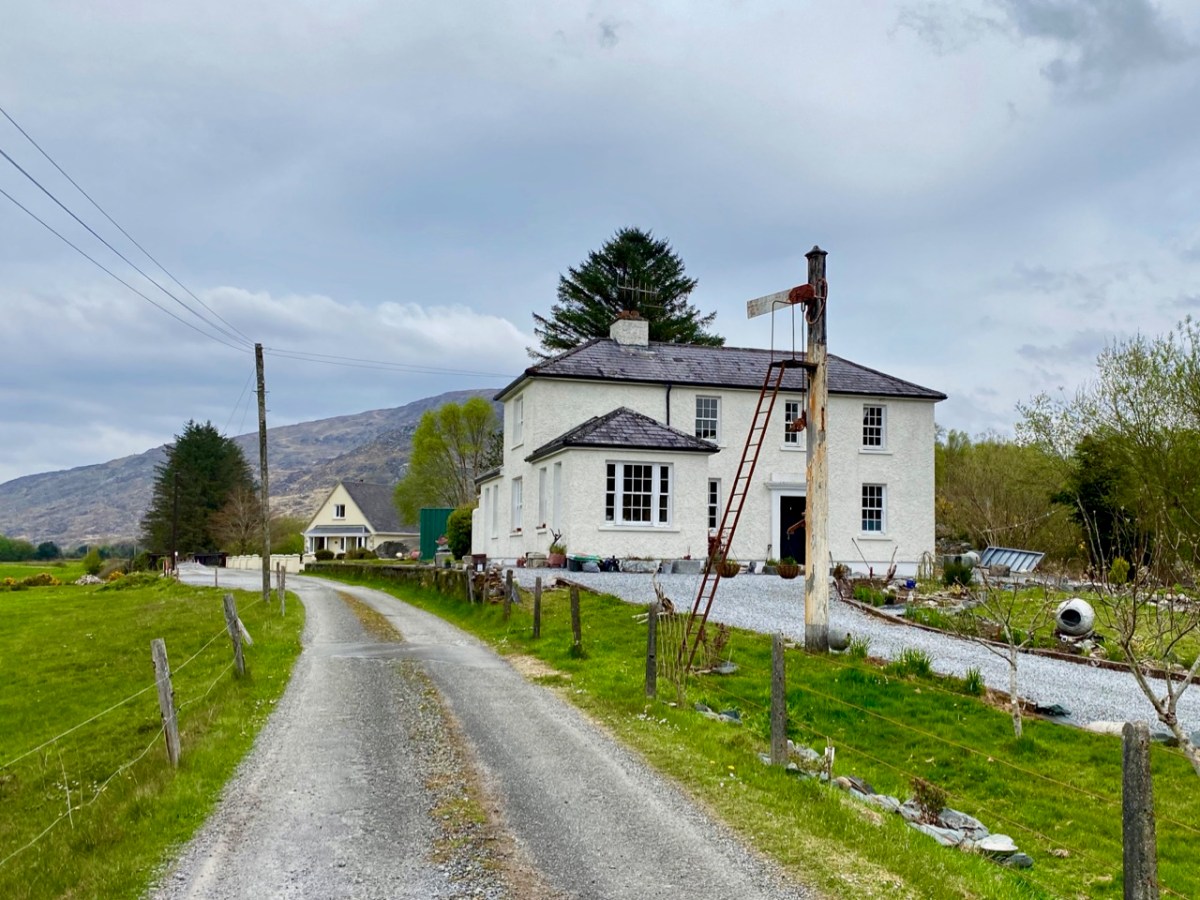
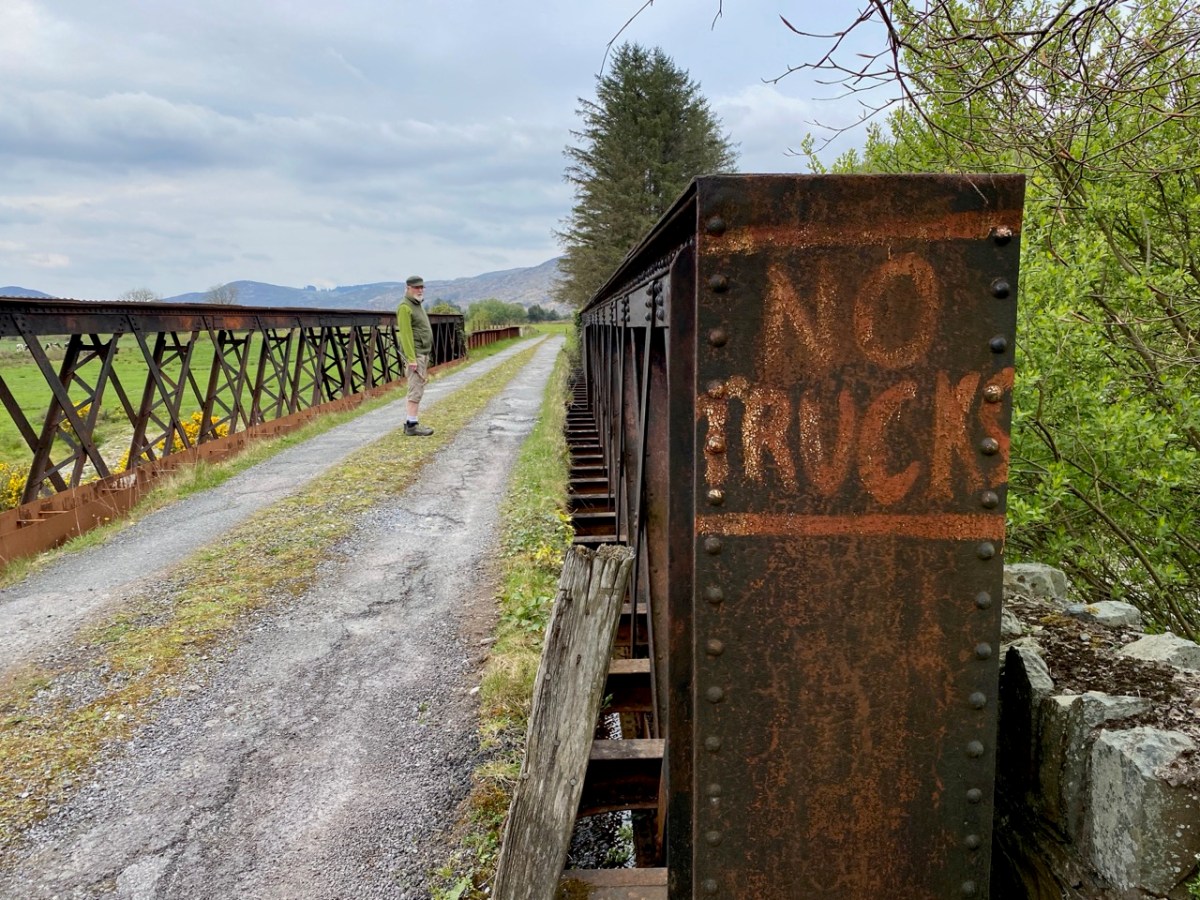
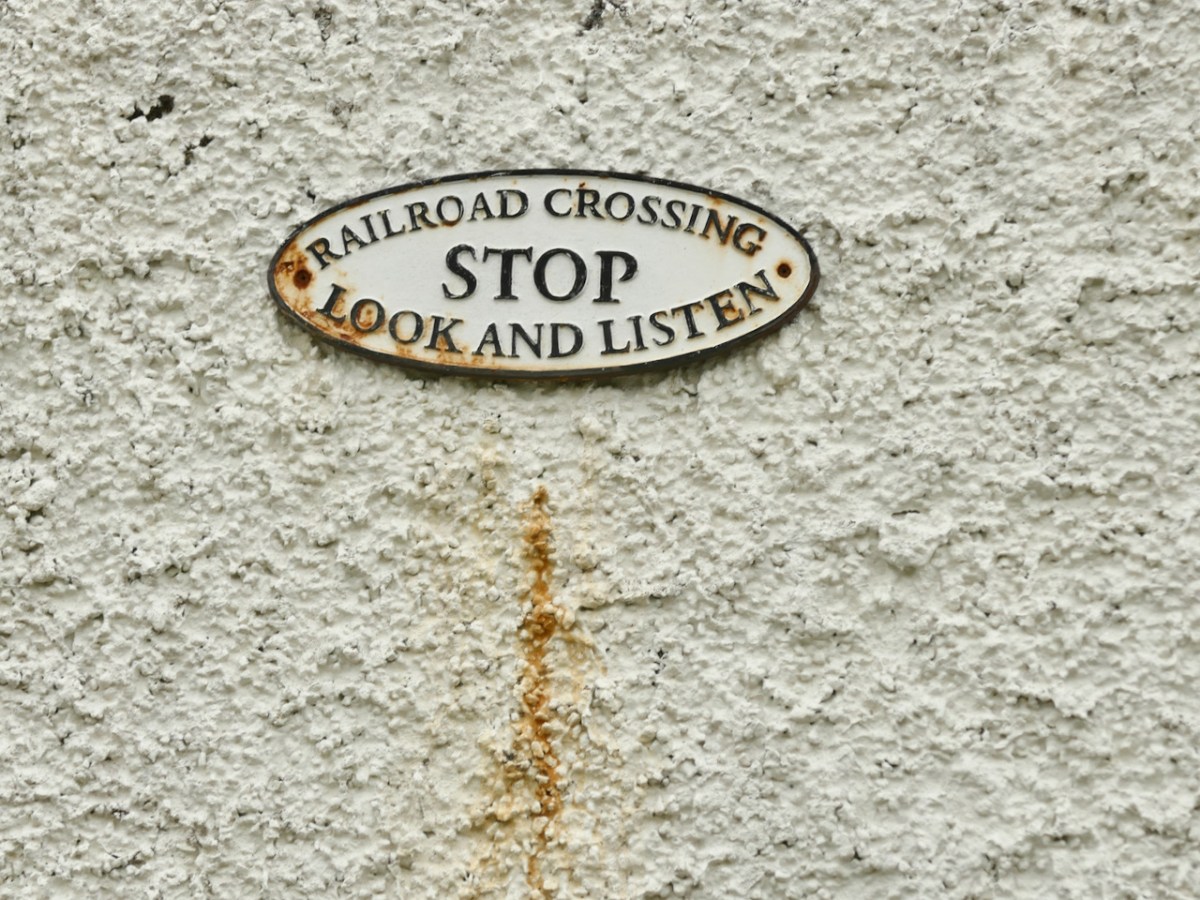
The 6″ OS map, above, dates from the late 19th century. St Peter’s well is marked on it, while St Paul’s only gets mentioned as a spring. Not far to the south is a railway line: The Great Southern Railway: Headford Junction to Kenmare. This was opened in 1890 and closed in 1959. While the track itself is long gone, many features can be traced. We stopped at Loo Bridge where the old station remains, as does an adjacent steel river crossing.

I am always saddened to see abandoned railway lines: they could so easily have had a new lease of life in our present environmentally conscious world. Regardless of their potential functionality, ‘heritage railways’ are also highly popular tourist destinations. I’m afraid, however, that the work and costs now required to recover them is unlikely to be invested any time soon, unless there is a big change in attitude and priority.

Lost railways and fading wells: unlikely bedfellows for a day out in Kerry. But our travels are always fulfilling, and diversity is the essence. In Ireland we can never run out of places to visit, or matters to be researched and recorded. Join us again, on our next expedition!

Rock Art – A Diversion to Wicklow

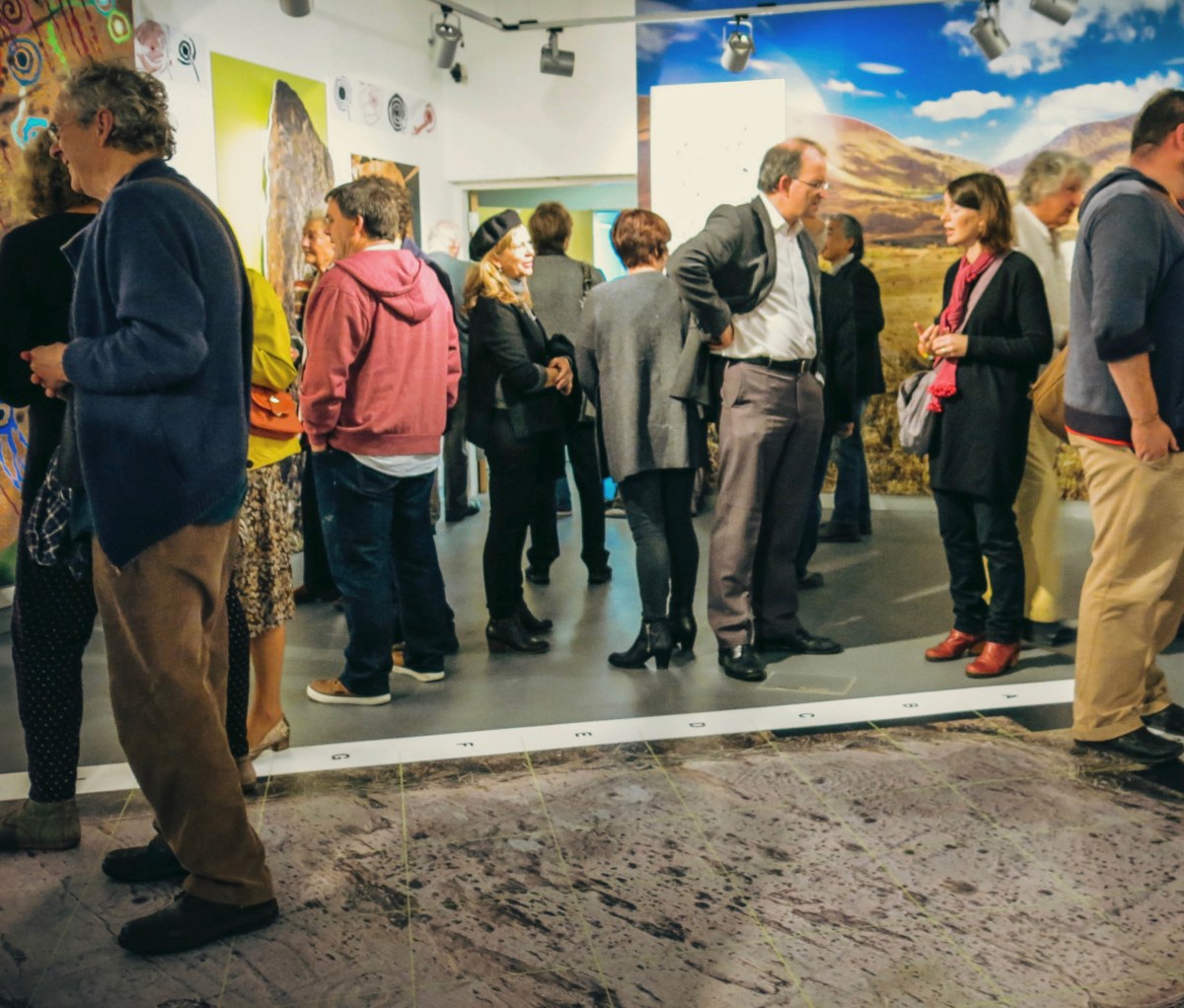
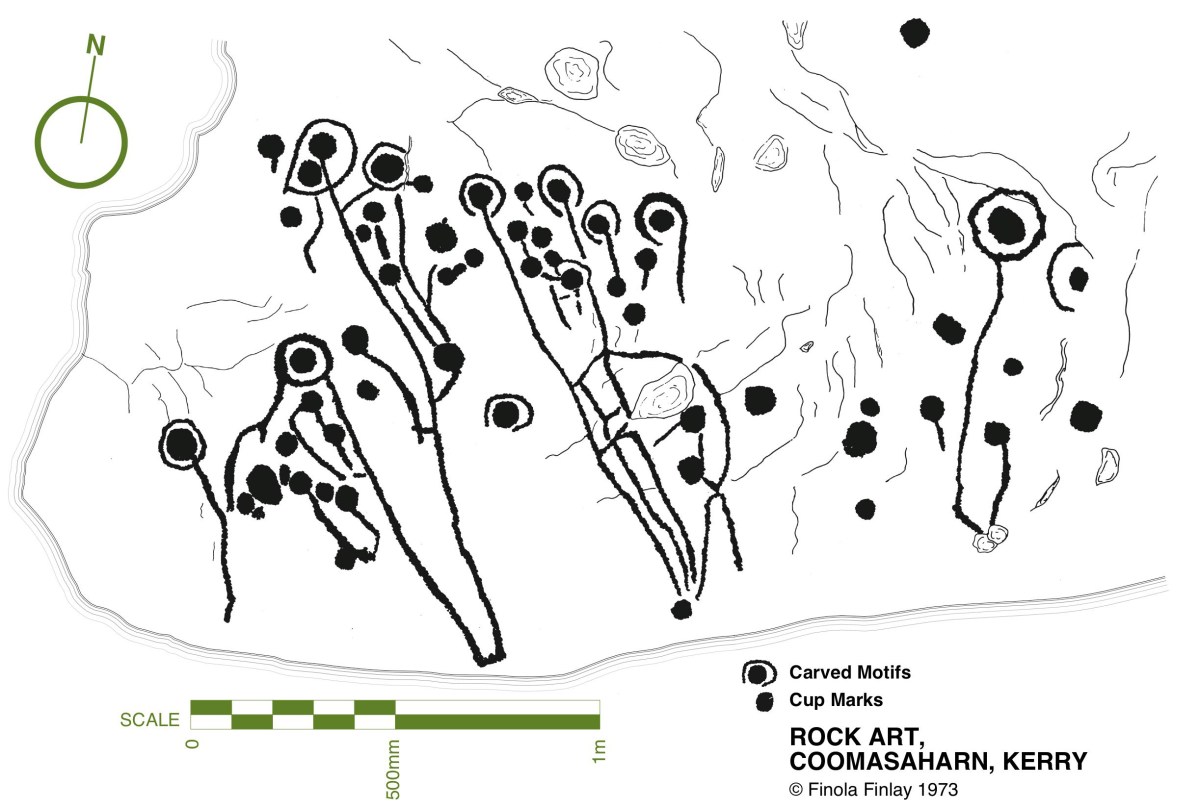
While writing this Journal over the years, Finola and I have included many examples of Prehistoric Rock Art, mainly on the west side of the country, in Cork and Kerry. Here is just one – you can find others through the search facility in the header. Finola’s UCC thesis from 1973 also concentrated on specimens from the southwest and her own drawings based on tracings direct from the rock surfaces provide a unique record of this form of prehistoric art. They have formed the basis of exhibitions which we have promoted over the years: here’s one from 2015.

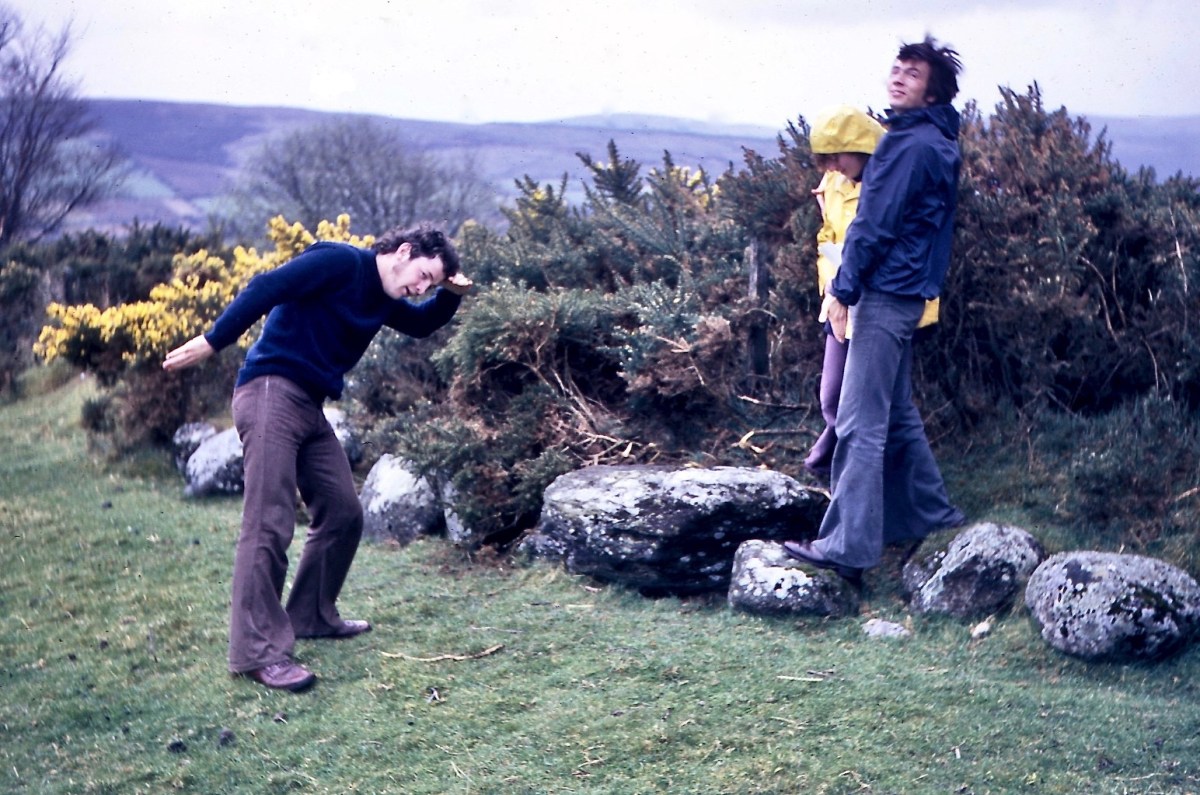
Upper: the opening of our Rock Art exhibition at Cork Public Museum , October 2015 and (lower) one of Finola’s drawings from 1973. Another area in Ireland which has a concentration of Rock Art is Wicklow. We have been spending a few days in that county, and decide to go and have a look for some examples there. Finola dug out from her archives a photo which she took in 1972 when she and some college friends visited a Wicklow site:

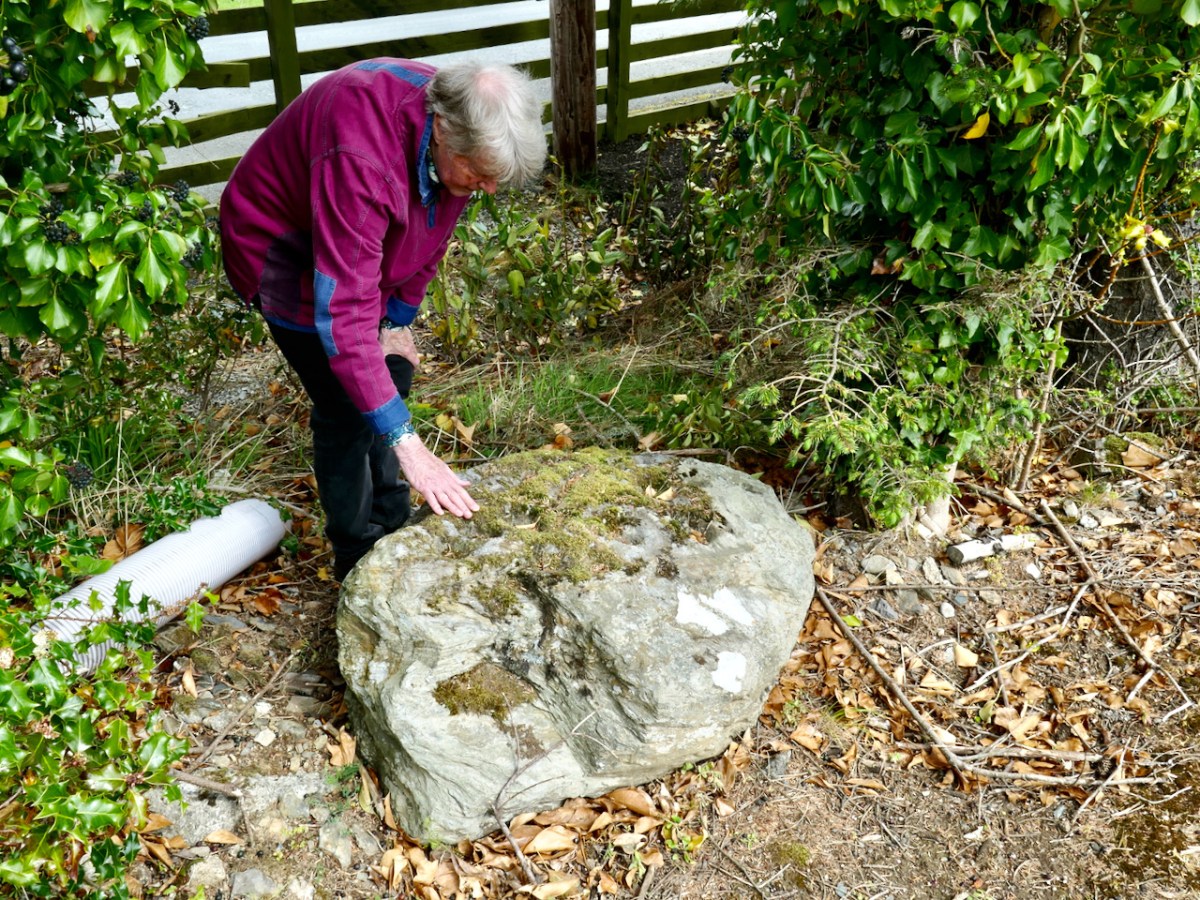
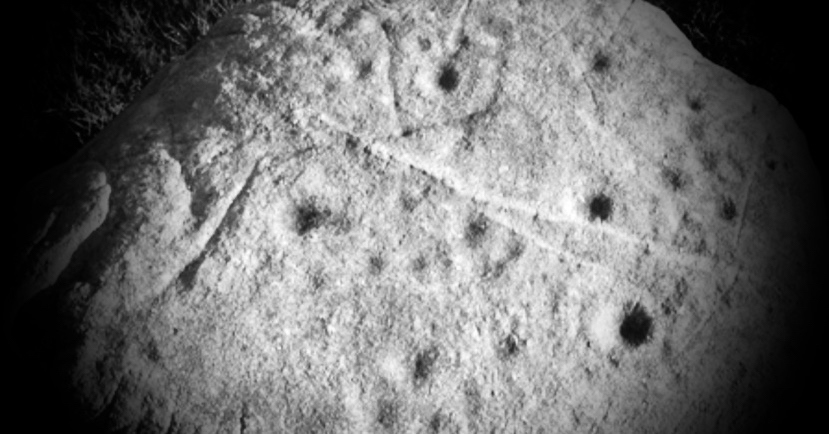
Could we find that particular rock again? Well, we think we did, but it has been moved in fairly recent times. Here it is in its new setting (we believe) – it’s not very propitious:

The present site is in the townland of Togher More, behind a fence lining a main road. The National Monuments record tells the story, which confirms that Finola’s earlier photograph was taken in the townland of Baltynanima:

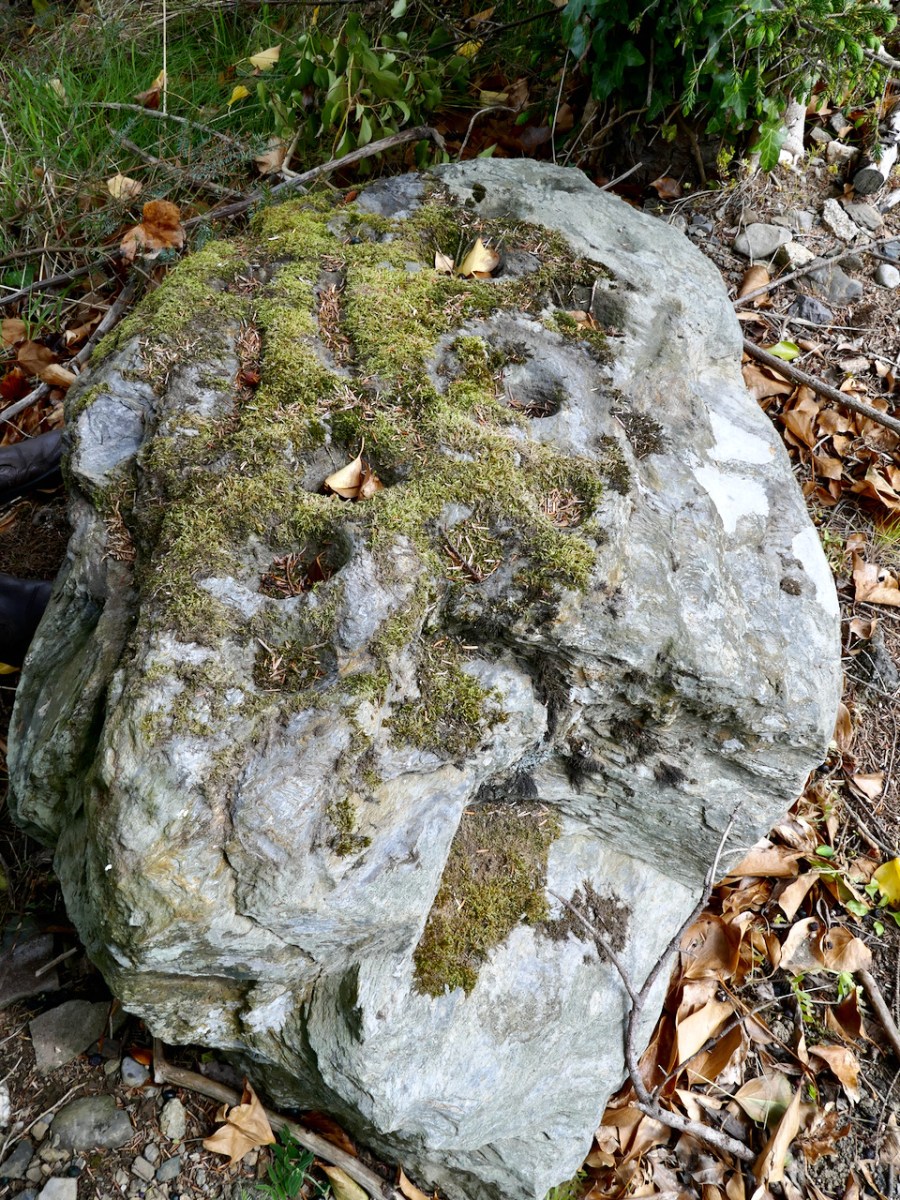
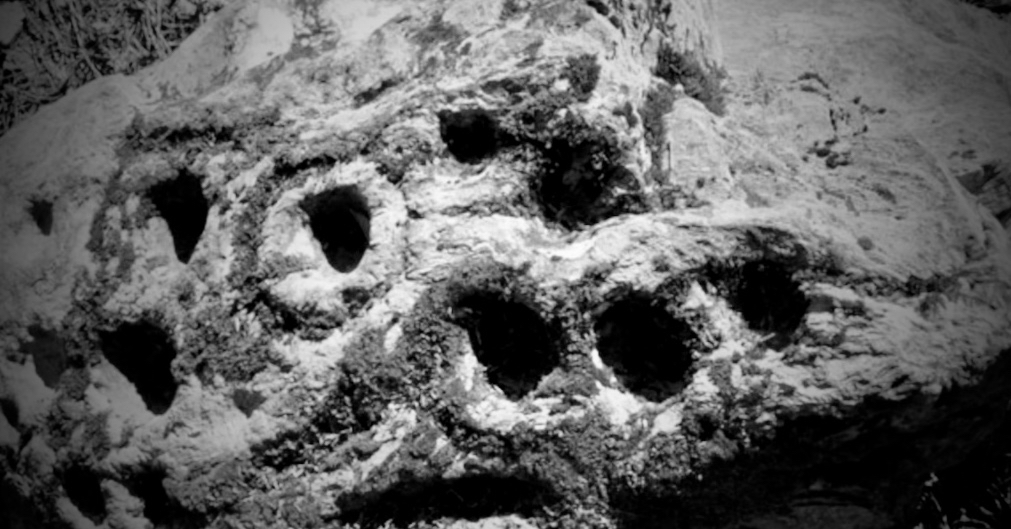
. . . Class: Rock art (present location) Townland: TOGHER MORE Description: Found during ploughing c. 1.8m to the SW in Baltynanima and moved here in the mid 1980’s (see W1018-036—- for original location record). An irregular shaped schist boulder (L 1.3m; W 0.9m; T 0.5m) with 16 cup marks and the remains of another where the corner of the boulder appears to have come away. The four largest cups (diameters 10-12cm; depth c. 6cm) are enclosed by circles (max ext. diameter 20cm) formed by incised lines (widths 1.5-2cm; depths 1cm) with the exception of one which has only a semi circle incised line around it. The remaining 13 cups have diameters of 6-8cm and depths of 4-5cm. There are also three incised linear grooves (L 14- 22cm; W 4cm; D 2.5-3.5cm) visible on the stones surface. Described, photographed and drawn by Price on the 29th January 1933 . . .

National Monuments Record WI018-049

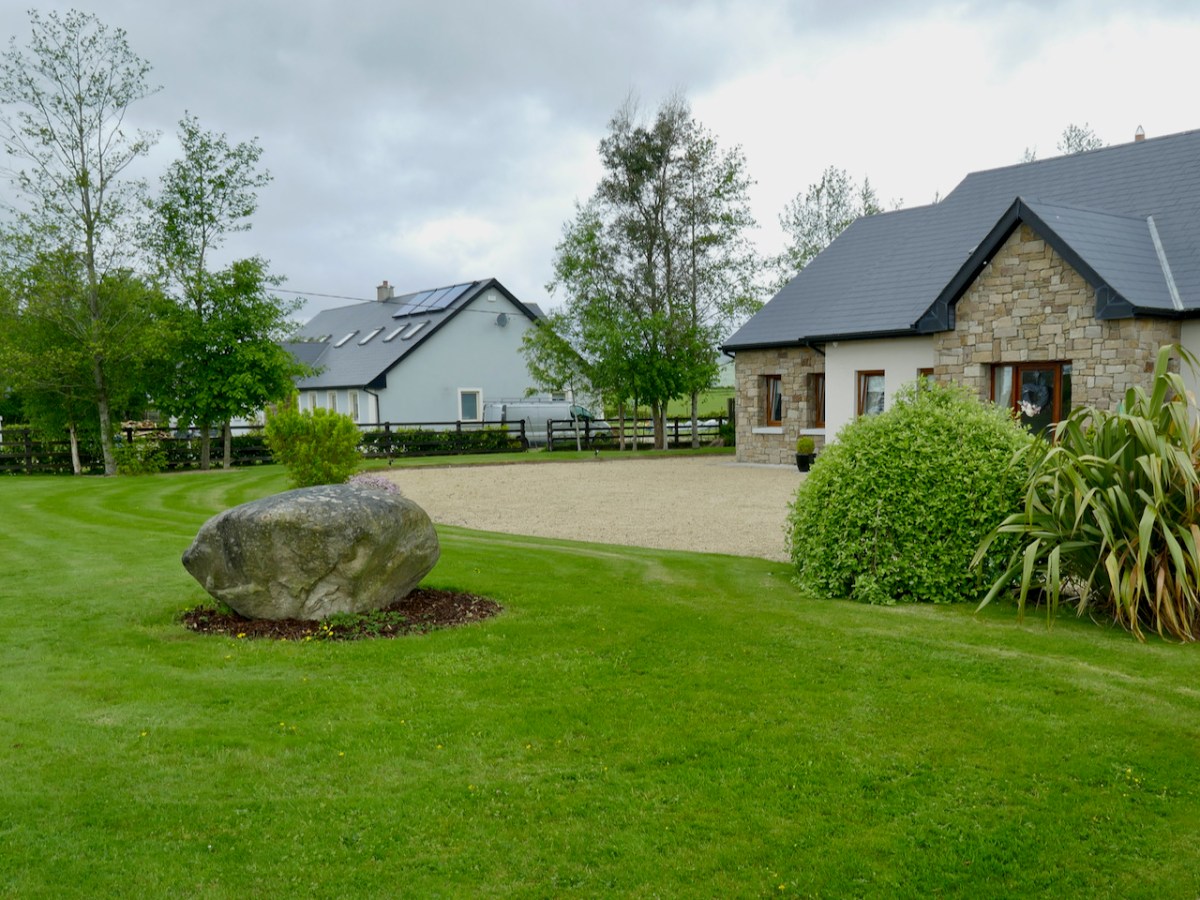
It’s not unusual to find that ‘portable’ stones with Rock Art on the surface are moved, usually to protect them if a site is to be developed. Here’s another example we found, in the townland of Knockrahen:

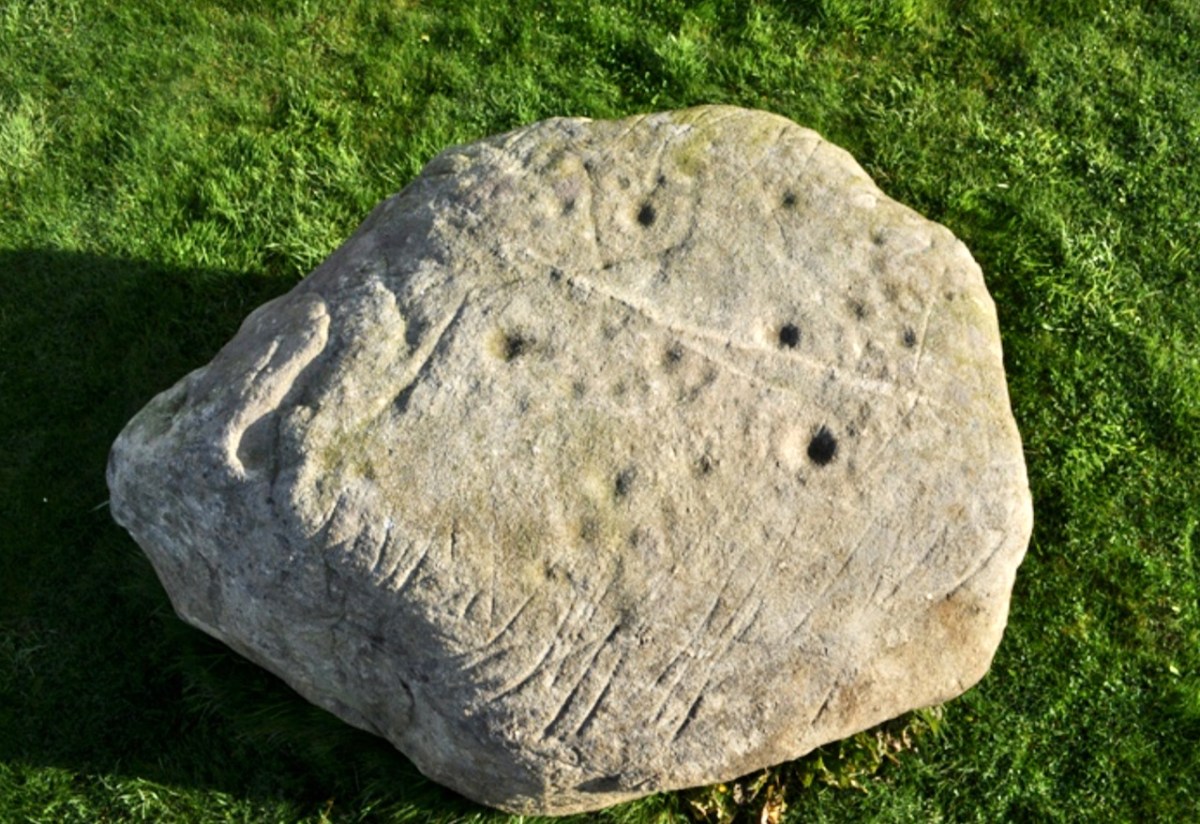
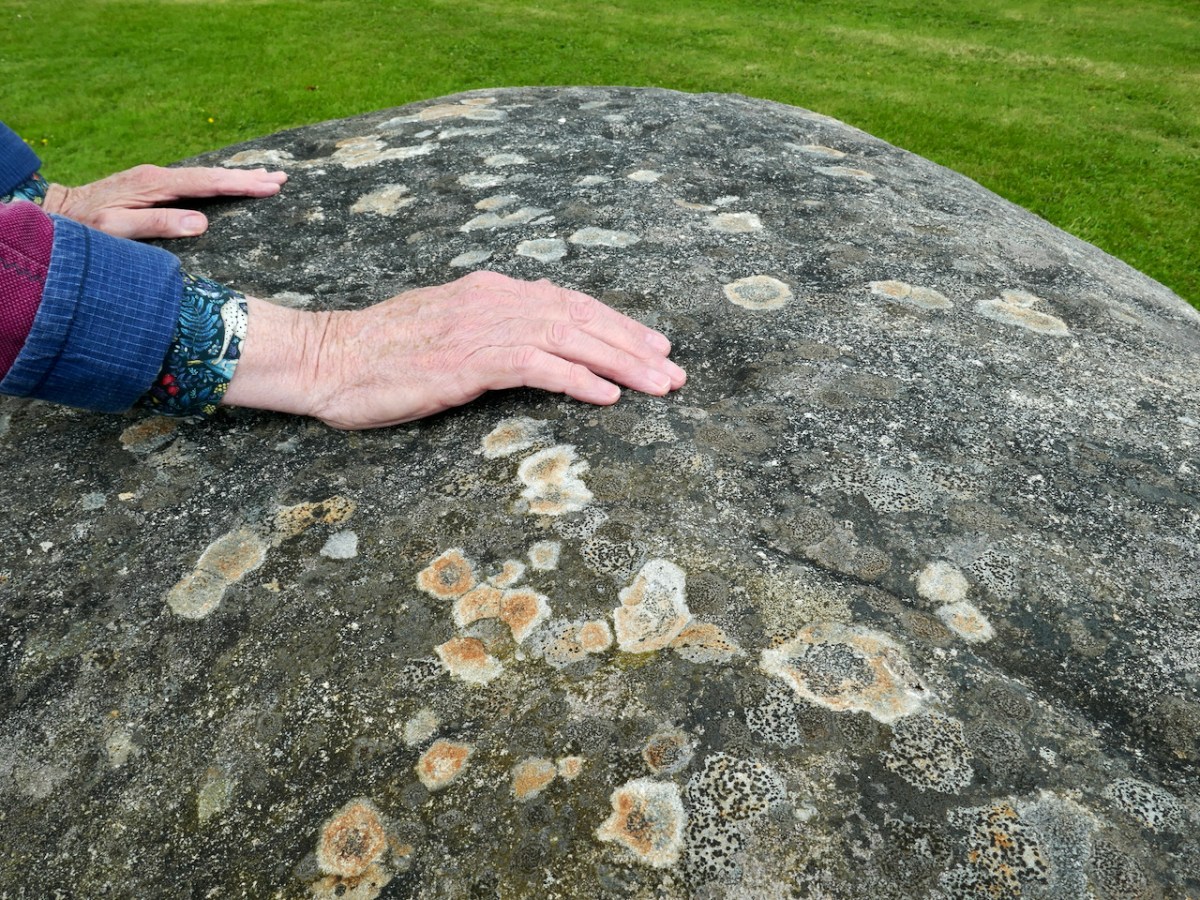
In this case the rock was found while the foundations were being dug for the house. The owner (with whom we spoke) noticed the markings and decided to keep it as a feature in her new garden. The photo below was taken by Chris Corlett for the National Monuments records. Thank you, Chris (and the NM), for allowing us to use this – and the detail on the header pic. Below Chris’s photo is Finola’s, with my hand in the shot to give it scale.

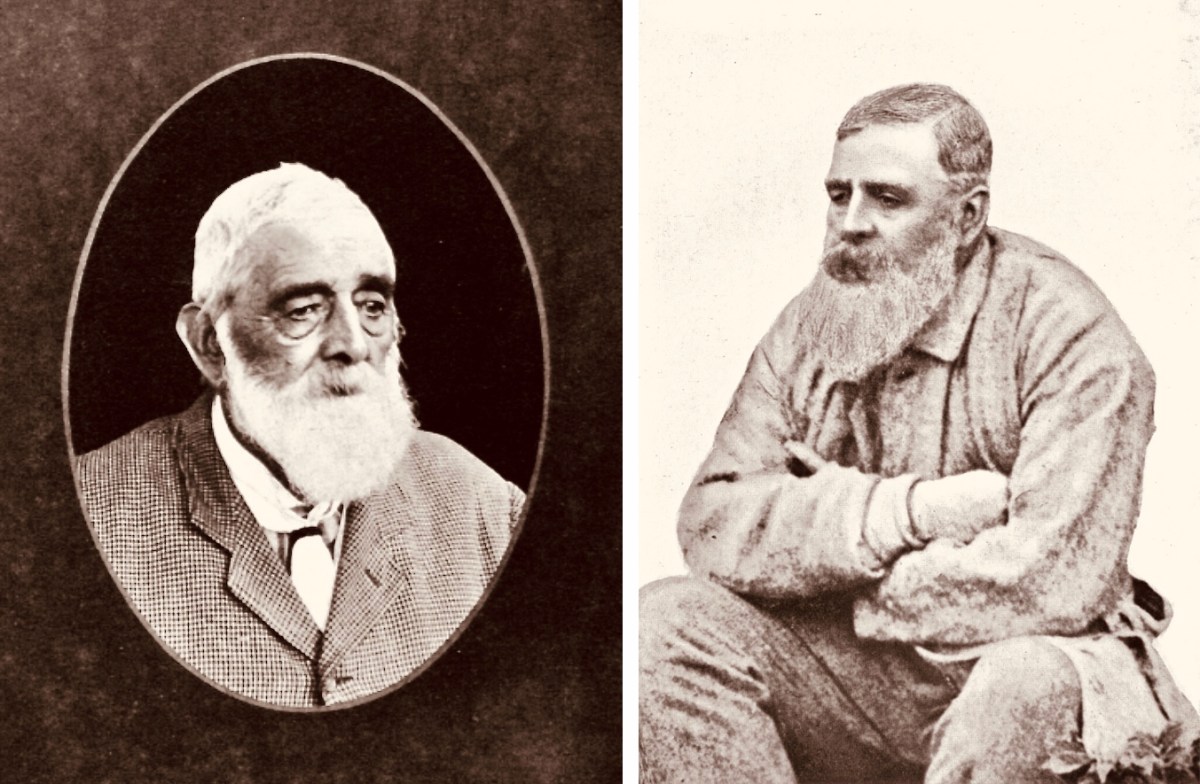
While out in Wicklow we noticed that many of the National Monument records of Rock Art are credited to George Henry Kinihan (1829 – 1908). He was a geologist who also had an interest in archaeology. His home was in Clontarf and he is buried in the Protestant churchyard in Avoca, Co Wicklow. He was involved in his lifetime in engineering works, particular railway construction, but was also a keen Rock Art enthusiast.

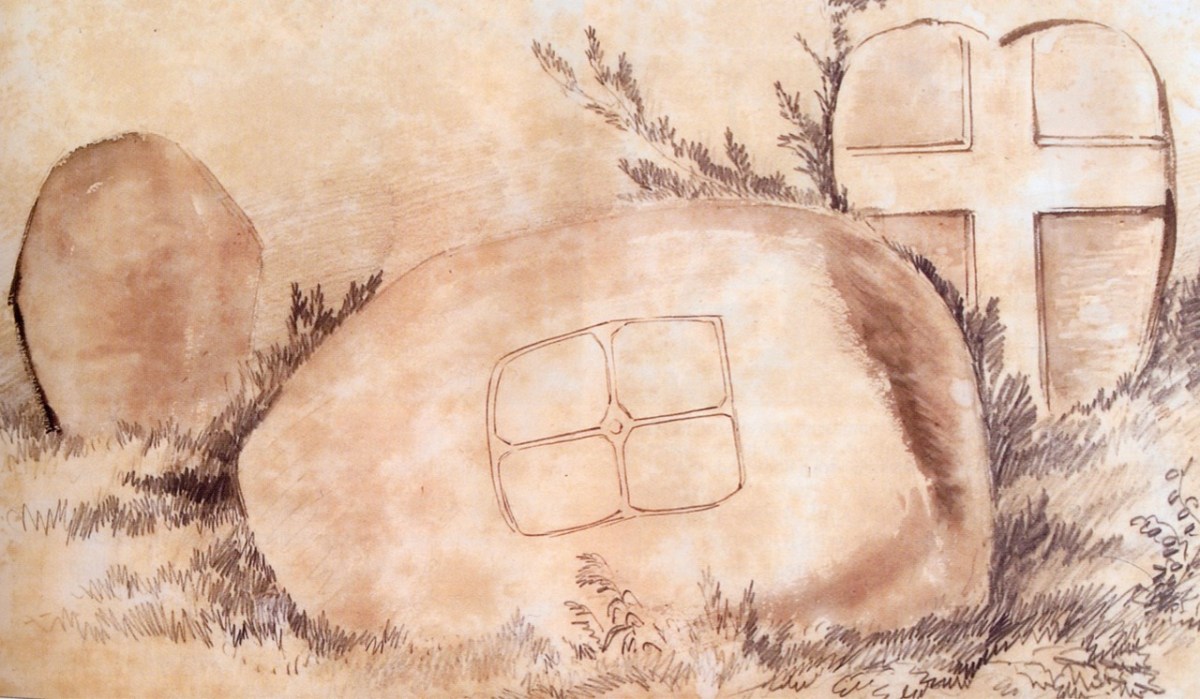
Two portraits of Kinihan: he was said to have been of ‘strong and massive build’. He spent some of his early years working under George du Noyer of the Irish Geological Survey – who shared with him an interest in antiquities in the landscape. Here is a du Noyer drawing of cross slabs in Co Wexford:

On du Noyer’s death in 1869, Kinihan was appointed District Surveyor of the Geological Survey, in charge of field work and mapping, and oversaw the completion of the One Inch Geological Map of Ireland. He also became President of The Royal Geological Society of Ireland in 1880. Now, here is a conundrum:

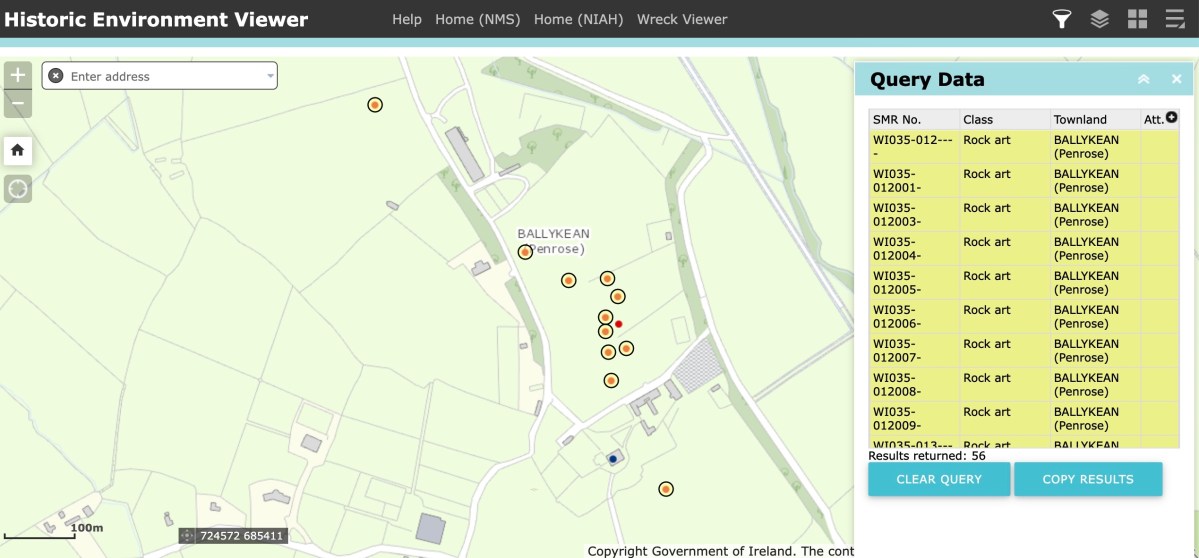
Here is part of the current Historic Monuments Viewer, showing the location of archaeological sites in Ballykean, Co Wicklow. All the yellow-and-red dots are recorded as Rock Art, discovered by Kinihan (there are 14 just in this small area of the townland). In every case, the site is described in detail, with numbers of cupmarks etc recorded. But also – in every case – the description concludes: ‘…The site indicated by Kinahan in 1884 was inspected in 1990, however this stone was not located…’ These are not the only instances in Co Wicklow where Rock Art found by Kinihan can no longer be traced. Does this mean that all these instances have now been destroyed or buried? Is it possible that this experienced archaeological enthusiast could have misinterpreted so many sites? It remains an adventure for us – another day – to go in search of some of these enigmatic examples to see if we re-establish the credibility of this Wicklow giant in this very particular specialism.

Ardtully and the Orpens

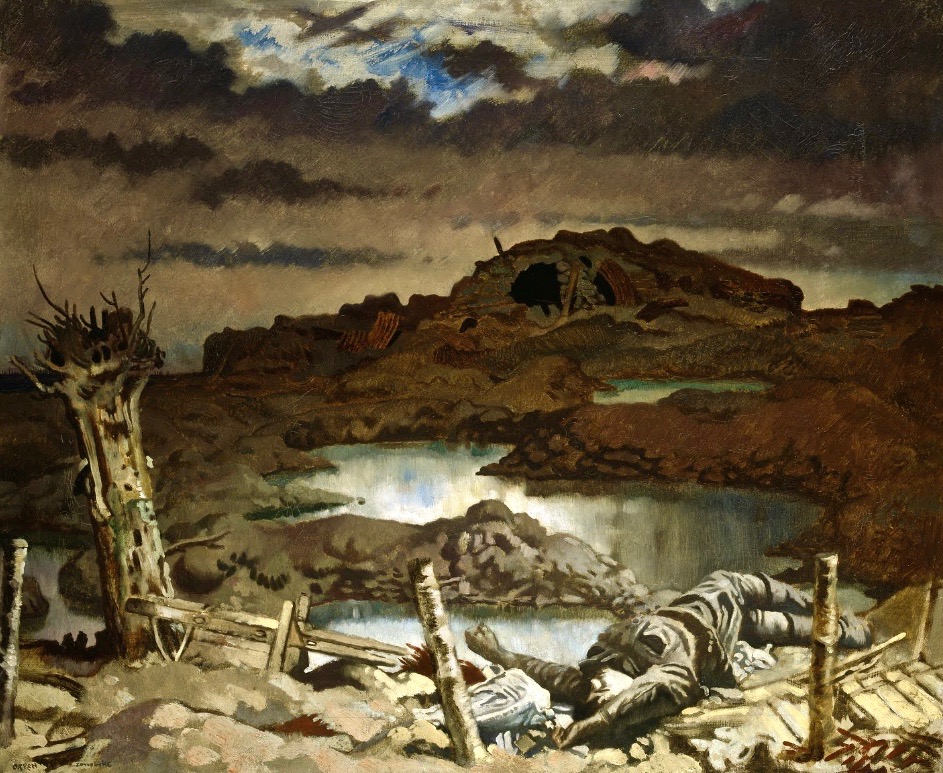
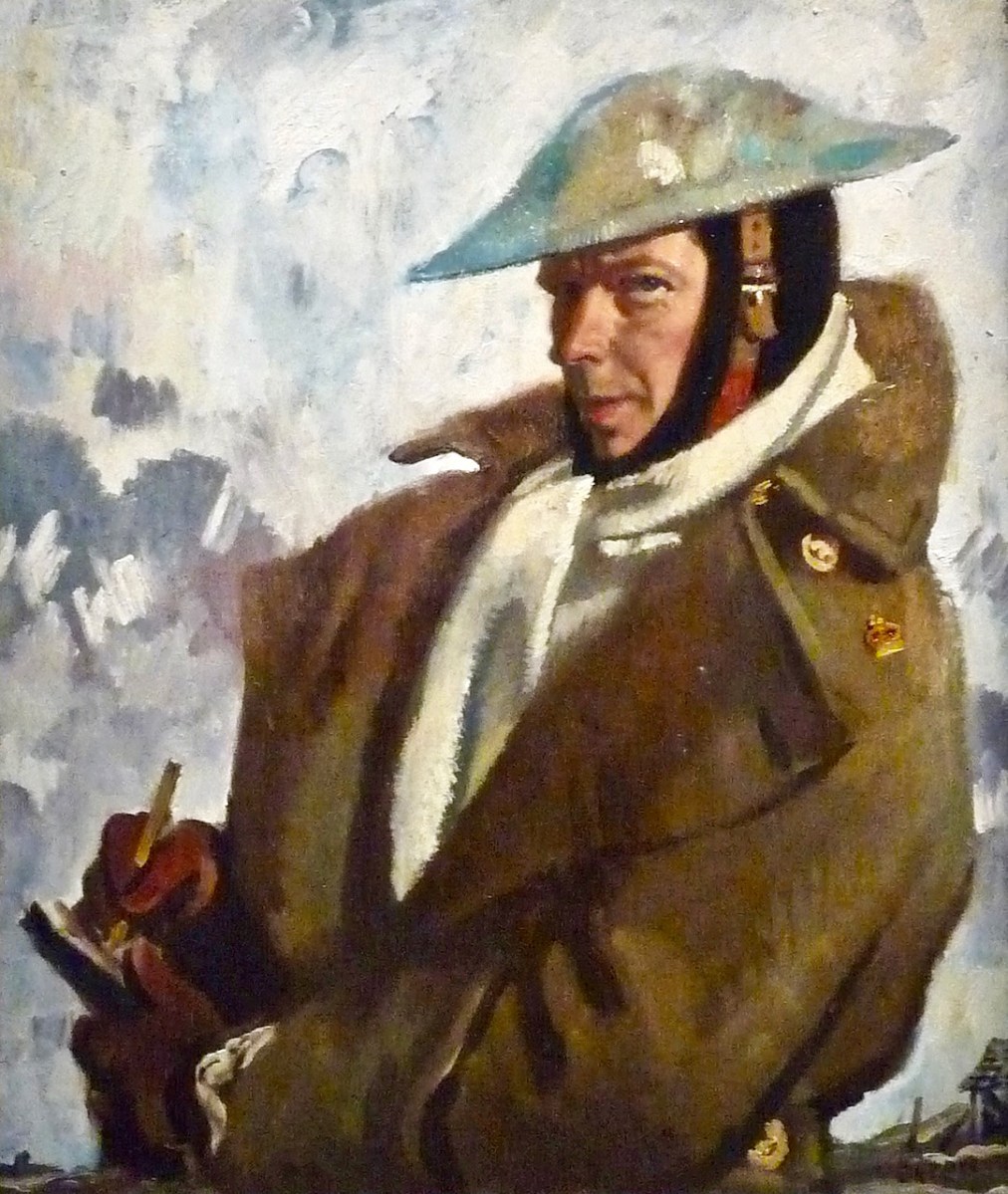
We took a few steps over the border – from Cork County to Kerry Kingdom – to search out some vestiges of architecture which relate to the Orpen family, which claimed it could trace its history back to the sixth century. Probably the best-known member of that clan – certainly in Ireland – was William Orpen (1878 – 1931). Orpen was a ‘naturally talented painter’ who spent much of the First World War as an officially commissioned artist, producing strikingly graphic images of that depraved conflict, including the Battle of the Somme, from direct experience in the trenches.

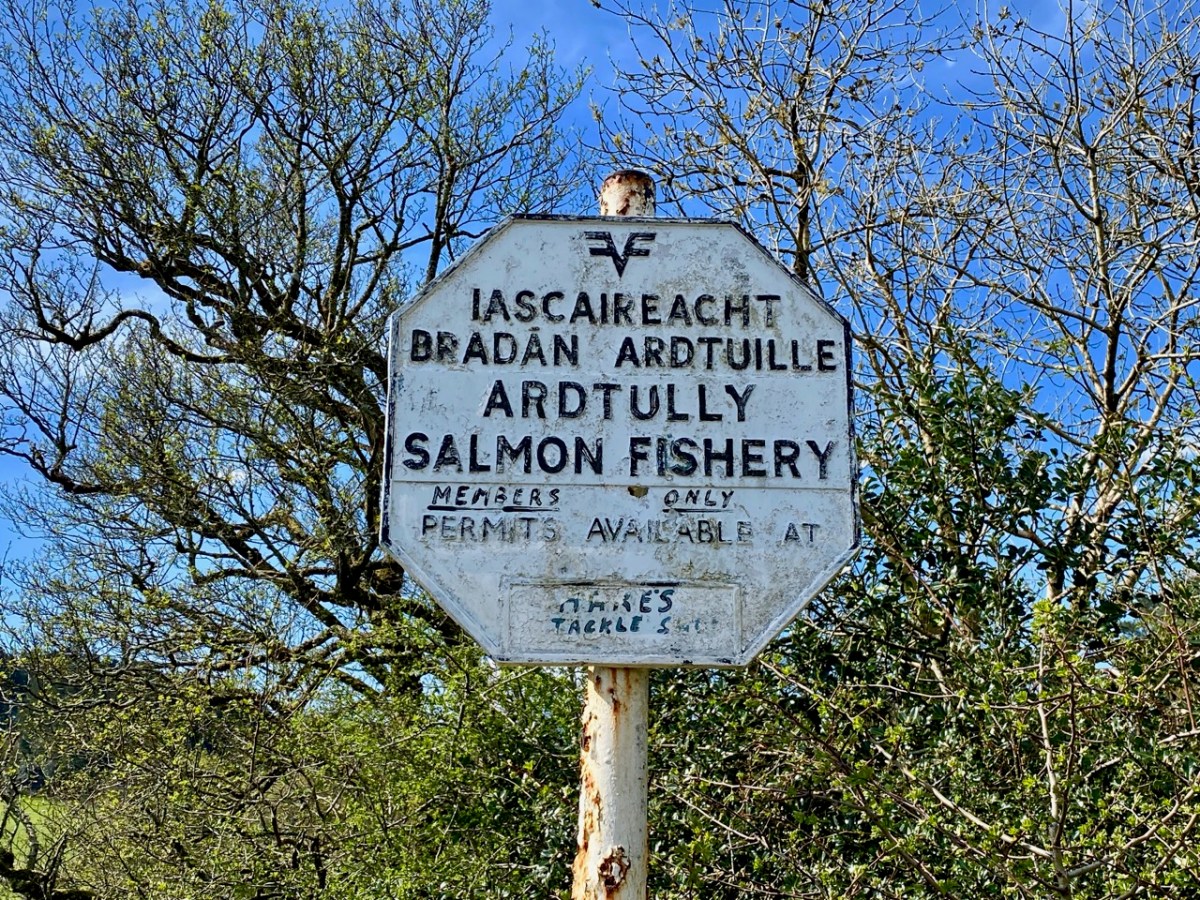
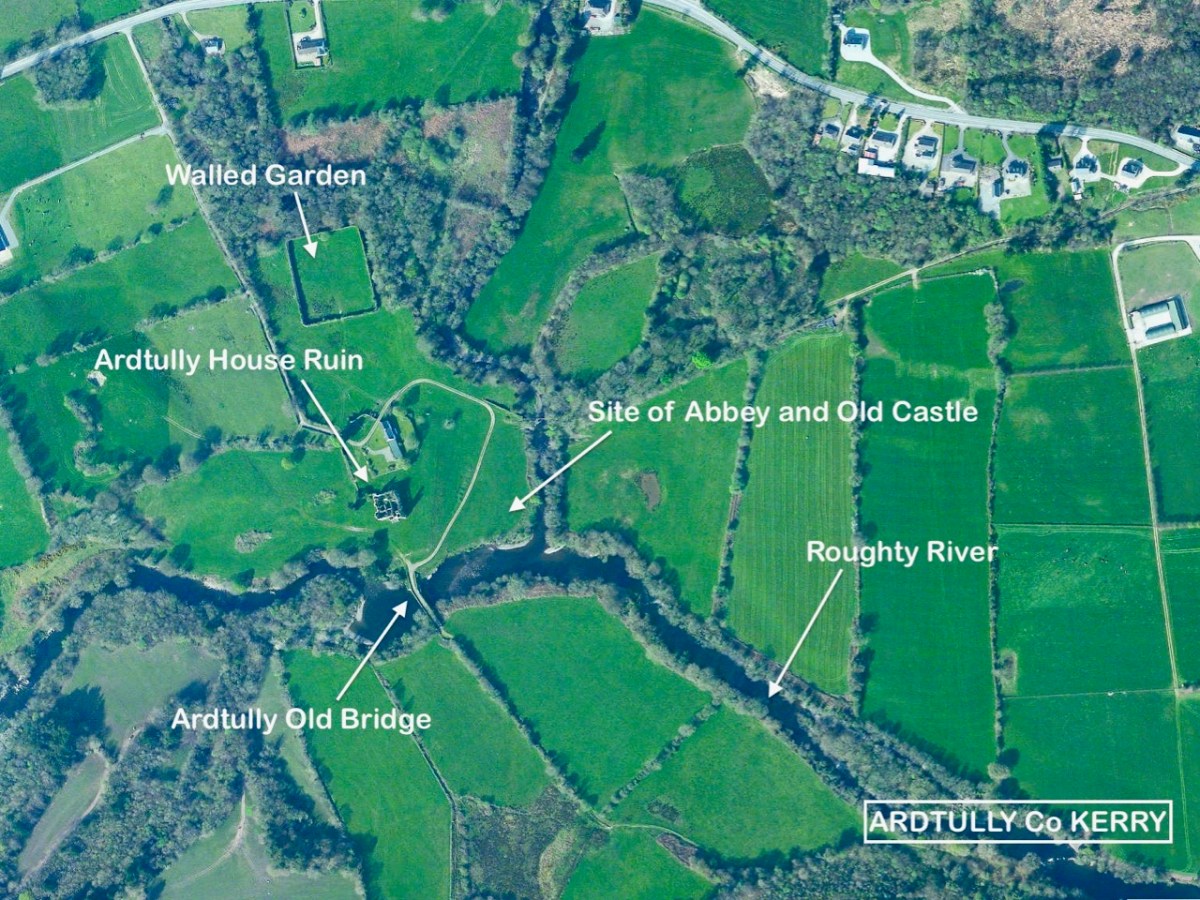
Upper – Zonnebeke 1918, and lower – Self portrait 1917 by Orpen. William Orpen’s grandfather was Sir Richard Theodore Orpen (1788-1876), Born and brought up in Dublin, this Orpen married Elizabeth Stack in 1819 and they built a large mansion on the site of an earlier castle and medieval monastery beside the meeting of the rivers Obeg and Roughty, in the townland of Ardtully, Co Kerry. In Irish, the name is Ard Tuilithe, meaning ‘high flood’.

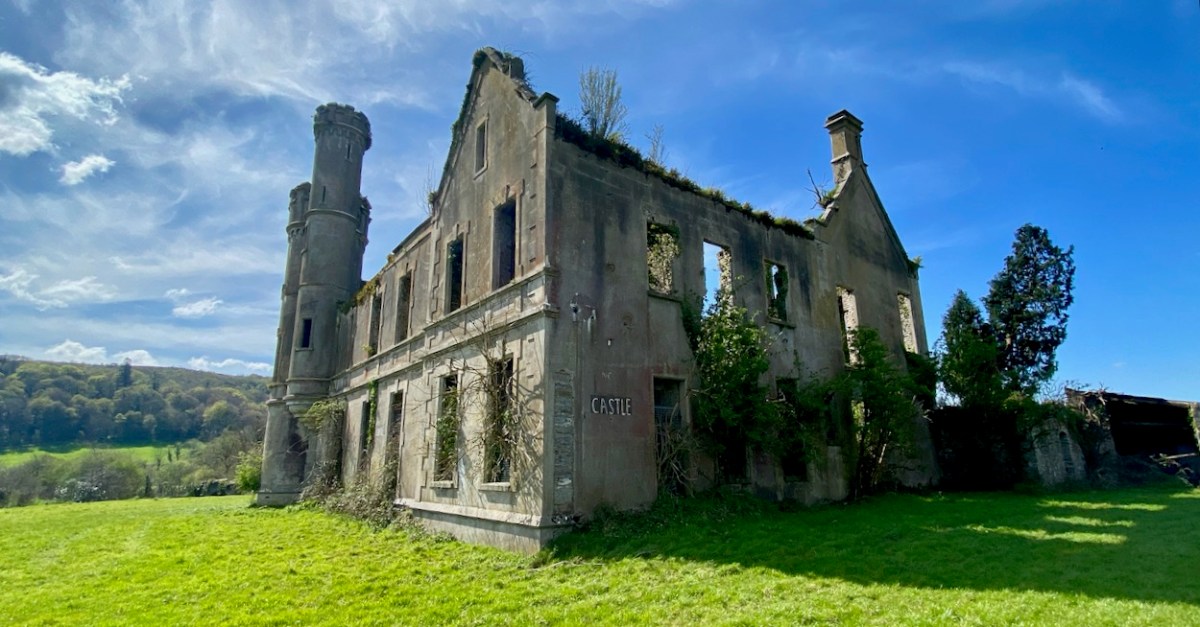
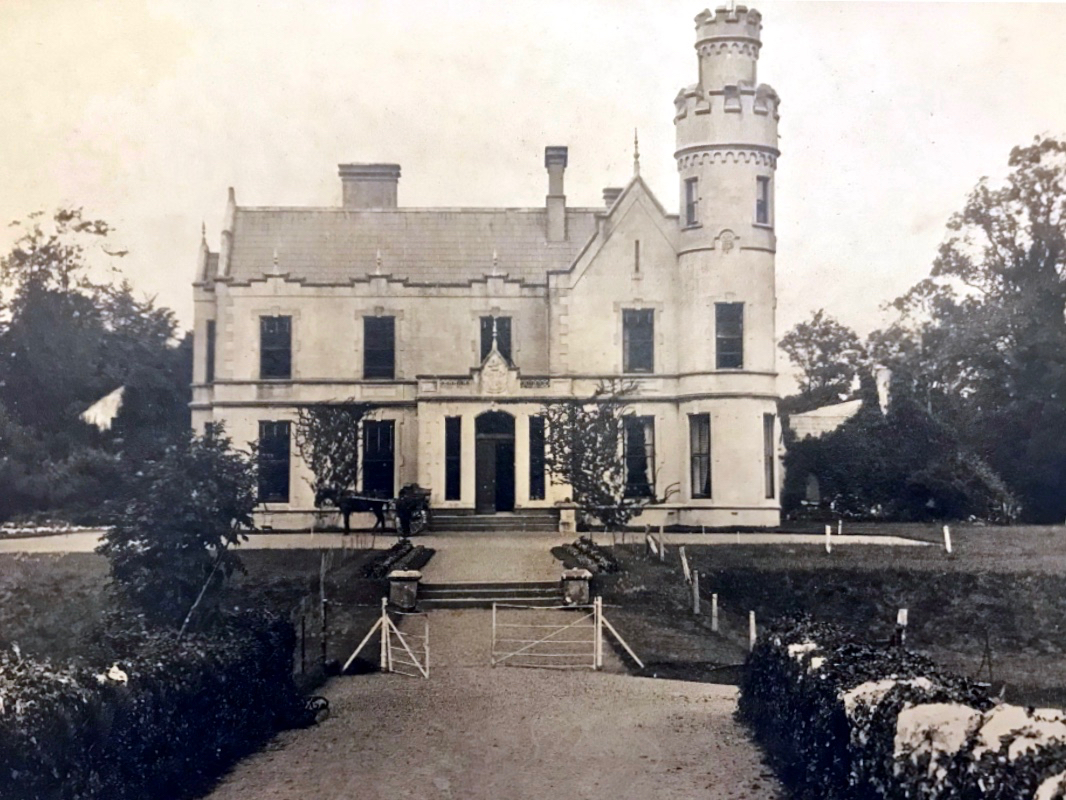
The Orpen’s Grand Design project consisted of a 27-roomed two-storey dwelling with a tower, in what can be loosely described as the ‘Baronial’ style. The house was the family’s residence throughout the rest of Sir Richard’s life, and was inherited by one of his sons, Right Reverend Dr Raymond D’Audemar Stack Orpen, who was the last to live there.

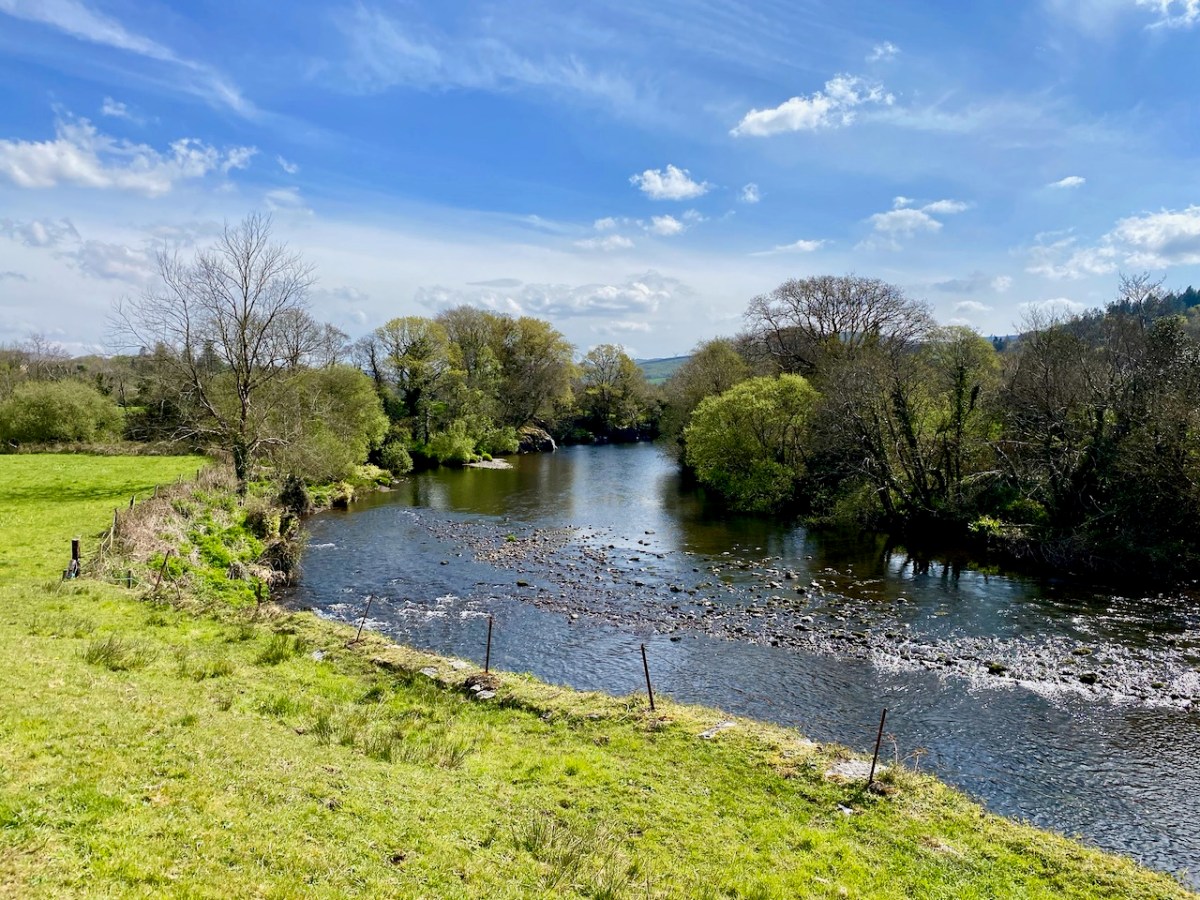
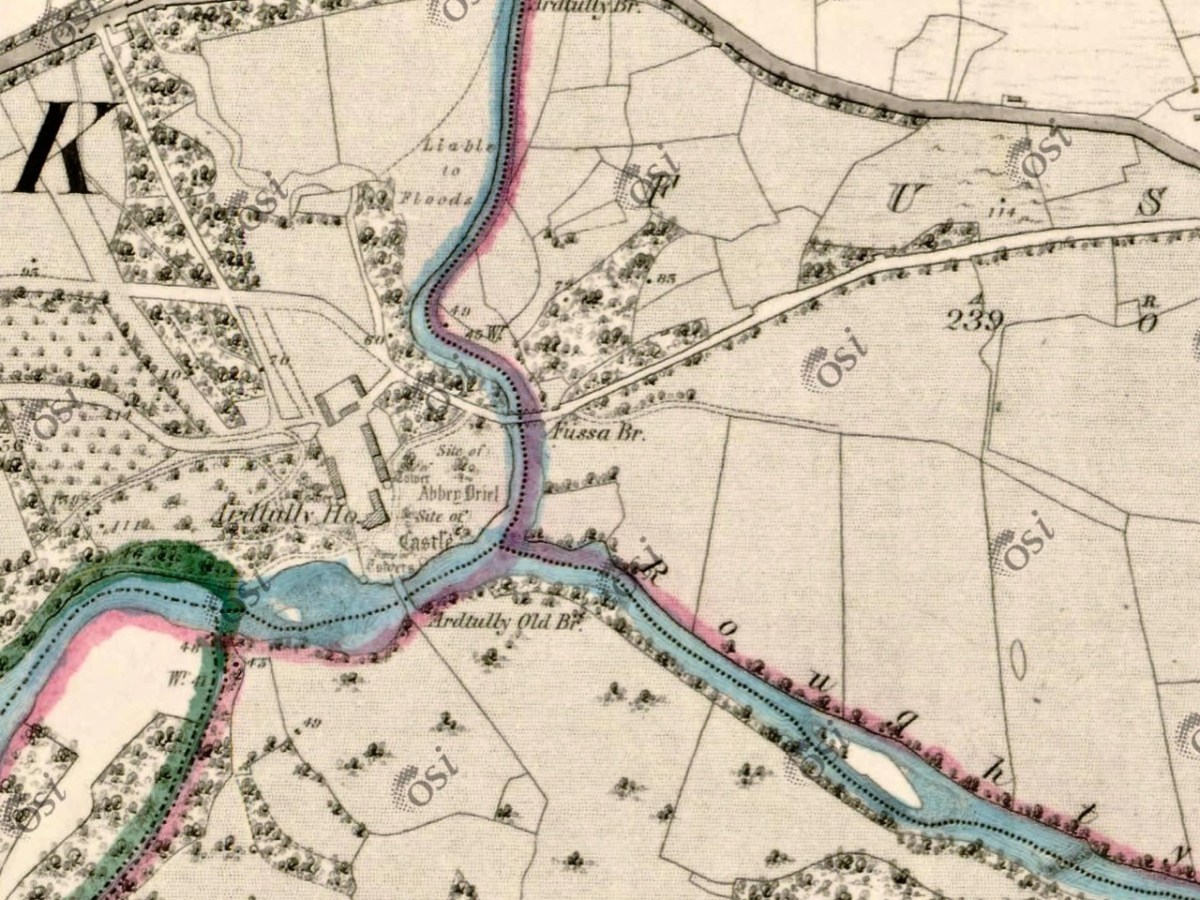
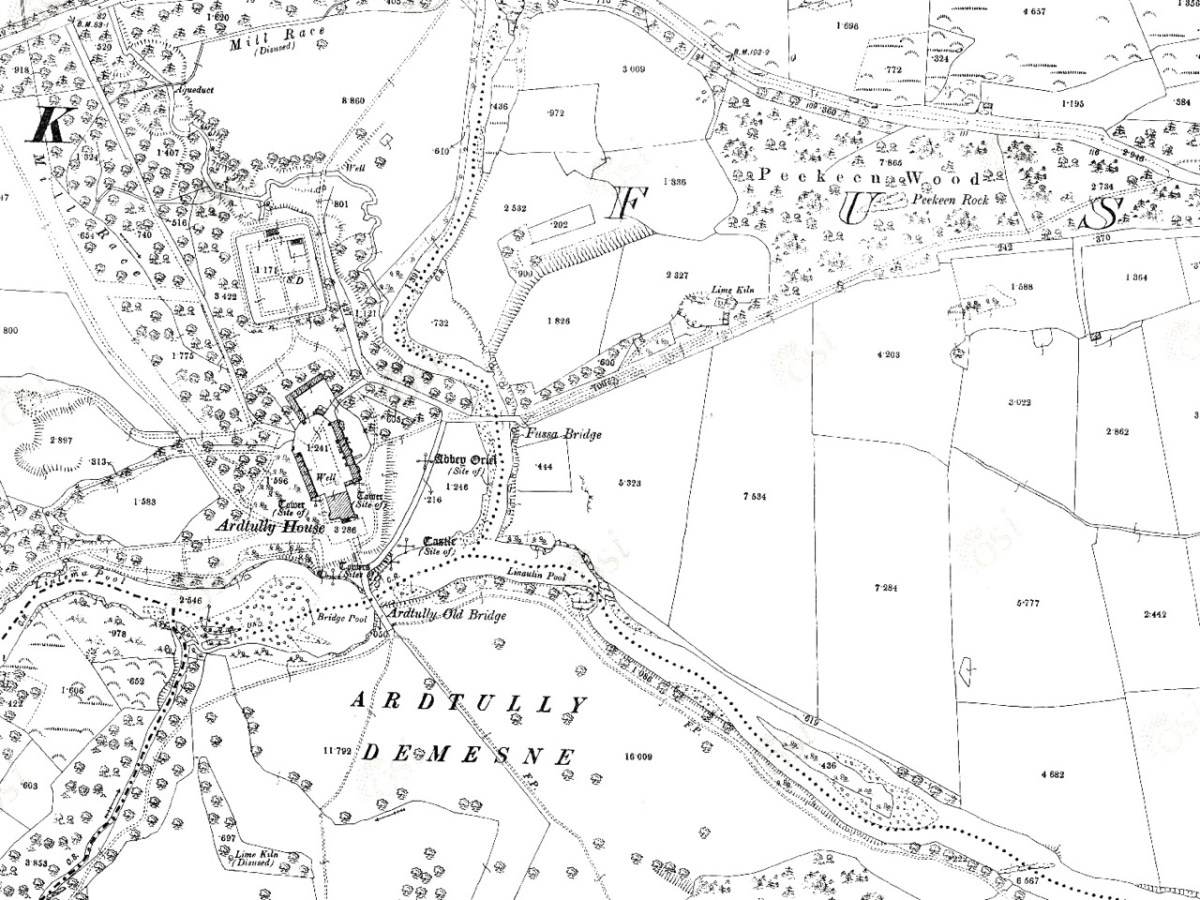
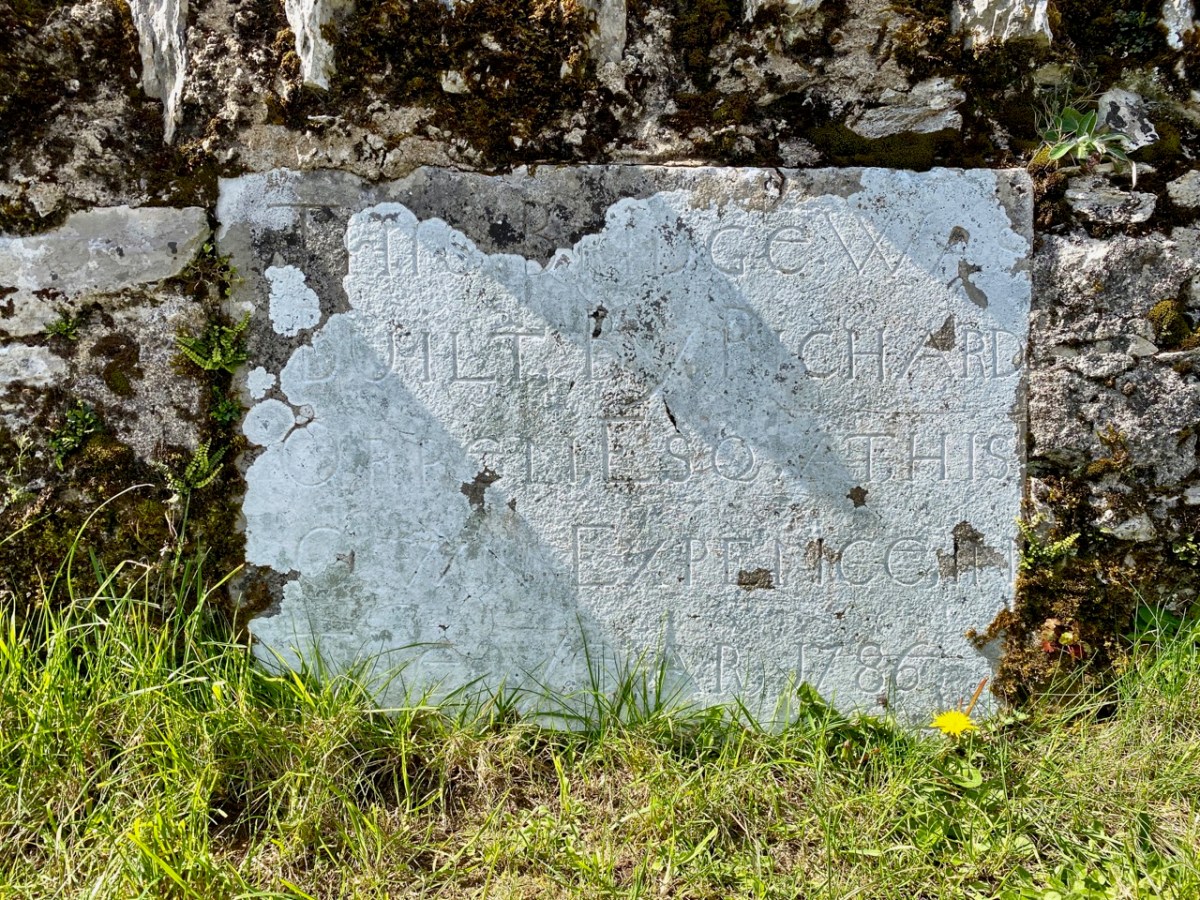
It’s useful to compare the first OS 6″ map (top) – which dates from around 1840, prior to the construction of the new house, which was completed in 1847 – with (lower) the OS 25″ version, dating to the late 1800s. the house is clear there, as is the bridge over the rivers, built by an earlier Orpen generation: it bears the date 1786.

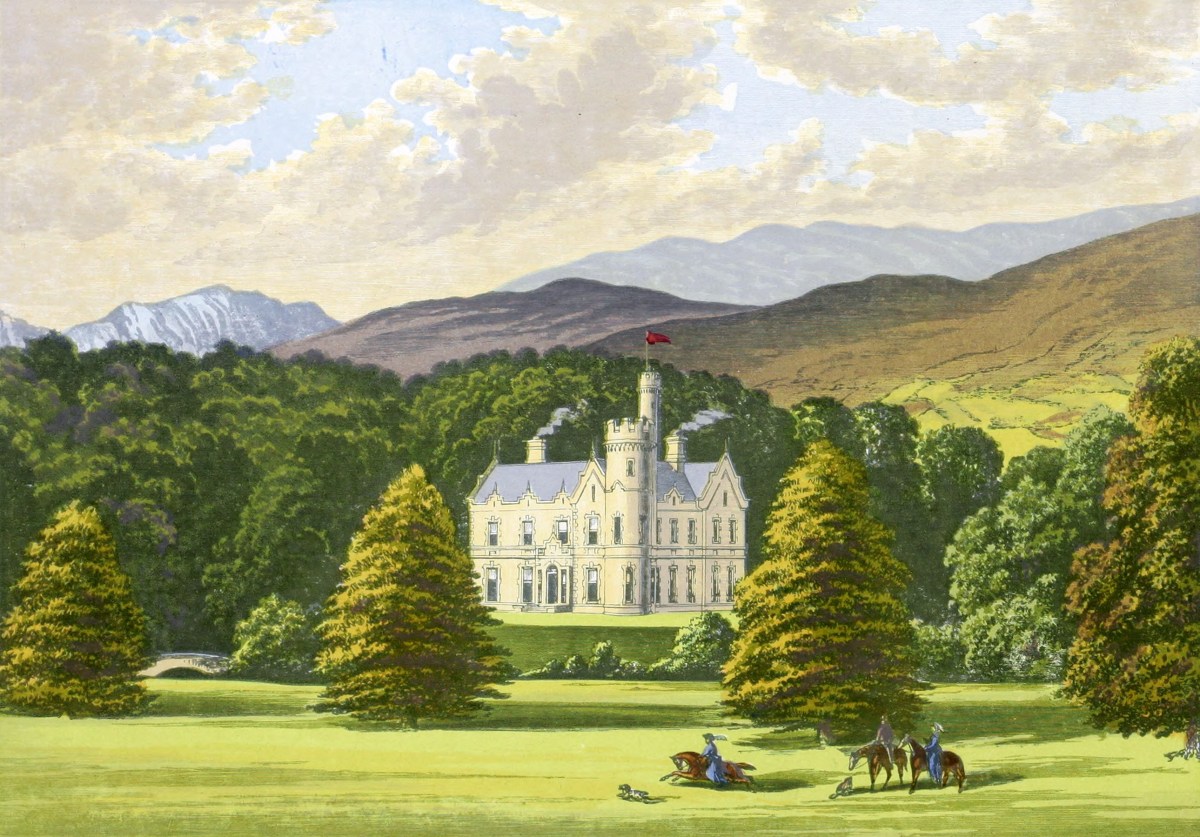
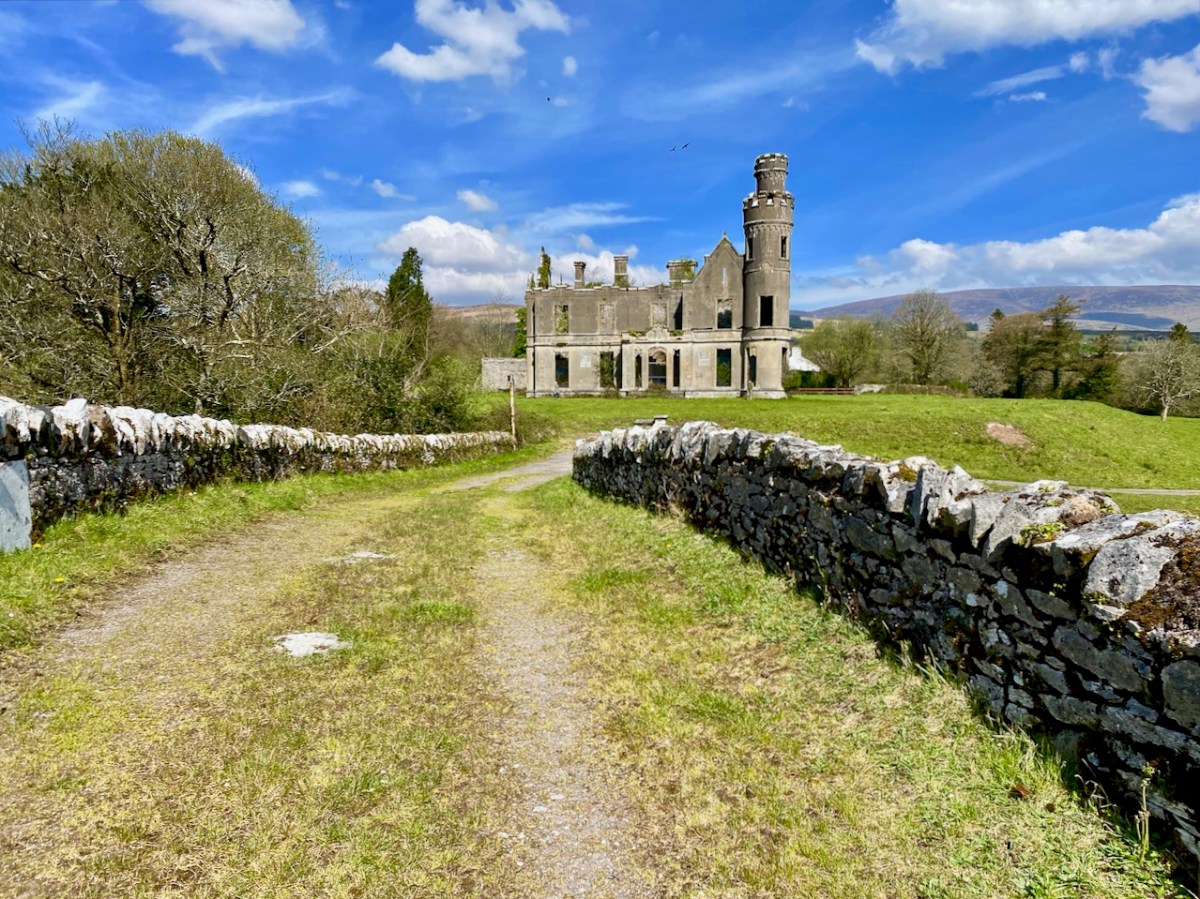
That’s the 1847 Ardtully House, above, in its heyday. The illustration is from The  County Seats of The Noblemen and Gentlemen of Great Britain and Ireland (published 1870). Here (below) is an aerial view of the dwelling within its immediate context. Below that is today’s view from the ‘Ardtully Old Bridge’.

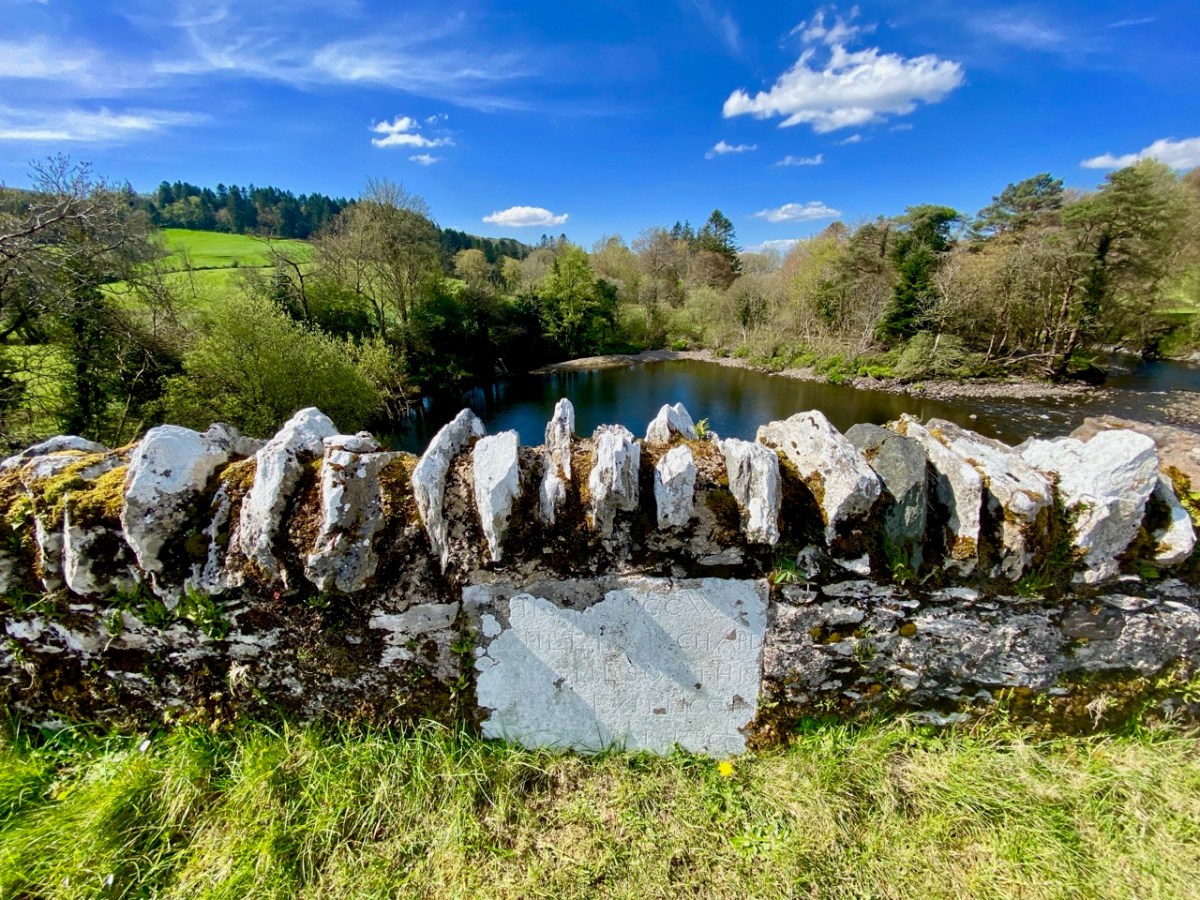
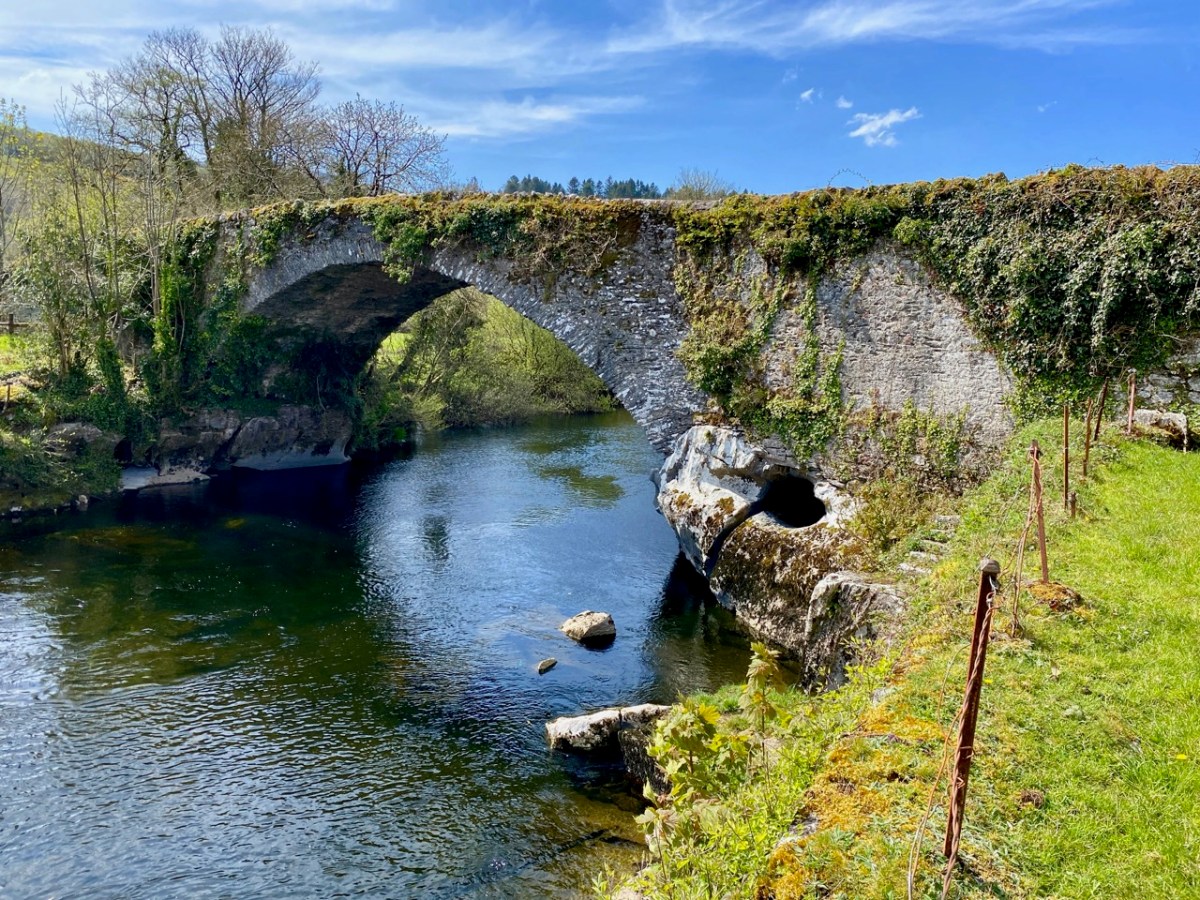
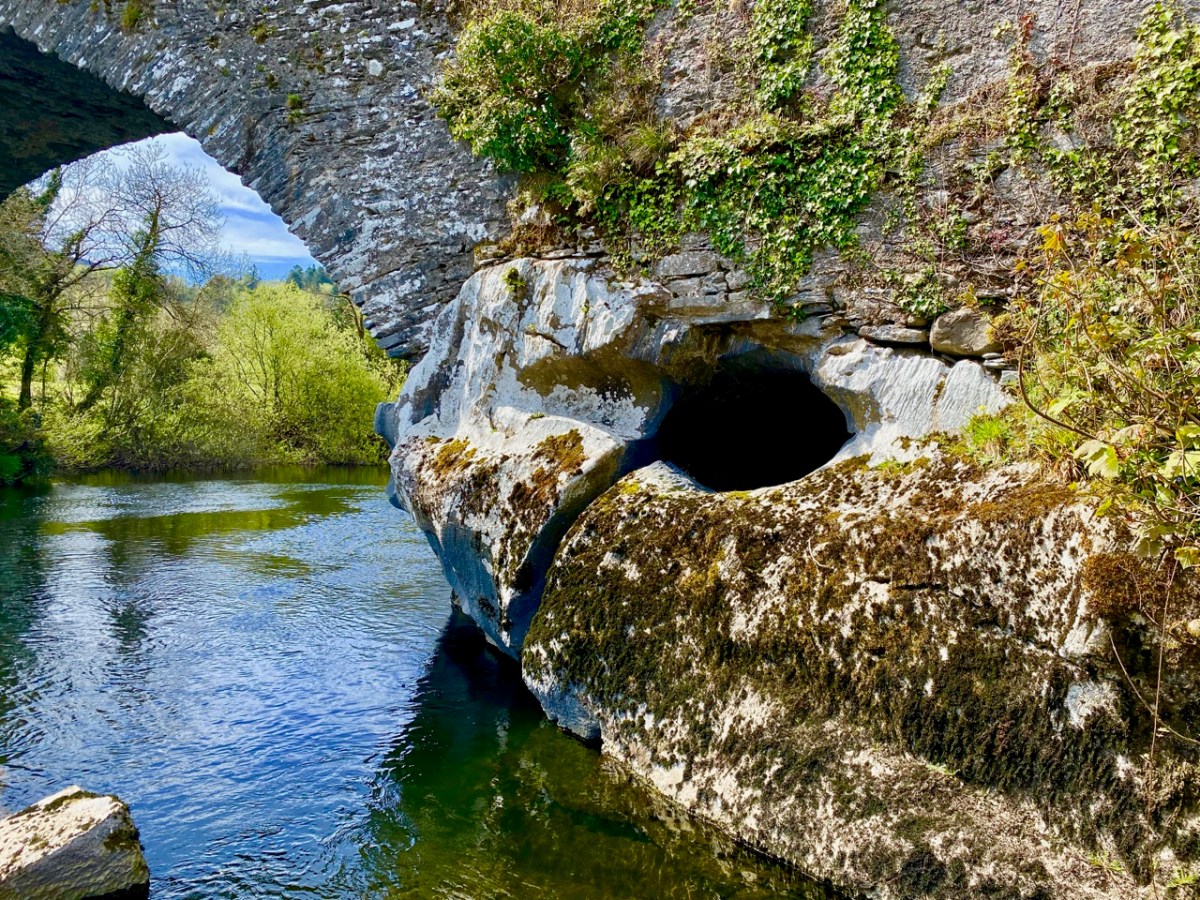
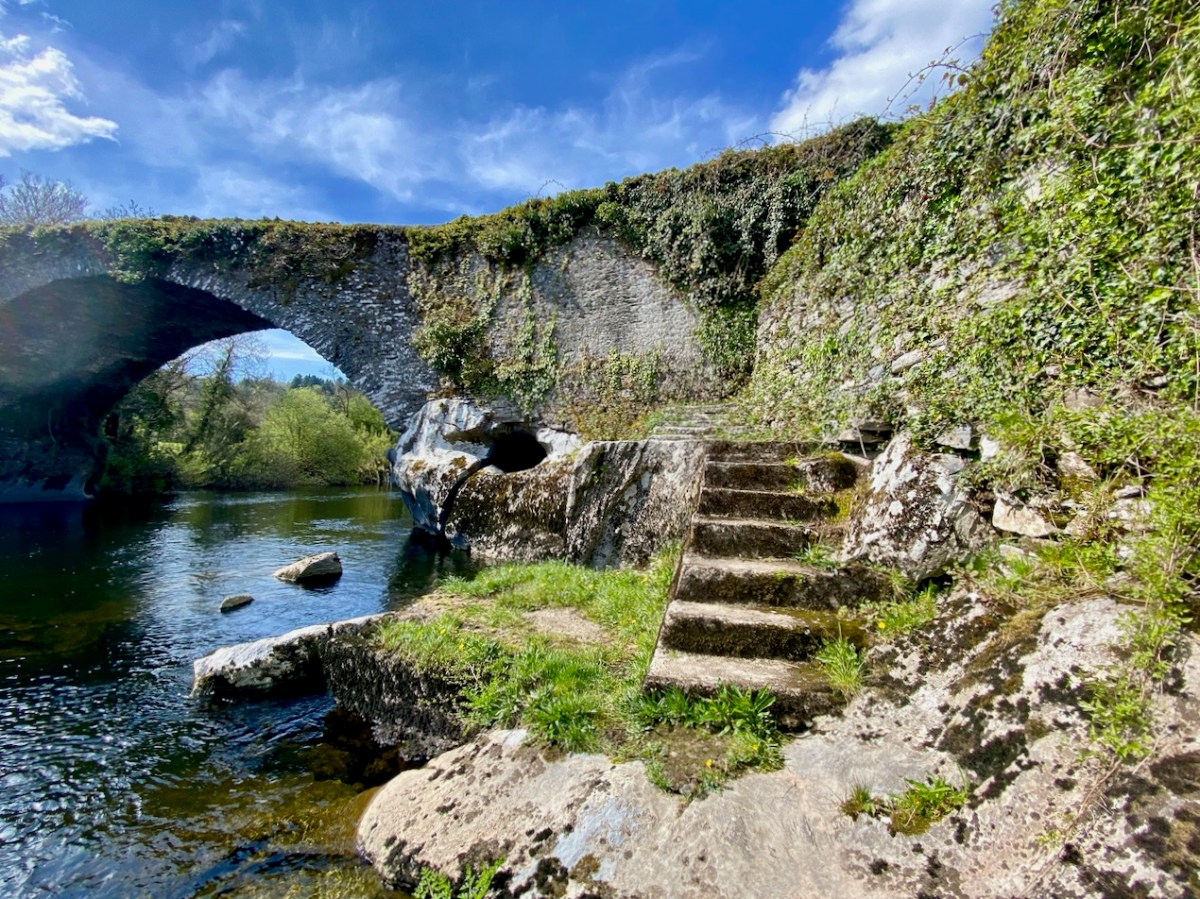
The fine bridge once led to the Demesne; now it ignominiously ends in a field gate. The construction of it is worth a close look – there are some fascinating rocks and outcrops used in its foundation.

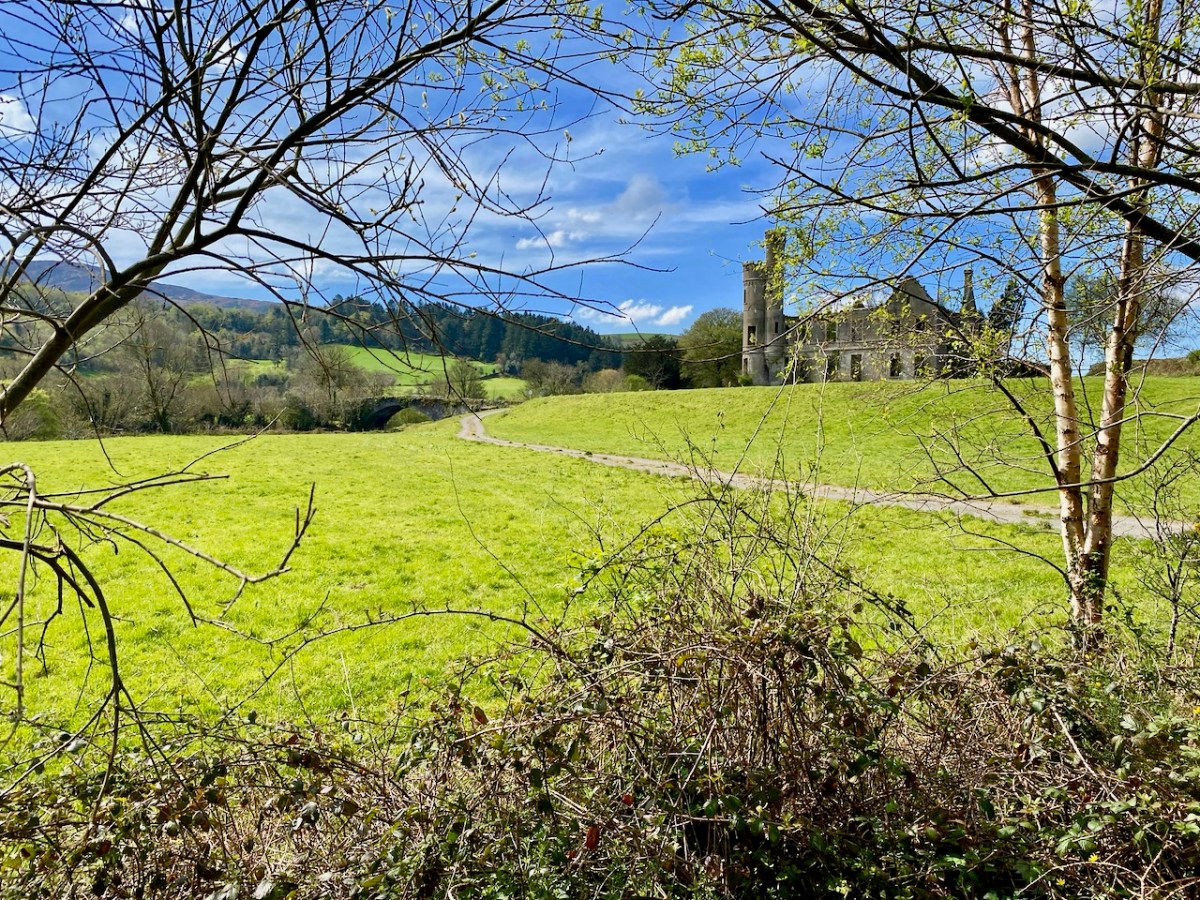
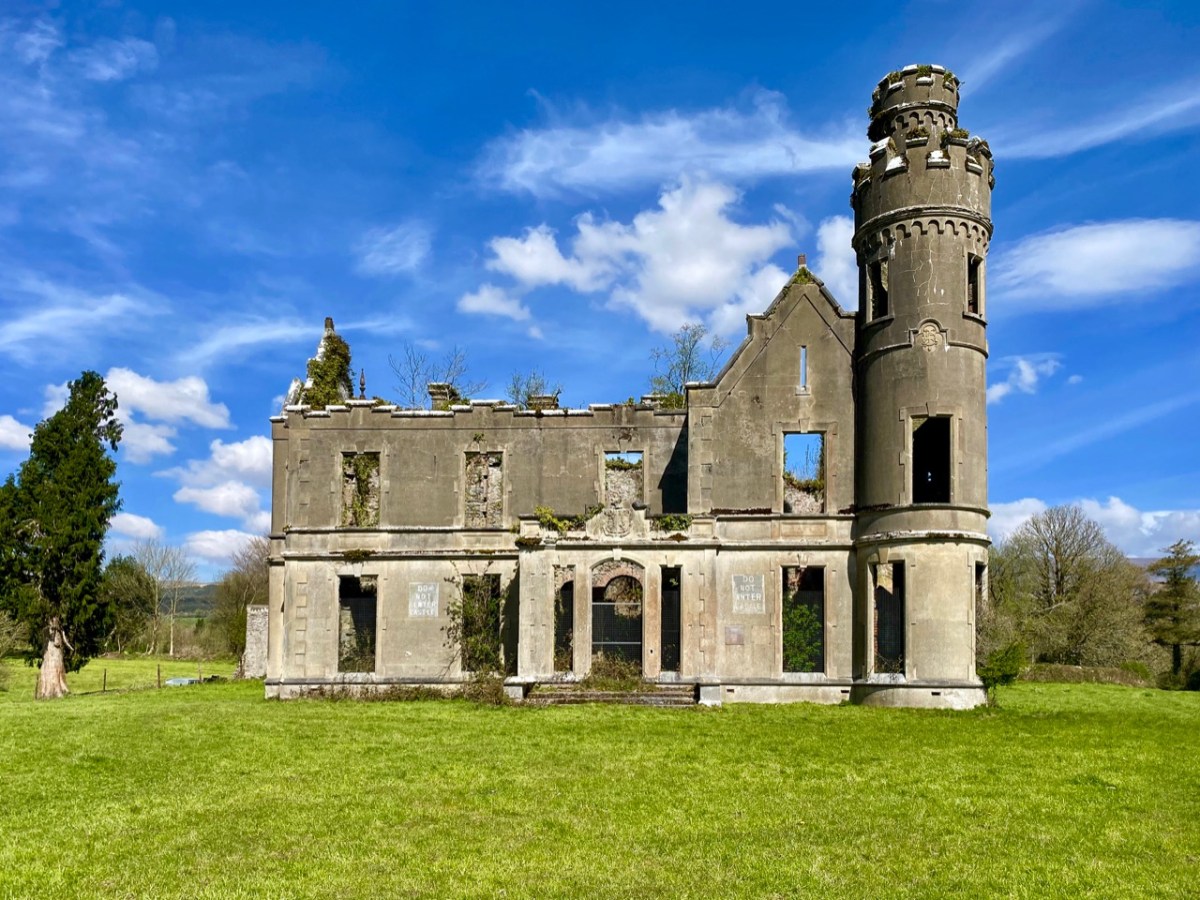
The house met its end in 1921 – a victim of IRA burnings. It stands, gaunt and crumbling: a symbol of a period in Irish history. It’s fully accessible, and the Kerry landscape is stunning on a wonderful sunny spring day. Well worth a visit.

The ‘Baronial’ style of architecture – sometimes called ‘Scottish Baronial’ is given short shrift by ‘The Irish Aesthete‘:

. . . Its architect unknown, the house is customarily summarised as being in the Scottish Baronial style but this seems more a flag of convenience than an accurate description. In truth Ardtully looks to have been a typically Victorian grab-bag of architectural elements, its most prominent feature being a castellated round tower and turret on the south-east corner. Looking towards the river Roughty, the entrance front features a porch topped by the Orpen coat of arms (now damaged), another attempt by Sir Richard to demonstrate his lineage. Inside the house looks to have contained the usual collection of reception and bedrooms ranged over two storeys, the roofline marked by a succession of stepped gables and dormers . . .

https://theirishaesthete.com/2017/08/07/ardtully/

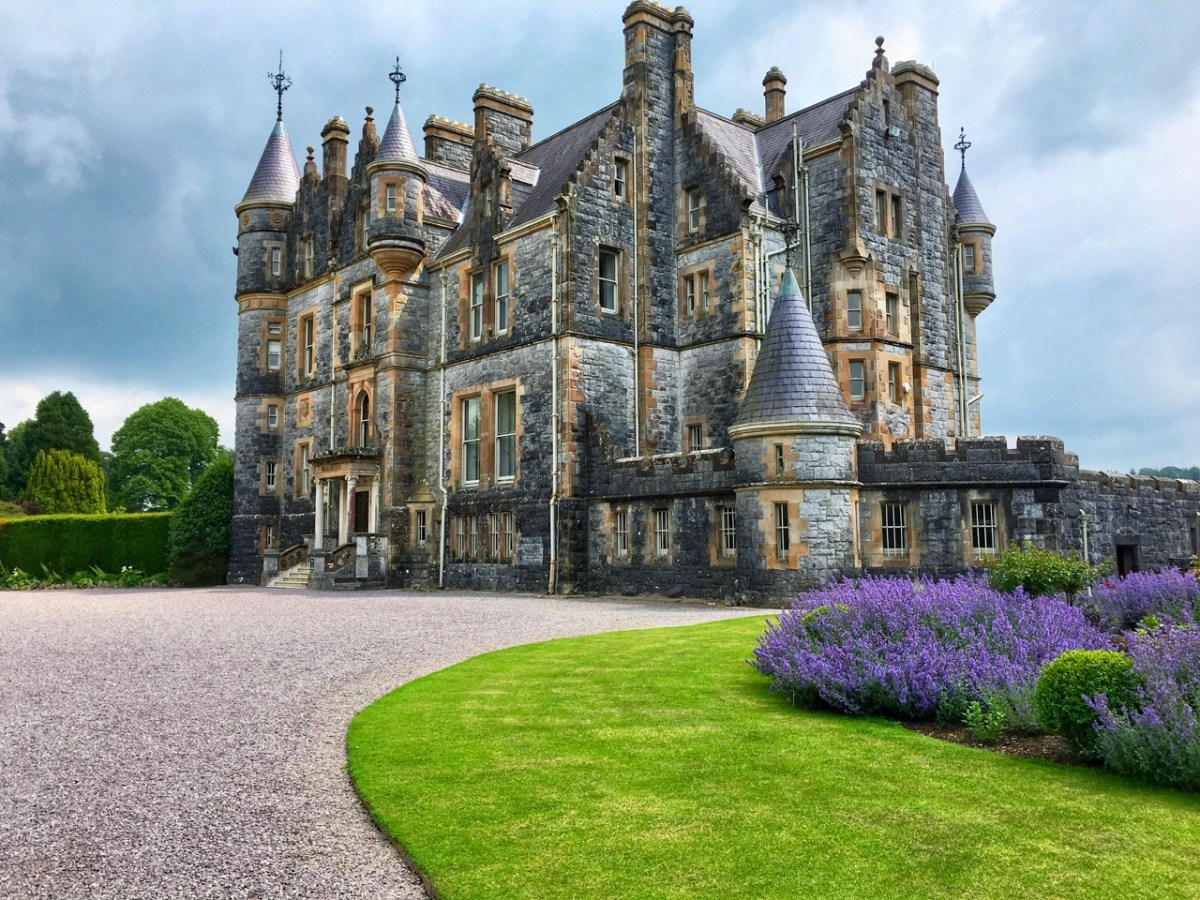
Certainly, the house in its present state doesn’t present much grace. The architectural style was fairly short-lived, and was said to have its origins in France, with references to the Gothic Revival and romanticism. There are further examples extant in Ireland: the nearest (probably) is Blarney House, Co Cork, altogether a more elaborate project, designed and built by Sir Thomas Lanyon of Belfast for the Colthurst family of Ardrum. Surviving today – close to the well-known Blarney Castle, it was also completed in the 1840s.

I will finish this post with the only photograph I could find of Ardtully intact (courtesy http://www.sirwilliamorpen.com). Also have a look at this site.

“Easter” Island!

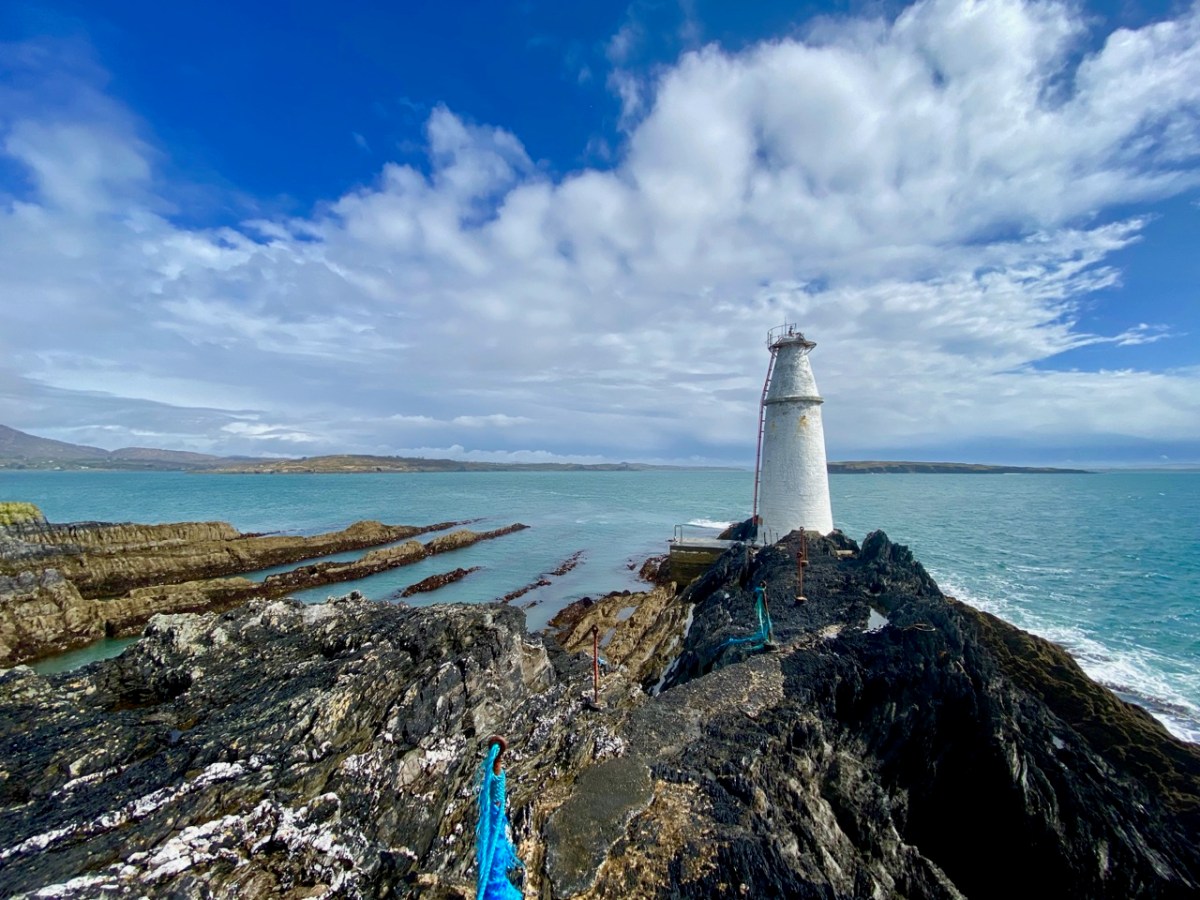
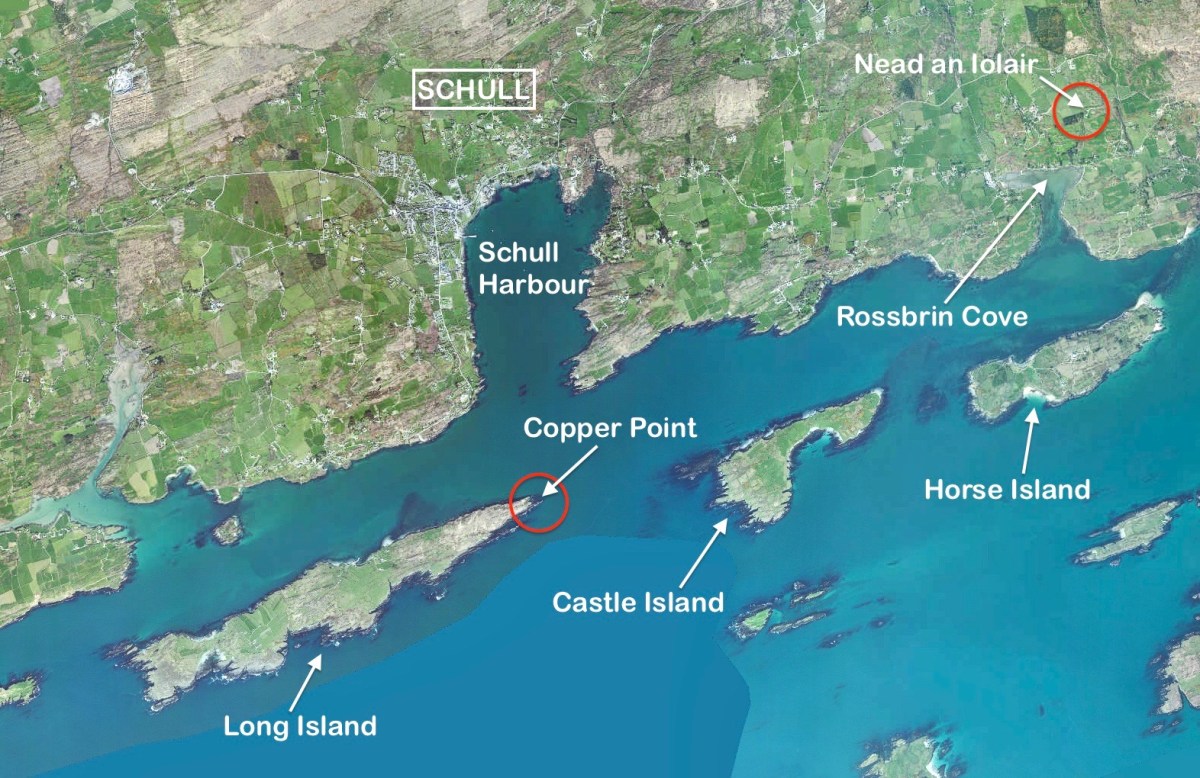
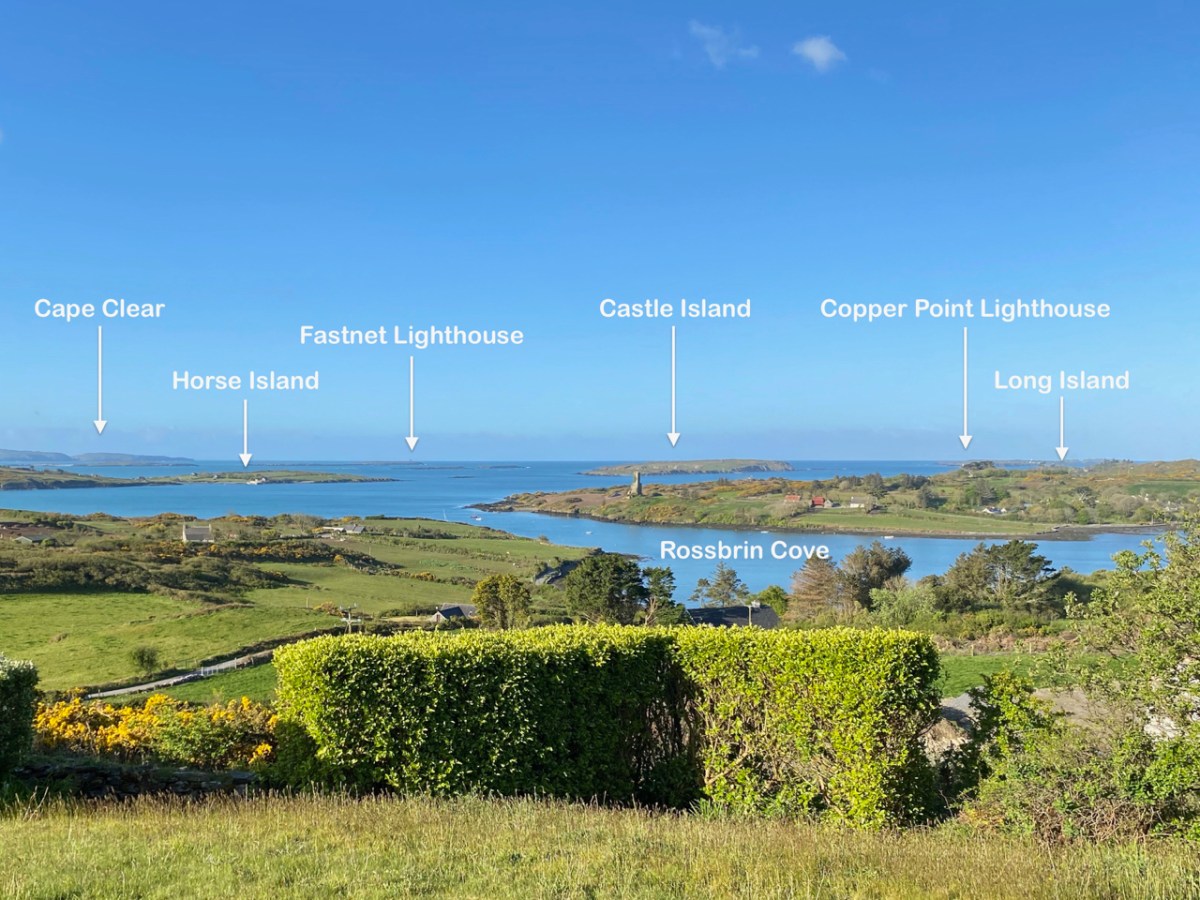
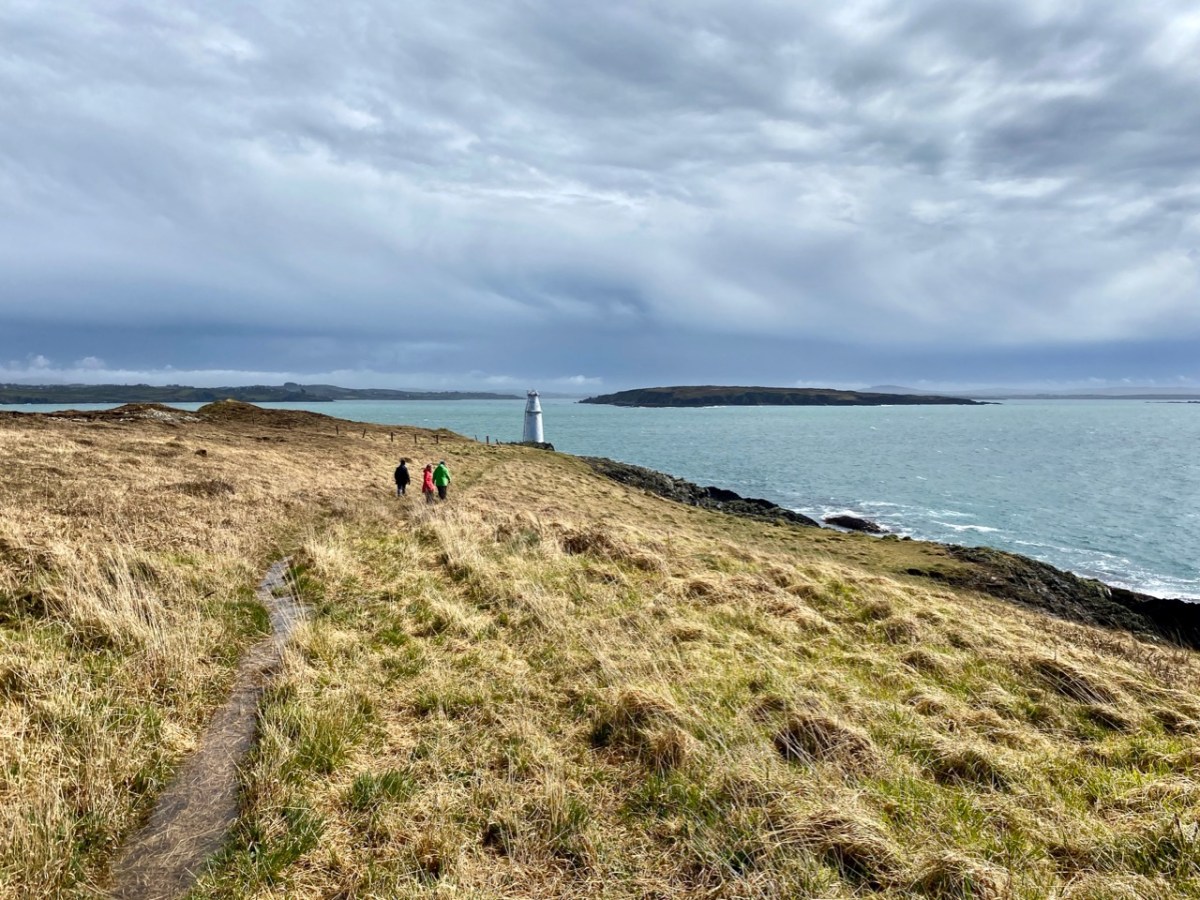
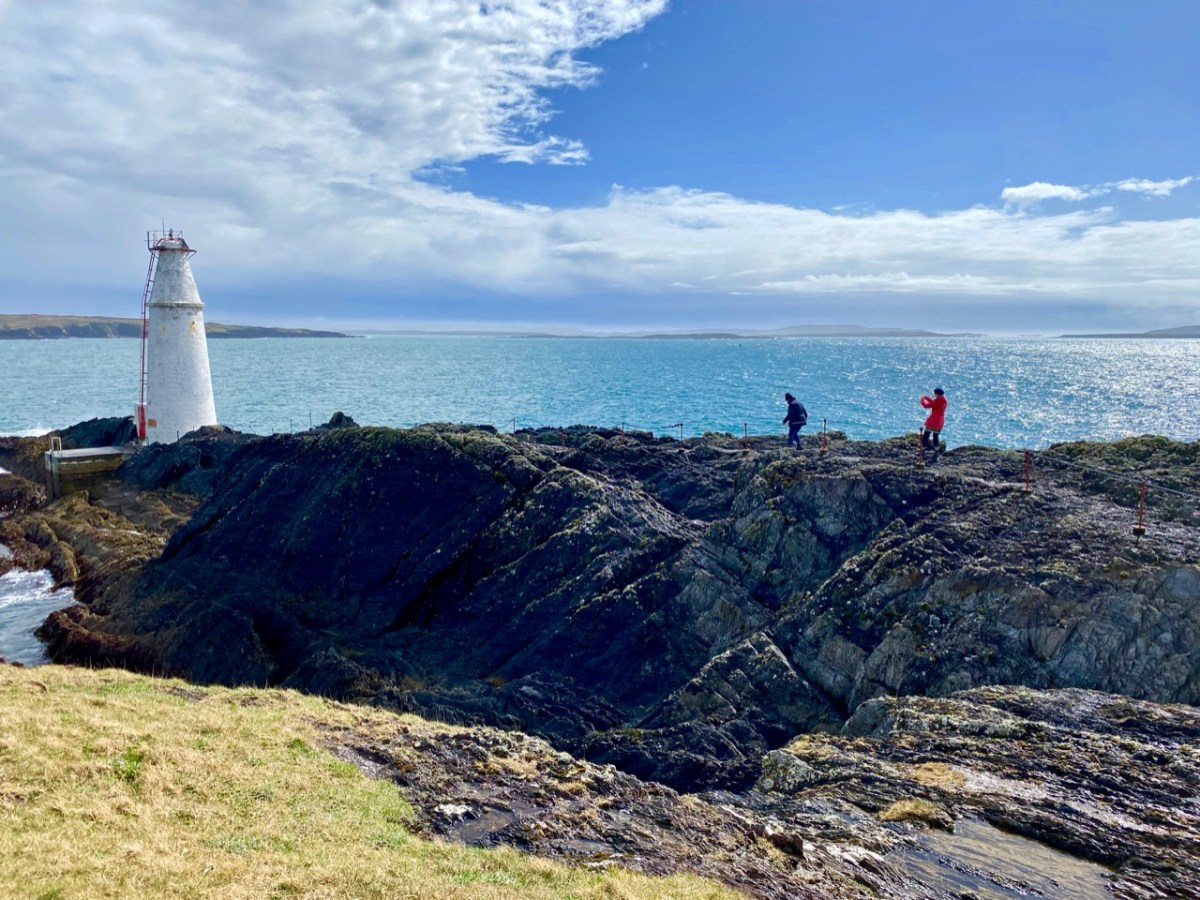
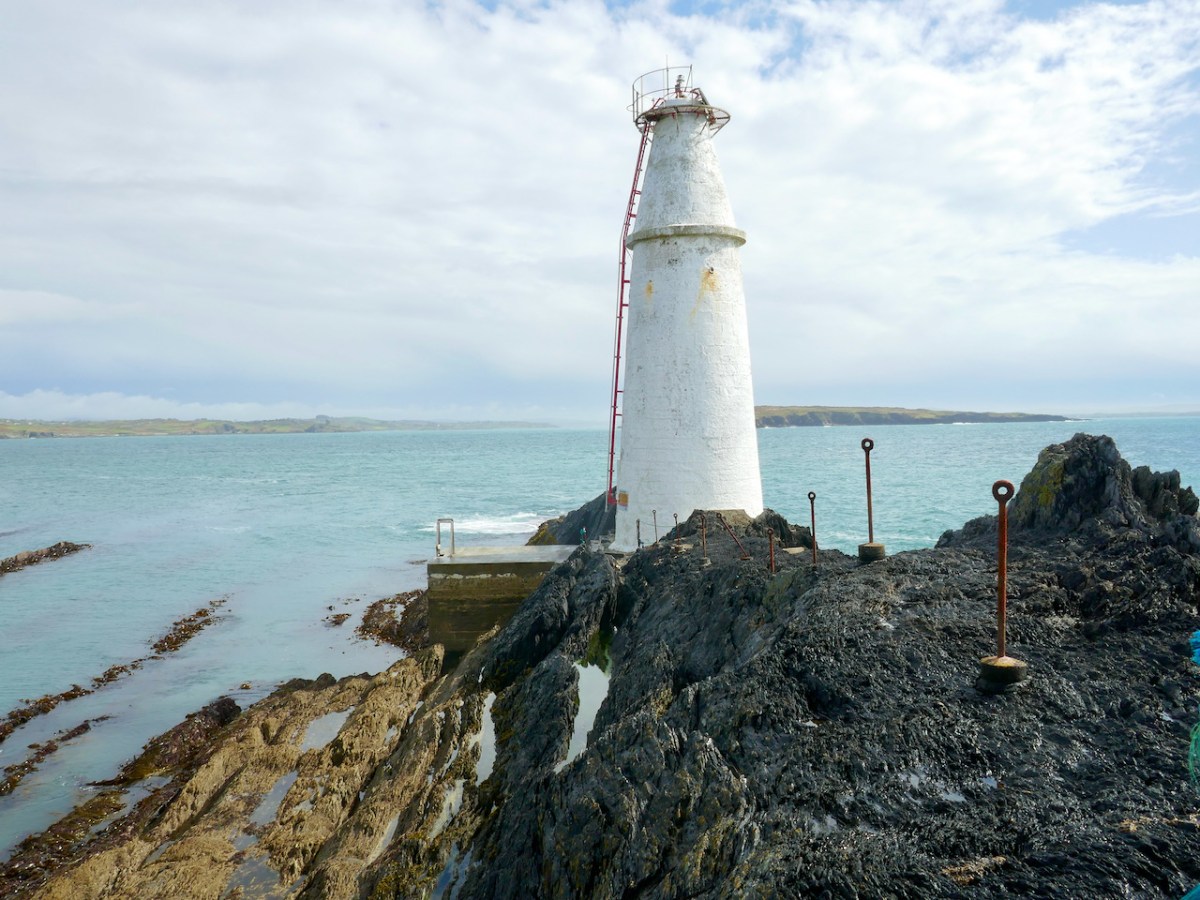
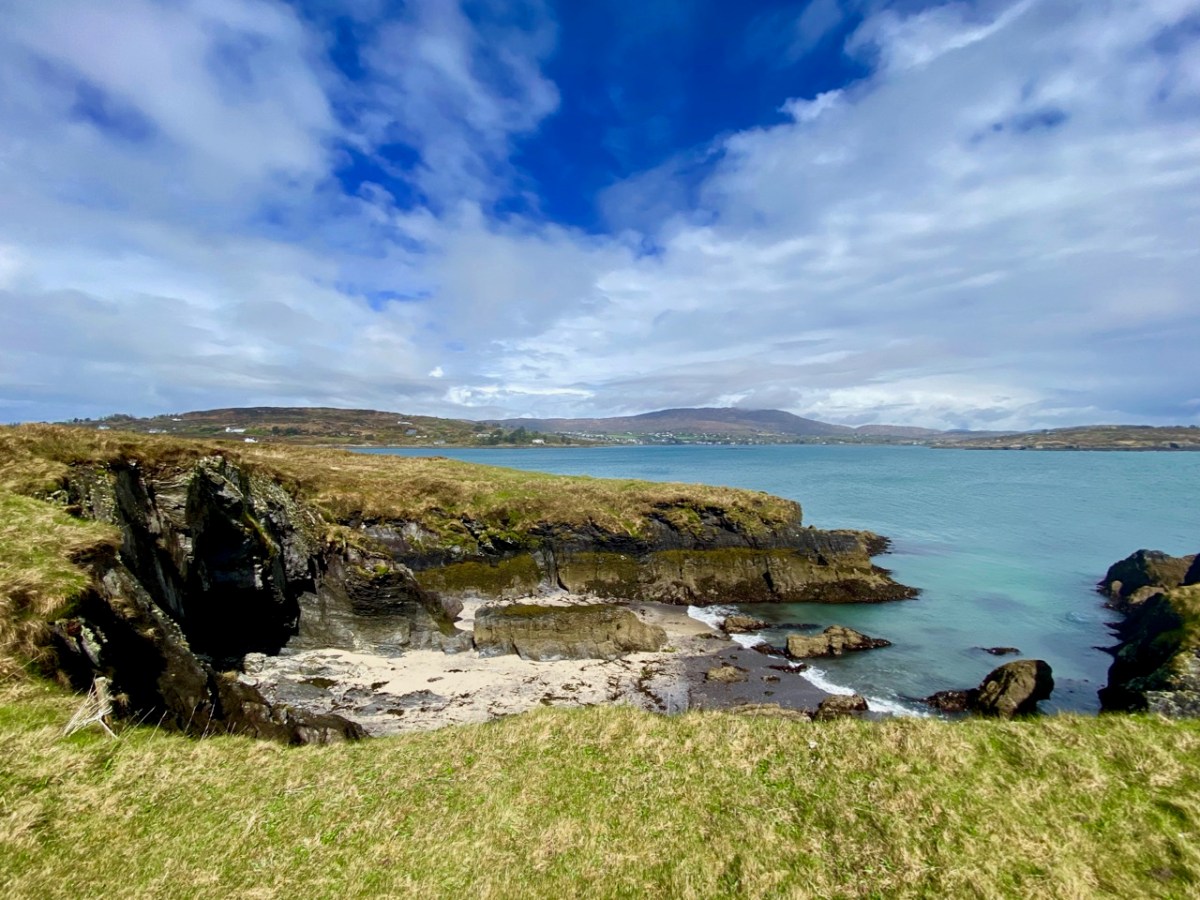
What better place to spend Easter Day than at the ‘Easter end’ of Long Island? We can see the island – out there in Roaringwater Bay – from our home here at Nead an Iolair. The lighthouse on the end of the island faces us – and winks through the night with the character of 3 quick flashes every 10 seconds. The narrow headland on which it stands bears the name ‘Copper Point’ – and so does the lighthouse.

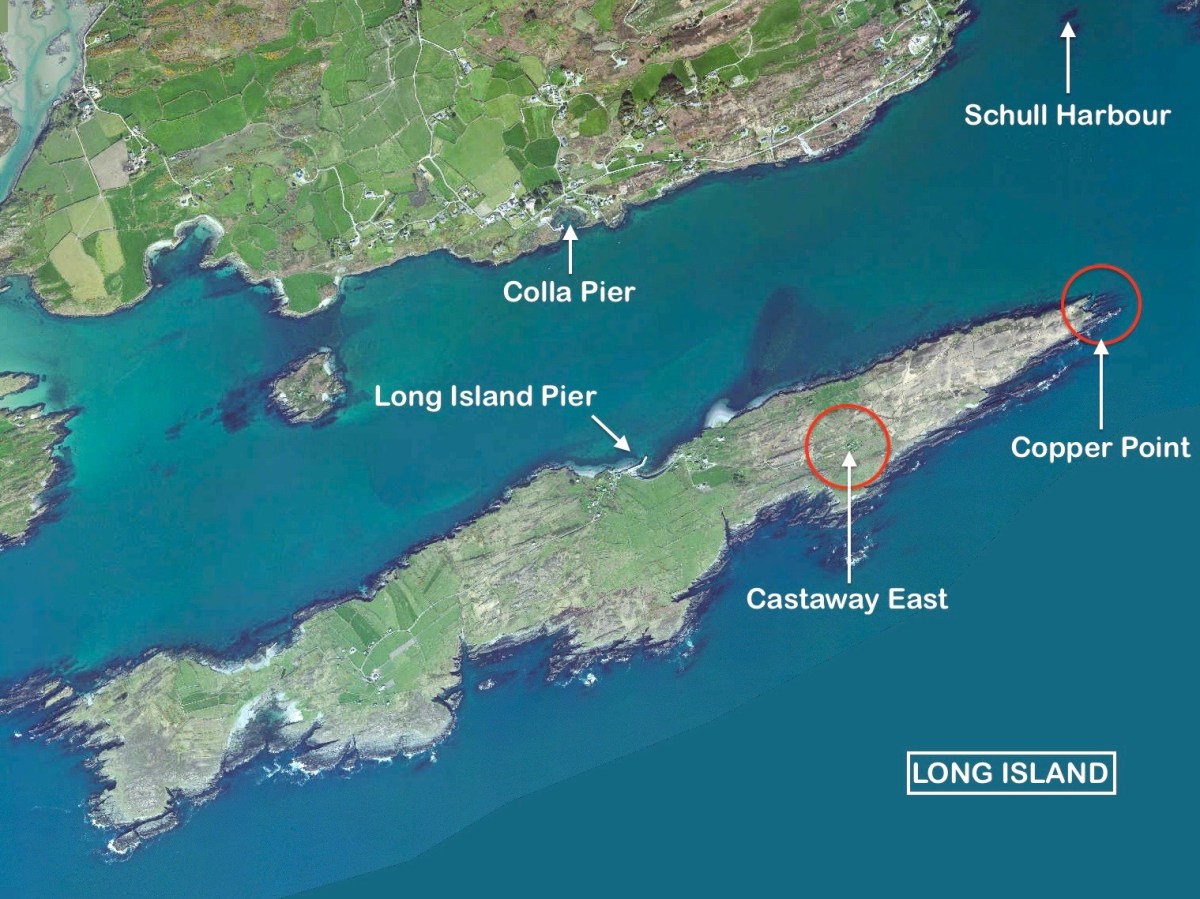
This aerial view shows Long Island in its context – a part of Roaringwater Bay and its ‘Carbery’s Hundred Islands’. Its neighbours to the east are Castle Island and Horse Island – all in our view – (that’s our view, below).

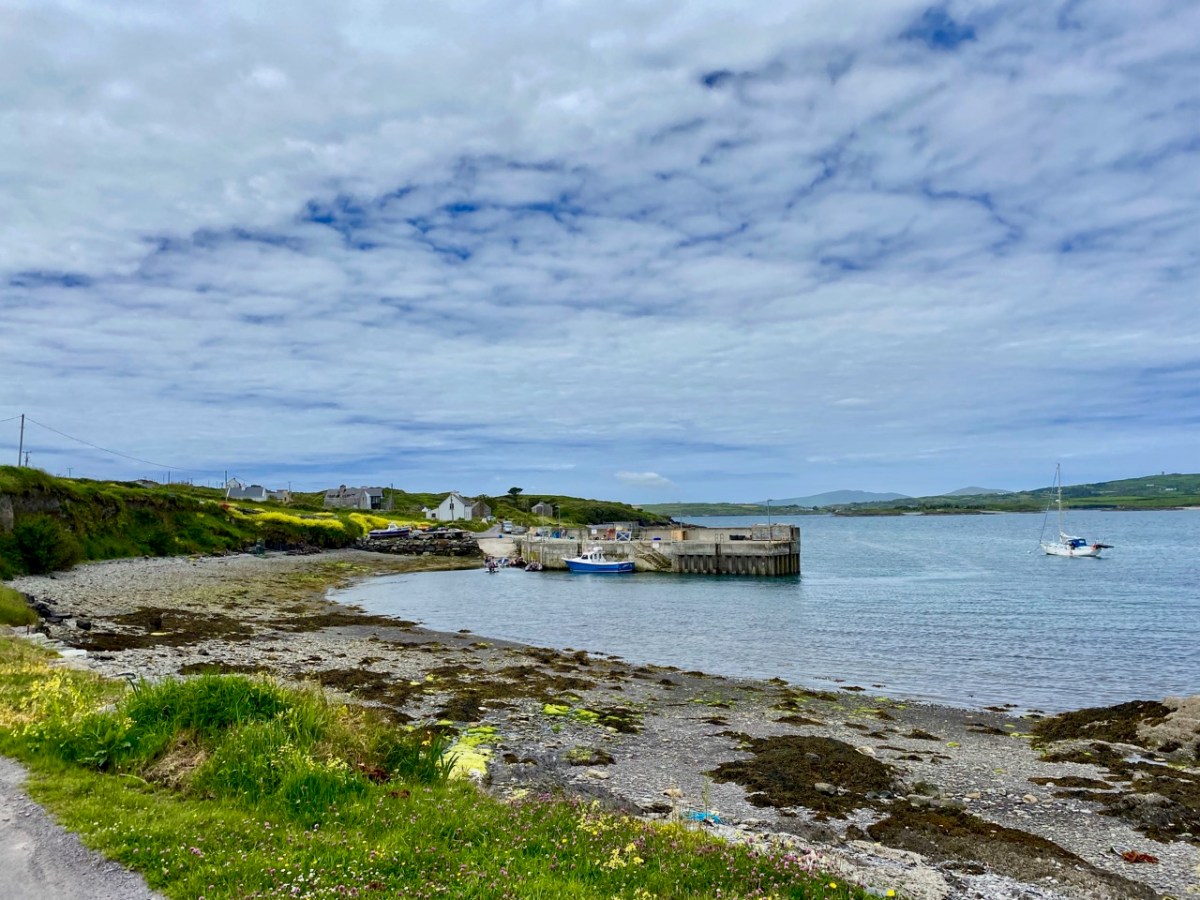
A closer aerial view of the island, above. It’s accessed by a regular ferry which leaves Colla Pier, a short distance from Schull town. The ferry arrives at Long Island Pier: there it is, on the pier (below).

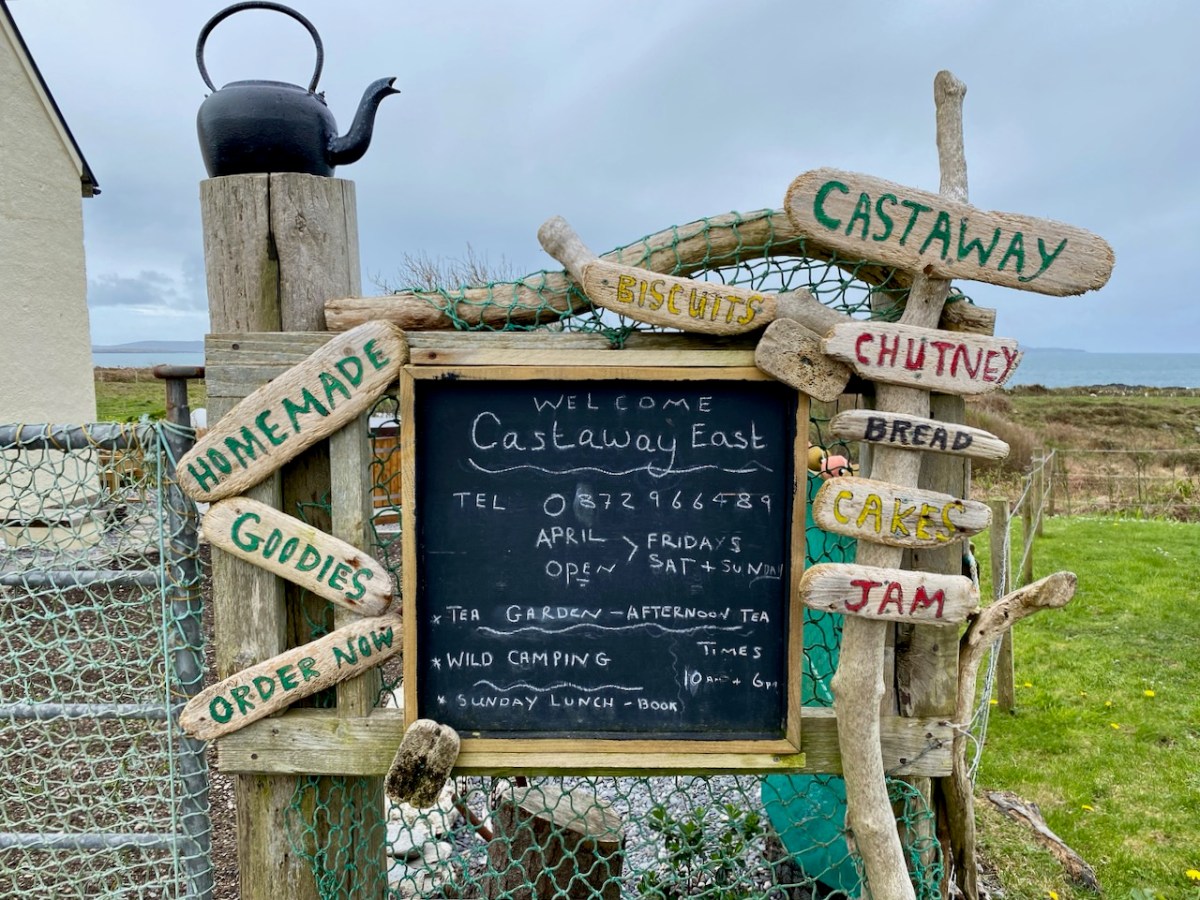
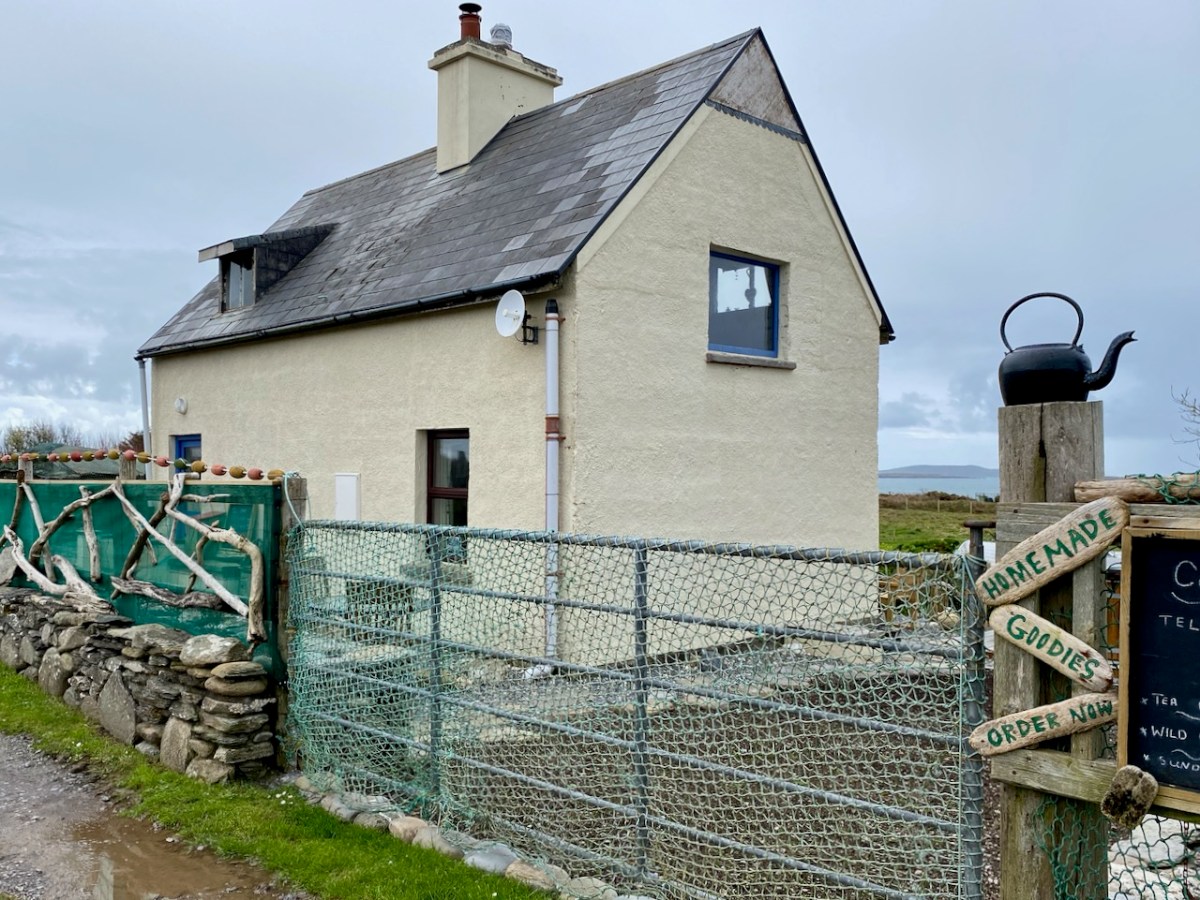
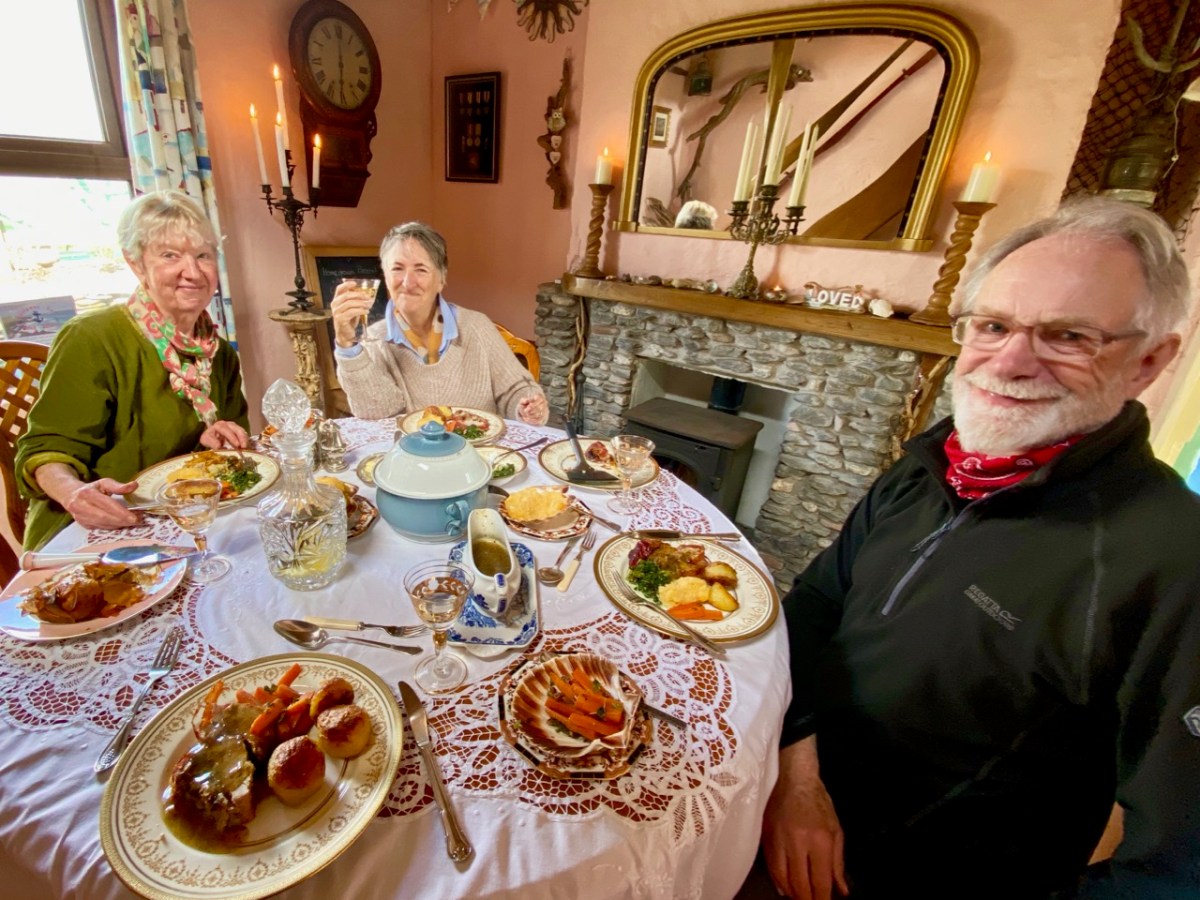
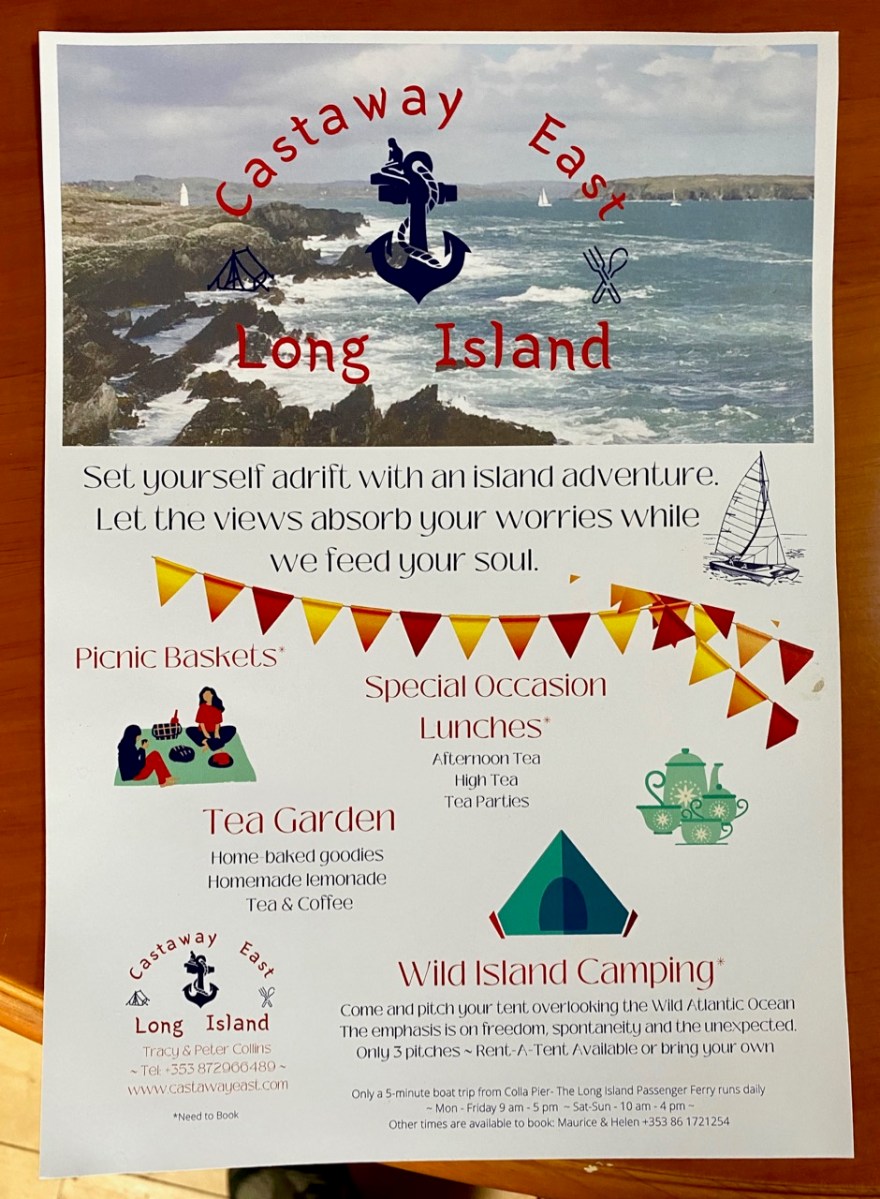
Our destination on this Easter Sunday was Castaway East – the furthest house on the ‘Easter’ end of the island. We have taken you there before, when we organised a Mad Hatter’s Tea Party in July of last year. The hosts there are Tracy and Peter, who served us brilliantly for that occasion, and also for the Wildflower Walks which Finola led last June: the Castaway crew provided a superb picnic for everyone, delivered to us at the island’s western end. This time we decided that we would test Tracy and Peter’s skills by ordering up an Easter Sunday lunch to celebrate a ‘special’ birthday for our good friend, Peter Clarke.

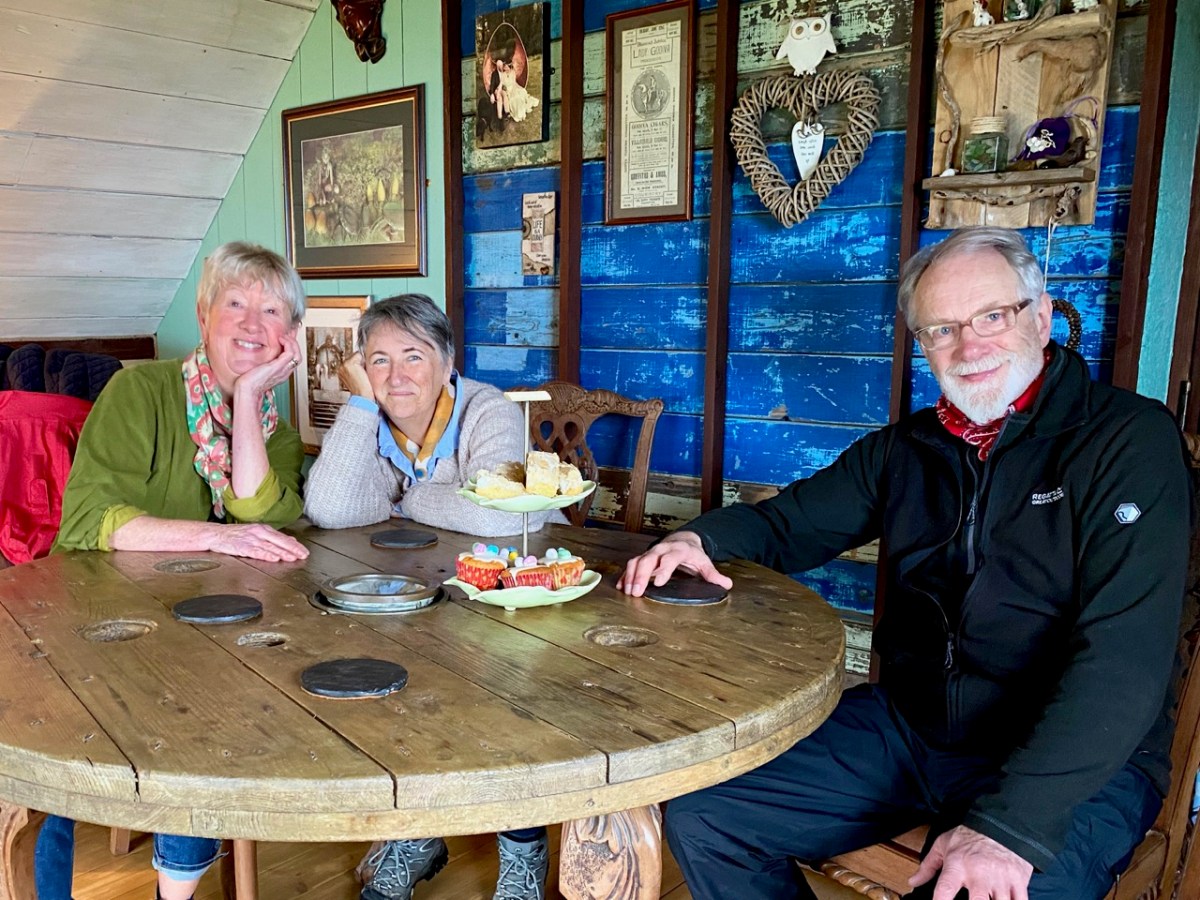
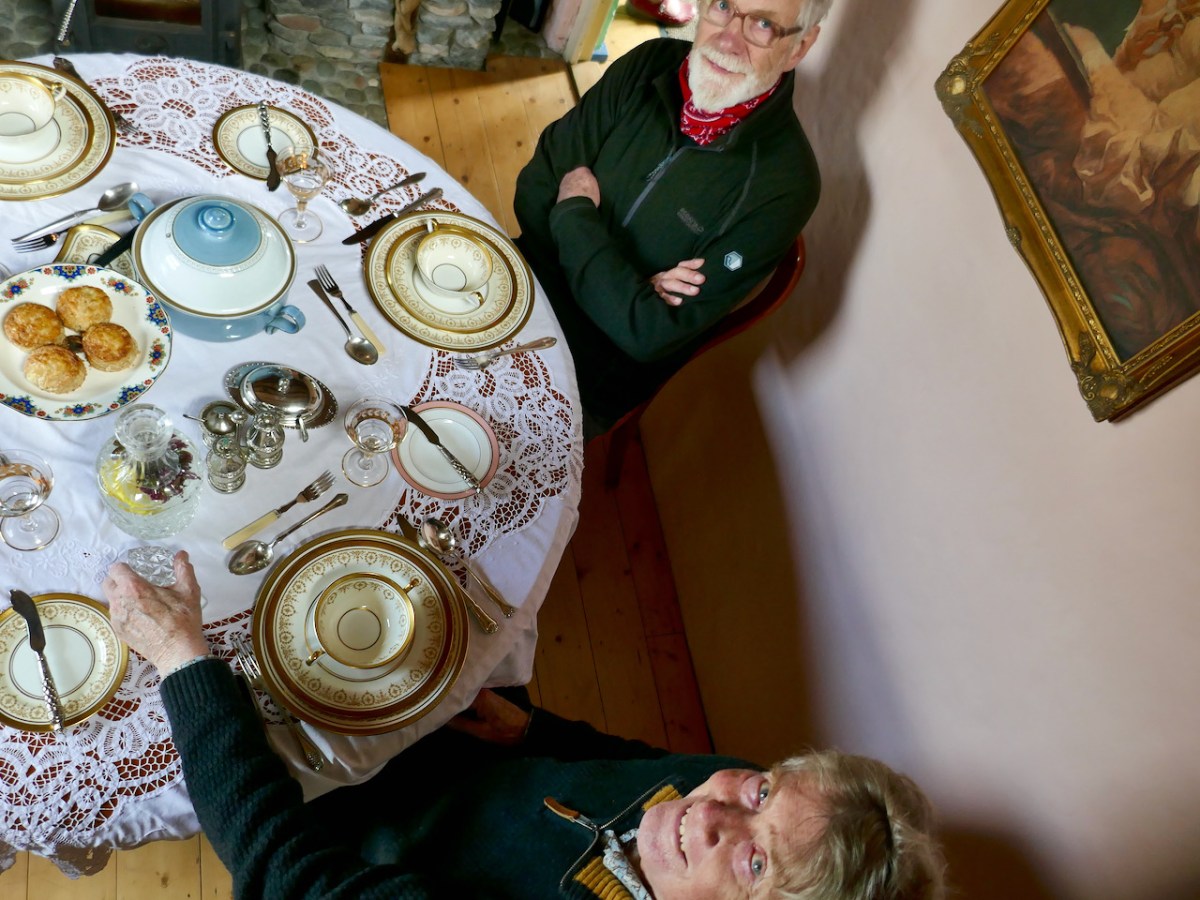
Amanda Clarke, Finola and birthday boy Peter, looking forward to a morning coffee (with delicious Easter treats) after arriving at Castaway East. We had an upstairs room in the Castaway house, with a good view over the island. Before lunch we had an opportunity to explore part of the island we had never been to before, heading down to Copper Point.

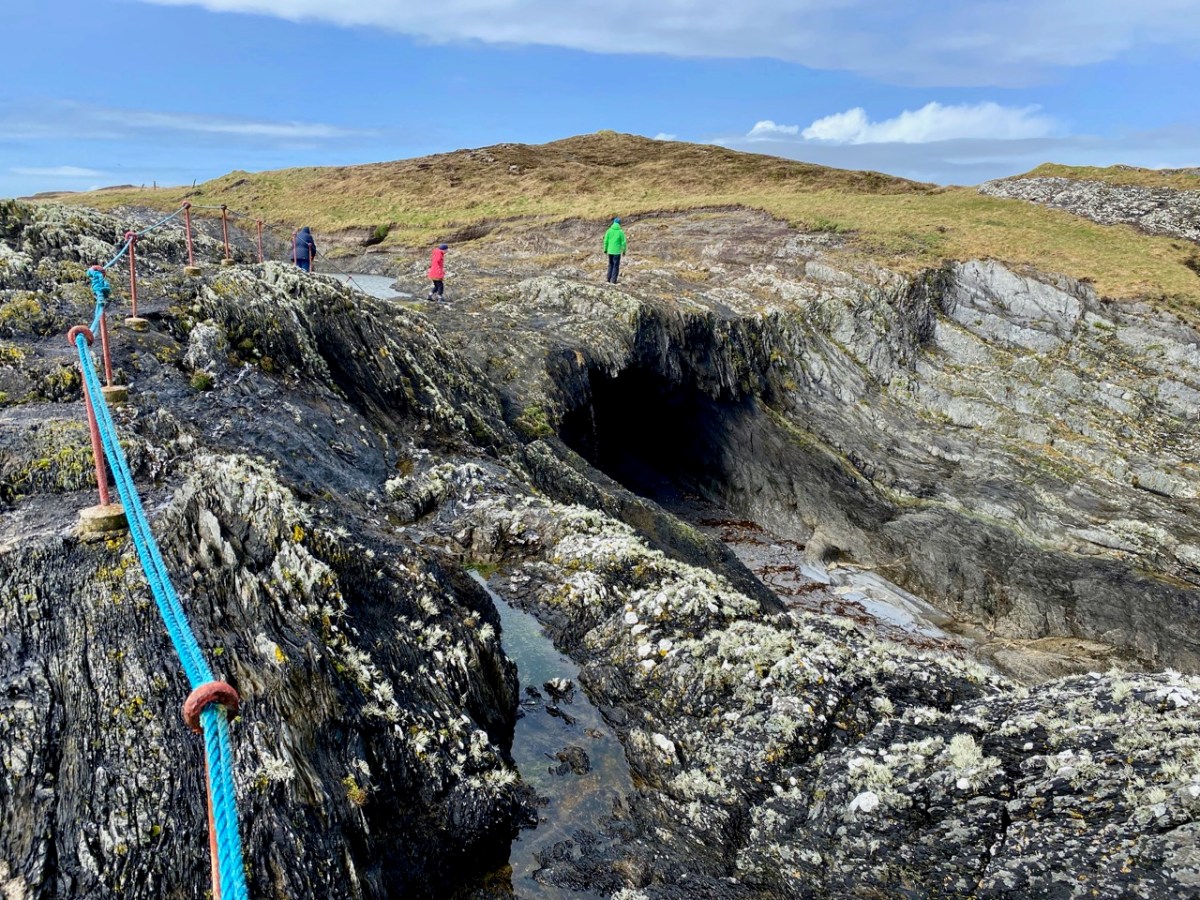
Why is it called ‘Copper Point’? Because there was a copper mine close by, one of many such enterprises that were seen in West Cork in the nineteenth century. Explorations on the island were started in the 1840s by the Cornish mining engineer Captain William Thomas: he wrote a Roaringwater Journal post for us a couple of years ago! William sank a trial shaft for 10 fathoms (60 feet) and extended a level south from this shaft for 3 fathoms. No metal bearing lode was found, and the mine was abandoned. Traces of these workings can still be seen not far from the lighthouse. It’s slightly ironic, perhaps, that the name ‘Copper Point’ arrived from somewhere and stuck.

It’s a wild landscape – but very beautiful and imbued with atmosphere. We certainly worked up a good appetite while on our morning walk, and returned to the house with great expectations.

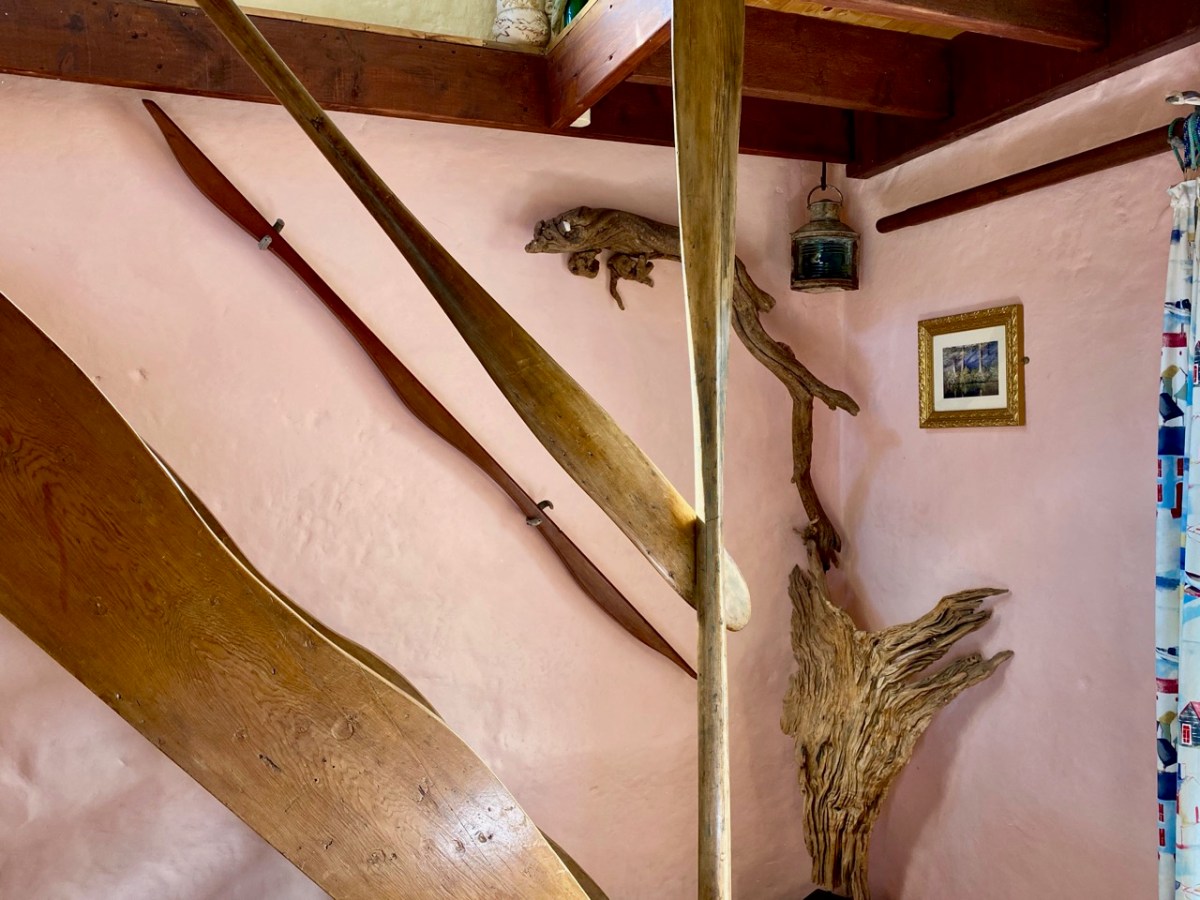
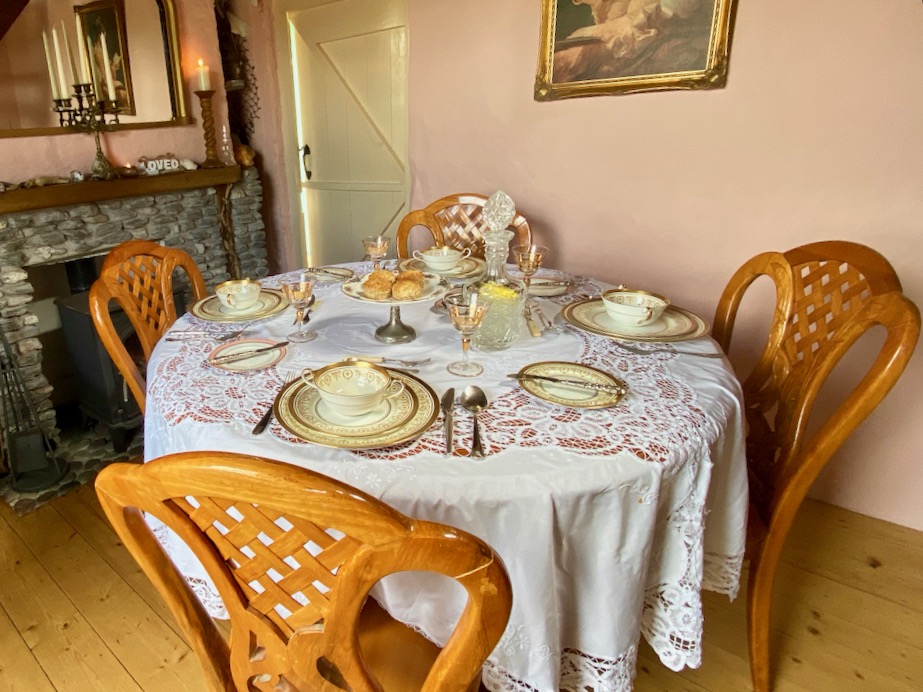
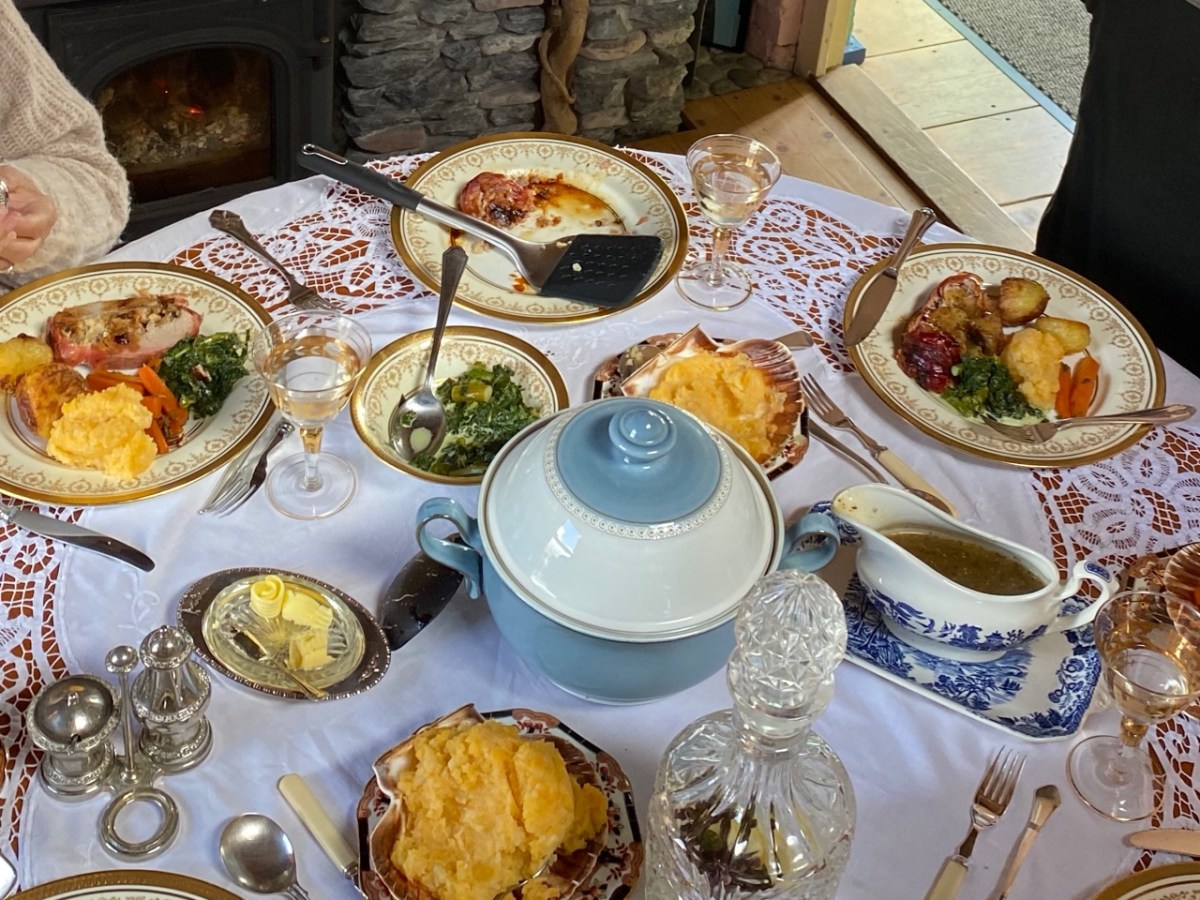
All those expectations were far exceeded when we sat down to our meal. We had a room to ourselves, attractively furnished and comfortable, with a welcome wood-burning stove on the go in one corner. Tracy and Peter have spent considerable time and energy upgrading what was a very run-down cottage, and have used locally available materials with impressive imagination.

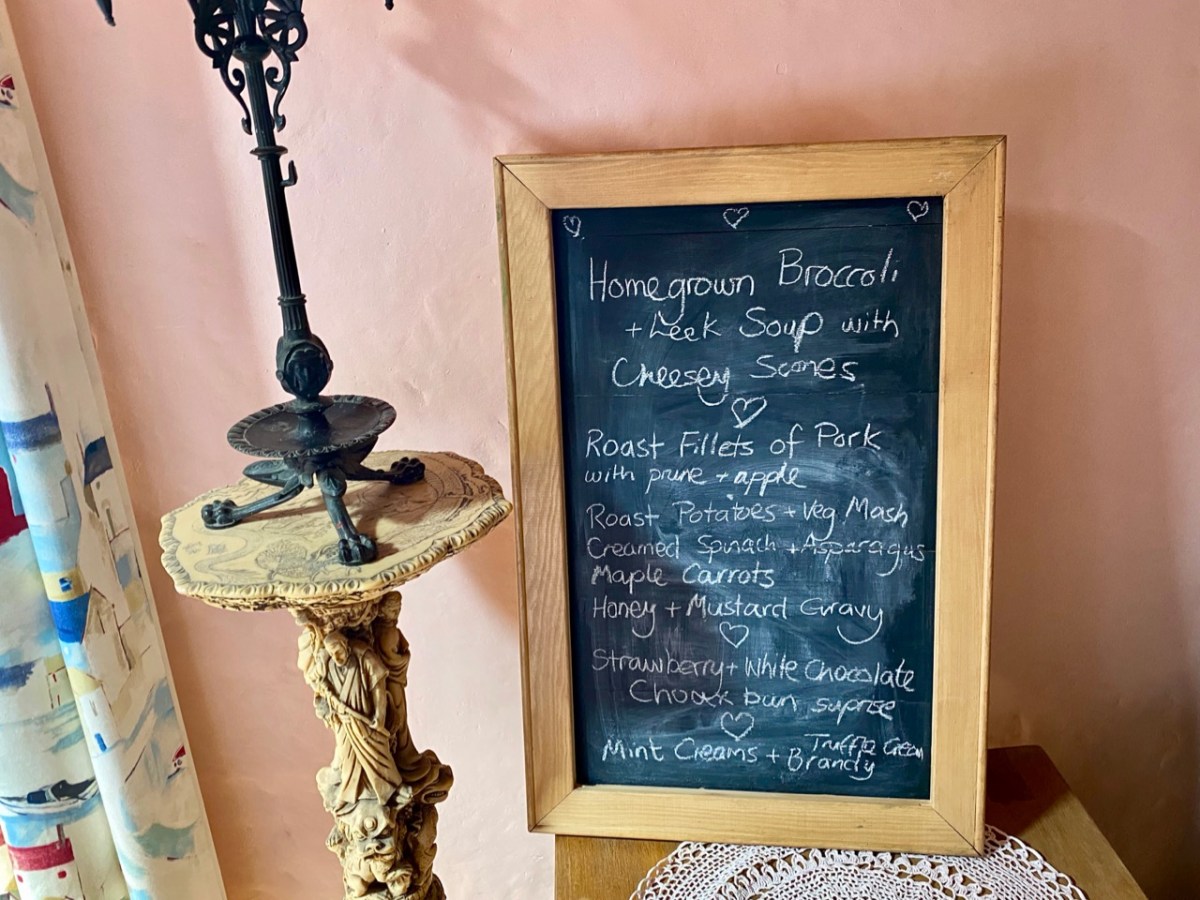
Tracy – in charge of the culinary delights – had worked out a menu which was entirely tailored to our various tastes (and dislikes) – and it was brilliant! All the courses were exemplary.

The main was a Sunday roast to make your mouths water… Fillets of pork for the three of us who are not vegetarian, and a miraculous stuffed filo pastry pie for Amanda. The accompanying vegetables were prepared without any meaty elements – so we could all savour them in equal measure.

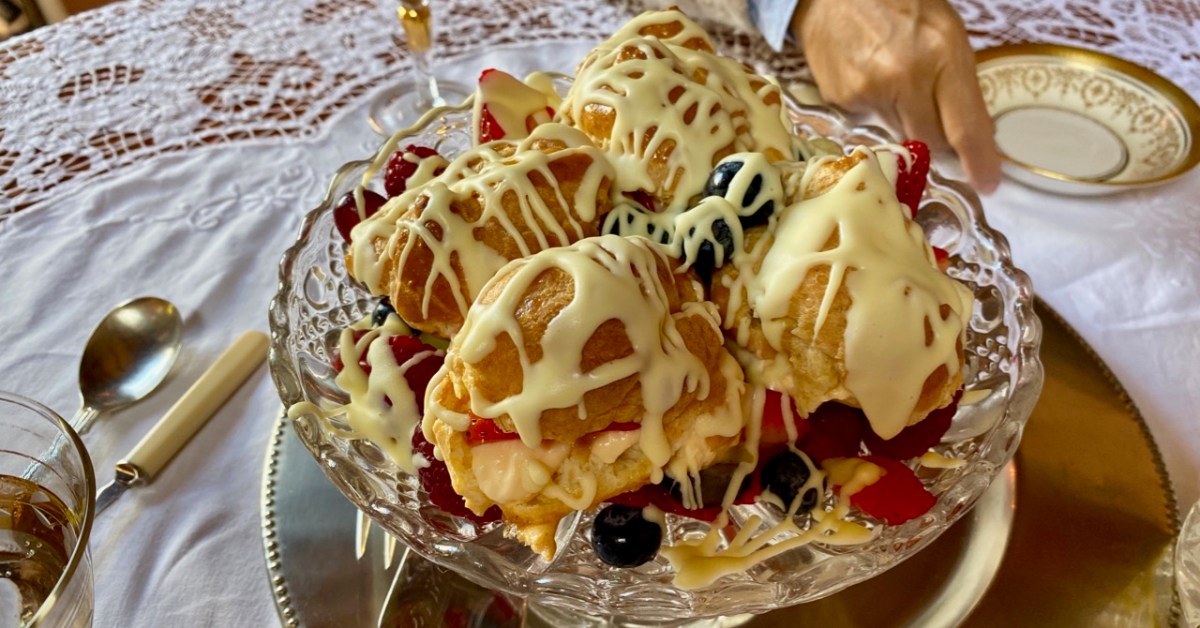
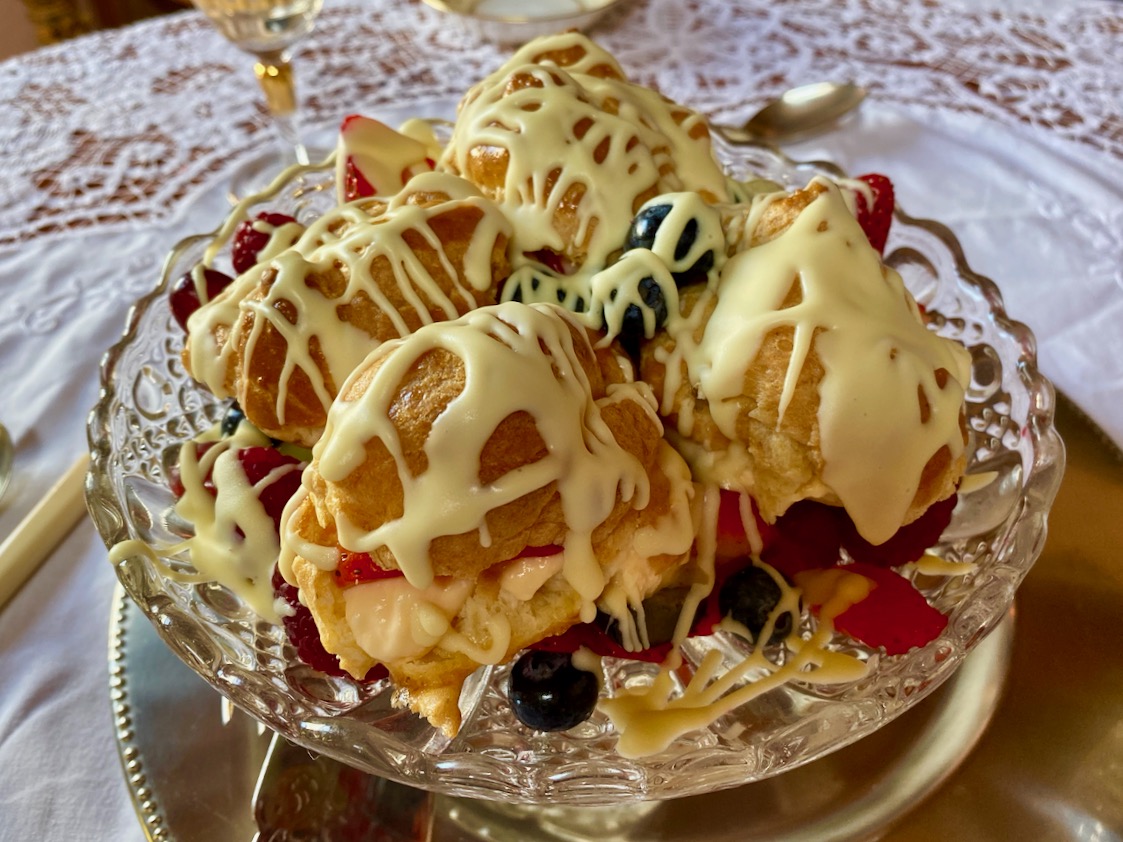
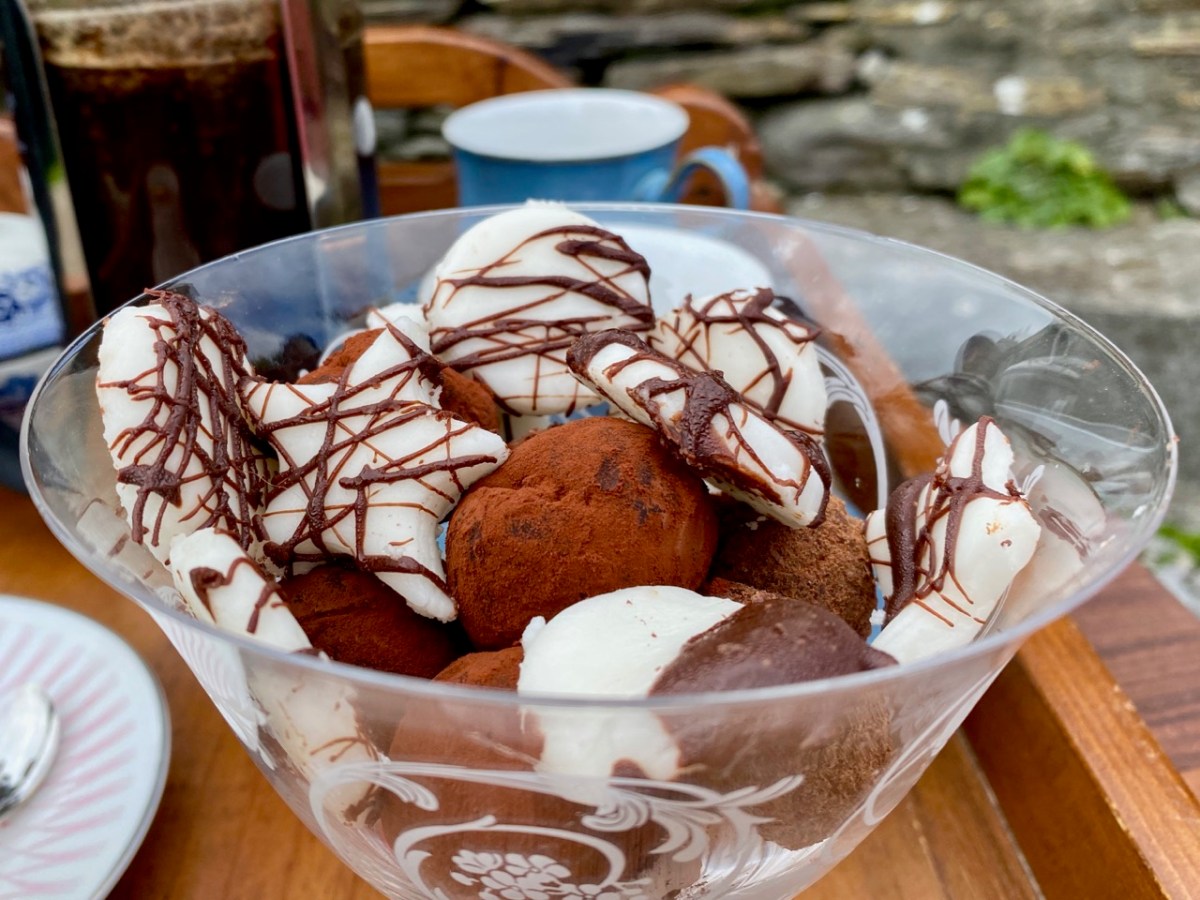
Peter was delighted with every aspect of his celebratory meal – we all were! The choux bun dessert was unbelievable; not a morsel was left behind. The riches never stopped: for our after-dinner coffee we went outside to the terrace-with-a-view and enjoyed home-made fondants and biscuits.

I think you’ve got the message… Sunday lunch at Castaway East is a very special experience indeed. Combine it with a good walk on a beautiful and atmospheric West Cork island and you will have a day you will always remember. If you want the experience for yourselves give Tracy and Peter a shout: they will be delighted to organise it for you.

Contact Tracy & Peter Collins on +353 872966489 or email simplytracy@icloud.com – They also have a campsite!