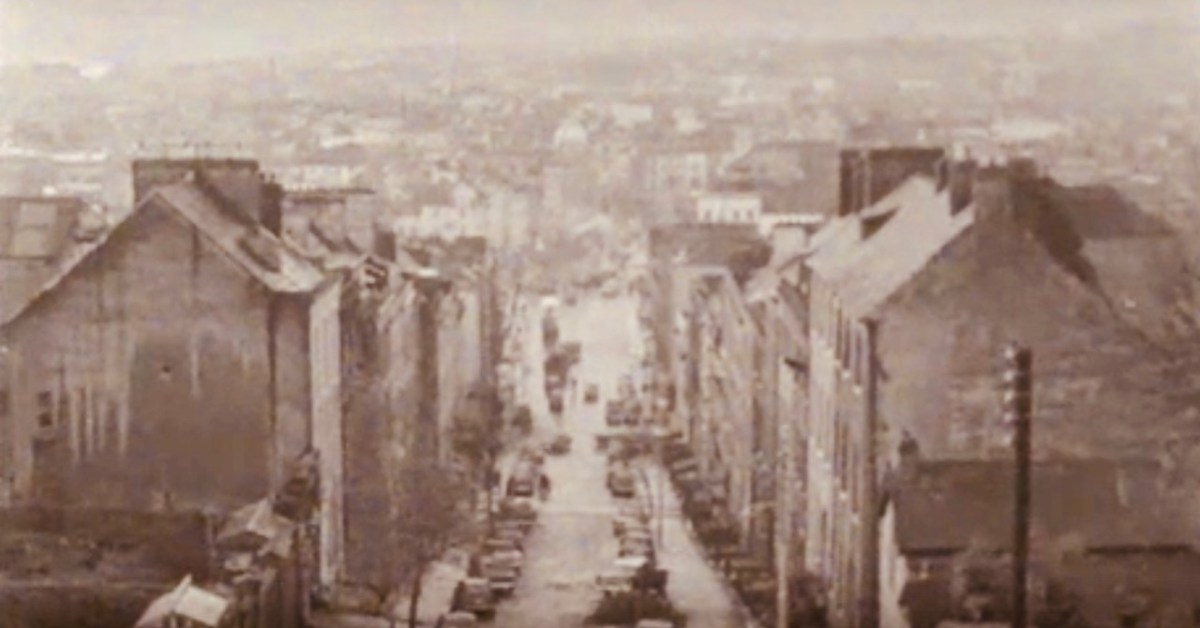
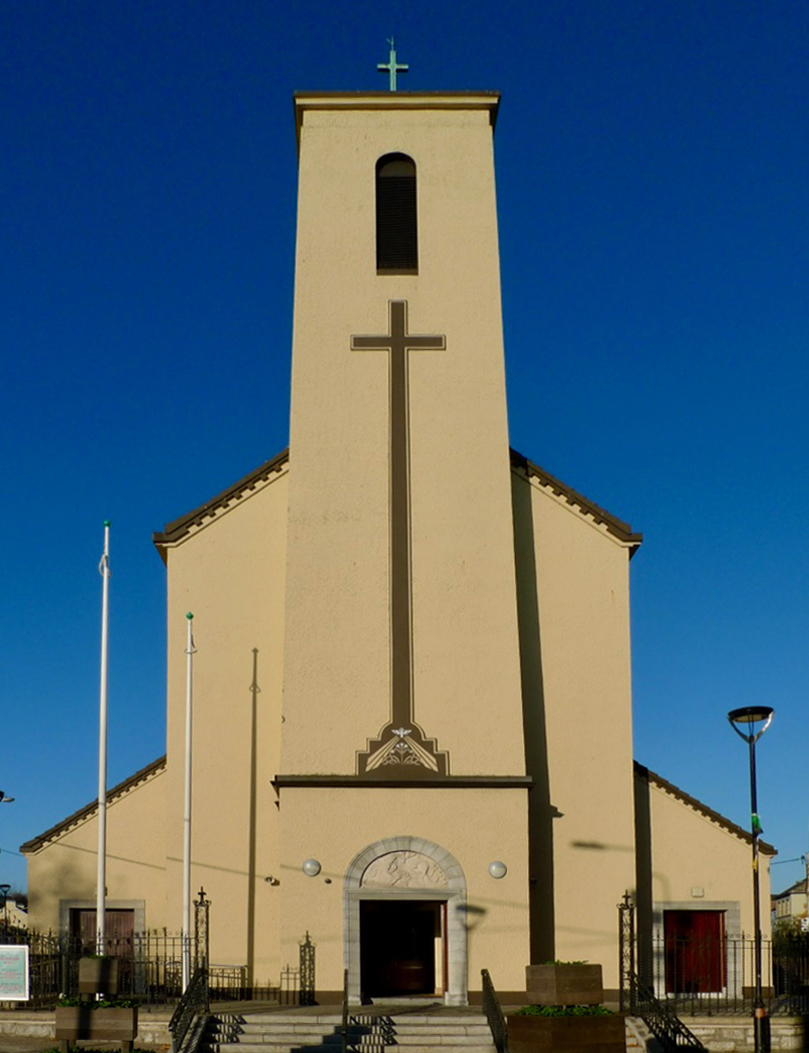
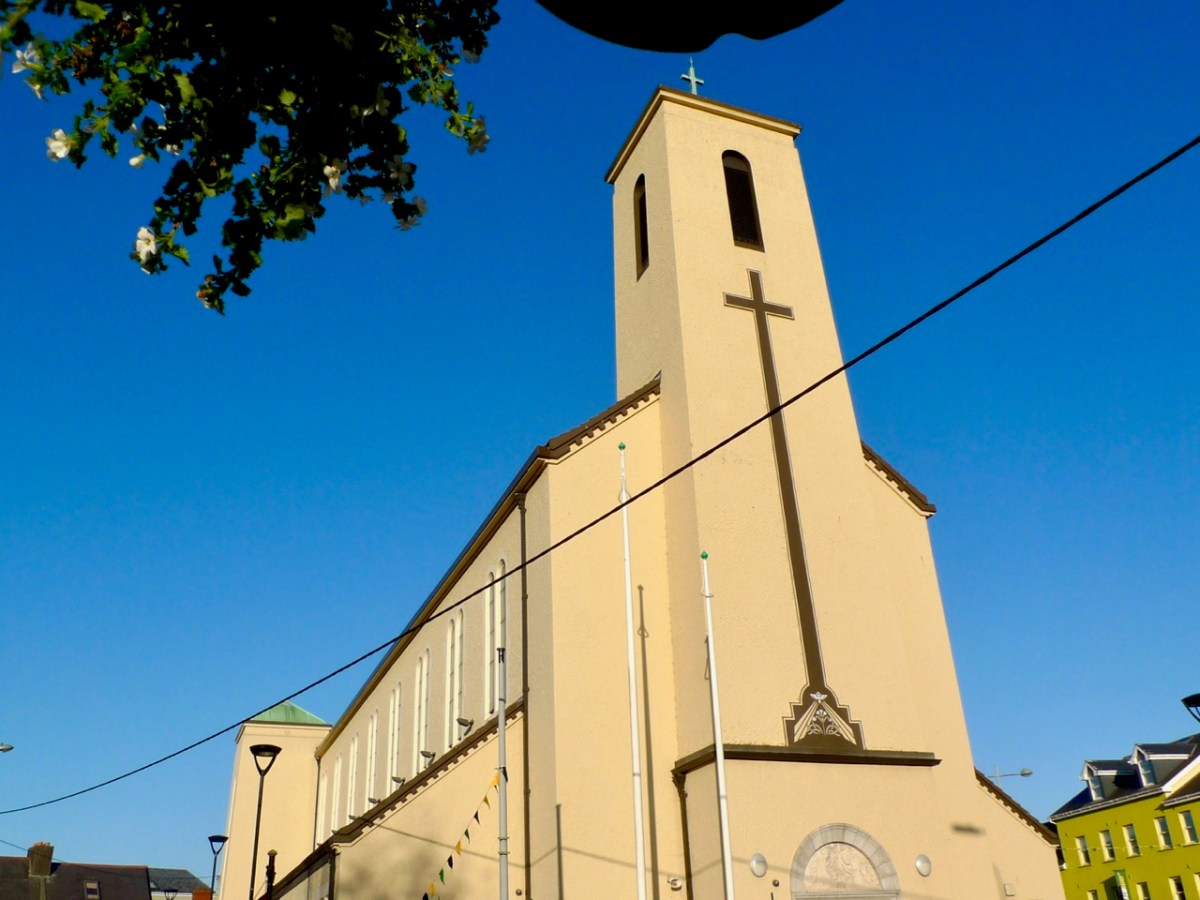
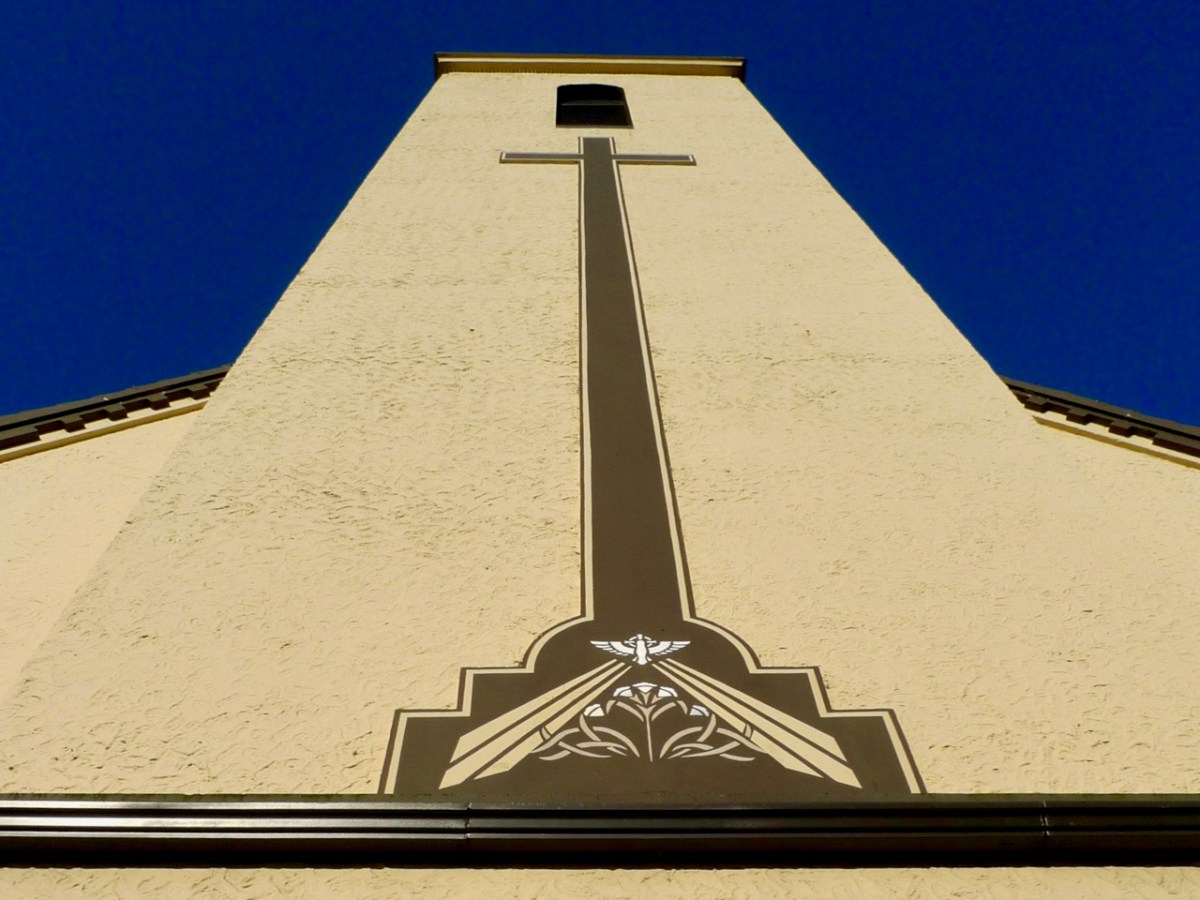
This is Cork city in the 1940s. The subject of today’s post is a Cork man – the sculptor Séamus Murphy. Born in 1907 near Mallow, Murphy took classes at the Crawford School of Art before apprenticing as a stone carver at O’Connell’s Stone Yard in Blackpool, a parish in the city, for seven years. Murphy and his work could occupy several posts, but today we concentrate on his only architectural building project, the Church of the Annunciation in Blackpool. Séamus Murphy can fairly claim to be the ‘sculptural designer’ of this building – as he conceived the way it would appear – while the architect Edmond Patrick O’Flynn most likely carried out the technical drawings and specifications.
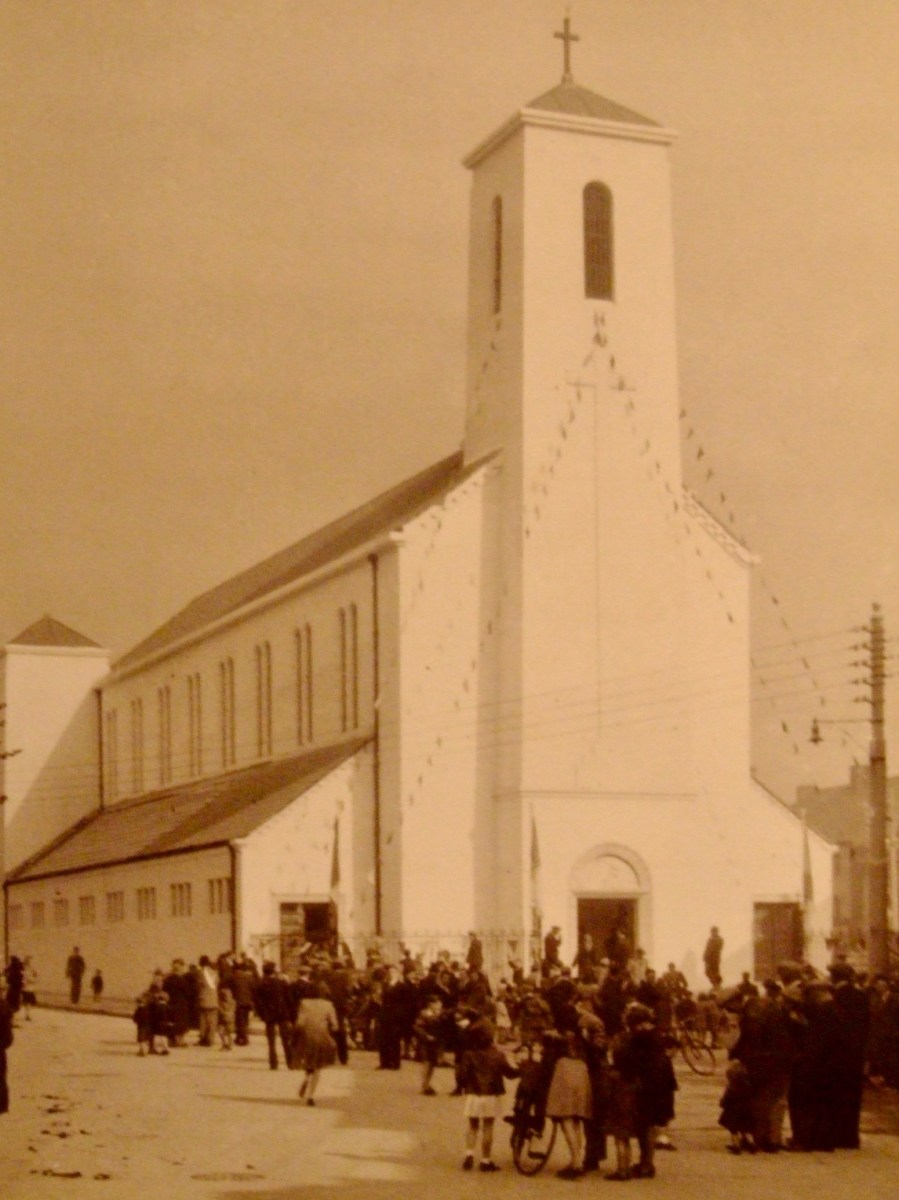
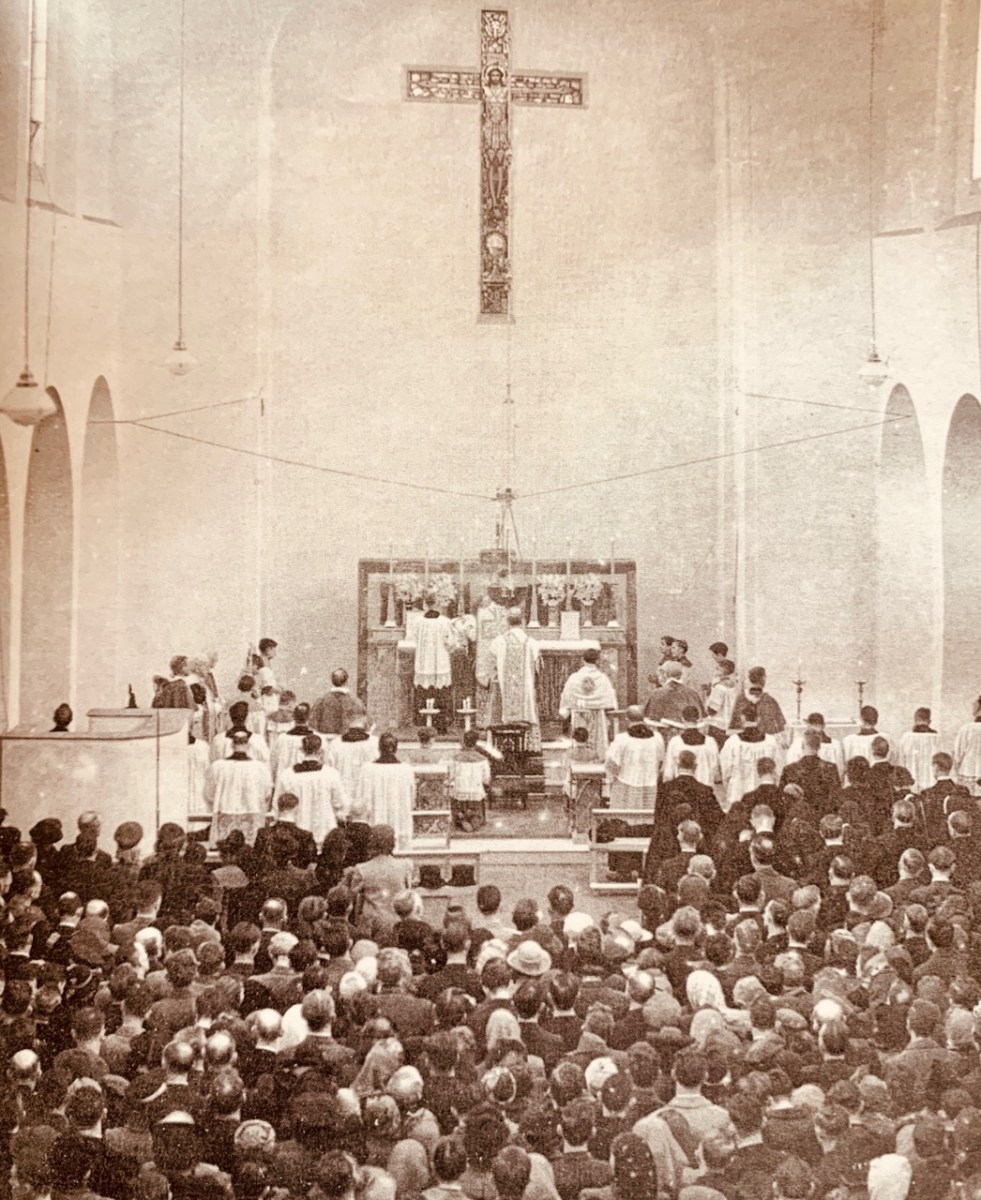
According to the Murphy family, Séamus found inspiration for Blackpool from pictures of churches in South America. In particular, the roughly textured render on the external walls is said to have derived from the adobe finish common in Spanish missionary churches there. The Cork church was commenced in January 1945, and the picture above (courtesy of Cork City Library) dates from around that time. The picture below – also courtesy Cork City Library – shows the dedication ceremony in the church on 7 October 1945.
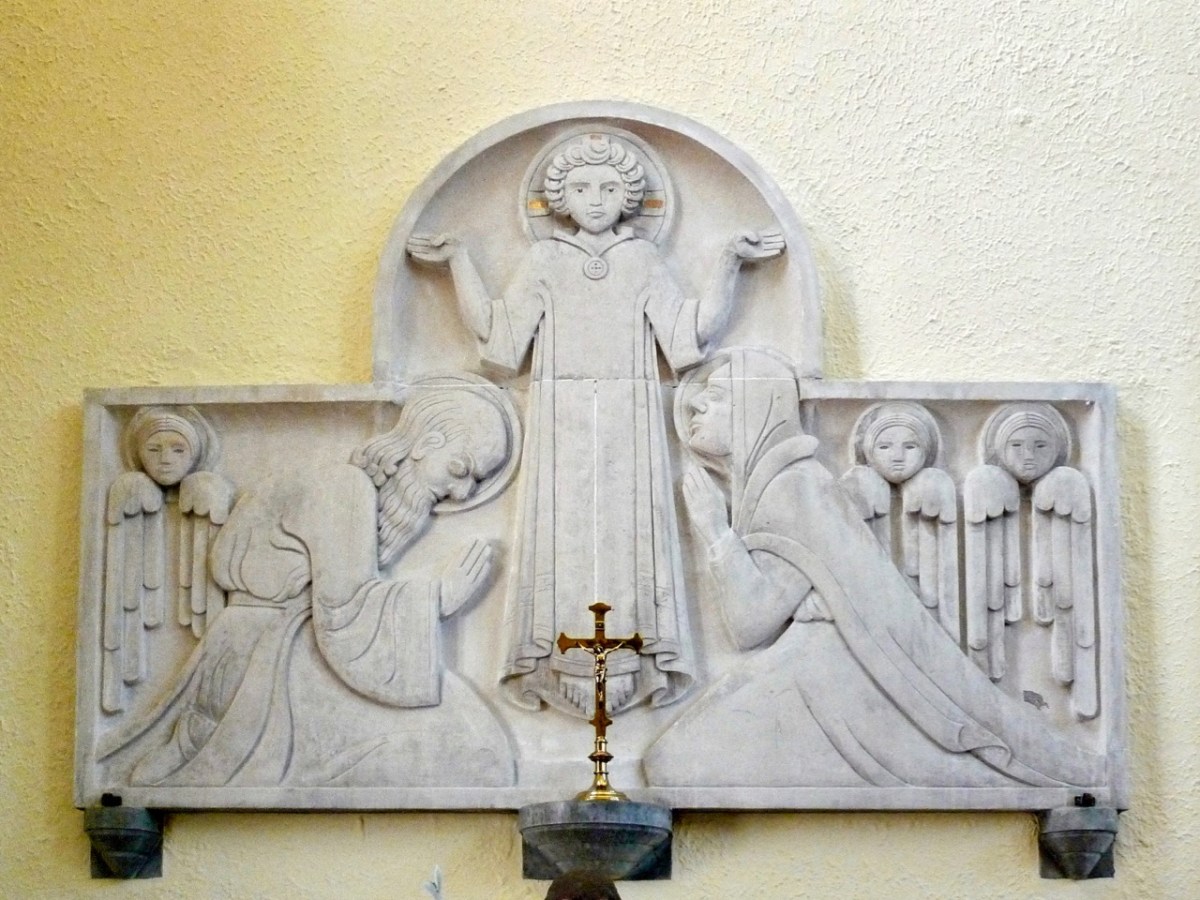
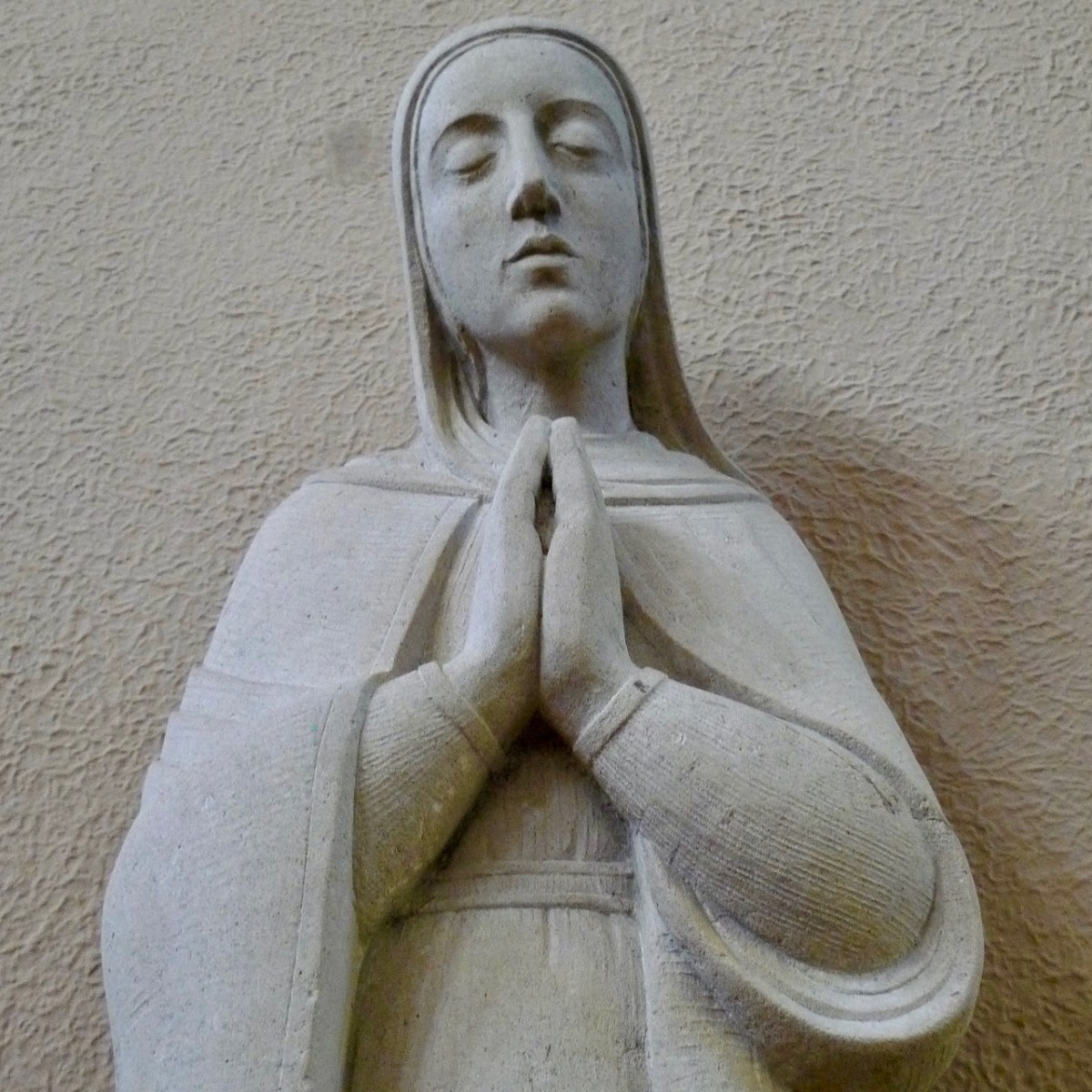
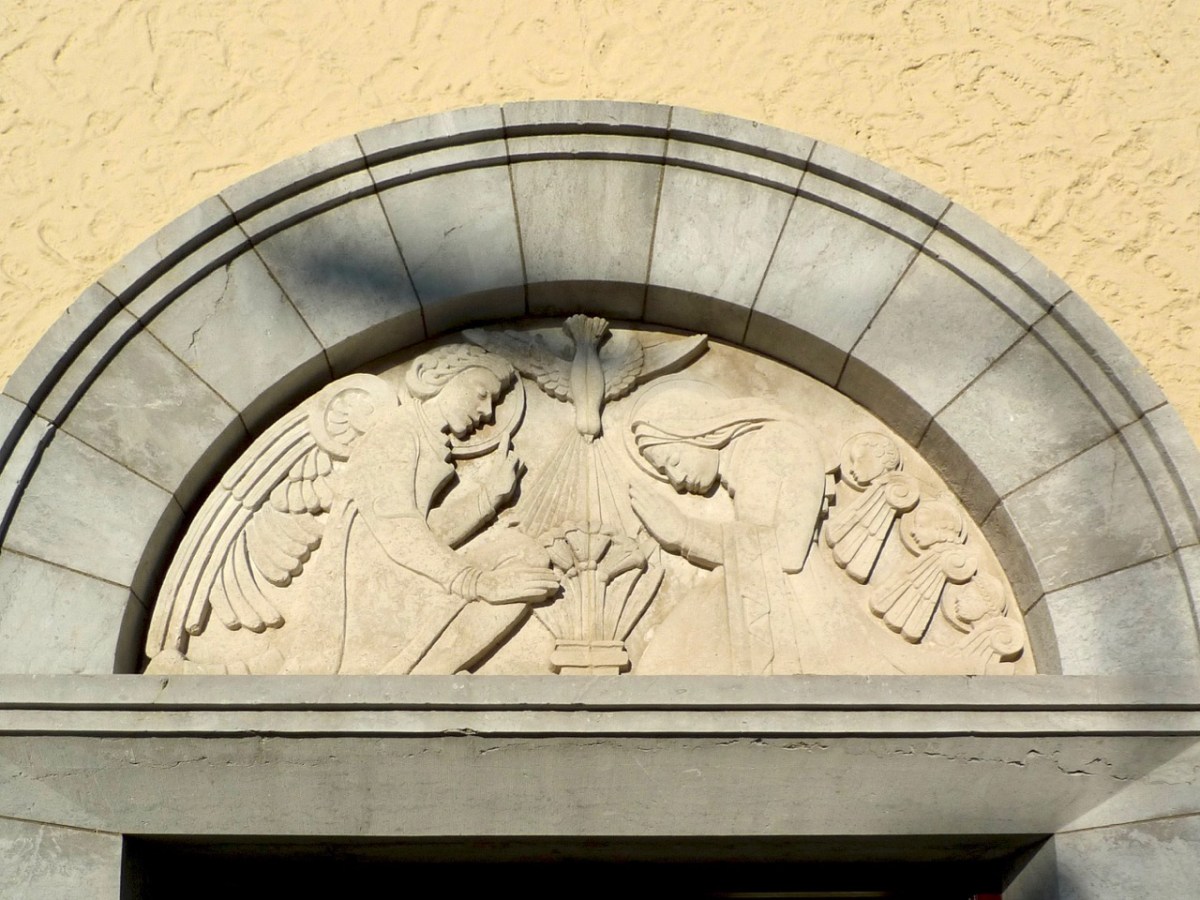
This picture of Séamus, above, is from the RTE archives. The Blackpool project is a good area of study, as the church shows the sculptor’s ability to conceive large, three-dimensional spaces as well as his skills in producing his own figurative and relief works, a number of which are used in the church furnishings: they are of polished Portland stone.
While the church is a valuable repository of Séamus Murphy’s design and carving skills, the work of many other contemporary artists can also be found in the building. The stained glass windows are from the Harry Clarke Studios, designed by William Dowling.
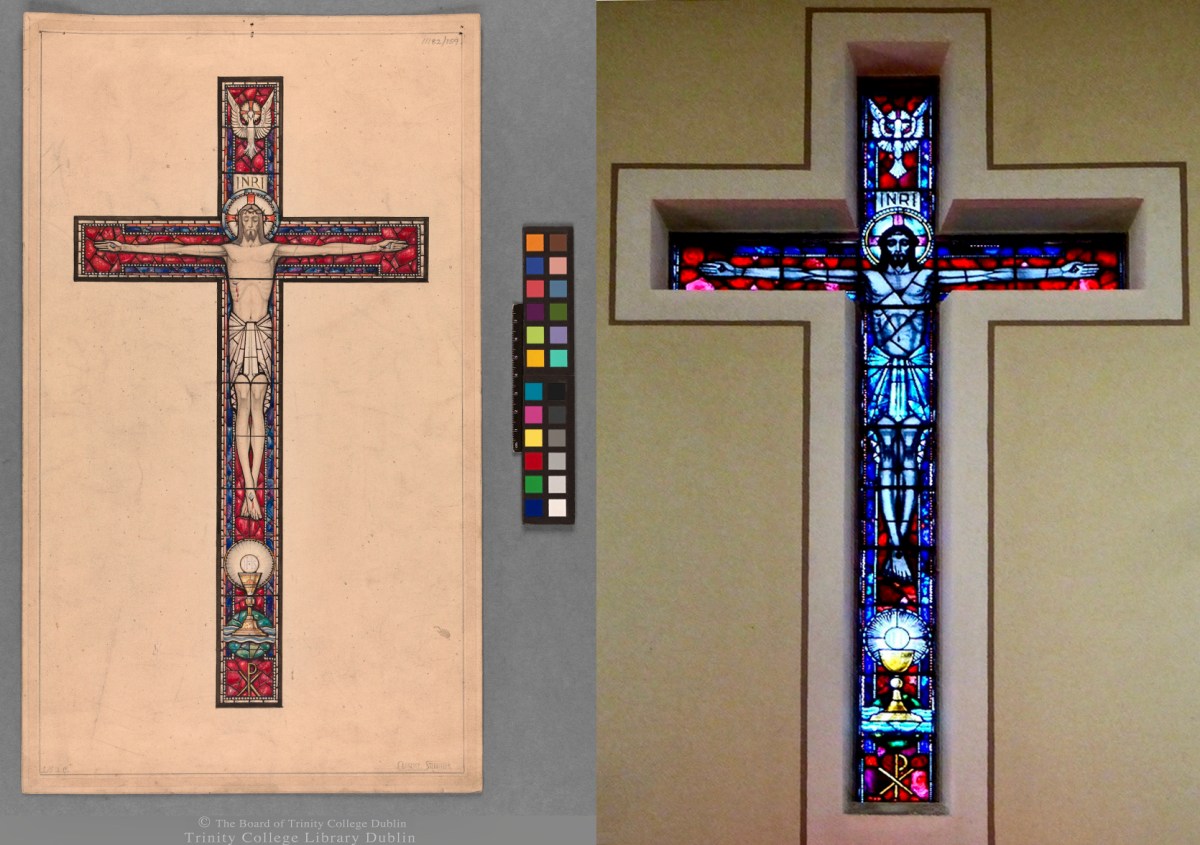
Particularly striking is the crucifix window at the east end. Above is the original cartoon (courtesy of Trinity College Library Dublin) by Dowling, side-by-side with an image of the window today. All the windows are of fine quality.
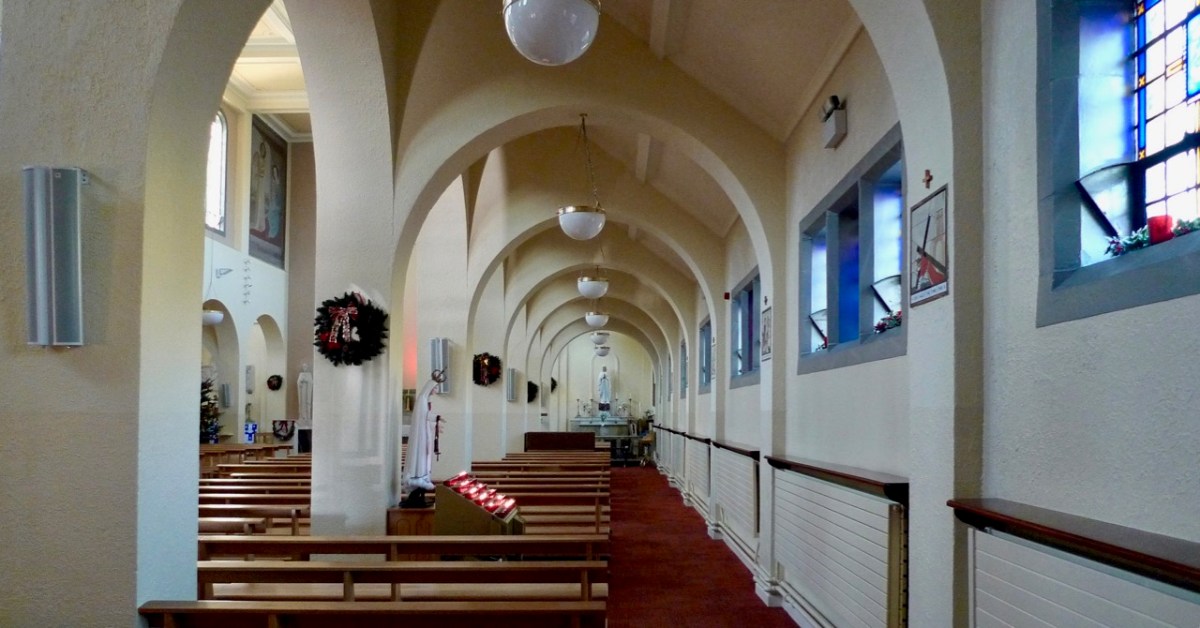
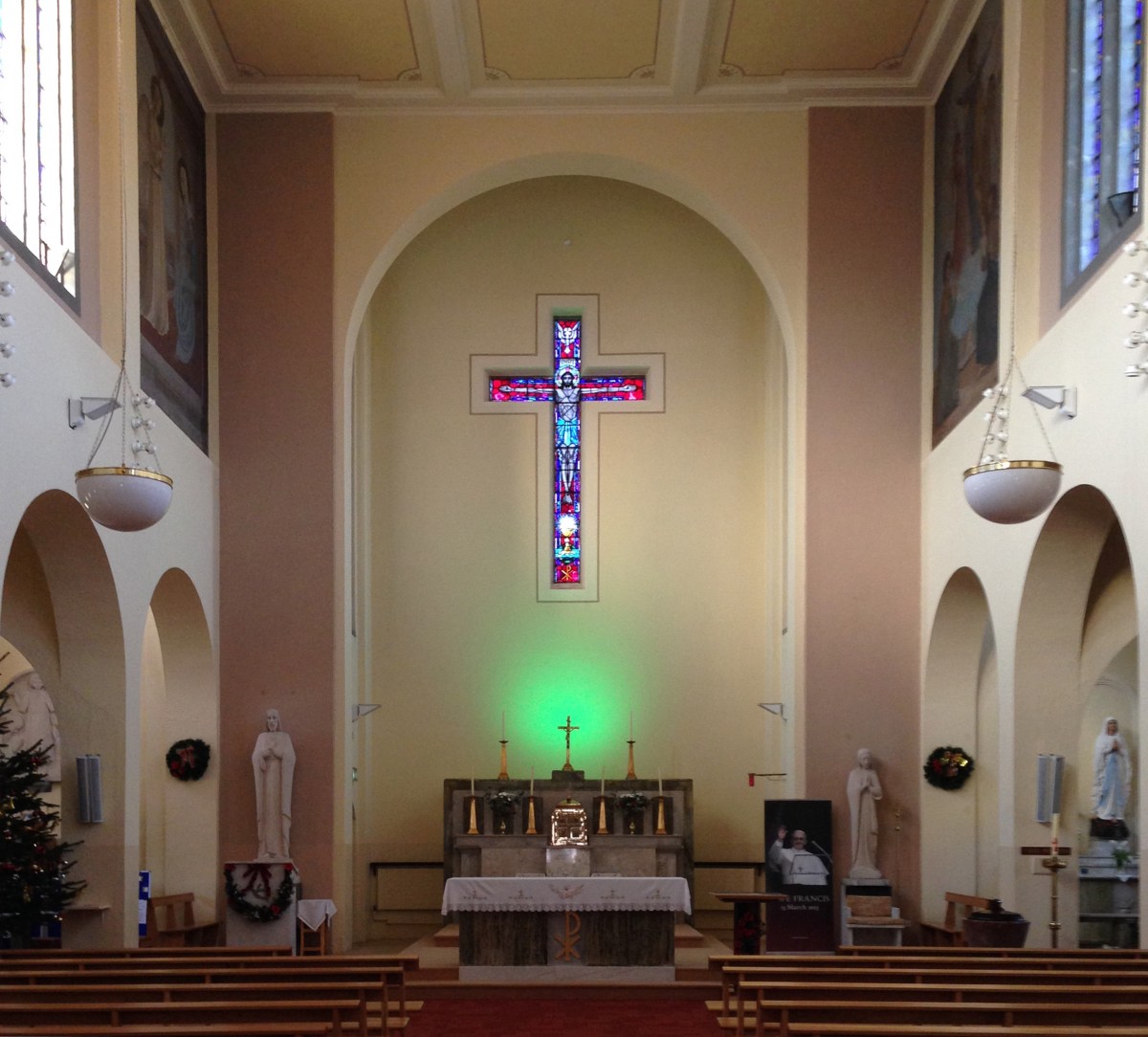
A full view of the east end of the church. The interior has changed very little over 77 years and is, therefore, a great tribute to Séamus Murphy and the the commissioning family of William Dwyer, then head of the nearby Sunbeam Wolsey factory. Dwyer funded the whole project as a memorial to his daughter Maeve who had sadly passed away in 1943.
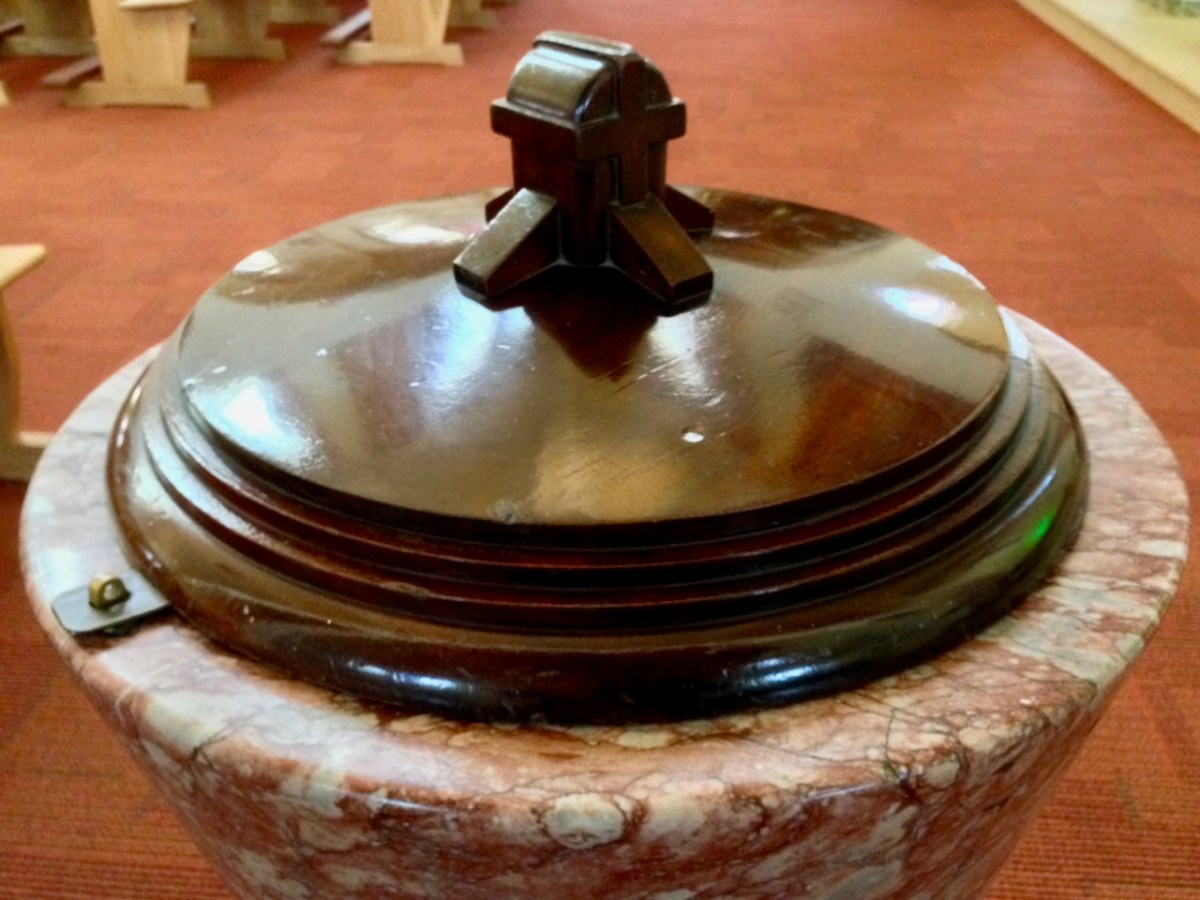
This fine font cover was carved by hand by Bart, a younger brother of Séamus.
Murphy’s Church of the Annunciation is certainly a landmark building – not just for Cork, but for the whole of Ireland. And Séamus himself must rank as one of the outstanding artists of the Free State. You will come across his distinctive work in many locations; I will be directing you to some of them in future posts.
Many thanks to Orla Murphy for giving me valuable insights on her father’s works
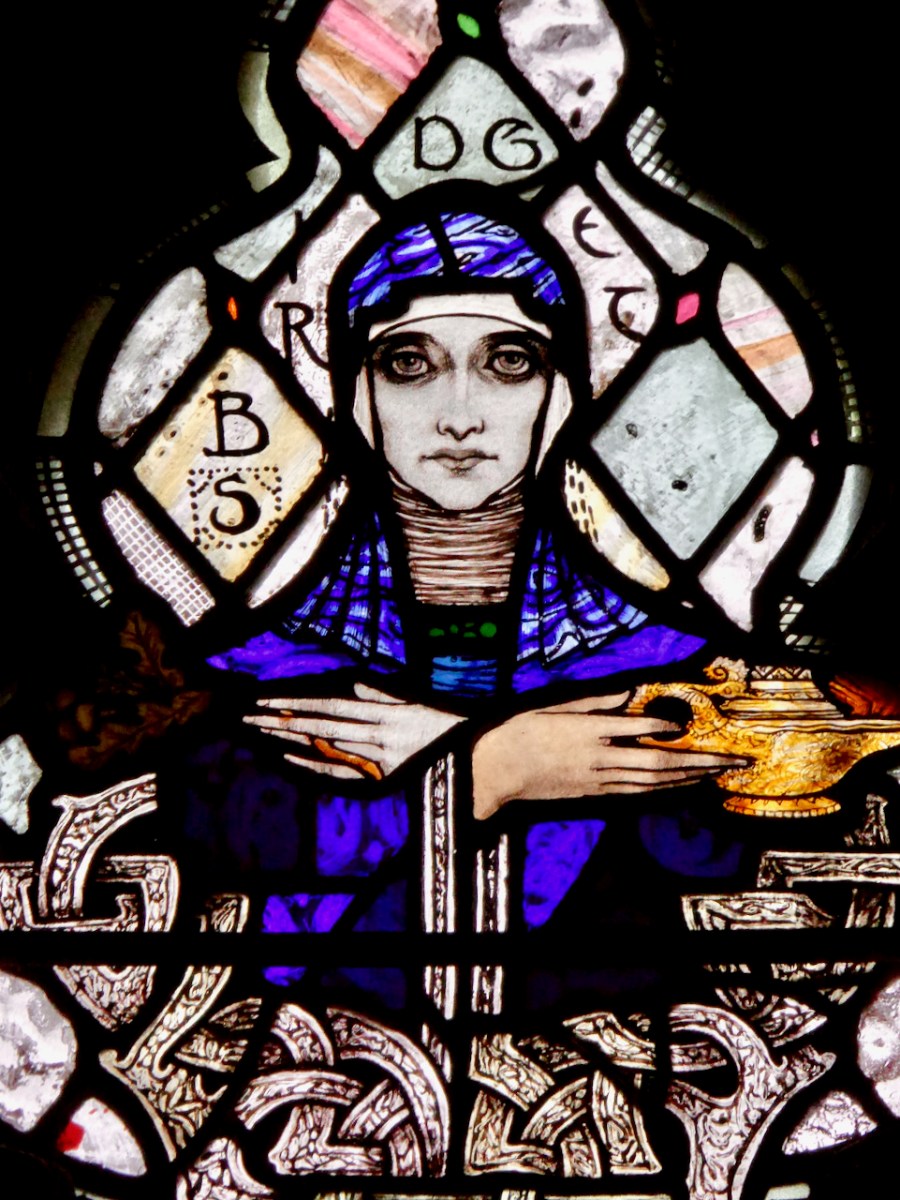
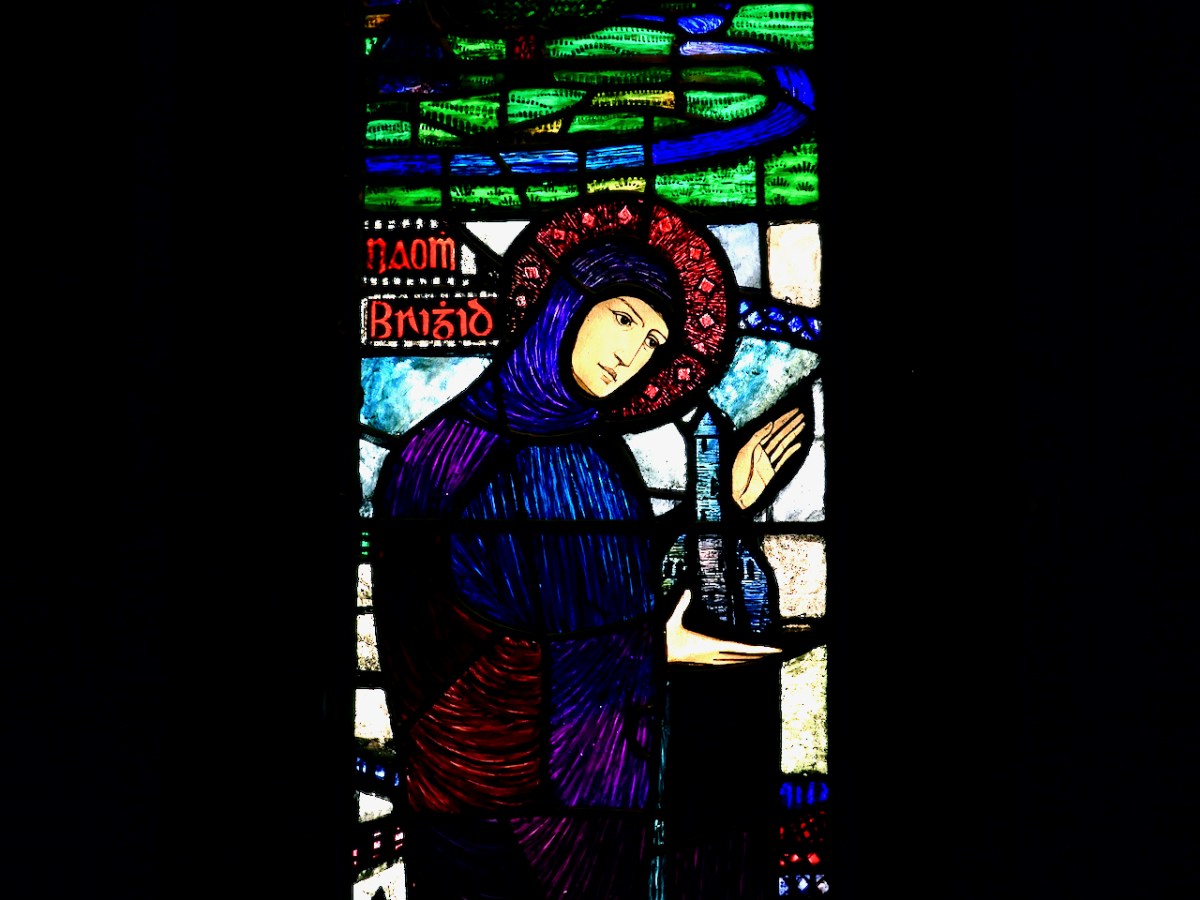
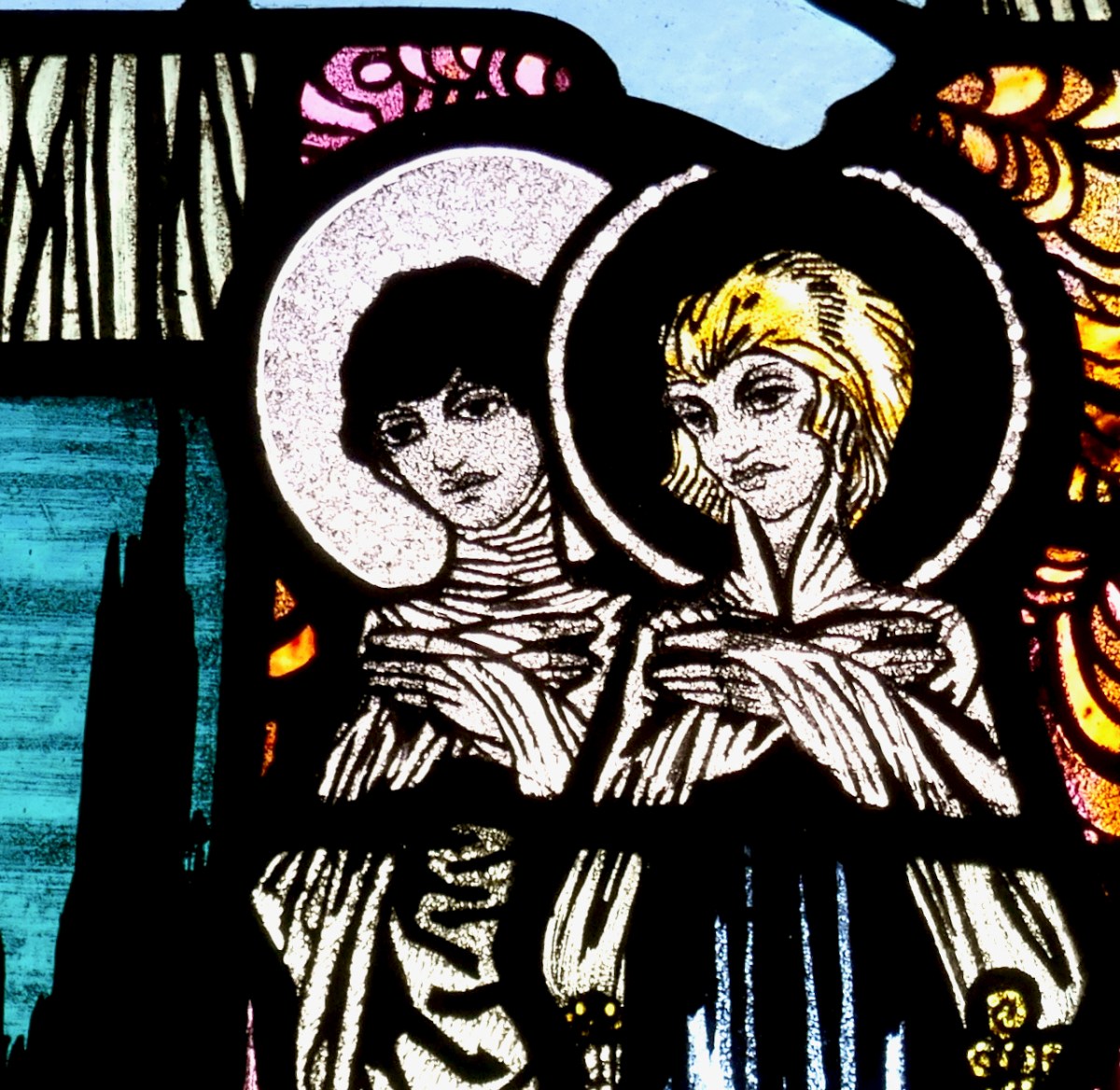
Starting next year, we’ve been given a new National Holiday! It falls on Feb 1, which is celebrated as St Brigid’s Day in Ireland. (Also Imbolc but that’s another story.) Although in my far-off youth I had a devotion to St Brigid and took her name as my Confirmation Name (is this just a Catholic thing?) I realised I knew very little about Brigid herself. So I set out to do some digging, using my own photographs of her image in stained glass to illustrate. That’s Harry Clarke’s take on Brigid above, from the Honan Chapel in Cork, and another one of his below, from Castletownshend.
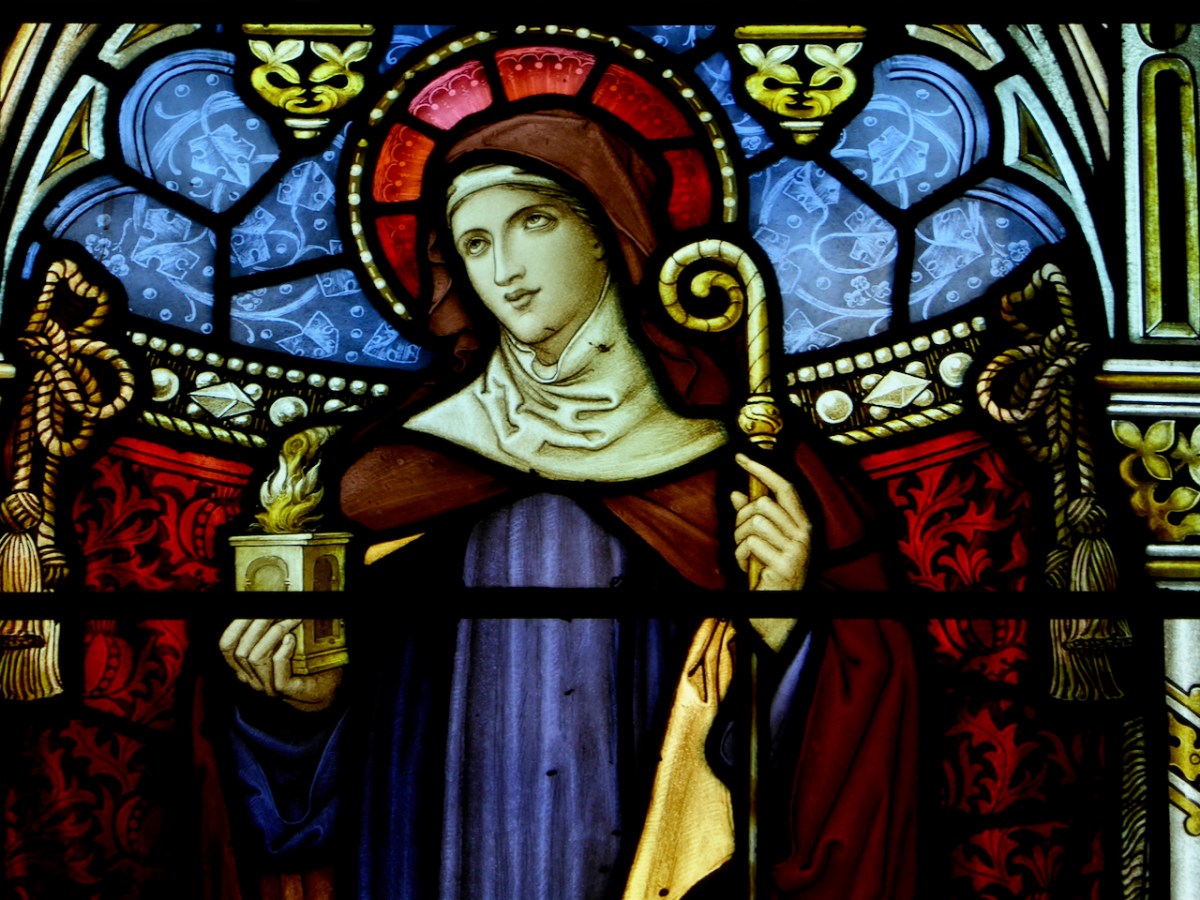
Note the lamp, which is one of her attributes, since she is associated with a perpetual fire that miraculously never went out. Given this is Harry Clarke, the lamp looks suspiciously like something from the Arabian Nights.
For the life of Brigid, although there are many, many versions, I have turned to two sources. The primary source is The Life of Saint Brigit by Cogitosus*. Almost unbelievably, this Life dates from about 650 and is written in Hiberno-Latin. Cogitosus may have been a monk in Kildare, steeped in the cult of Brigid. Part of this cult was to claim the highest status for Kildare of all the Irish monastic settlements and therefore the Primacy over all Ireland – a claim that was eventually won by Armagh, which trumped Kildare by its appropriation of St Patrick. Cogitosus’s story is told in the form of 32 miracles, each of which leads us through Brigid’s life.
My second source is the Life of Brigit from the Book of Lismore**, translated by Whitley Stokes. I love Stokes’s language, a form which he seems to have invented himself to convey something of the Medieval Irish he was translating (see this post on The White Hound of Brigown for more on this). The Book of Lismore dates to the fifteenth century and it is thought that the Lives of the Saints within it, or some of them, were written in the Abbey at Timoleague in West Cork. In both versions her name is given in translation as Brigit, rather than Brigid which is the more usual modern spelling used in Ireland.
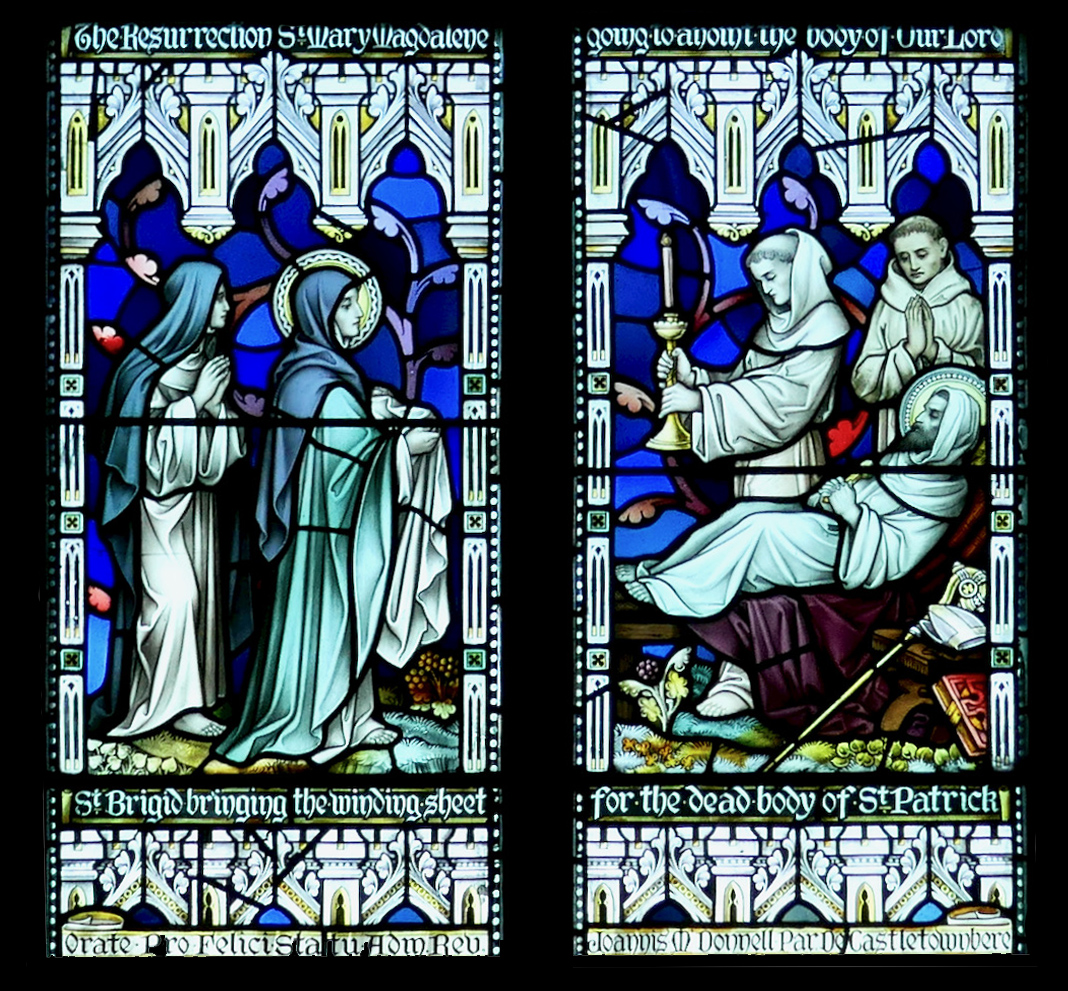
In this window, Brigid brings the winding sheet for the dead St Patrick, a story that does nor feature in either of the Lives I am using here. This is the lower section of a paired window in Killarney Cathedral, part of a series that draws parallels between the Life of Christ and the Lives of Irish Saints. In this case, Brigid is being compared to Mary Magdalene anointing the body of Christ
Many of the same stories occur in both lives. Significantly, though, Patrick is not mentioned in the earlier Life by Cogitosus, although he appears frequently in the Book of Lismore as if she and he were living contemporaneously. There are other differences, showing how the stories grew through the ages, but both agree that Brigid was the daughter of Dubhtach and a bondswoman called Broicsech. Like all good Irish saints, her birth and her greatness is foretold. From the Book of Lismore:
The wizard went to meet him, and asked whose was the woman who was biding in the chariot. Mine, saith Dubthach . . .The wizard asks if she was pregnant by anyone. She is pregnant by me saith Dubthach. Said the wizard, Marvellous will be the child that is in her womb, her like will not be on earth. My wife compels me, saith Dubthach, to sell this bondmaid. Said the wizard, through grace of prophecy, the seed of thy wife shall serve the seed of the bondmaid, for the bondmaid will bring forth a daughter conspicuous, radiant, who will shine like a sun among the stars of heaven. Dubthach was thankful for that answer, for till then no daughter had been born to him.
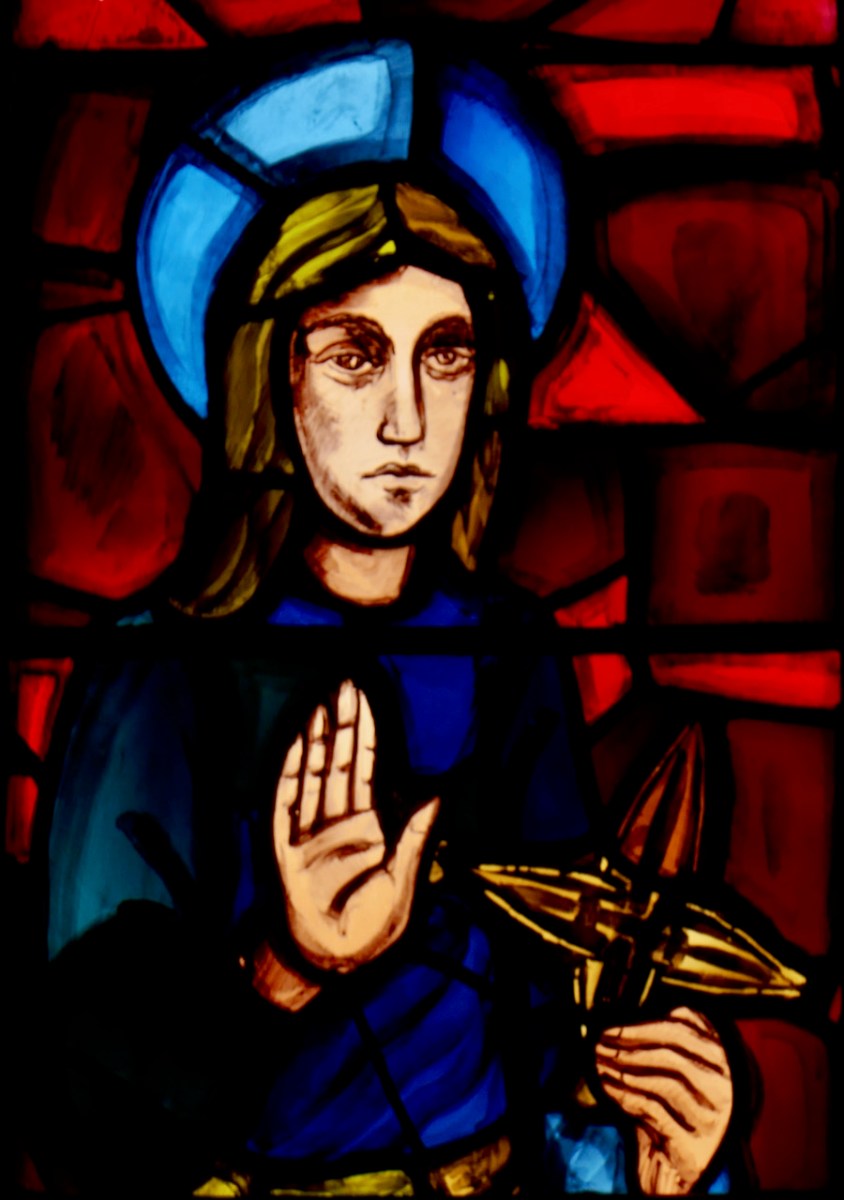
This image of a young Brigid is by Evie Hone and is in Blackrock, Co Dublin. Evie Hone’s windows are pared-to-the-bone, deeply spiritual depictions inspired often by ancient Irish carvings.
I love the fact that Dubhtach rejoices to have a daughter since most of these stories glorify the birth of male babies. Brigid accomplishes many miracles as a child, mostly having to do with her charity and her faith. Here’s one such from Cogitosus:
So, when she was old enough, she was sent by her mother to do the work of churning so that she could make up the butter from the cow’s milk which had been dashed; she too was meant to carry out this work, in the same way as other women were accustomed to do, and to deliver for use the complete yield of the cows and the customary weight and measure of butter at the appointed time with the others. However, this maiden with her most beautiful and generous disposition, preferring to obey God rather than men, distributed the milk and butter liberally to the poor and the guests. So, when as usual the appointed time came for all to hand in what the cows had yielded, her turn came. And when her workmates presented the finished result of their work, the aforementioned blessed maiden was also requested to hand in her work in like manner.
In dread of her mother since she had nothing to show because she had given the lot away to the poor without a thought for the morrow, strengthened and inflamed with an ardor of faith so intense and unquenchable, she turned to the Lord and prayed. Without delay the Lord heard the maiden’s voice and prayers. And, being a helper in the hour of need, he came to her assistance with the generous bestowal of a divine gift, and lavishly restored the butter for the maiden who had confidence in him. Astonishingly, the very moment after her prayer, the most holy maiden proved that she had fulfilled her task by showing that nothing was missing from the fruit of her work, but that it was even more abundant than her workmates.
A rather sumptuous Brigid from the Harry Clarke Studios, in Ballinrobe
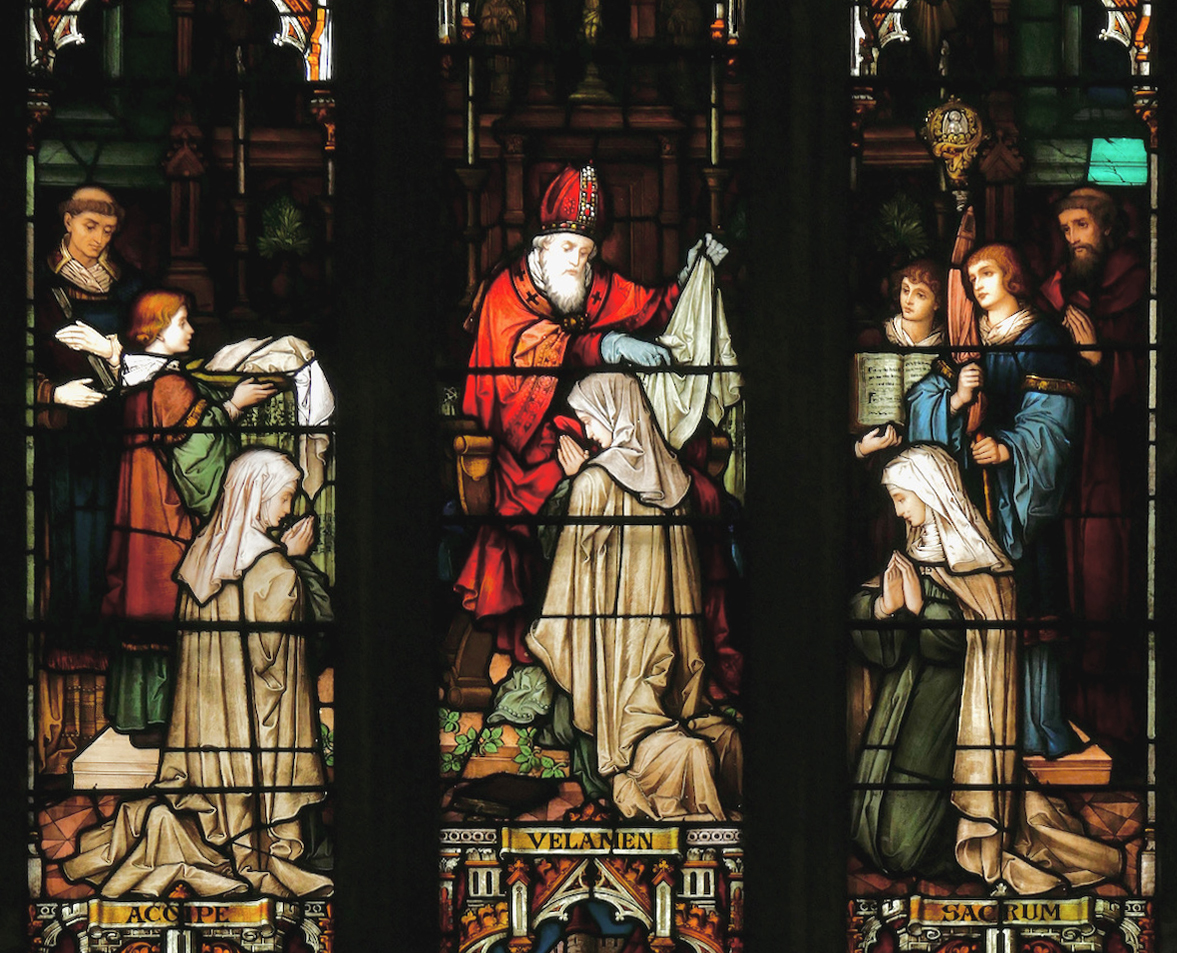
Eventually, determining to be a virgin and devote her life to God’s work, she took the veil. Cogitosus relates that
Brigit, inspired from above and wanting to devote herself as a chaste virgin to God, went to the most holy bishop MacCaille of blessed memory. Seeing her heavenly desire and modesty and seeing so great a love of chastity in this remarkable maiden, he placed the white veil and white garment over her venerable head.
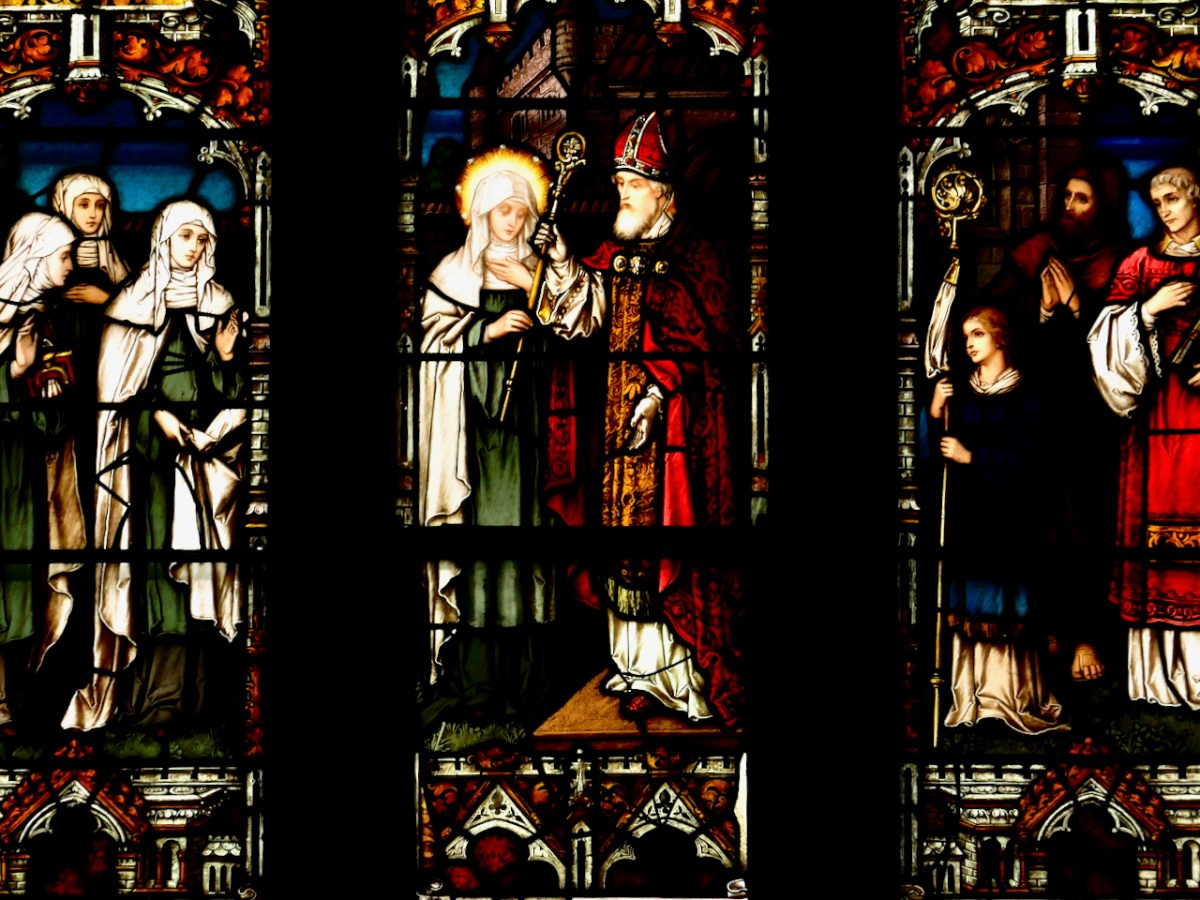
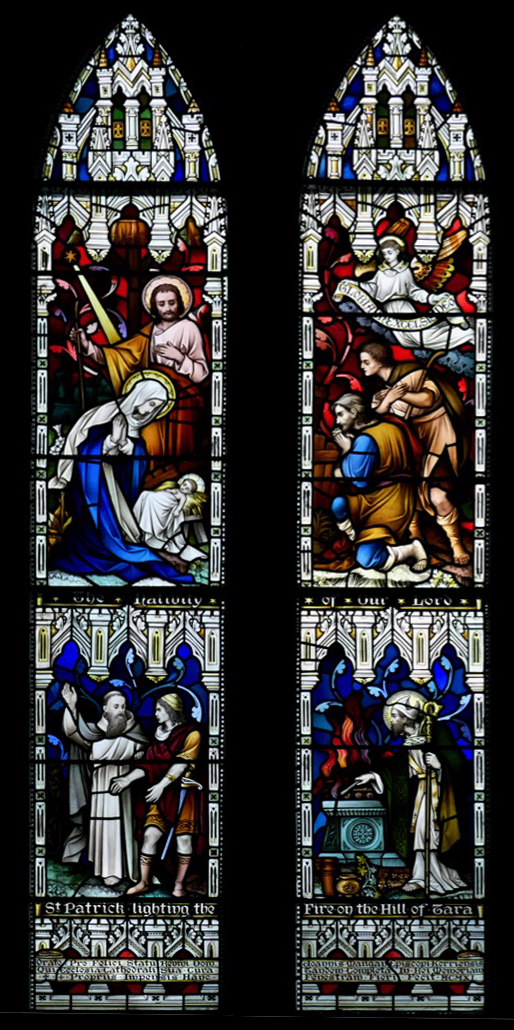
However, by the time the author of the Lismore life wrote his account, MacCaille had been relegated to inferior status and the Bishop who confers the veil is Mel, who is depicted in the window above, in Armagh Cathedral, performing the ceremony. By now, the story has acquired one of its most-quoted aspects – that Brigid, through divine intercession, is actually made a bishop. The next image, the lower panel of the previous window, shows Mel handing Brigid a crozier, symbol of episcopal authority. This large window is by Mayer of Munich.
Brigit and certain virgins along with her went to take the veil from Bishop Mel in Telcha Mide. Blithe was he to see them. For humility Brigit stayed so that she might be the last to whom a veil should be given. A fiery pillar rose from her head to the roof-ridge of the church. Then said Bishop Mel: Come, O Holy Brigit, that a veil may be sained on thy head before the other virgins. It came to pass then, through the grace of the Holy Ghost, that the form of ordaining a Bishop was read out over Brigit. Mac-caille said, that a bishop’s order should not be conferred on a woman. Said Bishop Mel: No power have I in this matter. That dignity hath been given by God unto Brigit, beyond every (other) woman. Wherefore the men of Ireland from that time to this give episcopal honour to Brigit’s successor.
Although she is associated with many places in Ireland (there are numerous townlands called Kilbride or Kilbreedy) it is the great city of Kildare that is most closely hers. She managed the city, the Lismore Life says, in partnership with Conleth, a hermit whom she persuades to join her. Cogitosus tell us:
And as by her wise administration she made provision in every detail for the souls of her people according to the rule, as she vigilantly watched over the Churches attached to her in many provinces and as she reflected that she could not be without a high priest to consecrate churches and confer ecclesiastical orders in them, she sent for Conleth, a famous man and a hermit endowed with every good disposition through whom God wrought many miracles, and calling him from the wilderness and his life of solitude, she set out to meet him, in order that he might govern the Church with her in the office of bishop and that her Churches might lack nothing as regards priestly orders. Thus, from then on the anointed head and primate of all the bishops and the most blessed chief abbess of the virgins governed their primatial Church by means of a mutually happy alliance and by the rudder of all the virtues. By the merits of both, their episcopal and conventual see spread on all sides like a fruitful vine with its growing branches and struck root in the whole island of Ireland. It has always been ruled over in happy succession according to a perpetual rite by the archbishop of the bishops of Ireland and the abbess whom all the abbesses of the Irish revere.
This window by Watsons of Youghal is in St Carthage’s Catholic church in Lismore and is a great example of the Celtic Revival decoration they specialised in. Note the proliferation of oak leaves above her – Kildare is from Cill Dara, meaning Church of the Oakwood, and the oak leaf is one of her attributes, along with the lamp and the crozier, also shown
Cogitosus goes on to say this of Kildare and her establishment (and don’t forget he was writing in or around 650!):
And who can express in words the exceeding beauty of this church and the countless wonders of that monastic city we are speaking of, if one may call it a city since it is not encircled by any surrounding wall. And yet, since numberless people assemble within it and since a city gets its name from the fact that many people congregate there, it is a vast and metropolitan city. In its suburbs, which saint Brigit had marked out by a definite boundary, no human foe or enemy attack is feared; on the contrary, together with all its outlying suburbs it is the safest city of refuge in the whole land of the Irish for all fugitives, and the treasures of kings are kept there; moreover it is looked upon as the most outstanding on account of its illustrious supremacy.
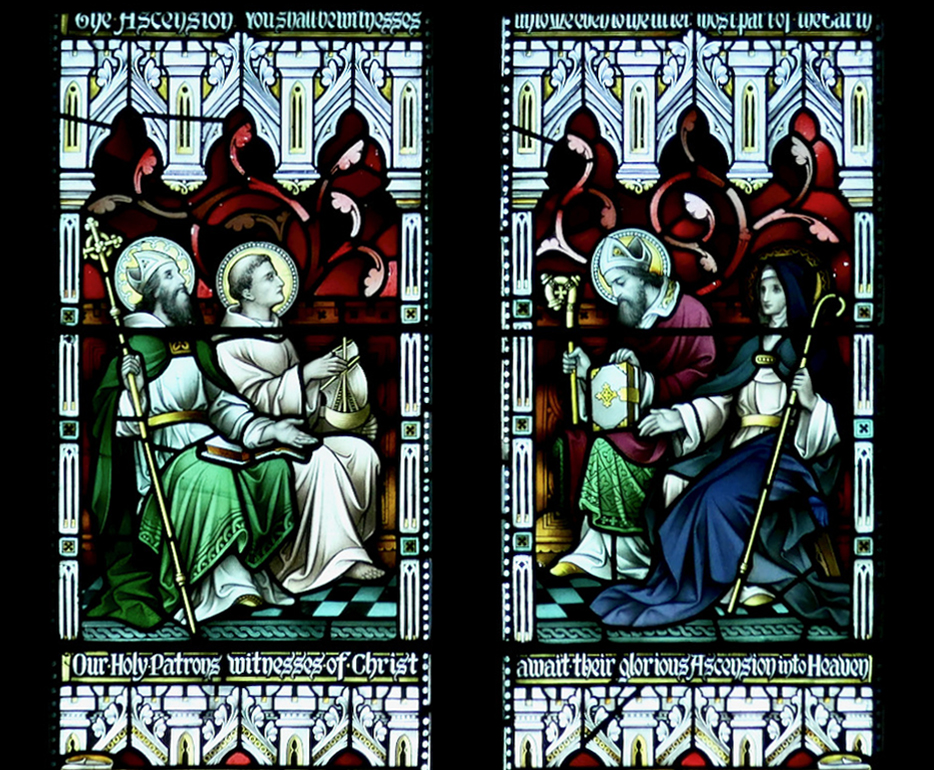
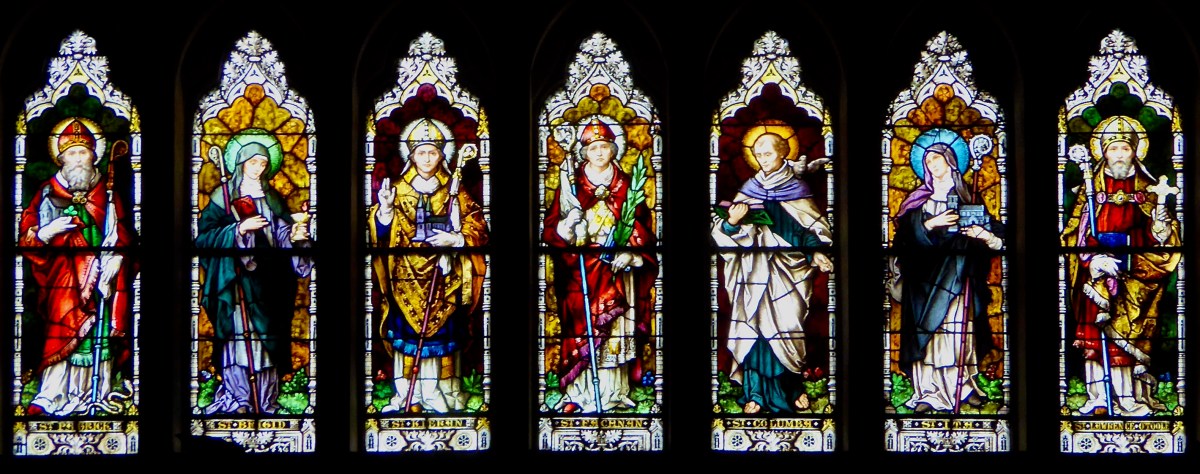
Today we honour St Brigid as one of the founding great women of our culture. She is often shown with Patrick and Columcille as one of the three great Patrons of Ireland. In the window above, also from Killarney Cathedral, Brendan has been added in because, well, we’re in Kerry.
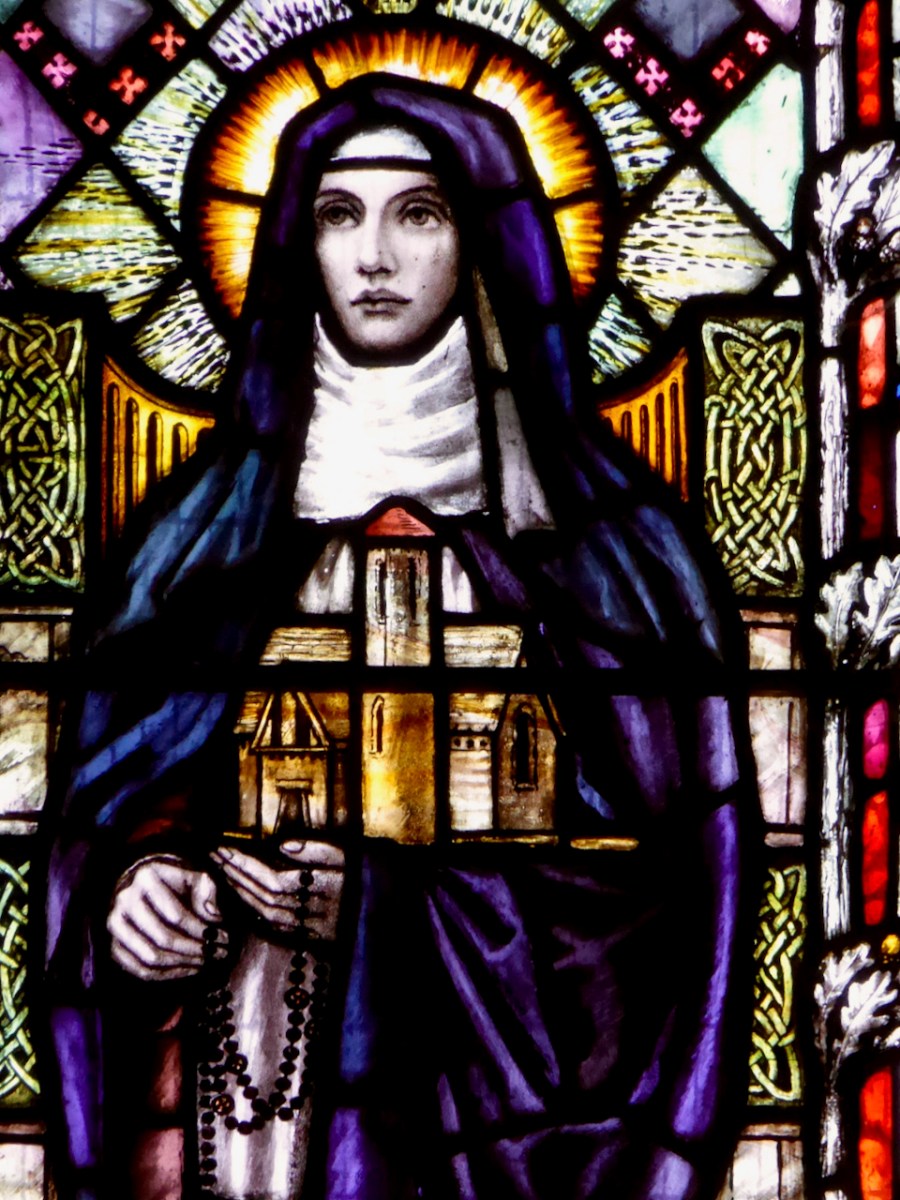
This window is in the Church of the Most Holy Rosary at Kilcoe, near us in West Cork. It’s a bit of a mixed metaphor – we see her holding her church, which is clearly based on the 12th century Cormac’s Chapel at Cashel, and surrounded by her oak leaves. However, she is also holding a set of rosary beads, something that doesn’t appear in Catholic imagery before the 13th century. It’s beautifully executed, though, by Catherine O’Brien of An Túr Gloine.
Brigid’s end was peaceful. As it is related in the Book of Lismore:
Now when it came to the ending days for Brigit, after founding and helping cells and churches and altars in abundance, after miracles and marvels whose number is as the sand of sea, or stars of heaven, after charity and mercy, then came Nindid Pure-hand from Rome of Latium. The reason why he was called Nindid Pure-hand was that he never put his hand to his side, when Brigit repeated a paternoster with him. And he gave communion and sacrifice to Brigit, who sent her spirit to heaven. Her relics are on earth with honour and dignity and primacy, with miracles and marvels.
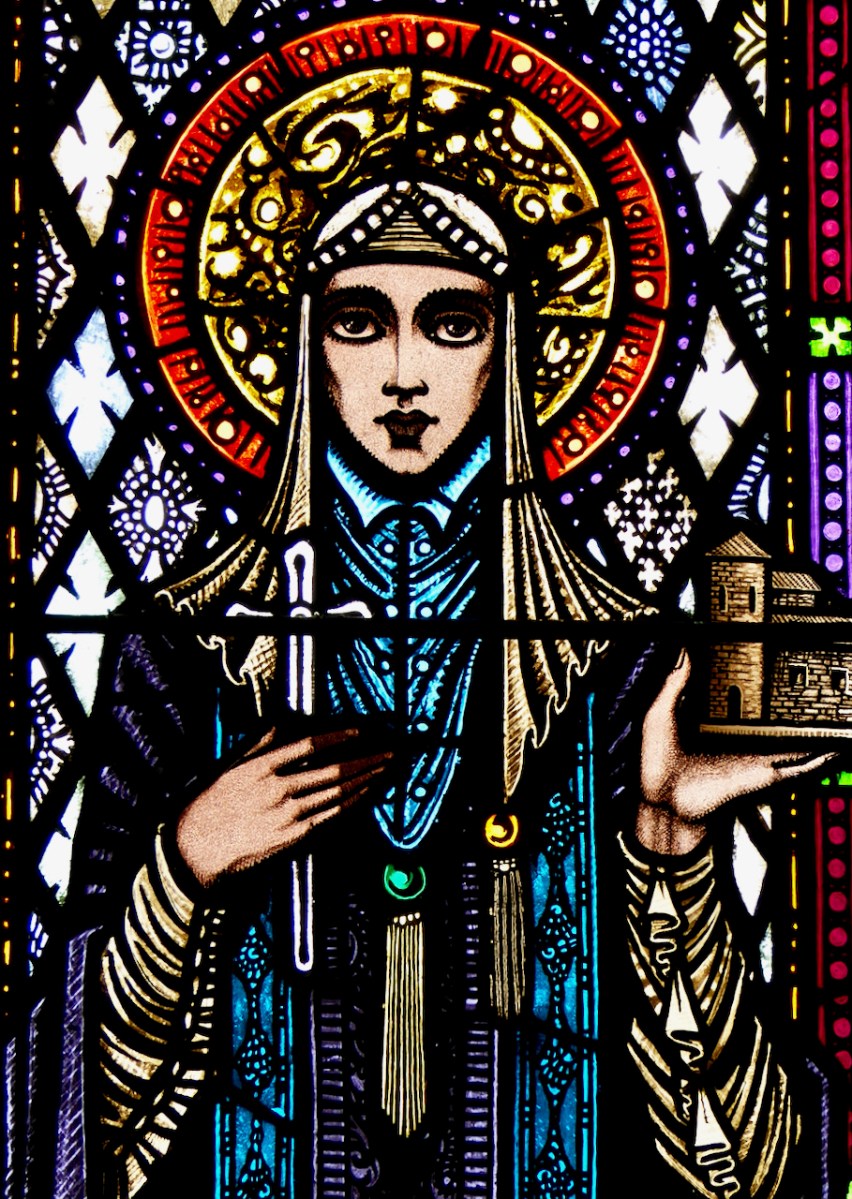
A conventional image of Bridget in the church in Goleen, West Cork, by Watsons of Youghal. She’s looking very saintly indeed. By now, you no doubt recognise all her attributes
Summing up her life and legacy, the anonymous author of her Life in the Book of Lismore says:
For everything that Brigit would ask of the Lord was granted her at once. For this was her desire: to satisfy the poor, to expel every hardship, to spare every miserable man. Now there never hath been anyone more bashful, or more modest, or more gentle, or more humble, or sager, or more harmonious than Brigit. She never washed her hands or her feet, or her head among men. She never looked at the face of a man. She never would speak without blushing. She was abstinent, she was innocent, she was prayerful, she was patient: she was glad in God’ s commandments: she was firm, she was humble, she was forgiving, she was loving: she was a consecrated casket for keeping Christ’s Body and his Blood: she was a temple of God. Her heart and her mind were a throne of rest for the Holy Ghost. She was simple (towards God): she was compassionate towards the wretched: she was splendid in miracles and marvels: wherefore her name among created things is Dove among birds, Vine among trees, Sun among stars. . . . She is the prophetess of Christ: she is the Queen of the South: she is the Mary of the Gael.
Brigid by Michael Healy, in the stained glass room at the National Gallery, holding her church with the round tower that can still be seen in Kildare.
It is entirely appropriate that a new National Holiday is named for Brigid. About time, in fact!
*Cogitosus’s “Life of St Brigit,” Content and Value. Author(s): Sean Connolly and J.-M. Picard. The Journal of the Royal Society of Antiquaries of Ireland , 1987, Vol. 117, pp. 5-27
**Lives of Saints from the Book of Lismore, Edited with a Translation, Notes and Indices by Whitley Stokes, Oxford, 1890.
Dear Readers – we know you aren’t all on Facebook, so this is for those of you who follow us on WordPress or other platforms. On our Facebook page, we’ve been running a series on The Nativity in Stained Glass in the lead up to Christmas, so here, in one post, are those photographs and text. All the windows are Irish and 20th century. Merry Christmas to you all!
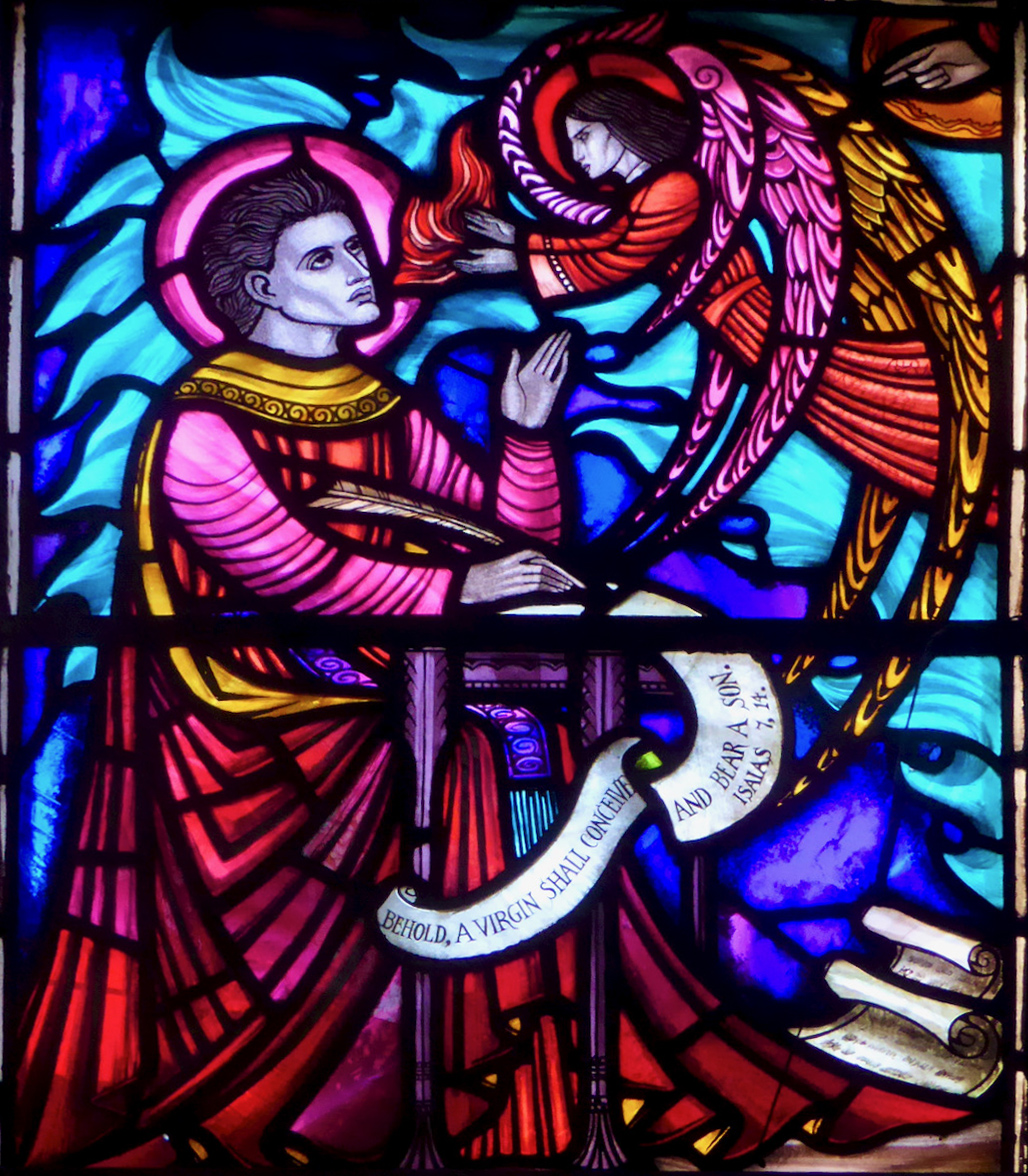
This one is by George Walsh and it’s in Frankfield Grange Catholic Church in Cork. This scene is part of a larger window, the main scene depicting the Annunciation. More about George Walsh here.
Kevin Kelly was a long-time stained glass artist for Abbey Studios. He loved doing Nativity windows. This one is in Inchigeelagh, Co Cork and featured on a UNICEF Christmas Card. It’s worth taking a look at the detail – amazing for what’s quite a small window.
This beautiful Nativity window is in Mayfield, Cork, in the Church of Our Lady Crowned. The Murphy-Devitt Studios were a group of young, dedicated artist and designers, determined to bring something new to traditional stained glass. We think they succeeded magnificently.
The Dominican Convent in Wicklow town has a gorgeous series of windows – the Mysteries of the Rosary. They were done in the Harry Clarke Studios in 1938, several years after Harry’s death, but his influence is very evident. They were mostly designed and painted by William Dowling, but with much input from Richard King. To see if you know the difference between Harry Clarke and Harry Clarke Studios windows, take the quiz, or just cheat and go straight to the answers.
Patrick Pollen, although he grew up in England, made his stained glass career in Ireland. Having been bowled over by Evie Hone’s Eton windows he came to Dublin to work with her. Hone’s influence is readily apparent in these two panels, which form the predella (lowest section) of a window in St Michael’s church in Ballinasloe, Co Galway, dating to 1957. I haven’t written about Pollan (yet) but you can read about Evie Hone here.
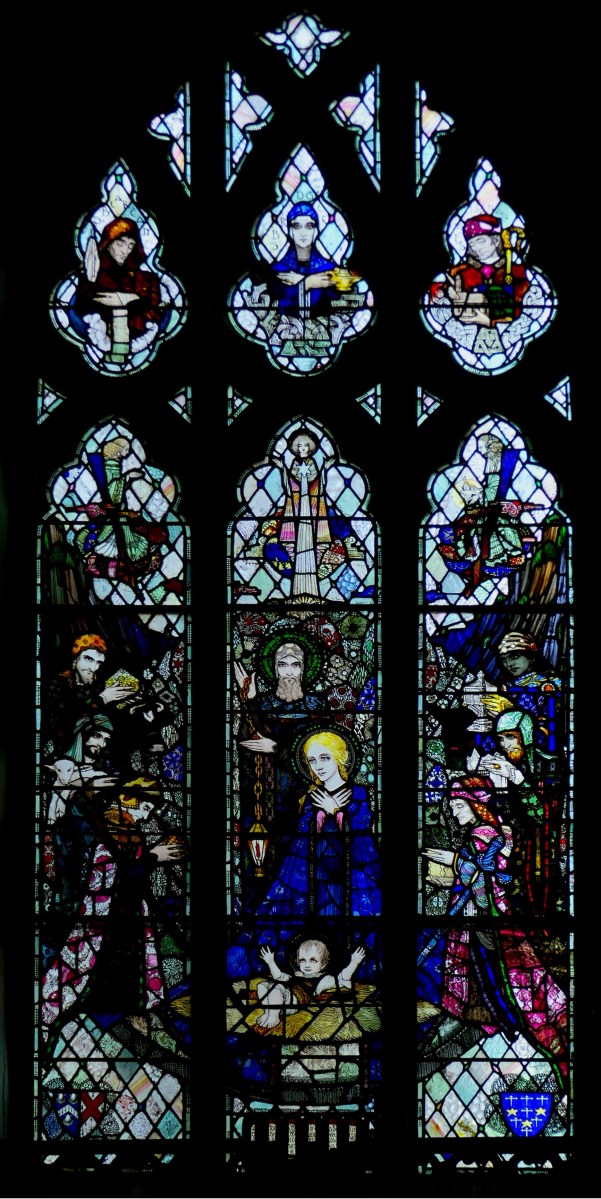
We’ve kept the best for last – the genius that is Harry Clarke. This is his Nativity Window, done in 1919 for Edith Somerville and her family, for the C of I Church of St Barrahane in Castletownshend, Co Cork. Lots more about Harry Clarke, Ireland’s greatest stained glass artist.
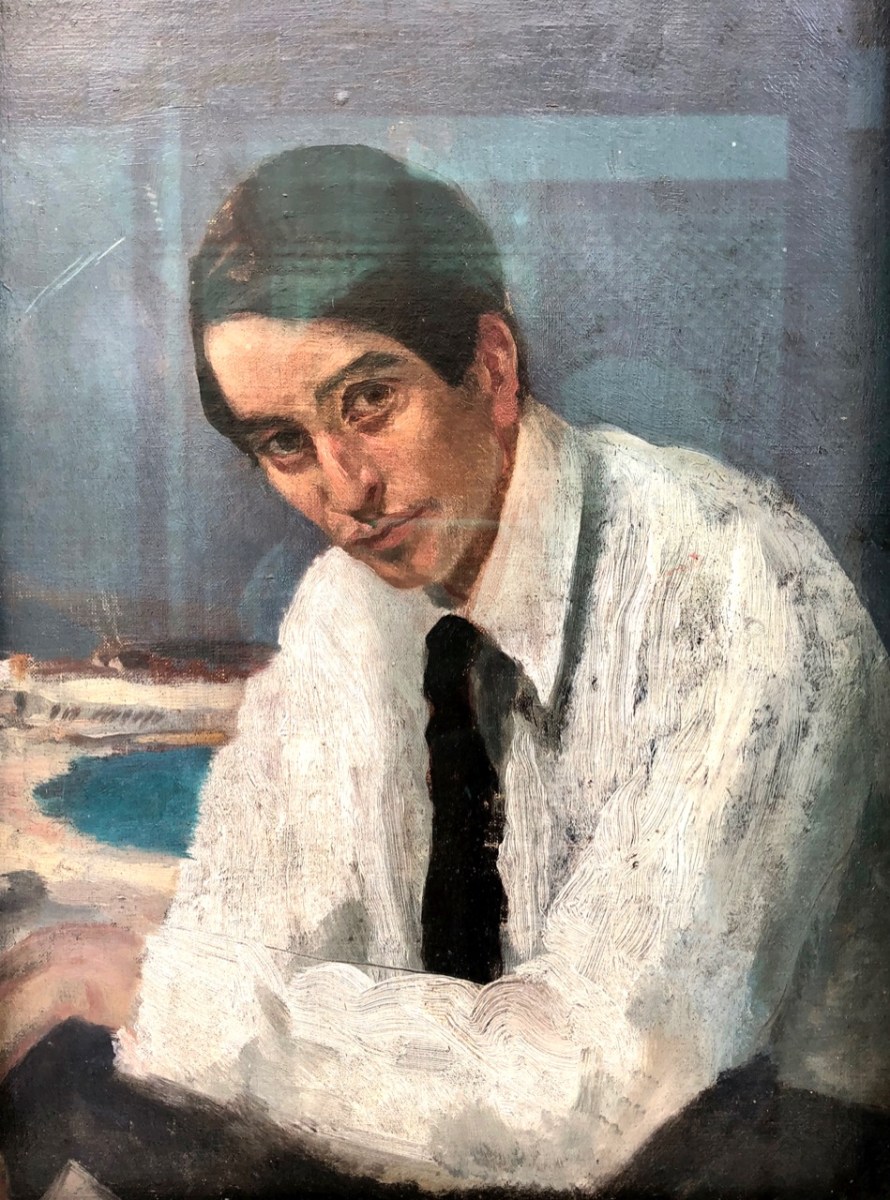
The Leixlip stained glass perfectly illustrates what a Clarke-style window is all about. The quote in the first paragraph is from Nicola Gordon Bowe’s Introduction to the Gazetteer of Irish Stained Glass. The foremost scholar on all matters relating to Harry Clarke (above, in a portrait by his wife, Margaret Clarke) and stained glass of the Irish Arts and Crafts era, she has researched his output exhaustively, and helped us to understand that he ran a busy studio with over 30 employees and was by no means able to design or paint all the windows himself.
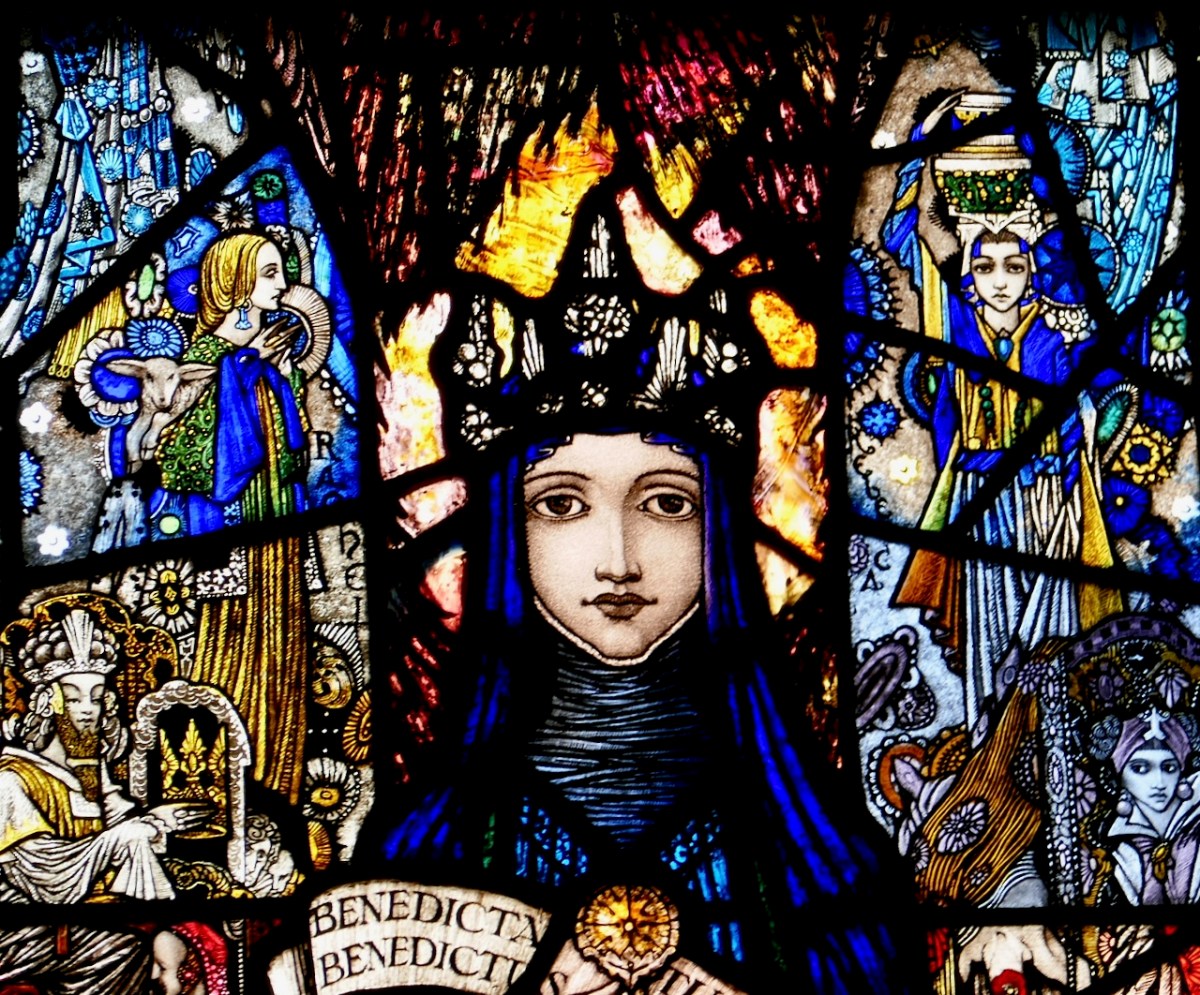
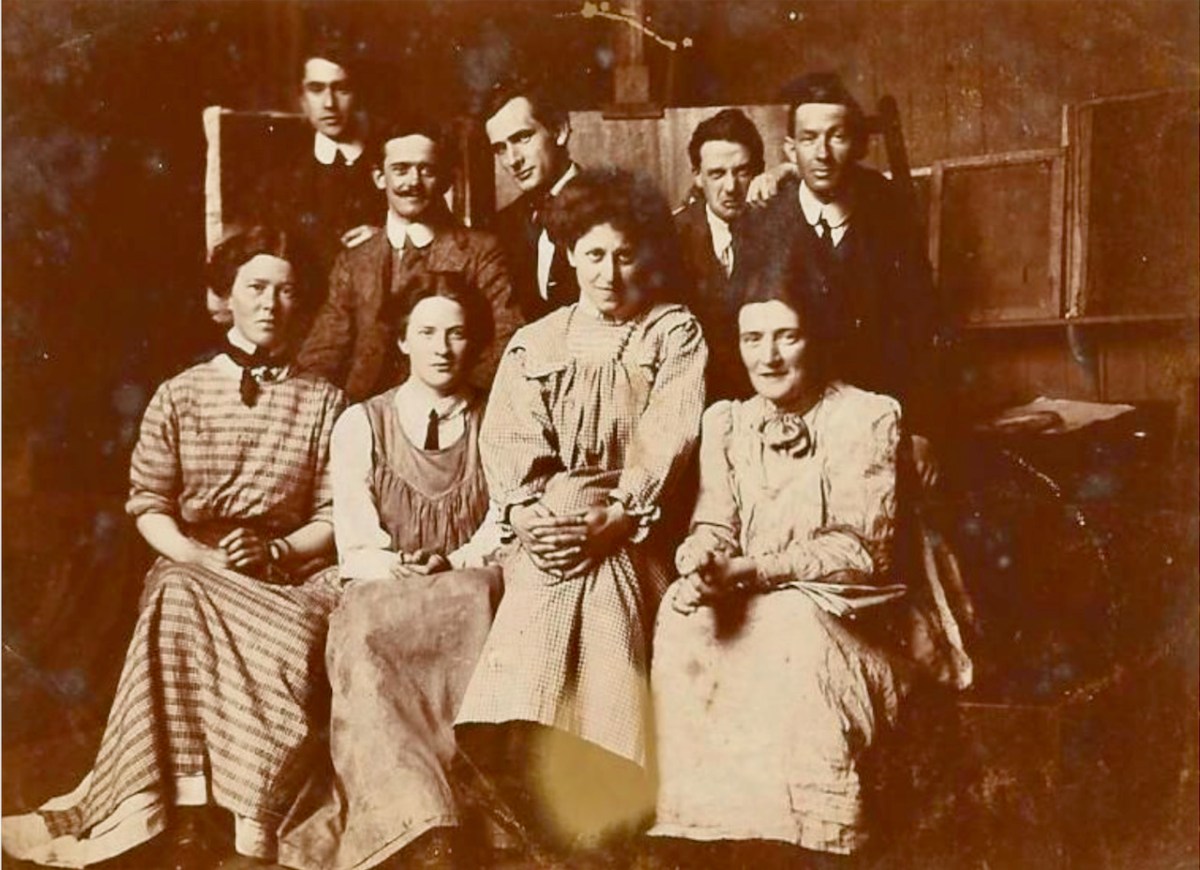
Of course he did many windows – about 150 in all – but if they were his windows, he signed them and they were expensive. Above is a detail from his Terenure masterpiece, The Virgin in Glory, to give you an idea of the difference between the real thing and a Clarke-style window. In addition to that, after his father died in 1921, he and his brother Walter ran the business – Joshua Clarke and Sons (it wasn’t called The Harry Clarke Studios until 1930) – with Walter looking after the business end and Harry in charge of the artistic output. Harry produced his own windows on the side, as it were, paying for materials and glazing time, but charging differently. To fulfil the demand for stained glass windows from around the country (and indeed from the USA, Australia, Britain, and other countries) Harry gathered around him a group of talented artists and trained some of them to reproduce his style. Some of the artists he found himself – they were either fellow students/friends at the Dublin Metropolitan School of Art (like Austin Molloy, or the group below showing Harry top left) or had arrived through recommendations (Philip Deegan from Worthing), or, like Millicent Girling, had taken one of Harry’s own classes. He taught design at the DMSA for a couple of years in the early 1920s and according to Nano Reid, one of his students, all the students were under his spell and there was a wave of Harry Clarke Style illustrations.*
However they got there, in the mid-1920s Kathleen Quigly and Leo Cartwright had joined the other accomplished artists working under Harry’s supervision. While not all the windows the Joshua Clarke studios produced in this period were ‘in the Clarke style,’ many were, and there was huge pressure to produce a Harry Clarke window although not always the budget to go with the aspiration.
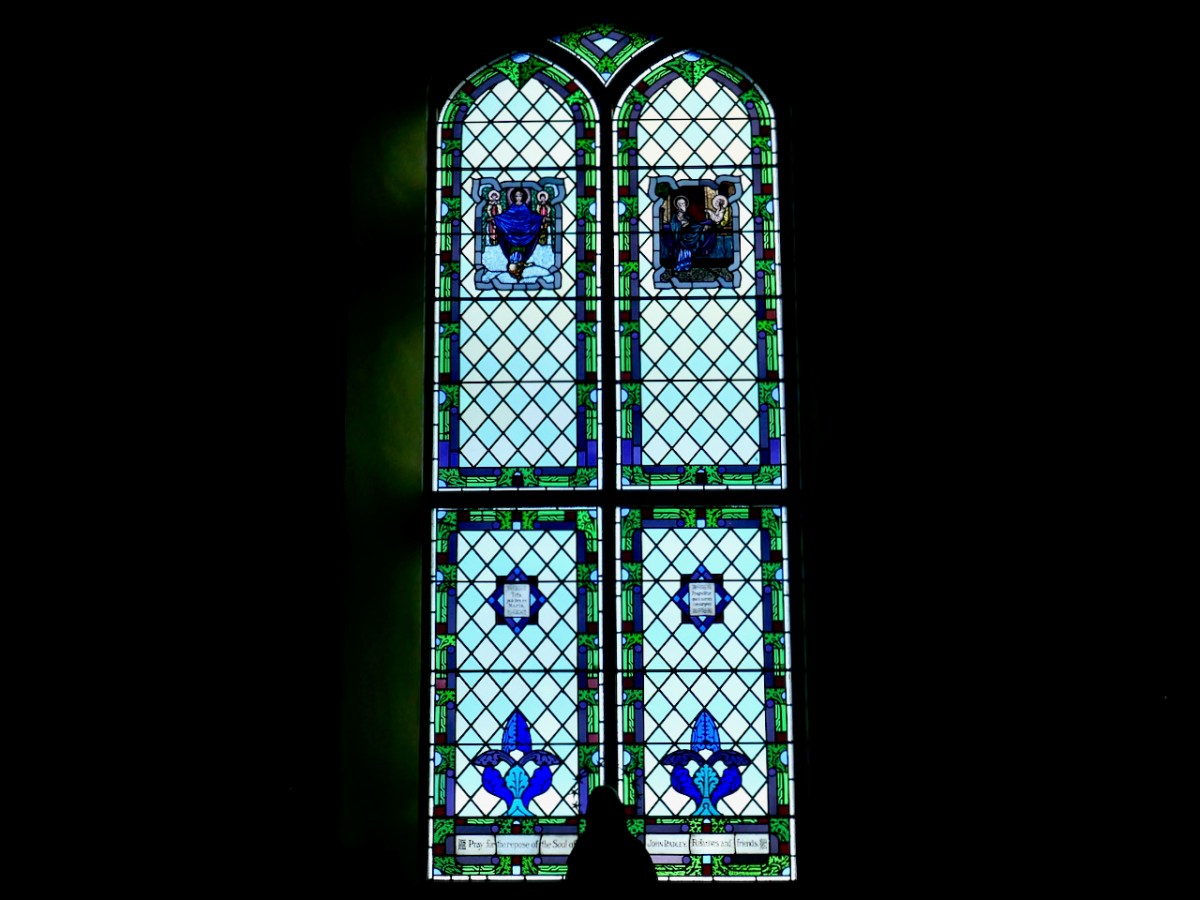
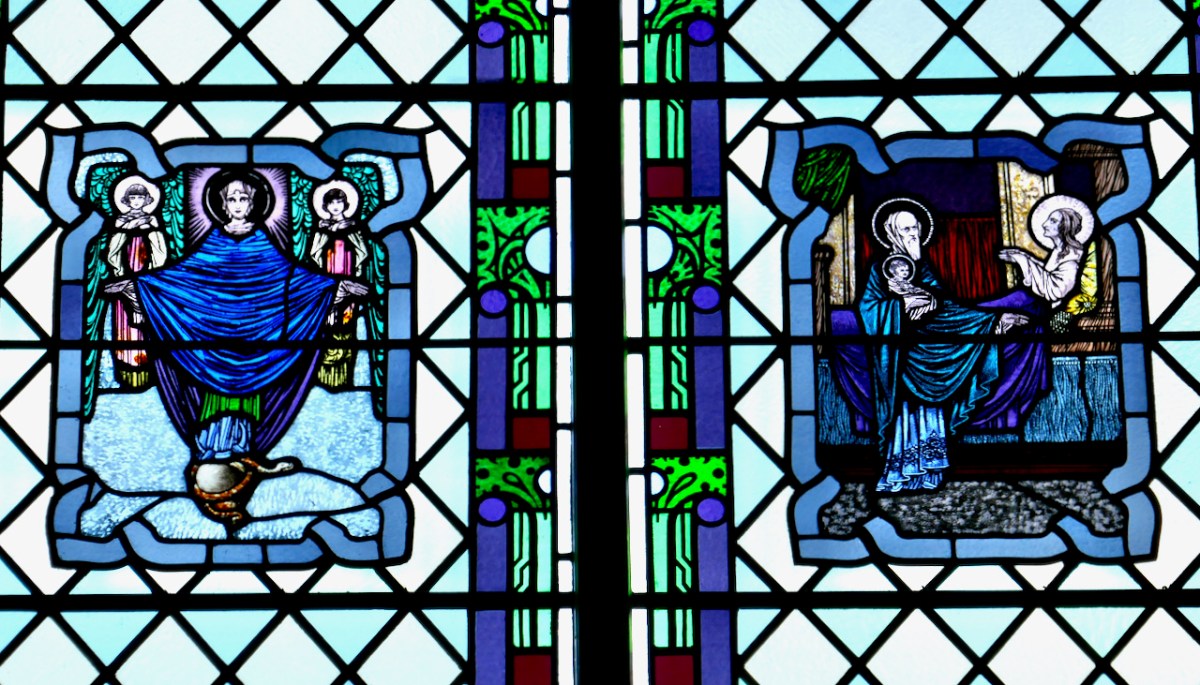
The windows in Our Lady’s Nativity Church in Leixlip, Co Kildare, fall into this category. They were installed in 1925 by Joshua Clarke and Sons and consist mainly of clear and light green quarries, with decorative borders. Each two-light window has a fleur-de-lis design in blue and a Latin inscription at the bottom, while the top panels feature two small scenes from the lives of Mary and Christ. The glass is of the inexpensive kind and the repetitiveness of the decoration meant that most of the windows could be assembled by apprentices or glaziers, while one of the studio artists produced the small scenes.
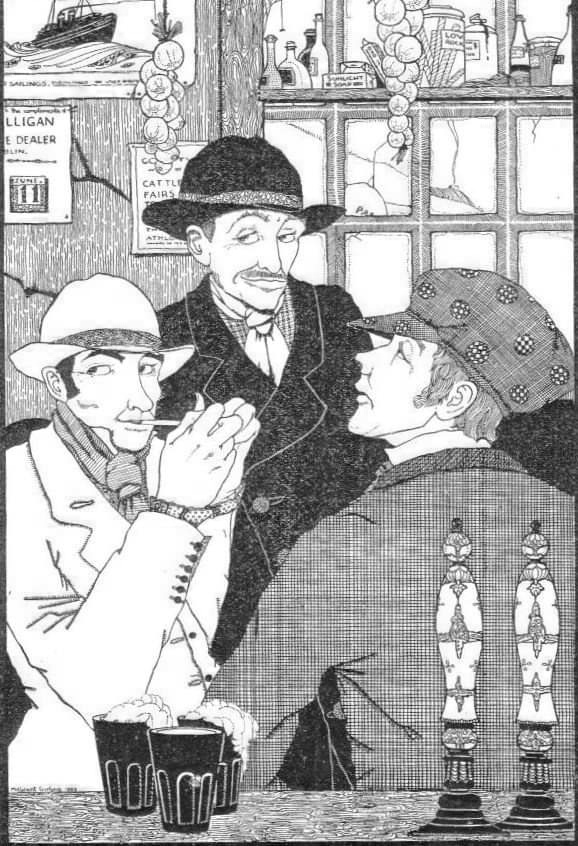
Who did them? On balance, my guess would be Philip Deegan. He seems to have been the go-to artist for Clarke-style windows. Kathleen Quiqly was also there at the time, but she was mainly assisting Harry with his own windows. Deegan was very capable of designing a near-Harry, as some of the drawings attributed to him in the TCD Clarke Archive attest. Take a look at his sketches for windows here, here and here, for example (sorry, not allowed to reproduce the images online). Not only was he working at the studios, he also signed up for Harry’s design classes and provided illustrations for the Dublin Magazine. I’ve only managed to find one of these (thank you, the amazing Patrick Hawe!) but the facial expressions remind me forcibly of the scourger in the Scourging of Christ window.
However, that’s speculation on my part and it could have been one of the other artists, or even more than one artist. The small scenes are lacking in Harry’s signature complexity and deeply emotive expression, but taken as a whole they make a charming sequence and deserve to be more visible than they are.
Among Irish stained glass aficionados nothing divides opinion like the windows of Mayer of Munich.
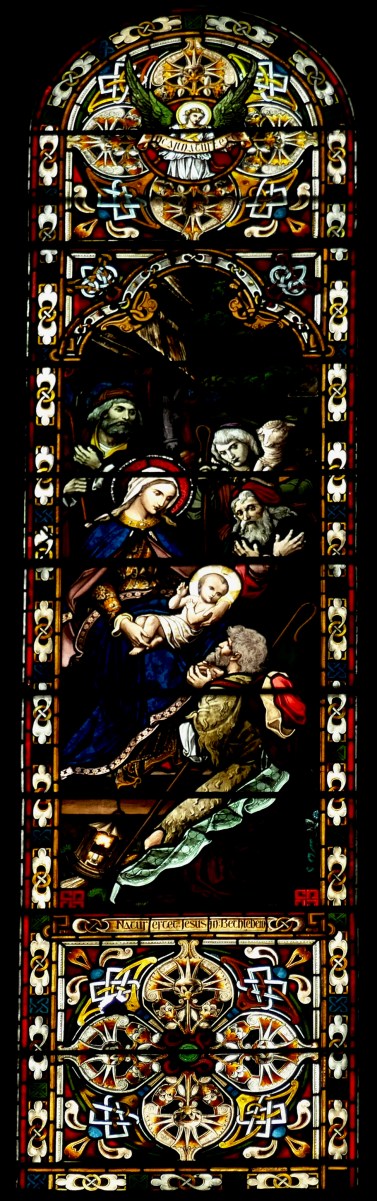
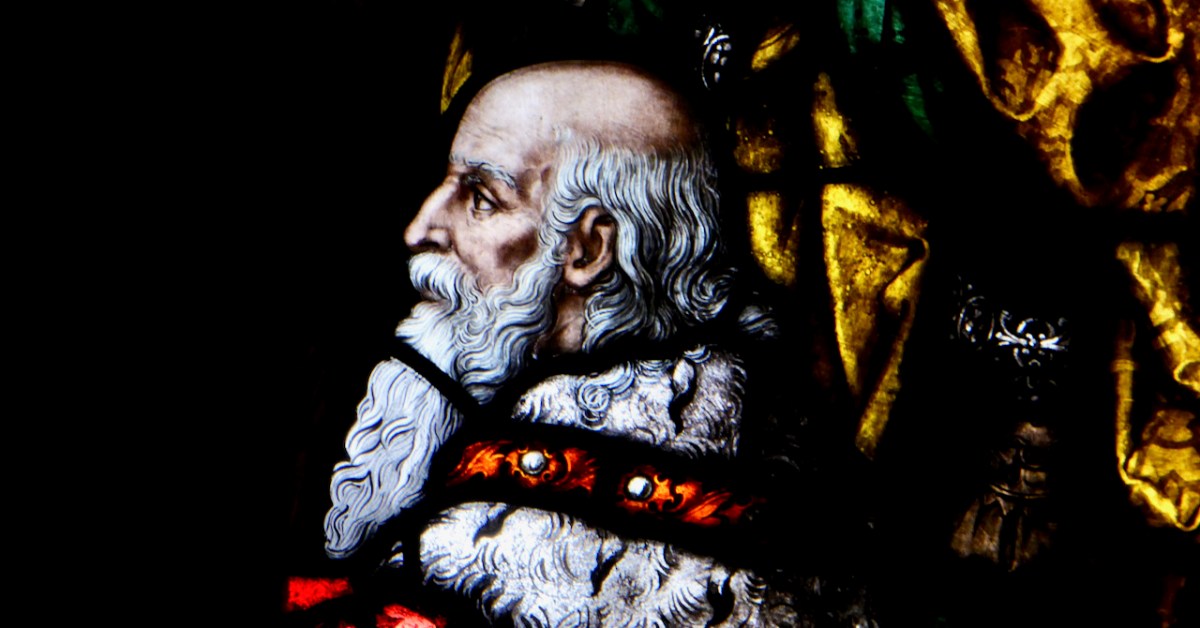
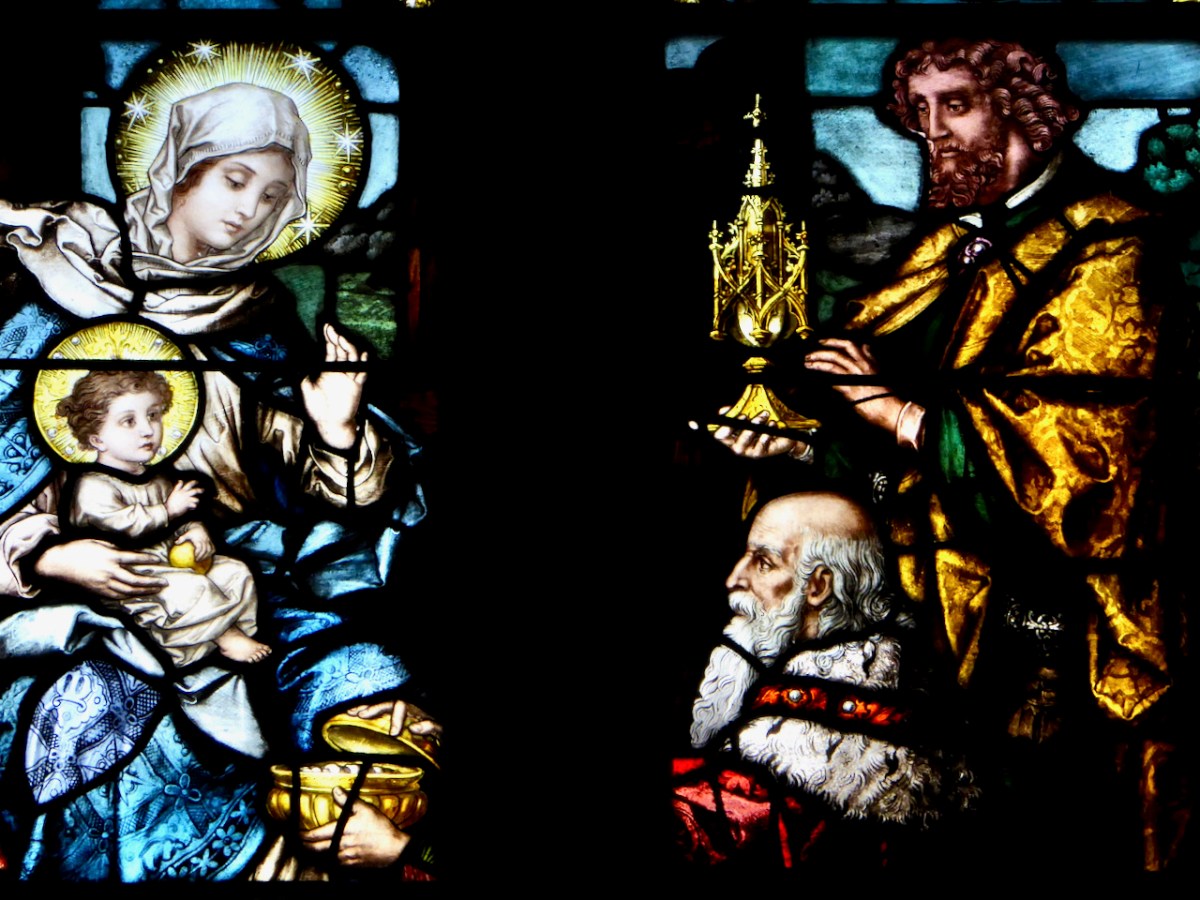
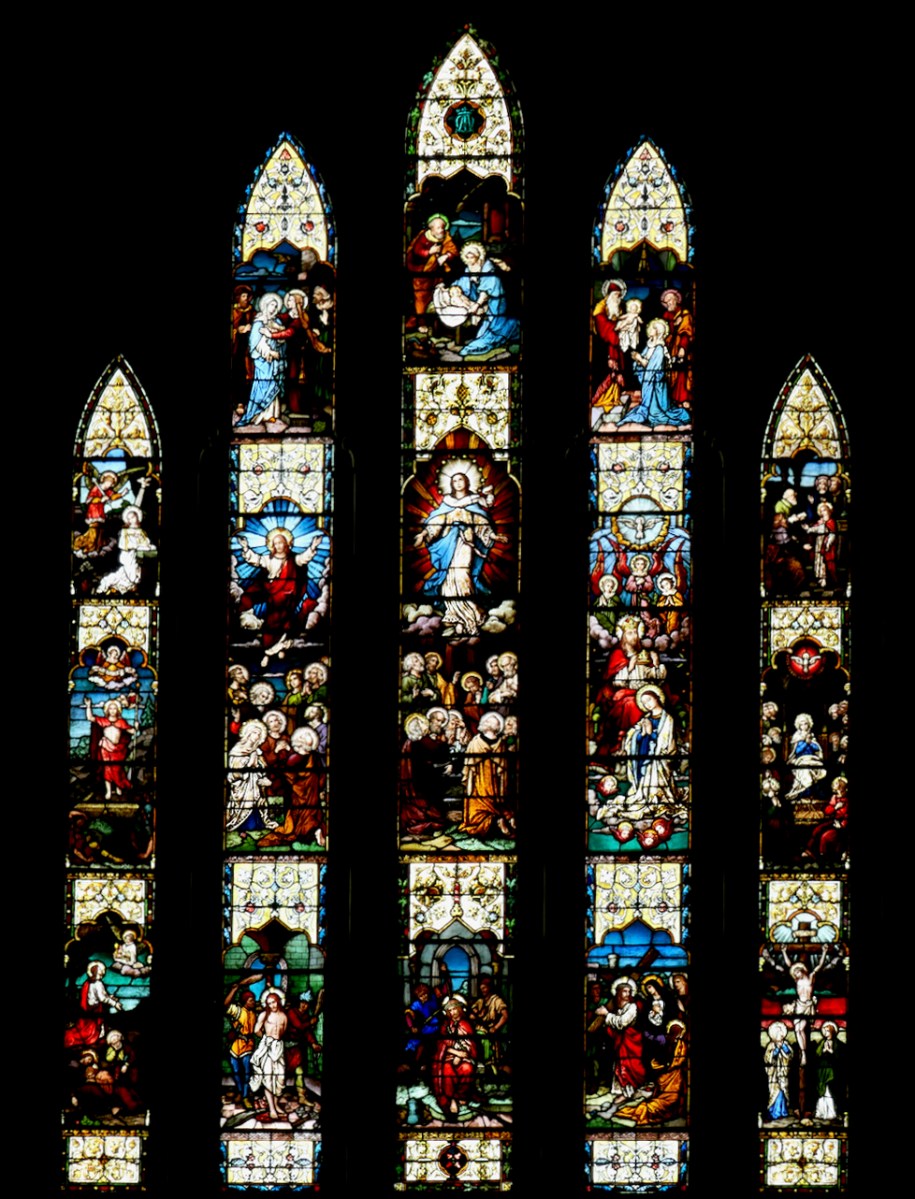
From about the 1860s to the 1940s Mayer was the foremost supplier of stained glass to Irish churches, both Catholic and Protestant. The first two images above, for example, are of a Nativity scene in St Eugene’s Catholic Cathedral in Derry. Catholics were probably spurred on to order Mayer windows when Pope Leo XIII named the company a Pontifical Institute of Christian Art in 1892. However, there is no doubt that the windows appealed enormously to the priests and vicars in charge of ordering them and that Mayer was adept in providing the kind of art that was widely attractive to parishioners. So – Mayer stained glass was ubiquitous, but it was also controversial and derided. Let’s look at why this was, and whether it was deserved.
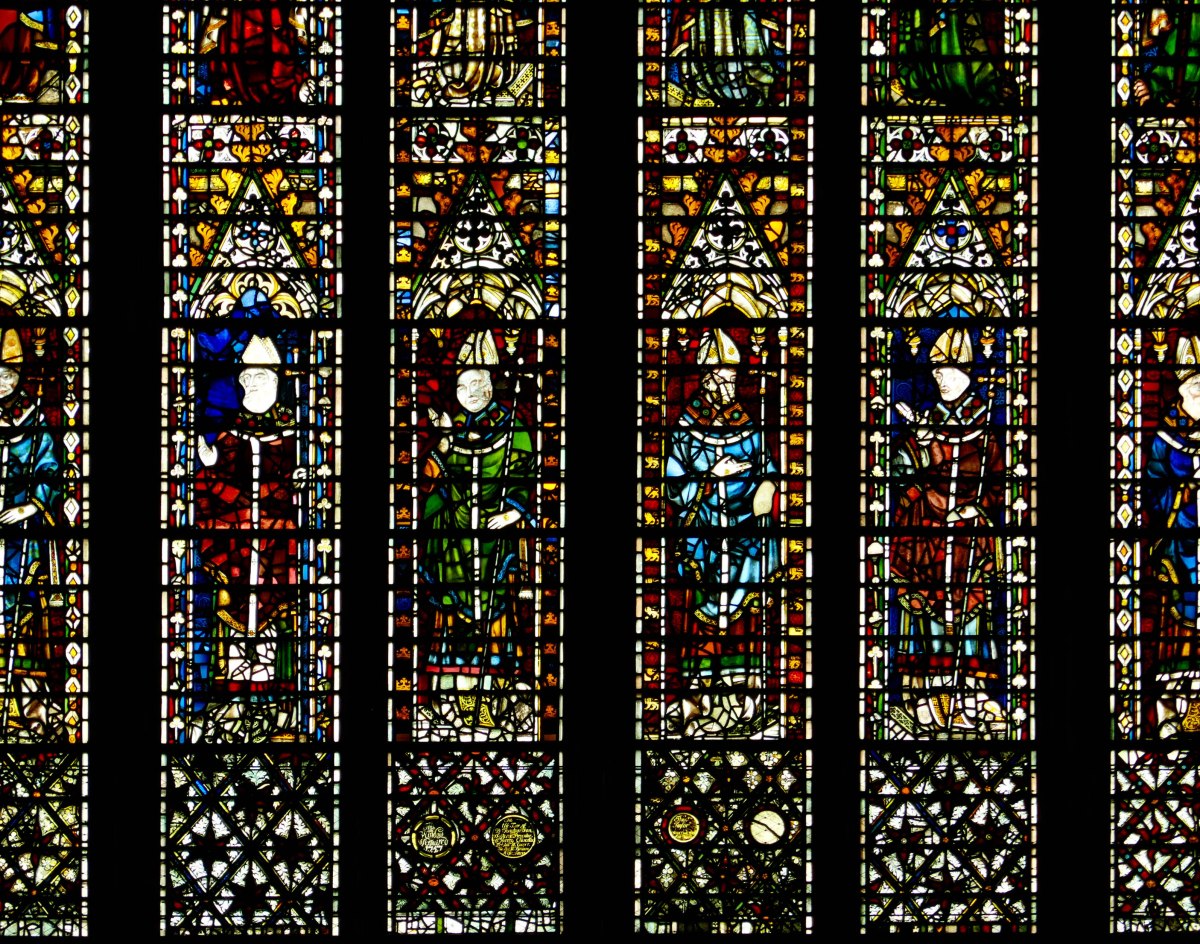
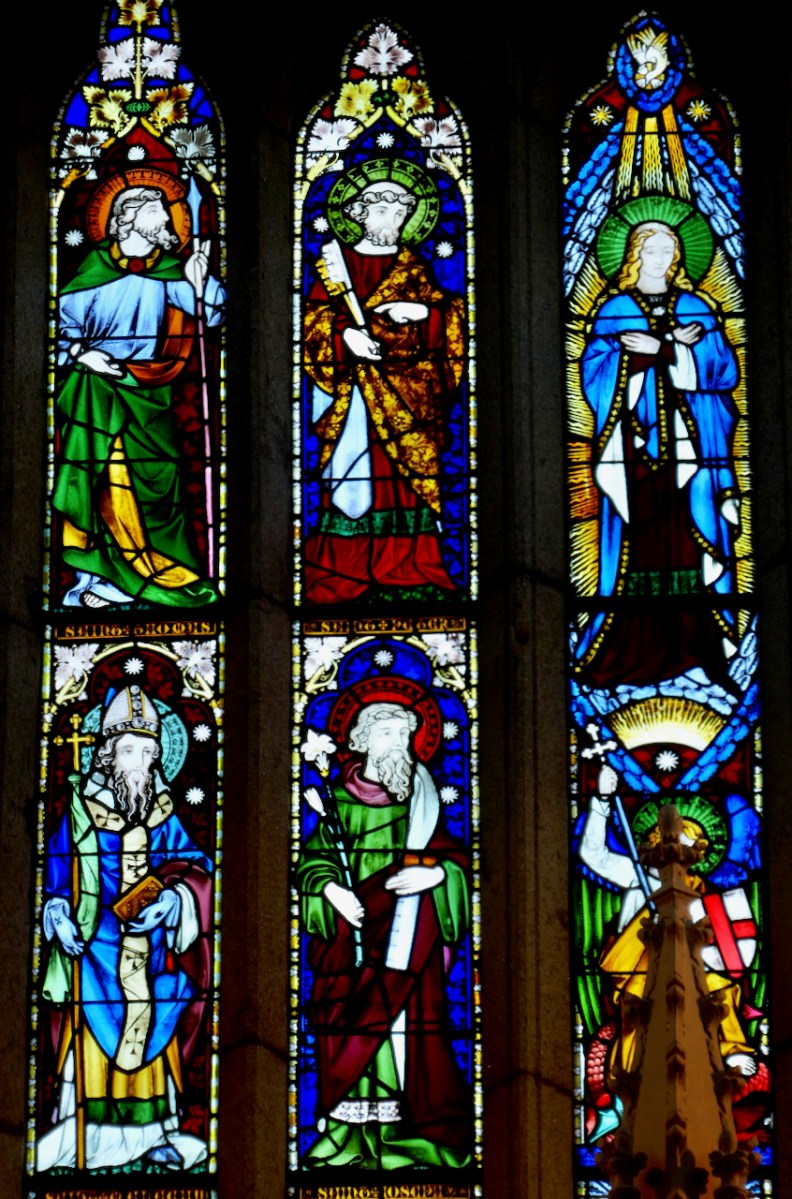
During the stained glass renaissance in nineteenth century Britain, the ideal became to replicate the style of stained glass from the High Gothic period of the 12th to 15th centuries – lots of small pieces of coloured glass leaded together, with saintly images set inside elaborate canopies. The example above is from York Minster and the windows below, clearly based on that model, are from the Pugin-designed St Aidan’s Cathedral in Enniscorthy.
Mayer moved away from this kind of glass towards what became known as the Pictorial Style. As a concession to the Gothic, they kept the canopies for the most part (it was a long time before stained glass studios dispensed with canopies) but they used larger sheets of glass (necessitating fewer cames of lead) and they took their artistic inspiration not from medieval windows but from Renaissance paintings. The purists huffed and puffed, but the people flocked to this new style of glass.
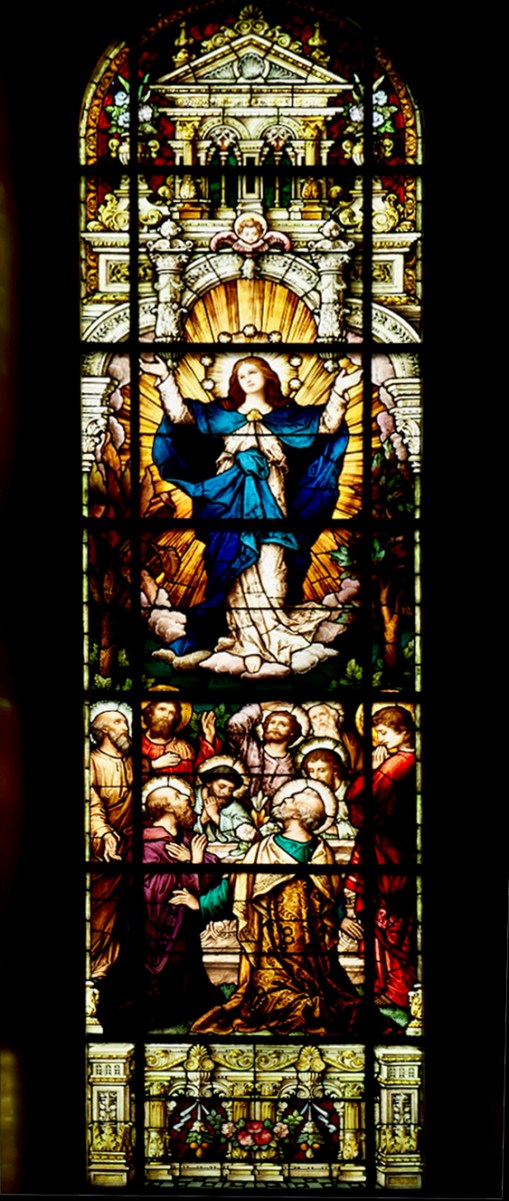
From the beginning this was a business, not an artists’ studio. The purpose was to make money and therefore a factory model was employed, with workers engaged in repetitive production of their own specialities – the apprentices did nothing but canopies, the painters might spend years decorating robes with brocade or embroidery motifs, only the most talented got to do faces. Designers produced sketches that were infinitely adaptable, with slight tweaking. In the large window above, in Baltinglass, Co Wicklow, the central image is of the Assumption of Mary into heaven. An almost identical design can be seen in the Catholic Church in Bantry, Co Cork, below (and indeed all over the place).
The results were appealing – highly competent windows full of beautiful images.
High Renaissance figures swathed in copious draperies which amplify their forms and define their movements. Here the painter was freer to incorporate the sharp drapery folds which were inherited from the German Renaissance painting tradition. Colours are vibrant and rich, and the window glows with a deep resonance because the amount of white glass was kept to a minimum. . . It was easy for a congregation to relate to the pictorialism and to recognise the narratives, so that the windows were regarded not only as aesthetic objects but as an effective catalyst to meditation and piety. Pictorialism spoke more directly to the. . . public than did the more correct visual medievalism of the stricter British ecclesiologists.
shirley ann brown*
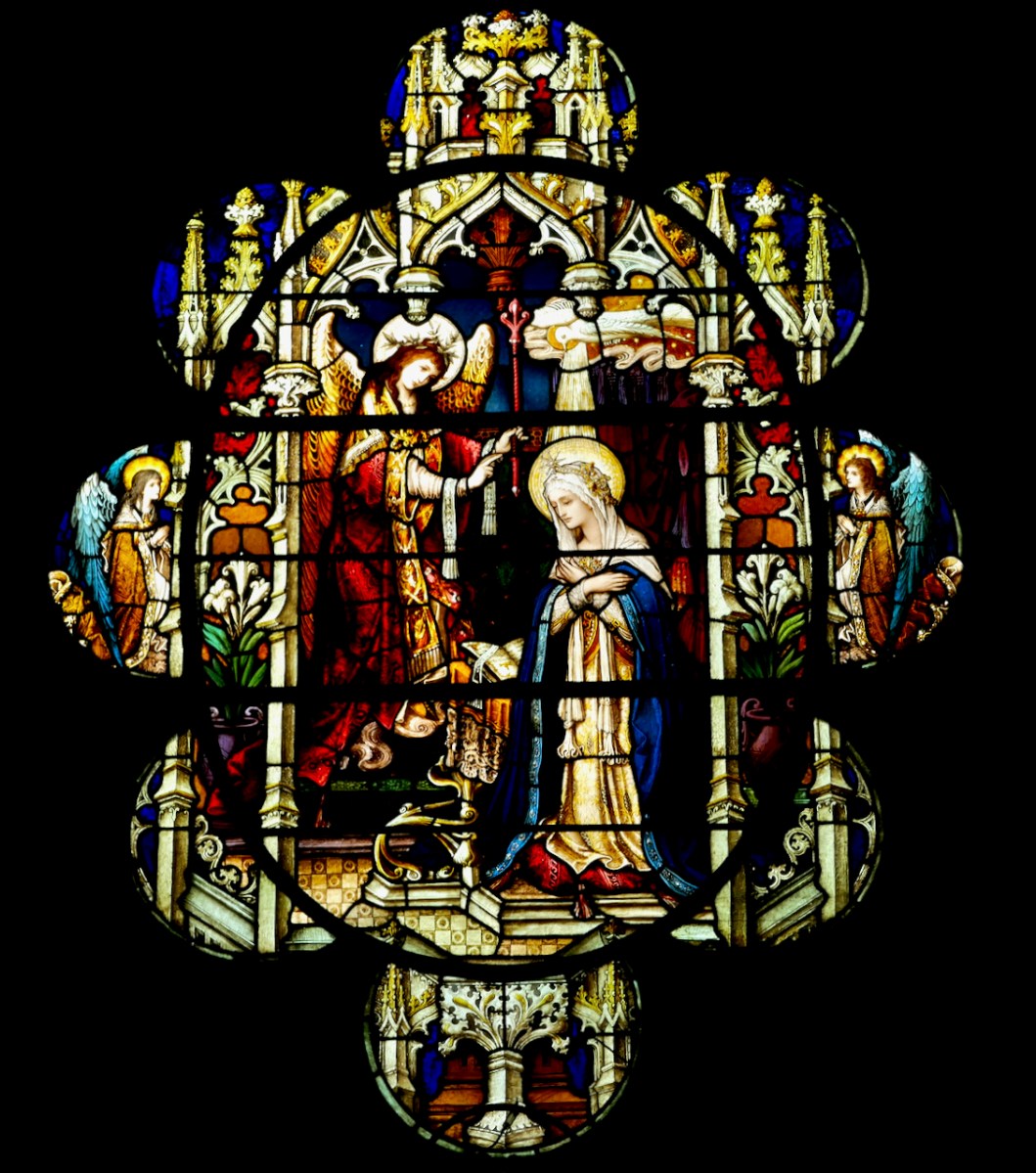
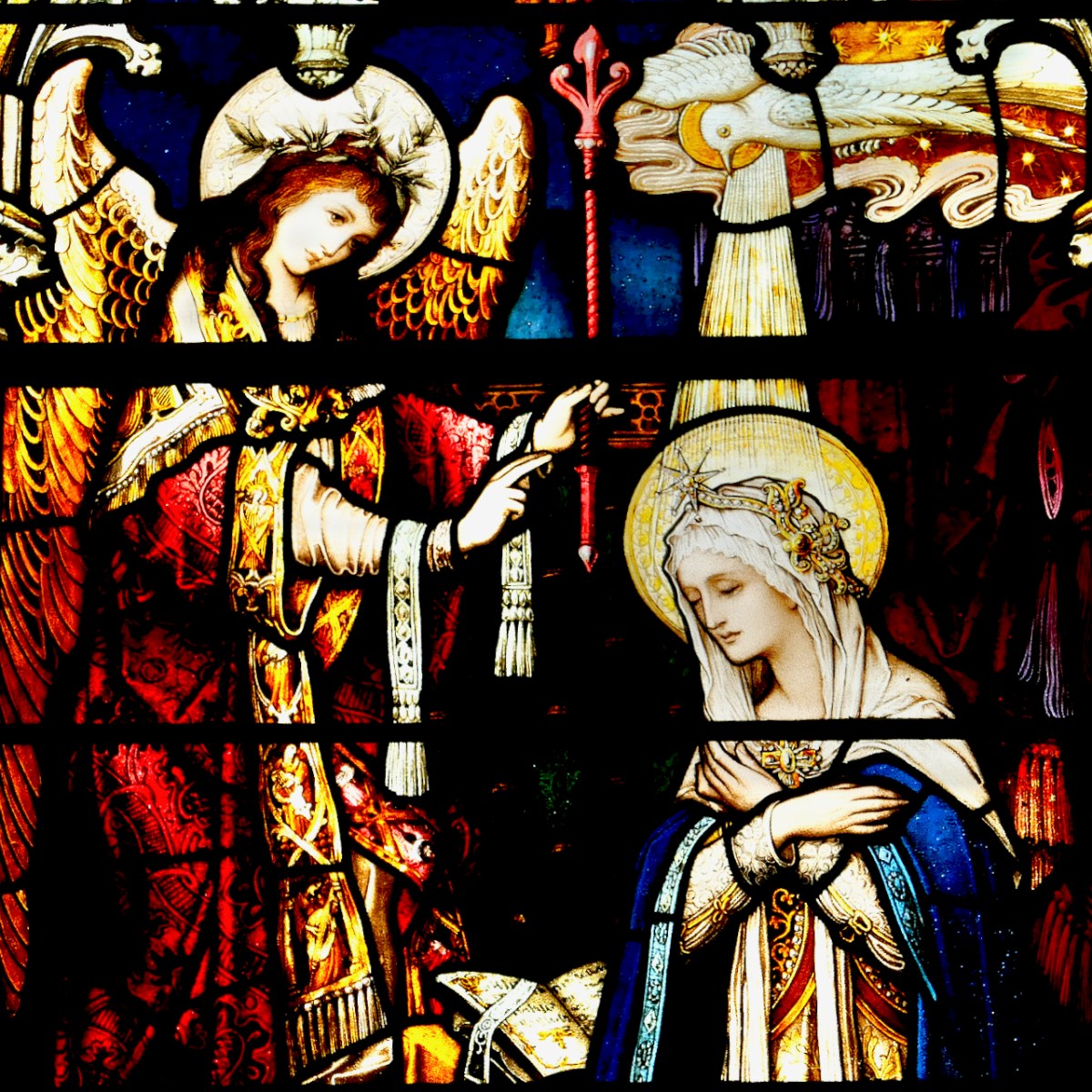
Above is the Annunciation window in Charleville, Co Cork – one of my personal favourite windows by any studio. Although the firm was German and the windows made in Munich, they had offices in London, and an agent in Dublin (in fact, Joshua Clarke, Harry’s father, started out as their Irish agent). They became adept at fulfilling the request of Irish clergy for specific iconography – that is, Irish saints, and panels illustrating stories from Irish hagiographies.
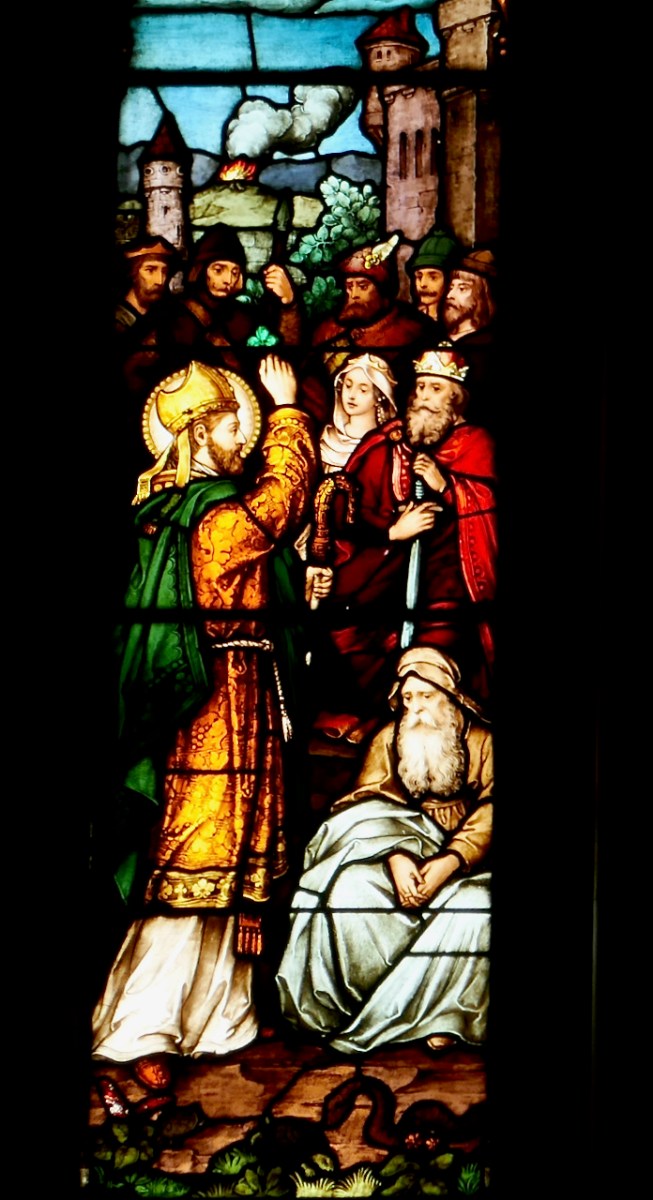
St Patrick, above, is shown with his shamrock, paschal fire and snake, although the towers in the backdrop could be from a castle on the Rhine rather than resembling an Irish round tower. At their most basic, Irish saints were simply chosen from a pattern-book of saintly images and supplied with a name-caption. They all looked the same – St Aidan in one window is identical to St Columba in another, balding, bearded, dressed in a monk’s habit or a bishop’s splendid robes and mitre, but often with an attribute to distinguish them one from the other. St Patrick always has his shamrock, St Brigid her flame or her church, St Joseph carries lilies. Nicola Gordon Bowe, in the Introduction to the Gazetteer of Irish Stained Glass reported on Edward Martyn’s outrage at the lack of discernment among clergy and architects who seemed not to be able to distinguish between the work of an artist and the trade salesman with an oily tongue and an ever-ready kiln.
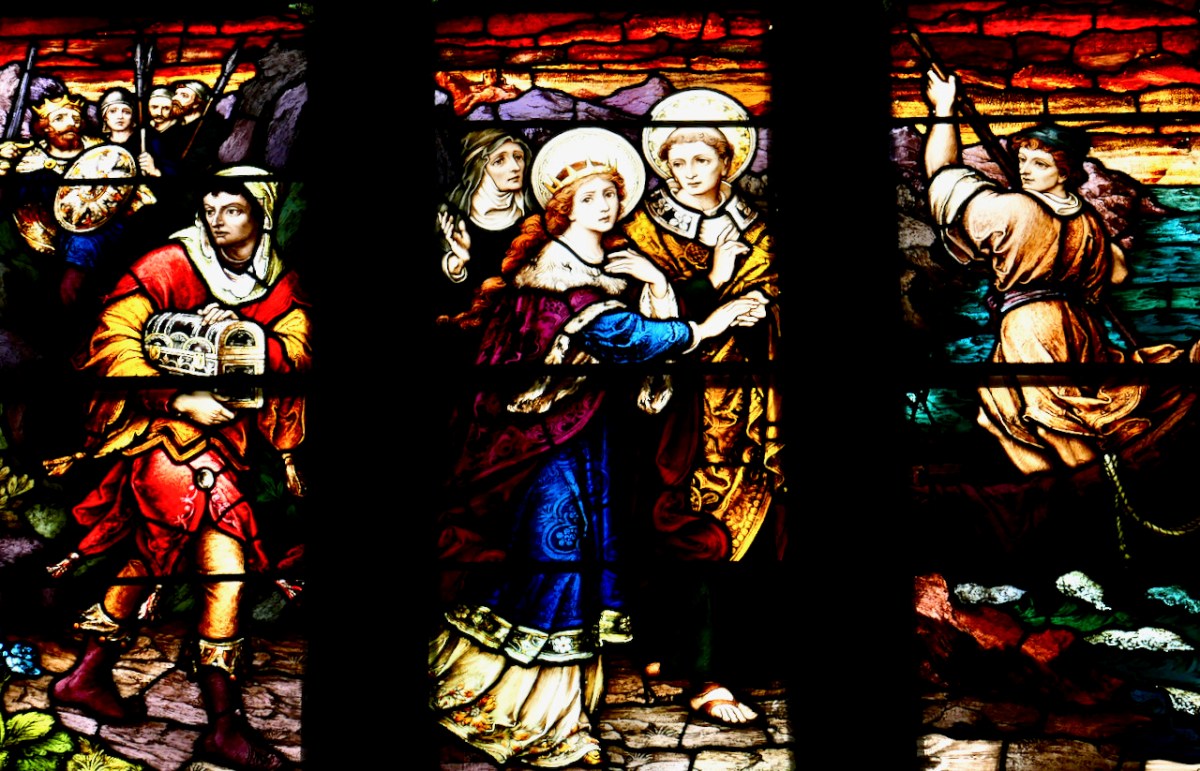
But you get what you pay for, and if you wanted something other than the pattern-book, Mayer could rise to the occasion, with splendid depictions of the mythology associated with Irish saints, all done in the same Italianate style and full of movement and vitality. One of my favourites is the story of St Dympna from Armagh Cathedral. (See Harry Clarke’s version of St Dympna in this post – the story is the same but the images are vastly different.)
David Lawrence, the mastermind behind the website Gloine.ie, is a defender of Mayer, saying about the prejudice to which Mayer was subjected, Feelings against German glass were whipped up into a nationalistic frenzy at the time of the setting up, in 1903, of the Irish Arts-and-Crafts stained-glass studio An Túr Gloine and continued as that studio flourished in the early decades of the twentieth century. This prejudice has been well documented and was partly based on the factory model of glass production, since the new ethos of Arts and Crafts prioritised the artist’s vision and craft and abhorred mass production. However, Lawrence insists that, at their best, Mayer produced outstanding stained glass to equal any studio.
The year 1894 marked the start of a particularly successful new era at Mayer — this was the year that they were joined by the English artist William Francis Dixon (1848-1928). He had trained at the London studio, Clayton & Bell and then set up his own studio, Dixon & Vesey, before moving to Germany to work at Mayer. Dixon‘s arrangement with Mayer was a happy one. His skilful designing and drawing in a romantic manner influenced by the late Pre-Raphaelites and Mayer‘s attention to detail, masterly glass-painting and faultless craftsmanship formed an ideal marriage. Mayer-Dixon windows are in a romantic style, with a sweetness of drawing, softness of painting and beautiful, tapestry-like details. The heads are especially sensitively drawn. It is readily apparent that Dixon was able to dictate his own choice of colours to Mayer.
David Lawrence, Stained Glass Windows, Six Roman Catholic Churches, County Offaly November 2010
One of Dixon’s windows is this fine war memorial in St Canice’s Church of Ireland Cathedral in Kilkenny. However, in the end, it can be argued that Mayer became a victim of their own success. Despite occasional triumphs of design and execution, too many of their windows lacked originality and freshness, starting to look hackneyed and same-y. Public taste for sentimentalised depictions (however gorgeous and expertly painted) gave way, under the influence of European art movements, to a search for a more authentic and modern form of religious expression. Irish artists responded by developing a vibrant, often experimental, stained glass industry dominated by small studios producing artist-led work.
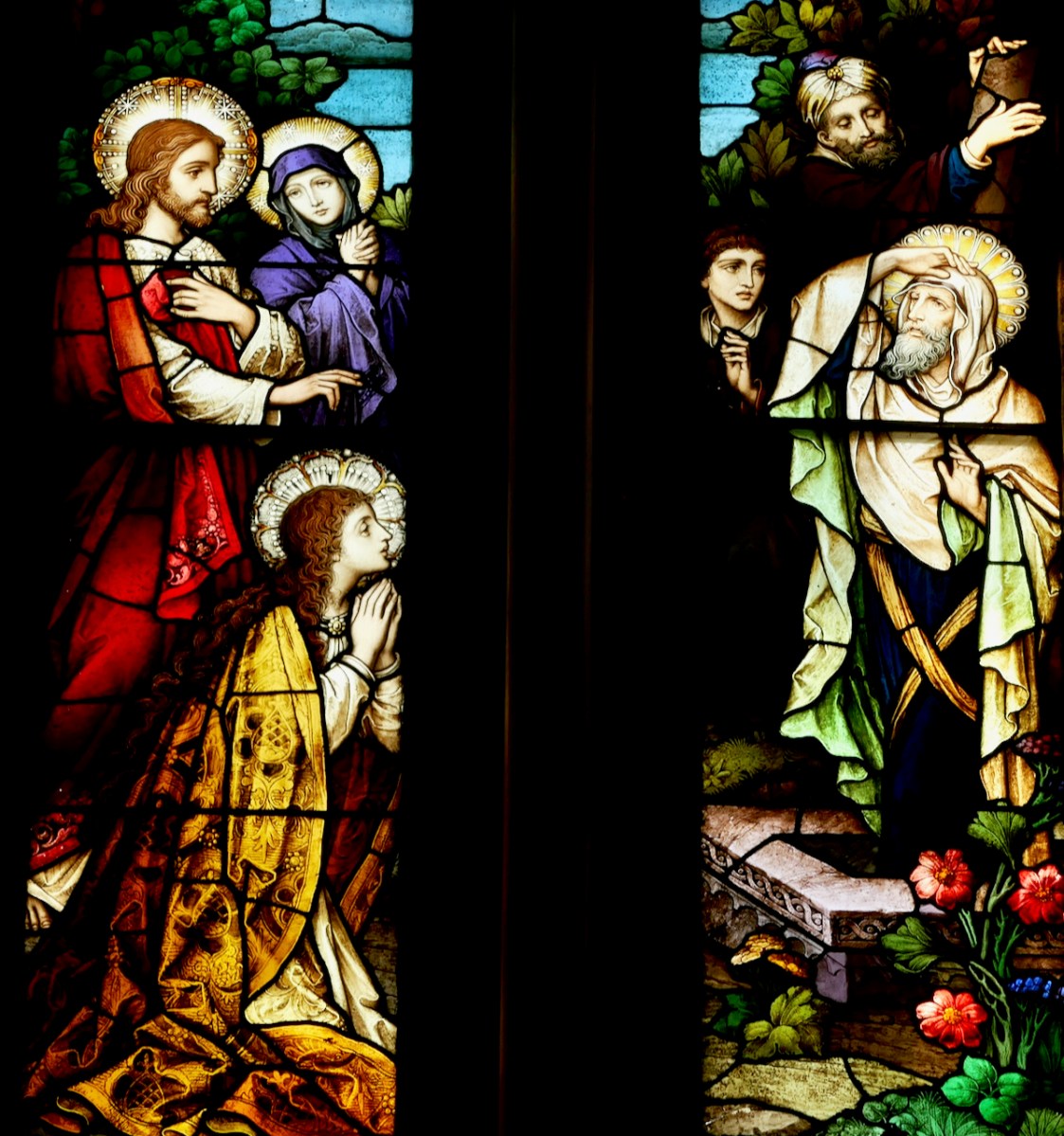
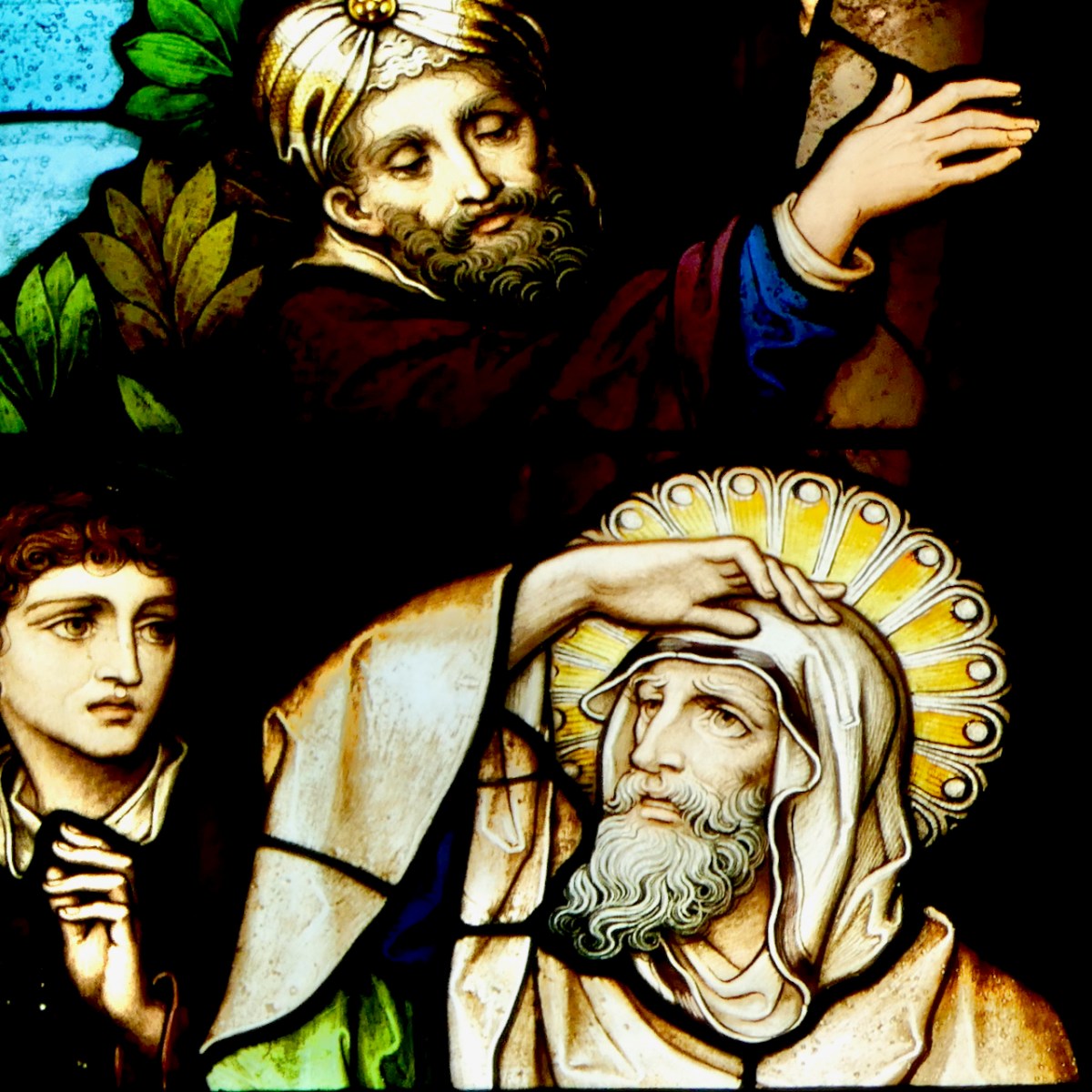
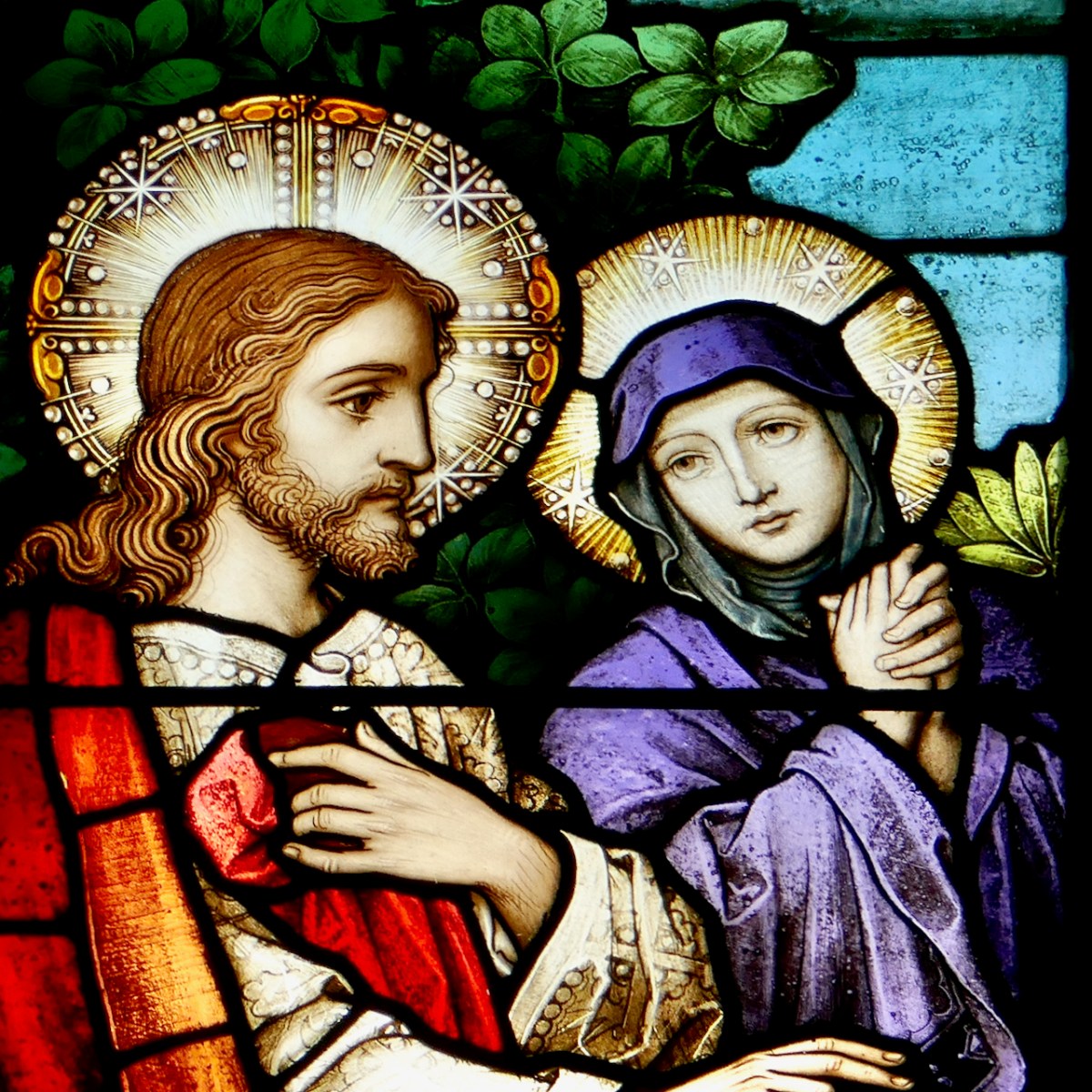
I will leave you with The Raising of Lazarus from Baltinglass Catholic Church for two reasons – firstly because it is perfectly illustrates the Mayer pictorial style at its best. I have provided three details close up, so you can see how competently the artist has rendered the subject matter.
The sentimentality critics complained of is in full flight in the image below – but also, look at the size of the eyes. Creating over-sized eyes to enhance and beautify a face didn’t start with Harry Clarke!
But secondly I use The Raising of Lazarus tongue in cheek as a nod to the fact that in fact Mayer is still around – and they have finally caught up with the century they live in. Take a look at this story in the New York Times to see how Mayer of Munich is embracing the twenty-first century.
*The Influence of German Religious Stained Glass in Canada 1880-1941 by Shirley Ann Brown, RACAR: revue d’art canadienne / Canadian Art Review, Vol. 21, No. 1/2, Représentation et identités culturelles / Representation and Cultural Identity (1994), pp. 21-31 (11 pages)
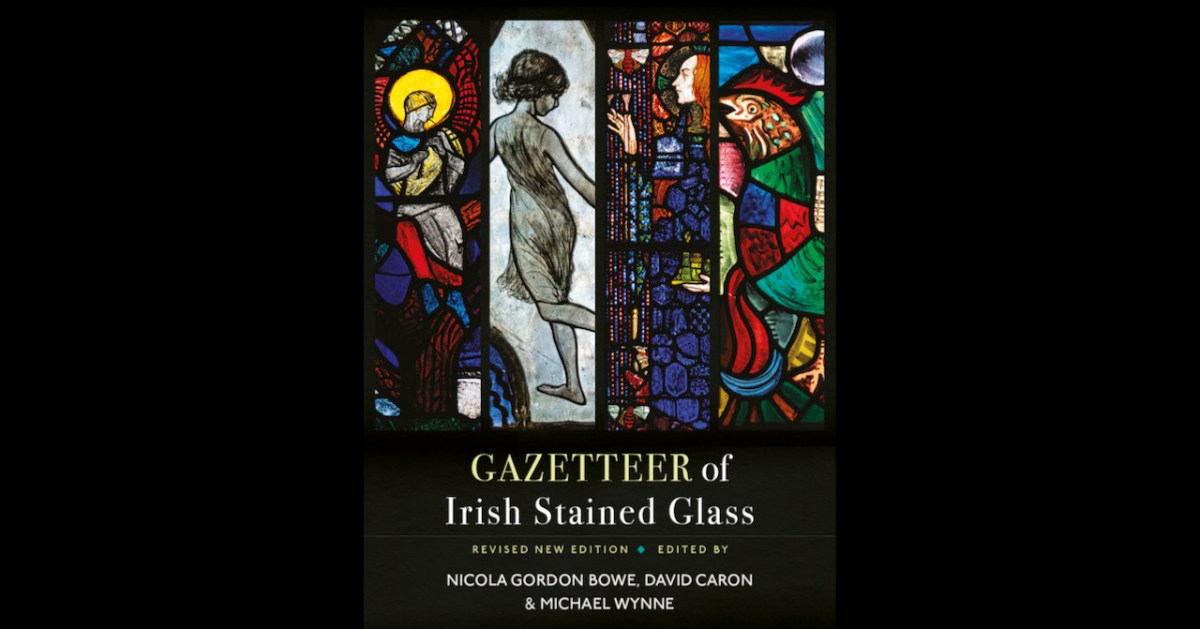
The Gazetteer of Irish Stained Glass was first published in 1988 and has been out of print almost since then. It was the work of Nicola Gordon Bowe, David Caron and Michael Wynne. It documented all the known windows of Harry Clarke and the artists of An Túr Gloine and was snapped up by anyone interested in looking at stained glass.
Click through to see sample pages!
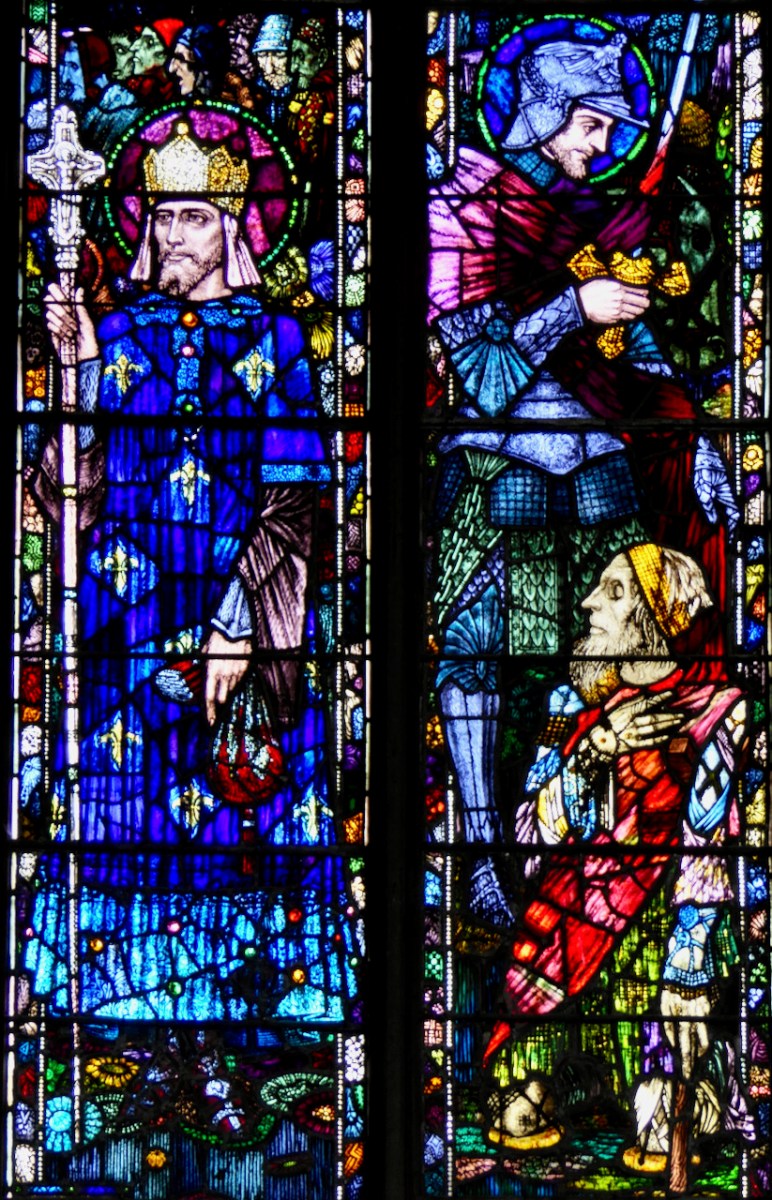
Of the three editors, David Caron, who was a newly-minted PhD at the time, lecturing at the National College of Art, is the only surviving member. He has forged a long-time collaboration with the photographer Jozef Vrtiel, a specialist in the difficult art of capturing stained glass, and together they determined that it was time for an updated edition. Not only updated, but expanded – their vision was for a book that would include all the best stained glass designed and/or made by Irish artists, or by artists working in Ireland. Harry Clarke is here, of course – that’s his St Louis and St Martin window, below, in Castletownshend. But there is so much more to Irish stained glass than Harry Clarke, even though he’s the one that most people know (or think they know).
Note I said ‘artists’ – this is not a book that records all Irish stained glass, such as the mass-produced windows that came from the large studios. The criteria for inclusion were “Artistic merit, individual voice and excellence in the craft.” There were nine artists included in the first book – there are over 90 artists represented in this one!
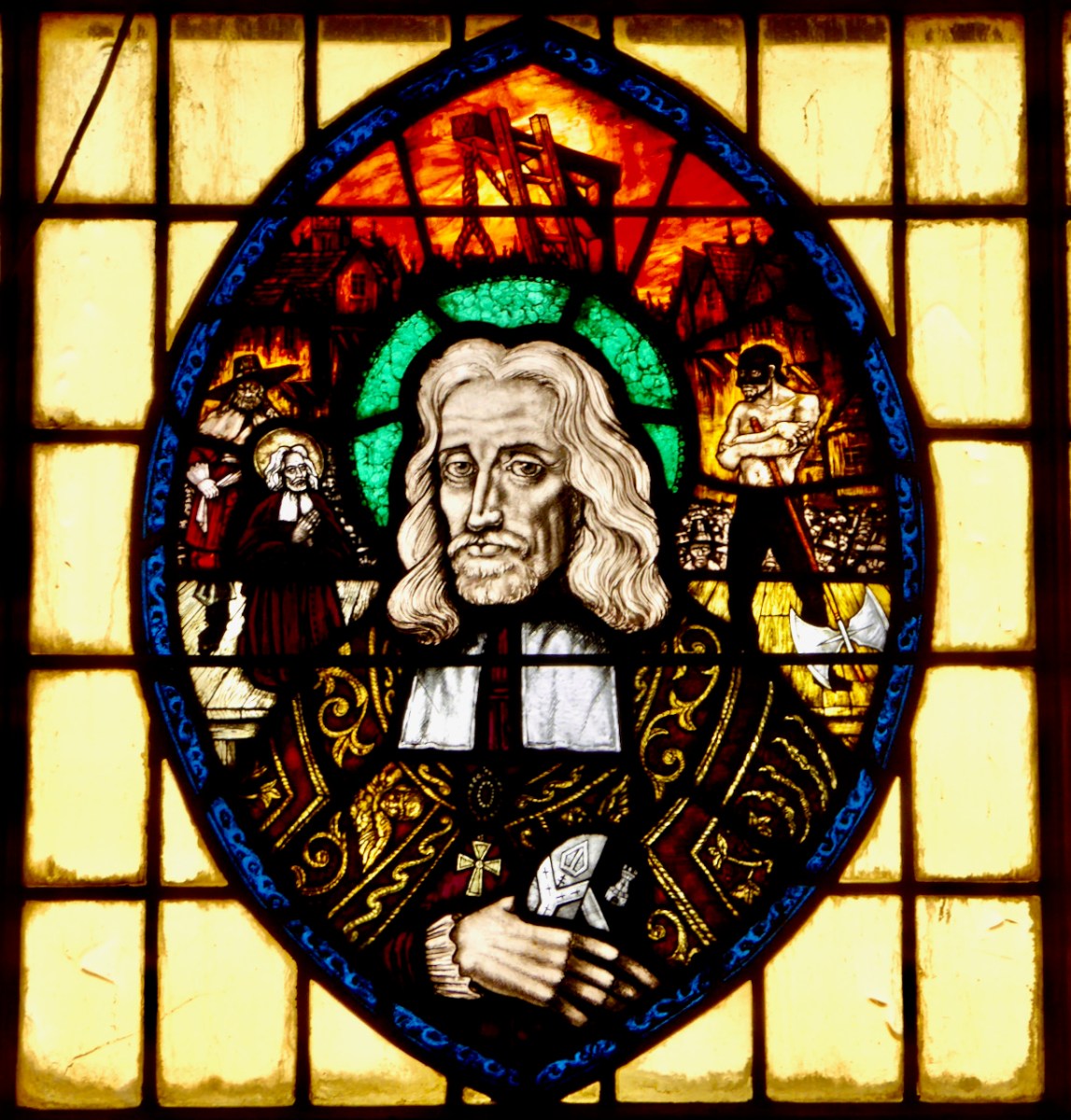
Some artists love to tell stories in their windows – this window is about the trials and tribulations of Oliver Plunkett and is by Kevin Kelly of the Abbey Stained Glass Studio
To do this, besides drawing on his own considerable store of knowledge (and indeed doing the vast majority of the work in this book), David assembled a team of fellow enthusiasts and experts each of whom concentrated on the work of a single artist or studio. For example, Réiltín Murphy has long been compiling the work of her parents, Johhny Murphy and Roisín Dowd Murphy, who together with Dessie Devitt, founded and ran the Murphy-Devitt Studios. You can take a look at my posts, Murphy Devitt in Cork, to see how brilliantly they pioneered a whole new approach to stained glass in mid-century Ireland. The image below is one of their windows from Newbridge College Chapel.
Another contributor is Ruth Sheehy, whose wonderful new book on Richard King occupies pride of place on my desk. I’ve learned so much from it, and bring this new appreciation now to my sightings of a Richard King – always a big thrill. The panel below is a detail from one of his enormous windows (The Sacred Heart) in St Peter and Paul’s Church in Athlone.
My own part revolved around my project to record all of George Walsh’s windows in Ireland. This has been a joyful journey for me, and I have written about George and his windows for the Irish Arts Review and for my own blog. There are over 100 of George’s windows in the Gazetteer, including the scheme he executed for the Holy Family Church in Belfast.
This is a book you will want to have with you in your car. And you know what? There is a lot more wonderful stained glass out there to discover – I’ve been amazed at what I have found in little country towns and in 1960s modernist churches. I have no doubt a third edition will have to be produced eventually as more of us tune in to the treasures under our noses. Look at the picture below, for example – you would swear it was a Harry Clarke! It was certainly made in his studio by a highly talented artist and bears a lot of his characteristic flourishes, just not his signature.
The best part of working on this book? The collegiality of everyone involved – we all helped each other out with queries and photographs. I feel like I have made new friends, even though I have yet to meet many of them. You can buy the book now in all good bookshops (buy local!) or order from the publisher.
Welcome to the UCD Library Cultural Heritage Collections blog. Discover and explore the historical treasures housed within our Archives, Special Collections, National Folklore Collection and Digital Library















 Roaringwater Journal