Maura Laverty and Kind Cooking

My friend Viv has loaned me her precious copy of Kind Cooking, given to her way back in 1977 by her mother-in-law, Molly – a wonderful matriarchal figure of my youth. It has plunged me back into the world of Irish cookbooks that I first explored with my posts on Monica Sheridan (Monica’s Kitchen, Back to Monica (about her famous Christmas cake recipe) and Monica Rides Again). Except this time it’s Maura Laverty, who predated Monica and who first established that bright, amusing, anecdotal style of food-writing that still defines the genre.
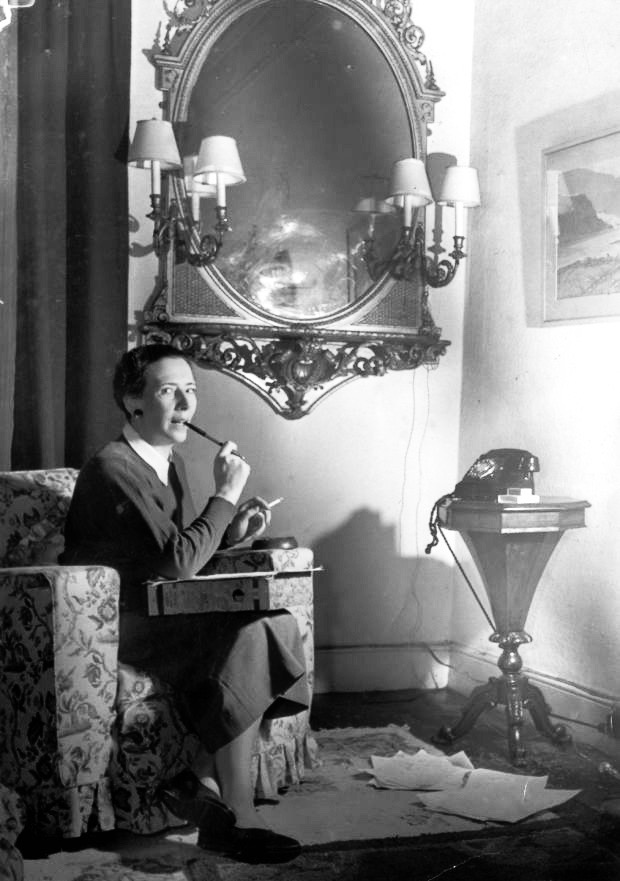
To open Kind Cooking is to be immediately reminded that Maura Laverty was, first and foremost, a writer. Author of several novels and later in life of a highly successful television soap opera, Tolka Row, she made her living as a writer at a time when it was not easy for a woman to do so. While I want to concentrate on Kind Cooking here, you can read in the Irish Times an excellent summary of her life by Seamus Kelly, author of The Maura Laverty Story: from Rathangan to Tolka Row which was launched to much acclaim earlier this year. (The book is available in shops and directly from the author. Enquiries to james.a.kelly55@gmail.com)

Seamus Kelly with son, Peter, and daughter, Laura, launching ‘The Maura Laverty Story’ in Rathangan Community Centre. Photo by Tony Keane

Most people in Ireland would be more familiar with Maura’s Full and Plenty, still a vivid memory from our mothers’ row of cookbooks, and for some a much-thumbed staple. It was her best seller and the food book she is still most remembered for.

This image is courtesy of the lovely food blog Eating for Ireland – the author uses it (her Mum’s copy) to make Apple Betty

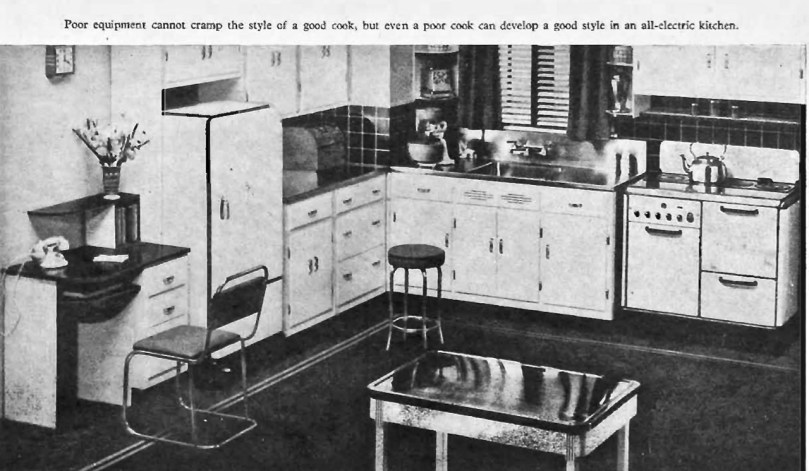
Kind Cooking was published first in 1946. There is no date on Viv’s copy, but it is possible that it was given free when you bought an electric cooker, since it was published by The Electricity Supply Board. Although this one has no illustrations, subsequent issues had this photograph. Anyone can cook, apparently, with one of these new all-electric kitchens! 
It was published several times again, including an edition with the new title Maura Laverty’s Cookbook. One edition was brought out by The Kerryman, with a section on diet by Sybil le Brocquy and ‘decorations’ by her son, Louis le Brocquy.

From the start, the emphasis is on a warm, chatty, non-intimidating approach to cooking and on traditional recipes  – barm brack and soda bread, rowanberry jam, Irish custard, champ (although she calls it Thump), liver loaf (a friend of mine, working as a camp cook, was once fired for feeding this to a gang of road-builders) and lots of organ meats – tongue and mushroom, anyone? I will spare you a description of how to make a delicious and nutritious broth from a whole sheep’s head – even she calls it a ghastly, cannibalistic business.

Part of the index – including a whole section on rabbit

But Maura had lived abroad and had developed a taste for garlic, French onion soup, Swedish and Danish meat balls, Spanish rabbit. Hamburgers (called hamburghers) could also be made into Hamburg stew and hamburgher rolls. Some recipes contain ingredients we don’t use any more – anyone know what griskins are? How about forcemeat?
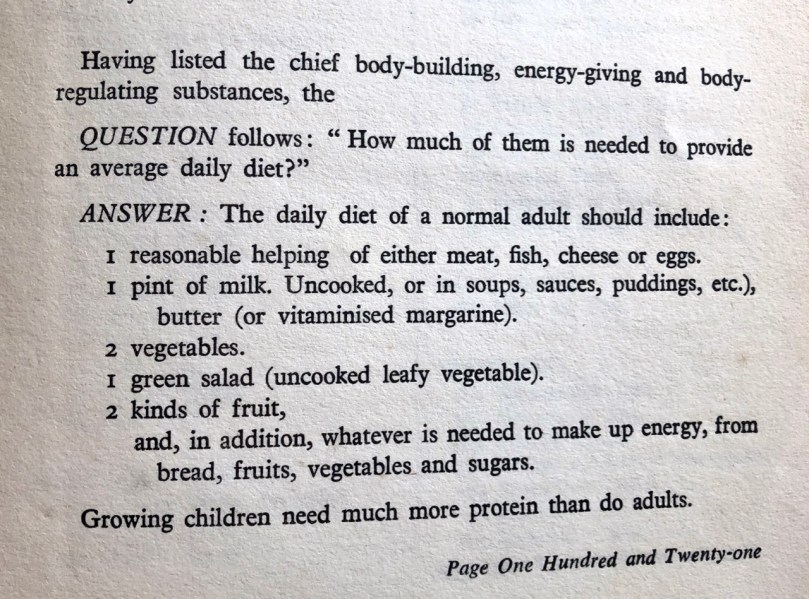
I wonder how this accords with our modern food pyramids

She wasn’t above convenience cooking, although she does warn you, in the introduction to her Corned Beef Hash, There is an enduring something about tinned corned beef that makes it as easy to detect as a legless fugitive with cauliflower ears and a cast in his eye. Disguise it how you will, your tin will find you out. Still, you can always try.
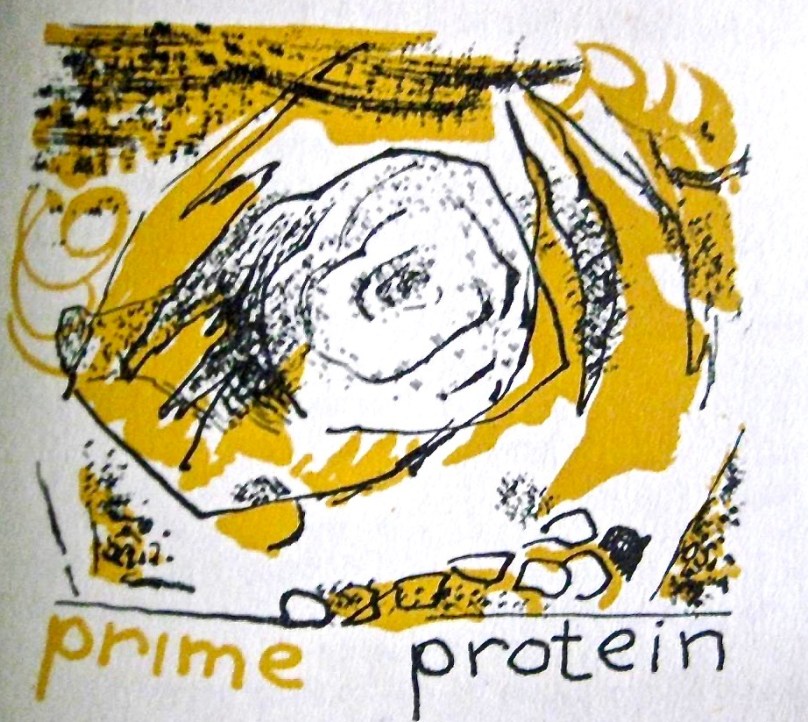
One of Louis le Brocquy’s ‘decorations’

It is this – the conversational, anecdotal tone, that Maura pioneered and that made her cookbooks so entertaining and beloved. You can sit and read them for pleasure as easily as you can use them to find a recipe. Her Fowl section starts with a two page story about Mag Donnelly – I am sharing it with you in full, below, as an example of the delights within these covers.

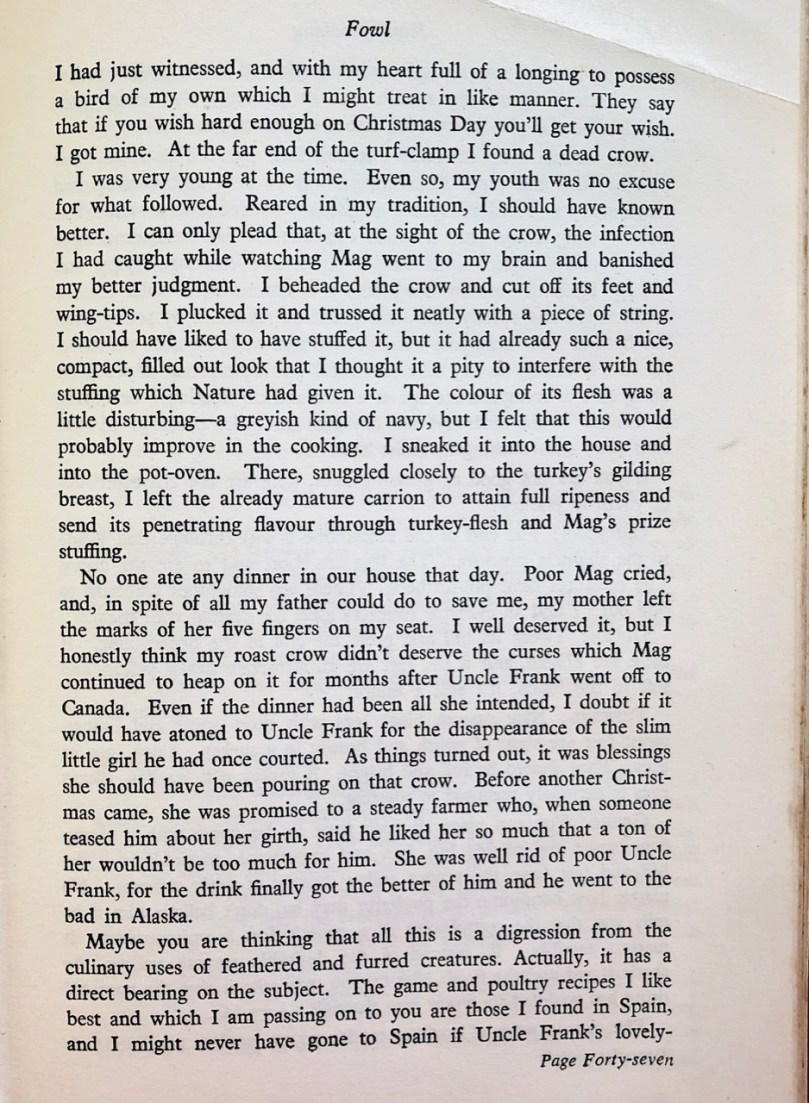
Since you’re probably thinking of Christmas dinner around now, I should tell you Maura’s secret to choosing a good turkey: Nice smooth black legs with short spurs and limber, moist feet are signs of youth and beauty in a turkey. Look into its eye. They should be full and bright. A turkey with sunken, bleary eyes is definitely unsuited to roasting.

You can just imagine her telling you about how to choose a turkey – Listen to me now

She’s a big fan of vegetables. In our place she says, we were acquainted with only six kinds of vegetables: onions, cabbage, turnips, boiled potatoes, mashed potatoes and potatoes steamed in the baker. The only people who grew such rarities as peas, beans, parsnips and carrots were the Protestant peelers. . . Their vegetable growing, in common with their Sunday school and their red, white and blue badges, was part and parcel of Protestantism and foreign aggression and we felt it couldn’t be good or lucky.

Cheese, especially good cheese or anything foreign, was a bit of a rarity when I was growing up. When Maura was a child it was all but unknown. Introduced to good cheddar she developed a passion for it. Since she was wondering at the time if she had a vocation as a nun, she felt it was important to ask her favourite teacher, Sister Mary Declan:

“Would Reverend Mother let you go to the press for bread and cheese any time you’d take the notion?”

Sister Mary Declan’s eyes grew round in her wrinkled face, and her eyebrows climbed up under her coif in horror.

“In heaven’s name, child,” she cried, “what kind of a poor excuse for a nun would I want to be to go gratifying my sinful appetites in such a manner?”

. . . She would be sorry to know that her reaction to my question about the cheese killed the vocation stone dead in me.

I will leave you with a couple of examples of Maura’s approach to conjuring up images of food. In the chapter on cakes she invites us to set our sub-conscious to work on any food item until an association has been evoked. She gives several instances of her own association but here are two of my favourites.

BLACK PUDDINGS: To think of these is to think of the Gunner Doyle, an ex-British Army man, who always drank more than was good for him on pension days. On ordinary occasions the Gunner would run from his shadow. His own mother said that in his sober senses he wasn’t fit to wash bibs for babies. When the drink was strong in him he would stand at the pump and roar an invitation to all Ballyderrig to come and be made into puddings.

TOAST: I can’t separate this from Maria Duffy at home in our place who, for fourteen years before God took her, never opened her lips to her husband – and all on the head of a piece of toast. She had a passion for toast. Cake-bread [home-made white soda bread] doesn’t toast well, so when Mrs. Duffy came into town (which she only did once a week for they lived away out in the depths of the bog), she treated herself to a baker’s loaf. Jem Duffy had a passion, too. His was for fishing. Someone told him that loaf bread made grand ground bait. He asked his wife for a slice. She retorted that with only the heel of the loaf to last her until Sunday, she saw no sense in casting her bread upon the water. Jem stole the bread when her back was turned. She never forgave him.

Thank you, Viv, for this treasure

I know I will go back to this book again and again, not for the recipes but for the opportunity to curl up and chuckle away an hour. As Maura says, Ingredients, skill and equipment are not so important to good cooking as a lively interest in human beings.

 

Kay Davenport – Creativity in West Cork

Writer, sculptor, ceramicist, historian . . .  the creative community here in West Cork rolls all these things into one person: Kay Davenport. For me, another side to Kay is one of the most important – she is, like me, a complete Hare Fanatic! You can tell because, when you drive past her entrance gates on the road between Ballydehob and Bantry, you are greeted by some wonderful hares which she has sculpted.

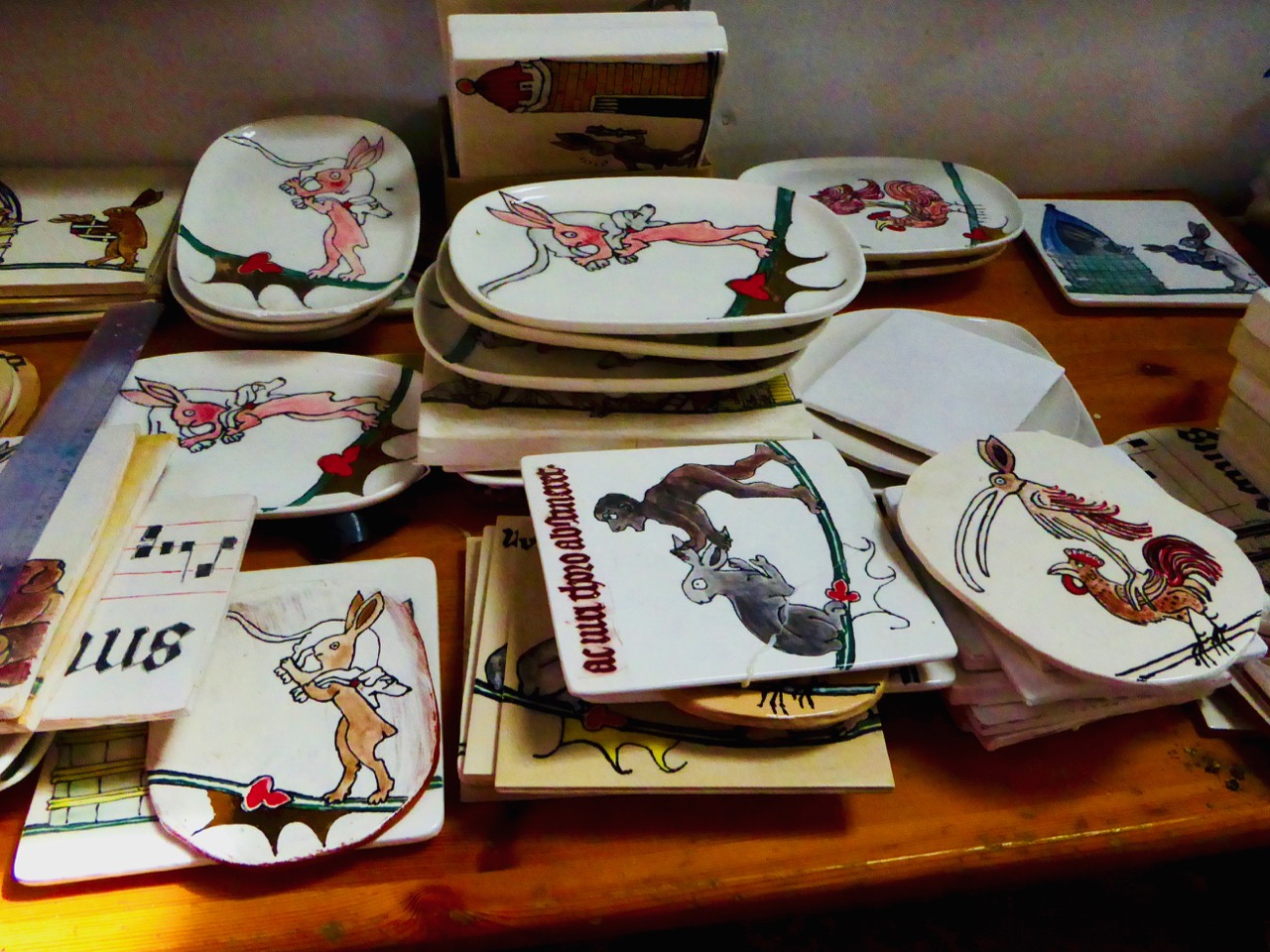
When we first met Kay – many years ago now – her Hare Pottery was in full swing, producing bespoke plates, ceramic trays, trivets and canvases with all the images inspired by the ‘marginalia’ in a series of 14th century French manuscripts. Most of these feature hares in various poses, usually turning the tables on the human world. Kay elaborates:

. . . the hare is a principal actor and unique in these books in her animosity towards the hunter/tailor who would kill her for her pelt to line hoods and cloaks. A number of marginal scenes revolves around the subject of the hare exacting revenge on the hunter and these could be described as the hunter hunted or the world upside down. The hare is also shown fighting with her old adversary, the hound, using shield and sword, or defending a castle against him and his troops. In one instance, the hare triumphs and bears him home, presumably to eat . . .

Upper: memories of Kay’s Hare Pottery, Ballydehob. Lower, a tile on the left – the title reads . . . The hare hunted for her pelt to line the hoods of ordinary people here wears the hood (lined with 100% human hair?) . . . Lower right – another of the marginalia illustrations from The Bar Books: here the hare plays a horn

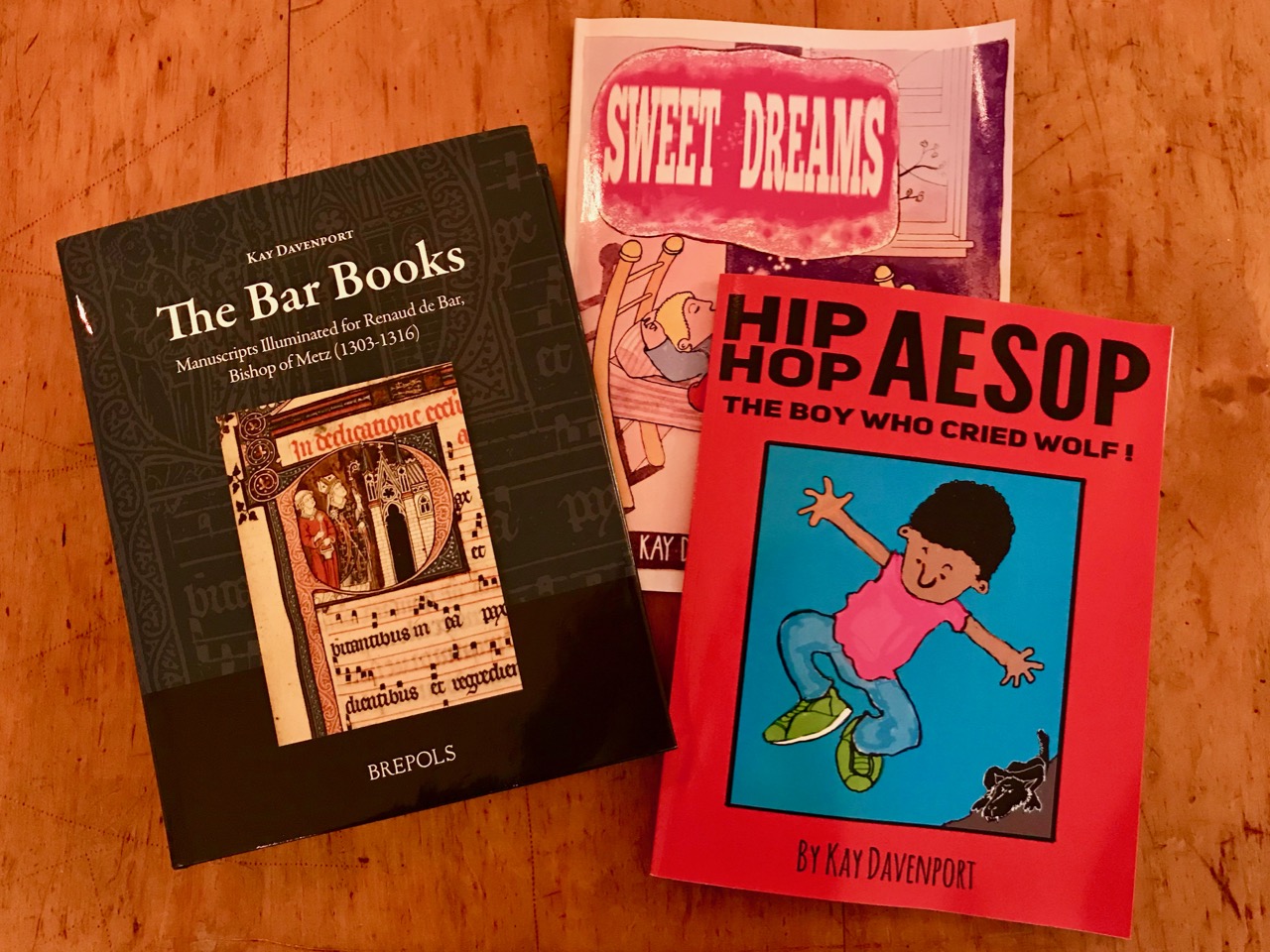
2018 has heralded new ventures. She has become a prolific writer! Firstly, in March of this year she released a magnum opus: The Bar Books – a completely comprehensive study of the manuscripts illuminated for Renaud de Bar, Bishop of Metz between 1303 and 1316. It is these manuscripts that contain the hare marginalia which have always fascinated and inspired Kay. The study is about far more than the marginalia – it’s a very concentrated slice of a very particular historic period and a way of life lived then; and the book contains 242 black-and-white illustrations and 45 colour plates.

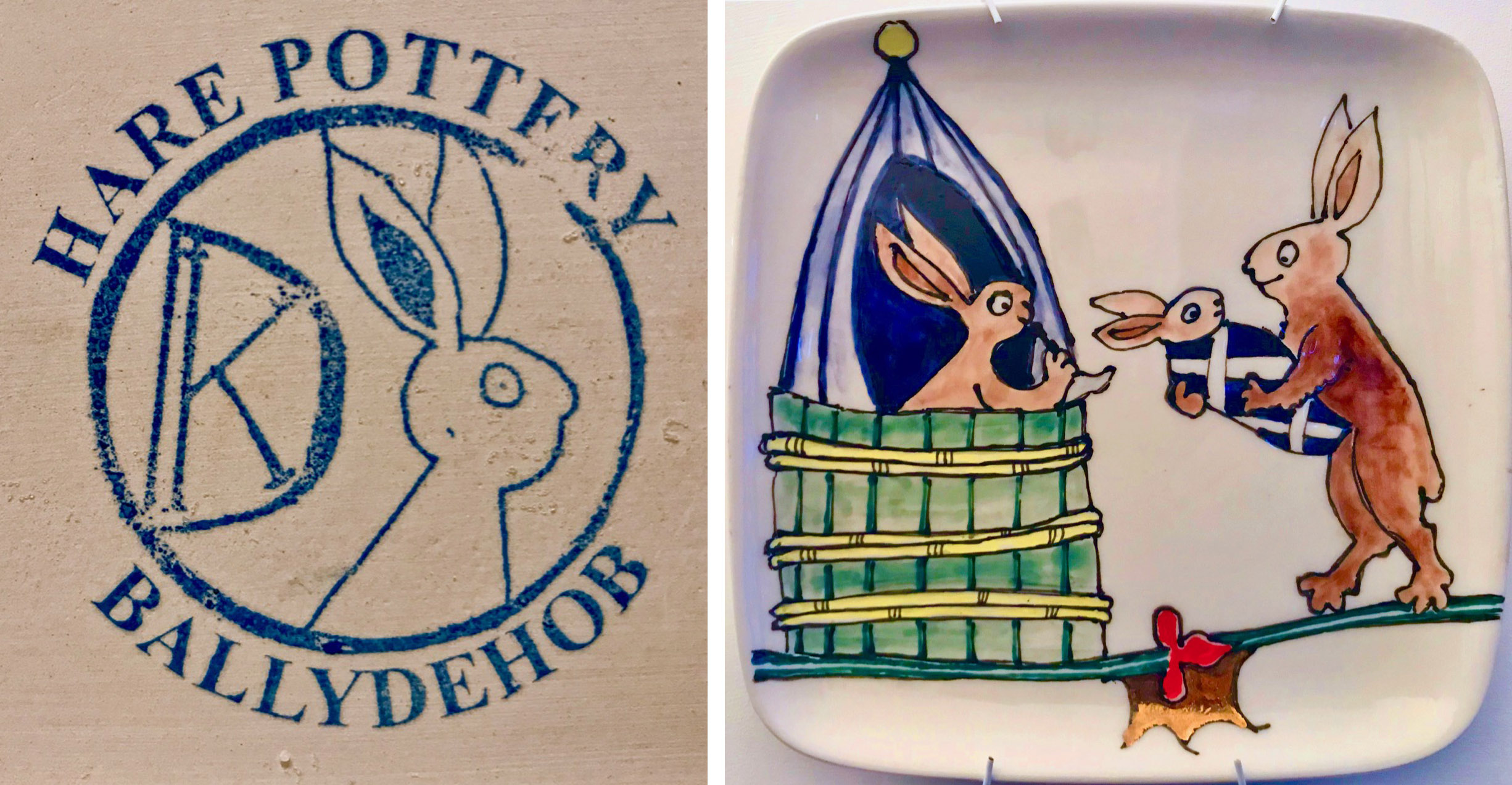
Top – from The Bar Books – examples from the colour plates. Middle – marginalia illustration, showing a hare being pursued by a boar (or, perhaps, a dragon?). Bottom – the marginalia have been used by Kay to illustrate her pottery: here the hares are making use of a temporary structure erected in the open for the king to have a bath while on the road. Hares of course are always on the road and have seized this ideal opportunity to give their baby a bath (with the baby swaddled like royalty)

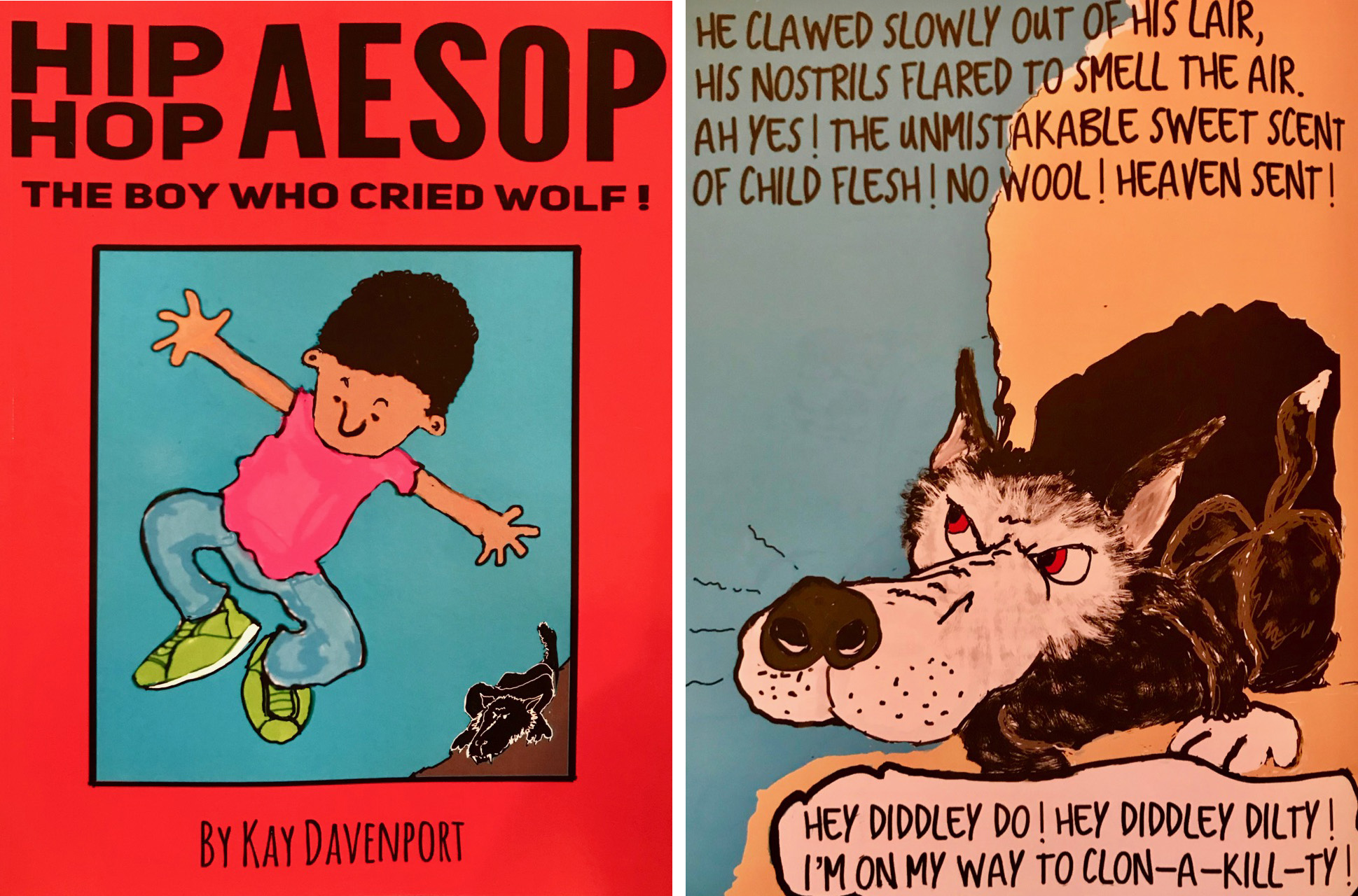
As if such a magnificent achievement wasn’t enough for one year, Kay has surprised us all by suddenly launching a series of illustrated books for children – and just in time for Christmas! But it would be wrong to say that these books are only for children: we were thoroughly entertained by them – as will anyone be who has a sense of humour. And the suitable age group? Well, my grandchildren who range from 8 to 18 will be getting them – and enjoying them, I have no doubt. After all, there are terrible toddler tantrums, fierce wolves, and a hip-hop hero – what more could anyone want?

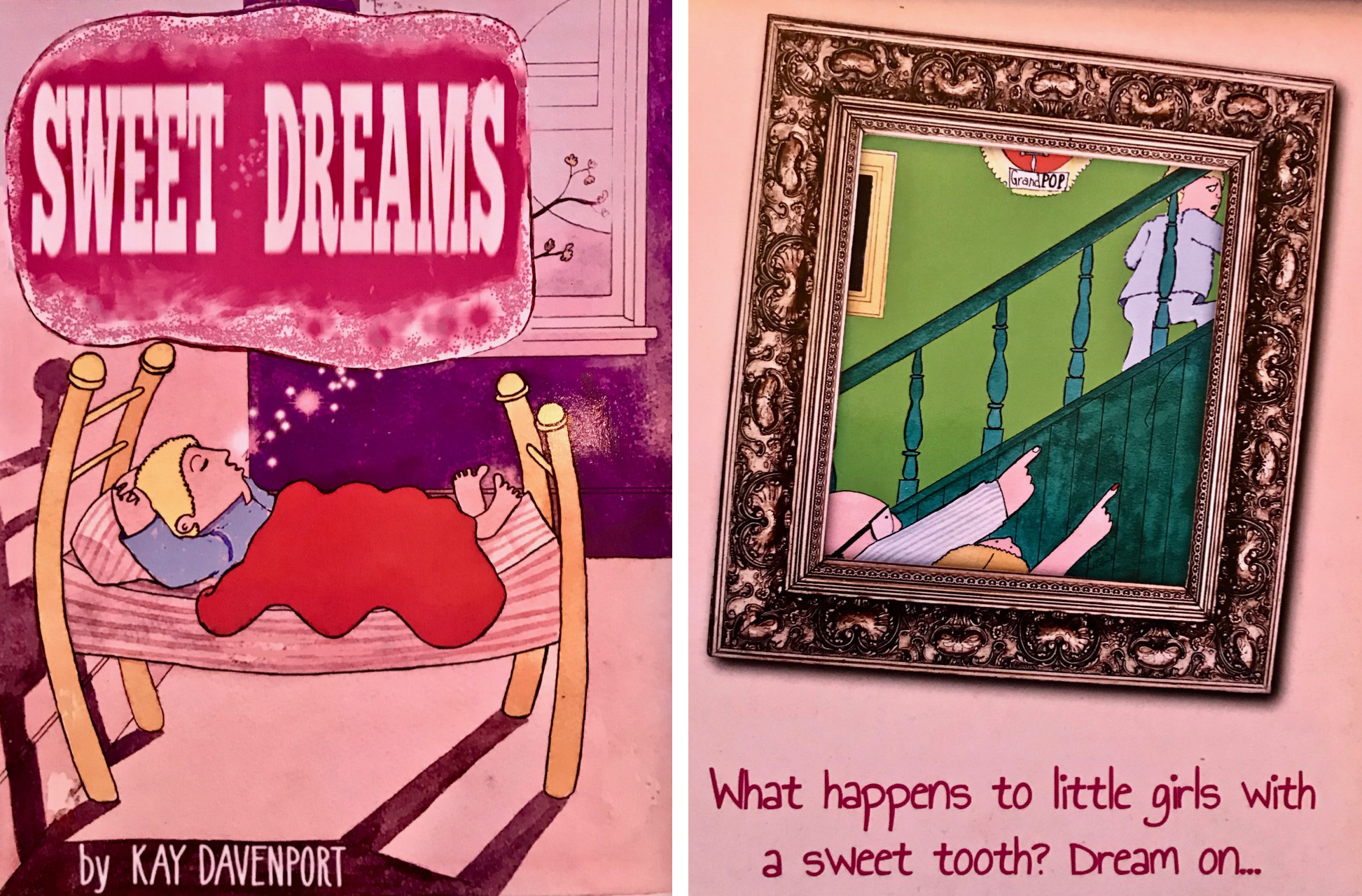
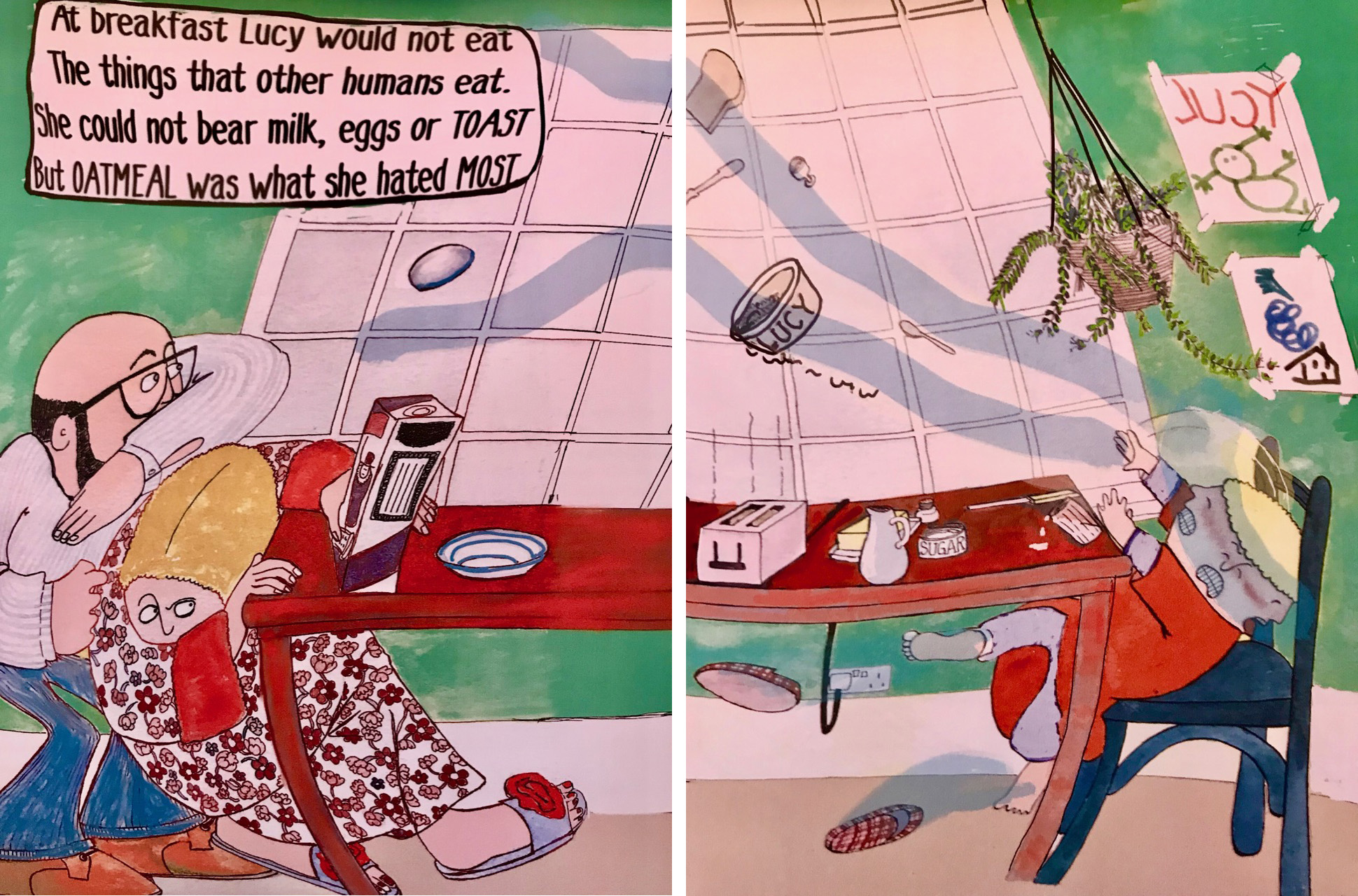
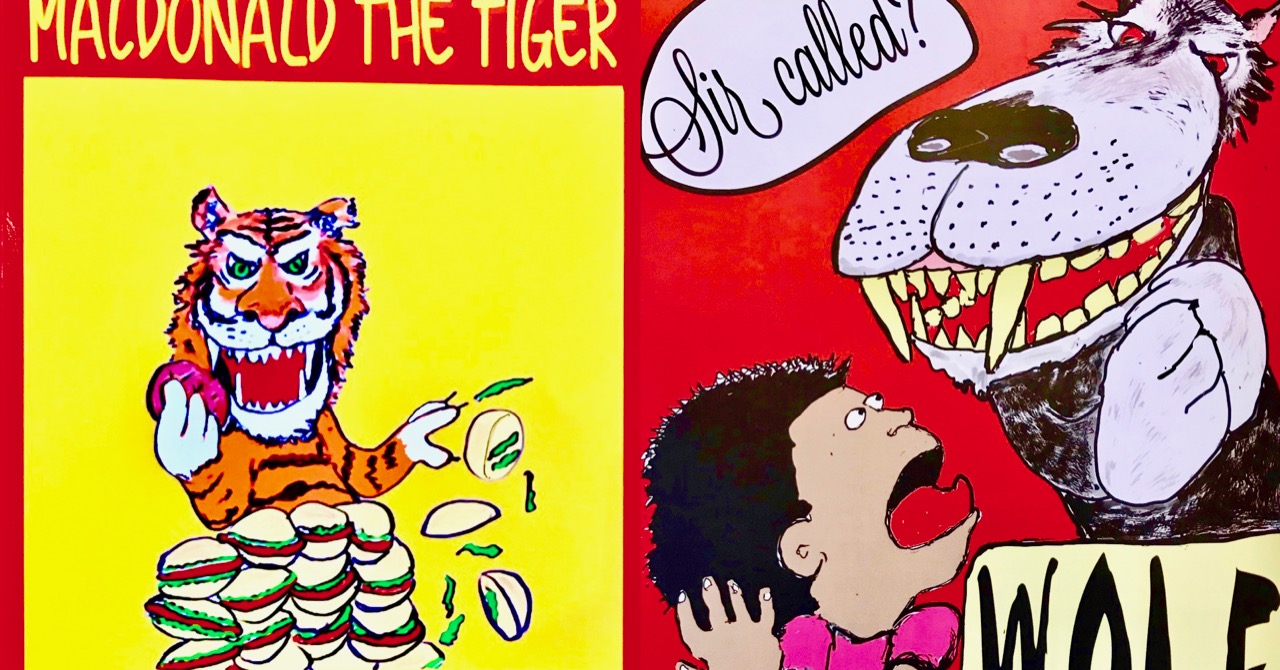
Above: the covers and a page from Sweet Dreams, in which a nightmare of a child learns the pitfalls of eating too many sweets. Kay’s rhyming text and illustrations are hilarious. below, the book Hip Hop Aesop – a wonderfully unique variation on the ‘cry wolf’ story.

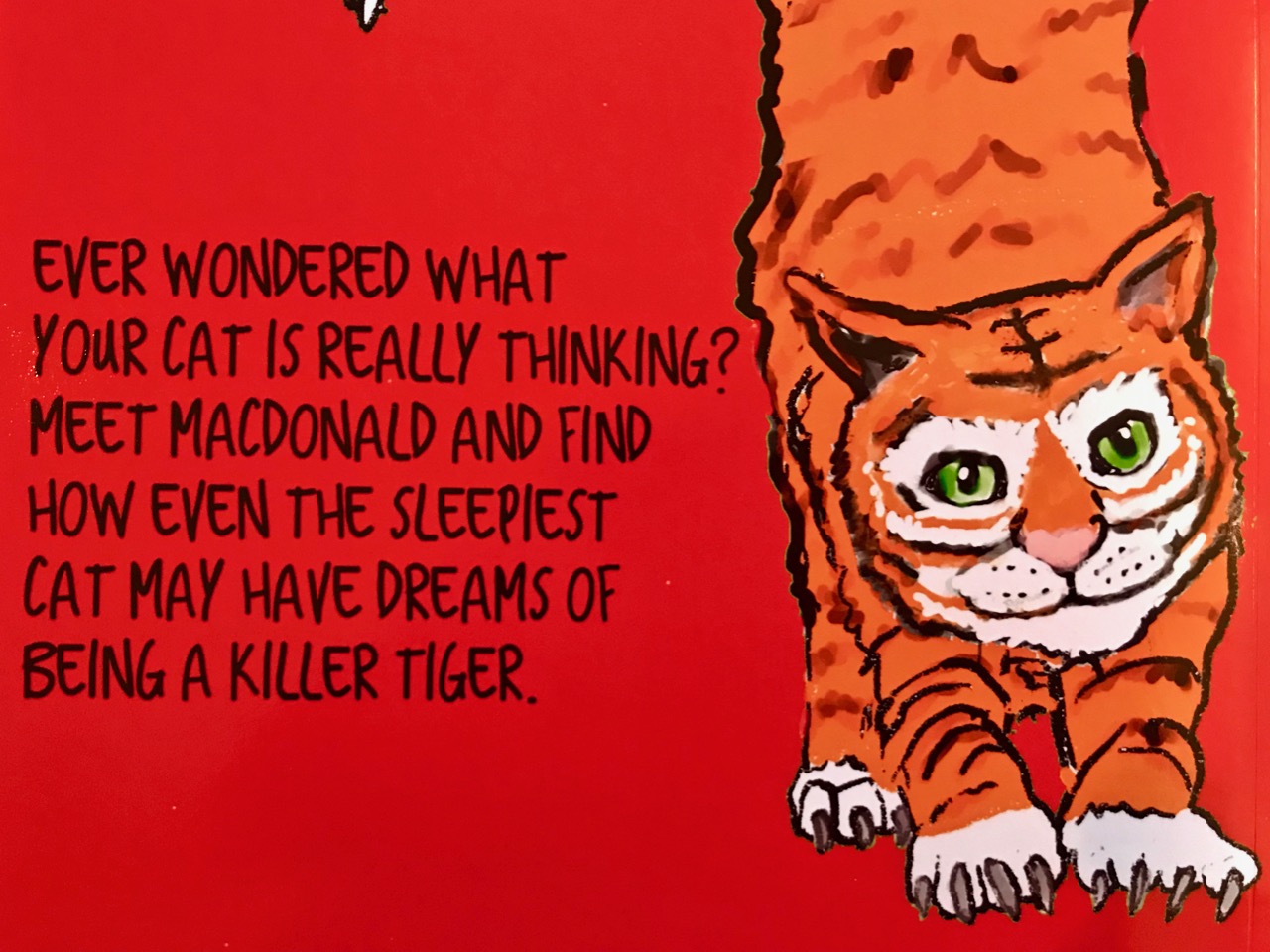
Just to add to the melee, Kay has also provided the illustrations for a book by Michael Neill, Macdonald the Tiger. In my household, we always had to have books about tigers – especially those who ate children. This one would certainly have fitted the bill – and a few mothers get eaten along the way, too! But all ends well, of course.

Well, I hope this post has inspired you to go out and get some of Kay’s work. The books are available from Amazon, and they are also on sale in the Post Office in Ballydehob – what an easy way to fill your Christmas stockings!

Harry Clarke, Egerton Coghill and the St Luke Window in Castletownshend

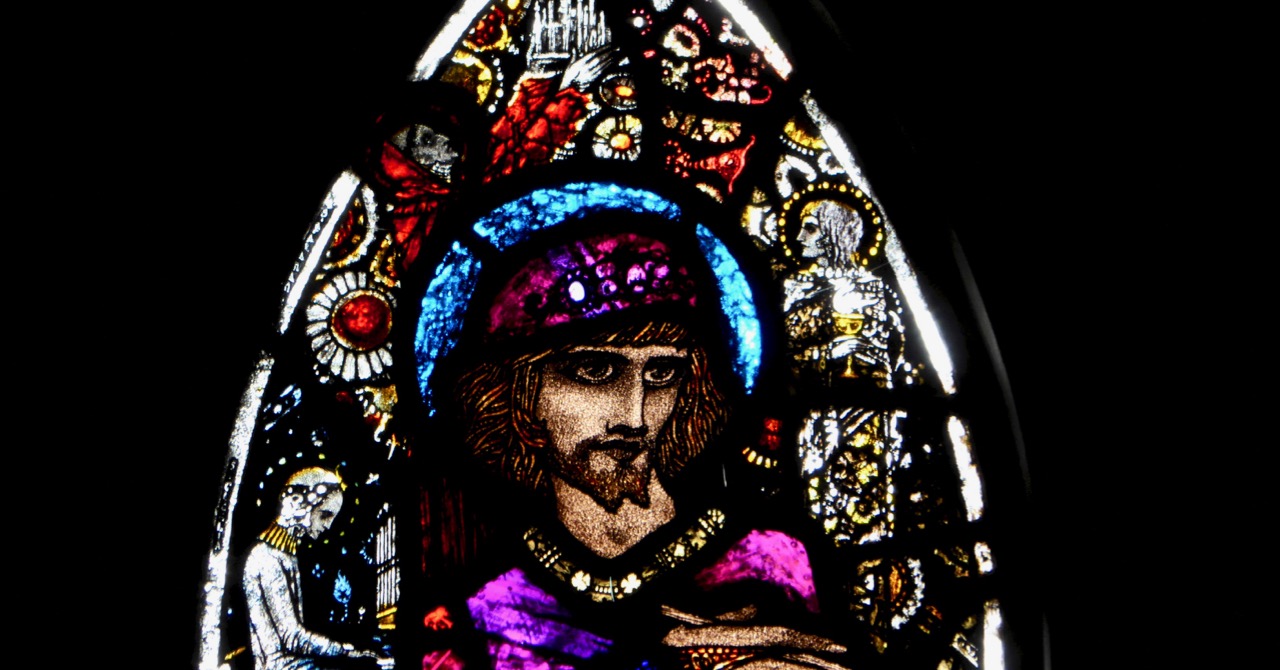
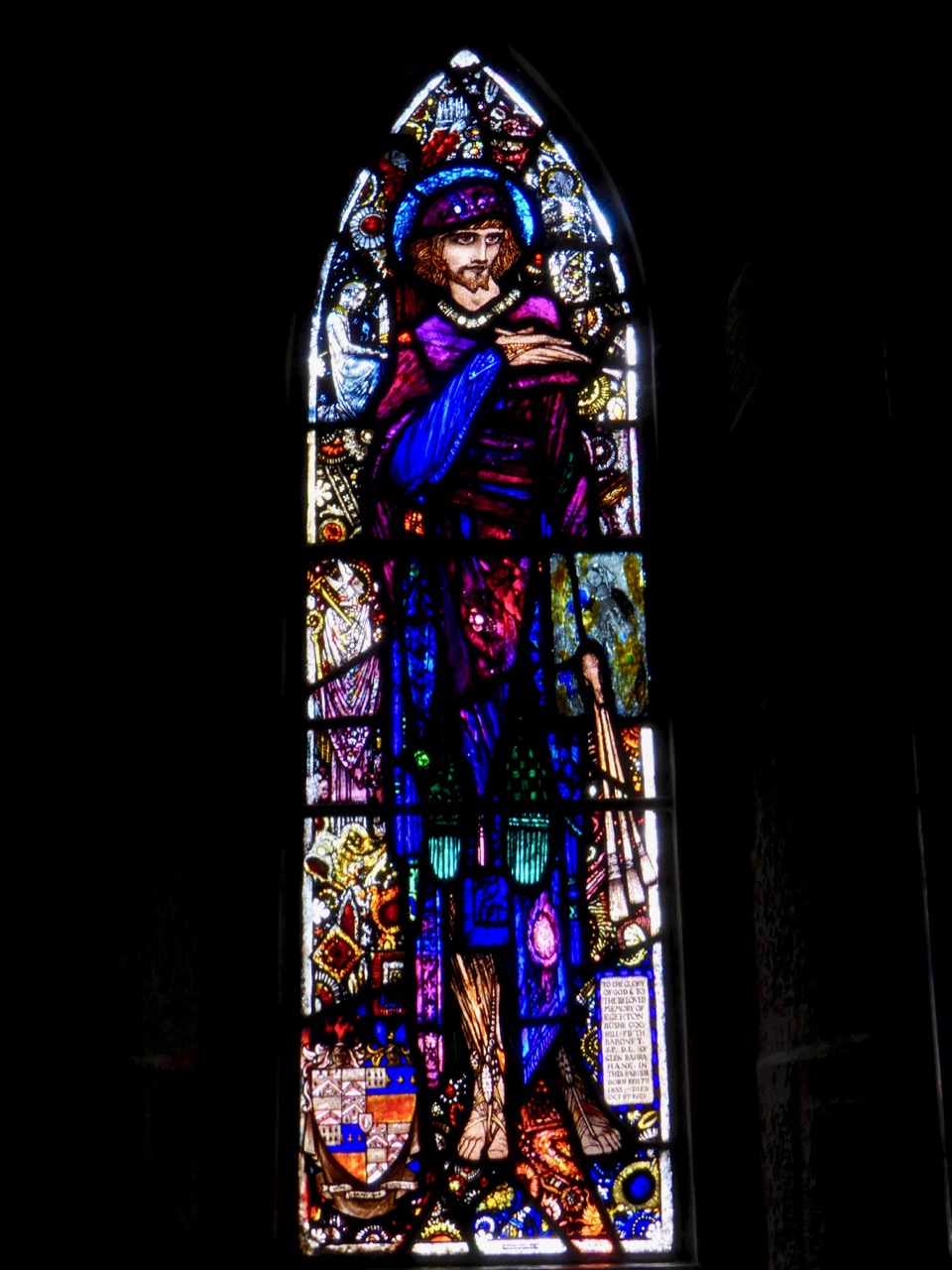
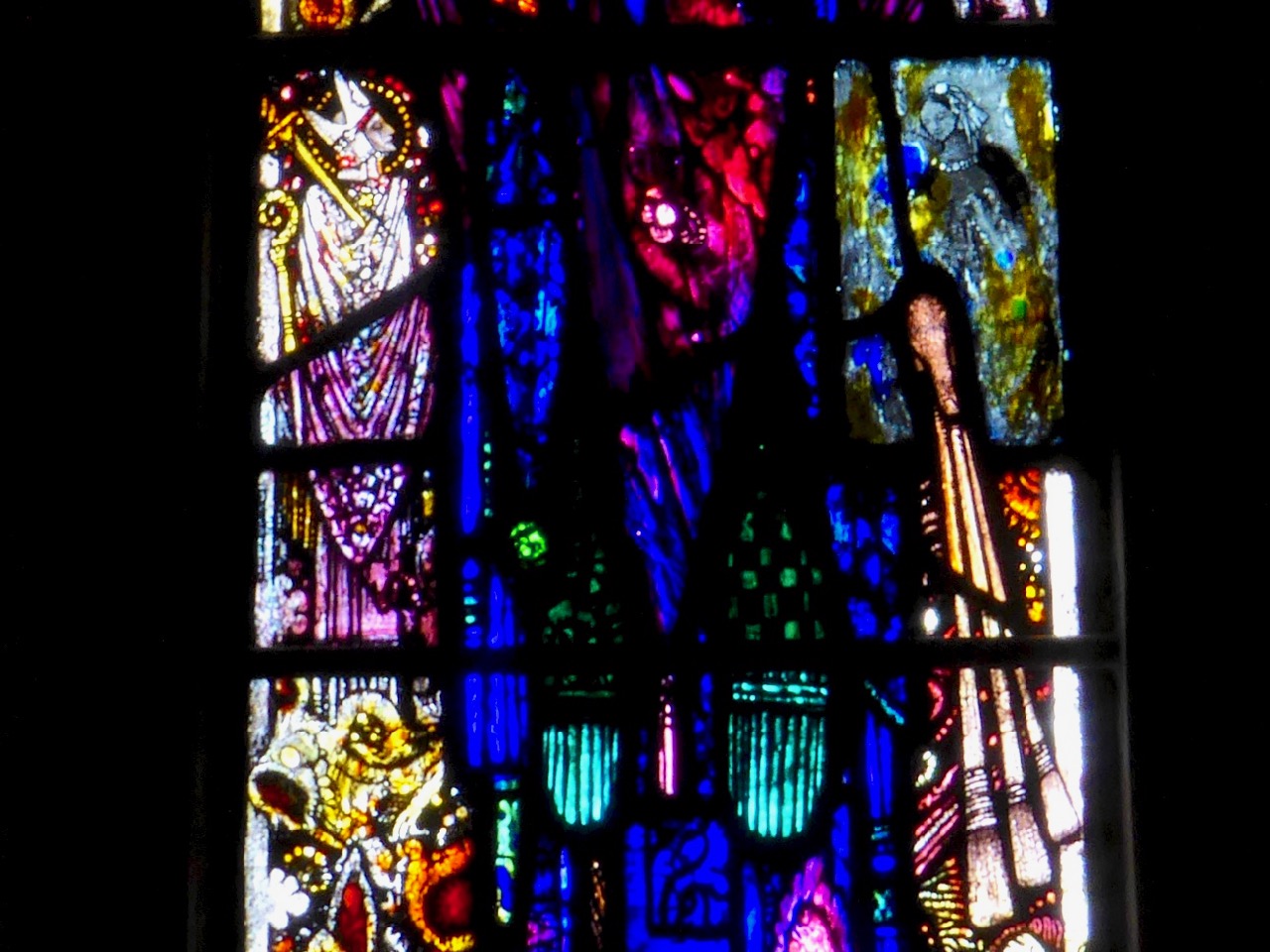
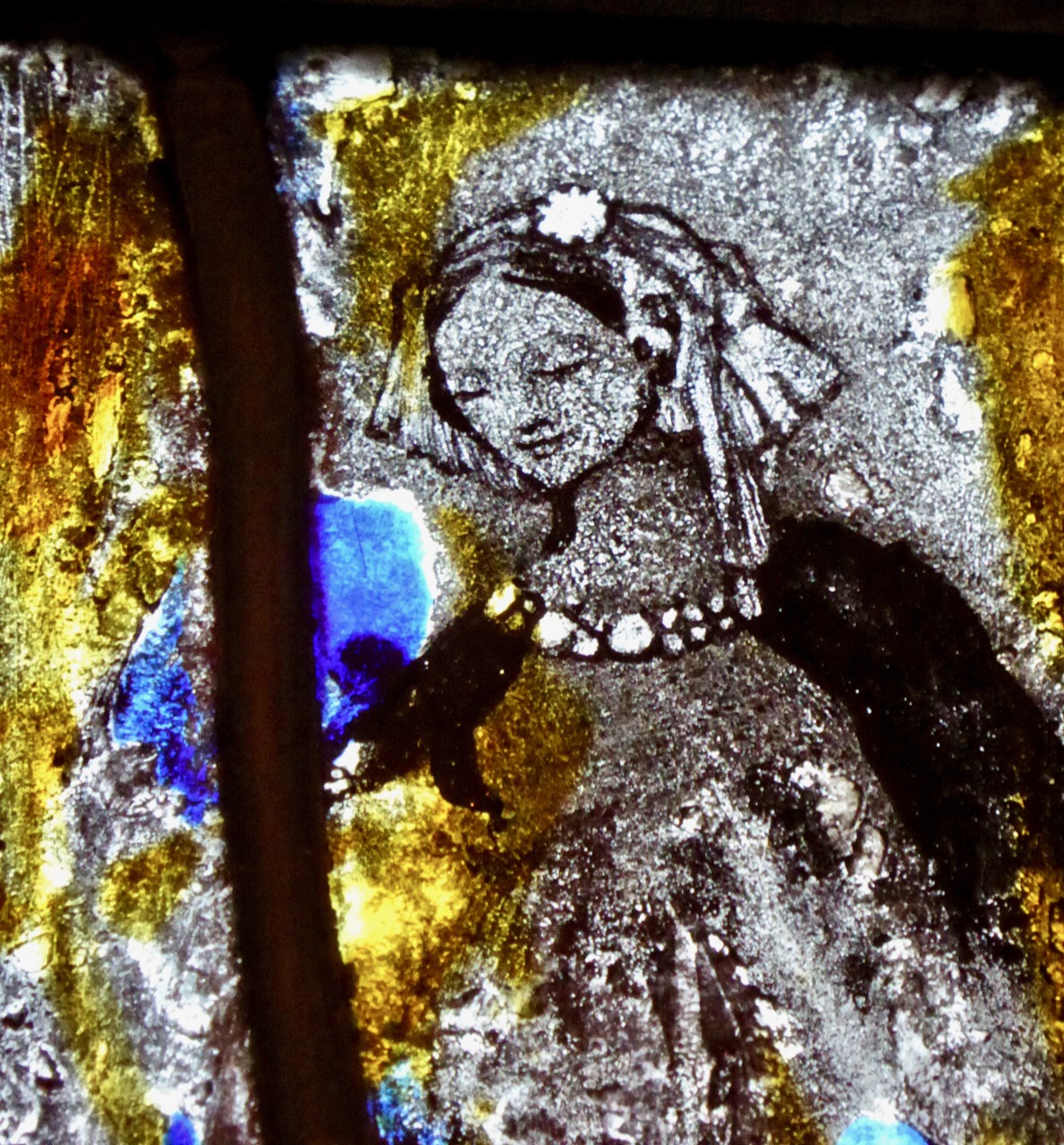
Remarkably, there are three Harry Clarke stained glass windows in one small West Cork village – in St Barrahane’s Church of Ireland church, in Castletownshend. The smallest of the three windows is the St Luke, inset into the south wall of the chancel. It is a miniature masterpiece, designed with extraordinary attention to detail by Harry, and executed in his studio.

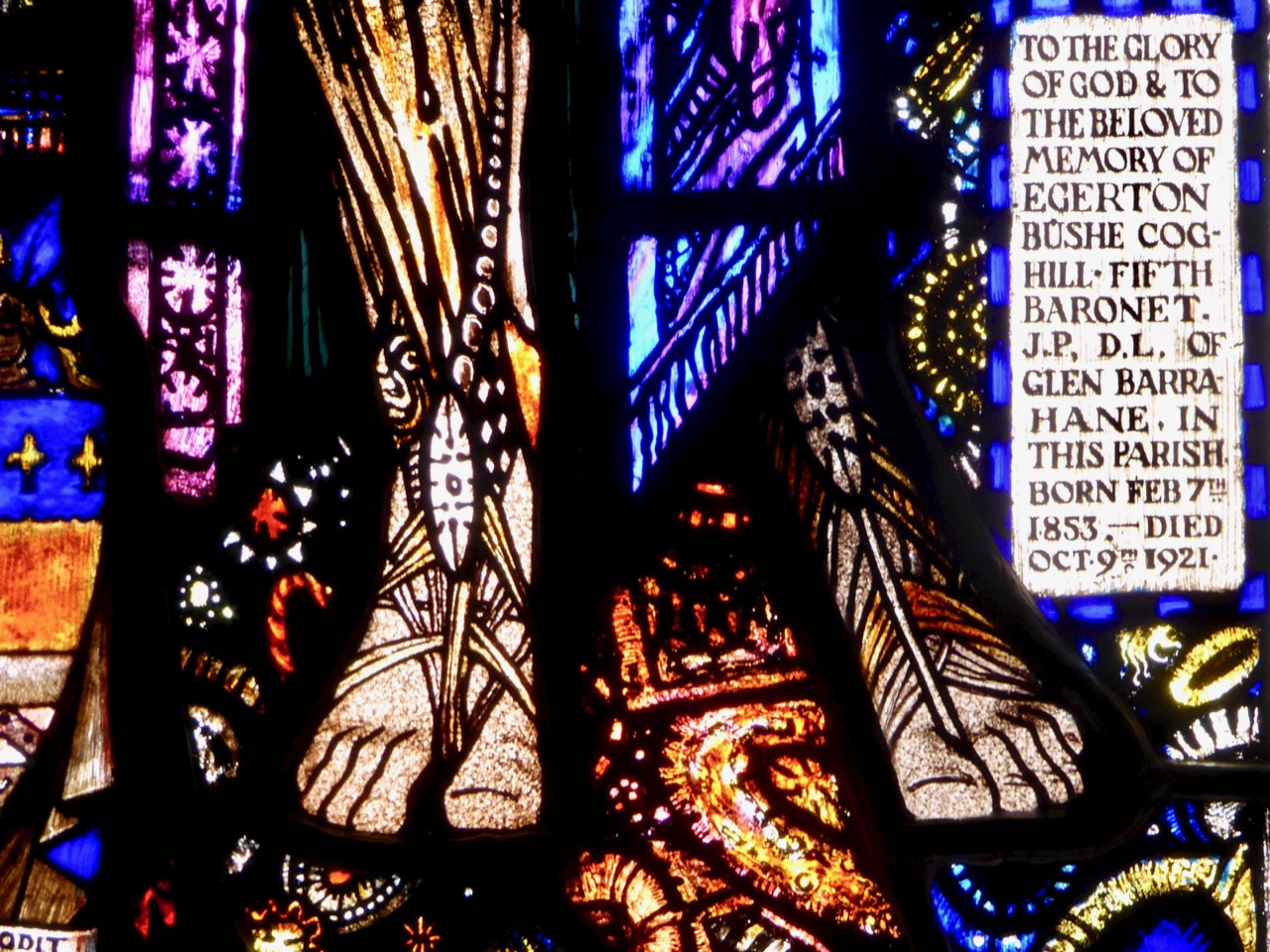
The iconography that was chosen was specific to the subject – St Luke as Patron Saint of Painters. That’s because this was a memorial window to Egerton Coghill – more correctly Sir Egerton Bushe Coghill, 5th Baronet Coghill.

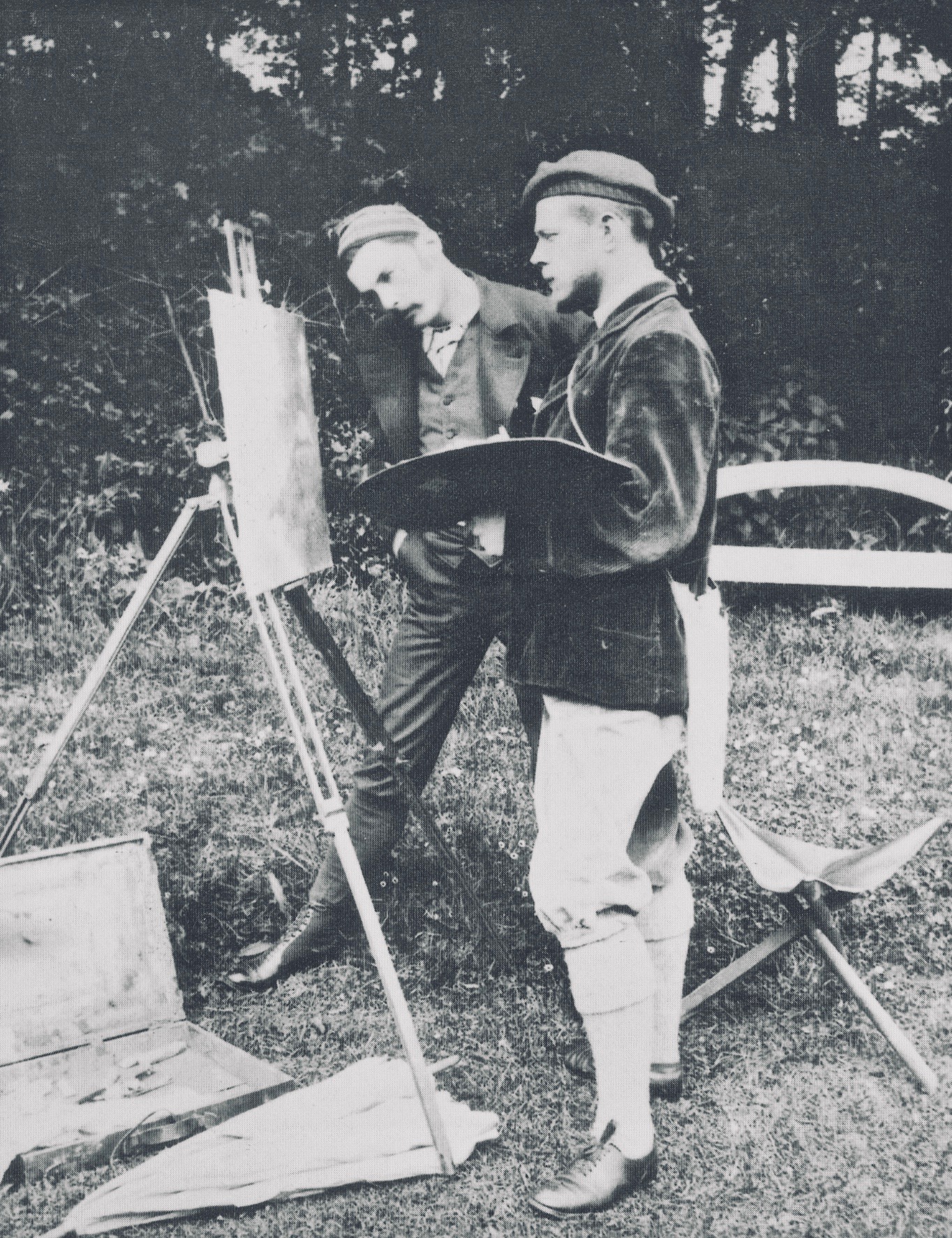
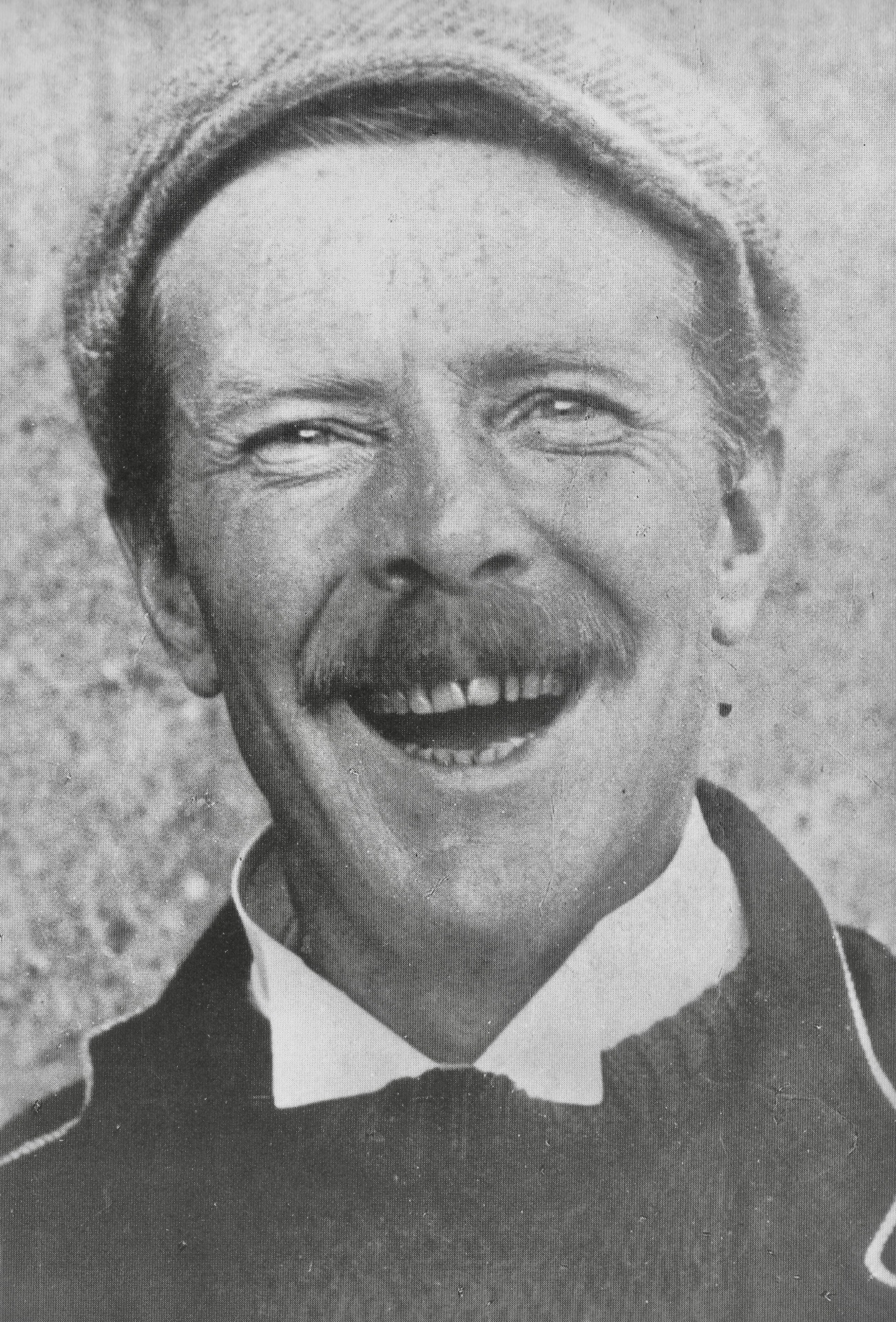
Egerton Coghill, left, with his painting companion Herbert Baxter*

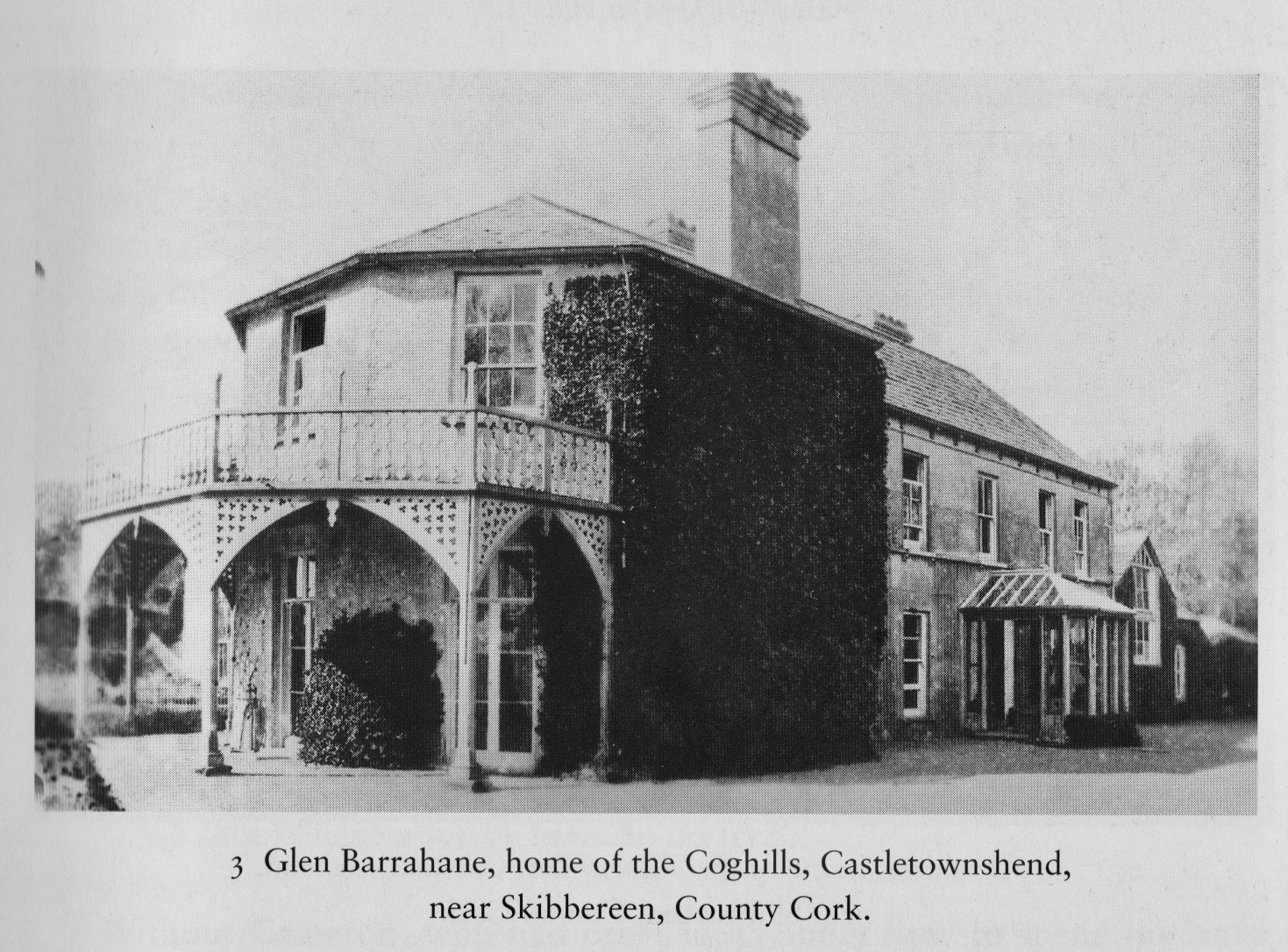
Egerton had grown up in Castletownshend, one of a large family of Coghills who lived in a rambling house called Glen Barrahane, and who seemed to be related in multiple ways to all the other families who lived in and around Castletownshend. His father (Sir John Jocelyn, one of Ireland’s earliest photographers) was the brother of Adelaide, who had married Thomas Henry Somerville, mother of the Somerville family that included (among others) Edith (see Stories and Stained Glass), Boyle (see Boyle Somerville: Ireland’s First Archaeoastronomer and Boyle’s Bealtaine), and Hildegard. Hildegard eventually married Egerton, her first cousin. To Edith and Boyle, therefore, Egerton was both first cousin and brother-in-law.

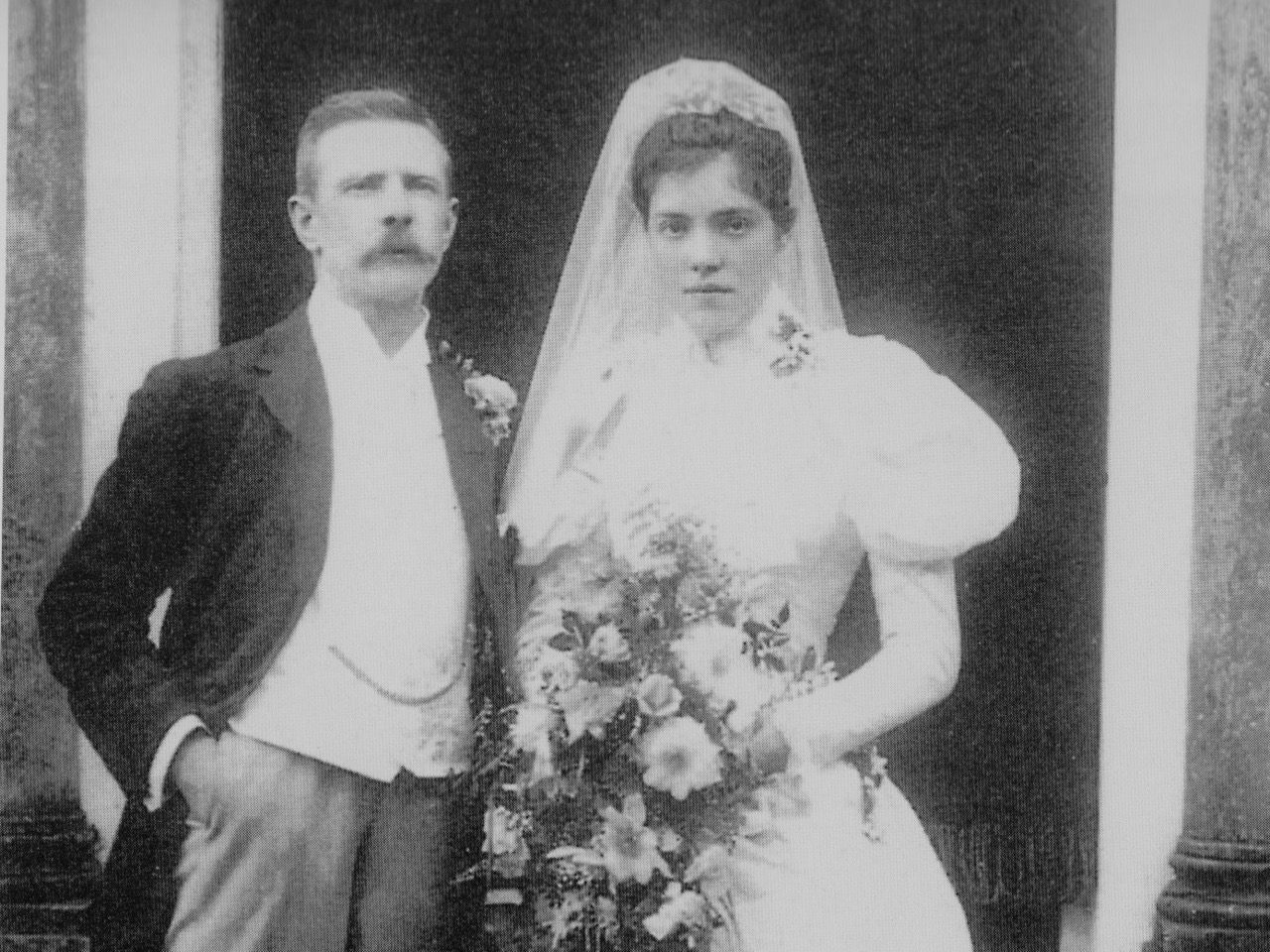
To Edith he was also a childhood playmate, a best friend and a great supporter and artistic mentor. In periods of distress for her he encouraged her to concentrate on her work – first art and then writing, and he loaned her money when the going got tough. Everyone loved him, it seems. He gave up a career in engineering to devote himself to painting and his limited private means allowed him to study abroad. When he and Hildegard fell in love their families were delighted, but they had to wait seven years to be able to afford to marry.

Egerton and Hildegard on their wedding day

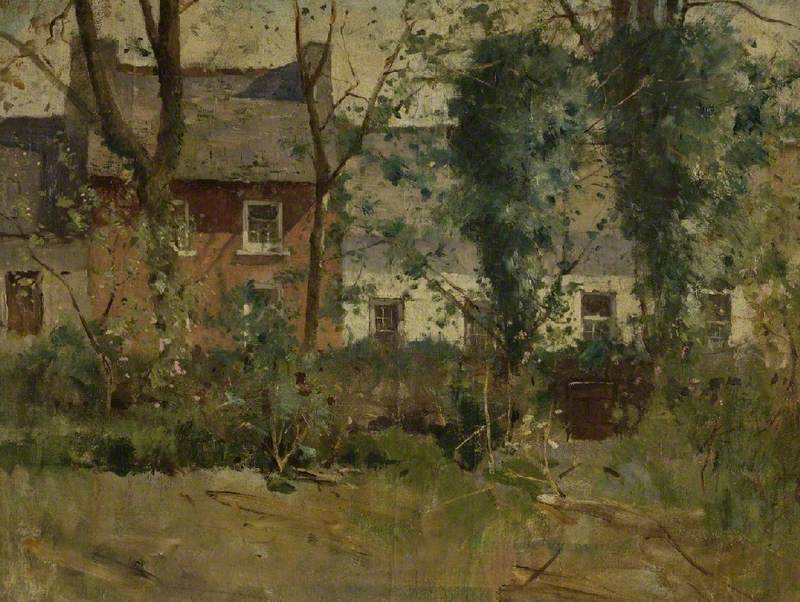
As a painter, Egerton was strongly influenced by the Impressionists. He painted en plein air, drawn to landscape and to muted colours. He loved to capture the scenery around Castletownshend, or the village itself, as in this charming depiction of the main street.

The Mall from Malmaison (Courtesy of the Fitzwilliam Museum)

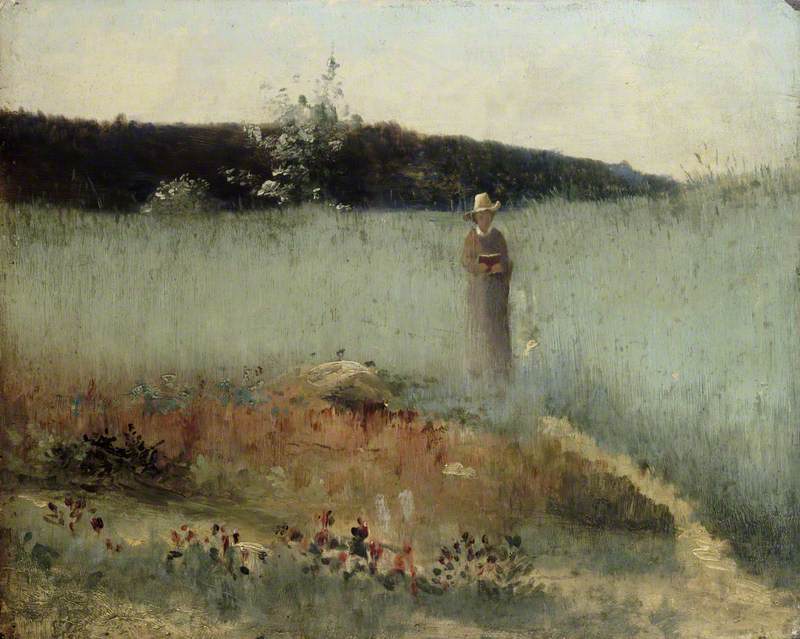
He was accomplished and well-known in his day, exhibiting widely and selling well. A scholarship at Oxford, for landscape painting, is named in his honour. Now, he seems to have faded from memory, and images of his paintings are hard to find online.

Field of Rye, Barbizon (Courtesy of the Ashmolean Museum)

Egerton’s older brother, Neville, was killed at the Battle of Isandlwana during the Zulu Wars – Robert has developed a talk on West Cork Links to the Zulu Wars and will no doubt write a post about Neville eventually. One of the windows in St Barrahane’s (not a Harry Clarke) is dedicated to his memory. When Neville died, Egerton inherited the title and moved back permanently to Castletownshend with Hildegard and his children. Egerton himself died unexpectedly in England in 1921 during the upheavals caused by the War of Independence at home in Ireland, so it was some time before his body could be brought back to St Barrahane’s for burial. According to Edith, The whole country came to the funeral, and all the men competed for the privilege of putting a shoulder to the coffin, for even a few steps.

When Edith and Hildegard were able to consider a permanent memorial for their beloved Egerton it was naturally to Harry Clarke that they turned. Edith had been entranced immediately by Harry’s work when she travelled up to Cork, on the advice of her brother Cameron, in 1916 to view the windows in the Honan Chapel. She wrote to Cameron afterwards to thank him. She was nothing short of stunned by Harry’s windows and “the quality of burning and furious brilliance that I have never seen anywhere else. . . his windows have a kind of hellish splendour”.

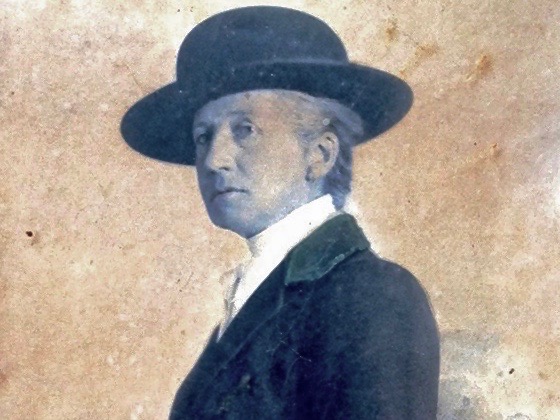
Edith in her Master of the Foxhounds habit, about the age she was when Egerton died

Since then, Edith had worked with Harry to install the Nativity window in 1918 (it was his first public commission) as a memorial to her grandparents, and again in 1921 on the Kendall Coghill window (Egerton’s bachelor-soldier uncle and a universal family favourite) about which I wrote in my post The Gift of Harry Clarke. She now asked him to take on this new commission, and Harry, who had known and liked Egerton, promised to pay special attention to this project.

St Luke, Patron Saint of Painters, is depicted with a palette and brushes, with the Madonna’s face appearing on the palette

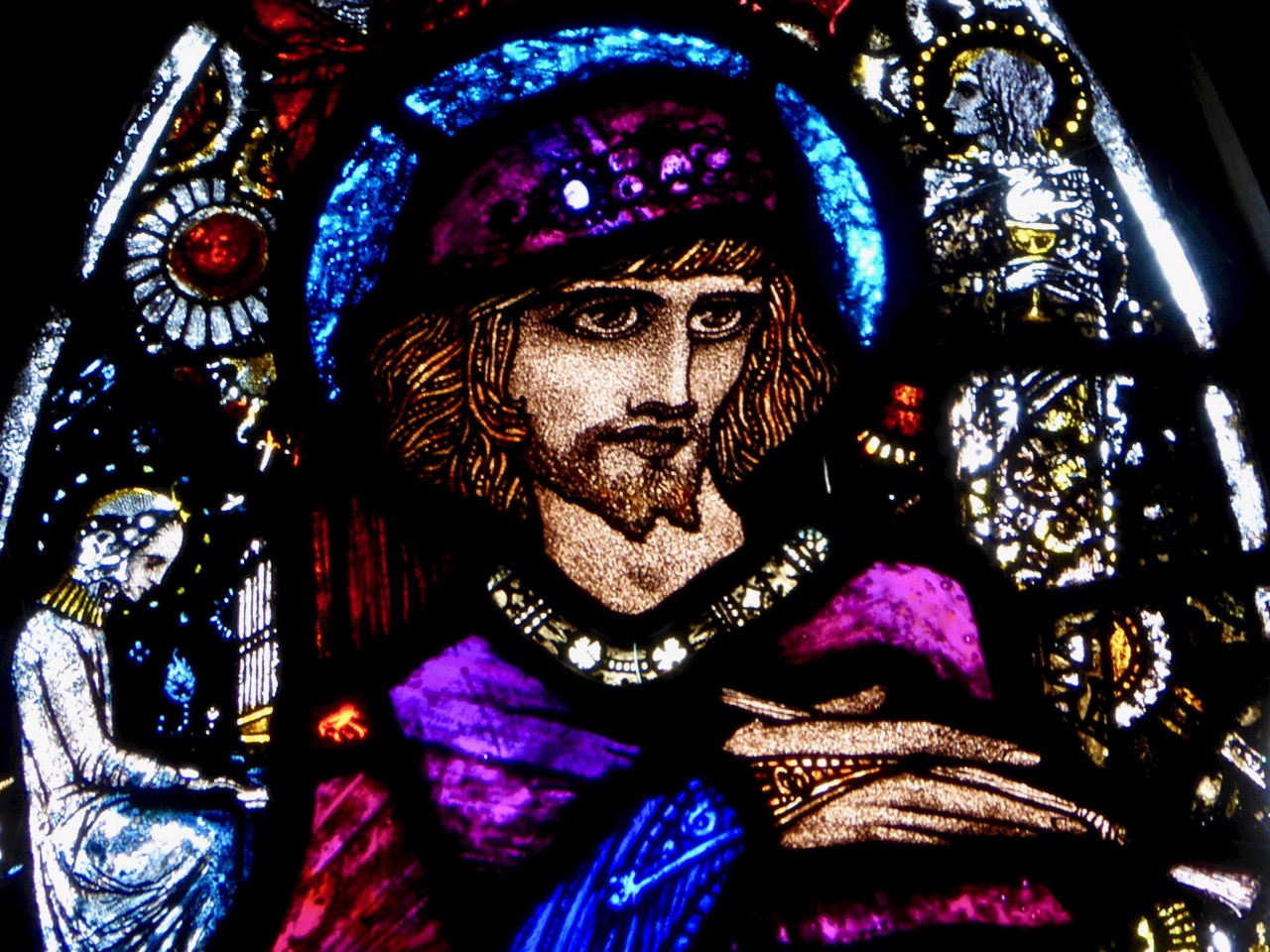
The design he came up with is exquisite, and every detail is important. St Luke, perhaps better known to most of us as one of the four gospel writers, is also the Patron Saint of Painters. This is based on the tradition that he painted the first image of Mary, and that image became an early Christian icon. In Harry’s design, Luke holds a painter’s palette and brushes, and the image of Mary appears like a ghostly presence on the palette.

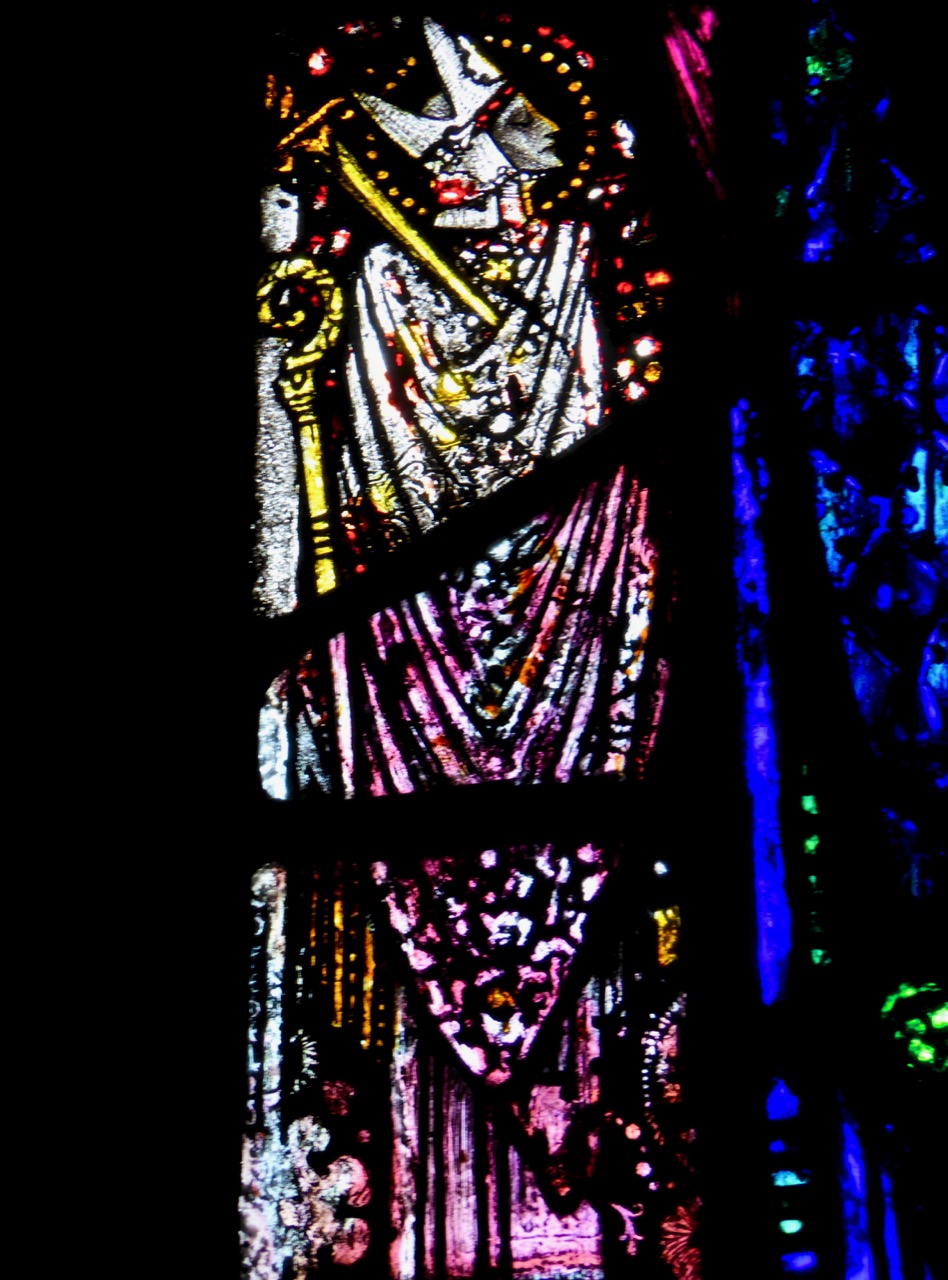
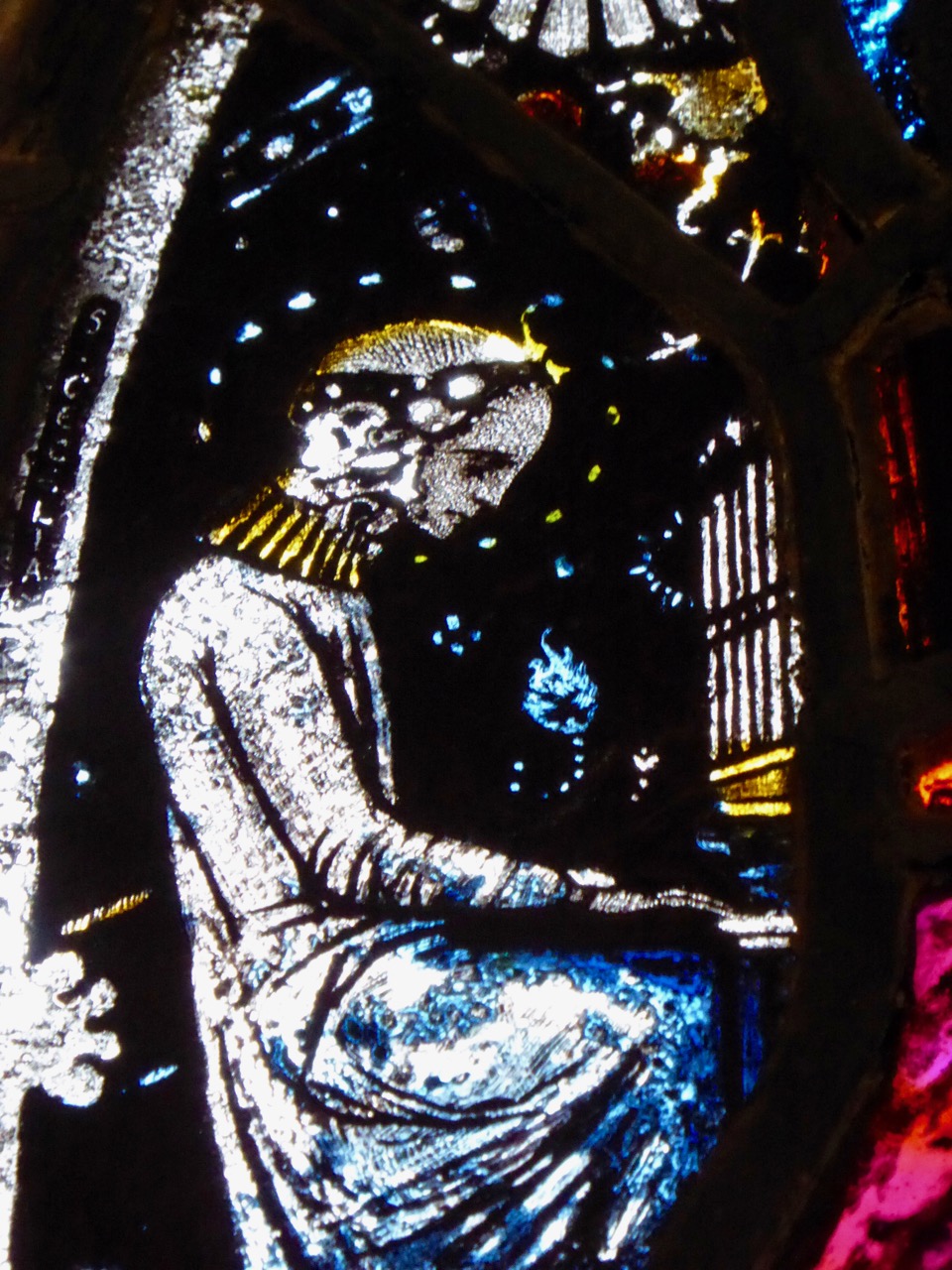
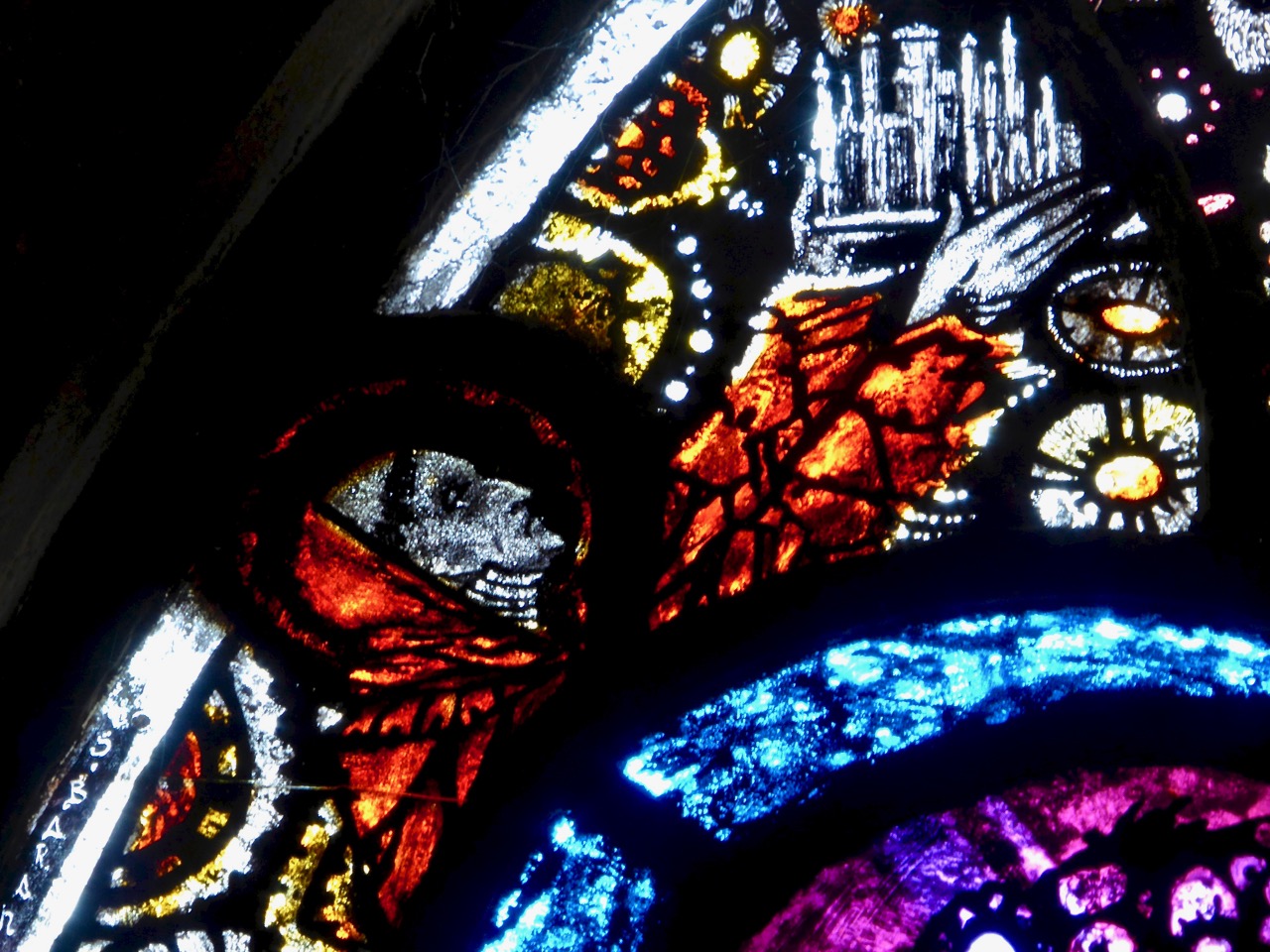
Luke, with St Cecelia to the left and St John, holding a chalice, to the right

Luke himself is a typical Harry creation, with his huge eyes, forked beard, and expression full of compassion. His right hand, with long tapered fingers and a sleeve point (Harry loved those), holds a brush. His hat and garments are elaborately rendered in blue, scarlet and purple. His sandals, thong style, are complex twists of leather straps.

Besides the Luke and the Madonna images, there are four other sacred figures in the window. One of the unique joys of this window is that you can get close enough to it to see these tiny figures clearly, since it is at eye level (it helps to be tall). The first, on the left side of the window is St Fidelio, dressed as a bishop (below). Although one author asserts that Egerton was born on St Fidelio’s name day, I have been unable to confirm that or to find any information at all about St Fidelio, but obviously this saint had meaning to Egerton, or to the Somerville sisters, or perhaps it was a reference to Egerton’s faithfulness. However, it could, like St Cecilia, be another musical reference, to Beethoven’s opera, Fidelio. In fact, most of the figures appear to relate to secular aspects of Egerton’s life, while thinly disguised as the kind of saintly images suitable for a church window. I can almost hear Harry, Edith and Hildegard chuckling over the choices, knowing that Egerton, who had his full share of boisterous Coghill humour, would thoroughly approve of the coded messages.

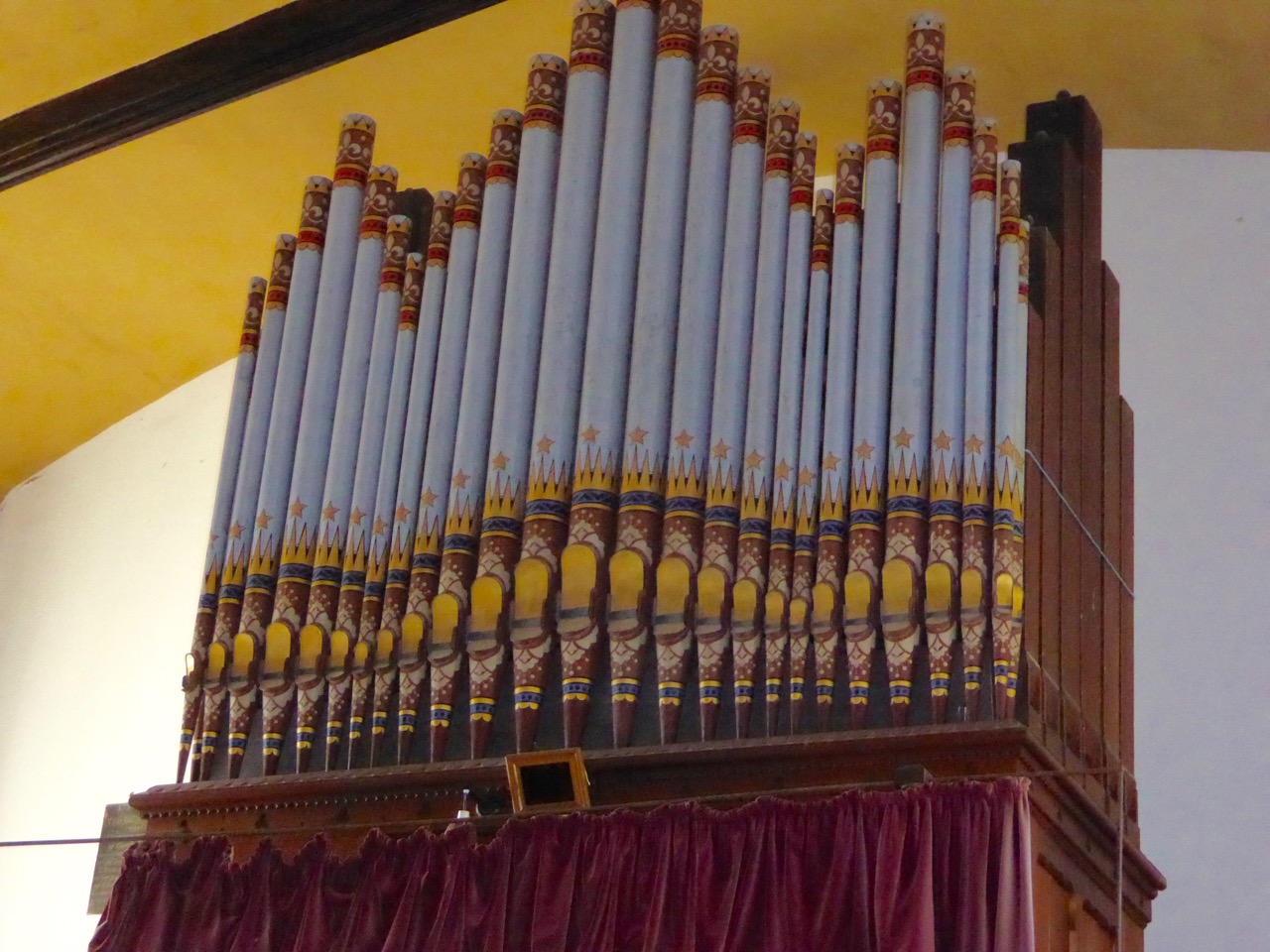
To the left of Luke’s shoulder is St Cecilia. Egerton loved music, had a fine voice, and performed happily in the musical theatre that was a staple of family life within the Castletownshend circle. Gilbert and Sullivan was a favourite. But this is also a nod to Edith – Cecilia is shown playing an organ while the organ that Edith played for over 50 years occupies the loft at the other end of the church (below).

Finally, at the top of the window, across from each other, are St John and St Barrahane. Barrahane, after whom the church is named (and who is pictured also in Harry’s nativity window in the same church) is the local saint, and the Coghill house was called Glen Barrahane in deference to that tradition. The tonsured monk is holding up a church (below). John was both his father’s and his grandfather’s (Baron Plunkett) name.

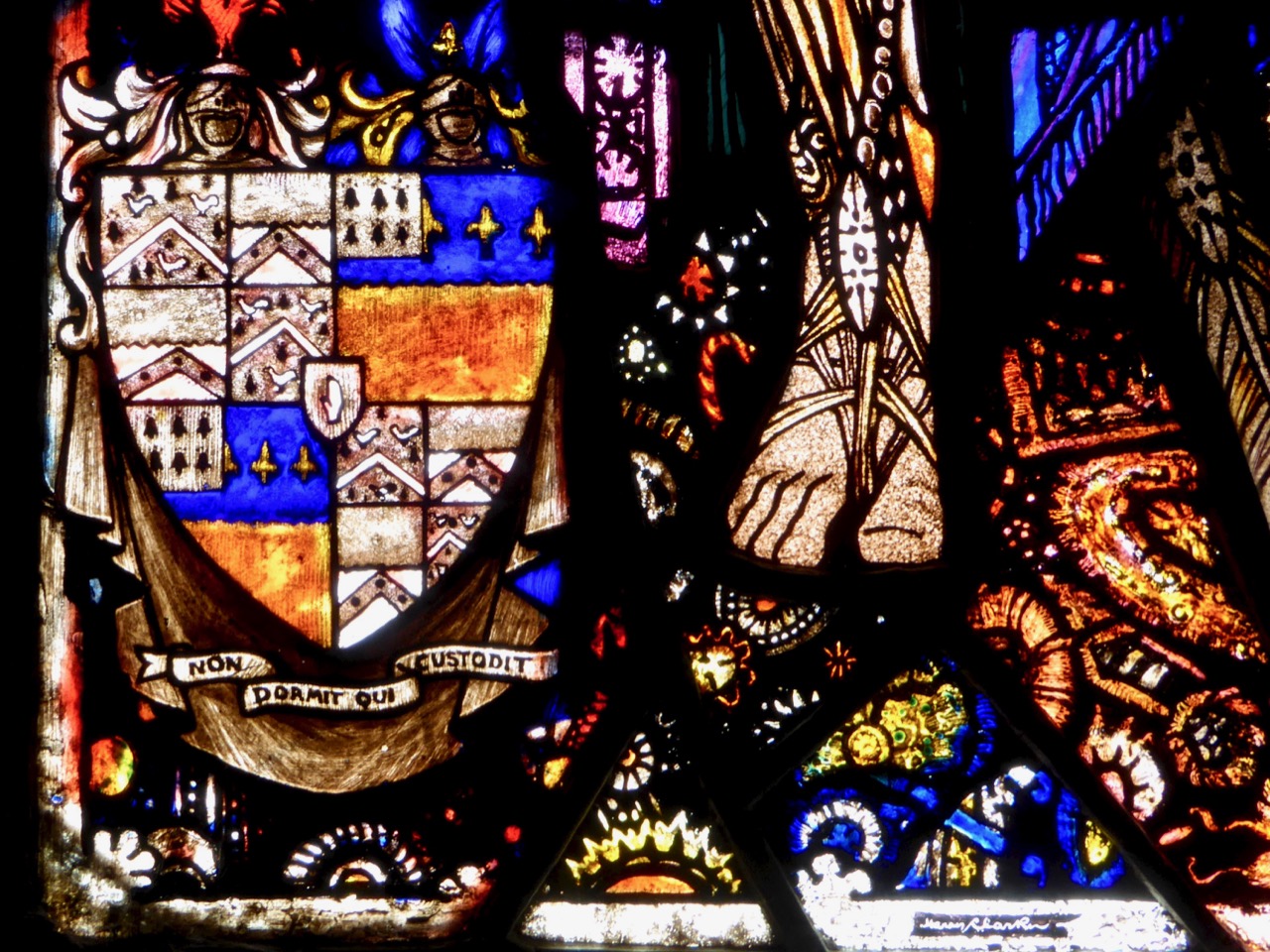
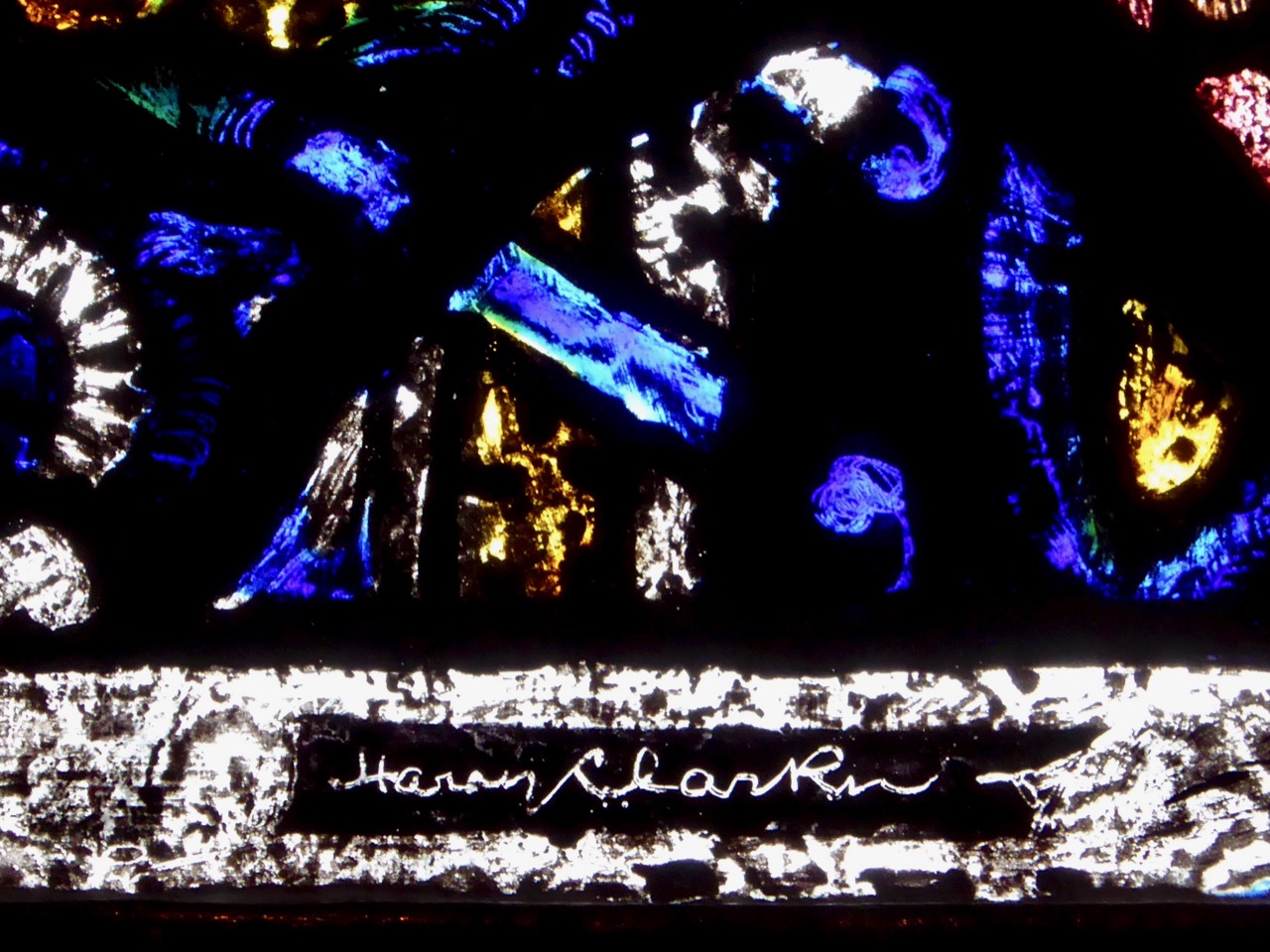
Egerton’s coat of arms, the dedication plaque, and Harry’s signature round out the window.

At this time, the Harry Clarke Studio was experiencing enormous demand for his work. To satisfy this demand he employed a group of highly talented artists and craftsmen, all of whom were trained to faithfully execute his designs, with Harry supervising closely. Thus it was with this window – most of it in fact was made while Harry was out of the country. The fact that he did not personally do most of the etching, staining and painting on this window does not in any way detract from its identification as a true Harry Clarke window – in every meaningful sense this was his creation and his signature indicates that he took full credit for the final product.

If you go to St Barrahane’s, make sure that you open the gate in the altar rails and go right up to the little window in the chancel. People have been known to miss it. It’s a unique opportunity to get nose-to-nose with a Harry Clarke. And when you do, spare a kind thought also for Egerton, a fellow artist, beloved by all who knew him, and honoured in this exquisite work of art.

*The four black and White photographs are from Edith Somerville: A Biography, by Gifford Lewis. I could find no copyright information on them so am assuming they are available for use, with gratitude to the author and publisher, Four Courts Press. The photograph of Edith as MFH is in my own possession.

A Frenchman’s Walk Through Ireland

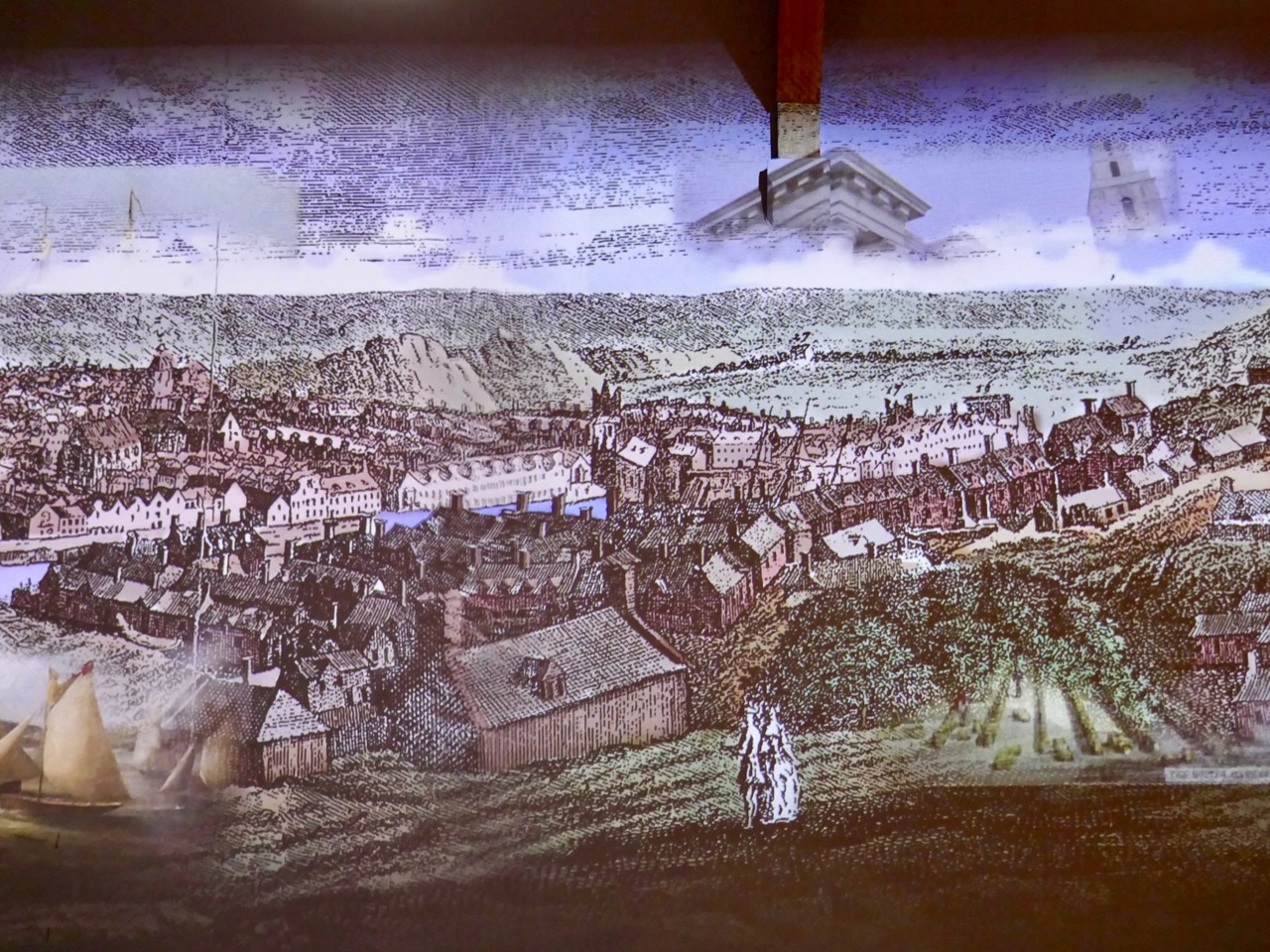
Cork City in the eighteenth century (represented above and below in Cork’s Nano Nagle Centre) had an unhealthy reputation, according to one commentator – Frenchman Jacques-Louis of Bougrenet de La Tocnaye – who travelled through Ireland in the 1790s and happily left us with some written descriptions of his journey.

Born into an ancient noble family in Nantes in 1767, de La Tocnaye fled the French Revolution in 1792 and self-exiled himself to idle London (his words). Then – armed with a sheaf of letters of introduction to people who might be useful along the way – he set out on a walking journey which lasted for ten years, through England, Scotland, Ireland and Scandinavia. Remarkably, he was able to get his writings published as he went along and we are fortunate to have some of them preserved, after a fashion, through a translation into English by John Stevenson in 1917 of Promenade d’un Français dans l’Irlande 1796 – 1797.

It is necessary to quote from the preamble set down by this translator before we embark on the writing itself. Apologies if you feel – as I do – we might be missing out on a few of the more colourful observations from de La Tocnaye on Ireland because of Stevenson’s reservations. The end result is of great interest to us nevertheless.

. . . A word about the author’s style. He has none. A well-educated man, at home in the highest circles of society, and doubtless a brilliant conversationalist, he is evidently unaccustomed to writing . . . Therefore, in the rendering, it has been necessary, at times, to convey what he intended to say rather than what is actually set down . . . 

. . . He has a weakness for using the swear words of the country of his sojourn, and uses them unnecessarily and unwarrantably. Second-hand matter, in the form of stories ‘ lifted ‘ from Irish authors, or antiquarian information inserted out of compliment to his friends, has been omitted as of no interest to the reader of to-day; and certain little sallies in the French manner, innocent enough, but which in English print might wear the air of indecencies, have been modified or suppressed. For the rest, the translation is as literal as a care for readability in English will allow . . .

. . . Travelling on foot over the island, east, south, west, north, his whole baggage in his pockets, in two silk stockings from which he had cut the feet, or in a handkerchief slung en sautoir on the end of a combined sword-stick and umbrella, which he said ‘made the girls laugh’ he got to the very heart of Irish life . . .

Sackville Street and Gardiner’s Mall, Dublin c1750. Attributed to Joseph Tudor 1695–1759. (courtesy National Gallery of Ireland)

De La Tocnaye’s writings on his travels in Ireland alone amount to 90,000 words! Today I am taking just a few extracts to give you a flavour of what life was like here in the late eighteenth century – seen through the eyes of one observer. I have no doubt that more of this journal will follow on these pages in time.

Leaving Dublin, de La Tocnaye made a stop in County Wicklow:

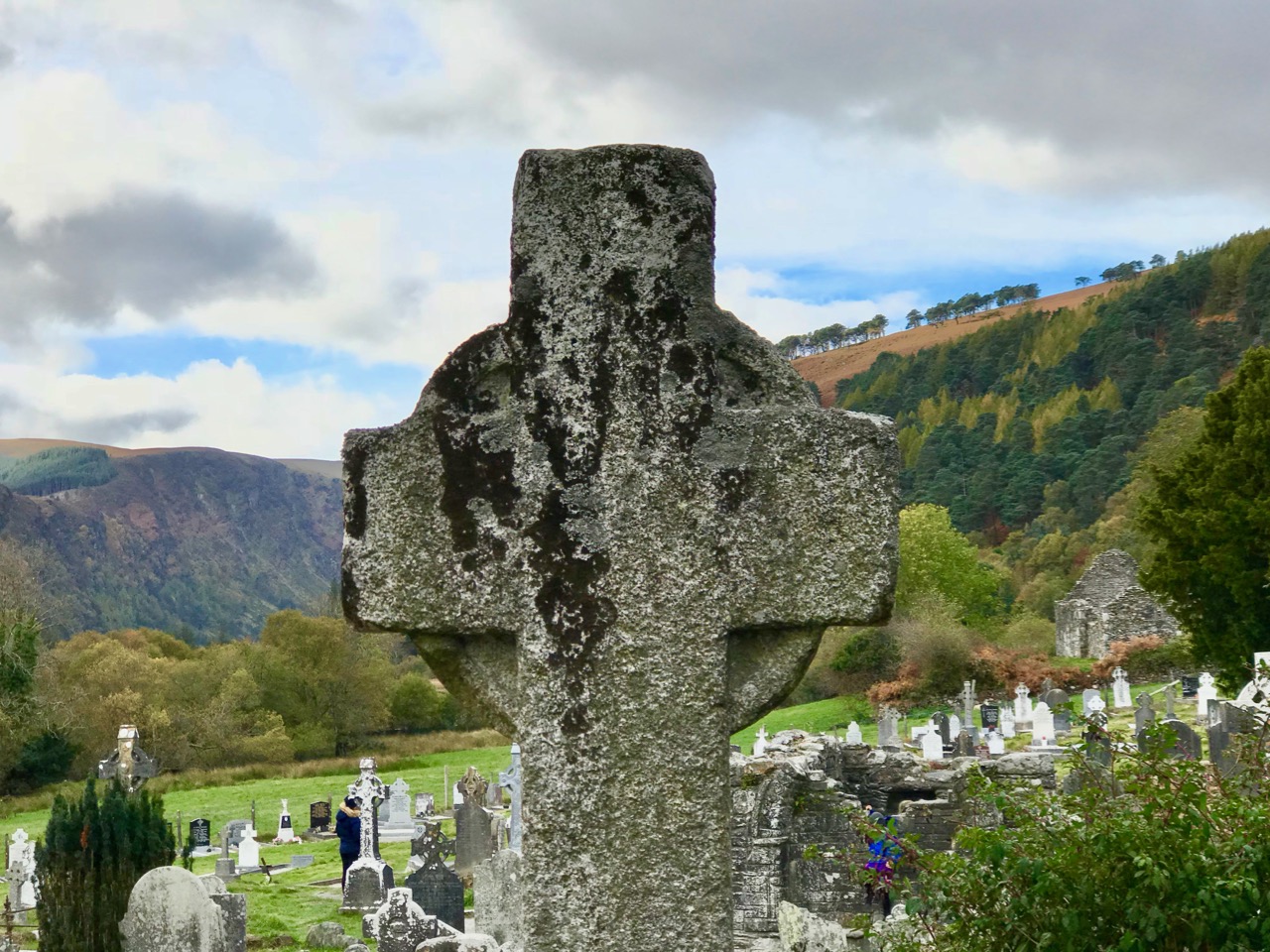
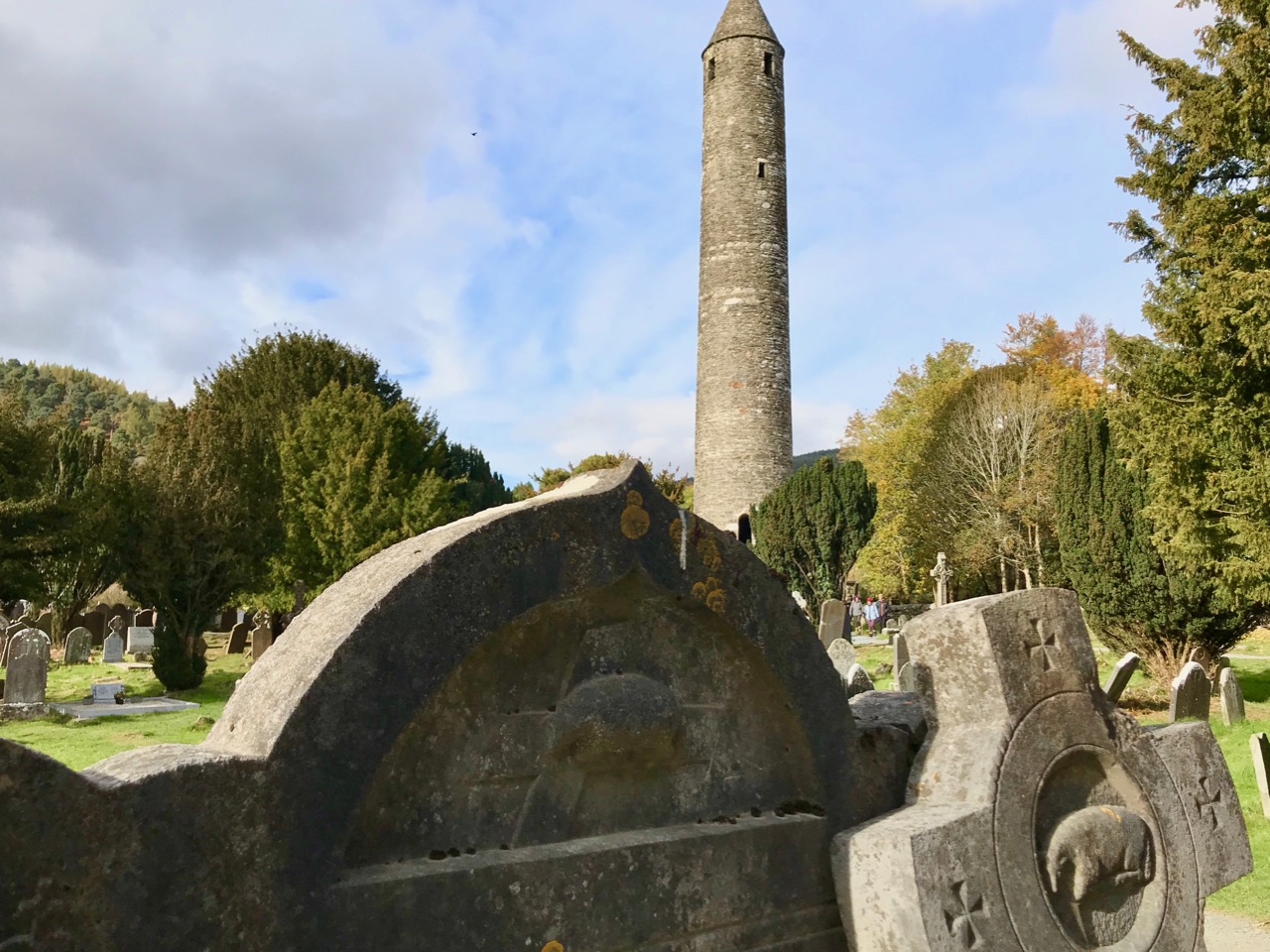
. . . Following the course of the stream which flows from the lake, I came to Glendalough, a word which means ‘the valley of the two lakes’. It is remarkable that there is not a single ancient name in this country which has not its special signification. The appropriateness here is evident, for there are really two lakes, which join at the portion of the valley called ‘The Seven Churches.’ It is here in this desert place that are to be found the most ancient remains of the devotion of past centuries, remains whose antiquity reaches back to the early ages of Christianity. St Kevin here founded a monastery in the third or fourth century of the Christian era, probably on the ruins of a temple of the Druids, who sought always the wildest places for the practice of their cult. This was for long a bishopric, but now it is united to that of Dublin. Here are still to be seen the ruins of seven churches, and one of those round towers of unknown origin which are so common in Ireland . . . 

High Cross at Glendalough

De La Tocnaye goes on to pronounce, at length, on round towers (and Irish pishogues):

. . . They are all alike, having a door fifteen or twenty feet from the ground, generally opening eastward, some narrow windows, and inside not the slightest remains of a staircase, unless this may be found in a few projecting stones which may have served to support floors in which there must have been trap doors to allow of passing from one to another by means of ladders. These towers are always found at some distance from a church, and entirely isolated . . . Whatever these ancient buildings may have been, the Irish have now for them the greatest possible veneration. They come here from afar for pilgrimages and penitences, and on the day of the Saint, which is June 3, they dance afterwards and amuse themselves until nightfall. In this sacred enclosure are to be found remedies for many ills. Have you a pain in your arm ? — it suffices to pass the limb through a hole worked in a stone, and you are free from your trouble. There is another stone on which for another ailment you shall rub your back, and another one against which you shall rub your head. And there is a pillar in the middle of the cemetery which, if you can embrace, will make you sure of your wife. The Saint’s Bed is a hole about six feet long, hollowed in the rock — a very special virtue belongs to it. It is only to be reached after much trouble in scaling a steep slope of the mountain above the lake, but whoever has enough strength and resolution to climb to it, and will lie down in it, is sure never to die in childbirth. Belief in this virtue makes a great number of wives, and of girls who hope to become wives, come here to pay their devotions . . . All this seemed to come in very fitly at the beginning of my travels. I pushed my arm through the hole in the stone. I rubbed my back against the rock which cures the troubles of the back, and my head against another, thus ensuring my health for the remainder of my journey. I even tried to embrace the pillar, but I cannot tell with what result. As to the Saint’s Bed, I thought there was little danger of my dying from the malady against which it insures, and therefore I did not climb . . .

Round tower at Glendalough

Returning to de La Tocnaye’s comment about Cork City:

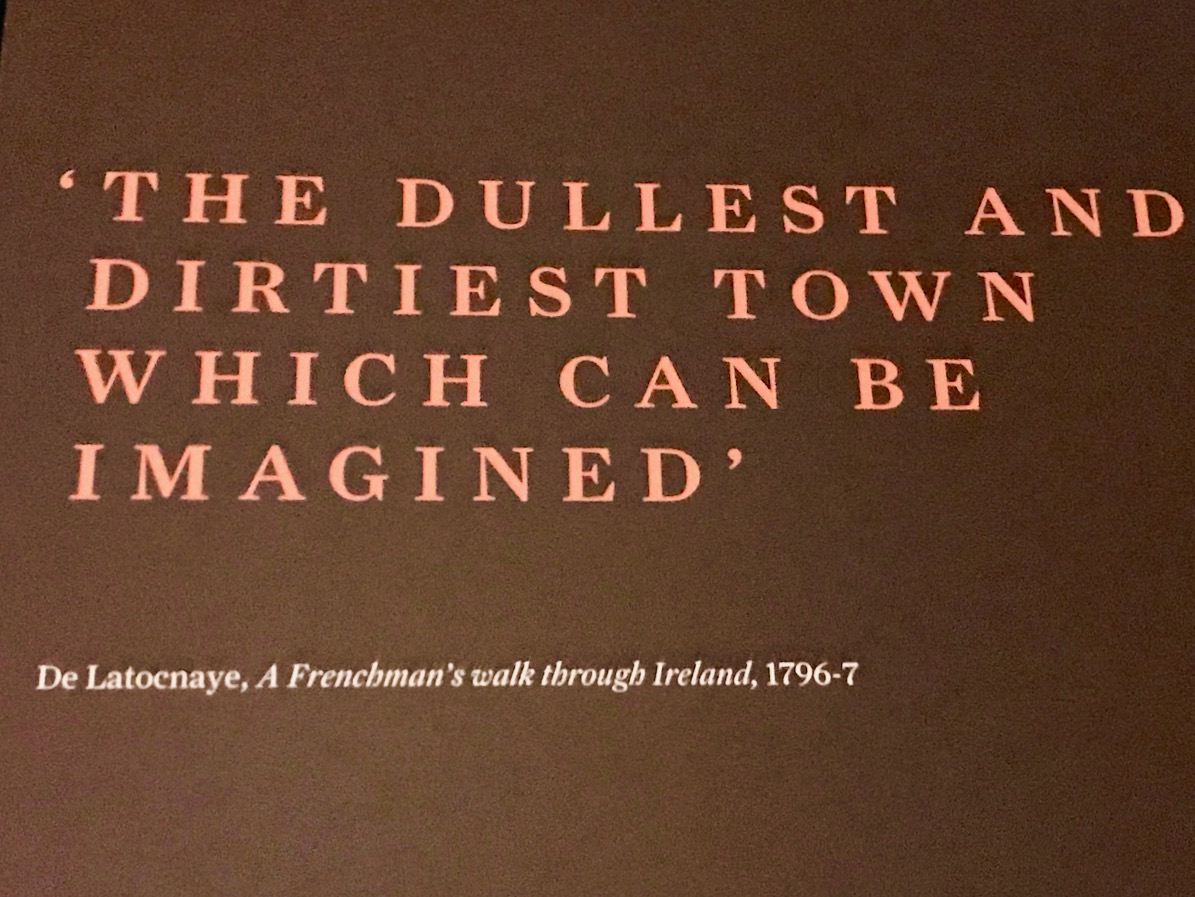
. . . I arrived at Cork, the dullest and dirtiest town which can be imagined. The people met with are yawning, and one is stopped every minute by funerals, or hideous troops of beggars, or pigs which run the streets in hundreds, and yet this town is one of the richest and most commercial of Europe . . .

View of Cork 1760

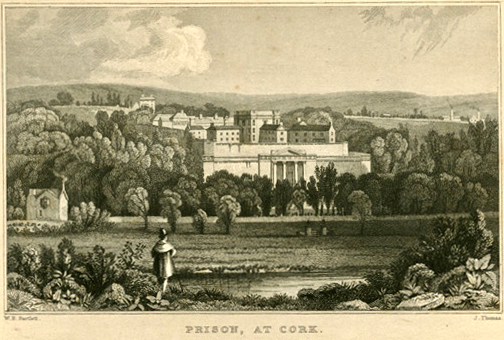
. . . There is no town where there is so much needful to do to make the place agreeable to a great number of the poor inhabitants. The spirit of commerce and self-interest has laid hold of all branches of the administration. For example, it would be very easy to furnish the town with a public fountain, but the person or company which has the privilege of bringing water in pipes to the houses thinks that by the building of such a fountain there would be lost a number of guinea subscriptions. Therefore, in order that the avidity of an obscure individual should be satisfied, thirty thousand inhabitants must suffer . . . I have seen poor people obliged to collect the water falling from the roofs on a rainy day, or to take it even from the stream in the streets. All the time there is perhaps hardly a place which it would be so easy to supply with water as Cork, by reason of the heights which surround it. There is even a spring or fountain about a mile away, which is called Sunday’s Well, which appears to me to have sufficient water for the supply of a public fountain in the centre of the town . . . The dirt of the streets in the middle of the town is shameful, and as if that were not enough, it would seem as if it were wished to hinder the wind and the sun from drying the filth, for the two ends of the street are terminated by prisons, which close the way entirely and prevent the air from circulating . . .

Cork Prison 1831 – engraving by W J Bartlett

Lest the people of Cork be offended, today, by de La Tocnaye’s descriptions of yesterday, rest assured that he had similar reactions to other places. Take Wexford, for example:

. . . From here I proceeded to Wexford, and without wishing it harm, I may say that it is one of the ugliest and dirtiest towns in the whole of Ireland. The excessive exercise in which I had indulged, and to which I had not been accustomed for a long time, compelled me to remain here eight days with a fever . . .

In spite of the title, this is a representation of Whiteboys from the 1780s. (courtesy National Library of Ireland)

That’s probably quite enough insults for one week! I have avidly ploughed through the writings of de La Tocnaye as he proceeded on his journey through Ireland, and there is much of considerable interest: we get from him a very good picture of life here two hundred years ago. Finola is writing today on the complexity of religious history in Ireland: I’ll close with a view from our French traveller:

. . . In every country of the world the peasant pays tithe with reluctance ; everywhere it is regarded as an onerous impost, prejudicial to the spread of cultivation, for the labourer is obliged to pay on the product of his industry. In Ireland it seems to me a more vexatious tax than elsewhere, for the great mass of the people being Catholic, it seems to them hard that they should be obliged to maintain a minister who is often the only Protestant in the parish, and who exacts his dues with rigour. Beyond the ordinary tithe he has a right, over nearly the whole of Ireland, to one-tenth of the milk of a cow, one-tenth of the eggs, and one-tenth of the vegetables of the gardens. One can easily understand that these conditions may be very severe when the minister exacts his dues in kind, and especially when it is considered that these poor miserable folk have, as well, to supply a subsistence for their own priests. They have often made complaints and claims in connection with this subject, and to these it was hardly possible to give attention without overturning the whole of the laws of the Establishment, as it is called; that is to say, the Established religion. From complaints and claims the peasants came to threats, and from threats to the execution of the things threatened. They assembled at night in great numbers in certain parts of Ireland, and in order that they might recognise each other safely, they wore their shirts outside their clothes, from whence came the name of White Boys. In this garb they overran the country, breaking the doors and gates of ministers’ houses, and if they could catch the cattle they mutilated them by cutting off their tails and ears. All the time they did no other violent act, and a traveller might have gone through the country with perfect security . . .

Tailpiece: Wexford Town in 1796 (courtesy Laurence Butler)

Bohemians in Ballydehob!

My first visit to Ballydehob wasn’t until around 1990. I remember being struck by how busy a place it was then – I only wish my memories from nearly 30 years ago were clearer. I now know, of course, that this vibrant little community has a history of being a cosmopolitan creative hub of the arts going right back to the middle of the last century. It’s a fascinating story, and Ballydehob is celebrating it by establishing an Arts Museum and permanent collection, with the first exhibition opening this week in Bank House: please come!

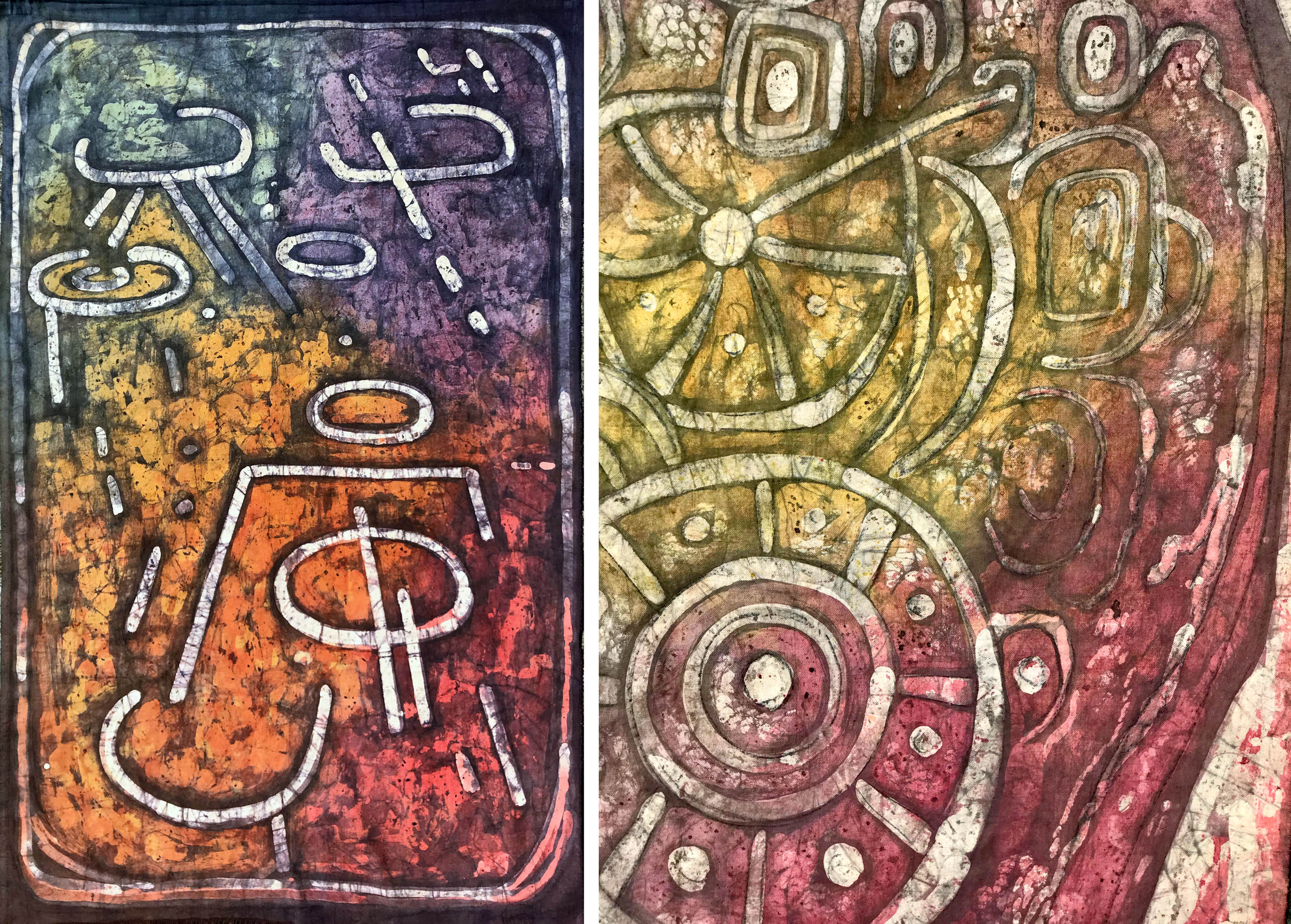
Above: two batiks by Nora Golden. Left – The Rock of the Rings (rock art at Ballybane West) and right – detail from a work depicting Loughcrew-type passage grave art. Nora and her partner, Christa Reichel were early arrivals on the arts scene in Ballydehob. In the 1960s Christa bought a farmhouse and set up the region’s first studio pottery in Gurteenakilla then, with Nora, opened the ‘Flower House’ in the centre of the town: you can see it illustrated in the exhibition flyer at the bottom of this post. All this is well documented in the excellent book by Alison Ospina (herself a talented furniture maker) ‘West Cork Inspires’ (Stobart Davies, 2011).

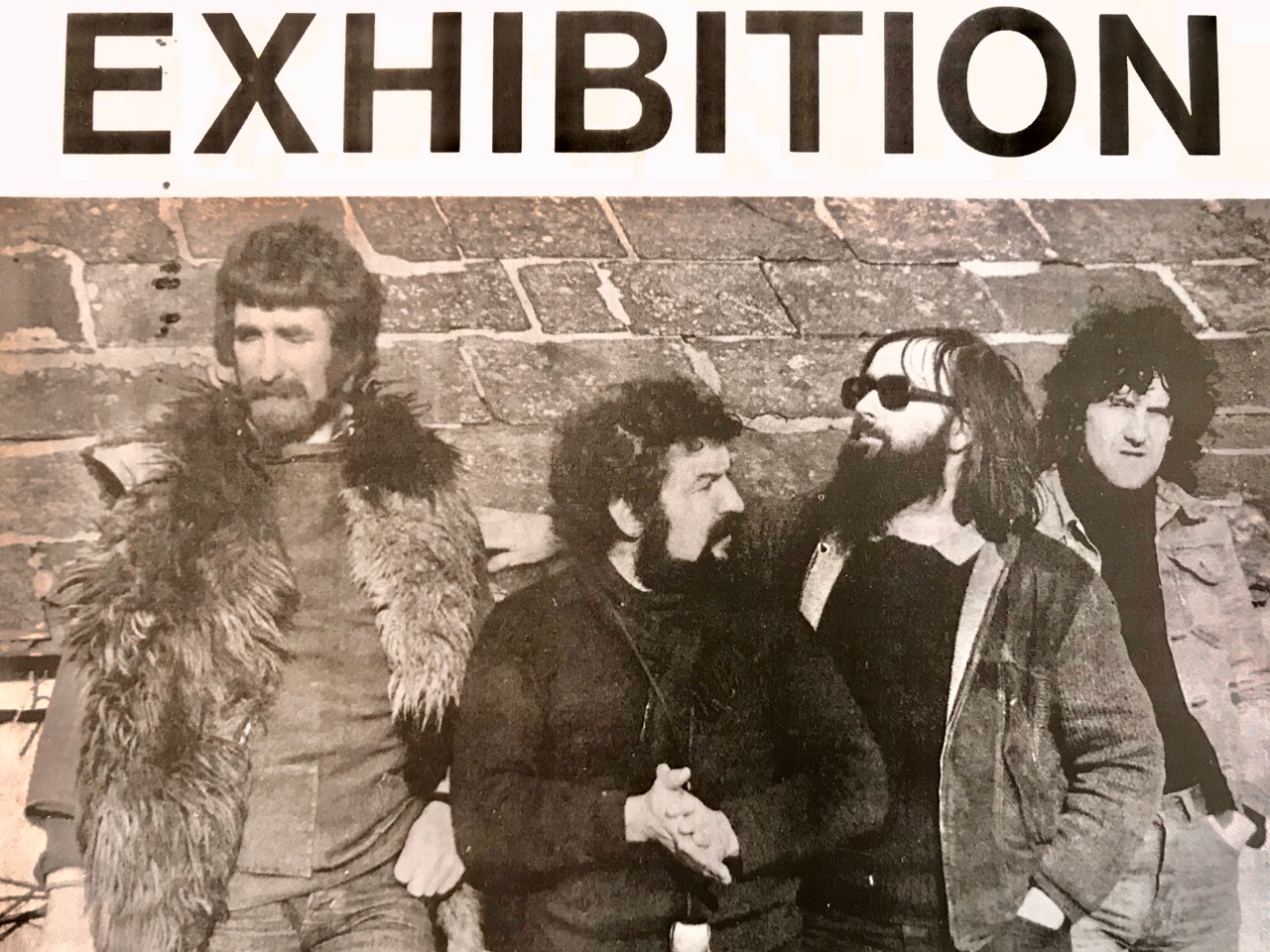
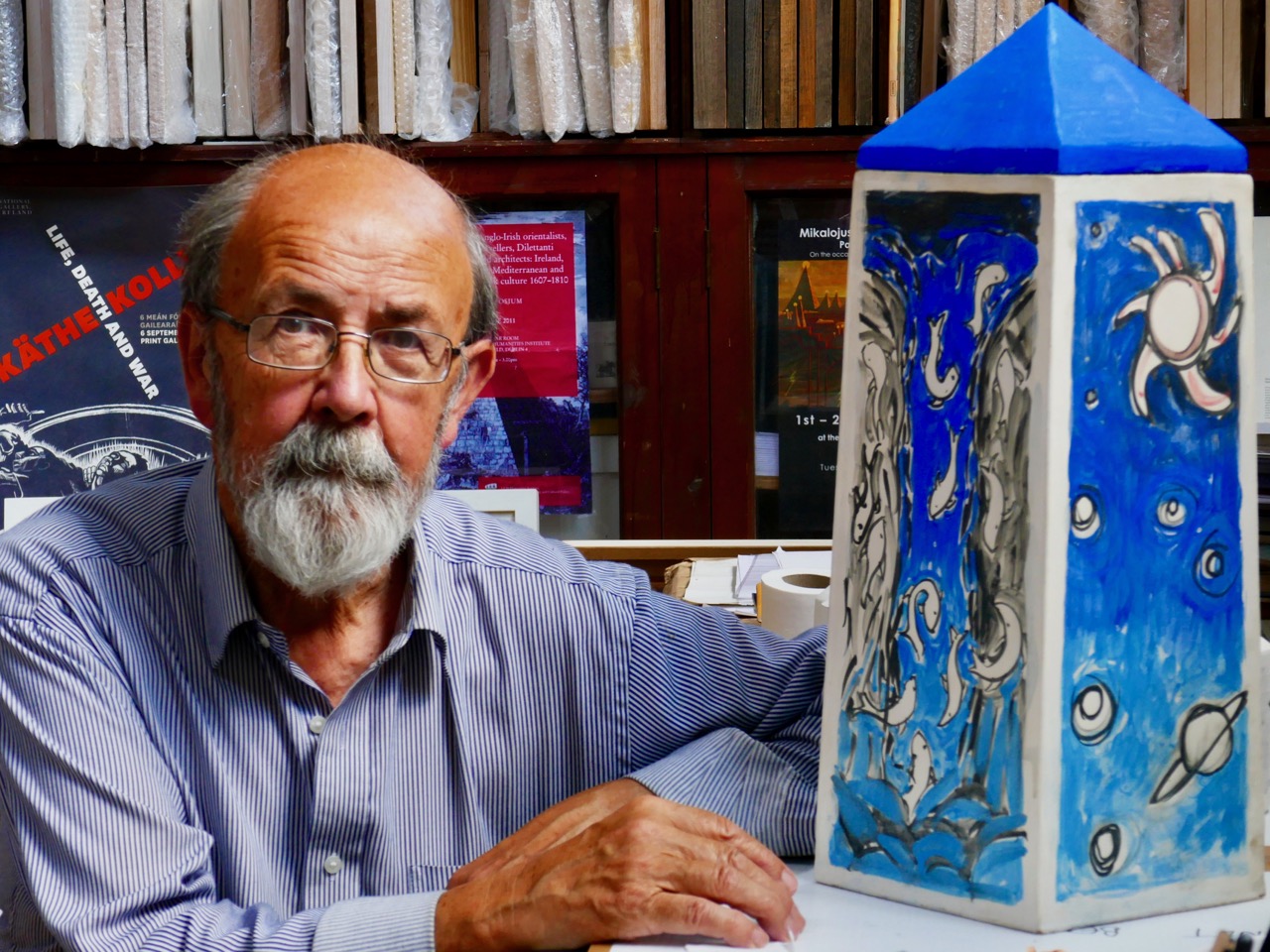
These denizens of 1970s Ballydehob are not a Heavy Metal band (to my knowledge) but in fact four important artists who had settled here: John Verling – artist, ceramicist and architect,  Pat Connor – ceramic sculptor, Brian Lalor – artist, writer and printmaker, and David Chechovich – watercolourist. They are wearing the uniform of the time. Here’s Brian Lalor in his studio today (photo by Finola) – you can certainly see the similarity . . .

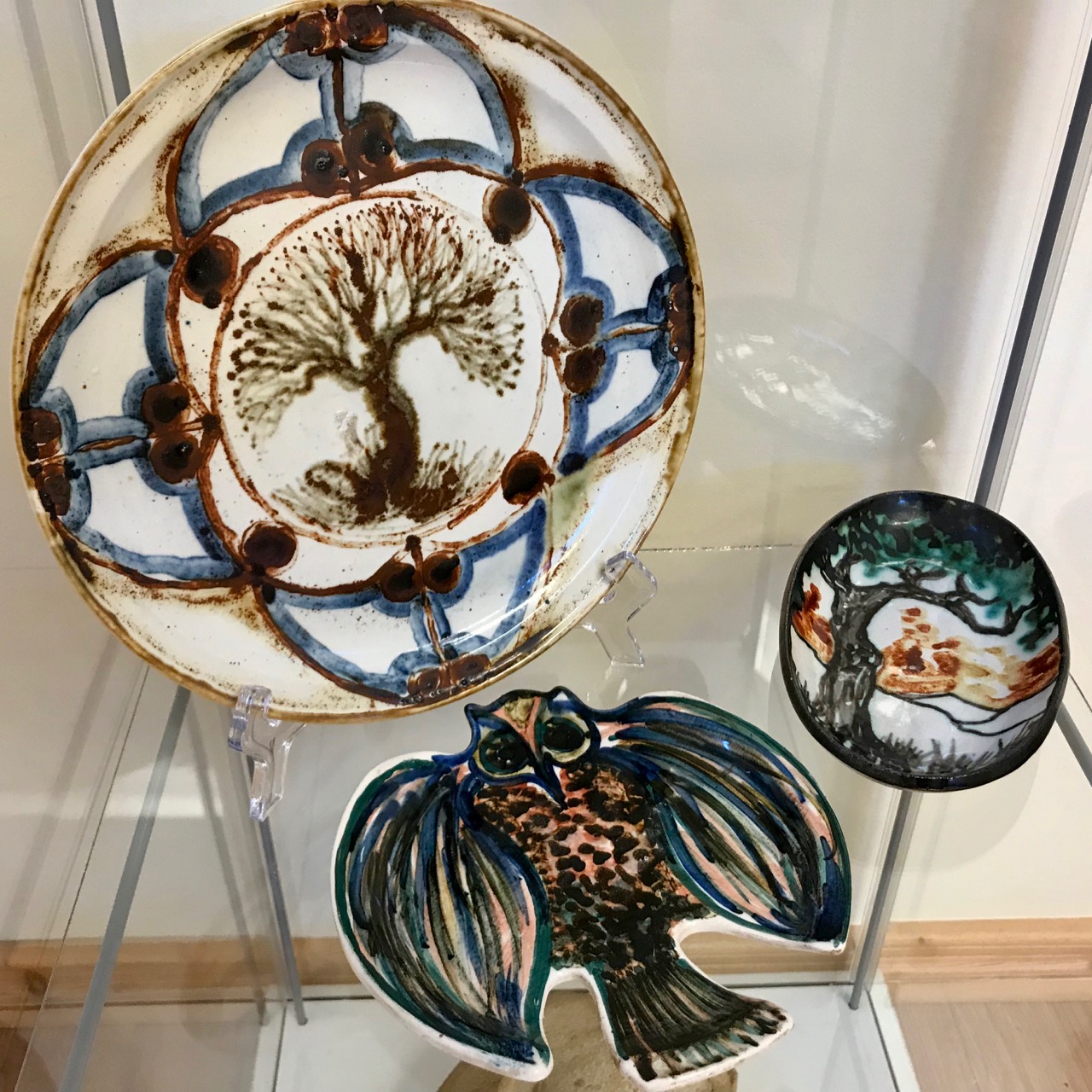
Brian still lives near Ballydehob, and is the mastermind and Curator of the new collection. And, if you can begin to see it all fitting together, John Verling (on the left in the exhibition poster above) took over the Gurteenakilla Pottery with his wife Noelle and together they produced striking ceramics, examples of which are in the header photograph.

Gurteenakilla is lived in today by Angela Brady, an artist who works with fused glass. She is also an architect. And – she’s performing the most important task of opening the first exhibition in our new Arts Museum on Friday. Finola wrote about Angela and other artists who contributed to the 7 Hands show on the pier in Ballydehob two years ago: have a look at her post and see if you recognise any other names.

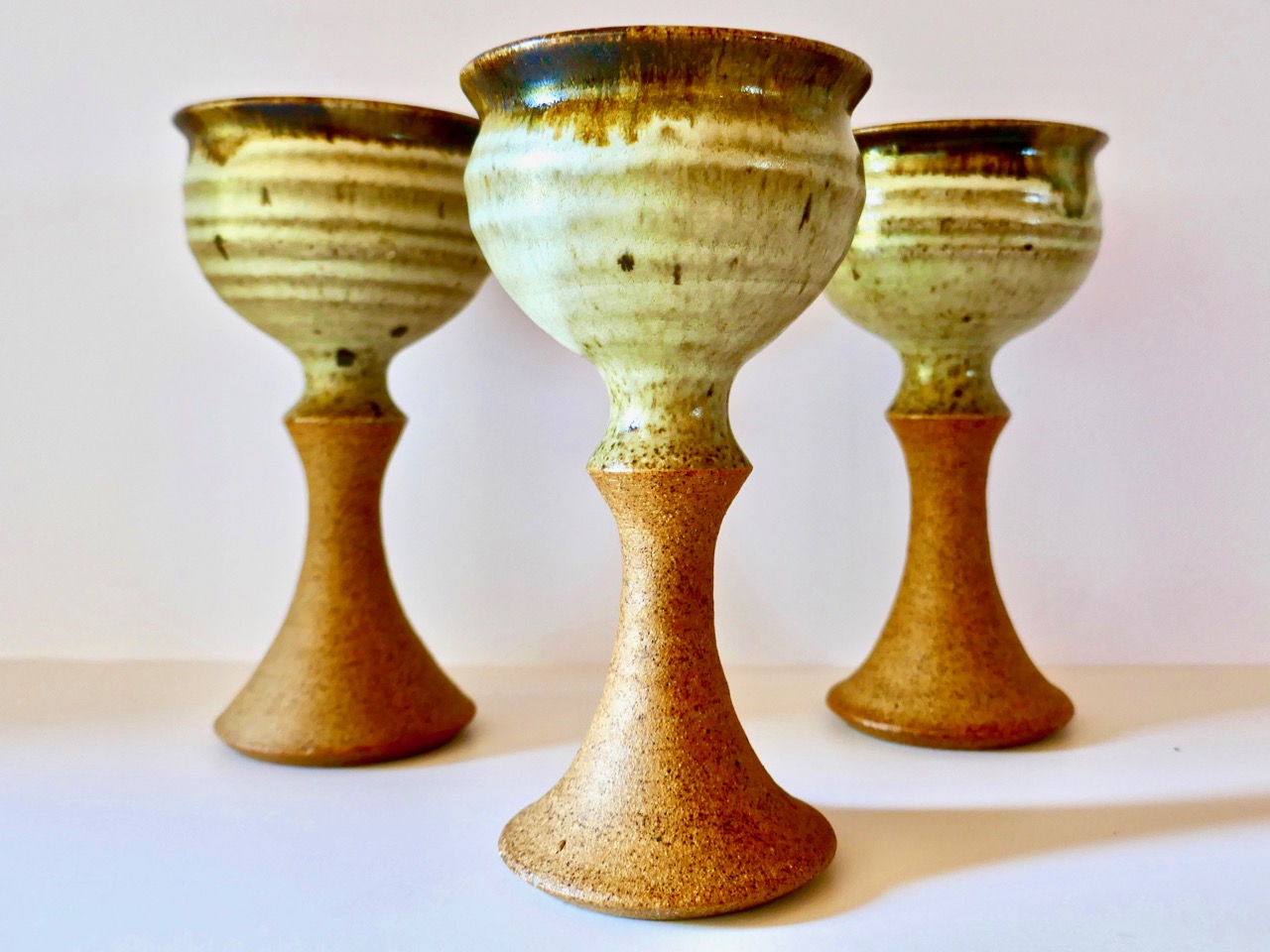
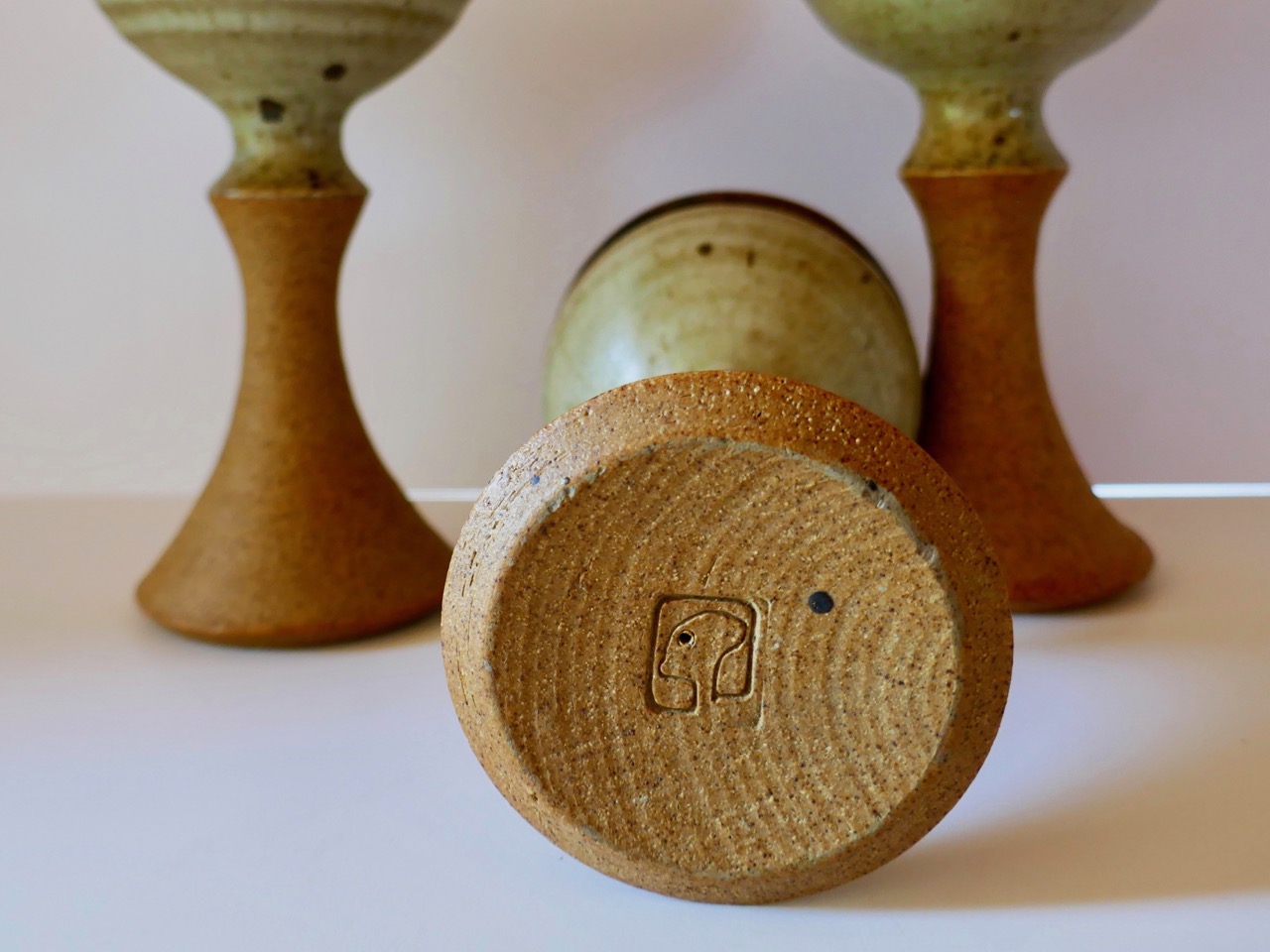
Beautiful stoneware goblets by Pat Connor, who is well represented in the collection. His maker’s mark is a memorable graphic. Another well known West Cork ceramicist represented here is Leda May, who with her husband Bob found Ballydehob in the late 1960s when they were invited by Christa Reichel to set up a pottery behind her own shop. Leda is still working in the area today, producing very fine painted porcelain ware (an example of which is shown below).

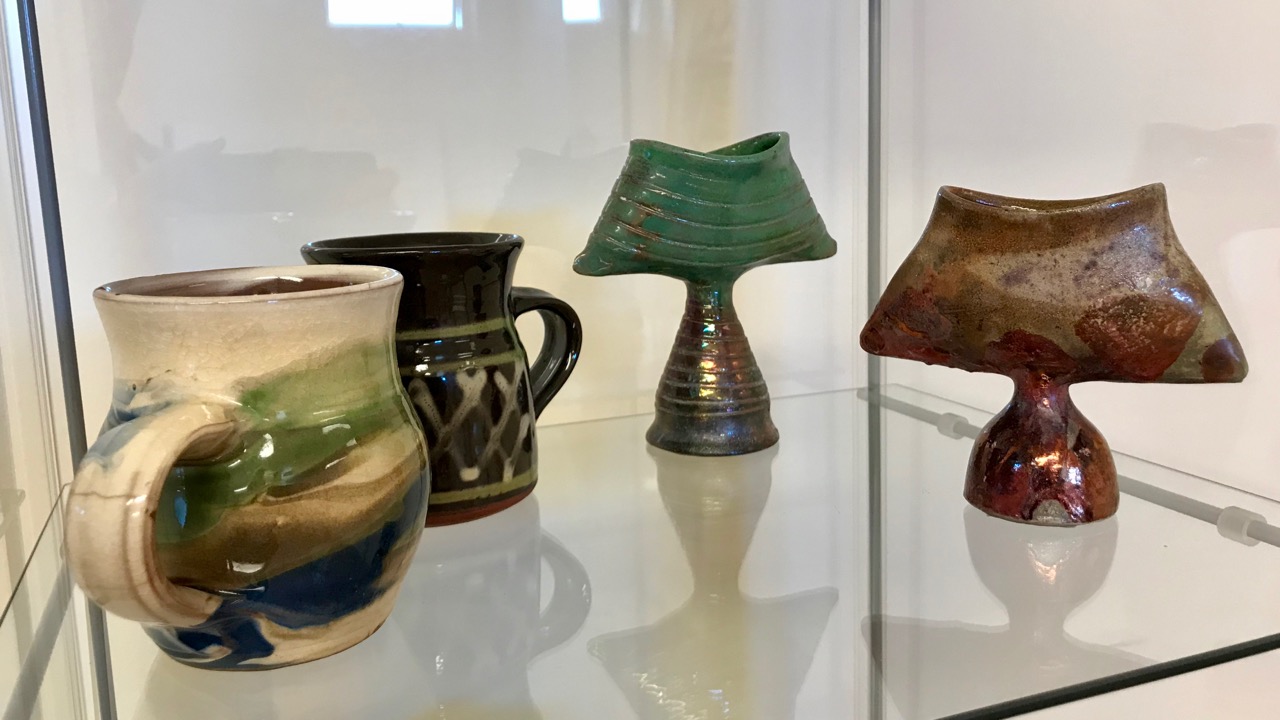
Above, from the exhibition – two earthenware mugs by Etain Hickey and Jim Turner, Rossmore Pottery 1983 and two Raku lustreware pieces by Jim Turner 1982. There are more stories to be told – to add to Alison’s comprehensive volume: the rise and fall of the Cork Craftsmans Guild, establishing the West Cork Arts Centre, exhibitions in far-flung places including Zurich, enigmatic repousee work – as yet we can’t trace its history . . . But all that is for another day, once the Ballydehob Arts Museum (BAM) is under way.

Below, posters by Brian Lalor and Repousee work by Shirley Day.

So here’s yet another reason to come to West Cork! This ‘taster’ exhibition starts on 10 August and continues through Heritage Week and Ballydehob’s Summer Festival until 26 August. We have to commend our Community Council in Ballydehob who are giving us the space in Bank House – right in the town centre (the former AIB Bank building) which they acquired for the permanent enjoyment of the local community. Also we have benefitted from Cork County Council who have given us a grant under the Creative Ireland Programme to help get the whole project off the ground. And most of all we have to thank local people who have freely donated pieces for the permanent collection – all will be acknowledged when the Museum is up and running.

Bohemians in Ballydehob! opens at 6pm on Friday 10th August at Bank House, Ballydehob

The Soul Expands with Beauty

We are so lucky to live in a place where the arts are valued as a necessary part of life and where we can attend art exhibitions, concerts, theatre, readings, film screenings. It all comes together every year at the Skibbereen Arts Festival. It somehow manages to combine fun, entertainment, wonder and beauty (like this West Cork seascape by Harriet Selka, above).
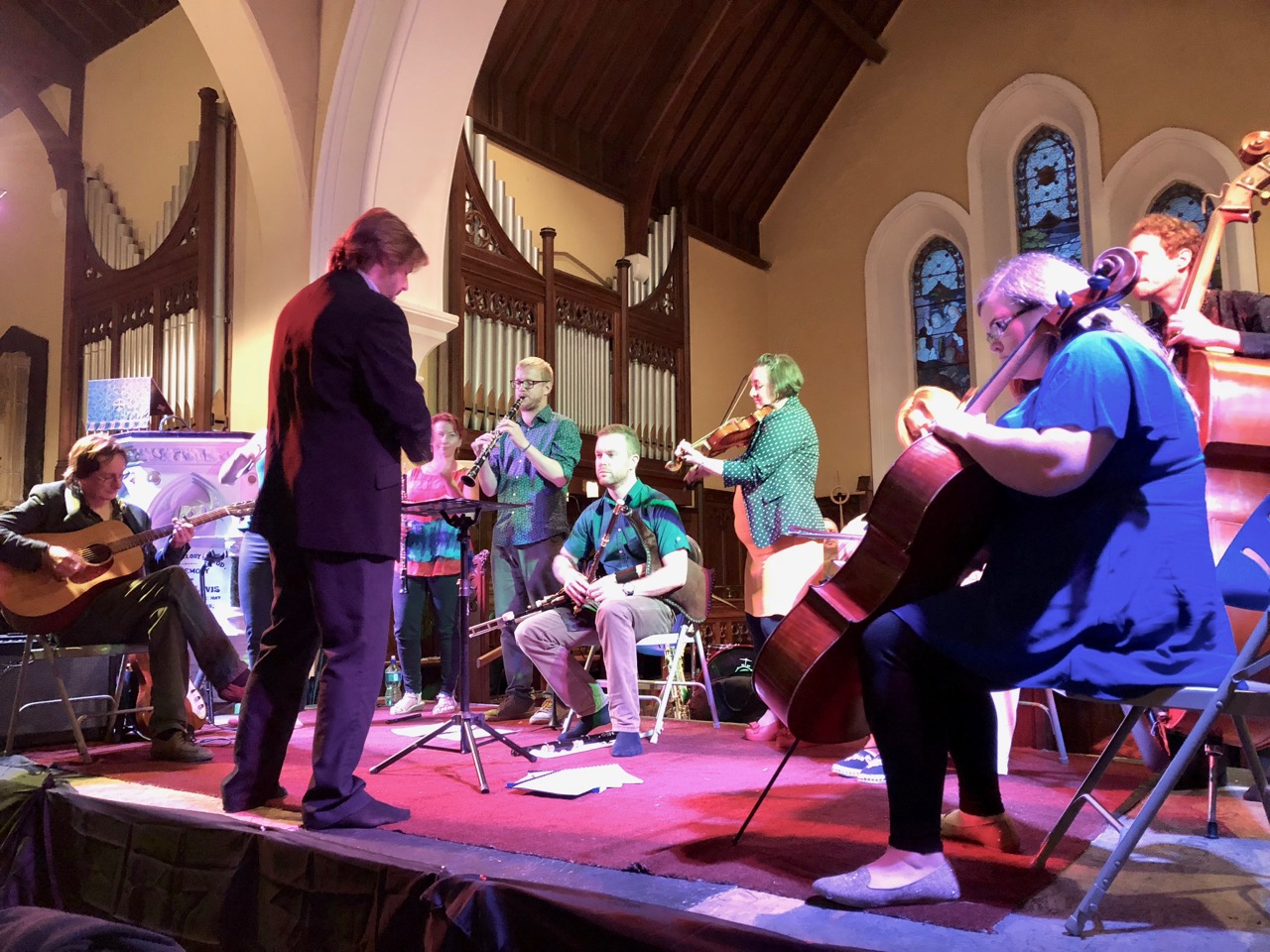
The Irish Memory Orchestra also enthralled us one evening – they play traditional and commissioned pieces entirely by memory.

Last time we wrote about this festival we said it was ‘hitting its stride’. This time the phrase that came to me was ‘it’s going from strength to strength.’ What a marvellous line up it was! You can see the whole program online and look at the sheer variety of experiences that we lucky West Cork folk got to pick from. A standout for us this year was the concert lineup, the art exhibitions and the poetry events.
Roseanne Cash and John Leventhal

It started off with Roseanne Cash, daughter of Johnny. You might think – what? Country Music? I know that’s not everyone’s taste, although I have a soft spot for it myself. But Roseanne sings a wonderful mix of Appalachian Folk, bluesy ballads and her own material along with the classics of country. She has a gorgeous voice and a husband accompanist and they both play a mean guitar. Here she is singing one of her father’s songs along with a touching tribute.

Skibbereeen was only her only other Irish stop besides Dublin and she came because of a line in Johhny’s song Forty Shades of Green (did you know her wrote that? I didn’t) that refers to Skibbereen. Watch him singing it at a concert in Dublin back in the days of Big Hair. It was Roseanne’s closing number, and predictably it brought the house down. She was in tears. We were in tears.

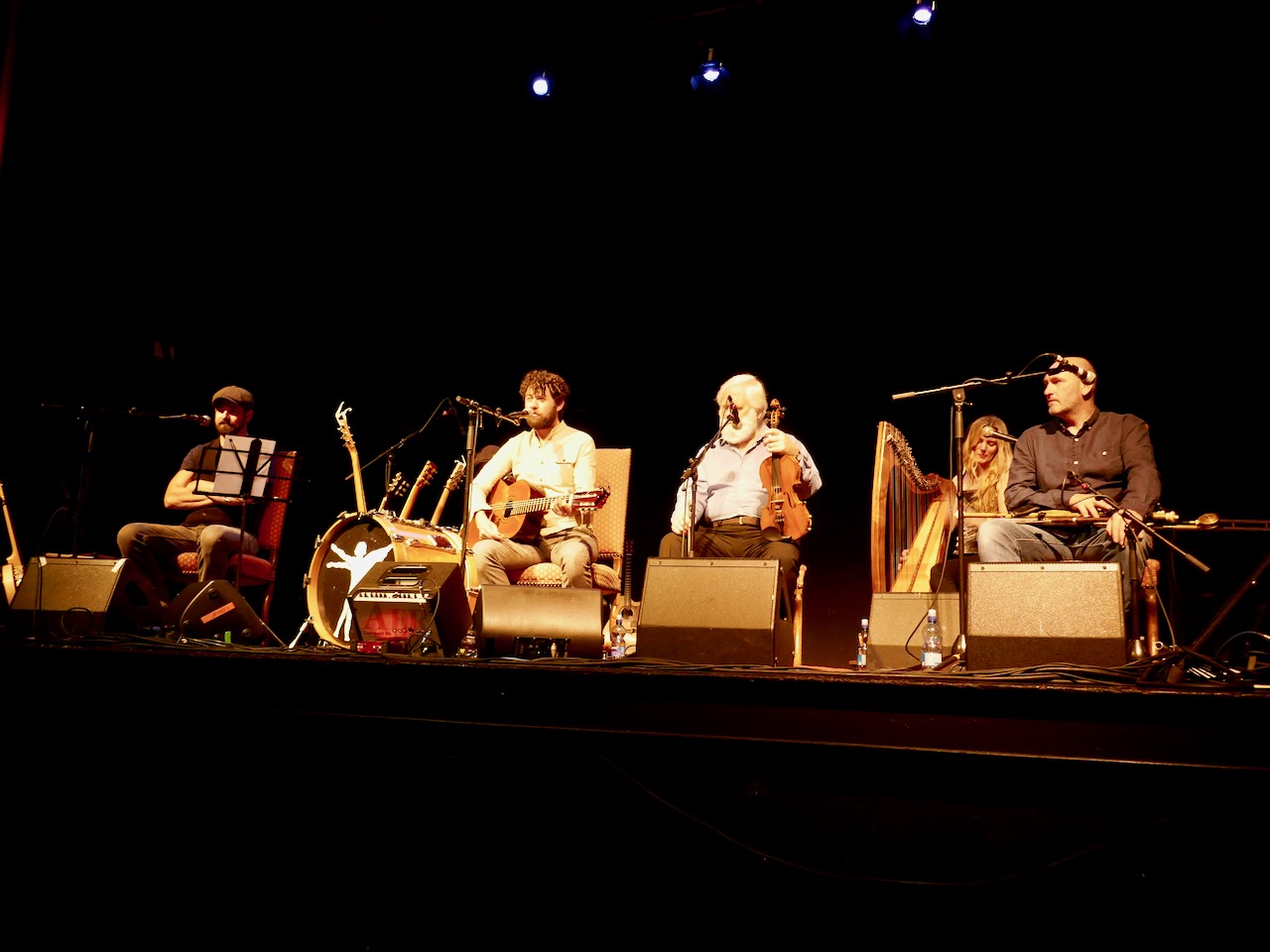
Something completely different a couple of nights later – The Chronicles of the Great Irish Famine is from the formidable talents of singer-songwriter Declan O’Rourke, backed up by an excellent group of musicians that includes John Sheahan of The Dubliners. Declan has been working on this song cycle for years. He describes it “an attempt to bring fresh air to an unhealed wound, and to remind the Irish people of what we have overcome.” There’s a good overview of the project here and you’ll witness Declan’s unique voice and engaging personality. The subject matter was tough – we are in the middle of a major Famine commemoration event here this summer and we are becoming more familiar every day with its horrifying stories. Having written about the Coming Home Exhibition and the 110 Skibbereen Girls Project already, we found this concert to be poignant and powerful.

Lúnasa have long been recognised as one of the best Irish groups performing traditional music today and we’d been looking forward to this one very much. The bonus was the addition of Natalie Merchant as their special guest. I’ve been a fan for a long time and it was a great pleasure to see her in person. That voice! Take a listen.

She sang this one for us and Lúnasa transformed before our eyes into this amazing back up band. Imagine a version where instead of just guitars the harmonies are provided by a flute, an uillinn pipes, a fiddle, a guitar and a double bass. Magic.

Jim Turner’s ceramic pieces catch the eye at Anseo

We took a day to do the Art Trail. There’s a couple of large exhibitions including one curated by Catherine Hammond that Robert wrote about a couple of weeks ago. The other large show was called Anseo (on-shuh meaning ‘here’). Each artist was asked to write a statement addressing how he/she responds to living/being in West Cork and it was revelatory how different each one was – both the statement and the art.

Helen O’Keefe’s Neighbours – Long Island

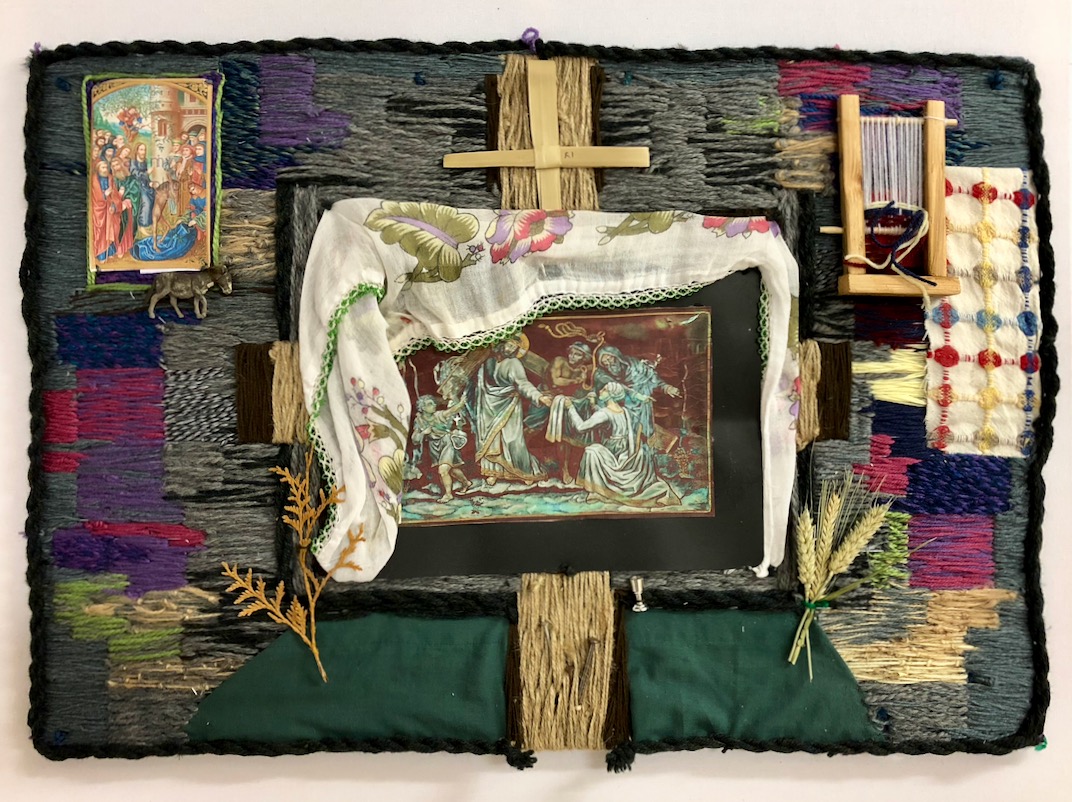
But there were also hidden gems all over the place – in converted empty stores, in back rooms and unused office space. I enjoyed Sonia Bidwell’s quirky pieces constructed from fabric and found materials, upstairs in Lisheen’s House. Her Veronica is below.

School children had participated in a ‘City’ project where they explored design and architecture and built their own cities. It was fun and relevant and, in fact, mighty impressive what they had accomplished!

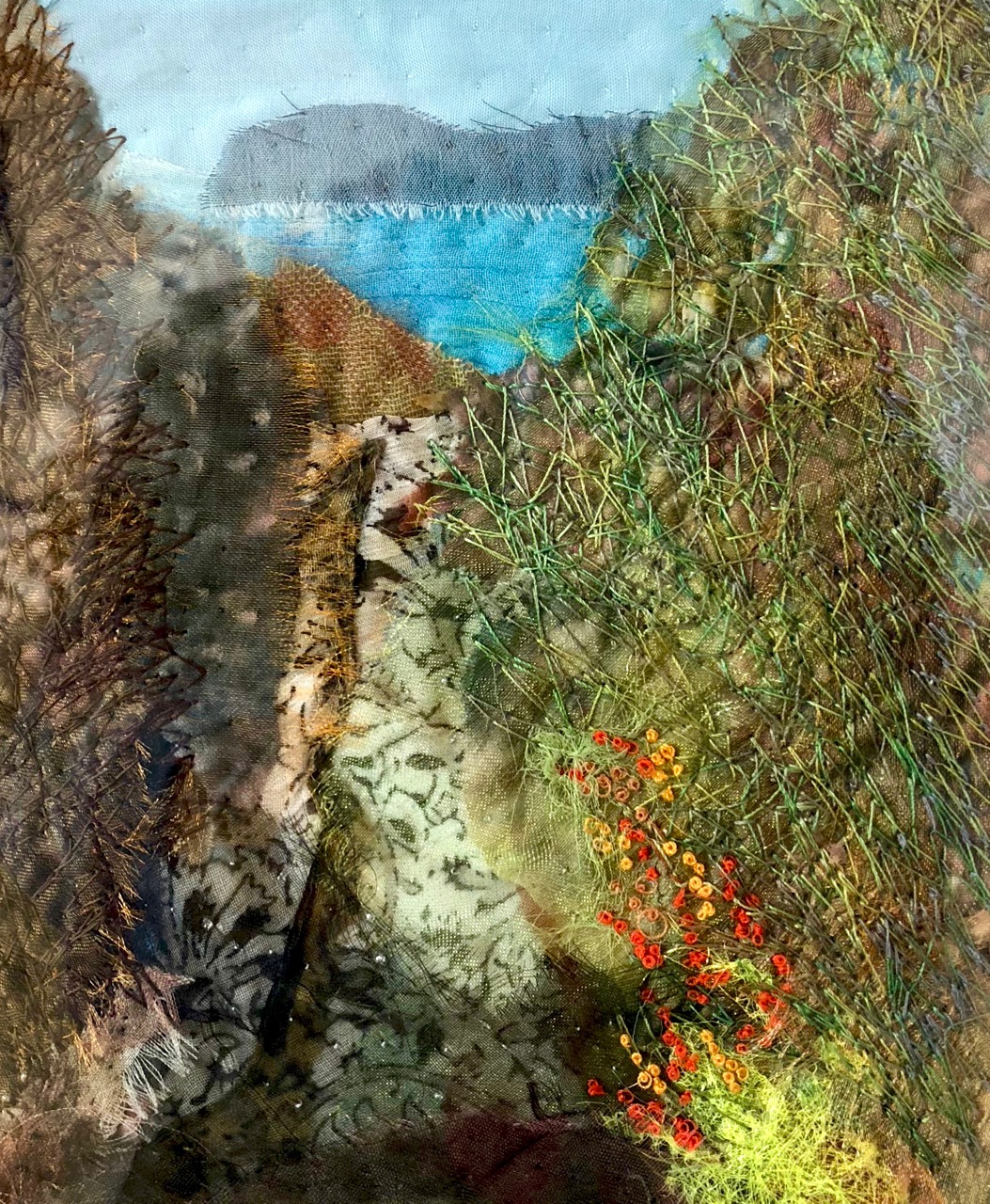
A local group of fabric artists, Wild Threads, had taken over a space near the supermarket to mount an exhibition of sea-themed work called ‘Littoral.’ As expressed in the program – ‘For some this means intimate vignettes of everyday views and for others it is the colourful explosions that Mother Nature throws at us.” It had never occurred to me that you can paint with fabric until I encountered the work of this group. It’s both a constraining and liberating medium, and the results were varied, imaginative and beautiful!

Piece by fabric artist Sam Healy

I can’t finish without a word on the poetry. While there were several events, the one that made the most impact on me was the launch of two new books by Pól Ó’Cólmáin and James Harpur. I’ve written about Pól before and used his poem in my post Pagan and Pure. This time it was a book, The Silence Unravelling, of Haiku and Tanka – just a few words to capture a moment, a feeling. I hope to use some of them in a future post – they’re brilliant. 

Pól Ó Colmáin – here not reciting his poetry but performing some of his songs

James Harpur is one of Ireland’s most distinguished poets. He’s a member of the Aosdána, an affiliation of artists whose election is based on a distinguished, creative and considerable body of work. He read from his new book The White Silhouette. Here is an extended quote from his Book Of Kells series of poems, this section dealing with Gerald of Wales, Geraldus Cambrensis, who comes to see the book.

Beauty is not so much a thing

as a moment, unrepeatable,

although the moment needs the thing

as a flame needs a wick

or images a page.

Or it’s a streak of lightning

connecting heaven to earth

whereby in a flash we breathe

the enormity of something Other

beyond our tiny grasping selves

and fill our lungs with it,

before the dark returns again.

The soul expands with beauty –

it cannot help itself; our task in life

is to prevent it shrinking back.

Janet Murren’s Creaky Stairs. I love her multi-layered atmospheric constructions