Flail, by Debbie Godsell

It’s not often an art exhibition has me running to my word processor to get a post out, but this one did it for me! On the surface, this is a quirky, amusing, thought-provoking, installation about the annual Harvest Festival, as practised in the autumn in Church of Ireland communities all over Ireland. Except it’s so much more than that. It’s titled Flail, and it’s on right now at Uillinn.

Debbie Godsell has taken the idea of the harvest festival and the communities that celebrate it, and turned it into a personal exploration of her own experience with it, as a child growing up in the C of I, and as a photographer recording the custom of decorating churches. In Ireland, this is a custom unique to the Protestant church – the minority religion. As such, there’s a strangeness to it when viewed by someone who grew up Catholic. Not strange in the sense of peculiar, but in the sense of unknown, slightly other-worldly, why-have-I-never-known-about-this?

But yes, it is quirky and amusing. Just take a look at these heads – they are the first thing you notice when you come in, titled ‘Ancestors’. Made from all kinds of found materials, some represent real people (hello, Great-Aunt Molly!) although most are simply heads – a bit like you might find on a scarecrow out in the fields around harvest time.

But after the first encounter you realise that this also of course, is the thought-provoking part of this exhibition Now you notice that they are on sticks, mirroring perhaps the heads on pikes that seemed to spell the end on many rebellions against English rule down through the centuries. In her notes, Godsell states:

Here, the heads take on an unsettling childlike quality, drawing from elements of folk drama and ritual. Rudimentary in form, they are a fusion of figures from Irish history and the artist’s own imagined lineage. Blurring the line between historical facts and personal mythology, the work interrogates themes of memory, identity and inherited trauma, challenging how history is constructed and remembered.

What does it mean, in Ireland, to be part of a minority religion? What has it meant in the past, and now? What if that religion was perceived to track closely with class, and land ownership, and unionist sympathies? 

We pride ourselves, in Ireland, now, on being a pluralistic and non-sectarian society. But if that is true at all, it is only recently so. The Ireland I grew up in – in the 50s and 60s – was deeply sectarian. Protestants and Catholics rarely mixed and we were forbidden, on pain of sin, to enter each other’s churches. We were educated separately, played some different sports (Anyone for lacrosse? How about men’s hockey?), sounded different, went to separate Brownie troupes, studied different curricula at school . . .

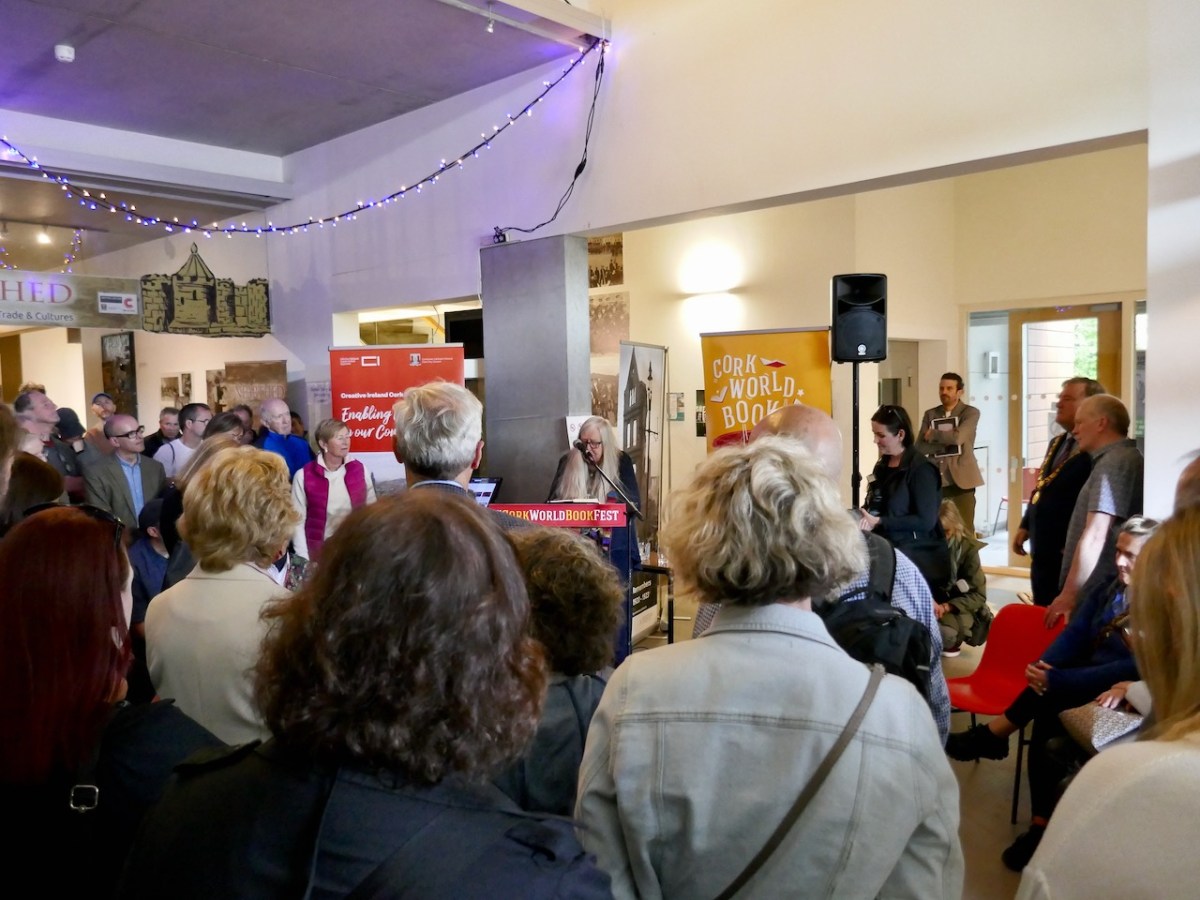
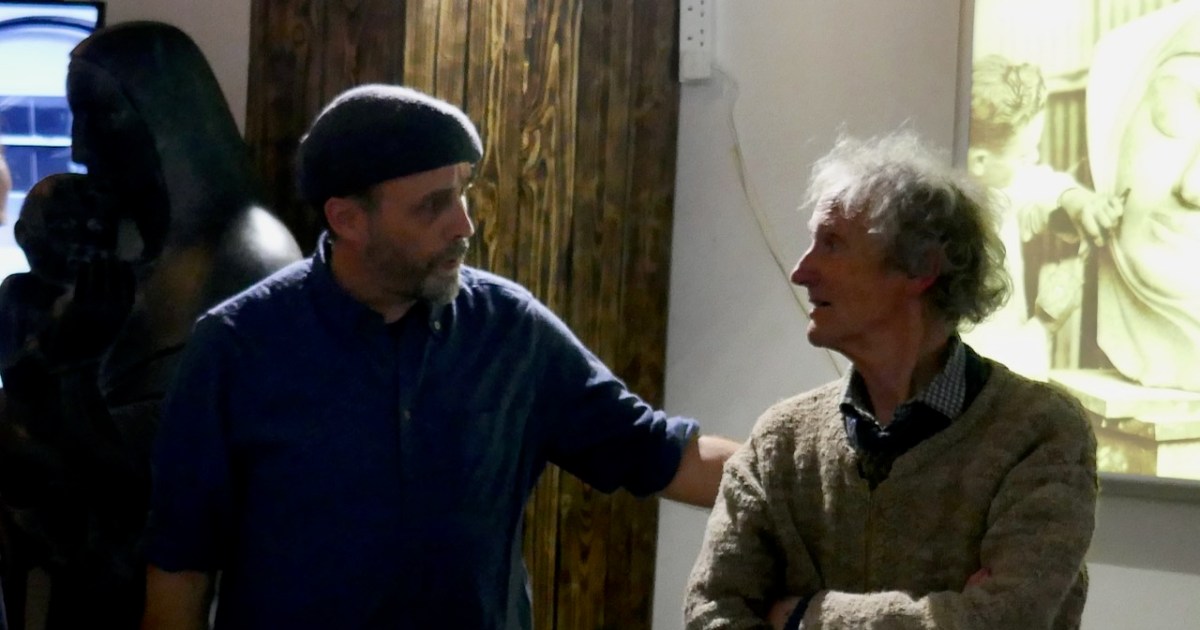
This exhibition explores the harvest-related parts of that separateness, but the opening, in which Debbie Godsell was interviewed by art critic Cristín Leach, also featured a discussion on folklore and a hymn by Cristín!

Cristín has said that Flail is ‘complicated territory’ for her and the hymn, Harvesting History, sprang almost spontaneously from engaging with the first Flail exhibition. It has been beautifully set to music by Susan Nares, and the West Cork Choral Singers presented it at the opening. Here’s a snippet.

I was particularly fascinated by the folklore discussion. As Roaringwater Journal readers know, we have used the Duchas/Schools Folklore Collection extensively over the years. One particularly important piece of research for me was to look at what it had to say about the Reverend Fisher – Saint and/or Souper of Toormore. What I found was a little shocking and it opened my eyes to an aspect of this wonderful resource that I had never previously considered – the decidedly sectarian nature of the collections. While some Protestant National Schools did participate in the School’s Collection of 1937/38, Protestants are very under-represented as informants. See this excellent article from History Ireland for more on this*.

Cristín and Debbie talked about the prevailing view of Protestants as seen in the overwhelmingly Catholic responses in the Collection – and it wasn’t a pretty picture. As I discovered with Fisher, and as Amanda has discovered with Holy Wells Folklore, the Protestants are basically blamed for anything misfortunate or discreditable – some examples here, and here and here

Go see this exhibition if you can. It’s fascinating, but more than that, it’s important. We are still trying to come to grips with our history, in Ireland. Art like this helps immeasurably.

* A ‘Protestant folk’? Author(s): Deirdre Nuttall and Críostóir MacCarthaigh Source: History Ireland , Vol. 25, No. 5 (September–October 2017), pp. 48-51 Published by: Wordwell Ltd. Stable URL: https://www.jstor.org/stable/10.2307/90014607

Sit Stand Smoke – and Remember Kathleen

This week I experienced, in Virtual Reality, what is was to belong to a Flying Column during the Irish War of Independence. With the men, I crawled through a West Cork field, gun at the ready, alert for any sign of the British army or the Black and Tans.

Or, at least, that’s what it felt like, and I must admit to a slight pounding of the heart as we were crouched behind that stone wall. In reality, I was on a swivel chair in the old Uillinn coffee shop, now repurposed as a VR theatre, wearing a VR headset. The Sean Keating painting that this experience is based on is the iconic Men of the South and you can read all about it here

Keating’s grandson, David Keating, and his creative partner Linda Curtin, have produced the VR experience, shooting it in West Cork in “360 stereoscopic + volumetric capture” with the help of many local people and the new West Cork Film Studio. Dr Éimear O’Connor provided the expert consultations on Sean Keating (below) and features, amusingly, as an exasperated director of the action. If you get a chance to see this anywhere, grab it! You can also read more about Sean Keating in this post by Robert from 2020.

And this War of Independence action leads nicely into Kathleen O’Connell. You will remember her as one of the heroines of Karen Minihan’s book More Extraordinary Ordinary Women. Take a quick trip back to this post and read all about her and her daring and courageous deeds.  I concluded this section by saying

Kathleen was ruined financially by all her support for the cause. Letters of support for her pension application were fulsome in praise of her work and her commitment. She was awarded a grade E pension in 1939. She died, here in 1945, aged 50. She had not married and had no children, and all memory of her gradually disappeared from Ballydehob. When Karen went looking for the house she had lived in, it seemed nobody could remember the heroic Kathleen O’Connell who had once lived here.

How wrong we were! Memory of Kathleen was far from dead. A relative of hers recently contacted Karen and on Friday afternoon we spent several hours with him and his charming grandson, rediscovering Kathleen from a man in whose family her memory was still fully alive. (He didn’t want his photo in the blog post, although Neven, the grandson, was happy to be in it.)

The first thing he showed us was her grave, at the historic Abbey Graveyard in Bantry. It contained many family members, including Kathleen. Our guide had knowledge of everyone in the grave and how they were related, and told us that there were probably more people in the plot than commemorated on the headstone. The grave looks out over the sea at Bantry.

Next, he brought us to the cabin belonging to her Uncle Pat where she sheltered men on the run. It’s located in the hills behind Ballydehob, down several lonely boreens and across a couple of (very muddy) fields. The cabin, now roofless, still stands and still has the wonderful oak mantle across the open fireplace.

We marvelled that Kathleen was doing all this on her bicycle – it’s several kilometres above Ballydehob and about 100 metres above sea level. And of course few of the roads would have been paved at that time. Our guide told us that she was totally and passionately committed to the cause, and that, since she was an only child, she carried her parents along with her. It was really they who underwrote all the expenses she incurred in her work. 

In the family, it was understood that she had been engaged to a man who was a member of a Flying Column – just like one of the Men of the South, but that he had been shot. We could only wonder at the trauma and distress she had experienced. She left for America in 1925, but returned to live in Ballydehob, and her father eventually outlived her. 

Our final mementoes of Kathleen were particularly poignant. Surviving in the family were two of her books, school books we think, in which she had written her name.

Each was very British – a reminder to us all what the standard school fare was at the time when we were members of the British Empire.

I have located a copy of the Royal Prince Reader (1910) on EBay – in Rajastan! A further reminder that empire was promoted through children’s literature as much as through military occupation.

Somehow these two books, her own possessions, brought Kathleen to life as nothing else could have done. We imagined her devouring these stories in school, and her gradual disillusion as she matured with what the Empire stood for.

It is an immense comfort to know that she is not forgotten after all.

Muskerry Miscellany

I’ve had the most marvellous Muskerry weekend! Muskerry (pronounced Muss-cree), or Múscraí as it is more properly spelled in Irish, encompasses a large area in west Cork and much of it is Irish speaking. This weekend my two destinations were Ballingeary and Inchigeelagh. We didn’t stop at Gougane Barra on the way this time, but can’t resist including this photo to remind you of the stunning scenery there.

Ballingeary was Saturday and our destination was the village hall, for the last night of the original ceoldráma (musical), Gobnait! This production is by the same team who mounted An Tuairin Dubh a couple of years ago and I was dying to see their new musical. I wasn’t disappointed!

The story tells of the legend of St Gobnait, who travels from the Aran Islands to Ballyvourney – she knows she will have reached the “site of her resurrection” when she sees nine white deer (below). Patron saint of smiths and beekeepers, stories abound and are kept alive with an annual pilgrimage. We have written about Gobnait several times. Here’s a link to a post from only last year, one of the last posts that Robert wrote, in fact.

But to really understand how St Gobnait journeyed to Ballyvourney, you must read Amanda’s 3 part post (Part 1 and Part 2 and Part 3) where she traces her peregrination from the Aran Islands to Ballyvourney, stopping along the way to lend her name to churches and holy wells. This is followed by a summary of her life and work in Ballyvourney.

The Musical – it’s an opera, really, told the story very dramatically and with great liveliness and enthusiasm from the cast. The singing was lovely and there was lots of interesting choreography and stage settings – the Sulán River, for example, was very effectively rendered by means of moving actors and a huge gauze sheet (below). The words were projected as sur-titles, so even though my Irish is not a strong as I would wish, I could follow along with no problem.

It seems like the whole village of Ballingeary was involved – from those directing us to parking to those at the desks and tea-counter, everyone from miles around was joining in the fun and the effort. The hall was packed, as it has been every night, and we delivered a standing ovation at the end of the evening – so well deserved.

And it’s coming to Cork – one night only at the Opera House, on March 8th. If you can, see it there.

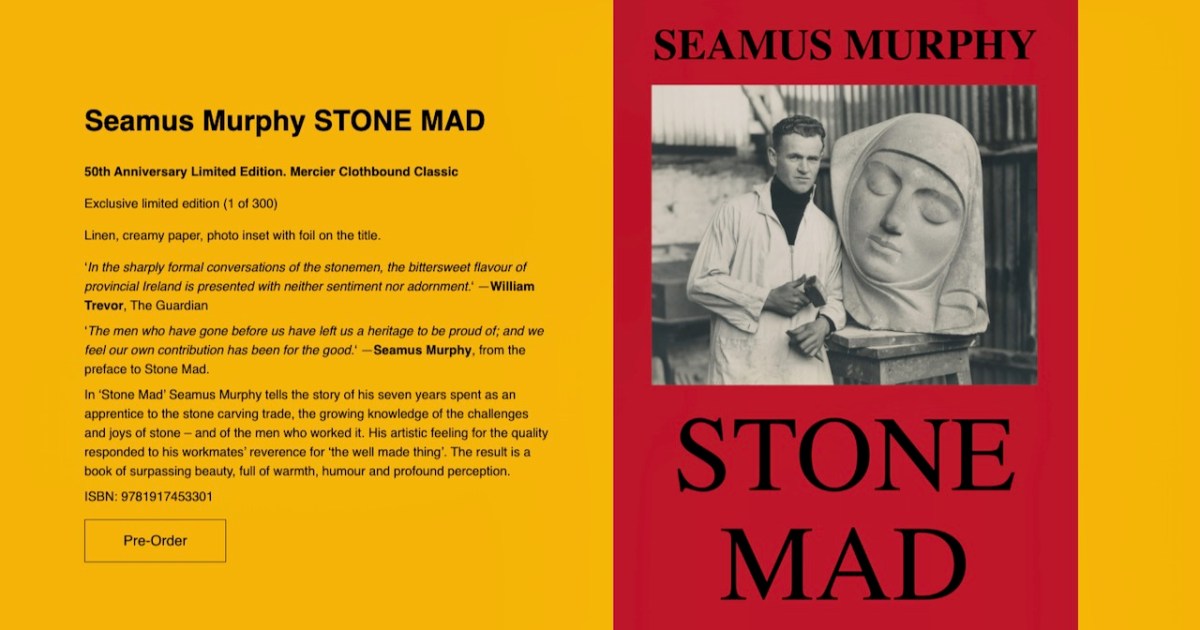
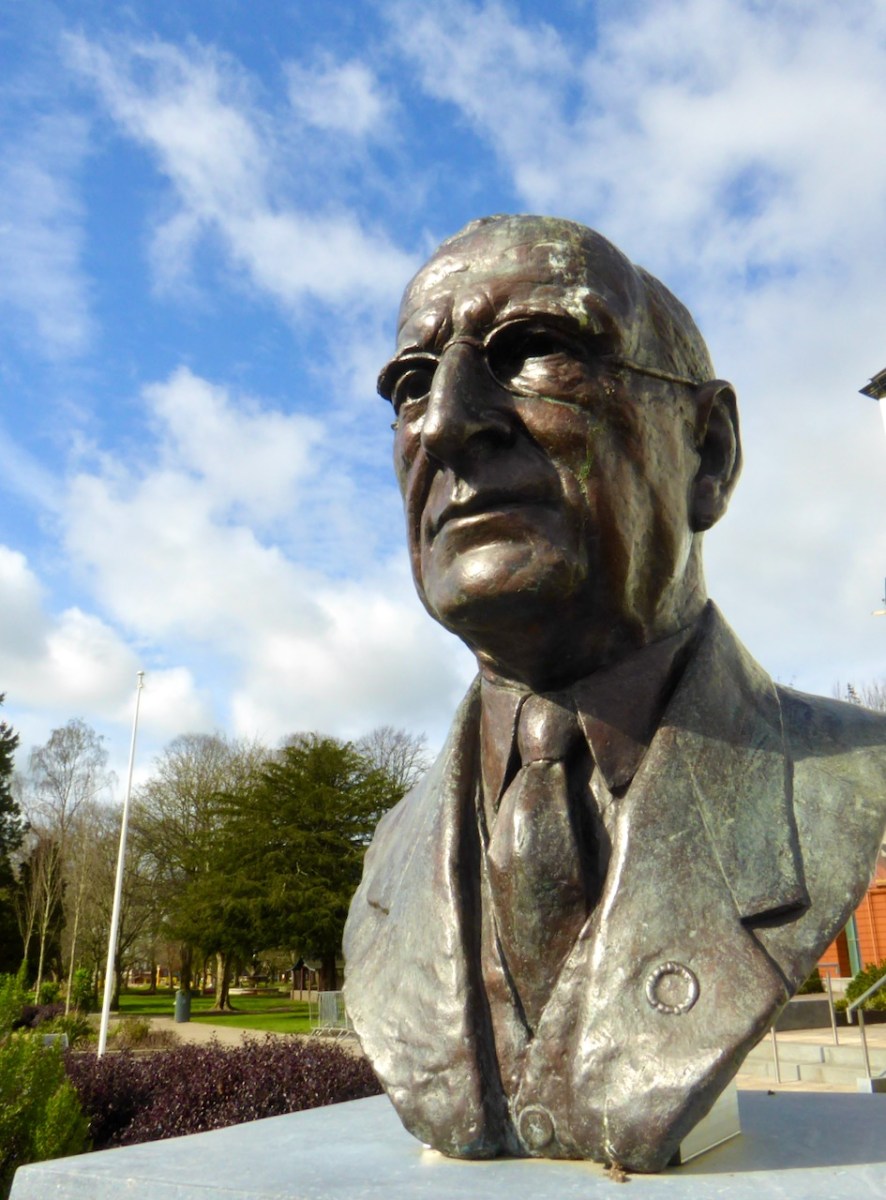
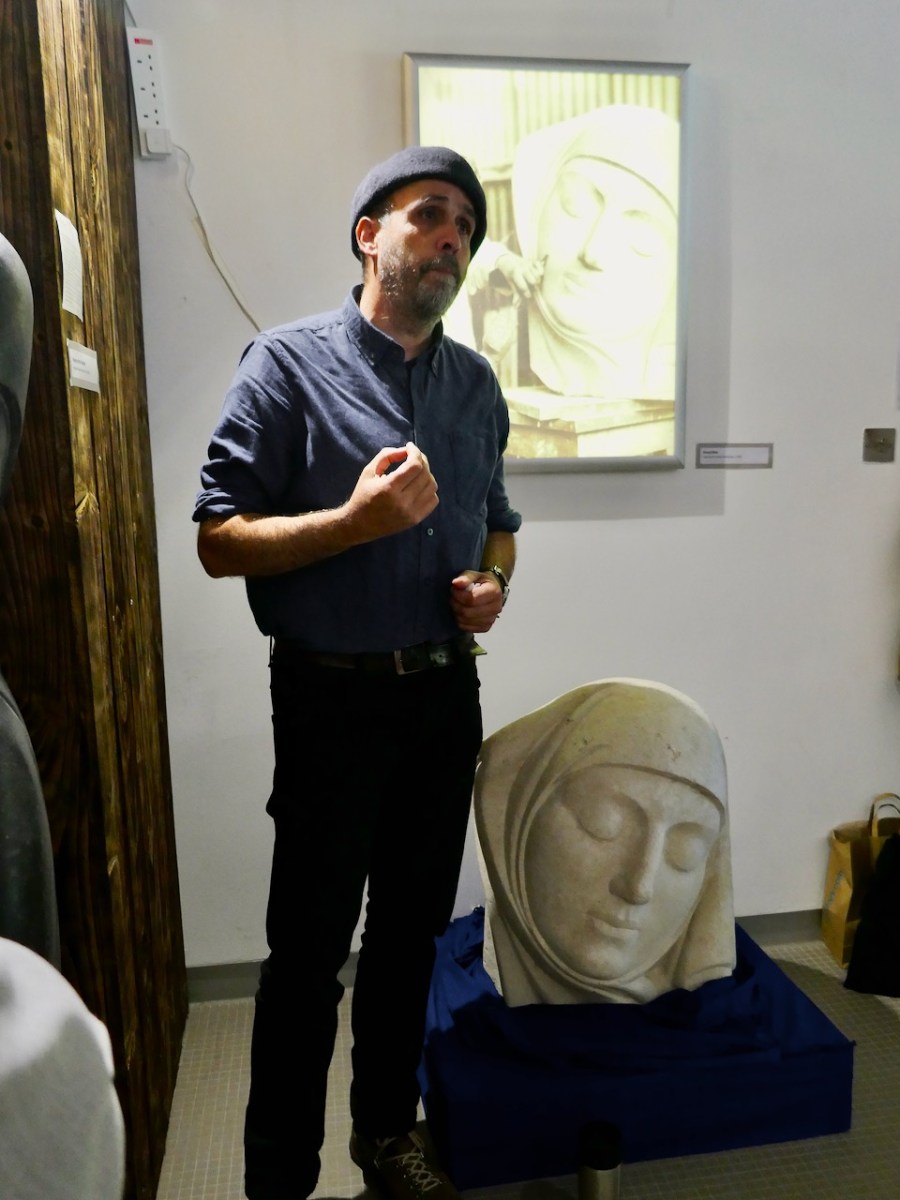
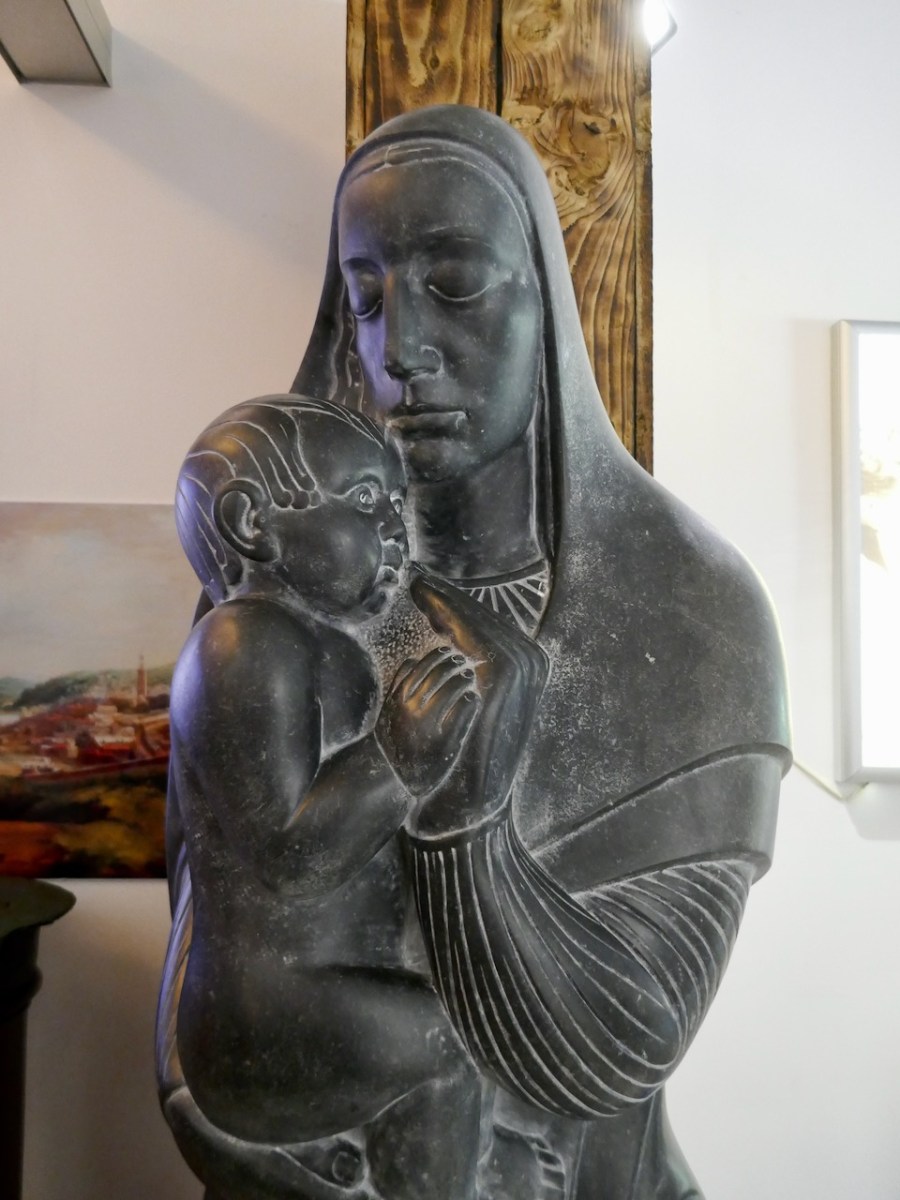
I loved how Gobnait’s costume in the second half was based on Seamus Murphy’s famlous statue of her at her holy well in Ballyvourney.

Having gone home and slept, I got in the car again this morning for another trip to Múscraí – this time to Inchigeelagh and to one of my favourite West Cork churches. Before I tell you about the trip, here are two reasons I like this church. The first is this little gem of St Oliver Plunkett. It’s the work of Kevin Kelly, of the Abbey Studios – and my photograph of it features on the front cover of a book! I haven’t got my copy of the book yet – it’s on its way.

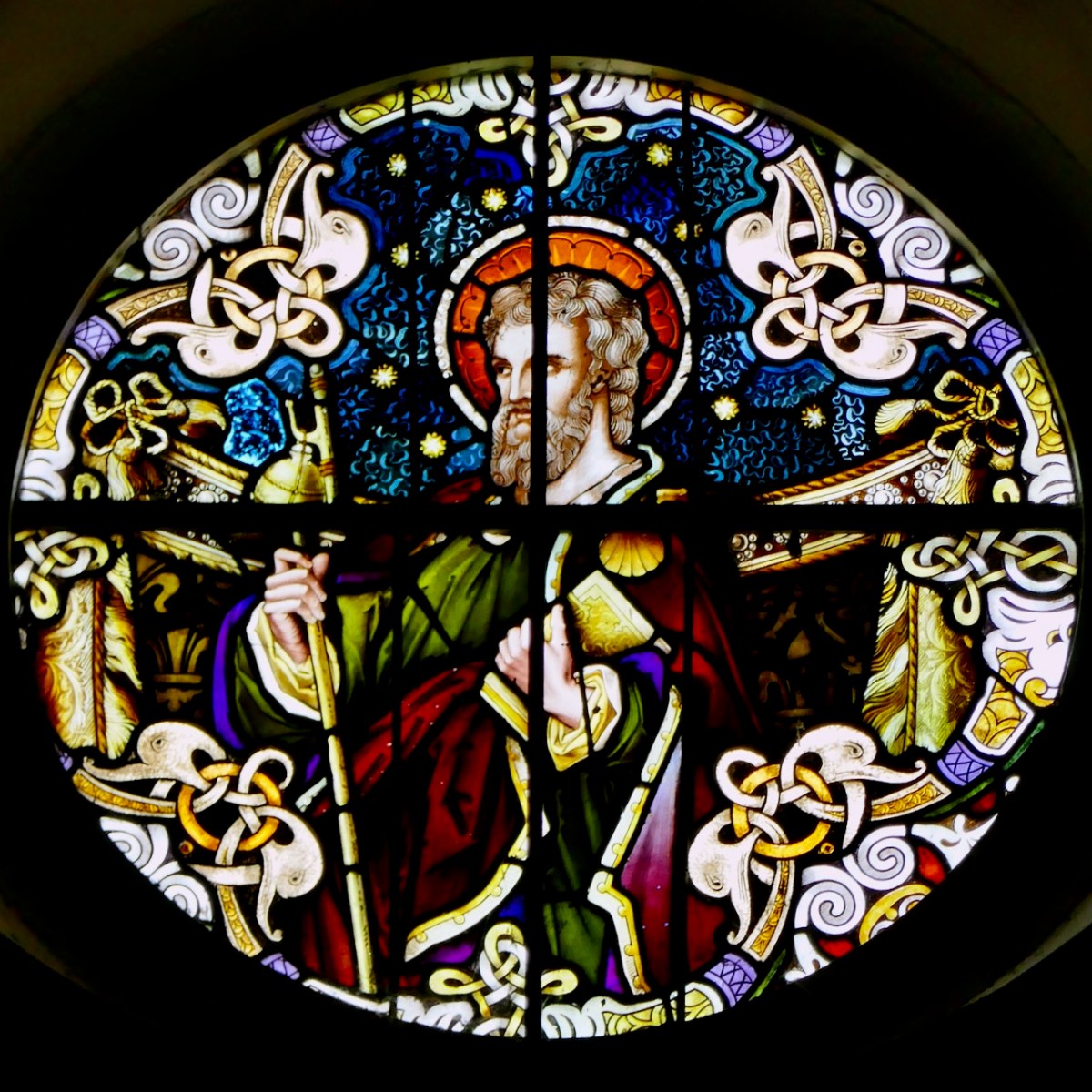
The second is this enormous and spectacular St Finbarr window – it’s an outstanding example of the Celtic Interlacing style that Watson of Youghal developed and perfected.

The purpose of my trip was to attend a mass in memory of Eileen Ryan. Eileen died in Zimbabwe, aged only 38, in 1983. and each year since, her husband Ken makes the journey from Dublin to attend the mass. Ken, a friend from the stained glass world (he’s the Chairman of Abbey Stained Glass Studios), had invited me to attend, since I live ‘nearby.’ I am so glad I did.

Y’know, you forget how life is lived and celebrated in rural Ireland – the ritual, followed by the release, the laughter, and food and the friendliness. As a total stranger, I was included in all of that – we were singing in a pub an hour after the mass ended, and eating delicious soup and brown bread and cake in a family member’s house an hour after that. I felt like I had made new friends – and have already promised to give a stained glass talk at their annual festival next year.

Harry Clarke’s Brigid

Harry did several wonderful St Brigid windows, and included Brigid as a saint in larger scenes. There are also Brigid windows attributed to him that he actually didn’t do, but that’s a blog for another time. Today I want to give you a flavour of his take on Brigid, because this was a saint that must have been especially meaningful to him – his mother was a Brigid!

Brigid (sometimes given as Bridget) MacGonigal was born in Sligo and married Joshua Clarke, then an up-and-coming church decorator in Dublin and they had four children. Harry, their third child arrived in 1889. Brigid was never strong and died in Bray in August 1903, leaving her family bereft. Harry was 14 and that year marked the end of his schooling at Belvedere as he and his older brother Walter joined the family business to help run it. Harry was a sensitive child and it is likely that he missed and mourned his mother for many years. He also inherited her weak lungs and struggled, as she did, with his health.

I will start with the place that launched Harry’s career, the Honan Chapel at University College Cork (I’ll finish with the one that is on my lead photo). And in fact it is his first windows for that Chapel – a three light, depicting Brigid, Patrick and Columcille, our three Patron Saints. This window is over the entrance, facing west, which, with Harry’s preference for dark colours and some internal lighting issues in the chapel, makes it hard to photograph.

Harry had completed a detailed sketch design for this window in 1914 (Nicole Gordon Bowe has an image of that design in her magnificent The Life and Work of Harry Clarke) and the window was made in 1915. There are a few differences between the sketch design and the finished window, but on the whole, the window is true to Harry’s original vision for it. His notes for the window refer to 

Top: The Angel with the cloth of heaven forming background

The Figure: With emblems – the church, the inextinguishable spiritual lamp – the calf and the oak.

The Base: Are four angels carrying the prayers, prophesies, miracles and charities of St Brigid, also are shown the five lilies – she has been called the Mary of Ireland and these lilies symbolise the five provinces of Ireland over which she held spiritual control.

The cloth of heaven has been imagined as fronds in deeps reds, while St Brigid is shown as mature, wise and compassionate. She is holding a church which looks a lot like St Kevin’s Kitchen in Glendalough. In her other hand is a brown oak leaf, threaded through her fingers. The calf peers out from her right side. As befits a Mary of the Gael, she wears a deep blue robe. 

The predella (lowest section, above) shows four angels, but what they are carrying are torches – a reference to the spiritual lamp and the fire associated with Brigid. The symbols of the five provinces, recognisably lilies in the sketch design, have changed to another flower I can’t name. Note the tiny details, though – the crucifixion scene in the borders on the left and the right. The other detail to note here is that the fingers, of Brigid and the angels are ‘normal’ – Harry has not yet developed his signature long tapering fingers and pointed sleeves (among the idiosyncratic elements he called his “gadgets’).

His next Brigid (above) was for the Nativity window in Castletownsend – I have written about that window extensively here so pop over and have a browse if you fancy. The Castletownsend Brigid, done in 1918, looks quite similar to the Honan Brigid and has the same oak leaf entwined in her fingers. The difference is that she is carrying the sacred lamp, has the Harry Clarke fingers, and is spelled S Bridget – the English version rather than the Irish Naomh Brighid of the Honan. [For non-Irish speaking readers – the small dot on top of consonants in Irish is now normally rendered as H – as in Briġid is now Brighid.]

The next two windows, Terenure (above and below, details) from 1920 and Cloughjordan from 1924, show Brigid among a host of other saints. In Terenure the subject of the large window is The Crucifixion and the Adoration of the Cross by Irish Saints, and this is a large, three-light window behind the main altar. The saints are not all easy to identify, despite having their names in their haloes, but first and foremost among them are Patrick on the left and Brigid on the right.

Brigid is dressed in a blue robe which drapes on the ground around her, and has a golden trim to her sleeves.

In St Michael and St John’s Church in Cloughjordan, Co Tipperary, the theme of the large, five-light, window is The Ascension with Irish Saints and St Michael and St James. Gordon Bowe designates this one a Harry Clarke (B). That means that this window was initially conceived and designed by him but executed by his studio under his close supervision. This is the first window we have come across, in this series, that is not wholly Harry’s own work, and this is a measure of how busy the Studios had become with Harry at the helm. 

As in Terenure, Brigid is here as one of the Irish saints. She is depicted as very young, wide-eyed, and carrying a church which now looks more medieval than Romanesque (neither would have been appropriate to her era) and is probably a nod to the Cathedral in Kildare.

And so we come to the last Brigid that Harry ever did*. It is from the famous and controversial Geneva window, now in the Wolfsonian Museum in Miami. If you have not yet seen the marvellous documentary that Ardall O’Hanlon has made about this, I highly recommend you do. It’s available on the RTE Player as of this time of writing. The Brigid panel is among the less controversial images in the whole window. It’s based on a play by Lady Gregory called The Story Brought by Brigit. According to Marie T Mullan in her lovely book, Exiled from Ireland: Harry Clarke’s Geneva Window

The play is a passion play, but it is based on the legend, popular in Ireland and Scotland, that St Brigit was present at the birth and crucifixion of Jesus. Brigit mingles with the crowds from the time of Jesus’s triumphant entry into Jerusalem until after his death. She is a foreigner, observing and commenting. She tells people she is Jesus’s foster mother and brought Mary and Jesus to Ireland to escape Herod. . . The icon of Christ Crucified is a the vesica, a shape used often in art for a picture within a picture, and has the traditional beaded frame. Brigit is absorbed in the icon.

Note Brigid’s golden scapular and elaborate headdress. Also the stylised butterfly and the little woodland creatures in the scene.

I think that’s a good place to stop. Harry did another Brigid, for the Oblate Fathers in north Dublin’s Belcamp Hall. This is a sorry tale in which the buildings, once left by the priests were subject to appalling vandalism and the windows are in storage, and haven’t been seen for years. This is tragic. 

* Thanks to my friend Jack Zagar for the Photos of the Geneva Window.

Goodbye Éowin, Hello Herminia (or maybe Hugo)

I’ve been without power for half a day and without internet (aaaargh!) for the last few days, finally restored last night. So this is a brief post and of course it has to be about the weather. This is what Storm Éowin (a character from Tolkien, apparently) looked like as it barrelled towards us across the Atlantic last Thursday night, packing winds of 147kmh.

Screenshot

The whole country came to a standstill and I lay awake listening to the tiles rattle on the roof and various ominous crashings and bangings and thinking about my PV panels and how secure they are. I need not have worried – Éowin roared over us and did less damage around here than our most ferocious one ever, Storm Darwin. I hunkered down on Friday, boiling water on the wood stove – and even had neighbours over for coffee!

Some parts of the country got very badly hit indeed and are still without power and are coping with the damage, so we were comparatively lucky. And now it’s Sunday and Storm Herminia is hitting us – although inexplicably it’s also called Storm Hugo on the Met Éireann website, with a yellow warning already in place. To show you what it looks like outside, I am reposting a stop-motion video we made several years ago of how the weather sweeps across our view. This is a thirty minute session of Irish weather coming in to Roaringwater Bay compressed to thirty seconds, each frame being shot a second apart.

And now I will re-post the results of Storm Darwin – so far the worst storm we have experienced in our time here. The rest of this post dates from 2014:

Storm Darwin, 2014

By Rossbrin Cove, after Storm Darwin
Weather ap

We looked back recently and counted the number of posts both of us have done on the subject of the weather, and decided not to do any more on pain of boring our readership to death. But this week Met Eireann issued a rare Code Red warning and their direst predictions came true. The Southwest of Ireland was pounded by hurricane force winds, the like of which many people had never experienced before. Storm Darwin wreaked havoc in our corner of the world.

We were lucky! Our power was off for several hours, but our house is set up so we can still stay warm, run water, and cook. We lost a few more trees, including two that fell over the road, blocking access. Our terrific landscaper, Thomas, chainsawed them off so that at least cars could get by. Trees that came down in our neighbour’s property severed our telephone cable and we have been told that it could be ten days before this is fixed – so we have no landline and no internet. We use our cell phones to connect whenever we can in cafes in town or in friends’ houses, but reception has been spotty all week due to storm damage.

We're almost out of trees now in the haggard
We’re almost out of trees now in the haggard

Many of our neighbours have not been so fortunate and are still without power. For some this can also mean no water and no way to cook. The County Council has issued a warning to boil drinking water amid fears that water supplies have been contaminated. All over the countryside crews are out clearing away trees and restoring cables. Two young men were swept to their deaths by huge waves on the north side of the Sheep’s Head. Another man, part of a telephone repair crew, has died while working on the high wires. Roads and towns flooded although this time the storm surges did not coincide with high spring tides so the water damage was not as bad as it had been earlier in the year.

Boats blown down
Boats blown down

Saintly Soup: Maura Laverty’s Feasting Galore

I have long been a fan of Maura Laverty. I was delighted to receive as a Christmas present from my brother a copy of a book by her called Feasting Galore: Recipes and Food Lore from the Emerald Isle. For more on Maura Laverty, and as background to this post, it might be a good idea to go back now and read my post Kind Cooking.

Feasting Galore appears to have been a book written (or rather compiled, as it seems to have borrowed stories and recipes from her other books) especially for the American market (Emerald Isle in the title is a clue). One of those books, of course, was Full and Plenty and there’s great news, by the way for Maura fans – Mercier Press, who owns the publishing rights to Full and Plenty and currently has an abridged version available, is going to re-issue it in full later this year.* I’ll be lining up!

The forward to Feasting Galore is by Robert Briscoe, the Lord Mayor of Dublin in the 1950s and early 60s (below, with JFK on his state visit in 1963). In his remarks he comes up with the following startling claim, Her knowledge of Irish traditional cooking makes her a leader in this field, and this knowledge she has gained from a detailed study of the lives of the early Irish Saints which are our chief source of information concerning the domestic ways of the ancient Irish. Having read something of Bob Briscoe as he was universally known in Dublin, I can see his tongue firmly in his cheek here and his audience in mind. And having read the book, I see Maura laughing her way through the whole project.

Now, as my readers know, I love a good saint. Briscoe’s reference was irresistible and sent me searching through the book for all the saintly references. I found lots of them! Before I get to the Saints though, I thought you might like a rundown on some of the traditional Irish recipes we don’t hear much about nowadays. After reading the list you might feel there are good reasons for that.

Let’s start with the vegetables. We begin with Brandon Parslied Potatoes, and move on to Slieve na mBan Carrots before reaching Cauliflower Souse. This is followed by Haggerty, Leekie Manglam, Nettle Briseach, Pease Pudding, Potato Collops, and Potato Scrapple. And of course Braised Cabbage and Colcannon make an appearance along with Dulce Champ.

I think you’d have to agree that of all of these Leekie Manglam is the one that needs to be investigated. So here is the story as given by Maura Laverty.

Leeks have always occupied a favoured place in Irish cooking – and with good reason. Their popularity dates back to the days of Saint Patrick. One day, so the story goes, a Chieftain who was being driven out of his mind by his pregnant wife’s demands for leeks (then out of season), employed the Saint’s help. Saint Patrick took a few juicy rushes, blessed them, and turned them into leeks which immediately cured the unfortunate woman’s “longing sickness“ and brought peace to her harassed husband. There and then Saint Patrick ordained that any woman suffering from the “longing sickness“ (modern doctors call it “pica“ or “morbid craving“) should be cured if she ate any member of the onion family.

So now you know! And here is the recipe.

Ingredients: One third recipe for Lardy cakes, three large leeks, four slices streaky bacon, half cup breadcrumbs, quarter cup milk, pepper and salt to taste, one egg.e

Method: parboil the leeks, drain, and cut them into very thin slices, add the diced bacon, mix in crumbs, milk, and seasoning. Divide the pastry in two. Use half to line a pie plate. Fill with the leek mixture. Brush edges with water. Cover with a lid of pastry. Press edges firmly together and flute. Brush with beaten egg and bake 30 minutes in a 425° oven.

As with other traditional Irish cookbooks (see this post about Monica Sheridan for example) every piece of an animal is used. There are recipes for Brawn, Cock of the North, Coddled Coneen, Griskins, Haslett, Pig’s Cheek, Trotters, and Tripe. There’s a bewildering variety of jams, jellies, scented jellies, marmalades and chutneys.

But what about the saints I hear you ask? Well, we’ve already had a taste of Saint Patrick so here’s one about Saint Columba and the recipe is for something called Brothchán Buidhe. Pronounced brohawn bwee, it means yellow broth, which is a savoury concoction of vegetable stock thickened with oatmeal and enriched with milk. It was, Laverty tells us, the favourite pottage of Saint Columba.

When Lent came around the Saint decided to mortify himself with ersatz broth, so he instructed his cook to put nothing into the broth pot except water and nettles, with a taste of salt on Sundays.

“Is nothing else to go into it, your reverence?” asked the cook in horror. “Nothing except what comes out of the potstick,” the Saint replied sternly.

This went on for two weeks. The Saint grew thinner and weaker, and the cook grew more and more worried. And then, all of a sudden, Saint Columbus started to put on weight again and the worried look left the cook’s face. The devoted lay brother had made himself a hollow potstick down which he poured milk and oatmeal. Thus he was able to preserve his master from starvation and himself from the horrible sins of disobedience and lies.

When questioned by the Saint he was able to assure him honestly that nothing went into the broth save what came out of the pot stick.

I will save you from the recipe because it looks very unappetising indeed and I can’t imagine anyone would want to make it for any reason.

The next Saint we encounter is Saint Keevóg, and he comes at the end of a version of the Children of Lir. For the complete and very sad story of the four children who were turned into swans by their wicked stepmother, you can read Robert‘s post here. Here’s Maura’s ending:

At long last the day came when they heard the mass bell of Saint Keevog. The four swans winged their way to the Saint’s little church where they were baptised. It is said that immediately after their baptism, their feathers fell from them and they reverted to human form, but incredibly aged and wrinkled.… And this story of the children of Lir explains why Swan, which was considered royal food elsewhere, is never mentioned in accounts of ancient Irish banquets. Until this day to kill a swan is an unforgivable sin in Ireland.
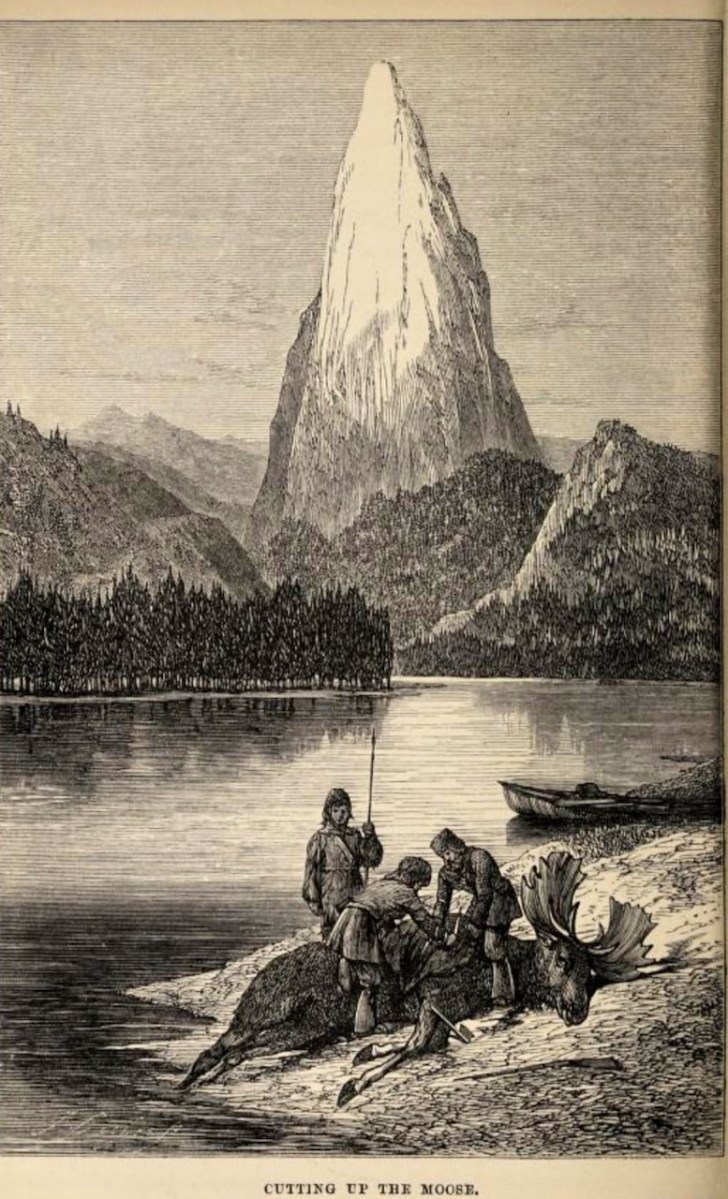
From poetry to pike is not such a long step, particularly when the pike is from Lake Derravara and is made into a poem of a dish in this way. 

This is followed for a recipe for Pike Derravara – a bit of a stretch perhaps. Keevog is St Mochaemóg, the founder of Liathmore monastery about which we wrote here. In Robert’s version he is called Saint Kemoc, a hermit who found them, four ancient, withered people.

Did the cookie, Maura Laverty asks us, come from Ireland? Here is her answer.

The first written mention of cookies occurs in the ancient Book of Lismore.

It seems that when Saint Patrick came to Ireland he found that Ogham – the only form of writing then known here – was the closely guarded secret of the Druids. Patrick in his wisdom realised that education was a necessary preliminary to conversion from paganism, and he introduced the Roman alphabet to the people to whom he was bringing the gifts of enlightenment and salvation.

In the book of Lismore we are told that the child who grew up to be Saint Columcille found difficulty in learning the alphabet. To encourage him his mother baked A-B-C cookies with which he was rewarded as he mastered letter after letter.

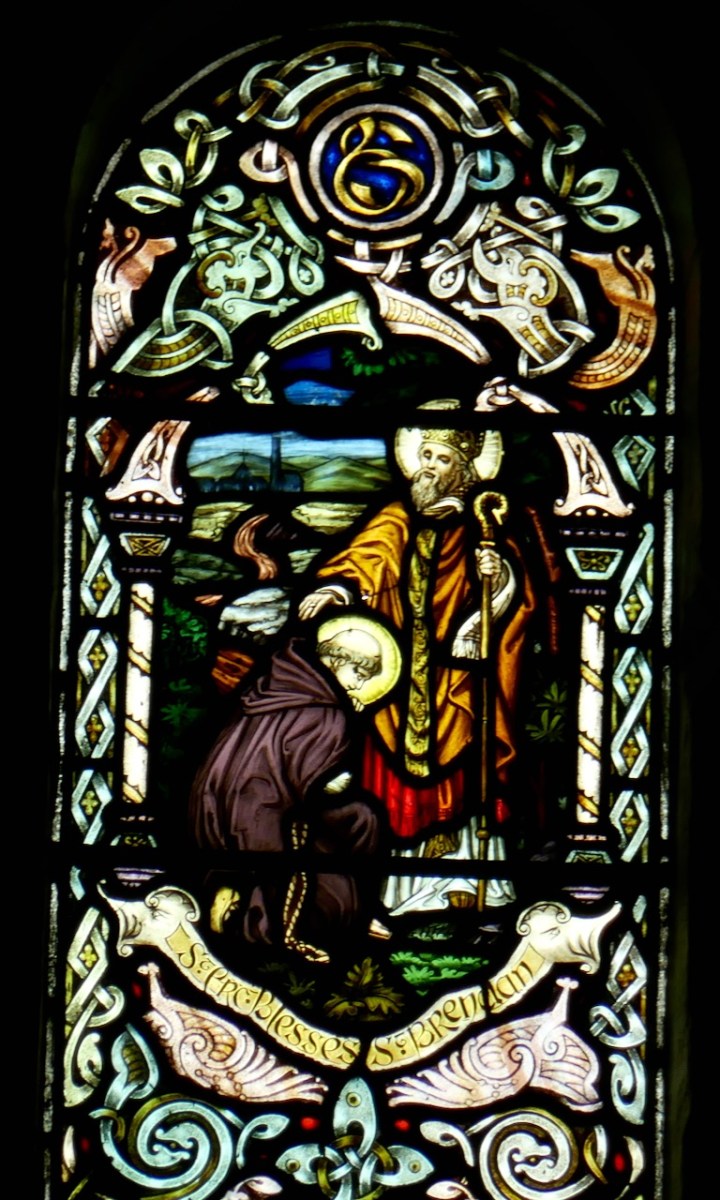
It is very probable that this sweet way of coaxing children to learn became common throughout Ireland. And I think it quite likely that it was introduced to America by Saint Brendan the Navigator who discovered the New World long before Columbus set foot there.

And so it goes on, over-the-top names and recipes designed to, er, feed every leprechaun-and-shamrock preconceived notion that Americans might have of the Irish. There’s a chapter on Fast-Day Feasts, and recipes for Convent Loaf and Nun’s Cake. I can only imagine the fun she had writing it. The illustrations, by Bill O’Gorman (I’ve found nothing about him – anyone?) also add to the chuckles – it’s hard to imagine a more stereotyped set of cartoons.

Each chapter is preceded by a story, mostly around the theme of food being the way to a man’s heart, and that age, girth or criminal records were no impediments to true love. I leave you with the one with which she introduces the vegetable chapter. 

Now, seeing as it’s the season that’s in it, I’m off to cook up some St Brigid’s broth.

*Many thanks to Mercier Press – although they do not claim rights for Feasting Galore, I appreciate that stories and recipes in it have been taken from Full and Plenty. Feasting Galore was issued by Hippocrene Books, but is no longer in their catalogue.