Rules of the Irish Road

Directional signs in Irish and English, cars parked every which way, street names in small print on the wall. Welcome to driving in Ireland!

Directional signs in Irish and English, not enough room for two-way traffic, cars parked every which way, street names in small print on the wall. Welcome to driving in Ireland!

In my Driven to Distraction post I alluded to having to get an Irish driver’s licence. I can drive legally for a year on my Canadian licence, but if I intend to stay longer, and if I want to get insurance at reasonable rates, I have to get an Irish one.
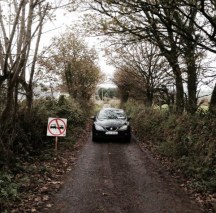
Do not overtake

No Overtaking. RR (Rules of the Road) p79

I have driven for almost 40 years without incident, in all kinds of conditions (Northern Canadian winters!) and vehicles, standard and automatic. I have rented a car every summer in Ireland year after year. I was prepared for some kind of process whereby I would be asked to demonstrate my competence and my knowledge of the Irish road rules – a process which I assumed would also acknowledge my experience and skills. The first part of that last sentence was a realistic assessment; the second part was a hopeless dream. It turns out that I must start from scratch, as if I was 17, as if I had never driven before.
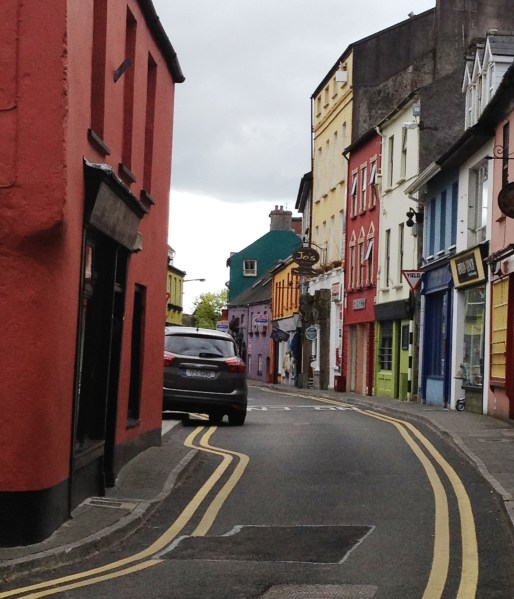
Double yellow lines: no parking at any time. RR p115

Double yellow lines: no parking at any time. RR p115

Perhaps, you surmise, this is because we drive on the right in Canada and in Ireland we drive on the left. But anybody with a European driving licence can simply swap it for an Irish one, no matter what side of the road they drive on. This also applies to those in possession of licences from Taiwan, New Zealand, Japan and South Korea. Within Europe, all countries have agreed to the principle of mutual recognition for all sorts of qualifications and Ireland happens to have concluded agreements with several other countries for mutual recognition of driving licences. But with the US and Canada, it has not yet happened. There are “talks” apparently, but no real progress. This also means that Irish drivers who emigrate to Canada must go through a staged testing process.

You MUST not park on a footpath. RR p116

You MUST not park on a footpath. RR p116


Right – fair enough – I must prove my knowledge of the road and my driving competence. OK, theory test now passed, when can I take the road test? Wait, not so fast! First I must take, and pay for, a series of 12 driving lessons from an approved instructor. The lessons must be documented and they should occur two weeks apart: that will take six months. In the meantime, I must have L plates on the car and I cannot drive alone or on Motorways. Did you get that? I CANNOT DRIVE ALONE. I have, in effect, lost my independence. I must rely on Robert to drive me everywhere (we live three miles from the nearest village) or to sit beside me while I drive.

Drive at a safe speed.  RR p88

Drive at a safe speed. RR p88

In a future post I will describe the lessons – a whole experience in themselves! Meanwhile, I must admit that studying the Irish Rules of the Road has been a salutary experience. I leave you with some photographs to illustrate the Irish approach to road signage and to the observation of the Rules.
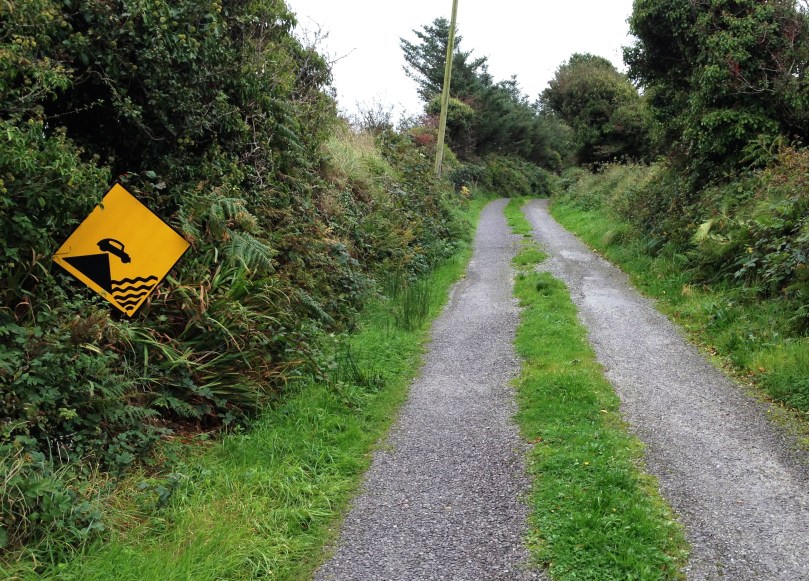
Unprotected quay ahead

Unprotected quay ahead. RR p183
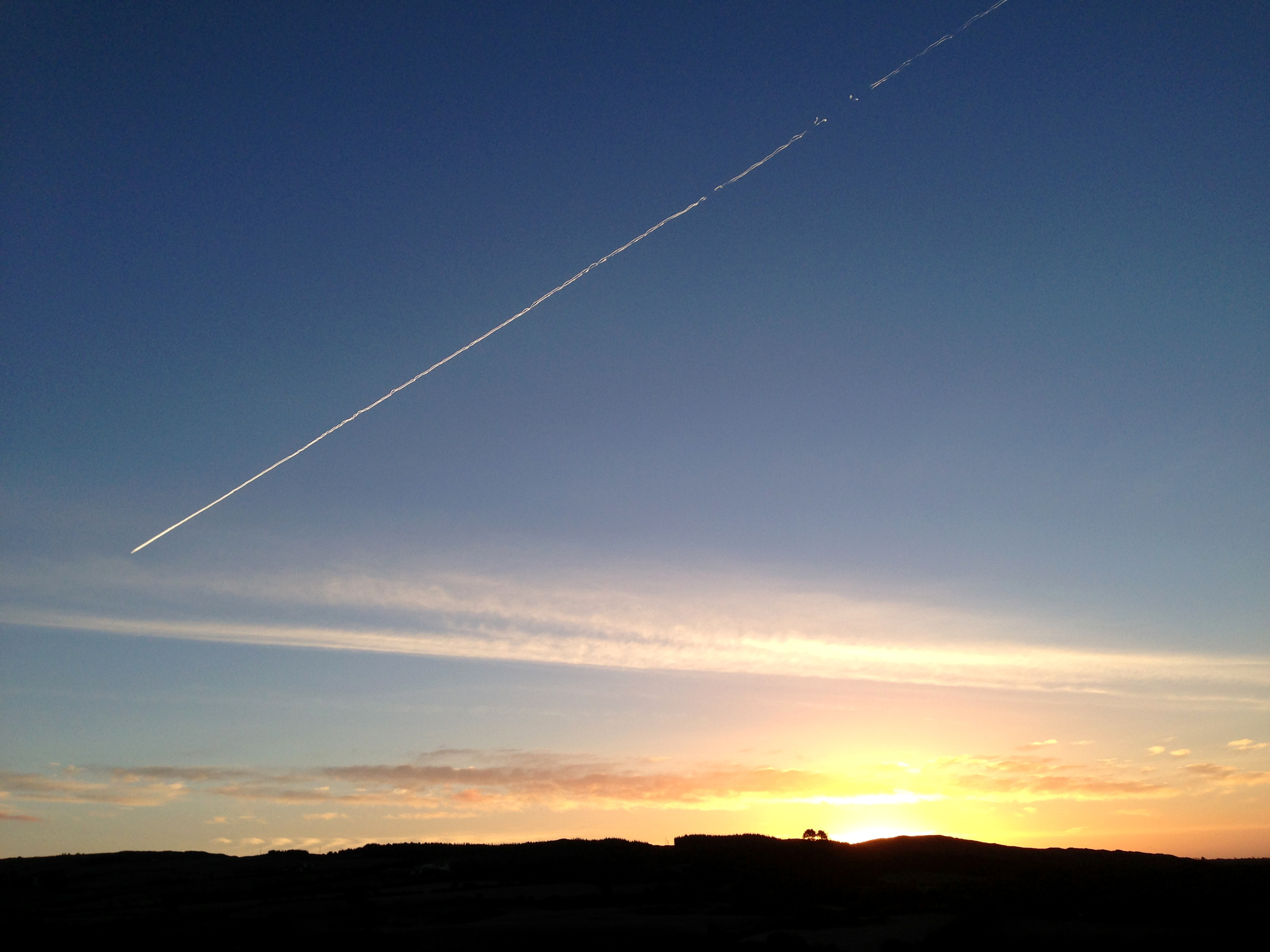
Theme and Variations

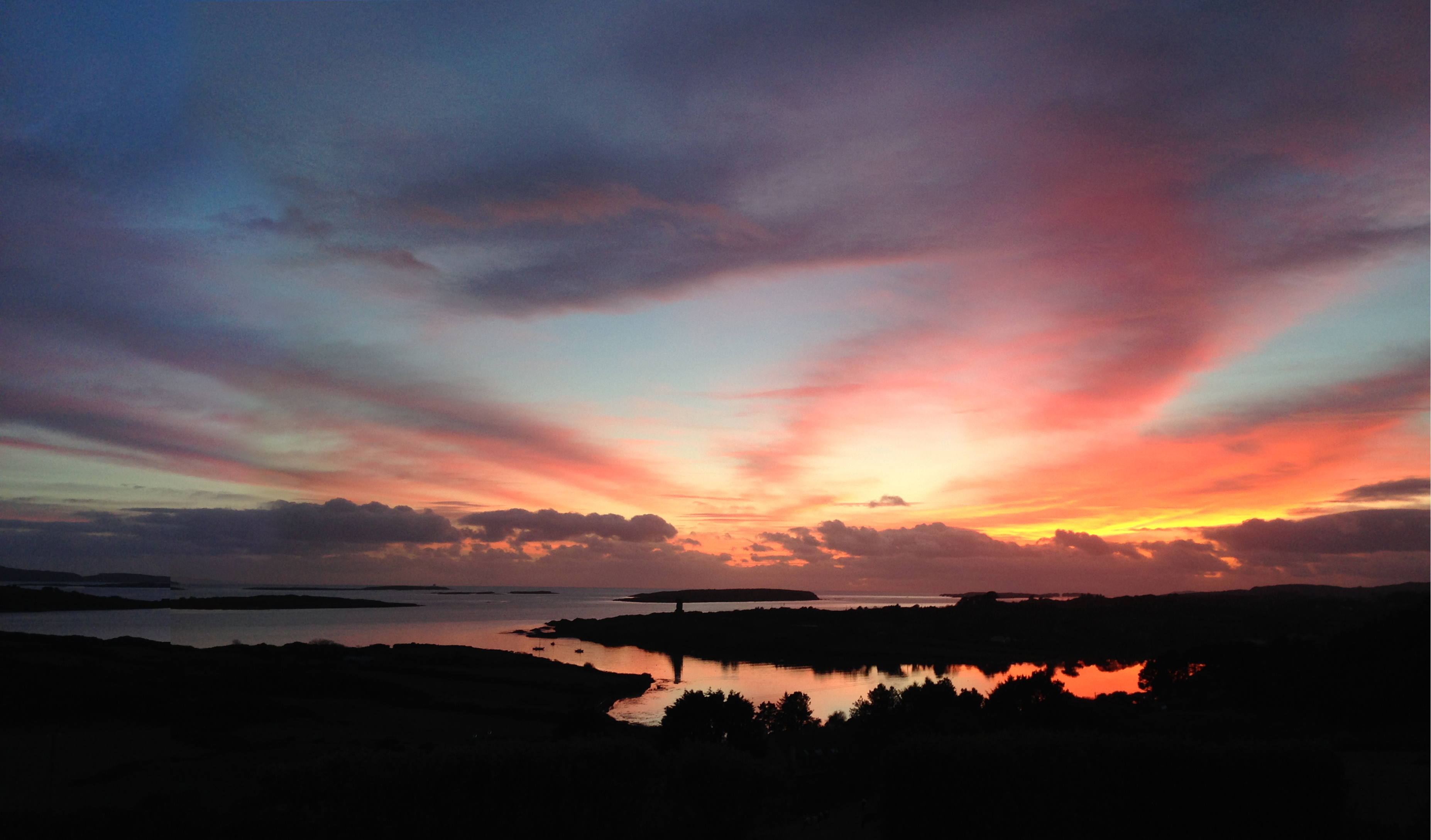
November sky at Nead an Iolair

Prelude: November sky over Nead an Iolair

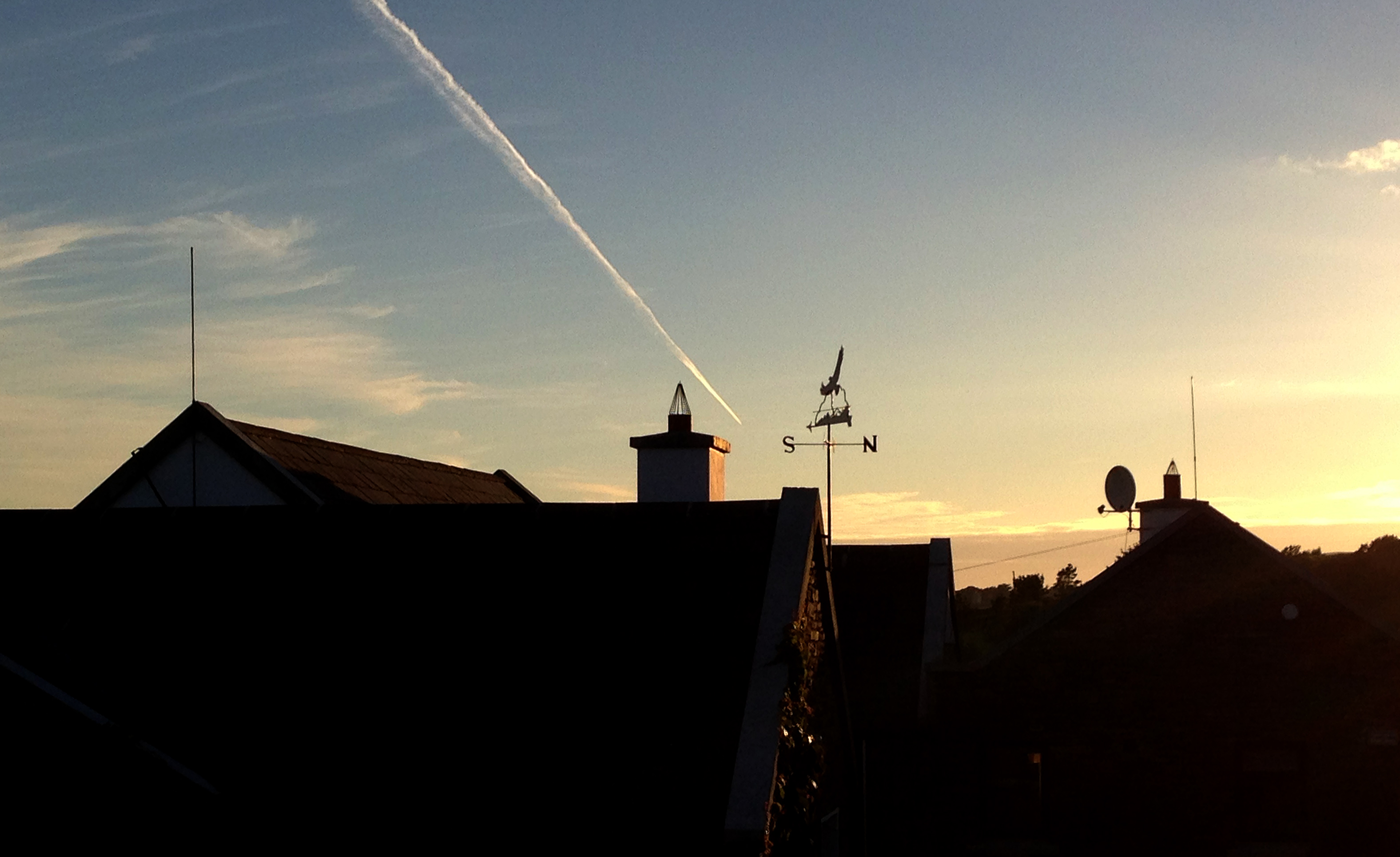
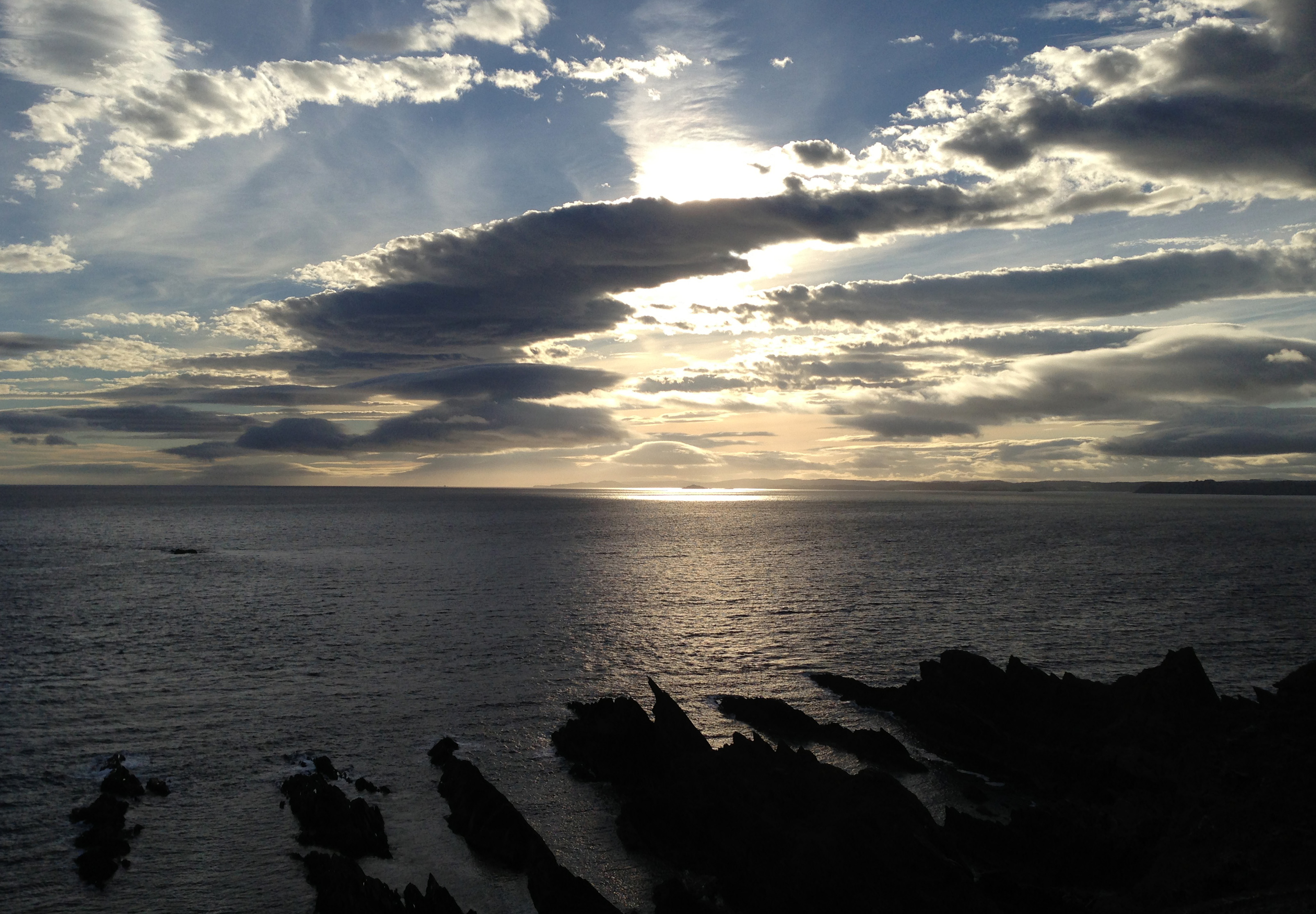
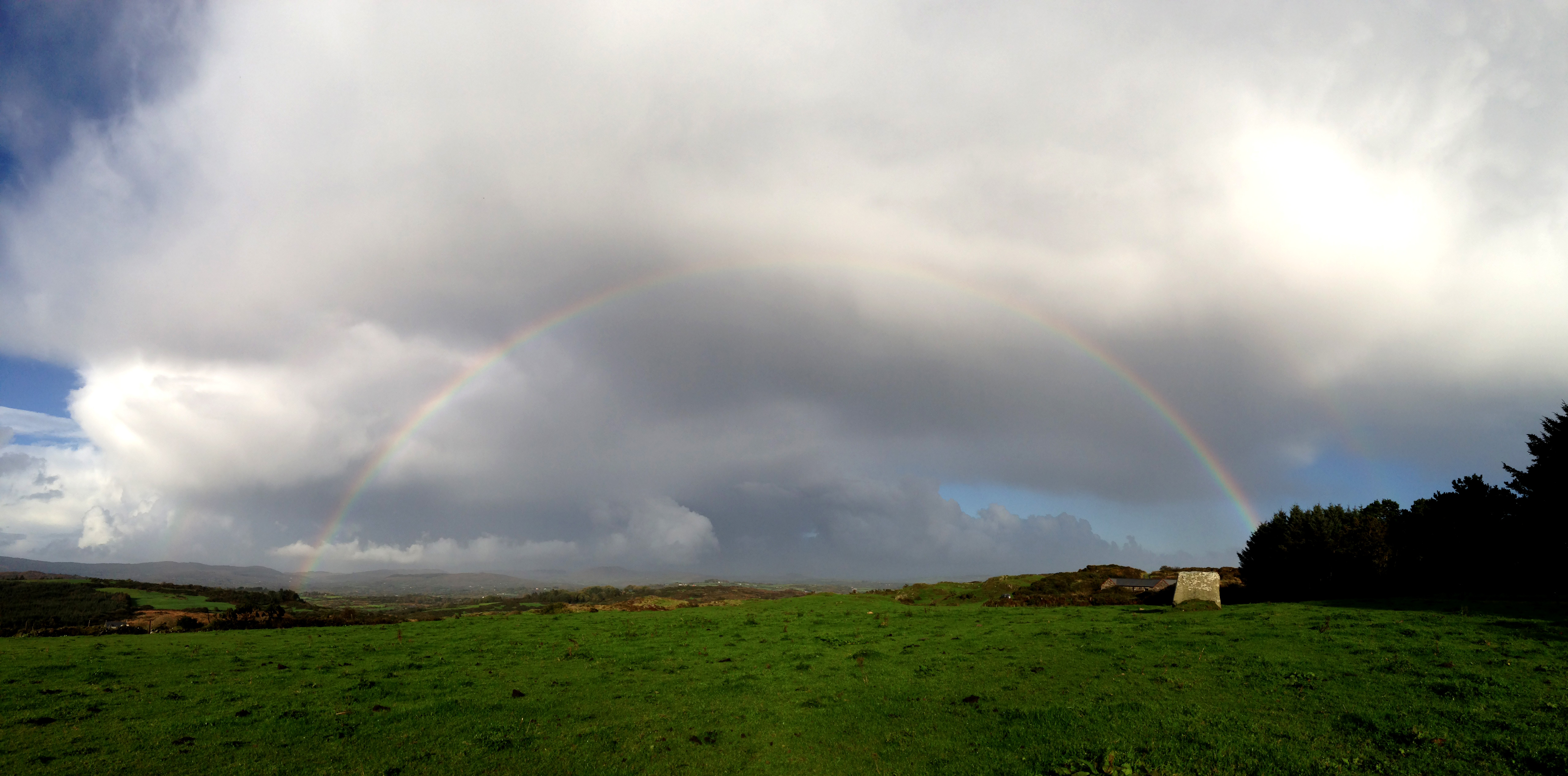
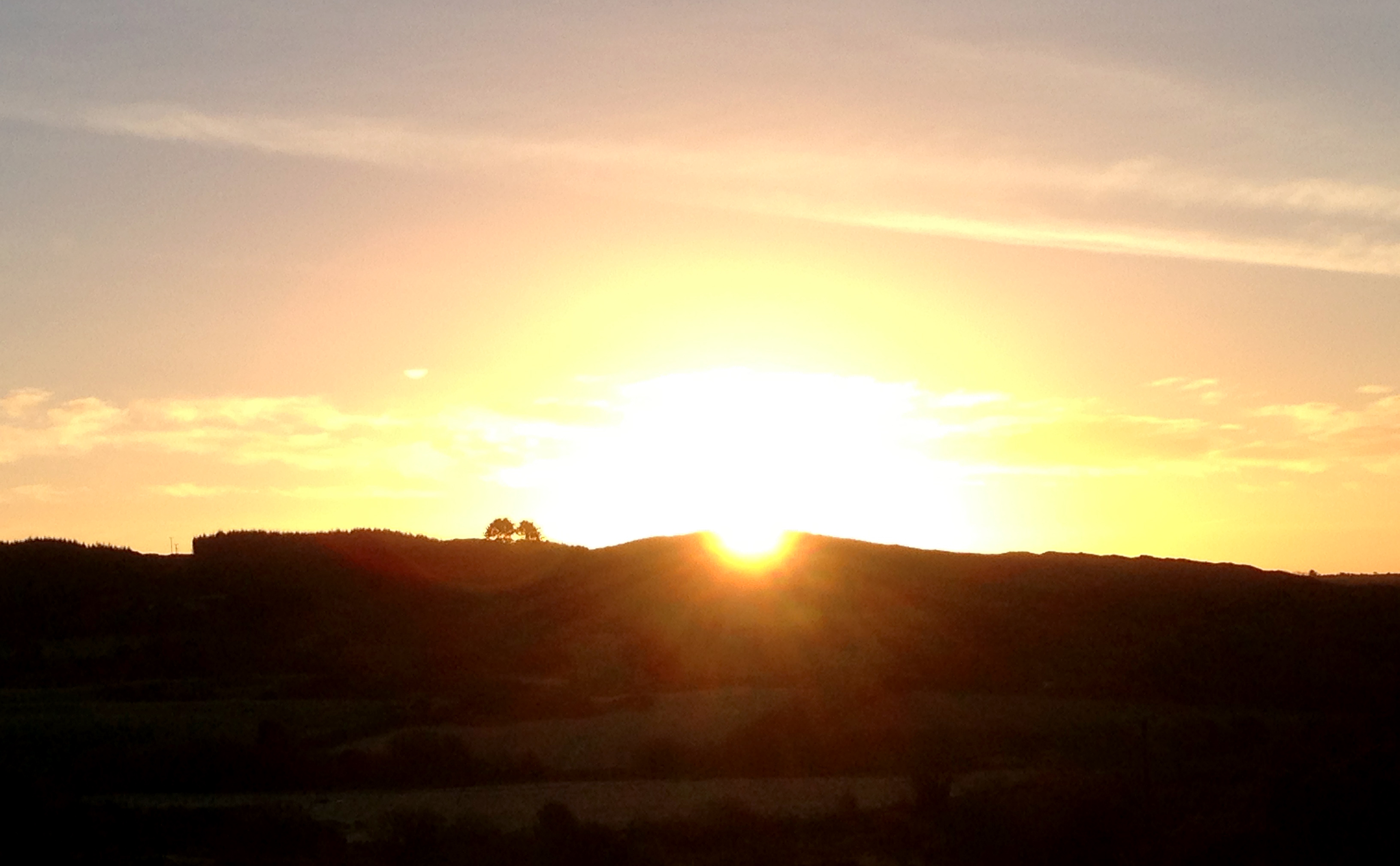
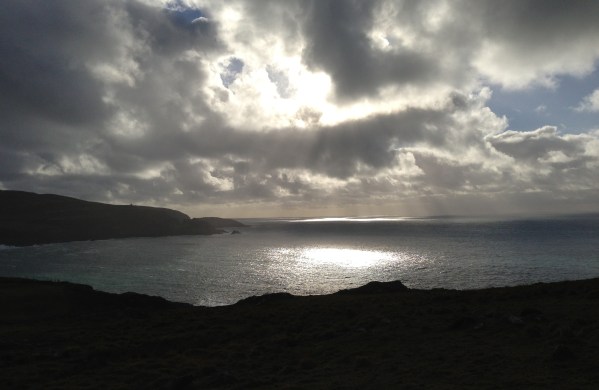
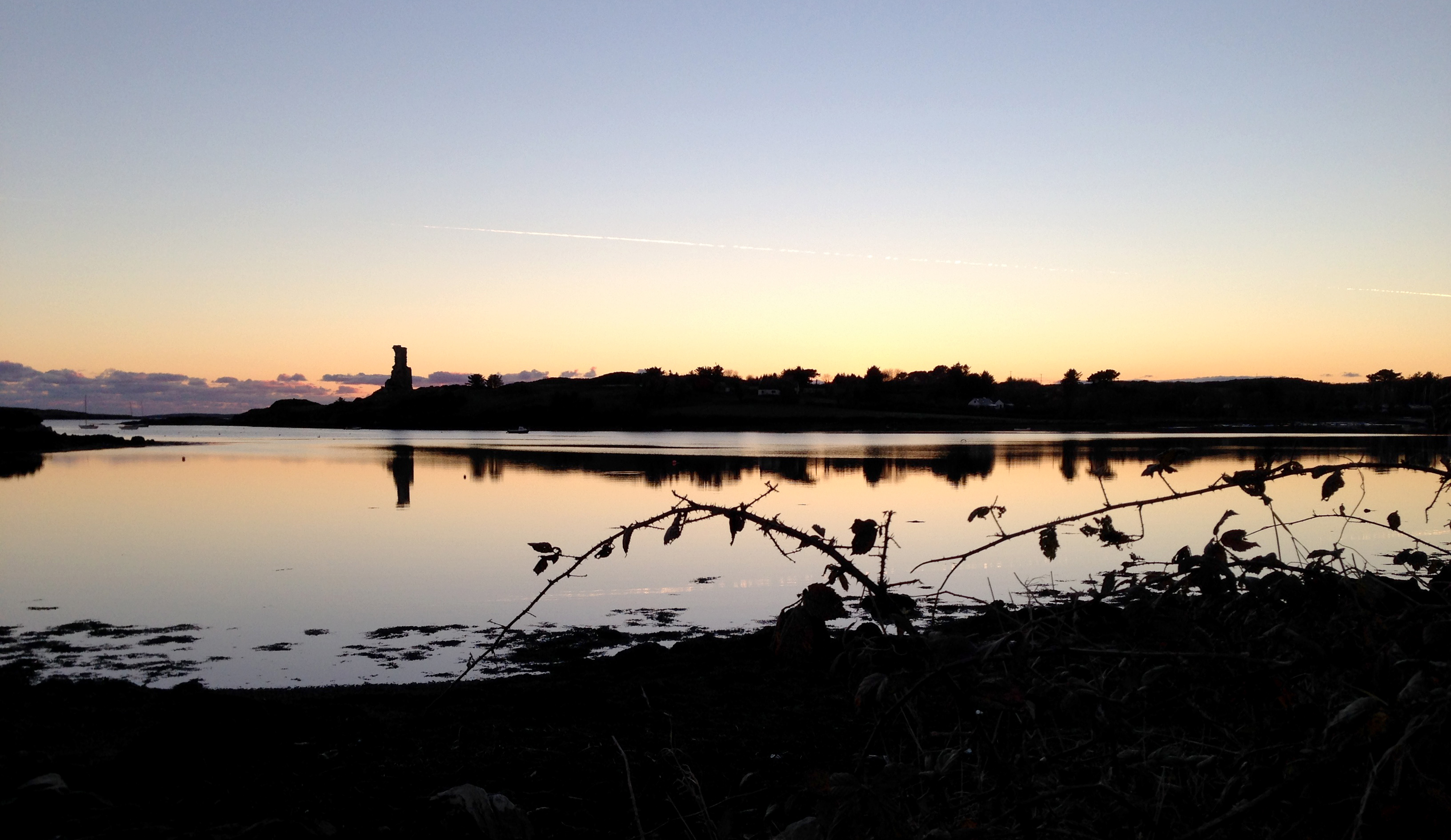
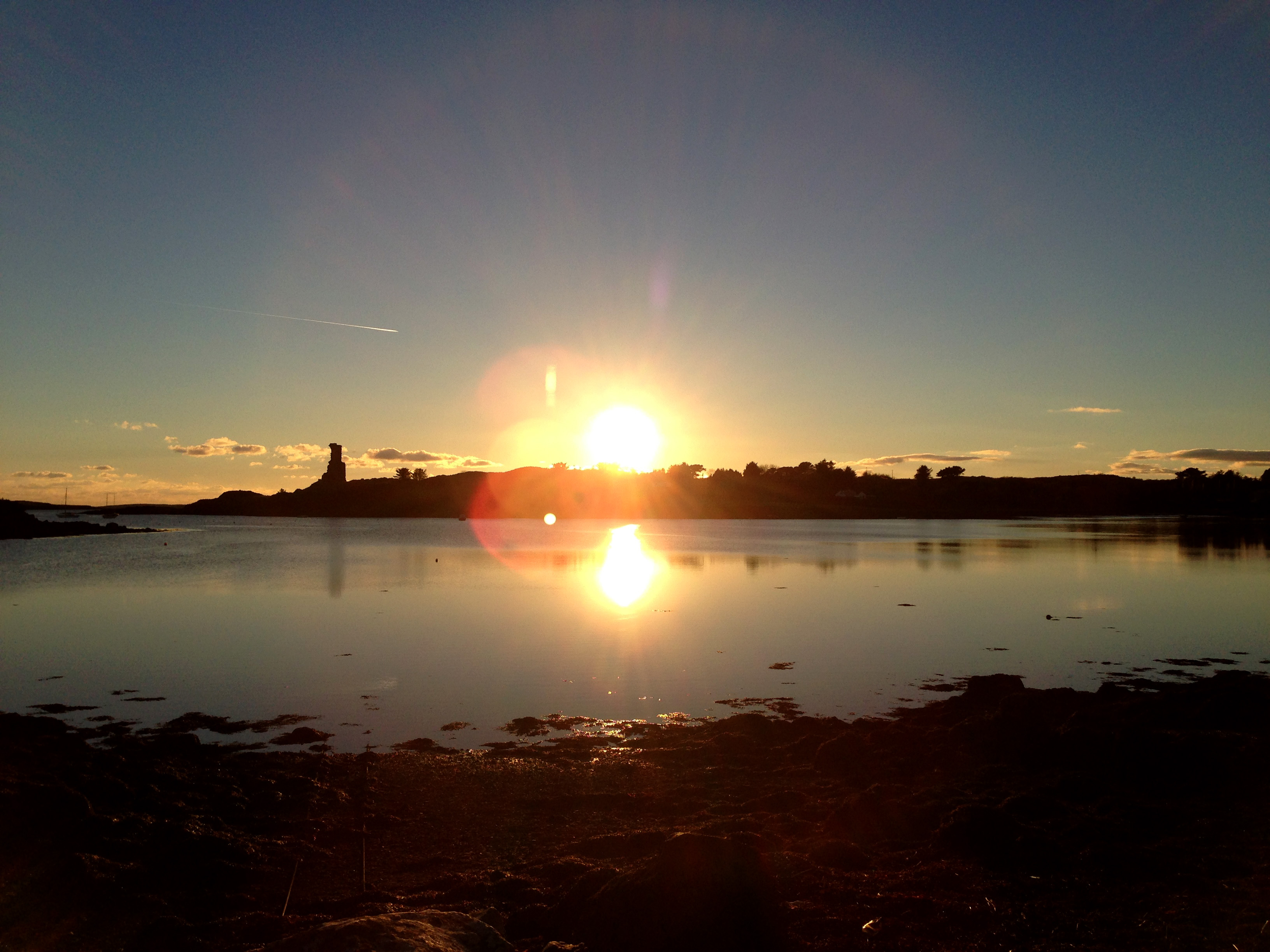
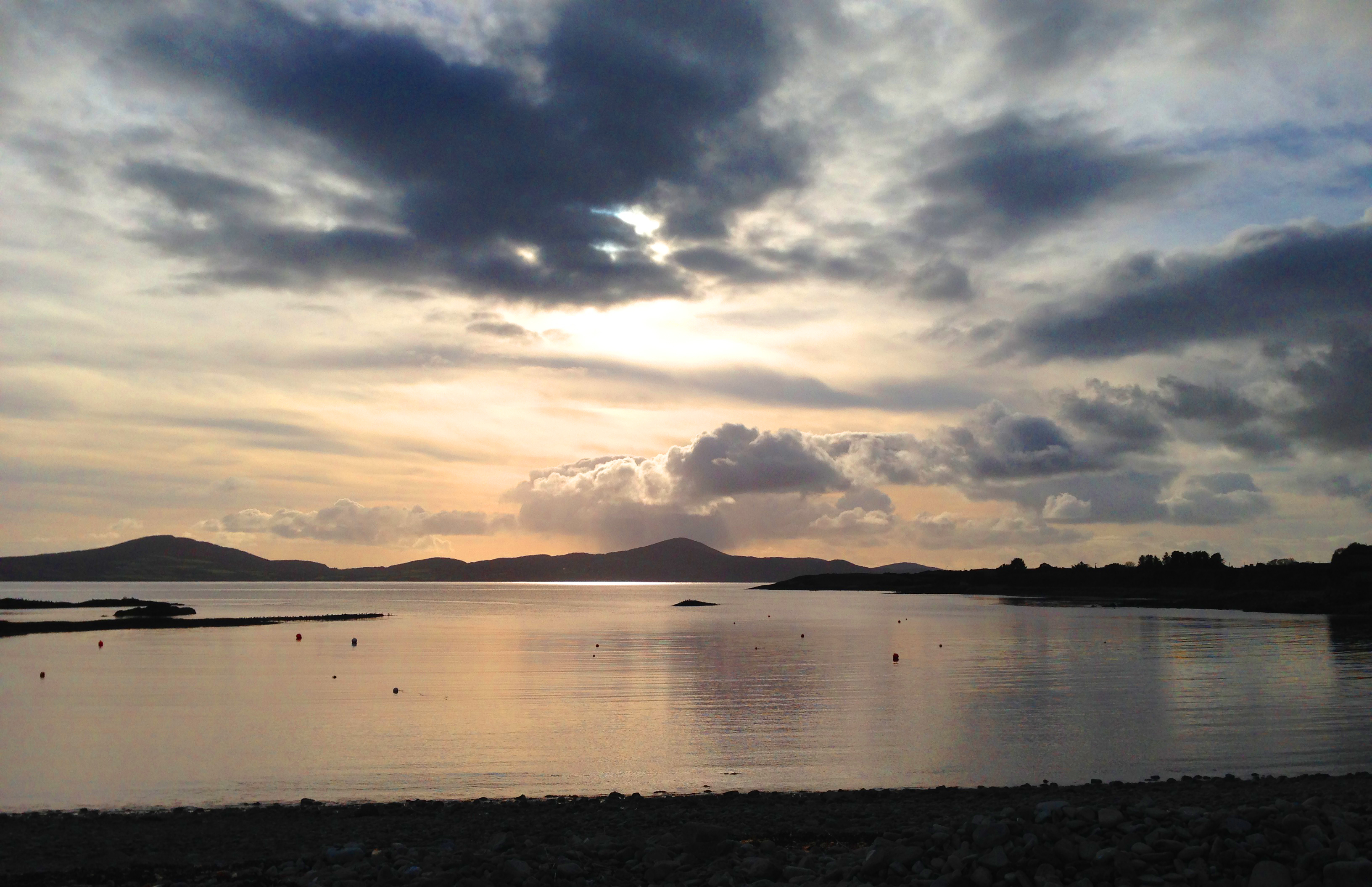
Up on our hill above the Cove we are constantly treated to painterly skies. We could fill a whole blog with these changing skyscapes, and now – in late November – we have an extended period of clear cold weather which offers us spectacular sunsets: each day seems to outdo the previous one. On our walks we can’t resist using our cameras to record the wide West Cork skies, although these pictures are barely adequate to recreate the full celestial symphony. We have tried to come up with words to express to ourselves how magnificent these are: somehow the words seem trivial…. Stunning crops up frequently, as do mesmerising, awe-inspiring, exquisite, sublime, unsurpassed. Perhaps it’s best just to let the images speak for themselves: we feel privileged to be living in this incomparable land.

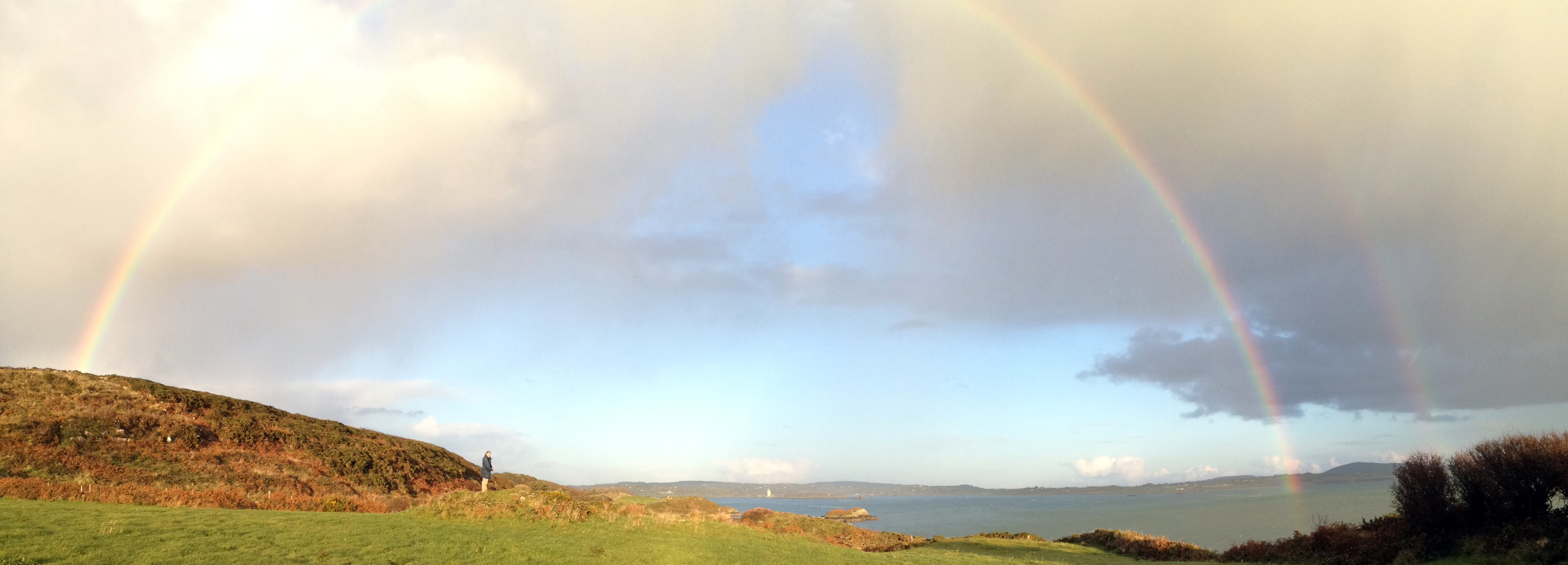
Bay rainbow

Overture: Bay rainbow

Sheep's Head sky

Arietta: Sheep’s Head horizon

Bow over Bishops Luck

Intermezzo: Bow over Bishops Luck

Ballybane sunrise

Crescendo: Ballybane sunrise

Silver sky

A bocca chiusa: silver Mizen sky

Sky trail

Segue: Meteoric dawn

Rossbrin, dusk

Tranquillo: dusk at Rossbrin

Two suns

Caballeta: two suns

Wide sky

Con fuoco: Roaring Water resplendent

Peninsula

Cadenza: transcendental times

Finale

Finale and Coda

West Cork Speak: Lessons 1 and 2

The scenic route

The scenic route

Stories abound of hapless tourists convinced that the locals were speaking to them in Irish (which foreigners typically call Gaelic) and finding afterwards that in fact it was English. (For an amusing twist on this idea see the excellent short film: Yu Ming is Ainm Dom.)

The sing-song burr of English as she is spoke in West Cork can be impenetrable to non-natives. For those planning a visit, therefore, I thought I would do the world a favour and provide a primer on sounding like a native.

Lesson 1: Grand and Like

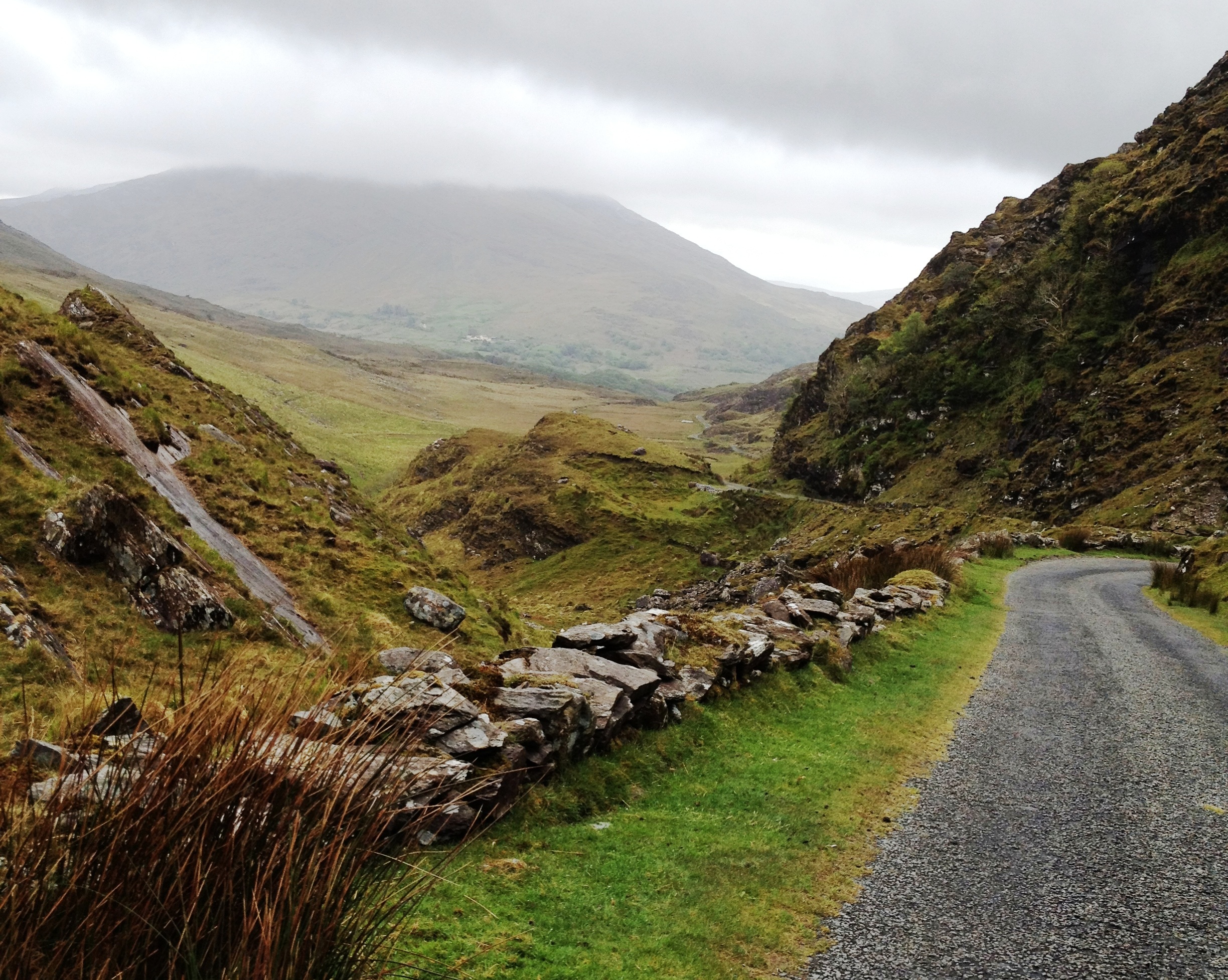
The first thing to know is that you put like at the end of every sentence, and the word grand somewhere within it. I’ll give you an example. You have hired a car and chosen a route marked on the map as scenic. You find yourself inching along a potholed track that clings perilously to a mountain side, with yawning cliffs beneath and a mountain with a cross on it above. You are sure you have gone astray and are on a long abandoned road to nowhere. You are about to turn back (but how? The road is barely wide enough for your car) when around a bend comes a tractor, bucketing and swaying, driven by a genial man in a cloth cap. Through some miraculous process that you can’t afterwards describe, he manages to find enough ground to pull over to let you pass. You roll down your window and ask him if the road is passable ahead. He looks puzzled, then realizes you are a tourist and assures you “’Tis a grand road, like.”

'Tis a grand road

‘Tis a grand road

You are now in possession of a word, Grand, that is appropriate for all possible occasions and can be used in the most prodigal manner. Indeed, you can’t go wrong with it.

keep-calm-it-ll-be-grandHow are you? I’m grand. Better – I’m grand, thank God.

How is your husband? Himself? The back was playing up, but sure he’s grand now, thank God.

Oh, sorry – I can see I am in your way. Ah no, you’re grand.

I’ve just broken both arms and the bank is repossessing my house. Ah sure, it’ll be grand, like.

Lesson 2: Now and So

Together with Grand and Like, Now and So will get you through a surprising number of situations. Although they can be used interchangeably on occasion, they also have distinctive nuances. Now is the one that every waitress will say to you as she appears to take your order and as she delivers your food. It announces that she is here to look after things and you can relax. Its versatility doesn’t rest here – if delivered in a forthright or perky manner you can use it to indicate that you are ready for whatever the day holds as you head out the door, that you are settling down to a good conversation about your neighbours, that the kettle has just boiled, or that it’s your partners turn to hit the ball. If you say it with a slow or sad inflection – ah, now – you can use it to deflect an insult or express sympathy with one who suffers.

So contains a hint of expectancy – So, breakfast is served at 8; So, is it from Canada you are?; So, that will be twelve euros.

But the real trick is to use them together properly – Now so, or so now.

So now is a good one as you settle into a corner of the sofa for a chat: So now, Maureen, I hear Donal up the road was seen in Dunmanway last week with that American woman.

Now so can be used to wind up the conversation: Now so, I’d better be going or himself will be roaring for his dinner, like.

Now so, you’re all set for the first day of your holiday in West Cork. Yes, they drive on the left but just take your time, like, and it’ll be grand. And once you get into the rhythm of life here you’ll be ready for lesson 3 – how to manipulate every sentence into the conditional tense. Perhaps we will also touch on one of the truest Cork talents: how to insert multiple vowel sounds into the word no.

I Can't Do It

I Can’t Do It

Meanwhile, if you want to get a true flavour of the accent, try viewing some of the Sminky Shorts by the talented  Andrew James on YouTube. Be warned – the language is atrocious in some of them – back away NOW if this offends you. Otherwise, start with the Chicken Audition or the Nervous Horse.

Bay of Rainbows

rbphoto

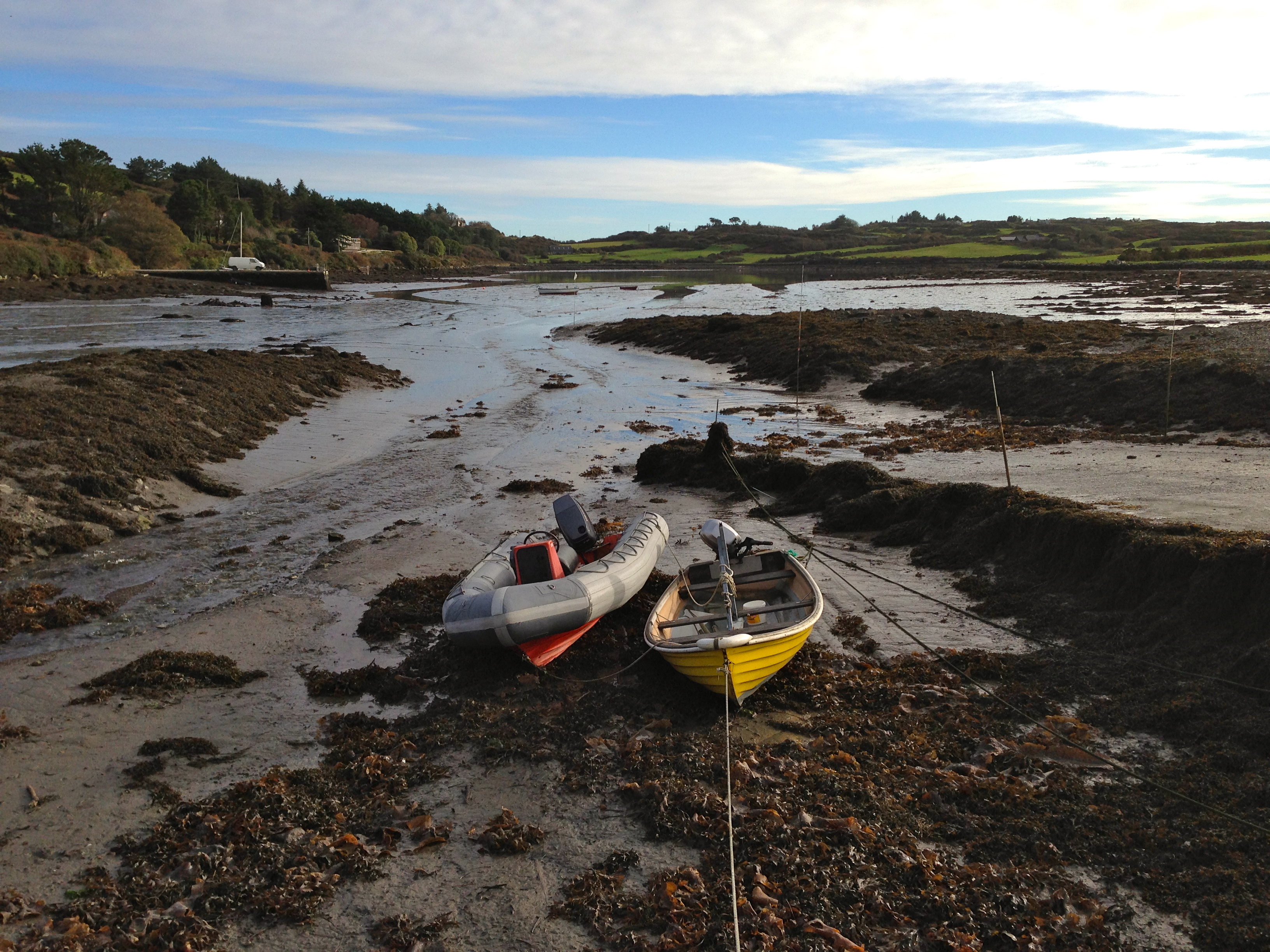
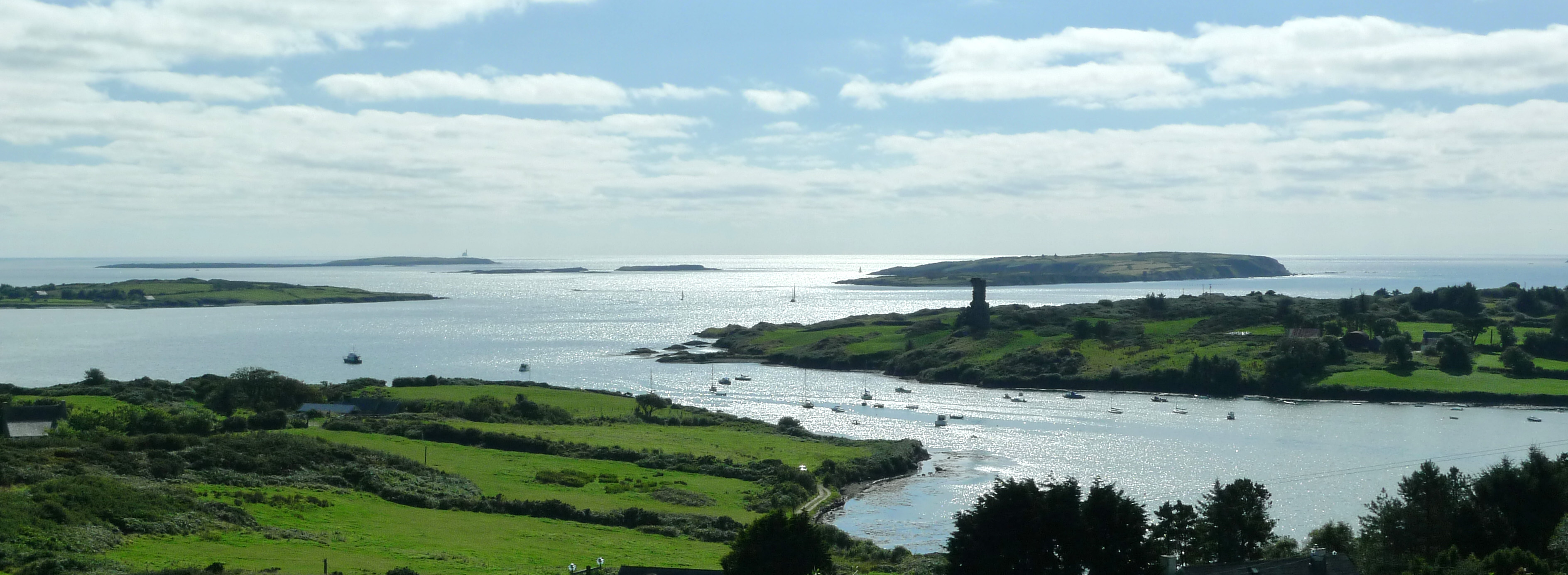
It’s a five minute walk down the hill from Nead an Iolair to the water at Rossbrin Cove (and a ten minute walk back up!). I do that walk as often as possible, and I grow ever fonder of this secluded place. I’m always on the lookout for birds: when the tide is low the natural inlet is a large mudflat – ideal territory for waders (Curlews, Oystercatchers), Gulls, Ducks and – occasionally – Divers. I often see the mussel boat working just outside the Cove: there is a network of mussel beds in Roaringwater Bay. The mussels Mytilus Edulis are grown in polyester ‘socks’ hanging from ropes attached to buoys, long lines of which can be seen on the surface of the water between the Cove and the islands. The mussel boat is a strangely complicated piece of floating machinery, having on board heavy winches and drums for winding in the ropes. Altogether smaller are the lobster and shrimping boats – one-man operations which also set out buoys to identify where their pots are put down. I know when the lobster boat is out: there is a white van down on the pier, usually with an elderly Collie asleep underneath it.

low tide

Low tide

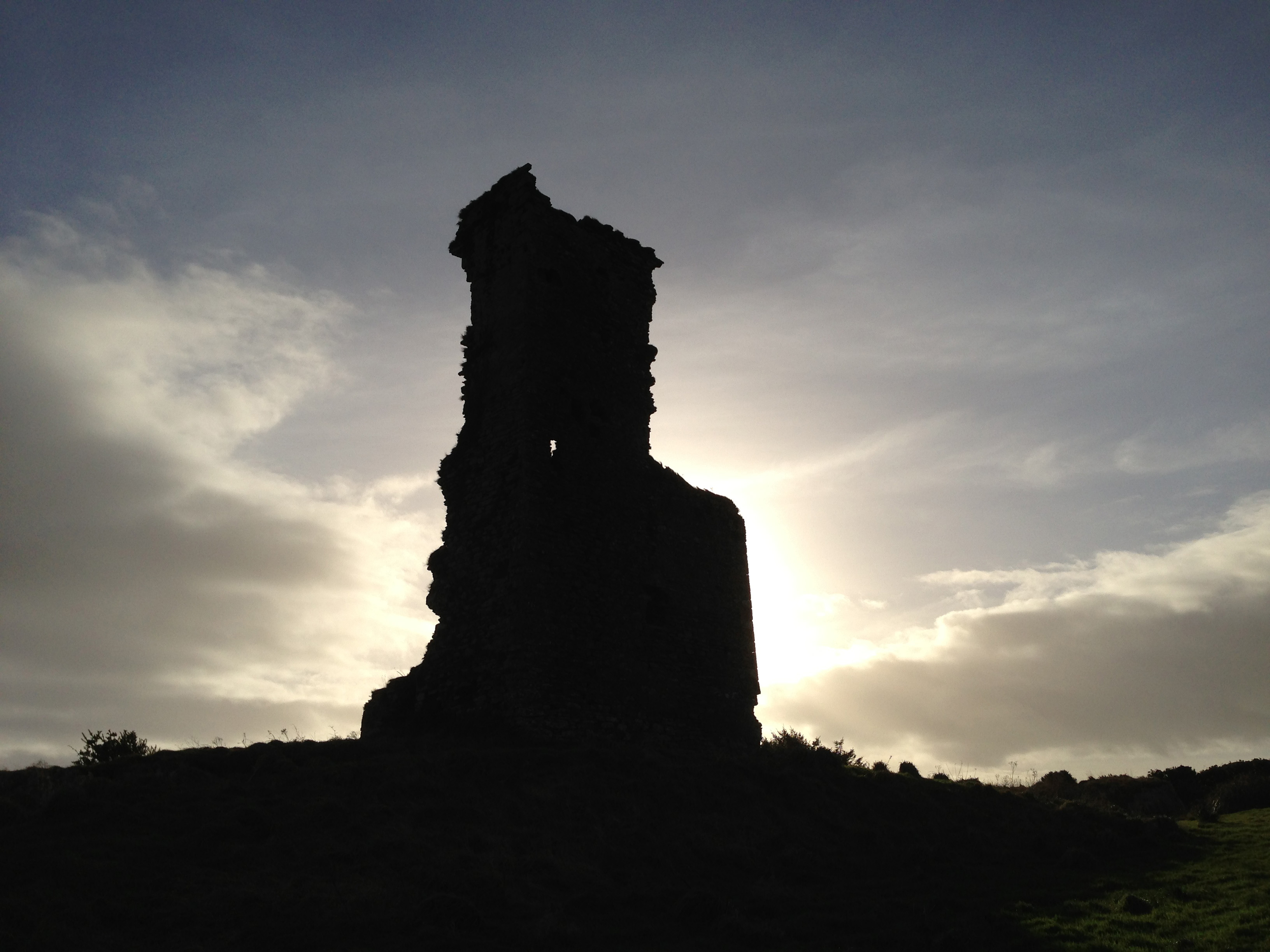
From our perch up here we can see six castles, the most prominent being Finghinn O’Mahony’s which once guarded the entrance to the Cove. It’s in a poor state now – quite a lot of the stonework has fallen in the last ten years. The castle and its acreage were recently sold and there is talk of some strengthening of the ruin being put in hand to prevent its complete loss. It’s a great piece of history, well worth preserving. In medieval times Finghinn – the Scholar Prince – presided, here, over one of the great centres of learning in Europe, and in the British Museum there is a leather bound volume scribed at the castle during his time which has never been translated from the Irish. It’s strange to walk along the shoreline, to experience the peace and remoteness, and to remember that this was once a hotbed of knowledge and also a hub for large French and Spanish fishing fleets in the fifteenth and sixteenth centuries, all paying their dues to the O’Mahony septs (Irish clans) for rights and protection. These rights were worth thousands: West Cork was a wealthy place then – far away from the tax collector!

Rossbrin Castle - at the centre of the Medieval world

Rossbrin Castle – at the centre of the Medieval world

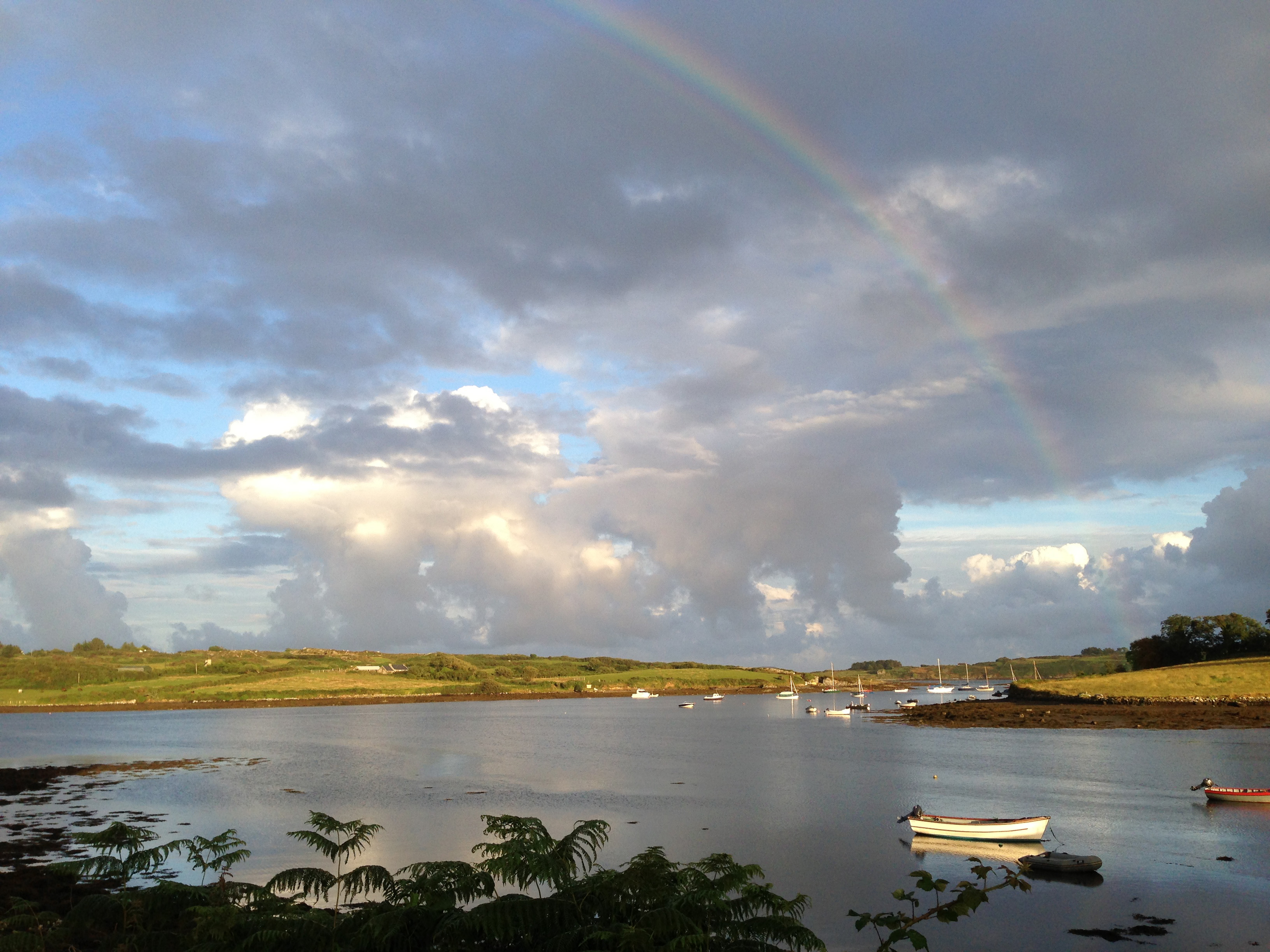
Today we walked out to the edge of the Cove, searching for an ancient cillín (look out Finola’s post for a definition). We are not sure whether we found that, but we did see some very strange field boundaries and a possible unrecorded cup-marked stone. We started out in sunshine but – as often happens here – we were caught out by a sudden storm squall blowing across from the Atlantic: we were soaked. But the reward was a superb rainbow spanning from south to north horizons. Central to it was a shaft of sunlight lighting up Jeremy Irons’ castle at Kilcoe.

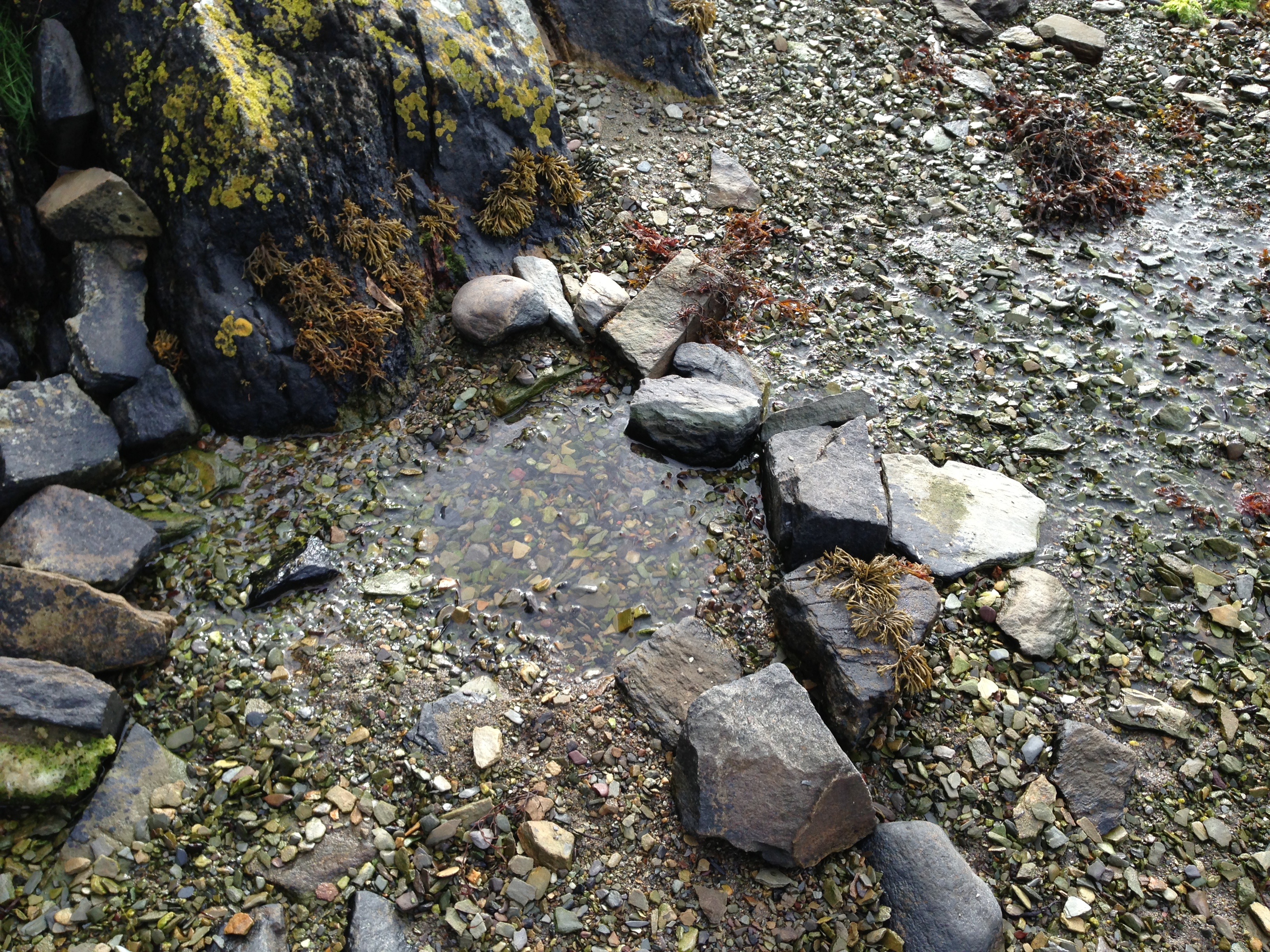
Holy well

Holy well (well, possibly the site of one…)

The Cove abounds in history: there is a holy well marked on the old maps, right on the north shore. All that can be seen there now is a spring – presumably of fresh water – which is immersed at high tide. It’s fascinating to think what meaning this once had for those who dwelled here – and long before the time of the Scholar Prince. There is at least one Fairy Fort close to the water, while high above and overlooking the Cove is the enigmatic Bishops Luck standing stone. In more modern times there was extensive copper mining – our Calor gas tank at Nead an Iolair is supposed to be situated over an infilled shaft!

cove

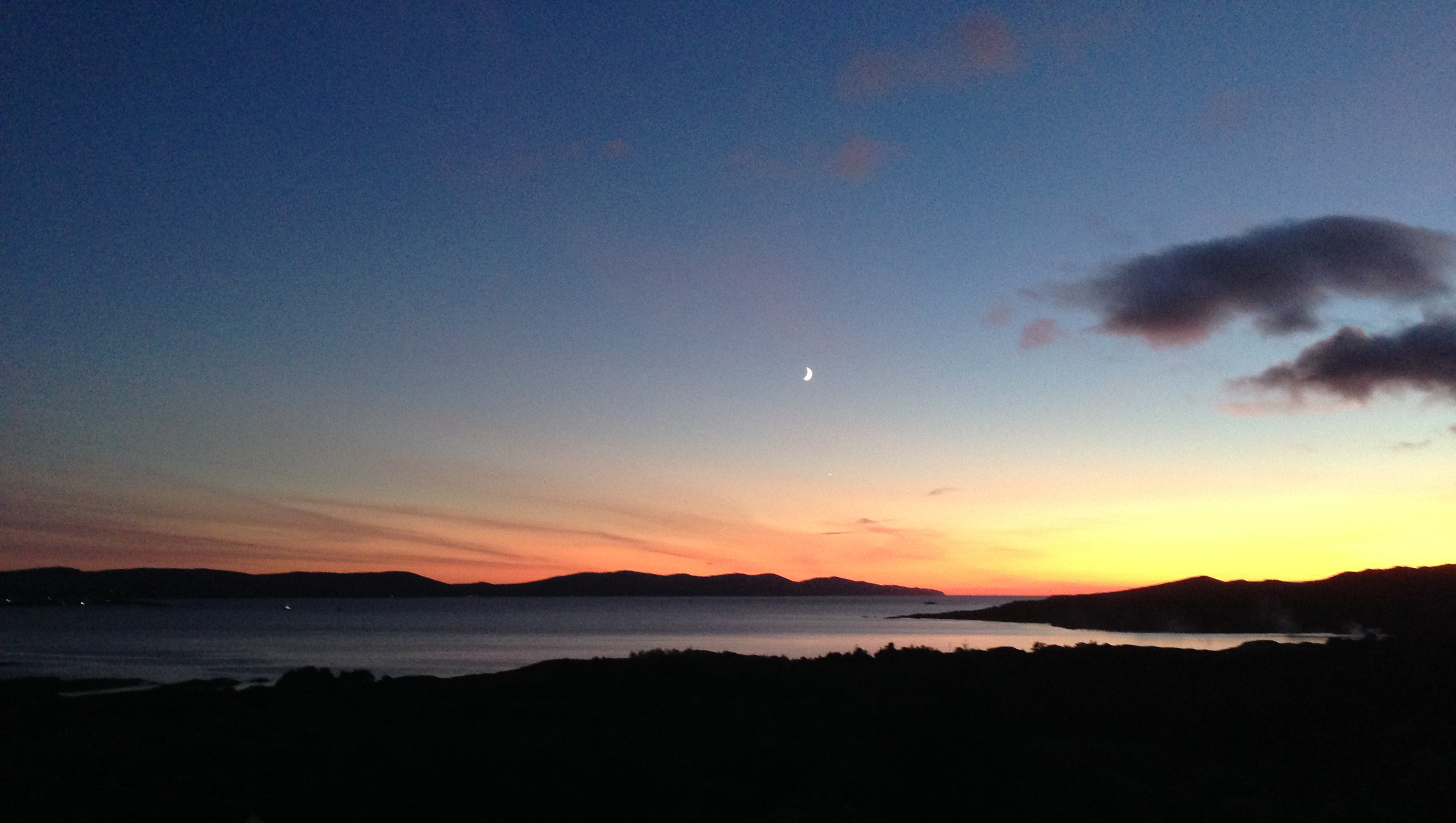
Mines; standing stones; Fairy Forts; medieval castles and manuscripts; holy wells; mussel farming; lobsters, shrimps et al… We are surrounded by evidence of human endeavour going back thousands of years. Through it all the natural world continues regardless: the sun rises, the moon wanes, storms blow in, seasons turn; the tides bring daily changes to the shoreline – and the rainbows are our evanescent doorstep miracles…

cove1

moon2

Comhaltas

comhaltas2

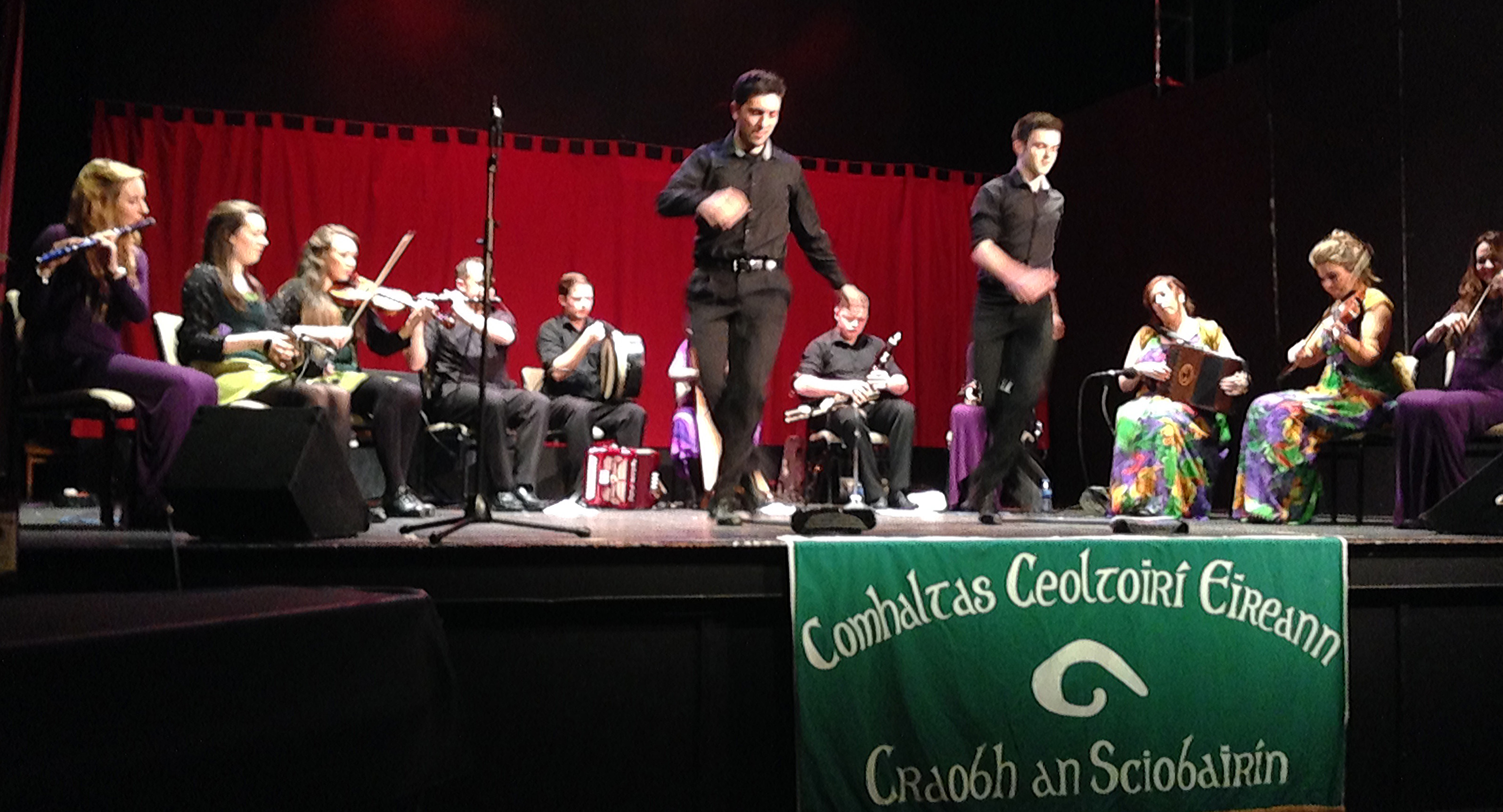
Comhaltas Ceoltóirí Éireann [Finola tells me that this is how you say it: kole tuss kyole tory air run – the literal translation is the Society of Musicians of Ireland] is an organisation founded in 1951 to ‘preserve and promote Irish traditional music and culture’. Its activities are very much in evidence – not just in Ireland, but anywhere in the world where Irish people have settled. They were evident in Skibbereen last week, when CCE featured some of its top class performers in music, dance, song and storytelling on a whistle-stop tour around the whole island of Ireland. We were fortunate that their venue in the south west was on the doorstep here.

tour poster

It was a most inhospitable October night: gales and floods were rife across Ireland and Britain. Yet the Skibb Town Hall was full to capacity, and the concert was well worth braving the elements for. The whole programme was polished and professionally produced: not a wrong note was played, nor a dance step placed out of kilter. It was a most memorable, satisfying and entertaining treat for the senses.

This was a showcase for the principal work that CCE has been carrying out for over sixty years: training people young and older in the crafts of playing and dancing in the traditional style. Once this would have happened naturally – through families and generations handing on the skills and the tunes. The fact that a CCE was needed and is now so established suggests that there was a danger of The Tradition dying out, or at least becoming diluted or rarified. This may or may not have been the case – for decades and all over the world collectors of folk culture have been convinced that they are recording the dying remnants of customs and lore, but perhaps there are always undercurrents of renewal which happen naturally: many of the most skilled exponents of The Music today learn their craft in the ‘old’ way – at the hearthside from parents, uncles, aunts and cousins. In our electronic age, however, lifestyles are radically changing and the formalised classes and competitions which CCE runs, and which are within easy reach of every community, can only be for the good. The latent talents shine through in performances such as those at Skibbereen. I taught myself to play the melodeon and concertina at the age of fifteen (and I’m still learning): now I’m watching far younger people perform with skills which outshine any I might have at this stage of my life, and who are storing up great potential for their own futures.

The showcase of Comhaltas talent at Skibbereen: the dancer on the left is Fernando Marcos from the Buenos Aries Branch of CCE!

The showcase of Comhaltas talent at Skibbereen: the dancer on the left is Fernando Marcos from the Buenos Aries Branch of CCE!

As I drove back to Nead an Iolair through the lashing rain squalls I pondered our own weekly music sessions in the pubs of Ballydehob. They are rough affairs: plenty of wrong notes, certainly, and arguments on tuning, timing, song names and ornamentation; very little polish… And, while we play mainly Irish traditional music, very few of us are Irish. Nonetheless we do (mostly) enjoy the experiences, and the sessions maintain a life of their own. However you do it, it’s great to keep The Music going…

Friday night session at Levis's, Ballydehob

friday night

Keeping The Music going – session style

Making Butter

Robert take a turn, supervised by Kevin and young butter maker

Robert takes a turn, supervised by Kevin and young butter maker

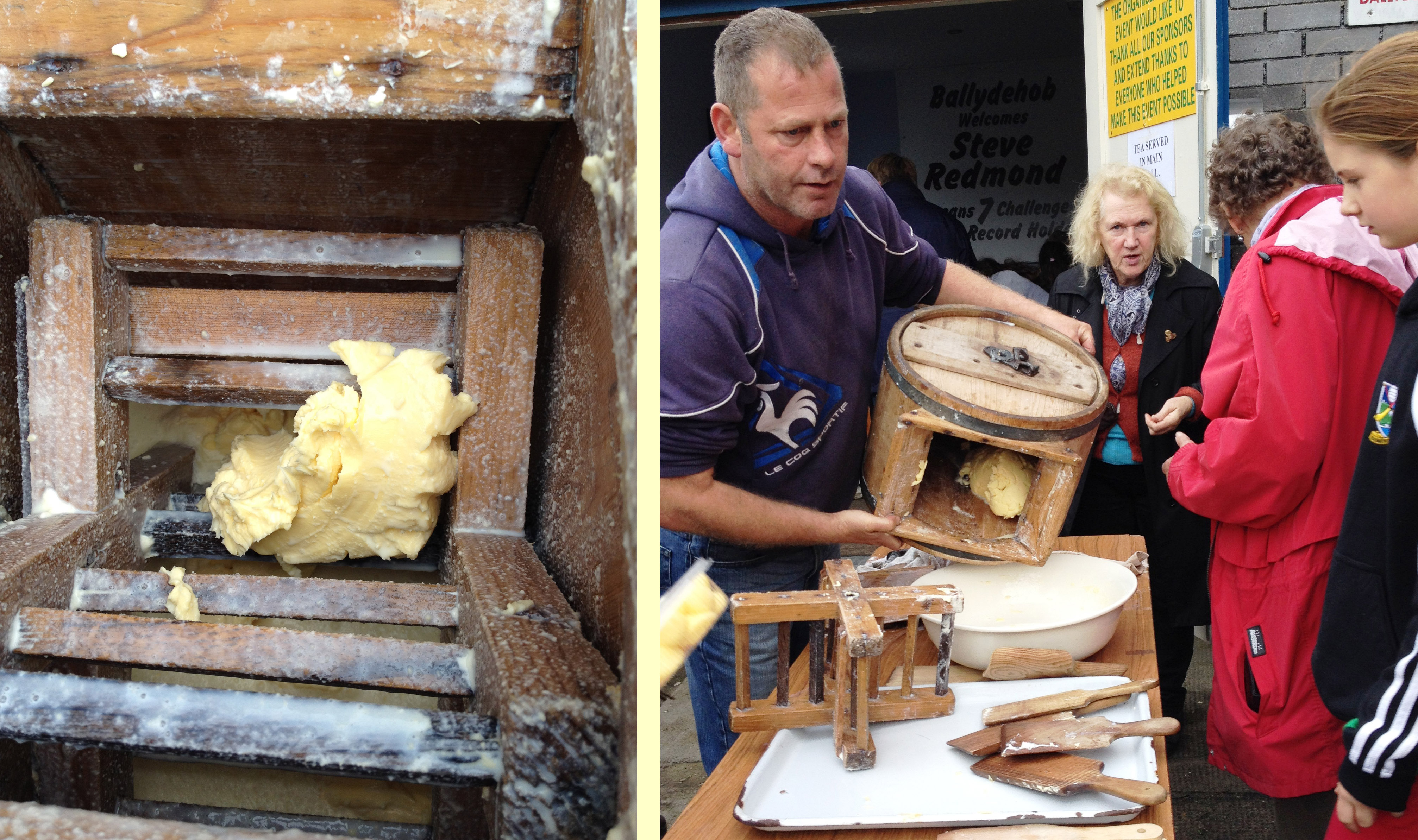
At the recent Autumn Fair (known as the Thrashing) in Ballydehob, Robert and I got a chance to take a turn at the butter churn and to watch the magical transformation of milk into butter and buttermilk.

Pouring off the buttermilk

Pouring off the buttermilk

It's ready!

It’s ready!

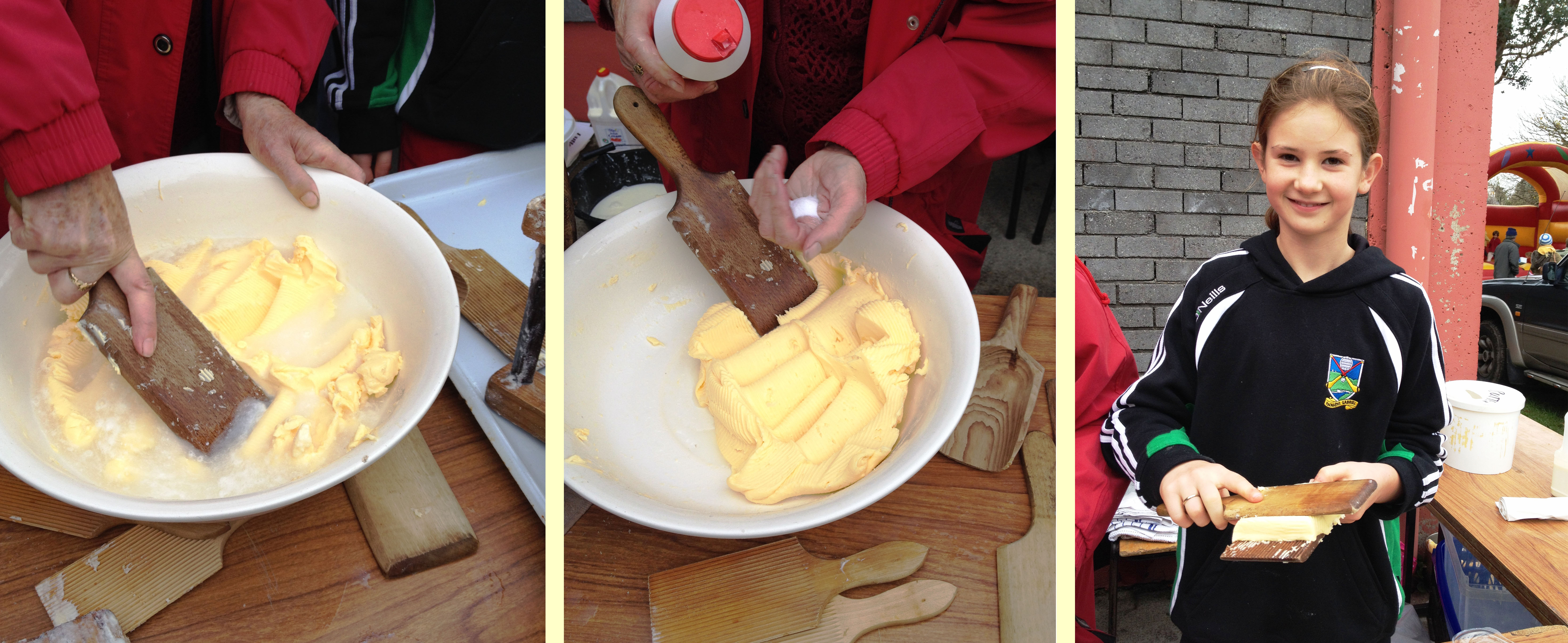
Washing, salting, shaping

Washing, salting, shaping

To reward us for all that labour (turning that handle was so hard), we had a butter feast – homemade soda bread made using the buttermilk, with homemade butter and homemade jam. There are lots of good Irish soda bread recipes on the internet: here’s the one I used. And yes, you can get buttermilk in North America – take a really good look on the milk shelves and you’ll see it lurking in a corner near the cream.

Homemade soda bread by the fire.

Homemade soda bread by the fire

Homemade jam – this is a fabulous five minute jam recipe I found from a link on a friend’s Facebook page and adapted slightly. Mine is blackberry (bumper crop this year!) but you could use any berry you want.

1 cup blackberries

1 tbsp honey

1 tbsp warm water

1 tbsp chia seeds

Blend (in a blender) and pour into something (yogurt container? Glass?). Put in fridge for an hour. Hey presto – delicious jam! The chia seeds jellify and that’s what binds the jam. You have to keep this jam in the fridge and eat it within a couple of weeks, since it’s not cooked. It will freeze well. I was introduced to chia years ago by my friend Christi from El Salvador. It’s available in supermarkets and health food stores.