Ancient Calendars

One of West Cork's ancient calendars

One of West Cork’s ancient calendars

We’ve been catching up on our rock art project this week and it’s brought us out into the field. On Saturday the weather was spectacular – crisp, but with a totally blue sky and vibrant colours. See Amanda’s photo of the day here. We spent most of the day just east of Rosscarbery, a picturesque settlement above the water at Rosscarbery Bay, where the birdlife viewing is always a delight.

One of the sites we visited was Bohonagh. Not only does it boast cupmarked stones, but a very fine boulder burial and a stone circle.
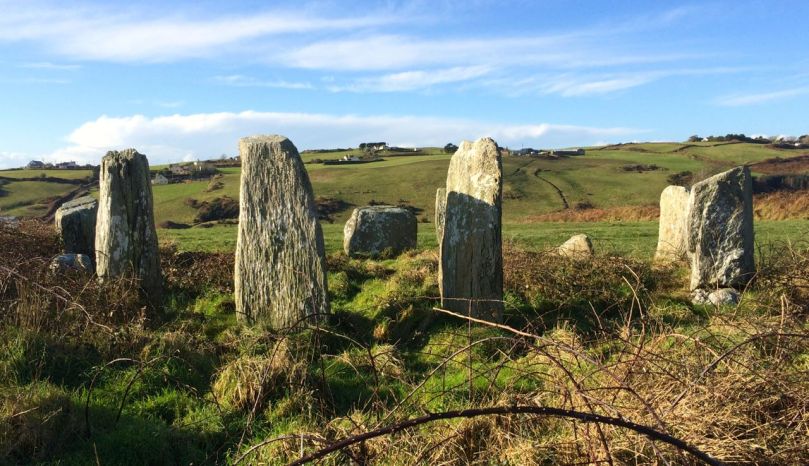
Bohonagh Stone Circle

Bohonagh Stone Circle

West Cork is particularly rich in 3000 year old Bronze Age stone circles and most of them are of the ‘axial’ or ‘recumbent’ type. This means that the circle is laid out on an axis that is oriented in a particular direction. On one side of the circle is a stone laid longways – the recumbent stone. Across from the recumbent are the portals: two tall stones that appear to create a doorway into the circle. Sometimes the stones rise in height from the recumbent to the portals, and the portal stones may be set ‘end-on’ to the circle. There are always, therefore, an uneven number of stones – up to 17 have been recorded, although many circles are incomplete, with fallen or missing stones. The purpose of the axis was to provide a line of sight on a sunrise or sunset (and perhaps even moonrise and moonset) at important calendrical points such as solstices and equinoxes.

The portal stones at Bohonagh

The portal stones at Bohonagh

Bohonagh quartz

Quartz at Bohonagh

A feature of these circles is that many of them include quartz rocks: sometimes as one of the circle stones, sometimes as an additional rock in the interior or exterior of the circle, and sometimes on a nearby monument such as a boulder burial. At Bohonagh there were several quartz rocks, including one lying outside the circle and two supporting the boulder burial. In one case, at Ballycommane, we have seen an enormous quartz rock function as the capstone of a boulder burial – quite awe-inspiring in its visual impact. Interestingly, this same phenomenon occurs in a stone circle in Cornwall – Boscawen-Un in the West Penwith Peninsula, not that far from West Cork! As we watched the quartz under the boulder burial glisten in the sun (impossible to capture on a photograph) we knew it had to be seen as a very special stone to the builders of these circles.
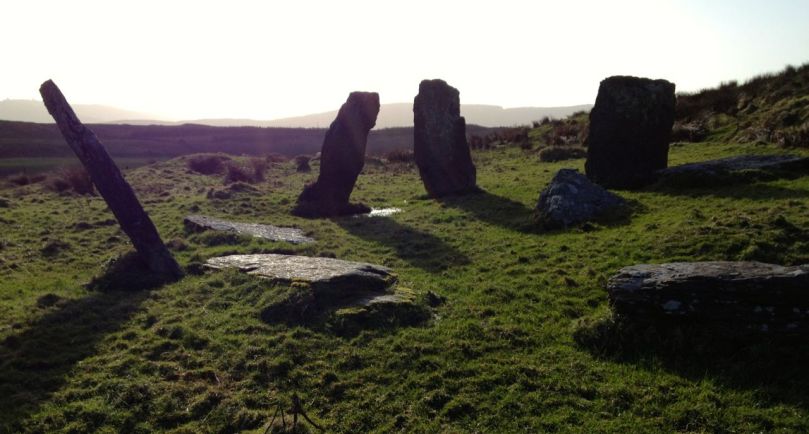
Brooding stones at Dunbeacon

Brooding stones at Dunbeacon

Stone circles often command sweeping views of the surrounding countryside. This makes them well worth visiting, even if a goodly hike is involved. Because they are invariably located on private land, it is good practice to try to track down the landowner and request permission, and of course to always close gates and observe good field etiquette on a visit. Don’t be surprised to find that many are no longer intact: the centuries have taken their toll and many of the stones have fallen or disappeared over time. On the upside, this adds to the romantic wildness of the scene.

Gorteanish Stone Circle, re-discovered in the laying out of  the Sheep's Head Way

Gorteanish Stone Circle, re-discovered in the laying out of the Sheep’s Head Way

One of the most famous of the West Cork stone circles is Drombeg, near Glandore. Here, people gather on the winter and summer solstices to witness sunrise and sunset.
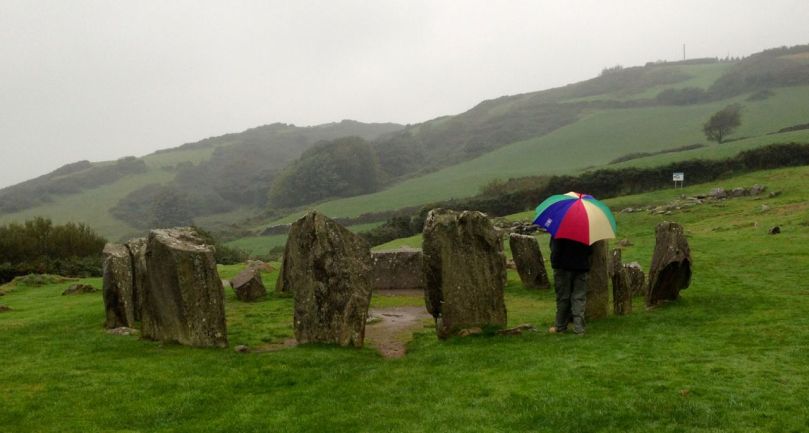
Drombeg on a wet day

Drombeg on a wet day

At Bohonagh, the alignment is to the spring equinox sunrise and sunset, due east and west. We plan to be there!
West Cork Speak: Lessons 3 and 4

How are ye?

How are ye?

You all did very well, Dear Readers, with learning to speak like a true West Cork denizen. I was especially proud of all the grands and likes you appended to your emails and comments. So, now, I think it’s time for the next couple of lessons.

I wish I could really capture for you the true cadence of the language here – the colourful vocabulary, the way stories are infused with a humorous acknowledgement of the foibles of the teller and the audience, the up-and-down rhythm of the speech, the expressiveness of all communication. But at least I can teach you some of the basics, so you will feel at home when you get here.

Would you be after some scallops?

Would you be after some scallops?

Lesson 3: Using the Conditional Tense

Today’s first lesson deals with the importance of mastering the conditional tense – in other words, using the word ‘would’ and all its variations, where the rest of the world would use the simple present or past tense. This has the effect of softening a statement in quite a delightful way, but it can also be confusing if you’re not used to it.

At a recent class I took, the instructor presented her credentials by saying, “I would have qualified in 1996.” Now, if someone outside West Cork had said that, you would have been waiting for the rest of the sentence…”Except that I failed the exam,” perhaps. But she was simply saying, in the West Cork way, “I qualified in 1996.” It’s just a bit more roundabout, a bit more diffident, a bit less assertive, than baldly stating a fact. Here’s how I normally say something, followed by how it is said in West Cork:

I got married in 2004. 

I would have been married in 2004.

I don’t like jazz.

I wouldn’t be a huge fan of that kind of thing myself, now.

Hi, I’m Finola.

’Tis lovely to meet you. I would be Finola.

I’m always exhausted after yoga.

Sure, ’tis tiring, like, but you would feel great after it, wouldn’t you?

That guy is a crook.

He wouldn’t be the saintliest of fellas, like, but he would have had a hard time of it as a young lad.

I asked him to bring the umbrella.

I asked him would he bring the umbrella.

This will take some practice: set yourself the task of turning one declarative sentence a day into a conditional statement. You would want to spend a fair bit of time on it, like.

And where would you be from, now?

And where would you be from, now?

Lesson 4: Pronouns

Pronouns! Most of them are the same as English elsewhere, but with two important differences.

You/Ye. If you look up the word ye in a dictionary it will tell you the word is archaic, and died out in general usage several hundred years ago. Not in West Cork! It is in common usage, here and elsewhere in Ireland, as the plural of you. So, if you meet a group of people and are addressing them collectively, you say “How are ye?” I must say, this make eminent sense. How often do we have to qualify you by saying “I mean you, plural?” Or, “I mean both of you?”

Herself would have raised the ducks.

Herself would have raised the ducks.

Now so, are ye ready for the last biteen (we’ll deal with that word another day) of the lesson? On we go, so, to reflexive pronouns – those are the ones with self at the end of them. They are used in Ireland in a variety of ways. Himself and herself are sometimes used to denote a husband or wife, but also can have a slight suggestion of amusement or mockery.

Himself would be holding forth about politics the whole evening.

I’d like to stay a while longer, but herself has the tea on the table at six sharp.

Is it yourself? It is indeed.

It will be time for a quiz soon, so ye should study what we’ve learned so far and I’ll think about a suitable test, and maybe some prizes. Wouldn’t that be grand? Himself thinks so, too.

Is it yourself, Sean?

Is it yourself, Sean?

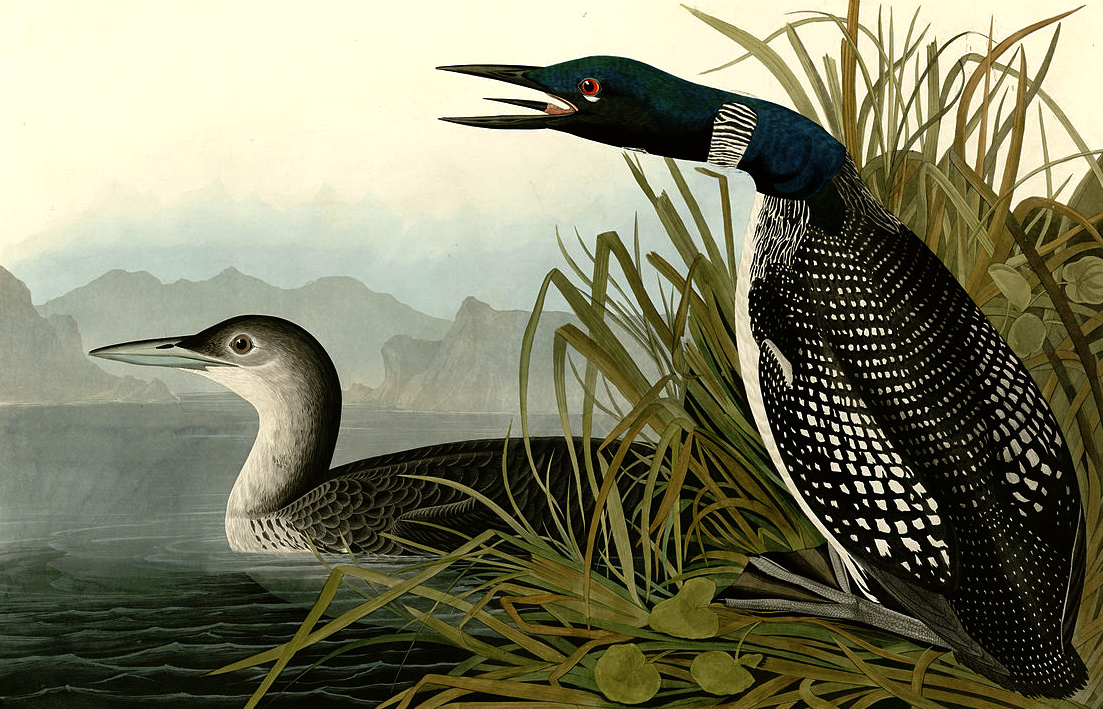
Loon the Sentinel

loon print

Our friend Julian lives beside the water in the Cove, and we were excited when he told us there were Great Northern Divers in the bay. During the recent storms he saw a large number of them – fourteen or fifteen – huddled together for shelter close by the shore. He called this gathering a ‘Raft’: In fact the collective noun is usually said to be Asylum, Cry or (more attractive) Water-dance. We saw them too, but distantly through our spotting scope up in Nead an Iolair, although we came across them close to when we were walking by the shore in Ahakista on the Sheep’s Head. Here they were mixed up with Cormorants (collective noun Flight of…) and Shags (Hangout of…) – but their markings were distinctive enough for us to be sure.

loonie

In Canada the same birds are known as Loons. Believe it or not, the International Ornithological Committee met especially to consider the problem of the differing names in America and Europe and proposed a compromise: the Great Northern Loon. I like the term Loon: supposedly this name comes about because the bird has large webbed feet set well to the back to assist diving but is clumsy on land. In Icelandic the word for ‘lame’ is lúinn, and in Swedish it is lam – this could well have been an influence. The Canadian Loon is featured on the one dollar coin – which is therefore know as a ‘loonie’ – the two dollar coin is a ‘toonie’.

When Finola and I were on a road trip up to the north of British Columbia (through spectacular scenery) we stopped by a lake and we could see diving birds a considerable distance away. Finola told me they were Loons and I said I really wanted to have a good look at them. She immediately put her hands up to her mouth and produced the distinctive wavering call:

I couldn’t believe it when a few seconds later a Loon surfaced right beside us! I was full of admiration (as always) for Finola’s many talents…

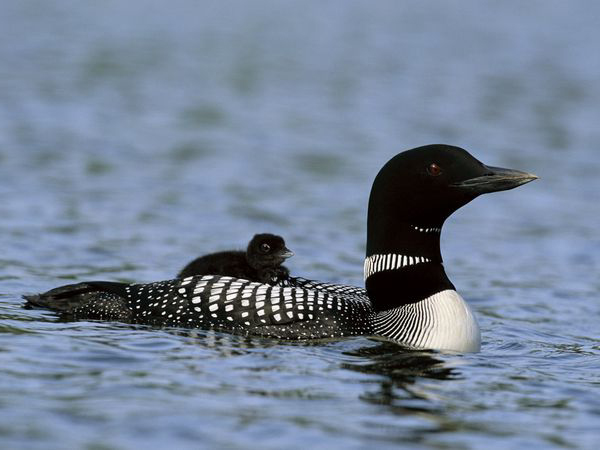
An endearing habit of the adult bird is that it carries its chick on its back until it can swim on its own.

Hitching a ride...

Hitching a ride…

I can’t find any Irish legends mentioning Loons, Great Northern Divers or any other variants, but there are plenty of Canadian ones among the First Nation cultures. There the Loon is invariably a ‘good guy’, and even helps Raven the Creator to make the world, and to bring Sun, Moon and Water to it. It has various names in these tales, including Big Loon, Black-billed Loon, Call-up-a-storm, Ember-goose, Greenhead, Guinea Duck, Imber Diver, Ring-necked Loon, and Walloon. We also have a very fine carved Loon on our living room wall, from Finola’s First Nation art collection.

loononwall

I call Loon the Sentinel because he seems to stay just outside our Cove, swimming and diving across the entrance – keeping it safe for us. When our spring comes (and we can begin to feel the sun getting stronger already) he will be off to colder climes to breed.

The Roaring

Waves crash against the islands in Roaringwater Bay

Waves crash against the islands in Roaringwater Bay

In our early days here I read in a couple of places that Roaringwater Bay got its name from the Roaringwater River, which in turn derived its name from the sound of the water tumbling over the rocks as it neared the sea. Now, I know better. The water in this huge bay, with its multiple islands and rocks, does roar. Not all the time, of course – you could live beside it for weeks, even months and never hear it.

The view past Castle Island, after a storm

The view past Castle Island, after a storm

But after a storm, when the wind has died down, the rain has stopped, and all is calm we fling open the doors to enjoy once more the bright sunshine and balmy air. That’s when it stops us in our tracks: a constant roar, like a distant jet engine, or a working factory just out of sight. The first time we heard it we were viewing a house on a hill about a mile inland and came around to the side facing the sea – and there it was. It took us a while to figure out what we were hearing: it sounded like some kind of foundry or industrial equipment. (Aha! So that’s why they want to sell this place!) It gradually dawned on us that there was nothing like that in this isolated spot and that what we were hearing was coming from much further away – from the sea, in fact.

Is there a prevailing wind here?

Is there a prevailing wind here?

Once back home we got out the spotting scope and could clearly see the waves crashing against the islands. In the aftermath of the storm the water was still turbulent, with giant waves pounding against the rocky shores and breaking right over the rocky islets. The cliffs at the western end of Cape Clear were covered in sheets of salt spray. We have a clear view of the Fastnet Rock (more about this in a future post) and in particularly wild conditions we can see waves breaking over it, reaching up to the trunk of the enormous lighthouse.

Near Ahakista: The calm after the storm

Near Ahakista: The calm after the storm

Our recent storms have been, as we say in West Cork, mighty. A particularly vicious series of gale, storm and hurricane force winds (9, 10, 11 and 12 on the Beaufort Scale) has wreaked havoc along the coast. Yesterday we went to Ahakista on the Sheep’s Head. The damage there has been recorded by Amanda – click here to see her photos and account. We had a respite from the winds today – a perfect opportunity to listen to the roaring water.

Earth Winds. Jan 05, 2014

Earth Winds. Jan 05, 2014

Tonight we are expecting another onslaught, like the one on St. Stephen’s night that Robert reported on in his last post. I have discovered the Earth Winds Map – one of the coolest sites on the internet. Updated every three hours, it shows how the winds are flowing around the earth. This screen capture shows the Atlantic storm that is heading for us and packing winds of 109km per hour. That’s classified as “Violent Storm” and just a few km/h short of a hurricane. Met Ireland has issued a warning, especially for areas affected  by high tides, of storm surges and potential flooding. We will hunker down and keep our fingers crossed for ourselves and our neighbours here in West Cork. And when it’s all over, we will listen for the roaring of the waters.

Stormy Weather

neadwinter

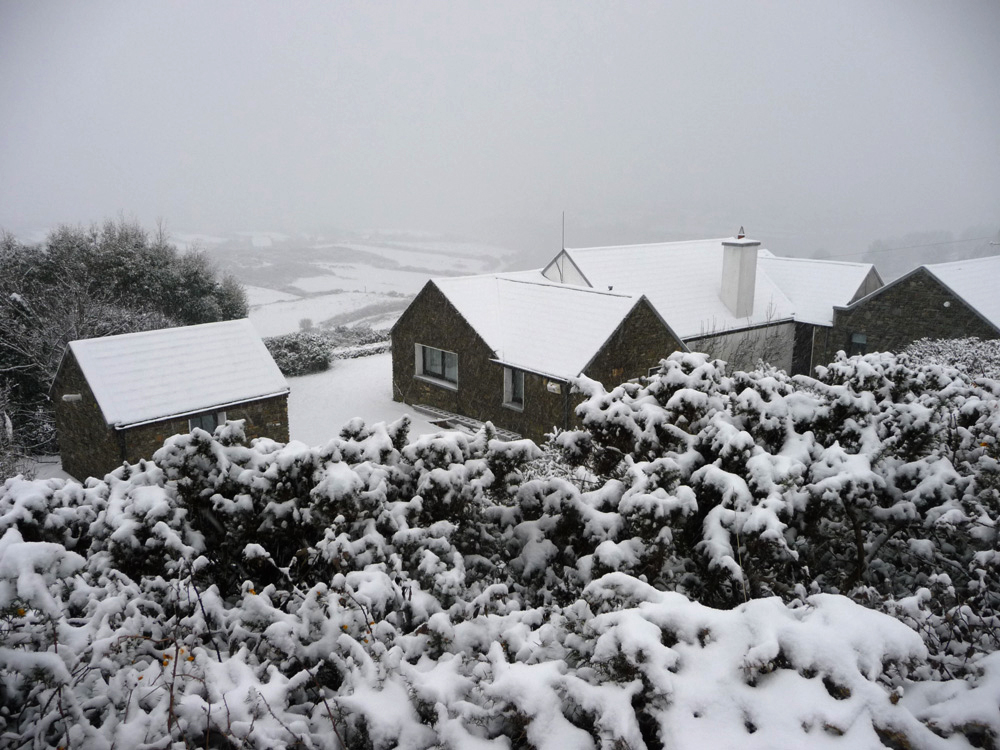
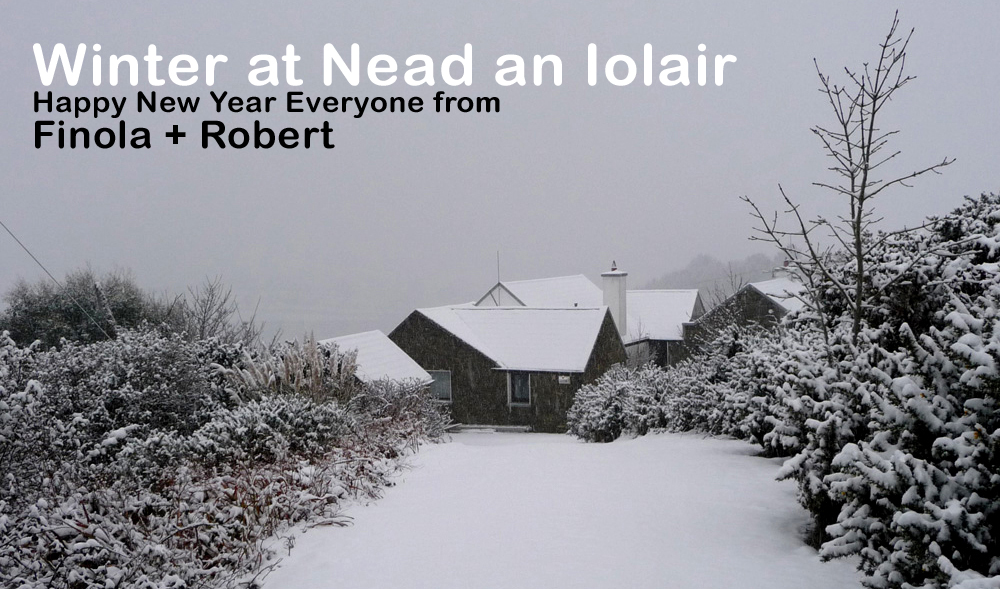
This picture of Nead an Iolair is here to create a seasonal feel: it was taken by our neighbour Dietrich in the Great Winter of 2010 – 2011 when the extremes were all about deep snow, frozen roads and frozen pipes, unusual for this little corner of the island normally kept mild by the Gulf Stream. This winter we have a different extreme – hurricane force winds!

spiked

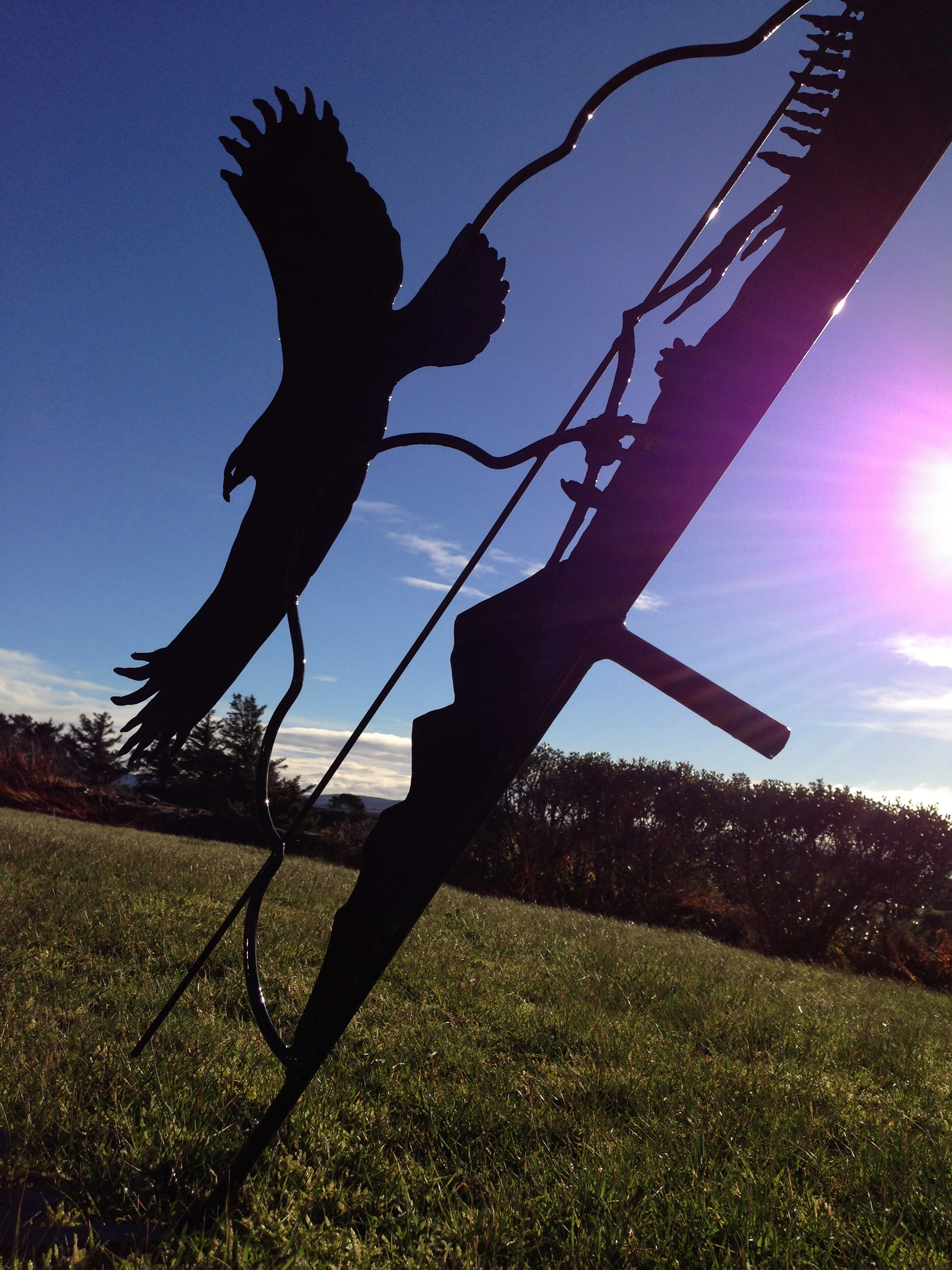
‘Hurricane’ on the Beaufort scale means wind speeds of 118 km/hour or more. We went to bed on St Stephen’s Day evening, having measured the wind speed outside as 87 km/h. That seemed wild to us: the trees were bent over and the salt laden rain and sleet were coming in horizontally and lashing our south west facing windows. It was hard to sleep: the slates were rattling loudly above us and the aerials and lightning conductors on our roof were shrieking and bending. The noises got louder and more terrifying as the night went on. I wanted to venture outside with my little hand-held anemometer but I couldn’t face it. The violent storm began to abate only in the early hours of the morning and, when we did creep out, it was to find some damage: two trees down in the haggart, sadly, and our beautiful weather vane collapsed. It was as well that we weren’t underneath when the flying Eagle and its sharply pointed arrow came crashing on to the lawn, just missing our door.

levissession

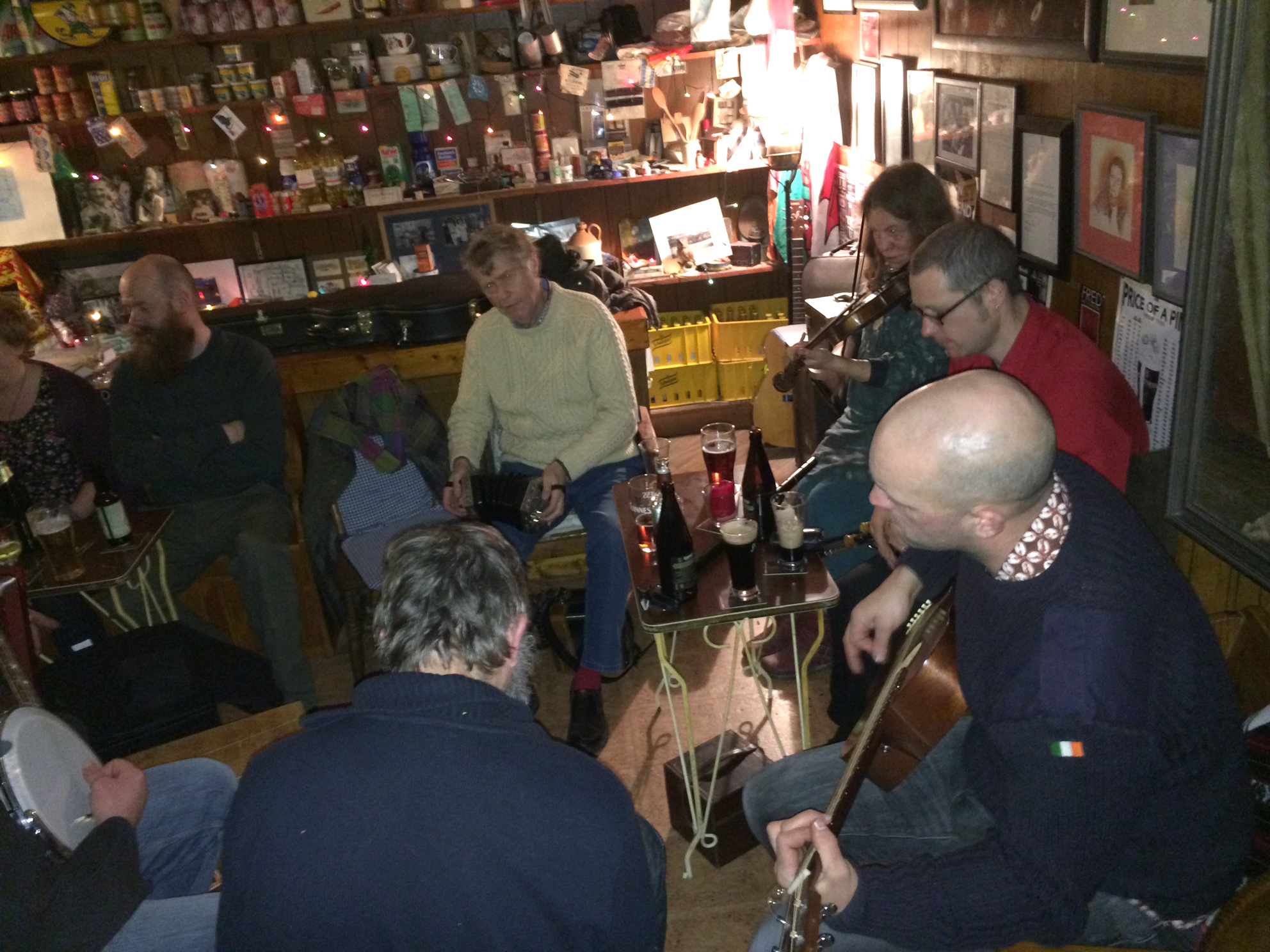
St Stephen’s Day Session, Ballydehob


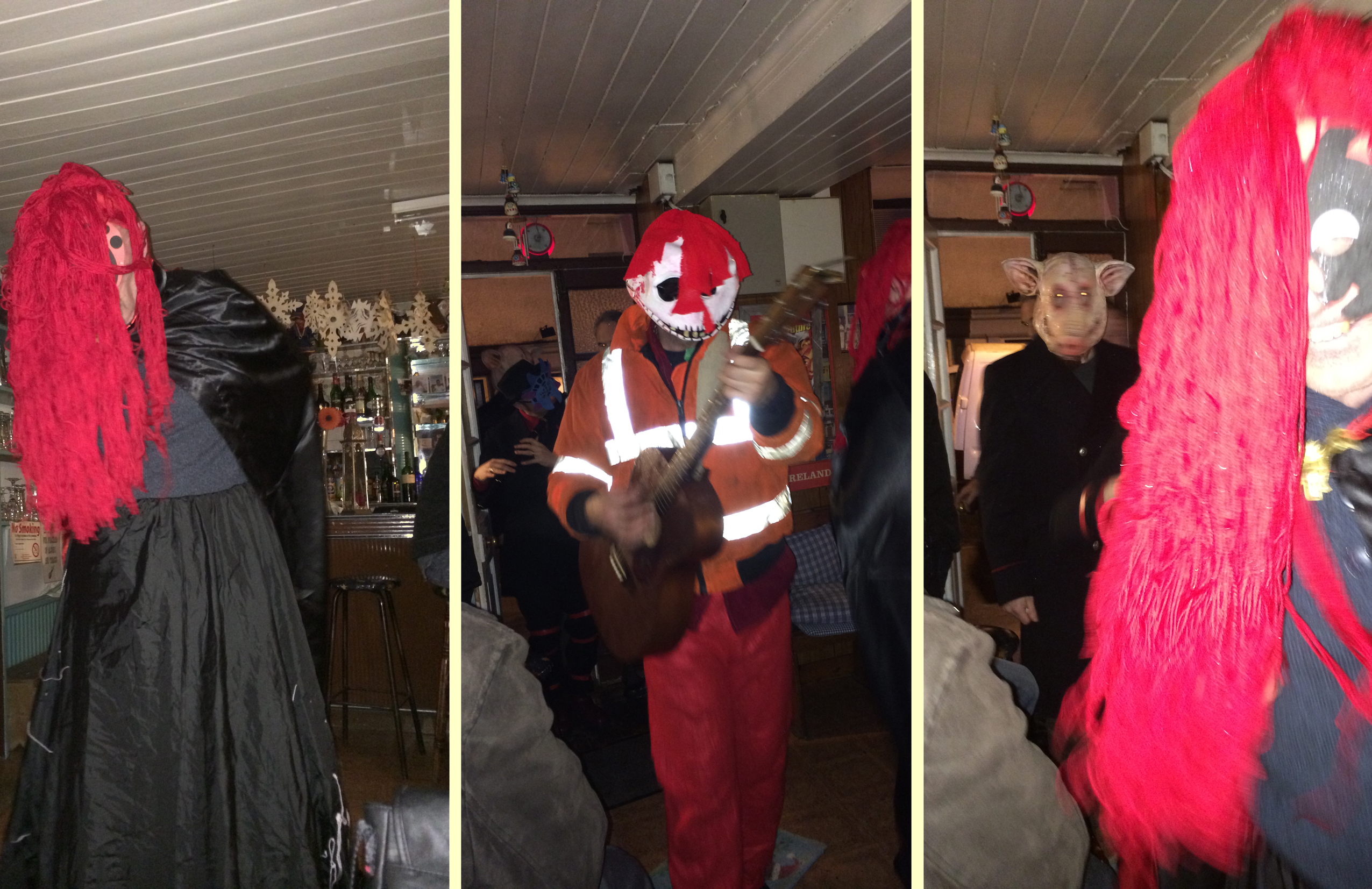
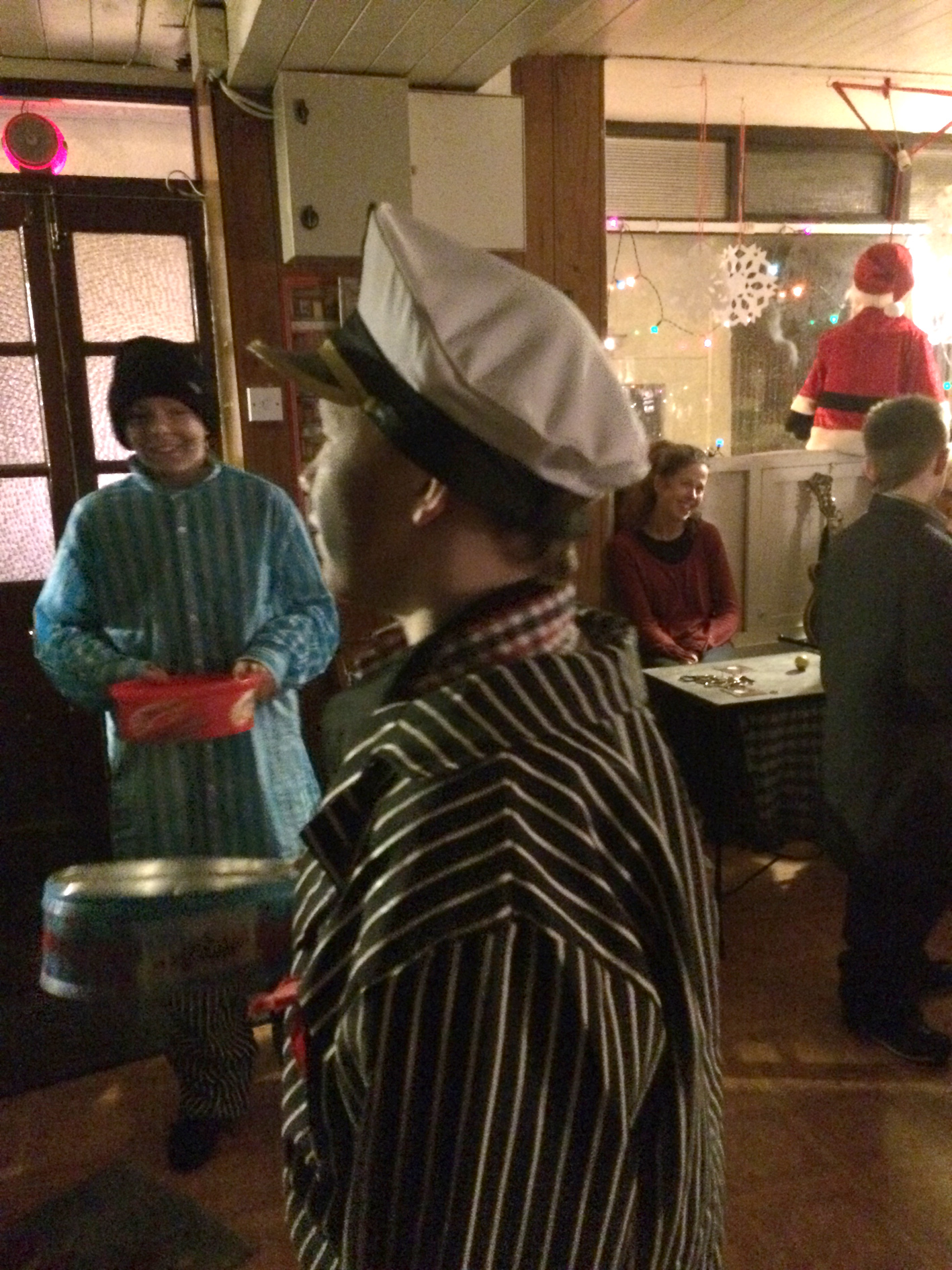
Earlier in the day we had enjoyed an unexpected visit by the Wren Boys to Levis’s pub, where we were involved in an improvised session. Two groups of Wren Boys in fact: the first an adult company with musicians, colourful costumes and bizarre masks, and the second a group of boys dressed in old coats turned inside out, pyjamas and sailor caps, carrying large collecting tins. All were welcomed and the festivities grew merrier as the wind strengthened.

wrenners

wrenboys

Keeping traditions going: outlandish Wrenners visiting Ballydehob – top – and local lads collecting in Levis’s Bar – below

As I lay in bed at the height of the storm I found myself worrying about our birds: how on earth could the Goldfinches, Chaffinches, Robins and Wrens (any Wrens who had escaped the St Stephen’s Day hunt that is) have survived that terrible gale – which stripped the bird feeders of everything moveable and the bushes and shrubs of their sheltering leaves? In the morning, there they were back again, and noisily demanding a refill which, naturally, I was delighted to provide.

message

Meet the Seanachaí

Eddie Lenihan - travelling storyteller

Eddie Lenihan – travelling storyteller

Seanachaí – a word with many ways of spelling it in the Irish: seanchaidhe (plural seanchaidhthe); seanchaí, or shanachie in its anglicised form. In Scottish Gaelic the word is seanchaidh or shennachie, while in Manx Gaelic the word is shennaghee.

poster

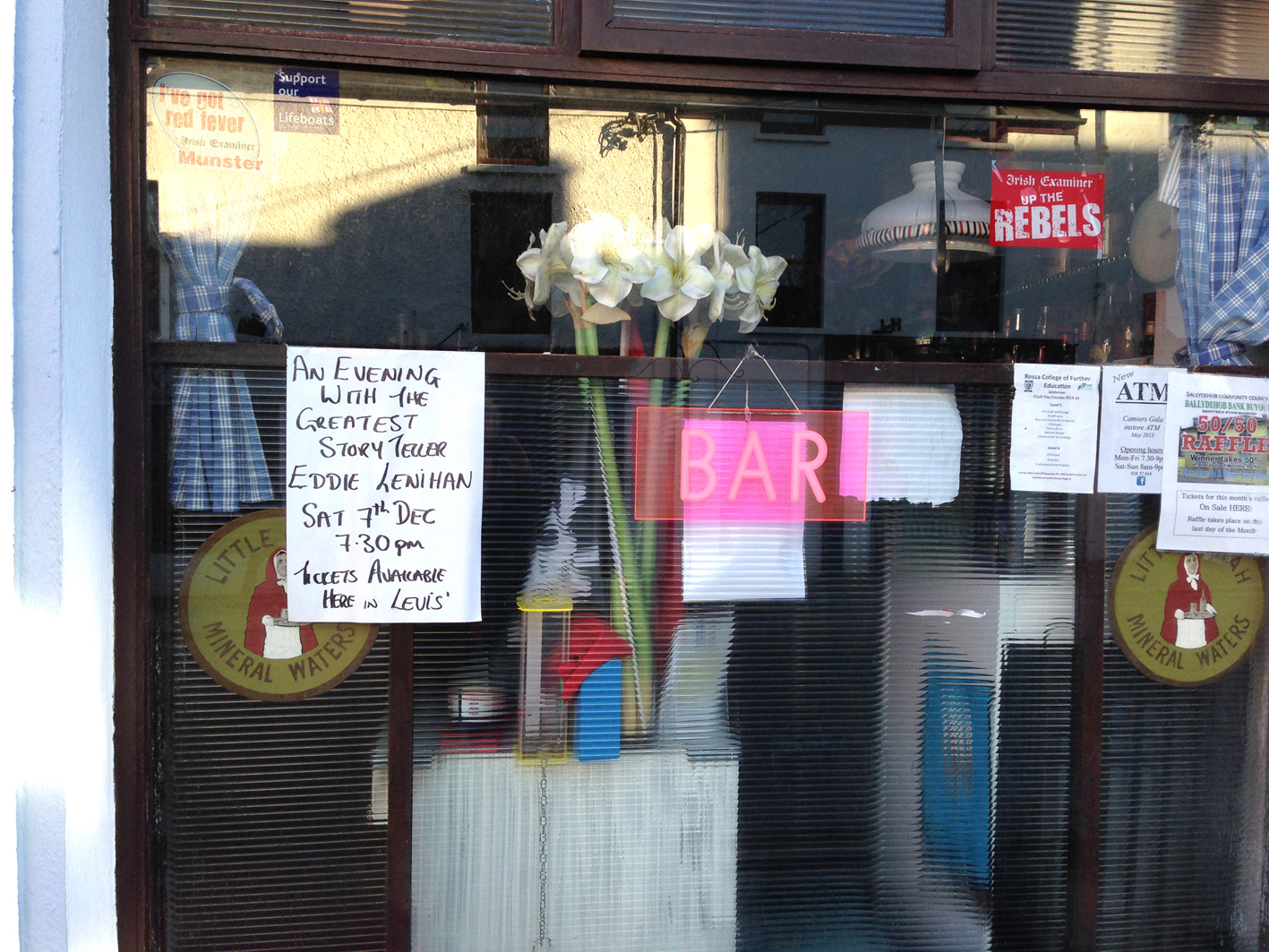
A Seanachaí is a bearer of old lore – the role that the Bards once fulfilled, either attached to the retinue of clan chieftains or individually travelling through the Provinces where it was obligatory to offer them hospitality in return for an evening of elucidation or entertainment. I have previously mentioned the travails of ‘Red’ Aengus O’Daly whose reputation of publicly criticising his hosts on his travels led to a sticky end.

levis

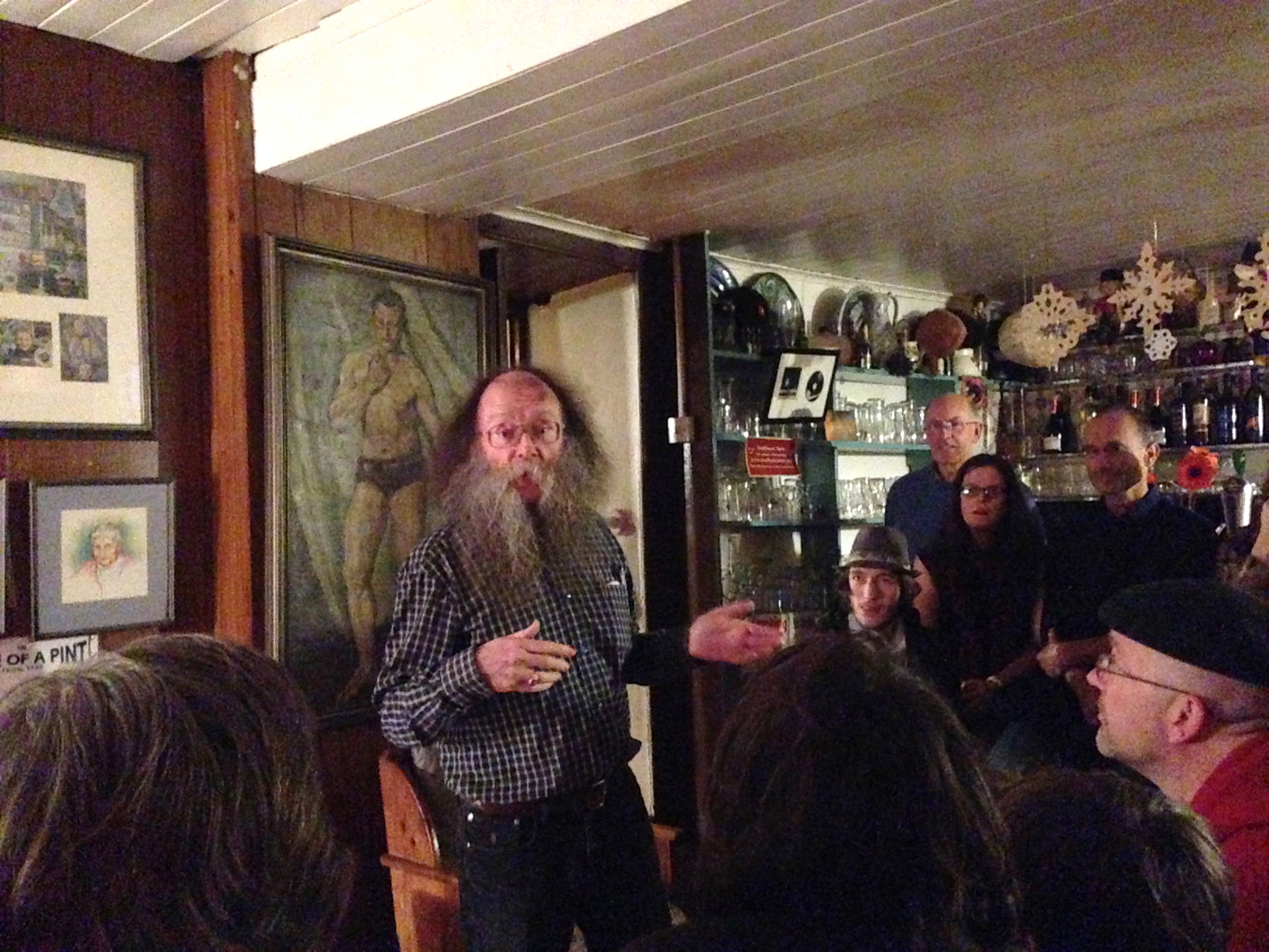
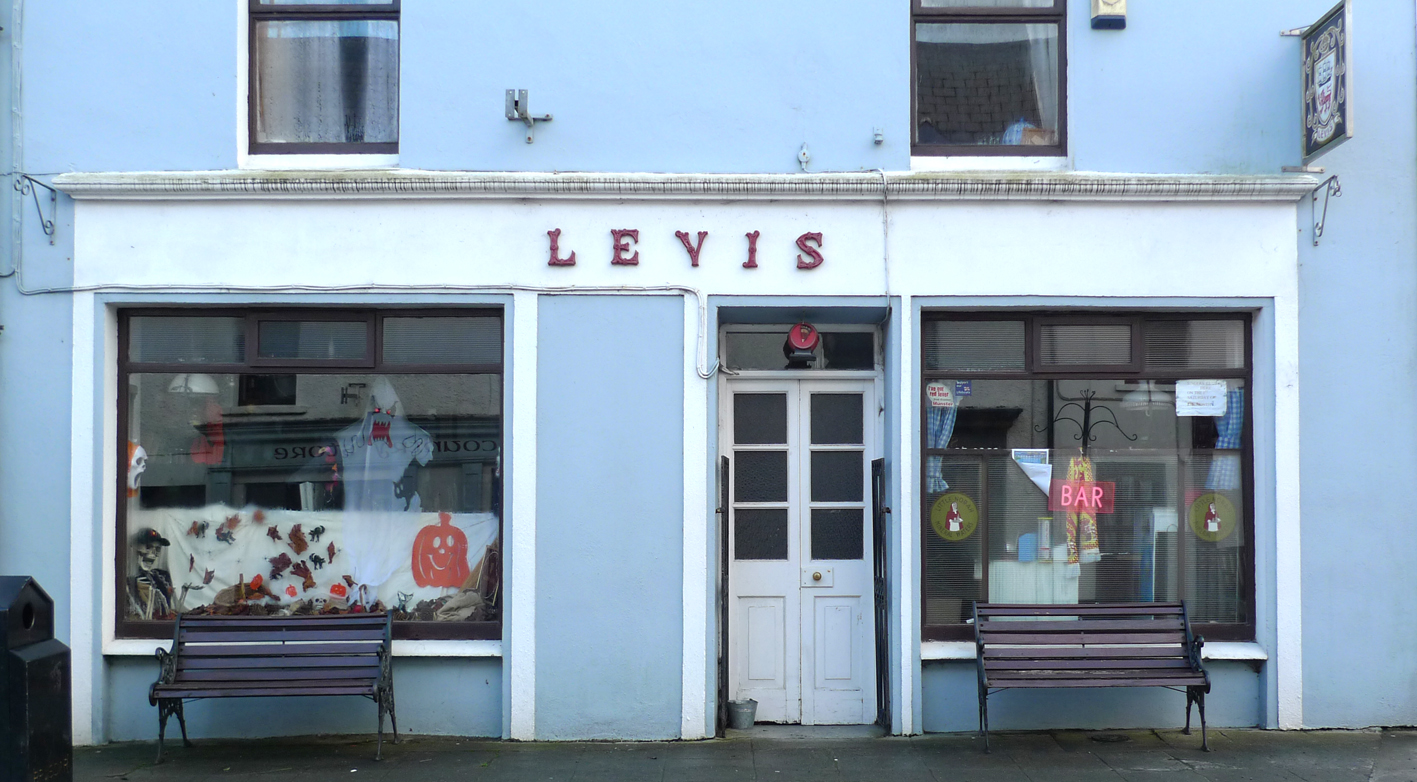
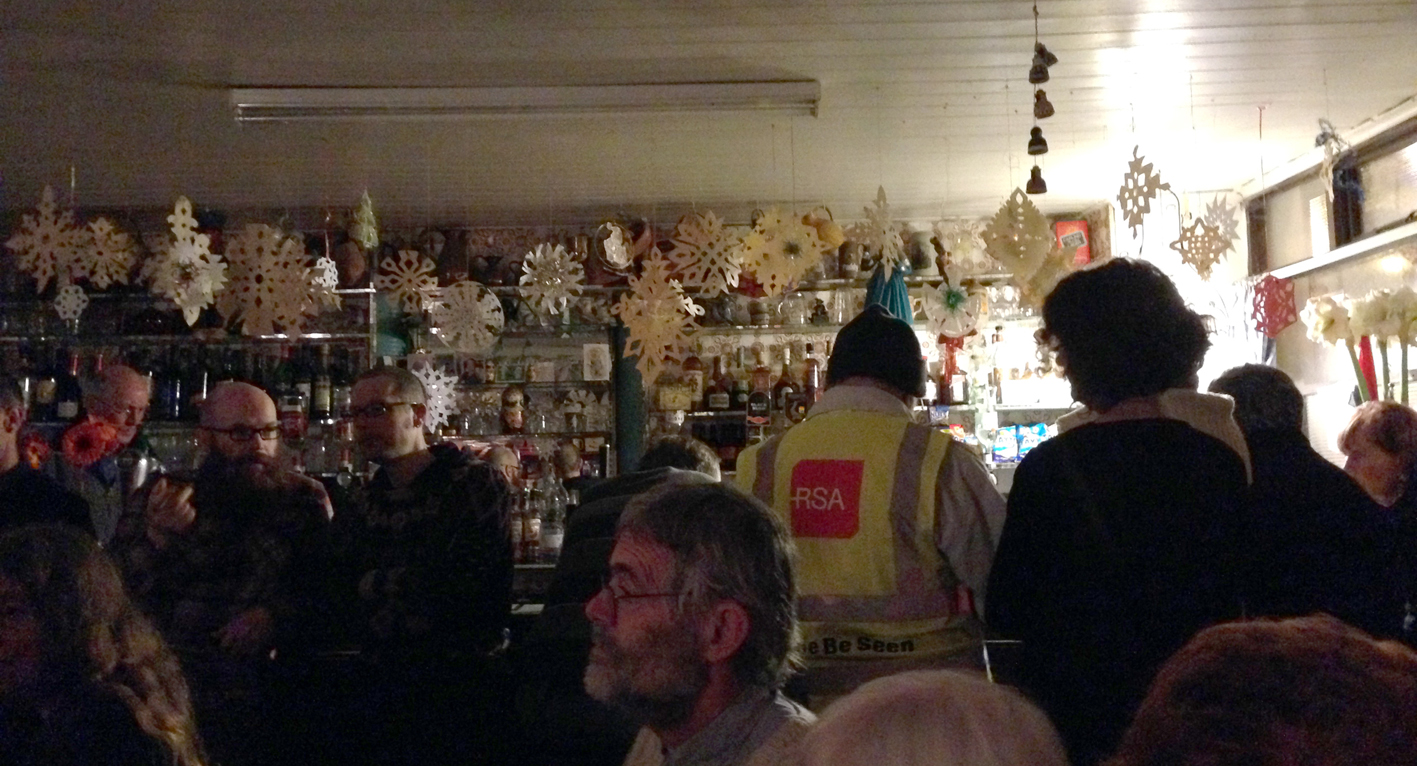
The Seanachaí came to us in Ballydehob – heralded by a missable poster in the window of Levis’ Bar, which held the event. Levis’ is one of the smallest pubs in the town but over fifty people crowded in to listen to Eddie Lenihan – probably Ireland’s best known living storyteller. The pub interior itself is a wonderful backdrop for such an occasion: a selection of groceries and household goods rubs shoulders on the shelves with old postcards and paintings. Behind Eddie in the photo you can see a full length portrait of Ballydehob’s most famous son, Danno O’Mahony, 6ft 3ins tall and weighing over 18 stone: he was regarded as the strongest man in the world. The family haled from Dereenlomane and Danno was born in 1912. By 1934, at the age of 22, he was already the Irish Wrestling Champion and started a professional wrestling career in America. He won 55 out of 55 fights and became Supreme World Wrestling Champion in 1935. He successfully defended his title 125 times. His homecoming to Ballydehob after winning the world title was captured on Pathe News, here.

listeners

Returning to our own champion storyteller, Eddie Lenihan provided a fascinating, amusing and sometimes frightening evening’s entertainment to an enraptured audience of young and old listeners. He has gathered stories of The Other Crowd, Irish folk and country ways from people who still remember them being told in their own youths seventy or eighty years ago, and he is passing them on. Sometimes he speaks of stories which can’t be told: intriguing. He was born in Kerry, lives now in Clare and was passing through Cork: truly keeping alive the tradition of bearing the old lore: the Seanachaí.