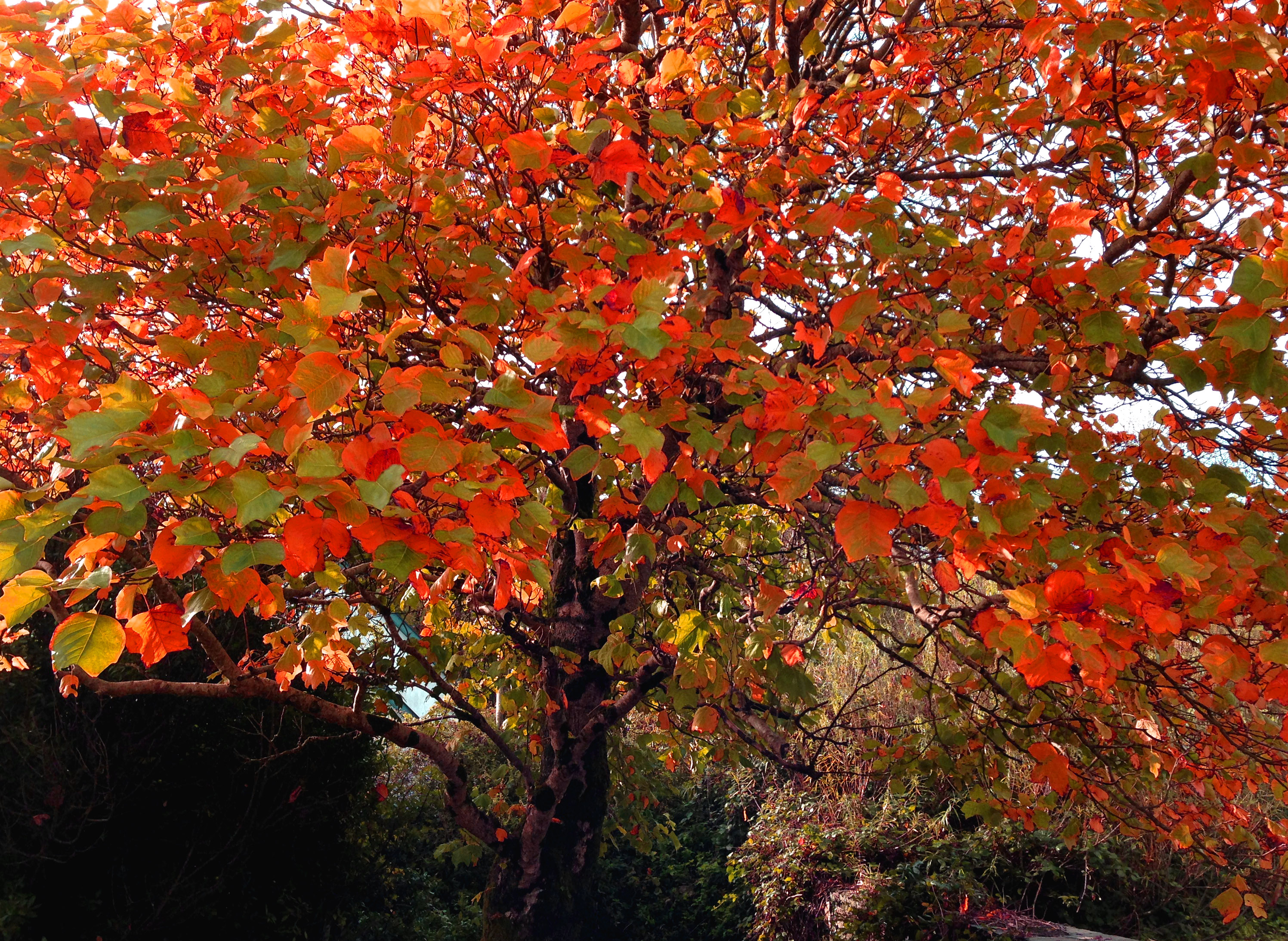
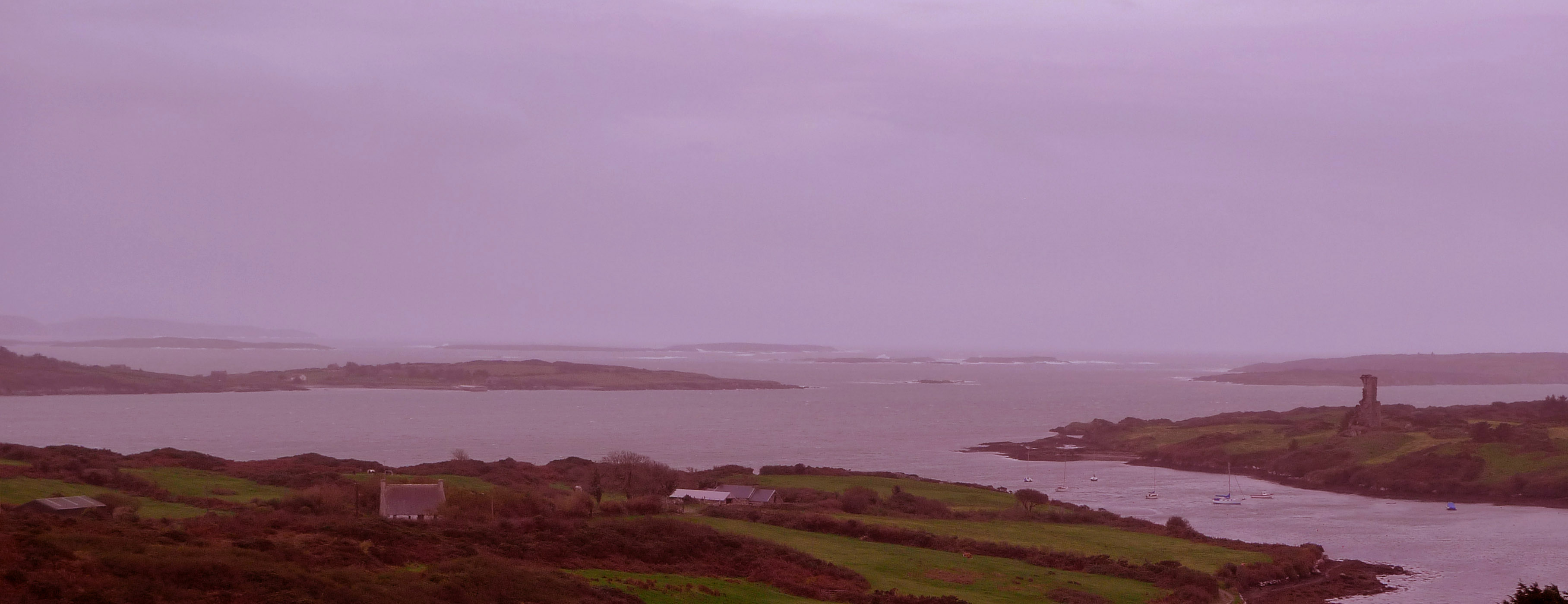
Just as the leaves begin to turn, the gales have come to tear them away and send them flying all over the Bay. Autumn is bringing angry seas with wild white horses, while the trees on our exposed acre are bending sideways. I admire the small birds who manage to find their way to our bird-table in the face of it all: we have just been visited by a whole flock of ravenous Goldfinches who hang on to the wildly swaying feeders in a determined frenzy to fatten themselves up for the coming winter and squabble noisily with any Great-tits, Chaffinches or Robins who try to get in on the act.
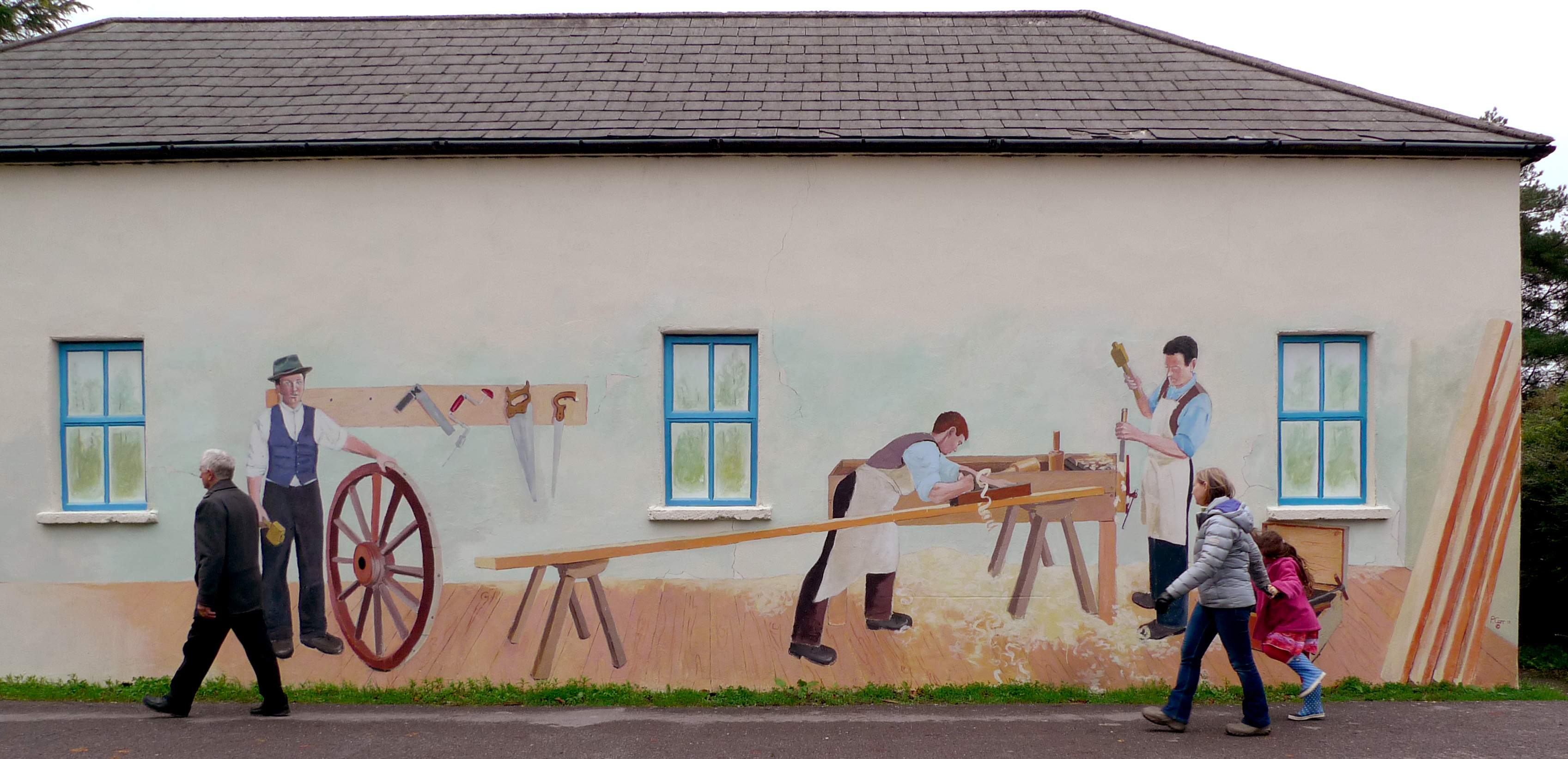
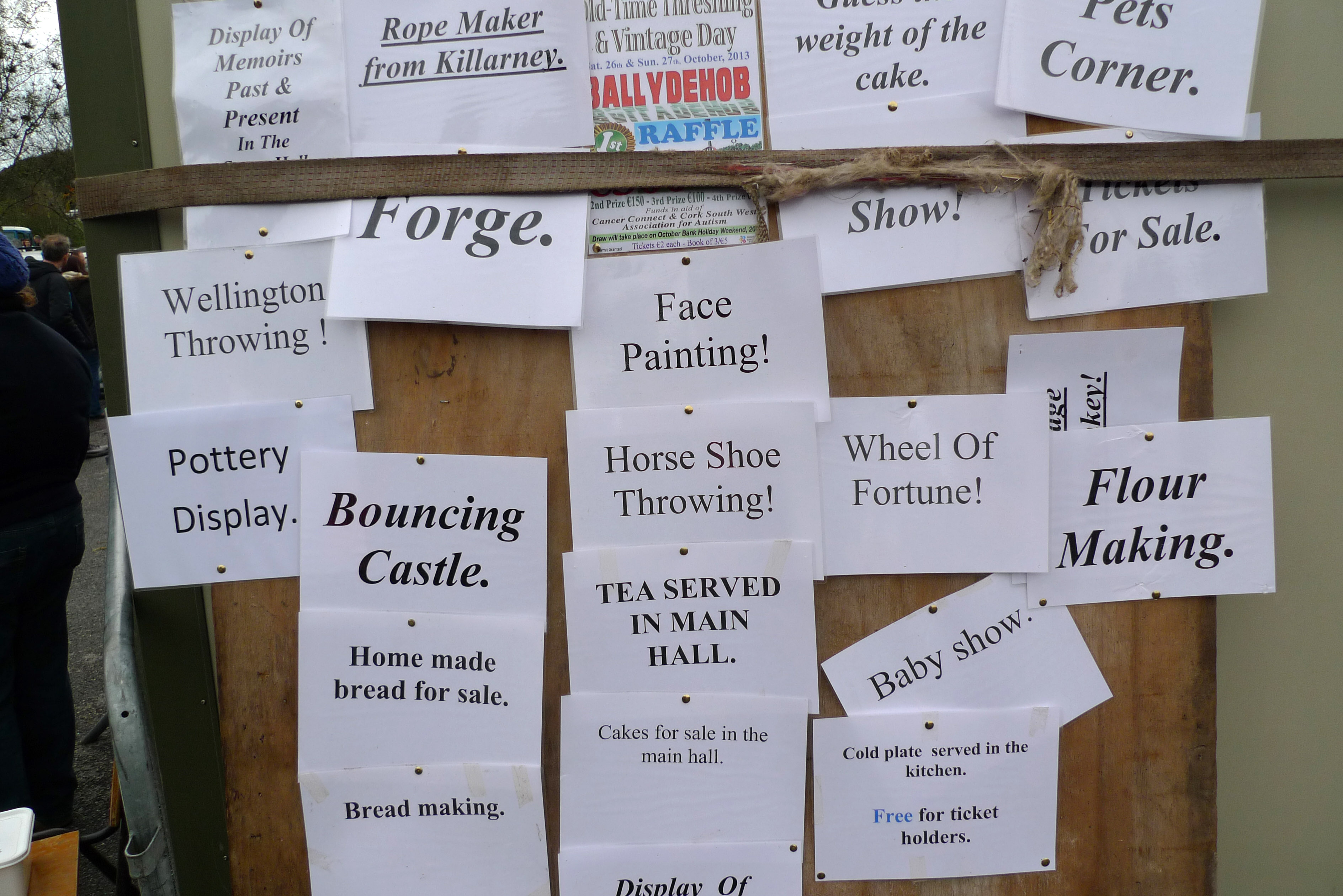
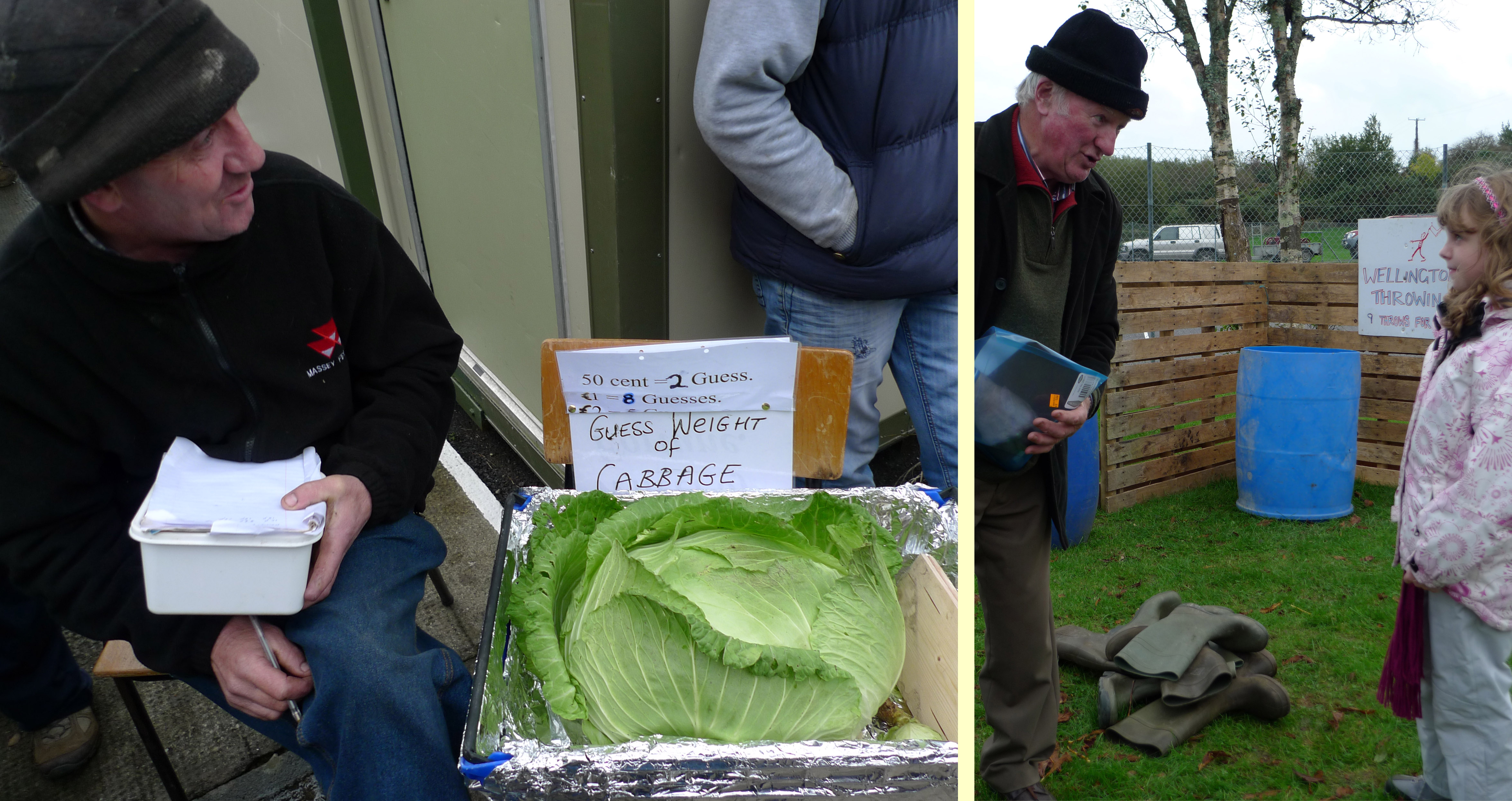
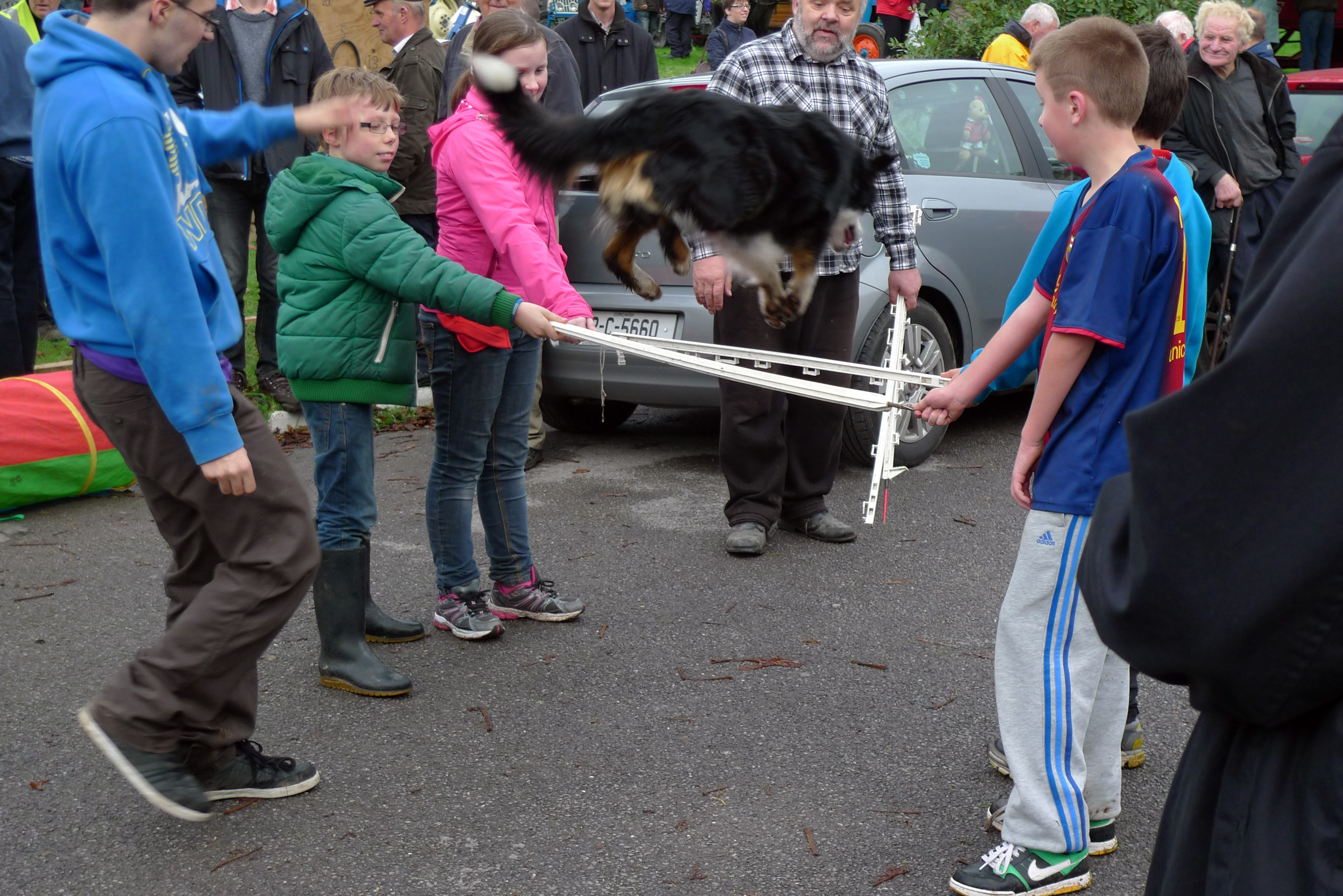
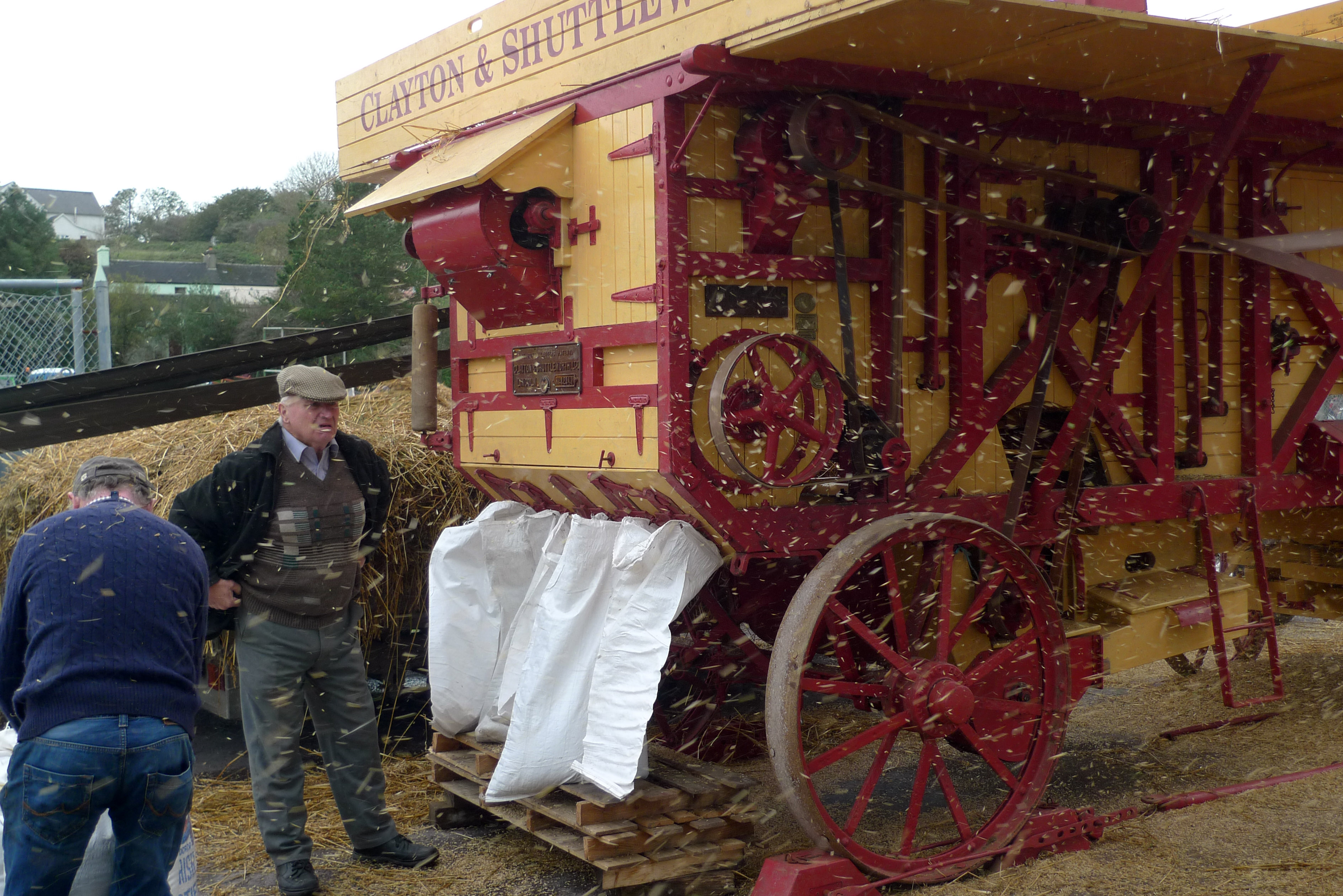
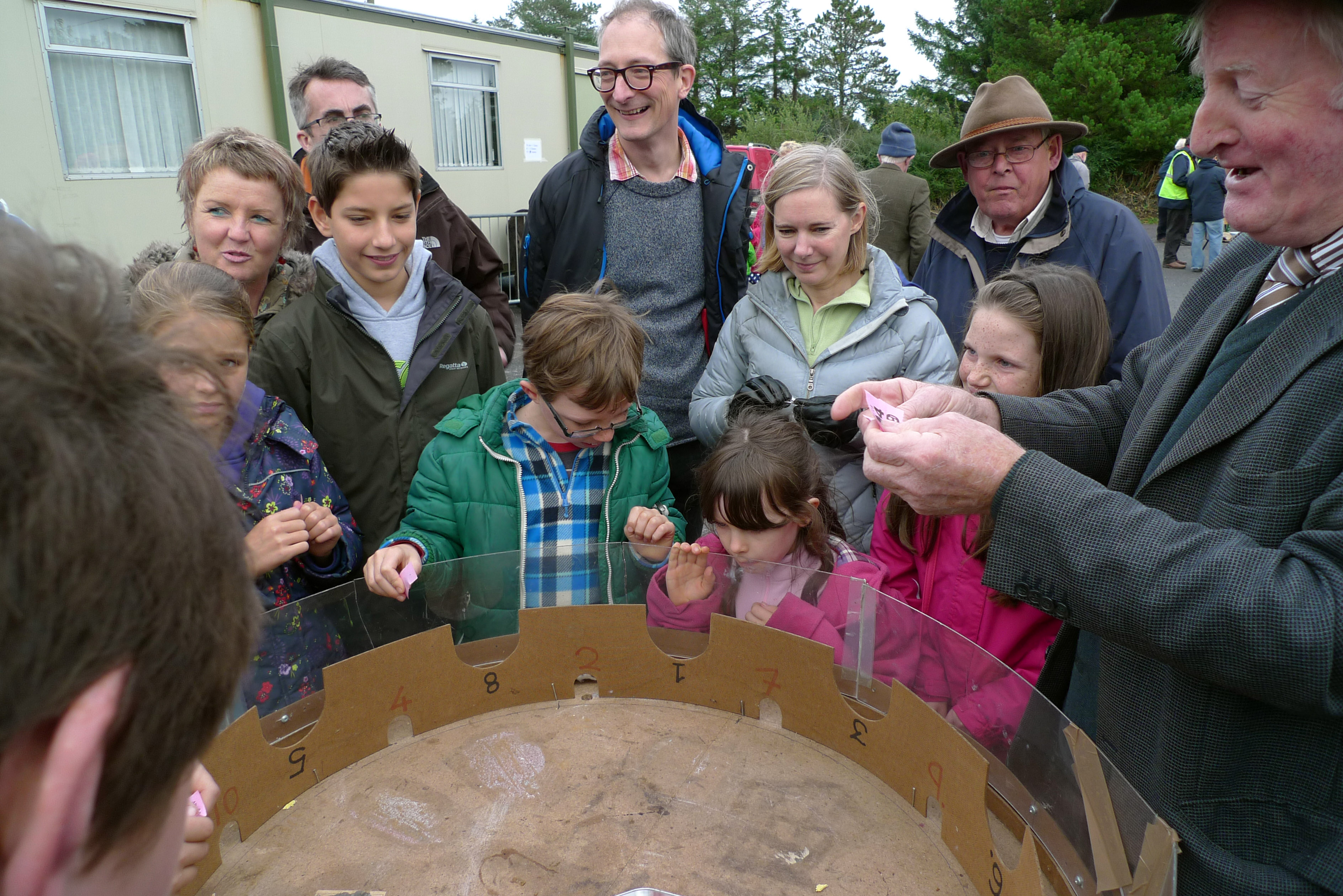
In Ballydehob (our local community) it’s time for the annual Thrashing. This event always takes place just before Hallowe’en, a festival which nowadays overlays the old Celtic Samhain (1 November) – when the souls of the departed are remembered. Here it’s a good time to bring in the threshing machine and lay up sacks of grain in the barn. It’s also a reason to hold a fair and show off vintage cars and tractors, to make butter, to watch performing dogs, to gamble on mouse racing – or just to chat over a cup of tea.
Byway in Ballydehob
Don’t miss it!
The Thrashing
Mouse Bookie
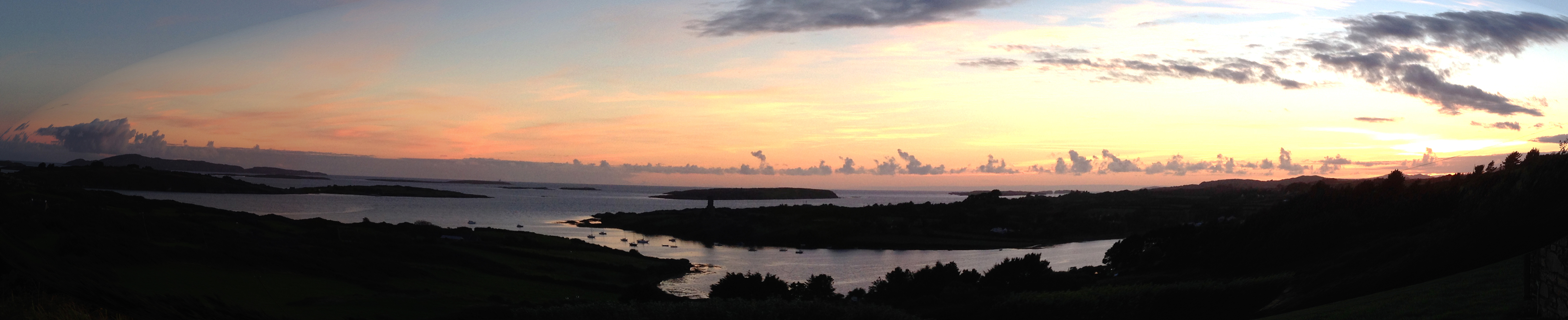
We look forward to the turning seasons: what we see from Nead an Iolair changes constantly, is never dull, and can’t be taken for granted. Skies can be steel grey – or still as gloriously blue as they were in the summer; and our sunsets can be even more beautiful.
T’was on an August morning, all in the dawning hours,
I went to take the warming air, all in the Mouth of Flowers,
And there I saw a maiden, and mournful was her cry,
‘Ah what will mend my broken heart, I’ve lost my Laughing Boy’
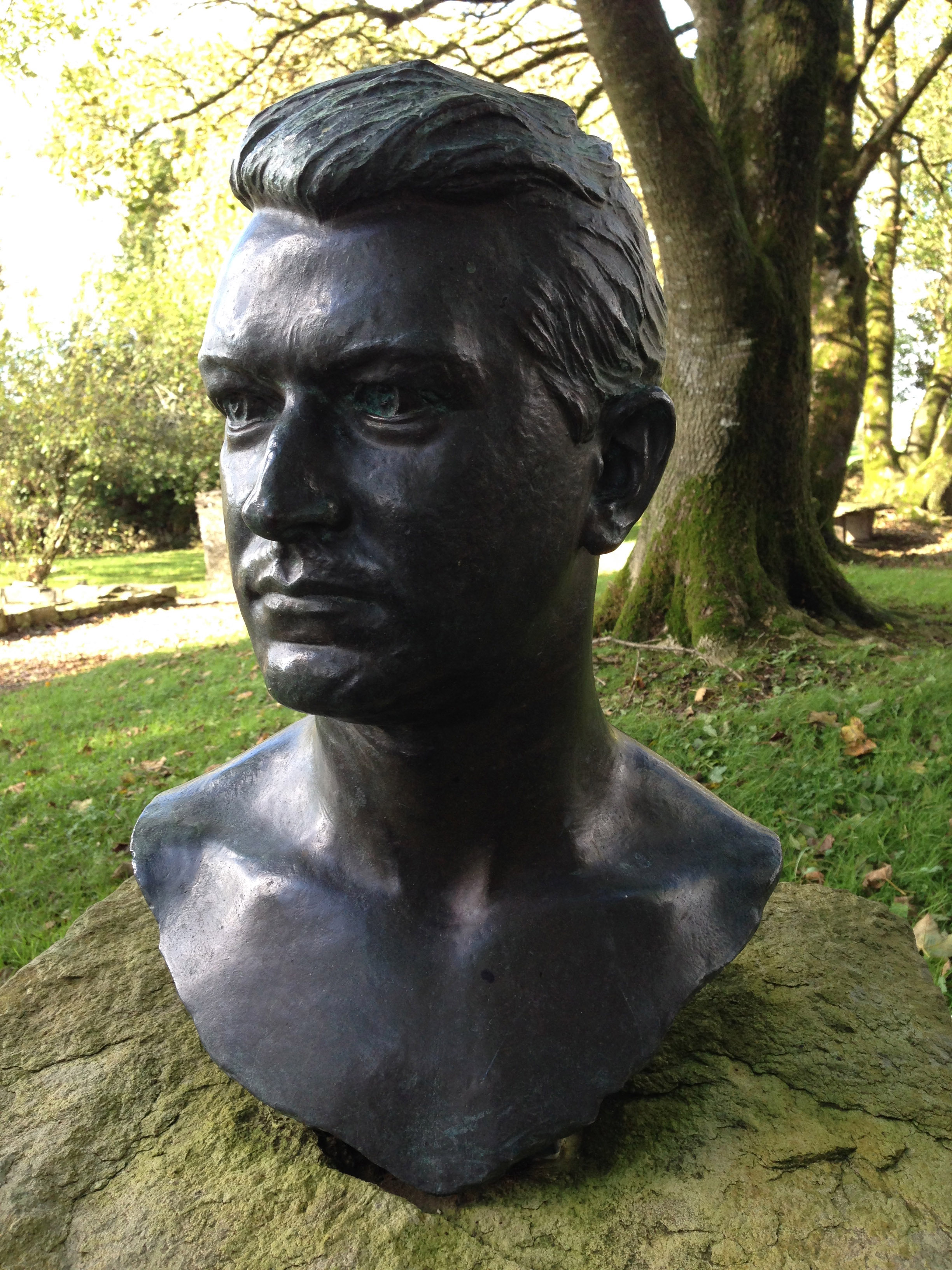
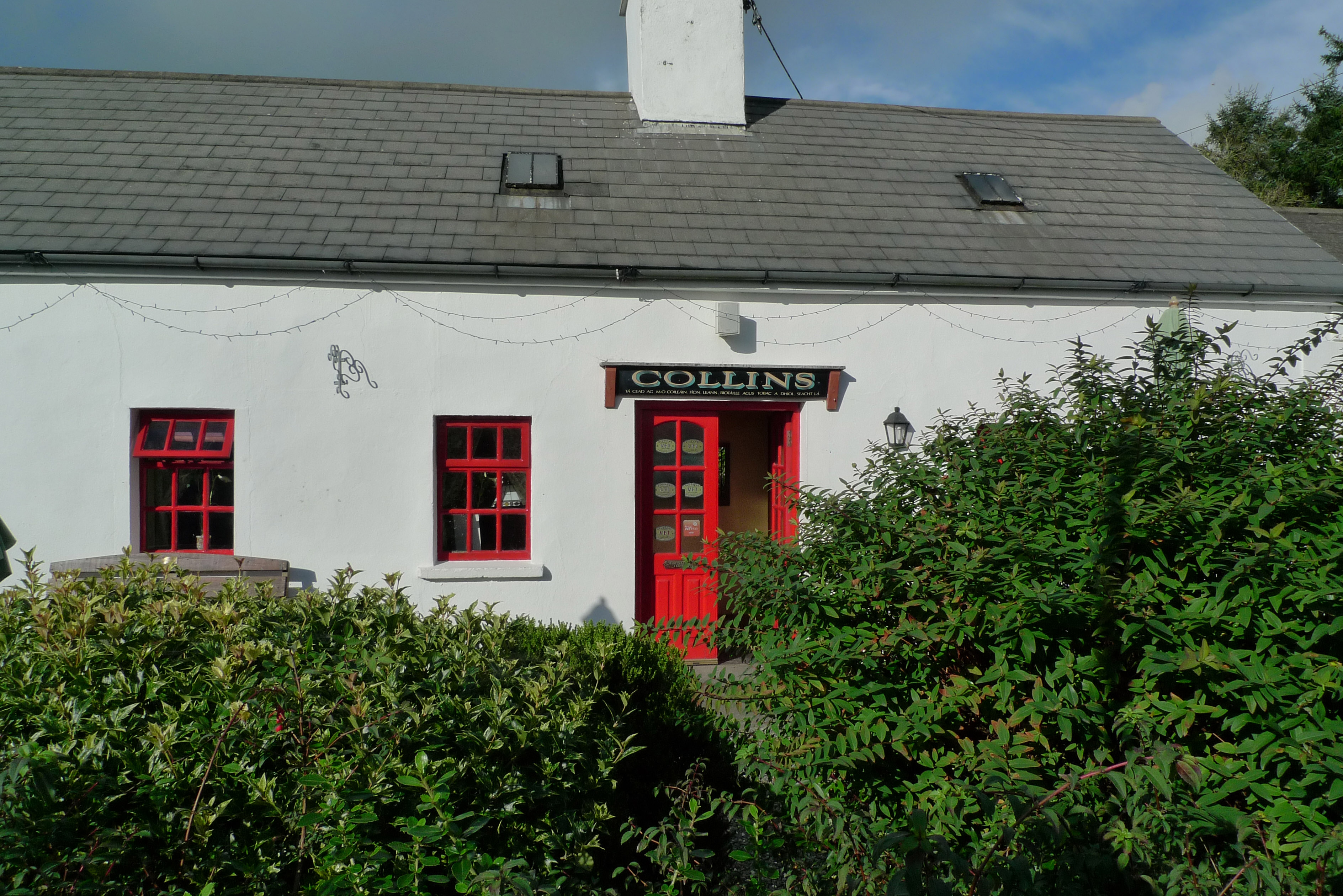
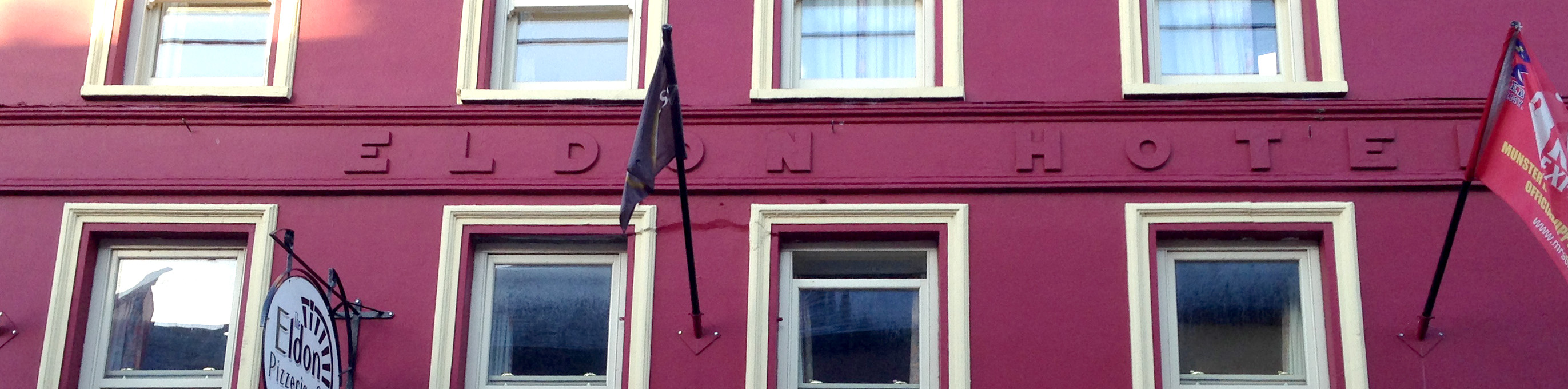
Let’s face it: our travels today were a pilgrimage. We went out in search of a hero and we found shrines, monuments, places of devotion and folktales. It all started last week, which was ‘Rebel Week’ in Cork County and Skibbereen was one of the centres of activity. We were attracted by a flyer for a ‘Tribute to Michael Collins’ being held in the Eldon Hotel – a venue which we now know features in the story of the man: it claims to be the place where he ate his last meal. The ‘Tribute’ proved a bit of a damp squib as the advertised speaker didn’t turn up, but as compensation we were shown a 1973 British film made and zealously narrated by a very ebullient Welsh actor, Kenneth Griffith: Hang Up Your Brightest Colours. This film extravagantly documents the life of Michael Collins and the Irish struggle for freedom in the early twentieth century, and was considered ‘incendiary’ in a time when The Troubles were boiling over; consequently its showing was banned for twenty years. We determined to visit some of the significant locations that featured in the film and which are not too far away from Nead an Iolair.
Master of Oration
West Cork is Collins’ country: he was born in Sam’s Cross, near Clonakilty – the youngest of eight children – in October 1890. His father Michael had married Marianne O’Brien (23) when he was 60. Already the folklore kicks in: Michael the elder was the seventh son of a seventh son and therefore gifted with powers of divination. On his deathbed he predicted that our hero – then aged 6 – would one day “…be a great man. He’ll do great work for Ireland…” Also, there’s a touch of mystery about Collins’ birth: the records state he was born on 16 October whereas on his tombstone the date is given as 12 October.
The Collins grave in Rosscarbery
In the burial ground in Rosscarbery we found the family grave. There is a modest entry on the headstone for young Michael, recording that he died on 22 August 1922 (he’s actually buried in Dublin). That’s about all that’s modest about the Collins story. He was known as The Big Fella, as much because of his reputation and charisma as for his physique.
You can’t miss his birthplace – it’s signposted for miles around the area of Woodfield – but the family farmhouse isn’t there! It was burnt to the ground by the Auxiliary Division of the Royal Irish Constabulary in 1920, during the Irish War of Independence (and not by the Black and Tans, which is often claimed). However, the site has been preserved as an essential waymark of the Michael Collins pilgrim trail.
For anyone who doesn’t know I had better just say that Michael Collins – soldier, freedom fighter and politician – was one of the key figures in the long Irish struggle for Independence – a conflict that was won, after a fashion, in December 1921 when the irish Free State was set up. Collins signed the Treaty in his then role as ‘Chairman of the Provisional Government and Commander-in-chief of the National Army’ and (legend has it) pronounced that he was also signing his own death warrant (the great folk heroes usually foretold their own death). The conditions of the Treaty, and the exclusion of some of the northern counties from the new state caused such dissension that a civil war ensued, and Michael Collins fell as a victim to that war as he toured through his home county of Cork on 22 August 1922.
The Eldon, Skibbereen
His convoy left the Eldon Hotel, Skibbereen, in the early afternoon for Cork city and was ambushed at Béal na Bláth, on a minor road between Clonakilty and Macroom. During the skirmish Michael Collins was shot in the head and died instantly. He was the only casualty of that confrontation.
Béal na Bláth
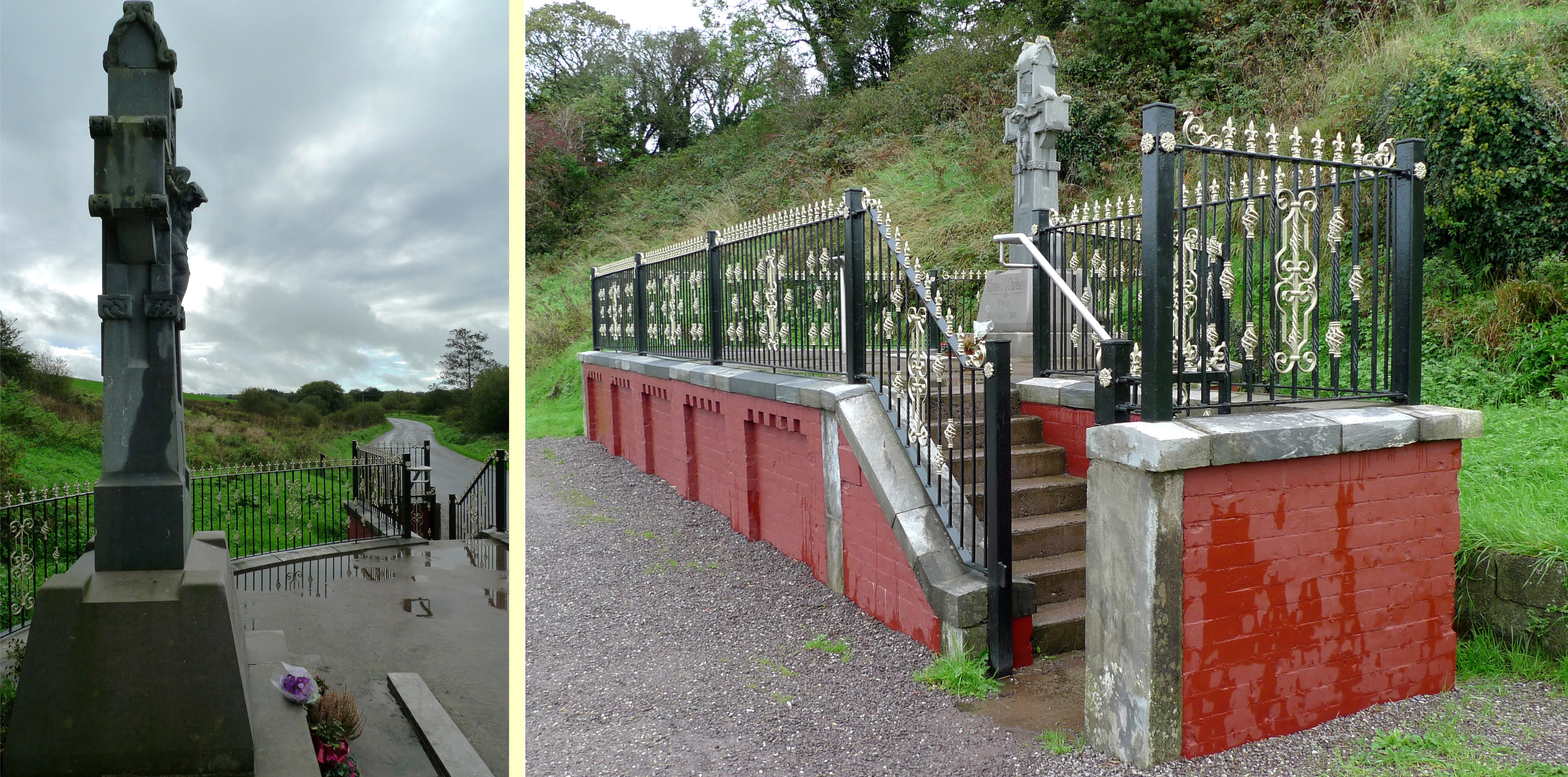
Béal na Bláth may mean ‘Gap of the Blossoms’ but there is some debate as to its correct translation: ‘Mouth of the Ford of the Buttermilk’ is one suggestion. Brendan Behan, in his folk ballad on the death of Michael Collins (the first stanza of which starts off this post), goes for ‘Mouth of Flowers’. We began our pilgrimage here on a wet Sunday morning. The place had a sombre atmosphere and the monument that we found – although unmistakably Messianic – is grim. Crowds come to this site, especially on the anniversary of the assassination. A white stone marks the actual spot where he fell: the fine details seem all important.
But – sifting through these details when I was trying to assemble this piece – I realise that there is so much that is apocryphal or contradictory in the various accounts, not just of his death but with many aspects of his life. And it’s the stories that will win out in the end. Michael Collins is a real national hero – quite rightly – but he’s on his way to becoming a folk hero – something different. He could be a Saint (he did after all perform a miracle in bringing together so many different factions and feelings to found the beginnings of modern Ireland) but to me he is more likely to end up in the ranks of the great Hero Warriors of Irish mythology such as Cu Chulainn, Medb or Finn McCool – or even the Gods. I wish I could be around to hear his sagas told in a few hundred years from now.
In a previous post Finola mentioned gorse wine and it struck us that non-Irish readers may not be familiar with gorse – that ubiquitous, loved and hated shrub that covers the Irish countryside above a certain elevation.
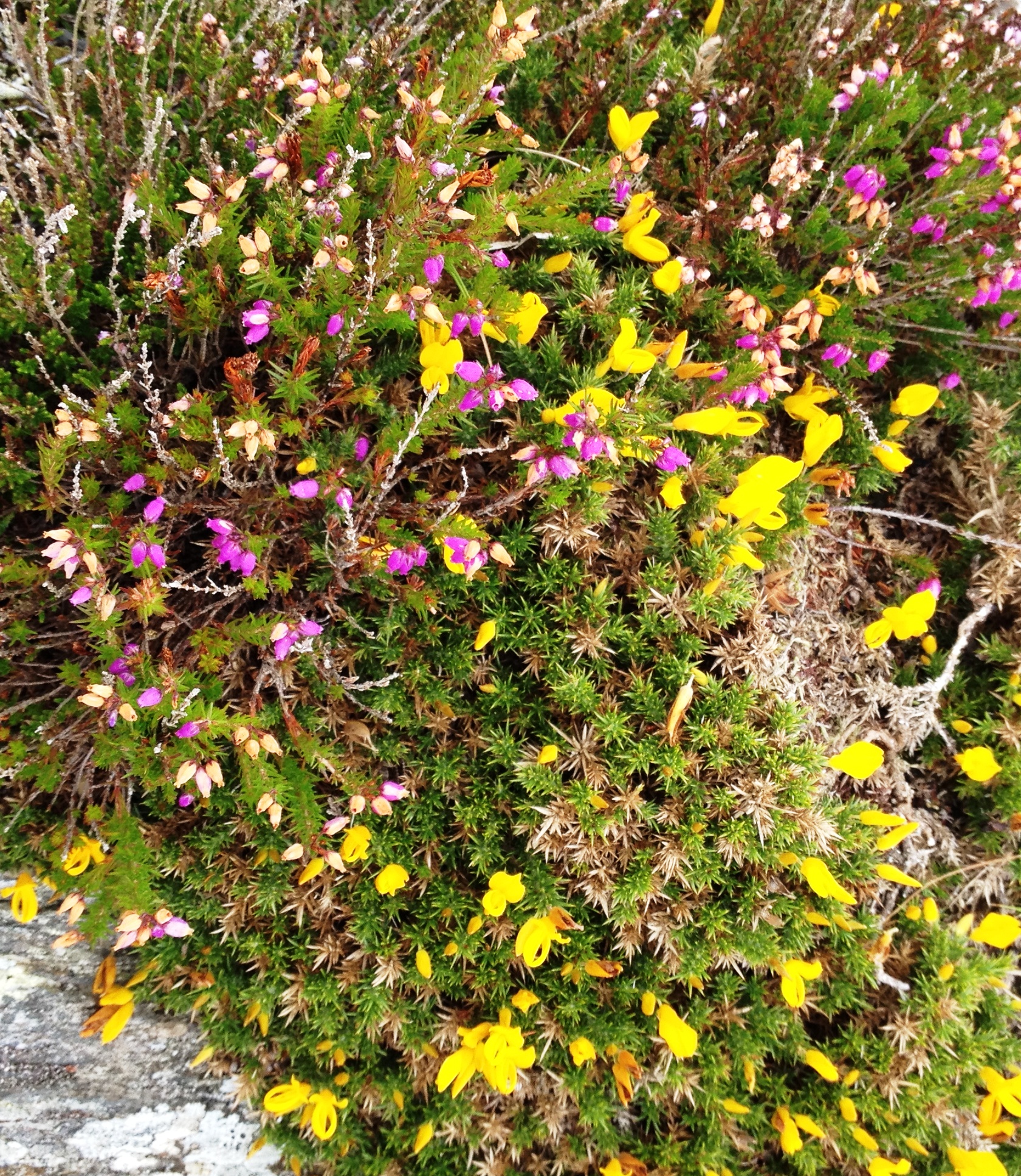
We love gorse because of the flowers – bright yellow flowers that bloom all year long and lend vibrancy to the landscape. In summer and autumn when the heather is also in bloom the contrast between the yellow of the gorse and the purples and pinks of the heather makes the countryside come alive with colour. In the spring and early summer when the flowers burst forth the hillsides look as if they are lit from within, but many bushes hold on to hints of yellow right through the winter. This property of gorse is immortalised in the Irish saying when gorse is not in blossom, kissing’s out of fashion.
We hate gorse for two reasons – the thorns and the way it takes over everything. To cut it back, chop it down, venture near it, you have to wear a suit of armour. Hiking through it is painful or impossible – even the low-growing strands manage to weasel their way into your socks and the thorns can pierce a sturdy boot and make every step torture.
Before and after
Here at Nead an Iolair the garden has grown wild over the years. In a garden on an Irish hillside, this means that the gorse has taken over. The hill behind the house was covered in it, some even encroaching on the back wall. Given the local farmers’ habit of setting fire to the hillsides in the spring, this was a significant hazard.
Burning hills
The area to the left of the driveway was sporting enormous stands of gorse, some as tall as trees. We could see the tips of other plants struggling for survival in this jungle but, apart from a small island of grass, the area was impenetrable.
We can see the house!
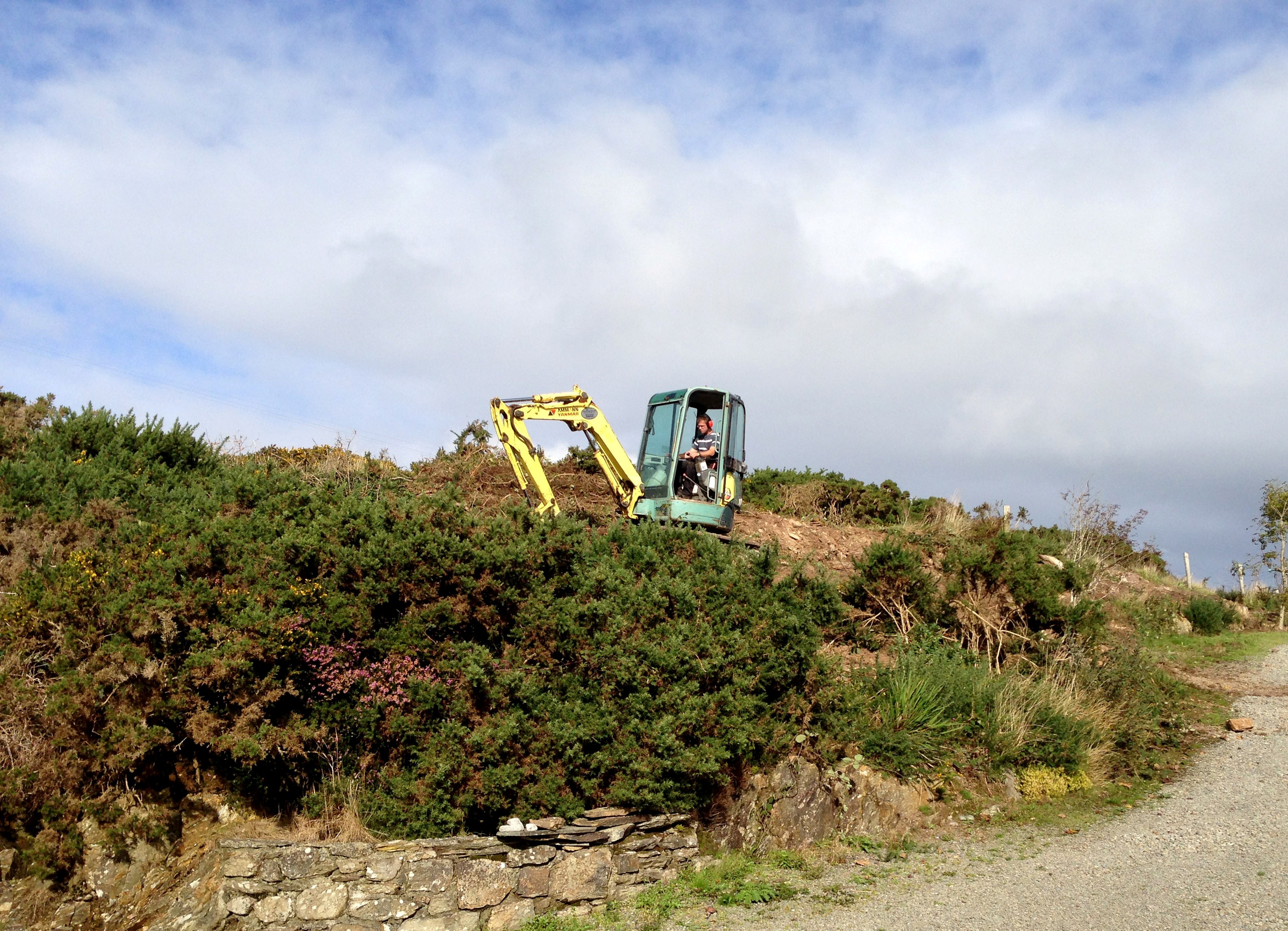
This week we tackled the problem. It has taken several days, a digger, chainsaws and copious amounts of sweat but by Friday victory was declared and where there had been a gorse forest there is now a haggart (an Irish word for a small field beside the house) surrounded by a beautiful stone wall that we knew was in there but couldn’t see. We also unearthed a standing stone, giving us our own enigma to ponder. While we are not contemplating a goat herd for the haggart, we do have dreams of a field of bluebells one day. And maybe some gorse wine.
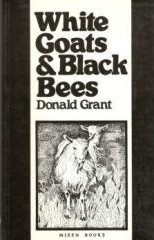
I’ve just finished reading White Goats and Black Bees by Donald Grant. Donald and Mary Grant, a couple of journalists based in New York, impulsively decided to jump off the career treadmill and become farmers in Ireland in the 1960’s. They bought a small acreage on the Sheep’s Head, where they raised goats and ducks, cultivated an enormous vegetable garden, and by degrees and sheer hard work turned themselves into ‘peasants’.
This out-of-print book was drawn to my attention by my friend, Aideen, whose father, while in New York, had encouraged the Grants to consider West Cork. Aideen visited the Grants as a young woman and still has memories of their gorse wine.
As a Back to the Land narrative, this is a classic. Earnest urban professionals consulting Department of Agriculture pamphlets, conducting slug patrols, keenly observing the social structure of their goat herd and duck flock, battling the wild Atlantic storms, making cheese and smoking hams: this is the kind of thing that sent thousands of idealistic young people into communes all over the world, or in the case of Ireland, into the hills behind Ballydehob. The need to be accepted by the locals, a thread that appears in so many Year in Provence-type books, is coupled with the outsider’s puzzlement at the impenetrability of some aspects of local behaviour.
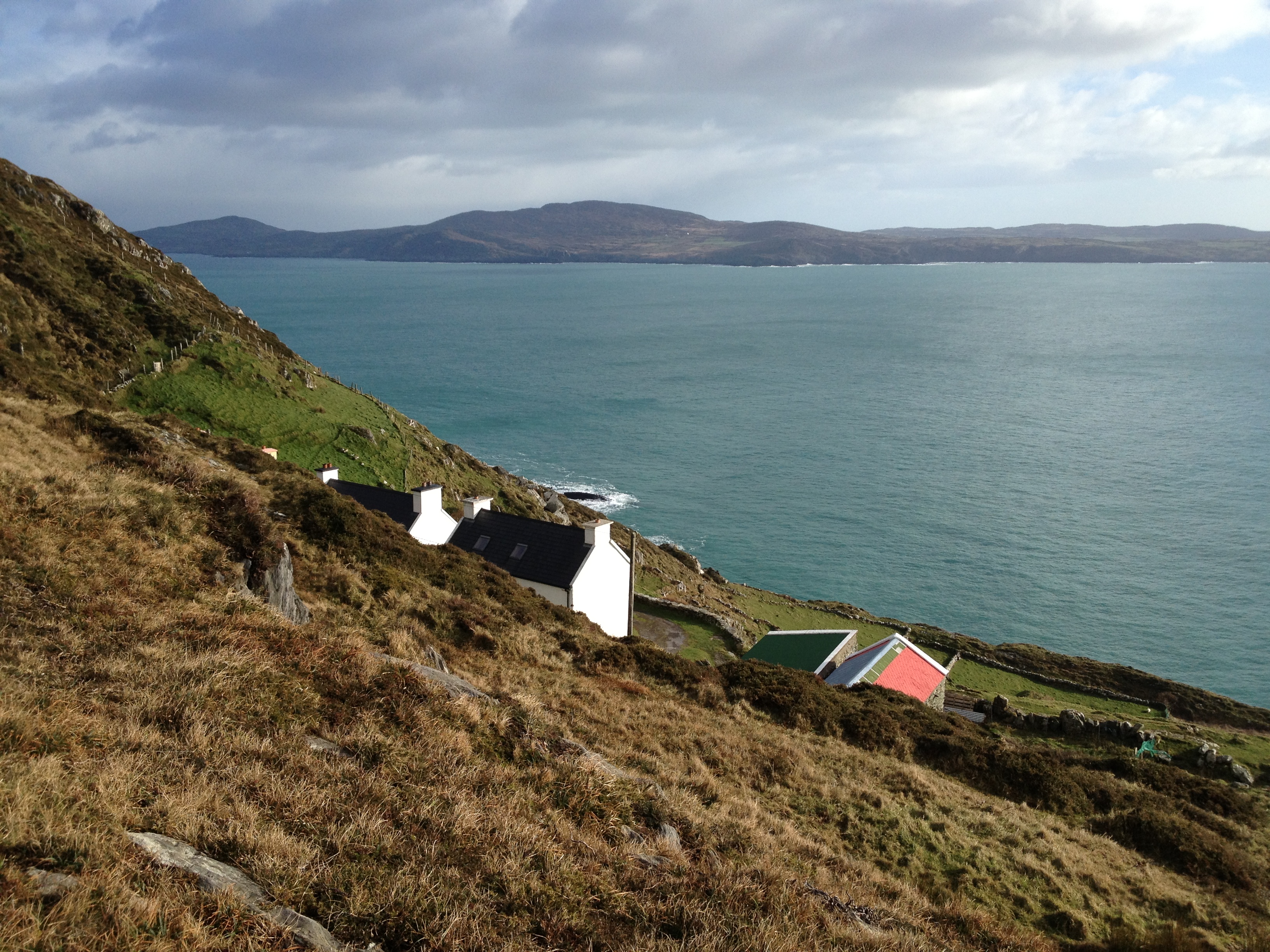
The Sheep’s Head, looking across Dunmanus Bay
Grant is not a gifted writer when it comes to scenery: …Trees wore their autumn colours. Streams tumbled down rocks, sparkling… Nevertheless he does slowly build up a picture of a man coming to grips with his place in the natural world and his relationship with animals and the elements. Perhaps the strongest sections of the book are those in which he chronicles the hard work and resourcefulness that it takes to sustain life on a smallholding, the setbacks and difficulties he and Mary encounter, and the support of the neighbours and community without which it would be impossible.
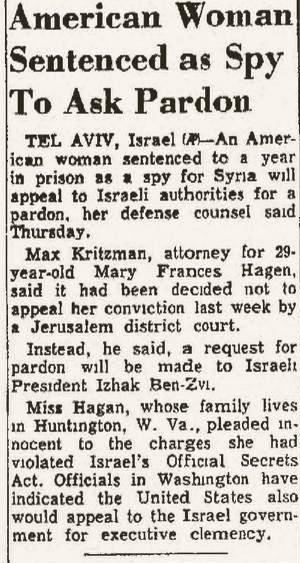
The story of Donald and Mary took a strange turn for me when I decided to Google around a bit, digging for more information about them. Astonishingly, Mary was convicted in Israel in 1956 of spying for Syria! She spent a year in an Israeli prison, eventually applying for a pardon. According to one account, she had fallen for a Syrian diplomat who persuaded her to take photographs in Israel for the Syrians. She was so unsophisticated a spy that she was captured on her first day. She and Donald met when they shared a desk at the United Nations, where they were both correspondents: he for the St. Louis Post-Dispatcher and she for Look Magazine. Little did the people of Doneen know of the chequered history of the American woman who introduced goat’s cheese to their far-flung parish.
Donald and Mary continued to live on the Sheep’s Head and eventually in Bantry for the rest of their lives. While Donald died in 1983, Mary lived until last year, 2012. Both are buried in their beloved Kilcrohane.
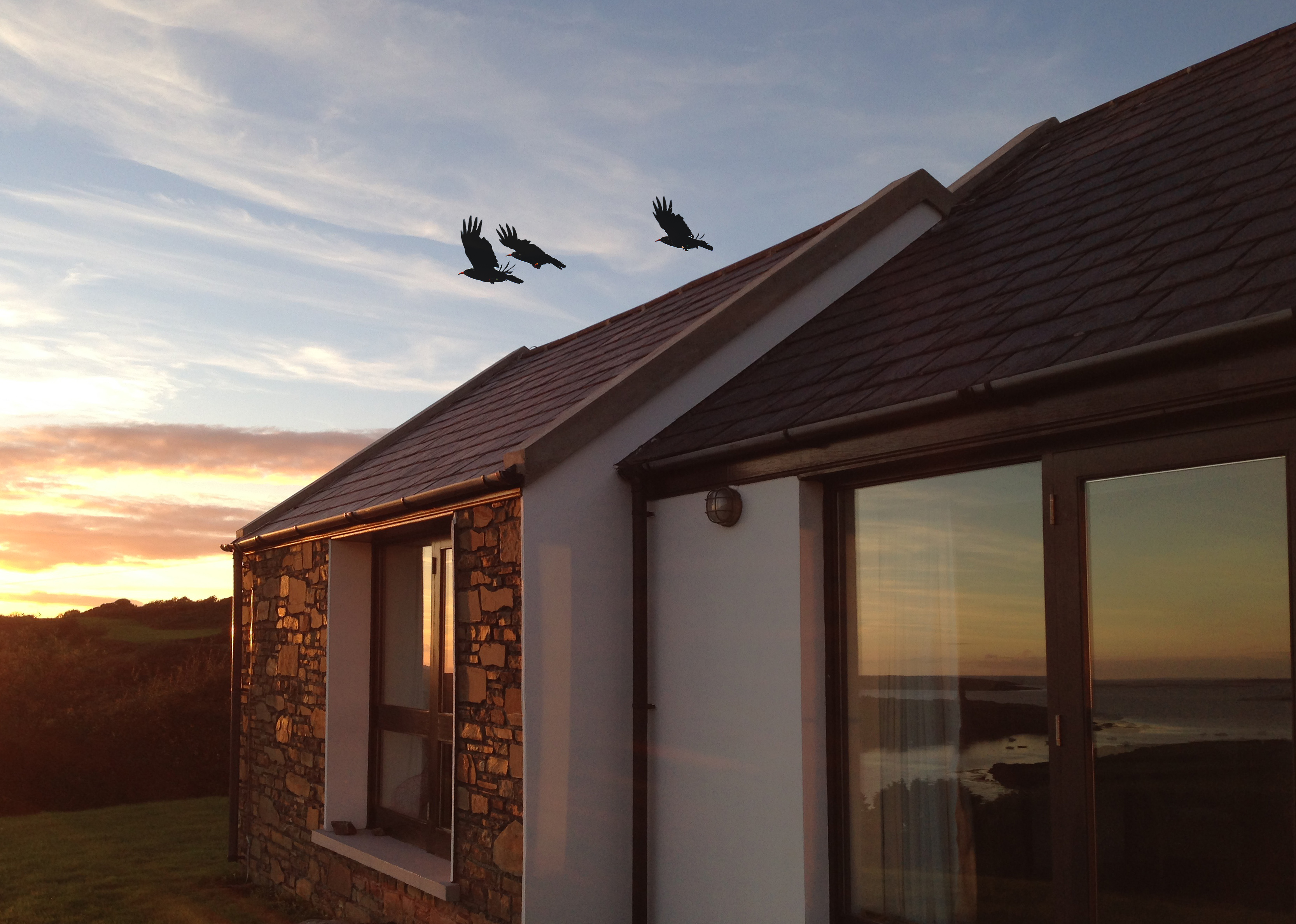
One of the many treats of living up here in Nead an Iolair is the frequent appearance of a group of Choughs. Towards the evening we hear them on our roof, chattering to each other. Chatter of Choughs, by the way, is the correct collective noun: all the Corvid family seem to have interesting ones – Murder of Crows, Parliament of Rooks, Conspiracy of Ravens, Tiding of Magpies… These are just some of a very long list: do you of know any to add to it?
Autumn evening at Nead an Iolair
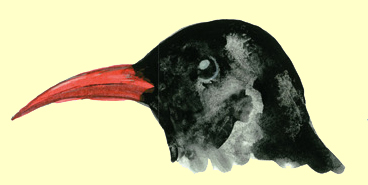
Choughs are distinctive birds, but easy to mistake for other Corvids when in the sky. Look out for curved red bills, and red legs and claws. Also listen for the chatter, in which the bird tells you its name:
It won’t tell you its latin species name, however: Pyrrhocorax-pyrrhocorax!
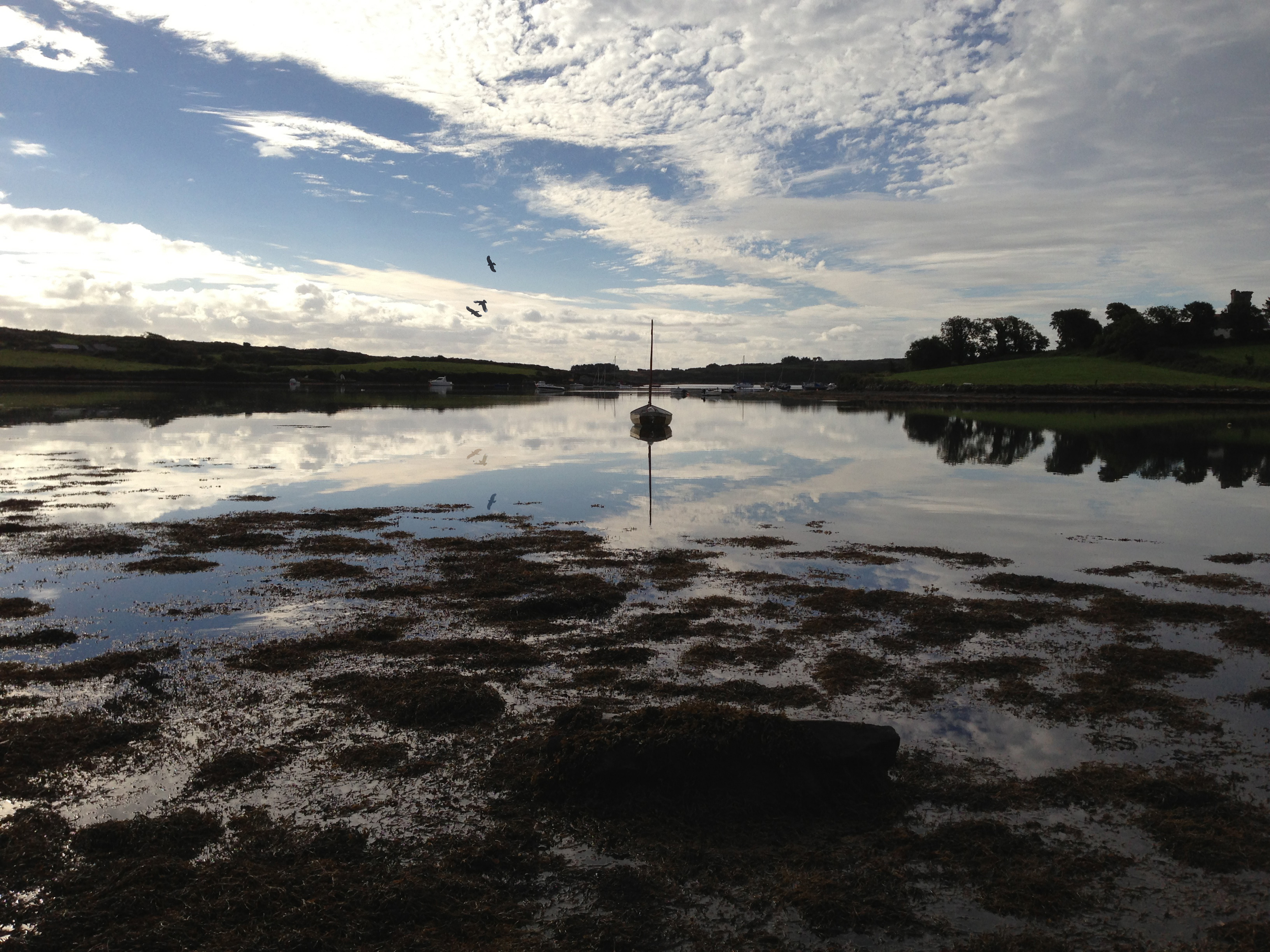
Birds on line!
As an erstwhile resident of Cornwall I have a particular interest in the Chough. This bird appeared on the old Cornish coat-of-arms, together with a tin miner and a fisherman (the two latter have vanished on the new one – perhaps a poignant comment on changing times), and was once a familiar sight on the coast. Changing habitat and trophy hunting led to a decline in the British Chough populations recorded by naturalists as early as the eighteenth century. The last breeding pair was seen in Cornwall in 1947, and not long afterwards the Cornish Chough was pronounced extinct. Amazingly, the new Millennium saw the Chough returning naturally to Cornwall, with three birds taking up residence on the Lizard peninsula and breeding successfully. It’s reckoned that there are now between forty and fifty living on that far western coastline. On my last days in Cornwall before coming here to Ireland I was walking at Nanquidno, near Lands End and – as if to wish me ‘goodbye’ – there was a pair of Choughs foraging happily on the path in front of me! Where did the new generations of Cornish Choughs come from? DNA tests have given us the answer: Ireland…
Cornwall’s old and new logos: and the ‘Raven King’ – in folklore, Choughs and Ravens are interchangeable
Cornish nationalists, who are campaigning for a devolved parliament, are delighted by the come-back. “This will be seen as a symbol of hope,” said Dr Loveday Jenkin of the nationalist party Mebyon Kernow. “The re-emergence of the Chough is a symbol of the re-emergence of the Cornish nation.”
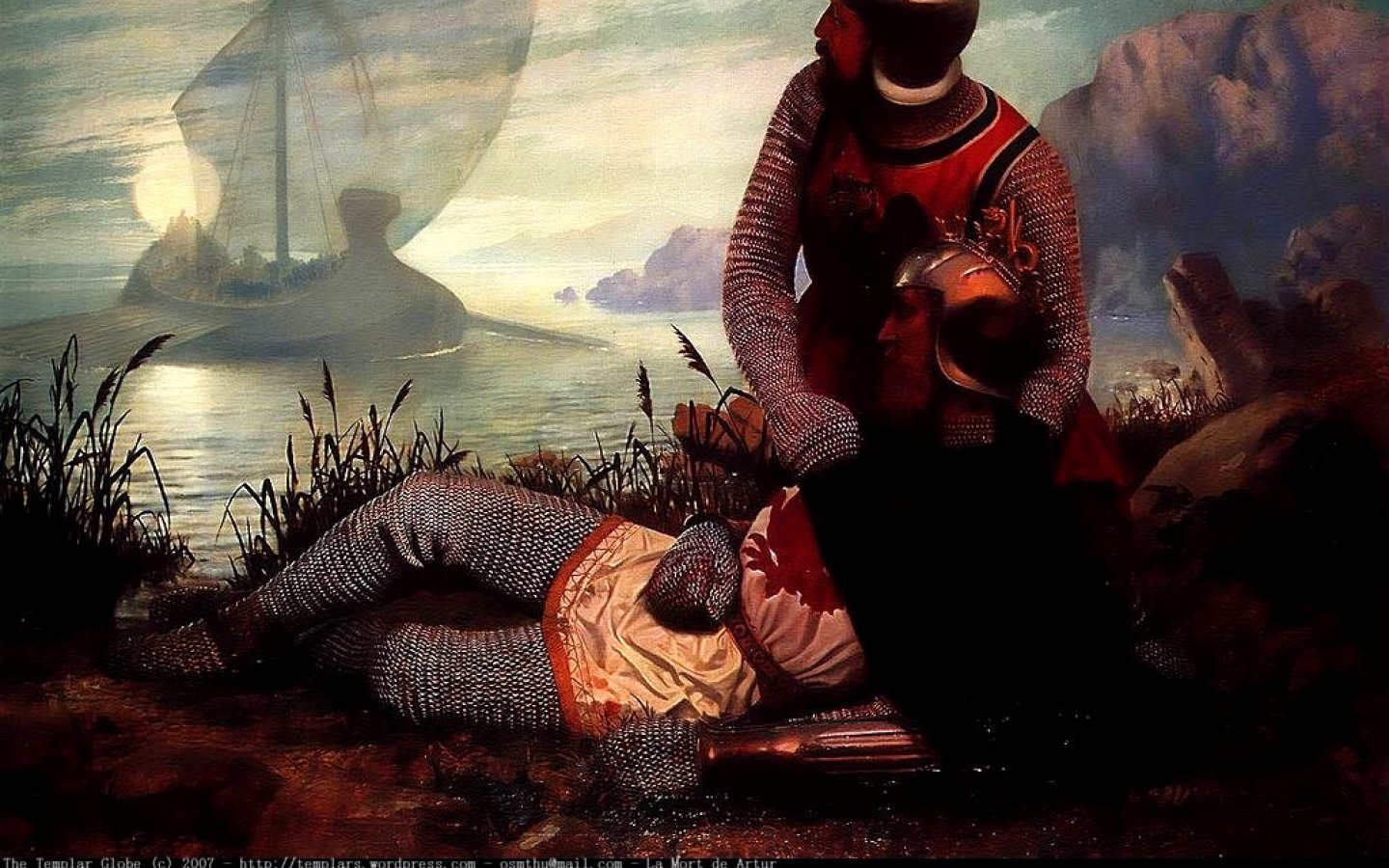
King Arthur’s last battle
Cág Cosdearg is the name of the Chough in Irish – this is a literal translation of ‘red-legged Jackdaw’. There are a number of legends attached to this bird: King Arthur turned into one, and the red beak and legs are symbolic of the blood shed at his last battle (presumably this is another link with Cornwall). The Chough was known to Daniel Defoe as a ‘fire raising bird’ in his …tour thro’ the whole island of Great Britain…
“…It is very mischievous; it will steal and carry away any thing it finds about the house, that is not too heavy, tho’ not fit for its food; as knives, forks, spoons and linnen cloths, or whatever it can fly away with, sometimes they say it has stolen bits of firebrands, or lighted candles, and lodged them in the stacks of corn, and the thatch of barns and houses, and set them on fire; but this I only had by oral tradition…”
I like the Irish expression, “You’ll follow the Crows for it” meaning that a person would only appreciate something after it had gone.
Watching our Choughs perform their aerobatics up here is a delight – I’ve seen them turning cartwheels in the air, and they even appear to fly upside down at times. Sylvia Plath puts it wonderfully in Blackberrying:
–
“…Overhead go the choughs in black, cacophonous flocks—
Bits of burnt paper wheeling in a blown sky.
Theirs is the only voice, protesting, protesting…”
A classic piece of Rock Art – on display in Dublin’s National Museum
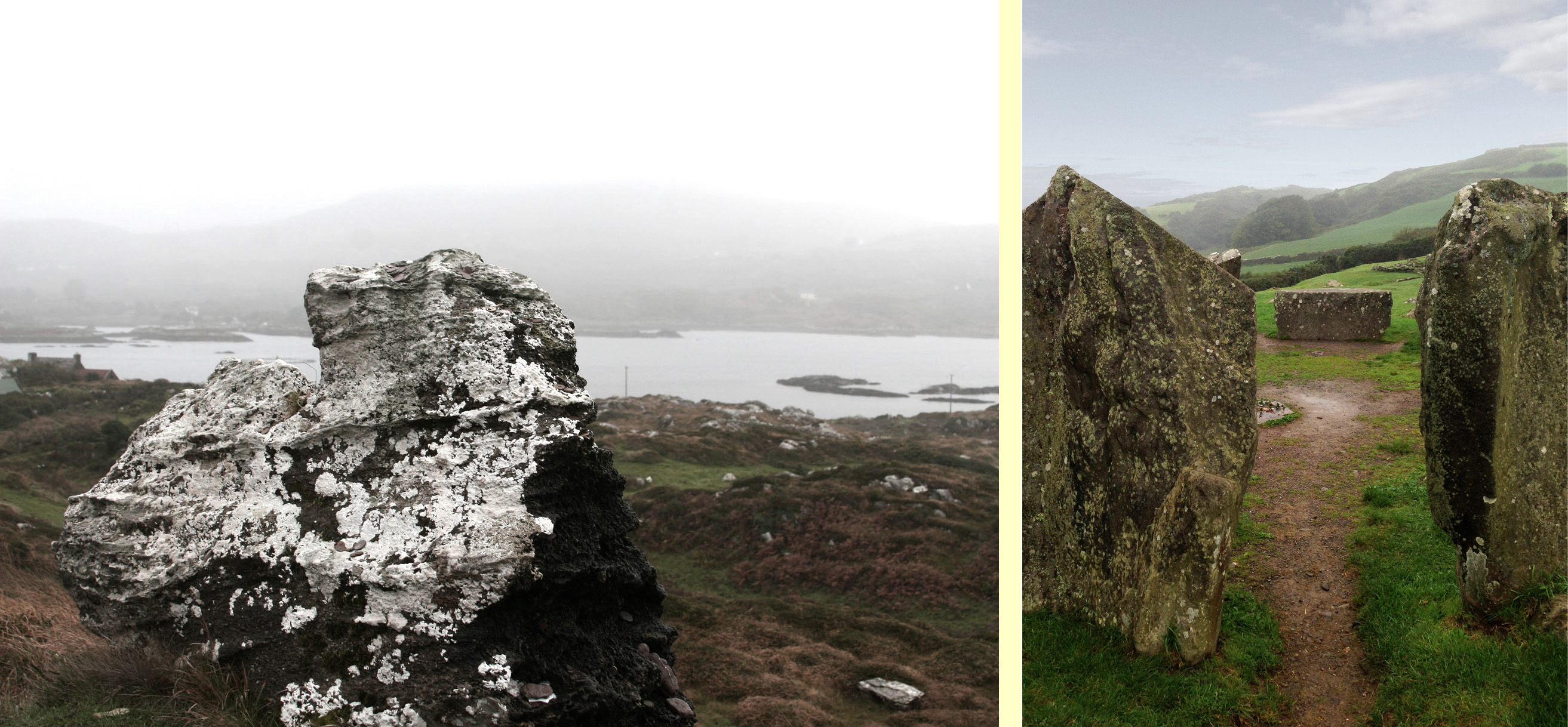
As we enter October, we begin to look towards the dark part of our year – and to think of the Cailleach who, in these western parts of Munster, is known as The Hag of Beara: in early tales she is pictured as a prolific figure responsible for shaping the landscape by carrying huge stones in her apron and dropping them to form hills and outcrops, as well as ancient standing stones, circles and alignments. She is also seen wielding a great hammer with which she sculpts and refines her geological creations. She has had seven periods of youth, one after another, so that every man who lived with her came to die of old age. Her grandsons and great grandsons are so many that they make up entire tribes and races. She falls asleep on Bealtaine (May 1st) and wakes again on Samhain (November 1st) – we will be looking forward to the storms which will herald her coming. Until then she rests on a hillside overlooking Coulagh Bay, beyond Allihies on the remote Beara Peninsula, where her rocky incarnation depicts her as both a young maiden and an old crone.
Monuments in the mist: The Hag of Beara and Drombeg Circle
Ireland is stuck in a stream of warm air coming up from the tropics at the moment: this makes temperatures two or three degrees higher than the norm for early autumn, but also causes a damp landscape shrouded in fog: we have missed our view of the Fastnet for several days.
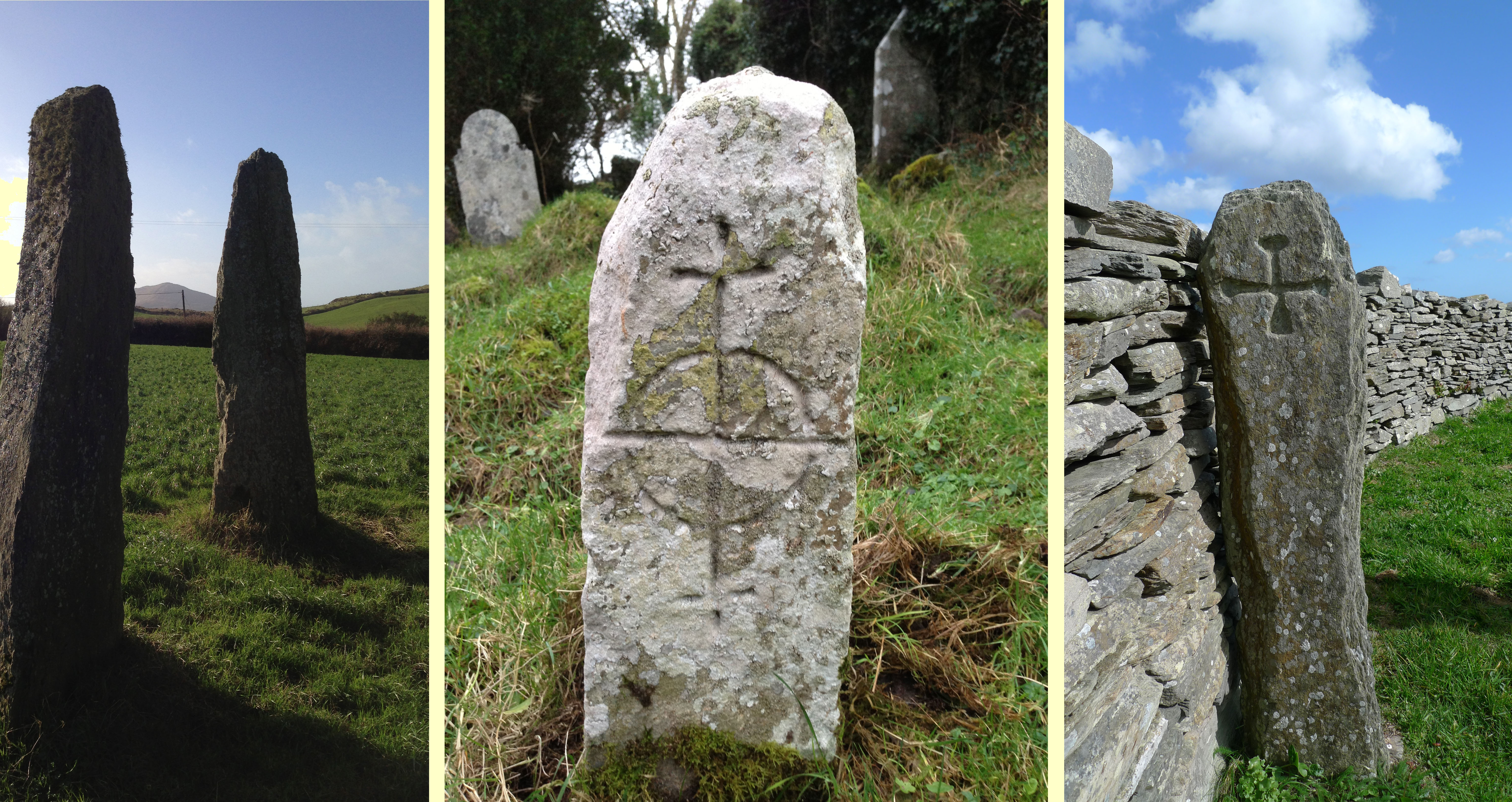
Some West Cork standing stones
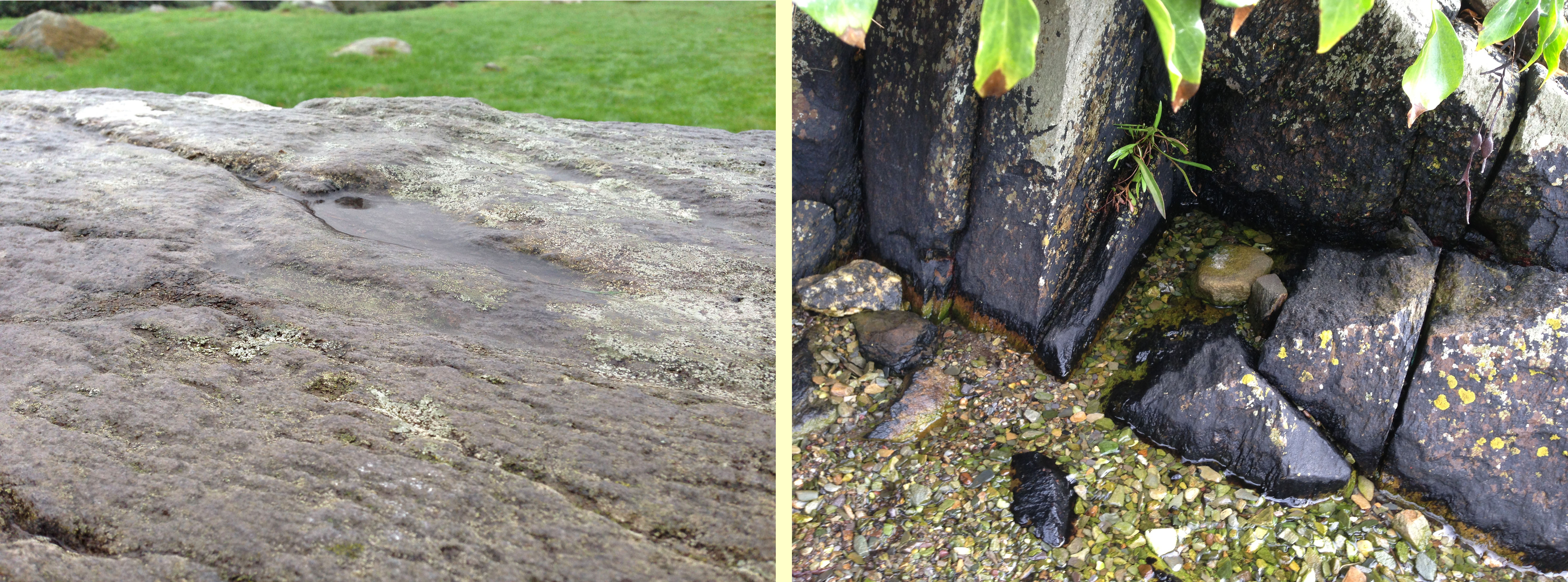
The weather hasn’t hindered our exploration of Ireland’s old stones – the terrain created by the Hag. Yesterday we went to Drombeg Circle: a popular site for tourists. Many visitors will fail to notice the rock art carved on the recumbent stone that points out this megalithic monument’s alignment with the winter solstice. At the foot of another stone we found some enigmatic markings which I readily interpreted as a dancing Hare.
Drombeg rock art – and a mysterious holy well in Rossbrin Cove
Bishop’s Luck – a megalith close by Nead an Iolair: according to local legend, a bishop is buried under this!
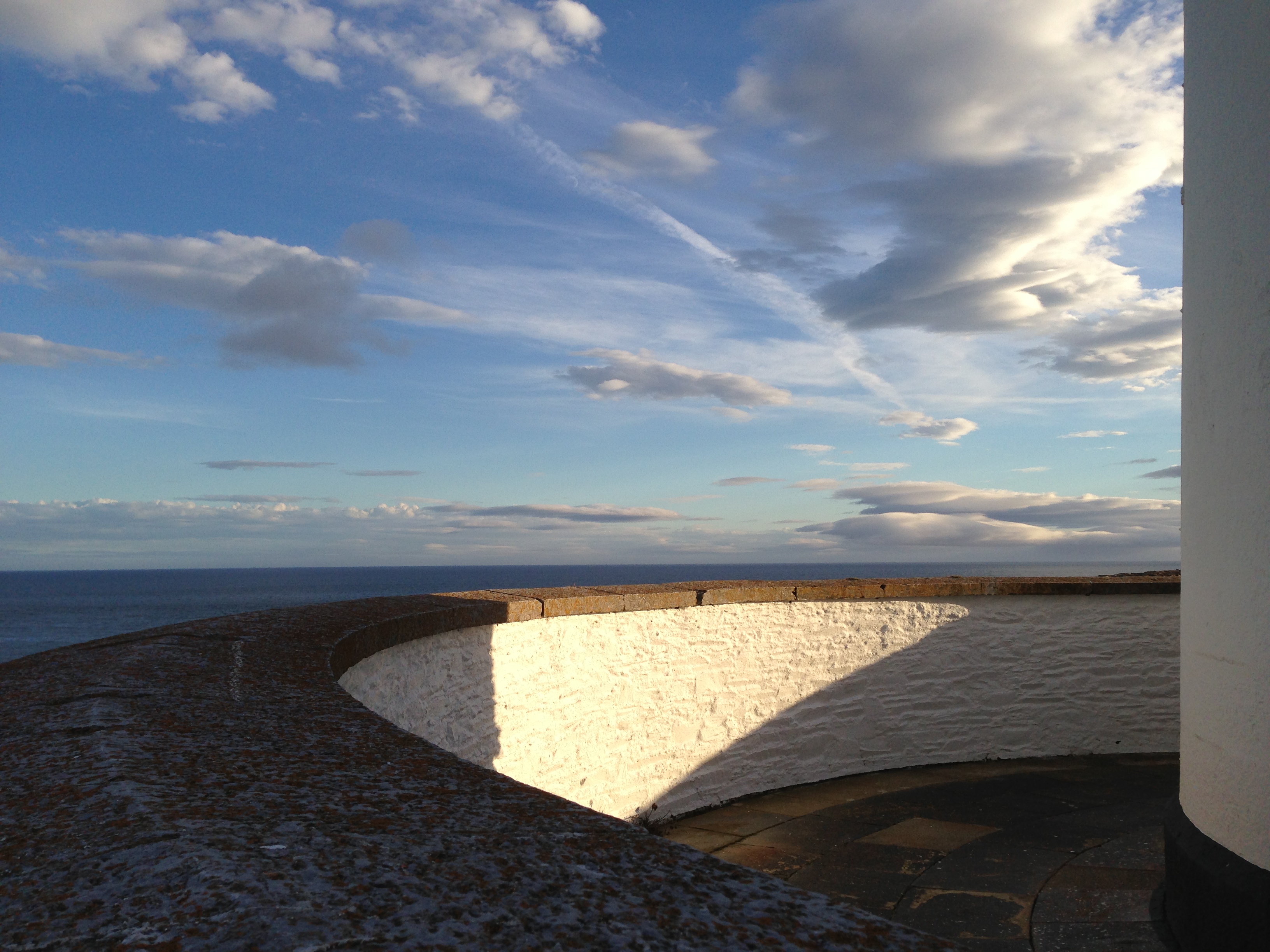
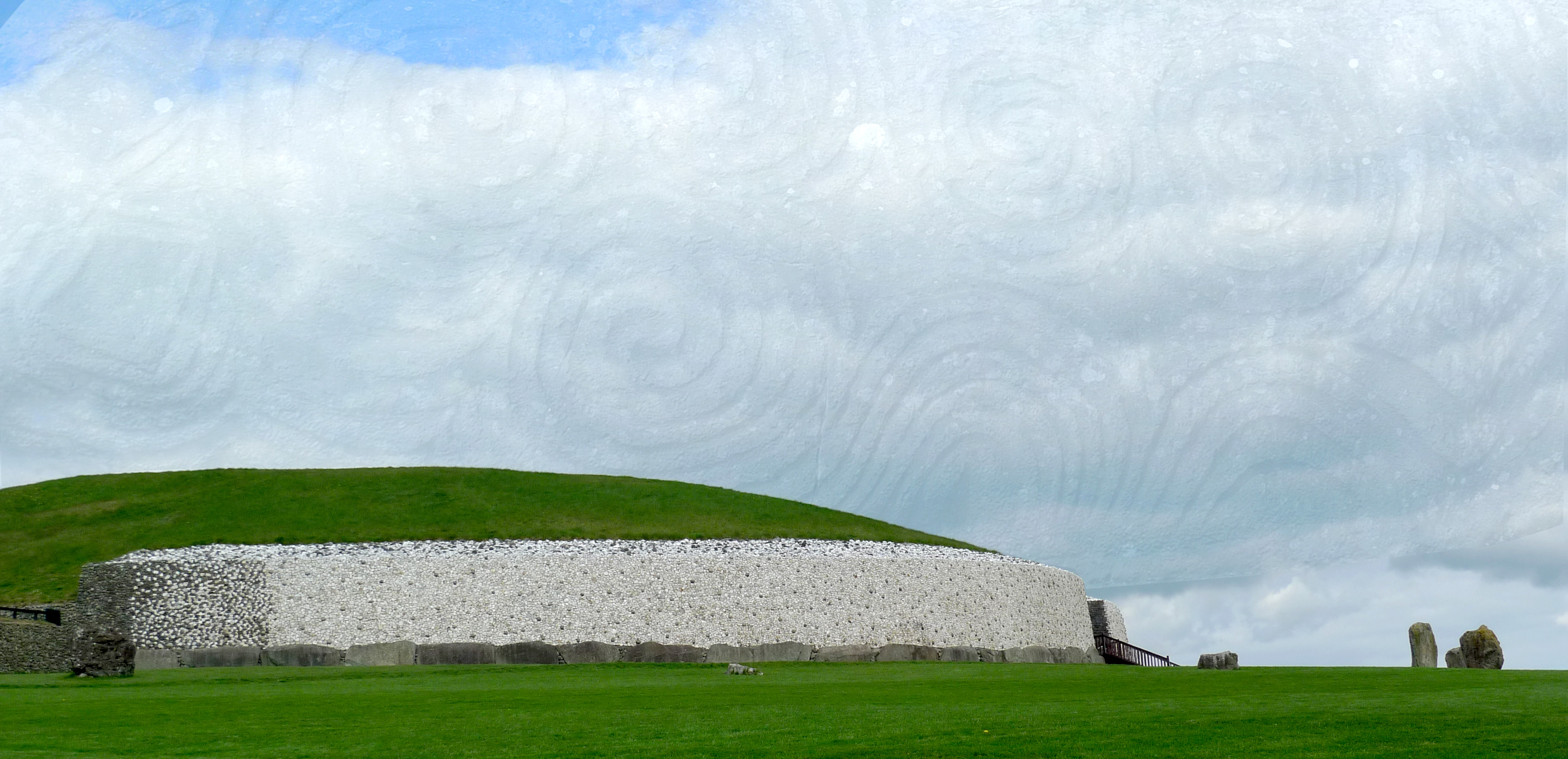
Ireland’s history is written in stone: the natural landscape; megalithic monuments; buildings – cottages, castles, farms, churches, lighthouses; every townland is rich in examples. Building material, track surfacing, grave marker and artists’ canvas (perhaps): stone has been a resource to aid human occupation for thousands of years.
Stone in context: Galley Head Lighthouse
The ultimate Neolithic stone monument – Newgrange Passage Grave, County Meath – the spectacular quartz facing is a conjectural reconstruction
Welcome to the UCD Library Cultural Heritage Collections blog. Discover and explore the historical treasures housed within our Archives, Special Collections, National Folklore Collection and Digital Library











 Roaringwater Journal