The Souvenir Shop

Free State Jam

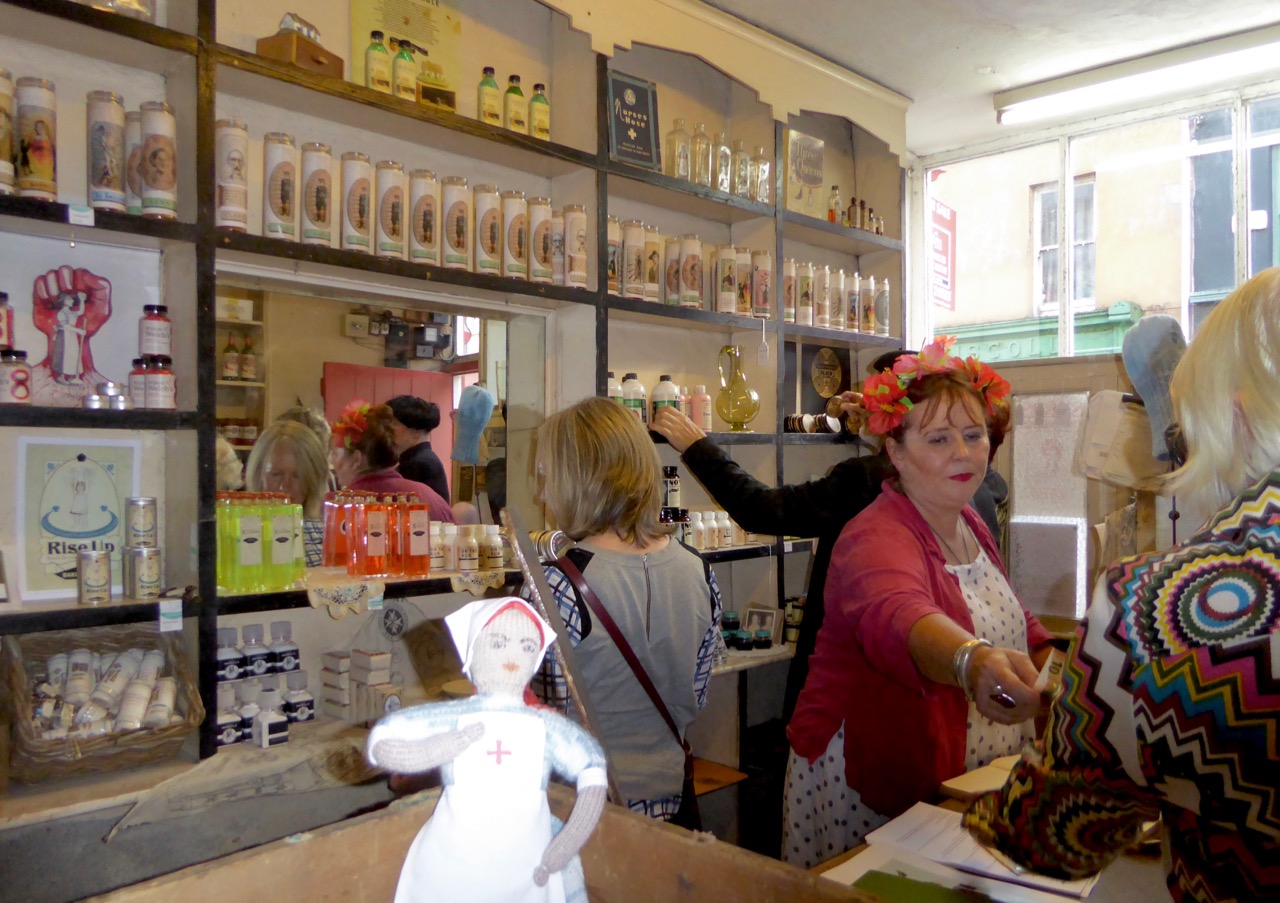
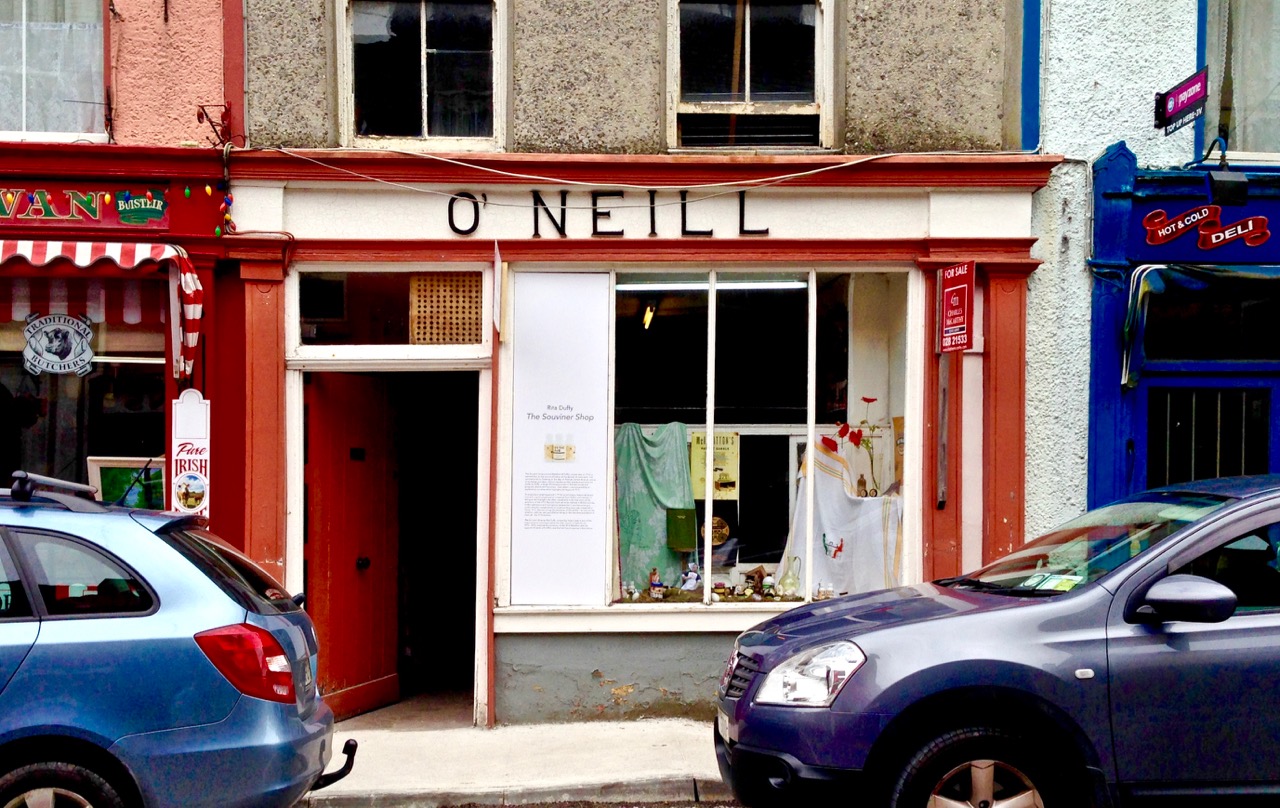
This is a first – a ‘live’ blog post! I’m writing it inside an art installation running as part of the excellent Skibbereen Arts Festival. The installation is The Souvenir Shop, and it’s a huge hit with visitors. The project is conceived by Belfast artist Rita Duffy and curated by Helen Carey, and is a very unusual perspective on the 1916 Rising commemorations.
o'neill'sshop

The Souvenir Shop was first shown in Dublin earlier this year – here is a review from the Irish Times – and it’s now in the perfect setting here in West Cork: O’Neill’s old sweetshop on Townshend Street in Skibbereen. The premises has been empty for years and stepping inside it today is stepping into the past: a shop unchanged over generations.

customers

Rita in Shop

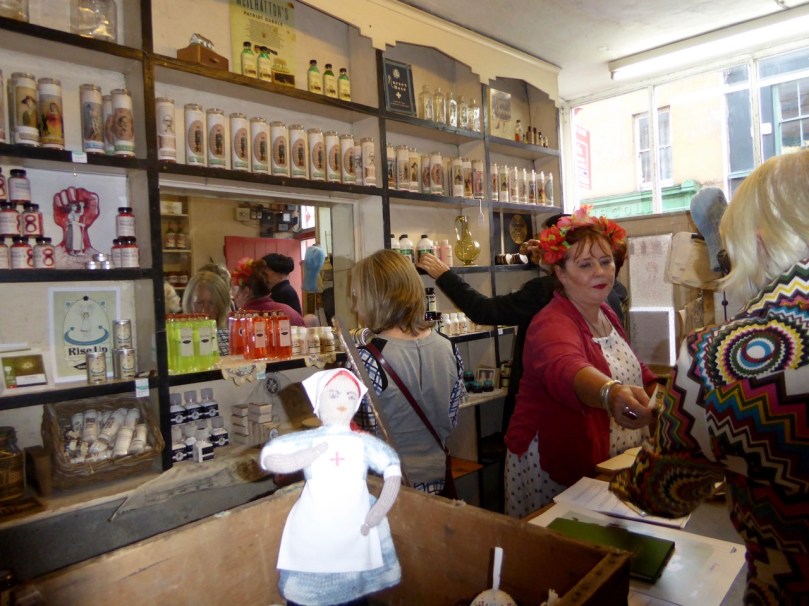
The atmospheric and nostalgic interior of O’Neill’s shop brought back to life by Rita Duffy (above): it displays and sells ‘souvenirs’ of the 1916 Rising and the events around it. It’s a piece of art which includes and embraces its customers and the ‘invigilators’ who, today, are Roaringwater Journal creators Finola and Robert

Finola and I are on our second stint behind the counter: we are the shopkeepers! We try to keep order as customers crowd in to look at the wares in display, all of which are designed by Rita. We met her in the shop on the first day of the exhibition and she explained that, during the Rising on Easter Monday 1916, many shops in Dublin were looted: the first was Noblett’s Sweet Shop on Sackville Street, and another was Tom Clarke’s tobacconist shop on Great Britain Street (now Parnell Street). She has re-made or re-imagined these shops for the installation, and filled the empty shelves of O’Neill’s with an incredible array of objects – most of which are for sale.

Dublin’s 1916 Easter Rising was accompanied by widespread looting of shops: Noblett’s Confectionery (top left – Dublin City Photographic Collection) and Clarke’s Tobacconist (bottom – National Library of Ireland) were among the first casualties. Tom Clarke himself (above right) was the first to sign the Proclamation of Independence, and was a driving force behind the rebellion

Rita Duffy’s subversive commentary on the Rising and the events that led from that time towards the present uneasy ‘peace process’  includes re-interpretations of everyday items that we would expect to see on the shelves of our local shops – soap, boot polish, tinned foods, tea, sweets, packets of seeds… It all looks very normal when you walk in – with a period flavour. We are finding that many of the customers today have fond memories of O’Neill’s sweet shop recalled from their childhoods and are delighted to come in and see it back in business: we can’t resist nostalgia. The initial impression is exactly that – a rosy-hued look back on our remembered past. Then we all start looking more closely at what is on the shelves and we are jolted out of our reveries…

Just a few of the items on sale today in The Souvenir Shop. Look carefully – ‘No Surrender stain remover’ shows James Connolly’s blood stained shirt worn during the Easter Rising; ‘His Majesties Ltd comforting diasporic foot soak for the wanderer who seeks a better footing’; ‘On The Run embrocation for the sore and twisted limbs of the dissident thinker (apply before sleep in a safe house)’; ‘Put my grandfather back together’ bandages; ‘Towards a New Republic Clear the Air vapour candle’…

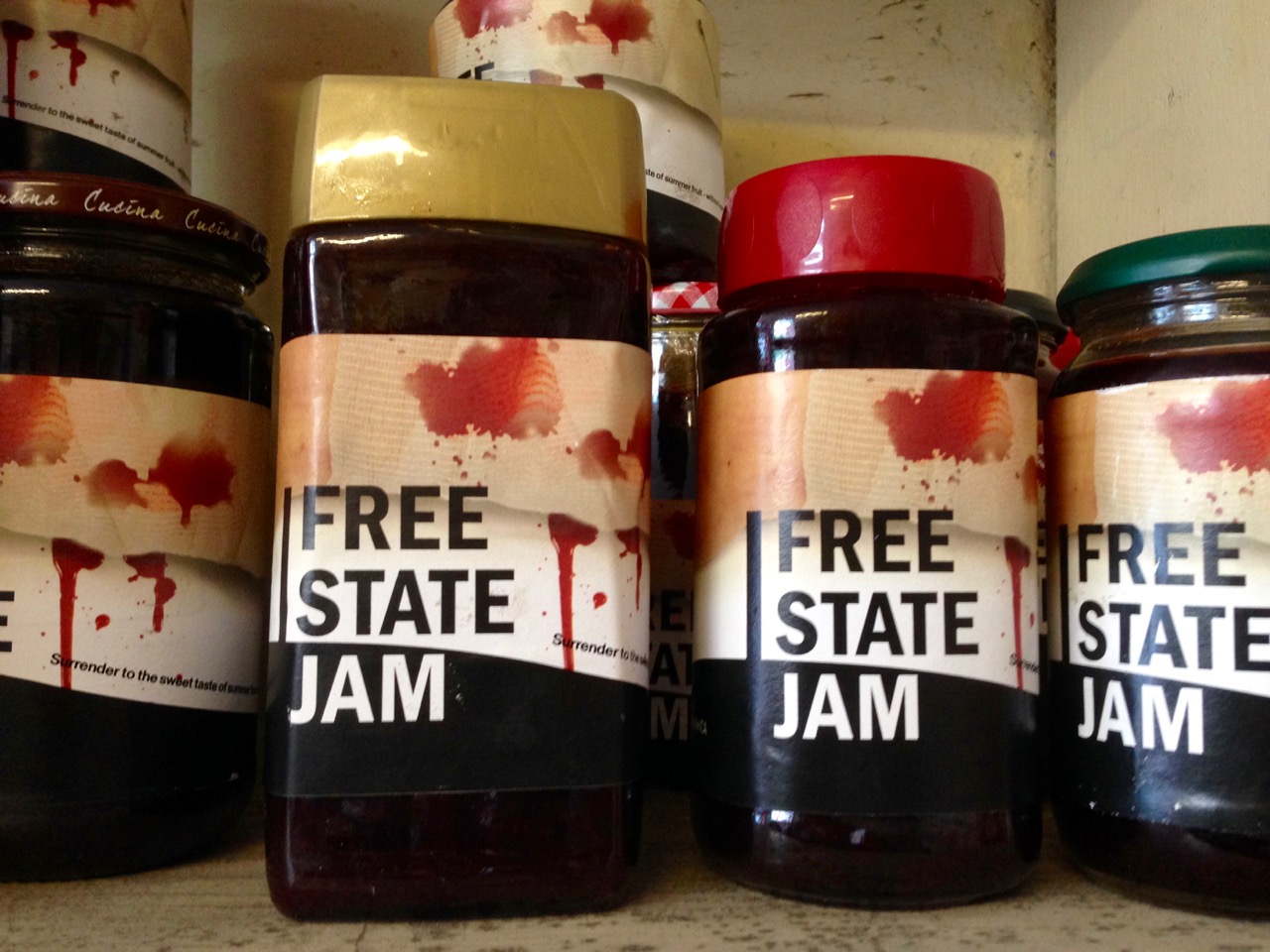
It makes you laugh, initially – and then you have to think what you are laughing about. Balaclavas, in powder blue and pink with orange trim, for example. Black and Tan boot polish…? There’s a whole lot more to The Souvenir Shop. Rita Duffy has engaged the services of the Irish Countrywomen’s Association in Cavan (her studio is in Ballyconnell) to make Free State Jam and to knit – the balaclavas for example – but also some wonderfully bizarre religious iconography: did you ever see a knitted Pietá before?

Unexpected knitting courtesy of the Cavan Irish Countrywomen’s Association

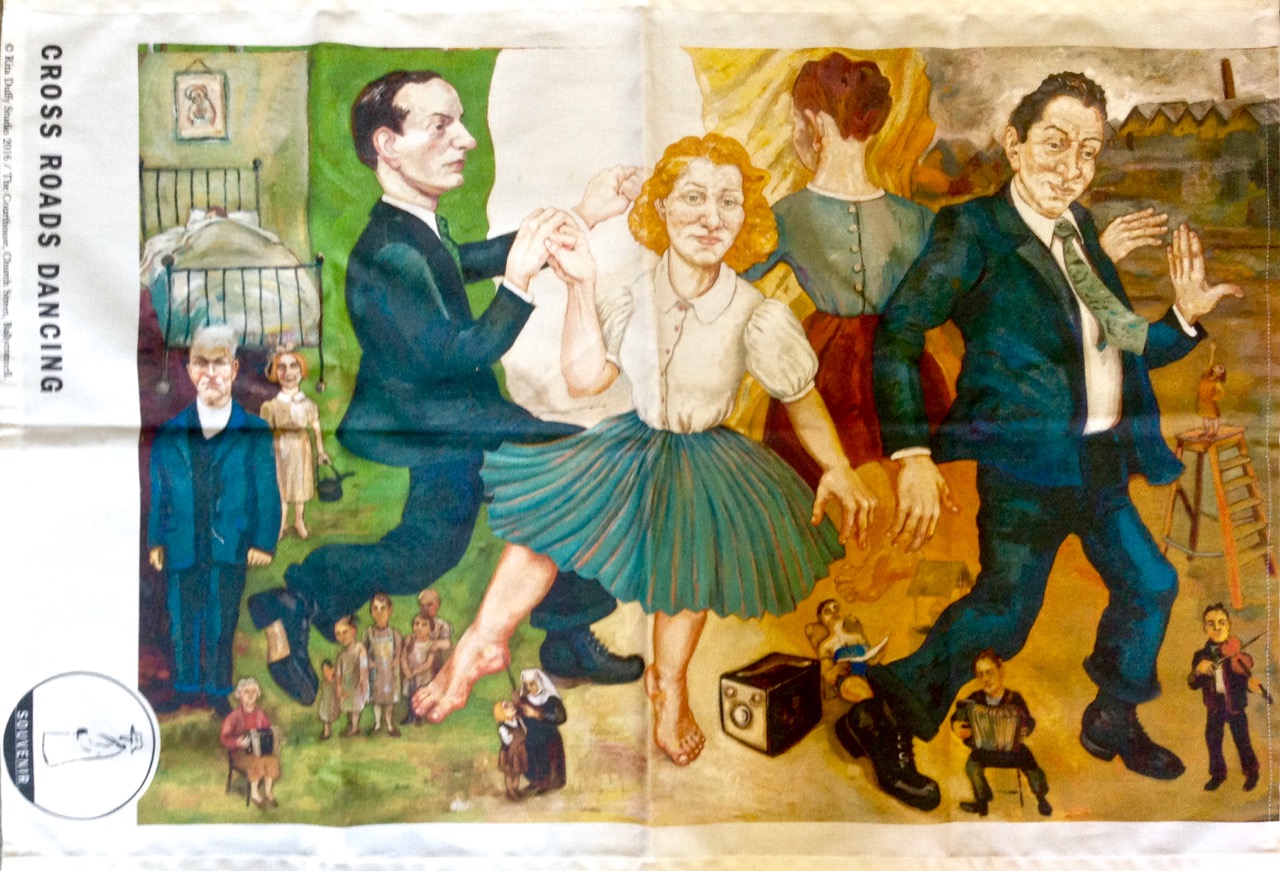
Rita has also produced tea towels, t-shirts, and some embroidered place-mats carrying rather uncomfortable messages to entertain your dinner guests with. There are also ceramics: teapots, dishes and glassware. It’s such an eclectic range of goods on offer in this shop. That’s why the crowds come in and spend what seems like hours browsing the shelves that once held jars of sweets and packets of tea. There are sweets and tea here today – children are delighted to be given some free samples – but they probably don’t understand the hidden messages on the colourful packaging.

Most stark, perhaps, are the seeds: Seeds of the Revolution: two packets for 5 Euros. The messages here are fairly easy to read, although harder to digest. They really are seeds in those packets, but you’ll have to plant them to find out what comes up, perhaps something else that has a subversive implication: I’ll tell you what mine are next spring!

Seed rack

There’s so much in The Souvenir Shop that I haven’t included in this little review – and I’m far too busy trying to fend off the demands of the customers while I’m writing this. If only they would get into an orderly queue – it’s like some sort of insurrection in here… But we’ll cope – and encourage you to come and see this piece of artwork while it’s still on (it finishes on Monday 1st August at 5pm). Step inside and you become part of the exhibit – just like we are right now. You’ll enjoy it, perhaps more than you should. It will certainly leave you thinking.
Cross Roads Dancing

The Souvenir Shop (…nothing is as it seems…) is one of the major projects commissioned by the Arts Council of Ireland’s Art 1916-2016, marking the centenary of the 1916 Rebellion – with the support of Cavan Arts Office and the Irish Countrywomen’s Association. It runs through the Skibbereen Arts Festival between July 22nd and August 1st in O’Neill’s old sweetshop on Townshend Street

Peas + Beans

Possibly Over-Stimulated

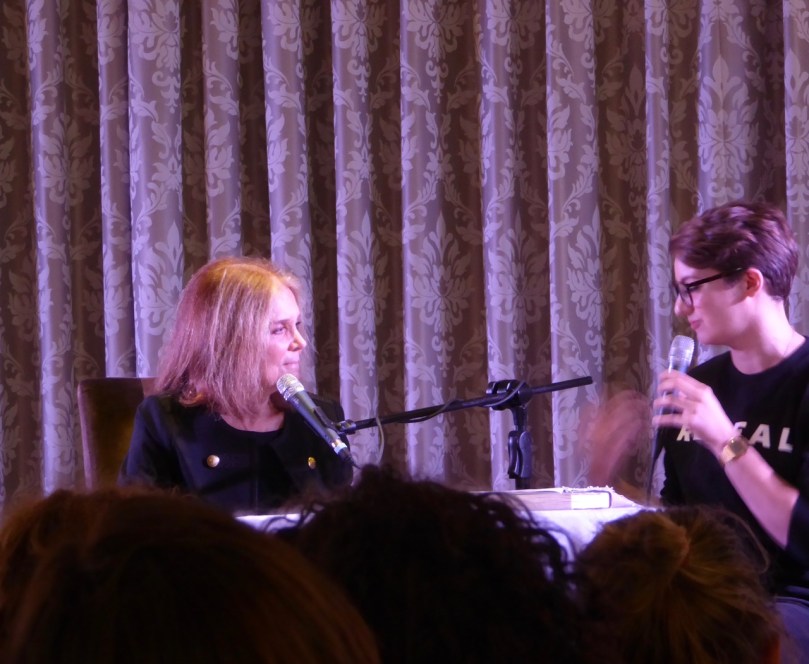
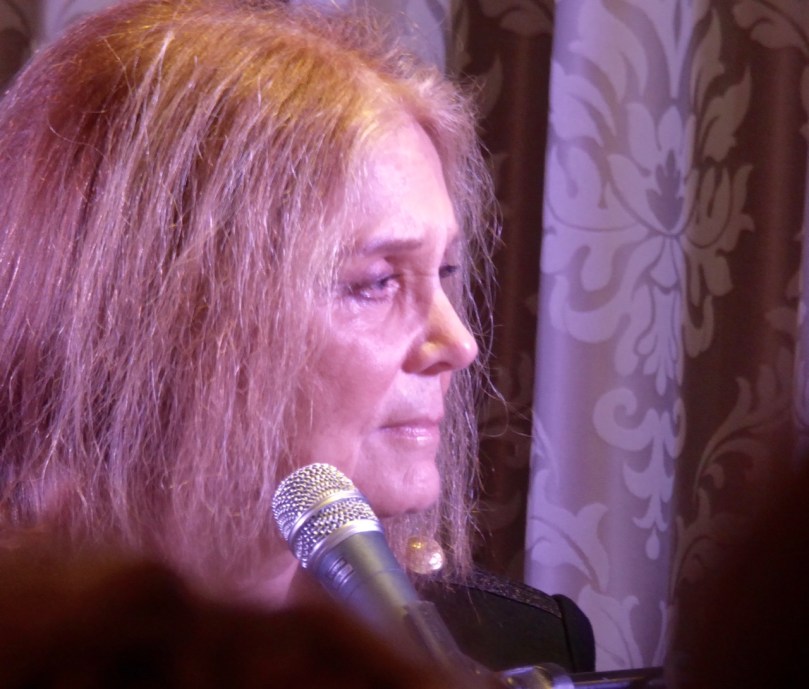
Gloria Steinem is an international icon. This week, we welcomed her to Bantry Literary Festival. Four hundred women, and a few men, rose spontaneously to our feet and clapped and cheered her entrance. First time I’ve seen a standing ovation before someone actually stepped on stage.

Gloria and

What followed was breathtaking – Gloria spoke, a little and beautifully, but mostly she listened as audience members asked questions and shared their own experiences as women in this country. People had come from far and wide to hear her and just to be there: people I admire and respect – Tara Flynn (see also You’re Grand) and Louise O’Neill. Lelia Doolan, for goodness sake, a Irish feminist icon in her own right. The conversations weren’t easy (misogyny, abortion, pornography, violence) and there certainly were dissenting and opposing viewpoints presented. But the atmosphere was respectful (if electric) and Gloria calmly dealt with each question in ways that were thoughtful and non-divisive. Two hours later, I think we all felt we had been present at a little bit of history.

Gloria

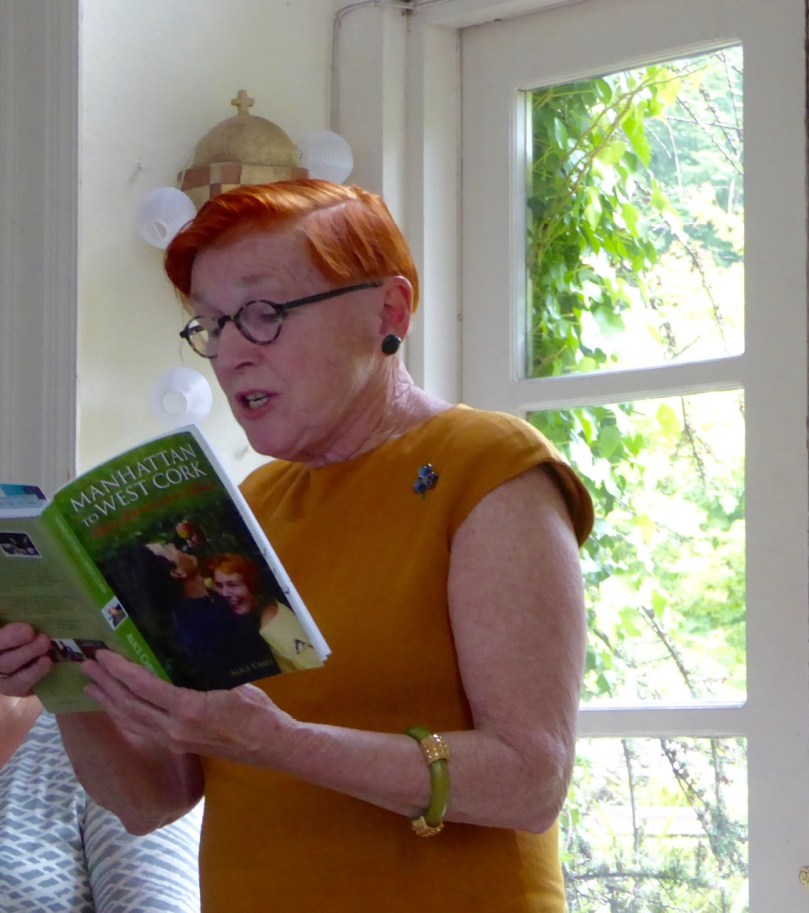
We attended other Literary Festival events and Robert is writing about one of them – the delightful evening with Seán Ó Sé. That evening formed a wonderful contrast to the talk by Alice Carey, a self-professed New York/Irishwoman, vivacious and stylish, but also moving in her descriptions of a childhood caught between two worlds.

Alice Carey

Alice Carey

And just as that Festival is ending, the Skibbereen Arts Festival is bursting upon the scene with a slew of gallery openings and a 60’s street party! Sometimes it’s hard to know where the dividing line is between business and the arts in Skibbereen. All the business people seem to support the arts and all the arts events seem to work well with the businesses. Shopfronts become display cases. Empty buildings are re-purposed as galleries and theatres. Employees and owners dress up and decorate. Everyone has fun.

Skibbereen shop windows. Hands up who remembers women wearing curlers all day in the 60s!

This Friday was a good example as Skibbereen went all out for a 1960s-themed street party of food and music, to celebrate the opening of the Skibbereen Arts Festival. I wrote about this festival a couple of years ago. As arts festivals go in Ireland, this one is only in its infancy, but it hit its stride right from the starting gate, with an eclectic mixture of art, theatre, music, spoken word, film, and events for children.

Robert used to have a van like that

This year we have tickets for all kinds of disparate events and may have to take a holiday when it’s all over! On Friday we attended three art show openings and then joined the throngs on Bridge Street to get into the 60s swing.

Angela Flowers Exhibition


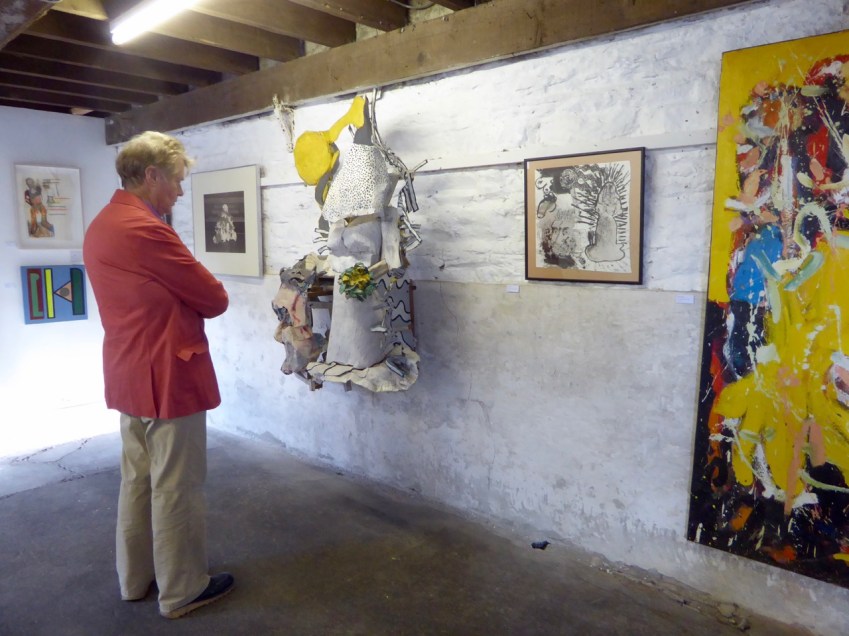
The old Bottling Plant makes an excellent gallery space, in this case for the Angela Flowers Collection

The first opening was extraordinary. Angela Flowers is one of Britain’s foremost gallery owners (she has two in London and one in New York), dealing with contemporary art. She has a house in West Cork and the pieces on display are from her own private collection. (Read more about Angela here and about her galleries here.) This is challenging stuff – no pretty paintings here, but compelling and engrossing. The exhibition was opened by Lord David Puttnam, the film producer and now digital champion and educator, who never misses an opportunity to support Skibbereen, where he lives full time.

Uillinn came next: the whole space was devoted to the work of John Kelly, a painter and sculpture with a studio in West Cork and an international reputation.

Yet a third art exhibition opened in an unused space down by the river – a huge L-shaped room perfect for such a purpose. This one was called Mór (‘Large’) and brought together the work of several artists who work in large scale. Huge canvasses and large sculptural pieces created an imposing and magisterial atmosphere.

Karen Hendy’s triptych (top) and Don Cronin’s piece titled ‘Windfall’

Then it was off to the opening of The Souvenir Shop by Rita Duffy. Robert and I have signed up for two ‘invigilation’ sessions at this quirky and unusual art installation, so I will write about it more at a future date, or post photos on our Facebook page.

Souvenir Shop

The Souvenir Shop

Before we staggered home, we joined the throngs of Skibbereen folk on Bridge Street for the 1960s party. The hippies were out in force!

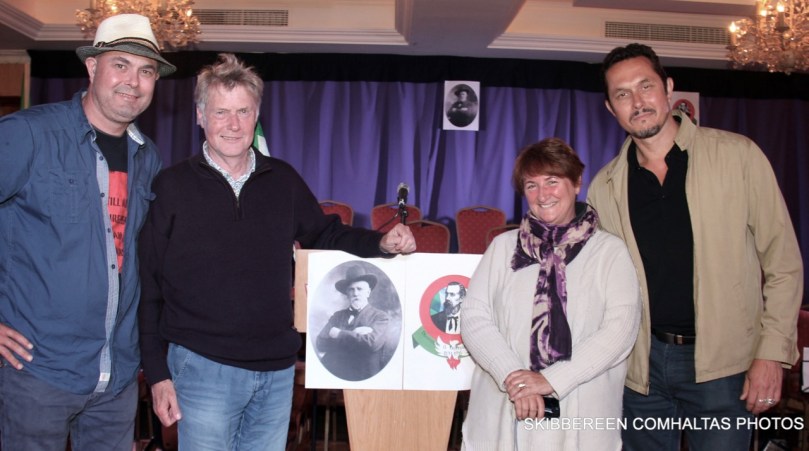
Finally, tonight, we attended a premier showing of the Film Rebel Rossa. Last year we met the two great-grandsons of Jeremiah O’Donovan Rossa in Skibbereen, here to attend various functions commemorating Rossa and to document them for a film they were making. Since I did extensive research on Rossa in preparation for a series of three posts (March Back in Time, O’Donovan Rossa – the First Terrorist? and Rossa: The Skibbereen Years), I was particularly interested in how the film turned out. They did a great job! Rebel Rossa turned out to be about Rossa, but also about family and about how governments celebrate such things versus how republican groups or local committees do it. Fascinating stuff and they are hopeful about getting a distribution deal.

Rebel Rossa

More, much more in the days to come. How am I going to cope? I came here to retire!

A Bell for Bangor

Holg + Donagh 2

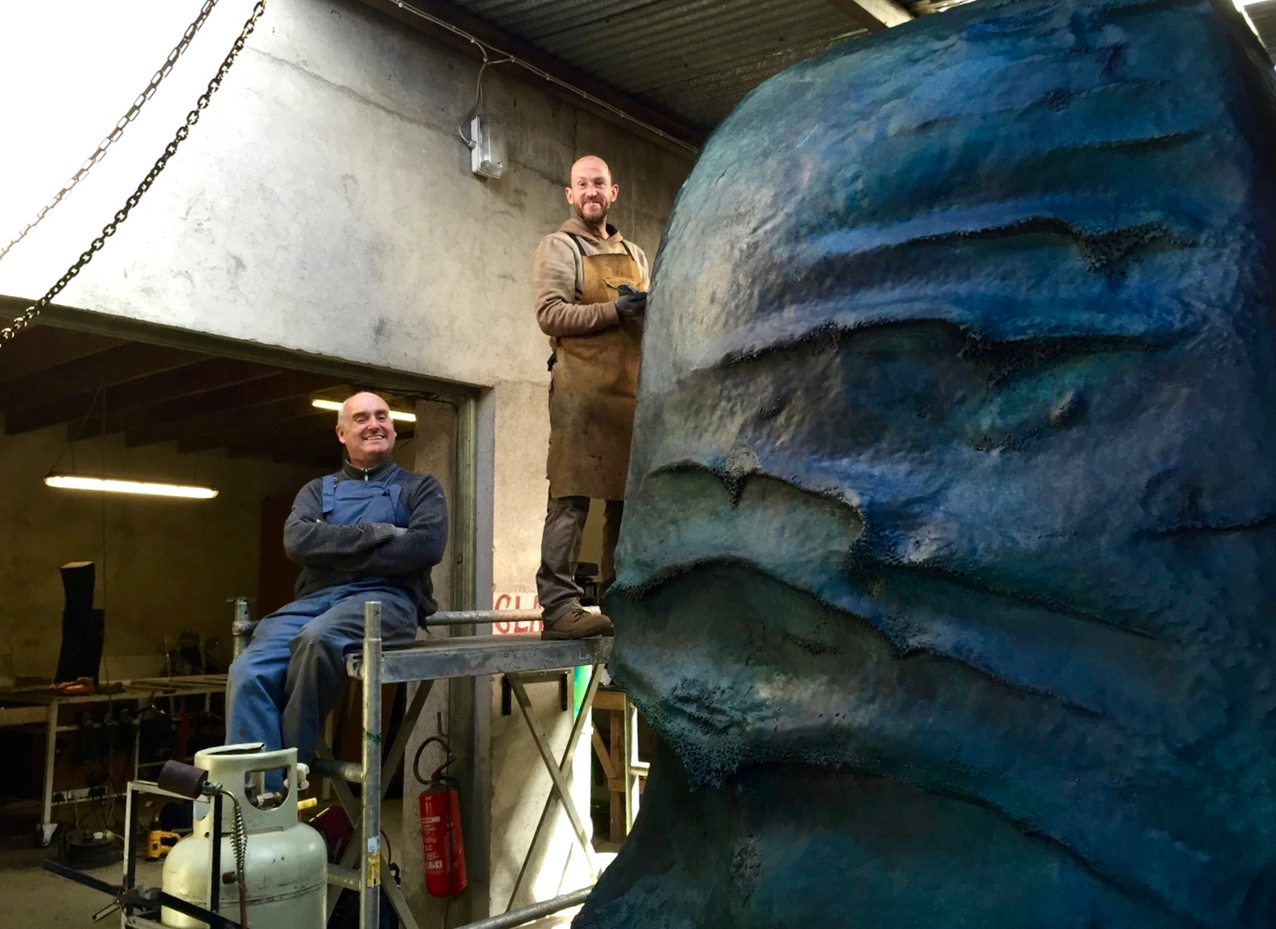
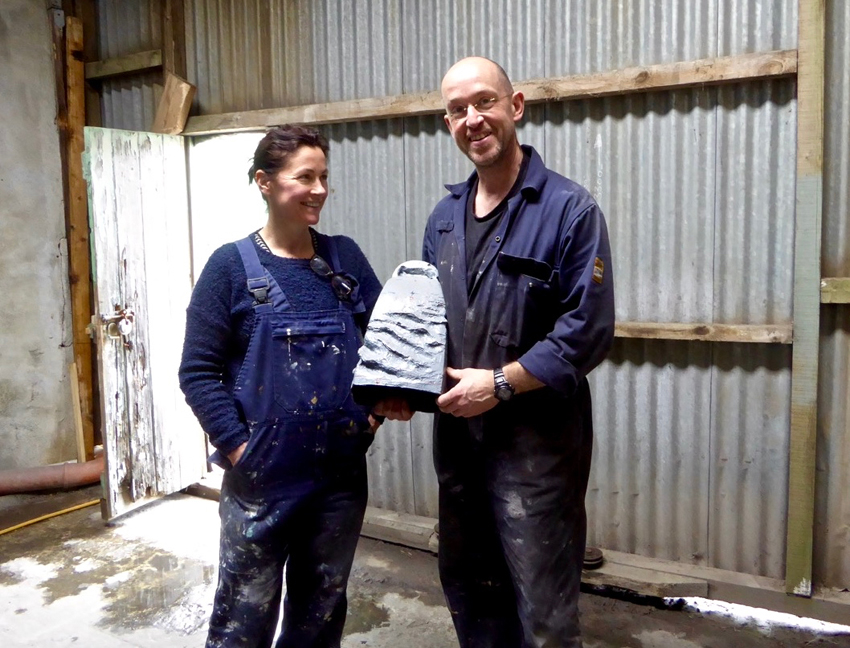
The man standing on the platform in the picture is Holger Lönze. You might remember him from Umha Aois, a post I put up last year about a group of artists and ‘experimental archaeologists’ who use Bronze Age metal working techniques to produce replicas of ancient tools, weapons and musical instruments. Holger – a sculptor – is a key member of that group: his workshop is in Schull and he has just completed a commission to make an enormous bell. You can see the project in progress on the right of the picture. On the left is Donagh Carey, another West Cork artist who worked on the casting.

Left: the original Bangor Bell – the inspiration for the new work – and, right: an early sketch design by Holger of the proposed bell sculpture

The story begins in the sixth century when Columbanus (the Latinised form of Columbán, meaning White Dove) was born in the Kingdom of Meath, now part of Leinster, Ireland, in 543. That’s about 50 years after the death (aged 120) of St Patrick. Patrick, of course, is the best known of the missionaries building up Christianity in Ireland, but he wasn’t Irish himself, having been born a Roman Briton. Columbanus was Irish, and he saw his mission as spreading Christianity from Ireland throughout the Continent of Europe. His mission was successful and St Columbanus is recognised in Europe as a founder of many monastic settlements during his travels in Gaul, Burgundy, the Alps and finally Italy where he established the great monastery at Bobbio, beside the River Trebbia. Columbanus died at Bobbio in 615 and his remains are buried in the crypt there.

Bobbio_bridge

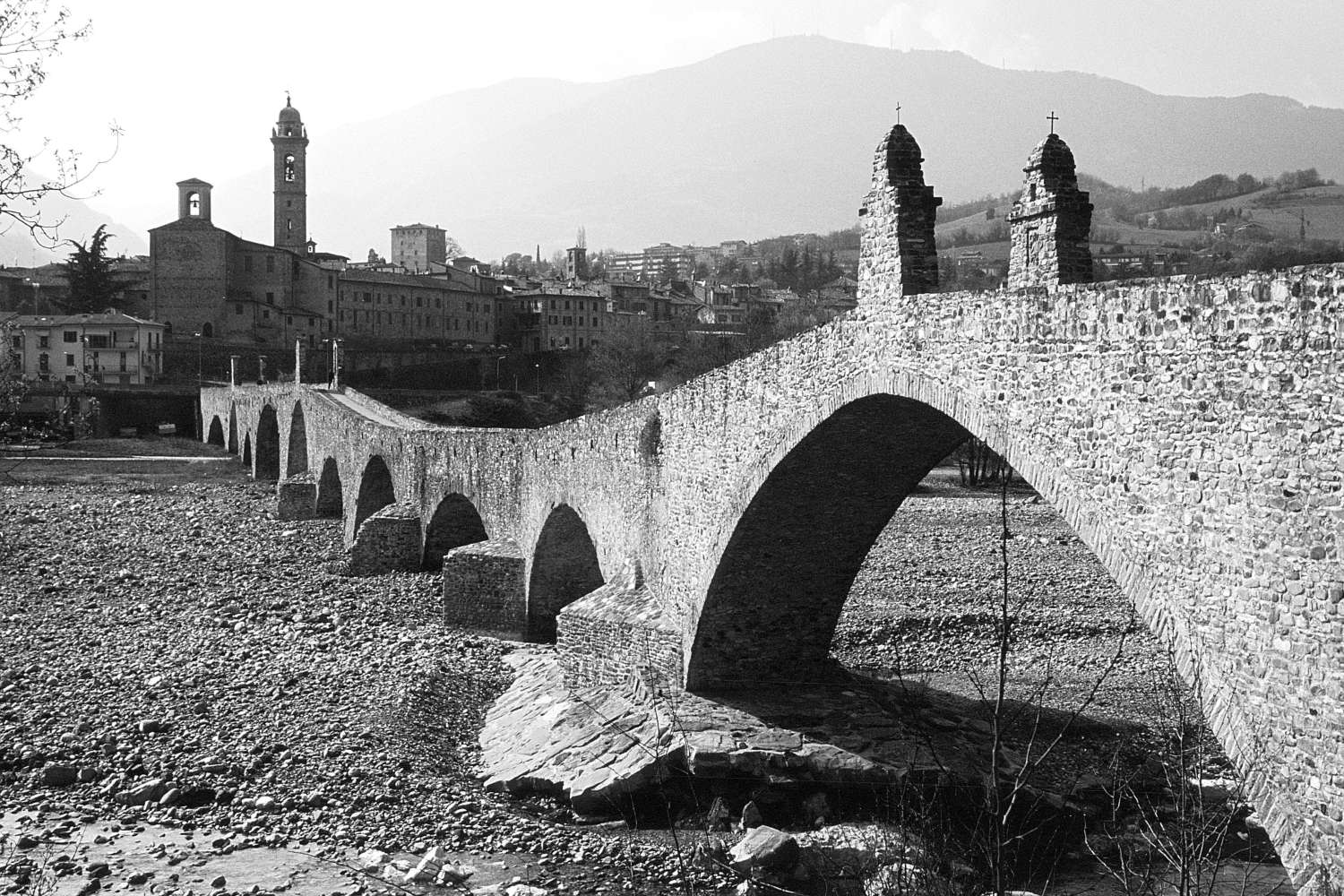
The medieval bridge at Bobbio with St Columbanus’ great monastery beyond (photo by Herbert Ortner, Vienna, Austria)

There are great stories told about the life of Columbanus. When he walked in the woods, birds would land on his shoulders to be caressed, and squirrels ran down from the trees and nestled in the folds of his cowl. He is also said to have tamed a bear and trained it to pull the plough. Wolves would not harm him. He is usually depicted with a book and an Irish satchel, sometimes with sunbeams over his head. I’m not sure why but Columbanus is known as the patron saint of motorcyclists.

Saint Columbanus – left: depicted on a medieval fresco with book and sunbeams (note he is carrying a bell) and, right: sailing off to Europe with his companions

Getting back to West Cork and the bell: Columbanus travelled to Bangor, County Down – in the far north east of the island of Ireland – where he studied in the  Abbey until he was 40. A beautifully decorated bronze handbell was found near the Abbey by gravediggers in the 18th century; it is assumed to have been buried to keep it safe from Viking invaders in the 9th century. The Abbey is seen as the starting point for Columbanus’s missionary work in Europe and the bell (now in the North Down Museum) is associated with him, although unlikely to have been contemporary with his time there. Holger Lönze has always been fascinated by medieval bronze bells and has made replicas of many surviving examples. He cast a copy of the Bangor Abbey handbell using Medieval metalworking techniques in 2012, and the process is recorded in this video.

Holger’s full-sized replica of the Bangor Bell and (right) Holger in his studio explaining his techniques to Robert

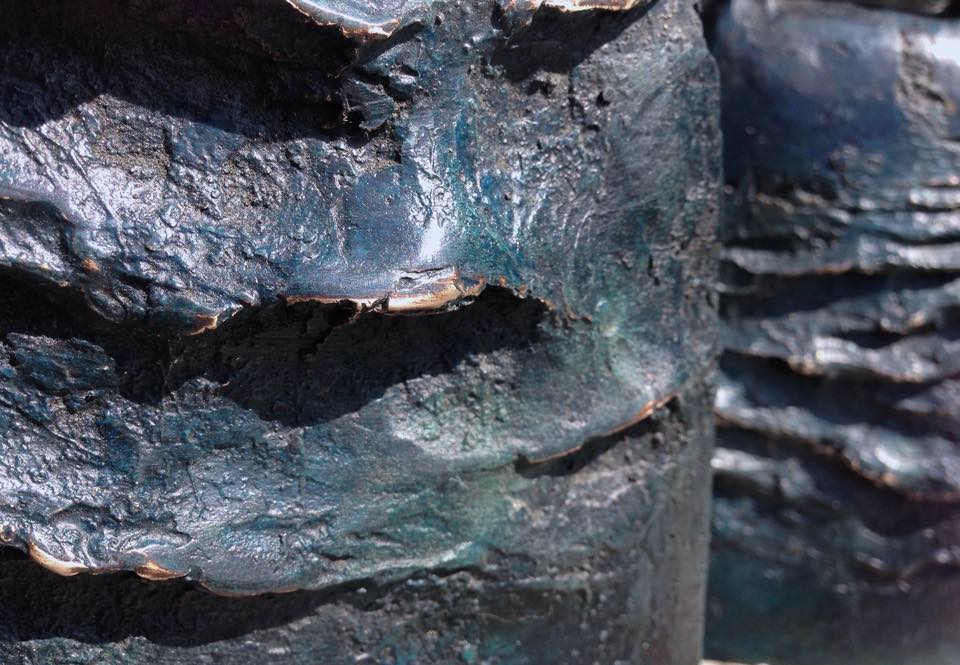
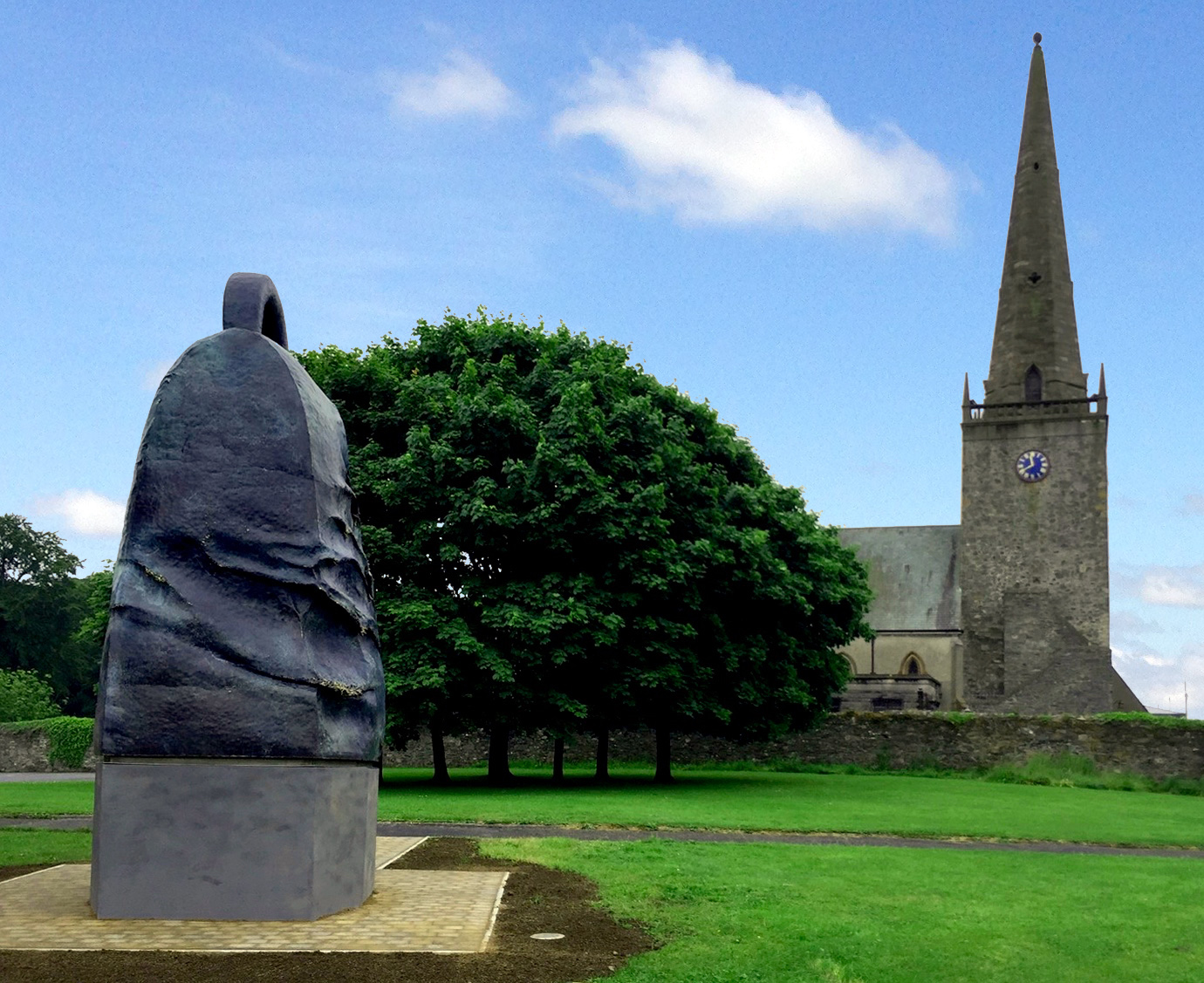
The new sculpture – titled Fluctus Angelorum (Wave of Angels) was commissioned by Ards and North Down Borough Council for Bangor Abbey  as one of a series of works inspired by the extraordinary achievements of Columbanus and his companions. Based on the proportions of the original bell, the surface of the sculpture is shaped like the surface of the ocean. The sea-blue patina and breaking waves are a metaphor for Columbanus’ remarkable sea voyage. The 4m high bell was fabricated in bronze plate in West Cork using the ancient repoussé process – by alternating annealing and hammering and finally welding. It took no less than 400,000 hammer blows to transform flat sheets of bronze into this piece of sculpture!

Bell surface

In the workshop: the surface of the 4m high bell reflects the surface of the ocean and (right) the inside of the great bell: it is mounted on a stone plinth and lit at night. Both bells and waves are striking metaphors to mark the Saint’s 1400 miles journey from Bangor to Bobbio – 1400 years ago

The medieval Bangor Bell didn’t have a clapper: it was carried around and hit with a hammer. Taking me back to my days as a percussionist, Holger allowed me to hit the giant bell… It made a mighty sound! From West Cork the bell travelled the whole length of Ireland, passing its 8th Century sister bells in Cashel, Co Meath and Bangor. It is now installed in the Abbey grounds and was formally unveiled on 13th June. The sculpture is not yet complete – Holger is making a number of smaller ‘satellite’ bells which will be set around it, but even on its own it is a most impressive sight: the largest bell ever made in Ireland.

holger with bell

Artist Karen Hendy and Holger Lönze showing the maquette for the bell project in Schull and, below, the bell in its setting at Bangor Abbey

bangor context

I’m often repeating the message but there is no doubt that West Cork is the most creative place I have ever lived! All manner of culture flourishes here and we are privileged to live in a community where we can readily meet and appreciate the work of so many artists; and we have excellent galleries to showcase this work – The Blue House Gallery in Schull (next door to Holger’s workshop), Uillinn in Skibbereen, Catherine Hammond‘s excellent gallery, now also in Skibbereen and The Aisling Gallery in Ballydehob. We are spoiled!

With many thanks to Holger for allowing me to use some of his own images of the work progressing…

An Irish Shakespeare?

rea druid

Marty Rea giving a stunning performance in Skibbereen as Richard II in Druid Theatre Company’s tour of Shakespeare’s ‘History Plays’

This week we commemorate the 400th anniversary of Shakespeare’s death which occurred on his birthday, 23rd April, in 1616. He was 52. At least, that’s the received wisdom. It’s quite convenient that the two most important events in his life have the same date – we only have the one to remember – and it’s very apposite that this date should also be St George’s Day: St George is thought of as patron saint of England, and Shakespeare is thought of as the greatest writer in the English language – and partly responsible for the flowering of the Elizabethan Age of Enlightenment.

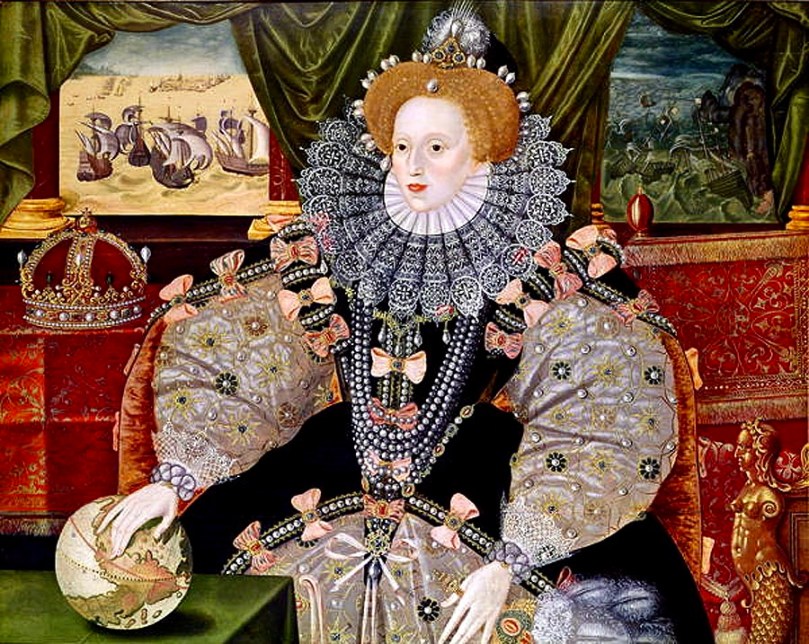
elizabeth

Queen of England and Ireland – the ‘Armada Portrait’ 1588. This painting of Elizabeth I, sometimes attributed to George Gower, is full of symbolism which Shakespeare would have recognised: pearls imply purity, the pomegranate prosperity, the mermaid  ‘the potential destructive nature of females’, and the ruff is shown as a sun halo to depict the ‘Sun Queen’. The paintings show the power of the Navy and its defeat of the Spanish Armada

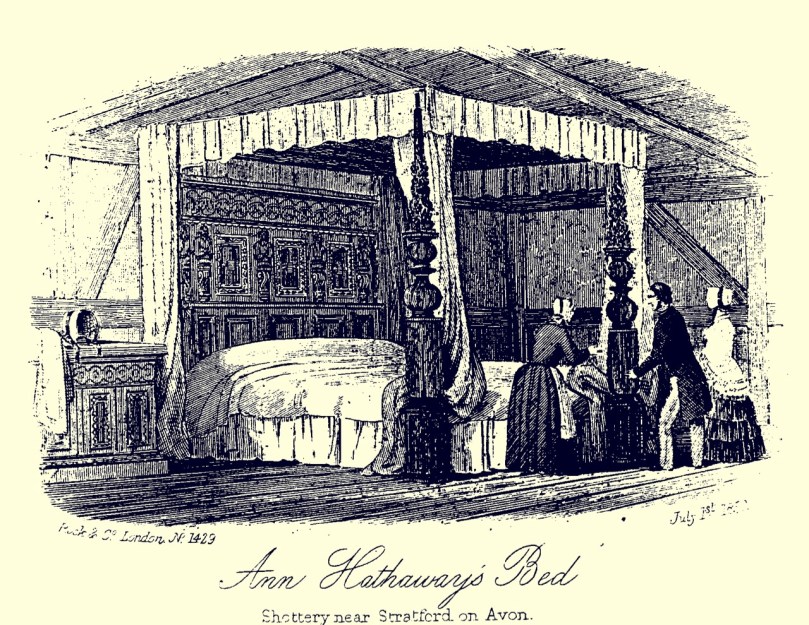
But isn’t all this a little too convenient? If we believe the history books Shakespeare was a simple soul who was born in rural Warwickshire, the son of a glover who had fallen on hard times. Shakespeare attended the local grammar school, where he would have had a limited classical education. At 18 he married Anne Hathaway, 8 years his senior, and their daughter Susanna was born shortly afterwards. Then he disappeared from the records, re-emerging in London in 1592 where he was described in a pamphlet by Robert Greene as an ‘upstart crow’ flapping his poetic wings. Thereafter he was known as an actor, playwright and theatre promoter, returning to his birthplace to retire and leaving us with the legacy of 38 plays and 154 sonnets. His will bequeathed his ‘second best bed’ to his wife and his estate to his children.
second best bed

Was William Shakespeare a real person? Probably – there are quite a few records of his professional life: but the rumour mill is full of suggestions that he was not the author of his plays! As Ireland is a renowned land of poets and bards, I felt sure that, somewhere, I would find a notion that this particular ‘bard’ had Irish connections… I was right!

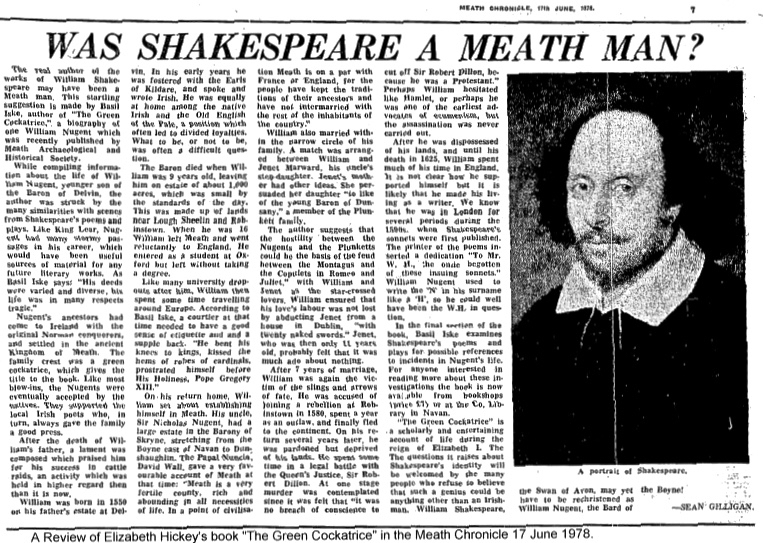
meath chronicle

Elizabeth Hickey (1917 – 1999) was a well-known Meath historian and author who lived at Skryne Castle near Tara. Her most famous work is The Green Cockatrice, originally published in 1978 under the pseudonym Basil Iske. In this she traces the career of William Nugent, Baron of Skryne, who lived from 1550 to 1625. According to Hickey Nugent is a very likely candidate for the authorship of Shakespeare’s plays as he ‘…led a life which gave him insights into the kind of political, religious, military, legal and international diplomatic intrigues that populate Shakespeare’s works. For example, he was imprisoned by the state for opposing the cess in Ireland in the 1570s, and he rebelled in 1581, losing a number of supporters to the hangman’s noose and causing him to flee into exile, first into Scotland, then France and Italy – locations which are prominent in Shakespeare’s works. During his exile he met most of the great European leaders, including the Pope, the kings of Spain, France and Scotland, and was involved in Europe-wide planning for an invasion of England…’

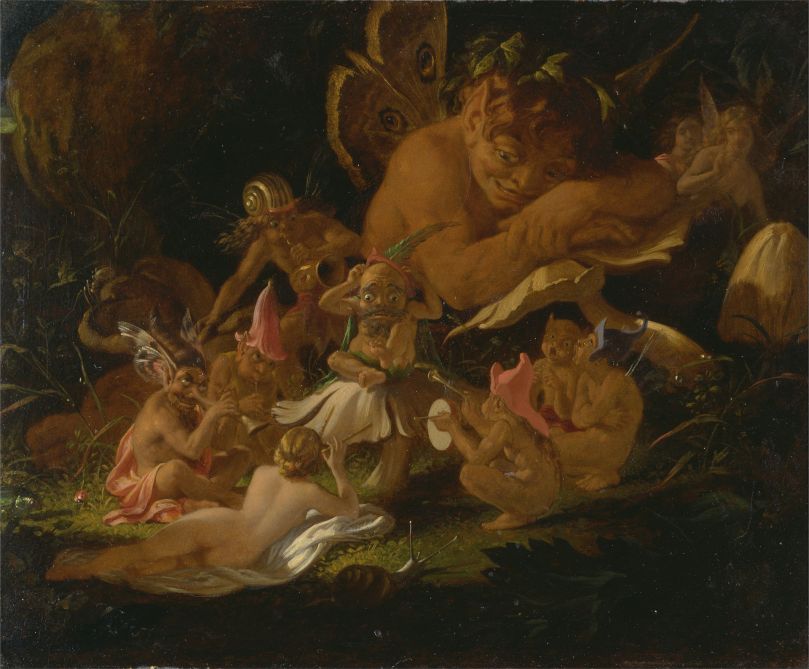
Other scholars have suggested that the language use by Shakespeare is, at times, more akin to the English spoken in Ireland in Elizabethan times. One quotes Shakespeare’s character Puck as deriving from the Irish Púca, although the name is also said to have an old English origin. Similarly, Queen Mab  (fairy queen in Romeo and Juliet) is said to derive from Queen Maeve, spelt in Old Irish script as ‘Mab’.

1920px-Joseph_Noel_Paton_-_Puck_and_Fairies,_from_-A_Midsummer_Night's_Dream-_-_Google_Art_Project

Puck and Fairies, from A Midsummer Night’s Dream, Joseph Noel Paton, c1850

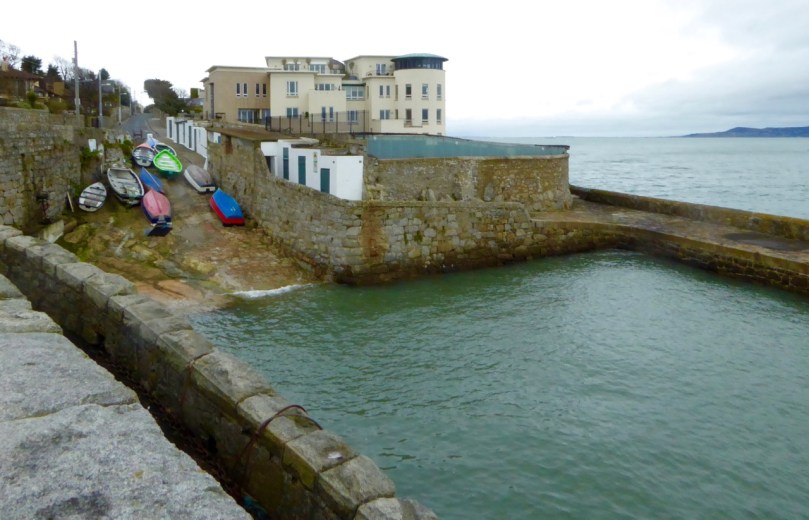
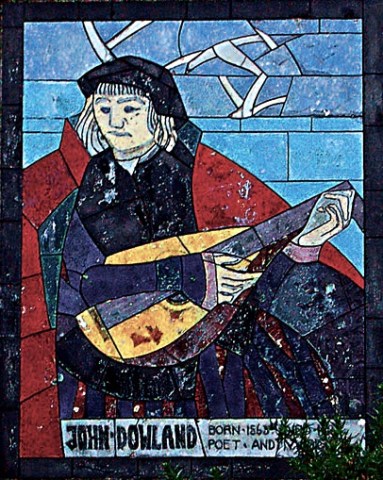
I was intrigued to come across a tradition that Shakespeare composed Hamlet while visiting his friend John Dowland at Dalkey near Dublin, and that the account of the shore of Elsinore is actually based on Coliemore Harbour in Dalkey. There is even a house called ‘Elsinore’ in Dalkey: it dates from 1840. There is also in Dalkey a mosaic plaque to Dowland designed by Sarah Purser.

ColiemoreColiemore Harbour in Dalkey – does it look like Elsinore?
If you have an hour or so to spare you might have a go at reading Shakespeare was Irish – I kid you not… in Indymedia Ireland – it’s tongue in cheek but very comprehensive. Tempting though it is to pursue the idea that the man himself might have been Irish, it may be best to move on to consider Shakespeare’s influence today in Ireland. There can’t be a professional theatre company here that hasn’t put on some of the plays at various times. Many productions have received international acclaim: we were fortunate to attend the marathon staging of the ‘History Plays’ by the Druid Company from Galway in Skibbereen last year – four plays in seven hours, including a break for supper. After Skibbereen the tour went to New York where it received rave reviews. We were pleased to hear that the production ‘stole the show’ in the Irish Times Theatre Awards this year, wining in five categories. Later, we chanced to meet Thomas Conway, the dramaturg for the production: he told us it had taken eight years to craft the performance!

purser dowland

Happy Birthday from West Cork, William…

Black Pudding

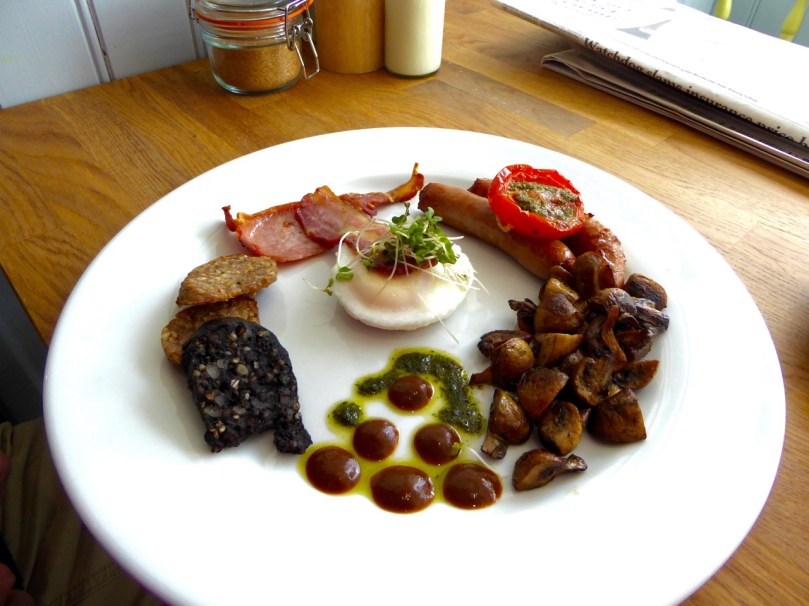
Breakfast at Budd's

Breakfast at Budd’s of Ballydehob – all local ingredients

When did black pudding assume foodie status?

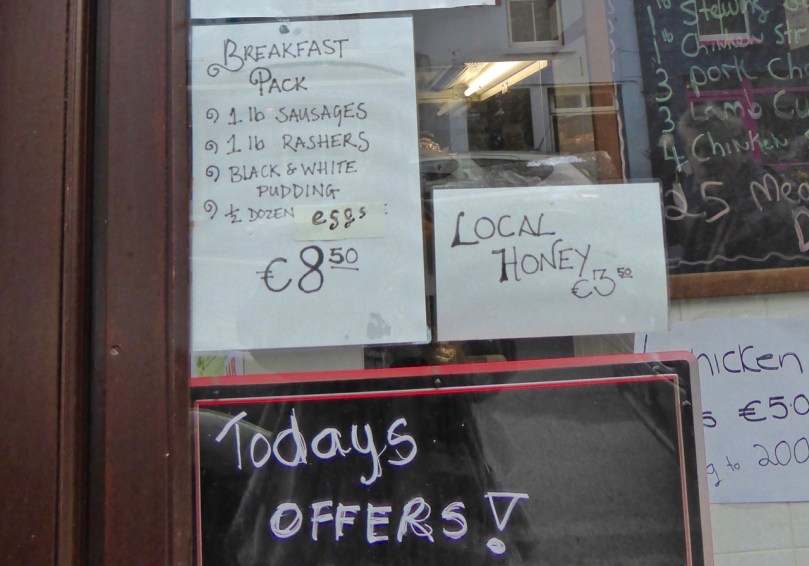
Breakfast Pack

Black pudding (a blood sausage) was always a popular breakfast staple in Ireland – served in all decent bed-and-breakfasts on a ‘Full Irish’ plate along with white pudding, sausages, rashers and eggs, and sometimes tomatoes and mushrooms, accompanied by homemade brown soda bread. I never liked it – “Please, no black pudding on mine.”

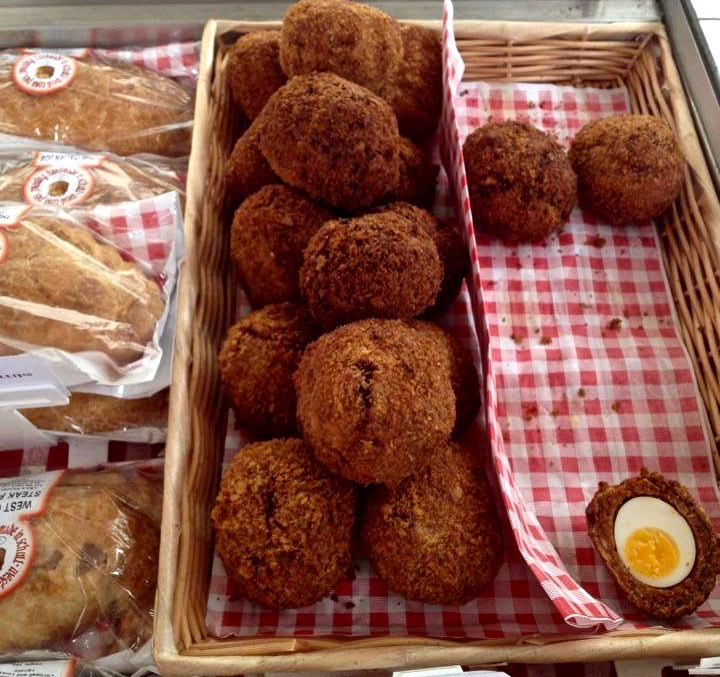
West Cork Pies' Black Pudding 'Brunch' Scotch Eggs, at the Skibbereen Market

West Cork Pies‘ Black Pudding ‘Brunch’ Scotch Eggs, at the Skibbereen Market

But somewhere in the last ten years black pudding has been transformed into the gourmet must-have ingredient du jour: added to scallops or crab, used to lend interest to staid sausage rolls and scotch eggs, served as canapés with the requisite goat’s cheese and caramelised onions.

The black pudding selection at Field's of Skibbereen

The black pudding selection at Field’s of Skibbereen

And it’s delicious! Artisan butchers and food producers all over the country have been developing their own recipes and flavours, although the basic ingredients (pig’s blood and oatmeal) have remained the same. Some credit Clonakilty Black Pudding with leading the charge. They use beef rather than pork and their exact formula is a closely guarded secret. Their website has lots of recipes and the history page features a video on how the pudding is made. This has become such a celebrated West Cork product that there has been talk of a Black Pudding Visitor Centre!

Clon web page

Nowadays, every supermarket meat section will sport an array of artisan black and white puddings. Here in West Cork we find local varieties such as McCarthy’s of Kanturk, Putóg De Róiste (an Irish-speaking black pudding from the Ballyvourney Gaeltacht), Hodgins of Michelstown, as well as Rudd’s from County Offaly, further afield. There are mass-produced varieties too, and supermarket chain generic puddings, all of which have their fans.

Avril Allshire at a function in Rosscarbery, handing around her black pudding swirls – our first taste of them; The Rosscarbery Recipes range of products on sale at Fields

My own favourite is made by Rosscarbery Recipes. This is totally attributable to Avril Allshire, the cheerful producer whom I have met on numerous occasions demonstrating ways to eat their black pudding or serving it up at events. She’s always up for a chat and she loves to share her enthusiasm and her recipes. She and husband Willy and two sons run Caherbeg Free Range pig farm (the Facebook page is full of adorable piggy pics), as well as the Rosscarbery Recipes food range and are totally committed to food quality, to provenance control, and to traditional curing methods that result in delicious pork products. They’ve even developed a gluten-free black pudding!

The Allshire Family with awards for their food products. Avril, William and the two boys are totally involved in all aspects of the business

The Allshire Family with awards for their food products. Avril, William and the two boys are totally involved in all aspects of the business

Avril’s Black Pudding Swirls have become my go-to appetiser recipe and I am sharing it at the end of the post, taken directly from her website but adapted for our non-West Cork readers.

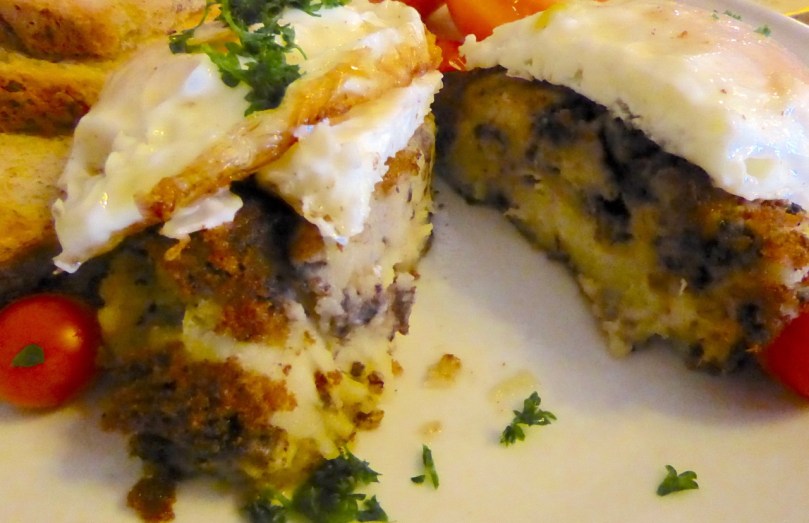
An Chístín Beag's black pudding potato cakes.

An Chístín Beag’s black pudding potato cakes

The other way I have come to love black pudding is in potato cakes. As served by the fabulous An Chístín Beag (The Little Kitchen) in Skibbereen, this is a way to start your day off right, especially if you’re planning a hike! According to Pauline, you simply add chopped up black pudding to mashed potato, shape it into cakes, and fry. There’s got to be more to it than that, I insist – egg? flour? But no, that’s it. I think it helps if you leave them in the fridge to chill and firm up a bit before you cook them.

The choir Christmas get-together at Rosie's Pub. My contribution was the black pudding swirls, recipe below.

The choir Christmas get-together at Rosie’s Pub. My contribution was the black pudding swirls, recipe below

What about you and black pudding? Love it? Hate it? Got a favourite? Figured out how to get hold of it outside Ireland or the UK?
Making the swirls

Making the swirls

Rosscarbery Recipes’ Black Pudding Swirls

By Avrill Allshire (additional notes by Roaringwater Journal)

Ingredients:

1 pack of Field’s Puff Pastry; (any ready-to-bake puff pastry will do, 500g or 1lb)

1 Rosscarbery Recipes Black Pudding; (Any good-quality black pudding can be substituted, 300g or 11oz)

1 large egg.

Method:

About an hour beforehand, take the puff pastry and the black pudding from the fridge and allow to come to room temperature.

Preheat the oven to 200°C/ 400°F/Gas Mark 6.

Whip the egg.

Roughly chop the black pudding and blitz in the food processor with half the whipped egg. If you don’t have a food processor, use a fork or wooden spoon. The idea is to get it to a spreadable consistency.

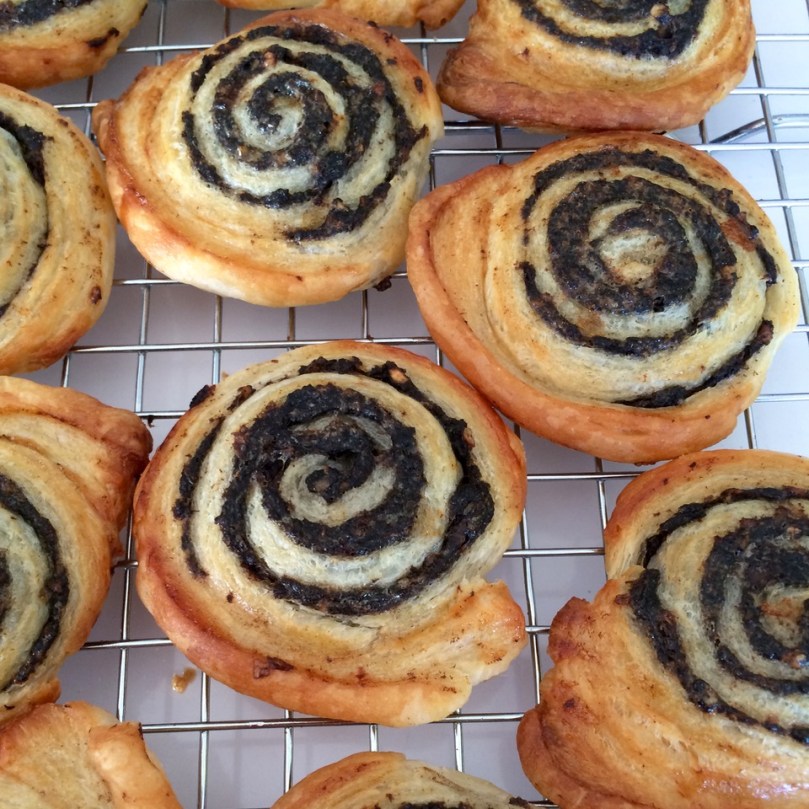
Dust your rolling surface with flour and roll the puff pastry into a large rectangle. Lay the Black Pudding mixture on the puff pastry. Spread it out evenly but not to the edge of one long side which should be brushed with a little of the whipped egg. Roll from the other side. Finish the roll by pressing gently onto the whipped egg end. Slice in 1cm slices and place on a sheet of greaseproof paper on a baking sheet. Brush each slice with the whipped egg.

Put in the oven and bake until a golden brown. This will take anywhere from 12 to 15 mins, so keep an eye on it.

Remove and allow to cool. Makes about 50 swirls.

swirls finished

Yummers!

Shauna and Robert tasting

Rossa: The Skibbereen Years

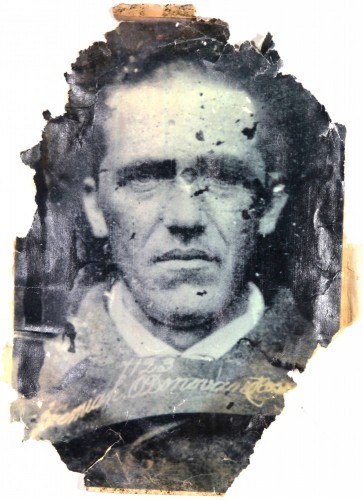
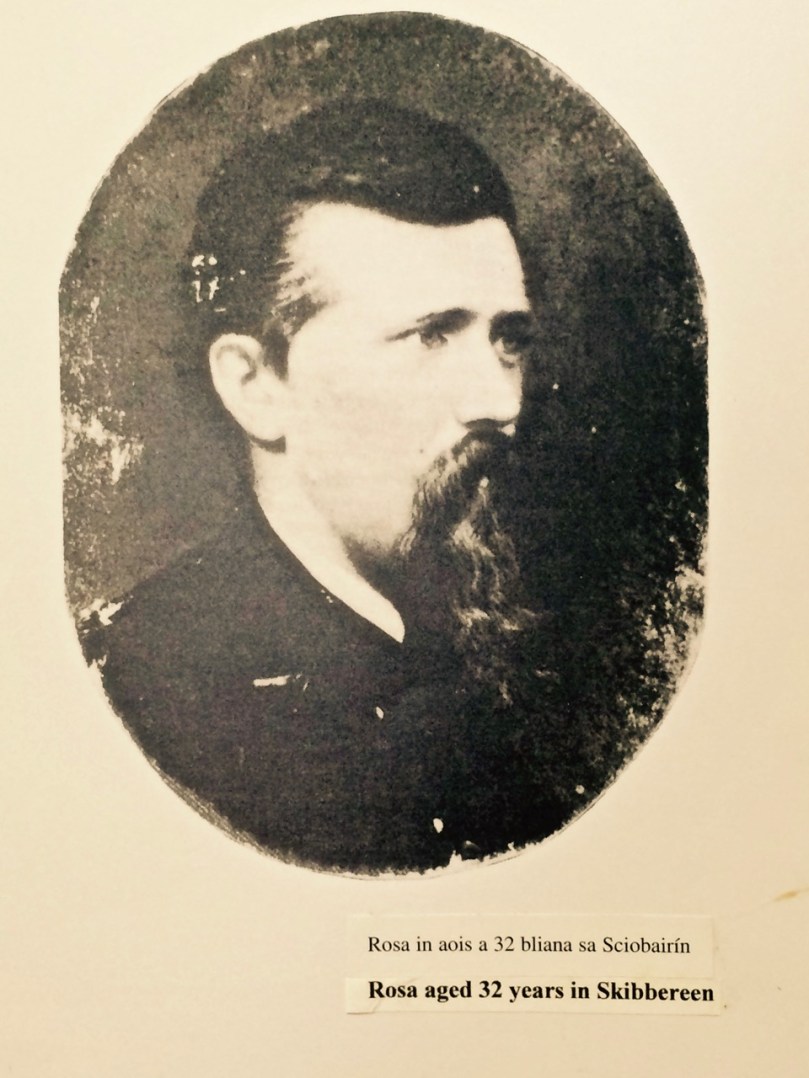
Rossa aged 32

This is the third post in a series about Jeremiah O’Donovan Rossa. In the first, March Back in Time, I introduced the man and described the thrilling re-enactment of the famous 1863 demonstration in Skibbereen. In the second, O’Donovan Rossa – the First Terrorist? I looked at his activities in America and the British bombing campaign he coordinated, as well as the influence of the Fenians in general on American and Canadian history. For more on the question of whether he can be considered a terrorist or a freedom-fighter, or both, I refer readers to the excellent research of Shane Kenna, author of Jeremiah O’Donovan Rossa, Unrepentant Fenian. In particular, Kenna’s  thoroughly researched article available on The Irish Story website, ‘One skilled scientist is worth an army’ – The Fenian Dynamite Campaign 1881-85 is a useful summary of the arguments.

The Skibbereen Heritage Centre is an incredible resource for local history and specialises in the Great Famine. Their Walking Trail and its associated app and book have been immensely helpful in preparing this post (and many others).

My aim on this post is to outline the events in Rossa’s young life that led to his radicalisation and, since much of that time was spent in Skibbereen, to see what traces remain in this West Cork town that can help us to understand the man.

2012-05-19 16.04.23

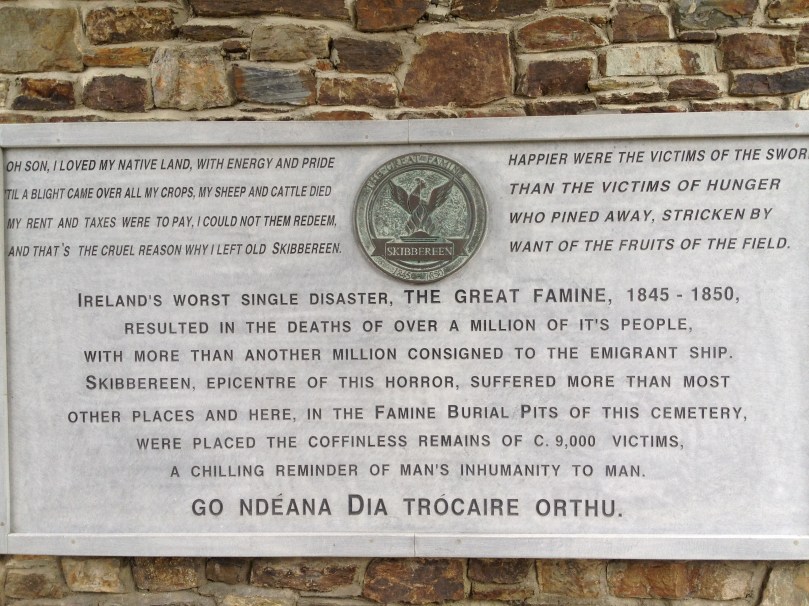
We have to start with the Great Famine of 1845 to 1850, although that’s a hard place to begin. It’s hard because it’s almost impossible to read about it without welling up with emotion and rage. The details are harrowing in the extreme and Skibbereen was the epicentre of the disaster. When Rossa arrived here, aged 16, to live with an aunt, he had witnessed his father die of famine fever after being forced to labour on one of the infamous Board of Works schemes. As was happening all around him, his widowed mother and his siblings were evicted from their home for non-payment of rent, and made the wrenching decision to emigrate. He had had a normal happy childhood and now everything was torn from him under the most appalling conditions.

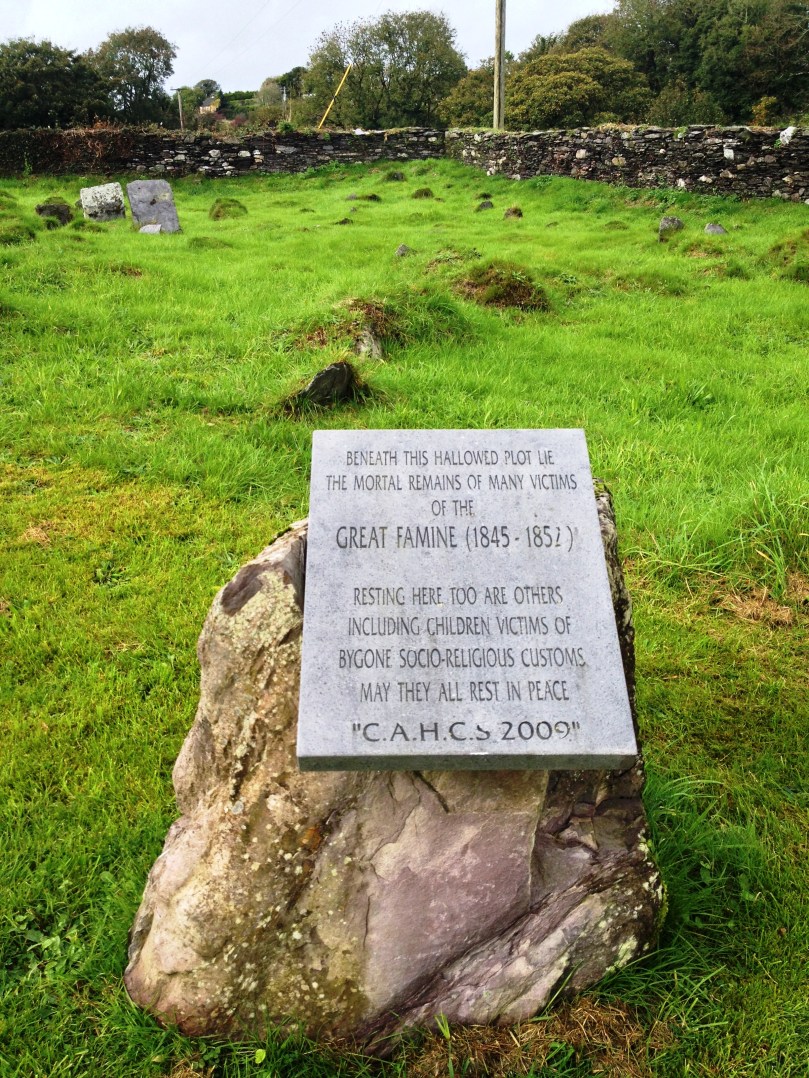
Cillín near Durrus

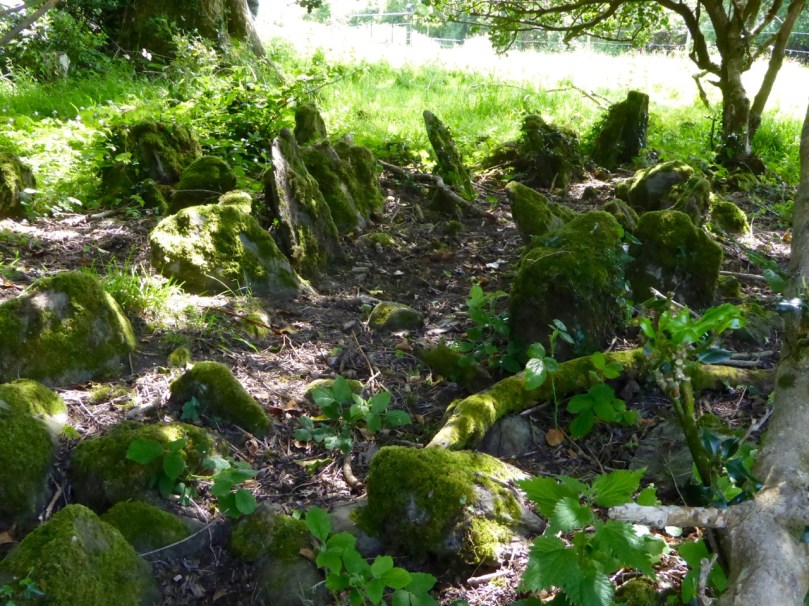
Famine graveyards full of mass burials and unmarked graves are scattered throughout West Cork, like this one near Durrus

In Skibbereen, in Black ’47, the 16 year old saw the worst of the Famine – the carts piled with bodies taking them every day to mass graves, the soup kitchens, the sickness and despair.

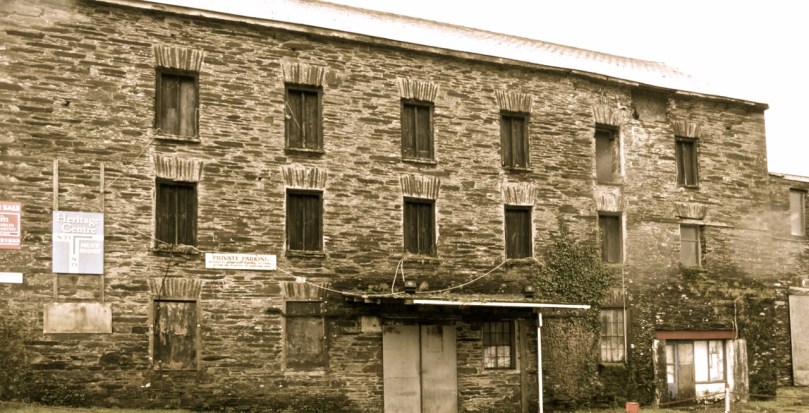
Famine soup Kitchen

This building in Skibbereen was used as a soup kitchen during the famine. Thousands of people were fed a watery soup that had little nutritional value but had the advantage of being cheap to make

Meanwhile he saw that tons of food was being exported from the surrounding countryside. He helped an old friend to bury his mother, Jillen Andy. Later, in prison, he would hold that memory and write a moving poem about the experience. It’s a long poem and it begins this way:

 ‘Come to the graveyard if you’re not afraid,
I’m going to dig my mother’s grave. She’s dead,
And I want someone that will bring the spade
For Andy’s out of home, and Charlie’s sick in bed.’

2013-10-20 13.44.38 HDR

Rossa became a shopkeeper in Skibbereen while at the same time founding and organising the Phoenix National and Literary Society which, although supposedly a educational group, had the aim of liberating Ireland by force of arms. It eventually merged with the Irish Republican Brotherhood after Rossa formed an alliance with James Stephens. ‘Fenians’ was the general term applied to the IRB and other such nationalist organizations.

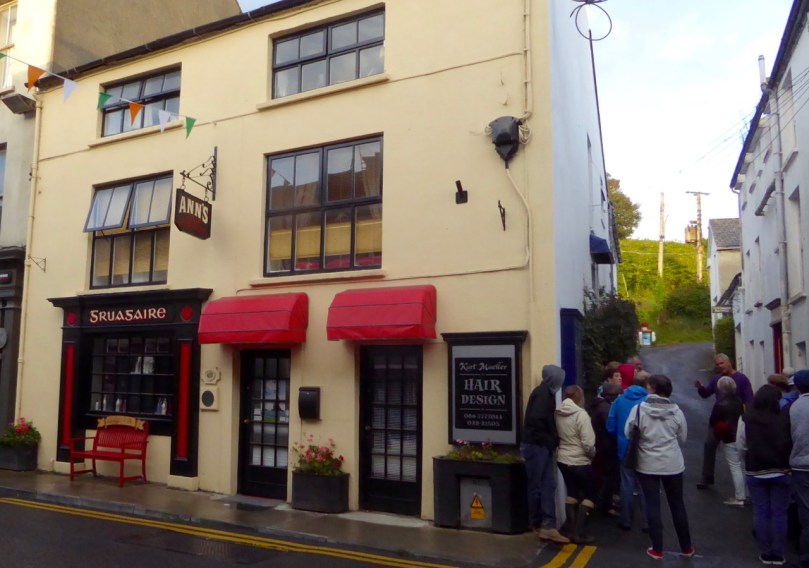
Phoenix Soc meeting place

Philip O’Regan of the Skibbereen Heritage Centre leads us on a walking tour. One of the places he points out is the meeting rooms above what is now a hairdressers, where Rossa and his fellow members of the Phoenix Society used to gather

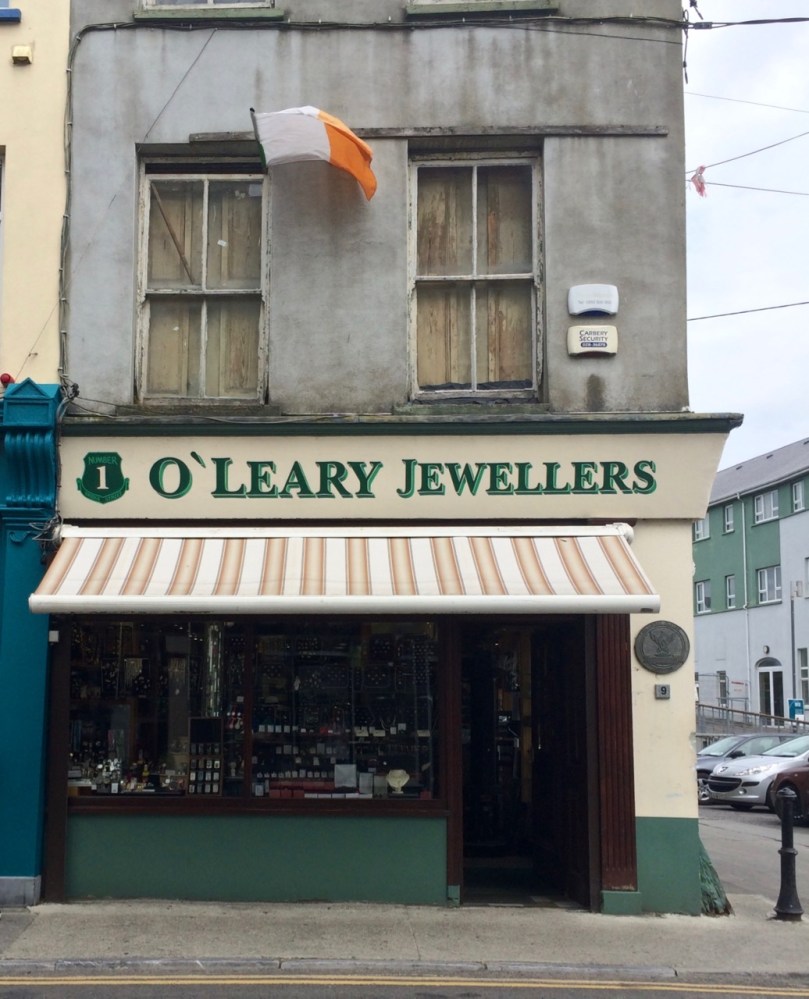
Business and politics didn’t mix well and life was a constant economic struggle. His store is still there, now a jewellers run by the genial Mr O’Leary.

Rossa shop

Rossa married a local woman, Honora Eager, and they had four sons, before her untimely death. I can find no image of Honora, known as Nanno, and can only imagine the devastation to the little family caused by her demise.

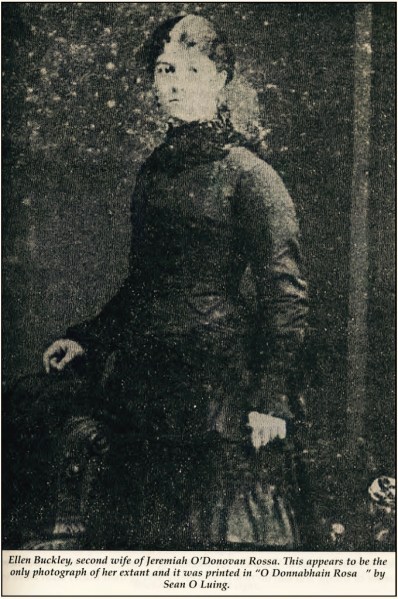
Ellen BuckleyThe following year he met another local woman, Ellen Buckley, who was only 18 at the time and who married him despite the fierce opposition of her parents. She was beautiful and well-educated – and strong willed, obviously. She took on the task of being a mother to his four sons and she bore another son, known as Flor Rossa. But then she also died, leaving Rossa devastated once more. He was in America when it happened and she was buried in Castlehaven graveyard. Her grave is marked with a large headstone – which bears no reference to Rossa, only to her parents. Flor was eventually buried there too, having died as a young man.

The remote and beautiful Castlehaven graveyard, final resting place of Rossa’s second wife, Ellen Buckley. Note that her gravestone makes no reference to Rossa.

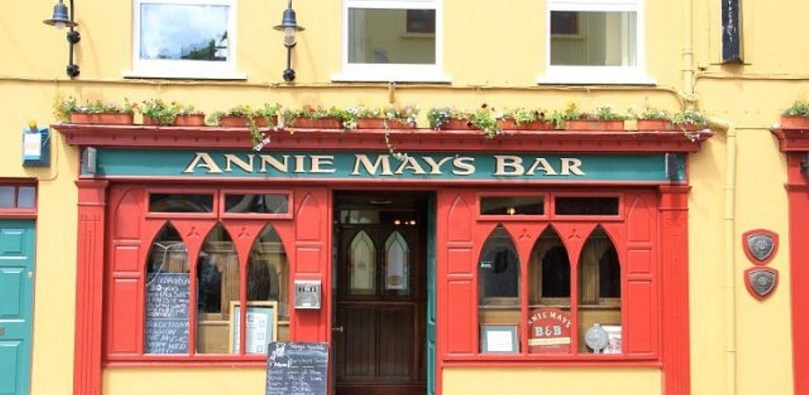
annie-mays-bar-skibbereen-920x450

Members of the Buckley family still farm near Skibbereen and run Annie May’s bar and restaurant, a favourite with locals. Photo courtesy of Skibbereen.ie

Rossa’s third wife was Mary Jane Irwin from Clonakilty. Once again, she was young, well-educated, and married him despite the opposition of her parents.

The young Mary Jane Irwin, and Mary Jane in her mourning dress at Rossa’s funeral. Still beautiful. She supported the family with her poetry readings and recitals while Rossa was in prison

She would go on to have thirteen children with Rossa and they would be married for over 50 years – by all accounts a successful and happy union. Their happiness was short-lived at first. Rossa spent several years under atrocious conditions in English prisons, while Mary Jane wrote poetry and speeches and travelled across America and Ireland raising money for the cause and supporting the family.

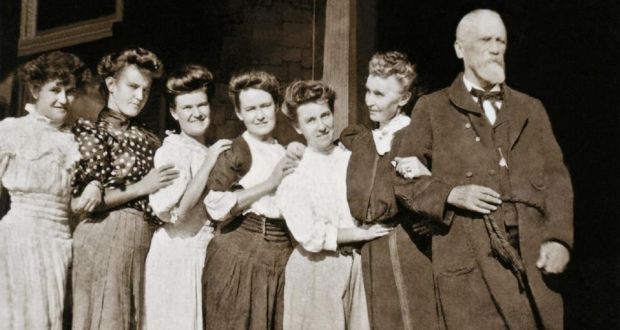
Rossa and daughters

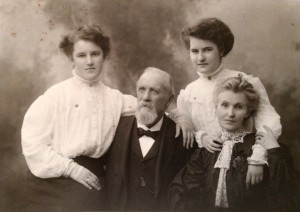
Rossa, Mary Jane and their daughters.

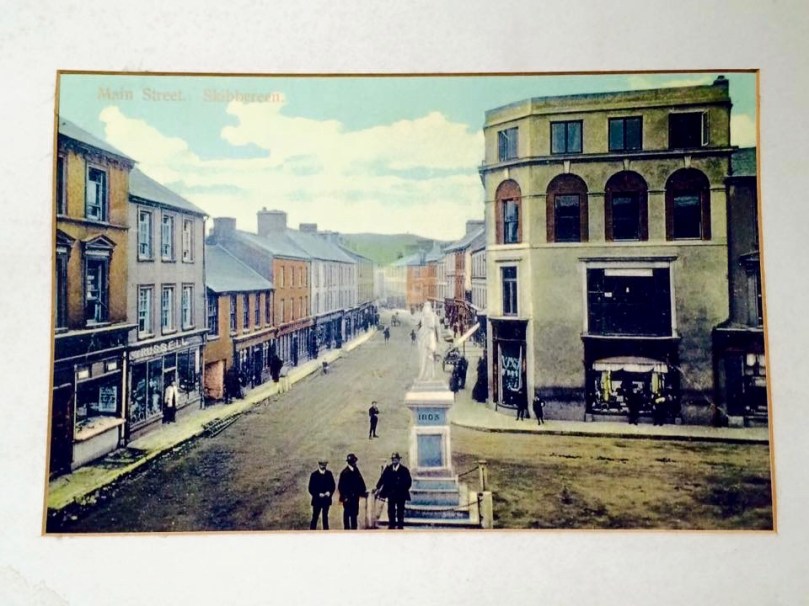
Shortly after his third marriage Rossa moved from Skibbereen and only returned once, in 1904. This was the occasion of the unveiling of the Maid of Erin statue: a fascinating monument that commemorated two failed uprisings against British rule, while Britain still ruled!

North St and Maid

The Maid of Erin statue was originally in the middle of the intersection but was disruptive of traffic so was moved closer to the town hall

But the Rossa family connection to Skibbereen remains strong, and this summer we were delighted to meet two of his great-grandsons, Williams Rossa Cole and Ross Williams Cole, in town to record footage on the Rossa commemorations for a documentary they are making on the life of their great-grandfather. You can read more about them in this Examiner article. And take a look at the trailer for the documentary!

Rossa boys in Skibbereen

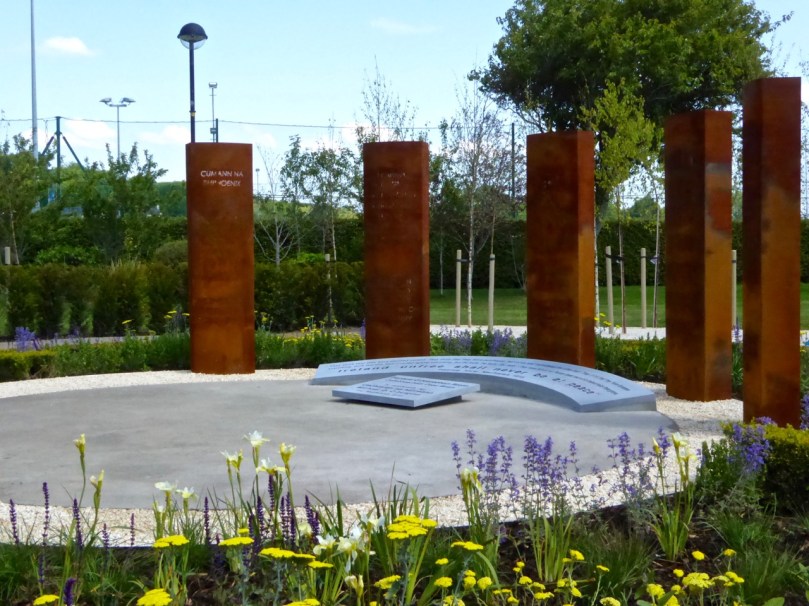
The final stop on any Rossa trail in Skibbereen has to be the park that is dedicated to him. Robert recorded the grand opening by Michael D Higgins, the President of Ireland. It’s a striking monument in stone and steel reflecting the unbending and steadfast commitment of Rossa to his own brand of patriotism, forged in tragedy and hardened in the crucible of prison.

Rossa Memorial

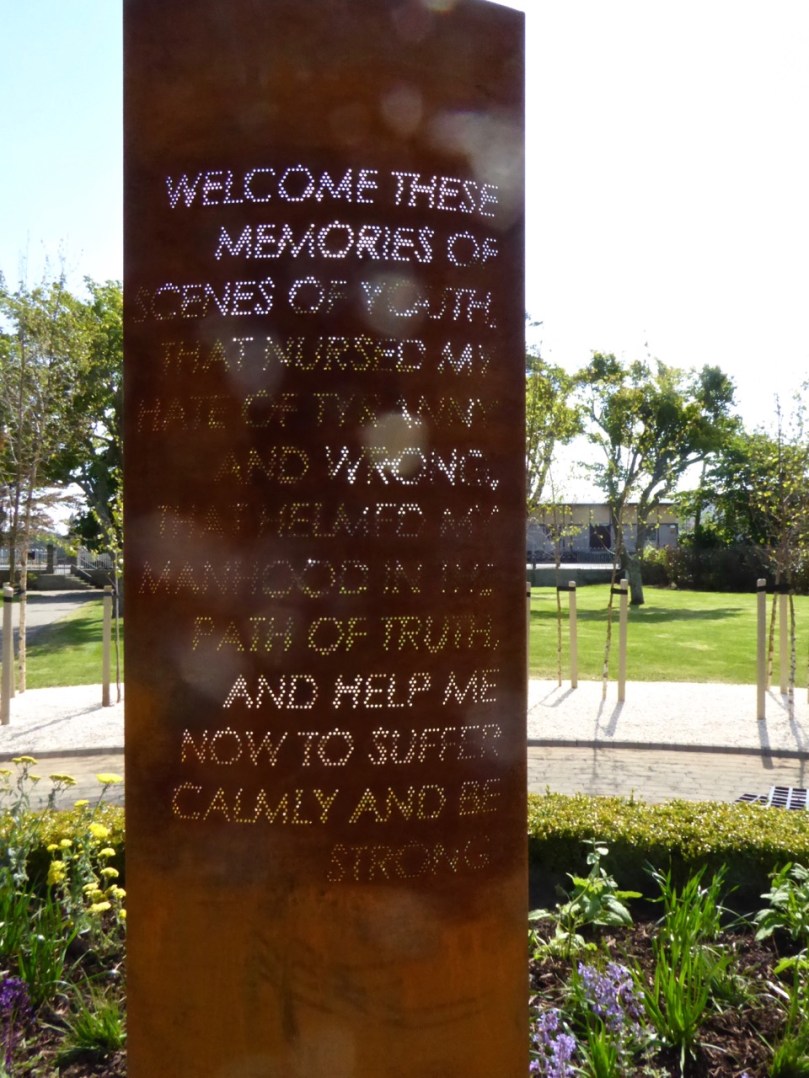
The steel columns have cut-outs of quotes and images silhouetted against the sky. Among these quotes are the poignant final words of Jillen Andy. The poem was composed in prison, not written but memorised because he had no paper. It was a talisman he held close to his heart for when his courage faltered: he conjured up again the image of the wasted body of Jillen, dead of famine sickness as a result of the egregious lack of compassion and mismanagement of resources by the British Parliament and it cemented his resolve once more.

How oft in dreams that burial scene appears,
Through death, eviction, prison, exile, home,
Through all the suns and moons of twenty years,
And oh! How short these years compared with years to come.
Some thing are strongly on the mind impressed
And other faintly imaged there, it seems;
And this is why, when reason sinks to rest.
Phases of life do show and shadow forth in dreams.
And this is why in dreams I see the face
Of Jillen Andy looking in my own,
The poet-hearted man, the pillow case,
The spotted handkerchief that softened the hard stone.
Welcome these memories of scenes of youth
That nursed my hate of tyranny and wrong,
That helmed my manhood in the path of truth,
And help me now to suffer and be strong.

The complete text of Jillen Andy is here.

Welcome these memories

Perhaps we can leave Rossa now to the judgement of history. And perhaps with one last image of him and Mary Jane in happier times. Rest in Peace, you Unrepentant Fenian.

Rossa MJ ans 2 daughters