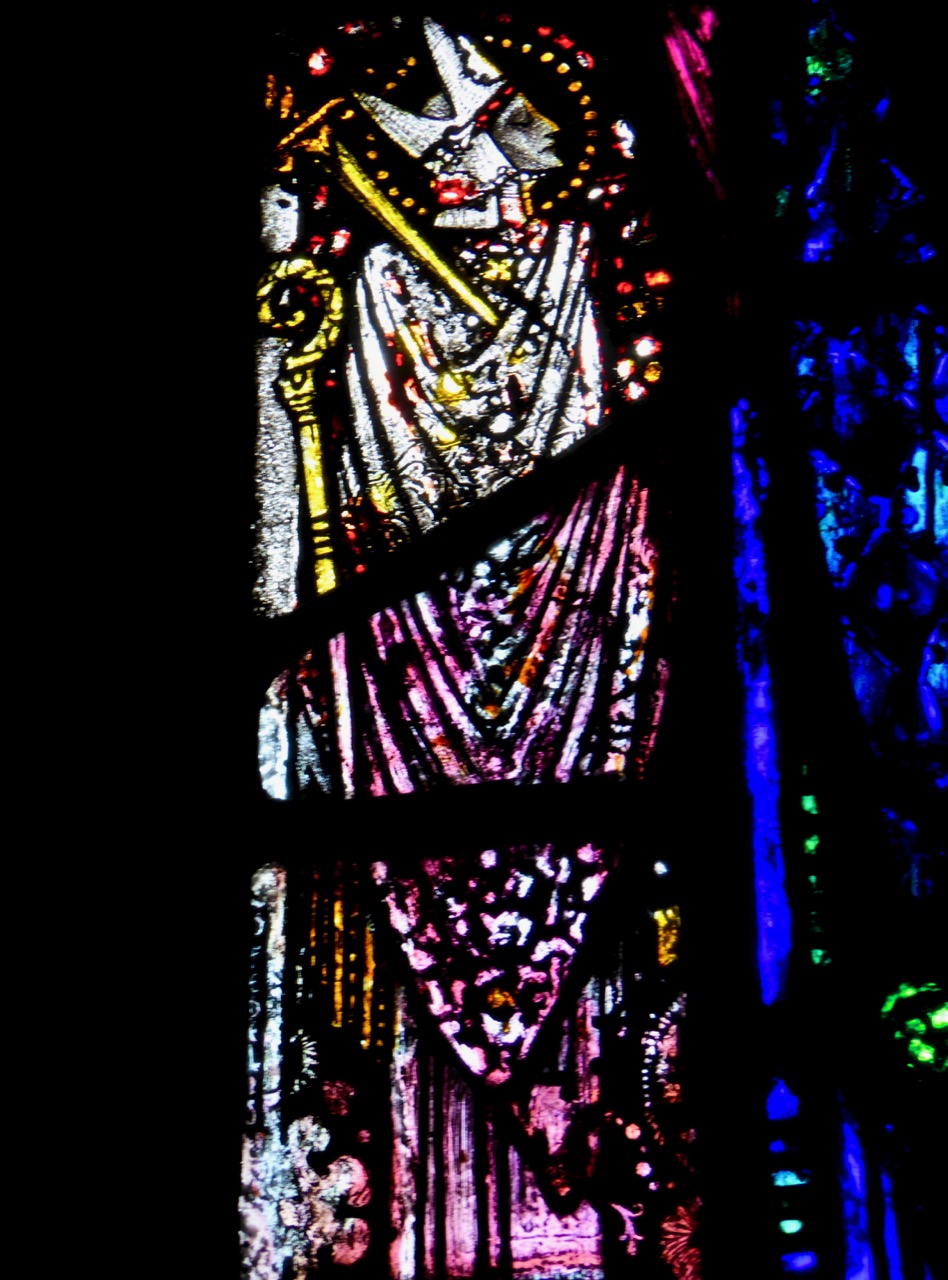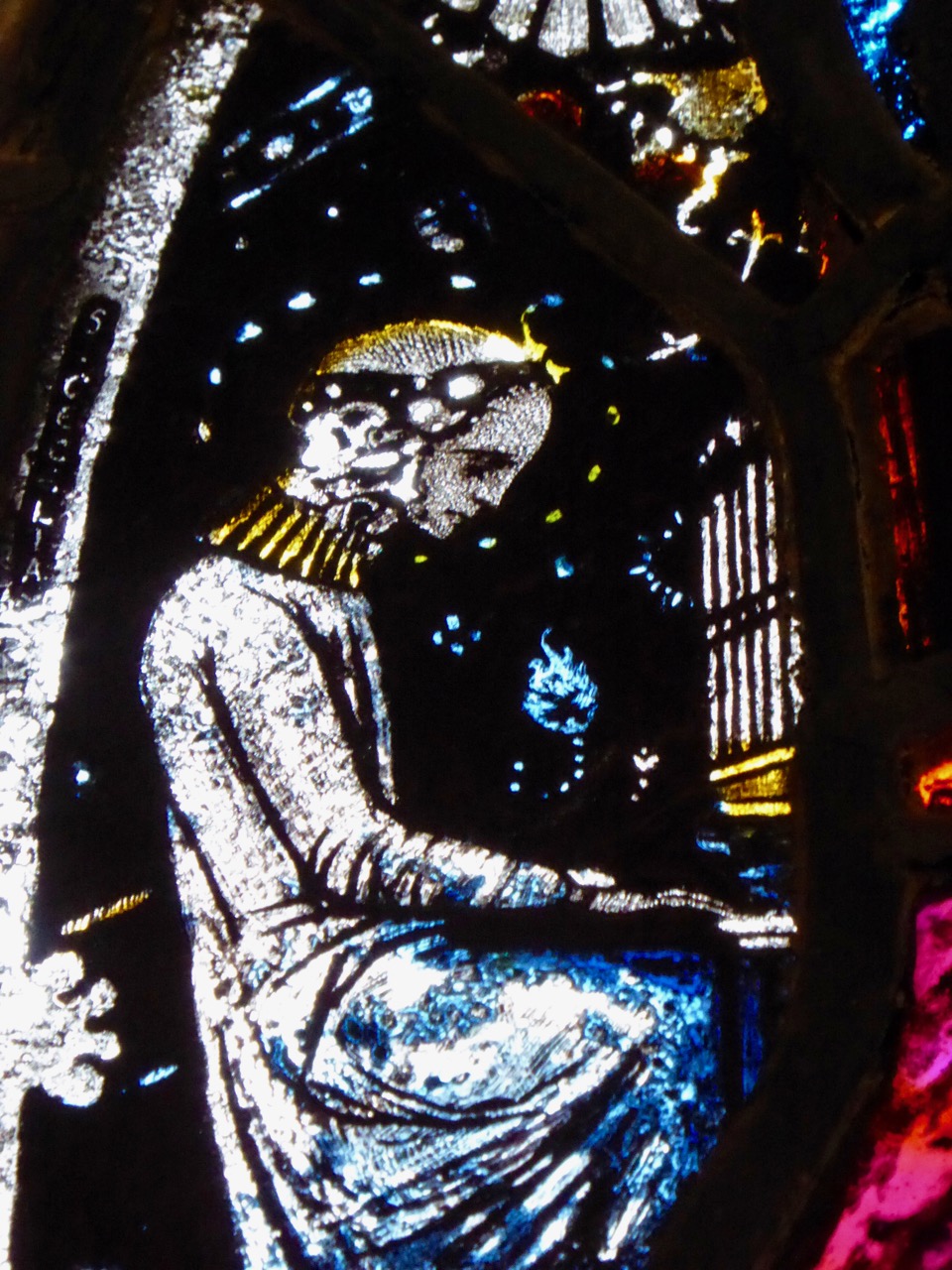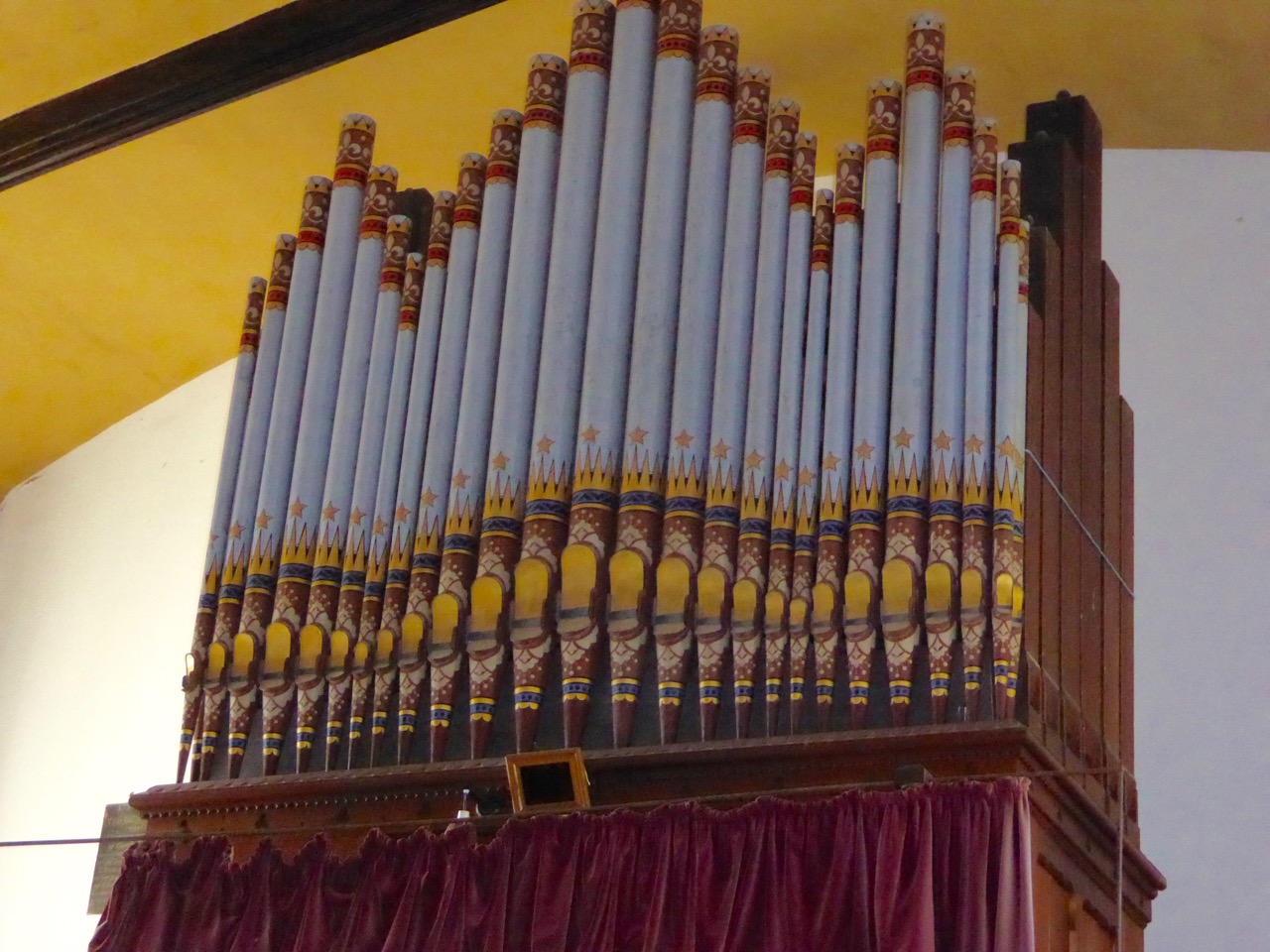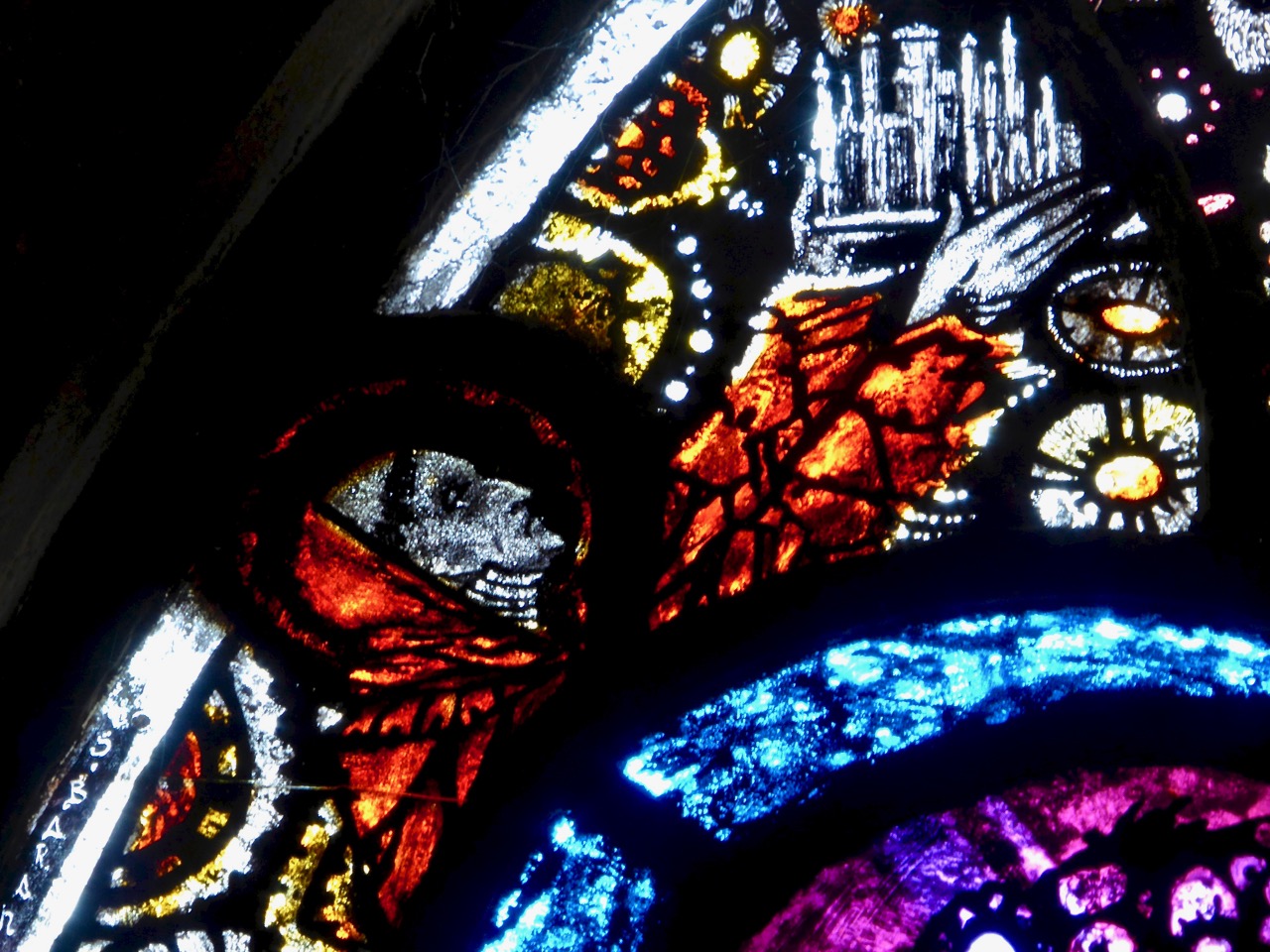
Eleventh Hour

I write this at 11am on the 11th November 2018 – exactly 100 years since the ending of The Great War. I have been aware of the significance of this moment of remembrance since my childhood: wherever we were at the eleventh hour of the eleventh day of the eleventh month, we had to stop what we were doing and be silent for two minutes. This – and the horrors of war – have been in my psyche forever.

Growing up in Britain there was always that awareness of the two world wars, and the losses and sacrifices that they caused: every town and village has its war memorial, giving the names of those who died. That first – Great – war also affected Ireland but, until quite recently, it seems those Irish people who died because of it have received scant commemoration. But – as always in Ireland – once you begin to turn over the stones you do find the history; today’s post looks at just a few examples of memories and commemorations of the 1914 – 1918 conflict.

Firstly, the poetry. Yeats wrote of war poets – “We have no gift to set a statesman right.” I think he was wrong – poets and artists are probably most able to express emotions about war and its outrages in ways that others can approach and embrace. Francis Ledwidge, although an ardent Irish nationalist, states that he . . . joined the British Army because she stood between Ireland and an enemy common to our civilization and I would not have her say that she defended us while we did nothing at home but pass resolutions . . . Only a poet, surely, could describe an army as feminine. Ledwidge gave his life in pursuit of the cause: he was blown to pieces at Ypres on 31 July 1917. A year previously his friend, Irish patriot (and poet) Thomas MacDonagh, was executed (for his part in the 1916 rising) by soldiers in the same uniform that Ledwidge was wearing. The irony is only compounded by the fact that the poet’s Lament for Thomas MacDonagh can be seen now as Ledwidge writing on his own fate:

He shall not hear the bittern cry
in the wild sky, where he is lain,
Nor voices of the sweeter birds
Above the wailing of the rain
  
Nor shall he know when the loud March blows
Thro’ slanting snows her fanfare shrill,
Blowing to flame the golden cup
Of many an upset daffodil.
  
But when the dark cow leaves the moor
And pastures poor with greedy weeds
Perhaps he’ll hear her low at morn
Lifting her horn in pleasant meads.

Last week saw the opening of a new exhibition at the Cork Public Museum – Cork 1918: Victory, Virus and Votes. There are photographs, posters and artefacts – all very well displayed – telling the story of the involvement of people from Cork in the Great War, the political fallout from the War and the aftermath of the world wide Spanish Flu epidemic which claimed millions of victims. It’s a must-see exhibition and congratulations are due to Dan Breen and his dedicated team at the museum for bringing it to fruition at this appropriate time. The images above and below are from the new exhibition.

Today Finola is thinking about her grandfather – Sgt William Owen Roberts – who served in the Welsh Fusiliers and had a distinguished military career which included the Boer War and the Chinese Boxer War. He served in the Great War and was captured and interned in Germany and Holland. He contracted and died of the Spanish Flu on 15th November, 1918 – just a few days after the end of the conflict – at the age of 39. His grave is in The Hague.

There can be only a few families not affected by the wars of the twentieth century. My own Uncle Jack died in a prison camp in the 1940s, while my mother’s mother was a victim of the flu epidemic, dying in 1918 and effectively orphaning my mother (aged four) and her three siblings, as their father was away serving in the army.

Tucked away in burial grounds around Ireland are the graves of those who died in Europe between 1914 and 1918 in that awful war – and of those who died subsequently as a result of injuries and mental stress arising from the war. We mark them out on our travels around the country. The graves – erected by the Commonwealth War Graves Commission – are of a distinctive uniform design, originated by the architect Edwin Lutyens (who also designed the great Thiepval Memorial in France, the largest Commonwealth memorial to the missing in the world, inscribed with over 72,000 names). The sheer magnitude of that number – people of whom no trace is left other than a name carved on stone – is bewildering. The image below of Thiepval is courtesy of the CWGC.

Ireland does now have its own dedicated national war memorial to commemorate the Irish men and women who died during the First World War. The idea was first mooted in 1919 but took years to gestate. Lutyens was commissioned to design formal gardens in Islandbridge, Co Dublin, in the early 1930s, and construction work was largely completed in 1937, following by the establishment of trees and landscaping, an essential element of the design. The 1939 – 45 war in Europe delayed the opening of the memorial, which languished and suffered from decay and neglect for years after that. It wasn’t until 10th December, 1980 – following restoration by the Office of Public Works – that the Irish National War Memorial Gardens were formally dedicated, and they are now maintained to a high standard. As a point of interest, the gardens include classical pavilions – ‘Bookrooms’ – designed to house the memorial record illustrated by Harry Clarke and inscribed with the names of the 49,400 Irish soldiers lost during the Great War. The image of the memorial gardens below is by Diego Lopez Sebastian. The ‘tailpiece’ is a Harry Clarke Illustration from Ireland’s Memorial Records.

For us, perhaps it’s those tucked-away and often forgotten graves in the corners of Irish cemeteries that are the most poignant. We know that each one tells a story: we can’t know that story – but hopefully there is always somebody who does know – and who passes on the memories to future generations.

Above: two tucked-away West Cork war graves. The left-hand picture has an example, lower left, and is at Abbeymahon Graveyard, Courtmacsherry. On the right is an example at the ancient burial ground of Castlehaven.

Piper to the End – A Tribute to Liam O’Flynn

In March this year (2018) Liam O’Flynn passed away. He was a giant in Irish traditional music: a master of the Uilleann pipes – probably the most difficult instrument in the world to play – but also, surely, the most beautiful. We were fortunate to secure tickets for the Memorial Concert to Liam, held in Dublin’s National Concert Hall last Sunday. I would give anything to re-live that experience, as often as possible. We were overwhelmed by the insights which were presented by musicians who had worked with him – and dumbstruck by the astonishing and inspiring performance which took up the second half of the concert: The Brendan Voyage, composed in 1980 by Shaun Davey for the pipes and full orchestra, and written for – and with the collaboration of – Liam O’Flynn. In all, a most fitting tribute to a Maestro – pictured above in 2015 with the RTE Symphony Orchestra (courtesy RTE).

For anyone unfamiliar with this piece of music, here is  the second movement – The Brendan Theme – from a live performance in Cork City Hall. It’s a good introduction to the (then) novel concept of combining the sounds of pipes and orchestra: the full suite (42 minutes) is  available to stream, download, or as a CD. It’s a work with memorable tunes and expansive orchestration: it could only have been written in the twentieth century, yet it is thoroughly approachable and is sure to bring any audience to its feet at the end. As a former tuned percussionist, I envied the rousing finales given to the timpani and cymbal section!

You can’t beat the atmosphere of a sold-out live performance in a full-sized concert hall such as this one in Dublin. We were fortunate in being seated only a couple of metres back from – and with a full view of – the soloist who, for this occasion, was Mark Redmond, a young piper from Gorey who has already established his reputation as a top-class musician. It would be hard for anyone to have to follow in the footsteps of Liam O’Flynn, but the rapturous ovations given to Mark – and the fabulous RTE National Symphony Orchestra conducted with such panache by David Brophy – proved that the ancient tradition of Uilleann piping is being ably advanced by our upcoming generations. (Photo above of Mark, David and the Orchestra taking a bow last Sunday courtesy Mark Redmond via Twitter).

The piece of music is ‘a story within a story’ – it is inspired by Saint Brendan, born in Fenit, Kerry in AD 484 who, with a group of monks set off in the sixth century in search of The Blessed Isles (Paradise). Stories of their many adventures have been recorded and illustrated down the centuries – including the one above which shows the monks landing on an ‘island’ to celebrate mass: the island is actually a giant sea-monster named Jascon! Brendan and his companions crossed the Atlantic, arriving in what we today call Newfoundland – long before the exploits of Columbus. What’s more, they returned safely seven years later to tell the tale. Brendan The Navigator is buried outside the Cathedral of Clonfert, Co Galway, as we have noted in one of our previous posts. And here’s another post about him. But we must not forget that Brendan has West Cork connections too: an elegant modern statue of him is situated in Bantry, looking out over the Bay.

Shaun Davey’s composition, however, is more a response to a modern reconstruction of Saint Brendan’s travels, rather than the original stories. In 1976, explorer, historian and writer Tim Severin set out to test the historical truth behind the stories of Brendan, and built a replica of Brendan’s currach. According to Wikipedia . . . using traditional tools and methods, the 11m, two-masted boat was constructed from Irish ash and oak, hand-lashed together with nearly 3km of leather thong, wrapped with 49 traditionally tanned ox hides, and sealed with wool grease . . . Severin and his crew set sail from Fenit, Co Kerry, and reached the coast of Labrador a year later. Severin’s book describing the expedition, The Brendan Voyage, became an international best seller. Shaun Davey based his music on Severin’s accounts of the journey, and the Uilleann pipes are given the part of the boat itself – both boat and instrument rely heavily on leather. The Irish word Uilleann means ‘elbow’ and the driving force of the instrument is a leather bag which is kept under pressure using one elbow, and is fed from a bellows on the other; the hands and wrists are kept fully occupied playing chanter, drones and regulators. When I listen to this music, my ears hear the water flowing under the leather hull of Severin’s (and Brendan’s) fragile craft. Here’s a good example: the movement titled Water Under the Keel – describing the journey through the Minch channel between the Outer Hebrides and the west coast of Scotland:

In 1972, Liam O’Flynn joined with Christy Moore, Dónal Lunny and Andy Irvine to found a seminal Irish traditional group – Planxty. Incarnations of that group – with additional players – have travelled the well-worn roads over the years, and on Sunday the remaining three original members, together with Matt Molloy, played for us – and brought on waves of nostalgia. The photo from the 70s, below (courtesy of Tara Music), shows them together: Liam O’Flynn is in the centre. Underneath is some footage from Planxty in their prime.

We were treated to other reminders of Liam’s achievements, including a performance of music he was commissioned to write for the inauguration of the Republic of Ireland’s 8th President, Mary McAleese on 11 November 1997. Here’s An Droichead (The Bridge) with Liam and guitarist Mark Knopfler: McAleese stated that the theme of her Presidency was ‘Building Bridges’.

It’s impossible to put into words the level of exhilaration we felt throughout the memorial concert last weekend. I hope that, at the very least, I may today have sparked some interest in the music of the Maestro, Liam O’Flynn (for those not already in the know) – and in the thrill of Shaun Davey’s mighty concert piece The Brendan Voyage. Here’s a last extract from that work, with Mark Redmond playing. It’s part of the climactic movement ‘Labrador’ – the pipes bring in a variation of the main theme to celebrate the boat’s arrival in the New World and the end of the voyage.

When I leave this world behind me
To another I will go
If there are no pipes in heaven
I’ll be going down below

If friends in time be severed
Someday we will meet again
I’ll return to leave you never
Be a piper to the end

This has been a day to die for
Now the day has almost gone
Up above a choir of seabirds
Turns to face the setting sun

Now the evening dawn is calling
And all the hills are burning red
And before the night comes falling
Clouds are lined with golden thread

We watched the fires together
Shared our quarters for a while
Walked the dusty roads together
Came so many miles

This has been a day to die on
Now the day is almost done
Here the pipes will lay beside me
Silent will the battle drum

If friends in time be severed
Someday here we will meet again
I return to leave you never
Be a piper to the end

(Piper to the End – a song by Mark Knopfler)

Lastly, Saint Brendan the Navigator is celebrated in his birthplace of Fenit, Co Kerry where he looks out eternally over the ocean which he and his companions conquered in their small, hide covered curragh.

Saints and Soupers: the Story of Teampall na mBocht (Part 1, Introduction)

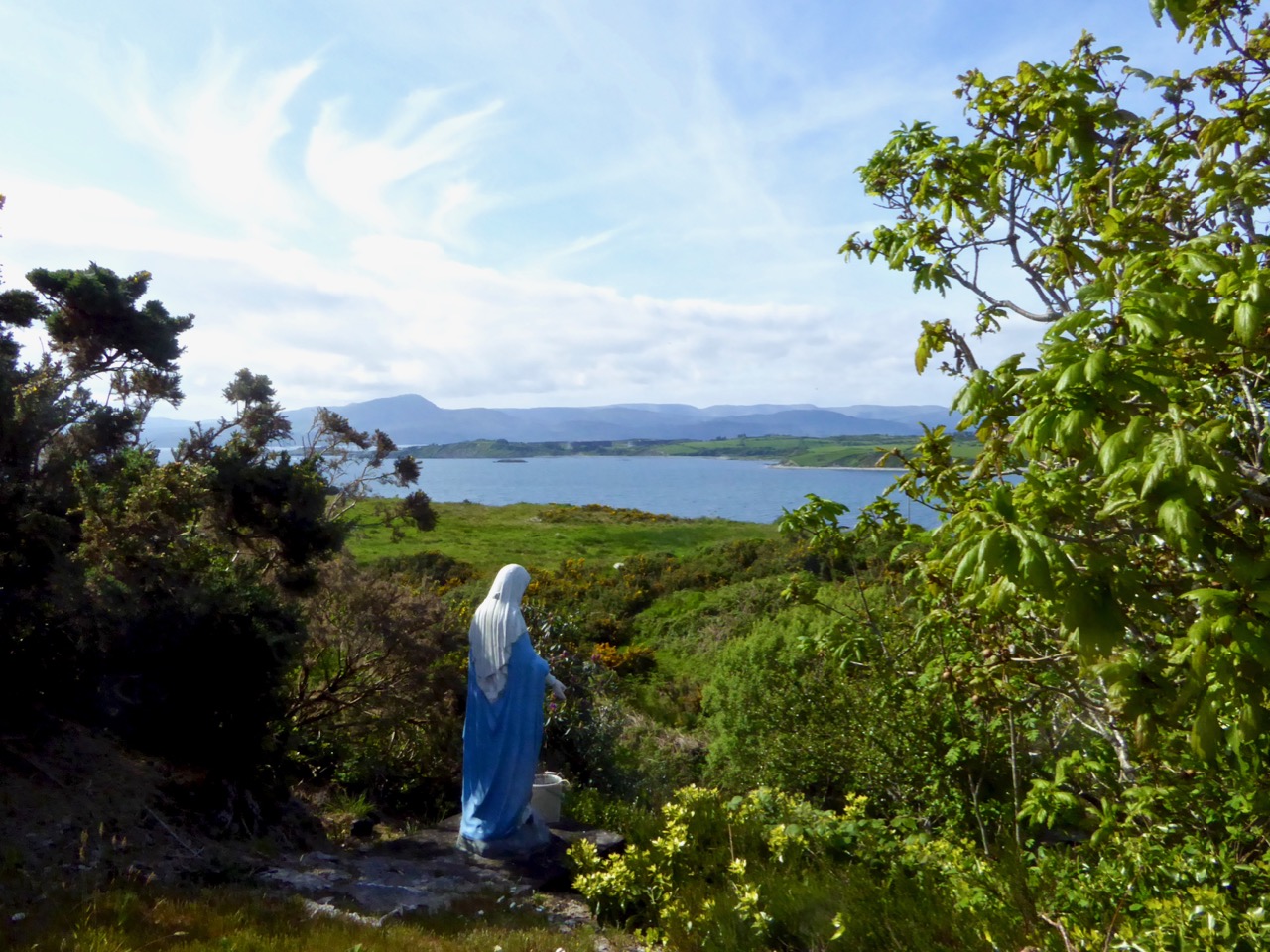
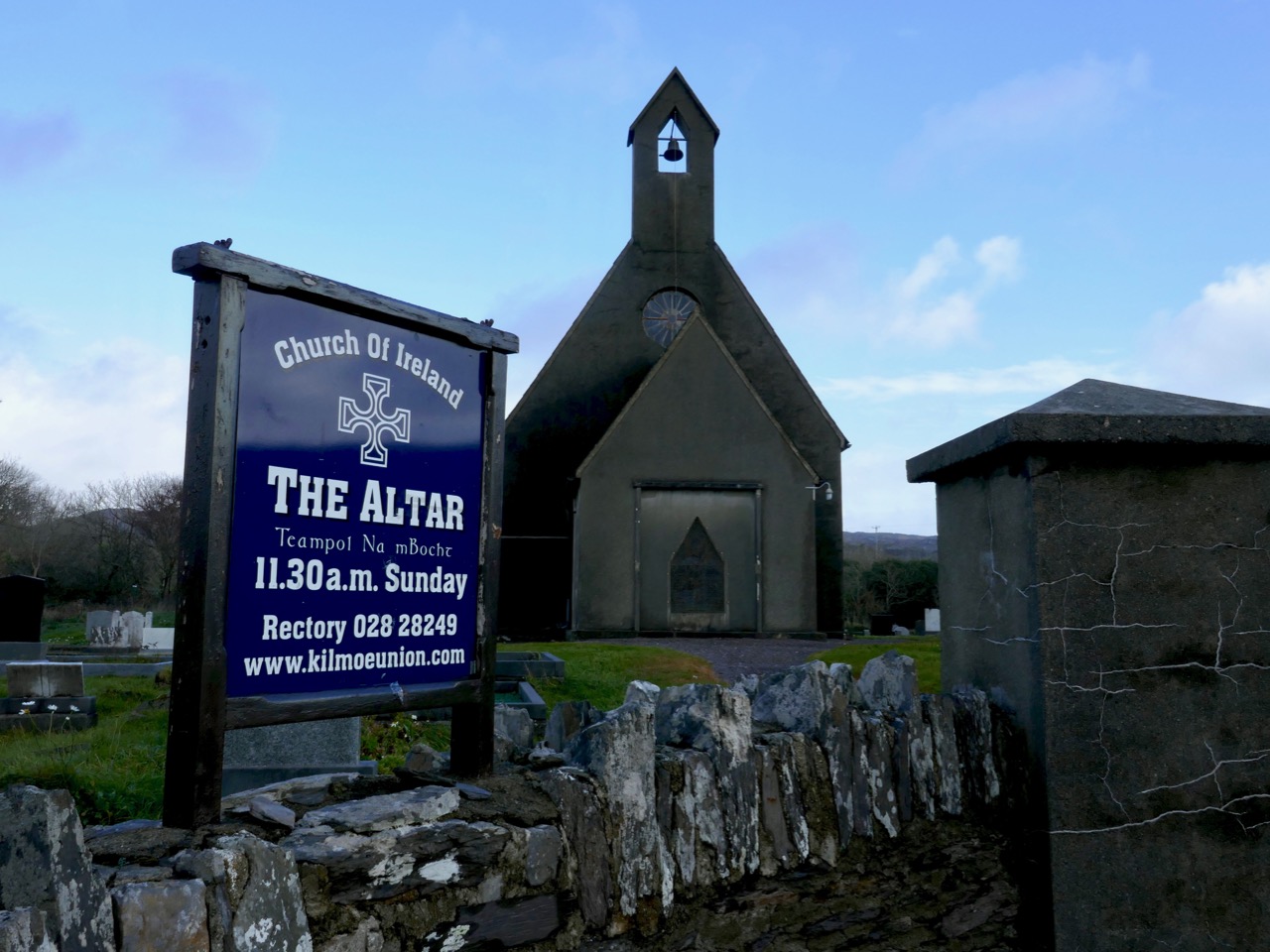
It’s an unassuming little building, quaintly situated on a piece of rocky land by the sea just west of Schull on the Mizen Peninsula. Nothing in its appearance now hints at its contentious past, although it certainly manages to look very attractive in this watercolour by Paul Farmiloe.

The church is often described as ‘Celtic’, ‘Romanesque’, or ‘based on an ancient Irish model’. This is curious as it has no precedents that I know of in ancient Irish architecture, except perhaps for the small triangular window arches, such as this one (above) from St Flannan’s Oratory in Co Clare.

The interior is quite beautiful in its simplicity and in the repeated use of the motif of an unusual and striking stepped-triangular design for the chancel arch, the windows and the doors.

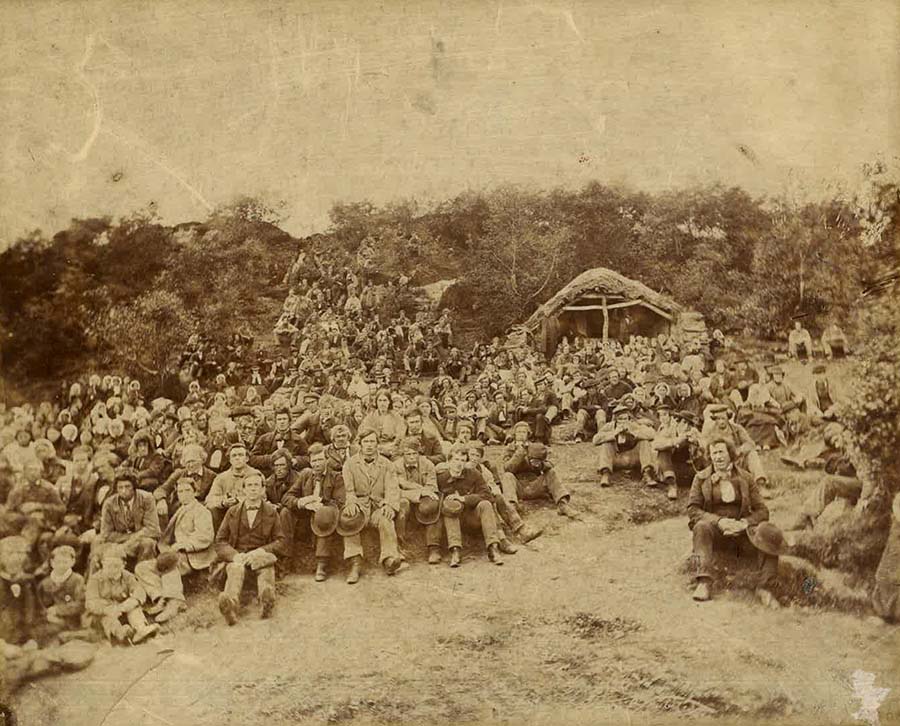
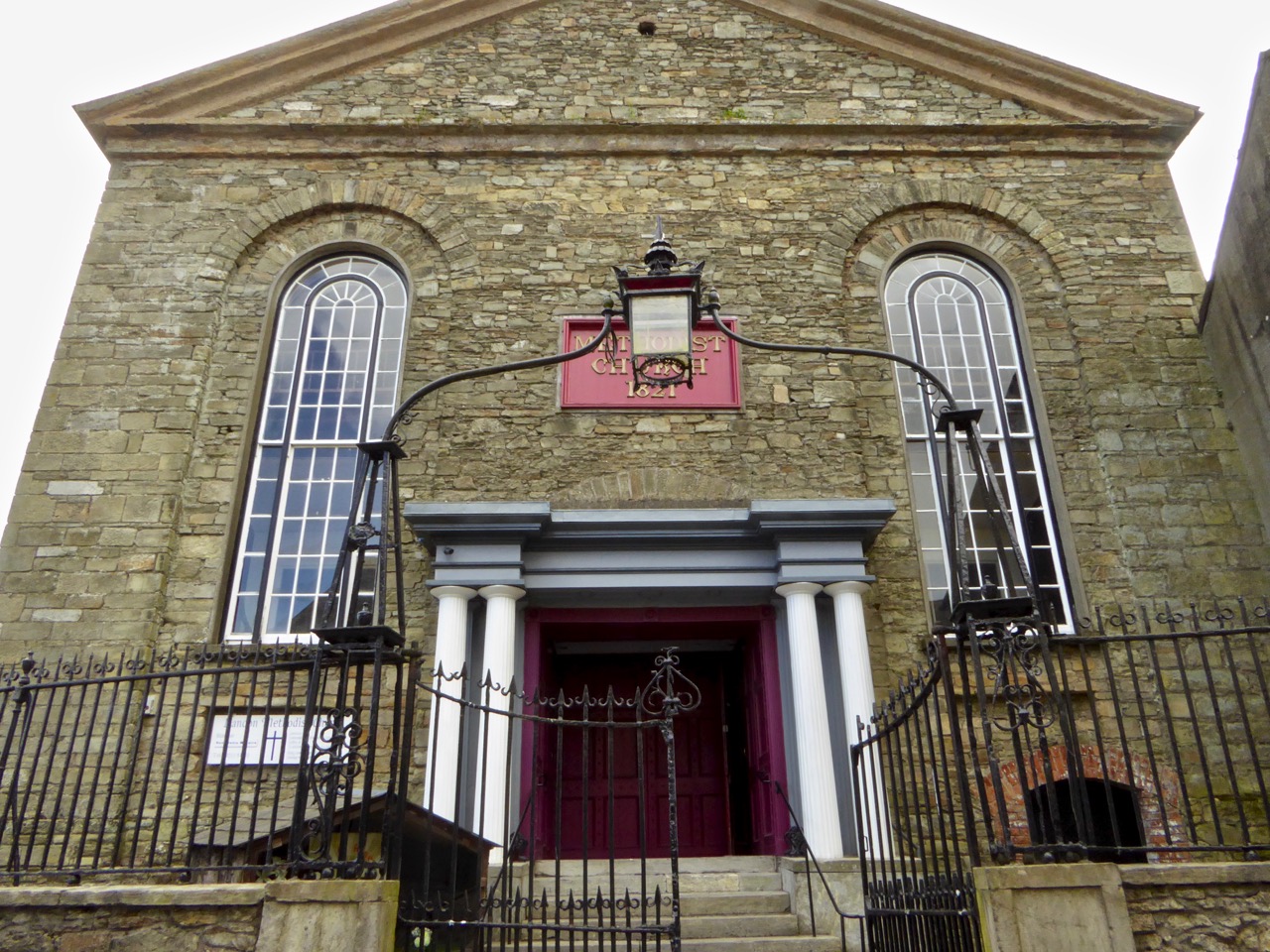
The name, perhaps, seems unusual – in fact it is the only Church of Ireland building named in Irish, Teampall na mBocht, the Church of the Poor. Yet this one small building, constructed at the height of the famine of 1845 to 50 was once the focus of a firestorm of accusation and counter-accusation.

The story of Teampall na mBocht is central to the history in Ireland of what is known as souperism. To take the soup or to be a souper is the worst thing you can accuse a person of – it means to sell out your principles for worldly gain and is based on ugly incidents during the Great Hunger where Church of Ireland and Methodist Ministers were accused of offering food in exchange for conversion. Souper was originally used to describe the person offering the soup, but in modern parlance it is usually reserved for those taking it. As we shall see, accusations of souperism were levelled in both directions – by and against the Catholic Church – during this period.
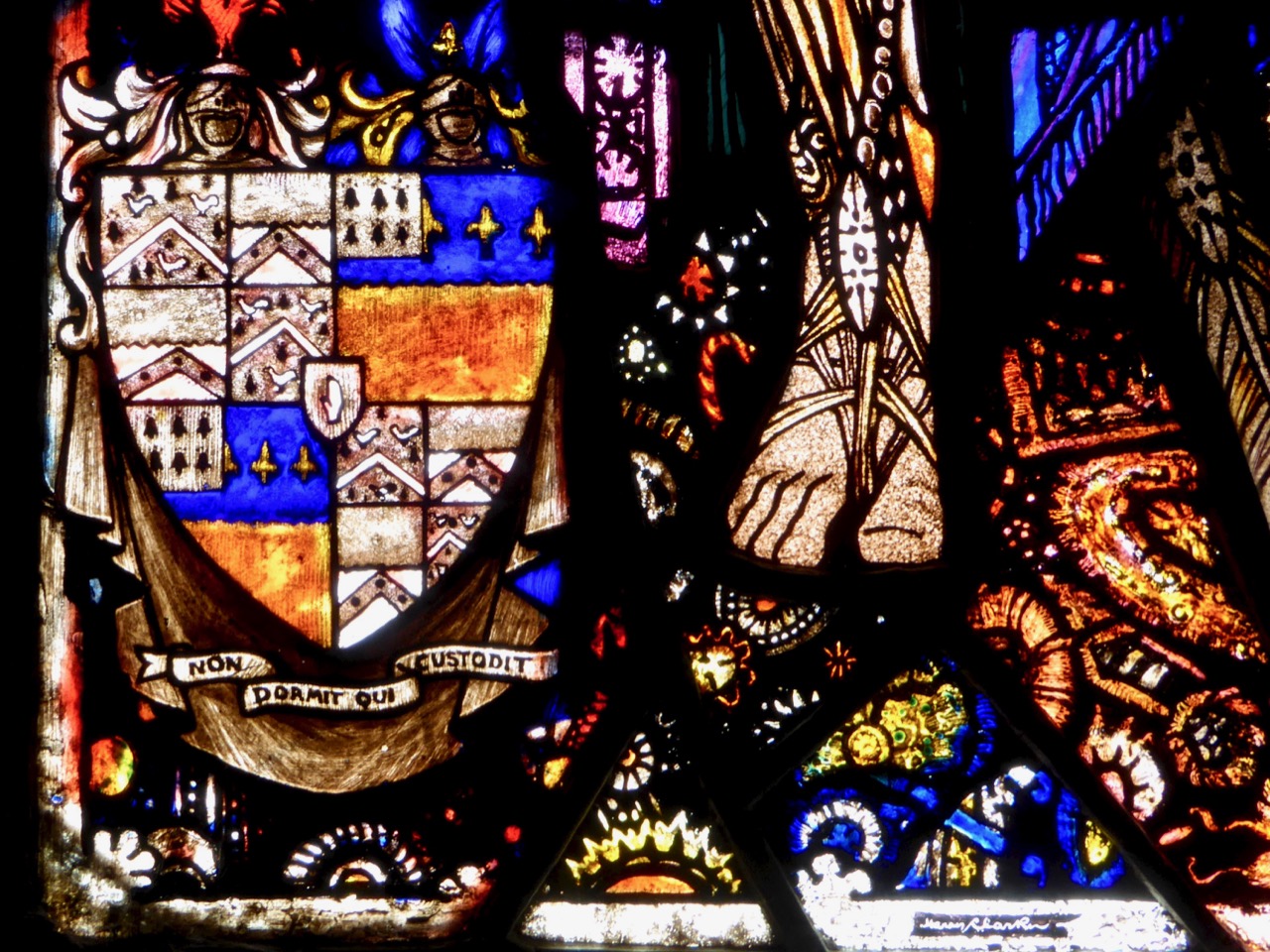
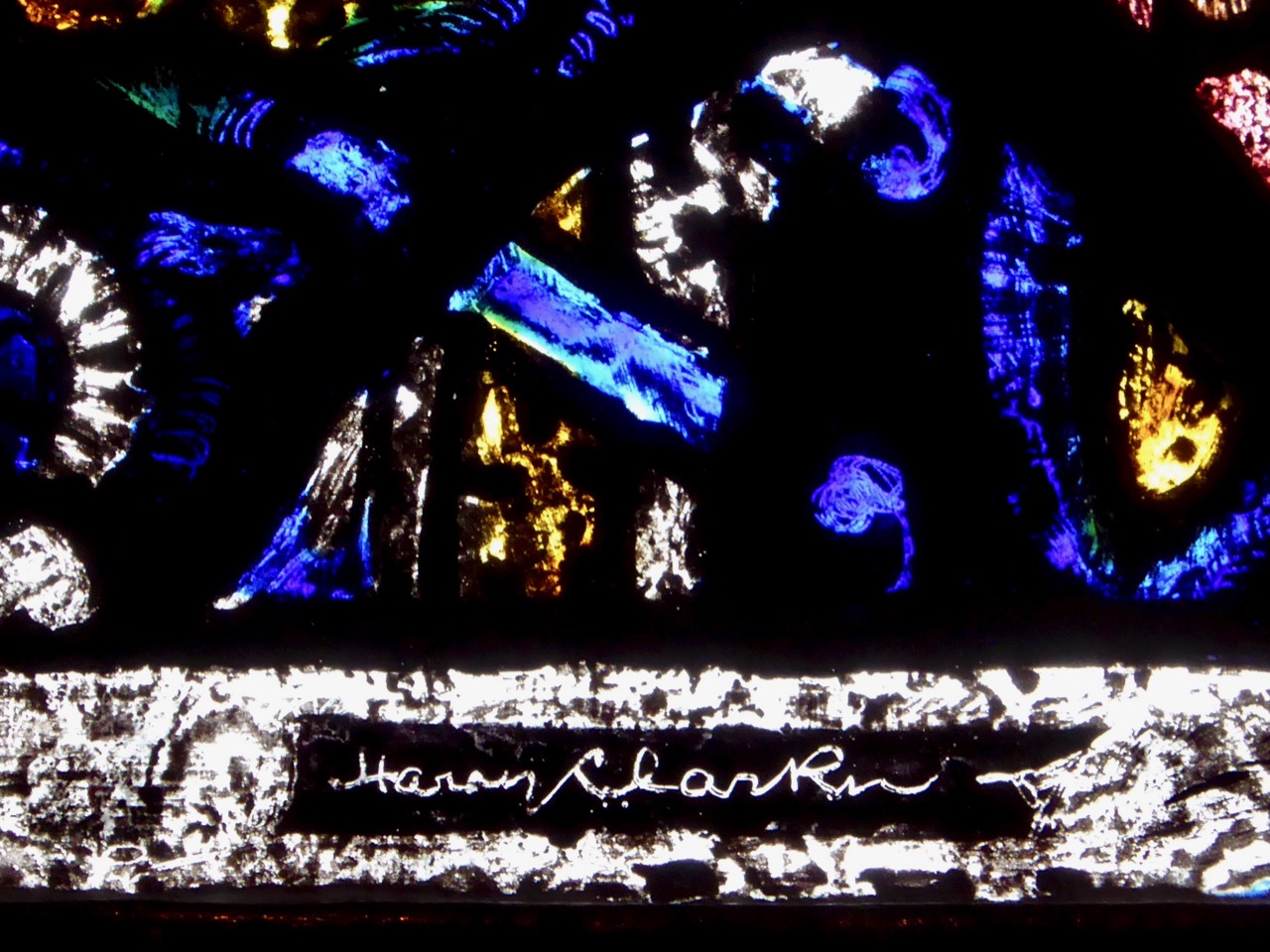
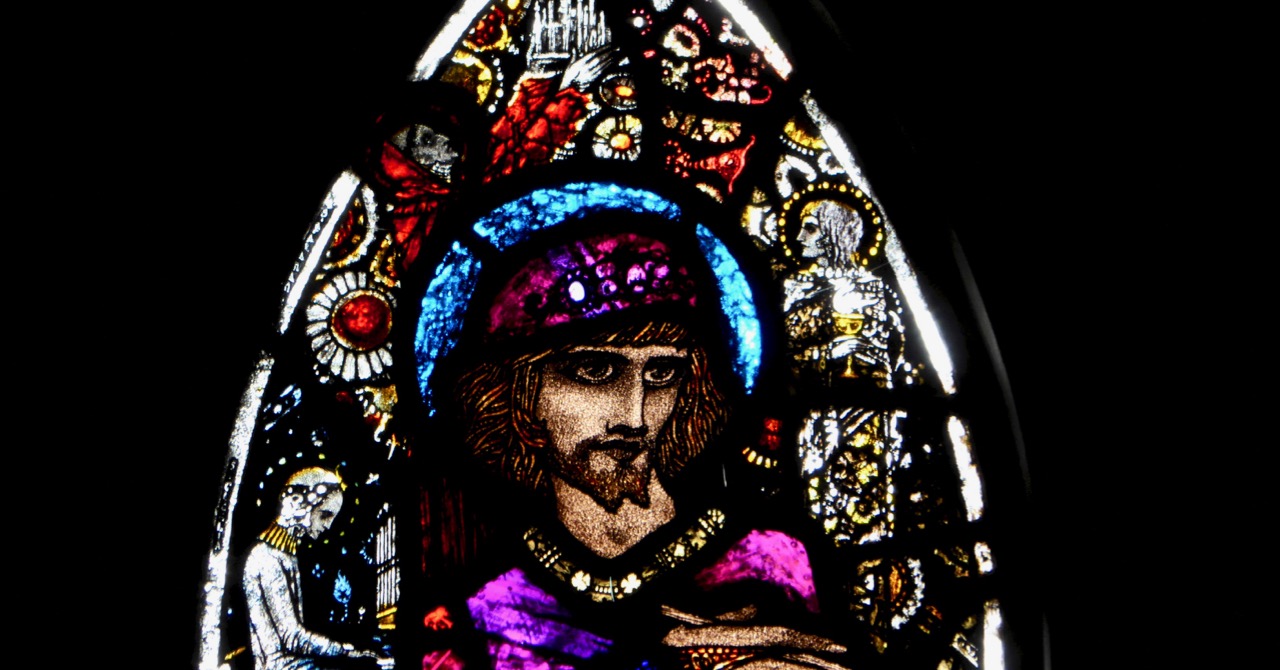
The stained glass windows were a later addition. The East, Ascension window is by Joshua Clarke and executed in 1919. Although Harry Clarke was working with his father at this time there is no evidence that he had a hand in this window, which is not in his style. However, Harry learned much in his father’s studio that is evident in this window, including attention to detail, the use of good glass and sumptuous colour
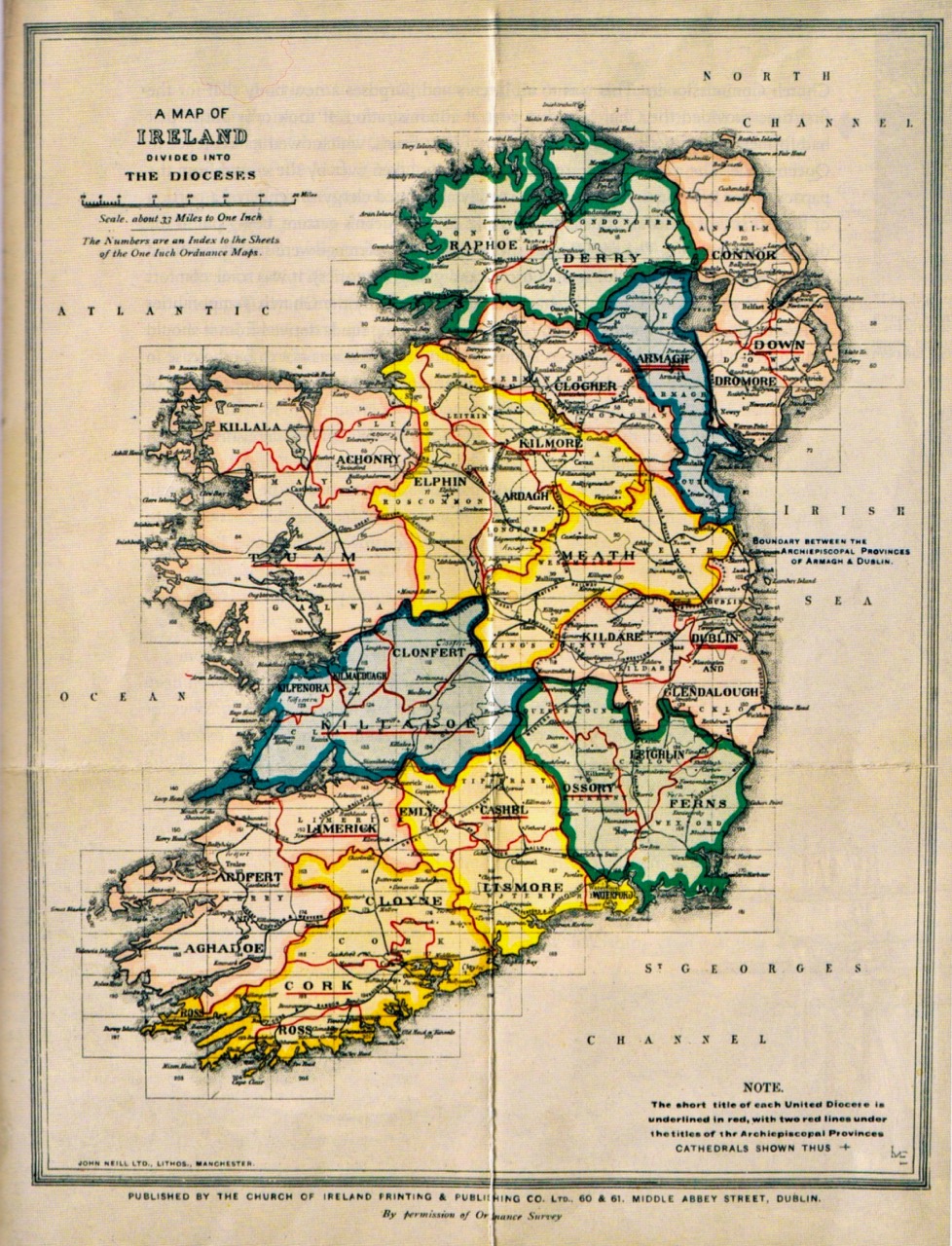
The term ‘famine’ is in itself controversial, since many assert that it cannot be used except where food sources have dried up. They point out that food continued to be grown and exported during the period of the potato blight. I use the word here, along with the term ‘Great Hunger’ since it is the terminology used in most of the sources I consulted. Also, as will be seen, it accurately describes the situation in Kilmoe during this period, in which there was literally no local food to be found by any means.

The above image was retrieved here

The story is a complex one, and as I have tried to navigate it my chief source has been the magnificent volume Famine in West Cork: The Mizen Peninsula, Land and People 1800-1852 by Patrick Hickey. The book is now out of print but available through the internet. Fr Patrick Hickey, or Father Paddy as he is known locally, published his study in 2002, a monumental work of unparalleled erudition and thorough research. Himself a Catholic priest, his study is even-handed and fair, giving credit where it is due on all sides, and filling in the vital historical background to present a picture of these remote communities and the religious, educational, economic and social conditions prevalent at the time.

Others too have studied this little church, including the journalist and writer Eoghan Harris who based the action of his play Souper Sullivan on the events I will describe. Harris is himself not shy of controversy and has long waged a lonely battle against what he sees as the black-and-white victim-narrative version of Irish history. He poses the question – “So why is the heroic story of the spalpeens of Teampul na mBocht not a cherished part of Skibbereen’s Famine memory?”

In this multi-part post, I hope to address Harris’s question, and tell a story that captures this terrible time in all its complexity. But first – the bare facts.

In 1848, at the height of the famine in West Cork, Rev William Allen Fisher, using funds raised chiefly in England, employed starving locals to build a Church of Ireland (Protestant) church in his parish of Kilmoe. In doing so, he surely saved several hundred from starvation. His admiring son-in-law, none other than Standish O’Grady, described his devotion to the poor of his parish and his heroic efforts on their behalf and pronounced him a Saint. The Catholic Church, on the other hand, accused him of buying souls with food and held him up as the worst example of Souperism. (There’s a slightly fuller version in Robert’s post Another Grand Day Out on the Fastnet Trails.)
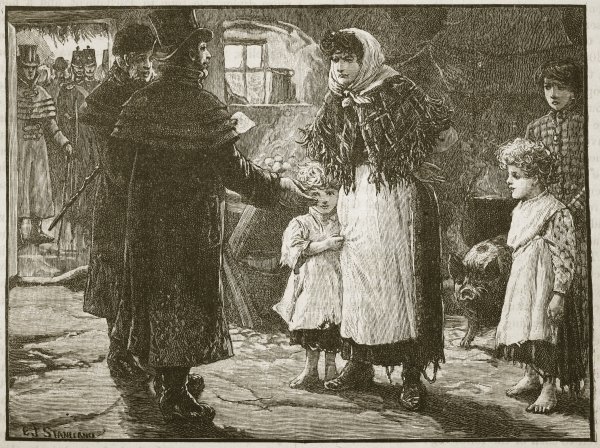
And yet – it had all started out well enough, with the Rev Fisher and Fr O’Sullivan the local parish priest working together to alleviate the awful situation. How did it all go so wrong? Who were the actors at the heart of the drama? What was the prevailing social and religious environment in the district at the time? What lens can we use to view this part of our past?
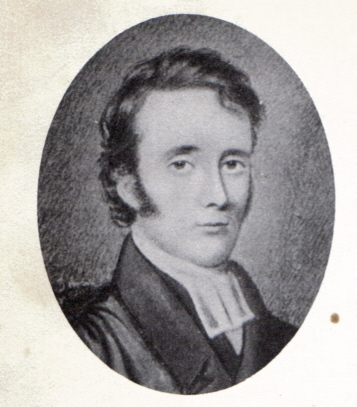
Stay tuned…

This link will take you to the complete series, Part 1 to Part 7


Fierce Mild

“Fierce mild” my neighbour said when commenting about the weather. While this is an Irish-ism that simply means very mild, it struck me as particularly apt, in that this mildness, while very welcome to us humans in the autumn, can have a fierce effect on our native flora and fauna.
The Spindle Tree comes into its own in October

It’s true that up now we have had a wonderful long, mild autumn. Warm sunny days, perfect for long walks looking for wildflowers, have lured us outdoors and convinced us that this will last forever.

From the top: Corn Spurrey, generally finishes blooming in September; Red Campion – by now we expect to see the empty seed pods, but along with them there are a few flower heads still blooming

And the wildflowers are certainly hanging in. I’ve seen lots that would normally be over by now, but who find a sheltered spot and bloom merrily away for our enjoyment. It’s been lovely, and I can’t help wishing it would last well into November. But the truth is that an unusually mild winter is not good for our plants.

Rose hips – seasonally correct; but look at the branches, are they starting to bud?

The factors that cause winters to be milder than usual are many and complex. Forecasters appear to be conflicted as to whether Ireland can look forward to winters in the coming decades that are shorter and milder than average or longer and colder. Both scenarios pose problems for plants and insects and therefore for those of us who depend on the health of our pollinators. And that, actually, is all of us.

Found on the same south-facing slope; Top: Musk Stork’s-bill – it should have finished flowering in July, but it’s found a sunny spot and is still blooming; Bottom: Red Dead-nettle can bloom well into November 

While it’s impossible to extrapolate from recent weather experiences to talk about long-term trends, a mild autumn can show us what can happen when temperatures vary from the norm. We already know that our springs have come sooner than they used to fifty years ago (two to three weeks earlier!) but we have also seen an increase in average temperatures in the autumn, which can lead to prolonged spells of mild and sunny days, such as we are experiencing at the moment.

Ragged Robin is a spring/summer flower and it’s a little worrying to see it blooming this late

Mild temperatures in the autumn can trick flowers into thinking that it’s spring, and time to wake up and grow. Trouble is, there’s bound to be a cold snap sooner or later and the fragile bloom will freeze and it won’t bloom again when true spring arrives.

This Long-headed Poppy and Common Ramping-fumitory are blooming late, especially the Poppy

Our native and naturalised plants have adapted to our ecosystem, including our climate, and any disruption to that has to be, in turn, adapted to. But this takes time – centuries, millennia even – for many organisms: the rate at which our planet is warming may not give them the time they need to make that adaptation.

Sweet Alison, rare in West Cork, on the same sunny slope as the Musk Stork’s-bill and the Red Dead-nettle

That’s all a bit doomsday, and I’m never inclined to embrace the most alarmist predictions, but whether related to global warming or not, a mild autumn can a problem for wildflowers. Flowers that appear in late summer and normally bloom into September and early October are still nodding away in the fields and hedges this year, and that’s lovely to see.

Common Chickweed – this one blooms all year round!

What’s not so great is that I have seen a few spring/early summer flowers too, long after they should be asleep. I can only conclude that they have sensed that it’s time to produce their one and only set of buds and that the first deep frost will probably kill them.

A lovely lilac-coloured variety of Sea Rocket, still in full flower at Barley Cove

A longer growing season also provides opportunities for insects and fungus that would be kept in check by colder weather to predate on plants. Plants that arrive from warmer climates, whether by accident (hitching a ride on a long-distance freight truck, or hidden in nursery stock) or design (imported for garden use) can start to reproduce once our climate catches up to the conditions they have been bred for. A good example of this is the snowy white egret – it only arrived here 20 years ago!

Little Egret; Russian Vine at Rossbrin Cove, an unwelcome invasive species

A fierce mild autumn is lovely, and we are certainly enjoying getting out and about on our favourite walks and our various explorations. But it’s time to cool down now – for our flowers’ and insects’ sake and ultimately for our own.

I love the colour that the bracken turns at this time of year

The good news is that a north wind arrived yesterday and suddenly it’s chilly. Good news for the wildflowers, that is. Not so great for us – we will miss those sunny walks!

Beautiful West Cork in October

Off the M8 – Lismore Quest

It’s half an hour’s drive off the motorway, leaving at Fermoy – but well worth the diversion. Lismore, County Waterford, is an ancient town. St Carthage arrived here in 635 and established a great centre of learning famous throughout Europe; the Vikings ransacked it in the ninth century, after which the Norman Prince John, son of King Henry II, arrived in 1185 to build the Castle, which passed through the ownerships of Walter Raleigh and the Great Earl of Cork, before becoming the Irish residence of the Duke of Devonshire. So there’s lots to see, and lots of history to take in: be prepared for many visits!

Our quest was to find a grave in the churchyard of St Carthage’s Cathedral. I am currently preparing a talk on the links between West Cork and Zululand (believe me, this is relevant)! The principle subject of this talk is a ‘soldier artist’ – William Whitelocke Lloyd, who was born and brought up in Strancally Castle, County Waterford, but lived for most of his adult life in Glandore, West Cork, (where you will find a pyramid). What should we find in St Carthage’s? Another pyramid! But that’s incidental to the main story here.

The Cathedral is said to be on the site of the original monastic foundation, and there’s some pretty ancient stonework inside it, including the quite remarkable tomb of the McGrath family which dates from 1486. The present building, however, comes mainly from the early seventeenth century when the Earl of Cork carried out major works, but also retained some earlier structure.

We did find the Whitelocke Lloyd grave, a little forlorn, close to the north west corner of the Cathedral. It has not weathered well and the inscription is not easily decipherable; a fallen cross lies broken across it. If you want to find out about this man’s exploits in the Zulu wars of 1879 – 80 and his career as an artist – for which he had no formal training – and why he is buried here with no family around him (his wife Catherine Anna Mona Brougham, daughter of the Dean of Lismore lies in a matching grave in Casteltownshend) you’ll have to come to my talk!

The somewhat forlorn grave of William Whitelocke Lloyd in the grounds of the Cathedral (above) and (upper pictures) two examples of the watercolour sketches of William Whitelocke Lloyd carried out while he was on active service in Africa. They were faithful records of the terrain and the conditions which the soldiers endured. Whitelocke Lloyd was ‘discovered’ by the Illustrated London News who used his drawings to produce engravings for publication – one is shown below.

Today’s post is largely a miscellany of the splendours we discovered in and around St Carthage’s Cathedral, and we hope this will inspire you to go there yourselves: it’s only two hours away from home – a mere hop and a skip.

Finola was delighted to find this rarity in St Carthage’s Cathedral – a window by the pre-Raphaelite artist Edward Byrne-Jones.

As with many Anglican churches, there are numerous elabortate memorials on the walls of St Carthage’s Cathedral. Here are just three examples, above.

In the Cathedral reposes this McGrath family tomb – one of the finest examples of sixteenth century stone carving in Ireland. Below – one of the earliest grave inscriptions, dating from 1718.

Robert’s Talk – West Cork and the Zulu Wars – will be given at the Talks in the Vaults series, Bank House, Ballydehob on Tuesday 13 November, at 8pm

Autumnal Day Out – Myross Pyramid

Following what might be described as a Mediterranean summer which went on beyond all expectations well into October – where I suppose it became an Indian summer – we have just had the first truly autumnal days. Mist has descended over the islands of Roaringwater Bay and everything – trees, grass, nature – is dripping wet. This doesn’t put a stop to our travels, but we do see everything in a different light.

Last week I reported on a surprising find, a pyramid-shaped tomb in the idyllically off-the-beaten-track burial ground at Glandore over the hills not too far away from Nead an Iolair. This led to a large number of comments and responses, including some that told us about another West Cork pyramid, at a graveyard in Myross parish, only a little bit further along the coast. Thank you to all our correspondents: you sent us out on a fruitful search in this mellow season of mists.

The townland of Myross is an island, of sorts. A stretch of water runs between Blind Harbour in the west and Squince Harbour in the east, and old stone causeways give access at either end. On the day of our visit there was hardly a sign of life, and the fog prevented us getting any idea of the fine ocean views which can evidently be enjoyed from the ancient graveyard. Nevertheless, we felt the day that was in it empathised with the muted atmosphere of this silent place.

At the centre of the burial ground stand the ruins of a substantial church, in very poor repair. Some of the masonry has been reinforced with brick piers and timber posts, but the structure is fenced off to indicate the risks of its instability. Inside the church are an old font, and a piscina. The illustrations here are from a massive work – The Diocese of Ross and its Ancient Churches by Charles Webster, Dean of Ross, published by the Royal Irish Academy in 1932.

W Mazier Brady’s Clerical and Parochial Record of Cork, 1863, records that the Church of Myross was in use in 1615 but in ruins by 1699. Subsequent researches tell us that a little further to the east is the townland of Carrigihilly and here survives another ancient burial ground: local tradition asserts that here was a Cistercian Monastery – Maure Abbey (Abbey de Sancto Mauro) – founded in 1172 by Dermot MacCarthy, King of Desmond. We didn’t get to Carrigihilly on our autumnal day out: another expedition to the area beckons.

The focus of our visit was, of course, a second pyramid in West Cork – and there it is! More modest in size, perhaps, than the Glandore example, but standing out, nevertheless. Unlike the one at Glandore, there is no visible inscription on the masonry, much of which is quite overgrown. Tradition has it, however, that this tomb is a burial place for the O’Donovans, who are well represented in this part of West Cork, even today.

Keeping the pyramid company in this Myross graveyard are other significant chest tombs and unusual ‘gabled’ tombs, also uninscribed, and a small number of carved gravestones dating from the nineteenth century, very weathered but partly legible. It would be fascinating to know something of the lives of those who are interred in this remote and atmospheric West Cork location.