Keith Payne’s Early Marks

The Gallery in the Burren College of Art in Ballyvaughan, Co Clare, recently opened an extraordinary exhibition by Keith Payne – Early Marks is a summation of Keith’s own insights into the beginnings of art and the possible source of a prehistoric worldwide visual language.

Keith Payne (left) and friend

We worked closely with Keith on our Rock Art Exhibition – long-term readers will remember his enormous and colourful depiction of the rock art at Derreennaclogh which lent so much visual impact to the exhibition and it’s included in this show as well. In addition we have seen individual pieces from this collection in Schull’s Blue House Gallery shows so we knew his interest in early art of all kinds. But individual paintings and sculptures, impressive as they are, are one thing – an integrated vision is something entirely different.

Keith’s Derreennaclogh painting is on the right – but what are those antlers all about? You’ll have to check that out for yourselves

And that is what we get at the Burren show – Keith’s long preoccupation with archaeology, anthropology and early art come together in a stunning sequence of artworks that lead the viewer not just through time and space (he provides a ‘Genographic map of the Human Emergence’ that shows the location of the inspiration for each piece) but also into that part of the human psyche that has always striven to communicate through art.

Robert contemplates the Venus of Laussel (above) and filiform (scratched or incised designs) occur throughout the world

We don’t know, of course, what some of these Early Marks meant. On one canvas Keith shows how a piece of ochre from Blombos Cave in South Africa (below) was engraved with diagonal scratch marks over 75,000 years ago. Our brains leap to provide an interpretation of such marks – to the modern mind, they must mean something – a tally, perhaps, or a primitive alphabet. We will probably never know exactly, but what we can deduce from such early markings and from all of the art that Keith shows us is that symbolic intent was embedded in the human cultural experience from the earliest times.

Faithful as they are to their models – Keith depicts cave paintings, rock scribings, Irish rock art, masks, a Venus figure, finger flutings – these are not copies of the originals, but come also from Keith’s deep knowledge of prehistoric and primitive art and from his own aesthetic imagination.

Finger fluting – when fingers are used to make marks on soft clay deposits on cave walls. Torchlight moving across the wall would have given life and movement to the images

In a pair of paintings with almost 3D tactility he shows how two handaxes represent a startling continuity of technology – one comes from Olduvai Gorge and dates from one and half million years. The other comes from England and dates to about 400,000 years. But identical handaxes have been found in sites that date to 40,000 years. A useful tool and a reliable technology persisted over time and produced these beautiful objects that truly united form and function.

For Keith, early marks spring from the visionary state which was part of the everyday ethos of early humans. His exhibition notes talk about ‘animism’ – a belief that that all things animate and inanimate have an intention of their own where there is no boundary between the physical world and the spiritual or ‘Other’ world.

Physical and cultural evolution are underlying themes in the exhibition

Those of us privileged to be at the opening were struck, individually and collectively, by the continuity of the human imagination over time. Curiously, the works seem to bring us together as a species, reminding us of common threads woven through our collective consciousness over the millennia.

Title: When the Great Door Opens – Turn Left

Louise Janvier, an artist, art historian and lecturer, who opened the exhibition summed it up this way in her erudite remarks: The work has literally been brought out of the darkness and into the light to reveal the ‘Animism’ of thought and with antiquarian curiosity stir the imagination to further contemplate on the nature of being. . . We can receive the offering and experience the closeness of the ancient world then absorb it as a visionary gift.

I will leave you with a final example of this ‘visionary gift.’ In this piece, from the perspective of a hunter hiding in an enormous cavern Keith views a herd of Woolly Mammoth passing by the cave entrance. The mammoths are rendered in true cave-painting style, leading the viewer into all kinds of rumination about the nature of these early depictions.

A trip to the Burren is a great experience at any time – make it before September 7th and catch this wonderful exhibition!

‘Ye Citie of the Seven Crosses’

As you will know from these pages, ‘Ireland of the Saints’ is a country rich in treasures dating from medieval times. Architecture and stone carved ecclesiastical monuments were prolific on the island of Ireland, with many examples and fragments remaining. Finola has a series covering Romanesque Architecture, while I have always been on the lookout for High Crosses from the early medieval period. Over 250 examples of High Crosses are said to survive in Ireland, either complete or broken – a remarkable number. Without fail, all are beautiful, and wonderful examples of early art and craftsmanship.

When we are out and about, we usually don’t have to go very far off whichever route we are travelling to find more examples to add to our archive of The Irish High Cross. Last week was no exception: we were off to the Burren in County Clare to see a new exhibition of the work of our friend Keith Payne, and it was no trouble to take a little detour in County Clare to view ‘Ye Citie of the Seven Crosses’ – Kilfenora. A wonderful carved capital on the Cathedral there is shown above (the drawing of it on the right is from Duchas). I knew the place because of its famous Ceilidh Band, but I am now aware that even this admirable institution must take second place to the Kilfenora High Crosses.

The most detailed description of the Kilfenora crosses was written by historian Jack Flanagan (1921 – 2014) and it’s available online, courtesy of Clare County Library. Jack lived most of his life around Kilfenora, and charts the fortunes of the High Crosses through the 20th century, mostly from his personal experience. Now they are well looked after – some are under a glass roof – but they have suffered various misfortunes throughout the last Millennium. Above are all that’s left of two of the crosses – both now protected.

You would hardly think of Kilfenora as a ‘city’ – but the hamlet of thatched dwellings was an important monastic centre from the days of  Saint Fachtnan (from County Cork) who founded it around 650AD. It has its Cathedral (above), although . . . it was the smallest with the poorest diocese in Ireland . . . (Flanagan). However in 1111 the Synod of Rathbreasail snubbed the claims for diocesan status by Kilfenora, and the O’Connors and the O’Loughlens came together in their desire to remain aloof from the Diocese of Killaloe which was very much under the patronage of the O’Briens. There was history here, as it was the O’Briens who had burned Kilfenora Abbey and its inhabitants in 1055. At the Synod of Kells in 1152 Kilfenora did succeed in its claims, and attained status as a separate diocese. It’s said that some of the High Crosses were carved and erected to celebrate this achievement.

If this is the case, then the Kilfenora High Crosses are relatively late examples of the art. This would seem to be borne out by the style of the finest of them – now known as the Doorty Cross – because the interlacing designs on the shaft are undoubtedly influenced by Scandinavian motifs. This, then, must have been a time when the Viking invaders were not only accepted but also assimilated into the artistic culture: this would have been the case by the mid twelfth century.

The Doorty Cross (upper, details from west and east faces and lower, Duchas drawing) has a partially traceable history. Jack Flanagan remembers when the main part of the shaft was in use as a grave slab of the Doorty family in the burial ground of the Cathedral, while the head was lying under the chancel arch in the sacristy. In the 1950s the two parts of the cross were reunited by the Office of Public Works, and the restored cross was erected next to the Doorty grave – hence this cross is now known as the Doorty Cross. Interestingly, there is an inscription on the base of the cross shaft which dates from 1752: this was buried when the cross was re-erected, but is now visible as the cross was removed into the new glass roofed shelter in the mid 2000s. The upper picture below shows the inscription visible today – it’s upside down on the raised cross: the lower picture shows a drawing made by Westropp in 1910 when the shaft was still used over the grave: the inscription can be read as IHS X V n D – the V n D stood for V ni Doorty.

The battle between the diocese of Kilfenora and Killaloe wasn’t quite won as they became combined in later years. Dr Richard Mant was appointed Bishop of Killaloe and Kilfenora in 1820, and in that year he set out on a visitation of his two diocese. In early August he arrived in Kilfenora which he described as “the worst village that I have seen in Ireland and in the most desolate and least interesting country” . In a subsequent letter to a friend he describes;

. . .  On a visit to Kilfenora in 1820 where there had been five or six stone crosses I found two or three broken and laying on the ground, neglected and over-grown with weeds. On expressing my concern that these remnants of ecclesiastical antiquity were left in such a state, a clergyman of the parish proposed to send me one of them, which he said might be done without difficulty or danger of giving offence, as when they were brought to that state the people had no regard for them. One was accordingly sent to Clarisford, and I caused it to be erected among some trees in a picturesque spot, between the house and the canal, having inlaid the shaft with a marble tablet bearing the inscription annexed below. When my daughter was at Clarisford about three years ago, the cross was still standing, being considered “an ornament to the grounds” . . .

Upper picture – the High Cross which was taken from Kilfenora by Bishop Mant in 1821, and which has ended up – after a series of excursions – in St Flannan’s Cathedral, Killaloe. A translation of the Latin on the marble tablet which was placed there by the Bishop:

. . . R.M.S.T.P. (Bishop’s name and title) of both diocese, being solicitous for church antiquity, took care to erect at the See of Killaloe this cross which you see, and which collapsed at Kilfenora lest it entirely disappear through neglect, and by reason of the site A.D. 1821 . . .

It seems there was still little love lost between the two diocese. The Kilfenora Cross on the Hill has now been moved into the St Flannan’s Cathedral at Killaloe – and that’s where we saw it back in September last year. When you speak to local people in Kilfenora you get a sense that there are grumblings – they feel they would like their cross back: it would be one of the finest in the collection.

Left – the West Cross (see header picture and below) in 1910, possibly taken by Westropp: it’s still in situ to the west of the Cathedral today – the cathedral building is on the right of this photo. Right – the Doorty Cross standing beside the Doorty grave in 1980.

The West Cross at Kilfenora has escaped capture under the glass roof and still stands – probably where it always has – on a prominent knoll to the west of the Cathedral. It’s open to the elements, but seems to be in good condition. In some ways, the protection of these ancient pieces does in some way detract from their magnificence, but there’s no doubt that constant exposure to the weather extremes that we experience here in Ireland must ultimately adversely affect them. It’s a conundrum – and a debate we have touched on before.

Perhaps my own response to these protected High Crosses in Kilfenora is that I feel they are under-appreciated. I saw – at the height of the tourist season – coach-loads of visitors disembark, enter the sheltered enclosure, stand and look at the old stones for a few minutes and then file out. What did it all mean to them? There are interpretation boards but I doubt they get the message across: these are great monuments of the world, to be revered, respected and wondered at: these representations take you back through a thousand years of history: we are fortunate that we can still be in their presence.

Coming Home

It may seem strange to commemorate ‘The Great Hunger’ – the Irish famine years of 1845 – 1849 – with an art exhibition. Yet, when we look back on that time, 170 years ago, the only possible reaction to the starvation, mass graves and wholesale emigration which happened within the boundaries of the great British Empire (and not too far from its capital) is raw emotion: it’s a subject that can’t be intellectualised. The 1.4m high work above, by bog oak sculptor Kieran Tuohy from County Galway, is an example of an emotional response: hands hold up a group of anonymous and vulnerable figures.

John Coll’s piece, Famine Funeral (above), is also evocative. The exhibition at Uillinn in Skibbereen opened on Thursday and attracted a large and excited crowd; since then, record numbers of visitors have come daily to the town’s iconic gallery. The work is all from Ireland’s Great Hunger Museum at Quinnipiac University in Connecticut, which has the largest collection of Great Hunger-related art, and will be shown here in West Cork until 13 October.

Skibbereen was one of Ireland’s worst affected towns during the famine years, which makes the visit of this exhibition entirely appropriate. It has shown that our gallery is able to display a collection such as this of the highest calibre, giving the community an asset unique in rural Ireland. All credit must go to the Director, the staff and the Board of the West Cork Arts Centre who have worked hard to raise funds and make all this possible. Also Cork County Council have to be commended for finishing off the flood relief works and the associated landscaping around the gallery in time for the opening: Uillinn now features a significant architectural setting in the town centre. The photographs above were taken outside and inside the building on opening night.

With some exceptions (Glenna Goodacre’s bronze – Famine – is one, above), I am only showing extracts from the works in this review. The whole exhibition is so powerful that it has to be seen in real life, so I’m hoping that these tasters will persuade you to visit.

The artist Micheal Farrell (1940 – 2000) is well represented in the Quinnipiac Museum and some of his works have come to Skibbereen, including the enormous Black ’47 (4.5m wide and 3m high) a detail of which is shown in the upper picture above, with a detail from The Wounded Wonder below it. The Irish Times described Farrell’s largest work:

. . . Farrell’s canvas seems to float on a wall by itself in the museum. It is the trial of Charles Trevelyan, the British official who was in charge of Famine relief. Trevelyan stands in a searchlight shaft, a hand on one hip, embodying the arrogance of empire. The prosecutor gestures towards Irish skeletons rising from an open grave, evidence against the man who called the Famine “the direct stroke of an all-wise Providence” and a “mechanism for reducing surplus population” . . .

Dorothy Cross – Basking Shark Curragh (a comment on the vulnerability of Irish coastal communities in famine times) with Micheal Farrell’s The Wounded Wonder and Kieran Tuohy’s Thank You to the Choctaw beyond.

Also extracts: the upper image is from a powerful bronze work – The Leave-Taking by Margaret Lyster Chamberlain – and the lower image is part of The Last Visit by Pádraic Reaney.

Lilian Lucy Davidson’s Gorta (upper image) and Hughie O’Donoghue’s On Our Knees (lower) are both powerful statements on hunger and our own attitudes to the problems of the contemporary world.

At the opening of Coming Home – Art and The Great Hunger – Cyril Thornton, Chairman of the West Cork Arts Centre made the following observations:

. . . We are formed by our memories, experiences, the voices of our ancestors carried through the ages that carry into the soul of who we are. When we refuse to listen to the voices of the past or learn from our ancestor’s achievements and mistakes we lose a piece of our soul.

In a world that appears to becoming more soulless and intolerant it is now more important than ever to shine a light on our past for another generation, not to blame or recriminate but to help them to shape a world where humanity will never accept that injustice, poverty or hunger can be imposed on those in need of support.

The memory of the death of over 1 million people and the subsequent emigration of another 1.5 million defines us as a nation. The bringing home of this exhibition in many ways is a cultural reconnection. Art in all its form captures emotions and feelings, this exhibition in so many ways captures the tragic emotion of An Gorta Mór – The Great Hunger . . .

Detail from William Oliver Williams The Irish Piper 1874. Although painted after the ravages of The Great Famine this picture is said to imply that, despite hardship, the joyful side of Irish life was always irrepressible . . . whatever the occasion there was music and dancing . . . Below – powerful juxtaposition: a Rowan Gillespie figure seen against West Cork artist William Crozier’s Rainbow’s End.

Seeking Calm Now

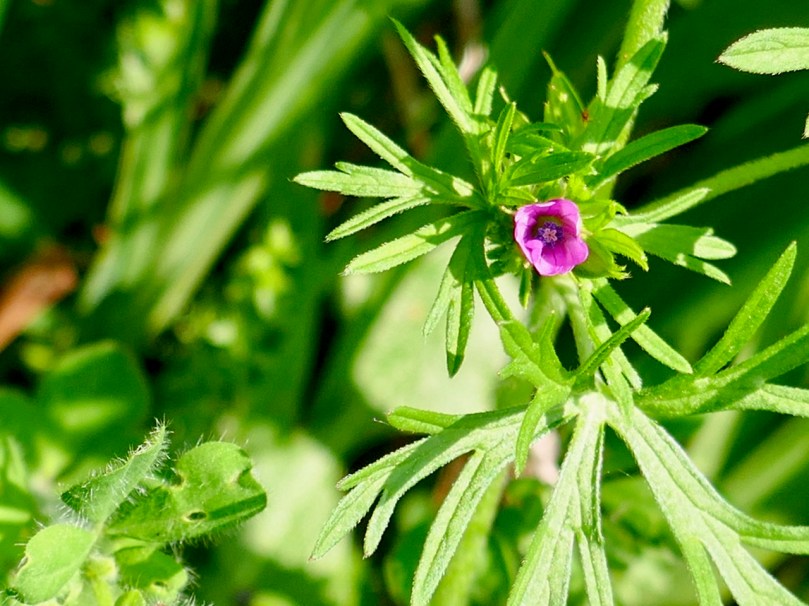
What a week it’s been in our part of West Cork! Only the gentlest of images will help to bring me back to earth – hence the somewhat random collection of photographs today, some taken along the Toormore Loop Trail or in my own garden.

Along the Toormore Loop Trail

The highlight of the week was the opening of Coming Home: Art and the Great Hunger – Robert has given you some sneak peaks into this incredible exhibition in his post. If you do nothing else in West Cork this summer, take in this experience.
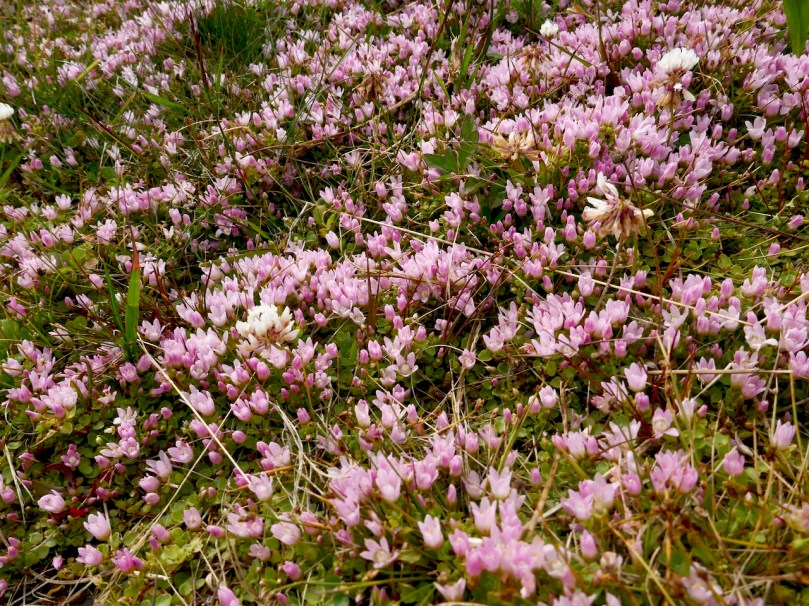
Eyebright, along the trail

But that’s not all – we also attended the unveiling of the memorial to the 110 Skibbereen Girls, which I wrote about last week. Most movingly, the ceremony was attended by Judith Constable, the Great, Great Granddaughter (and her daughter) of one of those girls. This is a story of hope, of the bravery of those adventurous girls who accepted the passage to Australia and went on to have full lives in their adopted land. It reminds us that it is possible for individuals to transcend the wretchedness of their circumstances.

Above, Judith Constable – her Great Great Grandmother, Jean Leary, was pictured in my previous post on the occasion of her 50th wedding anniversary. Below, the commemmorative spoons, finally installed, and the block of Australian stone.

And on Saturday night there was the long-anticipated performance of Anáil na Beatha (Breath of Life) at the ruins of the Schull Workhouse. We found ourselves seated outside the former hospital on the Workhouse grounds, listening to the unearthly lament of a chorus of voices, chanting the names of places stricken by famine, and then walking silently in a torchlight (well, lightstick) procession through the place where so many had come to die. It felt cathartic, respectful, important.

There was a memorial for Seamus Hogan too this week. He was one of us blow-ins to Ballydehob, a poet and raconteur and he will be much missed. His portrait was one of Shay Hunston’s finest and is reproduced here from Shay’s Wild Atlantic People series. It’s in a shop window in Ballydehob, across from his favourite hangout, Ina Daly’s pub.

Photo courtesy of Shay Hunston

And in between we had the launch of the marvellous Skibbereen Arts Festival, which goes from strength to strength each year and which will keep us busy from July 27th to Aug 5th. The program includes many concerts, the world premier of the Asenath Nicholson play, poetry, art exhibitions, movie screenings, walking tours.

Finally, today, was the opening of the new Toormore Loop walk. I helped out by leading a wildflower walk around the small looped trail with a happy group of a dozen lovely people. The greatest reward – a mother telling me that even the kids enjoyed it!

I’m wiped! All this stimulation is wearing me out. I need to take up meditation so all together now. . . om. . .om. . .

Art and the Workhouse

Trump was not the first man who thought that separating desperate families applying for asylum provided an additional deterrent – that distinction belonged to the workhouse system in which men, women and children were kept apart once admitted.

Two distinct artistic projects centre on the remains of local workhouses in West Cork in the coming week. Both are associated with the highly anticipated Coming Home: Art and the Great Hunger Exhibition at Uillinn.

Robert contemplates the memorial plaque at the famine graveyard in the grounds of the Skibbereen Community Hospital – the former site of the Workhouse. The towering wall remains from that time

How do we address the ghastly system that was The Workhouse? How can we look back on the barbarity of the political and economic philosophies that dreamed up such an institution and perpetrated such depths of misery on starving people? How do we remember without stirring up old hatreds and move instead to a place of compassion and healing, a place of determination not to repeat such atrocities in this country? Perhaps one way is though art. Two distinct artistic approaches have been underway in West Cork for some time and each will culminate this week.

What’s left of the Schull Workhouse. It was destroyed by the IRA during the War of Independence. The dreaded reception area is on the right, and in the initial photograph

Before I talk about the two projects, take a moment here to revisit my 2014 post on the Workhouse. It explains the Workhouse system and has links to more information. You might also, if you haven’t already done so, read what Asenath Nicholson had to say about dire poverty and the Bantry Workhouse.

Jean Leary was one of the 110 Skibbereeen girls – here she is celebrating her 50th wedding anniversay in Australia. Thank you to her great, great……granddaughter Judith Constable for sharing this photograph. Judith will be travelling from Australia to attend the unveiling of the memorial on Friday

Artist Toma McCullim’s project centres on the Skibbereen Workhouse and is called 110 Skibbereen Girls. The Earl Grey Famine Orphan Scheme provided passage to Australia for young women. The young women from Skibbereen left a difficult present for an unknown future, and it is estimated that perhaps 10,000 Australians trace their descent to them. There is an excellent account of the project in the Irish Times and another in the Examiner.

Photograph courtesy of Aoise Tutty

I participated in a Walk and Talk with Toma in the grounds of the former Skibbereen Workhouse, now the Community Hospital. It was a deeply moving experience, as Toma asked us to imagine ourselves in the position of one of the girls, and talked us through the events of their lives. We started at what was once the Women’s Entrance and walked up to the graveyard.

We chose an apple and mine represented Alice Fitzgerald. It was all too easy to slip into the past with Toma, and a very emotional experience. Photograph courtesy of Aoise Tutty

Toma is a gifted educator: her tour immersed us in the lives of the young women in an imaginative and emotive way. The pièce de résistance, however, was when her phone rang, and on the line from Australia was a descendent of one of ‘our’ girls. It was a telling moment, somehow underscoring the resilience and heroism of the girls who had made such a difference in the land of their adoption.

The phone call from Australia

It is at the Women’s Entrance that the commemorative sculpture will be unveiled next Friday (July 20th, 2018) by the Australian Ambassador. All are welcome.

Installation underway

The following day (Saturday, July 21, 2018) we have another workhouse-based art project. It’s called Anáil na Beatha (Breath of Life) and it’s a multi-media performance by Alanna O’Kelly. Here’s the description:

The audience will proceed into the ruins of Schull Workhouse, where they will be immersed by fragmented sounds, layered imagery and light, surrounded by the silence and vastness of the countryside, and the stories of the thousands who were silenced by the Great Hunger. The performance will run as a series of vignettes that will reference some of the stories of the Great Hunger in West Cork, both historic and contemporary.

The only current inhabitants of the Schull Workhouse

Some friends are participating in the performance and, based on their experience in rehearsal, are urging everyone to go to what promises to be a deeply moving and artistically striking event. Robert and I have our tickets (they are available on Eventbrite).

Schull Workhouse ‘Mortuary Hospital’

I never thought I would get to attend something like this at the Schull Workhouse. In my Workhouse post I described the ‘aura of decay and sadness’ that resonates there, an echo of the misery that was visited upon the inmates. I am looking forward very much to seeing how Alanna uses the site in her performance piece, as expressed here:

She has a deep interest in place, people, community, our past and its effect on our present, the shaping of our culture, our identity and relationship to the world community and she is drawn to the particularities of place and context.

Workhouses stand out in Irish history as the most hated, feared and despised buildings in the land. The gaunt remnants that dot the countryside act as a constant reminder of a dark time in our collective memory. Perhaps through art we can begin to focus on a more hopeful and healing integration of that period: both a rejection of those values and compassion for those who suffered. We need, in Ireland, that kind of negotiation with our past.

Skibbereen Celebrates: Arts and Artists

There’s seldom been as much sunshine in Skibbereen as we are seeing this summer: every day feels like a holiday, and there’s so much for residents and visitors to do – it’s going to be hard to keep up with it all! Coming soon is the launch of the Skibbereen Arts Festival (I love this great graphic!) –

On Friday night we were treated to the ‘Preview’ of the ‘flagship exhibition’ for the Skibb Arts festival, running from now until 6 August at The O’Driscoll Building, Old Quay in the centre of town. It’s titled Elements: West Cork Landscape and features works by 30 artists from the area. In fact, the sunshine and the excitement brought out practically every artist, anyone connected with arts, and a whole lot of West Corkonians and visitors to see what’s on offer.

The exhibition has been put together by Catherine Hammond (above, right, with Finola – standing in front of a Christine Thery canvas) and it’s great to see Catherine curating in Skibbereen again. The art here is strong and looks good on the bare concrete walls of the building, the vacant shell of which is a reminder of Celtic Tiger days, but it always works so well as a gallery.

The work of two artists struck us as soon as we entered the building on Friday: the bold, simple architectural forms of Helena Korpela, two examples above. (NOTE: images removed at request of artist. Please see Korpela website for examples); Helena has connections with West Cork and Helsinki, which emphasises the breadth of art makers working here today.
Personal favourites in this exhibition, for me, are two new pieces by Michael Quane. This Cork born artist now based in Leap is well-known for his large public sculptures, but I like the dynamics of these two smaller works (header picture and above). Roaringwater Journal has reviewed many of the artists currently on show at The Old Quay: have a look at these posts on William Crozier, Terry Searle and Cormac Boydell – and let’s see some examples…

Upper – Crozier; middle – Searle; lower – new ceramics by Boydell. It was also great to see works from elsewhere in Cork: this canvas – by Jill Dennis – is impressive.

It wasn’t just the artists who produced the work that came to the opening: other familiar names in Ireland’s contemporary art world were also well represented. See who you can spot… *

So, everyone is here, everyone is enjoying the summer and Skibbereen is swinging! Art events not to be missed include the opening of Coming Home: Art and the Great Hunger exhibition at Uillinn, and the related performance pieces and installaions which Finola is discussing in her post today, and also mentioned in her post last week. But those are only a fraction of the whole Skibbereen Arts Festival this year – we haven’t even started on the music, film, poetry or workshops: get hold of a programme and book up now – while there are still tickets available.

Angela Fewer – Off Heir Island

* John Kelly, Brian Lalor, Penny Dixey, Jim Turner, Keith Payne, Eion McGonigal, Peter Murray…