George Victor Du Noyer at the Crawford Gallery

I had been aware of George Victor Du Noyer’s antiquarian drawings from my days as a student, but that did not prepare me for the Du Noyer exhibition currently running at the Crawford – it’s nothing short of breathtaking. Du Noyer, it turns out, was far far more than an antiquarian: he was a nineteenth century Renaissance man, artistic, talented, curious, scientific and learned in equal proportions. Stones, Slabs and Seascapes is curated by Peter Murray (recently retired director of the Crawford) and co-curated by Petra Coffey of the Geological Survey.  If you do nothing else this winter, get to Cork to see this exhibition!

I’ve decided to annotate the images with quotes in italics (image follows quote) from the outstanding exhibition catalogue which is a collection of essays, each written from a slightly different perspective. I’ve tried to show representative samples of Du Noyer’s work, mostly from the exhibition. A couple of illustrations are from elsewhere. I’m not going to say a lot about Du Noyer’s life – there’s an excellent summary (with some additional photographs) by Fiona Ahern on the Maynooth University Library website.

From a cultural studies and critical theory perspective, the principal interest in Du Noyer lies also in seeing how, as an Irish artist, he responded to the international debates of his day: to the Devonian controversy, to the widening gap between ‘uniformitarianists’ and ‘catastrophists’, and to the urgent search by geologists and astronomers during his lifetime to explain the origins of the planet Earth. The ability of Du Noyer to traverse conventions of representation – he moved easily from picturesque watercolours, to scientific cross-sections of landscape – reflects a similar flux in nineteenth-century learning, where advances in science co-existed with a desire to adhere to traditional modes of representation. (From the Introduction by Peter Murray and Petra Coffey)
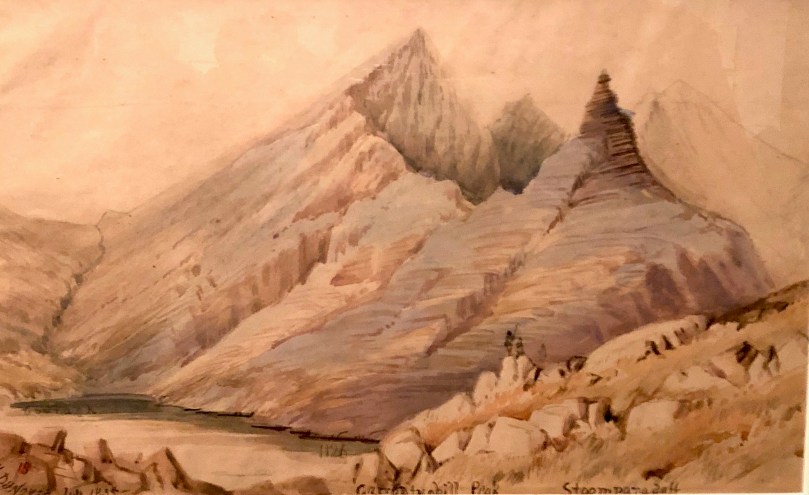
In contrast with other artists’ depiction of Ireland at this time (many of them English), Du Noyer’s sketches lack the stereotyping that is all too common in art of that period. Based on eyewitness observation, his drawings lack elements of caricature and satire often perceptible in depictions of Ireland by artists who tended to work from preconceived ideas. (From the Introduction by Peter Murray and Petra Coffey)

Throughout a long and productive lifetime, during which he depicted a myriad of objects and places in Ireland, George Victor Du Noyer compiled a databank of images that not only formed part of the new awareness of Irish national identity that emerged in the early nineteenth century, but also revealed the potential of art to frame revolutionary narratives relating to geology, natural history and human evolution . . . Du Noyer was one of those who helped construct this new narrative. He documented towns and villages, prehistoric sites and ruined monasteries. He had a keen interest in the natural environment, in methods of transport . . . artefacts connected with food preparation, cooking, eating and drinking. (From the Foreword by Peter Murray)

As  industrial production began to dominate people’s everyday view of the world, the aesthetics of handmade objects fell into sharp relief. Du Noyer delighted in depicting such objects, from every age, from simple ‘Killick’ anchors of wood and stone, to querns for grinding corn and wooden drinking vessels. Removed from their original context and preserved in glass cases in museums, these objects had begun to lose much of their original meaning. In illustrating them, Du Noyer not only committed their image to paper but also highlighted philosophical questions relating to the passing of time and the formation of both individual and collective memory. (From the Foreword by Peter Murray)

When he was visiting Belfast in 1837, he bought some apples in the market thinking they were Irish apples (they were not) and he painted them magnificently, enhanced with gum Arabic. (From George Victor Du Noyer – Artist and Geologist  (1817-69) by Petra Coffey)

From 1842 to 1843 . . . he accepted private work, as he was able to produce art work in many media . . . He illustrated Hall’s Ireland: Its Scenery, Character, etc (Vol.2, 1842). (From George Victor Du Noyer – Artist and Geologist  (1817-69) by Petra Coffey)
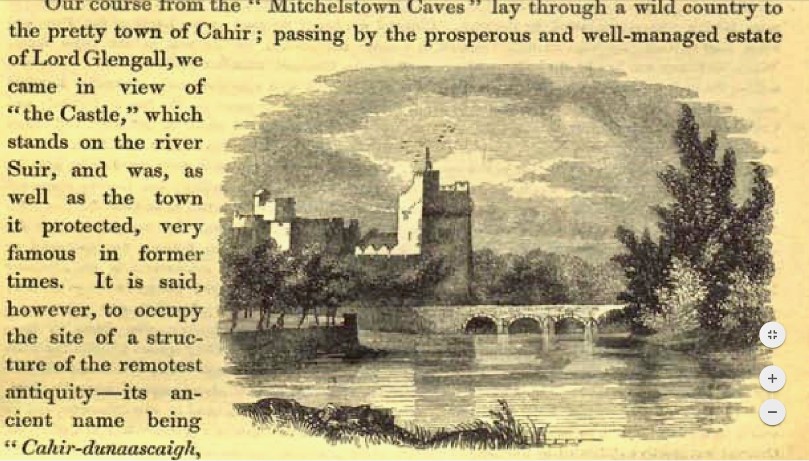
The Geological Survey of Ireland (GSI) was established on 1st April, 1845 . . . Du Noyer had been introduced to the new study of the earth – geology – and it was to shape his life thereafter. Despite having no formal training or qualifications in geology he was to become extremely competent in his calling with the added bonus of being better able than most to record graphically what he saw . . . From now on, Du Noyer never put down his geological hammer, pencil, paper and watercolours . . . (From George Victor Du Noyer – Artist and Geologist  (1817-69) by Petra Coffey)

Du Noyer published papers in many journals, including the Archaeological Journal. His most important work was ‘On the remains of ancient stone-built fortresses and habitations to the west of Dingle, Couny Kerry’, published in 1858. (From George Victor Du Noyer – Artist and Geologist  (1817-69) by Petra Coffey)
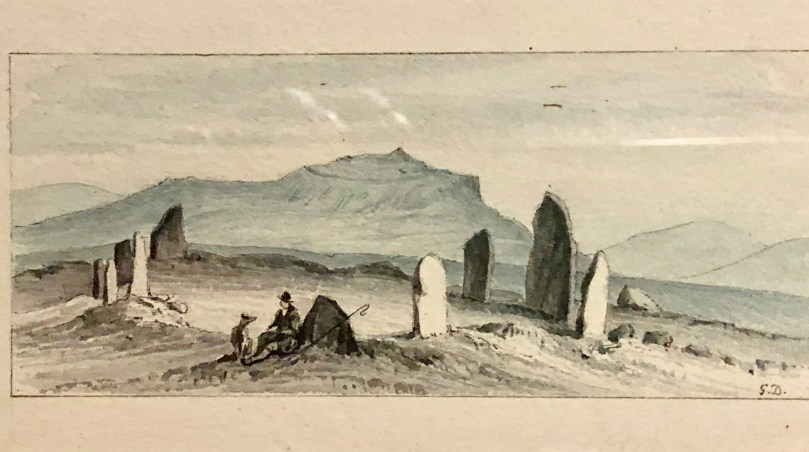
The purpose of a scientific illustration is to reflect accurately the key features of a fossil, animal, plant or landscape. It can be a far cry from the conventional artist’s view, where the essence can be more important than the reality. (From The Scientific Illustrations of George Victor Du Noyer by Nigel T Monaghan)
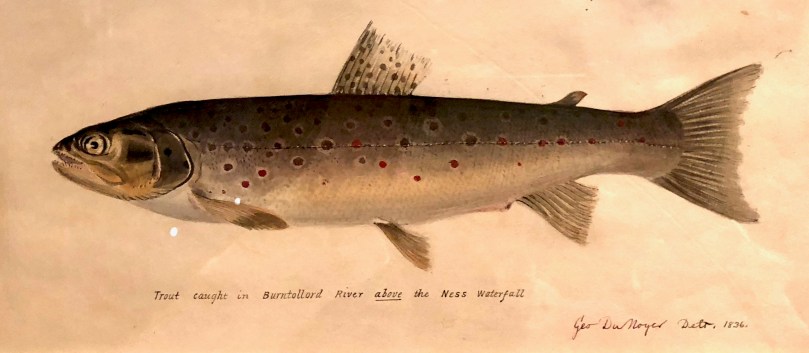
Du Noyer’s scientific landscapes emphasise the geology, showing rocks accurately in terms of bed thickness, irregularity, angles of dip, faults and major joints, with no less attention to detail in his rendition of the soil cover, vegetation and the human impact on the countryside. (From The Scientific Illustrations of George Victor Du Noyer by Nigel T Monaghan)

. . . when Du Noyer worked with the [Ordnance] Survey, he would go out in all weathers to sketch antiquities surviving in the landscape, some of which are now in a more parlous condition than when he drew them, while others have disappeared entirely… (From Du Noyer’s Treasures in the Royal Irish Academy by Peter Harbison)

In 1837 Du Noyer painted a series of large watercolours depicting typologies of Bronze Age spears and axeheads, and early Christian artefacts, such as brooches, bells, devotional crosses, and figures clearly prised off reliquaries. (From George Victor Du Noyer – Where and When by Peter Murray)

in 1837 and 1838, Du Noyer drew a series of palaeontological monochrome-wash watercolours, depicting fossils of ancient life forms, including seashells, whorls, spirals and other simple shapes, images that were lithographed for Portlock’s Report on the Geology of Londonderry . . . Portlock’s publication, at over 500 pages, was, literally, ground-breaking in terms of the study of fossils in Britain and Ireland. (From George Victor Du Noyer – Where and When by Peter Murray)

In May 1850, he painted four panoramic watercolours from the top of Carrickbyrne Hill . . . [and] also painted a panoramic watercolour, ‘View of Ballyhack and Arthurstown from Passage’. (From George Victor Du Noyer – Where and When by Peter Murray)

In 1867 . . . after many years working for the Geological Survey of Ireland as an assistant surveyor, Du Noyer was appointed District Surveyor and posted to a field station in County Antrim . . . His article, ‘Notes on the stratigraphical position of the Giant’s Causeway, and the structure of the Basaltic Cliffs immediately adjoining it,’ had been published in The Geologist in 1860. (From George Victor Du Noyer – Where and When by Peter Murray)
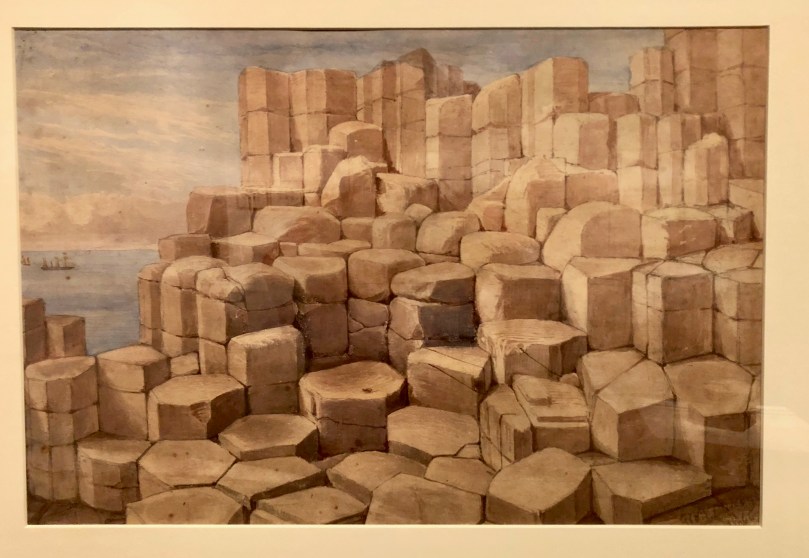
In total, Du Noyer left some five thousand works of art, in pencil and watercolour. At his best, he combined an objective scientific approach with a sublime artistic vision. (From George Victor Du Noyer – Where and When by Peter Murray)

The exhibition runs from November 17th, 2017 to February 24th, 2018 at the Crawford Art Gallery in Cork and then from March to September 2018 at the National Museum of Ireland, Dublin.

Catalogue published by Crawford Art Gallery, available from their book shop.
Off the M8 – Exploring the Delights of Durrow

Earlier this year, Finola wrote a very popular post entitled Off The M8 and into Medieval Ireland. From the responses, we realised that many travellers welcome the idea of breaking up a long journey by taking a diversion to experience some aspects of Ireland’s wonderful historical heritage. So, I’m taking up the mantle today by suggesting that you go a fair bit out of your way – if travelling the route between Dublin and Cork – to visit the ecclesiastical site of Durrow, County Offaly.

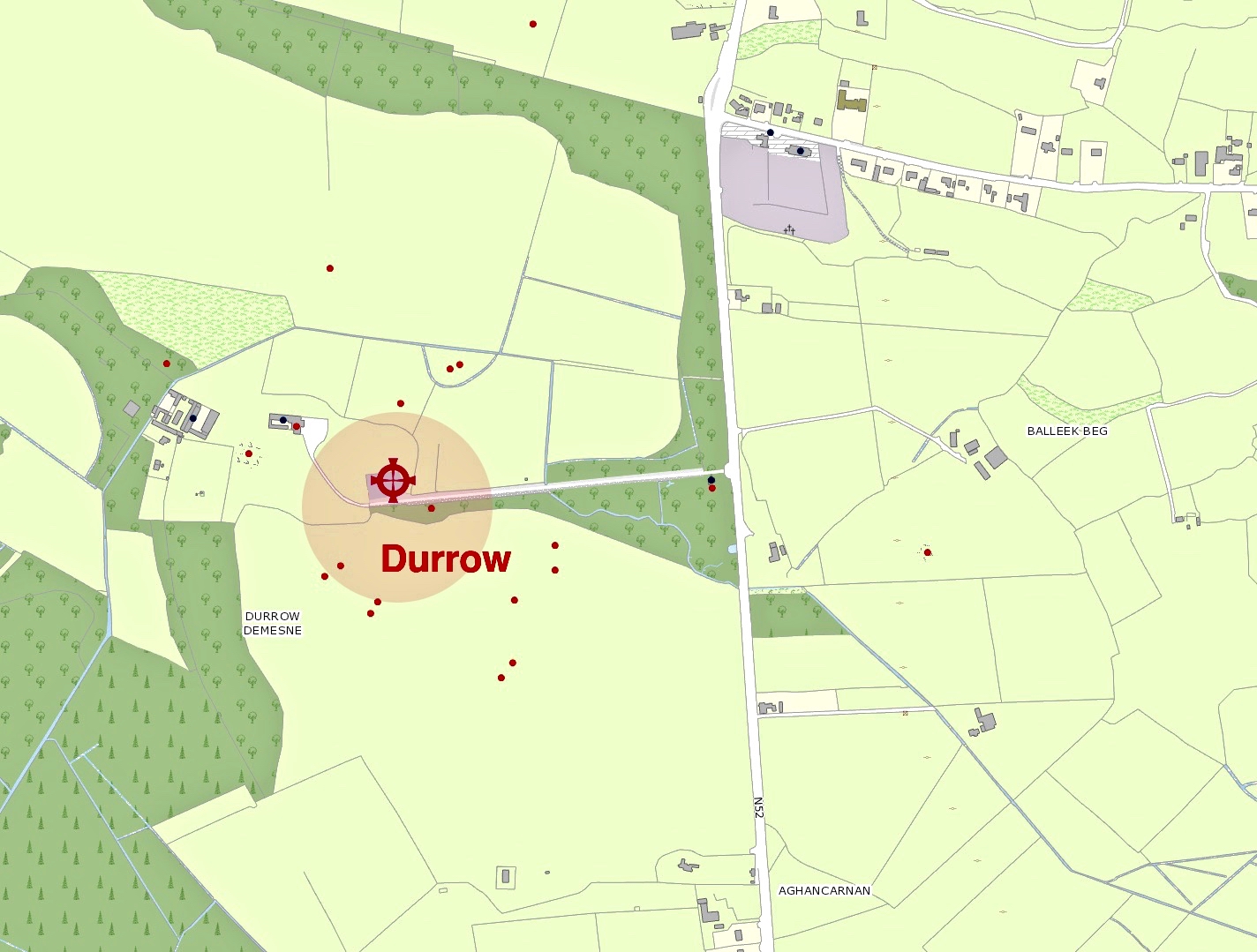
You’ll need a bit of guidance in order to find this little piece of medieval Ireland: hopefully the extract from the National Monuments Service Historic Environment Viewer – an invaluable source for us in our travels – will locate you (above). At the time of writing this, there is no signpost on the N52, but the entrance to the site is through a substantial gateway about 3km south of Kilbeggan – from Junction 5, on the M6 motorway – heading towards Tullamore. From the M50 around Dublin, leave at Junction 7 and it’s a one hour journey to Durrow. From Durrow it’s 40 minutes to connect with the M7 /M8 at Portlaoise. So taking this detour will add between 40 and 50 minutes to your overall journey, depending on traffic. But it will be well worth the extra time if, like us, you are mad about Irish history.

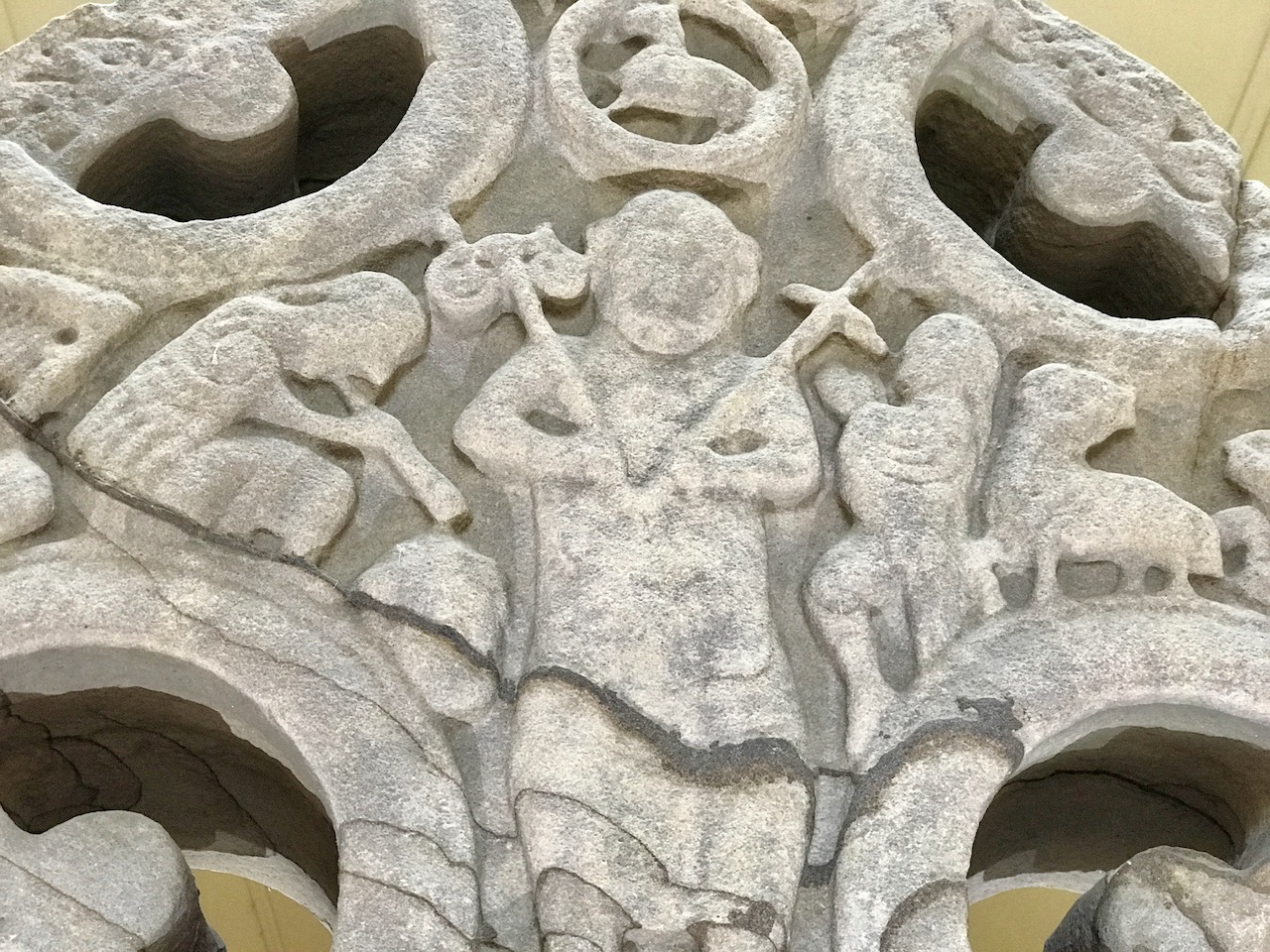
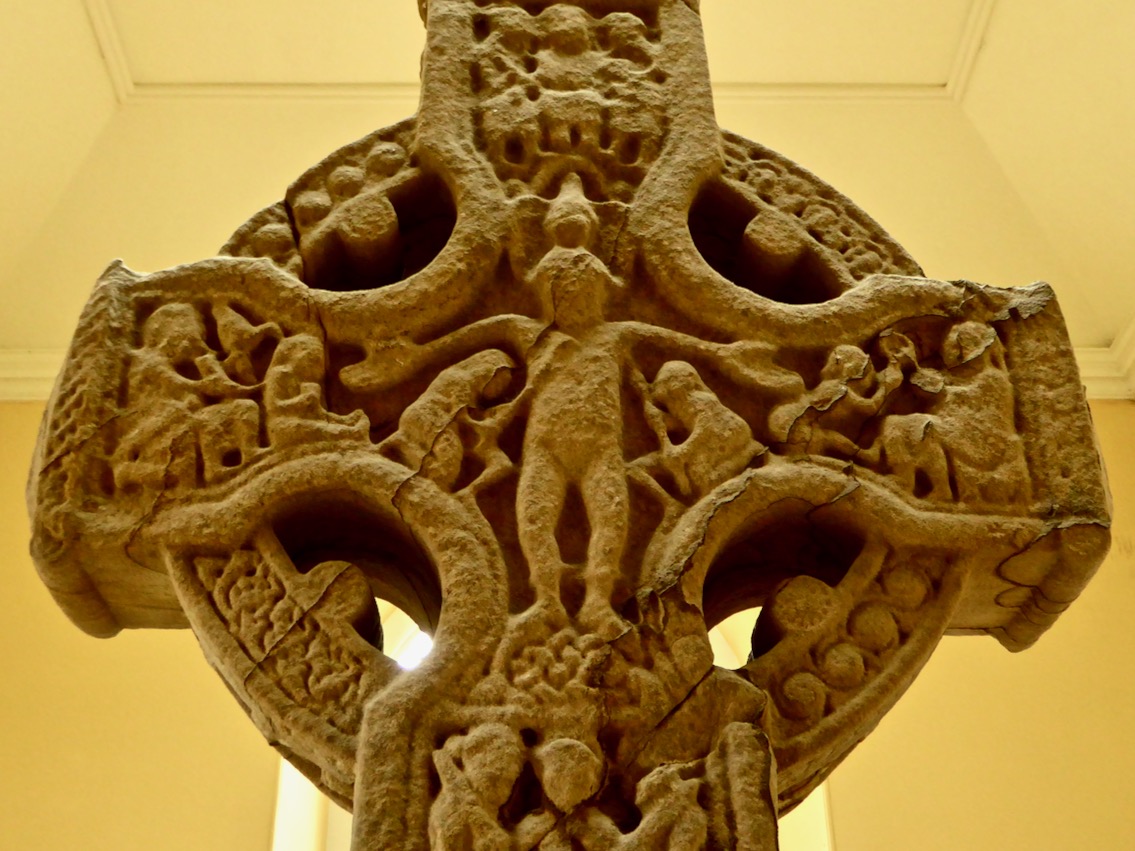
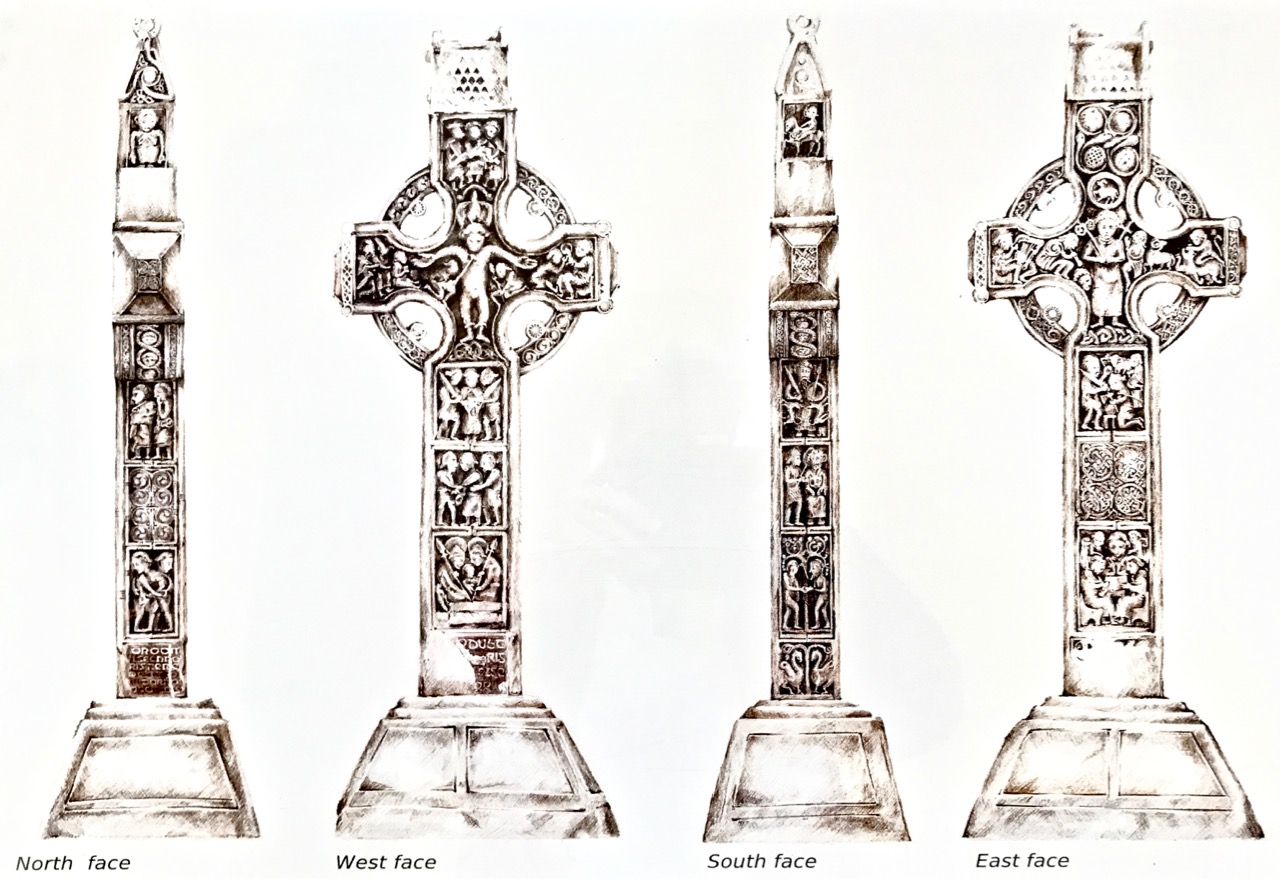
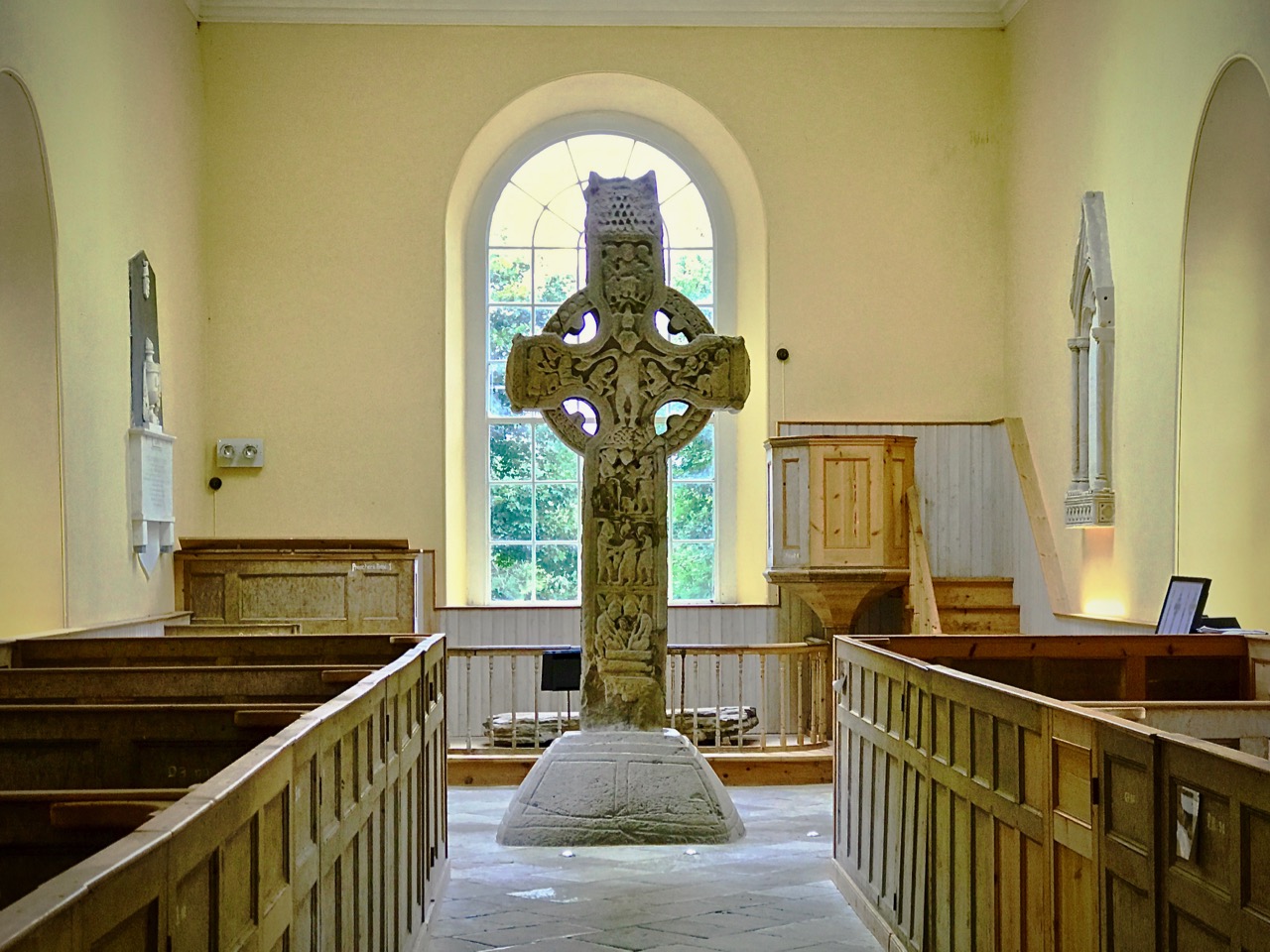
As you can see from the header picture – and the one above – the greatest delight of Durrow is the medieval High Cross, now saved from the elements and safely displayed inside the late 18th century church which is probably built on the site of an Augustian Abbey church founded in the 1140s by Murchadh Ua Maoil Sheachlainn, high king of Midhe, who died at Durrow in 1153. The cross – possibly 10th century – is a really good and clearly legible example of the scriptural type, depicting scenes from the Bible. The OPW has annotated all the panels in excellent information boards.

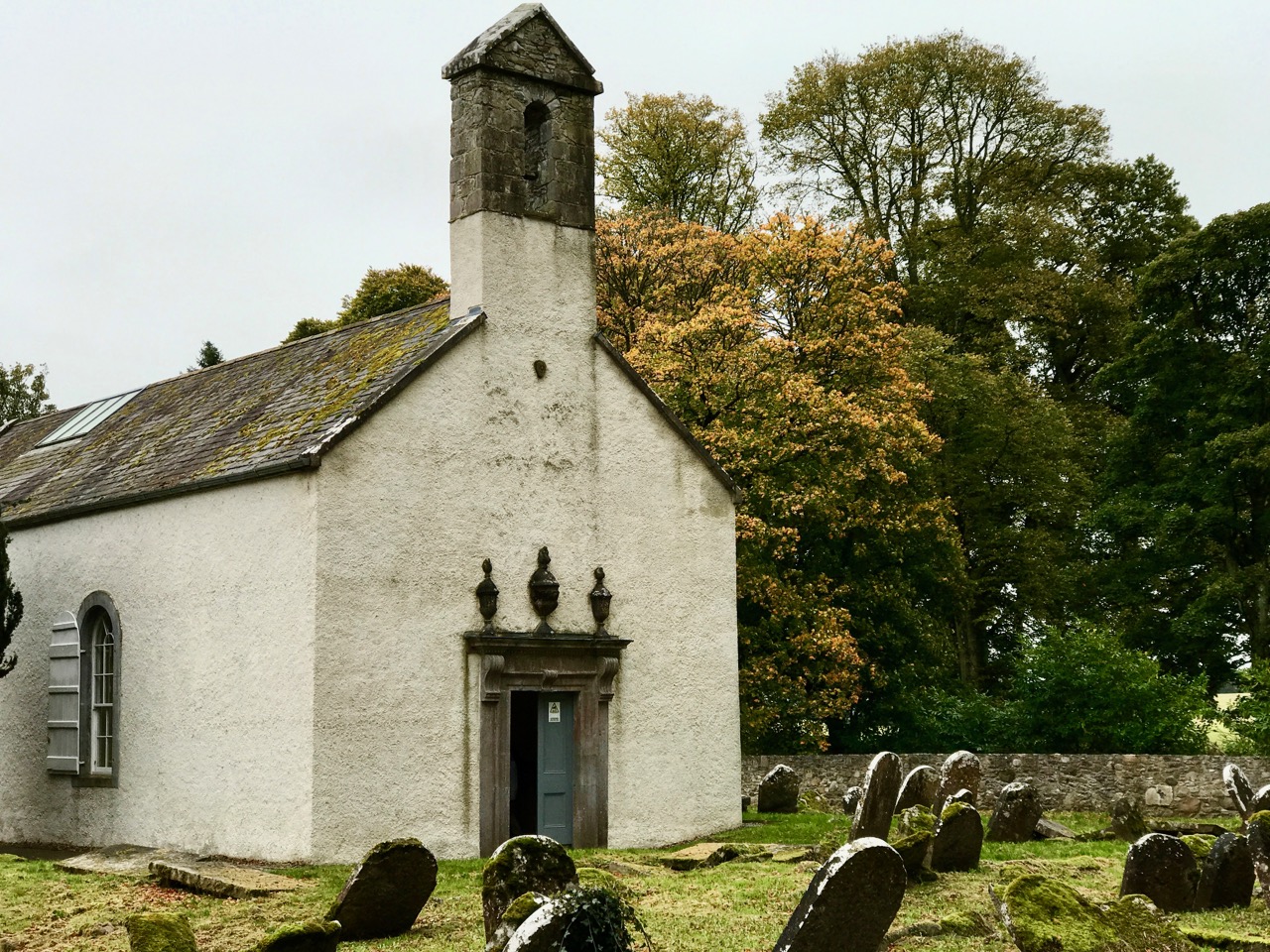
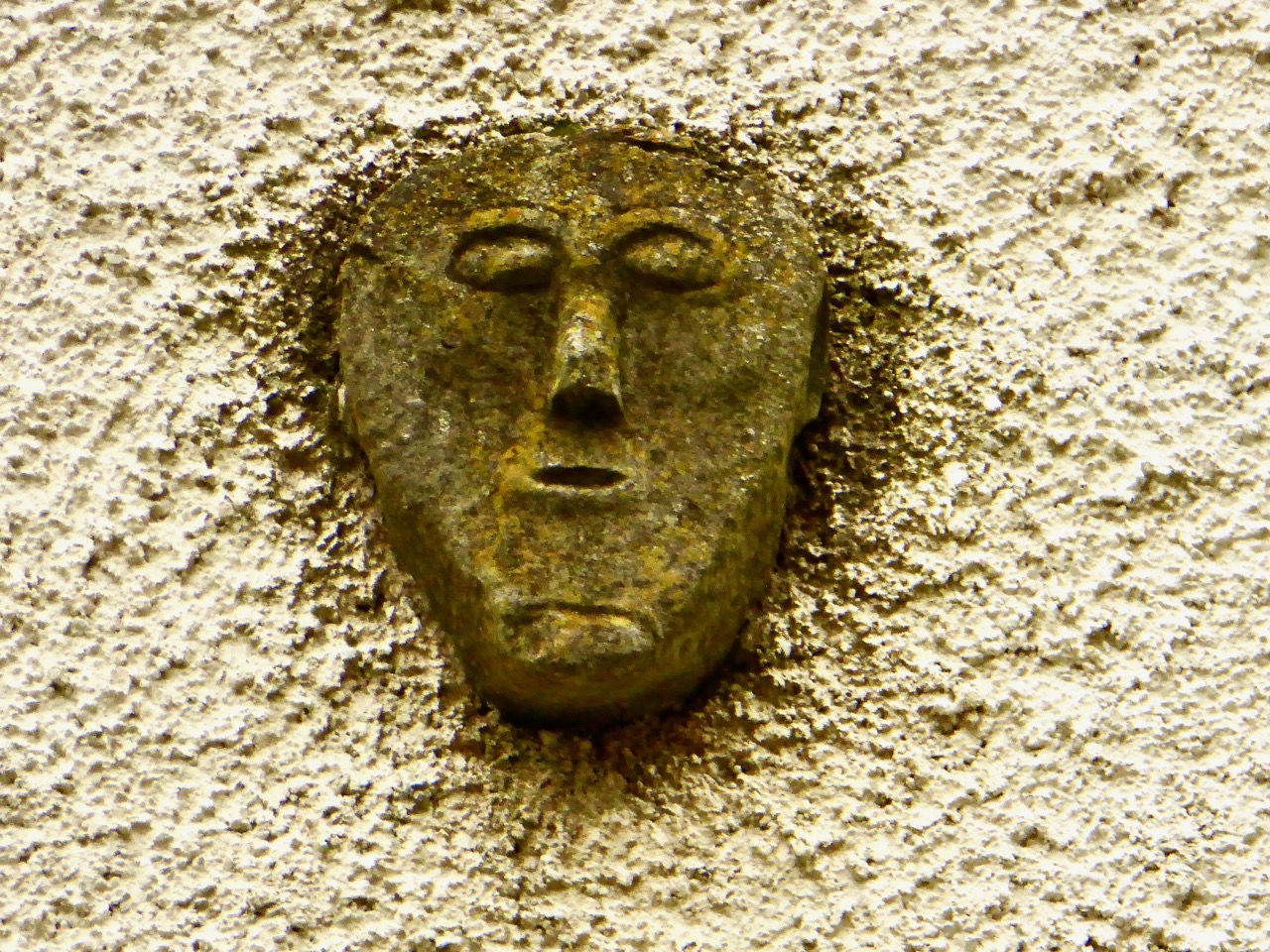
This is the west facing entrance to St Colmcille’s Church, Durrow, which now houses the High Cross and a number of cross slabs and grave slabs, some of which are medieval. A monastery was founded here by Colmcille in the 6th century; it is possible that the stone head which can just be made out above the entrance, and below the bell tower, could date from the earliest building period on this site and was incorporated into the present church. Perhaps it is St Colmcille himself – looking down over the old graveyard, and the original site of the High Cross. Colmcille famously established the monastery at Iona in Scotland, and over sixty churches in Britain and Ireland claim him as their founder.

Above (left) is a photograph taken in 1890 of the Durrow High Cross at its former site, to the west of the church building which now houses it. To the right is a fragment of one of the grave slabs which were embedded in the churchyard wall enclosure and which have also now been mounted inside the church for safety and conservation. This one is said to date from between the 12th and the 15th centuries: the visible inscription has not been deciphered.

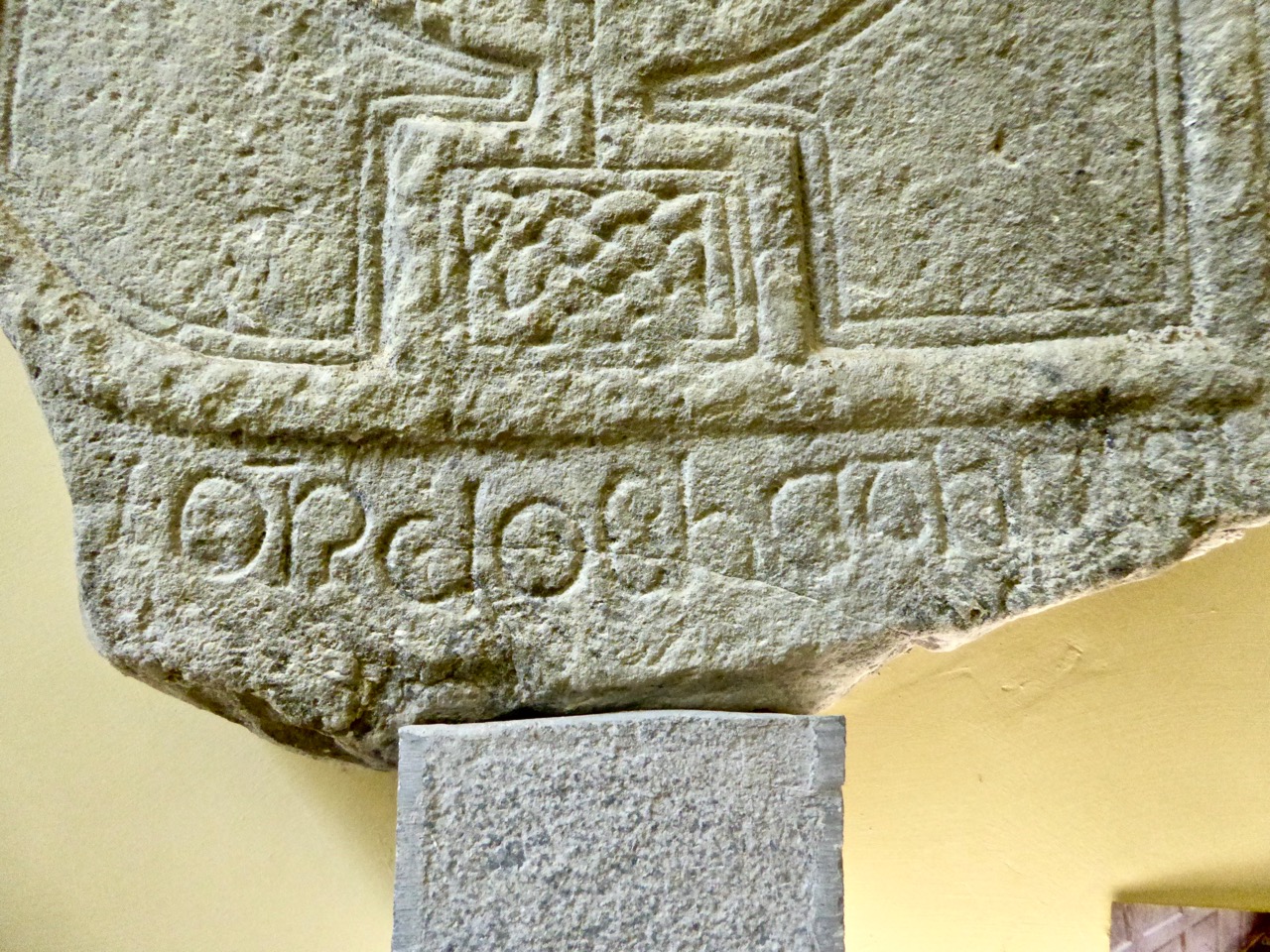
Above is an earlier cross-slab which has been described as …possibly of 9th century date… The inscription probably reads Ór do Chatalan (Pray for Chatalan). This carved stone was also located originally in the wall of the churchyard, and is now in the church.

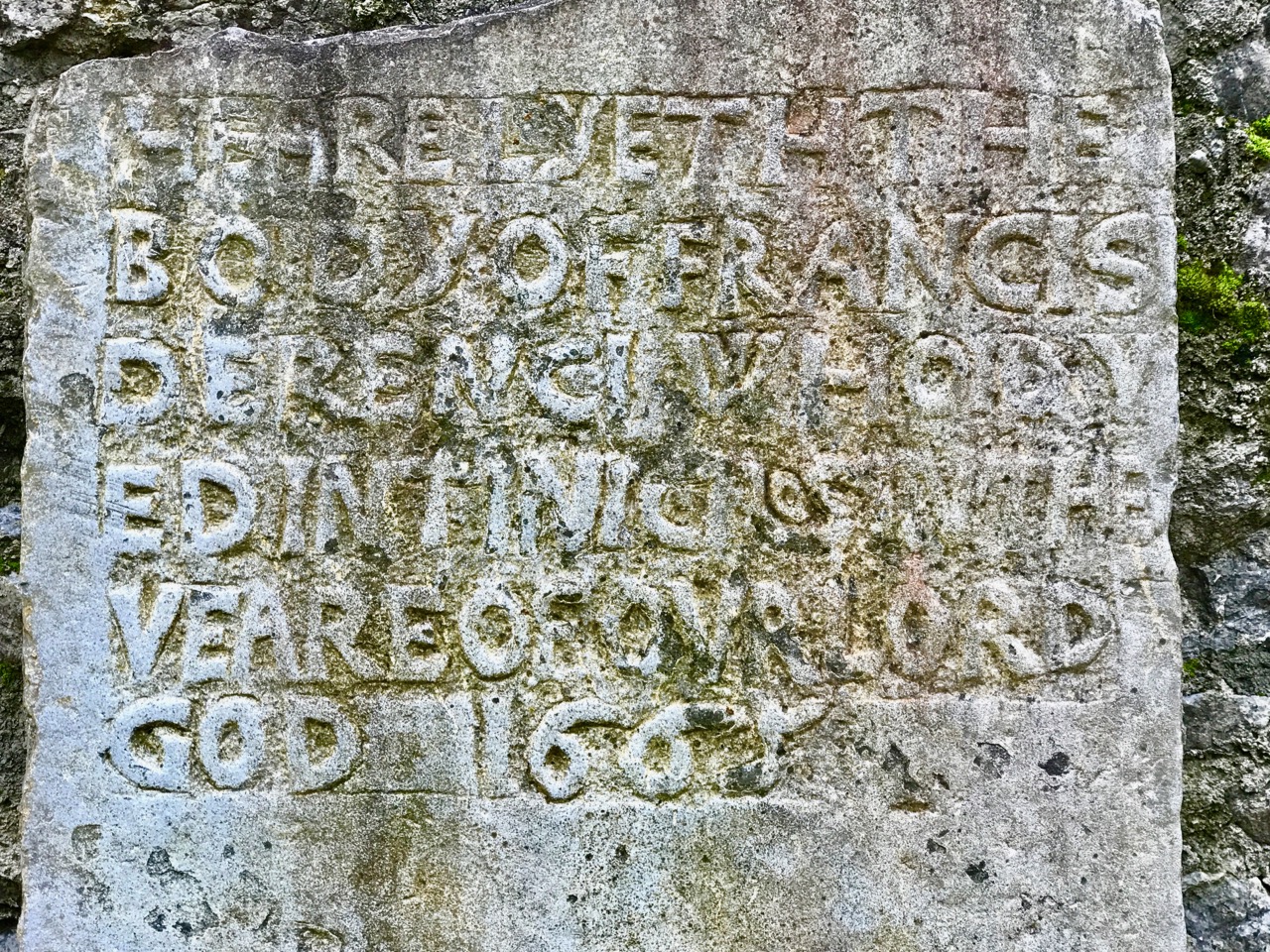
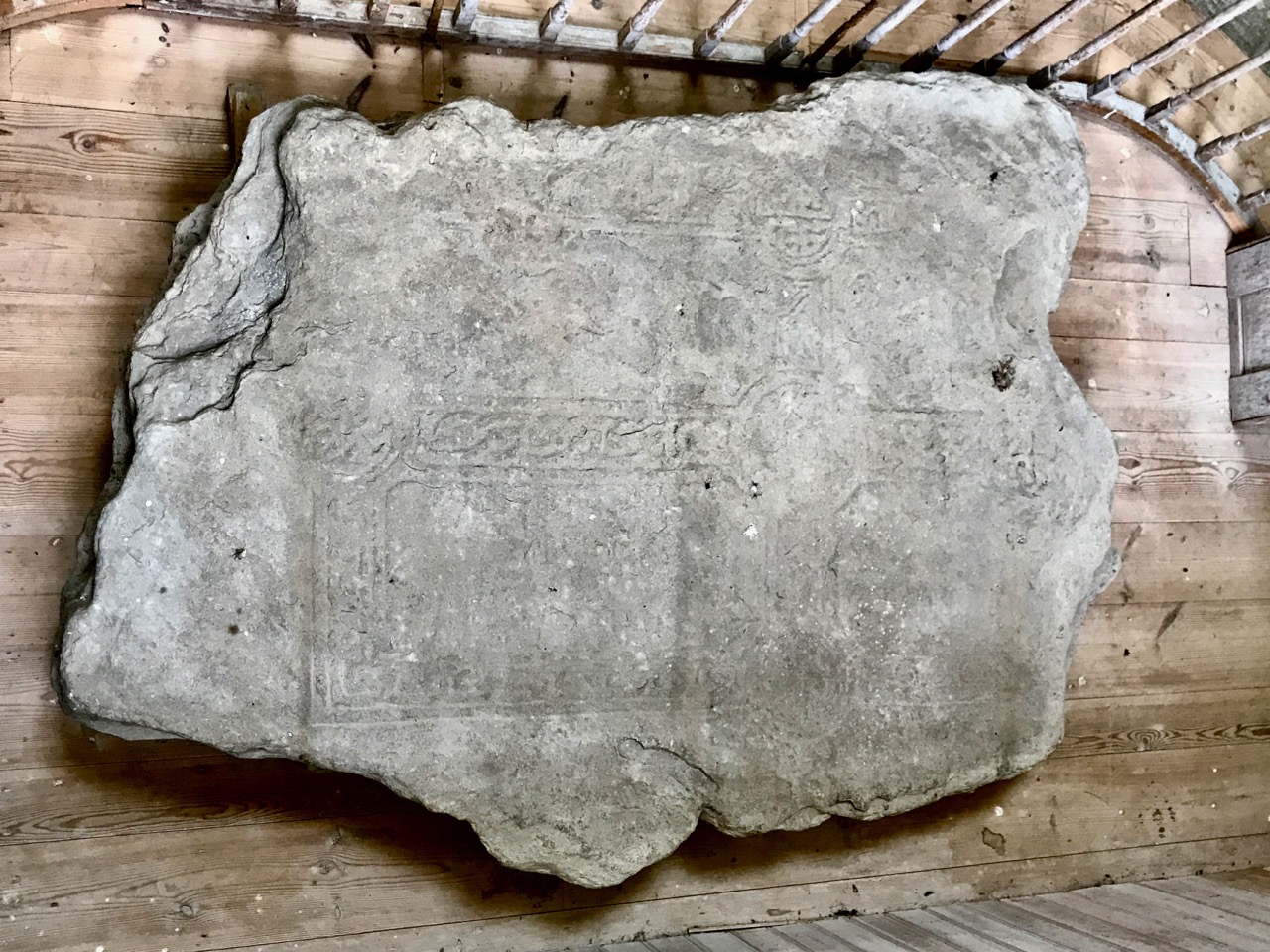
Through a curious twist, the inscribed stone above, dating from 1665 and commemorating a member of the De Renzi family of Hollow House in the townland of Ballynasrah, has been taken from inside the church and placed against the wall of the 18th century burial enclosure of the Armstrong family located outside in the graveyard. Below is a large ‘early Christian’ cross-slab, also taken from the wall of the graveyard and now resting inside the church below the east window.

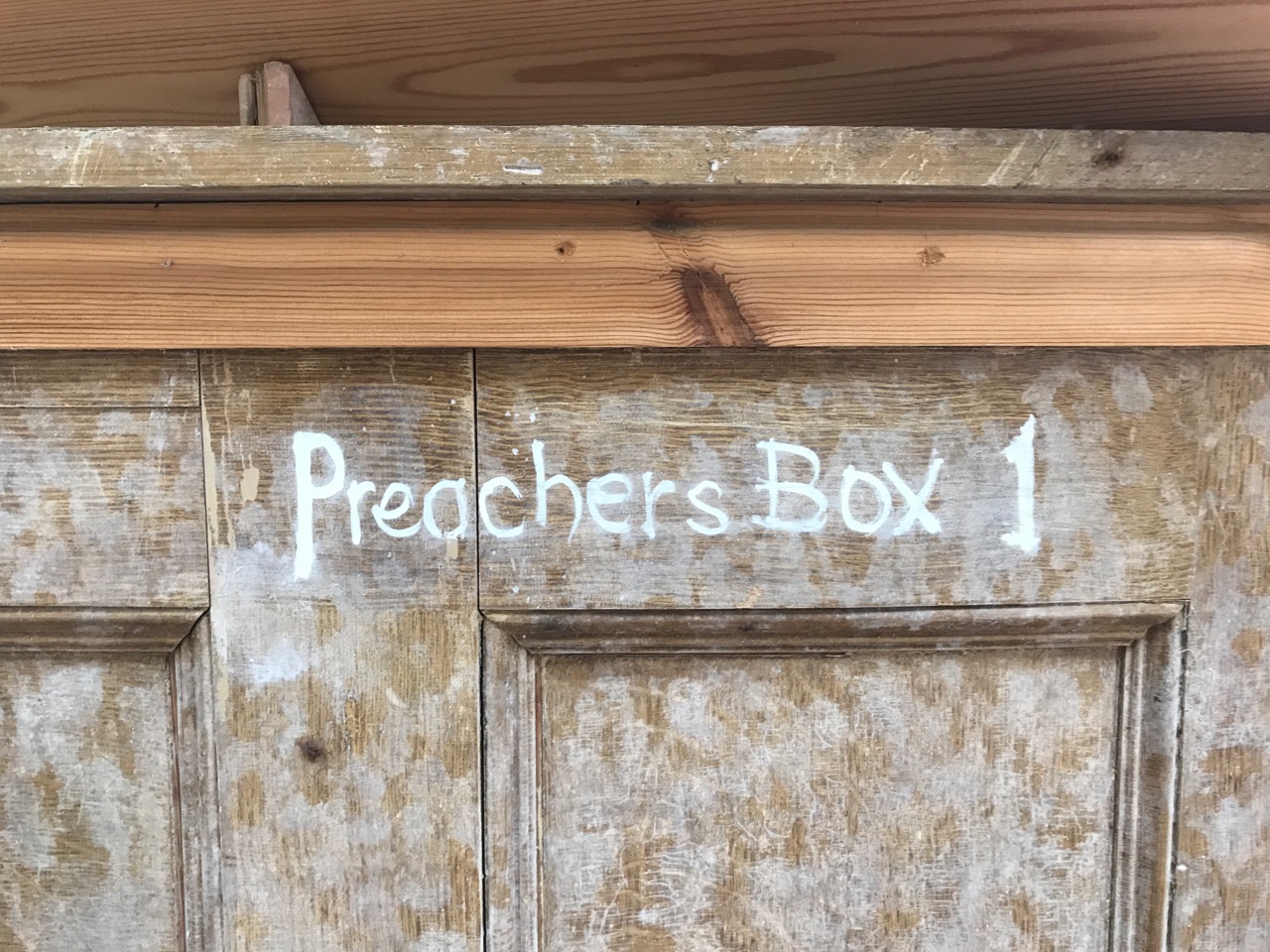
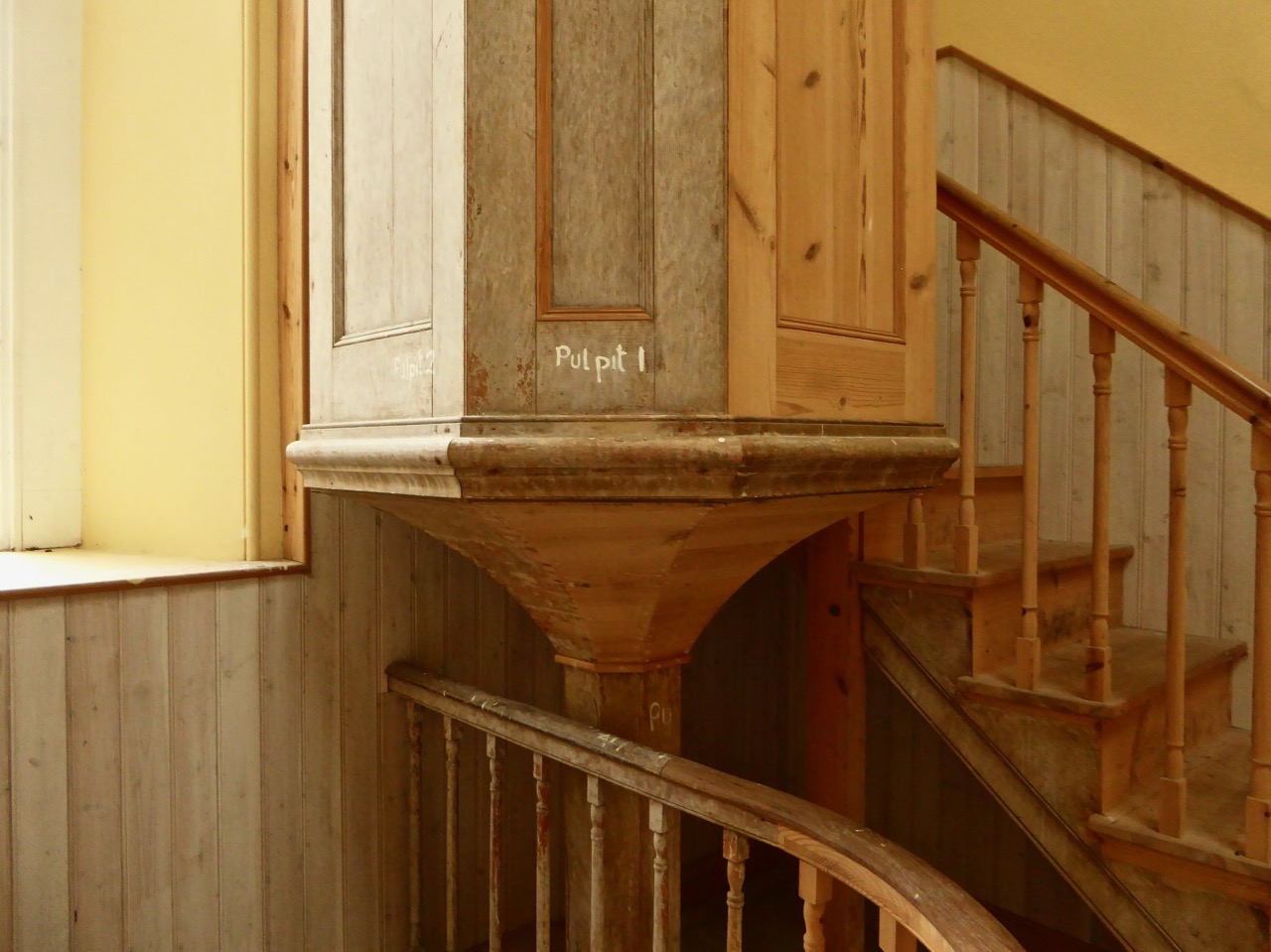
Don’t ignore the church itself – and don’t get confused with the thriving Catholic Church of St Colmcille in the small village of Durrow, only about a kilometre away. The one here off the beaten track (which now houses the High Cross and the cross-slabs) is a Church of Ireland site, and is a very well presented example of a simple 18th century interior with box pews, a raised pulpit and a ‘preaching box’. It has been the subject of a conservation project by the Office of Public Works, and is more properly classified as a Heritage Centre rather than a working church, although occasional services, concerts etc are held in the building.

You will remember my fascination with Irish medieval High Crosses from my previous posts – and my concerns for those which remain unprotected from the weather. Here at Durrow the damage which has befallen this High Cross over the centuries is all too visible, although conservation works are in progress and will ultimately return it to good condition. It’s a good example for others to follow.

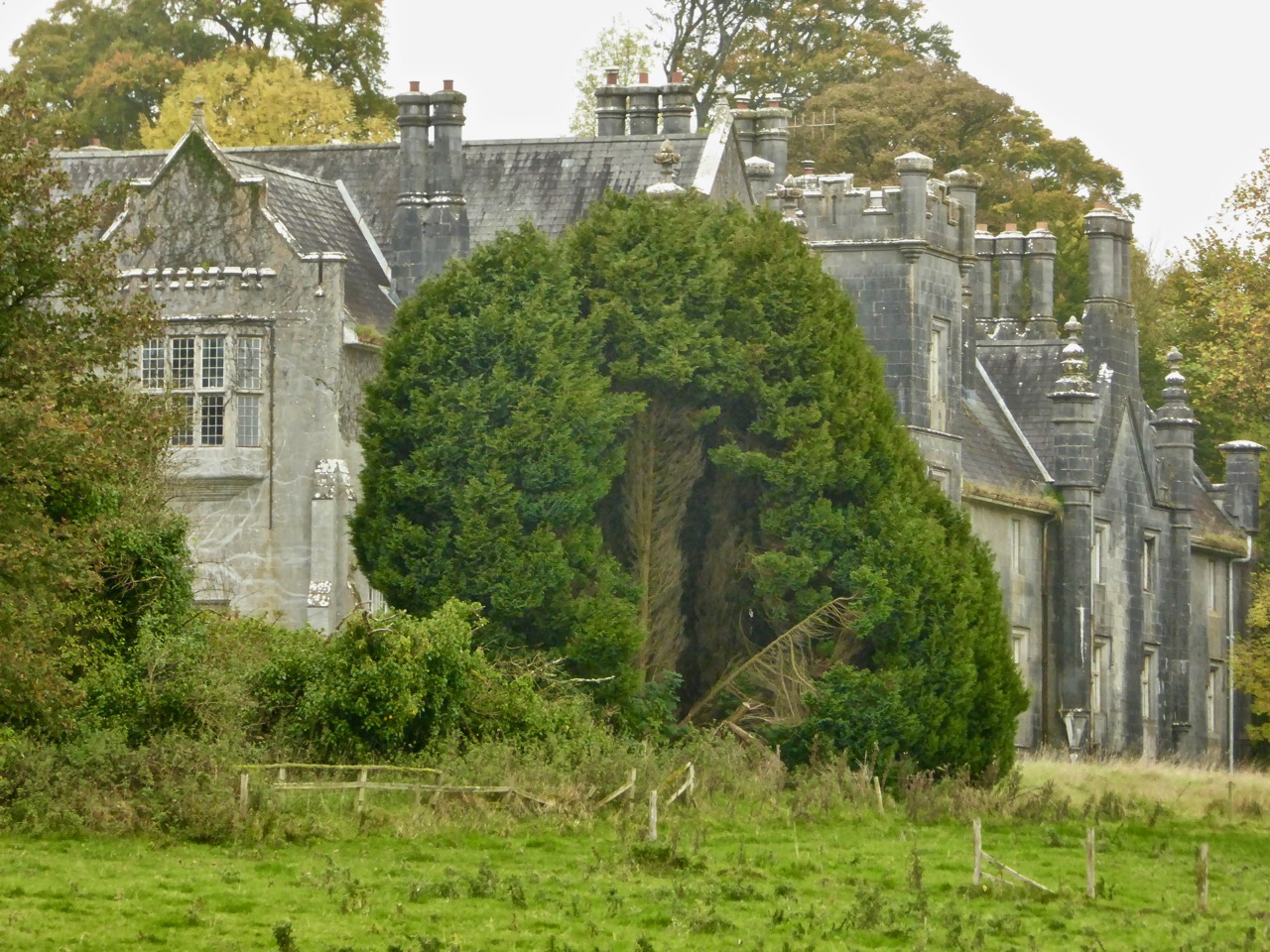
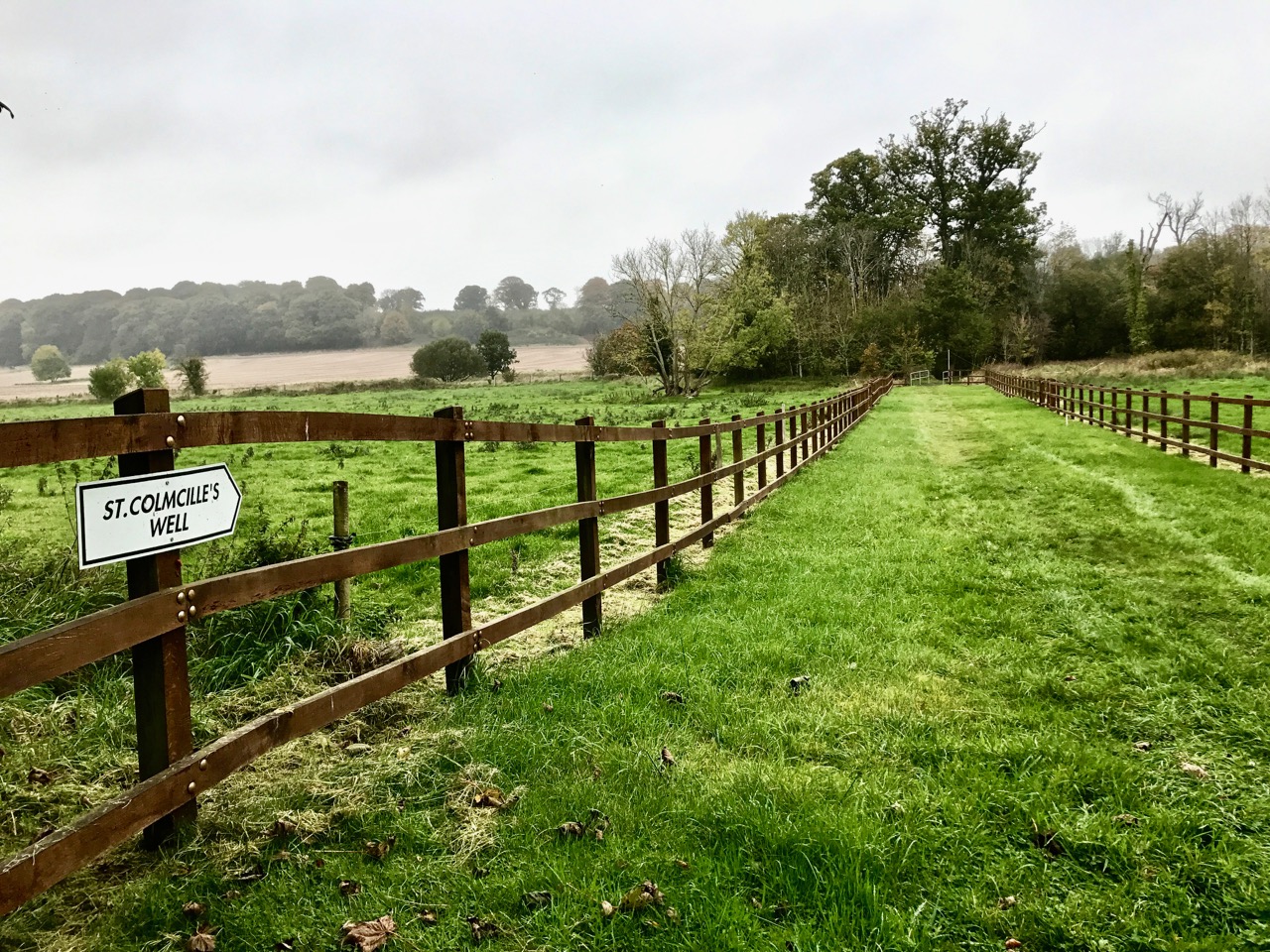
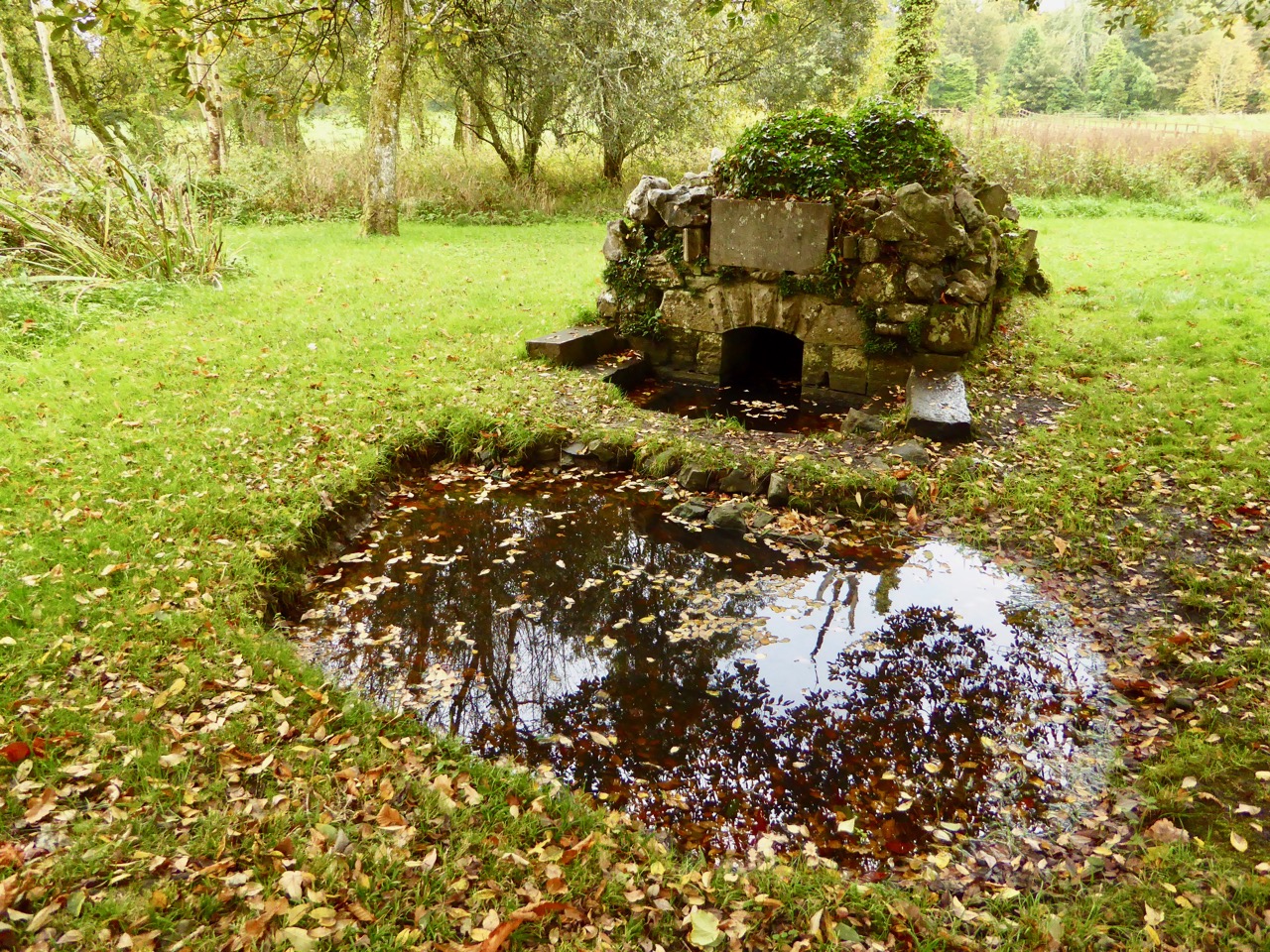
There is yet more to see at Durrow: follow the path to the Holy Well – on your way you will catch a glimpse of the architecturally significant Durrow Abbey House. Built in the Jacobean Revival style between 1837-43, much of it was severely damaged by fire in the 1920s. Subsequent rebuilding incorporated a Queen Anne style Art Nouveau interior. The house is not open to the public.

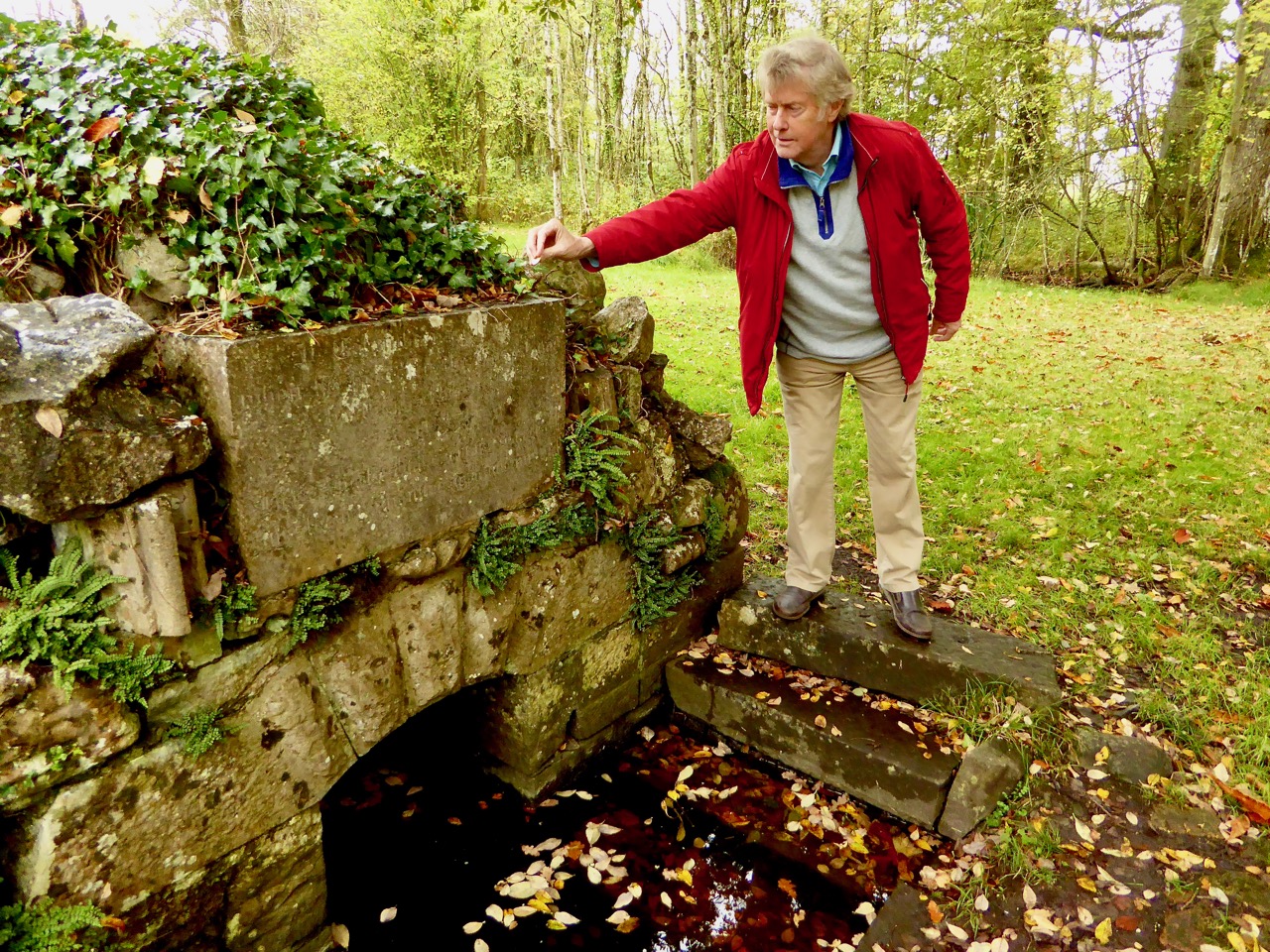
A walk to the well is rewarding, as the structure itself is in reasonable condition and quite ornate. It is still visited on St Colmcille’s feast day, June 9, when a procession arrives on foot from the Catholic Church in Durrow. We couldn’t complete our visit to the Saint’s special places without leaving an offering!


Adare Manor

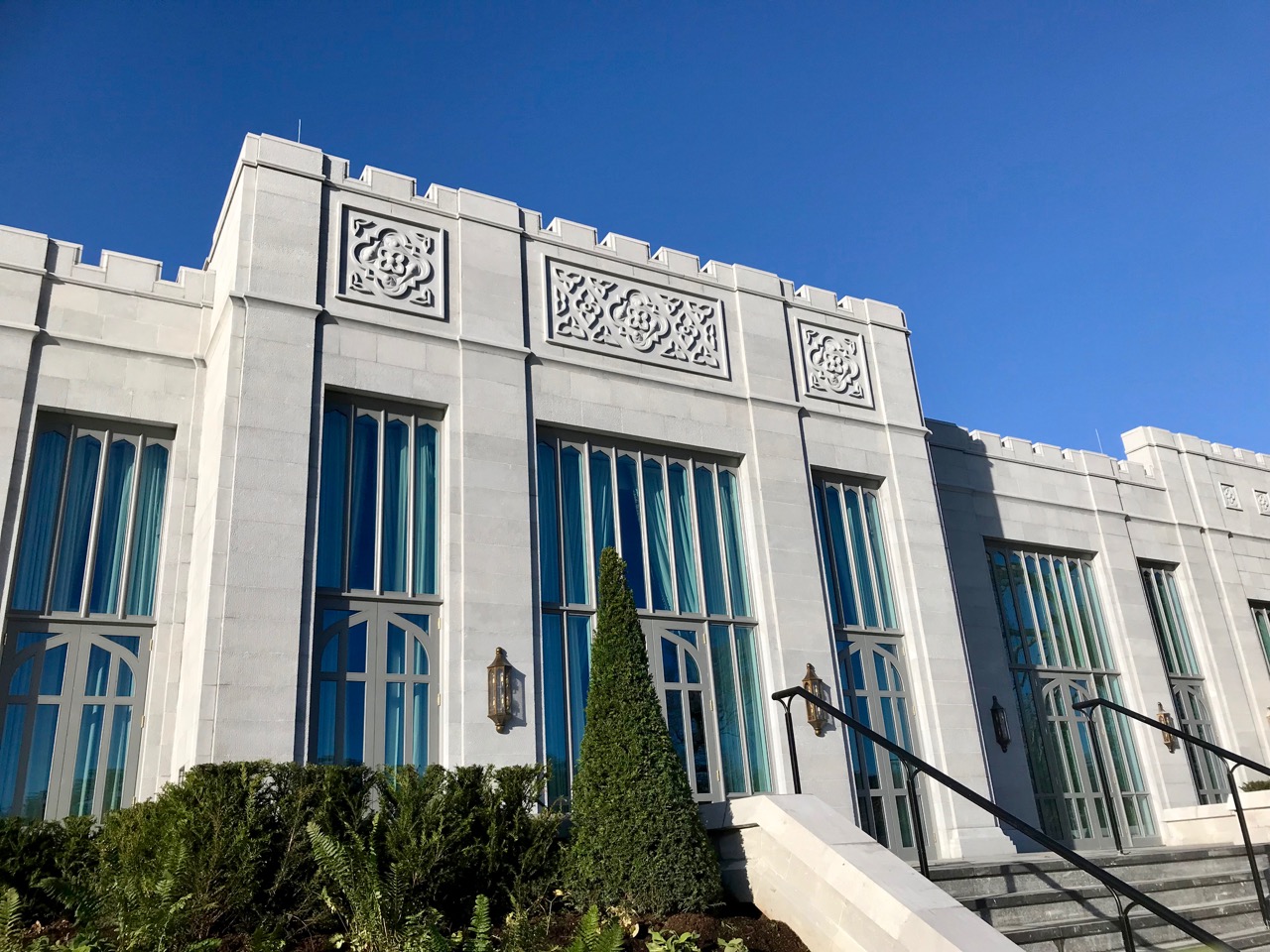
When studying architecture (fifty years ago!) I had little time for what was then generally termed the Victorian Gothic style. It seemed to me derivative, dark and fussy. Now, half a century on, I am suddenly a convert – and all because of a visit we made to Adare Manor: surely one of Ireland’s leading five star hotels, but also the finest embodiment of Neo Gothic attributes that I have come across in any building to date.

The settlement of Adare, in County Limerick, is a bit of a traffic bottleneck waiting to be sorted out – by a much yearned-for bypass which is likely to take a few years to complete. Once in the village, however, you will find a magical and slightly surreal place with its clusters of picturesque thatched cottages, pubs and restaurants, art galleries, antiques vendors and the greatest concentration of fashion shops and boutiques outside of any city in Ireland (probably). But when it comes to hospitality and architecture, then Adare Manor itself beats all contenders.

From the superbly landscaped gardens (top – there are 840 sweeping acres on the estate), through to elegant interiors (the drawing-room, centre, is a prime example), the mansion is on a grand scale and very much reflects, today, the spirit in which it was reincarnated in the 1830s (lower – the Great Hall) by the splendidly monikered incumbents of that time: Windham Wyndham-Quin, 2nd Earl of Dunraven and Mount-Earl and his wife Lady Caroline Wyndham, heiress of Dunraven Castle, Glamorgan, Gloucestershire.

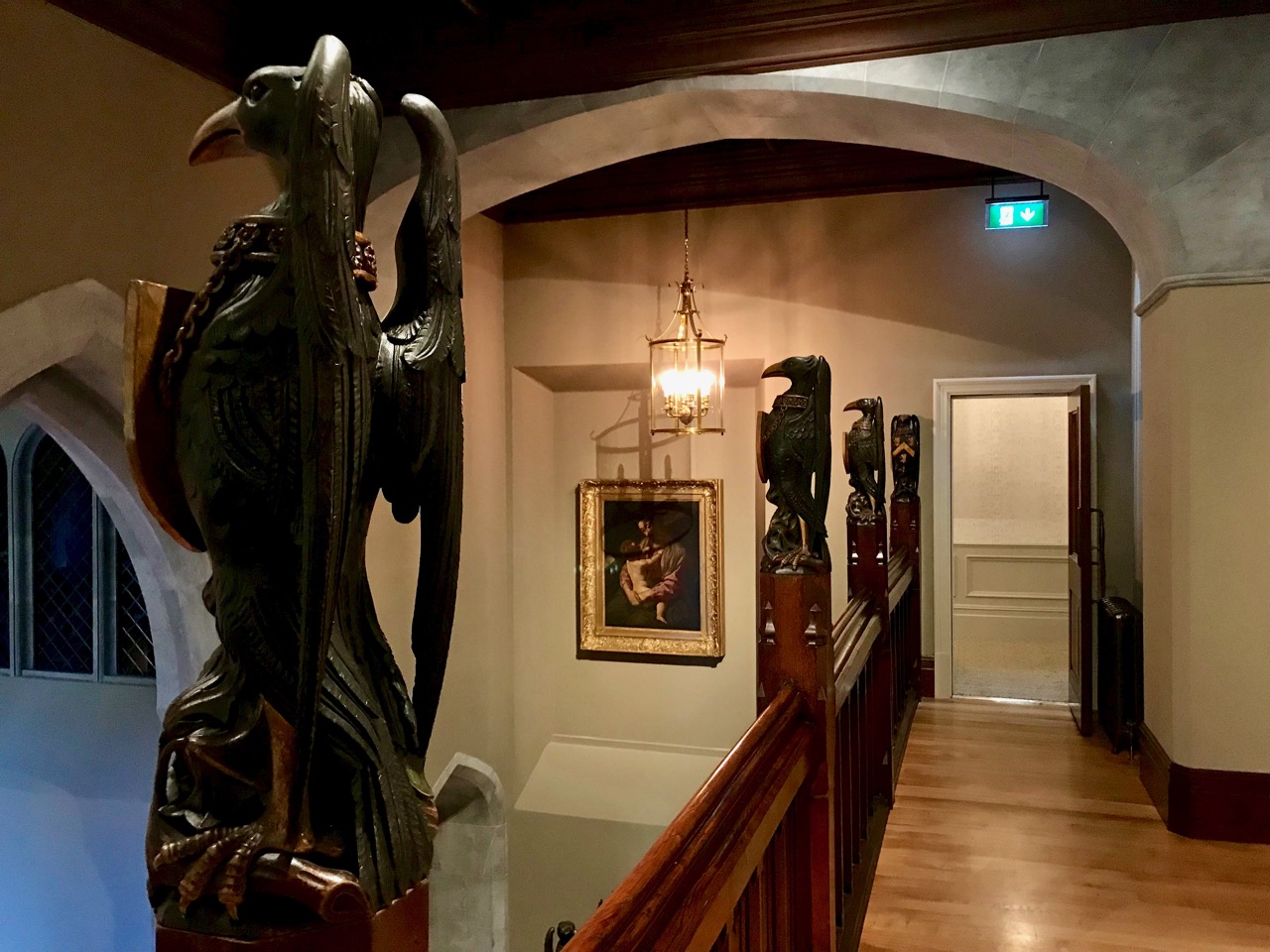
The Manor House as remodelled by the Second Earl is a riot (Dunraven ravens, above). Known to have always actively pursued outdoor life, riding, hunting and sports, it is said that Windham was laid low by an acute attack of gout. Lady Caroline encouraged him to channel his frustrated energies into a building project: to modernise and enlarge their modest Georgian residence. The Earl rose to the challenge and embraced the exuberance of the fashionable Gothic Revival style of architecture.

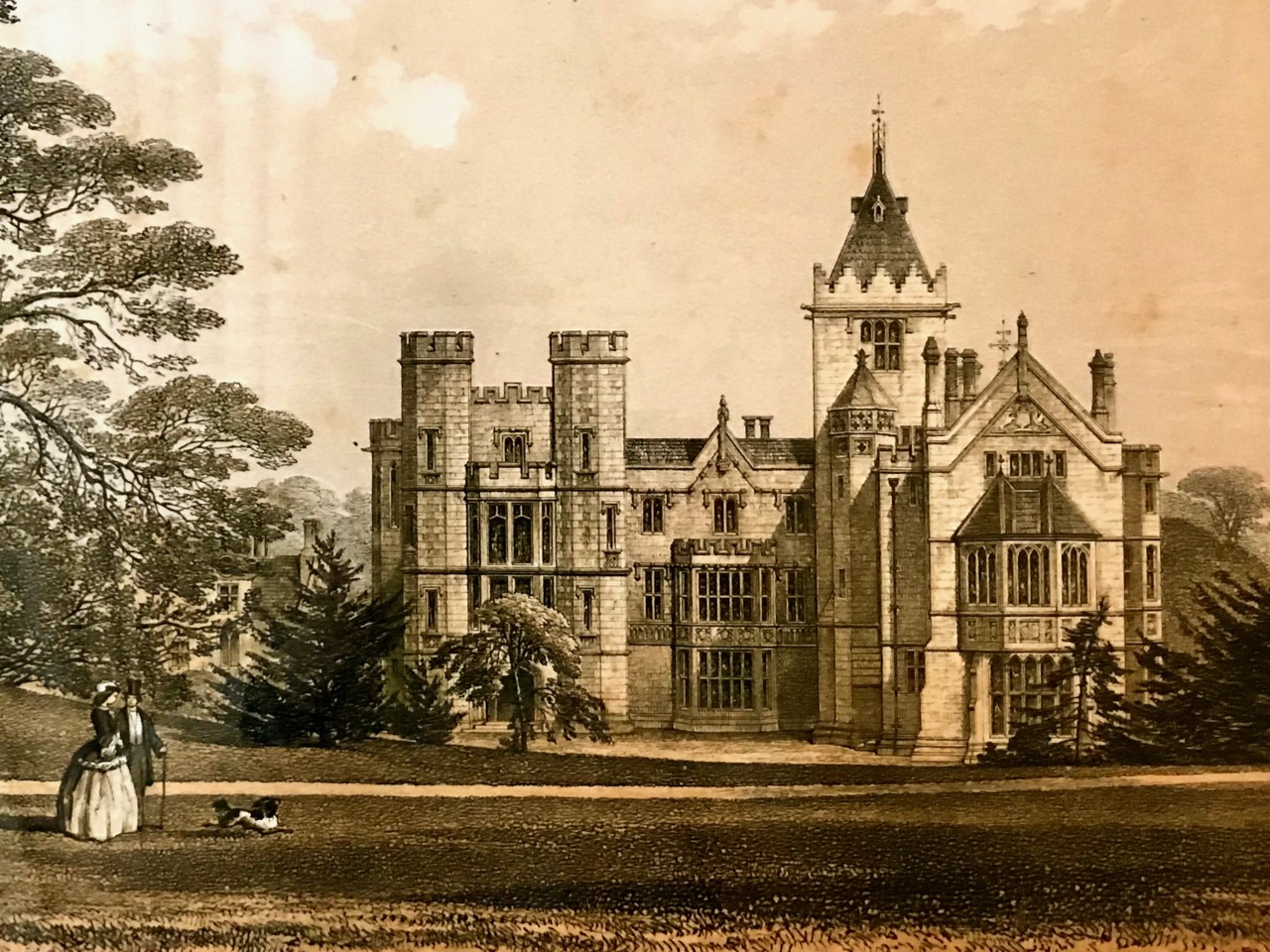
Adare House in the 18th century (top) and its transformation by the 2nd Earl (lower – a 19th century engraving). Clearly funds were not a problem, as a stone plaque on the south elevation attests (one of many texts embedded in the refurbishment of the fabric):

…This goodly house was erected by Windham Henry Earl of Dunraven and Caroline his Countess without borrowing selling or leaving a debt AD MDCCCL…

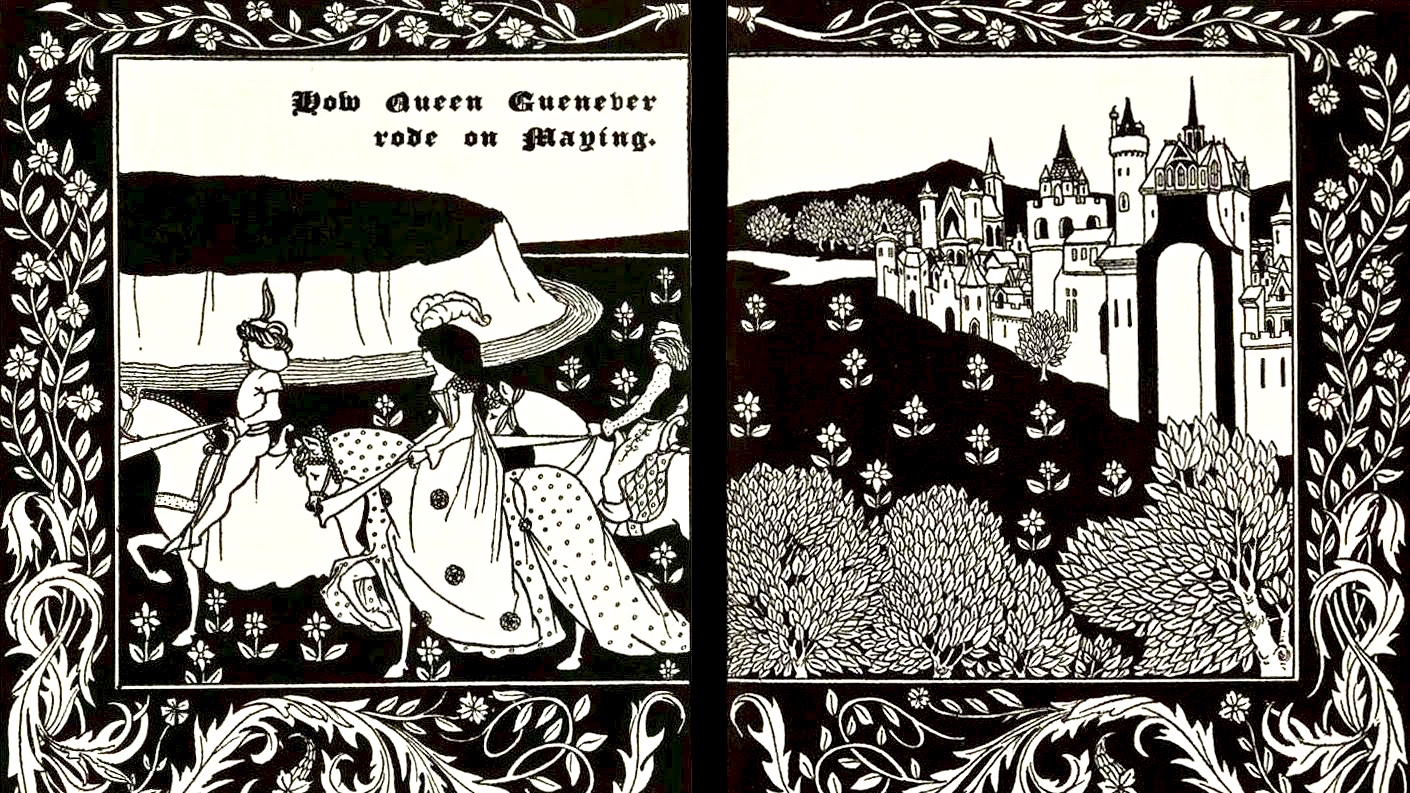
Inspiration for the architectural elements came from an early 19th century romantic revival of interest in all things medieval: particular a perception of the trappings of chivalry: knights in armour, courtly love, stately homes, heraldry, jousting and country pursuits (you’ll see in Finola’s post that we indulged in some of those!). As the Victorian era progressed in the British Islands, these ideals evolved through art – the high point being the Pre-Raphaelite movement – and literature, as espoused in Malory’s Morte D’Arthur, for example, with its interpretation and embellishments by Tennyson and Beardsely:

In respect of architecture, the 2nd Earl was ahead of his time in pursuing medieval themes and must, surely, have been endowed with a good sense of humour. Lady Caroline always loyally stated that all the ideas in the remodelled house were Windham’s; however, we know that the ‘Gothic architects’ James and George Pain were involved, as were Philip Charles Hardwick and Augustus Pugin, in a project that spanned three decades.

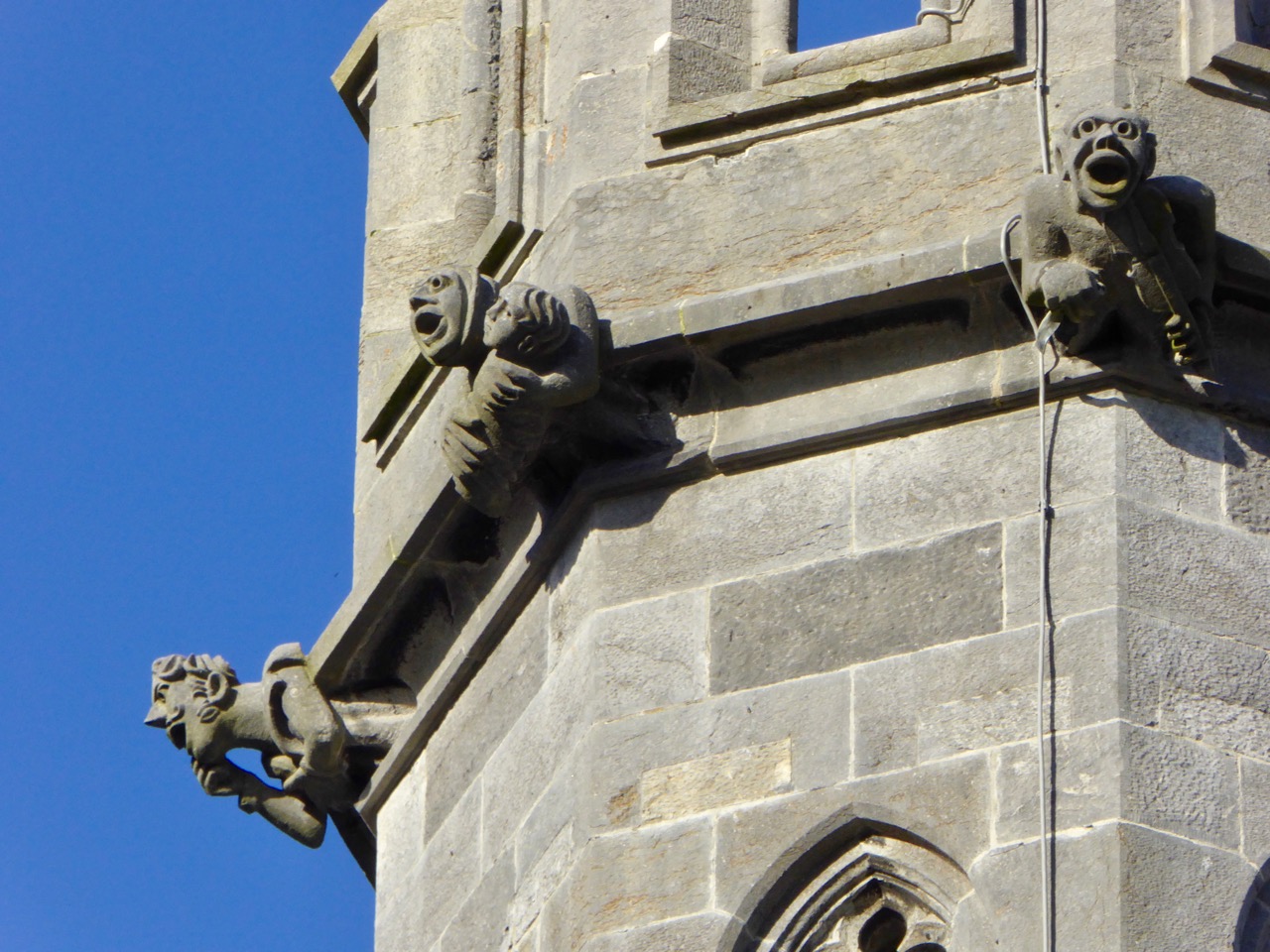
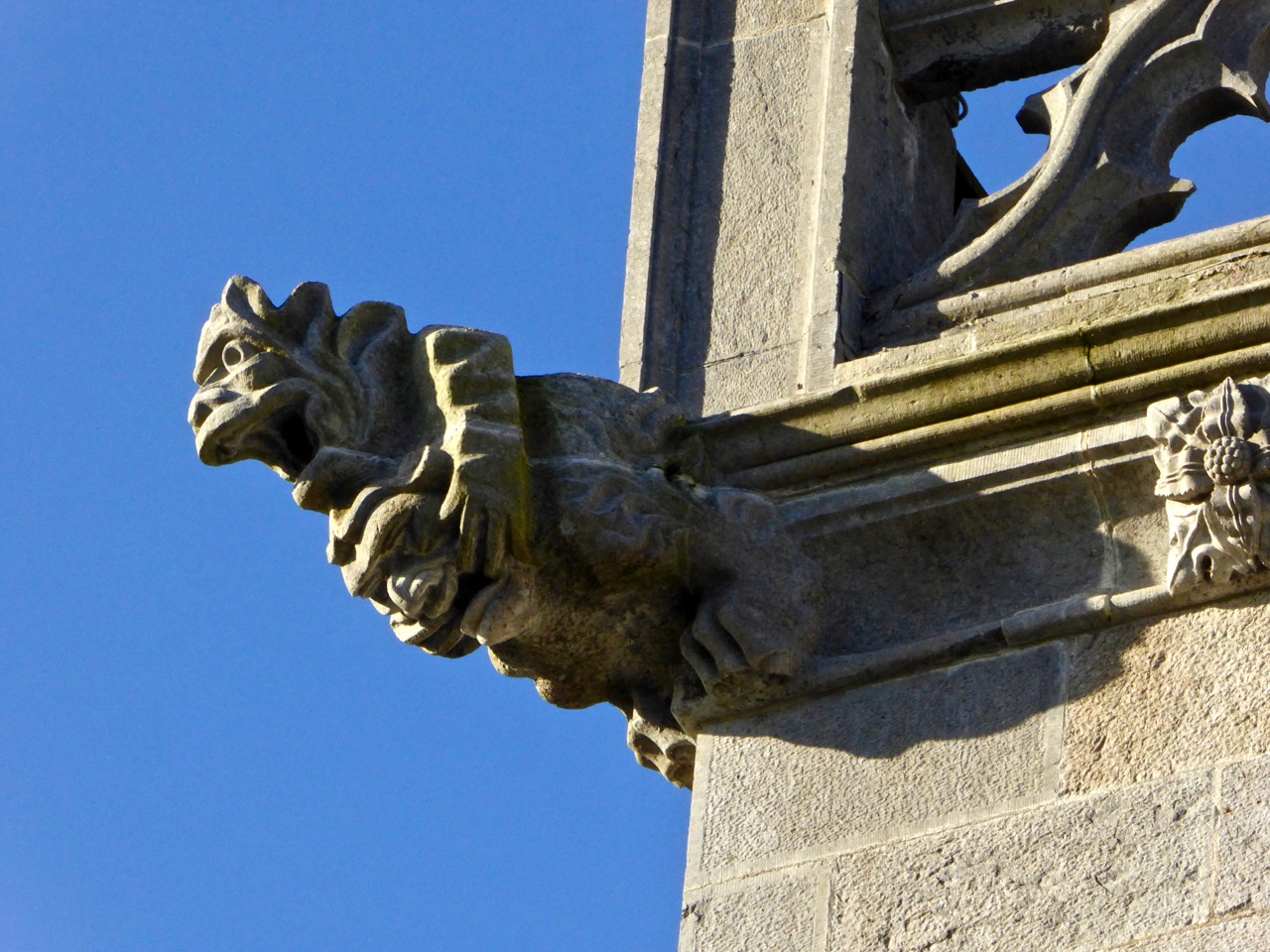
You can see from this one small corner of the Manor the richness and quantity of detailing that was incorporated into the architecture, both inside and out. The 2nd Earl must have dreamed up or approved of all the themes which are well worth studying at length. Here are only a few of the gargoyles which attracted our eyes:

The 1897 photograph, above, shows the carriages of the Duke and Duchess of York at the entrance to Adare Manor. The Duke became George V in 1910. Everyone who comes to the Manor has to enter through a magnificent ‘Romanesque’ doorway (eat your heart out, Finola!) – whether royalty, like the party above, or mere mortals like us, who treated ourselves to a stay to celebrate our wedding anniversary. Have a look at the detailing on the architraves:

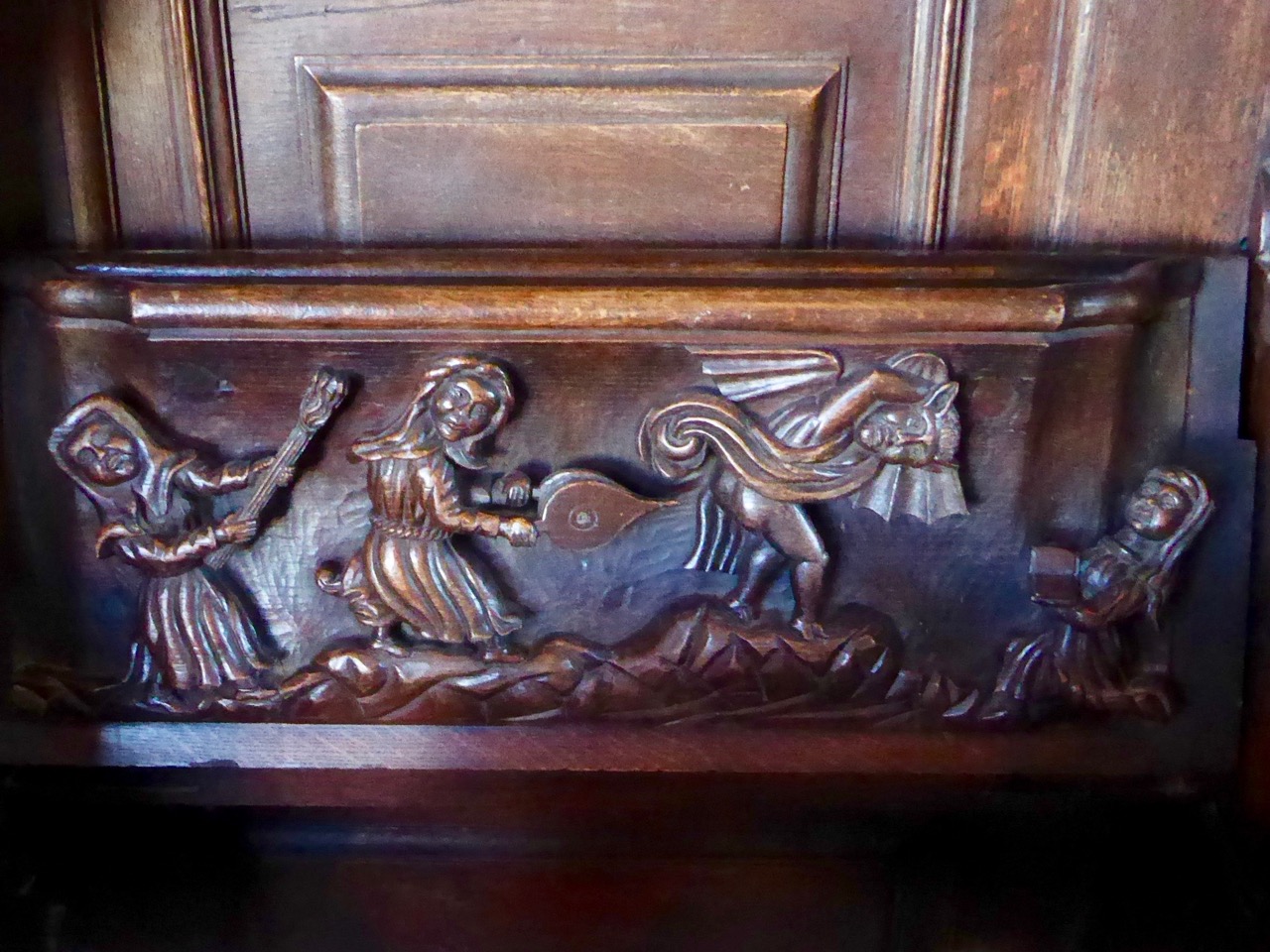
The craftsmen stonemasons of Adare were kept very busy – and fully employed – throughout the building period, which encompassed the worst years of the Great Famine. As were the woodcarvers. One room in the Manor – the Long Gallery – spans the whole width of the house: 40m long and 8m high. It’s now the ‘informal’ dining room. It has a magnificent array of carving, some – the choir seats – brought in from Flanders and dating from the 17th century (see the enigmatic example in the first photograph below), but most purpose-made locally for the new Manor. Each one tells a story. We need to go back again and spend more time there (please) just to even get a glimpse of all of them. By the way, if you want to see real medieval carving, have a look at this post of mine, from the West meets West series.

Lady Caroline was just as industrious as the Earl in contributing to the project and in creating employment through the famine. She established a School of Needlework to develop marketable skills and opportunities for local women: some of the work of the School graces the walls of the Manor. In fact, the work of local craftspeople is prominent throughout the interior of the building. Below left is the Long Gallery, showing off decorative work on the ceiling, tapestries and stained glass. On the right is a carved stone figure that looks down on guests in the Great Hall.

All of the above is just a taster for the wealth of architectural delights that awaits future visitors to this hotel. We were among the first: the Manor re-opened after a full two-year refurbishment and extension the week before we took our stay there. We can confirm that the standard of this establishment is among the highest that we have come across in all our travels in Ireland. Every detail has been thought out: rooms are spacious and warm; beds are large and comfortable; all mod cons are incorporated – right down to a switch beside the bed which opens or closes the curtains! The food excels – and we have yet to sample the full restaurant facilities. Above all, the service is faultless, welcoming, attentive and personal. Amongst the new features is a ballroom, which would make the ultimate wedding venue, built in a style which fully compliments the character of the original architecture:

Flamboyant, exuberant, playful, grand… I will run out of epithets, and superlatives. I was just – delighted – by Adare Manor, and we feel privileged that we can still appreciate the aesthetic  wit which the Earl and Lady Caroline brought to the house, and which has been extended by subsequent generations: the last Wyndham-Quin to inhabit the property – the 7th Earl of Dunraven and Mount-Earl – moved out in 1982. Lady Caroline should have the last word: she wrote this in her 1856 book Memorials of Adare Manor

This charming spot was my home of unclouded happiness for forty years: may Heaven’s choicest blessings be poured with equal abundance on its present and future possessors!

Falconry Fantasy

I’ve waited a whole life for this – the chance to be a falconer, if only for a moment.

Ever since I read T H White’s The Once and Future King, it’s been a fantasy of mine to interact with one of those magnificent hunting birds that he described so well. A couple of weeks ago, at Adare Manor, Robert and I got a chance to finally live that dream – yes, he read the same book and loved it just as much as I had. T H White was a falconer himself, although not a very successful one. The treat was part of a couple of days stay at Adare Manor – Robert’s post describes this fascinating place in wonderful detail.

This falcon is happier and calmer with his hood on

Our falconer at Adare Manor was Susan Kirwan, one of the team at Adare Country Pursuits. What she doesn’t know about birds would fit on a postcard. She trained her first bird, a jackdaw, at the age of nine, and was hooked. Now she shares her knowledge and her love of birds with those of us who have admired from afar but have never had an opportunity to get up close.

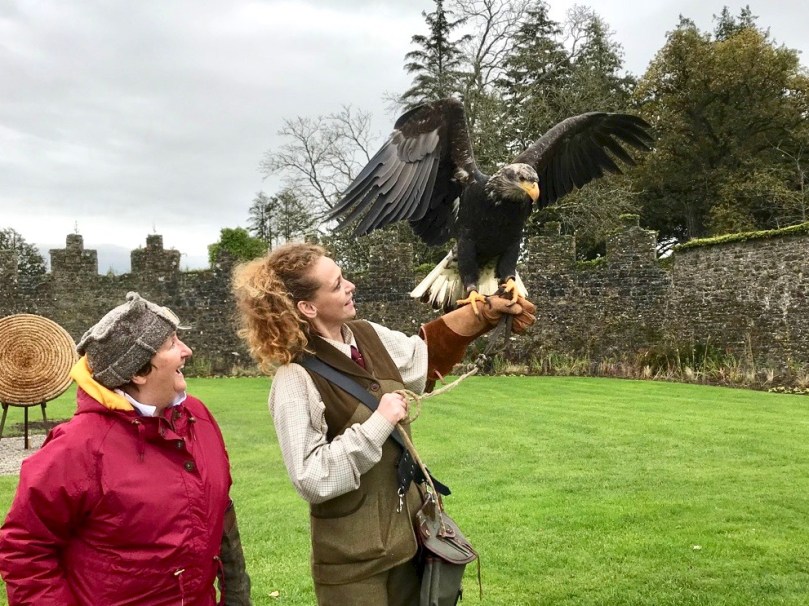
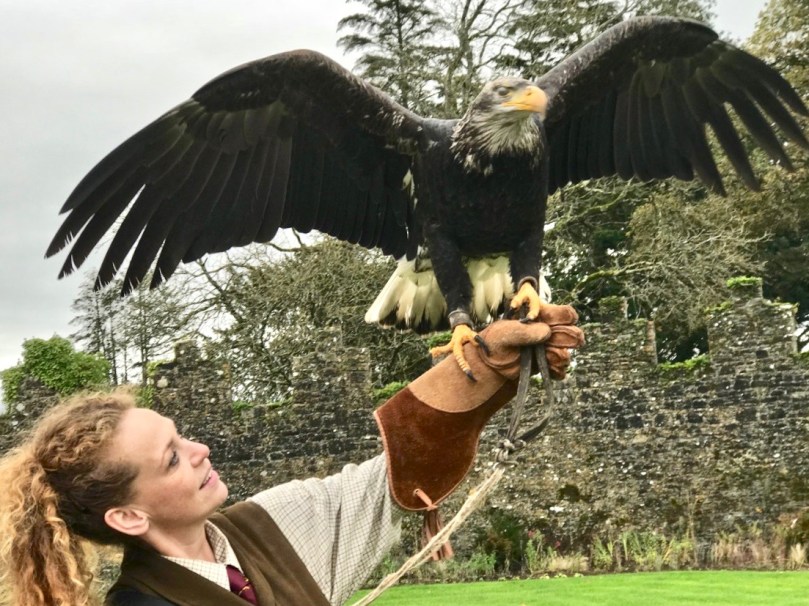
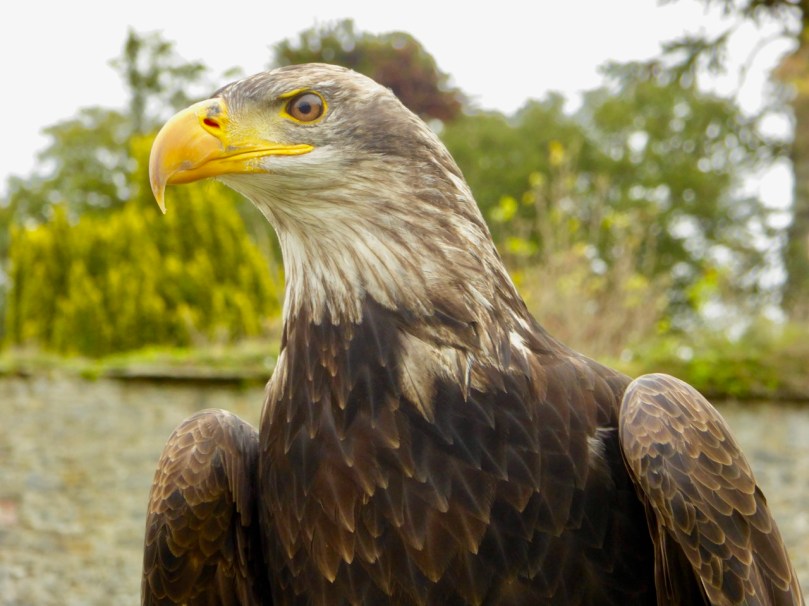
Susan has Saoirse, the American Bald Eagle, show off her wings

She spent the morning with us, handling each bird in turn and giving us an education on each one – habitat, habits, hunting style, personality, peculiarities, nutrition, feathers, weight – it was in-depth and fascinating. There wasn’t a question we asked that she couldn’t answer. She has spent her life studying and living with these birds.

All of the birds wore jesses (ankle leathers) and Susan showed us how to hold our gauntlets and our fingers to secure a bird once on the glove. She encouraged us to speak in a calm voice and not to betray nervousness – birds are excellent at picking up on human emotions.

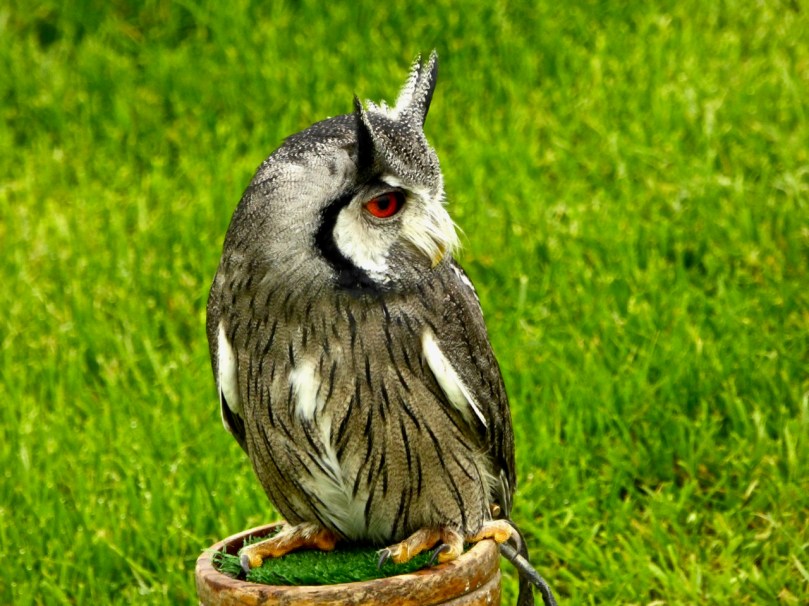
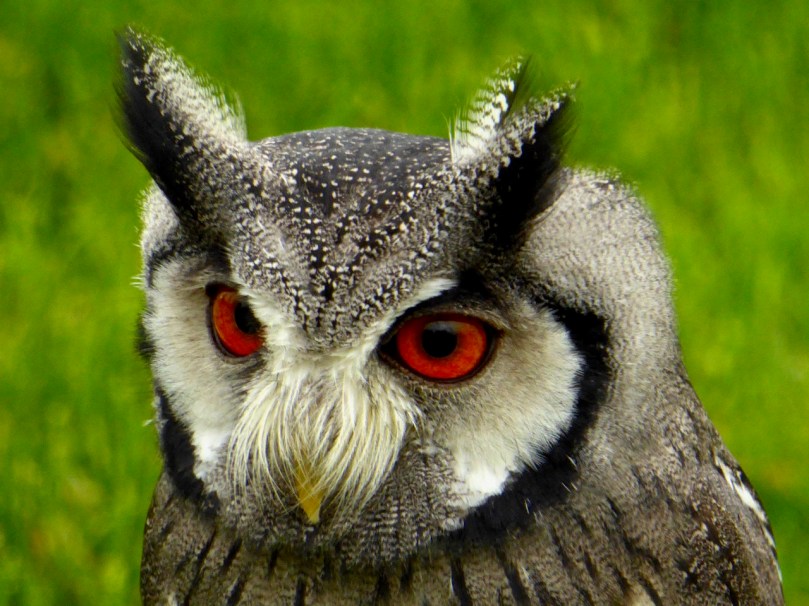
Tiny, the White Faced Scopes Owl, awaits her turn with us

Some of the birds were trained to fly from perch to perch, attached to a ‘creance’ or long line. Each has a optimal weight for flying and it’s essential to keep it there, so weighing and inspecting is part of the daily routine. Food must be as close as possible to what they would eat in the wild, to preserve the level of roughage and protein. Falconry, especially when you keep several birds, is a full-time job.

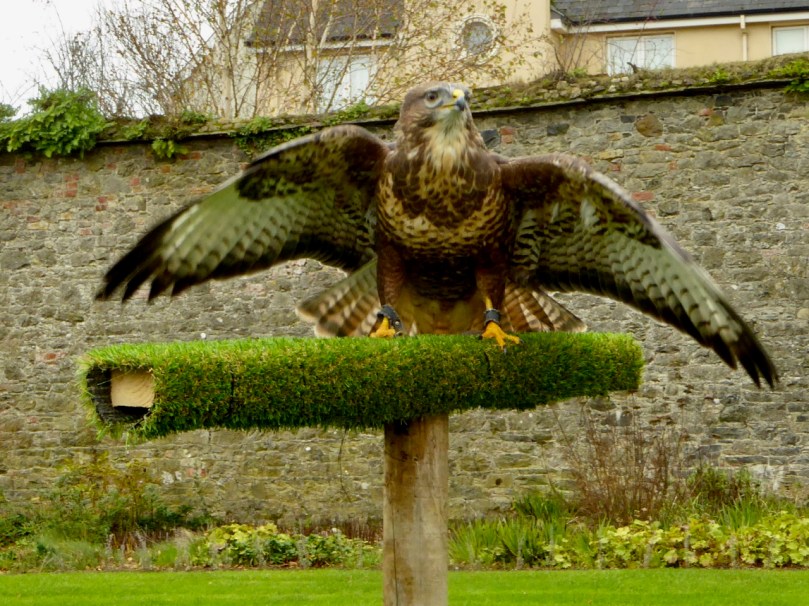
Caesar is a Common Buzzard, which is a native species in Ireland

Owls, although excellent hunters for themselves, don’t make the greatest falconry hunters. However, they are often brought to Susan as motherless chicks and she becomes their parent, as they imprint readily on a human. Susan told us that the Harry Potter series started a trend among some young people of capturing owls ‘to train’ but of course this is almost impossible for an amateur, so that is how some birds have come to her aviary.

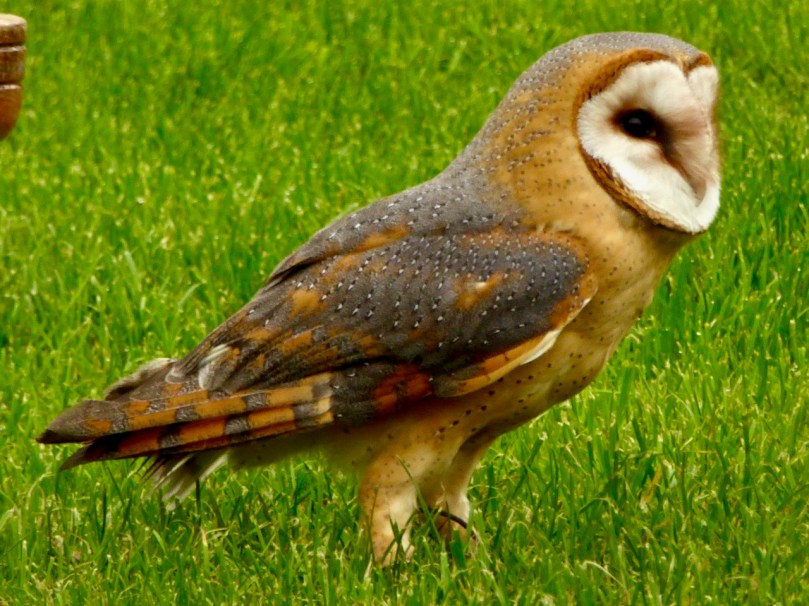
Noddy, a Dark Breasted Barn Own, has beautiful feathers and colouring

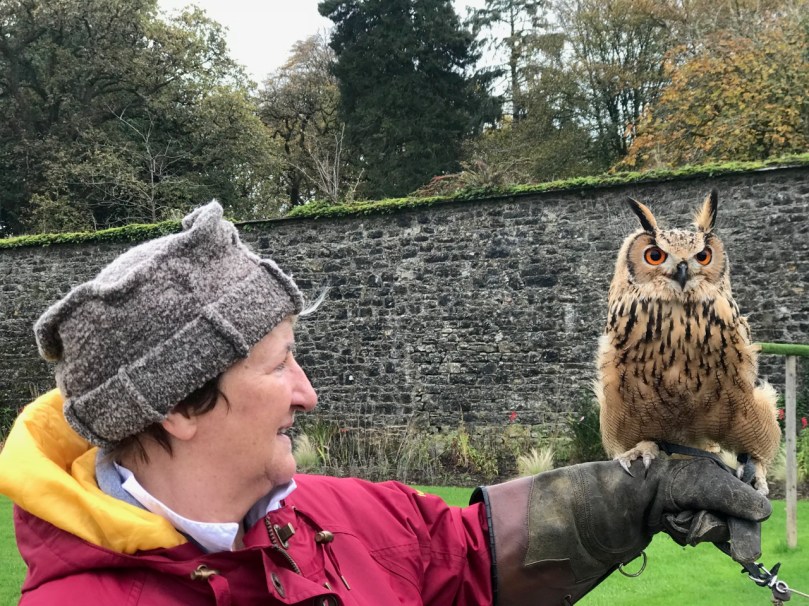
Oscar, a Eurasian Eagle Owl, has a good old ruffle

Raising an imprinted bird involves a particular set of skills and deep knowledge of the species. Susan is a certified falconer and has taken all the courses she can find to develop her skills. It was obvious, in the way she talked to and handled her birds how much she loved them.

Top: I’m obviously a ‘natural’ at this! Bottom: Well, maybe not quite yet

It was a thrill to be so close to a bald eagle. Living in Canada, I had many opportunities to observe these magnificent creatures in the wild, but I had never seen one as close up as I did at Adare. Saoirse is not quite four yet, and it takes a full four years for a bald eagle to mature and to grow both the white head and the white tail. Saoirse’s tail was there, but her head was at the salt-and-pepper stage that women of my age can relate to.

The Harris Hawk – ours was called Felix – is considered the easiest hunting bird to train because of its laid-back attitude to life and its natural ability to interact with humans. The highlight of our session came when Susan let Felix loose to fly to a high perch, and then called him down to land on our glove.

What a feeling! This IS a wild bird – Susan affixed a locator transmitter to its leg before we started so that if Felix took it into his head to fly away she could track him through the woods. She described how a falconer would track a bird before locators were used – it involved standing very still and tuning in to the sounds of the forest. Other birds would react to the sudden appearance of a hawk or falcon and the falconer would follow the sound-clues to his bird.

I learned that Oscar’s tufts aren’t his ears and that they don’t always stand up like this

We were extremely lucky to have Susan and her birds all to ourselves that morning – not sure how often that happens! But if you get a chance, don’t pass up an opportunity like this. It’s a once-in-a-lifetime experience. Thank you, Susan – you’ve made some old T H White fans very happy!

See you again, Tiny!

The Gap of Dunloe

It’s one of Ireland’s, and Kerry’s, premier tourist experiences, but I think it’s at its best when tourist season is over and winter foliage dominates the landscape. Pure winter light mixed with the occasional shower – that combination brings out the the kind of colours that stop me in my tracks. From Killarney, the way to the Gap is west from the town on the N72 to Killorglin – just look for the signs.

From the Wishing Bridge

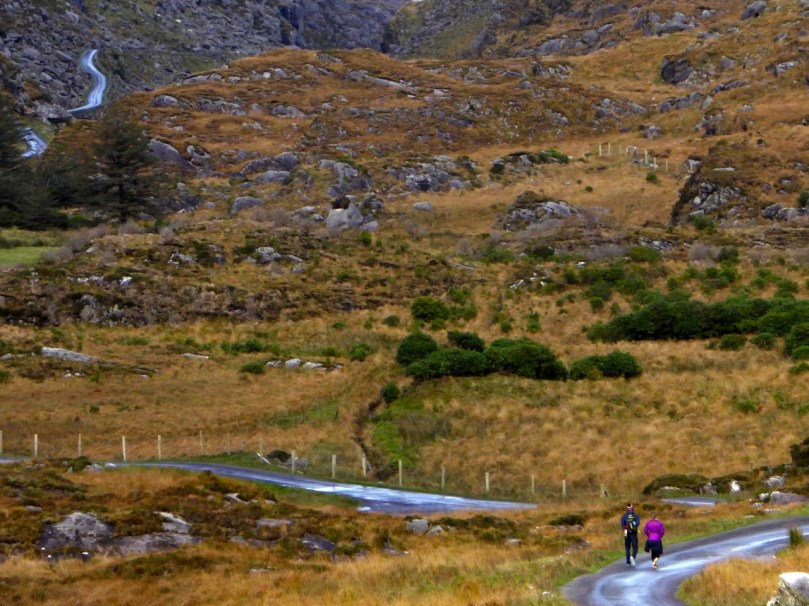
Driving through the Gap of Dunloe is not recommended at any time except winter, and even then caution is advised. That’s because the traditional way of travelling through the gap is by jaunting car, on horseback, on foot, or by bicycle and cars can be a dangerous and unwanted addition. And those – the on-foot or by horseback options – are the best ways of seeing it. If you have a hankering to experience it for yourself, just Google Gap of Dunloe and all the options will present themselves.

This couple from Germany had walked from the Black Valley

Robert and I have driven it twice now, each time in winter, and each time he has dropped me off to walk at my own pace, camera in hand, and picked me up where he can find a lay-by.  We did it earlier this week, having ascertained that sunshine was a possibility (about the best that can be forecast this time of year), and we hit it lucky.

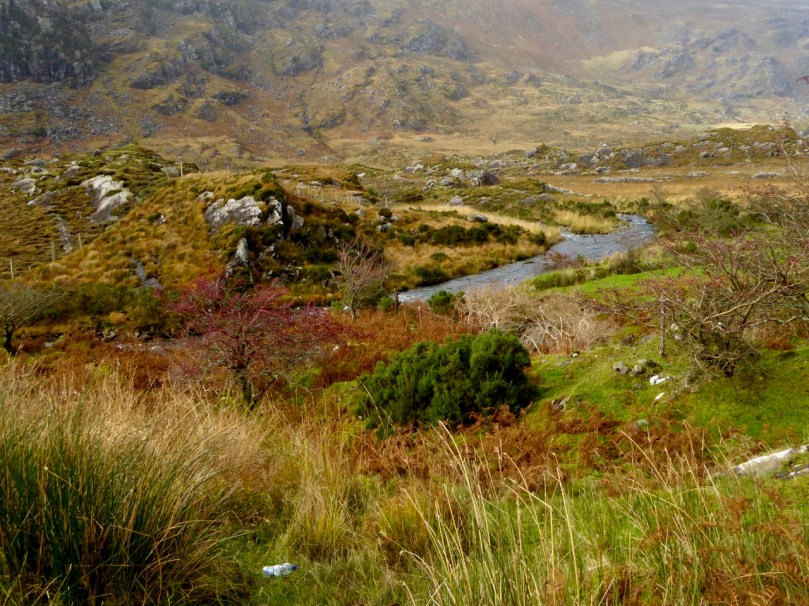
A river runs through it

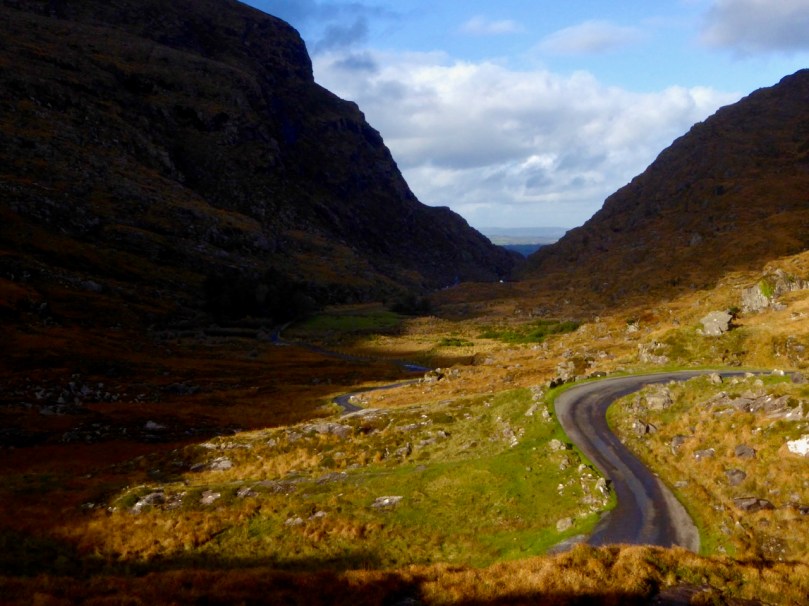
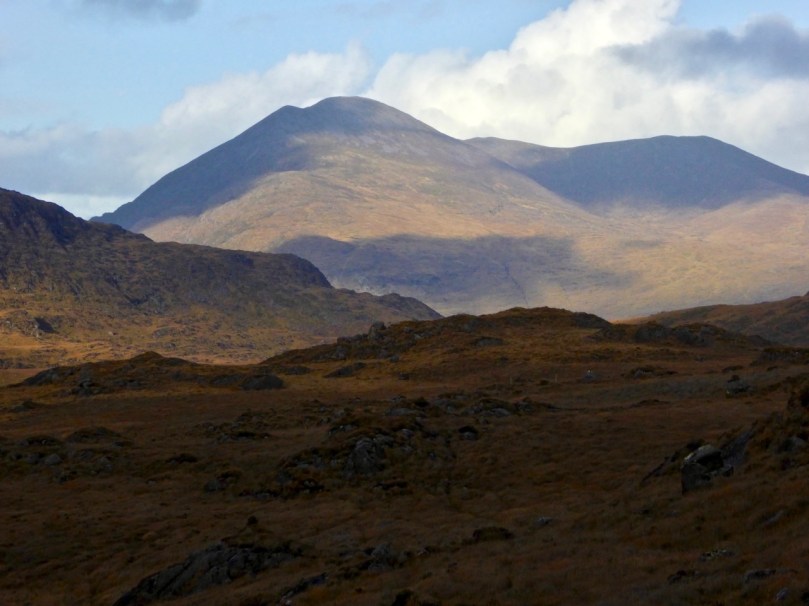
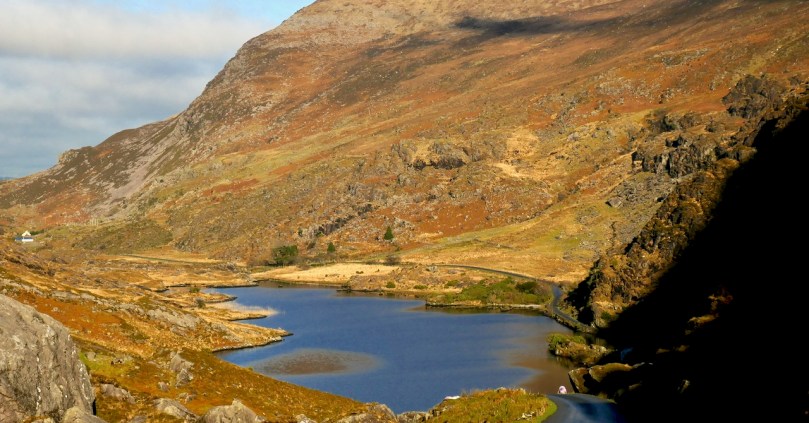
The Gap is a deep glaciated valley, running north/south between MacGillycuddy’s Reeks and the Purple Mountain – can’t lose with a description that starts off like that! The road runs along the Loe River, which empties eventually into the Laune and thence into Lough Leane, the largest of the Lakes of Killarney.

Auger Lake

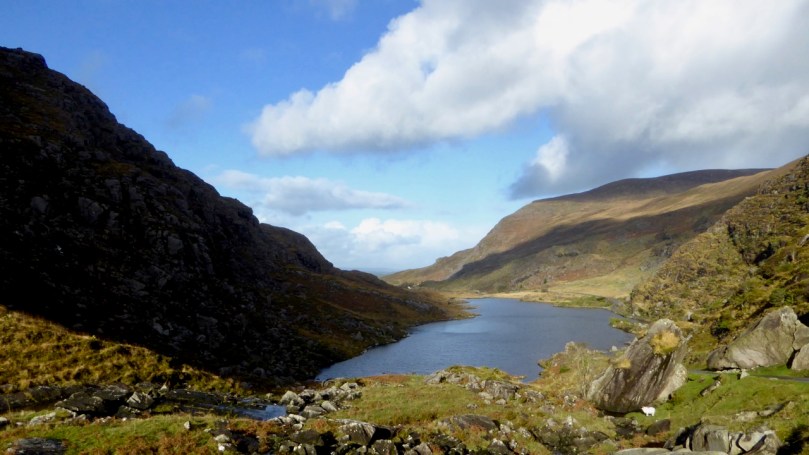
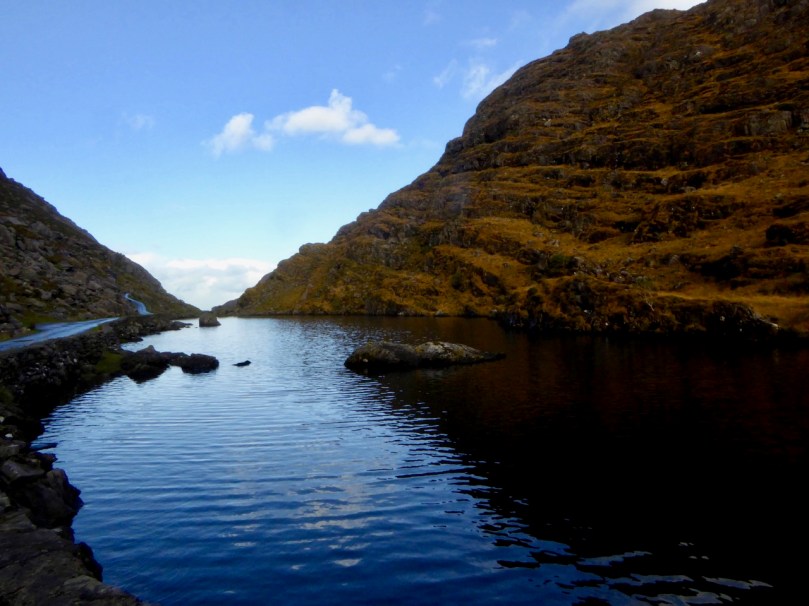
Several lakes lie along the course of the river – Black Lake, Cushvally, Auger Lake and Black Lough. The road switches from the west side of the lakes to the east side as you go along, and then back again. The first bridge you cross is the Wishing Bridge – tradition has it that wishes made on this bridge always come true. My highly scientific testing of this assertion confirms the truth of it.

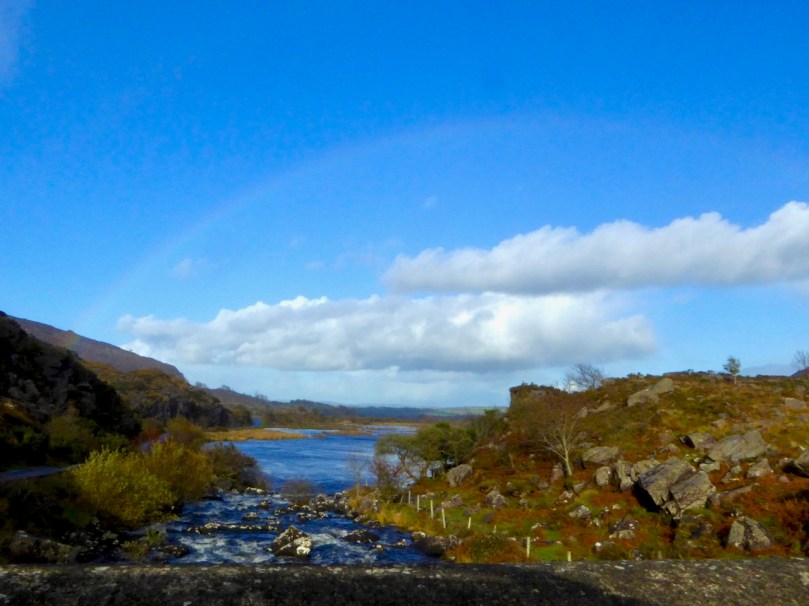
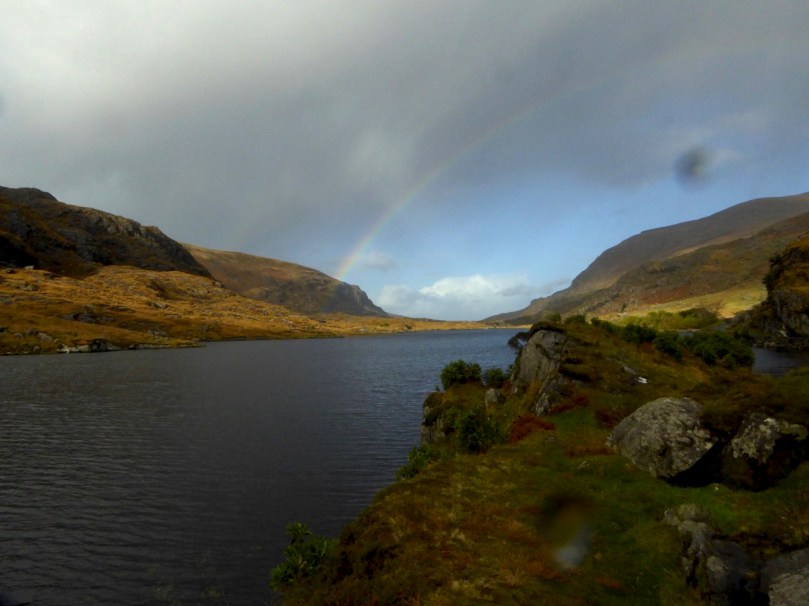
This is Ireland, of course, so no matter how blue the sky you have to expect that it can rain at any moment. True to form, the top of the valley filled with cloud and before I could blink I, and my camera, were being, er, moisturised. The compensation? A rainbow to the north, spanning the Gap.

Is there a hint of a second rainbow? And oops – drops on the lens

The rain didn’t last long – just enough to ensure the air was filled with lots of droplets and vapour to lend extra luminescence to the air – the colours always seem at their most sparkly after a shower.

Black Lough – no need to wonder how that name was earned

It was a steep walk to the top of the Gap, and it was hard to keep going when every bend brought fresh temptation to stop and take more photographs as the light shifted and shimmered. The photograph at the top of this post was taken from the highest point.

The Black Valley

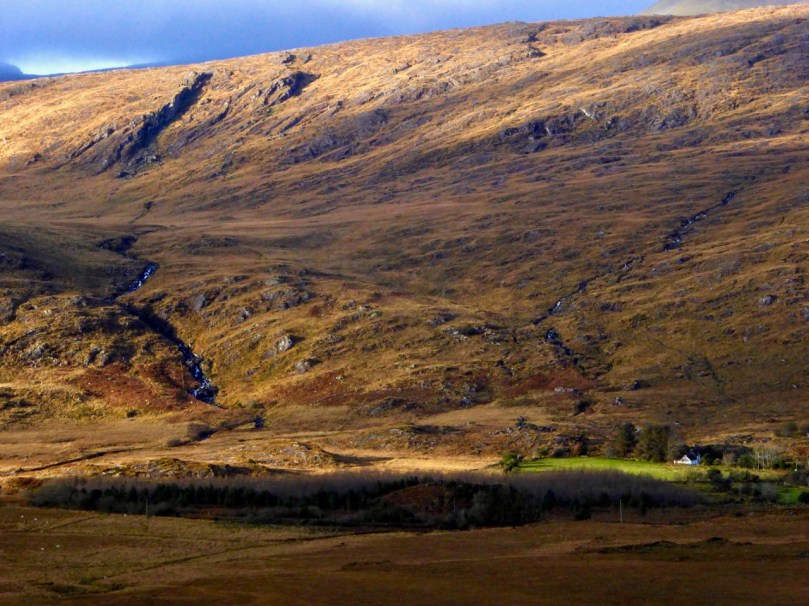
Once over the top, the Black Valley opens up before you. This is a walker’s paradise, but also a community, with small farms dotted here and there, a church and a school – surely one of the remotest in Ireland. The landscape softens slightly from the craggy steepness of Dunloe to more rounded valleys and mountains.

You have a choice now to carry on West along the interior of the Iveragh Peninsula, but we had to head for home so we joined the N71 at Moll’s Gap where a welcome coffee awaited in the excellent Avoca Cafe.

A road through the Black Valley

Next time, I think we will do this by the traditional horse-drawn method, and return to Killarney by boat from Lord Bandon’s Cottage. Perhaps even in the summer – I wonder how it will look then.

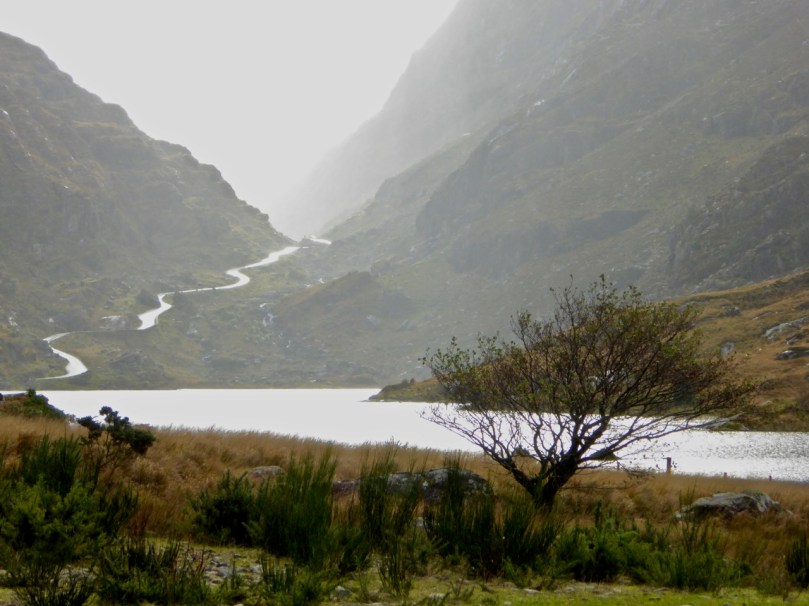
Looking back at the Gap of Dunloe from Moll’s Gap

Update: We did it again in January 2020 and once again were blessed with a great day for it:

More on Martinmas

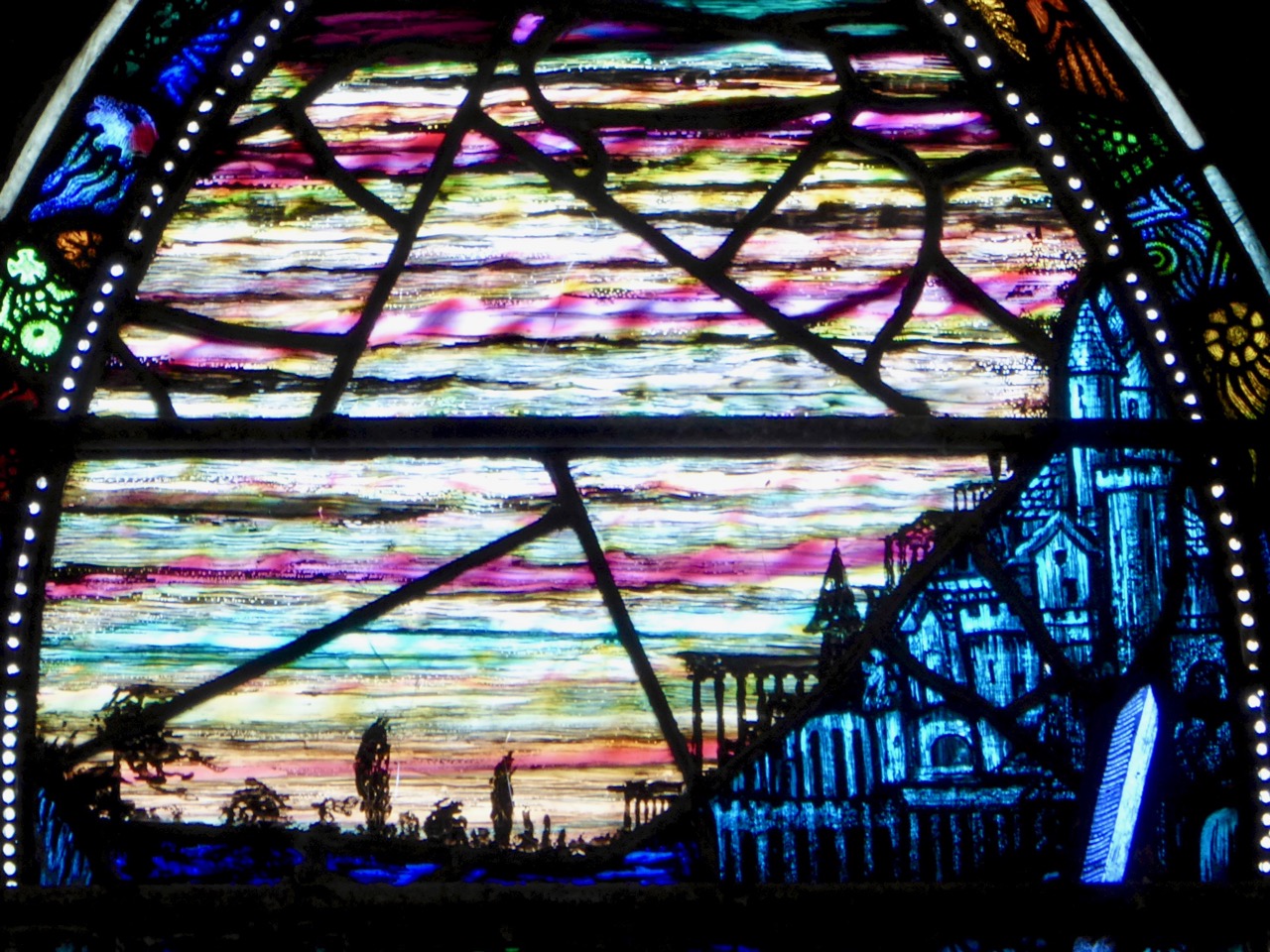
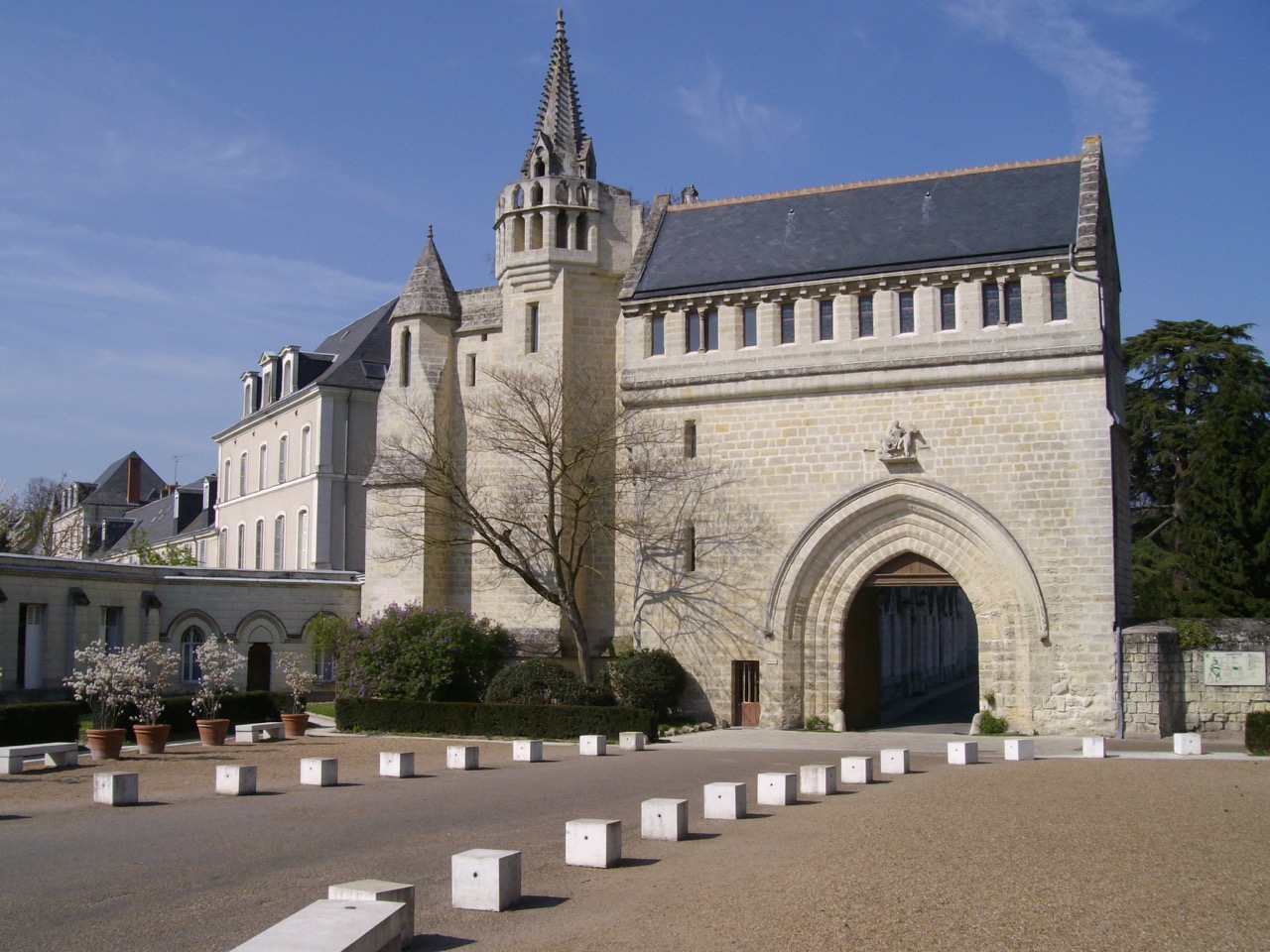
Today – November 11 – is Martinmas. That’s the feast day of St Martin of Tours: the picture above is Harry Clarke’s representation of the city of Tours, which we can see in St Barrahane’s Church, Castletownshend, here in West Cork. St Martin was a saint of Hungarian origin who founded a monastery in Marmoutier, in north-eastern France in 372. As far as we know, he never visited Ireland, yet he is widely celebrated here… Why?

Marmoutier Abbey, near the city of Tours (photo from Wikimedia Commons)

Well, one reason could be that St Martin was the sister of St Patrick’s mother, Conchessa. Or, perhaps he was her uncle – we don’t have definitive records from that time, but we do have plenty of stories. The one everyone seems to know about St Martin is that he came across a naked beggar while travelling in the middle of winter. He immediately split his cloak in two and gave half to the beggar. That night he had a dream in which Jesus told him that it was he who had received the gift of the cloak from Martin. From then on Martin determined to spread Christianity wherever he went.

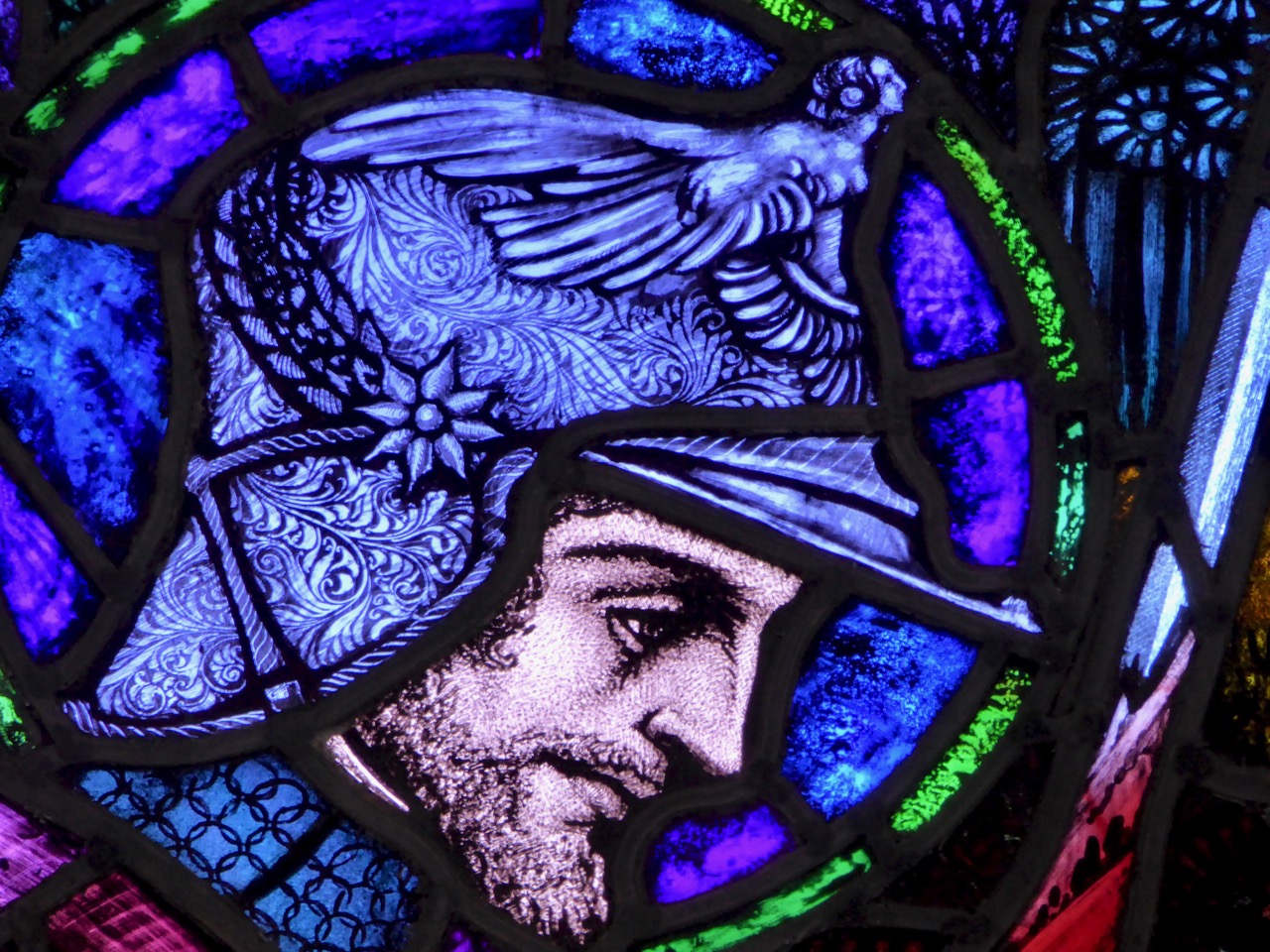
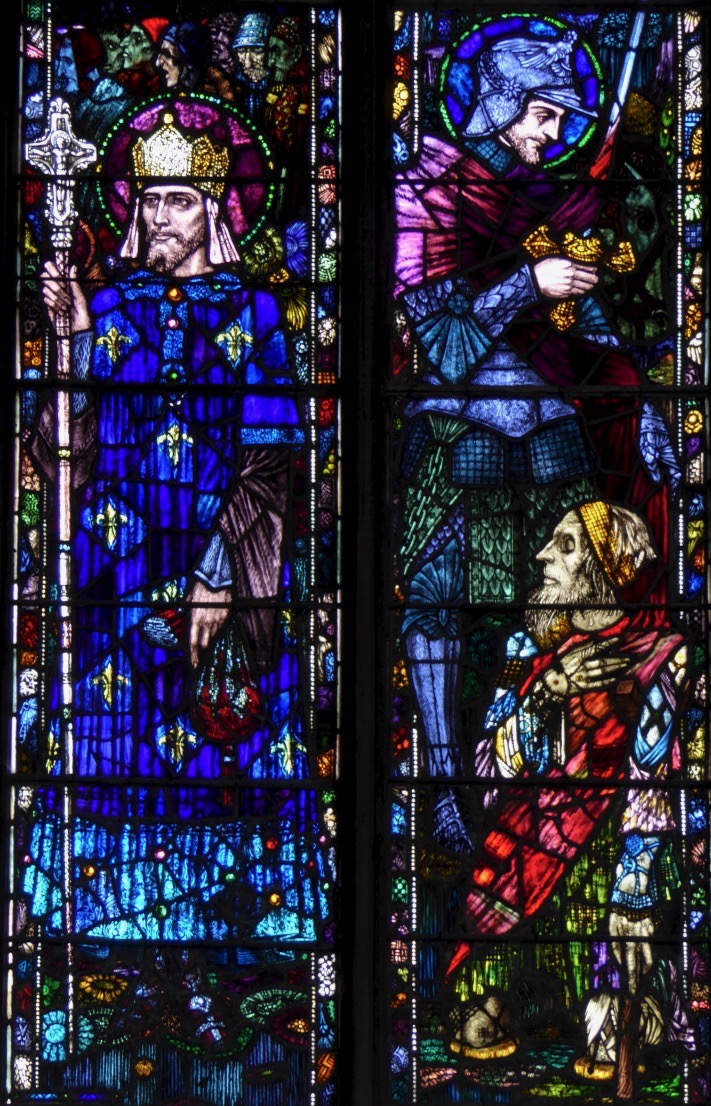
Here is St Martin, depicted in Harry Clarke’s Castletownshend window. Finola tells the full and fascinating story of this wonderful window here. He is depicted as a soldier, and is the patron saint of soldiers. Confusingly, he is also the patron saint of conscientious objectors! In fact, he was the first recorded conscientious objector as he became converted to Christianity while he was serving in the Roman Army. Because of his beliefs he refused to fight but – to prove he was not a coward – he was prepared to go into battle unarmed and stand between the opposing parties in the name of Jesus. Miraculously, on the eve of the battle an armistice was declared. Martin was given a discharge and was able to pursue his calling. Eventually he was made Bishop of Tours and founded his Abbey across the River Loire.

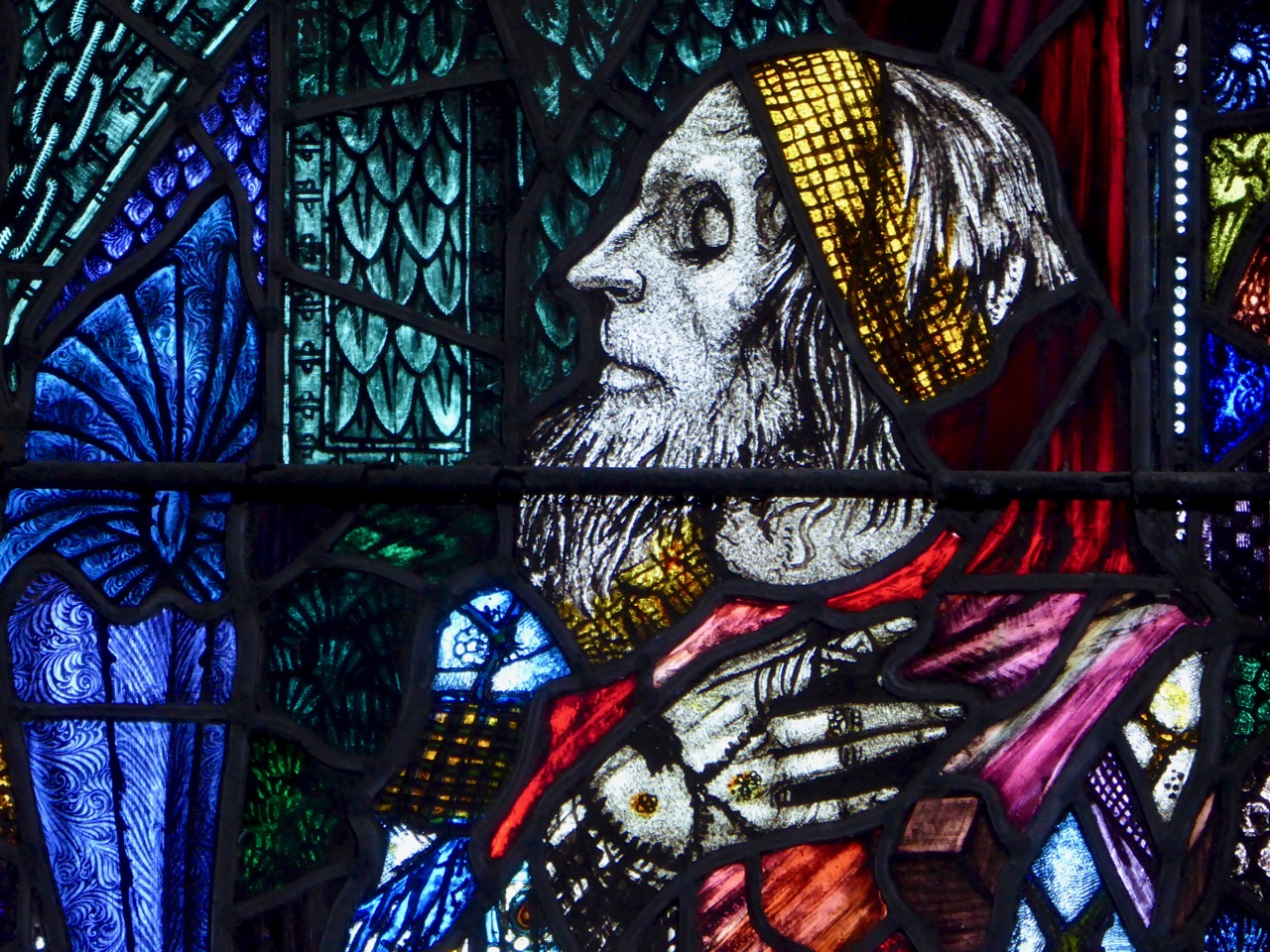
This is the beggar who received the gift of St Martin’s cloak – also from the Harry Clarke window. Here in Ireland there were once many customs associated with Martinmas. I set out some of these in a previous post a few years ago. For me, the most interesting is that no wheel should be turned on St Martin’s feast day. This is because the saint met his death by falling under a mill wheel. Below are two of ten 14th century frescoes from the San Martino Chapel in Assissi, setting out the stories of the saint: these depict his death and his funeral.

In County Londonderry, Northern Ireland, St Columba founded a church in the sixth century and named it after St Martin: Díseart Mhartain or ‘Hermitage of Martin’. Fascinating that this European saint should have such a following in Ireland: I found at least four churches dedicated to him in the Republic. One thing I touched on in my earlier post was the custom of killing a goose or cockerel on the day and sprinkling its blood in the four corners of the house to ensure well-being for the next year. I have since found that it is correct to say ...In onóir do Dhia agus do Mháirtin… while doing this (In the Honour of God and St Martin). I hope I’m not too late to wish you a good Martinmas! And I’m leaving you with the full image of the Harry Clarke window…