
When my mother made Christmas cake she always used Monica Sheridan’s recipe. Mum had an old cookbook stuffed with pieces of paper, cuttings and recipe cards and out of this jumble came marvellous concoctions to feed her appreciative family. As everyone did in those days she iced the Christmas cake with almond paste and royal icing and decorated the top with winter scenes and figurines.
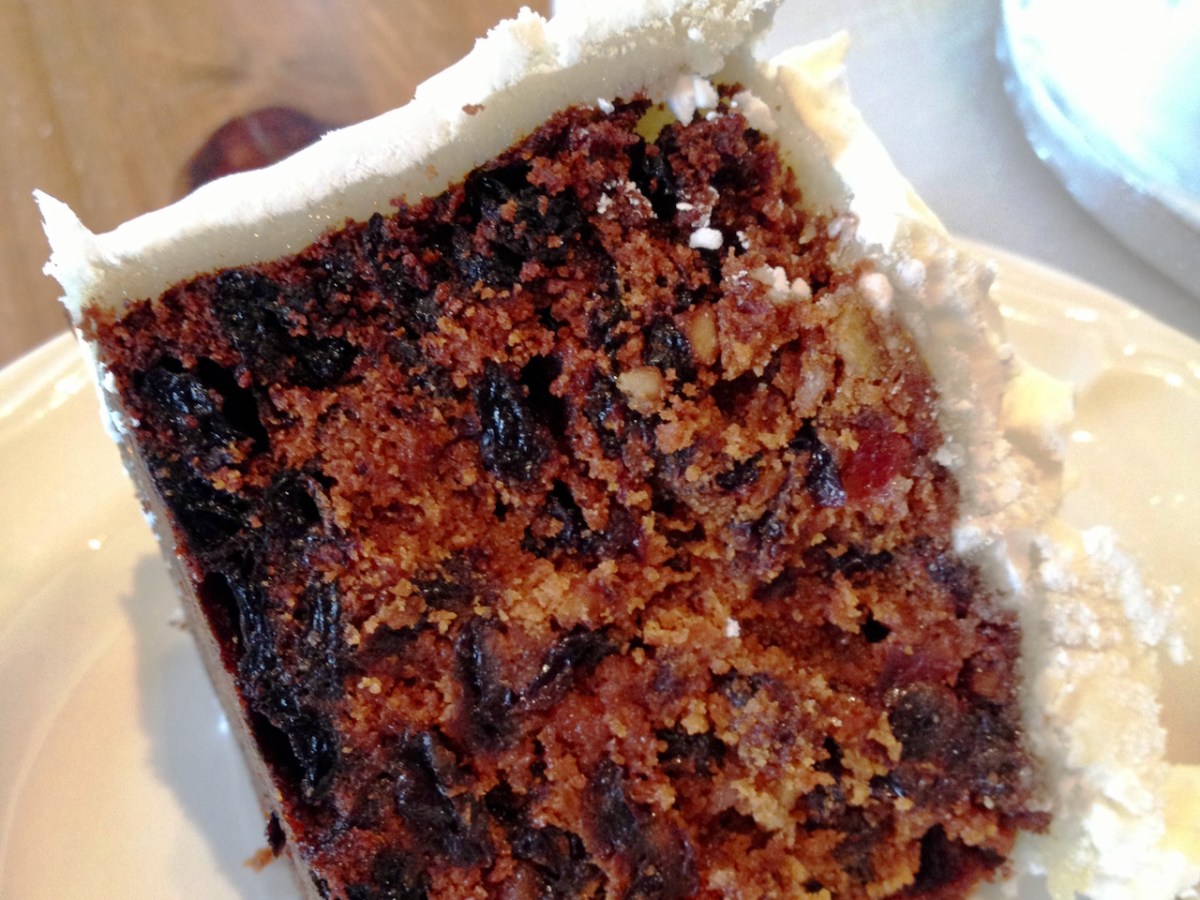
I have searched in vain on the internet for Monica Sheridan’s famous Christmas Cake recipe and I have noticed that many readers who wander into Roaringwater Journal have googled ‘Monica Sheridan’. I suspect, therefore, that others may be looking for this recipe as well so I have decided to reproduce it below.

Monica’s measurements are all in ounces (that’s the same in Ireland, Britain and North America) but I have added the conversion to grams for modern cooks. I tried doing a conversion to cup measures for our Canadian and American readers, but the exercise defeated me. If anyone out there has the exact equivalents, I’d love to have them.

Last year was my first time ever making Christmas cake. Robert and I each made one using Delia Smith’s recipe. This time I will try Monica’s. After all, In her book she relates that when she first published this recipe (her mother’s) in the Irish Times she “…got thousands of letters from people, all over the world, who had made the cake with great success…” Not sure if I feel encouraged or intimidated by that – perhaps I will feature the results in a future post. Meanwhile, I include some images from last year’s efforts, to get you in the mood to go out and buy glacé cherries and angelica.
Have you got a favourite Christmas cake recipe, dear blog reader? Any tips and hints for the novice baker? Any Christmas cake memories to share?
MONICA SHERIDAN’S CHRISTMAS CAKE RECIPE
(from My Irish Cook Book)
Ingredients
6oz/175gm glacé cherries
12oz/350gm seedless raisins
12oz/350gm sultanas
6oz/175gm currants
4oz/110gm mixed candied peel
2oz/50gm finely chopped angelica
6oz/175gm chopped walnuts
12oz/350gm butter
12oz/350gm sugar
7 eggs
12oz/350gm flour
1tsp salt
1tsp mixed spice (optional)
Method
Prepare the Fruit (some hours before making the cake)
Turn on the oven to 240F/120C.
Halve the cherries. Put all the fruits and the nuts into a casserole dish. Mix them well together with your hands so that all the different species are well distributed. Cover loosely with baking parchment or foil and put into the warm oven. Toss once or twice until the fruit is well heated through. This heating makes the fruit sticky and prevents it from falling to the bottom of the cake. It also plumps the fruit and makes it juicier. Never roll fruit in flour and never wash it.
When the fruit is heated through and is sticky, take it out of the oven and let it get quite cold. Warm fruit added to a cake mixture would melt its way down to the bottom before the mixture had set in the oven.
Prepare the Cake Tin
Use a high-sided 10” cake tin and grease or oil it well. Now line it, sides and bottom with two thicknesses of greaseproof or parchment paper and grease the paper.
Make the Cake
Heat the oven to 300F/150C
Cream the butter and sugar together until white and fluffy. Add the eggs, one at a time, with a teaspoon of flour for each egg. This prevents the eggs from curdling the mixture. Beat well between each egg.
Sift the flour with the salt and fold into the egg mixture. Lastly, fold in the fruit and nuts which you have separated by running your fingers through them.
Pour the mixture into the lined cake tin. It shouldn’t come up to more than 2” from the top of the tin. Trim the lining paper level with the top of the tin. Rest an inverted tin plate, or a lid, over the tin.
Put the cake in the oven. After 1 hour, reduce the heat to 280F/135C and continue to bake for another 5 hours, or 6 hours in all.
If you think the cake is baking too fast, keep gradually reducing the heat. This cake should be golden rather than brown on top. Do not remove from the tin until cold.
The secret of success with this cake is the plumping of the fruit and the slow baking.















 Roaringwater Journal