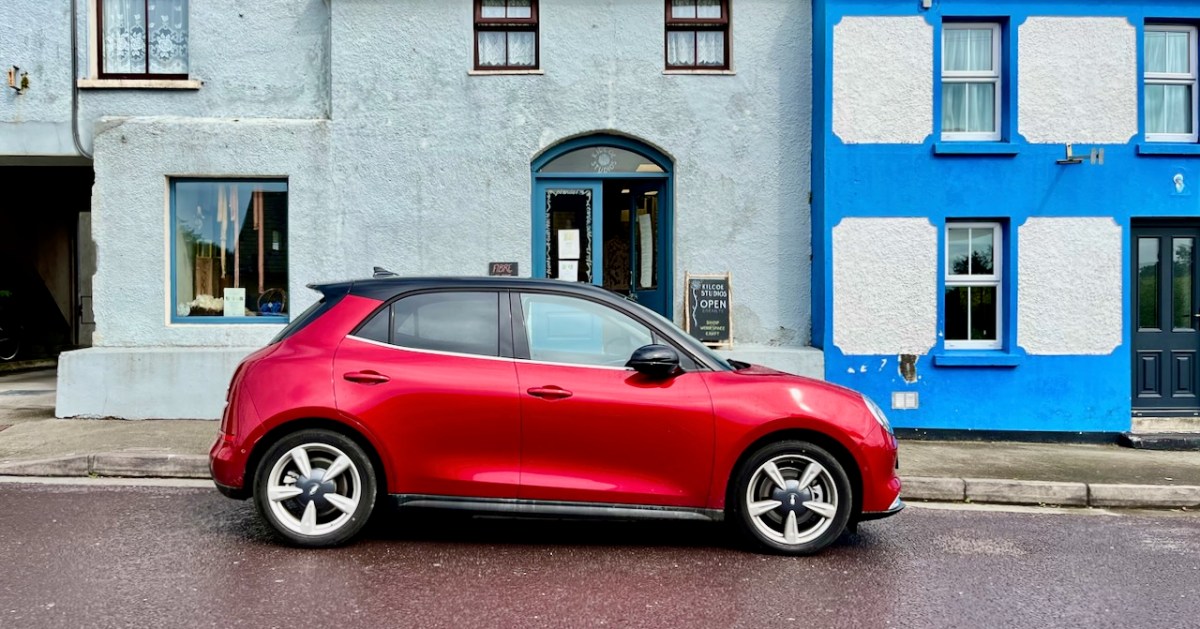
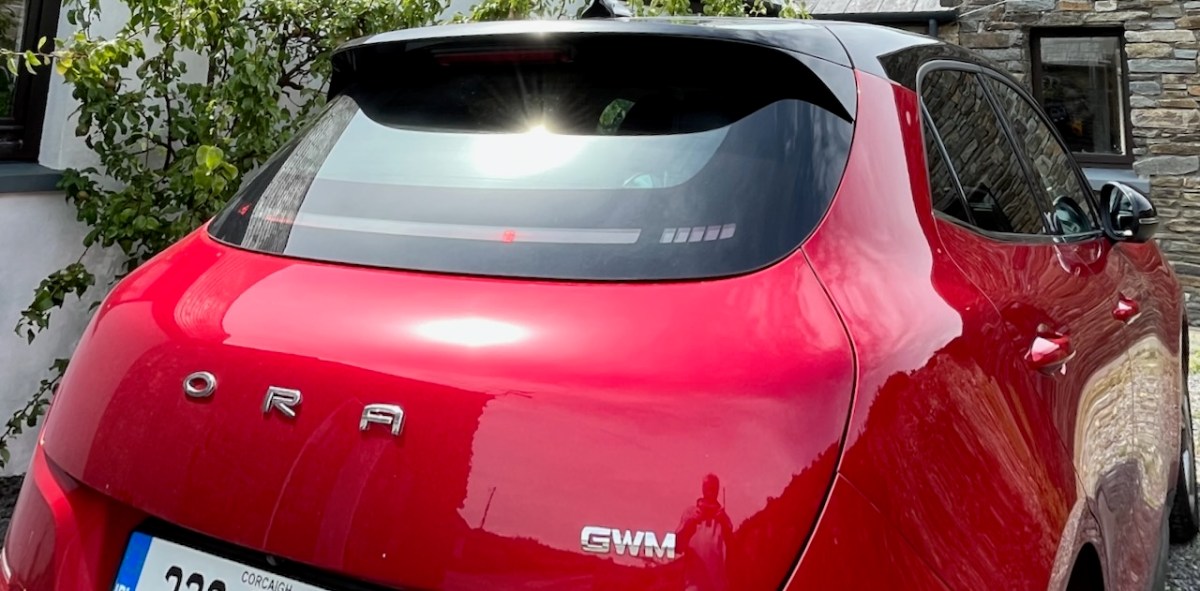
That’s our new car, sitting in Ballydehob a day or two ago. It’s given me the chance to revisit my posts about the history of Rural Electrification in Ireland – and to bring the subject right up to date! The word Microgeneration is new to my vocabulary. Here’s where I first saw it:
What that means is that our supplier – Electric Ireland – is paying us! We are contributing to electricity generation here in West Cork because we have tapped in to the sunshine!
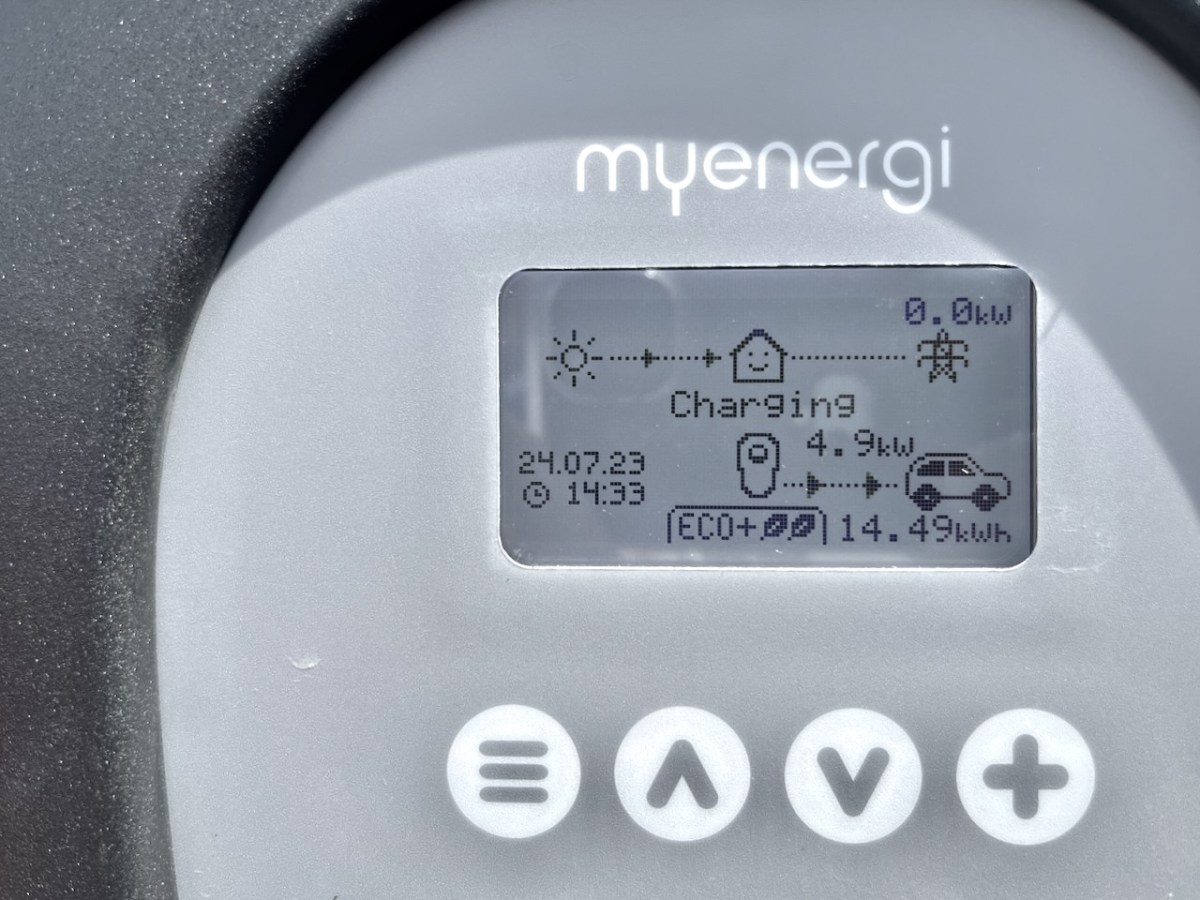
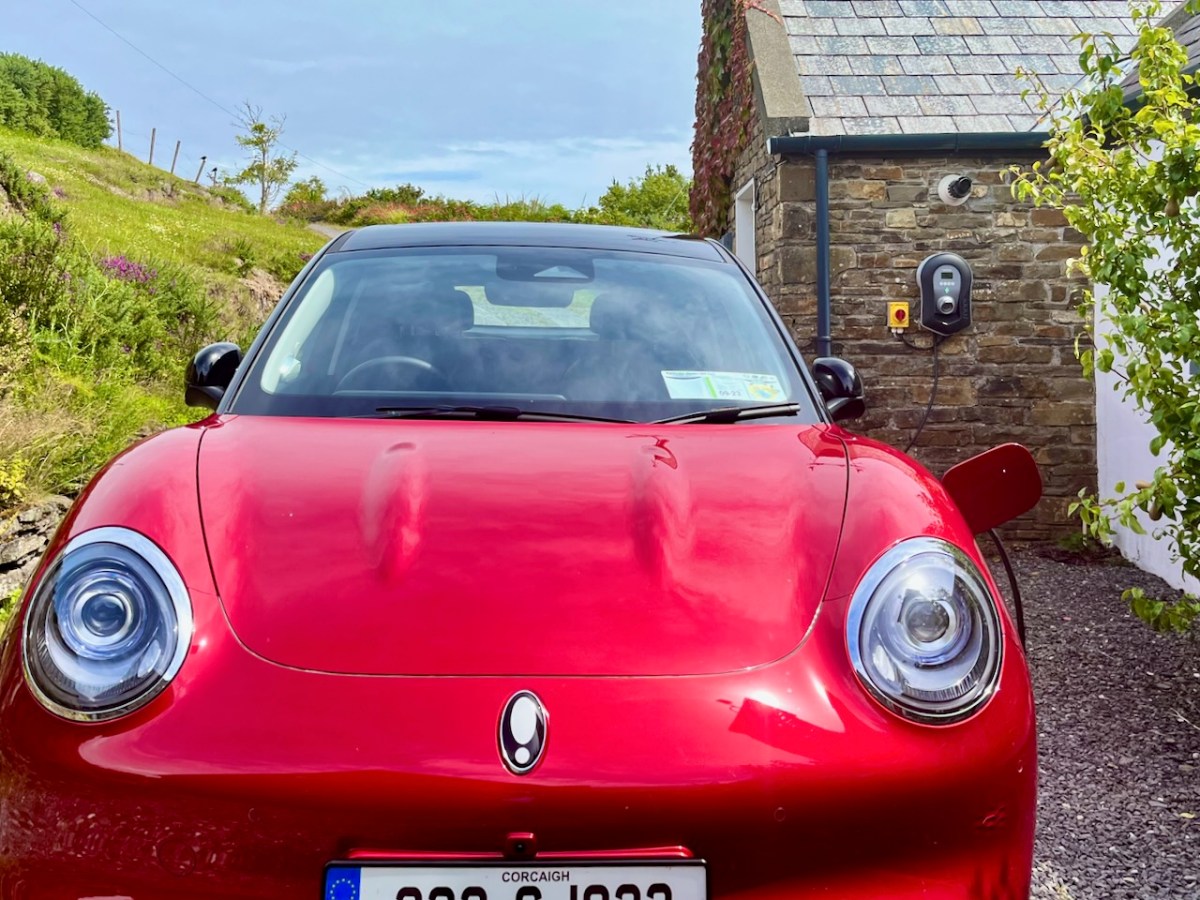
Since we collected our Ora Funky Cat from Blackwater Motors in Cork, two weeks ago, all our fuel costs have been free! As you can see from the display on our car charger, every watt is coming from solar gain, and feeding into the Funky Cat’s battery. If we get the timing right, we will never have to pay fuel costs again, unless we travel away from home.
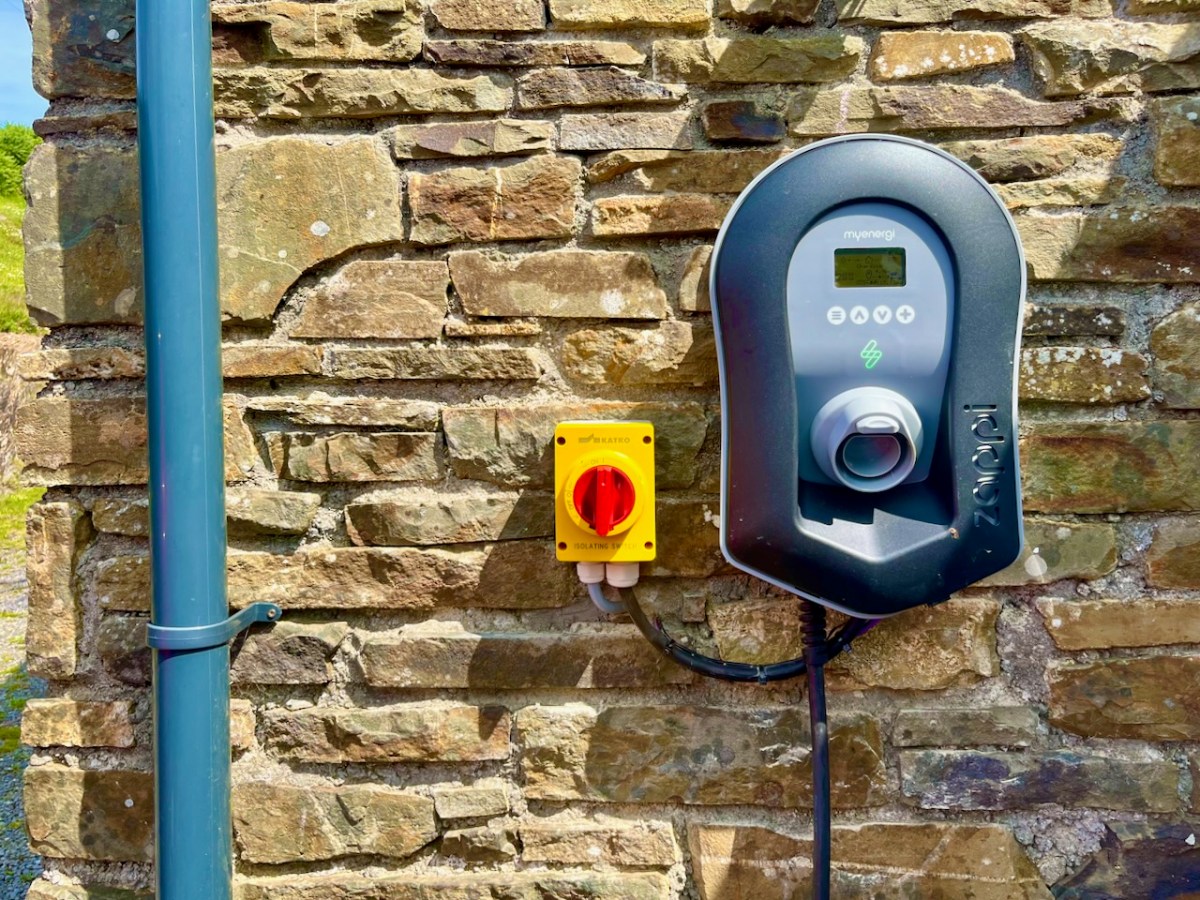
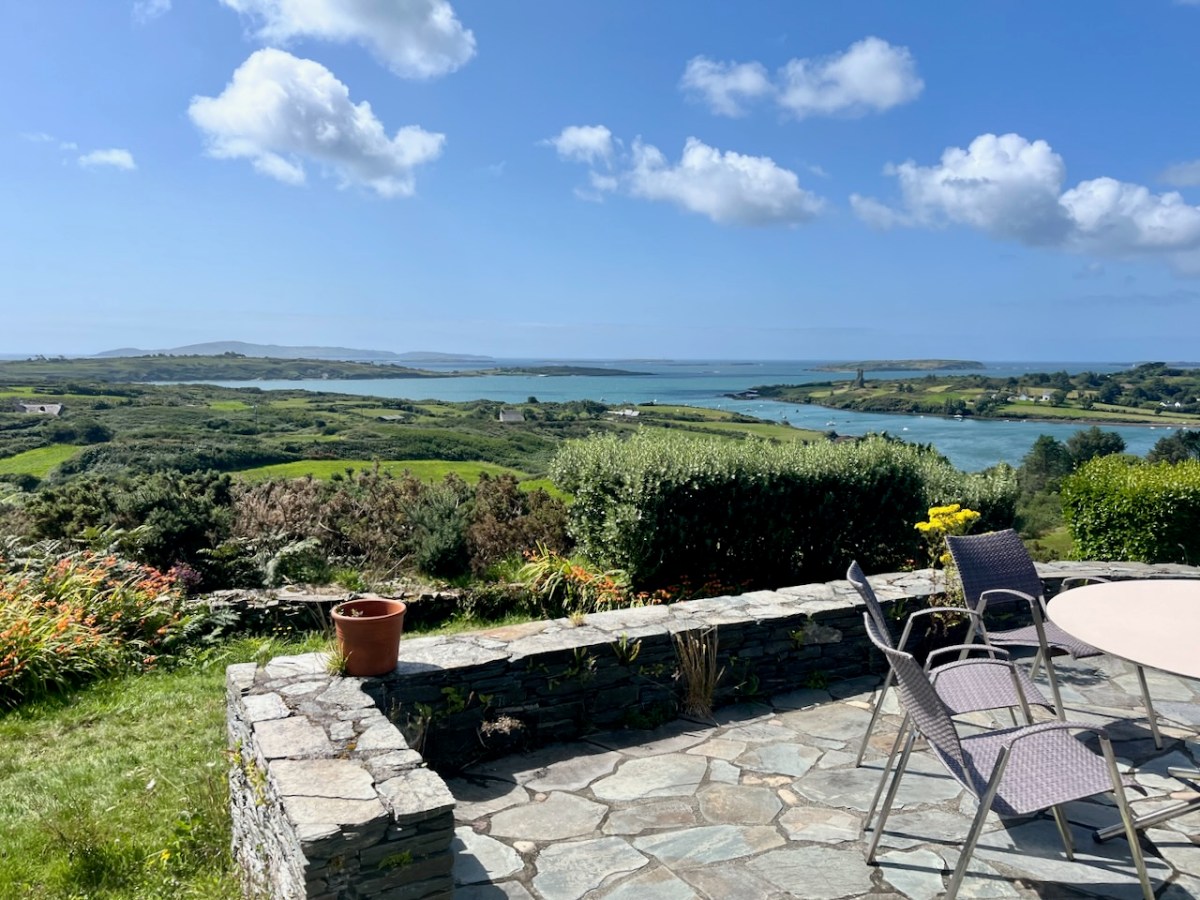
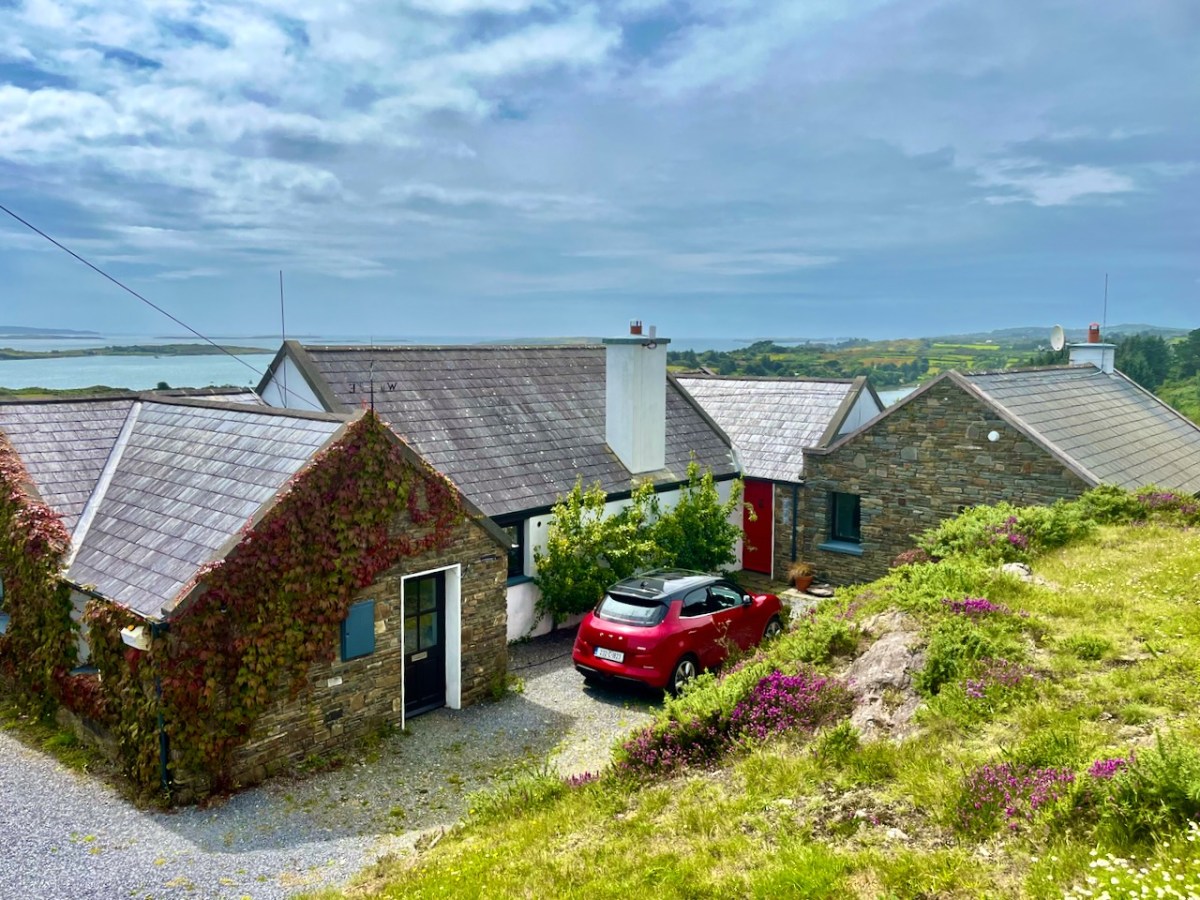
That’s our Zappi car charger, above. We made the decision to install photovoltaic (PV) panels on the roof of our house. We face south – looking out over Roaringwater Bay – in a location that’s ideal for harvesting solar energy.
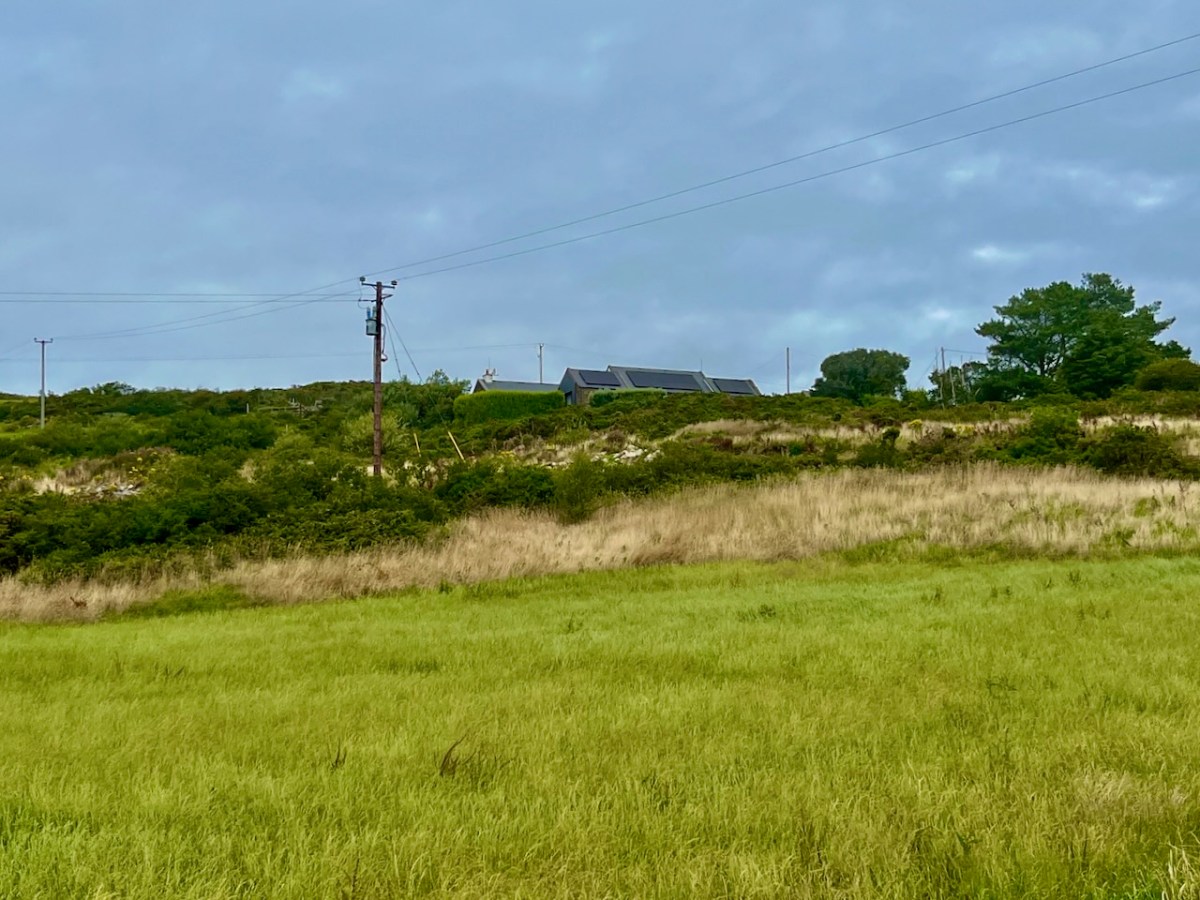
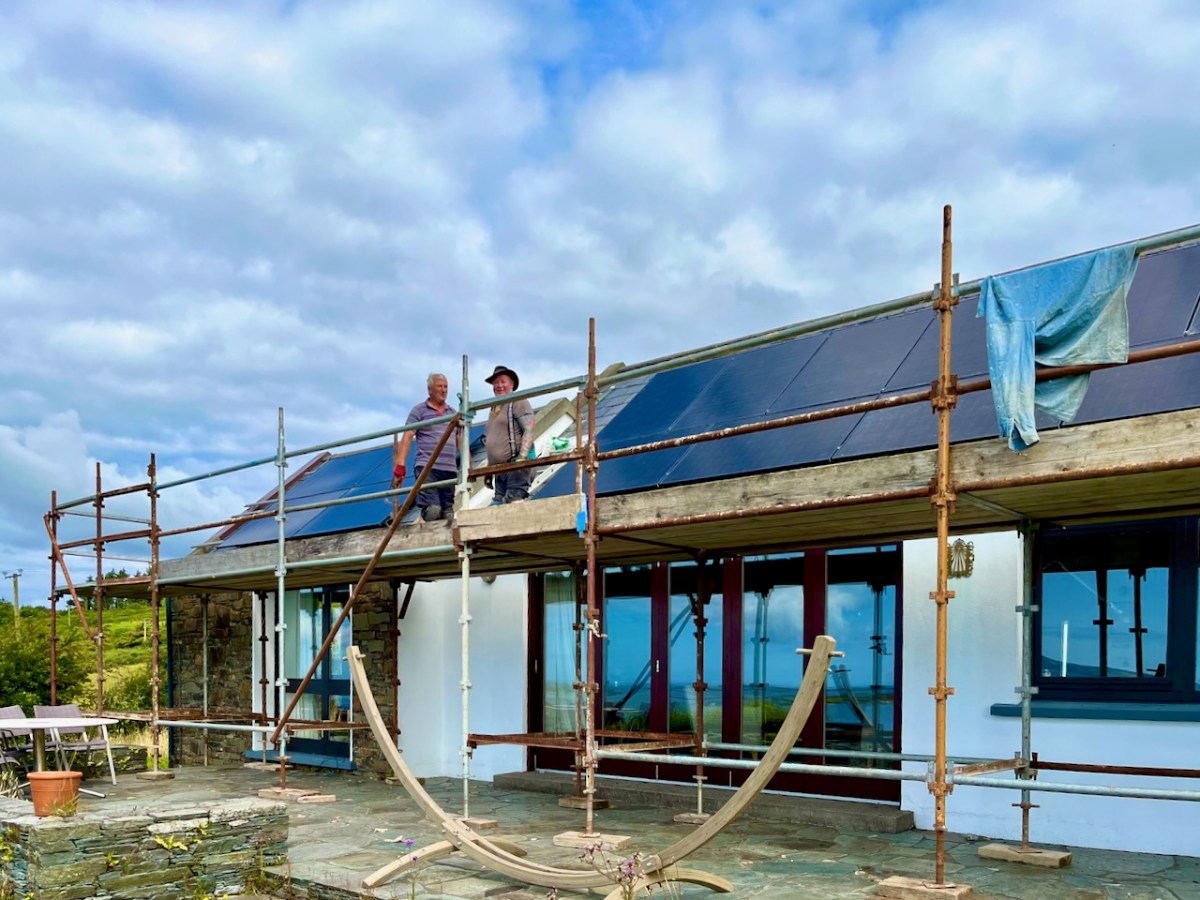
Our house from the fields below: you can see a few stages of rural electrification in this picture, conventional supply posts and wires, and the new panels on our roof. (Below) Fergus and Kevin are well on with the installation:
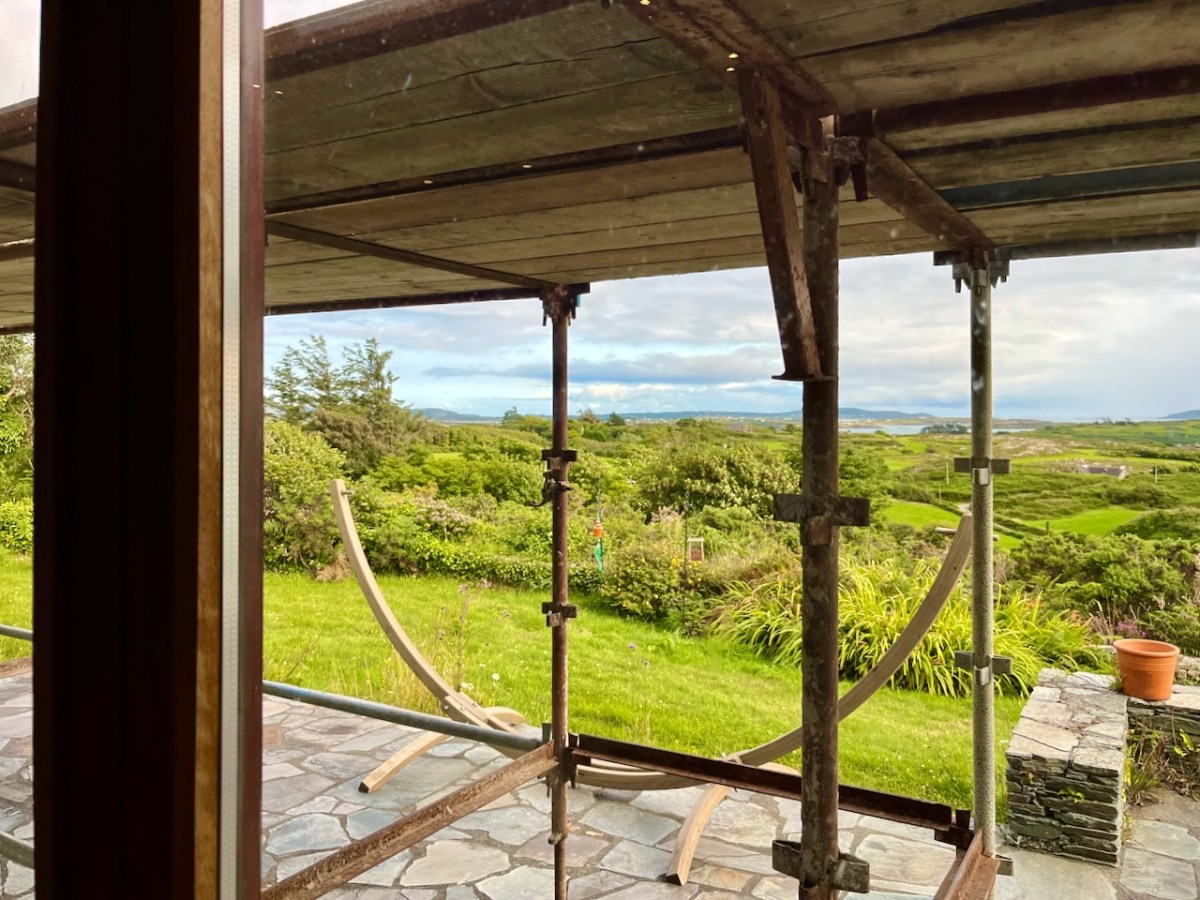
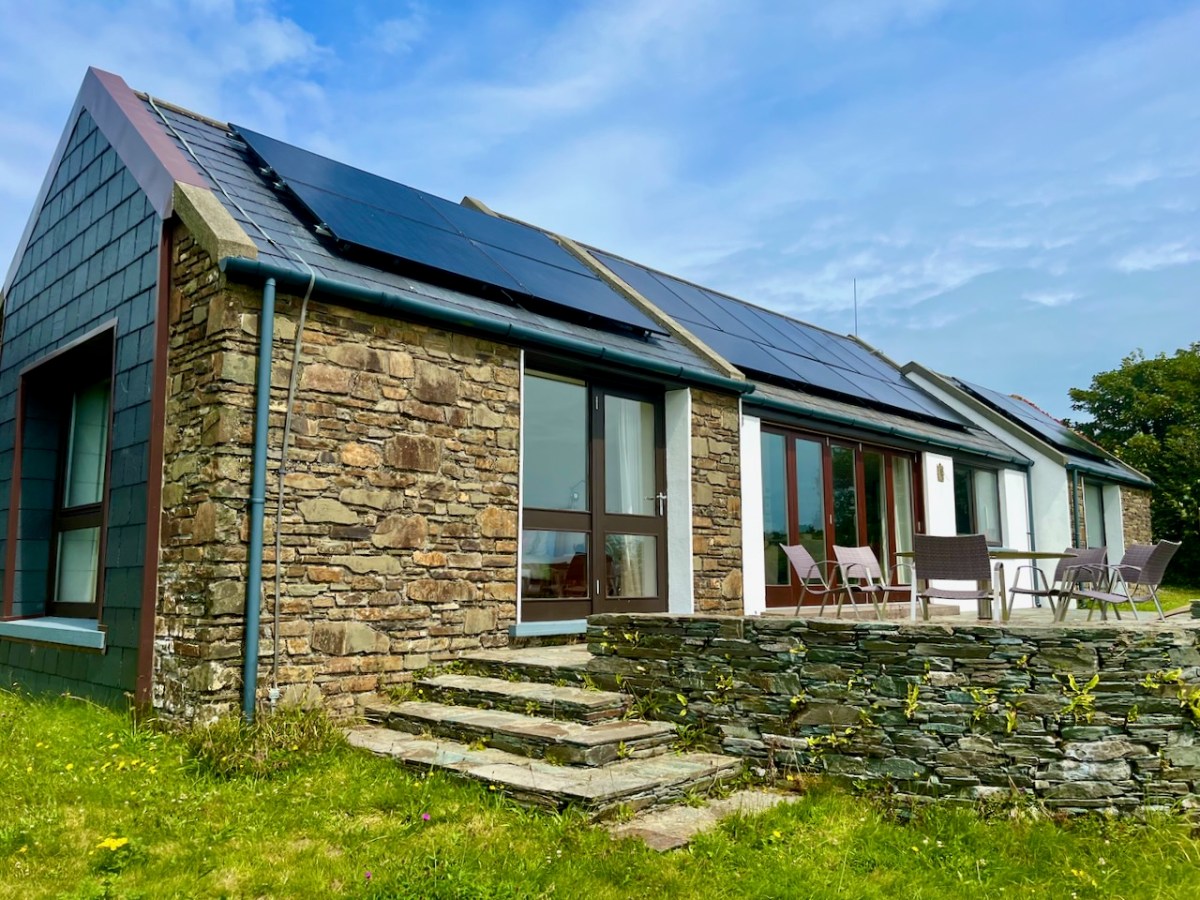
It’s been well worth the disruption, which was actually shortlived – and everyone who worked on it was cheerful. Why wouldn’t they be? They were bringing the most up-to-date electric technology to our doorstep. We are now being credited for anything we generate that goes into the grid (that’s the default mode). But we are going to use our own power as much as possible in Nead an Iolair. We have had a battery fitted, and a diverter which powers another circuit if there’s anything to spare once we’ve charged the car.
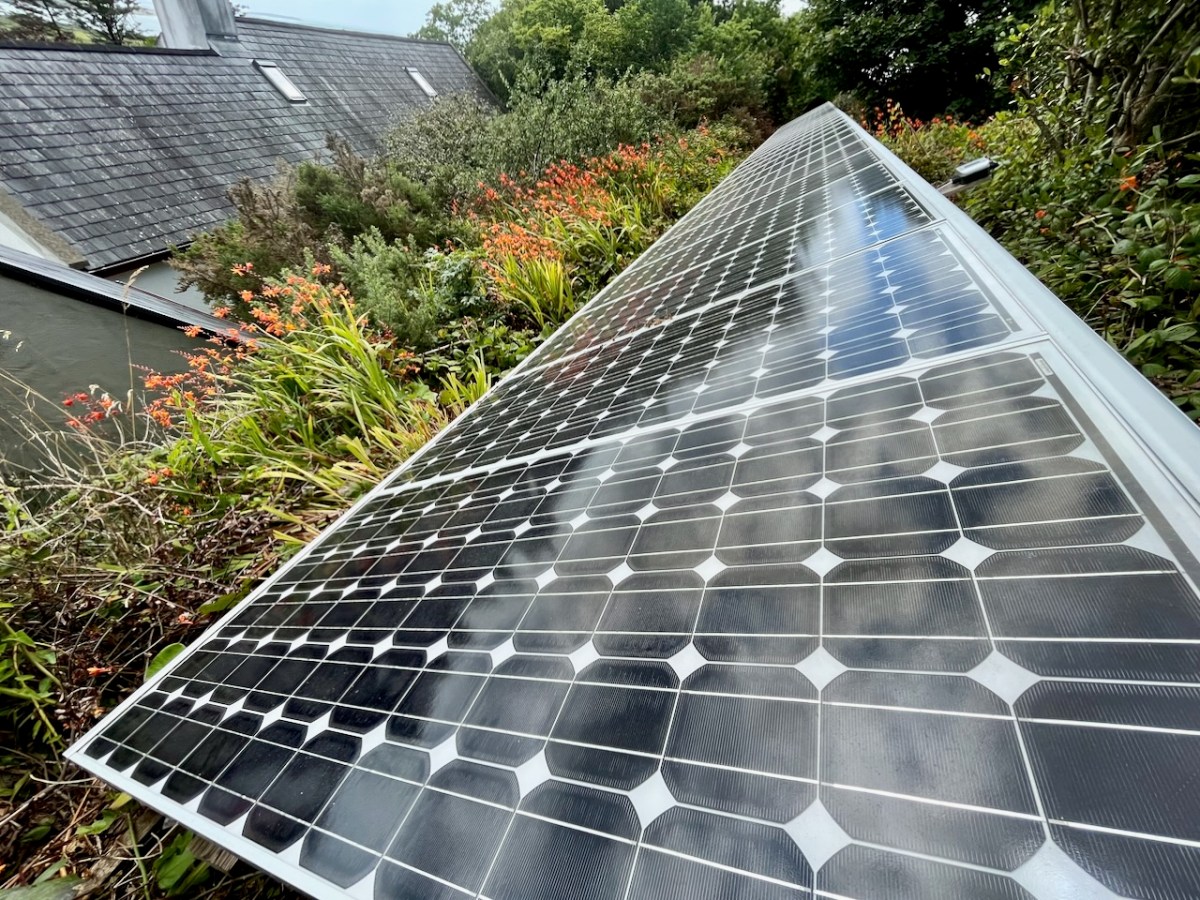
We are fortunate in that our house has extensive south-facing roof slopes – ideal for the installation of eighteen PV panels (above). Properties which don’t have roofs facing the right way can consider panels mounted on freestanding frames. Here’s one set up by neighbours of ours:
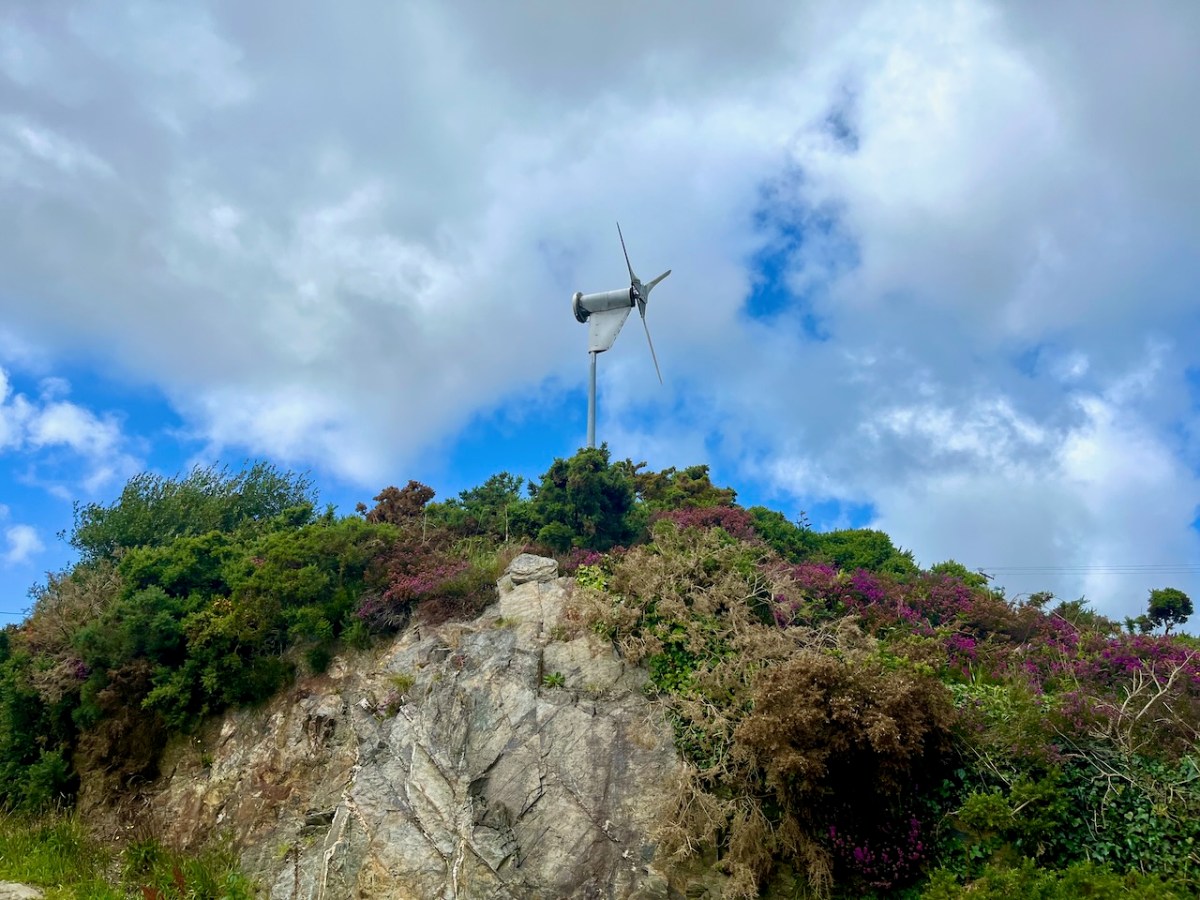
The same neighbours have also been tapping into wind energy for many years (above). They are significant contributors to ‘rural electrification’ here in West Cork!
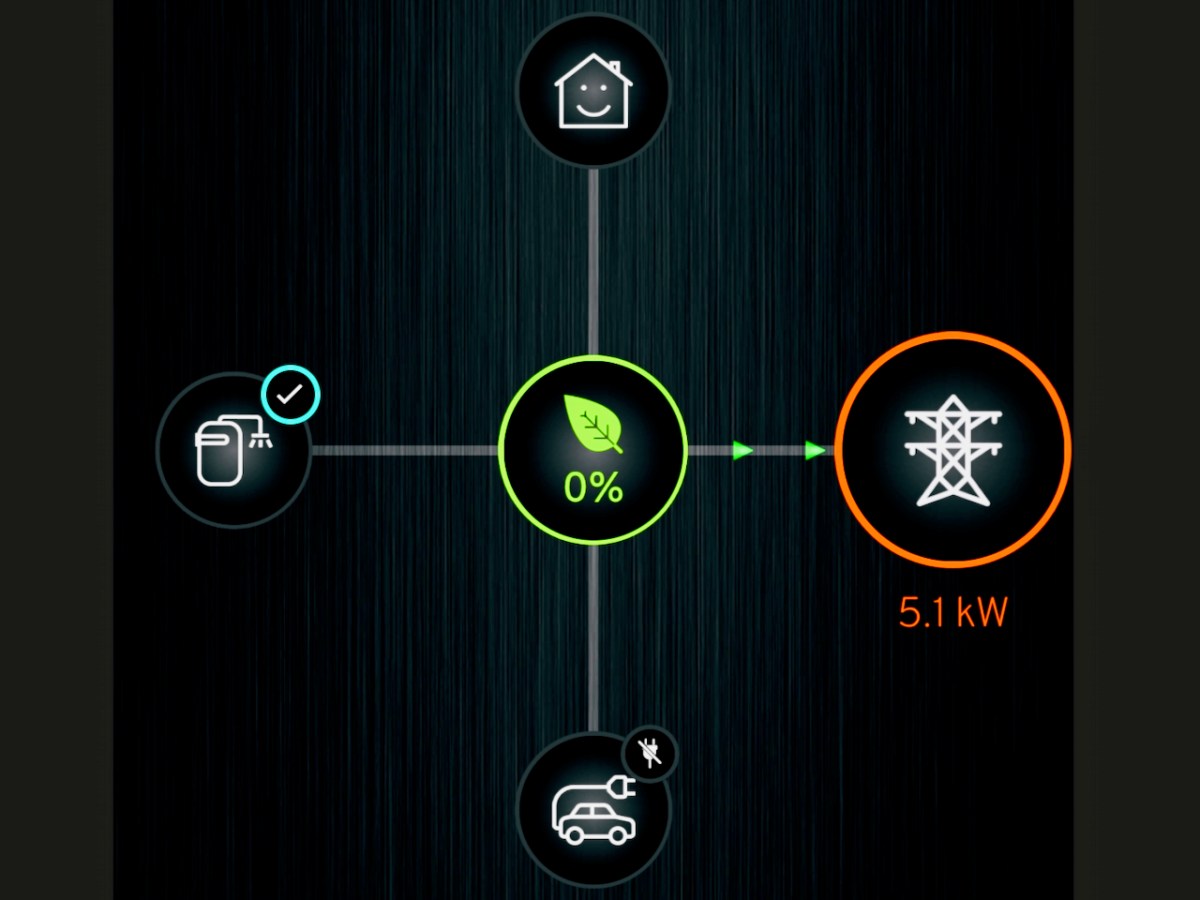
There’s a phone app for everything! Mine is telling me how our system is performing. It’s Saturday afternoon and the day is relatively dull. There is no sun shining on the panels, but the solar gain from the overcast sky is still generating (or ‘microgenerating’ as the ESB would have it). The battery in the system (on the left) is full, the car (bottom image) is unplugged. The PV (centre) is pushing 5.1kW into the grid! No wonder our ‘house’ is smiling.
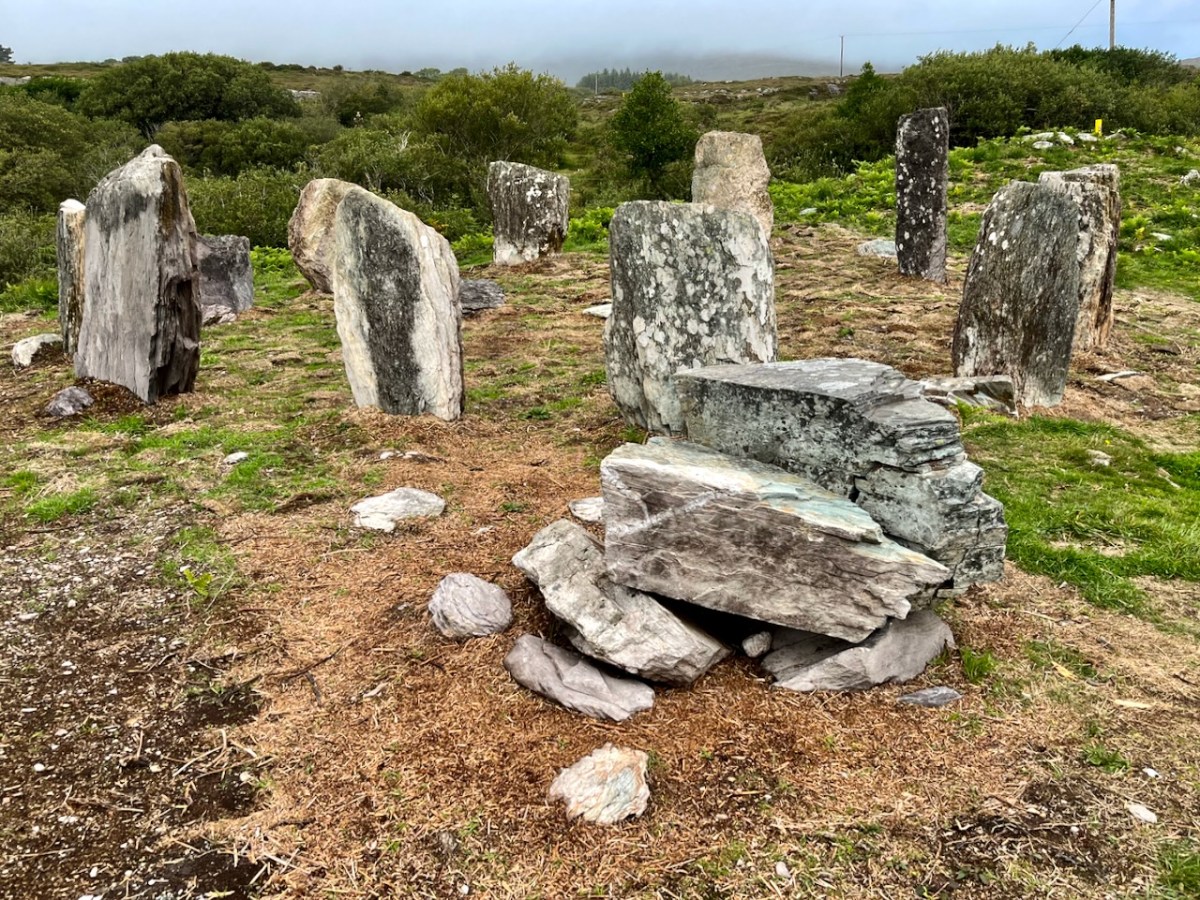
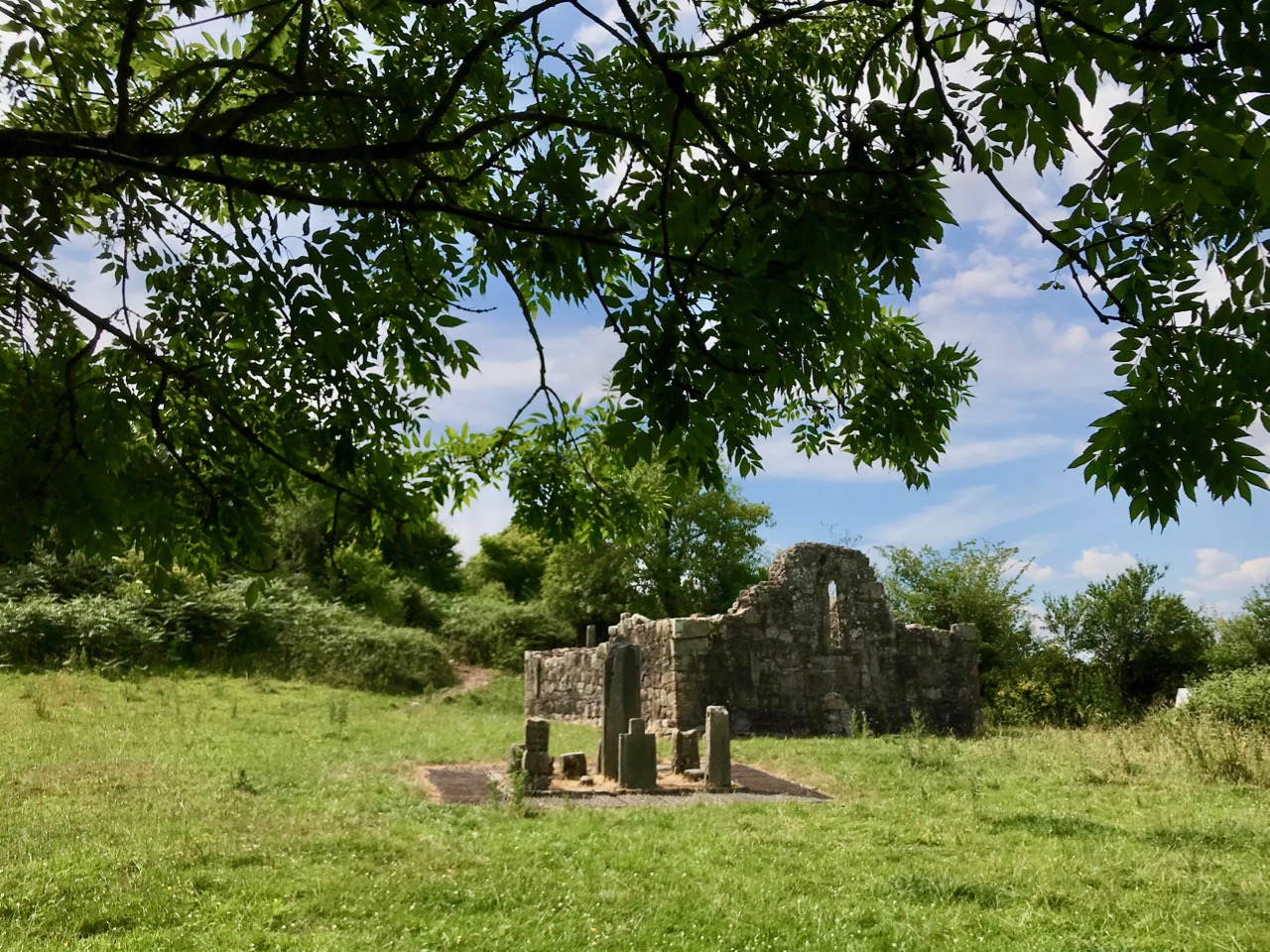
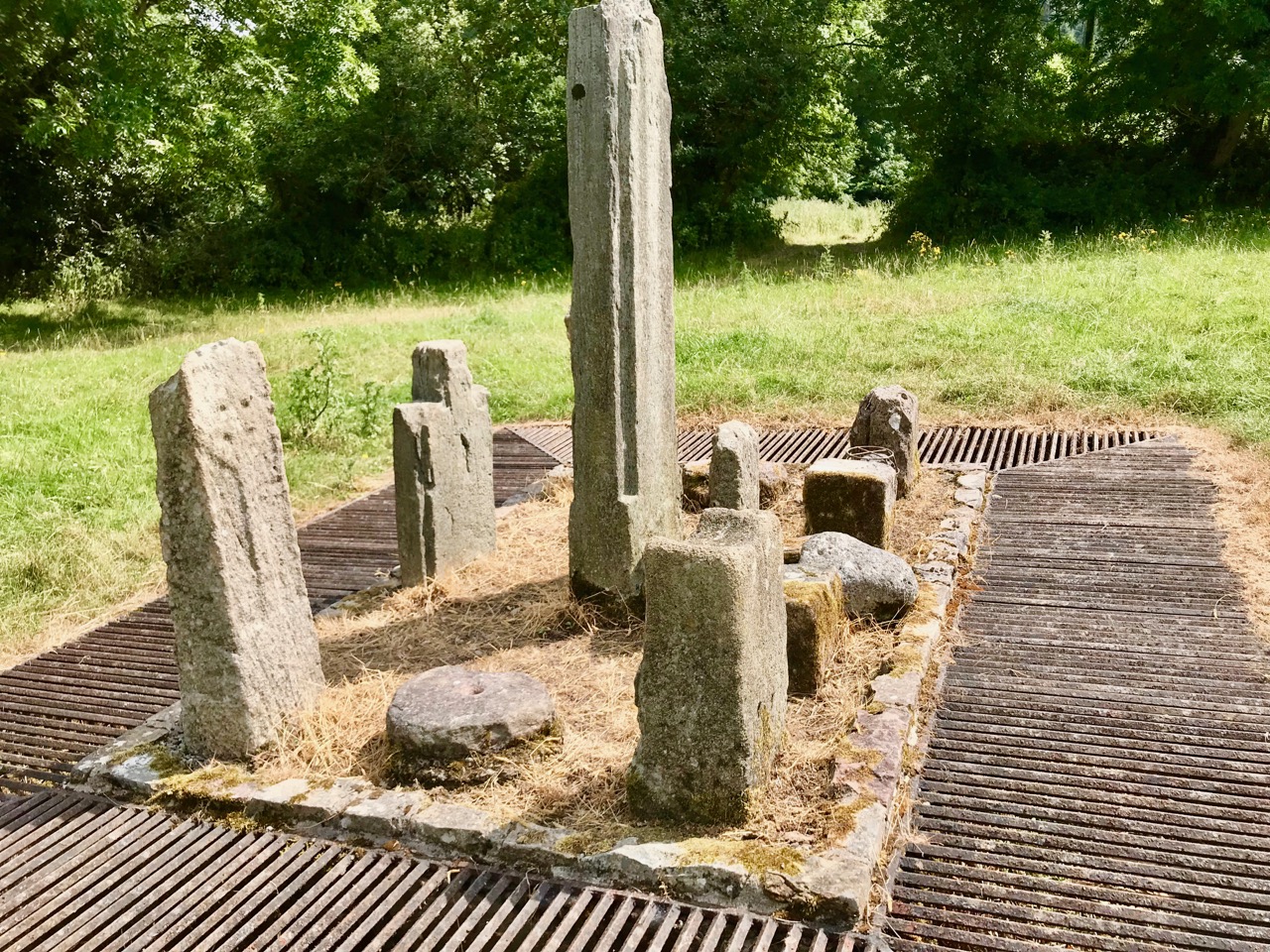
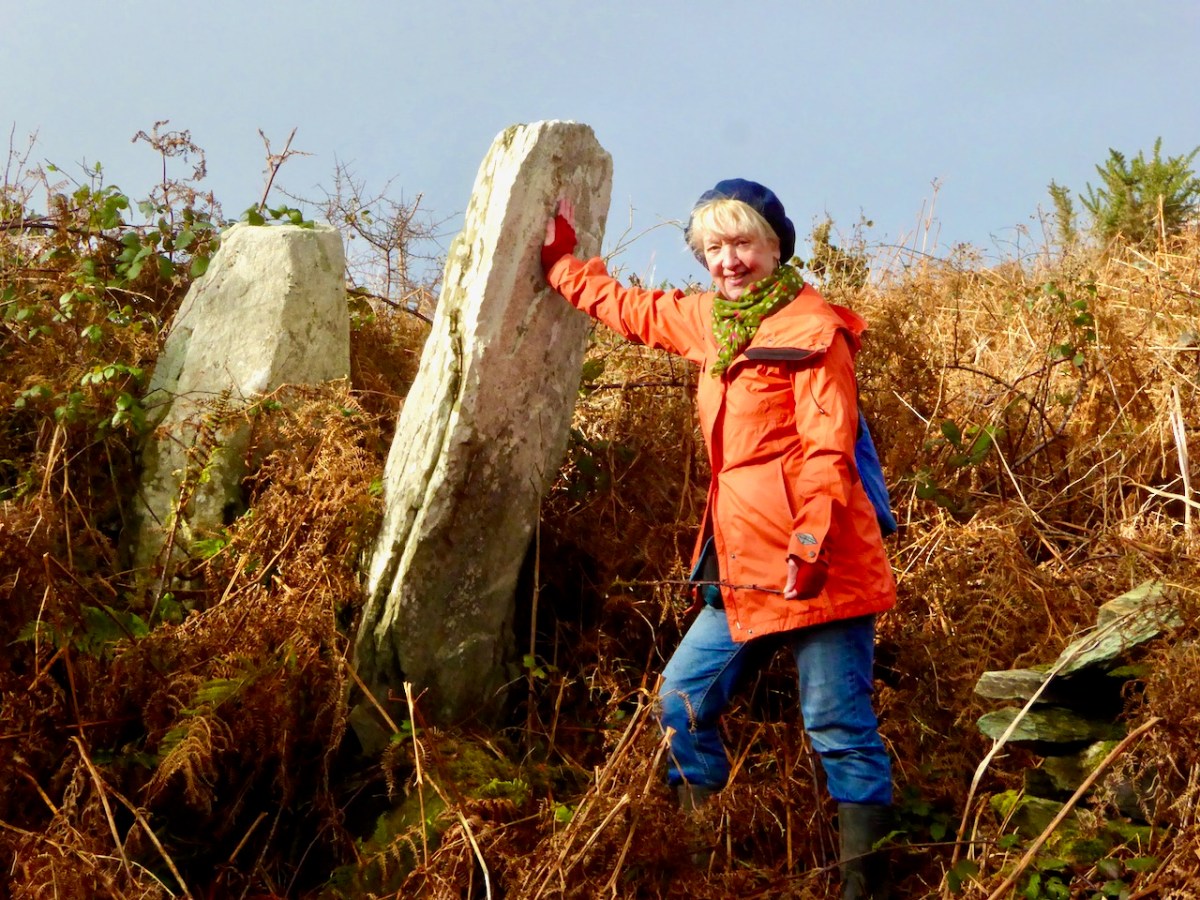
Finally, this week – in our electric car – we visited the impressive re-erected Gorteanish stone circle near Ahakista on the Sheep’s Head. I wonder: could this have been a forward-looking experiment by Bronze Age West Cork dwellers into harvesting solar energy?
Thinking of a carbon emission reduced future yourself? It would be worth speaking to our contractor: https://www.toolenpv.ie/
And, if you like the look of the Funky Cat, don’t forget to connect with Blackwater Motors, our Cork dealer. Incidentally, if you are wondering about the name, Great Wall Motors (GWM) is one of the largest car manufacturers in China, where cats are considered lucky: all GWM Ora products have ‘Cat’ in the name. Examples – Good Cat, Ballet Cat, Lighting Cat, Grand Cat… And Funky, of course!
Further information on the Electrification of Ireland can be found in these posts:
In my original post on this site, Ballyrisode Fulacht Fia: Discovering a New Bronze Age Site on The Mizen, I described it as an intertidal fulacht fia (or water-boiling site). Subsequently, I wrote a paper for the Skibbereen Historical Journal on the site, and that paper can be read in full here: https://zenodo.org/record/3247880. This post will look at new information about this site in particular and fulachtaí fia in general. I give the original post in full further down, or you can read it, and its many interesting comments, here. If you haven’t read it before, it’s a good idea to do so before proceeding.
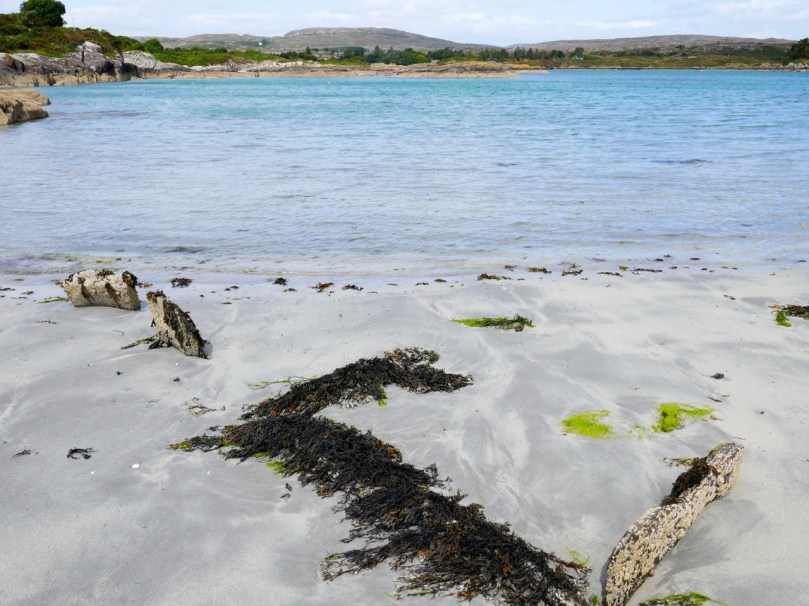
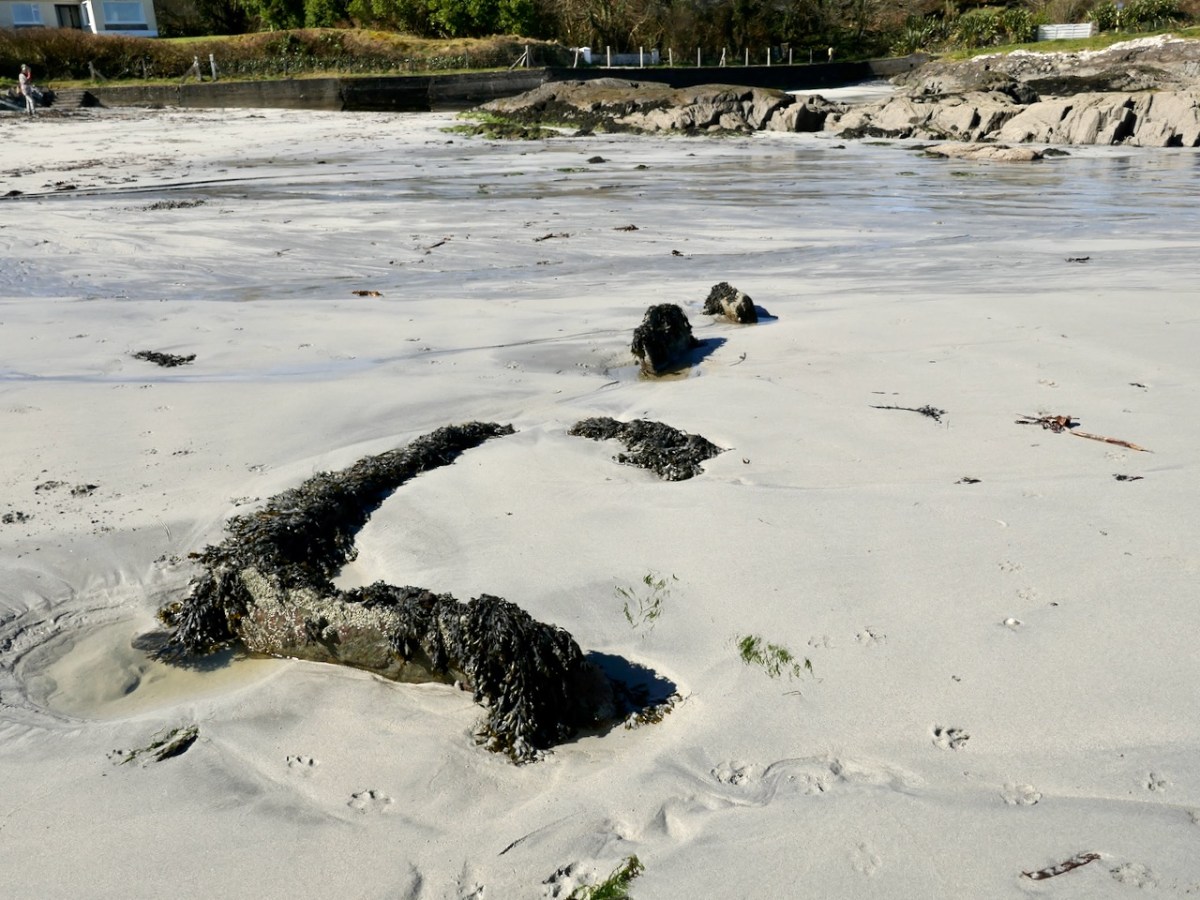
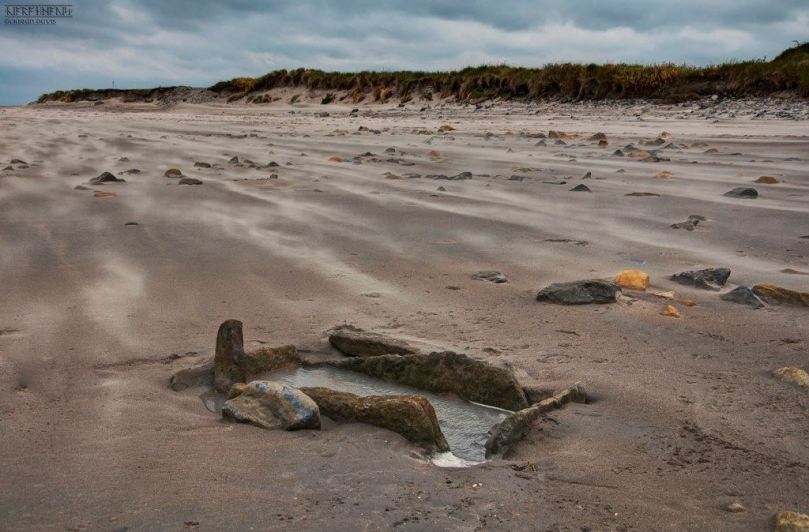
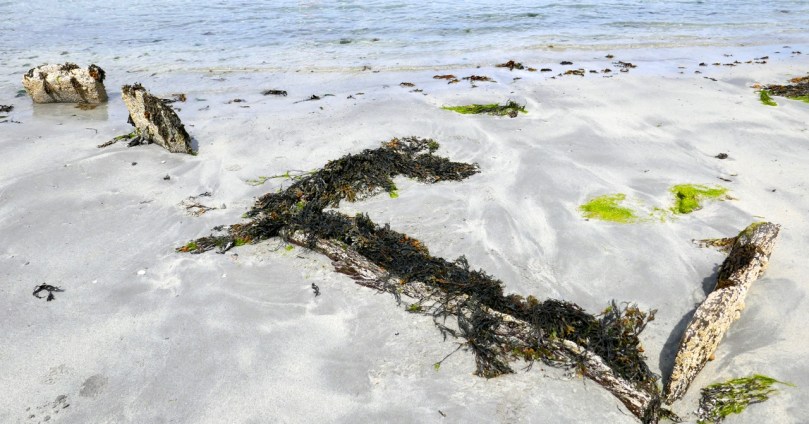
The photograph above was taken more recently and shows how sand carried in by the tide could, over time, bury these stones completely
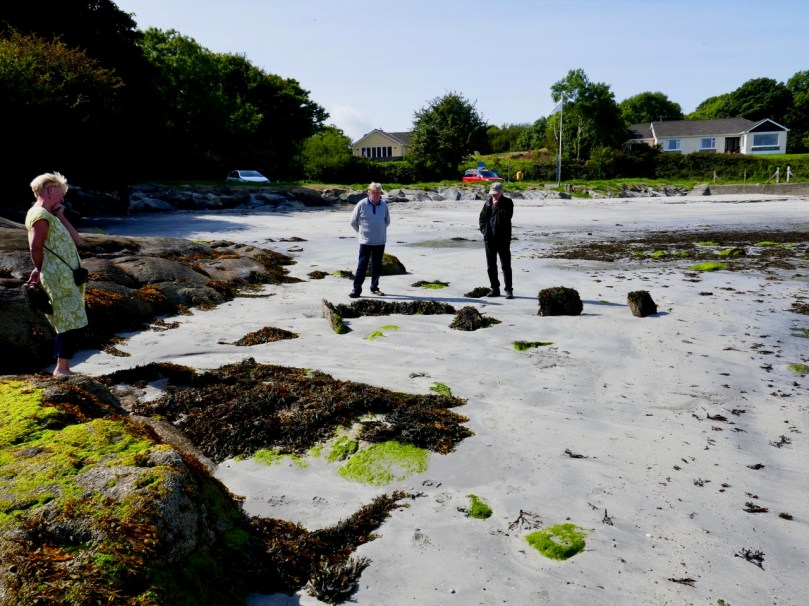
In the original post and in the paper, I found parallels to the Ballyrisode situation in several other sites but particularly in the one at Coney Island in Connemara. The excavators concluded that this site was deliberately constructed to be inter-tidal – that is, to fill with water and drain as the tides advanced and receded. However, I have had the privilege of visiting the site anew with two geologists, Anthony Beese and Robin Lewando, and both are of the opinion that the site was originally on dry land. That’s Robin with the crossed arms, below, on an expedition to get measurements at the site.
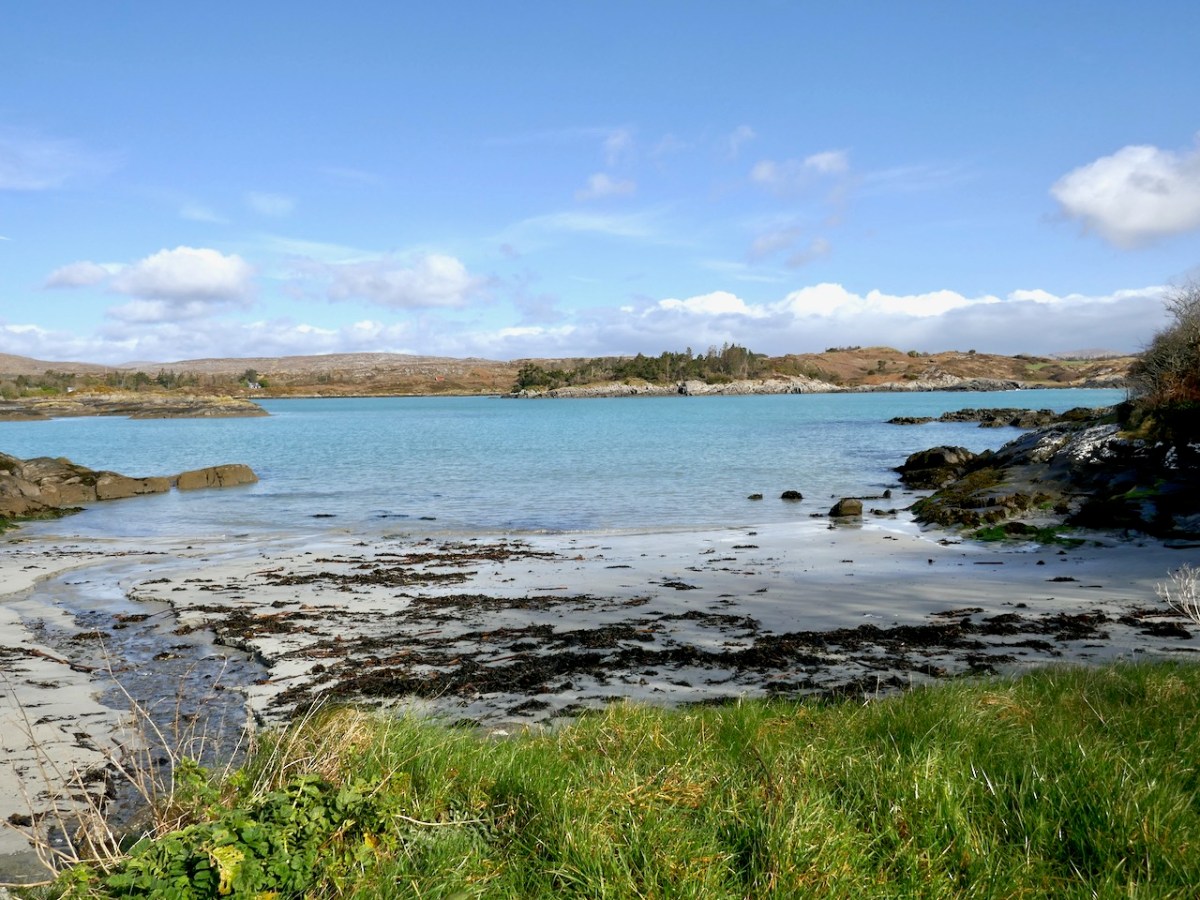
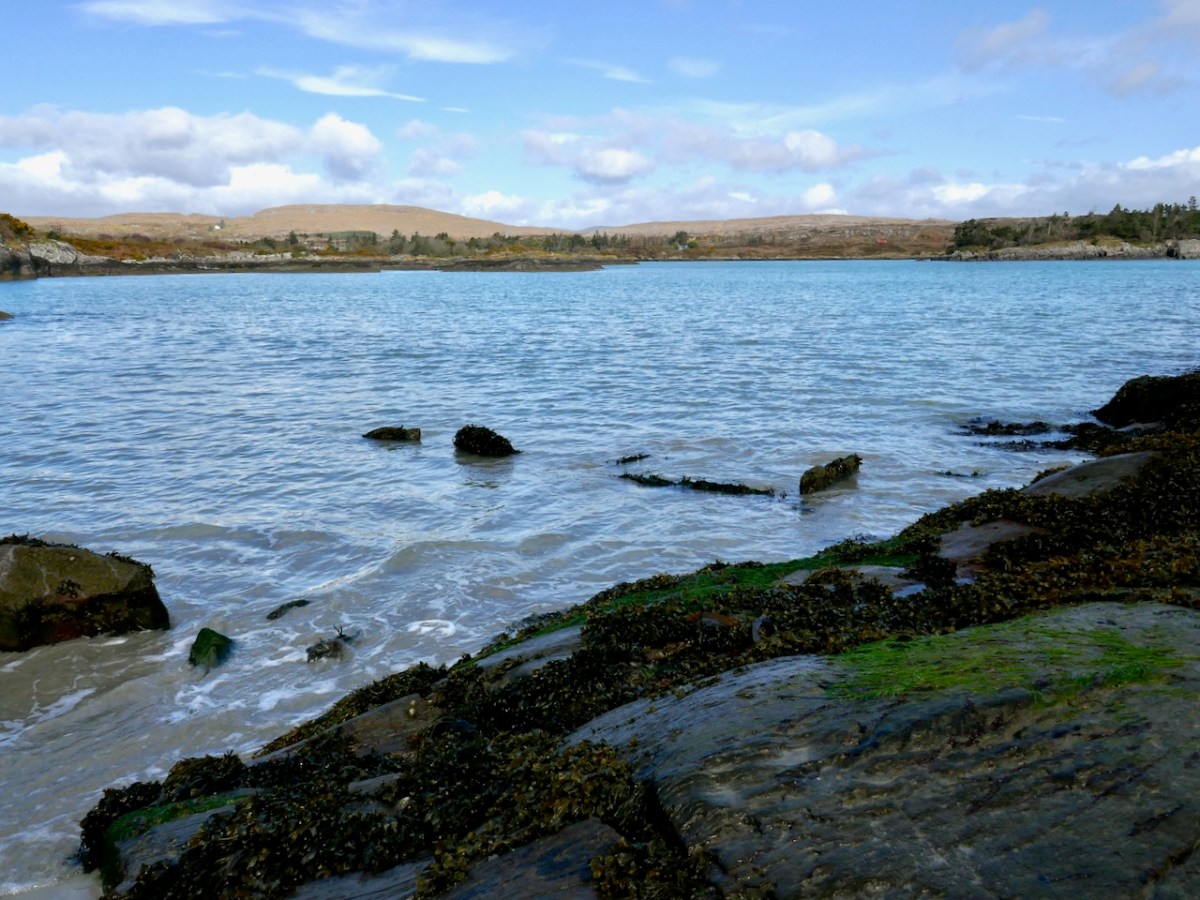
Anthony Beese has studied the intertidal zones in West Cork and has concluded that the sea level has risen since the Bronze Age by enough to locate the trough on dry land, since it is barely covered now by water at high tide. Anthony also pointed out that a small stream was flowing from the land onto the sand nearby (below), which would have been a good source of fresh water for the trough.
The second piece of new information comes from a recent paper by Jennifer Breslin in Archaeology Ireland, Burnt Mounds – the answer is under your fingertips. In it, Jennifer posits that the mound, rather than being secondary to the trough, is in fact the primary focus of the site and is what is left after the production of charcoal. The troughs may have been used to produce tar, a bi-product of charcoal. This may explain why excavated fulachtaí fia have yielded very few food remains. Another intriguing take on these enigmatic but abundant sites.
Now here is the original post, published Sept 2018
Ballyrisode Fulacht Fia: Discovering a New Bronze Age Site on The Mizen
Hidden in plain site – that’s how we stumbled across a hitherto unrecorded archaeological site at Ballyrisode Beach. It’s a popular swimming place, often swarming with swimmers, sun-bathers and picnickers in the summer and enjoyed by dog-walkers in the winter. Like many others, we were simply enjoying being at the water on a warm day when Robert drew my attention to an odd grouping of stones.
Three sides of a rectangle were defined by stone slabs laid on their sides in the sand, while two other upright slabs stood close by.
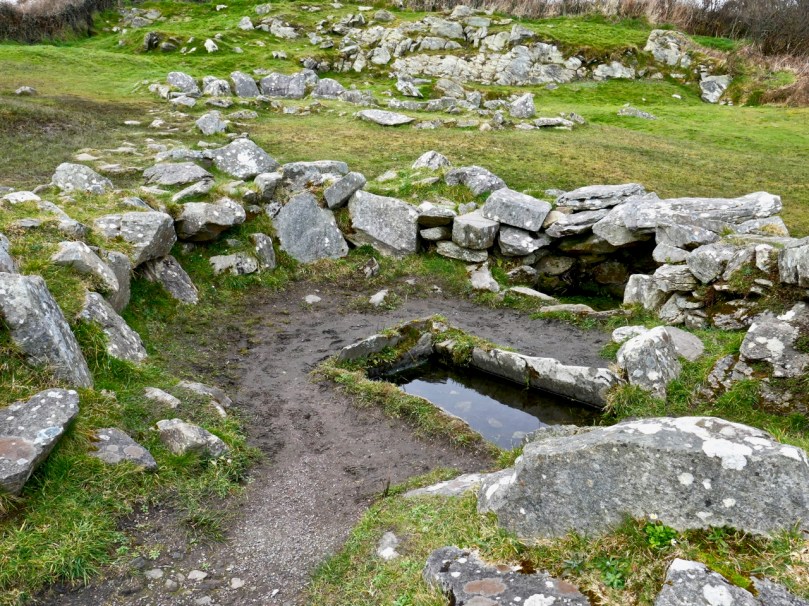
It had all the appearance of a carefully constructed trough, with one side missing, and it immediately reminded us of the cooking site at Drombeg Stone Circle.
Drombeg – besides the famous stone circle there is a hut site and this – a water-boiling trough with associated hearth and well, surrounded by a horseshoe-shaped mound of stone. An interpretive panel illustrates its use.
I took photographs and posted them to an online forum with a request for more information. An answer came back immediately, from a group of archaeologists who had excavated an almost-identical site in Sligo – what we were looking at was indeed an intertidal fulacht fia (full oct fee-ah, pl: fulachtaí fia/full octee fee-ah)).
E M Fahy excavated Drombeg in 1958 and returned the next year to dig the fulacht fia. This is his site drawing of the fulacht fia. You can read his original report here.
What exactly is a fulacht fia? The name translates as a wild cooking place and it was coined to describe this kind of open air kitchen. In Britain they are known as Burnt Mounds. Typically, they consist of a trough, normally lined with stone but occasionally with wood. The water in the trough was brought to a boil by dropping very hot stones into it, and therefore another feature of a fulacht fia is a hearth for heating the stones. Once the stones were used up (after heating and cooling one or more times they cracked and broke) they were tossed aside and over time a horseshoe-shaped mound of these burnt and shattered stones accumulated around the trough.
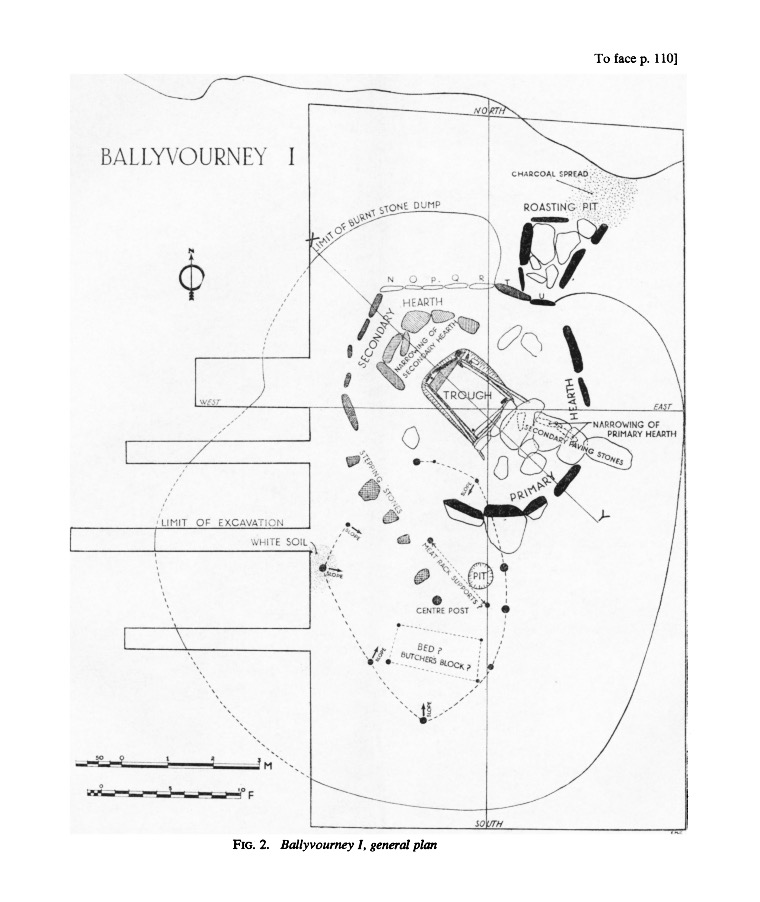
Another site drawing of a fulacht fia – this one was in Ballyvourney, excavated by Michael J O’Kelly in the 1950’s (report available here). Observe the numerous slabs laid on their sides around the trough – some for the roasting pit and some for the hearth. The two upright slabs at Ballyrisode are likely to have been part of such a related grouping of stones
Fulachtaí fia, in fact, are the most numerous archaeological sites in Cork, with 3,000 recorded sites, although they are known all over Ireland and in Britain and Northern Europe. Prof William O’Brien, in Iverni, refers to them as ‘water-boiling sites’ which is a more accurate description, since we don’t actually have overwhelming evidence that they were used for cooking. Few bones have been found among the burnt stones at some sites, although this is often explained away by reference to acidic soils and poor bone preservation.
So the question remains open as to their purpose or purposes and proposals include their use for tanning and brewing. It is also possible they may have been used for bathing, or incorporated into sweat-house rituals.
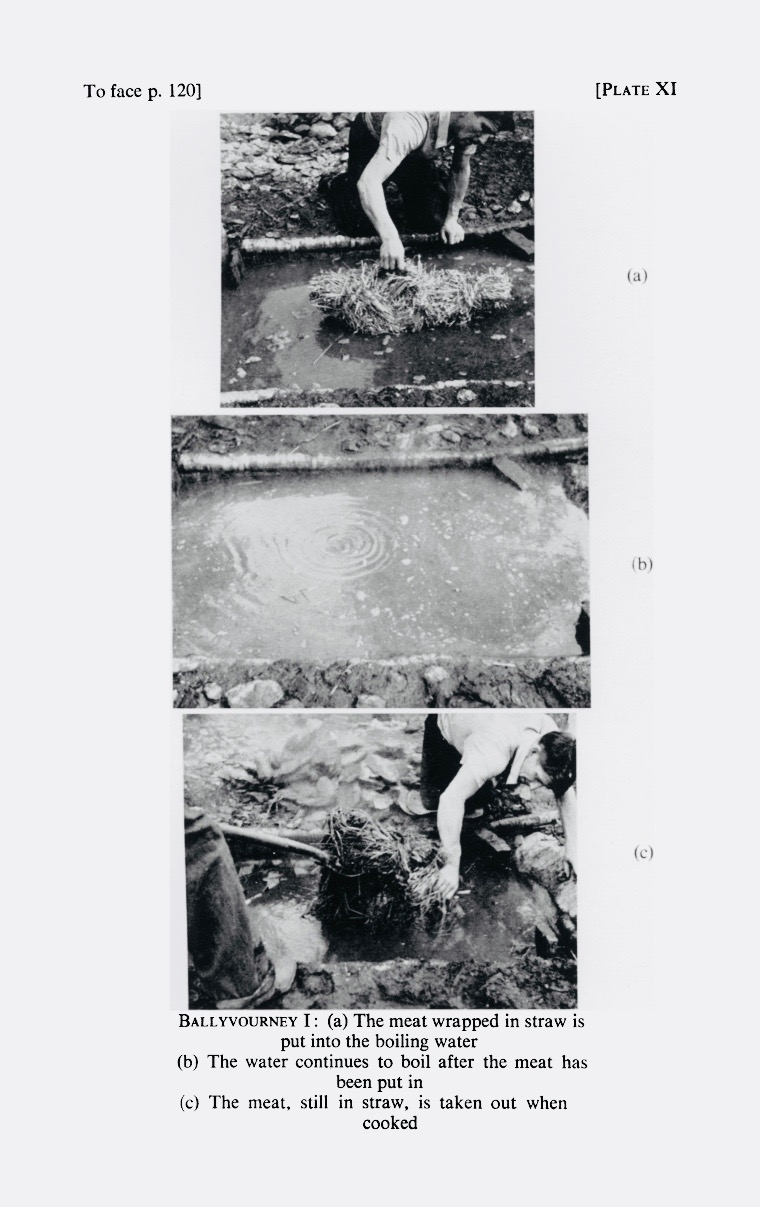
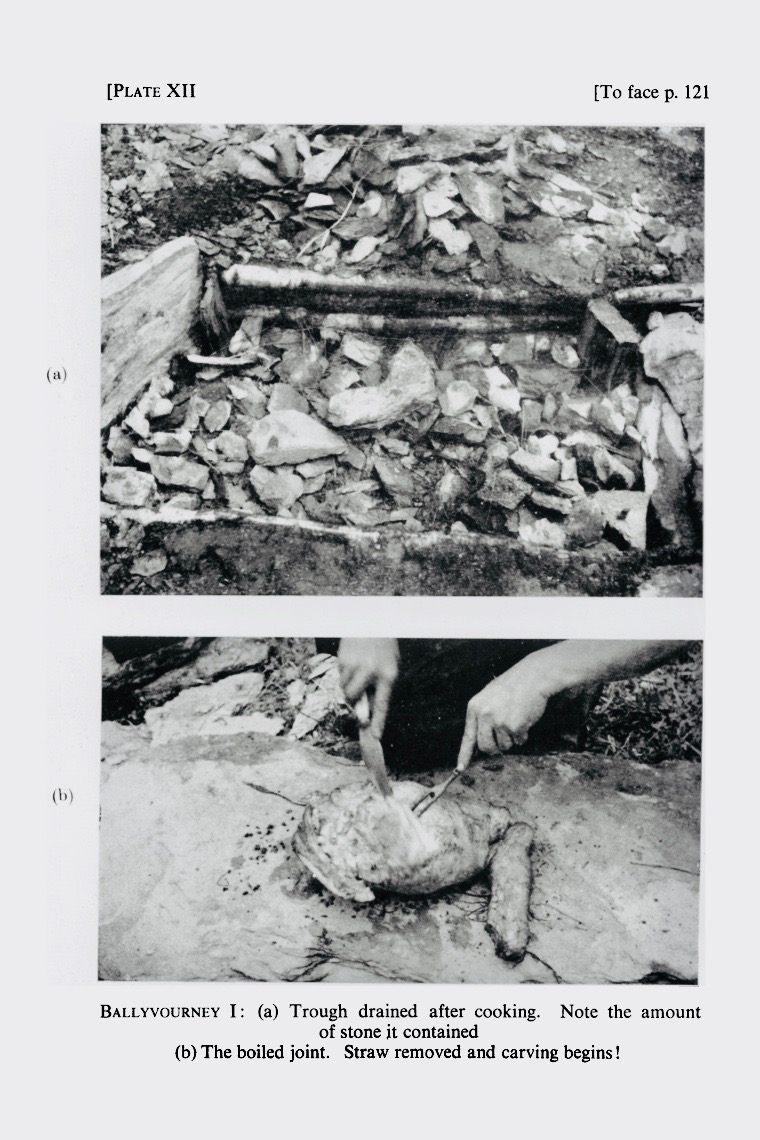
From Prof O’Kelly’s report on his excavations come these photographs of his cooking experiments
We do tend to think of them as cooking-places, though, largely because of the experimental work carried out by Prof Michael J O’Kelly in the 50’s. I remember him telling us about it when I was a student in his classes and I can still see the obvious relish with which he described the juicy leg of mutton that emerged from the simmering trough after almost four hours (they used the 20 minutes to the lb and 20 left over formula) and how clean the meat was when unwrapped from its straw casing.
But the brewing argument is compelling too – just take a look at this experiment by two archaeologists making ‘a prehistoric home brew!’
But what about a site like our one, half buried in the sand? It turns out that there’s a similar one in Cork at Lispatrick on Courtmacsherry Bay, that was visible when first discovered at low tide but underwater at high (see note from Jerome Lordan in the comments). Thanks to Alan Hawkes for alerting me to that one. Alan is the author of The Archaeology of Prehistoric Burnt Mounds in Ireland, the most comprehensive study of fulacht fia ever undertaken.
This photograph of the Lispatrick site is taken from Iverni
There’s another one at Creedon in Waterford (below) and that one is made of wood – thanks to Simon Dowling for sending me a 3D image of it (not shown), showing toolmarks on the wood
The wooden trough of the fulacht fia at Creedon Beach in Co Waterford, discovered by local historian Noel MacDonagh (photographer unknown)
Possibly the most helpful site to use as a comparison to Ballyrisode is the inter-tidal fulacht fia from Coney Island in Sligo. We are fortunate that the site was thoroughly analysed by James Bonsall and Marion Dowd of IT Sligo, and the results published in The Journal of Irish Archaeology in 2015 and available through JSTOR. (Thank you for the link, James Bonsall.) Ciarán Davis found the site and also participated in the excavation and he has kindly shared some of his photographs with me. Thank you, Ciarán!*
This and the following two photographs are of the Coney Island (Sligo) sites, kindly shared by Ciarán Davis
Like Ballyrisode, the trough is stone-lined and full of sand from the movement of the tide, which covers it at high tide. It was dated using a charcoal layer beneath the floor slab, to the Late Bronze Age (making it about three thousand years old).
The flat slab at bottom right has been interpreted as a kneeling stone – such stones have been observed elsewhere
The authors point out that it is impossible to tell whether the intertidal location of many such sites is a planned feature, or whether they were originally on dry land and have ended up in the intertidal zone due to erosion or shifting sea levels. However, at Coney Island it seemed clear that the fulacht fia had been deliberately constructed such that it filled with water at high tide and held that water for several hours afterwards. The presence of a nearby midden indicated that this fulacht fia may indeed have been used to boil fish and shellfish in salt water – an efficient (and delicious!) method of cooking seafood.
So there you have it – an exciting new discovery to add to the archaeology of West Cork! This summer has seen incredible new finds in the Boyne Valley, due to the unusually dry weather and the emerging technology of drone photography. While our find is not in the league of a Dronehenge, it’s always good to know that there is still lots to discover in the wonderful West Cork landscape.
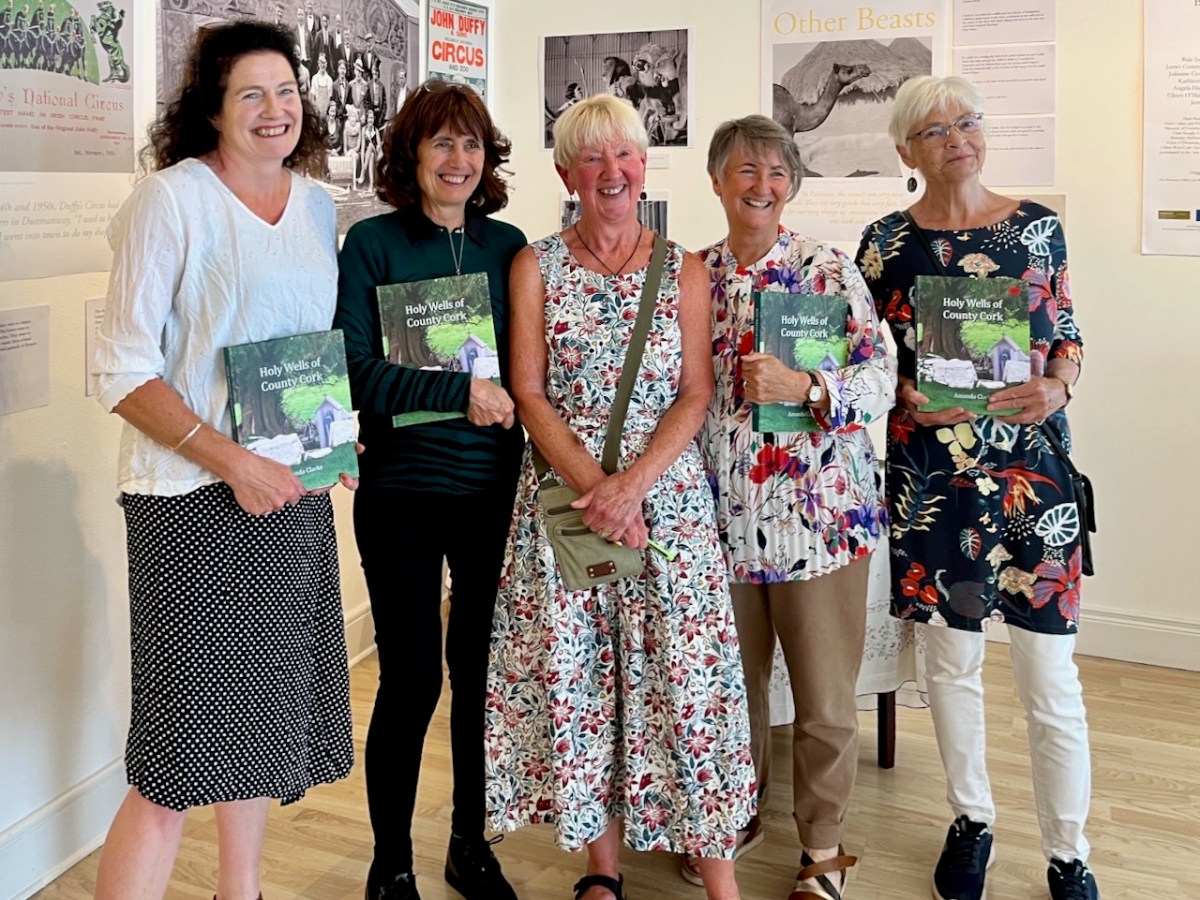
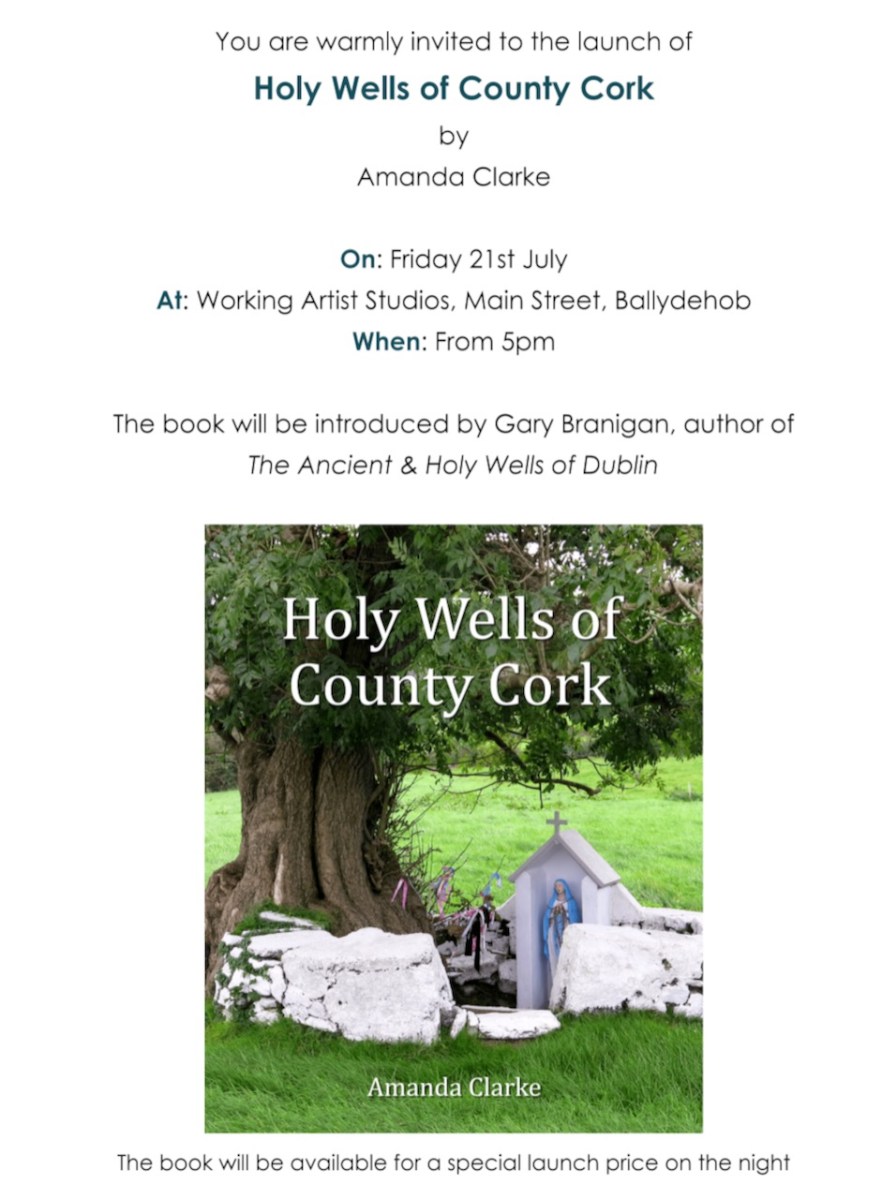
This was the scene in the Working Artist Studios, Ballydehob, on Friday evening. It was the launch of a brand new book by our friend Amanda Clarke: Holy Wells of County Cork. That’s Amanda, above, in the centre, with Finola on her left. Regular readers will know that we share many adventures with Amanda and Peter, and we were so pleased to see the successful fruition of her years of research with this outstanding volume, exquisitely designed by Peter, now available to purchase online, and in bookshops. Finola wrote about this venture last week. I thought I would indirectly celebrate it today by reviving a Roaringwater Journal post from five years ago, about one of our own expeditions that included a visit to a holy well.
Once again we followed in the footsteps of Amanda and Peter: they had visited the Glen of Aherlow in County Tipperary and pointed us to St Berrehert’s extraordinary site at Ardane which I described in this post. Not far away is another site, equally remarkable, and related to St Berrehert’s Kyle in that they were both restored by the Office of Public Works in the 1940s. They are also both very easily accessible in a few minutes from the M8 motorway at Cahir.
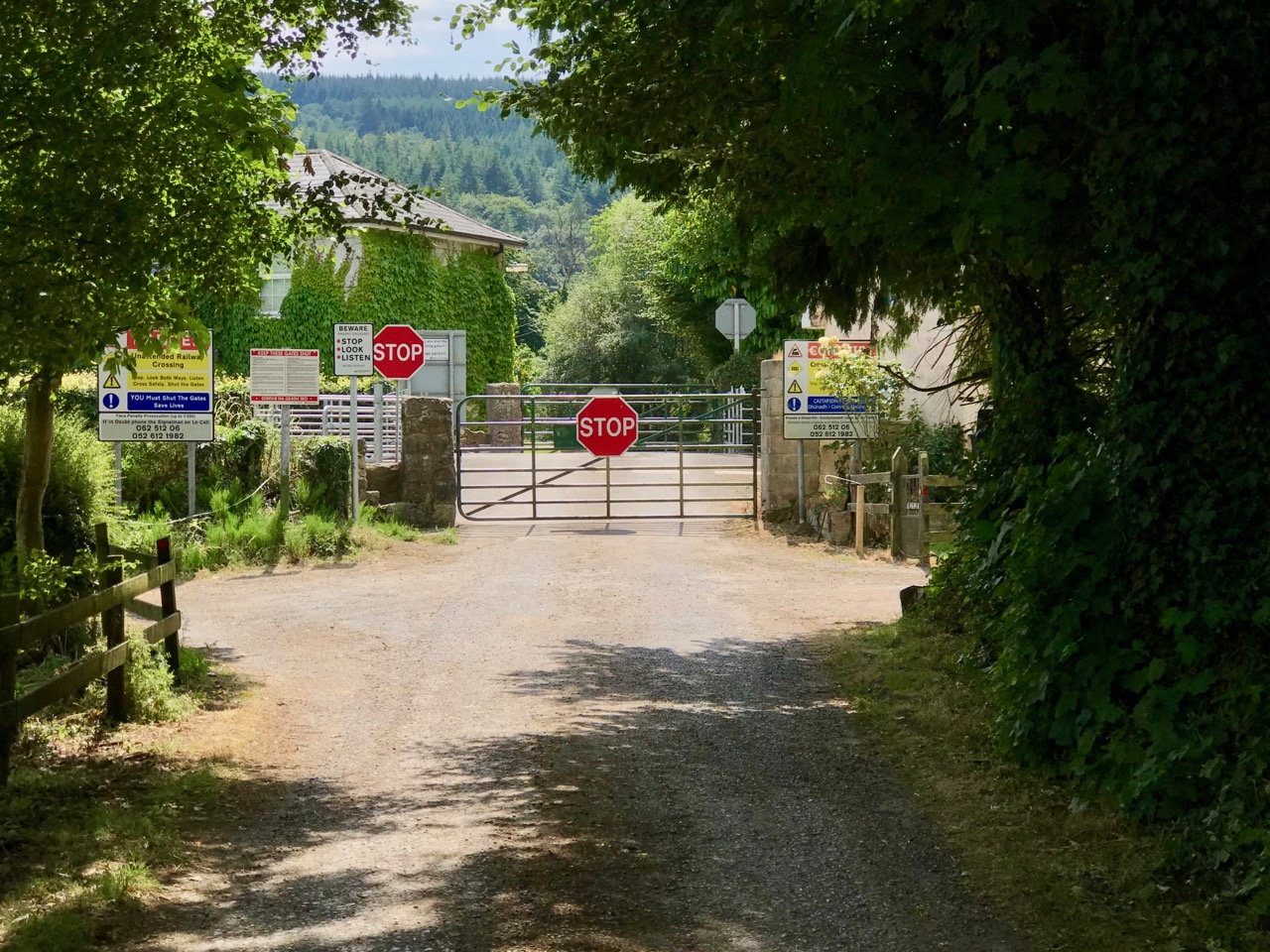
We were delighted to be travelling again through the beautiful Glen in the shadow of the Galtee Mountains (above) as we searched out a boreen that led us down to the railway. We parked and crossed at the gate, watching out carefully as this is the Waterford to Limerick Junction line used by two trains a day (except on Sundays!)
Once across, we were in an idyll. It’s a private lane, running alongside a gentle stream, but the Bourke family allow visitors to walk (as they have done for centuries) to the old church, the cell and the holy well of Saint Péacáin. Ancient stone walls line the way, and trees overhang, shading the dappled sunlight in this most exceptional of Irish seasons. We met Bill Bourke, who regaled us with tales of his life spent mostly far away from this, his birthplace – but who returned to rebuild the family home and to enjoy perpetual summer in what is, for him, the most beautiful setting in the world. He also told us of the crowds who used to come to celebrate St Péacáin at Lughnasa – 1st August – paying the rounds and saying the masses.
In her monumental work (it runs to over 700 pages) The Festival of Lughnasa – Oxford University Press 1962 – Máire MacNeill points out the harvest feast day was such an important ancient celebration that it survives as the focus of veneration of many local saints who would otherwise have been known for their own patron day, and she particularly mentions Tobar Phéacáin in this regard: a place well away from any large settlement where the great agricultural festival was so critical to the cycle of rural life.
The rural setting of St Péacáin’s Cell can be seen above, just in front of the trees; the church and the well are nearby. MacNeill provides a description of Tobar Phéacáin and includes some variant names:
. . . Tobar Phéacáin (Peakaun’s Well), Glen of Aherlow, Barony of Clanwilliam, Parish of Killardry, Townland of Toureen . . . On the northern slope of the Galtee Mountain at the entrance to the Glen of Aherlow and about three or four miles north-west of Caher there is a well and ruin of a small church. About a mile beyond Kilmoyler Cross Roads a path leads up to it . . . In 1840 O’Keefe, of the Ordnance Survey team, reported that the old church was called by the people Teampuillin Phéacáin, or just Péacán . . .
. . . The well, which he described as lying a few perches south-east of the church was called Peacan’s Well or Tobar Phéacáin. It was surrounded by a circular ring of stonework. He stated: ‘The pattern-day still observed at this place falls on the 1st of August, which day is, or at least until a few years since, has been kept as a strict holiday.’ Devotions were also, he said, performed there on Good Friday . . .
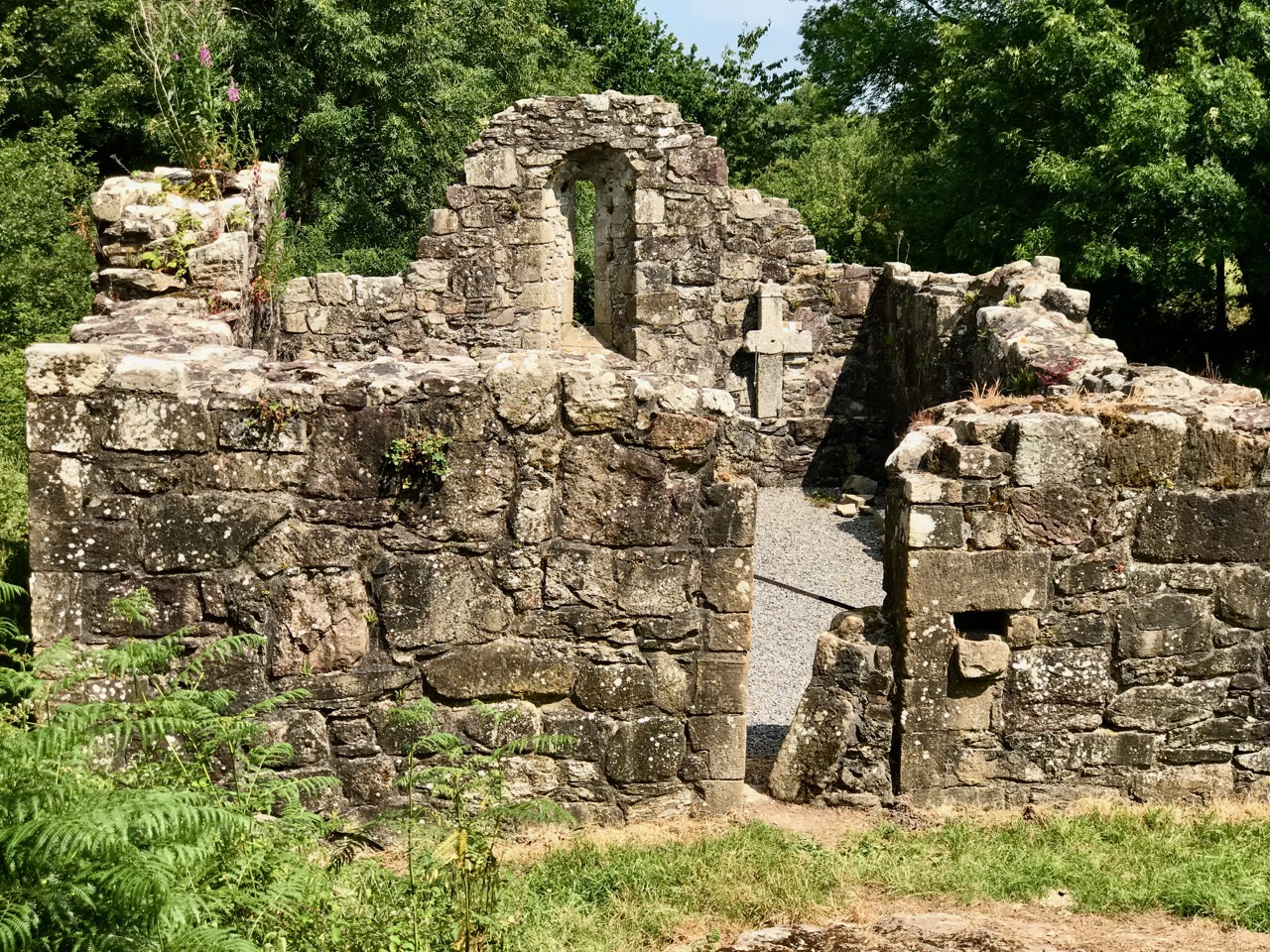
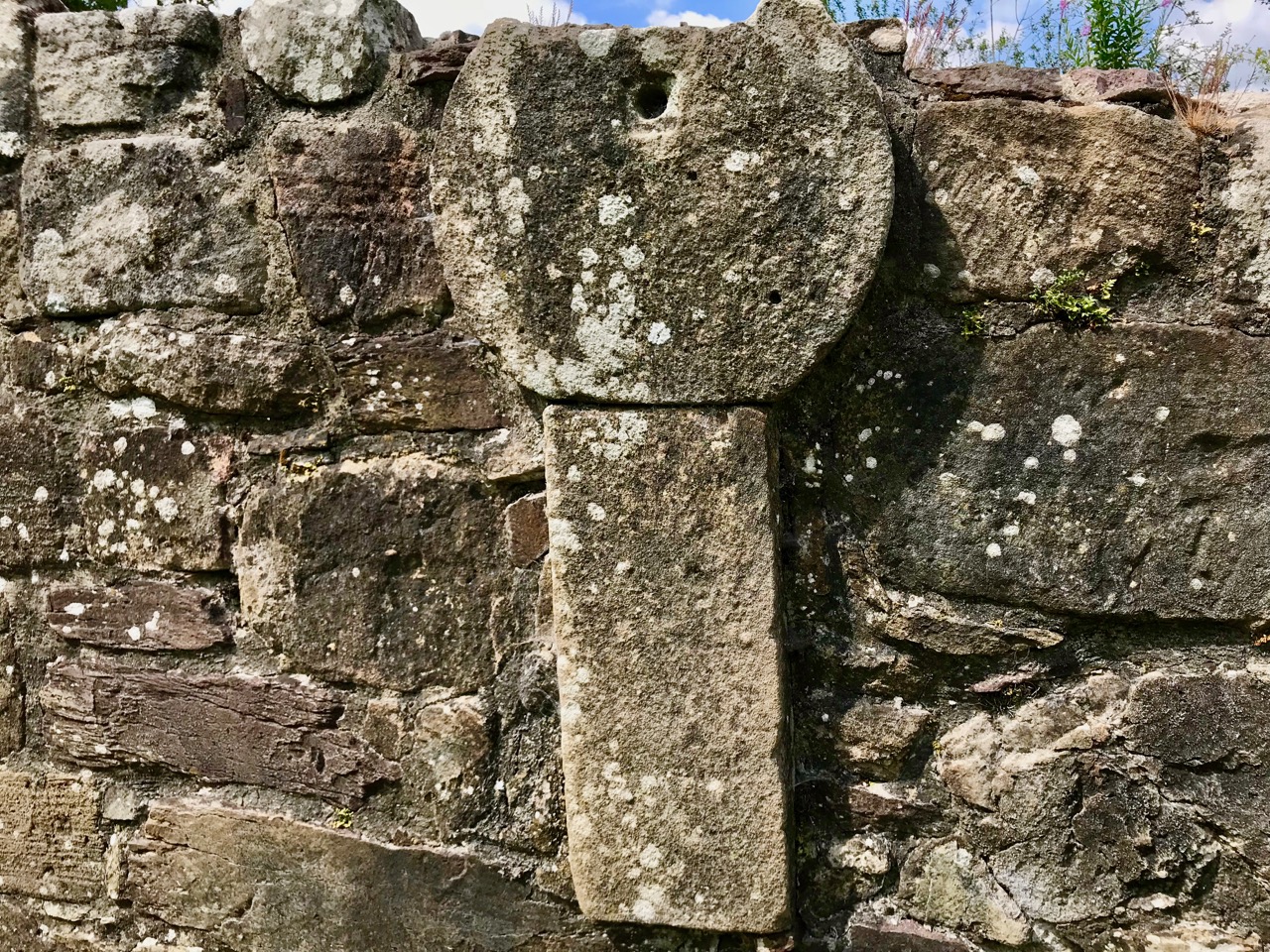
A hundred years after O’Keefe wrote this, the church ruins were tidied up by the Office of Public Works. As at St Berrehert’s Kyle, it seems there were numerous carved slabs on the site and remnants of high crosses, implying a significant ecclesiastical presence here. All these have been fixed in and around the church ruin for safekeeping, and in an intelligent grouping. It’s wonderful to be able to see such treasures in the place they were (presumably) made for, and to experience them in such a remote and peaceful ambience.
McNeill continues:
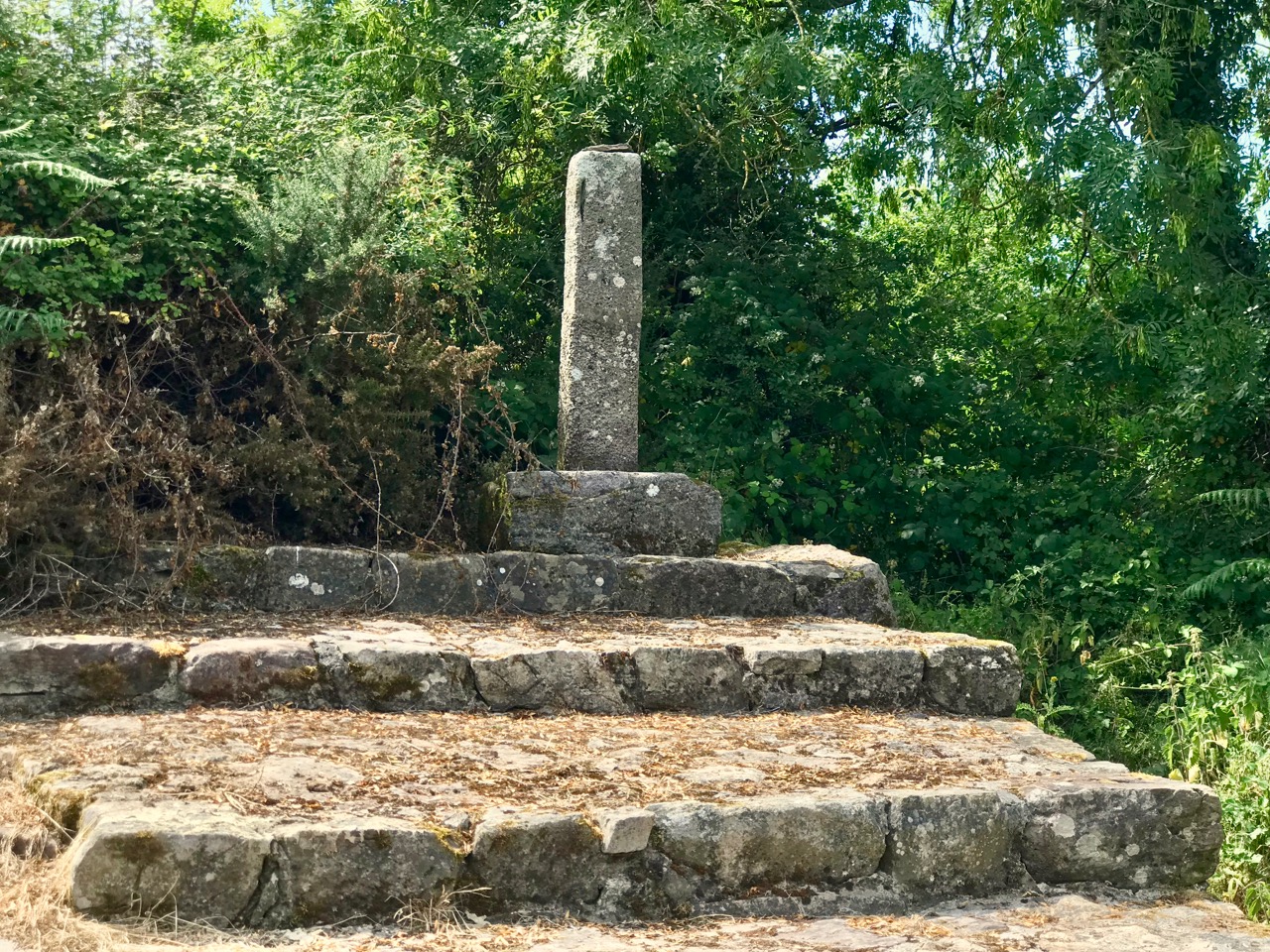
. . . Nearby is the shaft of a cross which tradition avers was broken in malice by a mason who was then stricken with an inward pain and died suddenly as a punishment for his sacrilege . . . O’Keefe was told a story of a small stone, 6 or 7 inches long and 4 or 5 in depth, having ten little hollows in it and resting in a hollow of the ‘altar’ of the old church. Christ, or according to others St Péacán, asked a woman, who had been churning, for some butter; she denied having any and when the visitor departed she found the butter had turned into stone which retained the impression of her fingers . . . Nuttall-Smith speaks also of a cave where the saint used to practice austerities . . .
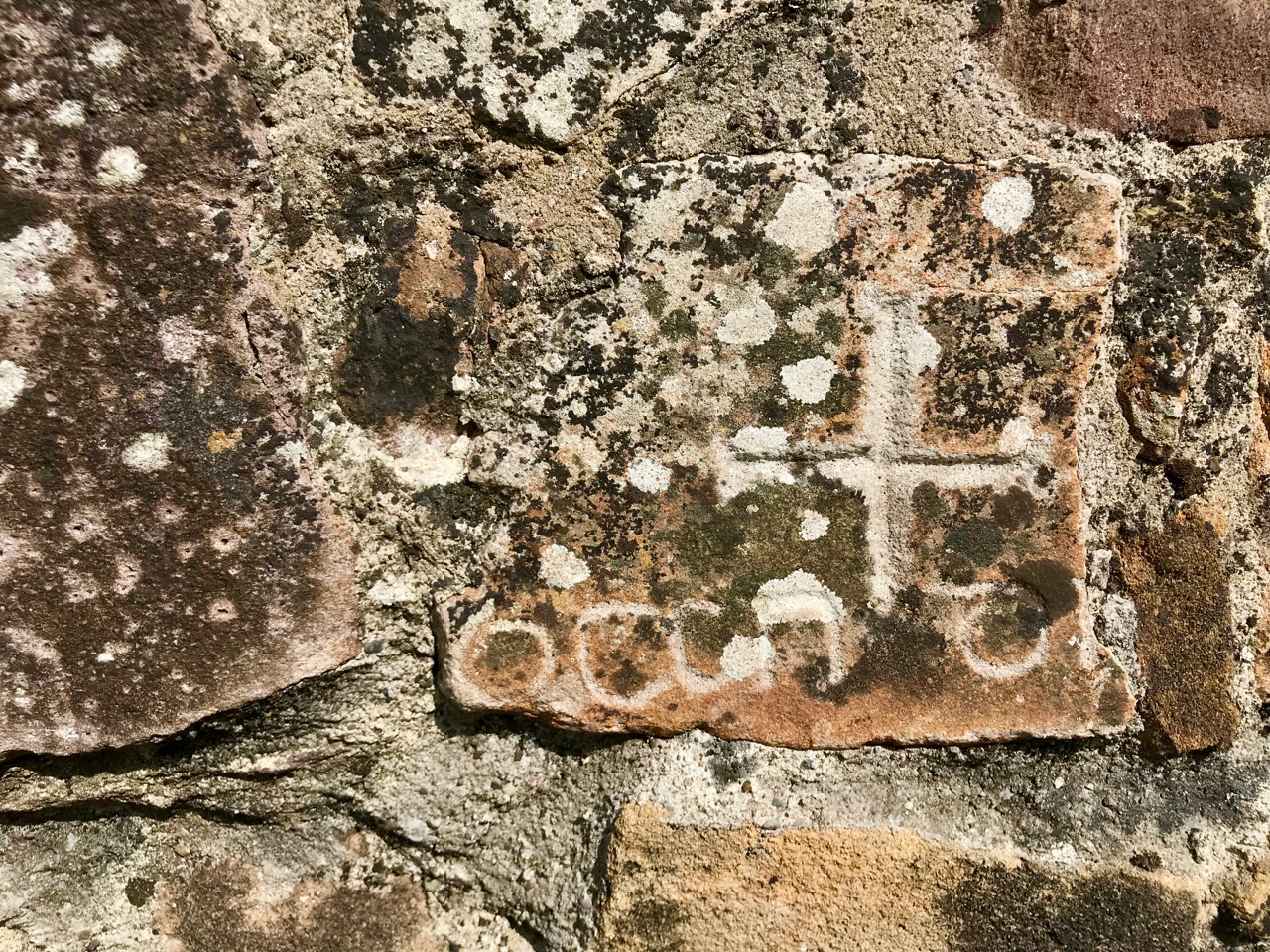
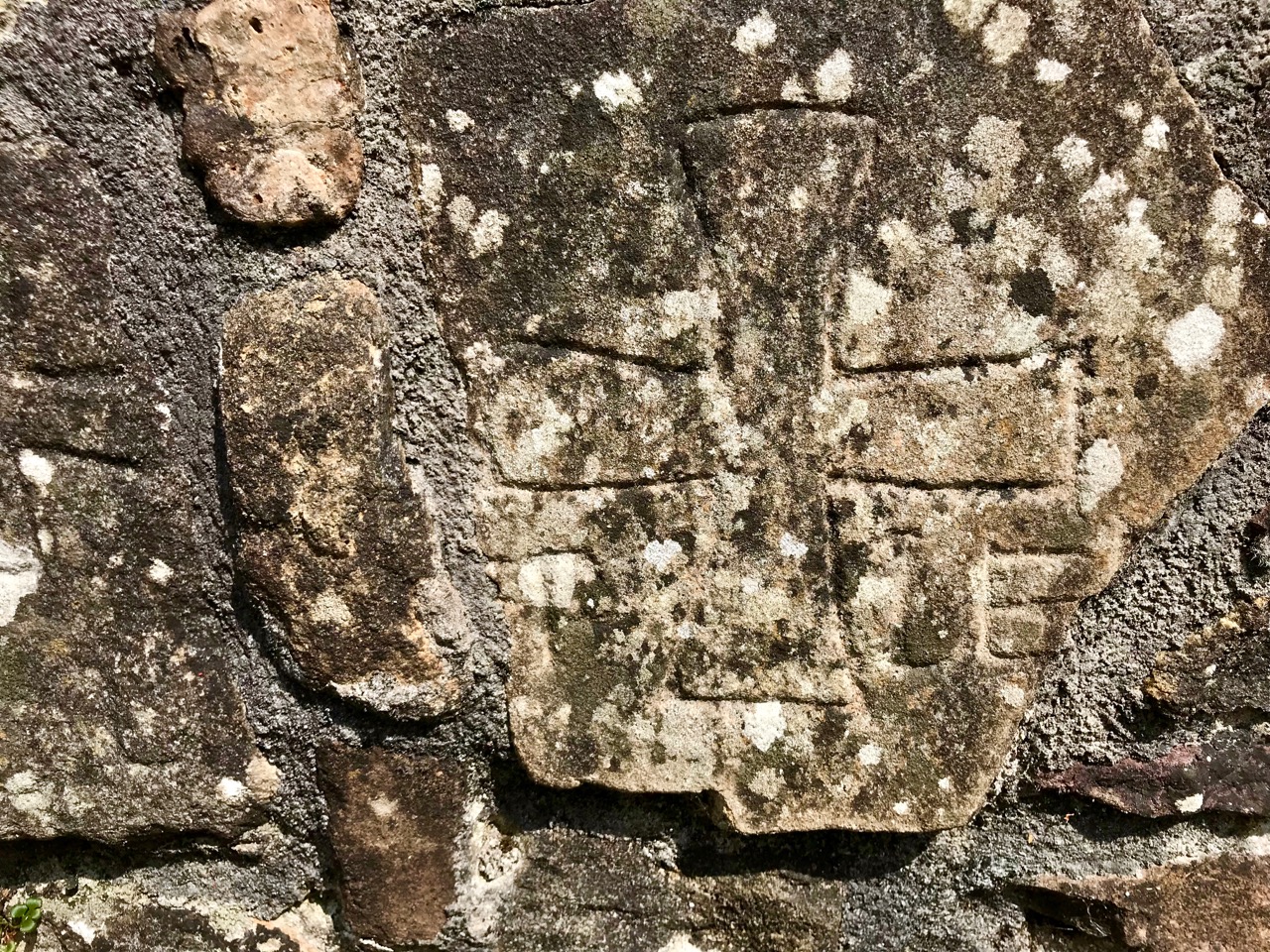
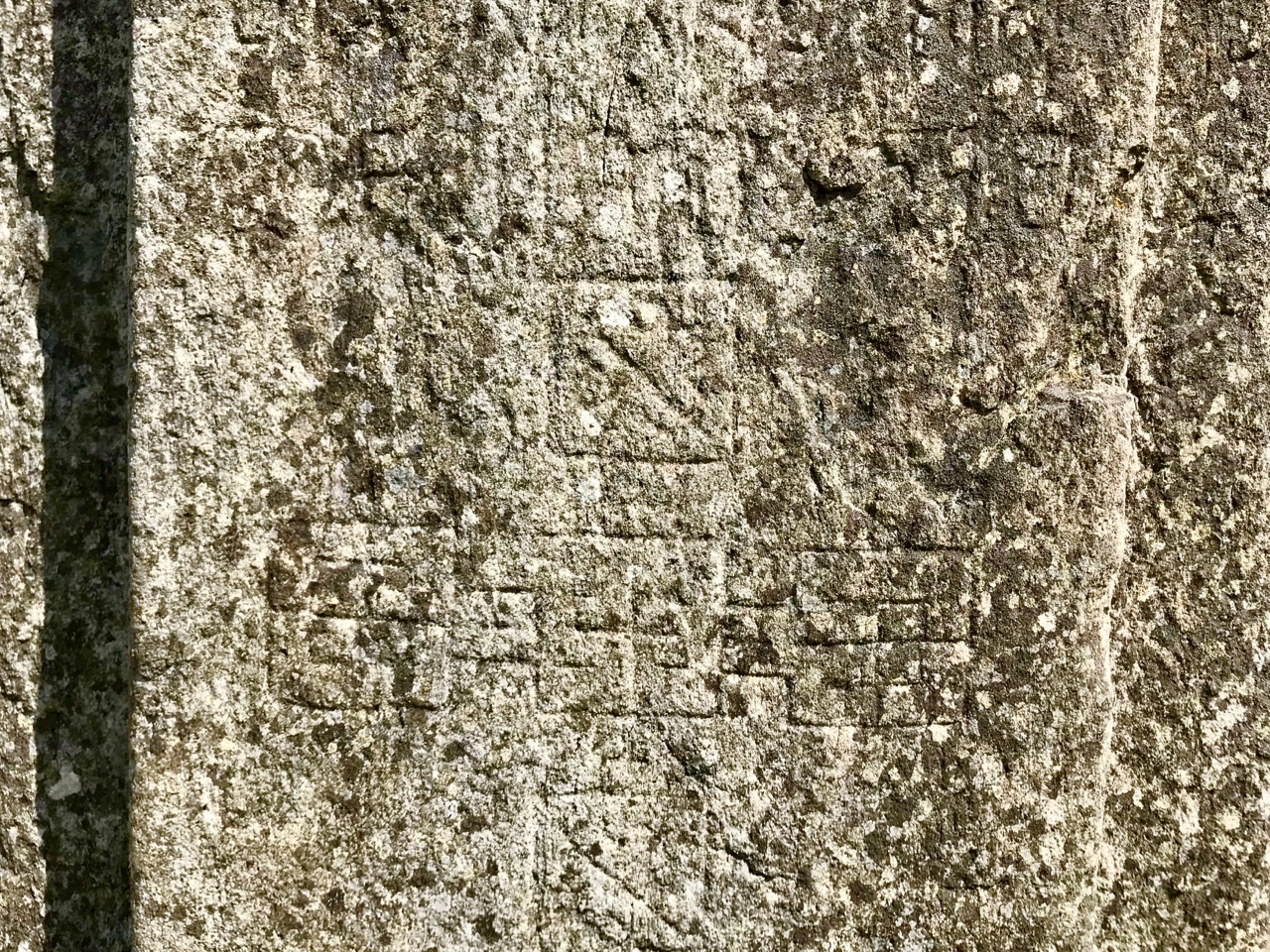
The carved fragments are quite remarkable and are in all likelihood well over a thousand years old. I have yet to see anywhere in Ireland – outside of museums – which has such an extensive collection of fascinating medieval antiquities as these sites in the Glen of Aherlow. Here you can also see cross slabs and a sundial said to date from the eighth century.
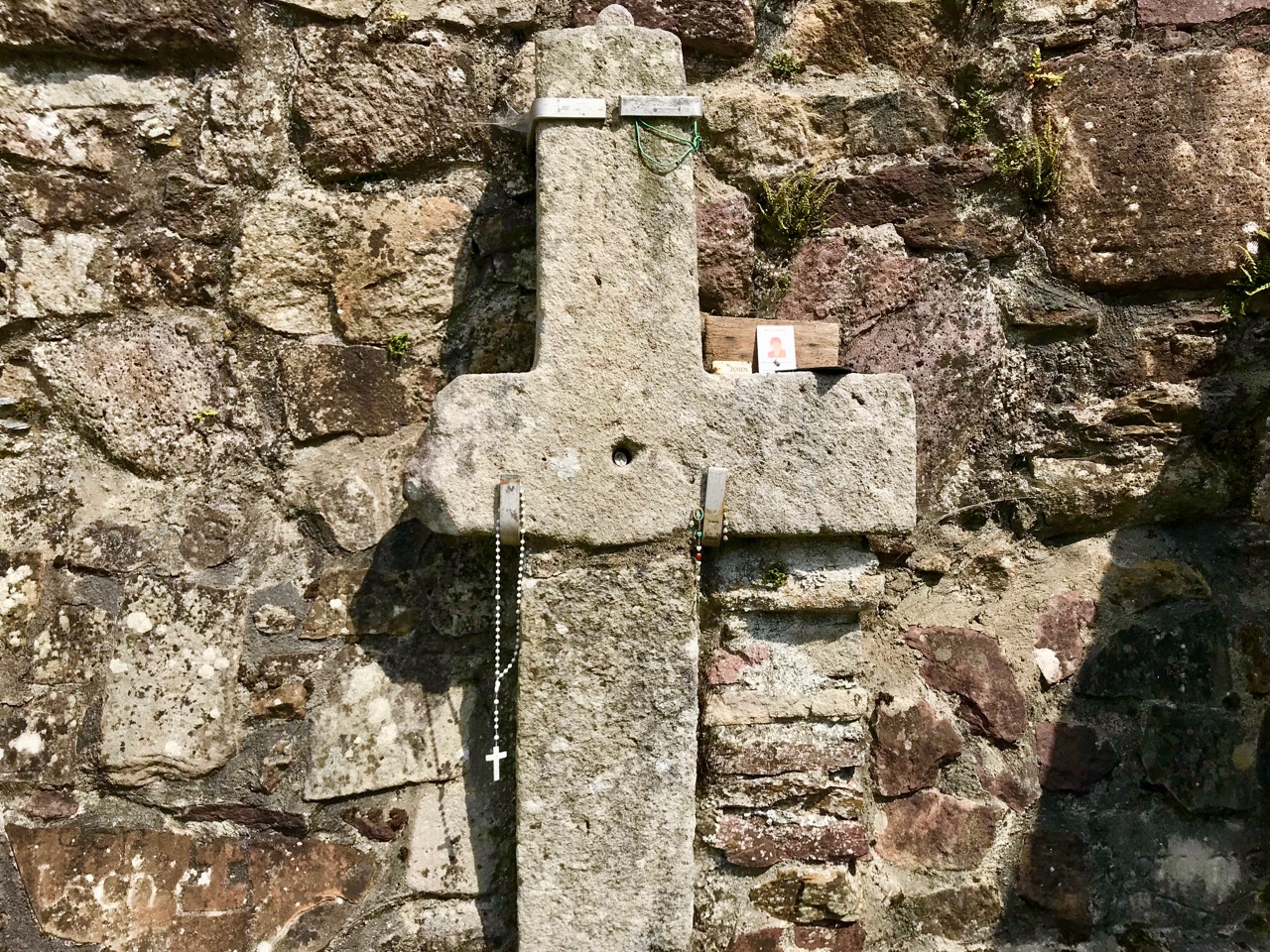
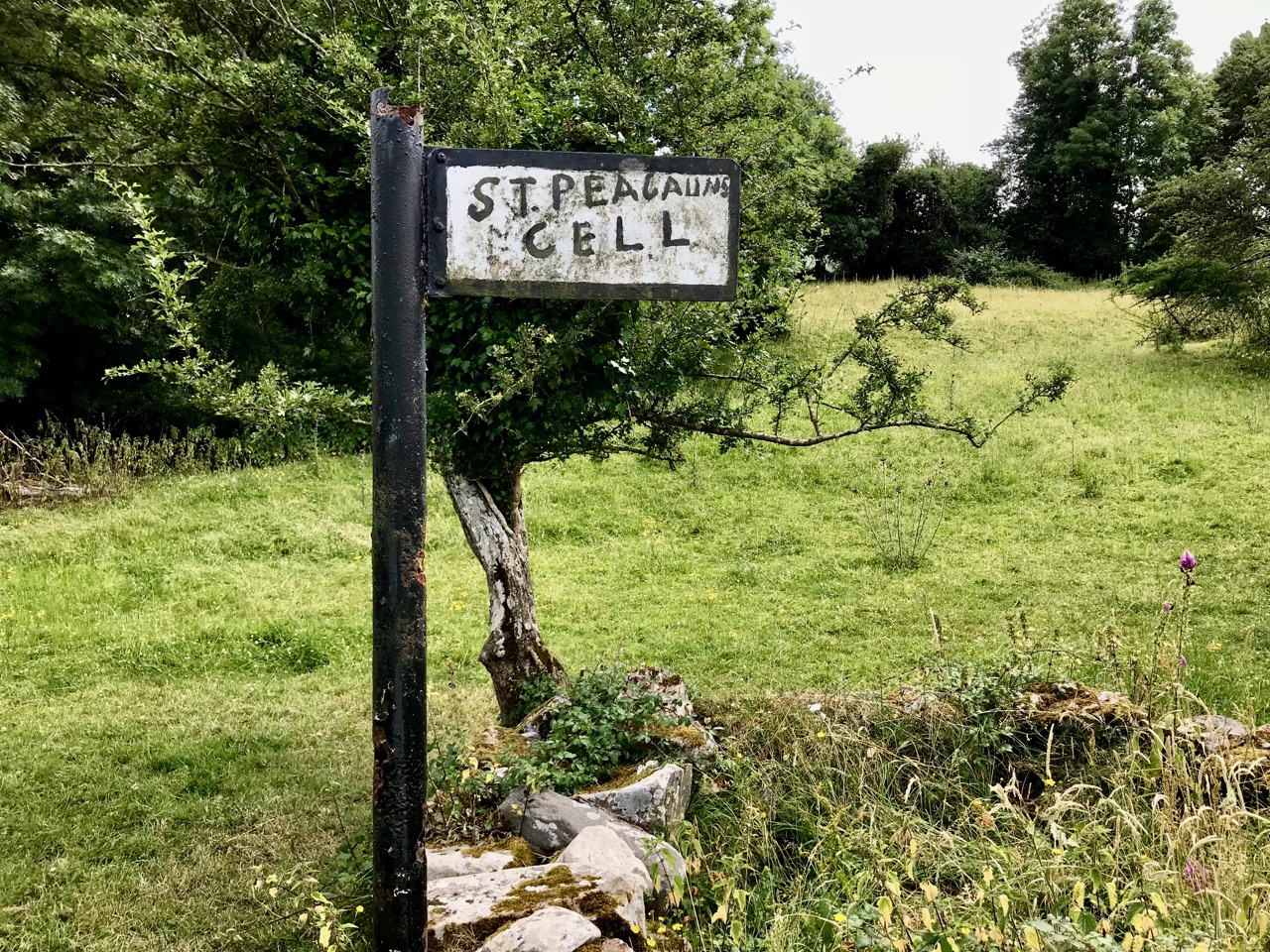
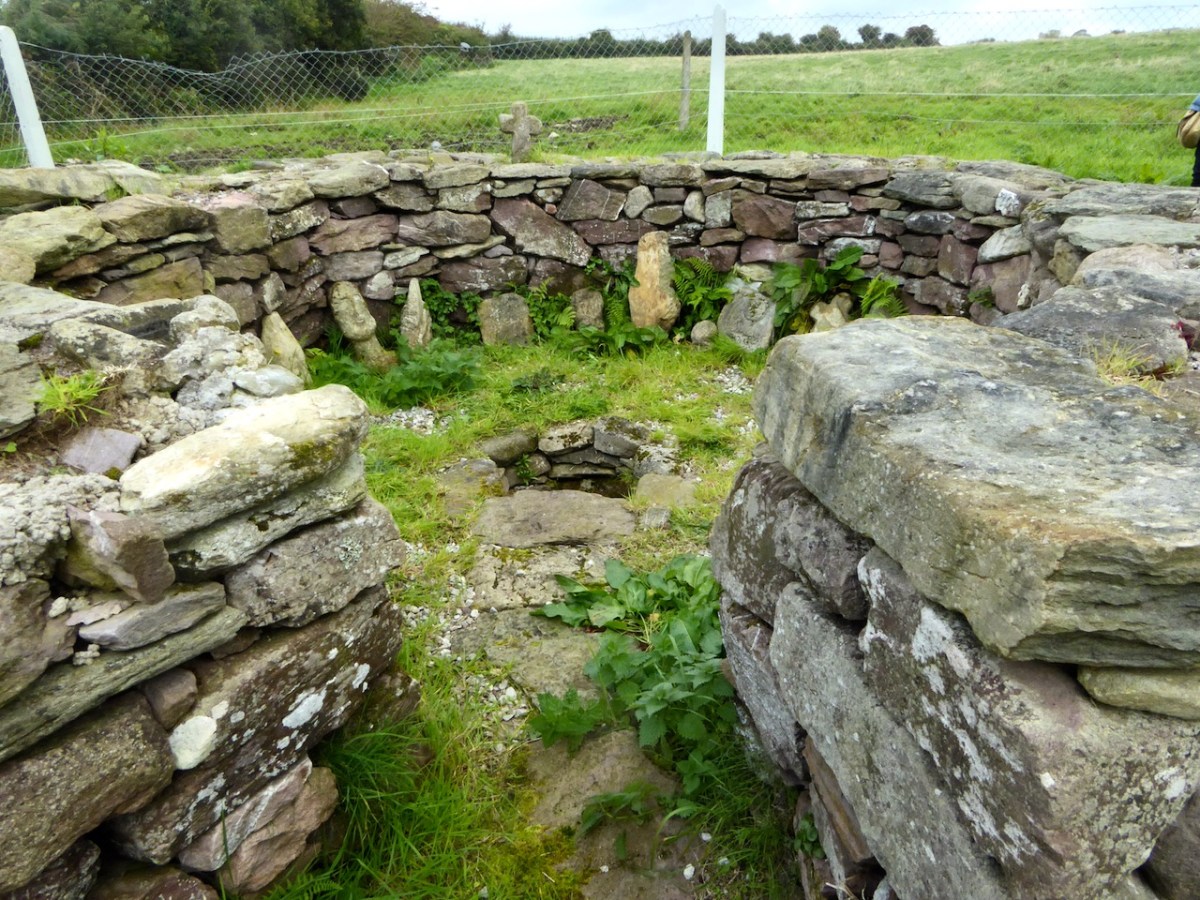
Nuttall-Smith’s ‘cave’ – quoted by MacNeill above – is likely to be St Péacáin’s Cell, set in a field on the far side of the river. This was probably a clochán, or beehive-hut, of the type once used by anchorites. It is protected by a whitethorn tree, but was quite heavily overgrown on the day of our visit. We could make out the ballaun stones inside, said to be the knee prints of the Saint who made his constant devotions there. Amanda – in her post on the holy well – reports that Péacáin would also stand daily with arms outstretched against a stone cross, chanting the psalter.
McNeill discusses the significance of weather at the August celebrations:
. . . Paradoxically for a day of outing so fondly remembered, no tradition of the Lughnasa festival is stronger than that which says that it is nearly always rainy. No doubt this has been only too often experienced. Saint Patrick’s words to the Dési: ‘Bid frossaig far ndála co bráth’ (Your meetings shall always be showery) must be as well proved a prophecy as was ever made. Still there must be more significance in the weather beliefs than dampened observation. Certainly it was expected that rain should fall on that day, and sayings vary as to whether that was a good or bad sign . . . There are a few interesting beliefs about thunder, which was also expected on that day: the loud noise heard at Tristia when the woman made rounds there to have her jealous husband’s affection restored; the prophecy that no-one would be injured by lightning at Doonfeeny, a promise also made by St Péacán . . .
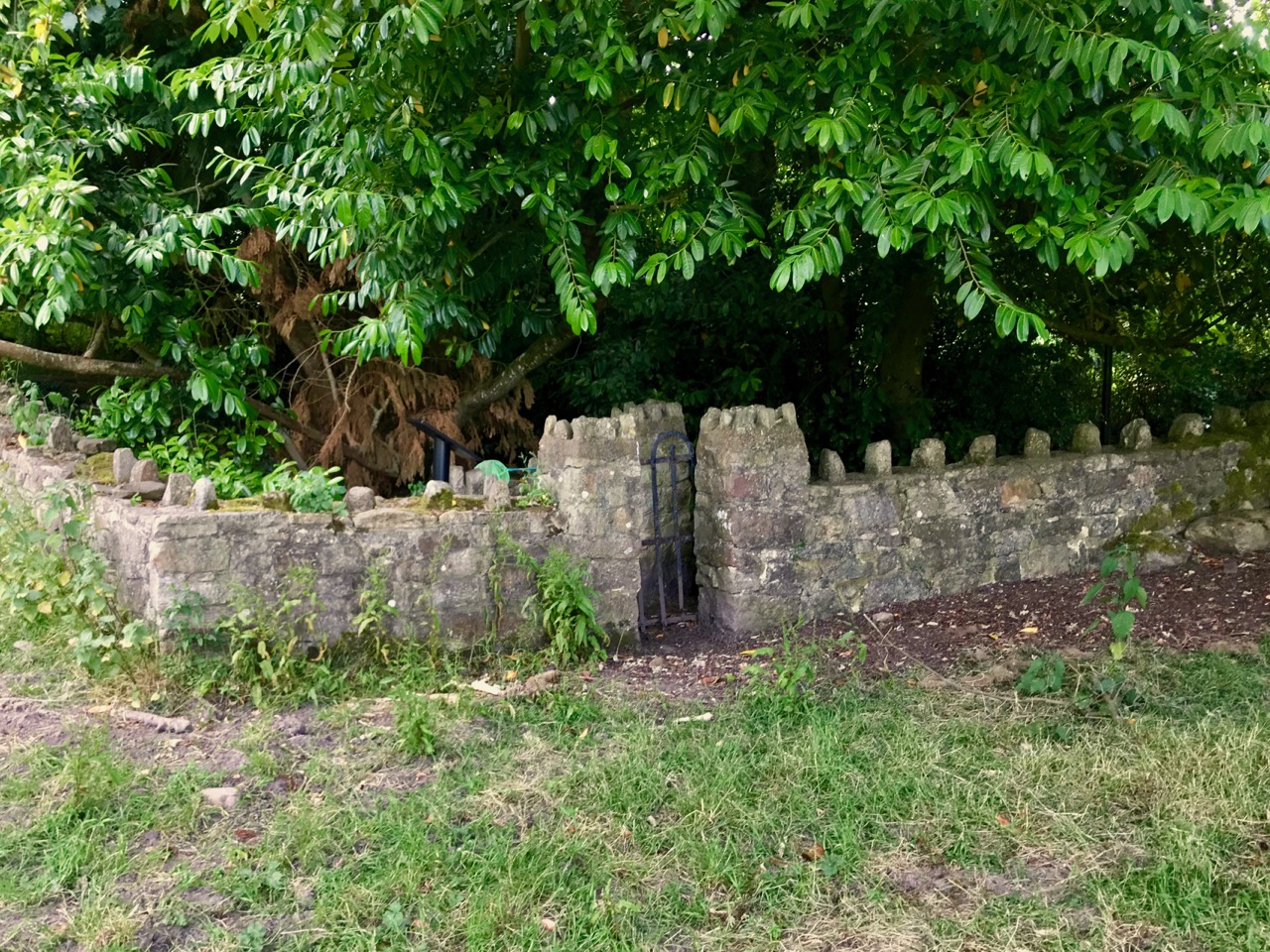
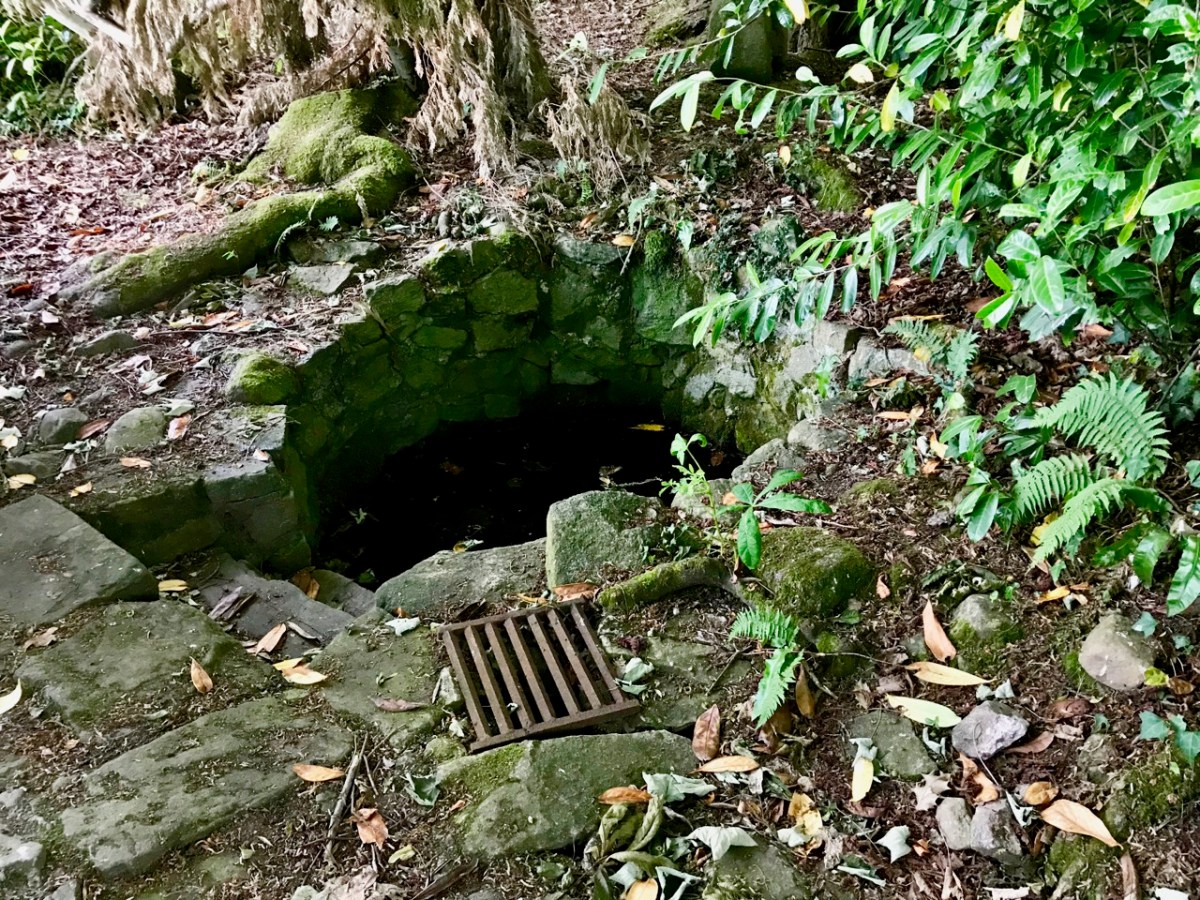
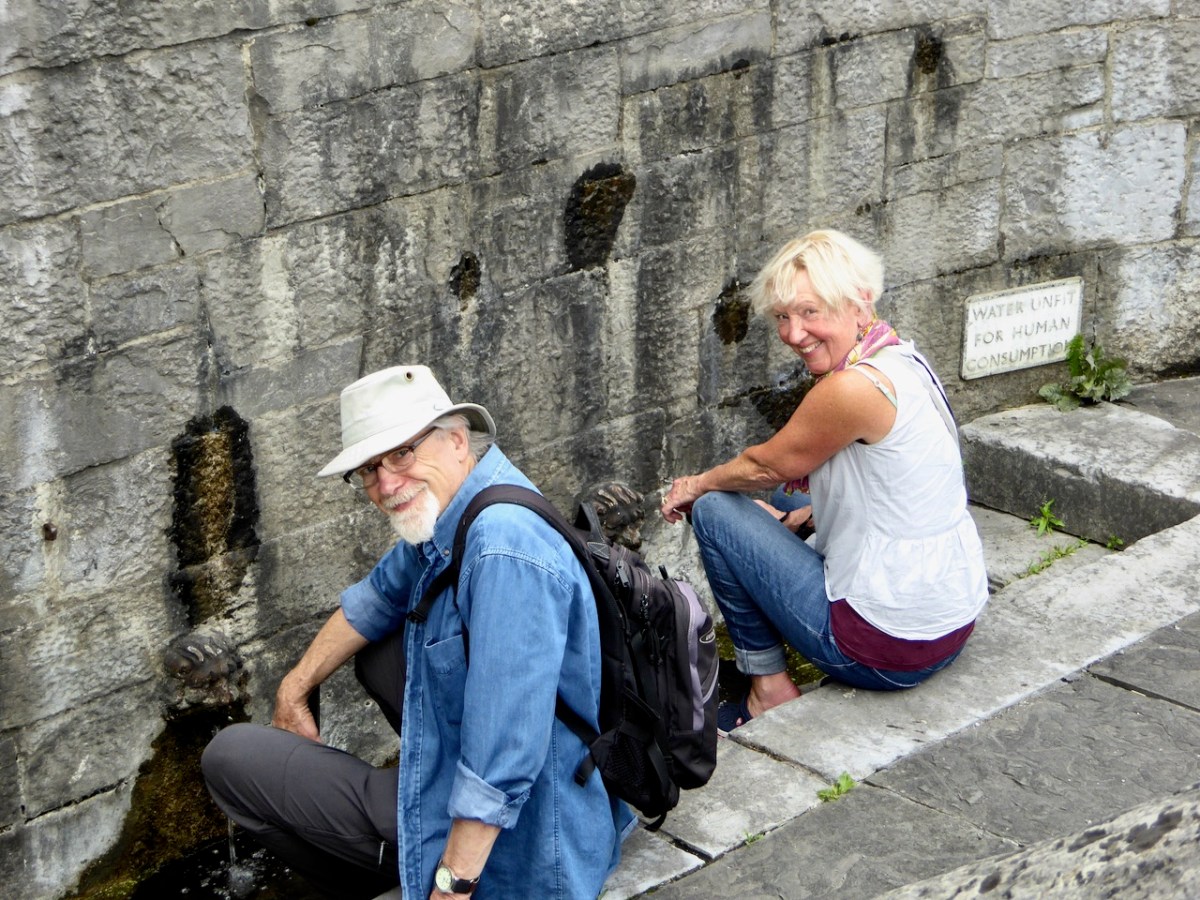
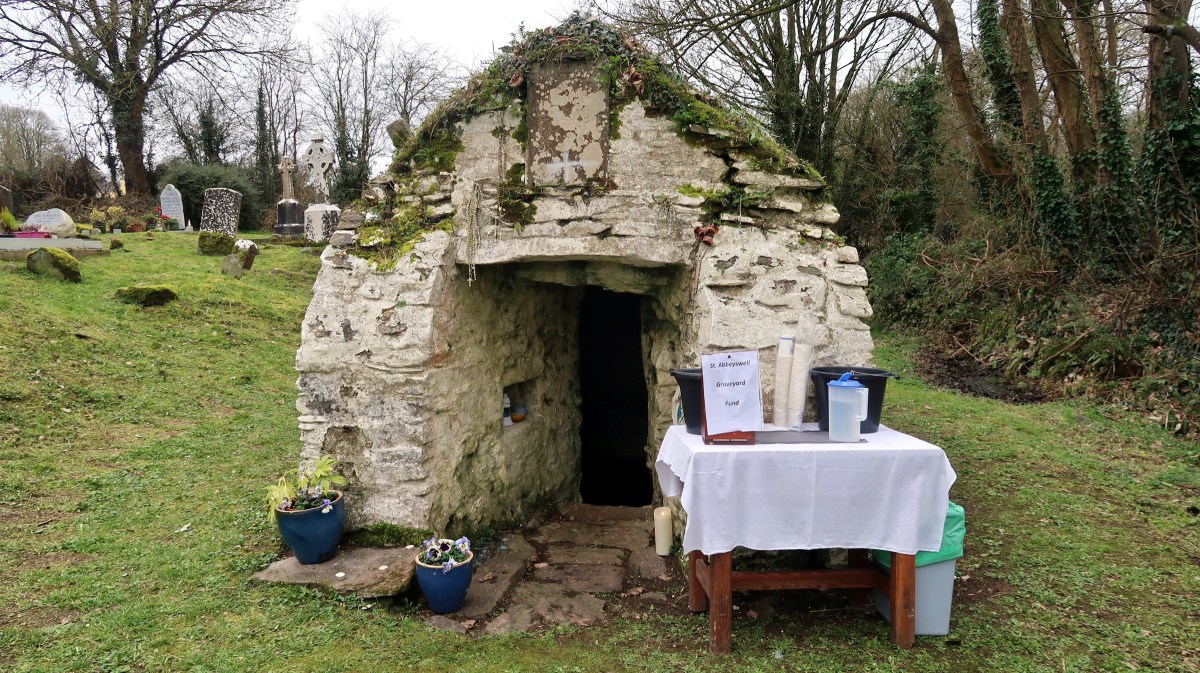
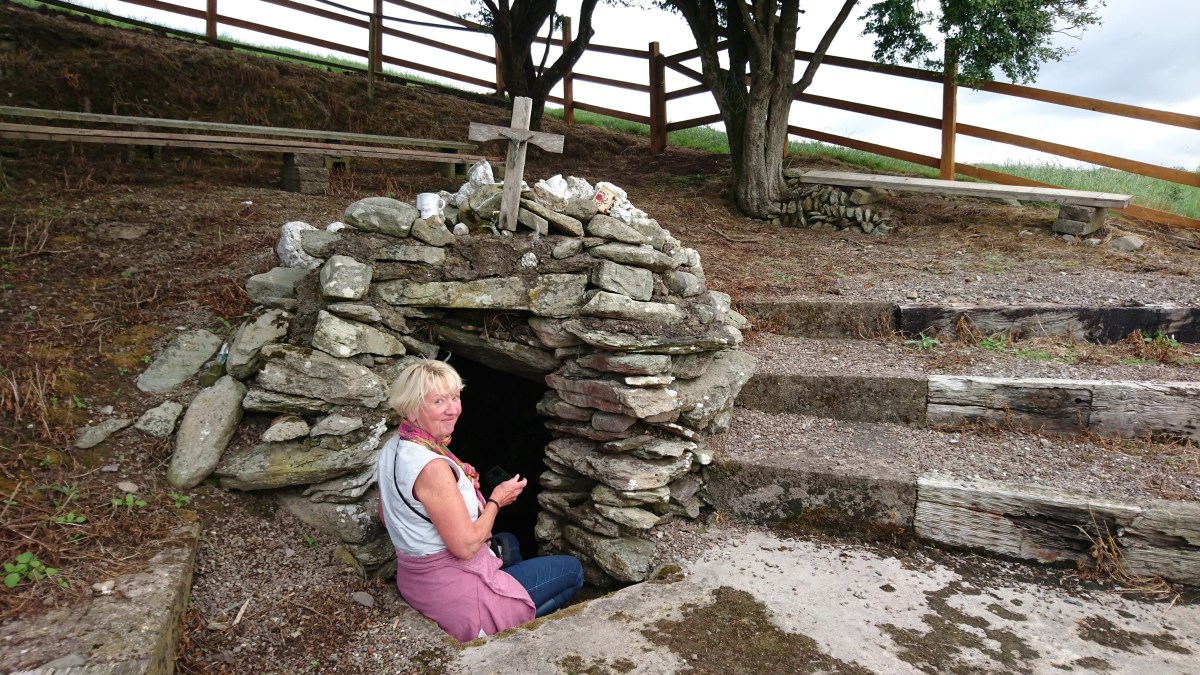
The holy well is tucked away in a stone-walled enclosure hidden under the trees on the edge of the field which contains the Saint’s cell. It is also a tranquil place, obviously still much visited: the water is crystal clear, refreshing and will ensure protection from burns and drowning. This is a magical setting to complete our day’s travels in the beautiful Glen of Aherlow.
What’s your favourite thing to do in West Cork? Ours is to pull on our boots and go on a field trip – often archaeological. To encourage you to enjoy the wealth of prehistoric sites West Cork has to offer, I’ve made a slideshow. It’s a fairly random selection of sites, but they are all prehistoric and all visitable. The music is Sliabh na mBan by the incomparable Liam O’Flynn, from the album The Piper’s Call.
For more information on any of the sites, type its name in the search function at the top of the page. We’ve written about all of them at one time or another. Then pull on those boots!
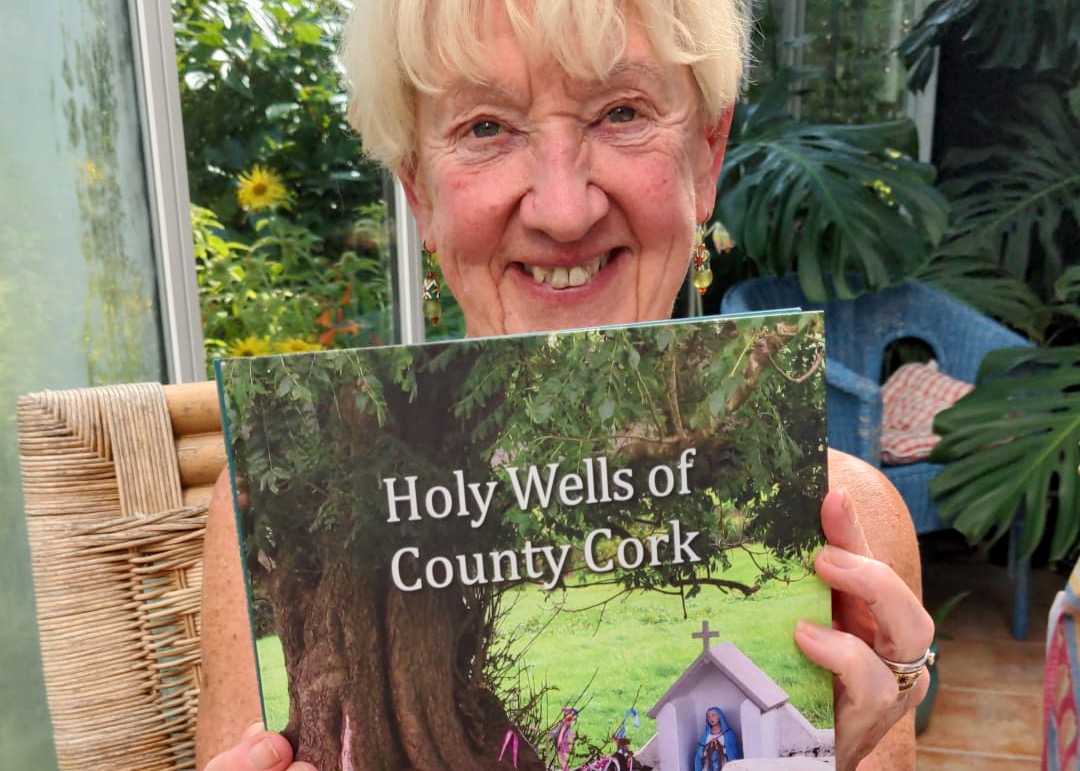
Woohoo! The book is published, and will be launched in Ballydehob on the 21st – see the end for details. All welcome.
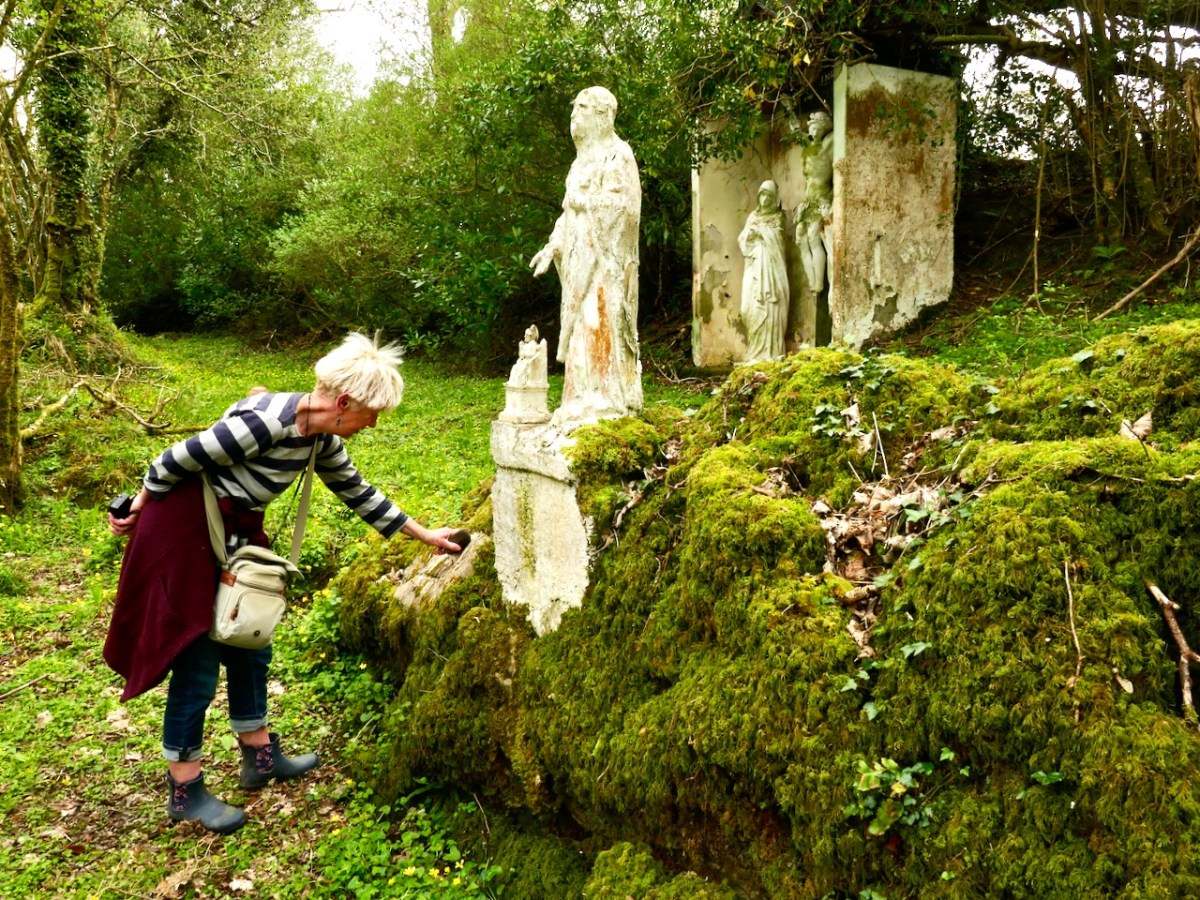
This project started on St Brigid’s Day in 2016 – Amanda Clarke set out to record every holy well in the County of Cork – all 358 of the currently known ones. I happened to be with her (above) on the very first venture – a Brigid’s Well, chosen because it was St Brigid’s Day, Feb 1 (now a national holiday).
That was seven years ago, and Robert and I continued to accompany Amanda and Peter on many of their holy well expeditions, along the way covering almost every inch of Cork and then progressing into Kerry and Limerick, because after all you can’t have too many wonderful adventures in the great outdoors with good friends.
We have fallen in mud and slipped in cow pats, tramped over bogs and halfway up mountains, coped with frisky bullocks and over-friendly dogs, got soaked to the skin and baked under hot skies, and wandered and wondered and laughed and photographed to our heart’s content. I recommend it to everyone – pick a focus, find out what you can and go find it.
Half the work, maybe more than half, is the research and Amanda is brilliant at that, mining every resource she can find for information about each well – its history, folklore, cures, saintly associations, rounds and pattern days.
The result of her investigations is sobering, though – only a third of our holy wells remain active. Another third can still be found, even if they have not been visited in a long time, and the final third have disappeared. Even wells that were once the focus of huge local celebrations can slip into the mists as if they had never existed.
In this light, Amanda’s records are incredibly important and this book is an immeasurable contribution to Cork history. I will end by quoting from Amanda’s Press release:
. . . this book is a celebration of the many holy wells that have quietly prevailed through the millennia, providing powerful connections to the past. It is widely accepted that many holy wells date from the pre Christian era and are an important part of our cultural heritage. They are not dead monuments – many remain potent, active and meaningful, a source of quiet and solace in a chaotic world.
Amanda’s book is available now for pre-order at a special pre-launch price. Just go to https://wildwayspress.com/ Orders will be processed after the launch on 21 July 2023. There is also an option at checkout to pre-order for collection at the launch.
Come and get a signed copy of what is sure to become the book that every Cork household needs on its shelf.
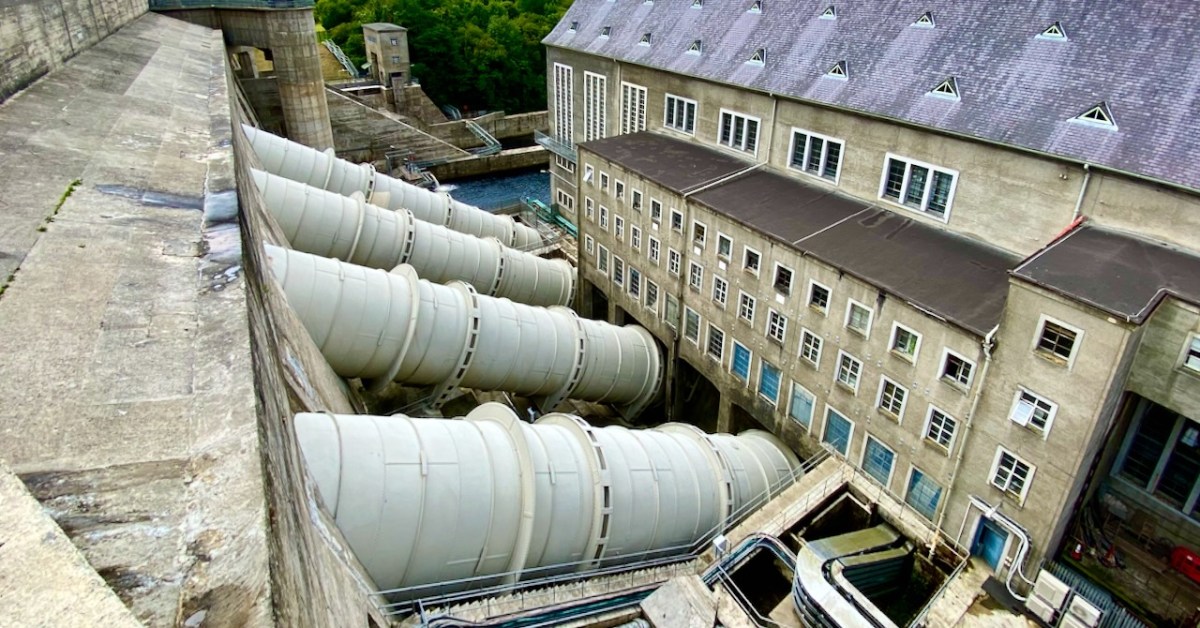
As a finale to this little series on Ireland’s Electrification Ventures back in the 20th century, I’m taking you on a tour of Ardnacrusha. This generating station – powered entirely by water from the River Shannon – was the largest in the world when it was built by Siemens, between 1925 and 1929. Siemens AG is the foremost industrial manufacturing company in Europe, and its Irish connections began in 1874, when Siemens laid the first direct electrical cable across the Atlantic, linking Ballinskelligs Bay on Ireland’s west coast to North America. The pioneering continued, in 1883, when the company built one of the world’s first electric railways, linking Portrush and Bushmills in Co Antrim. After Ardnacrusha, Siemens became responsible for many of Ireland’s landmark achievements, including the ESB’s first pumped storage power plant at Turlough Hill; the DART rapid transport network; the baggage handling systems for Dublin Airport’s Terminal 2; and – in 2016 – the orders for Galway Wind Park – then the largest in Ireland.
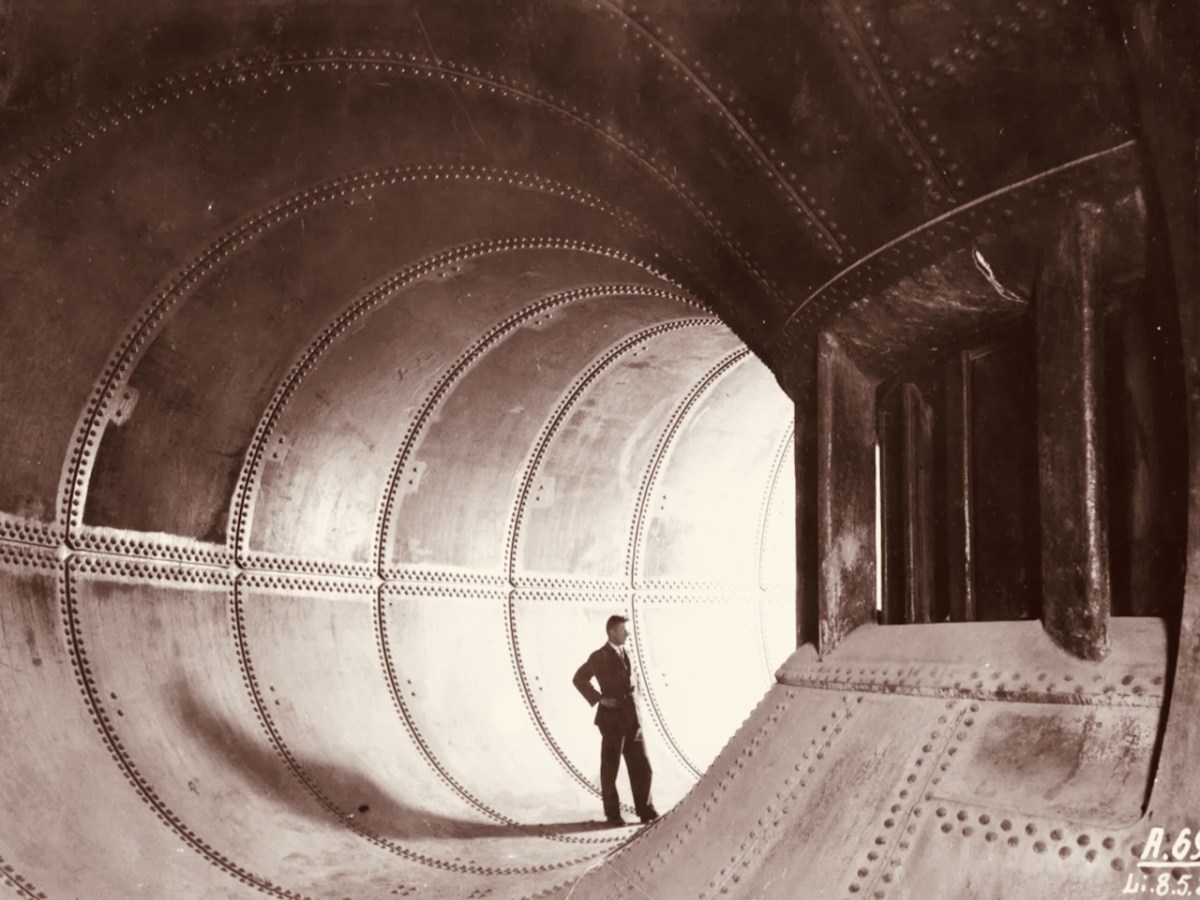
The header pic shows one of the three vertical-shaft Francis turbo-generator units after construction. These were joined by one vertical-shaft Kaplan turbo-generator unit between 1933 and 1934. Above is one of the penstocks which brings the water into the turbine casings.
. . . The construction of the Shannon Scheme was a mammoth undertaking for a country the size of Ireland, especially when the State was barely three years old. The project cost £5.2 million, about 20% of the Government’s revenue budget in 1925 . . .
ESB DOCUMENTS
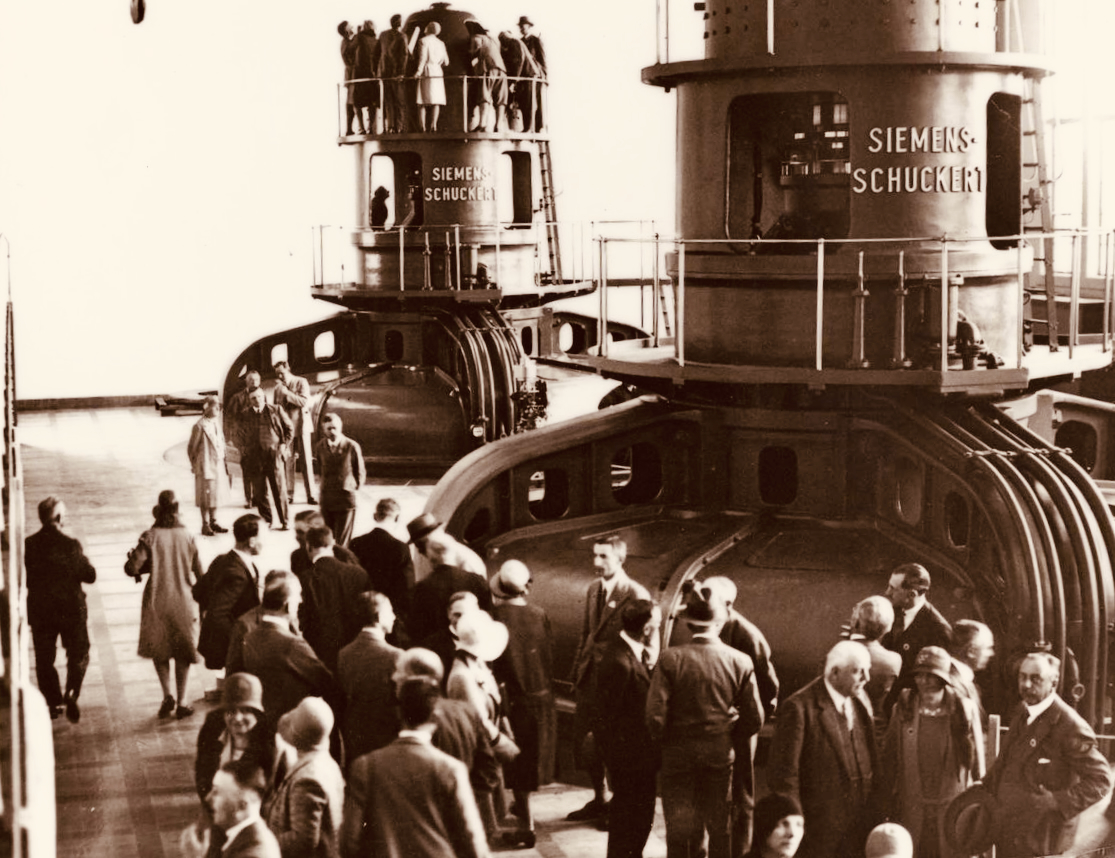
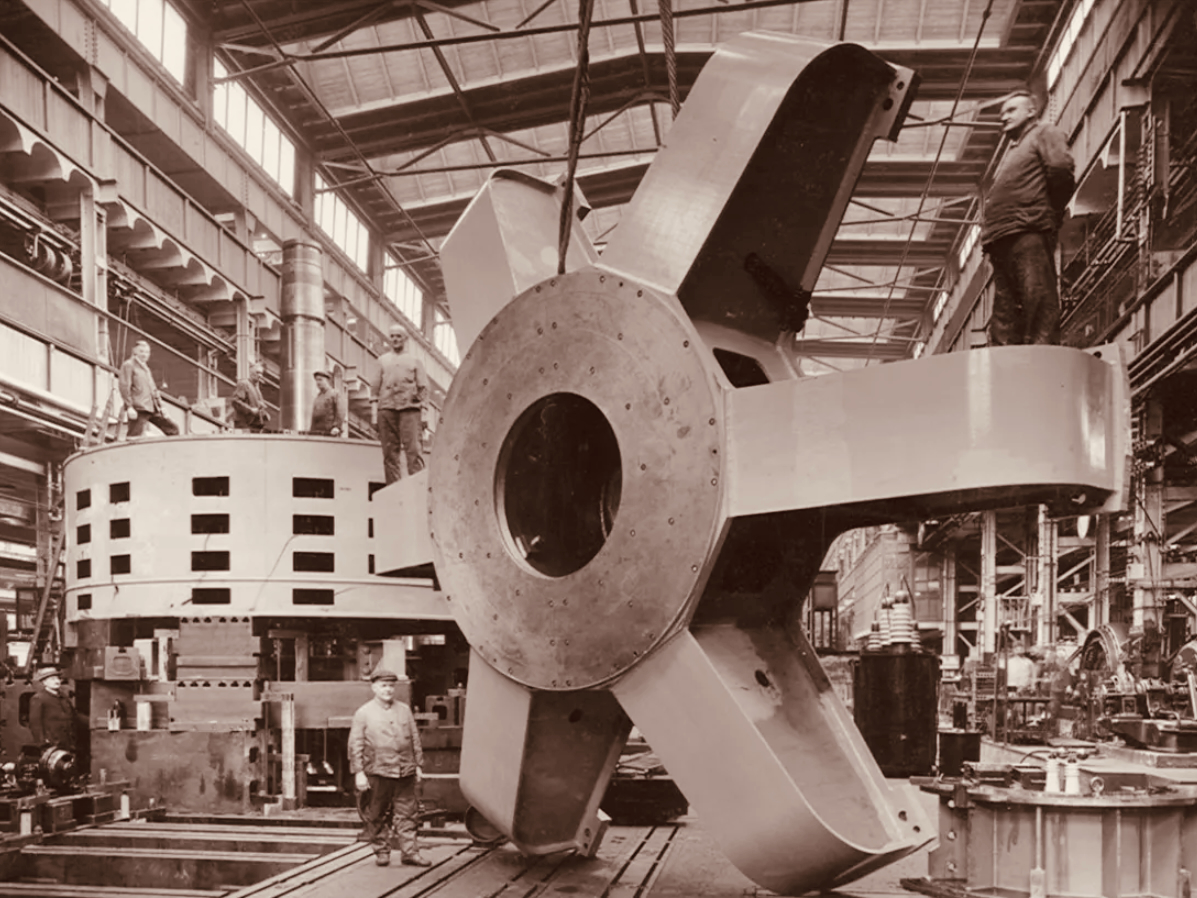
Visitors to Ardnacrusha in the turbine house on opening day, 22 July 1929 (ESB Archives). Below – a part of one generator awaiting installation (ESB Archives).
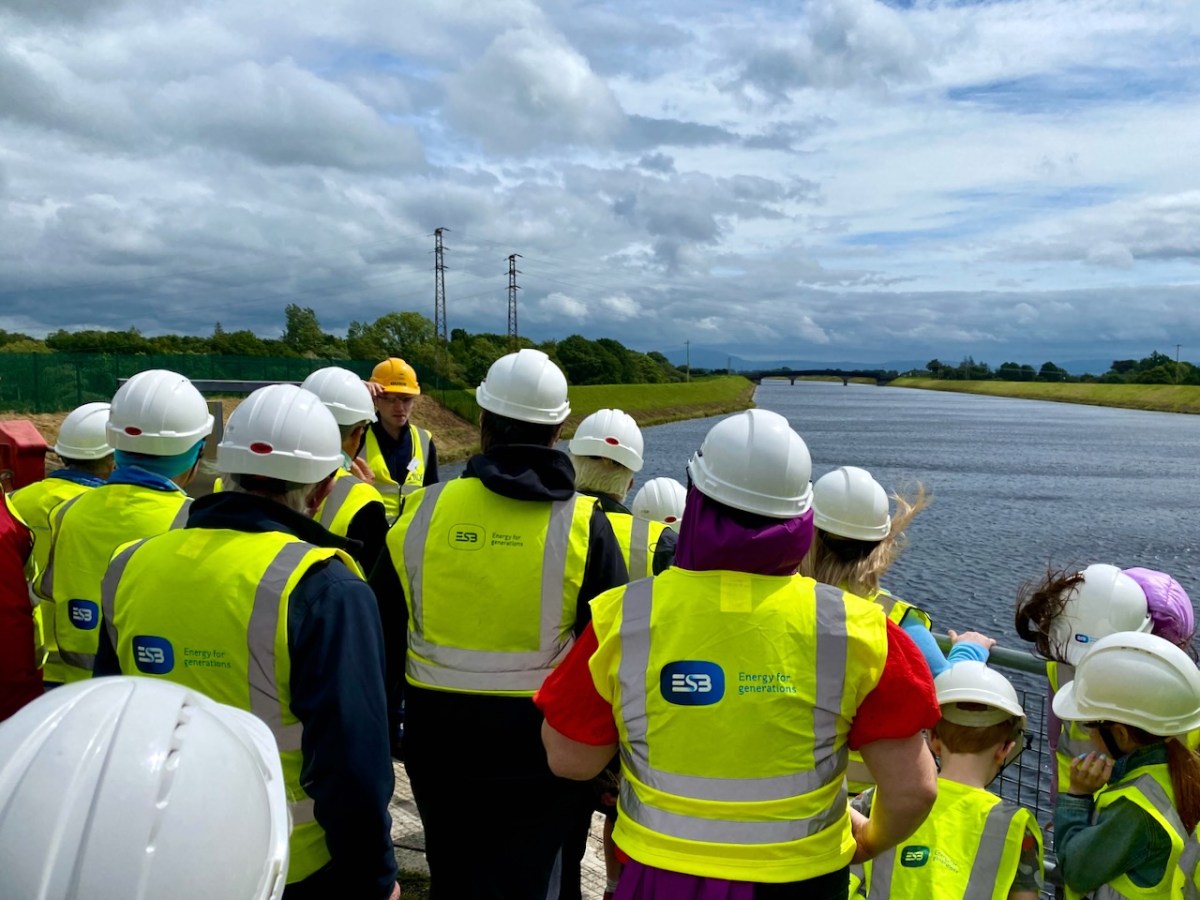
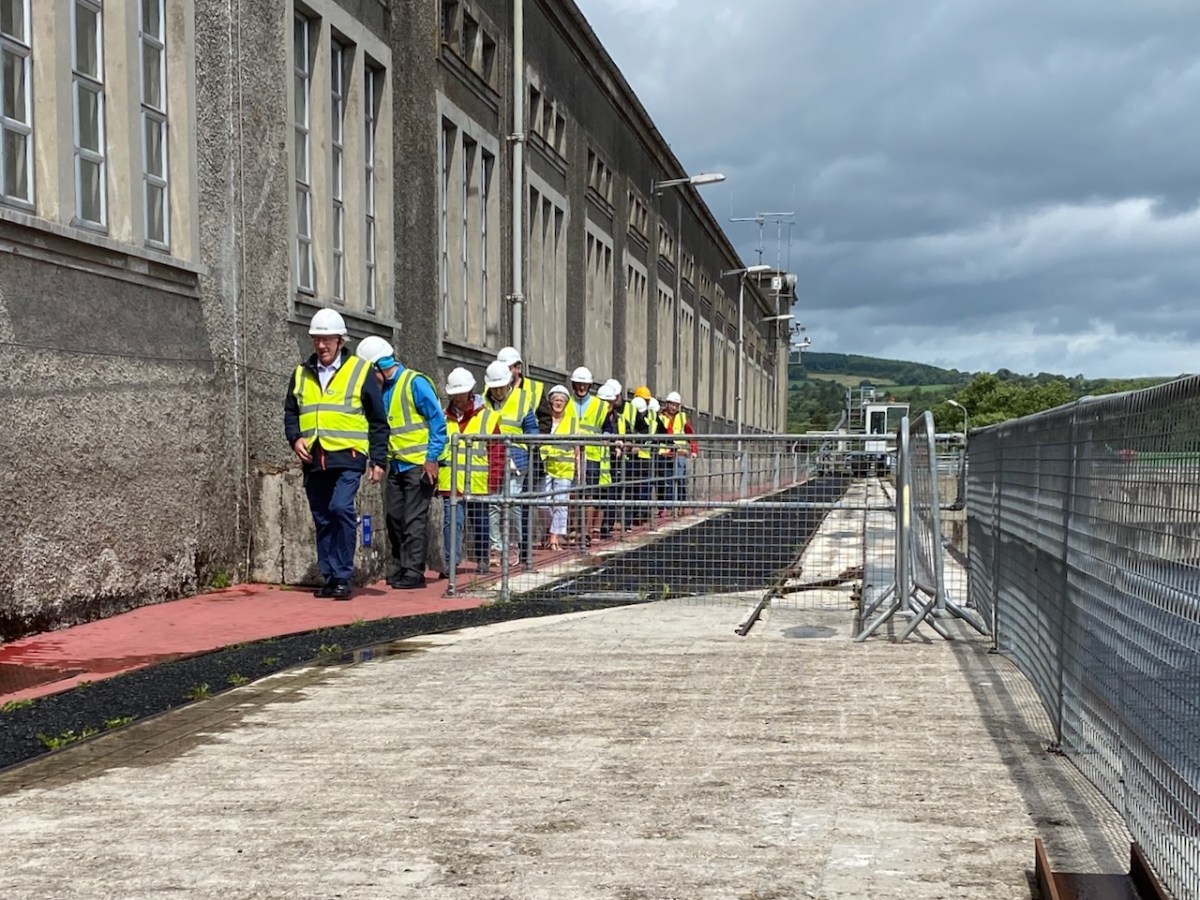
We joined a group visiting the generating station in early July. It was a great and satisfying experience! Safety was the top principle, but we got to see all the features of the whole set-up. If you want to go, book in advance – it’s free – and fascinating (if, like me, you are moved by engineering and history).
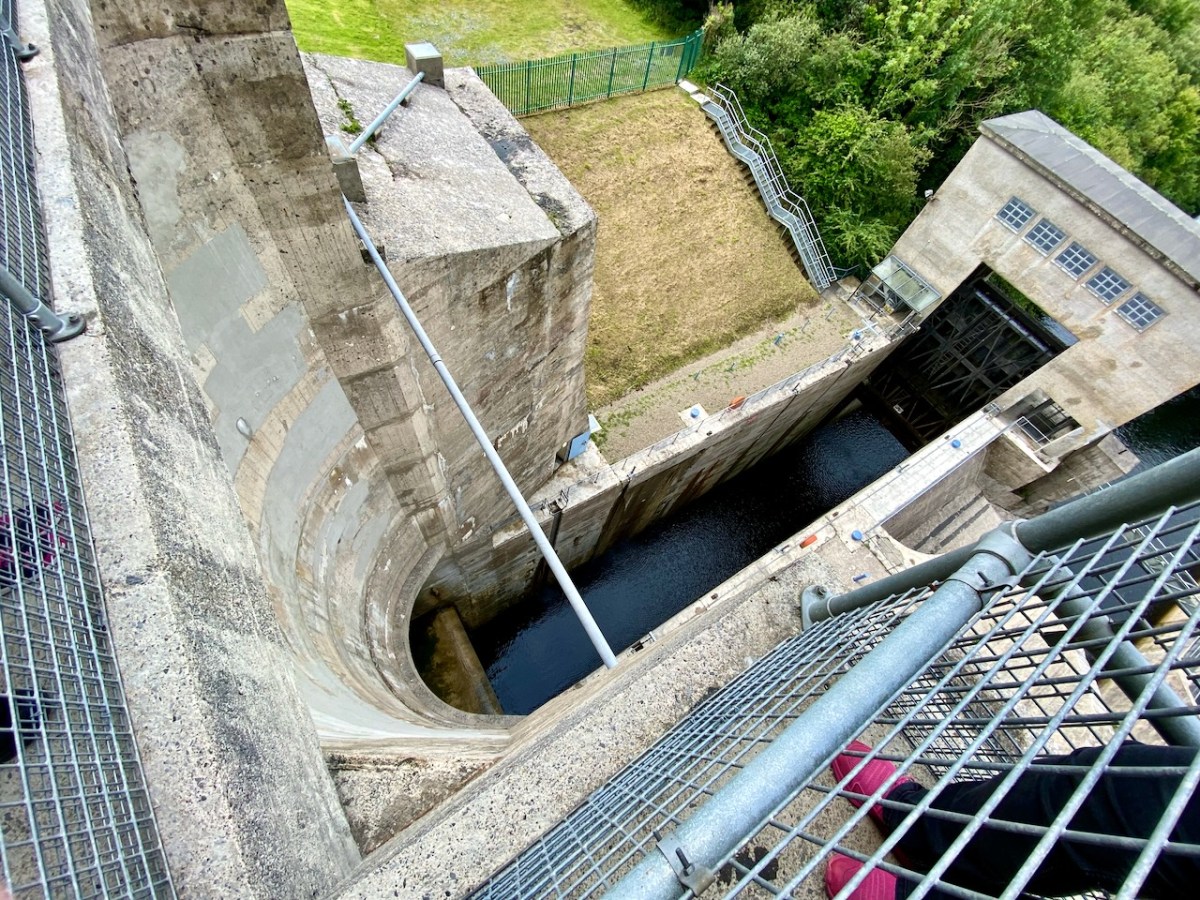
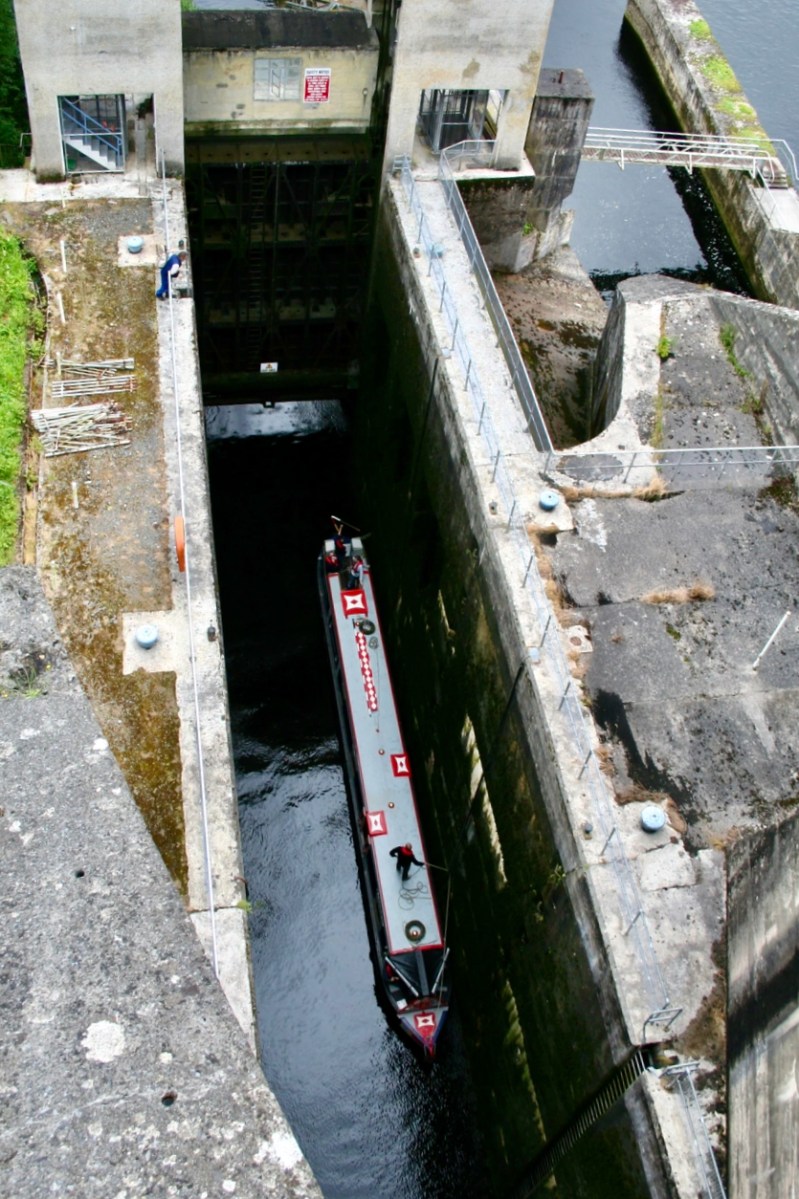
The pound lock at Ardnacrusha: it provides navigation for boats through the dam. At a drop of 100ft – 30 metres – it’s the deepest lock in the whole of Britain and Ireland. Following is a pic of a traditional British narrow-boat – NB Earnest – traversing the lock (Irish Waterways History).
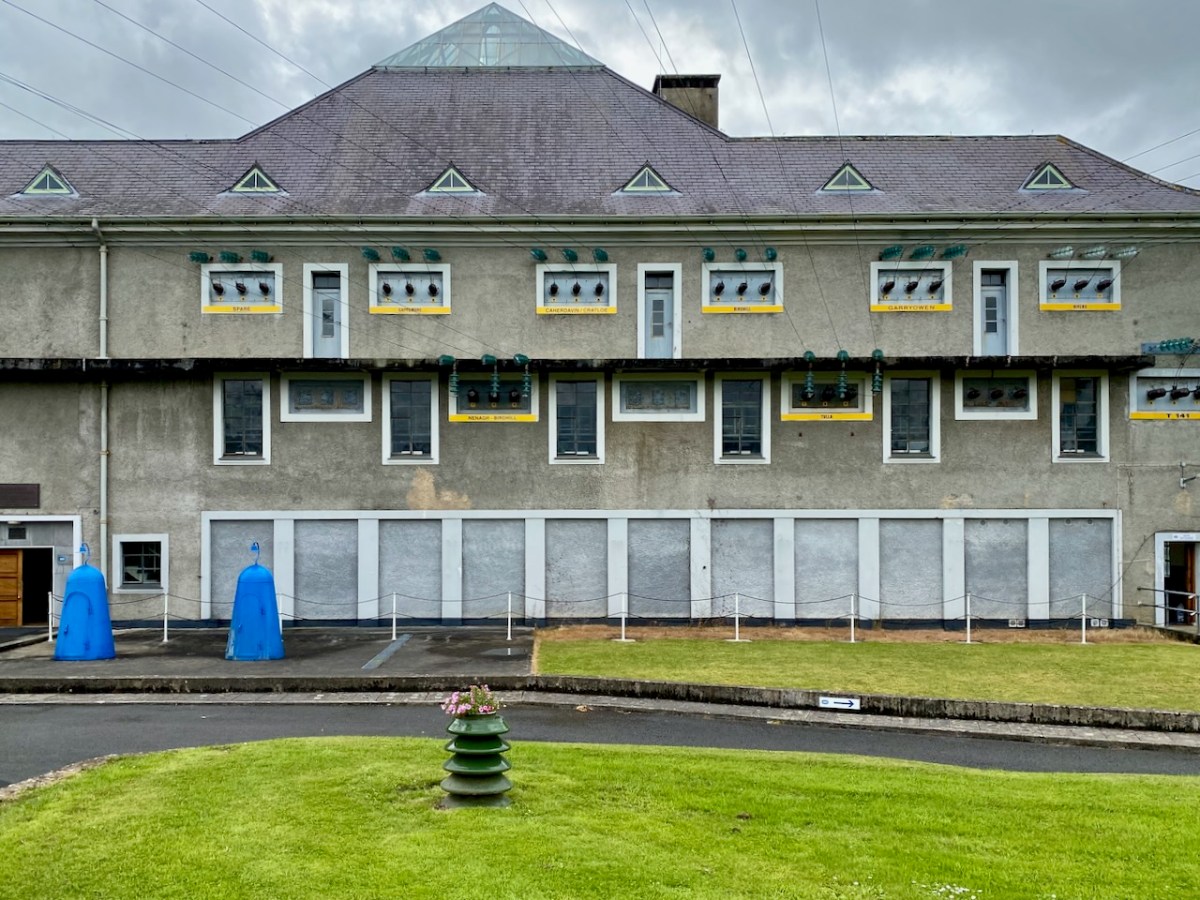
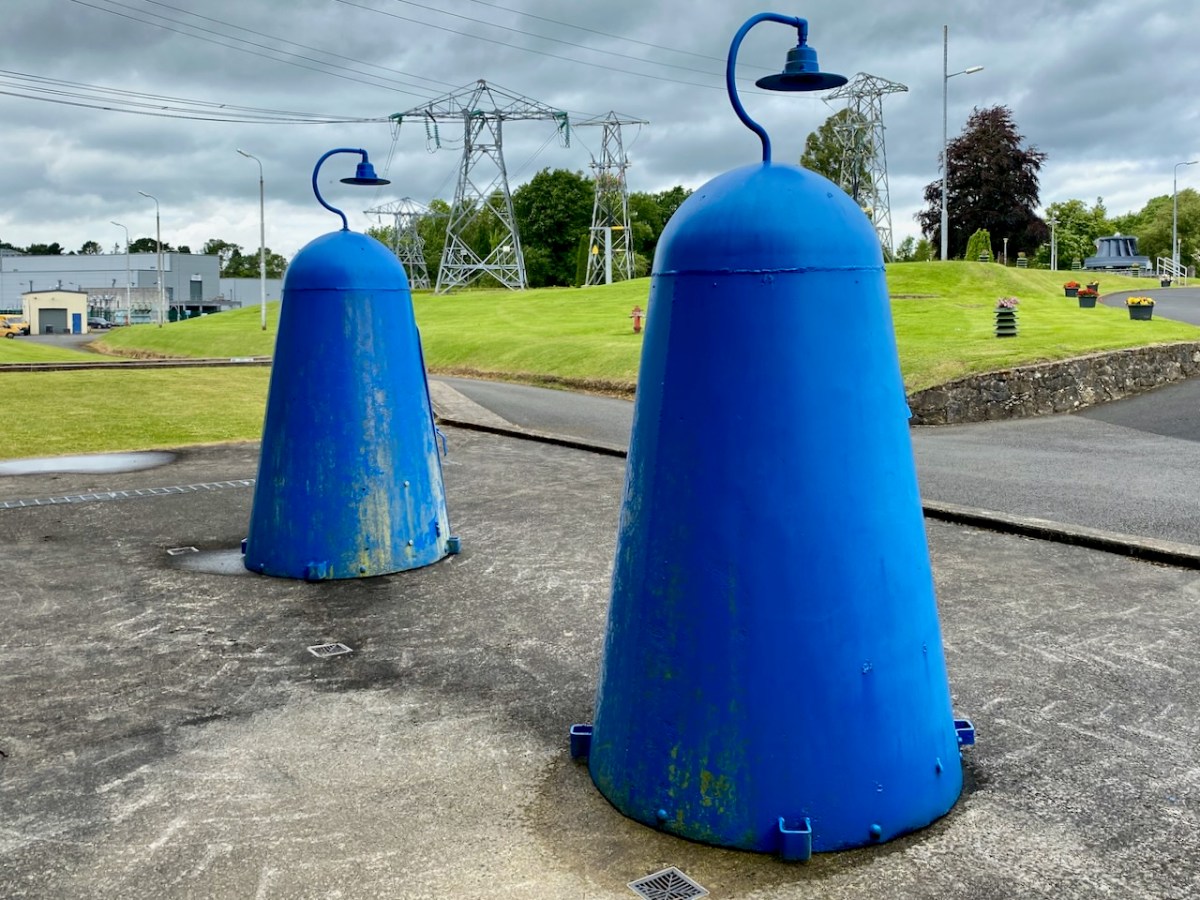
The main building at Ardnacrusha has a definite sense of ‘Bavarian Character’ to it – probably because of its German roots. I wonder if that’s the reason it escaped being bombed in World War II? Concerns were definitely expressed that this could have happened, and steps were taken to mitigate any possible damage. I was particularly impressed by these one-person air-raid shelters, which have been preserved because of their historical interest:
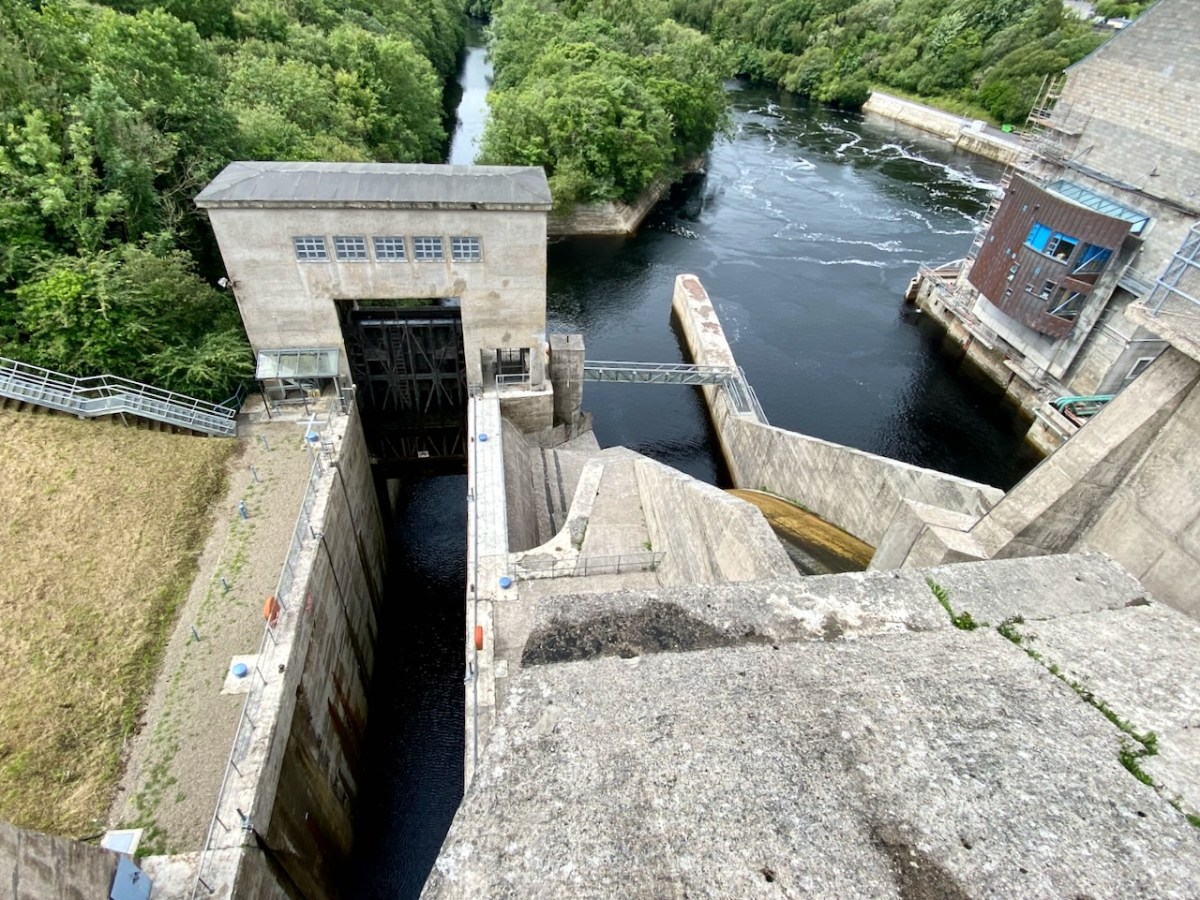
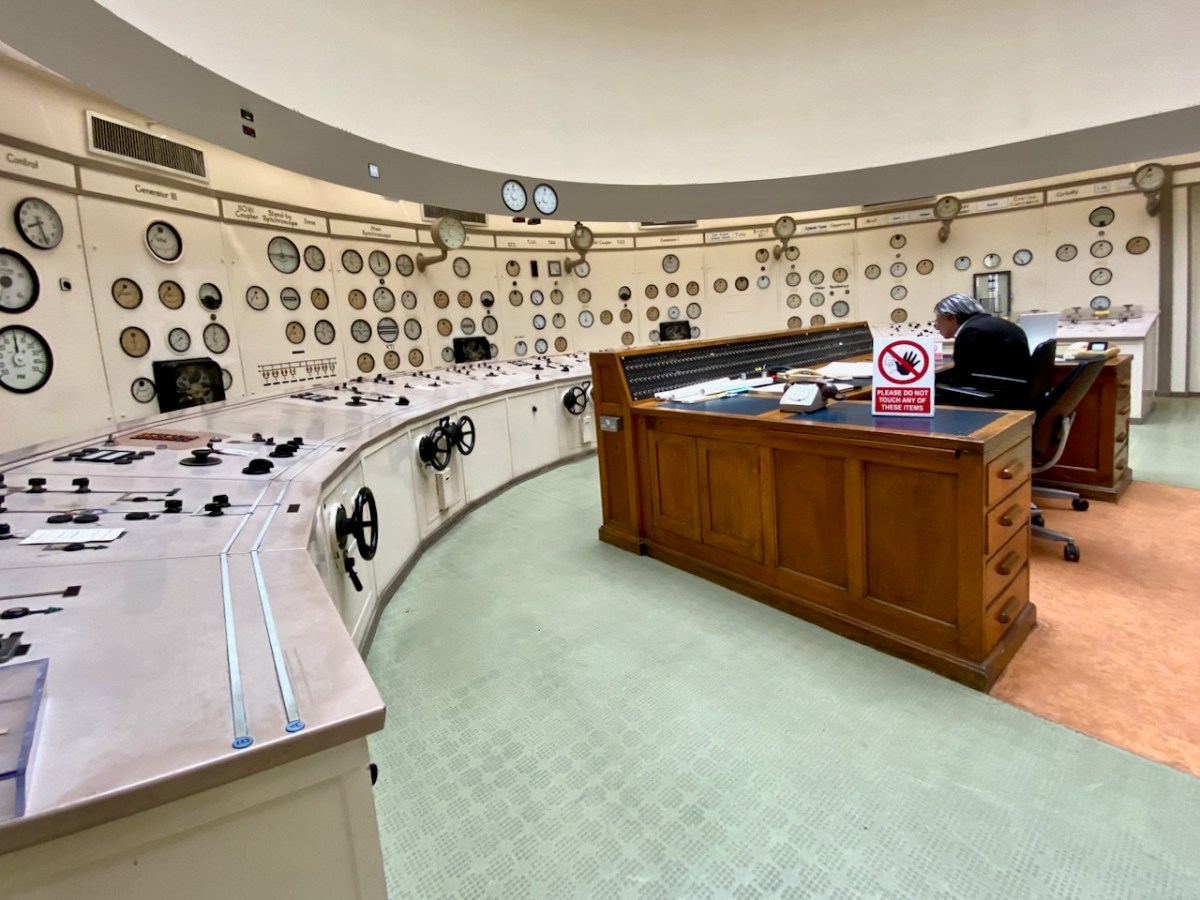
Here’s the ‘back end’ of the main building block, showing the position of the canal lock but also the new architectural-award winning control room – copper sheet clad – which has taken the place of the original room and desk, which have nevertheless been preserved as a piece of history:
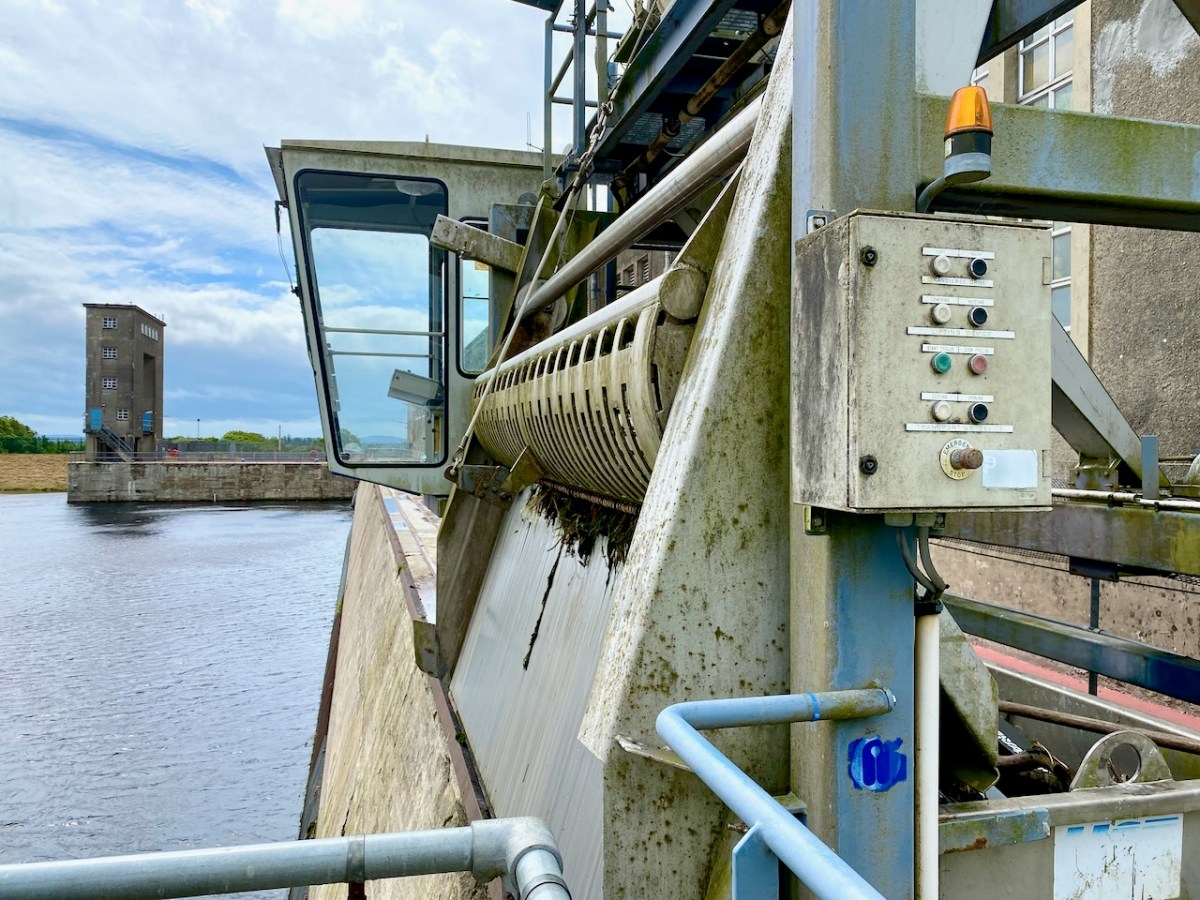
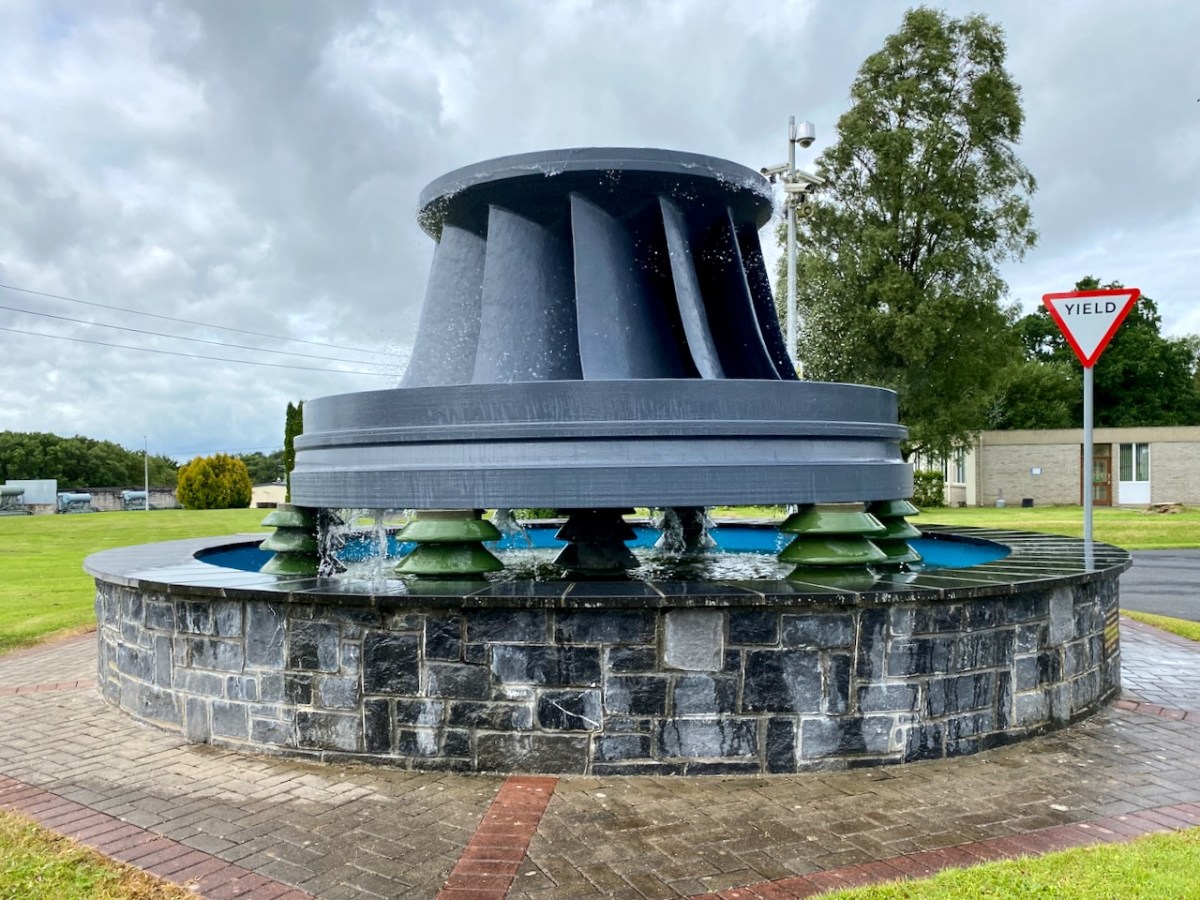
The machine above cleans the weir intake grills leading to the turbines. Everything here has its historical aspects emphasised, where relevant. The wondrous machine above is in full working order to this day, cleaning the intake grids on the weirs coming in from the main dam. A replaced turbine impeller is used as a decorative fountain feature beside the driveway into the station:
In a previous post, I mentioned that the artist Seán Keating was so impressed by the project that he painted a series of canvases during the construction process. The majority of these originals are now on display in the power station offices – accessible on the tour.
I once again express my thanks to Michael Barry for setting me on this rewarding path. I understand he is giving electrification and Ardnacrusha due mention in his forthcoming book A Nation is Born.
Further information on the Electrification of Ireland can be found in these posts:
Welcome to the UCD Library Cultural Heritage Collections blog. Discover and explore the historical treasures housed within our Archives, Special Collections, National Folklore Collection and Digital Library















 Roaringwater Journal
