A Hobby Horse in Ireland?

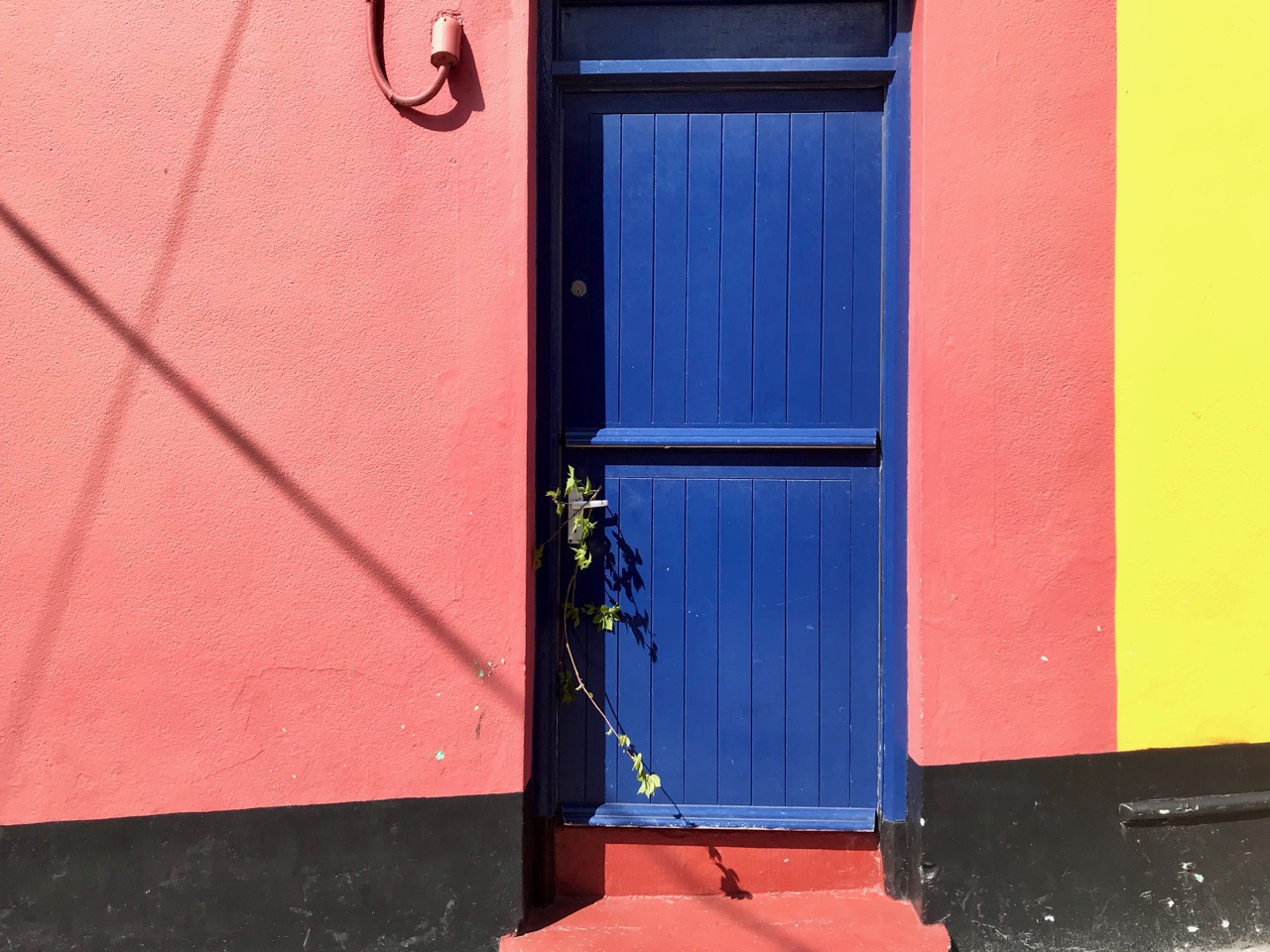
Surviving tradition in Ireland – a May garland seen on a threshold in Schull, West Cork. on May Day this year

We are in the month of May. How significant is that here in Ireland? Well, if it’s any indication, it’s a fact that Irish folklorist Kevin Danaher (1913 – 2002) gives far more space in his writings to May and traditional May customs than to any other single subject or season.
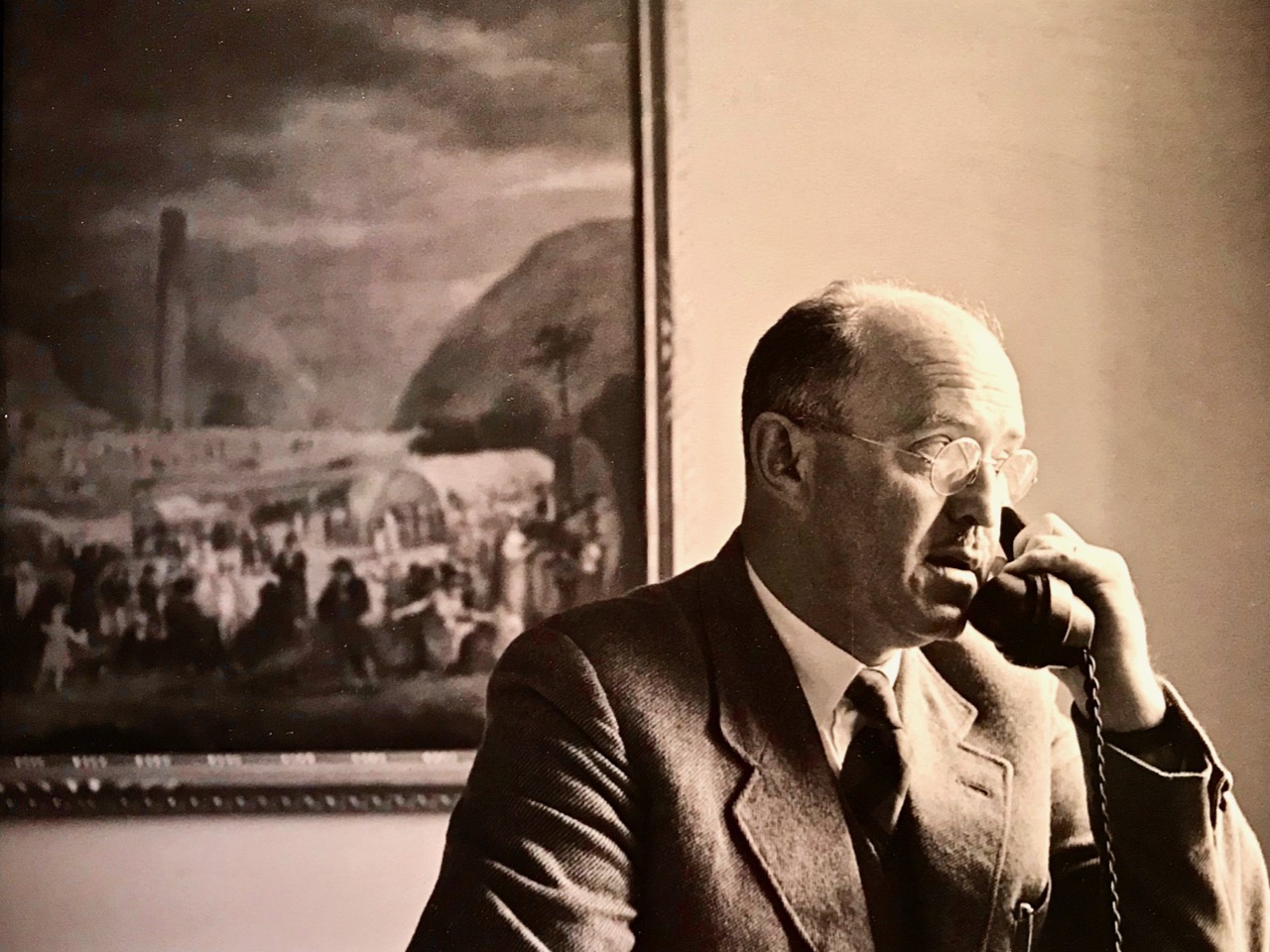
Kevin Danaher of Athea, Co Limerick, at the Irish folklore Commission in 1954. the photographer was Dorothea Lange, who features in this post

In the west of England, which has always had close links with Ireland in terms of language, culture and industry – the month of May has long been celebrated with a strong focus on the ‘Hobby Horse’, a phenomenon which bridges the worlds of superstition, spectacle and folklore. In two places – Padstow in Cornwall and Minehead in Somerset – Hobby Horse (or, colloquially ‘Obby Oss’) festivals are huge events – usually. In 2020, sadly, both had to be cancelled due to Covid19 restrictions: probably the first time in hundreds of years that they have not taken place. The Minehead Oss has a recorded history that goes back to at least 1465, while in Padstow they will tell you that the Obby Oss has been revered forever on the First of May with never a break.
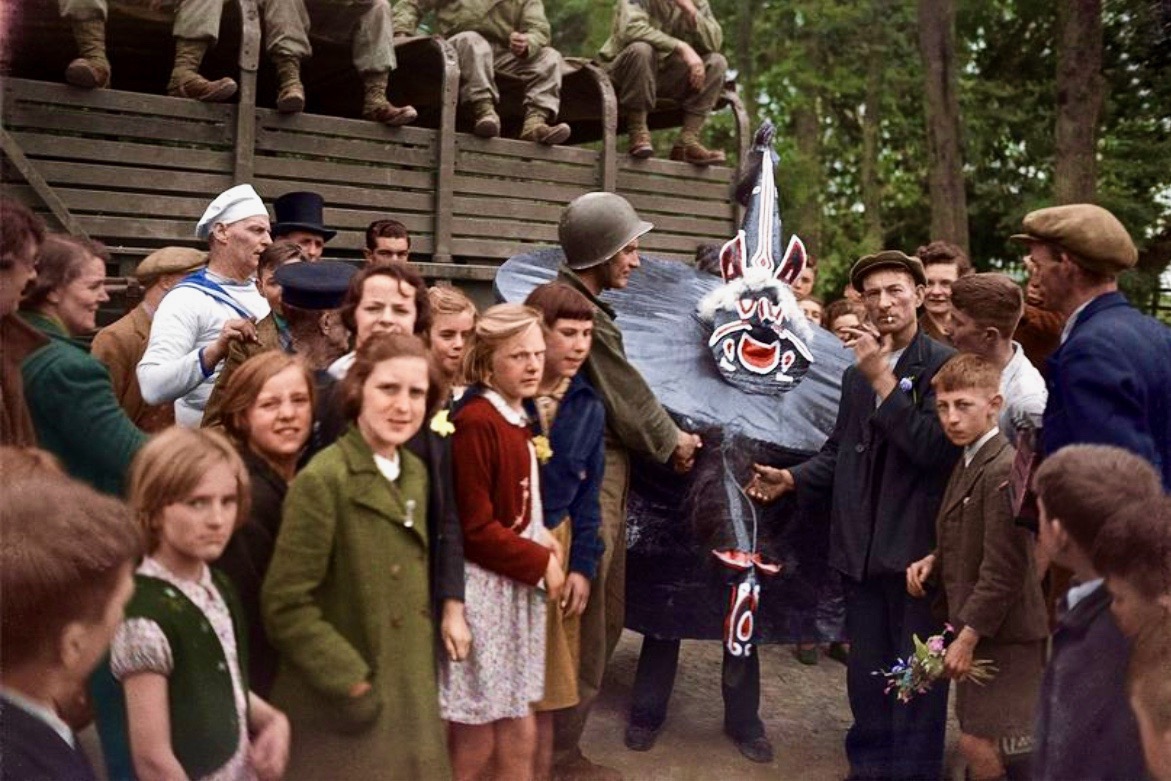
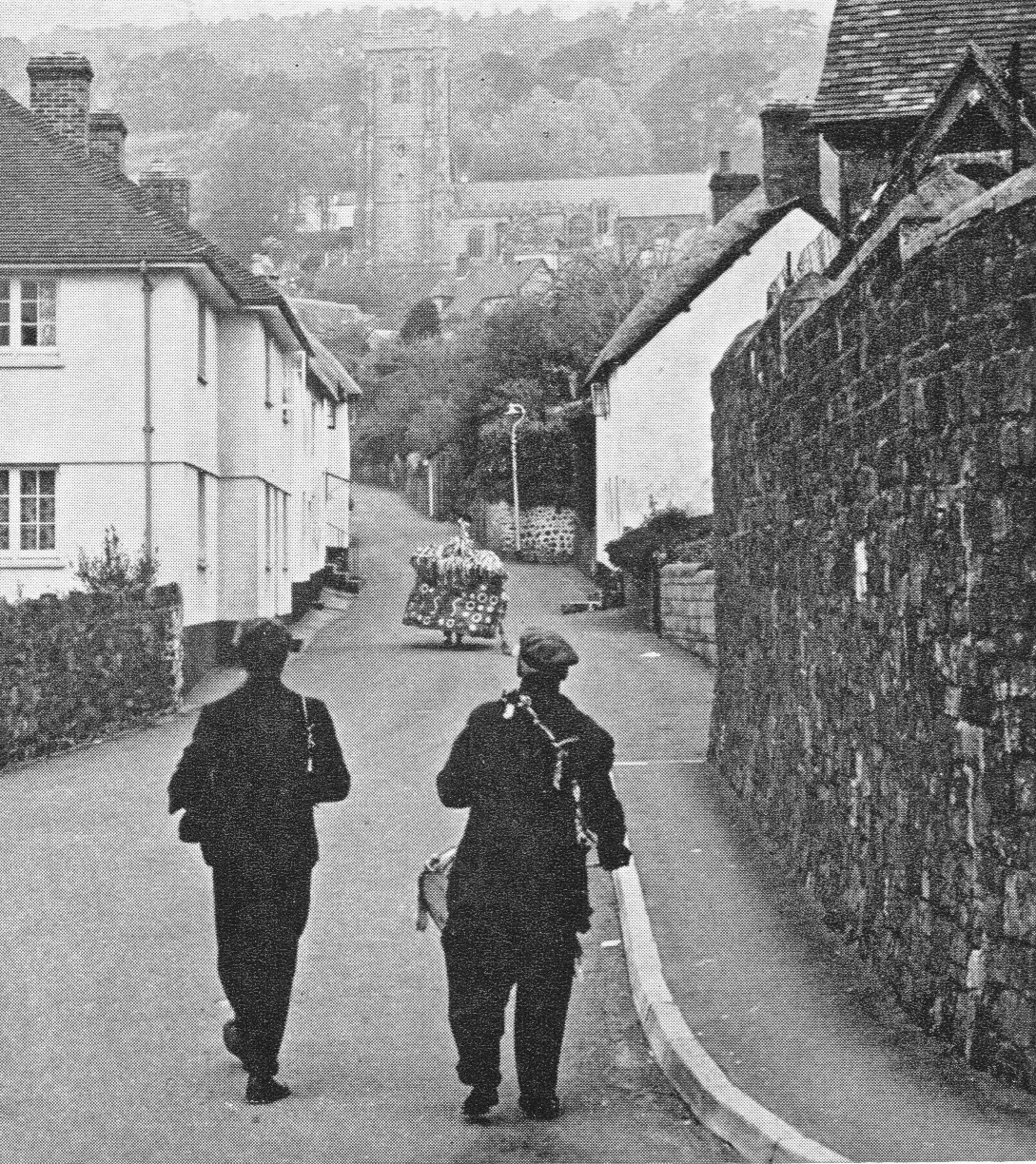
The Padstow Oss has survived through peacetime and wartime. This rare photograph (above) – attributed to Joshua Barret – was taken in 1944, while the early 20th century photograph (below) of the Minehead Oss is my all time favourite of a folk custom: the Oss always has and always will perambulate the town every year, even if no-one is interested in watching it!
As we find this very strong May tradition thriving (usually) in the west of England, we might expect to see an equivalent in Ireland, but you can’t immediately think of a Padstow or Minehead equivalent. Oh, yes – the Hobby Horse is purely Irish, in that there was once a now extinct breed – called a Hobby – which is said to have been the genetic source of all race horses since pre-Roman times!
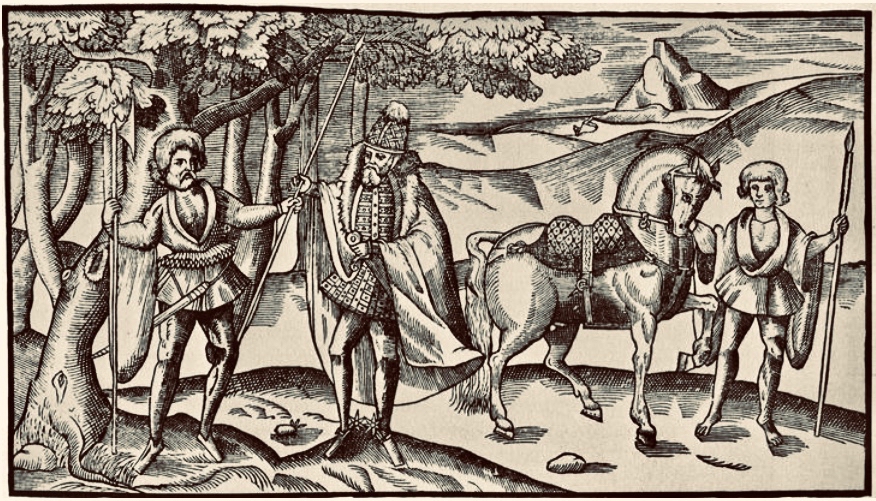
. . . It is possible to trace the root of the Irish Hobby back to the northern Iberian Peninsula where this peculiar population of horse seemed to first be recognised about 700 BC, identified as the Celtic Horse. It was a small horse, gaited and exceedingly fast. It was the fastest horse in the known world back then, by 400 BC the Greeks called them the Thieldones and immortalized them on the frieze of the Parthenon, and this breed was already the Roman’s preferred steeds for racing. Pliny even writes about them in 77 AD, and we know when the Romans invaded Britain they brought those horses with them. But the Romans found that when they arrived they were met by the natives who had Celtic Horses already–horses which had been brought to Britain centuries earlier in trade from Spain by the Phoenicians for the metal mined there . . .

(Source – Sport Horse Breeder.com)

I won’t dwell on this idea that the Irish Hobby Horse was the ancestor of all modern pure bred sports horses – and was probably responsible for the innate Irish love of everything to do with horses and sport – as I am getting completely out of my depth here, and it’s all a bit off-topic anyway! Although, who knows how and where that name might have migrated over the centuries?
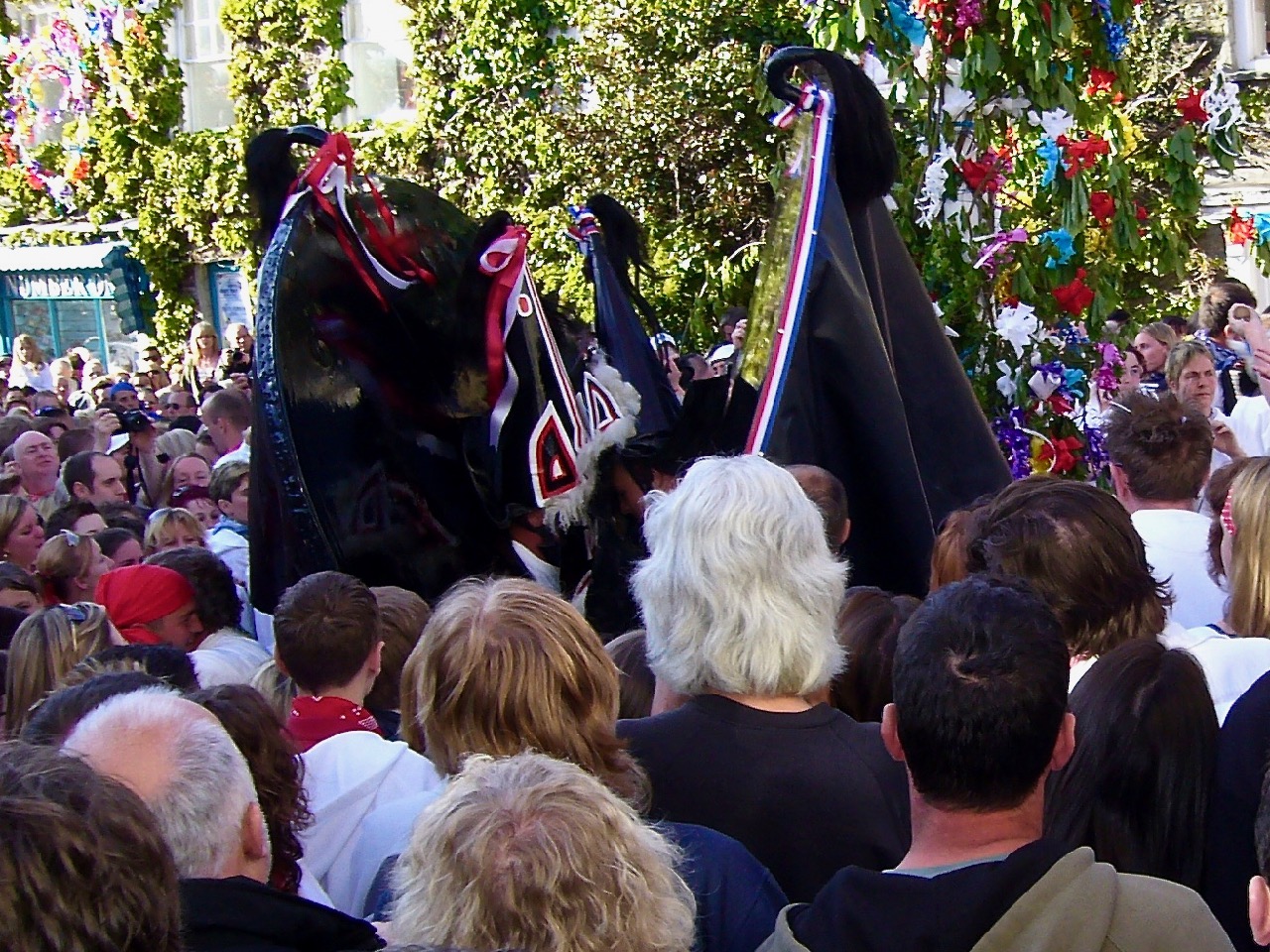
The culmination of the Padstow ceremony on May Day is the ‘meeting’ of the Red and Blue Oss at the huge maypole in the Town Square on the evening of the day (above). They have to close the town to all traffic because of the enormous crowds who attend, and you can see why the ‘social distancing’ rules could never have been applied to the event. Let’s hope that in future years ‘normality’ will have returned sufficiently to our lives to ensure that these ancient customs continue. In my lifetime I have been to Padstow on May Day at least thirty times, and also to Minehead on many occasions: I have good memories of them both.
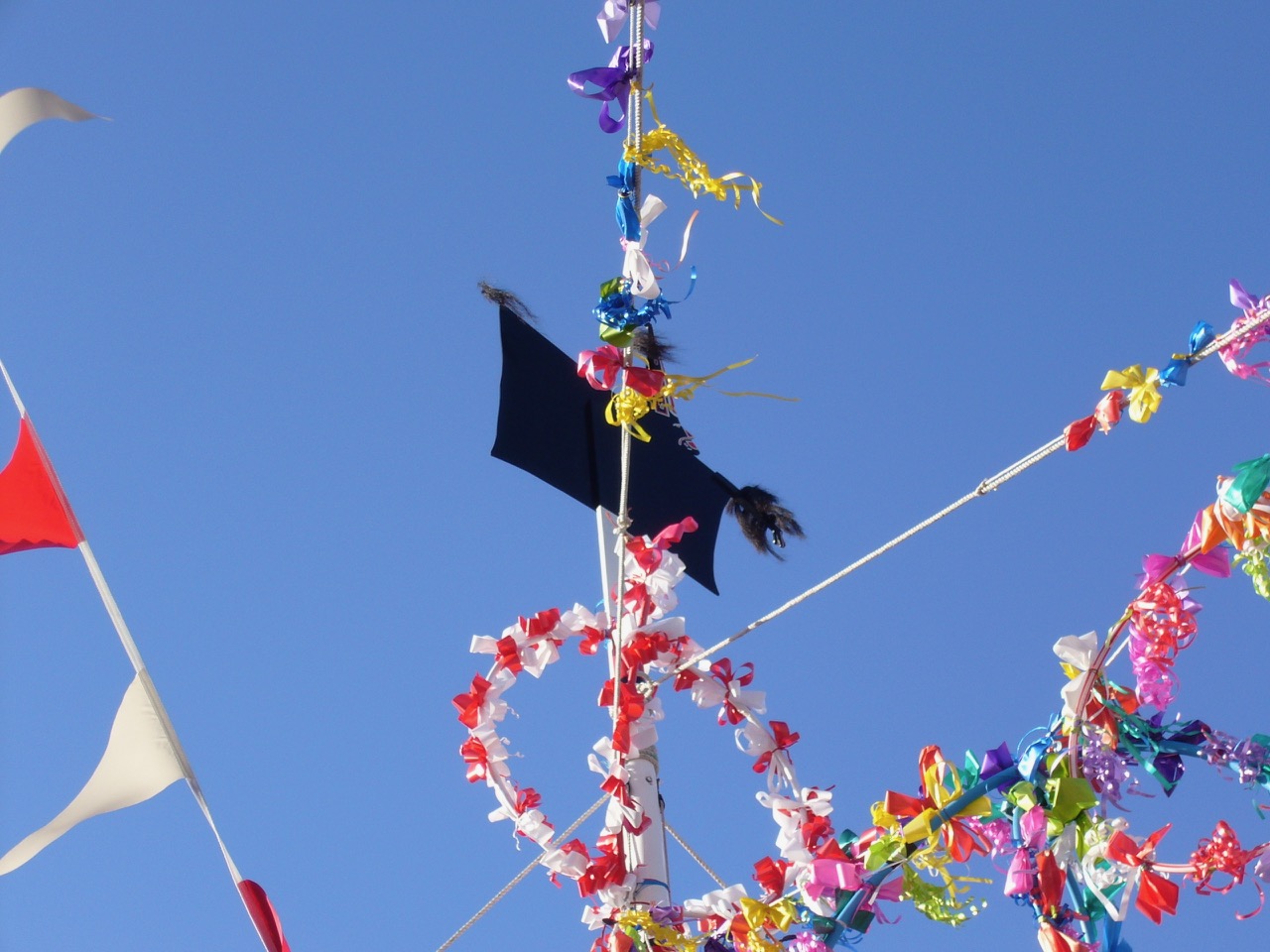
In order to find a precedent in Ireland for a traditional Oss, I have mined the enormous archive that Kevin Danaher left behind in the Irish Folklore Commission, and I am pleased to report a whisper of success! Danaher uses various sources to summarise an account of traditions taking place in Ireland on May Day:

From the diary of Joshua Wight, a Quaker, we learn that so late as the middle of the eighteenth century, propitiatory rustic processions took place in the south of Ireland. The observer records, that about noon in the month of May, 1752, there passed through the streets of Limerick many thousand peasants marshalled in companies, representing various branches of agriculture…


And Thomas Crofton Croker (1825) tells us of what he calls mummers:


‘They consist of a number of the girls and young men of the village or neighbourhood, usually selected for their good looks, or their proficiency, – the females in the dance, the youths in hurling and other athletic exercises. They march in procession… Two of them bear each a holly-bush, in which are hung several new hurling-balls. the bush is decorated with a profusion of long ribbons which adds greatly to the gay and joyous, yet strictly rural appearance of the whole. The procession is always preceded by music; sometimes of the bagpipes, but more commonly of a military fife, with the addition of a drum or tambourine. A clown is, of course, in attendance: he wears a frightful mask, and bears a long pole, with shreds of cloth nail to the end of it, like a mop, which ever and anon he dips in a pool of water, or puddle, and besprinkles such of a crowd as press upon his compassions, much to the delights of the younger spectators… The Mummers during the day parade parade the neighbouring villages, dancing and receiving money. The evening, as might be expected, terminates with drinking’.


Patrick Kennedy, in The Banks of the Boru, describes a similar procession:


‘After a reasonable pause we had the delight of seeing twelve young men come forth, accompanied by the same number of young women, the boys dressed much more showily than the girls… To heighten the beauty of the spectacle, out sprung the fool and his wife, the first with some head-dress of skin, a frightful mask, and a goat’s beard descending from it. Though we knew that the big bluff, good-natured countenance of Paudh himself was behind the vizard, we could scarcely refrain from taking flight, not being able any more than other children to look on an ugly mask without extreme terror. His wife (little Tome Blanche, the tailor) was in an orange-tawny gown, flaming handkerchief and mob-cap, and had a tanned, ugly female mask, fitting pretty close to her face. Paudh’s first salute to his friends was a yell, a charge in various directions, and a general thrashing of the crowd with his pea-furnished bladder suspended from a long stick. Mrs Clown had a broom, and used it to some purpose when she found her friends disposed to crowd her.’


There is also mentioned by Sir William Wilde, together with something like a hobby horse (Popular Irish Superstitions, 67):


‘From Monaghan we have a graphic account of a somewhat similar proceeding: there the girls dressed up a churn-dash a s a “May babby” and the men, a pitchfork, with a mask, horse’s tail, a turnip head, and ragged old clothes, as a “May boy” but these customs have, we believe, long since become quite obsolete.’
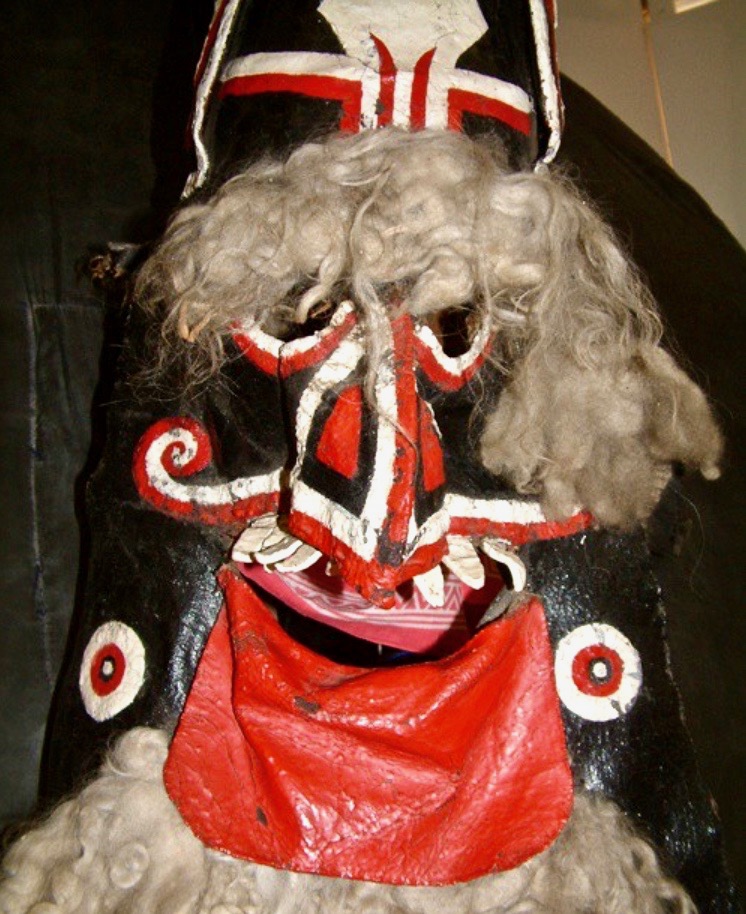
The mask worn by the Obby Oss at Padstow could have evoked the description by Patrick Kennedy, above: some head-dress of skin, a frightful mask, and a goat’s beard descending from it . . . This particular representation, once used in the Padstow processions, is now a museum piece. So here I present my argument that we can find descriptive evidence of traditional Hobby Horses in Ireland as part of the May festivities. If anyone finds other instances or has direct personal experience or stories passed down which involve Hobby Horses, or activities which sound like the examples described in Danaher’s reports, above, please let me know.
April Flowers in the Magic Forest

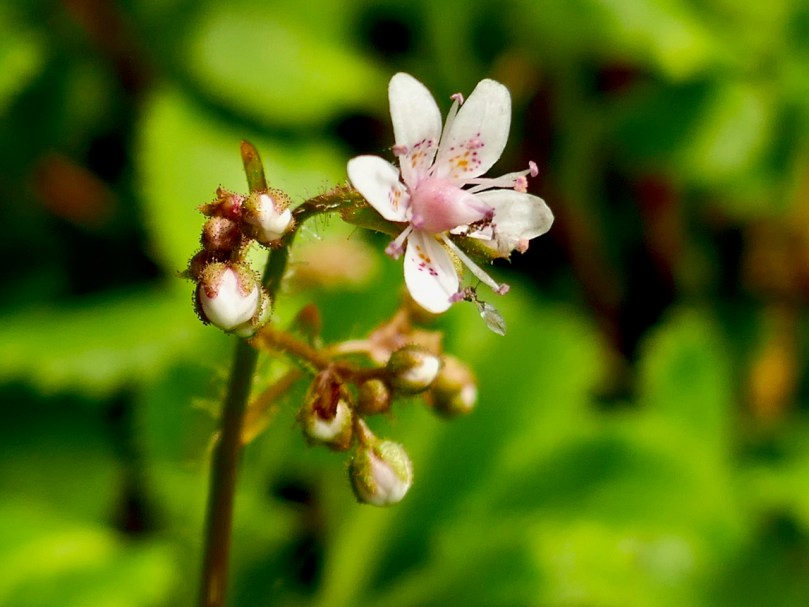
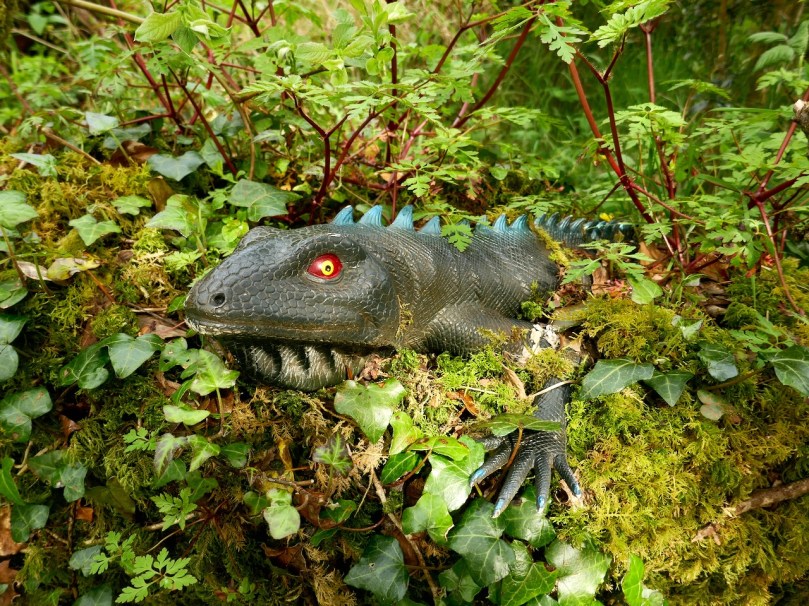
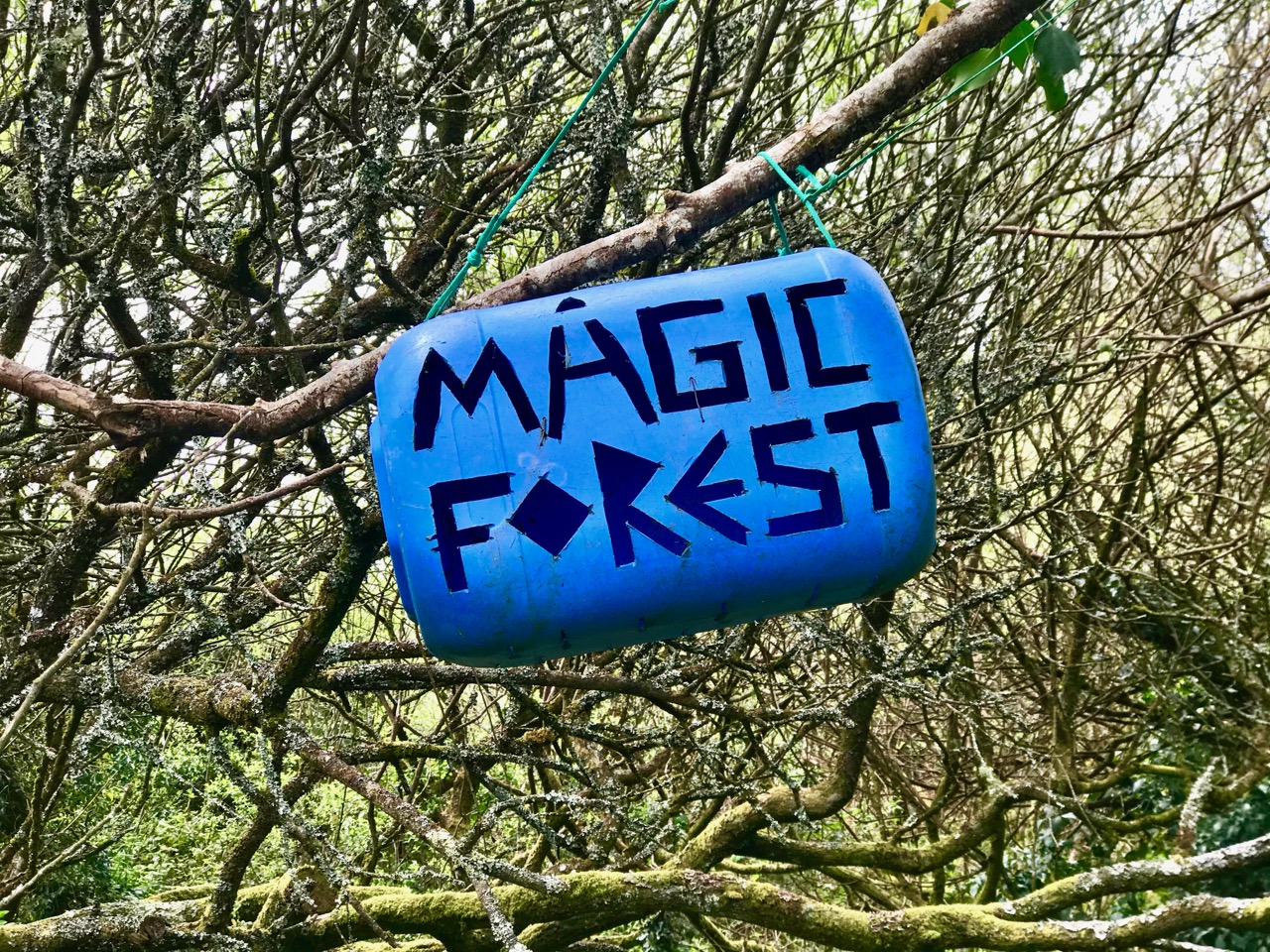
Enchanting – that’s the word that comes to me when I think of The Magic Forest. Although at first I was drawn to the quirky art installations (see our post from five years ago), as I’ve become more interested in wildflowers I like to photograph them there, since it’s such a special habitat. So here is a selection of early spring photographs from the Magic Forest, to illustrate what a diverse and attractive plant life it hosts.

In their beautiful and comprehensive book, The Wild Flowers of Ireland: The Habitat Guide, Declan Dooge and Carsten Krieger describe what to expect in a native woodland. First and foremost, there are in fact very few native woodlands left in Ireland, of the kind of oak forests we might have seen in medieval times. However, the little woods that surround the Magic Forest fit their definition of an acid-soil natural woodland, with trees not so dense that light cannot penetrate, and lots of moisture underfoot giving ferns and mosses (below) a friendly environment. A visit to an undamaged native woodland, they state, is a remarkable experience.

While the Magic Forest is probably not as pristine and undamaged as it could be (it’s in the middle of farmed land, after all) it has been left to flourish intact for many years, thanks to the stewardship of Thomas Wiegandt, whose interventions have only added to the fairytale quality of the woods.

What we see inside is an excellent representation of an Irish woodland habitat in as unmanaged a situation as possible. Walking through it in early spring is an ethereal experience – I defy you not to be moved.

That is not to say that all the plants we find in it are all truly native – for example, the Yellow Archangel flower that flourishes here (above) is a garden escape that has naturalised widely across Ireland. There is a native Archangel, but we know this one is the introduced variety because of the silver markings on the leaves.

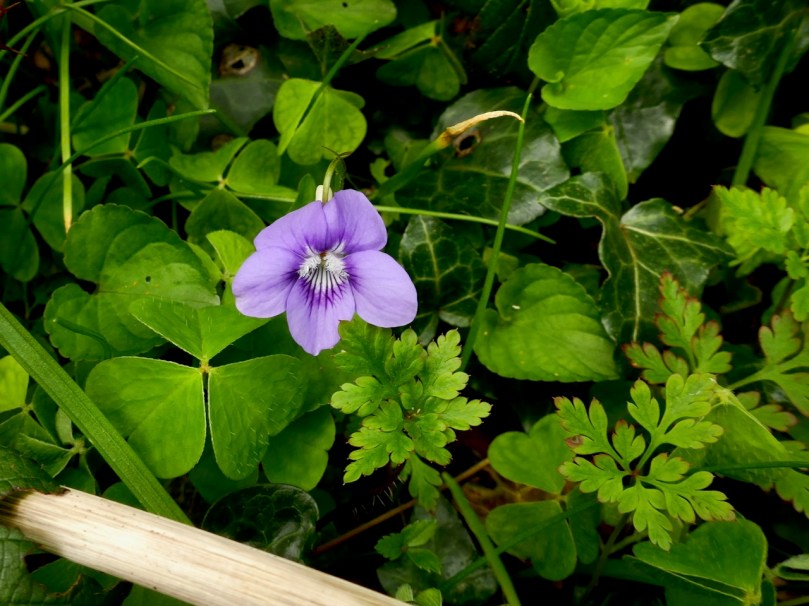
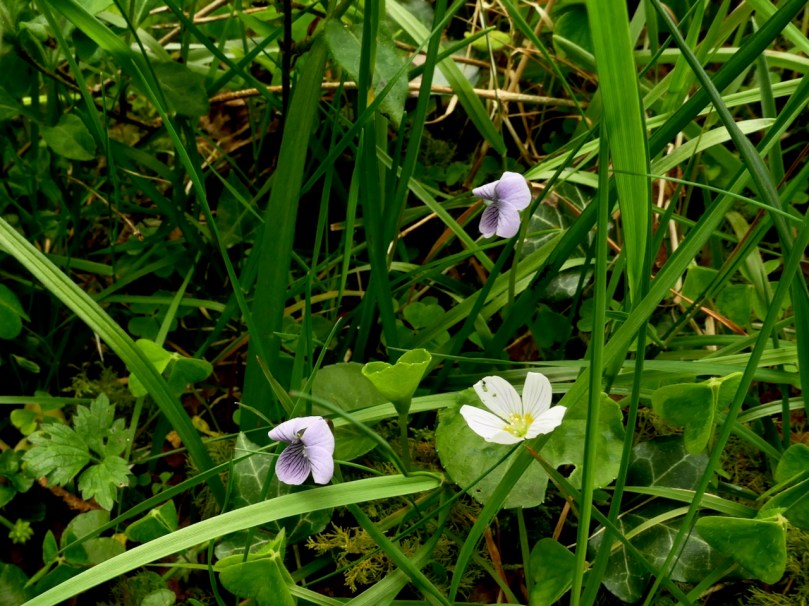
Dooge and Krieger point to the presence of Early Dog-violet (they call it Wood Violet) in woodland, but in fact what I have found in the Magic Forest are two types of violet – the Common Dog-violet (above) which is everywhere in West Cork right now, and the much less-seen Marsh Violet (below).

Because the Common Dog-violet can turn as it ages from its normal deep blue to the same pale lilac colour as the March Violet, you have to keep a sharp look-out for the differences, but once you see them together they are unmistakable.

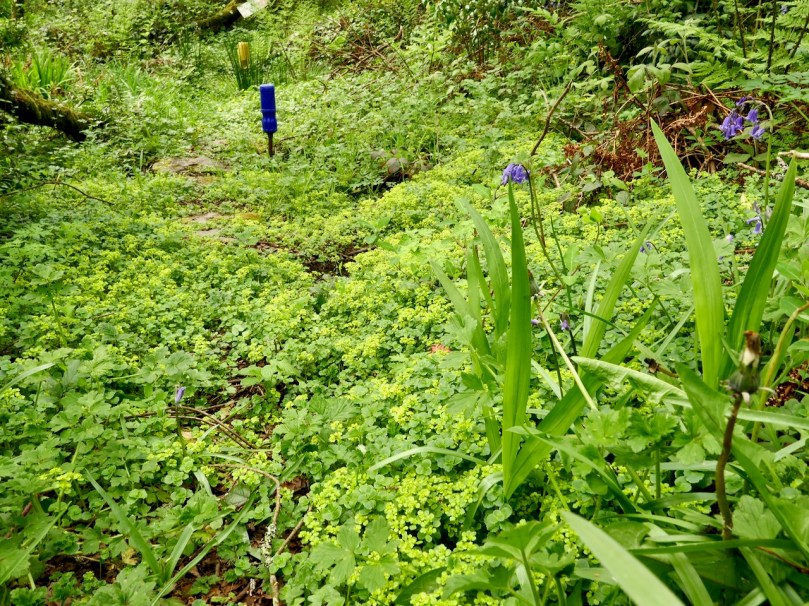
One of the nicest aspects of walking in woodland is the soft carpet underfoot. In The Magic Forest this tends to be a bed of Opposite-Leaved Golden-saxifrage (above), which loves damp dark places. This is an interesting flower in that it has no actual petals. The Sepals are bright green and unfold to reveal the stamens which are brown-tipped inside their little bed but shed the brown cover and turn bright yellow when fully open.

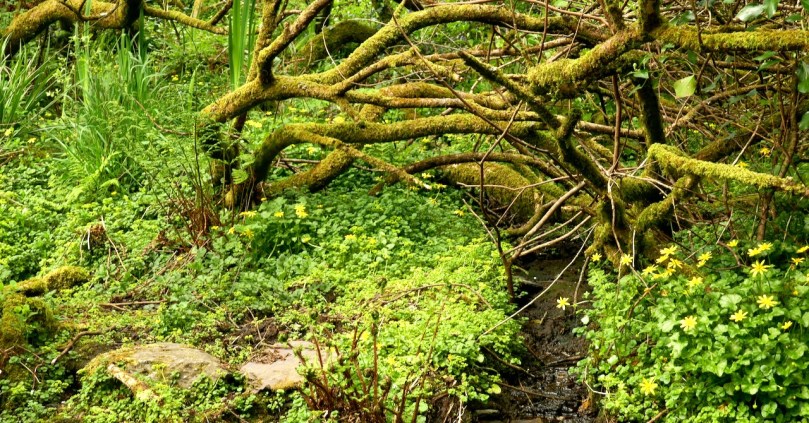
Getting right down on the forest floor (a little undignified and hard on clothing) is well worth it as all kinds of flowers are emerging up through the undergrowth. Celandines and Bluebells mingle above, while Celandines and Wood-sorrel cover the banks of a tiny stream (below).

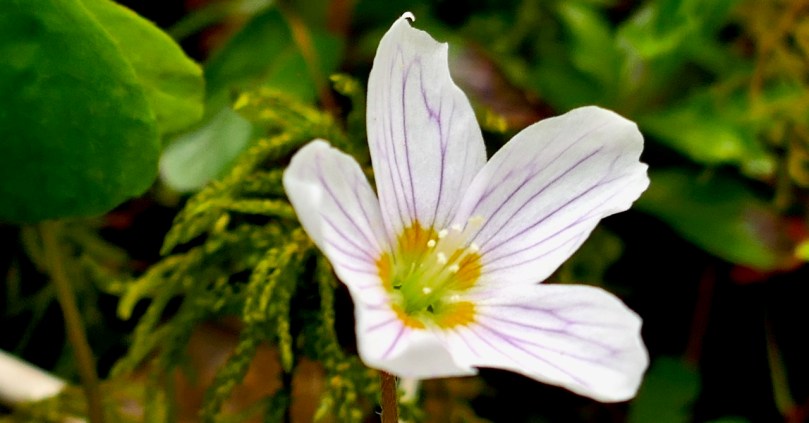
At this time of year, early spring, one of the most attractive species is Wood-sorrel, with its distinctive shamrock-shaped leaves. The delicate purple veining on the petals, leading down to a golden-yellow centre rewards close scrutiny.

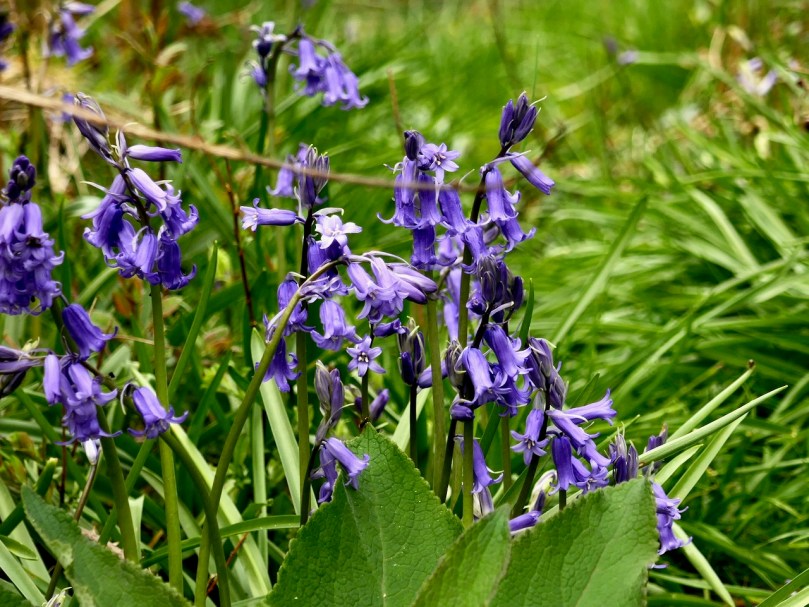
Of course, at this time of year, what we all love to go into woodland to see are the Bluebells and The Magic Forest abounds in native Bluebells. If you are wondering what the differences are between Native and non-Native (Spanish) Bluebells, here’s how to tell: we know these are native Bluebells because they have a lovely scent, their petals curl back, the flowers only grow on one side of the stem (the weight of which gives them that characteristic curve over), the anthers are white and the leaves are quite fine. All of these points can be observed in the photograph below – except for the scent! 

Bugle is another flower that loves this kind of environment, although it’s not quite as specialised as the Bluebell – I have seen it on hedgebanks as well where it might be getting moisture but not a lot of shade. Below, the two enjoy each other’s company.

Zoë Devlin, on her website Wildflowers of Ireland (my go-to resource, both print and online, and the best and easiest all round book to introduce you to Irish wildflowers) tells us, In his ‘Complete Herbal’ of 1653, Nicholas Culpeper wrote of Ajuga reptans [Bugle]: ‘if the virtues of it make you fall in love with it (as they will if you be wise) keep a syrup of it to take inwardly, and an ointment and plaster of it to use outwardly, always by you’.  A hand lens is a must for this flower – close up the tiny orchid-like flowers open wide to show their tonsils.

in Southwest Ireland we have a special group of plant species known as the Lusitanian Flora. Here’s a good explanation of what this means from Wikipedia:

The Lusitanian flora is a small assemblage of plants that show a restricted and specific distribution in that they are mostly only to be found in the Iberian Peninsula or southwest Ireland. Generally, the plants are not found in England or western France even though suitable habitat almost certainly exists in those regions. . . . This biogeographical puzzle has been a topic of academic debate since the middle of the 19th century. Conflicting, and as yet unresolved theories centre on whether the Irish populations are a relict, surviving from before the last ice age or whether they have been transported there in the last 10,000 years.

For a complete list of the Lusitanian species, take a look at my other favourite website – Irish Wildflowers by Jenny Seawright.

This is a longwinded way to introduce St Patrick’s Cabbage, the Lusitanian wildflower that crops up in The Magic Forest. The photos I have of it in the forest were taken just after it had started to bloom (above) so the flowers are yet sparse (below). You can see photographs of them in a more advanced phase in this post.

The final flower I want to highlight is the Cuckooflower, which is found in abundance in the fields all around the Magic Forest and to my surprise even inside it, although this is not typically a woodland flower. It likes the damp but it generally prefers open meadows. Besides being delightful, it is where the Orange-tip Butterfly likes to lay its eggs so look out for tiny orangey eggs on the stems. The flower varies in colour from almost pure white to a deep pink.

There is a LOT to see in the Magic Forest – once we are all able to travel again I highly recommend a walk in it (see our original post for directions) – at any time of year. You won’t be disappointed. And thank you, Thomas, for this gift to West Cork!

Robert chose to write about the Magic Forest too this week, but from quite a different perspective! Here’s his post, Mixed Magic Messages.


Mixed Magic Messages

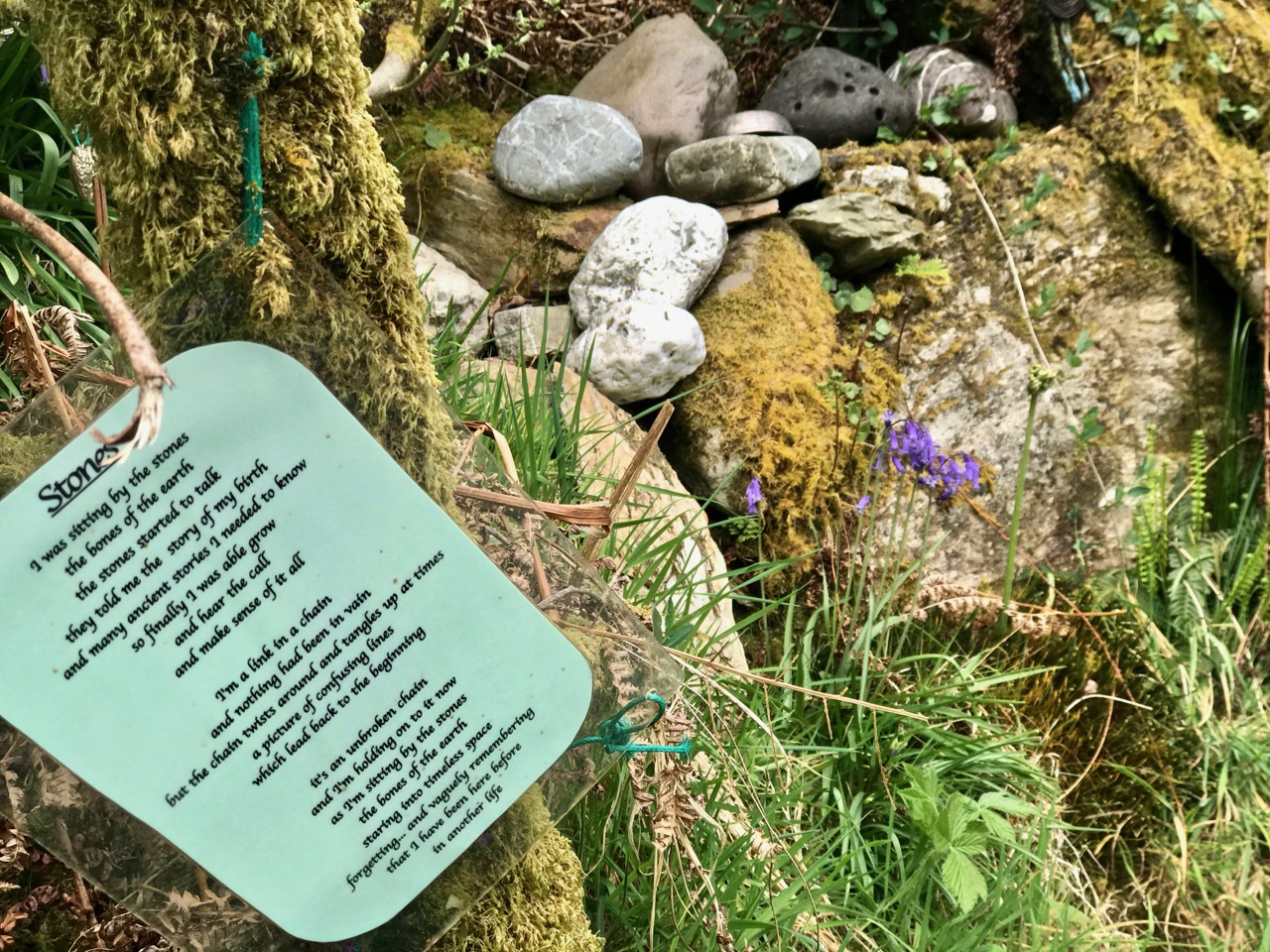
We first visited Thomas Wiegandt’s Magic Forest exactly five years ago. It’s just round the corner and over the hill from Ballydehob. As time has passed the walk has matured and mellowed: it’s the most picturesque and atmospheric place now – true magic! Thank you, Thomas, for creating this and for allowing anyone to access it (subject to lockdown limitations, of course)…

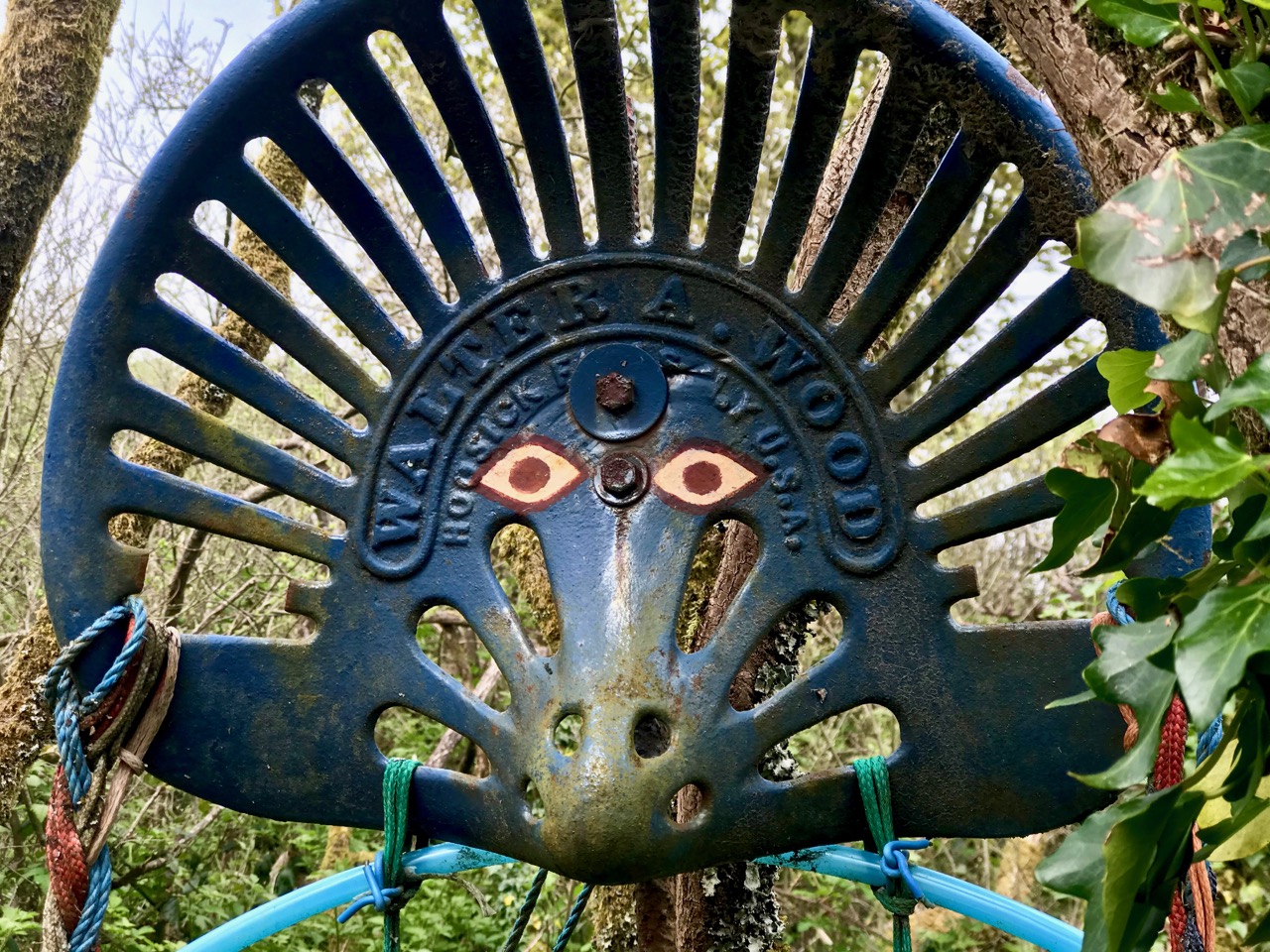
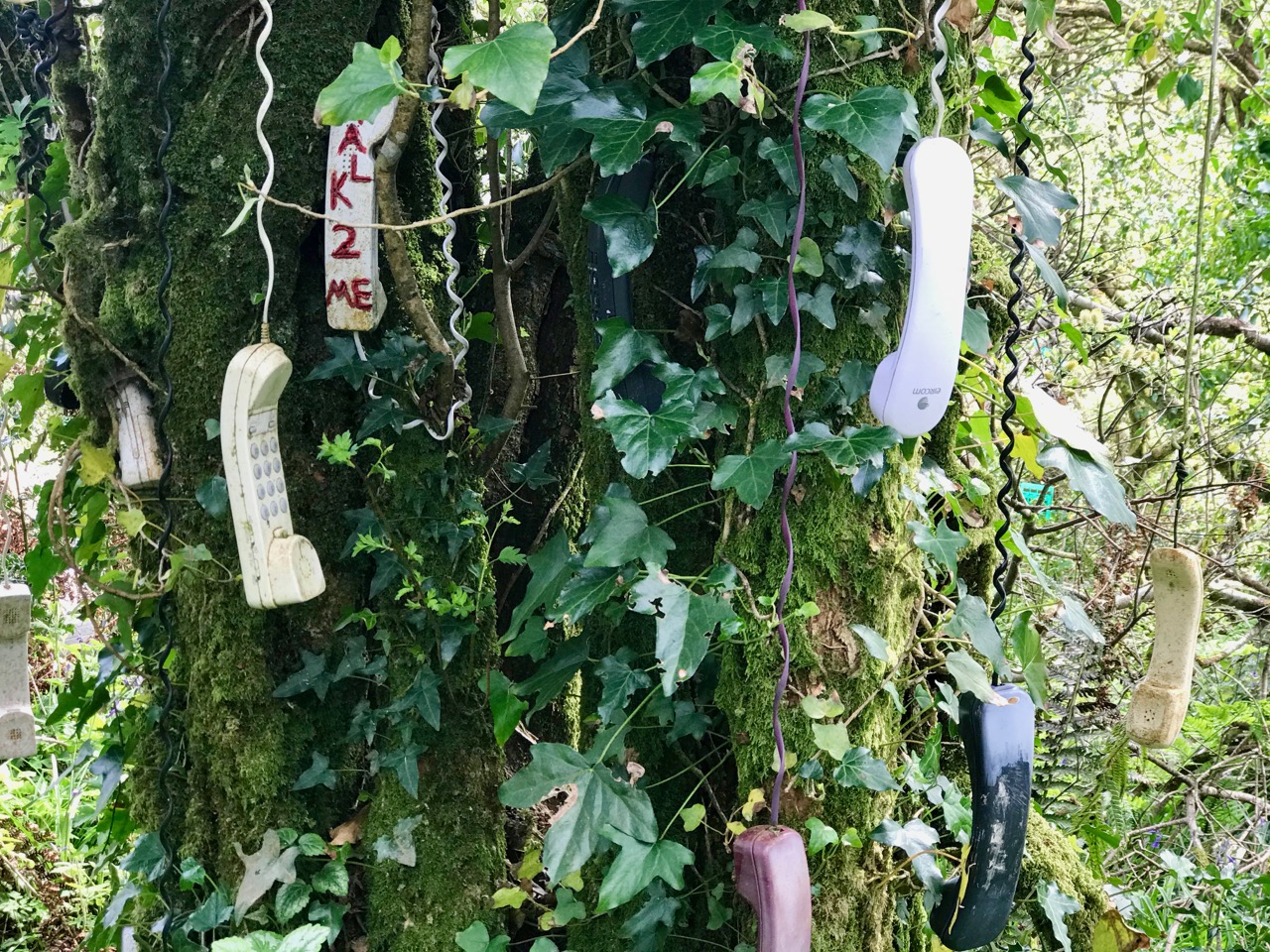
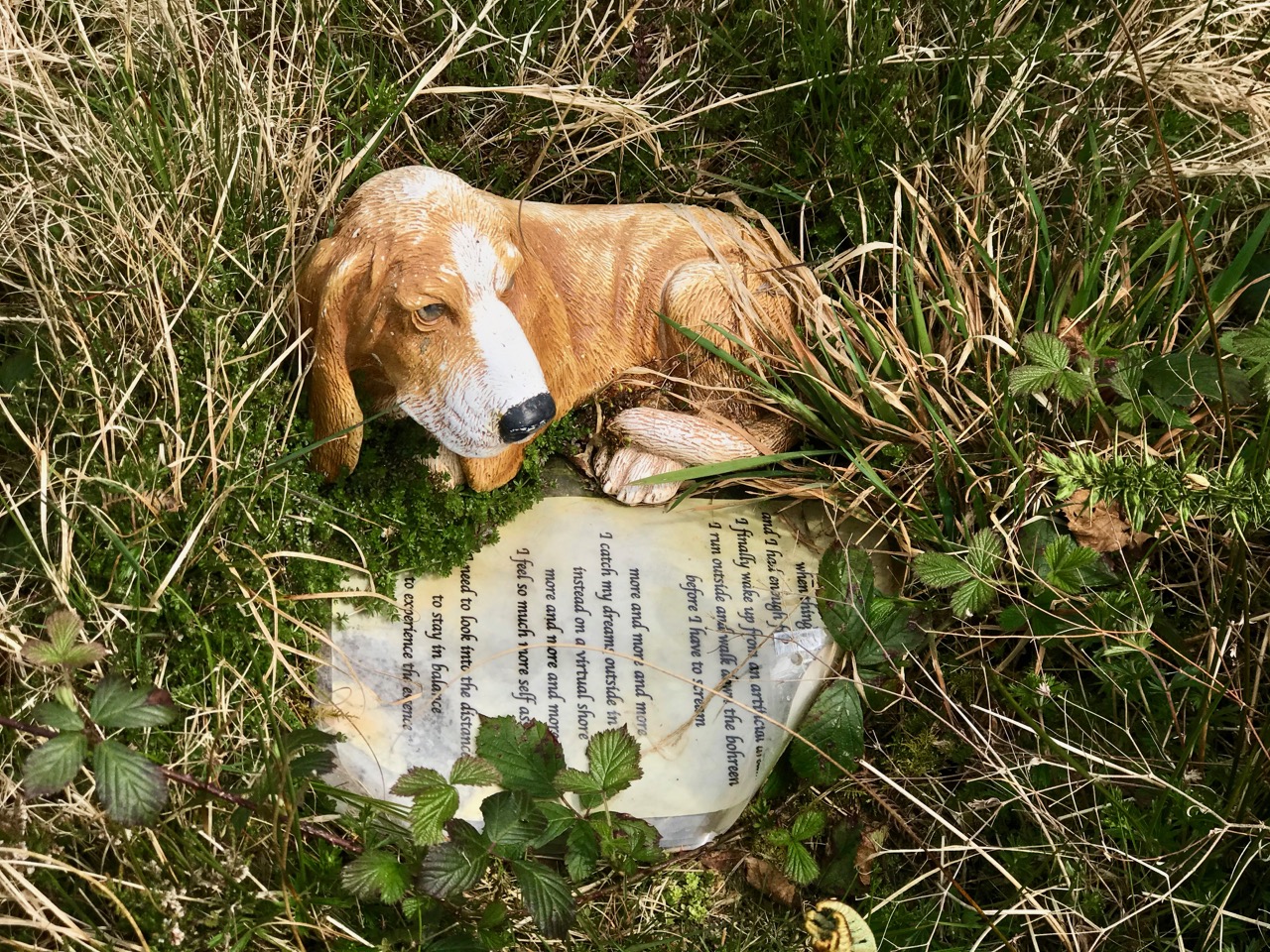
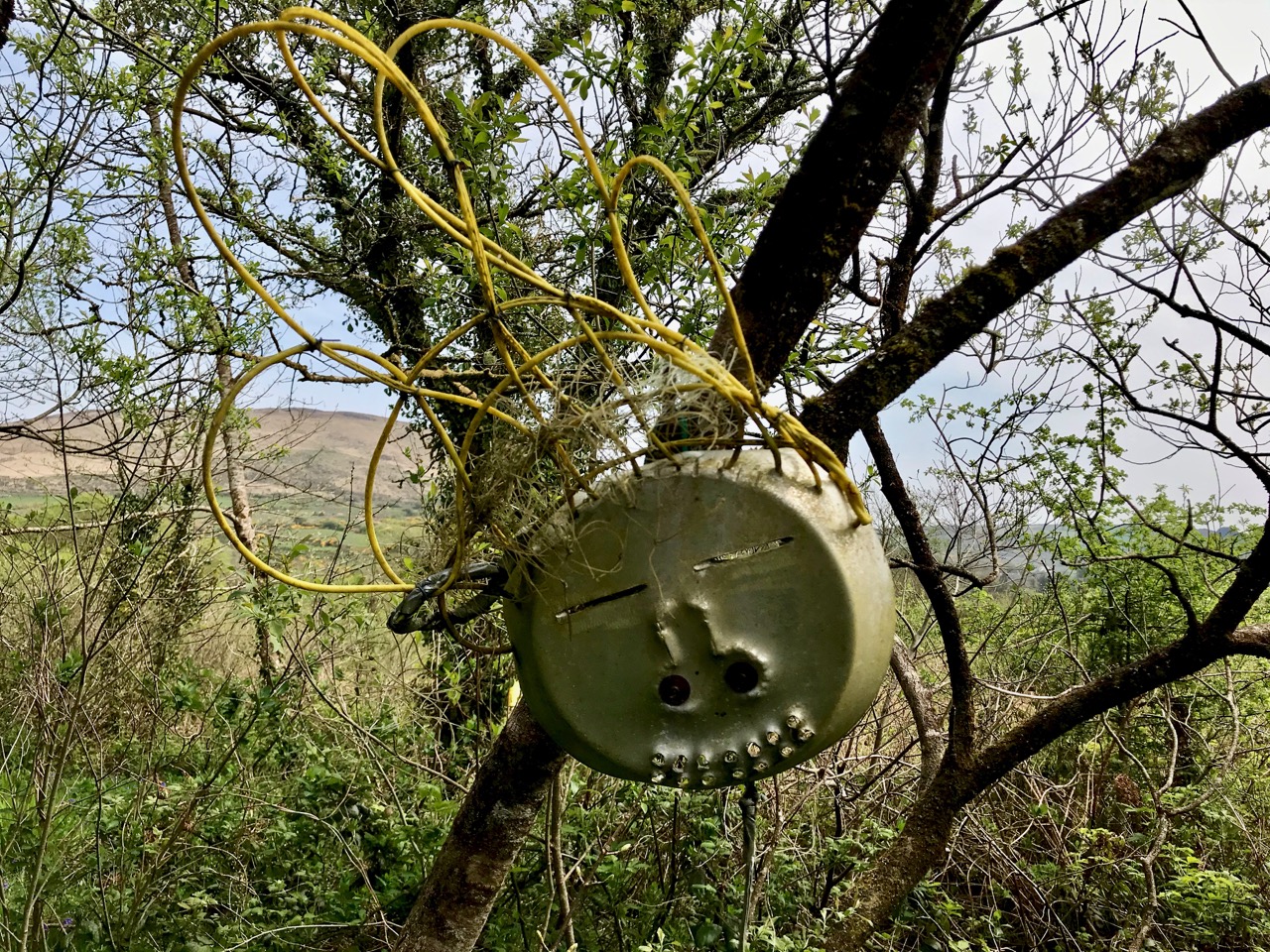
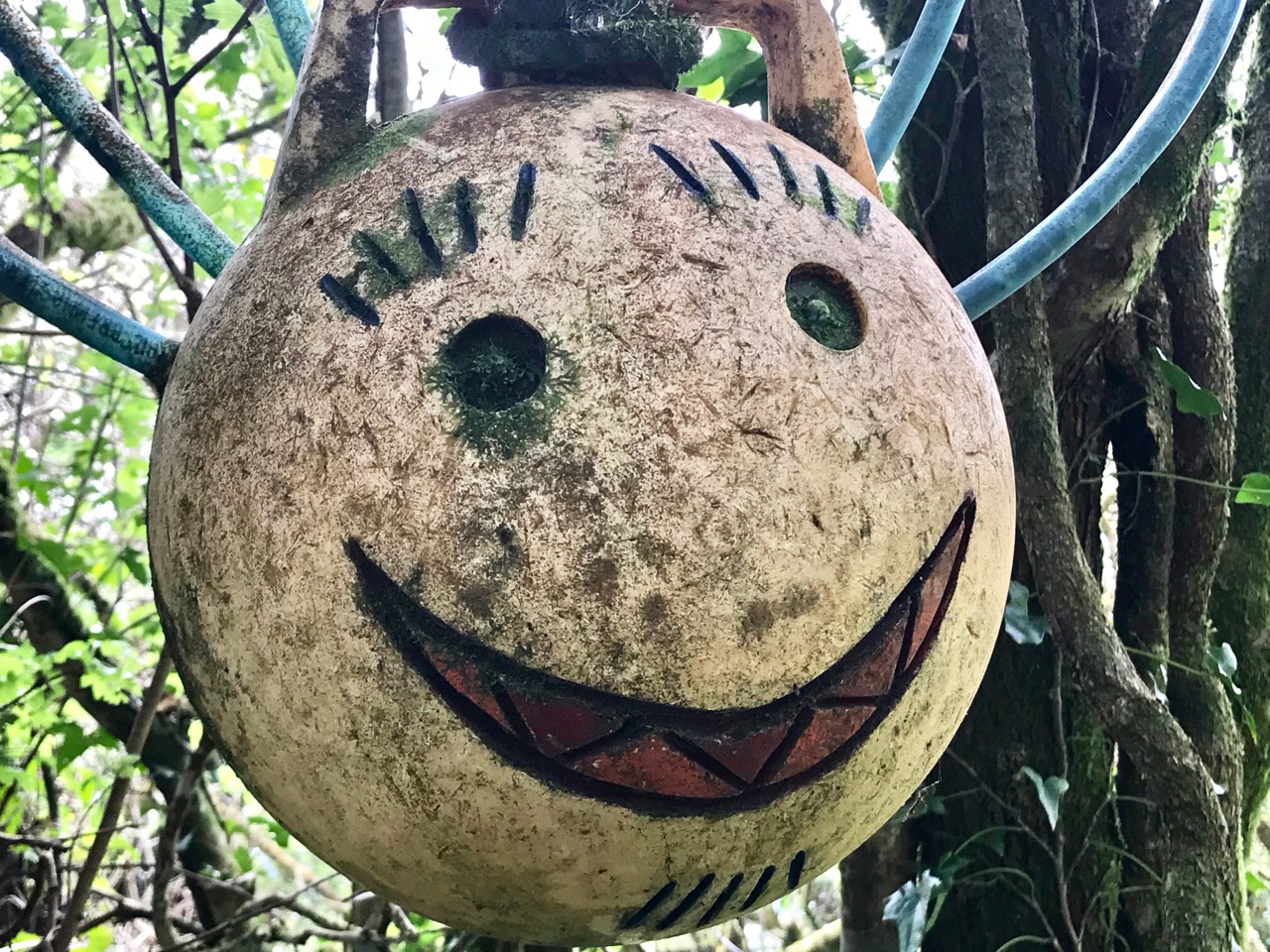
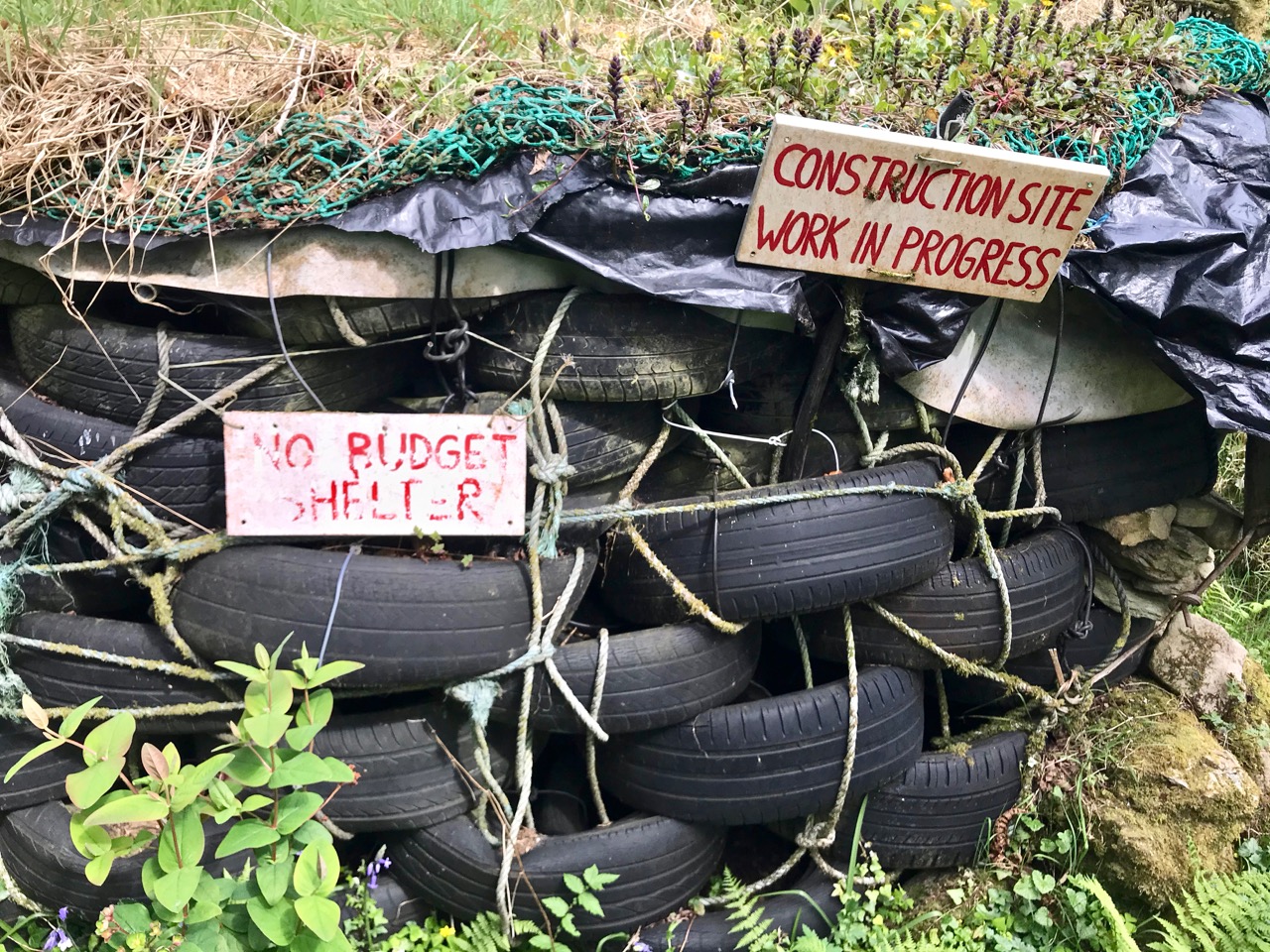
As a connoisseur of Irish signs and signage (have a look at my previous posts over the years), this walk is for me a delight and an abundant source of tangible examples from the world of human communication. There are explicit and comprehensible signs, enigmatic ones, symbolic messages, and allegories. It doesn’t matter whether we understand them, or even relate to them personally: it’s just all part of the magic of the forest.

Who are the messengers? That’s really up to you to decide. here are some that I can relate to:

Each time we visit the Magic Forest, we come back with a different set of images. It’s just that there is so much here, you take in what appeals to you at a particular time.

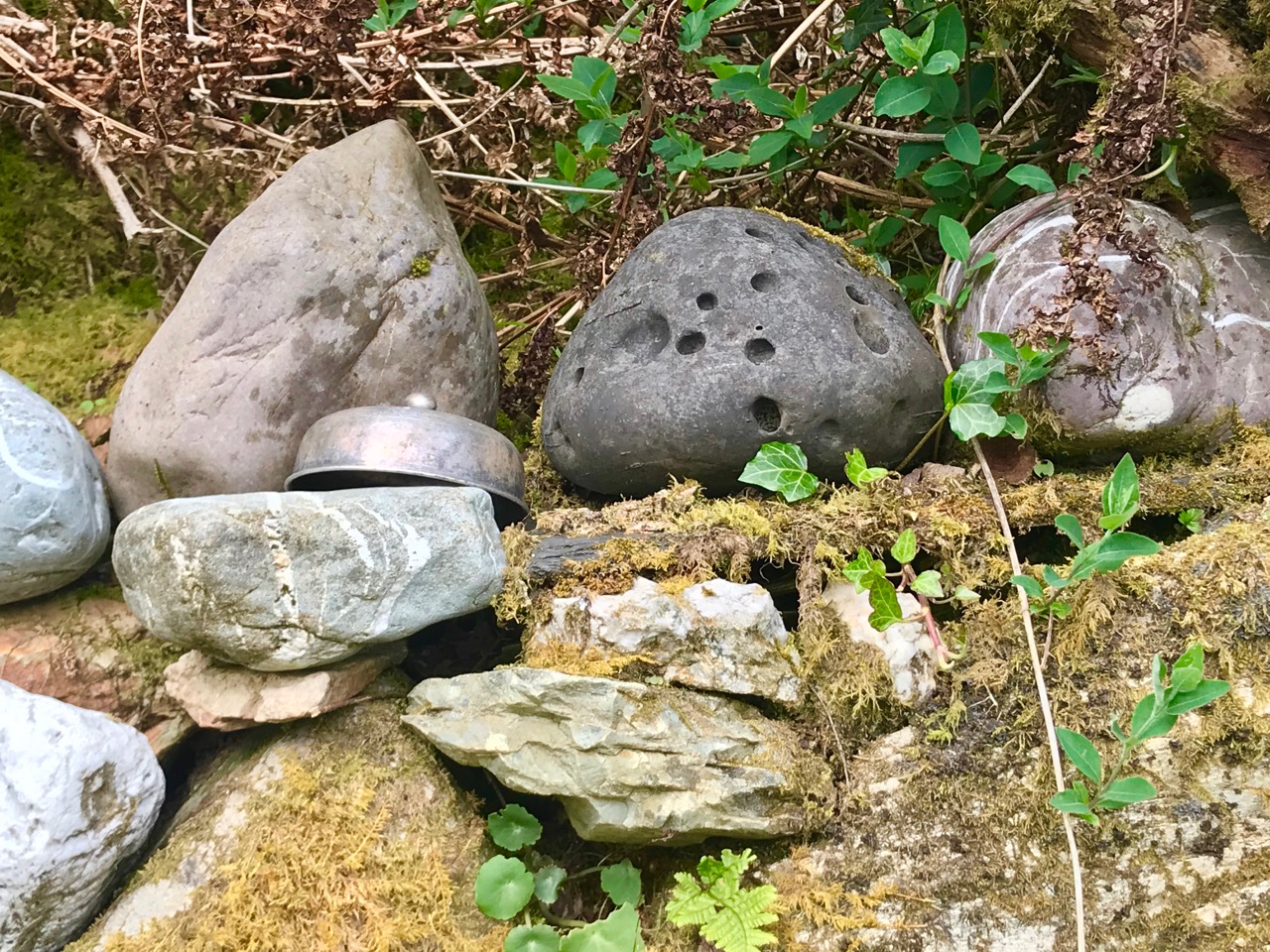
A pantheist might find Gods and Goddesses in this forest… Others might see relics of a fading industrial age. It all depends on your point of view.

The forest itself will take over in the end. It’s certainly the case that, through the years, nature is absorbing everything. But, surely, it’s not a battle – just a mutual enhancement. Finola is definitely on the side of the natural world.

A place to think, meditate – or make music!

The whole place is a collaboration between the arts and nature. Enjoy the journey!

Behold, Their Bright Shining Future Rising Before Them

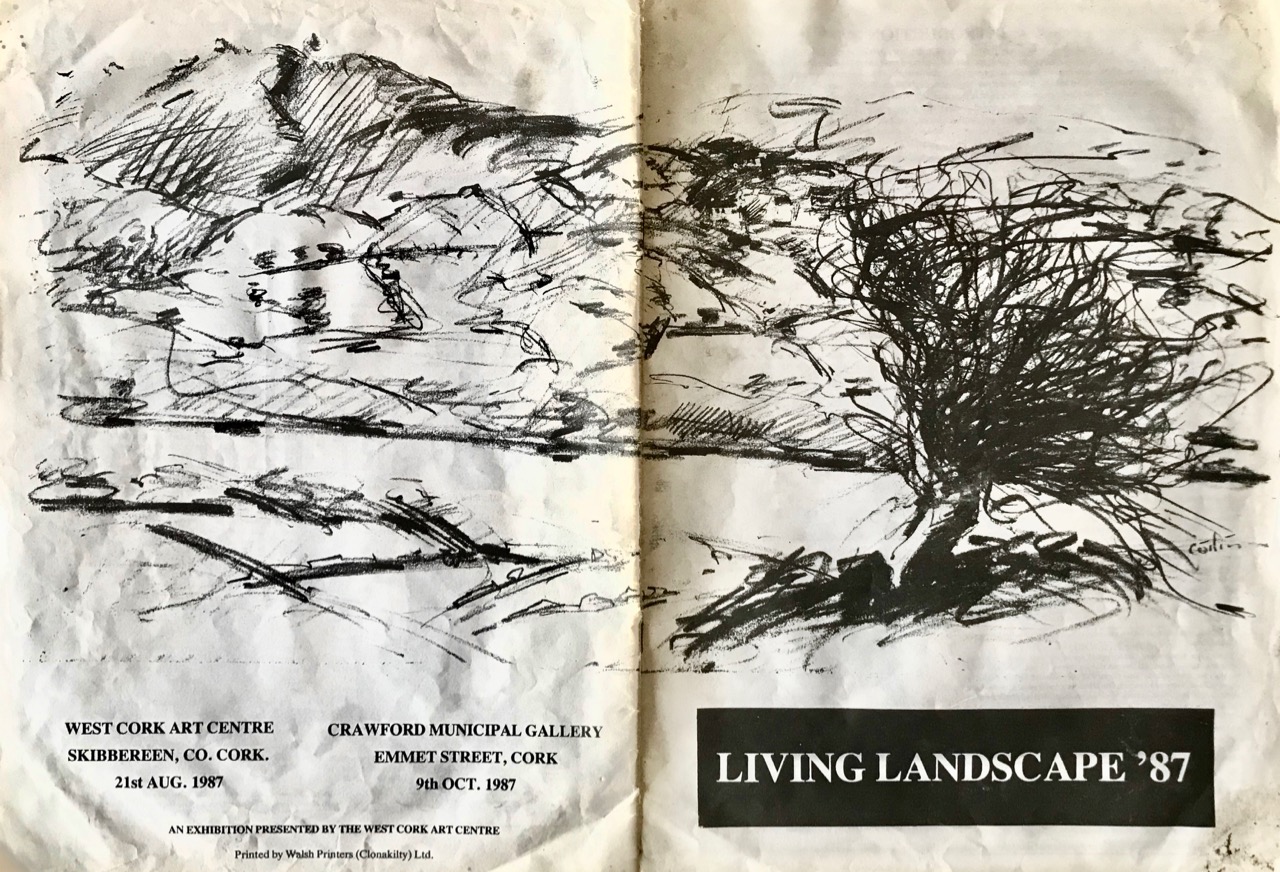
This is the first in a series of posts being published simultaneously by Roaringwater Journal and the Ballydehob Arts Museum, celebrating 33 years of an aspect of art history in West Cork. The Living Landscape series of art exhibitions ran from 1987 to 1996, masterminded and driven by the energies of Cóilín Murray. Cóilín has recently donated an invaluable file of photographs to the Museum, connected to a sculpture trail which was set up between Skibbereen and Schull in the early 1990s as part of this project. We are indebted to Cóilín for these items, and I will be using many of them in these posts.

Catalogue from the first Living Landscape exhibition, launched by the West Cork Arts centre and the Crawford Gallery, Cork, in 1987. The cover illustration is by Cóilín Murray

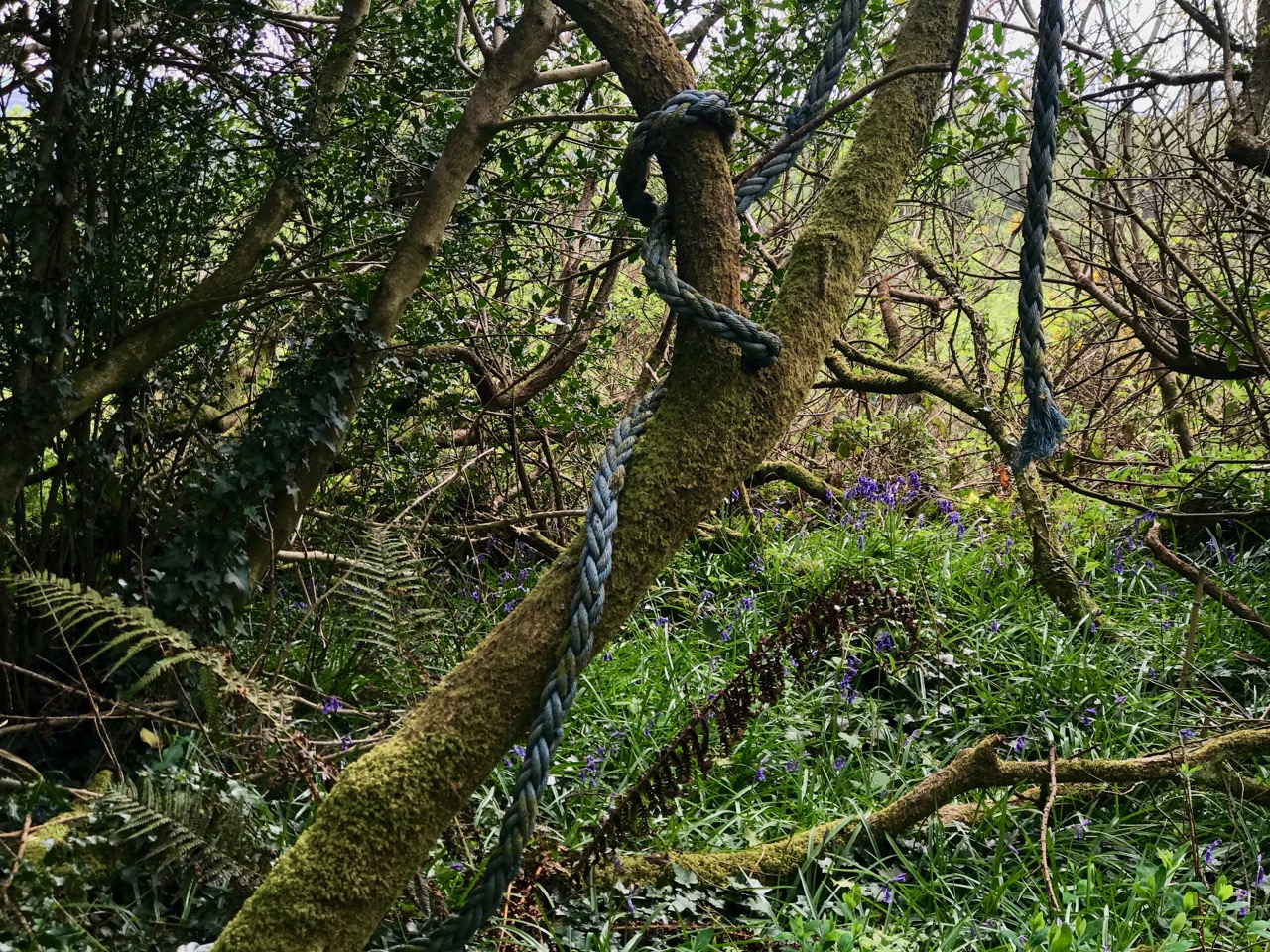
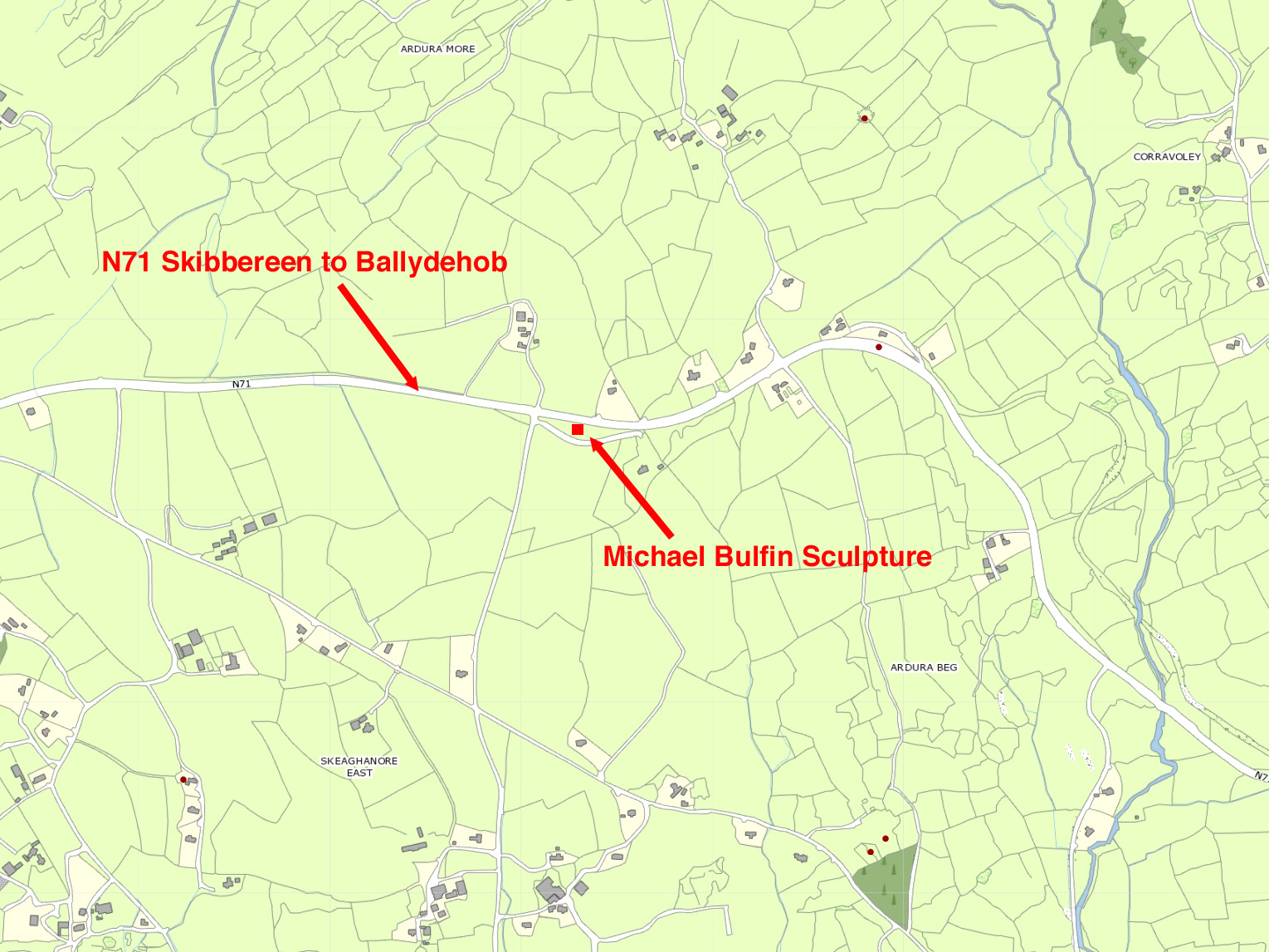
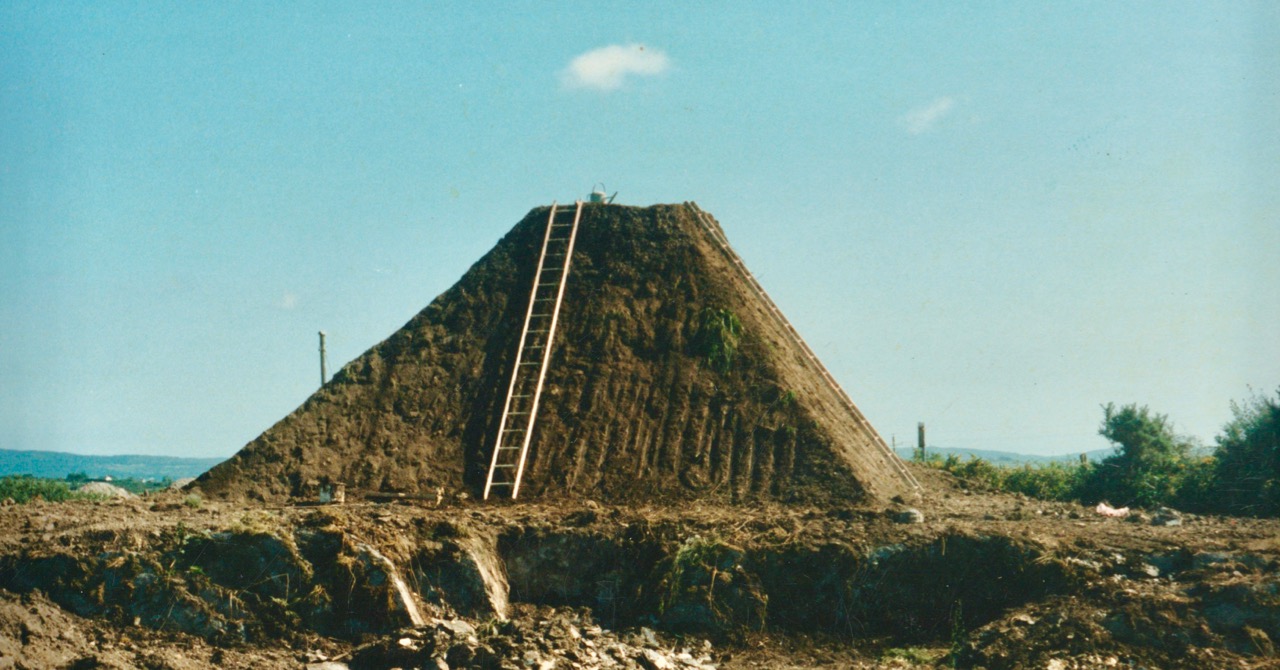
It’s fascinating to trace the sculptures which were set up more than 25 years ago along the N71 and R592 roads connecting Skibbereen with Schull. Most have vanished – some back to nature, some through destruction. But those which remain are now ‘enigmatic’ and must often excite comment and questions. This is particularly the case with the one in our header picture (taken recently), which is the central subject of today’s post. It’s a work by Michael Bulfin, born in 1939, one of Ireland’s most respected artists and a member of Aosdána (an association of artists whose work is deemed to have made an outstanding contribution to the creative arts in Ireland). The title of the sculpture is the title of this piece: Behold, Their Bright Shining Future Rising Before Them

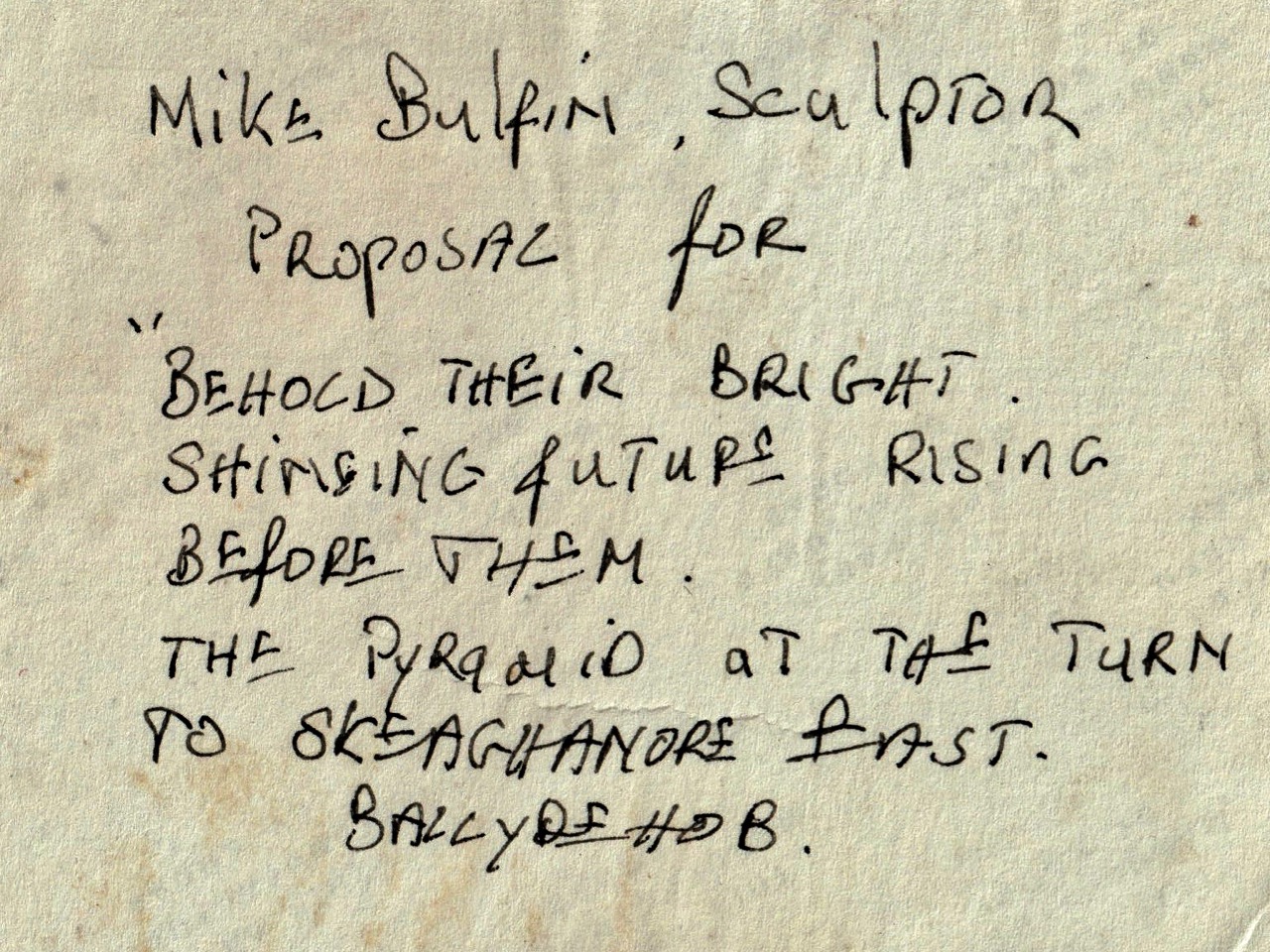
Michael Bulfin’s exhibition proposal was a piece of land art: a giant grass-covered earth pyramid crowned by a stainless steel pinnacle, with a cascade of boulders flowing down the surface – facing on to the main road running through the townland of Skeaghanore East. Upper, the design for the piece was submitted as a model. Lower – the inscription from the back of the original photograph.

The task of physically realising this monumental piece was the product of many hands, including a number of volunteers from West Cork’s artistic community. The following ‘work in progress’ shots document some captured moments in time.

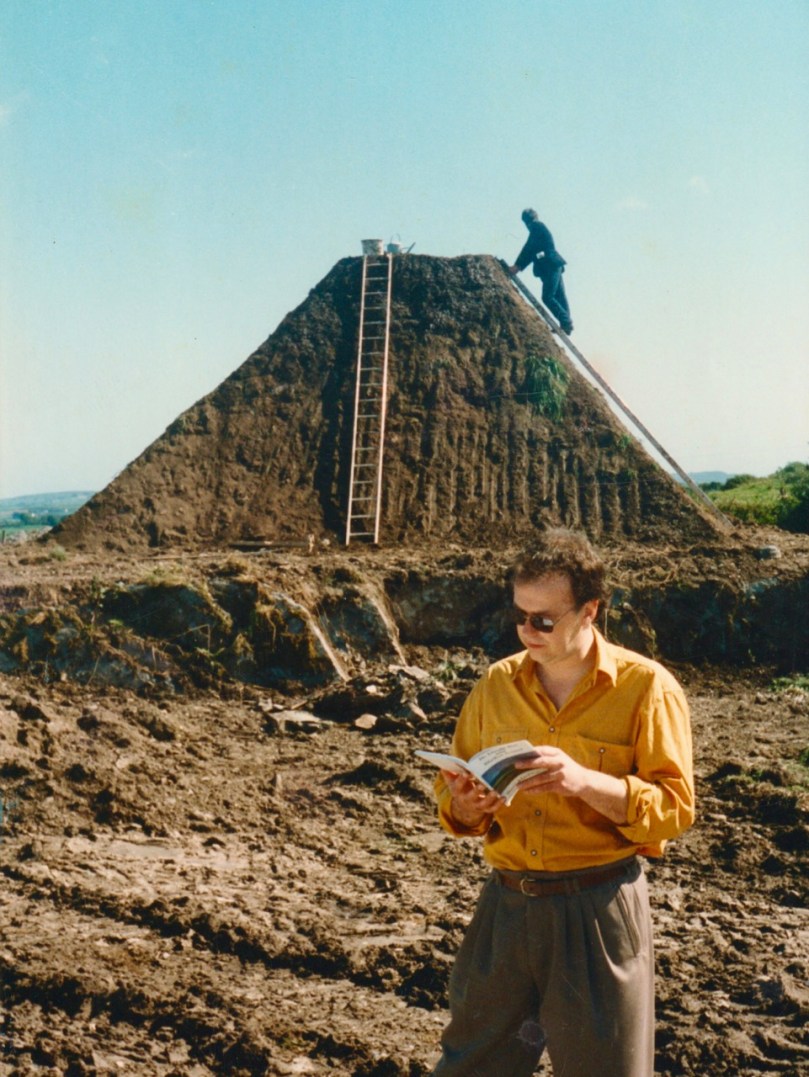
In this shot, Michael Bulfin is on the ladder, and painter Maurice Desmond watches the process

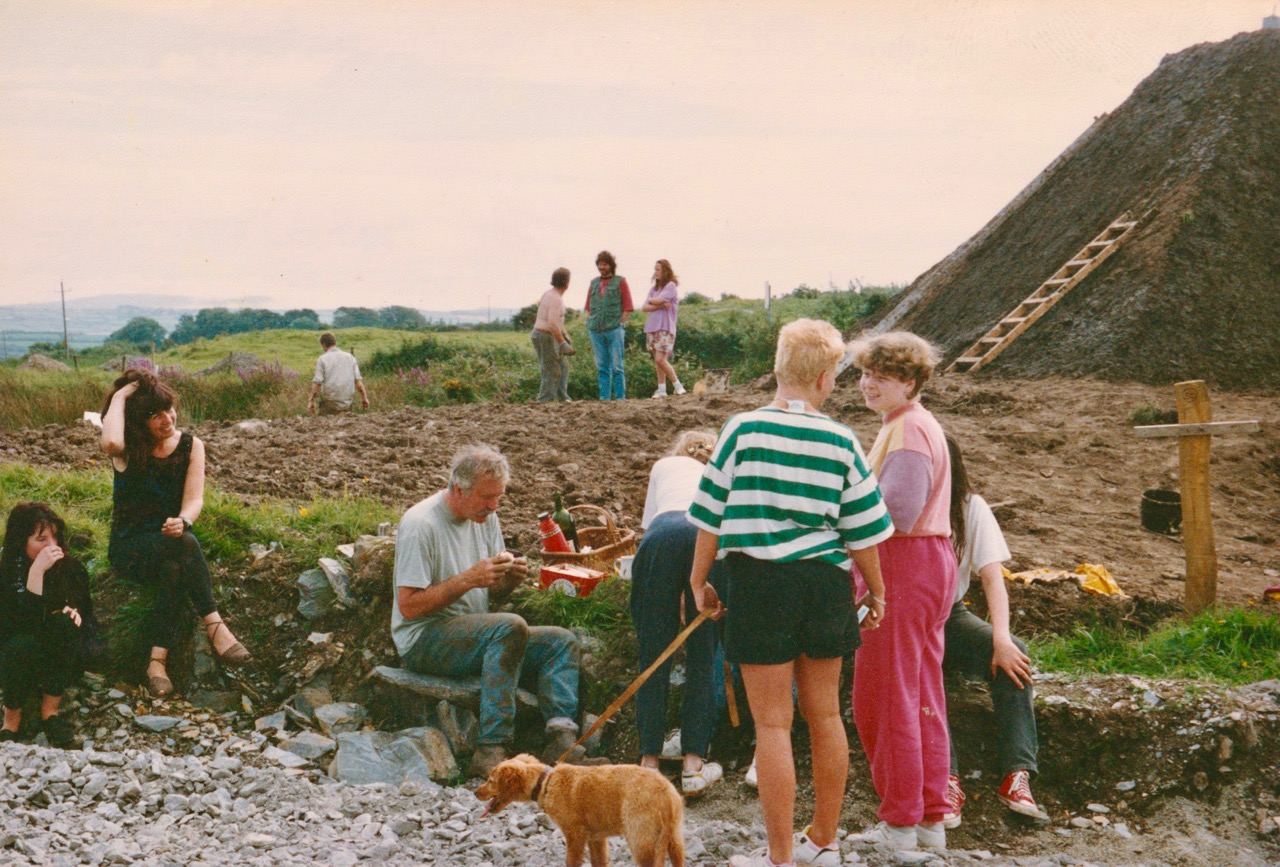
‘Lunch break on the day the mound was seeded’ – identified in this picture are (foreground left to right): Aoife Desmond, Deirdre Heaney, Mike Bulfin, Rosemary Murray (serving lunch), Ailne Murray and Niamh Murray. (Background): Simon Holler, Cóilín Murray, Gerry Walker and daughter

The project was well publicised; here Mike Bulfin is being interviewed by Anita Whooley for RTE, with Cóilín Murray looking on

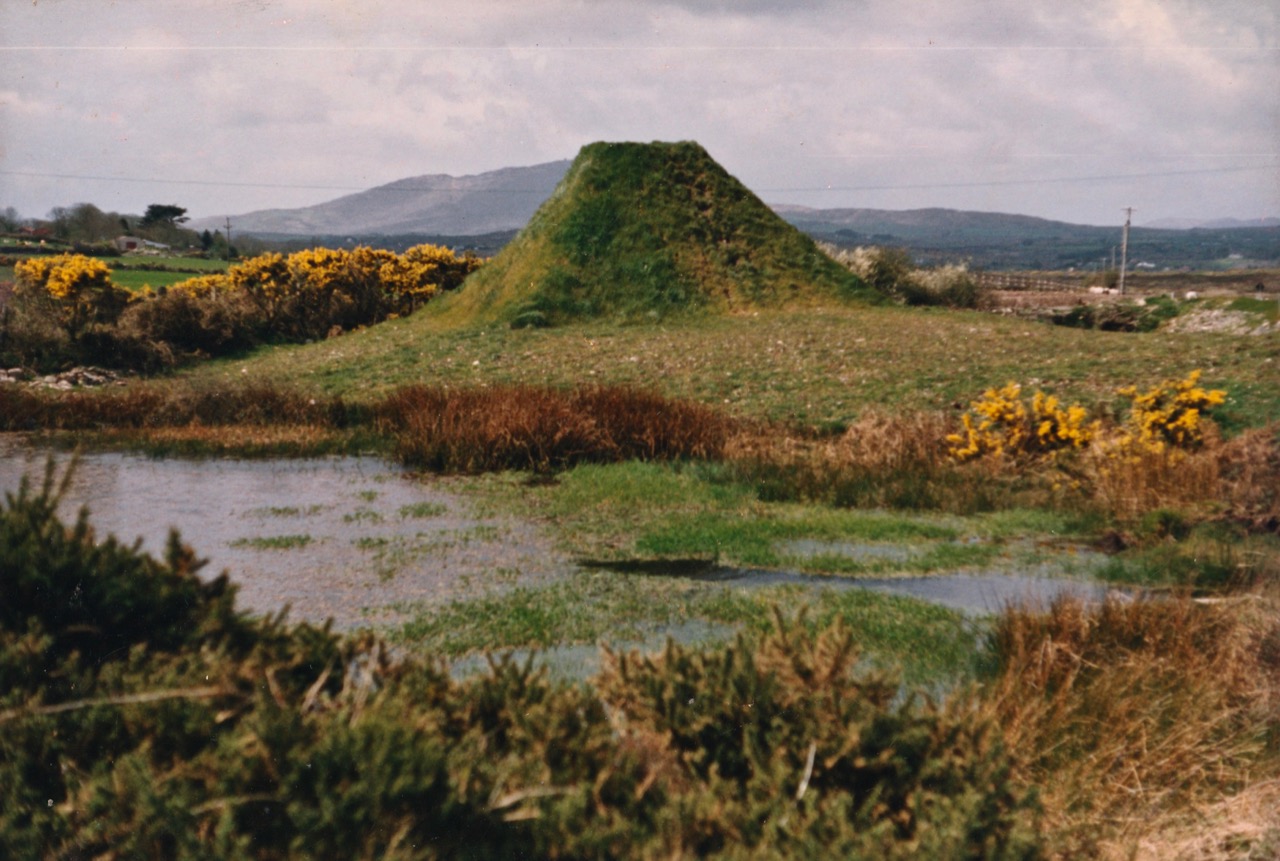
The mound ‘greening up’: the stainless steel pinnacle was added at a later date. The ‘cascade of boulders’ is not evident today: I am assured it is still there, shrouded by gorse and brambles

At the official opening of the Living Landscape Sculpture Trail the poet Steve McDonagh, founder of Brandon Books based in Dingle, Co Kerry, read from his work at each location. Steve McDonagh died in November 2010. As can be seen, the pyramid was unfinished on opening day!

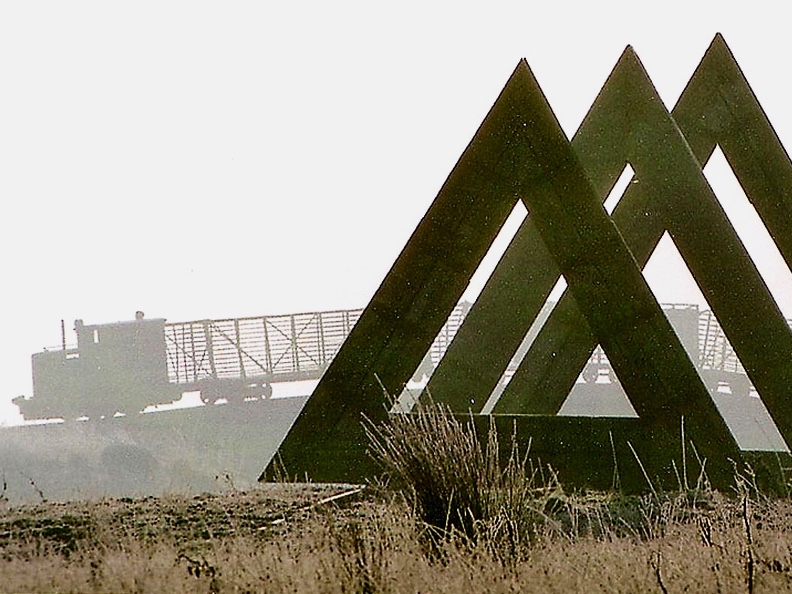
Michael Bulfin remains active in Ireland to this day. He lives in Co Offaly, and there is impressive work from him at the Lough Boora Parklands, including the eye-catching ‘Skytrain’ sculpture:

Something that could be considered in the future is a creative project based on the West Cork Sculpture Trail. This might restore or resurrect some of the pieces from the 1990s, and provide an opportunity for new work to take the place of those sculptures which are now lost.

Painting With Light

What are we seeking right now? If social media is right, it’s distraction. But also beauty, comfort, reassurance… With that in mind, I have created a video slideshow of some of my favourite stained glass windows.

I could have used a totally different selection and perhaps I will do another one sometime. Meanwhile, this took me all day to do – learning how to do stuff like this seems to get harder as the years roll by. Funny how that works.

The music is Sí Beag Sí Mór by O’Carolan and it’s played beautifully by Susan Nares on the harp – thank you, Susie! Susie made this recording for Robert’s Swantonstown Sessions (have you checked in there yet?). The stained glass I’ve chosen is by Harry Clarke, George Walsh, Hubert McGoldrick, Murphy Devitt, Mayer of Munich, Joshua Clarke and Co., Thomas Denny, William Dowling, Richard King, Watsons of Youghal, and Earley and Co. For much more on Irish Stained Glass, including some of the artists I have chosen, have a glance over this page.

Here it is – I hope you enjoy it.

Wooly Jumper

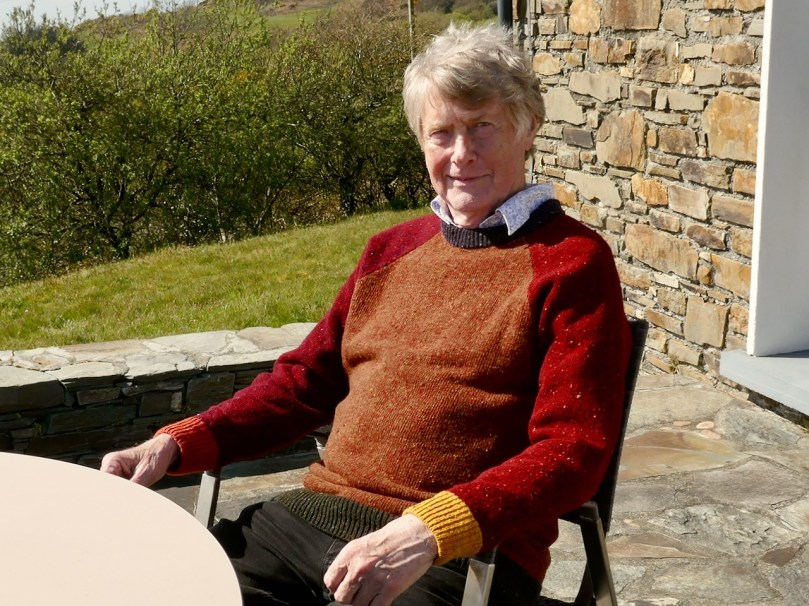
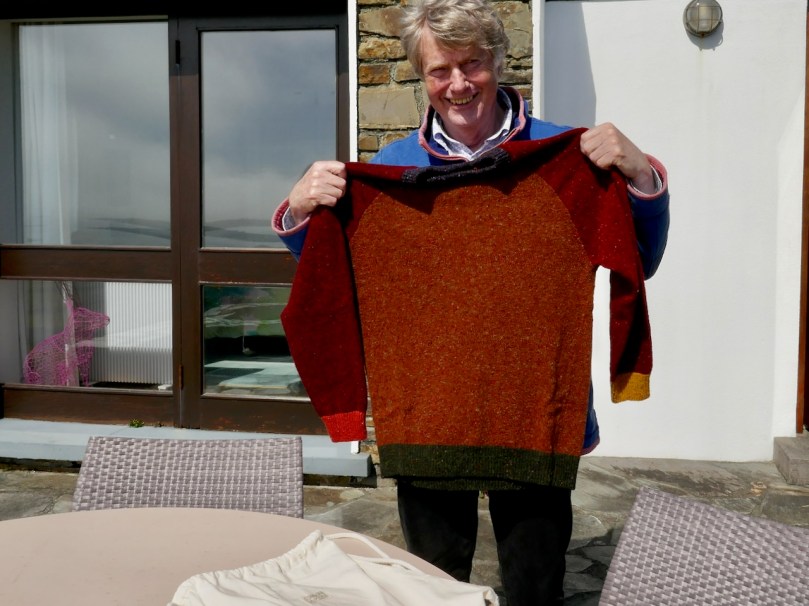
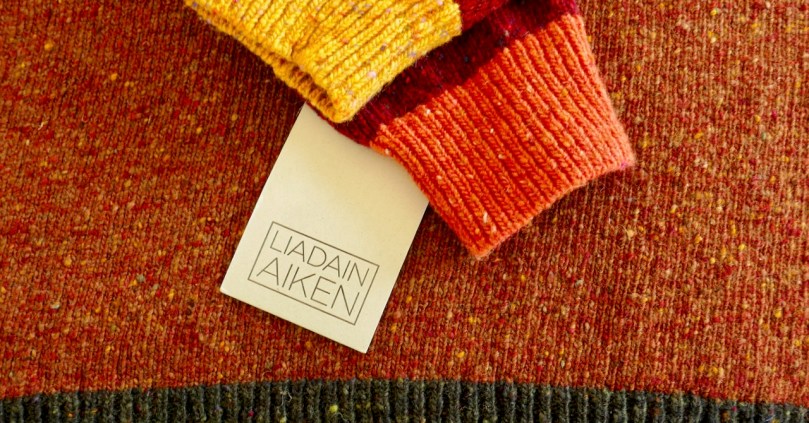
No, that’s not the answer to the old chestnut about what you get when you cross a sheep and a kangaroo – it’s what I got Robert for his birthday this year. But this was no ordinary, off-the-peg, item of clothing but a piece of ethical, made to order, cherish for life, knitwear, hand-crafted in Ireland. That’s a quote from the maker.

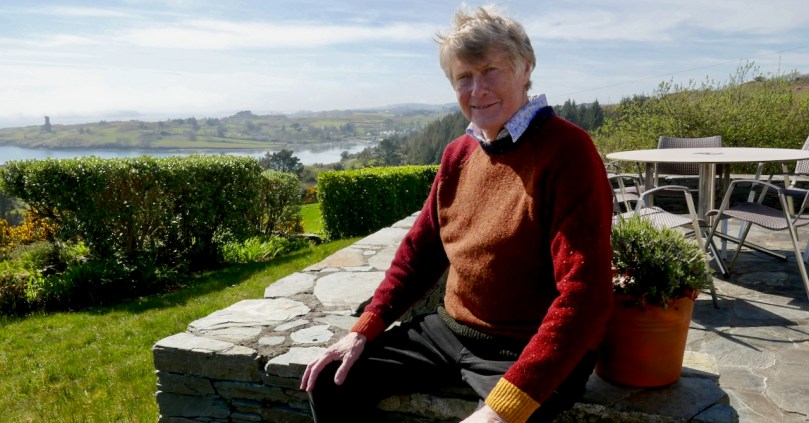
First of all, for our non-Irish or non-British readers, a jumper is what you see on Robert in the header photo. It might, over here, also be called a jersey, a pullover, or even (in the depths of the country) a gansey. It’s hardly ever called a sweater.

Secondly, this is a Liadain Aiken design. Liadain isn’t a common name even in Ireland. She was believed to be a 7th century poet (see this article) and the name may mean ‘Grey Lady’. For the correct pronunciation click here.

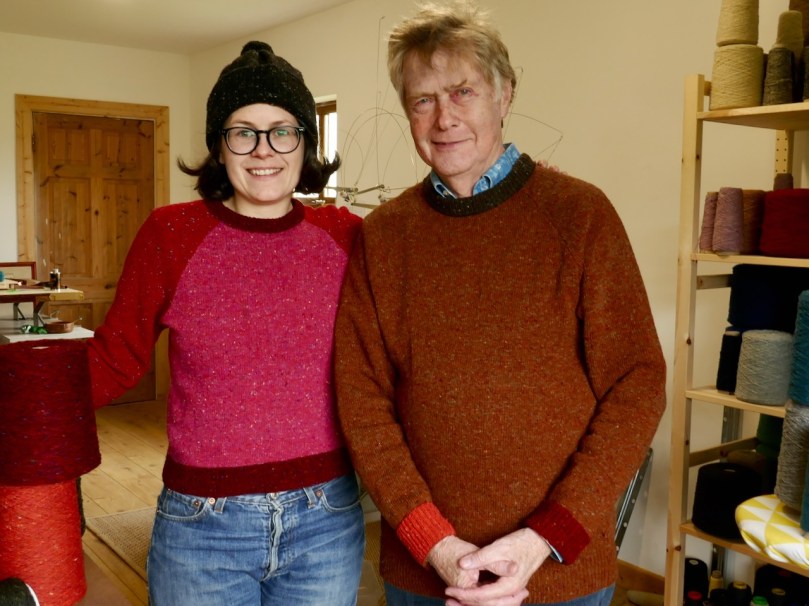
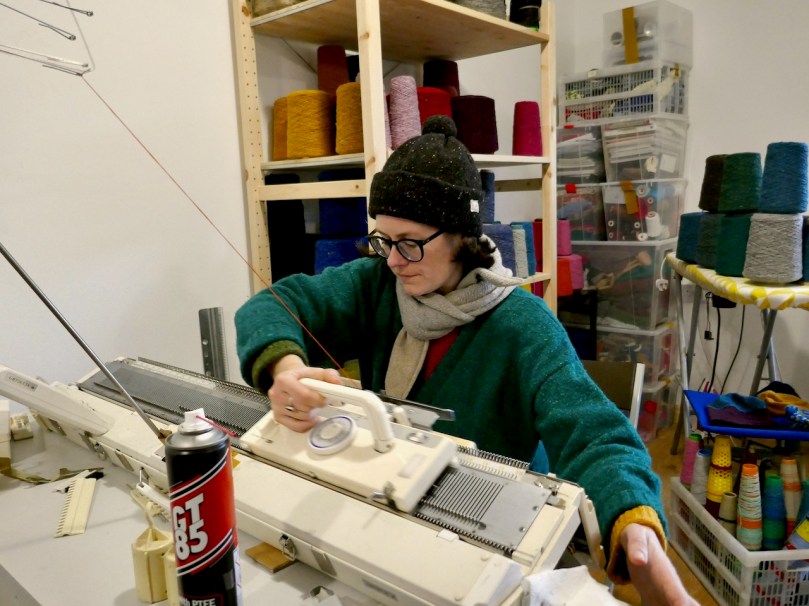
Liadain and Robert in the nerve-centre of her operations – just outside Ballydehob

I discovered Liadain Aiken through a piece about her knitwear in the Irish Times. I was entranced by the images of colourful scarves, hats and jumpers and noted that the piece said she was in the process of moving to Ballydehob. I got in touch and asked if we could come and choose something for Robert.

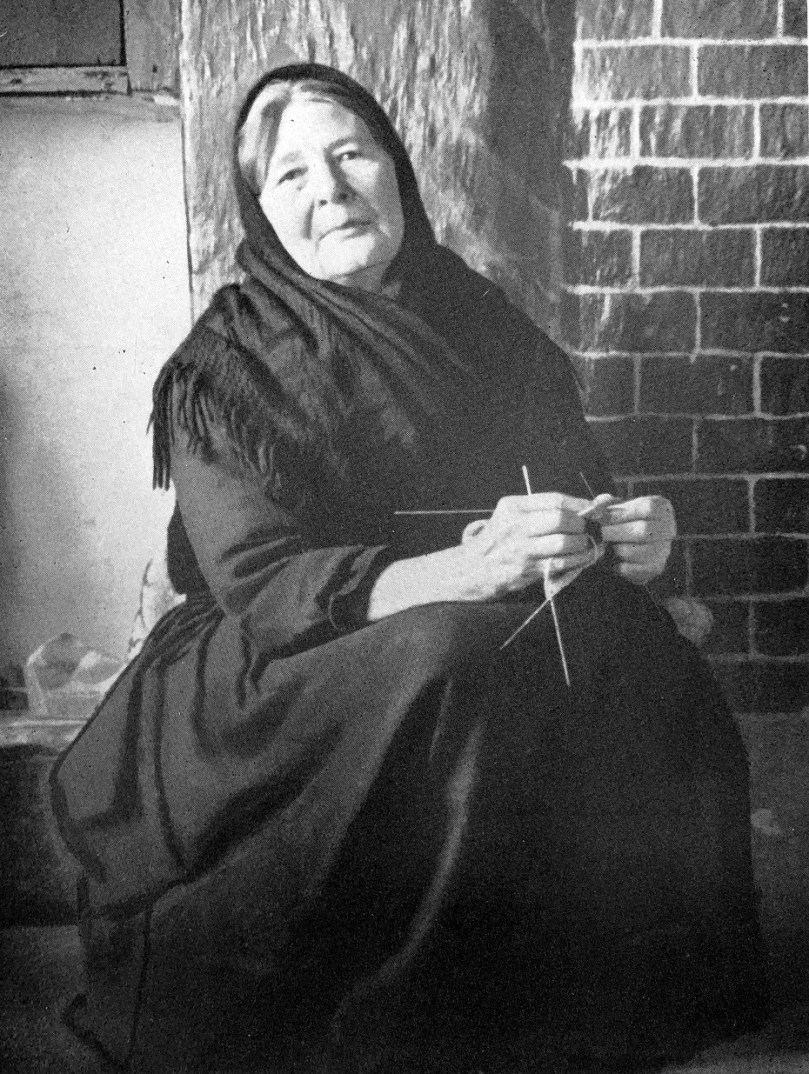
That’s how Robert and I found ourselves driving up into the hills behind Ballybane last month, on his birthday, not quite sure what we were going to find. We knew Liadain Aiken Knitwear by some standards fitted the definition of ‘cottage industry’ so perhaps at the back of our minds we couldn’t get rid of that famous image of Peig Sayers knitting by her fireside.

An Muircheartach’s iconic photograph of Peig Sayers, one of the many Blasket Island story-tellers

But what we found was far from Peig – this is modern cottage industry, one that harnesses the power of the internet for distributed manufacturing and online marketing and sales. Liadain is charming, and strikingly attired in her own knitwear, but she is no amateur. With a degree in interior design and further qualifications from the Grafton Academy in Dublin and Knit-1 Studio in Brighton, she is the director and designer for her own team of knitters, many of whom work from home. On her website she says, ‘I strive to create lively and joyful garments that will be cherished for years.’ This kind of statement is music to Robert’s ears.

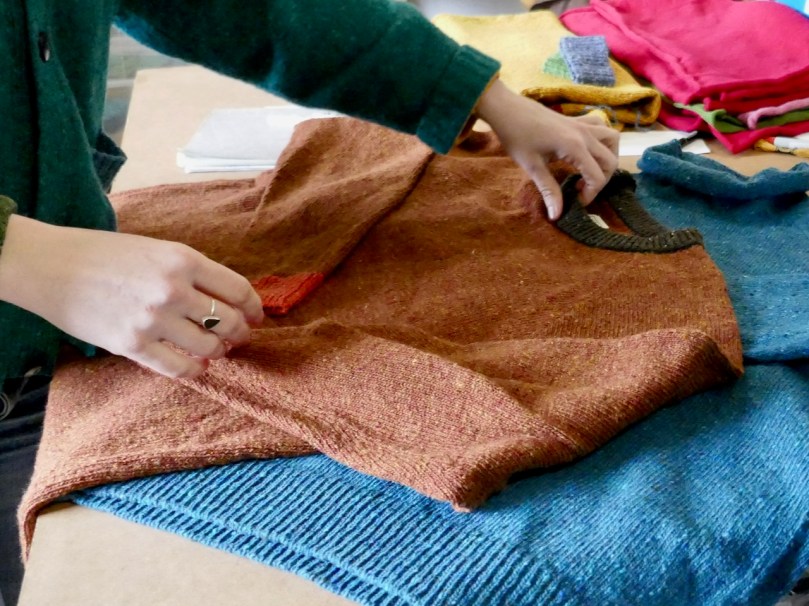
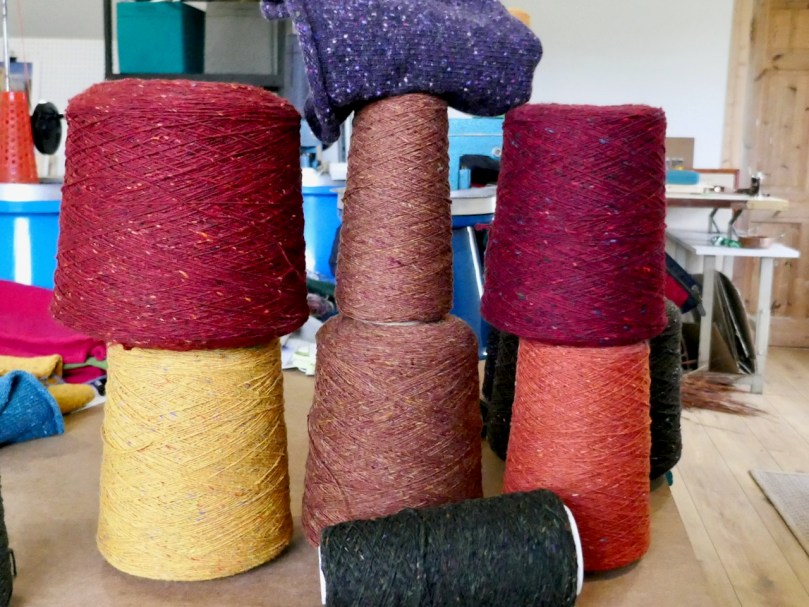
Although the jumper was a gift from me, Robert got to choose the colours and what followed was a fitting and selection session as it turned out that what really appealed to him was to incorporate as many different colours as possible into the one jumper. (I think he might have a Pied Piper complex but don’t tell him I told you that.) He started off with the selection above and ended up with the one below.
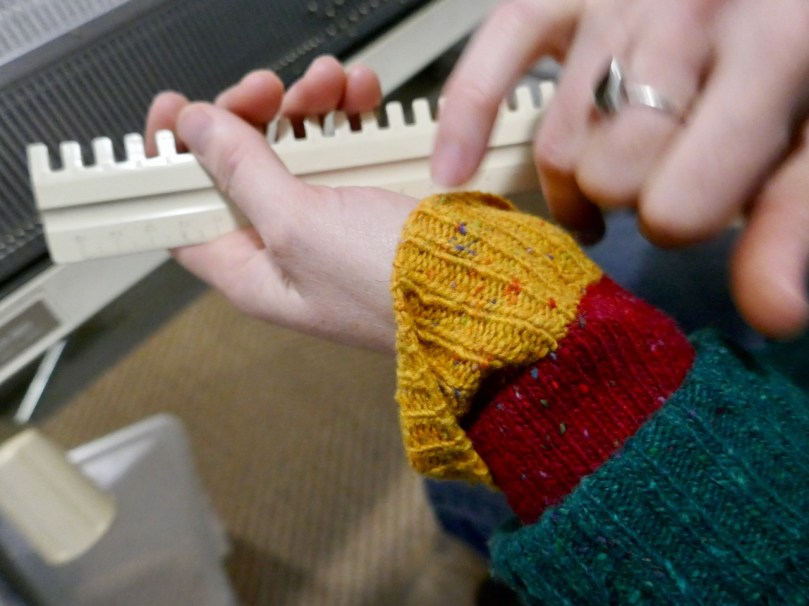
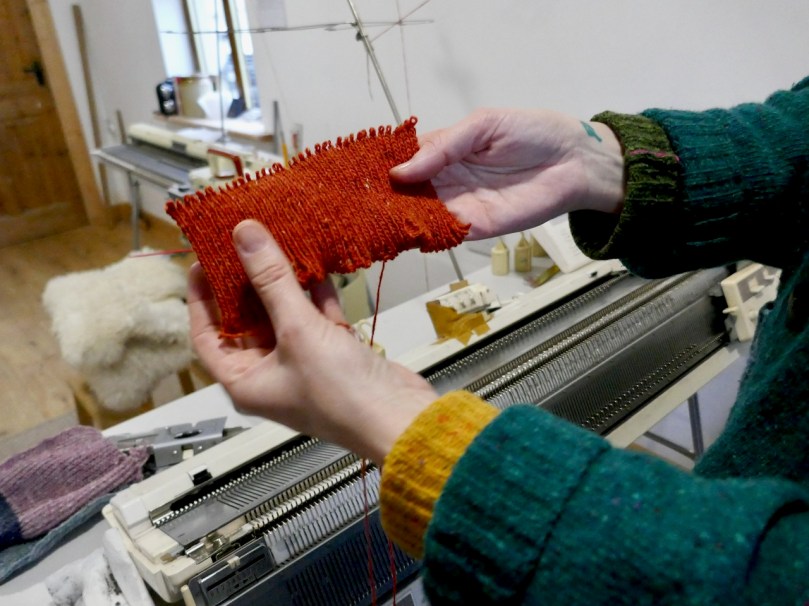
In the process Liadain explained her working methods to us and showed us how a jumper such as this, in multiple colours, is knitted and assembled. She made it look easy but it was obvious that this is a highly-skilled and complex process.

The jumper arrived this week, in the midst of our Coronavirus lockdown, and Robert loves it! I strongly suspect he would sleep in it if he could. You will see it, I predict, in many future posts.

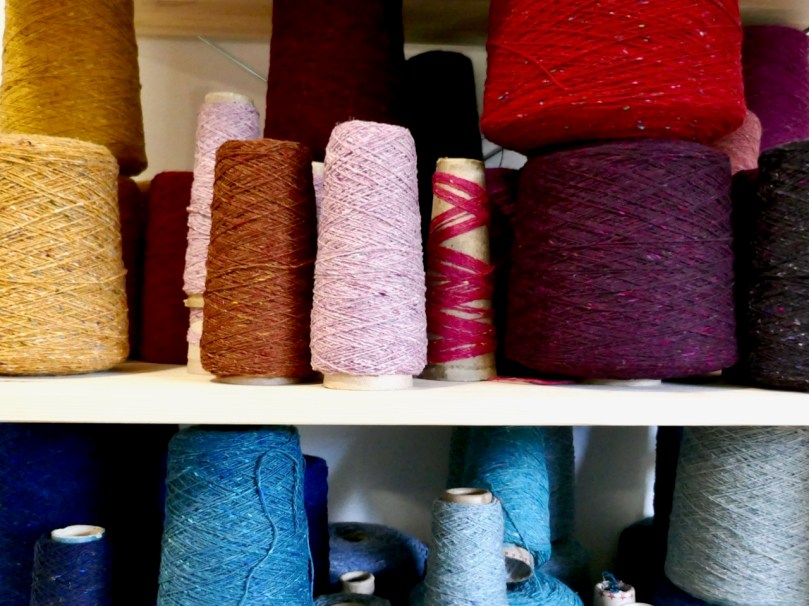
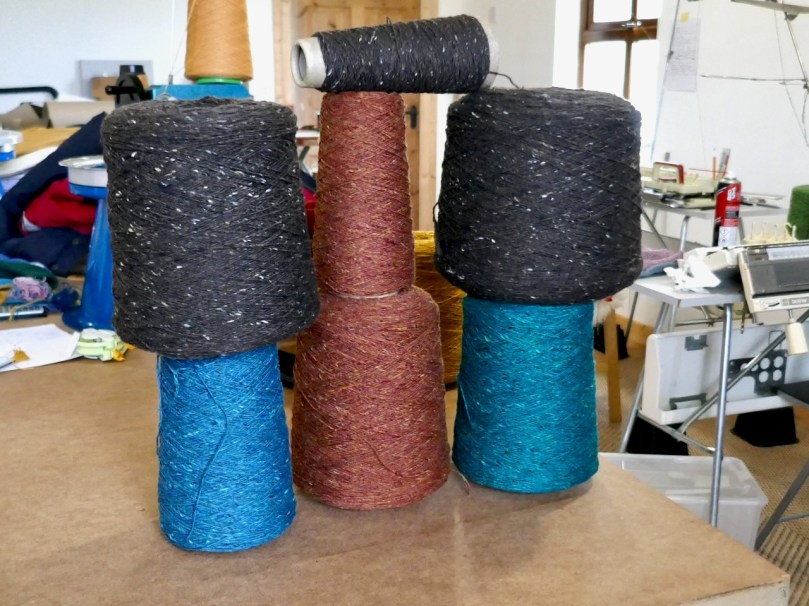
It’s made from pure merino wool from Donegal Yarnstake a look at their website to see the pride they take in producing these beautiful flecked yarns. Of course, a made-to-order product like this is more expensive than an off-the-rack purchase, but both of us loved the process of buying it and see it as a long-term investment piece. As they say here in Ireland, it will ‘see him out.’ 

Liadain is currently catching up on back-orders and designing new products so it’s not possible to order in her shop at the moment. But if you’d like more information, sign up for her newsletter or get in touch with her. If you’re on Instagram or Facebook, follow her there.

Thank you, Liadain – this is a great jumper and a very happy customer!