Kilcoe Medieval Church – Revealed!

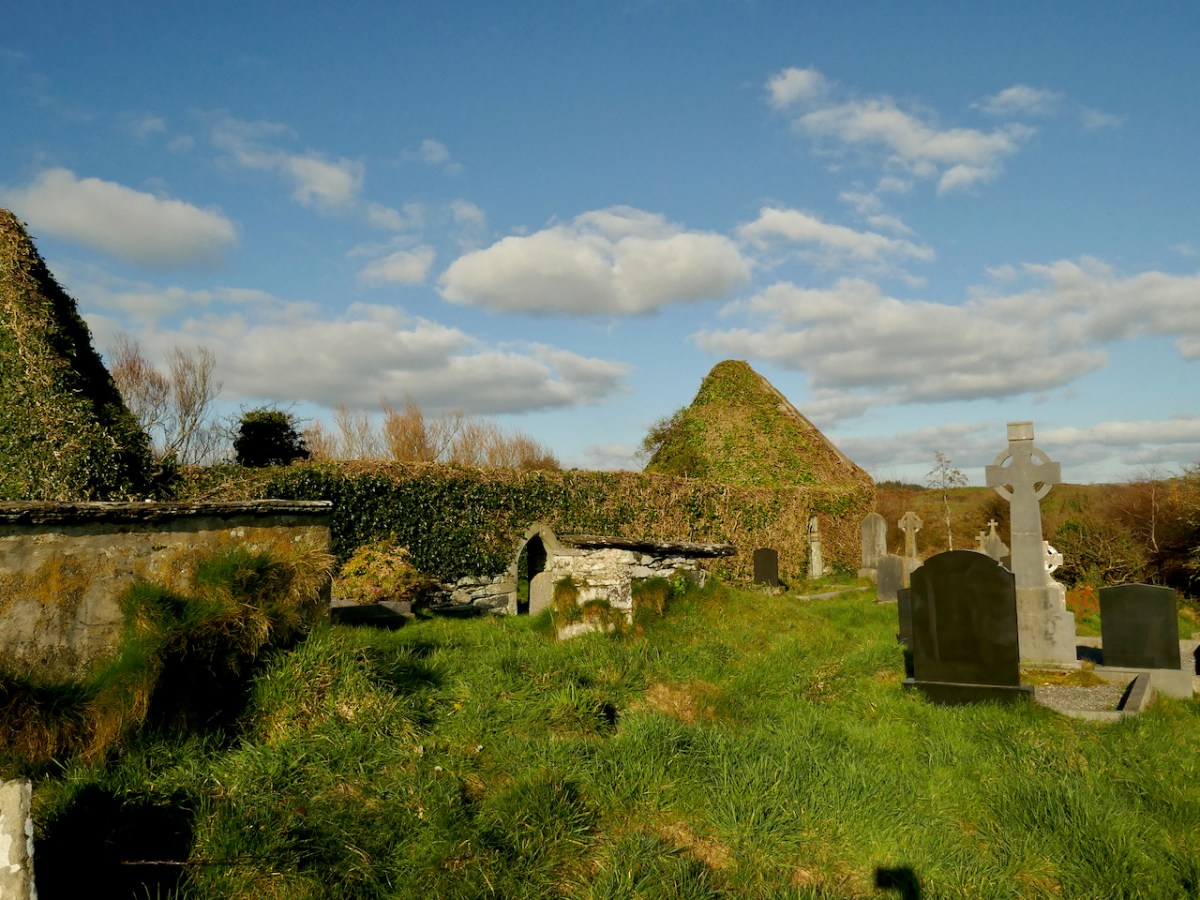
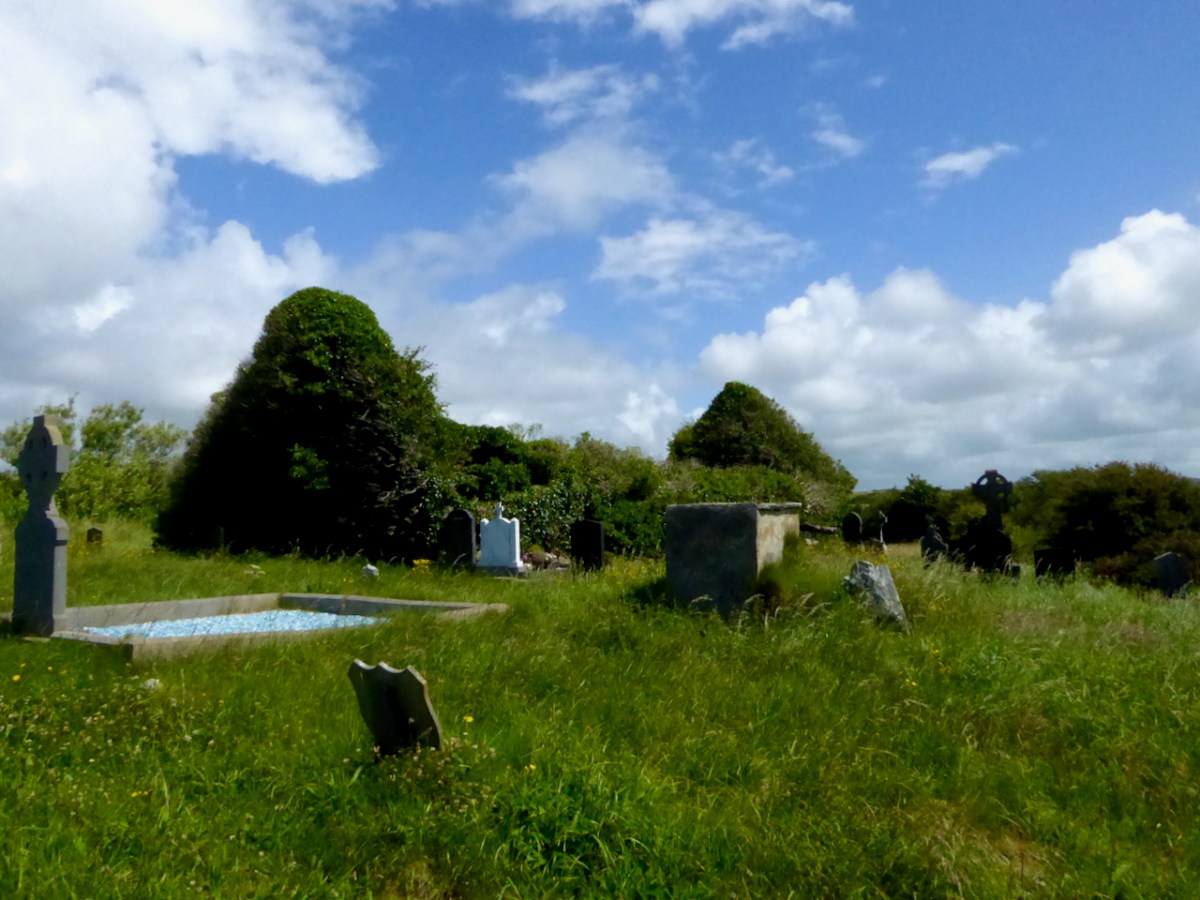
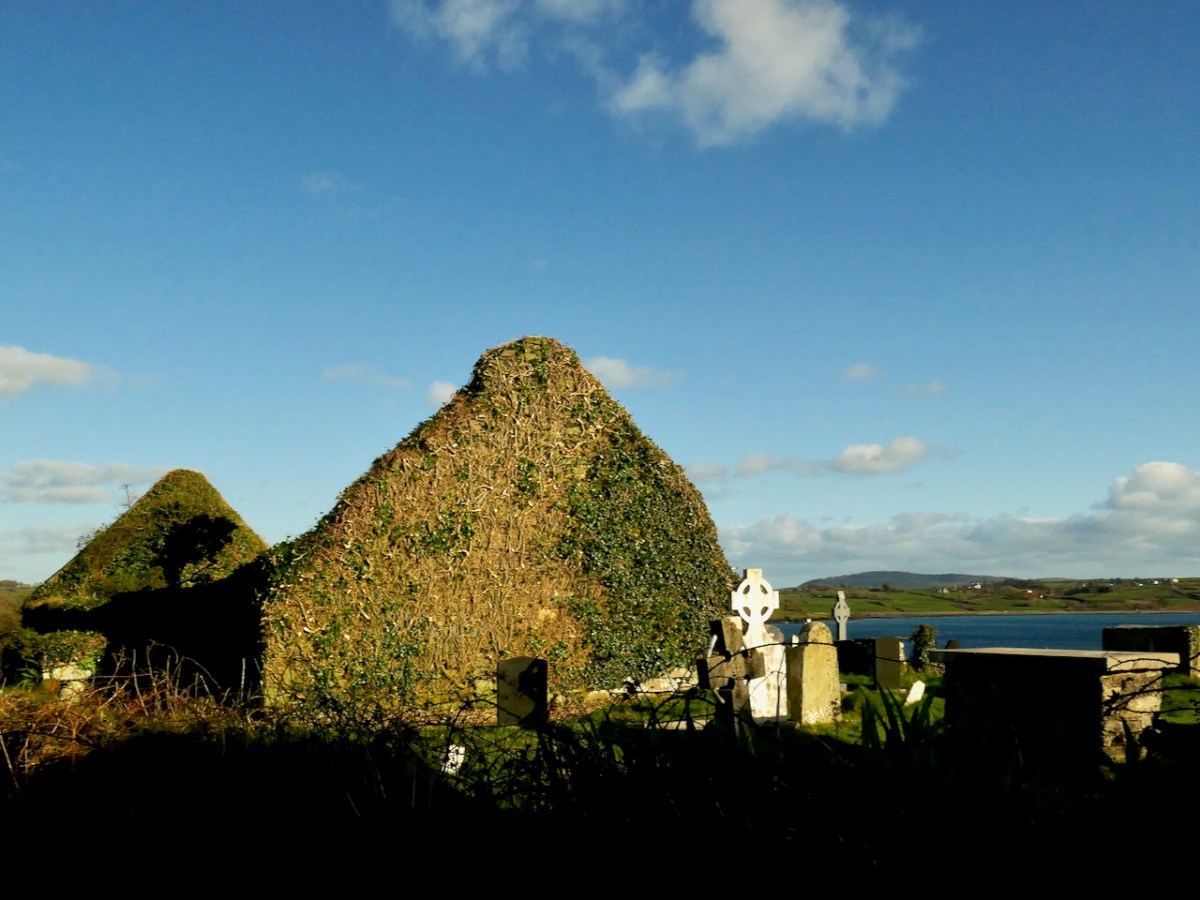
This beautiful medieval church sits on the shores of Roaringwater Bay, close to Kilcoe Castle. It was in danger of destruction by ivy but is being rescued – more on that in a minute. This (below) is what it looked like up to recently.
Kilcoe is the Church of Cóch – but who was St Cóch? For information we turn, as always, to what has become the bible for anyone interested in Irish Saints, the magnificent A Dictionary of Irish Saints by Pádraig Ó Riain. According to Ó Riain, the great St Ciarán (of Cape Clear and also of Seirkieran in Ossory), always spent Christmas here, with his foster mother, Cóch. Little is known of Cóch, except that she was of the people of the Corca Laoighdhe, with whom Ciarán also had a close association. She may have given her name also to Kilcock in Kildare. Her feast day is June 29th.
If the church was indeed founded by St Cóch, then there must have been a centre of worship here from very early Christian times, since typically a church grew up around the relics of a venerated and holy man or woman. Whatever the form of the original church, nothing survives of it now. Take a look at my post Mizen Magic 23: Croagh Cove, for what might have been there in, say, the 6th to the 10th centuries. 
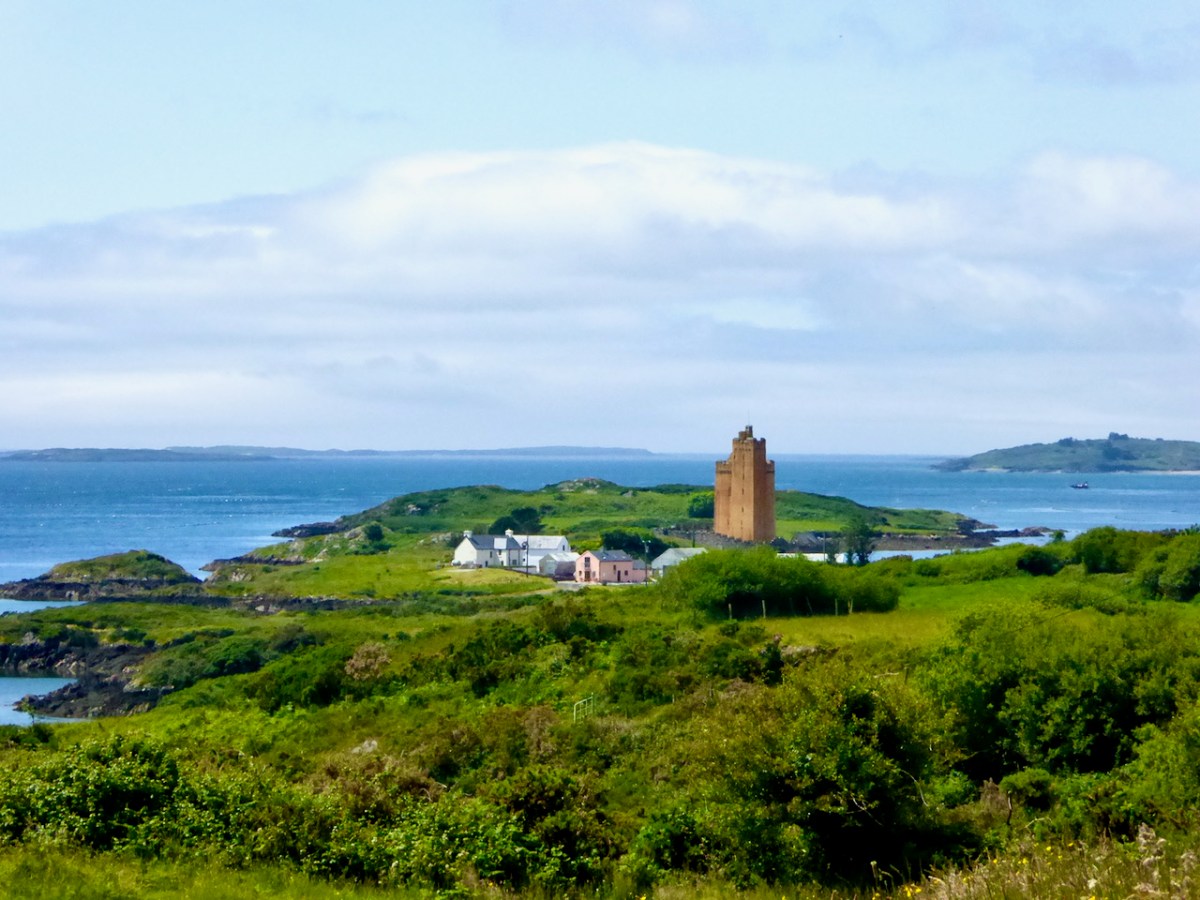
Note also the proximity of the Church to Kilcoe Castle – a stronghold of the McCarthys, now magnificently restored by Jeremy Irons. It was normal for lords and chiefs to have ecclesiastical foundations close by, on land they had ceded for that purpose. The monks made sure that the lord’s soul would be saved by ceaselessly praying for him, and his endowment of the monastery or church gained him many indulgences, shortening his time in Purgatory.
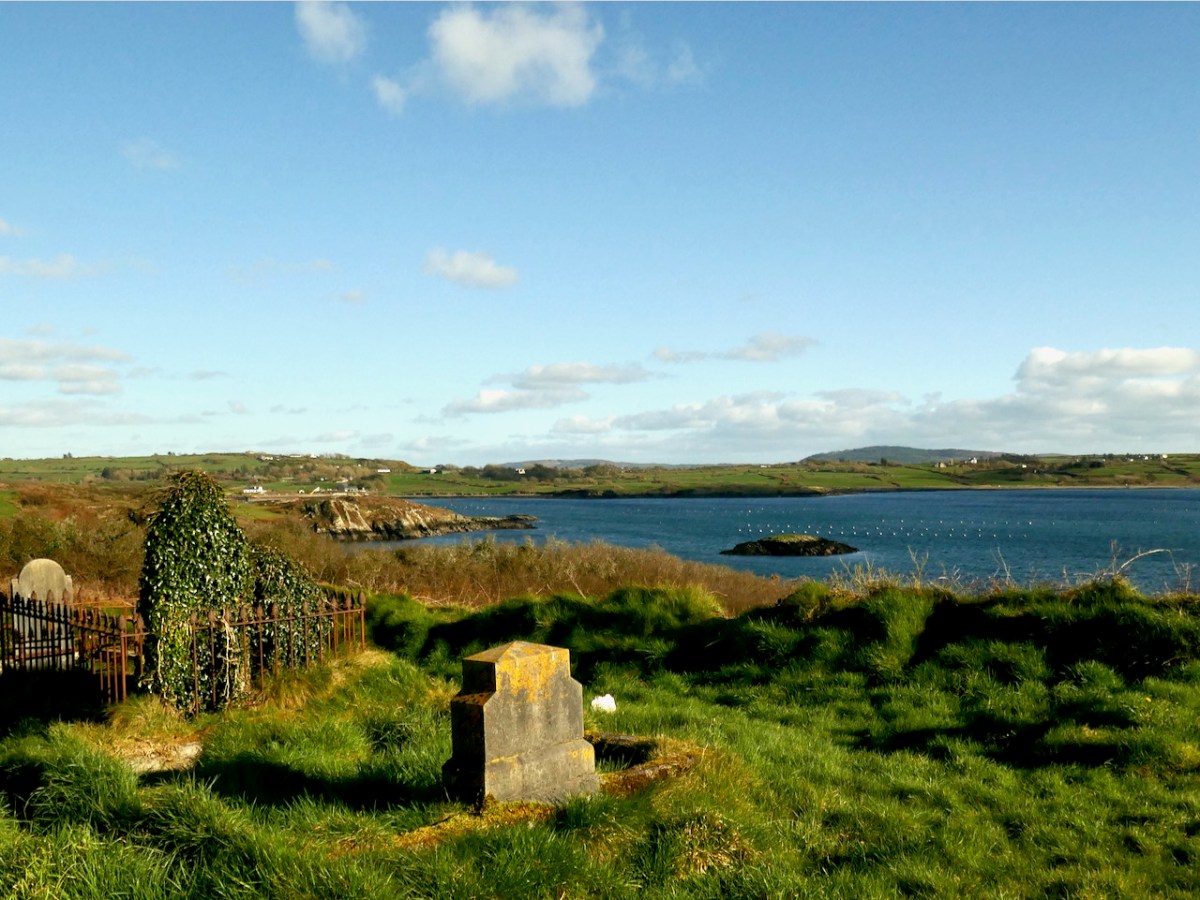
Around the core of the original church was a burial ground, with burials placed on a hierarchical basis closer to or farther from the church. The bones or relics of the founding saint were often under or immediately beside the church, with the most coveted spots going to high-ranking individuals.* The association of ancient churches with burial grounds continued through the ages. Only in more recent times have modern cemeteries been established on new ground not associated with churches.
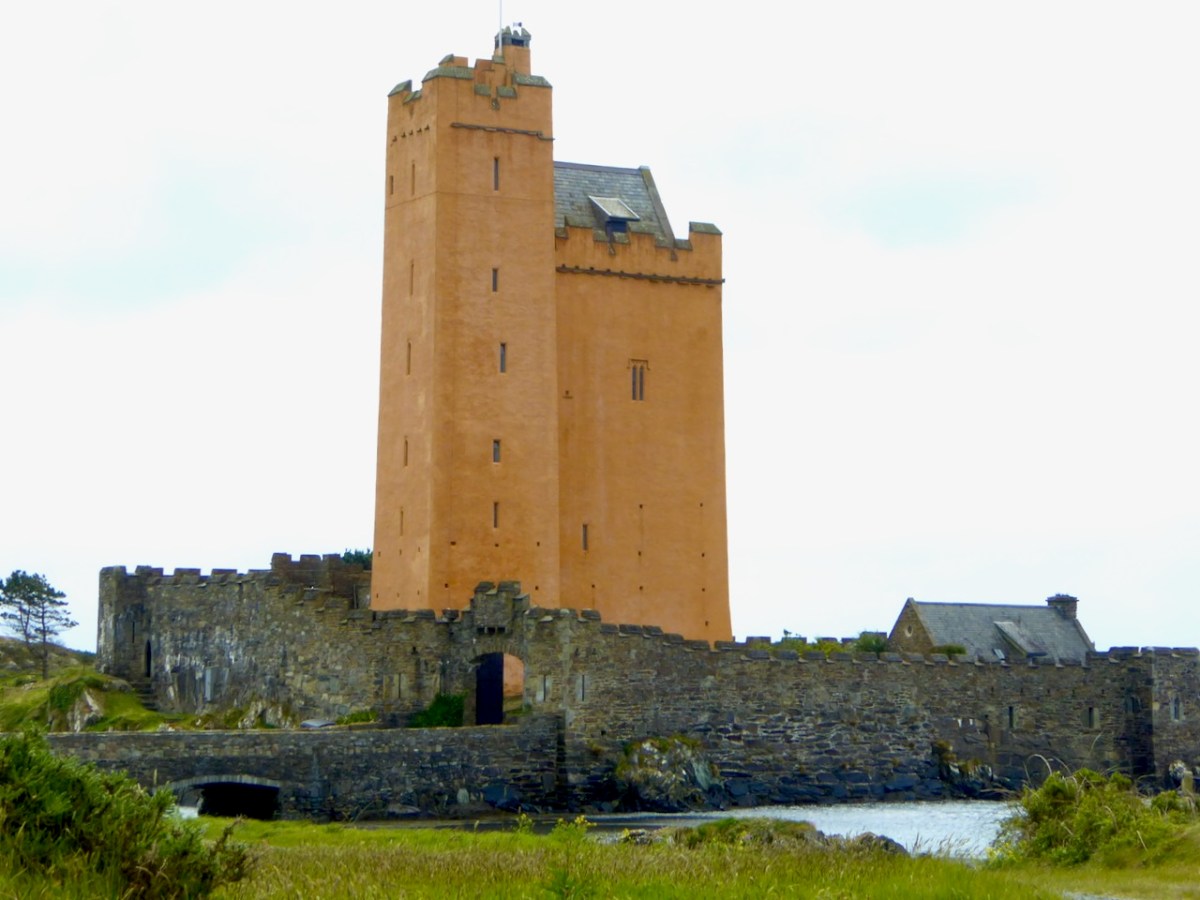
The Parish system did not evolve until the 12th century and parish churches were often simply an evolution of the older monastic church, occupying the same ground and with a continuation of the burial practice. What we see now at Kilcoe is a parish church, and although it may be based on a much older site, the architectural remains are solidly gothic, and probably 15th century – the same style of architecture we see in Kilcoe Castle. We can imagine the head of the McCarthy family of Kilcoe Castle crossing the drawbridge to hear mass or confess his sins in the little church under his patronage.
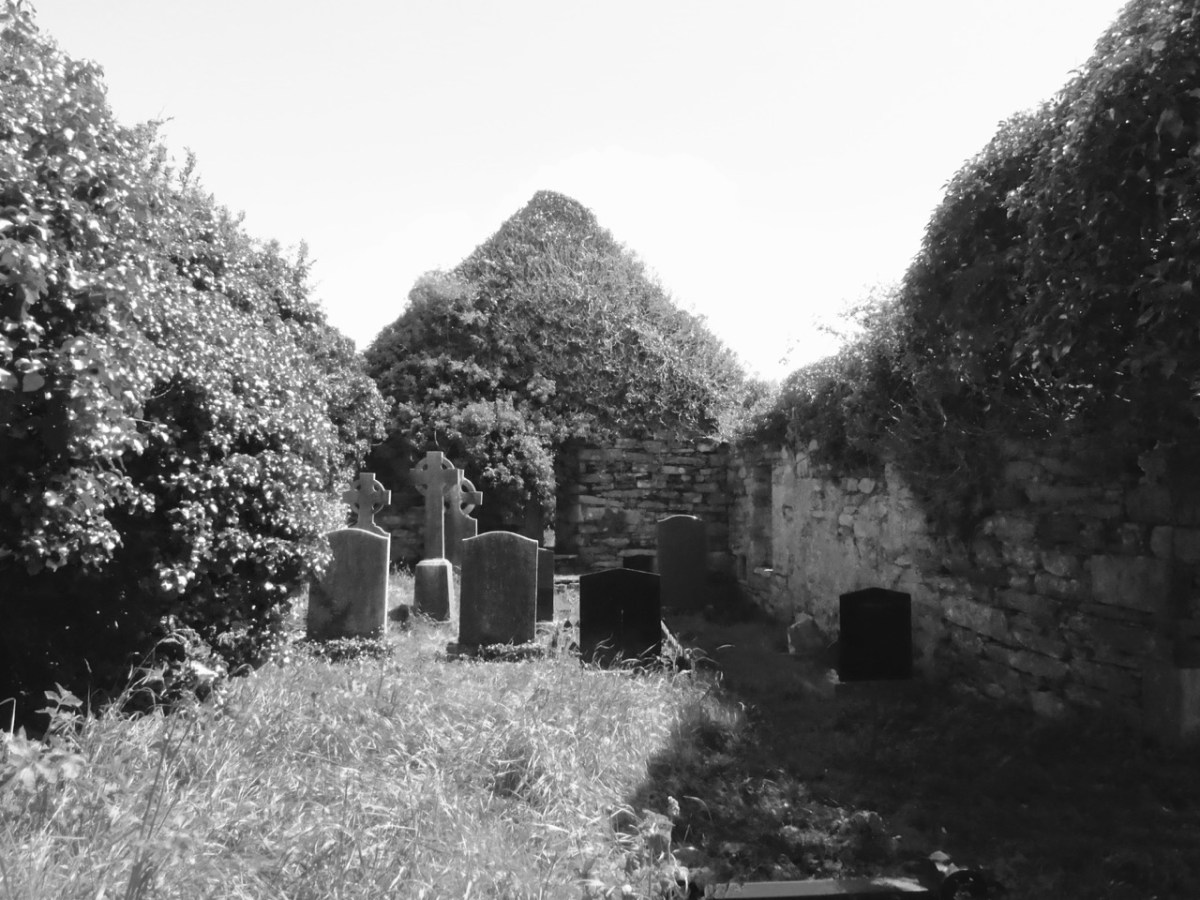
In recent years, the church has become more and more buried in ivy. You can see the condition of the exterior in the second photograph of this post, and of the interior of it (above) in a post I did way back in 2015, A Tale of Four Churches. Worried by the deteriorating condition a group of local people raised funds through Go Fund Me  for an assessment by a conservation engineer. That report is a detailed survey of every aspect of the church and makes numerous recommendations for remediation. From the report:

The church is in fair condition with its walls and main architectural features largely intact. However, the substantial ivy canopy and embedded ivy stems are damaging the masonry and, without intervention, there is likely to be significant loss of historic fabric in the short to medium term.

The ivy canopy on all walls should be reduced immediately by cutting back the ivy to the wall face. This should be preceded by an ecological assessment which may impact the timing and scope of the vegetation control measures (unless advised otherwise by the ecologist, cutting back of vegetation should be carried out between September 1st and February 28th). The ivy should not be treated with herbicide or removed unless conservation work can be carried out shortly after treatment and removal.

Kilcoe Church Condition Report
John Kelly (conservation accredited engineer)
David Kelly Partnership. Oct 2022**
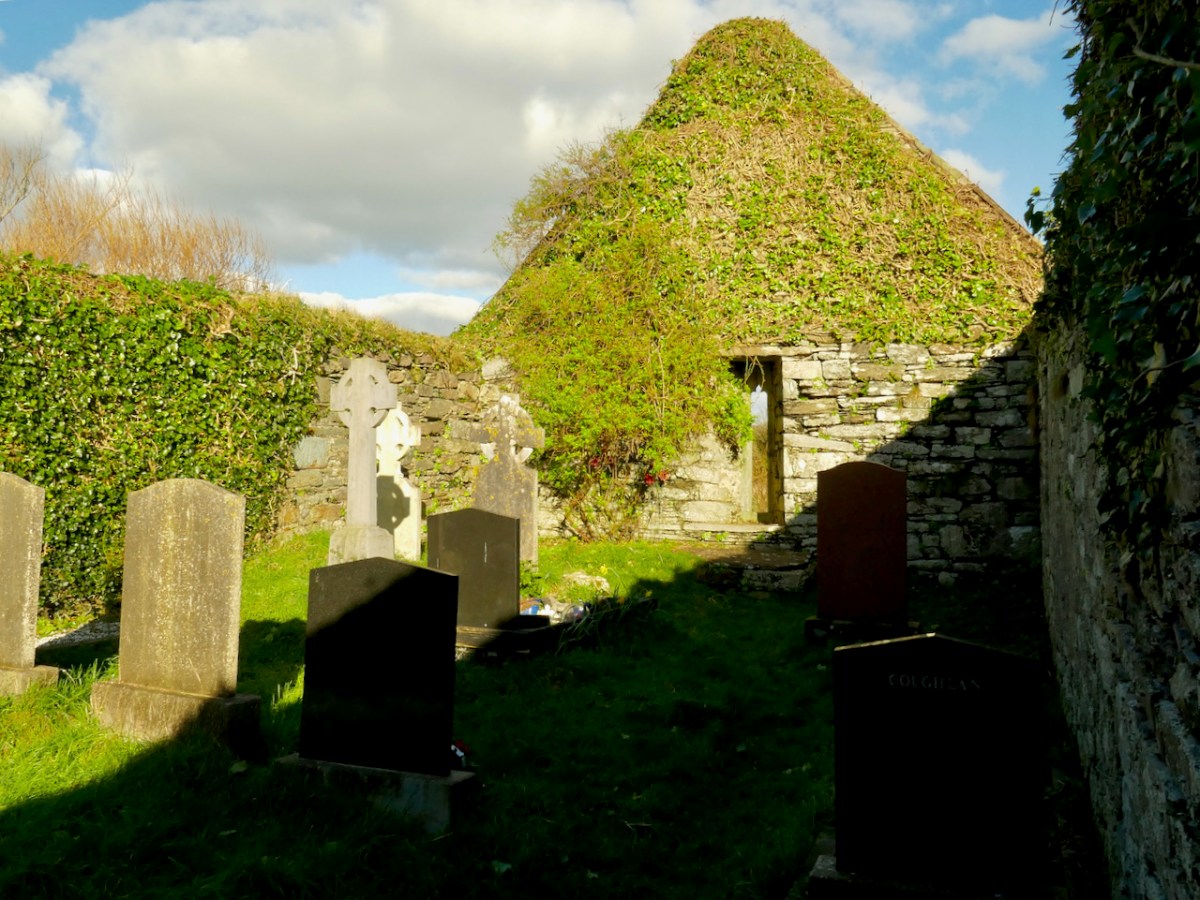
When we visited yesterday we were thrilled to see that this work is underway, following best practice as advised by the conservation report. Although we are not sure of the details, it appears that the church itself is in private ownership, and that the landowner may be the one who has undertaken this work at their own expense. (Happy to receive further correction or confirmation of this, in order to direct appreciation appropriately.) 
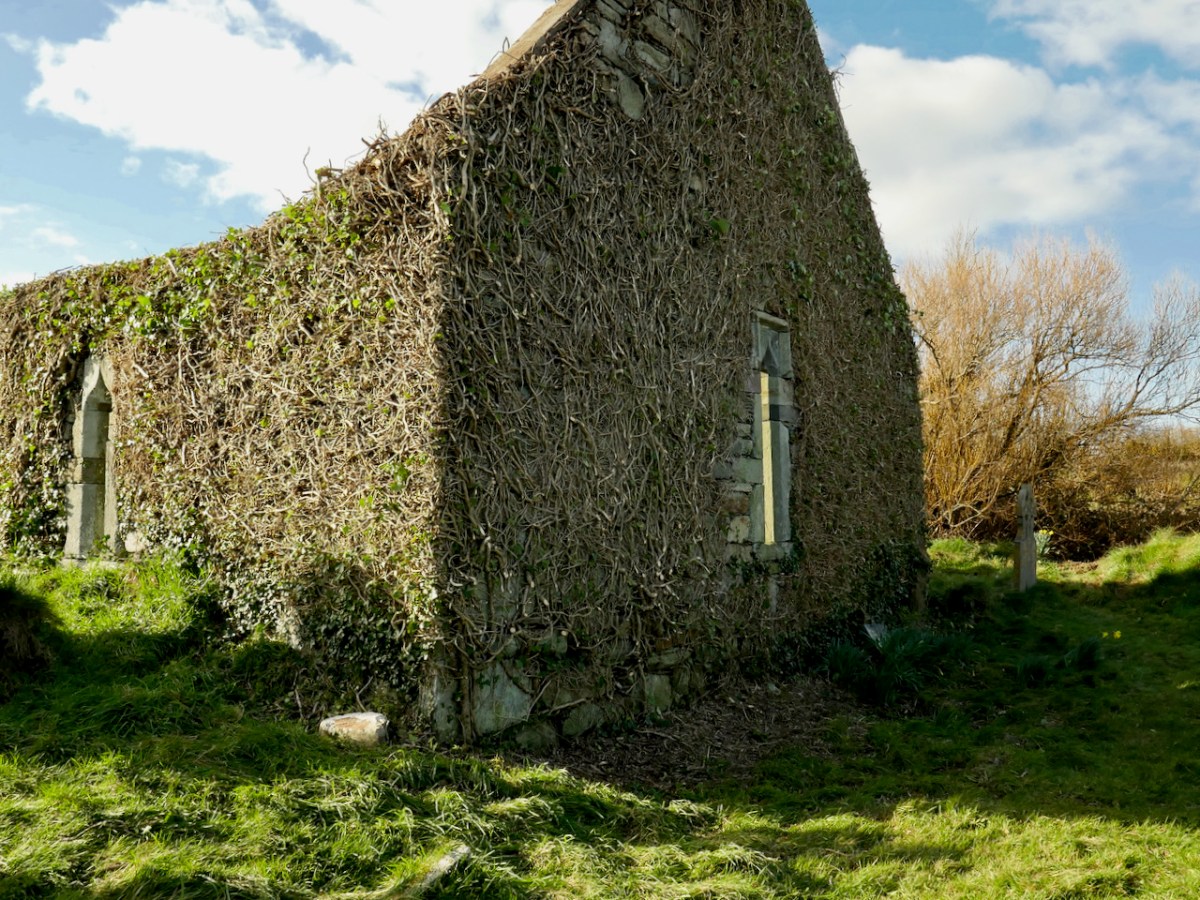
And – now that this work is underway, the church is rising like a phoenix and once again it is possible to see the major features of this fine and important  piece of our heritage.
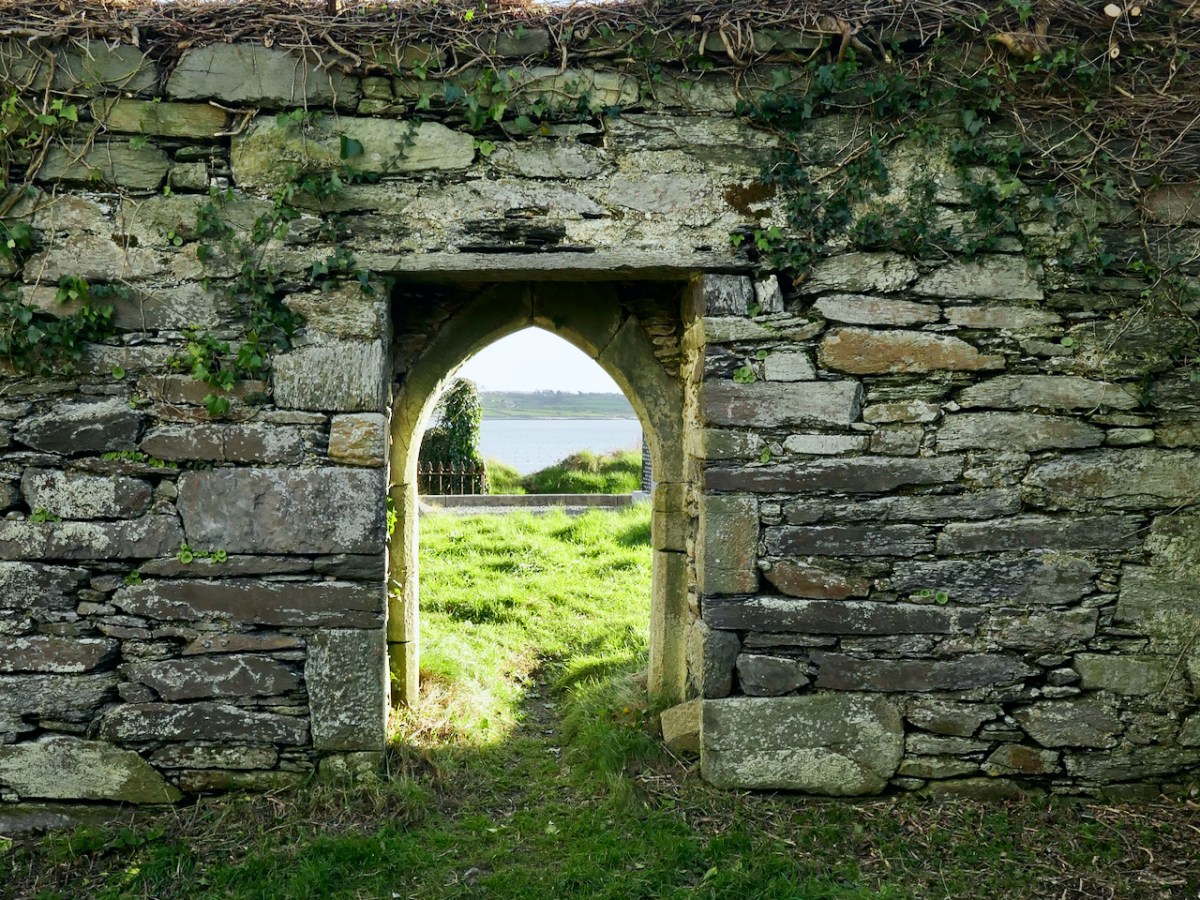
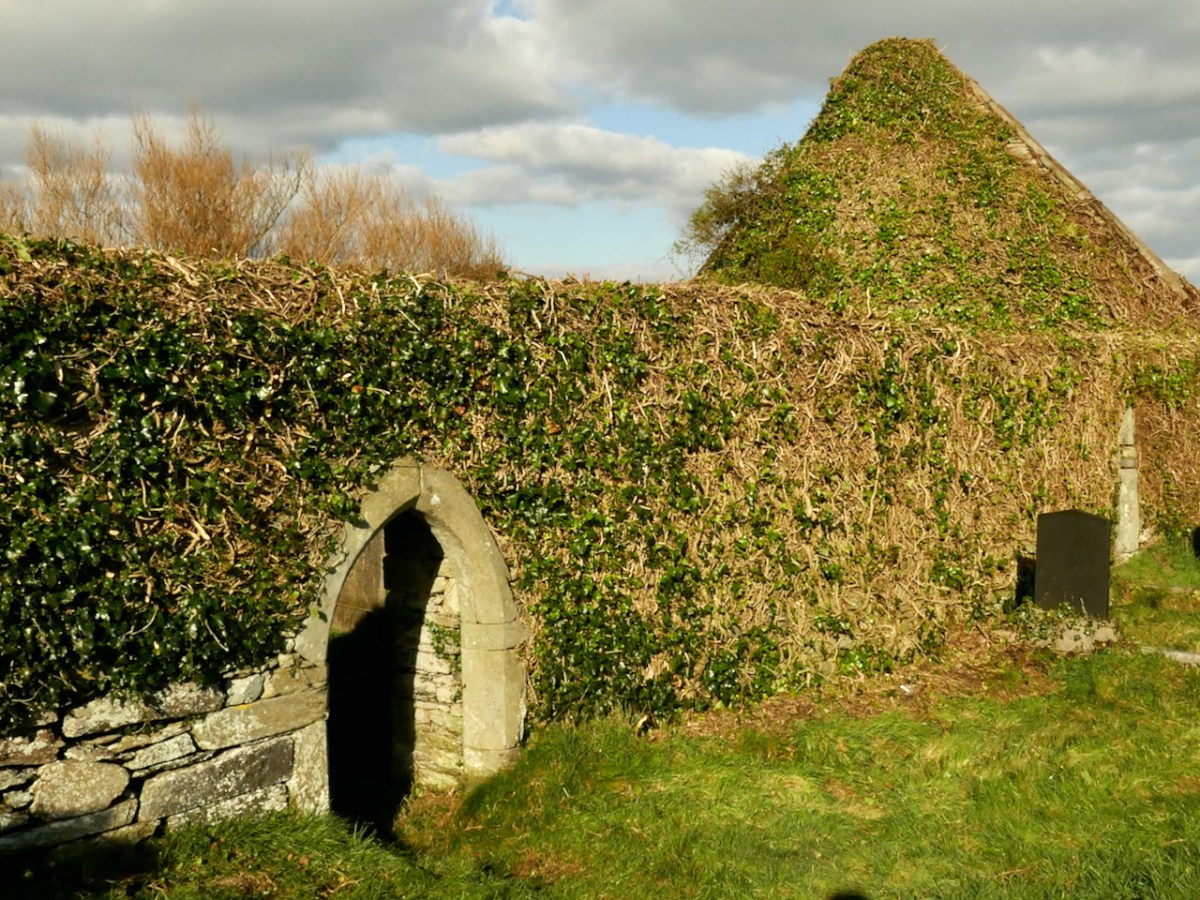
The church is a simple rectangle. The chancel, containing the remains of an altar table, is at the east end, and there is one doorway in the south wall. While this entrance, when viewed from inside, is a straight opening with a plain lintel, from the outside it is totally different – finely carved stone provides a graceful arched surround.
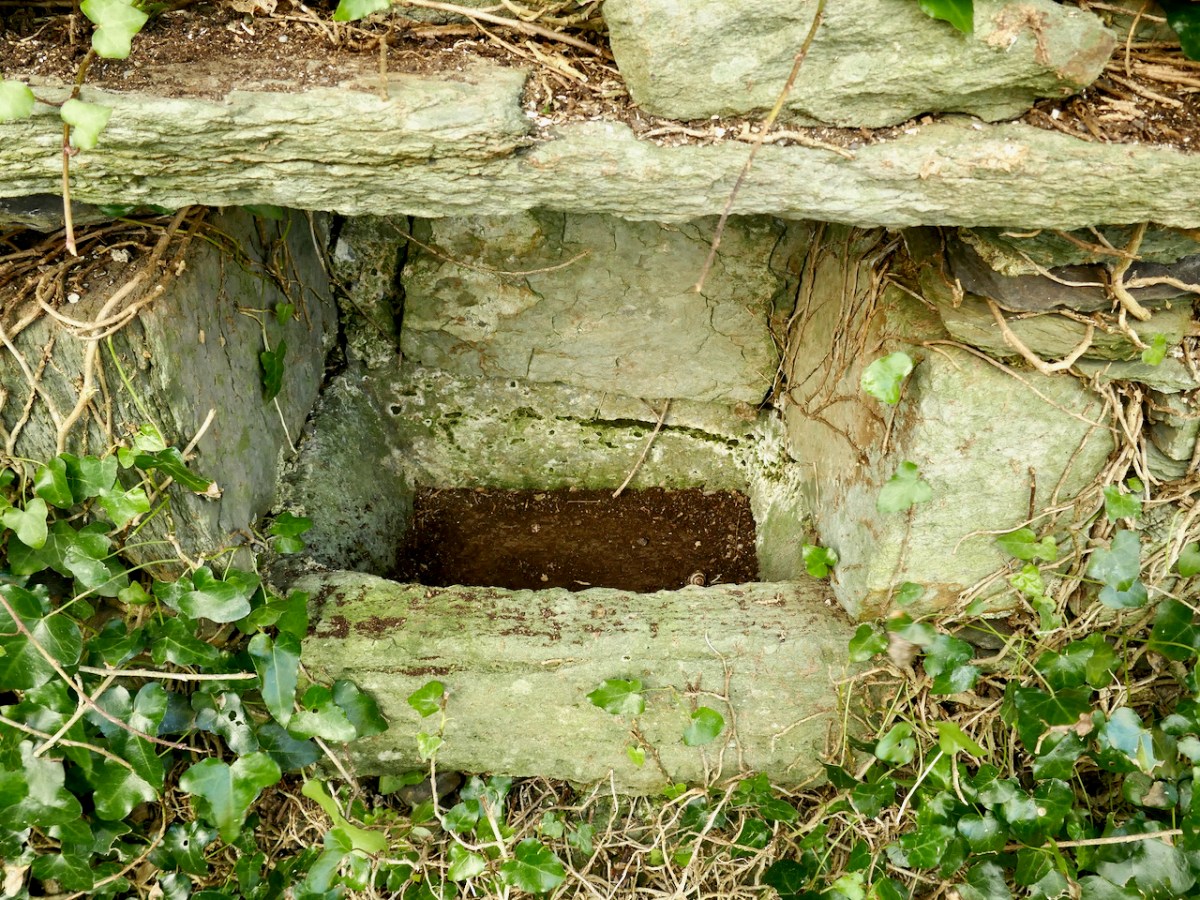
Two ‘basins’ are set into the walls, as are  two stone ‘cabinets.’  The basin on the south wall is a piscina, in which vessels were washed, and has a carved bowl, although it is hard to make out under under a cover of dark lichen.
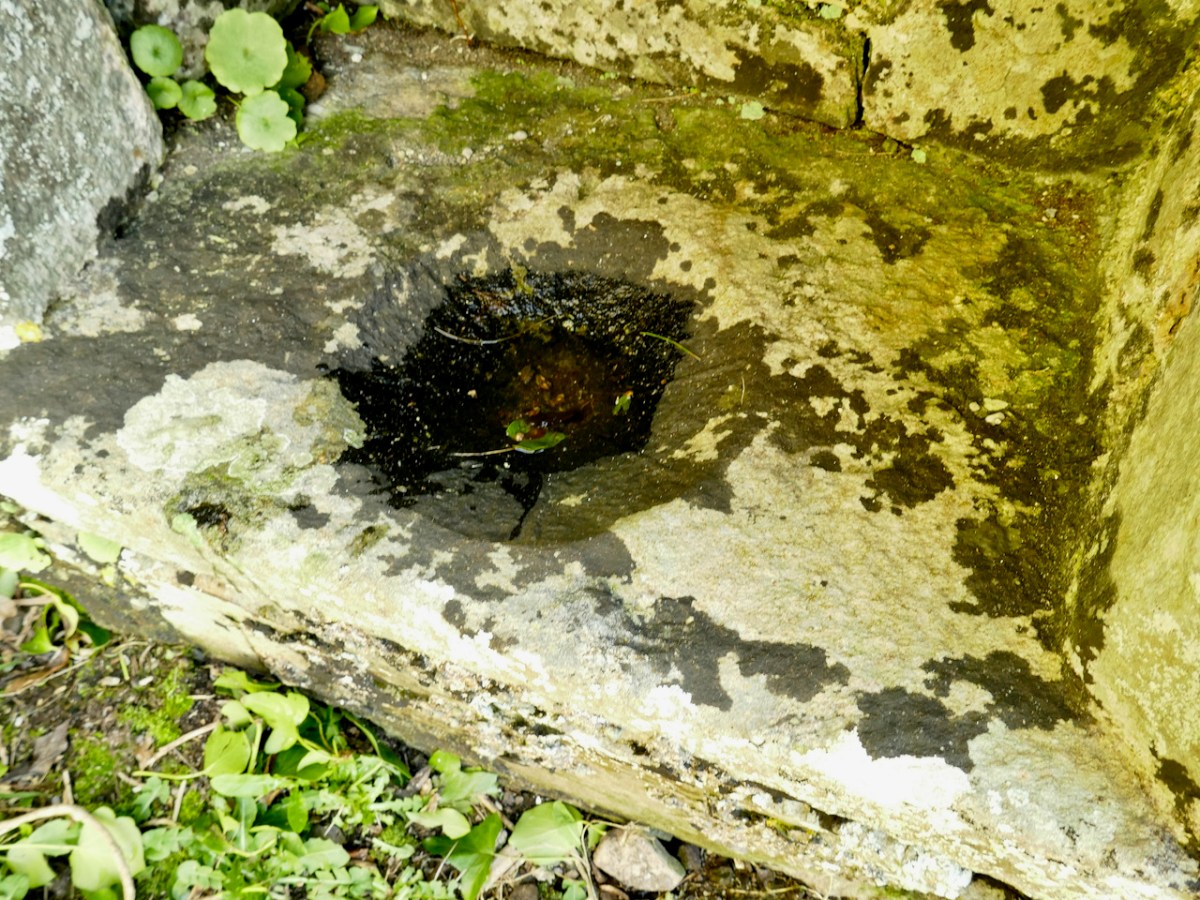
The basin in the north wall is more visible now that some of the ivy has been cut back. It may have been a baptismal font.
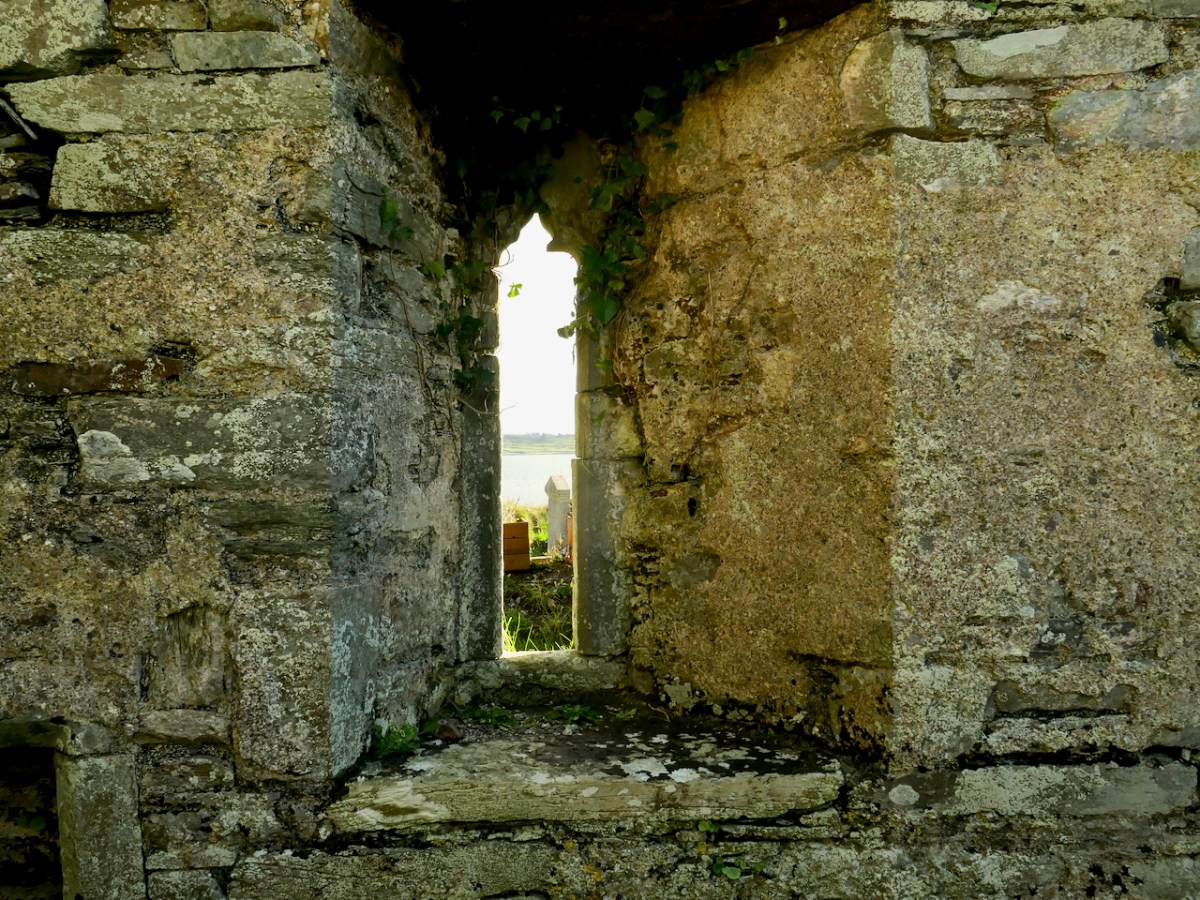
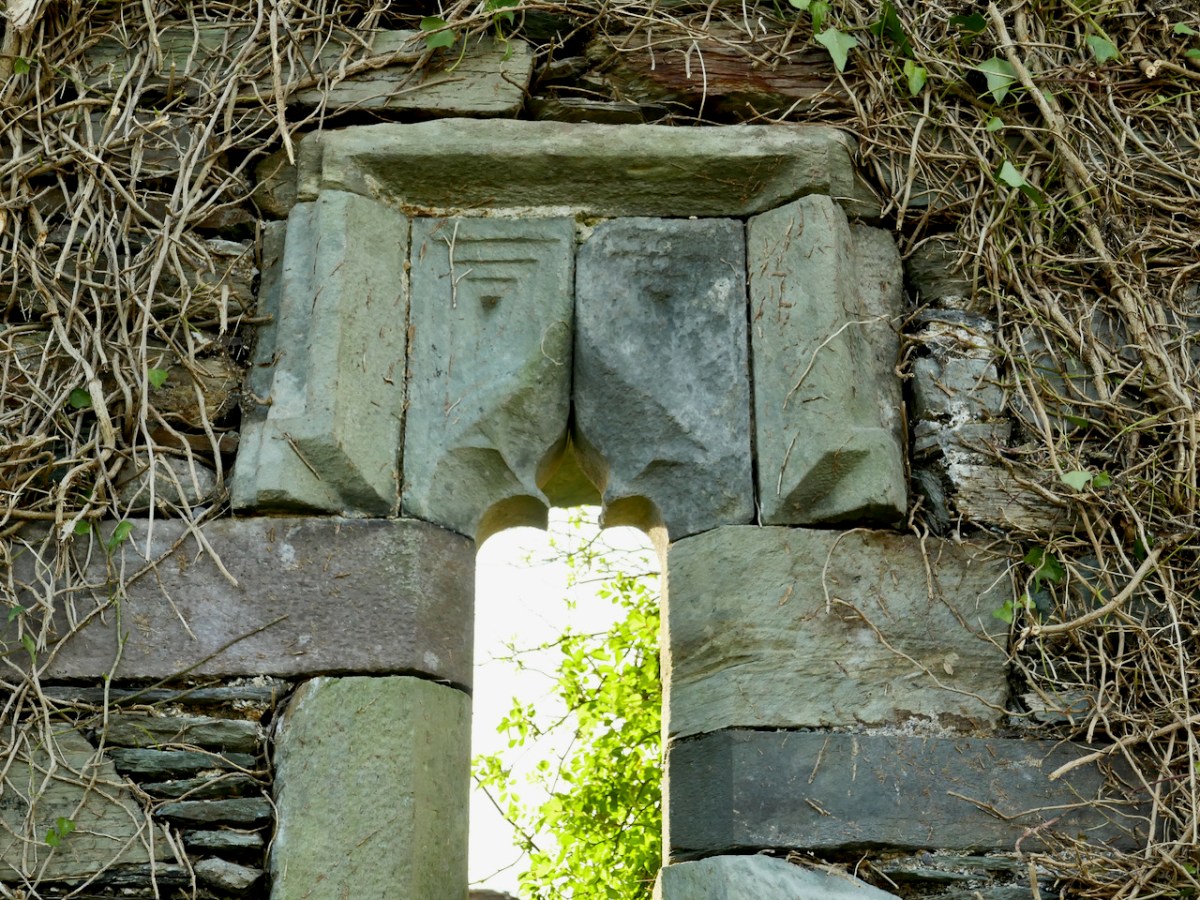
There are two fine gothic windows, tall and slim, with carved ogival heads. The window is the south wall is now visible inside and out. It seems to have an asymmetrical splay, designed to let more light in. For a similar window – and indeed for more on what this church may have looked like – go to my post Mizen Magic 19: Church of the Angels.
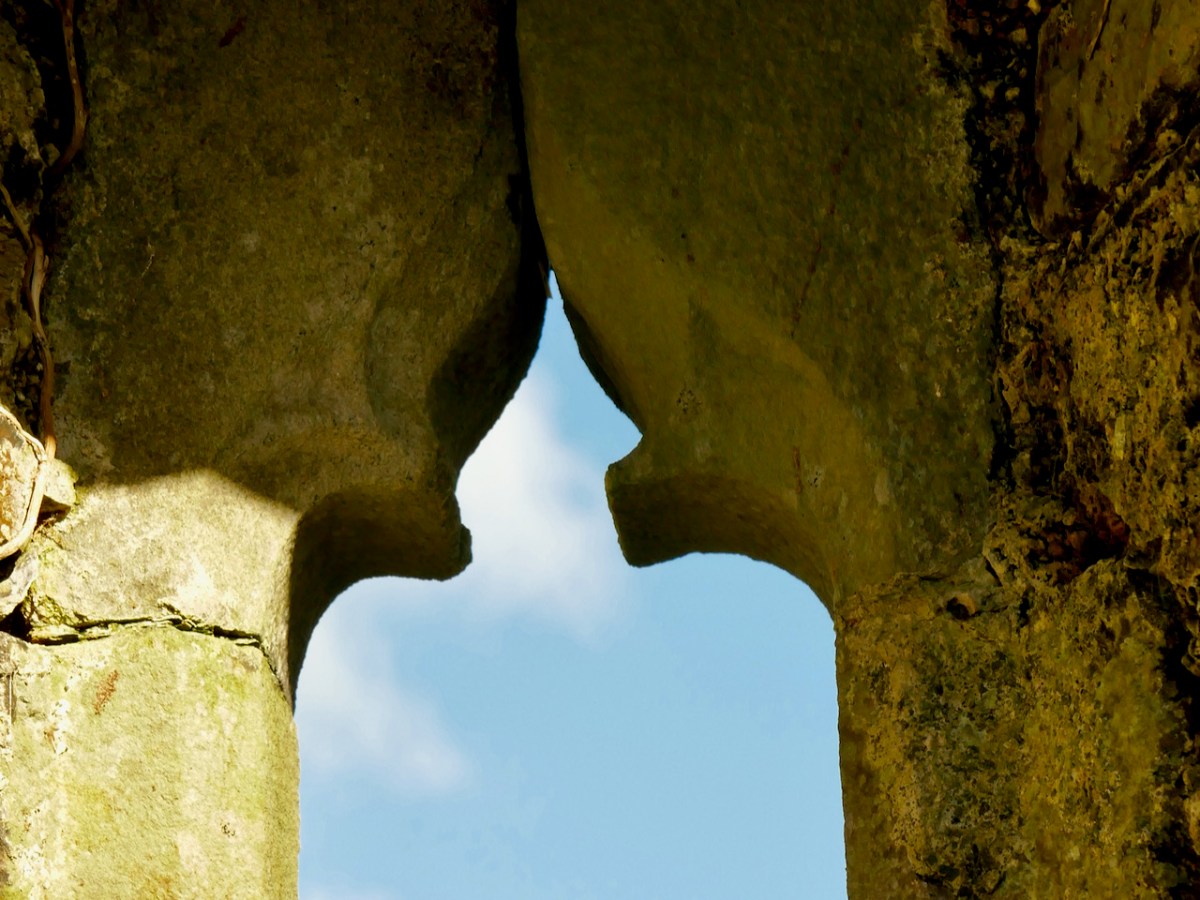
The window at the east end, behind the altar, was particularly worrying, as ivy was threatening to get between the cracks and break it apart. It looks so much better now, and on the outside the hood mouldings can once again be admired.
The north wall of the church, outside, is a good place to see how the ivy has been carefully clipped. There’s an old chest tomb here which incorporates what might be the top of another gothic window – further exploration of this tomb is recommended in the report.
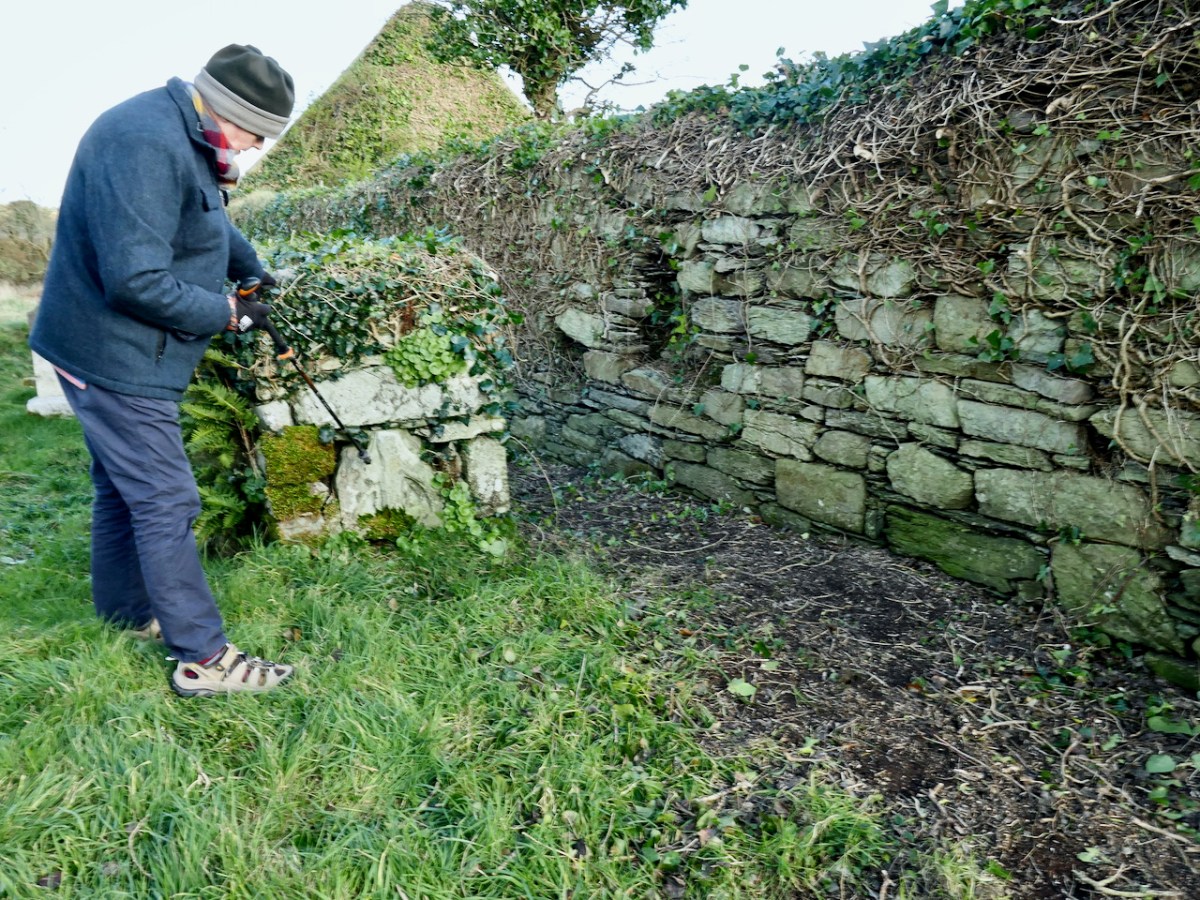
There is much more work to be done on Kilcoe Church, but what has happened so far is terrific and very encouraging. Compare the photo below with the second one in the post. They were taken from about the same place – and look at the difference! On behalf of all of us in West Cork, huge appreciation must go to everyone involved in the efforts to preserve it for posterity.
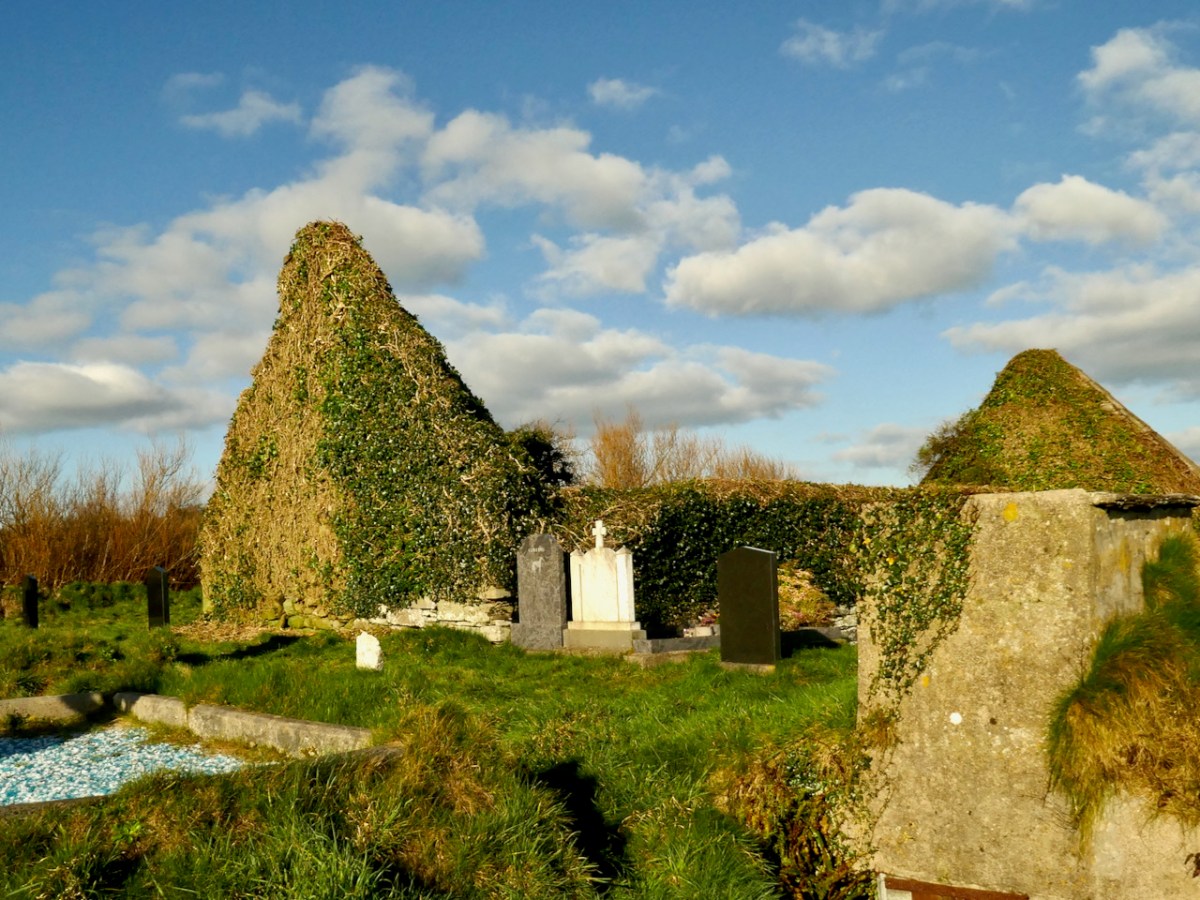
One last comment is that this church is a listed National Monument, so future work needs to be done in consultation with them.

*Churches in the Irish Landscape, AD 400 to 1100 by Tomás Ó Carragáin

**Many thanks to Isobel Towse and to Brigid O’Brien of Fastnet Trails for their leadership in raising funds to commission the report
Knockdrum Stone Fort

There is no firm line that denotes where our most south-westerly Irish peninsula begins. Our series, Mizen Magic, has reported on walks, roads, views, history and archaeology which can definitely be defined as belonging to the Mizen (which we tend to think of as being to the west of, and including, its ‘gateway’ – Ballydehob). Perhaps we should start a series titled Magic Beyond The Mizen – in which case this would be the first: a report on a very prominent site about half an hour’s drive along the coast east of where we live: a historic structure – built within the last 2,000 years – but which contains evidence of much older human activity.

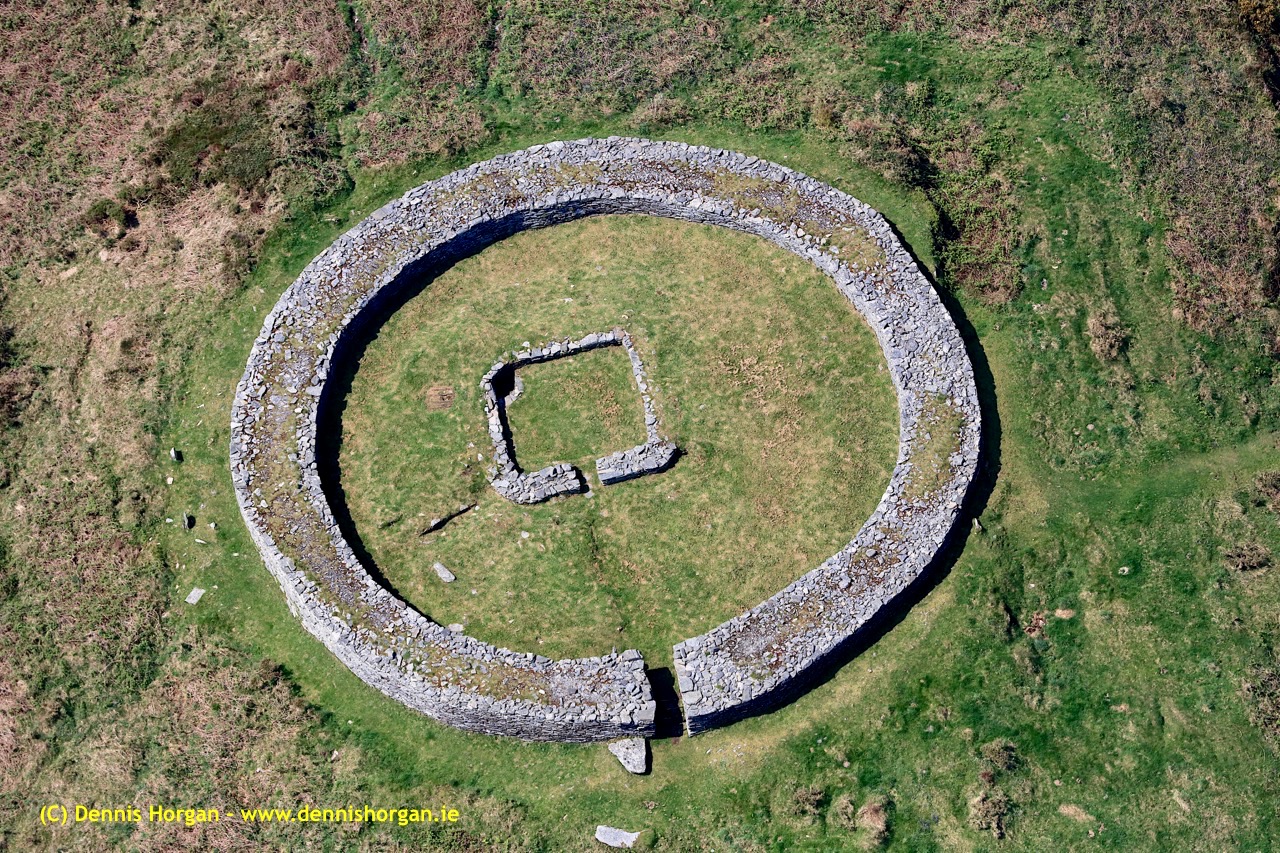
Here is an overhead view – the best way to see and understand the layout and construction of Knockdrum Stone Fort, which occupies a superb hilltop location in the townland of Farrandau between Skibbereen and Castletownshend. Thank you, Dennis Horgan – our professional West Cork aerial photographer – for allowing us to use this image: have a look at his website for other examples of his work, and for details of his excellent photographs and books.

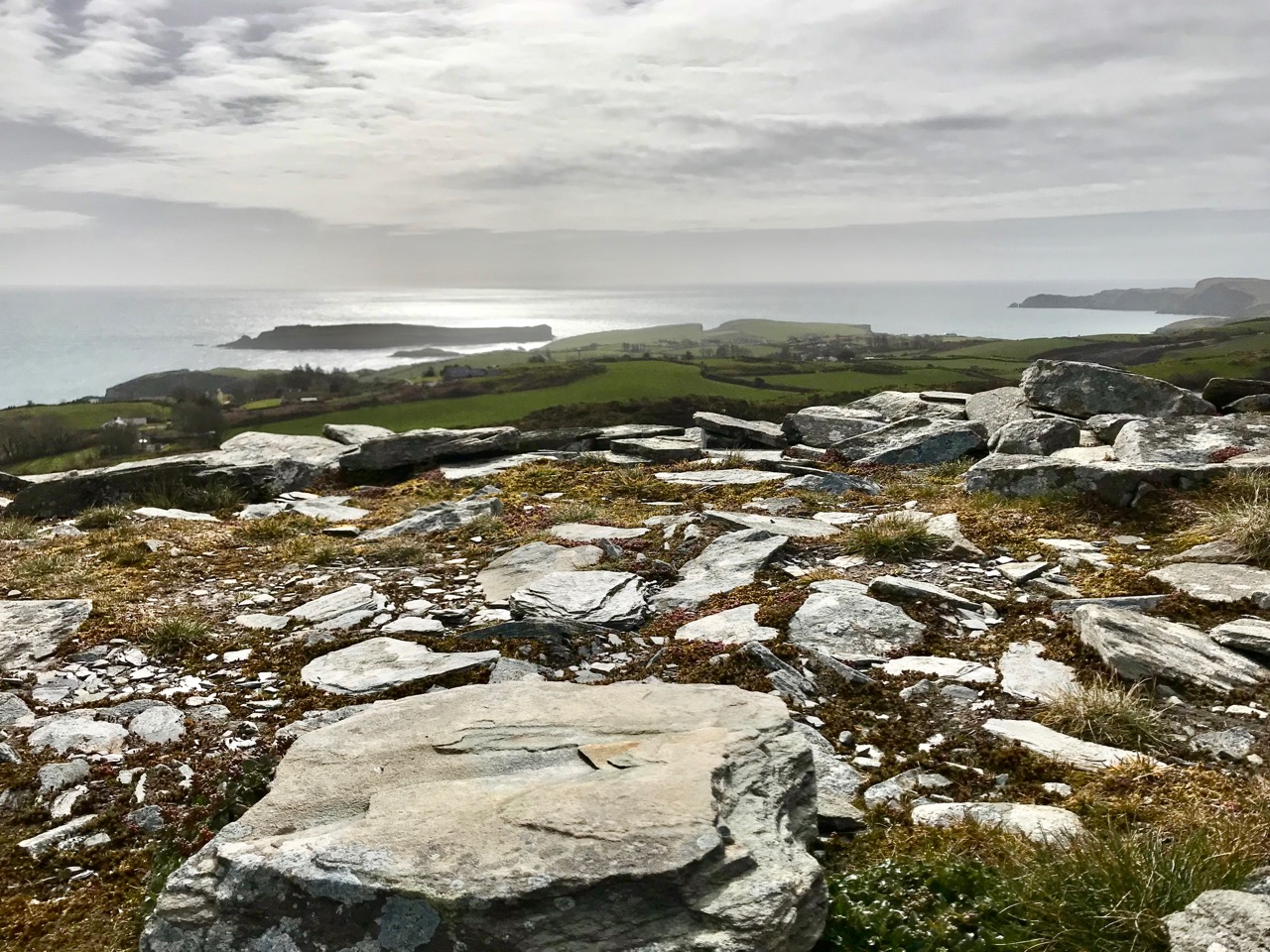
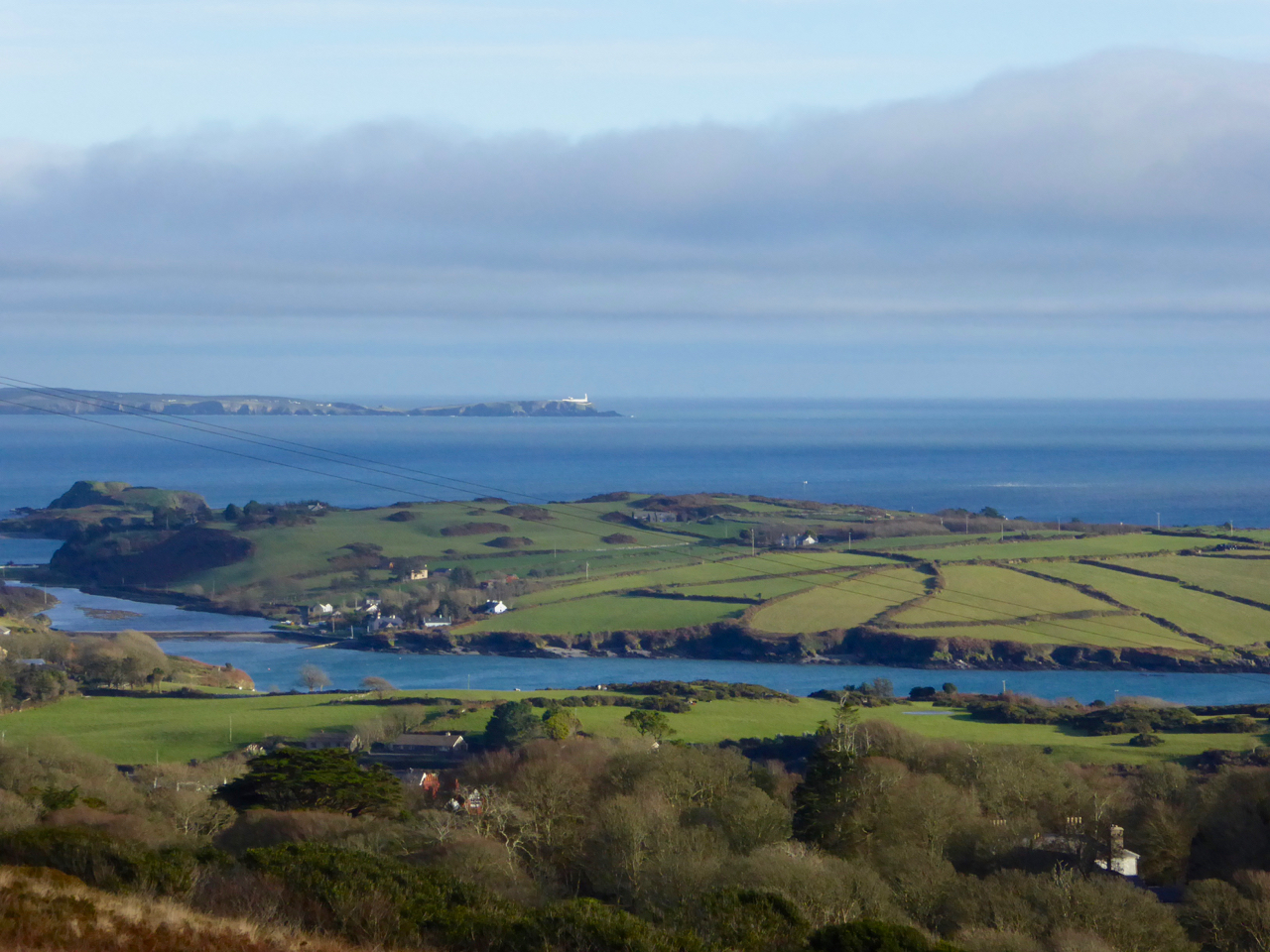
The Fort is located on a high ridge (although not on the summit of the ridge) with far-reaching views both inland and to the south, over the sea. The header picture looks from the Fort out to the west over Castlehaven to Galley Head in the far distance; the view in the picture above is due south – looking towards Horse Island, and the stone wall of the Fort is in the foreground. From these breathtaking vistas it’s reasonable to conjecture that Knockdrum Fort has a strategic siting, providing views of anyone approaching from the sea, and able to signal their arrival to dwellers in the ‘interior’ – the lands to the north. We cannot know for sure that stone fort structures had this – or any other – specific purpose: many theories have been advanced. Comparison with other examples is worthwhile. One of the largest stone forts in Ireland is Staigue Fort, near Sneem in County Kerry.

Staigue Fort (above) has a diameter of 27.5 metres, the present wall height is 5.5 metres, and the wall thickness is 4 metres. At Knockdrum the diameter is 22.5 metres, the present wall height is 2 metres and the wall thickness around 3 metres. The Duchas information board at Staigue says:

. . . This is one of the largest and finest stone forts in Ireland and was probably built in the early centuries AD before Christianity came to Ireland. It must have been the home of a very wealthy landowner or chieftain who had a great need for security . . . The fort was the home of the chieftain’s family, guards and servants, and would have been full of houses, out-buildings, and possibly tents or other temporary structures. No buildings survive today . . .

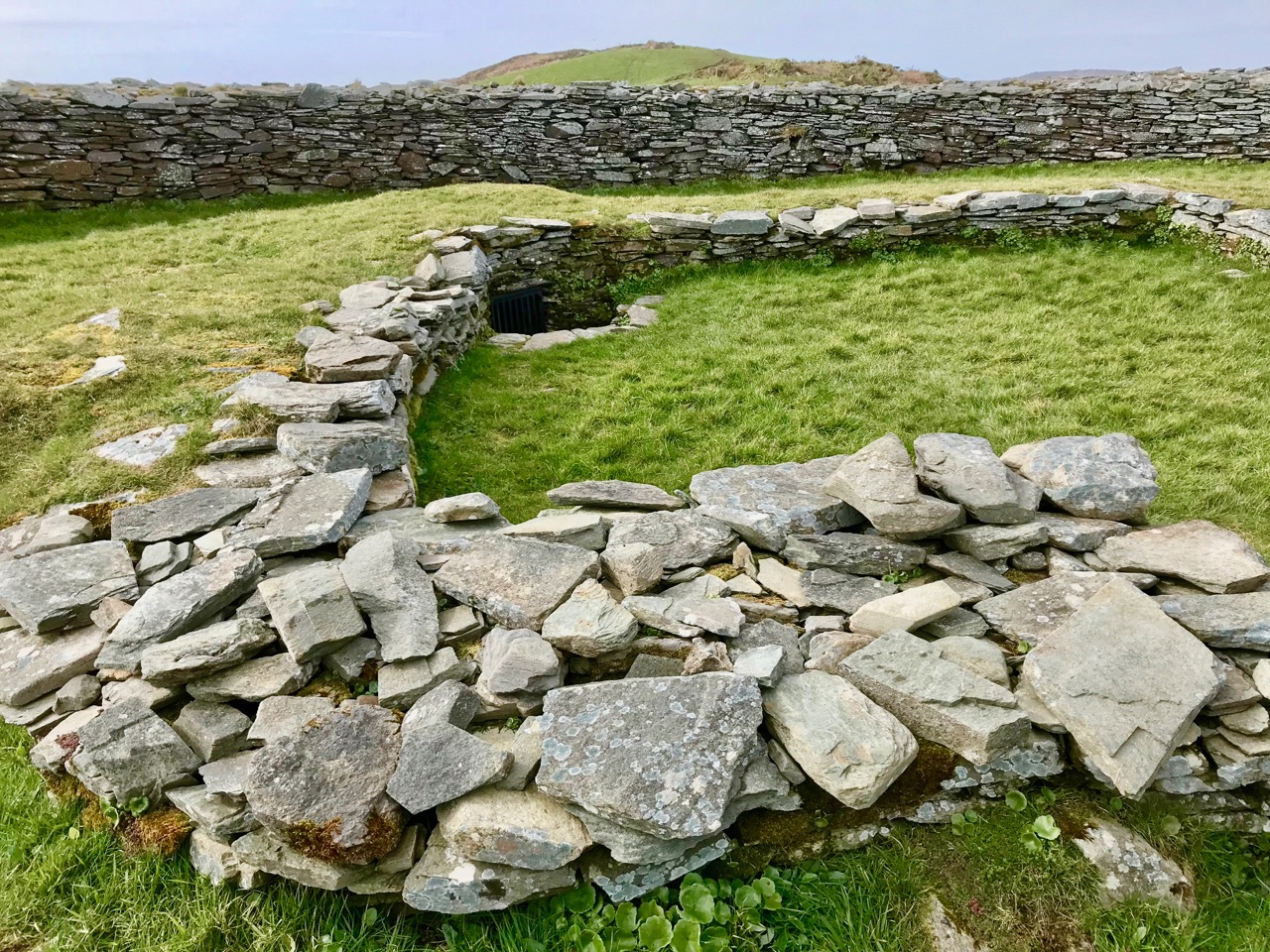
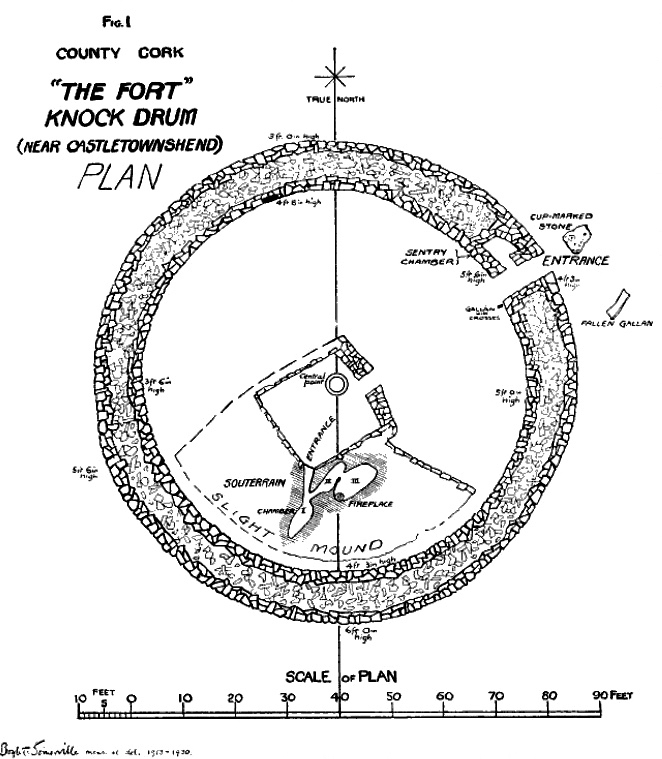
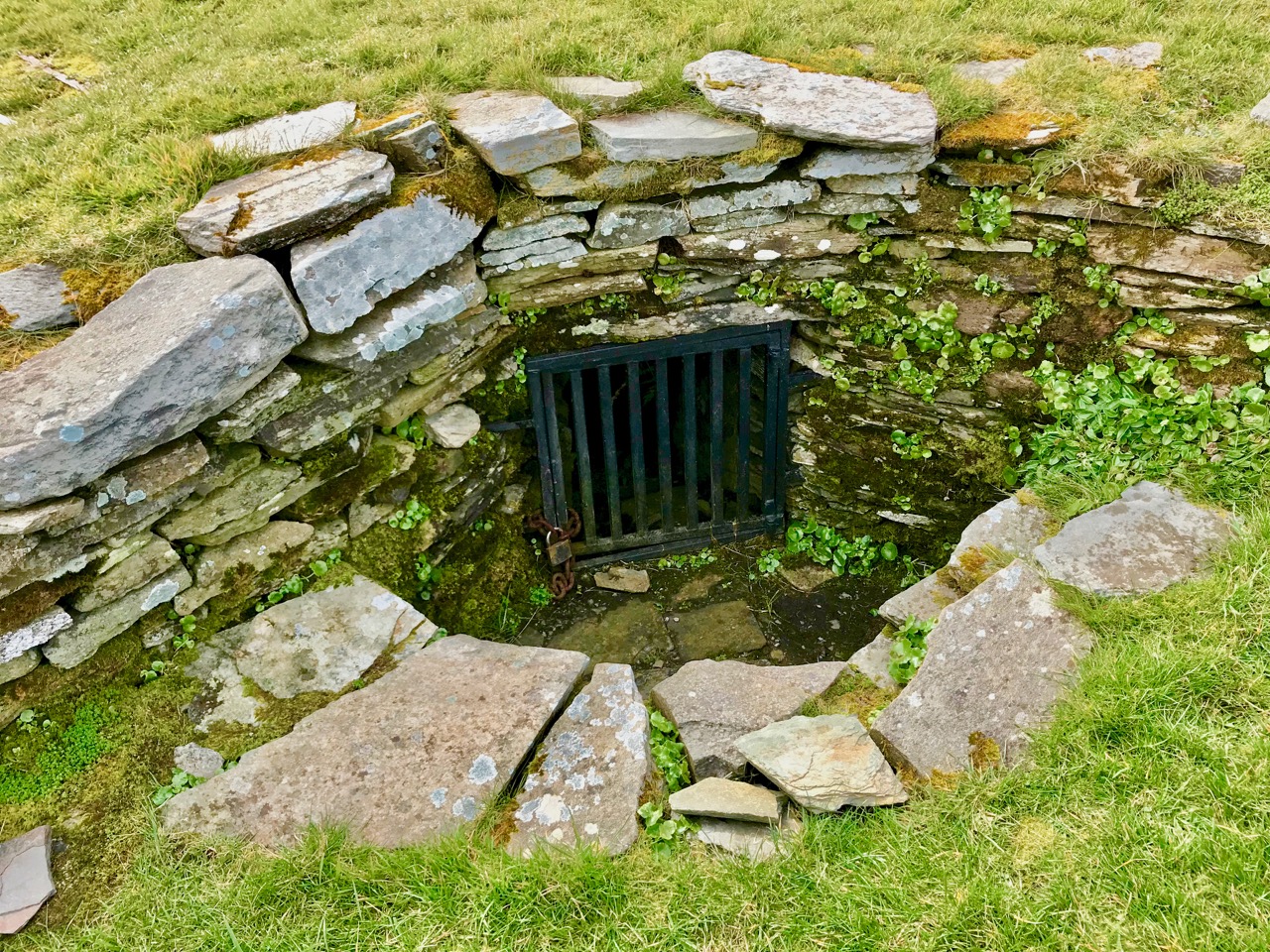
The picture above shows the present interior of Knockdrum Fort: the stone walls are likely to delineate a former building here. In the corner of the inner stone enclosure is the entrance to a ‘souterrain’ – a series of underground passageways. The souterrain is outlined on the following drawing of the Stone Fort which was made in 1930 after a detailed investigation of it by Vice Admiral Henry Boyle Somerville, the younger brother of writer and artist Edith Somerville of Castletownshend. Boyle, his life and his tragic death, is the subject of Finola’s complementary post today.

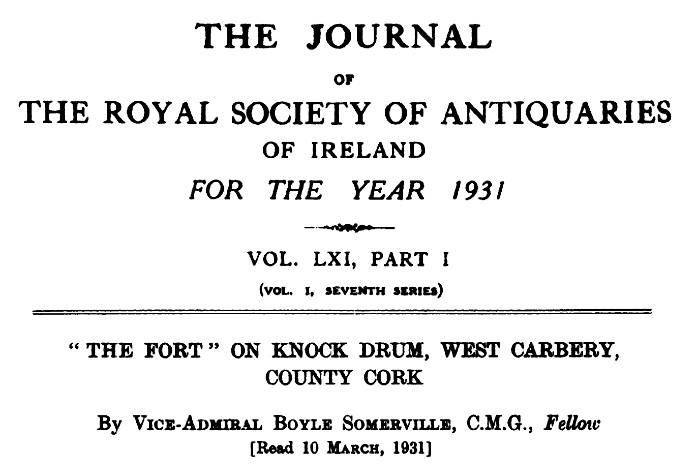
Finola is also discussing Boyle Somerville’s interest in the alignments of archaeological structures. In Boyle’s paper for The Journal of The Royal Society of Antiquaries of Ireland, 1931 (title page below), he presents the evidence that this Fort is on a solar alignment.

Boyle sets out the case for an alignment based on the Knockdrum Fort:

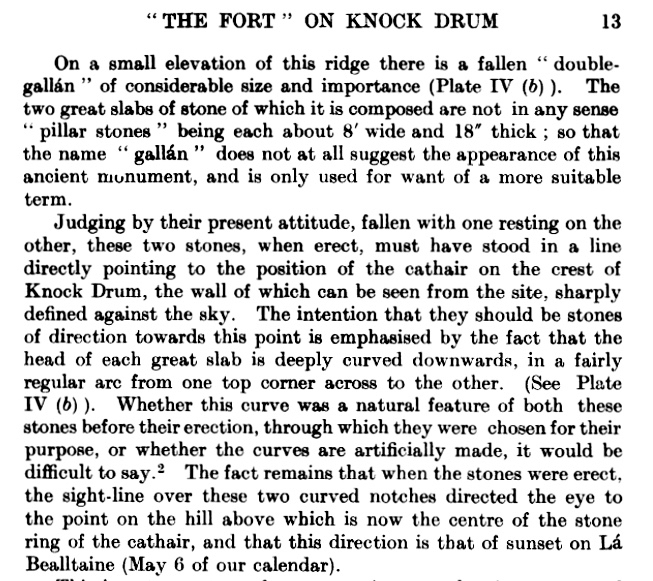
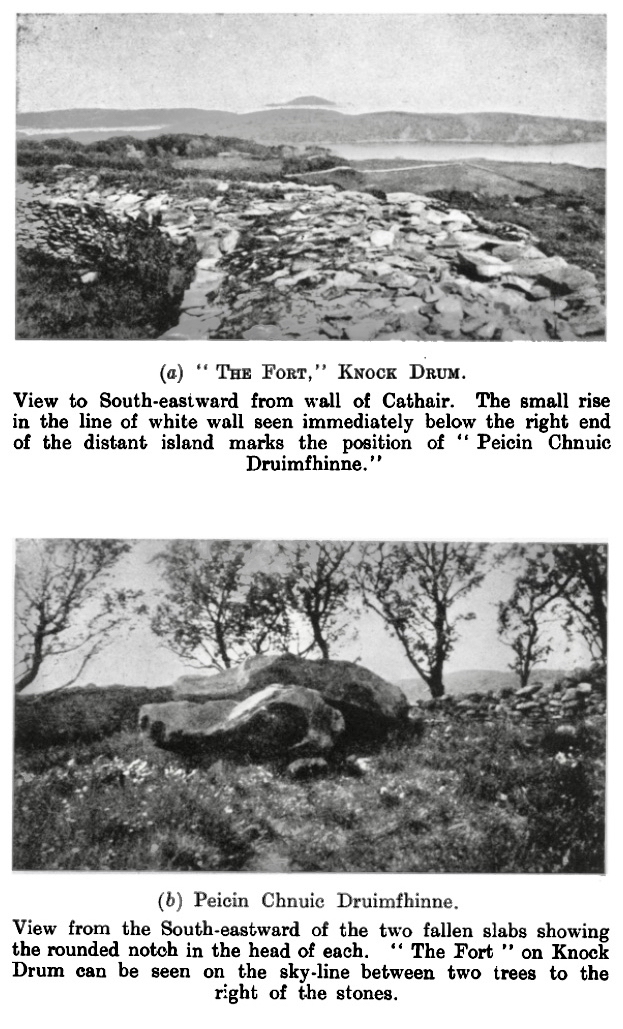
. . . This conception of the earlier use of the site of the cathair [the stone fort] for purposes which may perhaps be termed “religious,” seems to be borne out by the following fact. At a horizontal distance of about 600 yards to the E.S.E of the cathair, and at 210′ difference of level below it, there is a small rocky ridge standing up from the surrounding grass land. The name of the ridge is “Peakeen Cnoc Dromin,” The little peak of the white-backed hill . . .

The following paragraphs and photos are from the Journal paper:

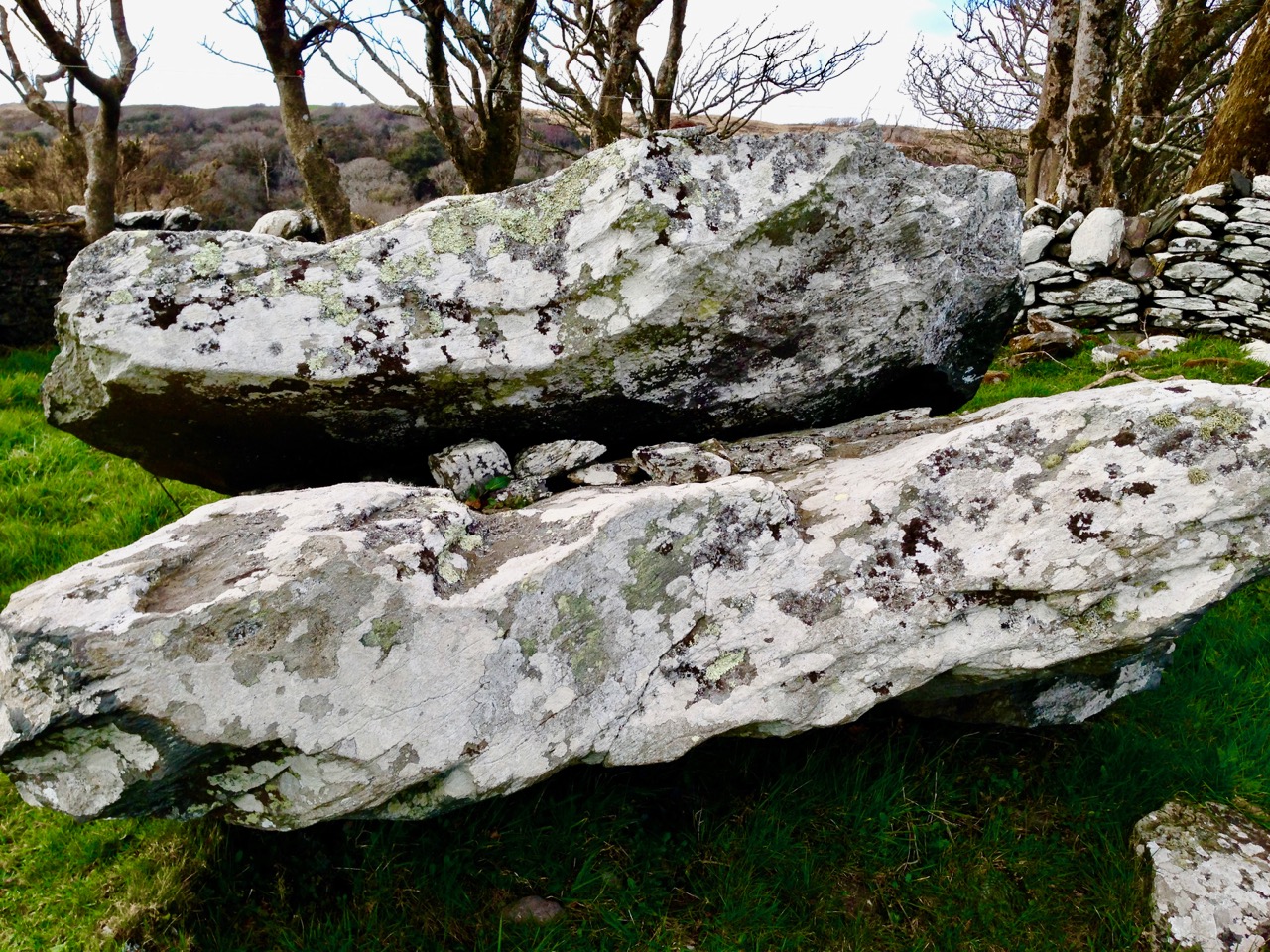
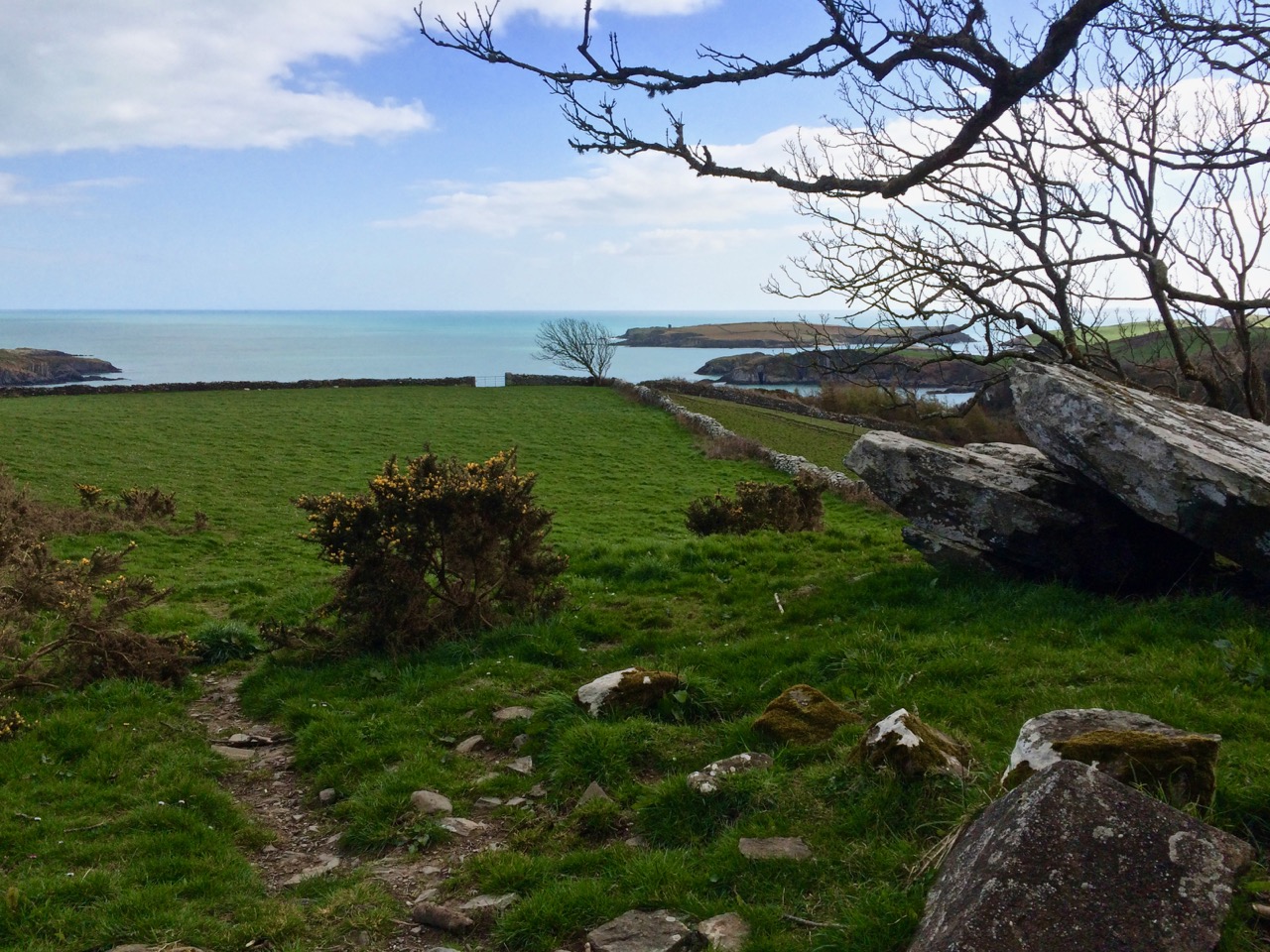
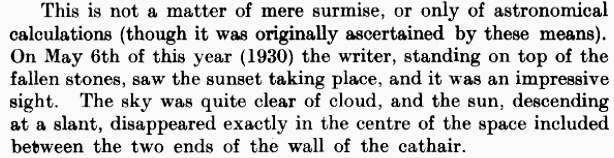
Finola and I are familiar with the Peakeen Cnoc Dromin from our researches into Rock Art: the uppermost stone (which does appear similar to the capstone of a fallen dolmen) is heavily cupmarked. The photos of the Peakeen (above) were taken before we had any idea that they might form an alignment connected with Knockdrum Stone Fort. We will have to revisit again at Bealltaine. Boyle confirmed his alignment theory by personal observation:

He went on to suggest:

. . . It is one of the clearest instances of intentional orientation between two ancient, and artificially formed monuments that can be imagined . . .

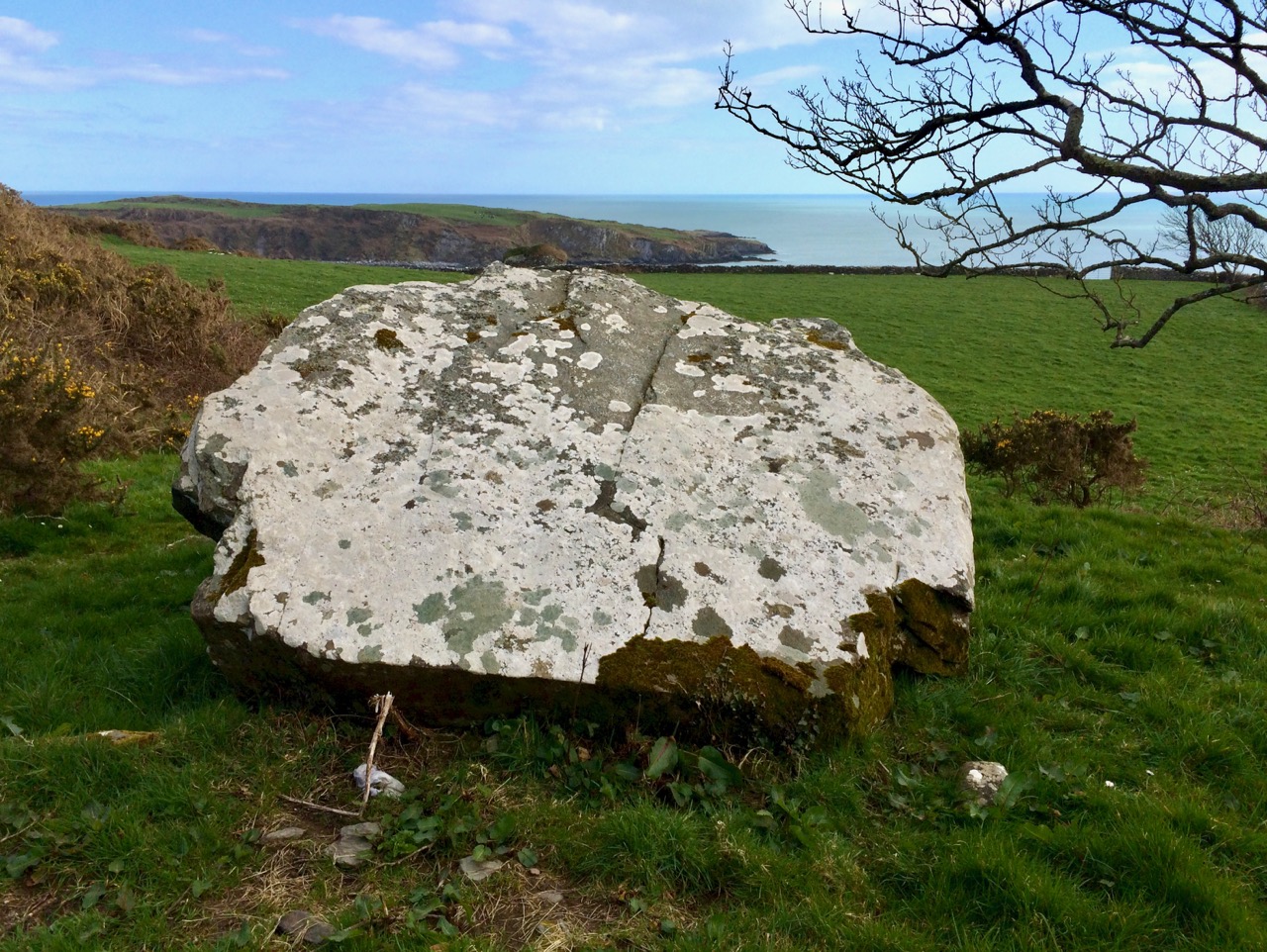
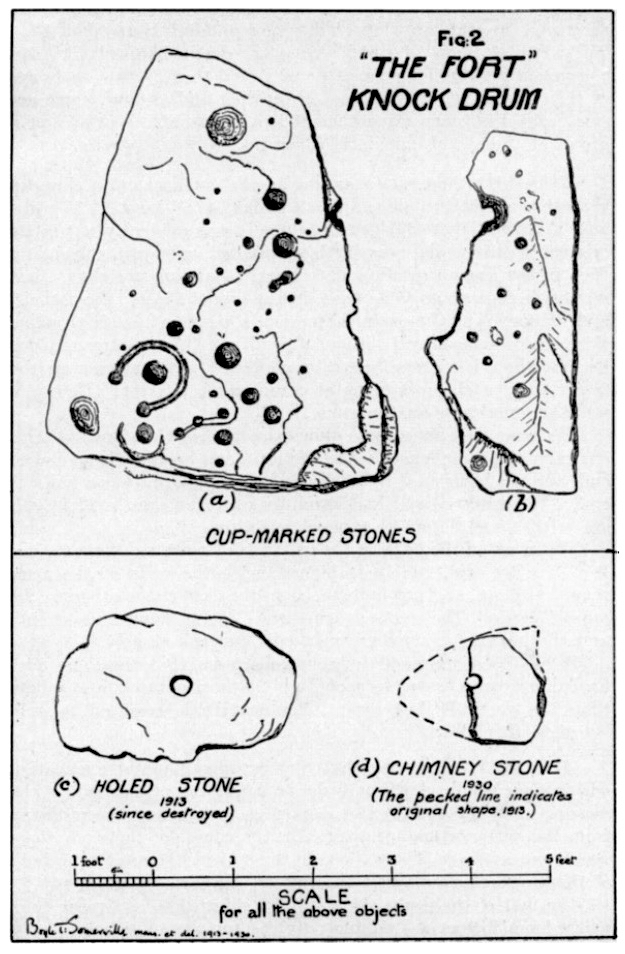
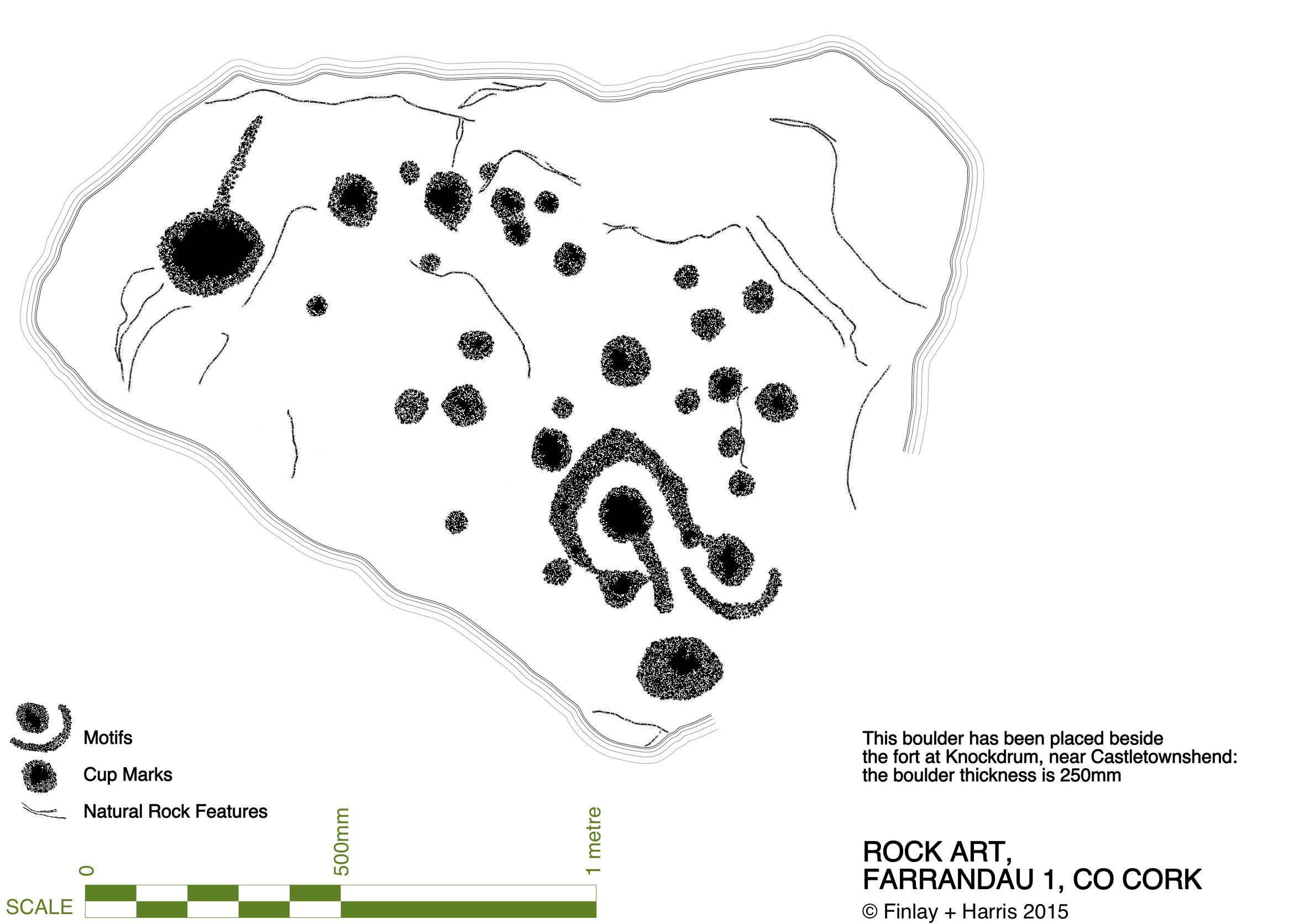
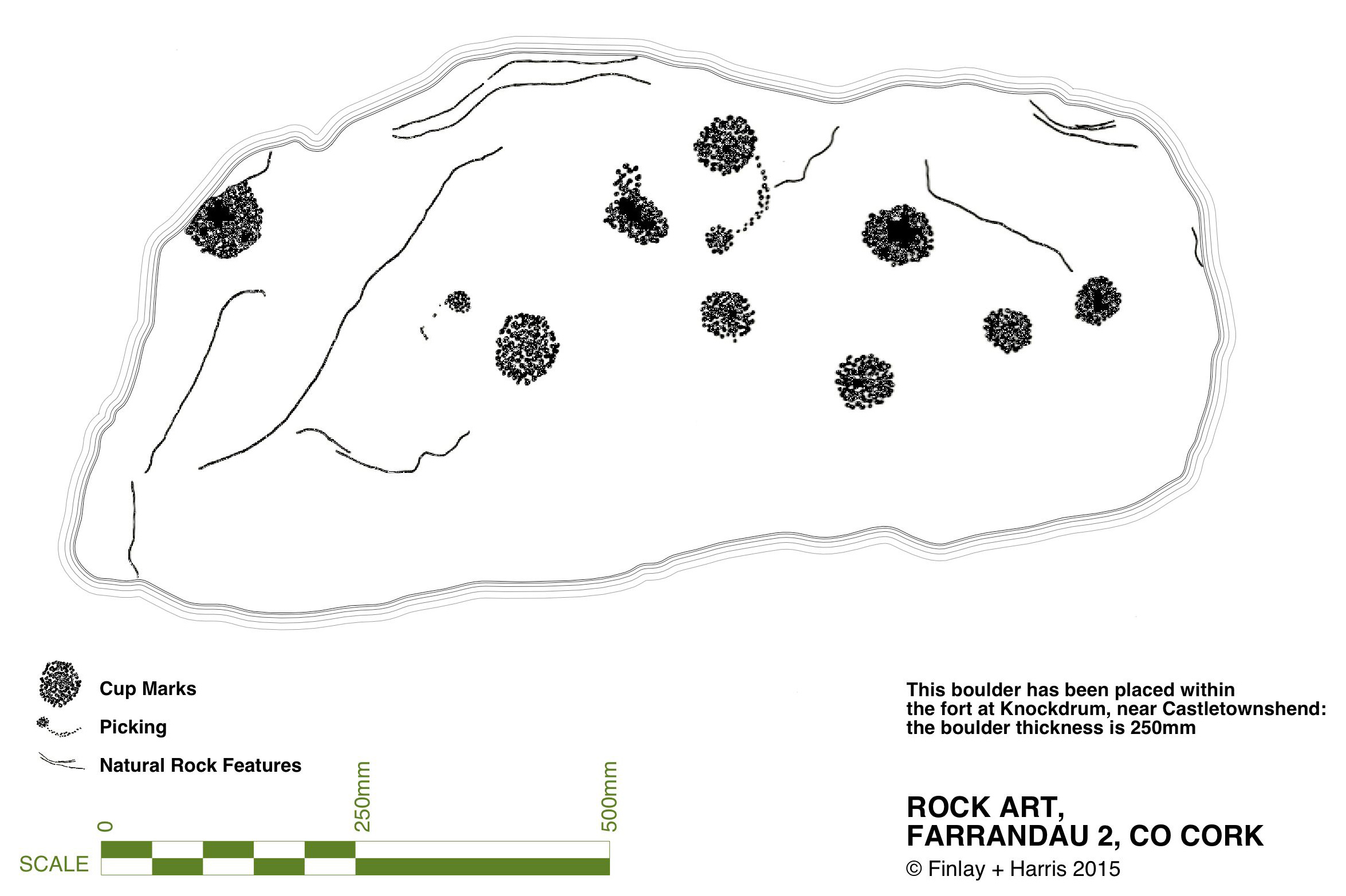
Of course, it can’t be the case that a cupmarked stone dating from anywhere between 3,000 to 5,000 years ago was in any way connected with a stone fort that dates from the early part of the first millennium AD. However, I have as yet omitted an important piece of information: at Knockdrum Fort, high up on the hill, are two further ancient cupmarked stones – and significant ones: the larger also exhibits Rock Art. Somerville illustrated them in 1930, and Finola recorded them in detail in 1973.

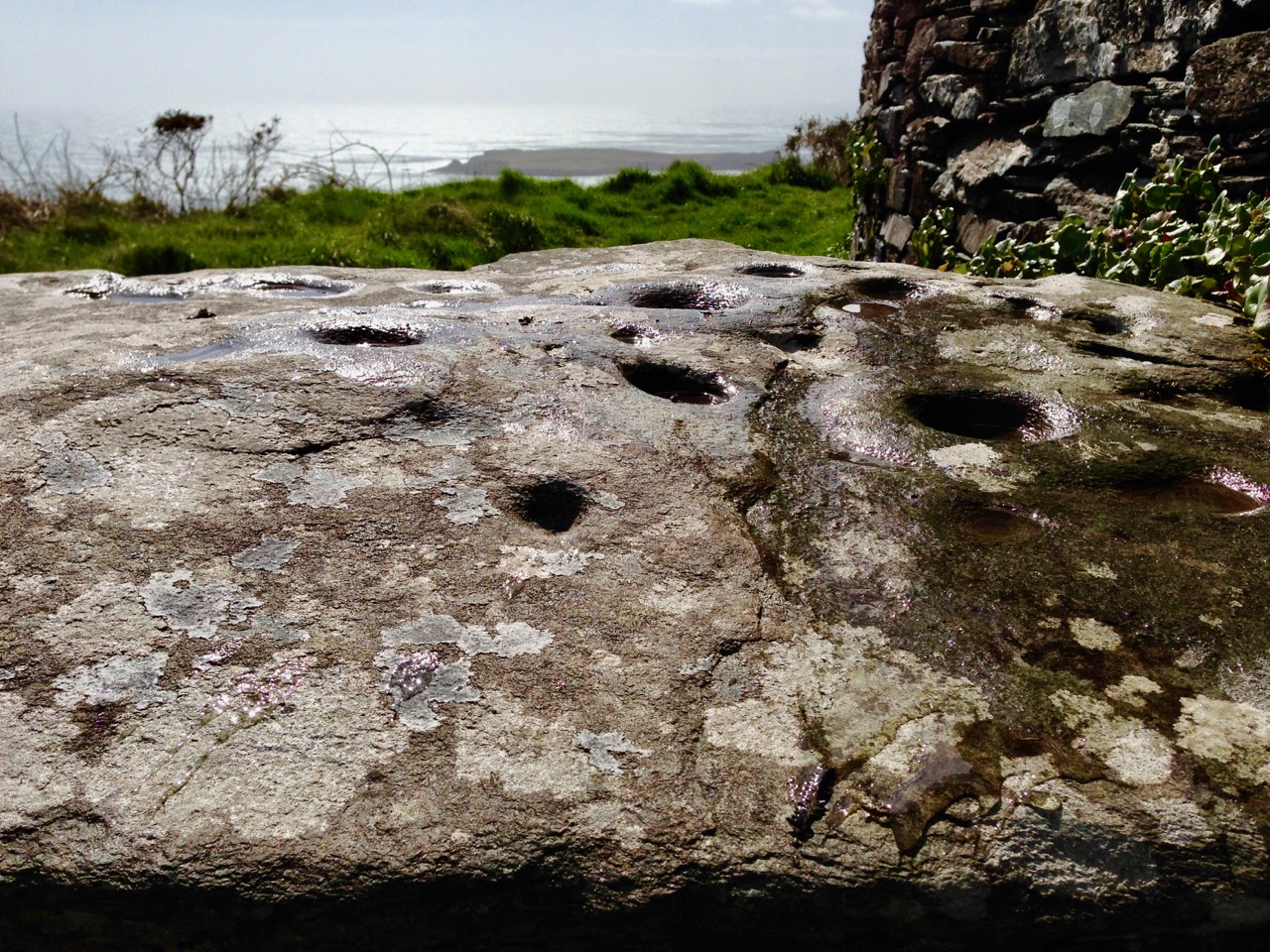
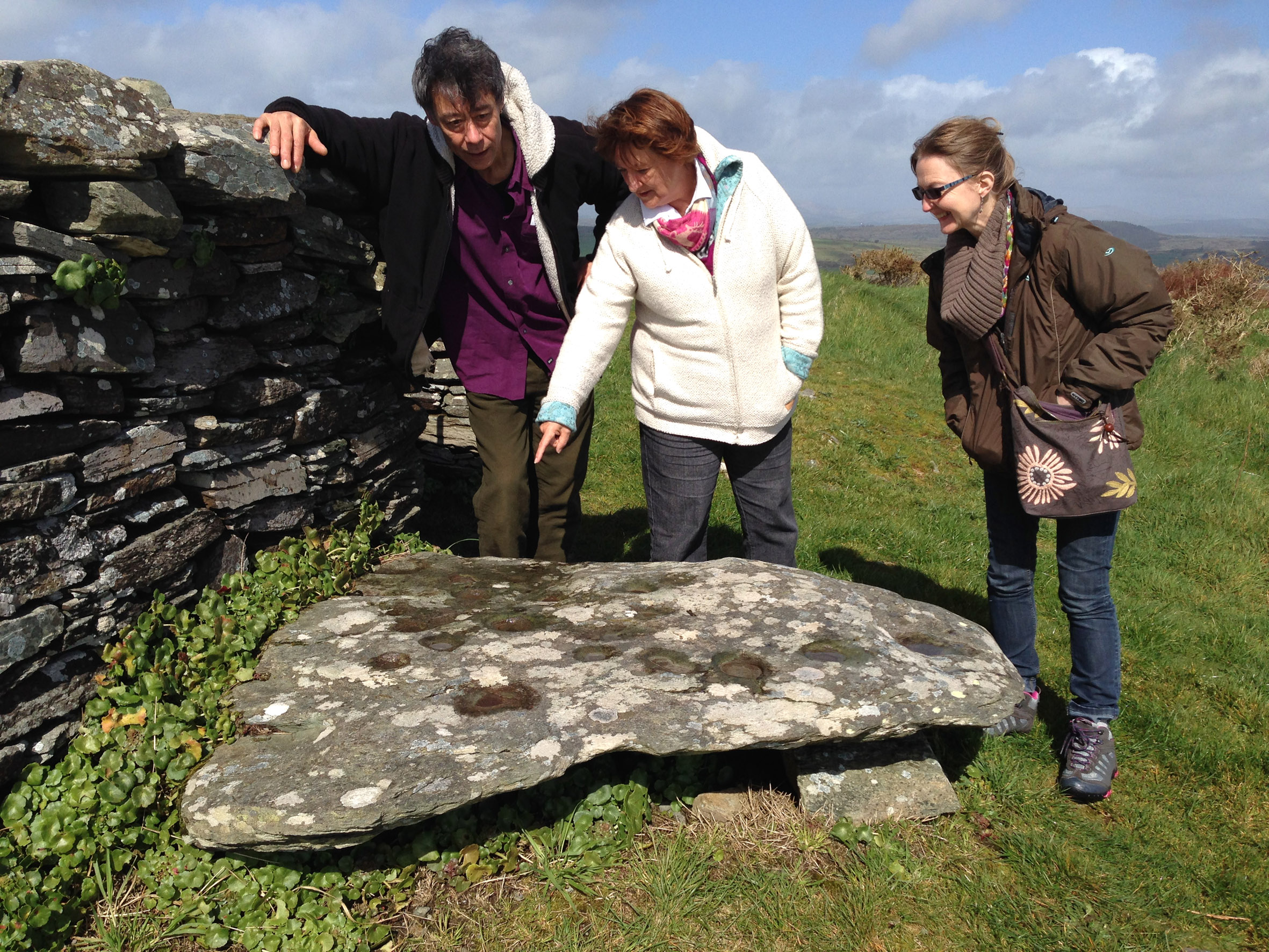
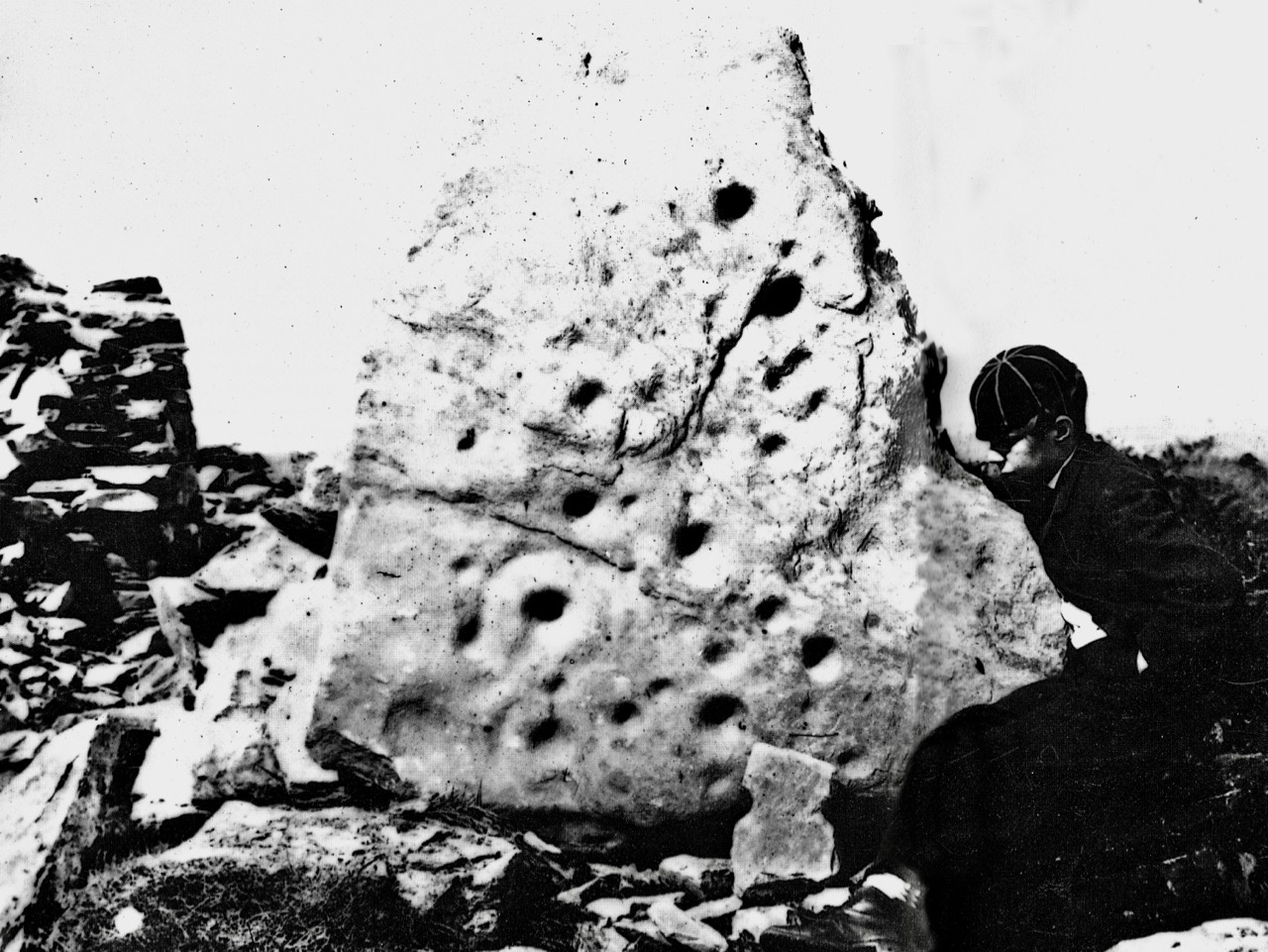
Images above are of the stones recorded at Knockdrum: topmost is Boyle’s drawing from 1930. Below Finola’s drawings are photographs of the large stone lying by the Fort entrance today: it is known that this has been moved, possibly during Somerville’s time. The old photograph immediately above is from the Coghill Family Archive and shows Arthur Townshend beside the stone, which is standing. Arthur was born in 1863: this photograph may record the occasion of the expedition by the young Somervilles and ‘their cousin’ (quite possibly Arthur) to Knockdrum described below, which took place in 1875. It is the presence of Rock Art and cupmarks at the Fort itself which tells us that the site must have had significance in far earlier times (perhaps that’s why the fort was sited in that location – rather than on the summit of the ridge), and Boyle’s reported alignment would have been with the carved rocks (or the important location that they marked) rather than with the comparatively modern stone fort.

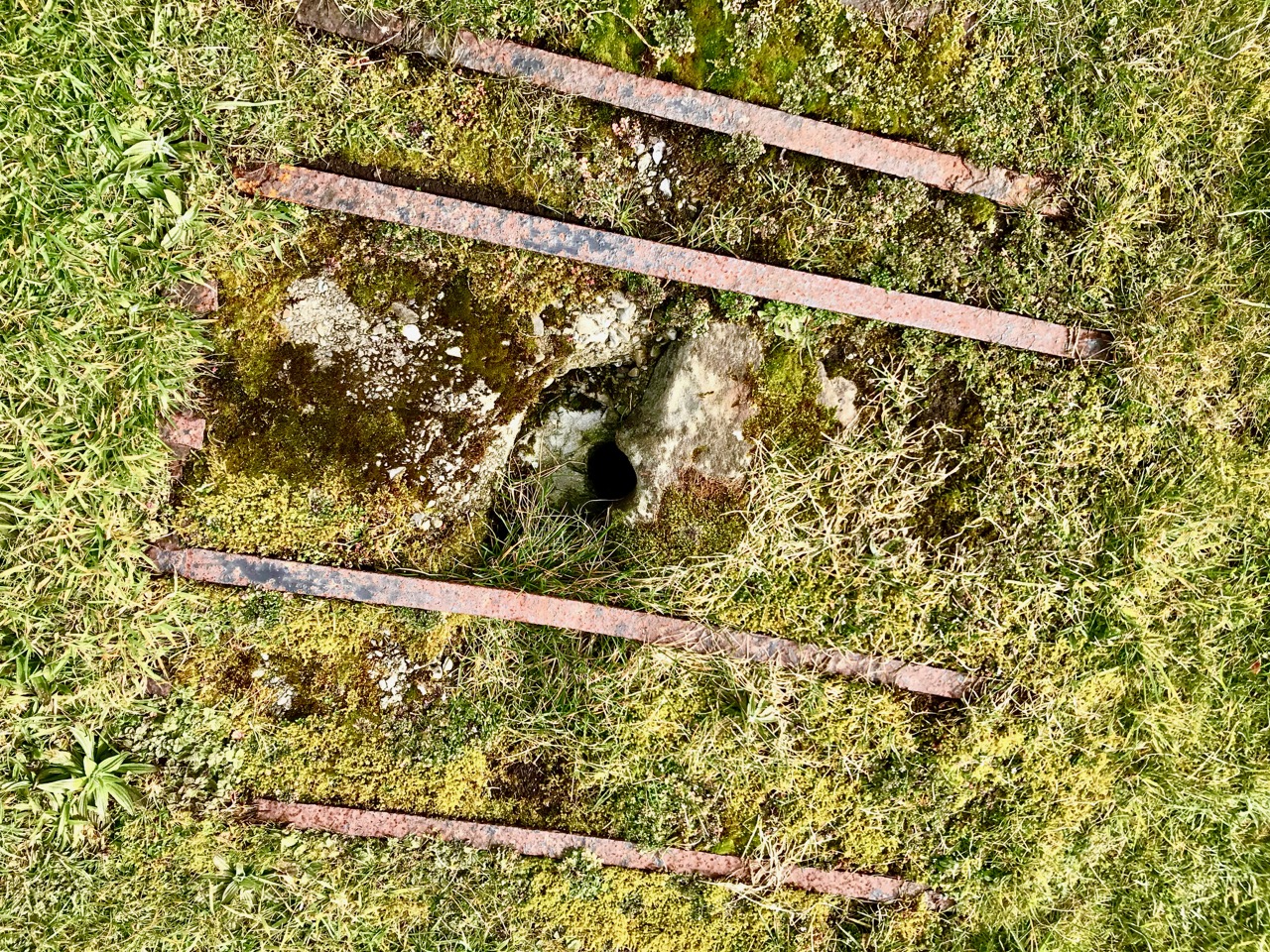
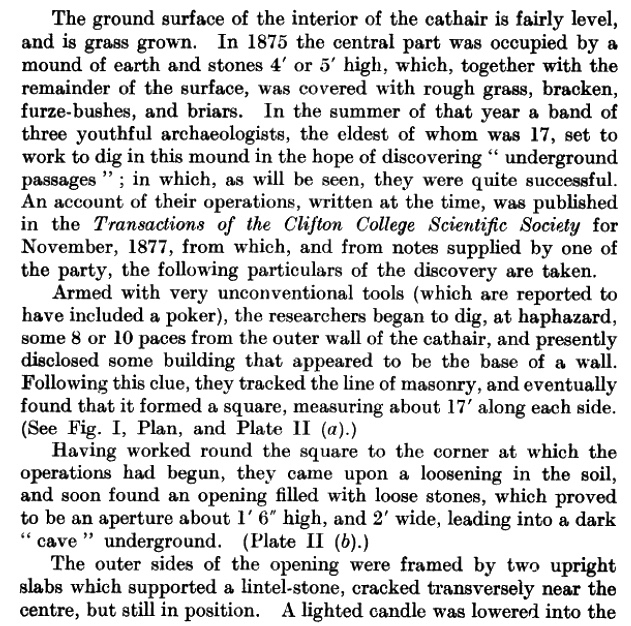
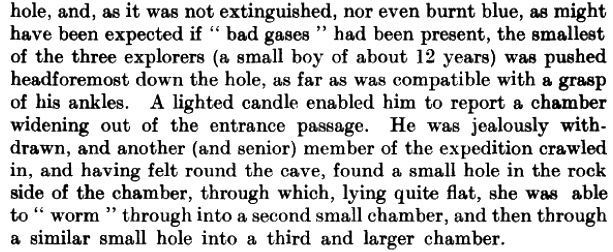
The souterrain in the enclosure of Knockdrum Fort (entrance in top photograph – ‘chimney’ in lower photograph) was explored in 1875, as Boyle recounts:

The ‘band of three youthful archaeologists’ are likely to have been Somervilles: Edith (the eldest, then 17), Boyle (then 12 – it was he who was lowered down into the discovered ‘cave’ by his ankles!) and, probably, a cousin. Great adventures, which would undoubtedly raise eyebrows today.

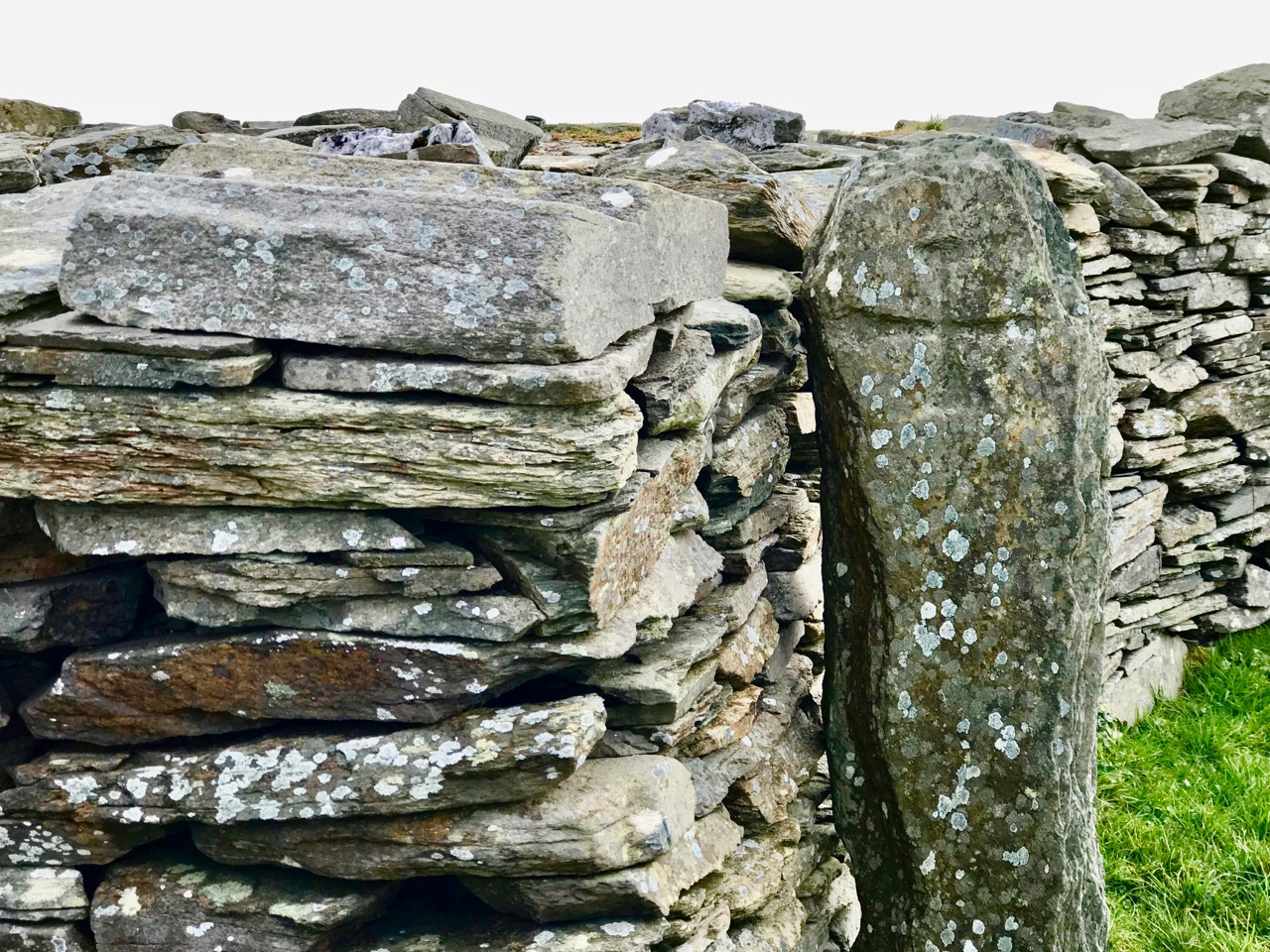
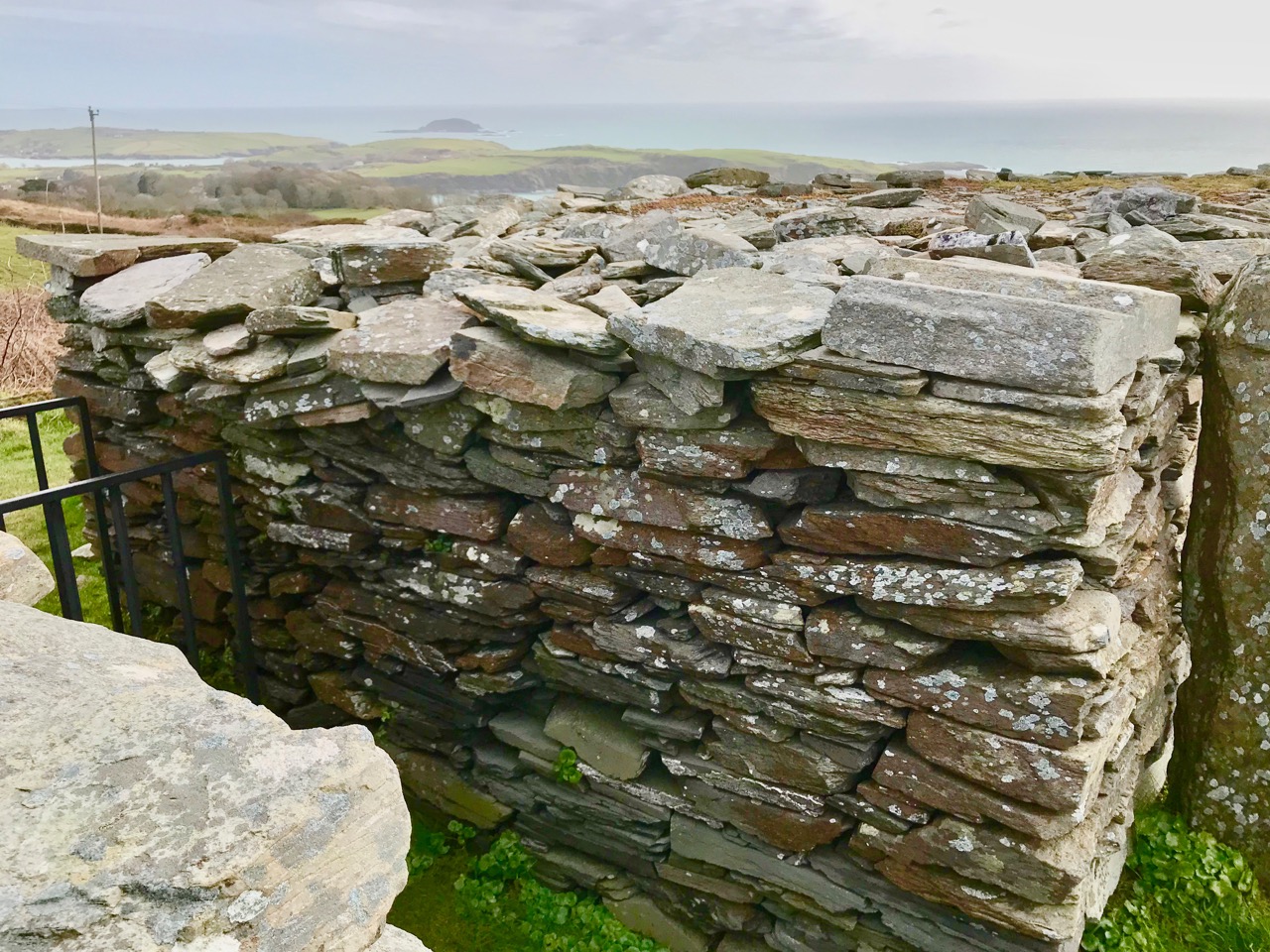
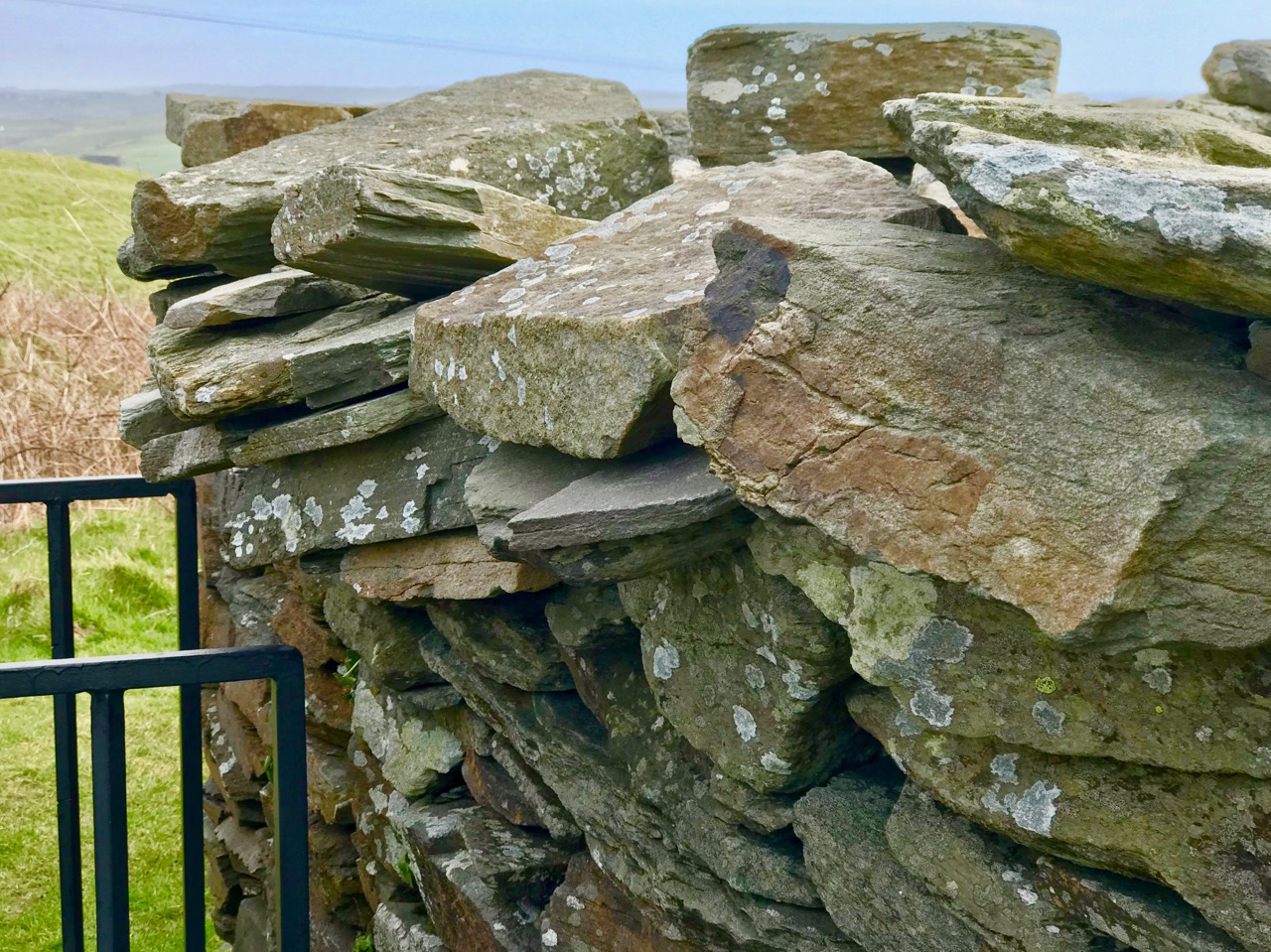
Within the fort enclosure is this cross-marked stone. It was apparently leaning against the wall in Boyle’s days, but has now been embedded close to the entrance. We visit this site often: this time we noted some significant disruption to the upper level of the dry stone walling, possibly caused by the fierce storm winds earlier this year. Compare the detail below with Dennis Horgan’s aerial view above, taken a few years ago.

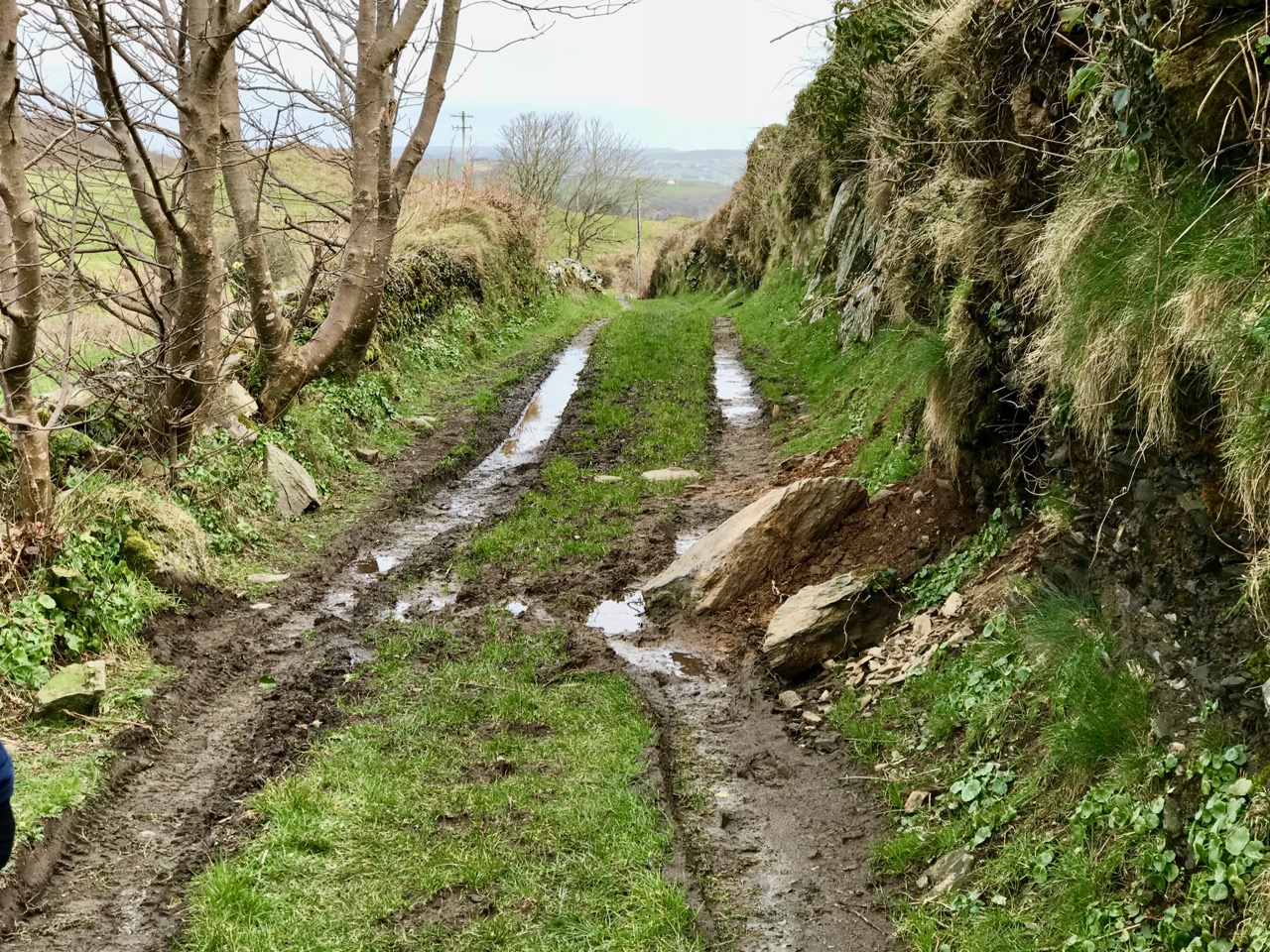
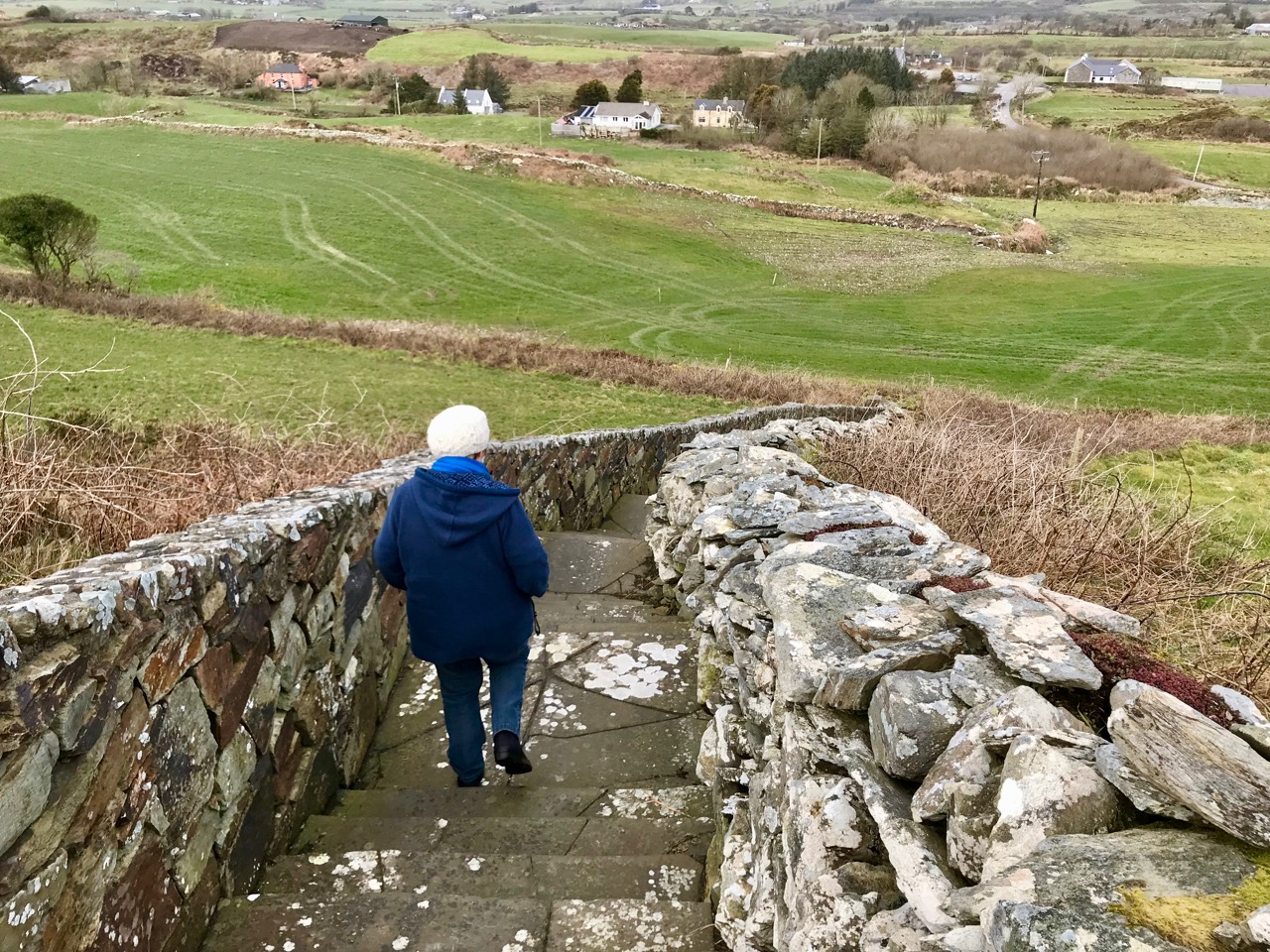
Some damage has also been suffered to retaining walls on the green boreen leading to the Fort from the main Skibereen – Castletownshend road (a walking route only), and on the stone walls beside the 99 steps which take you from the green path to the top of the hill. These are passable with care, but it is hoped that this monument – which is in State ownership – will be deservedly returned to good order before too long: it is one of the historic wonders of West Cork.