The Anglo-Normans in West Cork: Hiding in Plain Sight, Part 1

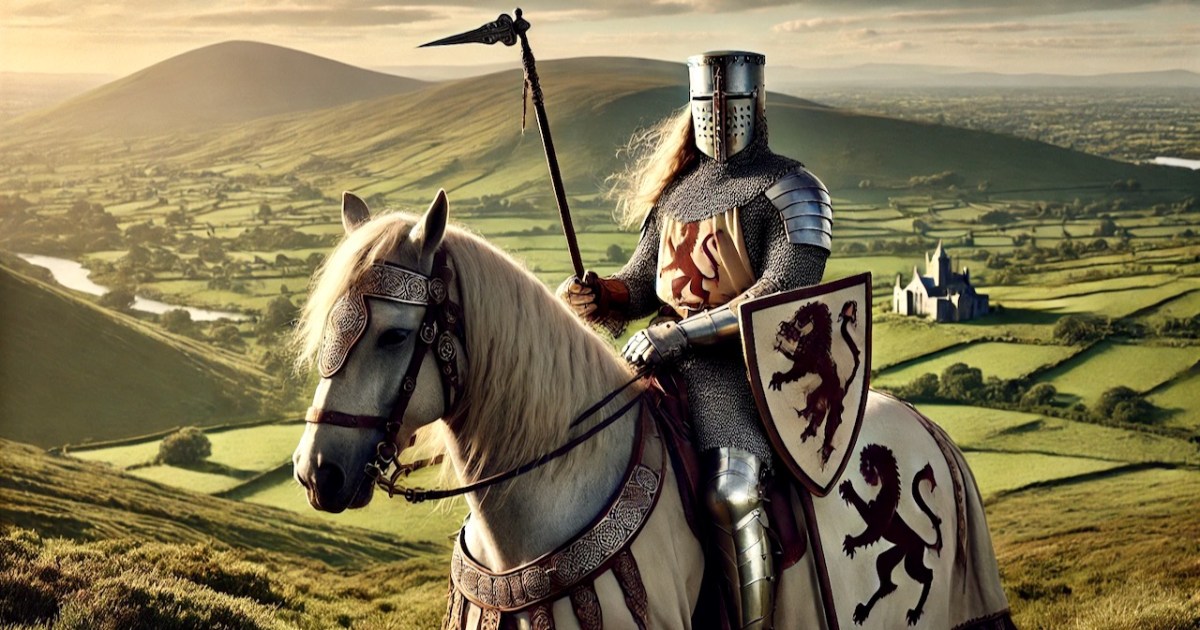
Here’s a nutshell of what I have always known about the Anglo-Normans in West Cork (cheesy and improbable image above courtesy of ChatGPT – DALL·E). After they landed in Ireland in 1169, it took them about 50 years to get to West Cork. Once here, they established some castles or fortifications and intermarried with the local families. This state of affairs lasted until 1261, when a combined army of Irish, led by Fineen McCarthy, defeated them at the Battle of Callan driving them out of West Cork and destroying all their castles. For more on the Battle of Callan, see the post Sliding into Kerry, from 2017, by Robert.
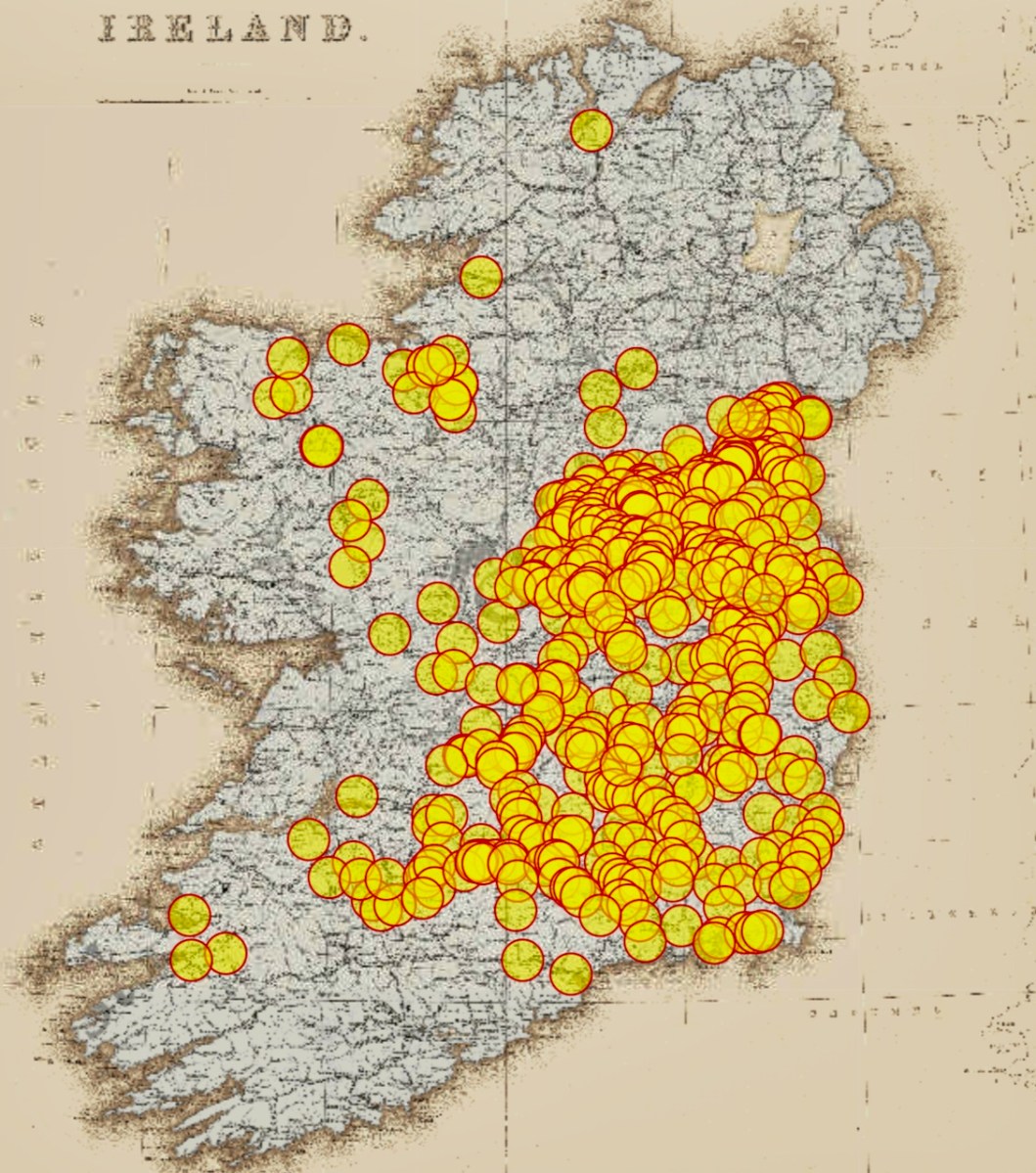
So is that why there is no trace to be found of the Anglo-Norman establishments in West Cork? In the rest of the country, at this early stage, they were mostly building motte and baileys, but there isn’t a single motte and bailey anywhere near West Cork – see the distribution map below, courtesy of National Monuments. And the masonry castles (or tower houses) we have were all built by the great Irish families. For a while I thought maybe Baltimore Castle was an Anglo-Norman building, but Eamonn Cotter has brought me up to speed on the excavation results and shown me it was much later.
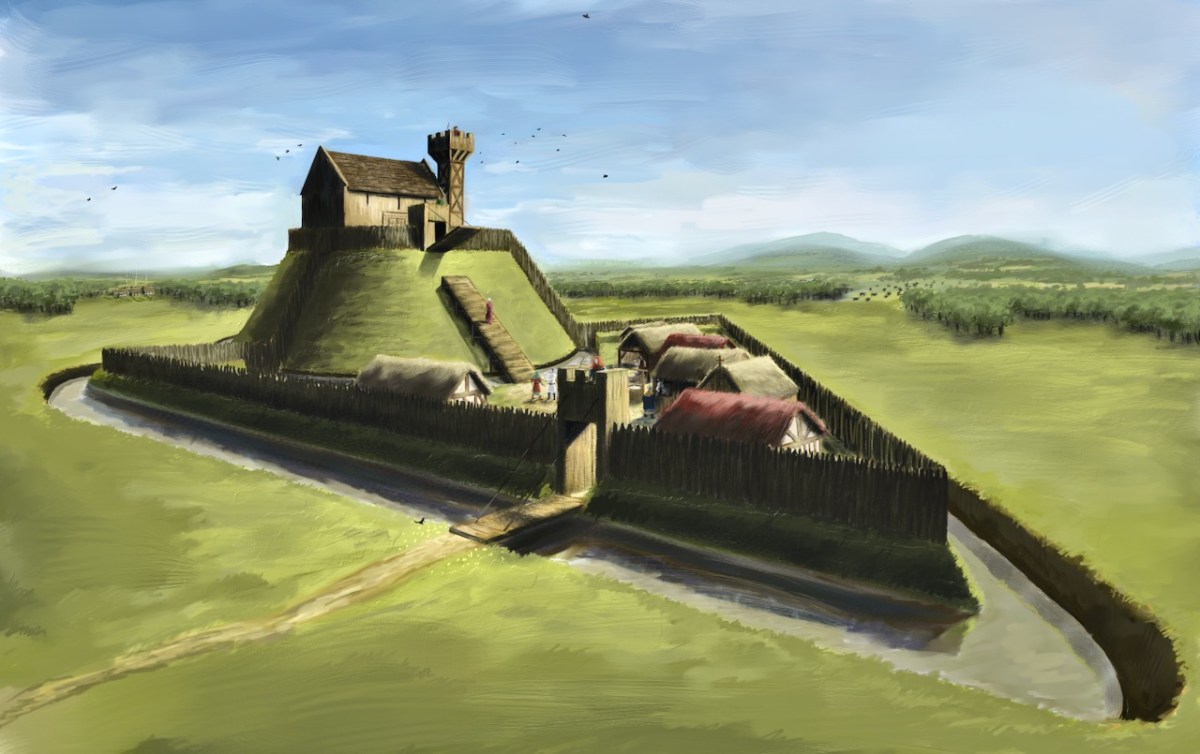
There is quite a bit of documentary evidence of their presence, though, including references to their ‘castles’ so it has always been a surprise that west Cork is not littered with mottes or ruined towers. Even given the tradition that they were all destroyed after the Battle of Callan, it is impossible to imagine that a motte could be obliterated from the landscape. They were substantial earthworks, as can be seen from the brilliant JG O’Donoghue‘s reconstruction drawing below.
It turns out we have been looking but not seeing – with some exceptions, archaeologists have not recognised Anglo-Norman structures when they saw them. The most notable exception was Dermot Twohig (a contemporary of mine at UCC in the early 70s) who, as early as 1978 described Norman ringworks in Cork. In the Bulletin of the Group for Irish Historical Settlement for 1978, buried within an annual conference report, Twohig reports:

Although I have not succeeded in inspecting, on the ground, all of the early Norman castles in Co. Cork, three of the sites I have examined – Dunamark (Dun na mBarc), Castleventry (Caislen na Gide) and Castlemore Barrett (Mourne/Ballynamona), can be classified as ring-work castles. Dunamark is one of the best examples of a ring-work I have seen in either Britain or Ireland. Castlemore Barrett had a hall-keep built within the ring-work c.1250, to which a tower-house was added in the fifteenth-century. Castleventry may have had a stone built gate-tower similar to the one at Castletobin, Co. Kilkenny. . . Further field-work and excavation will, I believe, demonstrate that the ring-work castles constituted a very significant element of fortification in the Norman conquest of Ireland.

I don’t know what happened, but Dermot’s analysis does not appear to have become part of what students were taught at UCC. Those students in turn became the mainstay of the Archaeological survey of the 1980s and they labelled Dunnamark (i’m using the OS spelling) a cliff-edge fort and Castleventry a ringfort. 
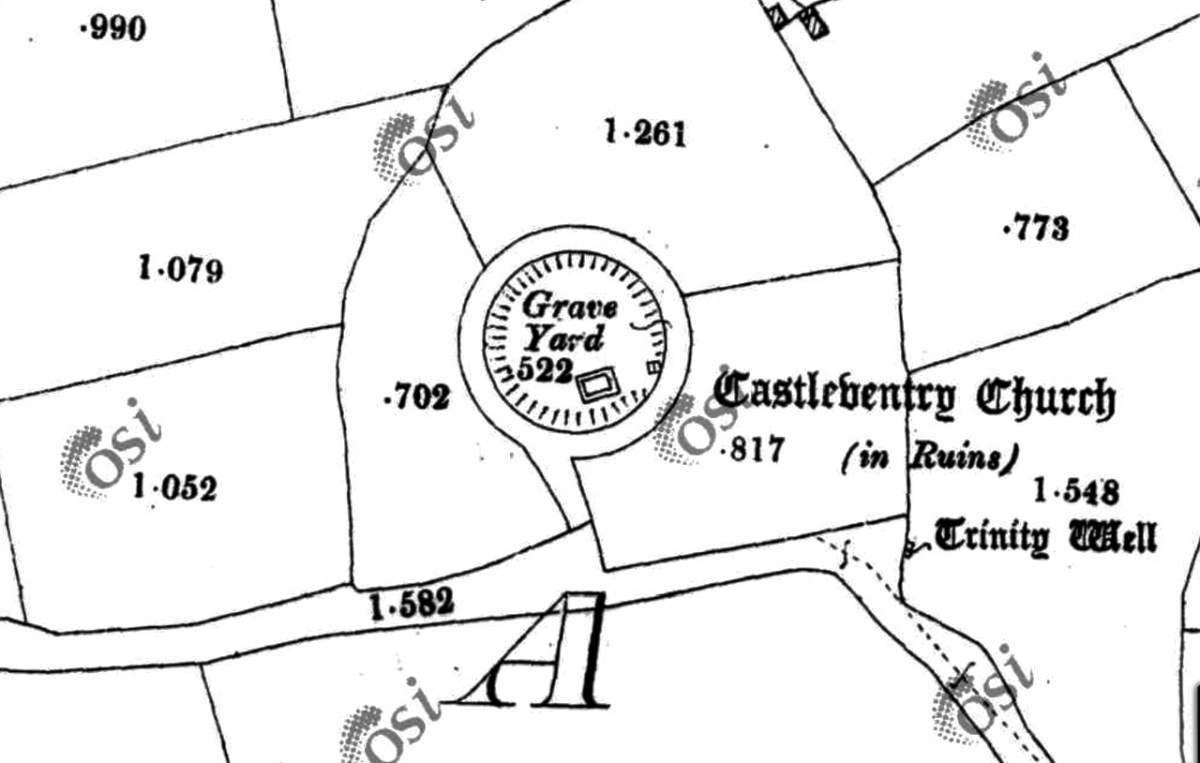
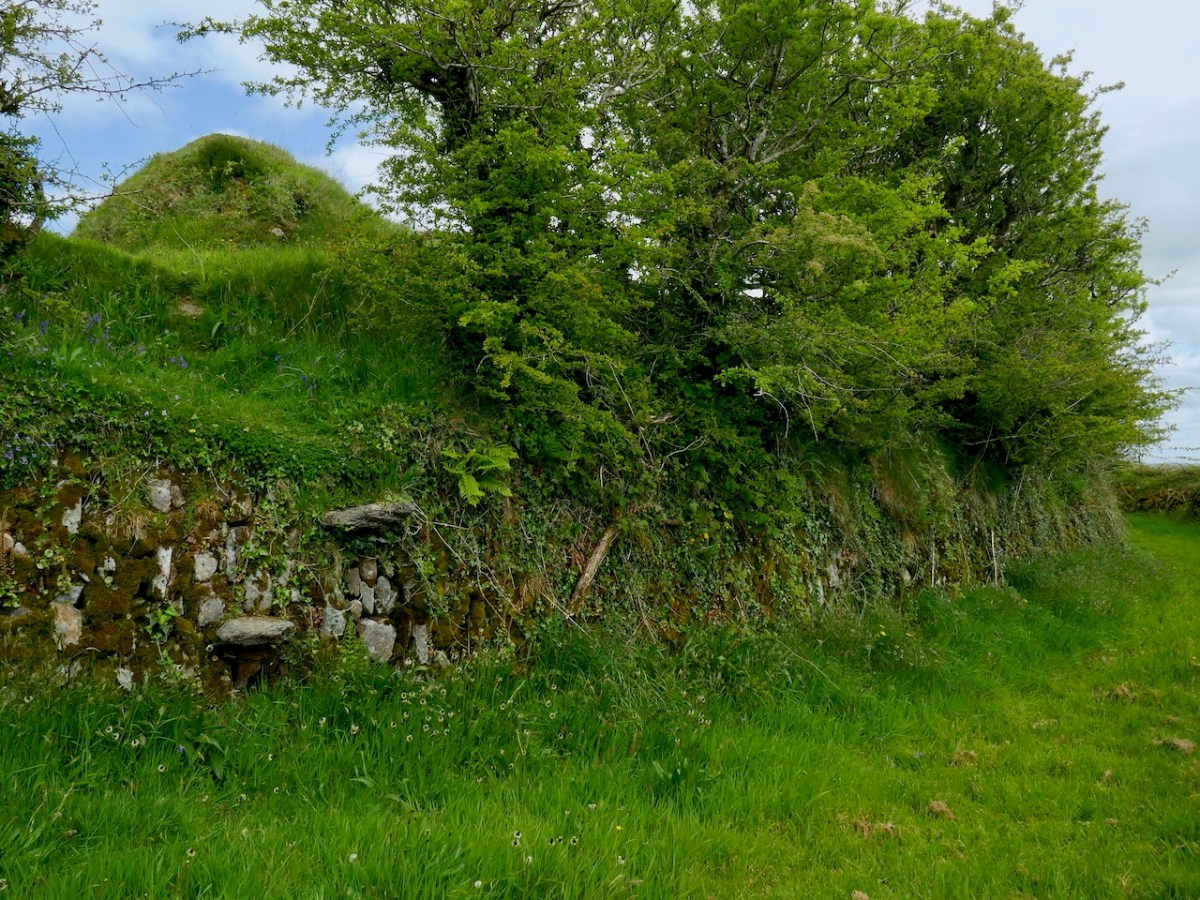
In fact, the very term ringwork (or ring-work, or ringwork castle) seems to have become an archaeological football, with some scholars asserting that we have no useful definition of its distinctive features and most of them are probably just ringforts, while others have championed the use of the term and tried to bring clarity to the debate.* in the heel of the hunt, it now seems likely that ringworks were indeed part of the system of land-claiming exercised by the Anglo-Normans, that they were usually larger and more solidly built than ringforts, and located strategically – near water or with commanding views. As you can see from the photograph below, the Castleventry banks are high, and were originally stone-faced.
In the course of 2023 and early 2024 Robert and I visited four locations with Con Manning, retired archaeologist with the National Monument Service and a recognised authority on Irish medieval archaeology. Con has now written about the four sites in the latest issue of Archaeology Ireland, naming them as Angle-Norman ringworks. The first is Castleventry, to which we were brought by local historians Dan O’Leary and Sean O’Donovan, and I wrote about our visit to that that one here. So go back now and read what we found there and how intrigued Con was by what he saw. This was the site that set him off on his investigations. 
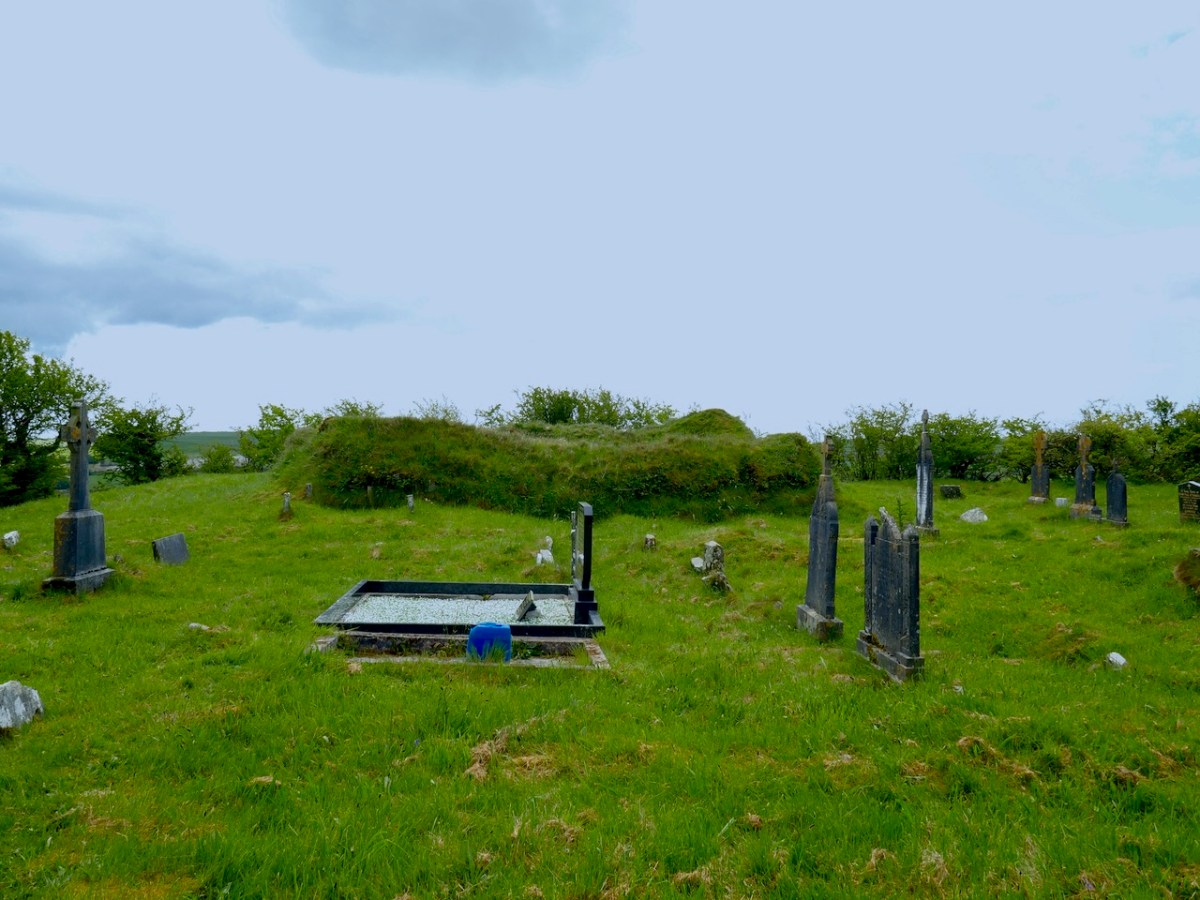
The description of this site in the National Monuments record is as follows:

In pasture, atop knoll on E-facing slope. Circular, slightly raised area (32.6m N-S; 34.5m E-W) enclosed by two earthen banks, stone faced in parts, with intervening fosse. Break in inner bank to W, now blocked up; modern steps to E. Outer bank broken to W (Wth 3.5m), blocked up; S gap leads to laneway; modern break to NNW. Church (CO134-025004-), graveyard (CO134-025003-) and souterrain (CO134-025002-) in interior; second souterrain (CO134-089—) beside outer bank to E.

Recognising that not all readers have access to Archaeology Ireland, and with Con’s permission, I will tell you that he notes that after the Battle of Callan 

in that same year many of the castles of the colonists for burnt or destroyed. Two were mentioned in a single entry in the Annals of Inisfallen as follows: “the castle of Dún na mBarc, and Caislén na Gide also, were burned by Mac Carthaig and by the Desmumu.”. Caislén na Gide has been identified as Caisleán na Gaoithe or Castleventry. . . No likely site for this clearly important castle has to date been identified on the ground. 

After more information on the history of the site and its association with the Barrett and the Barry families, Con concludes, I have no doubt but that this monument is the castle of Castleventry, a substantial and impressive ringwork reusing an older ringfort.
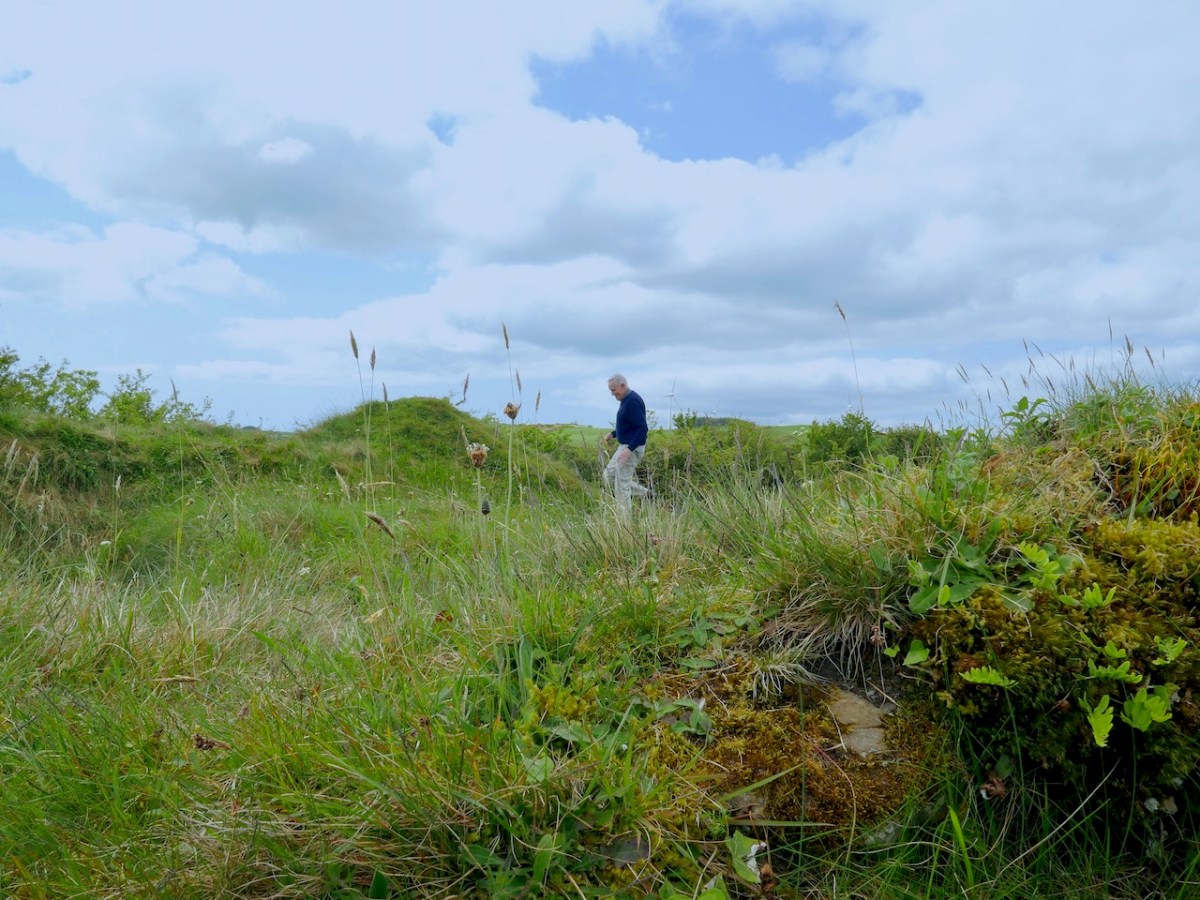
Next week I will write about the other three sites (spoiler alert – one of them will be familiar to regular readers already) and come to conclusions about the evidence we’ve been missing for the presence of the Anglo-Normans in West Cork.

* I applaud particularly the work of Grace Dennis-Toone, Her thesis brings considerable rigour and analysis to the topic. When is a ringwork a ringwork? Identifying the ringwork castles of County Wexford with a view to reconsidering Irish ringwork classification.

Sliding into Kerry

view from the road

My musical acquaintances might think that this post is all about Kerry slides – lively tunes which get aired sometimes at our session: here are some fine examples played by Éamonn O’Riordan, Tony O’Connell, Brian Mooney and Gearóid Ó Duinnín…

But they would be mistaken: this is the tale of a little wintry but sunlit exploration which Finola and I undertook on the eve of St Gobnait’s feast day. It involved crossing the border into Kerry, something which is not lightly done by Corkonians because of traditional rivalries (mainly on the Hurling and Gaelic Football fields). So we had to ‘slide’ over into the Kingdom and hope that none of our friends noticed our temporary absence.

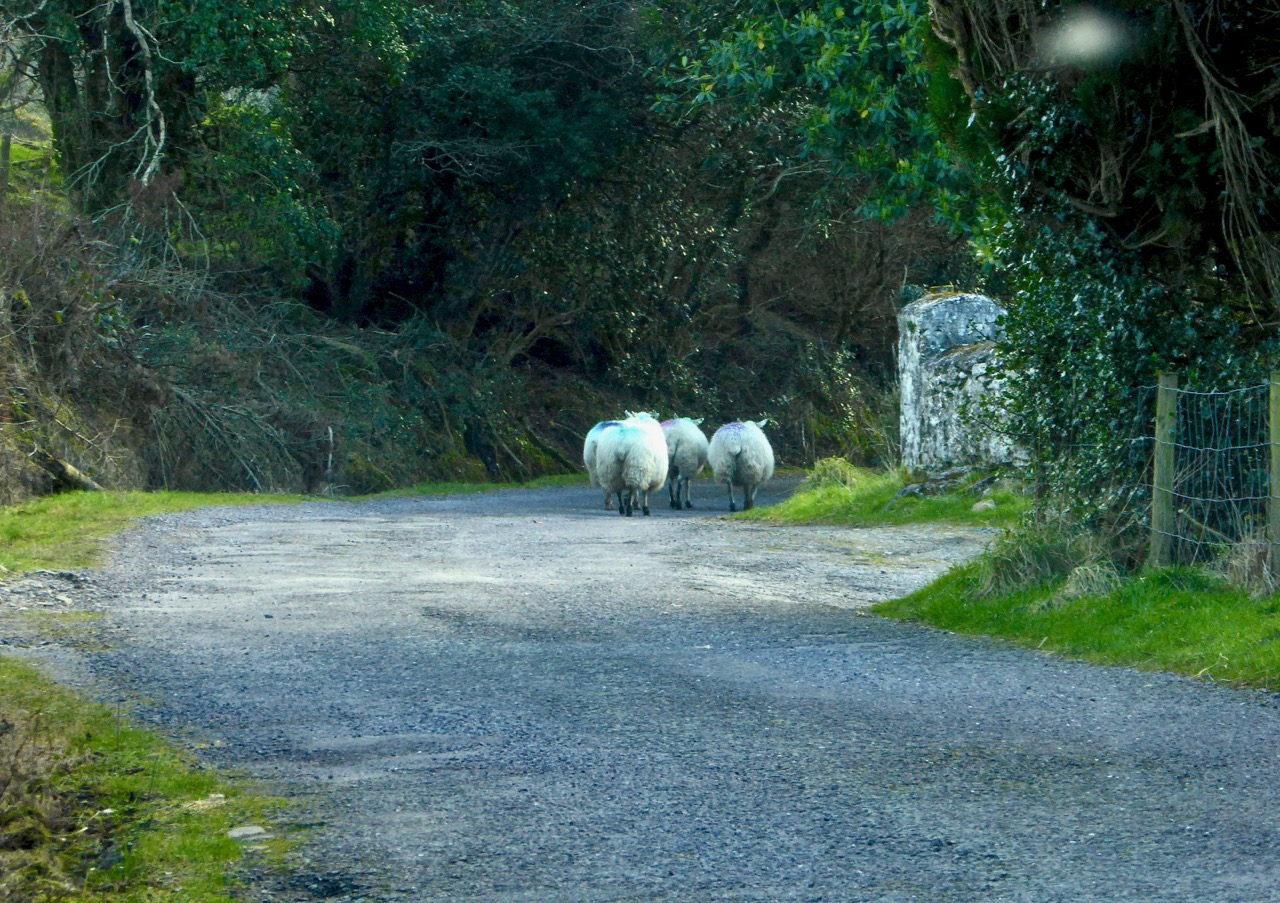
Sheep flock on road

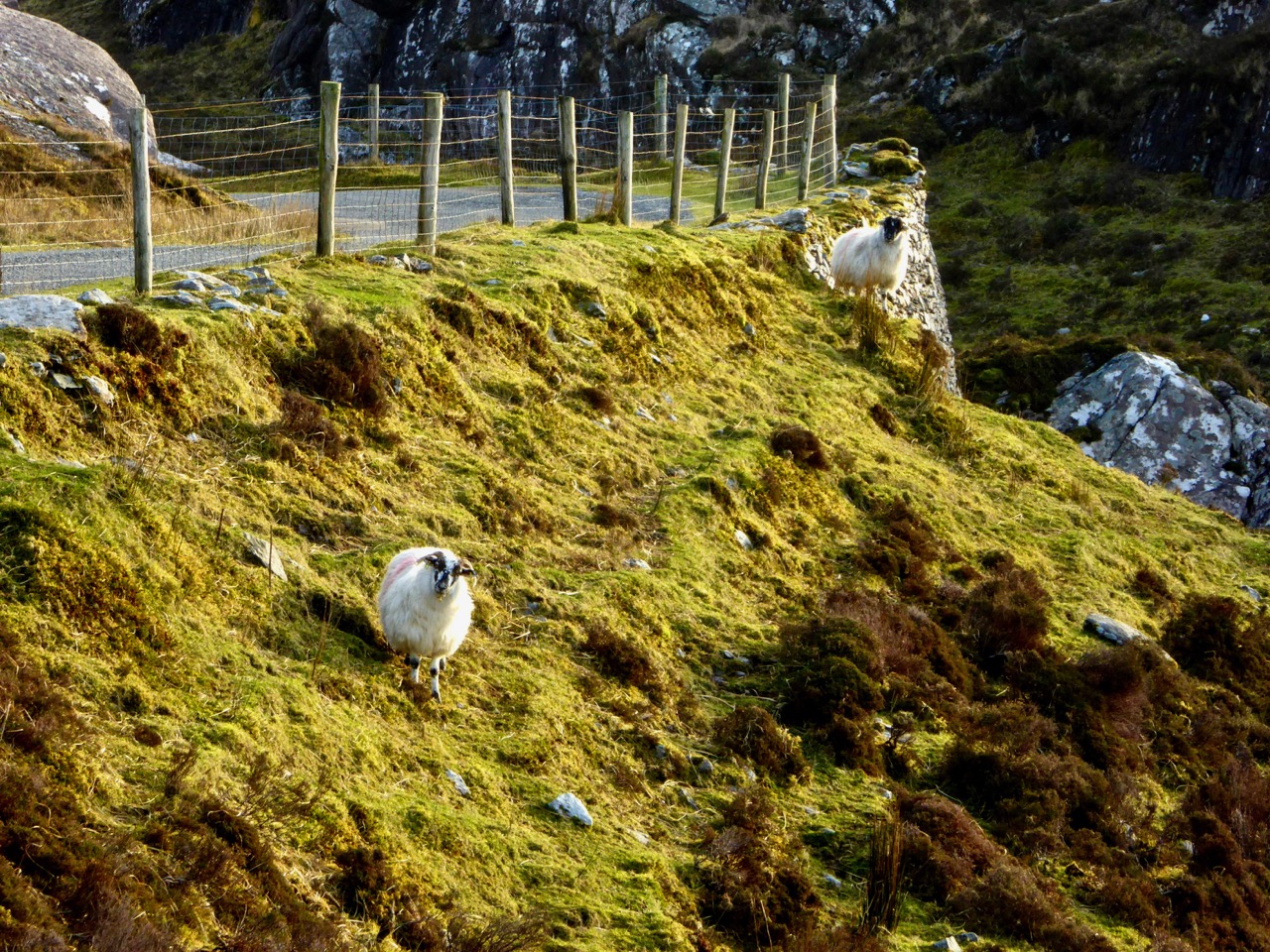
We had things to do in Kenmare (have a look at Finola’s post), but afterwards we took to the byways. We knew there is a remote, lonely and very beautiful road winding up over the mountains, shared only by a few wandering sheep, and determined that would be our way home. We headed off to the tiny settlement of Kilgarvan and there saw a signpost that said Bantry 25: we turned on to the boreen that follows the Roughty and Slaheny Rivers and immediately entered another world.

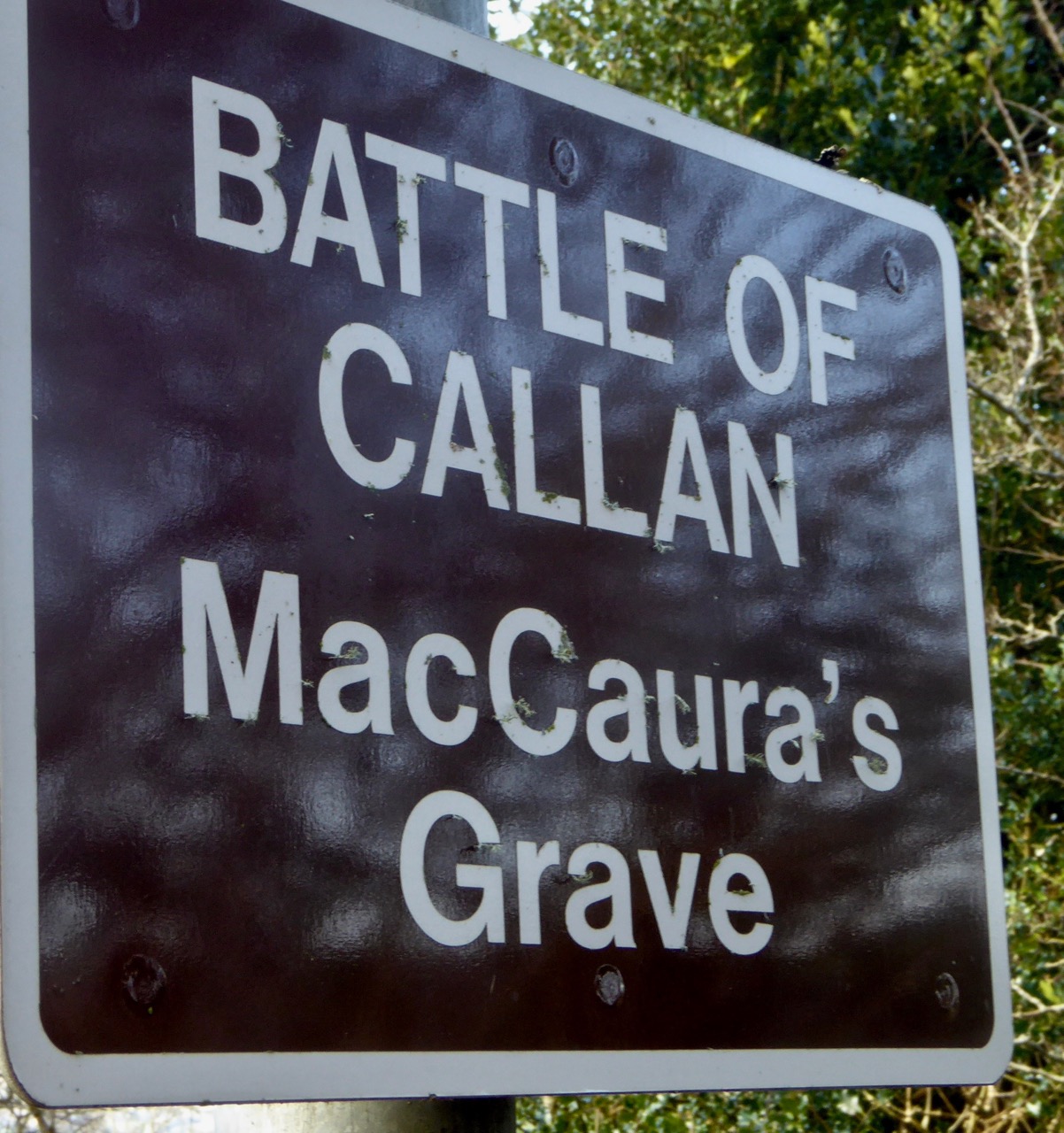
Macaura's Grave signpost

We hadn’t gone very far along the road before we were intrigued by a brown signpost – beckoning us along an even smaller boreen. Macaura’s Grave: neither of us had any idea who Macaura was, so we had to go and investigate. After about ten minutes of twisting and turning and trying to guess which of the unmarked and unsigned lanes to take whenever we came to a junction, we found ourselves back on the road we had just left! By now we were determined that Macaura was not going to get the better of us, so we flagged down a young lad who was in charge of a fine red tractor. He was very forthcoming, and told us that the grave was well worth a visit, then proceeded to give us a set of instructions that involved turning this way and that – signifying to the air which ways these were. Not a little confused, we drove off again.

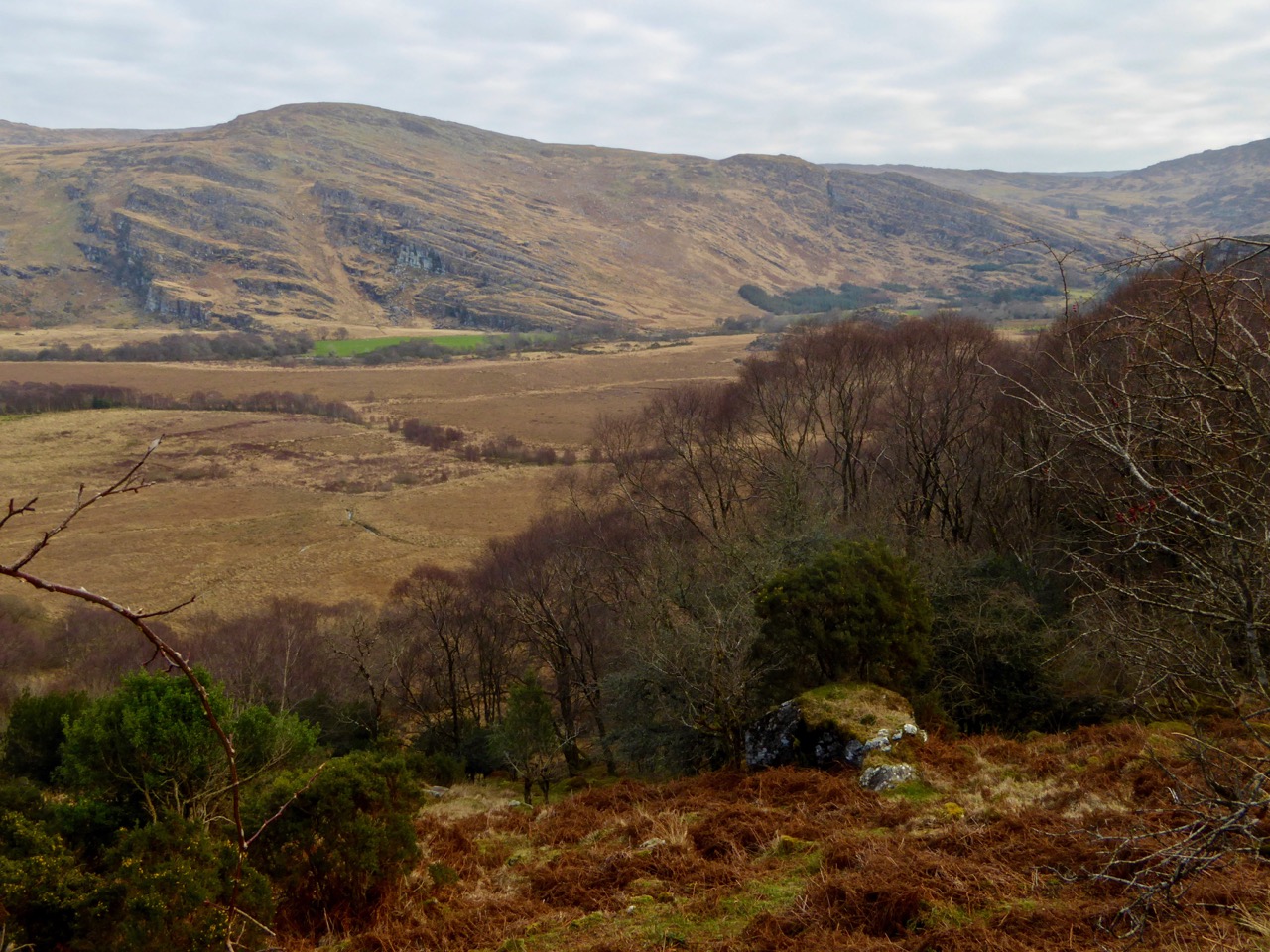
View from near grave

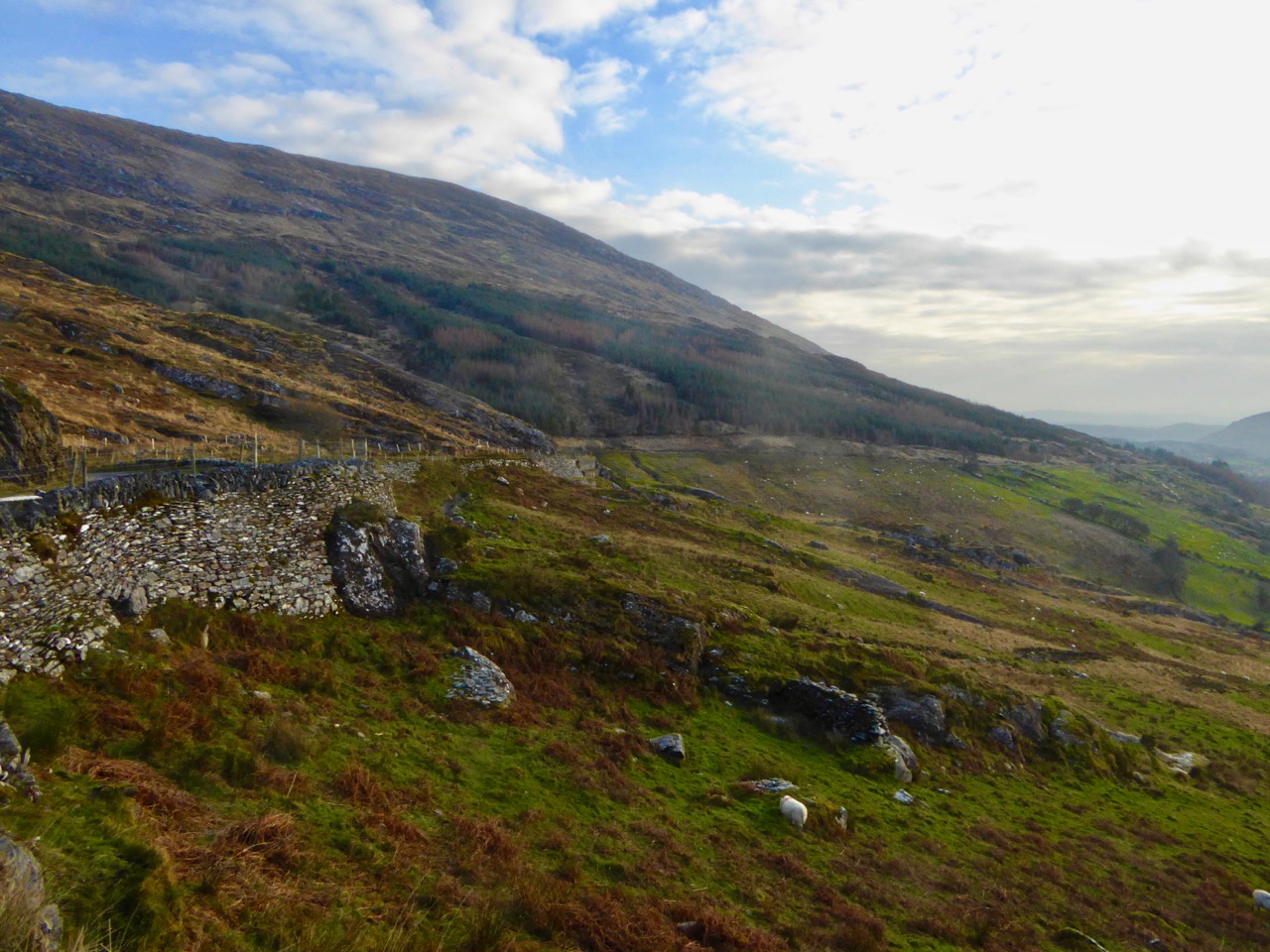
It was no hardship to be exploring the magnificent countryside in south Kerry: the views were breathtaking and the variety of colours on the mountains in sunlight and shadow this early spring day was astonishing. A bit more head scratching and a few more twists and turns down a stony trackway and we were there!

Modern sign

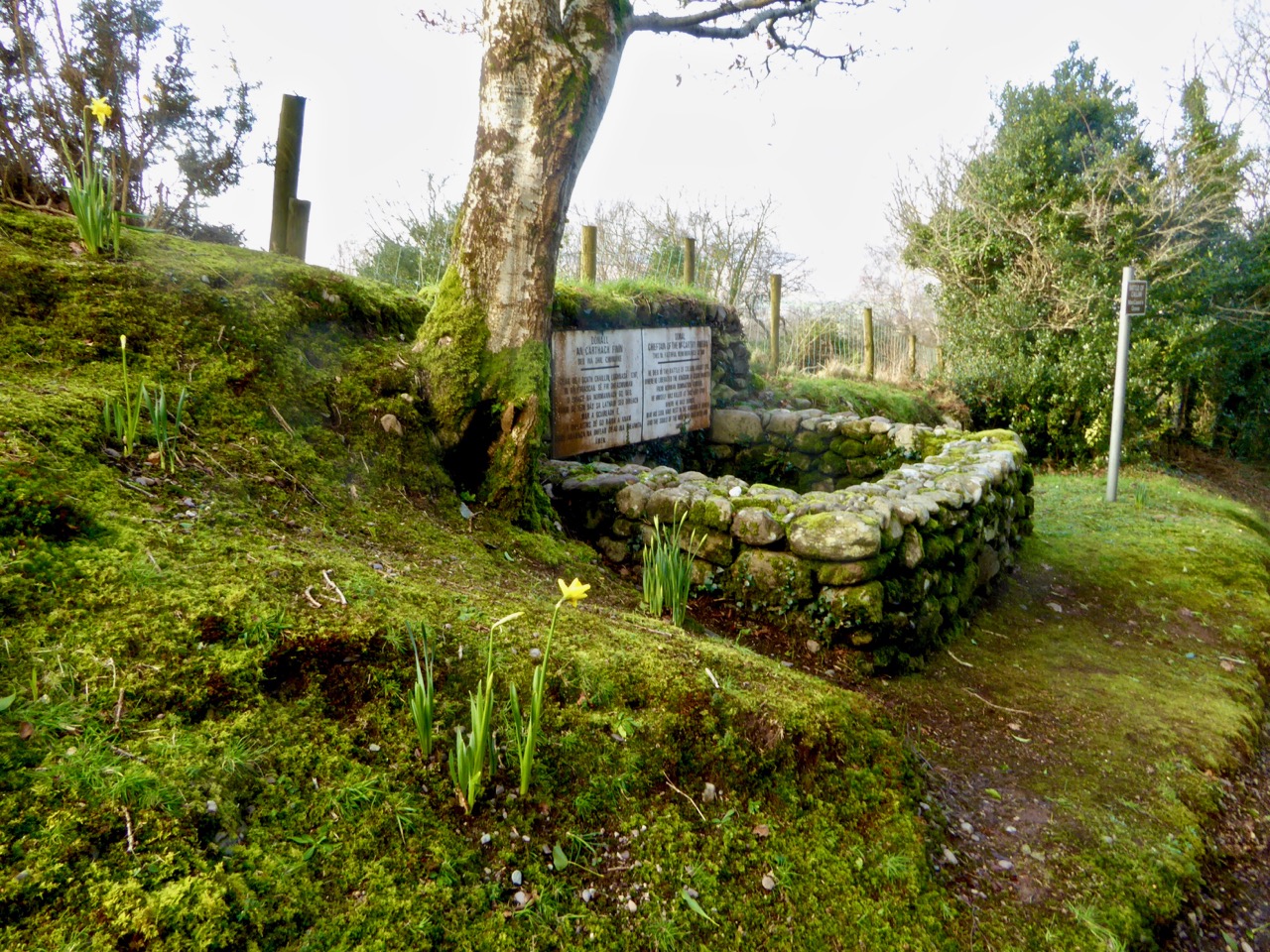
Now we knew. Not only had we found the grave of Macaura – that’s the old Irish way of saying McCarthy – but we had come across the site of one of the most significant battles in Irish history! The Irish chieftain, Finín McCarthy (named as the ‘King’ of Kerry – and that’s why Kerry is known as The Kingdom), joined up with the O’Sullivan Beare from West Cork and the O’Donoghues from Ross Castle to rout the Normans, who were led by Sir John Fitzgerald. This battle took place in 1261. 1261! Over eight hundred years ago… This confirms my thesis that you can’t go anywhere in Ireland without stumbling over history. The Anglo-Normans had claimed their stake in Ireland from 1169 when Strongbow (Richard de Clare) arrived with the blessing of Henry II (and the Pope – who saw the Irish church charting its own course and not following Rome!). Reasonably, the Irish chieftains objected to the Norman invaders, hence this confrontation.

Grave Inscription

In the Journal of the Cork Historical and Archaeological Society, 1961, Volume 66, there is a comprehensive – but not entirely enlightening – article by Diarmud Ó Murchadha on The Battle of Callan:

…Finghin Mac Carthy had learned much from his opponents during his years of conflict, while he had the added advantage of knowing intimately the territory over which he fought. At Callann he chose his battleground, at a spot where a mountainy river called the Slaheny joins the Ruachtach, close by the castle of Ardtully. No doubt he reckoned that here the heavily-armoured cavalry of the invader could be used to the least advantage. Battle was then joined and Finghin mac Domhnaill mic Charthaigh emerged victorious… Unfortunately no details of the conflict – apart from the names of those slain – are available. Incidentally, the fullest account of the battle is given, not by the Munster annals, but by the Annals of Loch Ce and Annals of Connacht:

AD 1261 – A great war was waged, and numerous injuries were committed in this year by Finghin, son of Domhnall Mac Carthaigh, and his brothers, against the foreigners.There was a great hosting by the Geraldines into Desmond, to attack Mac Carthy, but it was Mac Carthy attacked them, and defeated them…

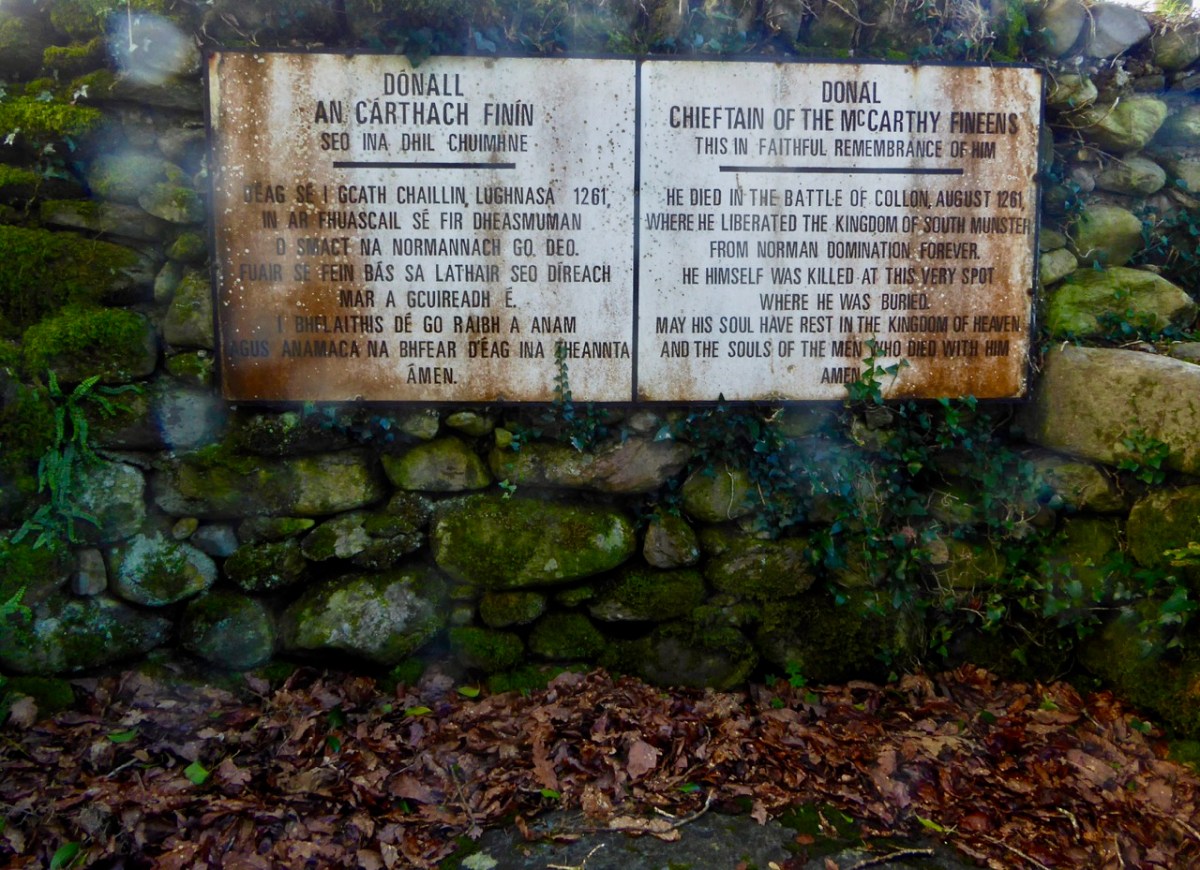
The Annals go on to record the fact that Finghin followed up his victory at Callan by attacking and destroying every Norman castle and stronghold in Munster. As the sign over Macaura’s Grave tells us: …he liberated the Kingdom of South Munster from Norman domination forever…

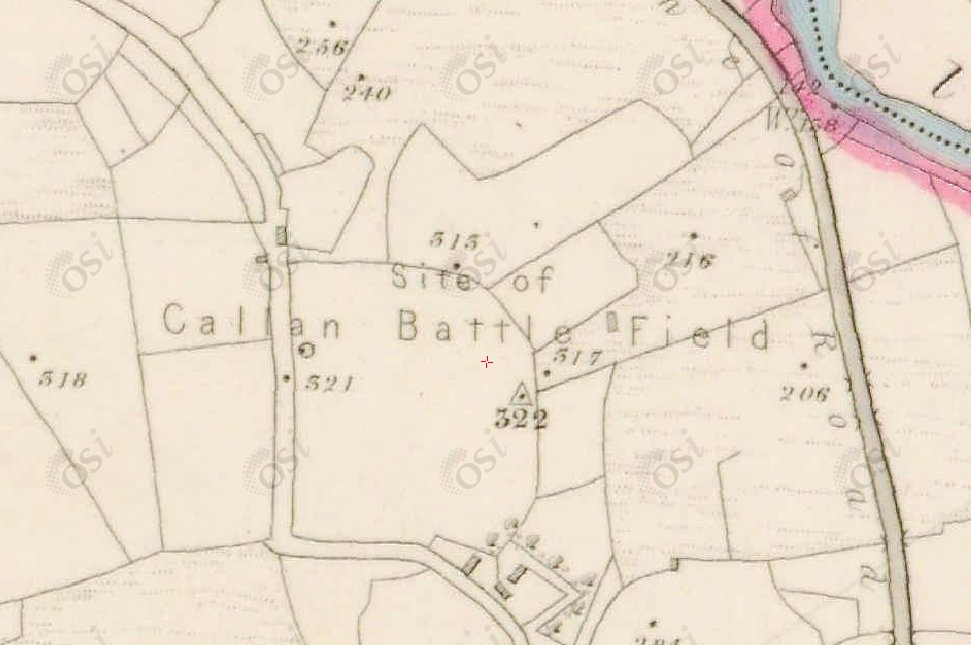
battle-of-callan-site

But who is it that the Macaura Grave celebrates? ‘Donal, Chieftain of the McCarthy Fineens’… Presumably this is not the Finghin, who, according to the Annals, went on after the battle to rout the Normans out of Munster: the Finghin who is known as mac Domhnaill mic Charthaigh – ‘son of Domhnaill MacCarthy’. Could it be his father (Donal is an Anglicisation of Domhnaill)? In which case it was the clan chieftain who died in the battle and his son who went on to clear the Normans out of Kerry. There are a few accounts of the battle, but none of them clarify this. It all happened a long time ago, of course, and memories fade. In fact this site was all but lost: an article in The Kerryman takes up the story, illustrated by this photograph:

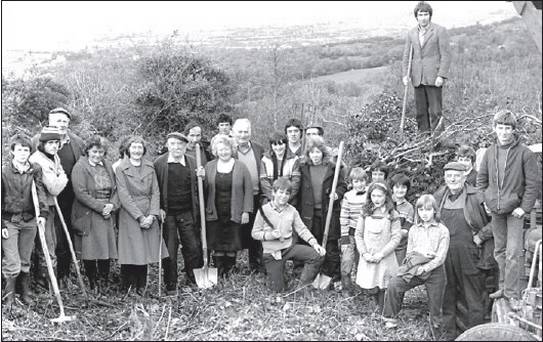
1981-clearing-the-site-of-the-grave

…The men of Kilgarvan were busy in November 1981 – making a road fit for a king! The king in question is Finín McCarthy who died in 1261 after being the first Irish king to defeat the Normans, thus giving Kerry the name of the Kingdom… Legend has it that after the battle, McCarthy stood on a ditch to survey the battlefield, when a dying Norman killed him with an arrow. McCarthy was buried on the spot, and a large slab was used as a headstone. The grave now lies on a narrow little road in Callan beside Tom Healy’s farm. When retired Dublin civil servant Frank Shanley spent a recent holiday in Kilgarvan he went looking for the grave, which was buried by shrubs and bushes… He decided to organise a meeting of the local men to try and get them to improve the grave and access to it…. It was Dan O’Sullivan, Down, Tom O’Donoghue and Michael Teehan, who were slaving away widening the roadway from eight feet wide to 16 feet, when he visited in November 1981… Apart from the narrow roadway and the briars and trees, there was also a steady stream of water running over the grave, but the men got the pipes to divert the water in another direction. There was no actual inscription on the grave that the men could read, but there were a series of lines and crosses on it, which they hope will be examined by an expert…. They hope that when they have the roadway to the grave cleared, they can erect signposts to the grave, and notices around the grave telling the history of McCarthy’s death in the battle of Callan…

Macaura's Grave

So we have the ‘men of Kilgarvan’ – back in the 80s – to thank for leading us to this now tranquil but historically turmoiled and fascinating spot. There is still the puzzle of which McCarthy is commemorated: perhaps we’ll never know for sure. But it’s not bad to have access to a story which has survived for the best part of nine hundred years – just about within living memory by Irish standards! After this excitement we continued our journey over the spectacular Coomhola road through the mountains towards Ballylickey and gently slid back into West Cork. If you can cope with very narrow roads (it’s not so bad – we only saw two other vehicles, both local farmers, in the whole 25 kilometres!) it’s one of the great road trips of Ireland – with the added bonus of a history lesson to be taken in.

Beyond the tunnel

Sheep on the edge

The Winding Road