Words on Roaring Water

from Brow Head

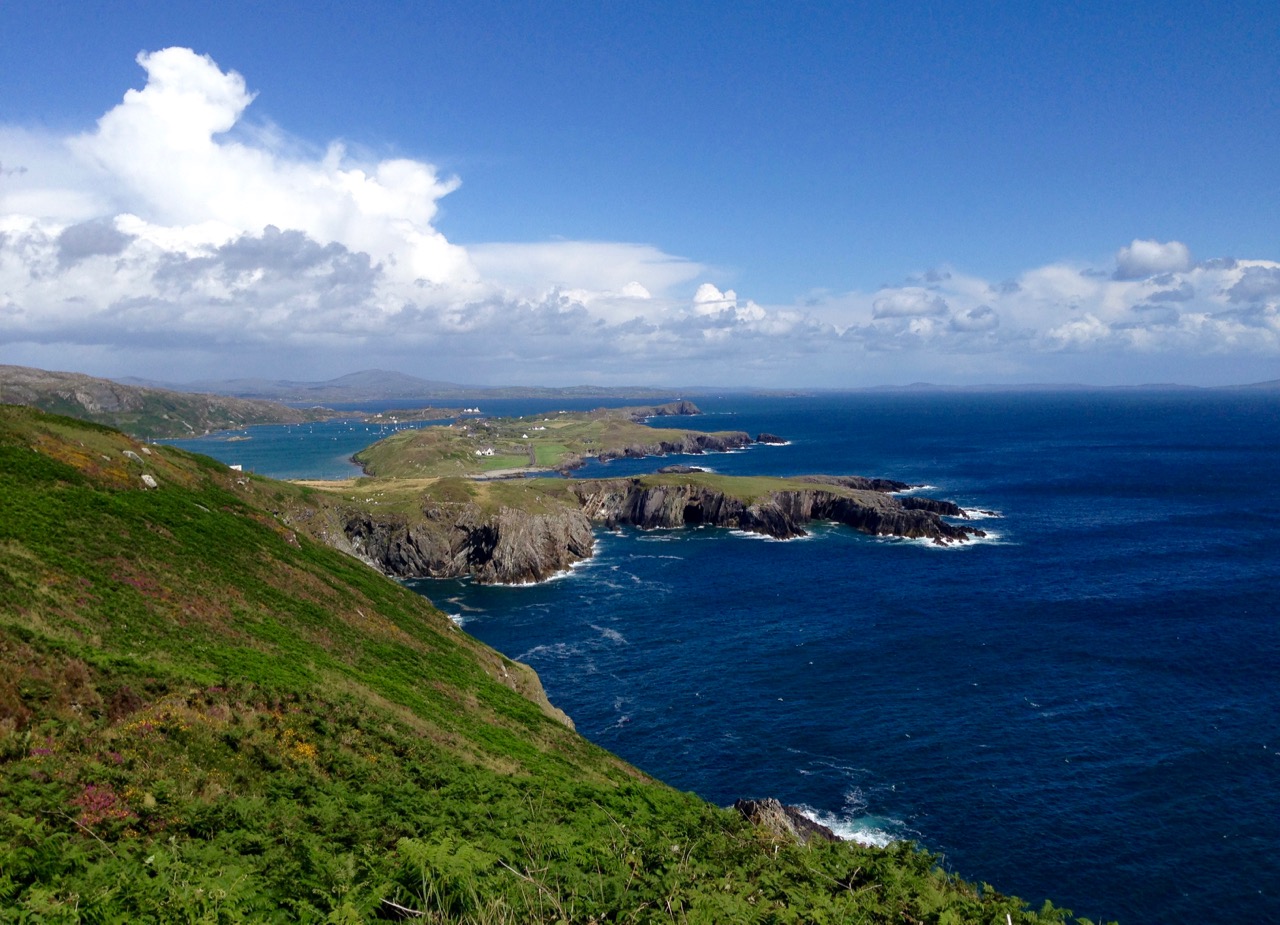
…Anyone who has glanced even cursorily at the map of Ireland, will have noticed how the south-west corner of it has suffered from being the furthest outpost of European resistance to the Atlantic. Winter after winter the fight between sea and rock has raged on, and now, after all these centuries of warfare, the ragged fringe of points and headlands, with long, winding inlets between them, look as though some hungry monster’s sharp teeth had torn the soft, green land away, gnawing it out from between the uncompromising lines of rock that stand firm, indigestible and undefeated…

Naboth’s Vineyard, Somerville and Ross, Spencer Blackett, 1891
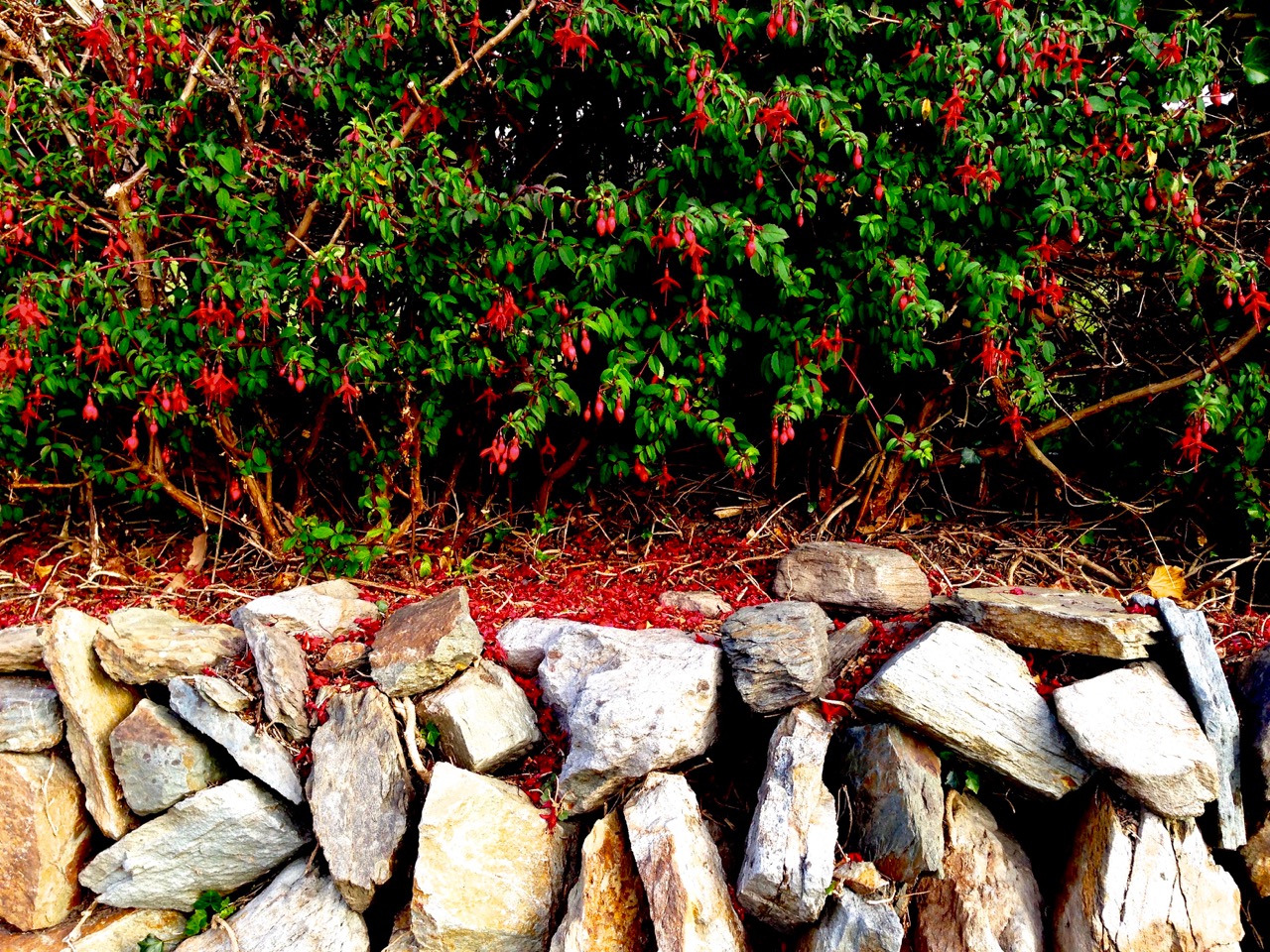
hedge and wall

So constantly entranced am I by the character of this remote corner in which we have chosen to settle (in my own experience – admittedly somewhat geographically limited – it is the most beautiful landscape in the world) that I am always excited when I discover that others have shared the same feelings. Consequently I am forever looking out for references to the coastline and country around Roaringwater Bay – particularly descriptive writing – in the wealth of books on West Cork that are harboured by local bookshops, libraries, and our own shelves here at Nead an Iolair: we are most fortunate that some of these books, especially the now out-of-print ones, came with the house! I have sifted through a few of the words: essays, extracts from novels, historical treatise and guidebooks that support my own feelings about the place. All are taken from writers I admire and thoroughly recommend. I present them here for you to take in, together with some hopefully seductive illustrations from the locality, in support of my thesis that there is no better place to be alive.
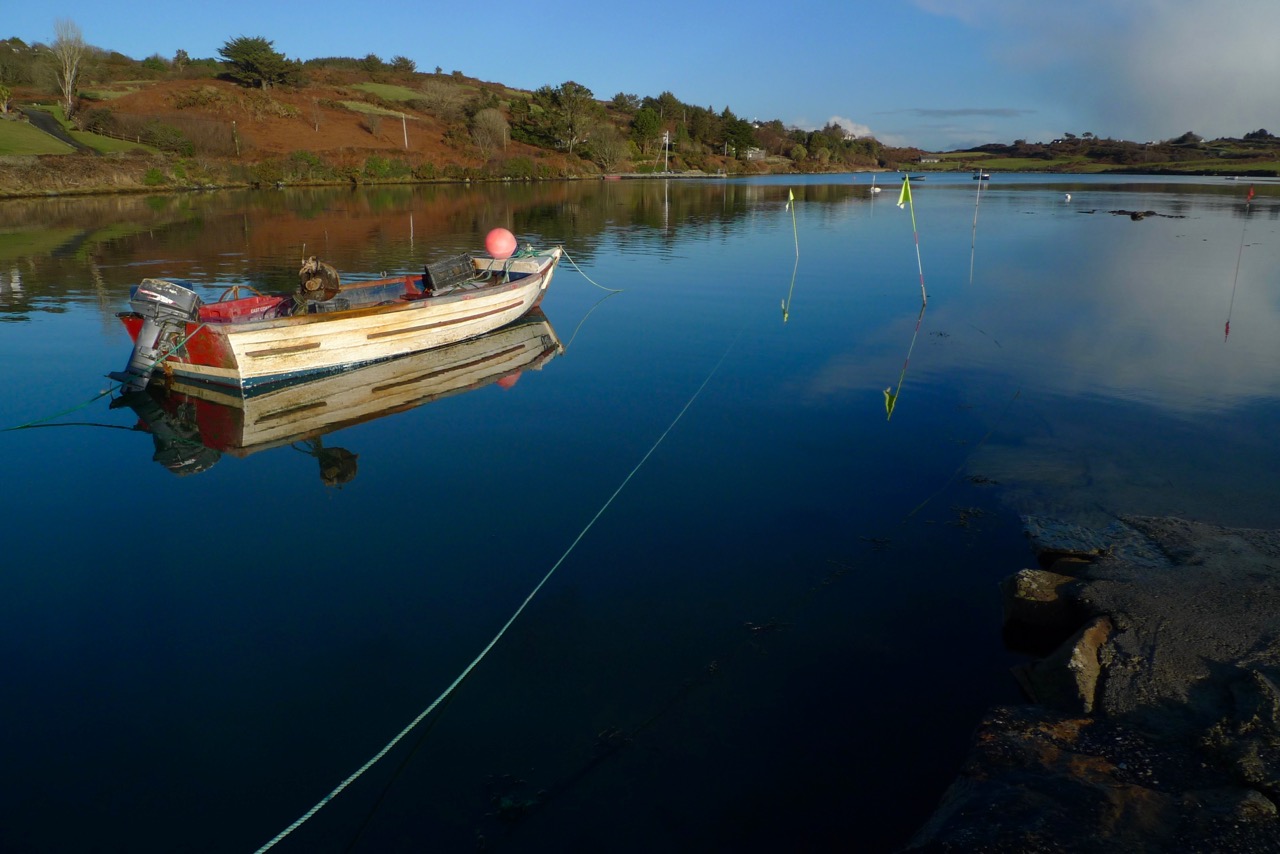
rosbrin cove days

…I believe that in West Cork water runs uphill. There is a small lake on the very summit of Mount Gabriel, nearly fourteen hundred steep feet above the Atlantic level. Small it is, but so deep that when, once upon a time, a heifer was lost in it, she came out in Schull harbour, on her way to America! (Or that is what the people tell you.)…

 ‘Happy Days!’ – Essays of Sorts, Somerville and Ross, Longmans, green and Co, 1946
stone beach

…There was a line of tables up the middle of the pier, each with its paraffin lamp smoking and flaring in the partial shelter of a fish-box, and each with its wild, Rembrandtish group of women splitting the innumerable mackerel, and rubbing lavish fistfuls of coarse gray salt into each, before it was flung to the men to be packed into barrels. The lamps shone fantastically on the double row of intent faces, on the quickly moving arms of the women, crimsoned to the elbows, on the tables, varnished with the same colour, and on the cold silvery heaps of fish…

Naboth’s Vineyard, Somerville and Ross, Spencer Blackett, 1891
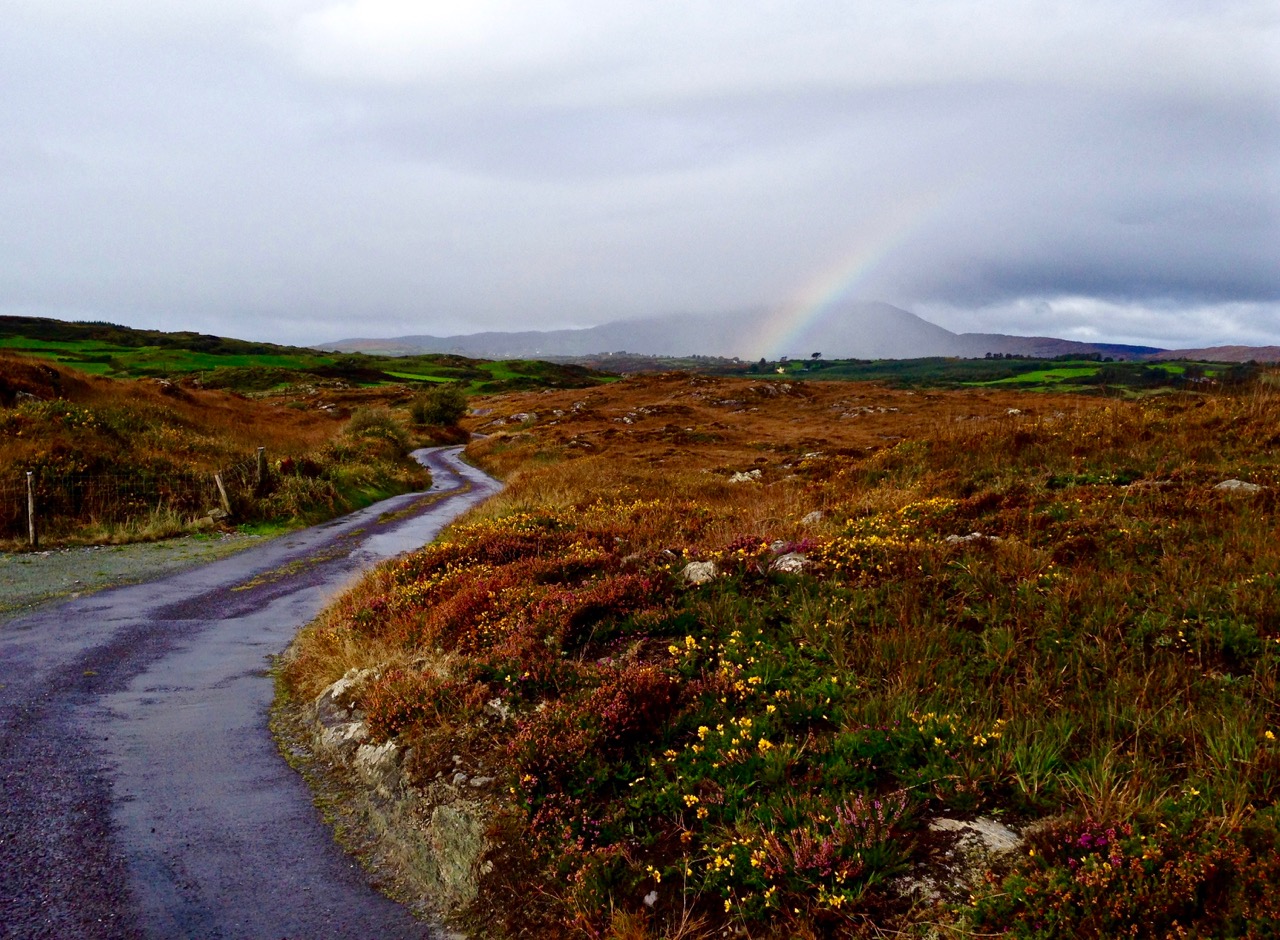
cappacolour

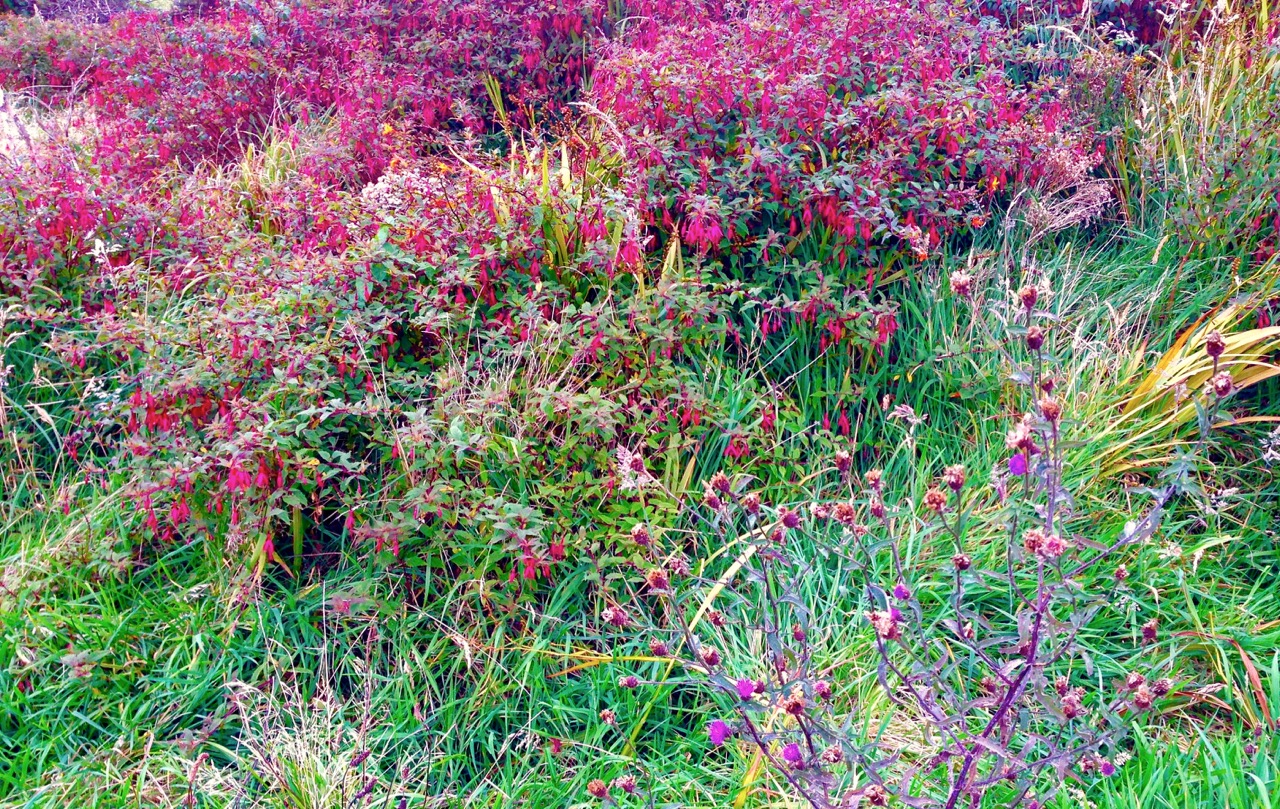
…Think of a wandering road in – let me say West Cork… The way is rough and stony, and (most probably) muddy, but it can claim compensating charms, even though it can hardly fulfil any of the functions proper to respectable roads. And in its favour I would claim the broken varying lines of the hills against the sky. The untidy fences, with their flaming furze bushes, or crimson fuchsia hedges; their throngs of vagabond wild flowers, that can challenge the smug respectability of a well-kept garden. And the inevitable creatures, the donkeys, the pigs, the coupled goats, the geese, that regard the highroad as their lounge and playground. No doubt they exasperate the motorist in a hurry (as are all motorists) but for more tranquil wayfarers they can offer entertainment, almost charm…

‘Happy Days!’ – Essays of Sorts, Somerville and Ross, Longmans, green and Co, 1946
fuschia colour 2(Ireland) …is a land of surprises. She has the gift of unexpectedness, of uncertainty: her people, like her looks, and her weather, can be sometimes charming, often exasperating, but seldom commonplace. Is there another country, reasonably civilised, in which, in the course of a casual idle stroll, records of pre-history can be met with in any field, unconsidered, or found (as I have known) an immense cup-marked stone, built into the wall of a cow-house, ignored by the descendants of those who were once its worshippers? And yet, in characteristic contrariety – as is our way in Eire – in the field next to that cow-house, you can see that the plough has turned aside from its rightful course in respect for a little old deformity of a thorn-tree, which has asserted, for possibly a thousand years, its right to be reverenced and feared…

‘Happy Days!’ – Essays of Sorts, Somerville and Ross, Longmans, green and Co, 1946
sun rays

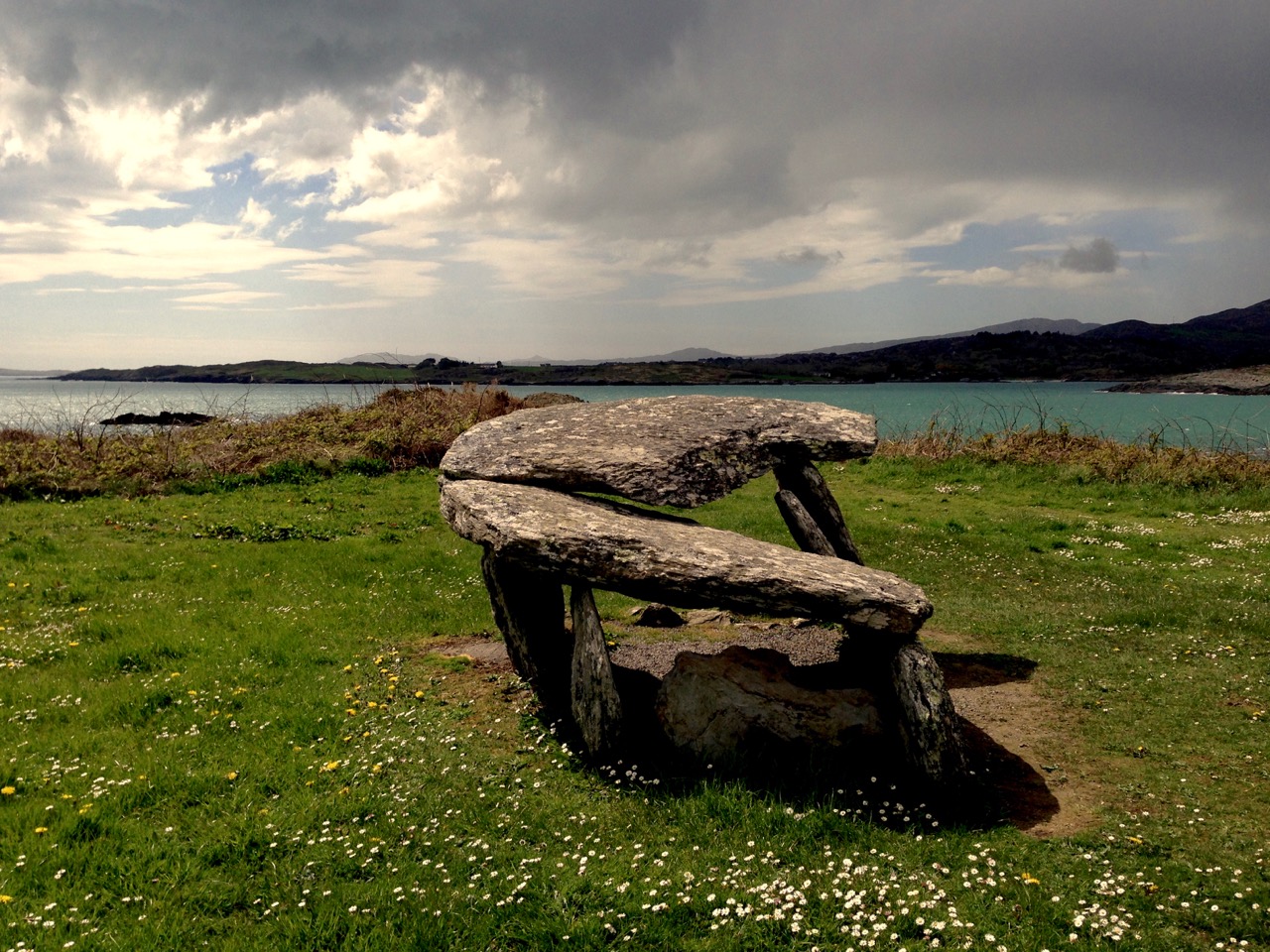
…In the mirror that memory will sometimes hold for us, I can see Rahyne Glen at four o’clock on a silver autumn morning before the sun has reached it. Opposite, just below the rim of the steep western side of the glen, there is one of the memorials of an older race and its religion. This is a broad slab of pale stone, leaning sideways against the hill, having, somehow slipped off the stones on which it had been supported. The sunlight falls full on it; it catches the eye and holds it. It is a dolmen, and the pale slab was its cap-stone. It marks the grave of a chief. He might have been content with his resting-place, had beauty of scene appealed to him (which seems improbable). Whether contented or no, he has lain there (if the archaeologists may be believed) undisturbed, through all the long centuries. If he were to look out now on those familiar hills he would see no change. His hills have defied civilization. All would look as it might have looked on any fair September morning during past thousands of years. And, I suppose, the pink ling, and the purple heather and the gold of the low-growing autumn furze, would then have spread the same carpet of colour over the hills… The wild stream comes storming through the thorn-bushes of the glen as fiercely as ever it did when the Chieftain and his warriors washed their spears in it… Beyond the glen the country rises, in long swathes of dim green, and purple, and misty blue, to a curving line of hills, and farther and higher still – for the viewpoint is a high one – a narrow flashing line tells of the silver plain below, which is the Western Ocean…

‘Happy Days!’ – Essays of Sorts, Somerville and Ross, Longmans, green and Co, 1946
roaring water

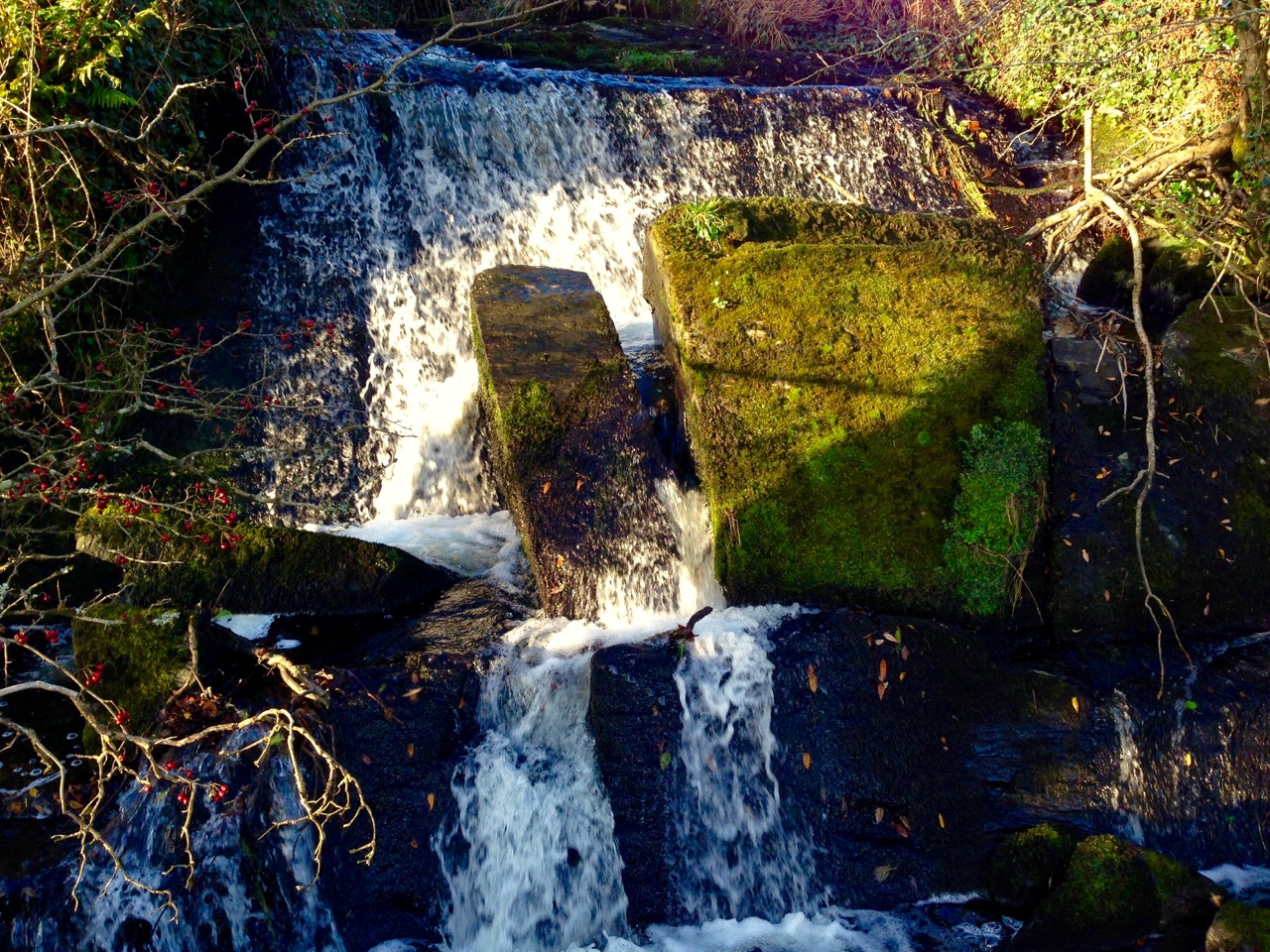
…The indented contours of Raring Water Bay enclose a maze of minute inlets and islands. The name derives from a stream which flows down the side of Mount Kidd amidst a landscape of bracken and boulders. The torrent roars in the narrow gaps and gullies as it rushes towards the sea. The little inlets penetrate the land like miniature fjords and create a sense of safe haven from dangerous seas. Their piers, long abandoned except for the occasional fisherman’s or tourist’s boat, are overgrown and tumbled-down romantic ruins, quiet spots for sighting a lone heron at low tide, grey against grey water. In the narrow defile where the roaring water debouches into the bay nature has done much to reclaim the territory usurped by human purpose. Perhaps, like the closing of a wound, this former embarcation point, which saw many thousands flee a country unable to support them, is being bound in ivy and decorated with wild fuchsia to heal the scar…

West of West – An Artist’s Encounter with West Cork – Brian Lalor, Brandon Book Publishers, 1990
gabriel side

…The islands of the West Cork coast are rather grandly referred to as Carbery’s Hundred Islands, but only Clear Island and Sherkin now sustain a viable population – though, like the other islands off the west coast, there is a steady draining of young people to the cities on the mainland for education and employment. Horse Island off Schull is evocative of the vanished communities of these islands. Silhouetted against the skyline, this piece of low-lying land appears like an old-fashioned, gap-toothed saw; a dark bulk of rock with triangular projections – the gable ends of a row of roofless cottages – biting into the clouds…

West of West – An Artist’s Encounter with West Cork – Brian Lalor, Brandon Book Publishers, 1990
kilcoe days

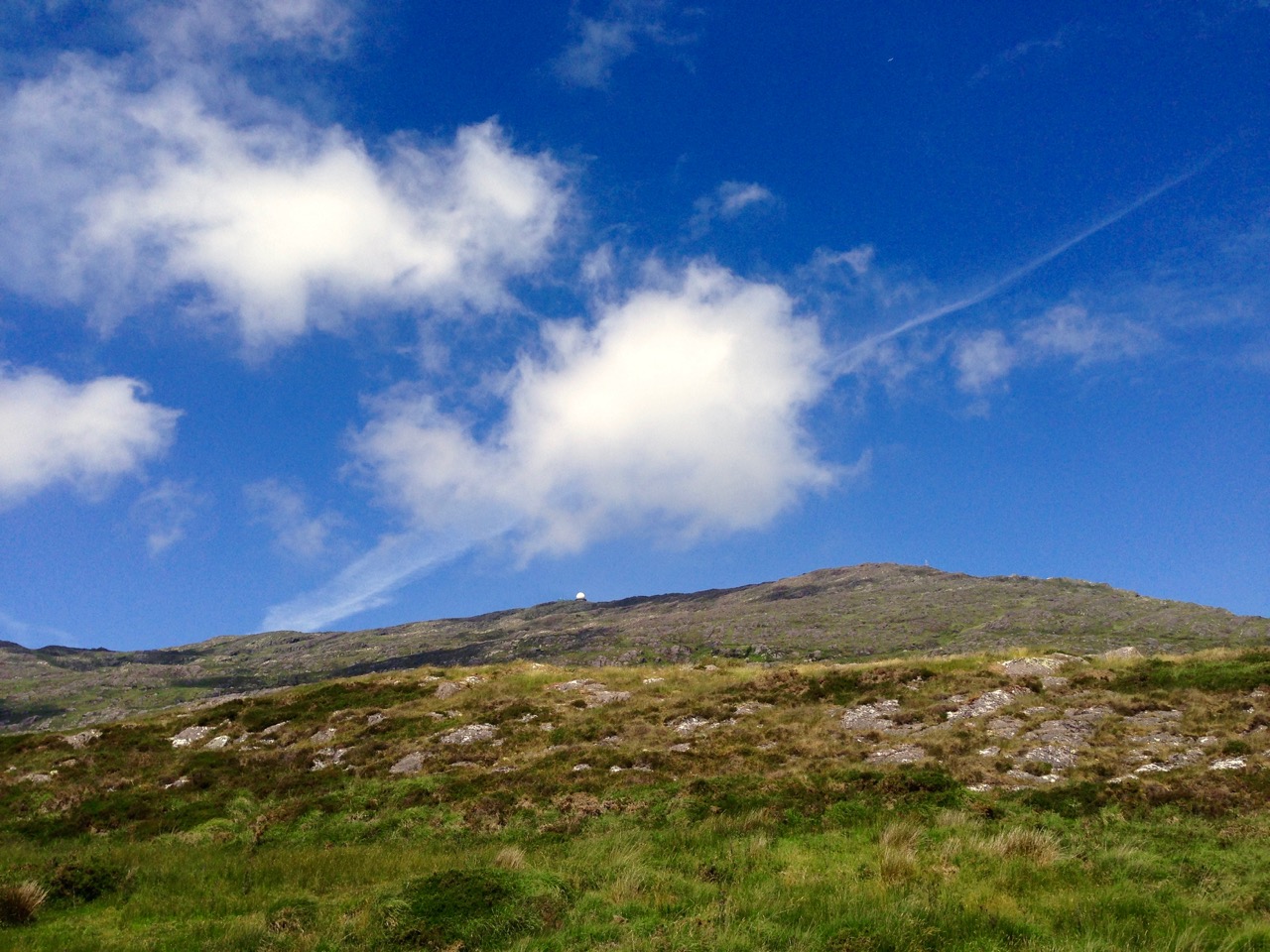
…Three or more centuries ago, before the landscape of West Cork became bound by a web of roads and fences, its contours would have been best understood when seen from above, from the heights of Mount Kidd or Mount Gabriel. Parallel ribs of rocks and hills, dividing up the pasture land, extended from the base of the mountains to the coast, where long fingers of rocky promontories projected out into the sea. There was a natural order to everything…

West of West – An Artist’s Encounter with West Cork – Brian Lalor, Brandon Book Publishers, 1990
rosbrin shadows

… Beyond Whitehall I rode out to the point at Cunamore where the road ended at a small pier which was the nearest point to Hare Island, also known as Inishdricoll. There was no regular ferry across, but the post boat went over several days a week, and the schoolmistress crossed daily to teach the dozen remaining children. It is a much less dramatic island than Cape or Sherkin, a low-lying slab of land with golden beaches. One road leads to a little village nicknamed Paris – probably a derivation of ‘pallace’ – once the centre of a fleet of lobster boats. Now I listened to an old man lamenting the terrible decline.

   “John has gone and Dennis has died, and we’ll die too, and then the foreigners can have it all.” Already half a dozen of the houses had been bought up by strangers.

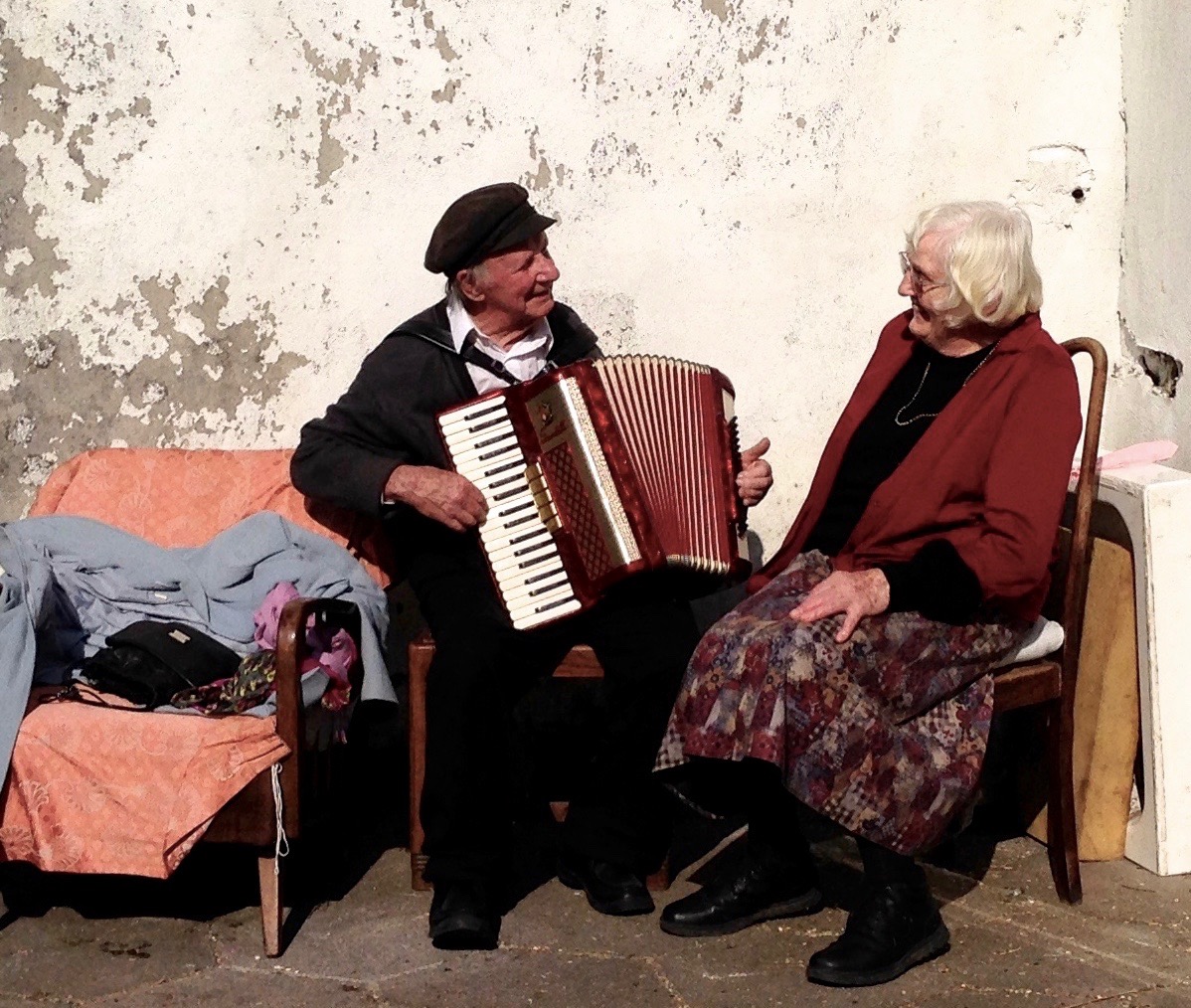
   One by one the smaller islands became deserted. It is a long time since they were densely populated, but until quite recently they supported a certain number of families. Only a few years ago I visited Horse Island, just opposite Ballydehob. The last people there, an elderly couple, were living all alone. It was summer, and the old man was sitting in a chair outside his house, his feet in a basin of water. His wife, behind him, fed hens. Next year they were gone. The house, still intact and comfortable, stood empty, the linoleum in place, last year’s calendar on the wall. Down by the pier a plough had been thrown into the water where it looked like a gesture of despair…

The Coast of West Cork – Peter Somerville-Large, Victor Gollancz Ltd, 1974
rosbrin cool

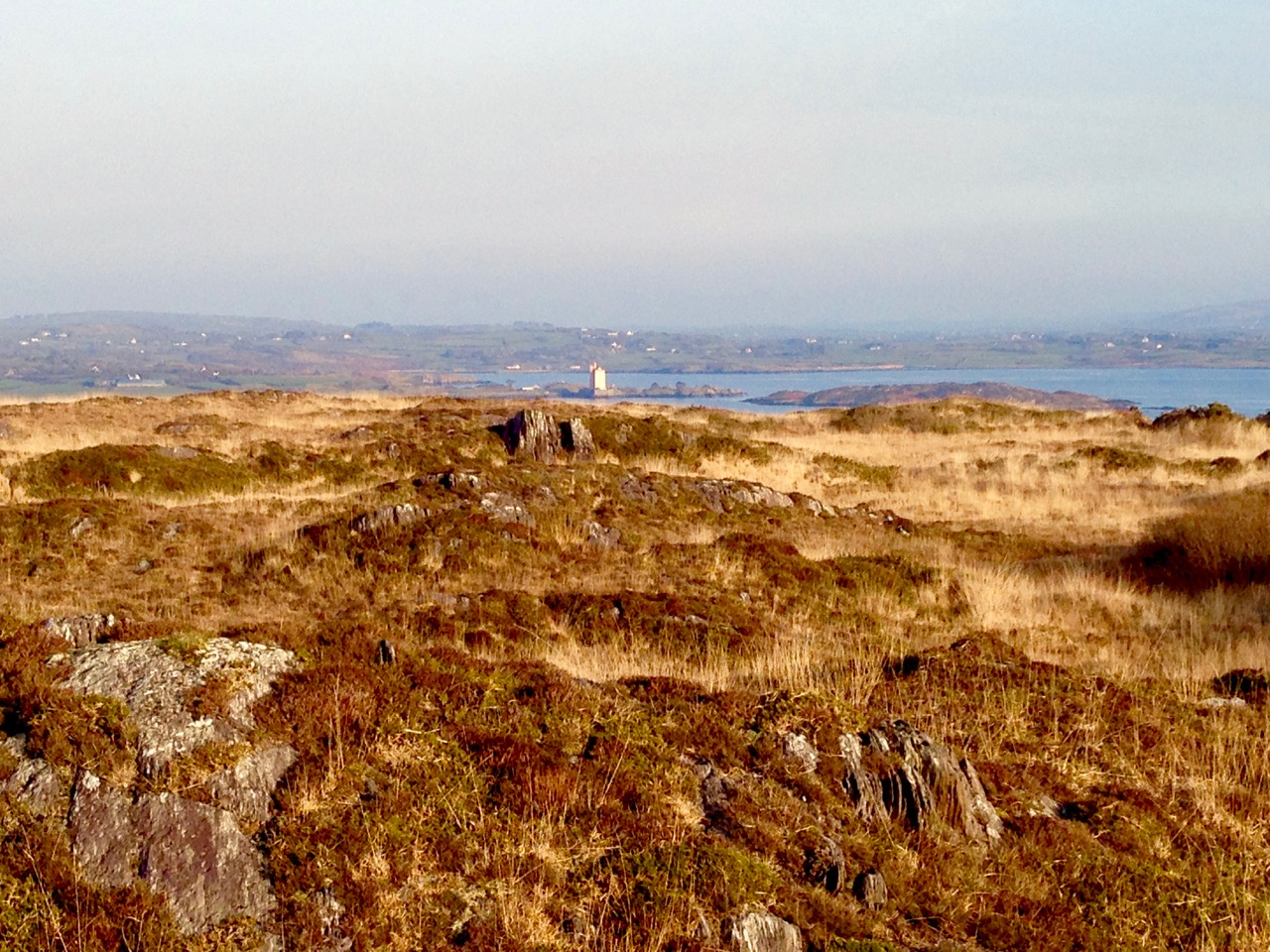
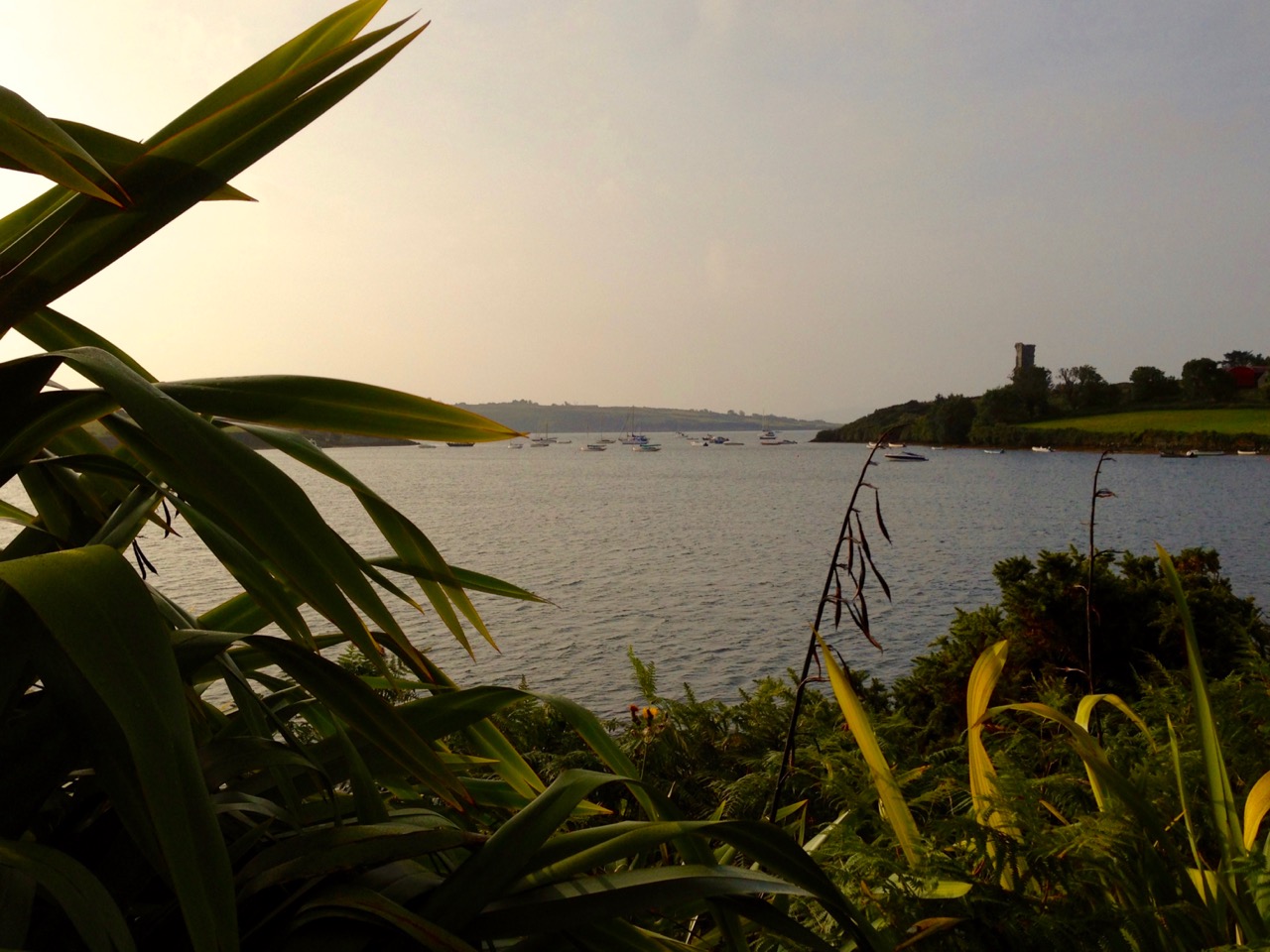
…West of Ballydehob the laneways ran into each other like the veins of a leaf. Many of them were untapped; they seemed empty, with little life except for cattle or a white horse browsing in watery fields beside them. Most seemed to end up at the sea, and each little turn had its own alignment to the bay. One looked across the islands with Kilcoe standing squat and menacing on its headland; the next inlet had a view across to Horse Island; another lane climbed to a hill to where one could see the sweep from Baltimore Beacon and the Gascanane to the shattered tower of Rosbrin castle…

The Coast of West Cork – Peter Somerville-Large, Victor Gollancz Ltd, 1974
Afternoon in Ballydehob 04.2014

…May Day in Schull was the day for ‘bringing in the green’. But the ancient custom is dying out. Only a few branches of green leaves were tied on doors, and a twig of fuchsia dangled from the handle of a bike. “Old pishoges,” an old man muttered as he carefully arranged sycamore round a drainpipe…

The Coast of West Cork – Peter Somerville-Large, Victor Gollancz Ltd, 1974
altar

…Colla harbour and pier is the nearest point to embark for Long Island. Horse Island, Castle Island and Long Island lie in a line just outside Schull harbour. A tradition, quoted by Smith, claims that they were once all one island. “In the latter end of March, AD 830, Hugh Domdighe being monarch of Ireland, there happened . . . terrible shocks of thunder and lightning . . . at the same time the sea broke through the banks in a most violent manner. The island, then called Innisfadda, on the west coast of this country was forced asunder and divided into three parts”…

The Coast of West Cork – Peter Somerville-Large, Victor Gollancz Ltd, 1974
december sun over rossbrin

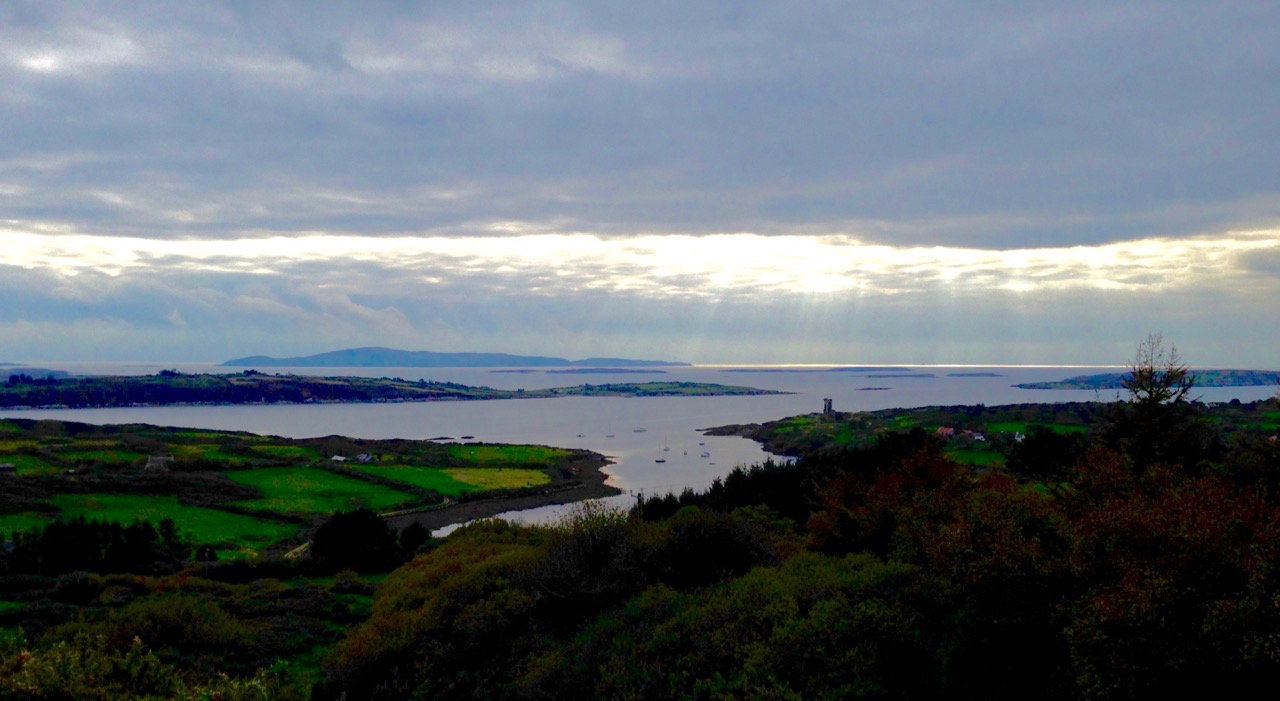
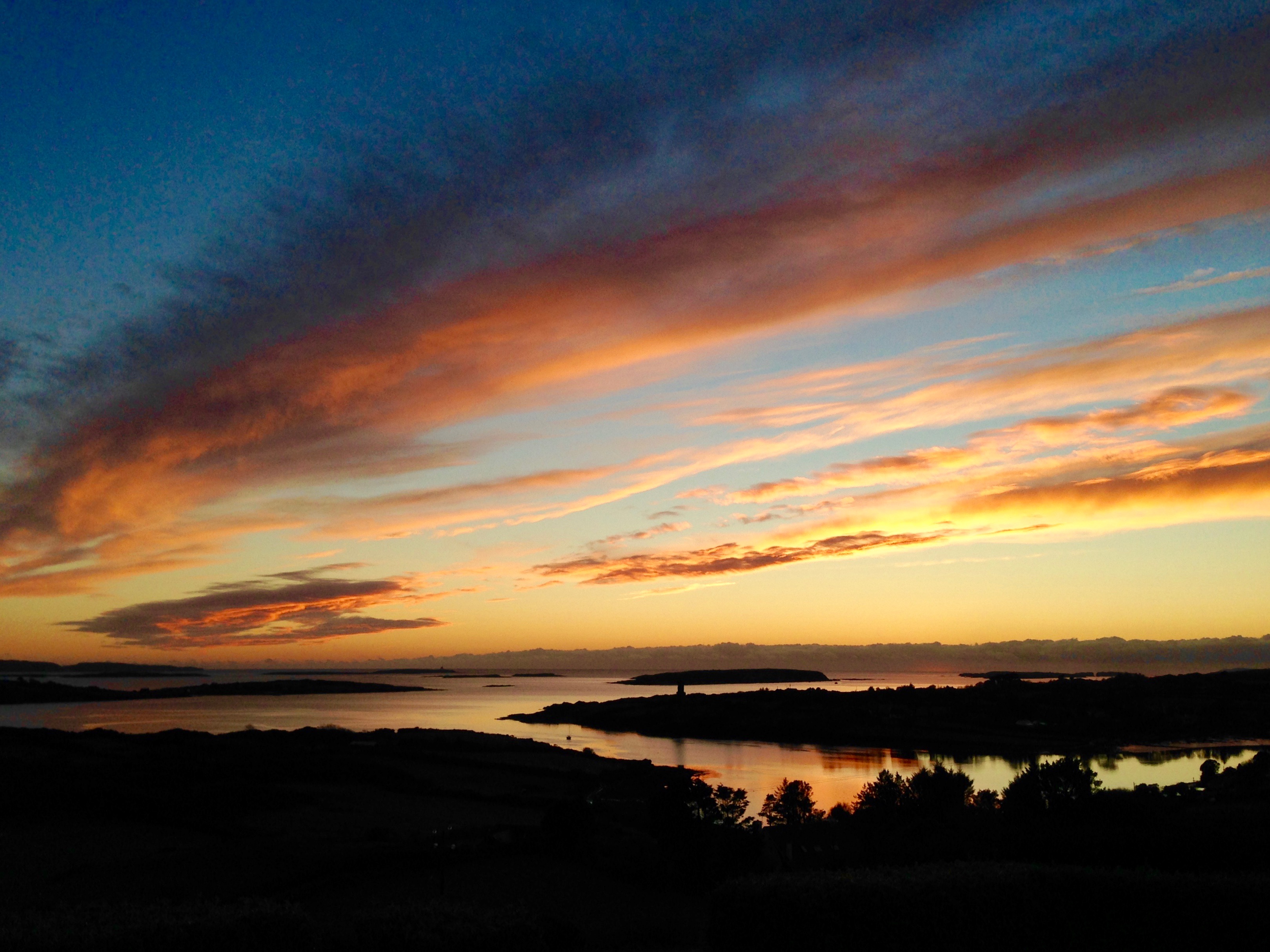
…From the vicinity off Dunanore, we obtain a view of the coast and the surrounding open, which is one of surpassing beauty, when the summer sun is setting in the far west. Towards the south, as far as the eye can reach, the broad expanse of the Atlantic is stretched before our gaze, the distant horizon dotted here and there by some white sail, or the dark hull of one of those leviathan steamers which ply their busy trades between the Old World and the New. Cape Clear is the first land which greets the American tourist or the returning emigrant on his approach to the old country, and the last cherished spot of his ‘own dear isle’ which bids adieu to the Irish peasant, when he parts, perhaps for ever, from his native country…

Sketches in Carbery, County Cork: its antiquities, history, legends, and topography – Daniel Donovan, McGlashan & Gill, 1876
down below

Celebrating Irish Design in West Cork

7 Hands crafts

2015 was the Year of Irish Design. In celebration there were exhibitions, events, talks and programmes all across the country. RTE aired a four part documentary, Designing Ireland, introducing us to the history of design in this country. Hosted by Angela Brady and Sandra O’Connell this fascinating series took us from our roots in vernacular design and use of materials, through the dawn of modern design in Ireland via innovative architecture and fashion designers, to the heady days of the Kilkenny Design Centre and into the digital era where computer-based planning is married to mastery of materials by engineers, architects, fine crafters and designer-makers to produce products that can stand with any in the world.

IMG_9758

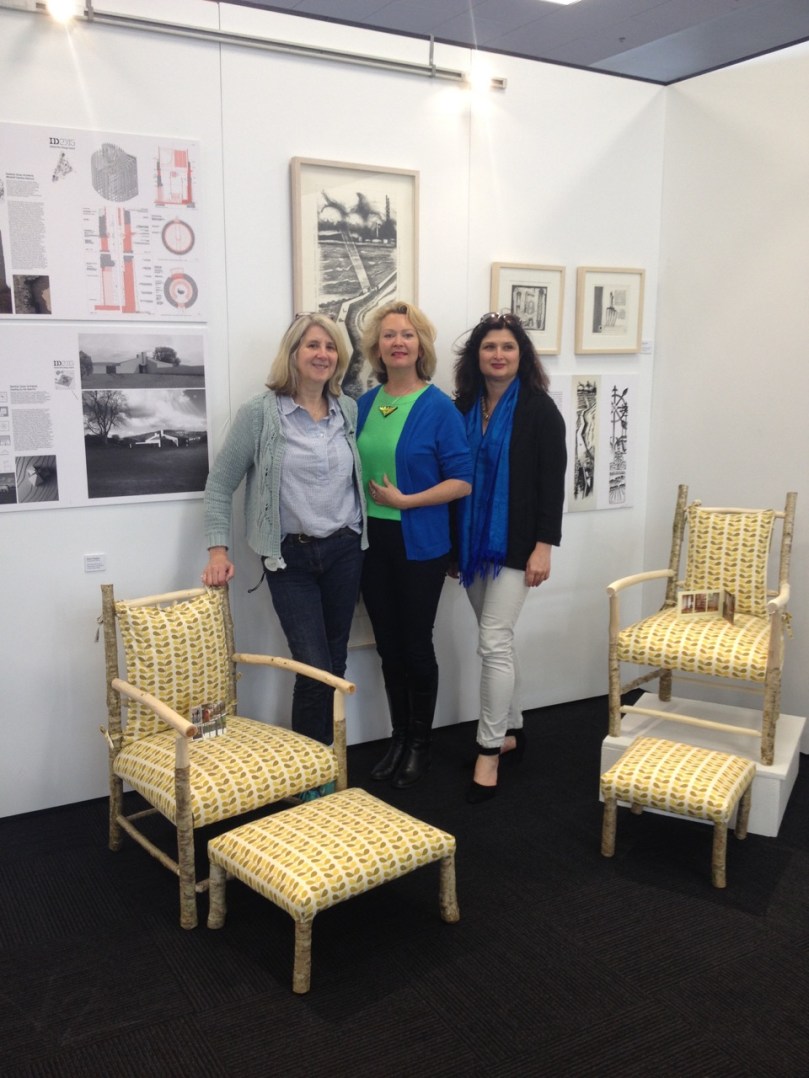
Alison, Angela and Sandra at the 7 HANDS Exhibition in London, with Alison’s greenwood chairs*

Artists and craft people gravitated towards West Cork throughout the second half of the 20th century for the light, the distance from civilization, the beauty of the countryside, the affordability of land for studios and housing and for the support of a community of like-minded individuals. Alison Ospina, in her book West Cork Inspires, describes this period  and profiles many of the practitioners who discovered this unique area, drew inspiration from it and made their home here.

West-Cork-Inspires_JACKET-FRONT-high-res

Last  summer in Ballydehob the 7 HANDS Group harkened back to this golden era of West Cork Design with a stunning exhibition of contemporary fine craftwork by seven local artists. The exhibition moved on to Dublin and London where it was well received, although I cannot imagine the settings there could rival that of our tiny pristine Haugaard Gallery on the Pier in Ballydehob.

Kieran Higgins is a master woodworker *

The exhibition was supported by a series of artists’ talks and it was quite magical to listen to Brian Lalor talk about the detail and precision of his etching process, compared to Alison Ospina’s approach to her greenwood chair building in which the material reveals the ultimate design to her.

Angela Brady walked us through the making one of her luminous glass creations (those gorgeous beetles!) and Paddy McCormack spoke about the fiery furnace in which his wonderful chess set was forged.

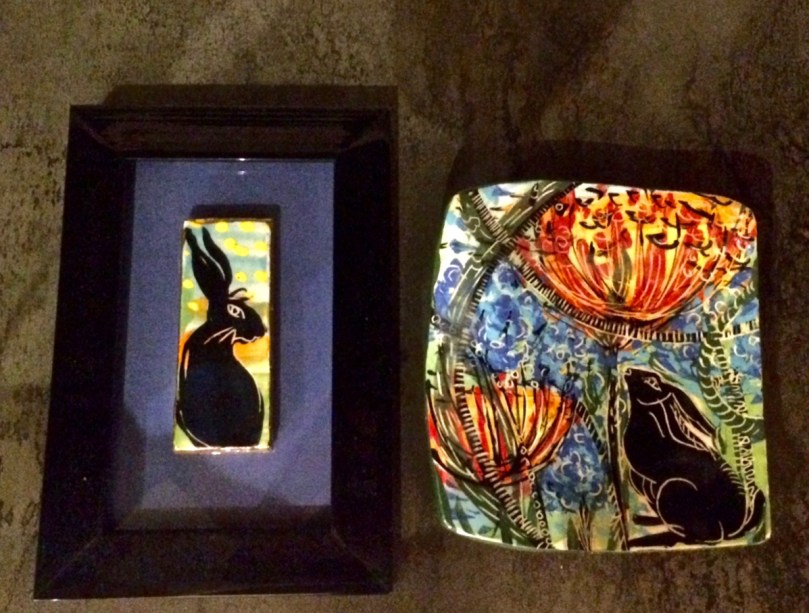
We came away with our own little souvenir – yet more hares for Robert, this time by Etain Hickey.

Etain Hares

The 7 HANDS group has larger ambitions. They want to re-establish West Cork’s place in the Irish design and craft pantheon. With this, their first exhibition, they have made an excellent start.

IMG_3507 (1)

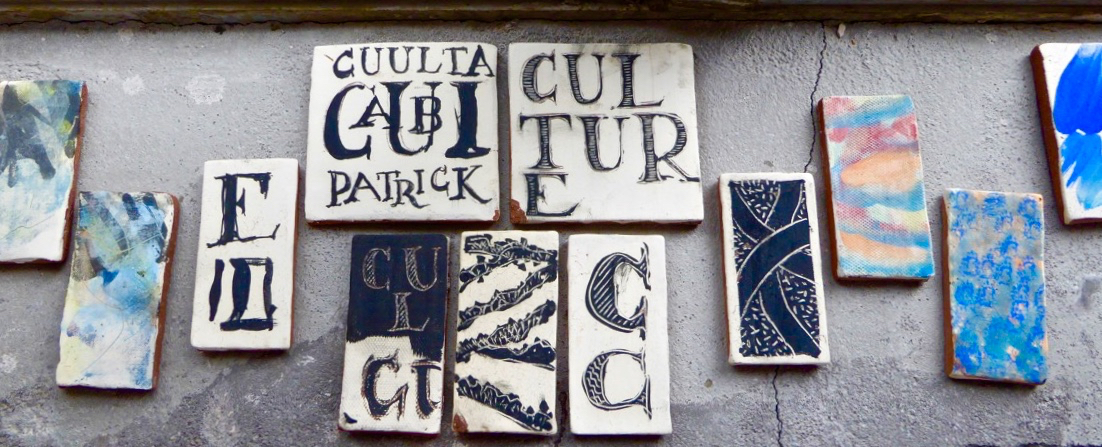
Patrick Connor’s quirky portraits *

6_liffey with cranes

The extraordinary intricacy of Brian Lalor’s ‘Liffey with Cranes’*

*A special thank you to Angela Brady for some of the photographs in this post.

West Cork Creates

We were bowled over by the latest exhibition to open in Skibbereen on Saturday: West Cork Creates. It shows collaborations between local craftspeople, visual artists, photographers and designers – combining their skills and expertise to produce exciting, original work.

test pieces

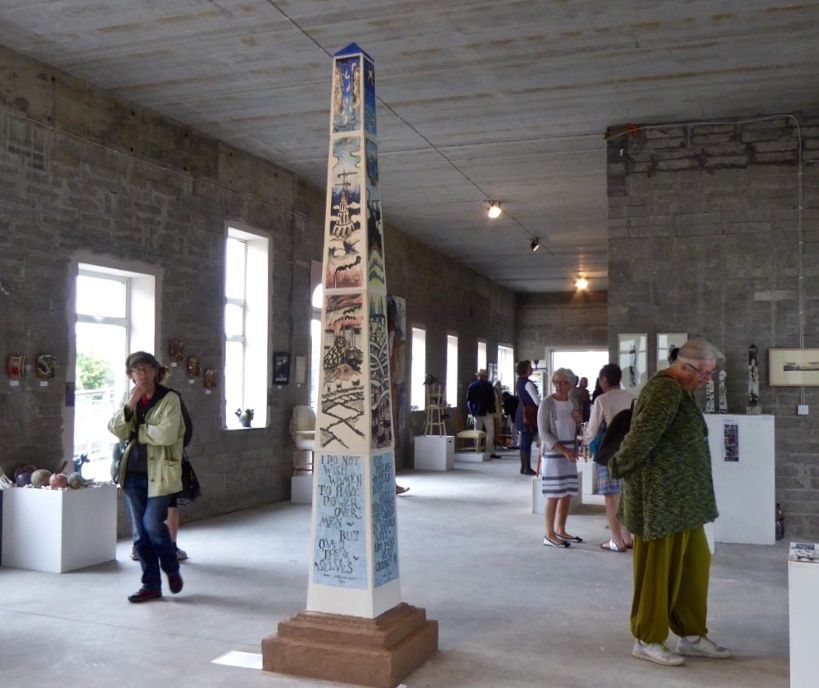
Top picture – The Great West Cork Obelisk (see below) is featured by the entrance to the gallery; above – fired test pieces from the obelisk project

Here’s a riddle: what’s the difference between an artist and a craftsperson? If you have a definitive answer please tell me, because this is a debate that will last forever… Grayson Perry contributes to the discussion in this Guardian piece, starting provocatively with:

…I see the craft world as a kind of lagoon and the art world in general as the ocean. Some artists shelter in this lagoon, because their imagination isn’t robust enough to go out into the wider sea…

Grayson Perry makes pots, so is he an artist? Well, presumably the British art establishment thought so as they gave him the Turner Prize in 2003, the first time it had gone to a ‘ceramic artist’.

More from the obelisk project and – right – Brian Lalor, one of its creators

Where does that leave us? Is someone who makes flowerpots an artist, because a flowerpot might be an attractive object? Where do you place something like the Book of Kells? It’s a functional object – the four Gospels lavishly illuminated – created in medieval times by many different hands. Yet it’s unique, overflowing with stunning visual images, beautiful and priceless. It’s a wonderful example of collaboration between the functional craft of the scribes who penned the texts and the minds of the (undoubted) artists who produced the decorations around those texts: perhaps they were the same hands.

Left – metamorphosis of two of Alison Ospina’s Greenwood chairs and – right – Dee Forbes, President and Managing Director of Discovery International, formally opening the exhibition

What about Finola’s subject for today, Harry Clarke – artist or craftsman? Stained glass is not ostensibly functional (except, perhaps to change the quality of the light coming through a window) yet the making of it is a craft requiring a lengthy apprenticeship and a garnered knowledge of specific materials and their use. I have no doubts: walk into St Barrahane’s Church, Castletownshend, and be dazzled by the Clarke windows there. They are inspired: true art. Harry Clarke designed and made these windows, so he was artist and craftsman rolled into one.

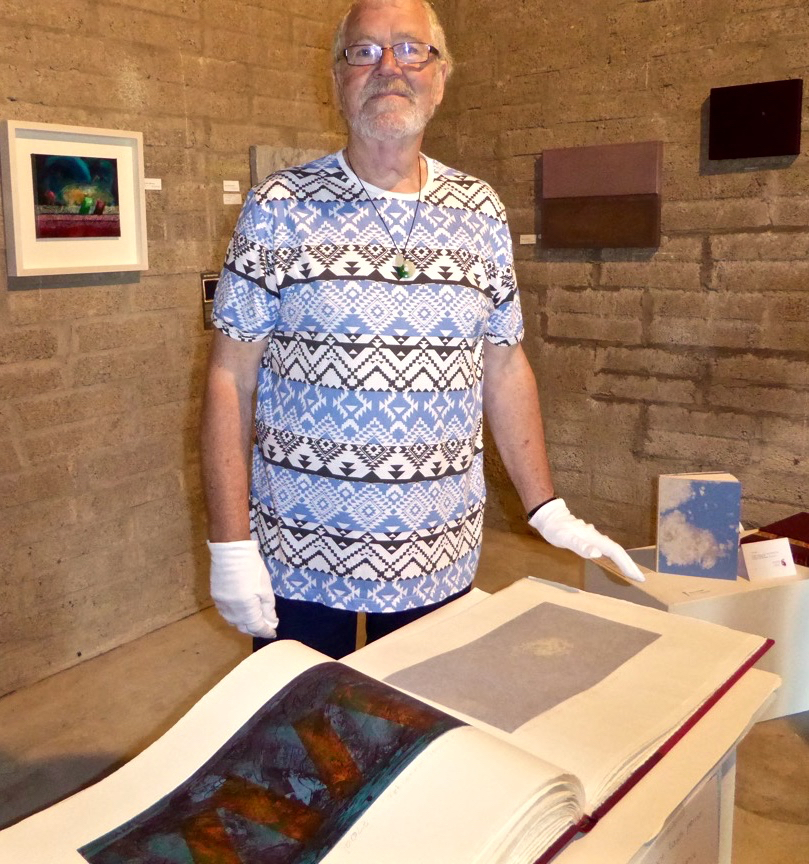
book of printsArtist and printmaker Coilin Murray with The Big Book

For me West Cork Creates (part of the Taste of West Cork Food Festival) demonstrates conclusively that you can’t differentiate between art and crafts. As you enter the gallery you are immediately presented with an iconic piece – The Great West Cork  Obelisk – which stands almost three metres high. It is a collaboration between two minds and two sets of hands: Brian Lalor and Jim Turner. Brian we have met before in the pages of our blog: he is a true polymath. He writes (prolifically), he produces art (prolifically), he has been an architect and an archaeologist. Jim is a ceramic sculptor of renown. Egyptian ‘obelisks’ are commemorative monuments of the Pharaohs and they usually carry a lengthy inscription praising the deeds of some significant individual.

obelisk in context

The Great West Cork Obelisk

This one is constructed from four terracotta sections made by Jim in his Clonakilty studio and fired in a specially constructed kiln. The base inscriptions are all quotations, two from social philosophers and two from writers, all concerned with the state of society. Brian’s images derive from these, from the contemporary world and from the local environment. The artists’ statement says: Obelisks may be the new round towers of the landscape… (remember that Brian has written the standard work on Ireland’s medieval round towers). I agree: I’d love to see this work prominently displayed in a public place locally – and many more like it. The obelisk absorbed our attention for a good half an hour, delaying us from moving on to the rest of the exhibition: it’s a show stopper!

Alison Ospina and – right – one of her Greenwood stools painted by Etain Hickey 

There are chairs and stools: functional objects to be sat upon. But you’d think twice about sitting on these. They are initially examples of the work of Alison Ospina who uses coppiced hazel to make distinctive seating, but they have been transformed by others (painter, sculptor and felt maker) into works of art which will primarily be looked at and appreciated.

for sale

The gallery space includes a sales area where you can buy the work of the participating exhibitors

There are thirteen collaborations in the exhibition including stone sculptor and furniture maker; metal sculpture and photography; basketmaker and visual artist; painter and felt maker; painter and boatbuilder; cutler and jeweller, all based or working within West Cork… This is just a taster – we have to go back and catch up on the other genres and artists and perhaps write a further blog post. The exhibition runs for five weeks from 8 August to 10 September at Levis’s Quay in the centre of Skibbereen, and is open from Mondays to Saturdays between 11am and 6pm. Be sure to get there – you won’t be disappointed: watch out for the gallery talks, too.

Sculptor Helen Walsh collaborates with photographer Rohan Reilly

Once you have seen the exhibition, you might like to comment and add your contribution to the artist / craftsperson debate.

wooden sun

High Drama!

tower in context

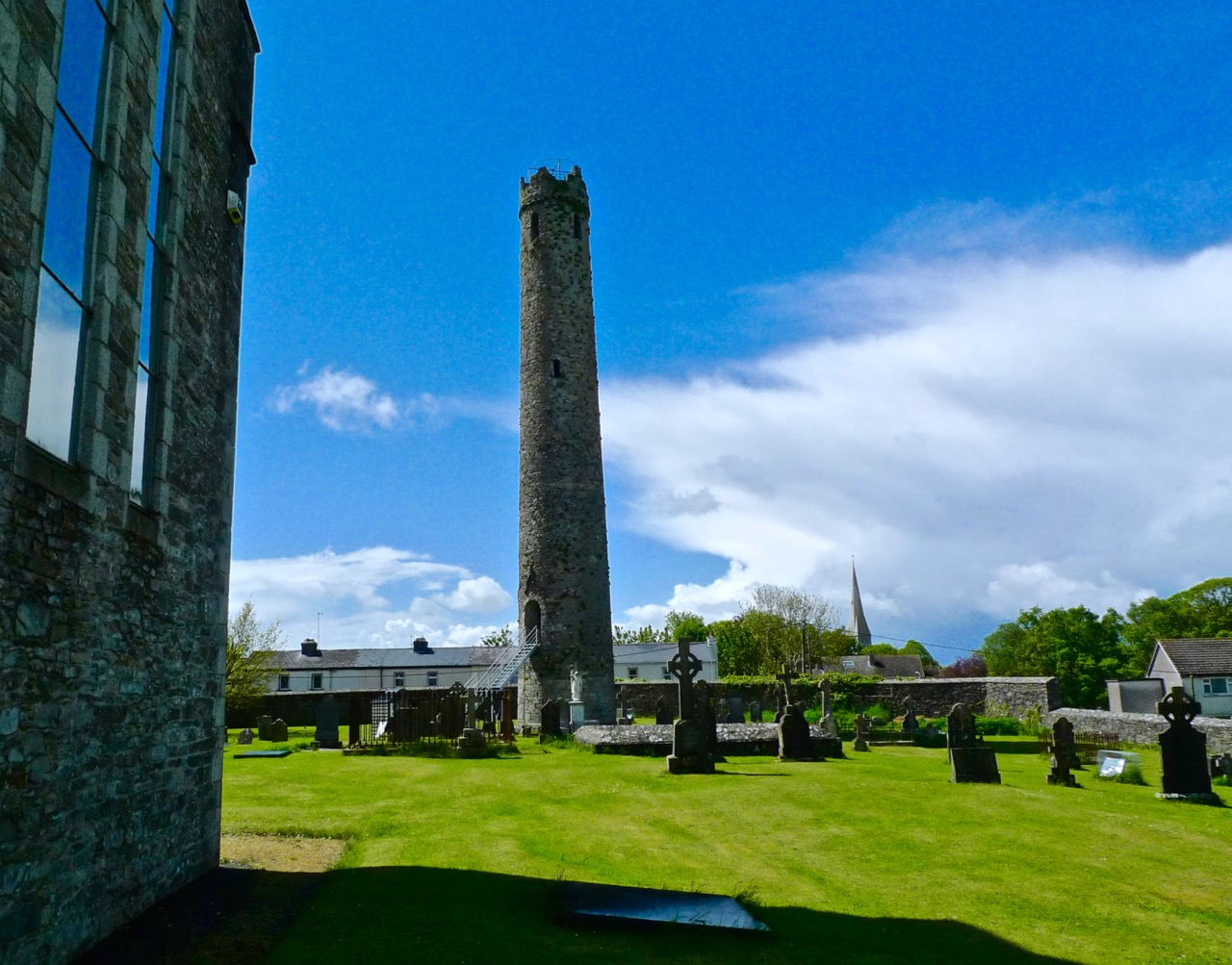
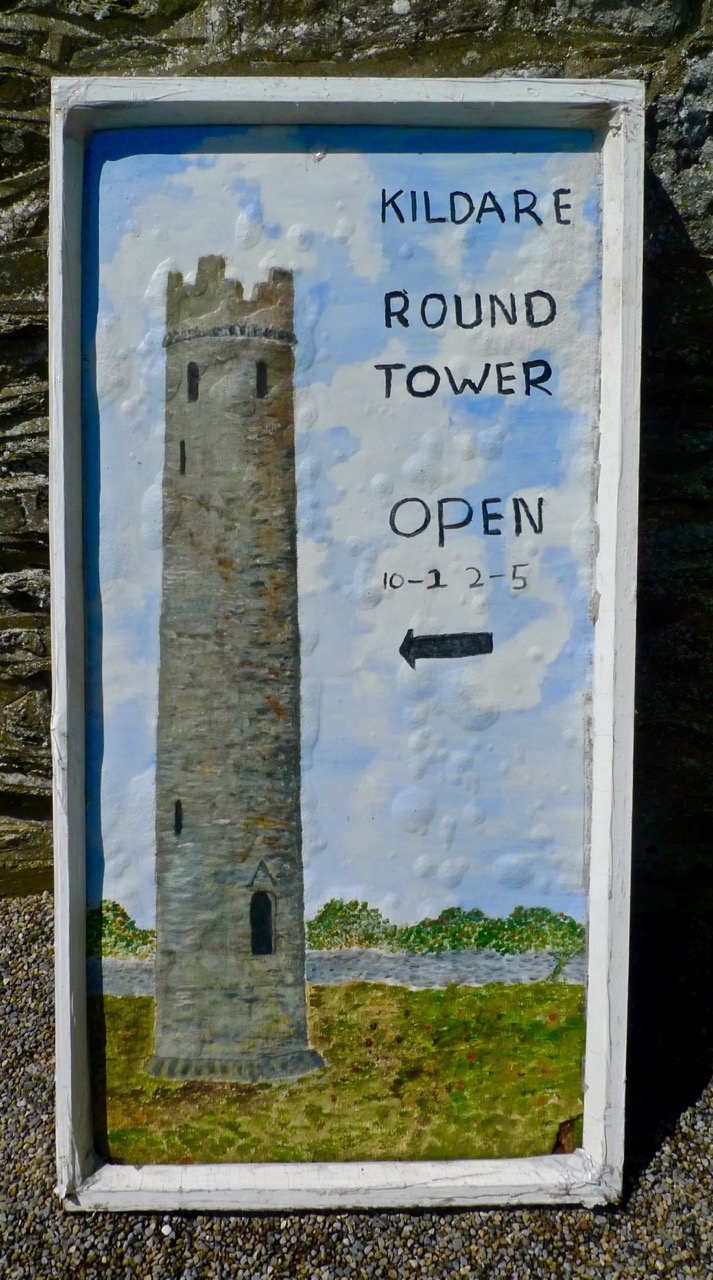
If you suffer from vertigo or claustrophobia – or both – then you won’t want to follow us in the adventure we had this week while returning from a visit to Dublin: climbing to the top of an Irish Round Tower! Overcoming any tendencies we might have had towards these phobias, we arrived at the roof of the 32.6 metre high Kildare tower and marvelled at being able to stand on the summit of a piece of architecture over a thousand years old. Kildare has the second highest Round Tower still extant in Ireland: the highest is at Kilmacduagh, Co Galway, at 34.9 metres; however, Kildare now lacks a conical cap, which it might once have had. If so, it would just tip in as the highest of all the towers.

Kildare Round Tower: note the battlemented top - probably added in an 18th century restoration, the romanesque doorway and the granite base. The upper stonework is limestone and sandstone

Kildare Round Tower: note the battlemented top – probably added in an 18th century restoration, the romanesque doorway and the granite base. The upper stonework is limestone and sandstone

The print above – dating from 1788 – shows the ruins of St Brigid’s Church, which was fully restored as a Church of Ireland Cathedral a hundred years later. We looked down on this from our vantage point atop the Tower – and had a good view of the (also restored) Fire Temple where a perpetual flame, lit by the Saint, was kept burning for hundreds of years, finally being extinguished by the shenanigans of Henry VIII.

Looking down on Kildare Cathedral, with St Brigid's 'Fire Temple' in the grounds

Looking down on Kildare Cathedral, with St Brigid’s ‘Fire Temple’ in the grounds

You’ll have heard me talk about St Brigid many times: she’s second only to St Patrick in the Irish Martyrology. In fact, as probably the most influential woman in Irish history, I’m going to declare her as quite the equal of St Patrick: she’s often enough described as one of the Patron Saints of Ireland. You will also know that she is surrounded by folklore and traditional customs, such as the making of her Cross on her day, the First of February.

St Brigid’s Cross – left, at her Holy Well and right, a textile in the Solas Bhride Centre, Kildare

Back to the adventure (although the whole day was adventurous!) – climbing the tower was hard going. There were a series of near-vertical ladders to be negotiated: each one took us to a higher timber platform, six floors in all. At the top of each ladder we had to squeeze ourselves through a narrow opening; this, and the confines of the tower interior – only two metres or so across – certainly challenged the claustrophobiac in me.

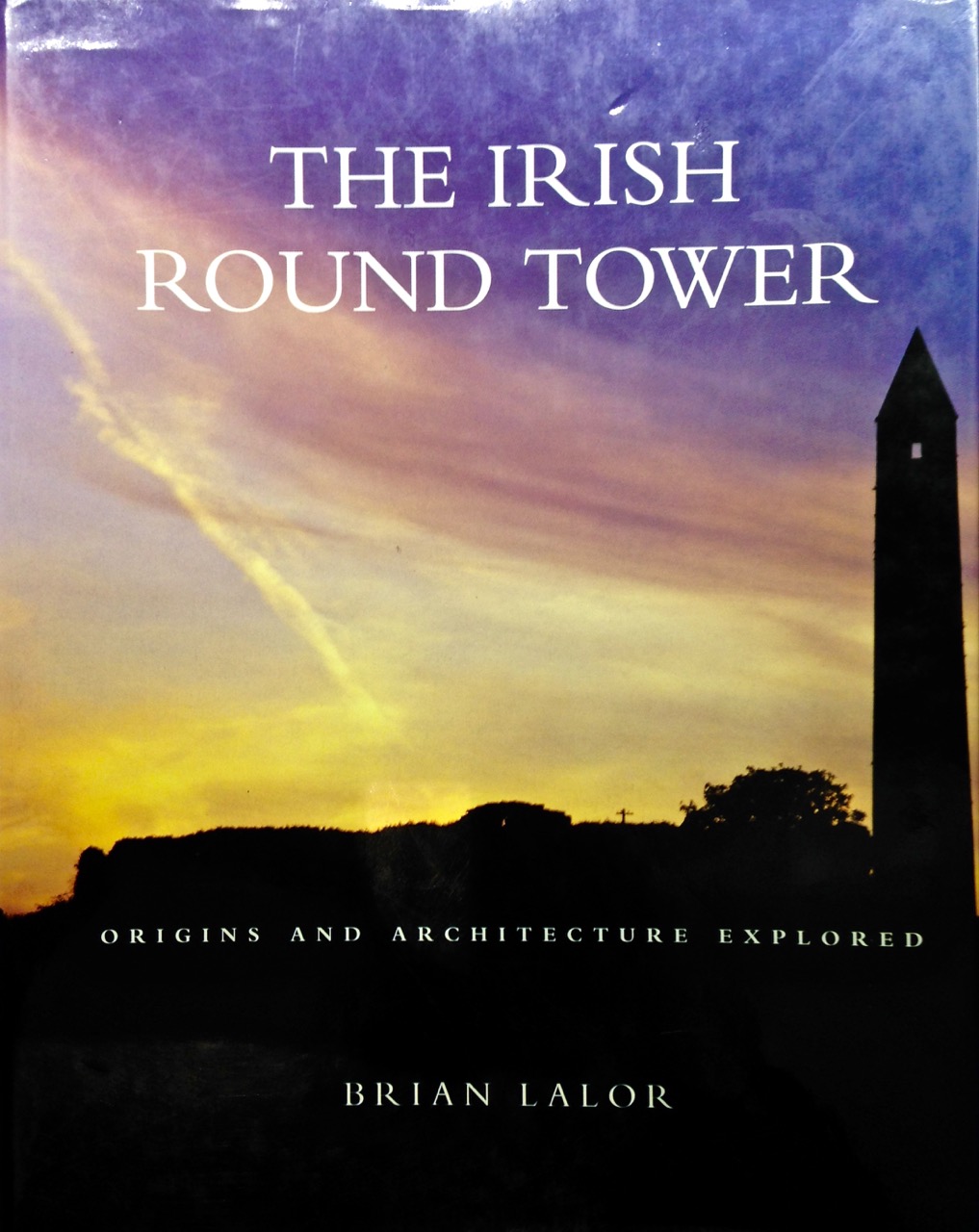
The restricted space also made us question some of the theories about the uses of these towers, which are always located at ecclesiastical sites. The definitive work on them is, as it happens, written by someone who also lives in West Cork – just a little distance from Nead an Iolair: Brian Lalor. Brian has led a very full life, involving architecture, archaeology, sketching and printing (his etchings are exquisite). He is also the author of a number of books, many of which are on our own shelves, including The Irish Round Tower, published by The Collins Press, 1999 and 2005.

lalor

Brian is unequivocal in his assertion that the primary purpose for round towers was to house the monastery bell. He also suggests that a secondary function would be as a safe storage place for the monastic treasures: the entrance door was always raised at a considerable height above the surrounding ground level, requiring steps or a ladder to gain access. In the times when they were constructed they would have been visually impressive – and could be seen from a great distance. They would have acted as signposts for travellers who might have been searching for the hospitality which monastic communities always offered. Brian discounts some of the more bizarre theories for the towers – for example, that they might have been places of safe refuge for the monks if under threat of attack by Vikings – or that they are simply phallic symbols! Lastly, Brian considers – and gives some credence to – the idea that the towers were monumental buildings of prestige and local aristocratic patronage: certainly, they required considerable expense and effort to construct.

centre entrance

As is often the case with our days out, one adventure led on to another. When we came down from the tower we found that St Brigid’s Cathedral had closed for lunch. But we knew that the Saint’s trail also involved a Holy Well and we had heard that there was a new building devoted to the work of Brigid just outside Kildare.

Solas Brhíde Centre

Solas Brhíde Centre

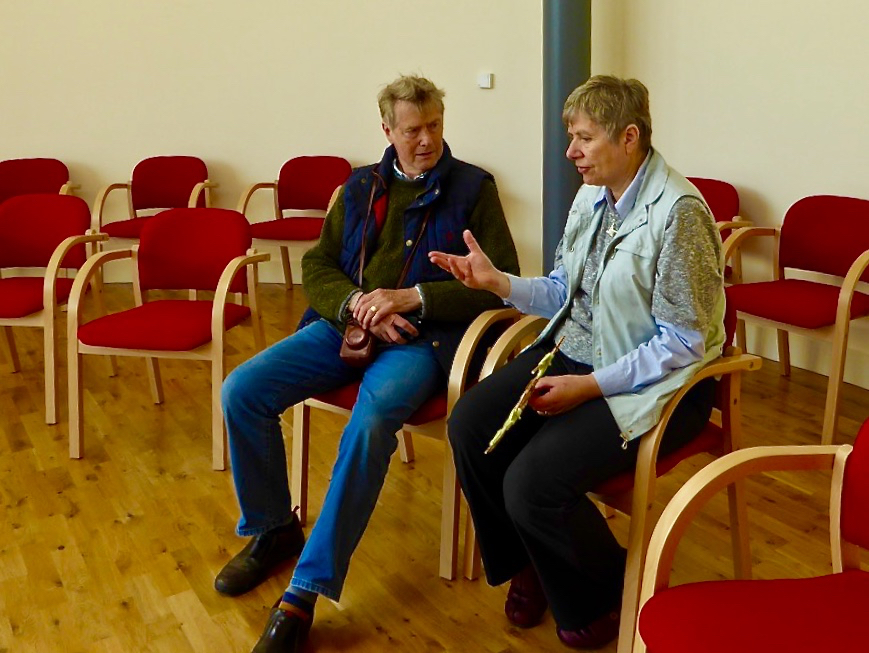
Robert with Phil, one of the Sisters who conceived the project

Robert with Phil, one of the Sisters who conceived the project

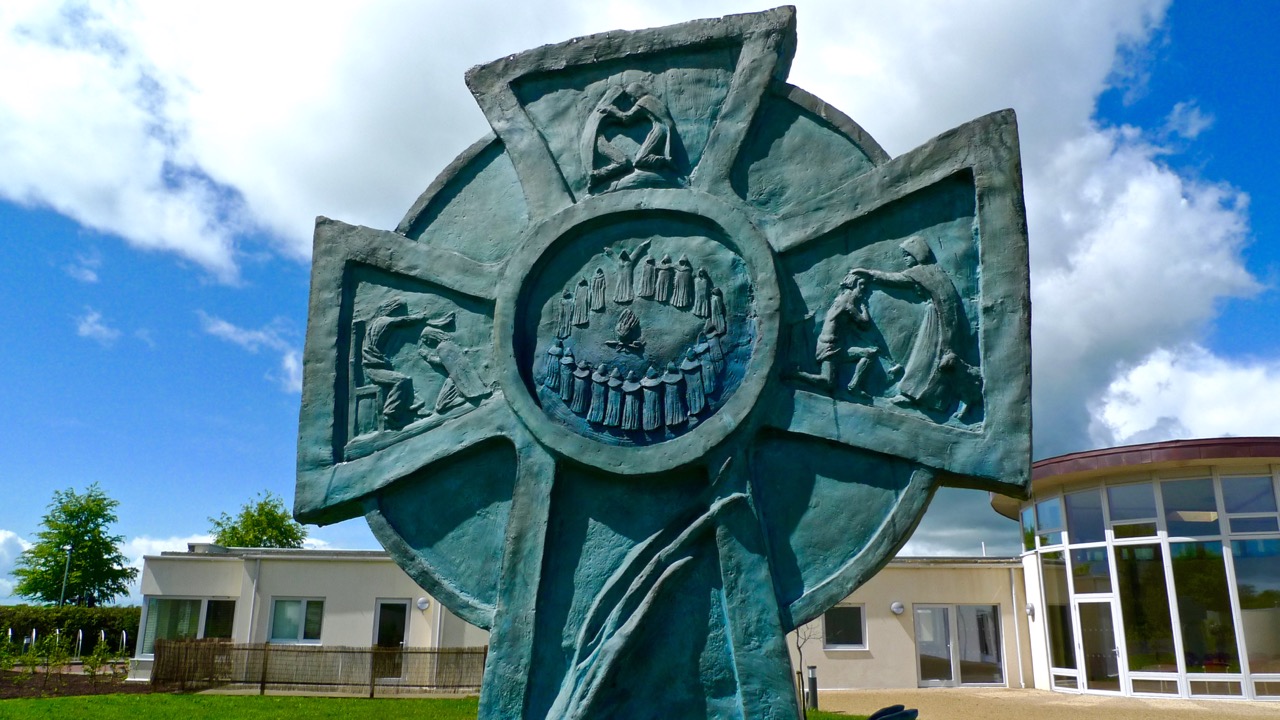
We were very impressed with the Solas Bhríde Centre: a small group of Brigidine Sisters has put together the project to build a Christian Spirituality Centre which unfolds the legacy of St Brigid and shows that it is still relevant in the present day. We were shown around the Centre by one of these Sisters, Phil, who pointed out that Brigid was attuned to the natural world and would have appreciated that the new building (designed by Solearth Ecological Architecture) is conceived on ecologically sound terms using sustainable materials and techniques which care for the wellbeing of the Earth. The plan of the building is appropriately inspired by the shape of a St Brigid’s Cross.

Architect's drawing of the newly completed building

Architect’s drawing of the newly completed building

The next stop on our itinerary was the nearby Holy Well – a popular place of pilgrimage and veneration on St Brigid’s Day:

Finally, we arrived back at the Cathedral. I’m always a little disappointed by restorations – particularly those which were carried out in Victorian times; nevertheless there are some impressive features. The possibly twelfth century font is one of them (below left), and another has to be the hidden Sheelagh-na-gig under the lip of Bishop Wellesley’s tomb (below right). I reached under to feel this little carving, and was then told by the Cathedral’s guardian that anyone who touches the effigy is ensured everlasting fertility!

The excellent Heritage Centre opposite the Cathedral entrance is informative about the town’s history and the important connections with this special Saint. There is much more to be discovered – and written – in respect of St Brigid, and other places in Ireland which are connected with her still to be visited. Do go to Kildare and, at the very least, suspend your phobias sufficiently to allow you to climb the ancient Round Tower. But make sure you go between May and September – and not during the lunch hour…

tower poster