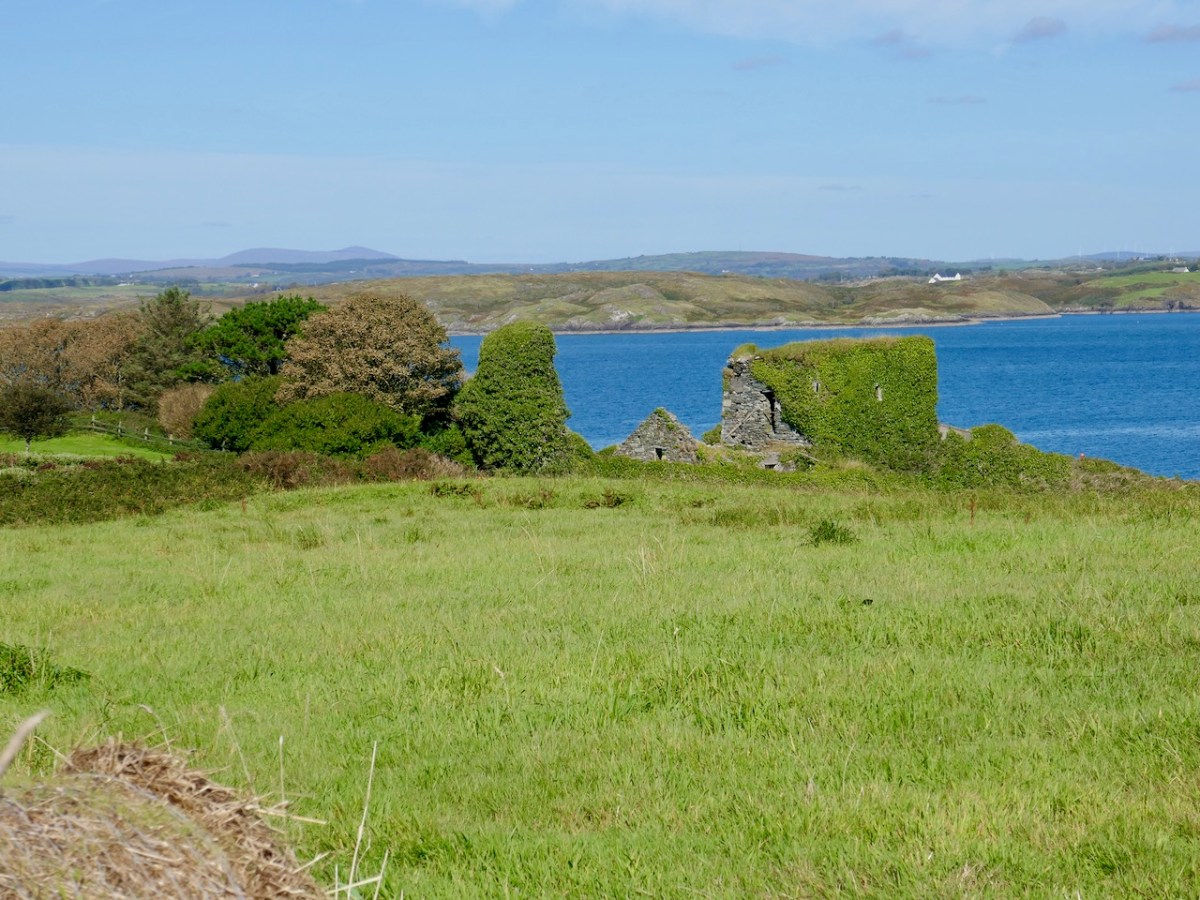
Dún na Long Castle, Sherkin Island

Last week I left you at the threshold of the Castle and Friary on Sherkin, promising to come back to them this week. As I read up about them, though, I realise that each deserves a post of its own, so we are going to look at the Castle first.

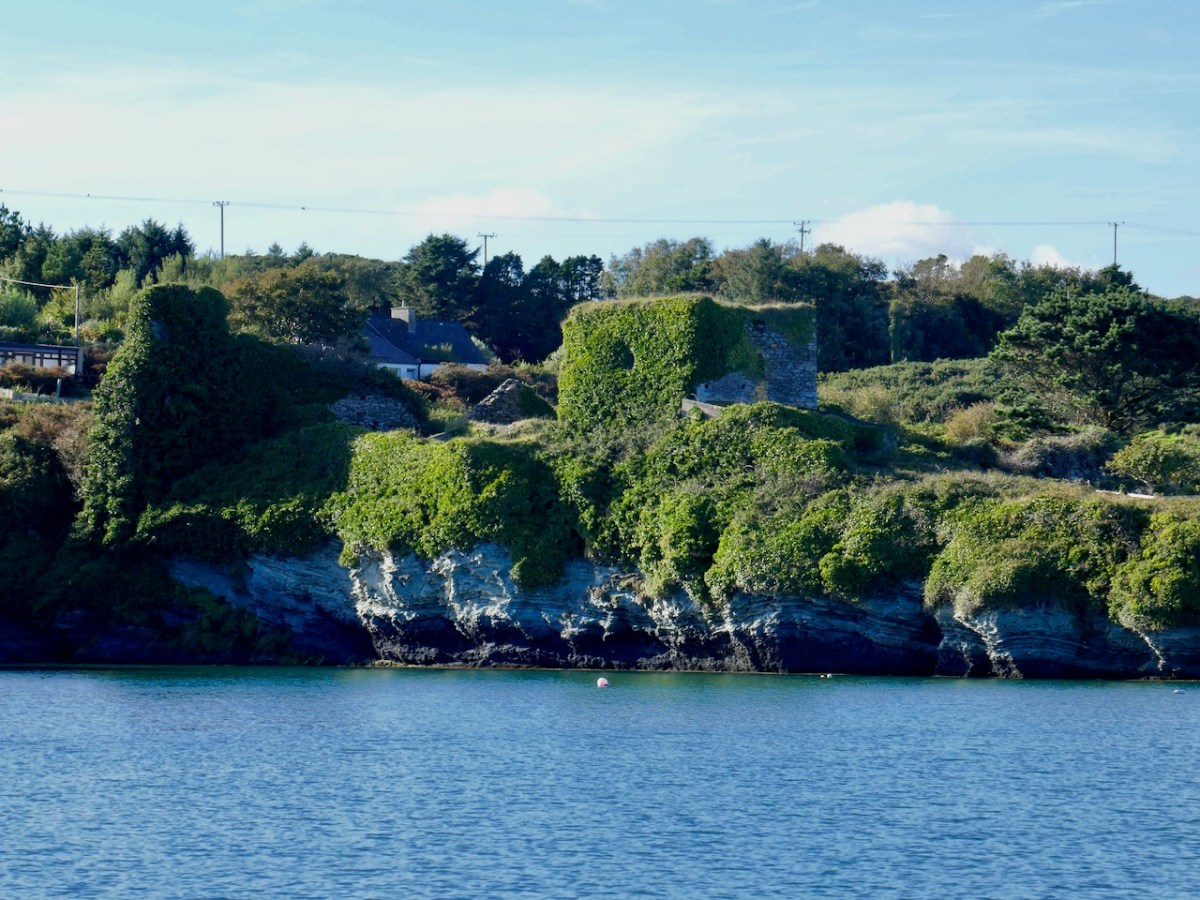
What we see now is a pale shadow of what the castle looked like in the 15th century. The Friary was built in 1460 and the castle, or tower house, around the same time, maybe a few years later.

The builder of both was Florence O’Driscoll, chief of the wealthy and warlike O’Driscoll clan, whose headquarters were in Baltimore. It was one of a series of O’Driscoll Castles, which also included Oldcourt, Rincolisky, Lough Hyne and Ardagh, as well as Dún an Óir on Cape Clear, Dún na nGall on Ringarory Island. If you have not already done so, take a look at my posts on Dún an Óir, the Fort of Gold, on Cape Clear Island – it will give you some background into the operations of the O’Driscolls and their network of Castles. And this page has a list of all my castle posts and browsing them will explain all the terminologies, such as bawn, or raised entry

Like the O’Mahonys to the west of them, the O’Driscolls derived their income from control of the waters of the eastern side of Roaringwater bay – and specifically control of the fisheries. And that income was considerable: enough to build all those castles, to mount a fleet of ships, to import the finest wines from France and Spain, and enough to endow a friary where Franciscans could pray for the souls of Florence and his descendants so they could be assured of safe passage to Heaven.

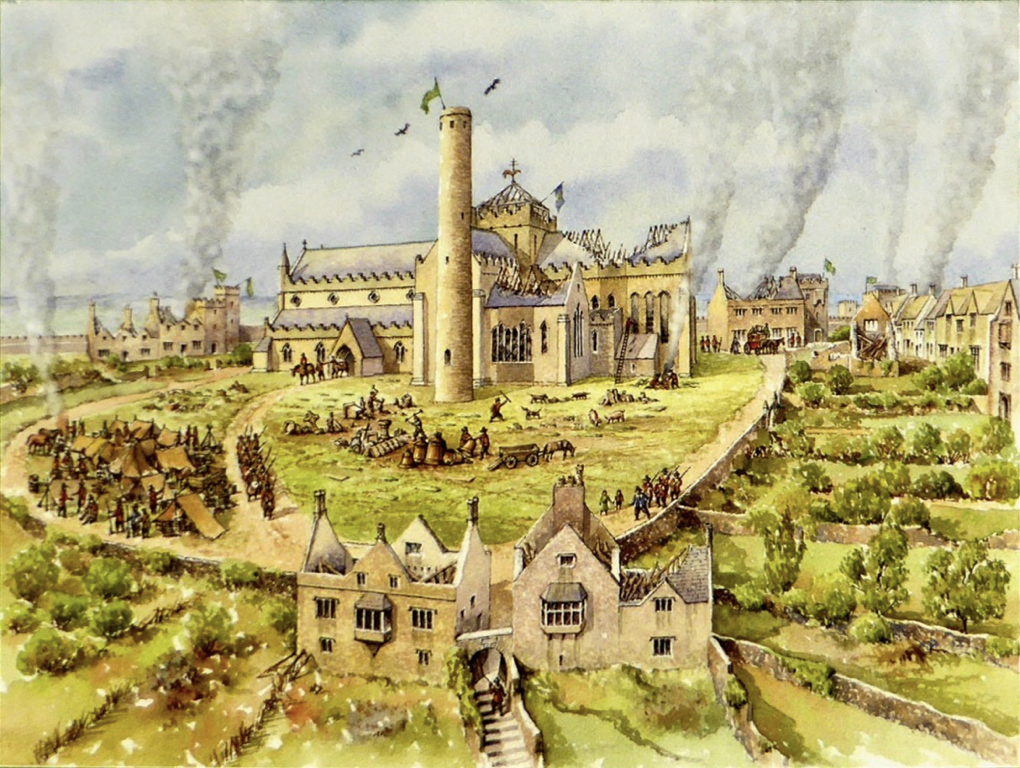
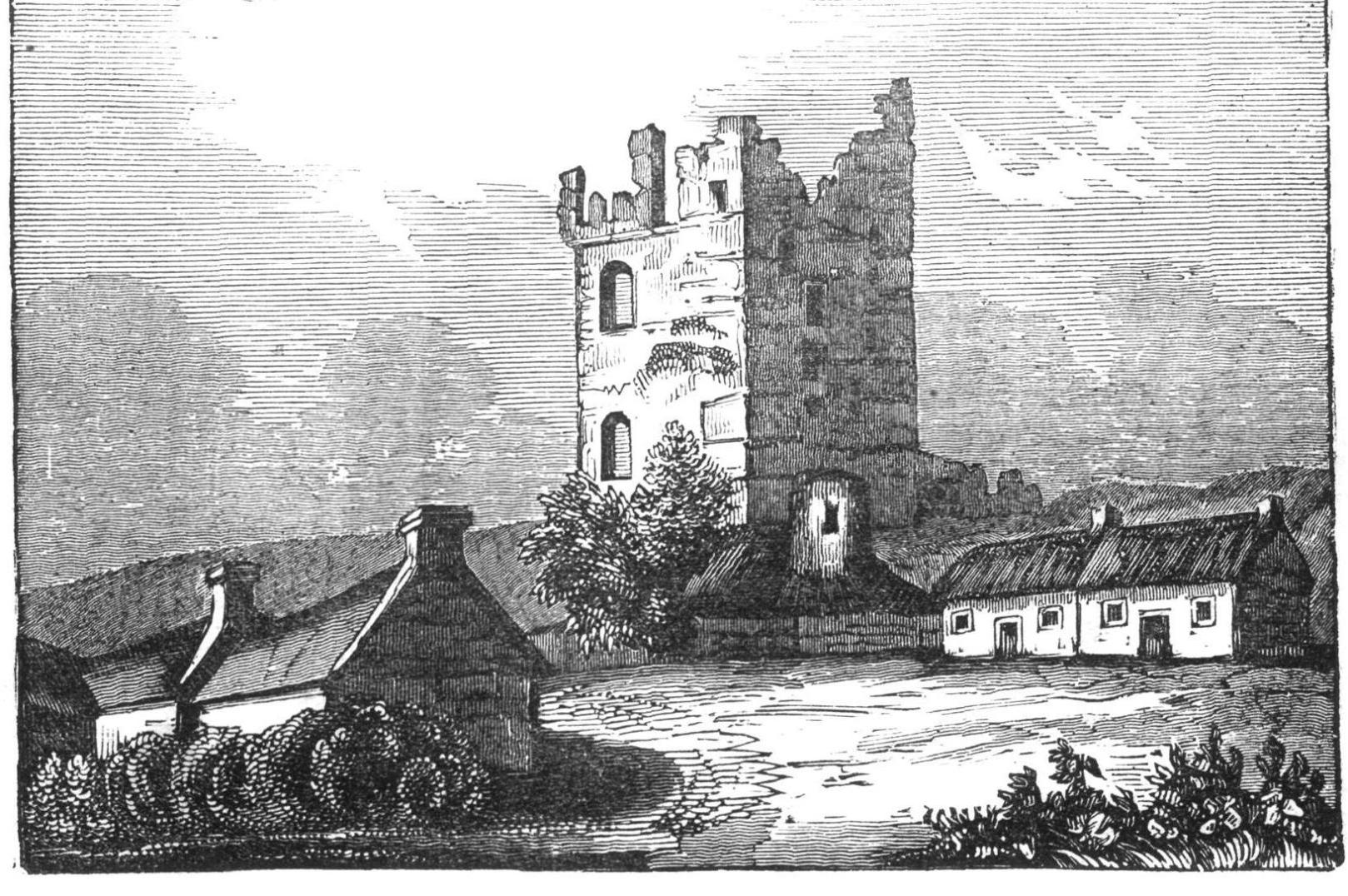
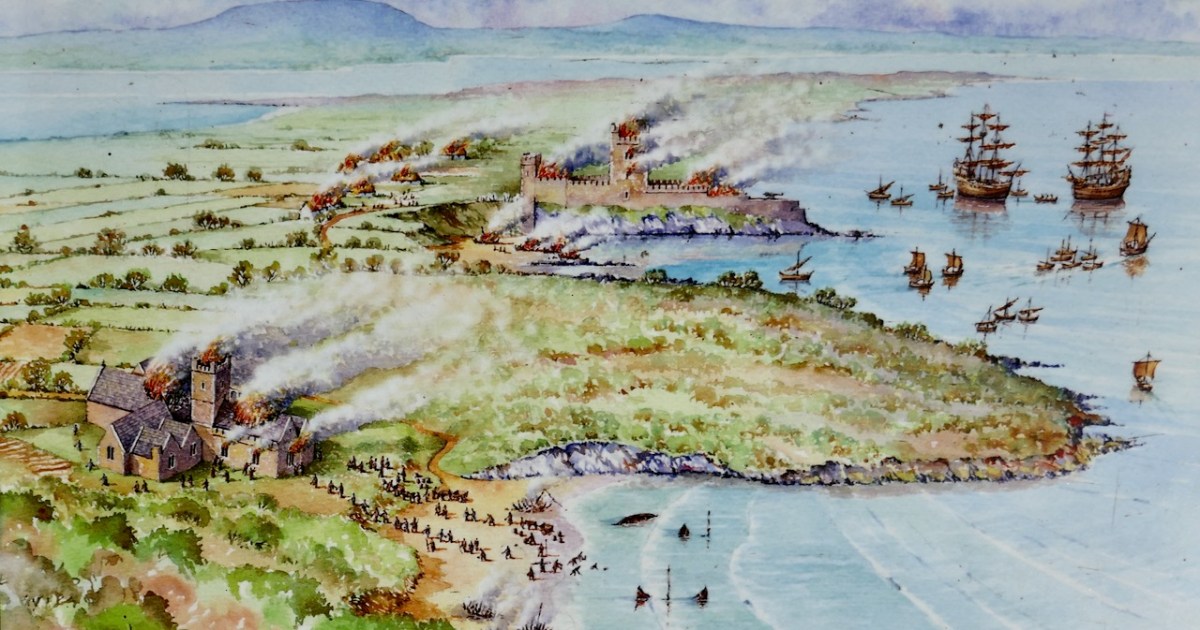
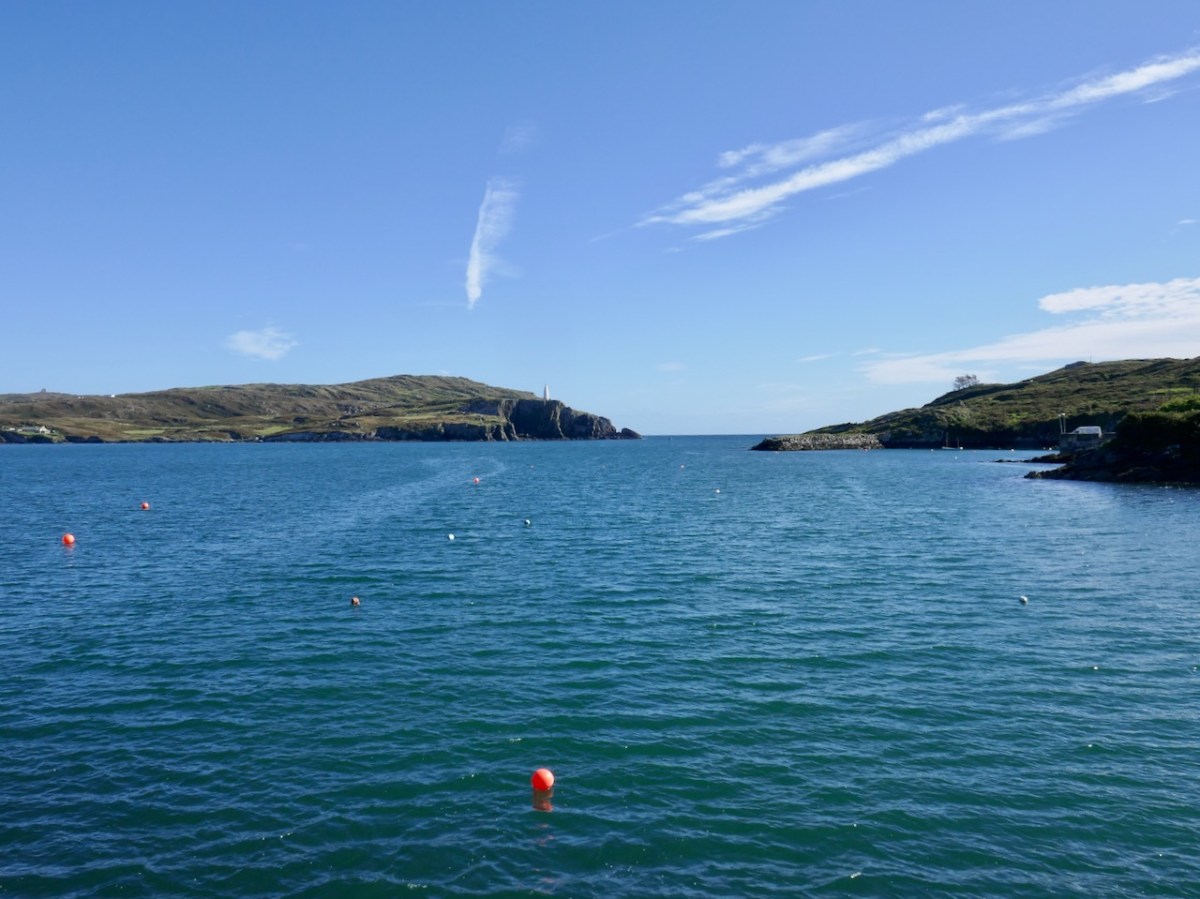
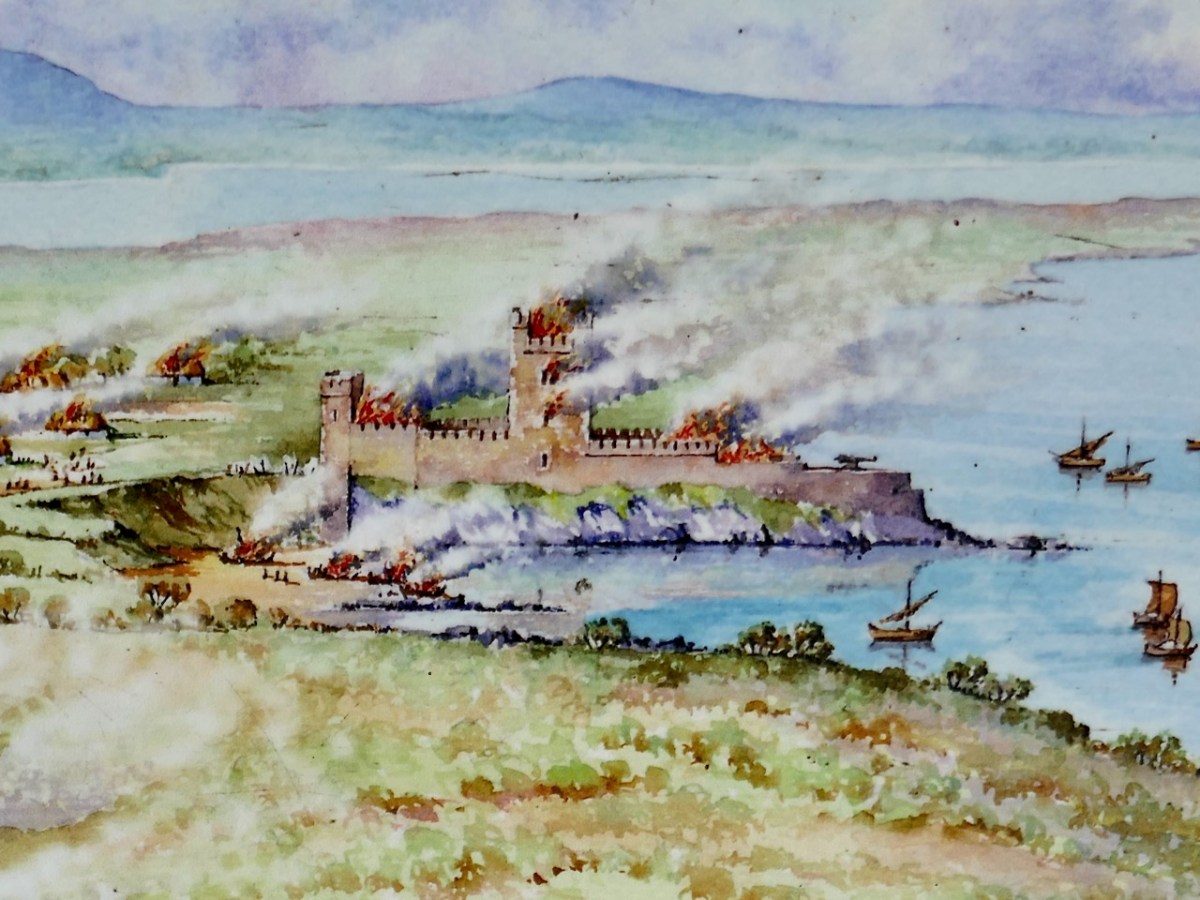
Dún na Long (Fort of the Ships) was strategically sited indeed. It had a good view across to Baltimore but more importantly of the entrance to the inner waters – anything that sailed between Sherkin and the mainland was immediately spotted. It was also very close to the Friary, and could defend it if necessary – although that didn’t quite go according to plan, as can be seen from the top photo, a picture of the Battle of the Wine Barrels that took place in 1537 between the O’Driscolls and a force from Waterford, come to take their revenge on the O’Driscolls for their constant raiding of the cargo ships.

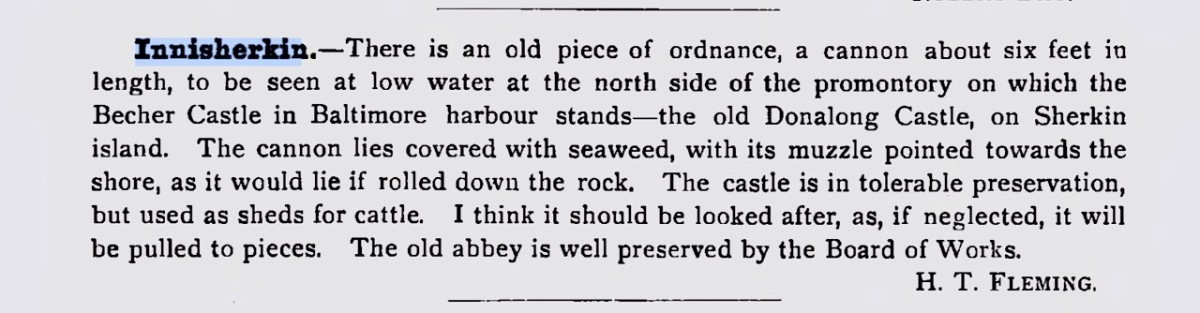
Let’s take a closer look at that drawing to see how the artist represents what Dún na Long looked like originally. Due to the shape of the promontory it occupies a long and narrow space, rather than the square or rectangular area we have come to expect, of a tower house surrounded by a Bawn wall (see Illustrating the Tower House). So the bawn wall is there, but elongated to run the length of the promontory. The tower house itself occupies a central position and there is one corner tower on the landward end. Note that the artist shows a huge cannon on the seaward end of the castle. This would have been unusual for an Irish castle, but there is some evidence for it. In the 1895 Journal of the Cork Historical and Archaeological Society, a  Mr H T Fleming notes this:
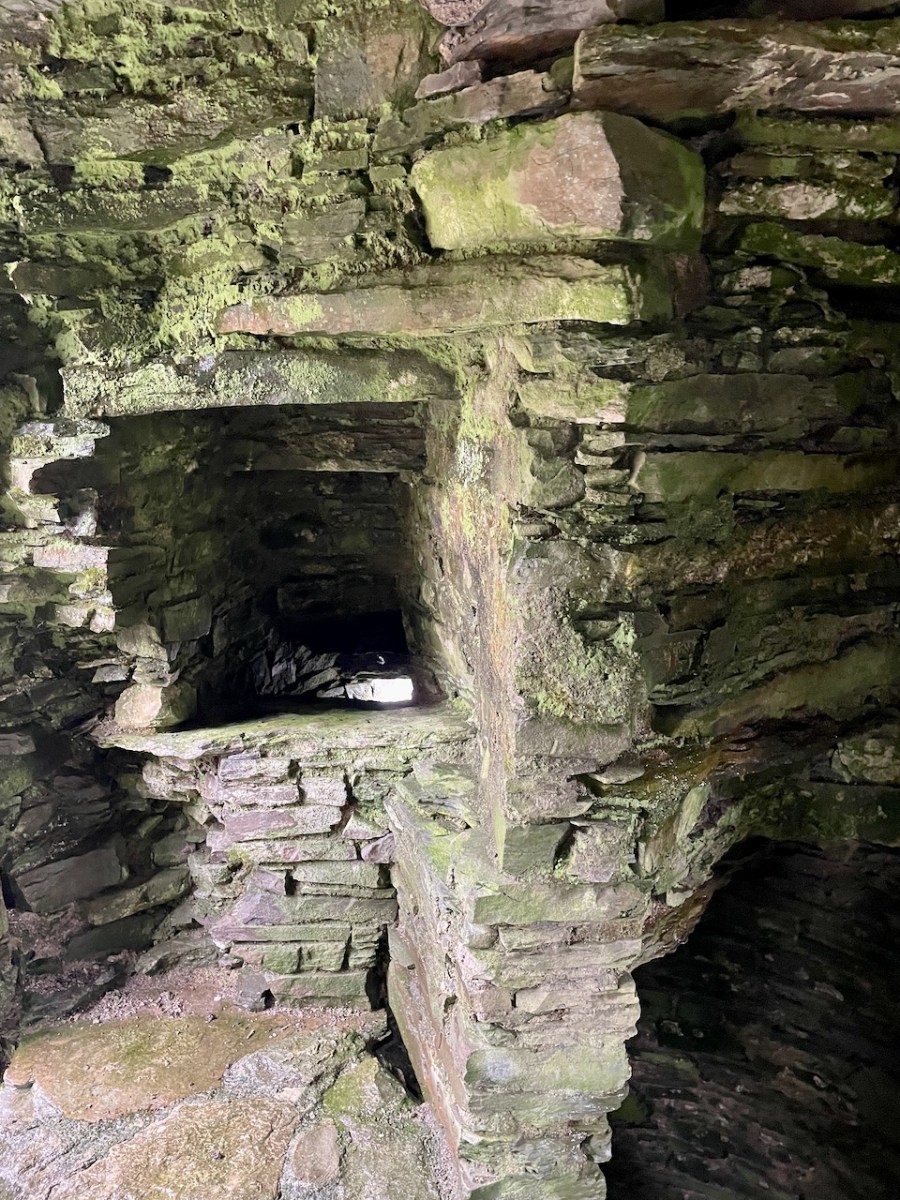
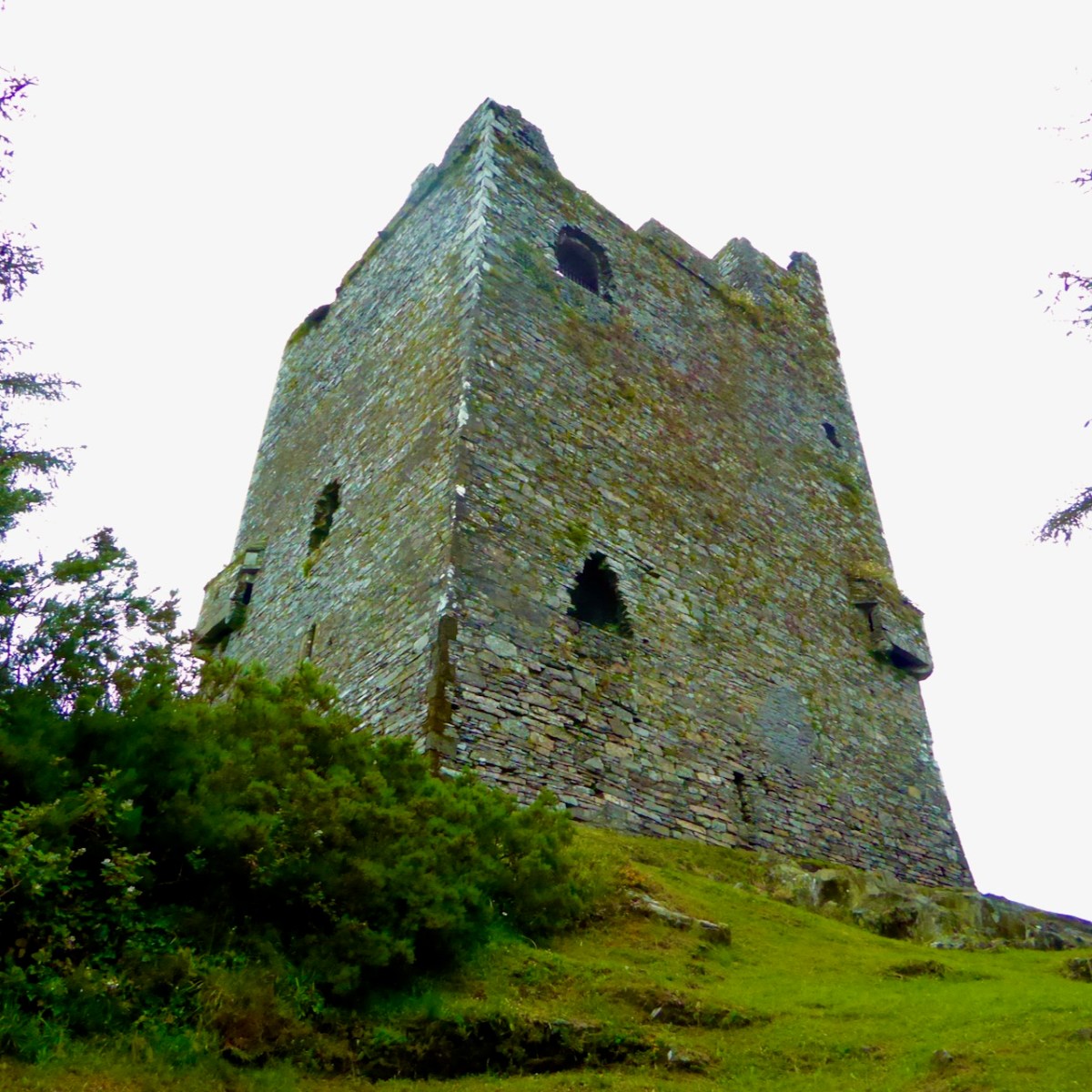
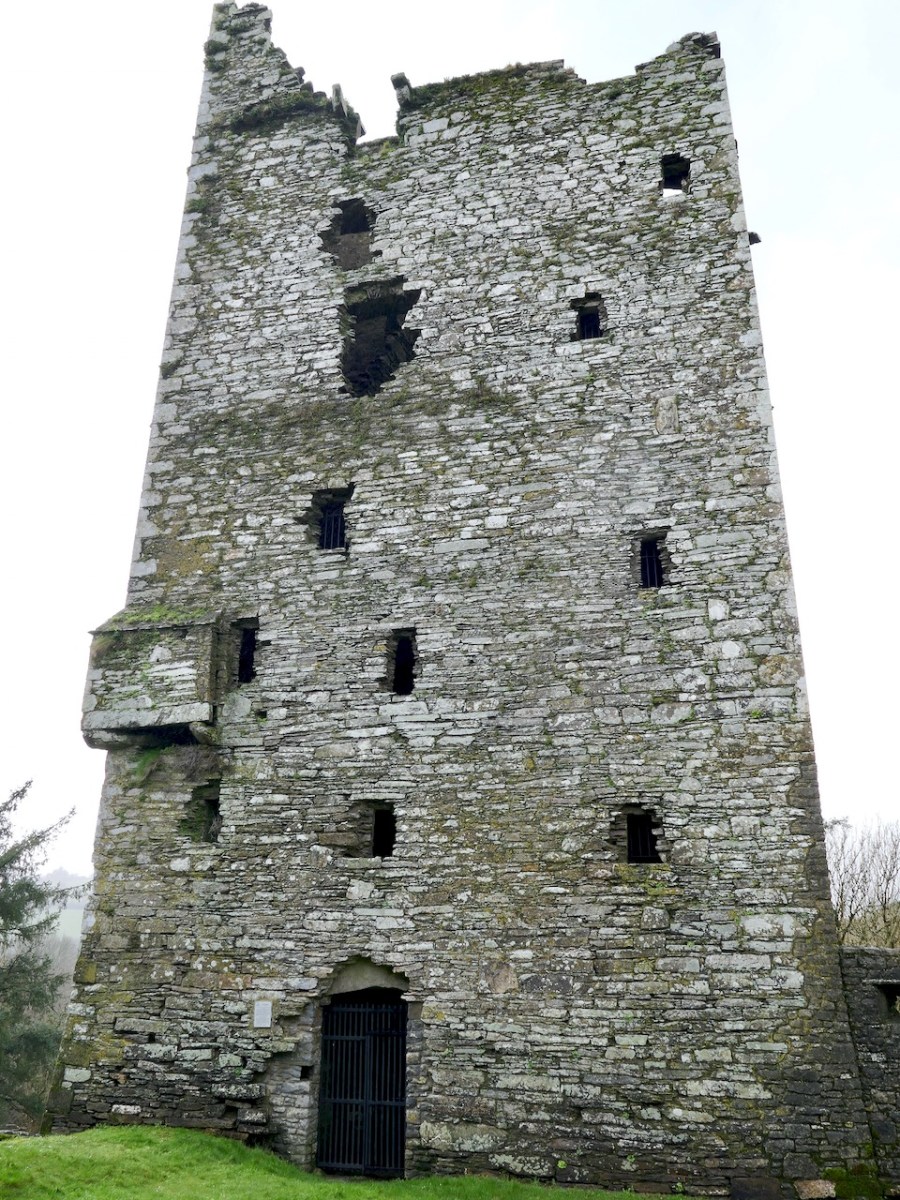
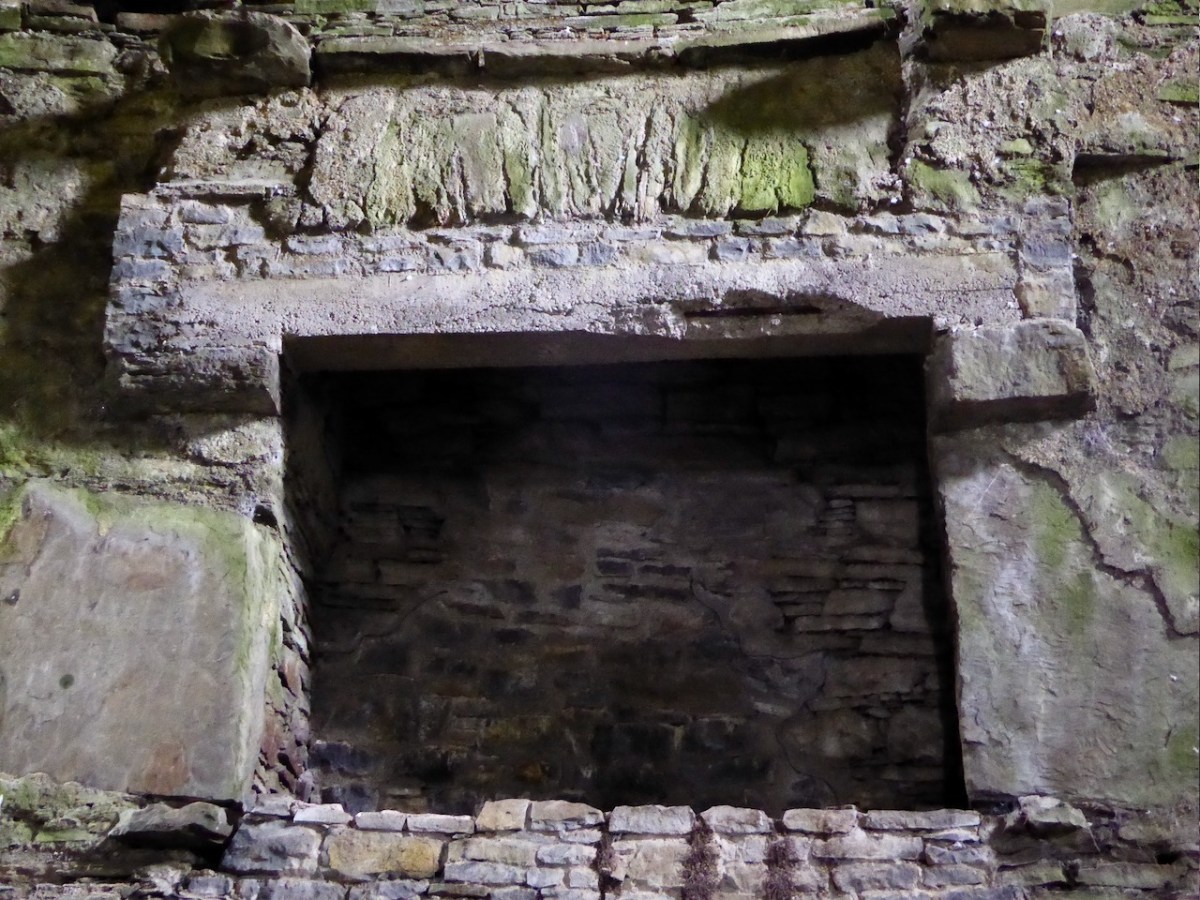
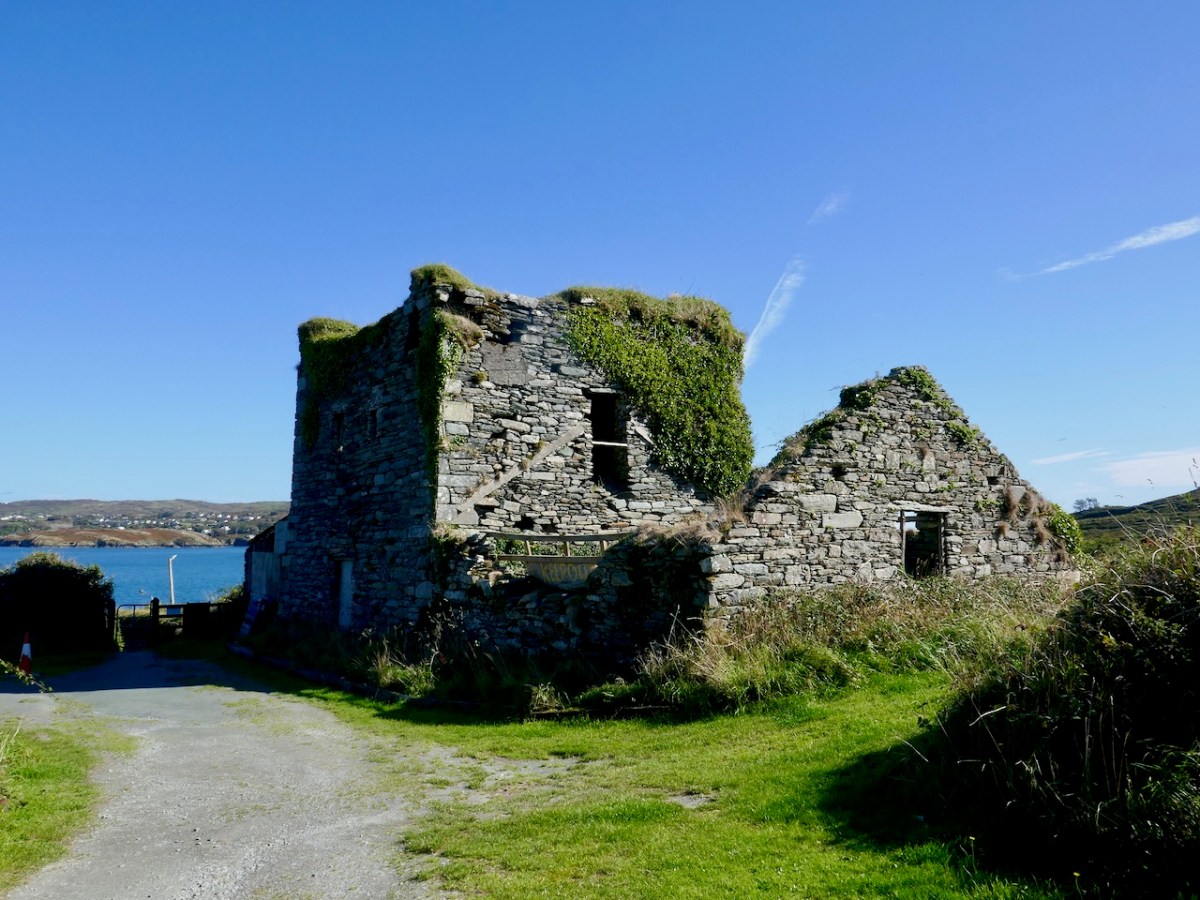
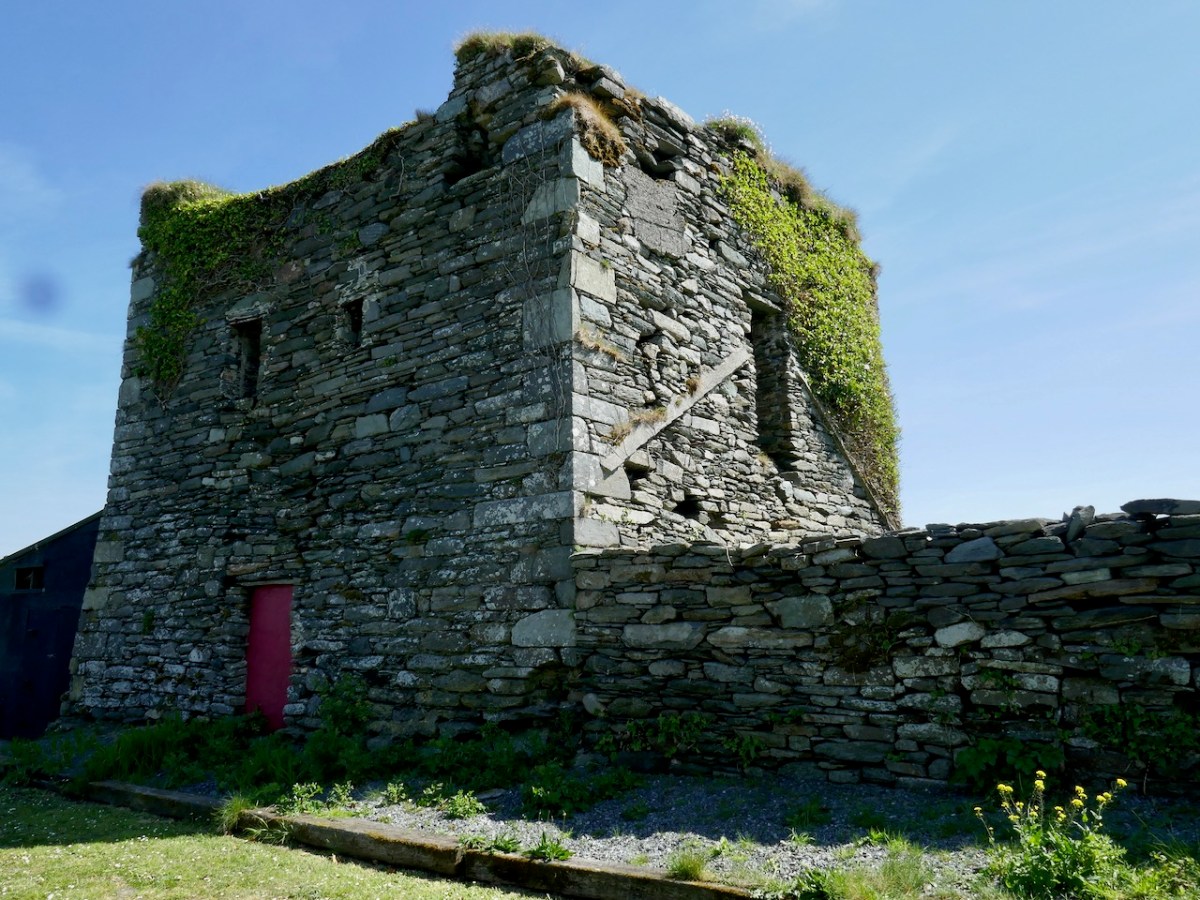
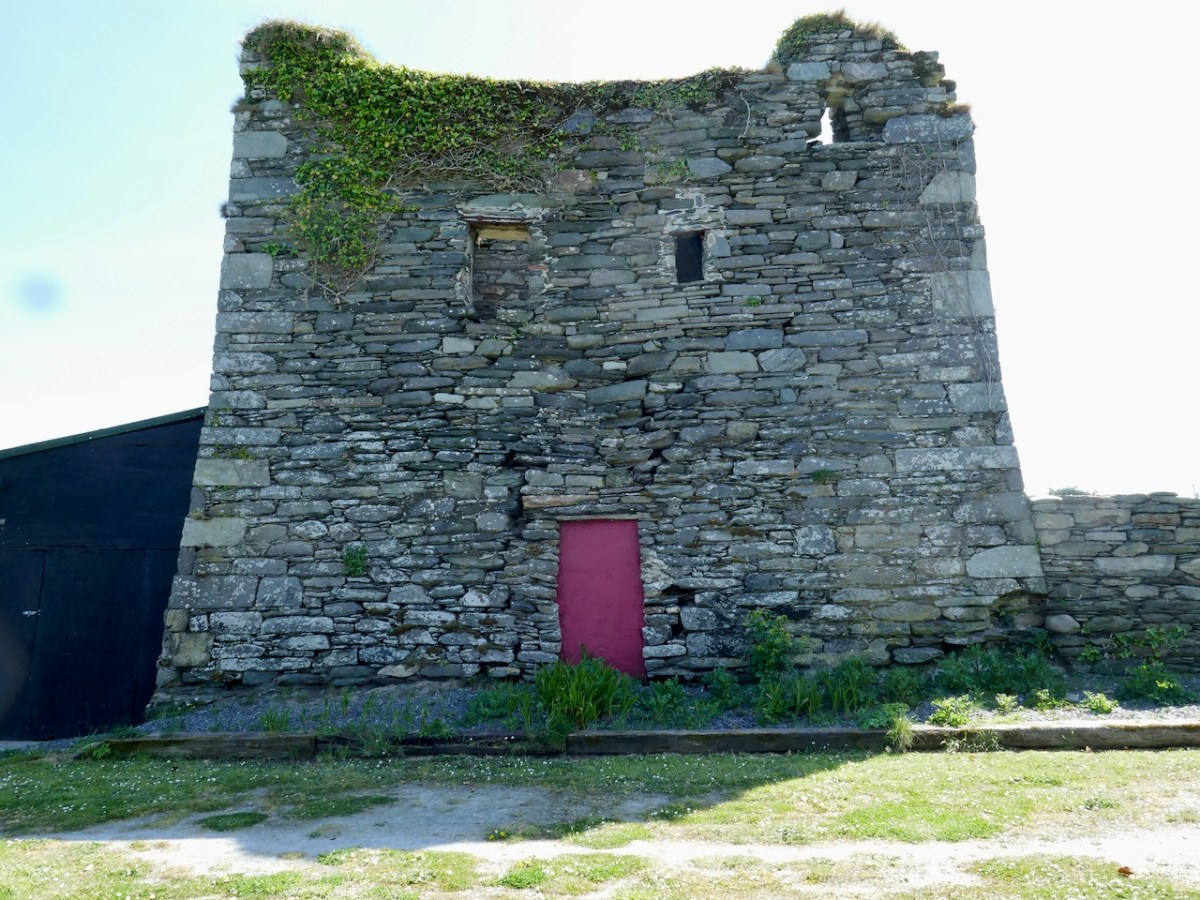
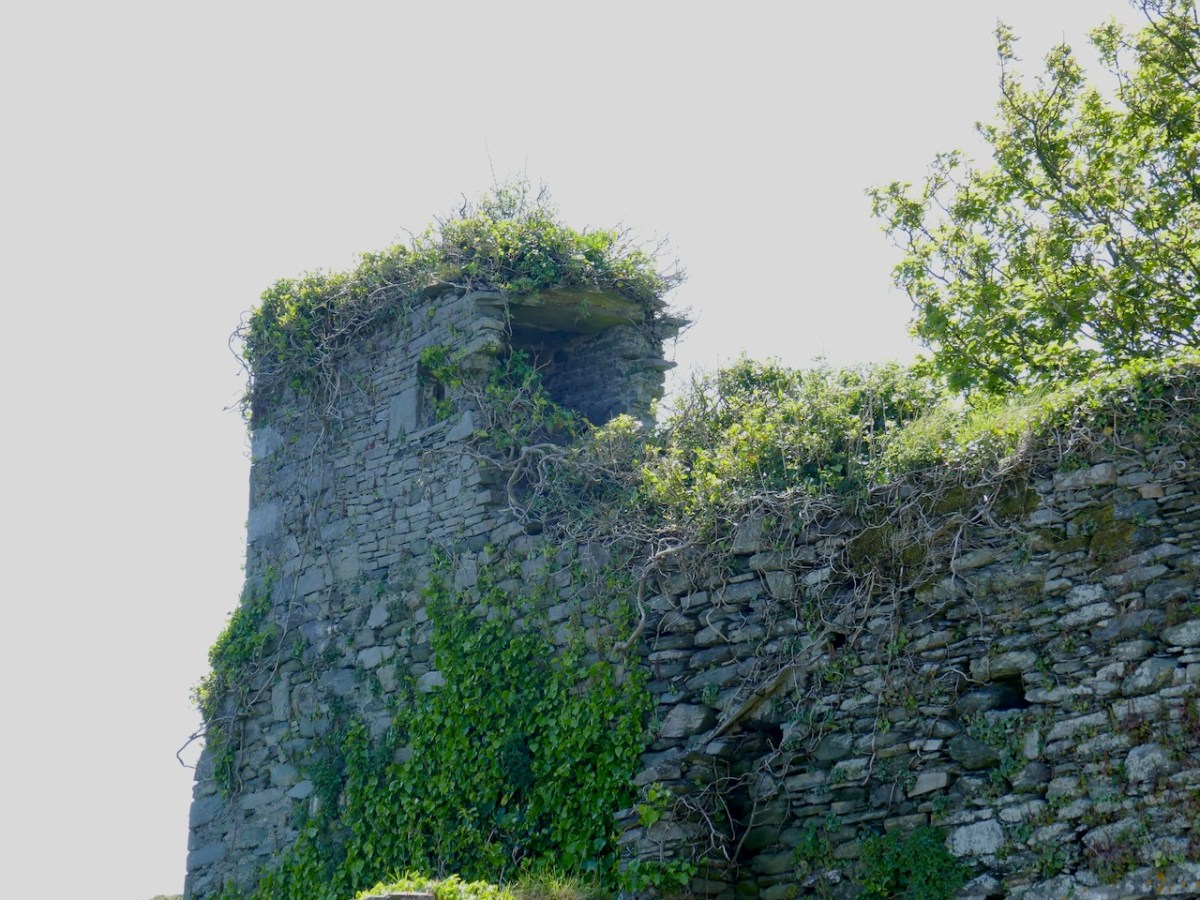
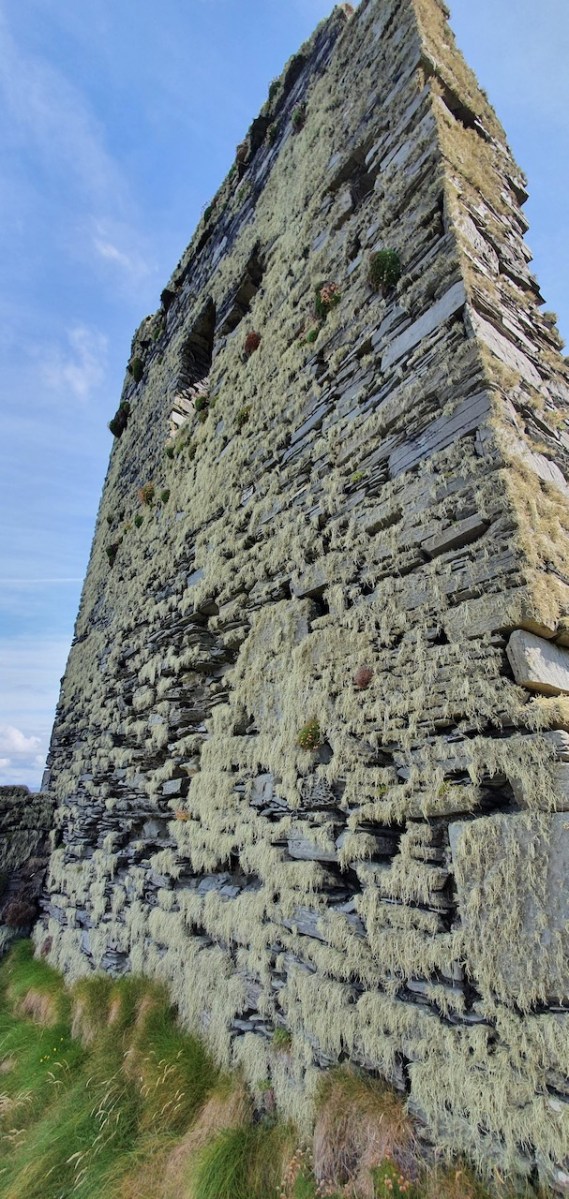
Wandering around the ruins, it is possible to see the remains of what was once there. The central tower now stands to only two stories. There is an entrance on the ground level, but this is an enlargement of what was originally a window ope. The actual raised entry was in the west wall – you can see it in the photograph below, although it has been much altered. It probably looked like the ground floor and raised entry configuration at Dunmanus Castle.

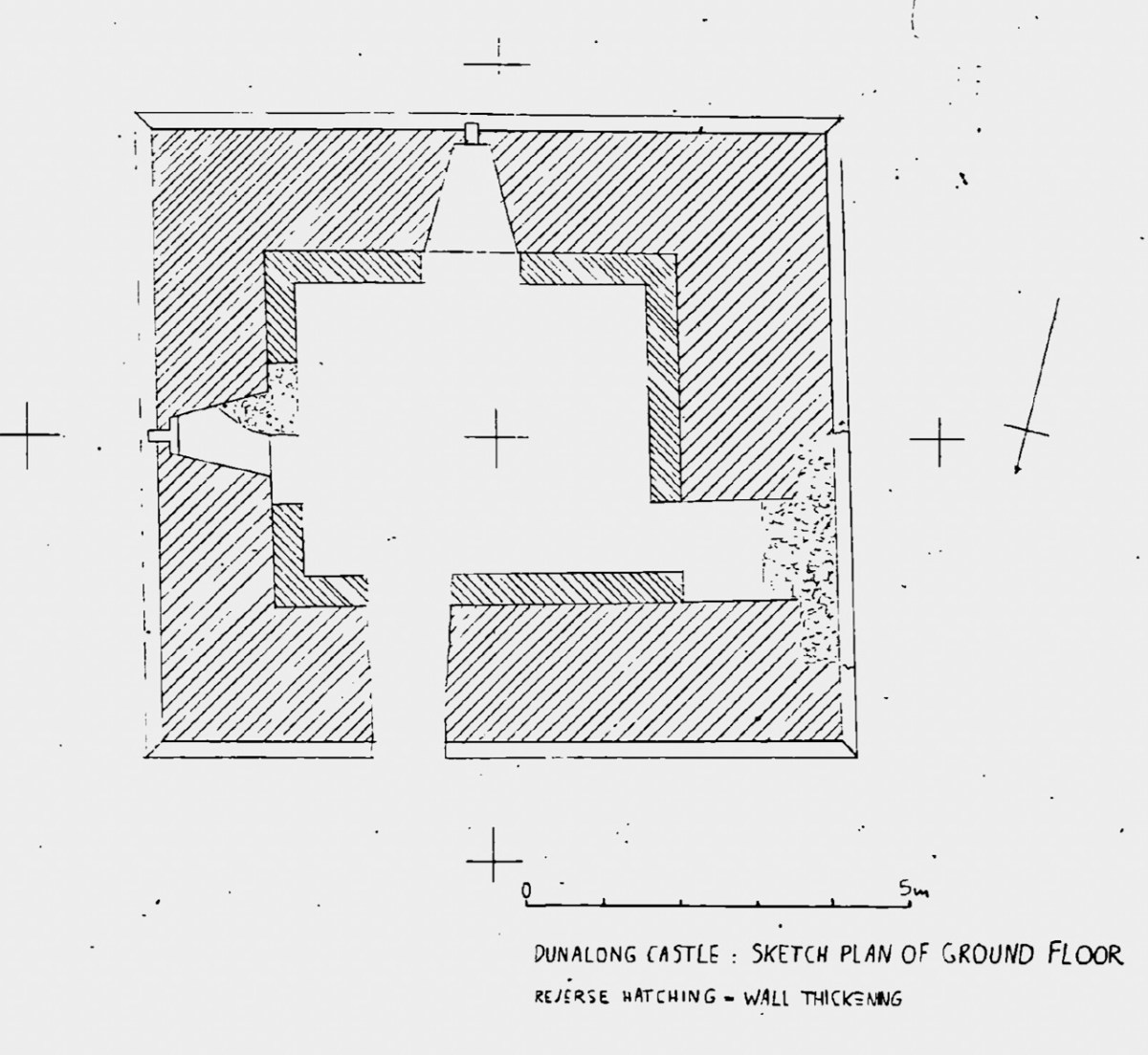
There is a pronounced base batter, Samuels, in his Tower Houses of West Cork, provides a sketch plan which shows how impressively thick the walls are. 

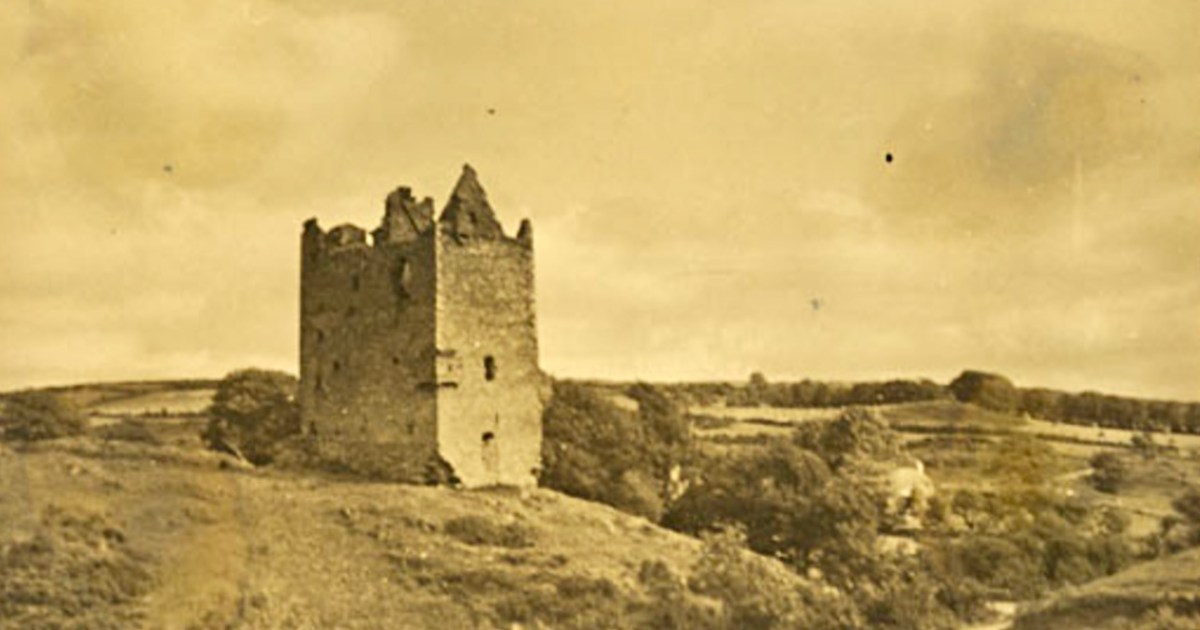
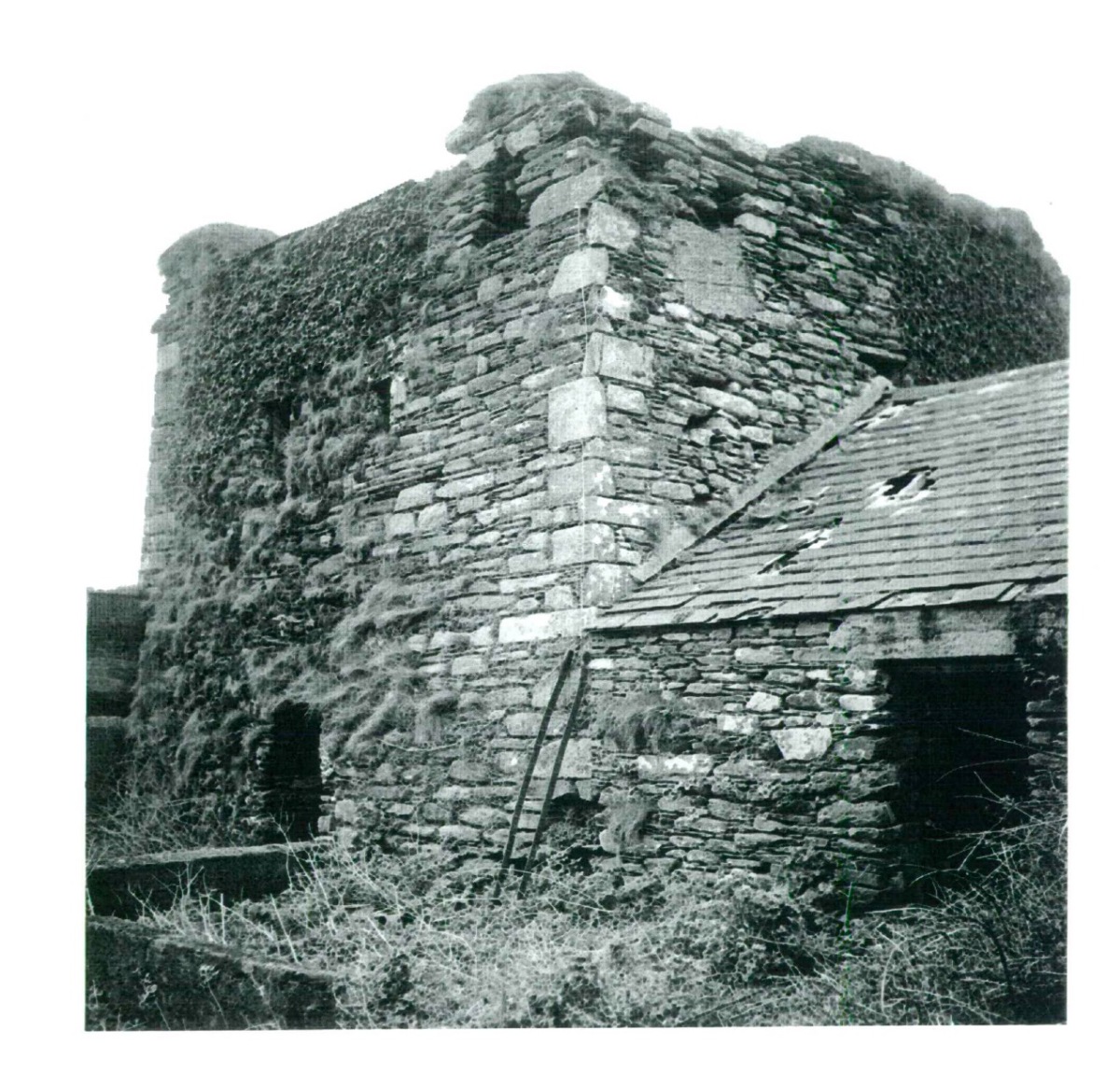
When he was doing his field work, in the 90s, there was still a roof on the pig shed built onto the west wall and he provides this photograph of how the central tower looked at that time.

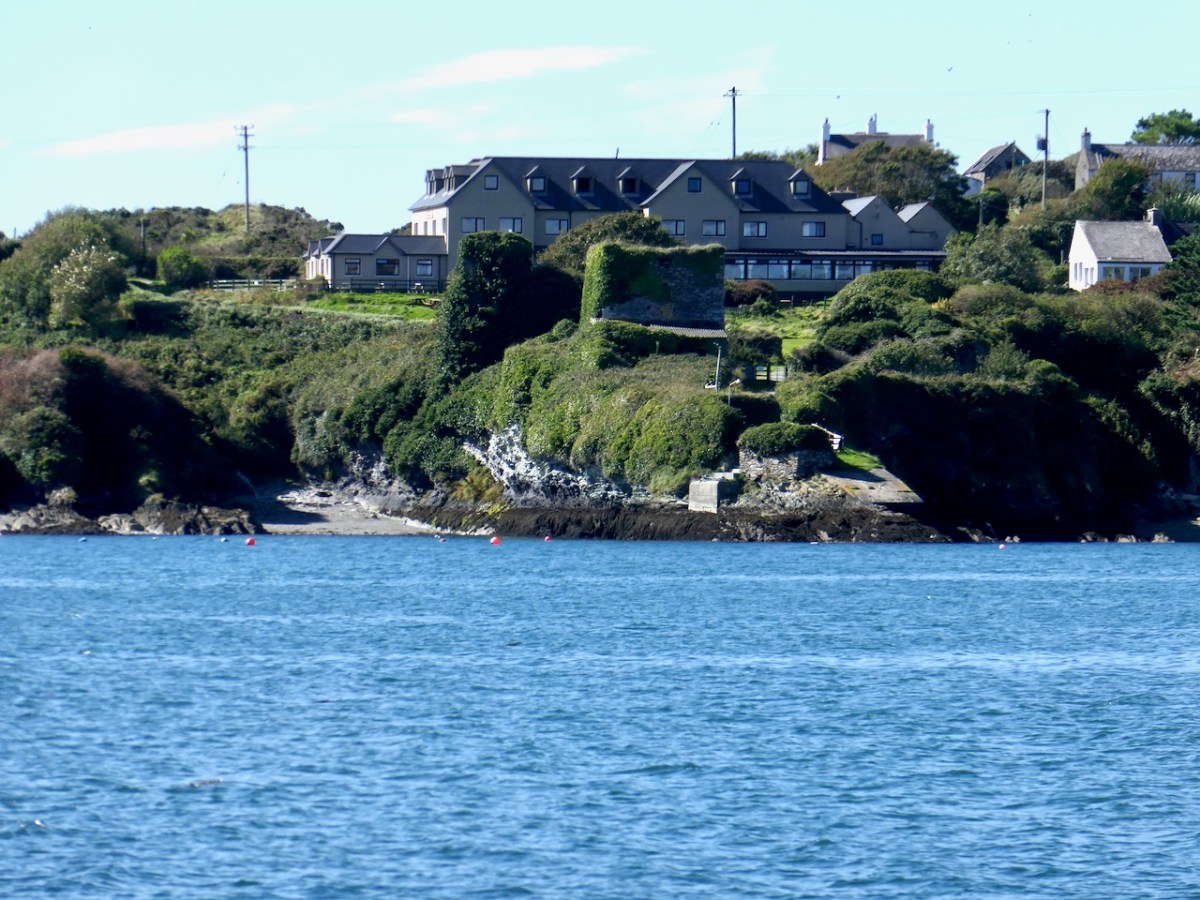
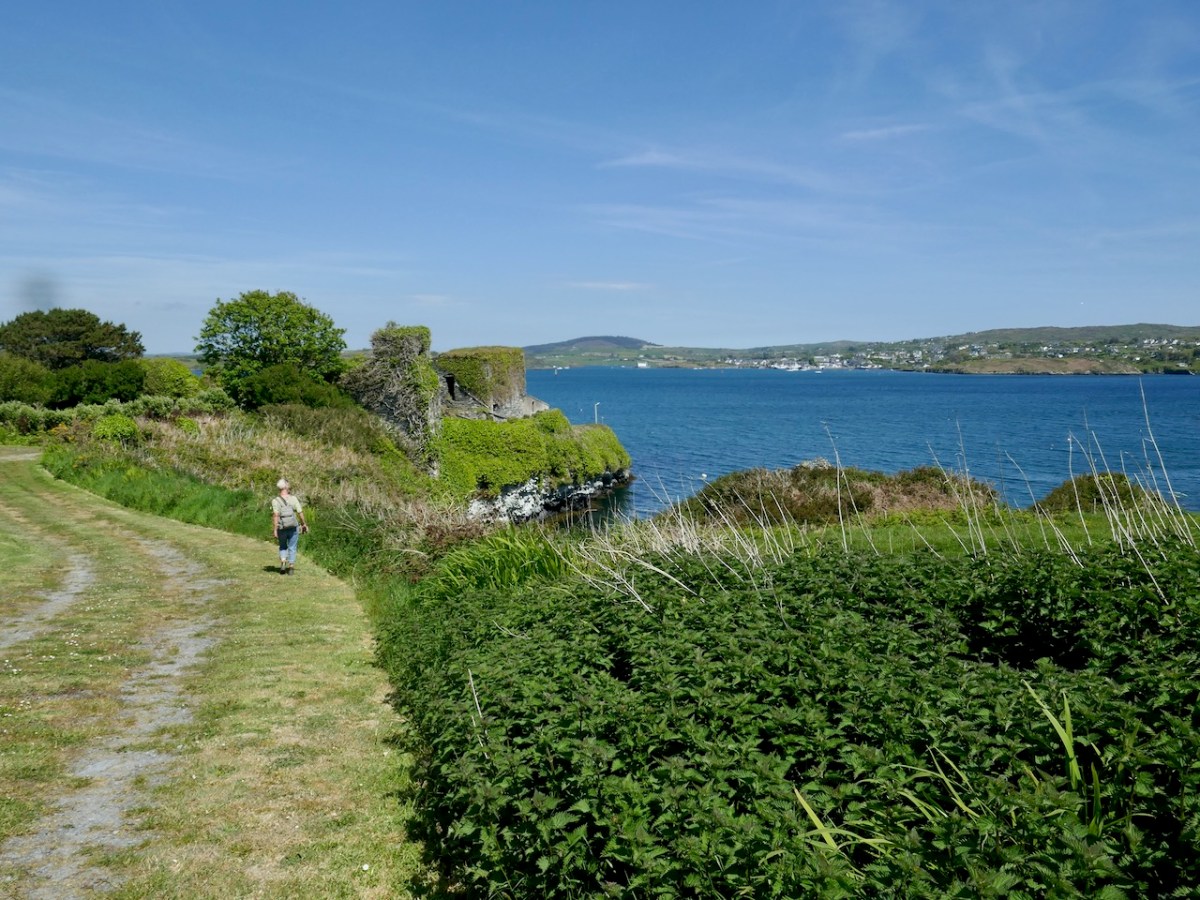
The small corner tower can be clearly seen in the photo below as Amanda is wandering down to the castle. 

That tower occupies the corner position on the bawn where the wall that runs along the landward side meets the wall that runs along the sea, closest to the Friary.

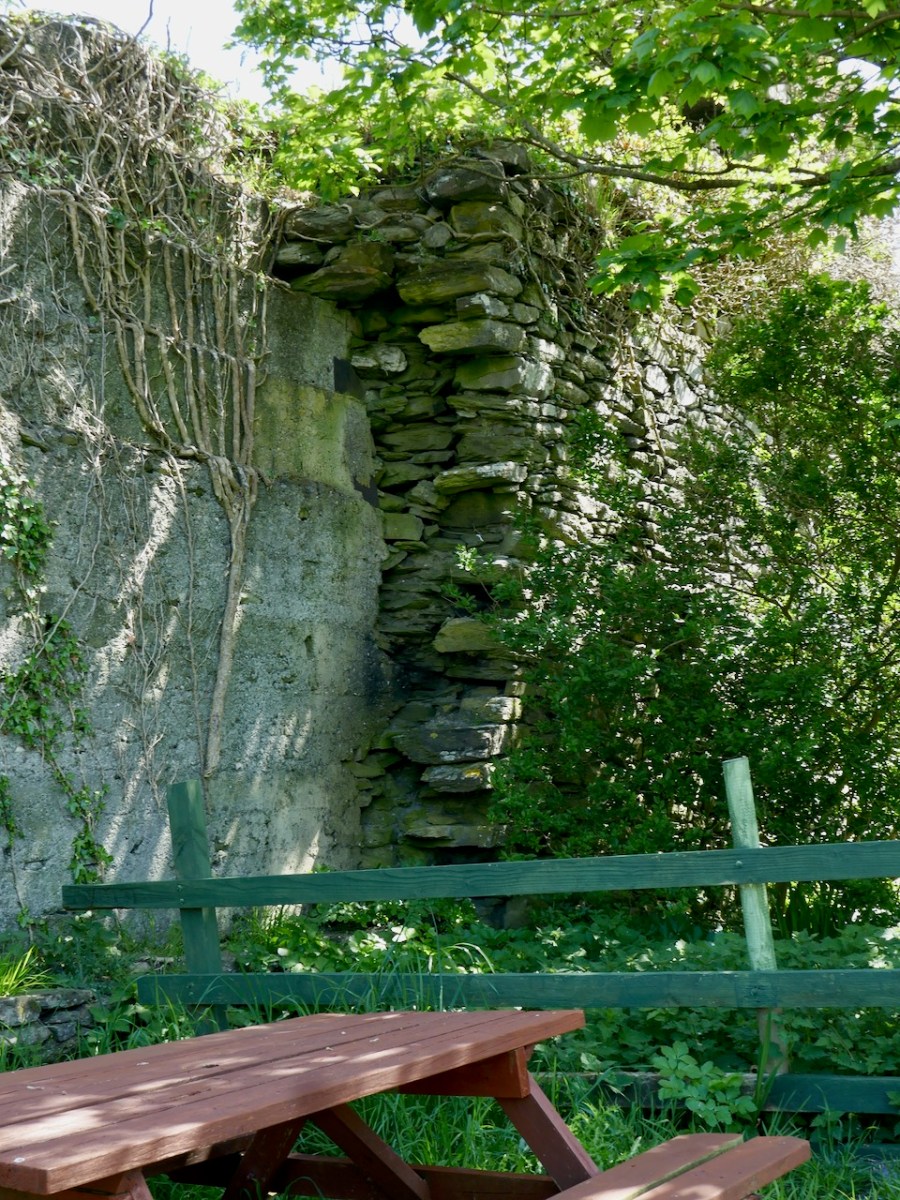
In the sketch, you can see the Waterford force has made its way onto the land and is firing at the castle from that side. What is left of this wall has been extended using modern concrete block.

After the battle of Kinsale in 1601, the current clan chief, another Finghín, handed over the castle to the Spaniards, who in turn surrendered it to the English under Captain Harvey. Since that time it has led an anonymous and ignominious existence as a cattle or pig shed.

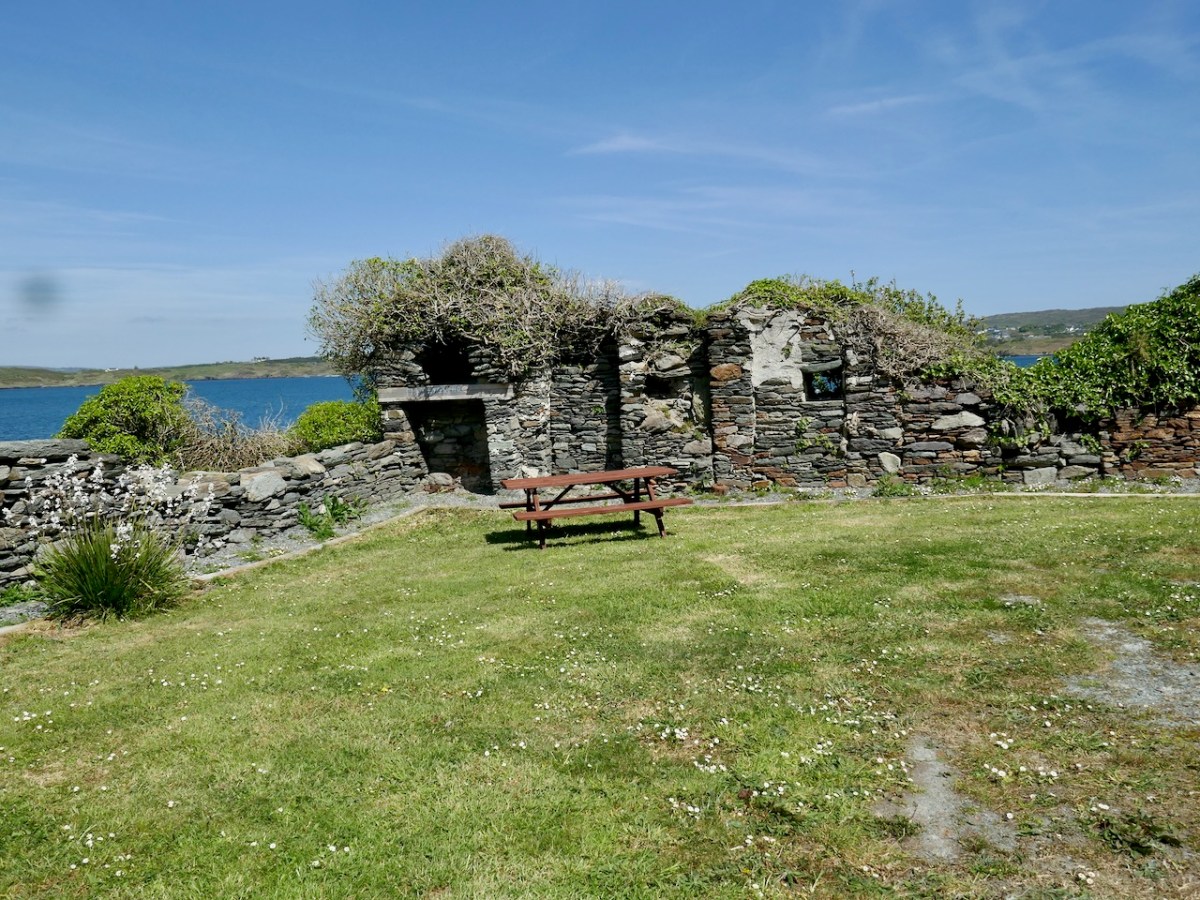
Nowadays, the site is much tidier than when I have visited in the past. A picnic table provides a pleasant spot to look out over the sea and think about what life was like in this castle in the 15th and 16th centuries. 

Fort of Gold 2: The Castle

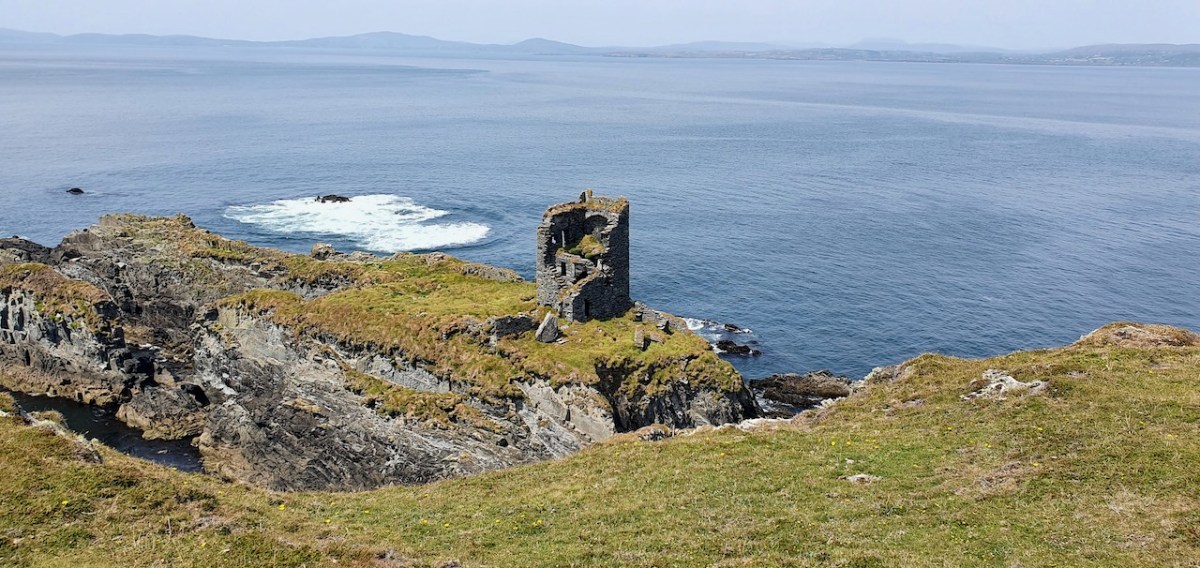
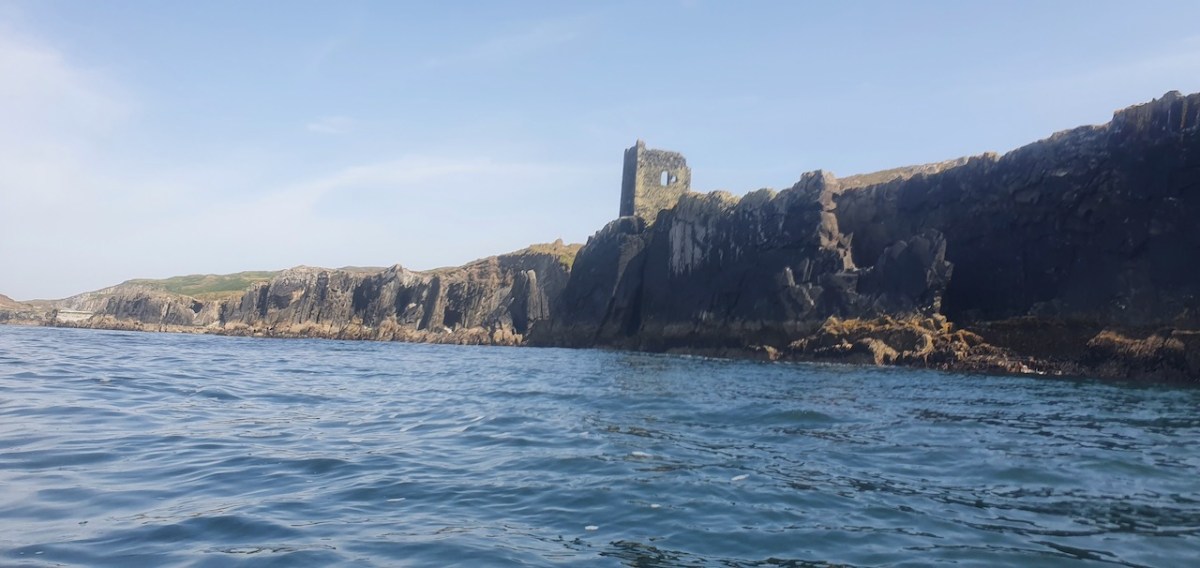
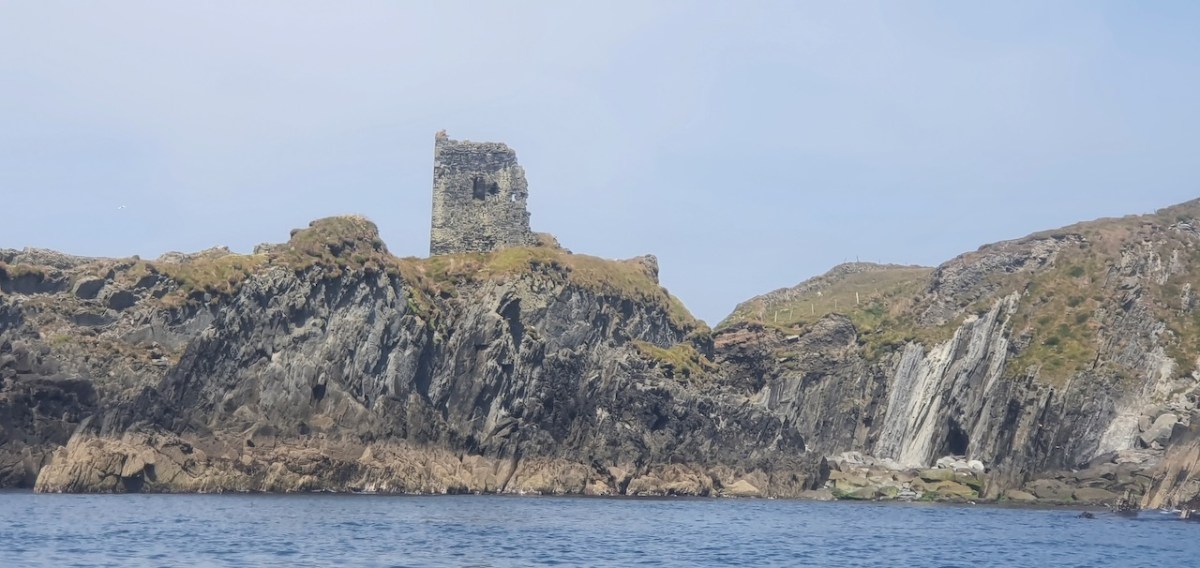
This post will be about the castle itself, as a follow-up to Part 1 about the promontory and historical background. I received some very interesting comments on the name, Dún an Óir, which I interpret as Fort of Gold, and I will write more about that at the end of this post. If you are not familiar with castle architecture, before you start, you might want to browse my castles page and pay attention to how they were built and what the castles of Ivaha generally looked like. Unless otherwise identified, all the photographs in this post were kindly sent to me by Tash, one of our readers. In this one, taken from the sea, the impregnable siting of the castle can be appreciated.

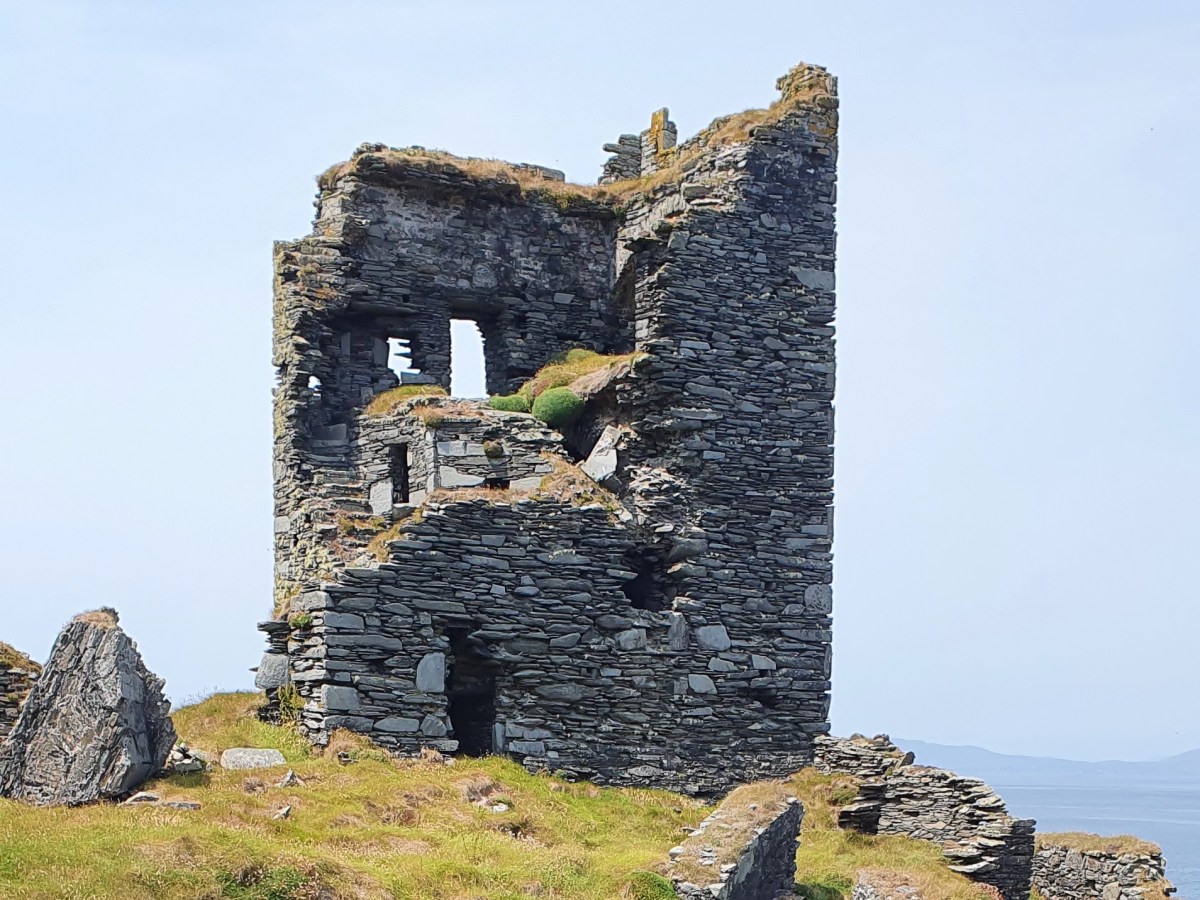
The castle was surrounded by a bawn wall, clearly visible still. Three floors (ground, first and second) were surmounted by a ‘partial vault’, above which was the principle chamber or solar – the private domain of the castle owner and his family but also where visitors were entertained.  Above that was a mezzanine floor and above that again was a wall walk, accessed via a spiral staircase from the main chamber. 

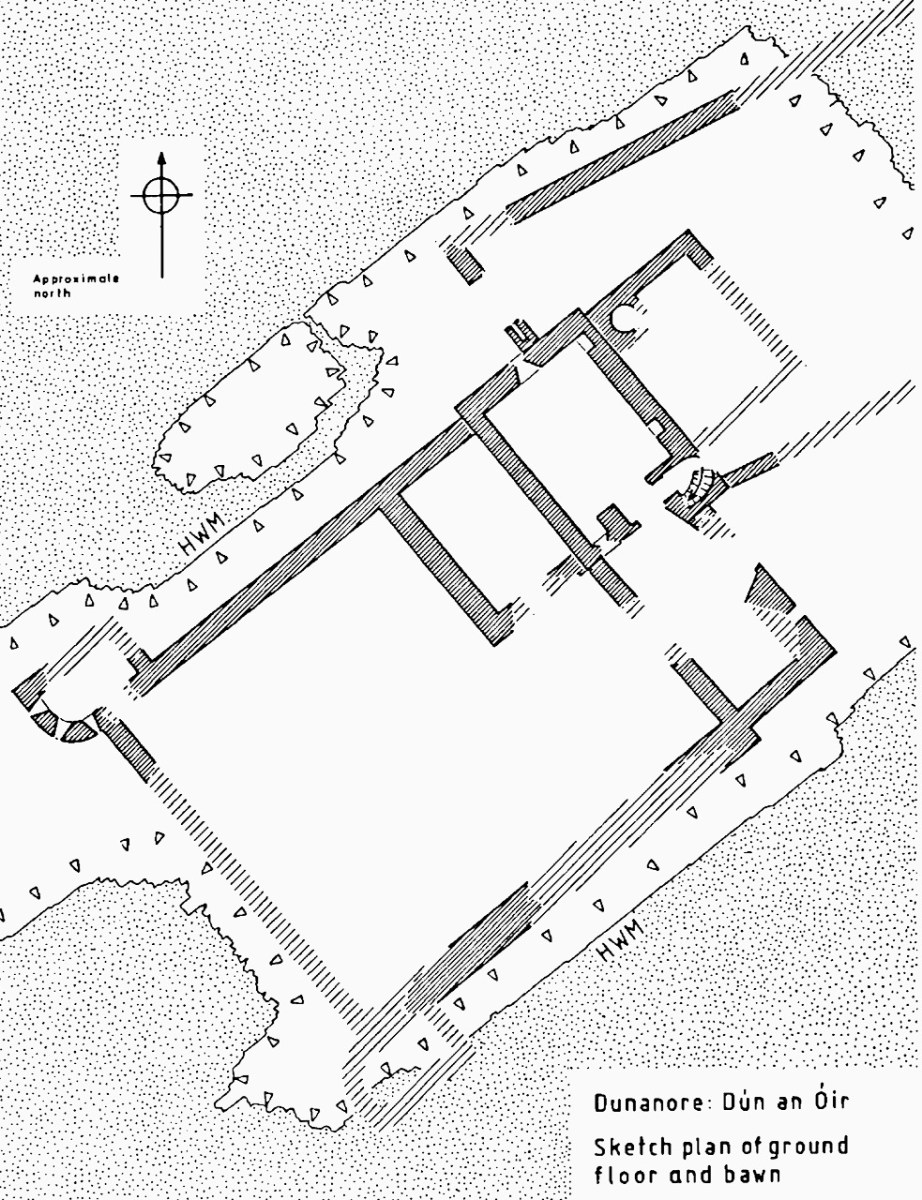
In her paper on this castle*, Sarah Kerr points out that it is, in fact, unlike the other O’Driscoll Castles of Dún na Séad and Dún na Long, and indeed other West Cork Castles, in that it only had one entry, at the ground-floor level. It is possible, she says, that the tower was so well defended naturally by its position, that a raised entry (an additional line of defence) was unnecessary. She also points out that a raised entry functioned as a status symbol, since it was the entry used by the chief to access the private rather than the public spaces within the tower. Perhaps Dún an Óir was therefore a lower-status castle, occupied by a garrison rather than by a chieftain. She provides this plan

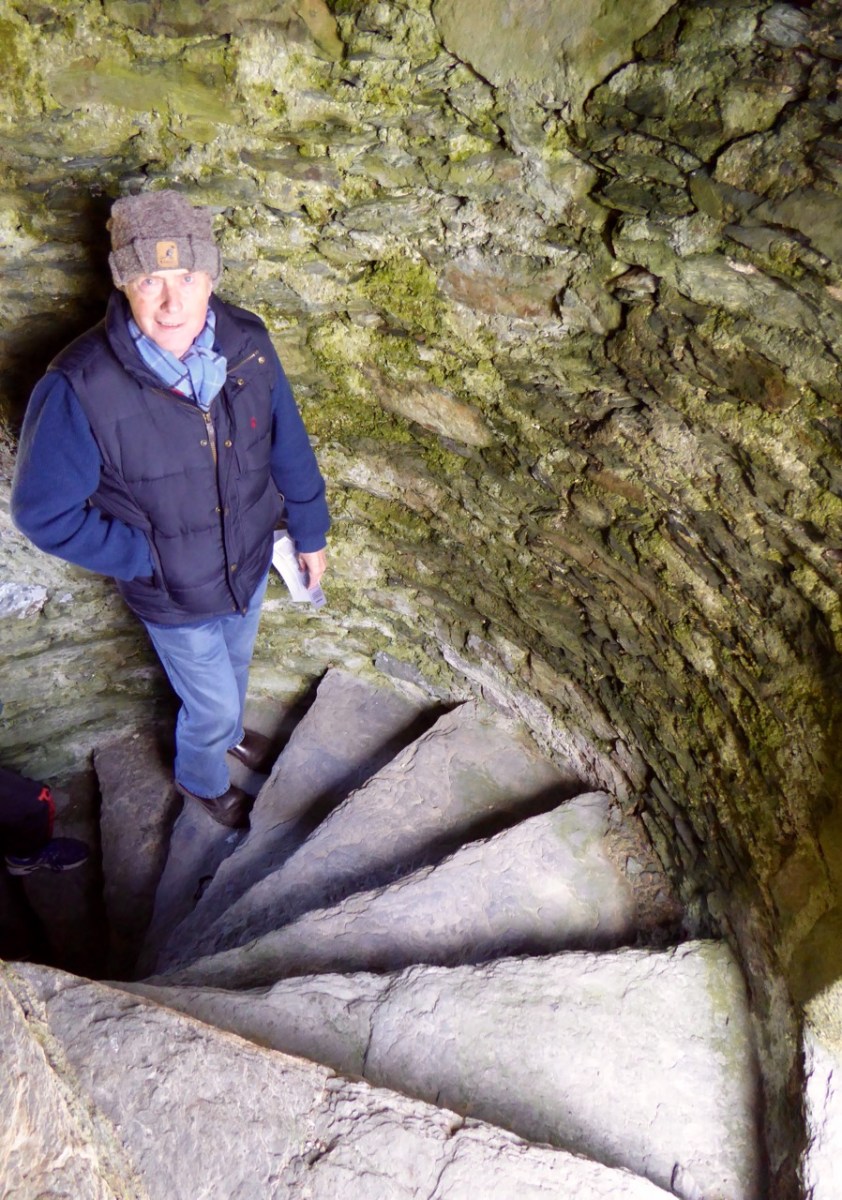
Another unusual feature is the small projecting tower that contained the garderobes. You can see that projecting addition in the plan, above, and in the photograph, below. The entry led up, via a mural staircase to a door giving admittance to the first floor, and carrying on to entries at the second and third floor levels. From there, another stairs led up to the wall walk.

Flat slabs were used to dress the outside of the walls, the same construction method as at Dunlough, although not as finely built. 

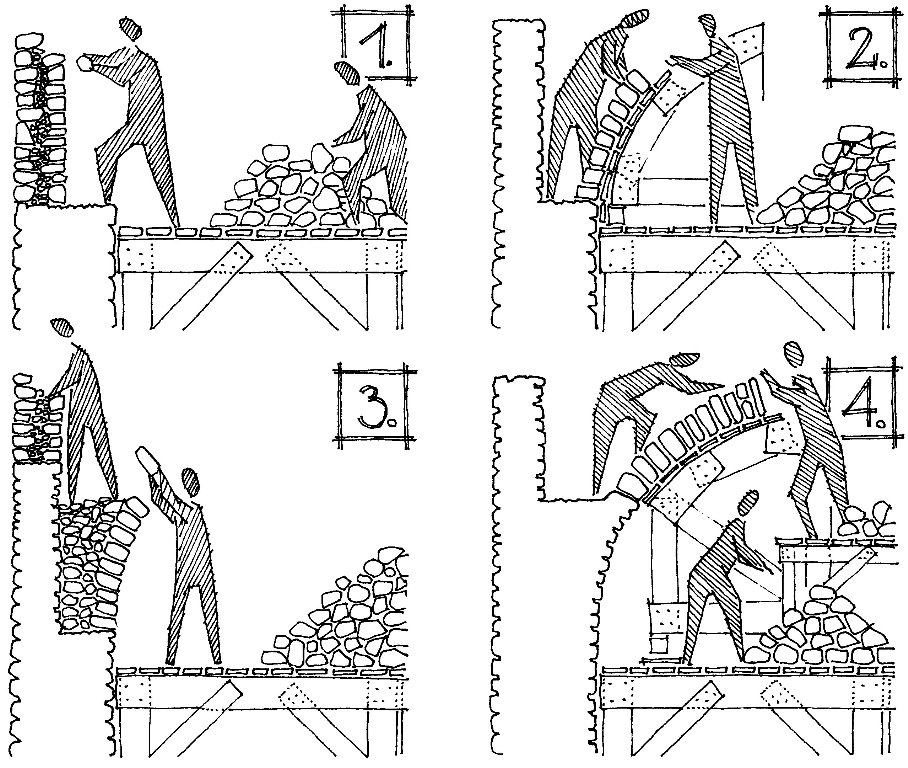
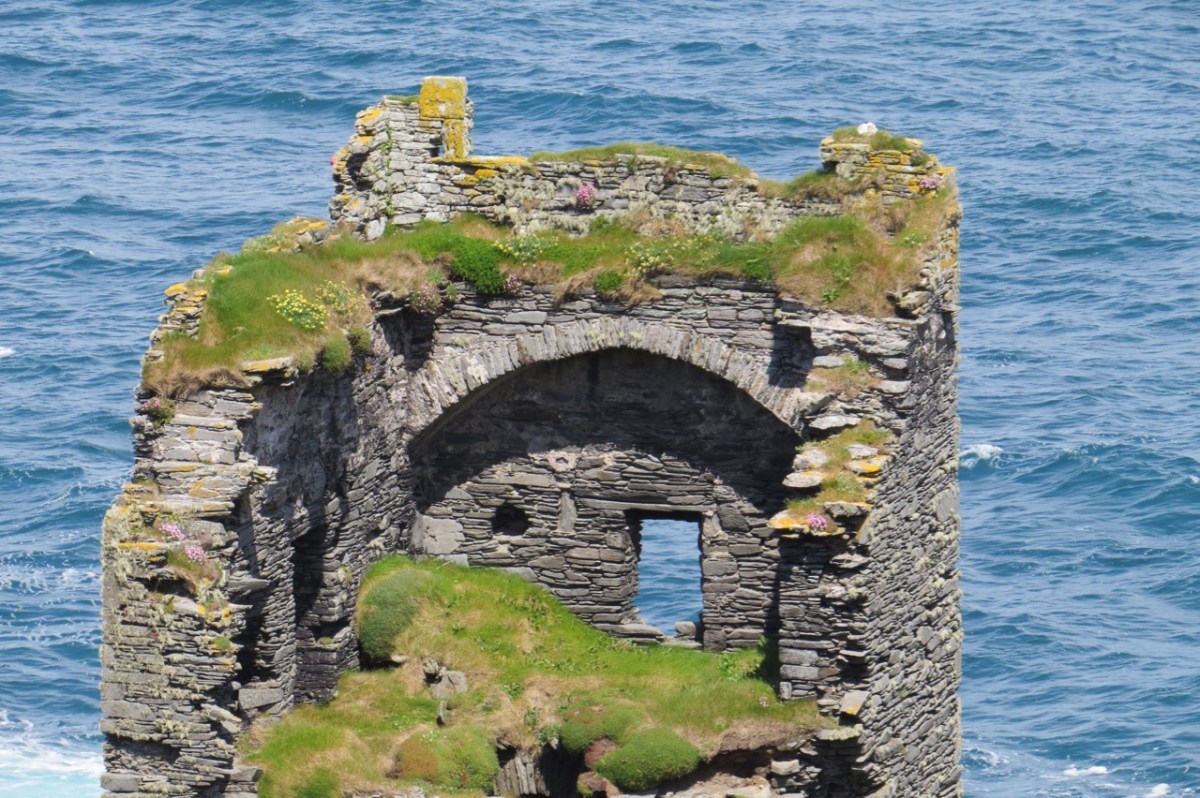
Instead of a complete vault, such as we see at Dunmanus or Rincolisky, there is a ‘partial vault’, described by Samuel:

Two free arches resembling ‘slices’ of a barrel vault were built. The gaps between the arches and the walls created were lintelled over with large overlapping slabs. This ‘economy’ vaulting was much lighter than a complete vault. 

The Tower Houses of West Cork by Mark Samuel

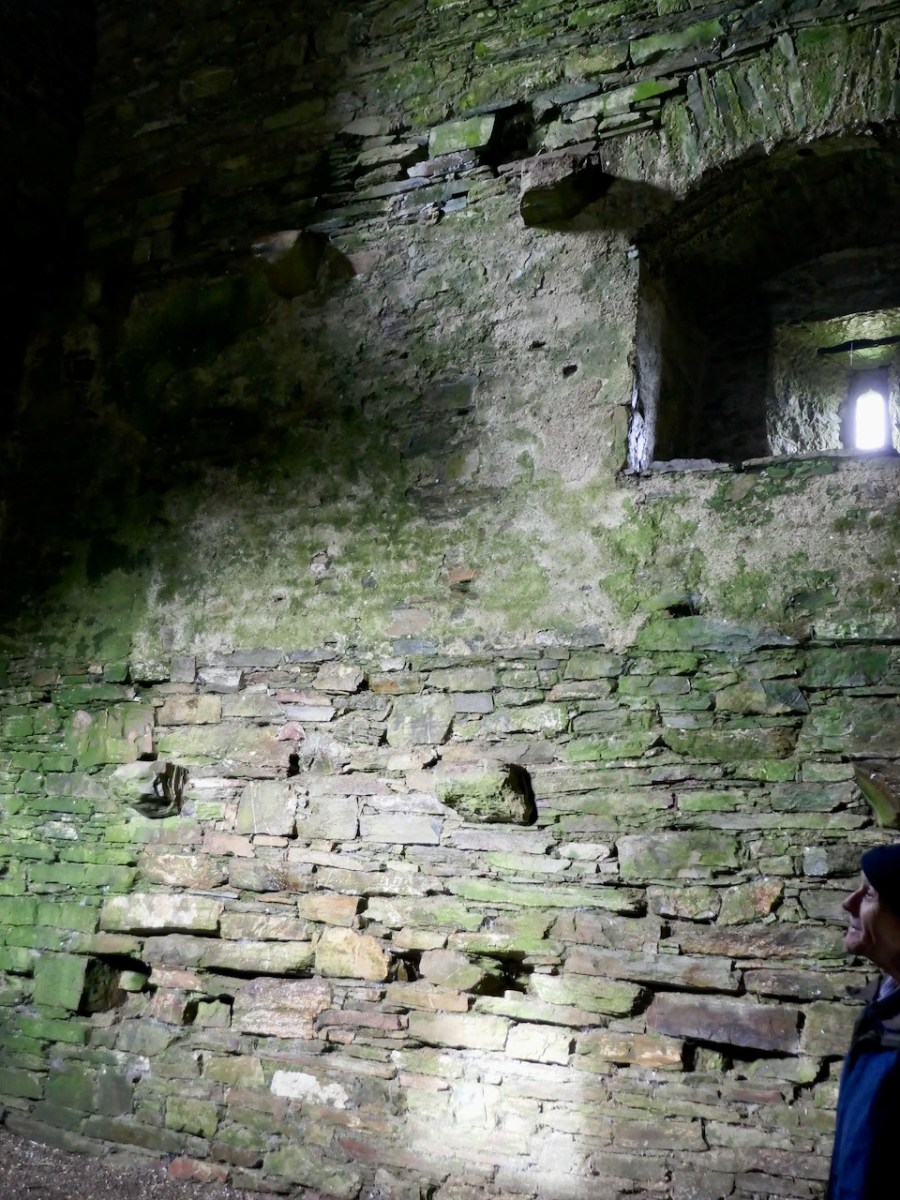
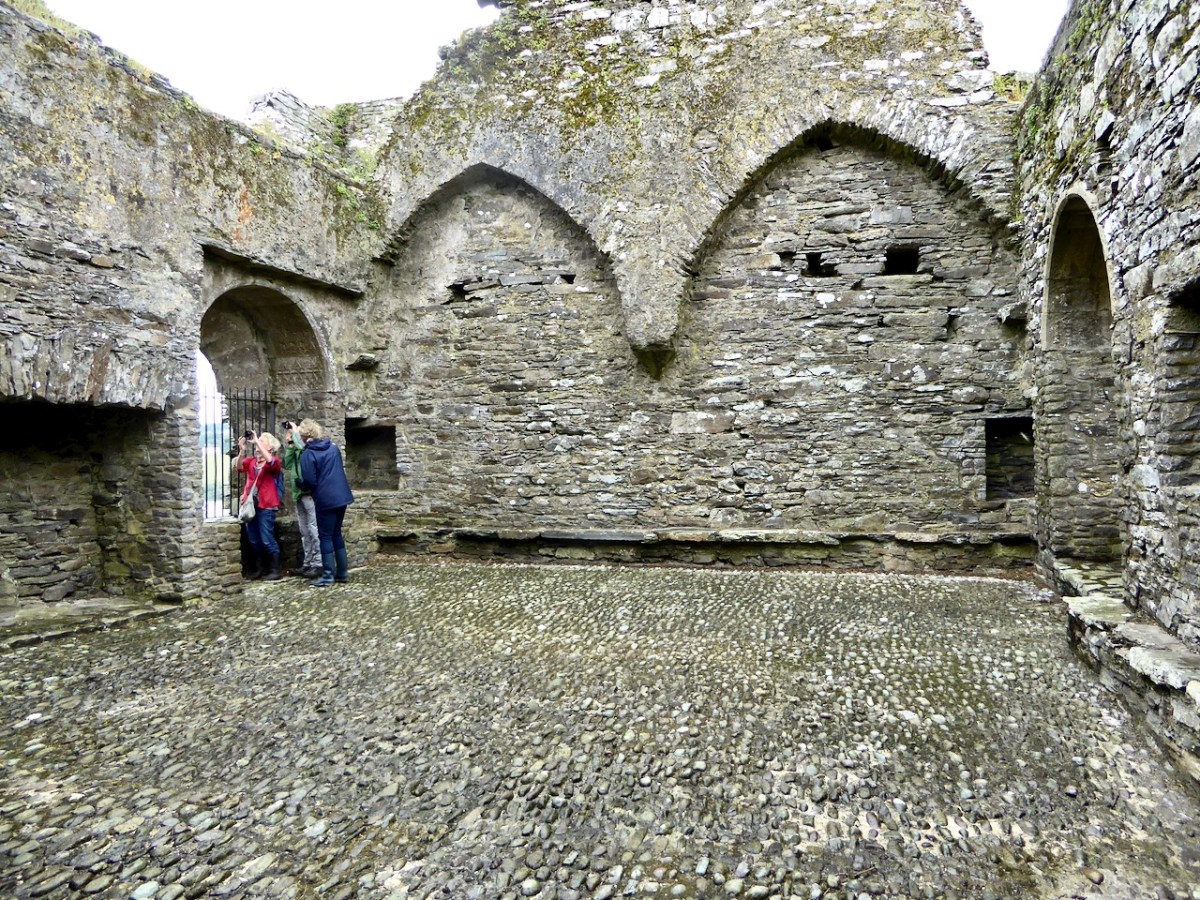
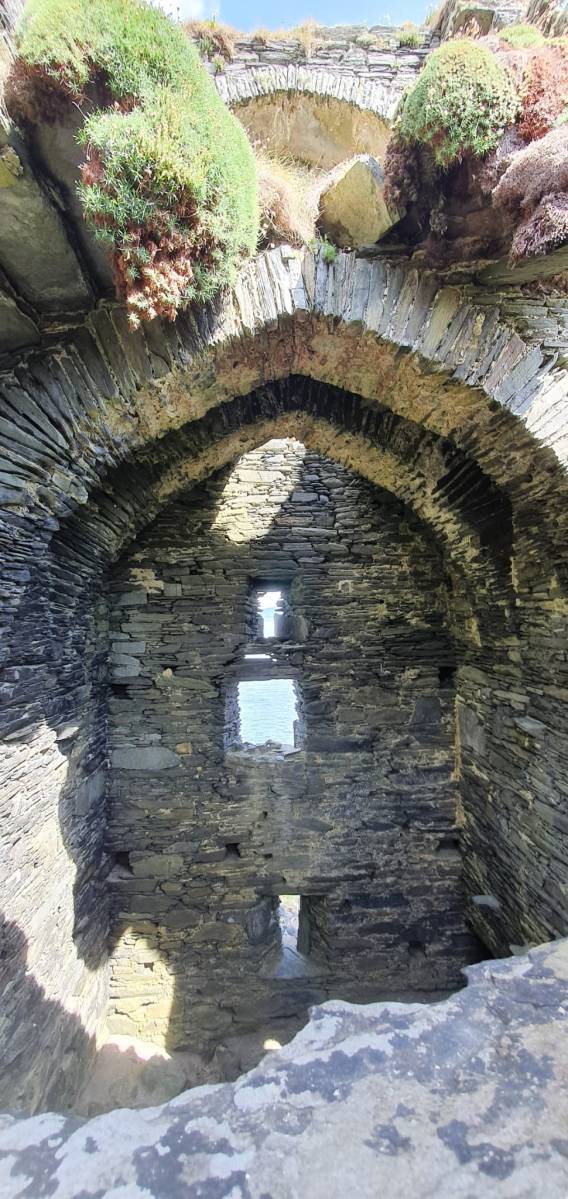
In fact, this type of internal vaulting is not that unusual in West Cork – we saw it at Dunlough and in the small tower at Dunworley. At Dunlough, we can still see many of the large slabs of slate that once bridged the gaps between the arches of the partial vaulting, while at Dunworley the roof is still intact. In Tash’s photograph below you can see the double arches and the full extent of the three floors below them, as well as the chamber above which would have had a pitched wooden roof..

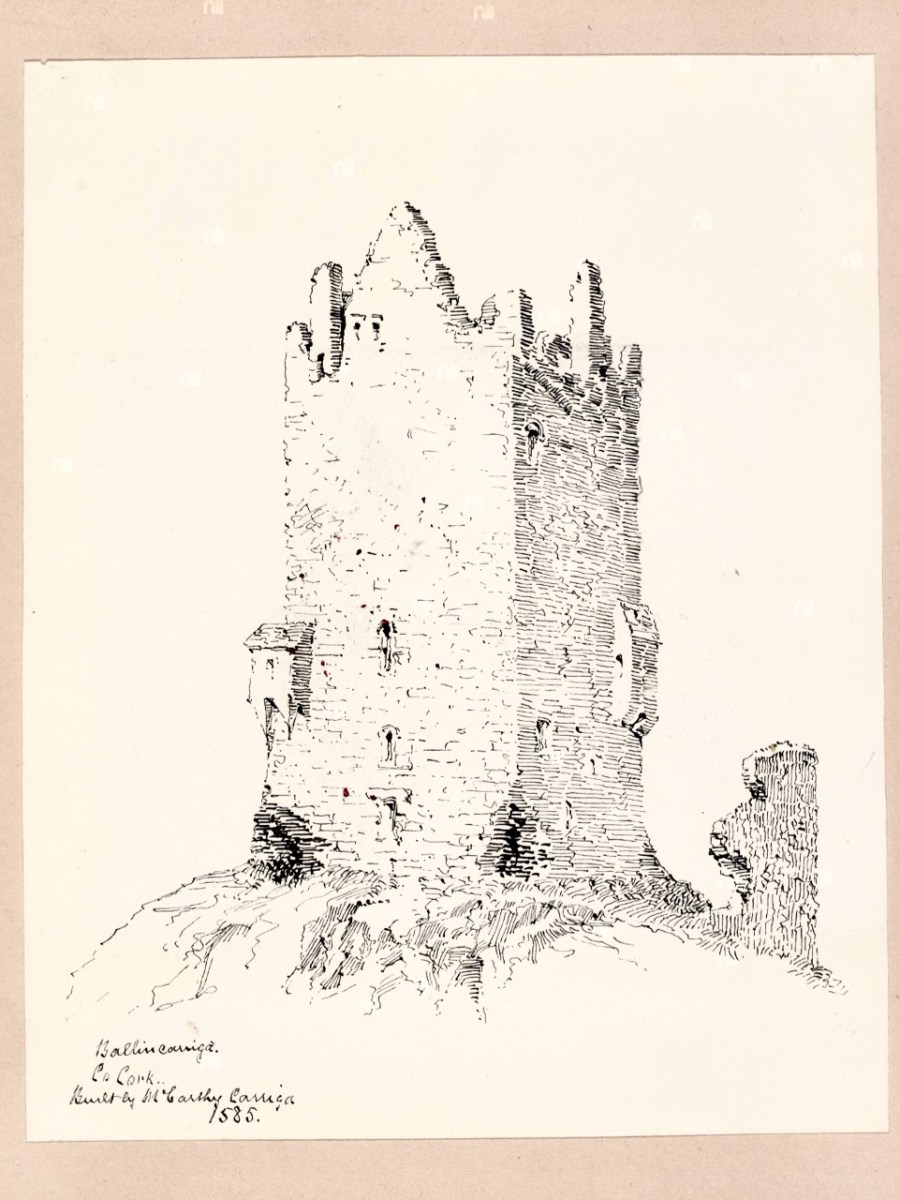
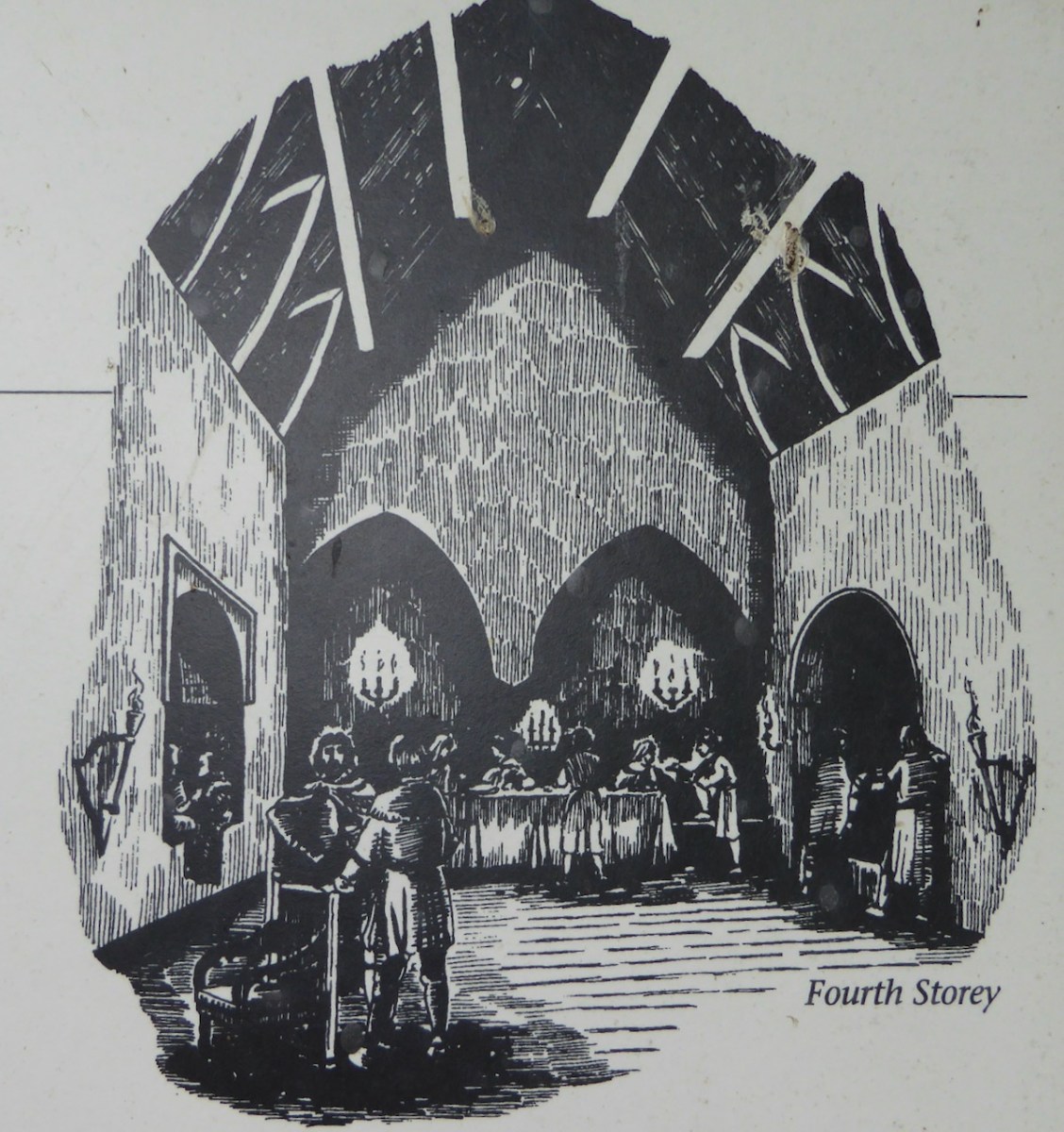
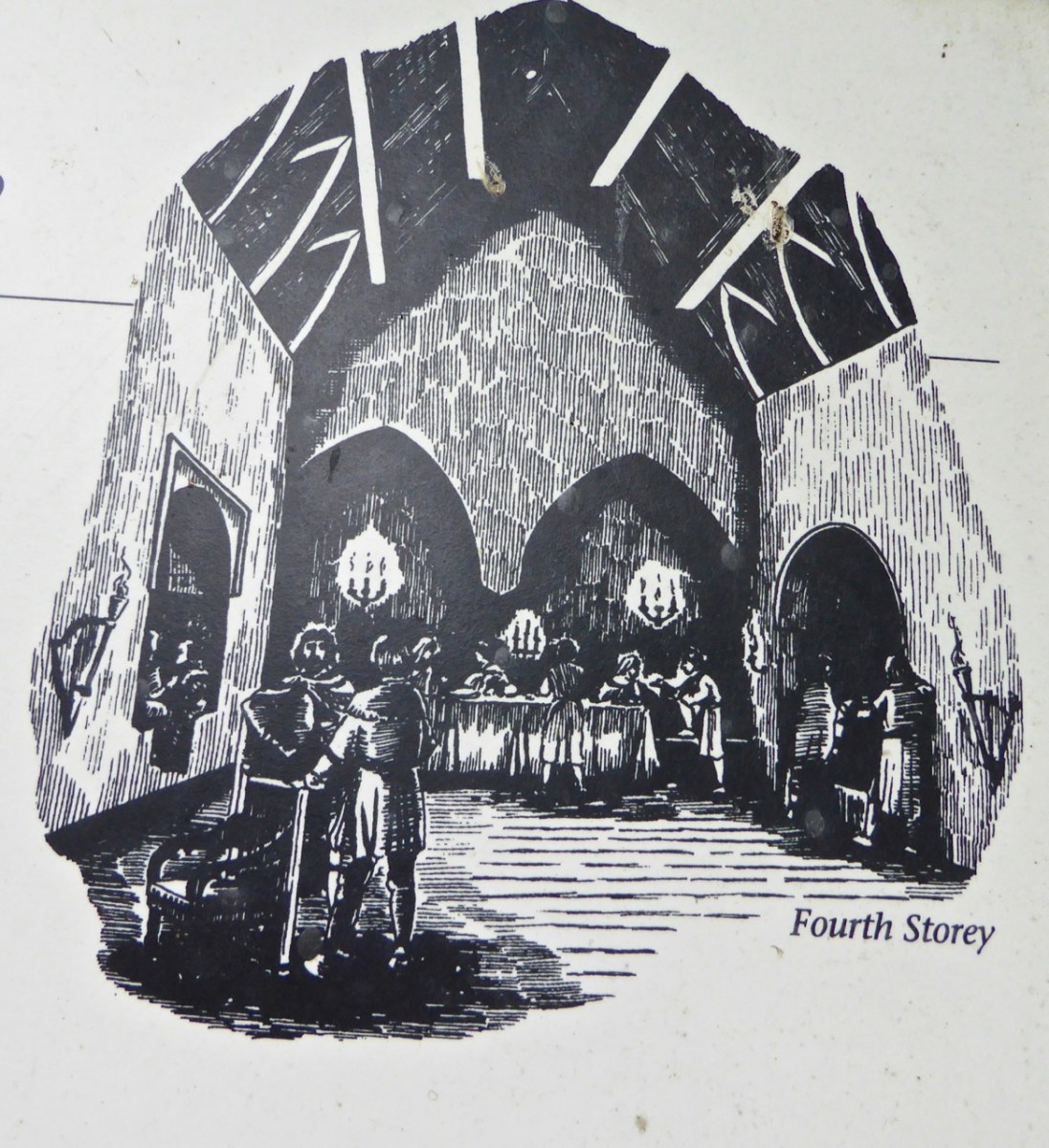
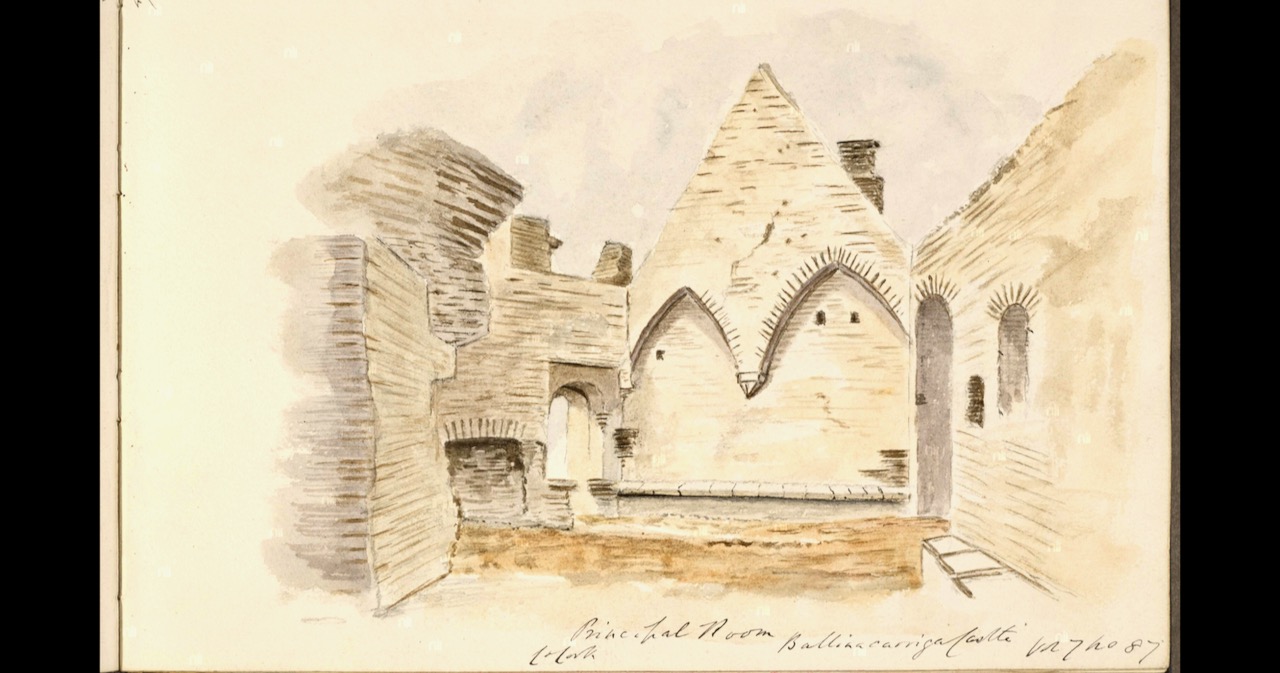
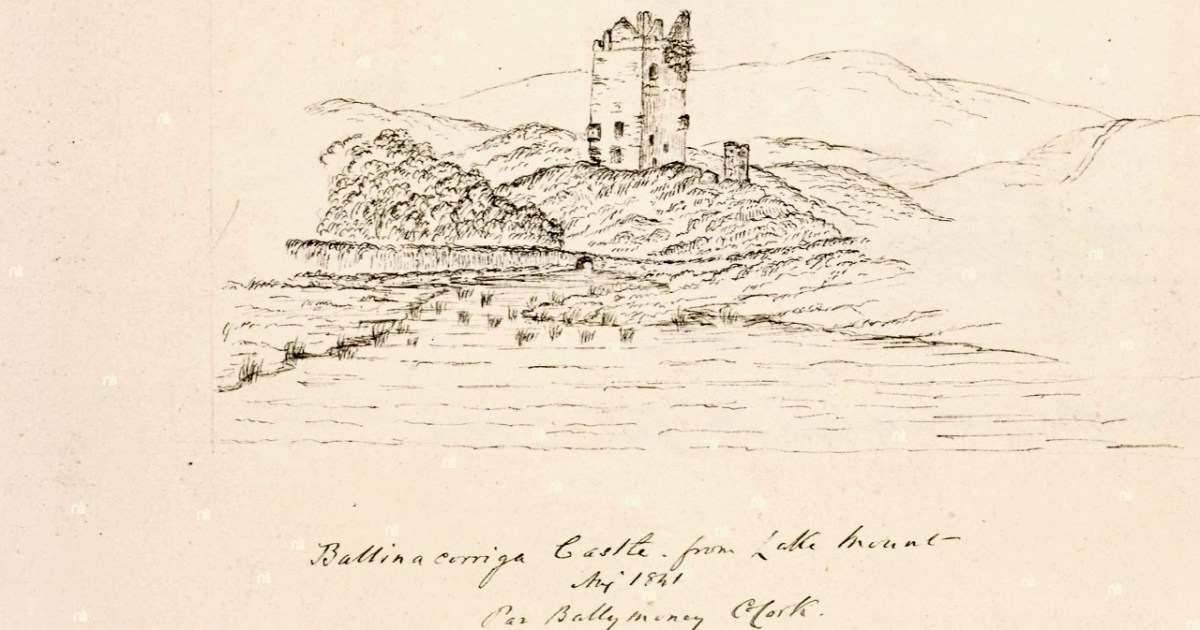
The top room, or chamber, was very high with a pitched roof supported at each end with an archway. The archway also allowed the top of the wall to be kept clear to form a wall walk. A conjectural reconstruction drawing at Ballinacarriga conveys the idea, although Dún an Óir only had one arch, not two.

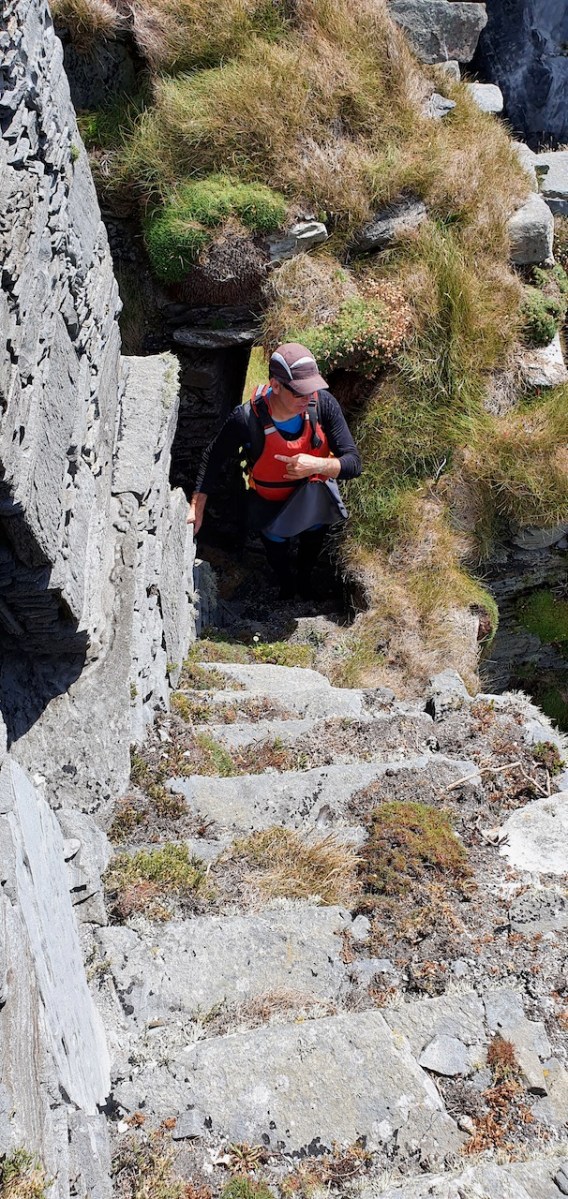
The battlements have disappeared – they were likely Irish crenellations consisting of stepped merlins and crenels (see here) – but the wall walk can still be discerned. As you can see below, the steps can still be climbed by those brave enough.

Quite a bit of the bawn wall survives, although of course it would have been much higher (possibly as described here). If the sheer cliffs were not enough to deter any thought of attack, the walls would have provided an additional barrier. Unfortunately, they were not able to withstand cannon fire, let alone the passage of hundreds of years. Sarah Kerr has an interesting take on this wall:

Bawns are often considered an additional defensive feature, or at least deterrent. Dún an Óir’s in this regard is somewhat excessive as anyone who could scale the rocky façade of the promontory would likely not be deterred by additional few metres of wall. The bawn, however, would have provided the inhabitants a layer of safety against accidental falls and protection from some of the inclement weather, such as high winds and storm waves from which Roaringwater Bay gets its name. These humdrum practicalities of the medieval lived experience have often been overlooked in castleology or castle-adjacent buildings archaeology, however, it is this very granularity which deepens our understanding of how these buildings worked.


Networked Control: Tower Houses in Ireland by Sarah Kerr

The bawn, in Samuel’s estimation, (that’s his plan above) was big enough to accommodate quite a large herd of cattle. An interesting feature is that of an outside kitchen with an oven, reminding me of what was uncovered at Rincolisky, another O’Driscoll castle, in recent excavations. In the plan above the oven is the circular feature at the north corner of the tower. Other buildings stood inside the bawn, although their purpose is not clear. There may have been a gatehouse, and the ‘possible wall embrasure’ in Kerr’s plan is viewed by Samuel as a corner turret. Samuel lays out what he can interpret of the various walls that surround the castle:

The continuous and well-preserved north wall of the bawn terminates to the west with a return that runs a short distance north before being broken away. This is the inner face, a turret with gunloops which defended the bawn. The curved outer wall enfiladed the mainland with three widely splayed gunloops.

The interpretation of the ruins east of the tower house is more difficult. Erosion has removed the eastermost part of the defences. Two separate walls on the east side of the tower diverge from its orientation; running approximately due east they seem to have formed the north and south walls of a smaller enclosure containing another building. At the west end, the north wall meets a wall (the junction is destroyed) with a gate which abuts the north face of the tower. The robbed jambs of a large gate survive on the east face of the wall and indicates that the gate swung inwards to the west where another enclosure presumably existed. A deep drawbeam is visible in the south jamb. This gate now leads almost directly into a deep ravine. A fair-weather landing stage may have once existed on this side of the island but it would have rarely have been safe to use.


The Tower Houses of West Cork by Mark Samuel

Sarah Kerr positions Dún an Óir in a network of O’Driscoll castles that together worked to control the resources of Roaringwater Bay, to levy fishery dues, monitor trade, and defend territory when necessary. Within this network, the highest status tower, and probably centre of administration was Dún na Séad (Baltimore). The highly visible nature of all these castles, some on promontories and all visible from the sea, were ‘manifestations of authority, wealth and status.’ She posits that: 

Due to Dún an Óir’s lack of a slipway, natural harbour or rock-cut steps, it is unlikely that manging the fish produce was a primary role at this dwelling, particularly as Dún na Long and Dún na Séad were more suited to such tasks. Instead Dún an Óir probably managed the victualing and collection of fees from passing ships, indicating that the tower houses worked in unison. It appears that each tower house had a specific role which complemented one another, as such they were unique actors that performed as a network

Networked Control: Tower Houses in Ireland by Sarah Kerr

It’s surprising how much we can tell from the remains of this once prominent symbol of power. It will never be on a tourist trail and I would not advise anyone to try to access it – but as you can see, Tash and his group managed it.

In response to my first post I had several suggestions for alternate titles on Facebook. Ruamann Ua Ríagáin proposed an alternate interpretation as Dún an Ár, or Fort of the Slaughter. There are no indications that there was any tradition of cattle-slaughtering at this site, nor any record of a massacre. However, it remains a possible interpretation. Another reader, Tom Driscoll found another Dún an Óir which was assumed to come from Dún an Ochair, meaning Fort on the Brink/ Cliff Edge. Certainly apt for this location. Finally, note the long comment on Part 1 by OVERSEASGREATGRANNY who is trying to trace similarly named forts and relate them to Irish history – quite fascinating.

When the storms rage over Roaringwater Bay it is natural to wonder how long this castle can last, isolated on its spit of land and open to the full force of nature. But it is also a comfort to know that the castle builders built it so well that it has lasted now since it was built around 1450 and battered in 1601. Here’s to another few hundred years!

Thanks again for the superb photos, Tash!
Sarah Kerr of UCC has kindly shared with me her draft paper, Networked Control: Tower Houses in Ireland. I thank her sincerely for permission to quote from this unpublished paper.

The Castles of West Cork – a New Menu Page

I’ve been working on a post about one of our storied and stunning West Cork Castles. That post will come next week but, spoiler alert, it’s located on Cape Clear Island.

But as I wrote it struck me that we could do with a specific Menu Page all about castles because we have written so many posts about them and those posts are buried in various paces on our All Pages -Navigation. So here it is – our new Menu Page devoted to The Castles of West Cork. As with all out Navigation pages, you can access it by clicking on the three-bar icon in the banner photo at the top of the blog.

I’ve divided it into a few sections, starting with defining our terms – while archaeologists use the term ‘tower house’ to denoted the tall, rectangular stone towers built here mostly in the 15th and 16th centuries, we just call them castles. Thickly ringing the coastline, and slightly sparser inland, they were potent symbols of the power and wealth of the Irish families and their chieftains who held sway in West Cork – the McCarthys, O’Mahonys, O’Driscolls and O’Donovans.

There’s a special section devoted to the Castles built by the O’Mahonys in what used to be called Ivaha, but is now commonly known as the Mizen Peninsula. We’ve visited them all, and provide as much information as we can of both the history of each castle and how they were constructed.

We’ve also written about non-Ivaha castles: the magnificently reconstructed Kilcoe, the lovingly restored Rincolisky, and Castle Donovan, stabilised by the OPW.

Finally, two posts: one about what followed the tower houses (fortified manors like Coppinger’s Court below) and one about an Anglo-Norman masonry castle in Liscarrol – a jaw-dropping keepless Castle which nowadays houses cattle (final photo).

With well over 1000 posts stretching back ten years, we keep trying to simplify navigation on our site. We hope this new page helps.

A Map of the County of Cork, Part 2

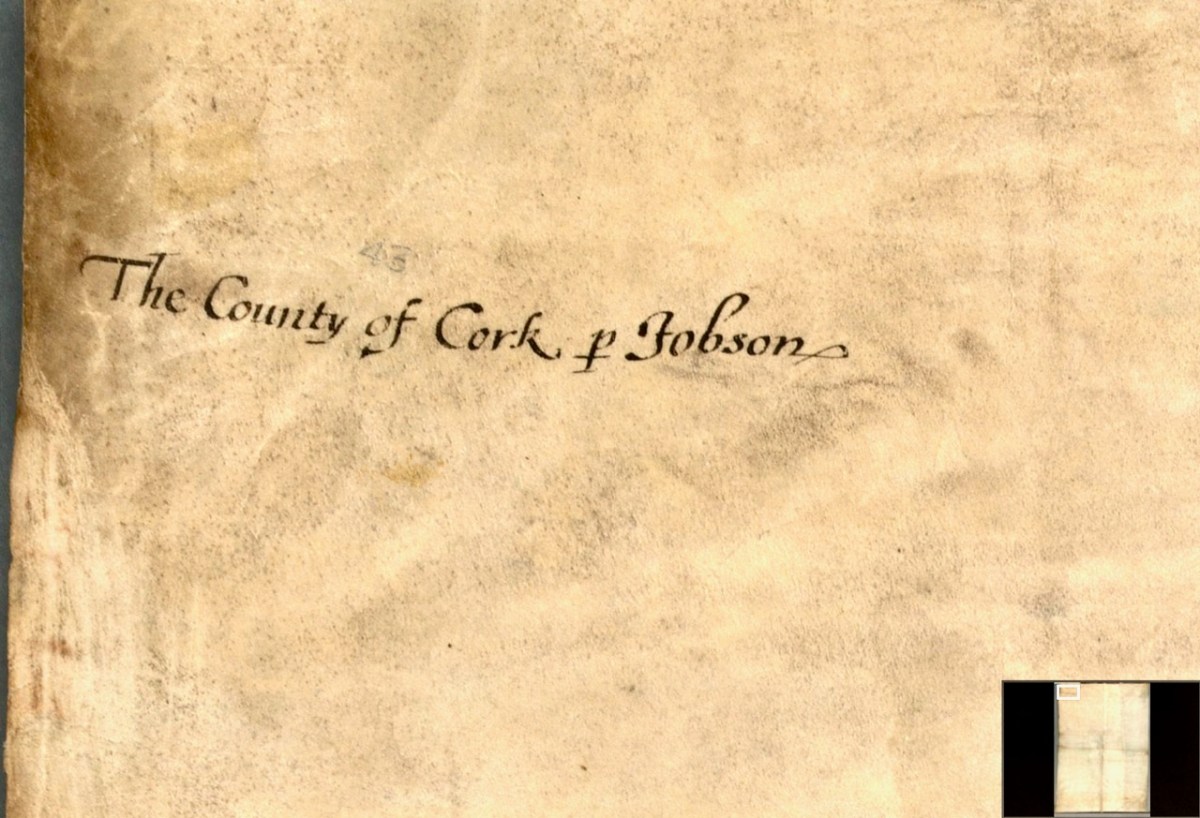
In Part 1, I said that We don’t know who did this one, or when: The date is given as 1560-1620. It seems in some ways more basic than other maps of the period, and less exact. I have now gone to the Atlas itself in Trinity College and discovered that the maps in the Digital Repository are an incomplete set. Specifically, the original Atlas at TCD contains the reverse side, the ‘verso’ of each map. Here’s what’s on the verso of the County of Cork. This:

and this:

So we see that the map is attributed to our old friend Jobson – he who drew the plantation map I wrote about here and here and which was dated to 1589. There are similarities and differences between this map and that one – the galleons and scales for example look very alike. But there’s a lot more information on the plantation map and some of it is different from our Map of the County of Cork. As to the date of the County of Cork map – we will try in this post to see if we can narrow that down a bit from the broad estimate of 1560-1620. 

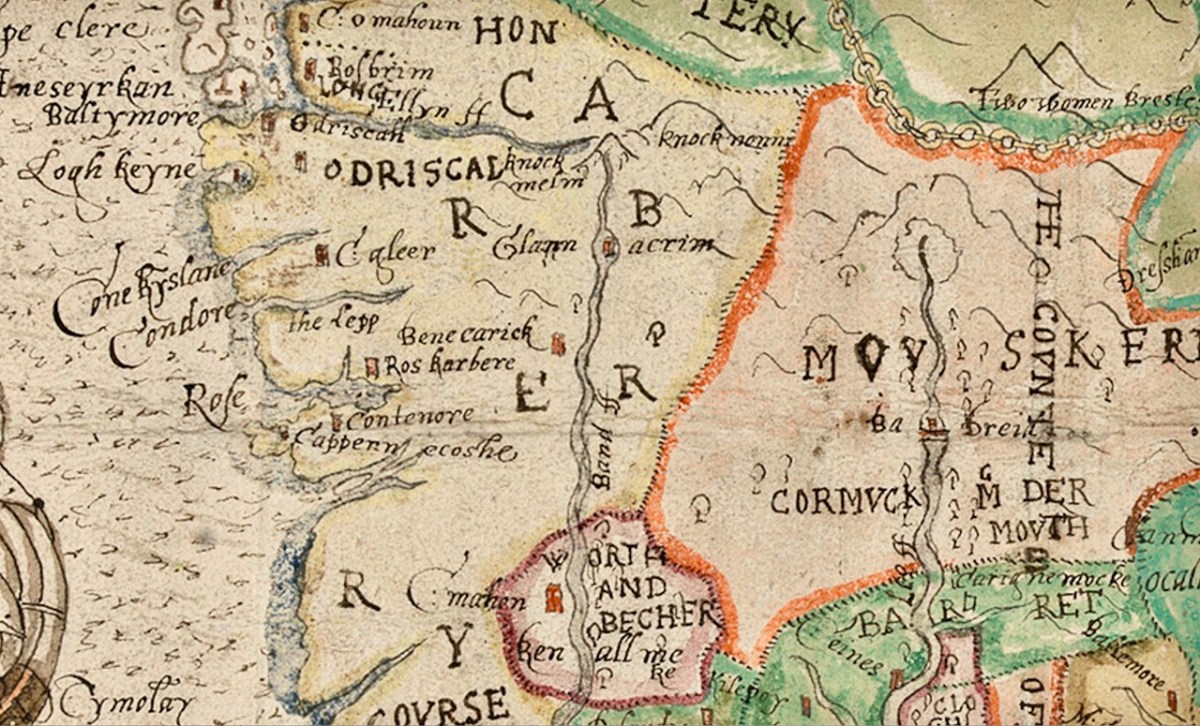
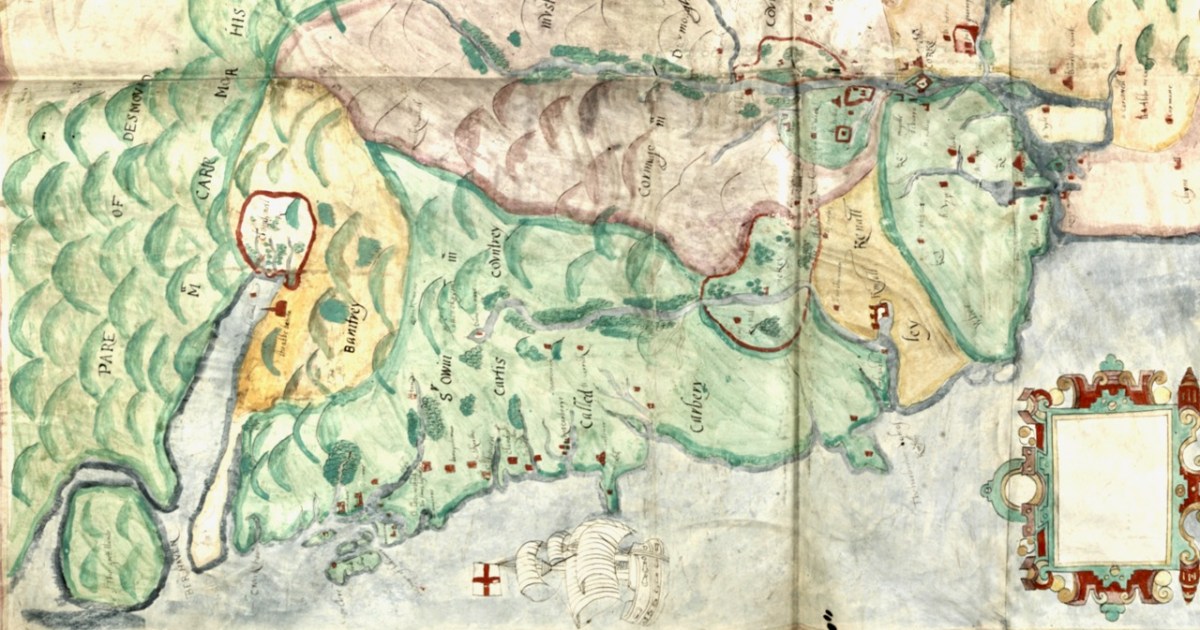
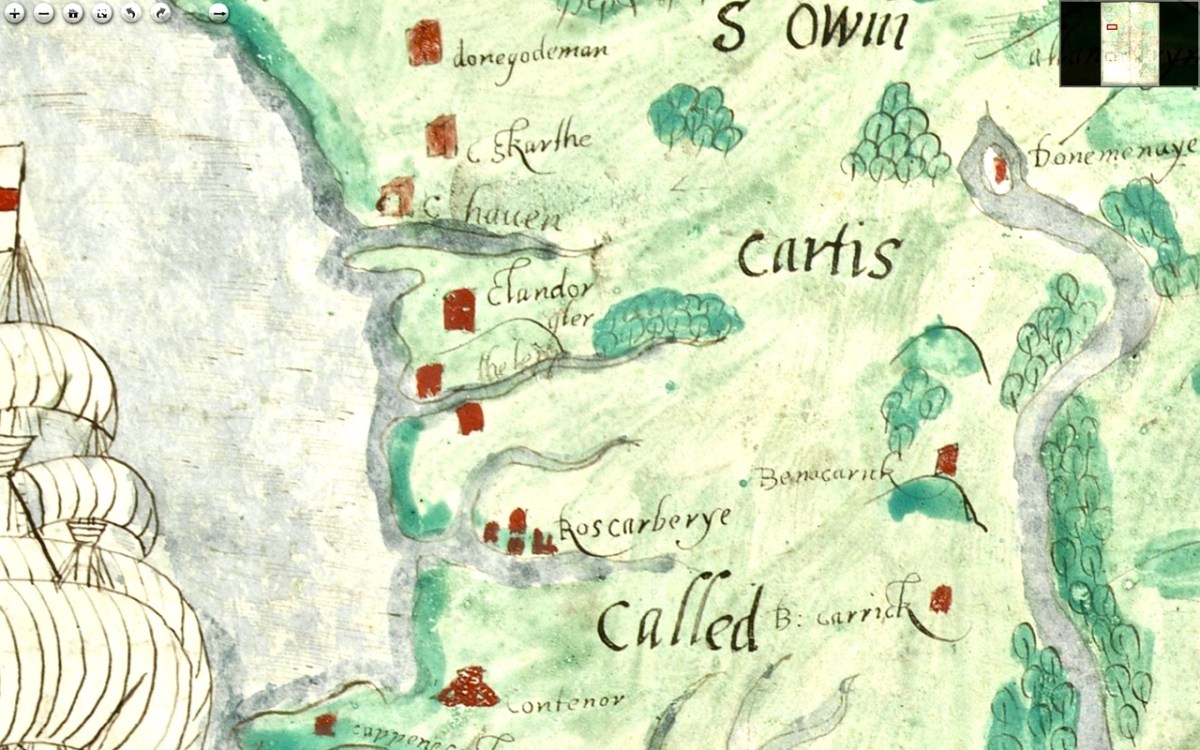
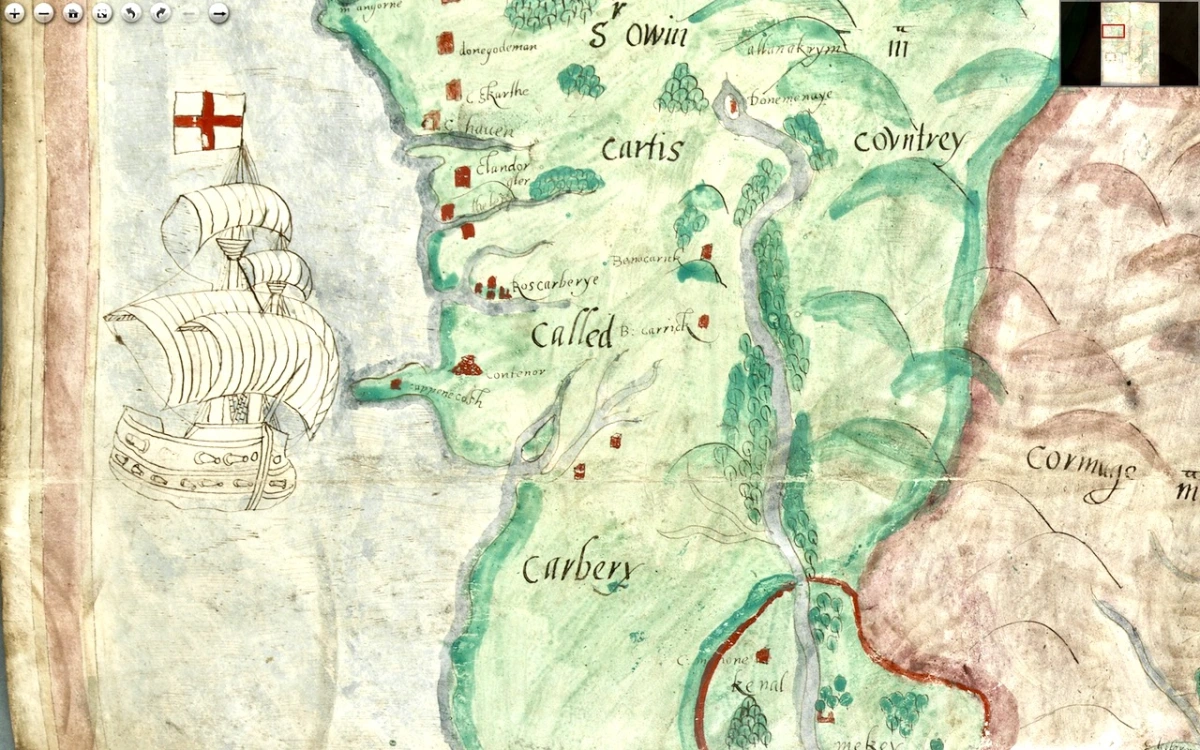
I want to go, as they say in Ireland, east along. That is, take off from where I finished last time, and travel east along the coast towards Cork, taking in the River Bandon. For the rest of this post, I’m keeping the map oriented as it is originally – that is, with west at the top (it’s actually surprising how quickly you can get used to this). Between Baltimore (Donashad) and Castlehaven (C haven), there are three castles shown, one labelled Sir Jmes Castell, Doneygodman and C skarthe. These are all a bit of a puzzle and I would invite readers to contribute ideas. On the archaeological list of Monuments for this area we can identify the O’Driscoll Castle on the Island in Lough Ine – could this be the Sir Jmes Castell? A promontory fort on Toe Head, known now as Dooneendermotmore, although likely originally an iron age refuge, was refortified in the 16th century and may, like the one I wrote about in Dunworley, have had a significant curtain wall. Was this Doneygodeman? It seems unlikely, as Doneygodeman is show inland – I wonder if instead it could be the castle at Raheen, which was a castle of the O’Donovans.

Finally, C skarthe might be a castle of the McCarthy’s – McCarthy is spelled in a variety of ways on this map, but there I can find no trace of it now. There was a castle in Listarkin, but once again, this is in the wrong place, unless this map, while certainly approximate in places, is wildly inaccurate. It seems reasonable to conclude that the more inland castles may have been harder to plot on a map that the coastal ones.

The castle at Glandore (c Landorgter) is clearly shown, along with two castles guarding the entrance to a long inlet labelled ‘the lepp.’ One may have been Kilfinnan, actually located near Glandore, which the other could possible be the coastal tower house at Downeen. This brings us to Rosscarbery (Roscarberye), shown as a collection of Buildings, as befits its status as a substantial town with a cathedral and a college, and a place of pilgrimage in the name of St Fachtna.

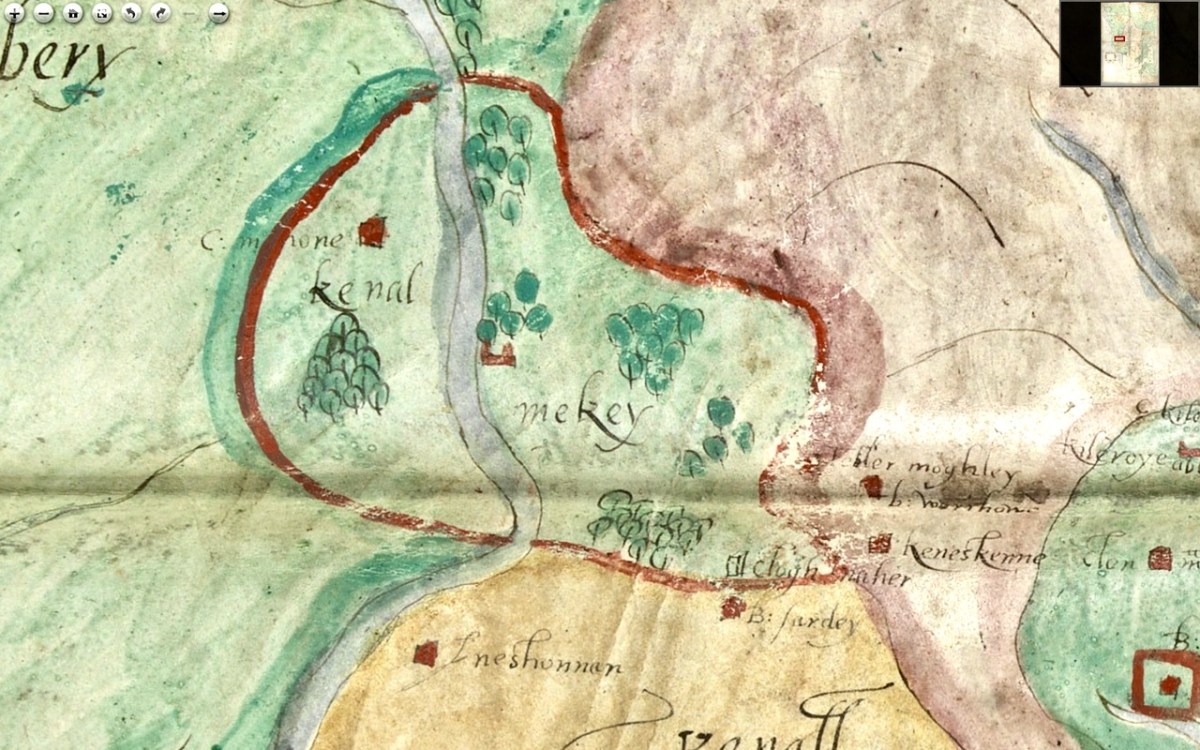
The entirety of this area, in green, is identified as Sir Owin Mc Cartis Countrey Called Carbery. Several other castles are identified here and there, and the course of the River Bandon is traced. The southernmost area is identified as Kenal Mekey, and to the south of the green-shaded section is Kennal Ley. In Canon O’Mahony’s magisterial History of the O’Mahony septs of Kinelmeky and Ivagha he states: 

In the history of South Munster there is no fact attested by more abundant evidence (evidence unknown to Smith and Gibson) than that the Sept-land of the Ui Eachach Mumhan during many centuries extended from Cork to the Mizen Head, as one continuous territory, including Kinelea and Muskerry, and was ruled by a chief whose principal residence was Rath Rathleann, in Kinelmeky.


https://archive.org/details/historyofomahony00omah/page/n1/mode/2up  Page 105

He identifies Rath Rathleann as the mighty multi-vallate ringfort of Gurranes, which was superseded by Castle Mahon, which stood where Bandon is now situated. And here it is, Kinelmeky, with C Mahon shown beside the river. Castle Mahon was later incorporated into Castle Bernard, home of Lords Bandon. Another Castle is shown further down the river – no doubt the one we are familiar with as we travel the N71.

We know that all this land was acquired by Richard Boyle after the Battle of Kinsale (1601) and that he started on his walled town of Bandon Bridge around 1620. Since this is still clearly identified as O’Mahony Territory I think we can take it that this map dates to before the battle of Kinsale.

We see Kenall Ley (Kinelea) in yellow, with the walled town of Kinsale at its heart. Kinsale walls were begun around 1380 and lasted until most of them were destroyed around 1690 by the forces of William of Orange. Inishannon is noted in Kinelea, as well as Park Castell (in what is now the townland of Castlelands) and finally B: Sardey (or is that a different first letter?). We know from another map in the Hardiman Atlas (below) that B designated a small town. Given that Kinsale is such a prominent walled town on this map, once again, a date before 1601 is likely. 

Supporting a pre-1600 date is the fact that it is the old Irish families that are identified with their territories – no settler or Plantation names are given. In fact the O’Mahonys and McCarthys are the only names on the sections of the map we have seen so far. Moreover, it it really was the work of Jobson, we know he was actively mapping in 1589.

In Part 3 I’ll do a quick meander through the most interesting parts of the rest of the map. Stay tuned.

A Map of the County of Cork, Part 1

A Map of the County of Cork, Part 3

A Map of the County of Cork, Part 1

The Hardiman Atlas*, held in the Digital Repository of Ireland, is a bound volume of maps all of which were collected by James Hardiman. An erudite Mayo man born in 1782, he spoke Irish as his first language, studied law but was an historian to his core. He wrote histories, including one of Galway, and collected songs and manuscripts. He eventually became the librarian at Queen’s College Galway (now the University of Galway) where the main library is named for him. I’ve used the Hardiman Atlas before, for my posts on Jobson’s work on Planning a Plantation Part 1 and Part 2.

In the Digital Repository description we find this information of the Hardiman Atlas: 

IE TCD MS 1209 is the collection of maps held in the Library of Trinity College Dublin and made by George Carew (1555-1629) 1st Earl of Totnes and Lord President of Munster at the beginning of the 17th century. Presented to the Library of Trinity College Dublin in the late 1700s. It contains nearly 90 maps and plans and is one of the largest sets of original Tudor and early Stuart maps of Ireland surviving anywhere. They are known collectively as the ‘Hardiman atlas’ after their first cataloguer, James Hardiman. Hardiman (1782-1855) was born in Co. Mayo and trained as a lawyer. He was librarian in Queen’s College Galway. Quoting from J.H. Andrews (‘Maps and Atlases’, Treasures of the Library Trinity College Dublin ed., Peter Fox (RIA: Dublin, 1986)): These maps, which are ‘for the most part competently drawn and attractively coloured’ and which ‘display not one scale of latitude or longitude in the entire collection … are essentially the by-product of a military and political conquest. However, as well as forts, defended towns and troop movements, they are rich in placenames, territorial boundaries and a good deal of ordinary landscape detail. Carew is said to have wanted all his Irish papers to be deposited at Trinity … though as it turned out most of them finally came to rest at Lambeth Palace in London. Nobody knows when, how or why the maps became detached from the collection and found their way to Dublin. They simply turn up in the College records of the late eighteenth century …. It was a non-Trinity historian, James Hardiman of Galway, who first catalogued them in 1821, apparently on his own initiative, and after being bound into a single, large volume they became generally known as the Hardiman atlas … The credit for [the rediscovery of their true origin] belongs to a recent Keeper of Manuscripts William O’Sullivan, who put the issue beyond any doubt by identifying Carew’s hand on many of the Hardiman maps and by collating all their titles and subjects with the original early-seventeenth-century catalogue still at Lambeth’.


https://repository.dri.ie/catalog/sn00qn48t

George Carew** collected anything that helped to support his claim to large tracts of land in Munster. But maps were also vital for him as one of the military leaders in charge of subduing Ireland before and after the Battle of Kinsale in 1601. Read all about Carew and his time in Ireland in this excellent entry by Terry Clavin in the Dictionary of Irish Biography. (You might want to take a blood-pressure tablet first.)

Back to the map! Familiar to us from other Elizabethan Maps, this one is oriented east/west, rather than north/south, meaning that we see Ireland lying on its side. By the way, I have to use a lower resolution for the blog, but you can view the map yourself in very high resolution in the Digital Repository.

We don’t know who did this one, or when: The date is given as 1560-1620. It seems in some ways more basic than other maps of the period, and less exact. However, it still contains an extraordinary amount of information. The area it covers stretches from Bere Island to Waterford and from the sea to the Limerick and Tipperary borders. For ease, I have turned it rightside-up, so that West Cork is now as we expect to see it, on the bottom left of the map.

For this first post, I will concentrate on the area around Roaringwater Bay and west to Castlehaven, since this is my home turf, but we will explore further afield later. To put it in a little context, here’s a slightly broader view of the area (below). Note that it is labelled Sir Owen McCarthy’s Country called Carbery. There is also a large tract simply labelled Bantrey, of which the only feature is The Abbe Benita. Dunmanway, Donemenuye, is shown on an island at the head of the Bandon River. Berhaven, Croukhaven, Cape Clere, and The Haven of Boltimore are shown along the coast, along with a very fine warship in full sail, with cannons, a crow’s nest and an English flag.

So you can further orient yourself, here is the 1880s map of the same area (more or less). The yellow dots indicate castles/tower houses as identified on the 1880s Ordnance Survey Map as part of the National Monuments Service.

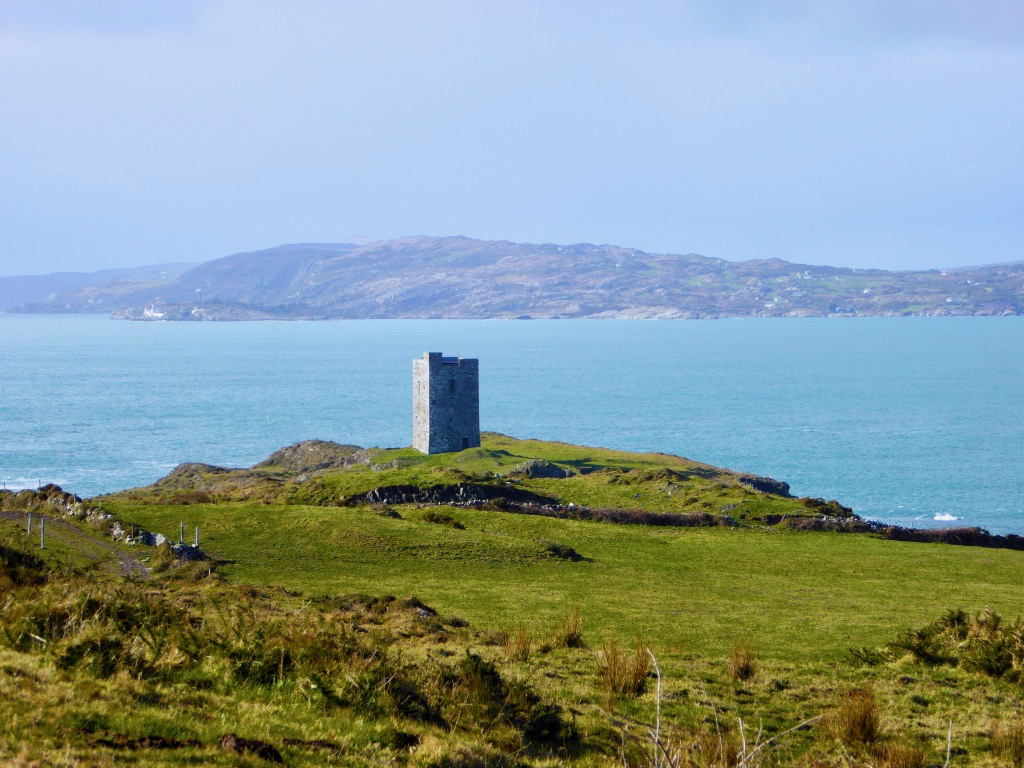
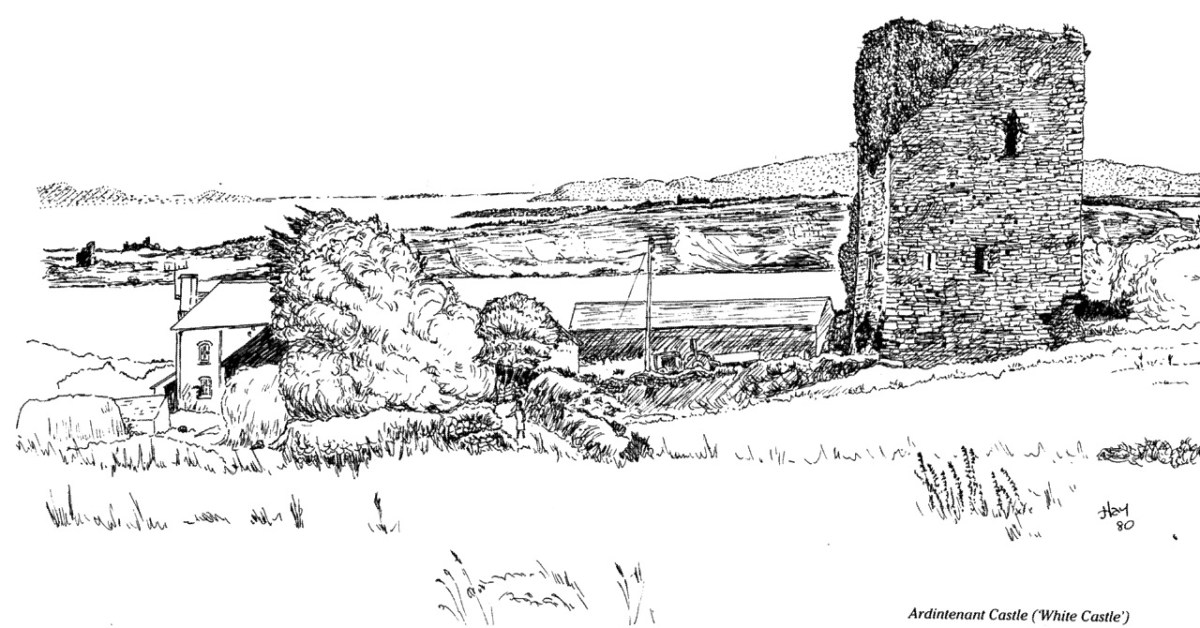
Honing in on Roaringwater Bay, below, the two most prominent castles are Ardintenant and Rossbrin, labelled C omohan and Rosebrine. Ardintenant is called the Castle of the O’Mahonys here as it was the home of the Taoiseach of the O’Mahony clan, while Rossbrin was the home of the Táiniste, or chieftain-in-waiting. Both are shown as very substantial castles, surrounded by bawn walls with additional towers.

While Ardintenant still has one wall-tower, Rossbrin is a vestige of what it once must have been. This is what it looks like now, and you can see the remnants of what was once also a small castle on Castle Island behind it.

Castle Island castle and Dún an Óir Castle on Cape Clear are shown although not labelled, as is both the Castle (Dúnalong, or Castle of the Ships) and the Friary on Sherkin Island. It’s hard to imagine when you look at what remains of Dún an Óir now (below) that its name means Castle Of Gold – a testament to the wealth of the O’Driscolls who built it. Thank you so much to our reader, Tash, who sent me this wonderful photograph.

Moving West, into O’Driscoll territory (below), we see Baltimore in outline (the colorist ran out of brown ink?) – it’s called Doneshade (Dún na Séad, or Castle of the Jewels). Beside it is the brown square used to indicate tower houses and the words Sir Jmes Castlell. Following the Ilen Rover (Elyn ff) to its source we find Castle Donovan. Two more brown blobs at the entrance to the Ilen River may indicate Dún na Gall (Fort of the Foreigners) on Ringarogy Island, and Old Court Castle.

I’m going to leave it at that for now, but I hope your appetite is whetted to see more of this invaluable record of Cork 400 years ago.

For more on the Magic of Old Maps, see this page.

A Map of the County of Cork, Part 2

A Map of the County of Cork, Part 3

*I am grateful to Digital Collections, at the Library of Trinity College Dublin, who gave permission to feature this map from the Hardiman collection in this blog. The complete citation for the map is as follows: Unattributed, & Manuscripts & Archives Research Library, Trinity College Dublin. (2021) Map of the County of Cork, Digital Repository of Ireland [Distributor], Trinity College Dublin, the University of Dublin [Depositing Institution], https://doi.org/10.7486/DRI.p554ng24v
**I am also grateful to the British National Portrait Gallery, who provide an easy method to use images from their collection under license, for purposes such as this non-commercial blog. The portrait of Carew is from their collection.

The Antiquities of Bealad

There’s an area of West Cork bounded on the south by Castleventry and on the north by Ballinvard. In between and round about there’s Bealad, Rossmore and Caherkirky. This is the territory into which we were inducted by Dan O’Leary and Sean O’Donovan, this week. It’s like a fellowship – people who are passionate about local history find each other and it’s only a matter of time before we start talking field trips.

Dan and Sean had organised the whole thing – including the all important coffee and food and bathroom breaks. Our headquarters was the old National School in Bealad, now wonderfully re-purposed as a community hub – a lesson in how to do this for others with such buildings on their hands. We started with an overview of local history and then it was off to Castleventry. 

Amanda is, as you all know by now, the expert on Holy Wells (book will be out soon!) and the first time she and I visited this well, several years ago, we met Sean, who was restoring it. You can read all about that here, and more about the well itself. All are invited to the annual celebration at the well, which takes place on June the 4th at 8pm (after milking).

Just up the road from the well is the Castleventry graveyard and ring fort. An extraordinary site by any standards, this site encompasses an impressive bi-vallate ring fort/cashel, and a ruined ‘something’ within, as well as a graveyard. 

This was obviously the residence of a high-status individual – a chief of a local Clan. The banks and ditches are deep and would have represented a formidable fortification, along with a palisade fence on top of the inner bank. The photo below gives some idea of the depth of the ditch that separates the outer and inner banks. There are commanding views across the country in all directions – nobody seeing it would have been in any doubt as to the importance of the occupier. Souterrains, no longer accessible, were found within – see Robert’s post about Knockdrum Stone Fort for a similar type of fort and souterrain.

But it was the church within that presented an interesting challenge! According to its listing, this is the medieval parish church of Castleventry, already in ruins by 1615.

A screen shot of the relevant page in Clerical and Parochial Records of Cork, Cloyne, and Ross, by W Maziere Brady.

One of the participants on the field trip was our friend Con Manning, a distinguished medievalist and archaeologist, now retired from the National Monuments Service. Con was immediately struck by a couple of things. First, it’s unusual to find a church in a ring fort, and second, it just didn’t look like a church to him – in fact it looked more like a tower of some kind. Not a tower house, but perhaps a small Anglo-Norman keep.

There are no examples in West Cork of such keeps – the Castle at Glanworth, north of Fermoy, would be the closest example to an early Norman masonry tower. When Fineen McCarthy defeated the Anglo-Normans at the Battle of Callan in 1261, it is said he rampaged through West Cork, burning and destroying every structure they had built – which would certainly explain their absence. 

But – what if this one survived, or survived in part? What if it was taken over by the local Irish chief – there are certainly precedents for them building their tower houses inside ring forts, we have only to look at Ardintenant for that. What if, over the centuries, in its ruinous state, people took it that it had been a church? There was a medieval Castleventry church – Brady’s listing shows it clearly – but was this it? Also, Brady calls it Castrumventry and the word Castrum is applied to castles – the closest castle to here is 5kms north at Ballinvard (we’re coming to that). The Irish word for Castleventry, according to the sign at the entrance is Caislean na Gaoithe – Castle of the Winds.

Here we are at this puzzling site: Robert, Sean, Dan, Una, Amanda and Con

So many questions! Con is continuing his investigations, raising even more intriguing possibilities about the site and so we may revisit this one at some time in the future.

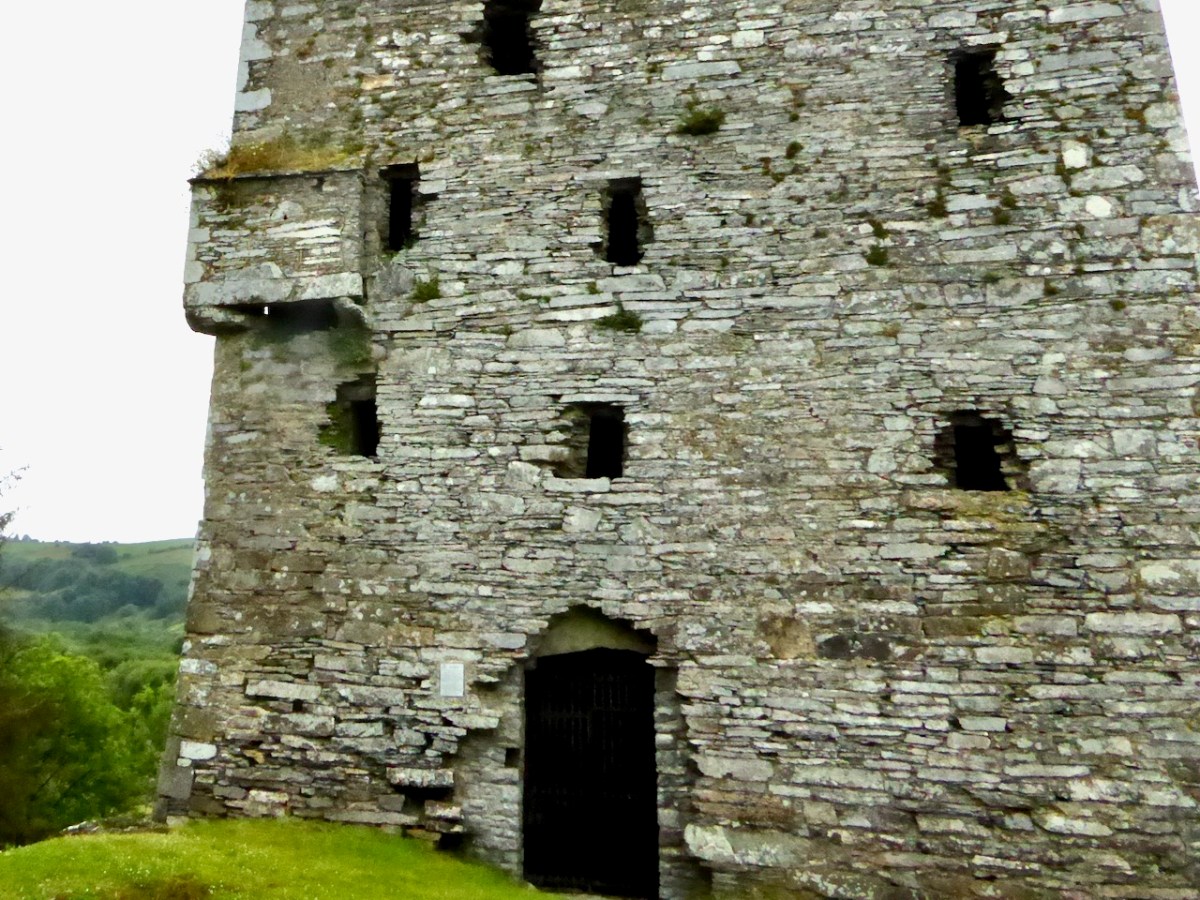
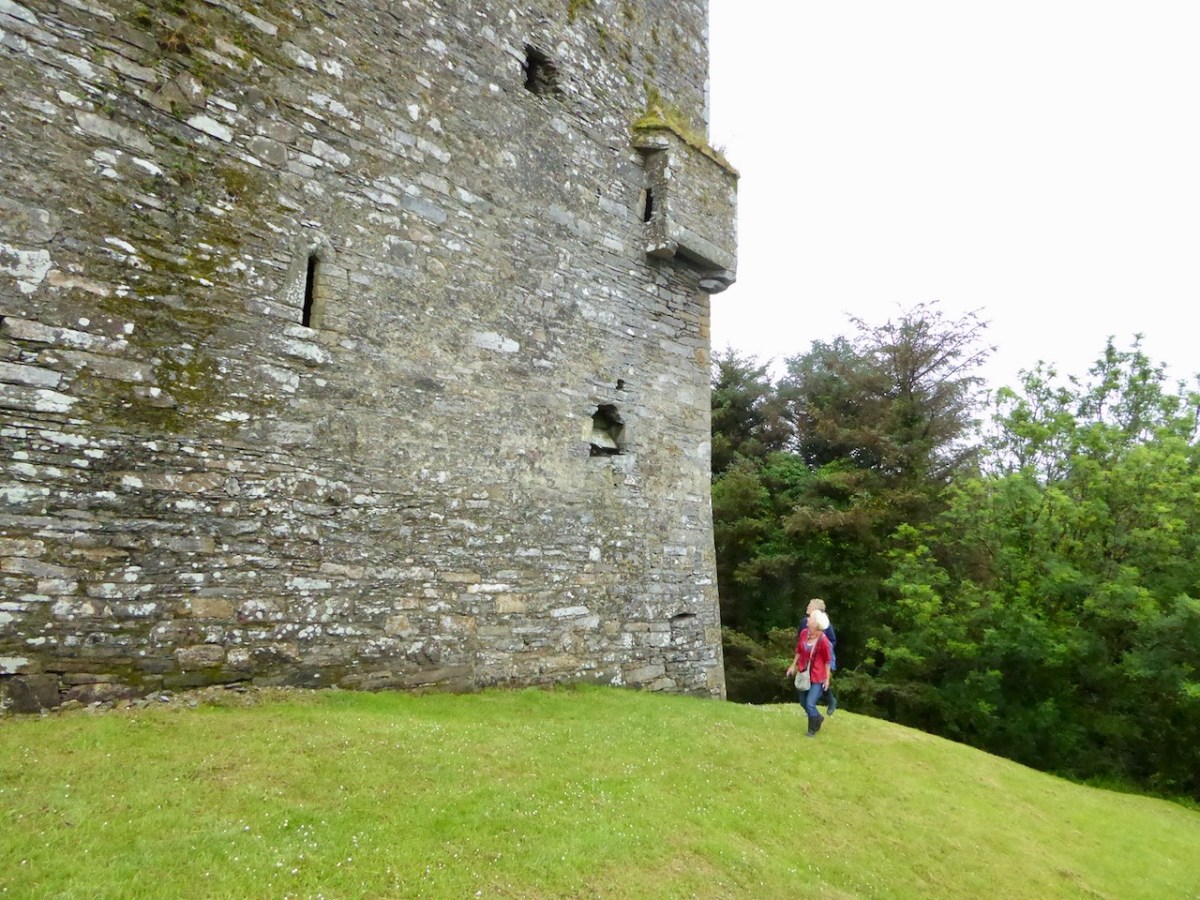
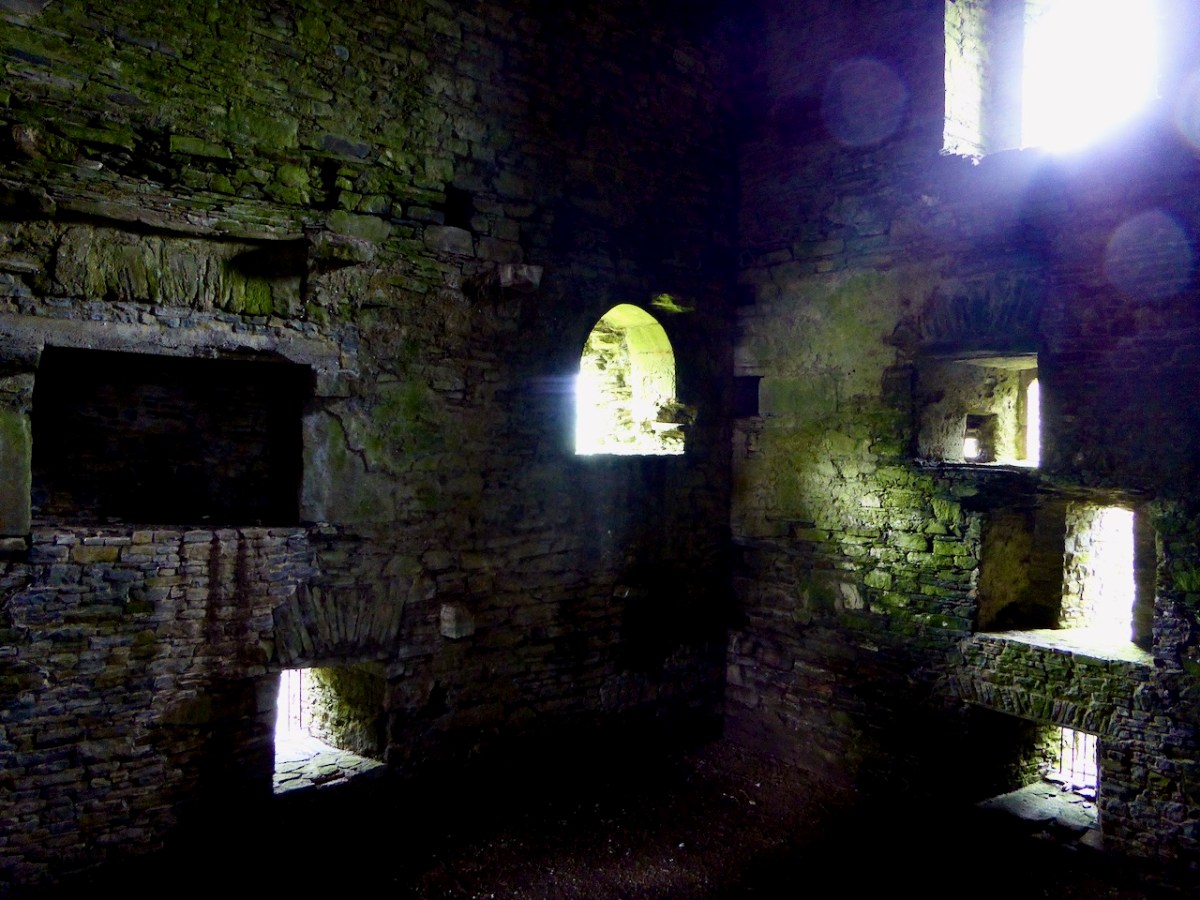
From Castleventry we travelled on to Ballinvard Castle, just outside Rossmore, where the owners, Pat and Mary Daly had kindly agreed to meet us and show us the castle, which is in a working farm and not normally open to visit. In the last few years, the ivy has died back due to heavy frosts, and this has allowed a clear view of many of the hitherto-obscured features of the castle. Once again, we were grateful to Con’s expertise as he pointed out various aspects of the building that placed it in the 16th century – a castle of the Hurley (Ó Muirthile) family.

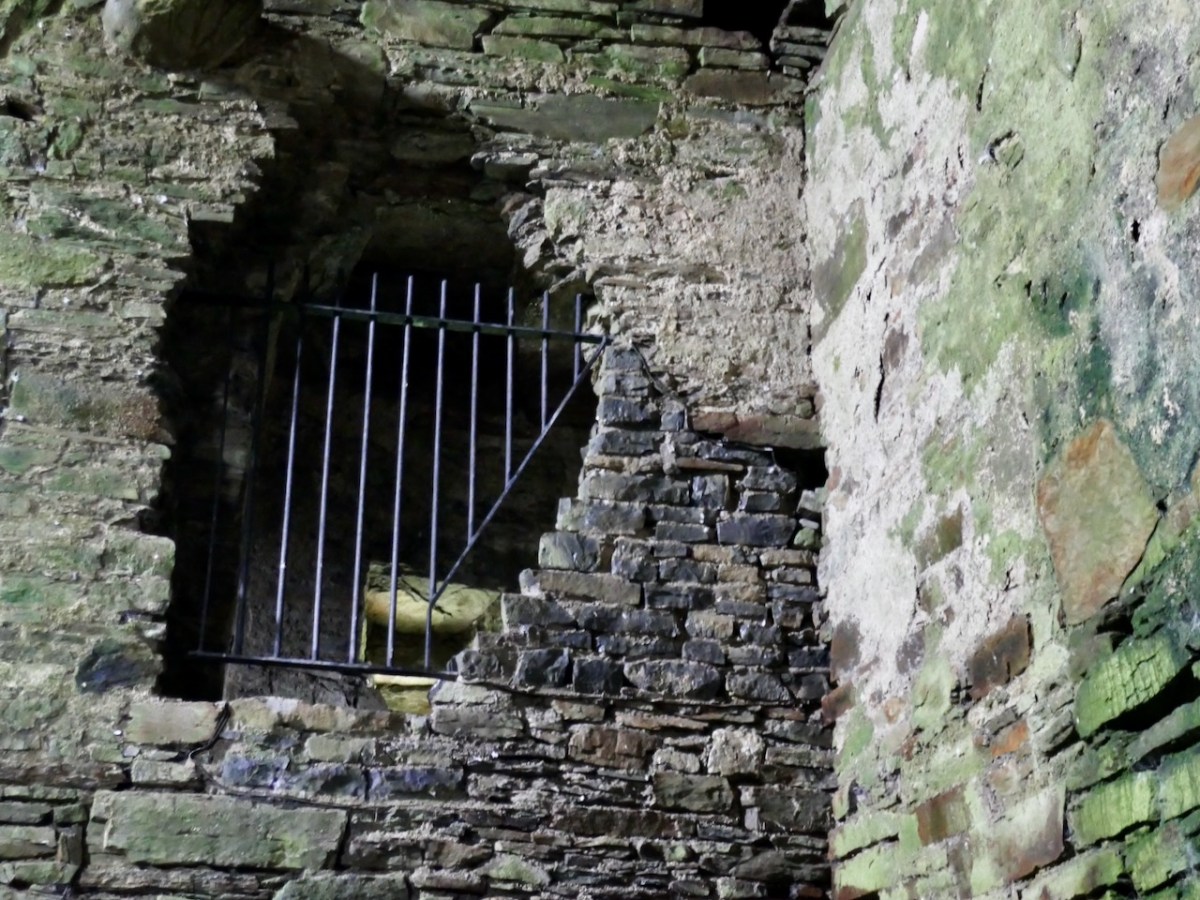
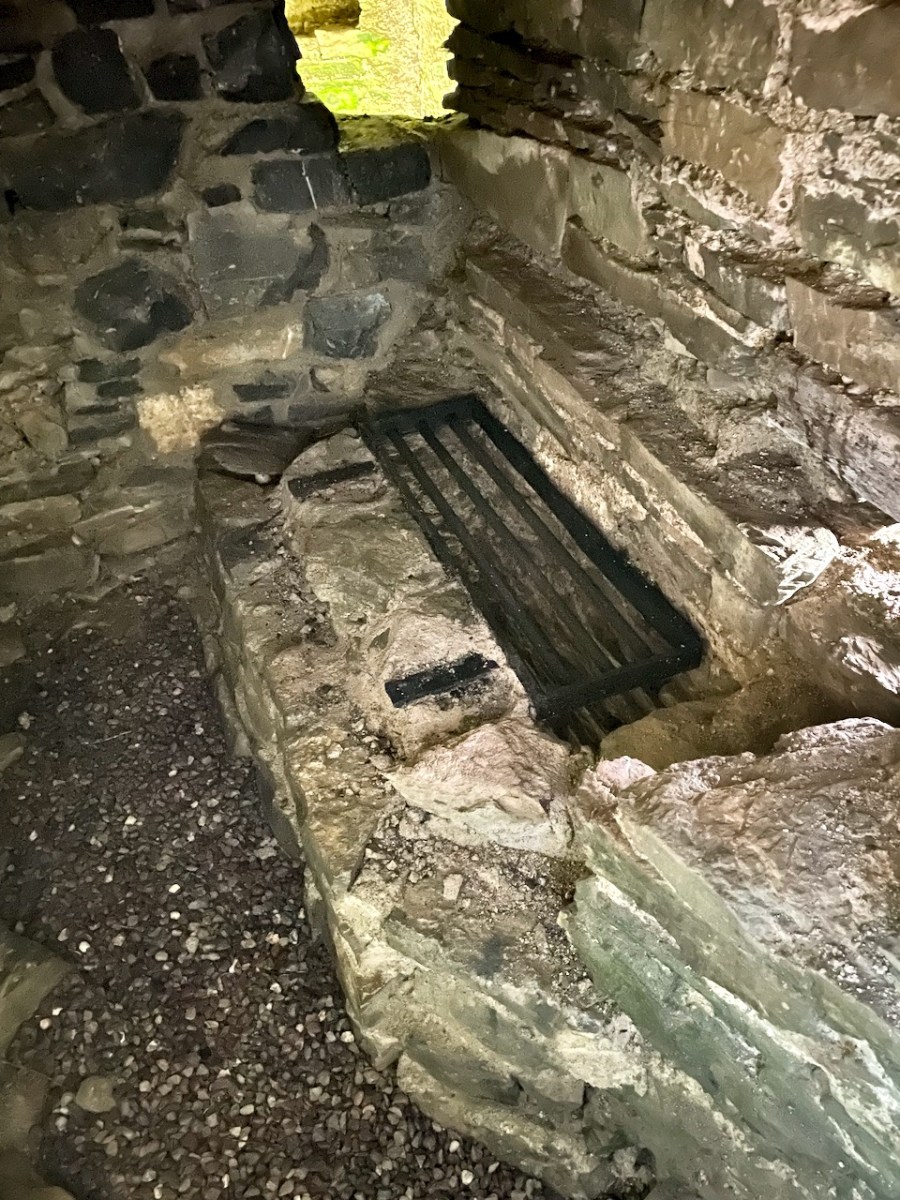
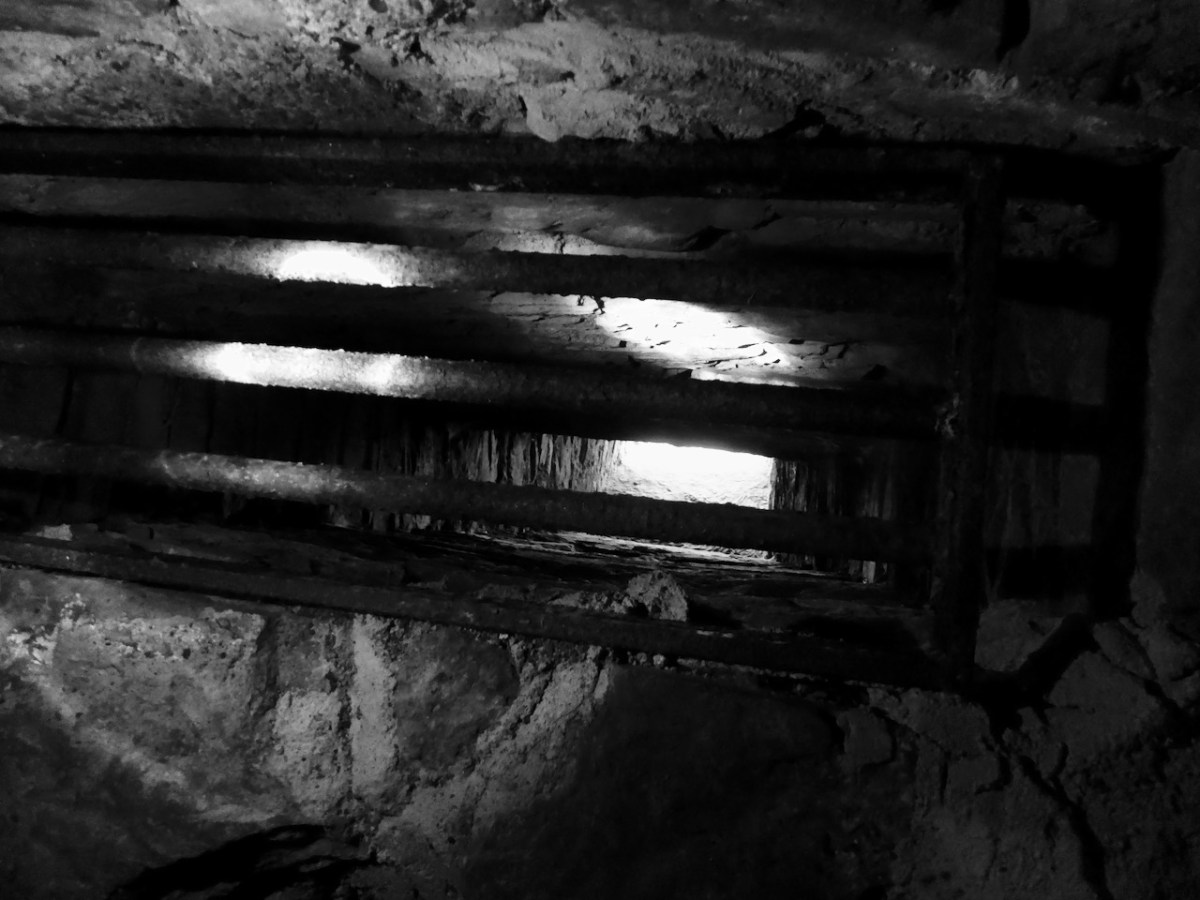
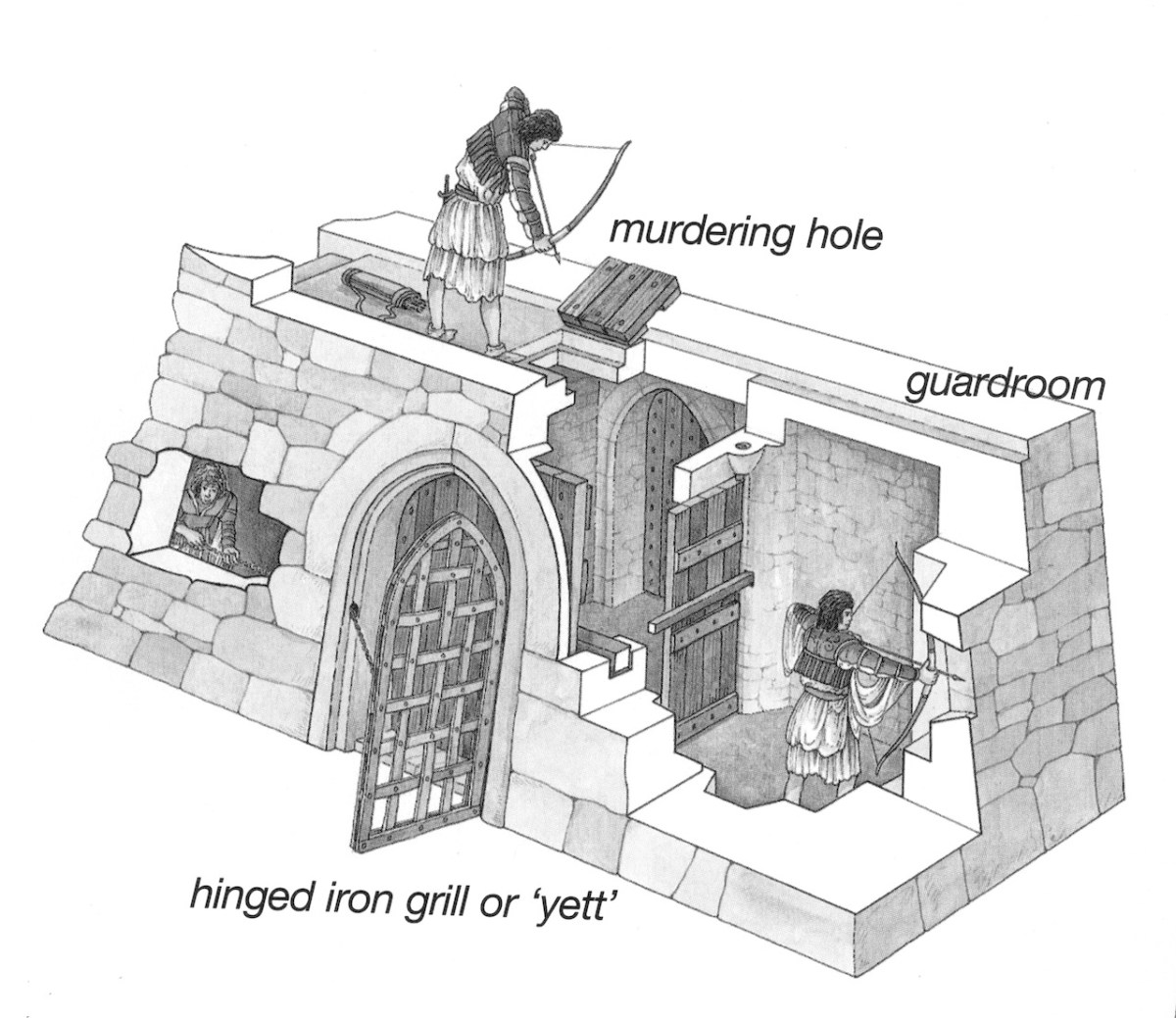
One of those was the workings of the Yett, an iron grill that sat outside the main door and could be closed from inside by way of a hole of the doorway through which a chain was pulled tight from a room inside.

Here’s a illustration of how it works. You can see the same Yett hole at Castle Donovan, which has many features in common with Ballinvard. 

Dan had one surprise for us – he brought us to the townland of Caherkirky, to a double boulder burial with a very tall standing stone. In a previous visit to this site he thought he detected cupmarks – and he was right! There was one on the boulder burial, and several on the standing stone. See Robert’s post today for another example of the same kind of monument. It was a good feeling to be back again with my beloved rock art!

Knowing my penchant for popping into every church I pass, Dan’s final treat for us was the church in Rossmore, but this time, instead of the stained glass, what he wanted me to see were the Stations of the Cross. Obviously Italian, they were painted, and the artist had let his/her imagination take flight on the costumes – more like Spanish grandees than the biblical characters we’re used to. Not like any I had ever seen before and a real surprise.

Thank you, Dan and Sean – it was a great and eclectic day, and who knows what will come out of Con’s close examination of Castleventry – stay tuned!