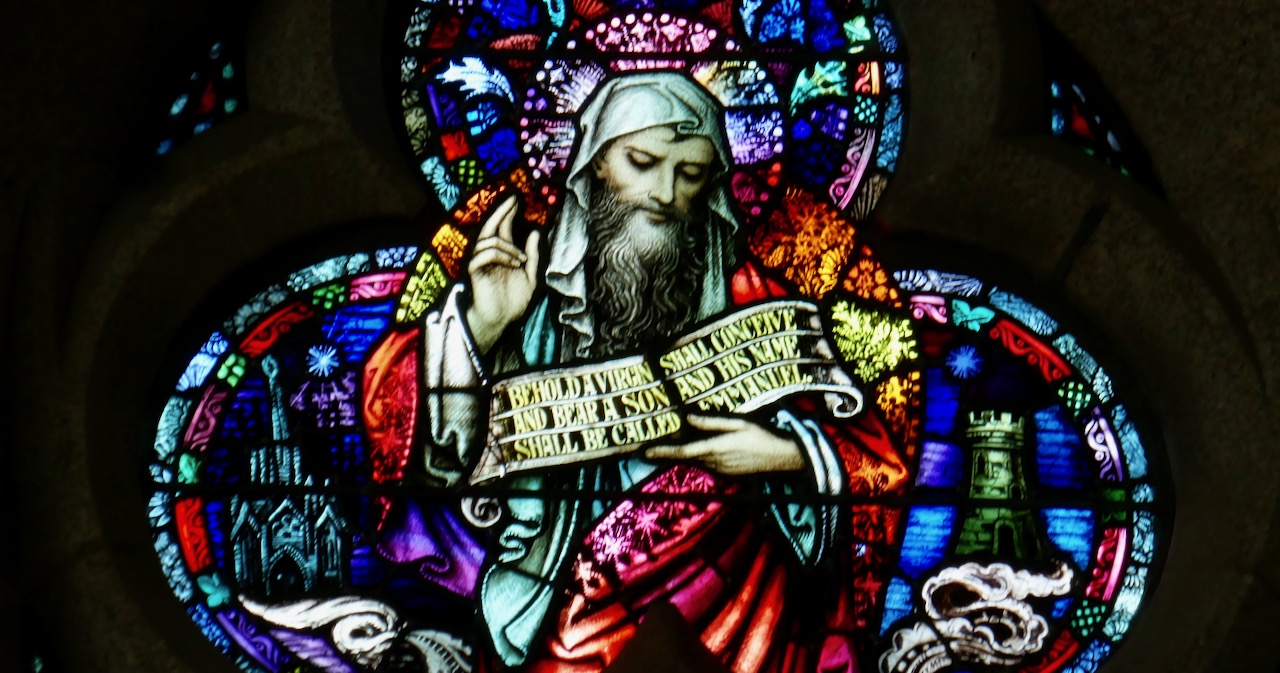
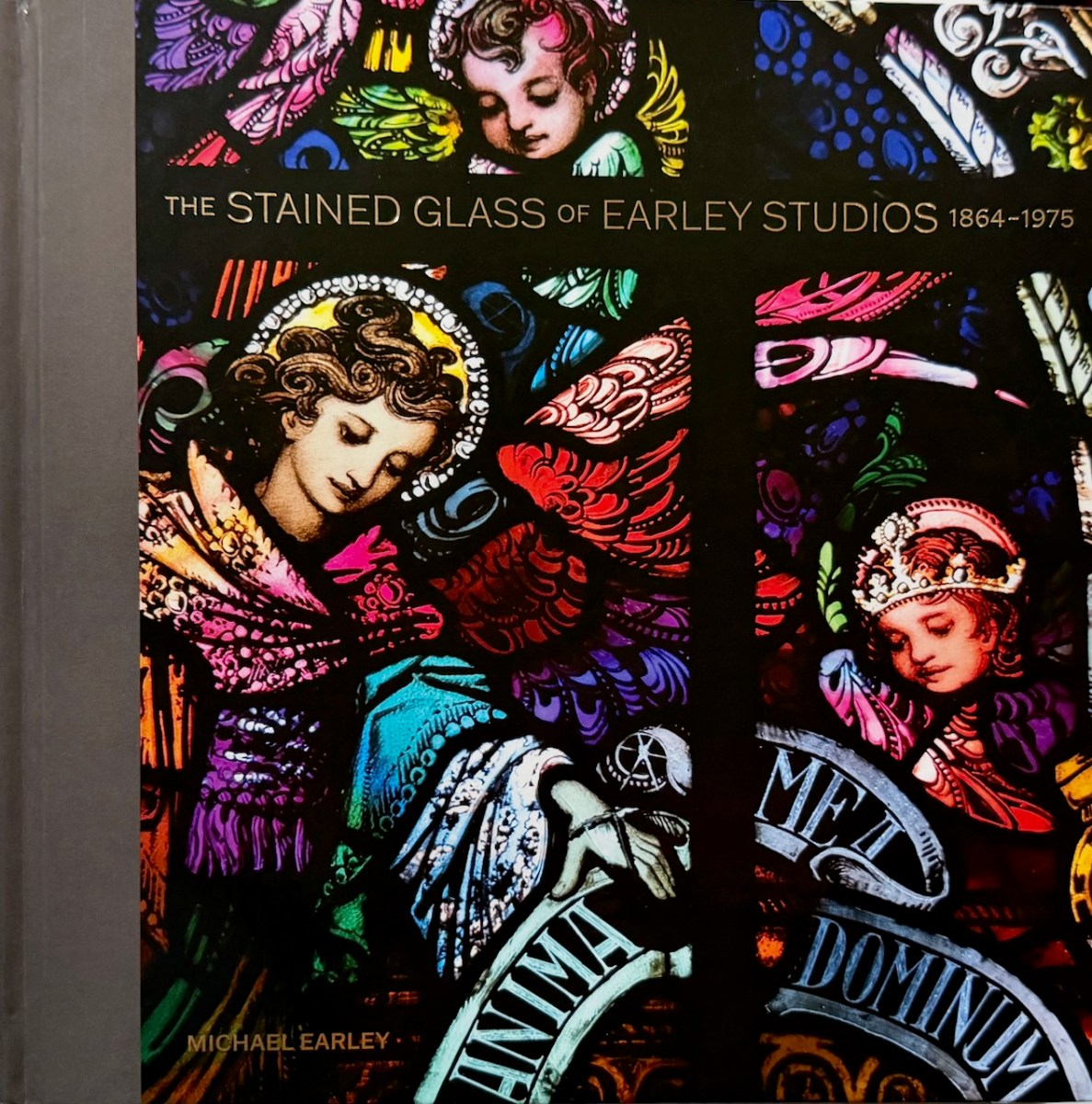
This week I helped to launch a major new stained glass book into the world – such an honour! The book is The Stained Glass of Earley Studios, and it is the work of Michael Earley, retired surgeon and the 6th of 7 generations of the same supremely talented family, who, no matter where he goes in Ireland, finds himself in churches with Earley windows.
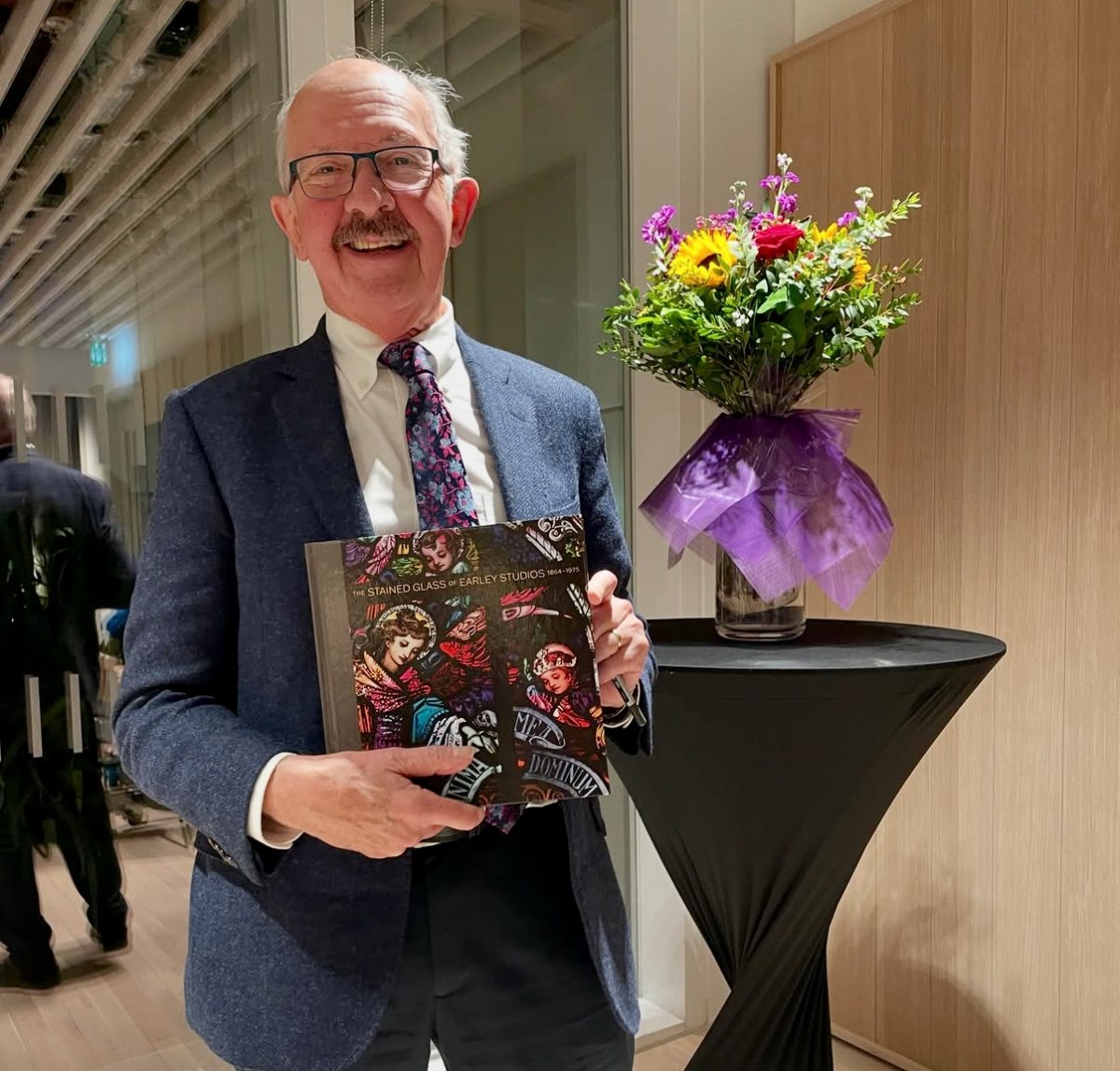
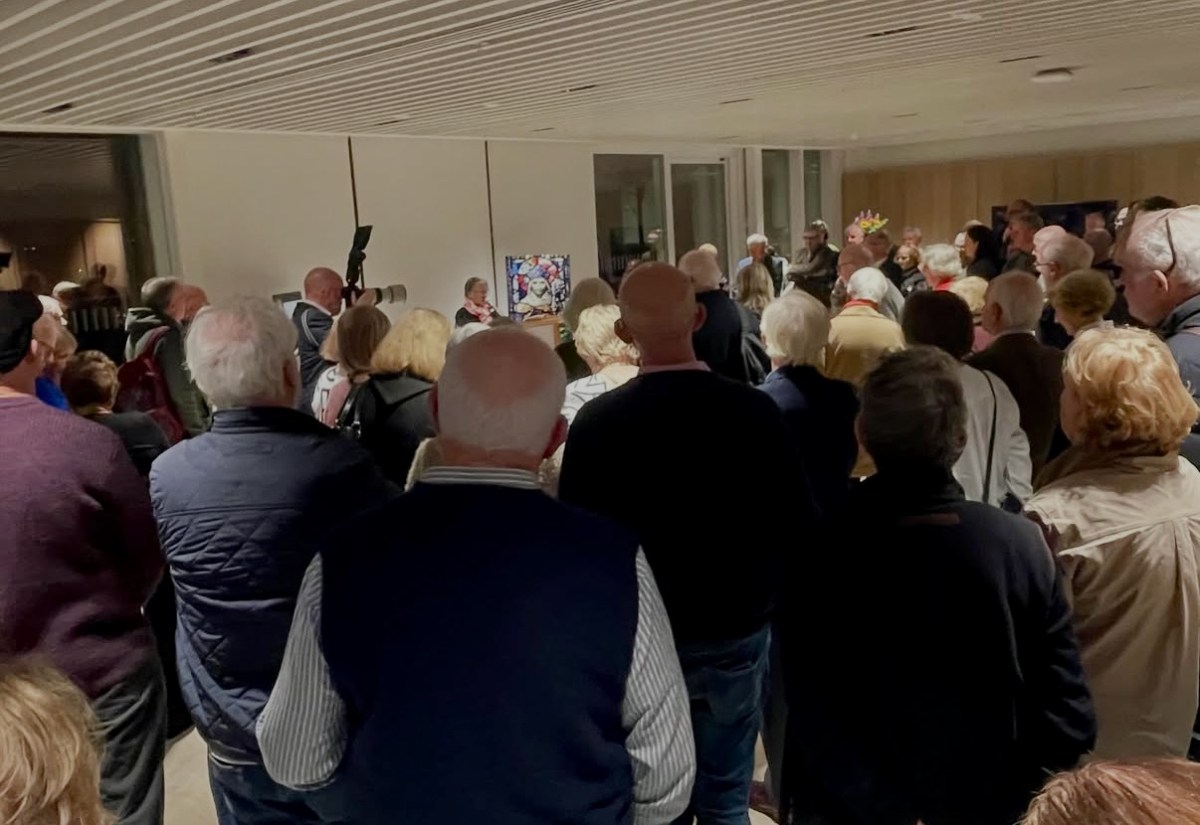
The book is from UCD Press and they have done a fabulous job of it – it is quite sumptuous. I have illustrated this post with my own photographs but the images in the book are mostly by the amazing Jozef Vrtiel, Grand Master of stained glass photography. The launch was in the College of Surgeons on Stephens Green in Dublin and it was great fun. Michael is related to half of Dublin and the other half are his friends and colleagues, so it was a noisy and jolly affair. (That’s me at the podium in the shot below.) He has spent several years on the research and the writing, and along the way he has been very helpful to me and to all our co-enthusiasts in the world of stained glass studies.
To enter a church full of stained glass and to realise quickly that some, most, or all of them, are Earley windows is to acknowledge that they are distinguished by recognisable elements. For me, it’s the colours – luminous blues, purples and pinks in combinations that no other studio seemed able to realise.
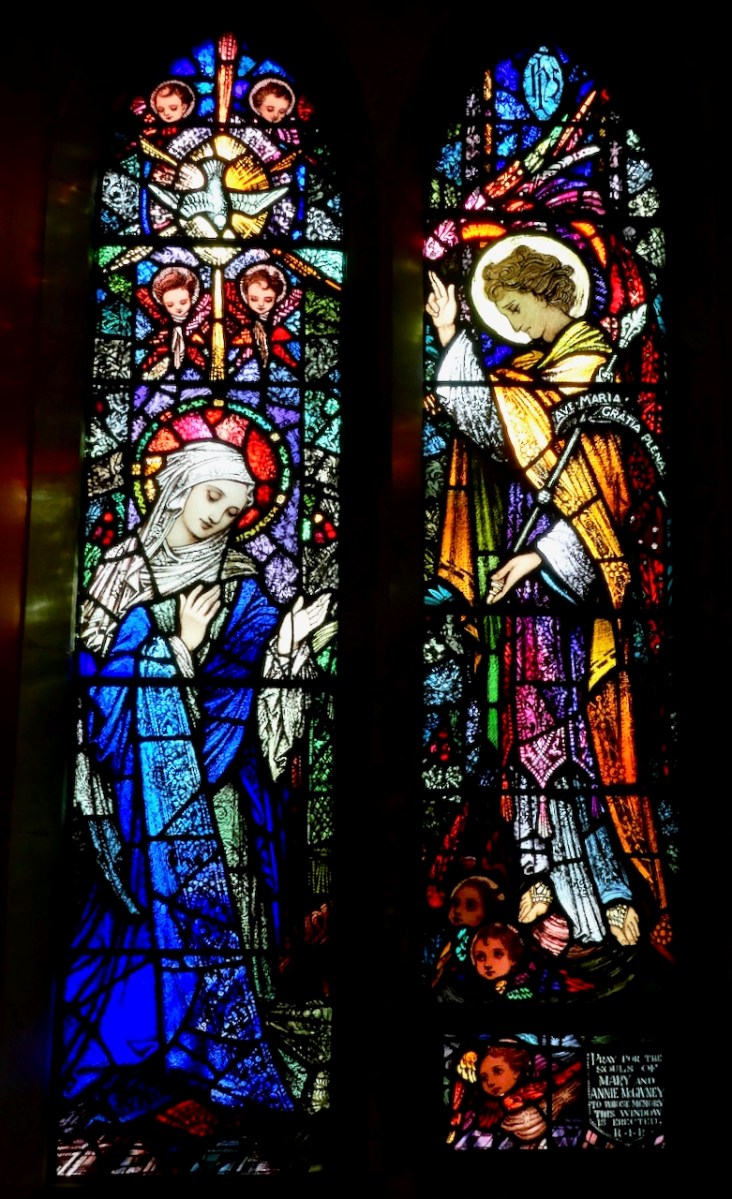
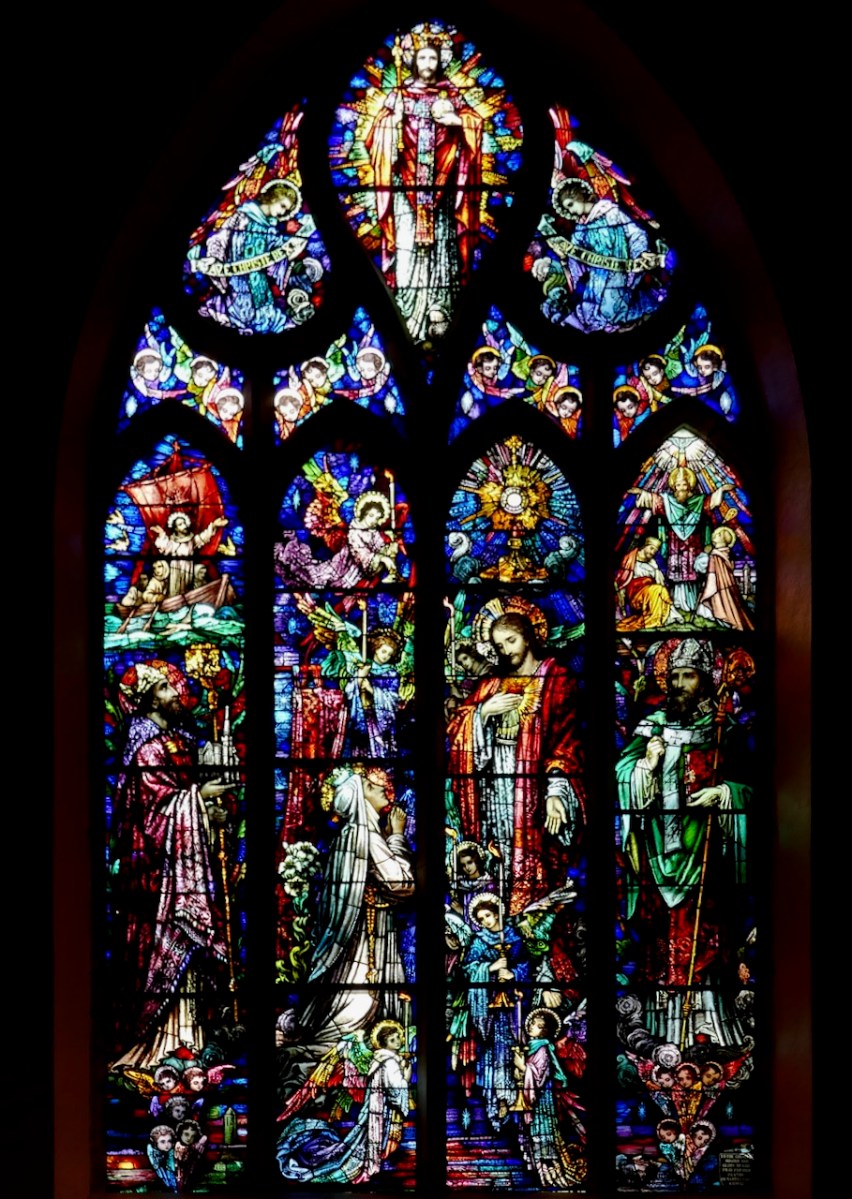
Sometimes it’s the faces – finely drawn, both naturalistic and idealised (somehow that’s not contradictory), full of expression. Often it’s the size and complexity. A friend took me to Eyrecourt Church in Galway to see the window that transfixed him as a child (below) and I could see instantly what he meant. We stood for ages picking out details and stories that filled the large four-light window. Christy – you will be glad to know that your window is in the book!
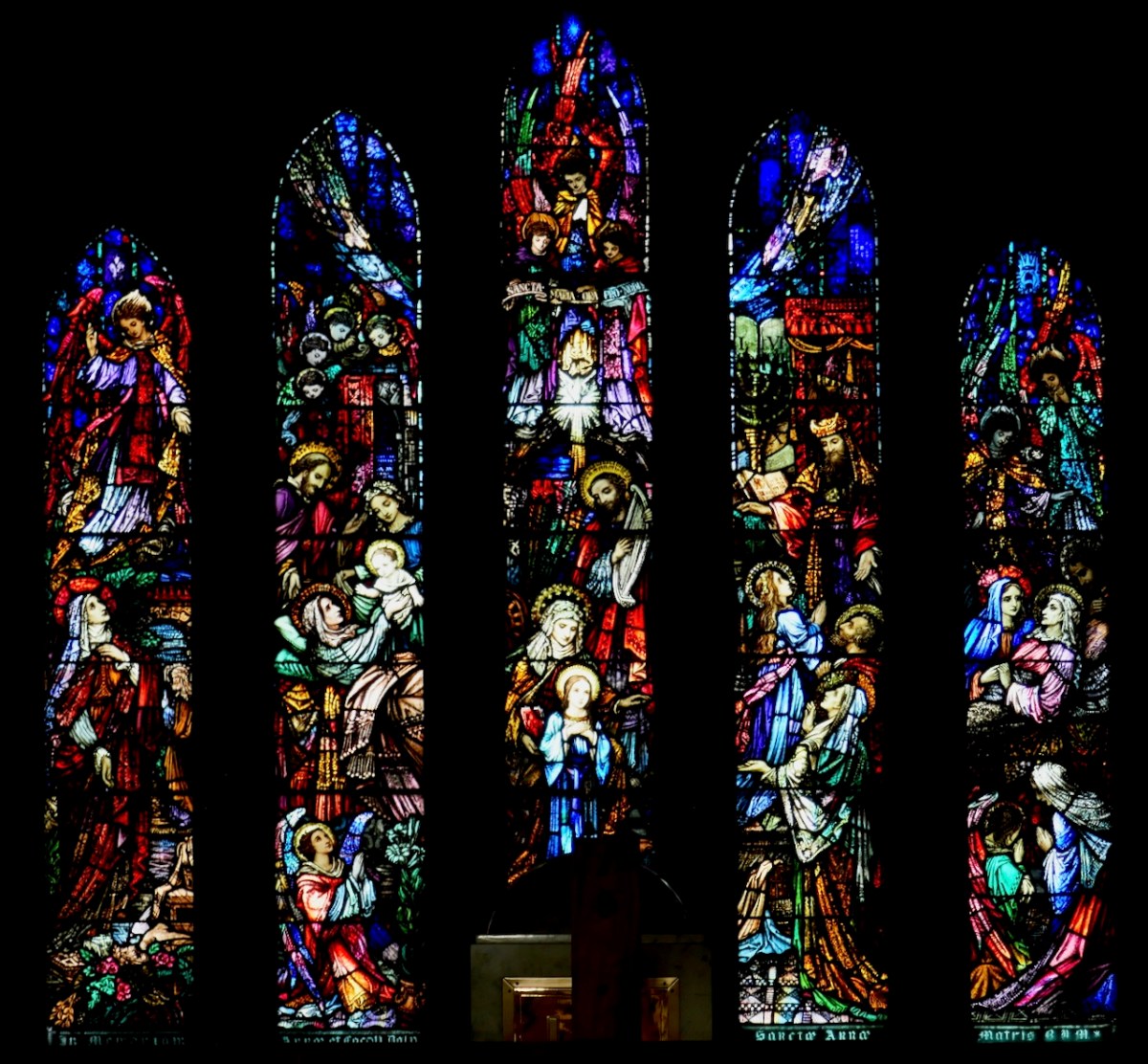
The window below is the St Anne window in Blackrock Church in Dublin – but what else can you pick out in it? The Earleys, like other stained glass studios, had a House Style: idealised, naturalistic religious figures in traditional compositions the faithful already knew. The aim was to aid devotion, not to challenge. It was influenced by the Nazarenes and Renaissance and Baroque paintings.
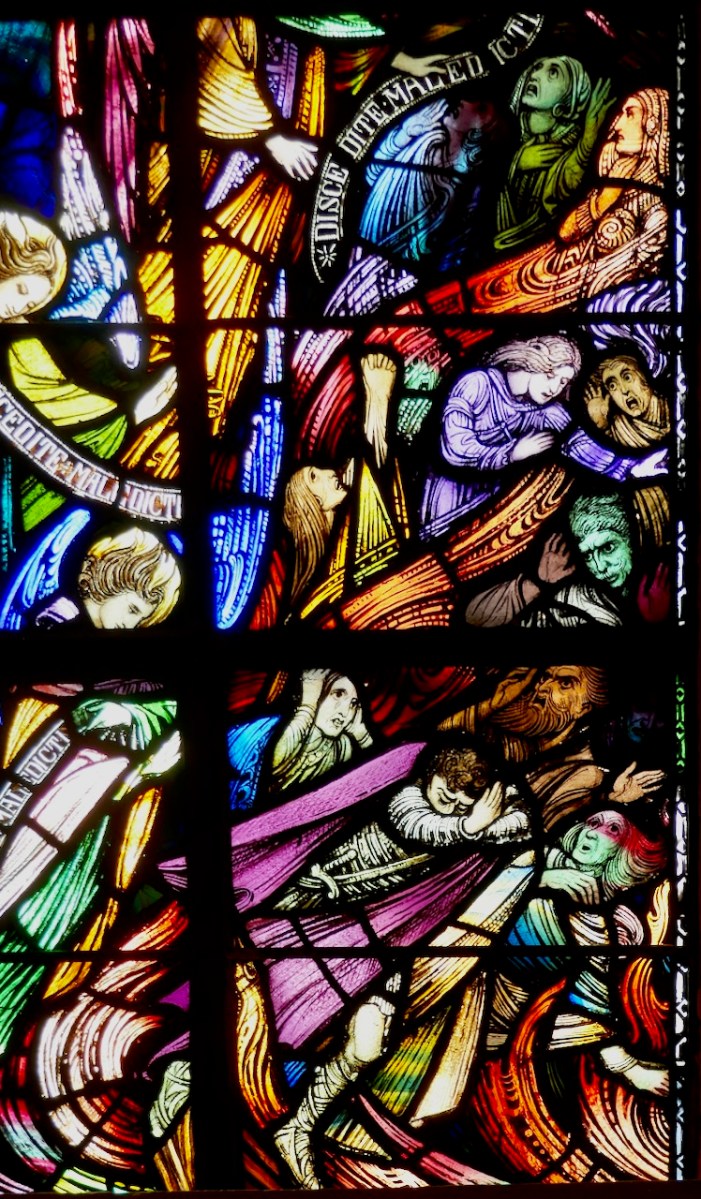
Thomas Earley came from Pugin’s circle to establish the firm in Dublin. His nephews John Bishop Earley and William, or Bill, Earley really developed it. Both accomplished artists, they concentrated on their House Style: idealised, naturalistic religious figures in traditional compositions the faithful already knew. The aim was to aid devotion, not to challenge. William’s Last Judgements window in Sts Peter and Paul’s Church in Athlone is a great example of his style.
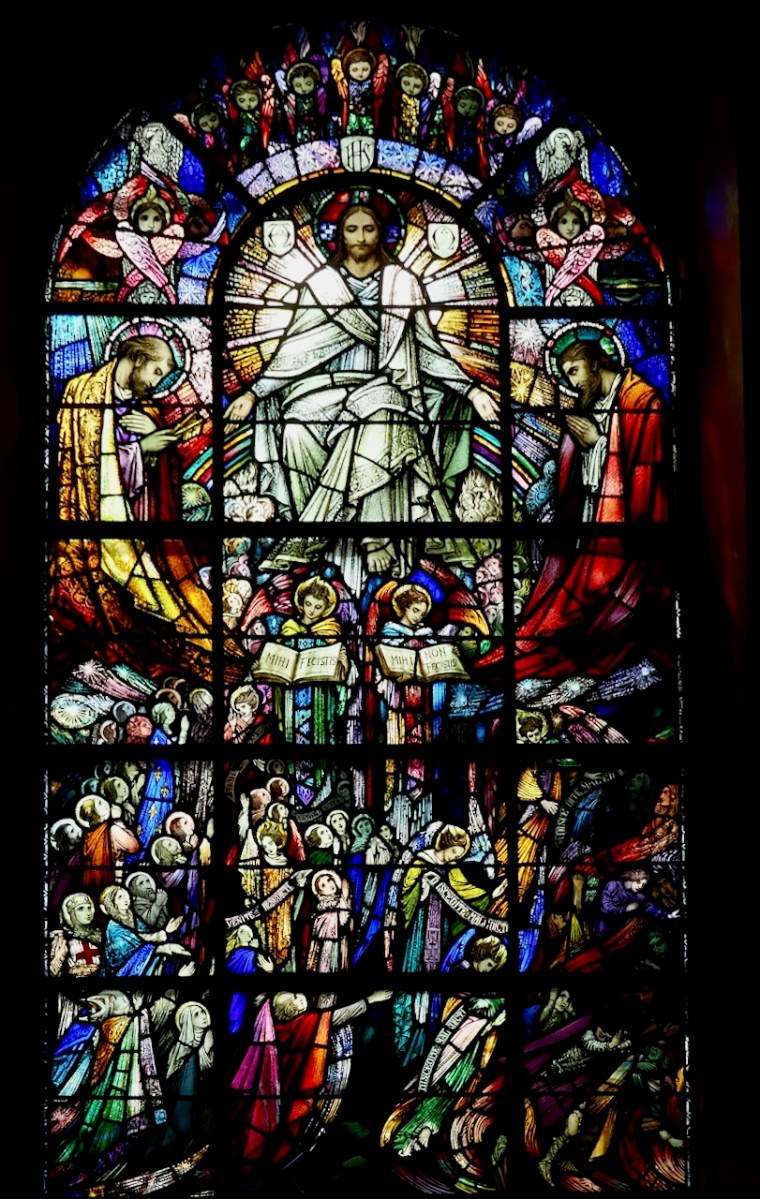
Of this window, Michael says
William found humanity in its variety of emotions an endless source of inspiration and used his abilities of observation to convey expressions ranging from those of despair, need, and desperation, to those of adoration, awe, and serene contemplation. An example of this range of emotion is displayed in the ‘Day of Judgement’ window in the SS Peter and Paul Church in Athlone, County Westmeath (1937), where the damned and the saved are shown in stark contrast . . . Some of the faces are rendered in a caricature-like manner in order to show emotions in simplistic terms that can be visible from a distance.
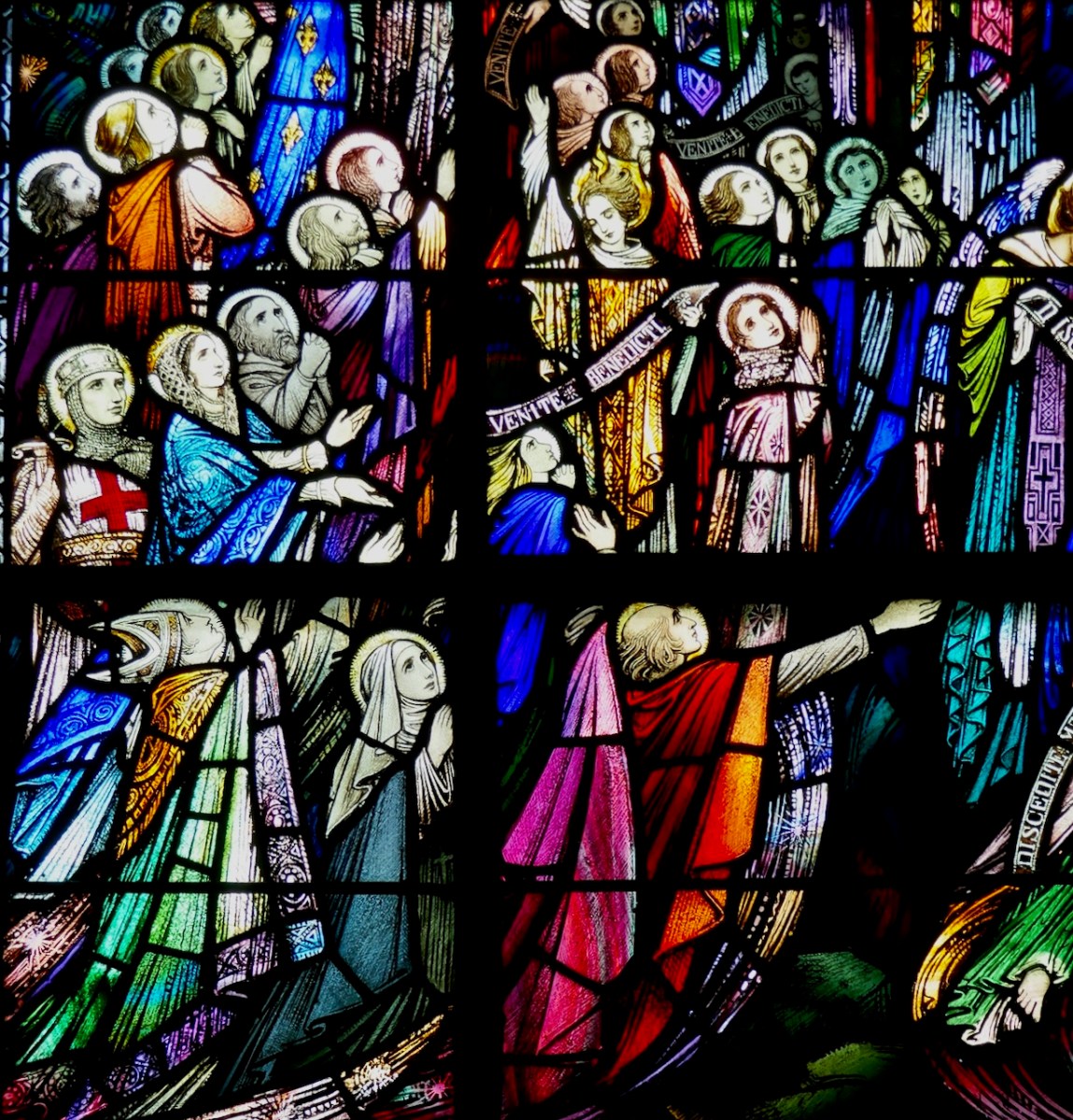
Here are the righteous (recognise any?), and below are the damned.
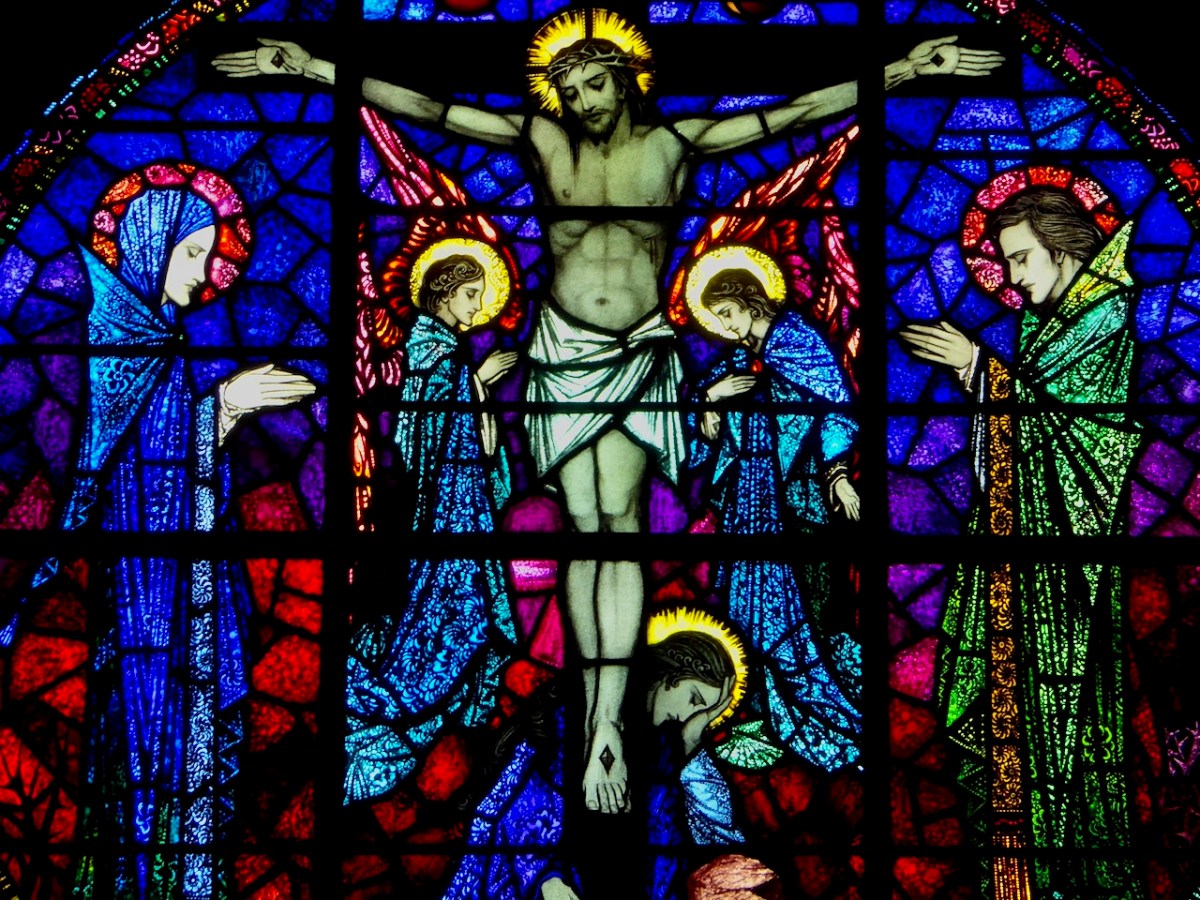
Their House Style was influenced by the Nazarenes and Renaissance and Baroque paintings. John Bishop introduced notes of Celtic Revivalism and Pre-Raphaelite floral ornamentation. Leo, Michael’s father, admired Harry Clarke and Richard King, and we see that reflected in some later windows. For example, the window below is by Leo, but I mis-identified it for a long time as a Harry Clarke Studio window. Can you see why?
Each window was built on quality materials and highly skilled techniques. Michael presents this craft as integral to the House Style, not just as method. Michael also shows us that their business was indeed run along Arts and Crafts principles. The two brothers, John and William designed, cartooned, and supervised every aspect of window production.
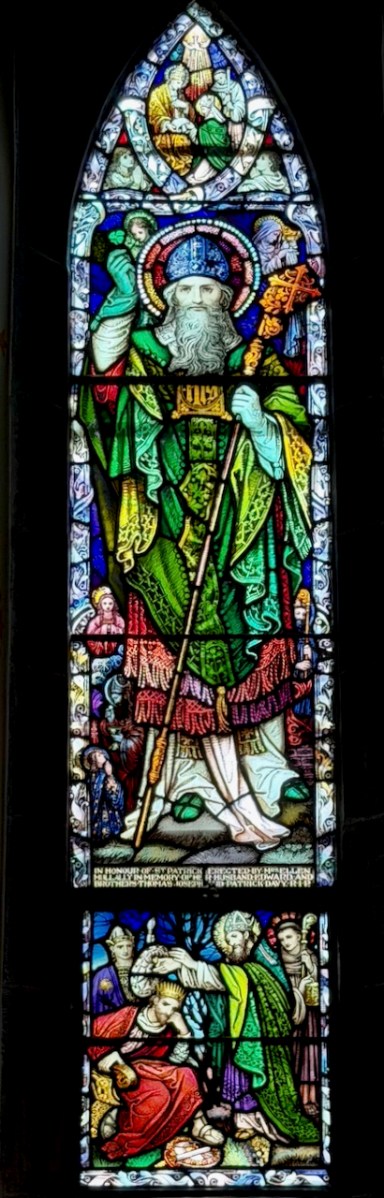
Above is a St Patrick window from Templemore. While their windows were, as Michael puts it, “of an orthodox type” there is no disputing that they were superbly crafted and they were beautiful. They were also packed with detail.
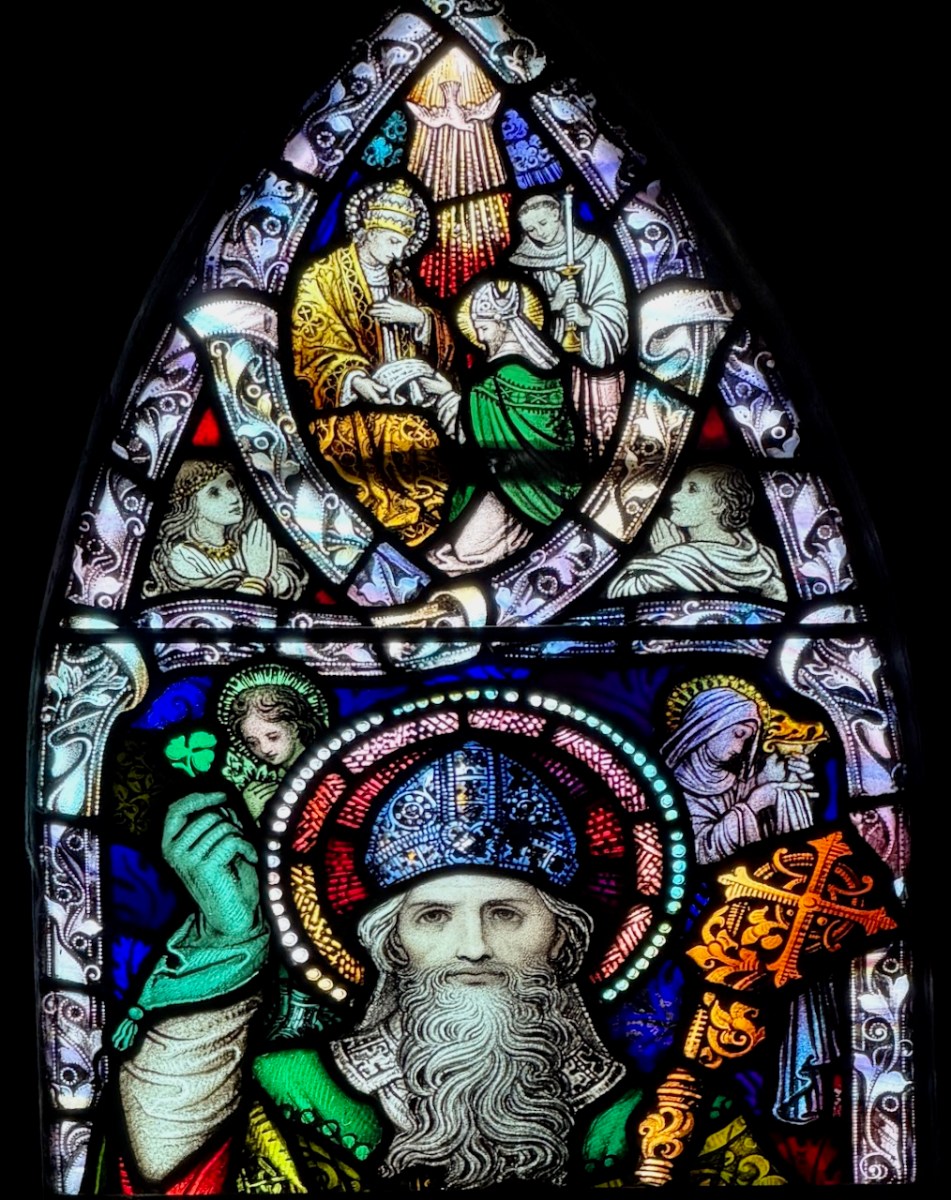
There, in one window, was every major Patrick story. The saint occupied the main panel, shamrock raised in one hand, elaborate crozier in the other. Every inch of his flowing and layered garments was painted, stained and etched. St Benignus peeped from behind one side of his halo and Brigid tended her lamp on the other side. At the top, Pope Celestine gives Patrick his commission.
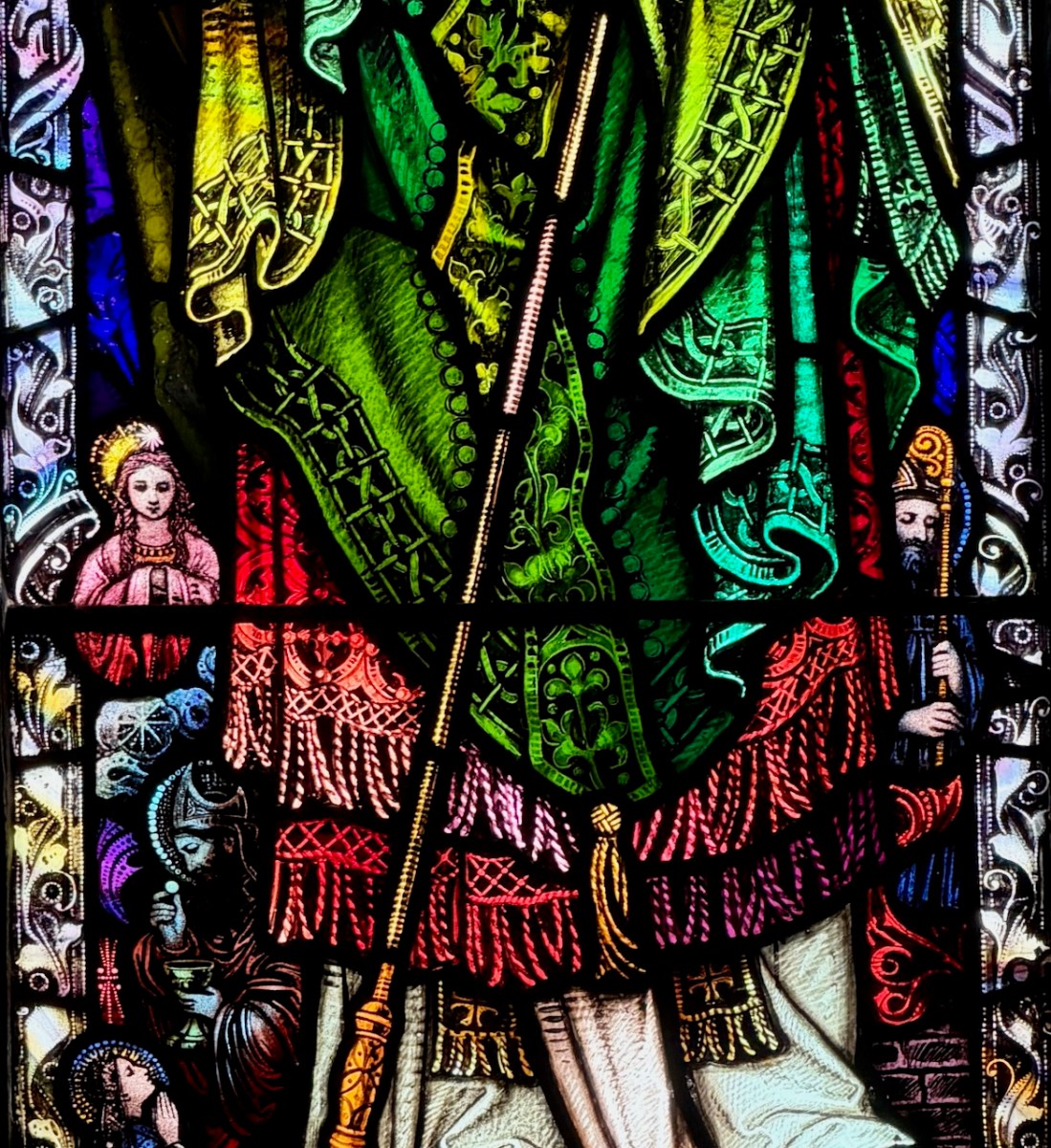
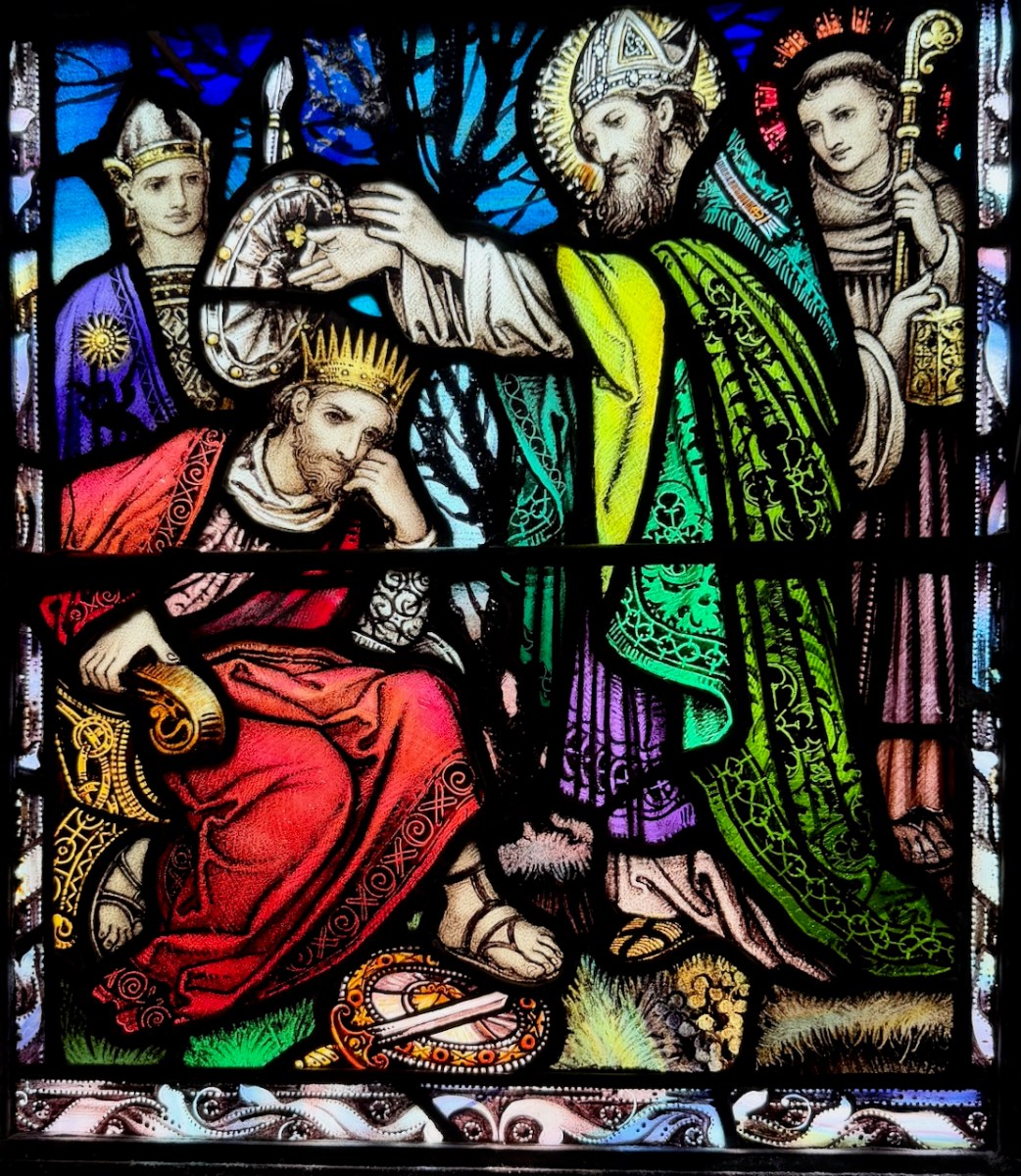
Lower down, he manages to light the Paschal Fire on one side and baptise Eithne and Fidelma on the other. Finally in the Predella, he converts a rather grumpy-looking King Aengus.
Michael’s book has wonderfully illustrated for us the complex, hard working, dedicated life of a family of artists and business people – a family that has worked its way into the fabric of Ireland (and continues to do so) in a way that very few families indeed can claim. The work is ongoing: he has not yet identified every Earley window out there. He had counted 839 in Ireland by the time the book went to press, but that figure is already out of date. So if you suspect you know of an Earley window in your parish, send along your photographs to Michael.
Congratulations, Michael, on this outstanding contribution to stained glass scholarship in Ireland. I know it has been a labour of love for you, to retrieve and document your own family history, to celebrate the achievements of all these generations of artists who have made Ireland richer, and to deepen our understanding of our Irish artistic legacies.
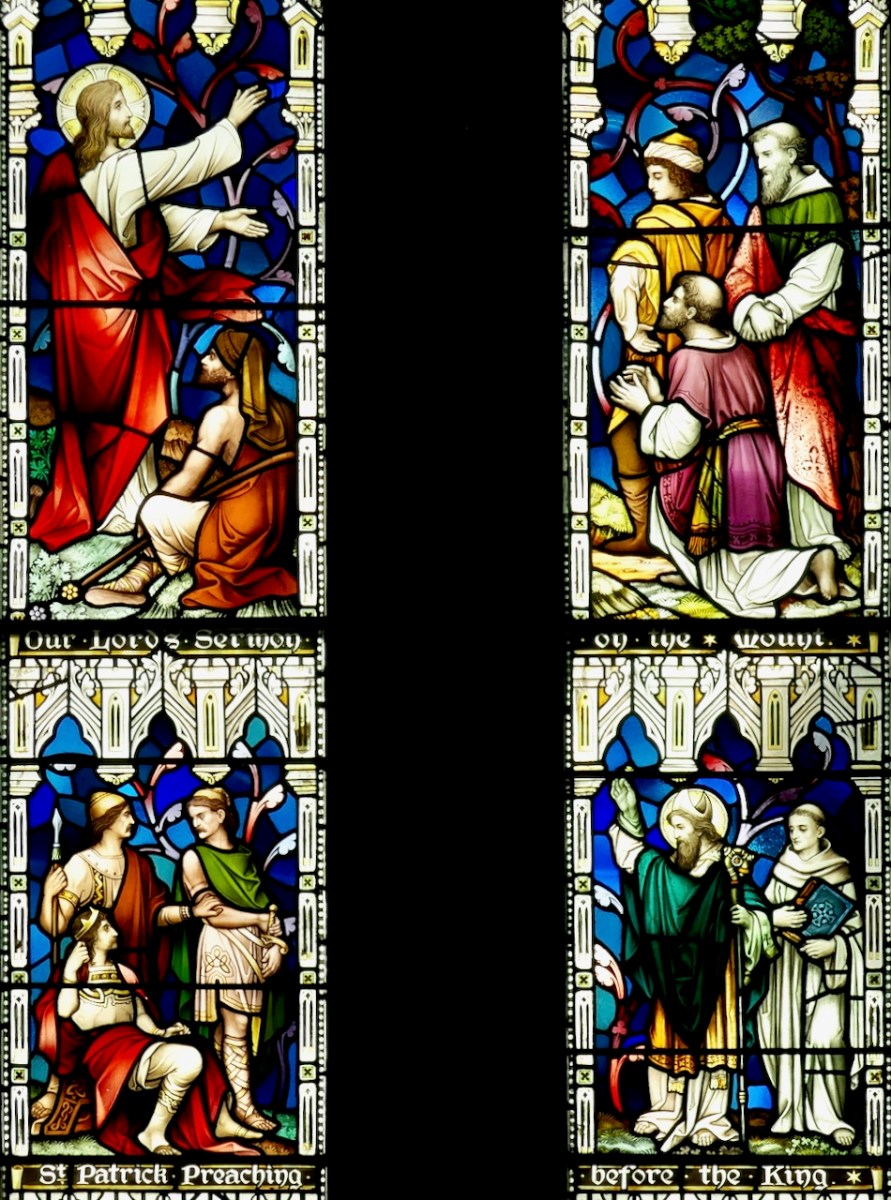
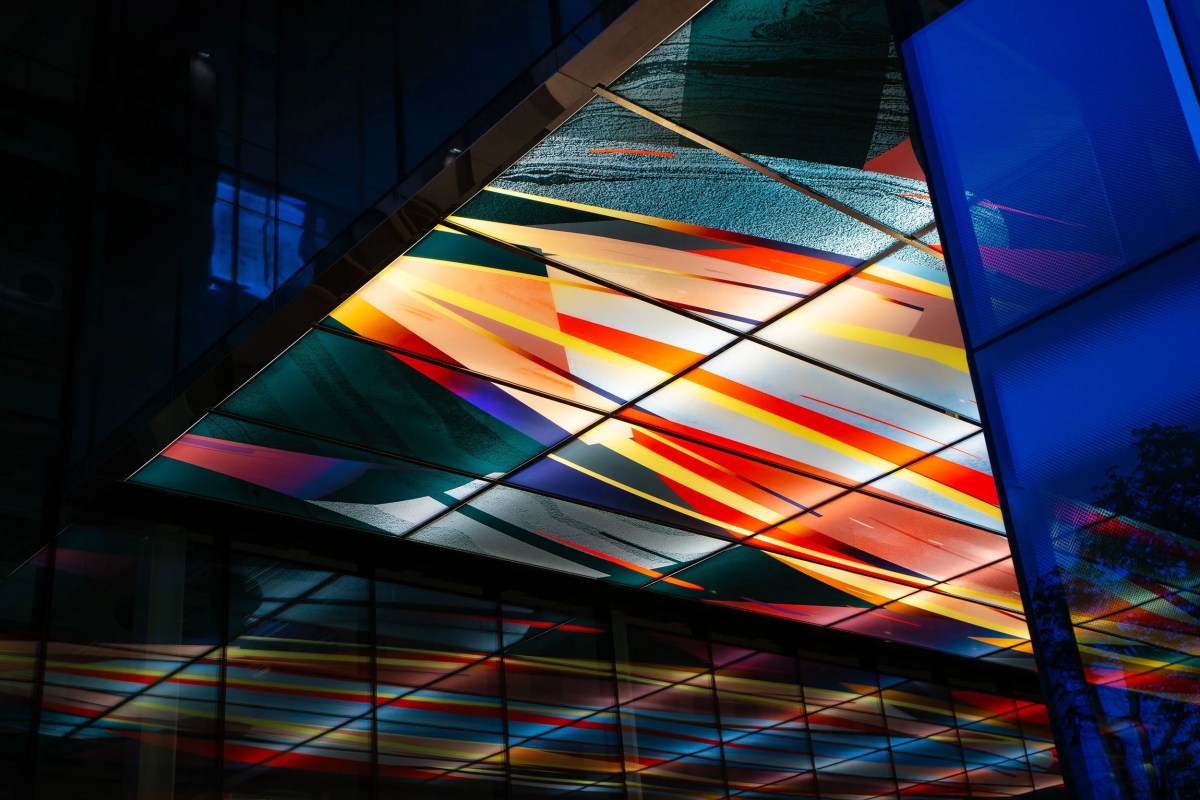
Can you pick out the ‘notes of Celtic Revivalism’ in John Bishop Earley’s window above, from Killarney Cathedral? And before I forget – I said Michael was the 6th of 7 generations of artists. The 7th is his son, James, who has brought the art and craft of glass into the 21st century with huge installations and stained-glass inspired street art. This is his piece for Wilton Park (image taken from James’s website, with thanks).
Thanks to UBC Press for the photographs of the reception, taken from their Instagram page.

