Farewell Nead an Iolair, and Finbarr and Ferdia and. . .

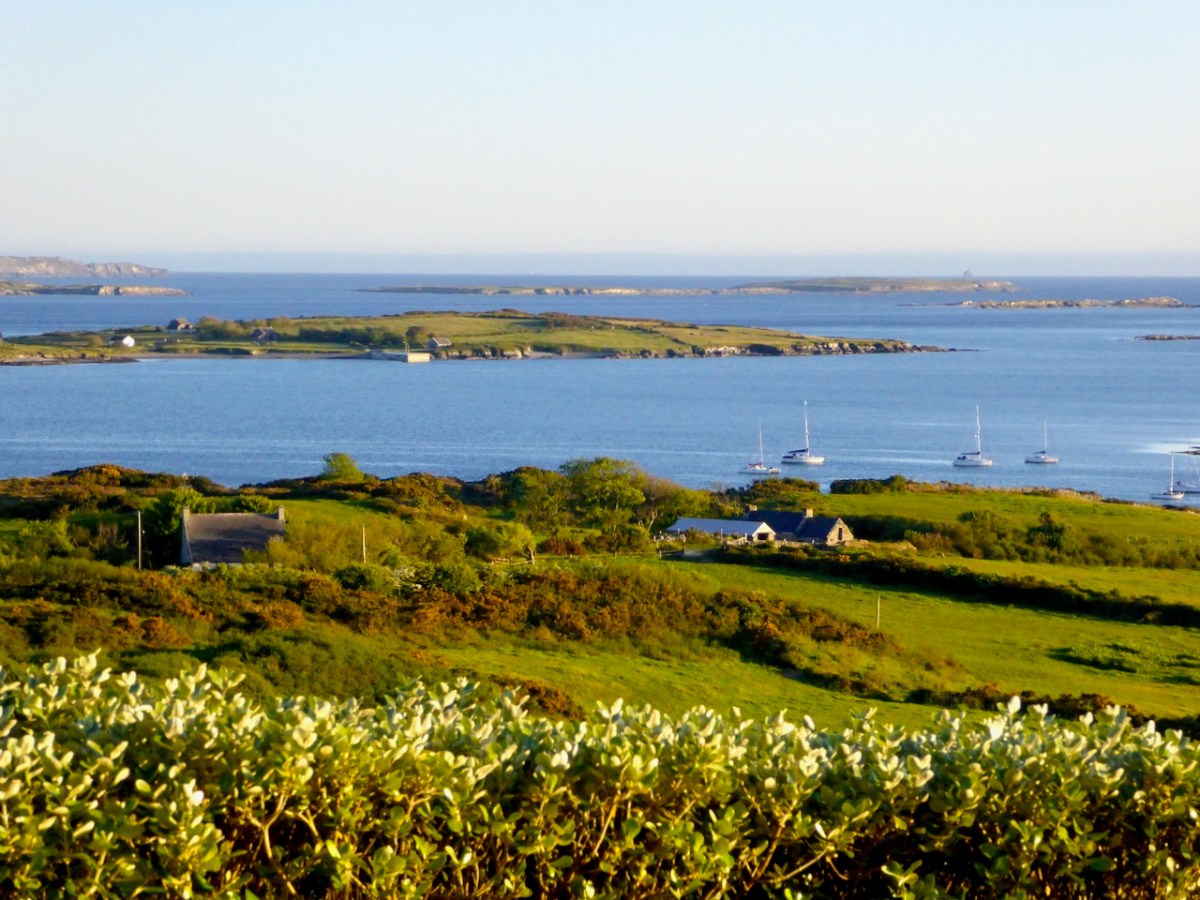
. . . and that view!
Yes, after 13 years of owning this special house, I have sold it to a lovely couple who I know will treasure it like we did. I am moving into Schull (all of 8km away) on Thursday, and I am looking forward to being able to walk everywhere, especially to Amar’s cafe.
Nead an Iolair – it means Eagle’s Nest and was Robert’s choice of a name for the house – has been the subject of many of our posts and as a final honouring of the house and the acre it sits on, here is a round-up of some of the posts we have written about it all, over the years.
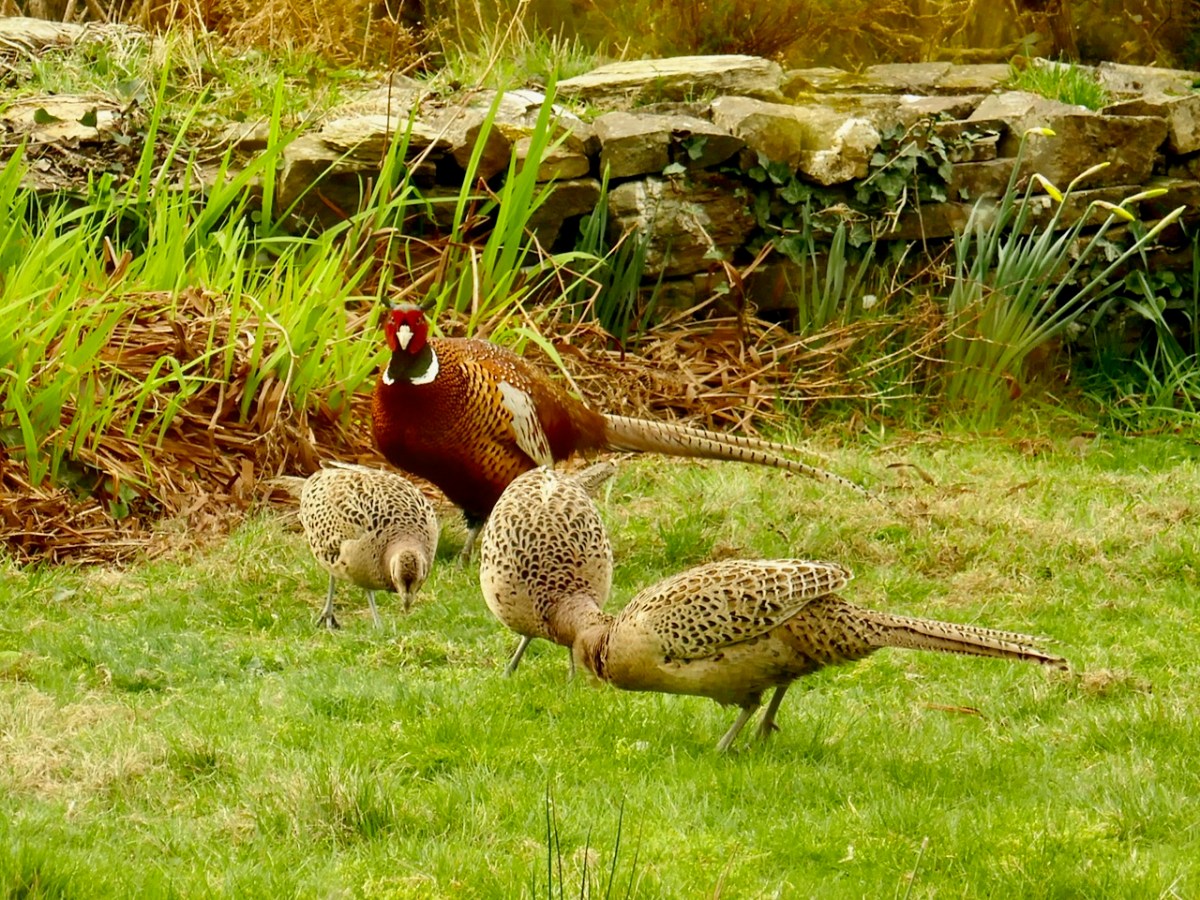
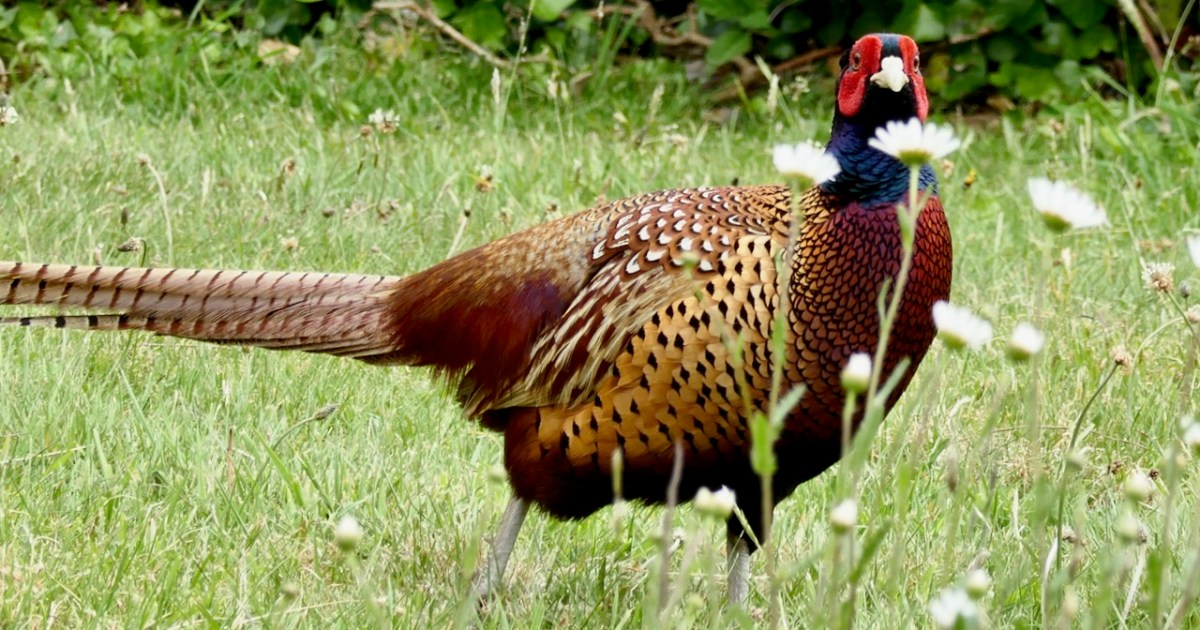
Although we have kept no pets, we are far from deprived of the company of animals. Finbarr the Pheasant, for example – our heads tell us it cannot be the same bird all these years, but our hearts just think that we have looked after him so well that he has adopted us. He has had up to four wives – there are currently two and it has kept him busy, herding and courting them and fending off other males. All played out in front of our living room window.
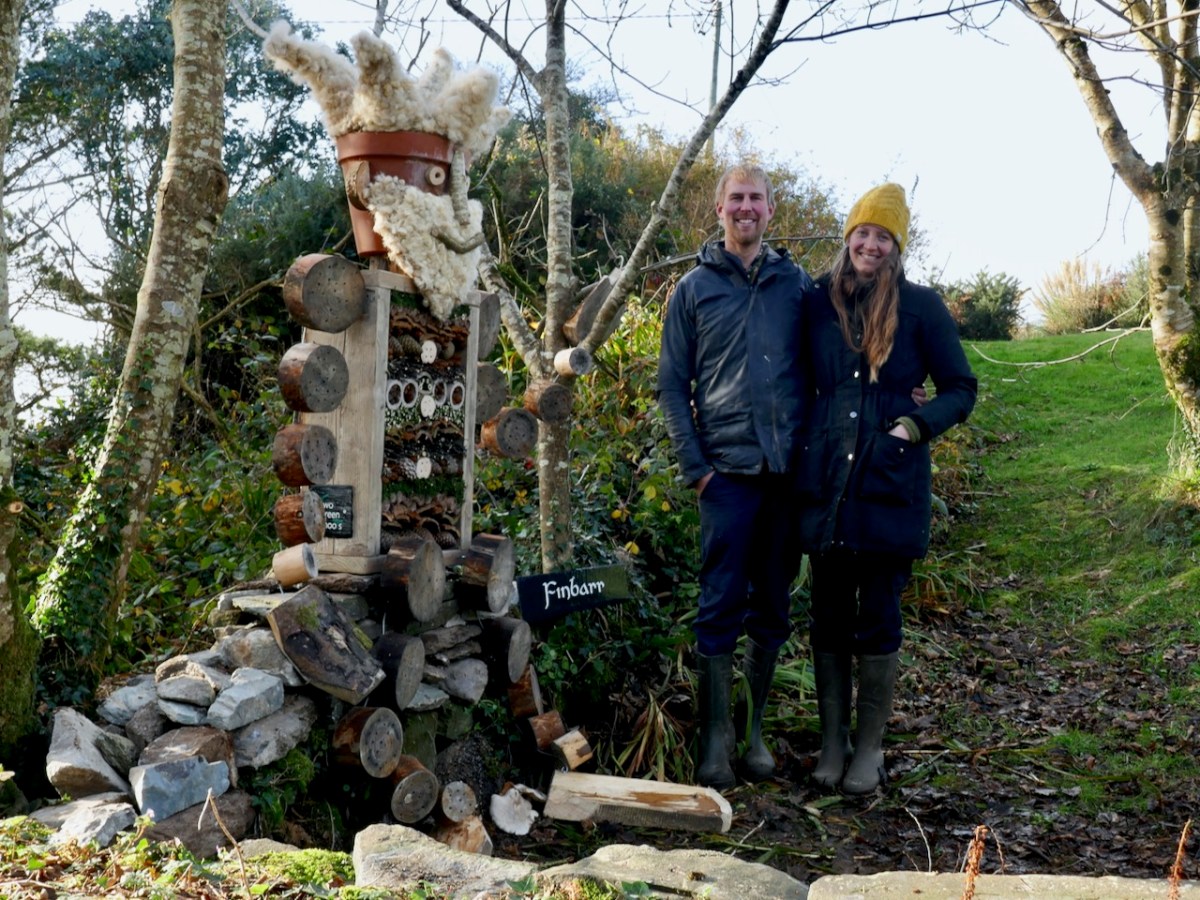
And let’s not forget our other Finbarr, Our Lockdown Mascot, the bug hotel designed and installed for us by Kloë and Adam, of Two Green Shoots. He’s still there – say hello if you pass.
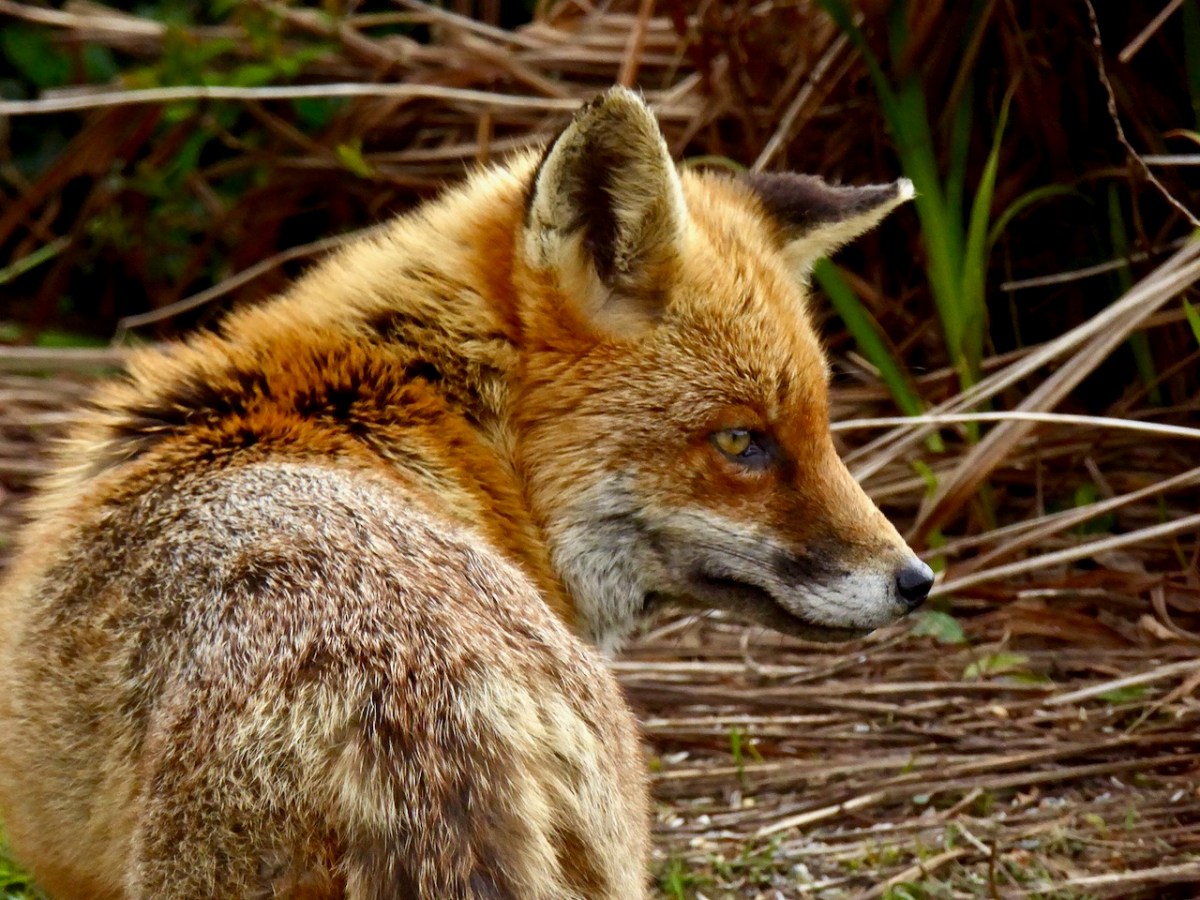
And we still miss Ferdia – the friendly fox who would eat out of our hands (anything except broccoli) and who loved to sit on the terrace while Robert played his melodeon. Occasionally another fox trots by but none have taken Ferdia’s place as a constant visitor.

If I come home in the evening, rabbits are leaping into the hedges as I drive in. When I throw open the curtains in the morning, they are sitting outside my window.
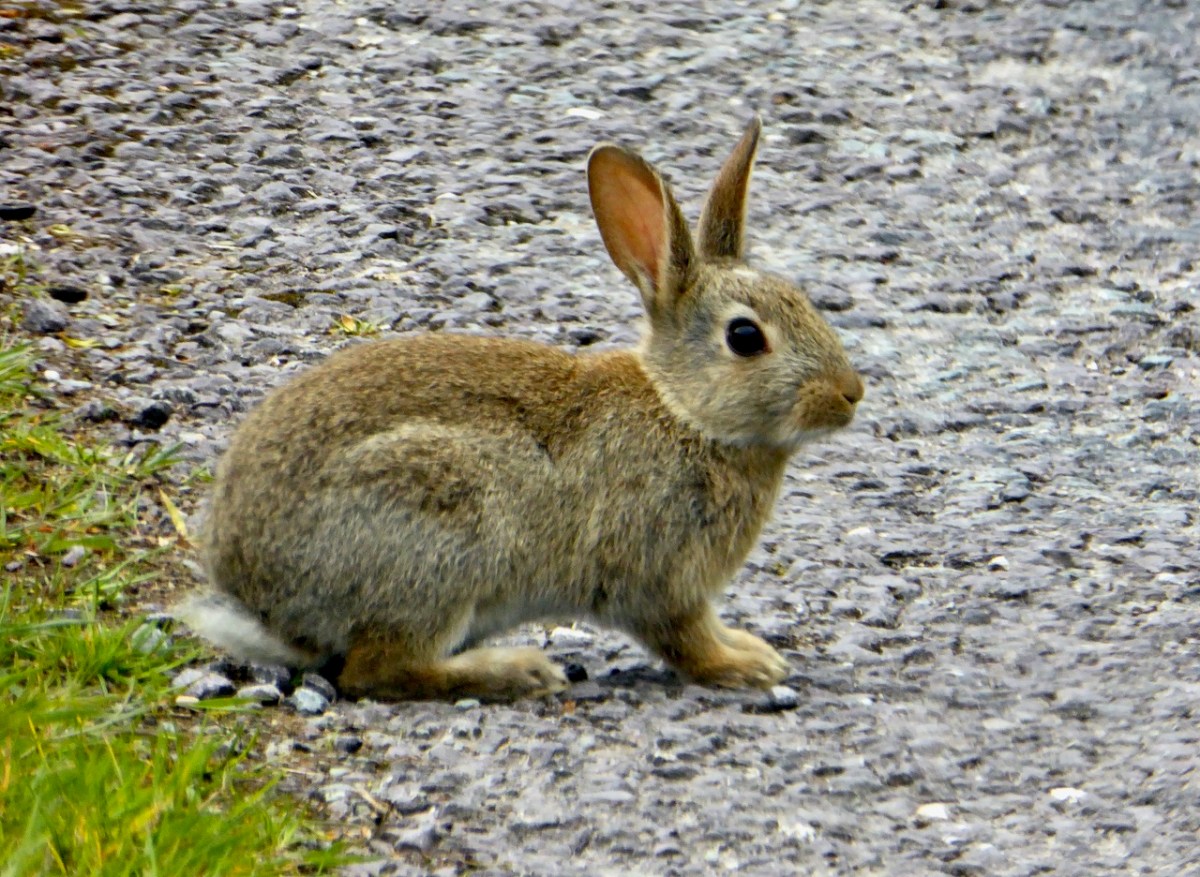
Robert was a hare fanatic, and we did have a brief dalliance with a young hare we called Berehert (below), but they have become quite rare now in our neighbourhood.

The choughs are wheeling overhead all day, with their distinctive call and their aerial acrobatics.

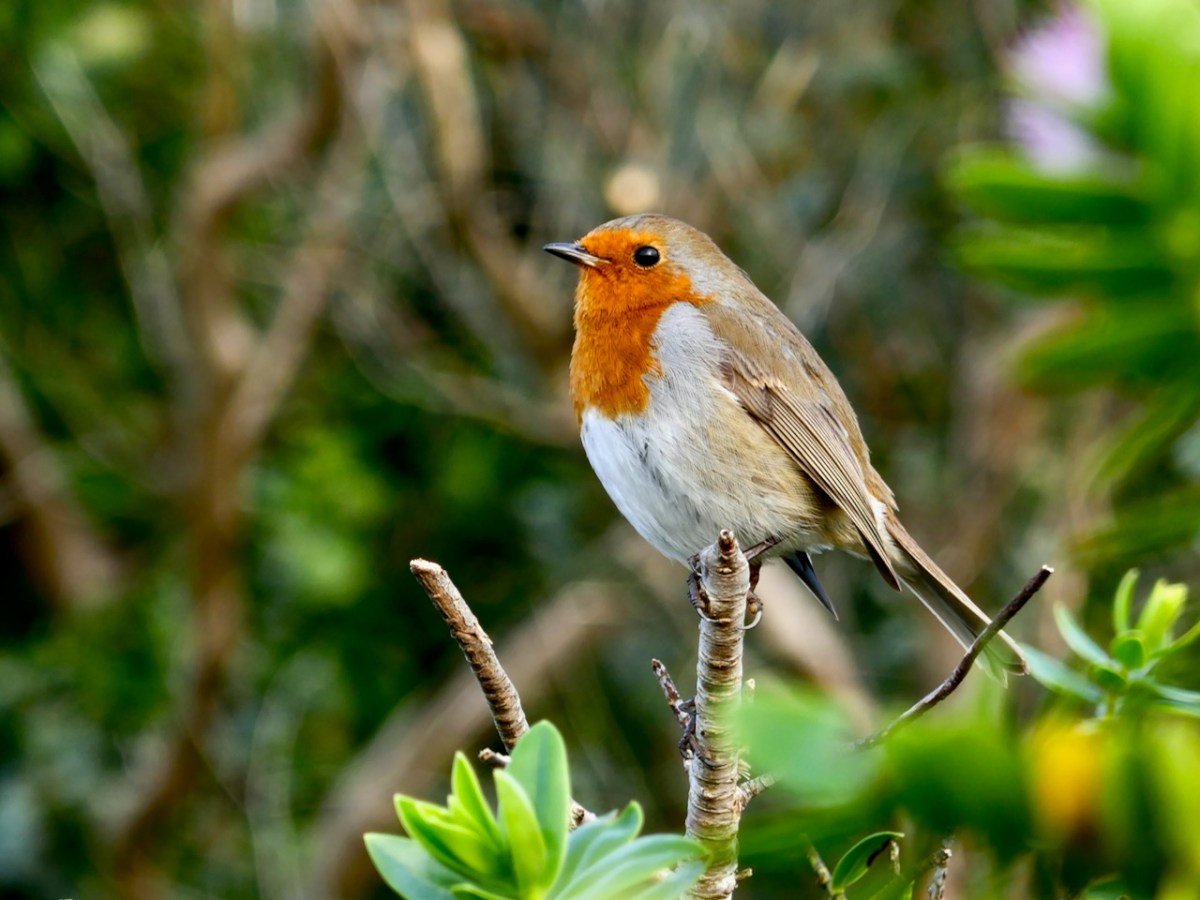
Small birds come to the feeder, and there is a robin that I am this close to coaxing onto my hand.
And although we don’t see them, the moths are everywhere – from hardly visible against a stone wall to spectacularly coloured.
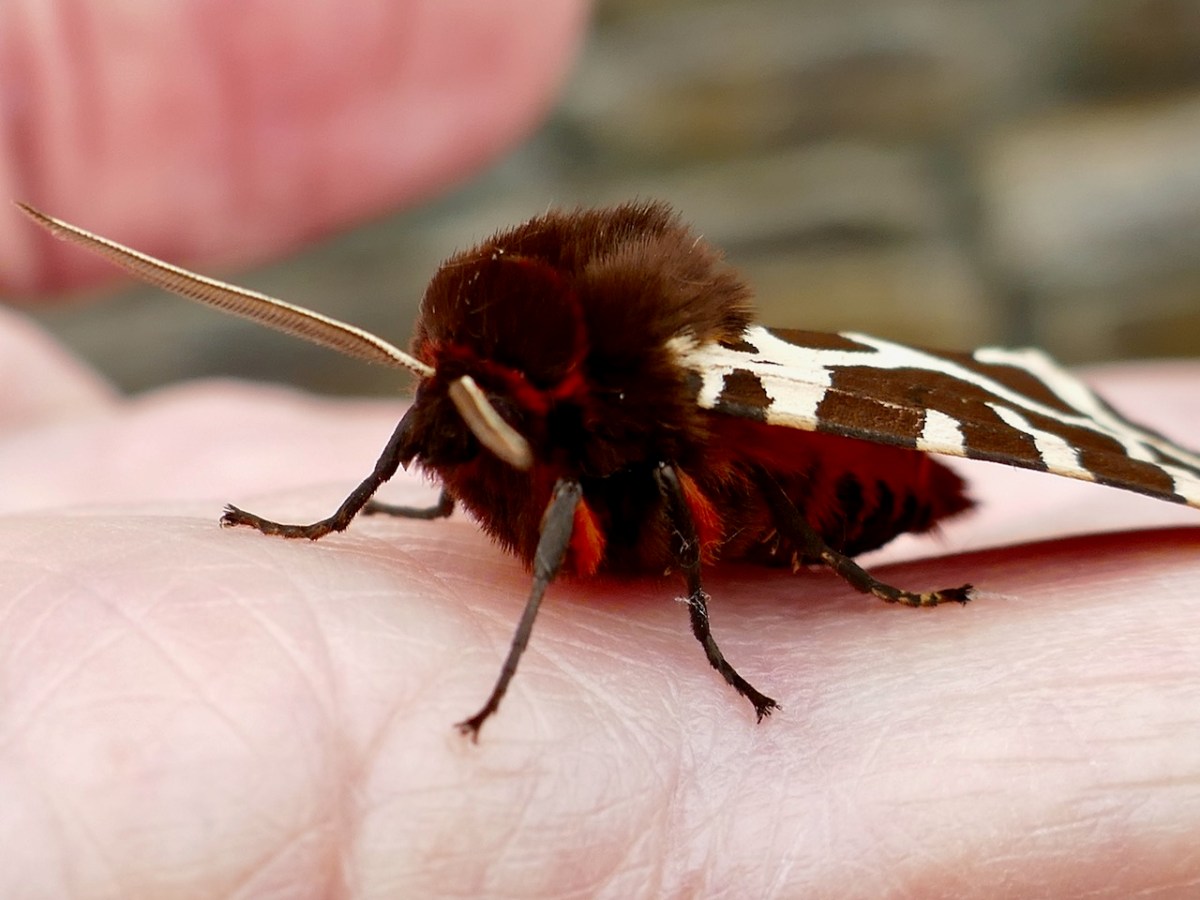
It has been a joy to discover the beauty and variety of these silent creatures of the night.

Every now and then a bird or animal will appear for a brief time to grace us with its presence – like Spiro the Sparrowhawk, who perched outside our bedroom window and cased the joint before swooping off low over the back wall.

Or like this bundle of ferocity – The Wild One – a stoat who terrorised the pheasants, despite being a lot smaller than they are.

One acre – that’s what we have here. I documented the wildflowers that have popped up all over the acre, both in my wildflower patch and just on the land on general.
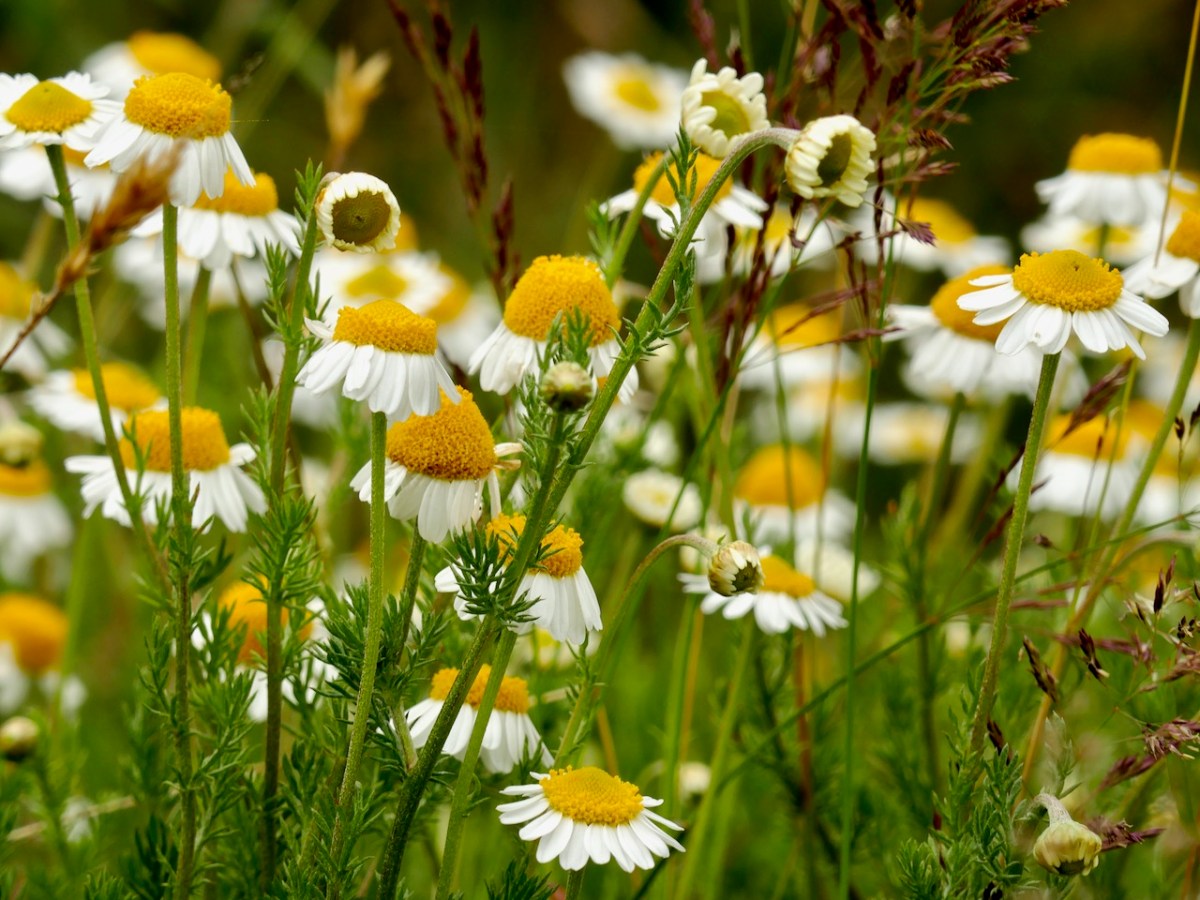
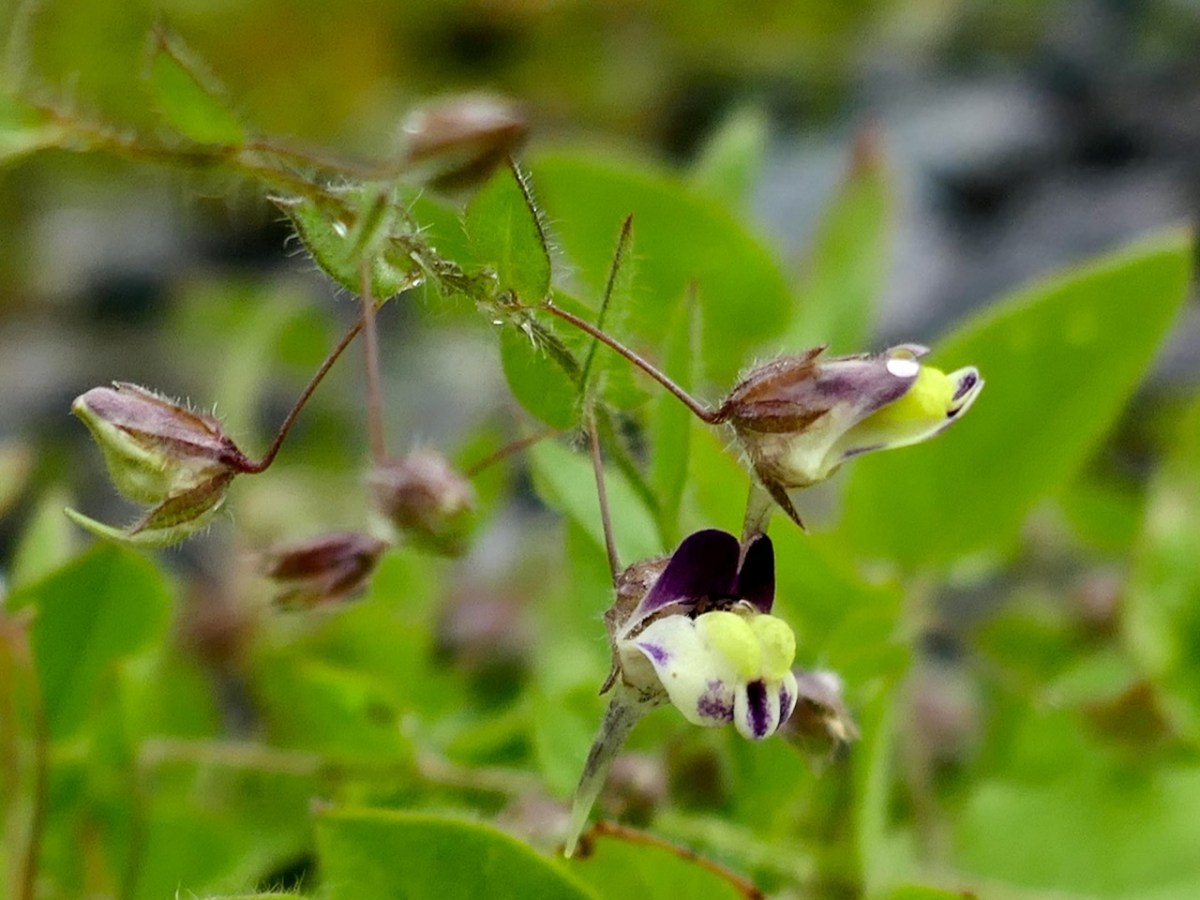
The chamomile is spreading and every now and then, something really unusual shows up  – like this tiny sharp-leaved fluellen that has managed a toe-hold in my driveway and came from God knows where (below). My slideshow, Lying in the Grass, will give you an idea of the variety of plants I have found here.
The storms that sweep through in the winter can do some damage. When we moved in, we had the gorse jungle in our front haggard dug out.  All that did was expose our pine trees to the winds and each of them toppled in turn. 

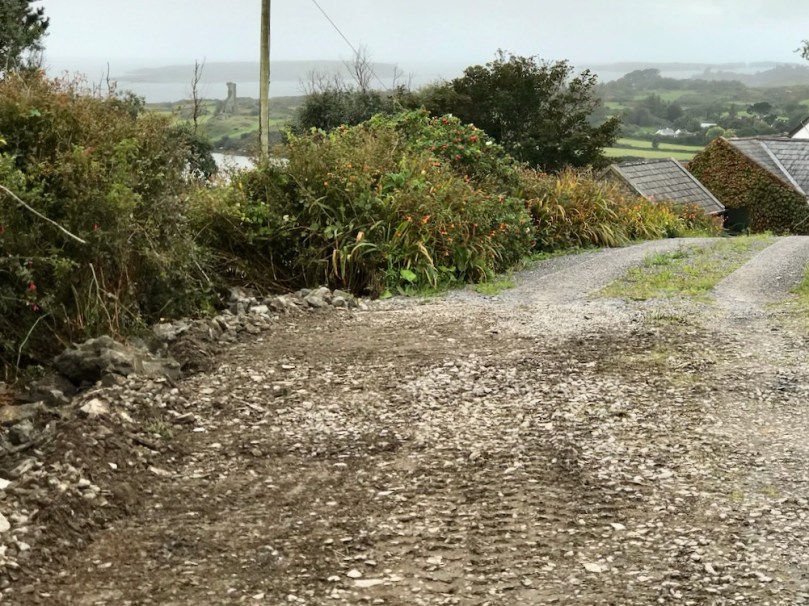
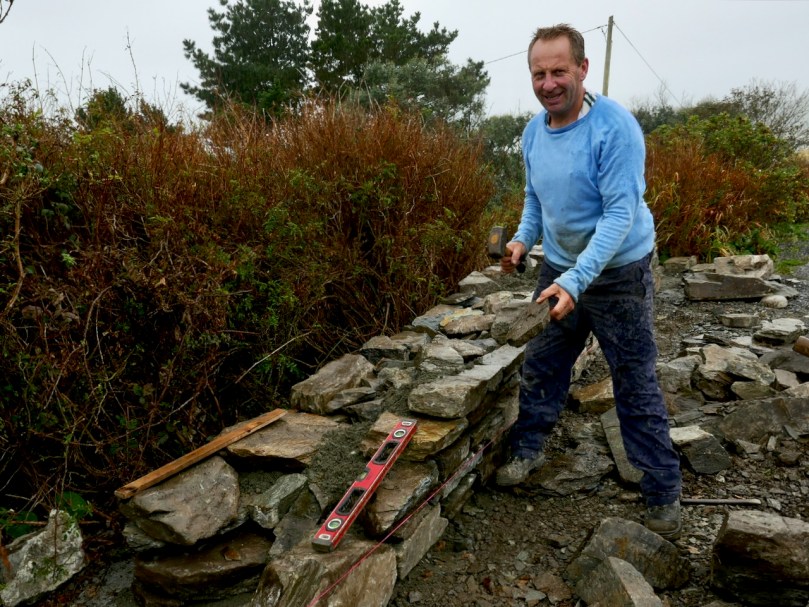
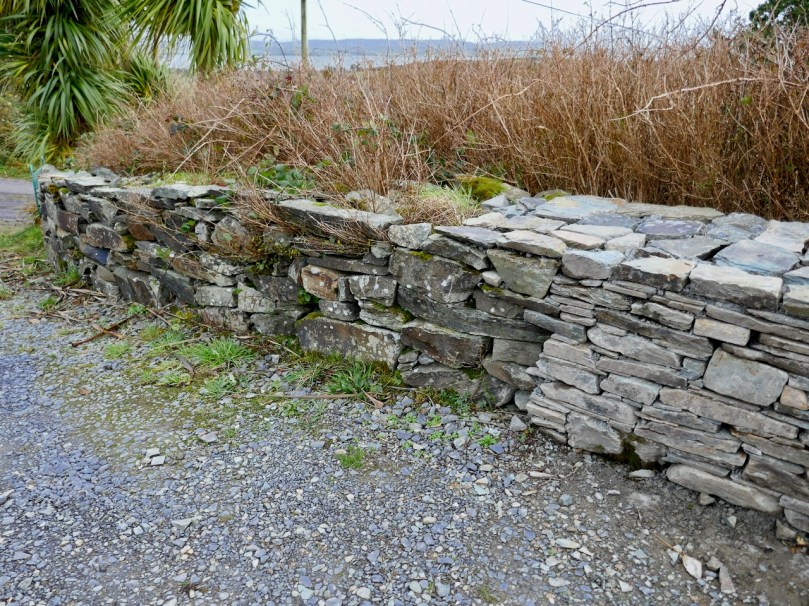
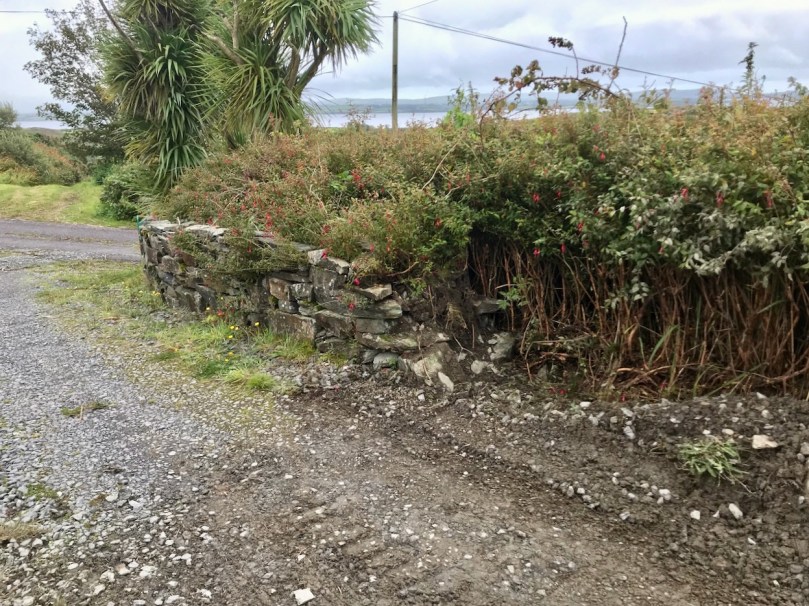
The lovely wall surrounding our property also gave way over time, leading us to get Diarmuid to come and Build a Stone Wall. Watching him, we discovered that this was a craft and a skill that hasn’t changed in hundreds of years. 

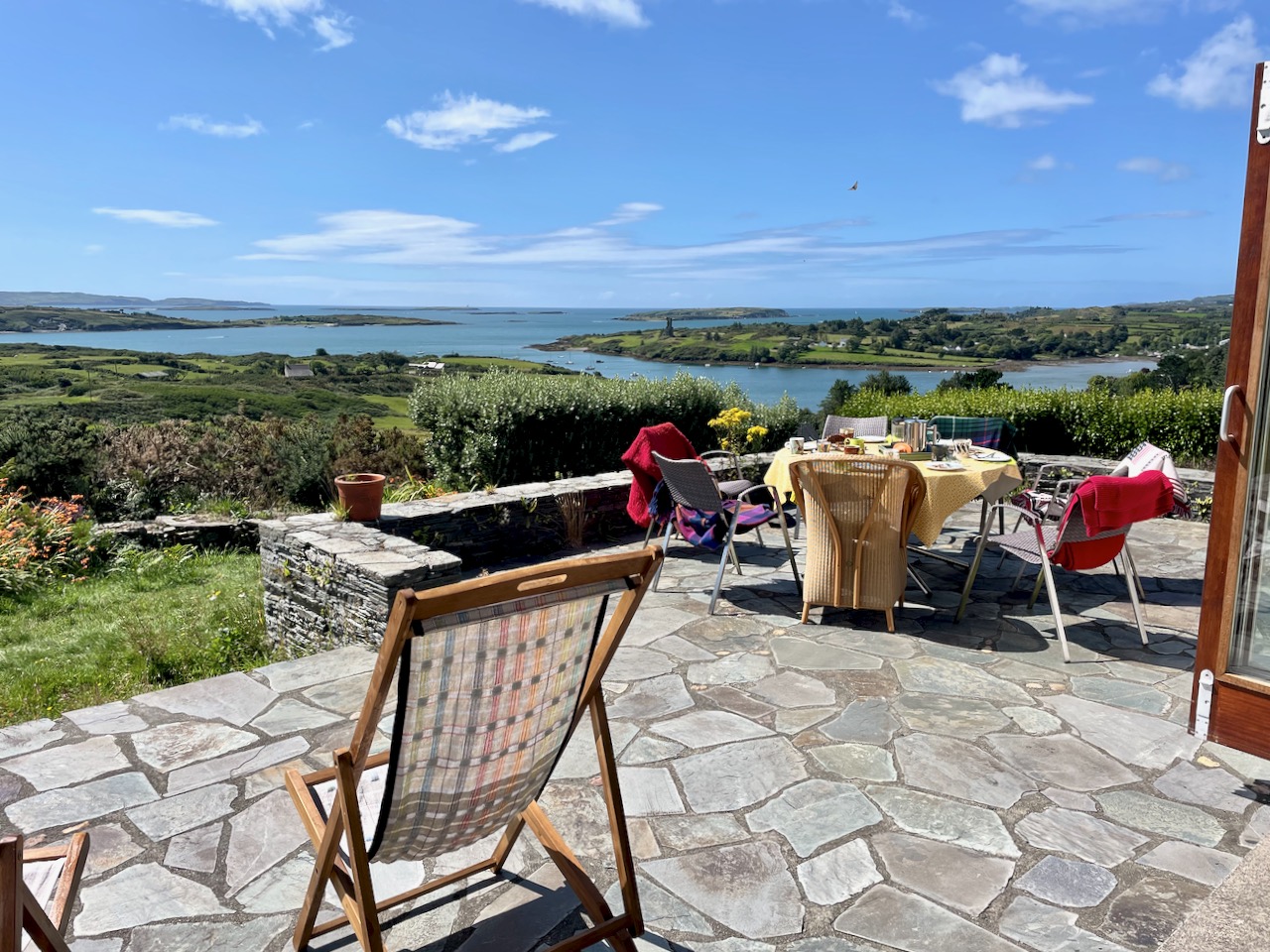
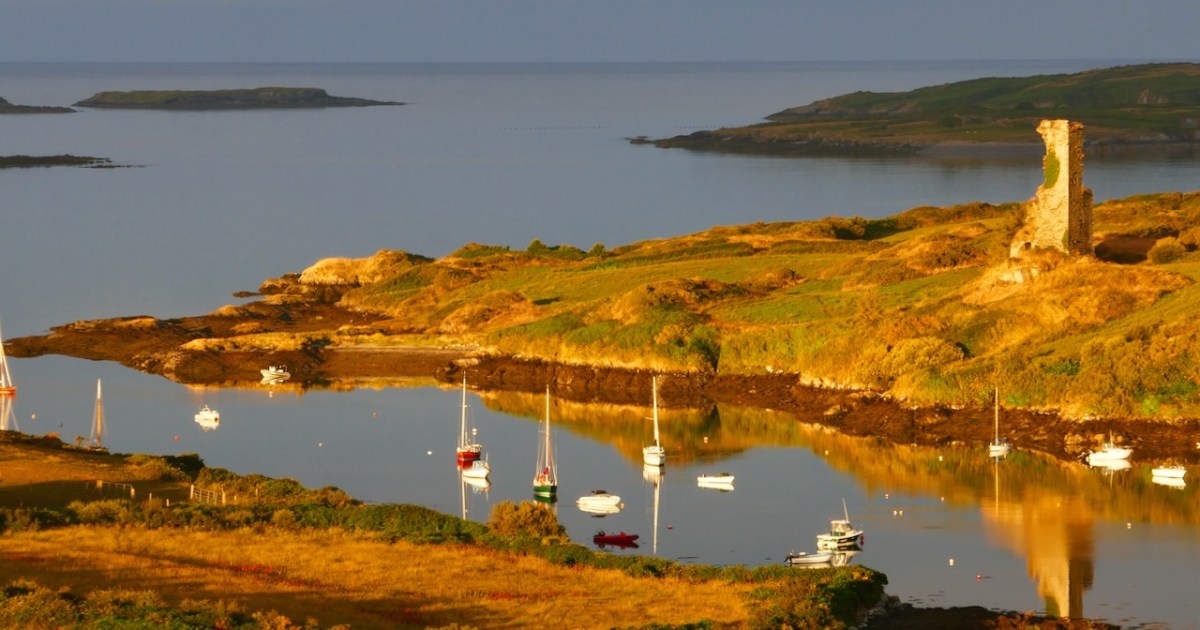
I will miss our amazing view across Roaringwater Bay. We can see several medieval castles, the Baltimore Beacon, the Fastnet Rock, most of the islands. We hear The Roaring on a calm day after a storm. We see the sun going down further and further south each day as the year turns, sometimes sinking into the sea and sometimes dropping behind an island or a hill.

And even though Robert is gone almost two years now, I still find myself saying we, because his presence is so palpable in this place that he loved, and all my experiences here were shared with him. I know his benign spirit is coming with me to Schull: he would have loved the new house and totally approved of my move.

And yes, don’t worry, his Finola Window is coming with me

Building a Stone Wall

Our craft is one of the oldest in the world. Our handiwork is seen everywhere in town, country and village. The men who have gone before us have left us a heritage to be proud of; and we feel our own contributions have been for the good. With hammer, mallet and chisel we have shaped and fashioned tough boulders. We often curse our material and often we speak to it kindly – we have to come to terms with it in order to master it, and it has a way of dictating to us sometimes – and then the struggle begins. We try to impose ourselves in it, but if we know our material and respect it we will often take a suggestion from it, and our work will be the better for it.

That’s a quote from the preface of Stone Mad by the distinguished Irish Sculptor, Seamus Murphy, as are all the following quotes.  Watching Diarmuid O’Callaghan rebuild our tumble-down stone wall I could see that same pride and respect for materials that Seamus talked about. 

I suppose I imagined that stone wall building had somehow modernised in the same way that many ‘hand-forged’ gates are now mass-produced in China. But what I discovered is that Diarmuid built this wall using the exact same techniques and tools that the stone workers did who built Rossbrin Castle in the 15th century. You can see the remains of that Castle in the photograph below.

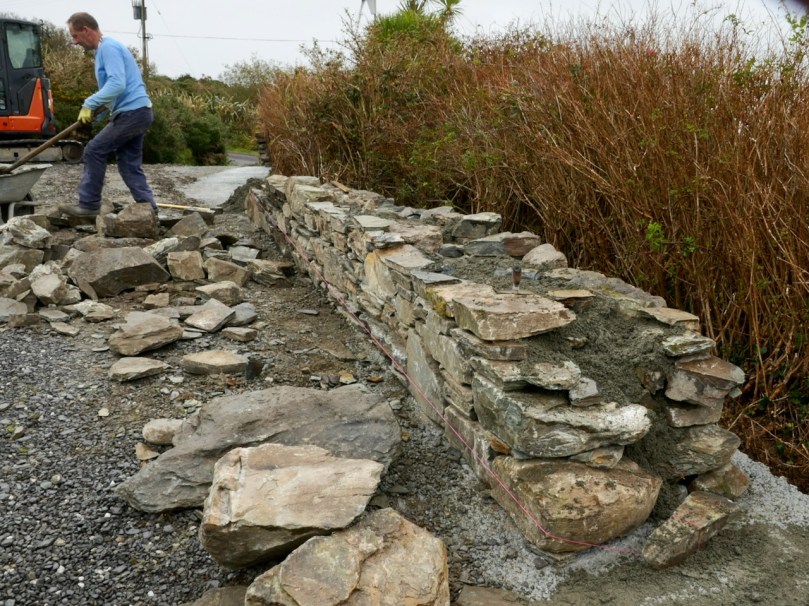
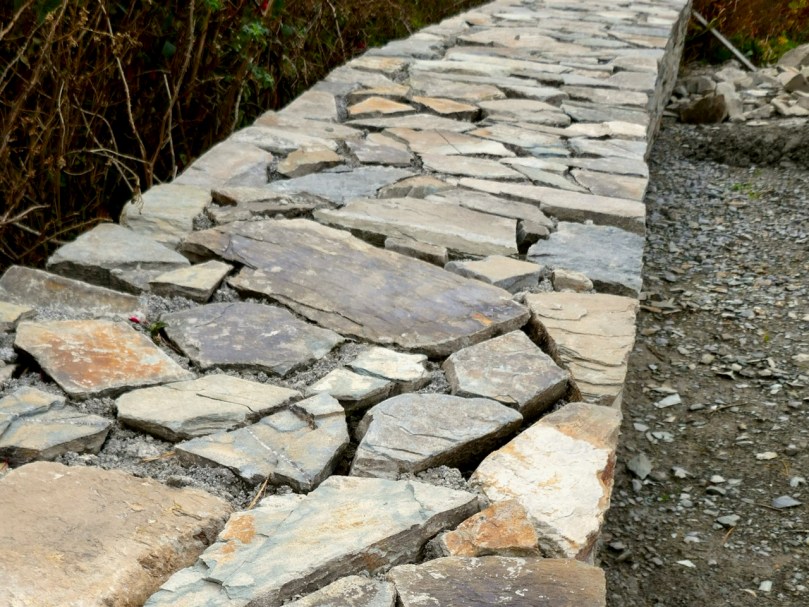
It’s called rubble construction, which simply means that the core of the wall is filled with rubble and mortar, while the outside or visible parts are shaped by the skilled sorting, selecting, shaping and placing of larger stones. In the photo below you can see the wall starting to take shape. Diarmuid is building on a concrete foundation – Rossbrin Castle is built on solid rock.

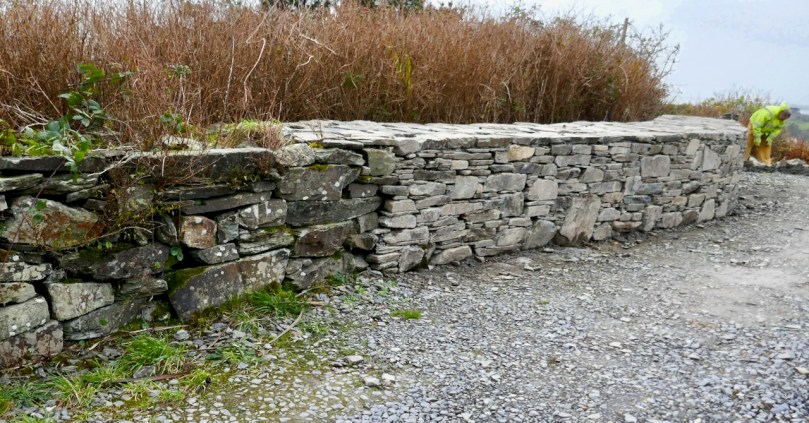
We wanted the wall to match, as closely as practical, the stretch that was still standing. Given that  a stone wall is, in itself, a whole habitat for wild plants, my brief to Diarmuid was not to make it too tidy so that over time it would settle in and become covered in interesting growth in the same way as the existing wall. My request found a sympathetic ear and it became apparent quickly that here was a man who appreciated the craft of stone wall building and was fully alive to its long history, while having his own approach and practice.

Every graveyard, every old church, every old building keeps reminding us we are not as good as we think. They are our models, and very exacting they can be, very often they bring us down a peg or two and make us realise how much of our knowledge is handed down from old times, and what small advances we have made.

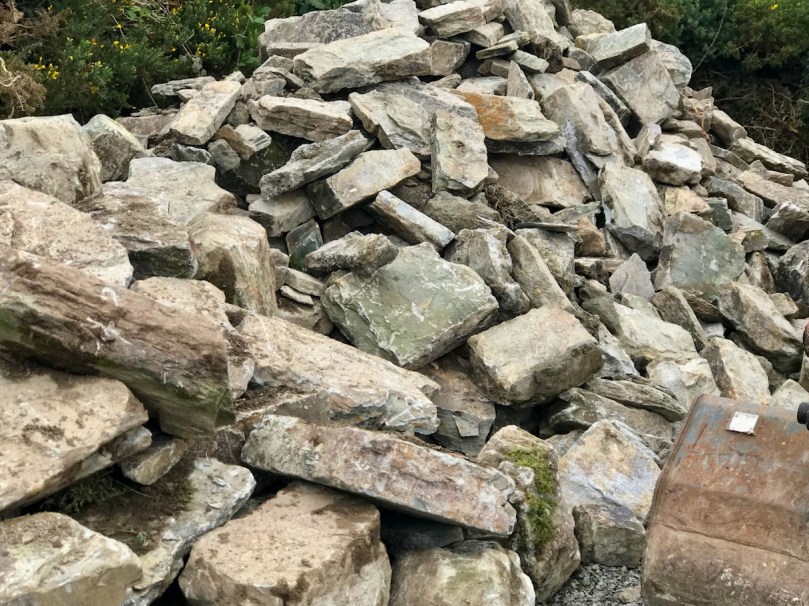
Some heavy equipment was needed in the beginning, all managed by our friendly neighbour Stephen O’Brien and his family who cleared into a neat pile all the fallen stones, dug a trench and laid a foundation for Diarmuid to work with. Diarmuid re-used almost every piece of original stone – it was remarkably efficient, with only a few bits left over. 

As I watched him work he explained his practice to me. “I turn every piece three times,” he said, “and then I can see exactly where it will go.” He lays the outer lines first, turning what was the backside of the old stones towards the front to present a new clean face. He lays down some mortar (nowadays that’s a loose mixture of concrete and sand) to bed the stones in, keeping his lines horizontal with judicious insertions of smaller pieces of stone. Once the outer lines are set he fills the interior with ‘rubble’ – a mixture of mortar and discarded pieces of stone. 

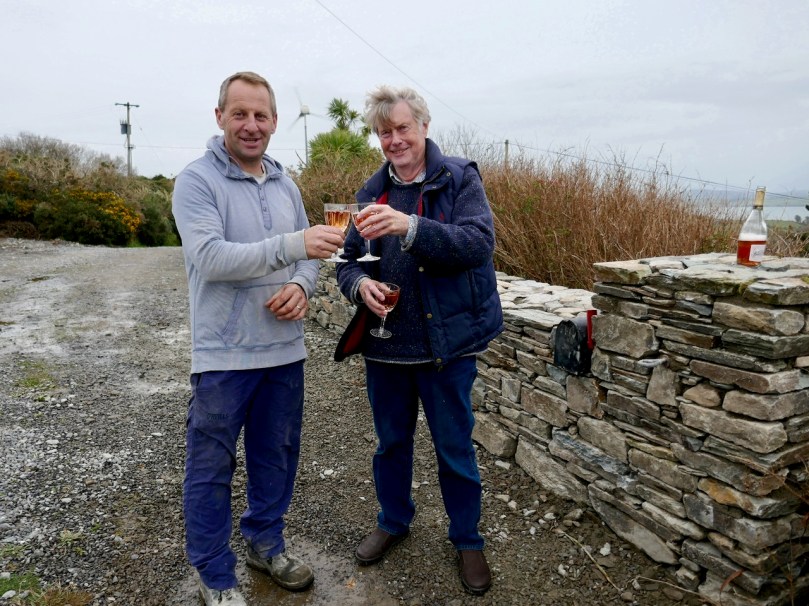
It all goes remarkably quickly and in no time at all the wall is taking shape. I was curious how he was going to manage attaching the new wall to the old so I asked him how he was going to marry to the two sections. “With love,” he grinned. I was struck by how he echoed Seamus’s description of medieval stone masons.

That was the spirit and attitude that prevailed in mediaeval times, when you had whole colonies of craftsmen gathered in the towns, building the big cathedrals.

They worked and they talked of work, and the ways and means by which other jobs were done, all the time comparing and striving to produce as good, if not better than the man at the next banker. Occasionally indulging in caprice and caricaturing vice and virtue, enjoying the exaggerated and the fanciful, or using as models the odd personalities that were on the job. Or they could be as reverent as the portal statues at Chartres. They loved their work, and one can sense the enjoyment they got out of that, each vying with the other to attract the attention of the rest. This sort of vanity pushes men on, it gives the imagination a chance to play about and thereby enriches our lives so that work is no longer a task, but a use of our leisure – in a word — pleasure.

The finished wall is a thing of beauty. There’s still a good demand for stone walls in this part of the country – we have seen great new examples and others that are not quite so successful. Stone walls are such an integral part of the character of the west of Ireland and it will be a long time, we think and hope, before the demand for them dies out, but I will leave the last word for Seamus.

Times have changed and the work is no longer plentiful… But some of the old stonies will hold their heads high, and carry with them to the grave the feeling that they have left their mark on many a church, and on many a building, and that in the years to come, there will be people to admire the work they have left behind them, as we of this generation respect and understand the work of the men of long ago.

I often wish I had money and could take a few of the old stonies on a pilgrimage from graveyard to graveyard, from quarry to quarry, calling on the small stonecutters’ sheds here and there around the country, exchanging gossip about the members of the craft, and of the stone, and realising – marvelling – at the at the amount of knowledge and skill, and the years of thought that go to the perfecting of a craft.

But it is coming to an end, and more is the pity. Art grows out of the good work done by men who enjoy it. It is the wealth, surely, of any country.

Mizen Magic 13: Dunmanus Promontory

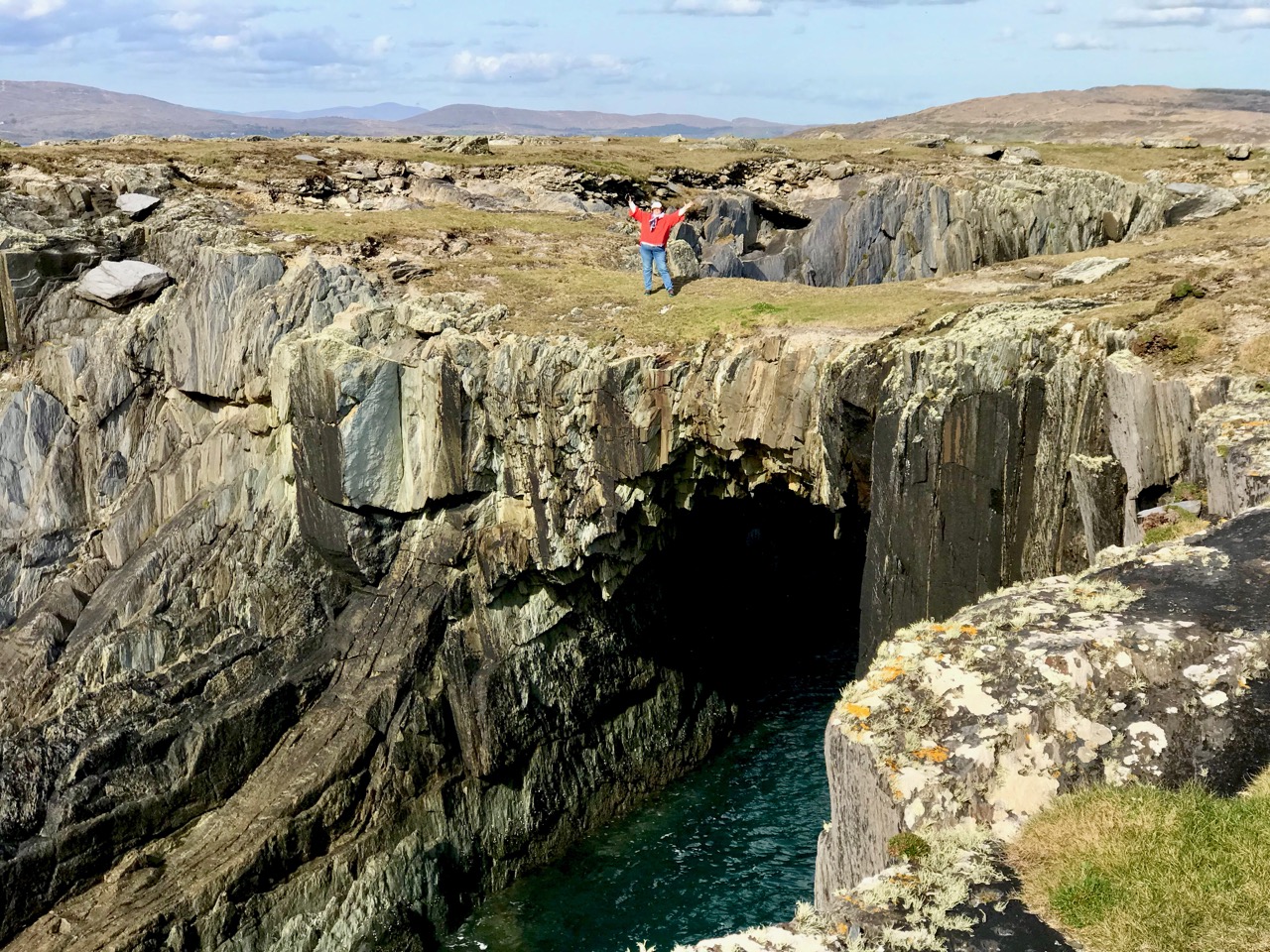
It’s geologically and archaeologically fascinating – a substantial natural promontory just to the north of Dunmanus Castle: well worth an exploration. But, do be warned – there are cliff edges, exposed fissures, ankle-wrenching undulations and bogs to overcome. Also – it’s private, so please seek permission before crossing the land.

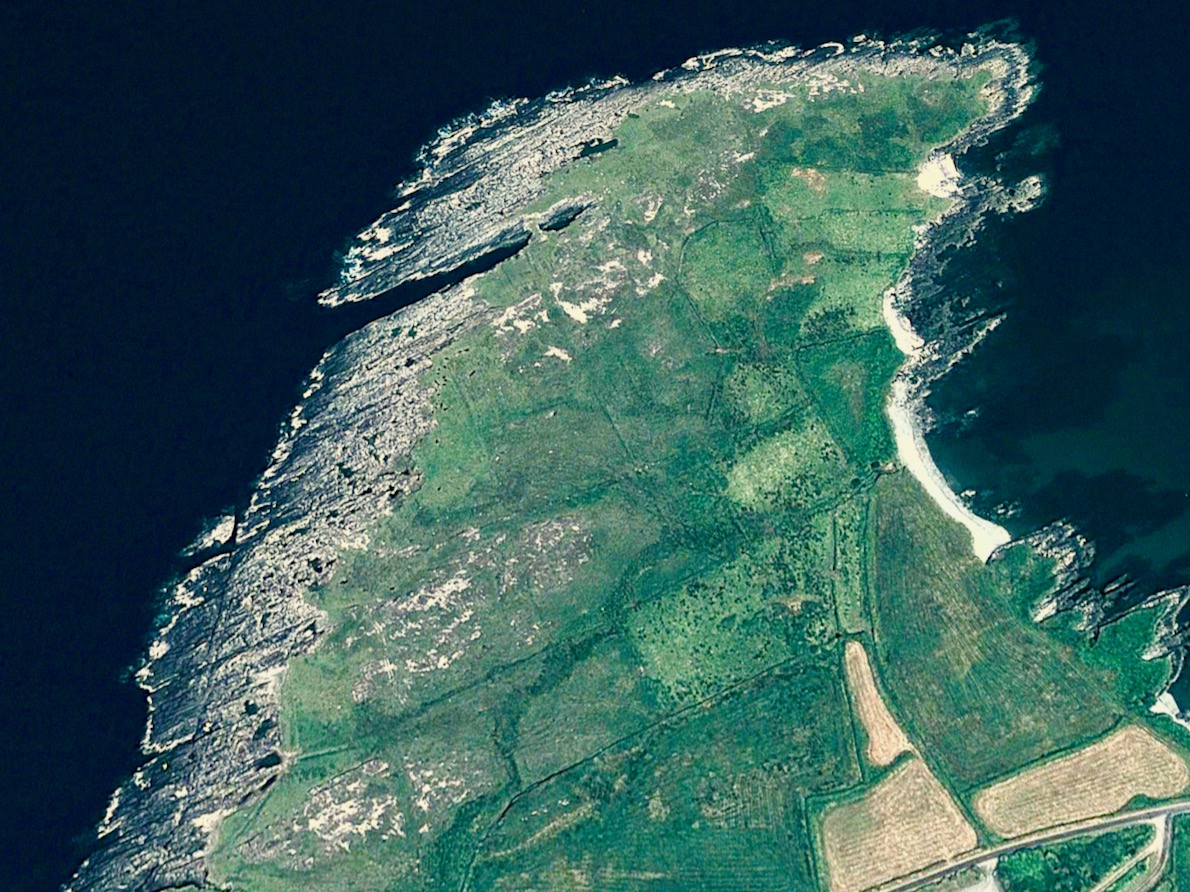
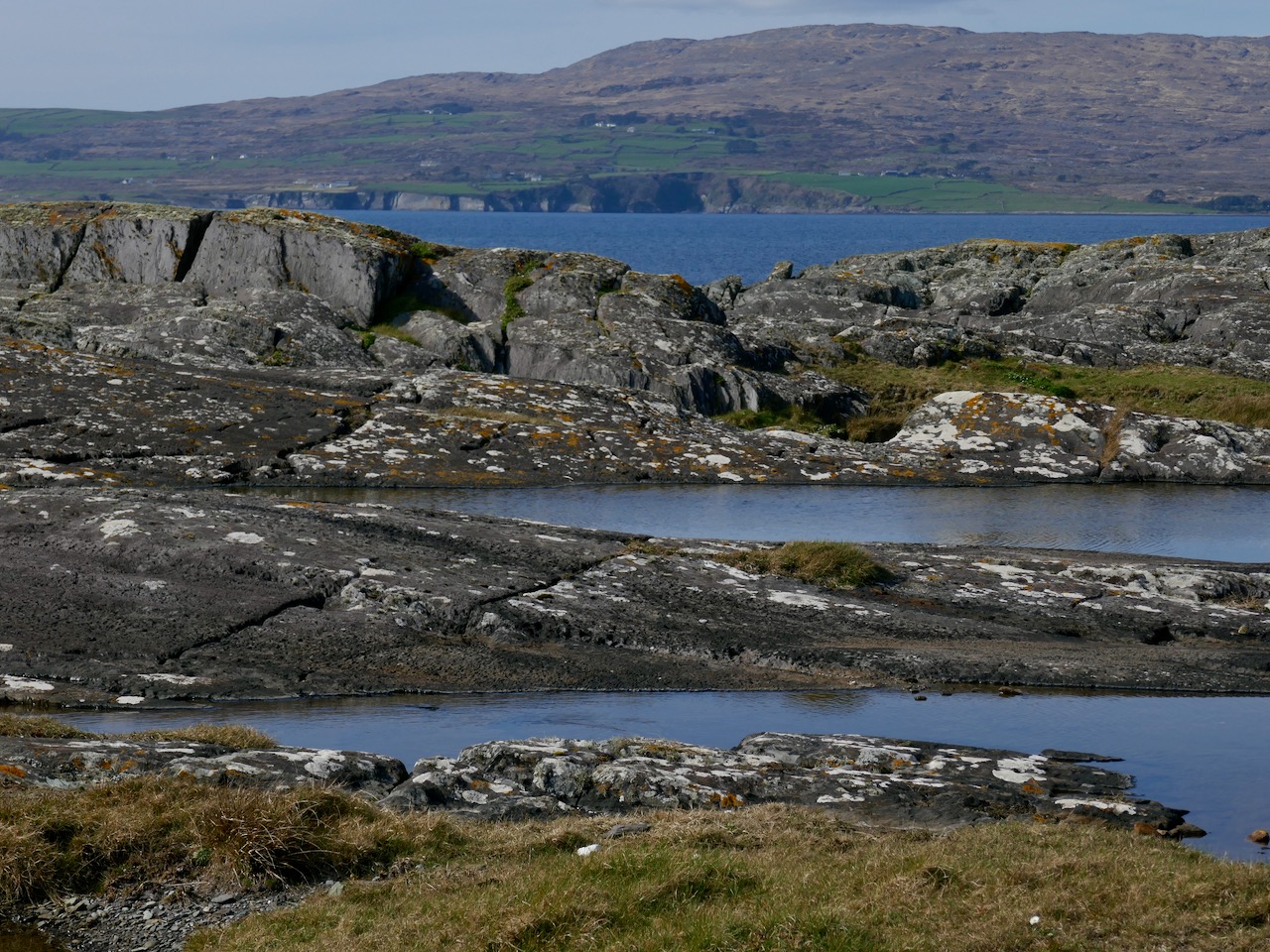
The west side of this shark’s fin-shaped promontory is wildly exposed to the ocean and its gales. You can see from the aerial views, above, how the rock bed is bare and visible, and the vestigial fields which occupy – or once occupied – the east side peter out, and the walls and banks which once formed them fade away altogether over on the left. In fact, these Google Earth images give a better impression of the oddly shaped enclosures than can be seen on the ground.

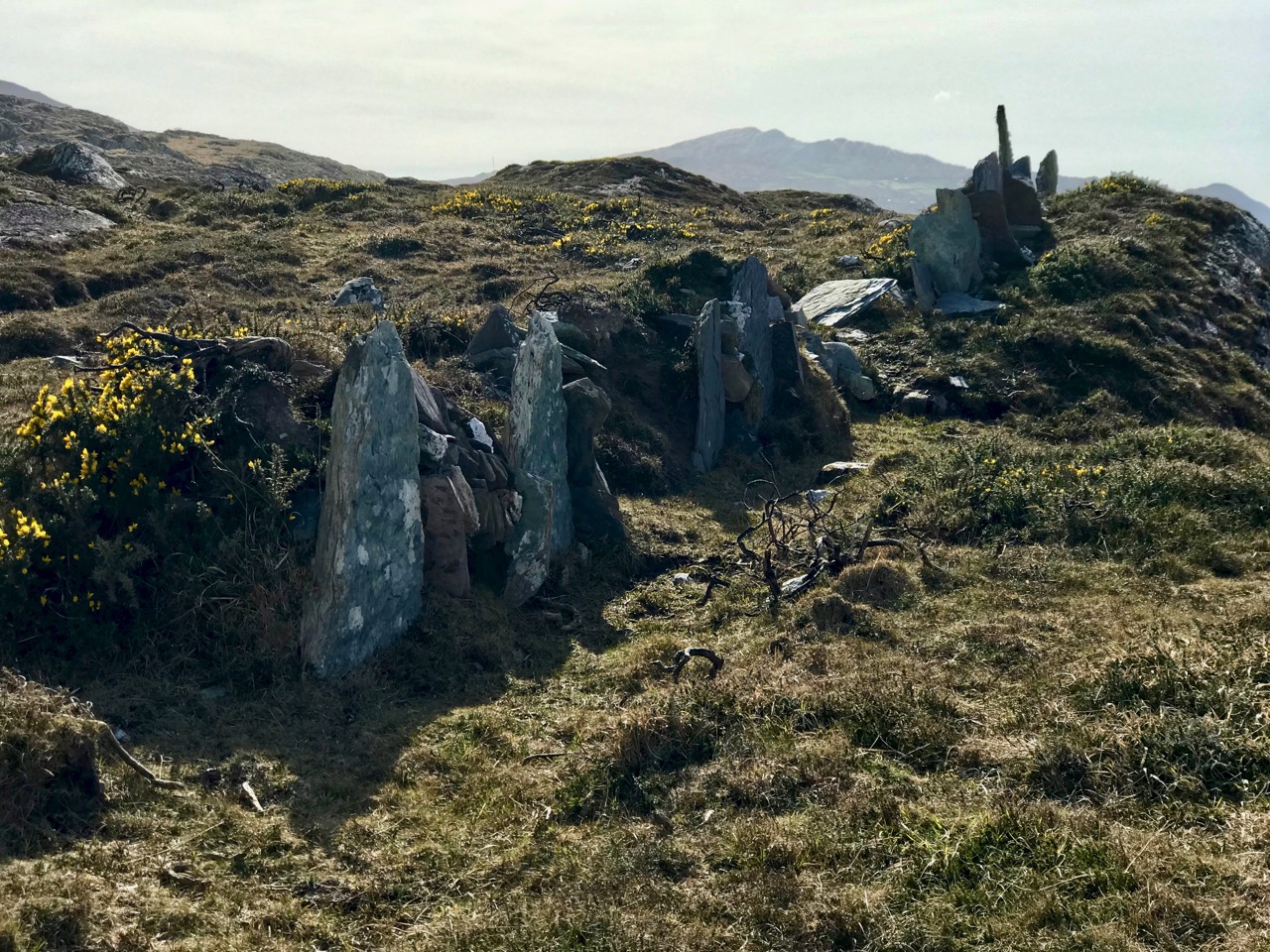
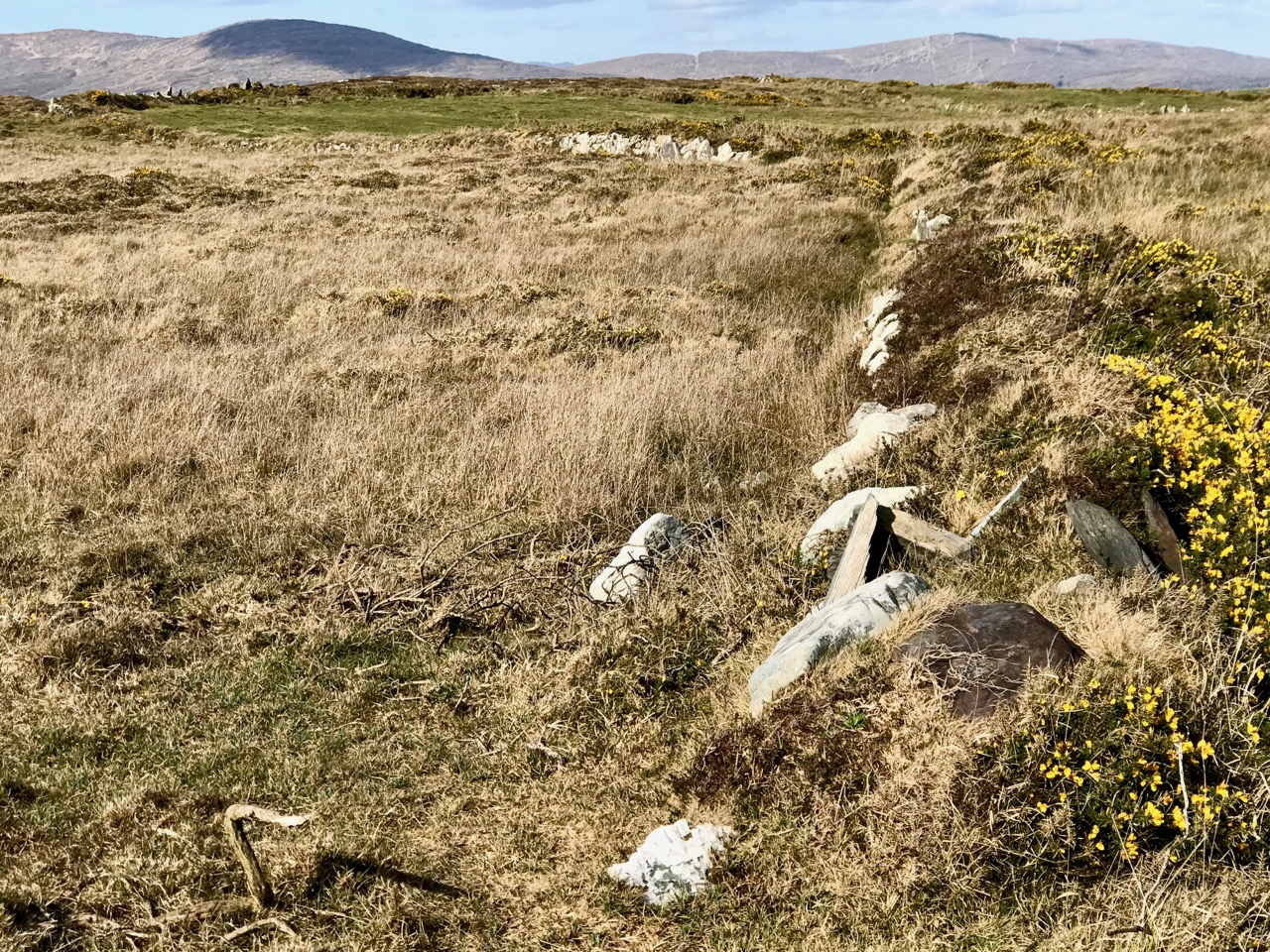
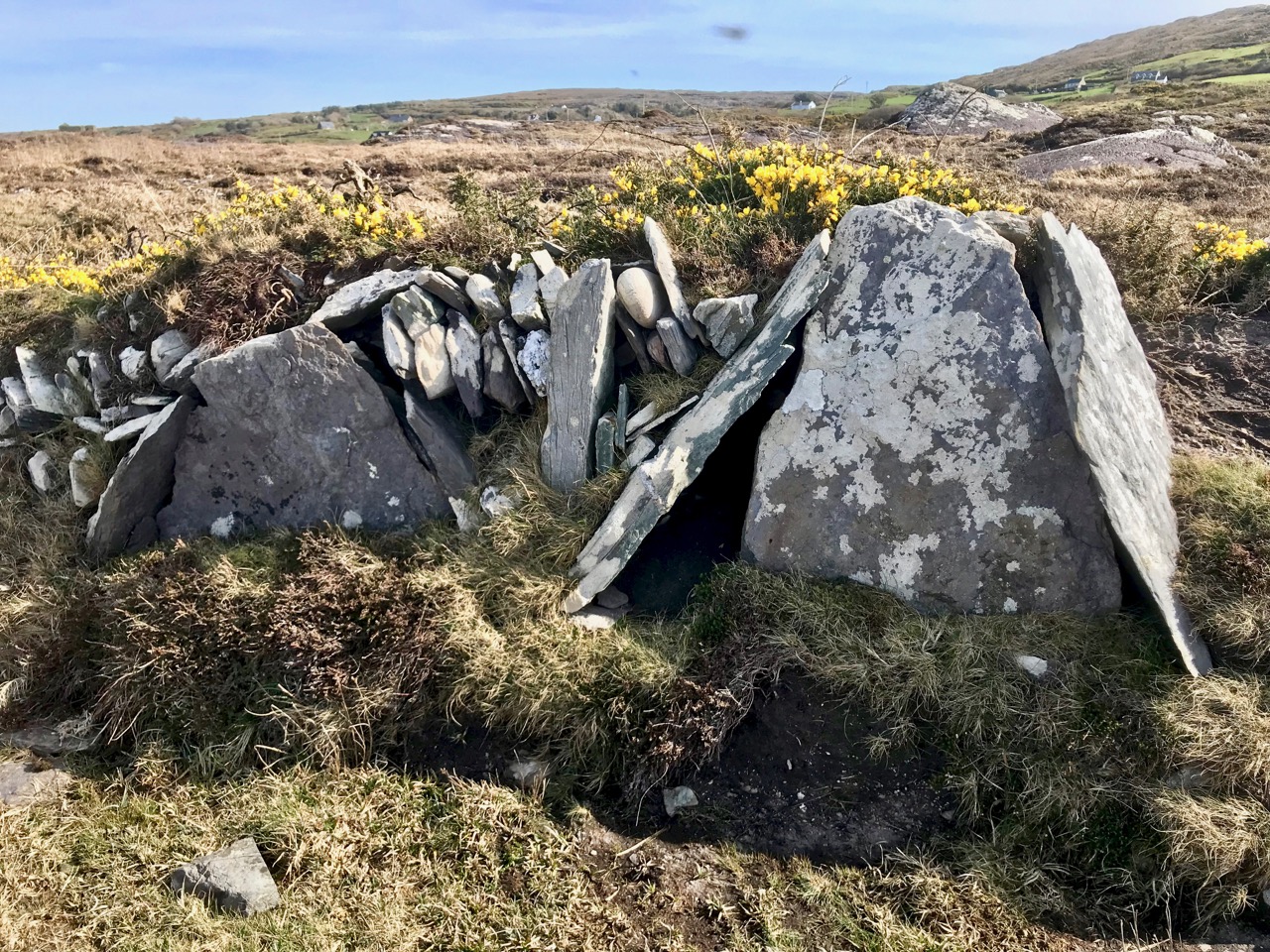
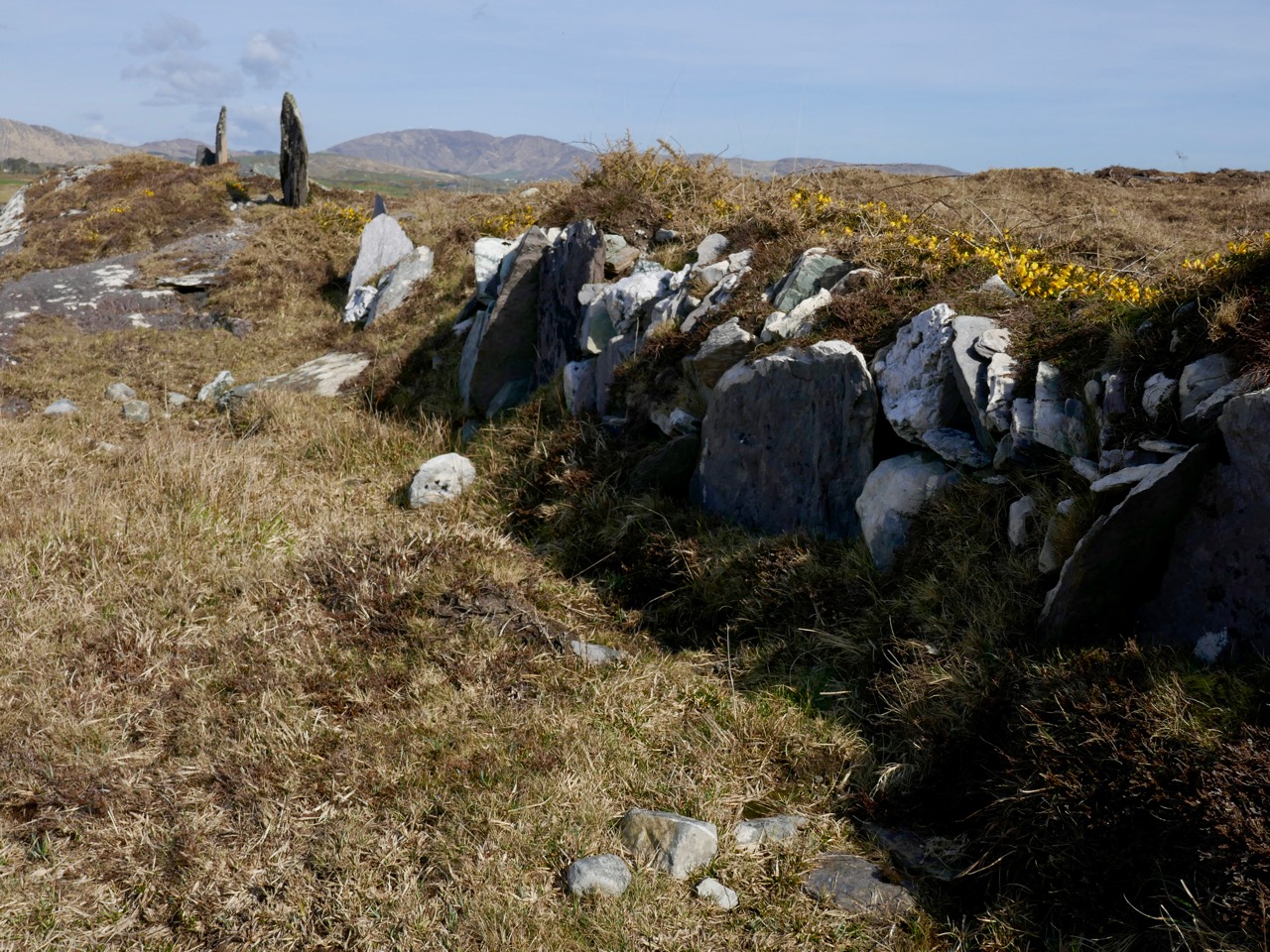
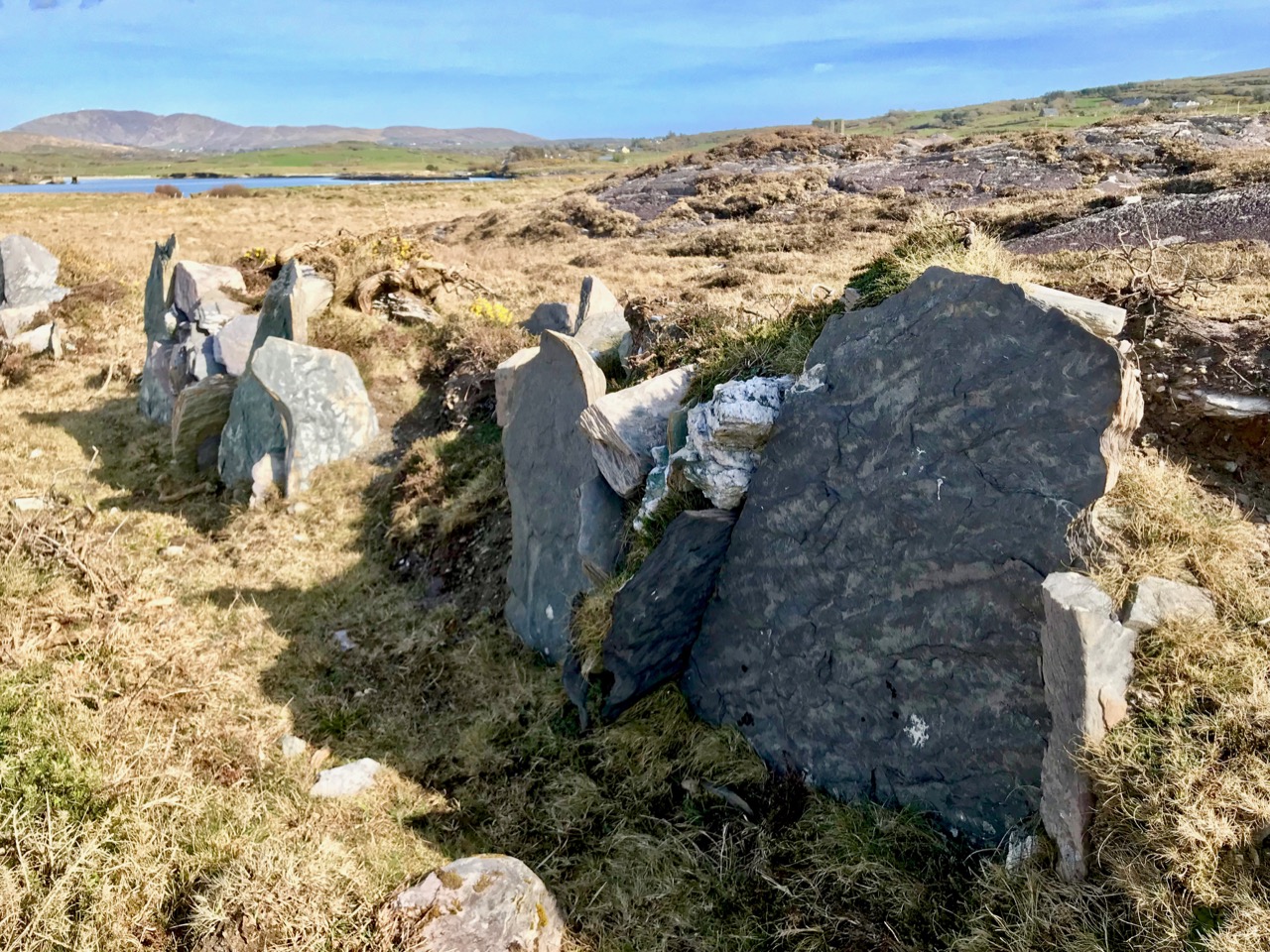
Three examples of many varied boundary features on the promontory are shown above. Each is differently constructed and they range from a series of vertically-set slabs to rocks-and-rubble and a raised bank reinforced with stones. In the picture below, follow with your eye the boundary as it traverses the scrub and makes a large S-bend on to the ridge facing the distant horizon.

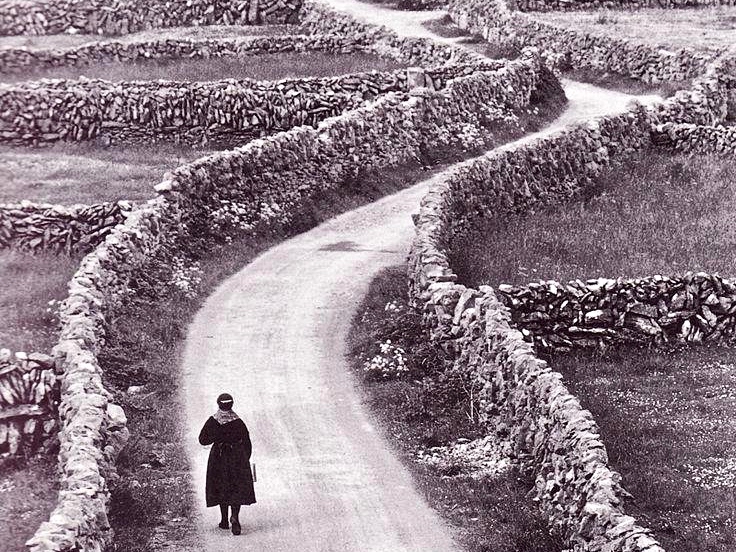
Ireland – especially the west of it – is a huge stone landscape. Wherever people have settled, they have moved the stone and used it. To make fields, or any enclosures, they have had to clear the land. The stone taken from the land is used – sometimes to build shelter, often to build myriad walls to define the holdings. Here’s a striking example from the Aran Islands:

Nothing is recorded on the National Monuments Survey about these land boundaries at Dunmanus – or the significance of the promontory as a whole. Was it once a promontory fort? There are others on this coast. It could easily have been defended along the line of the present road running across the south. However, the land is flat and low, and there is no shelter.

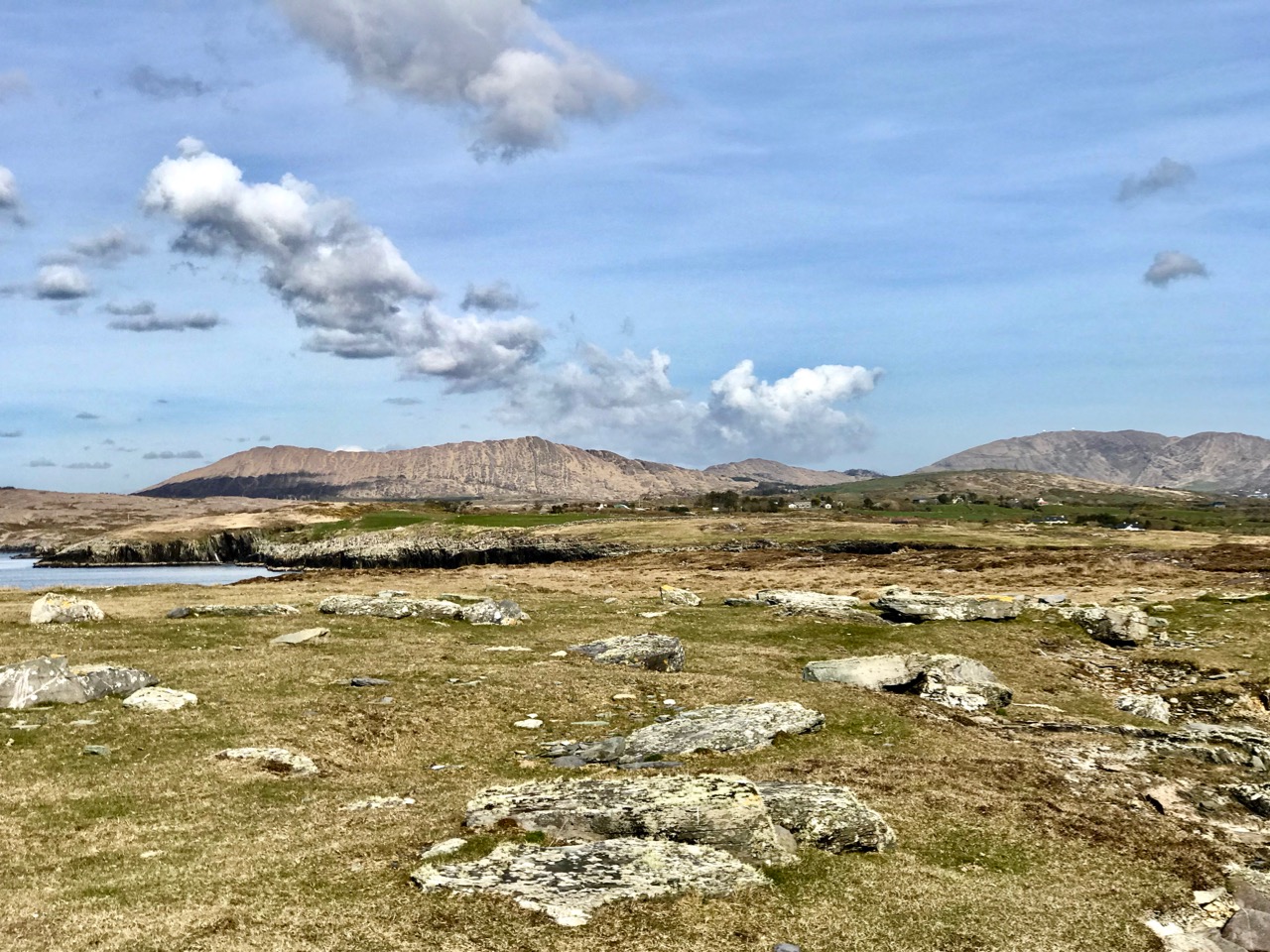
Flat stone surfaces – of old red sandstone – remind us of the Burren landscape in Clare, and we can suppose that the present windswept bog and scrub could once have supported agriculture. But when? In medieval times, perhaps, when the nearby Dunmanus tower house was a thriving centre of occupation and, probably, commerce. In the shelter of the bay the little quay at Dunmanus survives and is still used by small boats searching out shellfish and scallops.

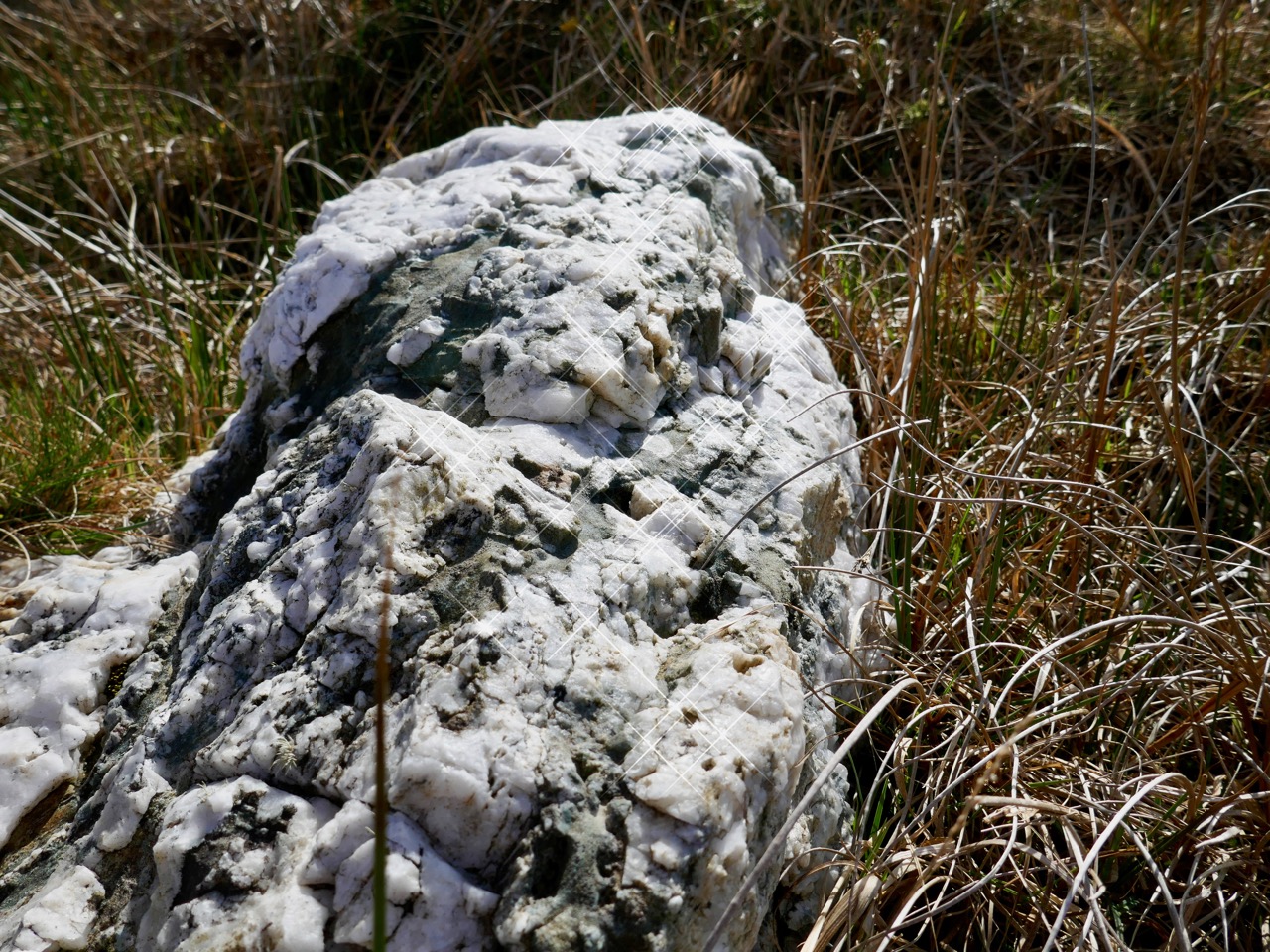
In some places the old walls seem to have a prehistoric feel: the use of slabs embedded vertically like standing stones is quite unusual in West Cork. The presence of large quartz rocks, too, is reminiscent of ancient sites, although they are natural geological occurrences here.

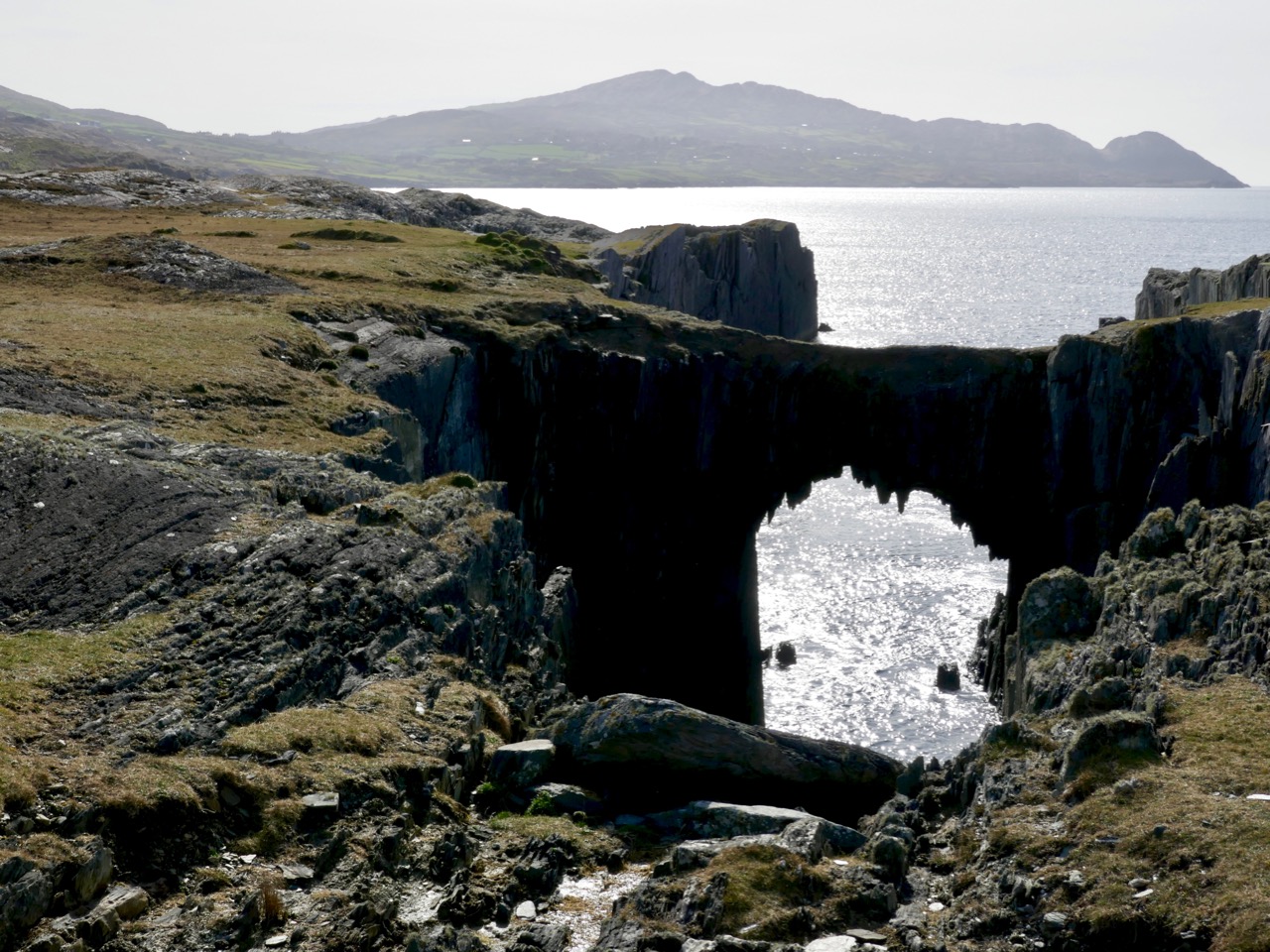
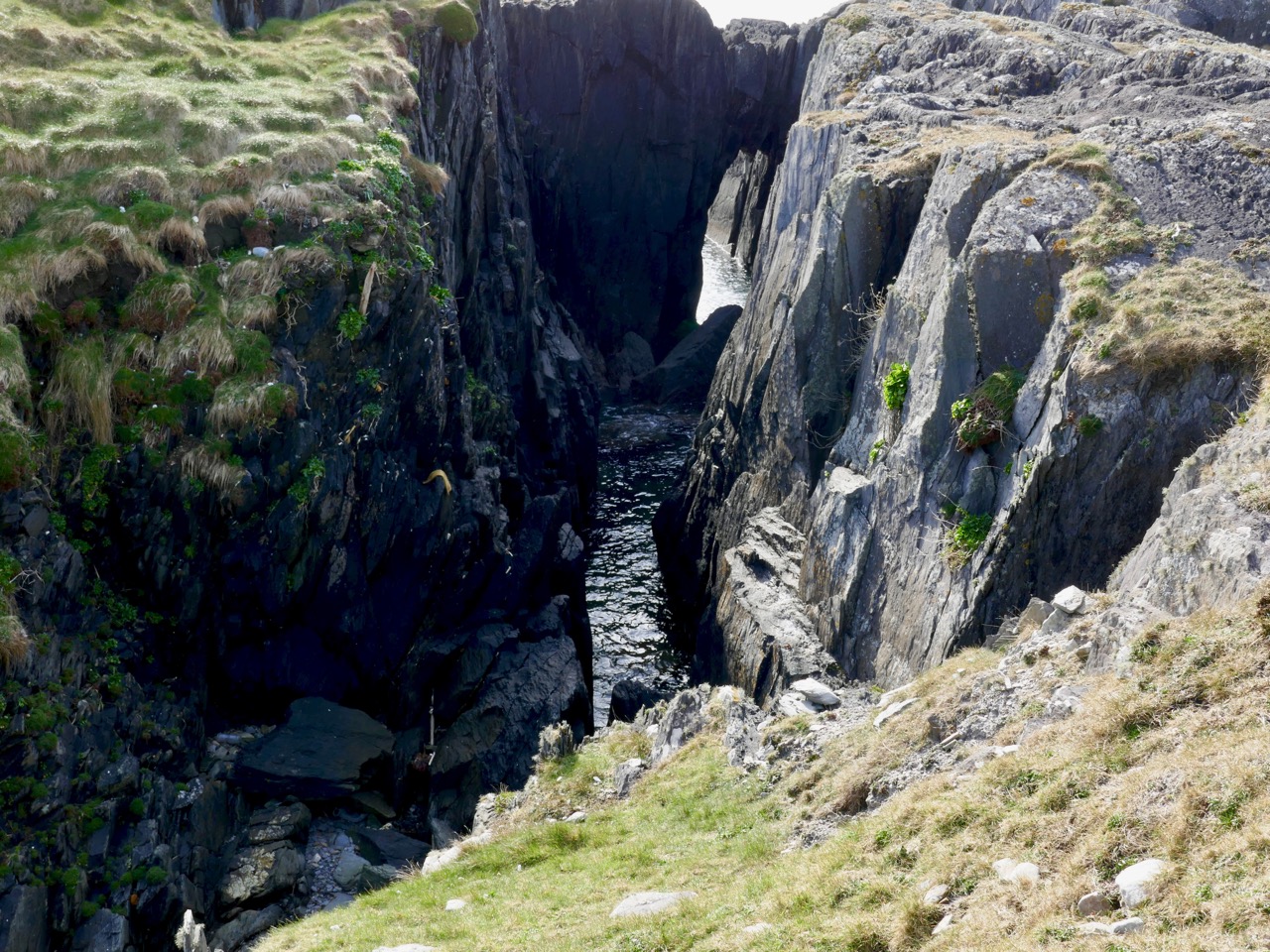
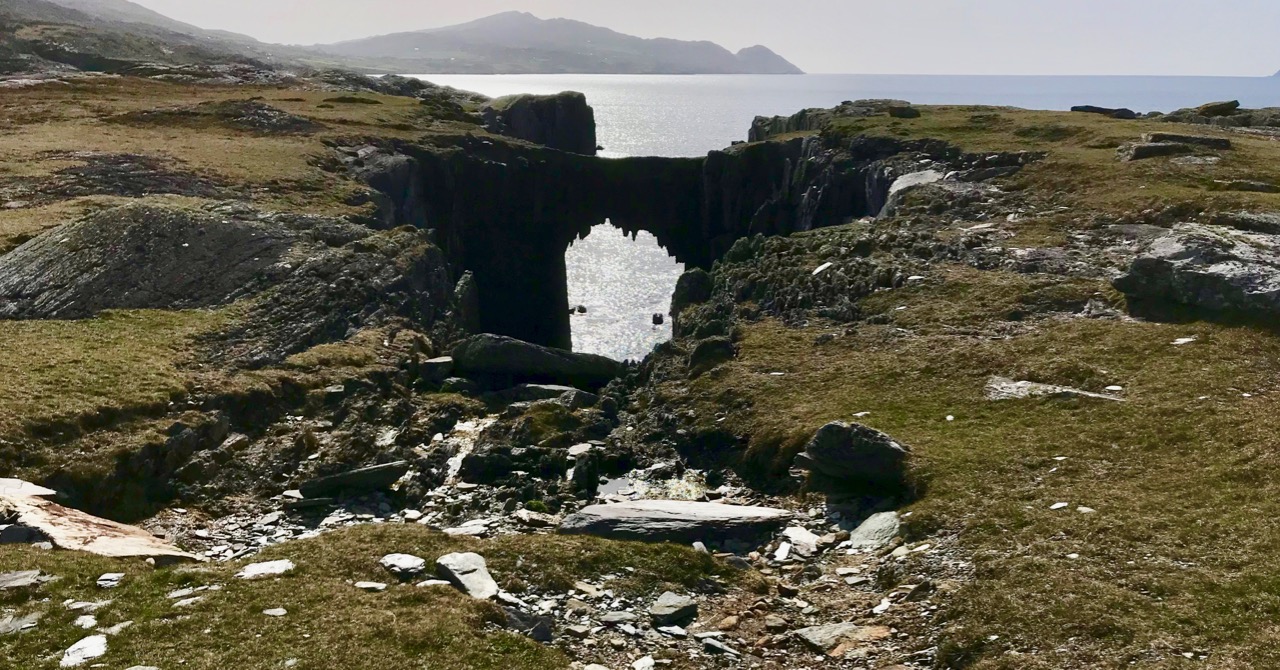
Other natural features on the peninsula include two ‘sea arches’ – bridges formed through erosion of the rocks and chasms by the ocean.

It’s a landscape of vestigial fields, sea – and stones. Nothing more. But I find it a mesmeric place; partly because we can see that it bears the marks of human toil, and we want to know more about who was there and how they lived. It’s a remote piece of Ireland to call ‘home’. Those marks remain after how many years – hundreds, thousands? They intrigue us, and compel us to explore.