Podcast!

Roaringwater Journal gets in on the podcast trend!

This podcast was really fun to do – and provides a good overview of the Saints and Soupers blog series.

Shannon Forde, historian and manager of the Old Head Signal Station and Lusitania Museum, has made a wonderful series of podcasts about Cork history – the Cork Chronicles. https://shows.acast.com/chroniclesofcork. Have a browse – there’ a great lineup of eclectic topics and more are planned.

The Black Eagle of the North (Saints and Soupers 9)

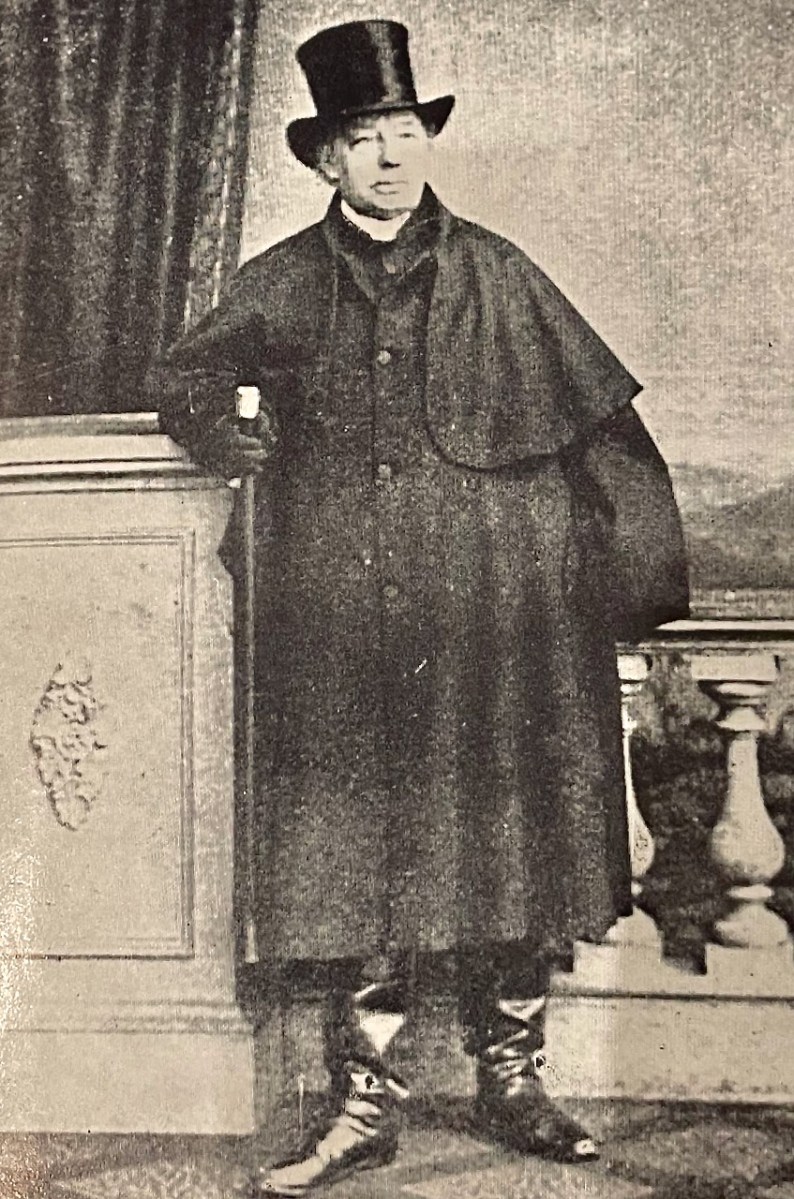
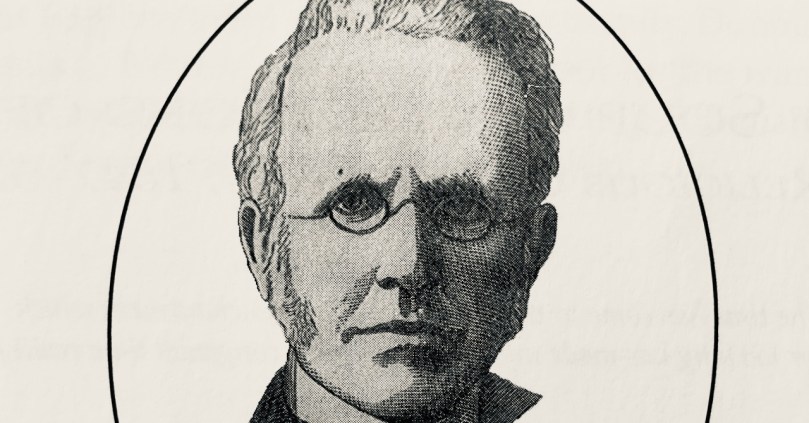
If you’ve read my series Saints and Soupers, you might remember the character who appears in Part 6, Father John James Murphy – The Black Eagle of the North. That’s him, below. It’s always been my intention to revisit him at some point, specifically to try to investigate that amazing nickname. It’s only taken me 6 years. 

First of all, let me tell you why now, and then the deeply personal reason why I want to write more about Fr Murphy. Why now? I have just been loaned a copy of Father John Murphy: Famine Priest by AJ Reilly, published in 1963 by Clonmore and Reynolds – my sincere thanks to Jennifer Pyburn of Schull for the loan, and Dan Allen of Goleen for conveying it to me. An aside – the Clonmore in the publisher’s title is from Lord Clonmore, later 8th Earl of Wicklow, who together with his partner Reynolds (about whom I can discover nothing) founded the only serious Catholic publishing company in Ireland in the first part of the 20th century. Apparently, when Clonmore was a boy, he used to attend the servants’ mass on Sunday morning and later converted to Catholicism, which horrified his Church of Ireland Anglo-Irish family. His father disinherited him, but he nevertheless succeed to the title in 1946. His father, by the way, was the Earl of Wicklow I wrote about in my post Ecce Homo: Harry Clarke’s Kilbride Window

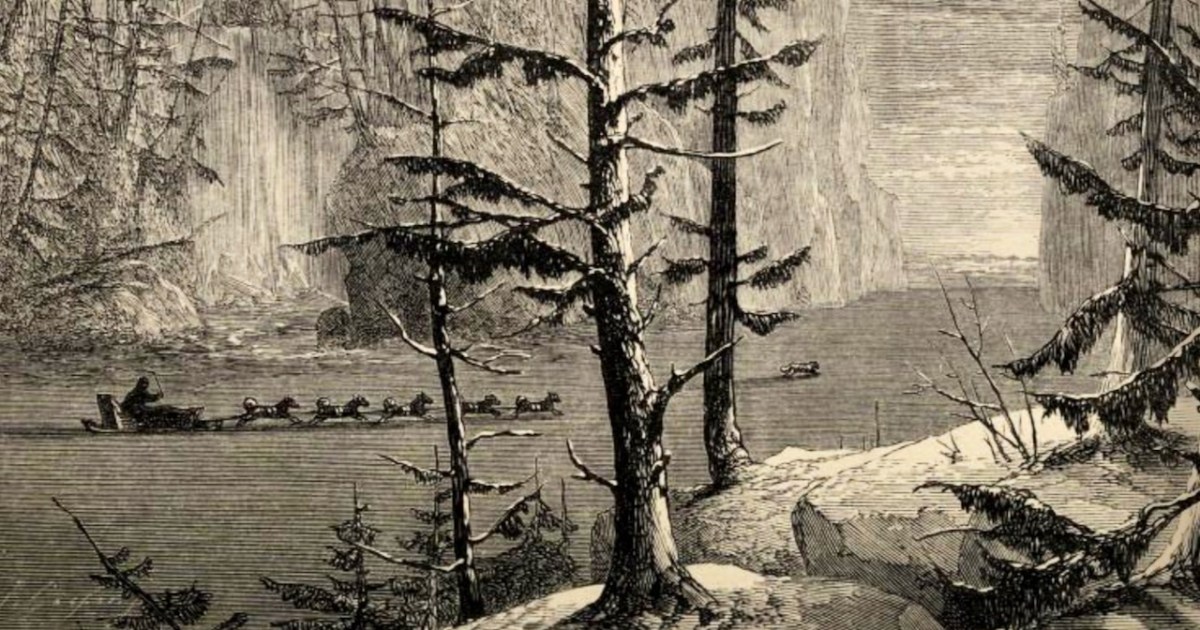
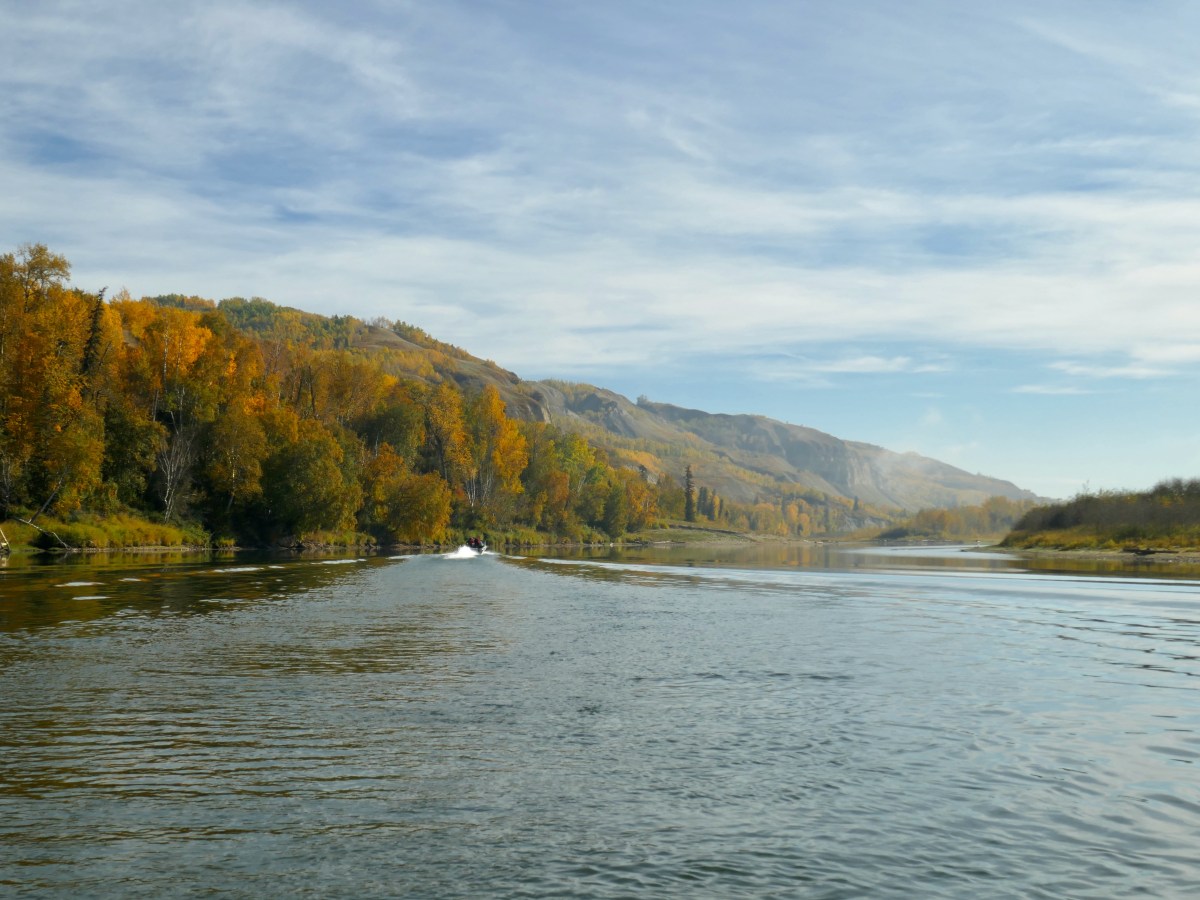
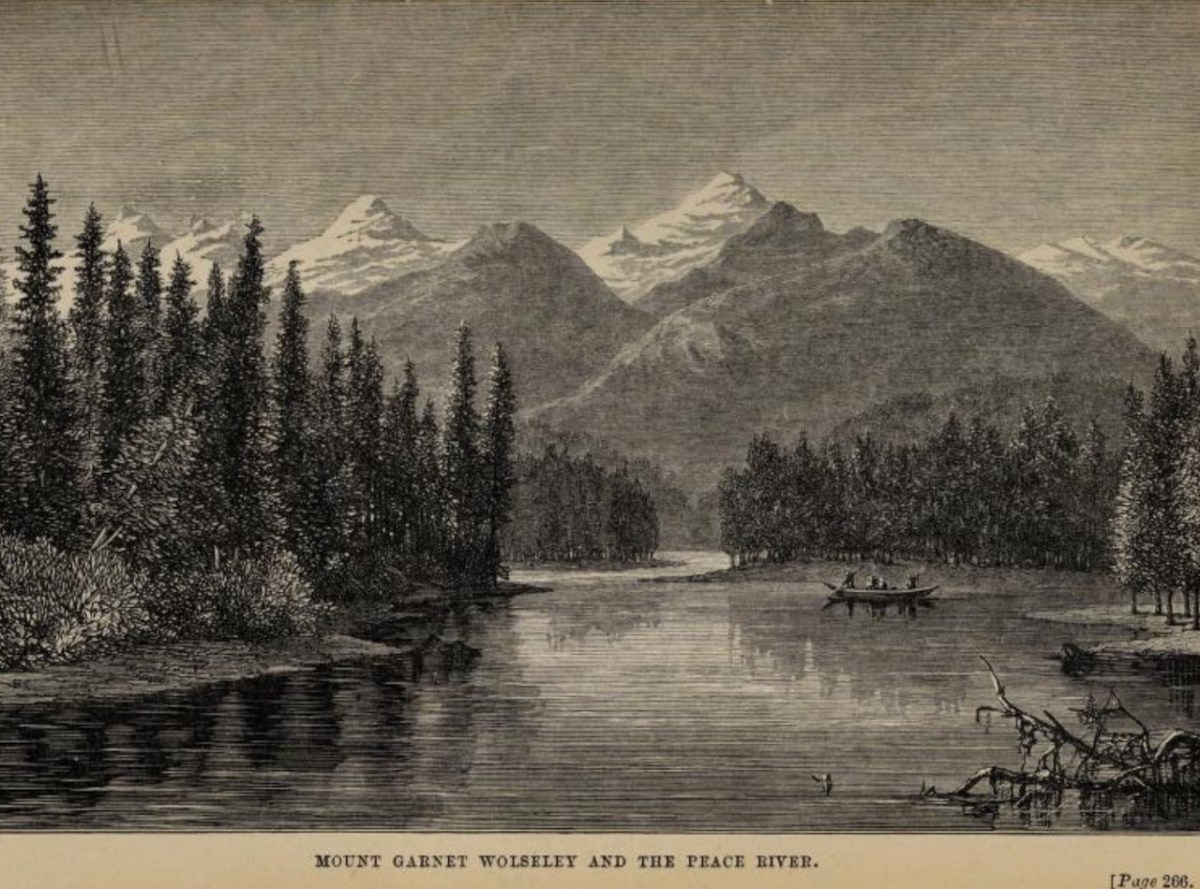
And the personal reason? Reading about Fr Murphy transported me back to my own fur trade days! From 1974 to 1978 I was enrolled in a doctoral program in Archaeology at Simon Fraser University in Vancouver. My research and projects were centred on the excavation of fur trade forts along the Peace River (above), in northern British Columbia, built and occupied between 1793 and 1823, when they were shut down as a result of a massacre. For several summers I camped on the fort sites and dug what was left after 150 years of abandonment. I also spent time in the Hudson’s Bay Co Archives in Winnipeg, piecing together from the original manuscript journals what had happened in those forts. So when I read about Fr Murphy and his time in the Hudson Bay company, some of it is so familiar. Some of it, of course, is pure speculation – something that is readily admitted by Reilly.

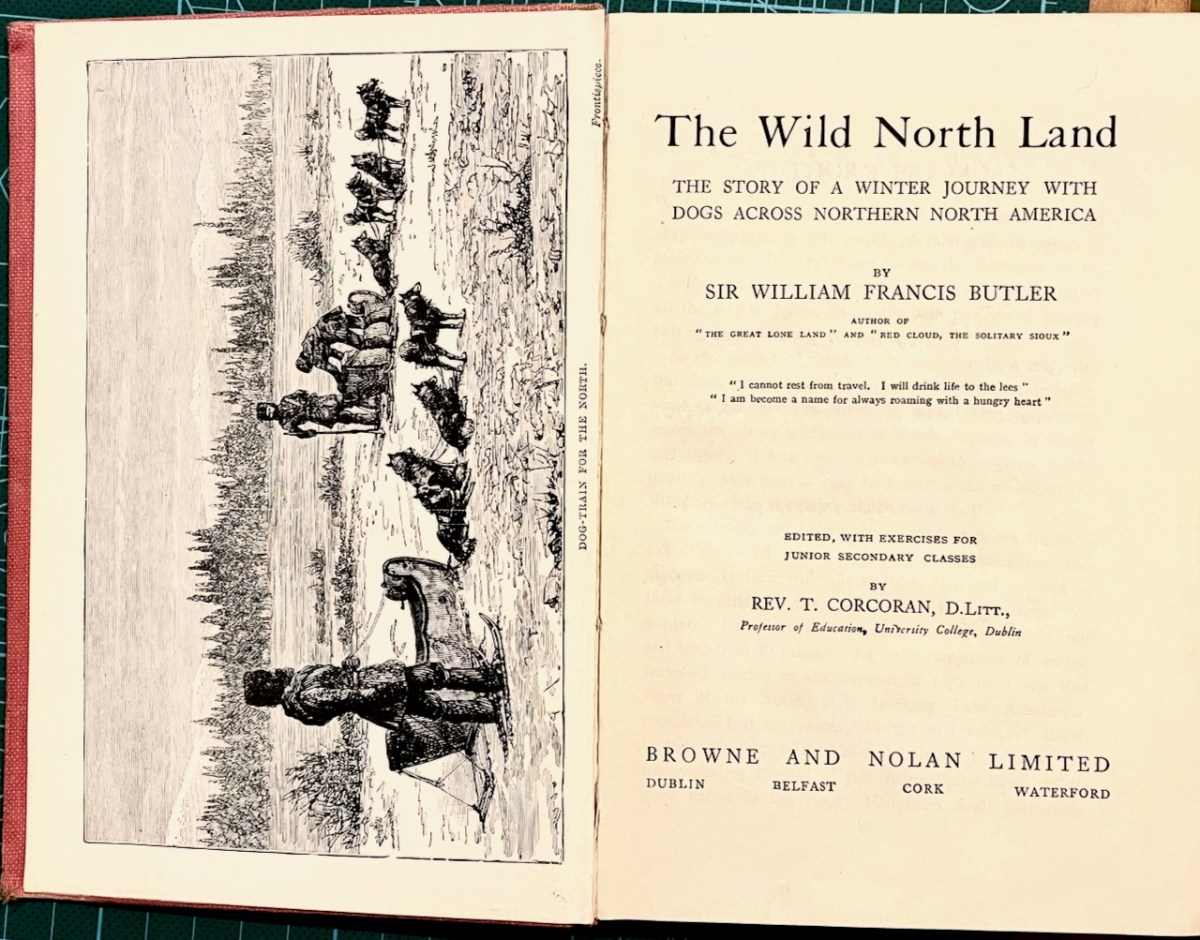
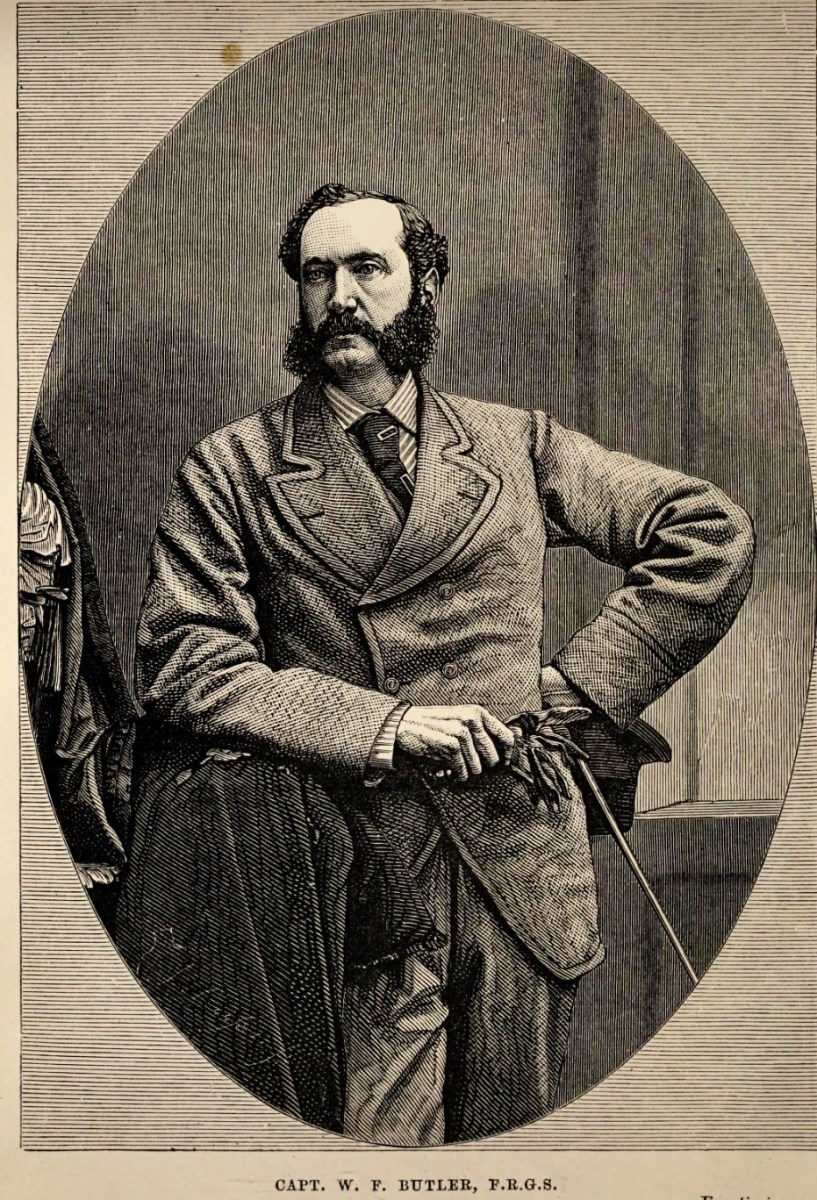
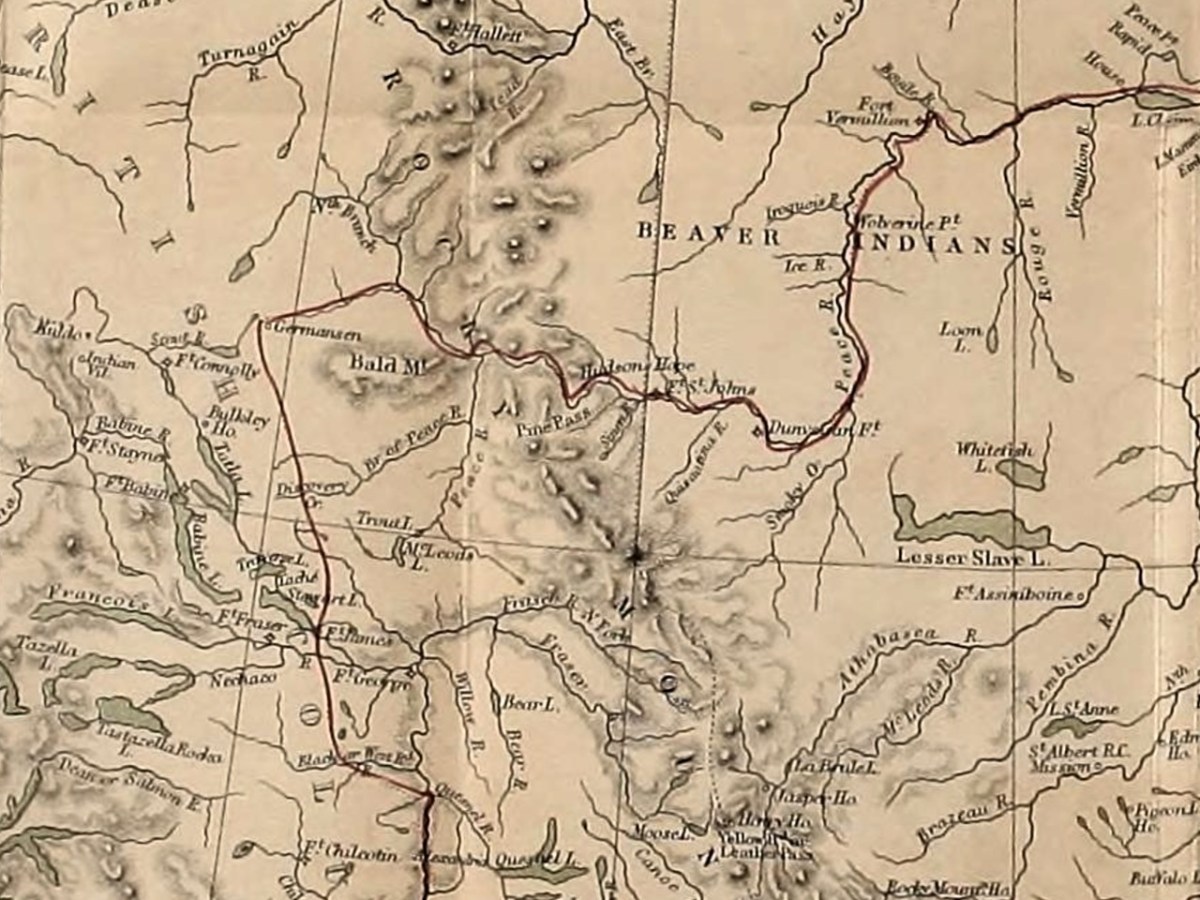
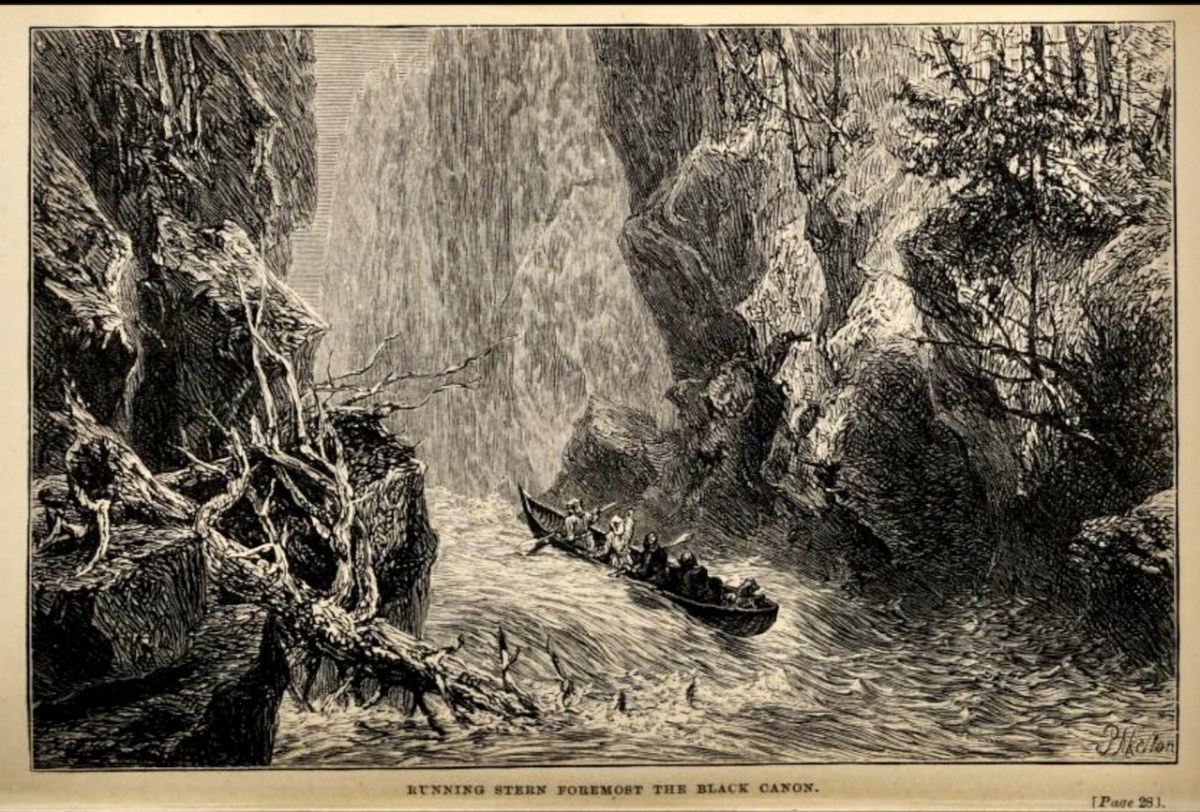
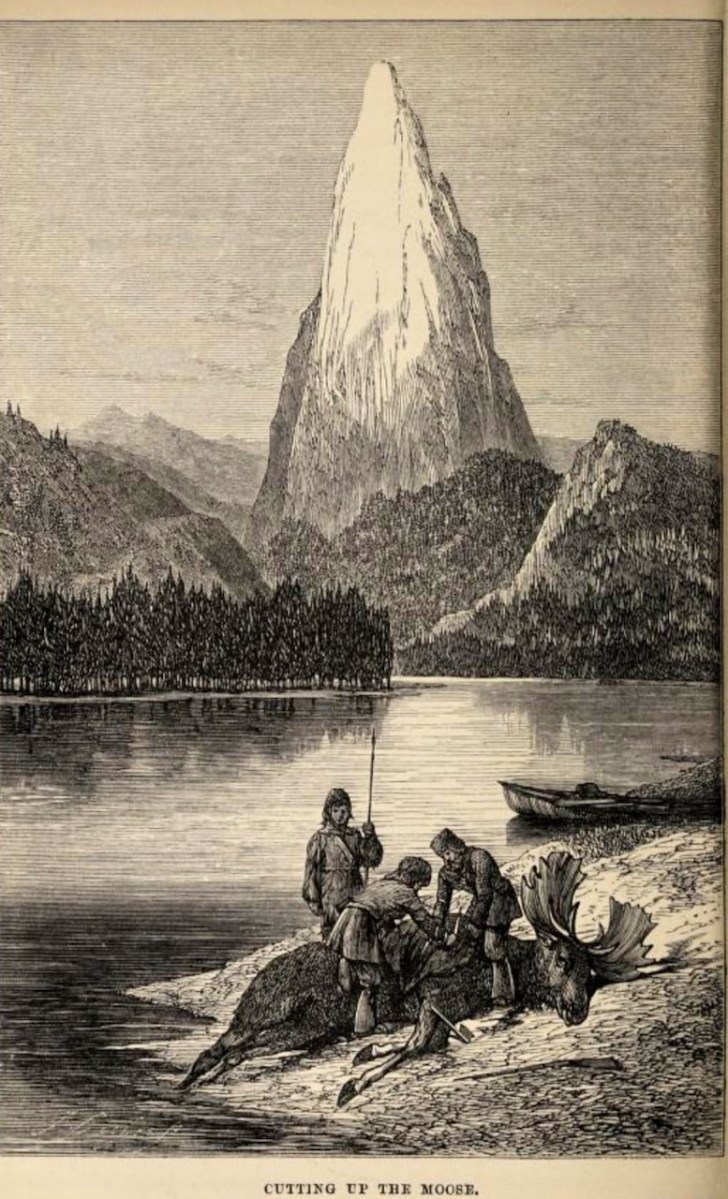
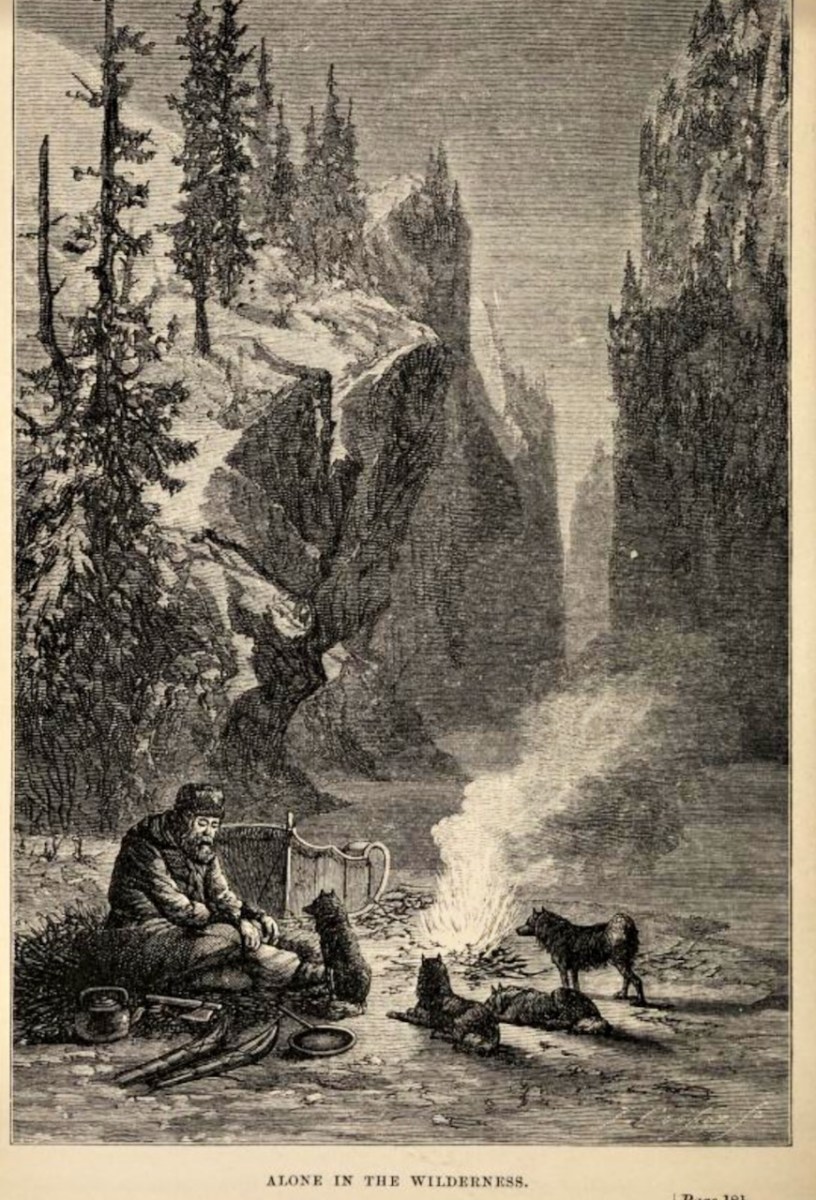
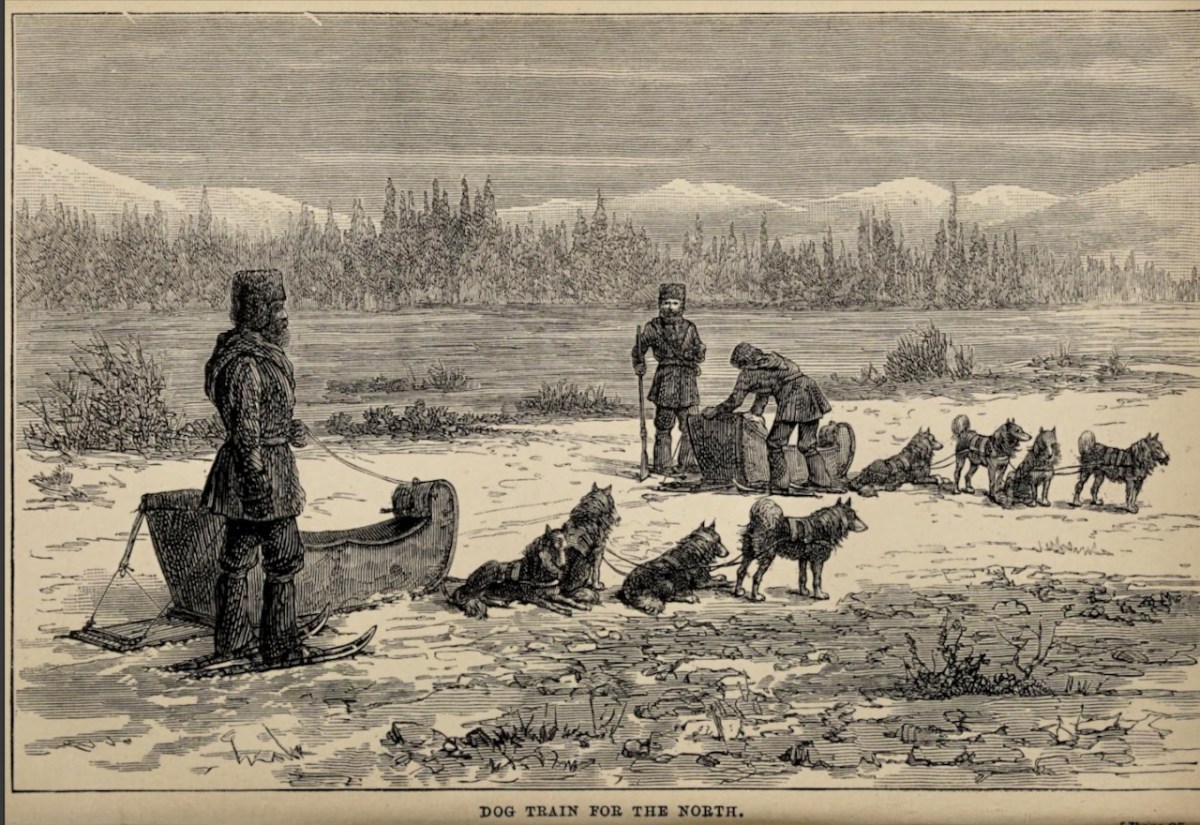
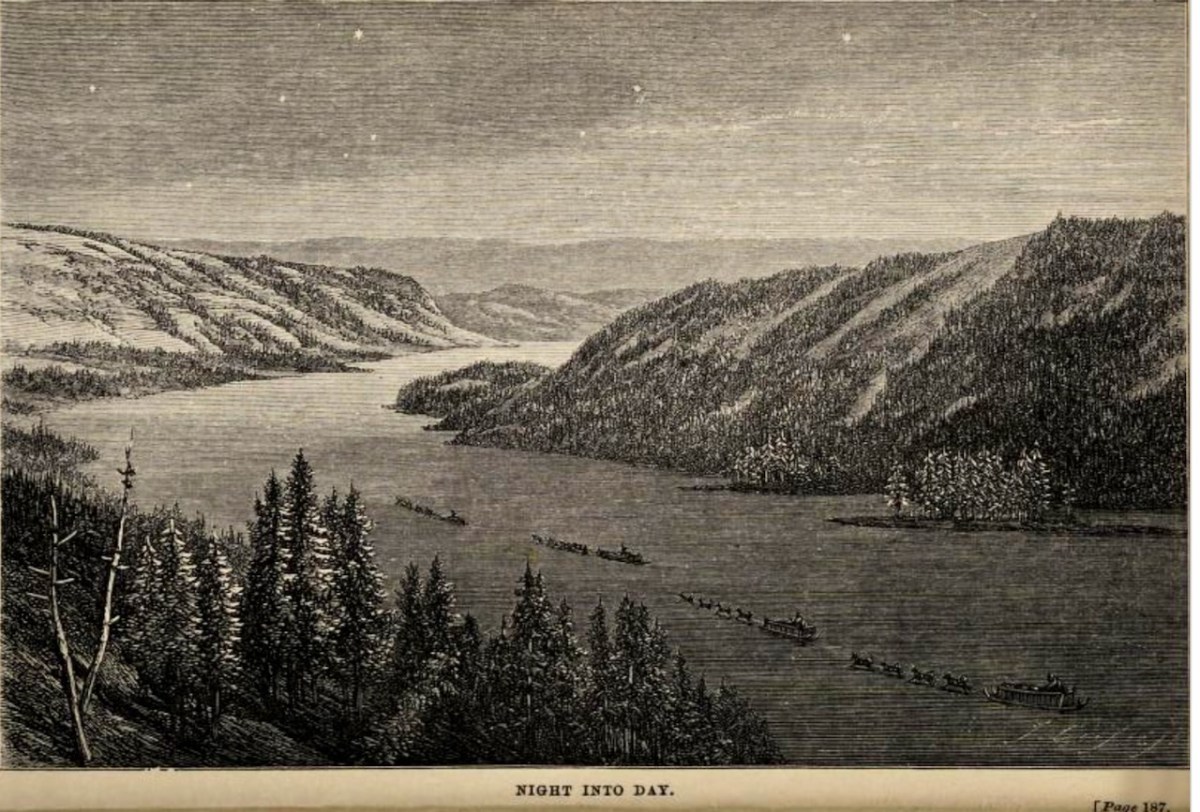
One of our resources for what life was like in early British Columbia was a book, The Wild North Land, by an Irish man – William Francis Butler (below). That’s my copy, above, but it is available on good old archive.org. What a man – adventurer, soldier, writer – he became one of my heroes. He undertook a journey across the wilds of Canada, in the footsteps of the fur traders, in the 1870s, living as they would have lived. So I am illustrating this post with pictures from that book. HIs map is part of his epic journey – the part that contains the Peace River. Try to find Fort St John on it – that’s where I was digging.

Reilly has done a masterful job of piecing together what can be gleaned from sparse documentation. He has tried to be as accurate as possible, but his pen runs away with admiration for his subject and with his enthusiasm for his deeds. What is clear is that Murphy joined the Hudson’s Bay Company as a clerk in 1816.

He was a tall young man with naval experience in the East India Company already, and his physique, courage and talent shone through in his various assignments. Here’s a mention in a dispatch:

I send you a young clerk by the name of Murphy who has been engaged for the service by Auldjo of Montréal. He is totally without experience in the fur trade, but I think you will find him active, zealous and intrepid. He is rather inclined to be wild and will be the better of being under strict discipline. But I have observed many marks of good principles and I am confident he is disposed to act right if the line of his duty is distinctly pointed out to him.

and another`;

A very steady, spirited and enterprising young man; who bears privations and hardships with cheerfulness and has conducted himself in every undertaking he had to perform with credit and satisfaction.

From a different source, by B G Mac Carthy, comes what is likely an accurate description:

To hold one’s own under such grim conditions one needed to have great courage and tremendous physical endurance. Murphy was now a man of well over six feet in height, of mighty frame and muscle. His strength, daring, honesty and unusual intelligence made him an invaluable servant of the Company. From the beginning he had to prove his mettle, since he seems always to have been chosen for the most hazardous tasks. Immediately on his first arrival at New Brunswick House he was sent to capture two men of the North West Trading Company who were wanted for robbery. It was then late autumn. None but an experienced woodsman, hunter and fighter could hope to survive in that wild and frozen land. 

Several tales are told of his popularity with the Indians*, and through their liking for him many new faces were seen coming to trade at New Brunswick House, the post he was put in charge of. There is also a six year hiatus in the records in which it is unclear where he was and what he was doing, but he may have been living in Canada and pursuing life as an independent trader. It is during this period he is thought to have been adopted by a Indian community and given the name Black Eagle of the North.

This account is from his nephew, Colonel Hickie.

Soon he became restless; and one day, with a party of trappers, he left the settlement and struck into the heart of the forest. While on the March he encountered a tribe of Indians, with whom he threw in his lot and wondered through the wilds of Canada for 12 years. Crowned with feathers, dressed in skins, and with a painted face, the Indians loved him. He was elected their chief and was known as the black eagle of the North.

The whole idea of becoming a Blood Brother and living as a chief among the Indian community is very Boys Own – the stuff of many a romantic wild west melodrama. However true all this was, the soubriquet followed him when he left Canada and eventually, via Rome, ordination, Liverpool and Cork, arrived in Goleen at the height of the Famine, riding his black ‘charger’ and tasked with winning back the souls of the Soupers of Toormore. It is mentioned in his obituaries, so it was obviously part of his mystique and reputation for the rest of his life.

He didn’t stay long in Goleen, possibly less than a year and the rest of his days were spent in Cork, where he built the magnificent Church of Peter and Paul in Paul Street. He died an archdeacon, with a reputation for charity and kindness to the poor and a saintly disregard for his own comfort.

His life has inspired Reilly’s book, but also two essays, both of which seem equally full of fanciful accounts, some of which are based on reminiscences from family members. The lengthy quote in Part 6 of Saints and Soupers that starts The scene changes to a clearing in the virgin forests of Canada is from White Horsemen by M P Linehan, and the quote from Col Hickie is from this piece.

*I use the term here as it is used in the original documents, but the accepted term now for indigenous Canadians is First Nations people

Here is the page with links to the complete Saints and Soupers series.

Fisher’s Folklore (Saints and Soupers Part 8)

Over the course of a marathon seven posts, I wrote about the Rev William Allen Fisher, revered by his kin and congregation as the energetic and saintly saviour of hundreds of famished souls during the Great Hunger, and reviled by his Catholic clerical counterparts as one of the worst examples of a Protestant Clergyman who bought conversions with food and employment. Balanced precariously on the fence of fairness, I concluded that he was both a Saint and a Souper, conflating, as he did, the imperative to feed the body with his mission to save souls.

Paul Farmiloe’s lovely sketch of Fisher’s church, Teampall na mBocht in Toormore

It is difficult to overstate, from this remove, how normal his kind of evangelical Protestantism was for the time in which he lived and worked. Ultimately, though, he was on the losing end of history. Not only did the Protestant Crusade, of which he was an enthusiastic proponent, fail to convert broad masses of ‘Papists’ but the burgeoning social and economic power of the Catholic Church ensured that those individuals who had converted to the Church of Ireland felt the full might of episcopal condemnation. Indeed, to be accused of being a Souper remains to this day one of the worst insults that can be said to an Irish person. 

In this church-dominated narrative, which all of us were fed in school in the 50s and 60s (betraying my age there – and I am in that blurry photo above), there was no room for allowing that a conversion to the Church of Ireland could possibly be through genuine conviction or a change of heart. No, such conversions – or perversions as they were labelled at the time – came as a result of taking advantage of people driven mad with hunger. Knowing as we did that Catholicism was the one true faith, how could we accept that anyone in their right mind could abandon it? It’s always been interesting to me, by the way, that at the same time as we were taught to excoriate those who converted away from their own faith, we were happily offering up our pennies to fill the collection boxes that every school had for Ireland’s extensive Missions Programs, in which Irish priests and nuns (including members of my own family) spread out across the world with the intent of wresting souls away from other religions. 

In the second half of the 1930s the Folklore Commission collected stories and local traditions from over 50,000 schoolchildren in Ireland (like the boys in the 1930s classroom above) – now all available online. I was curious whether stories of the Rev Fisher had persisted in local memory and I turned to this collection to look, specifically to the schools in the vicinity of Toormore. And yes – here it all was, occasionally in remarkable specificity, still very much alive ninety years after the events had taken place. 

Mary O’Sullivan from Toormore National School contributed this detailed piece:

The only landlord that any of the old people around here heard tell of were Mr Baylie and Mr Fisher. Although a Protestant, he was a very good man, and all his tenants were catholics, in fact the Catholic curate of the parish was living in a cottage on his lands – where Mr Hogan now resides. All his tenants were living in peace and comfort until he was forced to sell all his property to the church body, one of whose agents was a minister named Mr Fisher.

The first act that he did was to issue notices that any catholic that did not pay the running half gale within a month would be evicted. All the catholics paid, and the next notice issued intimated that any catholic that did not go to church on the following Sunday would be evicted.

Some of the catholics remained steadfast, but as Fisher had the law in his own hands he had no trouble in evicting all those who he knew had the best of the lands. Those farms he divided into smaller lots, and gave to those whom he got to go to church.

There were two catholic schools in Toormore at that time, one for boys and the other for girls. These were closed so that the children should go to the Altar Protestant school. As the time went on the people got poorer as a result of evictions, and Mr Fisher keeping constantly going amongst the poor people with his charity and prayers he got some of them to go to church to save themselves from starvation. But others endured the greatest privation and kept the faith. Some of these that were evicted were given houses by their old landlord Mr Baylie.

Mr Fisher was supposed to have contracted what was called a slow fever, he was taken from the Altar to Dublin where he died.

I found that last paragraph interesting as I know that Fisher is on the same headstone (below) as his brother in Mount Jerome Cemetery in Dublin but had been unable to find any account until now as to why he would not have been buried in his own churchyard in Goleen. I also need to point out that there is no evidence, or accusations in contemporary accounts, that Fisher evicted tenants or used eviction or a threat of eviction to force conversions. Finally, if anyone knows what a ‘running half gale’ refers to, do let us know as I have been unable to track down the term.

Eileen O’Driscoll, also of Toormore, had this version

The famine years lasted from 1845 to 1847. In this district the people had plenty of corn but they had to export it to England to pay the rent and the potato crop failed. The potato was their principal food for breakfast dinner and supper. Lots of them died of hunger and the fever came all over the county and swept them in hundreds. There were men hired for carrying them to the nearest burial ground which was Kilhangil. They had a special car for that purpose. They called it a bogey car. This man carried nine or ten at the time and dug a big hole and covered them over without any coffin. There was then a relief sent from England to all Parish priests and ministers. In this parish the the minister took hold of the clothes that were sent and some of the poor Catholics died of hunger before they would take anything from the Protestants and others took the clothes and turned Protestant. Mr Fisher was the minister of this parish and also the landlord of Toormore and Gorttyowen. He got the clothes and distributed them to anyone that went to the Protestant church on Sunday. Many Catholics availed of this offer and they were called “soupers or turncoats” The Bishop became angry and he sent a very strict priest to the parish. His name was Fr. Holland. He gave very harsh sermons to the people and we are told that when Mr Fisher got up on Monday mornings he found lots of clothes outside his door. A lot of the people still kept on getting the clothes. Fr. Holland said that he would curse the people that went to the protestant church. He got permission from the bishop to do so. One Sunday as he was speaking in Ballinaskeagh Church a man stood up and said he would go in spite of any Bishop to what churches he like himself. The man died before the end of that day, and his son was killed by his own horse within a week. This frightened the people and it forbade a great number from attending the Protestant Church any more There was one man in Toormore that went to the Protestant Church but he also went to Mass before going there. Mr. Fisher found this out. He met him one day and asked him why he was going to Mass and also going to Church He said he was going to Mass to save his soul and that he was going the Church for to save his body Mr. Fisher bought Mr. Bailey’s property which was Toormore, Gorttyowen, and the Altar. He evicted all the Catholic out of Gorttyowen Toormore but left those that remained souper in their holdings and they are known as Toormore soupers.

There is so much to unpack here. In this version of the story the main inducement to convert is the provision of clothing, rather than food. In Saints and Soupers Part 6 I related that Bishop Delany of Cork had sent the firebrand Fr John James Murphy (AKA The Black Eagle of the North) to sort out the situation and he had succeeded in winning back (or browbeating) many of the converts. There was indeed a Father Timothy Holland in Goleen, but it was several years after the Famine, from 1863 to 1867, and his fierceness and effectiveness has obviously lived on in folk memory and become intertwined with that of Fr Murphy. (Perhaps it was Fr Holland who lined up all the newly married parishioners and married them again in case they hadn’t been ‘properly’ married the first time – see the comments at the end of Part 7.)

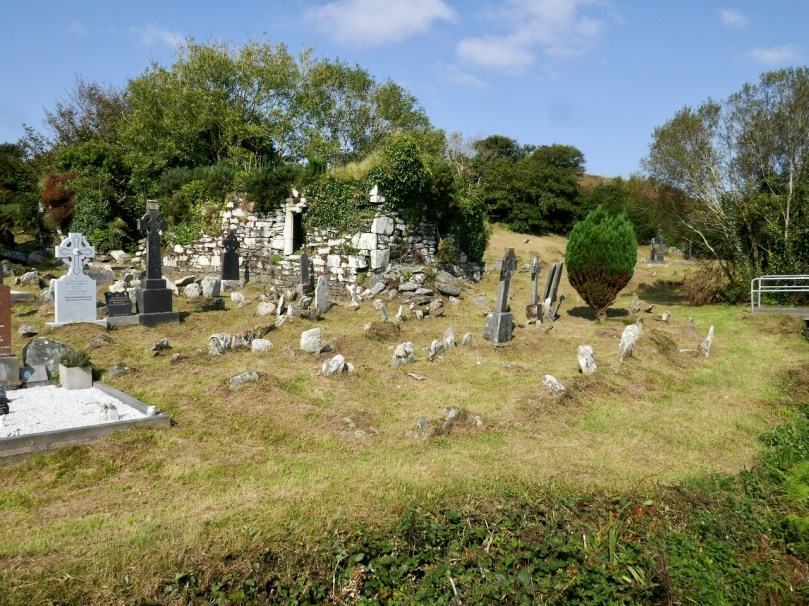
The story of the man who asserted his independence of choice only to be struck down, along with his son, is a trope of many Irish stories, often revolving around the wilful destruction of a fairy fort or a holy well. Finally, Kilhangil, nowadays a particularly beautiful and peaceful spot (below), may be familiar to you from the post Mizen Magic 19: Church of the Angels

A pithy entry from Mary Lucey of Ballyrizard relates information from her father, Tim.

Mr Fisher was landlord of Toormore. He was a very bad man and he hated the Catholic Religion. All Catholics who would not become Protestants were evicted. Most of them kept the faith but some turned Protestants for the sake of keeping their land. 

Once again, eviction takes centre stage, this time as the outcome of refusing to turn Protestant. Hating the Catholic Religion is equated with being a very bad man.

Kathleen McCarthy from Lowertown School (that’s Lowertown townland, above) wrote about many aspects of the Famine, including this section on Fisher.

The famine times were from the beginning of eighteen forty seven to the end of eighteen forty eight. The conditions of the Catholics was terrible at that time. Their potatoes were destroyed with the blight, and they had to sell their wheat to pay the rent. In this district three quarters of the people died with hunger.

The English sent yellow meal to the Protestant minister in Toormore to distribute among the people but it was the Protestants who got the most of it. Any Catholic who would turn a Protestant would go to the minister’s house every day and they would get a bowl of soup to drink and meal to take home. Nearly every Catholic in Toormore turned Protestant in that time and their descendants are there today, Protestants and bearing Catholic names. Toormore is known as “the land of soupers” on account of the number of people that turned Protestant for a bowl of soup. There lived one man in Toormore called John Barry and he had seven children. Six of the children died with starvation and he would not go to Fisher for anything for them.

This is the first account we have of Taking the Soup, and the labelling of Toormore as ‘the Land of the Soupers’. The story of the man who would rather let his children starve to death than take the soup is a familiar one. While these John Barrys were held up, in our history lessons, as a model of steadfastness and an exemplar of Catholicism, I remember being horrified that any father would act in this way. Perhaps it’s one of the thousand little cuts that eventually ushered me out of the church.

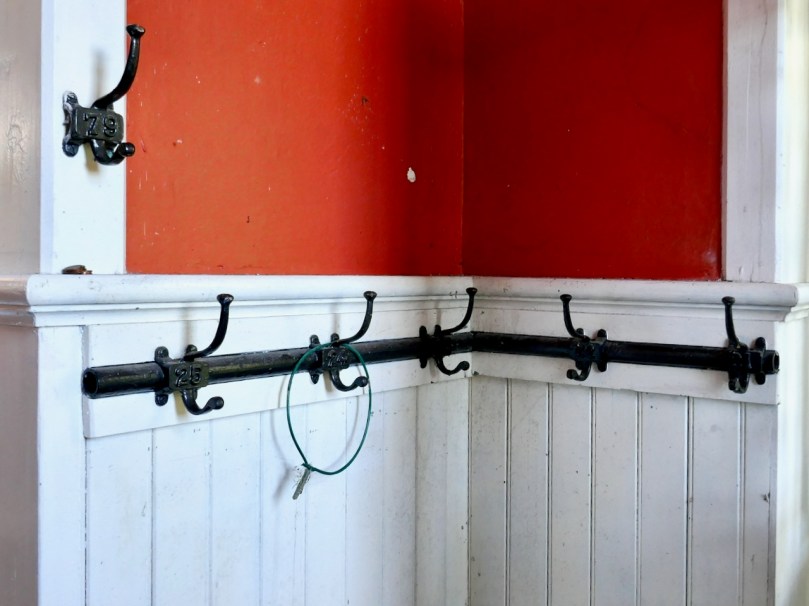
A cloakroom in a traditional schoolhouse

Annie Donovan collected information from Jeremiah Donovan of Gunpoint who was 97 when he was interviewed. There is a long and detailed description of the conditions and burial practices during the Famine, and it includes this short piece: 

The Catholics were starving with the hunger and Fisher who lived in Toormore at that time gave meal and soup to any Catholics that would go to him. Nearly every person in Toormore went to him for the soup and yellow meal, and they turned Protestants also. They were called “Soupers” and the village of Toormore was called “The village of the Soupers” since and their descendants are still living in Toormoor with Catholic names.

This is a particularly interesting account, since Jeremiah would have lived through some of the events he relates, as a young boy. There is also the same reference as in Kathleen McCarthy’s essay to ‘Protestants with Catholic names’ – a poignant reminder that in Ireland one’s last name is often a pointer to one’s religious affiliation. 

Peter Clarke’s beautiful sketch of the church that Fisher built at Toormore, also called the Altar Church and Teampall na mBocht (Church of the Poor)

A long but anonymous entry from Gloun School (on the slopes of Mount Gabriel – the old school house at the end of this post is associated) goes into great detail about various aspects of the Famine, mainly centring on evil landlords, and contains this:

At the time of the famine, some Catholics turned Protestants. They became perverts to get soup which the Protestants minister gave out. The name of the minister of Toormore was Mr. Fisher.

Some of the “soupers” were William O Donovan and John O Donovan both natives of Toormore. William O Donovan’s daughter, Mrs Coughlan, still lives in Corthna. John Donovan’s grandson is a shop-keeper in Schull, whose name is Joseph Woods. Another man who was a “souper” was Joseph Daly, a native of Toormore. He afterwards became a minister. Before he became a “souper” he was so holy it was said that he could walk upon the waters. He tried to do it once, before a crowd but he sank. He also answered Mass in Ballinashker Chapel barefoot once. His son lives in Schull. Ever since Toormore is sometimes called “the land of the soupers” and the Protestant Church is called ” Teampall na mboct” which means”the Church of the poor”.

I think this piece, more than any other, is illustrative both of the long memory of these events and of the classroom ethos of devout Catholicism in which this child writes – an atmosphere in which it has been normalised to name and shame the ‘Soupers’ and their descendants several generations on. This is divisive sectarianism at its most abhorrent, and it’s just as important to understand this, as it is to chuckle at the funny verses and old folktales that the children also write about.

The old school house at Lissacaha near Gloun

There’s more, but I think this gives you a flavour. Rev William Fisher has left a complex legacy. Some of it springs from his own actions – we haven’t exonerated him from bigotry and over-enthusiastic proselytising (another possible future post, in the light of new information). But it’s also based in the narrow, blinkered, self-righteous Catholicism that encouraged the condemnation of neighbour by neighbour, in the name of religion. It would be good to think we’ve moved beyond that now, in Ireland.

This link will take you to the complete series, Part 1 to Part 7

Saints and Soupers: the Story of Teampall na mBocht (Part 7, the New Catholicism)

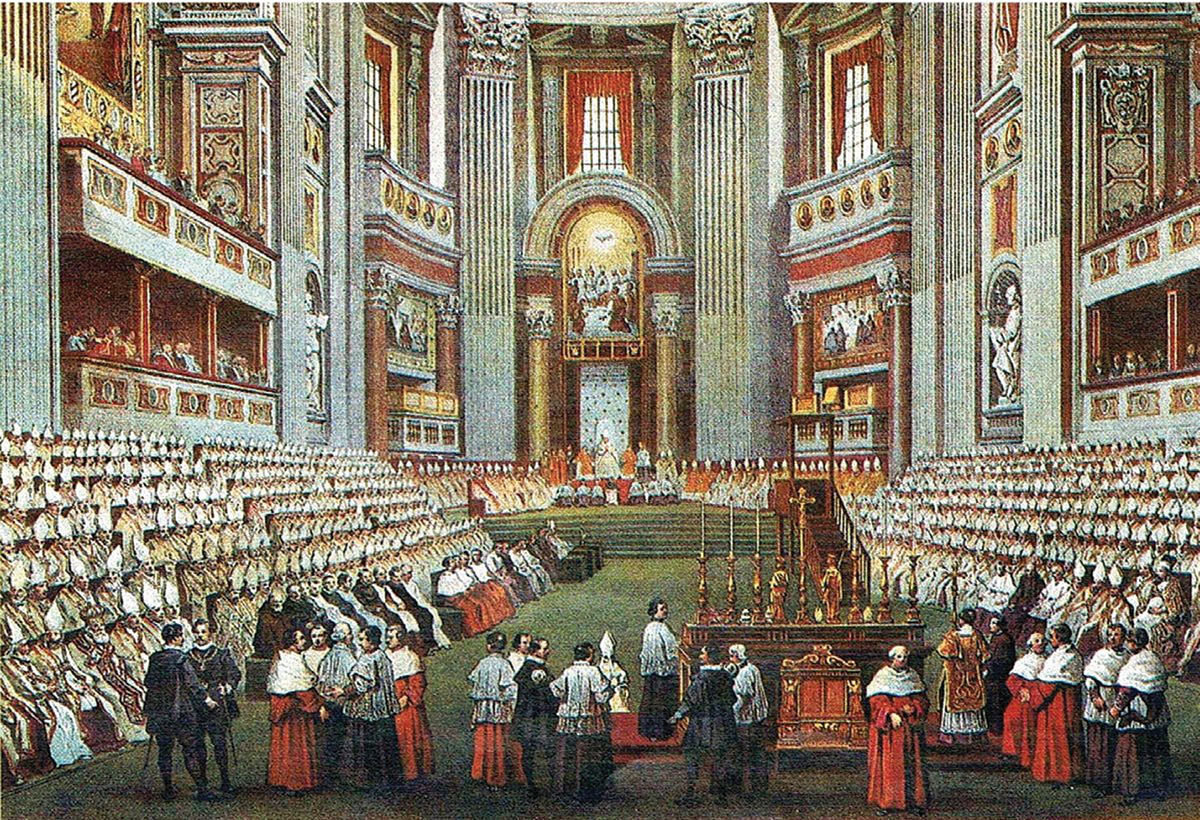
First Vatican Council

The Protestant Evangelical Crusade of the first half of the nineteenth century in Ireland was able to gain traction for two reasons. First, the Catholic Church, after centuries of suppression, was impoverished and underserved. While over 80 percent of the population was Catholic, there were relatively few priests, no seminaries to train new ones, no institutions of higher learning, few churches fit for purpose, few Catholic resources in Irish (the language of the people), and little access to primary education. Second, for the majority of the rural population, actual religious performance revolved not around church, mass and the sacraments, but around a variety of folk practices such as patterns at holy wells, stations, wakes, funerals and pilgrimages – events which started off with penitential prayers and offerings and often ended in drunkenness, revelry and even faction fights. Religious belief, meanwhile, was based on centuries of folklore, mythology and superstition mixed up with religion, so that saints and giants, pookas and devils, banshees and miracles, all became part of a rich melting pot of stories to underpin everyday behaviours.

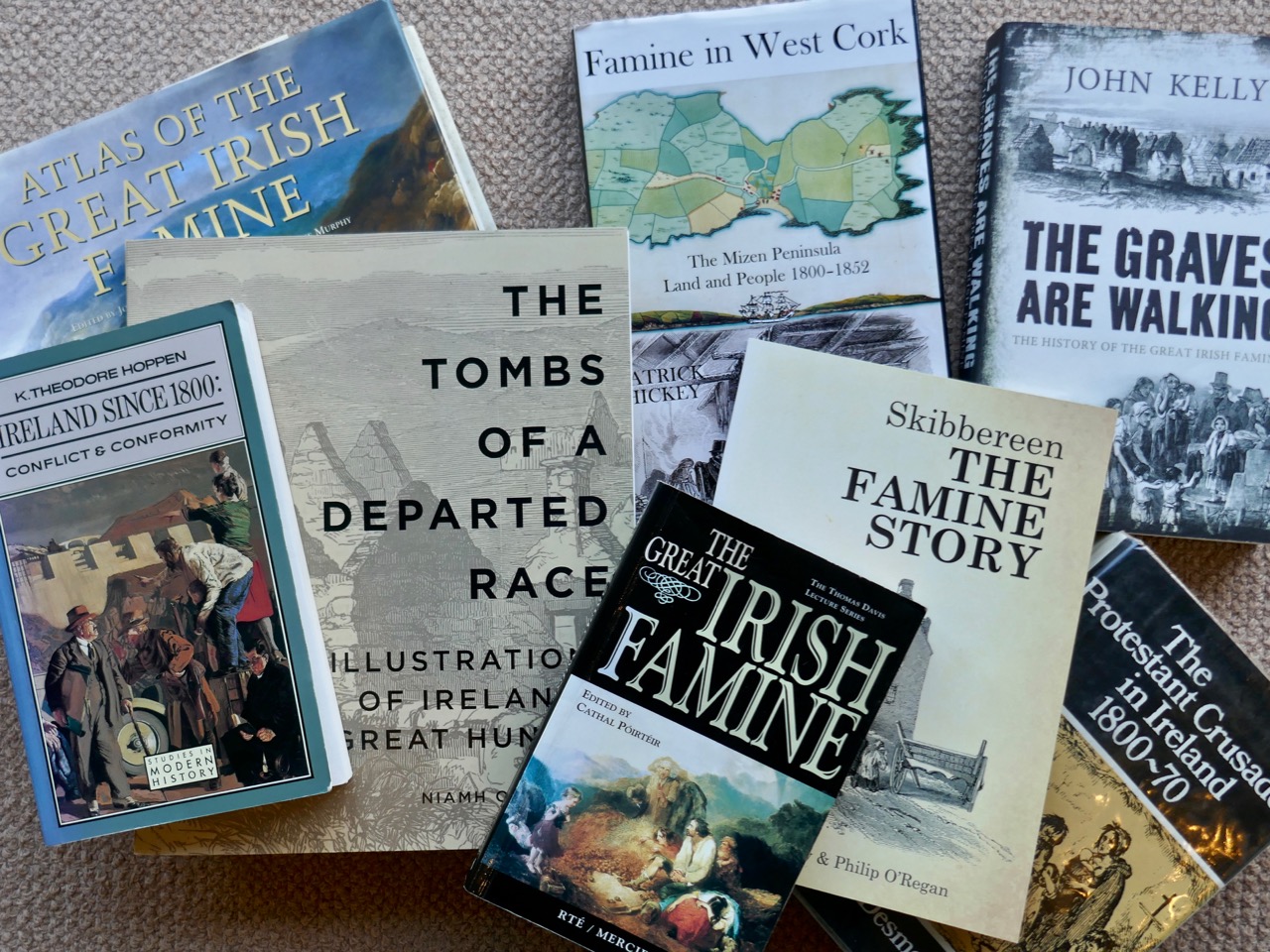
Some of the main resources I consulted for this series. All excellent reading, and towering over them all is Patrick Hickey’s meticulously researched study of the Famine in West Cork

During the course of the nineteenth century all of that was to change. The first half of the century saw significant advances. Catholic Emancipation in 1829, the establishment of the National School System in 1931 (soon dominated by, and ultimately controlled by the Catholics) and the Tithe Wars of the 1840s all galvanised the Catholic population into a new assertiveness. Many new churches were built in West Cork, mainly plain, barn-style buildings which were nevertheless a great advance on tumble-down mass houses or the open air, and some of which are still in daily use.

And then Ireland was struck by The Great Hunger. Over the ten years from 1841 to 1851 one in every four people in Cork died or left. Proportionately, of course, the poorer and more remote districts were hit the hardest. In the maelstrom of disaster, Catholic priests and Protestant Clergymen worked to alleviate the situation for their flock often together but sometimes, disastrously, in opposition to each other, as with the Rev Fisher in Kilmoe, and the ‘colonies’ in Dingle and Achill, leading to enormous resentment about ‘souperism’ but also to panic among the Catholic hierarchy about the inroads that the evangelicals had managed to make.

Archbishop John McHale of Tuam, Gallican and fiercely nationalist: Cullen disapproved of him (image licensed under Creative Commons,  Attribution: Andreas F. Borchert)

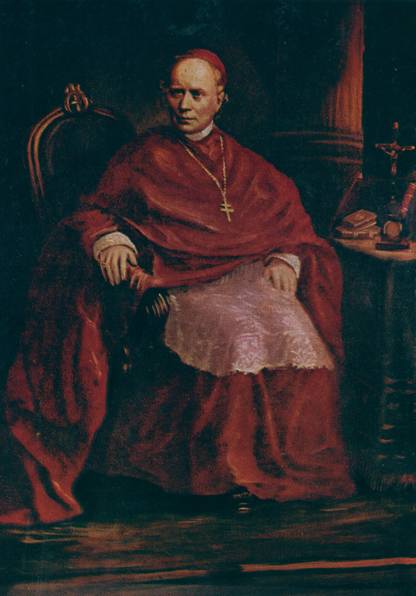
Enter the towering figure of Paul Cullen, Archbishop and later Cardinal, who was to dominate Irish Catholicism from his arrival as Archbishop of Armagh in 1849 to his death in 1878. According to Bowen, because of the increasingly Gallican attitudes of MacHale and his Episcopal supporters and their failure to discipline their clergy or to hold the extension of Protestant authority, the Vatican came to an important decision. The Pope would send to Ireland an ecclesiastic totally committed to the Ultramontane cause, and he would restore order among the faithful. The ecclesiastic who came as papal delegate and Primate was Paul Cullen.

Cardinal Paul Cullen

Gallican, in this context, refers to a philosophy that respects the state in civil matters and religious authority on spiritual matters – a ‘render unto Caesar’ approach to which many Irish priests, trained on the continent, adhered. As Daniel O’Connell expressed it in 1815, I am sincerely a Catholic, but not a Papist.

Cross Keys, The Papal Insignia. This one was spotted in a small Catholic Church in West Cork; look out for it in churches built after 1850.

Ultramontane Catholicism was the opposite – it placed papal authority as central to the conduct of the church and its members. In part, nineteenth century Ultramontanism was a reaction to the horrors of the French Revolution but also to the nationalistic policies of Bismarck which imposed state supervision on church activities. Cullen was an arch-Romanist. In his engaging study Ireland Since 1800: Conflict and Conformity, Theodore Hoppen says, Cullen, one of the towering figures of modern Irish history, had spent virtually all his earlier career in Rome where he had been inoculated against liberalism in its continental form

Cullen’s first major initiative was the Synod of Thurles in 1850. Hoppen again:

Patterns now stood condemned as potentially immoral. Wakes were to be sanitised and all the other rights of passage – funerals, baptisms, weddings – brought under clerical auspices alone. . .

Before the 1850s were out he had imposed Draconian loyalty oaths upon the staff and insured that both Maynooth and the new Seminary founded for his own diocese at Clonliffe in 1859 were henceforth to produce only priests totally committed, at least in theological and social terms, to his own version of the clerical role. While this did nothing to encourage intellectual endeavour within the church, it proved highly efficacious in producing a steady stream of those dogged pastoral moralists who, armed with the rulebook at once precise and immutable, could alone have furnished the kind of religious justification and guidance which important sections of the laity increasingly demanded and required.

The reference to ‘sections of the laity’ reflects the emergence of a new rural class. All over Ireland population decline after the famine was hastened by mass evictions as landlords took advantage of the situation to consolidate their holdings. In the second half of the century a new class of ‘strong farmers’ emerged who were to become the backbone of rural life. Seeking respectability, conservative, passing on their farms only to the eldest son, finally approaching financially security and land ownership, they supported the hierarchical and puritanical expression of religion represented by this new Catholicism. Cullen came from, and kept in close contact with, this very group.

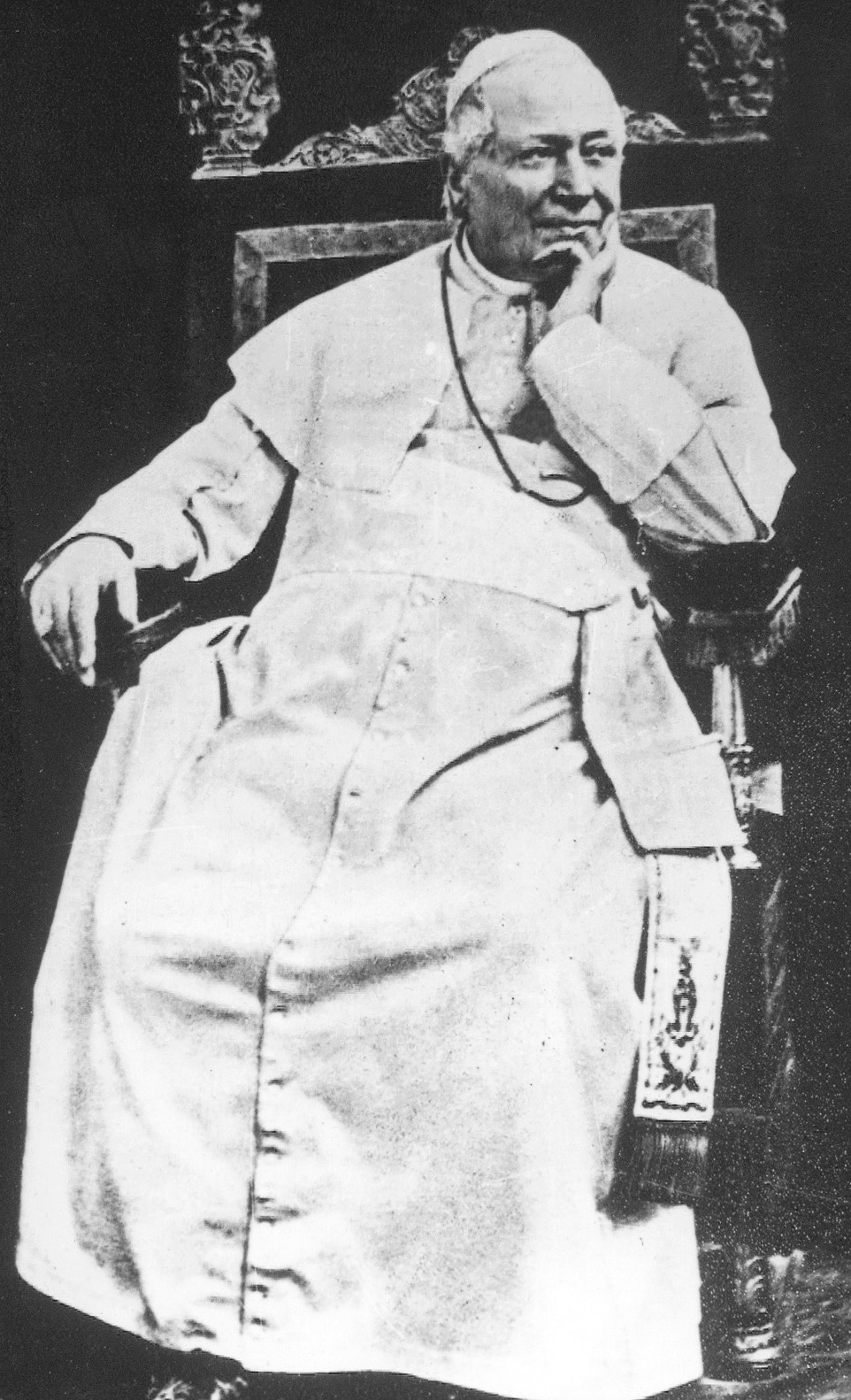
Pope Pius IX

Cullen was extremely well connected within the Vatican and indeed was a personal friend of Pius IX, still the longest-serving Pope and one of the most centralising and controversial. He could rely on Cullen for support – and needed it to get the infamous doctrine of Papal Infallibility passed at the First Vatican Council in 1868 (that’s my lead image for this post). It outraged not only Protestants but liberal Catholics too – a breed that still clung on to some influence as the century wore on, but were ultimately on the losing end of Irish religious history. Charles Kickham, for example, one of the Fenians and a revered writer, was a constant critic of Cullen’s ultramontane activities. Cullen dismissed him as a cultural Protestant.

Charles Kickham. This image is reproduced courtesy of the National Library of Ireland (with permission)

Others, such as Charles Gavan Duffy, according to Bowen had to flee the kind of Ireland that Cullen had created, where the ‘power of the priest is the one unspeakable, unmentionable thing’. So long as their presence was felt in Irish Catholicism these people were to experience the full force of Cullen’s inquisitorial instincts.

Marian imagery starts to dominate much Catholic Church decoration in this period

It is at this time that the great period of Catholic church building commenced and triumphalist cathedrals and churches were erected all over Ireland, often on the highest piece of ground in the town. ‘Roman’ initiatives such as an emphasis on Marian worship (Cullen helped to usher in the ‘doctrine’ of the Immaculate Conception in 1854), Novenas and Sodalities, ‘Miraculous Medals’ (the Vincentians had distributed these in Kilmoe and they were much derided by the Protestant clergymen) and of course a continuation of the yearly missions or retreats where the faithful were encouraged in their faith (or whipped into line, according to your perspective) by specialist itinerant preachers. Often referred to as Cullen’s Devotional Revolution, forms of worship settled into the pattern we often now consider ‘traditional’ Irish Catholicism.

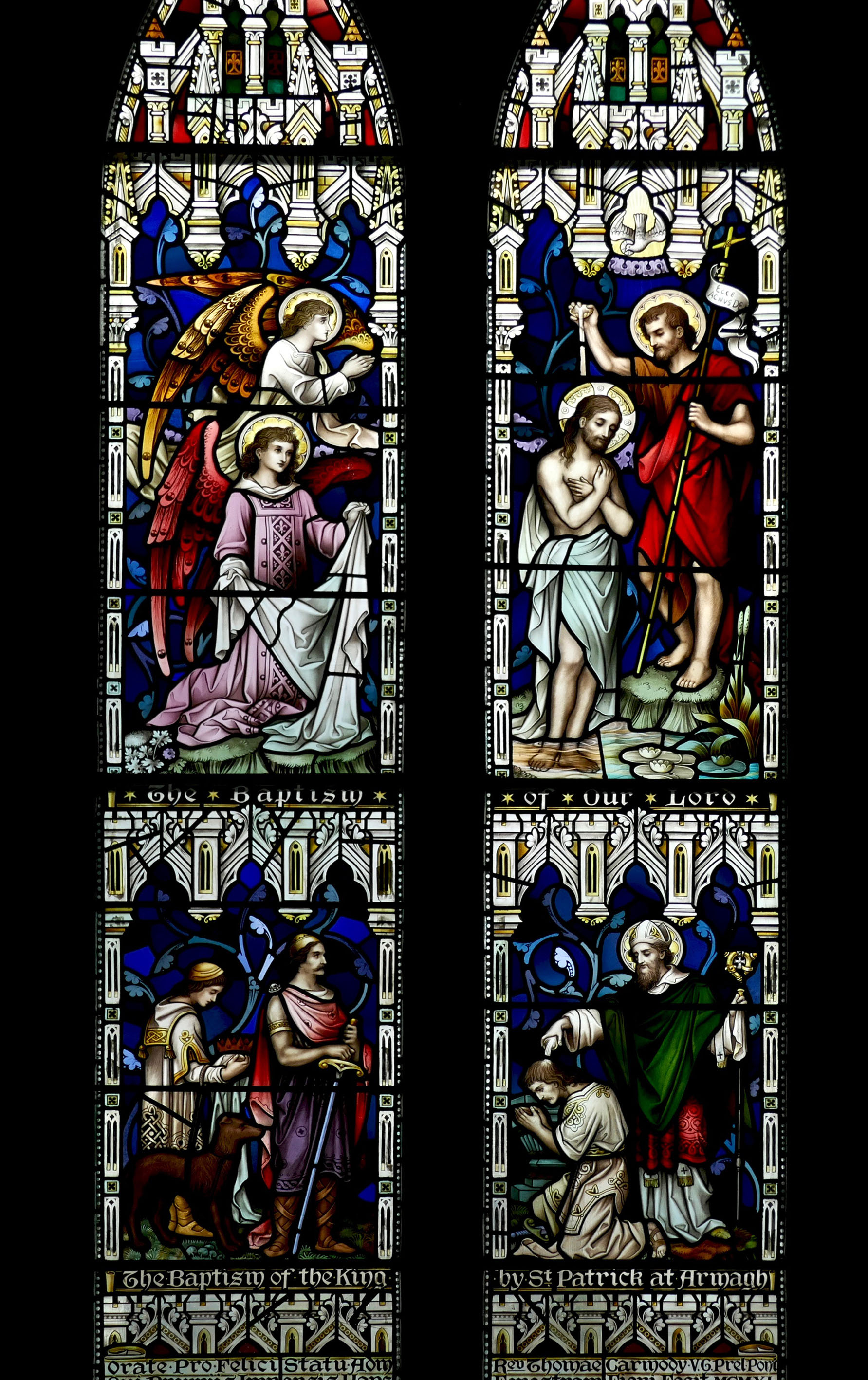
In this window from Killarney Cathedral a direct parallel is drawn between the baptism of Jesus and the conversion activities of Patrick

Stained glass and statuary of the period is a fascinating mix of the continental (the Italian holy statue factories must have been doing a booming business) and the local, as priests incorporated their own parish and diocesan patron saints into the overall decorative plan. Killarney Cathedral, started in 1842 but interrupted by the Famine, was ready for worship by 1855. Decoration was added as time went by, including a set of windows clearly designed with an Ultramontanist message in mind – they draw clear parallels between Irish saints and martyrs,  the life of Christ, and the ultimate authority of Rome. It’s quite a demonstration of verbal and visual sleight of hand, and a powerful message to the congregation.

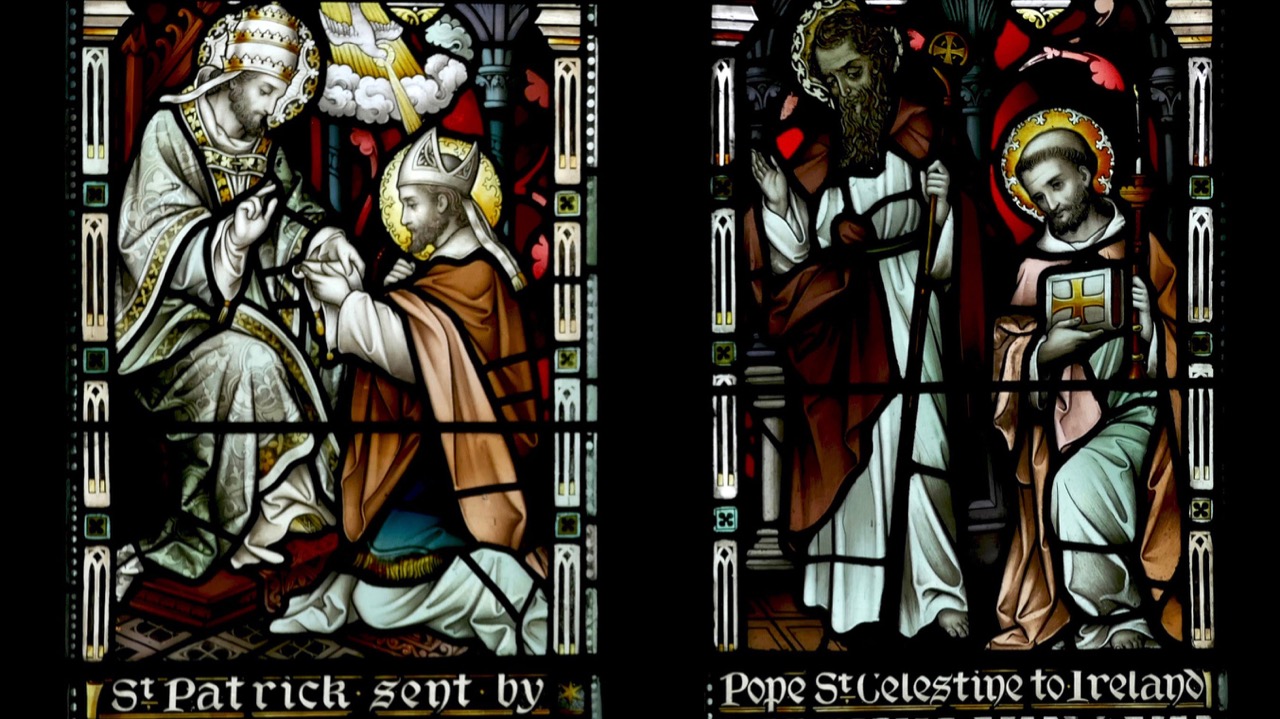
And in this one the message is direct – look to Rome for spiritual guidance. A message from St Patrick himself

In Kilmoe, Fisher had built his own Church of Ireland church in Goleen in 1843 – the one that is now, for want of parishioners, in use as a sail making workshop. In contrast, the large Catholic ‘Star of the Sea and St Patrick’ Church stands on the hill, dominating the town and is very active. It was built in 1854, only a few years after the devastation of the famine, quite an amazing testament to the resilience of the population and the growth in influence and economic power of the Catholic church.

Goleen with the Catholic Church dominating the skyline

It is also, of course, a reminder that the Church of Ireland was finally disestablished by the Irish Church Act of 1869 under Gladstone.  

A typical Punch cartoon, this one showing Gladstone cosying up to the Irish.  And of course there’s a pig, potatoes, whiskey and a none-too-subtle reference to Rome – all the tropes of Victorian images of Ireland

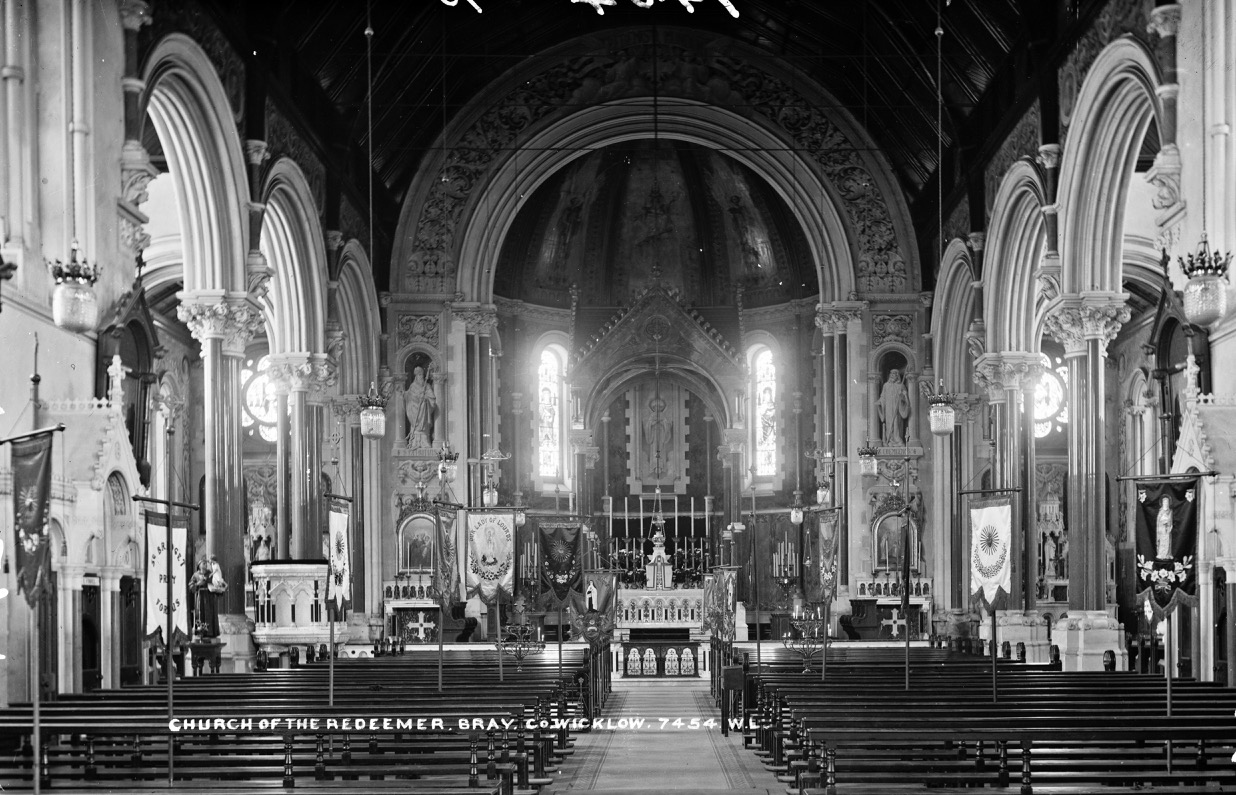
This Ultramontanist Catholicism was the church I grew up in, walking up to mass every Sunday in the Holy Redeemer in Bray (built in 1895), going to confession on Saturdays, attending the Children’s retreats and participating in the Corpus Christi parade. Although I knew Protestants because we lived beside them, I had never been in a Protestant church. I attended a national school and an all-girls convent school run by the same order of nuns (the Loreto order) that set up convents all over Ireland in the nineteenth century. It always puzzled me that we called ourselves Catholics but the Protestants always insisted on calling us Roman Catholics. I understand why, now.

This is it, the Church of the Most Holy Redeemer in Bray – note the sodality banners and the extreme ornamentation. It’s much plainer now, having been toned down considerably in the post-Vatican II era. (This image is reproduced courtesy of the National Library of Ireland, with permission)

I’ve learned a lot about my own history in the course of this series and about the kind of attitudes I grew up with (and which, if I am to be perfectly honest, can still stir inside me in certain circumstances, despite the fact that I am now a non-believer). I suppose awareness of our history and constant vigilance against ingrained prejudice and facile assumptions has to be our watchword if we are not to perpetuate the mistakes and schisms of the past.

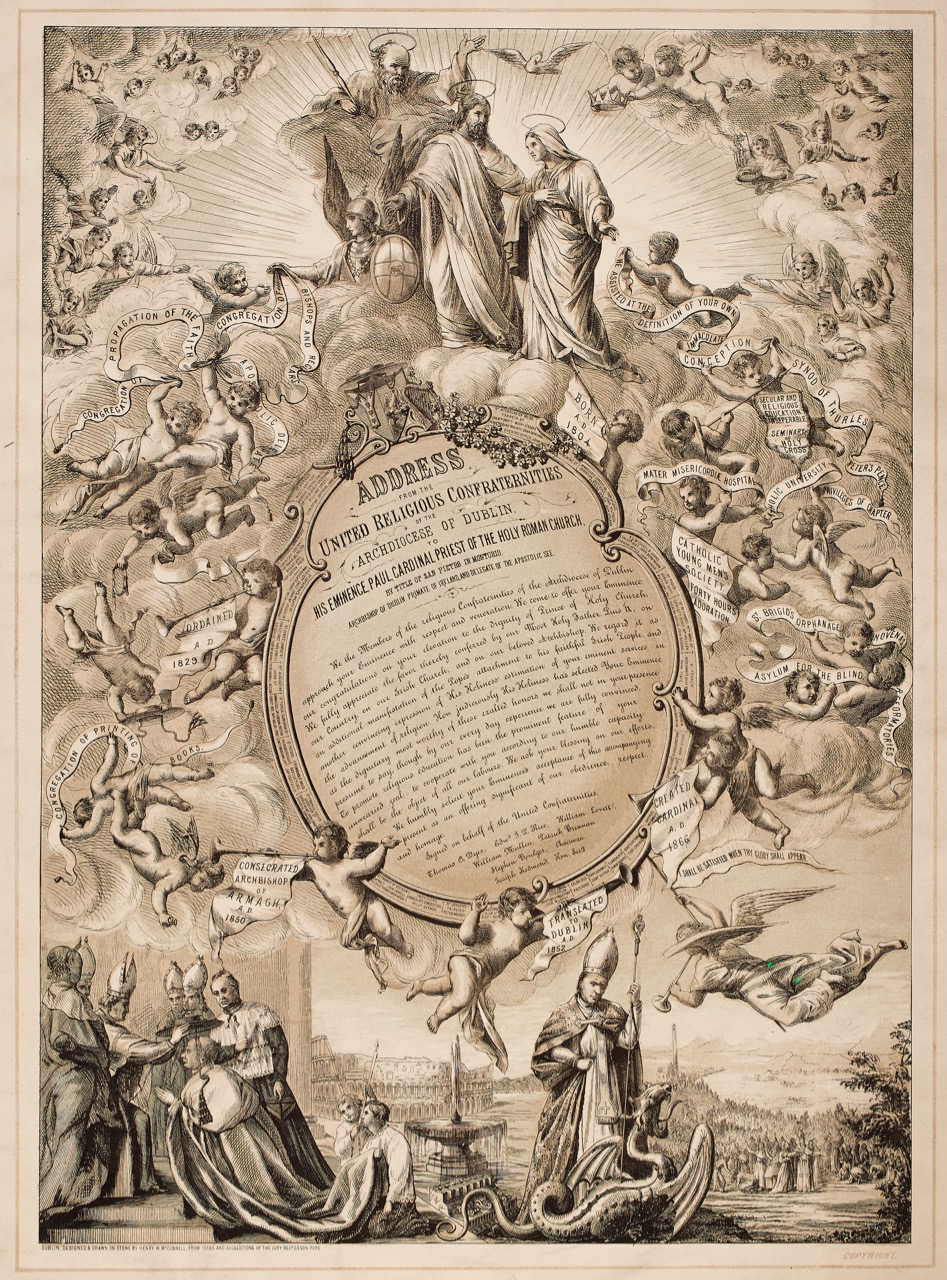
It’s worth enlarging this extraordinary print and having a good look. It’s an address to Cardinal Cullen, enumerating his many achievements. I love the bottom right image of him defeating the dragon. What evil does this dragon represent? I think you can choose one of several candidates. (This image is reproduced courtesy of the National Library of Ireland, with permission)

And what conclusions have I come to about Fisher – was he a Saint or a Souper? He was both. He worked incredibly hard and succeeded in saving hundreds, Catholic and Protestant, from the worst ravages of the Famine, and he died of famine fever himself. But his enthusiasm for his own narrow definition of Christianity drove him to alienate his Catholic counterparts by seeing the Famine as God’s punishment on Romanist intransigence, and to conflate the need to save bodies with the imperative to save souls.

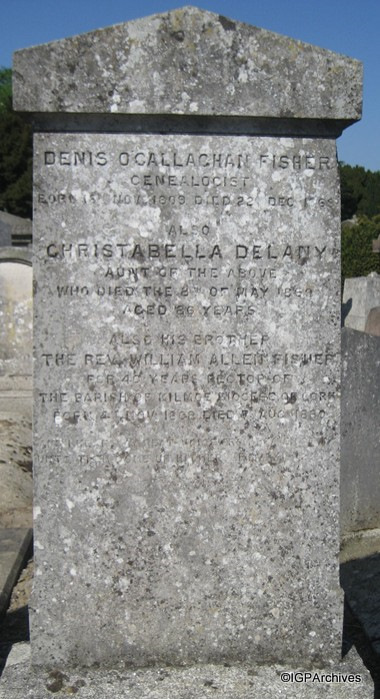
Fisher’s gravestone, in Mount Jerome, Dublin. I am not sure why he would have been buried there, since he died, I think, in West Cork. Perhaps he is simply commemorated on this stone, on the grave of his brother and sister-in-law (© IGP Archives)

I am left with an abiding sense of sadness that the events of the mid-nineteenth century, as symbolised for me by the story of Teampall na mBocht, have left a legacy of sectarian division in Ireland. Perhaps now we can leave Fisher – and all the other crusaders and reformists and counter-reformists – to lie in peace.

A reminder, in one of the Killarney windows, that Patrick was sent by the Pope

I’d like to end with the words of Carlo Gébler, reviewing John Kelly’s excellent book on the Famine, The Graves are Walking:

It’s tempting, with figures as obdurate and flawed as Trevelyan, to judge them by our standards and find them guilty of crimes against humanity – but. . . be advised: Kelly has no truck with this type of transaction. On the contrary, as he firmly but politely reminds us at every turn, all the participants in this miserable saga were made what they were by their period, should be judged only by standards of their time, and, however, we might wish it weren’t true, did believe they were doing right.

None of this is easy to accept, but part of growing up as a country is that we allow those we hold responsible for our woes the integrity of their beliefs, no matter the suffering they caused.

This link will take you to the complete series, Part 1 to Part 7

Saints and Soupers: the Story of Teampall na mBocht (Part 6, Counter-Accusation)

Today I am looking at what happened to Teampall na mBocht when the Catholics finally got the resources together to win back Fisher’s converts.  As we saw in the last post, the Rev William Allen Fisher built Teampall na mBocht (above) with money raised through his own efforts, confining the work to the poorest labourers. There is no evidence that he made employment on this project conditional on conversion, and his own accounts quantify payments to Catholics as well as Protestants (going by the evidence of last names, which can, of course, be misleading).

Reproduced courtesy of the National Library of Ireland (with permission) from a collection of prints by the Irish Church Missions to Roman Catholics. The notes accompanying the image say: This image shows a Protestant clergyman standing at a pulpit with his right arm raised in anger while arguing with a Roman Catholic clergyman in the audience. Audience is divided into 2 groups determined by features. Those seated have more prominent features with upturned noses and those standing have more stern features with straight noses

However, he also supplied food to the Christian missionary schools in the area, the enrolments of which surged accordingly, and he enthusiastically welcomed those who wished to confess and be converted: the number of Church of Ireland adherents rose dramatically in the Goleen area during this period. He denied all charges that he ‘bought’ such conversions. The activities of a clergyman who also happened to be a large landlord using relief funds to build a Protestant church and fund Protestant mission schools, even if by doing so he saved many from starvation, were always going to excite odium within the minds of his Catholic counterparts.

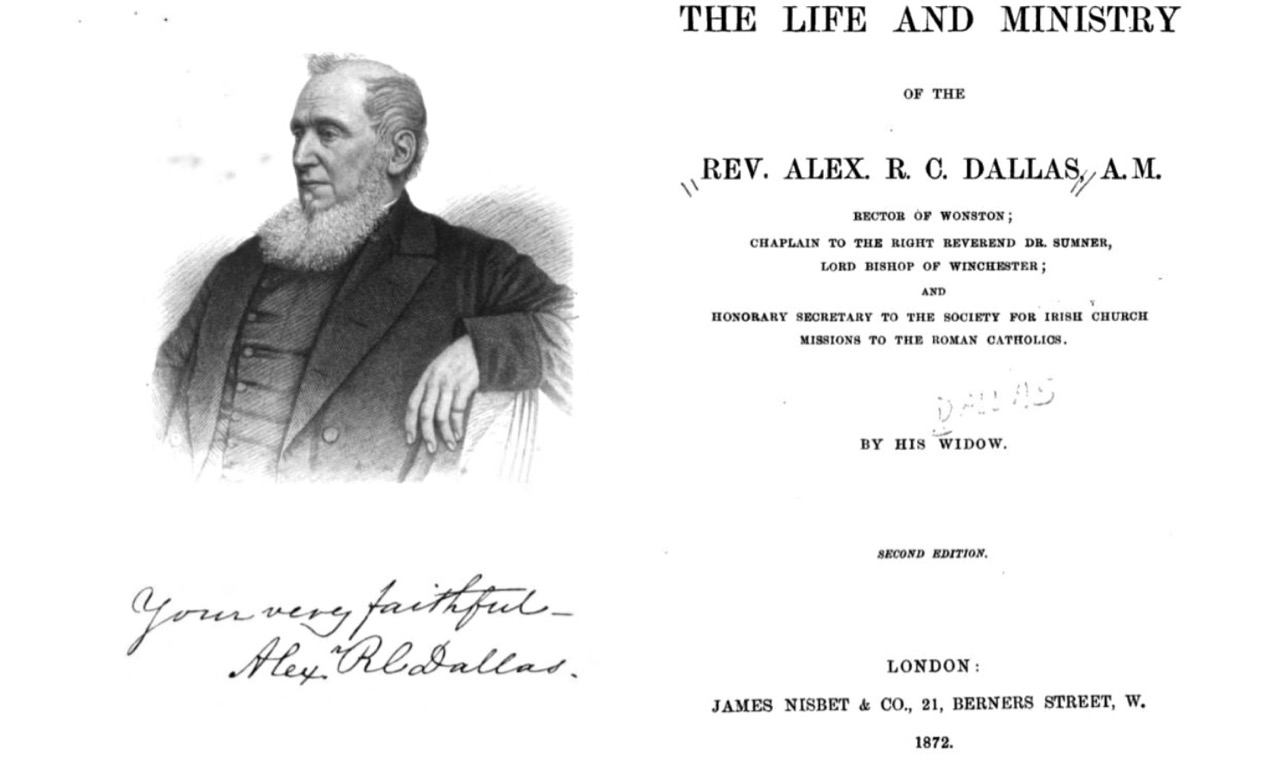
Alexander Dallas, founder of the Irish Church Missions to Roman Catholics Photo from Archive.org

The Protestant Crusade, with its colonies and schools and aggressive proselytising, had reached its zenith in the period leading up to and during the famine. Led by men like Alexander Dallas of the Irish Church Missions, or Bishop Robert Daly of Cashel, it never succeeded in winning the numbers of converts that its proponents and funders hoped for. What it did, in fact, was to drive a sectarian wedge deep into the heart of Irish society and create a legacy of bitterness and distrust.

Lord John George de la Poer Beresford, every inch the aristocratic Lord Bishop of Armagh and Primate of All Ireland

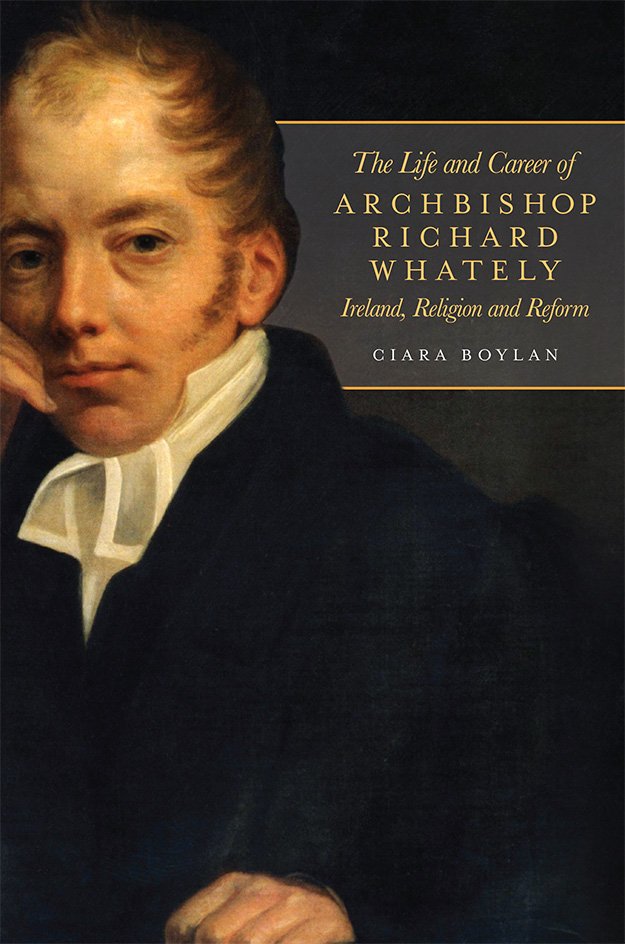
Moderate and liberal Church of Ireland leaders such as Archbishops Whately of Dublin and Beresford of Armagh, tried to curb the worst excesses of the movement, worrying that that The ICM was doing “Irreparable mischief to the Church in Ireland”. While they both deplored the ‘Romish’ religion they hoped for conversions through Irish Catholics seeing what a model of bible-based virtue looked like, not by means of radical evangelical activities and proselytising. 

Richard Whately, Archbishop of Dublin, a complex and possibly misunderstood prelate

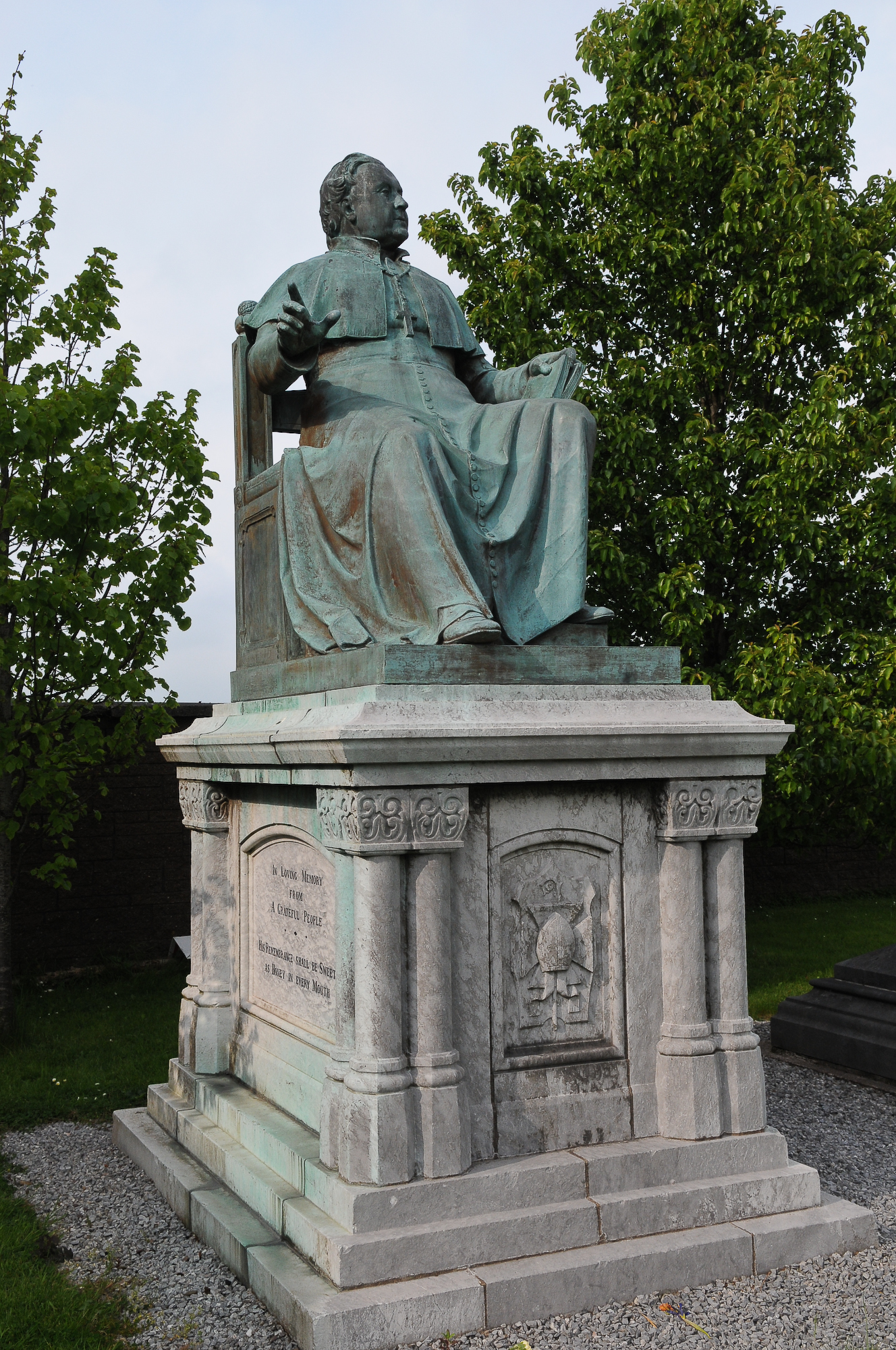
A Catholic backlash was inevitable and when it came it was as complete and heavy-handed as it was possible to be. Seeing the situation, and the number of converts in Goleen and Toormore, Bishop William Delany of Cork sent in the big guns, in the form of Fr John Murphy, AKA The Black Eagle of the North.

William Delaney’s rather magnificent statue in Cork. Note the Papal Insignia

Wait – the what? Yes, you heard me right! A scion of the famous and wealthy Catholic merchants, distillers and brewers (themselves accused of exporting grain during the Famine by none other than Fr Matthew) John James Murphy was the stuff of legend. Here’s a quote in full from one account (based on a well researched biographical sketch), because, well, you can’t make this stuff up.

The scene changes to a clearing in the virgin forests of Canada. There a French-Canadian priest has pitched his camp. He has no flour to make Hosts for the Holy Sacrifice and then down the little stream that bordered the clearing there drifted a birch-bark canoe paddled by an Indian. He shared his flour with the priest who was surprised at the soft cadences of the Indian’s English. And no wonder, for the Indian was born not on the banks of the St. Lawrence but on the banks of the Cork Lee. It was John James Murphy, one time an officer in the navy, now a hunter in Canada. In the course of his journeyings the Corkman had fallen in with a tribe of Red Indians and had thrown in his lot with them. They initiated him into their tribe, crowned him with feathers and dressed him in all the accoutrements of an Indian brave. To them and to all of the Five Nations he was known as the Black Eagle of the North.

In Black Eagle’s wanderings through the forests he came one day upon a green glade in the centre of which was a statue of the Blessed Virgin. And there in that silent glade there came back to him the faith and the teaching of his childhood. Perhaps the spirit of some martyred Jesuit was hovering around that neglected shrine.

So he returned to his tribe, washed off his war paint, relinquished his chieftain’s features and started off on a long trek, down the Hudson river, across the broad Atlantic, over the European continent to Rome, to commence his studies for the priesthood.

This account, by the way, omits to mention that in Murphy’s own words he also “dismissed his squaws.” The language, by today’s standards, is shudderingly horrifying throughout, isn’t it?

Murphy (above, illustration from Patrick Hickey’s Famine in West Cork) arrived dressed in black, wearing a tall black hat and flowing black cloak, and riding an enormous black ‘charger.’ He brought supplies of meal for the schoolchildren in the national school, took lodgings in Goleen, and set about sniffing out the converts. He marched them to Teampall na mBocht, mounted the wall, and proceeded to give a fiery sermon exhorting them to return to their true faith and insisting they recant at Fisher’s gate. His appearance and eloquence was electrifying and soon had the desired effect.

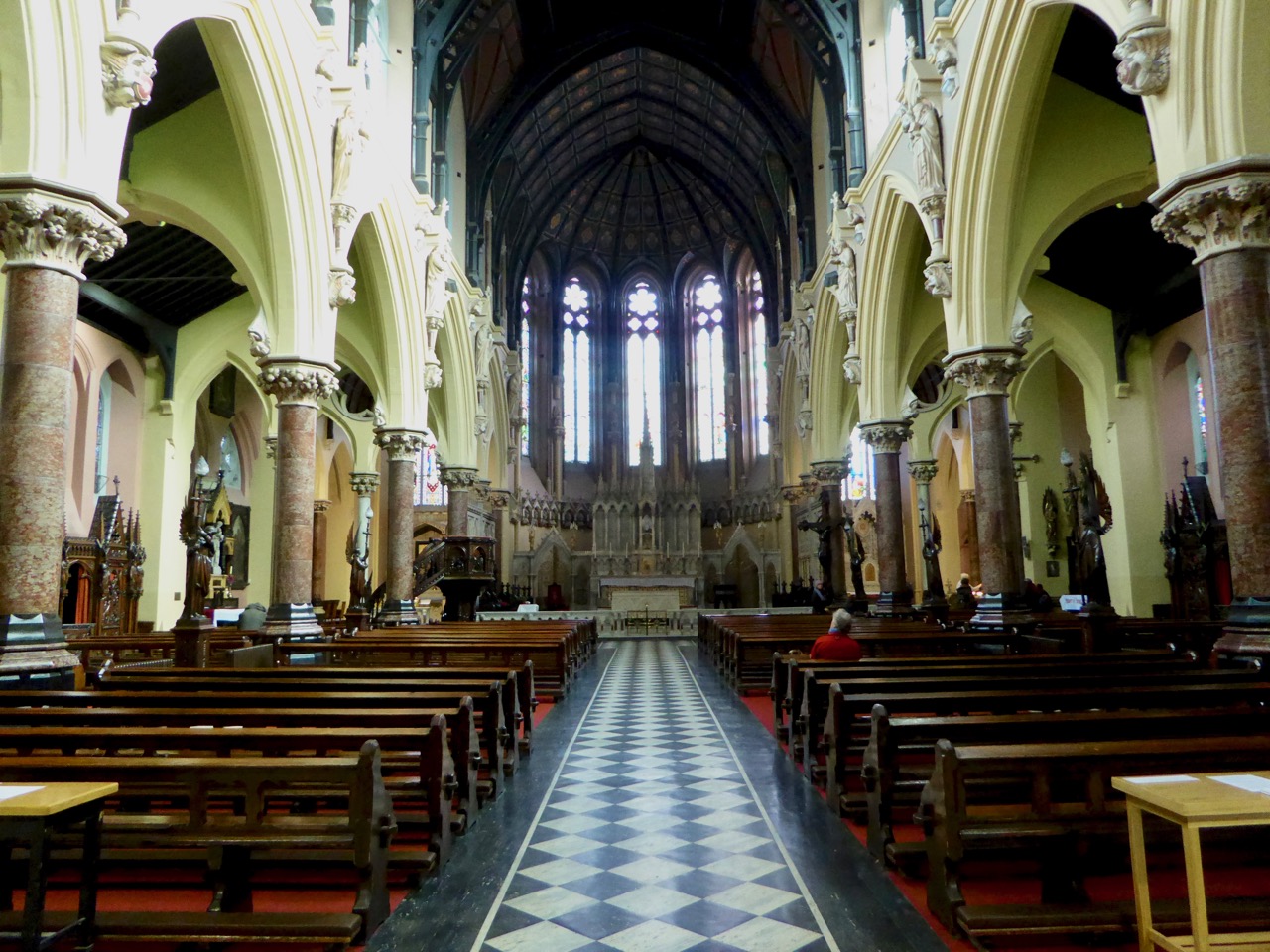
Interior of St Peter and Paul Church in Cork City, established and partly built by John Murphy’s considerable inherited wealth

Reinforcements arrived shortly thereafter in the form of a Vincentian mission. These missions, in which a group of priests from particular orders such as the Vincentians or the Redemptorists, would descend upon a town and preach every night for a week, were a staple of my young life. This one was reported to be a great success. Fr Hickey quotes from a contemporary report:

Our mission in West Schull (Kilmoe). . . is doing much good. A great number of the poor who were perverted in the time of the famine by relief given for that purpose by the Protestants, have returned already. The chapels, even in weekdays, are not able to contain the congregation and the confessional is crowded far beyond the power of our confreres to accomplish its work.

In fact, the famine was not over, and the Vincentians brought more than The Word of God (and the Fear of God) with them – they also distributed great quantities of food relief and some cash, both to individual families and to the schools. They established a chapter of the Society of St Vincent de Paul and the members busied themselves visiting the poor and distributing supplies. Fr Hickey says:

Food was now being used by the Catholic Church in order to hold on to its flock and win back the lost sheep. Did hunger tempt them to stray in the first instance? Were they now coming back because they were simply going to the church which would give them the most food, as some of them had bluntly told Fr Laurence O’Sullivan?

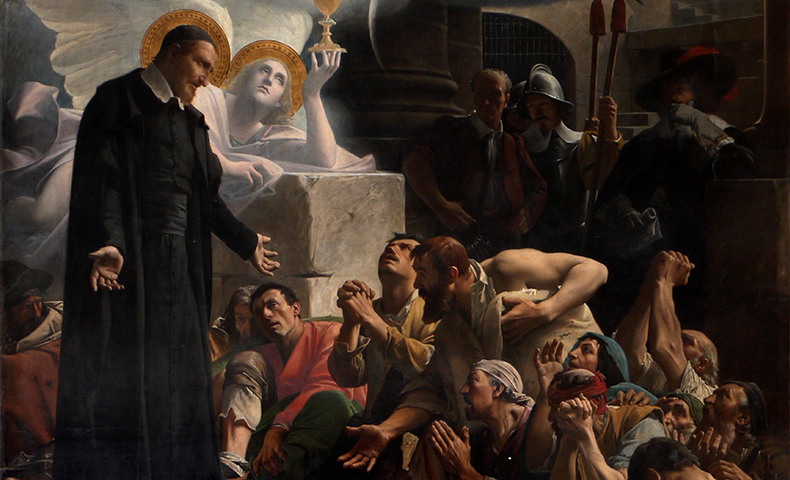
St Vincent de Paul. Most Irish people today recognise the Society of St Vincent de Paul as an active Catholic charitable organisation. The Vincentians, on the other hand, have declined in numbers to the extent that their Cork headquarters had to close for lack of vocations

Revs Fisher, Triphook (successor to Dr Traill), Donovan and Crossthwaite wrote a published statement which accused John Murphy and the Vincentians of failing to come during the horrors of famine and arriving only now in the harvest ‘to propagate Romanism’.

Fisher’s church in Goleen, now in use as a sail-making space. His pulpit would have been an important part of the church furnishings and I am pleased it has survived

It was a telling counter-accusation to the charges of Church of Ireland souperism, but in any case the heyday of the radical and fundamentalist evangelicals was nearing an end. A new era was dawning for the Irish, that of the Ultramontane Catholicism of Cardinal Cullen – the ethos that would drive Irish Catholicism for the next one hundred and fifty years. 

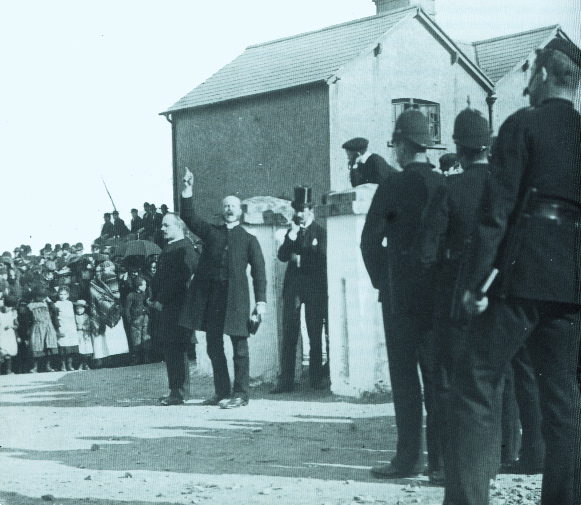
This photograph is captioned Late nineteenth-century evangelical preacher addressing a crowd under police protection, and is credited to Michael Tutty

Although I had hoped to finish this series with this post, I have learned so much now about the religious legacy of this extraordinary time in Irish history that I find myself unable to resist one final episode in the saga. In my next and last (I promise!) post in this series, I will endeavour to relate how the foundations of the kind of Catholicism I grew up with were laid down upon the contested ground of Teampall na mBocht and on the battle for the hearts of souls of the people of Ireland that such places epitomised. I shall also attempt to draw some personal conclusions from what I have learned, and to share with you some of the excellent resources I have used in this series.

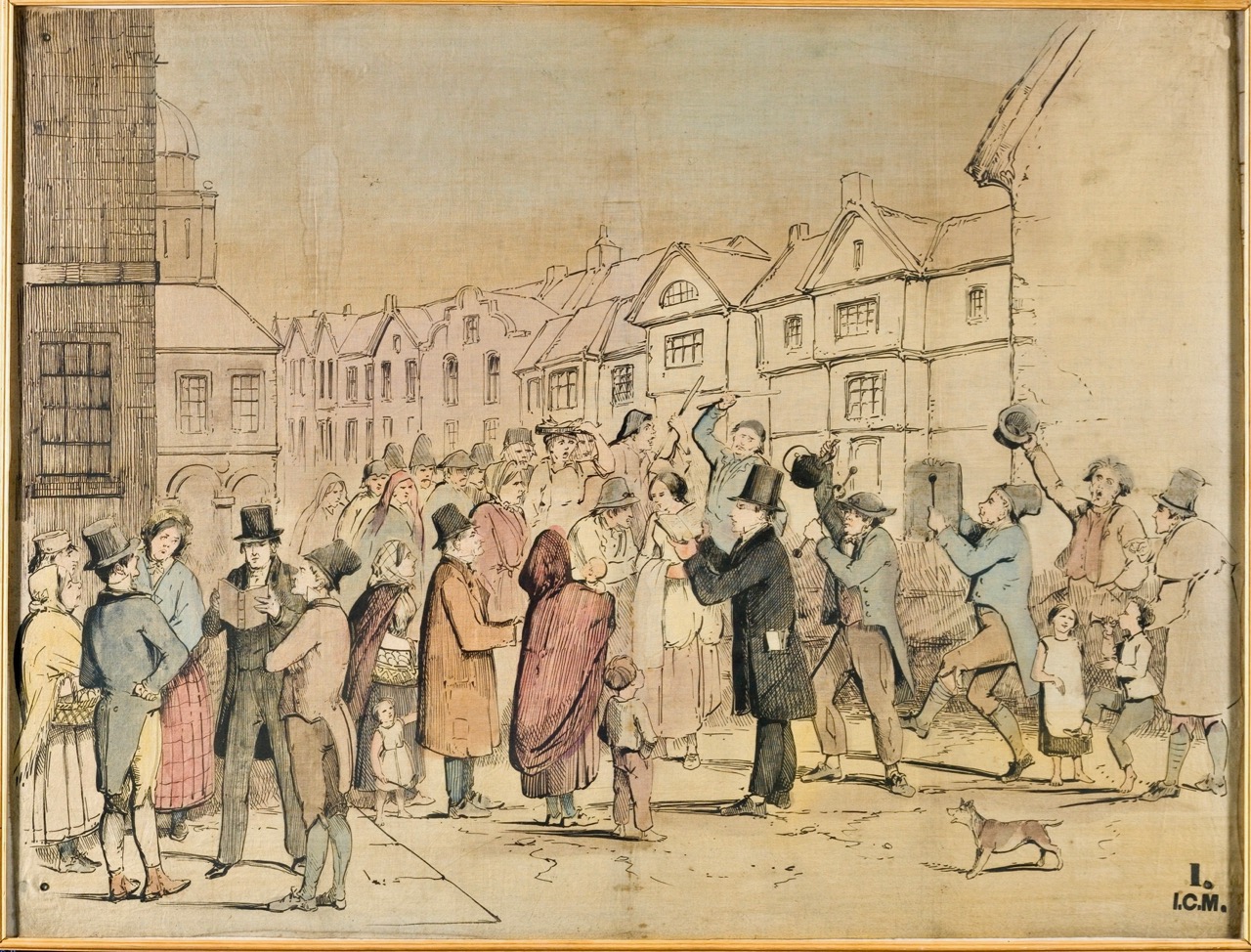
Reproduced courtesy of the National Library of Ireland (with permission) from a collection of prints by the Irish Church Missions to Roman Catholics. This print is captioned Two preachers standing in a street preaching to an audience. In the background a rabble sings, dances and jeers. The  notes given for this image in the NLI collections are: The differences between those converted to Evangelicism and the “unconverted” Roman Catholics are emphasised in this image. The captivated audience surrounding the preachers are dressed well whereas the rabble causing trouble behind them are badly dressed with the stereotypical Irish look about them

This link will take you to the complete series, Part 1 to Part 7

Saints and Soupers: the Story of Teampall na mBocht (Part 5, Famine in Kilmoe)

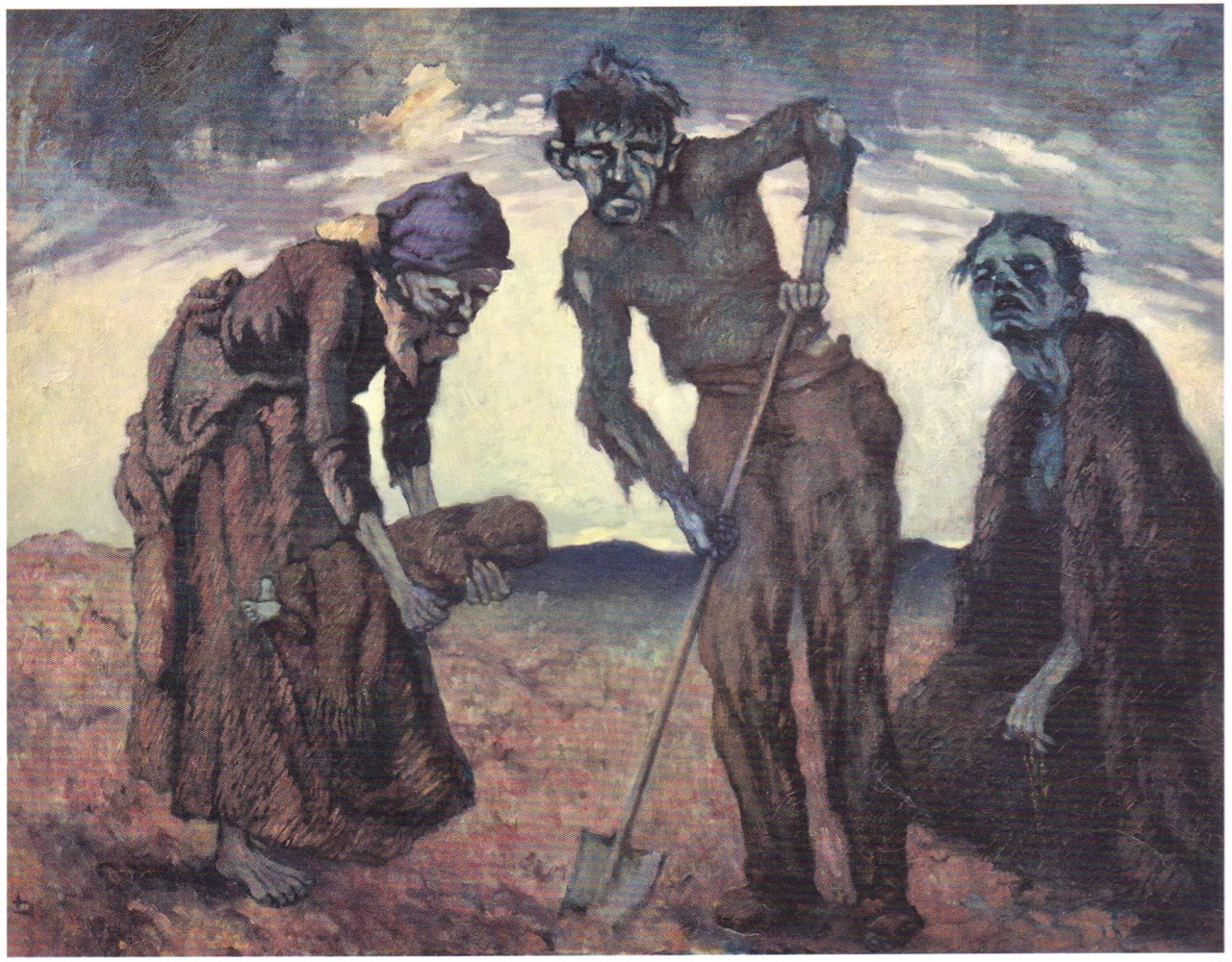
Gorta, by Lilian Lucy Davidson, courtesy Ireland Great Hunger Museum

The potato crop failed first in 1845. Patrick Hickey in Famine in West Cork relates the discussion at the annual Skibbereen Agricultural Show dinner in October. Much congratulatory talk about the progress that had been made in agriculture, was brought to an abrupt end when the inevitable topic of the potato disease raised its ugly head. While several landlords and farmers felt the crisis would pass quickly, and others placed their faith in the new dry pits championed by the Rev Traill of Schull, Dr Daniel Donovan brought them down to earth with a first-hand account of the calamitous conditions all around them. Fr Hickey puts it poetically when he says, As these gentlemen headed home that night the sound of their horses’ hooves on the stony road rang the death knell of pre-famine Ireland.
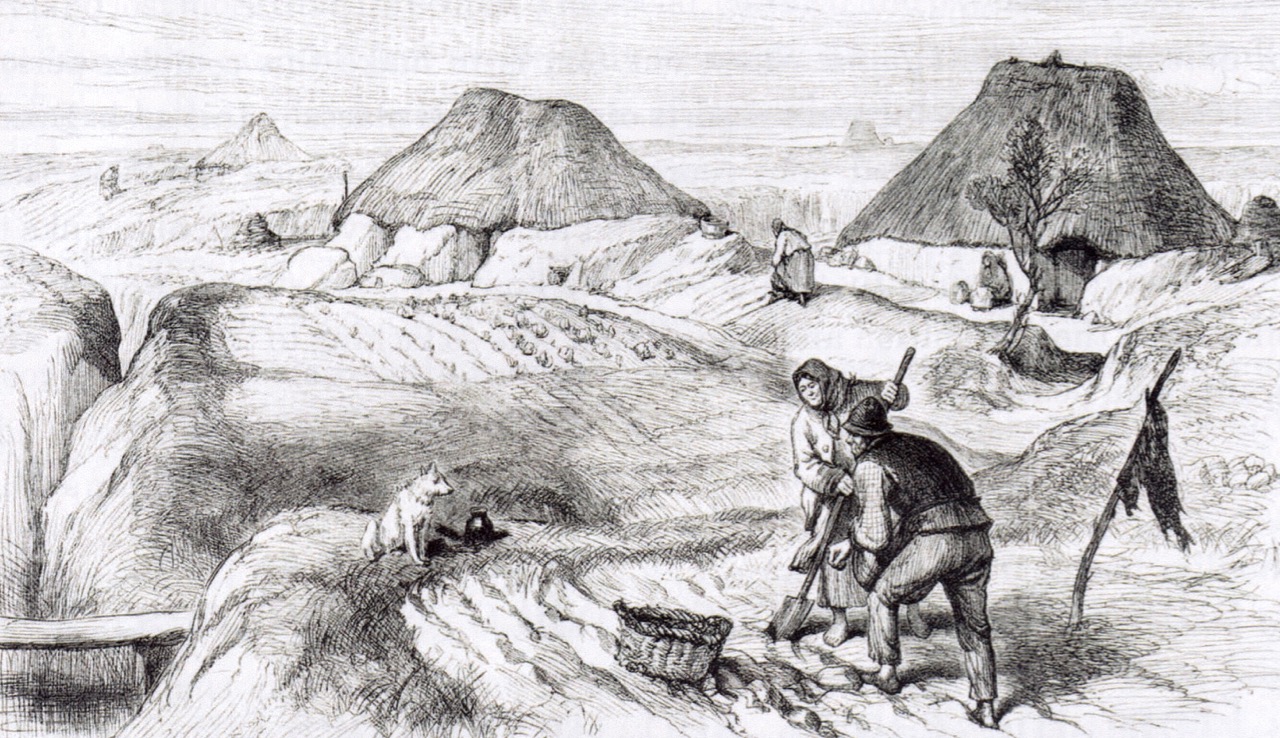
Planting Potatoes – each cottage relied on an acre or so to plant enough for a year

Relief Committees were struck and established food depots. In the Parish of Kilmoe the Rev Fisher and the Parish Priest, Fr Laurence O’Sullivan each contributed £5 as did other members of the committee. The ethos of the time was very much to tie relief with work and soon various schemes were proposed to the Board of Works and although one was initially approved no funding ever materialised. Distress was widespread.
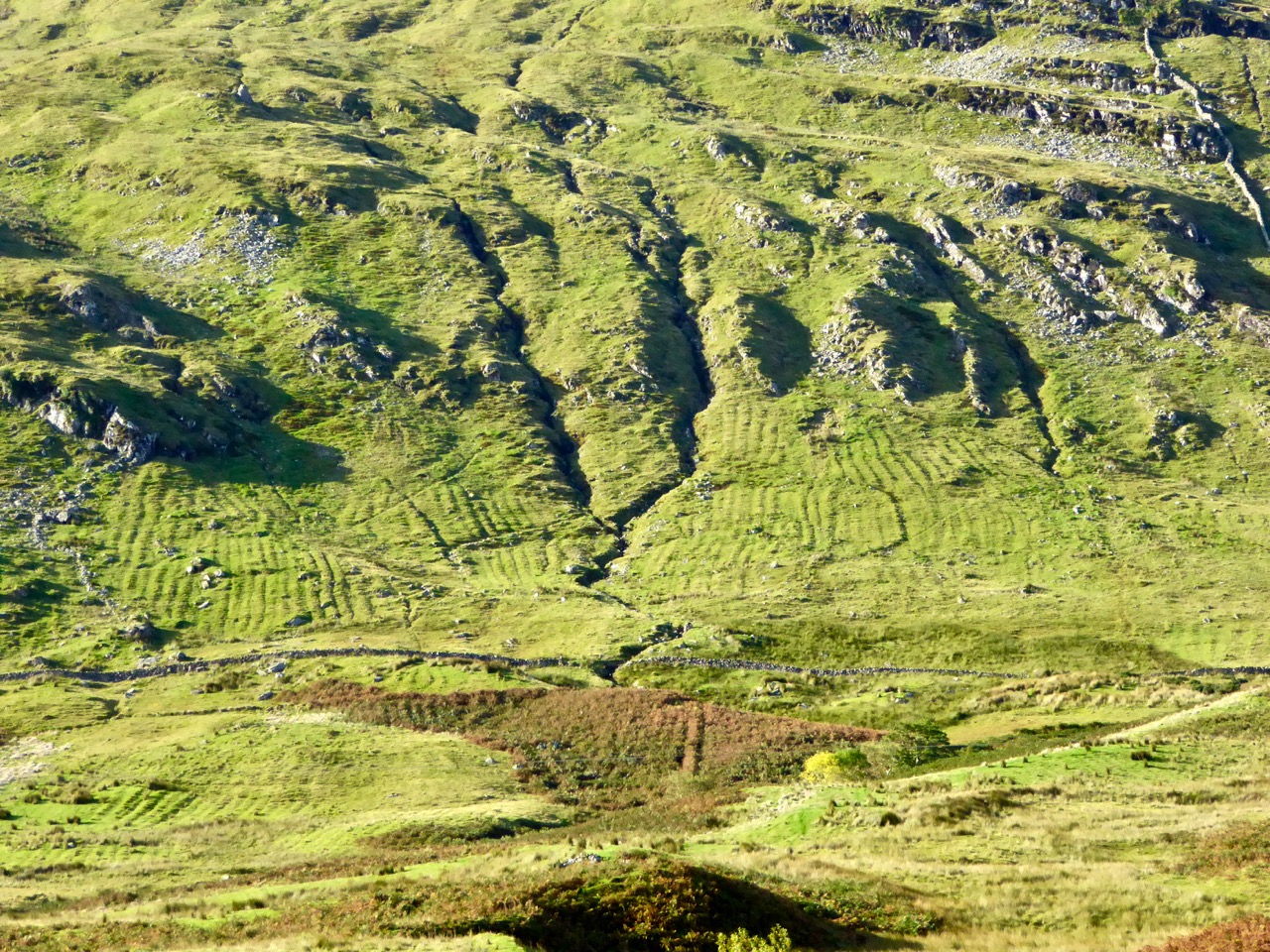
The ‘lazy bed,’ in fact a labour-intensive cultivation method, has left its mark on the landscape all over Ireland

But it was the second failure of the potato crop in 1846 that precipitated a full blown famine environment. The workhouses started to fill, hungry people pawned anything they had and reports of death by starvation and fever started to pour in. The Parish of Kilmoe, which stretched from Schull to Crookhaven, encompassing Toormore and Goleen, was particularly hard hit. The Board of Works, inexplicably declined to fund any road or pier-building schemes. According to Hickey, The only refuge these hungry people had was the Kilmoe Relief Committee but even this was now in dire straits.
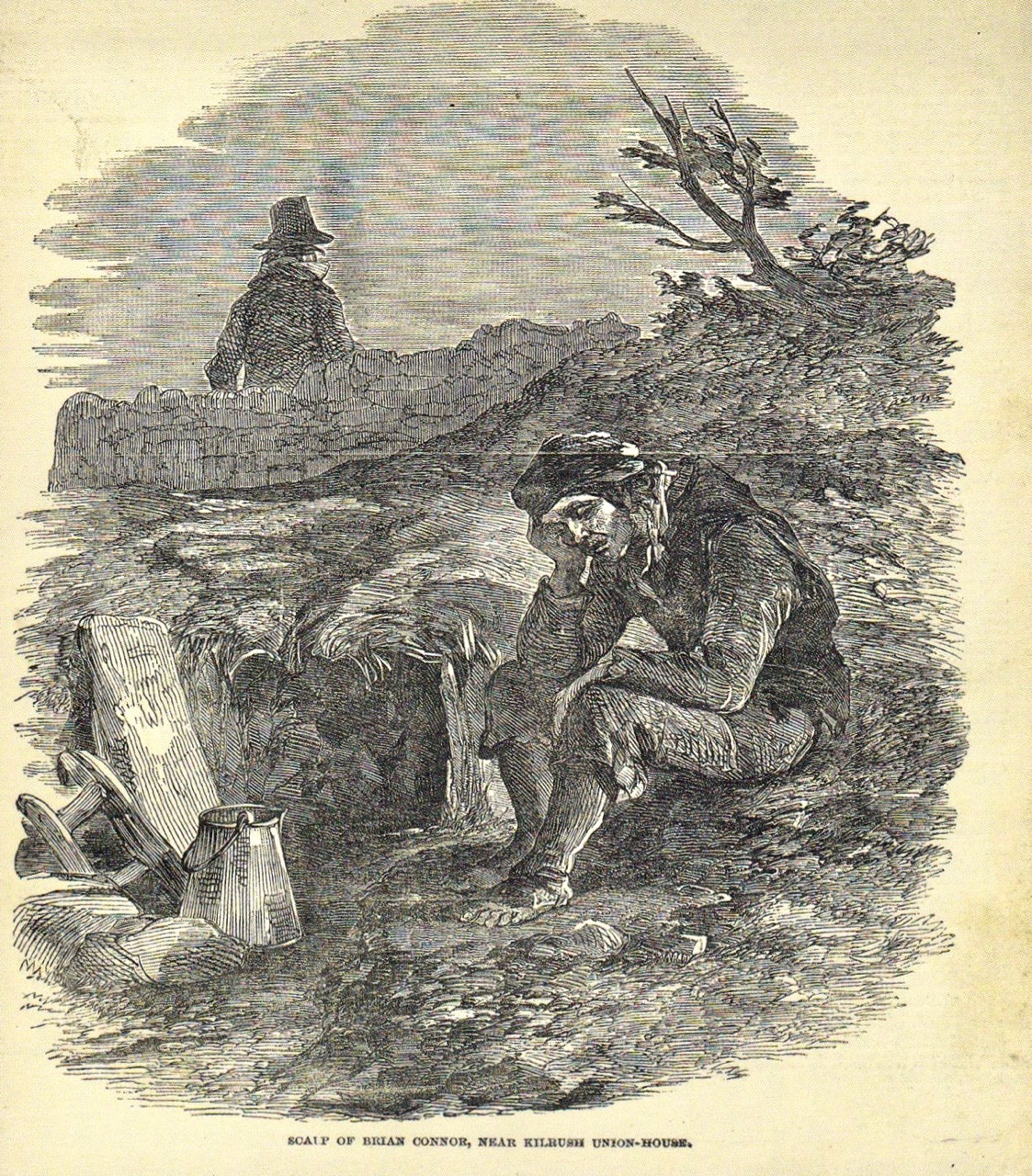
A ‘scalp’ was a just a hole dug in the earth. People resorted to living in such troughs when they had been evicted

How dire? I will let the committee speak for themselves – here are the proceedings of their meeting on November 3rd, 1846, sent to newspapers in the hope that it would elicit compassion and aid. It has all the impact of immediacy and desperation in the face of appalling official indifference, made all the more powerful by being sent by normally polite and government-supporting educated men.

Proposed by the Rev W A Fisher, Rector, and seconded by the Rev Laurence O’Sullivan, PP;

1. That this committee having repeatedly tried, but in vain, to arouse the attention of the government to the state of destitution and distress in this remote district, have determined to bring the matter before the public, through the medium of the press.

Proposed by Richard B Hungerford, Esq, JP and seconded by the Rev Henry P Proctor;

2. That the following statement of facts be forwarded: — “The parish of Kilmoe contains 7234 inhabitants, or 1289 families; we calculate that 7000 inhabitants require food, in consequence of the failure of the potato crop;  the parish produces very little corn. Potatoes feed the people, the pigs, the poultry, the cows, the horses; and enabled the fisherman to dispose of his fish, for which he did not this year get as much as paid the expenses of taking and saving it, as the poor, from the destruction of the potato crop, are unable to purchase it. Thus deprived of their only means of support, they are now literally famishing. All this, in substance, we have stated over and over again to the Lord Lieutenant, the Lieutenant of the County, the Commissary-General, and the Commissary at Skibbereen. We asked a depôt – we offered a store free of expense – we entered security – and when we had done all this, at the end of a month we received a letter from the Castle, with a paper on brown bread enclosed, to say we had better purchase wheaten and barley meal.

Proposed by the Rev Thomas Barrett, RCC and seconded by Mr John Coghlan;

3. That this committee feel quite unable to meet the views of the government. There are only two resident gentry in this district – there are no merchants here – there are no mills within twenty-three miles – there is no bakery within that distance – nor is there any way of procuring food, except through the medium of our committee, which, out of our limited funds of 165l., have kept up a small supply of Indian meal and even with our very best exertions, in consequence of our trifling finances, and being obliged to bring our supplies from Cork by water, we have been twice, for a fortnight together, without meal.

Proposed by Mr B Townshend and seconded by Mr J Fleming;

4. That our funds are now exhausted, and we have no means of renewing them, while the demand for food is fearfully increasing. We see no other way left to us but to try, to the medium of the press, to arouse the government to a sense of the fearful state of things which is inevitably impending. Rapine has already commenced and who can wonder? Many are living solely on salt herrings – many more on seaweed; and when our last supply of Indian meal was sold, they offered 3s. a stone – and would not go away without it – for some that was damaged, the very smell from which was so offensive that it was thought unfit and dangerous food for human beings.

Proposed by the Rev Laurence O’Sullivan, PP and seconded by Mr A O’Sullivan

5. That these resolutions be published in all the Cork newspapers, the Dublin Evening Post, Dublin Evening Mail, and the Times London newspaper and a copy be sent to Lord John Russell and Sir Randolph Routh, with a faint hope that something may be done without delay (for the case is urgent) to relieve our misery and want, else the public will soon hear of such tales of woe and wickedness as will harrow the feelings and depress the spirits of the most stout-hearted man.

Signed

Richard Notter, Chairman.

W A Fisher, Rector of Kilmoe, Sec
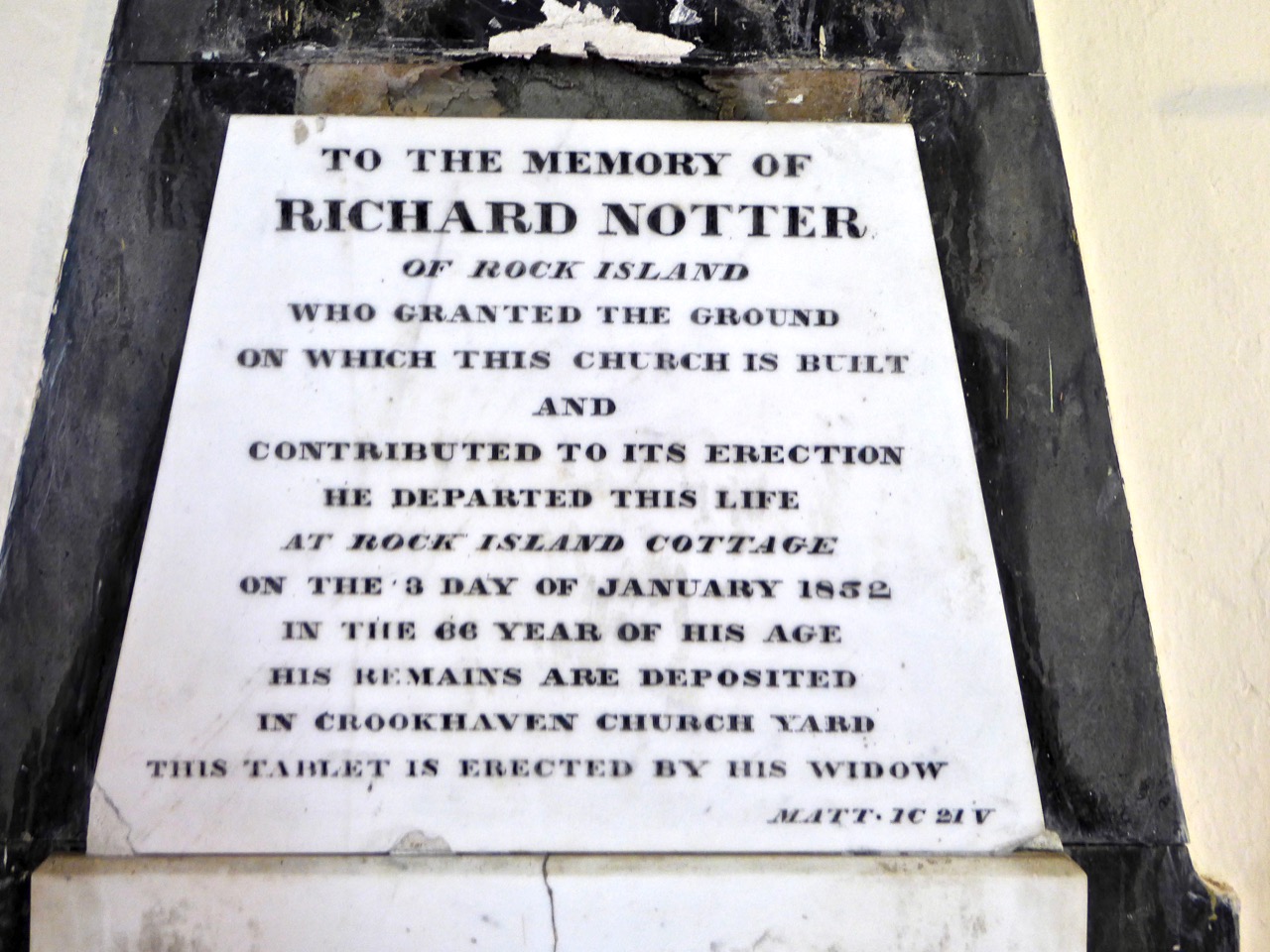
Upper: Memorial tablet to Richard Notter in the former Church of Ireland in Goleen. Lower: an example of the kind of ‘rapine’ predicted by the letter

Besides a stark description of conditions in Kilmoe, what these minutes show is that the relief committee was composed of both Catholics and Protestants, of clergy and lay men, drawn together in a common cause and working in a cooperative spirit. Perhaps as a result of this letter, a Board of Works road-building project was eventually implemented on the Mizen. These hated schemes were riven with administrative problems of all sorts, the most serious being a delay in paying the labourers.
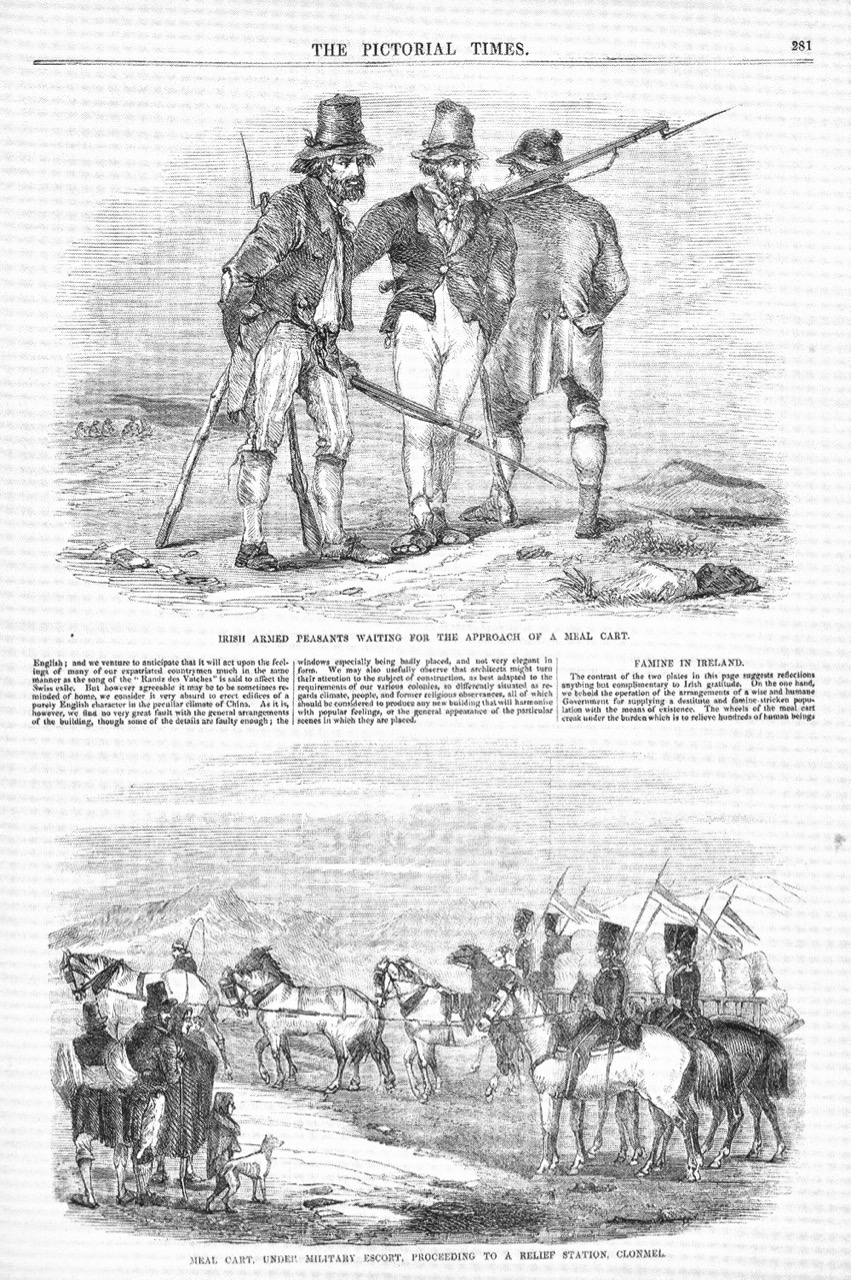
Meal being delivered under armed guard

Because this is the story of Teampall na mBocht and Rev Fisher, I cannot dwell here on a detailed description of the harrowing progression in Kilmoe of the Great Hunger. Much has been written about the famine in West Cork, and I direct the reader to Patrick Hickey’s book, which has been my main resource. (In the final post I will supply a list of the resources I used for this study.) I confess that I find it difficult to write about the famine itself – it’s amazing how raw and emotional it becomes once I immerse myself in the subject. Anger wells up very quickly and I recognise a desire to find culprits to blame (there is no shortage of candidates) and to jump to judgement using a modern mindset and all the benefit of hindsight.

The Rev Traill, drawn by James Mahony for the Illustrated London News, in Mullins hut, while Mullins lies dying on the floor. Mahony stood “ankle deep in filth” to capture the image

For now, then, let’s get back to Kilmoe, William Fisher and Fr Laurence O’Sullivan, central actors in our drama. One digression, though, remember the Rev Robert Traill and how he railed against the wicked priests for opposing his tithes? He was very much part of the relief effort too, setting up ‘eating houses’ in cooperation with Fr Barry of Ballydehob (the regulation ‘soup kitchens’ did not provide food they considered nutritious enough) and travelling throughout his parish indefatigably providing assistance to all, Catholic and Protestant alike. When he came down with famine fever in 1847 he couldn’t fight it off, and died in April, mourned and honoured by everyone for his heroic efforts.

Soyer’s Model Soup Kitchen: Soyer’s soup recipe was recommended on the basis of low cost rather than nutritional value – see this post in the marvellous Come Here to Me blog for more on Soyer and his soup

Rev Fisher had a printing press and used it to great effect, sending requests for aid to everyone he knew. Money arrived, and it enabled him to help a great deal with the relief efforts. Like the Rev Traill, he also contracted famine fever but managed to recover. It was during this period of recovery that he started hearing confessions. He was strongly influenced by the Tractarian Movement, a return to High Church liturgies that came close to Catholic practise. He claimed that he simply made himself available in his vestry and that the people poured in, wishing to unburden themselves of their sins. Soon, his church, in Goleen, was filled with the newly-converted.

The former Church of Ireland in Goleen, now used for mending sails. Here, Fisher heard confessions and welcomed converts

In his book, The Protestant Crusade in Ireland, Desmond Bowen makes the claim that Catholics in the area were completely demoralised; they quarrelled with their priest who fled the community. However, Hickey points out that Bowen provides no source for that information, whereas Hickey tracked down Fr O’Sullivan’s movements and found that he left for only a short time (possibly ten days) to fund-raise (successfully) in Cork. Tellingly, he had withdrawn from the Kilmoe Committee as a result of dissension between the clergymen. Laurence O’Sullivan, in fact, remained in his parish throughout the famine and worked to raise and disburse funds as well as to feed his parishioners, also contracting famine fever which knocked him out of action for at least two months.

Fisher’s fund-raising efforts eventually enabled him to contemplate a building project. He considered first a school, and then a church. It would be built using only manual labour in order to ensure that the work was done by the poorest, and not farmers with horses and carts, and called Teampall na mBocht, Church of the Poor. At the same time, Fisher was donating money for food to schools (leading to a dramatic increase in enrolment) and trying to encourage a return to fishing by local fishermen. Hickey acknowledges, Whatever about the conditions of aid, implicit or explicit, Fisher organised the distribution of large supplies of food and this saved many lives.

Funeral in Chapel Lane, Skibbereen

However, from the point at which he broke away from the Relief Committee, Fisher seems to have been in conflict with his Catholic clerical counterparts. A typical product of the evangelical movements described in the last post, he was zealously committed to winning souls away from the superstition of Popery. The crux of the matter, of course, is whether or not the aid he provided was conditional on conversion. Many other West Cork Protestant clergymen laboured to alleviate famine suffering, but most remained on good terms with Catholic priests and won praise from them rather than opprobrium.
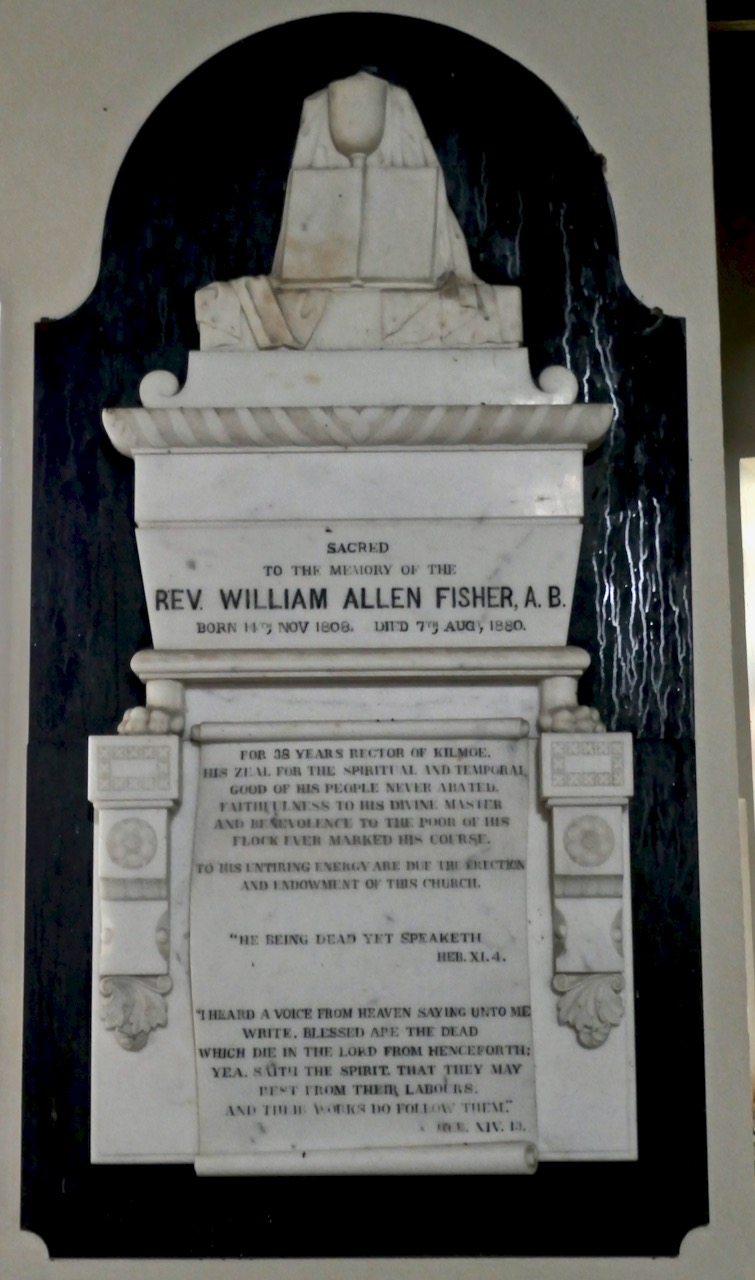
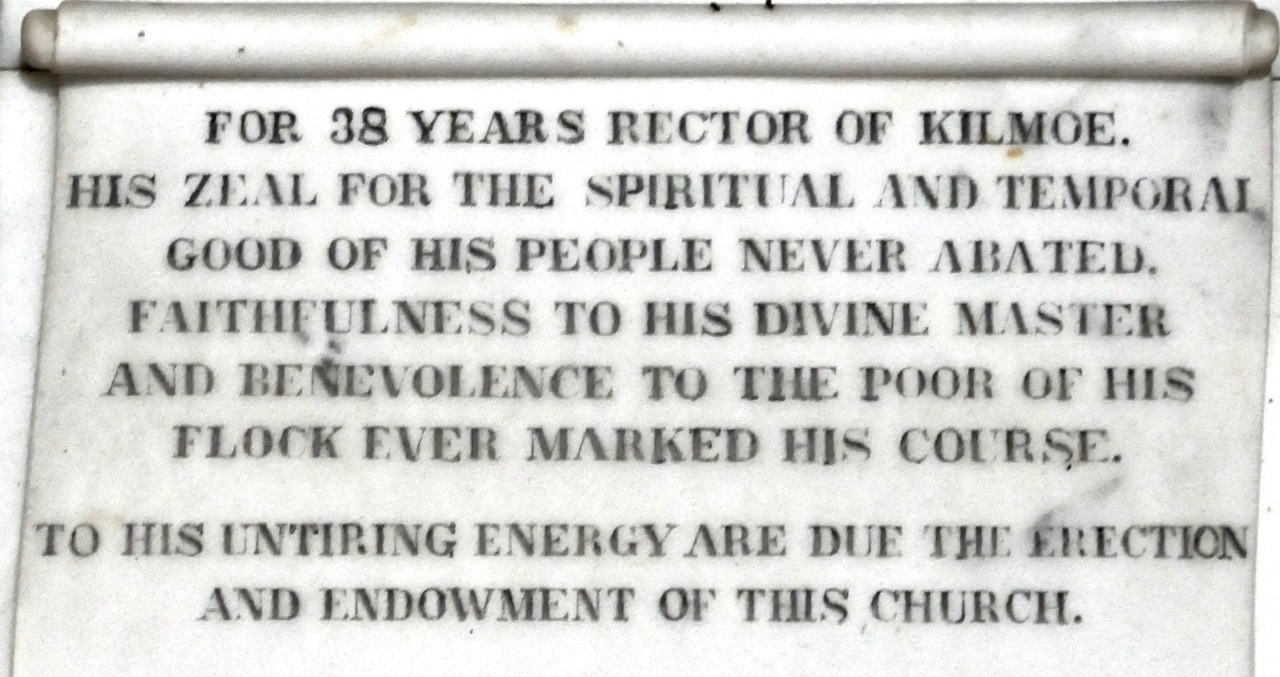
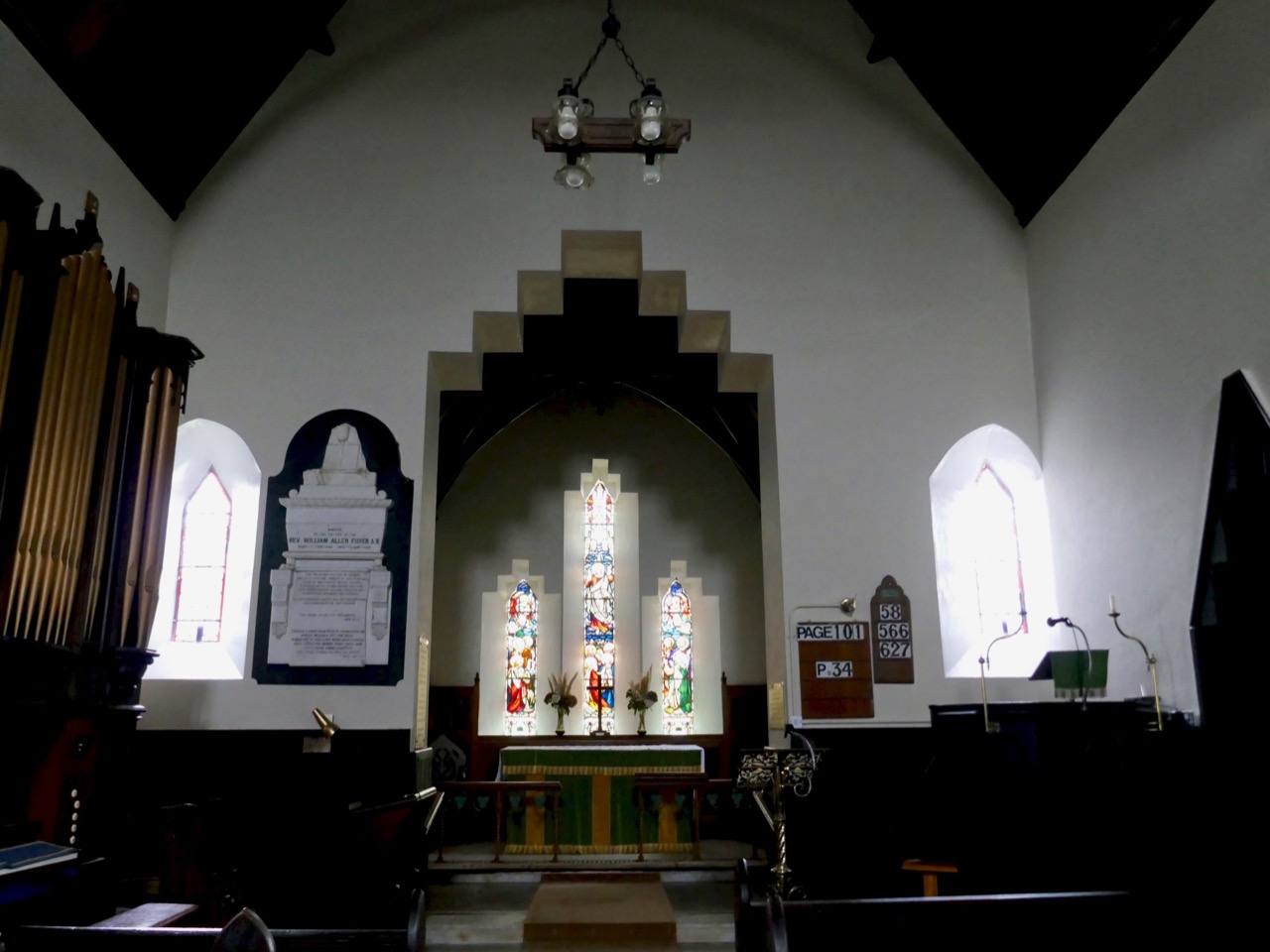
Fisher’s memorial tablet in Teampall na mBocht

Damning accusation were made by Fr Barrett against Fisher, that his zeal led him to confine his bounty to those of his creed, and to famine-constrained proselytes. He went on to state that when he protested to Fisher, that Fisher had said that had English contributors known that a Popish priest sat on the same seat as himself, sooner would they have cast it away than give a single shilling to relieve those whose religion he himself had sworn to be idolatrous, etc, and which he, in common with English contributors, believed to be the sole cause of blight disease, death, etc.

Also in Teampall na mBocht

Fisher, of course saw things very differently. He denied ever coercing anyone into converting. If he gives only a little charity, he wrote of the fate of Protestant clergymen, he is accused of living off the fat of the land, but if he denies himself and his family to relieve the poor he is publicly reprobated as one taking advantage of the misery of the poor in order to bribe them into a hypocritical profession of a religion that they do not believe. But despite his protestations his reputation among Catholics remained that of a Souper. Perhaps there is no smoke without a fire.

Fisher’s son-in-law, Standish O’Grady (above), whose own father had preceded Fisher as Rector of Kilmoe, wrote about him that, if ever a saintly man walked the earth, he was one. I never saw in any countenance an expression, so benignant or which so told of a life so pure and unworthy and a self so obliterated.

Fisher’s pulpit in Teampaill na mBocht

This is the central dichotomy at the heart of this story. Fisher was a deeply spiritual man, fired up by the desire to do good, as he saw it. The beneficial outcome of this was that, during the worst of the famine, he provided food and employment for hundreds, and saved probably thousands from death. He stayed in Kilmoe until his own death in 1880 – ironically from famine fever contracted during another, although less catastrophic, period of famine – and continued to labour tirelessly for his flock.
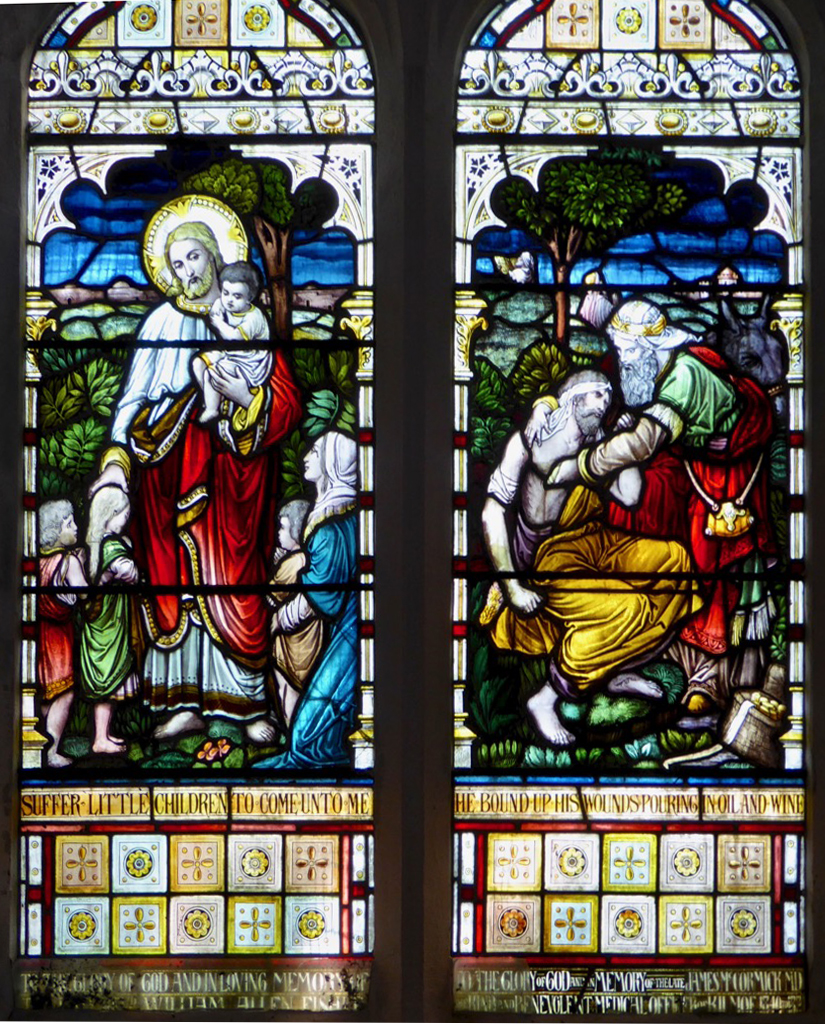
Fisher’s memorial window in the former Church of Ireland church in Goleen

If he did indeed administer the bible test as a precondition of aid, he did so in the honest and total conviction that what he was offering was true salvation, an escape from the worst excesses of Popery. In this, he was no different from the zealots who galvanised into action to win back those souls for the Catholic Church. In the next, and final (whew!) post, we will examine the Second Counter-Reformation that swept into West Cork like the cavalry coming over the hill, to set Kilmoe and its converts back on the true path – the path back to Rome, in fact.
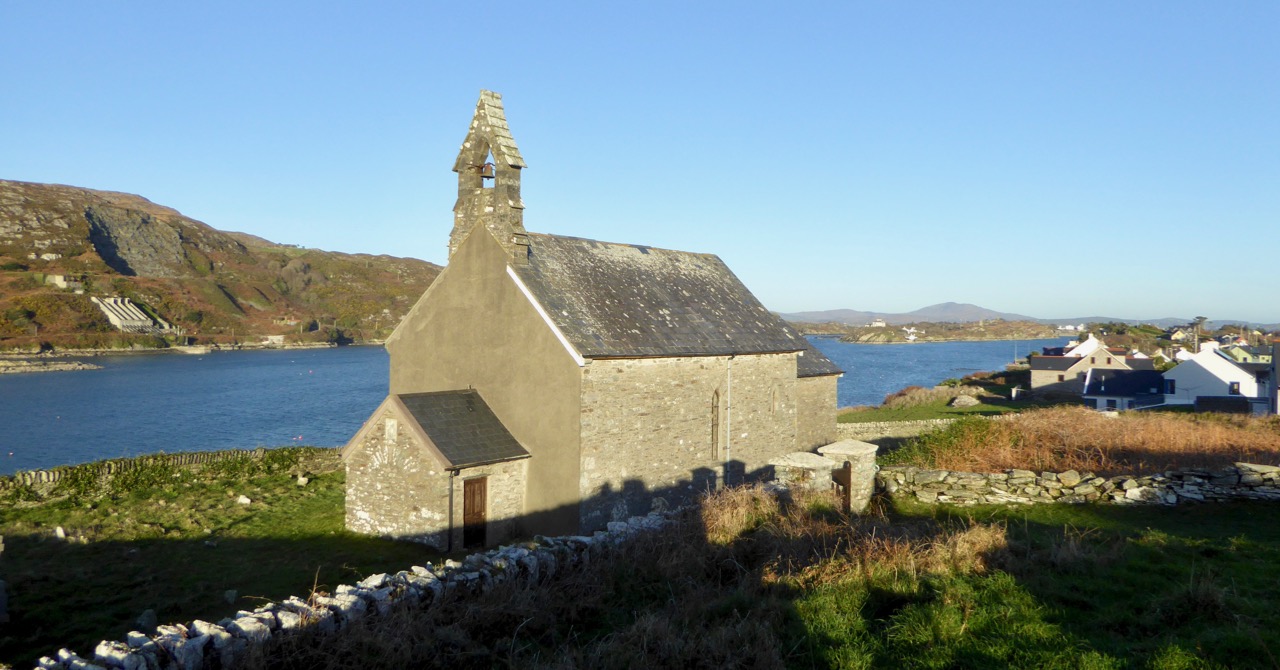
St Brendan’s Church of Ireland, Crookhaven. One of the Kilmoe churches, still with no electricity
The black and white line drawings used in this post are from the Illustrated London News, mainly by James Mahony, a Cork artist contracted by the ILN to produce drawings of famine conditions in Ireland.
This link will take you to the complete series, Part 1 to Part 7