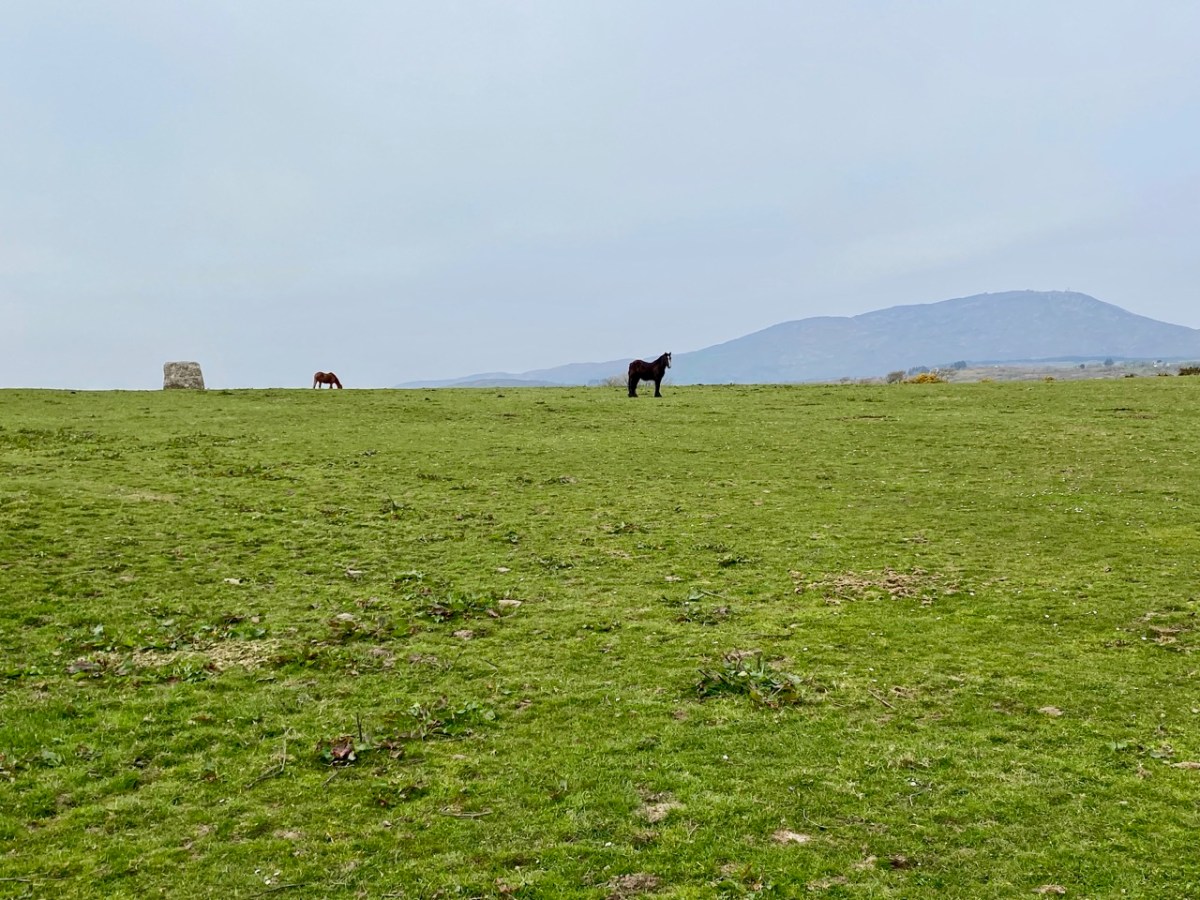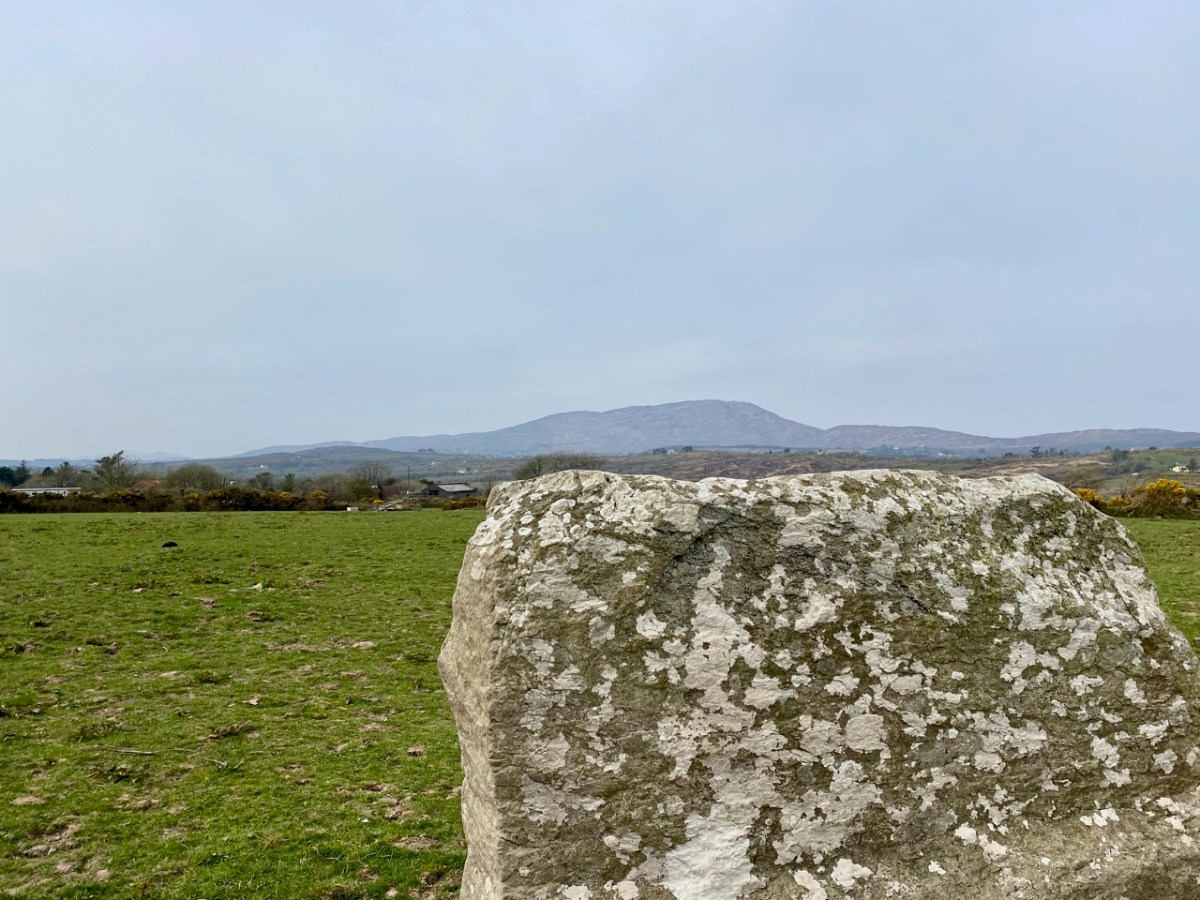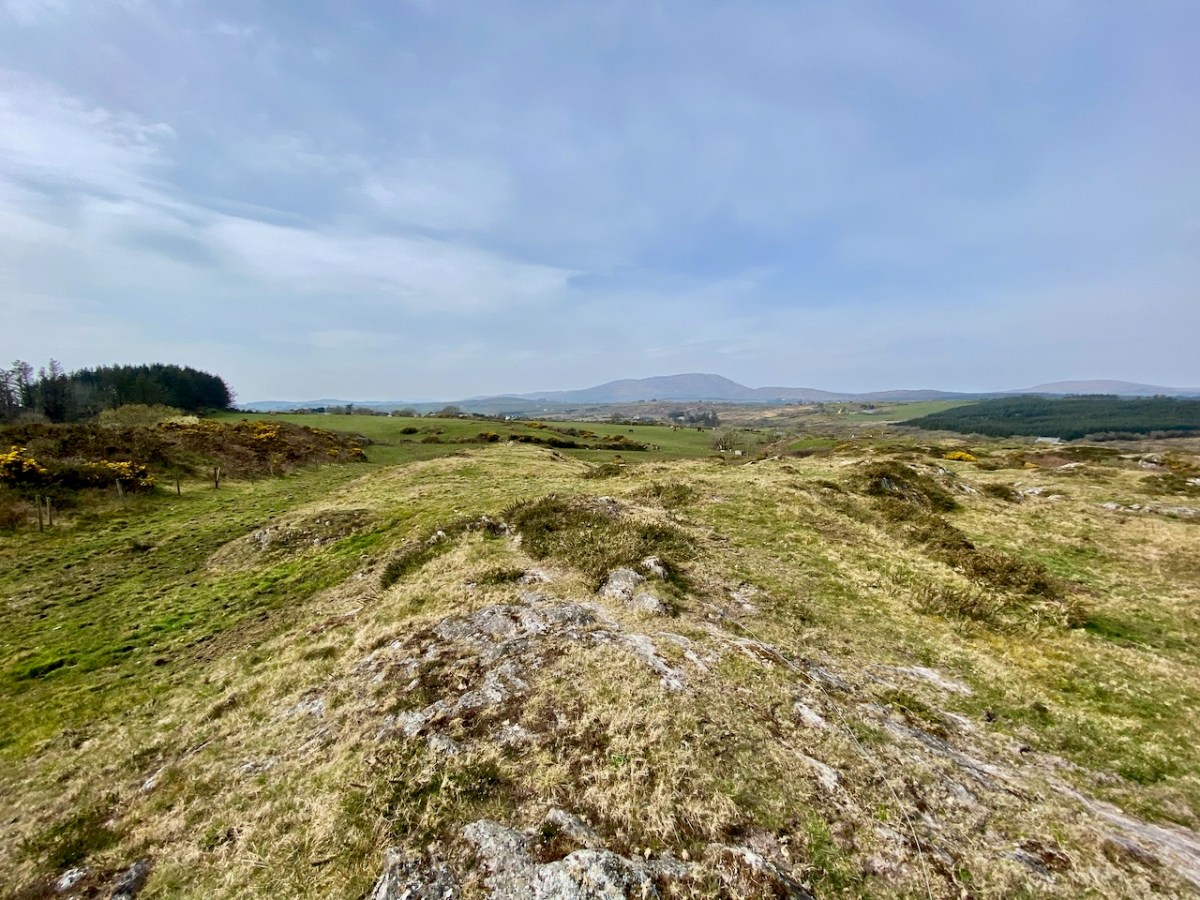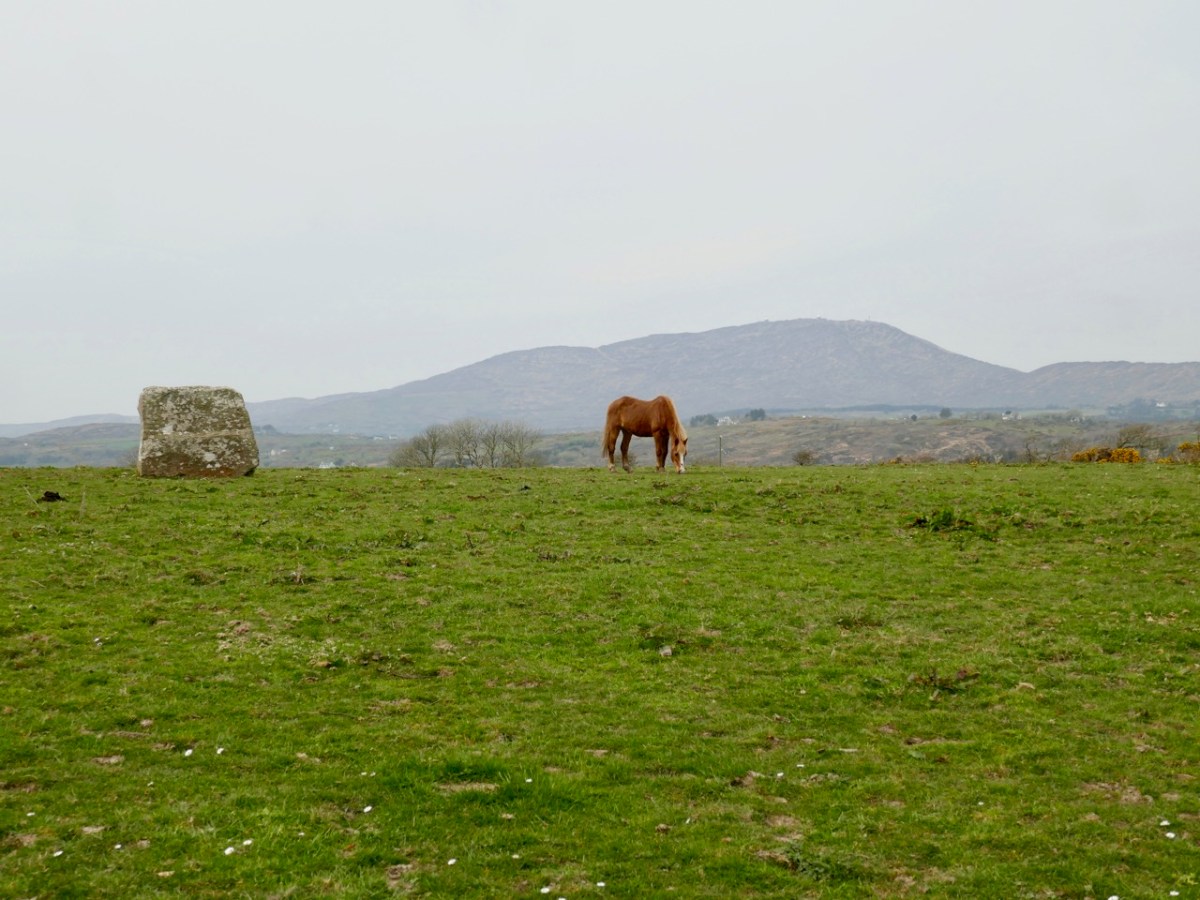
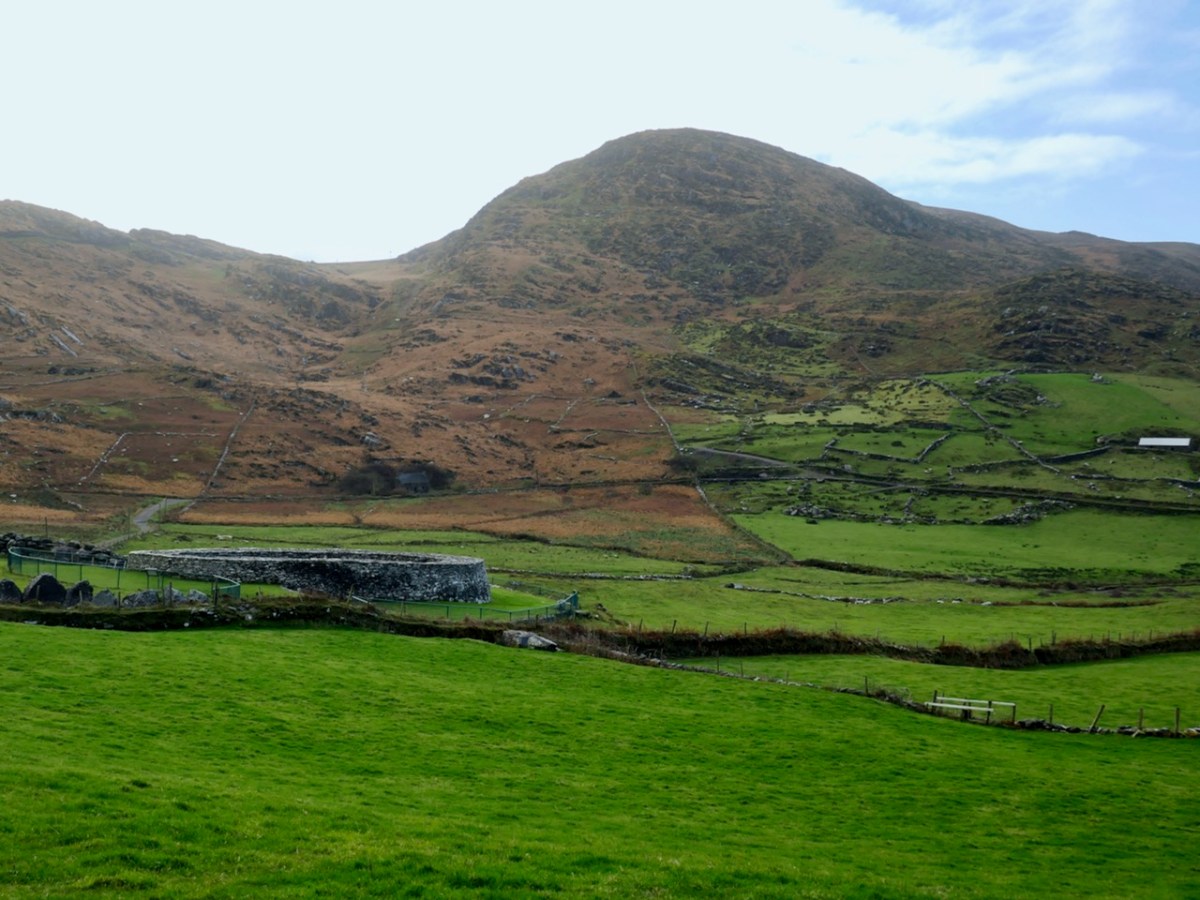
Cashels in Kerry 3: Loher

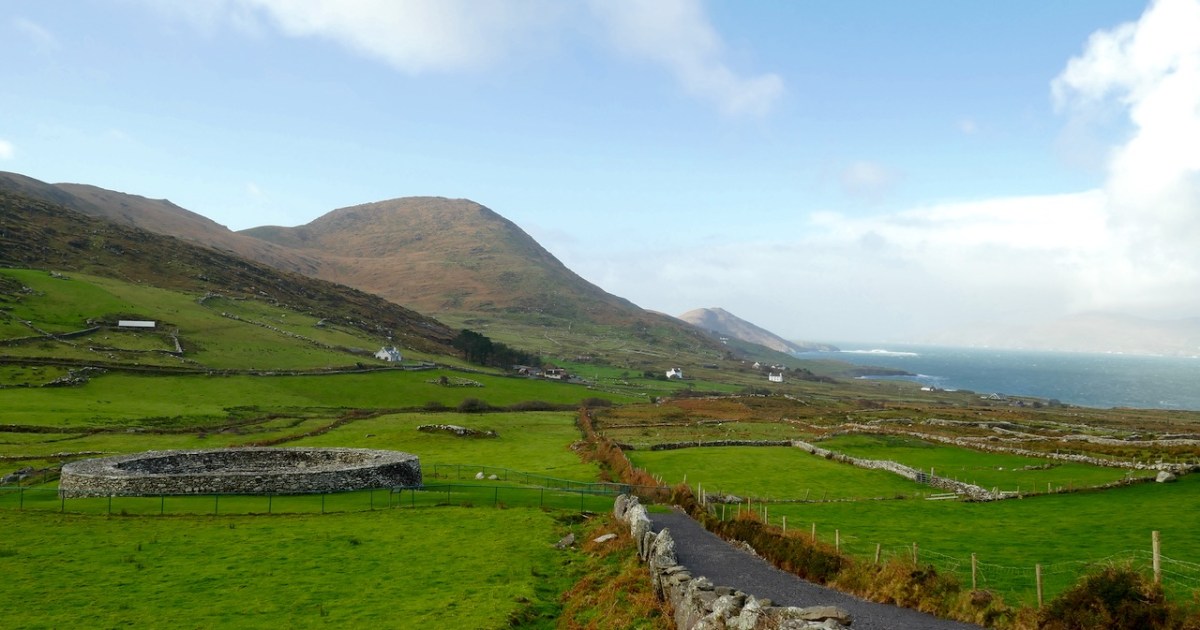
I had the opportunity to visit Loher Fort in Kerry recently, so I have decided to expand this Cashels in Kerry series to four and I’m including it in the list. I’m leaving Staigue till last.

Loher Fort was excavated for four seasons in the 1980s by an archaeologist from UCC. Yes, that’s right, four seasons! You might reasonably expect, therefore that this would be the fort that would yield a thick report full of details and illustrations of what was found, some radiocarbon dates, some historical context – but shockingly, the only report ever forthcoming was a few paragraphs provided to Excavations.ie. I quote it in full now.

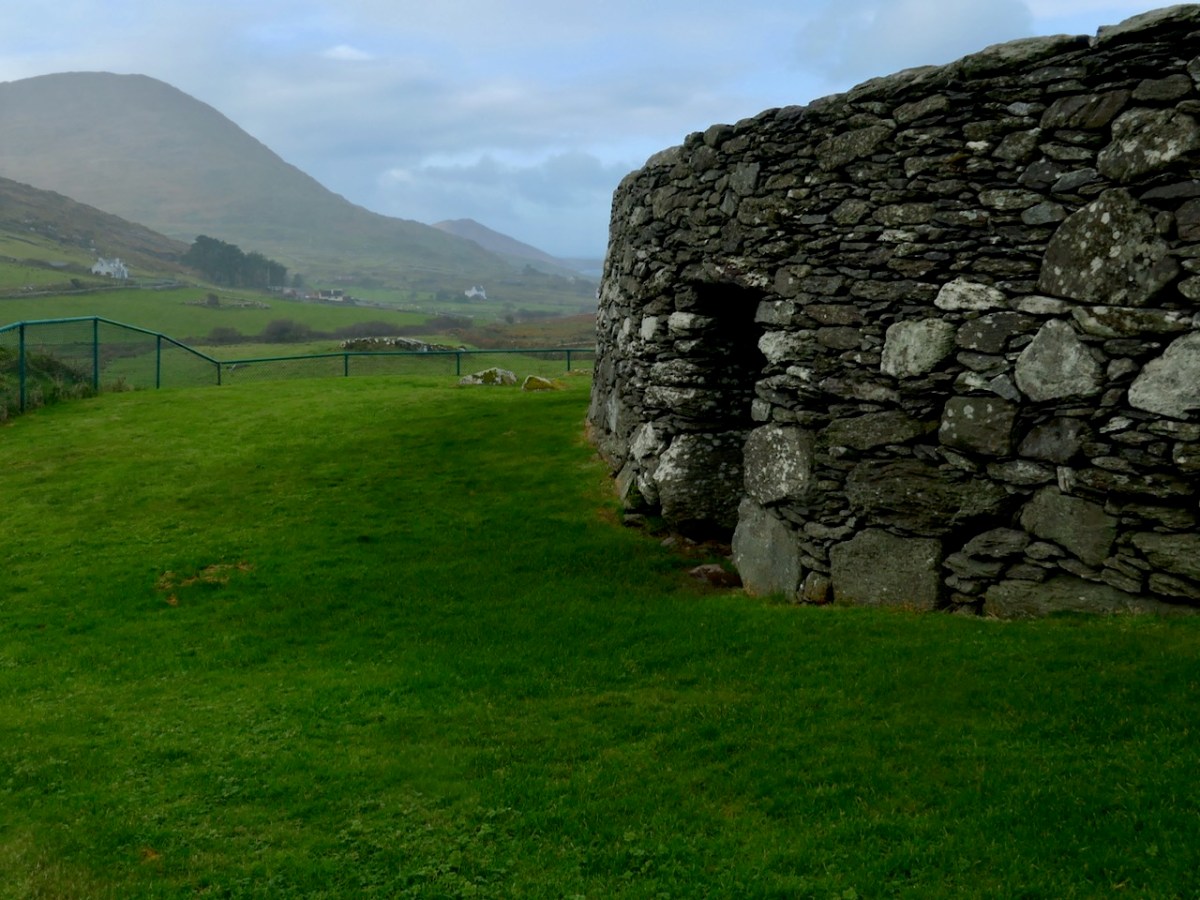
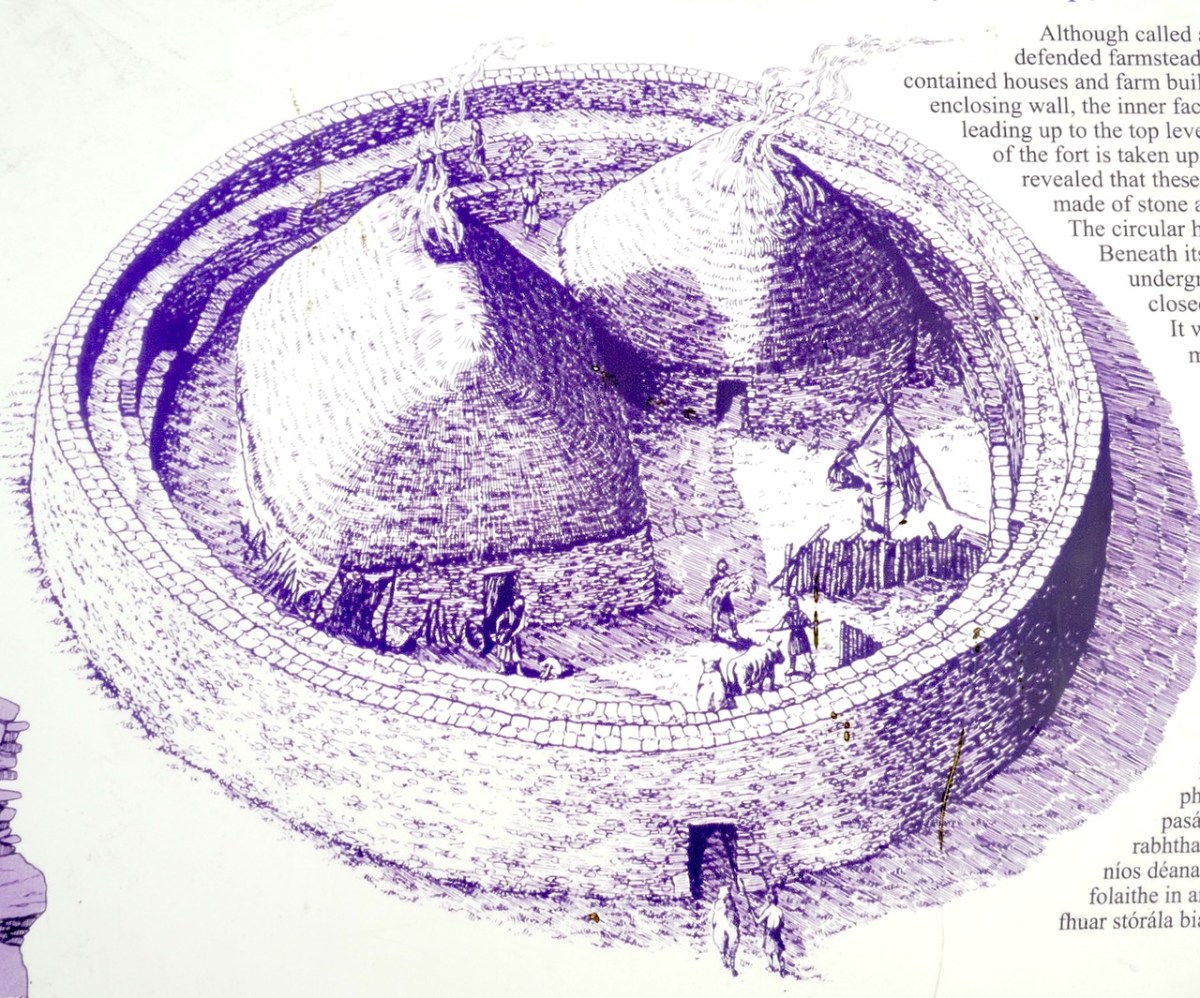
The fourth season of excavation was completed during 1985. The site may be classed as a cashel, 20m in internal diameter, with rampart walls, 2m thick.

Prior to excavation the interior of the site was composed of stone fill to a depth of 2m. On removing this fill, 2 stone structures were uncovered. Both of these had walls surviving to a height of 1m and 1m in thickness. One structure is circular (clochan type) and the other rectangular. The circular structure is c. 5m in diameter and the rectangular structure is 7m x 6m in extent.

The interiors of both these structures have been excavated. This revealed no great depth of occupation deposit but did reveal a good stratigraphic sequence of structures. Essentially, there are 5 identifiable structures including the above two. In the area of the surviving circular structure, an earlier stone-built circular structure was uncovered. This was pre-dated by a wooden structure constructed of driven stakes.

The rectangular structure was pre-dated by a circular wooden house, again of driven stakes. There is also the possibility of another post-built structure in this area. Apart from the above mentioned stratigraphic relationships, the latest circular structure pre-dates the rectangular stone structure. Other features include a souterrain associated with the circular house, and a parapet walkway and mural steps.

Finds include glass beads and a tanged knife. Organic material includes shell, carbonised seed remains, fish scales and fish bones.

https://excavations.ie/report/1985/Kerry/0000602/

That’s it – that’s all we know, apart from a very broad assigned date in the overview of Medieval (AD 400-AD 1600)

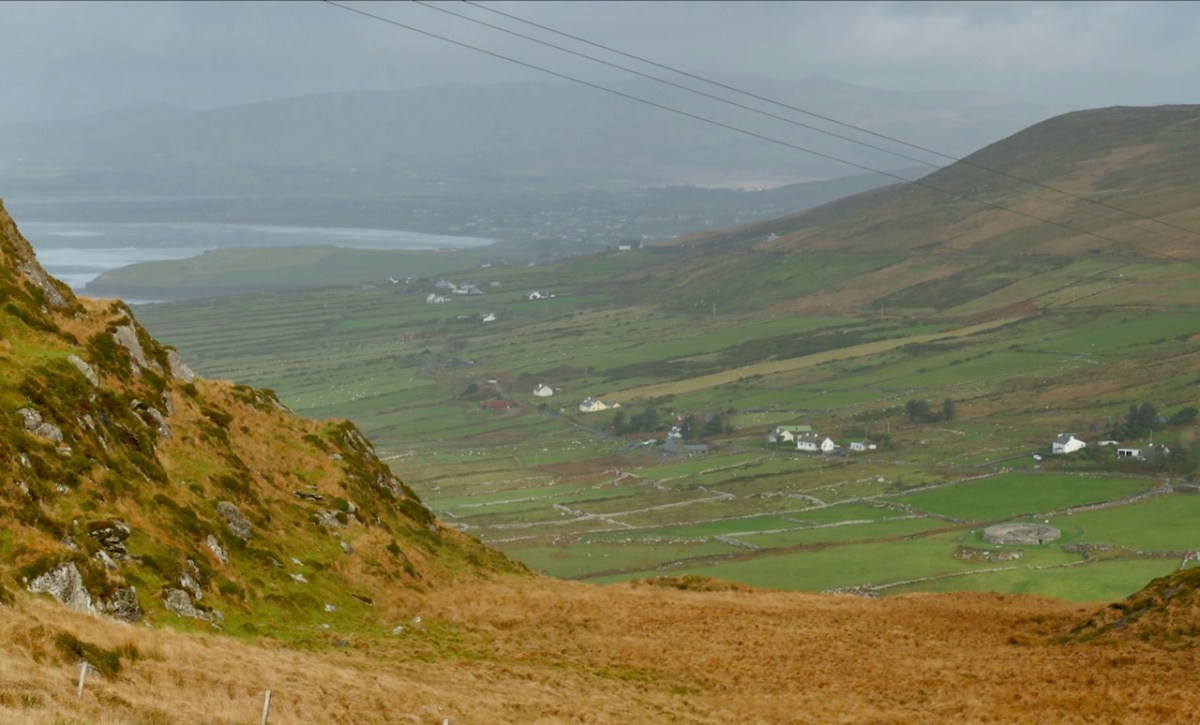
Interestingly archaeologist Aoibheann Lambe, the rock art expert, has identified a number of pieces of rock art in an around the fort, including on stones used as building materials. While these pre-date for fort by several thousand years, it is evidence that people were living in this area for millennia. It’s easy to see why – it’s a spectacular setting, with access to the sea and a location that provides a strategic point of domination over the surrounding landscape.
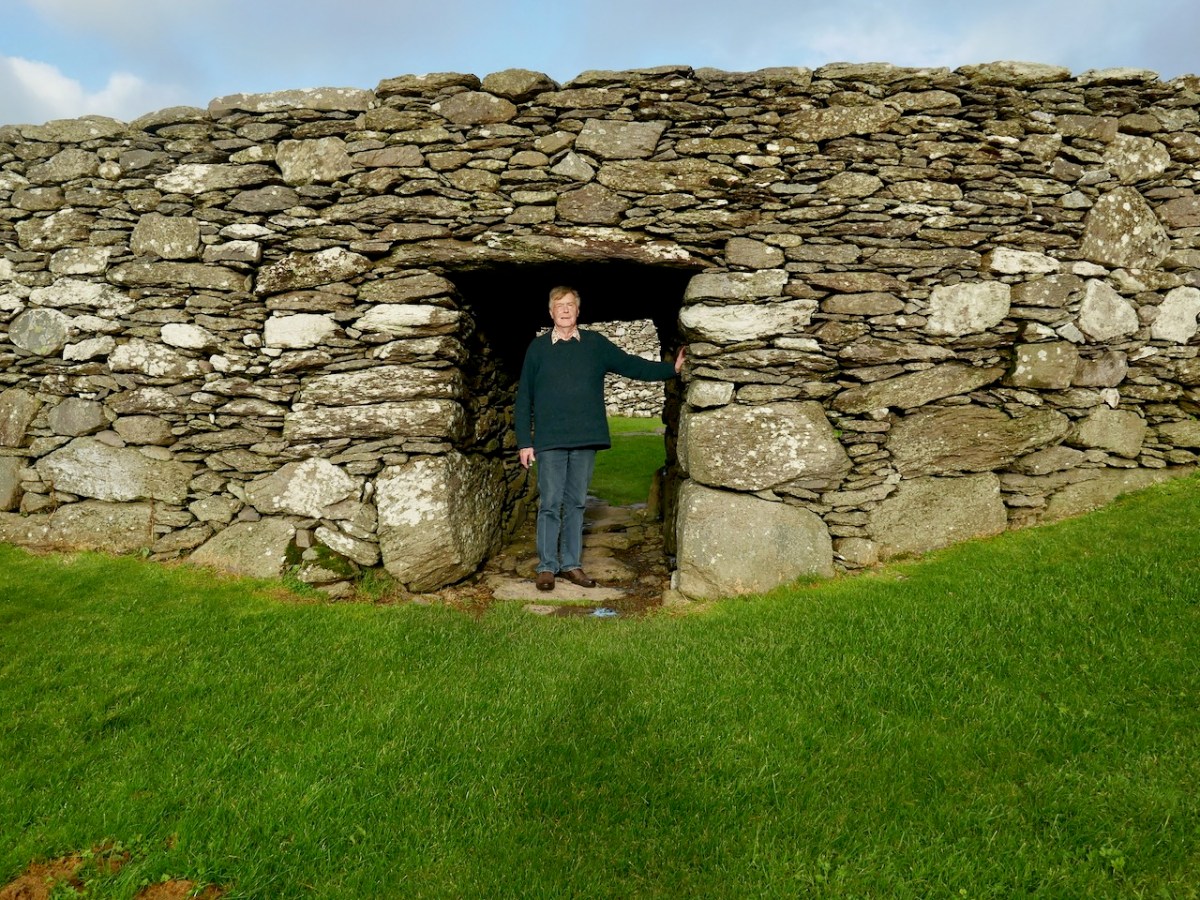
As at Leacanabuaile, there was also a souterrain, although there is no indication on the ground now of where it was, and we have no record of what it looked like and no plan. It was under the round house, which is the earlier of the two houses. Here’s what the National Monuments records says about that:

The entrance to a souterrain is located in the W half of the interior of the house. Measuring 1.1m x 1.3m, it gives access to a drystone-built lintelled passage, 1m high, which runs E-W for 3m before turning sharply to N. The excavation revealed that the construction of the souterrain post-dated that of the house, and that an earlier stone-built circular structure in the area of the house was, in turn, pre-dated by a wooden structure constructed of driven stakes.*
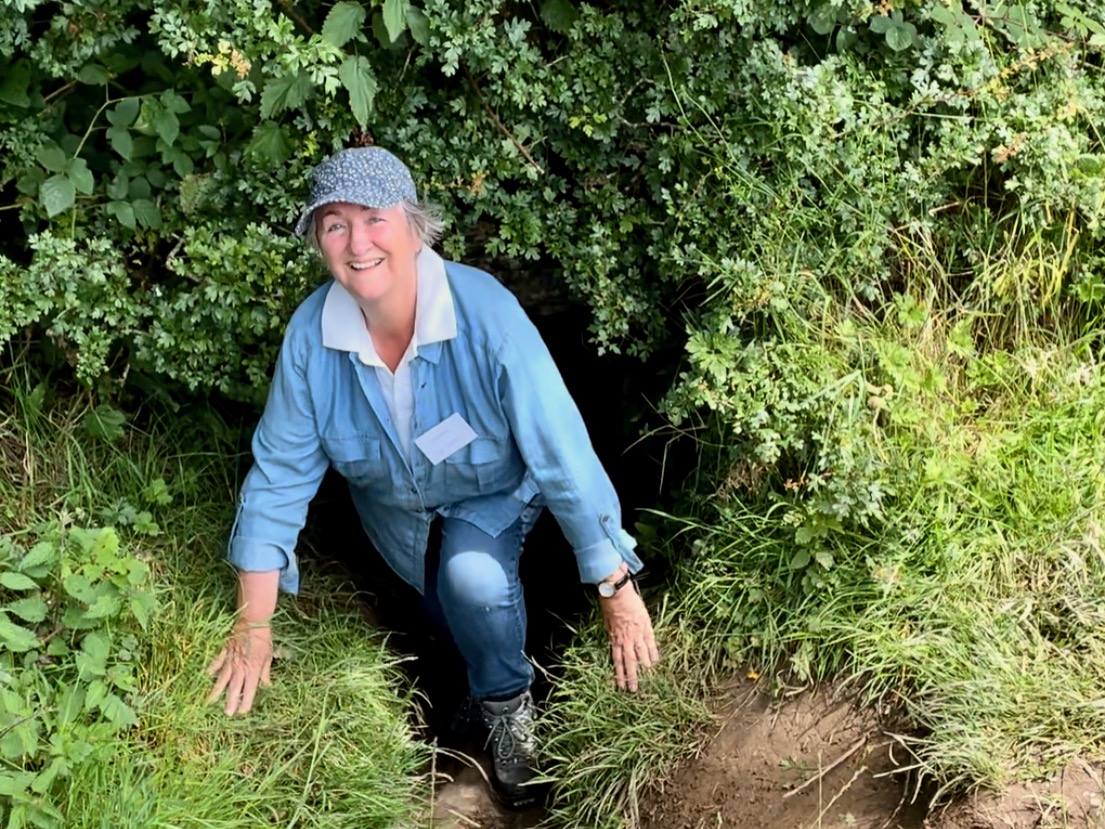
What is a souterrain exactly? As the name suggests, it’s a man-made underground passage, often associated with ringforts and cashels. They may have had a variety of uses, but perhaps the main one was as a root cellar to preserve food. That’s me, above emerging from one of the most famous of of our Irish souterrains, Oweynagat at Rathcroghan. They’re a common class of archaeological monument – there are over 1,000 in Cork and over 800 in Kerry. Folklore is rich with stories of souterrains that stretch for miles, that end up in the sea or in a nearby castle, but alas although we know of complex examples with passages leading to multiple chambers, most are quite short and contained within the general area of the ringfort. For more on souterrains, see this wonderful site. 
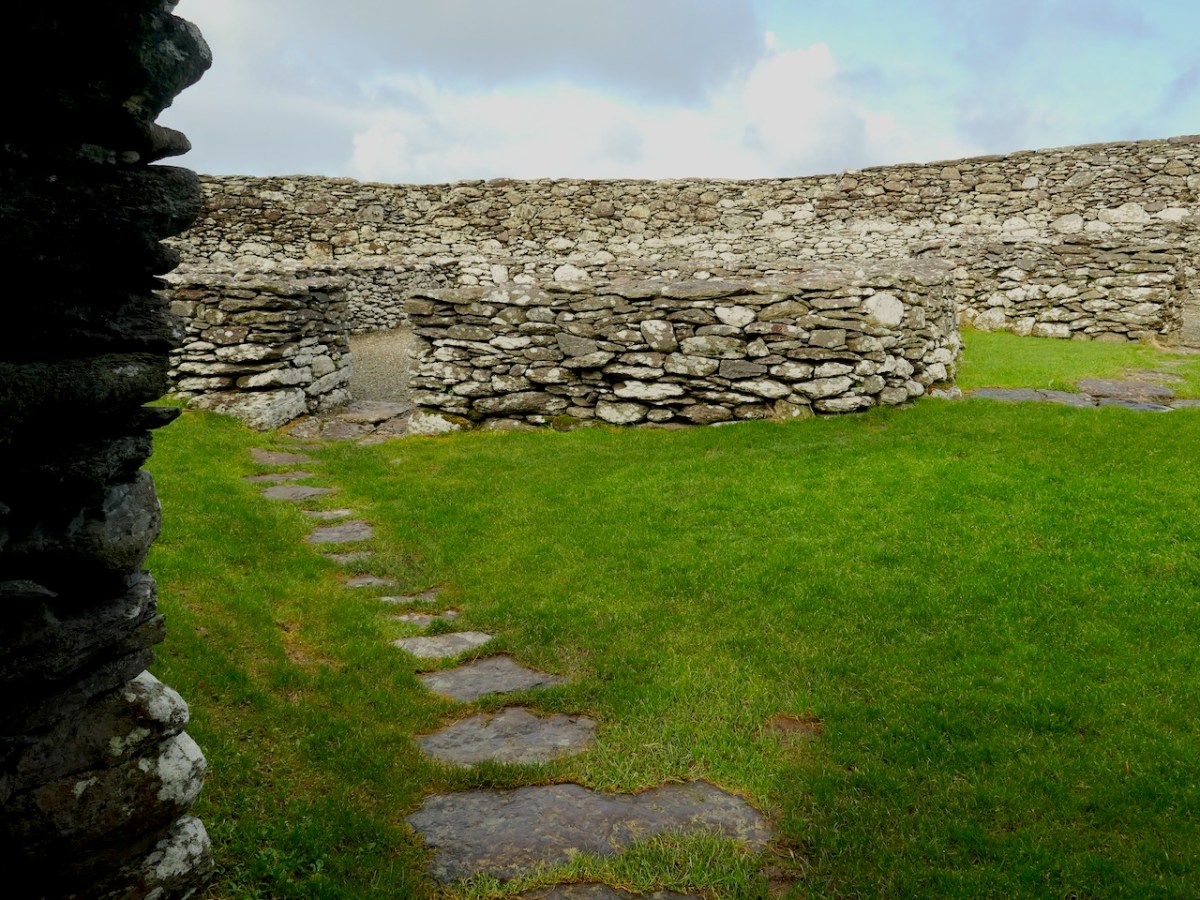
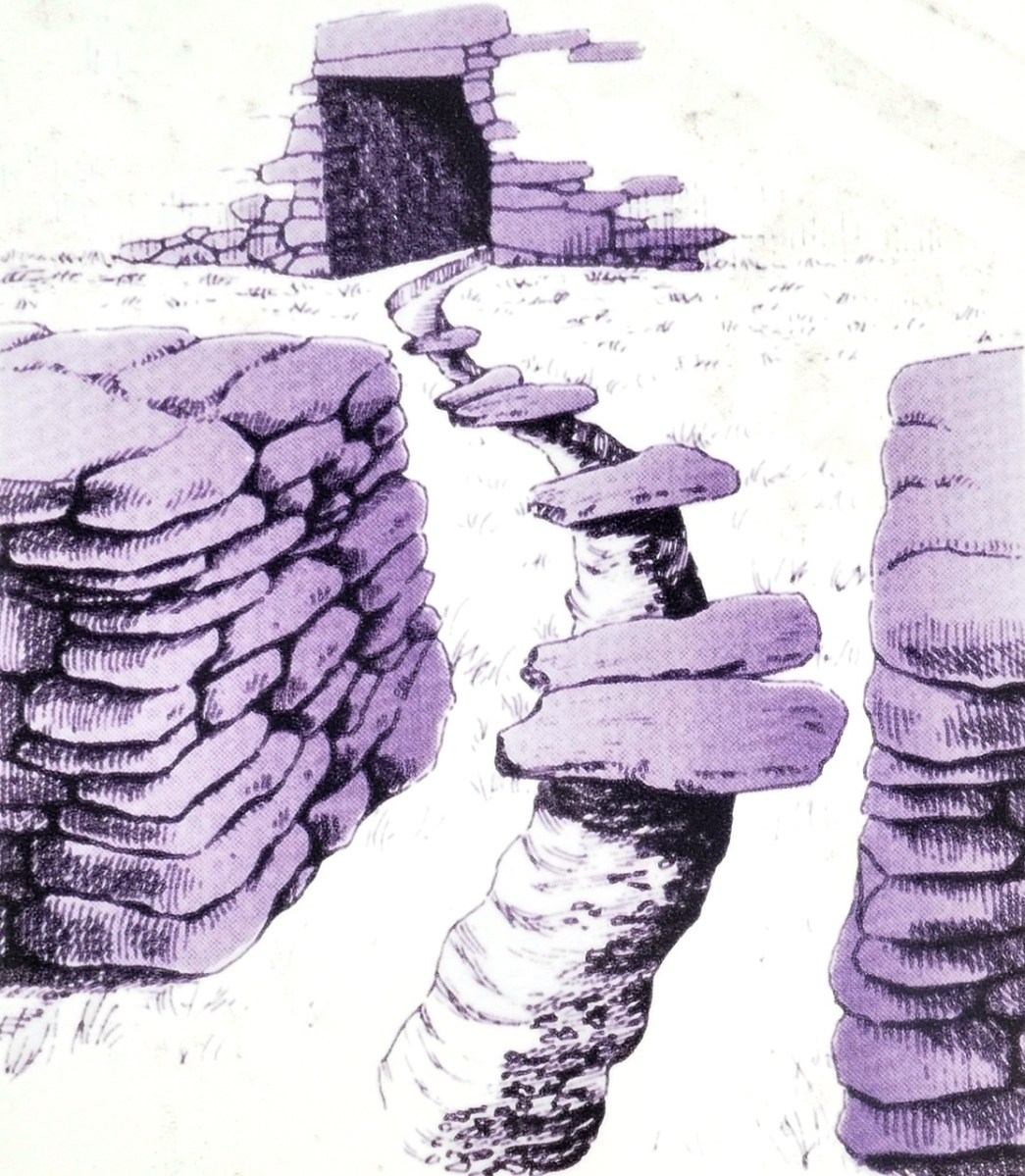
There was also a covered drain leading from the fort entrance to the house, and another between the two houses. Not quite the fine paving that was found at Cahergal, but certainly a way of keeping your feet dry on what were no doubt well-worn paths. There’s no mention of this in the brief report, but obviously the OPW, who conducted the reconstruction, knew about this, as did National Monuments who commissioned the interpretive plaque. Is there, in fact, more information available somewhere? I would be happy to stand corrected.
The walls and stone steps, which are a standout feature of these Kerry Cashels, are described in the National Monuments record. Note they use the word Caher instead of Cashel – both mean ‘stone fort.’

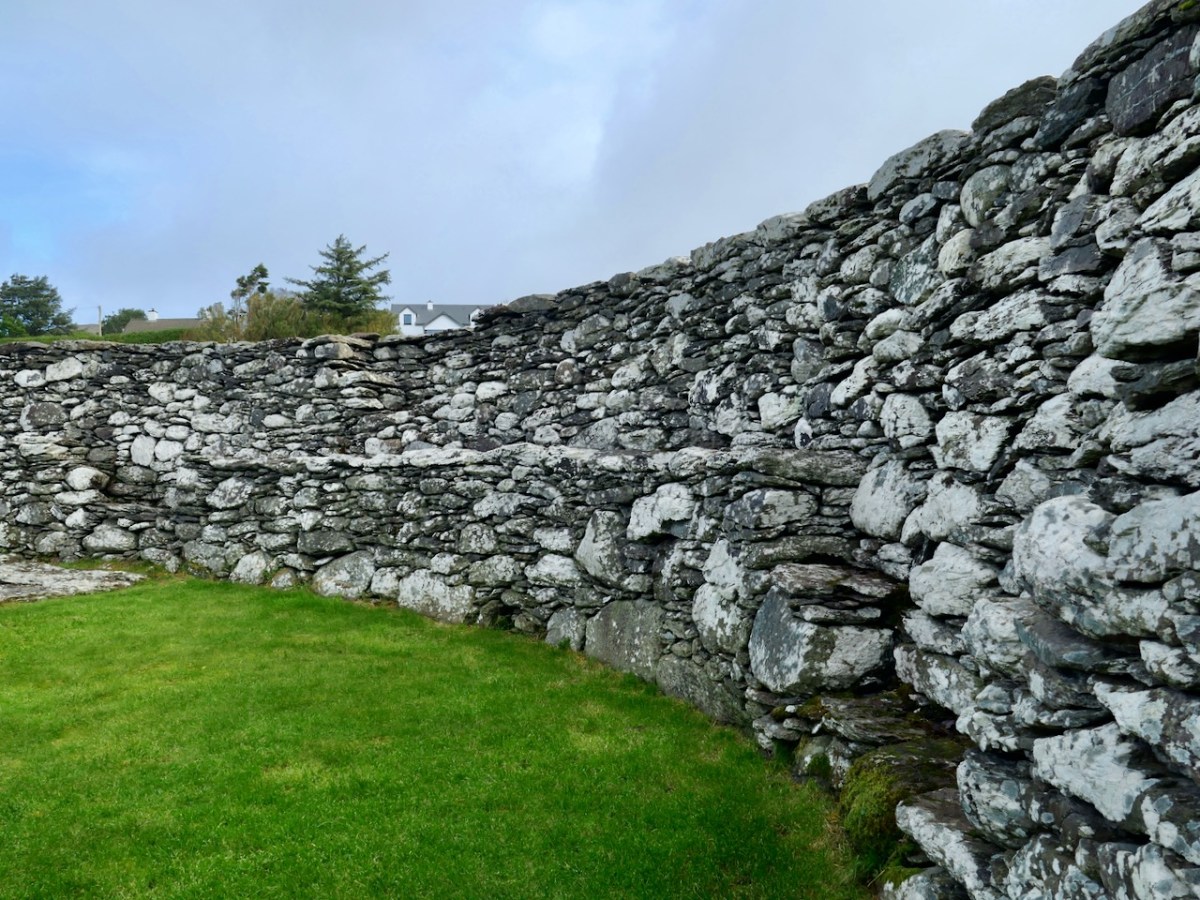
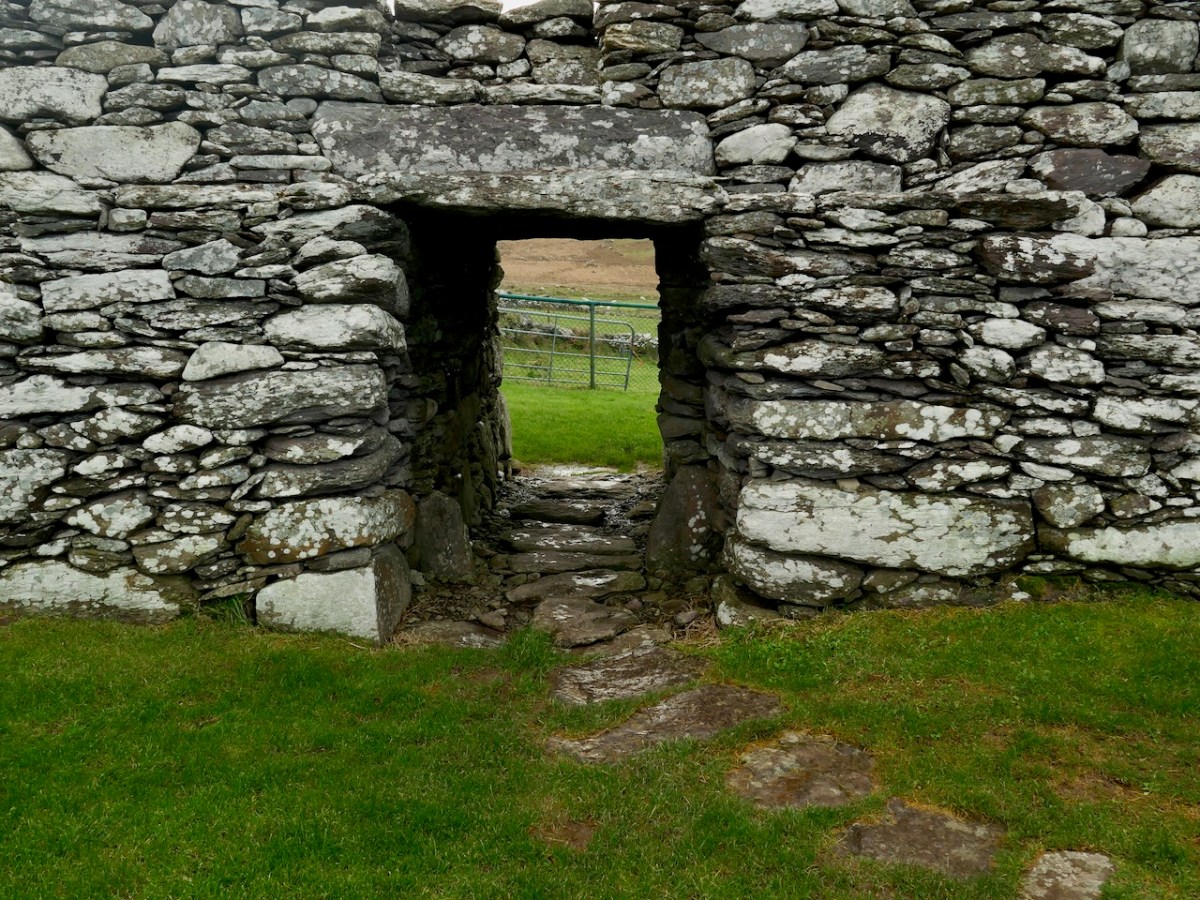
Caher Wall: This consists of a rubble core faced internally and externally with random courses of well-built drystone masonry. Much of the external face, which is battered, is concealed by a substantial build-up of collapse and field-clearance material. The wall, which is up to 4m in basal thickness, varies in external height from 1m to 2.5m and internally from 2.5m to 3.3m. A lintel-covered paved entrance passage. . . leads into the interior of the site from SSE. A terrace, reached by means of seven inset arrangements of opposing steps, occurs on the internal face of the caher wall at an average height of 1.3m. The arrangements of steps occur at irregularly spaced intervals, and the individual sections of the terrace to which they give access average .6m wide. Traces of a short section of a second terrace, also furnished with steps, occur above the first in the N sector of the wall.*
Because we have no access to a proper excavation report, we don’t know how closely the reconstruction efforts at Loher were based on the findings. However, from the little information we have it seems that what we see now on the ground is a reflection of what was left after multiple periods of occupation, one of which (perhaps the earliest phase) included a house built with wooden stakes. 
Like Leacanabuaile and Cahergal, it seems that once the excavation is over, the OPW moves in and ensures that what is left, if it is to be open to the public is made safe for visitors. If that was all they did, we might all, perhaps, be a little less confused now about what these forts looked like originally. But the instinct to reconstruct is strong, as well as the perceived need to tidy up the place, round off sharp corners and keep the grass trimmed to golf course standards. The information plaques the National Monuments folk provide are exceptionally well designed and full of welcome information.
What we can say is that it’s a wonderful site, impressively built and situated, and adds to the sum total of what knowledge we have of how high-status individuals constructed statement dwellings or ceremonial spaces for themselves in medieval Ireland. 
  • The description is taken from the online inventory maintained by National Monument for all archaeology sites in Ireland, available to search here:
All four posts in this series can be found here.

Ballycummisk Archaeology

There’s a fine ringfort just over the hill from us – in the townland of Ballycummisk. A definition of a ‘ringfort’ in archaeological terms is given here:
. . . Many people lived in enclosed farmsteads known as ringforts in the Early Christian/Early Medieval period. Second to fulachta fiadh, they are the most common field monument surviving in Ireland with up to 60,000 examples, most dating to between 550-900AD. Ringforts are circular areas, measuring c24-60m in diameter, usually enclosed with one or more earthen banks, often topped with a timber palisade. In the west of Ireland the ringfort was often enclosed by a stone wall, with stone huts in the interior. Traces of iron and bronze working have been recovered suggesting some ringforts had very specific uses while others were multifunctional . . .

HeritageCouncil.ie
Significant Unpublished Irish Archaeological Excavations 1930-1997

A simpler definition comes from the monumental 1200-page Volume 1 of the ‘New History of Ireland’ series published in 2005 and edited by Dáibhí Ó Cróinín: “archaeologists are agreed that the vast bulk of them are the farm enclosures of the well-to-do of early medieval Ireland”.

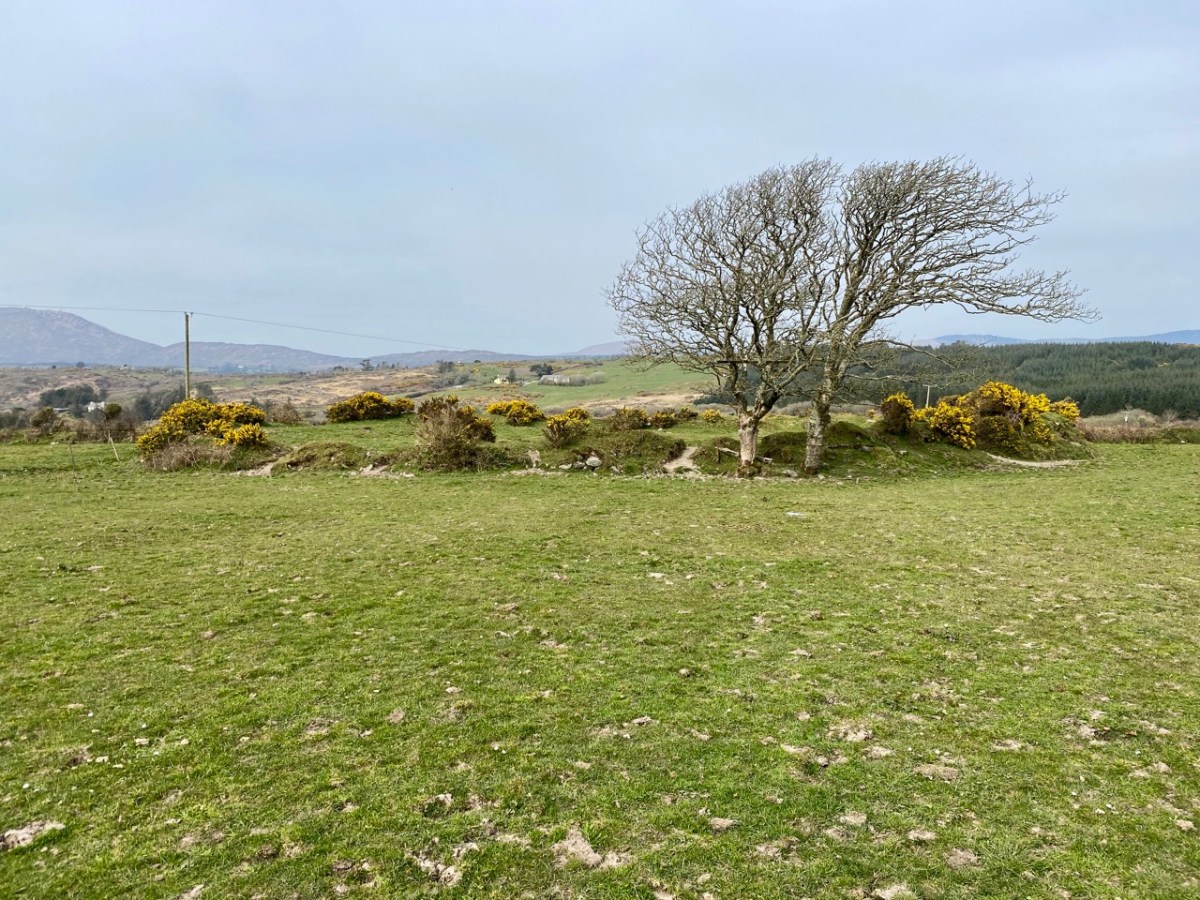
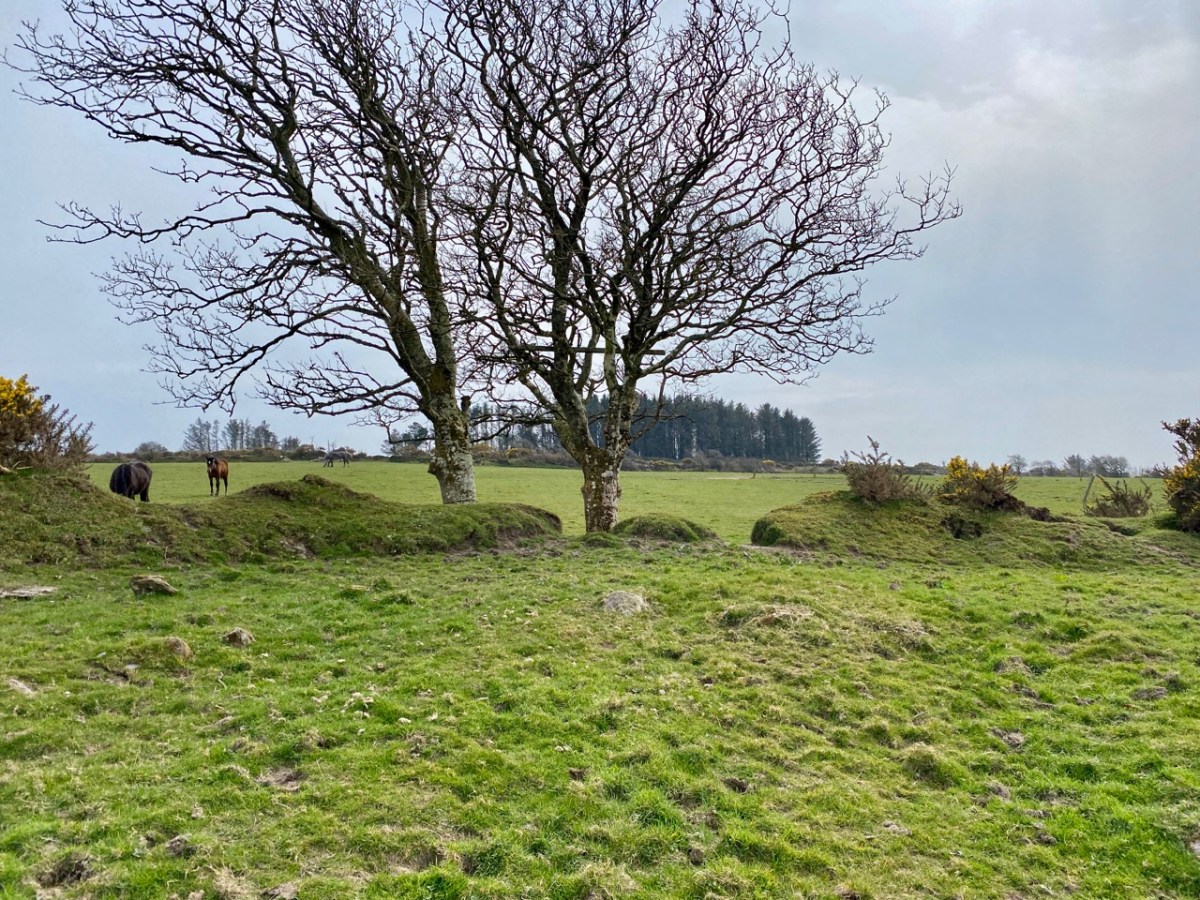
The upper picture is taken from within the ringfort enclosure; the north bank of the fort can be seen beyond a small stone outcrop which is said to be the site of a souterrain. Time for another definition:

. . . Souterrain: an underground structure consisting of one or more chambers connected by narrow passages or creepways, usually constructed of drystone-walling with a lintelled roof over the passages and a corbelled roof over the chambers. Most souterrains appear to have been built in the early medieval period by ringfort inhabitants (c. 500 – 1000 AD) as a defensive feature and/or for storage . . .

archaeology.ie/HistoricEnvironment

You can see more about souterrains – including some illustrations – in my post from four years ago about Knockdrum Fort, south of Skibbereen.

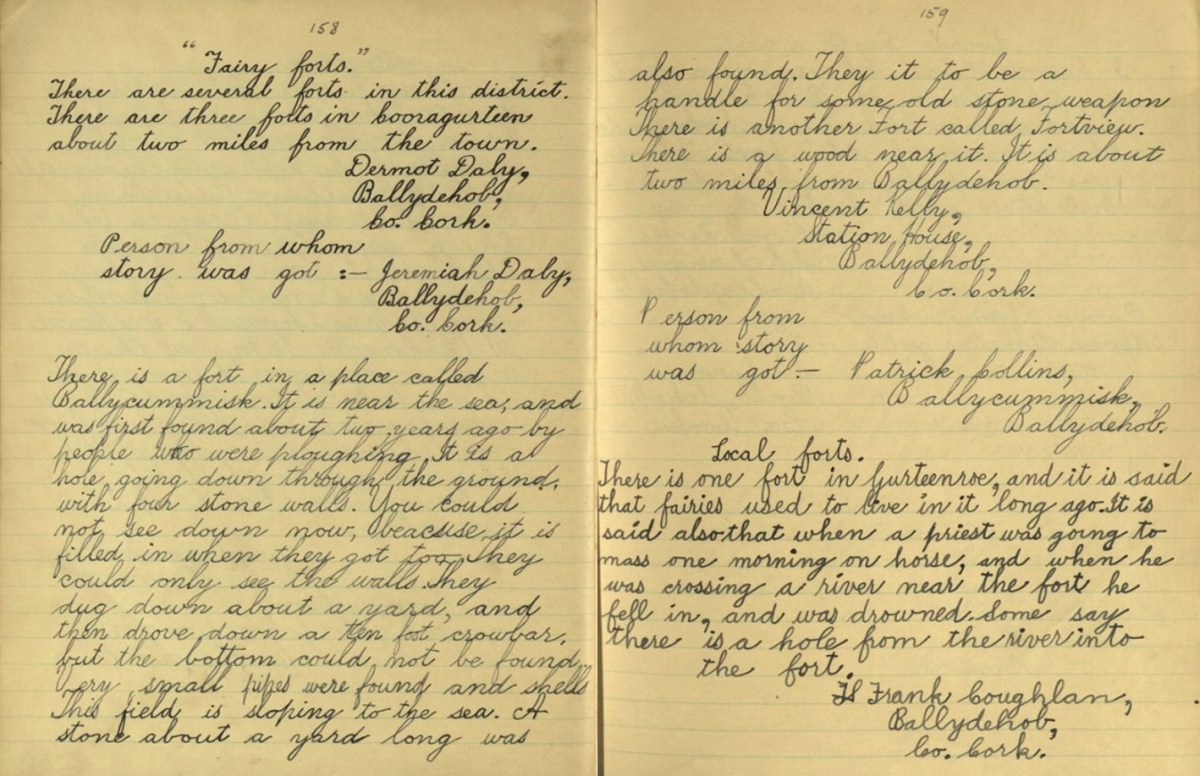
The Schools Folklore Collection is an important source of local beliefs and traditions – if not exactly historical information. The stories were collected in the 1930s but were remembered through family traditions which could go back through several generations. The example pages above – dating from 1936 – describe the Ballycummisk fort. Here is a transcription of the paragraph:

. . . There is a fort in a place called Ballycummisk. It is near the sea, and was first found about two years ago by people who were ploughing. It is a hole going down through the ground, with four stone walls. You could not see down now, because it was filled in when they got to it. They could only see the walls. They dug down about a yard, and then drove down a ten foot crowbar, but the bottom could not be found. Very small pipes were found and shells This field is sloping to the sea. A stone about a yard long was also found. They thought it to be a handle for some old stone weapon . . .

Schools Folklore Collection
Frank coughlan Ballydehob

Frank Coughlan’s description almost certainly refers to the discovery of a souterrain. It doesn’t quite ring true as he says that “the field is sloping down to the sea”. In fact, the fields containing the ringfort are sloping southwards away from the sea, which is not visible at all from the site.

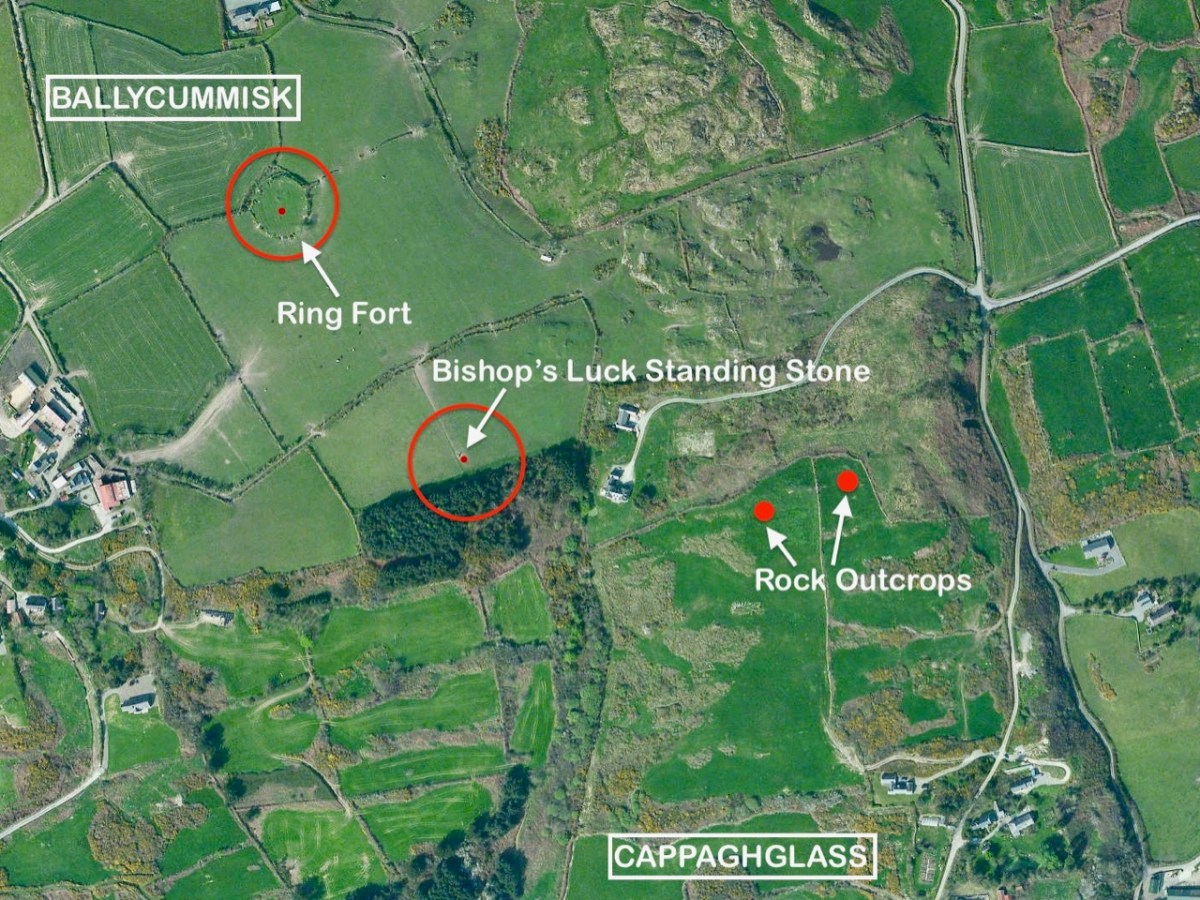
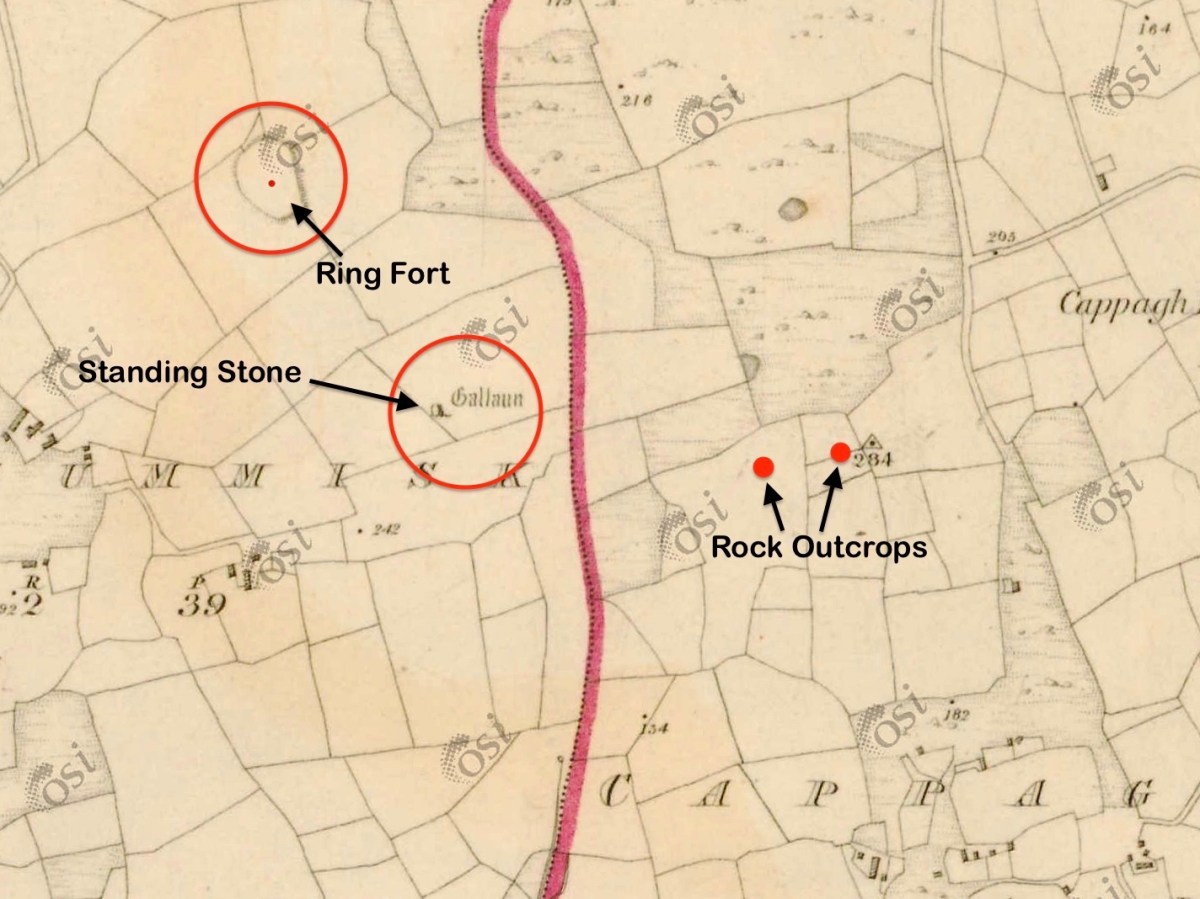
This aerial view shows parts of the townlands of Ballycummisk and Cappaghglass. The ringfort is marked. Another nearby feature – also shown – is a large standing stone, known as ‘Bishop’s Luck’.

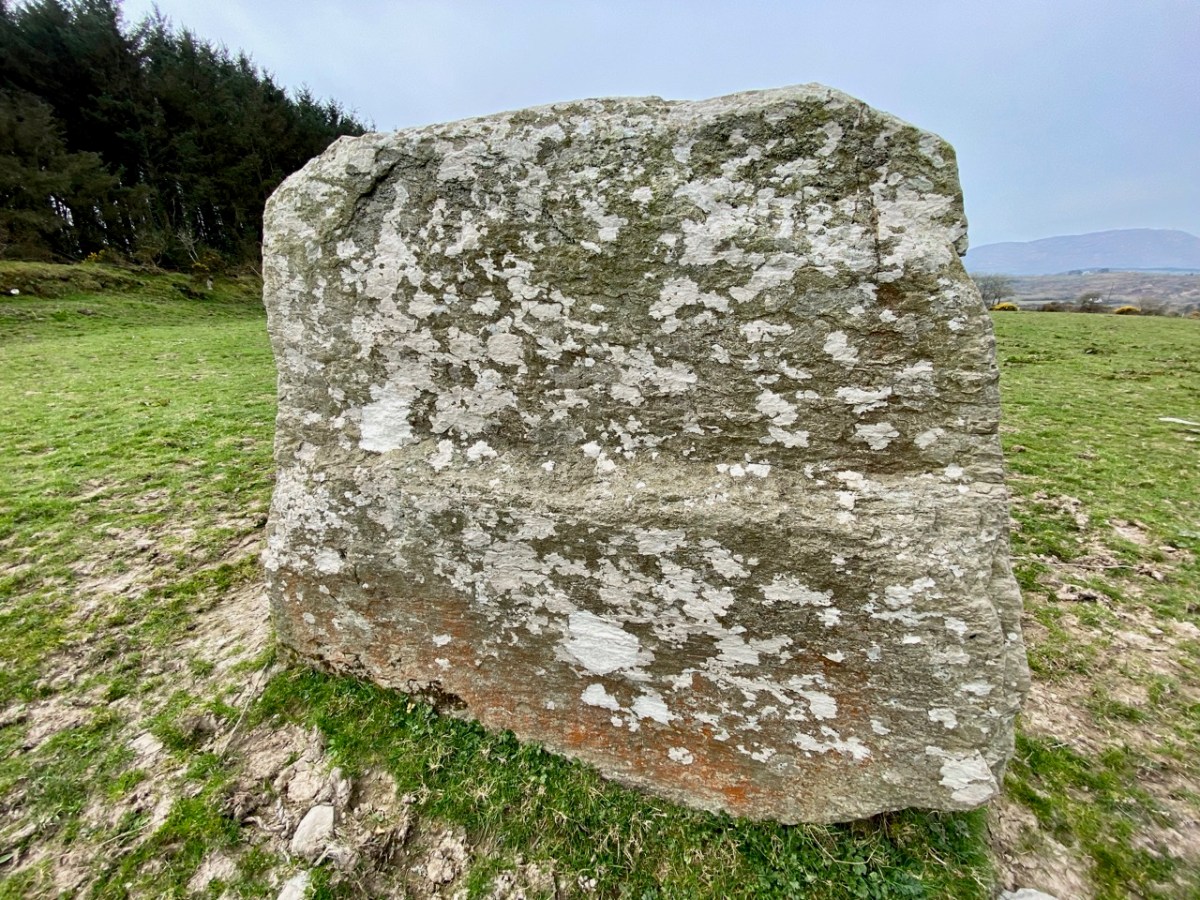
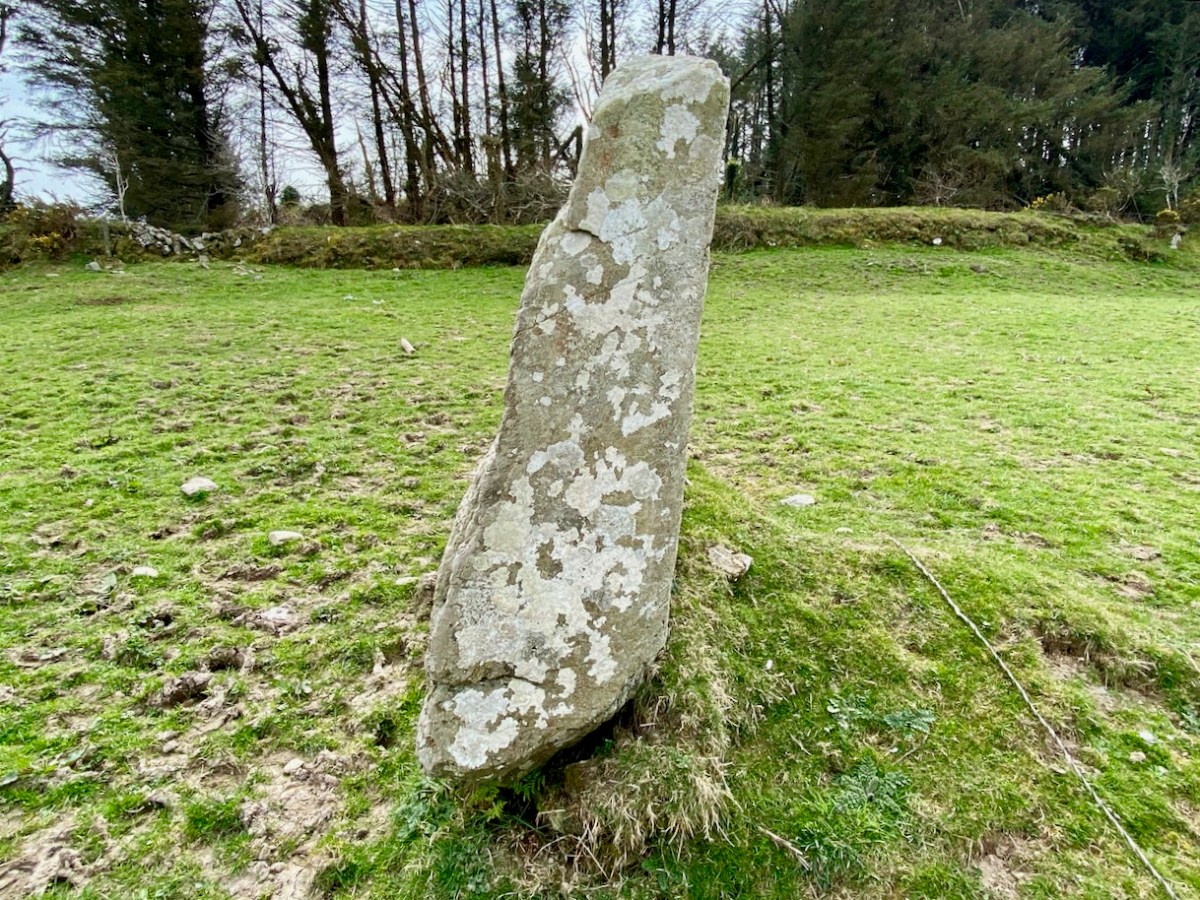
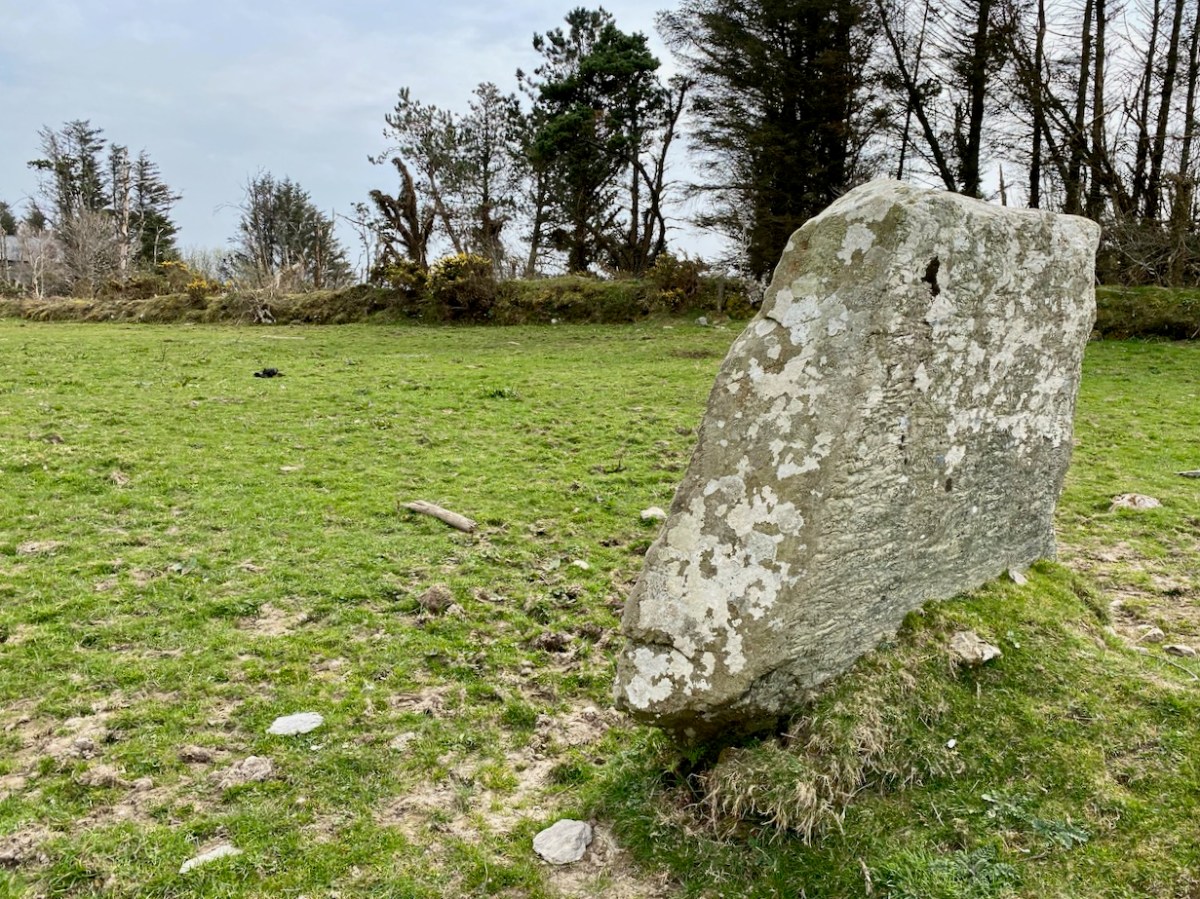
The stone is 1.6m high, 2.05m in length, and 0.45m in width: tall and wide in one direction, and relatively narrow in the other. It is also worth noting that the ‘long’ orientation is exactly North-South. This stone has been in this position for at least 180 years as it appears in the earliest edition of the 6″ Ordnance Survey (1830s), marked as ‘Gallaun’ – and even given a little illustration!

The standing stone is not far from the ringfort: perhaps there is a connection, although standing stones are generally reckoned to date from earlier times than the forts. Here is an extract from a recent article in Archaeology Ireland: Vol 34 No 1 (Spring 2020) pp 26-29, Wordwell Ltd:

. . . The classic standing stone surviving from the Bronze Age in Ireland is a rough-hewn or unshaped pillar, known as a gallaun (from the Irish gallán), generally oblong or oval in cross-section and up to 3m or more in height. Stones presumed to belong within this class vary considerably in height, from as little as 1m to as much as 6-7m in exceptional cases, the majority probably falling in the 1.5-2m range. Seán Ó Nualláin noted many years ago that in his experience the axis is generally aligned north-east/south-west. This is by no means a universal rule. Gallauns are by far the most numerous of all pre-Christian standing stones in Ireland. Approximately 600 are known in Cork and Kerryb alone. Beyond this region, examples are to be found extensively throughout the Irish countryside and many of them have attracted folk explanations . . .


Lone Standing Stones by Muiris O’Sullivan and Liam DowneY
Archaeology Ireland 2020

In these two pictures you can see the striking profile of the Bishop’s Luck standing stone against the skyline which features Mount Gabriel – the highest piece of land in the immediate area. Gabriel was an important place in prehistoric times as the centre of a significant copper mining industry – yet no artefacts have ever been found on the summit. In the lower picture you can see how the western edge of the standing stone ‘echoes’ the distant profile of Gabriel on the horizon. This is a phenomenon that has been noted a few times with regard to stones standing in the landscape. Here is Gabriel seen from the ringfort:

Finola has written comprehensively about standing stones in this Journal: here and here. O’Sullivan and Downey mention (above) that examples have attracted folk explanations. This doesn’t seem to be the case here: no mention is made of the stone in the Schools Folklore Collection. But surely there must be significance in the name: Bishop’s Luck?
But – hang on! There is ‘Bishop’ folklore associated with a site not very far away – in the neighbouring townland of Stouke. Finola recorded this in her 2016 post here. It’s a simple tale: The story goes that during the time of the penal laws a Bishop was confirming children nearby when the redcoats got wind of his activities and came to arrest him. He was beheaded. A bullaun stone in the graveyard at Stouke is supposed to be his head. If our possibly Bronze Age stone in Ballycummisk had anything to do with this, it should surely be known as Bishop’s Bad Luck?
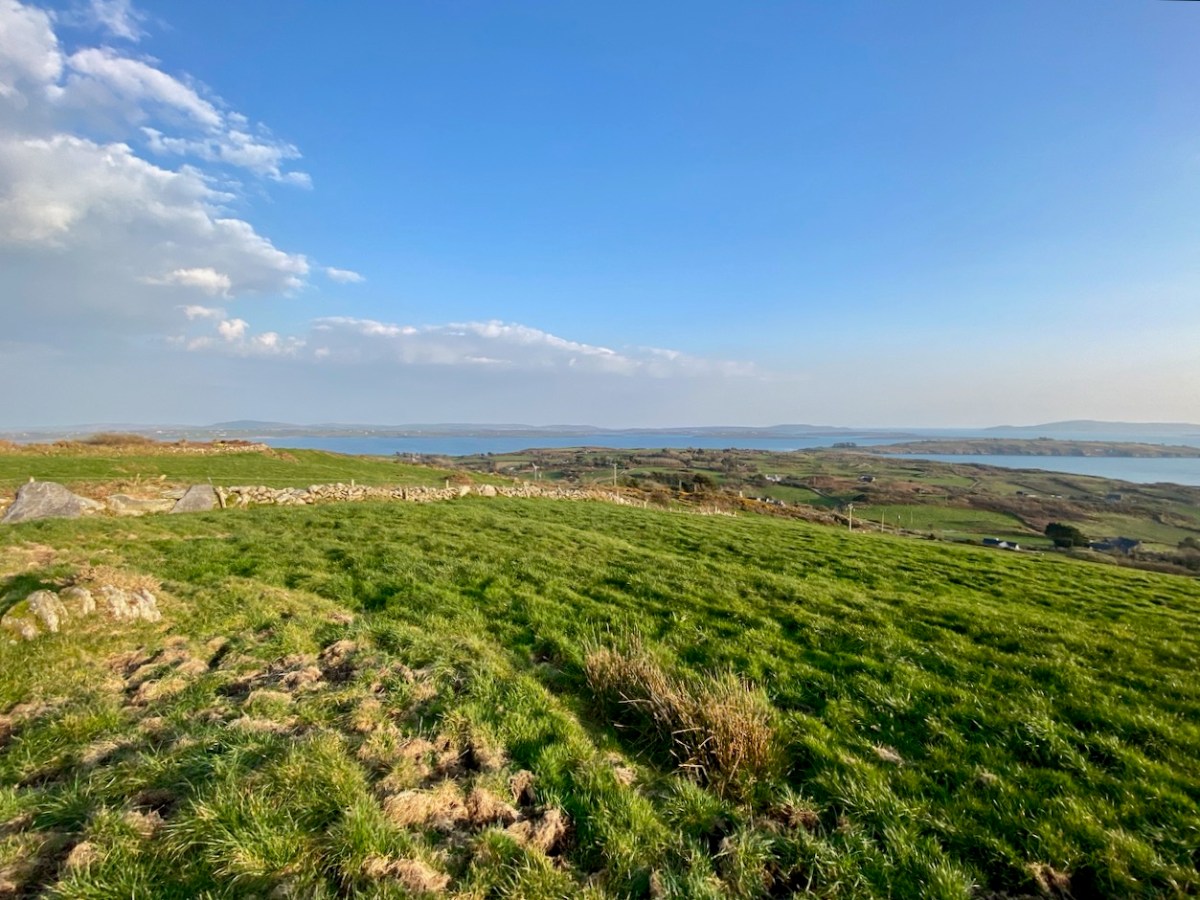
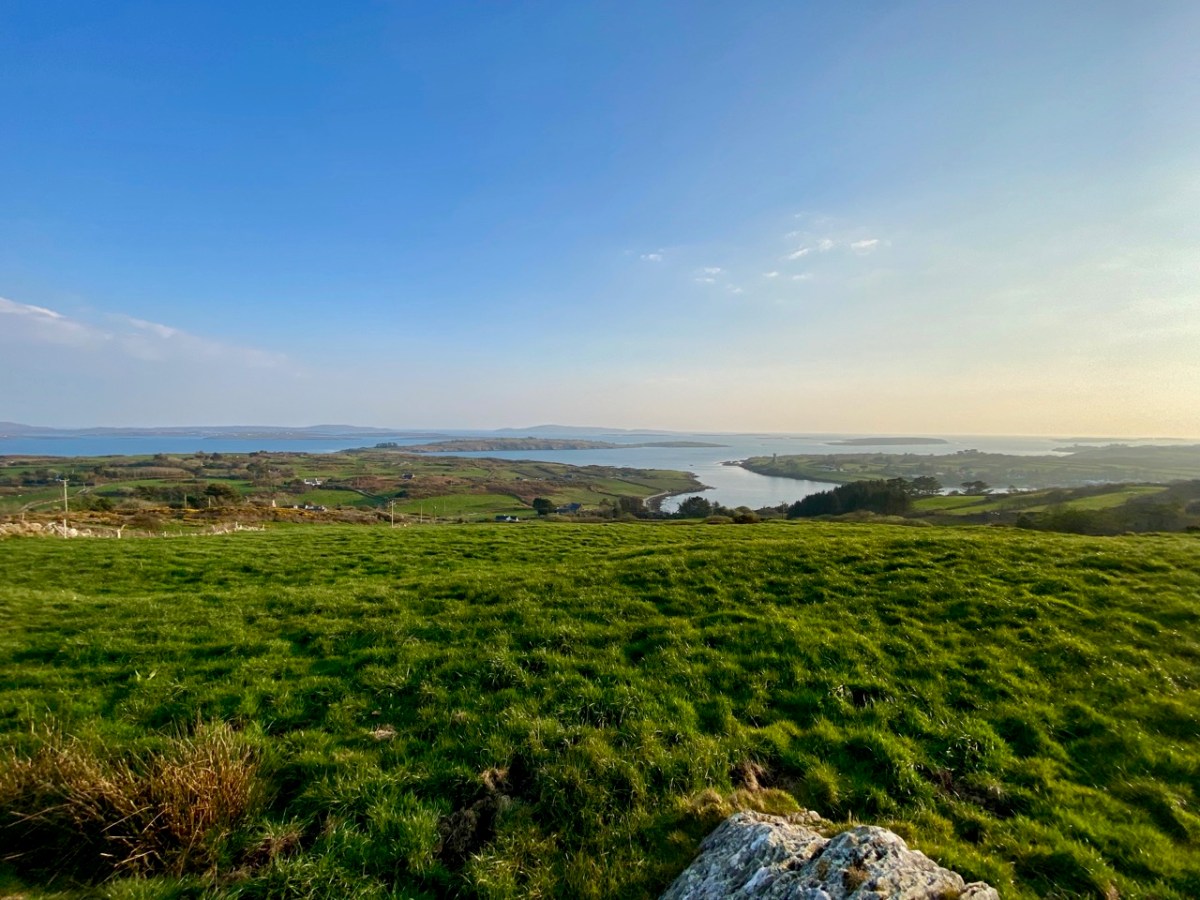
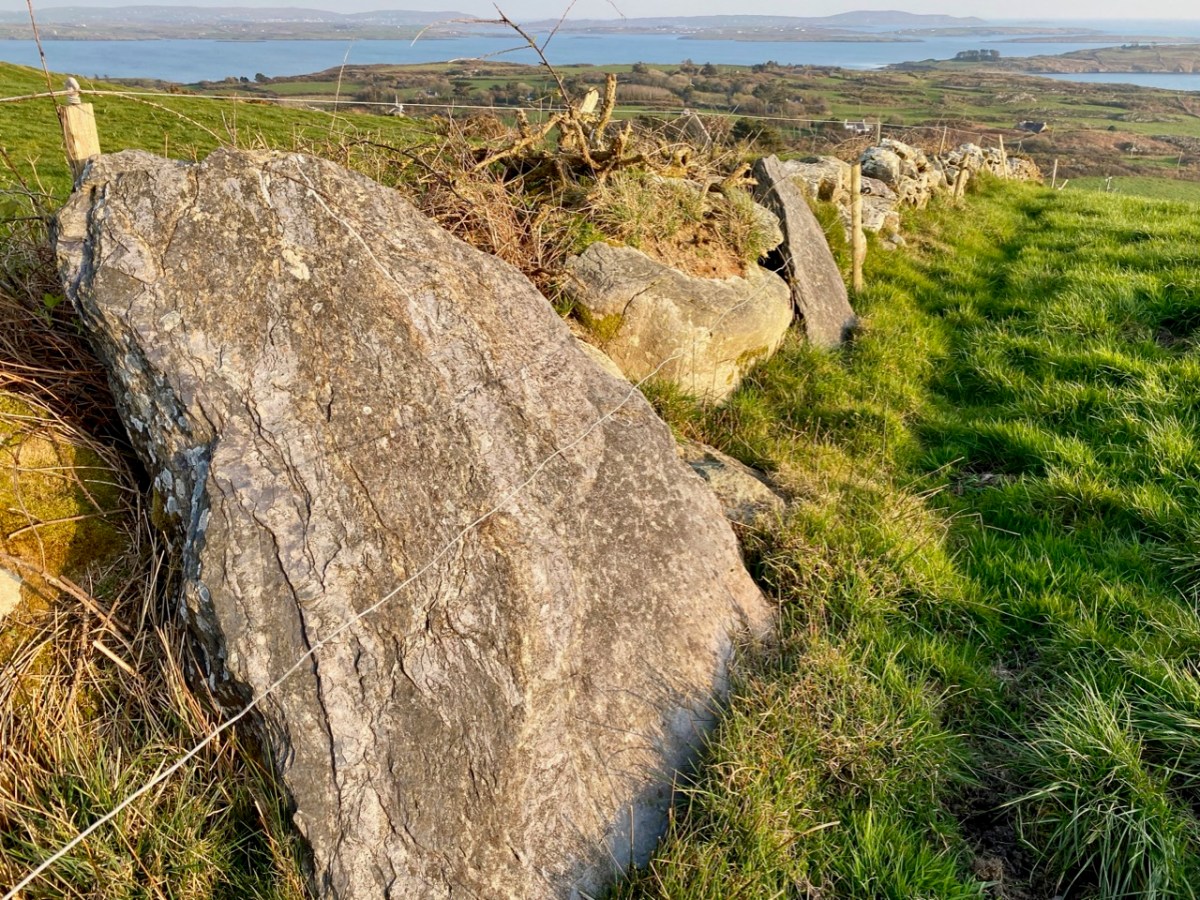
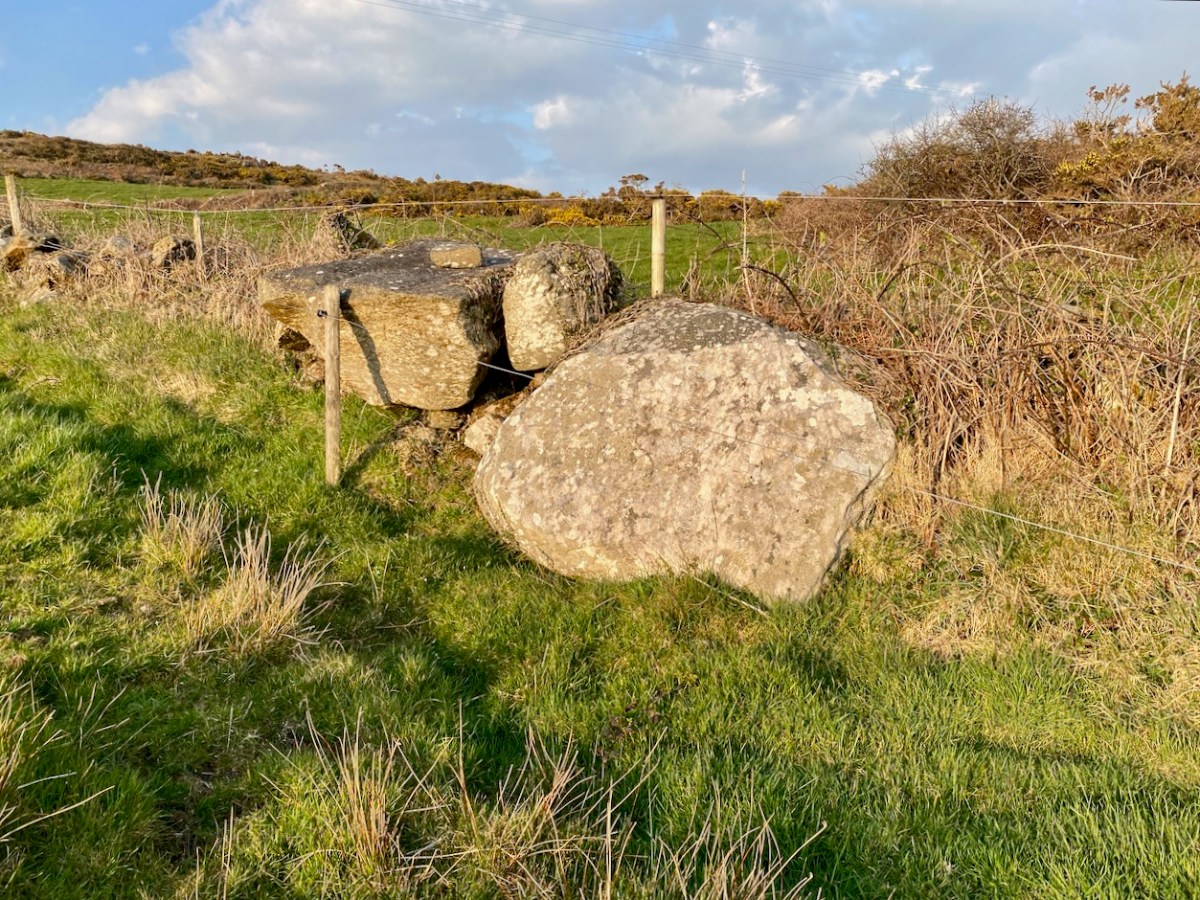
One further place that’s worth a mention here is the top of the hill to the south of the ringfort and standing stone. It doesn’t have a name, but it does have a magnificent view across to Rossbrin Harbour, with Cape Clear on the horizon in the far distance. There is a passage grave on the high point of Cape Clear. There seems to be some evidence for the inter-visibility of ancient sites, which makes me wonder whether there was ever any early structure on this hilltop. There are rocky outcrops there in the present day, and field clearance is evidenced by the presence of large slabs in the nearby field boundaries.

These are just thoughts, but I don’t mind thinking them! West Cork (and most of rural Ireland) must have much to reveal in terms of its ancient history. One point to remember: if you ever go searching yourself for archaeology or old sites, don’t forget that you will probably be entering private land. It is courteous to always seek permission: most owners are agreeable and – perhaps – may have stories to tell themselves.

Round Ring

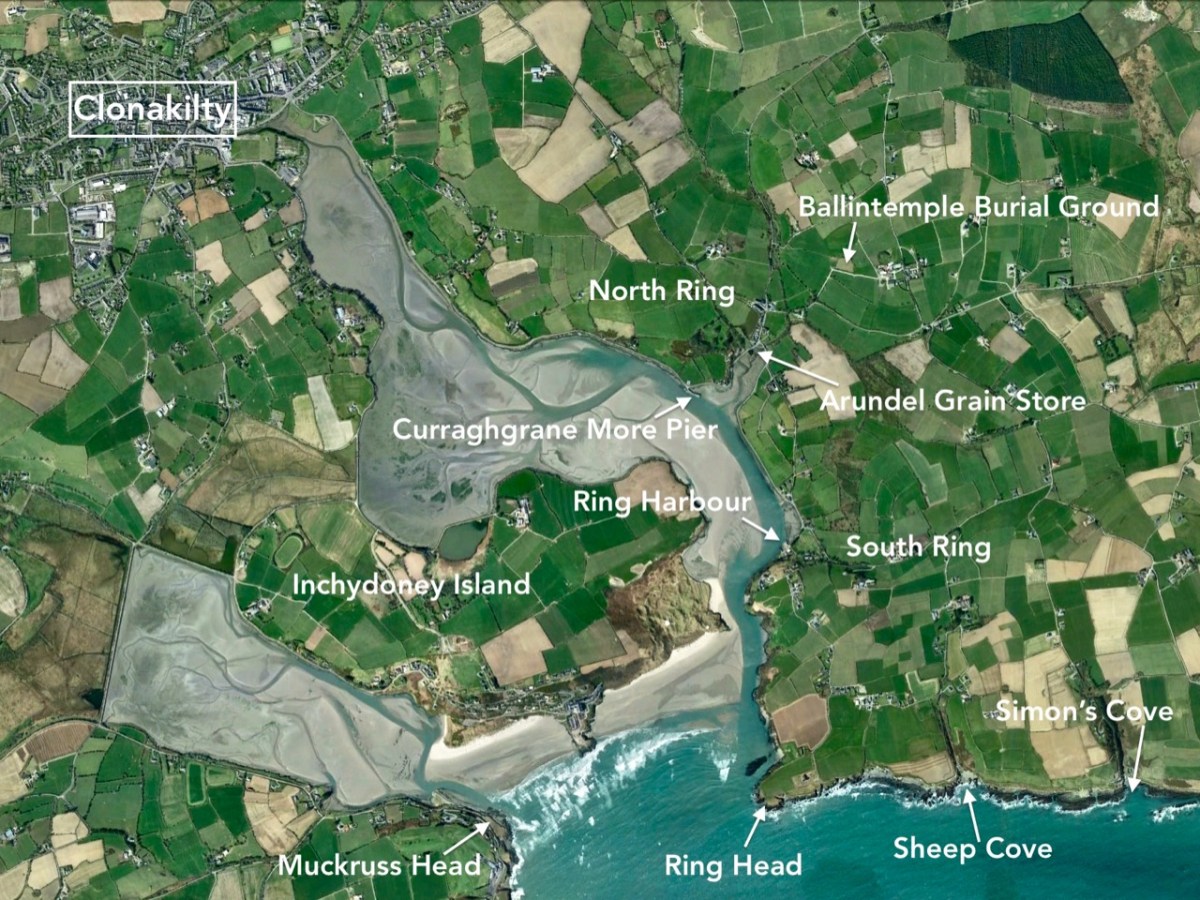
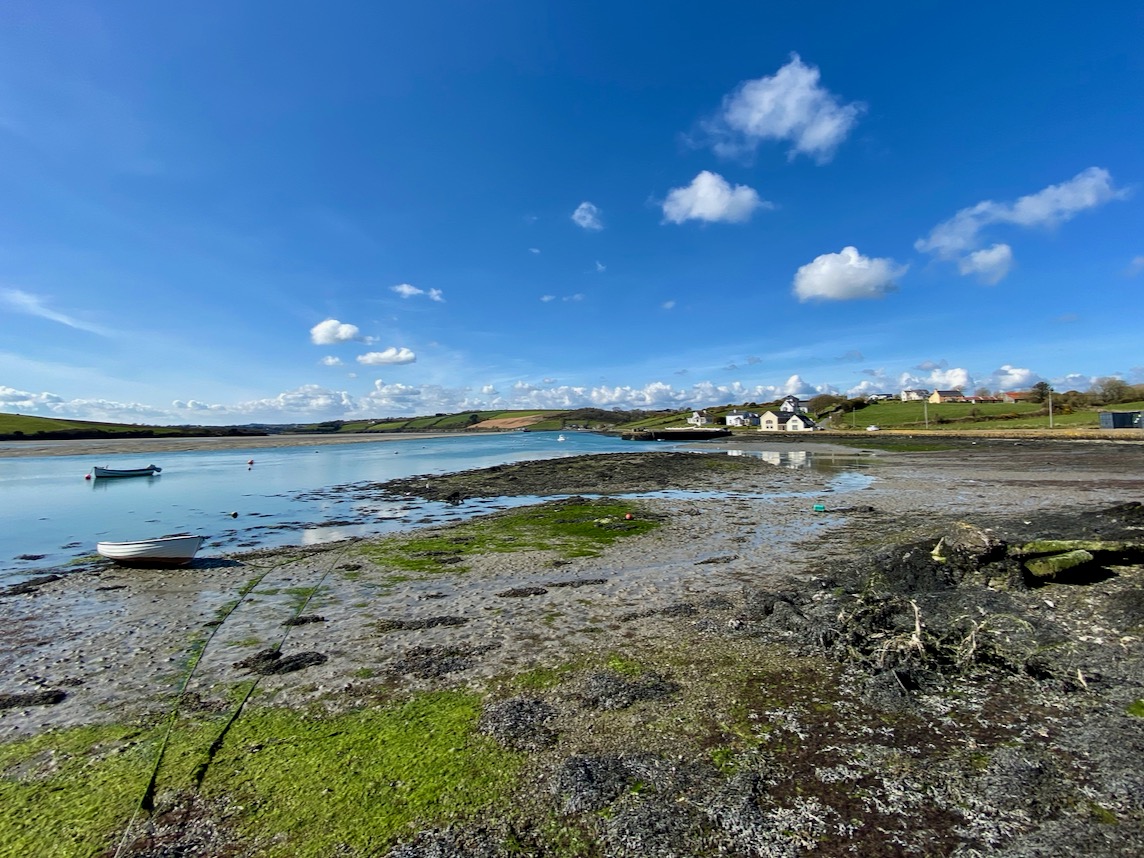
It’s an area to the south-east of Clonakilty town in West Cork – Ring. A mix of ‘big sky’ landscapes, with a fresh view of the sea at every turn; quays, harbours, old industry, archaeology – some fabulous hidden coves and small beaches. With our new-found freedom of being able to travel anywhere in our own county (Cork is the largest of Ireland’s counties: 180km from one end to the other), we set out to more closely explore a region which we have somehow always passed by hitherto.

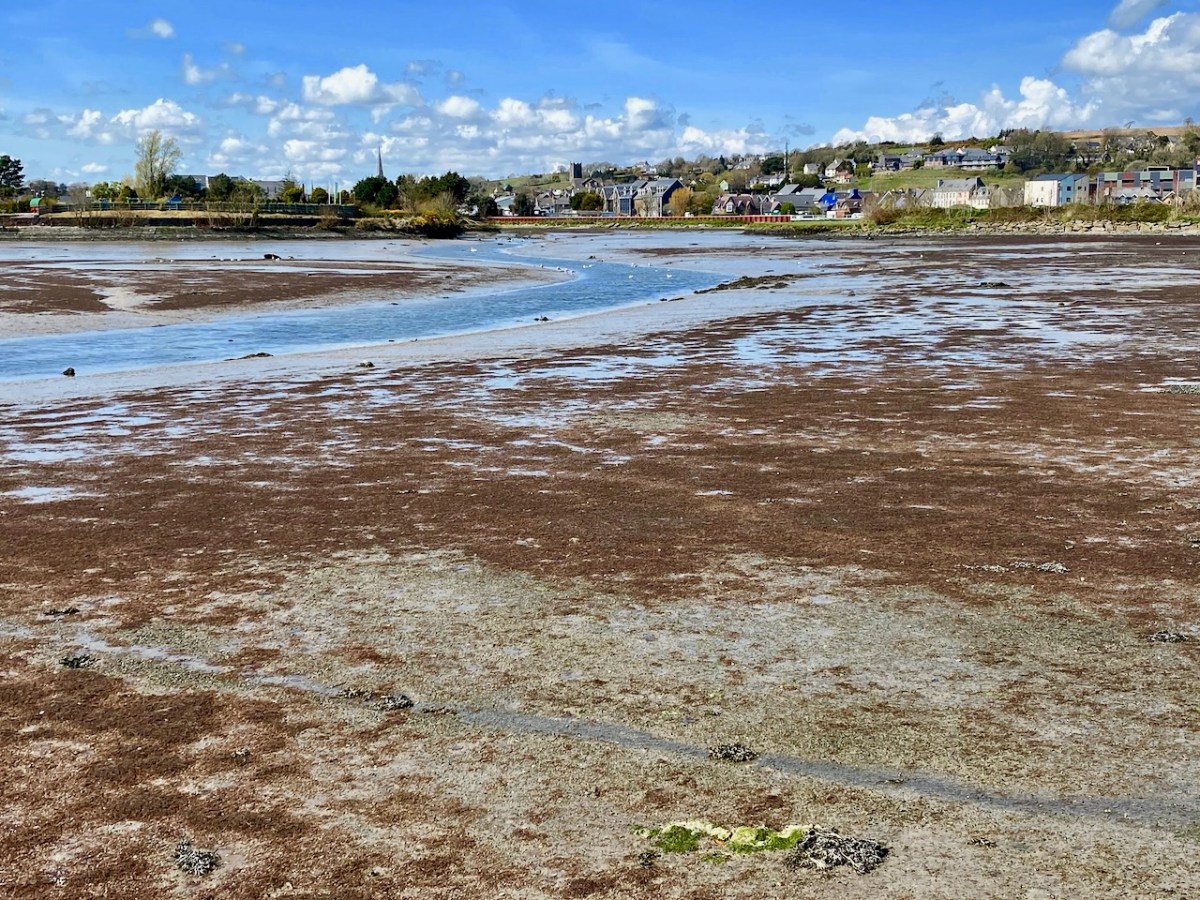
For us, the journey to Ring involves turning off the main N71 in the centre of Clonakilty (above) and following the road that runs beside the water (or sandbanks and mud flats, depending on the state of the tide). As you can see from the aerial view, it’s a pastoral landscape, a big centre for dairy farming; no mountain surprises, but undulating enough to ensure twists and turns through old lanes and new boreens.

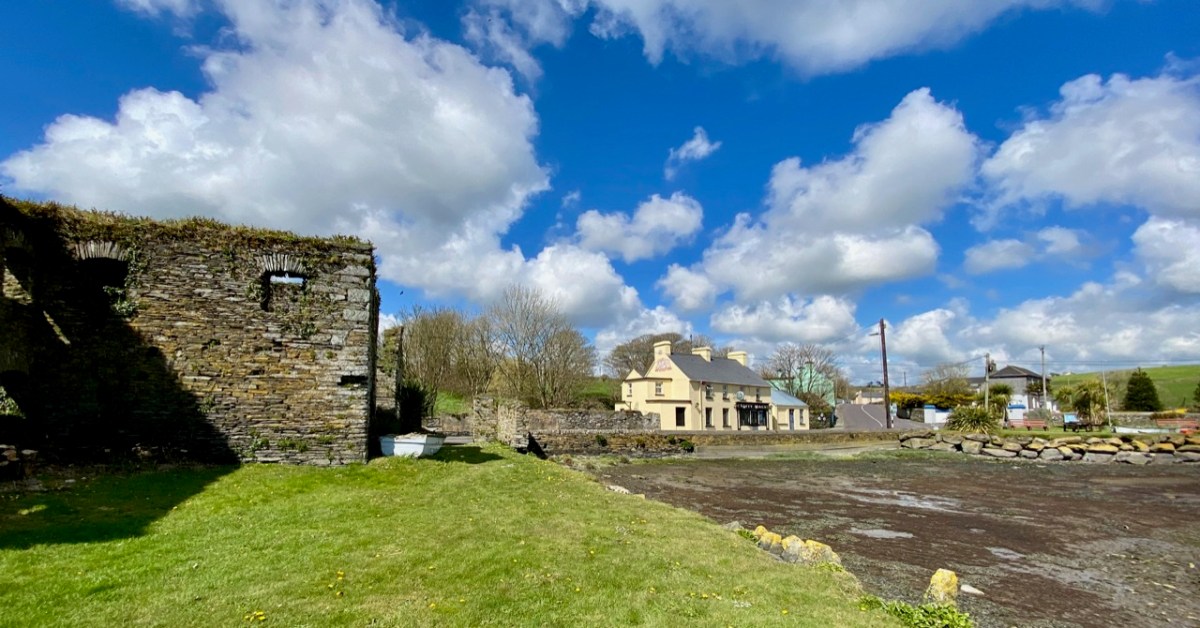
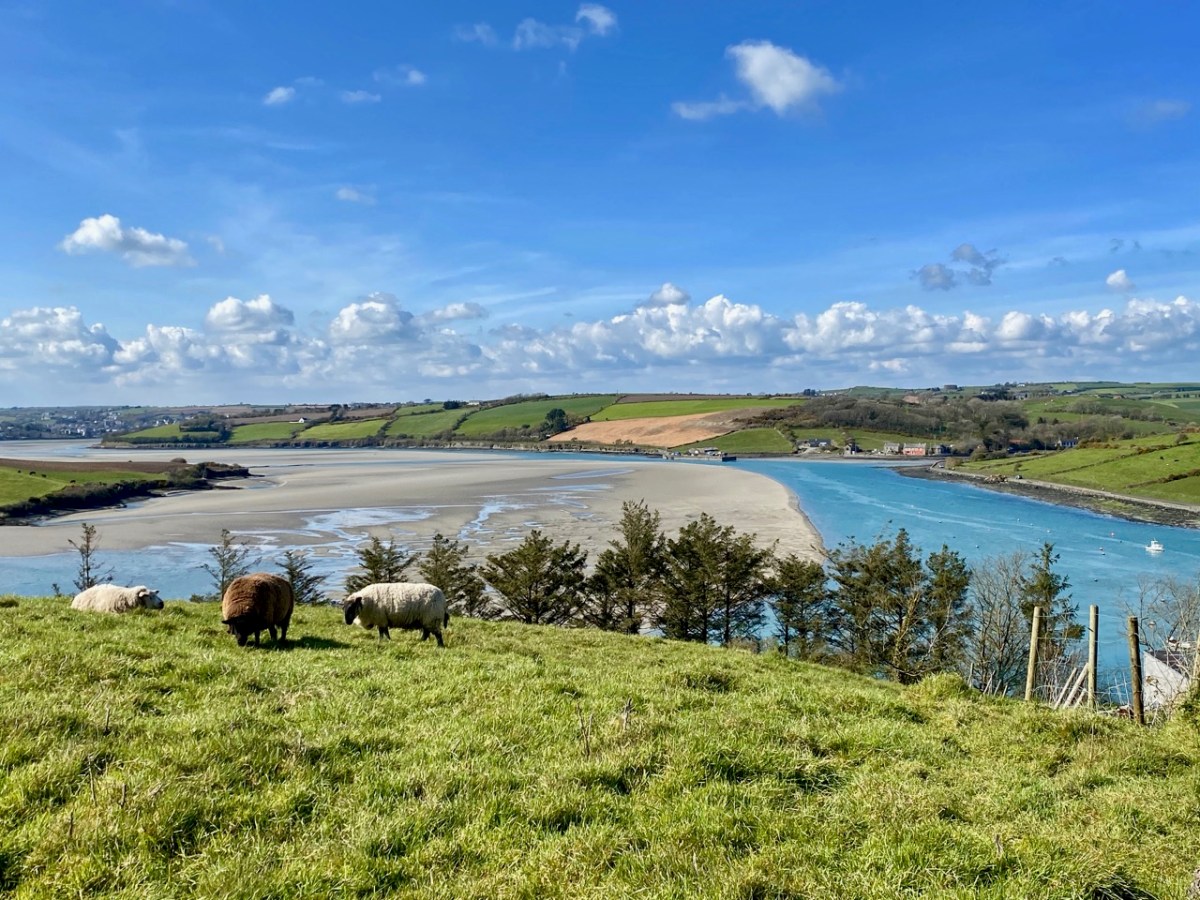
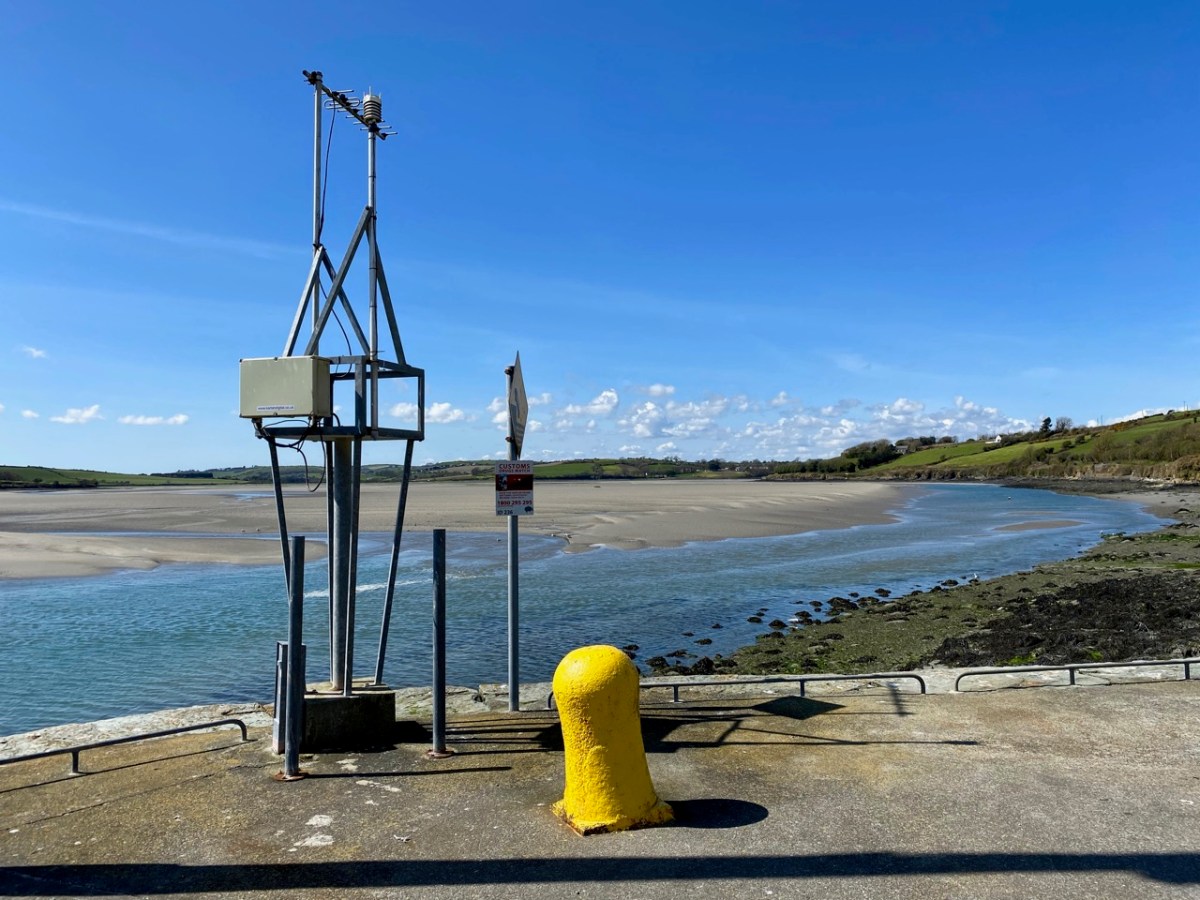
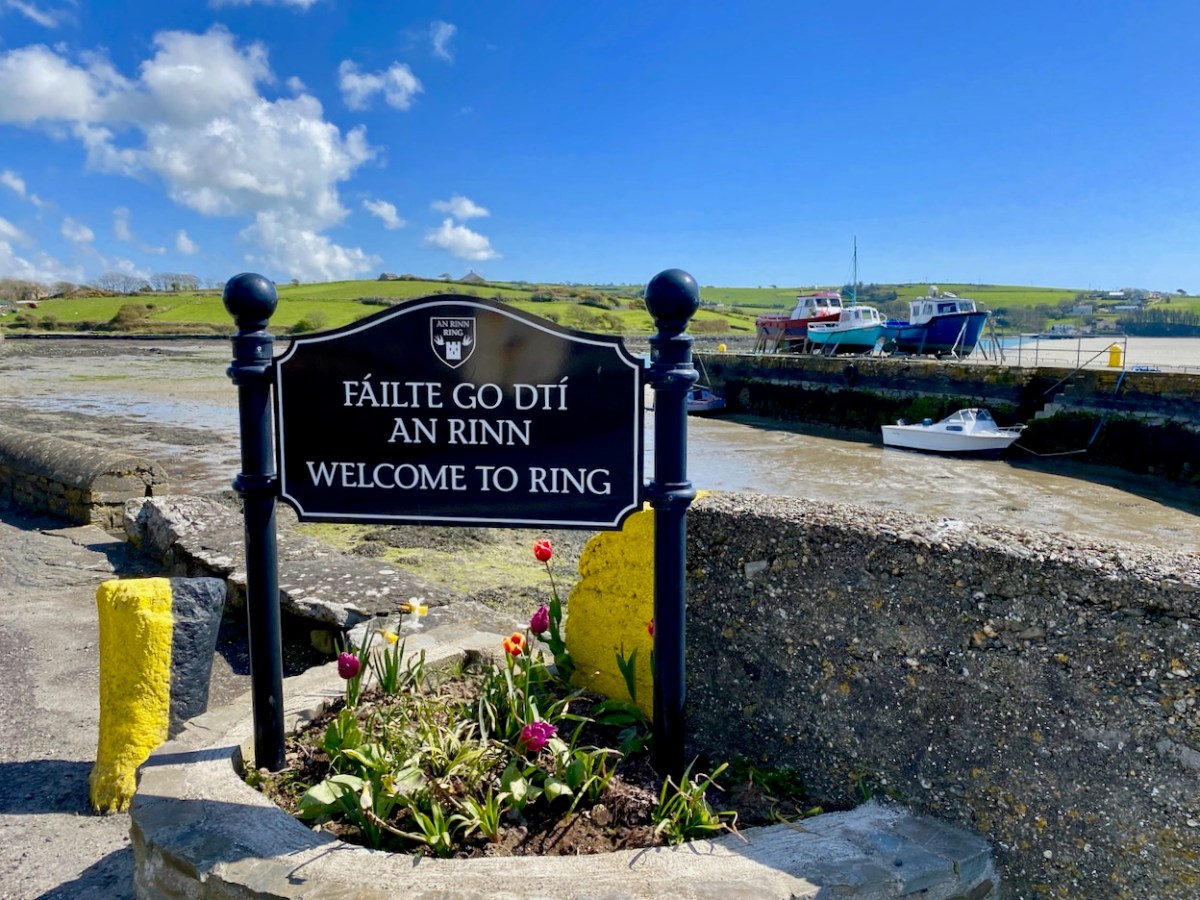
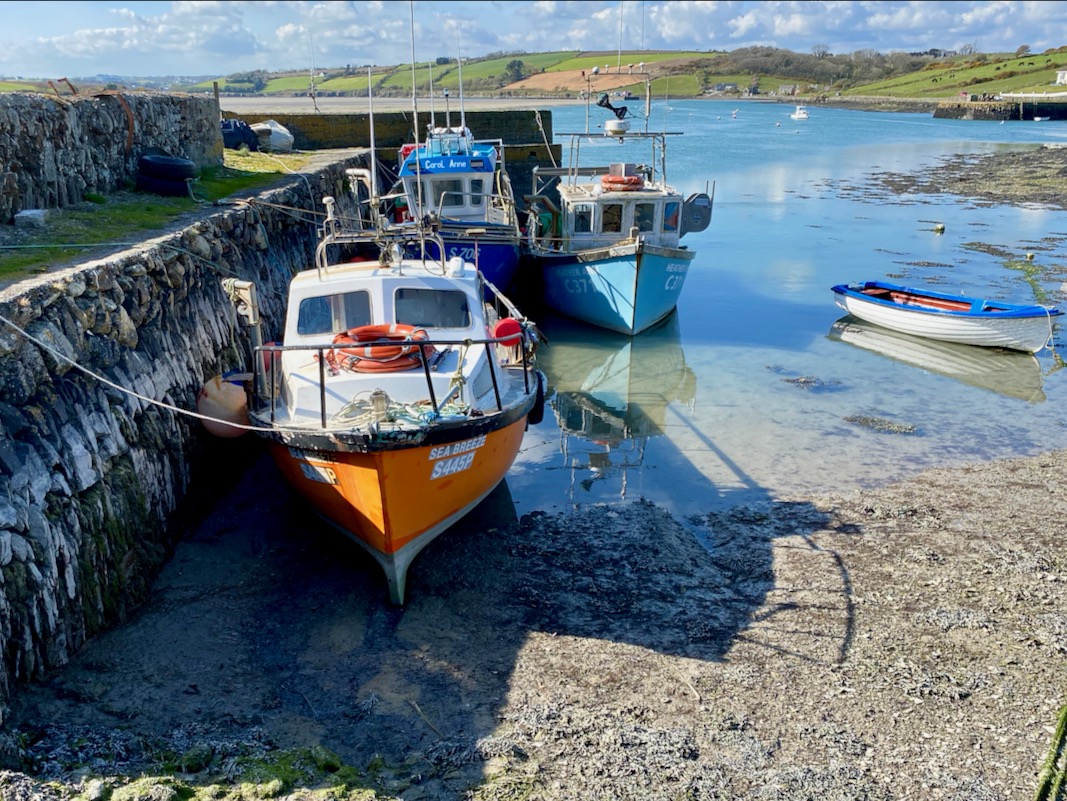
Just a few minutes after leaving Clonakilty we come into North Ring, and the first highlight, which is Curraghgrane More Pier. The view over the estuary from here is far-reaching and dramatic: on the western side is Inchydoney Island (not, in fact, an island), while south – and further along our route – is Ring Harbour. The little settlement of North Ring, just inland here, is worth a pause (and features on the header picture).

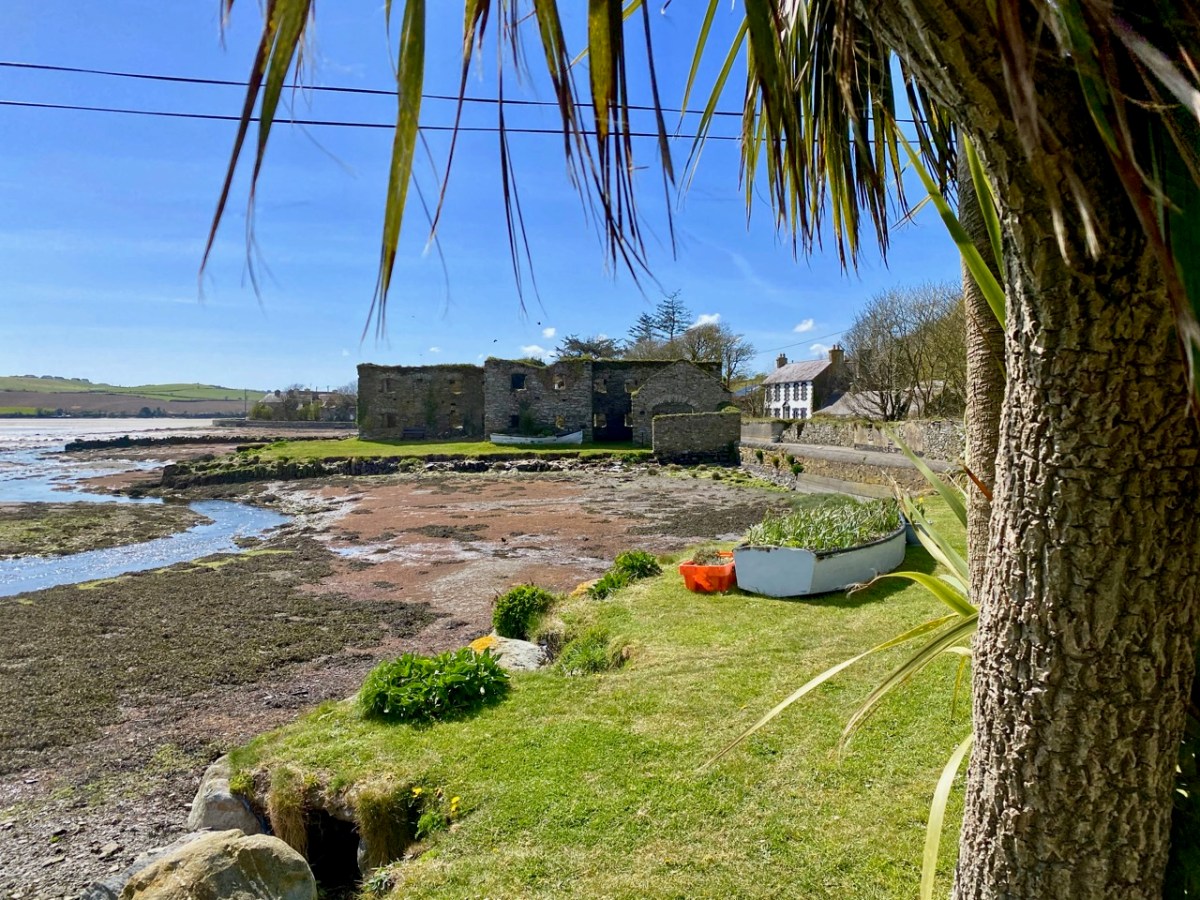
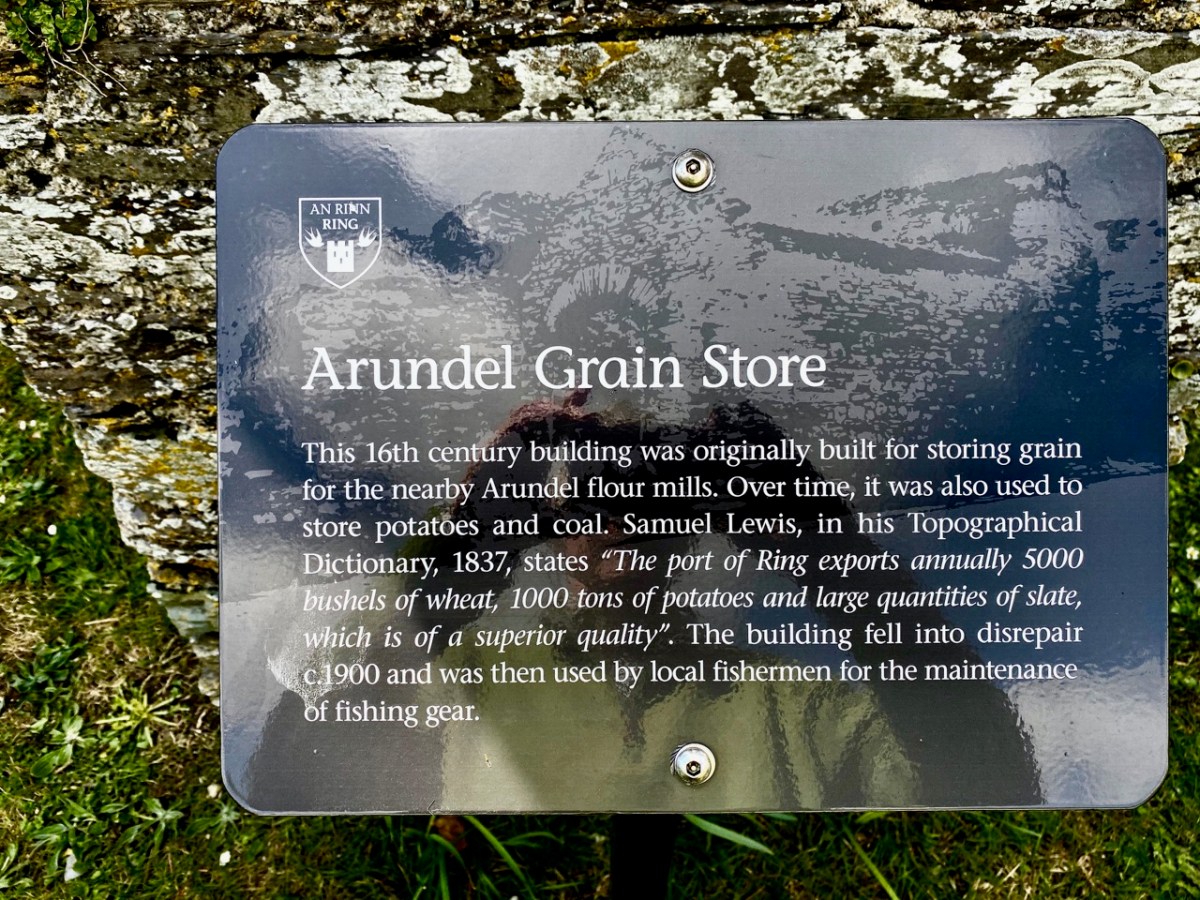
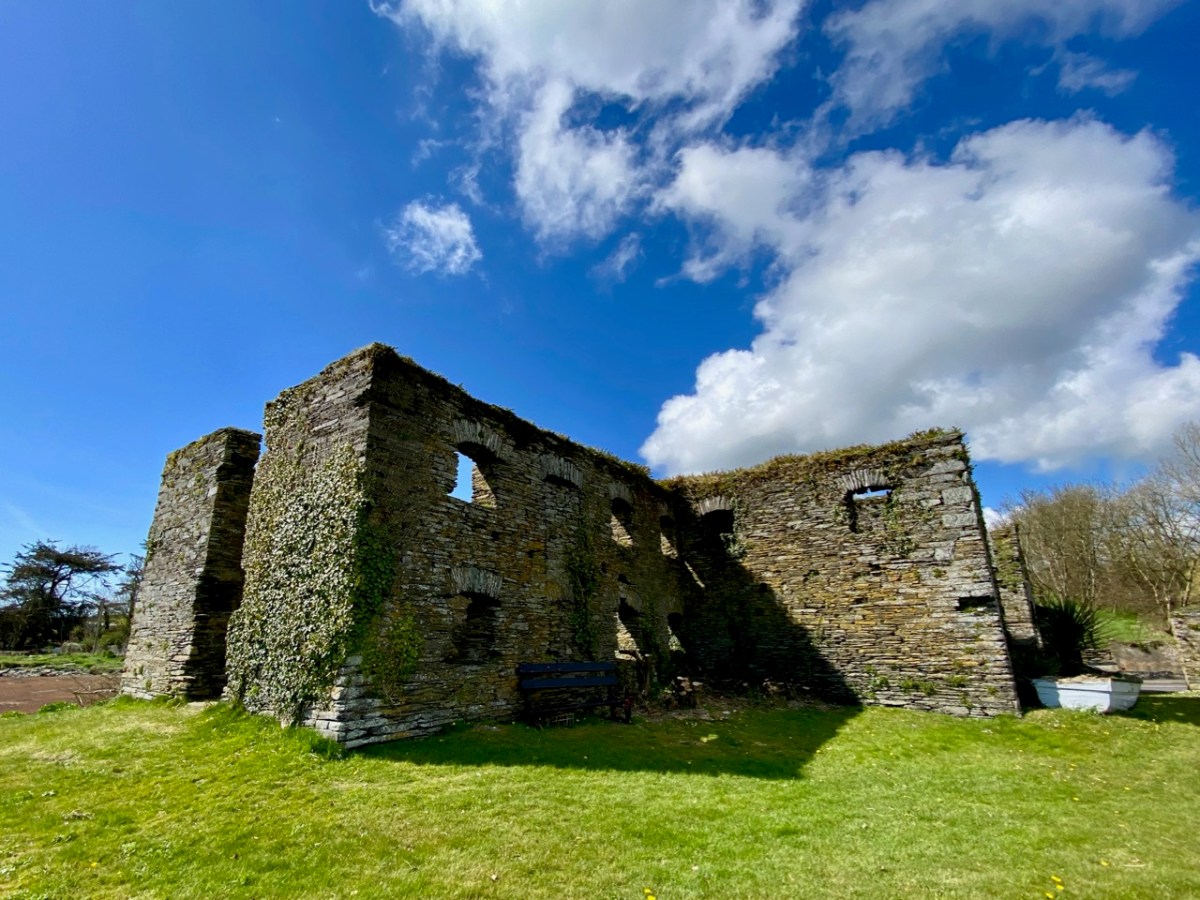
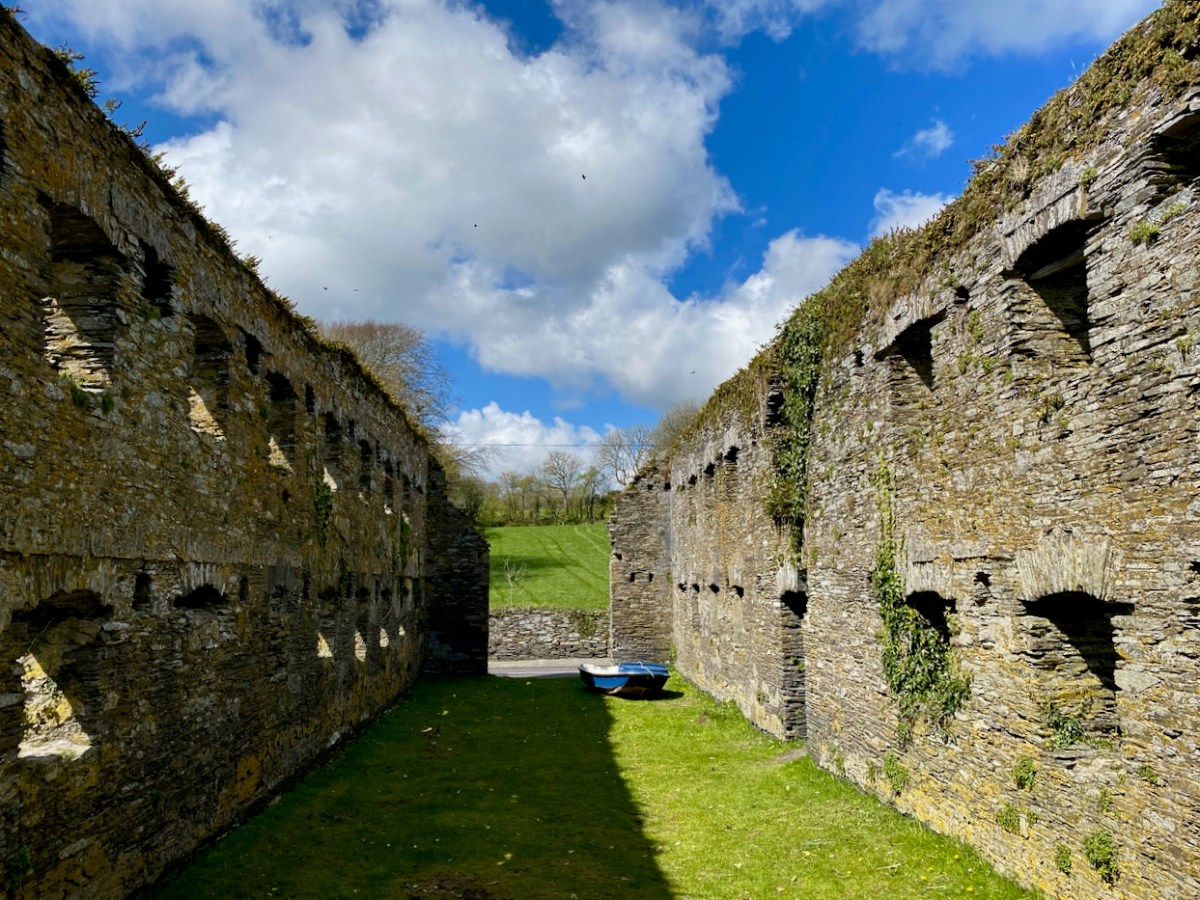
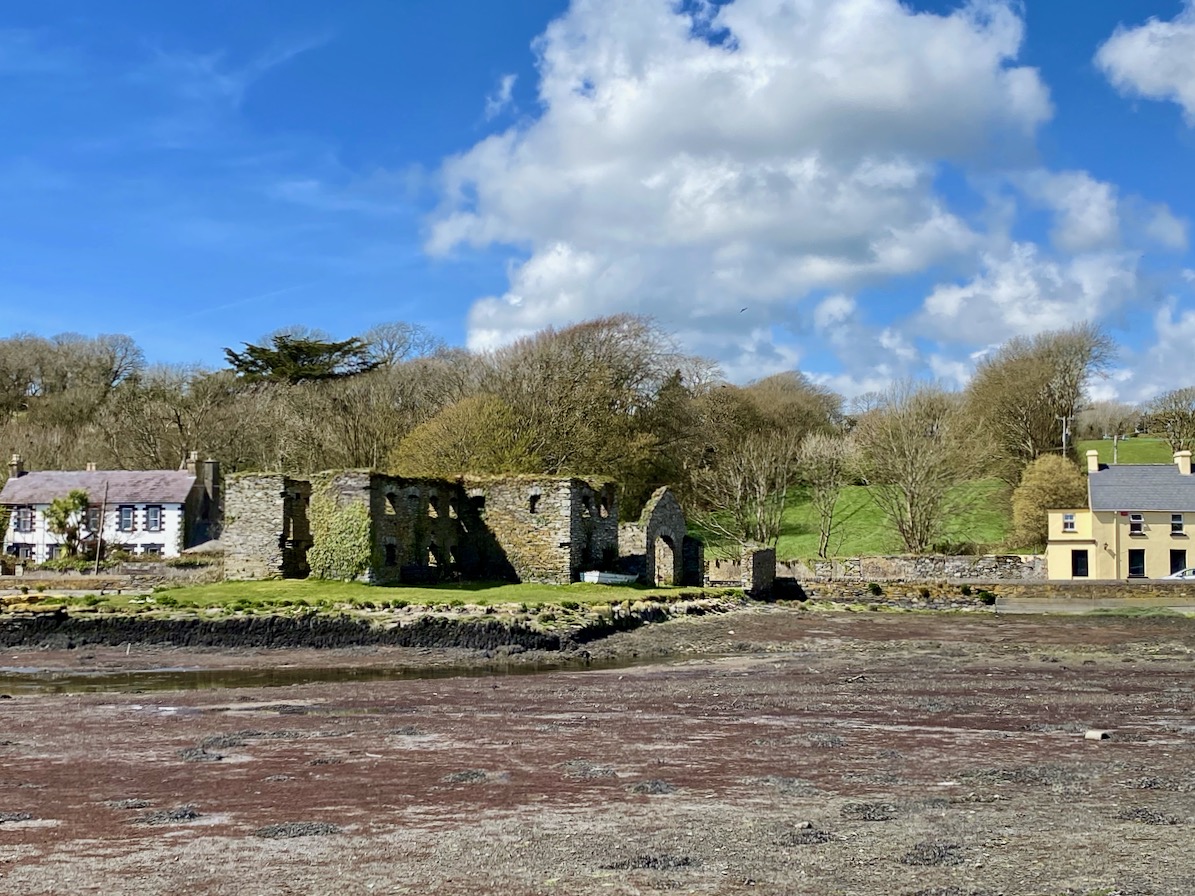
The way into North Ring passes by an ancient building, which has been conserved as a focal point by the community. It is a stone-built grain store and drying kiln, probably first in use 500 years ago.

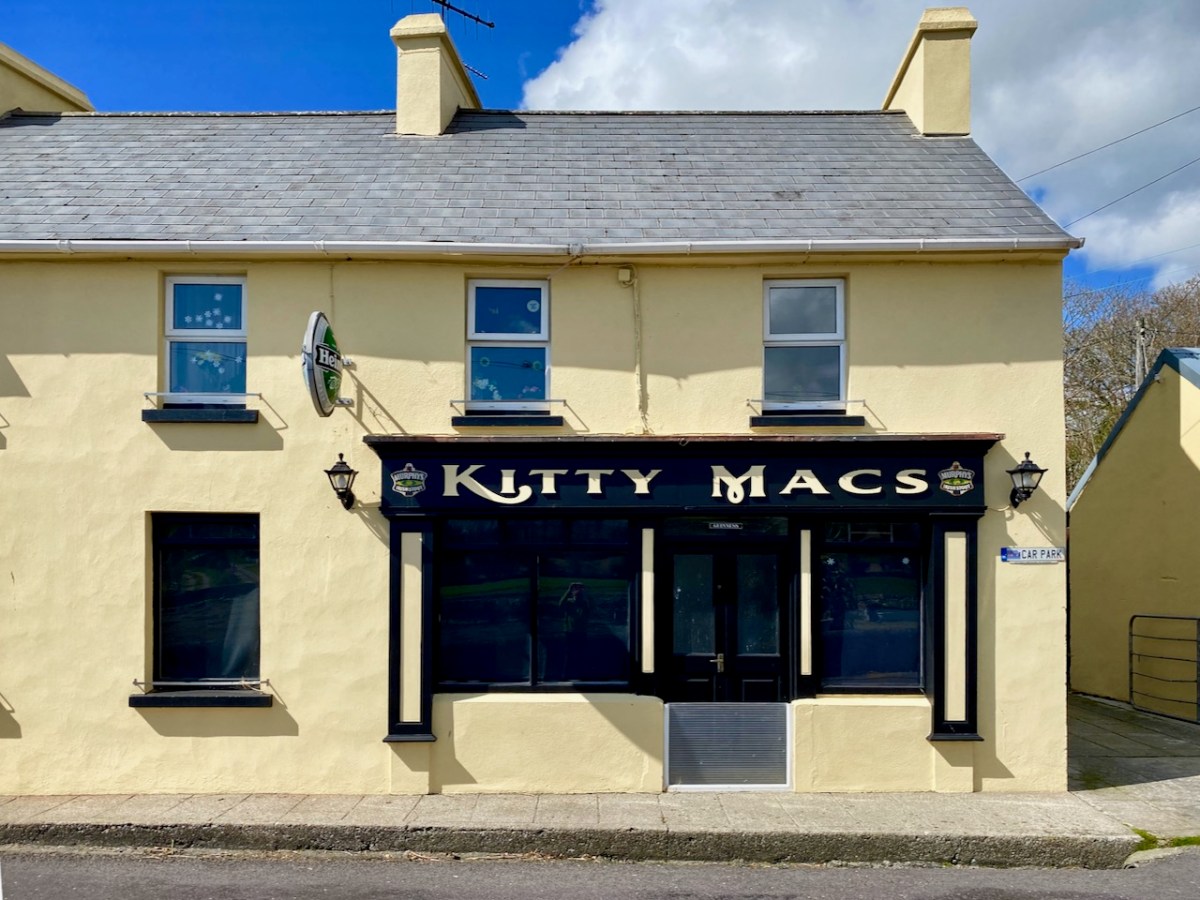
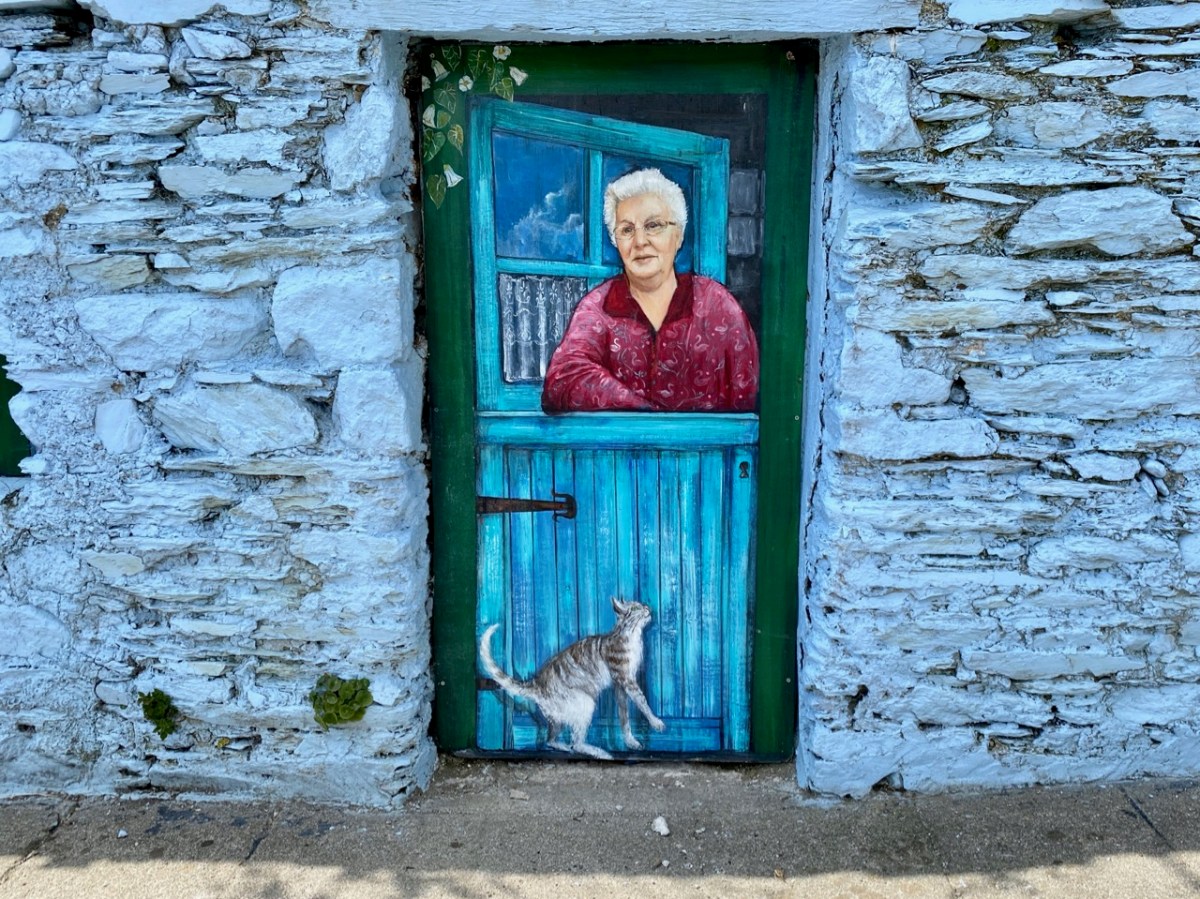
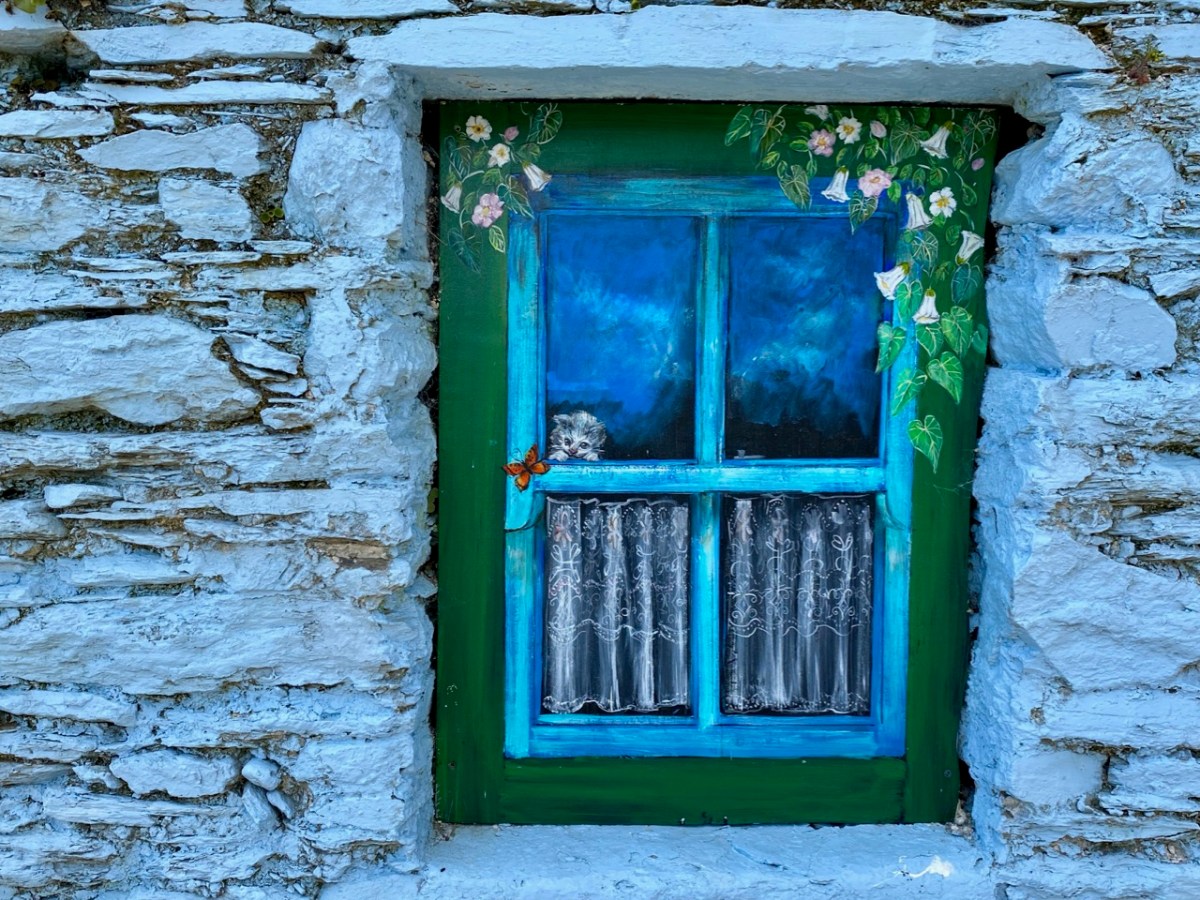
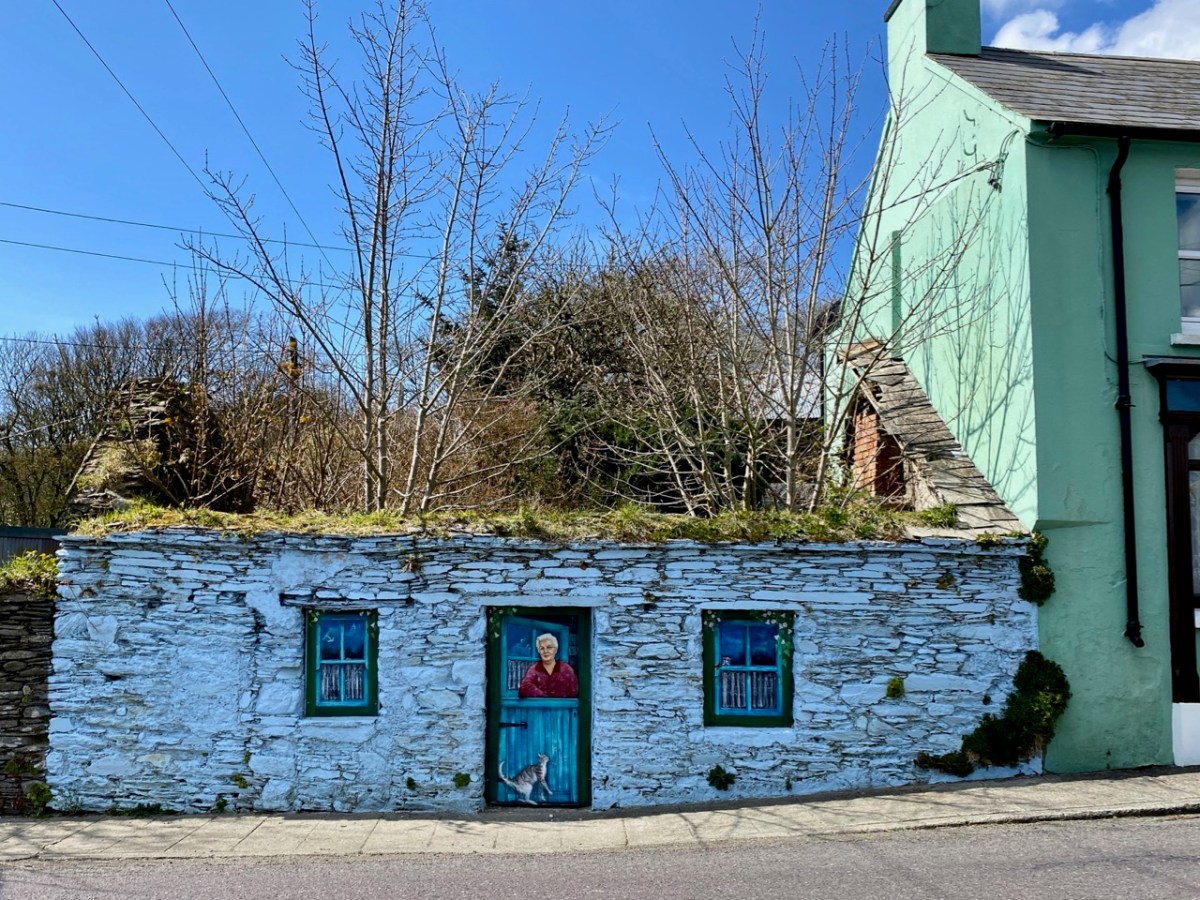
The little settlement has been known for its hostelries, and would have been an excellent lunch stop in pre-Covid times: hopefully their fortunes will revive. They certainly provide a most colourful streetscape, and add to an exceptionally attractive hamlet. Even an abandoned house has been given a creative treatment.

We can’t pass on from this vibrant enclave without mentioning the Arundel family who left their mark on the locality and set up the milling industry which brought wealth to the area:

. . . Near the road from Clonakilty to Ring, stands the scanty remnant of a castle (at one time mistaken for a ruined parish church). It was the stronghold of the Anglo-Norman Arundel, called Lord Arundel of the Strand . . . Arundel was anciently a great lord and had an estate of £3,500 a year in the reign of Queen Elizabeth . . . Sir Henry Sidney, in his well-known account of a famous Vice-regal visit to Cork in 1575 notes “There came here the ruined reliques of the ancient English inhabitants of the province” – The Arundels, Rochforts, Barretts, Flemings, Lombards, Terries, etc . . . Henry Smith in his “Report of the State of Munster,” after the breaking out of the Desmond Rising in 1589 remarks inter alia, “Arundel Castle was forsaken by Walter Grant-William Lyon” and the Arundels, who remained loyal to the old faith, were very prominent in the Rising of 1641-1653 . . .

Tim Cowhig, Duchas Folklore Collection, Ballintemple 1938

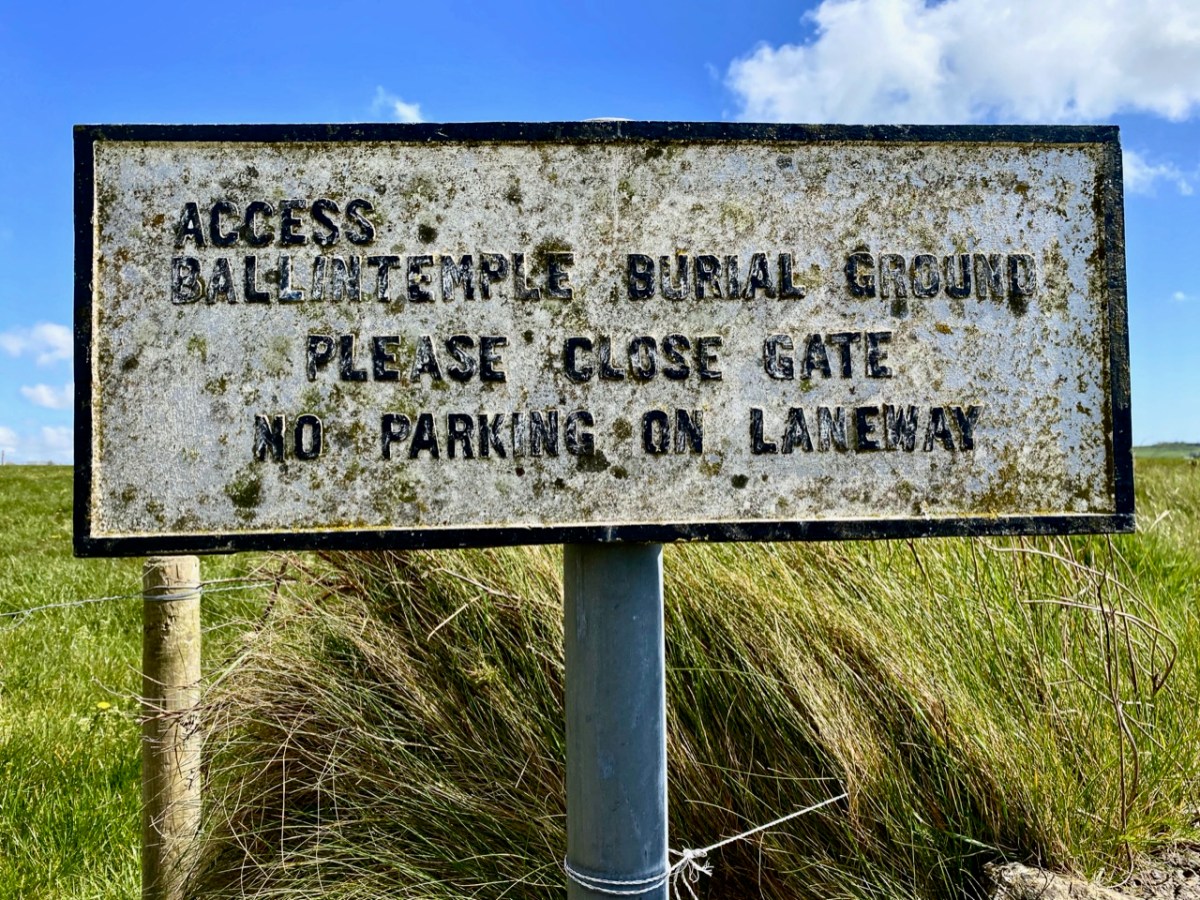
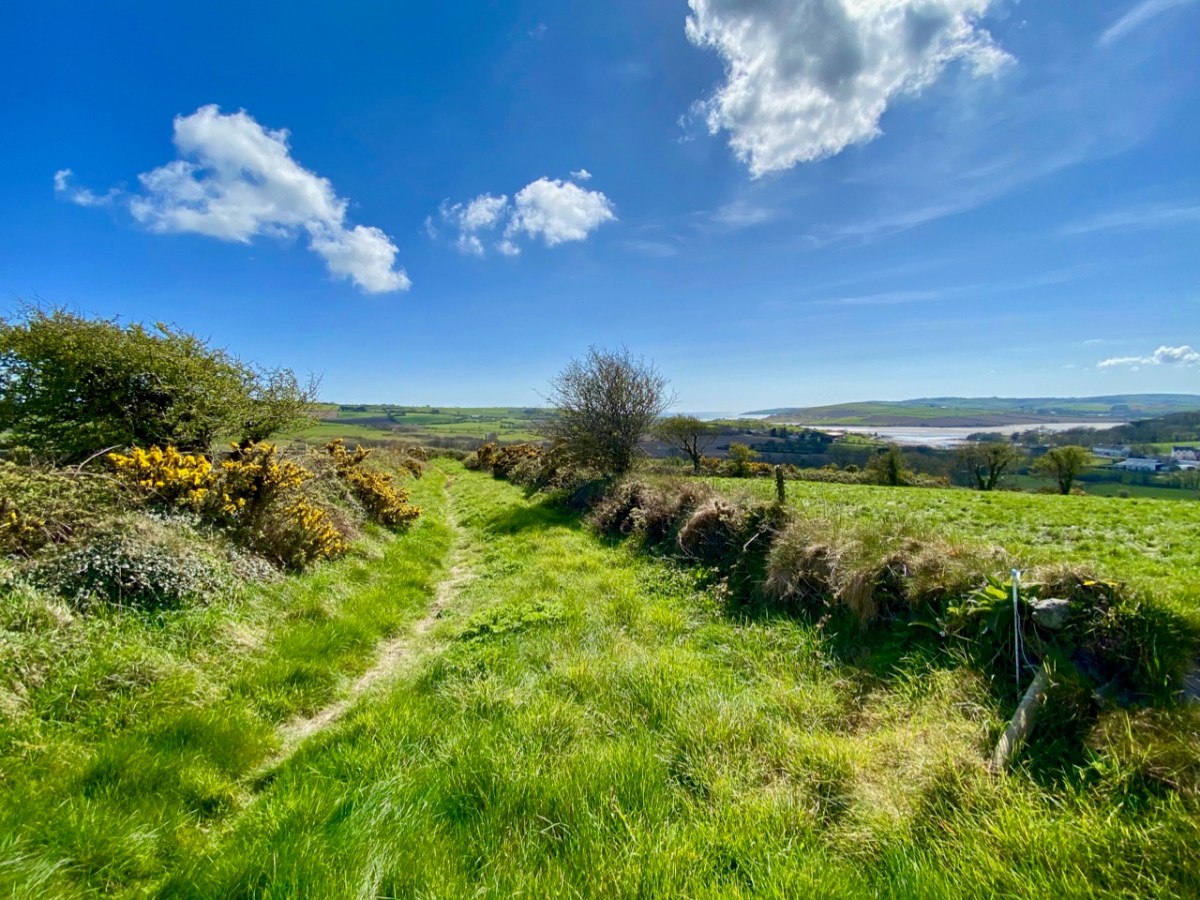
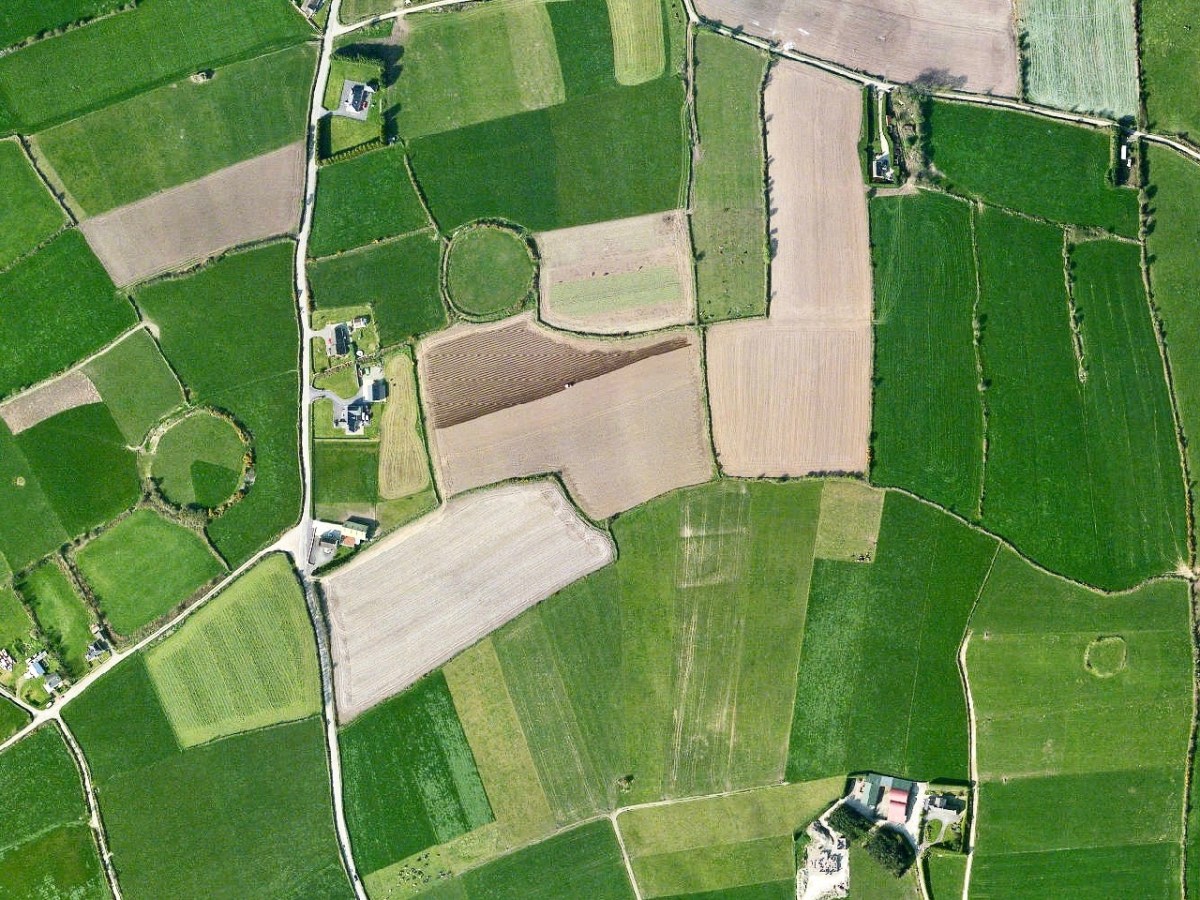
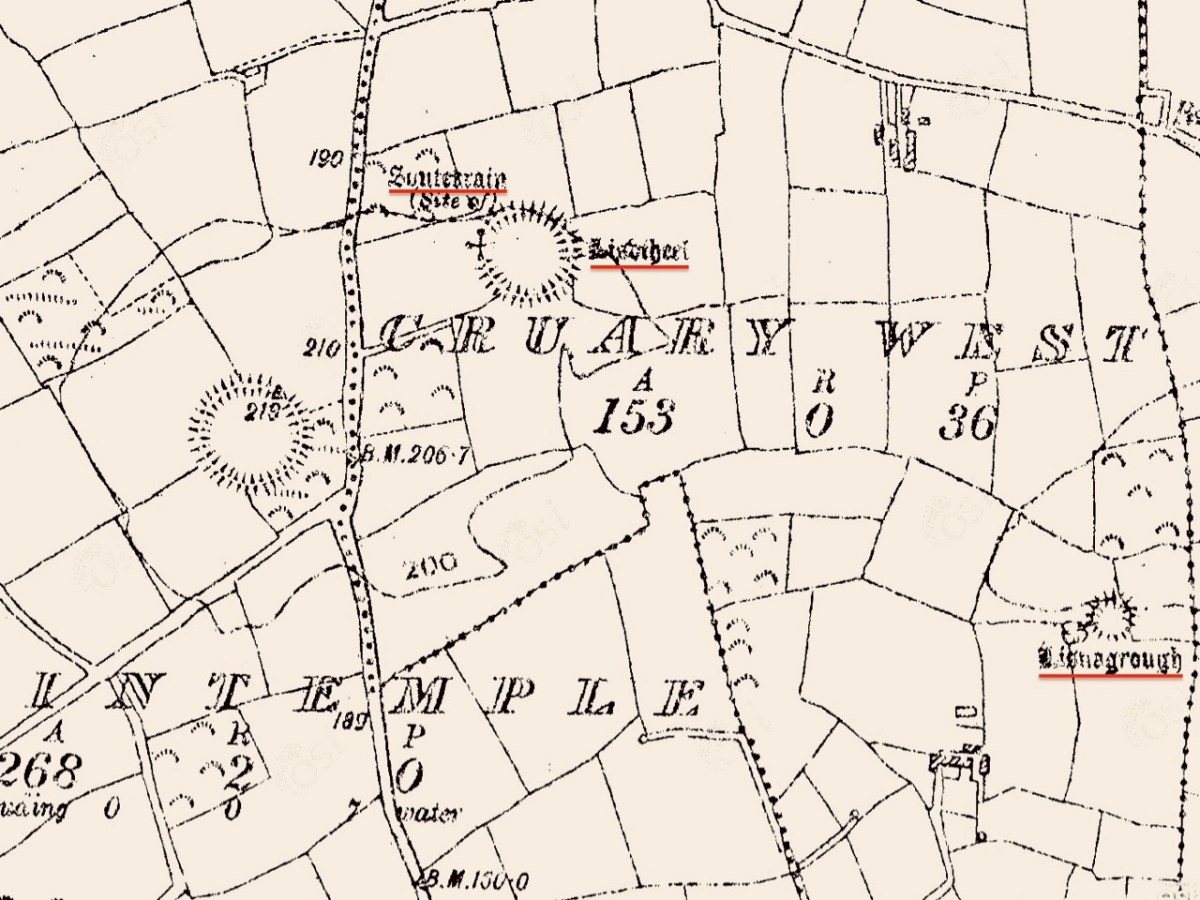
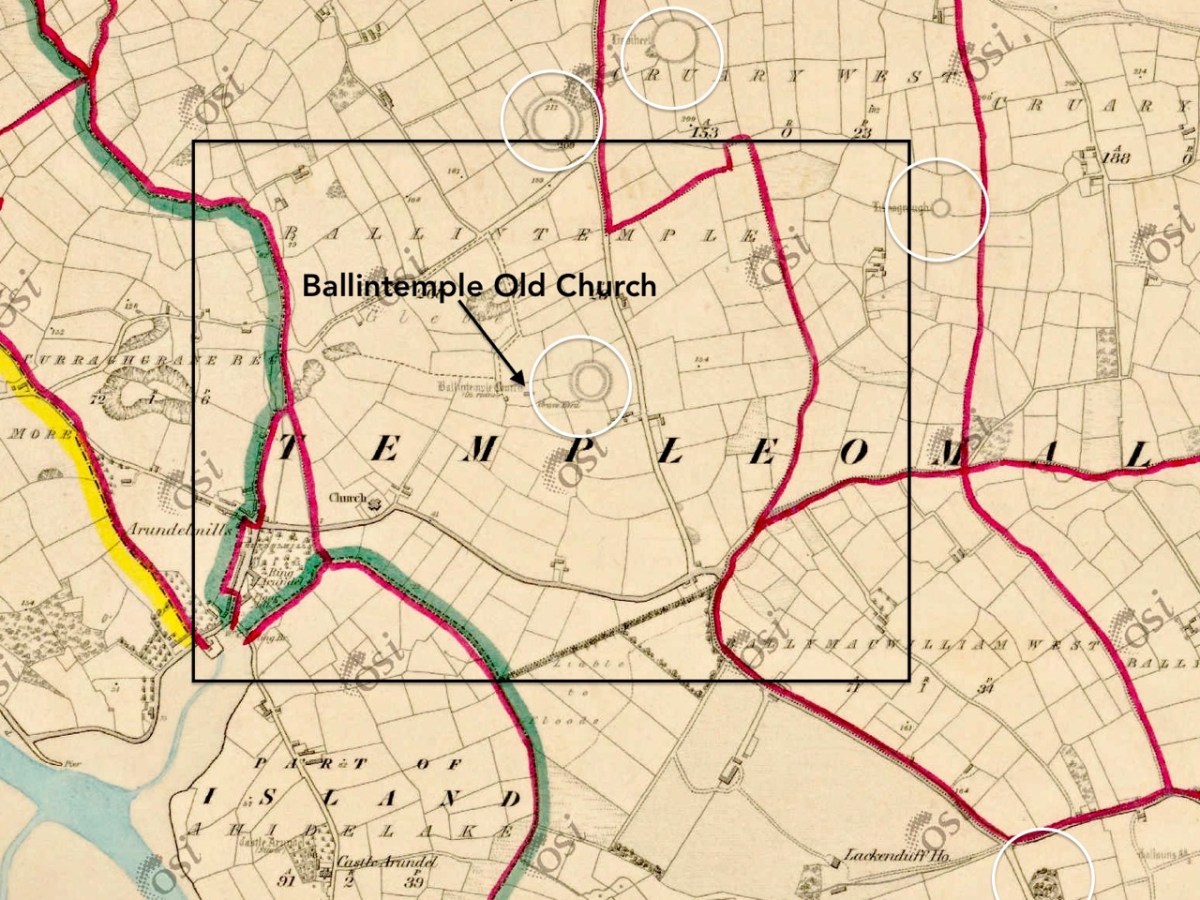
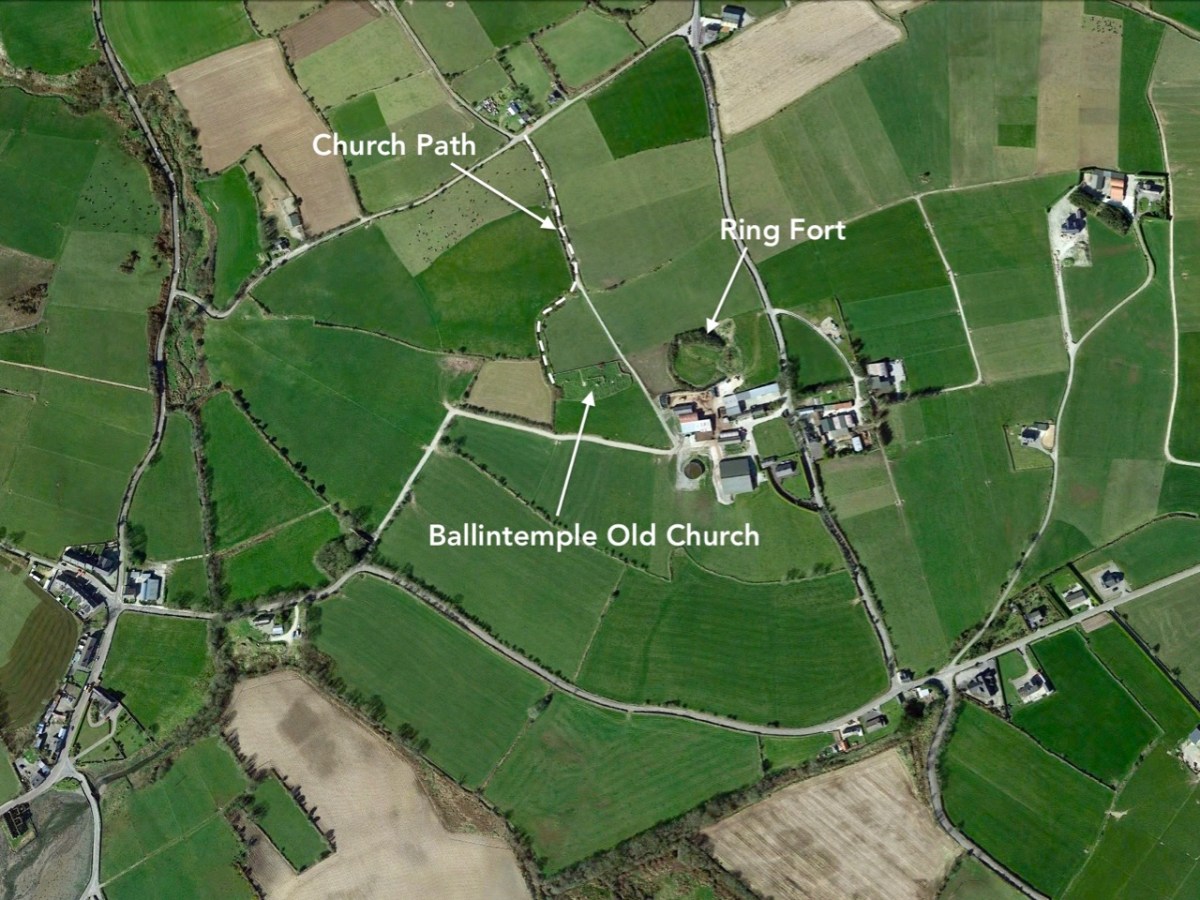
Before returning to the coast road we head inland to find a historic site with an ancient church ruin, a significant graveyard, and several raths or ring forts which take us back in time well over a millennium. The 6″ Historic OS map extract, above, shows the remarkable distribution of notable sites within the arable landscape just to the north-east of the Arundel settlement. The aerial view, below, focusses on the rectangle marked on the 6″ map, and indicates our way to the Ballintemple site, following a time-worn trackway.

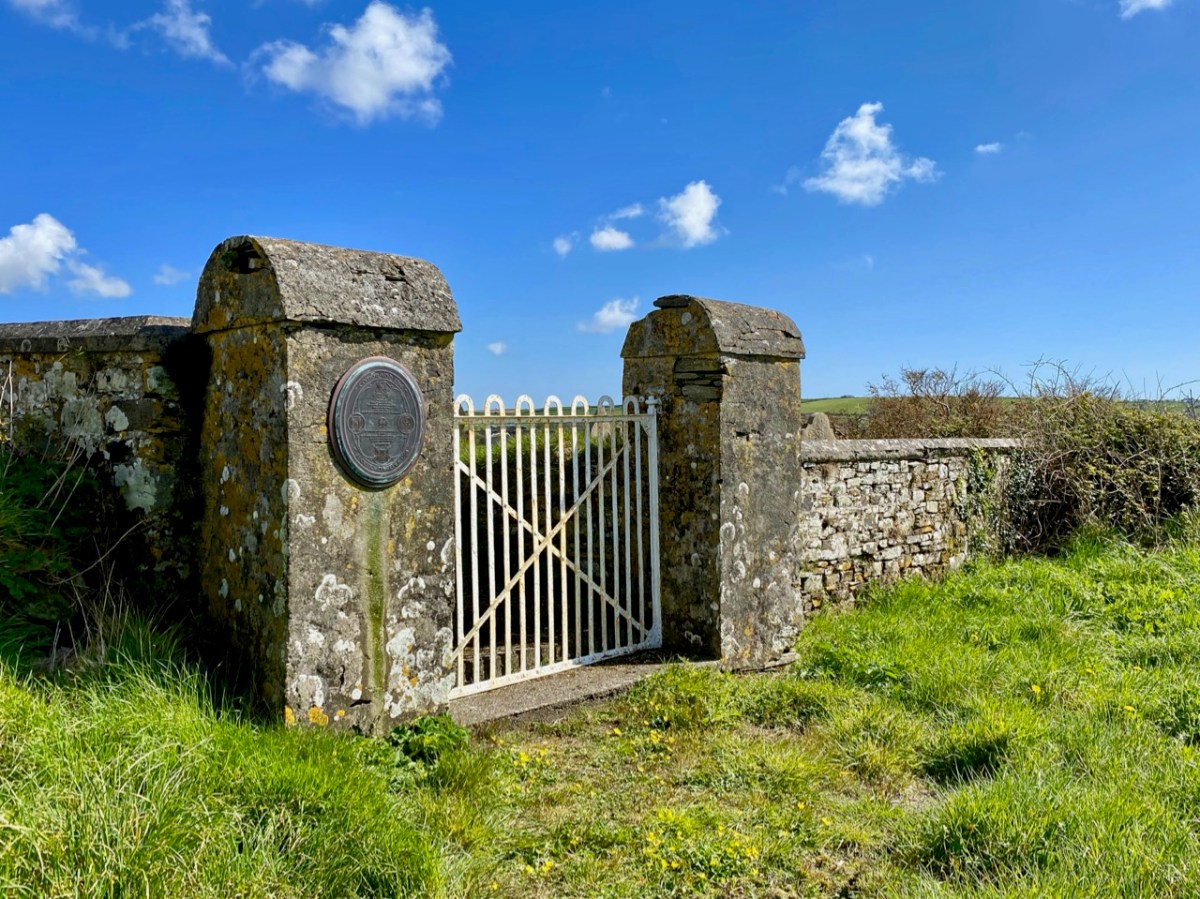
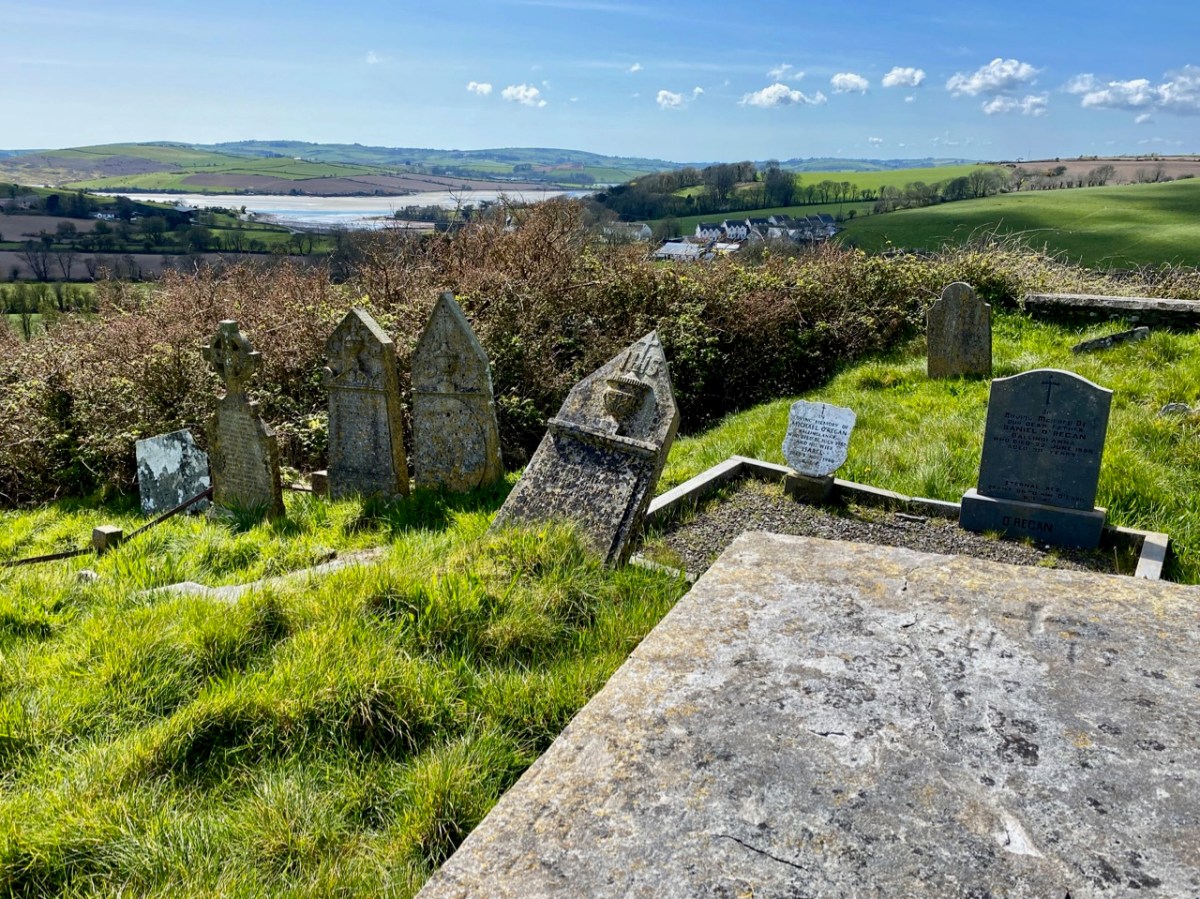
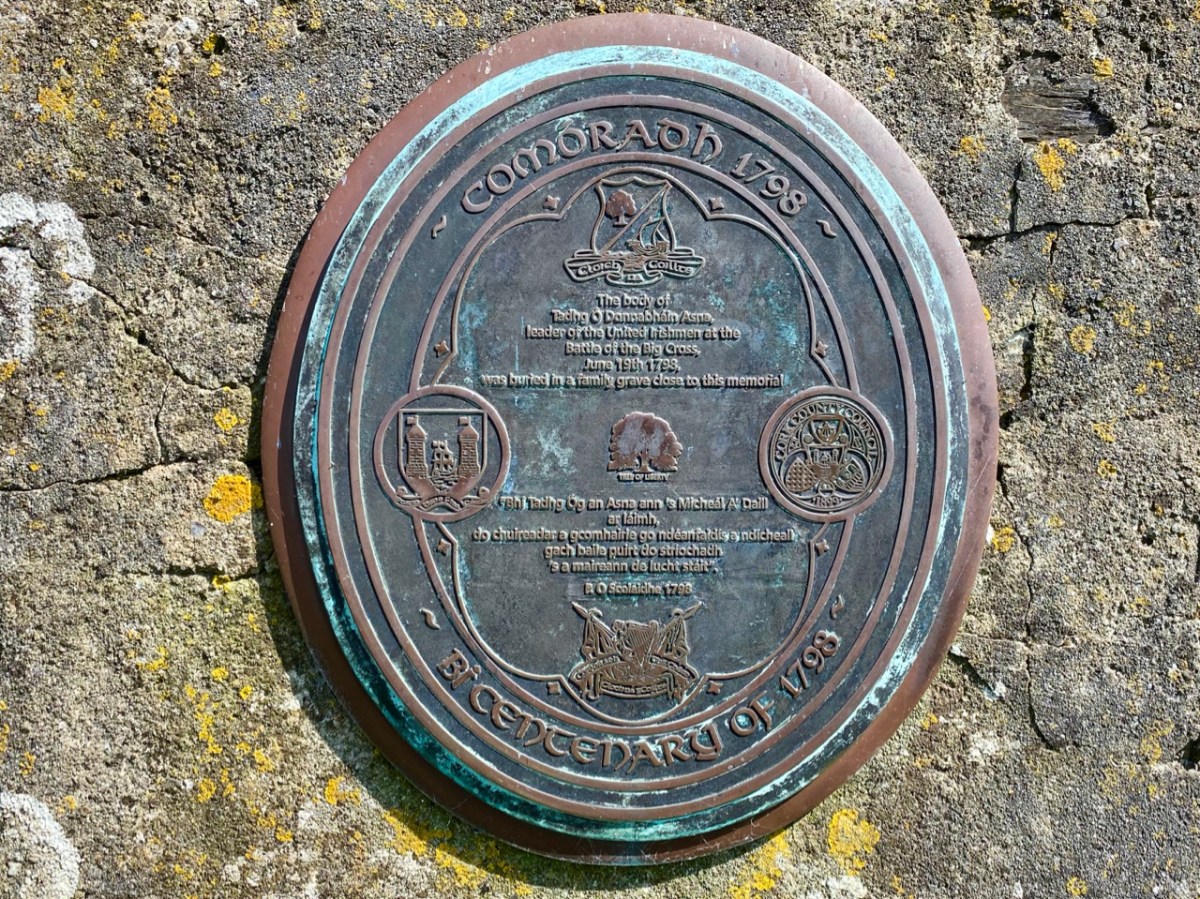
These pictures show the path which leads to the burial ground – which is still in use today. A notable occupant of the graveyard is Tadhg Ó Donnabhain Asna, a hero of the 1798 uprising. A local man, Tadhg led a force of United Irishmen against a British column at The Battle of the Big Cross which occurred on the morning of 19th June 1798, about 4 miles east of Clonakilty. It was the only battle fought in the rebellion in the whole of Munster and over 100 Irish men lost their lives, including Tadhg himself. There is a memorial to him in the centre of Clonakilty town, and the plaque, above, at the entrance to Ballintemple graveyard, marked the bicentenary of the encounter.

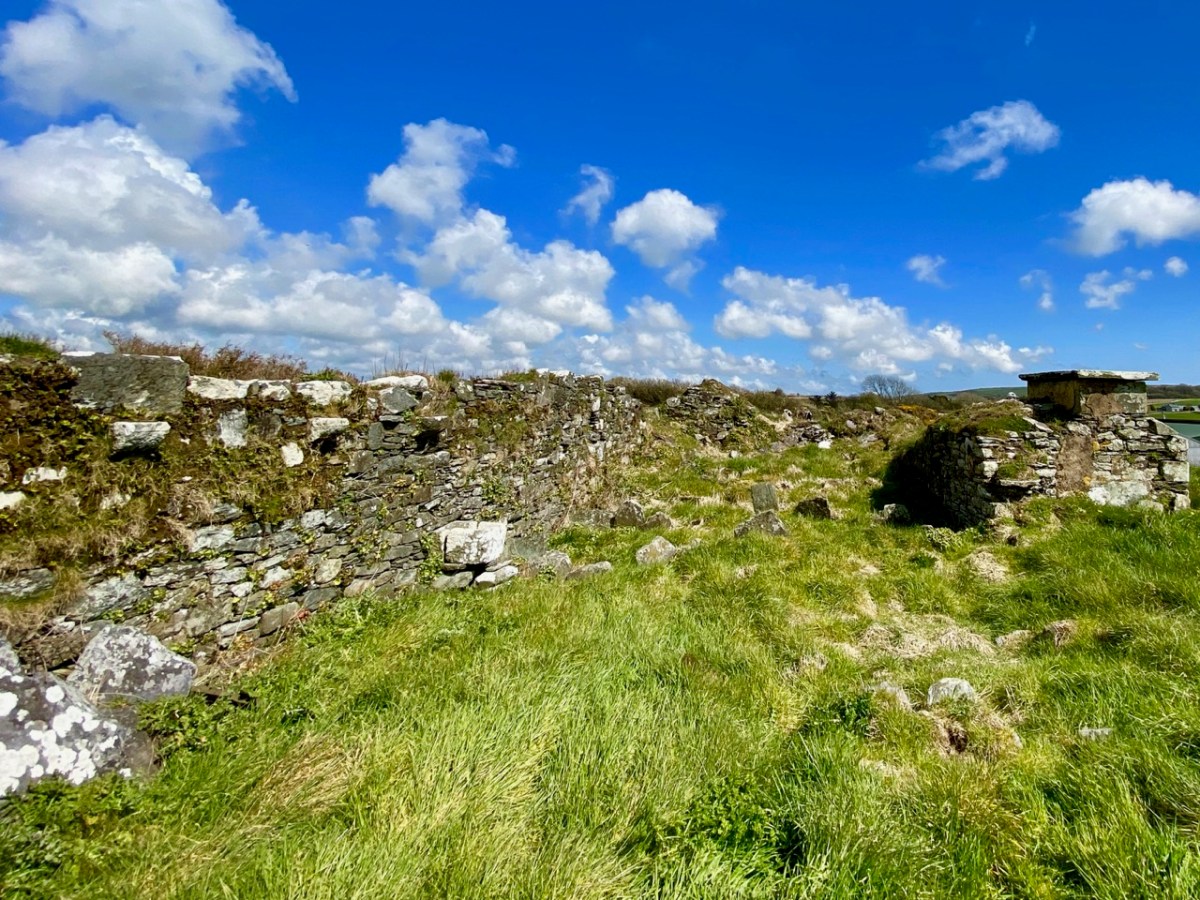
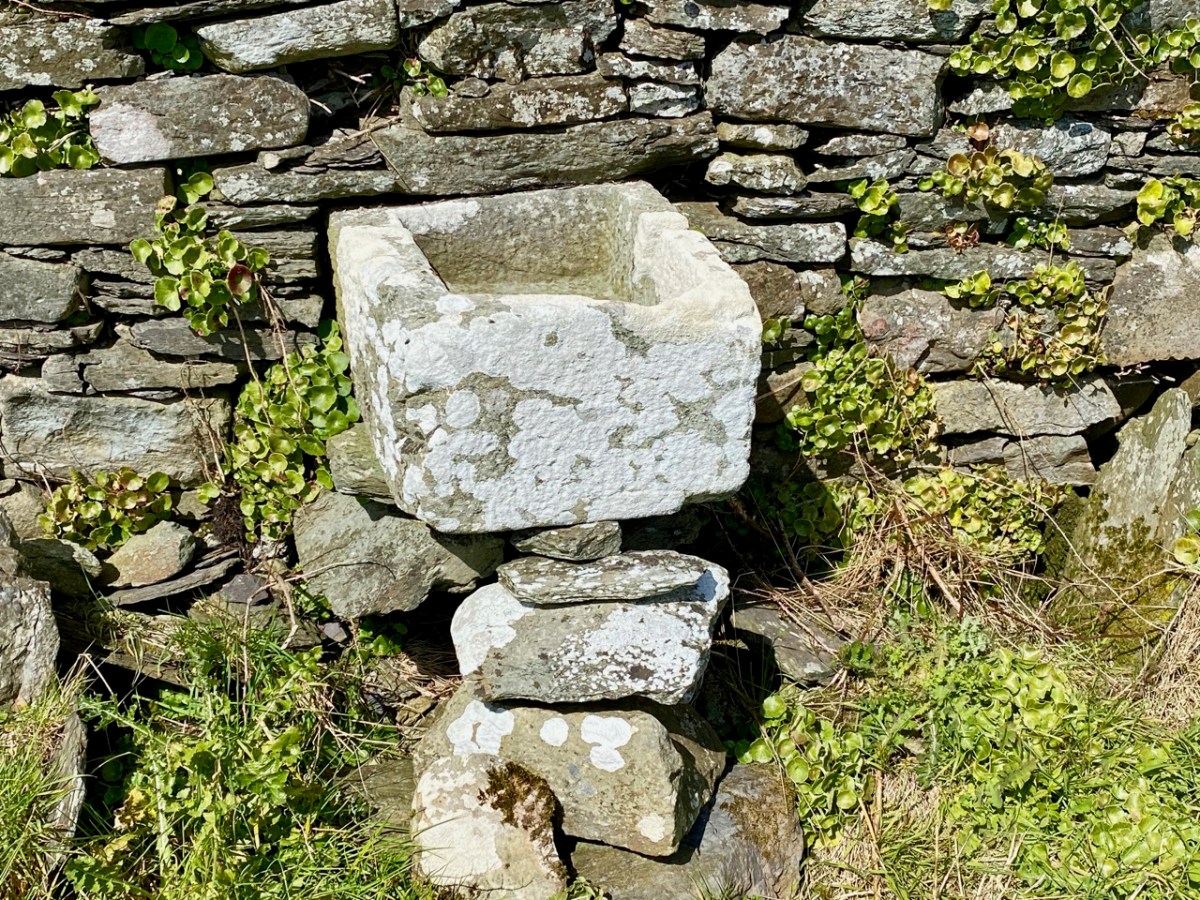
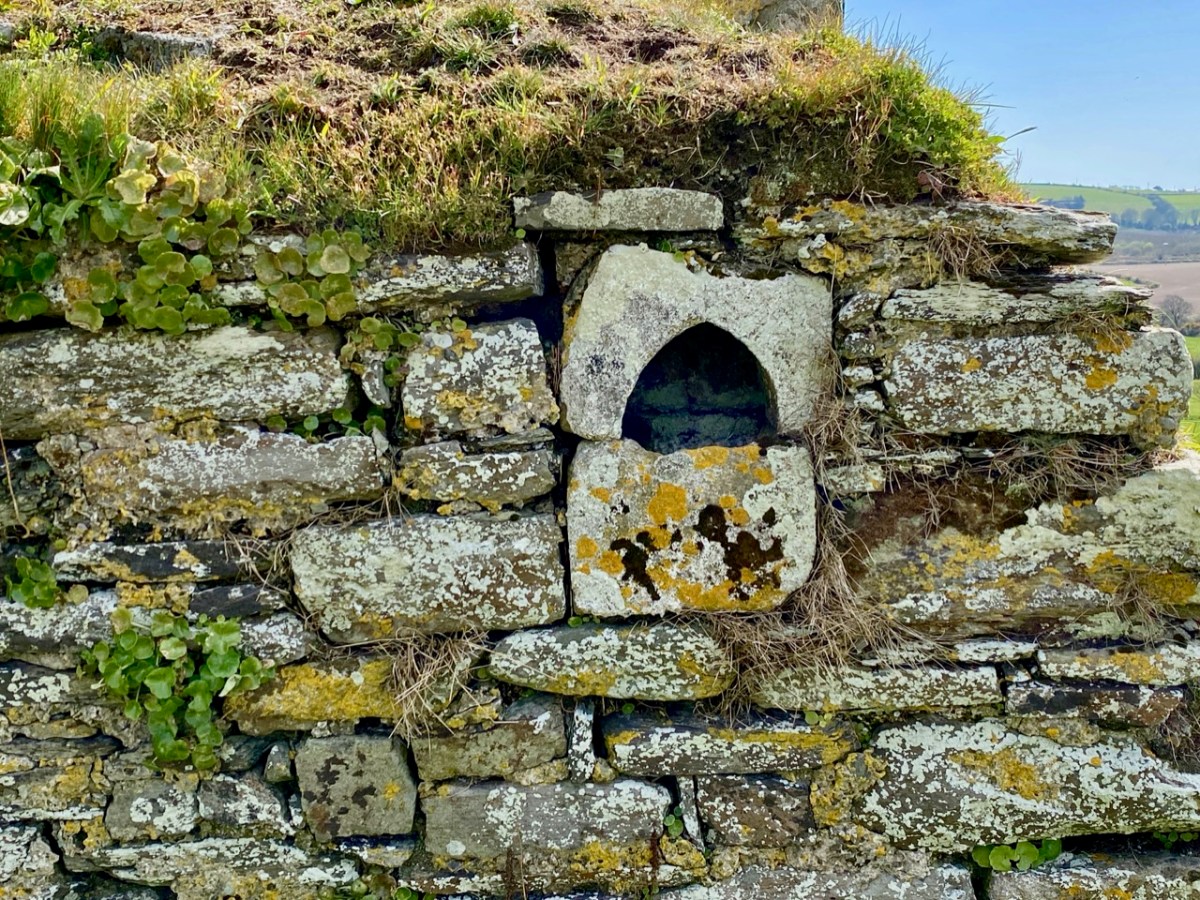
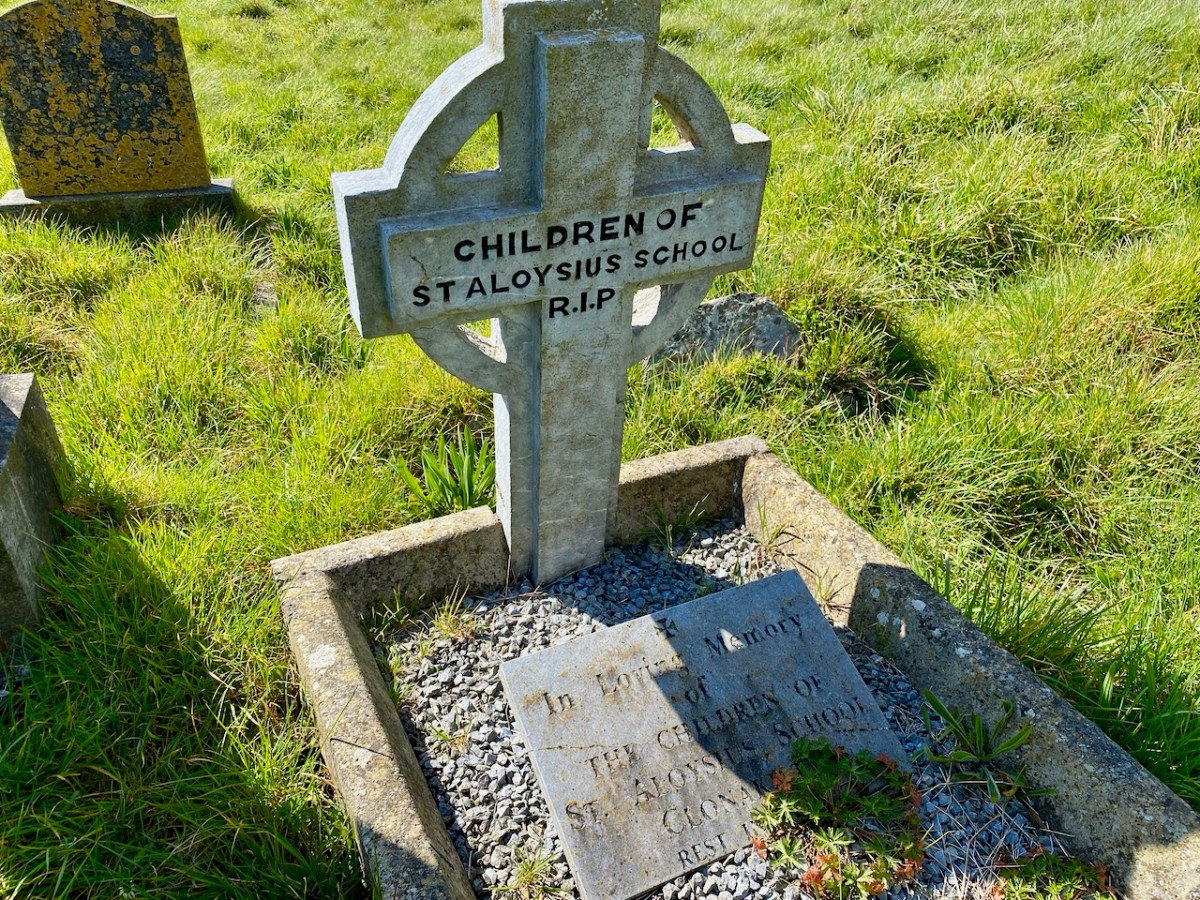
The old church within this graveyard is still clear to see, although ruined: note the rectangular ‘font’ or basin, and the holy water stoup. This has been a place of worship since 1169. It is said that a disastrous fire took hold of the church in the mid 17th century, and it has not been used since. In the furthest corner of the burial ground is a poignant little memorial recalling more recent times.

We have mentioned Industrial Schools before in Roaringwater Journal. They are an unhappy chapter of Ireland’s history. I have not delved deeply into the history of St Aloysius Industrial School for Roman Catholic Girls, Clonakilty, and would not like to think of what stories the tucked-away grave at Ballintemple represents. This online article tells us it was opened in 1869 and closed in 1965.

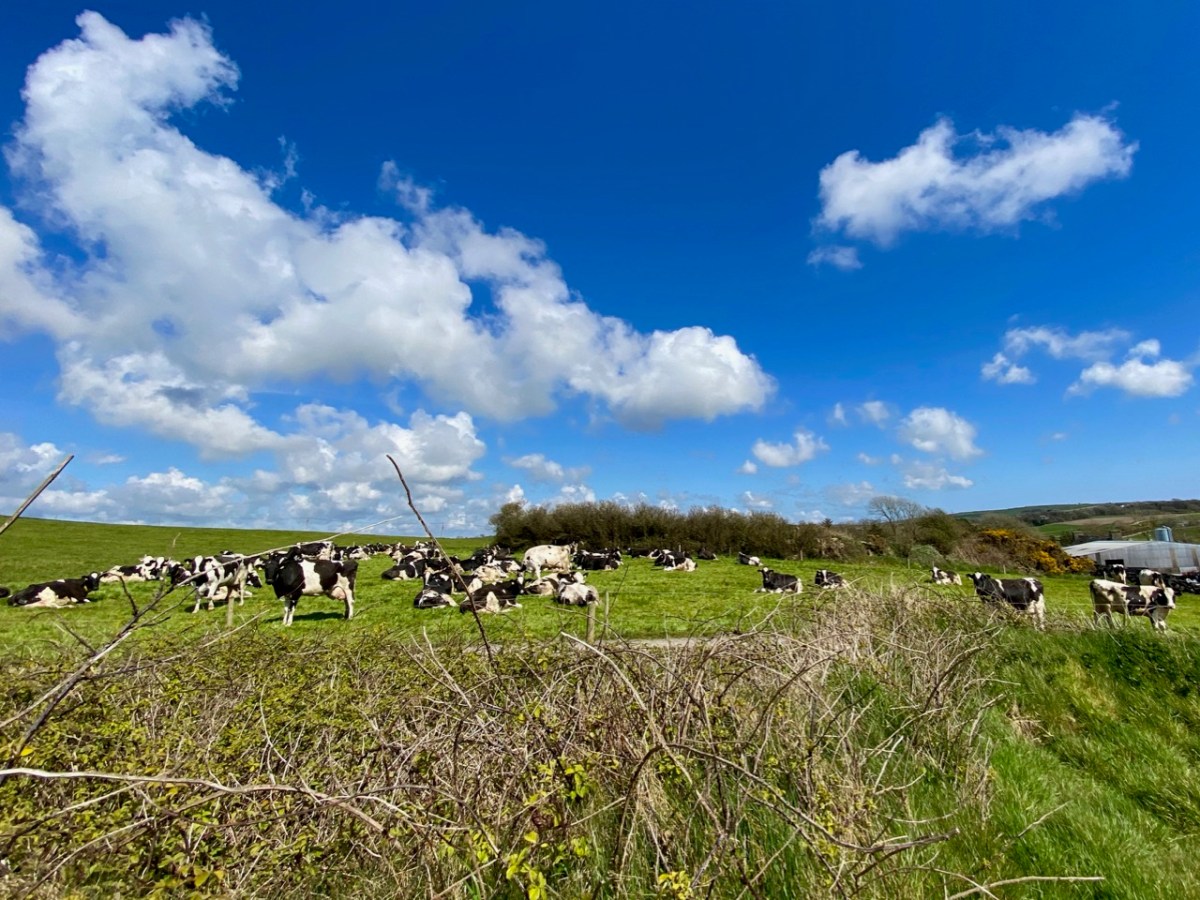
Seen to the east of the burial ground is this ring fort – beyond the dairy herd. The forts in this area are of significant size, and many are the subject of legend. It was once a common belief that underground passages connected many neighbouring forts, and this could be a folk memory relating to ‘souterrains’, often found at these sites.

. . . In olden times some men went to a fort in search of a crock of gold. This fort was in Castle View and about three miles from the town of Clonakilty. To get to this fort you should go to the castle which was about a quarter of a mile from the fort and then go underground and through a long shore. The men took with them a sheave of wheaten straw, a march cock and a blessed candle. Before they started their journey through the shore they lit the candle and all went very well until they nearly came to the end. When they were coming to the end of the shore they saw the crock of gold and with that there came a gust of wind and a terrible noise. There came horses jumping and dogs barking and the men got such a fright that they took their eye off the crock of gold and when they looked again they found to their surprise that the crock of gold was after disappearing. Several other men tried it but this very same thing used to happen at the end of the shore and so the crock of gold remained where it was . . .

James J Lombard, Duchas Folklore Collection, Garryndruig, Co Cork 1936

Compare today’s aerial view of ring forts close to Ballintemple with the 6″ Cassini OS map below it. The map indicates a souterrain in the rampart of the upper fort. Another account from Duchas:

. . . There are four forts, or as they known locally “Liosanna”, in this district. There is one in Kilkerran in the lands of Michael Flavin. It is circular in shape and so are all the rest. The other ones are on the lands of Jermiah O Donovan Carrigroe, John Barry, Newmill and in Castle-Freke Demesne in the Big Island field. These forts are supposed to be Danish fortresses and are built up in very high ground so that you could see one from the other. The fort in Kilkerran is the biggest to be seen around and “lepreacáns” are supposed to live in it. One night a man by the name of Factna O Hea caught a lepreacán near this fort and he asked the lepreacán to grant him a wish. The lepreacán then asked him what wish he wanted and the request the man asked was that he would win every game he played from that day on. The lepreacán granted him his request and he won every game he played from that day on. On the eastern side of this fort is a big stone which is supposed to be an entrance to some underground place. There is a great bank of earth all around the fort. Forts are never ploughed up as it is believed to be unlucky to interfere with them . . .

James Spillane, Duchas Folklore Collection, Kilkerran, Clonakilty 1938

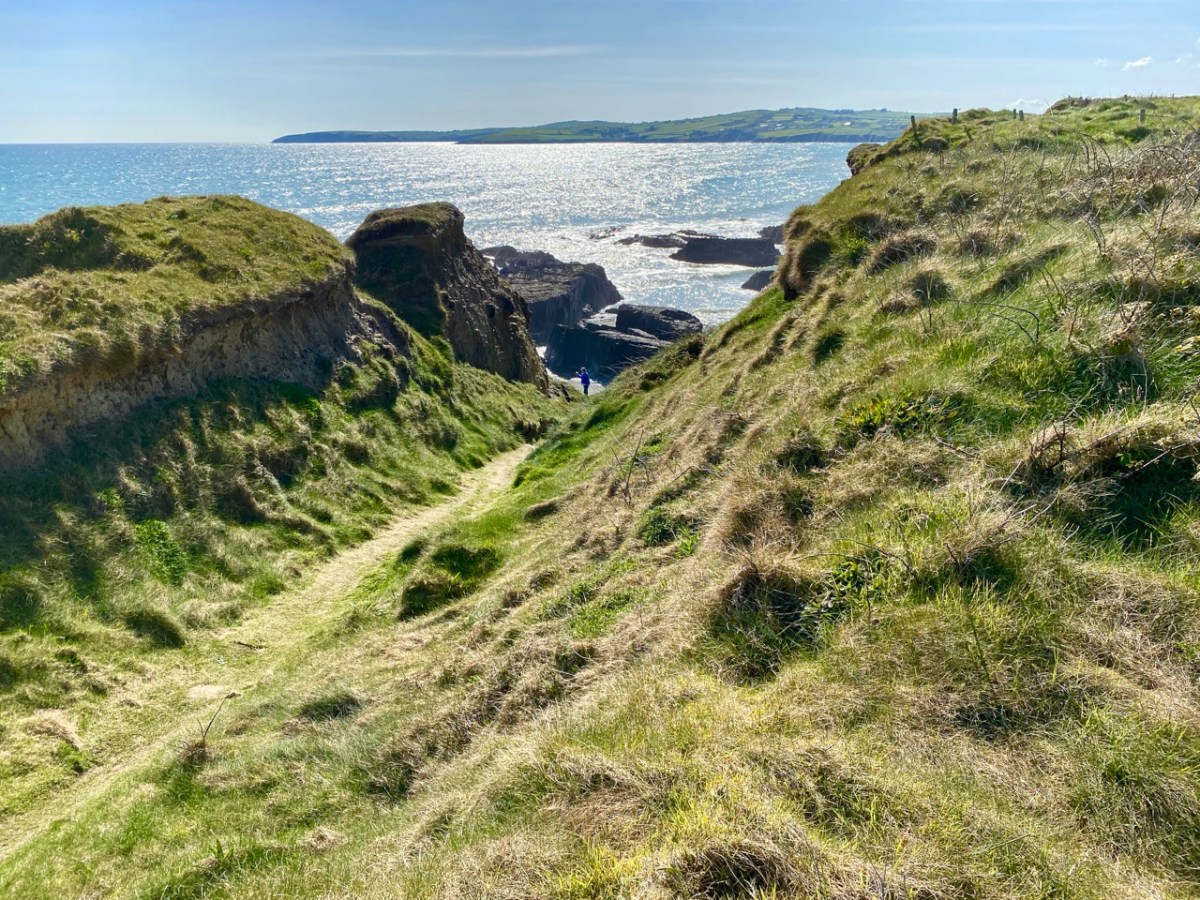
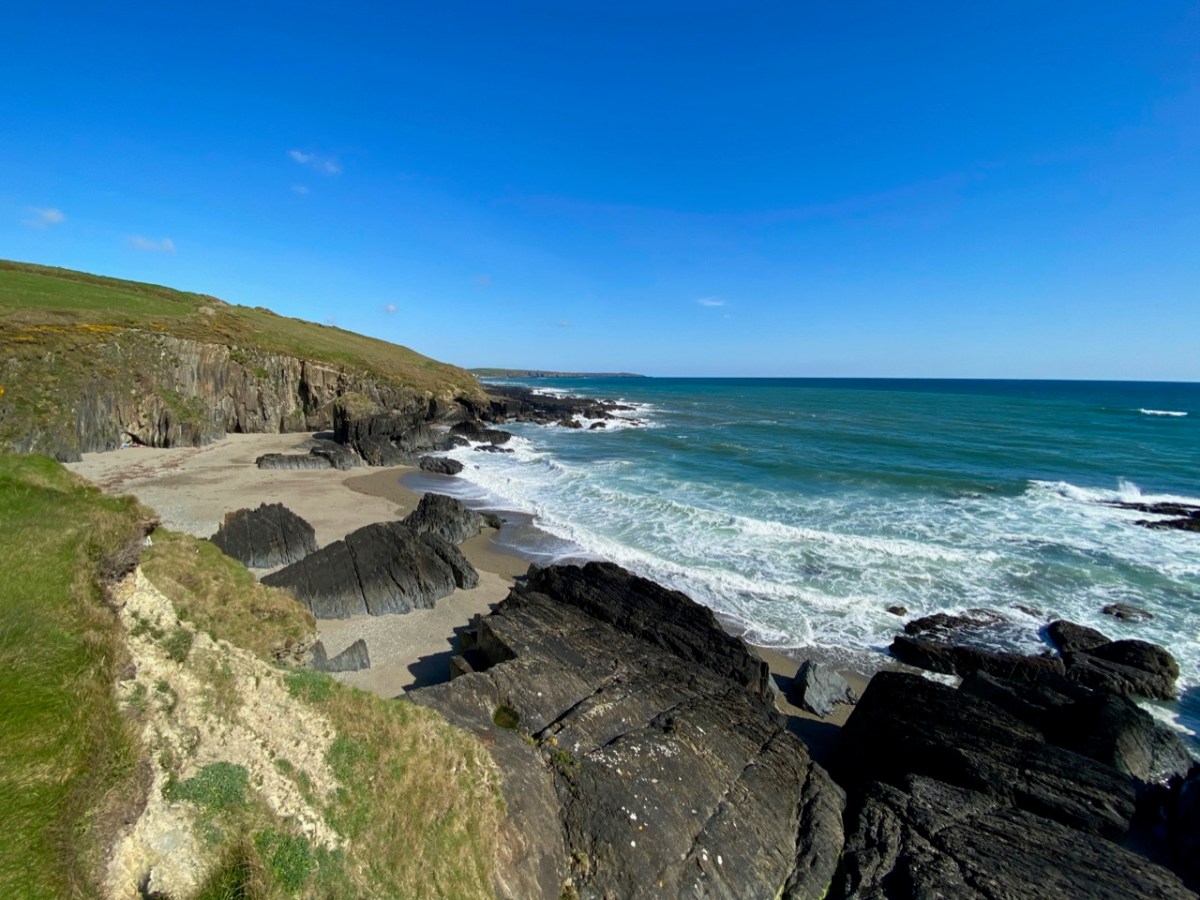
Well, our little tour around Ring seems only just to have begun, but I am going to take a break now and resume this topic in the near future. I will leave you with a few more pictures, including a taster of what is still in store . . .