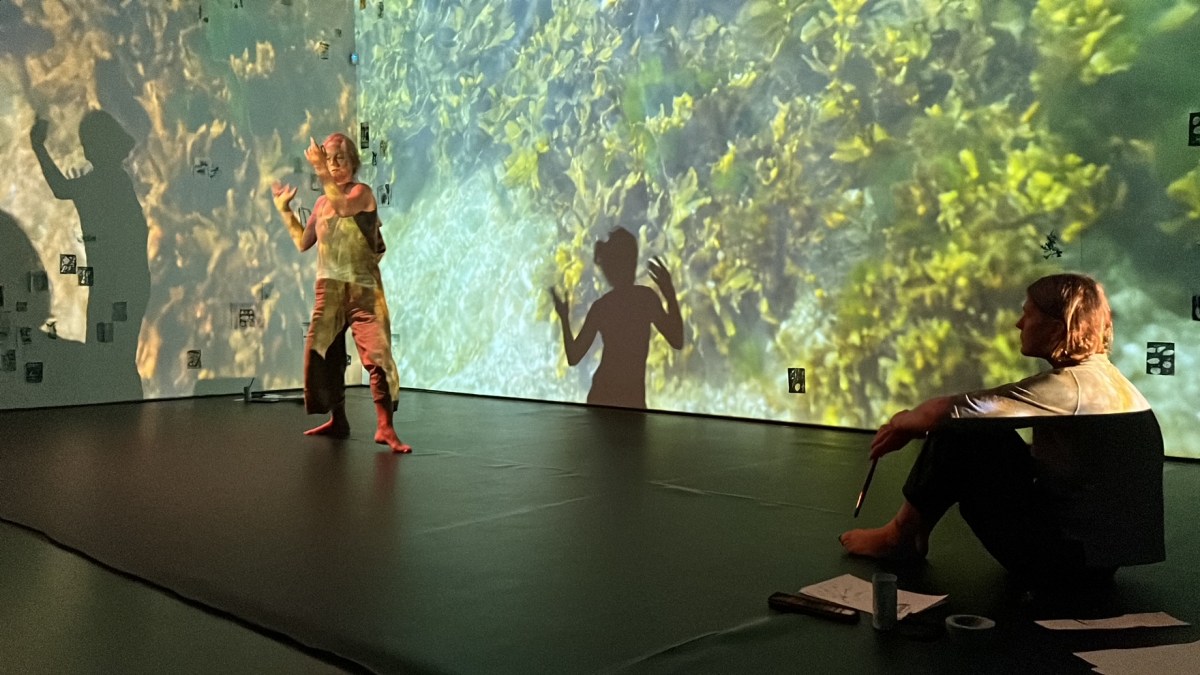
Unseen

© Tomasz Madajczak

There’s a line early on in Unseen, the new dance piece by Tara Brandel and Stacey White of Croi Glan Integrated Dance Company, where the voice-over says that plankton are so tiny that they are invisible to us. But sometimes, the voice continues, they bloom in such vast quantities that they can be seen from space. 
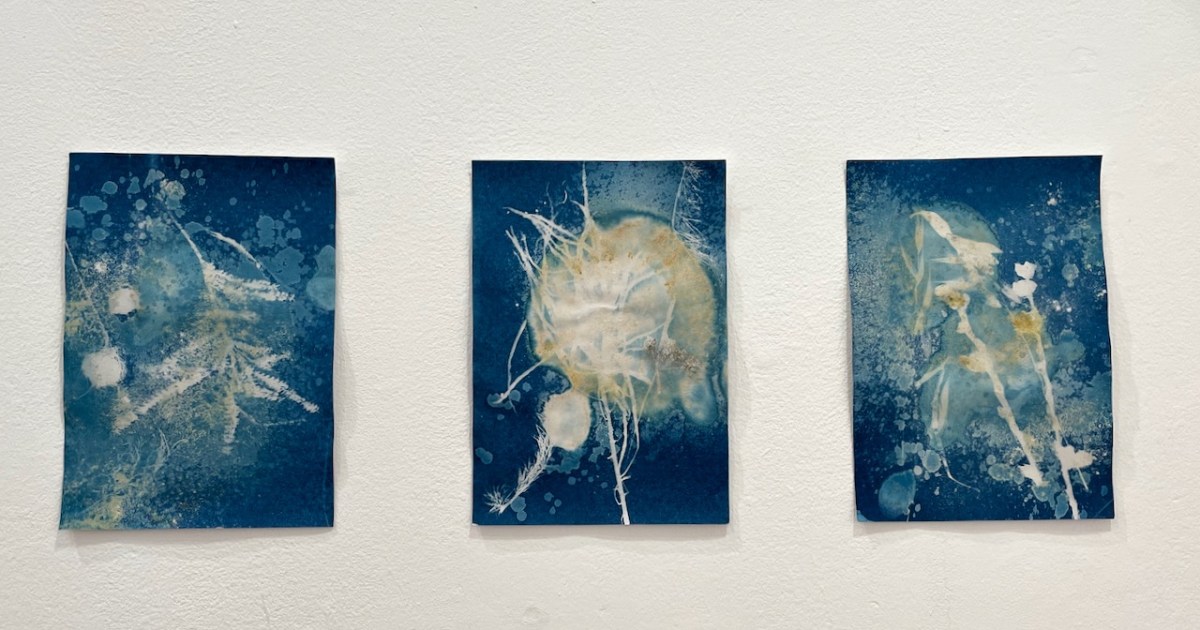
This dance piece explores the role that plankton – in plant form (phytoplankton) and in animal form (zooplankton) – plays in the life of our planet. It underpins all life but is fragile and threatened  by the effects of climate change. We remain oblivious to this existential danger because plankton does not cry out for our attention.
© Tomasz Madajczak

That disconnect, between the vital nature of this organism versus how aware we are of it, proves to be an apt metaphor for how we depend on our bodies – taking them for granted until they force us to forge a new relationship with them. 
Stacey White is a Californian artist who now lives here in West Cork. She has partnered (in life and in art) with Tara Brandel, who has created this choreographed event, three years in the making. I have written about Tara’s dance before – in Bridge and in Dancing Cappaghglass. Tara is one of the people (more common, she tells me, than we all know) who was injured by the Covid vaccine. It was catastrophic for her, leaving her profoundly debilitated, unable to walk, with difficulty breathing and a racing heart. Her recovery and rehabilitation have taken three years so far and is ongoing. The irony is striking – Croi Glan specialises in an integrated approach to dance, working with both able-bodied and physically- and intellectually-challenged dancers. Up to now, Tara has been the dancer we would describe as ‘able’
© Tomasz Madajczak

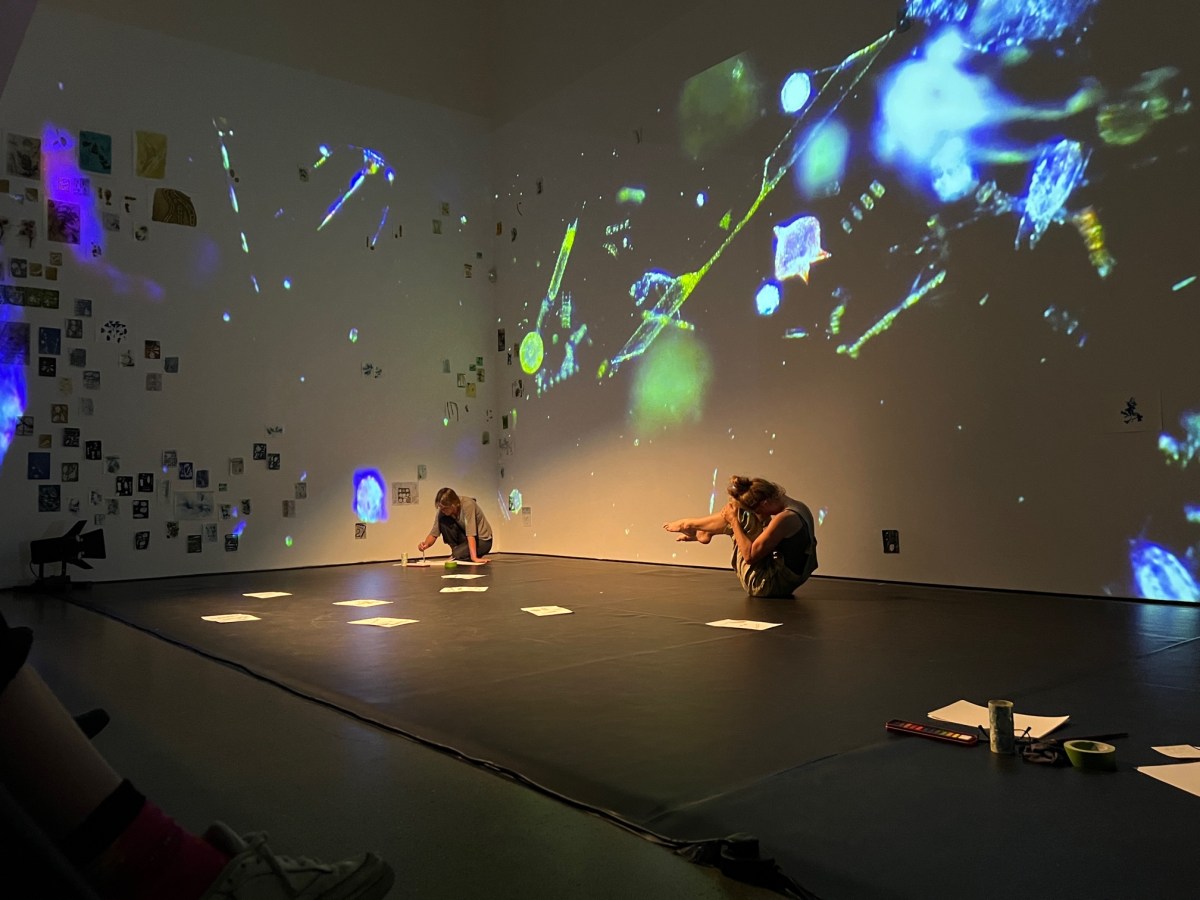
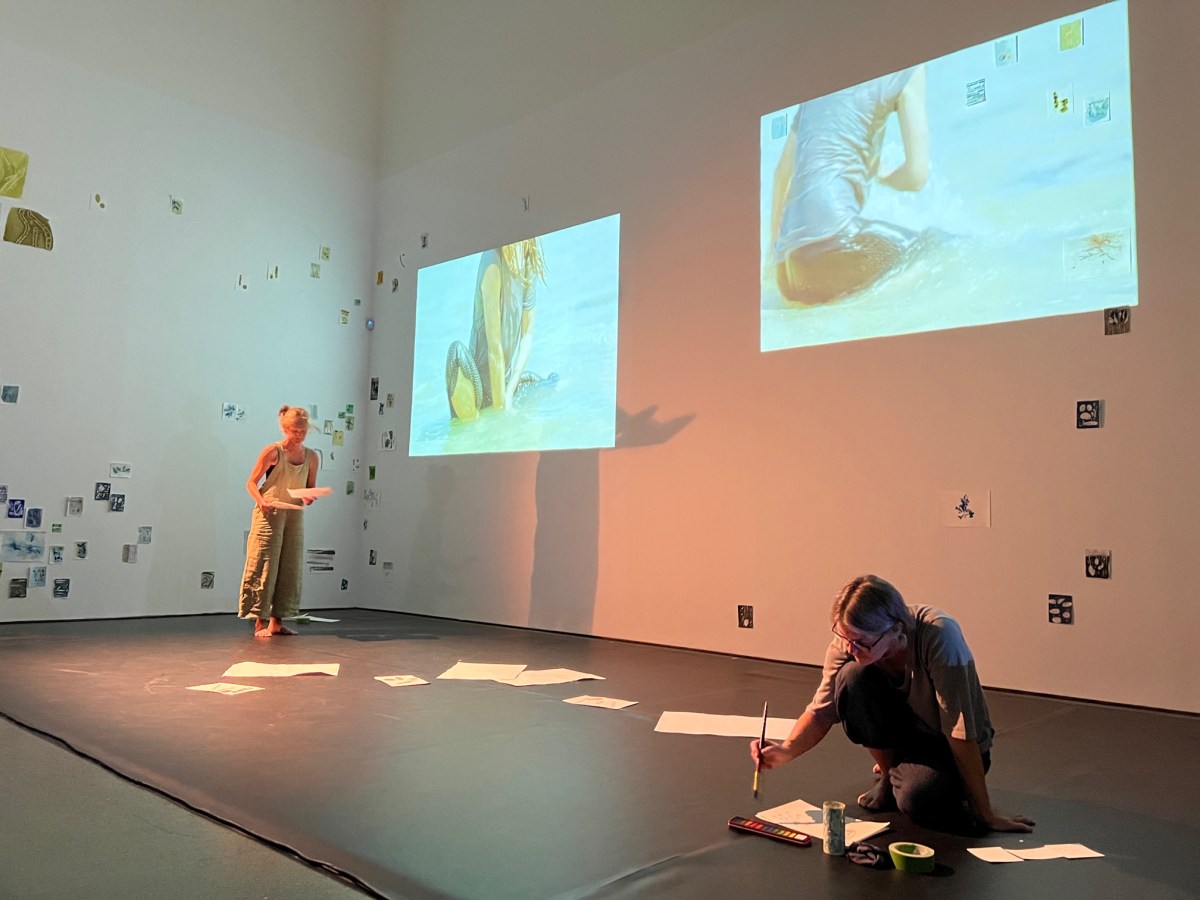
The dance begins with Stacey painting in a corner and Tara asleep on the floor. Projections and voice-overs run throughout the dance, introducing images of plankton, water and tides. There is no music per se, and yet there is a sense throughout of an elemental soundtrack. 
© Tomasz Madajczak

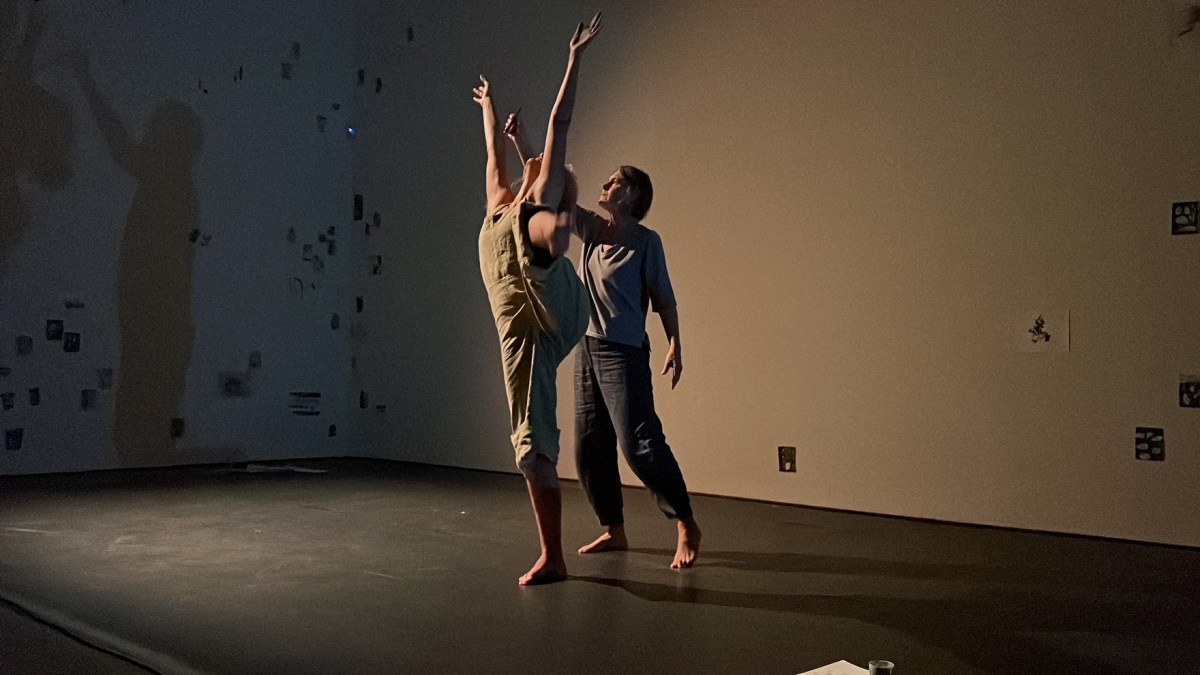
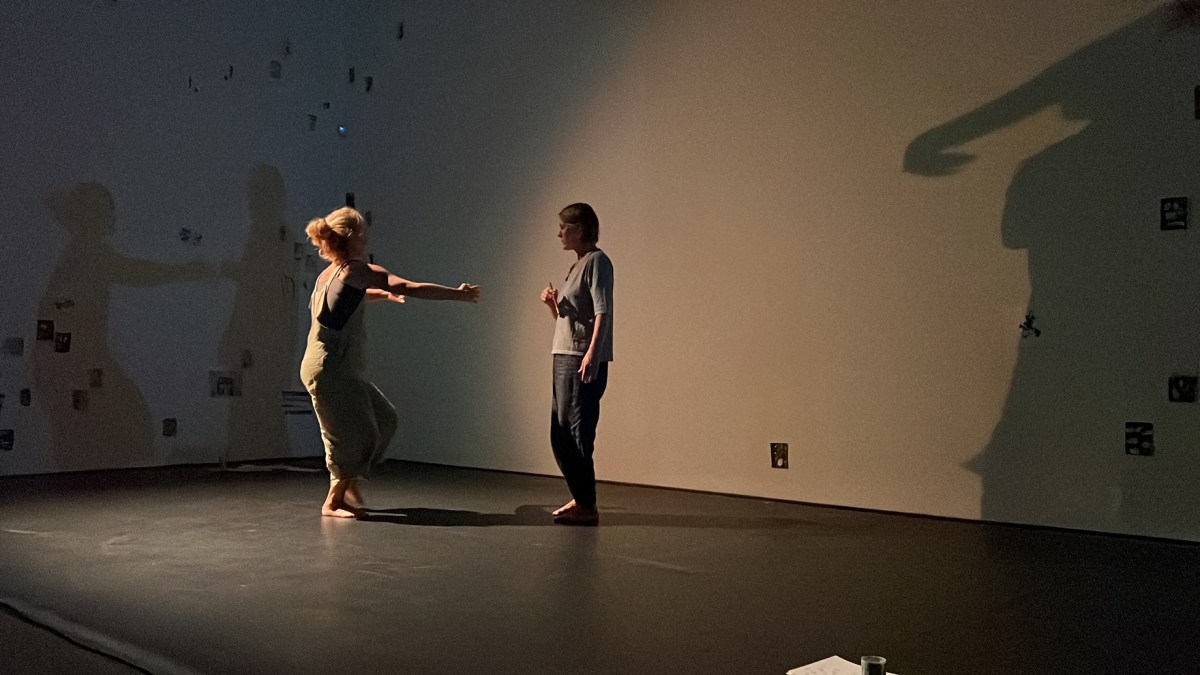
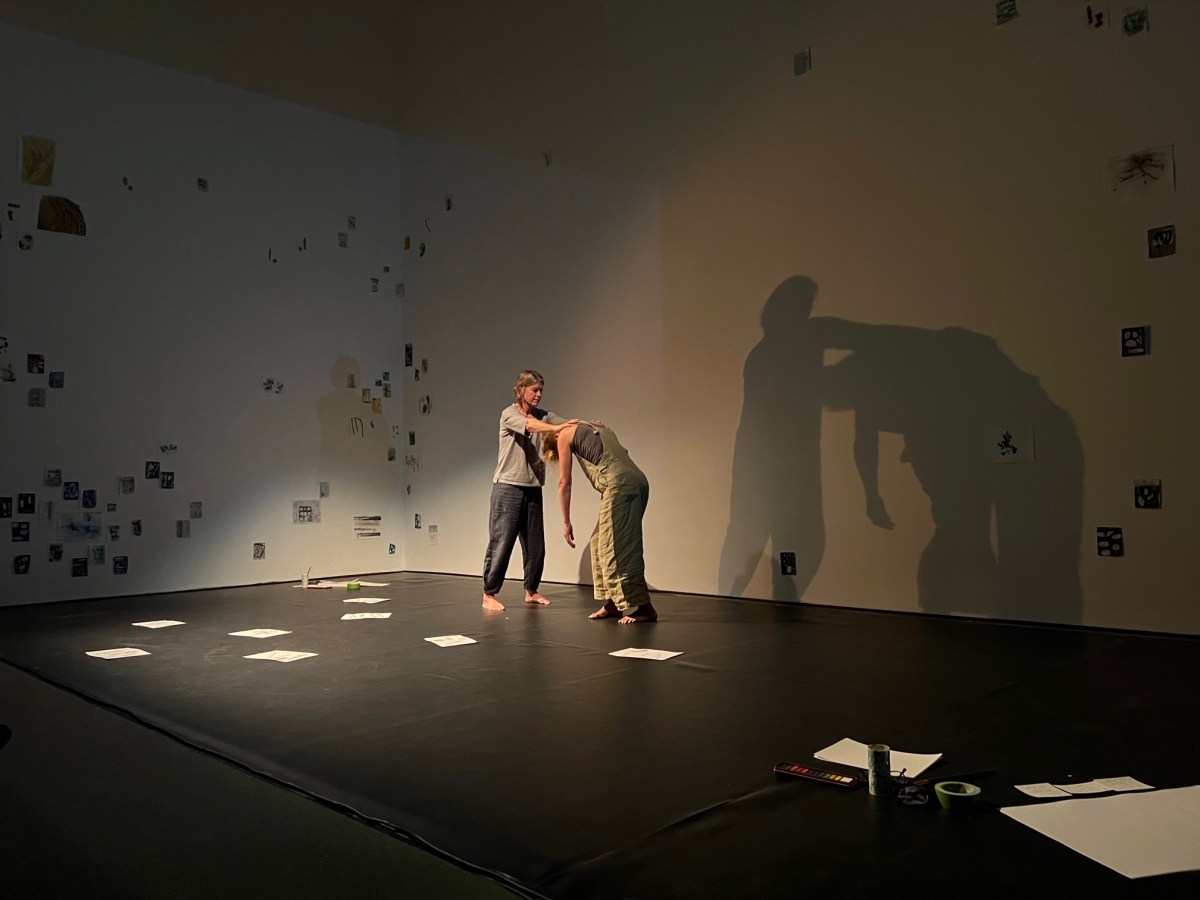
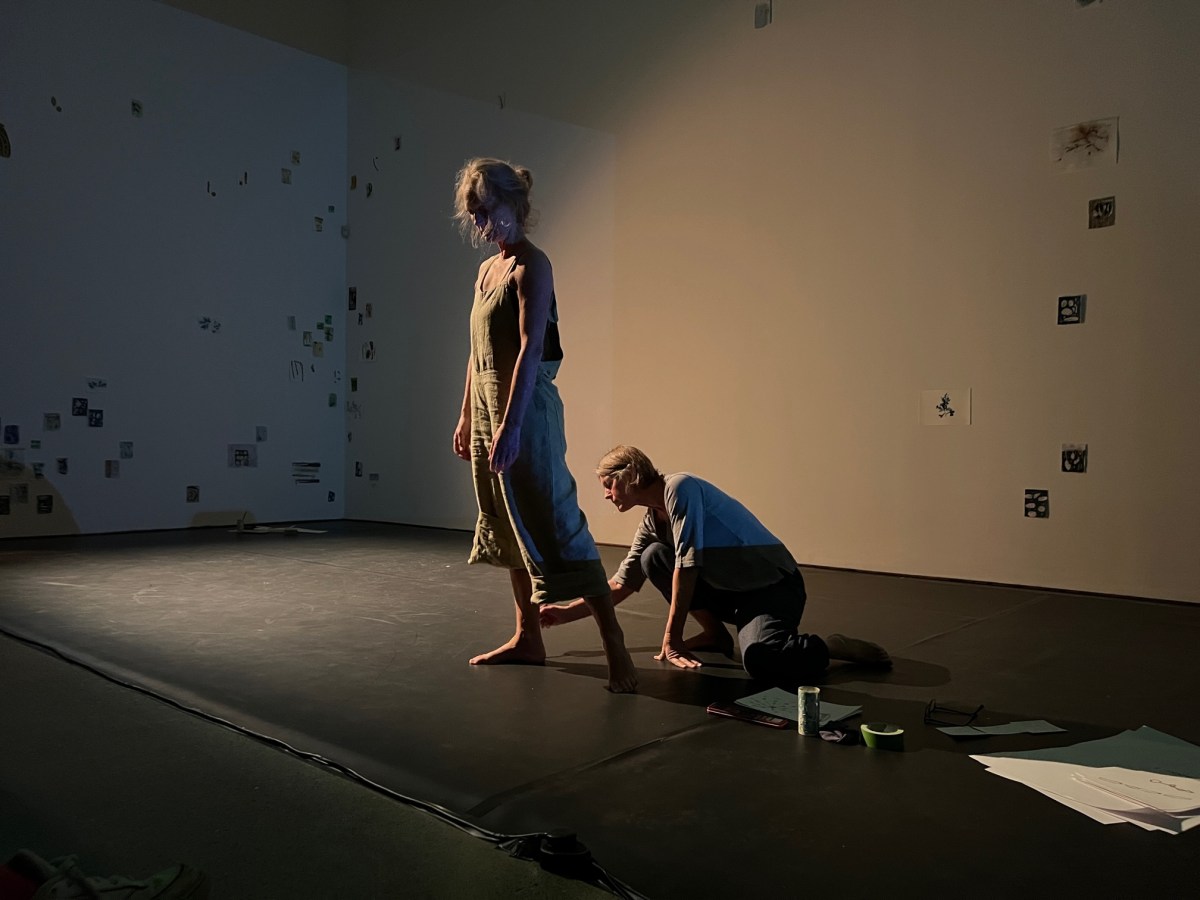
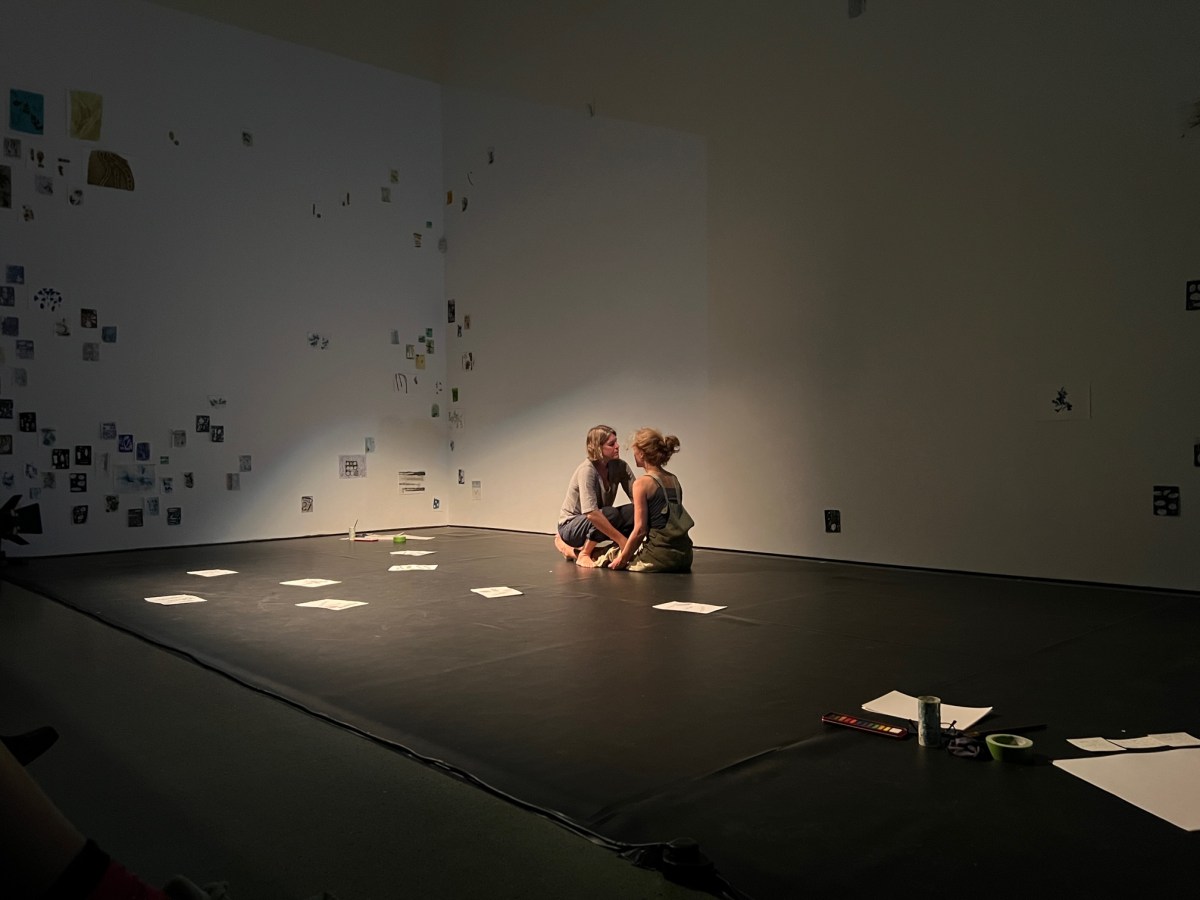
As Tara slowly comes to life her hand movement echo the pulsating and twisting movements of the plankton we have seen on the wall behind her. We see her coming to grips with the challenges of rediscovering the body her illness has given her,  and hear her compare it to putting together a 3D jigsaw, as she strives to heal and to compile the disparate pieces into a coherent whole again. Stacey’s voice also gives us an insight into the profound disconnect that  epilepsy, or rather the drugs she has taken to address it, has created between mind and body. We see them support each other, Stacey (literally) guiding Tara’s faltering steps. 
© Tomasz Madajczak

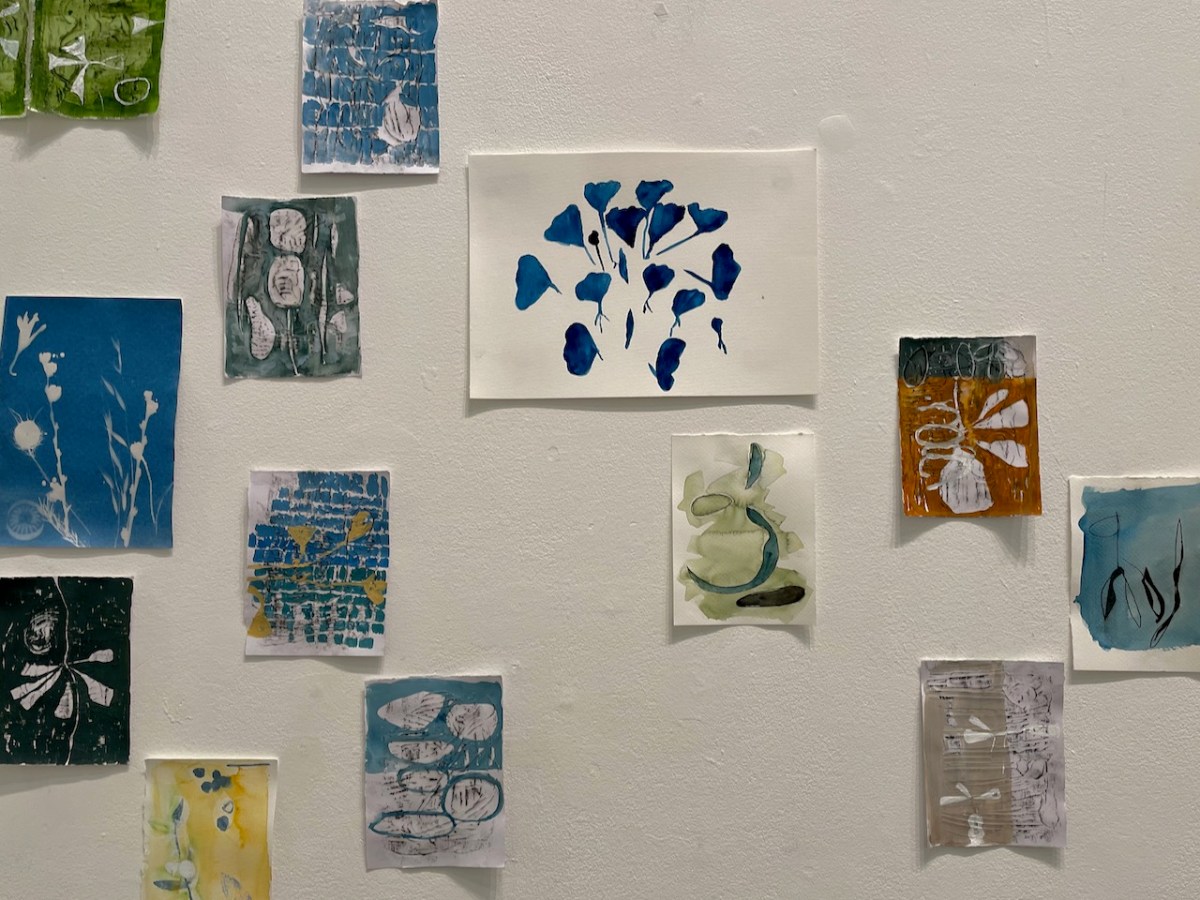
Besides the projections, Stacey’s small plankton paintings fill the wall space behind the dancers, hung to echo the Gulf Stream and Atlantic currents. At one point during the dance she strews them about the floor and Tara carefully makes her way among them before seizing larger pieces of drawing paper to wrap around her body, as if drawing strength from a medium other than the physical.
© Tomasz Madajczak

As someone at home, away from the world, slowly trying to recover from profound weakness, Tara shows us that she feels unseen, locked away from our sight. Sufferers of vaccine injuries have to contend with the neglect of their plight by governments and health systems, who start by ignoring them and then throw enormous burdens onto already-ill people to ‘prove’ that what has happened to them is the fault of the vaccine.
© Tomasz Madajczak

But this is not a pity-me piece, it’s a profound meditation on what it is, and how it feels, to be unseen, and to have the very foundations of the life we take for granted – whether we are talking about our planet or our bodies – suddenly under threat. And ultimately it’s about the healing power of art to help us face those challenges.
© Tomasz Madajczak

I have no doubt this piece will have an afterlife after the two current scheduled performances. Uillinn’s (The West Cork Arts Centre) dance season, now in full, er, swing, reminds us that art comes in many forms, including dance. Like plankton, art blooms where the environment encourages it. Hardly surprisingly, given the quality of what we saw in Unseen, all the dance performances seem to be well subscribed, so run don’t walk if you want tickets for any of the other events over the next week or so – it goes to November 5th.
Thank you to Tomasz Madajczak for allowing me to use his outstanding photographs.

Dancing Cappaghglass

Cappaghglass by Emma Jervis 1

When you love the place you live in – really love it, in your bones and your heart, how do you express that? How do you convey to others the feeling of waking to the sun rising over Roaringwater Bay and sinking back into the sea behind Long Island after a day of sparkling colour and rural rhythms? How do you represent the sense of coming home after a lifetime of being an emigrant? How to talk about what persists of the Ireland of your youth and what has changed irrevocably, for better or ill?

Fields of Cappaghglass

The green fields of Cappaghglass in evening winter sunlight

I suppose, like the Bee Gees I would turn to words, but Tara Brandel took on that challenge with Cappaghglass, her final piece of choreography and dance performance at the end of her two year residency at Uillinn, the West Cork Arts Centre.

Reaching

I’ve written about Tara’s dance performances before – her Bridge two years ago in Ballydehob left us speechless and profoundly moved. She has performed numerous pieces in the meantime as part of her Uillinn residency, sometimes solo and sometimes with her company, Chroí Glan. This dance has been gestating all that time.

Mining area

Mine houses and a fenced-off shaft – echoes of mining heritage

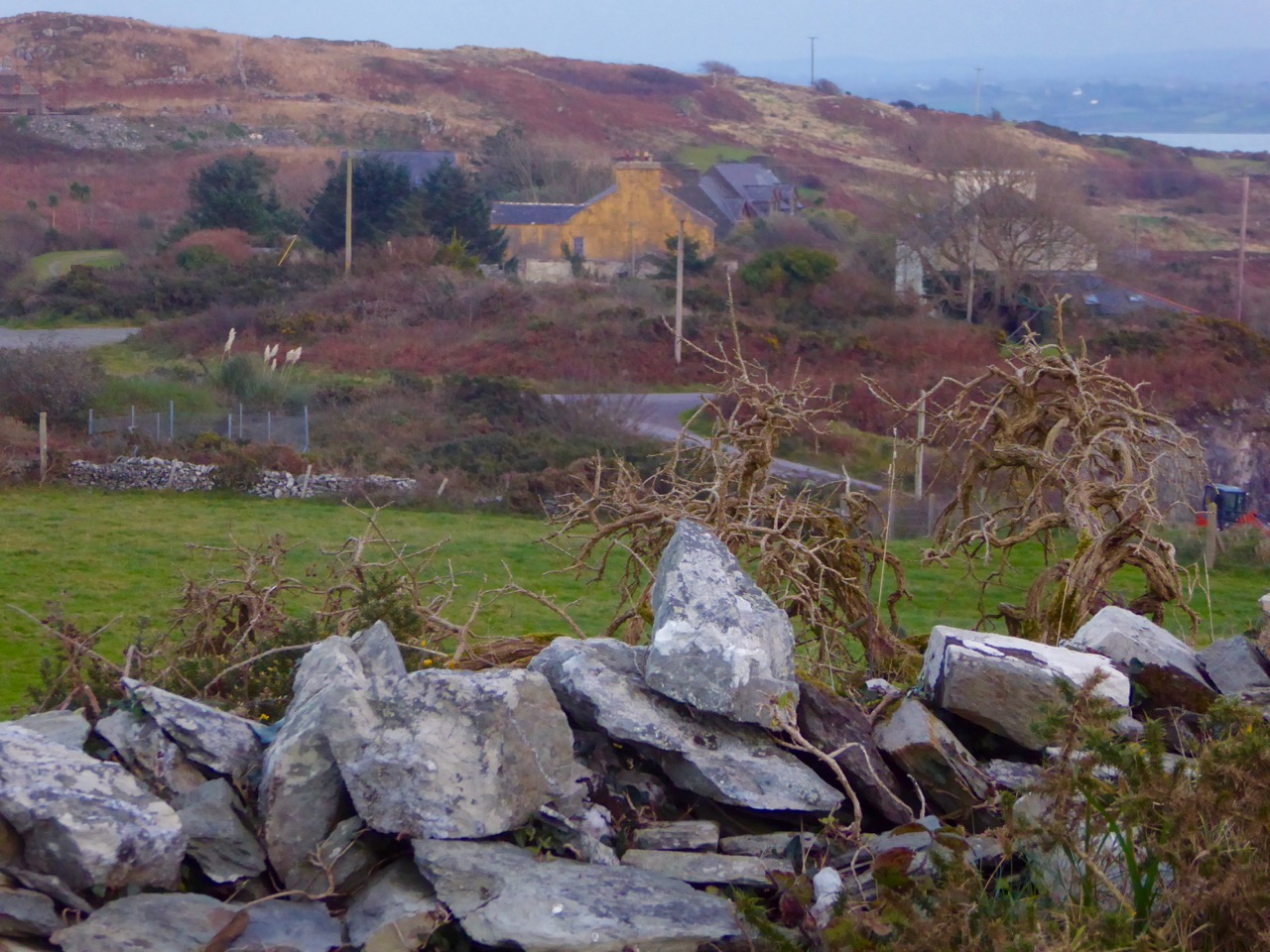
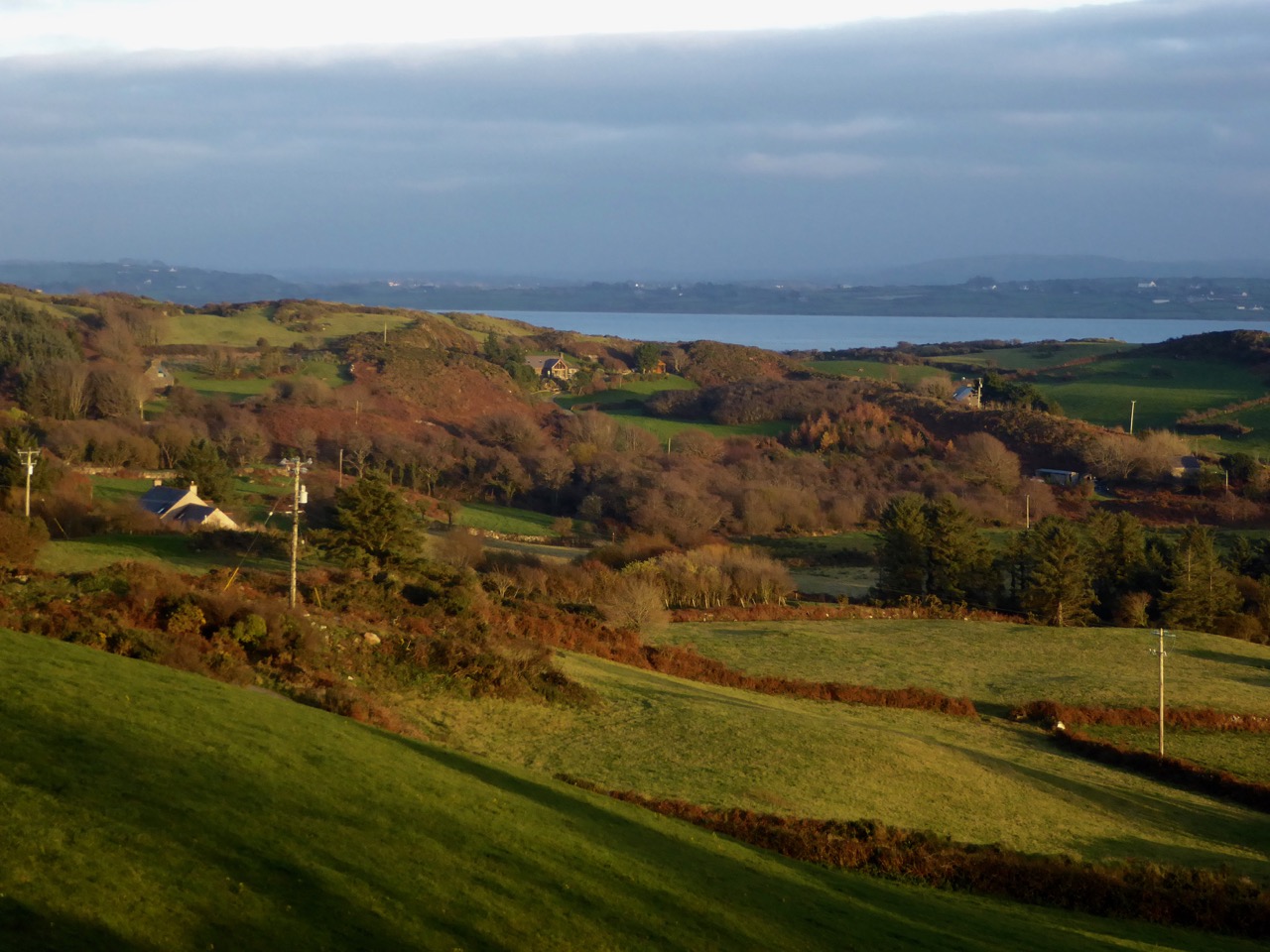
Cappaghglass*, where Tara lives and where we also are currently putting down roots, is undoubtedly beautiful, peaceful, pastoral and scenic. In the past it was also heavily industrial, with 400 tons of copper mined every year, and a population of several hundred people. It had a ‘Big House’ and a hotel: no traces remain of either. It had a dozen farms: now there are two. There are twenty homes in the townland – and another twenty holiday homes that remain empty most of the time.

Cappaghglass by Emma Jervis 2

I gratefully acknowledge Emma Jervis, whose photograph this is, along with the first one in the post

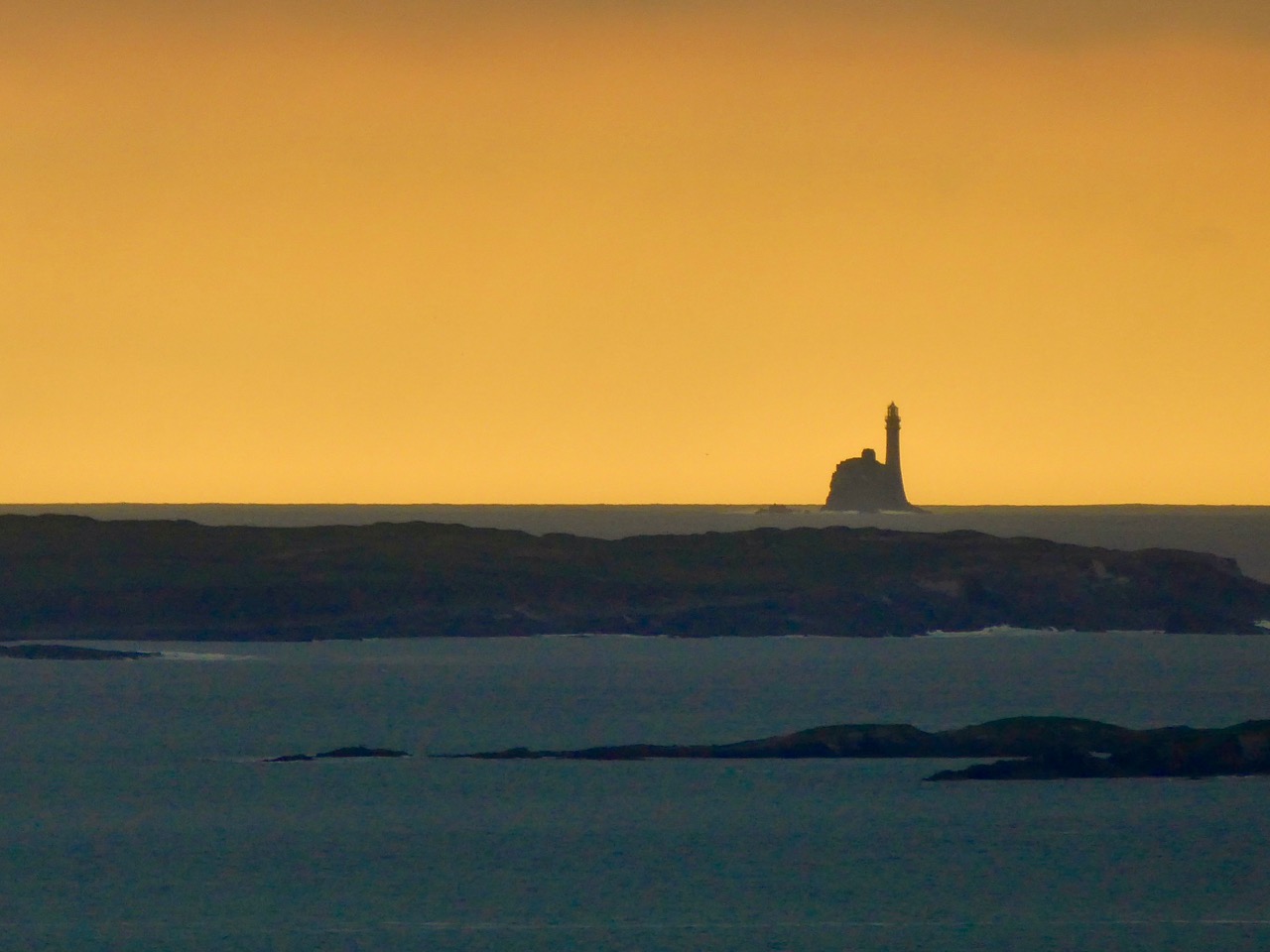
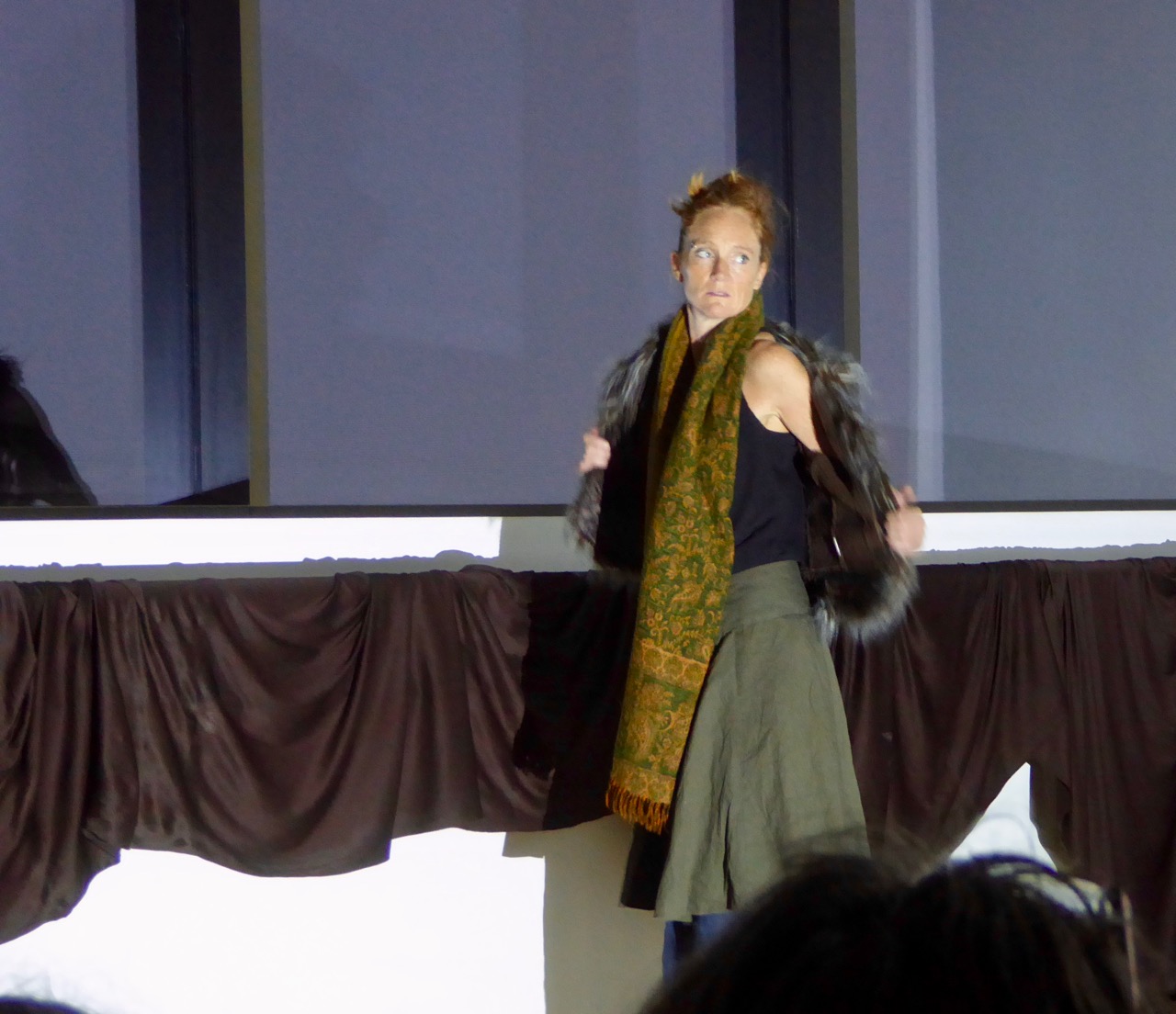
Tara danced it all for us. We watched as she explores her environment as a child, then takes the first tentative steps to leave. Buffeted by the world, she returns to the freedom and the green fields, and always the sea heaves in the background and the Fastnet Light turns on the horizon. She switches effortlessly, with a twitch of a scarf and body movements, from a young, then an old Irish woman to a Syrian refugee, inviting us to consider the experiences of displacement, migration, loss and belonging.

Road through Cappaghglass

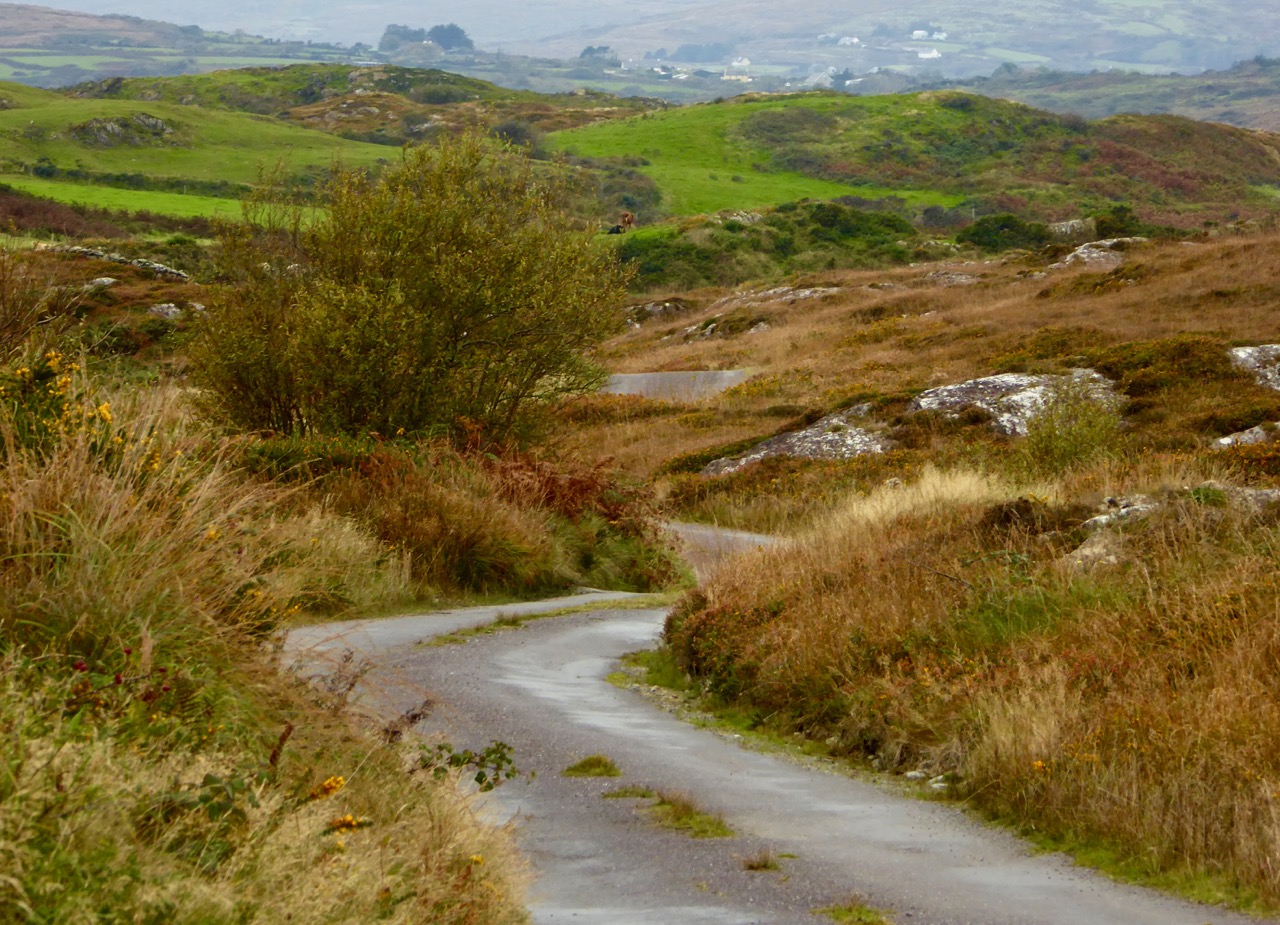
The high road through Cappaghglass

Her body speaks to us, but she also uses words and song. She sings – simple repetitive chants – and uses technology to loop the sound so it repeats. Then she records a further piece and then another, and so layers of sound start to build and this provides the music to which she dances.

Gorse Tree

Visual layers are added – projections on the wall of a map, the sea, waving grass, and finally the Fastnet Light.

Fastnet in the sunset

Tara’s dancing is athletic and graceful. Her hands assume critical importance in conveying action and emotion. Clothing is donned and shed in a shorthand for identity.

Clothing is used

In  a final brilliant move she approaches the barre, over which is draped heaps of material. Reaching into the mass of cloth she ties two lengths around her waist and moves towards us. It is then we understand, as the material slowly slides away from the barre and follows her in an enormous train, that this is Cappaghglass – the whole townland spread out behind her, claiming her, rooting her, her home, her place.

townland train

We  walked the townland today in the fading light of late afternoon and we saw it afresh. Like Tara, like so many people, we have experienced migration and displacement. But this is home now and we find it rare and precious.

Ruined ivy-clad houses and the traces of tiny fields hint at families for whom this was home

Only art has the ability to reach down into you and clutch at your soul and make you think and feel in ways you haven’t thought and felt before. Tara did that for us with her dance. We are grateful for her gift.

Cappaghglass sunset*Cappaghglass, in Irish pronounced cappa gloss = the Green Tillage Fields

Bridge

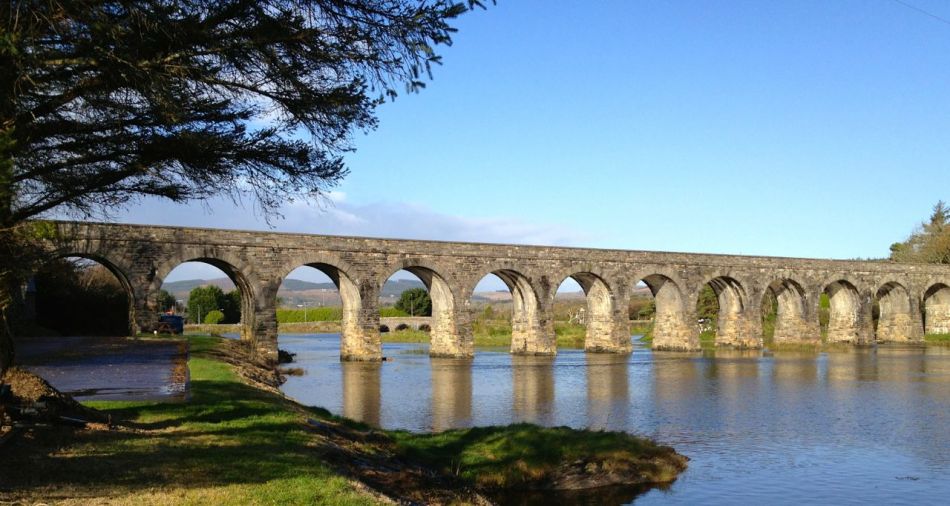
The Famous Twelve Arch Bridge in Ballydehob

The Famous Twelve Arch Bridge in Ballydehob

Recently, as part of the Ballydehob Country Music Festival (although the connection may be a little tenuous) we noticed posters going up around the town for a dance to be performed on the famed Twelve Arch Bridge. The dance company, Croi Glan (Kree Glan – pure heart) had more information on their website:

Professional dancers from Croi Glan, 5 musicians performing live, Croi Glan’s aerial dancers suspended from the bridge on rope and harness and aerial silks, and 40 West Cork Inclusive Dance Group community performers from COPE, CoAction and the local West Cork area, 25 of whom have intellectual disabilities, in a once-in-a-lifetime, hugely ambitious project directed by Tara Brandel, a native of Ballydehob.

Intrigued, I sought more information on Croi Glan. Here is a piece from TG4, the Irish language television station, that illustrates what the company is all about:

We arrived at the Pier to find that the whole of Ballydehob had turned out. The place was rocking, with live entertainment, gourmet hot dogs and a wine bar. While the morning had been overcast, by early afternoon the clouds had parted and brilliant sunshine added to the festive atmosphere.

Siobhan Heapes

Siobhan Heapes

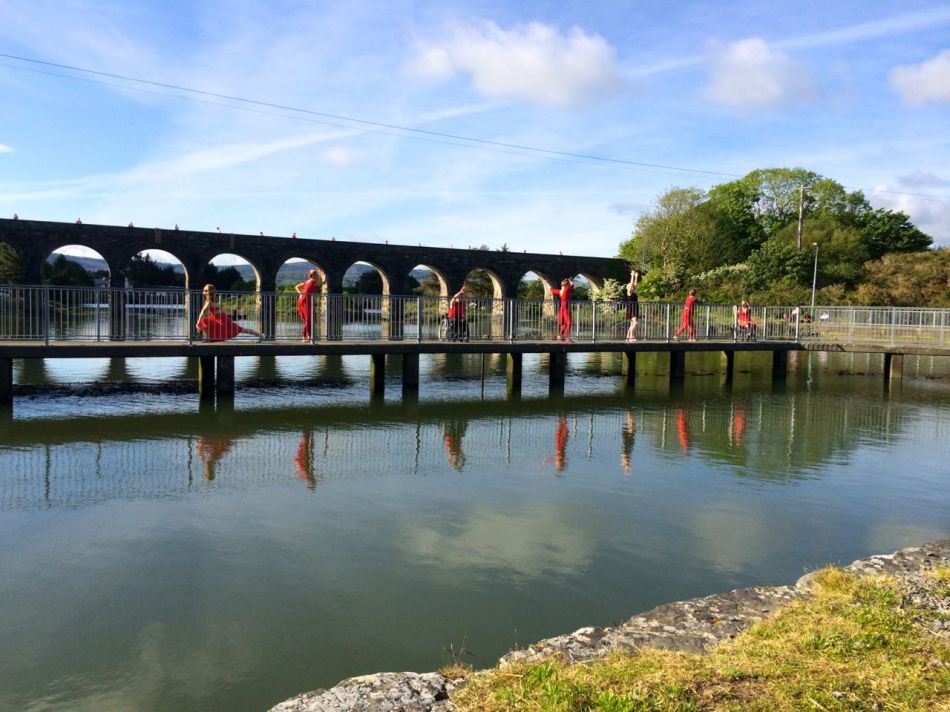
The dance started with a local singer, Siobhan Heapes, singing on the walkway over the water, calling the dancers. One by one and in groups they arrived on the walkway and we began to appreciate the diversity of the troupe – some professional and balletic, some in wheelchairs or with mobility difficulties, some with intellectual disabilities. Together, they told a story: a story of bridging and transcending differences, of supporting each each other, of honouring the part each played in the dance. 

The dance begins

The dance begins

The stage became larger and larger, as the dancers occupied the green spaces around the walkway, and then moved onto the bridge itself.

Using the whole space

Using the whole space

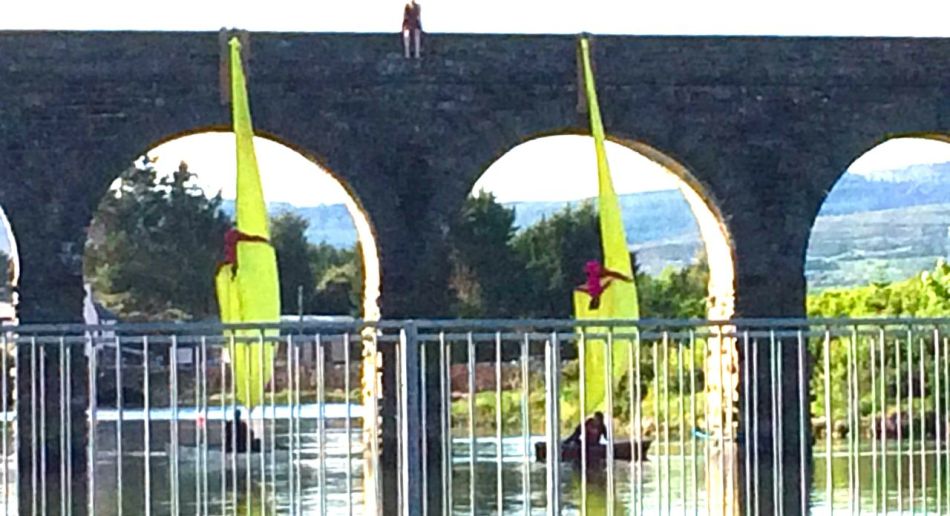
Two dancers were lowered over the bridge –  a heart-stopping moment – and then yellow silks unfurled and their bodies twined and moved with the silks as we watched entranced from the Pier and Siobhan provided the haunting musical background.

Aerial dance

Aerial dance

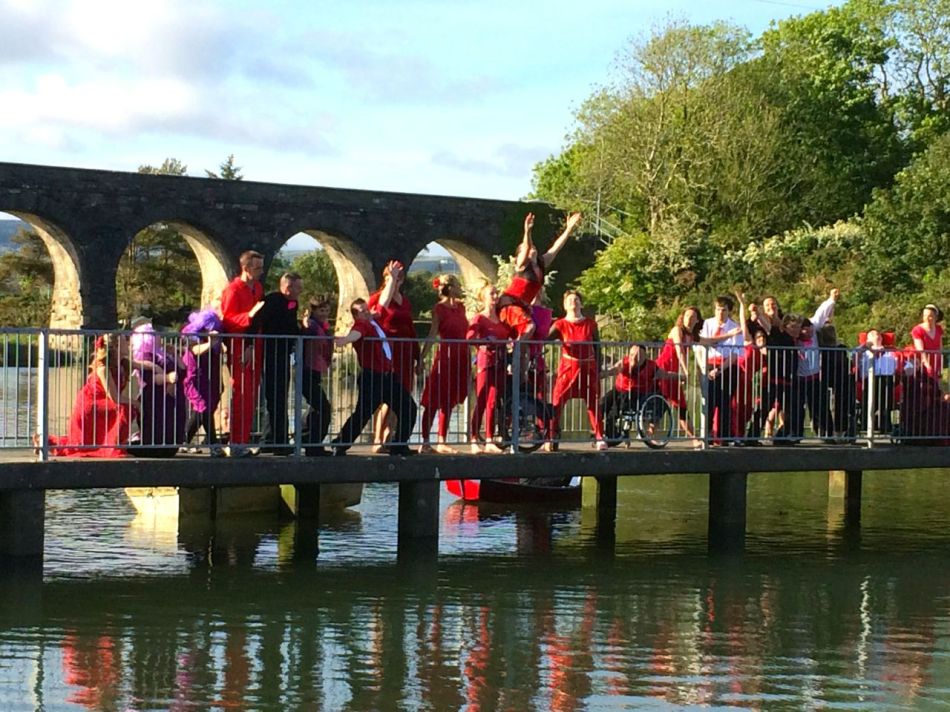
The finale had all the dancers back on the walkway for one final movement together of intense communication, lifting and balancing each other, paying a last homage to the theme of Bridge. And suddenly it was over and we erupted into possibly the most enthusiastic standing ovation I have ever been a part of. It was loud, it went on and on and then on some more. Some us were in tears, all of us were smiling and turning to each other and searching for superlatives to describe what we had just witnessed. 

Finale

Finale

There were flowers, and speeches. Tara Brandel said she had “never been prouder to be from Ballydehob.” We lingered, chatted with the dancers, congratulated Tara (it was hard to get close to her) and her assistant choreographer, Mary. People took a long time to disperse – something had stirred us all in that way that makes you want to hang on to the feeling as long as possible.

Mary Nugent, Assistant Choreographer

Mary Nugent, Assistant Choreographer

Perhaps it was, as Tara explains in the YouTube video above, that when you watch a Croi Glan performance, you are operating entirely in your heart.