Yes, after 13 years of owning this special house, I have sold it to a lovely couple who I know will treasure it like we did. I am moving into Schull (all of 8km away) on Thursday, and I am looking forward to being able to walk everywhere, especially to Amar’s cafe.
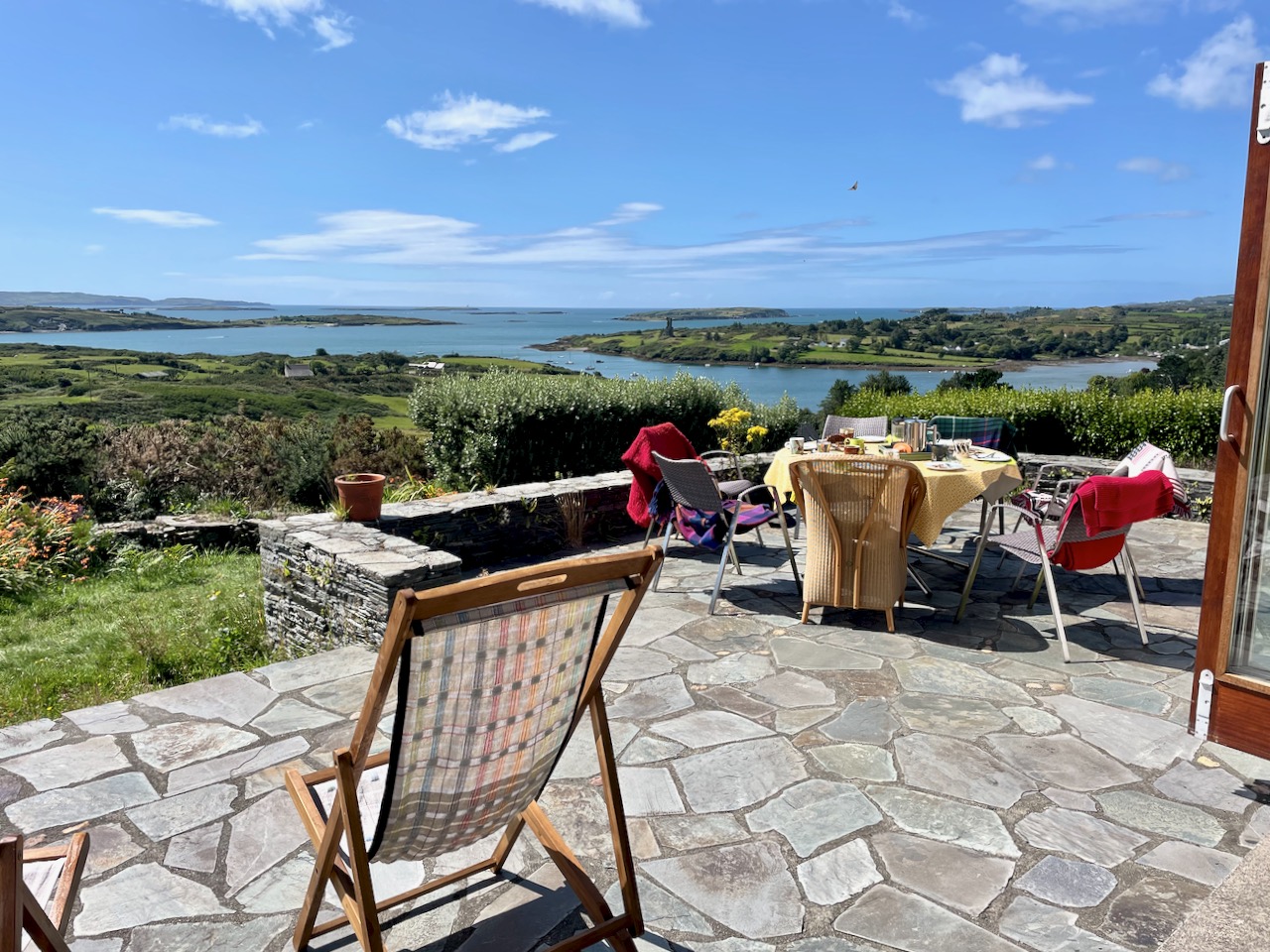
Nead an Iolair – it means Eagle’s Nest and was Robert’s choice of a name for the house – has been the subject of many of our posts and as a final honouring of the house and the acre it sits on, here is a round-up of some of the posts we have written about it all, over the years.
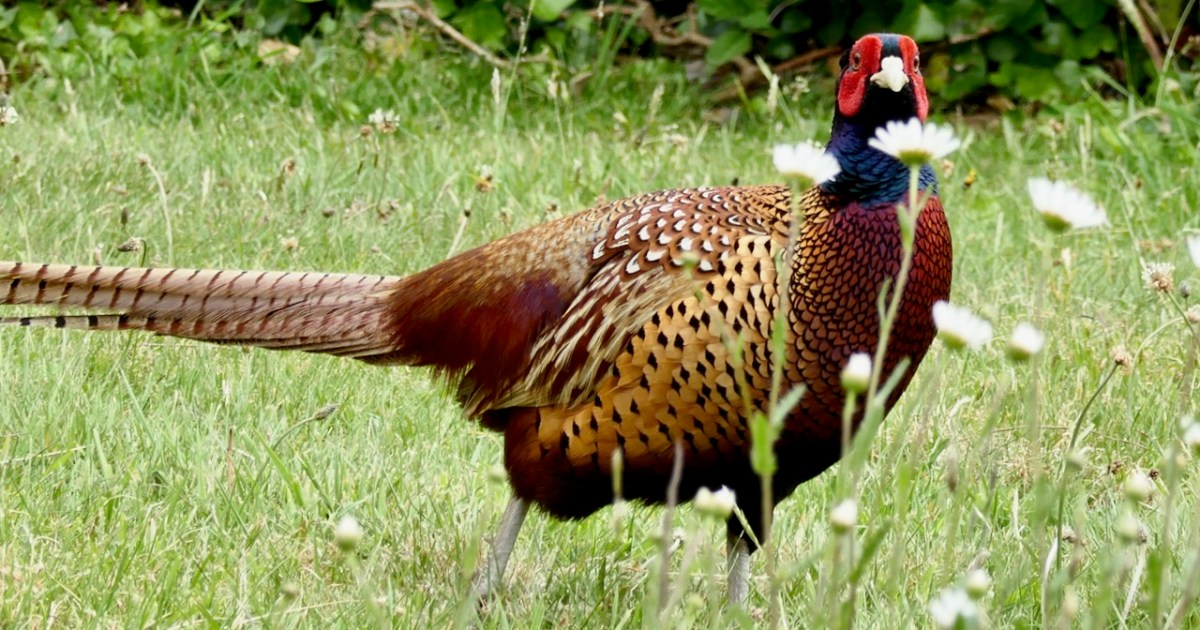
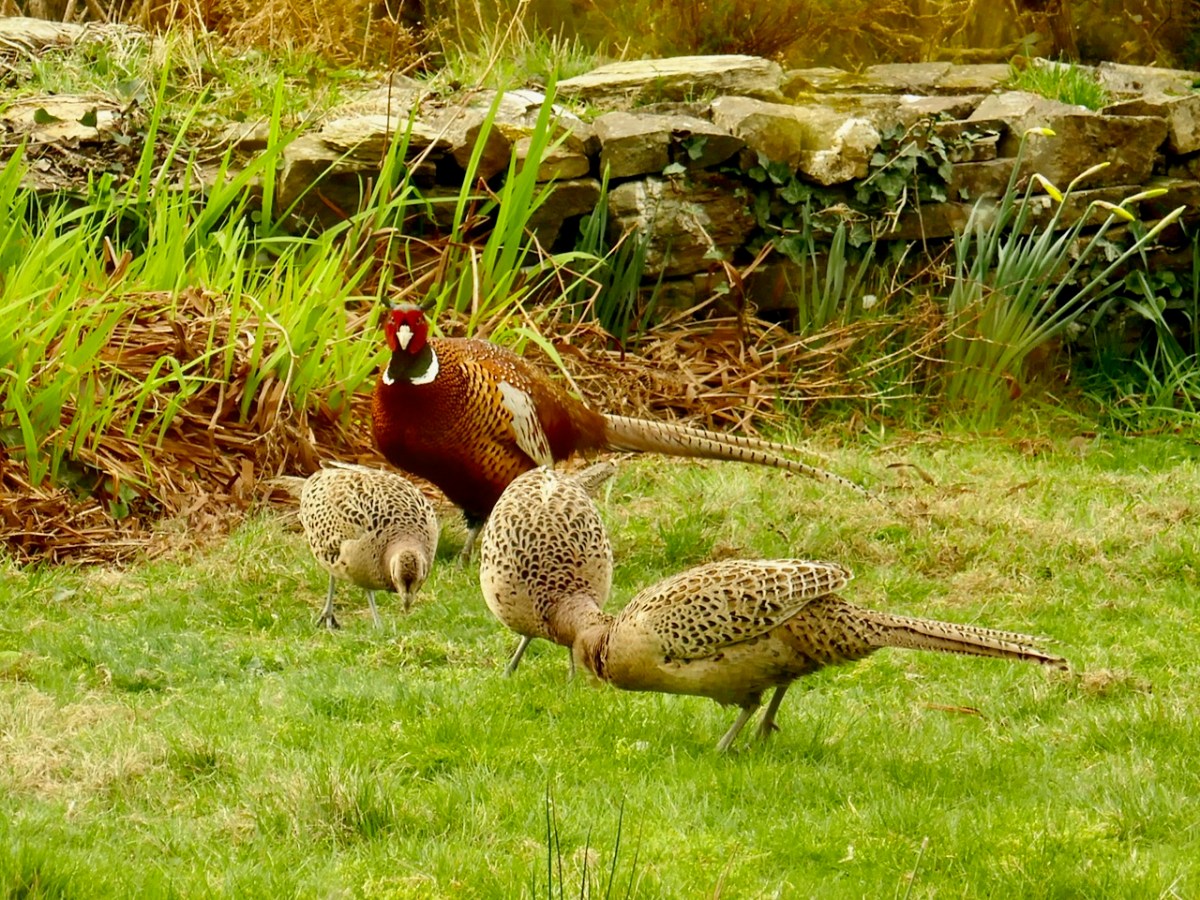
Although we have kept no pets, we are far from deprived of the company of animals. Finbarr the Pheasant, for example – our heads tell us it cannot be the same bird all these years, but our hearts just think that we have looked after him so well that he has adopted us. He has had up to four wives – there are currently two and it has kept him busy, herding and courting them and fending off other males. All played out in front of our living room window.
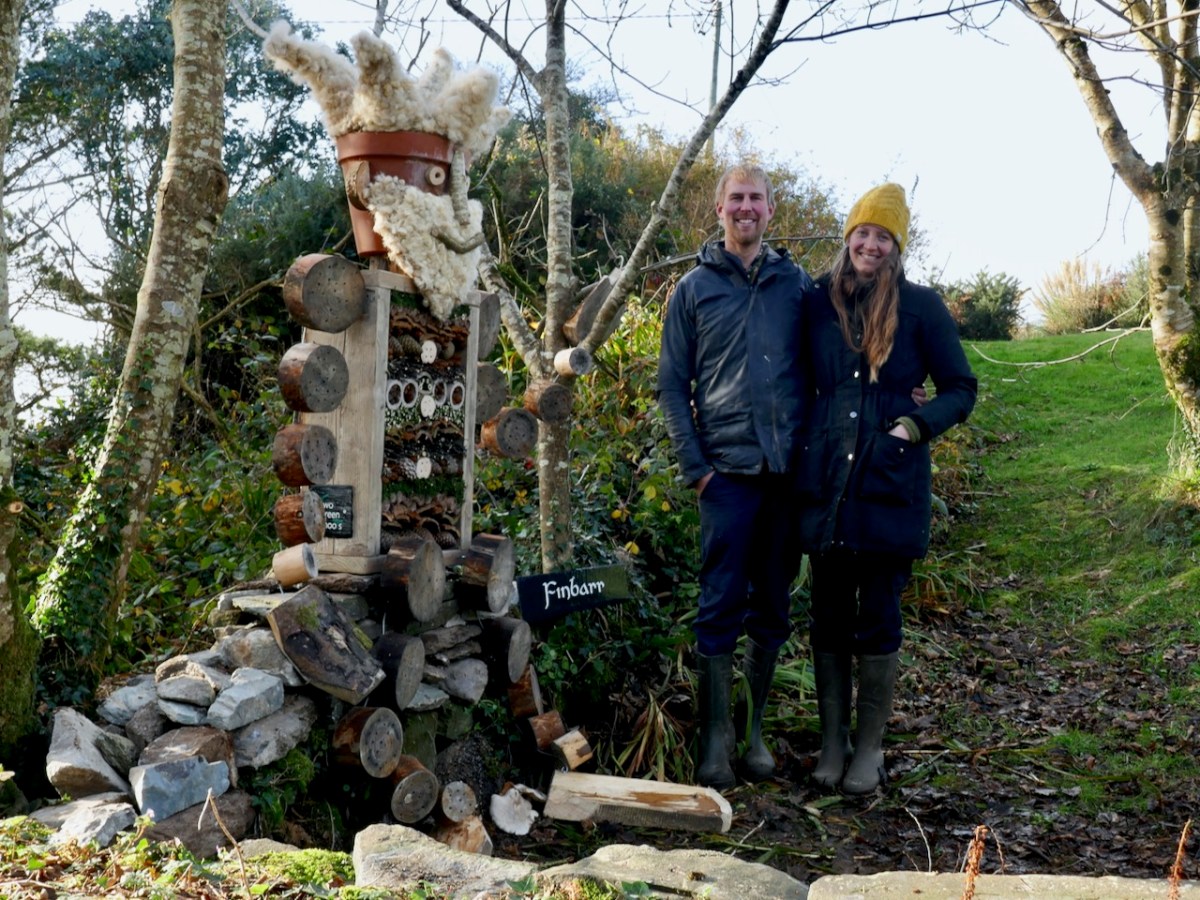
And let’s not forget our other Finbarr, Our Lockdown Mascot, the bug hotel designed and installed for us by Kloë and Adam, of Two Green Shoots. He’s still there – say hello if you pass.
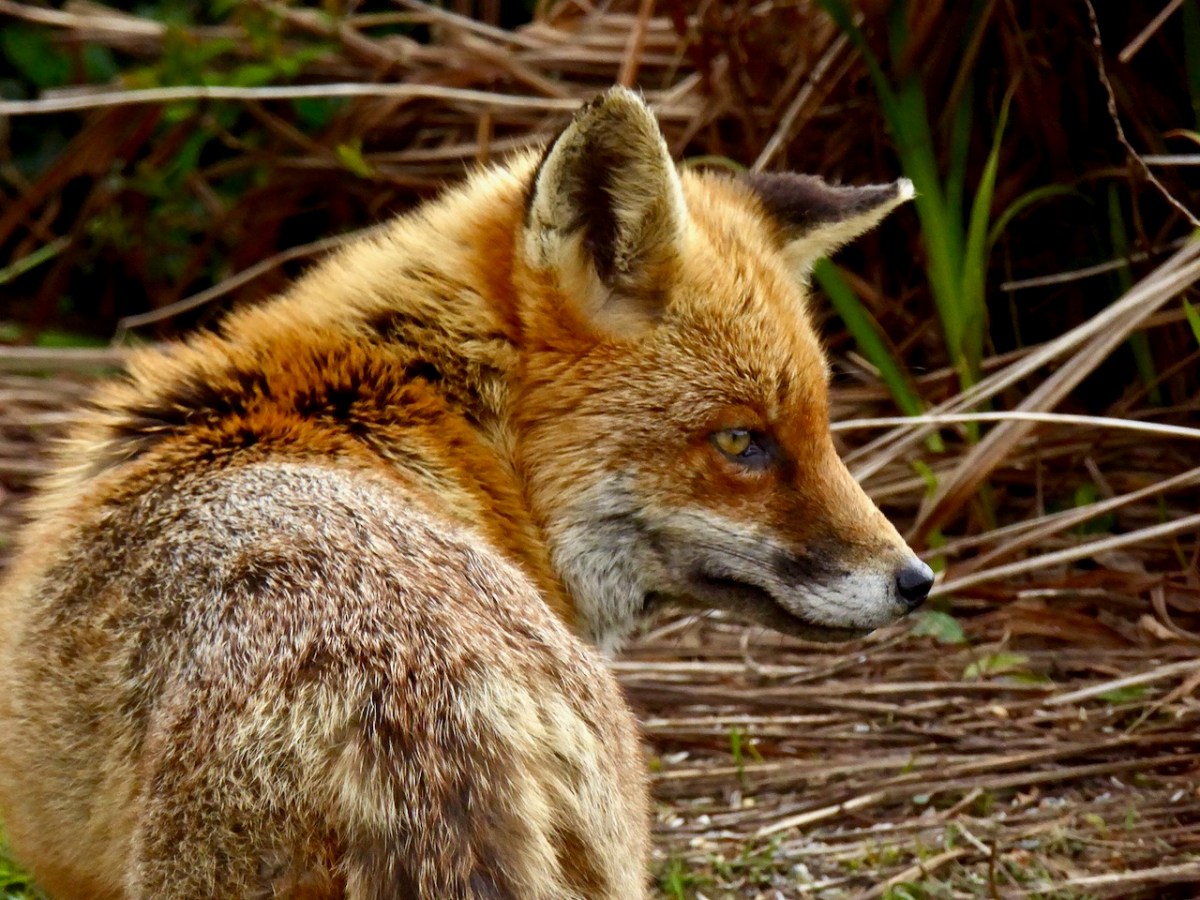
And we still miss Ferdia – the friendly fox who would eat out of our hands (anything except broccoli) and who loved to sit on the terrace while Robert played his melodeon. Occasionally another fox trots by but none have taken Ferdia’s place as a constant visitor.
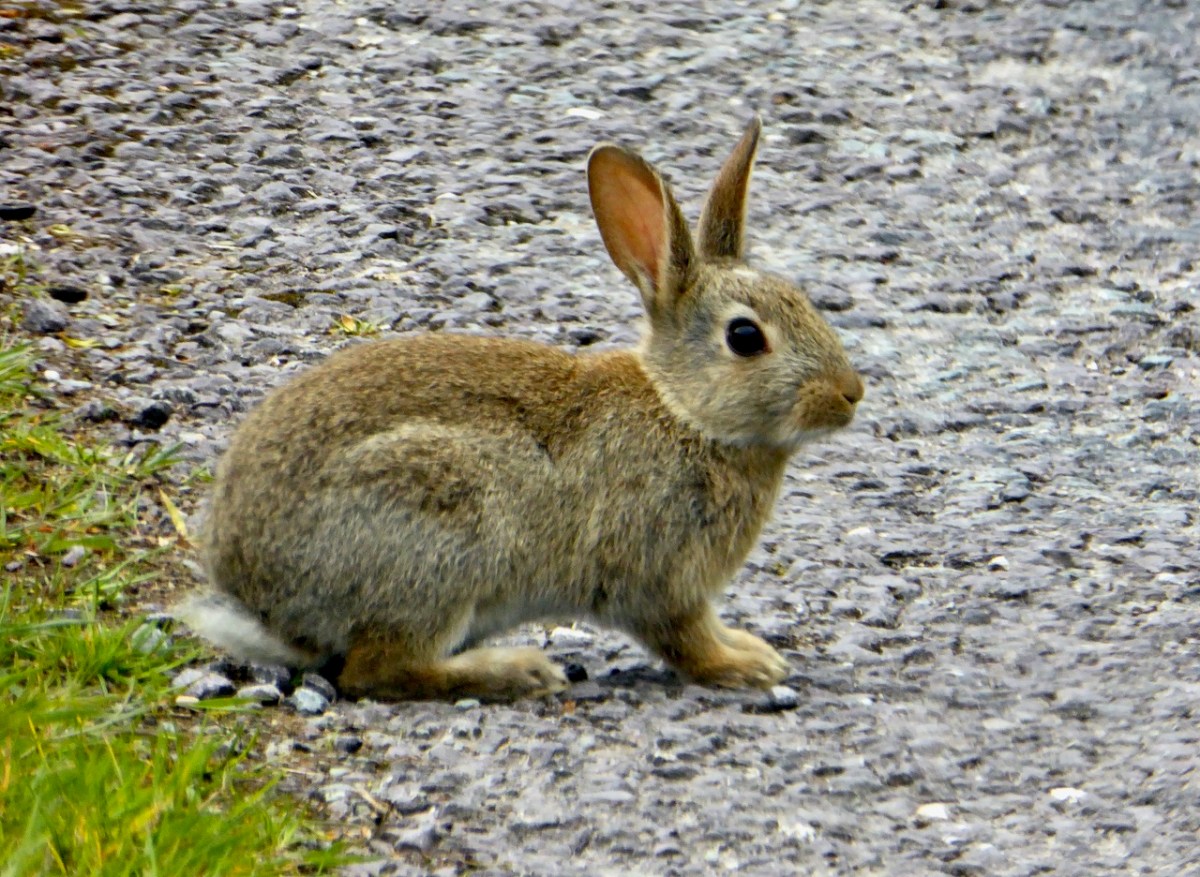
If I come home in the evening, rabbits are leaping into the hedges as I drive in. When I throw open the curtains in the morning, they are sitting outside my window.
Robert was a hare fanatic, and we did have a brief dalliance with a young hare we called Berehert (below), but they have become quite rare now in our neighbourhood.
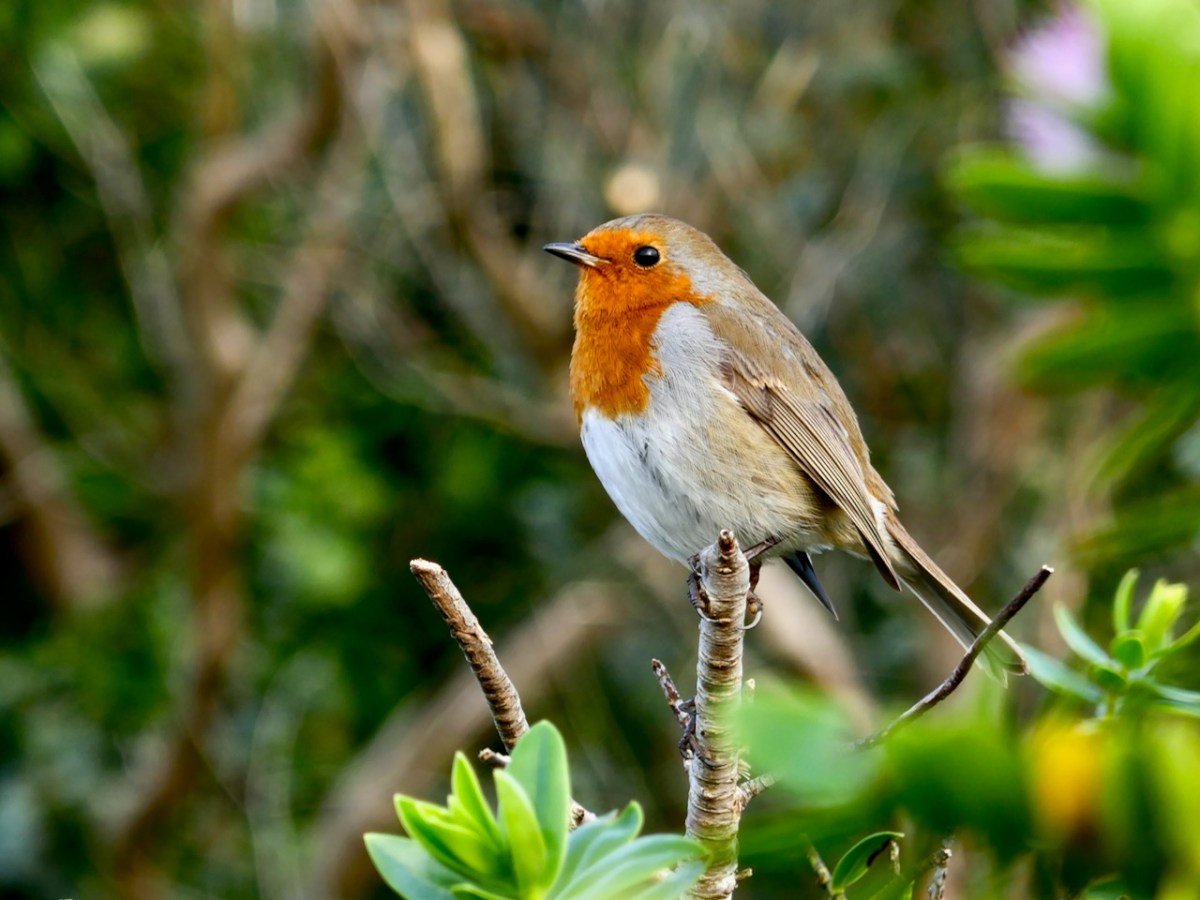
Small birds come to the feeder, and there is a robin that I am this close to coaxing onto my hand.
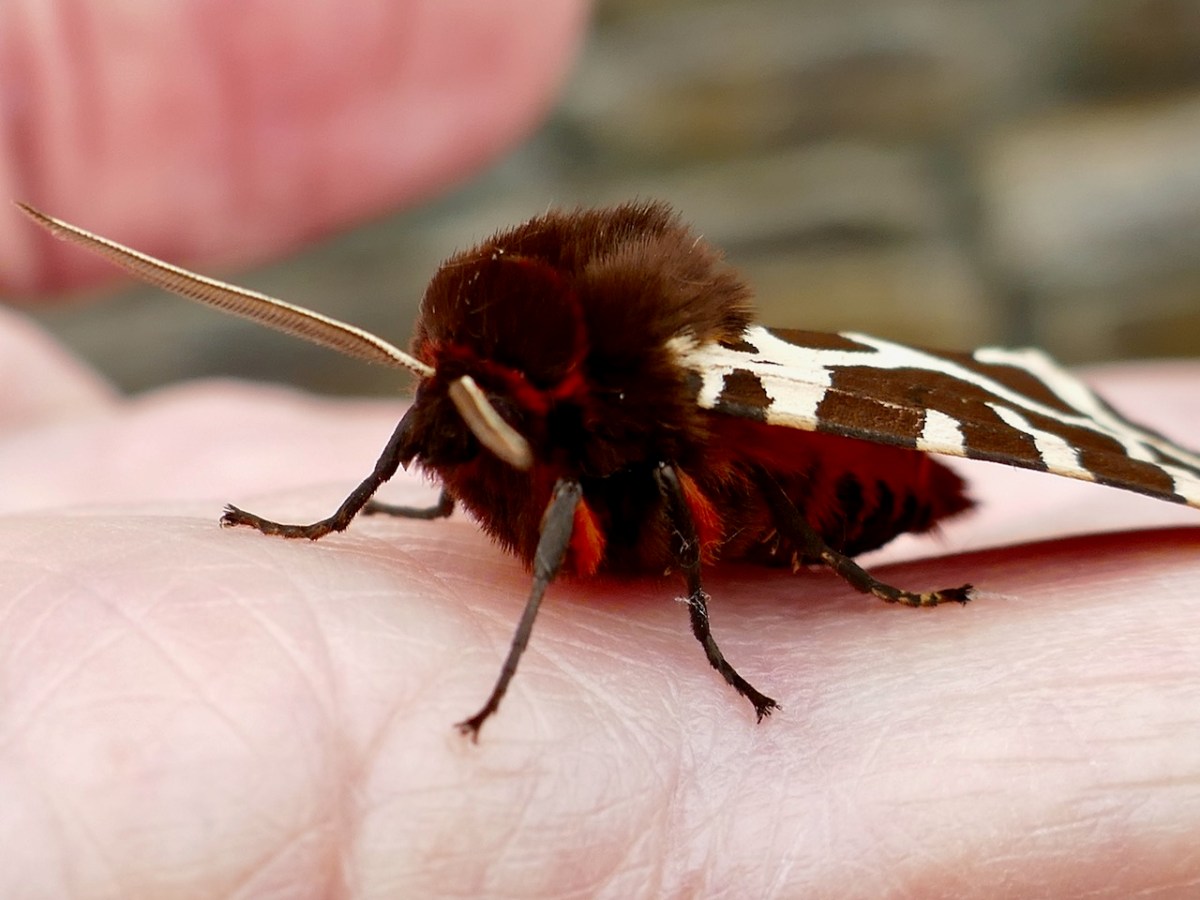
And although we don’t see them, the moths are everywhere – from hardly visible against a stone wall to spectacularly coloured.
It has been a joy to discover the beauty and variety of these silent creatures of the night.
Every now and then a bird or animal will appear for a brief time to grace us with its presence – like Spiro the Sparrowhawk, who perched outside our bedroom window and cased the joint before swooping off low over the back wall.
Or like this bundle of ferocity – The Wild One – a stoat who terrorised the pheasants, despite being a lot smaller than they are.
One acre – that’s what we have here. I documented the wildflowers that have popped up all over the acre, both in my wildflower patch and just on the land on general.
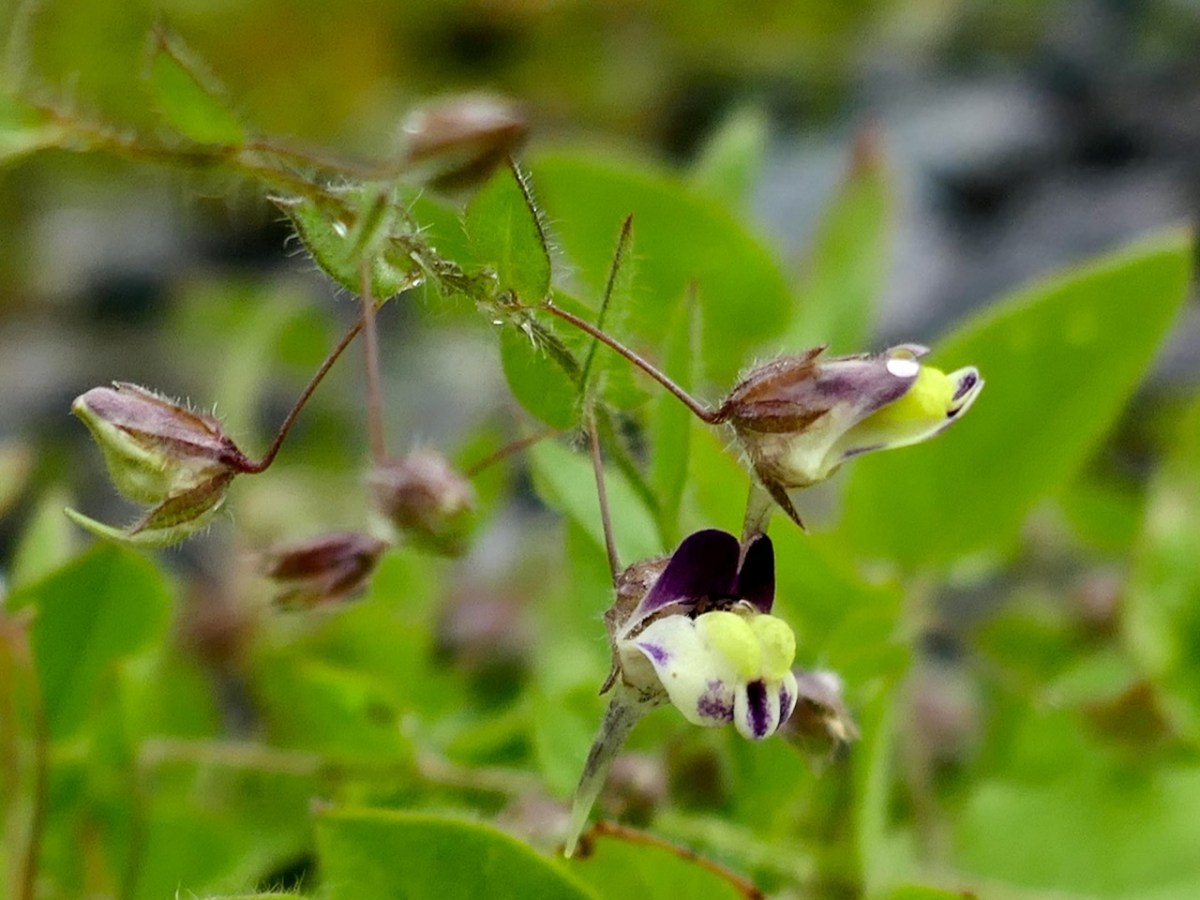
The chamomile is spreading and every now and then, something really unusual shows up – like this tiny sharp-leaved fluellen that has managed a toe-hold in my driveway and came from God knows where (below). My slideshow, Lying in the Grass, will give you an idea of the variety of plants I have found here.
The storms that sweep through in the winter can do some damage. When we moved in, we had the gorse jungle in our front haggard dug out. All that did was expose our pine trees to the winds and each of them toppled in turn.
The lovely wall surrounding our property also gave way over time, leading us to get Diarmuid to come and Build a Stone Wall. Watching him, we discovered that this was a craft and a skill that hasn’t changed in hundreds of years.
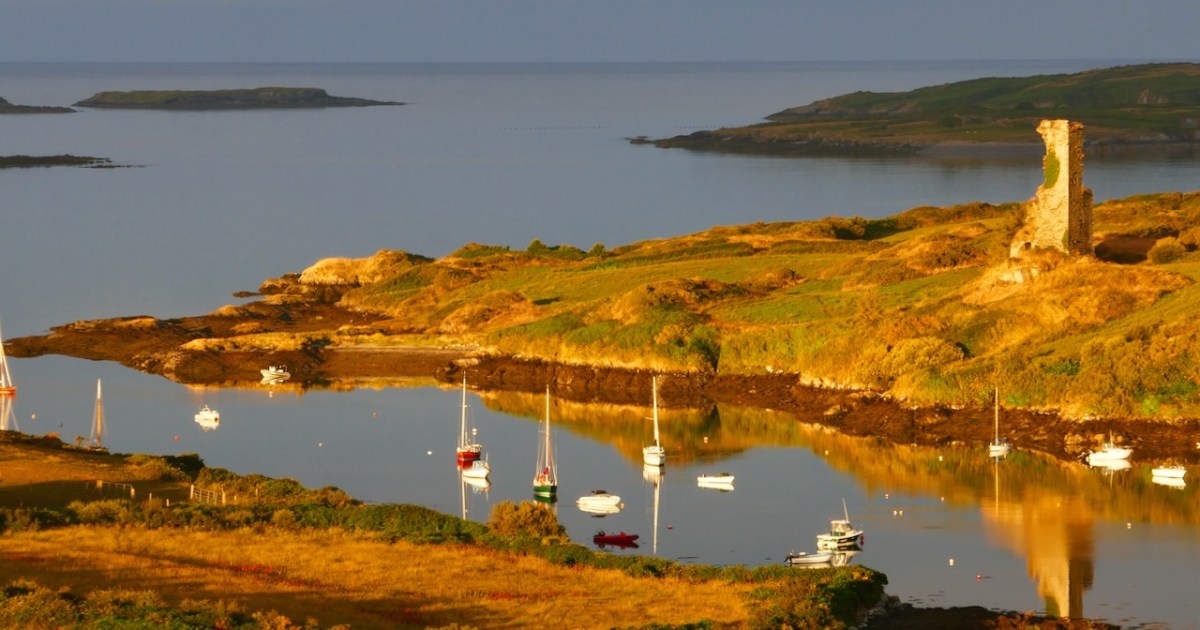
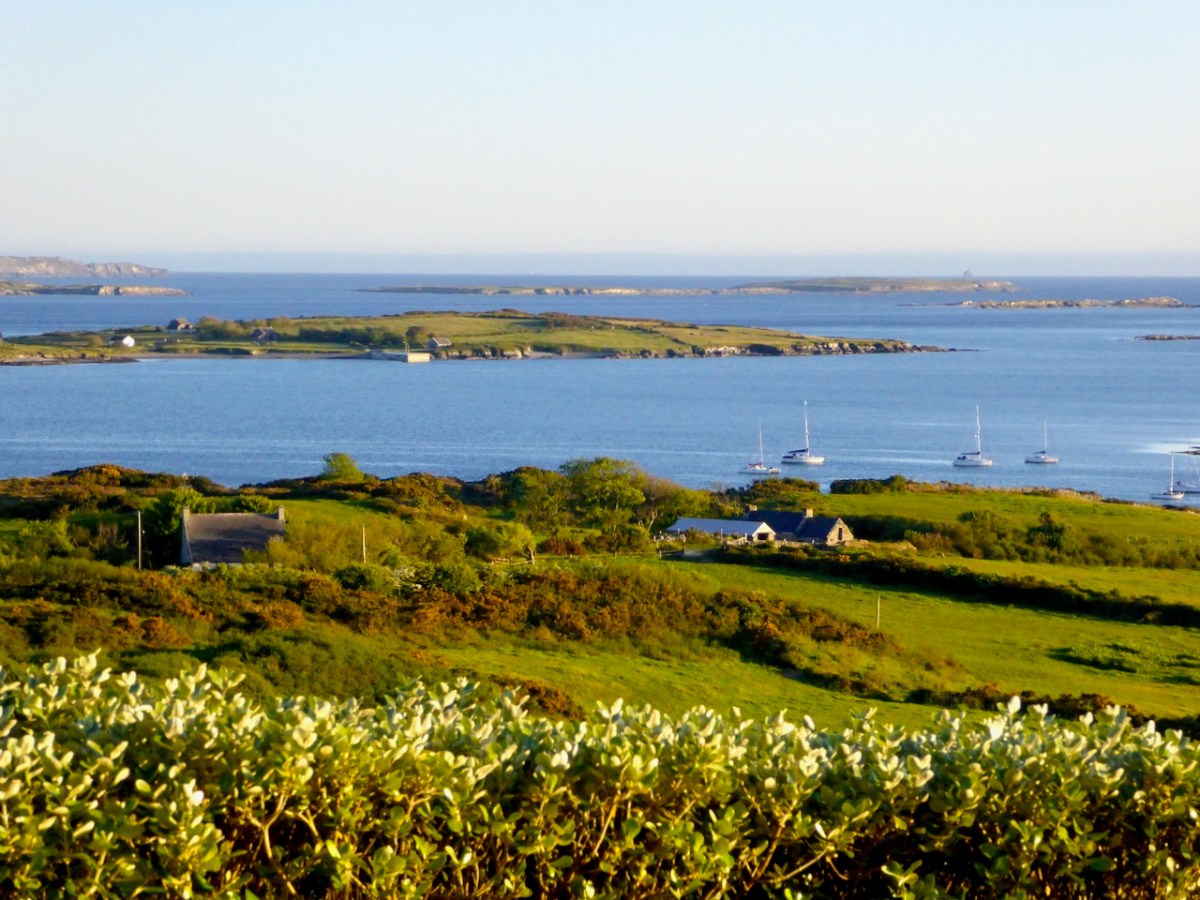
I will miss our amazing view across Roaringwater Bay. We can see several medieval castles, the Baltimore Beacon, the Fastnet Rock, most of the islands. We hear The Roaring on a calm day after a storm. We see the sun going down further and further south each day as the year turns, sometimes sinking into the sea and sometimes dropping behind an island or a hill.
And even though Robert is gone almost two years now, I still find myself saying we, because his presence is so palpable in this place that he loved, and all my experiences here were shared with him. I know his benign spirit is coming with me to Schull: he would have loved the new house and totally approved of my move.
And yes, don’t worry, his Finola Window is coming with me
This is a companion piece to Lying in the Grass. That slideshow was shot in May three years ago, all the photos taken in my own garden within the previous week, and all native wildflowers.
This time, all the shots were captured in one day, July 18th, on a visit to Barley Cove with my friend and fellow nature-lover, artist Damaris Lysaght. The purpose of our visit was to monitor a rare plant, Dodder (below). This is one of the very few places in Ireland in which it grows, parasitising on the roots of the Wild Thyme, and mainly visible as a twisted mass of reddish stems. We were not sure if the tiny flowers, looking like miniature cauliflower heads, were about to flower or had flowered already.
At this time of year the dunes at Barley Cove are a carpet of wildflowers. Many of them are tiny so you have to get up close to make their acquaintance. Photo taken by Damaris.
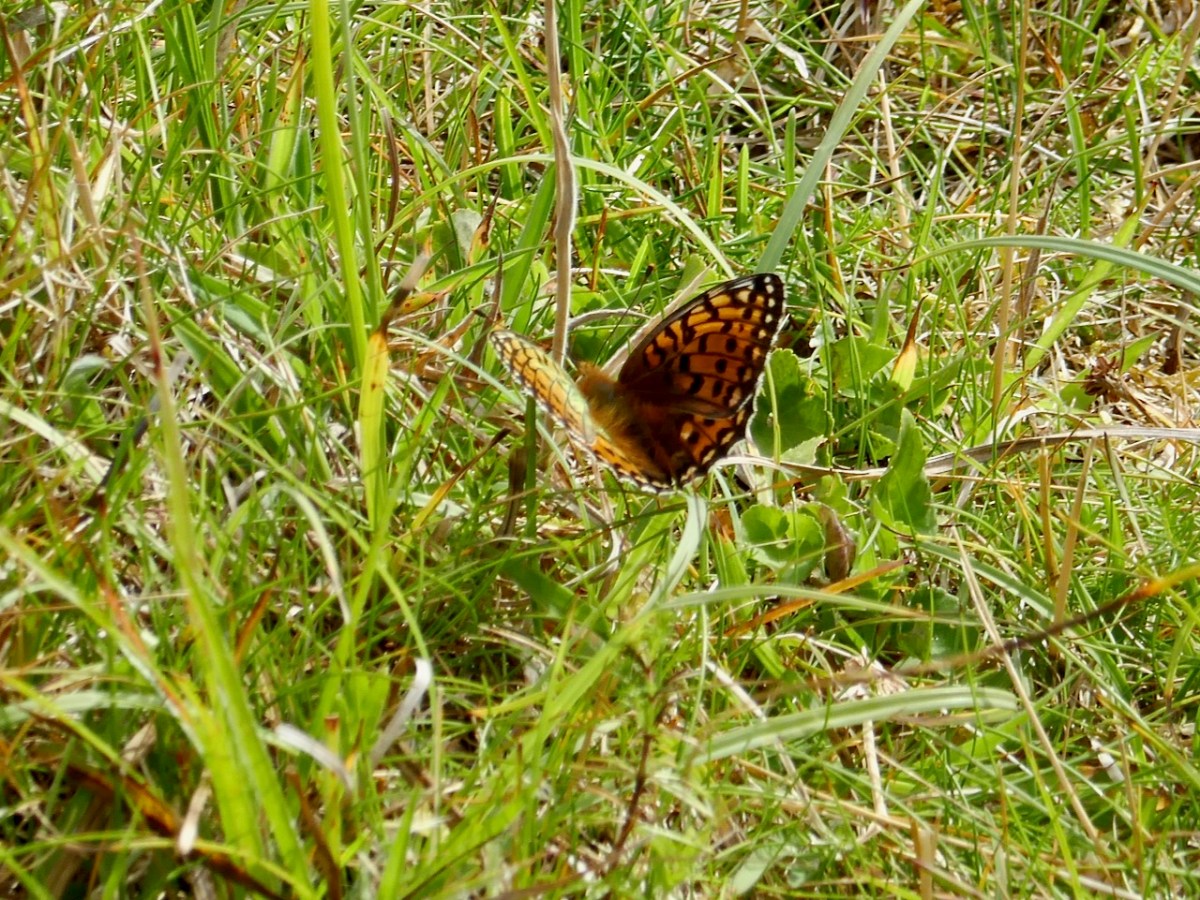
Damaris had another reason for getting closer. We were lucky to catch a Dark Green Fritillary flitting from spot to spot and Damaris, a butterfly expert, figured it was probably laying eggs on the basal rosettes of the Common Dog Violets that flourish on the dunes. In the last photograph of the slideshow she is trying to see butterfly eggs – a task that defeated even her!
We’ve had a long cold winter and it’s raining, misty and downright bleak outside as I write this. But there have been bursts of sunshine here and there and when I can catch those moments I am out with my camera to see what I can find in the trees and the grass. The land is waking up. This video is a compilation of what I’ve seen in the last week, in my own garden and along the boreens around me.
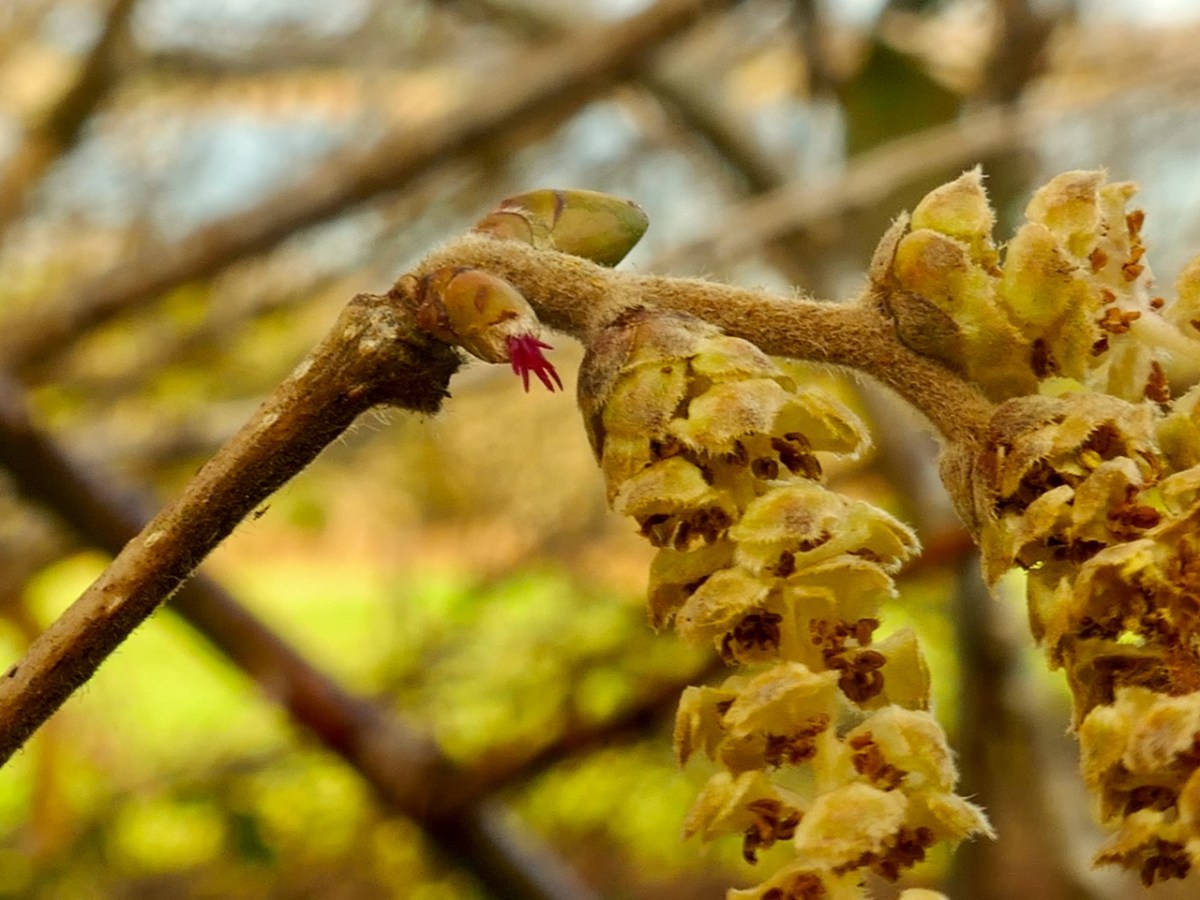
Here’s what I saw – all native and all typical of our West Cork flora. Hazel trees produce both male catkins – easy to see – and tiny red female flowers – very difficult to see and easy to overlook, but very pretty little pincushions when you see them.
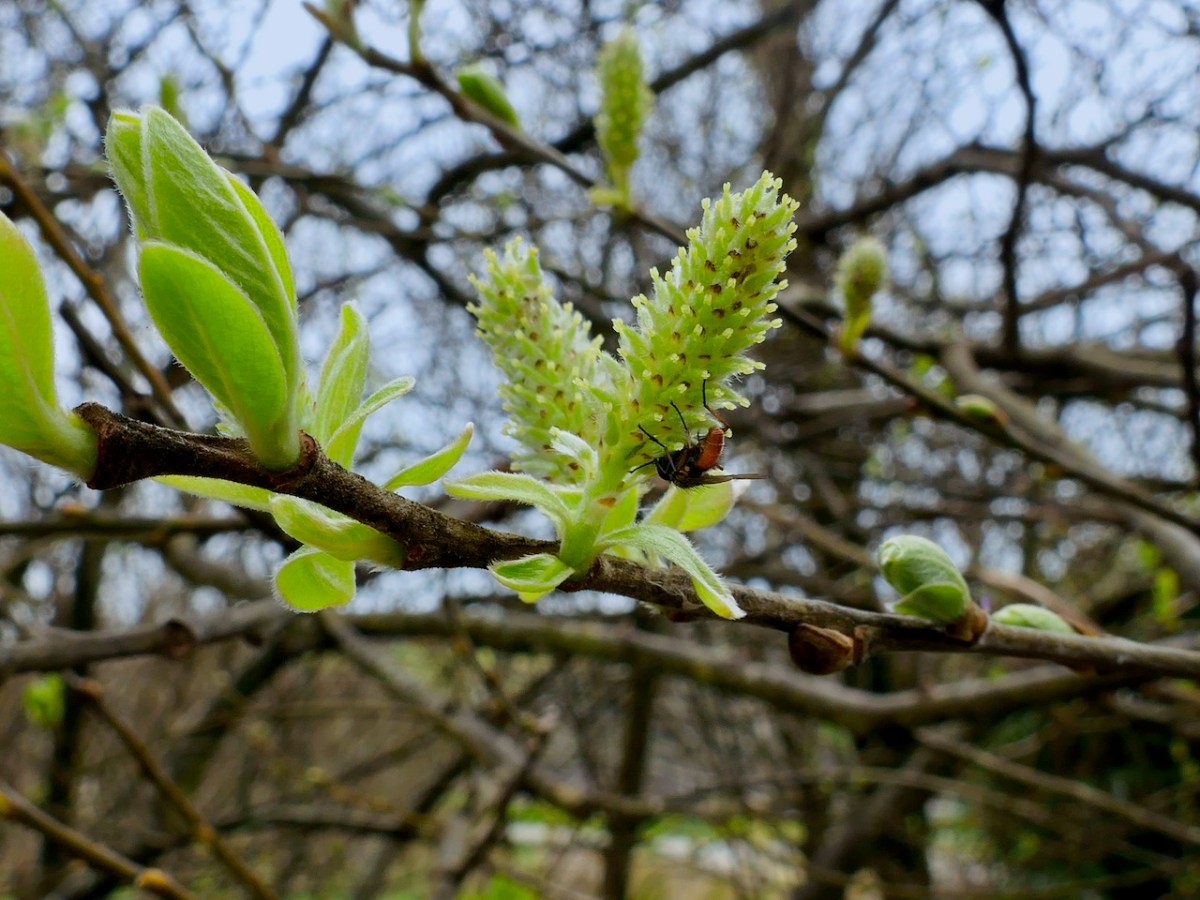
Willow trees, on the other hand are either female or male and depend on wind and insect to pollinate one from the other. The male trees are the ones who produce the cute little pussy willows, which explode into yellow flower heads as they mature.
I only have a female tree, with its own distinctive catkin-like spiky flowers. Fortunately, as you’ll see in the video, when I was photographing it, it was visited by a Great Tit and a White-tailed Bumble Bee, all helping (along with the breezy weather) with the pollination.
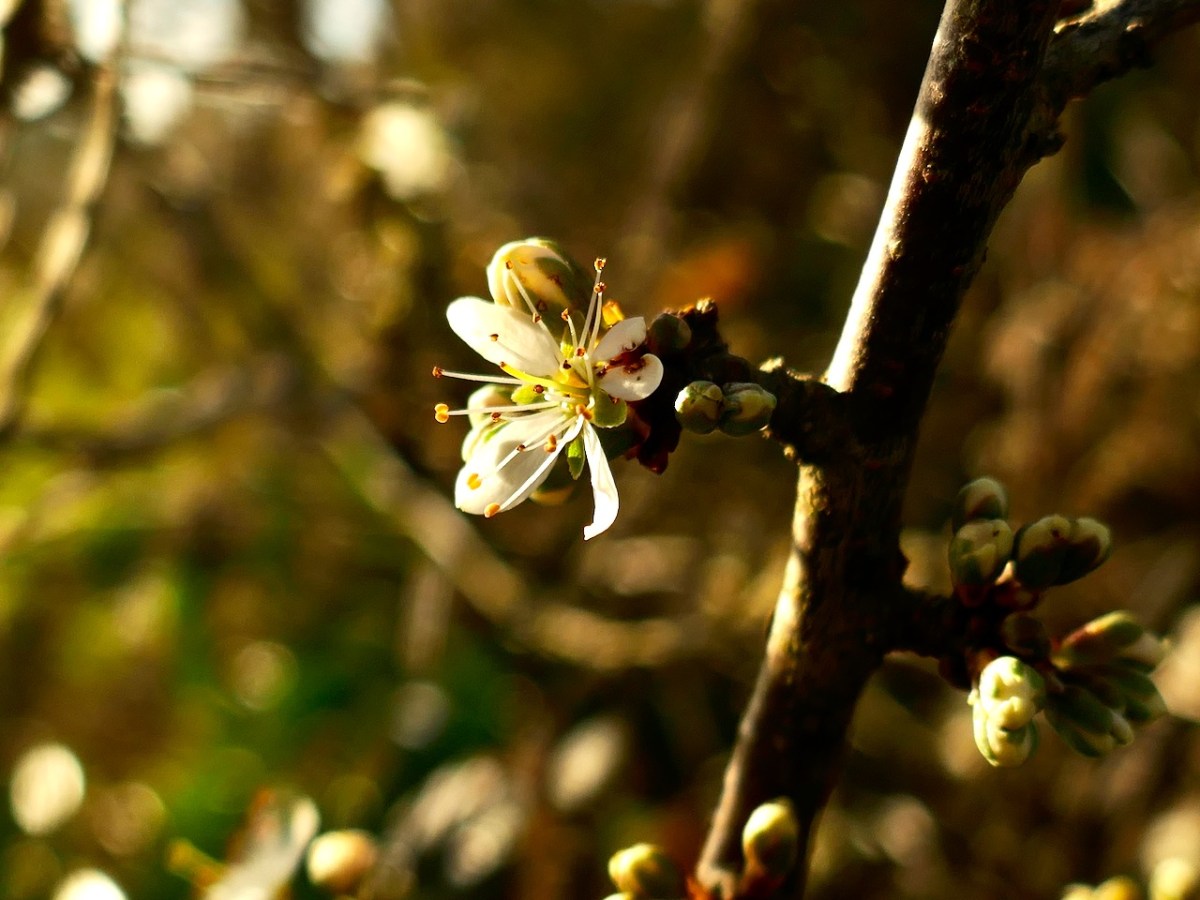
The blackthorn trees are one of our true harbingers of spring – the flowers emerge before the leaves, looking bright and beautiful against the dark bark.
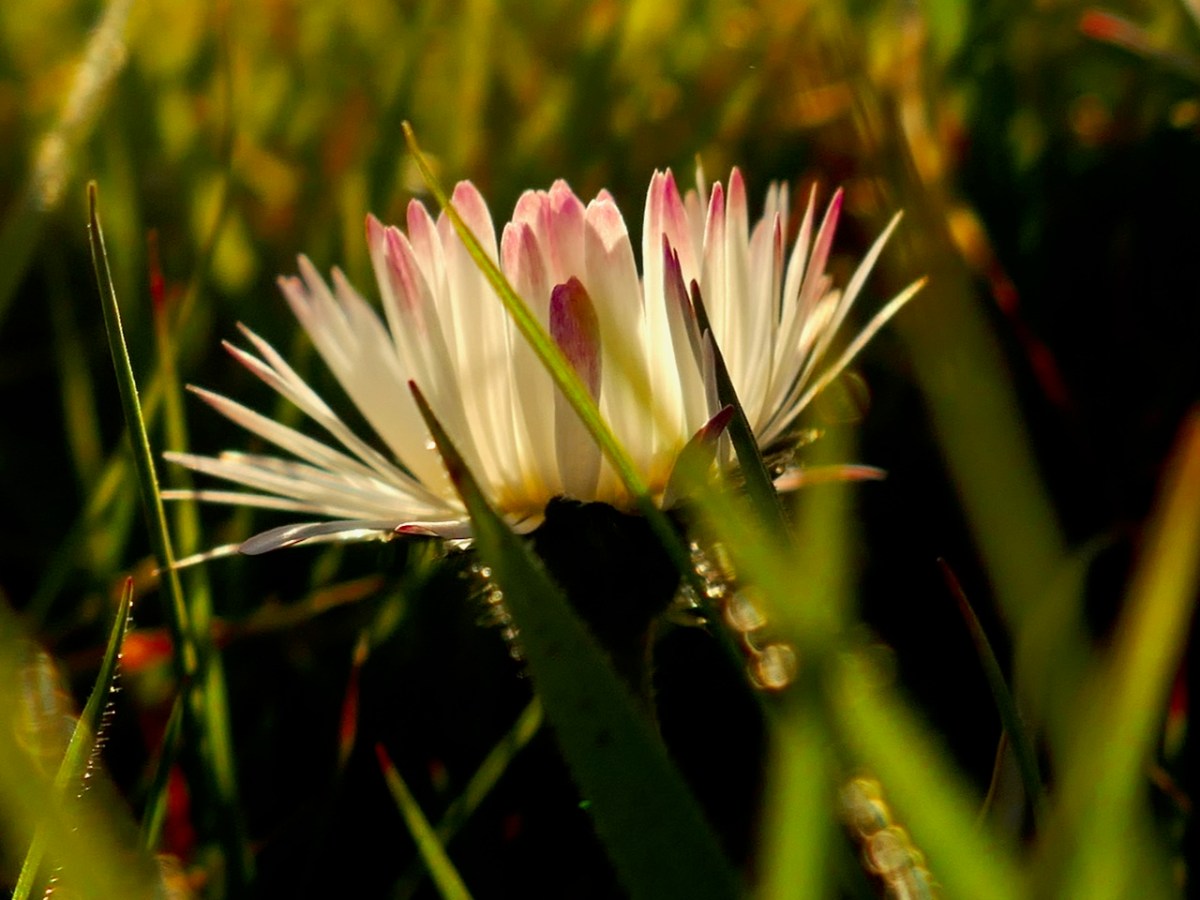
Some Staghorn moss is followed by two Dandelions and then some Lawn Daisies, Dandelions come early in West Cork and don’t last long – they are soon replaced by Cat’s-ear in my lawn. The daisies are a constant delight all summer long.
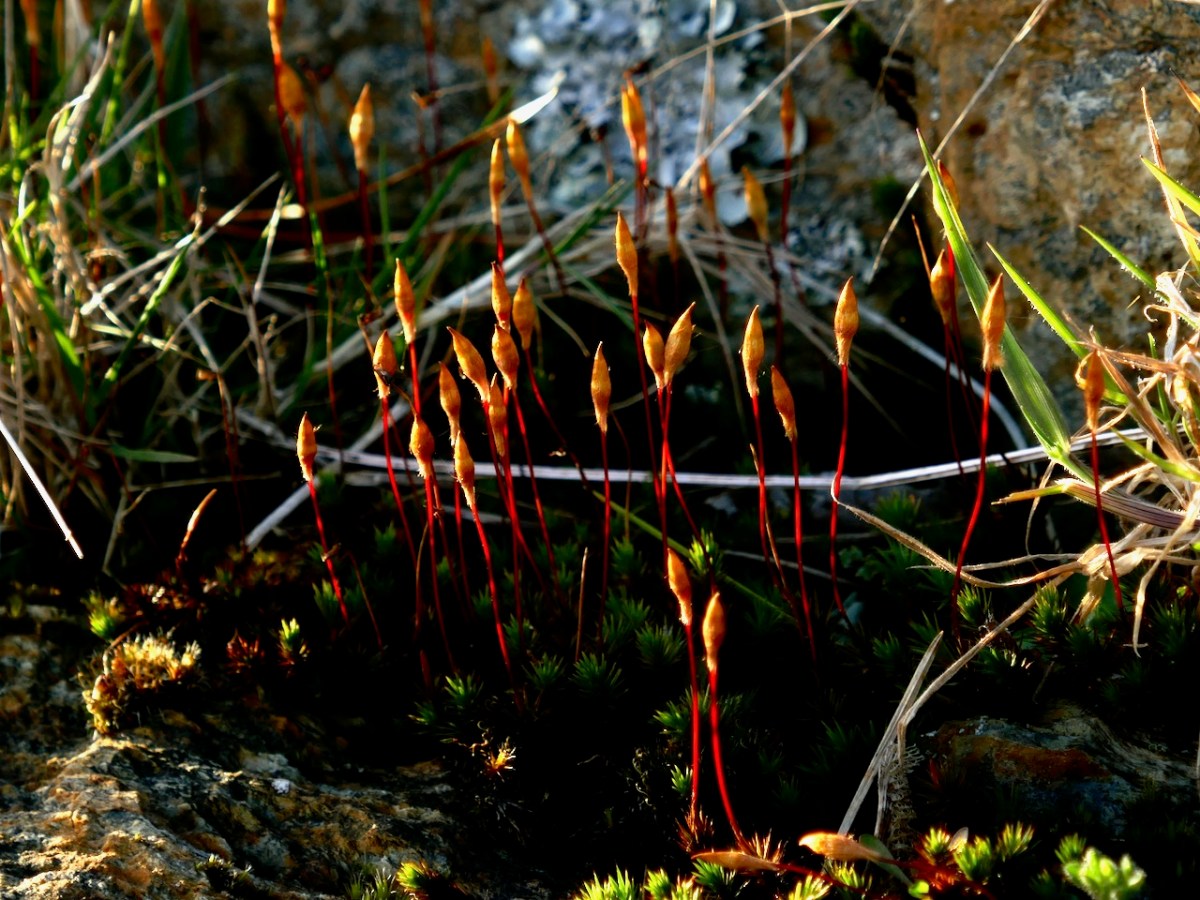
Another early spring wildflower is Common Dog-violet. This one really rewards getting up close. See my lead photo for this one. Finally, a couple of shots of Herb Robert emerging from a stone wall, followed by photos of Juniper Haircap Moss, which has established a little colony in the crevices of the rocks that line my driveway. The spore capsules sit atop tiny bright red stems. That’s my lead photo for this post, and the shot below.
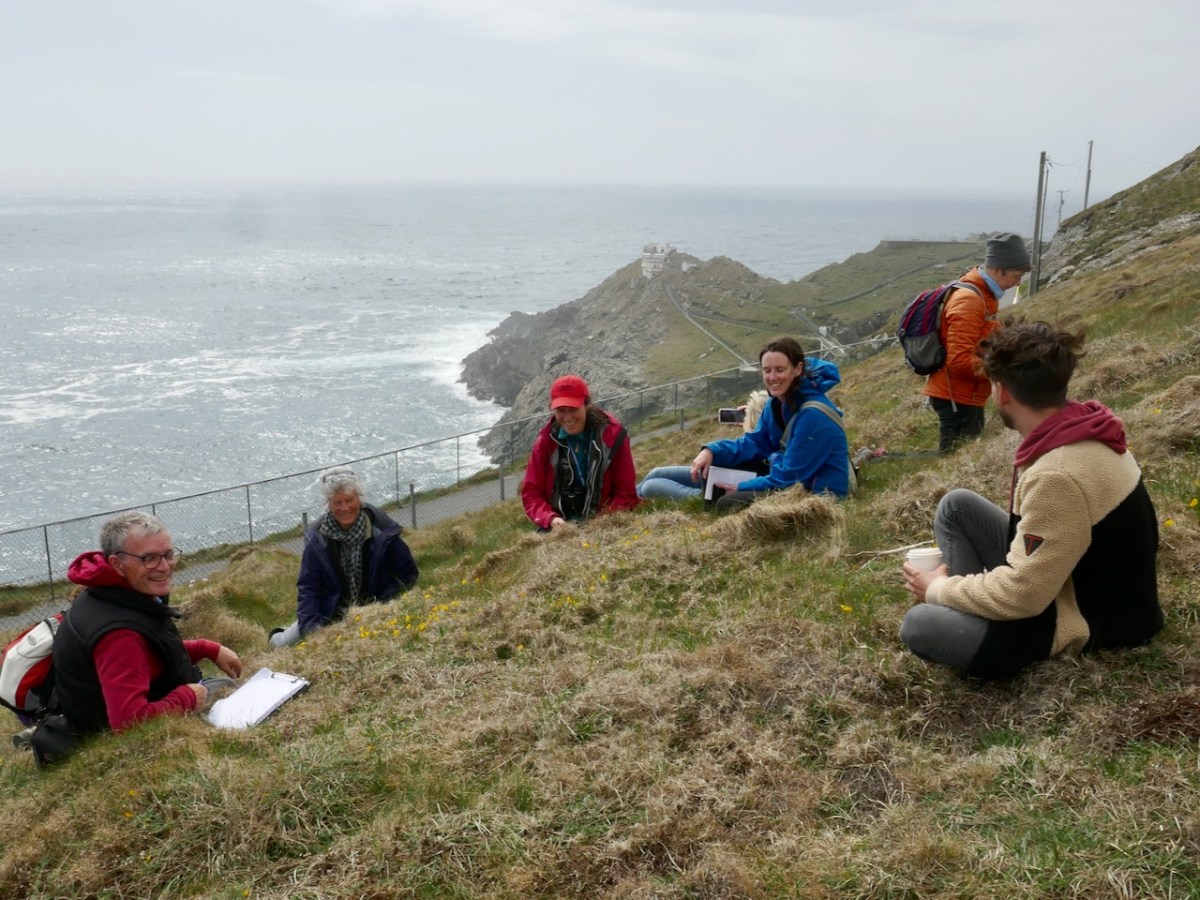
A publication of the Botanical Society of Britain and Ireland, and written in an accessible style, this vital report, a summary of a much longer book, charts what has been recorded of the changes in plant diversity in the last 20 years, based on the hard work of hundreds of recorders in the field. I’ve had the privilege to participate in a Rare Plant Monitoring Workshop (below, on Mizen Head) and every year I monitor three rare plants for the National Biodiversity Data Centre.
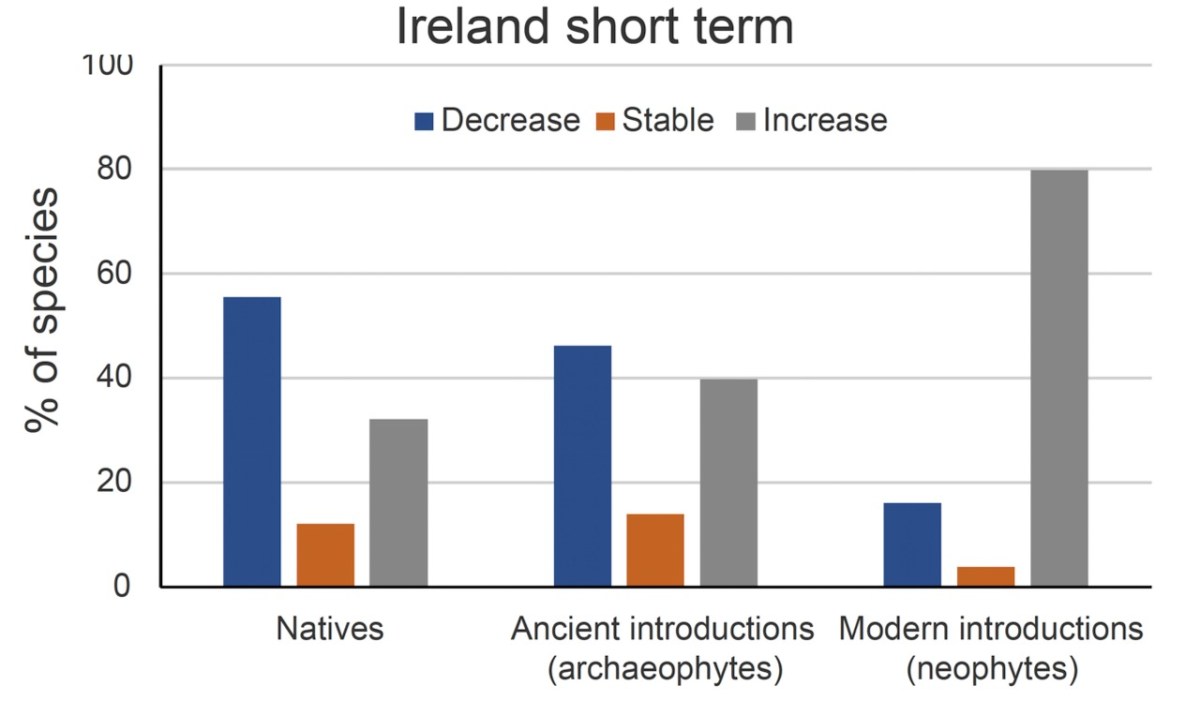
The results are, as you might expect, not happy. Here is a bar chart, for example, showing how Native Plants, Archaeophytes and Neophytes are trending.
The chart shows that more than half of all natives have decreased, whereas the overwhelming majority of neophytes have increased. These figures are based on short term trends, i.e. since 1987.
Why does this matter?
The decline in awareness of plants has occurred when plants need our attention the most. Globally we know that 40% of plant species are threatened with extinction. Many insects and other forms of life depend on specific plants, so the extinction of plants leads in turn to the extinction of many other things. In the Ireland Red List, 18% of plant species are in one of the threat categories and a further 9% are on a waiting list because of insufficient data. Time is not on our side.
The report looks at examples of plants which have increased or decreased and our own experience in West Cork will readily confirm its findings. Sitka Spruce, of course is one of those that have increased enormously, but here are four other examples from my own files.
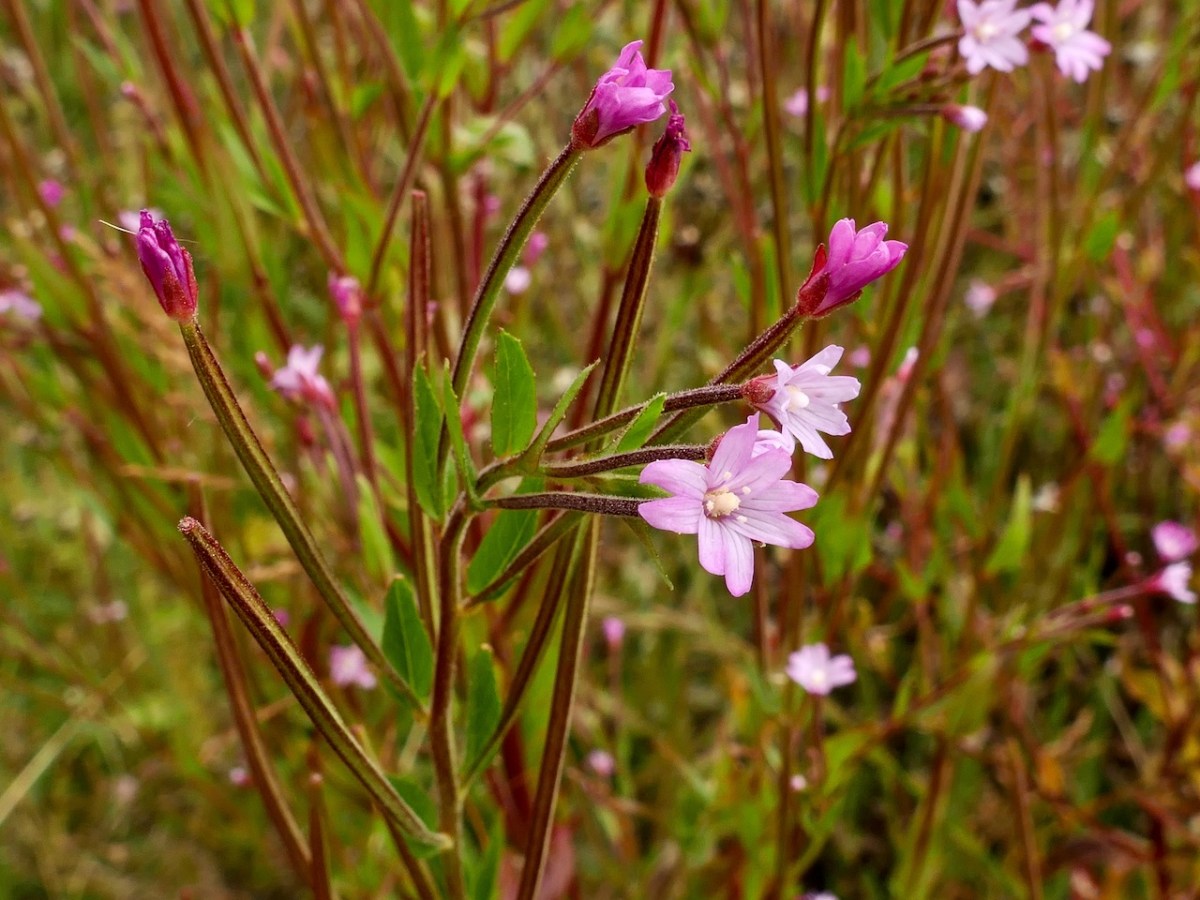
American Willowherb, first recorded in 1958 and now everywhere, including my own garden.
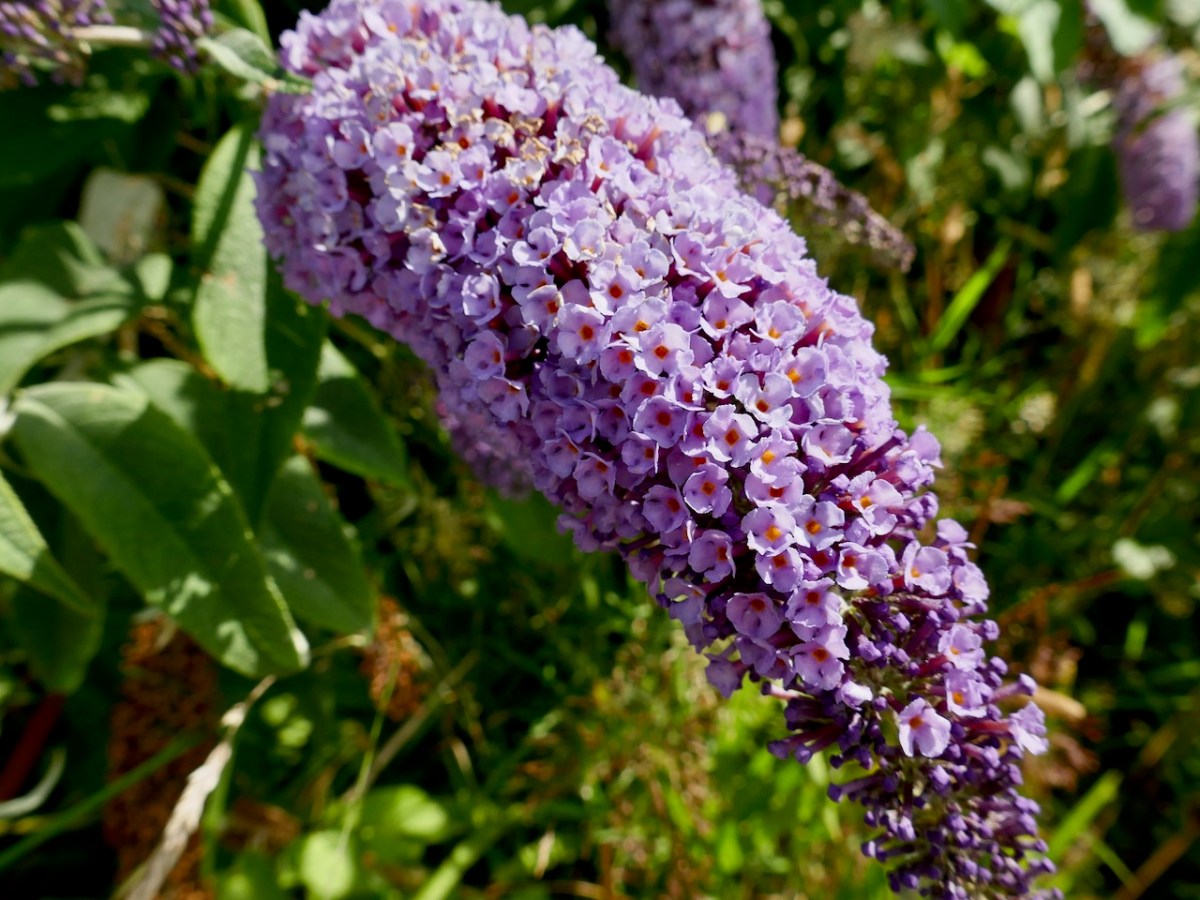
Butterfly Bush has spread rapidly since the 1960s. Butterfly Bush may seem benign but like many other introduced species there is a dark side. First of all, as Tony O’Mahony points out in his Wildflowers of Cork City and County, it’s quite invasive and can take over and crowd out native species. The roots can do significant structural damage to the very walls it depends on for survival. More serious is the charge that, while it provides nectar for butterflies it is not a butterfly host plant – that is, one that butterflies can use to deposit their larva, which will then feed on the leaves. According to a spokesperson concerned about the destruction of chalk grasslands at Folkestone Warren in Kent: If left uncontrolled, then buddleia and other shrubs would have engulfed the chalk grassland. Clouds of butterflies used to be seen there, but now only common species can be spotted and even these are in decline, with the rarest ones disappearing altogether. Buddleia was eliminating butterfly habitat by killing off everything else, and while the shrub provided food for adults and larger insects, other plants were needed for butterflies in their larval stages.
Himalayan Balsam, a beautiful but highly invasive species that can colonise waterways, choking out our native flowers.
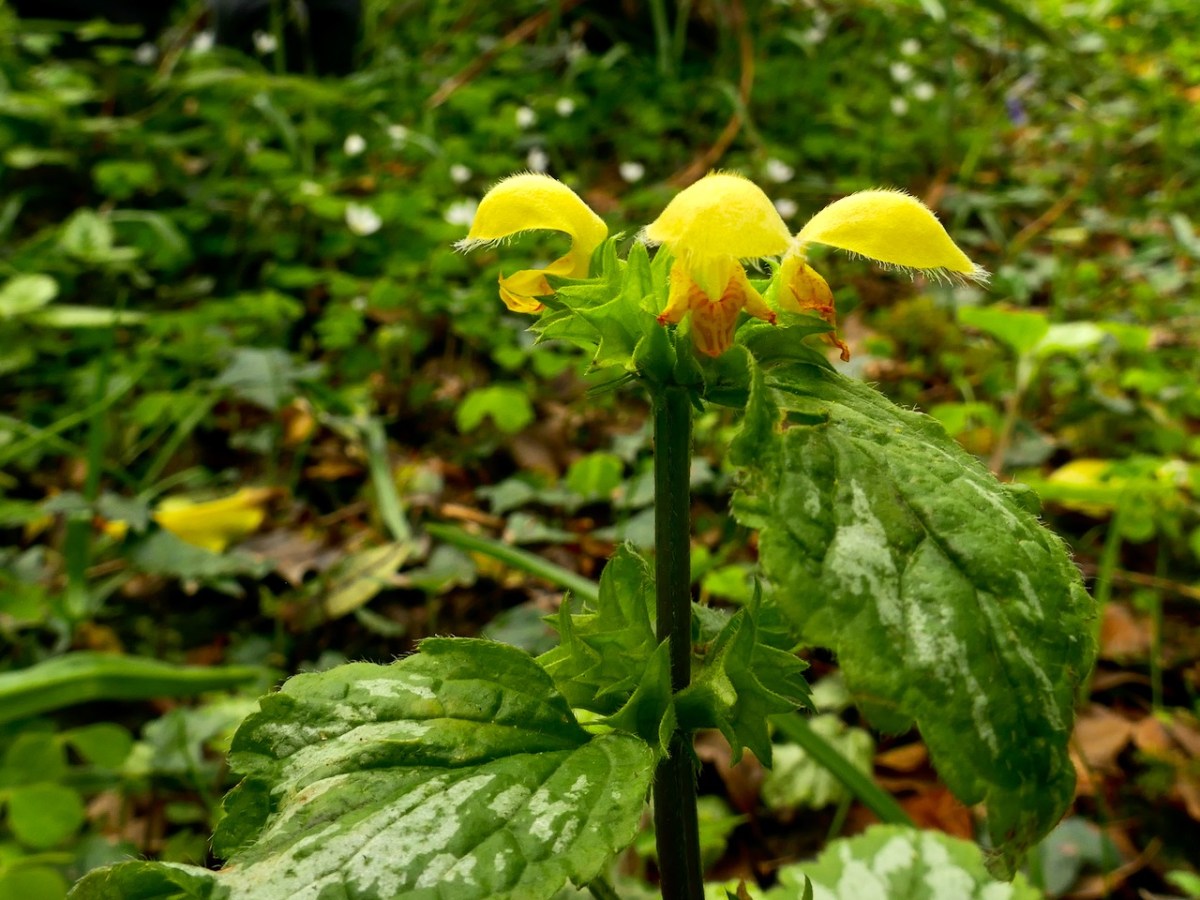
Variegated Yellow Archangel – only here since the 70s, it can carpet woods in the spring, crowding out our native woodland species.
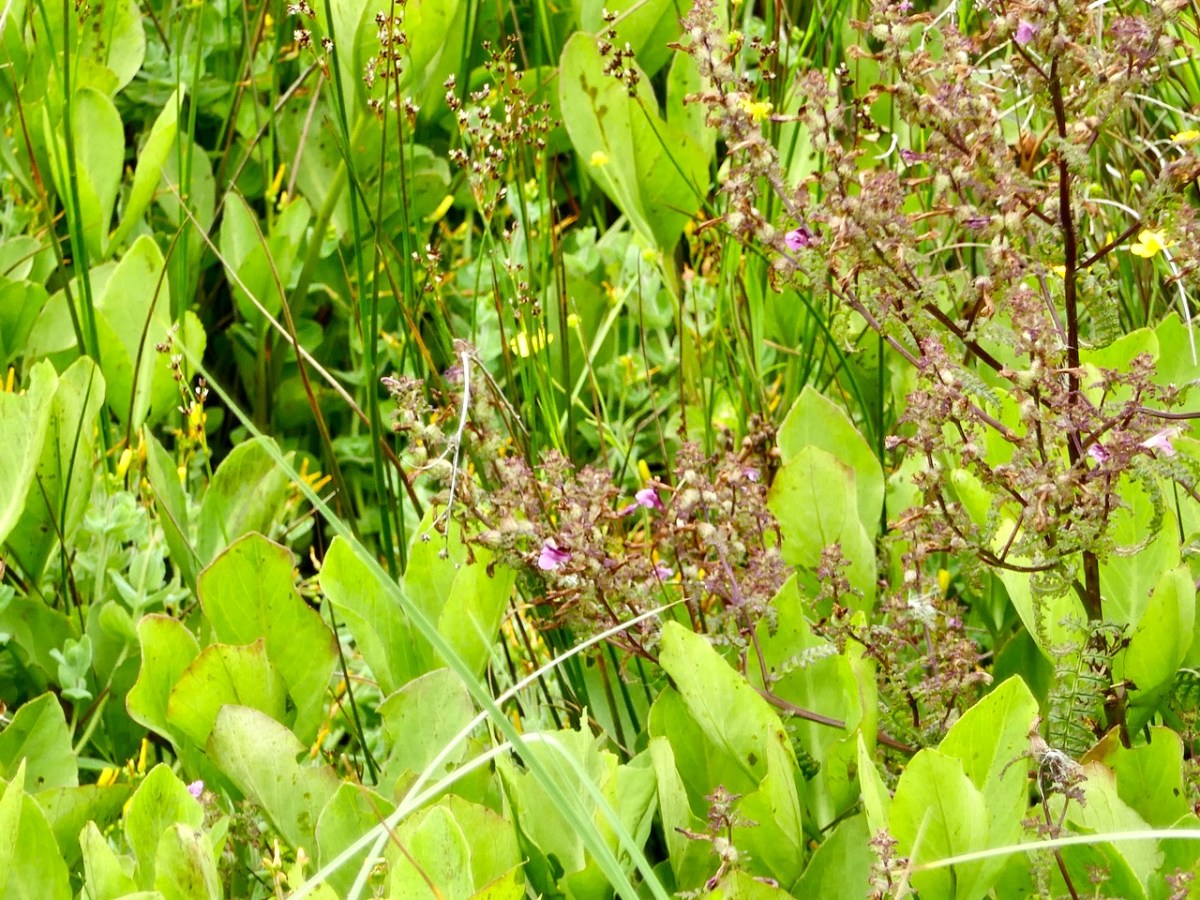
Examples are also given of plants that have decreased, and indeed most of these I have never seen, such as Agrimony, Corn Mint, Field Gentian, Heath Cudweed and Mugwort. Two that I have been fortunate to observe and photograph before they get even rarer are Corn Marigold and Marsh Lousewort.
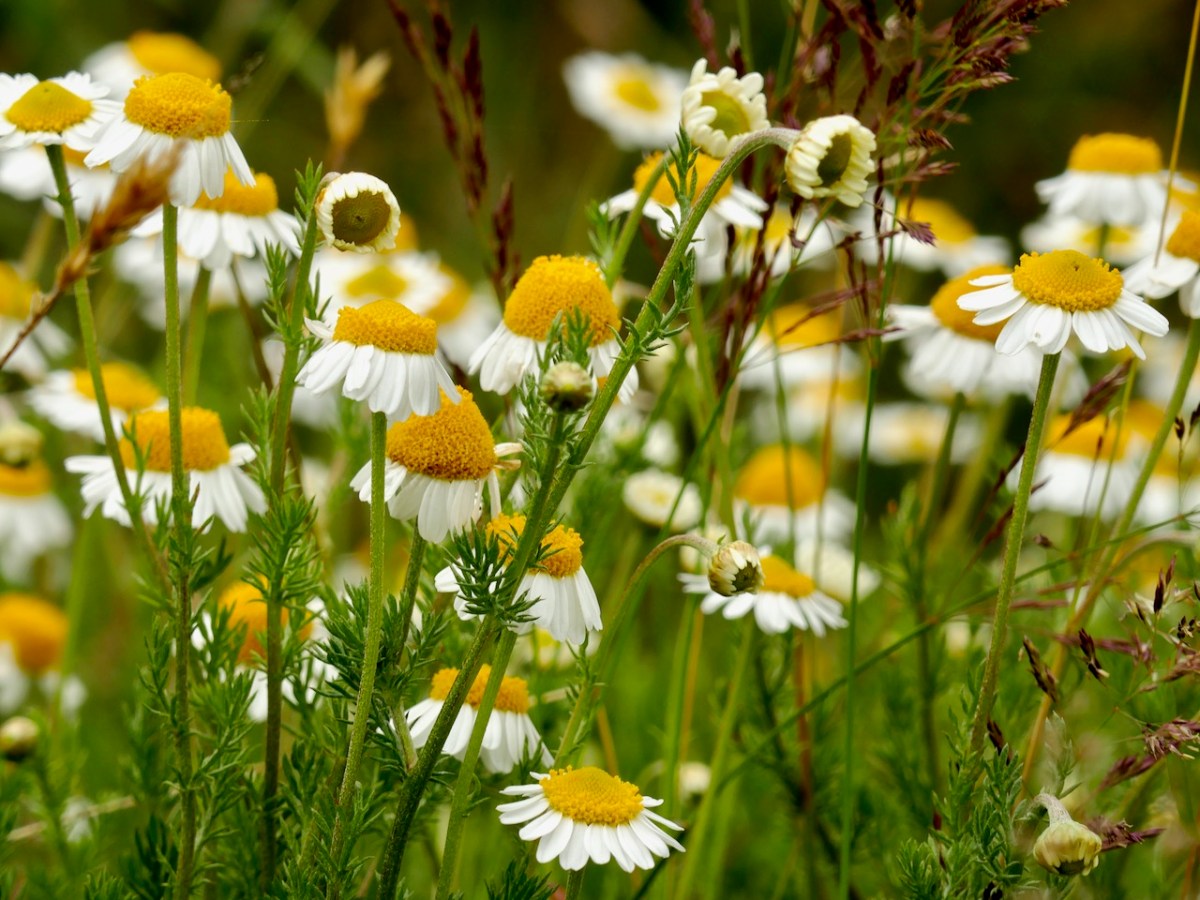
Corn Marigold – just as it is supposed to grow, on the edges of arable fields. It is hanging on in West Cork here and there and it’s always a treat to see it.
A section of the report looks at Habitat Loss and another at Climate Change and its effects on our wild flora. Reading about the loss of species-rich native Grasslands is particularly sobering.
It may seem ironic that grassland should be threatened in Ireland, but it is the loss of certain types of grassland – those on less fertile soils and rich in wild species – that is the issue. These ‘semi-natural’ grasslands supported a large number of our characteristic native species, including many orchids. They were maintained by extensive grazing, or by the cutting of hay in mid to late summer. Converting these habitats rich in species into more intensively managed grassland, or in some cases abandonment to scrub, has led to the loss of many species that could not compete in the altered environment. The underlying reason for the decline of many grassland plants lies in their response to nutrient concentrations, such as soil nitrogen levels and nitrogen deposition from the atmosphere. For the most part, native grassland species require low levels of fertility; they cannot compete successfully at higher levels. It may at first seem counterintuitive that high fertility levels could be inimical to plant diversity, but there is now a very large body of evidence pointing in this direction. We can conclude that grassland plants generally are in trouble, with the exception of those few species that thrive in highly fertile conditions.
Even in West Cork, our fields are becoming larger and hedgerows are disappearing. Wetlands, woodlands and ‘Arable land and other disturbed habitats’ are also dealt with. The report notes that while the volume of ‘weeds’ in agricultural lands has reduced, what is mostly missing are the native plants, while the variety has increased with the advent of new species. The Common Poppy, for example, might be making a comeback since it is often included in wildflower mixes. I saw the ones below in a field in Wicklow.
The report concludes with some highly charged questions.
A botanical visitor to the present day from the 1950s would see vast changes in Ireland. Changes in the landscape would stand out, with large swathes of dark conifer forest in the uplands having replaced areas of blanket bog and hill pastures. There would be larger, more uniformly deep-green fields in the lowlands, less length of hedge, more fence, and many fewer areas of marsh and bogland. Roads would be larger and straighter with verges that were mown by machine once or twice a year rather than grazed or cut spasmodically by hand. There would be fewer small potato patches, and arable crops would be less widespread and more concentrated in favourable areas.
Looking more closely, they would see that the mature conifer plantations consisted mainly of one species, Sitka Spruce, in huge numbers of even-aged stands, and had very few plants growing within them. The green fields of the lowlands would have a few plants of familiar common species like Dandelions, Docks and Chickweed along with the ubiquitous Ryegrass, but the diverse flower-rich meadows would have disappeared. Road verges would be dominated by rank growth of grasses. Pockets of wetland would be far fewer except in the West. All these changes and many more have been documented, implicitly or explicitly, by the findings of Plant Atlas 2020 and comparisons with those of its predecessors.
Our visitor might raise a flurry of questions. Have scientists been looking the other way? Why were the best habitats not protected? Who should have prevented the pollution of water bodies by nutrients? How did the idea of planting vast uniform stands of one alien conifer on deep peat take root Whose job should it have been to develop a long-term vision for Irish land-use? Were the consequences of moving towards energy-intensive farming systems foreseeable?
These are questions closer to the realm of politics than of science. Plant Atlas 2020 itself cannot answer them, but the information within it provides an enormous wealth of data about the distributions of Irish plants and how they have changed.
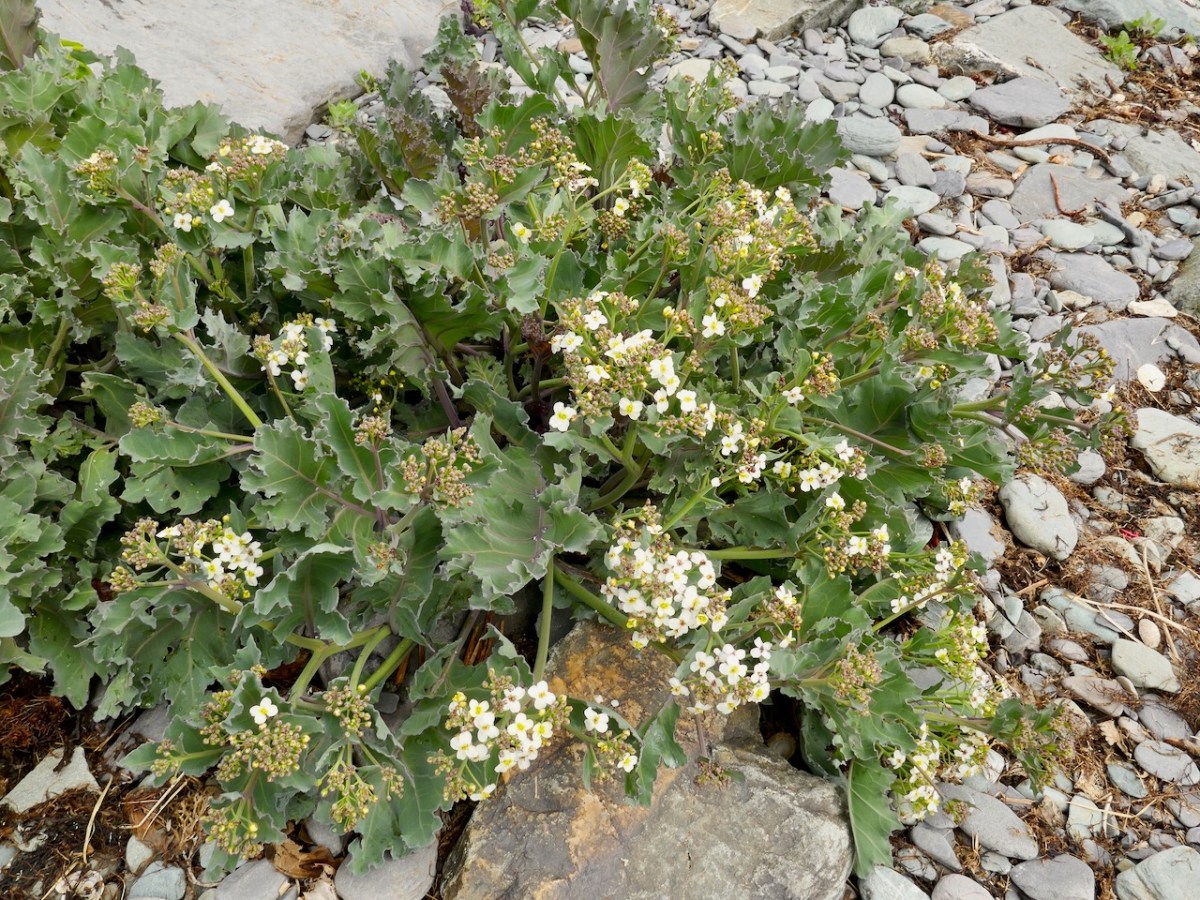
Sea Kale, above, is a rare plant that seems to be more abundant now that it was 20 years ago. As the report points out, there are a few examples like this that may relate to how records are collected rather than the absolute abundance/rarity of the plant, and the report tries to provide a model that corrects for this.
Finally, there are a set of recommendations based on protecting and restoring habitats, and the last is this one:
Repair the cultural standing of plants. As generations of people become more distant from their origins on the land, they tend to overlook the vital roles of plants. Their place in formal education has dwindled, and most people can name very few of them. By omission, plants are misunderstood, downplayed, ignored, and dismissed, even though we still need them as much as ever. Plants require more of our attention and it is in our interest to give it to them.
So what can we- you and I – do about this? Here are my own actions – they are simple and doable by anyone.
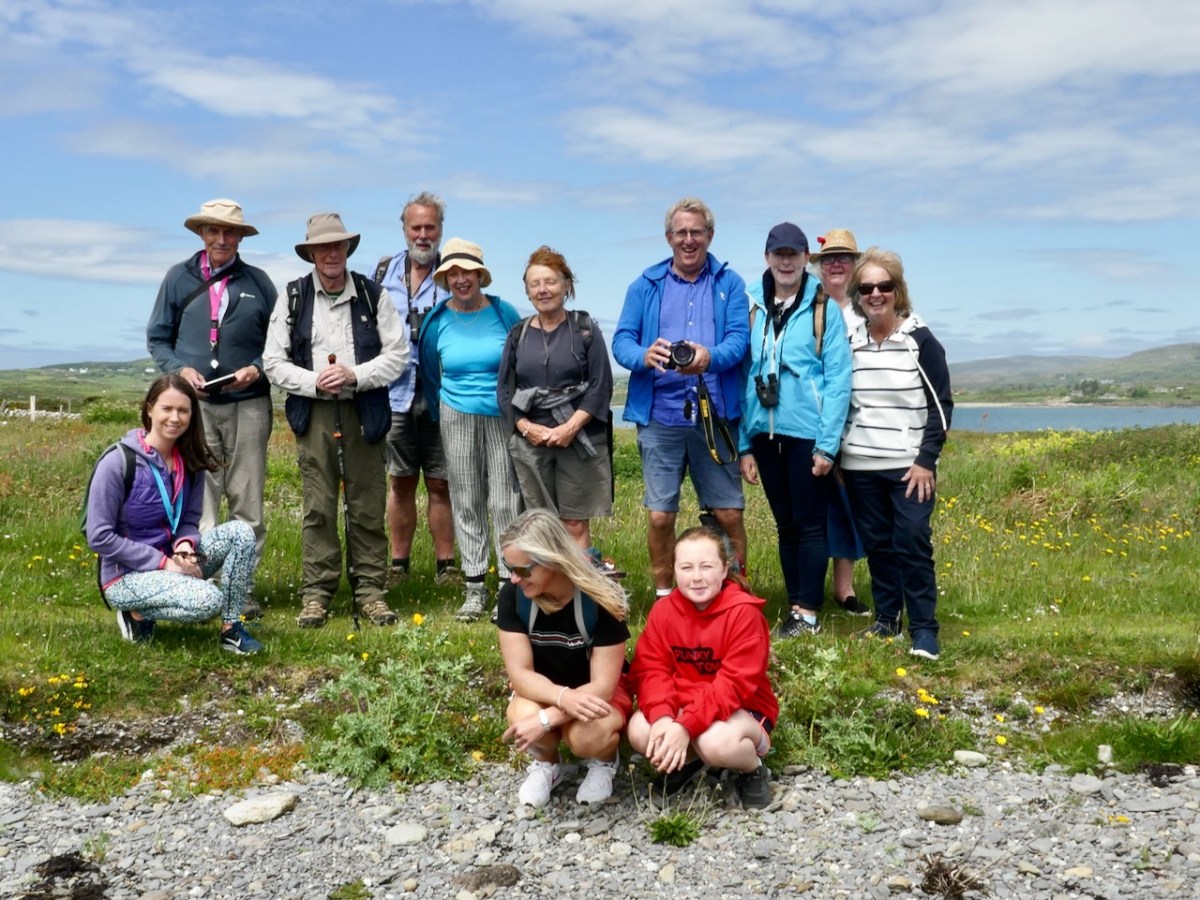
First, I have educated myself about wildflowers. Buy a copy of Zoe Devlin’s Wildflowers of Ireland and take it with you as you walk (that’s Zoe, above, with a group of us hanging on her every word). Or take your phone and use her website or one of the new plant ID APPs. People swear by their own, but I have to say I have found the Picture This app to be reliable and easy to use.
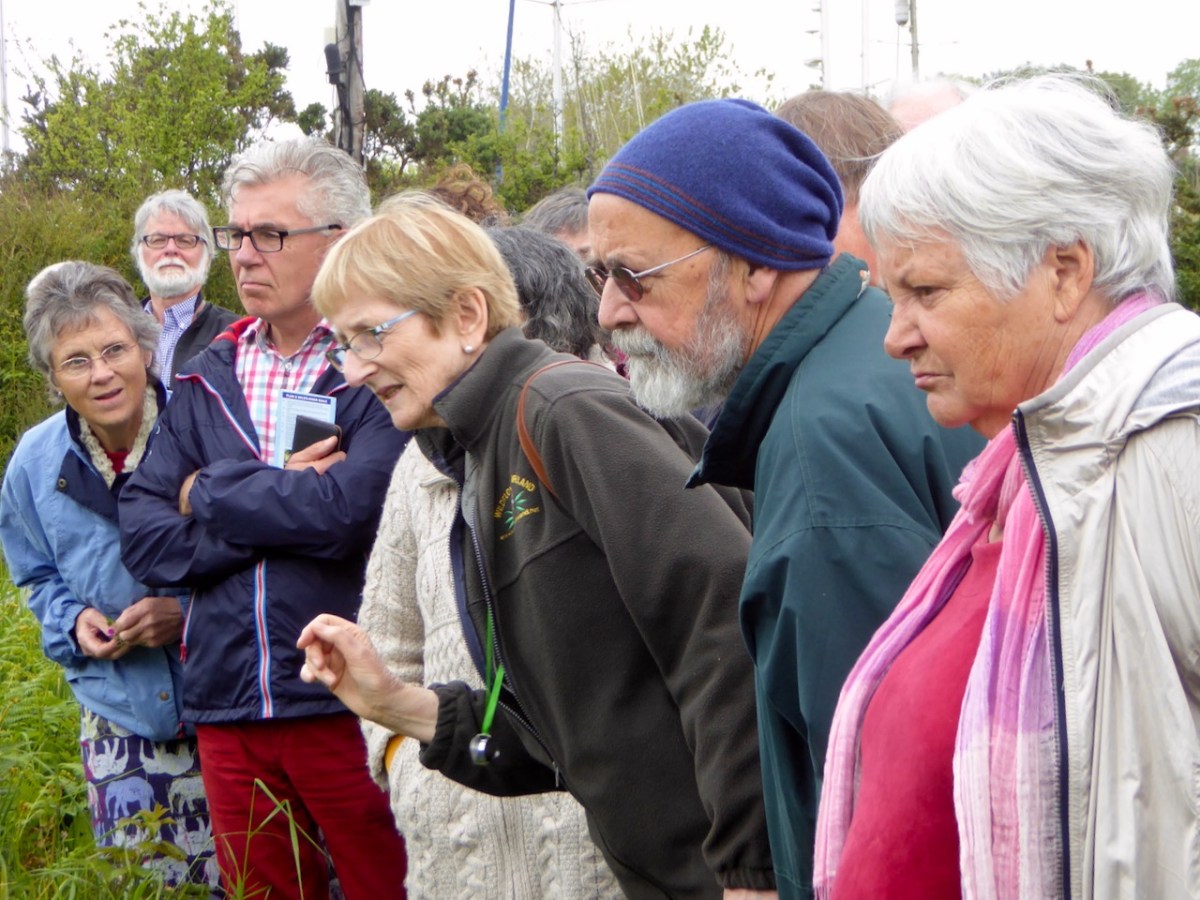
Second, I have tried to spread the good word. I do this using this blog – see the Flora and Fauna of West Cork Pagefor many many posts on our wildflowers – including lots of slideshows for pure enjoyment. The one above, Wandering the Boreens, is one of my favourites and shows what can be seen along a typical West Cork road in summer. I have also developed a Wildflowers Brochure for use along the the Fastnet Trails, and occasionally lead wildflower walks (below) and give talks. Perhaps most importantly, I am now using my Instagram page for short (I aim for 30 seconds or less) videos on individual wildflowers. I’ll be starting that up again soon for 2023.
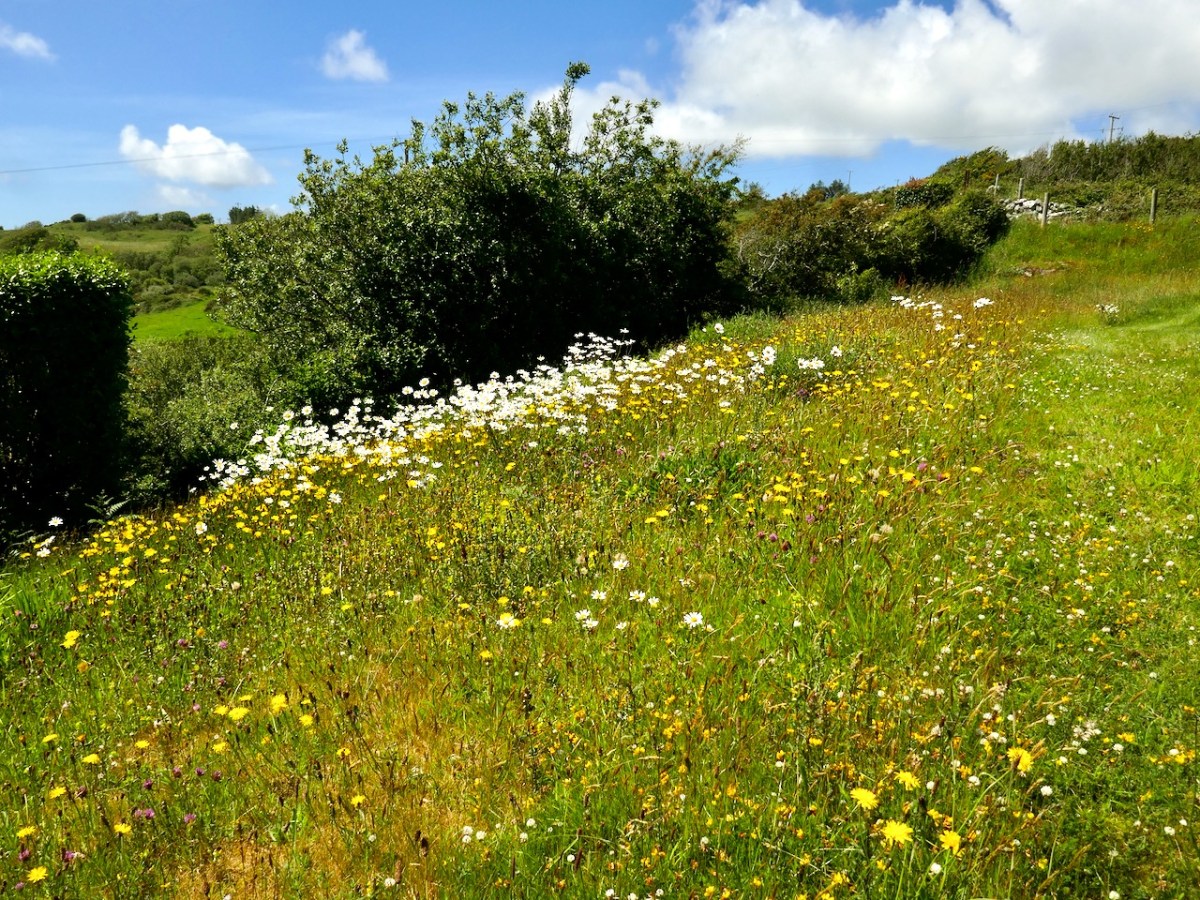
Third, I have set aside part of my own One Acre as a wildflower meadow. How I have done this is all laid out in my Rewilding My One Acre Posts and it has taken very little work on my part. If you have a garden or any bit of land around your residence, do consider whether you can do this too. The Pollinators will be very grateful.
Finally, I try to mow as little as possible and I have changed my mindset about ‘weeds’ and such concepts as ‘curb appeal’ and ‘tidiness.’ True gardeners would be horrified, but the insects don’t seem to mind. A tiny rare plant, Sharp-leaved Fluellen (below), showed up on my driveway, who knows how – but if the ‘weeds’ had been eliminated, I would never have found it.
PLEASE read the report, and see what you can do to protect our precious biodiversity.
I have a new venture this year – an experimental foray into the world of Instagram. I’ve set up an Instagram page on the Wildflowers of West Cork. I’m using video, instead of photographs like the one above of St Patrick’s Cabbage.
I’ve been uploading short (less than 60 seconds) videos about the wildflowers I see around me here in West Cork. The video format is helpful, as it allows people to see better the size of the flowers. This is important, as photographs don’t always convey the relative size of what you should be training your eye to find.
I have chosen four of the videos to feature in this post. The flowers I include on the Instagram posts are mostly native, but I have also included non-native as well, such as garden escapes and invasive aliens that have the potential to be damaging to our native flowers by taking over their habitat.
I know many of you aren’t on Instagram, but if you are, take a look and follow the page if you like. I have tried to set up an automatic redirect also from Instagram to my Wildflowers of West Cork Facebook Page, but I have found it to be hit and miss – the videos don’t always show up on that page. I’ve done 70 videos this year and I am going to take a break now and start again next spring.
I had the great pleasure recently of spending a day in a bog – and because the bog had dried out completely it was indeed a rattlin’ bog, complete with the twig on the branch and the branch on the log…
It was an amazing place – there were several different habitats – waste ground, heath, meadow, woodland, marsh and finally a bog – except there had been so little rain that the whole bog had dried up and we were able to walk all over it. I had volunteered to help out our friends Robin and Sue Lewando with a small plant study of a defined area, while Robin collected samples from the lake for his own research. Afterwards, we spent a happy hour wandering through the dried-up bog, exclaiming over plants you can’t normally get close to and taking photos. Several were new to me – I had never seen Bur-reed or Yellow-cress before, or Star Sedge.
The slideshow is an amalgam of shots from the whole day. Here is the complete plant list, in the order in which you see them in the slideshow:
First three sides - waste ground with Foxglove, Sheep’s Bit, Cat’s-ear, Clover
The Lake
Slides 6 to 10 Marsh Cinquefoil (10 is Sue photgraphing the Marsh Cinquefoil
11 Compact Rush (?)
12 Soft Rush
13 to 15 Common Valerian (with Grypocoris stysi/Mirid Bug - thanks to Margaret Manning for the ID)
16 and 17 Heath Spotted-orchid
18 and 19 Marsh Bedstraw
20 - 22 Marsh Yellow-cress
23-25 Water-plantain
26 Water Forget-me-not
27 and 28 Water Forget-me-not and Spike-rush
29 and 30 Branched Bur-reed
31 and 32 Beaked Sedge
33 and 34 Marsh Speedwell
35 Bogbean
36 Robin
37 Star Sedge
38 Labyrinth Spider
39 Marsh Thistle, 7-Spot Ladybird and Bumble Bee
Welcome to the UCD Library Cultural Heritage Collections blog. Discover and explore the historical treasures housed within our Archives, Special Collections, National Folklore Collection and Digital Library















 Roaringwater Journal