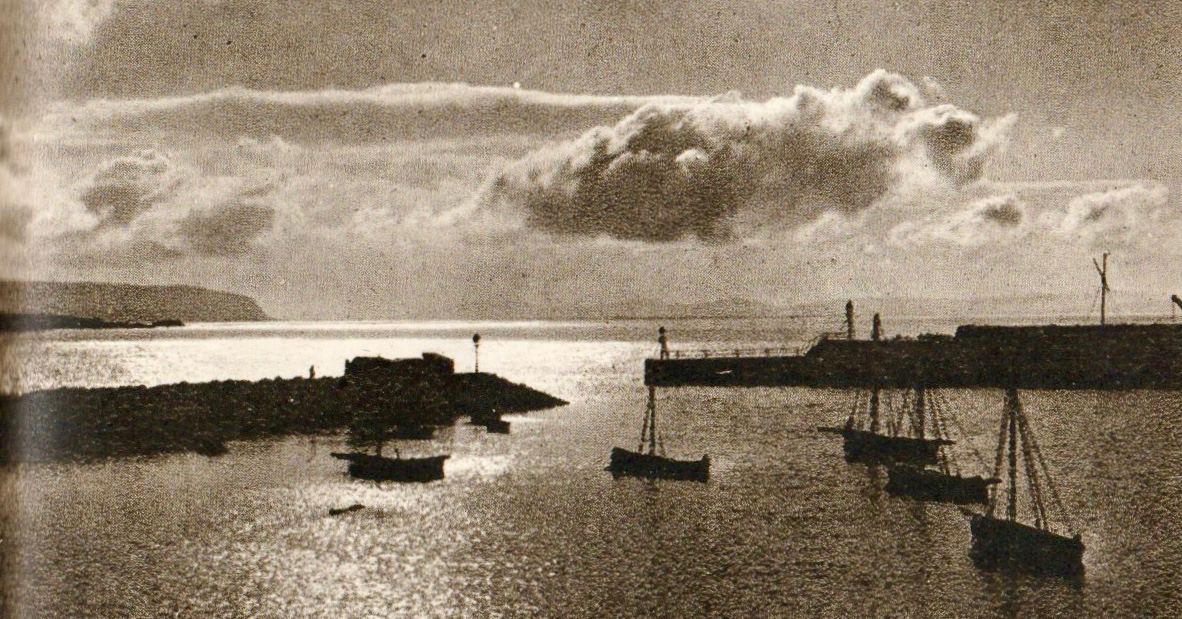
H V Morton’s Ireland – Part 1

In Search of Ireland was first published in 1930. It’s always interesting to read the accounts of an English traveller in Ireland. I used to be one once, but I’m now – happily – permanently here. And a citizen! I really don’t want to be anywhere else in this turbulent world.
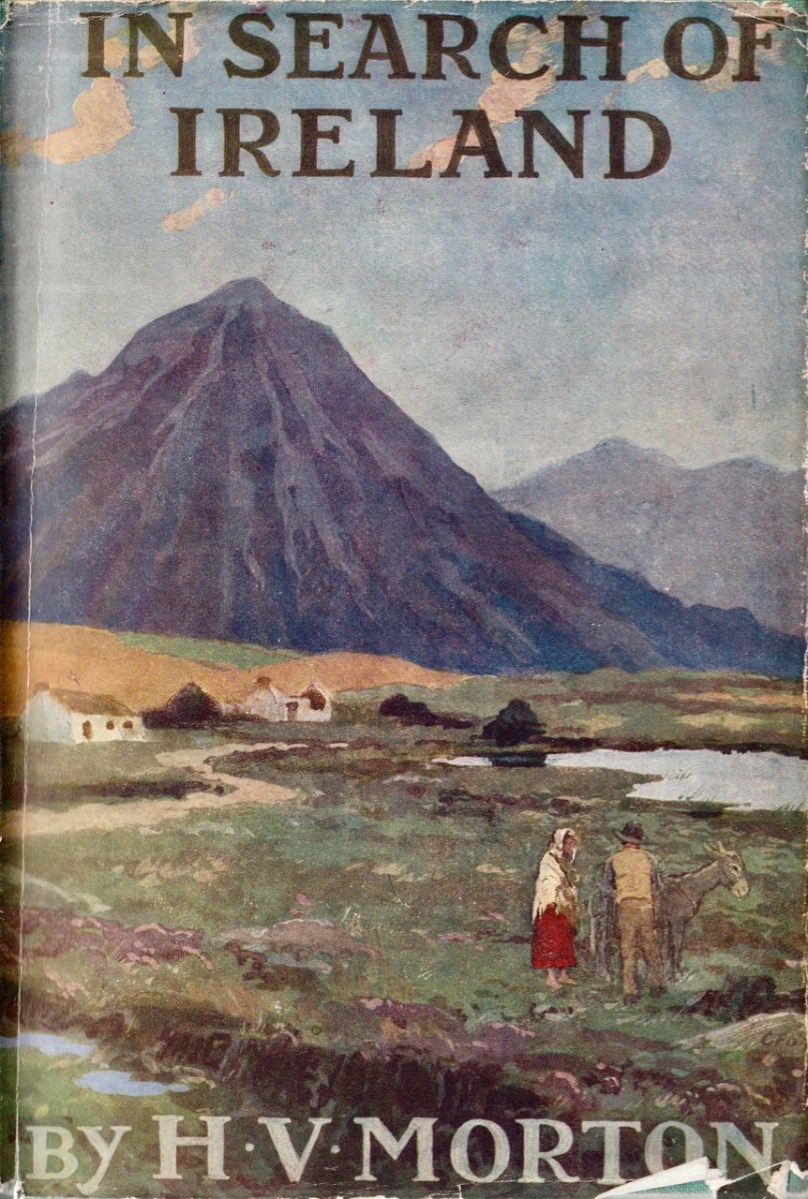
I recently happened upon this book – and was immediately attracted by the cover, and the many photographs it contains, which date mainly from the 1920s. But let’s start off finding out who the author is.
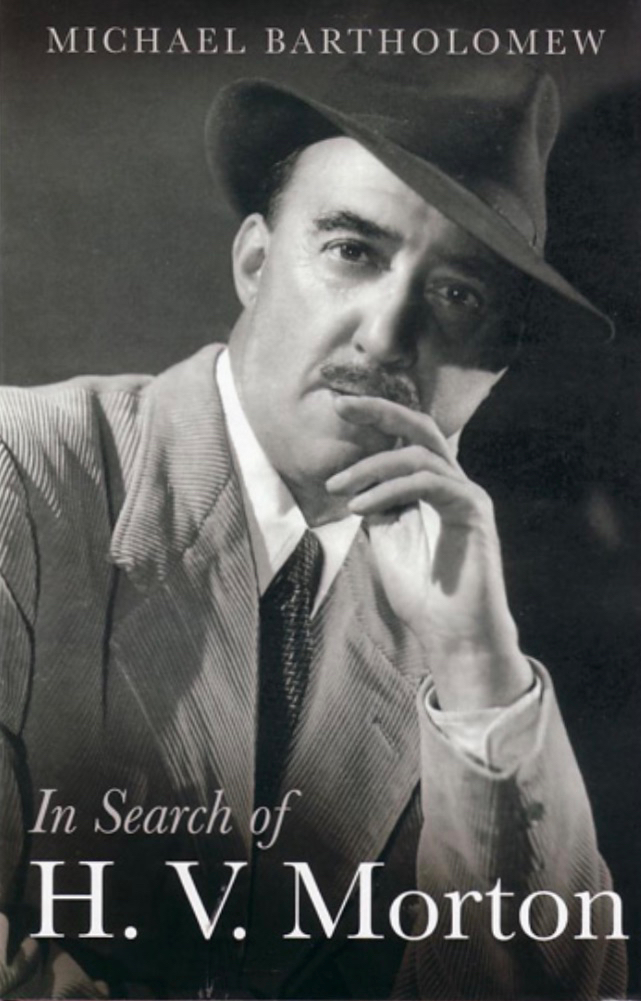
Henry Canova Vollam Morton was born in Lancashire, England, in 1892. He was the son of Joseph Morton, editor of the Birmingham Mail, and followed his father into journalism. Morton served in the First World War and then worked in London, for the Evening Standard and the Daily Express. While with the latter he ‘scooped’ the story of the discovery of Tutankhamen’s tomb at Luxor in 1923 and reaped celebrity from that event. After this he started writing books, mainly about travel. Between 1925 and his death in 1979 some 55 books were published. His work appealed to a popular audience. The book about him, above – written after his death – suggests another side to this man: he had secretly been a Nazi sympathiser and another writer, Max Hastings, gleaned this entry from Morton’s private diaries of 1941 – “I am appalled to discover how many of Hitler’s theories appeal to me”.
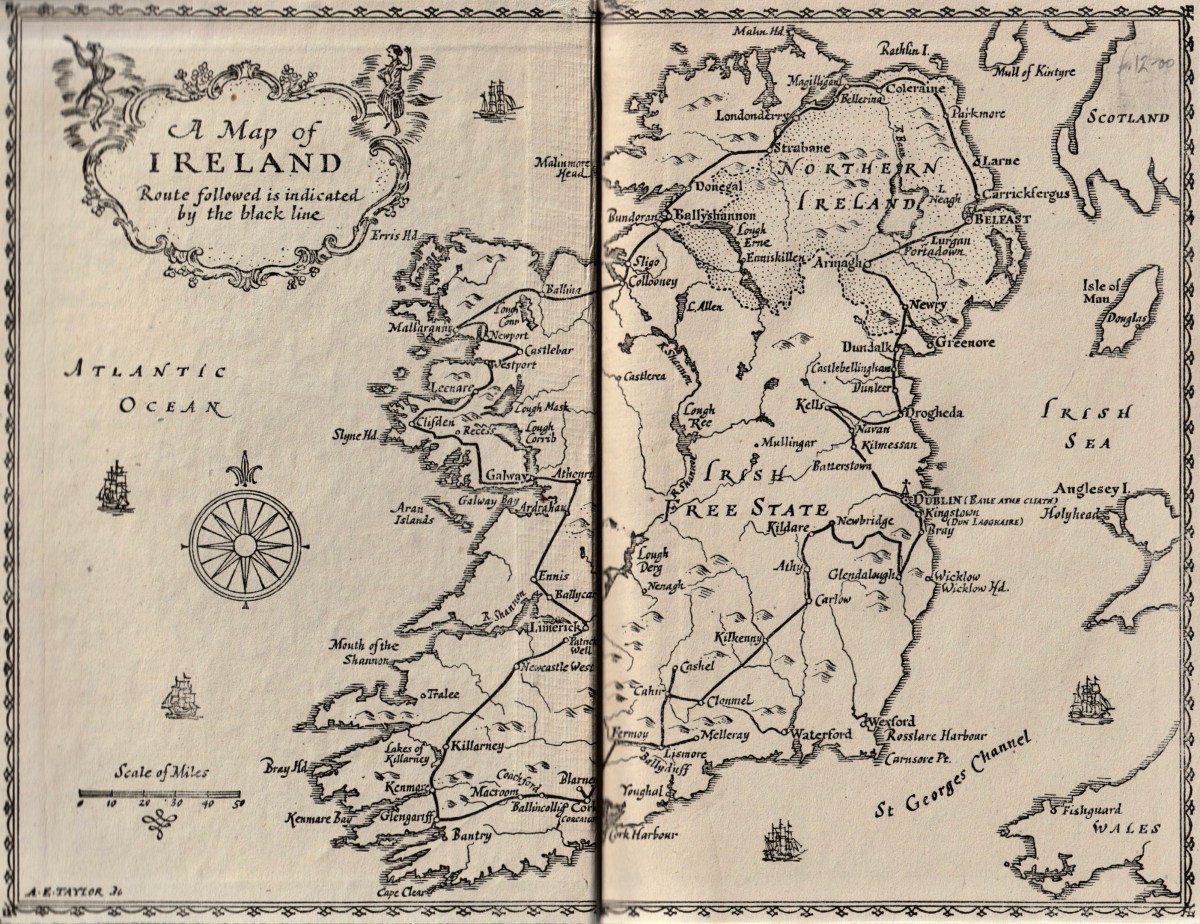
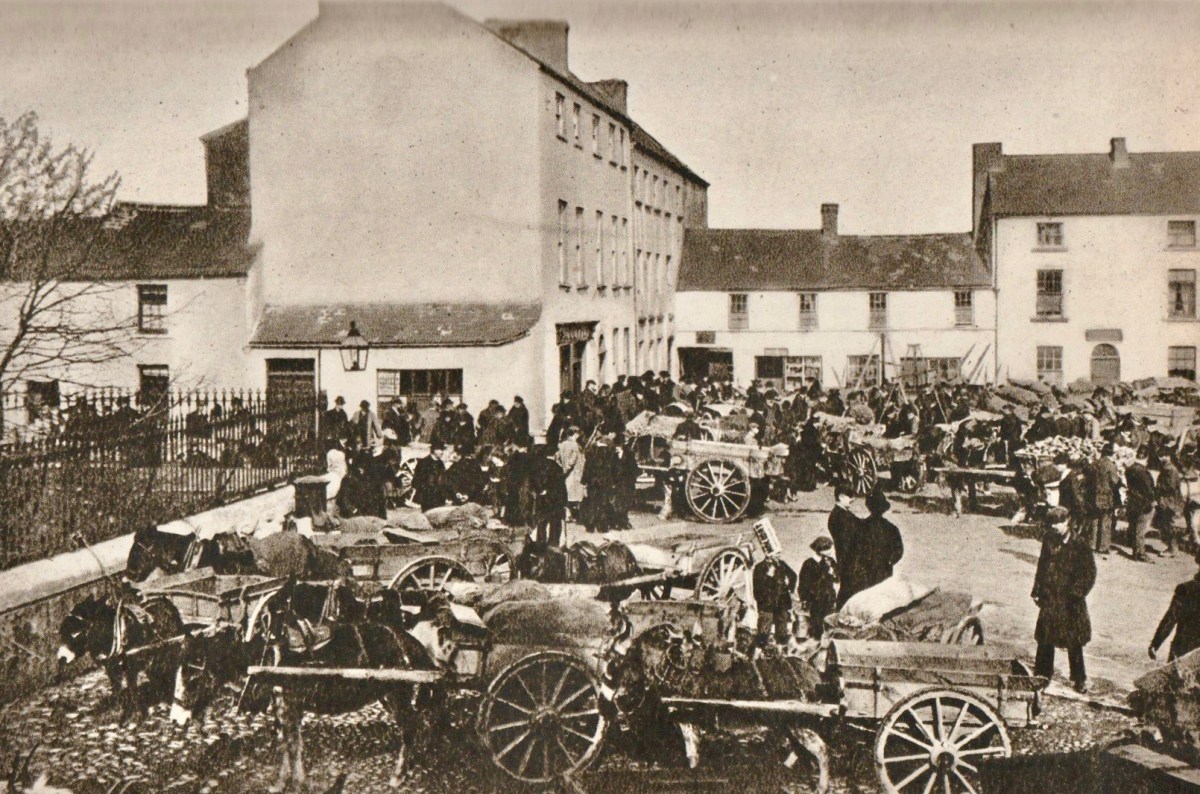
Morton travelled in Ireland during the 1920s and wrote many articles about his journeys, which became the substance of this book. The book’s endpapers (top) present a map showing the route he followed in his car: he appears to have foolishly omitted the best part of Ireland – our own West Cork! The lower photograph (above) is simply captioned ‘Fair Day’ and is credited to a Dublin photographer (Thomas Mason). I cannot identify the location, although it seems a little familiar. In the book it is juxtaposed close to an account of Kenmare.
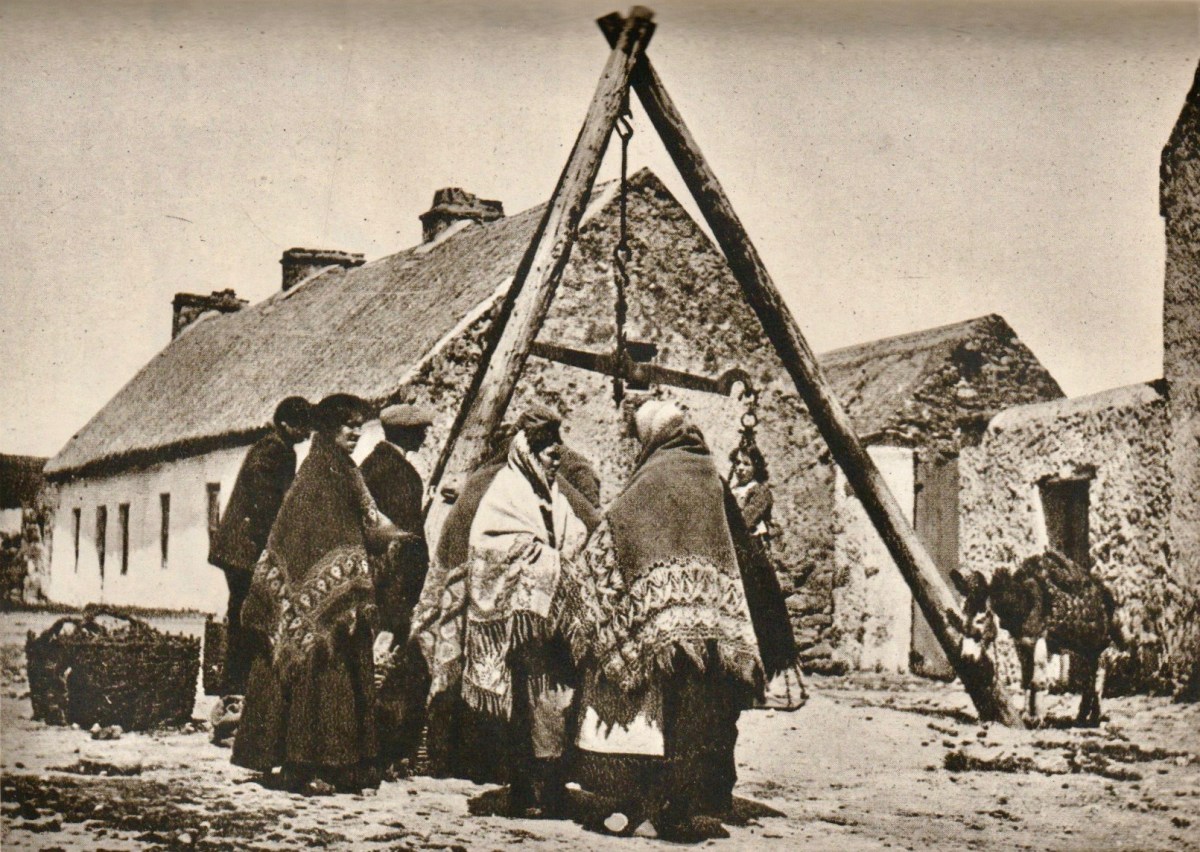
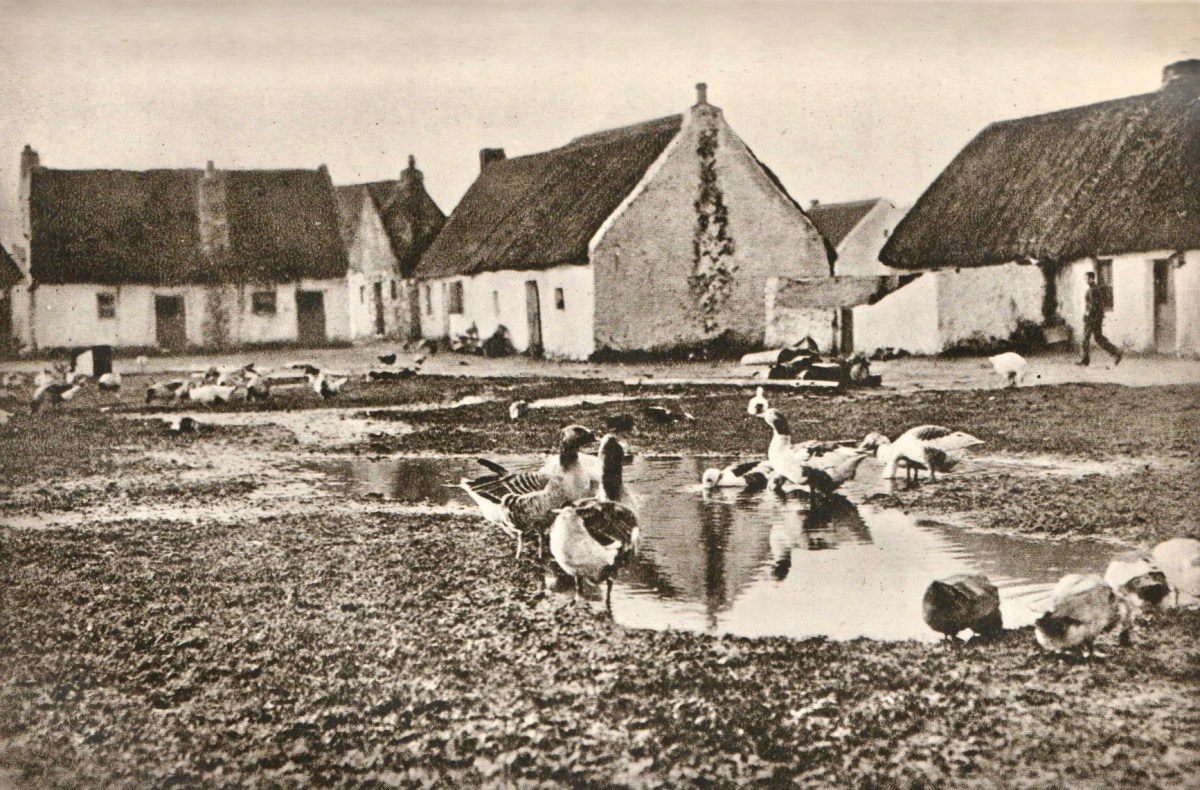
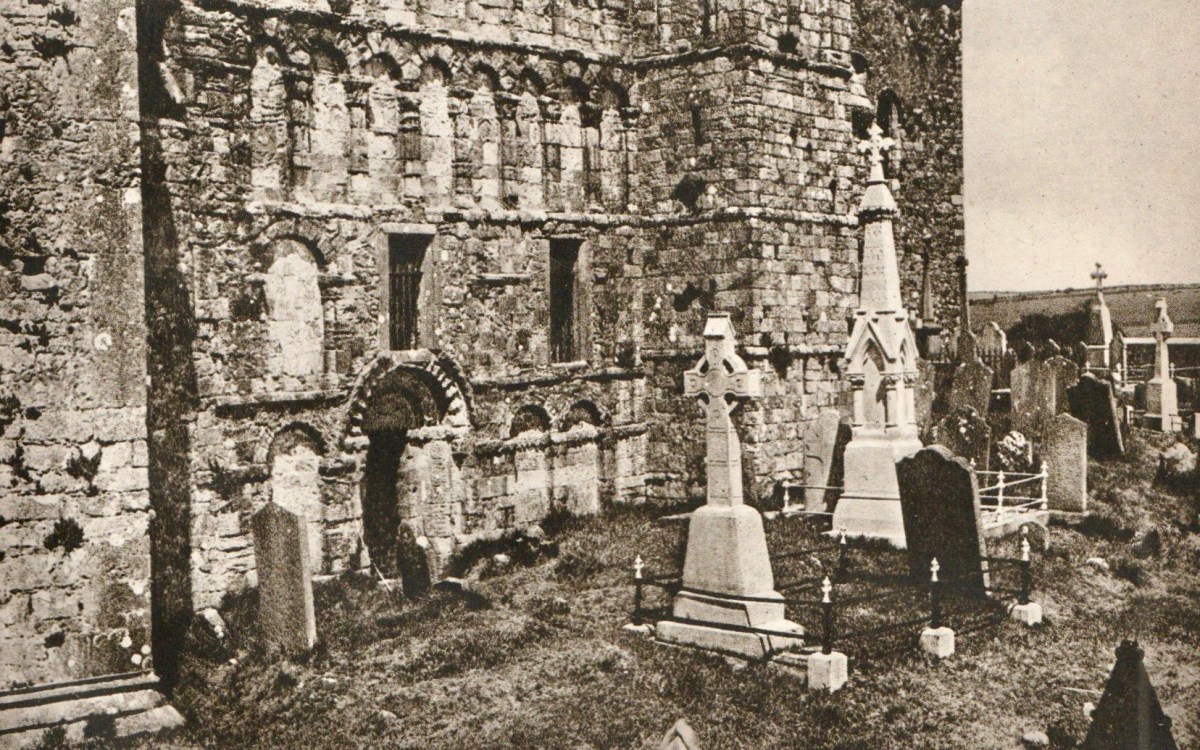
The upper photograph is titled ‘Market Day in Connemara’, and the lower one is ‘The Claddagh, Galway’. Most of the photographs are accredited to publishers or newspapers: H V Morton only provided a brace of pictures himself. They are below – ‘Cormac’s Chapel, Cashel’ and ‘An Archway in Killarney’:
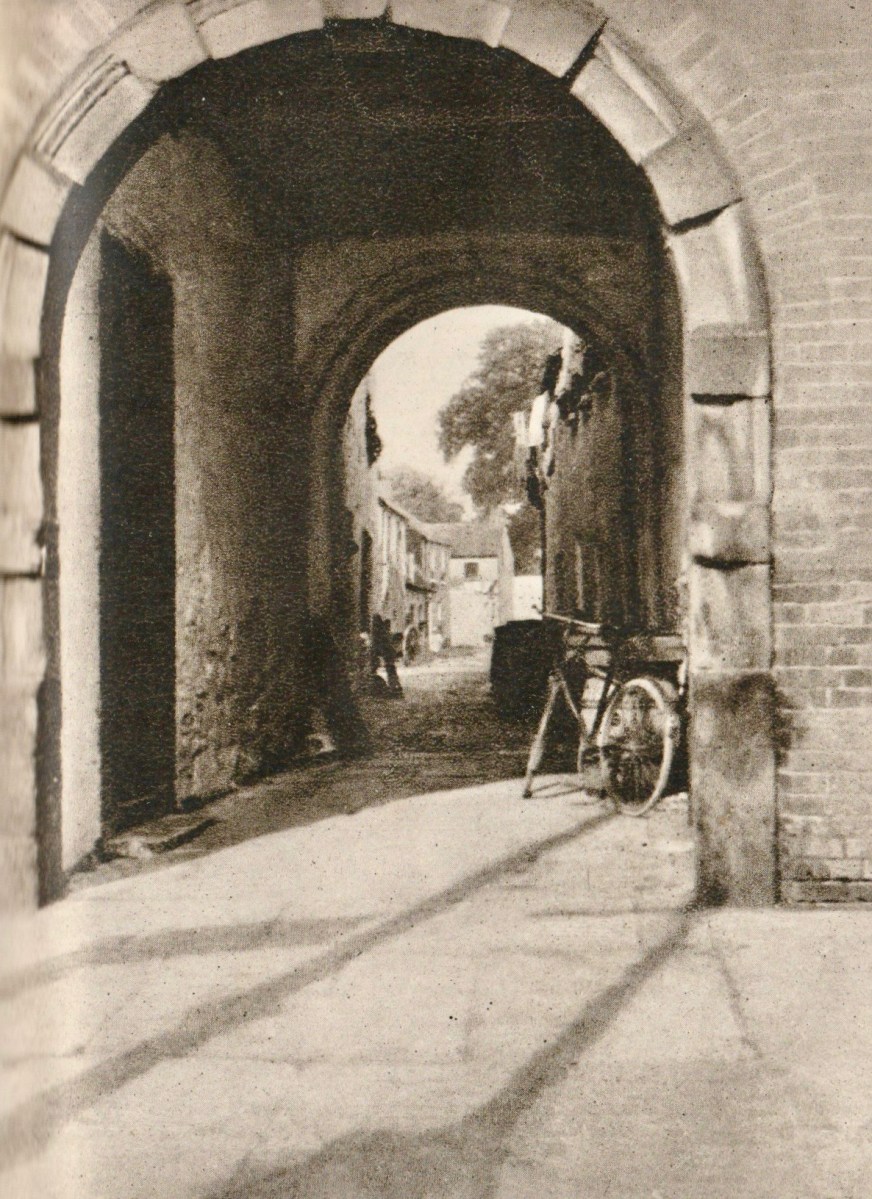
From the dust-jacket of my nineteenth edition (which was published in 1945):

. . . In this book H V Morton describes a first visit to Ireland – not the tragi-comic Ireland of 19th century fiction, but the new Ireland. His charming book is the record of a motor-car tour right round the island, and in the course of his delightfully haphazard wanderings, he discourses on the Irish landscape, Irish people, Irish history, falls in love with Kerry and Connemara, attends a wake in Mayo, and crosses the hills of Donegal into Northern Ireland . . .

Frontispiece – In Search of Ireland by H V Morton

This is the first of two posts about H V Morton’s book. Next time around I will quote further from his text to try and give you an insight into this complex man, but also show you more of the illustrations from the book. None of us can resist looking so directly into the past!
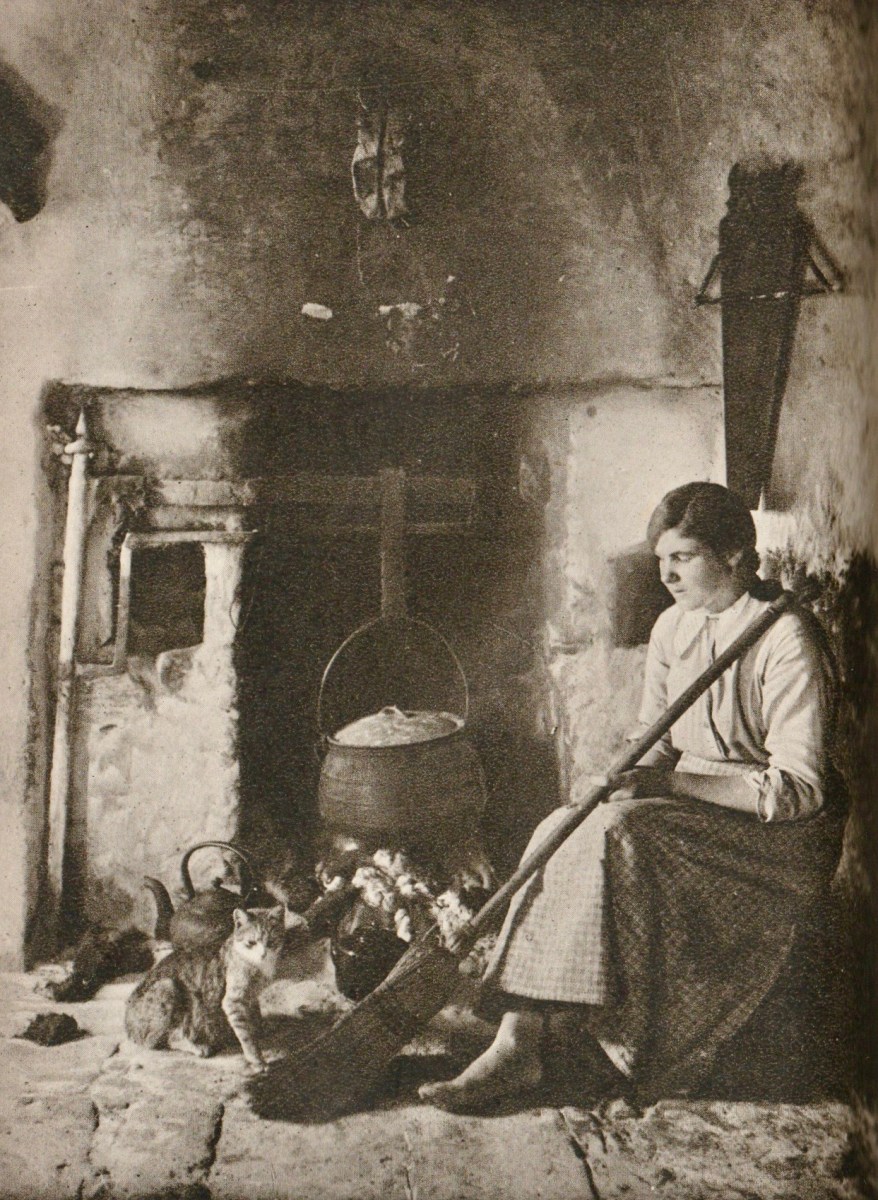
From ‘In Search of Ireland’ – above: Connemara Girl
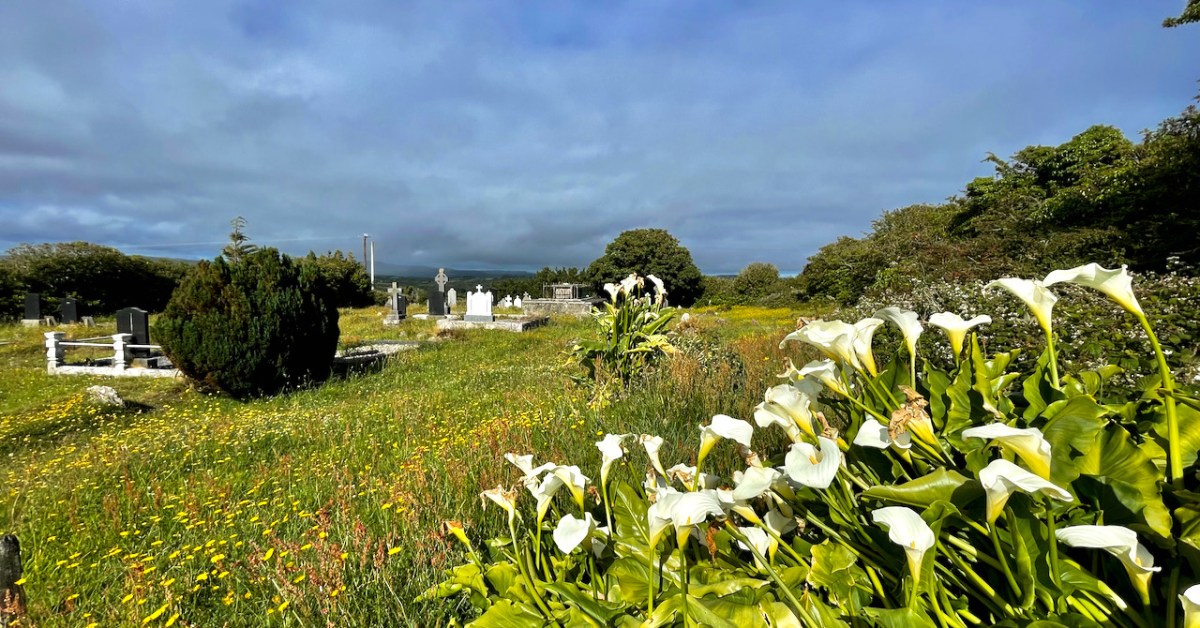
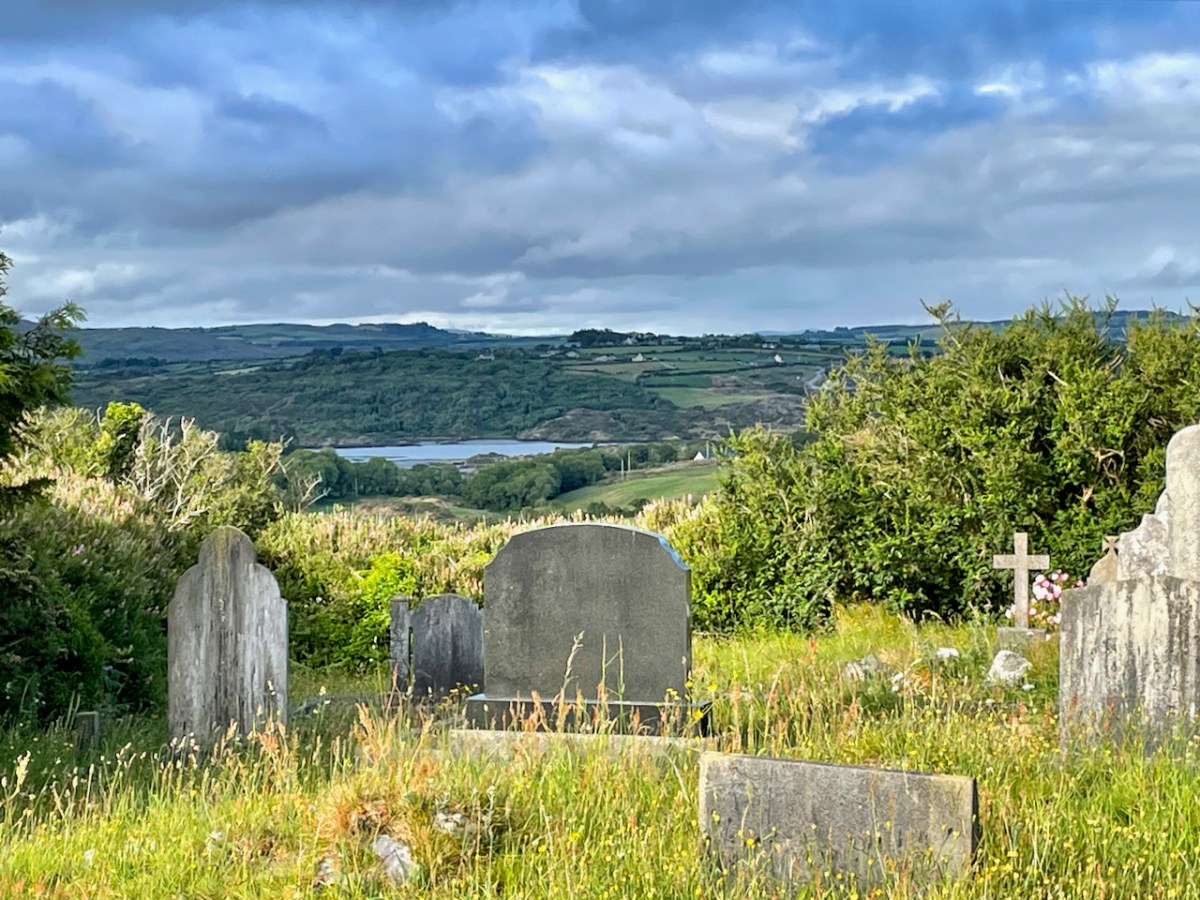
Last Rounds: St John’s Eve in Stouke

“People would be walking from Ballydehob”, our friend told us, “to do the rounds at Stouke Graveyard on St John’s Eve. Everyone in the village would come” 

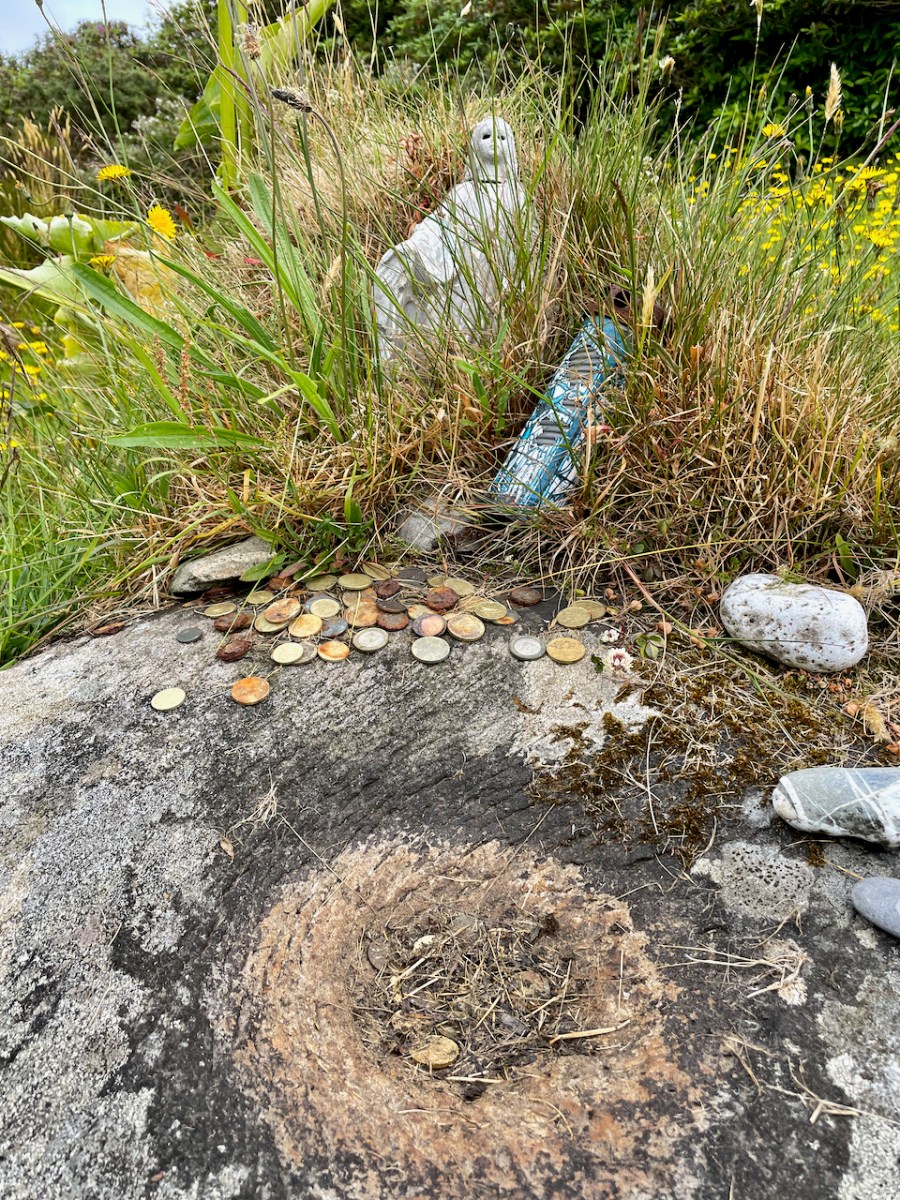
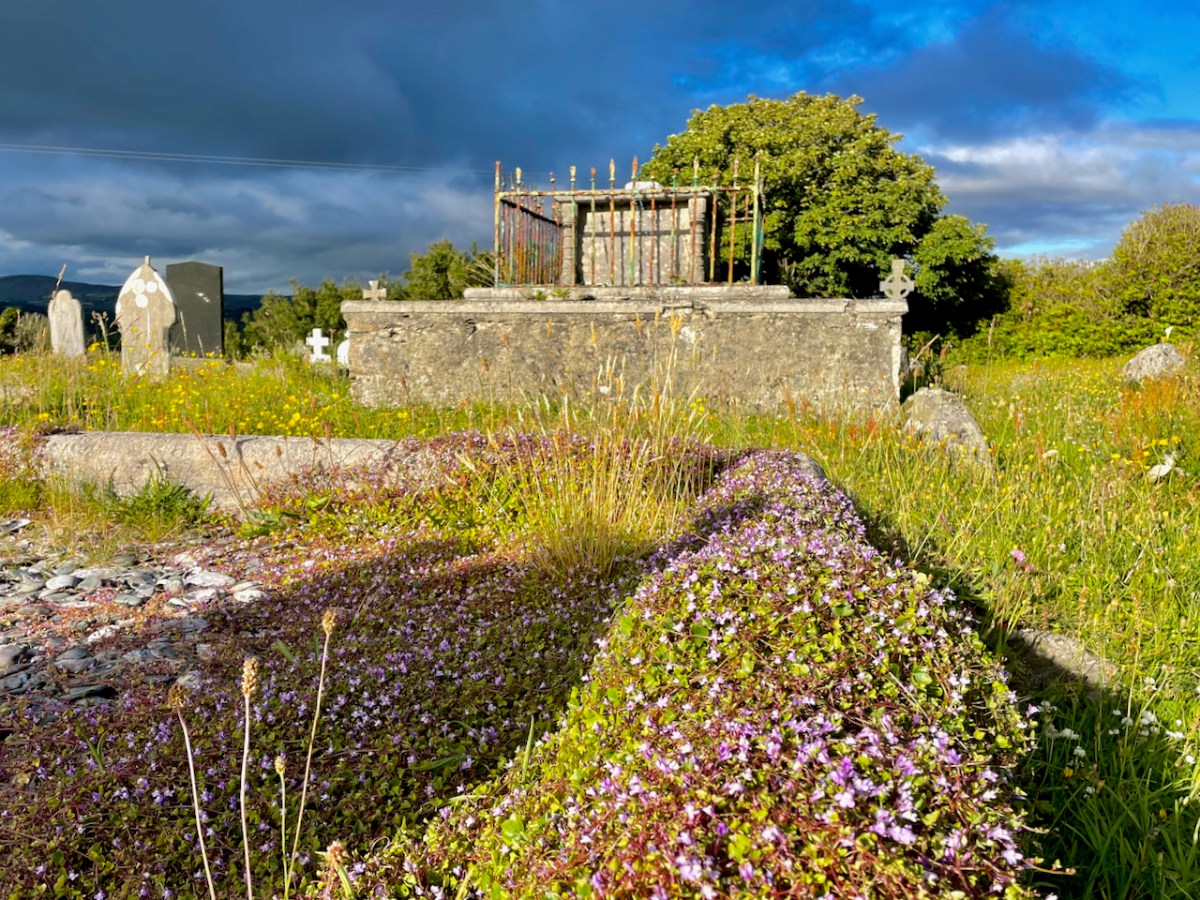
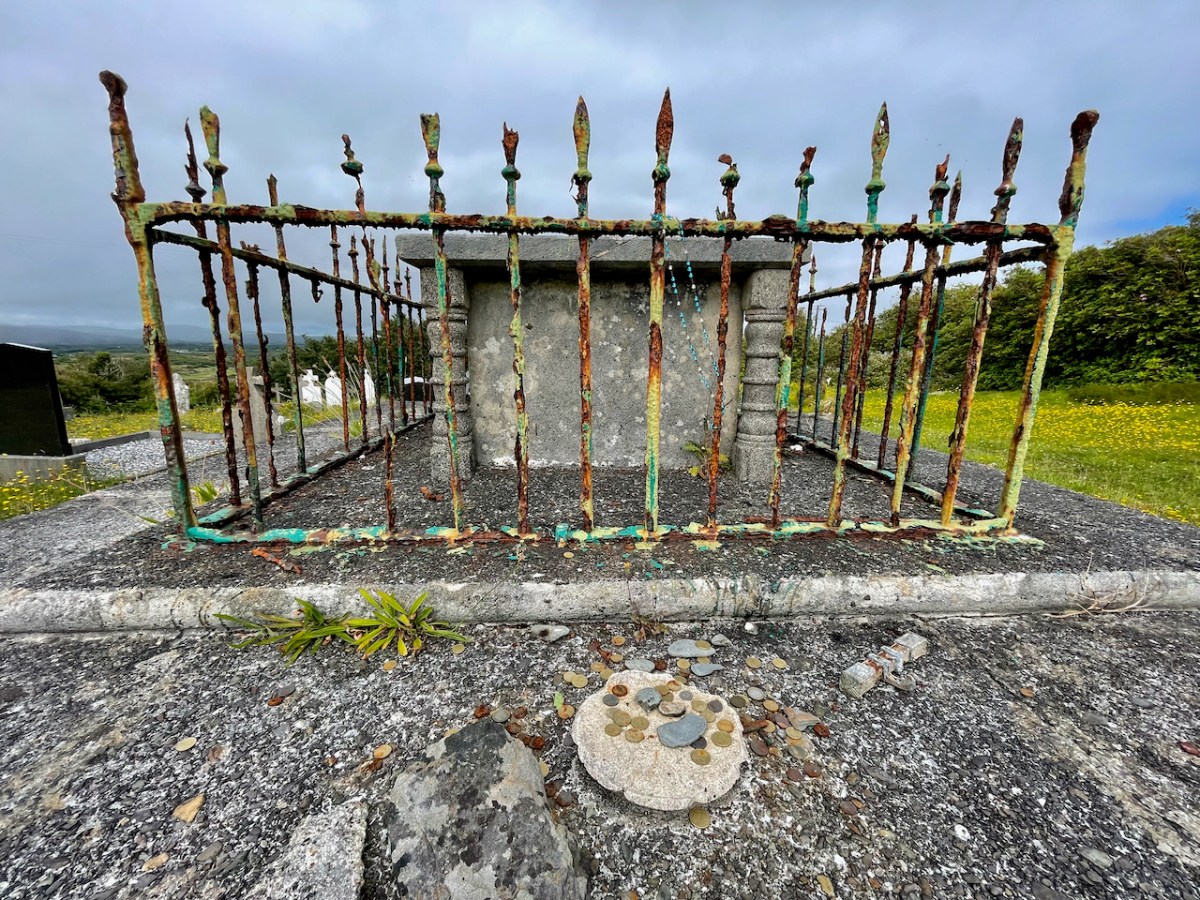
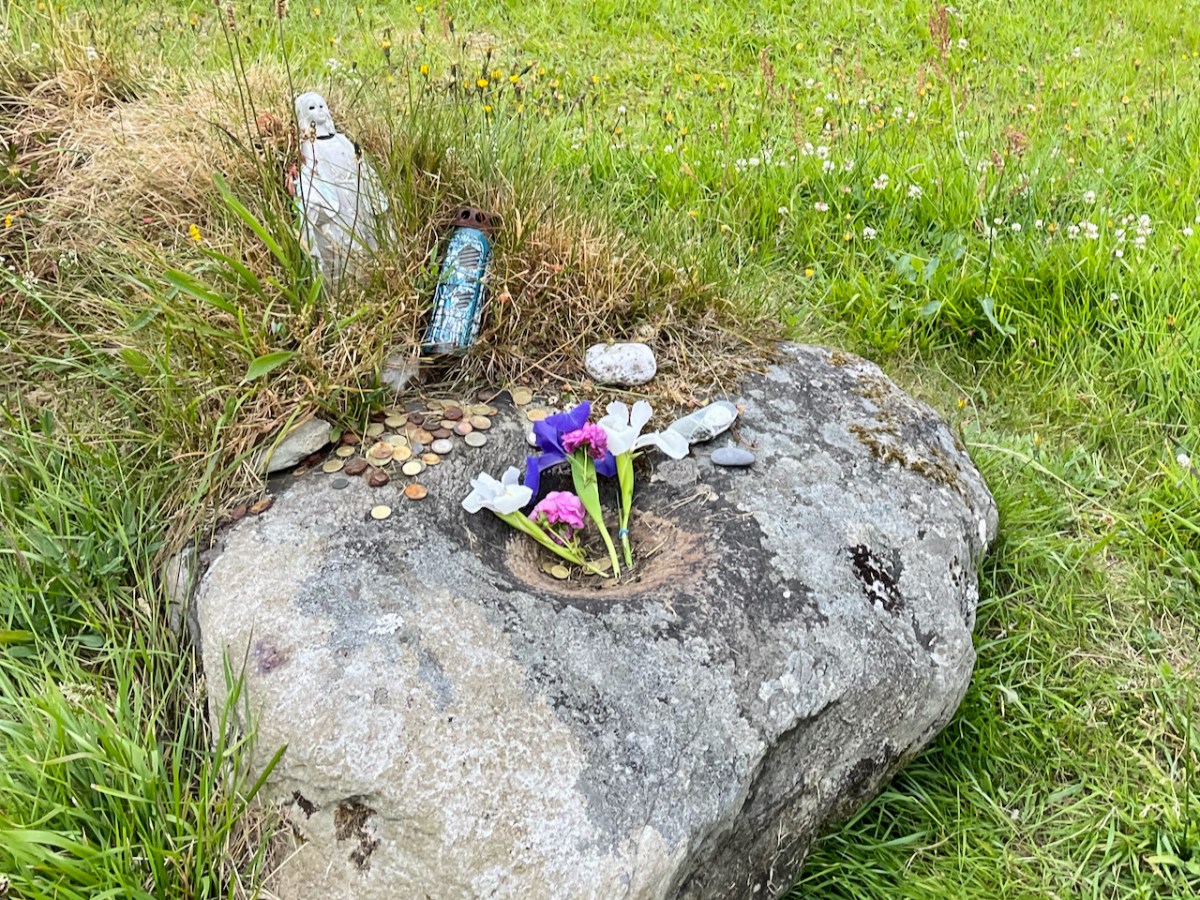
He remembered it well as a boy (he’s now retirement age) – the whole family walking to the graveyard, a festive atmosphere with friend greeting friend, after the day’s work was done. He described how the rounds were done. The focus was the chest tomb in the centre of the graveyard. You would do a decade of the rosary as you walked around, stopping four times. You would leave coins or a small offering, and pray for some special intention. He didn’t remember the Bishop’s Head being part of it, although other accounts state it was. The Bishop’s Head is the name given the bullaun stone (below), based on a legend about a beheaded bishop.

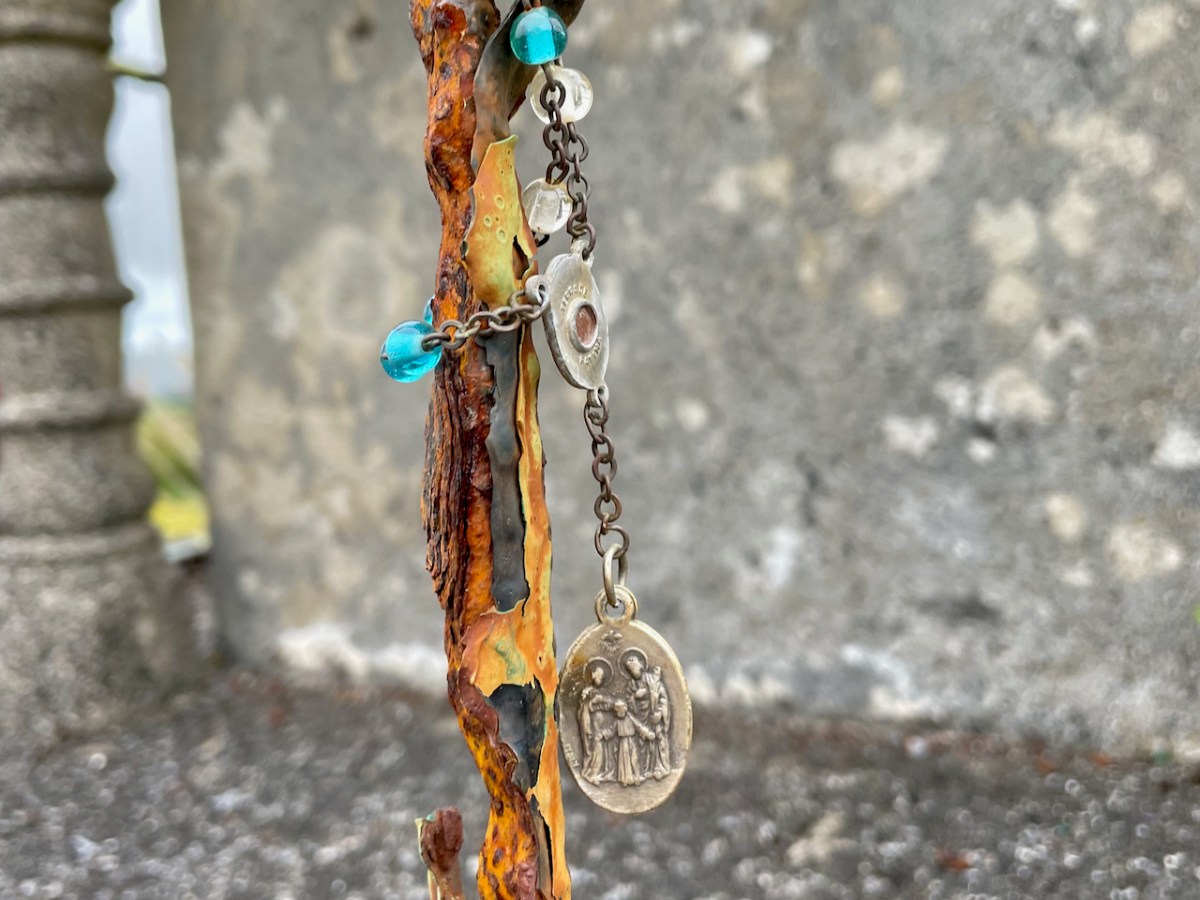
I’ve written about Stouke before (here and here – take a look for the background to this post) – it’s a tiny graveyard full of fascinating history. Looking back at those posts from 2016 also provides a good comparison of the condition of some of the objects in the graveyard between then and now. It is obvious that the small statues, for example, are not being renewed.

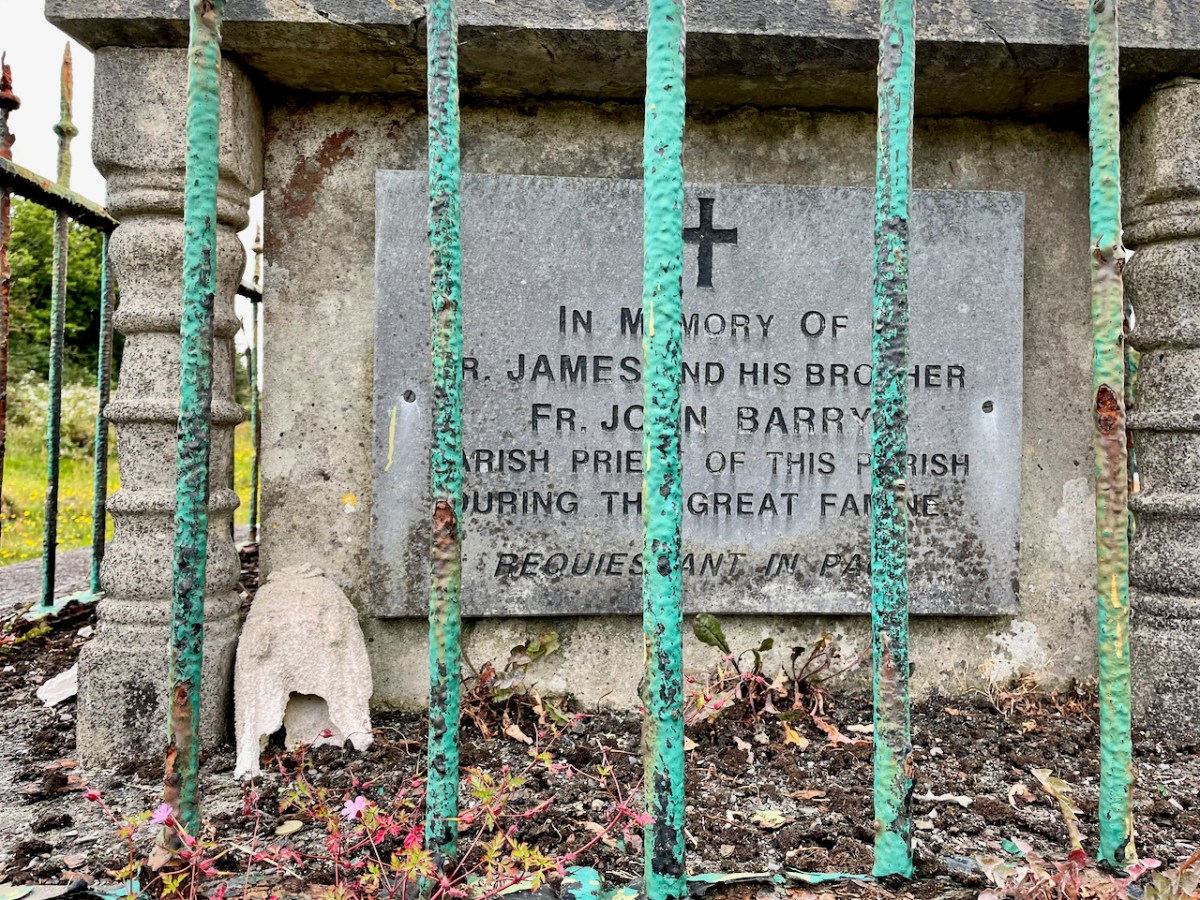
The chest tomb, located in the centre and highest point of the graveyard, marks the last resting place of Fr John Barry, and both he and his brother James, also a priest, are memorialised here. They were tremendously compassionate and capable men who worked tirelessly for their parishioners during the Famine. I have read James’ depositions to the Poor Law Commission. He was articulate and devastating in his criticism of the landlord system – full of righteous anger of the truest sort.

The memory of these two brothers lived on locally and over time took on an almost saintly aura. The fact that Fr John is buried here and that the original name of the graveyard is Kilaspick Oen, or Church of Bishop John, may have led to the practice of visiting here on St John’s Eve, June 23rd, as described to me by our friend.

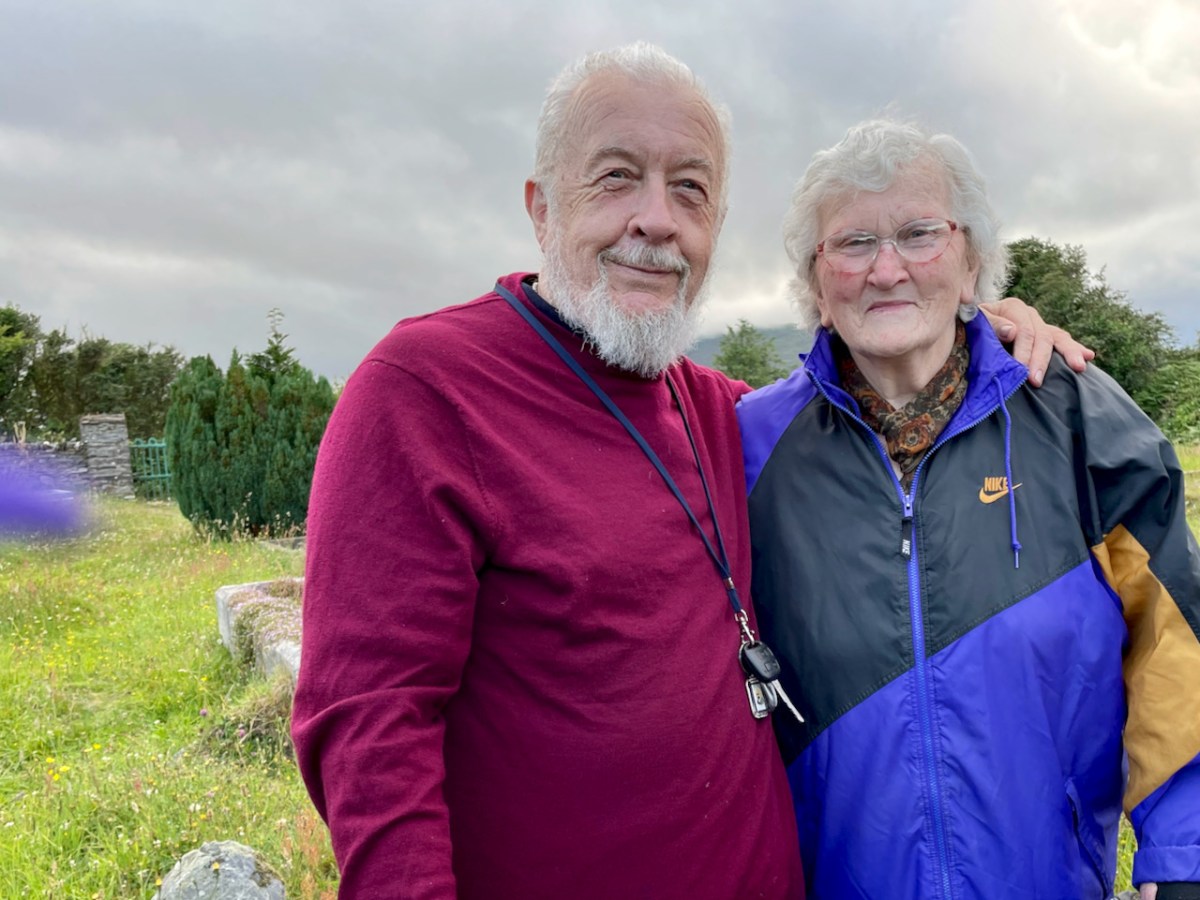
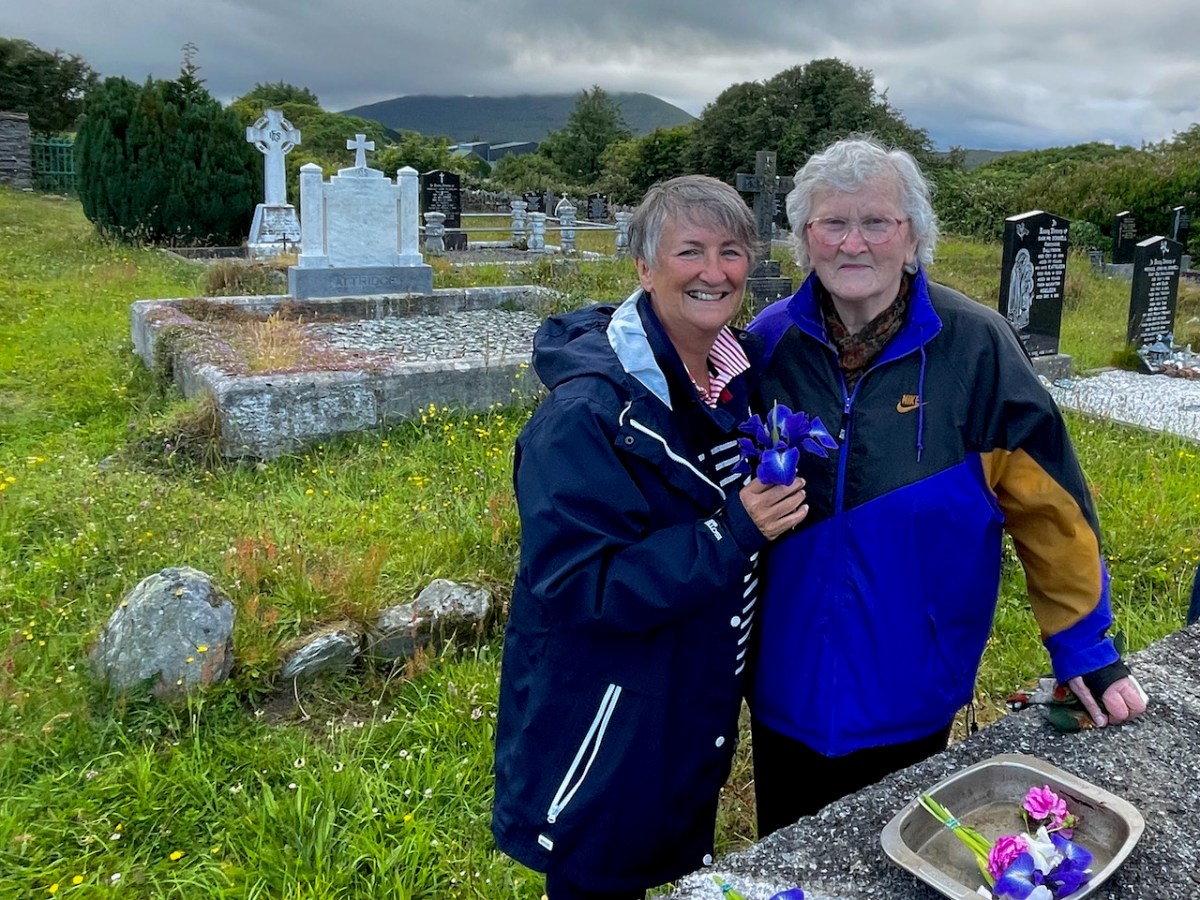
This year I decided to see if the tradition lived on, so I walked up to the graveyard on St John’s Eve (Thursday). I arrived at 7PM and sat in glorious solitude for a long time until I was convinced that nobody was coming. Just as I was about to give up, a car arrived and then another. Tim Cronin and Joan O’Donovan, supported by her son Michael John, had come to do the rounds, as Joan had indeed come for her whole life. 

Joan had brought flowers and coins and distributed them among us. She led the prayers as we said the rosary, stopping four times, once at each side of the tomb. We also left flowers and coins at the Bishop’s Head. 

The chat was mighty afterwards. I told them what I knew about Fr James and John, and Joan and Tim told me about how busy a place this was in the old days. Joan says she will keep coming as long as she is able – she suffers from a bad back and sciatica and needs two sticks to walk, especially on the uneven ground in the graveyard. She had known a lot of the families buried here and we talked about the many islanders whose final resting place is this lovely, lonely spot.

As I walked home, I wondered how much longer anyone would come to continue this tradition. It seemed sad that it had been lost so profoundly that only Joan and Tim now come, where once it had been such an important event for the whole village. We are not that country any more, and in many ways that’s a very good thing, but I can’t help mourning the loss of the old ways too.

Art and Music in a West Cork June

As a retired couple we often get asked what we find to do all day. How do you spend your time? Perhaps there’s a subtle sub-text of ‘way out there in the wilds of West Cork.’ Well, it’s only half way through the month and we have had numerous experiences already in June, including many that revolve around art and music so I thought I would highlight them in this post to give you a flavour of the Wilds

Robert has written extensively about the thriving art scene established first by the artists and hippies that made West Cork their home starting in the 60’s, a legacy that is celebrated in the Ballydehob Arts Museum. But it’s as true now as it was then and just in our small villages of Schull and Ballydehob we have been to several exhibitions over the last couple of weeks. I am always drawn to photography and I was bowled over in particular by three exhibitions. 

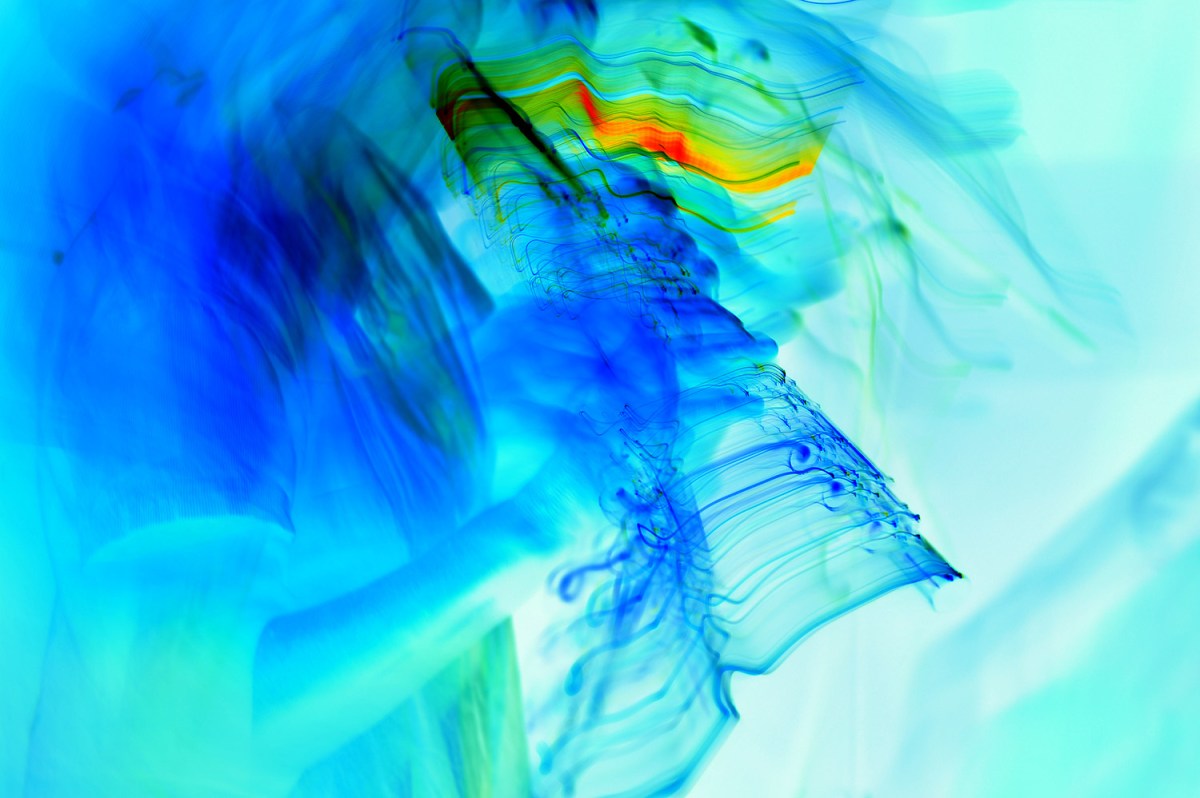
Oliver Nares is exhibiting at the moment in the Working Artists Studio in Ballydehob. The first three photographs in this post are his. The first two are Flutes and the one above is Tambourine. Oliver captures his images live and, as Pól Ó’Cólmán astutely noted at the opening, he photographs the music, not the musicians. Unbelievably, this is Oliver’s first ever exhibition – if the reaction is anything to go by, it won’t be his last!

Another exhibition that left me breathless was Richard Breathnach’s The Bog in the Bale at the Blue House Gallery. Everyone who comes to see this has the same reaction – what is this? An Oil Painting? An abstract? Richard’s photography, which included many many hours of lying in a bog waiting for just the right image, captures the reflections of a bog in those ubiquitous black plastic silage bales – the results are extraordinary and you can see more on his website.

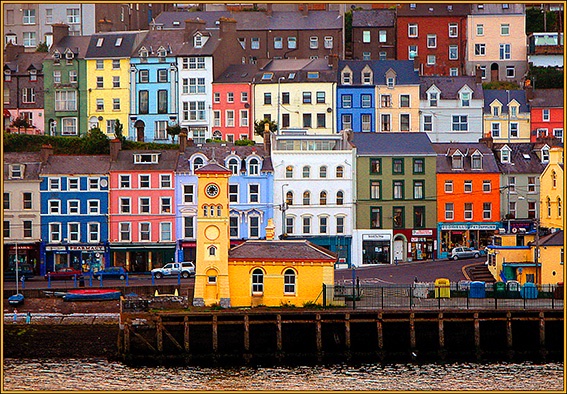
Meanwhile, the Aisling Gallery, situated over Rosie’s Pub in Ballydehob, has an exhibition focused on All Things Maritime. Chris O’Dell’s iconic image of Cobh (above), taken from the sea, is only one of several of his photographs, and the photographs of others, on display in this show. Chris is a distinguished cinematographer who has worked in television and cinema and is now recording his archive.

We went to Kenmare to see the new Butter Market Gallery, recently opened. (OK – that’s in Kerry, not West Cork, but sure it’s only the next parish over.) With a Modern Irish Sculpture show as its premier event, we weren’t disappointed!

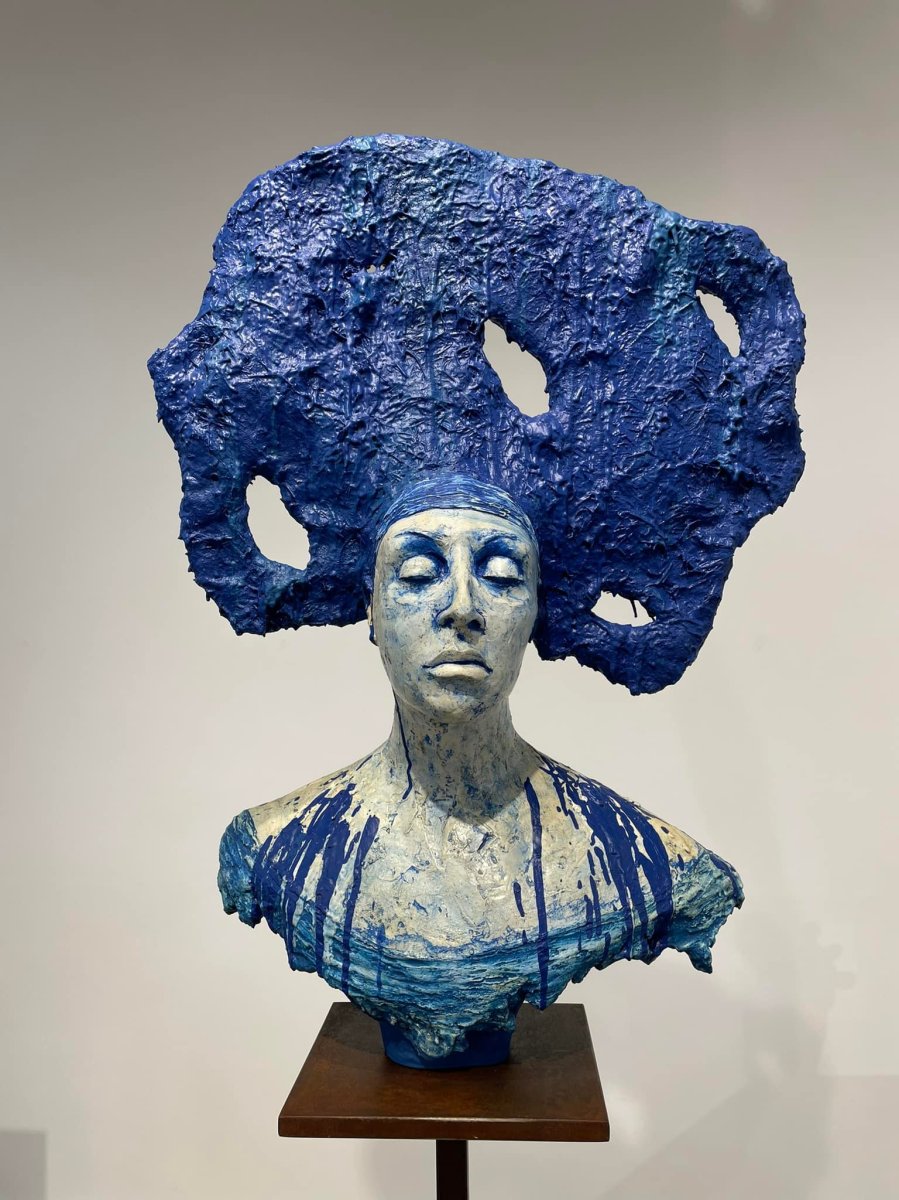
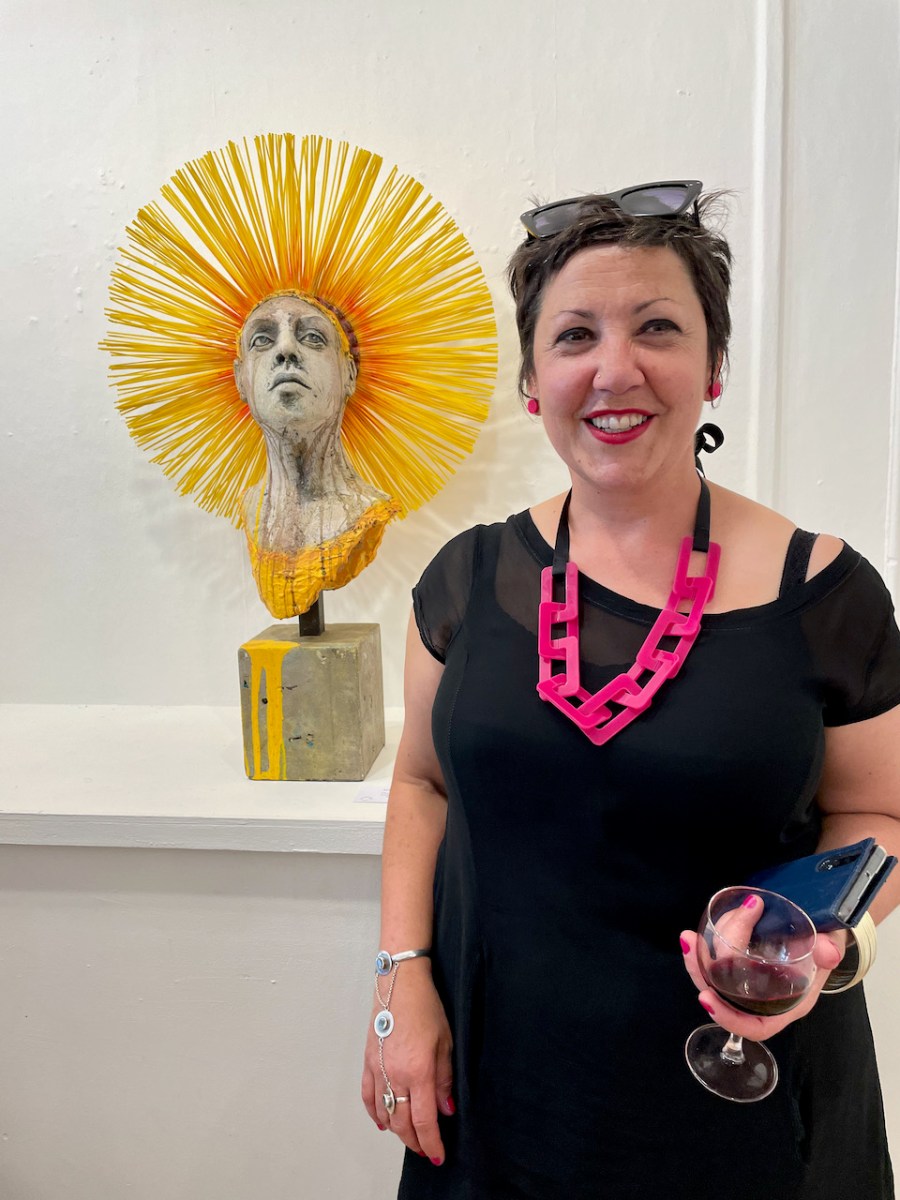
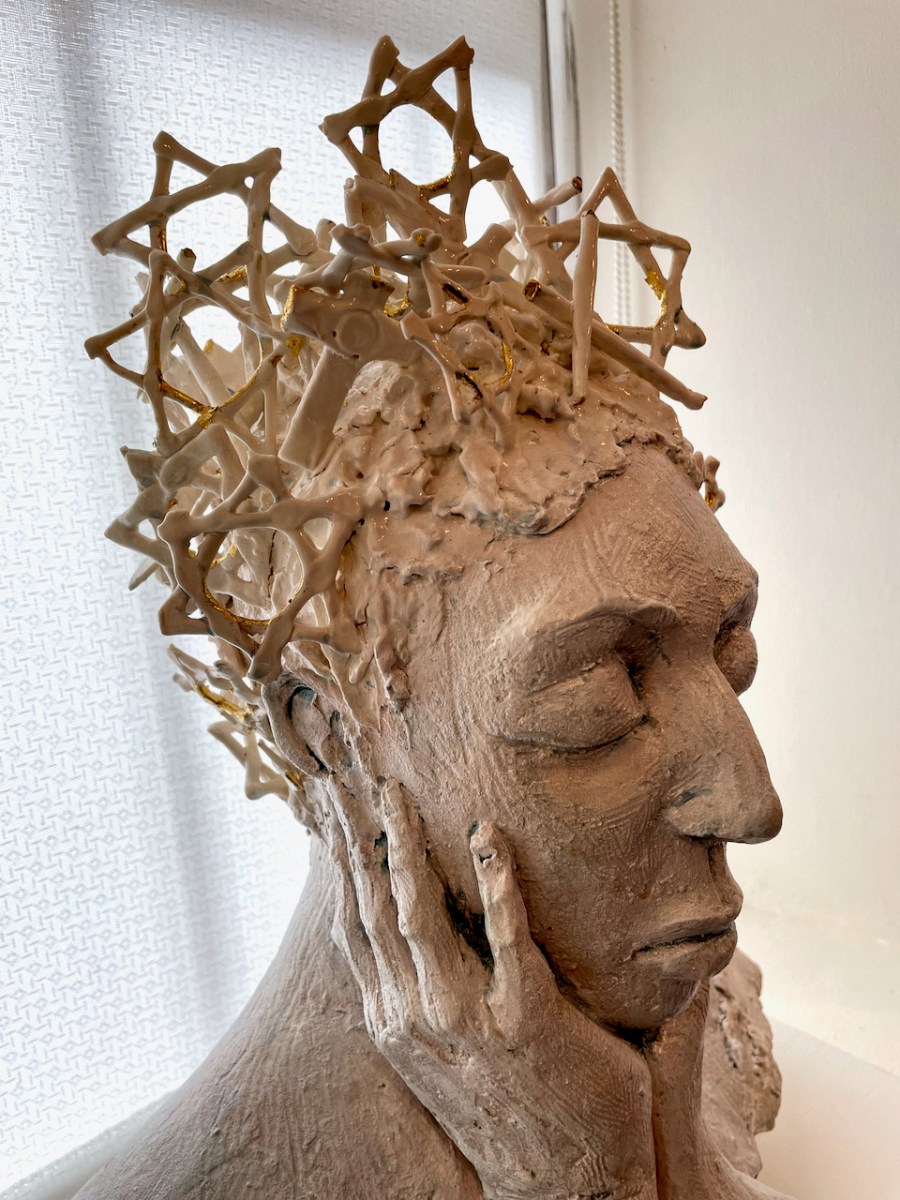
One of the standout artists in the Kenmare show for us was Ayelet Lalor – that’s her large piece above destined now for a hotel. Back in West Cork we were delighted that the Blue House Gallery in Schull devoted prime space in their latest show to her work. Titled A Life at Odds, Ayelet uses her iconic female heads to explore her own heritage and influences with an eclectic conglomeration of media including concrete, ceramics, cutlery, garden forks and industrial brooms!  The results are both captivating and provocative.

On to the music – our regular Friday sessions have resumed in Ballydehob after two years. It’s always great fun for Robert to participate in these and even more so now as they are earlier in the evening (starting at 7 rather than at 9) so he’s full of beans as he heads off with his melodeon and concertina. His post last week had a clip of them all playing. The Fastnet Maritime and Folk Festival is on here at the moment, so the village is full of musicians, including Jackie Daly and Matt Cranitch, about whom Robert wrote in his post Learning from the Masters – check that out to see some of their playing. For now, a tiny clip of John and Uwe from one of the sessions on tin whistle and flute playing Carolan’s Draught.

A couple of days ago we went over to the Beara to meet up with our friend Susan Byron, of Ireland’s Hidden Gems and her group of American tourists. Among them was Bob, who played us over the Healy Pass.

Finally, for something completely different, we travelled to the Beara again today to hear the wonderful David Syme in one of his legendary Living Room Concerts. If you ever get a chance to do this, grab it! Here he is playing the Chopin Etude “Tristess”. This is his own recording on YouTube, and if you Google David Syme and choose video, you’ll get lots more that will give you a flavour of what we heard this afternoon.

Among the pyrotechnics of Chopin, Schubert, Brahms, Bach and Gershwin, David told us a moving story about his Ukrainian-Jewish grandmother and played us a gentle piece called Jewish Prayer for Healing by Debbie Friedman. I will leave you with a short clip from his performance.

Timoleague Tour

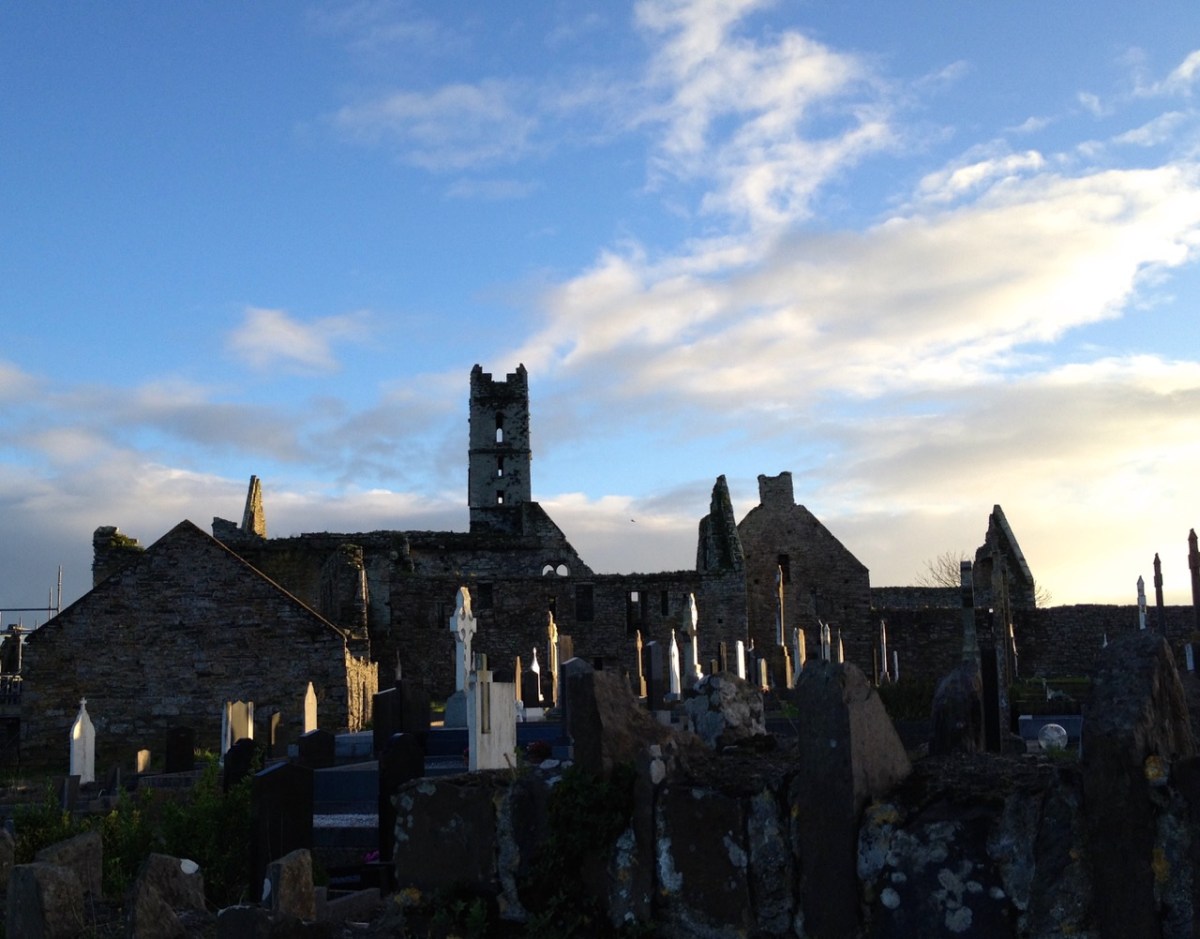
We had a great afternoon yesterday, exploring aspects of the history of Timoleague, in West Cork. Our Finola Finlay (above) was involved in an event organised by the Glass Society of Ireland . . . a professional all-island, non-profit association that opens a window onto the contemporary Irish Glass Community . . . The day’s proceedings were centred around the ecclesiastical buildings in the town, the earliest of which is the Franciscan Friary, now a substantial ruin beside the Argideen River.

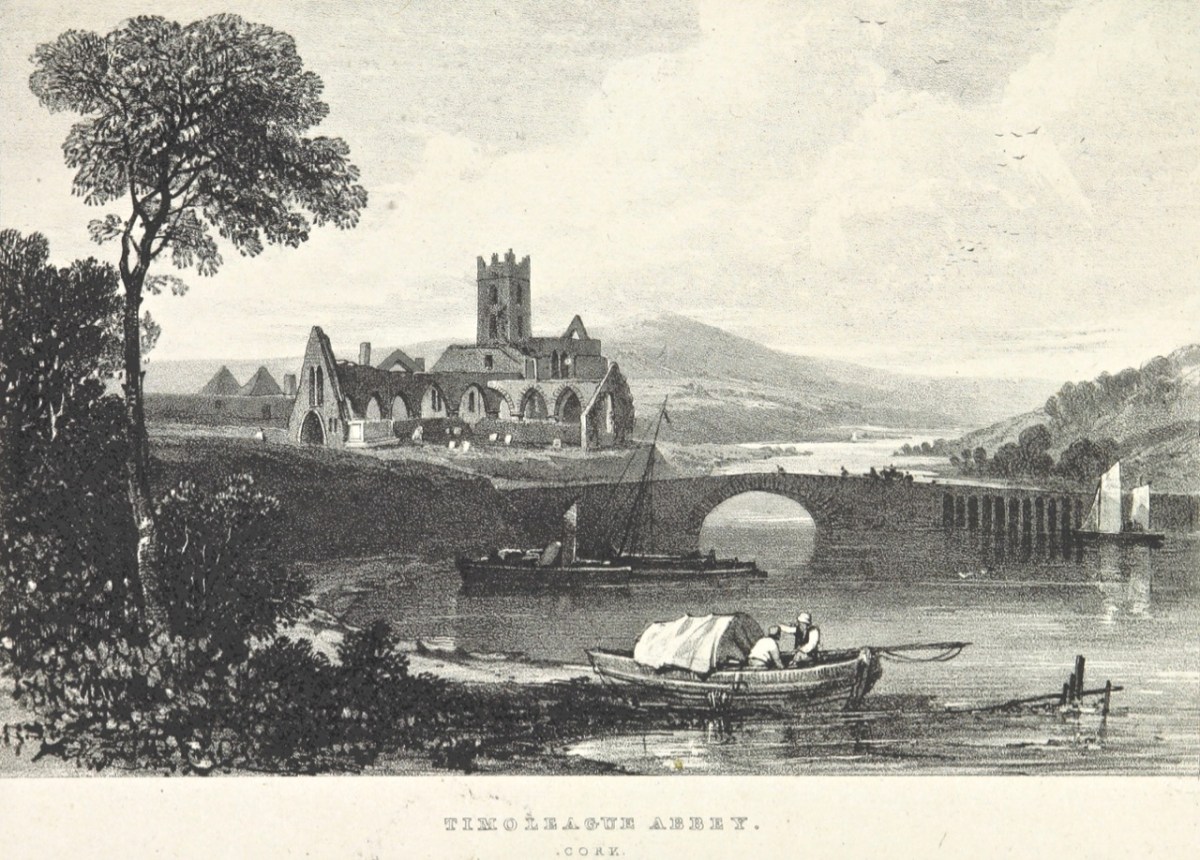
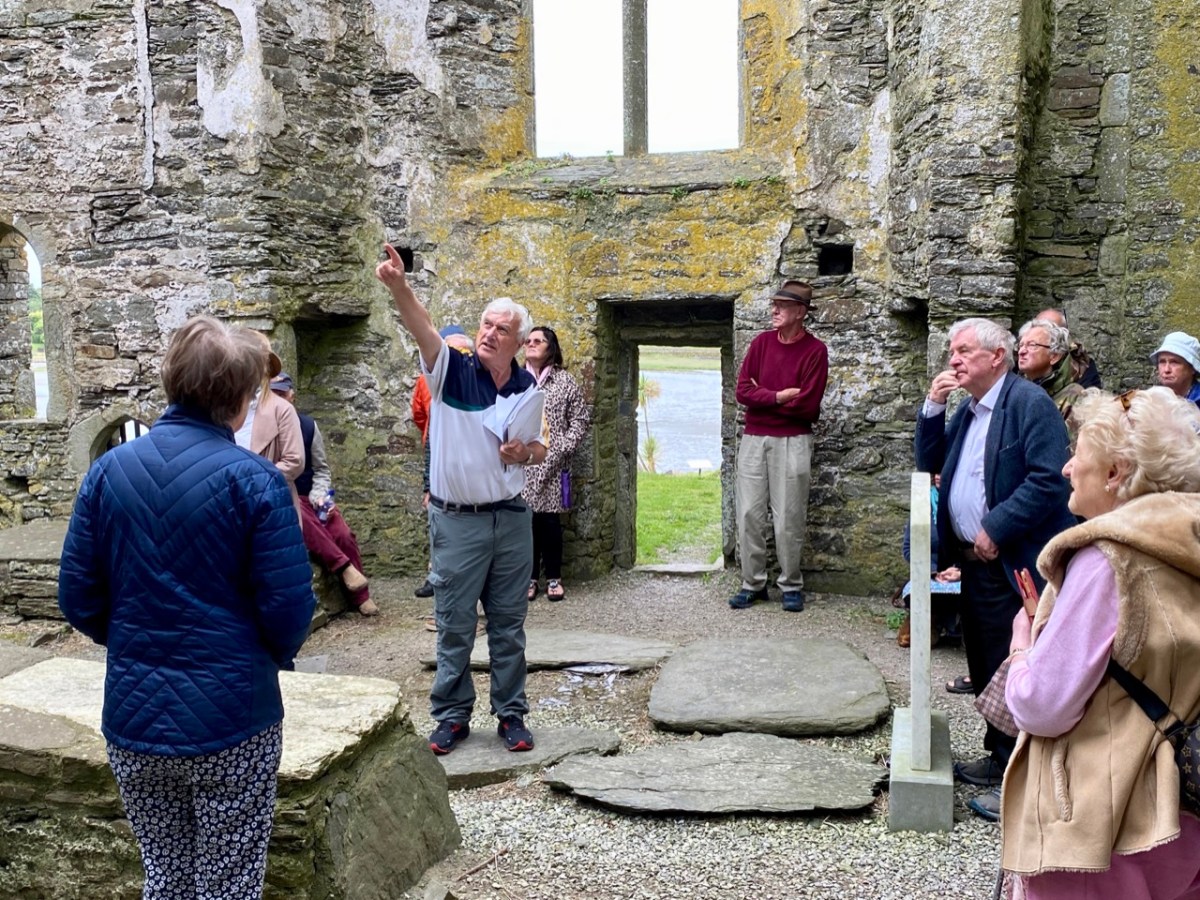
This view of the ruined ‘abbey’, above, dates from 1830. It is located on the site of an early Christian monastic settlement founded by Saint Molaga, from whom the town of Timoleague derives its name. A story that I heard for the first time yesterday was told by local historian Donal Whooley: the Saint was trying to found his community back in the sixth century, but everything that he and his followers built fell down the following day. According to legend, it was originally to be built a mile west of Timoleague, but all work done on that site by day would fall down by morning. Interpreting this as God’s wish that the church should be built elsewhere, Molaga fixed a blessed candle on a sheaf of corn, and floated it down the Argideen river, siting his settlement on the spot that it came ashore, on the big bend in the waterway where the Friary ruins can be found today. Here is a view from the great three-light window which looks out to the east over the river. Finola told us that, in its heyday, this window would have been filled with beautiful medieval glass, bringing light and colour into the substantial nave of the church.

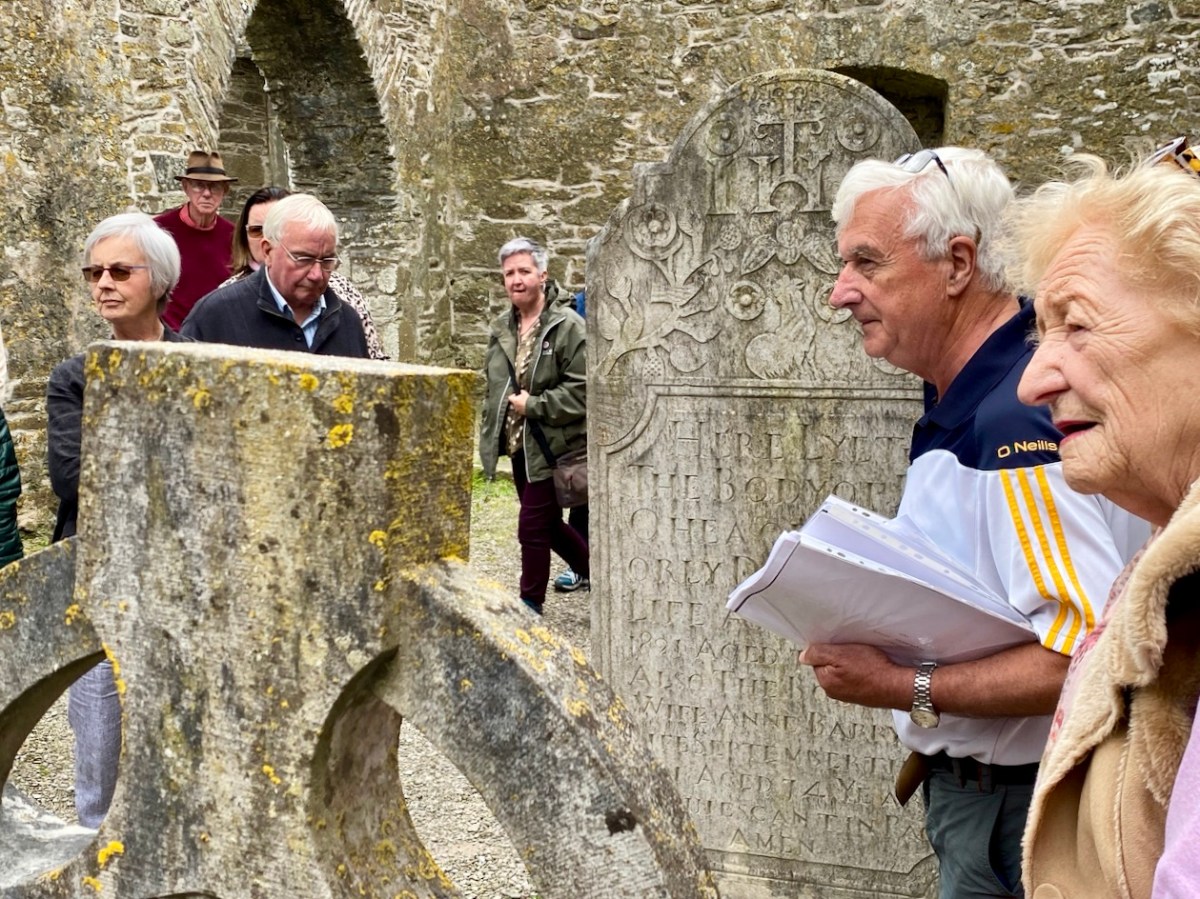
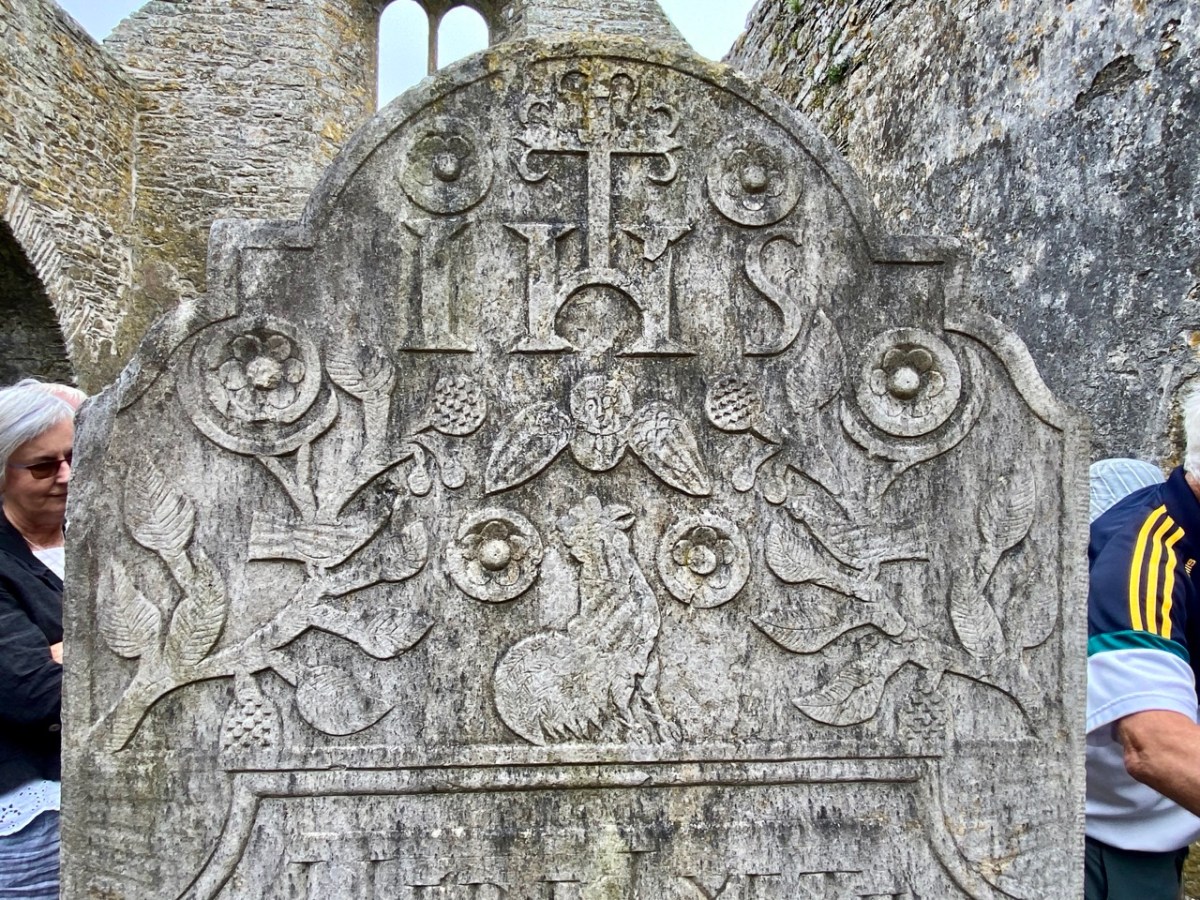
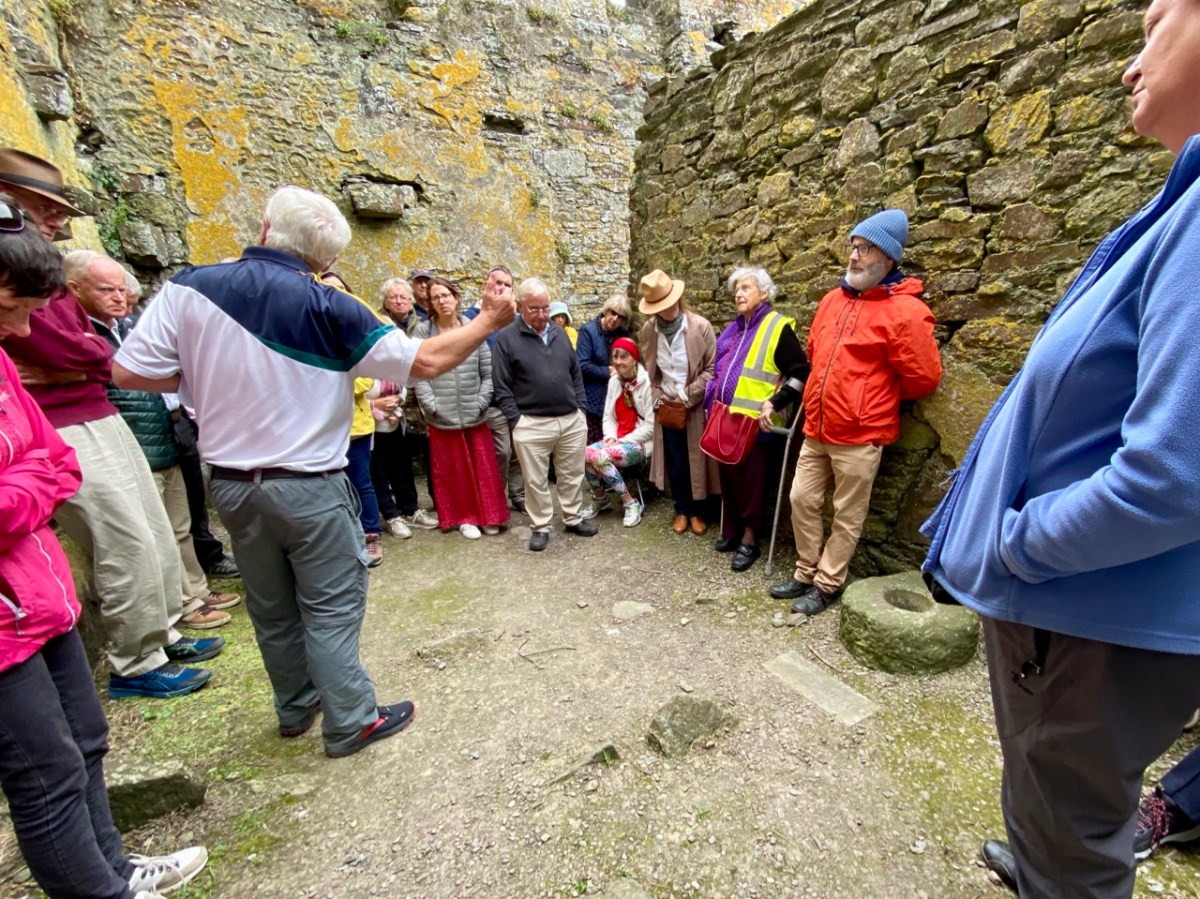
That’s Donal, above, leading our group of almost fifty keenly attentive people who shared an interest in the town and its history. To the right (in a blue jacket) is Father Patrick Hickey. He told us of the symbolism of the cockerel you can see on the large headstone in the nave (below), dating from 1821. Evidently some of the disciples were standing together while Christ was being crucified: nearby stood a pot in which a rooster was being boiled for supper. Judas reportedly said: do you think there’s any chance that our Lord will rise again? Mrs Judas retorted: there’s about as much chance of that as there is of that rooster jumping out of the pot and crowing! At which point – of course – the cockerel did just that!

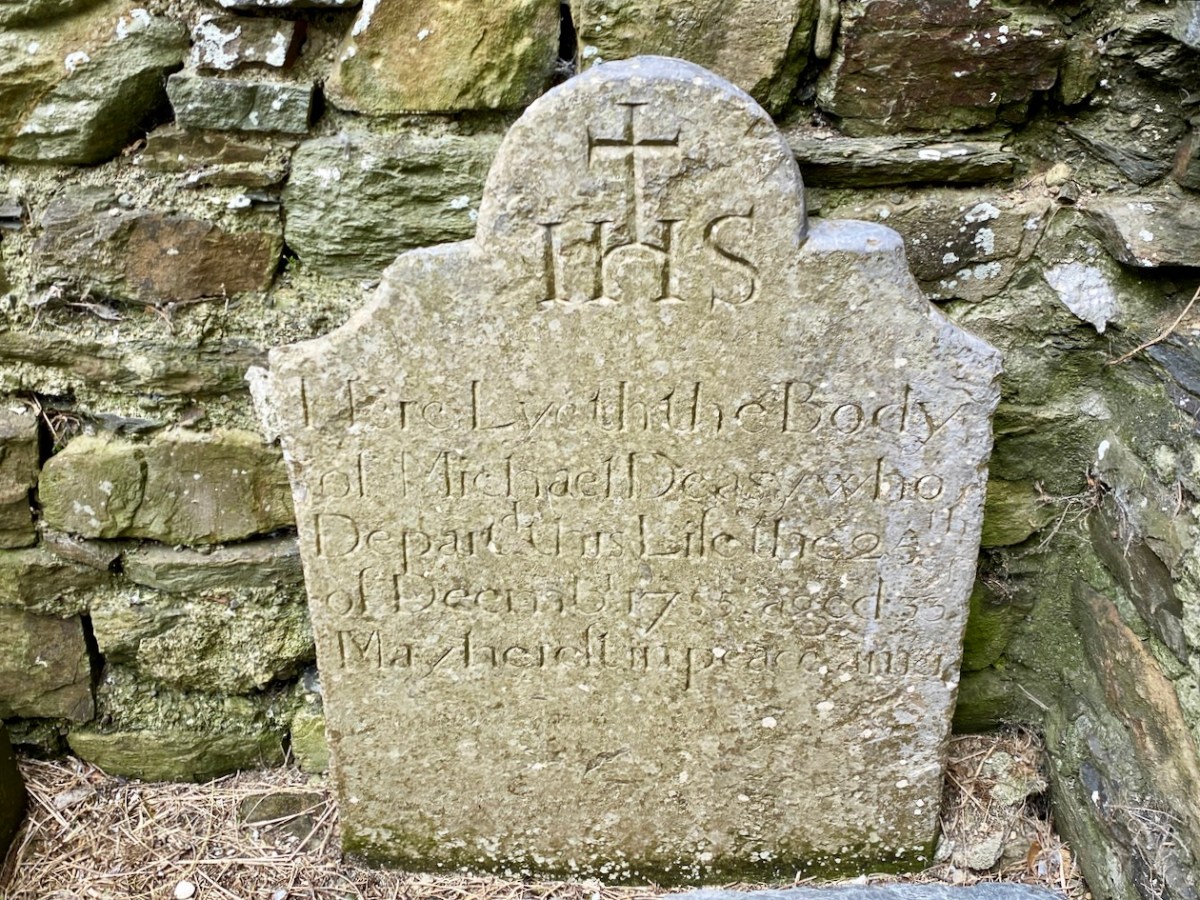
It was the custom to place burials in ruined church buildings. Here’s another fine headstone in Timoleague Abbey, to Michael Deasy, ” . . . who departed this life on the 23 December 1755, aged 33. May he rest in peace. Amen . . . “

Lively discussions ensued on the efficacy of wart wells, and Donal suggested that this repurposed bullaun stone, above could be the oldest human element on the whole site!

Here’s an aerial overview of the geography of Timoleague. The Friary ruin is only one of many historic sites of interest which caught our interest yesterday. It was Finola’s task to introduce us (or those of us who had never seen it) to the little Church of the Ascension.

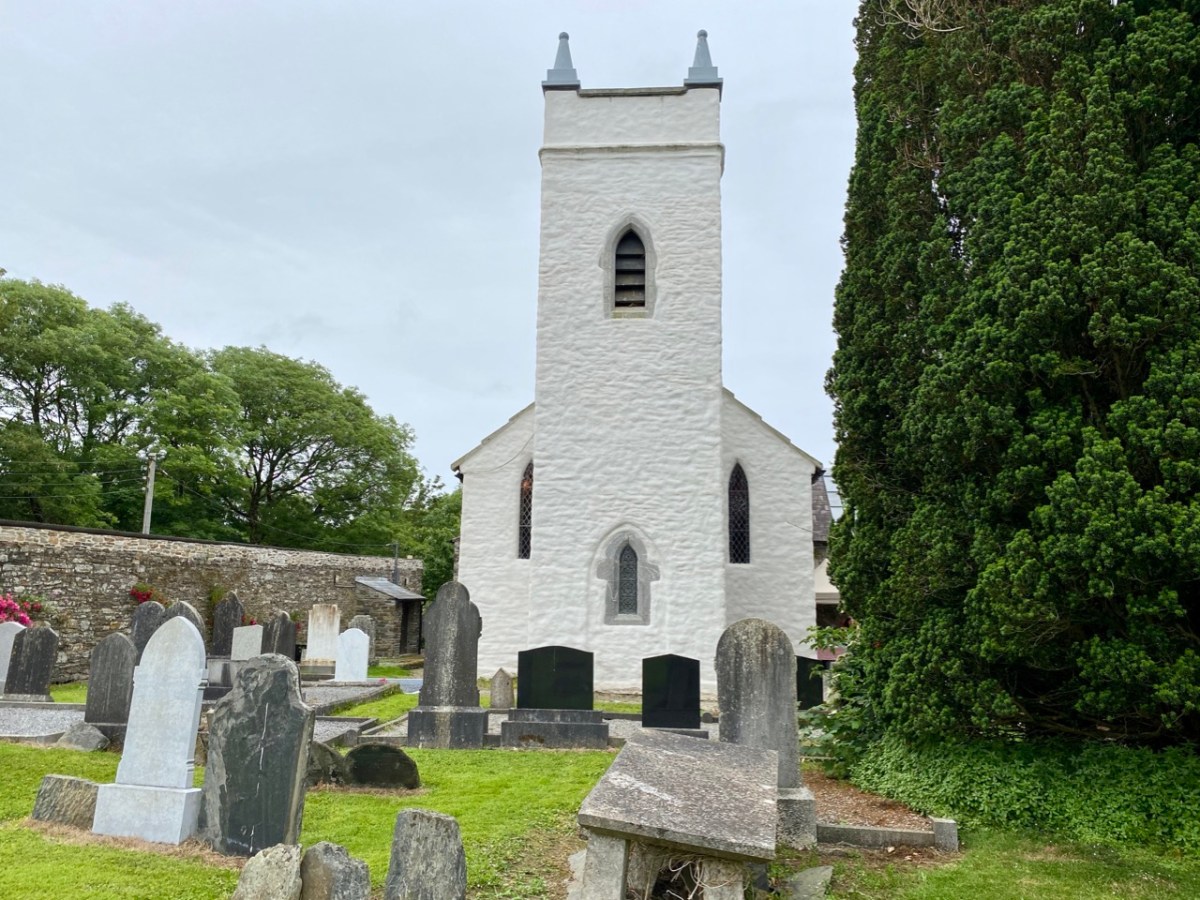
This building is currently undergoing major improvement works: the lime rendered tower has created a striking landmark in the town. This work has become necessary by water penetration through the stonework leading to deterioration of the fabric. The conservation project is led by a hard-working Parish committee who also served us delicious tea and cakes since the tour was a fund-raiser for their efforts.

You can see Finola addressing us in this little Protestant church in the header picture. Above is one example of the fine early glass here, this one by Clayton and Bell. For a fuller description of this church and its many stories, read our post here.

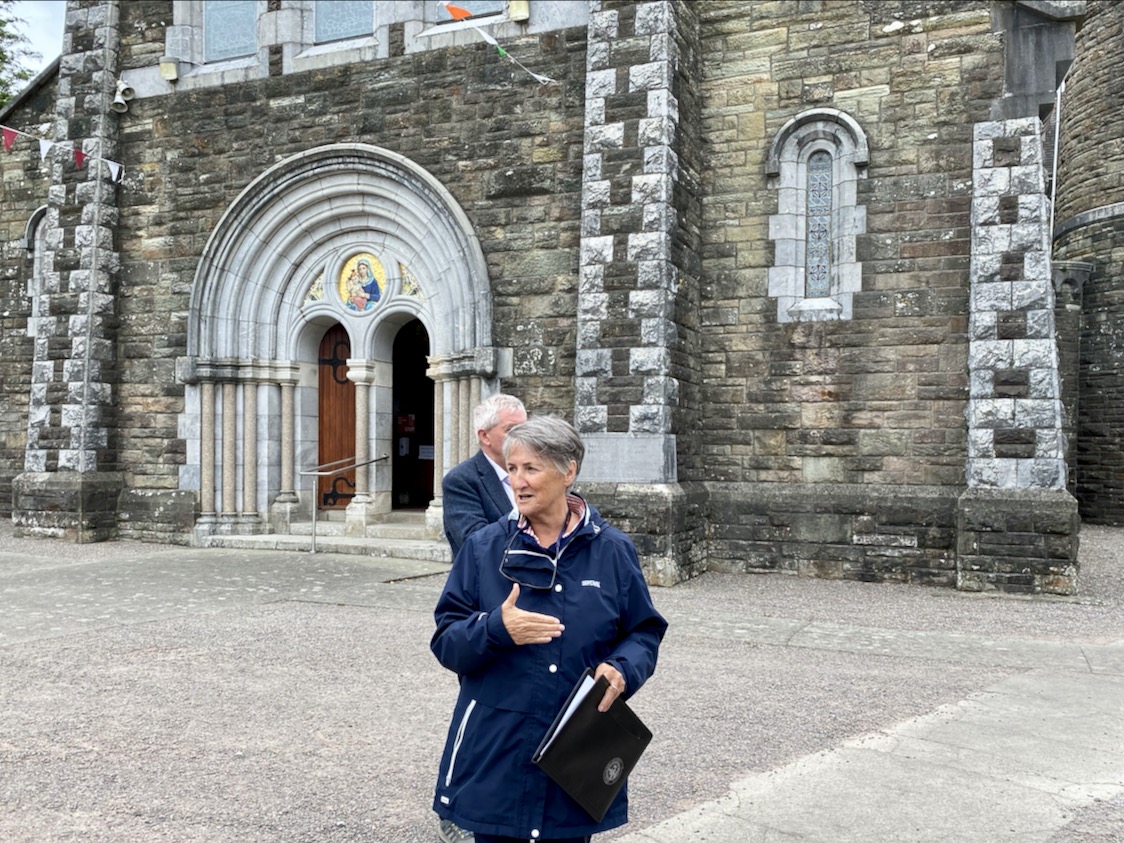
The early OS map extracts, above, give further context to the town’s history. The top map dates from the 1830s and comparison of the plan forms of the Church and Chapel buildings with those in the lower map, which dates from c1900, and then the present day aerial view (higher up the page) shows the degree of change which has taken place. We finished our town tour in the Church of the Nativity of the Blessed Virgin Mary. Here’s Finola standing outside it, below, prior to giving us an introduction to the history of the building, and its windows.

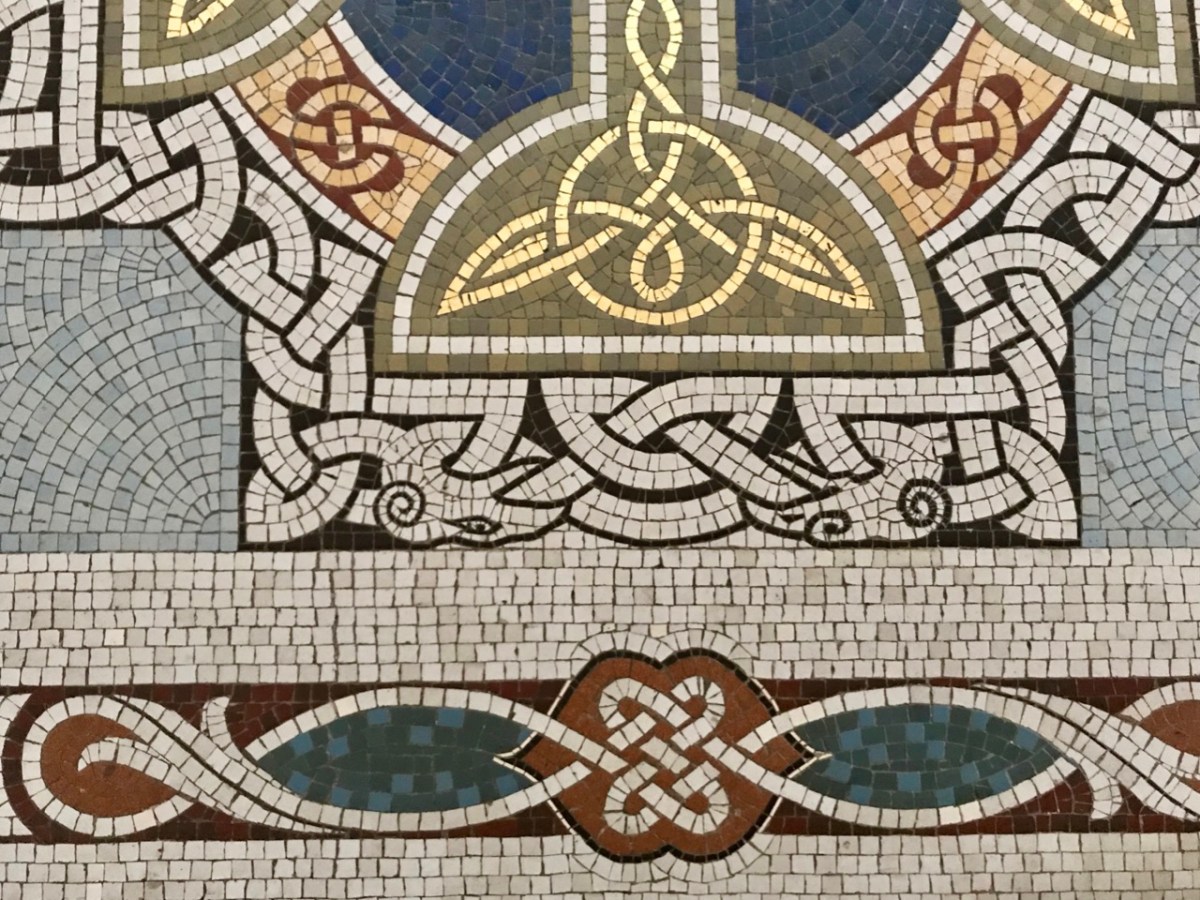
The fine Harry Clarke Studio window (one panel of which is shown in the upper picture) is a ‘must-see’, as is the mosaic work from the same church. The building work for this Catholic church, replacing an earlier chapel, dates from 1912.

Father Patrick Hickey nicely rounded off our day of Timoleague history by showing us the replica of the ‘Timoleague Chalice’ (above). The replica is kept in this Catholic church. According to Fr Hickey, ‘back in the penal days’ three monks were found floating in an open boat just off the island of Cape Clear. They had with them a box, or trunk. They were brought ashore but two of them died. The other asked that the box be kept on the island – but unopened – until he could return to retrieve it. He never returned, and in later years another visiting Priest said it could be opened. Inside was a gold chalice – blackened with age – and some liturgical vestments. The vestments fell to dust immediately, but the chalice was sent away for inspection, and was confirmed as coming from the Friary at Timoleague, where the replica is now kept.

Here is another ‘souvenir’ of Timoleague – it’s an extract from a poem written in Irish: The Mourner’s Soliloquy in the Ruined Abbey of Timoleague. The poet, Seághan Ó Coileáin, ” . . . was a Gaelic-language poet born in County Cork, in a time of faded Irish glory. He lived as a village schoolmaster, with a large family and no patron . . . “

Abroad one night in loneliness I stroll’d,
Along the wave-worn beach my footpath lay;
Struggling the while with sorrows yet untold,
Yielding to cares that wore my strength away:
On as I mov’d, my wayward musings ran
O’er the strange turns that mark the fleeting life of man.

The little stars shone sweetly in the sky;
Not one faint murmur rose from sea or shore;
The wind with silent wing went slowly by,
As tho’ some secret on its path it bore:
All, all was calm, — tree, flower, and shrub stood still,
And the soft moonlight slept on valley and on hill.

Midsummer Music

Here’s a little burst from our traditional session in Rosie’s, Ballydehob, last Friday, with a great crowd of players and singers filling the pub with Irish music, as they do every week through the year. Sometimes the session takes place at a different venue in the village, but you will soon find it, between seven and nine on a Friday evening. The music is to remind us that the The 9th Fastnet Maritime and Folk Festival will be held from the 17th – 19th June this year, after an enforced ‘Covid’ break. Hopefully it will be ‘just like old times’. There is a great programme to look forward to – don’t miss it! To get you into the spirit here’s Festival regular Matt Cranitch leading a rendering of the beautiful air Sliabh na mBan.

There’s a tale attached to all good songs, and Sliabh na mBan is no exception. This is from the Dúchas Schools Folklore Collection 1936 . . .

. . . Finn mac Cumail, having come of age, took upon himself the task of choosing a wife. A public man like him had to cater to the popular expectations and he was in sore straits fearing to give hurt to any of the noble families wishing to link their daughter with Finn in the bonds of Holy Matrimony. Having tasted of the Salmon of Knowledge, he was all wise, so he hit upon a good plan. A race would decide who to wed him. He sat on the top of Slievenamon, (Sliabh na mBan – Mountain of the Women). All the ladies were to race from the Anner and the first up was to become his wife. Then the gathering began – old, young, fair, dark, ugly, beautiful, sprightly and lame all came to try and become Finn’s wife. “They’re off!” – what a view as all the maidens of Munster set off on the race. The beautiful girls began well, but soon got tired and as some old hag would limp past them she’d sneer “Fair and go easy goes far in a day”. On they went, the latter tripping the former – three remained to do the east climb – two beautiful girls and a worn, old hag: up, still up – who’ll win what? Wait! the fair girl has fallen, now just a dark-haired caílin and the old woman. Oh look, she’s down – the girl hurts her ankle and tries to creep along, but faints. Now the old hag has an open field. Finn must marry her – But no, up the slope comes a lovely girl and reaches Finn first and like all nice stories, they were married and lived happily ever afterwards. (Nobody knew that Finn had instructed his lady love to run over to Boherbee where the mountain is low and go along the gradual slope, instead of trying to climb the steep precipitous mountain face) . . .
Schools Folklore Collection – Miss H Noonan Aged 70 – Cloneen, Co Tipperary

A reminder of pre-Covid days (above, in Levis’ Bar) – folk legend Martin McCarthy (now aged 81) was a regular at the Ballydehob Festival. There’s some good ‘new blood’ there this year, and the launch of an album of the best Sliabh Luachra music from Pat Fleming with Maria Cotter, Tim Browne, Gary O’Brien and Timmy O’Connor. A special event will take place in Bank House in the main street at 7.15 on Thursday 16th June: festival organiser Dick Miles will give a talk on the ‘folk revival’ – (A musical journey from England to Ireland). There will be plenty of opportunities for all musicians to participate over the weekend, starting with the regular Friday folk session in Rosie’s at 5pm (note the earlier-than-usual time) on the 17th.

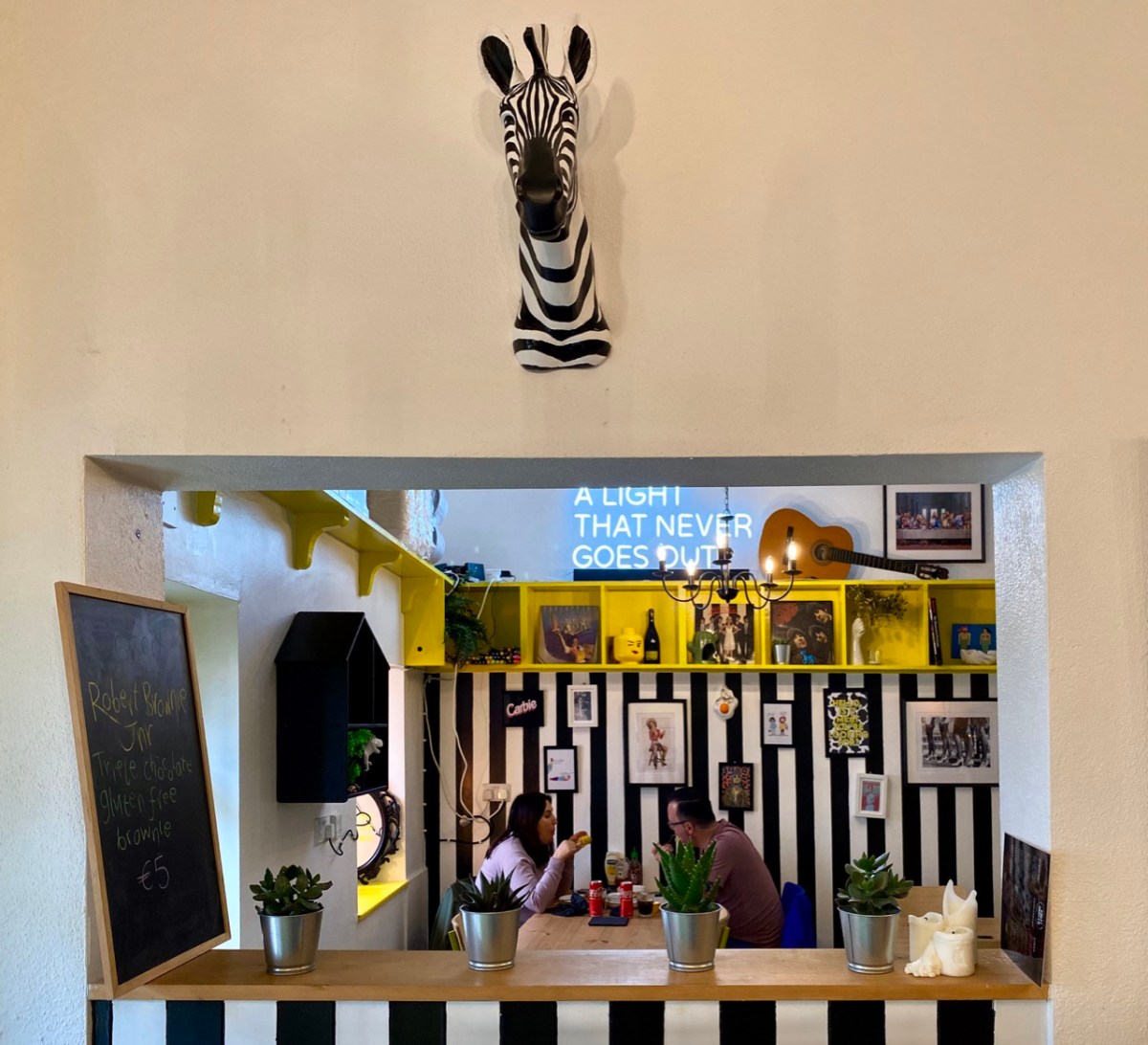
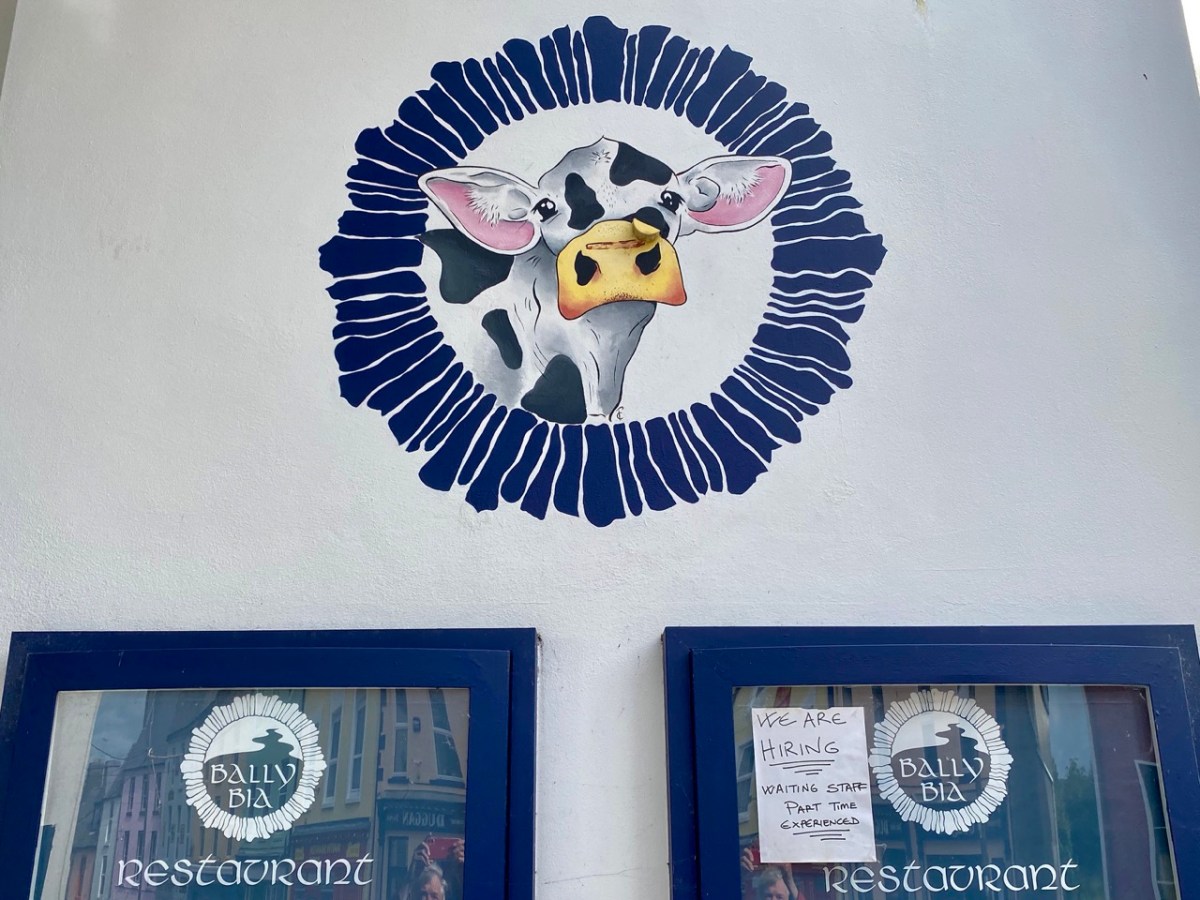
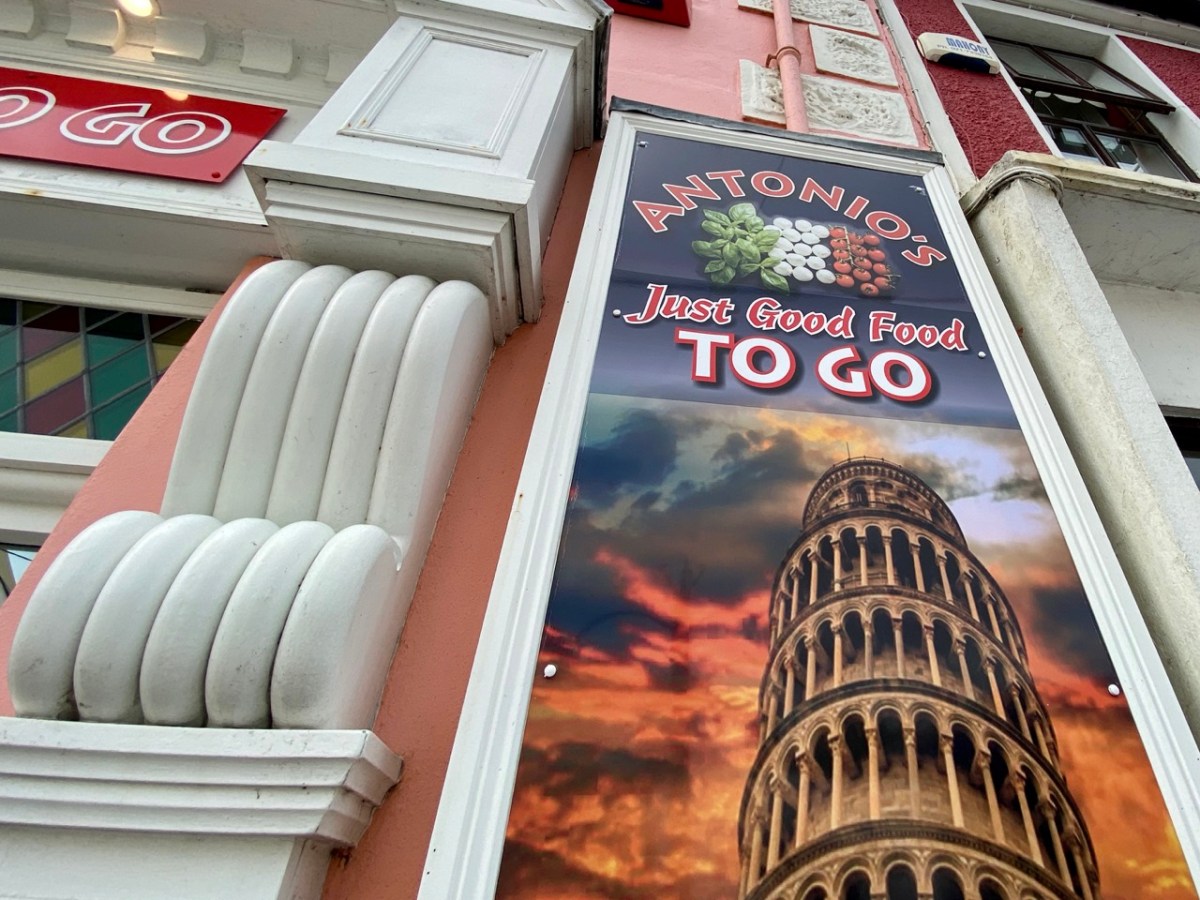
There are plenty of good food opportunities in Ballydehob: all will be available over the Festival weekend: the wonderful Yay Burger (top), Budds (above) and Bally Bia (below). Don’t forget Antonio’s and – if you want Michelin Star (why wouldn’t you?) there’s the Chestnut.

But the festival is – first and foremost – all about the music. We hope to see you there over this coming weekend. We’ll finish with more Sliabh Luachra tunes from Jackie Daly and Matt Cranitch, who will be there to serenade us. Enjoy!

Weeds: A Matter of Perspective

A weed is a wildflower whose name we haven’t learned yet, in the same way that a stranger is a friend we haven’t met yet. Like the hogweed above – a plant, by the way, that is in the top ten percent of the most nectar-rich and valuable-for-pollinator wild plants, a plant that is also edible by humans and animals – ‘weeds’ are plants we mostly love to hate.

Ah yes – weeds! Those wreckers of manicured lawns and tidy driveways. Those nasty undesirables that must be dug up or, as with the seldom-used holiday home above, Rounded-Up. 

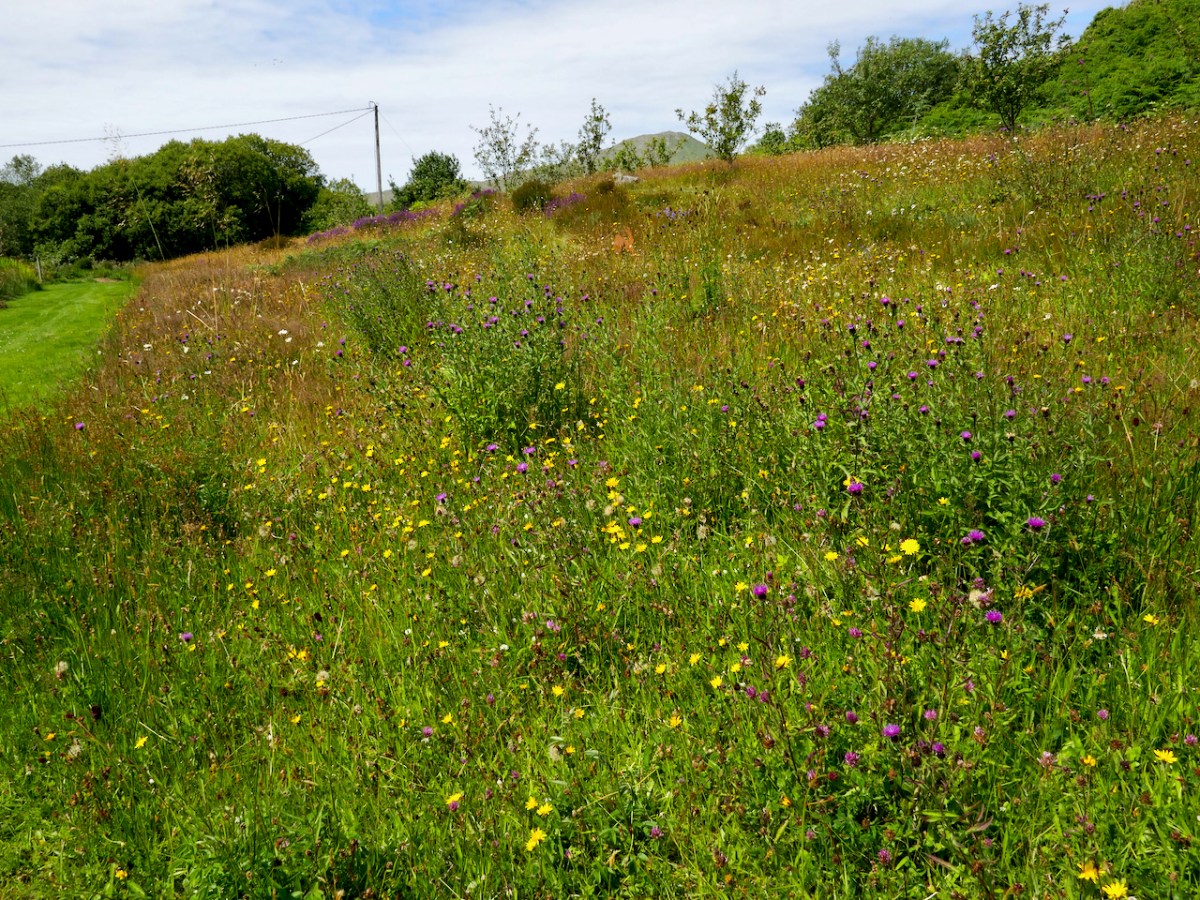
But wait – what’s this? All over Ireland people are letting the ‘weeds’ take over! Just look at this fabulous example at the Heron Gallery on the Sheep’s Head (above). It’s like we’ve had a mad rush of blood to the head and are changing life-long attitudes. What has caused this? Was it the pandemic, like we account for so many other changes in our lives? 

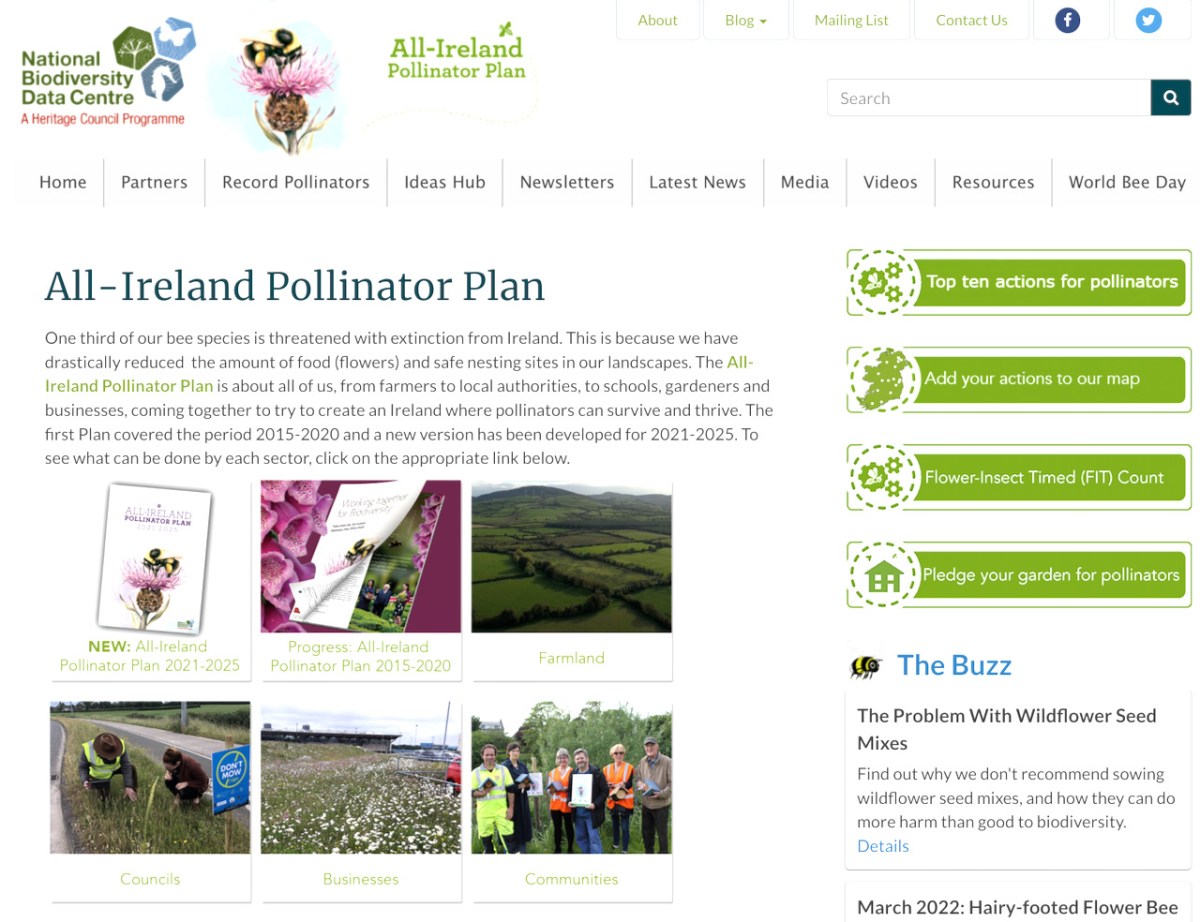
Mostly, it’s down to the incredible work of the All-Ireland Pollinator Plan, a program devised by the National Biodiversity Data Centre and two lead researchers, Dr Úna FitzPatrick of the Centre and Prof Jane Stout of Trinity College. (I had the immense pleasure of a day with Úna recently.) It’s been very successful, with many county and town councils signing up and pledging to implement pollinator-friendly horticultural and agricultural practices. For the last few years, The National Tidy Towns Handbook is on board too, with an emphasis on native species and pollinator-friendly planting.

And this is urgent!

Pollinators are in decline, with one-third of our 98 wild bee species threatened with extinction from the island of Ireland. The problem is serious and requires immediate attention to ensure the sustainability of our food, avoid additional economic impact on the agricultural sector, and protect the health of the environment. 

Working together for Biodiversity:
Tales from the All-Ireland Pollinator Plan 2015-2020

Each of us with any little patch of ground can do our bit too. All you have to do is set aside whatever portion of your garden you’re comfortable with (10%? 50%?) and turn it into a perennial wildflower patch. I’ve been doing this in my garden (above) now since 2017, so this is my 6th year. in 2018 I introduced Yellow Rattle from seeds bought from Sandro Cafolla at The National Wildflower Seed Collection. Called the meadow maker, Yellow Rattle (below) parasitises on grass roots, thinning them out and providing space for other wild seeds to take root. Apart from that, I have had to keep an eye on incursions of bracken and nettles. 

The results have been all that I hoped for. Every day I am tempted out to my little mini-meadow with my camera. The rest of the lawn I try to leave as long as possible between cuts and it’s amazing what comes up there too. Take a look at my video, Lying in the Grass, for a sense of the sheer wonder and variety of what has appeared all over my One Acre.

The driveway and all around the house is gravelled and I have resisted the temptation to tidy it up in any way. In return, a huge variety of wildflowers have appeared – Groundsel and Pineapple-weed, Scarlet and Yellow Pimpernel, Silverweed, Cat’s-ear and Autumn Hawkbit, Germander and Thyme-leaved Speedwells, Herb-Robert and Keel-fruited Cornsalad, Dove’s-foot and Cut-leaved Crane’s-bills, Common and Bush Vetch, Sowthistles (Prickly and Smooth), Sheep’s-bit, Sorrels and Chamomile. 

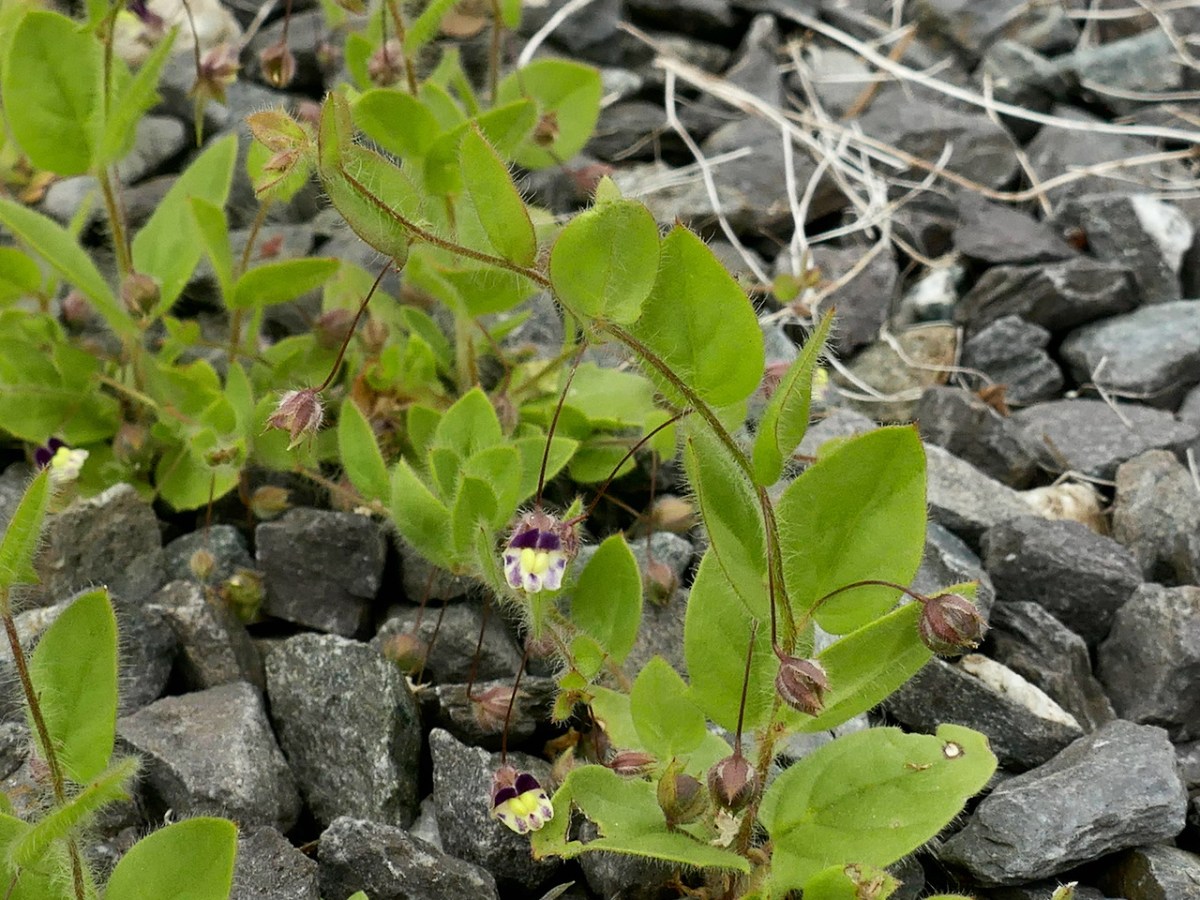
I even discovered a rare little plant popping up in my driveway – the gorgeous and curious Sharp-leaved Fluellen. According to the distribution maps it’s been slowly making its way west from Wexford over the years – but how on earth did it land in my driveway? It’s a mystery like that, that keeps me fascinated with wildflowers.

See what I did there? I named the ‘weeds’ – and naming something gives it presence and personality. Once you know the name, there’s a natural curiosity to know more about the plant itself and to keep an eye on it. Thus, they turn into old friends and your heart lifts as you watch a Painted Lady Butterfly feeding on the humble Knapweed, or a Bumble Bee hover over the vetch, choosing which blossom to settle on.

We need to adjust our notions of what’s beautiful if we are to avoid a biodiversity catastrophe. Each one of us can do something to help. If you want to grow your own perennial wildflower patch, there are simple steps you can take – see my posts on my One Acre (then, One Year on, Three Years on, and Four Years On) for what I have done, or follow the Guidance of the Pollinator Plan.

Here’s what NOT to do – don’t buy ‘Bee Bombs’ or packets of ‘wildflower mix’ seeds. As this excellent paper puts it: Wildflower seed mixtures do not help address biodiversity loss. Rather, they cause further disruption to what remains of the natural environment. Follow best practice – mow once a year and remove the cuttings, try to keep down nettles, dock and bracken (and Ragwort if it’s threatening to take over) – and then let it be. Every now and then, go lie down in the grass beside it and listen for buzzing.

And if you’re a keen gardener and want to just make your garden more pollinator-friendly – there’s a guide for that too!