‘The Mountain’

We spent a day on ‘The Mountain’. It’s a West Cork location, not too far away from us. The land has a history that touches on many of our interests covered here in Roaringwater Journal – and some of the West Cork people we have written about over the years – so it’s pretty special. We were delighted to be welcomed to it by its present owner, Oliver Farrell: that’s himself, in the pic below. You have met him before, here. Thank you, Oliver, for allowing us to experience this special site, and for letting us put out this post about it.

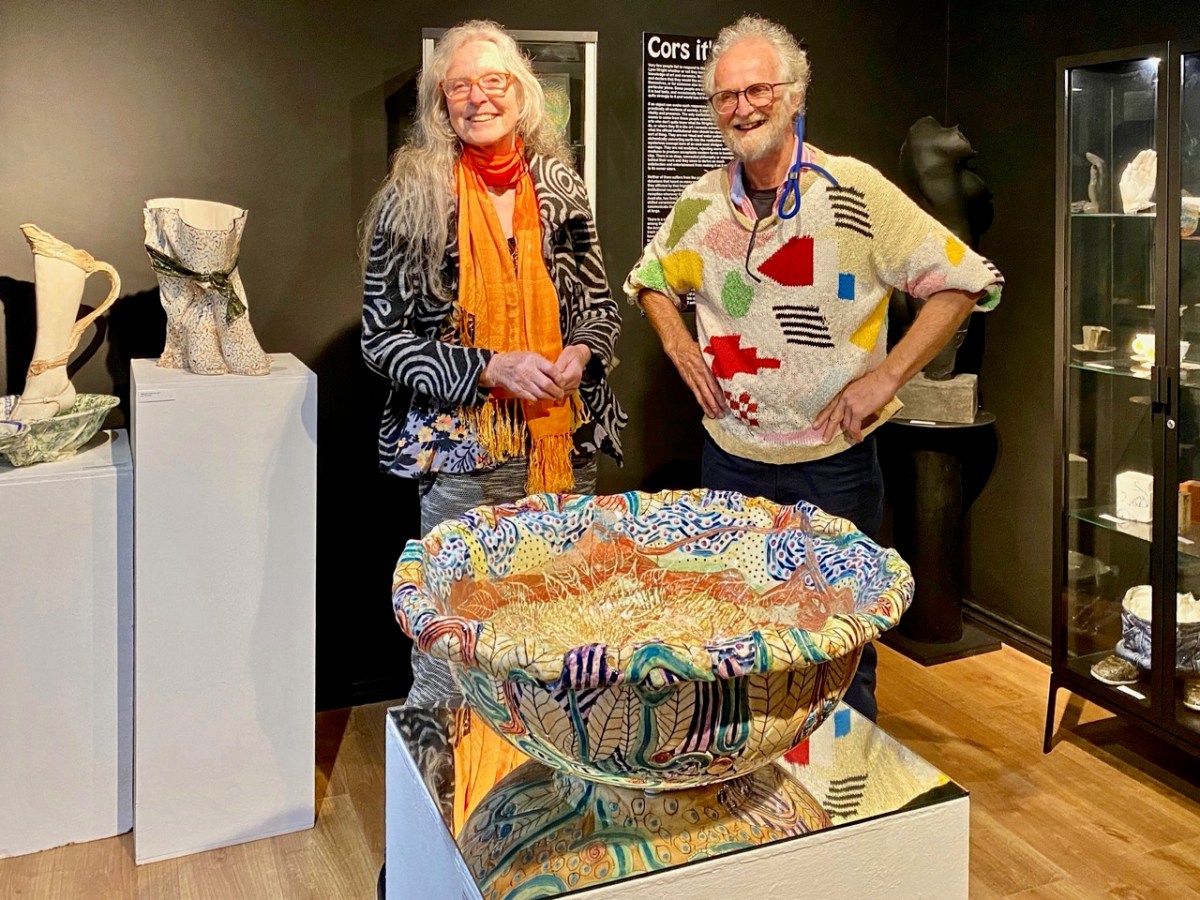
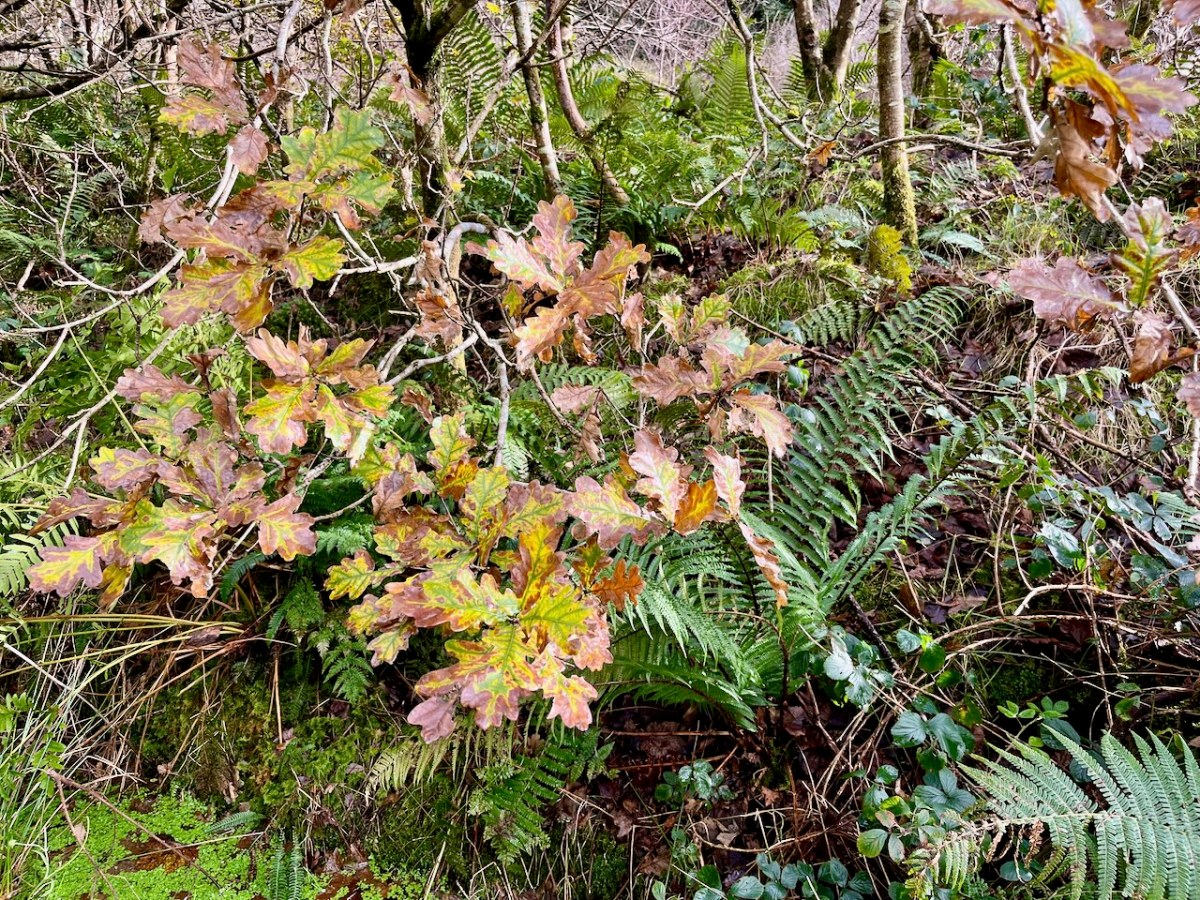
Previously, the 70 acre ‘Mountain’ site was owned by the Wrights – Lynne and Ian (above): you saw them in the 2022 Ballydehob Arts Museum exhibition, here. When they purchased it – in 1997 – it was rough pasture and bog. They aimed to develop an environmentally and economically sustainable forest using existing grants, and successfully challenged the decision of the Forest Service (through the EU) to only grant aid the planting of alien conifers. They set about transforming it: they had a vision of a ‘pure’ West Cork landscape supporting an ecosystem of native species. Now – many years later – it’s possible to see that the Wrights’ vision was fully justified – and realised. Today Oliver is undertaking essential maintenance work, and is committed to expanding on the inherent sustainable qualities that the site embodies. In fact, ‘The Mountain’ is largely in excellent environmental order.
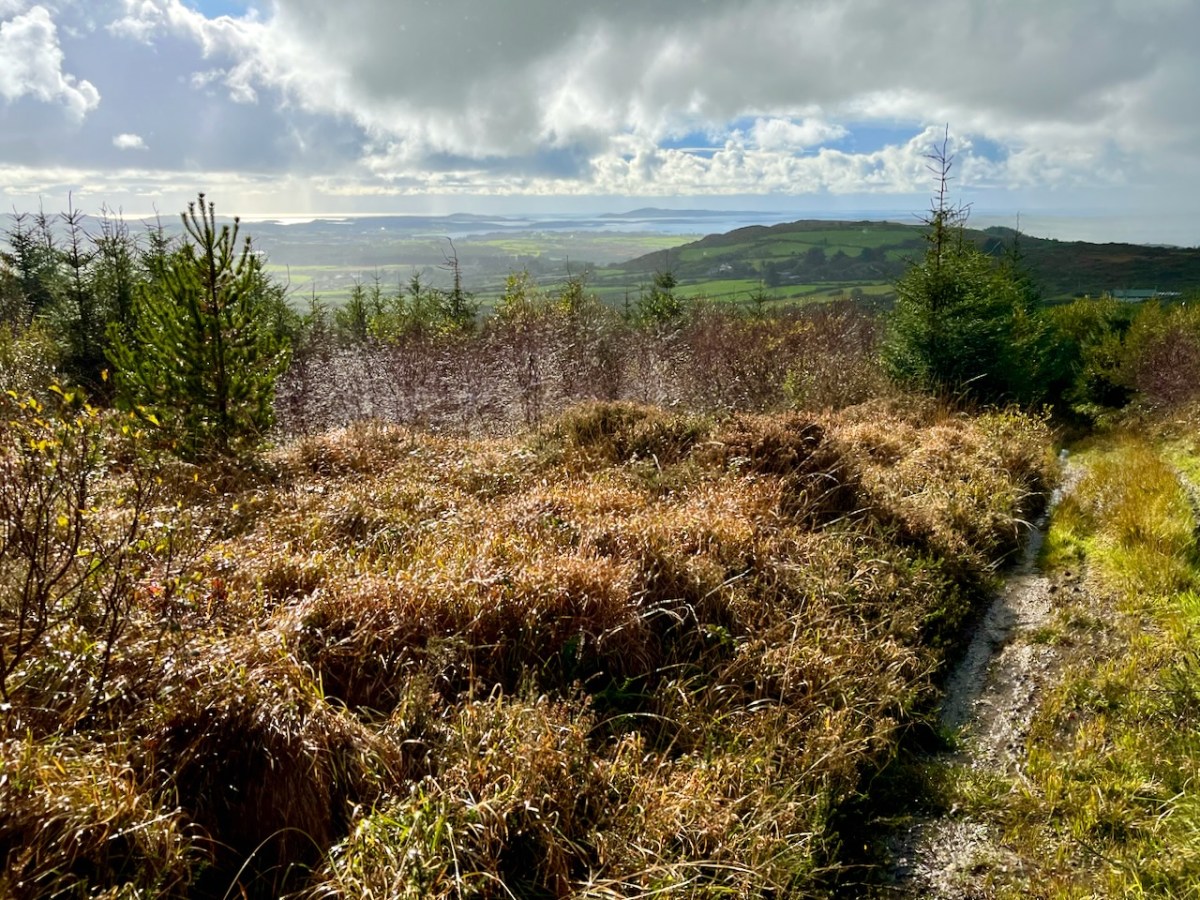
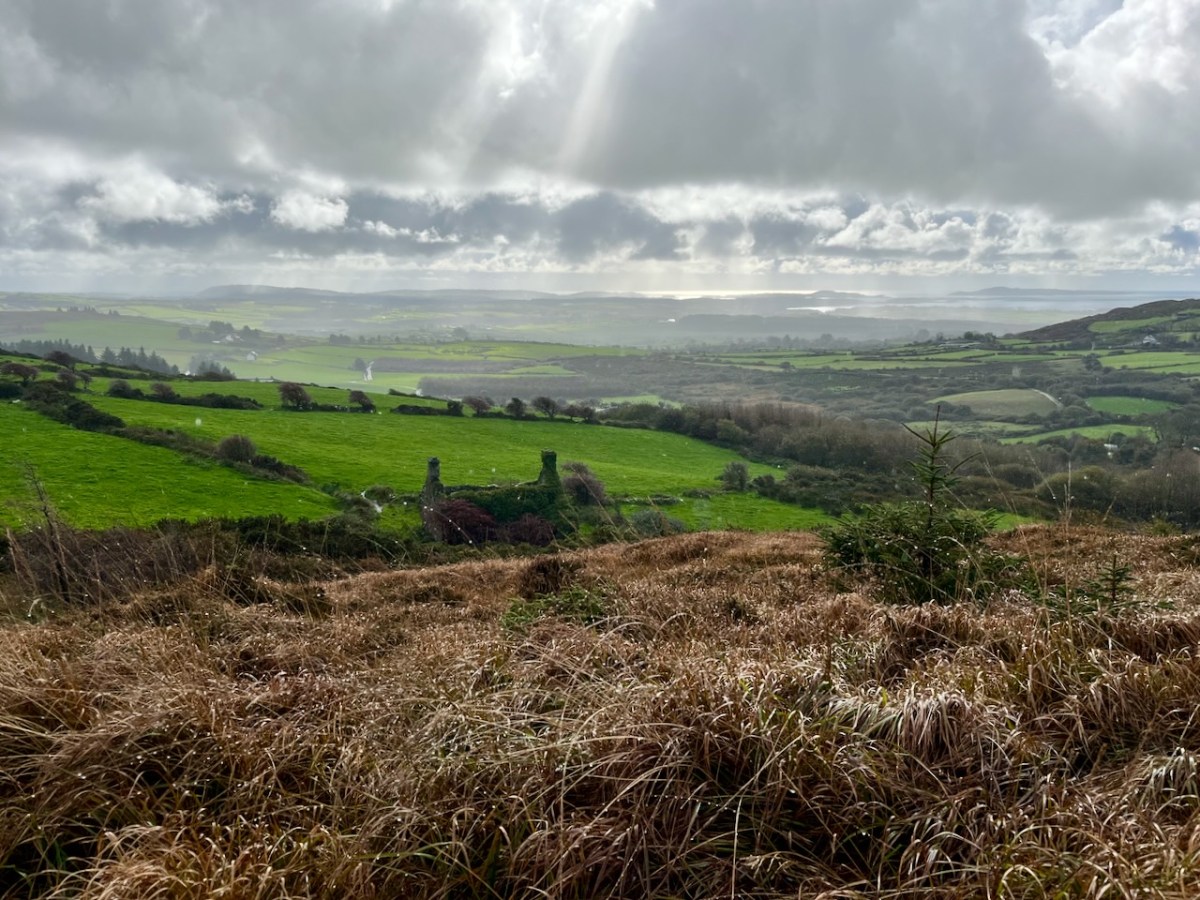
Interestingly, Ian told us that when they made the decision to buy the site they had only seen it under cloud: the spectacular view wasn’t revealed until later on. We were fortunate on the day of our visit to see the full panorama of Roaringwater Bay stretched out before us.

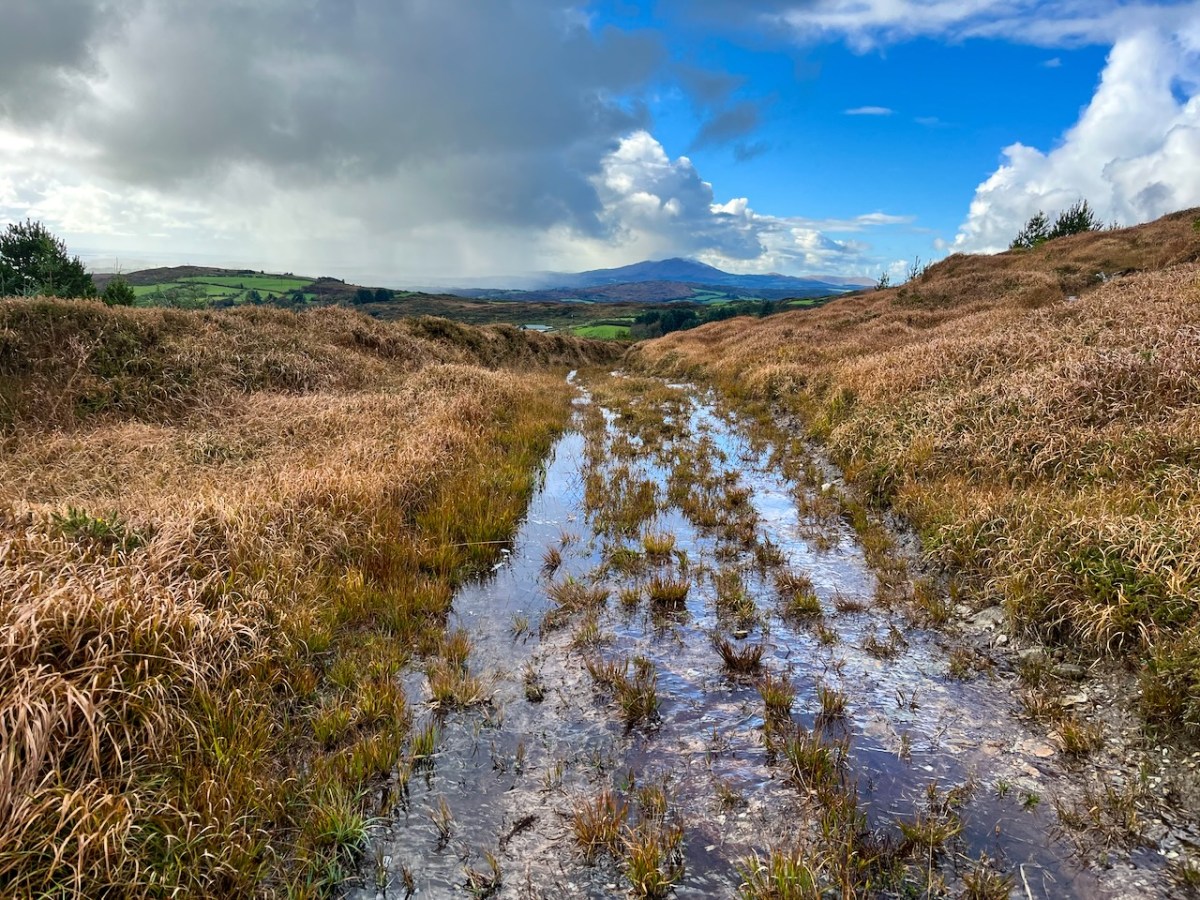
This dramatic view towards Mount Gabriel is a reward for climbing ‘The Mountain’. The ground was waterlogged on the day of our visit as this autumn has been a time of relentless rainfall, but always interspersed with brief dry patches: it’s great to be out to catch these. Springs rise on the high ground here, and I’m working out that they either feed the Roaringwater River – the water that gives its name to the whole Bay and islands that are central to our view from up here in Nead an Iolair, or another of the many streams that drain the West Cork hills below us.

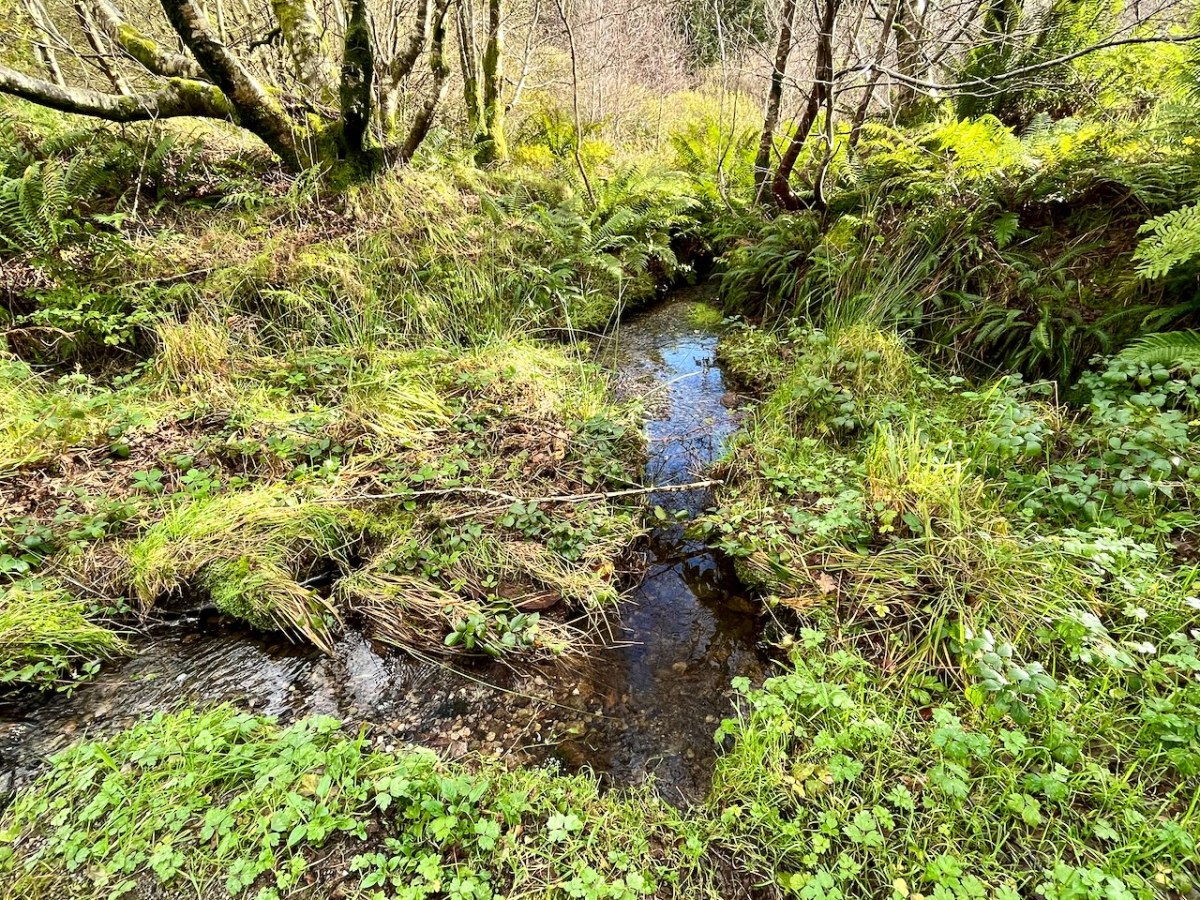
Oliver stands above one of the spring outlets that form the infant waterway (top), while the stream matures as it flows on down through his land (lower). Below – Oliver and Finola inspect one of the lakes which has been created within the site.

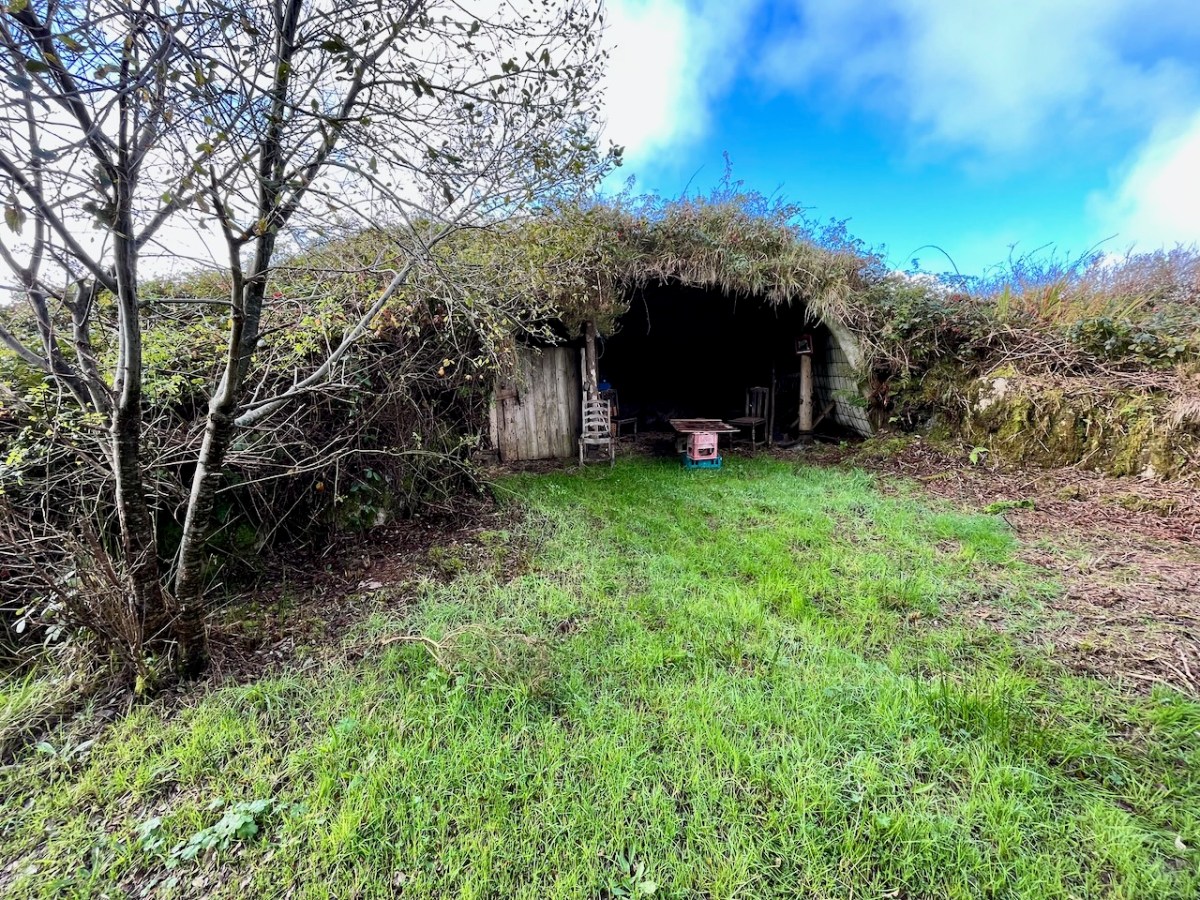
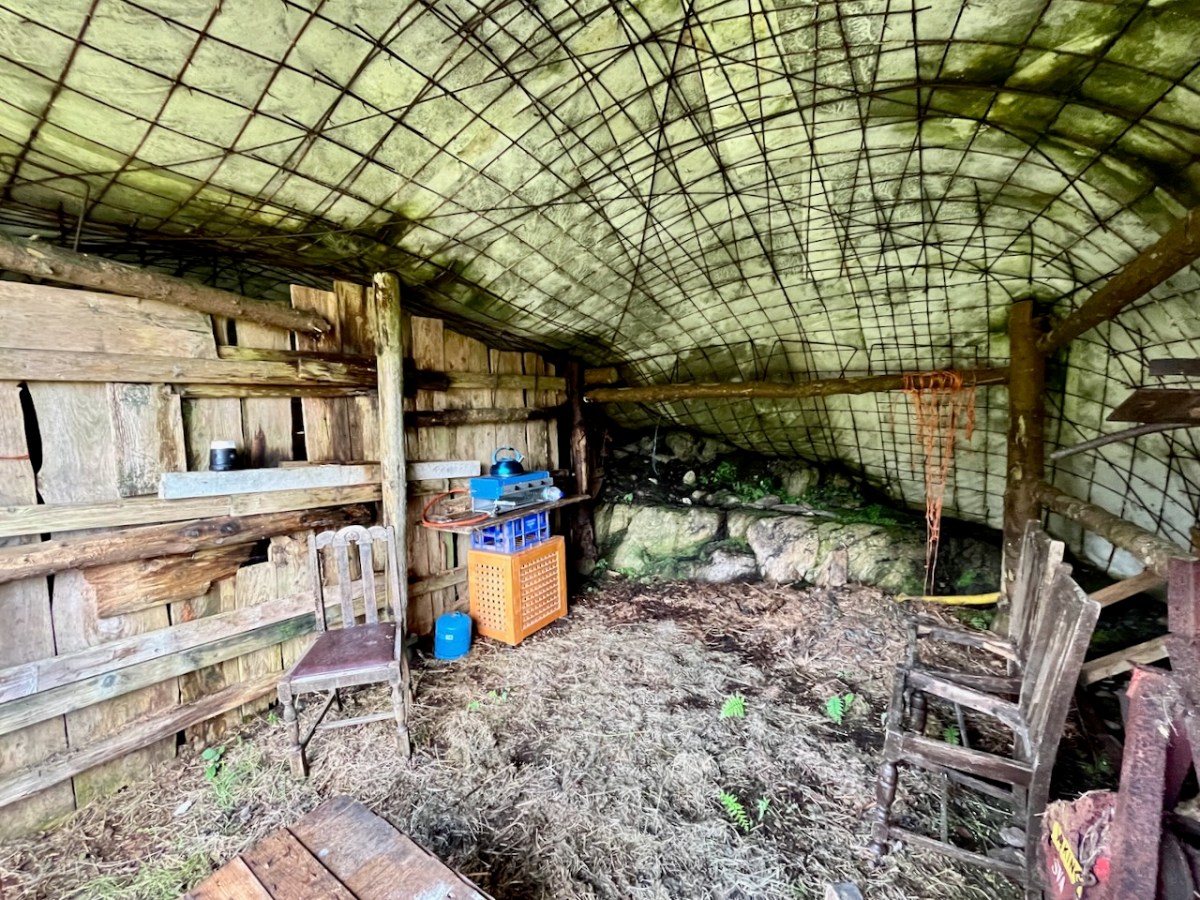
At one stage in his life Ian researched, developed and introduced the building of low–tech ferro–cement boats as a cottage industry on Lake Malawi to help address the problem of unsustainable fishing practices there. At the ‘Mountain’ site he experimented with ferro-cement as a material for establishing a well blended-in shelter and store.
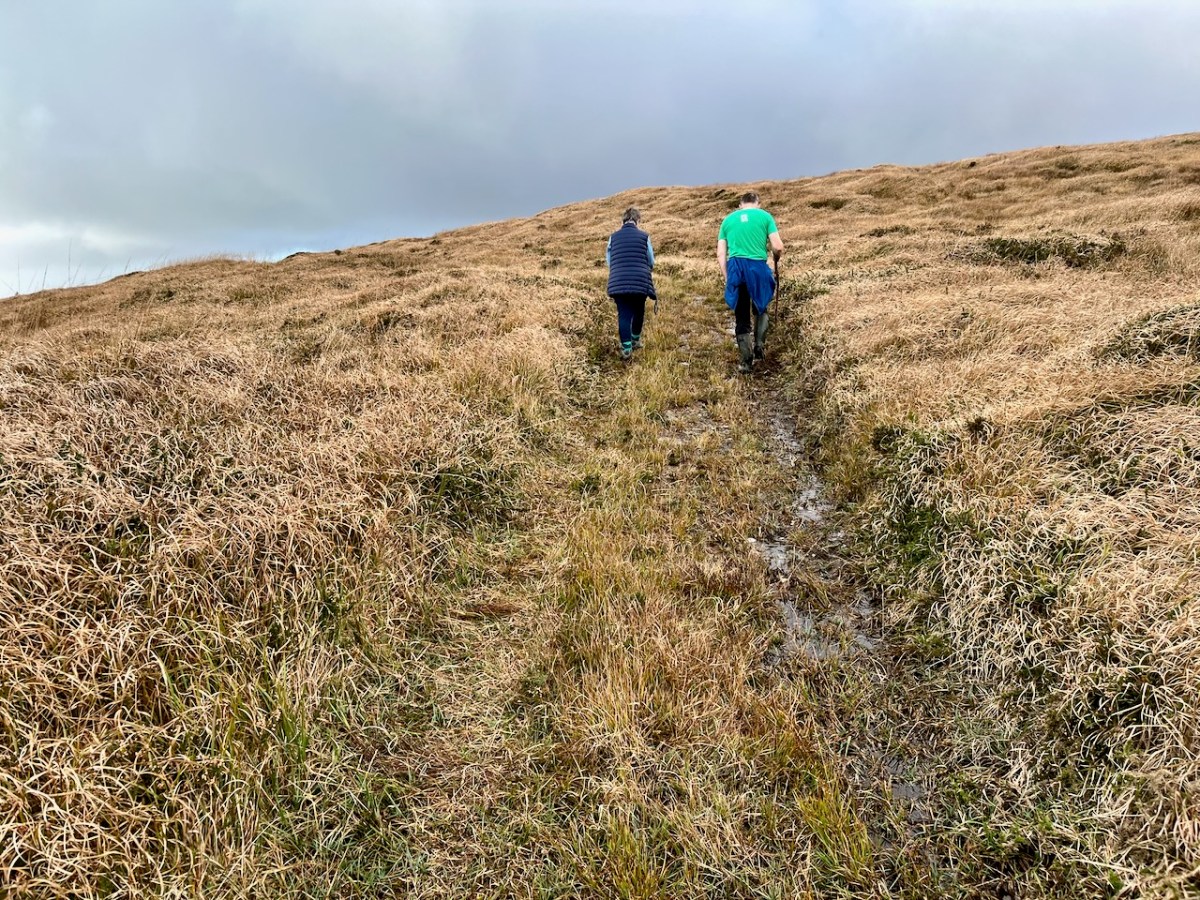
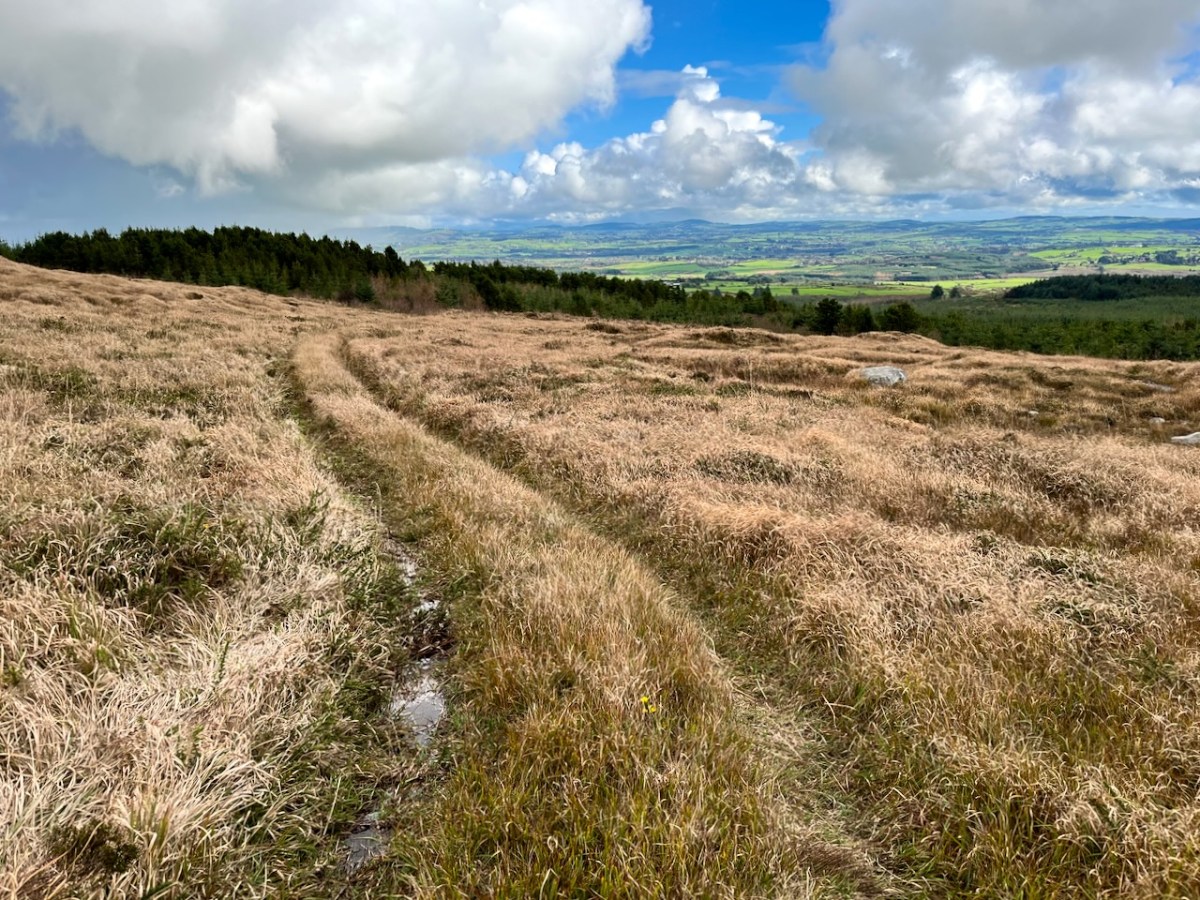
Straddling two townlands, ‘The Mountain’ is an impressive example of how an area of West Cork wilderness has been perfectly moulded into its natural setting. It is an out of the ordinary place which demands exploration.
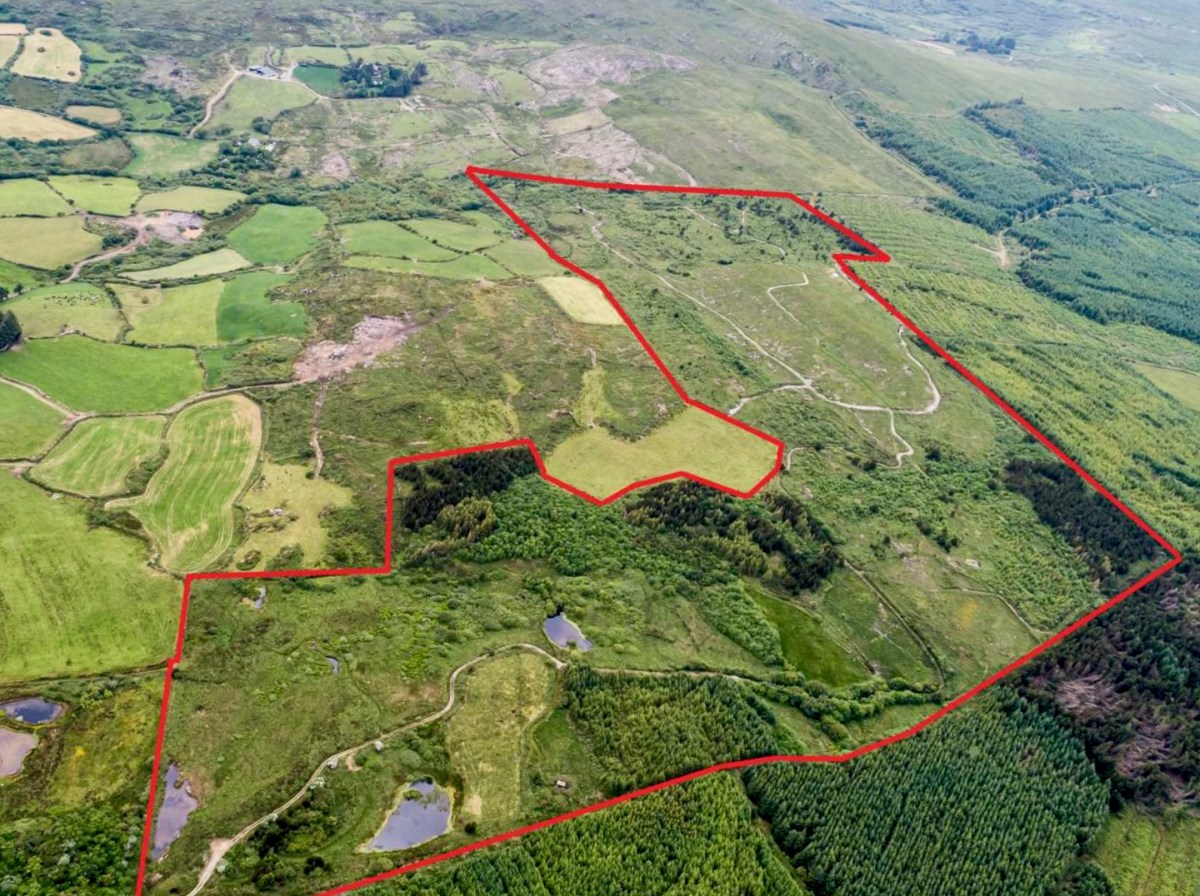
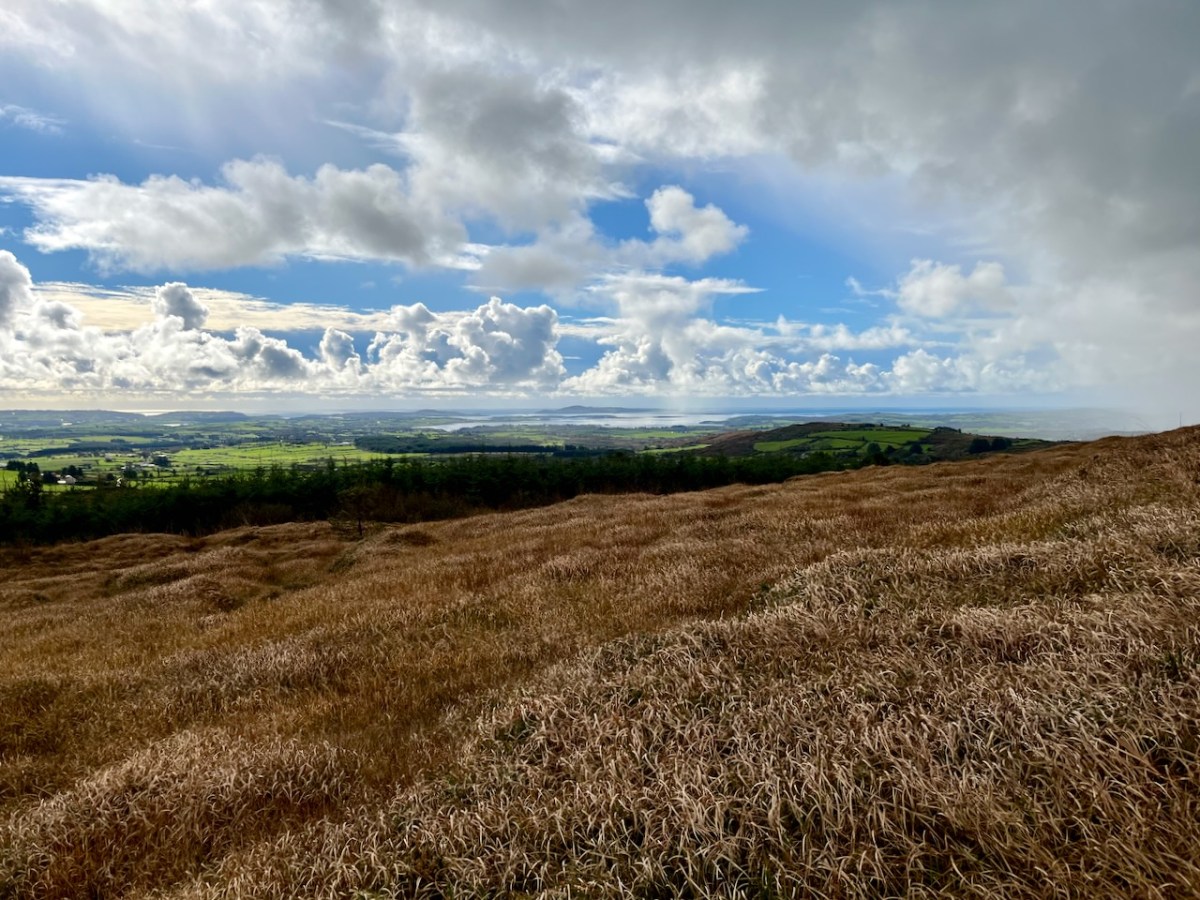
I’ll be visiting the site, and writing about it more in the future. Oliver will be keen to allow access: keep watching this space.

The Gaelic Story-Teller (Ireland 51 Years Ago)

That’s what happens when you sit down to write – you start out intending to accomplish several objectives but end up getting so caught up in the first, that that’s all you write about. It’s what happened to me in Under Sorrow’s Sign: I meant to go through the whole six issue of Ireland of the Welcomes for 1971, and do a single post about all the articles in them about Irish Literature. My intention with this post is to cover the remaining five issues, in order from the oldest traditions to the newest. Let’s see how I get on.

May-June 1972 includes The Gaelic Story-Teller, by J H Delargy. You can read a very entertaining biography of Delargy in the DIB, in which Eoin Mac Cárthaigh says:

It is no exaggeration to say that he was twentieth-century Ireland’s greatest folklorist. He was a driving force behind the belated recognition of the importance of Ireland’s fast disappearing folklore heritage – much of which, but for his efforts, would have been lost forever.


https://www.dib.ie/biography/o-duilearga-seamus-james-hamilton-delargy-a6353

However, he also adds that his approach was not without its critics:

Nor did Ó Duilearga and his co-workers escape the satirical wit of Myles na gCopaleen (qv), who recounted in An béal bocht the happy tale of an academic building his reputation on a traditional story collected from one of the loquacious piglets of ‘Corca Dorcha’.

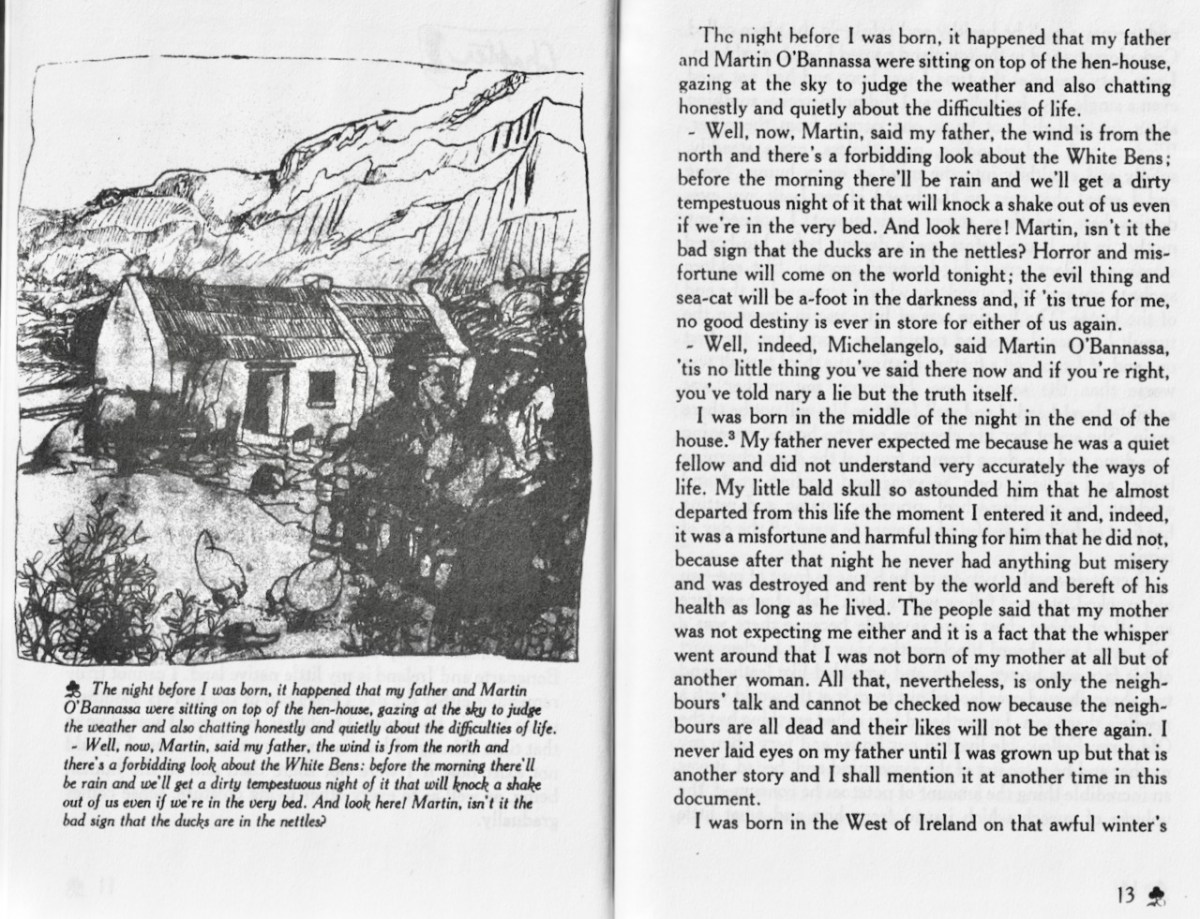
That, of course, sent me on a hunt to my shelves for my copy of The Poor Mouth (the English translation of An Béal Bocht), and an hour later I was still chuckling and trying to remember what I had set out to do in the first place. I apologise here to those not educated in Irish schools and made to read Peig and The Islandman in Irish – but for those who were, this will resonate. The illustration is from the Flamingo Modern Classic edition, translated by Patrick C Power.

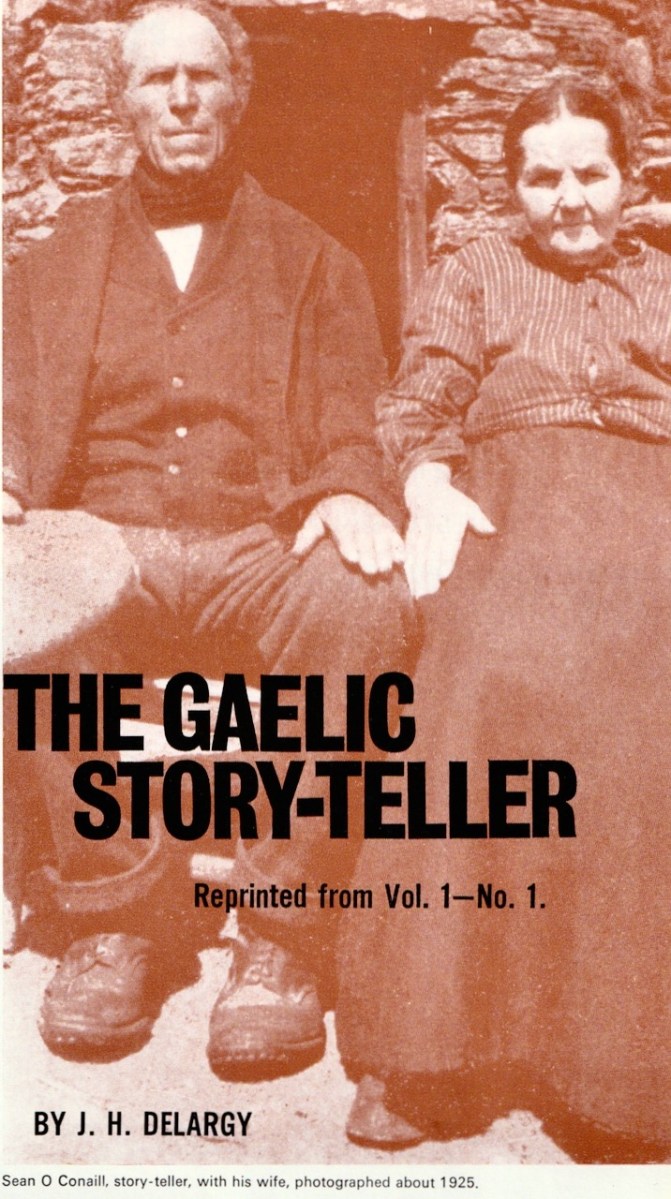
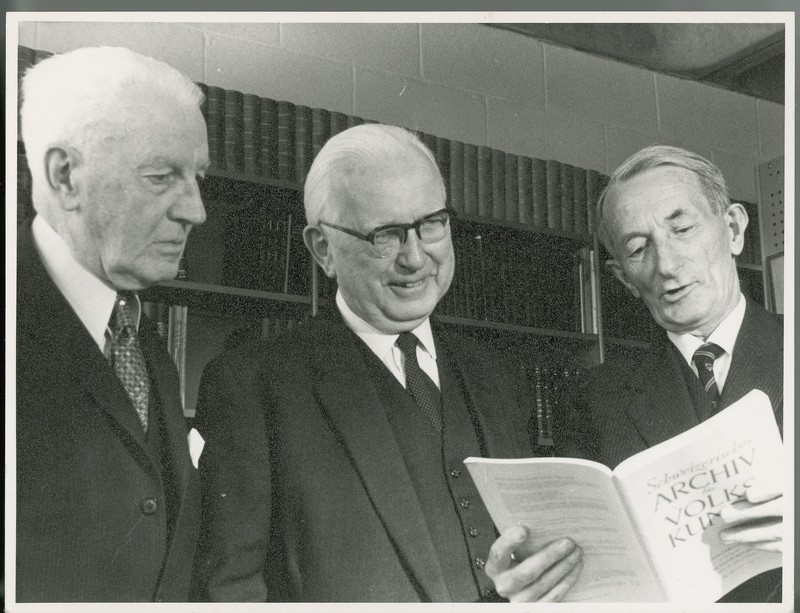
But to get back to Delargy’s article – it mainly centred on Sean Ó Conaill, the story-teller of the title. In a longer essay elsewhere, Delargy (that’s him on the left, above*) tells us that such a person 

is know as a sgéalaí or a sgéaltóir, whereas the more common word seanchaí is applied as a rule to a person, man or woman, who makes a specialty of local tales, family-sagas, or genealogies, social-historical tradition, or the like, and can recount many tales of a short realistic type about fairies, ghosts and other supernatural beings. 

The Gaelic Story-Teller

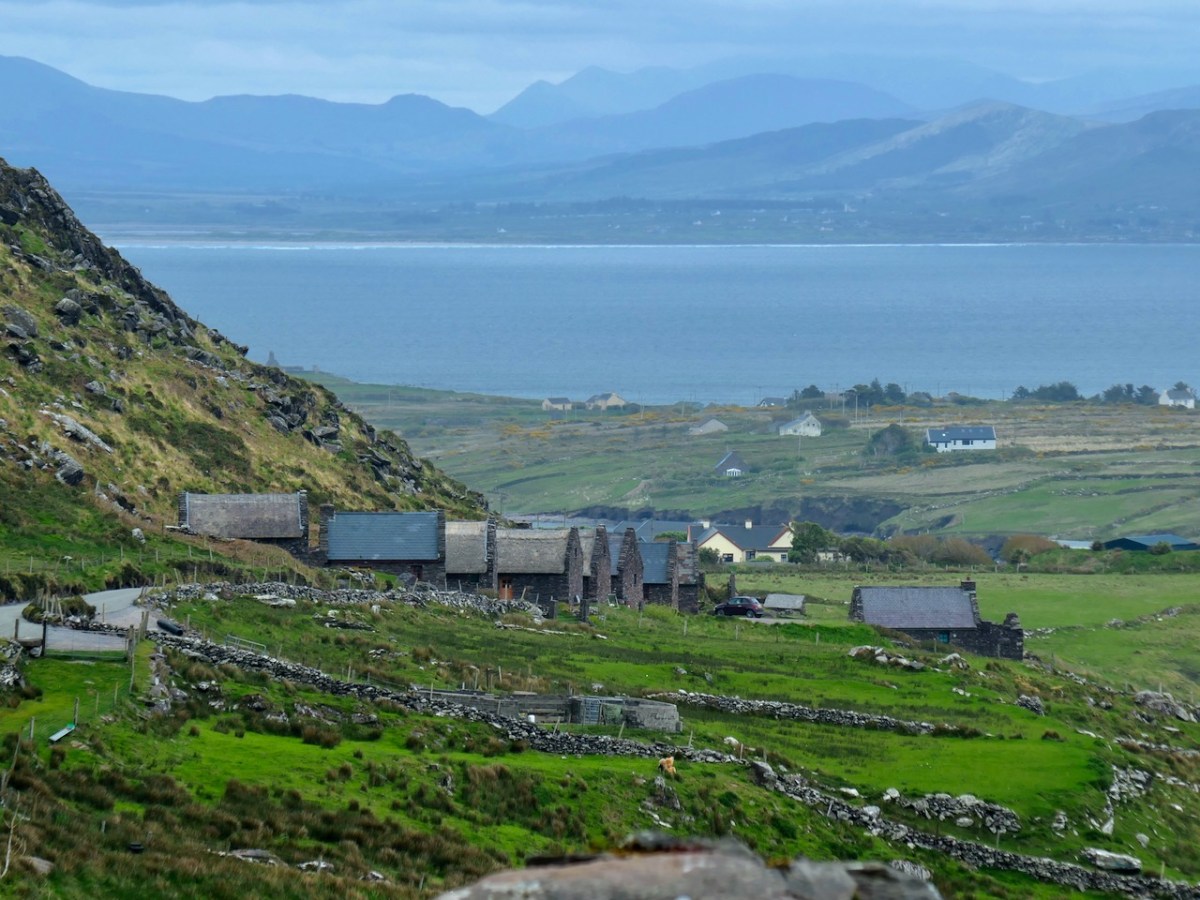
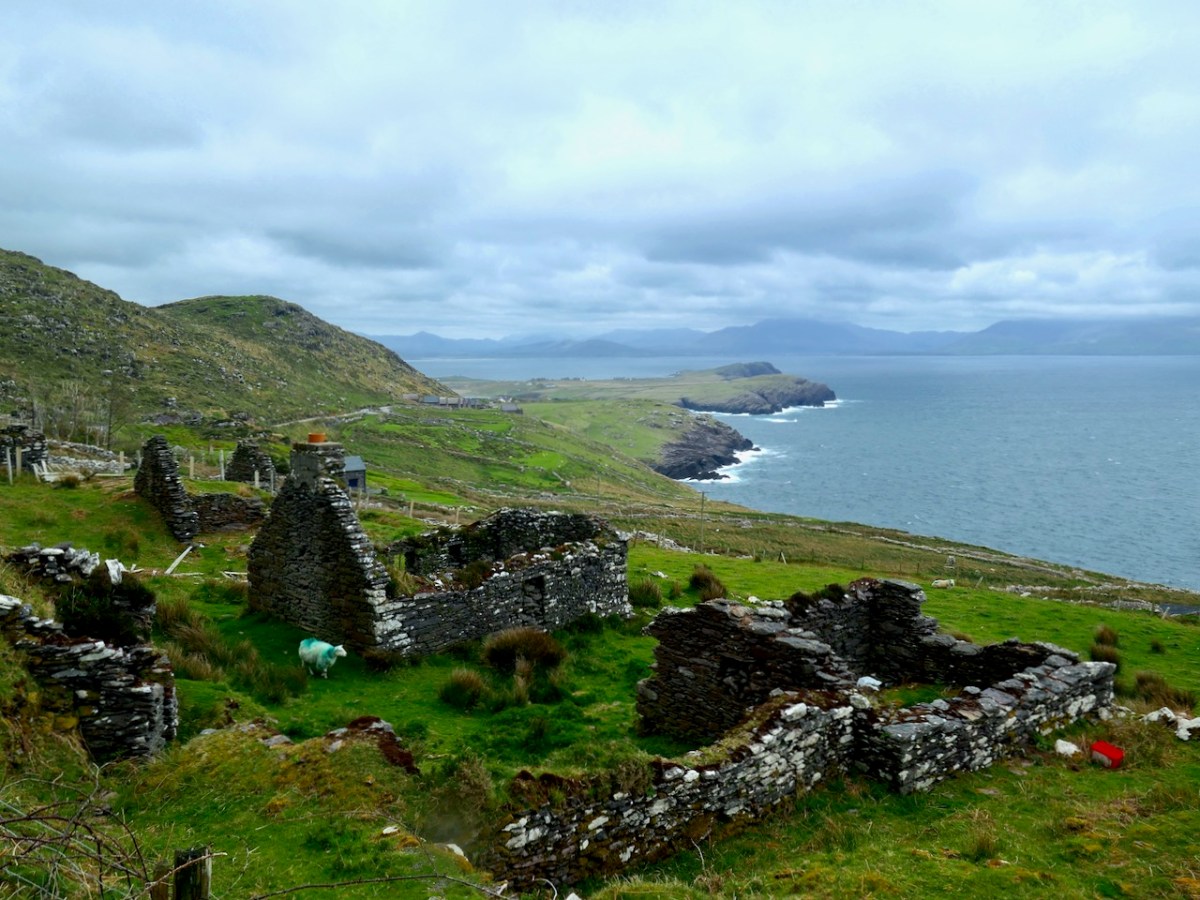
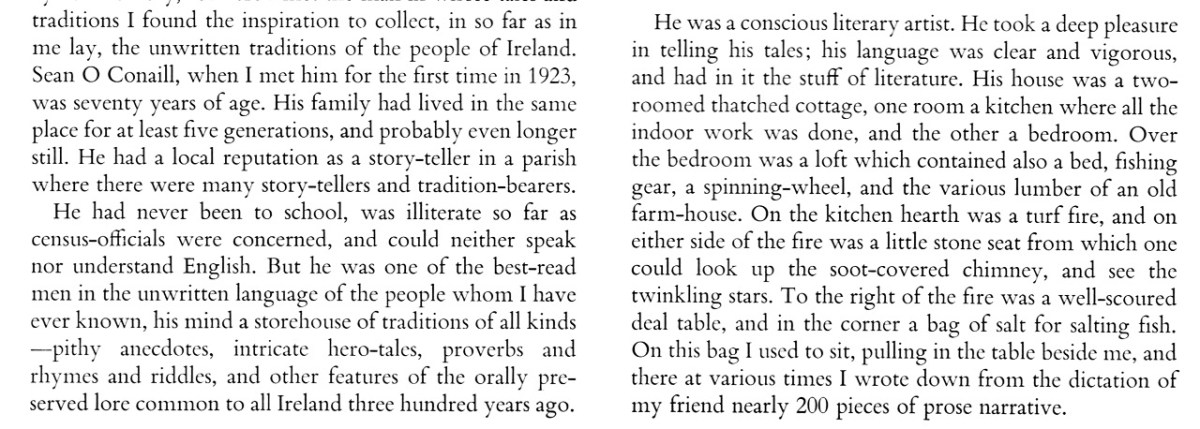
Delargy first met Ó Conaill in Cillrialaig in Kerry, when Ó Conaill was already 70 years old and Delargy, from the Glens of Antrim, was 24. Delargy calls Cillrialaig a village, but in fact there is nothing left there now that resembles a real village – except for a marvellous set of old houses that have been renovated for use as an artists’ retreat (below).

Delargy describes it thus: 

It is a lonely windswept place where man has formed out of the rocks and rough mountain land a crazy quilt of tiny fields to grow his oats and rye, hay and potatoes.

Delargy starts his account of the Story-Teller  in this way:

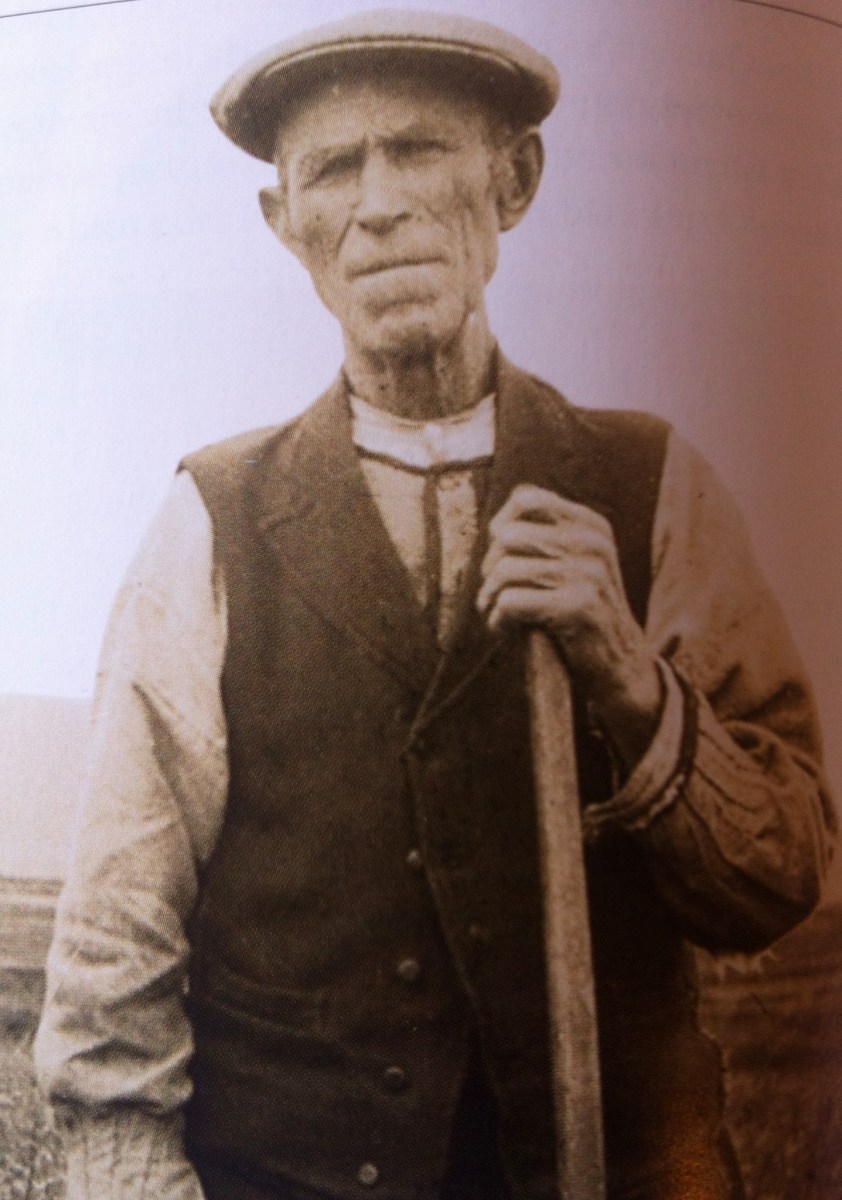
Interestingly, he does not give us Ó Conaill’s wife’s name in this article, although he refers to her. In another account, though, on the Vanishing Ireland Facebook Page, I found another photo of Ó Conaill and this, about his wife, Cáit,

He married Cáit Ní Chorráin and they had six sons and four daughters. Cáit shared his passion for oral storytelling and was always on hand to correct him or remind him if he should lose his way while telling a story.

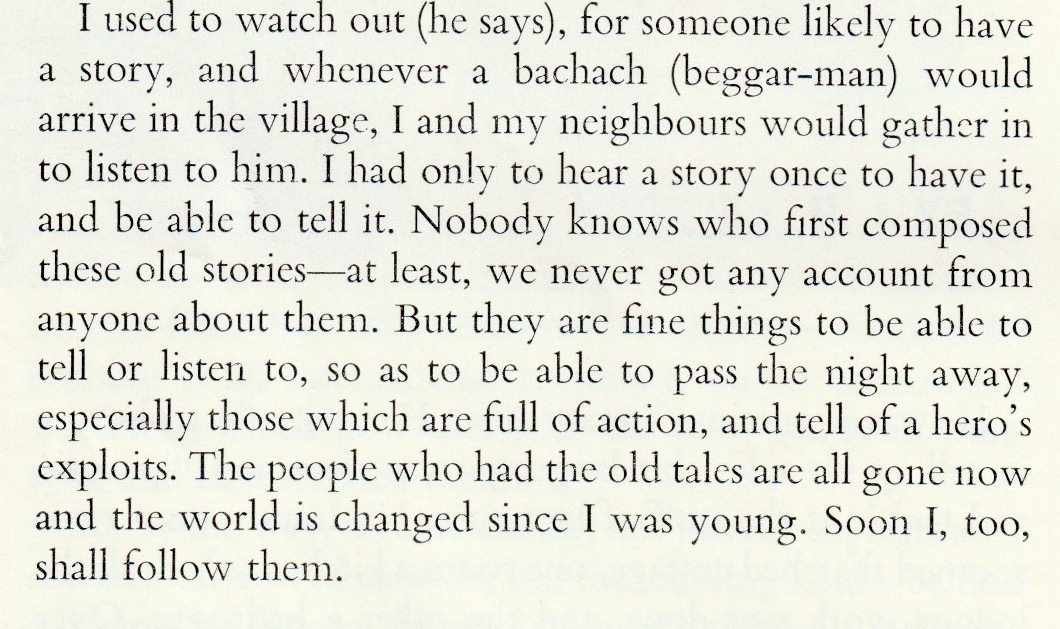
Delargy’s practice was to visit the Ó Conaill house three nights a week. While Sean dictated his tales (Delargy must have been a fast writer), the neighbours would drop by until the house was full, each listener relishing the stories, even though they had probably heard them many times before. How did O Conaill accumulate such a store?

Delargy’s article concludes with a lament for the dying of the old traditions – it is rare now, he says that stories are told around a fire in this way. Delargy himself died in 1980. If you’re listening, Séamus, you might like to know that there are now thriving story-telling festivals all over Ireland, principally on our own Cape Clear Island. 

Darn it – it’s happened again! I only got to the May-June issue. Never mind – next time, I’ll cover four in one go. Right?

Copies of Sean Ó Conaill’s Book come up for sale occasionally, should you wish to pursue the stories for yourself.
*Photograph of James Hamilton Delargy, Michael Tierney and Jeremiah J. Hogan in the Department of Irish Folklore, UCD. is licensed under a Creative Commons Attribution-NonCommercial-NoDerivatives 4.0 International License