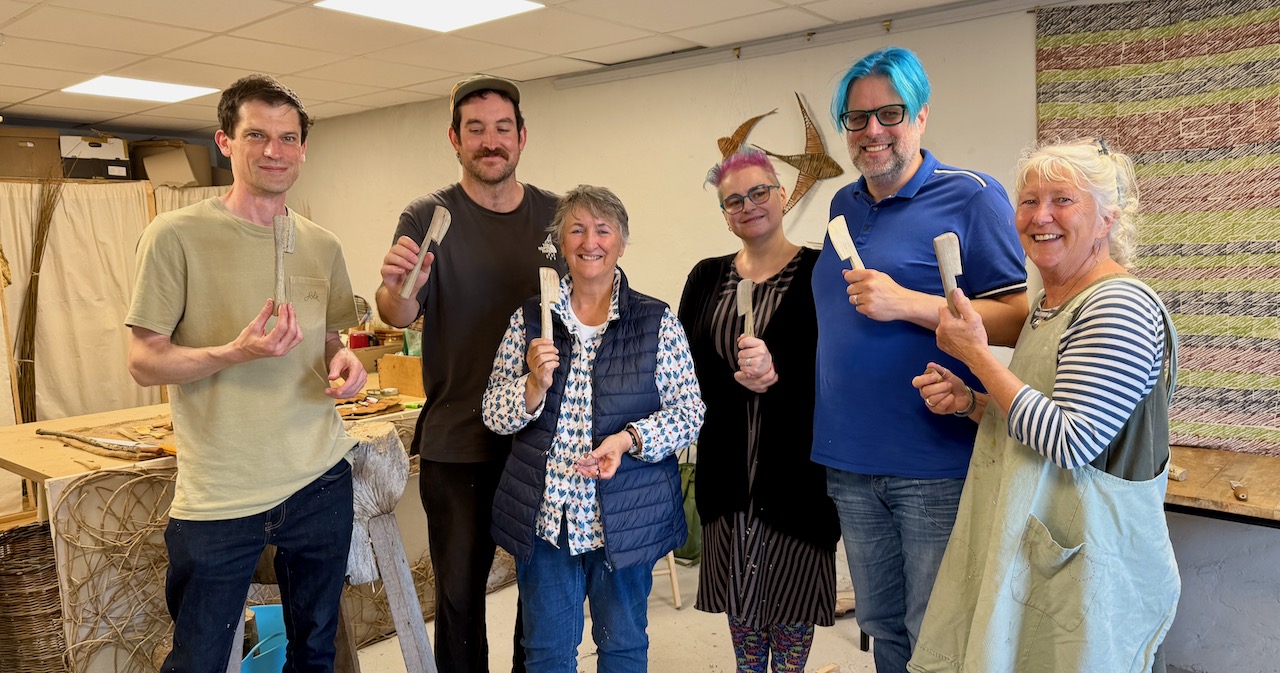
Doesn’t that sound like the perfect way to spend a sunny afternoon – with congenial company, lovely bits of wood, and a sharp knife?
I took a workshop today – it was another one of the offerings from Kilcoe Studios. I have written about Sonia Caldwell and her Kilcoe Studios before – if it has heritage craft connections, in or around Ballydehob, you can be sure Sonia was involved.
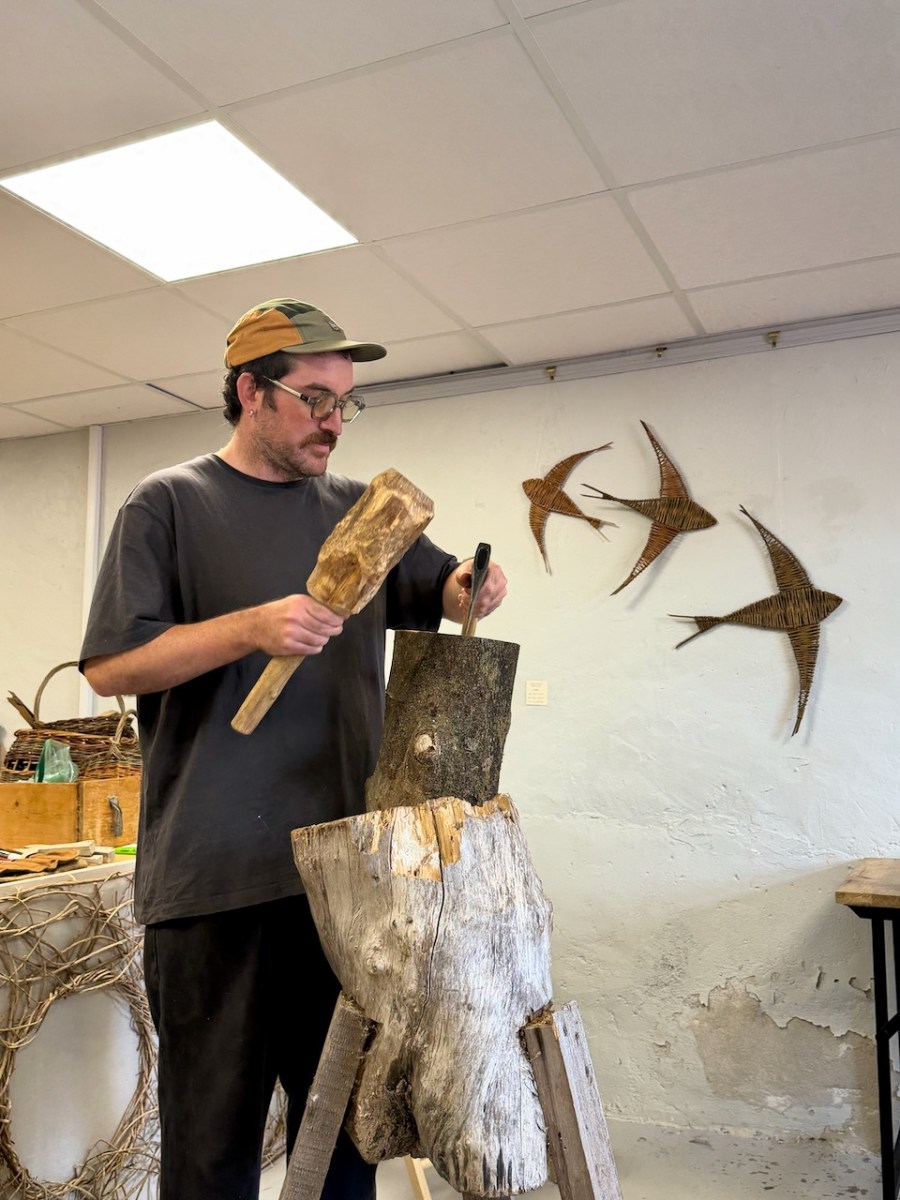
Our teacher was Tadhg Breathnach-Peelo, a man of many talents , including professional musician and accomplished whittler. There’s a real difference between whittling and wood carving, although they overlap, of course. Mainly, once the piece of wood you are going to work on is roughed out, you whittle with a knife – no chisels, planes or gouges.
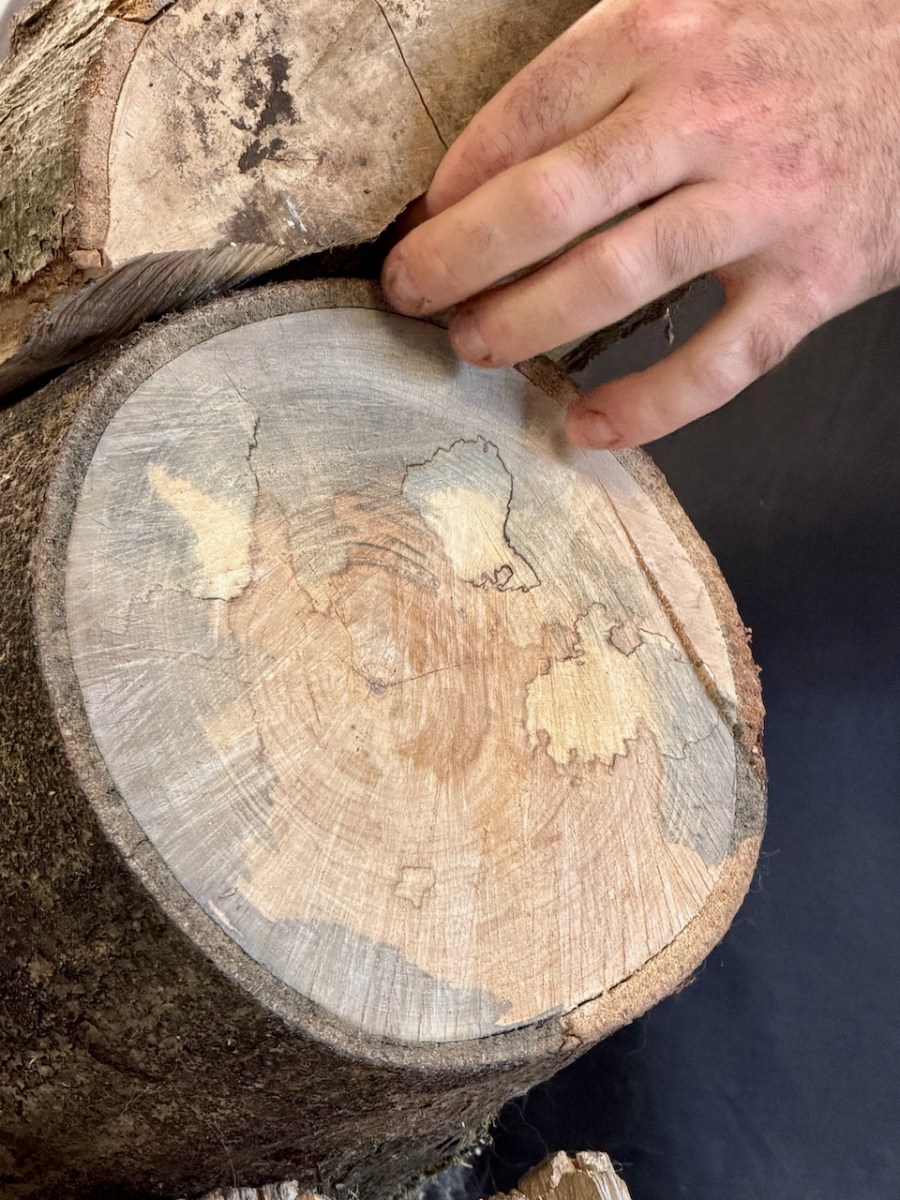
Tadhg had brought in some hunks of a sycamore tree that someone had cut recently. Although sycamore isn’t a native Irish species, it has naturalised here now for several centuries and is perfect for whittling because it’s easily available, has a lovely colour, is tight-grained and food-safe. I am not kidding when I say that we started with a hunk of wood. Tadhg showed us how he saws it into manageable pieces (with a hand saw!) and from there he splits the log into manageable chunks – often complete with unmanageable knots.
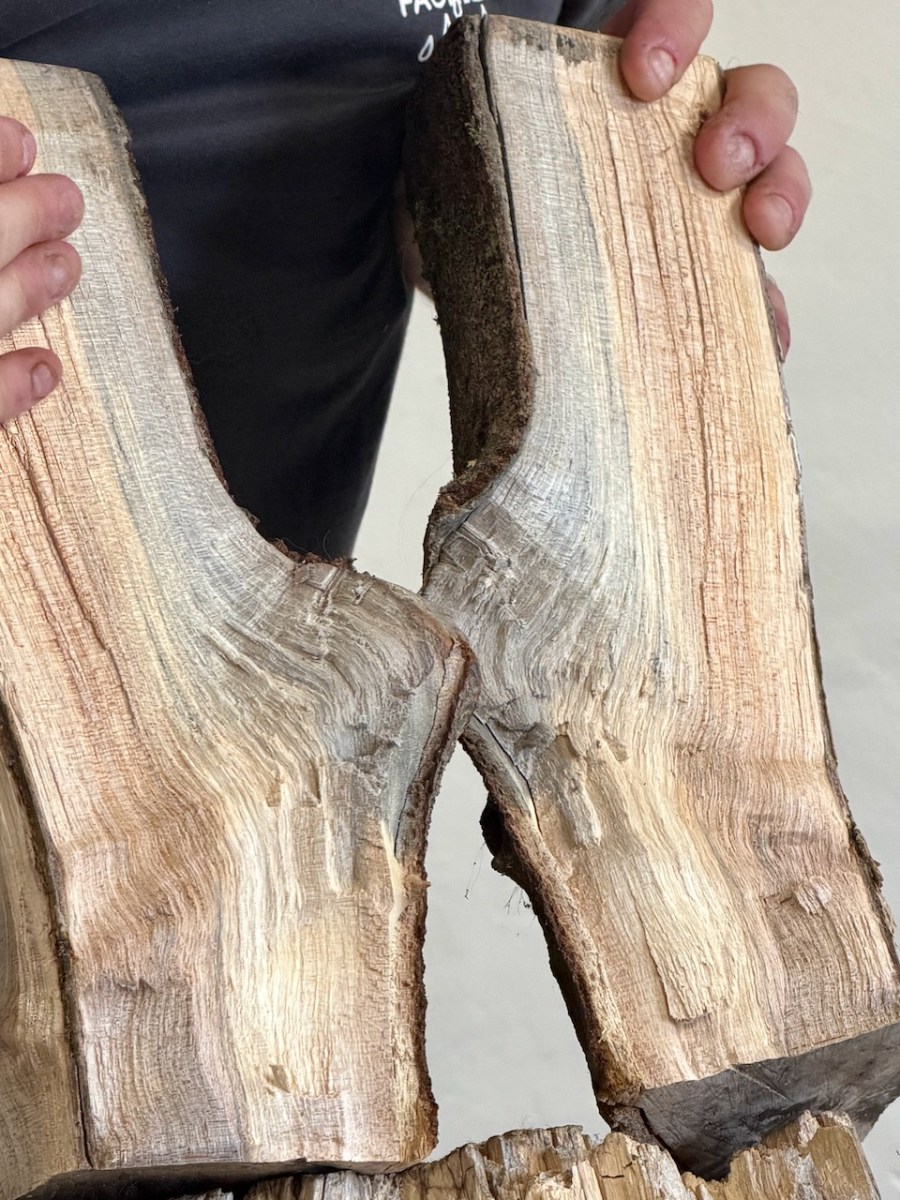
The next step was to cut that down again to produce a “billet,” the term for a piece of wood split (rather than sawn) from a log along the grain. Splitting along the grain rather than sawing across it keeps the fibres intact and continuous along the length of the piece, which makes for a stronger and easier-to-carve blank than a sawn one.
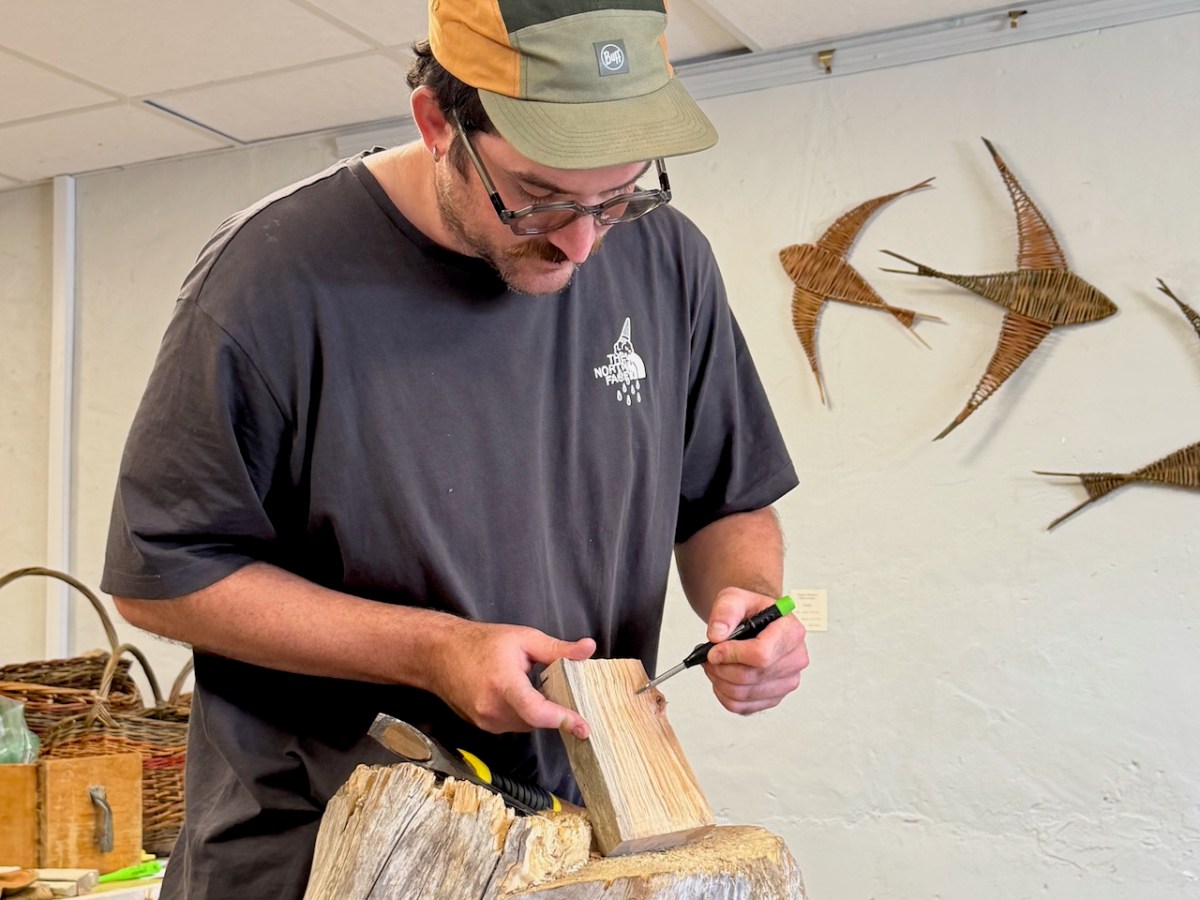
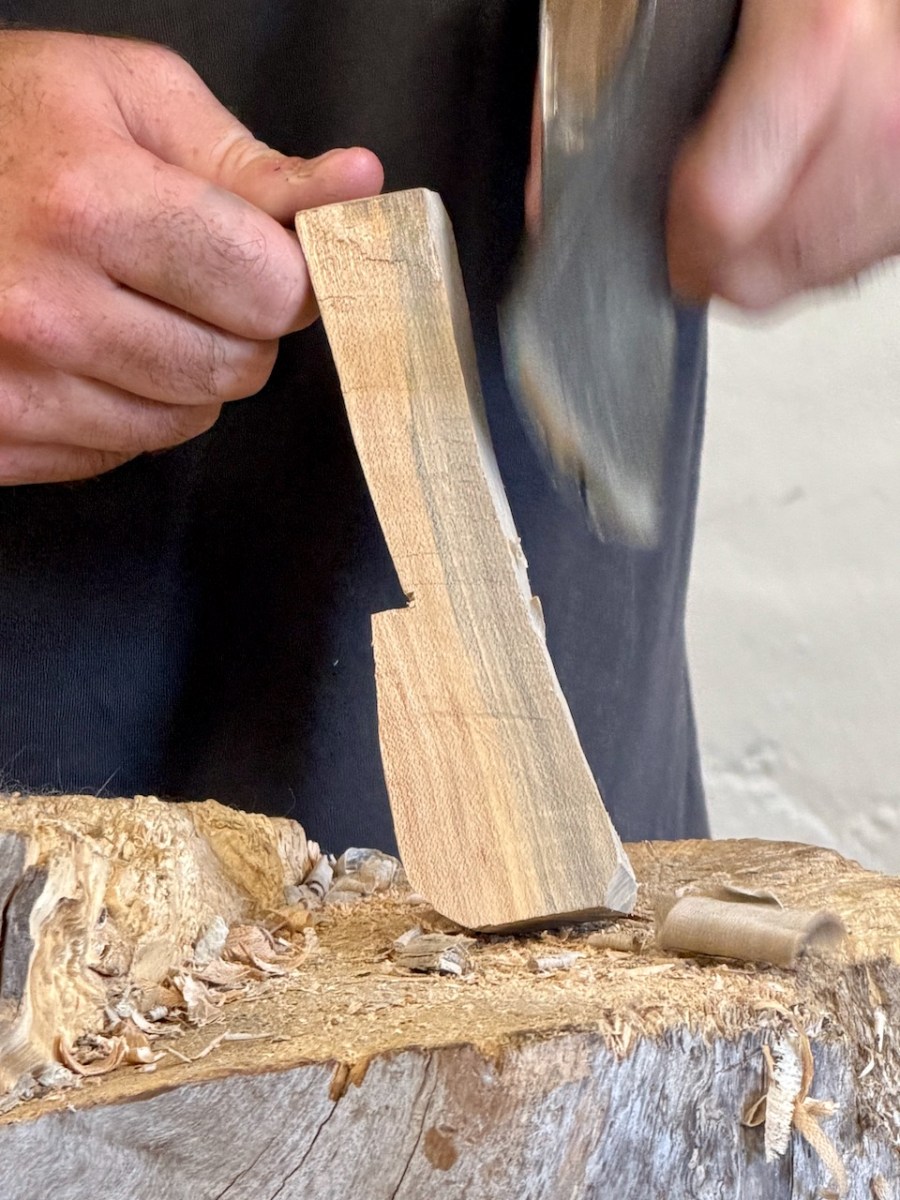
In no time he had worked that billet down into a “blank” – the very rough shape of what we would produce – in this case, a butter spreader. He had used his wood-working axe to this point.
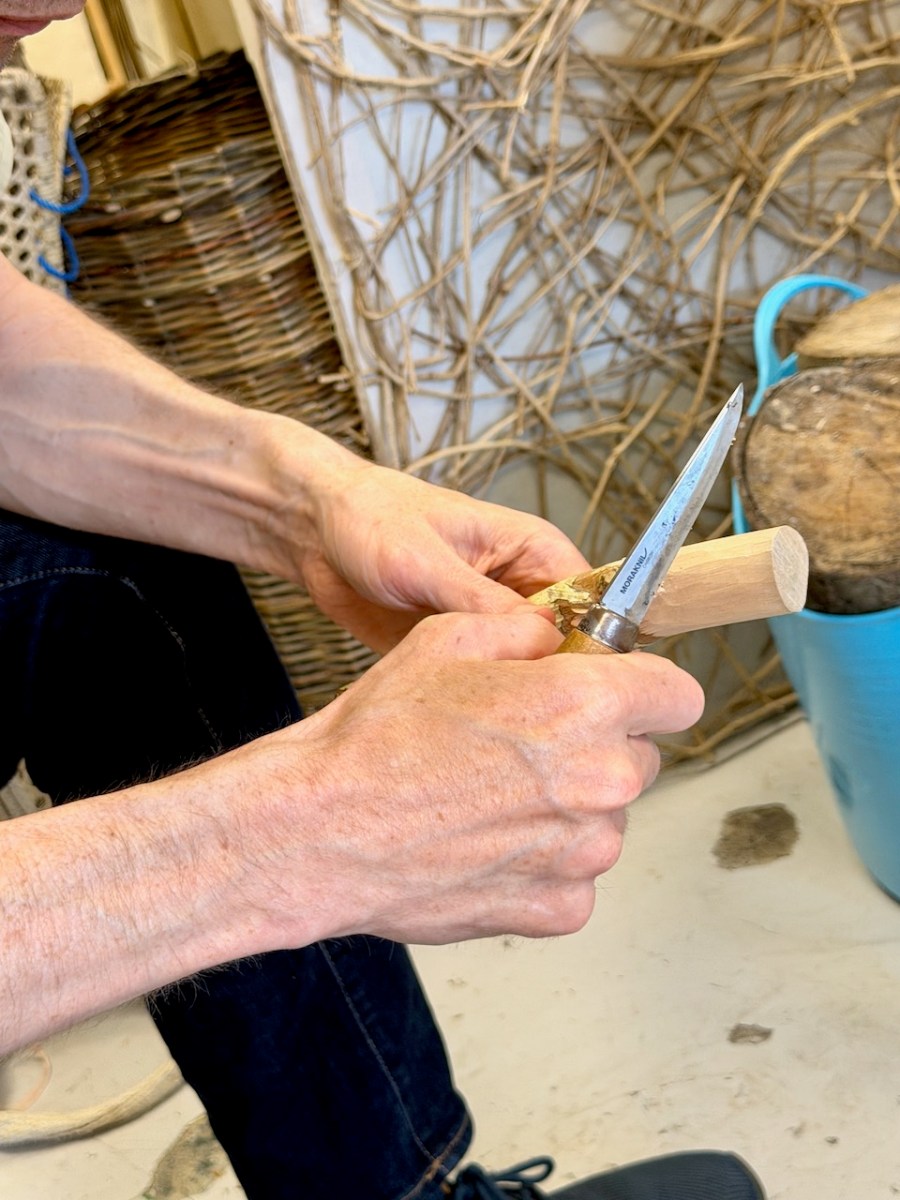
Switching to a knife, he showed us how to hold it safely and what whittling techniques to use for thinning and shaping the blanks.
We got to work and every now and then Tadhg would stop us and describe how best to do the next step in the process. Very little blood was shed. Concentration was so complete that there were periods of complete silence in the room – I think that’s called a flow state. At any rate, even at this beginner level, I began to understand the total absorption that led Tadhg to become, as he told us, addicted to the skill and art of whittling. When I stopped for a break after an hour or so, I was surprised to find that I couldn’t uncurl my fingers without an effort.
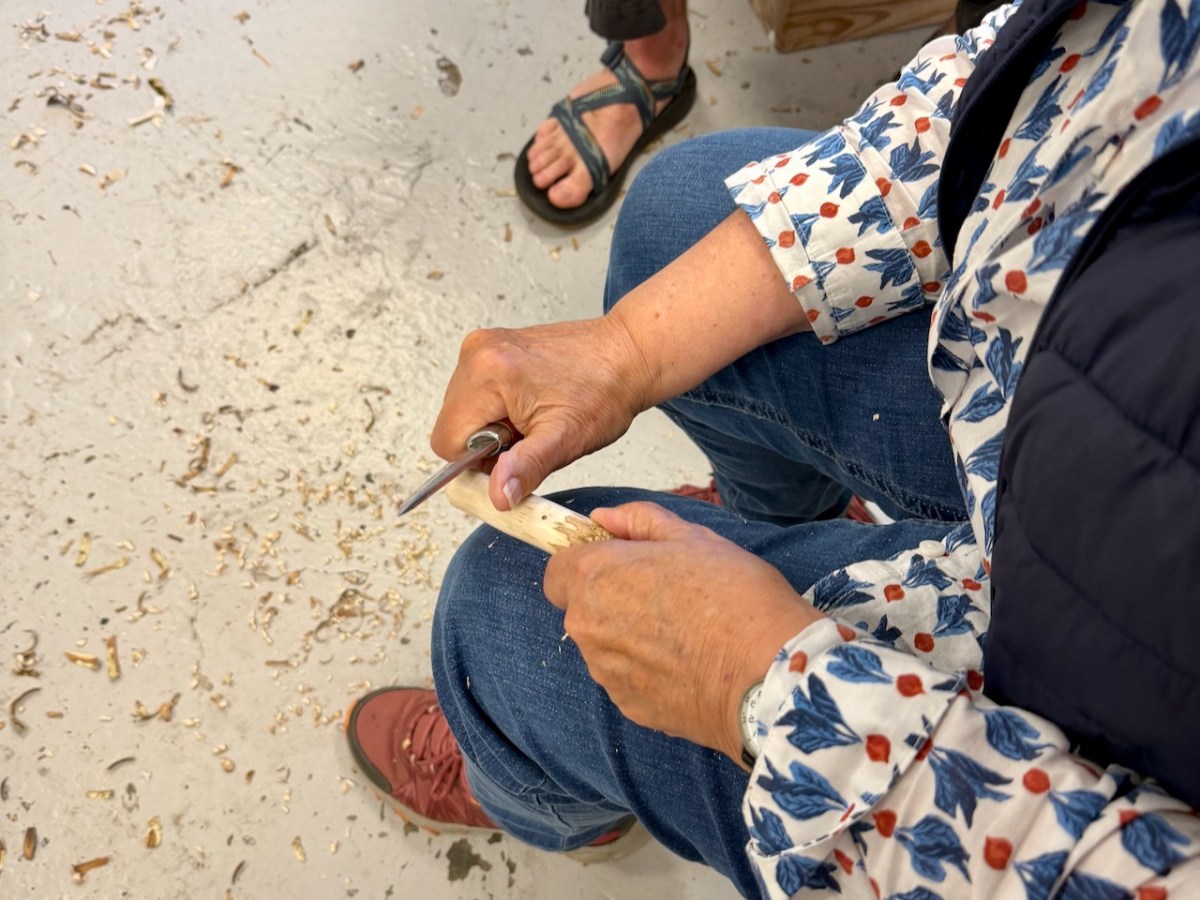
Using the tip of the knife to peel off those tiny shavings of wood around the point of the spreader, and the larger curls that come from more vigorous slicing action, led to appreciation of how to work with and against the grain, how and when to press harder and to ease off.
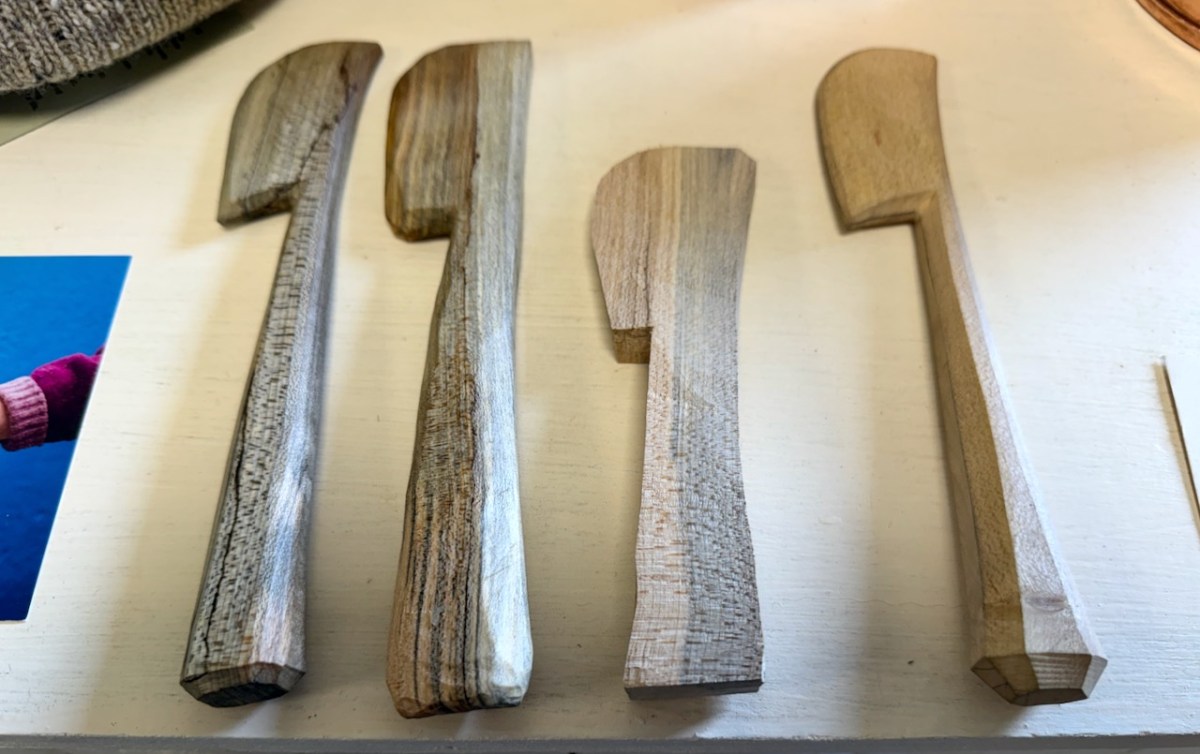
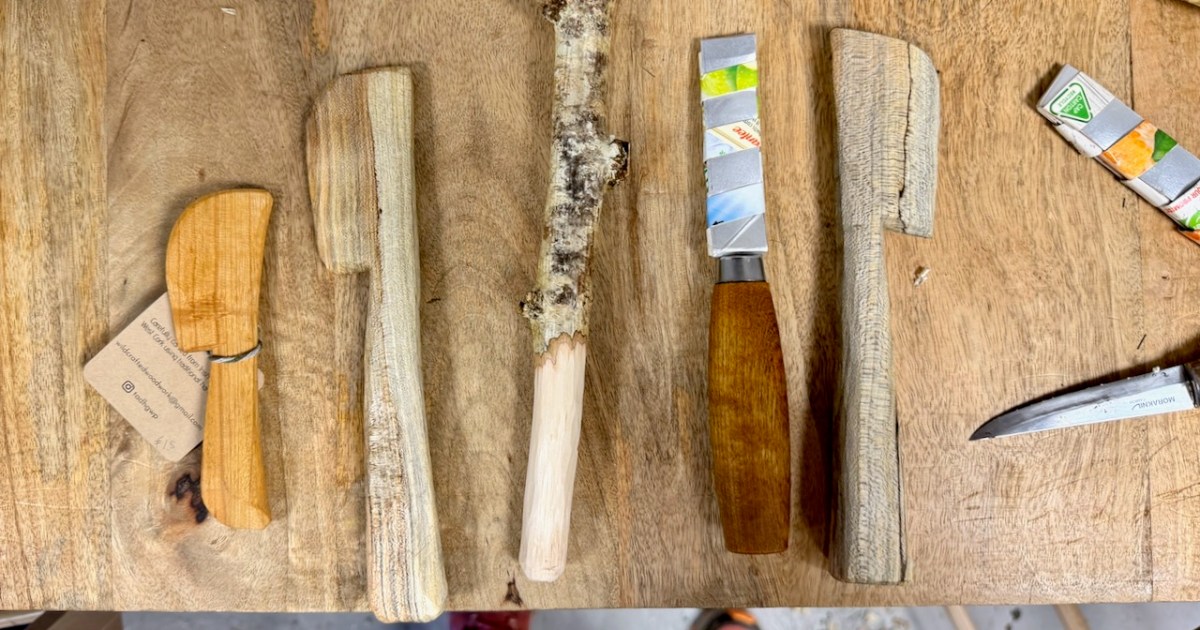
Above, left to right, Tadgh’s, mine, a blank and one he made before. Of course, none of us produced a masterpiece, but all of us got a butter spreader that we were proud of. I will be nonchalantly including mine in every dinner party I give – oh, that old thing, I made it myself…
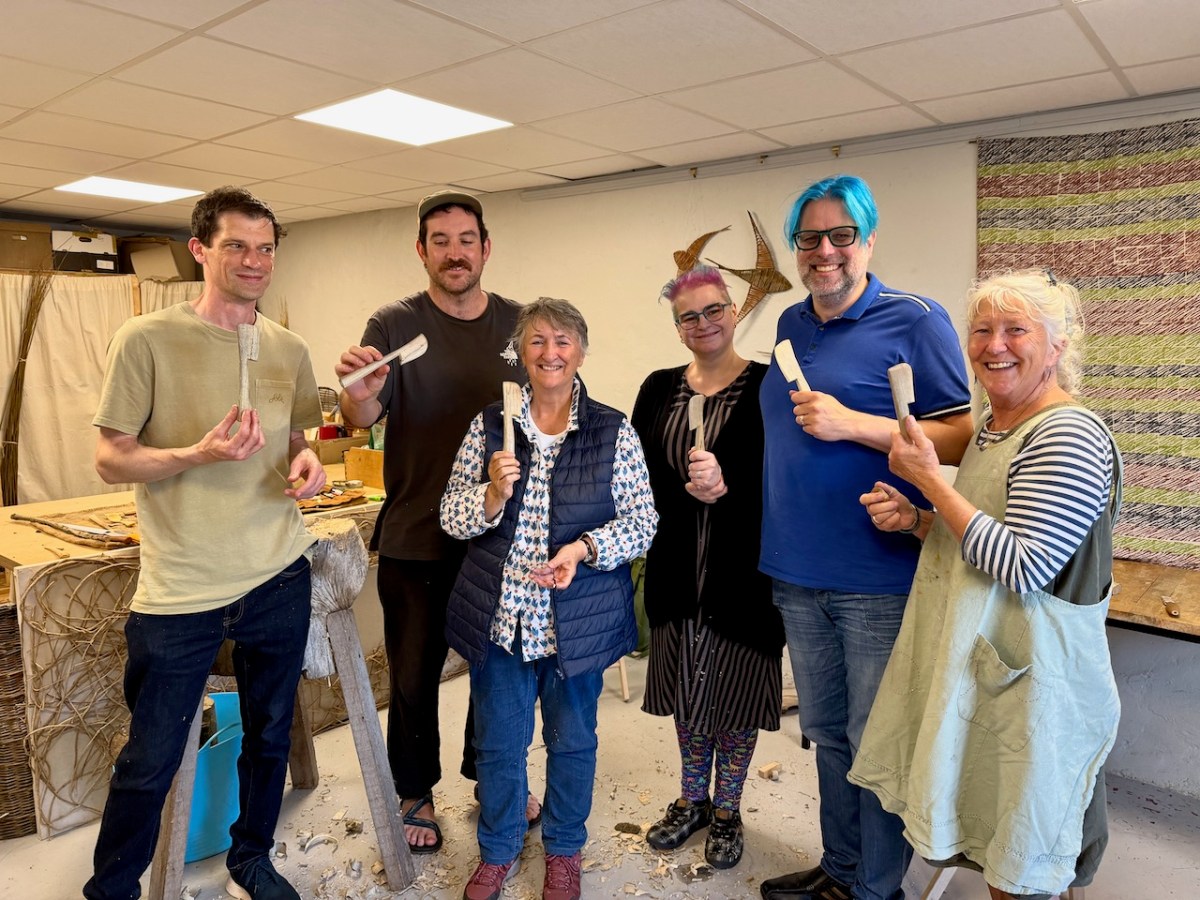
Whittling is something I associated with Burl Ives types, sitting in the swing chair on the front porch. Now I know it as a craft and a skill that is probably as old as time, that is the work of artisans, that produces pieces that are honest rather than refined, full of character and made by the hand, the eye and the heart.
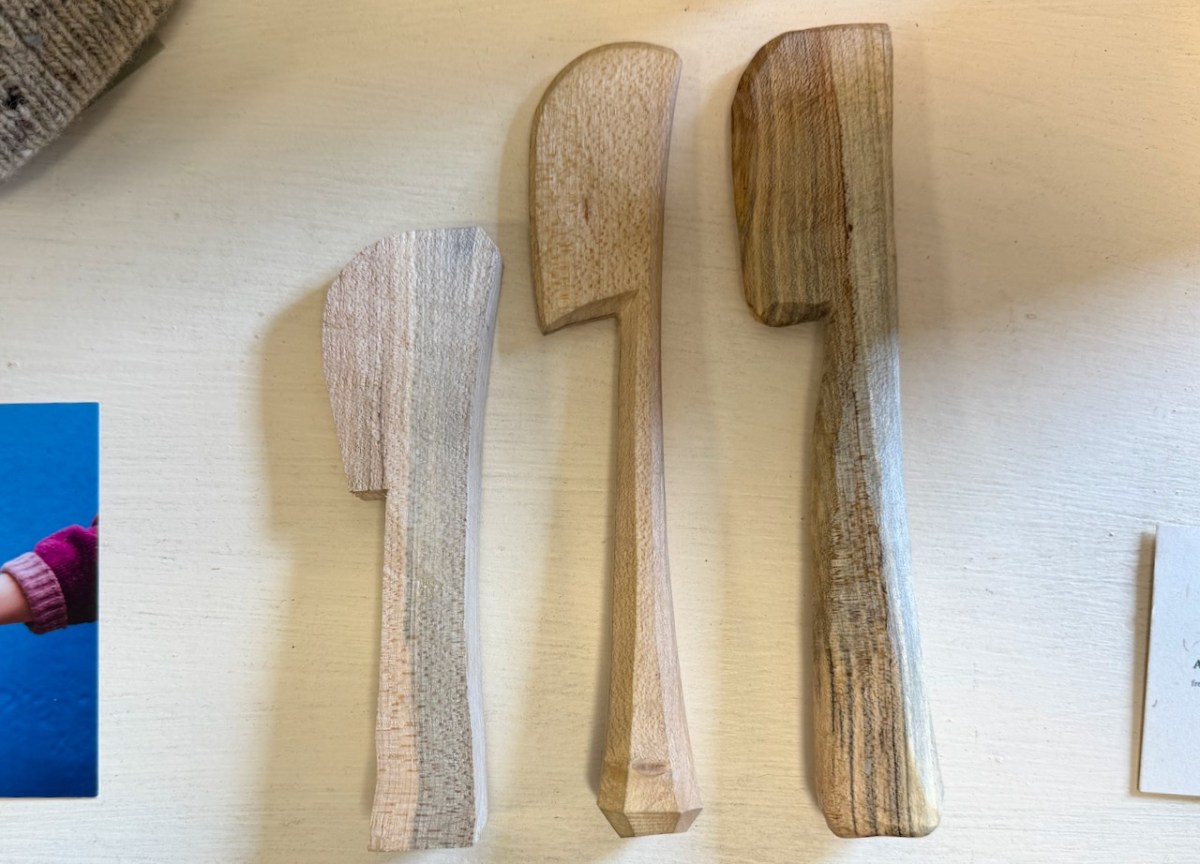
Look out for Tadhg at the Skibbereen market on Saturdays.
Discover more from Roaringwater Journal
Subscribe to get the latest posts sent to your email.


Thanks for this, my better half was whittling away this afternoon-so your lovely description of your experience of working with wood resonated with me.
LikeLike
I think I could get into it.
LikeLike