The Edge of the Landscape – William Crozier

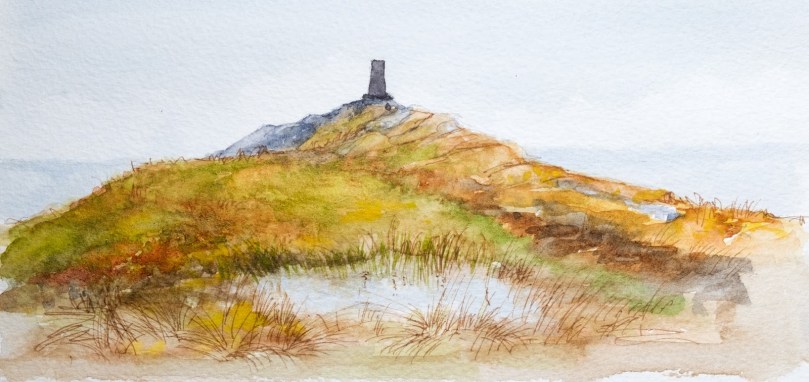
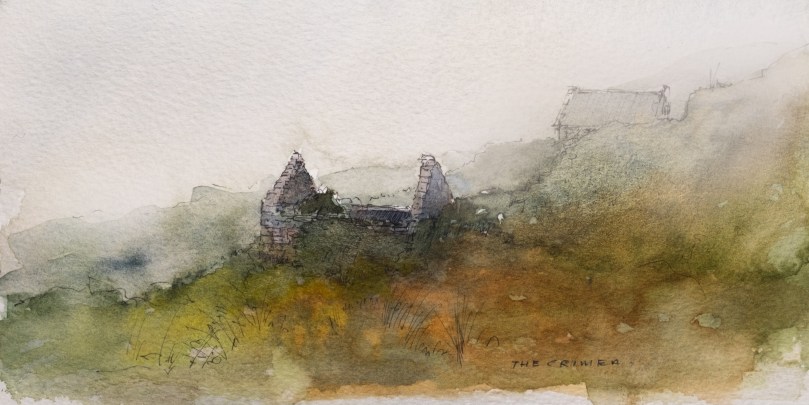
The Edge of the Landscape is the title of an upcoming exhibition which opens this weekend at Uillinn. It will show some of the later work of William Crozier (1930 – 2011), a Scottish born artist who considered himself more Irish than Scottish as his parents were from Ballinderry, Co Antrim. He adopted Irish citizenship in 1973 and purchased a cottage at Kilcoe, West Cork, in the early 1980s. Although he worked both here and in Hampshire for the rest of his life, most of his later paintings dwelled on the Irish landscape – specifically the splendours of West Cork, which are so familiar to us.

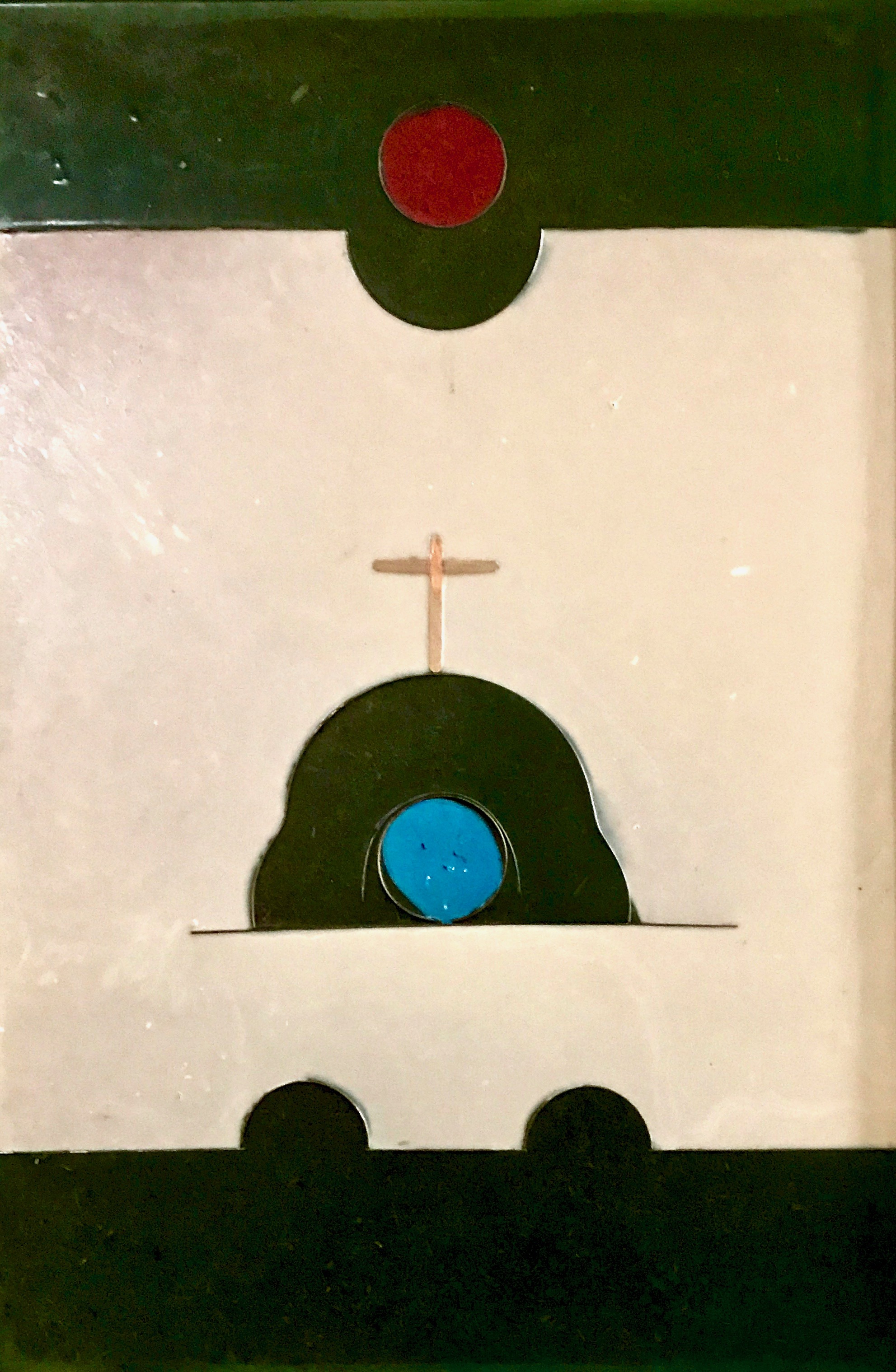
The meeting of land and sea was a recurring theme in Crozier’s work. The quay at Turk Head, above, inspired the header on this post – painted by Crozier in 2003. We might wonder at the eye of the artist that pictures the scene in such vivid colours, but anyone who has lived in West Cork will be familiar with his palette: the rocks, the fields, the lanes, wildflowers, water and ever-changing skies provide all the colours in his paintings, tints, tones and shades which are successfully pulled into unexpected compositions.

Katharine Crouan – Bill Crozier’s widow – has written to me “…Bill was not, in any way, a topographical artist but you can see in his work – particularly from 1984-95 – the stimulus  the landscape provided. He spoke of loving the ‘glamour’ of the West Cork landscape, referring to the glitter of water and sunlight on foliage after rain and the dark shadows that came out of nowhere. For him it was all magical…”

‘Kilcoe Strand (From Peninsula)’, painted by William Crozier in 2011

I am reminded of Peter Lanyon, the St Ives artist (who was, interestingly, the subject of a book titled At the Edge of Landscape): he famously said that, as a painter, he needed to “…get under the skin of the landscape…” That need informs his work, which is abstract rather than specifically landscape-based yet inspired, as he stated, from flying over his native Cornwall and – by exploring the mine shafts – tunnelling underneath it. For me, William Crozier has the same regard for his West Cork homeland and successfully expresses his relationship with it through the richness of his work.

Toe Head, West Cork (upper picture) was the inspiration for many paintings. Lower works: Toe Head 1989, (left), and Wolf’s Castle, Toe Head 1998 (right – Richard Barrett) 

William Crozier was a prolific painter – he estimated that he had painted more than 12,000 pictures, each executed in a single session. The landscape-inspired works are just one part of an enormous opus. He did not overlook the sometimes hard realities of his surroundings. Cocks of hay drying in a field may appear a romantic ‘rural idyll’, but are equally a portrait of an economically unviable small-holding.

William Crozier in his studio c 2009

The exhibition of a selection of Crozier’s work produced since 1985 is showing at Uillinn: West Cork Arts Centre from 15 July to 31 August, and later in the year some of his earlier works will be shown at IMMA: The Irish Museum of Modern Art from 12 October 2017 to 8 April 2018. Both exhibitions are curated by Seán Kissane (Curator, Exhibitions, IMMA), who will be presenting a talk on the work at 6pm this Friday, 14 July, in Uillinn, following which the exhibition will be formally opened by Sarah Glennie, the Director of IMMA. An important new publication edited by Katharine Crouan and Seán Kissane and designed by Peter Maybury accompanies the exhibition with texts by Mark Hudson, Katharine Crouan, Seán Kissane, Riann Coulter, Enrique Juncosa, and Sarah Turner.

Below – Departure from the Island, William Crozier 1993 (Flowers Gallery). Note that copyright on all works rests – unless otherwise stated – with the William Crozier Estate

Postscript – In the Tracks of the Yellow Dog

Uillinn – the West Cork Arts Centre gallery in Skibbereen – has a great facility in its exhibitions – a Discovery Box which can be used by children (or anyone else) to express their reactions to whatever is on show. I went in the other day to have a last look at the West meets West show of the work of Cornish Artists (hurry! – it closes on Saturday 8 July) and was delighted to see that someone had used some elements from the box to place a little installation under Matthew Lanyon’s painting aptly titled ‘Skibbereen’.

The Discovery Box in action at Uillinn – left, with Phil Booth’s impressive construction Gwennap Head in the background and – right – set against Tony Lattimer’s wonderful ceramics. (Photos courtesy of West Cork Arts Centre)

The Discovery Boxes are tailor-made for each exhibition. This one has been assembled by Sarah Ruttle and includes (amongst a multitude of inspired shapes) fish and fishing nets, miniature coiled ceramics reminiscent of Tony’s work – and a yellow dog! Why a yellow dog? Well, one of the most striking exhibits in this show is a tapestry designed by Matthew Lanyon – In the Tracks of the Yellow Dog.

Upper picture – the Discovery Box installation under Matthew Lanyon’s ‘Skibbereen’ painting and (lower left) the tapestry with (lower right) the paw print of the Yellow Dog substituted for the artist’s signature

The tapestry was manufactured by Flanders Tapestries in Belgium: cottons, wools and acrylics were selected in close collaboration with Matthew to achieve a tonal harmony from his original design. The yellow dog, a reference to Yellow-Dog Dingo from Kipling’s Just So stories, makes only one appearance; the paw print from a dried out salt lake in central Western Australia substitutes for the artist’s signature. 

We will miss the excitement and impact of those large, very Cornish works once they are packed up and sent back across the Celtic Sea, but that’s the nature of a gallery: the moment has to be enjoyed and then set aside as it will be soon replaced by other stimuli. Following on from West meets West at Uillinn is The Edge of the Landscape a major retrospective of the art of William Crozier (1930-2011), opening on Friday 14 July at 7pm. Born in Scotland, Crozier spent much of his time in Kilcoe, West Cork, from the mid-1980s, and this exhibition will present many of his works which have been inspired by the landscapes so familiar to us.

Below: Matthew Lanyon’s Skibbereen

Headstones or Folk Carvings?

This week we stumbled upon one of the finest collections of 18th century gravestones we have ever seen, in the ancient Kilcoole Church yard. We’ve been visiting friends in Wicklow and enjoying ourselves very much.

The church itself is very old, mostly 12th century. Although un-ornamented, the arches and windows are Romanesque in design, and the church originally had a stone roof, like the one we wrote about in Kilmalkedar. It’s kept locked but the key is easy to obtain, although it only opened the outer gate, so we were unable to see inside the church.

The graveyard, however, turned out to be a treasure trove! In West Cork we do see the occasional eighteenth century gravestone, but they are often heavily weather and lichened and impossible to read. However they manage it, these gravestones were as fresh and readable as the day they were carved.

This 1792 headstone for Felix Kavanagh has the IHS symbol surmounted by a cross and surrounded by a sunburst. On either side is a six-pointed star and a barred circle – we are unsure of the meaning of this motif

In our post Memento Mori we introduced you to the joys of graveyard headstones, and explained what symbols were common and what they represented. The crucifixion is a favourite, of course, and that was beautifully represented in Kilcoole by a gravestone for Robert McCormick by Dennis Cullen, dating from 1784.

Dennis Cullen is recognised as one of Ireland’s finest folk sculptors. There are 105 known Cullen headstones, most dating from 1765 to 1785, many in Glendalough, and most depicting passion scenes. He was born in Monaseed and his carving technique was accomplished. He often signed his work, unusual for the day. This is a good example of a Cullen crucifixion scene, except that it was altered later by the addition of two marble crosses.

Cullen executed his work in delicate and accurate detail. Christ on the cross is flanked by the Virgin with a crown and beads and St John with a bible. Cullen’s habit was to carve figures in the costume of the 18th century. The Virgin’s flowing hair is, in fact, a long lace veil – common mourning dress of the time. John is wearing a dress coat.

Several of the headstones feature a sunburst as well as sun, star and moon motifs. Powerful symbols of the soul and of immortality, as well as rebirth, these motifs were very popular in the eighteenth century. The IHS symbol (explained in Memento Mori) usually adorned the top of the headstone.

Angels – the soul’s guide to heaven – are found on several of the Kilcoole headstones and we were  delighted at the the variety of ways in which they were depicted.

Because the carvings are so visible and well-preserved in Kilcoole, it’s possible to see not only the detail of the lettering, but also the guidelines used to keep them straight.

Most of the lettering is deeply carved and exhibits, here and there, that idiosyncratic and random placement of letters where the carver may have run out of room, or perhaps was anxious to balance a line.

The lettering styles are fairly plain, although some fancier initial words crop up.

The graveyard has suffered damage both from vandals and from the ravages of time. We were intrigued by the number of fragmentary inscriptions and broken headstones dotting the place.

A local style seemed to be the use of a floral or vine pattern across the top of the stone. There were several examples of this – perhaps the hallmark of a particular carver.

There were some fine later nineteenth century headstone in the graveyard too. Although we recognised that they were beautifully executed, it’s harder to get excited by them: they lack the naive exuberance of the eighteenth century examples and the symbols used are more restrained and limited.

There are several graveyards in Wicklow with similar collections of headstones and we hope to visit more in the future. Meanwhile, to learn more, order a copy of Chistiaan Corlett’s excellent book Here Lyeth about the eighteenth century gravestone of Wicklow

Saintly Pigs and Curious Carvings

This is the last in the series of West meets West posts, which have been running alongside the exhibition of Cornish artists at the West Cork Arts Centre’s gallery in Skibbereen – Uillinn.

The painting (above left) by Cornish artist Alex Smirnoff (courtesy of Bryony Harris) wonderfully illustrates the story of Saint Credan who, like Saint Piran before him, travelled from Ireland to convert the heathens in Cornwall to Christianity in the 7th century. Our Saint Credan is looking a little melancholy. That’s because he accidentally killed his own father and therefore spent the rest of his life as a swineherd in penance. As a compensation it has to be said that he raises very fine pigs! Behind him is the ancient parish Church of Sancreed, very accurately portrayed with its huge colony of rooks in the trees behind. In the same picture is one of the five ancient crosses in the churchyard. The church itself dates from the 14th century: the crosses may be much older than that.

Above right is from a fine study of the entrance to Sancreed churchyard – by the Irish-born ‘Father’ of the Newlyn School, Stanhope Alexander Forbes. It is titled ‘October’ and was painted in 1898. Sancreed was the church attended by many of the Newlyn School artists, and the churchyard contains the graves of some of them, including Forbes and his wife Elizabeth Armstrong. In the church is a memorial designed by Forbes to commemorate their only son, Alec, who was killed in the Battle of the Somme in 1916. Close by is a holy well, described by Amanda.

The crowning glories of this church, however, are the unusual carvings on the rood screen inside, which date from the 16th century. Last week I showed you the carving of the Chough – a bird closely linked with Cornwall and Ireland. Today I am illustrating some more of these carvings, and these show very strange beasts indeed! Some of them can be recognised as heraldic; no doubt they all would have carried symbolism when they were placed here five hundred years ago.

A basilisk is hatched by a cockerel from the egg of a toad. Be careful, because it has a lethal glare and poisonous breath. The basilisk carved in Sancreed church (above left) looks fairly personable, while Alex Smirnoff’s version of it (above right – inspired by the Sancreed carving) should be given a wide berth. Look at the shadowy figures – and the ancient cross – hiding in the background of Alex’s painting: typical of his work.

It’s not just strange creatures that are depicted at Sancreed (and there are many more of them) – there are figures as well:

Above are two panels with ‘Janus’ figures, male and female and – on the right – is a most curious character who seems to be a musician playing, perhaps, a serpent or a cornett. But he seems to be part bird, or wearing a feathered cloak. Below is a three-headed figure and a representation of an angel, perhaps: could this actually be Saint Credan hiding in his own church?

All this might seem a far cry from the exhibition in Skibbereen, which features three contemporary artists from Cornwall… But it certainly is art from Cornwall – and in a church which was founded by an Irish Saint; and a church, moreover, which had a special meaning for many of the Newlyn School artists, including Irish-born Stanhope Forbes, founding ‘Father’ of that school.

This series consist of twelve posts (including this one). You can link to them individually through this list:

Off to Skibbereen
A Saint’s Day – Ciarán and Piran
West meets West
Connecting with St Ives
A Watery Tale
Ways West
Sheep’s Head: Searching for Cornish Miners
Artists of the Western Coasts
Up and Running!
Forbes – An Irish Artists in Cornwall
Choughs – and their travels
Saintly Pigs and Curious Carvings

There’s still time to visit Skibbereen to see the exhibition of the Cornish artists’ work: West meets West is on until July 8 at Uillinn. Enjoy it!
Goats, Bees and Spies – Redux

The farm at Dooneen

This post was first published in October 2013. Since then I have found more material, so have decided to update it.

The non-fiction book, White Goats and Black Bees by Donald Grant is set on the Sheep’s Head. Donald and Mary Grant, a couple of journalists based in New York, impulsively decided to jump off the career treadmill and become farmers in Ireland in the 1960’s. They bought a small acreage on the Sheep’s Head, where they raised goats and ducks, cultivated an enormous vegetable garden, and by degrees and sheer hard work turned themselves into ‘peasants’.

This out-of-print book was drawn to my attention by my friend, Aideen, whose father, while in New York, had encouraged the Grants to consider West Cork. Aideen visited the Grants as a young woman and still has memories of their gorse wine.

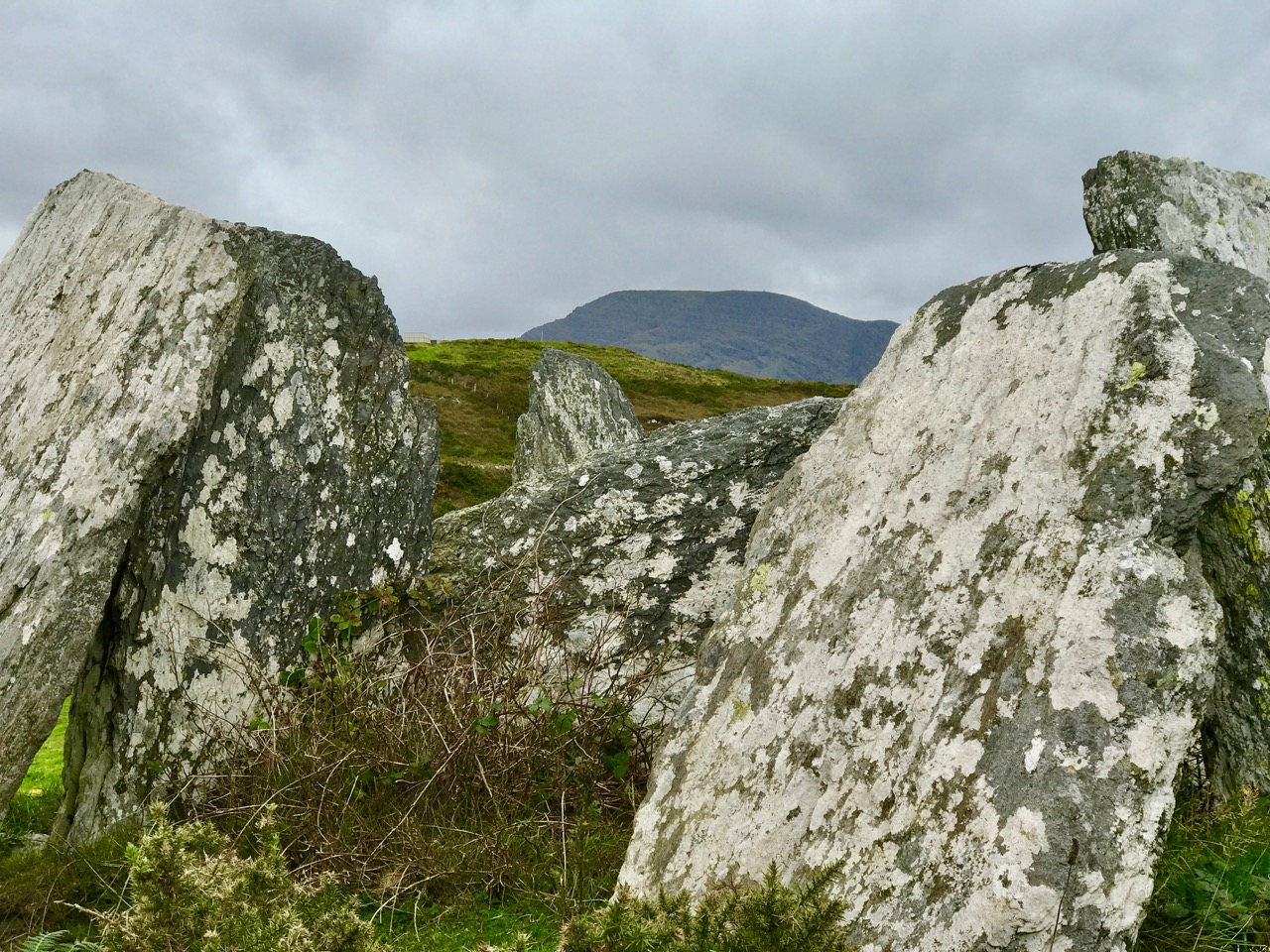
Dooneen, on the Sheep’s Head – this was the view the Grants looked out on. It could be fierce and desolate in the winter

As a Back to the Land narrative, this is a classic. Earnest urban professionals consulting Department of Agriculture pamphlets, conducting slug patrols, keenly observing the social structure of their goat herd and duck flock, battling the wild Atlantic storms, making cheese and smoking hams: this is the kind of thing that sent thousands of idealistic young people into communes all over the world, or in the case of Ireland, into the hills behind Ballydehob. The need to be accepted by the locals, a thread that appears in so many Year in Provence-type books, is coupled with the outsider’s puzzlement at the impenetrability of some aspects of local behaviour.

Dooneen Pier

Grant is not a gifted writer when it comes to scenery: …Trees wore their autumn colours. Streams tumbled down rocks, sparkling… Nevertheless he does slowly build up a picture of a man coming to grips with his place in the natural world and his relationship with animals and the elements. Perhaps the strongest sections of the book are those in which he chronicles the hard work and resourcefulness that it takes to sustain life on a smallholding, the setbacks and difficulties he and Mary encounter, and the support of the neighbours and community without which it would be impossible.

Donald and Mary, although not Catholic, attended the Star of the Sea church in Kilcrohane. This window from that church depicts the struggle against the elements that was such a part of life on the Sheep’s Head

The story of Donald and Mary took a strange turn for me when I decided to Google around a bit, digging for more information about them. Astonishingly, Mary was convicted in Israel in 1956 of spying for Syria! She spent a year in an Israeli prison, eventually applying for a pardon. According to one account, she had fallen for a Syrian diplomat who persuaded her to take photographs in Israel for the Syrians. She was so unsophisticated a spy that she was captured almost right away.

She claimed to have been married to the Syrian: one newspaper account referred to her as Mrs. Caleb Kayali, the former Mary Frances Hagan of Huntington, W. Va. However, Kayali denied that they were married. The trial took place in secret, although the US authorities were kept apprised of the situation. Mary was eventually released when she had served much of her sentence. Once free, she denied that she had been spying, and described her prison term as “boring.”

Donald and Mary on their farm. Note the photographer, Mark Fiennes, who was also living on the Sheep’s Head around this time

She and Donald met when they shared a desk at the United Nations, where they were both correspondents: he for the St. Louis Post-Dispatcher and she for Look Magazine. Little did the people of Doneen know of the chequered history of the American woman who introduced goat’s cheese to their far-flung parish. The story which starts White Goats and Black Bees – the one where Donald and Mary take a sudden notion to move to Ireland and farm – may not have happened quite as related. According to one account, Donald had been “given early retirement” when the Jewish community complained of and investigated what they saw as his “extremely anti-Israel” coverage, and declared that his marriage to a former convicted spy put him in a conflict of interest situation.

The old graveyard in Kilcrohane, centred on a ruined medieval church, is a beautiful and peaceful place

Whatever the truth behind how they got there, Donald and Mary continued to live happily on the Sheep’s Head and eventually in Bantry for the rest of their lives. While Donald died in 1983, Mary lived until 2012. Both are buried in their beloved Kilcrohane.

Choughs – and their travels

You’re looking here at a 500 year-old Chough! It’s a carving from a medieval rood screen in an ancient church at Sancreed, on the West Penwith peninsula in Cornwall. There’s no mistaking it: the curved red beak and the red legs make this the most distinctive of all the corvids. This is an accurate representation but, interestingly, on the rood screen it’s in the company of other curioser beasts and beings which we perhaps would not recognise. Were the others around once in Cornwall, but now vanished? You can have a look for yourselves in next week’s post. But first, a little more about our own Choughs.

This wonderful photograph by our neighbour Oliver Nares (thank you, Oliver) shows Choughs in flight, and you can tell they are Choughs rather than any other sort of crow by the distinctive ‘finger’ feathers on the tips of their wings. But also their call is very particular – they tell you their name!

The pattern of their flight makes them stand out. The other day a chatter of twenty Choughs passed over us at Nead an Iolair and swooped down over and around Rossbrin Cove. They were wheeling and turning, performing acrobatics in the sky – even flying upside down! – clearly enjoying every moment of their airborne peregrinations. Why wouldn’t you, with such a beautiful landscape below you?

I have written about Choughs before, but there is a special relevance now, in my series on links between Ireland and Cornwall, sparked off by the West meets West exhibition currently running in the West Cork Arts Centre’s gallery in Skibbereen – Uillinn. The Chough has always been the ‘national bird’ of Cornwall – it has pride of place on the coat-of-arms of the county, alongside the fisherman and the miner:

It was somewhat ominous, therefore, when the Choughs disappeared from Cornwall, back in 1970, after a long period of decline. Attempts were made to reintroduce them artificially, over the following decades, but without success. And then, suddenly, the birds returned! It seems that changes in agricultural methods on the coasts – removing grazing cattle to inland sites – had upset their habitats. Now, following changed grazing patterns, Choughs are re-establishing themselves and – here’s the exciting thing – they have come over from Ireland to do that! It has been found that the entire new breeding stock originates from here, where the birds are plentiful. Just imagine those pioneering birds setting out to cross the Celtic Sea from Cork, Waterford and Wexford… Another gift from Ireland to Cornwall, following in the path of Saint Ciarán from Cape Clear who floated across himself (on a millstone) to convert the Cornish heathens and giving them their own patron saint, known as Piran in their own language.

Left – Chough fledglings, photo by Oliver Nares; right – Finola’s study of a bedraggled Chough sitting on our gatepost on a very wet day

In Cornwall, the Chough is said to carry the spirit of King Arthur, the Once and Future King who will return one day. In Ireland, however, Choughs are believed to start fires by carrying lighted sticks on to the roofs of houses. The latin name – Pyrrhocorax – means ‘fire raven’, perhaps because of the bright red bill and legs.

A taster for next week: another – curioser – bird-like creature from the Sancreed rood screen in Cornwall