The Gift of Harry Clarke

The Gift

This post was inspired by a gift from my oldest and dearest friend – three books on stained glass passed on to me because he is moving from his home of the last 65 years, a home in which I spent much happy time. A loyal reader of our blog, he knows of my  enthusiasm for stained glass, an obsession I shared with his late wife, the wonderful Vera, whom I still carry in my heart.

The Kendal Coghill Window, Church of St Barrahane, Castletownshend, Co Cork

The Kendal Coghill Window, Church of St Barrahane, Castletownshend, Co Cork

One of the books is the exhaustive and erudite study of Harry Clarke by Nicola Gordon Bowe. The other two are more general, although each of them devotes a section to the work of Harry Clarke. My initial intention was to look at Harry Clarke as a illustrator, with special reference to his portraiture, using a variety of windows as examples. I may still do that in the future. However, I’ve decided that for now, just one window perfectly illuminates what I want to say about Harry Clarke this time. It’s a window we have both used before in posts (Robert in his Martinmas piece, and I in a couple of places) – the Kendal Coghill window from St Barrahane’s in Castletownshend. Through this window I hope to show you the unique genius of Harry Clare, but also how he drew from life and from great art to create his stained glass panels. (For more on Harry Clarke’s life, see my previous post, The Nativity – by Harry Clarke.)

Kendal Coghill, drawn by his niece, Edith Somerville

Kendal Coghill, drawn by his niece, Edith Somerville

Who was Kendal Coghill? He was born and bred in Castletownshend, Edith Somerville’s uncle and a distinguished soldier, rising to the rank of Colonel. He served in India, where he took a kindly and active interest in the young Irish soldiers in his regiment. One of his melancholy duties was writing to their mothers to advise of their deaths. He was also “excitable and flamboyant”, writes Gifford Lewis in her excellent book, Somerville and Ross: The World of the Irish R.M.. As one of the leaders of the amateur spiritualist movement in Castletownshend he introduced Edith and her brother Cameron to automatic writing. By all accounts he was generous and warm hearted and it was his compassion that the window was to emphasise. The two subjects were chosen carefully – Saint King Louis IX of France, and St Martin of Tours. Coghill could trace his ancestry to King Louis, famed for his beneficence, and St Martin was the patron saint of soldiers.

Contrasting styles

Contrasting styles

The first thing that strikes you upon entering St Barrahane’s is the contrast between this window and the others (by Powells of London) on the south side. Alongside the conventional Powells the Clarke blazes with colour and with detail. Every square inch is individually worked, there are no repeated patterns or conventional scrolls. Examine the borders, for example, filled with abstract and colourful motifs, never recurring.

St Louis detail: each motif in the border is uniquely designed and coloured. The robe intrudes in front of the border, lending a £D effect.

St Louis detail: each motif in the border is uniquely designed and coloured. The robe intrudes in front of the border, lending a 3D effect

chokiHarry’s habit of placing figures at different heights adds visual interest to the side-by-side panels and may have been influenced by Japanese pillar prints, which were also a major factor in the design aesthetic of Frank Lloyd Wright. A church window is by its very nature long and narrow and the design challenge this poses had first been explored by Japanese artists whose woodblock prints were hung vertically on walls, or fixed to house posts. Contrast the static, forward-facing, identically scaled figures in the Powell window with the dynamic composition of the Clarke panels. The St Martin figure, in particular contains two figures and manages to tell a whole story, like this example of a pillar print.

The choice of the window and the management of the commission rested with Edith Somerville. Harry Clarke stayed with her in Drishane while executing the final placement and she liked him very much. Beside the Kendall Coghill window which is the subject of this post there are two other Clarke windows in St Barrahane’s. But St Barrahane’s, as Gifford Lewis explains, is not…”typically Protestant. High Church, Anglo-Catholic influence is in restrained evidence besides the astounding blaze of Clarke’s windows. Jem Barlow, the medium, claimed that at a service one Sunday in St Barrahane’s the spirit figure of Aunt Sidney appeared, caught sight of the Clarke windows, started, then exclaimed “Romish!” and dissolved.”

Above St Louis,

Above St Louis, “a parade of the poor and diseased”

Saint Louis occupies the left panel. He is depicted with an alms purse in his left hand and a crucifix instead of a sceptre in his right hand. Look carefully – above him are the poor and sick that were the objects of his constant charity. Here’s what Nicola Gordon Bowe has to say about this section of the window:

Dimly visible…is a small procession of the heads and shoulders of the poor and diseased who used to feed at his table. These again show Harry’s unique ability to depict the gruesome, macabre and palsied in an exquisite manner…The seven men depicted, old, bereft, angry or leprous, are painted on shades of sea-greens and blues, mauves and grey-greens, in fine detail with strong lines and a few brilliant touches, like the grotesque green man’s profiled head capped in fiery ruby, the leper helmeted in clear turquoise with silver carbuncles, and the aged cripple on the right in ruby and gold chequers.

Poor men

This section, it seems was likely influenced by a painting that Harry was familiar with from visits to the National Gallery in London – Pieter Bruegel’s Adoration of the Kings

Detail from Pieter Bruegel's Adoration of the Kings

Detail from Pieter Bruegel’s Adoration of the Kings

The ship in which he sailed to the crusades is depicted above King Louis.

Ship

Saint Martin, in the right panel, is depicted in the act of cutting his cloak in two, to give half to a beggar. Martin’s face is archetypal Clarke – the beard, the aquiline nose, and the large eyes filled with compassion for the beggar.

St Martin of Tours

St Martin of Tours

The helmet is worth a closer look. First of all, it is beautifully and finely decorated in the niello style, and second, it is topped with a tiny figure, sphinx-like, with long wings. Nicola Gordon Bowe points to the influence of Burne-Jones here, to the helmet worn by Perseus in The Doom Fulfilled.

Burne Jones' The Doom Fulfilled

Burne Jones’ The Doom Fulfilled

Clarke also found his inspiration in life drawing. He used himself for a model occasionally, but also ordinary people from the streets of Dublin. The beggar may have been based on one familiar to him. His face is dignified despite his wretched condition and his patches are rendered in as exquisite detail as is the Saint’s armour.

Beggar

The beggar may have been based on a familiar Dublin figure

The beggar's hand

The beggar’s hand

Finally, at the very top of the window two haloed figures look down. Harry Clarke had a thing for red hair and this is a perfect example of how he used that preference to good effect. Once again, although the figures are similar in size, there is no repetition – these are no ‘standard’ angels – each has his own wonderful garments and stance.

Red haired angels

Stained glass artists typically sketch their designs on paper first and these images are referred to as cartoons. Harry Clarke’s cartoons for the Coghill windows must still exist. Nicola Gordon Bowe describes them as drawn “loosely in thick charcoal, the design boldly expressed with detailing and shading minimal, but still conveying a good idea of how every part of the window would look.” The finished window, she says, “reveals a new freedom of treatment, the painting on the glass reflecting the free drawing of the cartoons.” This is an artist and craftsman working at the height of his powers – an interesting subject for the question that Robert poses in his post this week.

Saint Martin, armour detail

Saint Martin, armour detail

West Cork Creates

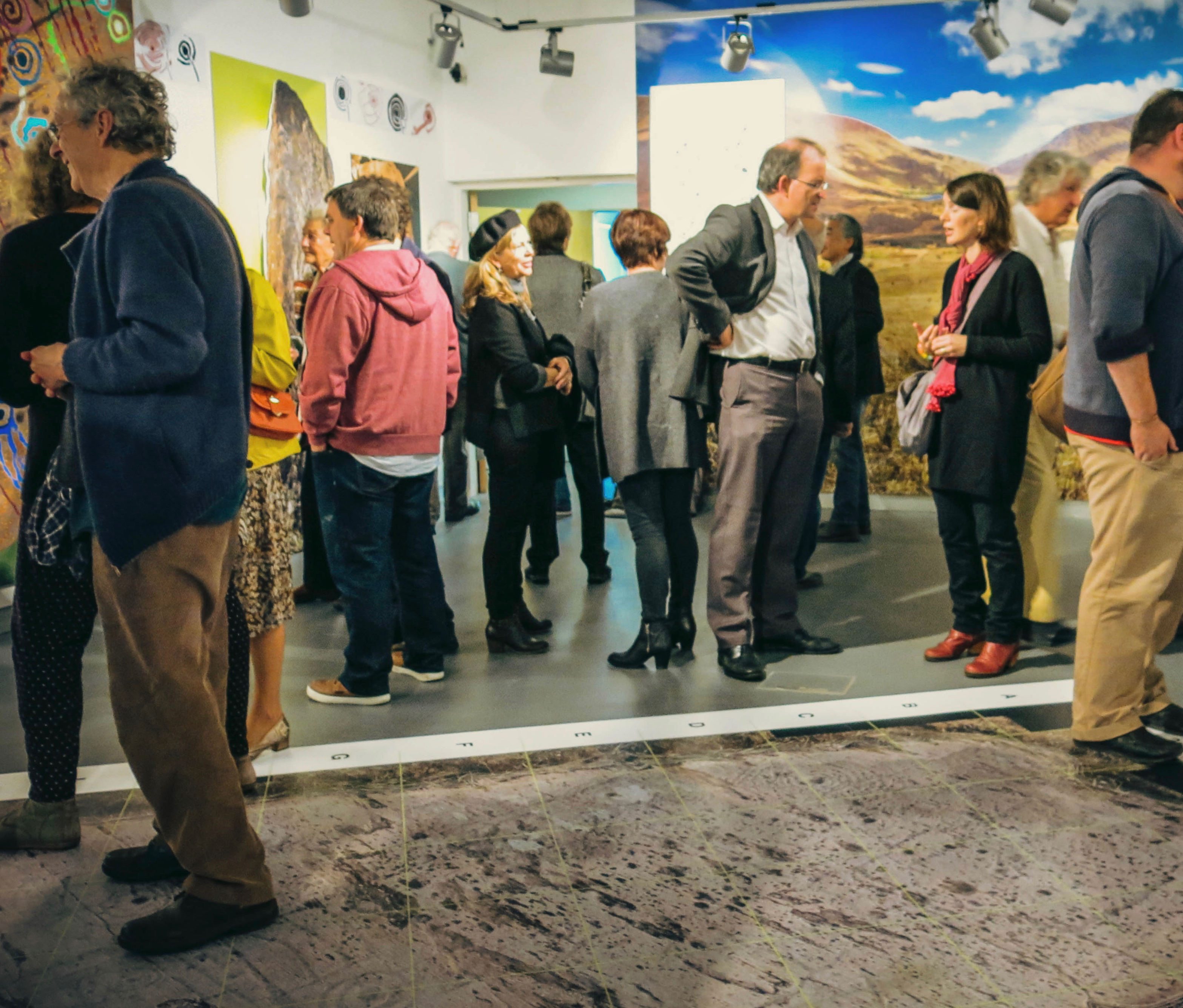
We were bowled over by the latest exhibition to open in Skibbereen on Saturday: West Cork Creates. It shows collaborations between local craftspeople, visual artists, photographers and designers – combining their skills and expertise to produce exciting, original work.

test pieces

Top picture – The Great West Cork Obelisk (see below) is featured by the entrance to the gallery; above – fired test pieces from the obelisk project

Here’s a riddle: what’s the difference between an artist and a craftsperson? If you have a definitive answer please tell me, because this is a debate that will last forever… Grayson Perry contributes to the discussion in this Guardian piece, starting provocatively with:

…I see the craft world as a kind of lagoon and the art world in general as the ocean. Some artists shelter in this lagoon, because their imagination isn’t robust enough to go out into the wider sea…

Grayson Perry makes pots, so is he an artist? Well, presumably the British art establishment thought so as they gave him the Turner Prize in 2003, the first time it had gone to a ‘ceramic artist’.

More from the obelisk project and – right – Brian Lalor, one of its creators

Where does that leave us? Is someone who makes flowerpots an artist, because a flowerpot might be an attractive object? Where do you place something like the Book of Kells? It’s a functional object – the four Gospels lavishly illuminated – created in medieval times by many different hands. Yet it’s unique, overflowing with stunning visual images, beautiful and priceless. It’s a wonderful example of collaboration between the functional craft of the scribes who penned the texts and the minds of the (undoubted) artists who produced the decorations around those texts: perhaps they were the same hands.

Left – metamorphosis of two of Alison Ospina’s Greenwood chairs and – right – Dee Forbes, President and Managing Director of Discovery International, formally opening the exhibition

What about Finola’s subject for today, Harry Clarke – artist or craftsman? Stained glass is not ostensibly functional (except, perhaps to change the quality of the light coming through a window) yet the making of it is a craft requiring a lengthy apprenticeship and a garnered knowledge of specific materials and their use. I have no doubts: walk into St Barrahane’s Church, Castletownshend, and be dazzled by the Clarke windows there. They are inspired: true art. Harry Clarke designed and made these windows, so he was artist and craftsman rolled into one.

book of printsArtist and printmaker Coilin Murray with The Big Book

For me West Cork Creates (part of the Taste of West Cork Food Festival) demonstrates conclusively that you can’t differentiate between art and crafts. As you enter the gallery you are immediately presented with an iconic piece – The Great West Cork  Obelisk – which stands almost three metres high. It is a collaboration between two minds and two sets of hands: Brian Lalor and Jim Turner. Brian we have met before in the pages of our blog: he is a true polymath. He writes (prolifically), he produces art (prolifically), he has been an architect and an archaeologist. Jim is a ceramic sculptor of renown. Egyptian ‘obelisks’ are commemorative monuments of the Pharaohs and they usually carry a lengthy inscription praising the deeds of some significant individual.

obelisk in context

The Great West Cork Obelisk

This one is constructed from four terracotta sections made by Jim in his Clonakilty studio and fired in a specially constructed kiln. The base inscriptions are all quotations, two from social philosophers and two from writers, all concerned with the state of society. Brian’s images derive from these, from the contemporary world and from the local environment. The artists’ statement says: Obelisks may be the new round towers of the landscape… (remember that Brian has written the standard work on Ireland’s medieval round towers). I agree: I’d love to see this work prominently displayed in a public place locally – and many more like it. The obelisk absorbed our attention for a good half an hour, delaying us from moving on to the rest of the exhibition: it’s a show stopper!

Alison Ospina and – right – one of her Greenwood stools painted by Etain Hickey 

There are chairs and stools: functional objects to be sat upon. But you’d think twice about sitting on these. They are initially examples of the work of Alison Ospina who uses coppiced hazel to make distinctive seating, but they have been transformed by others (painter, sculptor and felt maker) into works of art which will primarily be looked at and appreciated.

for sale

The gallery space includes a sales area where you can buy the work of the participating exhibitors

There are thirteen collaborations in the exhibition including stone sculptor and furniture maker; metal sculpture and photography; basketmaker and visual artist; painter and felt maker; painter and boatbuilder; cutler and jeweller, all based or working within West Cork… This is just a taster – we have to go back and catch up on the other genres and artists and perhaps write a further blog post. The exhibition runs for five weeks from 8 August to 10 September at Levis’s Quay in the centre of Skibbereen, and is open from Mondays to Saturdays between 11am and 6pm. Be sure to get there – you won’t be disappointed: watch out for the gallery talks, too.

Sculptor Helen Walsh collaborates with photographer Rohan Reilly

Once you have seen the exhibition, you might like to comment and add your contribution to the artist / craftsperson debate.

wooden sun

Umha Aois

spearhead

There’s a magic to the working of metal: you can pick this up when you are doing it, or when you are watching others do it. It could be the arcane transformation of rough nuggets of ore, first into liquid and then into beautiful solid objects that inspires that impression – or perhaps it’s because the senses are battered by the fierce heat, the molten rivulets, the streaming sparks, the incessant hammering, the sheer excitement… It’s no wonder that our ancestors embraced the emerging technologies hundreds of generation ago, and created spectacular objects which, today, we place in our museums and venerate.

sparking

Umha Aois are artists and sculptors working as ‘experimental archaeologists’ who have been in Skibbereen this week as part of the Skibberen Arts Festival. They use Bronze Age metal working techniques to produce replicas of ancient tools, weapons and musical instruments and also contemporary art objects. We went to their workshops set up in the grounds of Liss Ard House and met Holger Lönze – a locally based sculptor – James Hayes from Bray and their colleagues who are researching and using stone and clay moulds, ‘lost wax’ processes and charcoal pit-furnaces.

Robert holding a recently cast bronze bell, while Finola tries out an adze

It’s very appropriate that we should be looking at Bronze Age metalwork in our own corner of West Cork as we are in the shadow of Mount Gabriel, site of substantial copper mine workings probably dating from some three and a half thousand years ago. A number of Bronze Age mines have been found on the Mizen Peninsula: it must have been a significant local activity and source of trade. It has of course continued almost up to the present day; our own townland of Cappaghglass saw considerable copper extraction during the nineteenth century.

copper mountain

Copper Mountain – on Mount Gabriel can be found the sites of 32 separate workings dating from 1700 – 1400 BC, but there is no evidence of smelting or metalworking in the same vicinity: perhaps the ‘magic’ of the process required it to be carried out in more secret places?

Back to the Umha Aois project (it’s pronounced oowah eesh and means Bronze Age): we saw pieces in various stages of production, including axe heads, adze heads and spear heads, cast from stone moulds. They are elegant objects, especially when they have been polished to a gleaming finish.

axe heads

Bronze axe head, showing the mould used to cast it

The group was using pit furnaces which they had constructed on site. These consisted of basin shaped depressions in the ground lined with clay, and pipework of clay running from two sets of bellows. The clay pits were filled with charcoal and fired to a high temperature to convert the ore in the crucibles to a molten state.

empty furnace

Top – the principle components of a Bronze Age pit furnace; below left – crucible being heated; below right – the bellows in action

In another shelter we were also shown the ‘lost wax’ process: small objects were shaped in wax and then encased in clay. The wax was melted, leaving a mould in the clay cavity which was then filled with molten metal. Once hardened, the clay moulds are broken apart; the copper or bronze objects are then finished and polished. Here is a BBC video that demonstrates these techniques. There are incredible examples of this type of worked metal in the National Museum in Dublin, including some in gold – thousands of years old and yet so elegant and sophisticated.

melting out the waxClay moulds used in the ‘lost wax’ process

Holger has also made a Bronze Age musical instrument, which he demonstrated for us. The pattern is based on ‘trumpets’ which have been found in Europe, the finest being the Loughnashade trumpet, discovered during drainage works at the site of a former lake in County Armagh. Holger’s trumpet is a bronze cast: some finds have been made from curved and rivetted sheets of bronze. Here is a link to a recording of the sound made by a similar reconstructed instrument.

Holger Lönze conjuring up ancient music!

By exploring techniques, lifestyles and behaviour of our forebears through practical application, experimental archaeologists such as Umha Aois help us to understand that people who lived in the Bronze Age were not intellectually ‘primitive’ as was once thought; they have passed down to us their own aesthetic appreciation of art, music and their highly developed knowledge of sciences that enabled them to construct the complex megalithic monuments – and enigmatic Rock Art – which are yet beyond our own understanding.

Experimental archaeology in the walled garden at Liss Ard

Our ancestors left behind rugged stone monuments, landscapes which have shaped the pattern of our countryside, and sublimely beautiful objects: magic to our eyes and senses.

This Bronze Age gold disc – now in the National Museum, Dublin – was found at Sparrograda, Ballydehob 
(c) National Museum of Ireland

sparrograda disc

Family-Friendly Archaeology

Dramatic Skies over Maughanasilly Stone Row

Dramatic Skies over Maughanasilly Stone Row

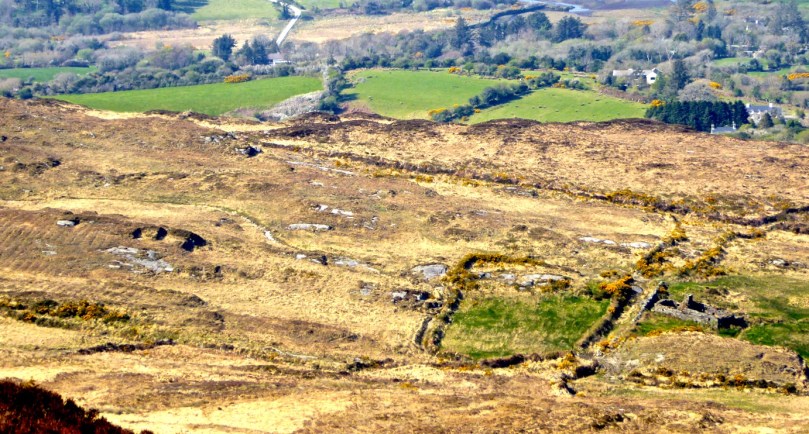
West Cork is crammed with prehistoric monuments but many are not really accessible for all family members because of the terrain. Others are on private land where the landowner is reluctant to grant permission, or where frisky bullocks make traversing a field a bit risky. So we’ve done some homework on easy-to-reach sites and planned a route for you in which you can have a) a Grand Day Out and b) a tour through some of the best West Cork Bronze Age sites and one Medieval Castle.

The Kealkill complex: one of the sites you'll visit today

The Kealkill complex: one of the sites you’ll visit today

Load the kids and Grandma into the car, stick Discovery Map 85 in your pocket (or use the one we’ve provided in this post), wear boots or wellies, and off you go! By the way, we strongly advise leaving the dog at home when on a field trip like this. If you must bring him, please keep him on a leash, since you will be on private farmland at each site except Carriganass.

This slideshow requires JavaScript.

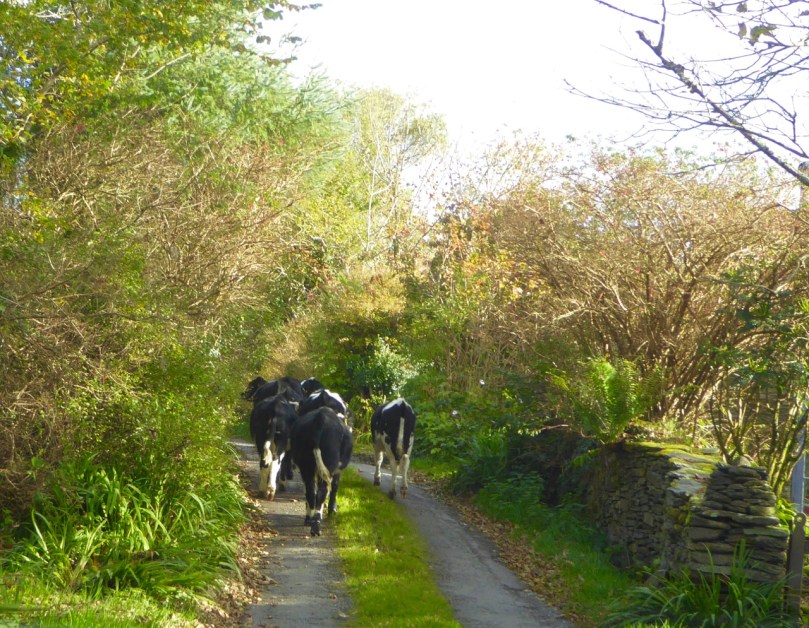
Oh – and the frisky cattle? Keep an eye out – they weren’t around when we did our reconnaisance but you never know when that can change. These two photos are by Amanda Clarke, used with permission.

Kealkill Monuments

Our starting point is Ballylicky – here’s your opportunity to pick up a picnic at the marvellous Manning’s Emporium. And if you like your day today, consider signing up for one of their Culture Kitchen tours – an innovative mix of history, prehistory and artisan food that will lead you still further into the prehistoric (and culinary) hinterland of West Cork.

Mill Little Group of Munuments

Mill Little Group of Monuments

1. Mill Little Complex

From Ballylicky, head west along the scenic seaside road towards Glengarriff for a couple of kilometres and take the first turn right at Snave. You’ll be following the Coomhola Rive as it tumbles down between high hills. Once you’ve crossed Snave Bridge continue for about a km, take the second left and then immediately right. One km on, take a left and then the next right. Park along here and the Mill Little complex is in a field on the left.

Stone Pair

Stone Pair

This is a complicated site, comprising a stone pair (don’t be confused by the other stones around the pair, which have been piled here), three boulder burials, and a small five-stone circle. All these monuments probably date from around the same time – the Bronze Age, about three to four thousand years ago. A particular feature of West Cork archaeology is that boulder burials, standing stones (single, in pairs, or in rows) and stone circles are often found together. Stone circles and stone rows are oriented towards significant solar events, such as the rising solstice sun or the setting sun at an equinox. At a site like this, it is possible that all the features formed a large observational arena, with the stone row, boulder burial and stone circle providing multiple alignment possibilities and marking both solar and lunar events.

Boulder burial showing support stones. Five-stone circle in the background

Boulder burial showing support stones. Five-stone circle in the background

The boulder burial nearest the stone circle is the most classic in appearance – a large glacial erratic sitting on top of three support stones. Excavations at boulder burials in West Cork, however, haven’t really yielded evidence of actual burials – perhaps the term is a misnomer!

Three boulder burials at Mill Little

Three boulder burials at Mill Little

2. Carriganass Castle

Retrace your steps back towards Ballylicky and take the road to Kealkill – or try an overland route using the map. At Kealkill take the left fork signposted to Gougane Barra and you will see Carriganass Castle almost right away.

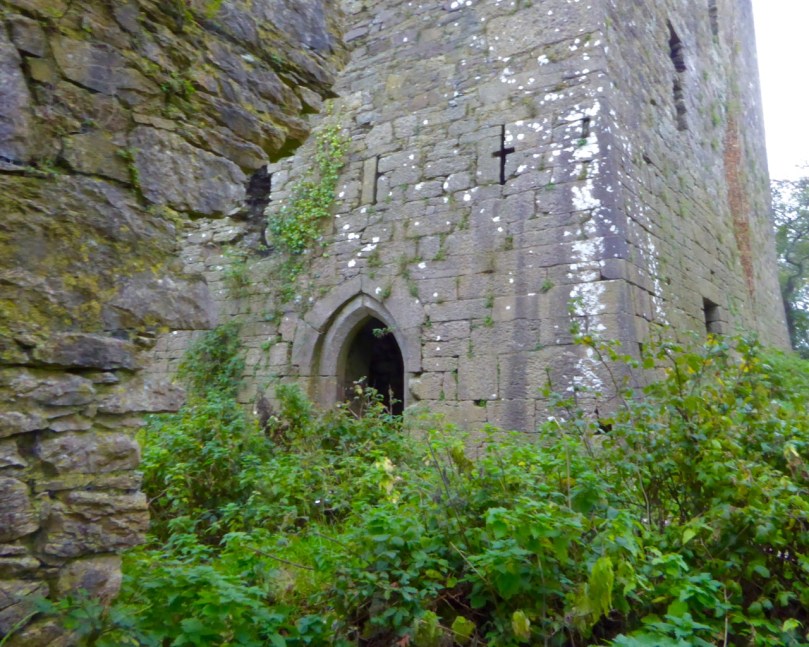
Carriganass Castle

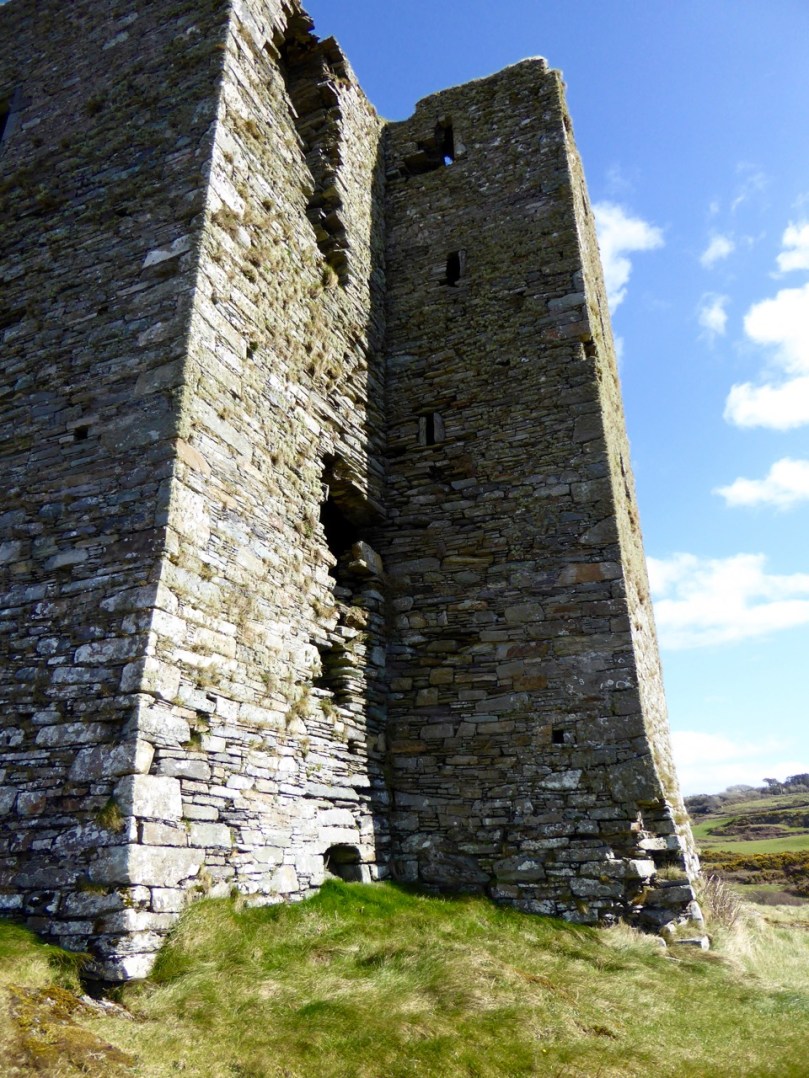
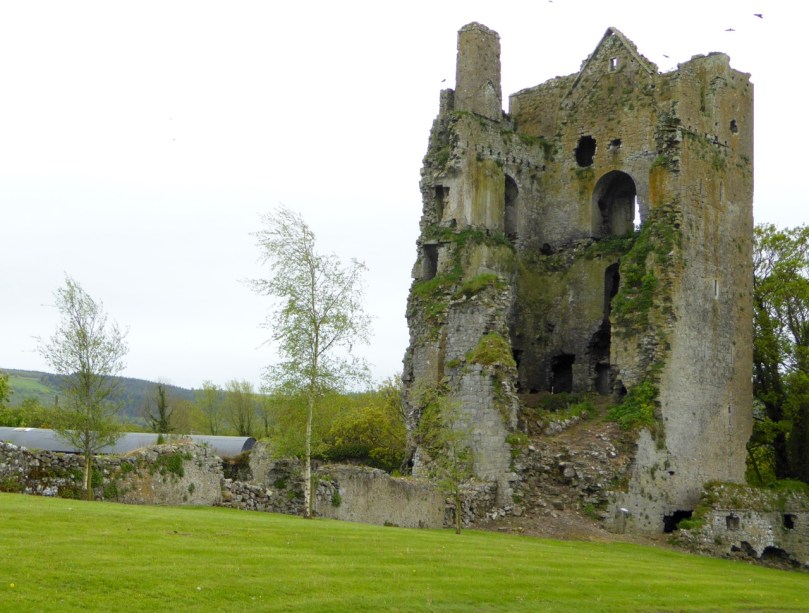
Carriganass is an excellent example of the medieval tower house – take a look at this post for more about these structures in West Cork. There’s easy parking around the back and lots of explanatory signs around the castle. This is a good place for a picnic, or you can wait until after you’ve been to Maughanasilly, since you will come back this way. If it’s a hot day (don’t laugh – it can happen!) the kids will enjoy a dip in the river here. There are also some looped walks starting from here – mark them for a future expore.

3. Maughanasilly Stone Row

Continue past the back of the castle. At the first junction take the left fork and continue until you see a small lake on your left. Shortly after you will come to a cross roads. Turn right and park – the stone row is in the field on your right.

Maughanasilly Stone row. Note the row forms a slight arc

Maughanasilly Stone row. Note the row forms a slight arc

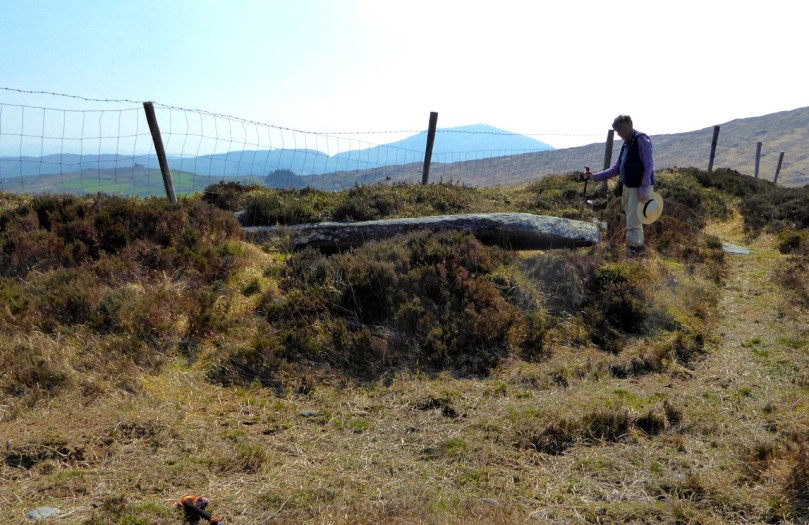
This is a good example of a multiple stone row and occupies a very dramatic setting on a knoll overlooking the lake. Note that, instead of being straight, the stones form a slight arc. This is deliberate, as is the placement of the stone lying flat on the ground. According to one expert, this stone “is placed so that anyone walking up to it and standing with toes touching its edge is looking straight at the equinox.” This stone row also appears to have been an important one for lunar observations. It takes the moon over 18 years to complete its cycle and from this site observations of the lunar maximums (the most extreme northerly and southerly moonrises) were likely made.

The stone row with recumbent stone

The stone row with recumbent stone

Ponder on the sophistication of our Bronze-Age ancestors: much of the knowledge they built up so that they could keep track of time and seasons had to be re-learned by later people.

Maughanasilly Stone row  - a lunar observatory?

Maughanasilly Stone row – a lunar observatory?

4. Kealkill Stone Circle

Back you go to Carriganass (picnic now, if you haven’t done so already) and on to the village of Kealkill – a pretty and well-kept village (and home to a famous St Patrick’s Day parade). The stone circle is signposted from the village – just follow the steep and winding road that runs up from the church. After a sharp bend to the right, take the first left turn. There’s enough room to park at a small pull-out. The walk across the field to the circle is invariably muddy and squelchy so make sure to wear your boots here.

Kealkill standing stone pair, stone circle and radial cairn

Kealkill standing stone pair, stone circle and radial cairn

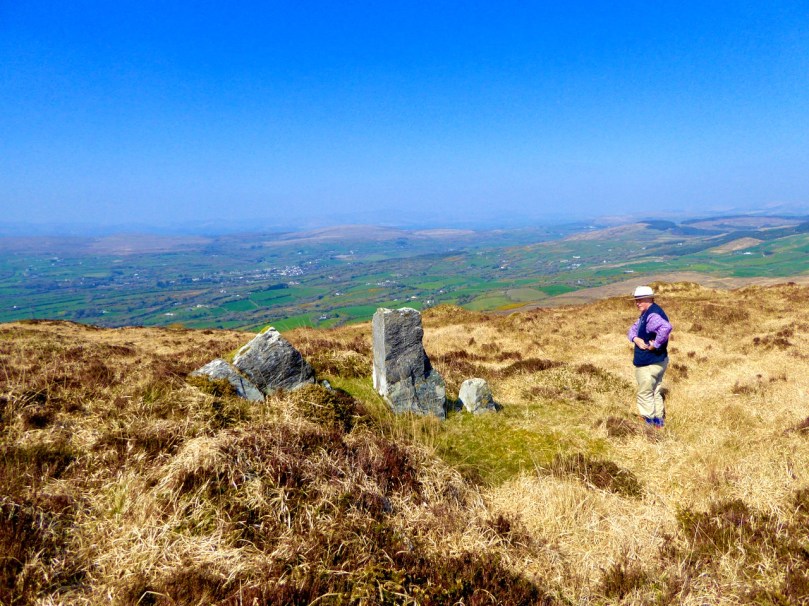
This is yet another complicated site. There is a standing stone pair, a five-stone circle and a radial cairn. But perhaps the first thing you will notice is the spectacular view. From this spot you can see all the way down the spine of both the Sheep’s Head and the Beara Peninsula to the South-West, and across the valley to the Shehy Range to the North and East.

From the Kealkill Site

From the Kealkill Site

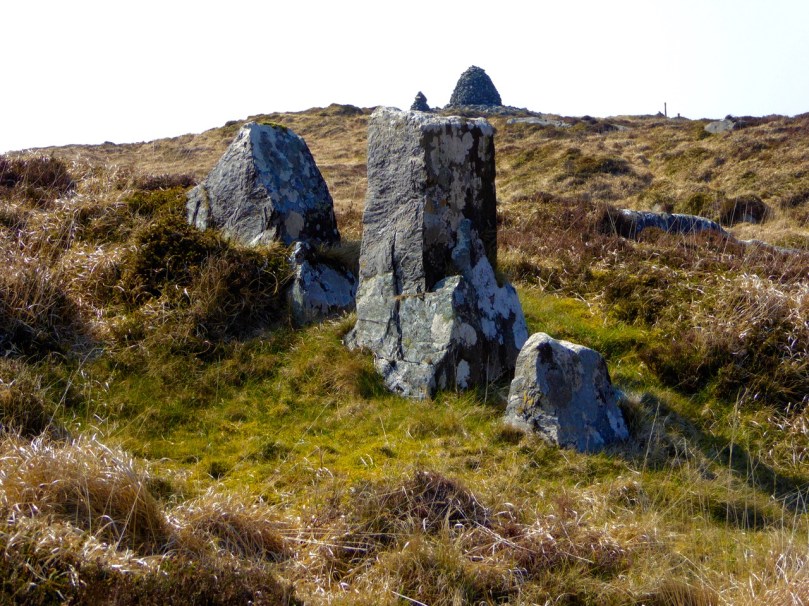
One of the stone pair is over 4m high. But it’s broken – and may originally have stood over 6m high.  Imagine the difficulty of erecting this!

The first thing you notice - that standing stone!

The first thing you notice – that standing stone!

The radial cairn is a mysterious monument – nobody is quite sure of its function – and relatively rare. Once again, these cairns are often found in conjunction with other monuments – stone alignments or stone circles. This one was excavated, but nothing conclusive was found to help determine its function. Note the small upright projecting stones that look like the face of a clock among the cairn stones.

Kealkill radial cairn

Kealkill radial cairn

5. Breeny More Stone Circle and Boulder Burials

This is just a little way up from the Kealkill circle and on the other side of the road. We haven’t had time to visit it properly yet, so my photograph was taken from near the road. There’s a multiple stone circle here, with four boulder burials within it. There’s not much left of the stone circle, but the portal stones and recumbent remain, so the alignment can be discerned. The boulder burials are laid out in square formation in the centre – a very unusual occurrence, since boulder burials are normally outside the circle. The site is on a natural ridge, with similar spectacular views to the Kealkill Stone Circle. One writer has speculated that if trees were removed it would be possible to see the tall standing stone at Kealkill from this site.

Breeny More complex from the road

Breeny More complex from the road

We hope you enjoy your day! Let us know how you got on.

March Back in Time

Jeremiah O'Donovan Rossa at the head of the Demonstration. Photo © Ian Flavin, used with permission.

Jeremiah O’Donovan Rossa at the head of the Demonstration. Photo © Ian Flavin, used with permission

100 years ago this month all Ireland was galvanised by the news that Jeremiah O’Donovan Rossa’s body was to be brought from New York to be buried in Ireland. As an acknowledged leader of the Fenian movement, he was as infamous in America and Canada as he was revered in Ireland, and his funeral was one of the largest ever seen in Dublin. 

Rossa, born in 1831, grew up near Rosscarbery and experienced the dreadful time of the Great Famine, watching his father’s death and his family’s eviction. Left alone in Skibbereen while his mother and siblings emigrated, he made a life for himself as a shopkeeper, all the time growing in his hatred of tyranny and nurturing revolutionary thoughts. He founded the Phoenix Society in Skibbereen which, although called a literary society, advocated ‘force of arms’ as a means of liberation from British rule.

It was during this period, in 1863, that he organised a demonstration in Skibbereen in support of Poland. There were many analogies between Ireland and Poland at that time: Poland was ruled by Tsarist Russia, which had imposed the Russian language on the Poles, closed universities and Catholic churches and dealt ruthlessly with resistance. The march was a barely-concealed act of sedition, of course, watched closely by the police.

Polish Contingent in national costume

Polish contingent in national costume

This week, as part of the launch of the annual Arts Festival, Skibbereen re-enacted that demonstration – and it was thrilling! Declan McCarthy (of Baltimore Fiddle Fair fame) took the role of Rossa, ably abetted by members of the Kilmeen Drama Group and the Skibbereen Theatre Society

Banners

Everyone who could manage it was dressed in period costume, shop windows put on special displays, and the streets were closed to all but pedestrian and horse-drawn traffic.

Phoenix out front

The demonstrators paraded through town when night fell, lit by flaming turf torches and led by Rossa and an enormous Phoenix Society emblem. A contingent of Poles had come from Cork and marched in costume. Banners were hoisted and a pipe band played The Minstrel Boy.

Finally, lit by the flaming torches, Rossa ascended the platform and delivered a fiery speech about tyranny and illegal occupation, punctuated by cheers from the crowd.

Firebrand Speech

The atmosphere was incredible. We were transported back to 1860s Skibbereen, surrounded by threatening policemen, firebrand revolutionaries and Victorian citizens, all getting into the spirit of the times.

AudienceIt was the high point (although not the culmination yet) of two months of Rossa commemorations in West Cork which has included lectures, a play, a walking tour, exhibitions and the unveiling of new monuments in several places including the impressive Skibbereen installation inaugurated by President Higgins.

Rossa and torch bearers

More about Rossa in a future post, including his three wives and 18 children, his Fenian career and his connection to events in Canada. To end, a link to one of the classic Fenian songs, Down by the Glenside.

Pitchfork torch

Wayside Miracles

Ballinspittle Grotto

Ballinspittle, Co Cork: the Marian Grotto became a world news sensation

1954 was a great year for the construction of outdoor shrines and grottoes in Ireland. Pope Pius XII had designated it a special Marian Year to mark the centenary of the ‘dogma of the Immaculate Conception and Assumption’. The Marian Year was an international event, but apparently no other country embraced the idea with greater fervour than Ireland. The notion seemed to capture the imagination of a young republic suffering from serious recession, high unemployment and loss of population through emigration. Hundreds of projects were put in hand and today, on almost every road in the country – and in every community – you will see statues of the Blessed Virgin Mary, usually in well tended settings. They add to the colour and character of this green land: like the ancient holy wells, they are venerated and not forgotten.

1954 tablet

Statue maker Maurice O’Donnell recalled that 1954 was a bonanza year for him: “…I was making so many at that time there was no time to dry them out before painting, so lots of statues in the shrines around the country are still unpainted. But that was in the Marian Year. The bottom has dropped out of the statues market since the Vatican Council…” Although many statues of the Virgin were painted later on, you will still see many unpainted (white) examples.

Marian Year shrine added on to the Holy Well at Keallkill, Co Cork

Exactly thirty years ago – on 26 July 1985 – the grotto at Ballinspittle jumped into the news headlines of the world because two local women witnessed the statue there moving while they were praying. The little Cork village suddenly found itself the centre of media attention and – during that summer – thousands of people came in bus loads from all over Ireland, either out of curiosity or anxiety to become part of a phenomenon. Many saw the statue move: a police sergeant (presumably a reliable observer) saw it rise into the air – while cures were claimed by sick people who visited the site.

Ballinspittle 1985

Crowds at Ballinspittle 1985  – Evoke.ie

Strange events were not limited to Ballinspittle. Reports had already appeared elsewhere. Kerry got in first: in February of the same year 30 schoolchildren saw two statues moving in the church at Asdee, while in nearby Ballydesmond something similar happened soon after. Here’s a contemporary extract from RTE News – worth watching for the concise view of rural Ireland in the 1980s.

magill asdee

Over 10,000 people visited the Ballinspittle grotto every night throughout the summer. The Irish Times (6 August 1985) reported: ’…Ballinspittle’s claim to a moving statue was matched in no time at all by reports of similar occurrences in Dunmanway and Courtmacsherry. But too many people, including senior gardai, well-tried sceptics and some who registered what appeared to be genuine shock said they saw the statue move, so Ballinspittle has remained the premier place of pilgrimage…’

white marys

The Catholic Church distanced itself from these happenings. Bishop Michael Murphy of Cork warned that “…common sense would demand that we approach the claims made concerning the grotto in Ballinspittle with prudence and caution…” but he also relished the fact that “…crowds are gathering there in a great spirit of prayer…” A difficult stance, perhaps, as similar occurences from Lourdes and Knock in the 19th century led to the creation of huge religious centres and pilgrimage destinations.

WWL

The visions at Knock, witnessed in 1879

The moving statues was a story big enough to inspire Peter Mulholland of the National University of Ireland, Maynooth, to pen a lengthy monograph in 2009, Moving Statues and Concrete Thinking, available in full on line – and a fascinating read. Mulholland makes the point that from the 1950s to the 1980s the western world, including Ireland, was perceived to be under threat from the Cold War, ‘Nuclear Nightmare’ (from weapons and waste), Communism, the ‘permissive society’ – and, more locally, ‘The Troubles’ and increasing unemployment and emigrations; while in 1970 the Bishop of Galway said he thought ‘organized atheism’ was the source of the ‘most serious injury’ being done to the young people of Ireland. All this, says Mullholland, contributed to an underlying feeling of insecurity which created an atmosphere ripe for ‘cults’ (such as observers of moving statues) because of a high level of anxiety in the community. The monograph goes pretty deeply into the realms of psychology, quoting one researcher who “…argued that a certain kind of family structure ‘intensifies Oedipal desires in both sons and daughters, and so promotes Marian devotion’. He held that Marian ‘hallucinations’ are shaped not simply by Oedipal desires but also by other infantile and adult desires…”

Mulholland concludes: “…The moving statues were a modern manifestation of the kind of ‘magical devotionalism’ that sections of the Irish Catholic population have long been prone to resort to during periods of personal or collective distress… They were products of the kind of literalistic, magical-devotionalism that Irish clerics condemned in the 1950s and ‘60s as being ‘anti-intellectual’ and a ‘peasant religion’…”
Knock Shrine

Knock Shrine, early 20th century

Perhaps it’s just coincidence (and I haven’t seen anyone else mention this), but it is worth noting that the Air India Disaster occurred at Ahakista, on the coast of West Cork, less than a month before the first apparitions were seen at Ballinspittle. This terrorist event which killed over 300 innocent souls must have had some effect on the local – if not the national – psyche, and could certainly have enhanced feelings of anxiety and insecurity in a rapidly changing world.

Ahakista

1985 Air Disaster Memorial, Ahakista

Looking back from the 21st century to these events I feel a sense of – well, disappointment – that what comes across now in reports on the phenomenon is mainly disparagement. This is a country which, quite rightly, hangs on to its history and mythologies: as with the wandering bards of older times stories are kept alive at the fireside, in the pubs – wherever people gather. Stories of The Other Crowd, of old battles, of heroes – and of neighbours – are listened to eagerly, and will be repeated just as eagerly. I don’t hear people dismissing them or expressing cynicism about them, as they seem ready to do about moving statues. Such scepticism is understandable in modern Ireland but I will continue to listen with an open mind to all the stories of miraculous happenings that are cherished and passed on, and which underscore the ancient faith of the countryside.

First day of issue

It would be wrong not to finish the story of Ballinspittle. On 31st October (Samhain) 1985, when a group was gathered in prayer at the grotto a car pulled up and three men got out carrying hammers and axes. In front of the dismayed onlookers they smashed the statue of the Virgin and shouted abuse at the worshippers for “…adoring false Gods…” The men, who claimed to belong to an extremist fundamental Christian sect based in California, were later arrested and charged with ‘causing malicious damage in a place of divine worship’. Amazingly, at the trial the Judge stated that he had to be “…particularly zealous in guarding the rights of the three defendants…” and dismissed the case on the grounds that the Ballinspittle grotto is not, in fact, a place of divine worship. In March 1986 the perpetrators appeared on the popular Late Late Show, hosted by Gay Byrne on RTE Television. They cited the fourth and fifth commandments of the Old Testament as giving them divine sanction to smash all religious statues in Ireland, regardless of the rights and views of other people. Reporter Eoghan Corry stated in an article in the Sunday Press, “…there isn’t a safe statue in the country.” Fortunately, following further acts of vandalism they were duly convicted.

Links worth following for more on the Moving Statues:

Finola’s blog post Mary Mary

Radio Documentary from RTE in 1992

RTE TV documentary on Ballinspittle

marian shrine