Stella’s Story

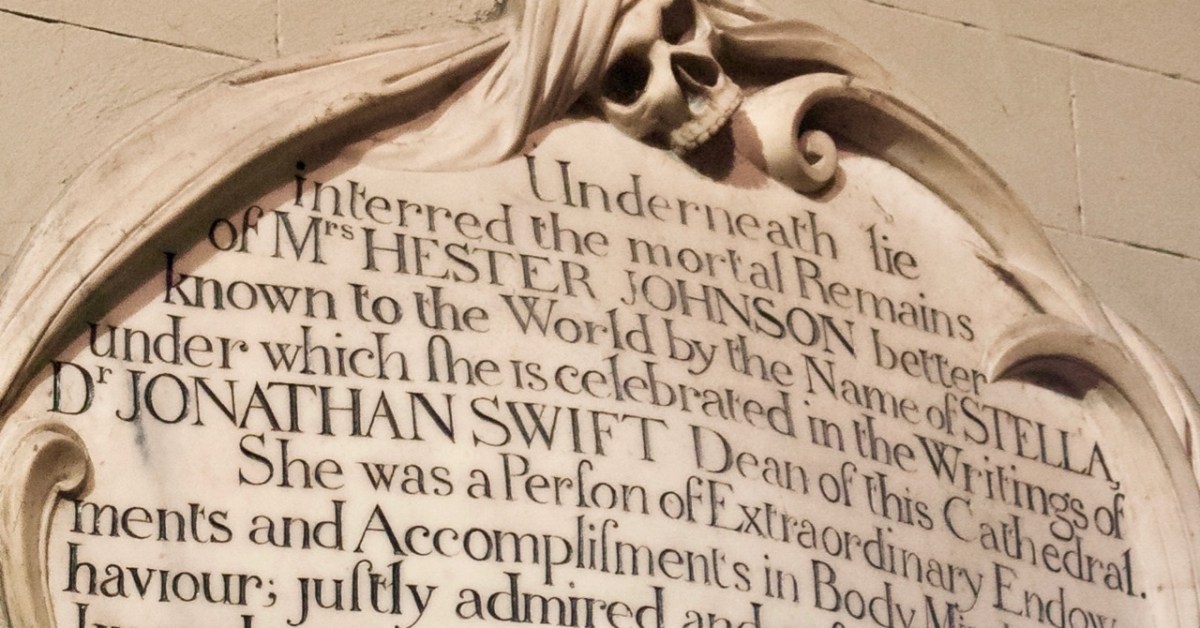
This fine memorial in St Patrick’s Cathedral, Dublin, celebrates Mrs Hester Johnson – “better known to the World by the Name of Stella”. There is so much about Mrs Johnson that is enigmatic, not least the use of that term ‘Mrs’. Hester was born ‘Johnson’ and remained unmarried throughout her life, even though she was linked so closely to Jonathan Swift – and many commentators have suggested they were secretly married or, at the very least, lovers.
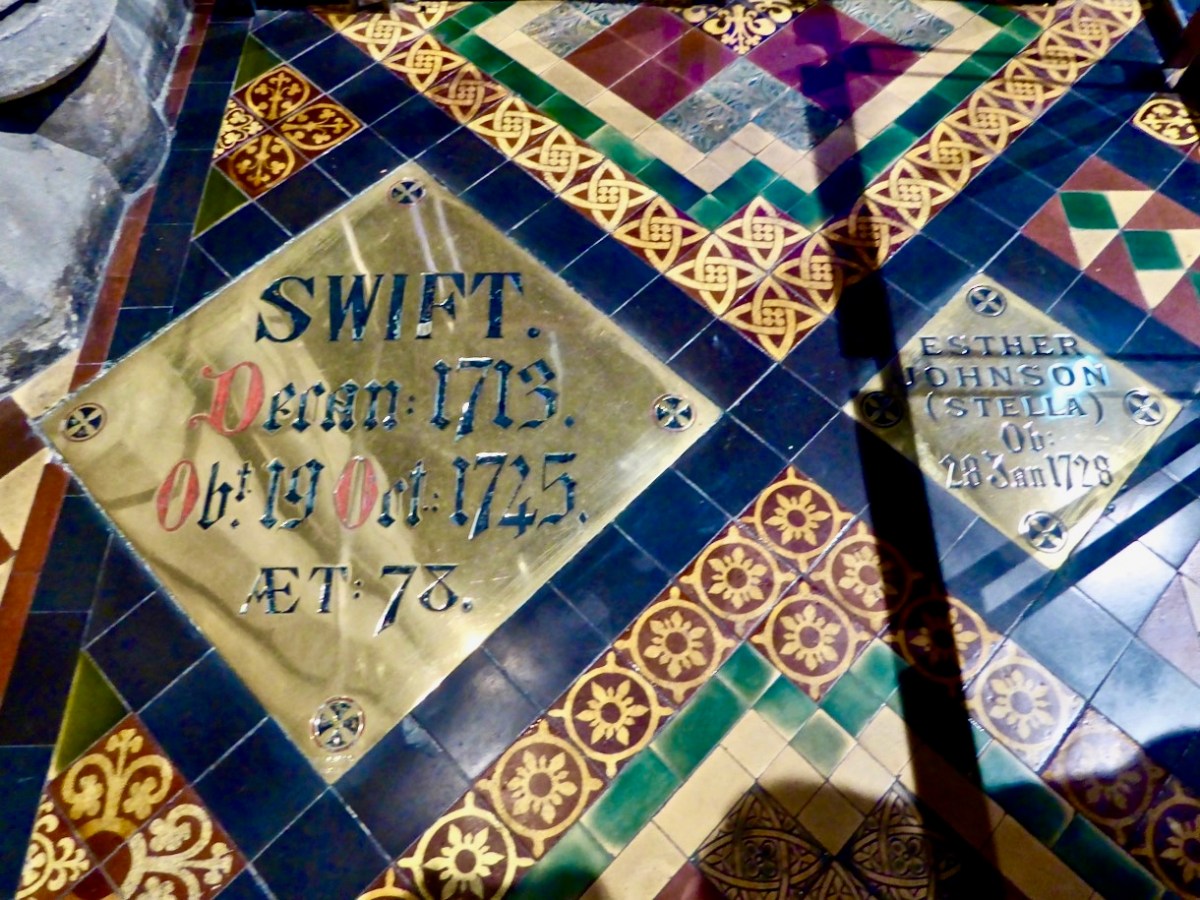
It is poignant to see the entwined plaques in the floor of the Dublin Cathedral. Both were buried there: ‘Stella’ in 1728 and Swift in 1745: he was placed beside her at his own request. Much has been written about Jonathan Swift – he was a formidable author, satirist and analyst of contemporary Irish life in the 17th and 18th centuries, while ‘Stella’ existed mainly in his shadows. We would probably know nothing of her without the association. Having written previously about Swift – and my part in his life (read it here) – I thought I would tackle the story of ‘Stella’: her name was known to me from a young age. Before going further, though, let’s solve that first little mystery – the use of Mrs on Stella’s memorial. In the Oxford University History Workshop Journal, Volume 78, Issue 1, Autumn 2014 Dr Amy Erickson claims:

. . . Mrs was applied to any adult woman who merited the social distinction, without any marital connotation. Miss was reserved for young girls until the mid eighteenth century. Even when adult single women started to use Miss, Mrs still designated a social or business standing, and not the status of being married, until at least the mid nineteenth century . . .

Dr Amy Erickson
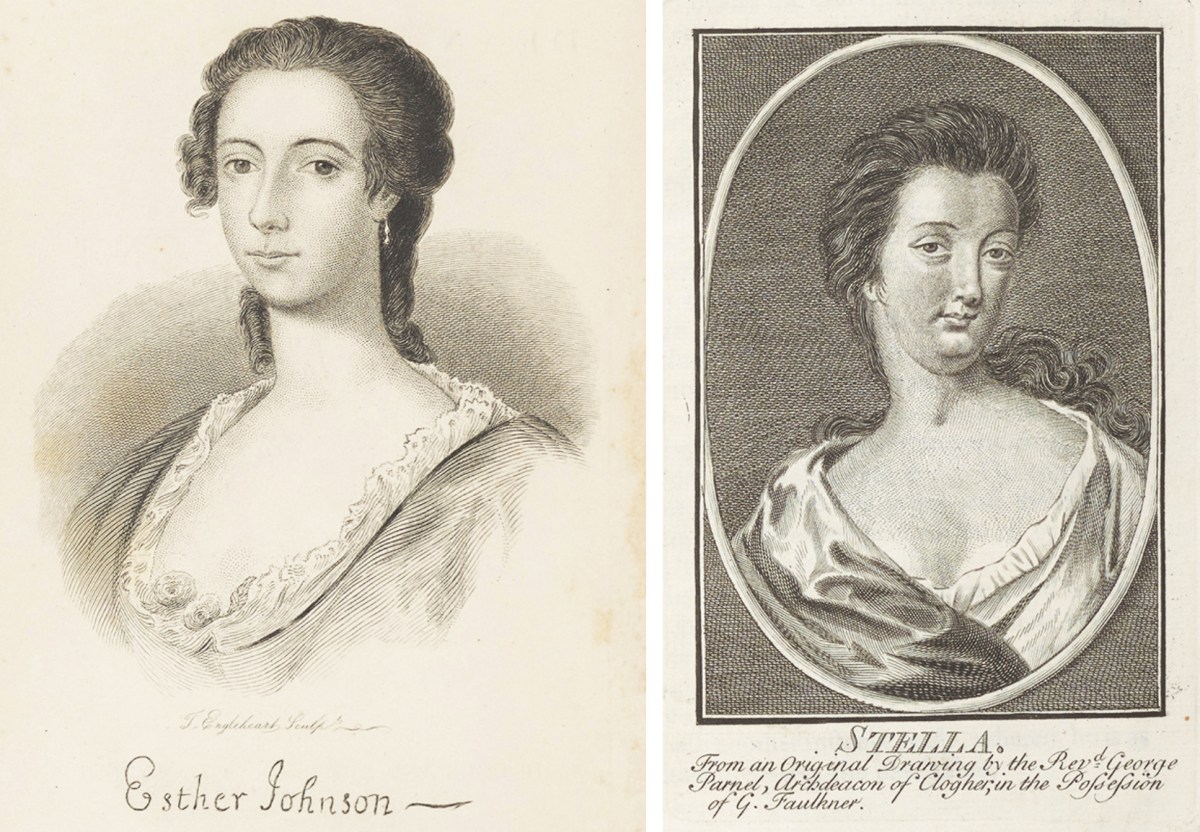
Above left: an alleged portrait of Esther was reproduced in William Wilde’s 1849 book on Swift, and claims for it an “undoubtedly authentic” history, adding that it matches physical descriptions made of Stella during her lifetime:

. . . It was originally in the possession of the distinguished Charles Ford of Woodpark, where Stella was constantly in the habit of visiting, and where she spent several months in 1723, when probably it was painted, Stella being then about 42. The hair is jet black, the eyes dark to match, the fore-head fair, high, and expansive, the nose rather prominent, and the features generally regular and well-marked . . .

William Wilde

Above right: “Stella, From an Original Drawing by the Rev’d George Parnell, Archdeacon of Clogher, in the Possession of G Faulkner”

. . . George Faulkner, Swift’s Dublin publisher, placed this purported portrait of Stella across from the beginning of Swift’s memoir of her in an edition of Swift’s Works. The artist is wrongly attributed, it actually being by the poet and scholar Dr Thomas Parnell, who had been intimate with Swift around 1716, when this drawing was most likely made. Swift had begun writing his memoir on the evening of Stella’s death, on January 28, 1728, just weeks shy of her forty-seventh birthday. Their friend Thomas Sheridan, who was with Stella in her final days, preserved a story about “the secret marriage” of Swift and Stella. If they were indeed married, public recognition of their marriage never happened. According to an old lady who may have inhabited Stella’s former cottage: “. . . some says she was his wife, and some says she wasn’t, but whatever she was, she was something to him . . .

http://sceti.library.upenn.edu/Swift350thExhibit

Esther Johnson was born in Richmond, Surrey, England in 1681. She spent the early years of her life at Moor Park House, Farnham, Surrey (above). This was the home of Sir William Temple (1628 – 1699) – diplomat, statesman and essayist: from 1688 until his death he employed Jonathan Swift as his secretary (Swift’s mother was a distant relative of Temple). Esther’s parentage has been the subject of much speculation. The weight of evidence is that her mother acted as companion to Temple’s sister, Lady Giffard, and that Esther, her mother and her sister Anne were regarded as part of the family. Esther’s father is said to have been a merchant who died young, but local rumour suggested that she was Temple’s illegitimate daughter. I have found no concrete evidence to confirm or deny this.
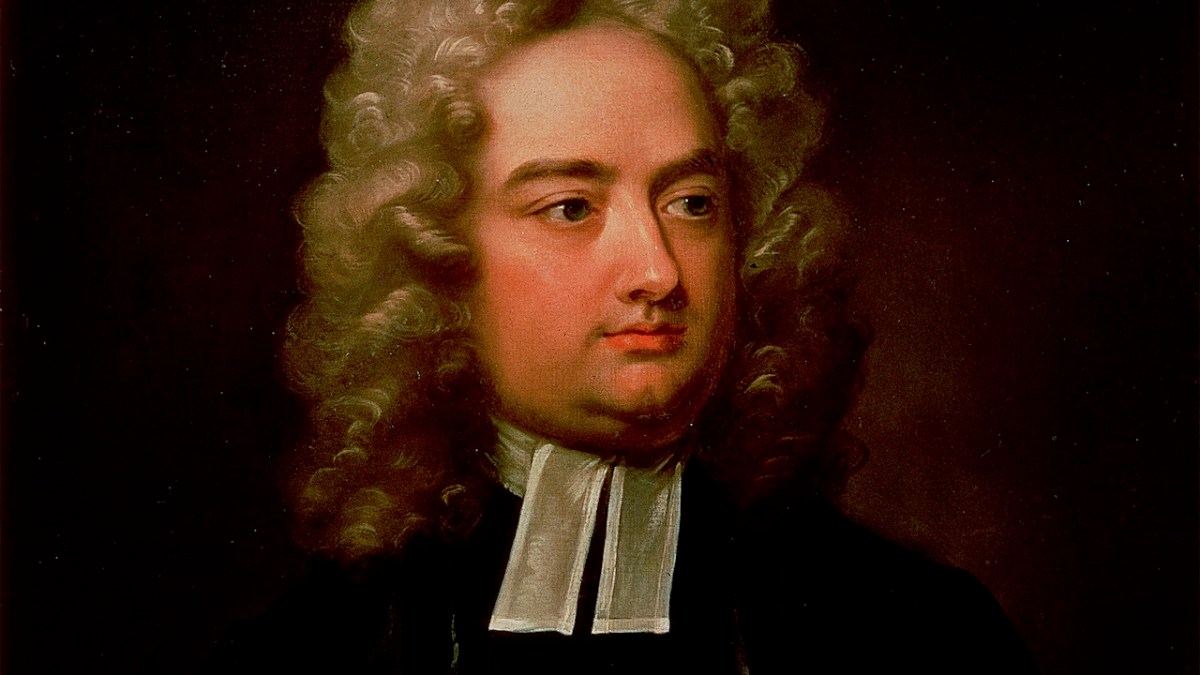
(Above) Jonathan Swift, painted by Charles Jervas c1710. When Swift first met Esther at Farnham she was only around eight years old, and he was charged by Temple to become her tutor and mentor. He gave her the nickname ‘Stella’, but we don’t seem to know why or when. Now, here’s another enigma: in my younger days I was familiar with Moor Park House and its environs. I remember there was a cottage some distance from the estate, named ‘Stella Cottage’. It definitely existed once (and may still exist) – here’s a postcard showing it:
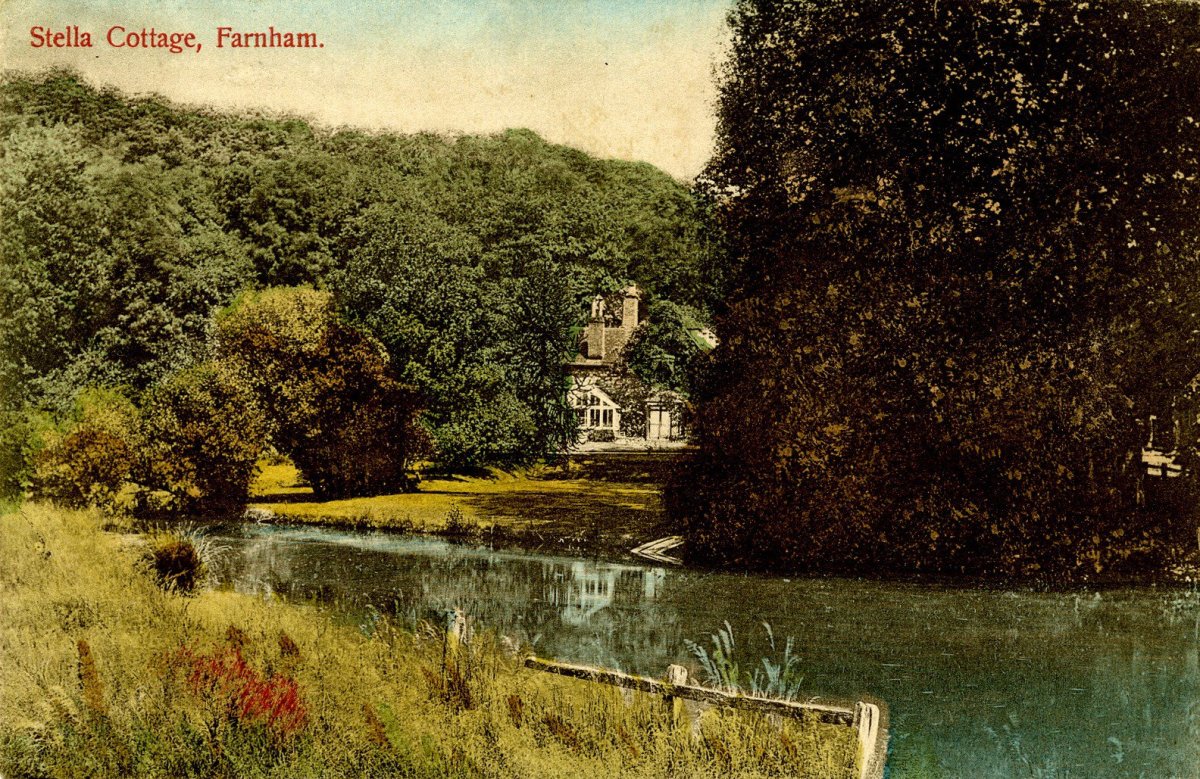
I was told (by my grandmother) that Swift’s ‘Stella’ lived in this cottage, and that he would walk to visit her there ‘every day’. This doesn’t quite tie in with the account suggesting that Esther Johnson lived in Moor Park House – although she could, of course, have moved away at some point. Also, at what place in its history was ‘Stella Cottage’ so named? It’s possible, even, that Swift gave his pet name to ‘Stella’ because there was already an association locally with that appellation – so the cottage itself may never have had anything else to do with Esther. As our story moves forward, Swift’s employer – Temple – died in 1699 (Swift reportedly said that “all that was good and amiable in mankind had died with Temple”). This left Swift without a job or home. Interestingly – bearing in mind we don’t know exactly where Esther Johnson figured in Sir William Temple’s life – he bequeathed to her a significant sum of money, and some property in Ireland.
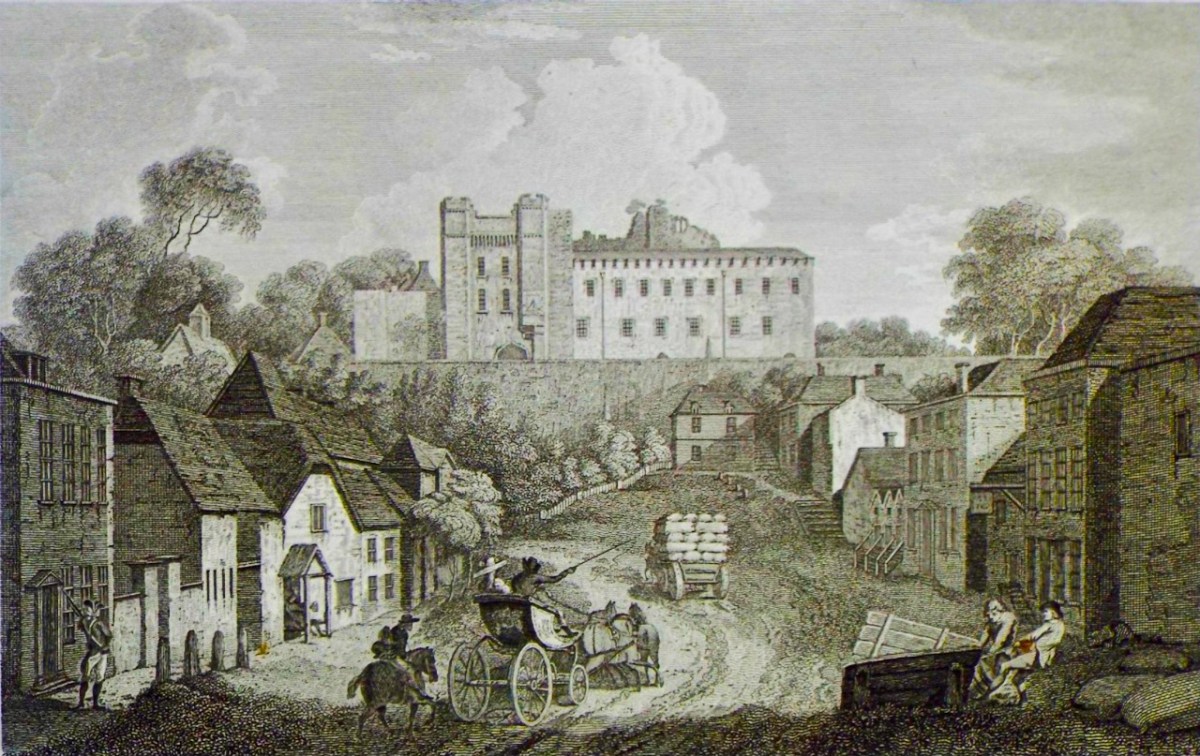
Above – Castle Street at Farnham, Surrey in 1788. Swift was an ordained minister of the Anglican Church in Ireland. After Temple’s death, he was unable to maintain his lifestyle in England and returned to Ireland (his birth and upbringing were in Dublin and Kilkenny). In due course (1713) – he was appointed as dean of St Patrick’s Cathedral in Dublin: a position which enabled him to indulge his many enthusiasms – writing, political commentary and satire – for the rest of his days. He encouraged ‘Stella’ also to move to Ireland, which she did in 1702, ostensibly living with her companion, Mrs Dingley. A further rumour on the relationship between Swift and ‘Stella’ needs to be quoted:

. . . Whether Swift and Stella were married has always been a subject of intense debate. The marriage ceremony was allegedly performed in 1716 by St George Ashe, Bishop of Clogher (an old friend of Swift, and also his college tutor), with no witnesses present, and it was said that the parties agreed to keep it secret and live apart. Stella always described herself as a “spinster” and Swift always referred to himself as unmarried; Rebecca Dingley, who lived with Stella throughout her years in Ireland, said that Stella and Swift were never alone together. Those who knew the couple best were divided on whether a marriage ever took place: some, like Mrs Dingley and Swift’s housekeeper Mrs Brent laughed at the idea as “absurd”. On the other hand, Thomas Sheridan, one of Swift’s oldest friends, believed that the story of the marriage was true: he reportedly gave Stella herself as his source . . .

https://en.wikipedia.org/wiki/Esther_Johnson
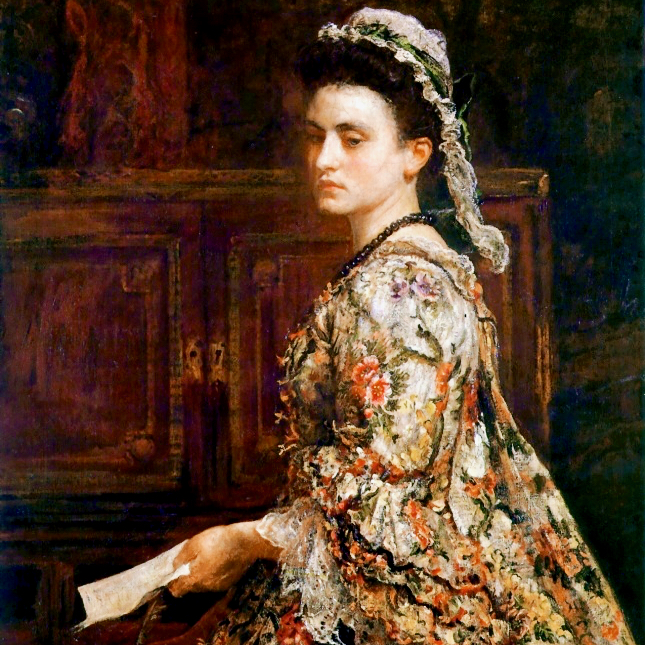
This lady – Esther Vanhomrigh (1688–1723) was painted by John Everett Millais in 1868. It depicts another rumoured ‘lover’ of Jonathan Swift, who gave her the name ‘Vanessa’. We know very little about her actual appearance, although she was said “not to be a beauty”. She is holding a letter, which we are to assume was written to or from Swift with whom, from what we can gather, Vanessa was infatuated – although her feelings were apparently never reciprocated. The expression on her face in Millais’ imaginary portrait could imply her frustration. The artist painted ‘Stella’ in a companion piece (Sudley House, Liverpool):
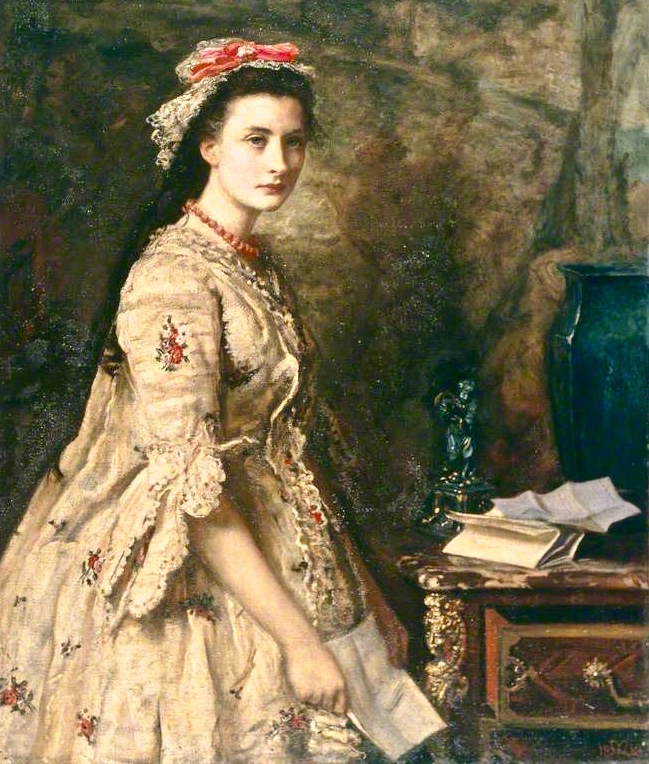
It can be no coincidence that Stella is also holding a letter. In this case, perhaps, the expression which the artist has chosen to depict is less severe. Jonathan Swift kept up a remarkable correspondence with Stella while he was away in England between 1710 and 1713. He certainly never intended it for publication in his lifetime. The Journal to Stella appeared first in 1766 and consists of 65 long and detailed letters – thousands of words in all, ranging from minute accounts of his daily life, through witty commentary and some mildly intimate deliberations.

. . . If the Journal shows us some of Swift’s less attractive qualities, it shows still more how great a store of humour, tenderness, and affection there was in him. In these letters we see his very soul; in his literary work we are seldom moved to anything but admiration of his wit and genius. Such daily outpourings could never have been written for publication, they were meant only for one who understood him perfectly; and everything that we know of Stella—her kindliness, her wit, her vivacity, her loyalty—shows that she was worthy of the confidence . . .

https://www.gutenberg.org/files/4208/4208-h/4208-h.htm

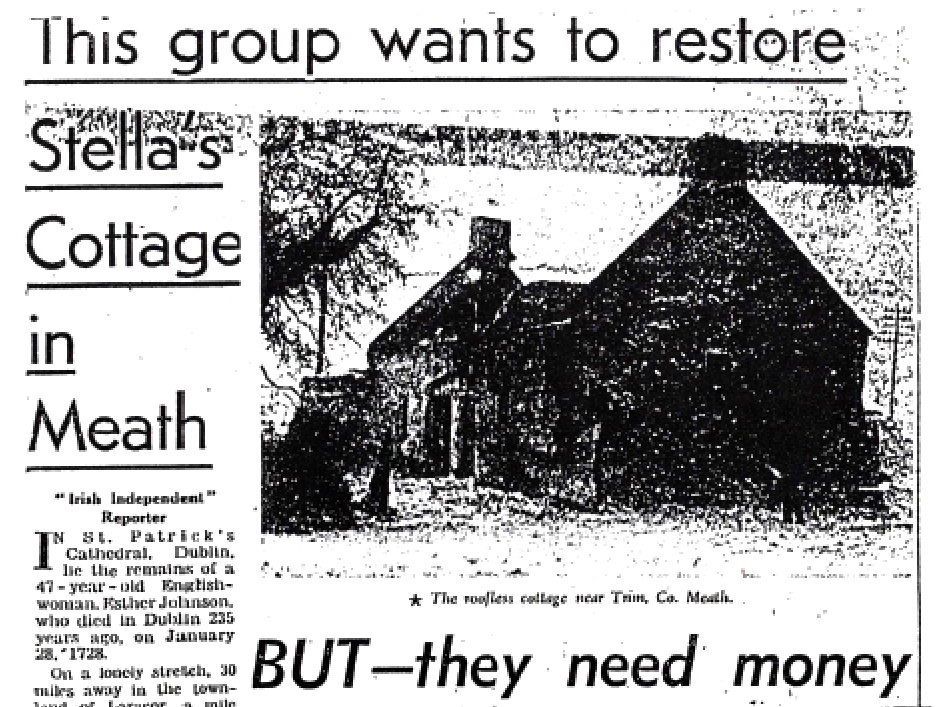
This small account of the story of ‘Stella’ – Mrs Hester Johnson – reveals a little of what we are able to piece together of the lady and her possible (probable?) relationship with the towering figure of Jonathan Swift, a matter which has fascinated scholar-historians over the generations. We can make assumptions, but reach no firm conclusions. The enigmas of the tale remain, and are certainly celebrated wherever local geography and lore are able to relate to some aspect of the oral traditions. As an example, I was pleased to find a pamphlet dating from 1991 which tells of a ‘Stella’s Cottage’ far, far away from Moor Park, Farnham. This one is near Trim, Co Meath. It suggests that this was where Stella and her companion, Mrs Dingley, lived ‘just down the road from Laracor, where Swift had his vicarage on his half-acre of Irish bog‘.
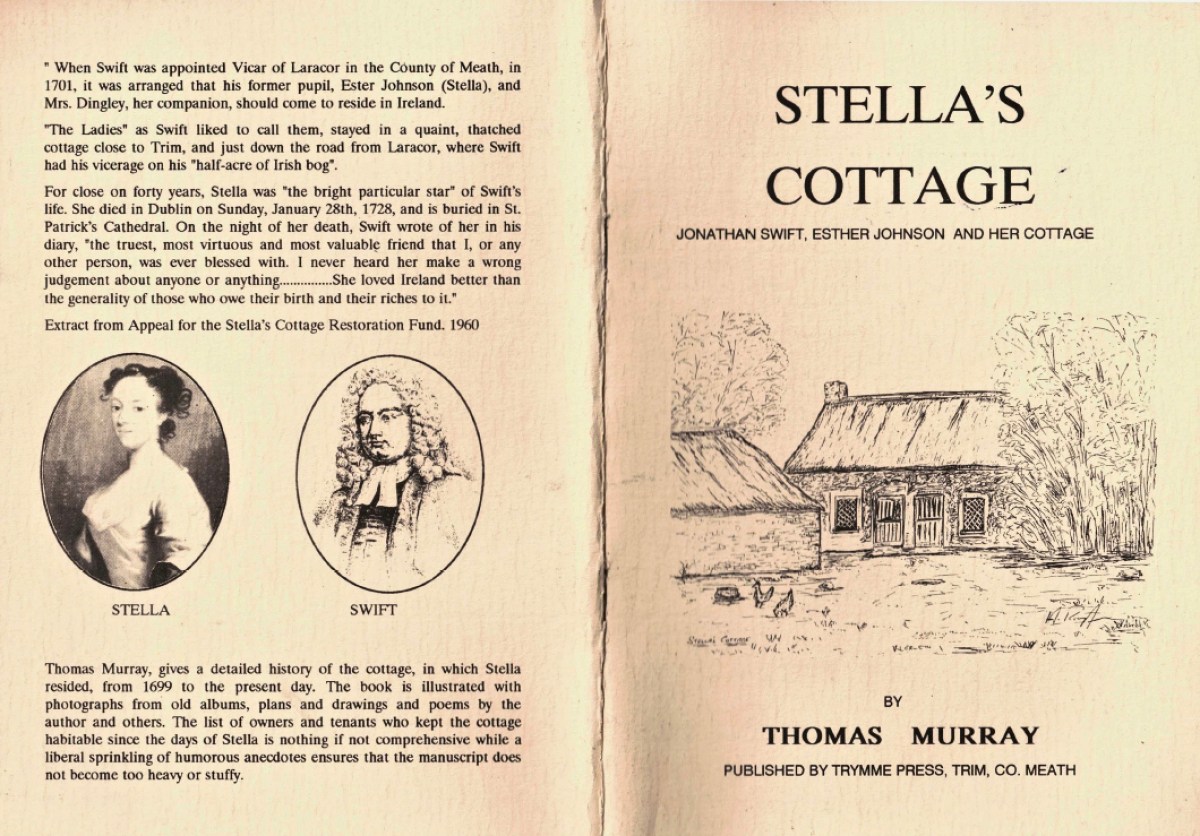
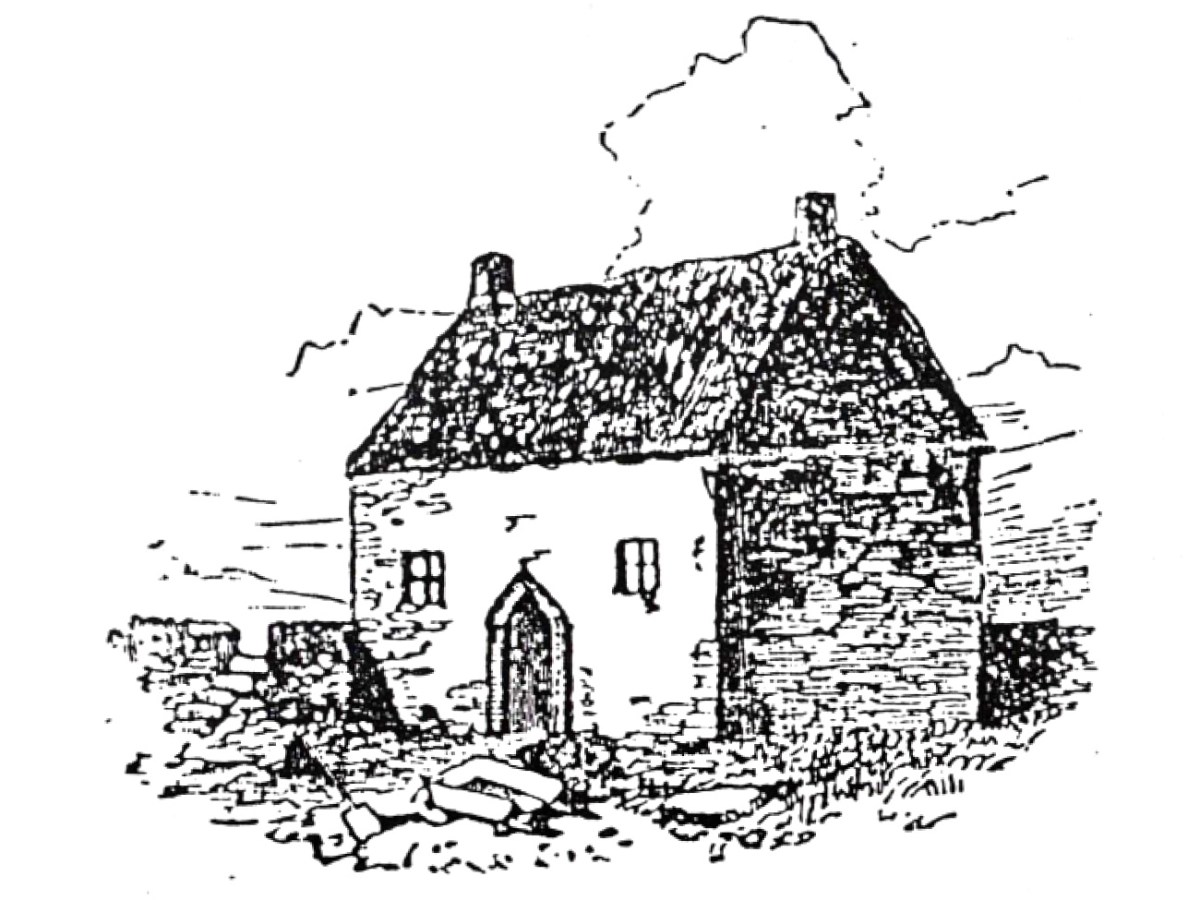
The pamphlet is, in part, an appeal to save what was then left of the cottage, and to fund a restoration of this important piece of Irish history. The appeal was apparently unsuccessful: today the spot is marked by some low stone walls and a plaque. This is a drawing of Stella’s Cottage in 1847:
Many have been fascinated by the Swift / Stella story. In 2020 Michael Billington edited a series in the UK Guardian titled ‘Forgotten Plays’. This is one:

. . . Few plays are more forgotten than those of WB Yeats. Revered as a poet, he’s ignored as a dramatist yet he deserves to be remembered for a number of reasons. He cofounded the Abbey theatre in 1904, he put Irish legend and history on stage, and he sought to create a drama “close to pure music”. His output was huge – his Collected Plays runs to more than 700 pages. The Words Upon the Window-Pane (1930) is in many ways exceptional: it is Yeats’s only play with a realistic modern setting. Its subject is a seance held by the Dublin Spiritualist Association in rooms once occupied by Jonathan Swift’s Stella. Yeats has much fun at the expense of the visitors – one of whom wants advice about setting up a teashop in Folkestone – but the main concern is to expel an evil spirit who has been haunting past sessions. It turns out to be that of Swift whom we hear – through the medium, Mrs Henderson – bitterly rejecting offers of love from the two women who most adored him. What is astonishing is the way Yeats pulls off a double trick. Far from being an attack on Swift, the play is a defence of his refusal to beget children because of his dread of the future. But, rather like David Mamet’s The Shawl about a phoney clairvoyant with psychic gifts, the play suggests that the money-grubbing Mrs Henderson may actually have conjured up the crabbed spirit of Dublin’s celibate dean . . .

The Guardian 27 July 2020
Lastly, consider this ‘alternative view’ by Michael Foot: Debts of Honour (Faber 1980) –

. . . British politician Michael Foot was a great admirer of Swift and wrote about him extensively. In Debts of Honour he cites with approbation a theory propounded by Denis Johnston that offers an explanation of Swift’s behaviour towards Stella and Vanessa. Pointing to contradictions in the received information about Swift’s origins and parentage, Johnston postulates that Swift’s real father was Sir William Temple’s father, Sir John Temple who was Master of the Rolls in Dublin at the time. It is widely thought that Stella was Sir William Temple’s illegitimate daughter. So Swift was Sir William’s brother and Stella’s uncle. Marriage or close relations between Swift and Stella would therefore have been incest, an unthinkable prospect. It follows that Swift could not have married Vanessa either without Stella appearing to be a cast-off mistress, which he would not contemplate. Johnston’s theory is expounded fully in his book In Search of Swift . . .

https://en.wikipedia.org/wiki/Jonathan_Swift
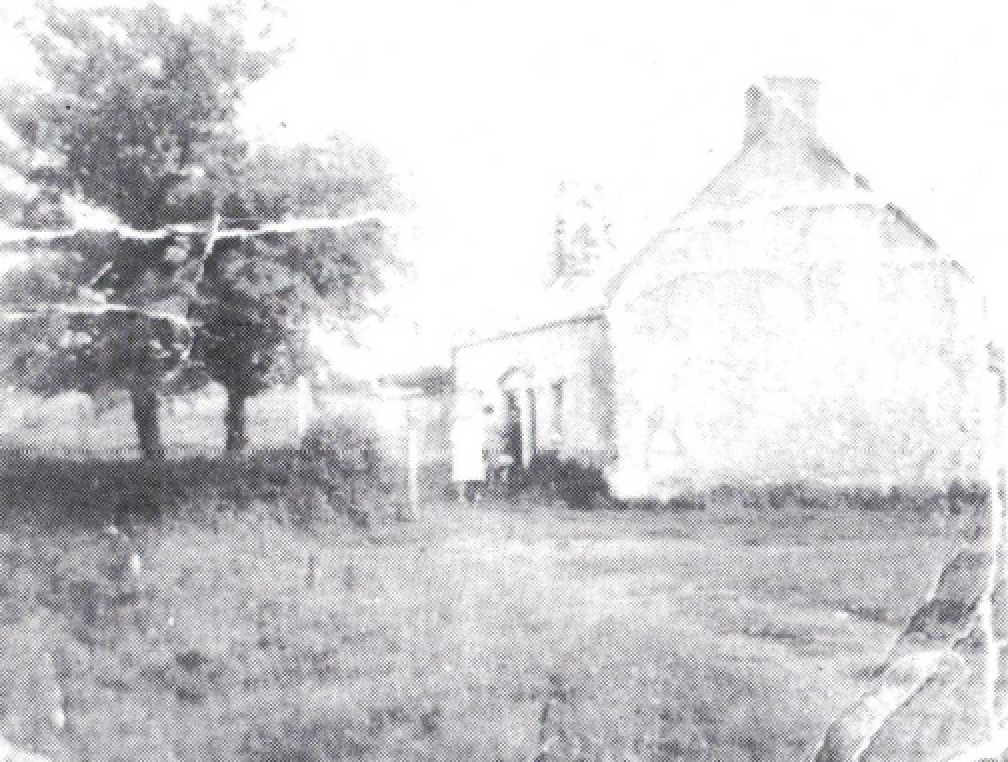
Stella’s Cottage, Laracor; photo by Miss Marie Carroll
Finding The Cailleach

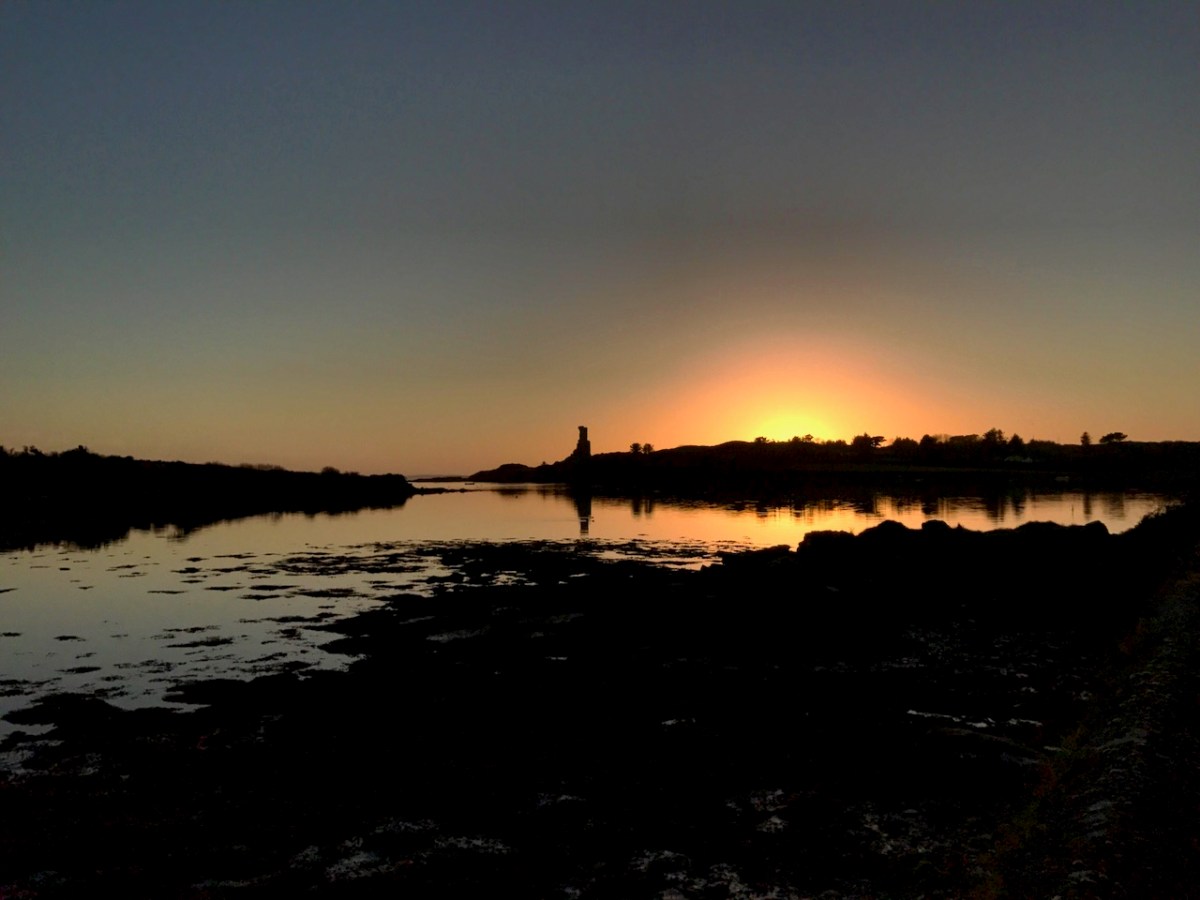
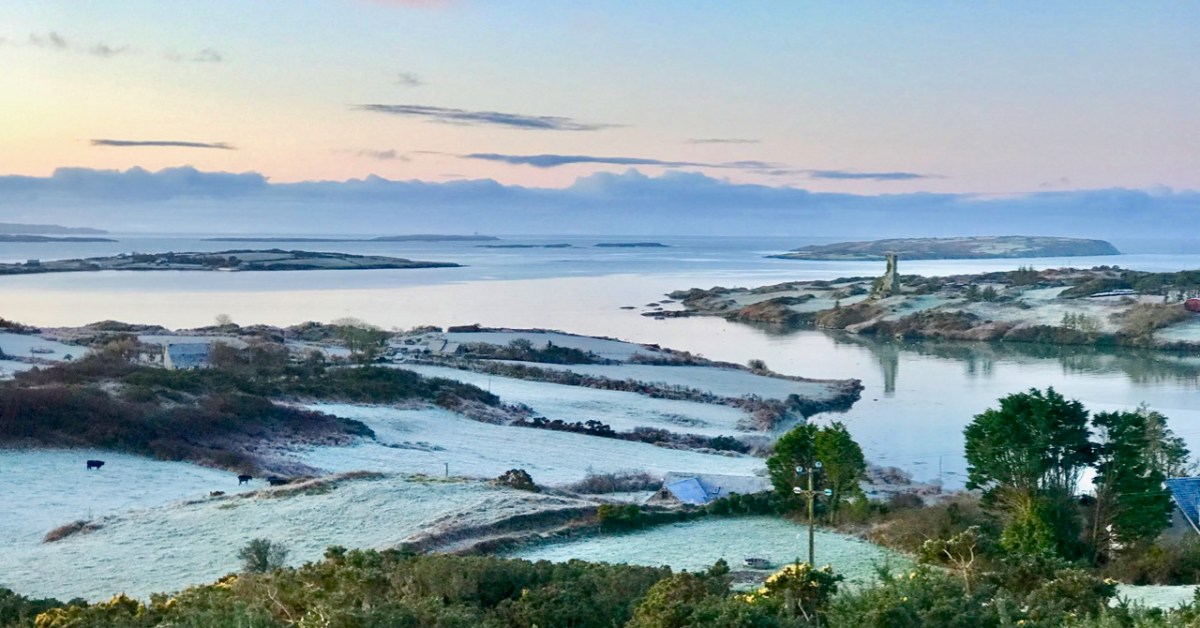
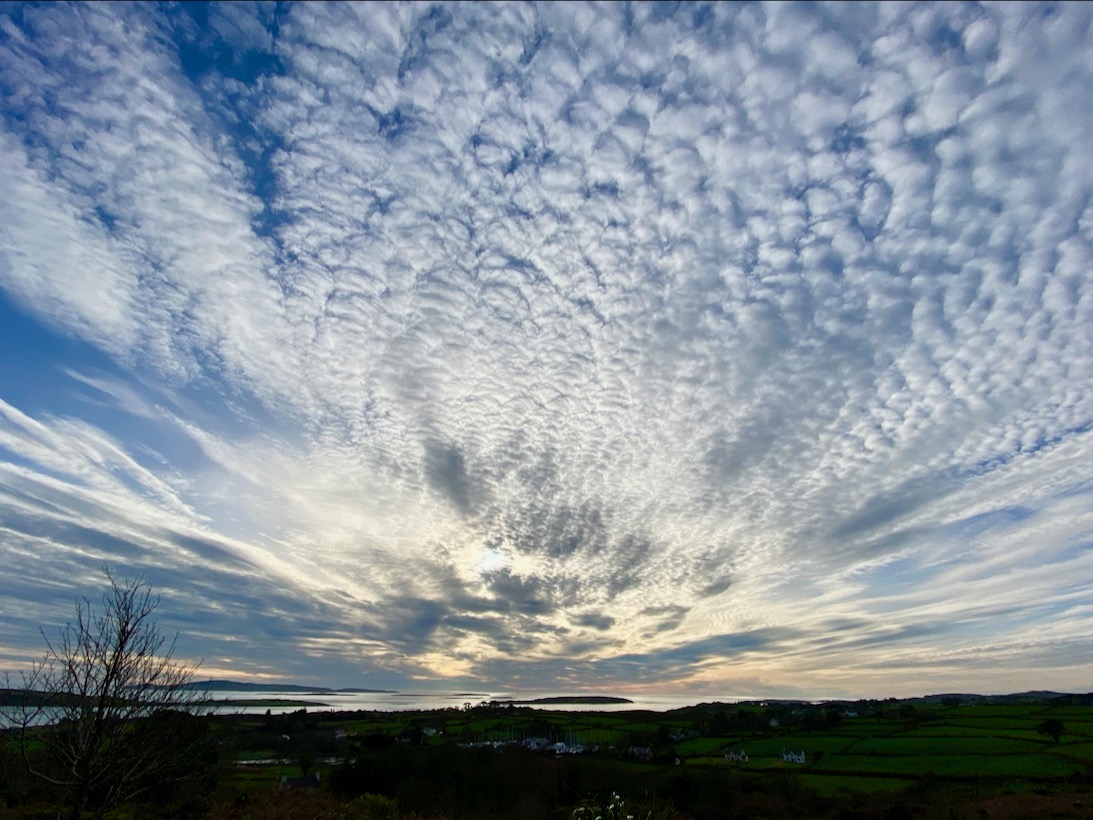
It’s midwinter here on the shores of Roaringwater Bay. It brings hard frosts (above – Rossbrin), clear days and spectacular skies – we caught the one below in 2020:

Winter is the time of the Cailleach.

. . . The Cailleach is the goddess of the winter months and is said to control the weather and the winds as well as the length and harshness of winter. Depicted as a veiled hag or an old crone, with one eye and deathly pale skin, she is said to have a bow-legged leaping gait, striding across mountains with a power to shape and transform the landscapes as rocks fall from her gathered apron . . . The Cailleach, or the Hag, has been feared and revered across Celtic cultures in Ireland, Scotland and the Isle of Man, for hundreds of years. She is called Beira in Scotland, and has strong associations with the Beara Peninsula in Ireland, which straddles County Cork and County Kerry . . .

https://en.wikipedia.org/wiki/Cailleach

The Hag of Beara petrified in Hag Rock (above): she forever looks out across the Beara. Below – this is the Hag’s permanent view over her landscape.

Lest there be any doubt about the Hag’s longevity, this is instructive:

. . . There is a tale of a wandering friar and his scribe who came to the old woman’s house. He inquired as to her great age, which he had heard stories of. She replied that she didn’t know, but that every year she killed an ox and made soup from the bones—and perhaps they could gauge her age by the number of ox bones thrown up in the attic. The young scribe climbed the ladder and threw the bones down one by one for the friar to count. The friar duly made a mark on his paper for each bone, and a great pile of bones grew until he had run out of paper. He called up to the young scribe, who replied that he had not even cleared one corner of the pile of bones, such was the great age of the Cailleach . . .

https://www.irishcentral.com

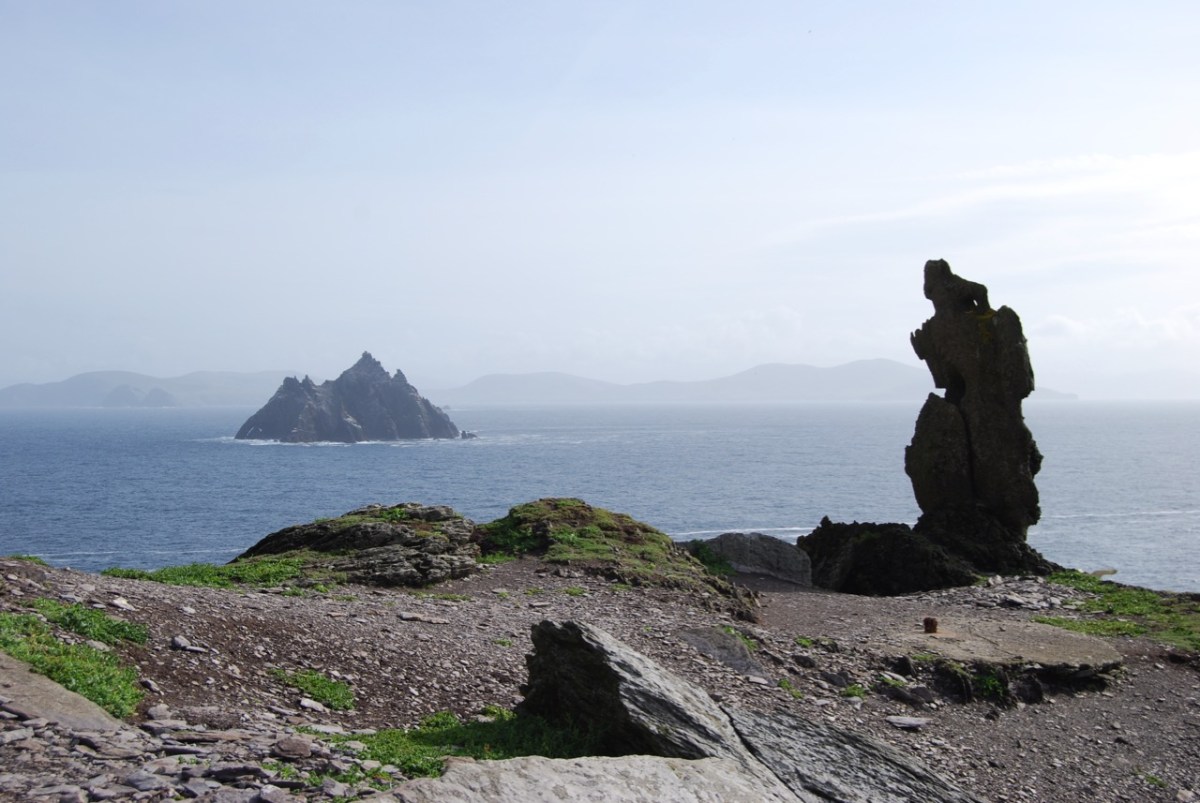
Above – The Wailing Woman (courtesy of Ronan Mac Giollapharaic) – dramatically depicts another Hag rock, overlooking the Skelligs on the Iveragh Peninsula, Co Kerry. It is a given that Cailleach is one of Ireland’s most ancient inhabitants. Even older, in fact, than Cessair, Noah’s grand-daughter, who we know arrived on our own West Cork shores some five thousand years ago. With her in her Bronze Age crew were her father – Bith – and Fionntán, together with ‘a large company of women’ whose combined purpose was to repopulate the world after the Great Flood.

. . . Legend has it that Fintan the Wise of the hundred lives accompanied Noah’s granddaughter, Cessair, to Ireland before the great Biblical flood. He thought himself the first to set foot on the island but found Cailleach living there, and could see she was far more ancient than himself. He is said to have asked of her, “Are you the one, the grandmother who ate the apples in the beginning?” but received no answer . . .


https://www.irishcentral.com

The Cailleach rules over the the dead of Winter (above – Rossbrin Cove in that time). If you research the Schools Folklore Collection you will find over 830 entries referring to her: many are recorded in Irish.

. . . An Cailleach Béarach according to tradition was supposed to be a witch who is believed to have erected most of the round towers and castles in this country. Tradition tells us that she built each of those buildings with three pocketfulls of stones. As well as being a famous builder, she is believed to have been a great mower. At the time of her death, it is said, she was 121 years and one day . . .

Schools Folklore Collection – Informant Mrs J Peyton Aged 58

. . . The Cailleach Béarach started one day mowing with a score of men. The men led off & she took up the rear. After an hour’s work, she caught up to the man who was last and mowed off his legs from above the ankles. She continued the work until she caught up to the man who was second last & she cut off his legs also. This procedure continued until all the men but one had their legs cut off. At this stage, they went to their dinner . . .

SCHOOLS FOLKLORE COLLECTION – INFORMANT MRS J PEYTON AGED 58

The most frequently occurring references to the Cailleach are her feats in sculpting the landscape. Many features in the west of Ireland are attributed to her work.

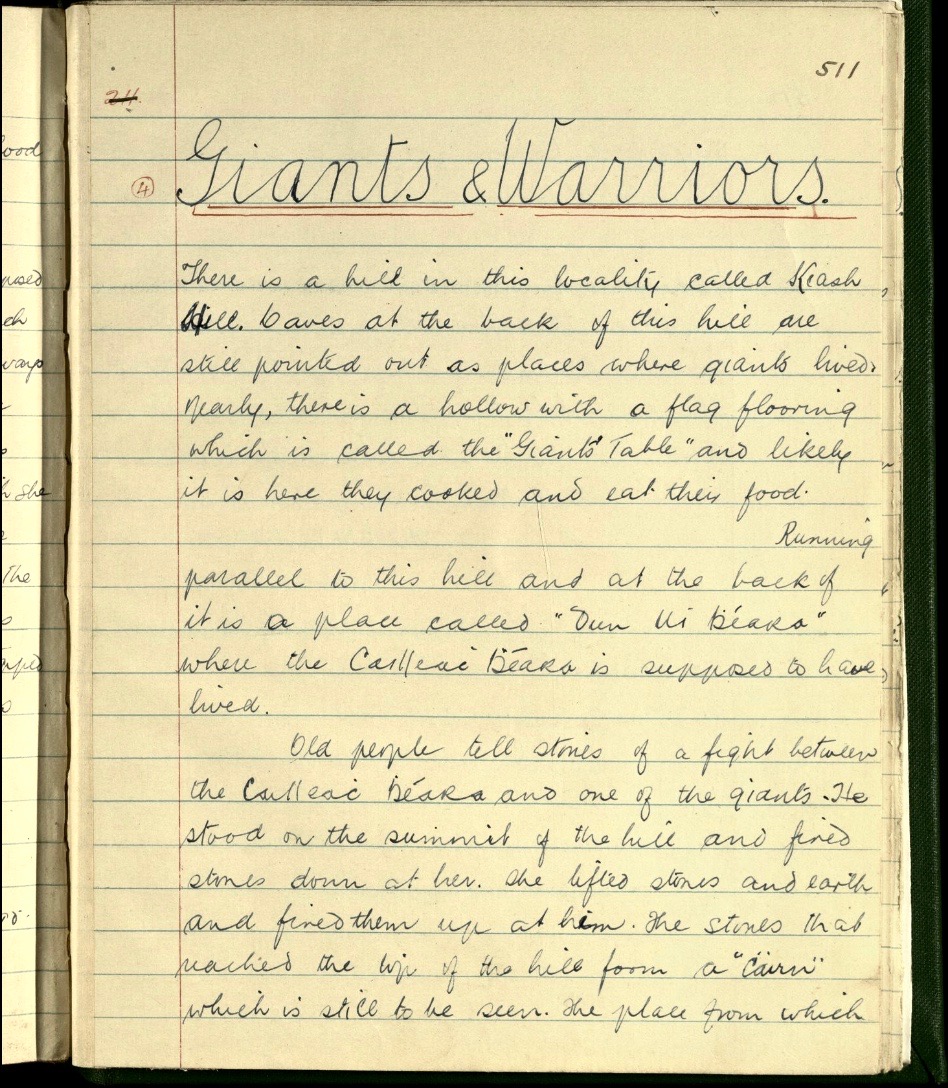
. . . There is a hill in this locality called Keash Hill. Caves at the back of this hill are still pointed out as places where giants lived. Nearby there is a hollow with a flag flooring which is called the “Giants’ Table” and likely it is here they cooked and eat their food. Running parallel to this hill and at the back of it is a place called “Dun Ui Bhéara” where the Cailleach Bhéara is supposed to have lived. Old people tell stories of a fight between the Cailleach Béara and one of the giants. He stood on the summit of the hill and fired stones down at her. She lifted stones and earth and fired them up at him. The stones that reached the top of the hill form a “cairn” which is still to be seen. The place from which they were taken formed a small lake which remains to the present day. Some time ago if children were bold their mothers threatened to tell Cailleach Bhéara and immediately they got quiet. She was able to walk across Lough Arrow and the waters at their deepest part just reached her arm pit . . .

SCHOOLS FOLKLORE COLLECTION – INFORMANT MR James Benson, Kesh, Co Sligo

. . . When the Summer came the Cailleach Bhéara drove the bull out to the grassy parts of Béara. One day when the bull was being driven out, he heard a cow lowing in Kerry, so he started off towards her. The Cailleach went ahead of him, but he jumped into the tide and started to swim for Kerry. The Cailleach struck him with her wand and as she was doing it, the bull called the cow, and her calf with him, and they form the Bull, Cow, and Calf rocks now . . .

SCHOOLS FOLKLORE COLLECTION – INFORMANT Danial Houlihan, Croumphane, Eyeries

Finally, we must not overlook a poem written by Pádraig Pearse, one of the leaders of the Easter Rising in 1916. Pearse was executed on May 3 in that year – aged 36 – for his part in this ‘rebellion’. In this photograph, Pearse can be seen reading the oration at the funeral of the Fenian Jeremiah O’Donovan Rossa on 1 August 1915. I am completing this post with the words of Mise Éire, written by Pearse in 1912.

Mise Éire:
Sine mé ná an Chailleach Bhéarra

Mór mo ghlóir:
Mé a rug Cú Chulainn cróga.

Mór mo náir:
Mo chlann féin a dhíol a máthair.

Mór mo phian:
Bithnaimhde do mo shíorchiapadh.

Mór mo bhrón:
D’éag an dream inar chuireas dóchas.

Mise Éire:
Uaigní mé ná an Chailleach Bhéarra.
I am Ireland:
I am older than the Hag of Beara
.

Great my glory:
I who bore brave Cú Chulainn.

Great my shame:
My own children that sold their mother.

Great my pain:
My irreconcilable enemies who harass me continually.

Great my sorrow:
That crowd, in whom I placed my trust, decayed.

I am Ireland:
I am lonelier than the Hag of Beara
.
Mise Éire – Patrick Pearse – 1912

When Harry Met Edith: Part 1 – “Like a Living Flame”

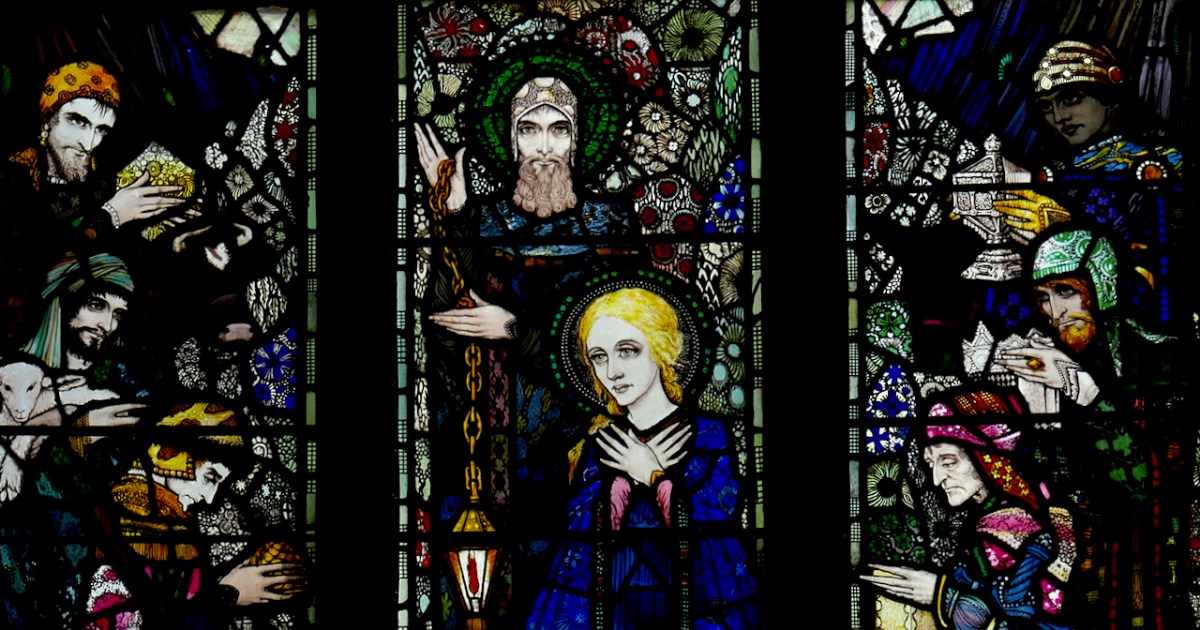
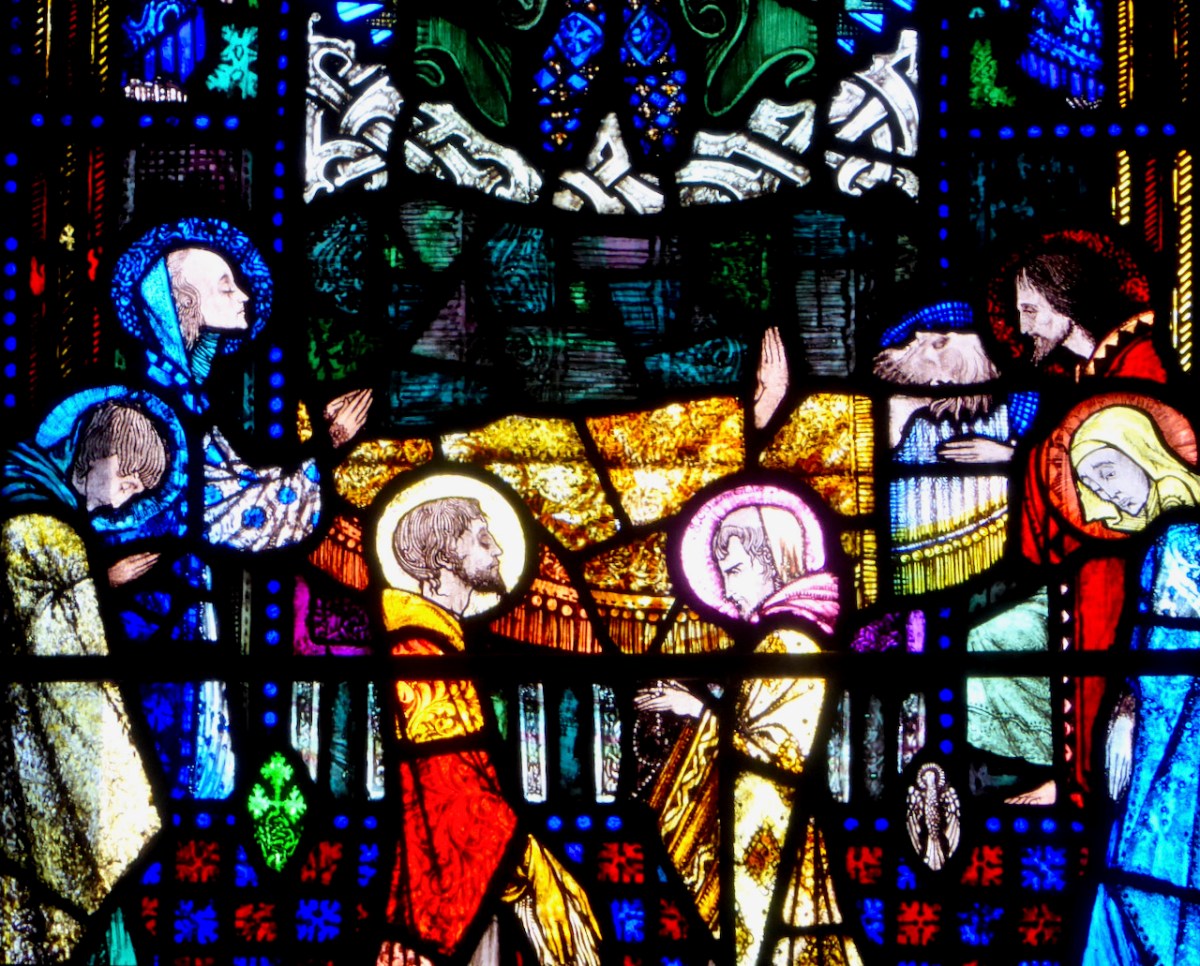
St Barrahane’s Church of Ireland in Castletownshend, West Cork, is unique in many ways and a national treasure, not least because of its three Harry Clarke stained glass windows. I have written about the St Luke window and also about the St Louis/St Martin window. Both are gems. But for some reason I have not yet properly written about the East Window and it seems fitting to start that post now, since Harry Clarke died 92 years ago this week at the all-too-young age of 41.

The East Window, the largest part of which comprises a nativity scene, was one of the first commissions Harry received after he burst on the scene in 1916 with his series of saints for the newly opened Hiberno-Romanesque Arts and Crafts masterpiece that was the Honan Chapel at University College Cork. That’s a small detail from his Joseph window for the Honan, below.

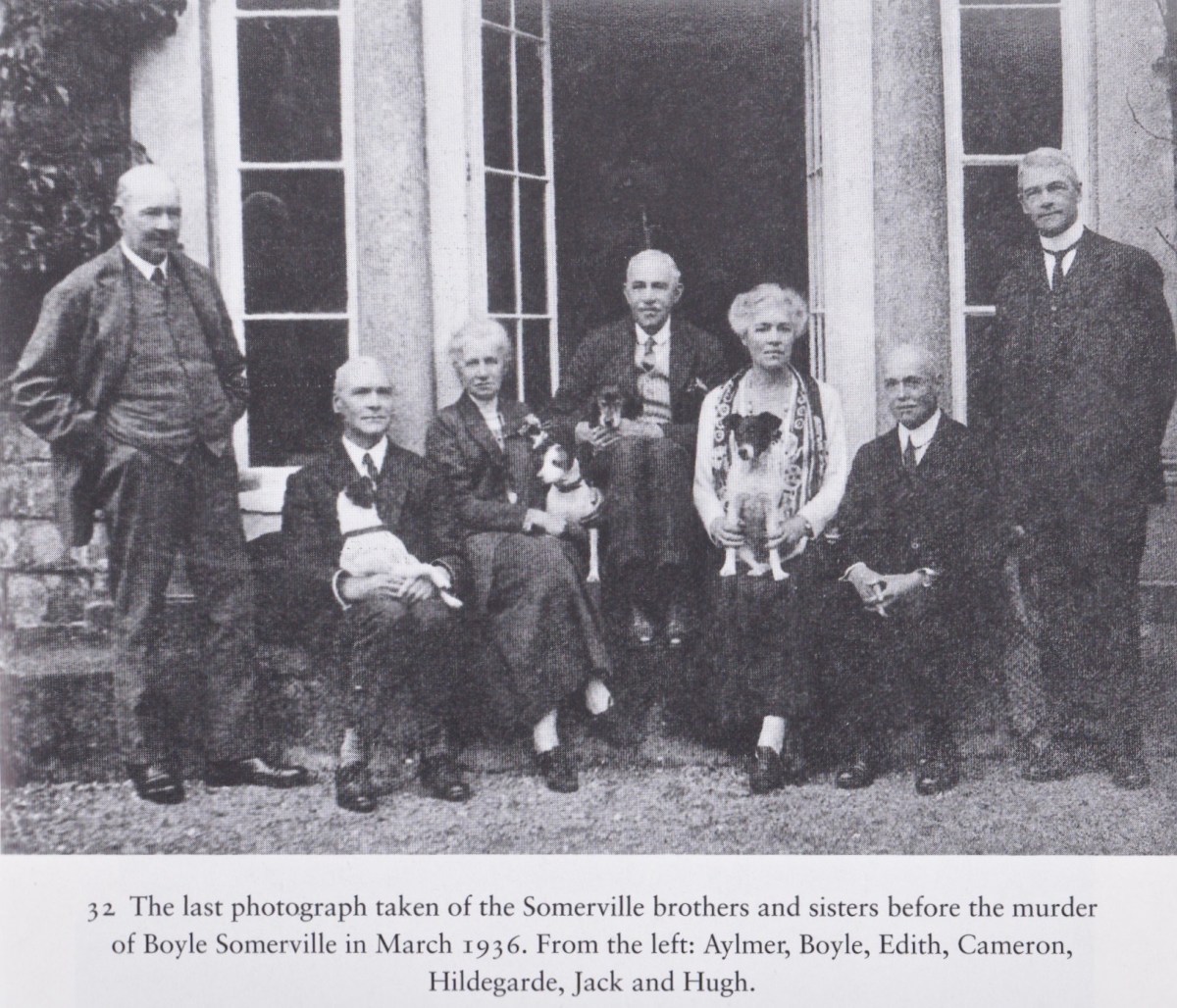
The Somerville siblings had been planning for a long time to commission a new window to honour their grandparents, the existing one being hideous and gloomy. In 1907 they had requested a new design from the Manchester firm of Walter J Pearce, but had not followed up with a commission. Besides her intense dislike of the ‘Berlin Woolwork’ (as the family called the despised stained glass) Edith Somerville thought the window openings themselves too long and narrow and felt they should be shortened to produce a more pleasing proportion for a stained glass scene. However, none of the schemes progressed beyond the Somerville siblings procuring permission from the church committee to remove and sell the offending window and replace it with a more suitable memorial to their grandparents.

This illustration is from Somerville and Ross: A Biography by Maurice Collis.

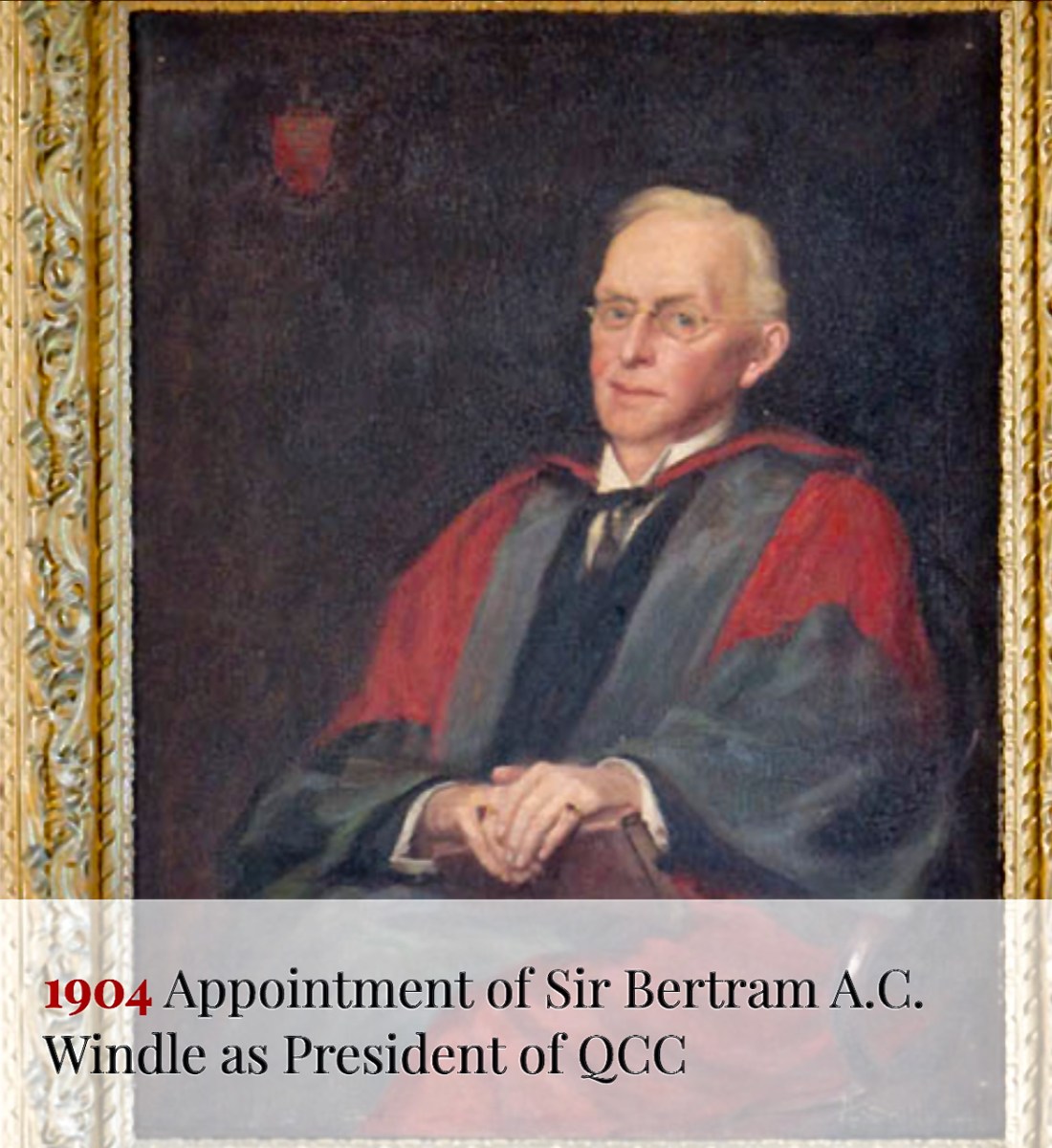
On January 14th 1917 Cameron, the oldest of the family and hence the one who had to have final approval over expenditures like this, went to see “Bertie’s windows”. Sir Bertram Windle was the President of University College Cork and a first cousin to the Somervilles (below, captured from the UCC website). He had worked with Sir John O’Connell to actualise the Honan Bequest which resulted in the building of the Honan Chapel with the inclusion of stained glass windows by An Túr Gloine and by Harry Clarke.

Cameron records in his diary:

Bertie took me to see his jewel of a chapel – quite the best modern building I have seen – & the windows – all but one – very good & some – the Clarke windows- supremely lovely. I have never seen such glass except in 14th century windows – the whole chapel simple & lovely nothing mean or tawdry […] After luncheon went again to the Chapel for another look at the windows.

The Edith OEnone Somerville archive in Drishane :
a catalogue and an evaluative essay /
by Otto Rauchbauer

Edith Somerville got up to see the windows for herself in March. Edith was already an established writer and artist, who had studied in France and was familiar with modern art movements. At that point in her life she was slowly coming to herself again, after a period of intense mourning on the death in 1915 of her beloved cousin and collaborator, Violet Martin with whom she had written a series of highly successful novels and stories under the name Somerville and Ross.

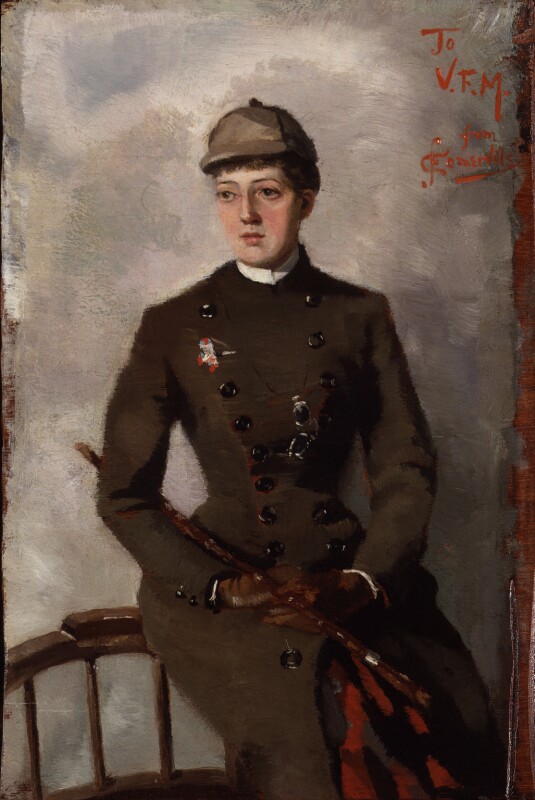
Violet Florence Martin, in an 1886 portrait by Edith Somerville, from the National Portrait Gallery, used under license

Her own artistic knowledge and sensibilities are evident in her reaction to the windows. She wrote to Cameron: 

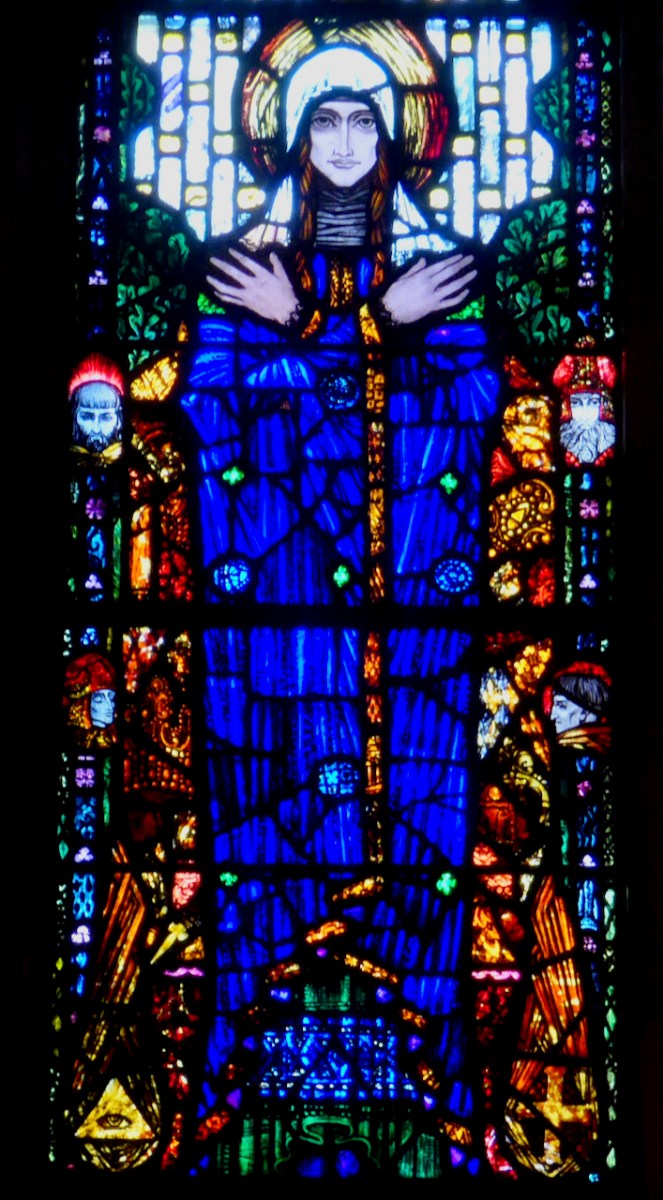
They certainly are very wonderful in colour, & some of them beautiful in all respects. I preferred the Western three-light window [Brigid, Patrick and Columcille] & I almost disliked the blue one, & the Aubrey Beardsley female face [Gobnait] thought horrible; so modern and conventionally unconventional. The green western light was lovely and a nice design, I like 2 of the left side ones (Brigid and Patrick]. I thought the eastern Purser window just moderate (i.e. not among high class tho’ much better than average). There is to me a slight faint of coarseness in Clerke’s [sic] work. Not much finesse, though the actual glass has a quality of burning and furious brilliance that I have never seen anywhere else. The blue robe, for instance, hits your eye like a living flame or a blast of wind. Perfectly amazing, but not quite pleasant. I can rave about some of his qualities with anyone, but I am not quite a whole-hogger. However, I expect he will be artist enough to adapt his work to the church & to realise how to get harmony into it. His windows have a kind of hellish splendour – in a chapel dedicated to the Infernal Deities they would be exactly right, gorgeous and sinful. . . If that young man. . . went mad it would not surprise me, but I hope he won’t before he does our window for us.

The Edith OEnone Somerville archive in Drishane :
a catalogue and an evaluative essay /
by Otto Rauchbauer

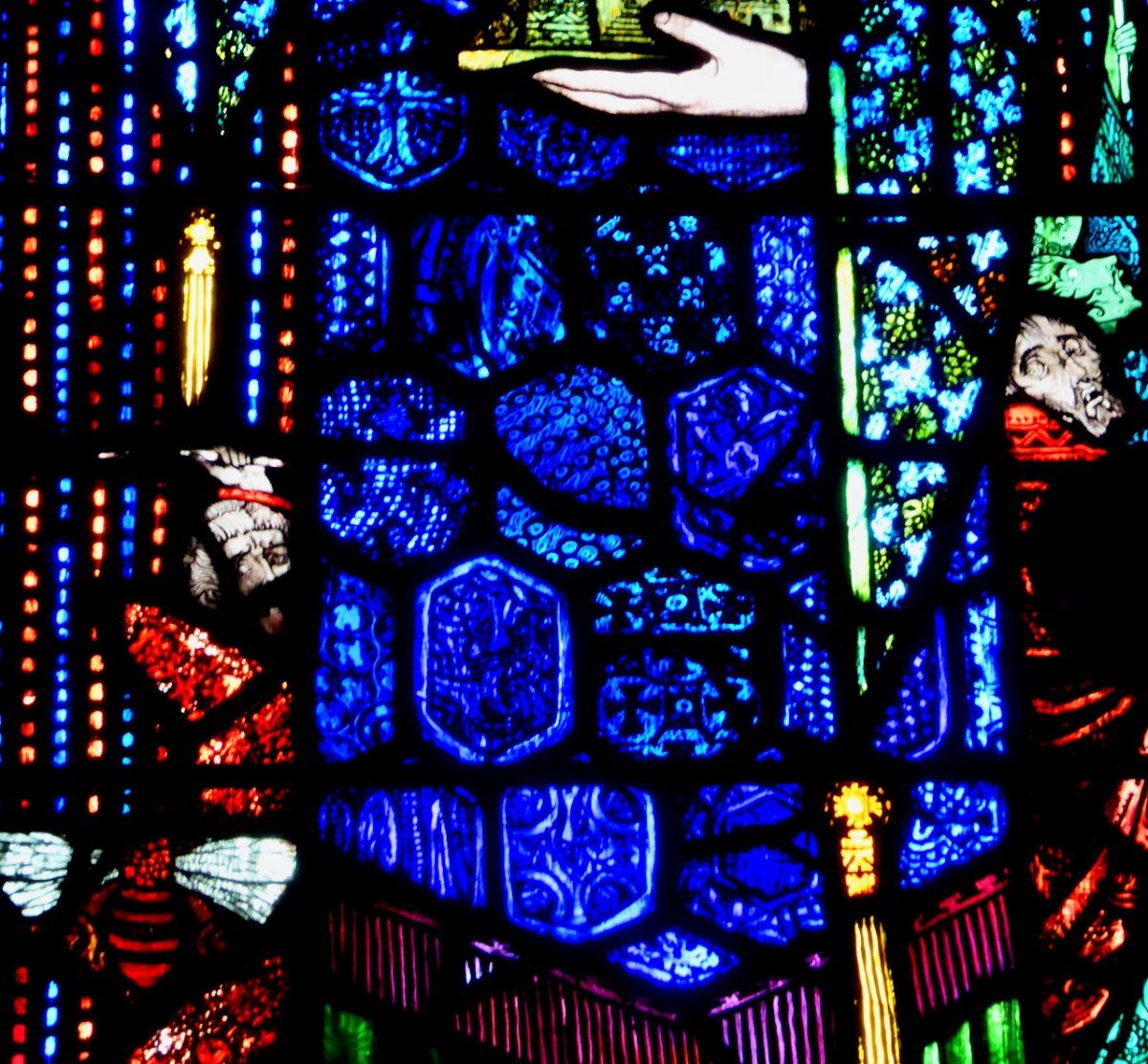
Was it St Ita’s blue robe (above) that struck Edith so forcefully – like a living flame or a blast of wind – ? Or was it perhaps, the one worn by Gobnait, patron saint of beekeepers, cleverly worked out as a series of honeycomb shapes (below). In either case, this deep blue was one of Harry’s hallmarks – he went to great lengths to procure good blue glass.

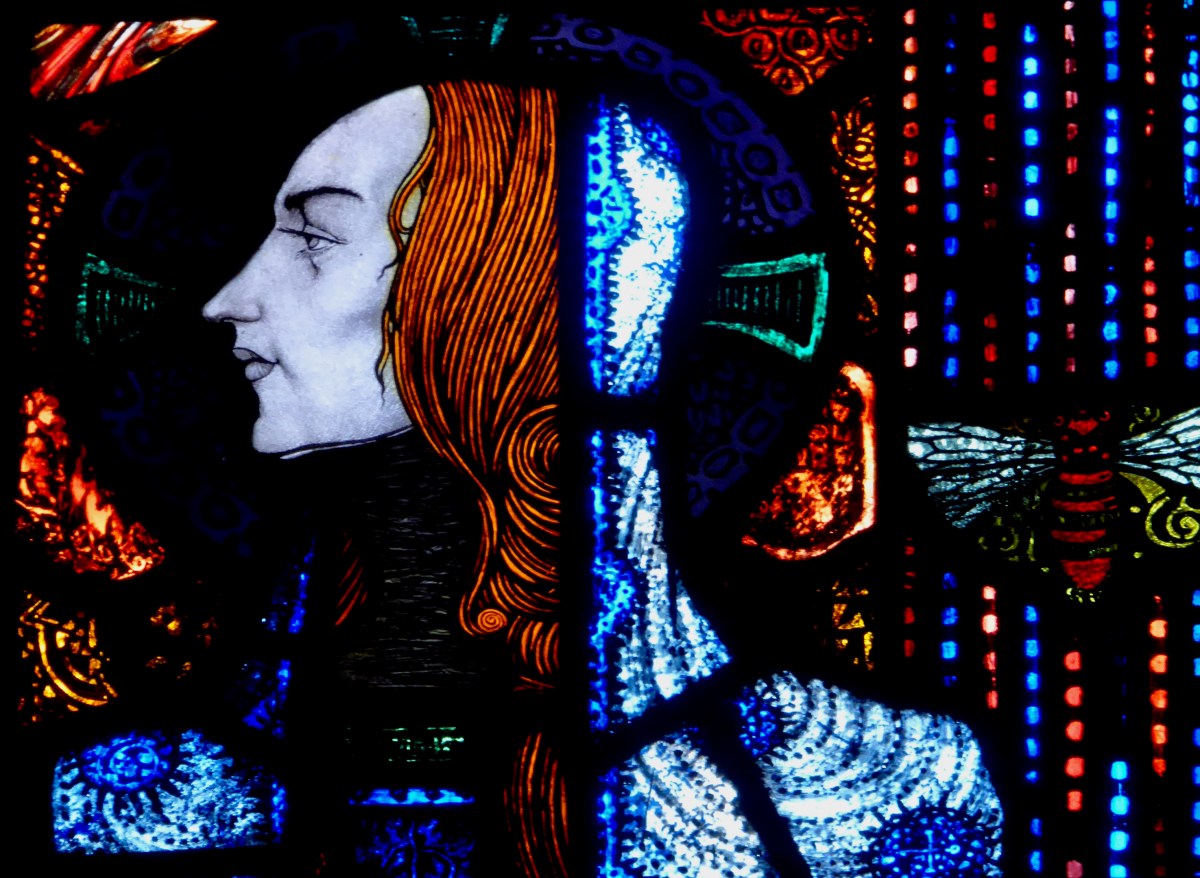
We can unpack a lot in Edith’s letter to Cameron. For a start, it seems that Cameron had already decided, no doubt influenced by Bertie, that Harry Clarke was the artist who should do the East Window. Edith’s reaction, while often credited with being the deciding factor in choosing Clarke, was after the fact, and both more moderate and more judicious than Cameron’s. Her comments are enough to make me wonder, if the decisions had been hers to make, whether Harry would have been engaged. She was insistent, in a further letter to Cameron, that something more of ‘harmony’ and less of intensity than the Honan windows (as exemplified by his Gobnait portrait, below) would be appropriate for Castletownshend. In fact, shortly after seeing Harry’s work at the Honan, it seems that Cameron had deputed their cousin Egerton Coghill (see my post about Egerton and the St Luke window) to approach Harry, whom he appears to have known personally, but after that initial meeting, it was Edith who took charge of the process. This made sense since Cameron was not living in Castletownshend at that time, but in London. Things moved quickly – even before she had seen his work for herself, she had sent him a tracing of the East window (perhaps one that had been prepared for the proposed Pearce commission) and thereafter it was she who communicated with Harry. 

He responded to getting the tracing in a letter of Feb 1, 1917.*

Thank you for your letter and tracing of the East window of Castlehaven Church. I clearly understand your ideas about shortening the existing window but I hesitate to support your doing so until I see the church – I like long openings and the window may only look out of scale by being filled with inferior glass – I do think you would be unwise to make the three openings into two if you are going to have single figures and not subjects or a subject. Were the existing window or openings left I would have room to put small subjects from the lives of the selected saints at the top and bottom of each opening – were the windows shortened I would have room for the figure only. I am judging from the tracing and cannot tell until I saw the actual window with the light etc – the trees may present difficulties.

The approximate cost of filling the existing window with single figures and small subjects – figures to be of S Brigid S Finbarr and Barrahane will be £315 and if it were shortened by 3‘6“ the cost will be – £252.

I will be in Cork in the early spring and if it were convenient to you, could meet you at Castlehaven Church –

If you are anxious to place the commission at once I will go down any day next week (after Tuesday) that you suggest.

I do my work from start to finish myself and so take longer then is generally expected over a window – Your window would take about six months and could be started on a date mutually agreed-upon should I have the pleasure of doing it –

I greatly appreciate your asking me about the work

Letter from Harry Clarke to Edith Somerville,
Somerville Archives, Drishane House

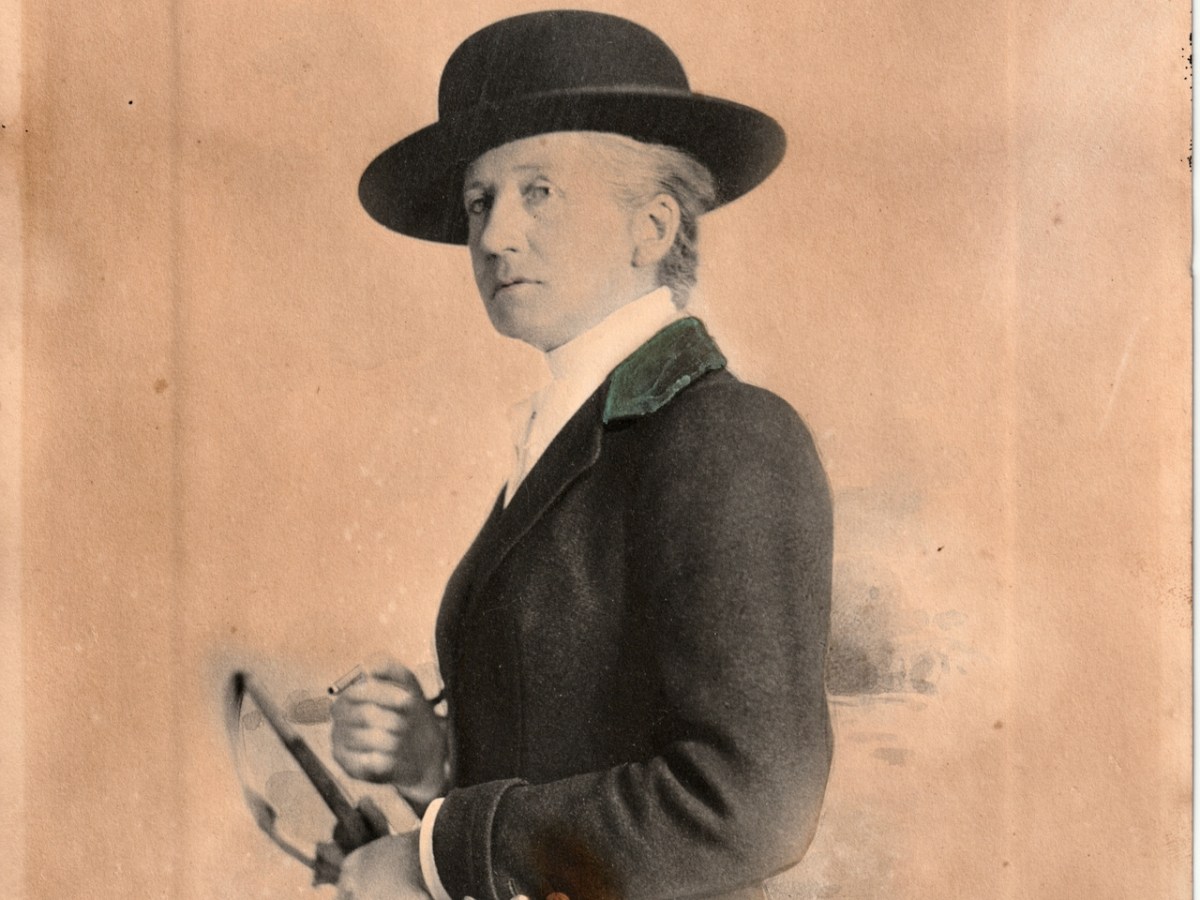
Harry did indeed come to Castletownshend  – a diary entry records it was April 4 and he stayed to lunch, although another source says that he stayed overnight and that Edith found him shy but liked him enormously. At this time, Edith was nearing 60, (dressed as Master of the Fox Hounds, below) whereas Harry was 27. She referred to him as ‘our window boy’ in a subsequent letter to Cameron.

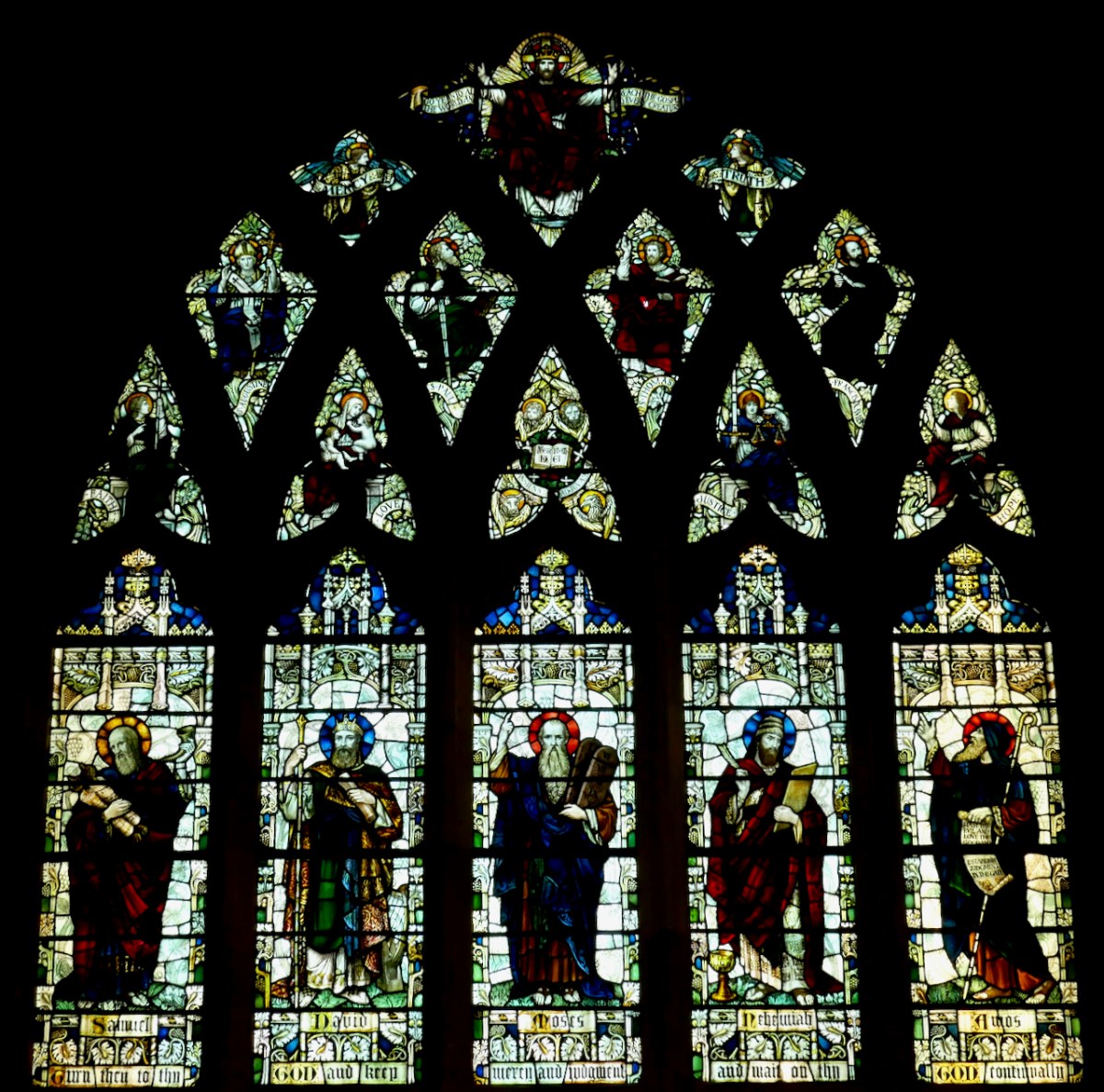
The letter refers to the dimensions of the window – Harry didn’t mind  the shape at all – “I like long openings.” But Edith, very much the painter, had been taken by the more horizontal orientation of windows she had seen in Exeter Cathedral, such as the Old Testament window below) and really wanted to change the windows by making them shorter and perhaps even cutting them down to two-lights. As we will see, she realised part of this ambition, but not all.

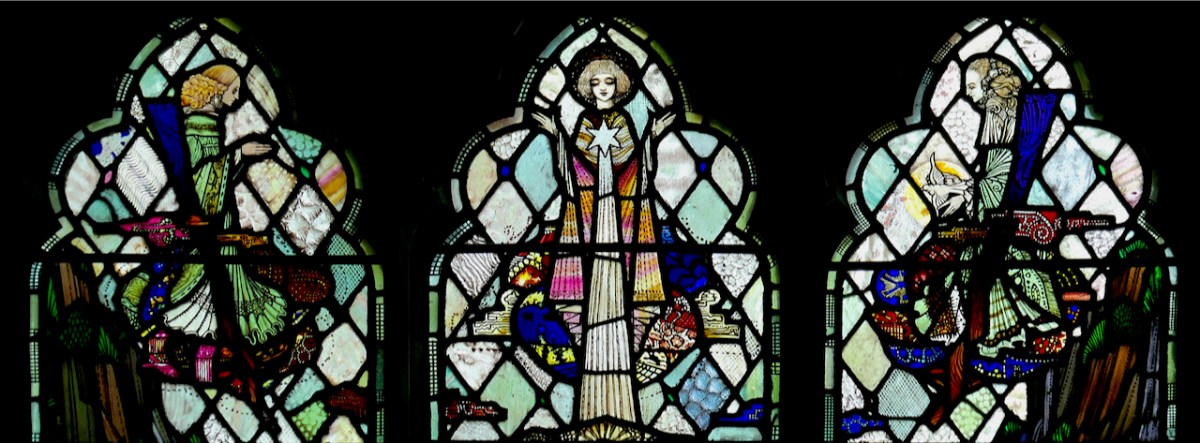
Although the decision that Harry was to do the window was now made, that’s not to say that all went smoothly from this point on. Edith had a hard time being decisive about the iconography she wanted (St Finbarr didn’t make the final cut), and at one point Cameron managed to lose Harry’s design for the window and she had to ask him to do it again. Also, there was the matter of cost, and how the rest of the family felt about it all. We’ll get into all that in the next post, as well as the elements of the window that Harry designed. Here’s a sneak preview.

*I have to record here my debt of gratitude to Thomas Somerville and the Somerville Archives, for permission to view and quote from letters from Harry Clarke to Edith Somerville and from Edith to Cameron. It is an enormous privilege (and quite a thrill) to have original material to work from.

West Cork in Photographs 2022

A personal selection of photographs, taken in West Cork in 2022, by Robert and Finola.

Looking forward to sharing many more adventures with you in 2023.

Favourite Posts of 2022

Every year we choose your – and our – favourite posts. We assume that your favourites are the ones we see to be ‘most read’. Ours? Well, that’s a more complex algorithm altogether, for which there is no real explanation or formula. 

This image has an empty alt attribute; its file name is lissagriffin-loop-from-mass-rock-to-barley-cove.jpeg

It looks like you love the West Cork posts – anything about local history, archaeology and walks that help you to get to know this part of the world better. Among your favourites this year were several of our Mizen Magic series. In particular you loved the latest additions to the Fastnet Trails – the Lissagriffin Loop (above) and the Gortduv walk (below).

This image has an empty alt attribute; its file name is mizen-traffic.jpeg

We love exploring small areas of the Mizen in depth – and apparently so do you! Croagh Cove (pronounced as ‘Crew’ locally) and that amazing little pier at Toor (below) really caught all of our imaginations.

This image has an empty alt attribute; its file name is first-glimpse-of-sea-arch.jpeg

We started a new series on Mizen Megaliths – we’re determined to see them all, even if it kills us – which one of them almost did (kidding, but some of them are not for the faint of heart, below). The oldest is the portal tomb at Arderrawinny, which is our lead photograph.

This image has an empty alt attribute; its file name is mountaintop-megalith.jpeg

A little further afield from the Mizen, but still in West Cork, Dunworley Promontory Fort proved to be a fascinating piece of history, as did Caheragh Explorer – in fact you can watch Robert talking about this fascinating place in a short documentary by the Skibbereen Historical Society.  

Another Historical Society doing great work is Castlehaven and Myross – their Placenames Project is a tremendous undertaking. And Conor even managed to persuade Finola into the sea in December. Meanwhile, over in Bantry, their Graveyard Project is uncovering all kinds of history.

This image has an empty alt attribute; its file name is abbey-graveyard-bantry.jpeg

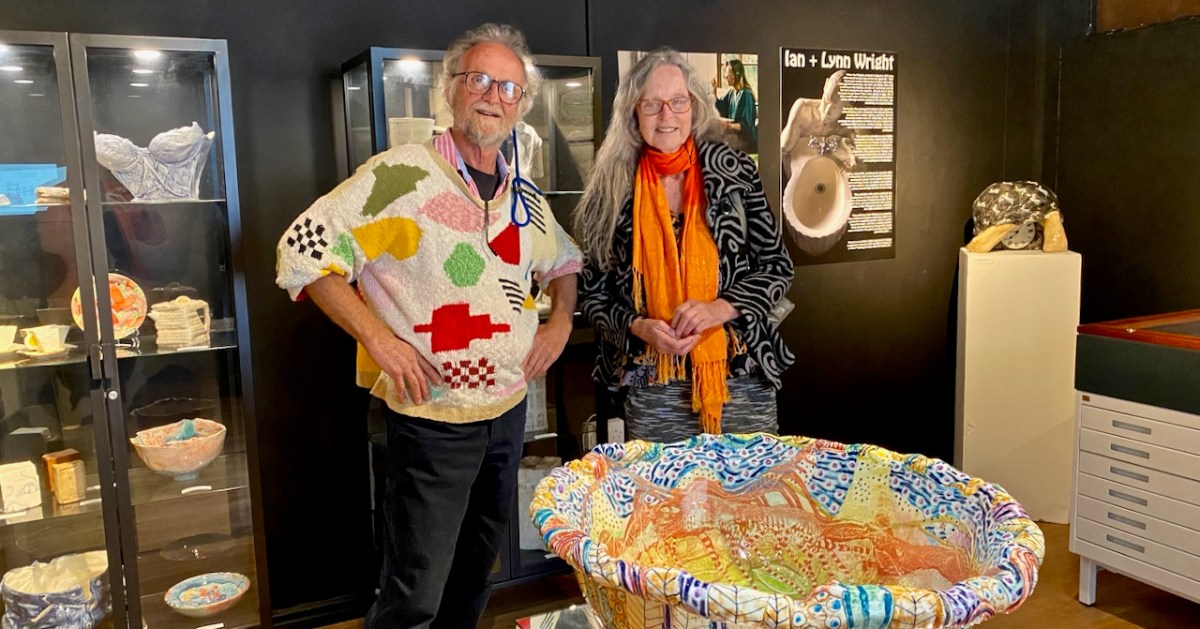
Our village, Ballydehob is a happening place these days. From the empty streets and shuttered shops captured in 681 Days! the village came alive with art and music and festivals, just like in Pre-Covid days. A new exhibition in BAM (Ballydehob Arts Museum) showcased the quirky, amusing and technically dazzling work of Ian and Lynn Wright.

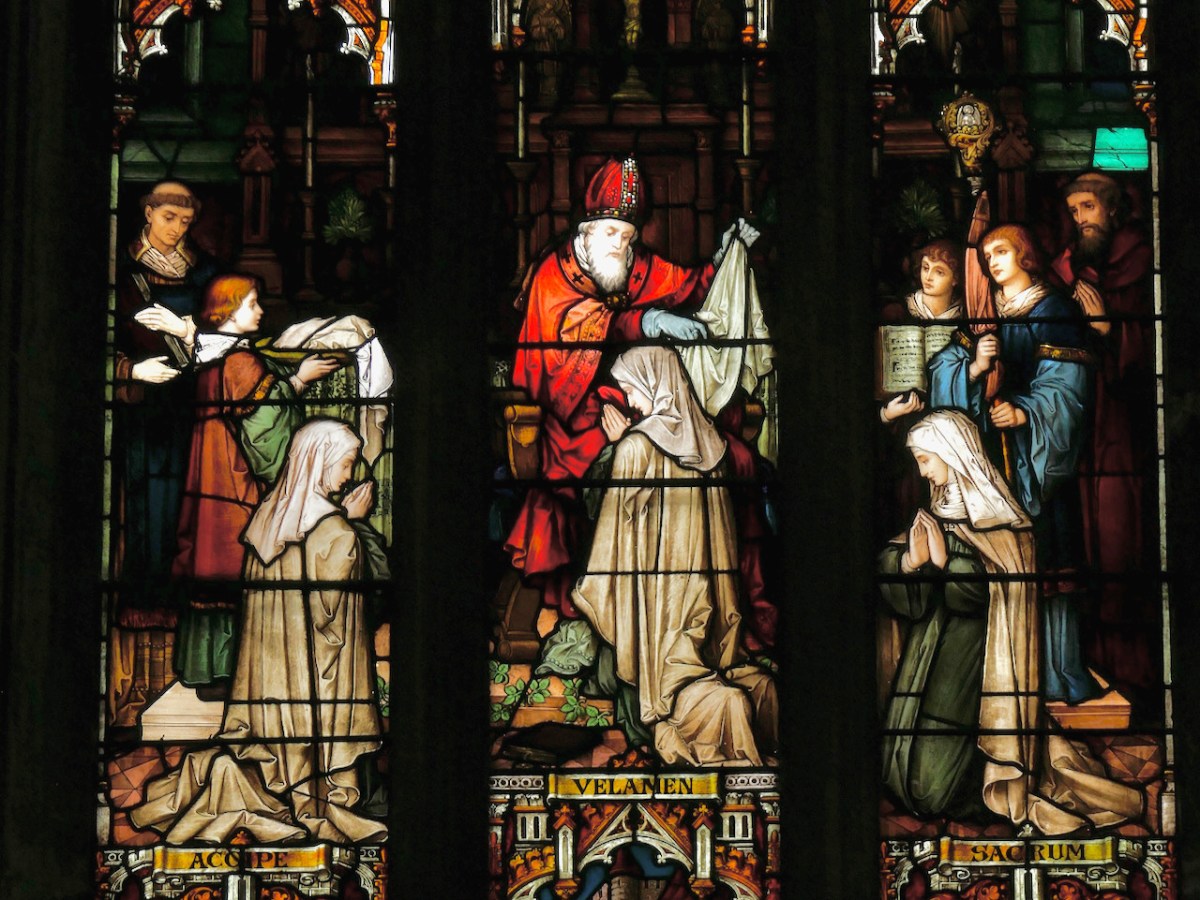
Robert loves folklore and told us the The Oldest Adventure, or The Sons of the Salmon.  Finola meanwhile likes to read about old Irish saints and her post St Brigid: Dove among birds, Vine among trees, Sun among stars was just in time for the saint’s feast day – soon to be a national holiday.

This image has an empty alt attribute; its file name is brigid-accepts-the-veil-and-crozier-from-mel-armagh-mayer.jpeg

Finola didn’t have as many wildflower posts this year, as she concentrated on short videos on Instagram, but she really enjoyed her outing with the Biodiversity Data Centre, looking at rare plants.

This image has an empty alt attribute; its file name is sea-pansies.jpeg

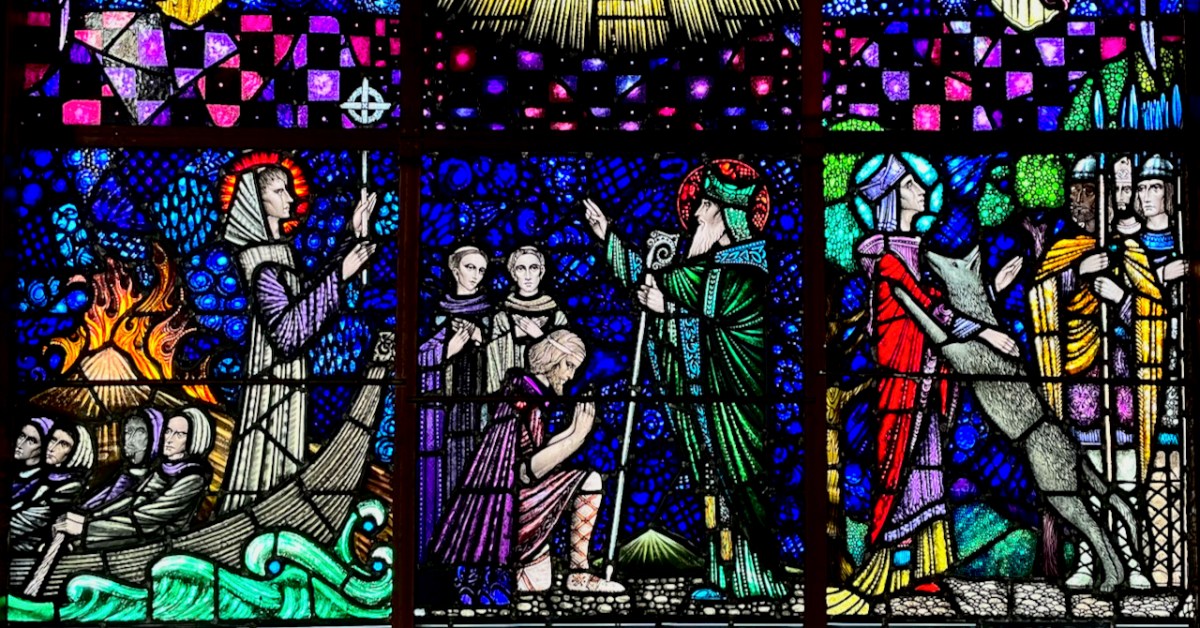
She continues to study the world of stained glass and this year she wrote about one of Ireland’s few examples of the work of Burn Jones, and about William Dowling, the artist who carried on the great Harry Clarke tradition after Harry died. He turned out to be the artist behind the mysterious sketch in One Window, Eight Stories.

This image has an empty alt attribute; its file name is brendan-patrick-and-ailbhe-predella-from-assumption-window-knoickainey-dowling.jpeg

I’m not sure what it says about us, but two our most popular posts this year (your and ours) were not our work at all. Karen Minihane’s book Extraordinary, Ordinary Women of West Cork related the untold stories of brave West Cork women, members of Cumann na mBan who played active (and sometimes terrifying) roles during the War of Independence. 

This image has an empty alt attribute; its file name is book-cover-extraordinary-women.jpeg

Our first ever guest blogger, Brian O’Riordan, left us all in the shade when he told the story of Mary Harper: Record-Breaking Lone Trans-Atlantic Sailor in Crookhaven. All kinds of people saw the piece and commented – including Mary’s daughter and granddaughter! 

This image has an empty alt attribute; its file name is well-wishers-and-mary-crookhaven.png

Two final pieces, chosen by us as posts that were fun to work on. Robert chooses Ships in Churches, which explores the background and meaning of ship graffiti in St Mary’s Old church in Schull, while I really enjoyed delving into the raging controversy, now long-forgotten, that attended the threatened closure of a graveyard in Rathclaren. The high-flown language and sputtering outrage reported in the Examiner was a treat to read.

This image has an empty alt attribute; its file name is church-and-wide-sea-2.jpg

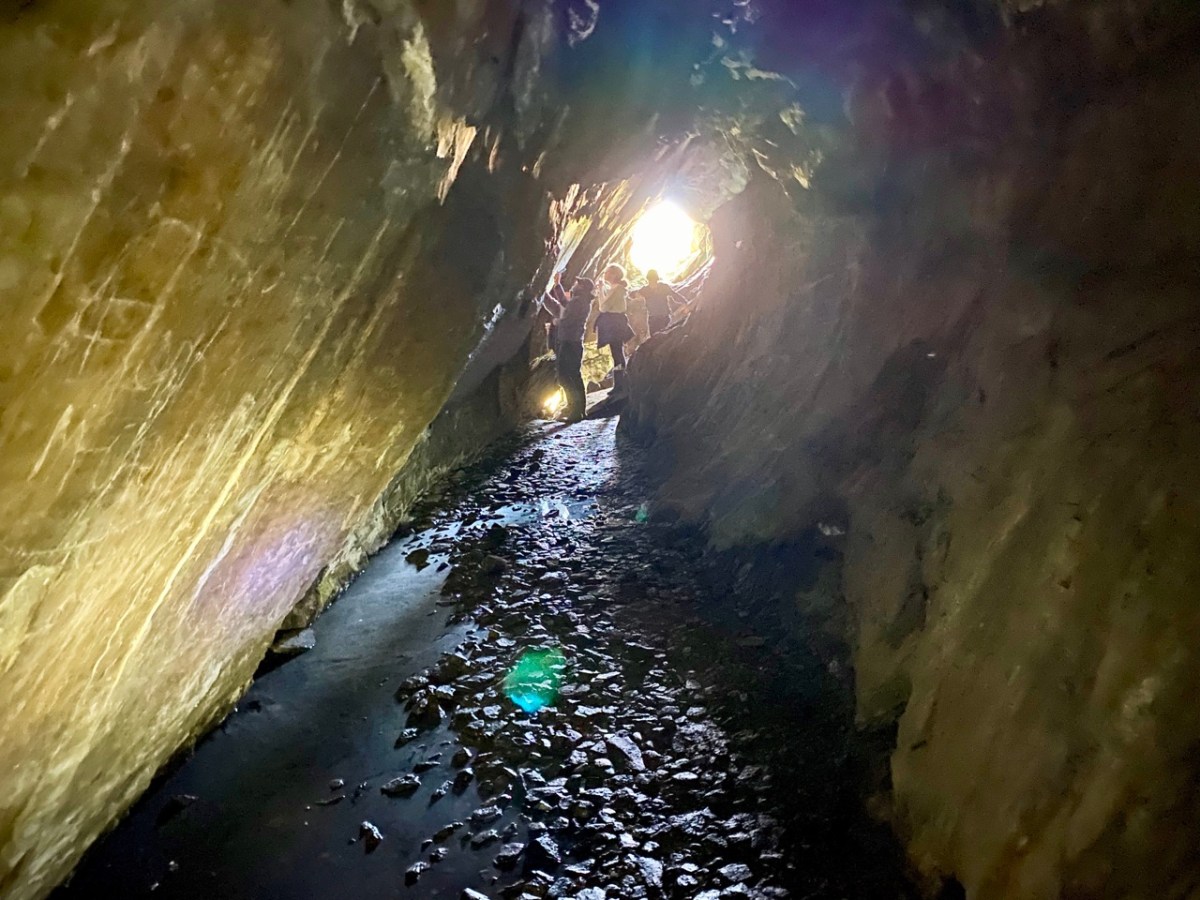
We’ve been doing this for ten years now and it never gets old for us. This year, as ever, some of our adventures were in the grand company of Amanda and Peter, AKA Holy Wells of Cork and Kerry for Dunworley Promontory Fort (below) and some with Walking with Stones, for the exploration of the cave with scribings.

This image has an empty alt attribute; its file name is dunworley-first-glimpse.jpeg
This image has an empty alt attribute; its file name is inside-with-walls.jpg

Our posts were read over 260,000 times in 2022 – that’s a lot of people getting to know West Cork. 

This image has an empty alt attribute; its file name is sheep-road.jpg

Here’s to the next ten years.

12 Arches of Ballydehob – Pics for Christmas Day!

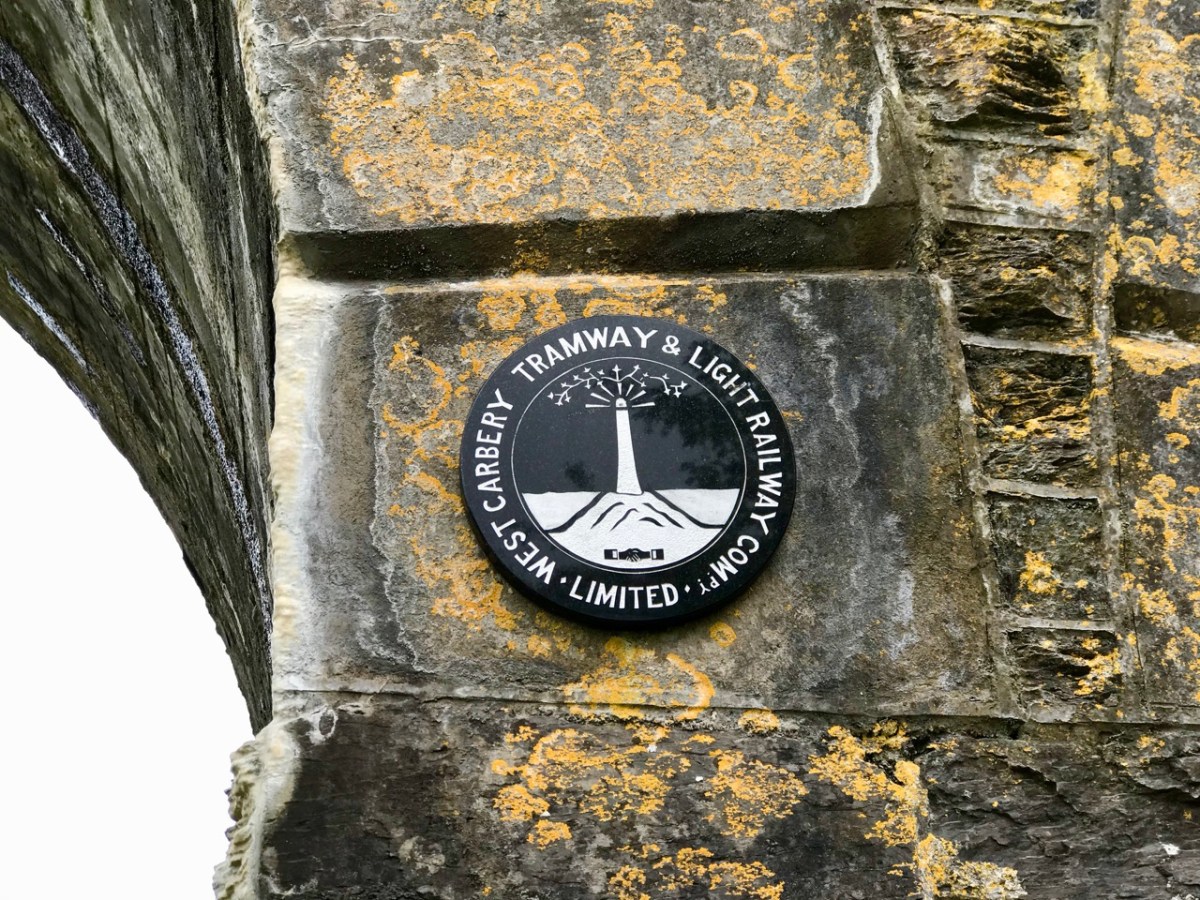
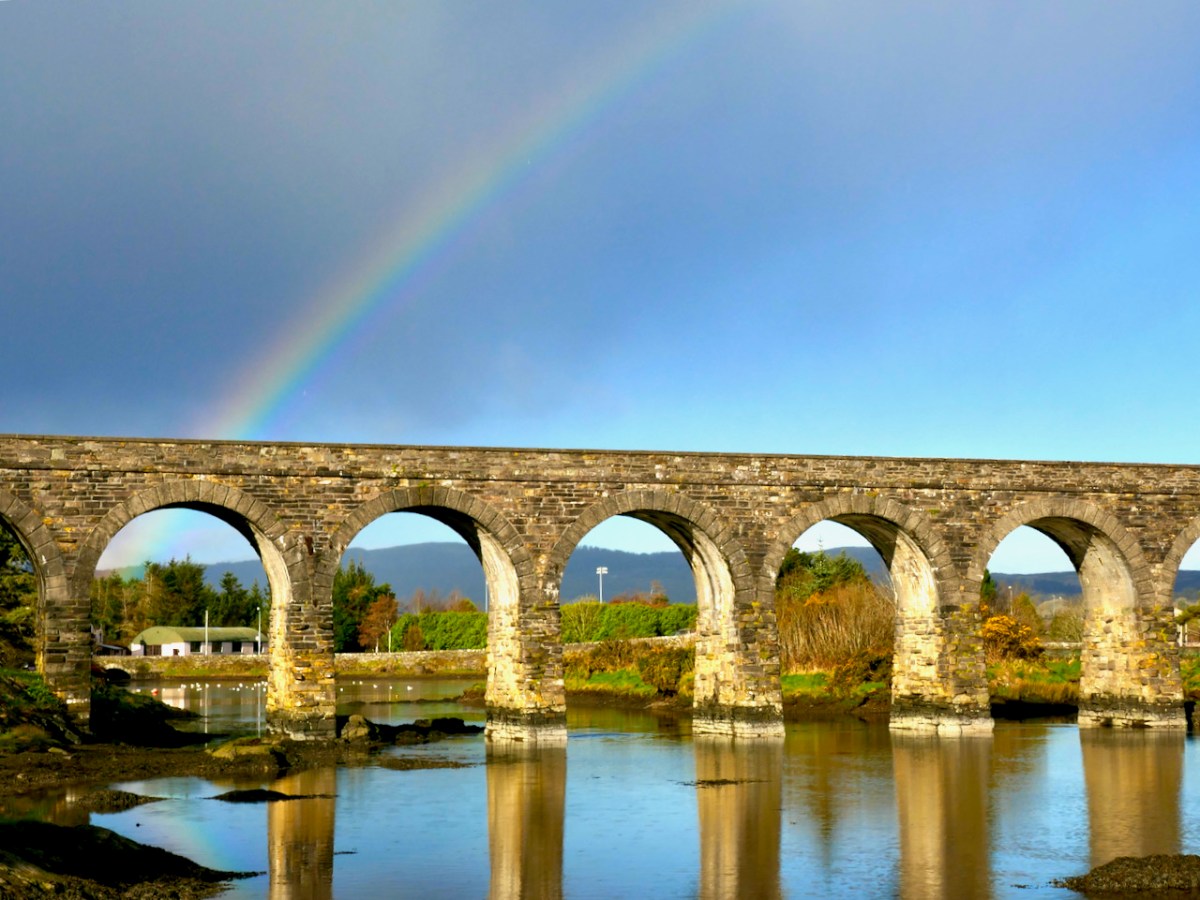
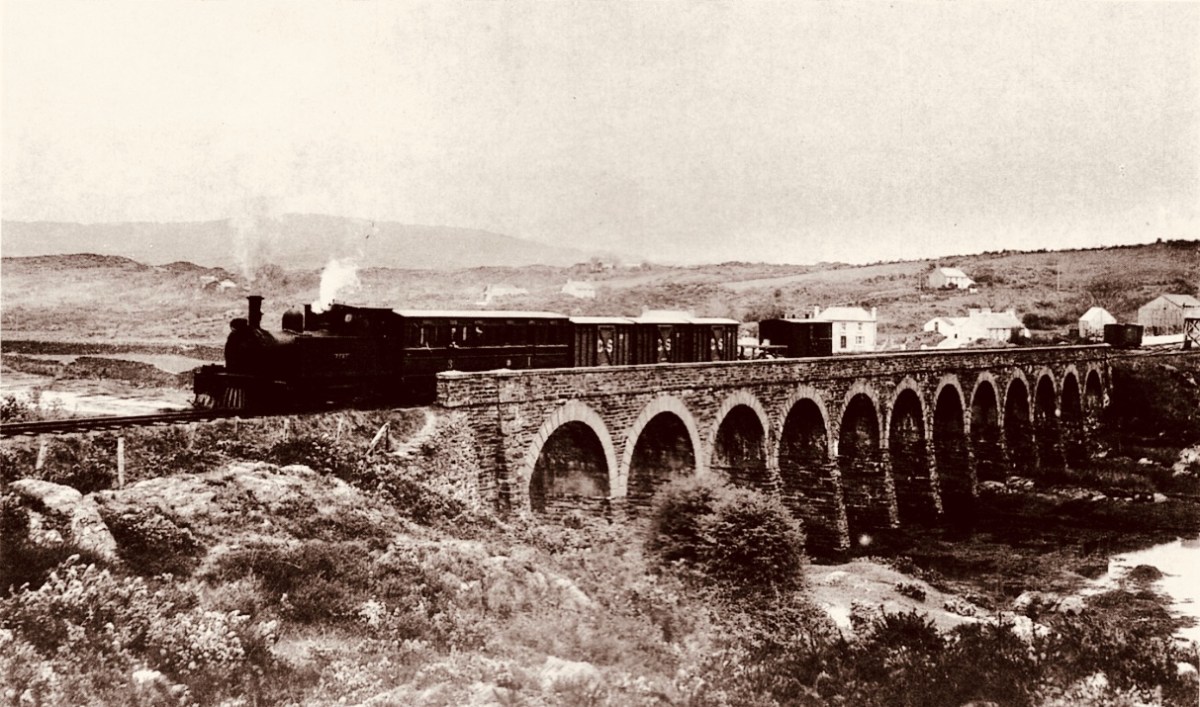
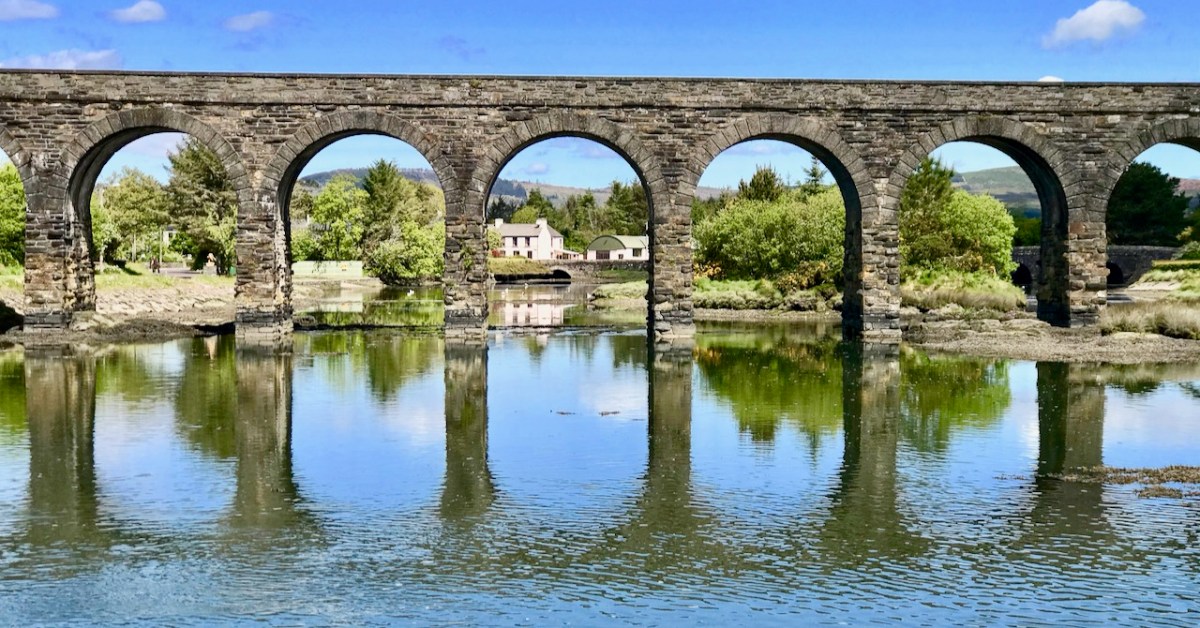
Last week’s post The Twelve Arches of Ballydehob proved a most popular subject. Ballydehob’s railway viaduct – dating from the late nineteenth century can’t be ignored. It was fairly easy to put together another dozen pics of the structure, making a good Christmas Day theme to take your minds off turkey and stuffing!

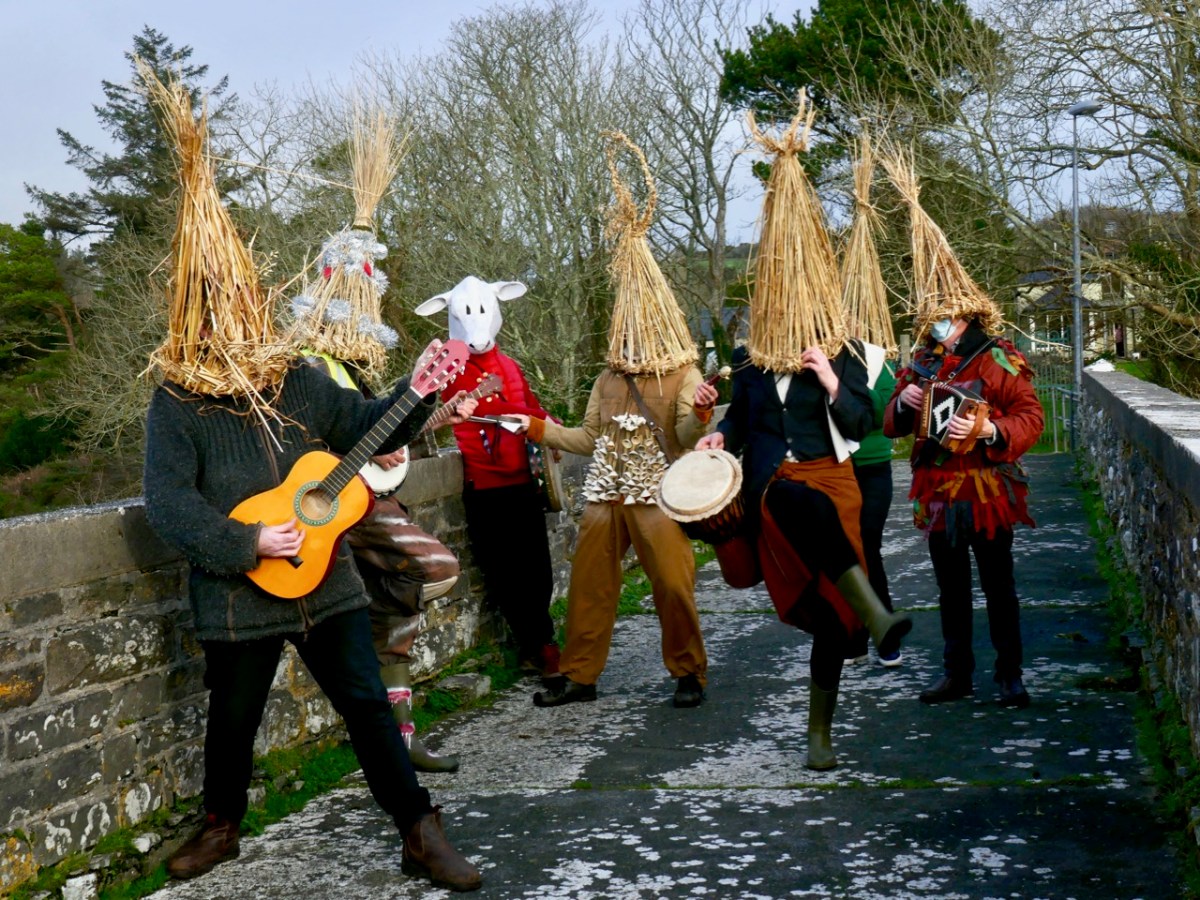
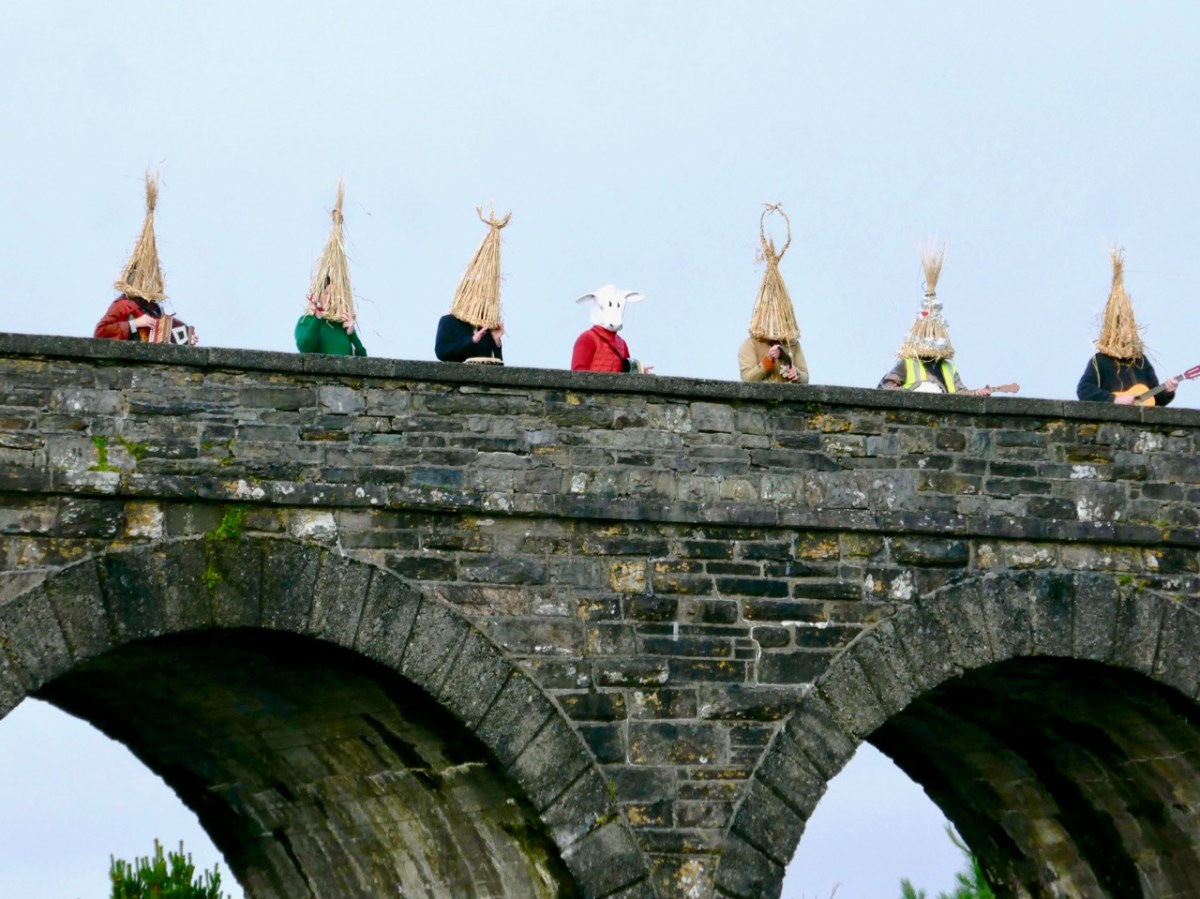
As we have lived not too far from the viaduct over the last ten years, we have seen it – and photographed it – in many of its moods. And it’s a constant backdrop, of course, to life in our West Cork village. Below – here it is, supporting a very ancient tradition, on St Stephen’s Day (that’s me on the right!):

“No Wrens Were Harmed in the Making of this Post!” That was the title of my RWJ article on the Wren Day festivities in Ballydehob in 2019 – pre-Covid. It was great to be out and about in the village, echoing a custom which has been passed from generation to generation. When I grew up in England I joined in the Mummers’ tradition there: I followed it for much of a lifetime, and even now can recite the whole play without a prompt… “Here comes I, Bold Trim Tram: Left hand, press gang – press all you bold fellows to sea…”

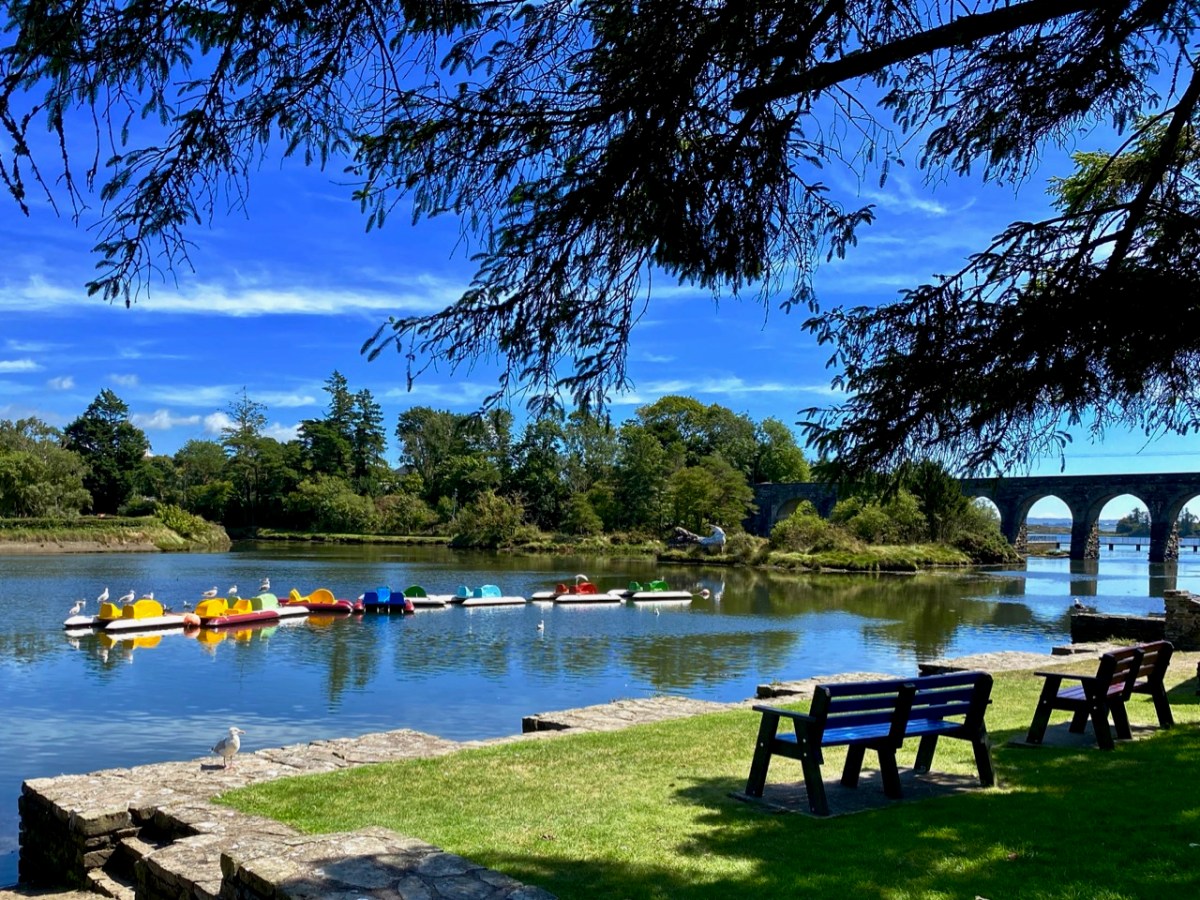
Something else which could do with a revival is the Pedalo tradition. Pedalos were brought out of storage for an unique occasion in the summer – a project named Inbhear, an art installation by Muireann Levis. Here is own my post about it.

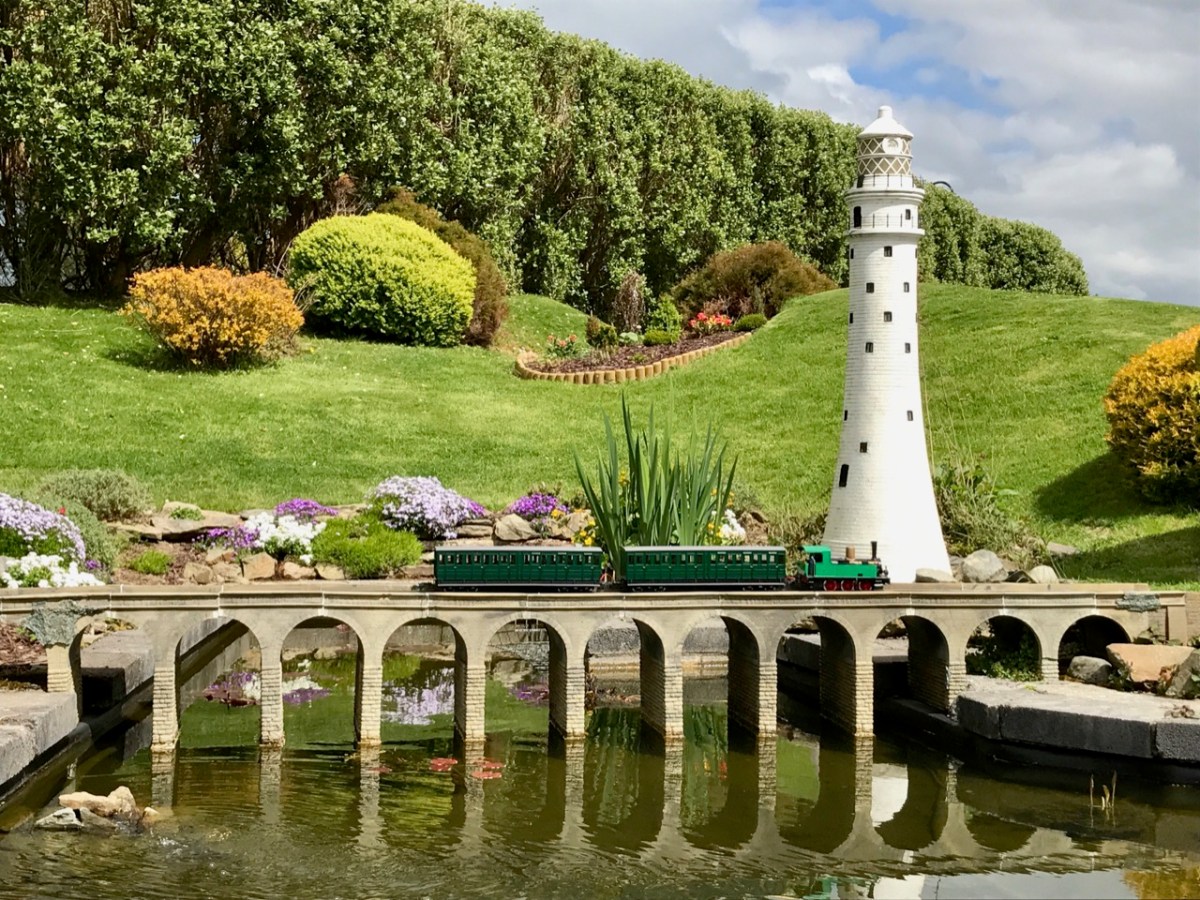
I was pleased to have this photo of the viaduct in my collection. If the scale looks a little wobbly it could be because this – and the train – are models sited at the West Cork Model Railway Village at Clonakilty. Below – a local company, in Ballydehob, has chosen to use the bridge in its title.

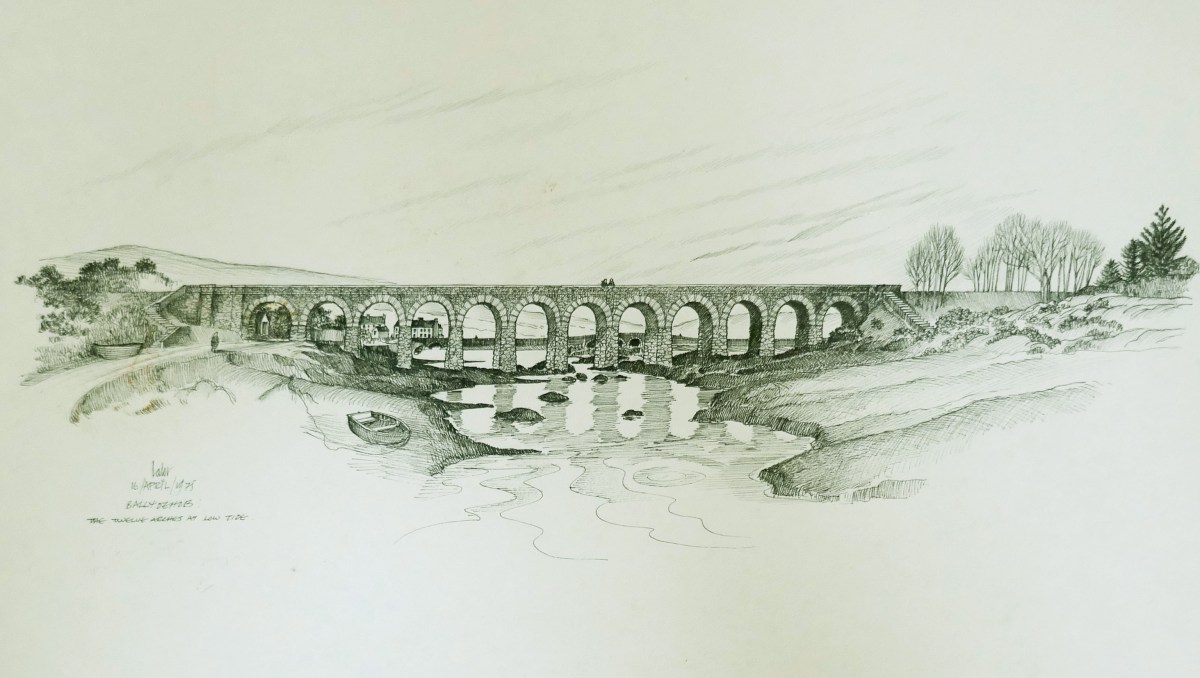
We showed you some of Brian Lalor’s work last week. Here’s another of his drawings. It is dated 1975: he tells me he has plenty more viaduct pics if I write another post in the future.

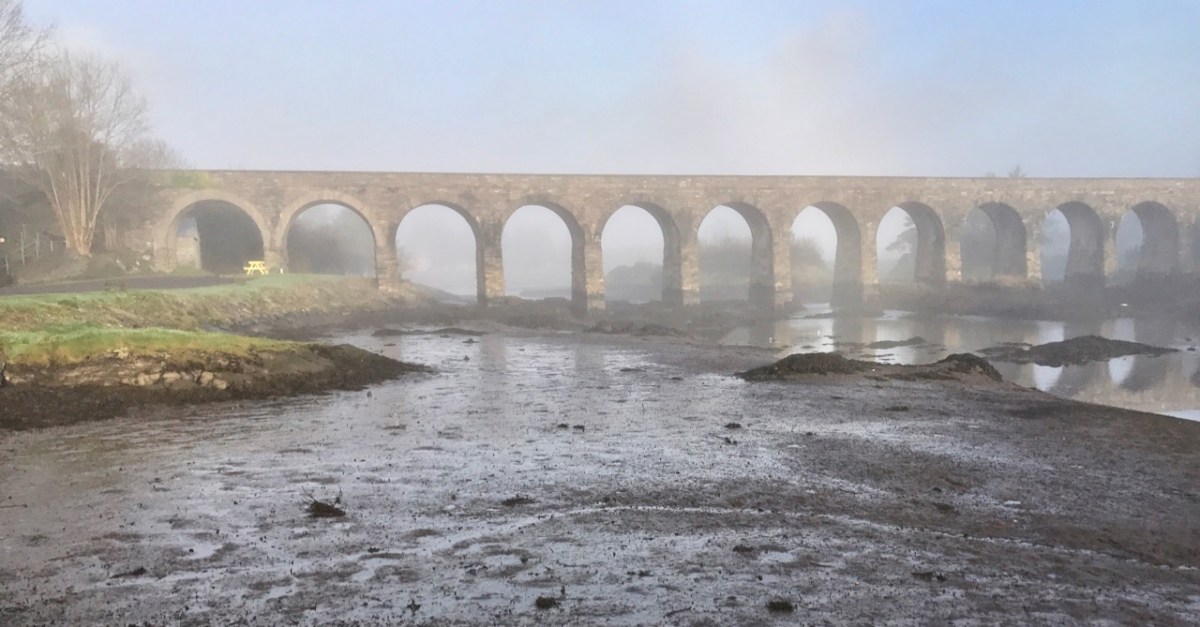
Atmospherics a-plenty: we have them all the time in Ballydehob. We do live in one of this world’s most inspiring places… Have a very good and atmospheric Christmas, everyone! And – safe journeying if you are out and about.