Gobnait

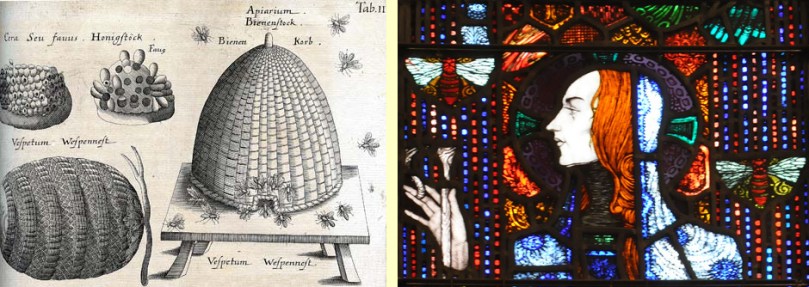
Right: Harry Clarke's St Gobnait

Right: Harry Clarke’s St Gobnait

  • With all the excitements of the hurricanes this week bringing down trees and taking out power and telephones, we almost forgot to celebrate Saint Gobnait’s Day.
  • Saint who?
  • Saint Gobnait – 11th February.
  • But what sort of a name is Gobnait?
  • It sounds like Gubbnet. Not an unusual girl’s name in Ireland: Finola went to school with one. She seemed happy enough with it.
  • But imagine calling a little baby Gobnait… What does it mean, anyway?
  • Er, not sure really: there’s a suggestion that it’s similar to Deborah. That means Honey Bee. Also there’s an Irish word Gabhan which means Blacksmith, and our Saint is supposed to be the patron of ironworkers.
  • So what’s the story of Saint Gobnait?
  • Um, there isn’t one. There’s no history or hagiography about her… But she is mentioned in the ‘Lives’ of St Abban and St Finbarr.
  • But no doubt you are going to tell me that there’s lots of folklore about her?
  • Exactly! This is Ireland after all. She’s celebrated in Ballyvourney, in the Gaeltacht area of Cork. She’s Cork’s local saint. However, she came from somewhere else – possibly Clare, maybe the Aran Islands. She was visited by an angel who told her to travel until she came upon nine white Deer, and that would be the place for her to settle.
  • Did she find the nine white Deer?
  • She did. But not until she had met three white Deer – in Clondrohid, and then six white Deer – in Ballymakeera, both in County Cork. But she carried on until she reached Ballyvourney; that’s where she met the nine white Deer and so founded her religious community there. It’s a site of pilgrimage today: there’s a church and a Gobnait’s Well which is dried up now, and which is said to be haunted by a white Stag. There is evidence that the well is still venerated today – rags and ribbons are tied to the trees and offerings are left there. Interestingly, excavations around the site in Ballyvourney revealed evidence of ancient ironworkings.
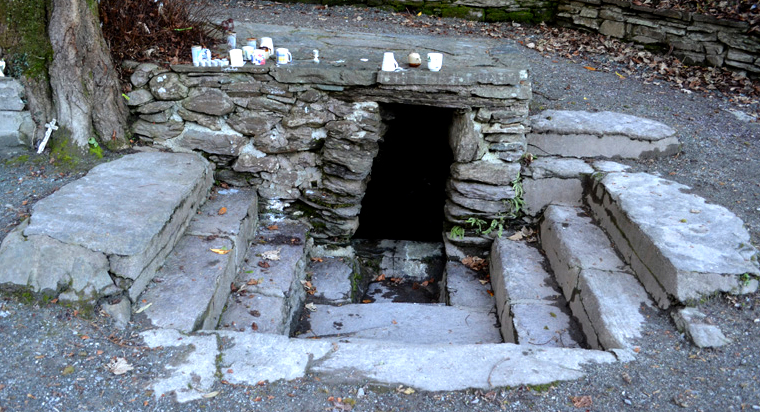
St Gobnait's Well

St Gobnait’s Well

  • So it looks as if Saint Gobnait was superimposed on some pre-Christian traditions?
  • Yes, very much like Saint Brigid.
  • Anything else which sets her apart?
  • Bees! She is always depicted with her Bees: she is supposed to have had great powers of healing and could even cure the plague with a medicine made from honey. Interestingly there are folk traditions that the soul leaves the body in the form of a Bee or a Butterfly. Bees could therefore be incarnations of our ancestors; perhaps that is why it’s important to ‘tell’ the Bees our family history – births, marriages and deaths. There were also once laws called Bech Bretha – Bee Judgments.
  • So what am I supposed to do on Saint Gobnait’s Day?
  • Think about Bees, ancestors, iron and healing… And do the ‘Rounds’ on Pattern Day. This involves going around the well or church either three times or three times three times, always clockwise. At Ballyvourney the pilgrims also touch the Sheela-na-gig as part of the turas (journey).
  • Sheela-na-gig?
  • That’s a statue of a female figure with prominent genitalia. There’s one carved on the wall of the church at Ballyvourney, which is supposed to be a representation of the Saint.
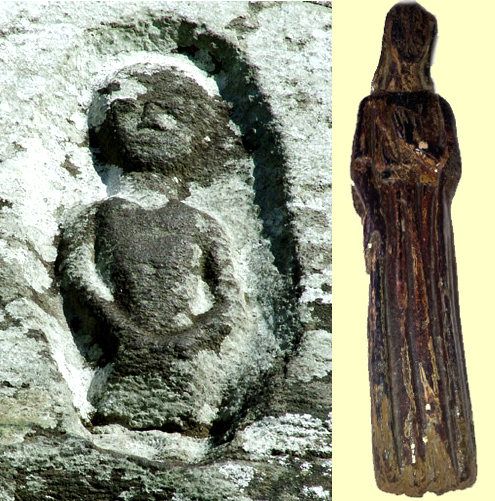
Sheela-na-gig and medieval statue

Sheela-na-gig and medieval statue

  • That certainly sounds pagan!
  • Possibly something to do with fertility. There are a lot of examples in Ireland and Britain, almost always associated with churches. Perhaps just a medieval joke – or something which has a meaning now lost to us.
  • So, is that everything that there is to know about Saint Gobnait?
  • No – at Ballyvourney the Parish priest looks after a 13th century carved wooden figure of the Saint, and this is brought out on her day and also on Whit Sunday. Some people supposedly still use a Tomhas Ghobnatan: a length of ribbon or thread which is measured against the carved figure and then used as a healing charm. There are other sites in Ireland dedicated to her: a shrine and well in Dunquin, and Tobar Ghobnait, another well in a ruined oratory at Kilgore on the Dingle Peninsula, County Kerry. Here is found a simple ancient stone bowl which is always full.
  • How active is the pilgrimage at Ballyvourney?
  • Very active: the church is always crowded on the day, and there are long queues waiting to measure their ribbons against the wooden statue after doing the ‘rounds’.
  • Well, thank you: I will take a trip up to Ballyvourney…
  • It’s worth going on a Sunday to hear the Mass sung in Irish. Sean O’Riada formed a choir  there which is still going strong today, now led by his son Peadar.
cludach-naomh-gobnait

The Tailor and Ansty

The-Tailor-and-Ansty

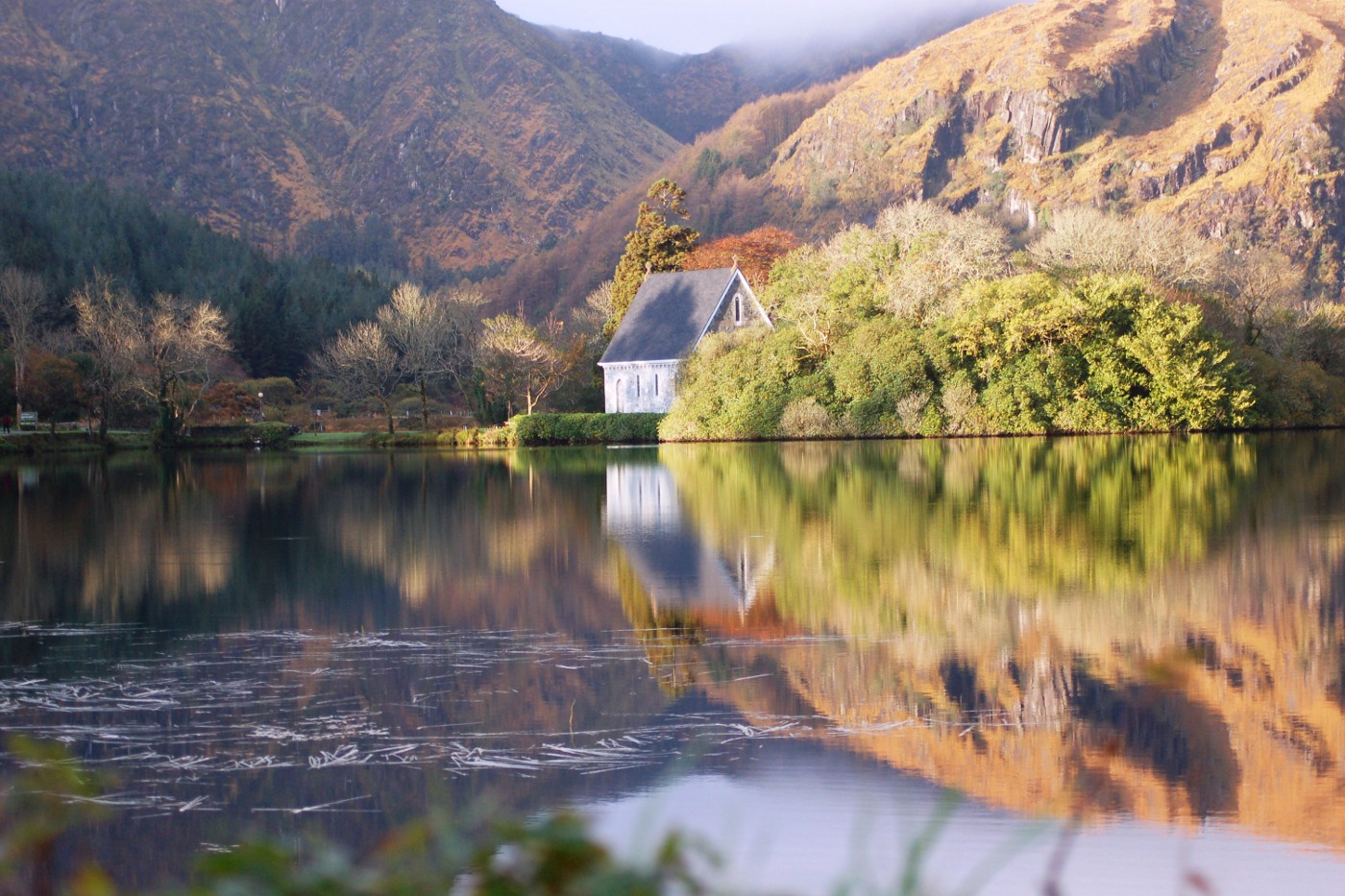
Travel up to the north of County Cork, into the high country which is still not quite part of the Kingdom of Kerry: make your way to the windings of the youthful River Lee just before it rises in the fastness of the Shehy Mountains, and you will find yourself in a magical place.

Gougane Barra Lake

The Lake in the Mountain – Gougane Barra

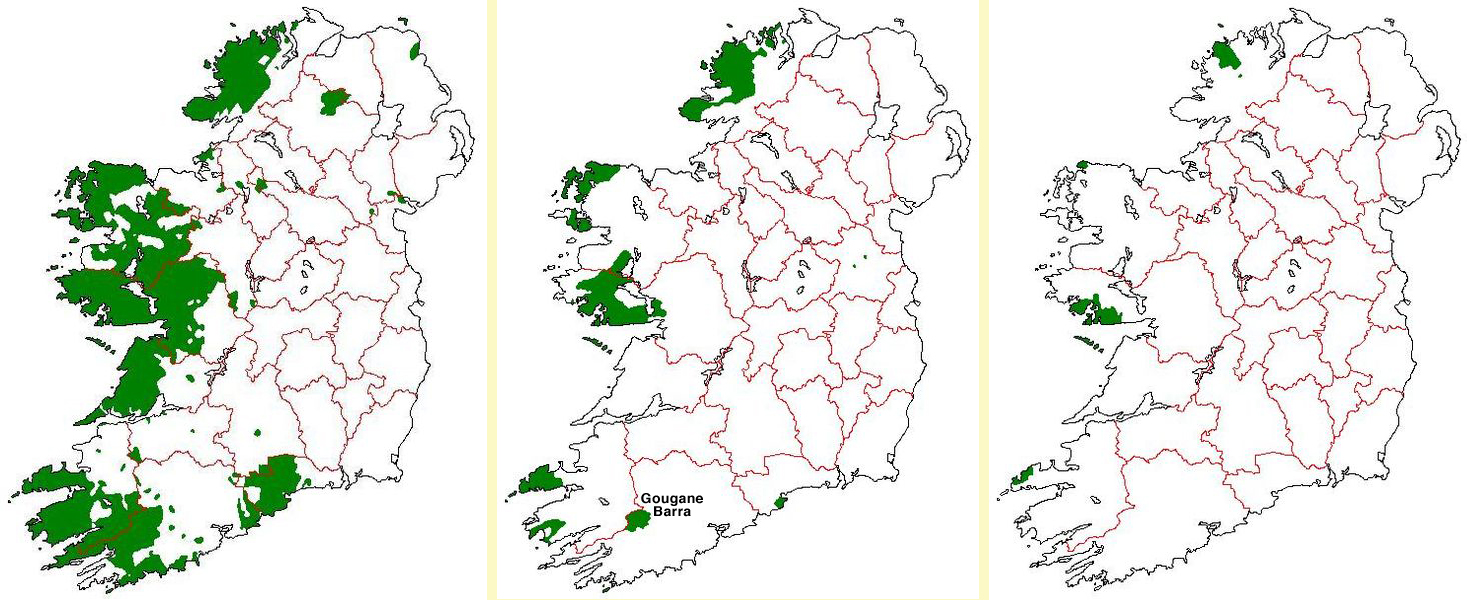
You are in Múscraí (West Muskerry), one of the Gaeltacht districts of Ireland – areas where Irish is still spoken as the predominant native language. These districts were first defined when the Irish Free State was set up as part of the new government’s policy to restore the Irish language. Finola will confirm that everyone who grows up and is educated in Ireland today studies Irish in school. Sadly, the maps below show how native Irish speakers have declined since an Ghaeltacht was set up in 1926, partly through migration but mainly because of the predominance of the English language in public life.

The Gaeltacht areas: Irish native speakers in 1926, 1956 and 2007

The Gaeltacht areas: Irish native speakers in 1926, 1956 and 2007

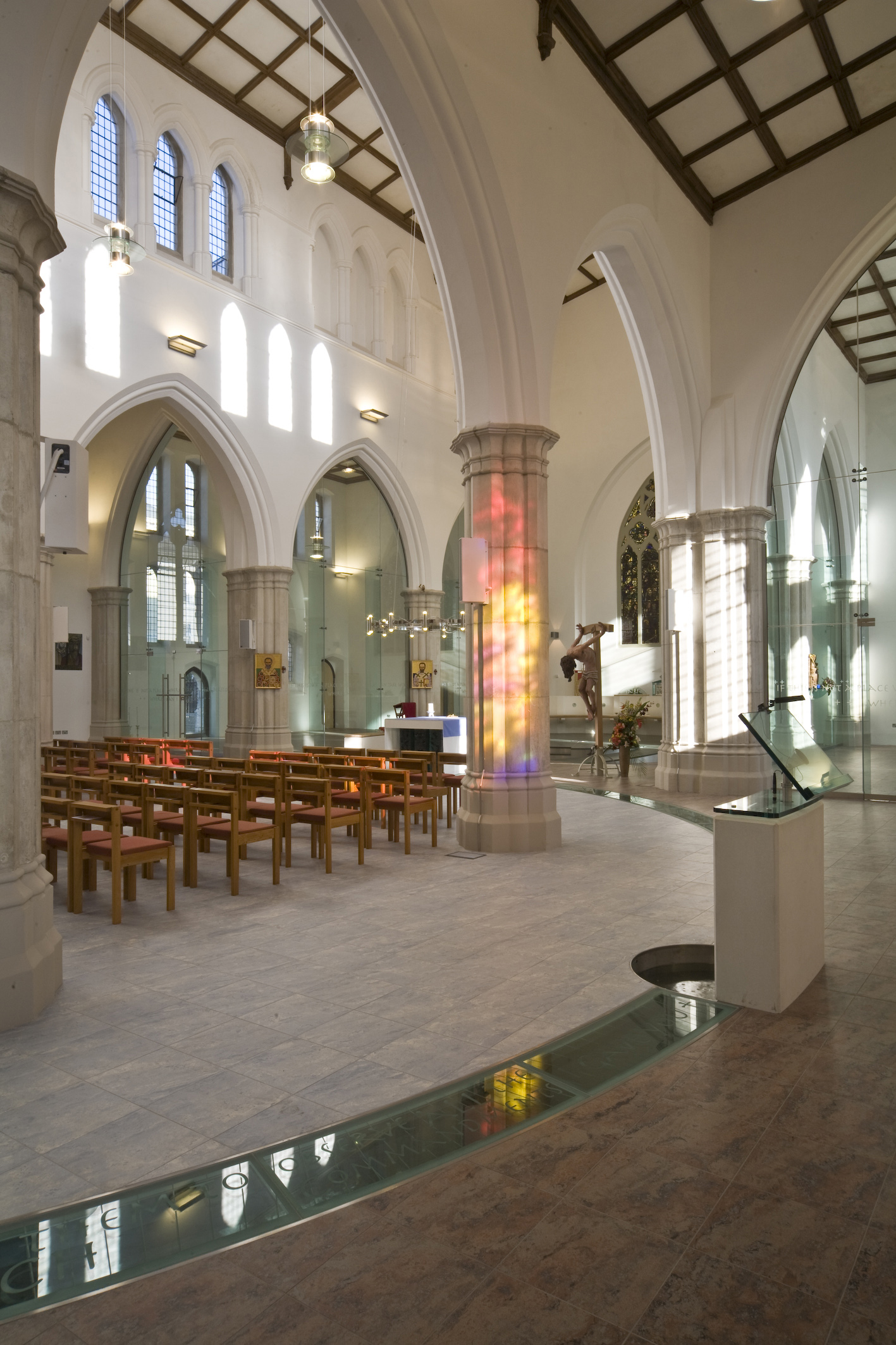
Our journey today takes us to Gougane Barra, a historical site where in the sixth century Saint Finbarr set up a collection of cells for his monastic community on a lake island in the mountains. Nowadays it is a centre for pilgrims and tourists. I was sent to Gougane Barra many years ago on the instruction of a client and friend, Father Sam Philpott, who had commissioned my architectural practice in the UK to reorder a church in the centre of Plymouth. The place proved an inspiration to me – as he had hoped – and the renewed St Peter’s now has a rill of water running around the worship area echoing the water surrounding Finbarr’s community in the mountains: a piece of West Cork in West Devon!

St Peter's, Plymouth - the reordering completed in 2007

St Peter’s, Plymouth – the reordering completed in 2007

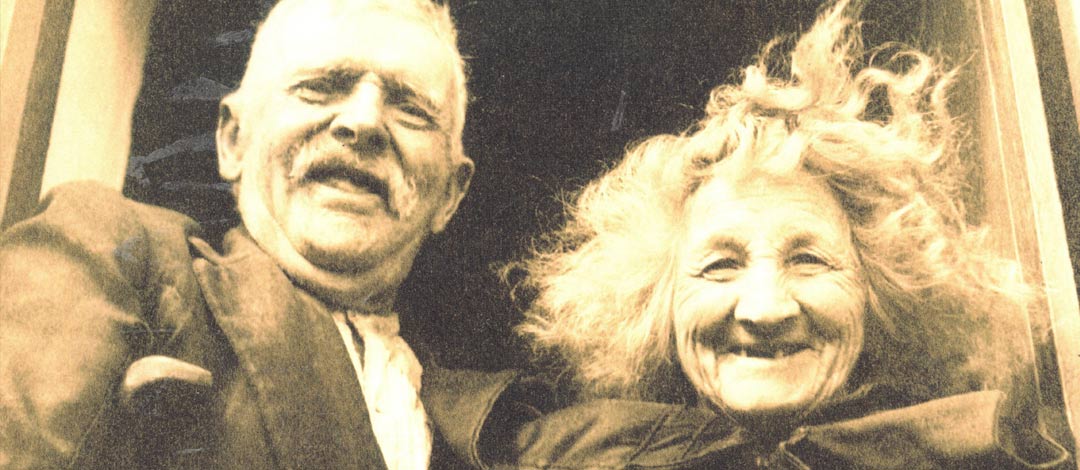
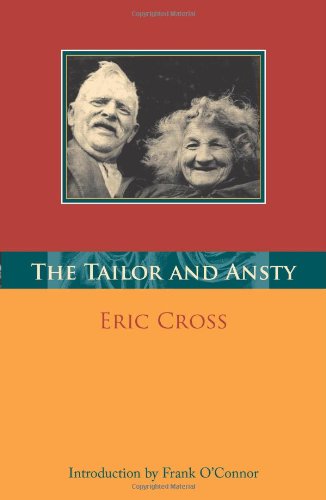
Gougane Barra was also the home of The Tailor and Ansty – immortalised in a book of that name first published in 1942 and written by Eric Cross, a journalist from Newry who lived in the locality for many years and visited the couple on a daily basis. ‘The Tailor’ (Tim Buckley) was a storyteller: not a Shanacai who travelled around the country seeking hospitality, as he had a paralysed leg since his youth and could only walk with the aid of a crutch, but someone to whom the world came and sat with while he ‘minded the dairy herd’ (a single black cow) or ‘reddened his pipe’ while perched on an old butter box (which he called Cornucopia) beside the kitchen fire of an evening, and listened to his tales and his homespun philosophy. He and his wife Anastasia were both fluent Irish speakers, and perhaps the book loses something for being written in English. However, it is a goldmine for folklorists or students of Finola’s Cork Speak lessons, because of the expressions which The Tailor uses: Thon amon dieul – (T-anam an diabhal – your soul to the devil), Yerra, man alive and (my own favourite) Thamwirrashimfaina being just a small selection.

I can only commend the book to you: it’s impossible to summarise it. It’s romantic, thoroughly entertaining and completely readable. It’s one of those books that you don’t want to get to the end of and – when you do – you almost feel that you are ready to start it all over again. I will extract only the first few paragraphs to give you a flavour:

…’In the townland of Garrynapeaka, in the district of Inchigeela, in the parish of Iveleary, in the barony of West Muskerry, in the county of Cork, in the province of Munster’ – as he magniloquently styles his address, lives the Tailor.

His small whitewashed cottage, with its acre of ground, stands at the brow of a hill, at the side of a road which winds and climbs into a deep glen of the mountains bordering Cork and Kerry.

In the summer you will usually find the Tailor himself leaning up against the bank of the road, minding his one black cow. As you pass up the hill he will have watched you come and sized you up in his shrewd and kindly way. As he stands talking to you, helping you, pointing out this and that to you, you will scarcely believe that he has seventy-seven years put over him. The vigour of his body, in spite of the handicap of his crutch, the firm tones of his voice, the smile of his lively eyes, the thick head of silver hair, all belie the fact of the years.

He will most likely invite you inside for a glass of buttermilk or a heat of the tea. Go with him. Let the beauties of Ireland wait. They will still be there when he has gone. Be, as he is, prodigal of time, and sit and listen to him. Forget the rest of your journey as the Tailor forgets the cow. Humanity matters more than either cattle or scenery. You have met a man – finished.

Sit by his turf fire at night and learn how to practise his favourite precept – ‘Glac bóg an saol agus glacfaidh an saol bóg thú: take the world fine and aisy and the world will take you fine and aisy’…

jacket

The Mercier Press Edition

The book was published in 1942, when the Tailor was 83. He lived only two years longer. He was proud of the book – and of his celebrity: scholars, folklorists and writers flocked to his fireside to meet him and to hear his stories, his proclamations and his banter with the long-suffering Ansty.

But – there is a twist in this tale. The Tailor was down to earth and forthright. As with all country people he had no qualms about including in his stories all the vagaries of human existence, and references to the coupling of man and woman or the cow and the bull, and these were faithfully recorded by Eric Cross. The effect on the government of the day and its leader Eamonn de Valera was instantaneous: the ‘indecent and obscene’ book was banned, and the life of the bewildered Tailor and his companion became unbearable. The story is taken up by Frank O’Connor, a notable writer and friend who remained faithful to them:

… As a result that kind old couple who had offered their simple hospitality to students from all over Ireland were boycotted. I am not exaggerating. I was there with them one night when a branch of a tree was driven between the wall and the latch so that we were imprisoned. Three priests appeared at their cottage one day and forced that dying old man to go on his knees at his own hearth and burn the only copy he had of his own book…

The situation led to a debate in the Senate which lasted four days! Only one public man – Sir John Keane – defended the book. He quoted sections from it and these quotations were struck from the public record ‘…in case they should lead to immorality of the nation…’ The motion was lost by 34 – 2, and the couple were ostracised within their own community.

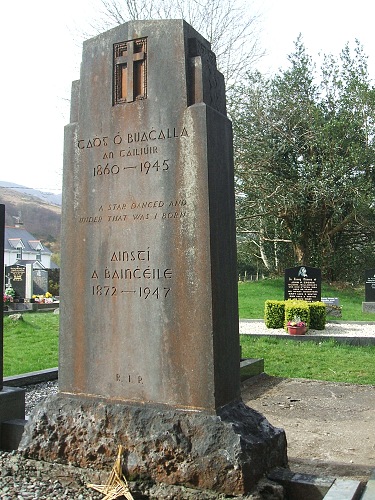
It wasn’t until 1963 that the matter was reconsidered, and a revamped Censorship Appeals Board discovered that the book was not obscene at all. It was republished and has remained in print ever since. But by then both the Tailor and Ansty were buried in the graveyard at Gougane Barra, under a stone designed by their friend Seamus Murphy, a well known sculptor. Frank O’Connor wrote the short epitaph that adorns it:

 A Star Danced And Under That Was I Born

headstone

Loon the Sentinel

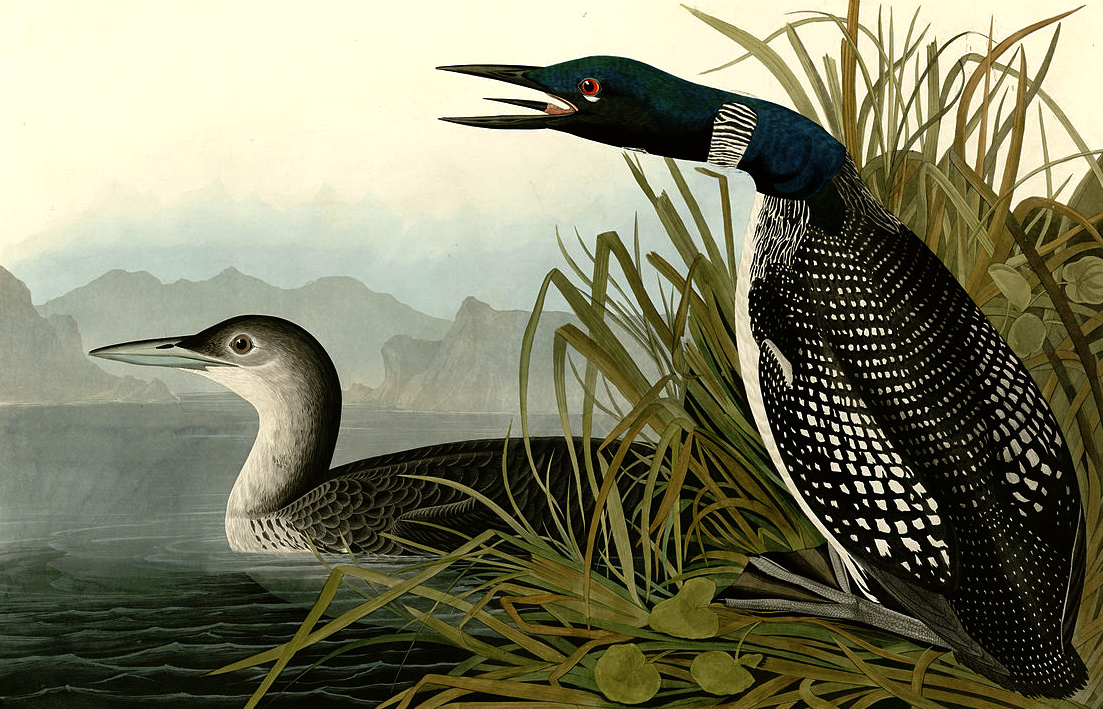
loon print

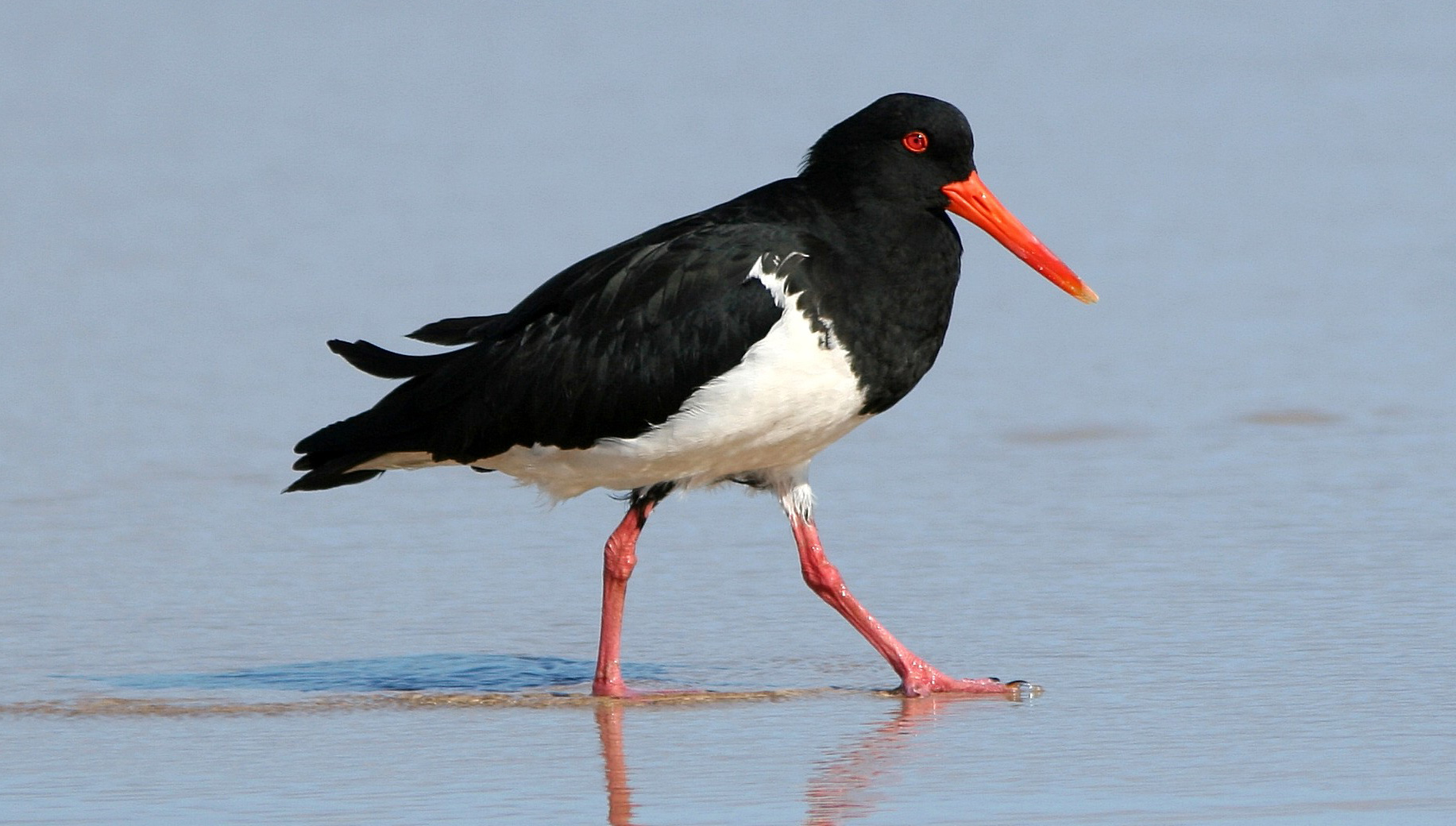
Our friend Julian lives beside the water in the Cove, and we were excited when he told us there were Great Northern Divers in the bay. During the recent storms he saw a large number of them – fourteen or fifteen – huddled together for shelter close by the shore. He called this gathering a ‘Raft’: In fact the collective noun is usually said to be Asylum, Cry or (more attractive) Water-dance. We saw them too, but distantly through our spotting scope up in Nead an Iolair, although we came across them close to when we were walking by the shore in Ahakista on the Sheep’s Head. Here they were mixed up with Cormorants (collective noun Flight of…) and Shags (Hangout of…) – but their markings were distinctive enough for us to be sure.

loonie

In Canada the same birds are known as Loons. Believe it or not, the International Ornithological Committee met especially to consider the problem of the differing names in America and Europe and proposed a compromise: the Great Northern Loon. I like the term Loon: supposedly this name comes about because the bird has large webbed feet set well to the back to assist diving but is clumsy on land. In Icelandic the word for ‘lame’ is lúinn, and in Swedish it is lam – this could well have been an influence. The Canadian Loon is featured on the one dollar coin – which is therefore know as a ‘loonie’ – the two dollar coin is a ‘toonie’.

When Finola and I were on a road trip up to the north of British Columbia (through spectacular scenery) we stopped by a lake and we could see diving birds a considerable distance away. Finola told me they were Loons and I said I really wanted to have a good look at them. She immediately put her hands up to her mouth and produced the distinctive wavering call:

I couldn’t believe it when a few seconds later a Loon surfaced right beside us! I was full of admiration (as always) for Finola’s many talents…

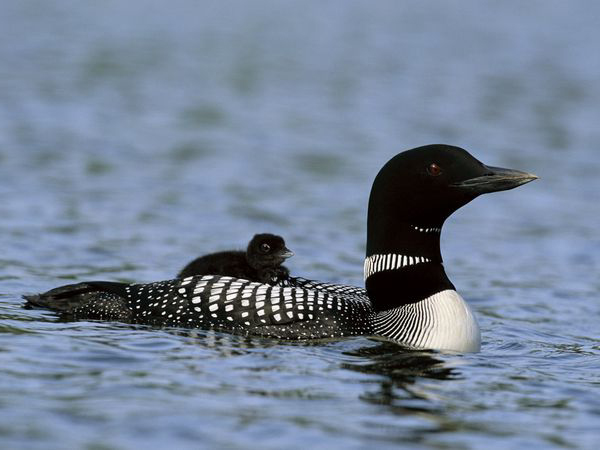
An endearing habit of the adult bird is that it carries its chick on its back until it can swim on its own.

Hitching a ride...

Hitching a ride…

I can’t find any Irish legends mentioning Loons, Great Northern Divers or any other variants, but there are plenty of Canadian ones among the First Nation cultures. There the Loon is invariably a ‘good guy’, and even helps Raven the Creator to make the world, and to bring Sun, Moon and Water to it. It has various names in these tales, including Big Loon, Black-billed Loon, Call-up-a-storm, Ember-goose, Greenhead, Guinea Duck, Imber Diver, Ring-necked Loon, and Walloon. We also have a very fine carved Loon on our living room wall, from Finola’s First Nation art collection.

loononwall

I call Loon the Sentinel because he seems to stay just outside our Cove, swimming and diving across the entrance – keeping it safe for us. When our spring comes (and we can begin to feel the sun getting stronger already) he will be off to colder climes to breed.

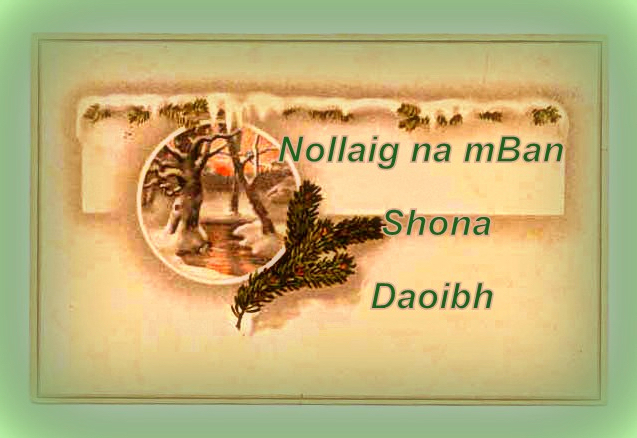
Nollaig na mBan

This post was first published many years ago – in 2014! The subject matter – Women’s Little Christmas – is just as relevant today. So, have another look…

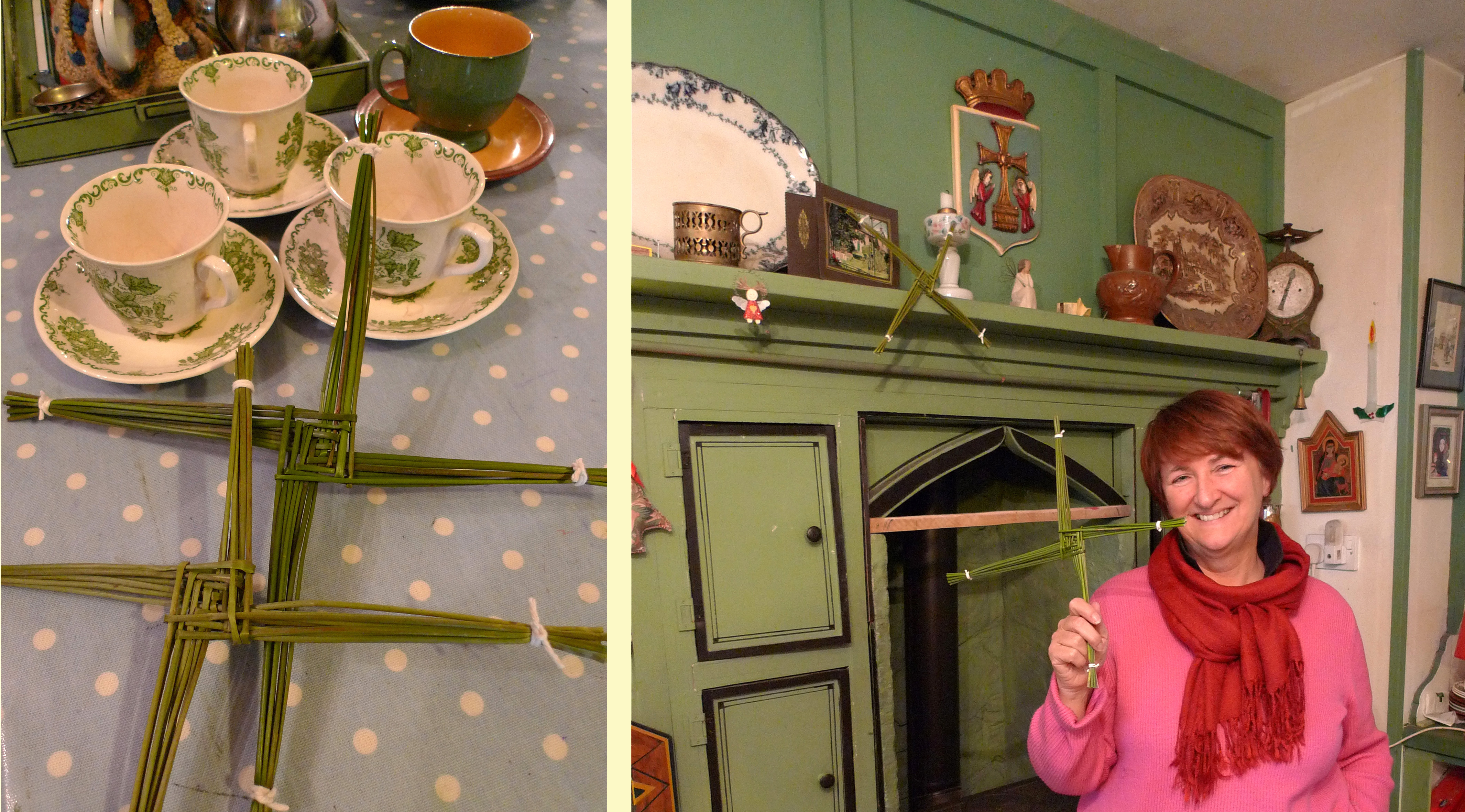
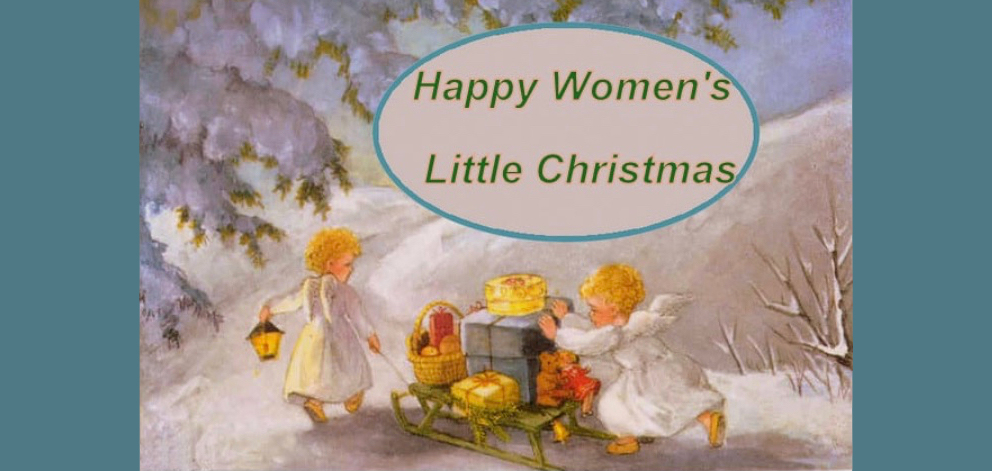
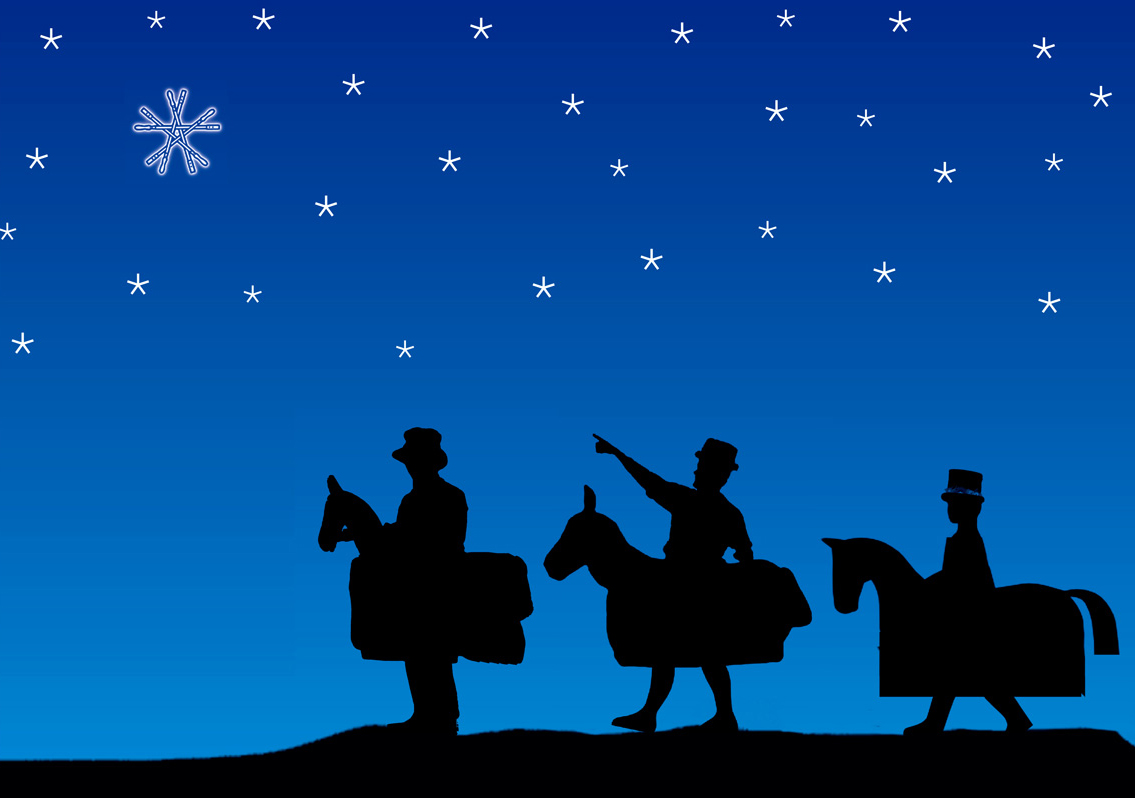
Sounds like ‘Nullig ne mon’ and translates as ‘Christmas of the Women’, but is also known as ‘Little Christmas’. It’s today – the 6th of January – and is celebrated in Ireland and wherever else in the world there are Irish communities. There are other traditions surrounding this day (quite apart from the arrival of the Three Wise Men), and they are confusing. I was brought up knowing that the Christmas decorations have to come down today otherwise there will be some bad luck in the year. Finola, however, knows that they have to stay up all through the day as it’s still part of Christmas – so she would have them down tomorrow instead. Maybe this is a Catholic / Protestant divide? And when is Twelfth Night: 5th or 6th of January? Either one, it seems, depending on which of the many traditions you choose to follow, or which part of the world you live in.

Layout 1

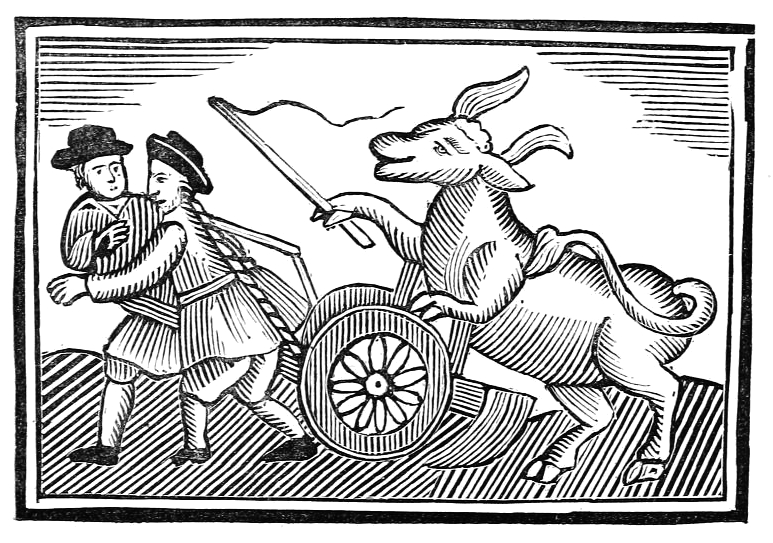
In Tudor Britain the whole winter festival started on All Soul’s Eve (Halloween) and lasted until Twelfth Night. On the first day a cake was baked with a bean in it. Whoever had the slice with the bean was elected Lord of Misrule and presided over a topsy turvy time when the peasant ruled the master and so on. The World Turned Upside Down is a wishful thinking concept that has inspired many artists ever since.

8597011641_560e181106_o

In some parts of Europe a custom of house-blessing takes place today. Dried herbs are burnt and their scents fill the building. Doorways are sprinkled with holy water and the master of the house writes with chalk above the house and barn doors the initials C M B enclosed within the year (eg 20 C  M  B 14). According to the ritual he says: Caspar, Melchior, Balthasar, protect us again this year from the dangers of fire and water. Alternatively it could stand for “Christus Mansionem Benedicat” (May Christ bless this home).

Some traditions closer to home: McCarthy + Hawkes write in Northside of the Mizen

…On Nollaig na mBan (Woman’s Christmas or Epiphany), the women put all the scraps and leftovers from Christmas onto the kitchen table and it was then up to everyone else to cope the best they could. At midnight, on the eve of Nollaig na mBan, the water in the spring well turned to wine. Now that was a great thing! Ne’er a man or woman has ever supped any and that was because it was only for the Little People…

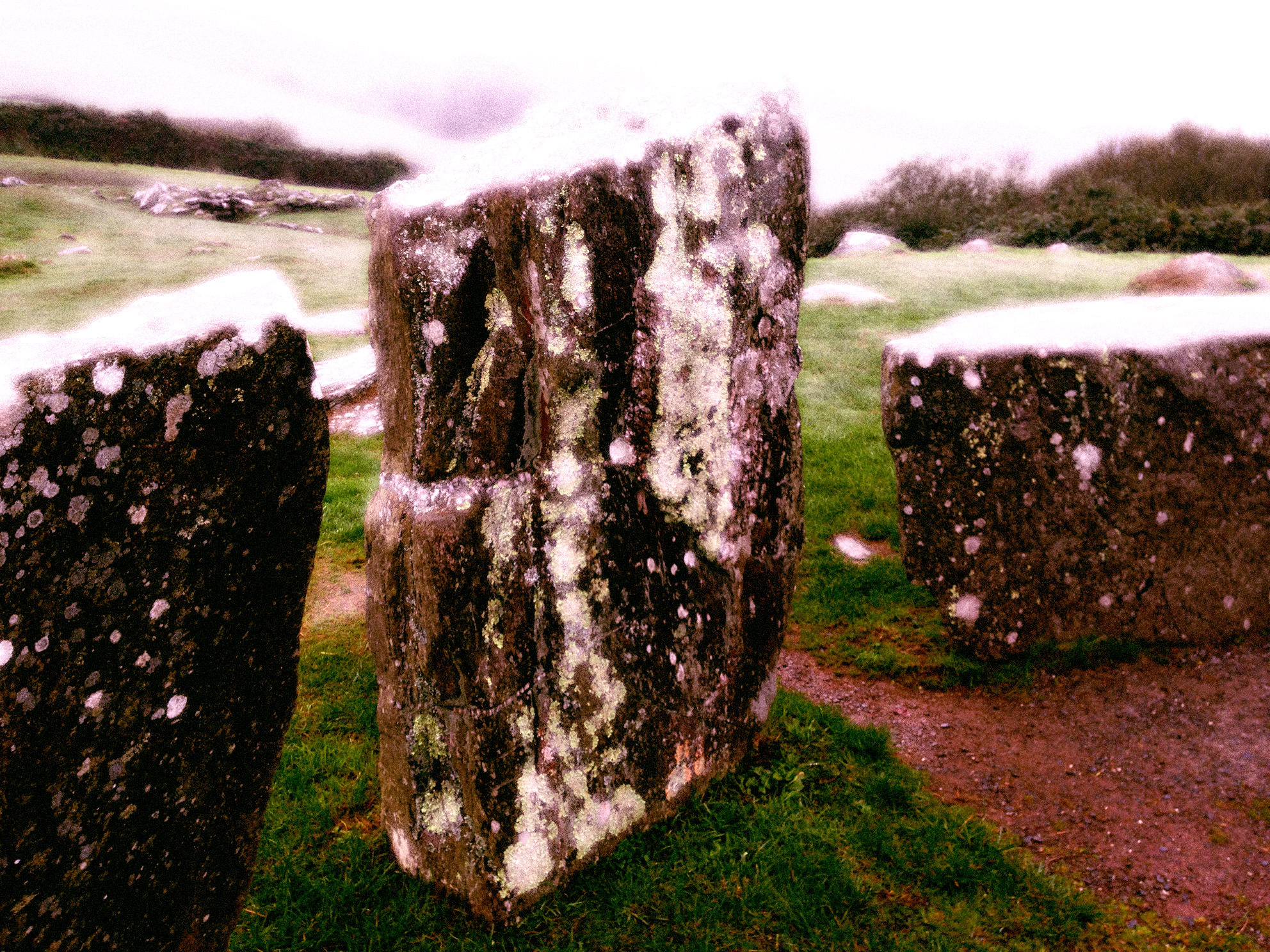
Perhaps to emphasize that such miracles should be the preserve of only the Fairy Folk, there is a tale told of the blessed well of St Brendan in Cill a ‘Ruith, near Ventry in County Kerry: here in days of yore Three Unwise Men sat up to drink their fill of wine at the appropriate hour and were turned into three large boulders which stand there as a warning to this day.

rocks

As this is a Monday, and the first one of the new year, it is also known as Handsel Monday, when children used to visit neighbours and friends and ask for money or cakes. Such a gift was known as a suggit which may derive from the Irish so dhuit – ‘here’s for you – here you are’.

Finola is off out tonight with friends to celebrate Nollaig na mBan, as she used to in Vancouver where the tradition was strongly followed in the Irish community. It is said that the term ‘Women’s Christmas’ can be explained because Christmas Day was marked by beef and whiskey – men’s fare – while on Little Christmas Day the dainties preferred by women – cake and tea – were more in evidence. Finola will no doubt tell me whether this is still the case.

Stormy Weather

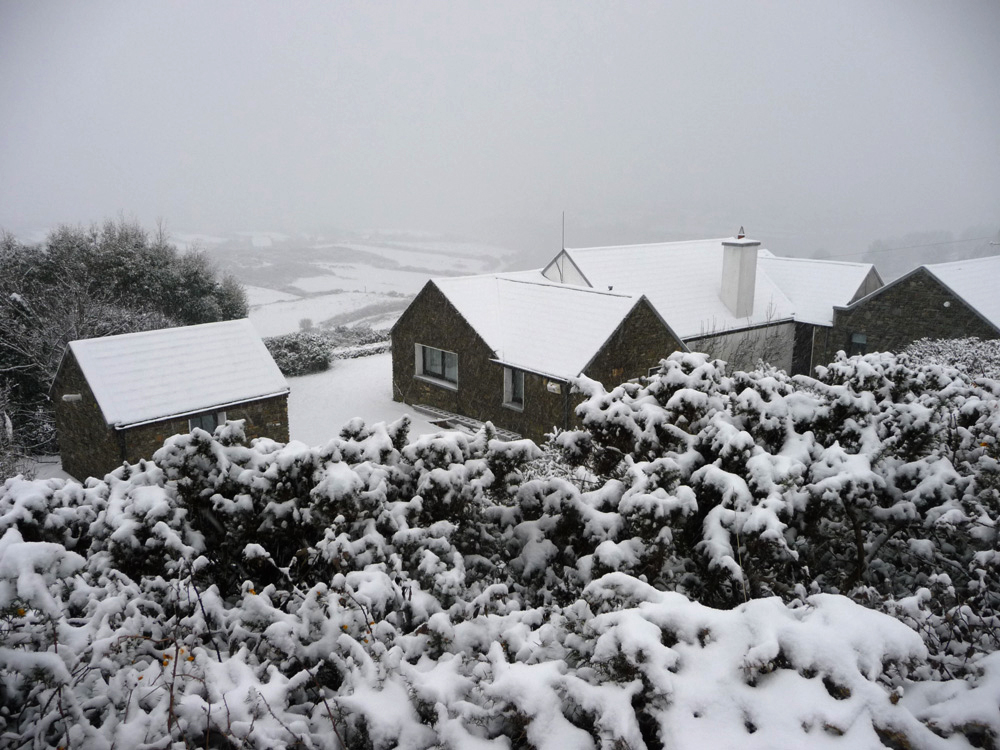
neadwinter

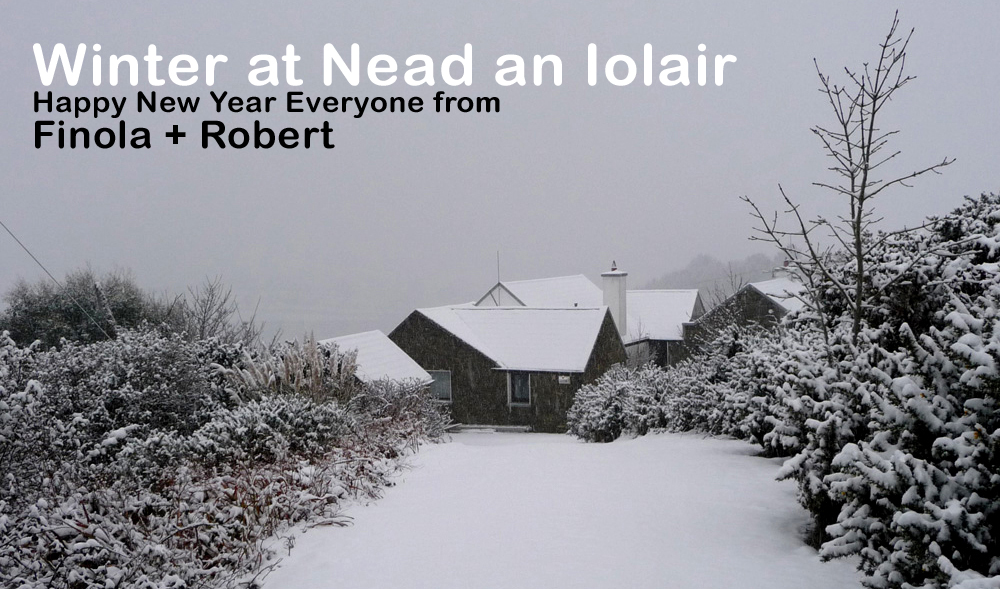
This picture of Nead an Iolair is here to create a seasonal feel: it was taken by our neighbour Dietrich in the Great Winter of 2010 – 2011 when the extremes were all about deep snow, frozen roads and frozen pipes, unusual for this little corner of the island normally kept mild by the Gulf Stream. This winter we have a different extreme – hurricane force winds!

spiked

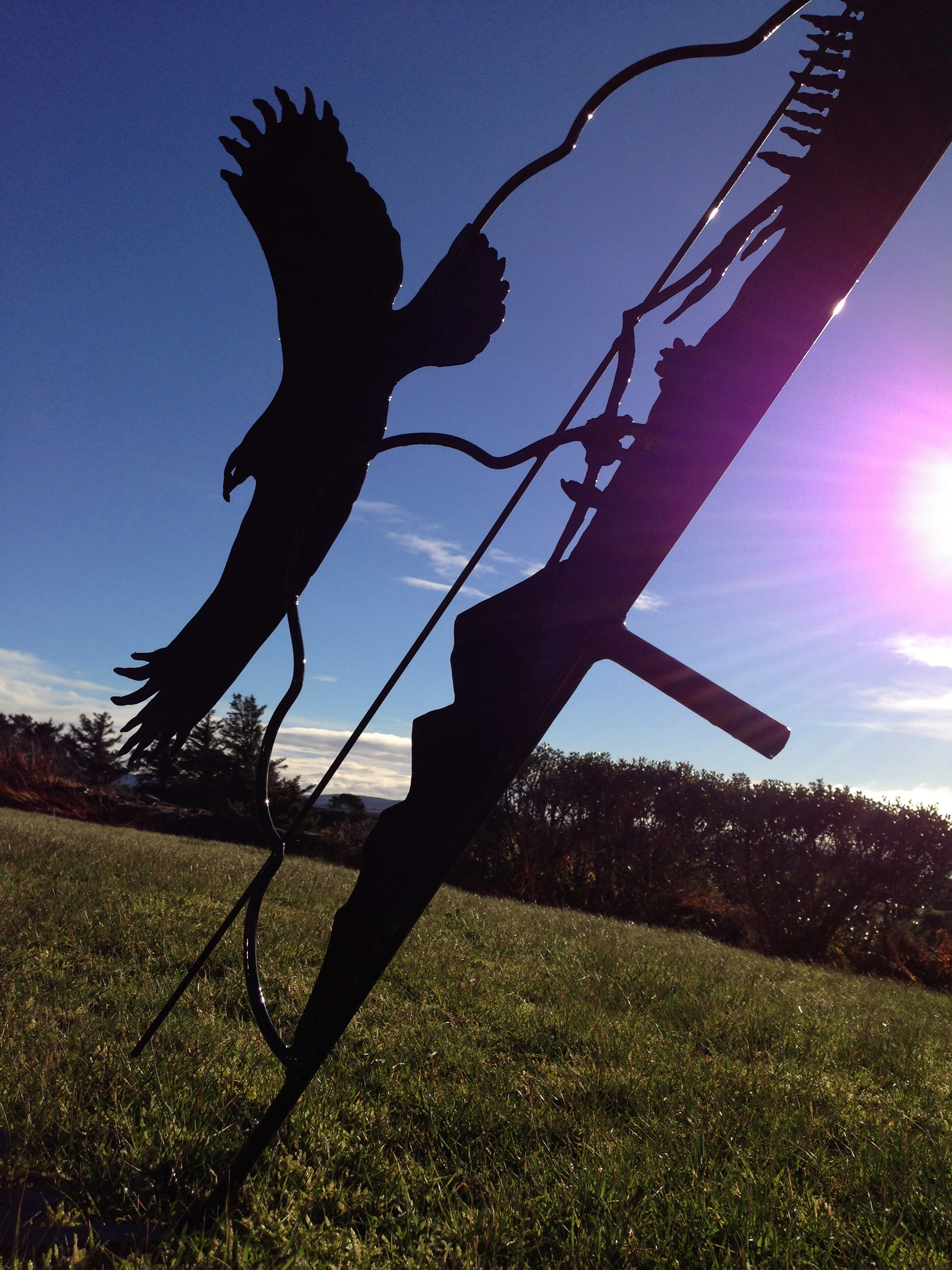
‘Hurricane’ on the Beaufort scale means wind speeds of 118 km/hour or more. We went to bed on St Stephen’s Day evening, having measured the wind speed outside as 87 km/h. That seemed wild to us: the trees were bent over and the salt laden rain and sleet were coming in horizontally and lashing our south west facing windows. It was hard to sleep: the slates were rattling loudly above us and the aerials and lightning conductors on our roof were shrieking and bending. The noises got louder and more terrifying as the night went on. I wanted to venture outside with my little hand-held anemometer but I couldn’t face it. The violent storm began to abate only in the early hours of the morning and, when we did creep out, it was to find some damage: two trees down in the haggart, sadly, and our beautiful weather vane collapsed. It was as well that we weren’t underneath when the flying Eagle and its sharply pointed arrow came crashing on to the lawn, just missing our door.

levissession

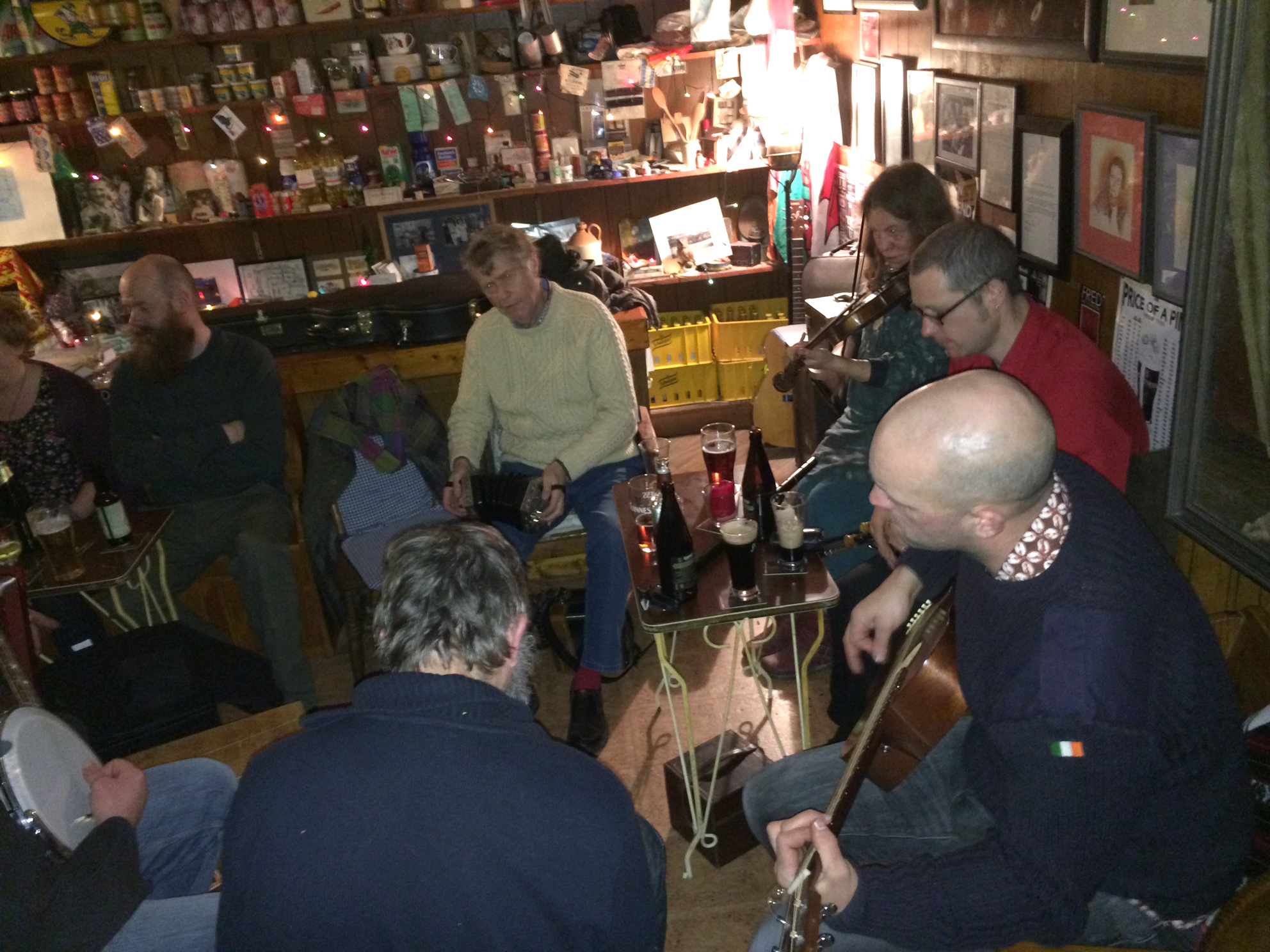
St Stephen’s Day Session, Ballydehob


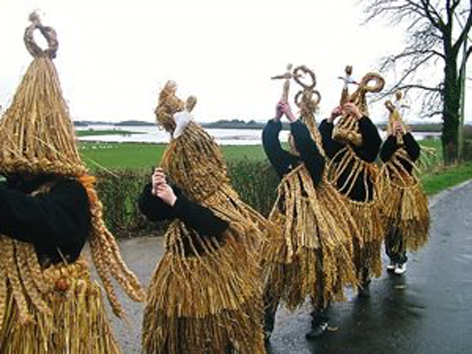
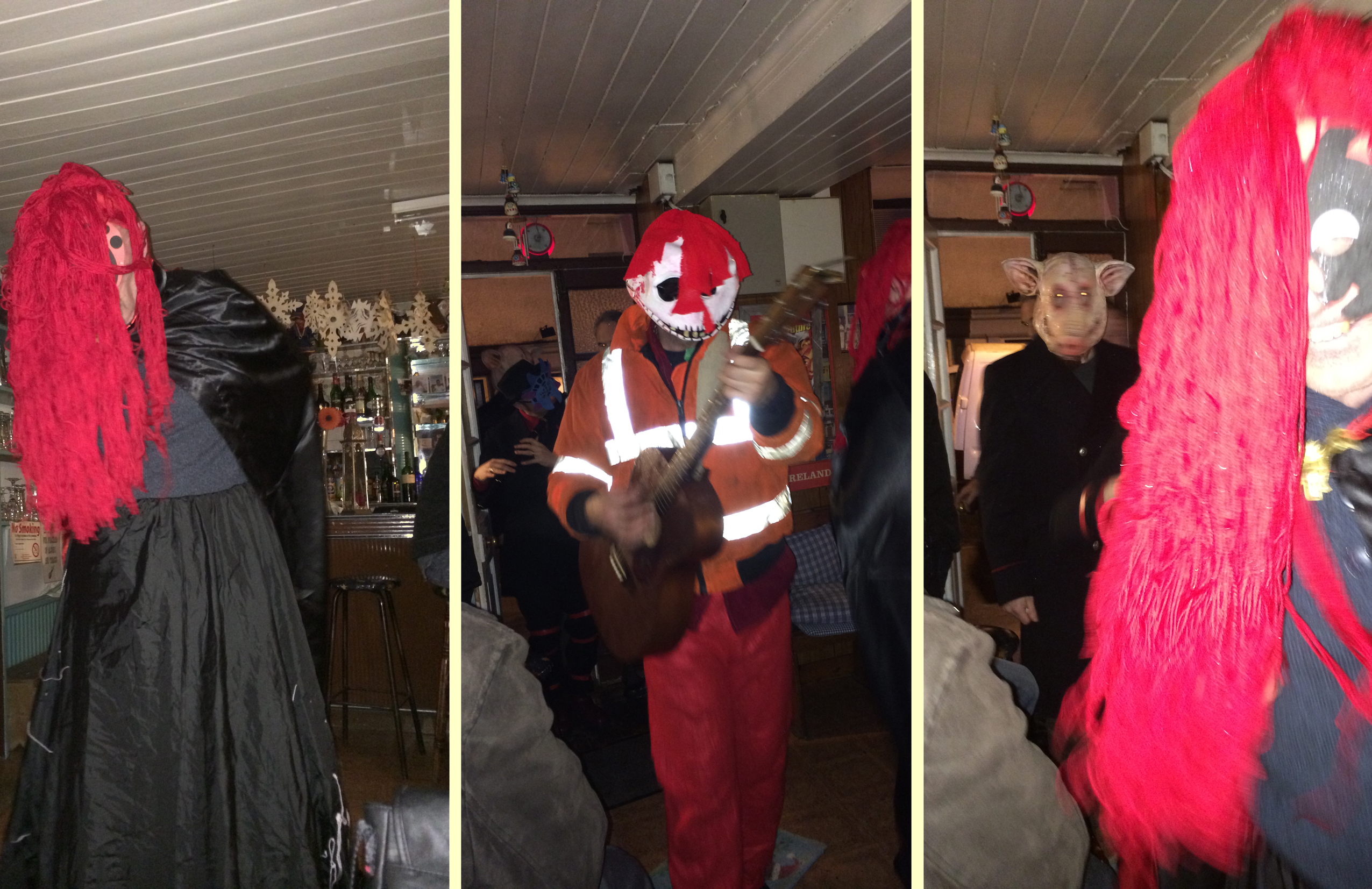
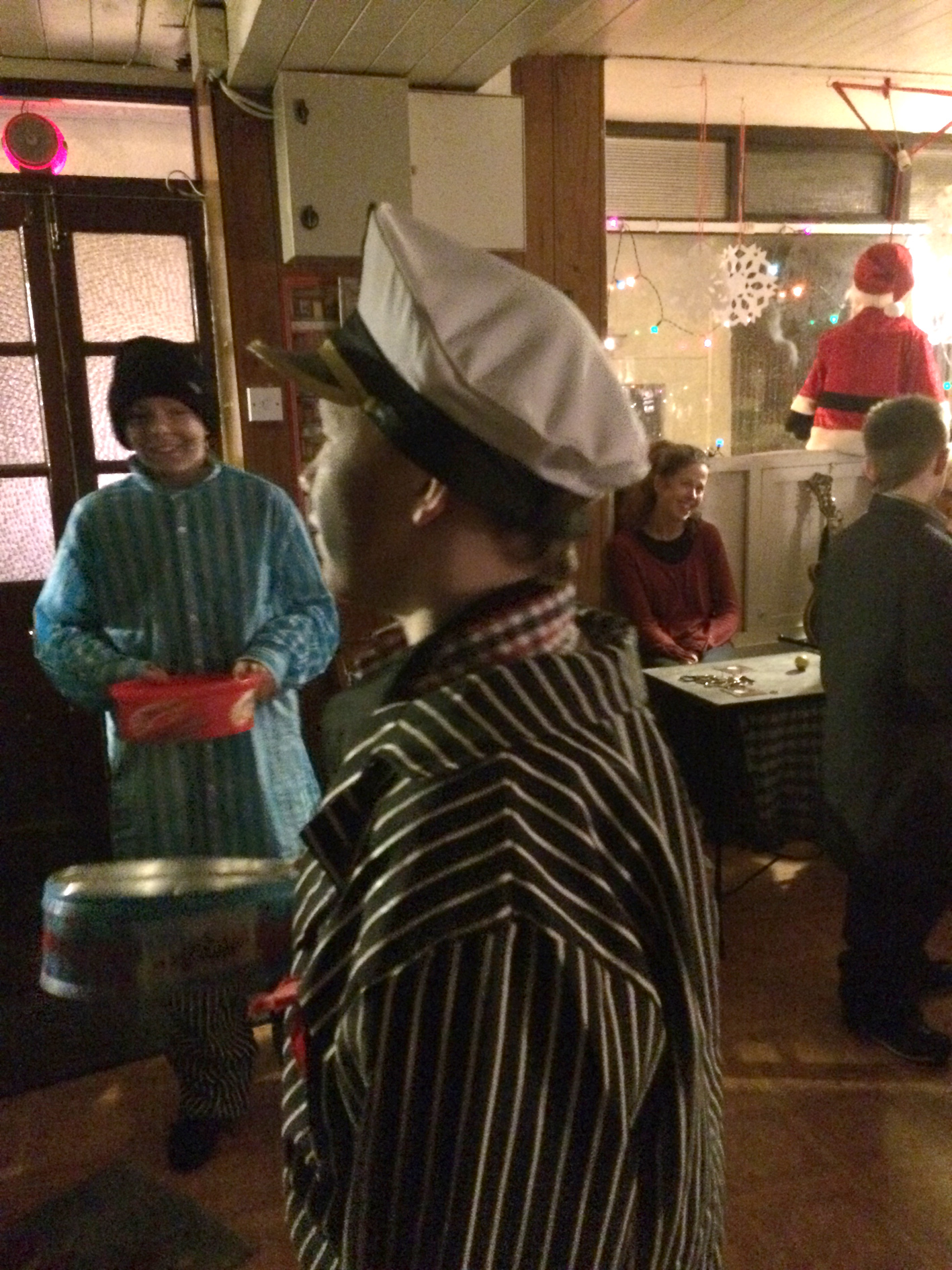
Earlier in the day we had enjoyed an unexpected visit by the Wren Boys to Levis’s pub, where we were involved in an improvised session. Two groups of Wren Boys in fact: the first an adult company with musicians, colourful costumes and bizarre masks, and the second a group of boys dressed in old coats turned inside out, pyjamas and sailor caps, carrying large collecting tins. All were welcomed and the festivities grew merrier as the wind strengthened.

wrenners

wrenboys

Keeping traditions going: outlandish Wrenners visiting Ballydehob – top – and local lads collecting in Levis’s Bar – below

As I lay in bed at the height of the storm I found myself worrying about our birds: how on earth could the Goldfinches, Chaffinches, Robins and Wrens (any Wrens who had escaped the St Stephen’s Day hunt that is) have survived that terrible gale – which stripped the bird feeders of everything moveable and the bushes and shrubs of their sheltering leaves? In the morning, there they were back again, and noisily demanding a refill which, naturally, I was delighted to provide.

message